The Defector by Chris Hadfield

The Defector Cover

Publisher: Quercus (Trade Paperback – 10 October 2023)

Series: The Apollo Murders – Book Two

Length: 369 pages

My Rating: 4.5 out of 5 stars

Amazon

Former astronaut turned thriller author Chris Hadfield returns with his second excellent novel, the intriguing and clever historical read, The Defector.

Back in 2021, I was lucky enough to receive a copy of superstar astronaut Chris Hadfield’s cool and much-hyped debut novel, The Apollo Murders.  Set during the Cold War, The Apollo Murders depicted an alternate history adventure where a fictional Apollo flight mission to the moon suffered all manner of calamity, including murder, treachery, and unexpected Russian hitchhikers.  Thanks to Hadfield’s knowledge of history and spaceflight, this turned out to be quite the gripping read, and The Apollo Murders ended up being one of my top debuts for 2021.  As such, I have been eager to see how Hadfield planned to follow up his first book, and I was quite excited when I saw that his second novel was a sequel to The Apollo Murders.  This book, The Defector, was an excellent and compelling thriller which I had a brilliant time getting through.

Israel, 1973.  On the eve of the Yom Kippur War, a Soviet test pilot makes the bold decision to fake a crash in his state-of-the-art MiG fighter and secretly land in Israel.  Claiming that he wants to defect to the United States, the pilot, known by his codename, Grief, and his plane are traded to the Americans, who desperately want to know the secrets of the MiG and how it achieves such impressive altitude.

Having witnessed Grief’s defection while on holiday in Israel, NASA flight controller and former Navy test pilot Kaz Zemeckis is quickly drafted in to take carriage of the captured MiG and to work with Grief to fully understand the plane’s limitations and capabilities.  Their unlikely partnership eventually takes them to the most secure and secret location in the United States, Area 51, where Grief looks set to provide all the information the Americans have ever wanted about the MiG.  However, not everything is as it seems, and it soon becomes apparent that Grief has his own reasons for wanting to defect to the United States.  Can Kaz get to truth before it is too late, or has he let a wolf right into the heart of America’s most secret air base?

This ended up being an excellent and exciting novel from Hadfield that successfully follows up his original debut and provides a cool and intense new story that proves very hard to put down.  Hadfield tells a pretty tight and compelling story in The Defector that starts strong with the mysterious Grief defecting right in the middle of the Yom Kippur War.  This initial excitement morphs into an intense and gripping game of cat and mouse, as Kaz attempts to utilised Grief’s knowledge and keep his defection secret from the Soviets, while the Russian pilot works to initiate his own plans.

This continues for much of the book, and I thought this ended up being a much more focused and well-structured thriller narrative than we previously saw from Hadfield in The Apollo Murders.  The focus on espionage and military secrets was a great centre for the plot, and Hadfield did a good job on also utilising some intriguing characters, especially Kaz and the mysterious Grief.  The inclusion of a couple of fictional supporting characters from The Apollo Murders, namely a cosmonaut and a major Soviet antagonist, was also quite interesting, although as they were mainly there to set up a future entry in the series it did disrupt the narrative flow a little.  Everything leads up to the big conclusion, which Hadfield set up nicely throughout the course of the story.  While I do think that Hadfield might have considered utilising a twist to change the antagonist around, it was still really fun to see the full plan unfold, as well as the real reasons behind the defection.  Watching the manipulation and the resulting violence unfold was very impressive, and it led to a satisfying, if slightly predictable, final showdown with the protagonist that ended everything on a high note.

I really enjoyed how well The Defector came together, especially as Hadfield reused all his best writing elements from The Apollo Murders, while also strongly utilising his own personal experiences and knowledge as a test pilot.  The constant switching between perspective characters, as well as several interludes and flashback sequences, helped to produce a complex, multilayered storyline, and I liked seeing the various players in the plot attempt to work out what everyone else is doing.  It also allowed Hadfield to hide some good hints about the antagonist’s true motivations and feelings, which came out perfectly at the end of the book.  There was also some great character growth around the protagonist Kaz, especially as Hadfield successfully built on his personality and relationships from the first book, and it is clear that the author has some future adventures planned for him.

However, the real strength of The Defector lies in Hadfield’s encyclopaedic knowledge of military airplanes, Cold War espionage history and spaceflight, which was masterfully inserted into the plot.  Much of the plot revolves around the desire for both sides of the Cold War to get a better understanding of their opponent’s aircraft capability, and Hadfield expertly examines the history and mechanics around this.  The discussions about aircraft, fighter capabilities and more, are all quite fascinating, and Hadfield does a wonderful job of exploring them in a highly detailed way that readers unfamiliar with aircraft can easily understand.  His experience also allows for some highly realistic and intense aerial combat sequences, and I really enjoyed the elaborate scenes that resulted, especially the cool conclusion.  This grasp of aircraft, the history surrounding their development, and the espionage involved, are well worked into the plot of The Defector, and I loved how much it increased the authenticity of the book, making it so much better.

Overall, The Defector was an outstanding second novel from Hadfield that I had a wonderful time reading.  Containing a clever and well-paced spy thriller narrative loaded with intriguing details about aircraft and the cold war, The Defector had me hooked from its first awesome scene, and I managed to power through this book in no time at all.  Compelling and action packed, The Defector was an outstanding follow-up to The Apollo Murders and I cannot wait to see what Hadfield writes next.

The Defector Cover 2

Amazon

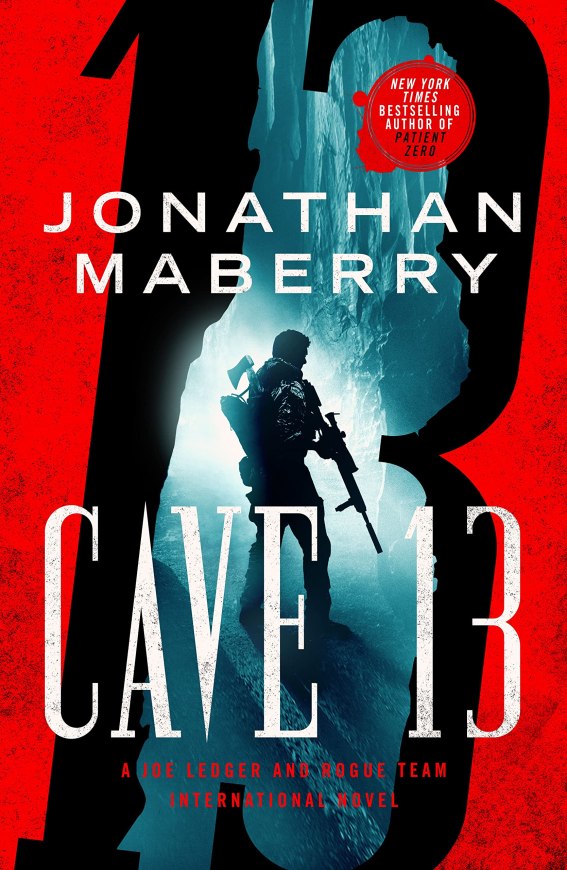
Cave 13 by Jonathan Maberry

Cave 13 Cover

Publisher: Macmillan Audio (Audiobook – 29 August 2023)

Series: Rogue Team International/Joe Ledger – Book 3/13

Length: 19 hours and 5 minutes

My Rating: 5 out of 5 stars

Amazon

One of my favourite twisted authors returns with an outstanding new entry in one of his best series with Cave 13 by Jonathan Maberry.

It has already been a massive year for fans of thriller/horror author Jonathan Maberry, who previously released the exhilarating and intense dark fantasy novel Son of the Poison Rose.  The awesome sequel to Kagen the Damned (one of my favourite novels and audiobooks of 2022), Son of the Poison Rose was one of my favourite books and audiobooks from the first half of the year, and if that had been the only Maberry novel I’d received in 2023 I would have been content.  However, Maberry chose to spoil us by providing us with another epic Joe Ledger novel, which is so damn amazing.

The Joe Ledger novels are an amazing science fiction thriller series that follows titular protagonist Joe Ledger as he attempts to stop a series of insane world-ending threats initiated by compelling group of villains.  The initial Joe Ledger series featured 10 epic books with some outrageous and addictive stories around them, including Patient Zero, The Dragon Factory, Code Zero, Predator One and Deep Silence, just to name a few.  Maberry followed up these novels with a new Joe Ledger focused series, the Rogue Team International books.  This series has so far featured Rage (one of my favourite books and audiobooks of 2019) and Relentless (one of my favourite books and audiobooks of 2021), both of which were pretty exceptional in their own ways.  As such, I have been quite excited to see a new Rogue Team International book and Cave 13 was one of my most anticipated books for 2023 as a result.

To many, Jason Aydelotte, better known to the world as Mr. Miracle, is a smiling and beatific public figure celebrated for his archaeological endeavours and his vast antiquities business.  However, beneath the smiles, Mr. Miracle is a far more ruthless and sinister operator.  Smart, determined and ambitious, Aydelotte has entered the world of international arms dealing and is willing to sell his advanced weapons to anyone who will buy them, including ISIS, and his latest product might be the scariest thing ever created.

Thanks to discoveries made in a hidden ancient Egyptian tomb, Aydelotte’s team has developed a powerful new bioweapon that drives its victims insane with a mere breath.  Its effect is terrifying and its potential for destruction in the wrong hands is immeasurable.  With the world going insane and chaos rising in the Middle East, the only people who might be able to stop such a potent weapon are Joe Ledger and the highly specialised agents of the independent intelligence agency, Rogue Team International.

However, the release of a deadly bioweapon soon proves to be the least of Ledger’s problems in the Middle East.  Far more dangerous materials were recovered from the tomb, including bizarre books of magic dating back to the time of Moses.  At the same time, greater secrets have been pillaged from a hidden cave containing even more Dead Sea Scrolls, some of which could alter the very fabric of the universe.  With threats piling up all around them, and enemies on all sides engaging in their own dangerous plots, can Ledger survive both the carnage and his own fractured mind to save the day, or will a new ruthless opponent destroy everything?

Cave 13 was another outstanding and captivating Joe Ledger adventure from Maberry that sets his troubled protagonist against another brilliantly elaborate world-ending plot.  Slick, intense and loaded with complex characters, Cave 13 was an amazing read that gets an easy five-star rating from me, especially in its audiobook format.

Maberry produced another unique and compelling story for Cave 13 that is once again perfectly told in his unique writing style.  Utilising a vast number of shorter chapters, Maberry quickly starts the story off, reintroducing the protagonist and his team, while also setting up the compelling antagonists and their complex evil plan.  A series of well-placed and absolutely fascinating interludes throughout the book provide greater context to the events that are about to unfold, and you get to see the entire genesis of the antagonist and their plans, which adds a lot to the overall story.  Maberry artfully blends this together with the main storyline that sees Ledger and his team investigate several unique occurrences, including conflicts in the Middle East, increases in unique weapon trafficking, the recovery of the Dead Sea Scrolls, as well as mysterious events that could only have been done by certain biblical magic (“you’re playing with the big boys now”).  The intriguing blend of science, mysticism, faith and mystery gives Cave 13 a particularly fun edge, and I really liked the intriguing set-up surrounding the antagonist’s plot and its full potential for destruction. At the same time, the author also dives back into the complexity surrounding his protagonist’s damaged psyche, and how this new case might affect it.

While I loved all the set-up in the first third or so of the novel, it does ensure that the initial plot is a tad slower.  This changes once Ledger and his team arrive in Israel and find themselves under attack in a particularly brutal action sequence right off the bat.  Maberry’s action scenes are always extremely awesome, and you have to love the attention and detail he puts into making them as intense as possible.  This cool action sequence is well balanced at this point by some further background, as well as a compelling sequence of events surrounding recurring side-character Toys, who finds themselves at a different side of the conflict following an undercover operation gone wrong.  This part of the story, especially the twist about the antagonist’s true plan, really increases the stakes and intensity of the story, and Maberry has a lot of fun creating some intense visual horrors for the readers, especially when it comes to a series of twisted and brutal hallucinations.

The final third of Cave 13 is probably the strongest part of the book, and I honestly was hooked the entire way through, desperately trying to get to the end.  All the great set-up, intriguing interludes, and multitudes of well-established characters comes together for the big confrontation at the end as the antagonist’s plan goes full circle and Ledger and his team once again find themselves in hell.  Things get so damn dark, desperate and freaky at this point in the book, and you are left completely worried about all your favourite characters as Maberry doesn’t have the best track record of keeping likeable cast members alive.  There are some brutal scenes here, as well as a ton of tragedy, and the reader is left on the edge of their seat right until the very end.  While I came away from parts of this book a bit shellshocked, I was overall very happy with the conclusion, which was dark, had a good twist around the villain, raised a lot of questions about the protagonists, and left you with a little ray of hope that will no doubt get snuffed out in the future.  An overall pretty epic story that really came to life in Maberry’s hands, especially thanks to his unique set out and brilliant ability to write an action sequence.

Cave 13 ended up being quite an interesting Joe Ledger novel, especially as it presents a great story and the first original villain of the Rogue Team International era, while also cleverly diving into the prior events of the series and utilising them to enhance the characters and narrative.  I really enjoyed the step away from the villains of Rage and Relentless for this one book, although I also appreciated how well the author examined the aftermath of these novels and the dark things they’ve done to the protagonist.  Like most of the Joe Ledger books, Cave 13 can be read as a standalone novel, and Maberry does a good job of recapping all the relevant prior events and characters to ensure that new readers can fully understand and appreciate everything going on.  However, established fans of Maberry are going to get the most out of Cave 13, and there are a ton of unique hints or suggestions about what is to come.  I found it particularly interesting that Maberry chose to include multiple scenes in Cave 13 that were clearly intended to set up certain events for future entries.  While these scenes are a tad disjointed from the main story, I won’t lie and say it didn’t make me excited for the next book in the series, especially when it comes to those hints about certain villains returning.  I was a little less impressed that several storylines or mysterious events from Cave 13 were deliberately left unanswered by Maberry, but I guess I’ll just have to wait and see what happens with them in the next exciting Joe Ledger novel.

As with all Maberry’s work, one of the main highlights of Cave 13 was the excellent and complex characters.  Maberry features a pretty massive cast in this novel, including a range of recurring figures from the previous novels, as well as several intriguing new figures who I really enjoyed.  As usual, Maberry does a remarkable job of showcasing all his characters, diving into the compelling histories and minds, and showcasing just how crazy or morally dubious they are (you have to be in order to survive in this universe).

Naturally, the most prominent character is protagonist Joe Ledger, who has been the leading figure and main point-of-view character in this series since the beginning.  An unstoppable action man and natural leader, Ledger is always a fun character to follow, especially as Maberry installs an overwhelming level of snark and disrespect in his personality, ensuring that every scene he’s in is full of quips, jokes and very funny observations about the crazy things he encounters.  While this alone makes him a great character, and the source of much of Cave 13’s humour, Maberry ensures that Ledger is one of his most complex protagonists ever due to the sheer amount of trauma the character experiences.  Ledger has gone through so much damage, darkness, loss and despair during the course of the series, and Maberry spends a substantial part of the protagonist’s chapters diving into this, showcasing just how emotionally and mentally battered Ledger is.  While I always love how effectively Maberry showcases the building trauma surrounding his character, it is even more poignant and important in Cave 13, as this is Ledger’s first adventure since the events of Relentless, where Ledger was taken over by a murderous personification of his own inner darkness and went on a deadly revenge trip.  Some of the most emotionally powerful parts of the book revolve around Ledger and his friends coming to terms with his terrible actions in the last book, and it is clear that Ledger has been extremely changed by the events of the prior book.  Naturally, Maberry decides to twist the knife even further in Cave 13 by subjecting Ledger to a series of traumatising visions and hallucinations thanks to the book’s big bioweapon.  This drives Ledger even further over the edge, and there are some fascinating and highly revealing scenes that give you further insights into just how cracked this protagonist is and the dangers lurking just beneath his mental surface.  Honestly one of the best and most compelling action protagonists out there, I really love how Maberry showcases Ledger in this gripping novel.

In addition to Ledger, Cave 13 features a range of other compelling characters who get their moment to shine.  My favourite would have to be the always mysterious Mr Church, the head of the secretive Rogue Team International.  A highly elusive and deadly figure whose origins and full capabilities are only hinted at; Church is easily one of the best characters featured in the entire series.  Maberry makes exceptional use of Church in Cave 13, and there are so many more tantalising hints about who or what this character might be.  This actually proves to be one of the most substantial Church novels in the entire series, and Maberry goes out of his way to not only show that this seemingly unstoppable figure is actually vulnerable, and is in some ways just as much of a bastard as the book’s villains.  There are several amazing and highly powerful monologues from Church in Cave 13 that give you some fascinating insights into his mind, especially when it comes to Ledger and the constant war that he and Church are fighting, and I loved getting an idea of just how ruthless this figure can be.  Several of these monologues are delivered to another awesome figure in Cave 13, the team’s psychiatrist, Rudy Sanchez, a notoriously calm figure who finally loses his cool in this novel after Ledger goes back into the field, straining their relationship.  I loved seeing Rudy particularly passionate and angry in Cave 13, especially when he stands up to Church, and Maberry’s portrayal of his concern really helps to highlight just how much damage was done to Ledger in the previous book.

Another major figure from Cave 13 that I need to highlight is the intriguing figure of Alexander “Toys” Chismer.  A former villain turned repentant ally, Maberry set Toys on a redemptive arc several novels ago, and it has been really paying off as Toys has turned into a fascinating figure trying to atone for his past.  His impressive long-running storyline is extremely well featured in Cave 13, and indeed he is one of the major protagonists, leading his own team and experiencing some substantial additional trauma.  Toys honestly has one of the darkest and most impressive character arcs in the entire novel, and the scenes he shared with Ledger are particularly moving and play into their complex antagonist history perfectly.  The various recurring members of Rogue Team International are well featured again in Cave 13, and it was fascinating to see how some of their character arcs have developed over the course of 13 novels.  My favourite fuzzy assassin, Ledger’s dog, Ghost, was of course awesome in this book, and I always loved just how in touch with his human’s emotions Ghost is.  There was even an intriguing extended cameo from F. Paul Wilson’s iconic protagonist, Repairman Jack, who Maberry utilises extremely well in Cave 13’s story, simultaneously working them into the plot while also diving into the Repairman’s unique life in his own series.

Finally, I must highlight some of the villains in this book.  Maberry always excels in creating complex and insane antagonists for each of his novels, and Cave 13 is no exception, as you are introduced to several intriguing villains who are set to unleash chaos upon the world.  I won’t give away too much about them and their plans here, but I will say that Maberry did an exceptional job of introducing them and diving into their various quirks, plans and desires, in some cases humanising them.  This actually helps to make them even more sinister as you start to understand and appreciate some of their actions, even if they are reprehensible.  I deeply enjoyed the complex examinations of each of Cave 13’s main villains, especially as the various interludes showcase their intriguing histories as well as the genesis of their current plans and schemes, allowing you to fully appreciate everything about them.  These villains, as well as a couple of seemingly returning antagonists hidden in the shadows, ensure that Cave 13’s stakes are always extremely high, and I loved how well the various complex character arcs mixed together to create an outstanding and powerful read.

As with every Jonathan Maberry novel I have so far had the pleasure of enjoy, I chose to check out Cave 13 on audiobook, which is the only way to enjoy one of Maberry’s epic tales.  Not only does the author’s awesome writing style and action sequences really come across well in the audiobook format, but the exceptional narration of acclaimed voice actor Ray Porter, who narrates all of Maberry’s projects, is so damn awesome.  Porter has such a brilliant handle on Maberry’s great characters, and it is always fun to hear the familiar voices of the main cast come out of Porter’s mouth again.  I particular love Porter’s take on main character Joe Ledger, as Porter always manages to capture the key parts of his personality, including the humour, mental instability and the pure rage contained within.  This, and other excellent performances, really helps to turn Cave 13 into an amazing listen, and I had such a brilliant time getting through it, and its 19-hour runtime just flew by.  Indeed, it really helped to ensure an extended road trip in an uncomfortable van was actually pretty tolerable, so kudos for that.  Easily one of the better audiobooks of 2023 so far, I cannot recommend this format enough to anyone wanting to check this epic novel out.

Unsurprisingly, I had fun with the latest Rogue Team International novel by Jonathan Maberry and it is always so damn epic to get another Joe Ledger adventure.  Cave 13 was a particularly awesome and intense entry in the series that expertly brings together an elaborate narrative, evil villains, exceptional action and complex character in an impressive overall read.  Fun, exciting and oh so darkly addictive, Cave 13 was a powerful and gripping novel that I cannot recommend enough, especially for established fans of Ledger’s amazing books.

Amazon

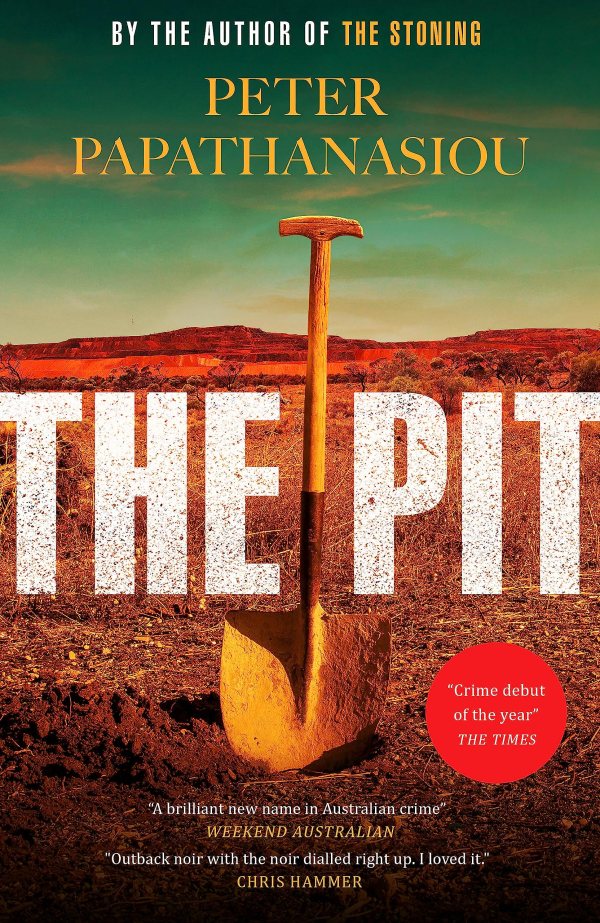
Quick Review – The Pit by Peter Papathanasiou

The Pit Cover

Publisher: Maclehose Press (Trade Paperback – 25 July 2023)

Series: DS George Manolis – Book Three

Length: 297 pages

My Rating: 4 out of 5 stars

Amazon

Australian author Peter Papathanasiou returns with his third DS George Manolis novel, The Pit, a complex and intriguing piece of Australian crime fiction that takes three unlikely companions on a memorable road trip.

Plot Synopsis:

A third outback noir from Peter Papathanasiou, following Special Constable Sparrow as he investigates a cold case in a barren mining region of Western Australia.

With DS Manolis on leave in Greece, Senior Constable Sparrow receives a phone call from a man who wants to turn himself in.

Bob is sixty-five years old, confined to a Perth nursing home. But thirty years ago, he killed a man in the remote northern Kimberley mining region. He offers to show Sparrow where the body is, but there’s a catch: Sparrow must travel north with him under the guise of being his carer.

They are accompanied on the drive by another nursing home resident: Luke, thirty years old, paralysed in a motorbike accident. As they embark on their road trip through the guts of Western Australia, pursued by outback police and adrenaline-soaked miners, Sparrow begins to suspect that Bob’s desire to head north may have sinister motivations. Is Luke being held against his will? And what lies in store for them when they reach their goal?


The Pit
proved to be quite an interesting and compelling novel which honestly was very different from what I was expecting.  I thought this would be more of a standard crime fiction/murder mystery novel in the Australian wilderness, but instead I got a character driven story that dove into one protagonist’s complex life, and I honestly think it worked out better this way.

The plot of The Pit is very far removed from Papathanasiou’s previous DS George Manolis novels, with the protagonist of the first two books not even actually appearing.  Instead we get an intriguing story about supporting character Special Constable Sparrow, who finds himself presented with an unusual opportunity by an old man, Bob, wanting to confess to a 30-year-old murder.  While I do think that Sparrow agreed to Bob’s strange request without backup a little too readily, it sets up an interesting and heartfelt storyline where Sparrow accompanies Bob and Bob’s unsuspecting young protégé, Luke, across Western Australia into the heart of mining country.  The narrative splits into two separate timelines at this point, with the main narrative focusing on the three companions as they travel across the Pilbara, getting into all manner of trouble and meeting a range of outrageous and unique outback locals.  The other main storyline is a series of intense flashbacks that examine the full life of Bob and the many hardships he experienced as a homosexual man in Australia from the 1960s onwards.  There is also a subplot that follows the friendship Bob formed with Luke in the nursing home and why Bob decided to take him on the road trip.

These different fantastic storylines are interesting and emotional in their own way, and the reader gets heavily invested in seeing both the past and the present.  Bob’s tragic and violent life story really drags the reader in, and it was fascinating to see his take on the homosexual experience throughout various periods of recent Australian history.  At the same time, you get quite entranced by the unique friendship that forms between the three road trippers, especially as each of them has their own secrets, personal issues and emotional turmoil.  I felt that the darker past storylines blended well with the unusual hijinks of the modern storyline, and the hidden clues in Bob’s recounting of events ended up having some interesting impacts on the central story.  These split storylines come together in an excellent way, and Papathanasiou really lays on the tragedy in the main narrative threads, especially when it comes to Bob and the tragedies he’s experienced.  The ending of the book is quietly poignant and ultimately unavoidable, and you will come away quite moved by how everything turned out and how the main characters developed.

Papathanasiou backed up this emotionally rich story with some fantastic and highly detailed background settings.  The Pilbara in particular is shown in all its red glory, and the author does a remarkable job describing its harsh beauty and the heavy burden of those who traverse it.  The anecdotes about the unusual people who worked in the Pilbara, both in the modern day and in the 1970s and 80s, are pretty over-the-top and very entertaining to absorb.  I do hope that Papathanasiou was exaggerating just how crazy everyone out in the Pilbara is, as there were a lot of unsettling and concerning characters involved who added some interesting spice to the story.  The memorable social interactions and courtship rituals of the repressed male Pilbara mining community back in the 1970s also seemed a bit unlikely, and I doubt I will be able look at a ute full of blokes the same way again after reading this book.  These outrageous scenes were quite entertaining, and I think they helped to enhance some of the more emotional parts of the book in greater detail.  Throw in other interesting historical locations, such as Sydney during the AIDS epidemic, and you have a fantastic background to this intense story that Papathanasiou used to full effect to tell his unique story.

Overall, The Pit was quite a memorable and compelling read by Papathanasiou, who told quite a complex Australian tale.  As a dramatic Australian tale with historical elements more than a pure crime fiction read, The Pit was a fantastic book that beautifully dove into some dark issues and showcased some amazing characters.  Charming and heartbreaking, The Pit was an excellent piece of Australian fiction that is well worth checking out.

Amazon

Holly by Stephen King

Holly Cover

Publisher: Hodder & Stoughton/Scribner (Audiobook – 5 September 2023)

Series: Holly Gibney

Length: 15 hours and 24 minutes

My Rating: 5 out of 5 stars

Amazon

The master of thrills and chills, Stephen King, returns with his latest exceptional read, the powerful and gruesome thriller Holly, an outstanding and utterly gripping read that brings back an amazing original protagonist.

Fans of this blog will be aware that I have been in a bit of a Stephen King mood recently, especially being quite a latecomer to his books.  I have had a wonderful time reading some of his latest works, including Later, Billy Summers and Fairy Tale, each of which has been great in its own way.  I have also been keeping a firm eye out for any upcoming books from King, and I was highly intrigued when I saw that he was releasing Holly in the second half of 2023.

Holly, which was one of my most anticipated books of the year, serves as a continuation of the adventures of protagonist Holly Gibney.  Holly Gibney, who first appeared in Mr Mercedes, is a unique and damaged figure who ended serving a vital supporting role in all three Bill Hodges books, as well as the horror-filled thriller, The Outsider (both of which have been adapted into awesome television series).  Holly is the first full novel where this quirky figure will be the main protagonist (although there was the novella, If It Bleeds), and I was very intrigued to see how that turned out.  I even went back and read Mr Mercedes for the first time so I would have a better idea of the character and their fascinating story.

It is the height of the 2021 COVID pandemic, and Holly Gibney is reeling from the sudden death of her domineering and stubborn mother.  Initially planning to take some time off, Holly finds herself drawn to a new case when distraught mother Penny Dahl calls the Finders Keepers detective agency hoping to get help in finding her missing daughter, Bonnie.  With her partner, Pete, out of commission with COVID, Holly decides to take on the case by herself, especially when Penny’s desperation breaks through to her.

Diving into the case to distract herself from her deep personal concerns, Holly begins to uncover all the details surrounding Bonnie’s sudden disappearance.  But the further she digs, the more sinister the case becomes, especially when it becomes apparent that more than one person has disappeared in the same residential area.  To uncover the truth, Holly will need to find out more about these other disappearances.

However, Holly is unaware of a deadly threat watching her from the suburban shadows.  Professors Rodney and Emily Harris are octogenarians living an easy life as semi-retired academics.  But this old married couple is keeping a dark and unimaginable secret in their basement, one that will shake Holly to her very core.  Can Holly find out what really happened to Bonnie and the other missing persons before the clever and patient professors make their move?

Wow, just wow!  This was such an exceptional and powerful read, and it is one of the best books I have ever read from Stephen King.  Featuring an exciting, emotionally charged and highly gruesome story that will leave you breathless and horrified, Holly had me hooked from the second I started it and it refused to let me go even after I finished it.  Intense, clever, and oh so beautifully disturbing, Holly gets an easy five-star review from me for so many delicious reasons.

Holly has an epic and addictive narrative that grabs the reader’s attention right off the bat, especially as you are immediately introduced to the horrifying schemes of the antagonists.  This great introduction perfectly leads into the main story, which focuses on the protagonist’s investigation into the disappearance of a missing girl.  This is very much a character driven plot, as the protagonist simultaneously deals with her troubled history and roiling emotions following the death of her mother.  King features a range of intriguing character perspectives throughout the course of Holly, showcasing different angles to the case and introducing several additional personal stories.  Thanks to these intriguing perspectives, especially those surrounding Holly herself, the investigative storyline rolls along at a fast and exciting pace, and Holly quickly begins to realise something nefarious did happen to her client’s daughter, as well as other people in the same area.  King backs up these revelations with great flashback chapters that showcase the actual sinister deeds of the antagonists, while also giving you some fascinating insights into who they are and what drives them to commit these insanities.

The resulting story continues at a fast and compelling clip, as you get further drawn into both Holly’s case and the intriguing history of the Harrises and the people whose lives they impact.  King writes a very tight and captivating investigative storyline around the protagonist, and I liked how Holly methodically finds connections and identifies new victims through a series of fun character interviews.  Thanks to the flashback sequences, the reader already knows what the Harrises have done and what Holly is going to find as her investigation continues, which gave the protagonist’s scenes more of an edge as you wait for her to uncover the full horrors awaiting her.  As this unfolds, you are also gifted to several compelling and emotionally charged scenes around Holly, as well as several other great supporting figures, as they go about their damaged and complex lives.  This includes a large sub-story thread around returning character Barbara Robinson, whose foray into the literary world proves quite powerful and personal, while also revealing several major clues in the case.  These multiple character-driven storylines are pretty fascinating and captivating in their own way, and they pull together perfectly into one cohesive and bloody narrative that you can’t prove away from.

While the first two thirds of Holly are extremely cool and addictive, the third act is where everything comes together, and boy is it glorious.  King came up with an excellent and very impressive conclusion that keeps you irresistibility hooked up to the end.  Several lingering questions, such as the fates of characters, are cleverly and gruesomely answered in the leadup to Holly pulling the clues together.  At the same time, the author also revolves several key character arcs and storylines, which set up these various figures for the big confrontations, for better or for worse.  I love how King maneuverers all the characters around through chance, tragedy and mistakes so that there is the maximum risk for his protagonists, and you are seriously left wondering who is going to survive and how the entire story will unfold.  The climatic scenes are pretty damn memorable, as King brings everything together in a brutal way that only he could envision.  The shock, the emotional damage and the horrors that are revealed are extremely powerful and cool, and you will come away from Holly disturbed and satisfied in equal measure.

While I already had a great deal of respect for King’s writing ability before reading this book, I have to say that I was even more deeply impressed with how he pulled Holly together.  This fantastic book was the perfect blend of mystery, suspense and character-driven narrative, and there was frankly not a single second that I did not enjoy.  The way that the author told his complex narrative is outstanding, and I loved how the perspective switches between the various intriguing characters, as well as featuring flashback chapters that range from heartfelt to highly sinister.  The constant changes in focus helped to create a very compelling and elaborate read, and showcasing all the key characters ensures that the reader gets a much more complete and powerful narrative, especially during the main investigative storyline.  While I liked the protagonist’s narrative, some of the best scenes were those that focused on the antagonists and their sinister secrets in the basement.  The Harrises’ scenes are pure and exquisite horror that had me shuddering and shivering the entire way through, especially when you find out exactly what they are doing and why.  I cannot fully express how gruesome King made this part of the book, and I could not stop reacting at his horrifying descriptions at times; it was that damn dreadful.  Combine that with the highly personal and relatable character arcs, and this ended up being an exceptional read that you will have a hard time putting down.

While Holly is part of a larger series of books and stories that feature the main character of Holly Gibney in some way, King makes sure to cover all the relevant details from these previous works where needed, and this can be read as a standalone novel.  Both I and my wife (who hasn’t read any of the books, but did watch the Mr Mercedes television series), were able to follow every point of this book without any issue, although established King readers will probably have fun seeing the story continue from these previous reads.  As such, Holly is an easy and compelling read to check out, even if you are unfamiliar with King’s work, and you are guaranteed to have fun with it.

I cannot talk about Holly without discussing the outstanding and beautifully written characters that help to turn this amazing novel into such a classic and exceptional read.  King has always excelled at wrapping his elaborate narratives around powerful and distinctive protagonists and villains, and Holly is a brilliant example of this.  The heart of the tale lies in the motivations and actions of Holly’s excellent cast, and the simultaneous examination of their lives and the case is so very addictive.

The most prominent of these characters is titular protagonist Holly Gibney, who returns this time as the main character of her own book.  Holly is such a fascinating and complex figure to focus a story around, and while much of her development occurred in previous novels, King still has a lot to work with here.  Already somewhat emotionally damaged and immature, especially after a lifetime of anxiety and manipulation, Holly has only come out of her shell in recent years thanks to the help of her friends and her new career as a private investigator.  However, the death of her mother brings up a whole new bag of issues, especially as it uncovers additional layers of manipulation that Holly had previously been unaware of.  Most of Holly’s scenes see her try to deal with continual feelings of guilt, betrayal and regret that results from these revelations, while the words of her mother continue to play in her head, influencing her decisions.  While this pain and uncertainty is a big part of Holly’s personality, King expertly balances this with some more positive character aspects, including her expert investigation skills, the emotional strength she draws from her friends, and her unyielding determination to find the truth.  King really did a great job of reintroducing and utilising Holly here, and I felt that she served as an excellent central protagonist of her own novel.  I did think that King really didn’t write Holly as a woman in her mid-50s, as she felt a lot younger than she should have, but a lot of this is due to how emotionally immature the character is due to her hard life.  Honestly, her unique insights, thoughts and relationships are extremely refreshing and so much fun, and I would read so many more novels that have Holly Gibney as the main protagonist.

While Holly is a great protagonist, this book would be nothing without the fantastic figures of Rodney and Emily Harris, who might be some of the best villains that King has ever written (which is saying something).  The Harrises are quickly shown to be anything but the harmless retired academics they present to the world, especially when readers are treated to a view of their basement.  I don’t want to give too much away here, because you really need to read King’s excellent buildup to fully experience the horror around them, but they are gloriously and exceptionally sinister.  Part of this is because their age belies how dangerous and malicious they truly are, with other characters constantly underestimating them, and watching these frail figures commit acts of utter evil is very shocking.  Other elements of their sinister nature are derived from the initial secrecy surrounding their motivations as well as the uncertainty around whether their actions are normal human evil or something more unnatural.  King does such a good job of diving into the mind of these characters throughout the course of Holly, and you really get some powerful and captivating insights into who they are and why they are committing their crimes.  The author works in a complex layer of fear, regret, love and insanity underneath their actions, you can kind of empathise with their desires and understand why they are doing what they are doing.  However, these brief flashes of empathy only ensure that the reader is even more repulsed by their actions, especially when you also get the points of view from their victims.  Honestly, I could go on, but I think I will just leave it here and say that Rodney and Emily Harris are exceptional villains, and you won’t be the same after visiting their basement.

Aside from the complex protagonist and the amazing villains, Holly is also loaded with a great cast of supporting characters, each of whom have their own moments to shine.  Many of these are returning figures from the previous Bill Hodges books, such as Jerome and Barbara Robinson, Holly’s friends and emotional support.  Both Jerome and Barbara have had a lot of growth in the previous novels, and it was great to see their stories continue in Holly.  Barbara in particular has a fascinating and moving character arc in this novel, as her horrifying experiences from the previous books inspire her to write haunting poetry.  This proves to be an intriguing and moving side storyline for part of the book, which, while it does have certain implications for the main investigation, also expands on Barbara’s creativity and highlights the joy that writing and creativity in all forms can bring to a person.  Barbara’s mentor, elderly poet Oliva Kingsbury, also proves to be a wonderful additional to the cast, and her canny insights and elaborate experiences add some great depth to parts of the novel.  I also need to highlight the poor unfortunates who serve as the victims of this story.  While many of them are only briefly featured throughout Holly, King ensures that each of them is effectively and emotionally highlighted.  While each of them is primarily shown at their very worst, you really get a sense of who they are, and the inherent tragedy of their lives and what is being done to them, will stick with you.  All these characters and more are so perfectly written by King, and their unique journeys and powerful emotions, help to drive Holly’s narrative in some outstanding directions.

King also injects an interesting level of social commentary into Holly by strongly featuring some of the key events of the last couple of years into this story.  Holly is King’s first novel set during COVID times, and he really tries to showcase how life was changed during this period.  The characters are constantly talking about masks, vaccines, and the impact of the pandemic on their lives.  While this is somewhat repetitive and traumatic for people trying to put that behind them, I felt that it was a perfect reenactment of how life was a few years ago.  The characters encounter all manner of different mindsets and opinions about the pandemic and other key events during this time, which will be instantly recognisable to readers, and I liked seeing the protagonists react to it, especially when it plays into their own personal experiences.  While King mostly speaks through his protagonists, there is a certain level of social commentary, and you can feel that King has some strong opinions about recent events.  While this commentary might not be for everyone, I really appreciated it and I felt that it gave the story some more realism, especially when the author sticks his narrative right in the middle of recent major events.

While I did get a physical copy of Holly, I decided to check out the audiobook version instead, because I had a road trip that this was the perfect accompaniment for, and also because they got the perfect narrator in Justine Lupe, who plays the character of Holly Gibney in the Mr Mercedes television series.  I love it when audiobooks get fun and appropriate narrators with connections to related media, and Justine Lupe was easily one of the best examples of this.  Not only does she perfectly capture Holly’s spirit, emotions and personality due to her experiences with Mr Mercedes, but she also does an amazing job narrating the rest of the story and bringing the other characters to life.  Lupe really dives into all the members of this brilliant cast in a great way, and I love how each of them is gifted a distinctive and fitting voice, such as how she made the Harrises sound both innocent and sinister at the same time.  I was really impressed with Holly’s perfect choice in casting, and I loved the continuation on from the existing portrayal of the titular protagonist.  Coming in at around 15 and a half hours, the Holly audiobook has a decent length to it, but once you start listening to it, you really can’t stop.  As such, I would strongly recommend this audiobook to anyone interested in checking out Holly in all its gory glory, especially if you also enjoyed the Mr Mercedes television series.

I could go on about Holly, but the point is that this latest Stephen King novel is pretty damn exceptional.  Perfectly blending established characters and an elaborate new narrative with some gruesome and intense elements, Holly had me hooked from the first scene thanks to its brilliant storytelling.  Dark, shocking and deeply personal, there is so much to love about Holly, and it was one of the strongest King stories that I have had the pleasure of reading.  I honestly cannot recommend this book enough, both to new readers and established King fans, and Holly is easily one of the best books of 2023.

Amazon

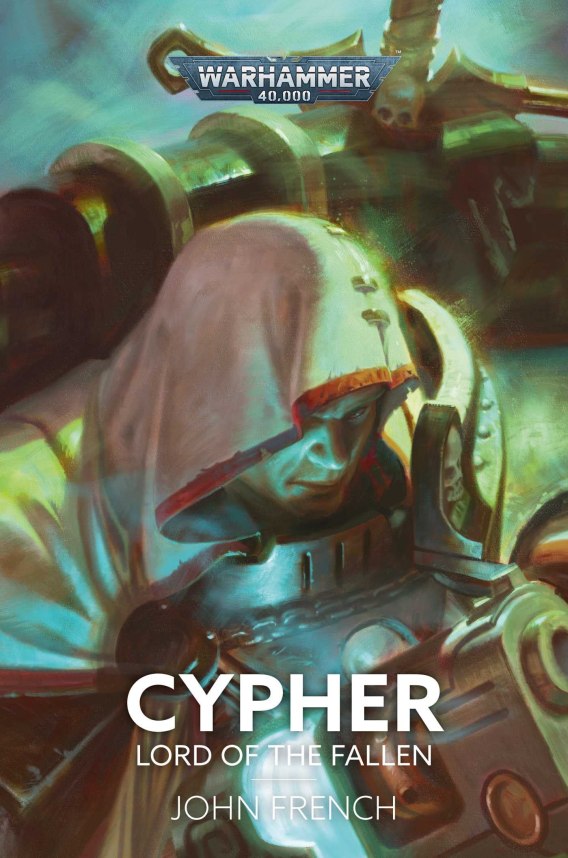
Warhammer 40,000: Cypher: Lord of the Fallen by John French

Cypher - Lord of the Fallen Cover

Publisher: Black Library (Audiobook – 18 July 2023)

Series: Warhammer 40,000

Length: 5 hours and 8 minutes

My Rating: 4.75 out of 5 stars

Amazon

One of Warhammer 40,000’s most mysterious and elusive characters finally gets the spotlight in the awesome new book from John French with Cypher: Lord of the Fallen.

Gosh, 2023 is turning out to be a brilliant year for Warhammer 40,000 fiction.  I have already had a ton of fun with such great books as The Lion: Son of the Forest, Warboss, Shadowsun: The Patient Hunter, Leviathan, The King of the Spoil and Longshot, but the best is honestly yet to come.  There are still several great Warhammer 40,000 novels coming out before the end of the year, and one of the most intriguing was Cypher: Lord of the Fallen.  Written by well-established Warhammer fiction author John French, Cypher: Lord of the Fallen follows one of the most iconic and mysterious figures in the Warhammer 40,000 canon and places them in a sinister new adventure.

Thousands of years ago, at the end of the Horus Heresy, the Space Marines of the Dark Angels Legion suffered a devastating schism, as betrayal and deceit tore them apart from within.  The resulting civil war destroyed their home planet, killed their Primarch, and scattered the Dark Angels who rebelled across space and time.  Since then, the remaining loyal Dark Angels and their successor Chapters have hunted these traitors, known as the Fallen, throughout the galaxy, determined to bring them all to justice and hide the truth about their Legion’s fall.

Out of all the Fallen still at large in the galaxy, none is more hated or more dangerous the mysterious warrior known only as Cypher.  A Space Marine with strange motivations and deadly martial ability, Cypher has haunted the Dark Angels for centuries, manipulating them for unknown reasons and threatening everything they hold dear.  His latest mysterious scheme saw him and a small band of Fallen save the reborn Ultramarines Primarch, Roboute Guilliman, from the forces of Chaos and then accompany him to the Imperial Palace on Terra for his own purposes.  But rather than being welcomed as honoured guests, the suspicions around Cypher have seen him and his Fallen comrades locked up in the Dark Cells of the Adeptus Custodes, the most secure prison in all the Imperium, designed to never be breached or release their occupants.

But Cypher is no ordinary prisoner, and as the Great Rift unfolds across the skies of Terra, strange and seemingly unpredictable events will allow him to escape from the Dark Cells into the Imperial Palace proper.  Now loose in the most sacred and heavily guarded location in the entire Imperium of Man, Cypher leads his Fallen brothers from captivity and deeper into the palace complex.

However, their presence has not gone unnoticed, and Cypher and his comrades find themselves contending with the relentless defenders of Terra, including the Emperor’s personal bodyguards, the Adeptus Custodes, lethal Imperial Assassins and powerful predictive seers.  Worse, the Dark Angels are aware of Cypher’s presence on Terra, and a desperate strike force soon arrives, determined to capture or kill Cypher no matter the cost.  But as all these forces start to close around the members of the Fallen, it becomes clear that Cypher has a far greater agenda than anyone realised: to stand before the Emperor on the Golden Throne.  But are Cypher’s intentions noble, or does he intend to destroy the Emperor and sacrifice all of humanity to Chaos gods?

Cypher: Lord of the Fallen was a very fun and tricky Warhammer 40,000 entry that fans of the franchise are going to absolutely love.  French does a wonderful job of bringing the enigmatic and chaotic Cypher to life in all the best ways, pressing him and several other unique figures into a fast-paced and intense series of manipulations and conflicts.  The book is slick, addictive and loaded with clever references and allusions to the wider Warhammer 40,000 canon.  I managed to power through the audiobook version of this book in no time at all and had a wonderful time doing so.

Cypher: Lord of the Fallen has a short but exceedingly sweet story to it that wastes no time dragging the reader in.  This is primarily because of the unique narration that French features in this book, with the entire story told through Cypher’s enigmatic perspective.  Cypher describes all the events that are occurring, even when the chapter’s focus is on other characters far away from him, and his depiction of events is quite unique, as you are never certain how he is seeing events, or whether he is making everything up.  French, through the mechanism of Cypher, quickly dives into the events of Lord of the Fallen, efficiently setting the scene of the Imperial Palace in chaos and the defenders stretched thin.  Thanks to the arrival of the Dark Angels and other machinations, Cypher and his cohort are soon unleashed into the larger palace.

The narrative splits off into several threads, some following Cypher, some following the Dark Angels infiltrators, and some following the Palace defenders trying to restore order.  However, all of these scenes are still shown through Cypher’s mind’s eye, and his confident and possibly unreliable narration gives each sequence a compelling and ethereal edge that I quite enjoyed.  There are some great sequences spread throughout this part of the story as everyone dances to Cypher’s tune one way or another and you quickly grow attached to the great cast and their unique motivations.  Each character meets an intriguing end or conclusion to their tale, which is quite fitting in its own way, as French layers in the action, the compelling world building, and the constant allusions and stories from Cypher.  The overall conclusion of the main story is interesting, if a tad anticlimactic and overly mysterious, but the reader can make some substantial inferences from what happened.  I honestly was hooked the entire way through, and French did such a great job of creating as unique a read as possible that was perfectly fitting for the titular character.

While I usually find most Warhammer 40,000 novels are quite accessible to readers somewhat unfamiliar to the franchise, this is one piece of Warhammer 40,000 fiction that is best enjoyed by those people exceedingly familiar with the franchise’s lore.  French does do a good job of explaining certain aspects of what is going on, however this story quickly dives into some of the more complex pieces of lore surrounding the game, such as the hidden history of the Dark Angels and the mysteries surrounding the character of Cypher.  As someone highly familiar with the background lore, I personally found this to be extremely fascinating, although I could see new readers getting fairly frustrated.  However, even those fans of the game might get a little frustrated here, mainly because they are not going to find as many solid lore revelations here as they might hope for.  The narrator flat out states at the beginning of the book that this tale is not about him, and Cypher’s history remains mostly hidden as a result.  There are certain hints and anecdotes that could lead knowledgeable fans to make guesses, but the narrator fully admits that these could be lies or falsehoods designed to hide the truth even from the reader.  Those Warhammer 40,000 fans familiar with who or what Cypher might potentially be and how he operates will absolutely love this, and I personally enjoyed how French kept us guessing.

For those readers who are hoping for more, French does paint a fantastic and elaborate picture of the Emperor’s Palace on Terra, which is one of the more fascinating settings in Warhammer 40,000 fiction.  The dark and elaborate depiction of the palace, with its excessive bureaucracy, forgotten corners, vast religious underpinnings, and millions of workers, is endlessly fascinating, and I loved all the cool details French provided.  I particularly enjoyed seeing the Custodes in action, and the elaborate depictions of the Dark Cells, a truly unique location, was very damn fun.  This compelling dive into one of this universe’s best locations more than makes up for any disappointments a reader may have regarding the lack of revelations around Cypher, and French does such a great job bringing this entire setting to life.  A fantastic read for those already in love with all things Warhammer!

As I mentioned above, I ended up listening to the audiobook version of Cypher: Lord of the Fallen, which is honestly the best way to enjoy a Warhammer 40,000 novel.  This was once again the case in this tricky and fun book as Cypher: Lord of the Fallen’s impressive story really comes to life when it is read out to you.  All the secrets, twists and fantastic depictions of Terra are so much more epic in this format, and I really had a blast listening to it.  It helped that the audiobook was narrated by the very talented Jon Rand, who has previously impressed me in Ghazhkull Thraka: Prophet of the Waaagh! and Dredge Runners.  Rand has a great voice for dark Warhammer 40,000 fiction, and he puts that to full use in Cypher: Lord of the Fallen, especially when he brings the very cryptic narrator to life.  The near whispering and often gloating tones Rand ascribes to Cypher are pretty perfect, and I felt he captured this mythical and notorious trickster perfectly.  His portrayal adds a lot of depth to Cypher’s appearance in this audiobook, especially as he also covers the evident regret and occasional sad despondency that Cypher experiences as he manipulates events, which makes you grow attached to the figure, even though he could be faking it.  At the same time, the rest of the cool cast, including the proud Custodes, the vengeful Dark Angels and the lost members of the Fallen, are also portrayed extremely well.  Rand gives each of them very fitting voices and you cannot help but feel their relative emotions of duty, resolve and occasional despair that follow.  This was a masterful bit of voice work by Rand, and he really helps to turn this format into the ultimate way to enjoy the exceptional Cypher: Lord of the Fallen.

Overall, Cypher: Lord of the Fallen is an outstanding and epic piece of Warhammer 40,000 fiction that I cannot recommend enough.  John French did a remarkable job bringing together a novel that perfectly portrays and encapsulates one of the most mysterious and beloved figures in the canon, and shows him at his manipulating best.  Featuring a unique and enjoyable writing style, as well as a ton of hints for established Warhammer 40,000 fans, Cypher: Lord of the Fallen was one of my favourite Warhammer books of the year and is really worth checking out, especially in its audiobook format.

Amazon

The Shadow Casket by Chris Wooding

The Shadow Casket Cover

Publisher: Gollancz (Audiobook – 16 February 2023)

Series: The Darkwater Legacy – Book Two

Length: 32 hours and 37 minutes

My Rating: 5 out of 5 stars

Amazon

Chris Wooding continues The Darkwater Legacy in a big way with his second awesome and massive entry in this great fantasy series, The Shadow Casket.

I was recently in the mood for more epic fantasy reads, so I finally got around to checking out The Shadow Casket by Chris Wooding, which has been on my to-read list for most of the yearThe Shadow Casket is the sequel to Wooding’s exceptional 2018 novel, The Ember Blade, which I had a ton of fun reading back when it originally came out.  The Ember Blade followed a band of revolutionaries, including two young teens caught up in the carnage, as they fought to free their country from an evil empire that had conquered it a generation before.  Featuring a classic fantasy adventure plot with some awesome real-life overtones and loaded with a ton of great characters, a powerful story, and a fantastic new world, The Ember Blade was such a great read, and it got an easy five-star read from me.  I have been eagerly awaiting a sequel for some time now, and Wooding finally delivered his second Darkwater Legacy book this year with The Shadow Casket, which took the reader on another dark and captivating journey.

It has been three years since the destructive events at Hammerholt, when the ragtag band of revolutionaries, known as the Dawnwardens, managed to steal back the sacred Ember Blade and kill the Krodan Emperor’s son, seemingly lighting the fires of revolution.  However, despite the Dawnwardens’ hope that recovering the Ember Blade would encourage their people to rise in revolt, the powerful Krodan empire still reigns over Ossia, bringing new levels of terror in their occupation.  With revolution still as far away as ever, the Dawnwardens, and the Ember Blade’s champion, young Aren of Shoal Point, are forced to take a risk that could turn the tide of war.

Taking the Ember Blade out of hiding, the Dawnwardens travel to the Reaches in the far north of Osia, where the wild and rebellious clans of the Fell Folk fight amongst themselves.  Hoping to recruit the fractious clans to their cause, the Dawnwardens soon find themselves once again under attack from the Krodans and their deadliest weapons, the malevolent dreadknights.  Forced to flee with new allies and returning friends, the Dawnwardens embark on mission to find out what the Krodans are truly doing in Osia and just how far they are willing to go to maintain order.

Finding their first successes since the events of Hammerholt, the Dawnwardens form a new plan to finally strike back at the Krodans and start the revolution they have long hoped for.  However, no matter how hard they fight, the Dawnwardens constantly find themselves outmatched by the dreadknights and their foul magic.  To survive this insidious threat, the Dawnwardens hope to call upon the ancient magic of a lost artefact, the Shadow Casket, which has the potential to either save them or doom the world.  But with deadly foes facing them at every corner, and traitors within their own ranks, can the heroes succeed, or will their revolution finally be cut down?

Wooding continues his epic series in a big way with The Shadow Casket, producing an exceptional and captivating novel that was quite a treat to read.  Expertly following the existing storylines from the first book while also providing an awesome new adventure, The Shadow Casket was a gripping and powerful novel that I had an absolute blast reading.

I really loved the amazing story that Wooding came up with for The Shadow Casket, which is massive in every sense of the word.  Told from many different perspectives, The Shadow Casket has a very powerful character-driven plot that really gets you involved in the lives of all the protagonists while advancing the compelling main plot.  The transition to three years after the events of The Ember Blade was a very interesting overarching choice for this new book, but it was one that works very well, and I loved the realistic detail that the protagonist’s previous adventures didn’t magically save the day as they had hoped.  Wooding starts events off at a somewhat slow pace, which was definitely necessary as he had to re-establish all the key story elements, while also introducing the new setting of Northern Ossia and the Fell Folk.  This does mean that the initial chapters of the book might drag a little for some readers, especially those who did not read The Ember Blade first, although I appreciated the refresher on all the protagonists after all this time.  This early part of the book also sets up many plot points for the rest of The Shadow Casket, and Wooding did an outstanding job laying down a lot of groundwork here.

Things do speed up quickly after the reintroductions are done, as all hell breaks loose around the protagonists in some amazing scenes.  This early part of the book also brings back Cade and Klyssen, who were seemingly killed off at the end of The Ember Blade.  This honestly isn’t that much of a spoiler as both come back very early in the plot, and frankly it wasn’t too surprising considering the deliberate ambiguity of their “deaths” in the previous book.  Their return sets up some great character-driven plots which are very well explored in the first half of the book and have some major impacts on the overall story.  The protagonists soon find themselves involved in several distinctive character-focused quests, including the liberation of a prison camp, the machinations of a traitor, and an intriguing dive into a magical organisation that was only lightly featured in the first book.  These various storylines blend into one cohesive plot, and I liked the early focus on world building and character growth in the aftermath of the first book.  Wooding works in an interesting blend of intrigue, action, adventure, and even some horror elements, which really enhanced the classic adventure quest vibe he was trying to replicate.  I did have issues with an ungainly love triangle that got a lot of attention in the first half of The Shadow Casket, which sapped my enjoyment in places.  However, the other complex storylines that were occurring simultaneously did make up for this, and it thankfully does not last the entire length of the book.

The second half of The Shadow Casket is where things really picked up, and it features all the awesome story moments that the author had been expertly building up.  This includes a deadly adventure quest to a lethal island, which amped up the intensity of the plot, especially as secrets are revealed and tragedy awaits several characters.  These storylines and more, all lead up to epic final quarter of the novel, where the protagonists have their long-awaited mass confrontation with the enemy.  Wooding really set up everything leading up to this final quarter perfectly, and I was very excited going into it, especially as it featured a massive siege.  While there is a focus on the action in this final part of the book, Wooding also amps up the intrigue, as various parties make their moves to betray or mislead either side of the conflict.  The author plays this plot line about betrayal and intrigue perfectly, and there were times when you honestly didn’t know who was betraying who, which was so much fun to see.  This last quarter honestly has a bit of something for everyone, and I loved the inherent tragedy, the gritty battles, and the awesome resolution to so many different plotlines and character arcs.  I also really enjoyed the multitude of clever twists and reveals that Wooding layered in this part of the book, especially as I did not see several of them coming despite the great setup surrounding them.  The final play of the protagonists was particularly brilliant, and the unique siege tactics were quite inventive.  While I did think a few things were wrapped up a little too easily or positively at the end, this was honestly a very strong conclusion for this second entry, and it sets up many great storylines for the rest of the series.  I really came away from The Shadow Casket feeling very satisfied, and I cannot wait to see how my heart will get broken in the next book.

I felt that Wooding did a rather wonderful job of presenting his elaborate narrative to the reader, and his fantastic style definitely drew me into the story.  While there are a lot of positives to the author’s writing, the main thing that I was mostly grateful for was how easy he set everything up so that I could dive back into this series.  As I mentioned above, it has been over four years since I read The Ember Blade, itself a hefty read, so I was initially worried that I wouldn’t remember all the key details and get a little lost.  However, Wooding expertly led readers, both new and old, into his new book and those well-thought-out and slower paced introductory chapters really filled in all the gaps for me.  As such, there wasn’t a single moment that I was lost about what was going on, which considering how elaborate The Shadow Casket gets, is pretty damn impressive.

While The Shadow Casket is a great continuation of The Ember Blade, it also has a bit of a different tone to it.  The focus on failure, regret and fighting losing battles was quite interesting and reflected the continued failed rebellion nicely.  The book itself also comes across as more of an adventure novel, with the protagonists constantly moving and taking on new quests and journeys, rather than the more heist focused revenge plot of the first book.  This ensured that The Shadow Casket stood out a lot more than I was expecting, and it really didn’t feel like a sequel or a tired middle book.  Wooding has a great sense for pacing, and the fantastic mixture of action, character growth and betrayal and intrigue helped to turn this into quite an impressive read.  I have so much love for the multiple elaborate espionage storylines that emerged, and Wooding ensured that the reader never knew what was coming.  The excellent use of multiple character perspectives really helped with this, and it was compelling and often very moving to see the various internal struggles, history and biases that drove the characters to do what they do.  The clever alternate views of the same events also helped to create a much more expansive and captivating plot, and I think that Wooding did a great job of splitting the story up, ensuring that all the key characters got their time to shine.  There was the occasional rough chapter transition that added a touch of confusion at times, but this was usually pretty harmless, and I found the overall narrative to be very powerful and bound together excellently.  Throw in a ton of brilliant and brutal action sequences, including the extended battle at the end, and The Shadow Casket has so much going for it that you will find it very hard to put down.

One of the things I liked most about The Ember Blade was the elaborate and complex world that the book was set in.  In particular, the focal nation of Ossia was such an interesting main setting, especially as it was occupied by its stronger neighbour, who had ruled it for years.  This portrayal of Ossia had a lot of similarities to occupied France during World War II, especially as the invading Krodans were an obvious stand-in for Nazis/fascism.  This occupied fantasy nation had a certain realism to it that deeply enhanced the story, especially as the characters interacted with collaborators, rebels and locals who believed the Krodans were helping them, all while witnessing examples of Krodan cruelty.  These issues were further compounded by the fact that Ossia was already a rather fractious nation, and their lack of cooperation and unity helped the Krodan conquest years before.  Wooding continued to expand on this examination of occupied Ossia in The Shadow Casket, especially as revolution and uprisings were such an important part of the plot.  I loved the intriguing plot point about how, despite the protagonist’s actions in the first book, most of Ossia was still too cowed or wracked with infighting to join in the rebellion, making the sacrifices in the first book seem pointless.  This ensured that occupied Ossia continued to be a dangerous and compelling setting for much of the story, and Wooding doubled down on the Krodan comparisons to Nazis, especially as the Krodan’s engaged in massive retaliation strikes against the Ossian populace while also rounding up a minority group into concentration camps.  These intriguing details add a lot to the plot, and it was interesting to see how they continued from the first book.

Wooding also worked in quite a lot of world building as he sought to explore new areas within the larger fantasy realm.  This includes several intriguing and deadly new locations, such as a swamp full of dark spirits and the lethal island of Yaga, where ogres and magical slavers reign supreme.  These areas, which serve as cool settings for several key parts of the book, are great to explore, adding in some very distinctive risks, and it served as a compelling expansion of an already great world.  However, the most significant new setting is probably the northern area of Ossia known as the Reaches.  A hilly area populated by warring tribes, this part of Ossia was culturally segregated from the more urbanised southern setting before the Krogans arrived, and now is even more oppressed.  A large chunk of the novel revolves around the complex tribal politics and history of this region as the protagonists attempt to bring them together as allies while also striking back at the forces oppressing them.  Several of the best sequences, including the final battle, are set around here, and I loved the craggy and isolated feel that Wooding gave this setting.  The author also does a wonderful job expanding on some of the fantasy aspects of his series.  While there were quite a number of great and freaky magical and fantasy elements in the first book, The Shadow Casket really dives into this further, showing several different batches of magic.  This includes a fascinating examination of the Ossian druids, whose magical conclave in the first half of the novel serves as a major plot setting.  There is also a fantastic and dark examination of the magic being used by the Krogans to create their more elaborate weapons.  This look at Krogan mysticism is pretty fascinating and serves as a great contrast to their usual anti-magic dogma.  It also leads to some of the darker scenes in the book, including the exploration of a corrupted prison camp, which honestly bordered more on horror than anything else.  There are some fantastic and complex hints at the dangers to come, and I cannot wait to see how dark and compelling Wooding makes his setting in the future.

However, the most impressive and memorable part of The Shadow Casket has to be the outstanding and elaborate character work that Wooding expertly inserted into the story.  The Shadow Casket has an exceptional and memorable cast, which includes a great combination of characters from The Ember Blade, as well as several intriguing new figures.  All the characters are damaged and complex, especially after the events of The Ember Blade, and thanks to the author’s excellent use of alternating perspectives, you get to see into their minds and find out what drives them and what their intentions are.  I deeply appreciated how well the character stories altered and drove the main narrative and Wooding’s excellent character work really gets you invested in everyone’s personal journey.

As with The Ember Blade, the main character of The Shadow Casket is Aren of Shoal Point.  A teenager drafted into the rebellion by circumstances, Aren is trying to live up to his own legend after masterminding the Ember Blade heist and being declared champion.  Now a figurehead leader chafing under the responsibilities and expectations of everyone around him, Aren starts the book with a lot of his usual certainty and confidence gone, especially as the disappointments of the last three years are hanging over him.  Most of his arc involves him trying to decide whether he deserves all the fame and trust people are putting into him, as well as wondering what his destiny is.  I really liked this compelling character arc that Wooding came up with for Aren, especially as it is totally understandable that he would feel these doubts with his complex history.  While Aren probably was a more passive protagonist than some readers were hoping for, I felt his early mindset of following others fit nicely into the uncertainty he felt, and Wooding did a great job of portraying this and his eventual regained confidence.  Aren also proves to be a linchpin character for The Shadow Casket, mainly because so many other character arcs are defined by the relationships that Aren has formed over the years.  While a couple of these relationships do have some flaws in them, the rest are exceedingly emotionally rich and Aren’s connections help the other characters to grow and develop alongside him.  Aren continued to be an outstanding and complex protagonist for this second Darkwater Legacy novel and I look forward to seeing how he develops in the future.

One of the other major characters I need to highlight is Cade, Aren’s childhood friend who was forced into the adventures in the last book before heroically sacrificing himself at the end of The Ember Blade.  Cade returns quite early in The Shadow Casket, having spent three years away from his friends.  However, he is now carrying some dark secrets and a new hidden history that defines most of his actions throughout The Shadow Casket.  Cade had one of the best and most powerful character arcs in the entire novel, which I will not elaborate on too much here to avoid spoilers.  However, it was extremely well written and added some much-needed emotional depth to Cade’s character.  Wooding does an outstanding job of expanding on Cade’s character arc and story from the first book and the examination of the complex relationship between Aren and Cade resulted in some of the most moving moments in the book.

There are several great antagonistic characters in The Shadow Casket, including sinister Krodan officials and several hidden traitors, but my favourite villainous figure has to be the great character Klyssen.  A member of the Krodan secret police, Klyssen was the primary villain of The Ember Blade, and Wooding takes the opportunity to develop him further in some fantastic ways in the sequel.  Not only does he provide an alternative viewpoint to the Krodans but Wooding manages to make Klyssen into a surprisingly sympathetic character in The Shadow Casket.  Thanks to the events of The Ember Blade, Klyssen starts this new book scarred, disgraced, demoted and divorced, and is now at something of a moral and emotional crossroads.  Now driven by personal reasons, Klyssen has a bit of a redemption arc in The Shadow Casket, and it is honestly a sign of just how good Wooding is at writing characters that you actually feel sorry for this previously despicable villain.  Klyssen ends up being one of the more complex and damaged figures in the entirety of this second book, and I loved his more nuanced mindset and desperate motivations, which make his chapters particularly compelling and emotionally charged.  You really begin to feel for Klyssen, even if you don’t want to, and I really appreciated the complex additional development Wooding worked into him for this sequel.

Of course, I cannot talk about characters in The Shadow Casket without mentioning Grub, who honestly might be one of the most entertaining and hilarious figures I have ever had the pleasure to read.  Gruff, crude and inappropriate in every way imaginable, Grub is a slippery and self-obsessed figure who never fails to get a laugh thanks to his jokes, selfish mindset, fun observations on the people around him, and pure disinterest in what is actually happening.  Thanks to this humour, Grub has some of the best chapters in the entire book, and you always know you are in for a good time.  However, Wooding also creates a particularly complex and intriguing story arc around Grub that really resonates with the reader.  Coming from a culture that venerates heroic actions and tales, Grub was exiled from his people after claiming another person’s deeds.  As such, a lot of Grub’s sVVavsdtoryline involves him trying to redeem himself by become a hero, which really does not come naturally to him due to his selfish nature and upbringing.  This honesty proves to be one of the more complex story arcs in the entire book and you really get invested in his attempts to do the right thing.  A lot of this story revolves around his unlikely friendship with Aren, who serves as Grub’s moral compass, and their compelling relationship is one of the most heartwarming parts of the entire book.  I cannot emphasise just how much fun Grub is as a character, and it honestly is impossible not to fall in love with him, especially with the fantastic depth Wooding adds to his story.  While I would read an entire book about Grub, I think that Wooding did a good job not overusing him in The Shadow Casket, and blending in the other characters extremely well.

Other significant characters include Vika, a powerful druid whose connection with the spirits and the gods offers the only hope against the Krodan dreadknights.  Wooding weaves a fantastic narrative around Vika that dives into her unique and desperate personality while also using her as a focus for the more mystical elements of the book.  I quite enjoyed seeing Vika develop into more of a powerful magical user, although the emotional cost associated with it turns her into a bit of an unpredictable figure.  Wooding really laces Vika’s narrative with some powerful tragedy and distinctive moments, and while I felt that the ending of her arc could have been handled a little better, she was still an outstanding and enjoyable protagonist to follow.

I also need to highlight Mira, the team’s strategist and leader of the Dawnwardens, who comes up with elaborate plans and schemes in the name of liberation.  While Mira does not have as many chapters assigned to her as I would have liked, Wooding does a lot with her in a short amount of time, and I liked how dark the character got as the book progressed.  The dour knight Harod also proves to be an excellent protagonist, mainly because so much of his arc is based around his grief after losing the woman he loved in the last book.  Wooding does a good job expanding a bit on the typically emotionally devoid Harod in this book, especially when a fantastic new secondary character is introduced, and his martial focussed chapters have some heavy personal weight to them.  Throw in the team’s hunter, Fen, whose arc mostly survives an unenjoyable love triangle, and several great new characters, including a troubled revolutionary and a mysterious fighter with his own agenda and this proved to be an exceptionally rich novel in terms of outstanding characters.  This fantastic mixture of compelling cast members really helped to turn The Shadow Casket into an extremely powerful read and I cannot wait to see how these characters develop in the rest of the series.

Like with many epic fantasy novels, I chose to check out The Shadow Casket on audiobook, which I found to be an awesome experience.  Elaborate fantasy novels always come across better in the audiobook format for me, especially when there is a ton of detail and world building, and this was once again the case with The Shadow Casket.  Wooding’s deeply impressive setting was so much cooler when it was read out to me, and I definitely absorbed a lot more detail in this format.  It also helped that they brought back narrator Simon Bubb for this second audiobook in the series.  Bubb does such a good job highlighting all the cool action, fantastic detail, and unique features of this series in The Shadow Casket, and I really liked how effortlessly he moved events along.  Bubb also has a very good handle on the massive cast featured with this book, coming up with original and fitting voices and accents for all the characters, and bringing out all their inherent emotion and struggles.  Highlights for me include the amazing characters of Klyssen, Aren and Grub, all of who really shine through in this format in the most entertaining ways, and I cannot emphasise enough how well Bubb captures all these elaborate figures.  Coming in at over 32.5 hours, The Shadow Casket is a hefty audiobook to get through, and it is one of the longest audiobooks I have ever listened to (coming in at number five on the current list).  I did struggle a bit to get through The Shadow Casket quickly due to its length, and there were a few times where I got a bit fatigued and had to take a break for a while.  However, the compelling story kept dragging me back in, and I maintain that The Shadow Casket is very much worth checking out on audiobook, especially as this format gives you the very best experience.  The great voices, fun depiction of detail, and enhanced story absorption more than make up for the length, and The Shadow Casket audiobook comes very highly recommended as a result.

Overall, this is a very impressive book, and if I did not get it across with the massive review above, I really enjoyed The Shadow Casket.  Chris Wooding is really writing something special with his Darkwater Legacy series and The Shadow Casket proved to be an exceptional second entry.  While I did have a couple of issues with length and some character elements, the sheer power and complexity of the story ensures that The Shadow Casket gets a full five-star rating from me and I had such an incredible time getting through this amazing book.  This is easily one of the best fantasy series currently going and I cannot wait to see how it continues, even if I have to wait a while for the third book to appear.  Highly recommended, all fans of epic fantasy need to get into this series.

Amazon

Traitors Gate by Jeffrey Archer

Traitors Gate Cover 2

Publisher: Harper Collins (ebook – 26 September 2023)

Series: William Warwick – Book Six

Length: 384 pages

My Rating: 4.5 out of 5 stars

Amazon

Bestselling author Jeffrey Archer returns with another exciting addition to his fun and compelling William Warwick series with Traitors Gate.

Jeffrey Archer is a well-known and interesting British figure: a former politician, a convicted criminal, a life peer and member of the House of Lords.  However, these days Archer is best known as a bestselling author, having written a large catalogue of novels that usually contain a historical or thriller element to them.  Some of his works include the Kane and Abel series, his well-known Clifton Chronicles and a range of standalone books like Heads You Win.  I particularly enjoy the William Warwick series, which is a fun and entertaining collection of historical thrillers.

The William Warwick novels, which originated within the fiction universe of the Clifton Chronicles series, follows the life and career of titular protagonist William Warrick, an idealistic London police officer who rises through the ranks while solving a series of dastardly crimes.  This series, which is defined by its character-driven plots, new criminal focuses for each novel, and the protagonist’s bitter rivalry with a notorious crook, are always very entertaining and feature some compelling stories.  I personally really enjoyed the first three books in the series, Nothing Ventured, Hidden in Plain Sight, and Turn a Blind Eye, although I unfortunately missed the next two books in the series.  Luckily, I was able to grab a copy of the upcoming sixth William Warwick book, Traitors Gate, which honestly might be one of the best entries in the series.

London, 1996.  There is nothing more sacred nor valuable in the entire realm than the crown Jewels of England.  Kept secure within the Tower of London, the jewels are only brought out once a year for the Queen to attend the State Opening of Parliament.  Providing security for the transfer between the Tower and the palace is one of the most important jobs done by the Metropolitan Police, and this vital duty is now overseen by Chief Superintendent William Warwick and his crack team.  Thanks to all the elaborate precautions around the transfer, the jewels are considered unstealable, but there is one audacious crook who is about to prove them wrong.

For years, William has sought to bring down notorious criminal mastermind Miles Faulkner, a gentleman thief and deadly rogue who has brought nothing but misery to William’s friends and family.  But despite the best effort of William and the men under his command, Faulkner has always managed to elude justice as he continues to hatch his despicable plots and thefts.

However, Faulkner also has a vengeful streak, and when William manages to finally get one over on his rival by recovering a stolen artwork, Faulkner decides it is time to get his final retribution against William and everyone close to him.  Pulling together a team of rogues and villains, Faulkner sets in place his boldest plan yet: steal the Crown Jewels and ruin the career of William and the other police involved in its protection.  Can William stop this plan before everything he loves is destroyed, or has Faulkner finally won their decades-long game of cat and mouse?

Archer continues to impress with his latest William Warwick book, which honestly had me hooked the entire way through.  An intriguing continuation of his fun ongoing series, Traitors Gate was a great character-driven thriller that was fun from start to finish.

Traitors Gate has a great story to it that expertly combines existing storylines from the series with an excellent and wildly entertaining new plot.  Once again focusing on protagonist William Warwick and fantastic antagonist Miles Faulkner, Archer sets up a great story that takes their rivalry to a new level.  The author does an outstanding job of setting this up, with the early parts of the novel recapping key events from the previous William Warwick novels whilst highlighting the protagonist’s current role in protecting the Crown Jewels.  The first half of Traitors Gate follows some intriguing story threads focused on several key existing characters that eventually lead to William getting one over on Faulkner in their long-running feud.  This first half of this book is very entertaining, especially as the rivalry between the protagonist and antagonist is so damn fun, and you really get drawn into the unique and continuing character stories.

The second half of the book really amps up a notch as Faulkner initiates a series of elaborate and daring revenge plots against those who wronged him, while also setting up his master heist.  These various storylines, which include a con job and a fantastically fun court sequence, work together well to tell an excellent overall story, and they play into the build-up for the big conclusion extremely well.  However, the crown jewel (pun intended) of the plot has to be the great heist scene, which was so damn tense and exciting.  Archer sets the entire thing up perfectly, and by constantly switching back and forth between various characters on both sides, you get quite the intense and captivating sequence.  This entire heist is a ton of fun from conception to implementation and leads to a compelling final part of the novel which sees the characters all desperately trying to come out on top.  The various elements of this, from the fun characters involved, the multiple elaborate steps the antagonists take, and the ticking clock the protagonists need to beat, are designed to keep the reader on their toes, and I had such a fun time seeing everything unfold.  The entire story honestly comes together extremely well, and frankly this was one of the more impressive and addictive stories that Archer has come up with yet.

Archer pulled this excellent story together in his typical style that focuses on the characters and makes great use of quick jumps between various perspectives.  I loved the multiple fantastic storylines that emerge as a result, and the author does a great job of balancing the various elements and character arcs.  Archer also proves very apt at building suspense and laying down the ground work for the key sequences for his story where the real magic happens.  Watching some of the more impressive scenes, such as the excellent entertaining court sequences (which are generally the highlight of all the William Warwick books) and the brilliant heist, are so much fun, and you really appreciate the planning and build-up he puts into it.  The author also makes excellent use of the 1990s London setting for the majority of the plot, and I have really enjoyed how the William Warwick books have moved from the 80s to the 90s, incorporating real-life events as they go.  The 1996 election plays a key role in the plot of Traitors Gate, and I loved the historical colour that Archer added to the plot, including a great in-story presentation about Colonel Blood and his own infamous Crown Jewel heist.  I also really need to highlight the way that Archer makes each of his novels inclusive and open so that new readers can easily dive into Traitors Gate.  Thanks to some quick and effective recaps and reintroductions, new readers can start the series at Traitors Gate without any issues, and indeed even after missing the last two books in the series, I was able to dive in without any pause at all.  This book comes together so well and I had a great time reading it.

I really need to highlight the fantastic and outrageous characters the plot of Traitors Gate follows.  Throughout the course of six William Warwick books, Archer has built up quite an intriguing cast of characters to follow, and he does an excellent job of breaking up the story between them.  There is a notable divide between the protagonists and the antagonists throughout the course of Traitors Gate, and watching the cast play off each other with their moves and countermoves is exceedingly fun.  Each of the protagonists, especially the police characters, are very righteous in their dealings (William goes by the nickname “Choir Boy”, for example), although they aren’t averse to breaking the rules if it gets them justice, which makes for some great scenes.  However, it’s the baddies are the ones who really make the book extremely entertaining.

Archer has done such a great job building up main antagonist Miles Faulkner throughout the course of the series, and the elaborate and spiteful rivalry he forms with William and his friends drives so much of the plot.  Faulkner honestly steals every scene he is in with his elaborate schemes, villainous persona, and sheer petty hate of the protagonists, and I have so much fun following throughout the book.  I also have a lot of fun with secondary antagonist Booth Watson QC, Faulkner’s lawyer, who seems to act for every criminal and villain in the William Warwick series.  A morally corrupt lawyer who specialises in every devious legal trick you can think of, Watson is nearly as bad as Faulkner, and he proves to be such a delightful thorn in the protagonist’s side.  Watching him legally manipulate and pontificate is so much fun, especially when he faces off against William’s straightlaced and proper father, Sir Julian Warwick, who he brings out the worst in.  These two characters are at their best when they face off against each other in the courtroom, and it so damn entertaining to see them get childish and outraged in the middle of a trail.  These characters, and more, add so much enjoyment to Traitors Gate and I look forward to seeing the epic rivalry between William and Faulkner continue in the future.

Jeffery Archer has produced a fantastic and awesome new addition to his always entertaining William Warwick series with Traitors Gate.  Featuring a fun and inventive narrative that makes great use of the bitter rivalries of Archer’s well-established cast, Traitors Gate is a highly addictive and exciting novel that has some outstanding moments to it.  Slick, hilarious and always compelling, Traitors Gate is an amazing novel that is well worth checking out.

Traitors Gate Cover

Amazon

Warhammer 40,000: Longshot by Rob Young

Longshot Cover

Publisher: Black Library (Audiobook – 12 August 2023)

Series: Warhammer 40,000

Length: 10 hours and 28 minutes

My Rating: 4.5 out of 5 stars

Amazon

Prepare to dive into one of the grittiest battles in Warhammer 40,000 fiction with the awesome and captivating novel, Longshot by Rob Young.

2023 has definitely been an outstanding year for Warhammer 40,000 fiction, and I have had a ton of fun reading several pretty amazing entries from this extended universe in recent months.  Examples of this include The Lion: Son of the Forest, Warboss, Shadowsun: The Patient Hunter, Leviathan and The King of the Spoil just to name a few.  However, the year is far from over and there are still several great-sounding Warhammer 40,000 novels coming out that I have my eyes on.  One of the more intriguing was the fantastic Longshot by new author Rob Young, which sounded extremely fun.  Longshot, which follows on from Young’s short stories, Transplants and Memories of Broken Glass, is the author’s debut Warhammer 40,000 novel, and it proved to be a very intense and action-packed novel with a great story.

Several years after the fall of Cadia, which saw the Imperium of Man split in two by a great rift in space, humanity is still attempting to recover as many lost planets and systems as possible.  The latest target of the relentless Indomitus Crusade sees the troops of the Cadian 217th arrive at the former manufactorium world of Attruso, whose people have fallen under the sway of the seeming beatific alien t’au.

As the initial assault begins in the battered city of Miracil, the Cadian forces struggle to make progress against the determined t’au defenders and their human auxiliaries.  As the fighting gets even more desperate, the tides of war soon place the keys to victory into the hands of Sergeant Darya Nevic and her squad of snipers.  Nevic is a legendary figure within the 217th, a transplant from a non-Cadian regiment renown for her abilities of infiltration, assassination and survival, Nevic excels at disrupting the enemy from the top down.  However, when the t’au unleash their own deadly sniper against the Cadians, Nevic is forced into a battle of wits with a killer just as skilled and ruthless as she is.  But has Nevic finally come across a foe even she can’t best, especially as she begins to doubt her mission in the face of her own infamy, the lies of her commanders and the t’au’s insidious promises?

Longshot is an awesome and fast-paced novel that perfectly showcases the horror of war in this grim universe through the lens of a skilled sniper.  Young did an outstanding job with his debut novel and I loved the intriguing and powerful narrative that placed great characters into a deadly setting.  I managed to knock this book off in a couple of days, and it is one of the most exciting and fun Warhammer 40,000 novels of 2023 so far.

I loved the complex and intense story that Young pulled together for Longshot, which perfectly presents a tale of the common soldier in the grim Warhammer 40,000 universe.  I have often said that some of the very best Warhammer 40,000 novels are those that focus on the common human soldier facing off against alien or inhuman forces (for example, Steel Tread, the Gaunt’s Ghosts books or Catachan Devil).  Longshot is a very good example of this as you follow a tired soldier as she faces internal and external threats on the frontline of a desperate conflict.  Thanks to its focus on snipers, city fighting, camaraderie and propaganda, Longshot is honestly the Warhammer 40,000 version of Enemy at the Gates, which I deeply enjoyed.  The reader really gets invested in the protagonist’s journey which follows her through some fantastic missions, battles and character growth in the first half of the novel.  This leads to a great second half, where Nevic becomes a victim of her own success and is forced to go up against a deadly enemy sniper.  Due to everything the protagonist experiences, there is some real tension leading into the final third of Longshot, especially after she experiences some terrible losses.  Thanks to the protagonists’ conflicted state, you honestly don’t know how the story is going to turn, and Young loads up some great twists and swerves.  While the ending was a tad predictable, I really enjoyed it and the author really pulled together a satisfying and exciting read that you can really power through.

This ended up being a pretty addictive standalone book, and it is one that would definitely serve as a great introductory novel to Warhammer 40,000 fiction for those readers unfamiliar with the franchise.  Young does a great job of expanding his previous short stories into his first full-length novel, and you really get to grips quickly with the situation, the characters, and the wider universe.  The sharp and intense character-driven story which primarily focuses on the protagonist, Darya Nevic, with a few chapters shown from other key character perspective, has a lot of great elements to it.  The focus on character motivation, the depravities of war, and the grim realities of the background universe really cut through the main story, and you understand the difficulties that many of the conflicted characters experience.  The subsequent focuses on morale in battle and the impacts of propaganda and manipulation also proves to be very fascinating and adds a great edge to Longshot.  I also deeply appreciated how well Young built up his main protagonist throughout the course of Longshot, diving into Nevic’s complex history and examining how she gained her legend.  You grow quite attached to Nevic as the book continues, especially she is forced to make several difficult decisions, and Young turns her into a relatable and understandable figure, especially when it comes to her conflicted feelings about her fame and leadership.  Nevic is well supported by other great characters, and Young was able to establish and utilise these figures in a short amount of time.

The real highlight of Longshot is the awesome and well-written action sequences that dominate the book and constantly keep the reader on their toes.  Young paints an effective and dark picture of brutal city fighting, and you can tell he was using the battle of Stalingrad as inspiration.  The gritty battles that take place are very exciting and powerful, and you can really feel the desperation and weariness of the combatants.  The author proves particularly adept at writing high-quality sniper scenes, and the focus on shooting, infiltration and calculated strikes makes Longshot stand out from other battle-heavy Warhammer 40,000 novels.  This ended up being a very slick and addictive read and Young proved quite skilled at getting his fantastic story across to the reader in the most effective way.

Well-established fans of Warhammer 40,000 canon will really appreciate Young’s compelling and insightful look into two distinctive factions who provide a very interesting contrast to each other.  This includes the members of the Cadians, one of the most iconic Imperial Guard factions in the game.  While the Cadians are already pretty heavily featured in Warhammer 40,000 fiction, I felt that Young provided a particularly effective dive into their current problems, namely the gradual deaths of the natural-born members of the regiment and their replacement by transplants from other regiments.  Thanks to the focus on Nevic, herself a transplant from another regiment, you see the dire internal conflict this causes as the strongly traditional Cadian regiment begin to lose their identity after the loss of their planet.  Young does a wonderful job of expressing this throughout the course of Longshot and the resultant impacts this has on the characters makes for some interesting story moments.  I also quite enjoyed seeing several outsider perspectives of the Cadians that Young worked into the story, which often contrasts well with what the Cadian protagonists feel, and it makes for some fantastic story moments. The author also examines other fascinating elements of the Imperial war machine, such as the exhausting Indomitus Crusade, the current crumbling state of the Imperium, the way other supporting regiments are treated, and the internal propaganda and planning of the regiment.

While the Cadians do get most of the story focus in Longshot, Young does take the time to also dive into the alien t’au who serve as the main antagonists of the plot.  Most Warhammer 40,000 novels that have the t’au as antagonists often nerf or underutilise them to a degree (for example Kill Team or Deathwatch: Shadowbreaker), which is frustrating for fans of the faction.  However, Young effectively showcases the t’au as skilled and deadly enemies who are able to weather the Imperial forces and overwhelm them in several key theatres.  Young has fun bringing several key t’au units to life throughout the course of Longshot and you really start to appreciate them as effective opponents to the Cadians.  There is also an interesting examination of t’au motivations, philosophies and manipulations, specifically around their recruitment of human auxiliaries.  This compelling dive into the t’au muddies the moral waters around the protagonists and the Cadians, and you soon start to question who has the best interest of the people of Attruso at heart.  This, and other intriguing similarities to the human soldiers, adds an awesome edge of consideration and concern to the story that I quite enjoyed.  I really think that Young had some of the better portrayals of the Cadians and the t’au I have so far seen in Warhammer 40,000 fiction, and fans of the franchise are going to have a wonderful time diving into that in this book.

Unsurprisingly, I chose to check out Longshot on audiobook, which in my opinion the best way to enjoy a Warhammer 40,000 novel.  Longshot is a particularly good example of this, as the audiobook format really helped to move the already exciting novel along at a fast clip, especially when the action scenes are brought to life by the narrator.  Coming in at around 10 and a half hours, this is very easy audiobook to get through quickly, and I made sure to power through it in only a few days.  It helped that this book was narrated by the very talented Colleen Prendergast, who already has a bit of experience narrating Warhammer novels featuring the Cadians.  Prendergast did a wonderful job bringing all the major characters to life, especially the main protagonist of Darya Nevic, and I loved the elaborate and fitting voices that she gifted the cast which really helped to draw you into the story.  However, the real benefit of Prendergast’s narration is the way that she walks the listener through all the elaborate battle sequences, especially those that show the snipers facing off against each other.  I felt that this narration expertly captured all the inherent intensity and danger of these scenes and I got really invested into the book as a result.  Thanks to this amazing narration and story enhancement, I would strongly recommend checking out Longshot on audiobook and I know I had a lot more fun thanks to this amazing format.

Overall, Longshot is an awesome and compelling addition to the Warhammer 40,000 canon and one that I had a ton of fun with.  Young produced a powerful and intriguing character driven war story that will appeal to a wide audience of readers, especially with its fantastic focus on sniping and some of the more fascinating elements of Warhammer lore.  I deeply enjoyed this fantastic novel and Longshot comes highly recommended.

Amazon

Warhammer 40,000: The King of the Spoil by Jonathan D. Beer

The King of the Spoil Cover

Publisher: Black Library (Audiobook – 1 July 2023)

Series: Warhammer Crime

Length: 12 hours and 33 minutes

My Rating: 4.75 out of 5 stars

Amazon

Get ready for another awesome round of Warhammer Crime goodness as Jonathan D. Beer presents an epic and captivating novel thick with action, intrigue and cool characters in The King of the Spoil.

Out of all the many Warhammer 40,000 novels and series currently running, few are as fun as the very impressive Warhammer Crime collection of books.  An intriguing subseries designed to mix distinctive crime fiction narratives with the awesome grimdark Warhammer 40,000 universe, the Warhammer Crime novels are a ton of fun, and I love the crazy and powerful stories that result.  All loosely connected and set in the same massive dystopian city of Varangantua, the Warhammer Crime series has so far produced some epic reads, including The Wraithbone Phoenix and Dredge Runners by Alec Worley, Grim Repast by Marc Collins, Flesh and Steel by Guy Hayley, and Bloodlines by Chris Wraight.  Each of these Warhammer Crime books has been pretty damn exceptional in their own way, and most of them appeared on my recent favourite Warhammer 40,000 list.  As such, I was very excited when I saw that a new Warhammer Crime novel was on its way with The King of the Spoil.

The King of the Spoil was an outstanding novel from author Jonathan D. Beer that introduced the reader to a new area of the overarching setting of Varangantua while also supplying them with a compelling and impressive story.  This is actually the first full novel from Beer, and it continues several of his short stories that were previously published in the Warhammer Crime collected editions, Broken City and Sanction and Sin.  I had an epic time with this fantastic novel as Beer produced an exceptional and addictive read.

In the vast continent-spanning city of Varangantua, there is no section of the city more desperate or devastated than the broken chunk of land known as the Spoil.  A formerly prominent industrial area, time has turned the Spoil in a useless wasteland abandoned by the rest of the city.  With the remaining populace of the Spoil forced to remain within its bounds, there are very few choices for survival and little chance for escape.  But even in this fallen area, someone must rise to the top, and only one man can be king.

For over a generation, the Spoil was ruled by Andreti Sorokin, the self-proclaimed King of the Spoil.  His rule brought stability to the once lawless section of the city, while his unpopular alliance with the Valtteri business cartel ensured that money once again flowed through the Spoil.  However, no king can rule forever, and when Sorokin is brutally murdered by a mysterious assassin, it doesn’t take long until someone tries to replace him.

As the Spoil devolves into a deadly gang war, with rival factions fighting for control of whatever they can get, the Valtteri turn to their most effective agent to find them an edge.  Melita Voronova is an info-broker and hacker of unsurpassed skill who has been forced to work for the Valterri.  However, after failing to predict Sorokin’s assassination, her only hope to survive her employer’s wrath is to travel to the Spoil and determine who killed Sorokin.  However, many people within the Spoil had a motive for killing the king, and Melita is about to discover that Sorokin’s death is only the first step in an elaborate plot that could change the very foundation of the Spoil.  Can Melita find the truth before it’s too late, or will this massive conspiracy destroy her and everything she cares about?

This was a pretty awesome book from Beer, who really showcases his fantastic writing ability in his debut novel.  Featuring an excellent and intense story, loaded with intrigue, action and complex characters, The King of the Spoil is an excellent addition to the Warhammer Crime series and I had so much fun getting through it.

Beer comes up with a very elaborate and fun story in The King of the Spoil, which starts very strong and never really slows down.  Beginning with the assassination of the titular king, Beer takes his time before introducing the main protagonist, instead utilising a series of short chapters to effectively bring several supporting cast members into the narrative while also showcasing the immediate aftermath of Sorokin’s death.  I really liked how Beer decided to focus on these other characters first, especially as it adds in some interesting story angles that come into play later in the story.

Once the scene has been effectively set, the story starts to primarily focus on protagonist Melita Voronova who, after failing to warn her dangerous corporate employers about Sorokin’s death, is forced to journey to the Spoil to find out who killed him and manage the appointment of a successor.  Beer also introduces a great alternate point of view protagonist in young Spoil resident Haska Jovanic, who provides an intriguing look at the events occurring on the ground in the Spoil, especially as warlords and other involved parties make their move.  Both major narratives evolve at a steady pace, mostly independent of each other, and I liked the competing views of the events and the city that they provided to the reader.  Out of the two, Melita’s investigation-focused chapters were probably the more entertaining, and she leads the reader on the hunt for the killer and the complex politics of the Spoil and its gangs.  These two main perspectives are cleverly interspersed with a series of interludes shown from other side characters, including the true antagonist and their patsies, as they put their masterplan into commission.  While a more detailed perspective from the antagonist might have been interesting, Beer chose to keep their involvement mostly mysterious for the moment, and it was interesting to see their intermittent involvement to the larger plot.

The King of the Spoil takes a big turn in the second half when the antagonist makes a big move and absolutely rocks the entire plot.  The full extent of their ambitious plan and its massive repercussions are pretty over the top, and I loved how Beer cleverly hinted at what was to come while setting everything up in the first half of the book.  Everything honestly goes to hell for Melita at that point while Haska finds herself in the middle of conflict, fighting for everything she believes in.  The stakes of the book keep getting bigger and bigger, and Melita is forced to find help more in keeping with the Warhammer Crime vibe to uncover who some of the major hidden players in the case are, which only results in a more sinister conspiracy than anyone realised.  This leads up to a massively explosive conclusion, which leads to some major changes and mostly resolves events, although there are some big plot points left open which Beer is clearly looking to explore in the future.  Both the main protagonists are left in interesting positions, which cleverly fits their respective development, and it will be great to see what happens to them next.  This was overall an exciting and gripping narrative that lived up to the lofty heights of the Warhammer Crime series.

Like many of the Warhammer Crime books, The King of the Spoil is a mostly standalone read that does not require a lot of pre-knowledge of the other entries in the series, or the wider Warhammer 40,000 universe to enjoy.  While Beer has written about the main character in several prior short stories, you don’t really need to check these out first, as the author makes sure that any relevant details are revisited or mentioned where necessary.  I think that Beer did a really good job of converting the characters and scenarios from his previous shorter works into the larger novel format, and his debut book was pretty epic as a result.

I loved the intriguing mixture of storylines that were featured within The King of the Spoil, and the blend of investigation, gang politics, and character driven storylines worked to produce a fantastic and complex read that fit well within the larger Warhammer Crime universe.  Beer maintains a steady and compelling pace throughout the course of The King of Spoil, and there honestly wasn’t a dull moment throughout the entire book, whether the focus was on intrigue, action, or character growth.  The intriguing crime elements of the novel, such as the protagonist’s major investigation, criminal politics, and the brewing gang war, were all expertly inserted into the story and it blended well with both the setting and the accompanying character arcs.  Beer proved competent at ratchetting up the tension at certain parts of the novel, as both main protagonists are continuously experiencing major threats, momentous decisions, and tragedy.  The action scenes were pretty damn awesome, and I loved how Beer was able to capture the intricacies of the various battles that occurred, whether they be gang scraps or something even more serious.  Thanks to the author’s inclusive writing style and determination to bring a powerful crime fiction story to life, I found The King of the Spoil to be a great entry novel into the Warhammer Crime series, and indeed this might even be a good read for those readers looking to explore the Warhammer 40,000 universe for the first time.  This entire story was showcased extremely well by Beer and I honestly had a hard time putting down The King of the Spoil.

One of the things I love so much about the Warhammer Crime books is the great overarching setting of the massive city of Varangantua, which each author adds to throughout the course of the series.  I love all the unique and different areas of the city that have so far been introduced, but I think the Spoil is one of the best.  Showcased as an extremely poor district that has been deliberately cut off from the rest of the city and is now completely ruled by gangs, the Spoil is a particularly grim and desperate place in an already notoriously grim city/universe.  Beer does a wonderful job diving into the unique history of the Spoil and its inhabitants throughout the course of the book, including how things changed during the reign of Andreti Sorokin, who brought some stability to the region, but in a way that damaged their pride and independence.  This desperation and desire to be free becomes a key part of the plot, as the antagonists use this to bring anarchy to the Spoil and beyond in some impressively destructive ways.  There is also an outstanding and enjoyable focus on gang politics and interactions, as various factions seek to take control of the Spoil throughout the course of the book.  I deeply appreciated how Beer wove these elements of his major setting into the plot, and it made for a much more complex story where neither side is really in the right.  Beer also cleverly works in some larger Warhammer 40,000 elements into the story, which work to enhance the stakes of the story.  The inclusion of one notorious Imperial organisation really showcases just how serious events get at times, and I honestly enjoyed just how widespread and massive Beer decided to make his plot, especially as there are implications of darker forces at work.  This was such a great addition to the Warhammer Crime sub-series of books, and I loved how Beer made this part of Varangantua his own and built an outstanding story around it.

One of the major highlights of The King of the Spoil was the intriguing group of characters the story was set around.  Beer does a great job of introducing a fantastic cast of thieves, gangsters, mercenaries, cut-throat industrialists and more throughout the book, and their battles for supremacy and respect ensured this was an excellent read.  The main protagonist is Melita Voronova, a talented info-broker who has been forced into service by the Valterri cartel and is tasked with keeping an eye on the Spoil.  A brilliant, analytical person with the ability to recruit and maintain a large spy network, Melita is a very intriguing protagonist, and you swiftly grow to ensure her unique outlook and abilities.  However, thanks to her indentured servitude, her complex past, and the cybernetic implants she’s received, Melita is a bit of a mess and is using drugs to cope.  Beer portrays Melita is a deeply damaged figure, who is resentful of her current lot in life and is constantly pushing everyone close to her away.  This makes for several deeply personal scenes throughout The King of Spoil, and it was heartbreaking at times to see her refuse any help, even when she really needs it.  Thanks to the chaotic events of the book, Melita experiences several tragedies in The King of the Spoil which adds further strain to her psyche and enhances the already dark tension of the novel.  I really liked where Beer left Melita’s character arc at the end of The King of the Spoil, especially as it became clear that she still has a lot of development to go, and it will be fascinating to see what happens to her next, especially as she is now on several powerful people’s radar.

The other major protagonist of The King of the Spoil was Haska Jovanic, a young resident of the Spoil who gets a front row view of all the changes and conflict that occurs throughout the book.  In some ways, Haska has a much more complete character journey in this book than Melita, especially as she goes from scared street rat to hardened and vengeful gang soldier.  Dragged into various conflicts in the book thanks to her eager friends, Haska is a bit of a reluctant figure for much of the story, and there are some intriguing chapters around her motivations and what she wants out of life.  Forced to choose between being a fighter or being exploited, Haska is thrust into some of the major plot points of the book, where she finds courage, motivation and tragedy.  Beer did a particularly good job of building up the reader’s attachment to Haska throughout The King of the Spoil, especially as she is one of the more relatable figures in the entire book.  Watching her be forced by circumstances, fear and loyalty into several deadly situations which usually backfire on her is pretty powerful, and the author builds some fantastic storylines around her as a result, especially in the second half of the book.  I deeply enjoyed how her entire complex storyline unfolded, and the compelling conclusion to her arc in The King of the Spoil ensures that she is going to be particularly interesting to follow when she shows up again next.

Aside from Melita and Haska, there are a ton of other great characters featured throughout The King of the Spoil, mainly to bolster the protagonist’s storyline or provide some intriguing antagonistic figures.  Some of the most notable includes Edi, Melita’s bodyguard and former enforcer who serves as the main character’s conscience, resolve and sounding board.  Edi is probably one of the more likeable and honourable figures in the novel, and his intriguing relationship with Melita as he tries to act like her father against her wishes, makes him that much more enjoyable.  The Valterri security chief Tomillan Vasimov, who controls Melita for his organisation, served as an outstanding secondary antagonist, especially due to his rivalry and disdain for the protagonist.  Beer turns him into quite a fantastically unlikeable figure, so much so that you quite enjoy it when the real antagonists take shots at him.  Haska’s ambitious and inexperienced gang friends also prove an excellent addition to the cast, especially as they give Haska a lot of motivation to get involved in events, while Mattix, the grizzled Probator (investigator for the Enforcers), adds a great police presence, despite his often less-than-honourable motivations.  Other great characters also have their moment in the book, such as the actual, and somewhat hidden, antagonist of the story, who masterfully sets every event into play.  I quite liked the deadly intrigue that surrounded this figure, although I do wish we had gotten to see more of them in The King of the Spoil or find out more about their motivations.  I imagine this antagonist will be a recurring figure in any future Beer Warhammer Crime novels, and I look forward to seeing them face off against the protagonist again.  These characters, and more, were all deeply enjoyable and I loved the intriguing range they brought to the plot.

I checked out The King of the Spoil on audiobook, as frankly it is the best way to enjoy a Warhammer 40,000 novel.  Unsurprisingly, I had an amazing time listening to The King of the Spoil, and I really felt that the audiobook format helped to enhance its already exciting and fantastic story.  The frenetic intrigue and brutal action sequences all really come to life when it is read out to you from the protagonist’s perspective, and I definitely absorbed more of the elaborate and desolate landscape of the Spoil thanks to the narration.  I also a very big fan of the narration provided by relatively new audiobook narrator, Gabrielle Nellis-Pain, whose intriguing range added a great deal to the impact and enjoyment of the story.  Nellis-Pain does such a great job of inhabiting the roles of the various characters contained within The King of the Spoil, especially the main two protagonists, Melita and Haska.  I felt that the narrator did a wonderful job capturing their various personalities, as well as the emotional pain and distress the events of this book inflict upon them, and you really get drawn into their story arcs as a result.  The rest of the cast also come together extremely well, and I liked how Nellis-Pain was able to really showcase some of their key character traits, which really helped me to enjoy the excellent story.  Coming in with a decent runtime of 12 and a half hours, dedicated listeners can get through The King of Spoil fairly quickly, especially once they get caught up in its wonderful detail.  I would strongly recommend The King of the Spoil’s audiobook to anyone interested in checking this book out and you will really enjoy it more in this format.

Overall, The King of the Spoil was an excellent and captivating Warhammer Crime novel that I had an epic time listening to.  Author Jonathan Beer did an outstanding job with his first Warhammer novel, and I deeply enjoyed the powerful and exciting crime fiction story he came up with, loaded with amazing characters and set in a fantastic and compelling new part of the Warhammer Crime shared setting.  The King of the Spoil was an impressive addition to an already awesome sub-series and it is clear that Beer has some interesting plans to continue the storylines started here in the future.  I cannot wait to see what Beer delivers in the future and if this first book is anything to go by, it’s bound to be exceptional.

Amazon

Throwback Thursday – Mr Mercedes by Stephen King

Mr Mercedes Cover 1

Publisher: Hodder & Stoughton (Paperback – 3 June 2014)

Series: Bill Hodges – Book One

Length: 407 pages

My Rating: 5 out of 5 stars

Amazon

Welcome back to my Throwback Thursday series, where I republish old reviews, review books I have read before or review older books I have only just had a chance to read. Is this week’s Throwback Thursday, I am going back to some of the older works of the legendary Stephen King lately, starting with his compelling and intense psychological thriller, Mr Mercedes, an excellent and captivating read that I had an outstanding time reading.

I have to admit that I don’t have a lot of experience with Stephen King’s books, having only read some of his more recent releases, such as Later, Billy Summers (one of my favourite novels of 2021), and Fairy Tale.  However, I have been keeping an eye out for King’s upcoming novels, including his next book, Holly, which is out very soon.  In preparation for Holly’s release, I decided to go back and read an earlier King novel, Mr Mercedes, especially as it serves as the introduction of the titular character from the upcoming book, and boy was I glad to try this fantastic novel out.

On a dark and cold morning in a depressed mid-western city, a desperate crowd gathers outside a jobs fair, hoping to turn their lives around.  However, many never got the chance, as a lone driver in a stolen Mercedes drives into the crowd, killing eight people and wounding more, before managing to escape.  This gruesome crime has haunted the community, and especially detective Bill Hodges, who was unable to catch the “Mercedes Killer” before he retired.

Years later, Hodges is living the solitary and depressed life of a former police officer who has seen too much.  Barely managing to get through each day, Hodges is suddenly revitalised when he receives a disturbing letter from someone claiming to be the Mercedes Killer.  Now more determined than ever to hunt down this killer and bring him to justice, Hodges jump-starts an unofficial investigation, hoping that his prey’s decision to contact him will be his biggest mistake.

Hodges’s new search leads him back to the owner of the Mercedes, who committed suicide from the guilt of her car being used in such a horrendous attack.  Teaming up with the dead woman’s sister and a band of unlikely helpers, Hodges begins to finally unravel the case.  However, the Mercedes Killer is a far more dangerous prey than Hodges ever realised.  Not only is he obsessed with killing Hodges, but he also has a nefarious plan that will rock the city to its core.  Can Hodges finally defeat his nemesis before it is too late, or will the Mercedes Killer once again get away with an outrageous act of violence?

This was a very impressive novel from King, who masterfully explores the psychological thriller genre the way only he can.  Featuring some powerful and complex characters, an elaborate cat-and-mouse plot, and King’s intense and addictive writing style, Mr Mercedes is a masterful novel that proves near impossible to put down.

I loved the powerful and captivating story that King pulled together for Mr Mercedes, as the author really dives into this dark story in a big way.  Starting with the gruesome and over-the-top Mercedes killing, which definitely sets the scene for much of the book, the main plot begins years later, with the retired Bill Hodges receiving a letter from the Mercedes Killer, who is attempting to persuade Hodges to kill himself.  However, Hodges instead enters into an off-the-books investigation, attempting to goad the Mercedes Killer into making a mistake while also connecting with the sister of the case’s key witness.  Half the book also focuses on the character of Brady Hartfield, the Mercedes Killer, who has become obsessed with ending Hodges, while also launching a new attack.  Disturbed, and determined to win, Brady’s perspective adds a great narrative edge to Mr Mercedes, and you are soon swept up in his complex emotional journey, especially once he realises that Hodges is on his tail.

The plot develops at a pretty fast and compelling pace, and you swiftly get drawn into each perspective character’s unique view on life and the grizzly events unfolding around them.  King really focuses on the dark and damaged minds of each of his characters, and the ongoing narrative is littered with compelling and fascinating dives into each of their pasts and the events that led them to where they are now.  The author also introduces several great supporting characters, each of whom adds their own unique elements to the book, whether it’s by helping Hodges with his investigation or by adding to the emotional fire that burns within both main characters.  Most of the story is devoted to the cat-and-mouse chase between Hodges and Brady, especially as they come closer and closer to confronting each other and digging at each other’s psyche.  King really moves the story along in the second half, thanks to a massive moment that really shatters the somewhat comfortable narrative that had been building at that point.  Everything leads up to the big and inevitable conclusion, as Brady attempts to unleash his master plan and Hodges and his allies close in on him.  This big confrontation is pretty damn interesting and intense, especially as a surprising third party takes the lead, but it leaves a fantastic and satisfying conclusion that readers will deeply appreciate and will leave you wanting more of the great characters and King’s unique style.

This awesome story was well backed up by King’s uncanny and wonderful writing style, and he really had me hooked the entire way through.  While early parts of the book where a tad slow in places, especially as King was building up the main two characters, once the full psychological dance between Hodges and the Mercedes Killer truly begins, you really cannot pull away from this great novel.  The mounting tension as these characters make their respective plays is so damn effective, and you get drawn into the dark mental battle between them.  King’s use of multiple perspectives really helps to enhance the brilliant story, and the captivating look into all the key characters’ minds is such an essential part of the book that it proves hard to turn away from these tragic and damaged figures.  I honestly could not put this book down in places, especially the last third, as the tension, emotional power and tragedy that King had built up by then was extremely palpable.  This was probably one of the better King novels I have read so far, especially as it had an excellent conclusion that fit the earlier themes of the book, and I deeply appreciated how well he explored the darker areas of the mind.

As I mentioned above, one of the main highlights of Mr Mercedes were the complex and highly damaged characters that were such a vital part of the plot.  King always excels at effectively utilising impressive and highly realistic character driven narratives in his books, and Mr Mercedes was no exception to this.  The major figures featured in this book were also highly unique and complex in their own way, often with some distinctive and understandable psychological damage that defines them and which they spend much of the book trying to overcome.  These highly personal and compelling character elements were really well woven into Mr Mercedes’ plot, and you really get drawn into each character’s own damaged journeys, as well as the intriguing relationships that they form.

The main character of Mr Mercedes is retired police detective Bill Hodges, who serves as a dogged and solid protagonist.  A rugged and tired figure who has seen too much, Hodges was an awesome retired cop character, and King did an outstanding job of capturing his loneliness and regret, especially in the early stages of the book.  However, this burns away when the killer contacts him, and he once again has a purpose.  I felt that this change in character focus was very well done and you easily understand why he dives back in the case, desperate to solve that one lingering case.  While initially driven by obsession, Hodges soon develops more reasons to live, as he connects with several of the other characters in the book and each connection makes him want to live that little bit more.  It was also interesting to see him revisit and reflect on his previous actions as a police officer, especially when he connects with the family of the witness he falsely accused of negligence, and the insights and empathy he develops now he is no longer a cop is quite touching.  You really grow to appreciate Hodges as a character as the book continues, especially as you see him once again enjoying life, and King’s portrayal of a man who suddenly rediscovers his purpose is very well done.  Of course, this opens him up to even greater tragedy, and watching him suffer cuts you to the core.  Thanks to the television adaptation of the book, I could only envision Hodges as Brendon Gleeson, which I think fit the depictions shown in the book, and I really enjoyed seeing this gruff, no-nonsense figure in action.

I also really need to highlight the excellent work that King puts into creating the antagonist of Mr Mercedes, Brady Hartfield, the titular Mercedes Killer.  I have read many good villains of the years, but frankly, the Mercedes Killer was one of the best, mainly because of how quickly and effectively King makes you despise him.  King does such a good job of introducing and utilising the character of Hartfield throughout Mr Mercedes, and his dual life and obsession with Hodges become a key part of his chapters.  The character’s sheer arrogance, distain and disregard for human life are so well written, and you understand just how deranged and damaged Hartfield is in just a few pages of his introduction.  King does take the time to build up Hartfield as a character, showcasing his traumatic past, formulative family events and unsettling relationship with his mother, all of which helps the reader understand how he become the monster he currently is and why he does the things he does.  However, even with that, it proves very hard to find any sympathy for the character, especially as every scene of his features an arrogant and hateful internal diatribe about the people he encounters and the world around him.  I deeply appreciated how King was able to capture Hartfield’s sociopathic superiority complex and inherent sense of greater intelligence with his writing, and it was such a key part of Hartfield’s character.  This ensures that when things do not go his way or when he is outsmarted by Hodges, a man he views as his inferior, he takes it badly, and watching Hodges manipulate Hartfield this way was a fantastic part of the book.  This is honestly one of the better King villains I have so far had the pleasure of reading and his obsession with Hodges and being the smartest man in the room, was so damn well written.

Aside from the main perspective characters of Hodges and Hartfield, King also features several other intriguing figures in Mr Mercedes who also add a great deal to the plot in a supporting role.  I personally really enjoyed the character of Janelle Patterson, who serves as Hodges’ main love interest.  Janelle was a feisty and highly likeable figure in the book, and I actually really enjoyed the heartfelt connection she formed with Hodges, especially as they filled an emotional hole in each other’s lives.  Janelle’s self-involved sister, Olivia Trelawney, also proves to be a great inclusion, despite being dead by the time the main plot starts.  King builds her into a complex and tragic figure, and it was intriguing to see her sense of reality combat with guilt and despair in several flashback scenes.  Jerome, the wisecracking teenager who serves as Hodges’s assistant and tech support added some great humour to the story, and his loyalty to Hodges ensured the reader grew quite attached to him, while also getting worried as Hartfield circled around.  However, probably the most unique supporting character was Holly Gibney, who, as I mentioned above, is getting her own spin-off story soon.  Initially shown as emotionally damaged and barely able to function, Holly doesn’t strike you as having protagonist potential.  However, thanks to her bond with Hodges and certain shocking events breaking her out of her trauma shell, Holly ends up becoming a key supporting figure, able to assist in the case due to her unique insights and life experiences.  Despite only being in the book for a relatively short amount of time, Holly really shines through as a complex and exciting figure who the reader quickly gravitates to.  As such, by the end of the book you very much understand why Holly goes on to become her own protagonist, and I look forward to seeing how much she further developed when I grab King’s next novel.

Overall, Mr Mercedes was just as good as I had been led to believe, if not better.  Stephen King did a masterful job with this powerful and captivating dark psychological thriller, and I got so wrapped up in the awesome battle of damaged minds that emerged.  Featuring an excellent story, some exceptionally complex protagonists, and King’s infallible character-focused writing style, Mr Mercedes was a joy to read from start to finish, and I have to give it a full five-star rating as a result.  I cannot wait to dive into King’s next book, Holly, when I get my hands on it in the next week, and I have no doubt that will also blow me away.

Mr Mercedes Book Two

Amazon