
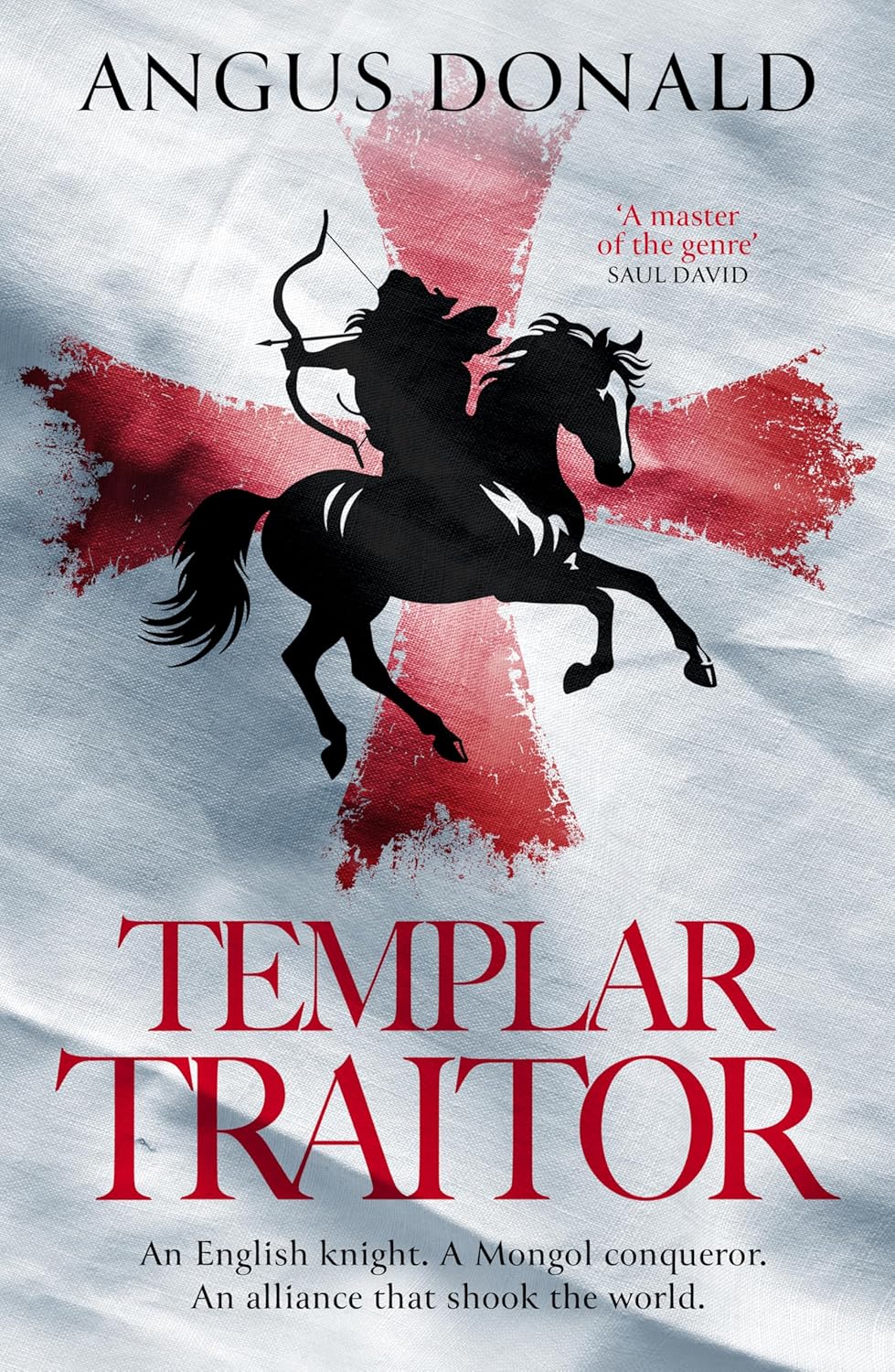
Templar Traitor by Angus Donald

Publisher: Canelo Adventures (ebook – 28 August 2025)

Series: The Mongol Knight – Book One

Length: 411 pages

My Rating: 4.5 out of 5 stars

Amazon

Those in the mood for an awesome and intense adventure should check out the soon-to-be-released historical fiction novel from Angus Donald, Templar Traitor, an outstanding book that I had a brilliant time getting through.

I have mentioned several times on my blog that my experiences with reviewing started with historical fiction, which was the main genre that I read for several years.  While I have progressed to a range of other genres since then, historical fiction still holds a very special place in my heart, and I always love to dive back into time and read a great adventure or moving tale set in our collective past.  One of the more enticing recent examples was Templar Traitor by Angus Donald.  Featuring a cool plot about an English knight fighting alongside the Mongolian horde, Templar Traitor is the first book in Donald’s The Mongol Knight series, which I really liked the sound of.  It helped that Donald is an author I have an interesting history with, as his early novel, Outlaw, was one of the first books that I reviewed professionally, and I was very keen to see how he had progressed as a writer since then.

Plot Synopsis:

“Do not lie to me, Templar, or it will be the last thing you do.”

July 1241. Christendom cowers in terror before the threat of a Mongol invasion. The swift-moving, invincible cavalry of Genghis Khan has smashed the proud, steel-clad knights of Russia, Poland and Hungary – and now Austria lies directly in their path.

At a skirmish outside the walls of Vienna, German knights capture a squad of Mongol scouts, and are astonished to discover one of their number is an Englishman – a Templar knight – who has been riding with these Devil’s horsemen for more than twenty years.

Interrogator Father Ivo of Narbonne is summoned to Vienna Castle to draw the truth from the imprisoned Englishman before his impending trial, to find out why he abandoned his Faith, his Brethren and his homeland to become… a traitor to Christendom.

This was a very impressive novel from Donald that nicely sets up a cool new historical fiction series, while also containing an intense and exciting story.  Loaded with action, adventure and some fascinating historical elements, Templar Traitor was an excellent read that I’m very glad I got to check out early.

Donald pulled together a very interesting story for Templar Traitor that cleverly makes use of a real recorded historical event and expands on it to create an elaborate tale of adventure, war and survival from the perspective of an initially eager young knight.  The framing device of the novel starts in Austria in 1241, with the capture of protagonist Robert of Hadlow, a knight from England who rides with the Mongols during their invasion of Europe.  From there, the captured Robert gives testimony to a priest with his own agendas, who is shocked to discover that Robert is a former Templar Knight who had journeyed to Mongol lands many years earlier.  From there the story dives back in time and chronicle of Robert’s life, following him as a young man ejected from Templars two decades earlier to becoming a wandering merchant travelling across Europe, before he is given the unique opportunity to try and establish an exclusive trade deal with Genghis Khan. This first part of the book was a very compelling introduction to the story, and it sets up the early story of the protagonist nicely, including his pressing reasons to undertake such a task, while also providing some fascinating historical contexts of the regions that the protagonist initially journeyed through.

From there Templar Traitor takes on a much more action-oriented edge, as Robert and his lone companion journey deep into Persia and beyond to find the Mongols, while pursued by rival European faction who seeks to secure trade for their own masters.  This resulted in some fast-paced and frenetic sequences, and the protagonist is soon dropped in amongst the Mongols, trying to find a way earn their favour.  Soon accepted as an envoy, Robert finds his place within the Khan’s army and witnesses their culture, people as well as their devastating war against the Khwarazmian Empire of Persia.  To gain Genghis Khan’s favour, Robert finds himself serving as a key figure in the invasion, which allows for multiple battle sequences, as the protagonist finds himself thrust into the centre of the war.  This resulted in a very rich and compelling historical novel, and it was fascinating to see some of Genghis Khan’s most famous battles through the lens of a western outsider.  Donald adds in a rather good twist near the end of the novel that completely alters your entire perspective of the events of Templar Traitor, while also setting up some very interesting storylines going forward.  This ended up being quite a fantastic overall story, and I appreciated how it contained a great, self-contained plot, while also working well as the first entry in a larger series.

Templar Traitor was a very strong historical fiction novel from Donald, and I really appreciated the layered book that emerged.  The use of an older, imprisoned protagonist giving his confession as a framing device for the main plot worked extremely well, especially as the experiences of the older Robert of Hadlow impact his narrative of the past.  The elaborate narrative of adventure and exploration allows Donald to really flex his historical writing ability, and he does an exceptional job exploring and showcasing the landscapes and cultures that his protagonist journeys through.  However, his best writing is saved for exploring the Mongolian armies of Genghis Khan, whom the protagonist spends more than half the book riding with.  Donald did an outstanding job diving into the complex culture and society of the Mongols throughout Templar Traitor, and the novel is loaded with compelling details and vivid descriptions.  This was further enhanced through the author’s decision to frame these descriptions through the eyes of an outsider, and it allows for some very complex scenes of misunderstanding and cultural exchange.

Naturally, much of this examination of Mongolian culture is focused on their military exploits (the protagonist did join a war camp), and you get a very detailed examination of their invasion of Persia.  The intense and bloody battle scenes are a true highlight of Templar Traitor, and you can easily imagine yourself riding amongst the Mongols as they fight through Asia, Europe and the Middle East.  I felt that Donald did an outstanding job of covering the history around this war, and it was an excellent choice to have the protagonist join the Mongols at the height of their power, rather than at the beginning of Genghis Khan’s rule.  I also enjoyed the fact that the scenes between the protagonist and his interrogator in 1241 were based on real events and Donald does an excellent job exploring a figure caught between his Christian upbringings in Europe, and his experiences living with his Mongol comrades.  The compelling narrative about the protagonist’s motivations for journeying into the East, as well as the hidden secrets beneath his main story, was featured extremely well, and I loved the complex layers that emerged around Robert.  This was a really impressive piece of historical fiction, and I really appreciated the skilled way that Donald set out his excellent story.

Overall, Templar Traitor was a great new novel from Angus Donald that is guaranteed to appeal to all historical fiction fans.  Expertly blending intense action with some great characters and a deeply intriguing historical period, Templar Traitor was a joy to read, and I look forward to continuing The Mongol Knight series in the future.
Amazon

Quick Review – He Who Drowned the World by Shelley Parker-Chan

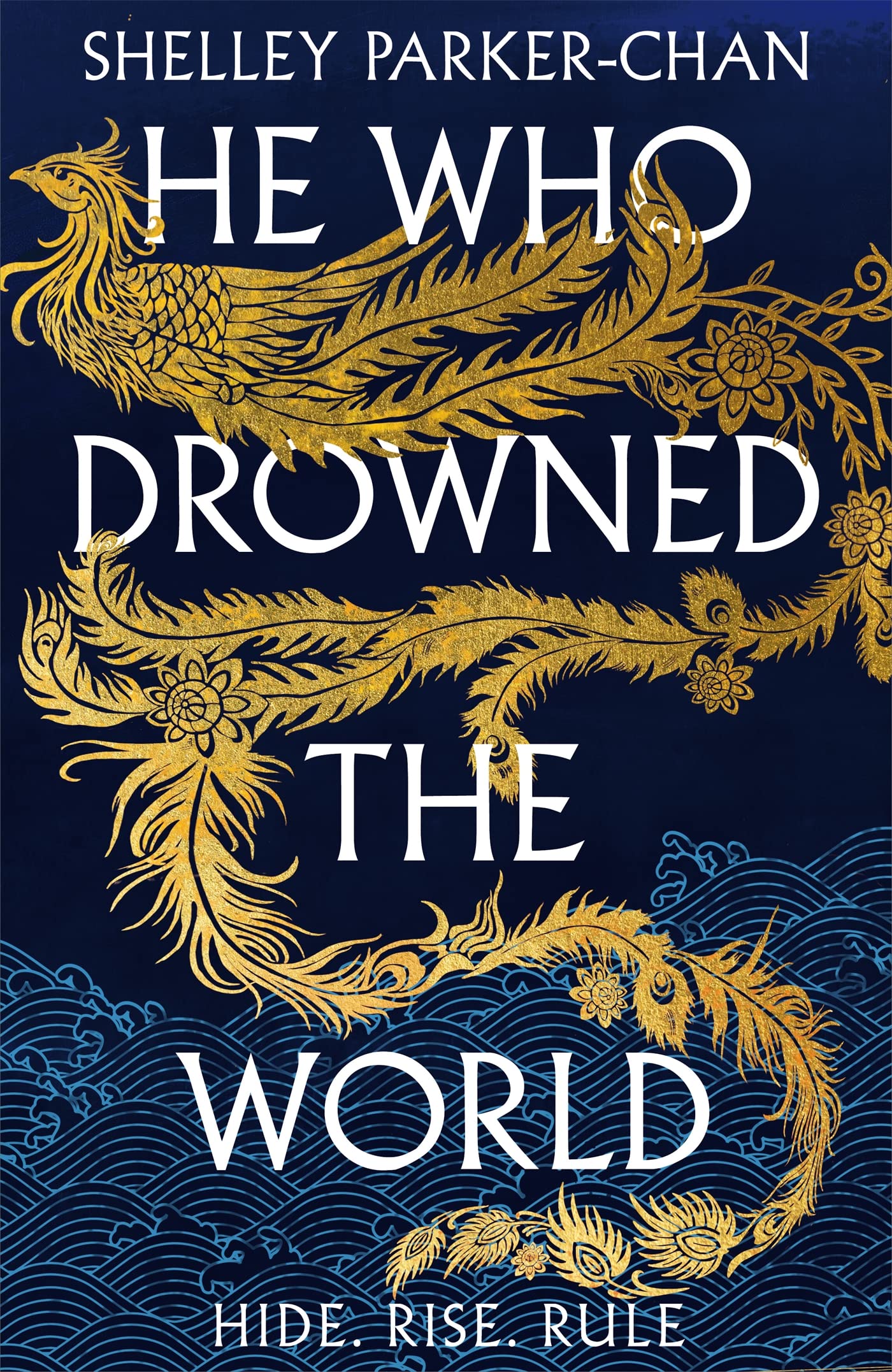
He Who Drowned The World Cover

Publisher: Mantle (Trade Paperback – 29 August 2023)

Series: The Radiant Emperor – Book Two

Length: 487 pages

My Rating: 4.5 out of 5 stars

Amazon

Rising Australian author Shelley Parker-Chan returns with the second part of her Radiant Emperor duology, He Who Drowned the World, an impressive and complex historical fantasy set in 14th century China.  He Who Drowned the World is the exciting sequel to the author’s first novel, She Who Became the Sun, which provided a compelling spin on a legendary Chinese Emperor by imagining them as a female who takes on her dead brother’s identity to achieve greatness.  She Who Became the Sun was a pretty awesome read, loaded with intriguing imagery, excellent characters, and a unique story.  I deeply enjoyed reading it when it first came out and it ended up being one of my favourite debuts and pieces of Australian fiction in 2021.  I was very excited to get a copy of He Who Drowned the World, especially as Parker-Chan does an excellent job of fishing off her epic story in a big and compelling way.

Plot Synopsis:

How much would you give to win the world?

Zhu Yuanzhang, the Radiant King, is riding high after her victory that tore southern China from its Mongol masters. Now she burns with a new desire: to seize the throne and crown herself emperor.

But Zhu isn’t the only one with imperial ambitions. Her neighbour in the south, the courtesan Madam Zhang, wants the throne for her husband – and she’s strong enough to wipe Zhu off the map. To stay in the game, Zhu will have to gamble everything on a risky alliance with an old enemy: the talented but unstable eunuch general Ouyang, who has already sacrificed everything for a chance at revenge on his father’s killer, the Great Khan.

Unbeknownst to the southerners, a new contender is even closer to the throne. The scorned scholar Wang Baoxiang has maneuvered his way into the capital, and his lethal court games threaten to bring the empire to its knees. For Baoxiang also desires revenge: to become the most degenerate Great Khan in history – and in so doing, make a mockery of every value his Mongol warrior family loved more than him.

All the contenders are determined to do whatever it takes to win. But when desire is the size of the world, the price could be too much for even the most ruthless heart to bear . . .


He Who Drowned the World
proved to be a unique and captivating novel that continued to follow former monk turned general Zhu Yuanzhang as she attempts to free China from the Great Khan, outwit her rivals, and take the throne as Emperor.  Parker-Chan dives right into this scenario as the book starts, and you are soon enthralled by the complex, multilayered story that emerges.  Thanks to the power shift from the first book, the battle for control of China turns into a fight for dominance with four armies in the field, while the shadowy Wang Baoxiang manipulates events in his favour from the shadows at the capital.  The events are shown from the various unique perspectives of the four main characters, each of whom is trying to survive and win the throne by their own methods.  I love the blend of storylines that evolved here, whether it is the main protagonist’s plan to seize her destiny no matter what, Ouyang’s destructive quest for revenge, Madam Zhang’s attempt to manipulate all the men in her life to gain power, or Wang Baoxiang’s careful and lustful politicking.  All these character arcs are deeply fun in their own right, although I must admit I found Wang Baoxiang’s storylines to be the most fascinating, mainly because he was so deliciously devious and swiftly rose up as a brilliant villain.

As the book continues, the reader is treated to some amazing story points, including Ouyang being forced to work with Zhu, who keeps winning with inventive tactics; Madam Zhang’s plots failing her left and right; and Wang Baoxiang’s malevolent rise to power, taking down everyone he gets close to.  Each of these characters gets their moment to shine, and I loved some of the interactions that emerged, especially when the characters begin to meet each other.  Zhu and Ouyang in particular play off each other perfectly, with Ouyang’s sheer anger finding no purchase with Zhu’s more Zen outlook on life, which only infuriates Ouyang more.  I really loved the part of the book that focused on the complex alliance between these two characters, and its dramatic end also works extremely well, especially as it leads to that haunting scene where Ouyang encounters his destiny only for it to destroy him.

The entire book moves at an outstanding pace, and the compelling detail, unique world-building, and fascinating characters continue to build as the novel reaches its zenith.  The final fate of Ouyang really was a major highlight of He Who Drowned the World, and the rest of the plot that follows had me hooked to the end.  The last part of the book was a little more subtle than I was expecting, but it still featured some great moments as Zhu, who is not as benevolent as you would think, sacrifices much to try and achieve victory.  The taut emotions, devastating betrayals, and determined attempts for revenge really help this conclusion stand out, and I was enthralled the entire way through.  Parker-Chan ends everything on a somewhat hopeful note, which was nice after how dark the rest of the book was, and the reader will come away from He Who Drowned the World satisfied, if a little emotionally raw and shaken.

I really must comment on the fantastic and unique setting that Parker-Chan utilised for this duology.  The overarching setting of 14th century China is pretty awesome in itself as the author worked hard to capture the unique cultural aspects of the period, such as the control by the Mongolian dynasty, while also presenting all the chaos and war that emerged when Zhu attempted to claim the throne.  However, things get even more interesting as the author works in some subtle but significant fantasy elements that really make these books standout.  These elements are all tied into a person’s right to rule as those with the will, ability and destiny are gifted with a literal Mandate of Heaven, which allows them to call forth an aurora of light and fire to show their divine right to rule.  Several key characters in the series are gifted by the mandate, and the way they use it, whether to install fear, show their divinity, or utilise it for even darker purposes, is pretty damn fascinating.  The other major fantasy element revolves around ghosts that only a few characters can see, which end up being an interesting part of the plot.  The protagonist’s ability to see and occasionally manipulate these ghosts adds a certain edge to their story, especially as it serves as a representation of their deeper guilt, regret or determination, and I felt it was a fitting character element.  The manipulation of ghosts also results in some dark scenes, especially when one of the antagonists does some horrible things to get a supernatural advantage.  This interesting blend of historical and fantasy elements really helped to give the world of these duology a fantastic and unique tinge, and I really enjoyed seeing the elaborate war story Parker-Chan set out in it.

I also enjoyed how nearly all the major characters in this book had some compelling gender and orientation feature to them, which helped to define their character and take them to some interesting places.  This includes the main protagonist taking over a male identity and entering a unique relationship with their wife, while General Ouyang deals with the shame of being a eunuch, although that doesn’t stop him from being the biggest badass in the book.  These elements were really well handled by the author, who featured them in a thoughtful and tasteful manner, and it was interesting to see how this defined them.  Parker-Chan really dove into the emotional, cultural and spiritual nature of these factors, especially in their historical context.  I particularly enjoyed how all these characters tended to rise up above the shame or taboo nature surrounding this character element, and indeed many of them used it to their advantage.  I really enjoyed seeing how well Parker-Chan utilised these elements in the plot and it made for some great representation.

I really enjoyed this distinctive and fascinating novel from Shelley Parker-Chan who produced a remarkable conclusion to her impressive debut duology.  He Who Drowned the World was a powerful, intense and complex read that really showcased the horrors of war, ambition and self-delusion.  Featuring a moving and devastating narrative, loaded with great characters and a unique take on Chinese history, He Who Drowned the World is an exceptional read and a worthy sequel to Parker-Chan’s first book.

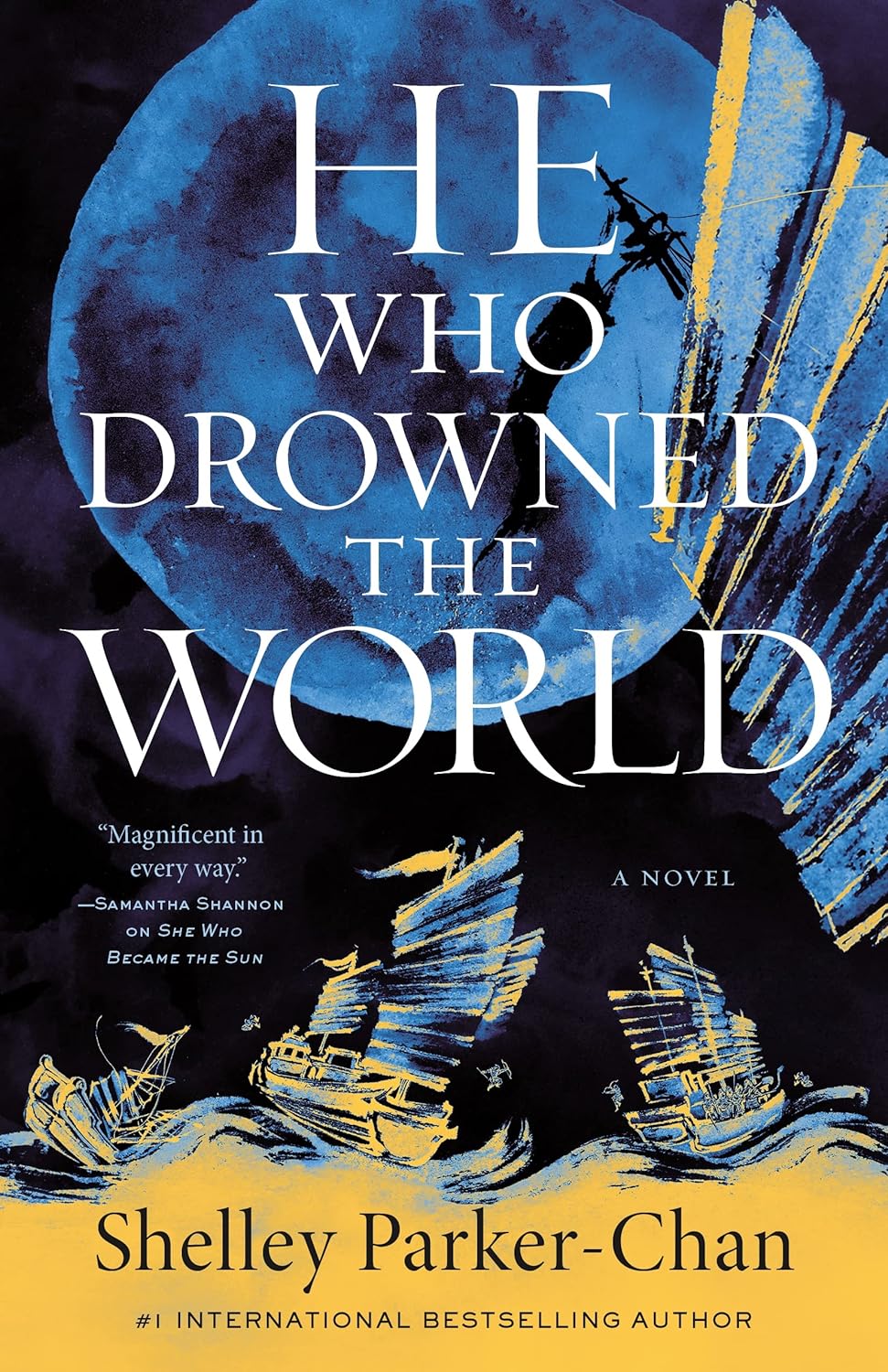
He Who Drowned the World Cover 2

Amazon