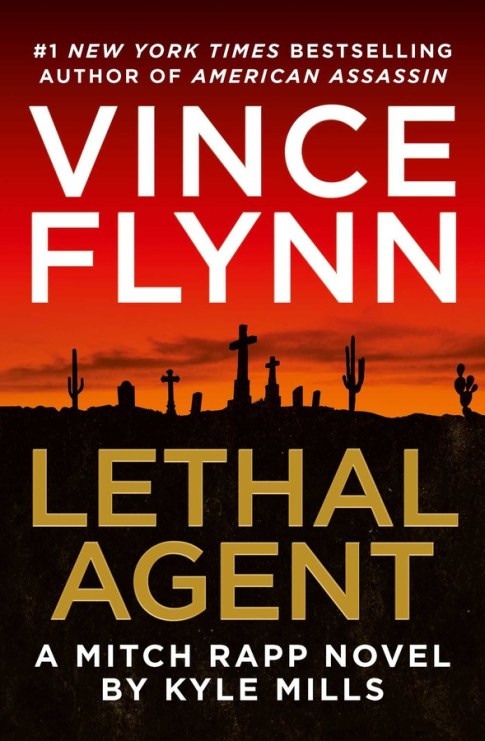
Lethal Agent by Kyle Mills (based on the series by Vince Flynn)

Lethal Agent Cover

Publisher: Simon & Schuster Audio (Audiobook – 24 September 2019)

Series: Mitch Rapp – Book 18

Length: 9 hours and 50 minutes

My Rating: 4.5 out of 5 stars

Amazon     Book Depository

Prepare to dive into a thriller rife with action, political intrigue and a killer plot with the latest book in the long-running Mitch Rapp series, Lethal Agent.

Lethal Agent is the 18th book in the Mitch Rapp series, which started back in 1999 with Transfer of Power. Initially written by Vince Flynn, since 2015 the series has been written by thriller author Kyle Mills following Flynn’s passing in 2013. I started reading the Mitch Rapp series last year, when I picked up a copy of the 17th book in the series, Red War, mainly because it had a really fascinating plot featuring a dying president of Russia going to war with the rest of the world. I ended up really enjoying Red War and I have gone out of my way to check out more military thrillers since then (this year’s Red Metal and Treason for example). In Lethal Agent, Mills takes the series back to its anti-terrorist thriller roots, as the series’ titular character, Mitch Rapp, goes up against a deadly terrorist while also having to navigate the toxic minefield that is modern American politics.

For years, legendary CIA operative Mitch Rapp has been responsible for the deaths of hundreds of America’s enemies, including numerous terrorists, fanatics, criminals and operatives of hostile foreign powers. Among those he believed he killed was the intelligent and dangerous leader of ISIS, Sayid Halabi. However, Halabi secretly managed to escape Rapp’s last attempt to kill him, and has been plotting in the shadows ever since, determined to find a way to strike back at Rapp and America.

Hiding out in Yemen, Halabi is able to capture a brilliant French microbiologist who has been working on a cure for a rare and deadly respiratory disease. Using the microbiologist to make anthrax, Halabi embarks on a campaign of terror, producing slick propaganda videos to create tension and panic within the United States. However, his real plan is to create a deadly bioweapon that will wipe out large swathes of the world’s population.

Rapp is determined to hunt Halabi down and end him once and for all, but he finds himself unable to act thanks to one enemy even he cannot defeat; politics. The upcoming battle for the presidency has become extremely ugly, and the leading candidate, Christine Barnett, is using Amercia’s fear of Halabi to make the current administration and the CIA look incompetent. She also has Rapp and his boss, Irene Kennedy, in her sights, and is determined to make them suffer for defying her. Hamstrung by the political atmosphere and no longer able to make an official move, Rapp is forced to go rogue and infiltrate a dangerous Mexican cartel who have been smuggling Halabi’s anthrax and operatives into the US. However, as Rapp moves closer to finding Halabi’s location and determining the nature of the bioweapon heading towards the states, he must deal with the fallout from Barnett’s political manoeuvring, which could end his life.

This latest book in the Mitch Rapp series is another fantastic and exhilarating read that I had a wonderful time listening to. Lethal Agent contains a thrilling, fast-paced story that goes in some fun directions, such as Rapp’s violent but effective infiltration of a Mexican drug cartel. The author does an excellent job of mixing this compelling story with fast-paced action and some clever and depressingly realistic political intrigue to create an enjoyable read that did a great job of keeping my attention until the very end. While there are some strong connections to a previous novel in this series, Lethal Agent can easily be read as a standalone novel, and I would strongly recommend it to anyone who is looking for an exciting read.

I have to say that I was impressed by Mills’s use of several point-of-view characters to tell the overall narrative of this story. While a large amount of the plot is told from the perspective of protagonist Mitch Rapp, a lot of it is also shown through the eyes of several other characters. Even though the viewpoints of Rapp, Rapp’s allies and some of the minor characters are quite fun or interesting, I personally loved the scenes shown from the perspective of the book’s various antagonists. This includes showcasing the twisted and self-serving political agenda of presidential hopeful Christine Barnett, whose attempts to take the Oval Office through fearmongering and attacks on the country’s intelligence agencies has some interesting impacts on the hunt for Rapp’s terrorist targets. I also enjoyed seeing a few scenes from the perspective of the Cartel boss Rapp is trying to get close to, and there are some great sequences where the usually confident gangster begins to realise how out of his depth he is with an operator like Rapp.

However, I thought that the chapters shown from the perspective of the book’s main antagonist, Sayid Halabi, were some of the best parts of the whole book. Halabi is an enemy of Rapp who was thought to have been killed in Enemy of the State, although the prologue of Lethal Agent shows how he managed to stay alive. Various chapters of this book are shown from Halabi’s point of view as he attempts to find a way to defeat Rapp and America, and they serve as a thrilling counterpart to the protagonist’s subsequent hunt for him. I thought it was fascinating to see the various ways that Halabi was plotting to attack America in these chapters, especially as at times he uses fear and propaganda to scare the country into immobility, rather than launch an actual attack. It was also a little disturbing to see this terrorist mastermind attempt to manipulate America’s political system by deliberately fuelling an incompetent politician’s fear mongering strategy. The use of this split perspective format really helped create a compelling novel, and Mills did a wonderful job coming up with some great antagonists for this book.

While all the espionage and spy thriller aspects of the book are extremely compelling and entertaining, the parts of the book that I found most intriguing were the various sections of political intrigue. Mills does an incredible job imitating the politics of modern-day America in his book and showing off how destructive and noxious the current political system is, especially for those people who want to become president. The focus on a politician being more concerned with their ambitions than the safety of the country, and who is willing to hamper or ignore the concerns of intelligence agencies for their own ends is something that many people can relate to at the moment. The inclusion of fearmongering as a politician’s central political tactic is also something that can be seen in the real world, and I felt that Mills had a really good depiction of it in this book, showcasing how effective it can be, and how it can impact people. While I am sure that readers from both sides of the political spectrum will be able to see politicians they despise in the character of Christine Barnett, I think that Mills was more taking aim at the rot that is infecting the entire political system rather than a particular individual. Palpable weariness seems to come out of the page whenever the book starts to talk about the modern politics in America, and a number of characters are obviously starting to become exhausted with the entire circus. The story also contains a lot of criticism towards the politics that is reducing the effectiveness of America’s intelligence community, and the story examines the potential damage that such politics could have on the country’s safety. All of this makes for an extremely intriguing inclusion into the book, which can be fascinating, aggravating and depressing all at the same time.

As you would expect from a Mitch Rapp thriller novel, Lethal Agent is chock full of enough violence and thrills to keep any action junkie sated. Rapp, a highly feared and skilled killer, tears through a ton of enemies in this book, mostly without receiving a single scratch in return. While the near-invincible action protagonist is a little played out, I did quite enjoy the various ways he showed off his skills and abilities in this book. The sequences where he systematically takes out the cartel forces are really entertaining, and I had a good laugh at a scene where he picks a lock on a cage with the fibula of one of his jailers. There is also a pretty awesome set-piece at the end of the book, which features a mass of vehicular carnage as Rapp tries to stop a terrorist attack. I did think that the sequence when he is forced to knock out coked-up facsimiles of Justin Bieber and Selena Gomez was a little weird. I understand showing two exceedingly influential but dysfunctional celebrities go insane in the same scene where the old-school Rapp reflects on the current state of America, but it was still a somewhat odd inclusion. Overall, though, if you are a fan of action-packed thrillers, then you are going to enjoy Lethal Agent.

While I enjoyed reading a physical version of Red War last year, I chose to listen to Lethal Agent on audiobook instead. This format of Lethal Agent runs for around nine hours and 50 minutes and is narrated by legendary audiobook narrator George Guidall. Despite the fact that Guidall has narrated over a thousand audiobooks in his career, this was actually the first piece of his work that I have experienced. Guidall has a fantastic voice which works very well for a high-stakes thriller novel. He also does a great job capturing the emotion of the various politicians, and there is some appropriate weariness in his voice when he describes the American political situation. If I had one criticism, it would be that most of the characters sounded very similar to each other, and it was a little hard to distinguish one person from the next. Still, I had a lot of fun listening to this book, and thanks to the intense story and short run-time, it only took me a few days to get through this book.

Lethal Agent is an excellent new addition to the Mitch Rapp series, and I loved some of the cool and intriguing directions that the author took the story. Kyle Mills has been doing a sensational job with the series since he took up the mantle of author, and I am really excited to see what sort of story he comes up with next. This is an excellent book and I would strongly recommend it to any fan of the thriller genre.
Amazon     Book Depository

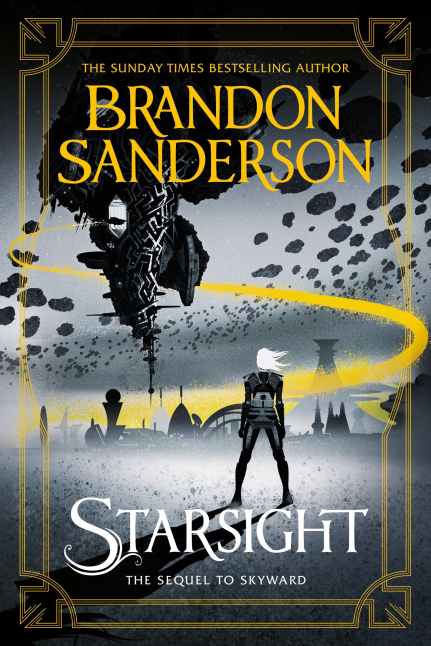
Starsight by Brandon Sanderson

Starsight Cover 2.jpg

Publisher: Gollancz (Trade Paperback – 26 November 2019)

Series: Skyward – Book 2

Length: 461 pages

My Rating: 5 out of 5 stars

Amazon

From one of the best authors of fantasy and science fiction in the world today, Brandon Sanderson, comes Starsight, an outstanding and addictive young adult science fiction read which continues the wildly entertaining adventures of a young starfighter years in the future.

Starsight is the second book in the Skyward series and follows on from the 2018 release of the same name. Skyward was a fantastic young adult science fiction book that told a compelling tale of bravery, determination and camaraderie in humanity’s distant future. Skyward was an amazing read, and it was easily one of my favourite books of 2018. As a result, I have been looking forward to Starsight for a while now, and it was one of my most anticipated releases for the second part of this year.

The Skyward series is set on the planet of Detritus, a desolate world that houses a population of humans in the caverns beneath the surface. The humans on Detritus are the remnants of a once great intergalactic human civilisation that has been destroyed in a war with a superior alien civilisation. Forced into hiding within the planet for hundreds of years, humanity eventually returned to the surface utilising scavenged starfighters to escape and build a military outpost to fight back against the alien ships who continue to harass the planet.

In Skyward, the reader is introduced to Spensa Nightshade, a young woman determined to become a pilot in the Defiant Defence Force (DDF), the military organisation that fights the alien invaders. While talented, Spensa faced opposition to being accepted into the military due to an apparent act of cowardice by her father years before. Despite the odds, Spensa was accepted in the DDF and was trained to become a skilled pilot, fighting in a number of actions against the enemy, while also trying to find out what actually happened to her father. Along the way, Spensa discovered an ancient but advanced human ship that had crash-landed on Detritus. Upon repairing the ship, Spensa discovered it had an AI installed in its computers, which she called M-Bot. After stopping an extremely destructive alien attack with the help of M-Bot, Spensa was compelled to fly through Detritus’s atmosphere, where she made several startling discoveries, the first of which was that Spensa and her family are powerful cytonics, beings with mental powers who are capable of traversing vast distances through space with their ability. The second discovery she made was that the aliens attacking Detritus were not simply mindless aggressors determined to wipe out humanity; instead they are members of an interstellar conglomeration called the Superiority, who are attempting to contain humanity within the planet. The Superiority hold a great fear of humans, who they see as an extremely dangerous and violent species, and Detritus is actually a prison planet/wildlife preserve where humans can live without disrupting the rest of the galaxy. Unfortunately, the actions of the DDF in reclaiming the surface and utilising spaceships have forced the Superiority to reconsider their approach, and they are now working to kill all the humans.

Usually this is the part of the review where I would give a brief plot synopsis of the new book and then go into an analysis of what I liked about it. However, this is going to prove a little hard to do without revealing some spoilers. While I don’t typically avoid talking about plot points that occur around 50-100 pages into book (I don’t particularly consider something happening that early to be a spoiler), I am a little more wary with Starsight. This is mainly because the plot of the book features some immediate substantial changes from the story that appeared in Skyward, none of which are really hinted at in any of the official online plot synopsis or book blurbs. As I am publishing this review a week before Starsight’s official release date, I think it is best that I put up a spoiler alert below, before I start going into the book in any real detail.

For those readers who do not want to risk any spoilers, I will say now that Starsight is an incredible book that I really, really enjoyed. Sanderson tells a wildly entertaining and highly addictive story that features some memorable characters, high-stakes events, some of the best science fiction action I have ever read and a ton of inventive world building. I honestly think that this is one of the best releases of 2019, and it easily gets a full five-star rating from me (if only I could go higher). I would highly recommend this book to anyone interested in an epic science fiction read, and if you loved Skyward, you are going to love this book.

Anyway, if you are not interested in learning any more details about this book’s plot or characters (which I do explore to a substantial degree), I would suggest you stop reading now, as everything below this paragraph has a spoiler alert in effect.

SPOILER ALERT:

Starsight is set a few months after the events of Skyward, and humanity has been busy. Thanks to Spensa and Skyward Flight, as well as the advanced technology contained with M-Bot, the DDF has managed to capture several of the planet’s ancient orbiting defensive platforms, which have allowed them to push the Superiority forces out of Detritus’s obit. However, despite these successes, humanity is still trapped on Detritus, and the eventual Superiority mass retaliation will likely wipe out everyone on the planet. Their only chance at survival is to flee from Detritus and find a new planet to make their home, somewhere the Superiority cannot find them. However, the only way to do this is with some form of hyperdrive, which humanity lacks access to, and Spensa’s cytonic teleportation abilities are too restrictive for mass use.

The crash-landing of an unknown alien spacecraft on Detritus may provide the solution that will ensure humanity’s survival. The pilot of this craft is a member of a non-Superiority species who has been invited for diplomatic reasons to enlist in a new Superiority fighter squadron, and she is able to pass on the cytonic coordinates to the squadron’s base to Spensa. Disguised with M-Bot’s holographic technology, Spensa travels to the Superiority space city, Starsight, in order to infiltrate the Superiority military and find and steal a working hyperdrive.

Joining the new Superiority squadron, Spensa discovers that she and her fellow recruits are being trained to fight the delvers, titanic inter-dimensional beings that dwell in the nowhere, who are capable of devastating planets if they are drawn into our dimension by an over-use of cytonic ability. But as Spensa attempts to complete her mission, she finds herself caught amidst the politics of the various Superiority races, many of whom wish for the complete and utter destruction of her people. Can Spensa navigate the strange new world she finds herself in, or will her actions result in the destruction of all she knows?

As you can see from the above synopsis, Starsight goes in some very interesting and unpredictable directions. I personally loved all of these new story elements, and the idea of Spensa having to infiltrate a mostly unknown alien society was a really clever and intriguing central plot idea that I think worked extremely well. The subsequent narrative is a fantastic blend of different story elements, which includes some great new characters, settings and plot directions, as well as some of the best parts of Skyward. For example, not only do you get to see a whole new take on the excellent space fighter training plot point that made the first book so amazing, but you also get a science fiction spy thriller story filled with all manner of political intrigue. This was a fantastic book to get into, and Sanderson has made sure that the plot is accessible to readers who did not get a chance to check out Skyward last year. However, I would strongly recommend reading Skyward first, not only because it will give you a better idea of the characters and certain plot elements, but because it is such an awesome book in its own right.

One of my favourite things about the first book in the Skyward series was the excellent group of characters that Sanderson focused on, including Spensa, M-Bot and the members of Skyward Flight. Throughout Skyward the reader got to know and care for these characters, and it was actually a little bit distressing when bad things happened to them. Skyward continues to look at several of the characters from the first book, although readers who grew attached to Skyward Flight might be a tad disappointed as Sanderson shifts the focus away from them and introduces the reader to a whole new group of alien characters.

Spensa is still the main point-of-view character for this second book and serves as a fantastic central protagonist. In many ways, Spensa is still the same impatient and reckless pilot that was such to see in the first book. However, it soon becomes obvious that the experiences, relationships and life lessons that she has faced since joining the DDF have tempered her in many ways, especially as she has to deal with the intense responsibility of being her people’s greatest hope for survival. I really enjoyed watching Spensa as she was forced to assimilate into the alien cultures on Starsight, and it was interesting to see how she reacted when she realised not everyone there is as evil as she believed. The opinions and support she gives to her alien friends result in some emotional moments, and it was really heart-warming to see how far she has progressed since the last book.

While Spensa is a great central protagonist, to my mind the best character in the entire book is still her sentient ship, M-Bot. M-Bot is the snarky and hilarious artificial intelligence that Spensa discovered crashed on Detritus, and together they form an efficient and enjoyable team. M-Bot honestly has all the best lines in the book, and nearly every interaction with Spensa results in some excellent jokes or banter. Despite the humour, M-Bot is a pretty complicated character, especially as in this book he is attempting to work out the full limits of his consciousness and code. He is continuously attempting to prove that he is actually alive, and these attempts result in safeguards in his system attempting to shut him down. I really enjoyed the way that Sanderson continues to utilise M-Bot. Even though he is a ship, he is still a fantastic and highly enjoyable character to focus on and we even get a reason for his mushroom obsession in this book.

Spensa’s new flight of Superiority comrades features an eclectic bunch of aliens, each with their own quirks and unique personalities. These include a figment called Vapour, who is essentially a sentient smell that can take control of ships and pilot them. Vapour is the ultimate spy and requires Spensa to be constantly on her toes. There is also the dione draft, Morriumur. Dione are a race of non-violent aliens high up in the Superiority hierarchy, who have a unique breeding system that combines the parents into one new being. This is a process that can take several goes, as the family of the newly bred dione may choose to reform a young dione so that they have an ideal personality. Morriumur is a draft, spending the first few months of their life testing out their personality to see if they are an ideal member of the species. Morriumur, who has slightly more violent tendencies than most of their species, is trying to prove that they belong as a starfighter, but the combined expectations of their family and the inner thoughts that they are not worthy, are a constant hindrance to them as a pilot.

While both of the above characters are pretty cool, and Sanderson spends a good amount of time exploring them, two members of Spensa’s new flight really stood out. The first of these is Brade, a human from another prison world who has been recruited as a cytonic enforcer by one of the book’s central antagonists. Brade, after being taken from her parents as a child, has essentially been brainwashed all her life to consider humans as evil and inferior, and this has a major damaging effect on her psyche. The interactions between her and Spensa throughout the book are quite fascinating, and she proved to be one of the most complex characters in this book. My favourite new character, however, had to be Hesho, who is totally not king of the kitsen. The kitsen are a race of tiny gerbil-like aliens who have recently converted from a monarchy to a democracy in an attempt to become a Superiority race. Hesho leads a group of around 50 kitsen who pilot one heavily armed fighter in Spensa’s squadron like it’s a capital ship. Hesho and the kitsen are really hilarious characters, mainly because Hesho is attempting to convince the Superiority that he is no longer ruling his people as a king, and instead the kitsen have embraced democracy. Unfortunately, despite Hesho insisting he is no longer a monarch in every interaction he has, his people continue to worship him, which kind of undercuts this message. I also found the similarities in the personalities between the kitsen and the Spensa we first encountered in Skyward to be very amusing, as the kitsen attempt to compensate for their size with extreme confidence and boasting like Spensa used to (for example, the first ship we see the kitsen flying is called Big Enough to Kill You).

All of the above characters are great, and I really loved the way that I was once again drawn into their various personalities and histories. It was a bit of a shame not to see too much of the characters I liked so much from the first book (although we do get an idea of what various members of Skyward Flight are up to), but I think the new characters that Sanderson introduced more than made up for it.

In addition to the fantastic character work, one of the other best features of Starsight is the epic and fast-paced action sequences that punctuate much of the book. Just like in Skyward, Sanderson presents a huge number of different scenes where Spensa is fighting or training in a fighter. The sheer amount of detail that goes into these various action sequences is pretty amazing, and I was able to picture all the flying and manoeuvres perfectly. The author comes up with a number of clever new scenarios in this book, including the fancy flying and combat required to fight a delver, or having Spensa fly in the type of craft she has been fighting against for her entire military career. All of the action in this book is first-rate, and I can guarantee that you will get lost in some of the incredible action sequences.

I have always been impressed by the elaborate worlds that Sanderson can create for his stories. Whether it is the vast fantasy world that he came up with for The Stormlight Archive, the supervillain dominated alternate version of Earth that appeared in The Reckoners trilogy, or the fantastic science fiction planet of Detritus that was the main setting for Skyward, Sanderson always delivers complex and intricate settings for his story, complete with huge amounts of backstory. In Starsight, Sanderson once again produces a huge and detailed new setting for his outstanding story. The alien civilisation that is living on Starsight is very impressive, and I love all the different alien races that he has come up with for this story. Many of the aliens have some very complex and fascinating history, a great deal of which featured in the story. I really look forward to seeing how Sanderson expands this universe even further in the final book in the trilogy, and I cannot wait to see what new aliens or civilisations he comes up with.

As you can see from this rather lengthy review, there is a lot to love about this book. Sanderson does an impressive job of combining the intriguing new story direction, the amazing characters, intense action and fascinating new setting into one concise narrative, and the end result is a perfect book. While Starsight is being marketed as a young adult book, and indeed it would prove appropriate for most young readers, it is really a novel that can be enjoyed by any reader of any age. I cannot recommend this book enough, and I am eagerly awaiting the next book in this series (which seems to be 2021 at this point, so far away!).

Amazon

Star Wars: Resistance Reborn by Rebecca Roanhorse

Resistance Reborn Cover 2

Publisher: Century (Trade Paperback – 5 November 2019)

Series: Star Wars

Length: 298 pages

My Rating: 4.5 out of 5 stars

Amazon     Book Depository

The road to the final movie in the Skywalker Saga, Star Wars Episode IX: The Rise of Skywalker, begins here with this intriguing tie-in novel, Star Wars: Resistance Reborn, by recent fantasy phenomenon Rebecca Roanhorse. Resistance Reborn is a fantastic and action-packed book that attempts to bridge some of the gaps between The Last Jedi and the upcoming The Rise of Skywalker.

This latest book is a very interesting addition to the Star Wars tie-in media range, and it is one that all major Star Wars fans are going to be very keen to get their hands on. Resistance Reborn is the latest Star Wars tie-in novel and it is deeply connected with the upcoming ninth film in the main Star Wars storyline, The Rise of Skywalker, which is set for release in about a month. This book is one of several pieces of upcoming Star Wars tie-in fiction that attempt to fill in some gaps surrounding the plot of the upcoming film, other examples of which include the Force Collector young adult novel, the Star Wars: Allegiance comic book and even Black Spire, to a lesser degree. Resistance Reborn is probably the most exciting one on the list, as it is going to be the novel that is most closely connected with the events of the movies.

Following on shortly after the devastating events that occurred on the isolated planet of Crait at the end of The Last Jedi, the Resistance has been decimated by the tyrannical First Order. Seemingly abandoned by their friends and allies throughout the galaxy, only a few members of the Resistance have survived and are now in hiding. Those remaining Resistance members are as determined as ever to fight and are willing to risk it all the save the galaxy.

To that end, the leader of the Resistance, General Leia Organa, has sent her few remaining compatriots out into the galaxy in an attempt to find more volunteers, supplies, ships and, most importantly, leaders and strategists who can help guide the Resistance to victory. While her teams are able to find a few valuable recruits, including some old friends from the days of the Rebel Alliance, the situation is looking grim.

The First Order have started to establish their dominance throughout the entire galaxy, and few are willing to stand before them. Whatever allies or supporters the Resistance might have been able to count on have gone missing, apparently the victims of an oppressive roundup by the First Order. As Poe Dameron and the remains of his squadron attempt to recover a prisoner list that contains the details of the fate of these dissidents, it soon becomes apparent how far the reach of the First Order has grown. Can the Resistance survive, or will the shadow of the First Order overwhelm them all?

This was an outstanding read that not only tells a fantastic and enjoyable story that features several iconic characters, but it also does a great job of connecting The Last Jedi (which I have to admit was not my favourite Star Wars film) and The Rise of Skywalker. In addition to that, the author, Rebecca Roanhorse, who has gained a lot of positive attention in the last two years with her debut The Sixth World series, has also included quite a number of fun references to other works of Star Wars fiction, making this an entertaining read for fans of the franchise.

The first thing that I want to address about Resistance Reborn is how this book adds to the background of the upcoming Star Wars film. It shows the reader how the Resistance starts to rebuild itself before The Rise of Skywalker. The events of episodes VII and VIII saw the Resistance stripped of many of the resources and allies that they needed to fight the First Order. The Force Awakens featured the annihilation of the New Republic, the Resistance’s main supporters and one of the few galactic powers that could match the First Order, while The Last Jedi saw the destruction of most of the remaining Resistance forces, including pretty much all of their senior leadership. However, the recent trailer for The Rise of Skywalker shows quite a significant fleet of Resistance ships in a big climatic battle. A major question then arises: where did the Resistance get all of these people and ships after all their significant defeats? Resistance Reborn, which is set only a few days after the end of The Last Jedi, attempts to show how Leia and the Resistance were able to start gaining some initial recruits and materials. This is a rather intriguing storyline which shows how desperate the situation is for the Resistance and how powerful and widespread the First Order has become. I liked some of the explanations for why the Resistance was abandoned by their allies at the end of The Last Jedi, and Roanhorse comes up with a good explanation for how the protagonists found their initial batch of new recruits. The end of the book presents a rather interesting scenario for the entire Resistance, which does explain a few things that I noticed in the trailer for The Rise of Skywalker. Overall, based on what I can guess is going to occur in the upcoming film, I would say that this is an excellent bridge between the events of The Last Jedi and The Rise of Skywalker, although I am very curious to see how many aspects of this book do end up appearing in this new movie.

One of the cool things that I liked about Resistance Reborn was the cool way that Roanhorse split the story between an interesting mixture of characters. Rather than solely focusing on the central protagonists of the films, the author has instead included an intriguing choice of new point-of-view characters that fans of the extended Star Wars universe are likely to already be familiar with. That being said, there are a number of notable inclusions from some of the main characters in the book, and there are also a couple of new characters introduced in this book who get a few point-of-view sequences.

The main character of the book is Poe Dameron, who spearheads the Resistance’s attempts to gain new recruits. Poe was a good choice as the central character, as not only is he one of the central leaders of the Resistance and their main man of action but he is also still recovering emotionally from the events of The Last Jedi. The regrets he bears from his mutiny on the Raddus and the role he played in the devastation of the Resistance are still weighing heavily on his mind, and it results in some fantastic and emotional sequences from him and the people he interacts with. Roanhorse also spends a bit of time following General Leia as she recovers from all the traumatic events of the last two movies. In this book, Leia is showing quite a few hints of despair after all the losses she has recently experienced; however, it is heartening to witness her start to regain her drive and hope by watching the actions of the younger members of the Resistance.

It was very interesting to see that the rest of the main cast of the recent Star Wars films were not utilised as major characters in this book. You barely get to see anything of major characters like C-3PO and Chewbacca, and even Rey only gets a few minor scenes. Finn features a little bit towards the end of the book as he joins Poe on a mission. I really liked the interactions between Poe and Finn in this book, and I am curious to see whether this is a hint at some sort of romantic relationship occurring between them in the film (there are quite a few fan theories about that out there). Even if it doesn’t, I was very happy that this book actually contains a decisive end to that terrible romance that sprouted between Finn and Rose in the last film. Resistance Reborn did not feature any appearances from the major antagonists of the last two films; instead, the First Order as a whole were the book’s antagonists. While I would have liked to see some scenes of Kylo Ren or General Hux squabbling for dominance or expanding their influence, I did like the use of whole organisation as an opponent, and it was an effective way of showing off just how dangerous and malignant the First Order can be.

Quite a lot of time is also spent exploring some of the lesser-known members of the Resistance and some of their recent recruits. This includes members of Poe Dameron’s squadron of fighters, Black Squadron, who appeared in The Force Awakens; the protagonist of a previous trilogy of books, Norra Wexley; and the current version of Inferno Squadron from the Battlefront II video game, Shriv and Zay. These characters appear as fairly significant point-of-view characters throughout this book, and it was interesting to see the perspective of these lesser-known Star Wars characters as they fight as part of the Resistance. However, out of all the characters that appeared in this book, the one I was most happy to see was Wedge Antilles. Despite only being a minor character in the original trilogy of films, Wedge has long been a favourite of Star Wars fans due to his many appearances in a multitude of different extended universe formats, including books, comics, games and the Star Wars Rebels animated show, in both the previous canon and the current, Disney-operated canon. It was recently announced that Wedge would be appearing in The Rise of Skywalker, and this book reintroduces him in the current chronology of the films, showing him come out of retirement to once again fight the good fight. This was a really cool addition to the story, and I personally was so happy to see Wedge once again.

Probably one of the things that I liked the most about Resistance Reborn was the huge amount of Star Wars references that Roanhorse was able to fit in this book. Not only are there the obvious connections to the previous Star Wars movies but Roanhorse has made sure to tie the story into a number of other pieces of media from across the Star Wars expanded universe. Several of the characters that she has included in this book first appeared in other pieces of expanded universe fiction, such as the members of Inferno Squadron, who were the protagonists of Battlefront II. The characters of Norra and Snap Wexley were the protagonists of the Aftermath trilogy of Star Wars books, which ran between 2015 and 2017, while Snap and the rest of Black Squadron were also major characters in the Poe Dameron series of comic books. There are also a number of references to the 2016 novel Bloodline, and Resistance Reborn actually contains an interesting conclusion to one of the significant events from this prior book. Finally, there are a number of brief references to characters or events that occurred in a number of other books, comics or television shows, such as Wedge reminiscing about his recruitment to the Rebel Alliance during the third season of Star Wars Rebels, or a discussion of Ryloth’s history of oppression, which was shown in both the Rebels and The Clone Wars animated shows. Obviously, readers who are major fans of the Star Wars expanded universe are going to love all these fun inclusions, and I personally was really impressed with everything that Roanhorse was able to fit in. These inclusions did not overwhelm the overall plot of the book, so the story is very accessible to readers who are less familiar with the expanded Star Wars lore and who won’t get those references.

Resistance Reborn by Rebecca Roanhorse is an outstanding new entry in the Star Wars canon which I ended up enjoying quite a lot. Not only does this book offer some intriguing insights into the long-awaited The Rise of Skywalker, but it also features a ton of fantastic references and characters from across the Star Wars franchise, inclusions which are sure to please mega Star Wars fans like this reviewer. Required reading before The Rise of Skywalker comes out, this book comes highly recommended and was a lot of fun.

Amazon     Book Depository

Tiamat’s Wrath by James S. A. Corey

Tiamat's Wrath Cover

Publisher: Recorded Books (Audiobook – 26 May 2019)

Series: The Expanse – Book Eight

Length: 19 hours and 8 minutes

My Rating: 5 out of 5 stars

Amazon     Book Depository

With 2019 coming to an end, it is about time I got around to writing a review for one of the best science fiction books of the year, Tiamat’s Wrath by James S. A. Corey, the eighth book in the extremely popular The Expanse series. James S. A. Corey is the collaborative name of co-authors Daniel Abraham and Ty Franck, but for the purposes of this review it is simpler to treat Corey as an individual.

Tiamat’s Wrath is an outstanding piece of science fiction that I had an amazing time listening to earlier in the year. Despite being extremely keen for this book, I did not get around to reading it until a month or two after it came out, but when I did get a chance to listen to Tiamat’s Wrath, I absolutely loved it and it was one of my favourite books from earlier in the year. However, I completely failed to write a review immediately after finishing it, and it kind of got lost in the pile of books I needed to review as I read more and more stuff.

The Expanse books, which started in 2011 with Leviathan Wakes, are an extremely complex and outstandingly well-written science fiction series, which have also been turned into a very popular television show of the same name. It is important to note that while all the books in The Expanse are connected by the same universe, overarching plot and central characters, the story can be broken up into three separate trilogies of novels. After the success of the first eight books, the authors are starting to wrap up the series, with the upcoming ninth book (hopefully coming out sometime in 2020), being the last in the series. Not only is Tiamat’s Wrath the penultimate book in the series; it is also the second book in the last trilogy of the series, which started with 2017’s Persepolis Rising.

Tiamat’s Wrath is set a short time after the events of Persepolis Rising, when the Laconian Empire, under the command of High Consul Winston Duarte, successfully utilised advanced alien technology to take control of the entire gate network and destroy the navies of Earth and Mars. The Laconians now rule the entire galaxy, and the crew of the Rocinante (the central protagonists of The Expanse series), are wanted criminals as they fight a guerrilla war. This was another incredible addition to The Expanse series that not only contains a vast and captivating story in its own right but which sets up a fascinating scenario for the final book in the franchise.

Goodread’s Synopsis:

Thirteen hundred gates have opened to solar systems around the galaxy. But as humanity builds its interstellar empire in the alien ruins, the mysteries and threats grow deeper.

In the dead systems where gates lead to stranger things than alien planets, Elvi Okoye begins a desperate search to discover the nature of a genocide that happened before the first human beings existed, and to find weapons to fight a war against forces at the edge of the imaginable. But the price of that knowledge may be higher than she can pay.

At the heart of the empire, Teresa Duarte prepares to take on the burden of her father’s godlike ambition. The sociopathic scientist Paolo Cortázar and the Mephistophelian prisoner James Holden are only two of the dangers in a palace thick with intrigue, but Teresa has a mind of her own and secrets even her father the emperor doesn’t guess.

And throughout the wide human empire, the scattered crew of the Rocinante fights a brave rear-guard action against Duarte’s authoritarian regime. Memory of the old order falls away, and a future under Laconia’s eternal rule — and with it, a battle that humanity can only lose – seems more and more certain. Because against the terrors that lie between worlds, courage and ambition will not be enough…

For the plot of Tiamat’s Wrath, Corey tells the story from the perspective of several separate point-of-view characters, each of whom has a number of chapters throughout the book. This was a very interesting combination of character perspectives that helped explore various aspects of the galaxy following the rise to power of the Laconians. Three of the main point-of-view characters are former Rocinante crew members Naomi Nagata, Bobbie Draper and Alex Kamal, each of whom is involved in the war against the powerful Laconian Empire. Another point-of-view character is returning character Elvi Okoye, who, despite her loyalties to her friends upon the Rocinante, finds herself employed by High Consul Duarte as one of his primary scientists exploring the alien technology, and later finds herself drawn into the Laconian inner circle. The fifth main character is new protagonist Teresa Duarte, daughter of the High Consul, who provides insight into growing up in the Laconian Empire and the political intrigue of the capital. In addition to the five characters mentioned above, the book’s prologue, epilogue and interludes are narrated by former Rocinante captain James Holden, who is being held prisoner on Laconia and who is attempting to manipulate the system from within.

I really enjoyed the author’s use of these multiple viewpoints, especially as it allowed them to tell a complex and widespread story set across several different solar systems. Each of these various viewpoints provides the reader with different information and insight into the both the Laconian Empire and the unknown alien threat that has sprung up. While Elvi and Teresa’s story arcs are pretty fascinating and I quite enjoyed the combination of politics and alien science that filled their chapters, my favourite parts of the book are the chapters told from the perspectives of Naomi, Bobbie and Alex. This is mainly because these chapters focused on their fight against the Laconian Empire, and I really enjoyed the detailed and captivating accounts of a large-scale guerrilla conflict in a massive space location. Each of these three characters shows off a different aspect of this fight, including Naomi acting as the resistance’s master strategist while living in a supply crate, Bobbie’s work as a marine and drill sergeant on the frontline and Alex’s job piloting various combat craft into battle. Thanks to these three characters, you get an amazing idea of how this war is being fought, and the various issues involved with facing a seemingly invincible opponent. I also liked how all the various character arcs came together extremely well as the book progressed, creating a first-rate narrative that proved to be extremely addictive.

I am a man who loves his science fiction action, and I have to say that I had an absolute blast with the action sequences in this book. Corey has absolutely packed this book full of various battle sequences in space, as the protagonists go up against the various Laconian forces in both smaller skirmishes and one massive full-system assault. Not only are the battles pretty spectacular in their own right, but I love how realistic the author has tried to make them, with things like gravity, the lack of sound in space and communication delays across vast distances all taken into account. All this consideration really makes the combat in Tiamat’s Wrath stand out, and it added a lot to my overall enjoyment on this novel.

While this is an excellent piece of science fiction and an amazing read, due to its position as the eighth book in the series, and the middle book in the final trilogy, Tiamat’s Wrath is probably not the best book to start exploring The Expanse with. While Corey does a pretty good job of making this book accessible to new readers, I would strongly suggest that readers at least check out the previous book in the series, Persepolis Rising, first, as it will help readers understand more of the complex science fiction and story elements. There is no doubt in my mind that existing fans of The Expanse will love this fantastic book, especially as it takes the story in some interesting directions and sets up the series for a pretty epic conclusion. That being said, some of the developments that occur during the book are going to make dedicated The Expanse readers very sad, especially if they have grown attached to certain characters.

I ended up listening to the audiobook format of Tiamat’s Wrath, narrated by Jefferson Mays. This is a pretty substantial audiobook, running for just over 19 hours (indeed it would have just made the top 20 on my Longest Audiobook list), but I ended up getting through it rather quickly as I had a hard time turning it off. I found the audiobook to be a fantastic way to enjoy this book, and I think I absorbed a lot more of the detailed science fiction plot by listening to it. Mays has a great voice for narration, and I really enjoyed his take on the various characters in the book. All in all, listening to the audiobook version of Tiamat’s Wrath was a great experience, and I will probably end up doing the same for the final The Expanse book when it come out.

Tiamat’s Wrath is an exceptionally powerful novel that is easily one of the best books I have read so far this year. The Expanse’s authors have absolutely outdone themselves with this eighth book, which tells a complex and intriguing science fiction story. Featuring a first-rate story, a great group of core characters, some impressive action and the author’s typical attention to scientific detail, Tiamat’s Wrath comes highly recommended, and I am still kicking myself for taking so long to review this.

Amazon     Book Depository

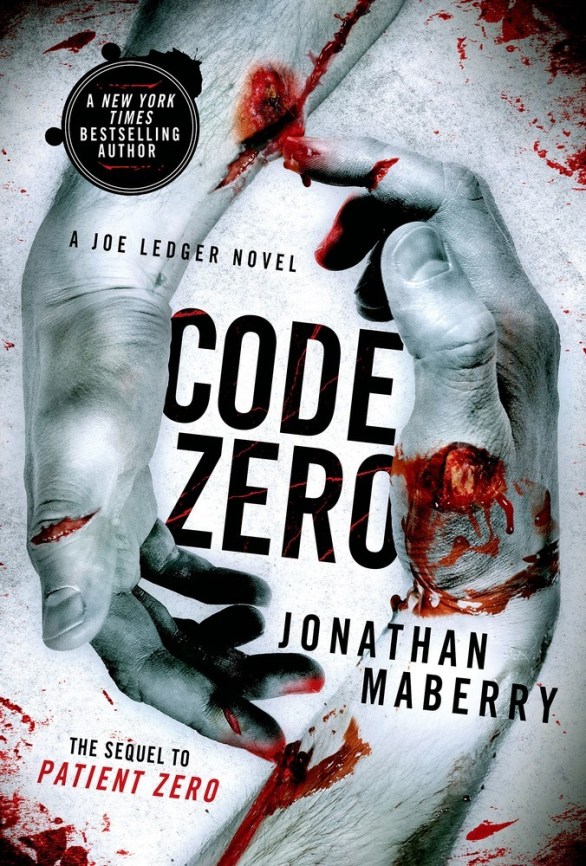
Throwback Thursday – Code Zero by Jonathan Maberry

Code Zero Cover.jpg

Publisher: Macmillan Audio (Audiobook – 25 March 2014)

Series: Joe Ledger series – Book Six

Length: 16 hours and 6 minutes

My Rating: 5 out of 5 stars

Amazon     Book Depository

Reviewed as part of my Throwback Thursday series, where I republish old reviews, review books I have read before or review older books I have only just had a chance to read.

The ghosts of the past come back to haunt Joe Ledger and the DMS big time in this sixth book in Jonathan Maberry’s high-octane science fiction/military thriller Joe Ledger series.

For years, the Department of Military Sciences (DMS) has saved the world from some of the most deadly and insane weapons that science can create: race-specific bioweapons, genetically enhanced super soldiers, powerful plagues capable of killing people in the most horrendous way and even a pathogen that is capable of bringing its victims back to life as zombies. Each of these has been stopped by DMS agents and the legendary Joe Ledger, but these horrors are about to resurface in the most devastating of ways.

The mysterious hacker and terrorist Mother Night has been causing the DMS trouble for months, but when she broadcasts a call for anarchy, no-one is prepared for what happens next. Across America, Mother Night’s followers unleash hundreds of random acts of violence, causing horrendous amounts of terror and destruction. As Joe Ledger and the DMS attempt to counter them, a subway car full of people in New York is infected with something disturbingly familiar, the Seif-al-Din zombie pathogen that bought Ledger to the DMS in the first place.

As Ledger and Echo Team are once again forced to contend with the zombie victims of the pathogen, they find themselves targeted from several devastating angles. As the threats become more and more personal, it soon becomes apparent that they are facing someone who knows the DMS intimately and who is willing to use the most lethal tools at their disposal to win. Can Ledger and the DMS survive, or will the world burn at the hands of Mother Night?

Jonathan Maberry’s Joe Ledger books are one of my favourite series at the moment, and I love each book’s excellent blend of compelling storytelling, complex characters, over-the-top villains, electrifying action and insane plot points, which come together into fantastic, first-rate narratives. Ever since I read and got hooked on the tenth book in this series, Deep Silence, about this time last year, I have been periodically reading and reviewing the earlier novels in sequence. So far, I have read the first six novels, Patient Zero, The Dragon Factory, The King of Plagues, Assassin’s Code, The Extinction Machine and this novel, Code Zero. I am actually reviewing this book a little out of order, as I recently powered through both The Extinction Machine and Code Zero while I was away on holidays. As Code Zero is fresher in my mind, I decided to review it first, and I will hopefully get a review for The Extinction Machine up soon as well (the plan is to get it done before the next Joe Ledger book, Rage, comes out in November, but we’ll see how we go).

Considering how much I absolutely loved the rest of the books in the series, it is going to come as no surprise to anyone that I also really enjoyed Code Zero. This sixth book was pretty spectacular, and it is easily one of my favourite books in the entire series, only just being beaten out by The Dragon Factory. In Code Zero, Maberry has made sure to utilise several of the excellent features from the previous Joe Ledger books that l really love and have commented on previously, such as a first-rate story filled with intense action, a smartassed and damaged protagonist, a great group of side characters (including one of the best dogs in all of fiction) and a clever utilisation of flashbacks and multiple perspectives. This book also features some other great story and character elements that really make it stand out from the rest of the series, and which help make it such an outstanding and epic read.

I have mentioned before that one of the best things about the Joe Ledger books is the awesome antagonists that Maberry creates for each of the novels. These have so far included genetically modified Nazis, world-event manipulating masterminds and even a group of vampires. However, the villain of Code Zero, Mother Night, is perhaps one of the most interesting and complex antagonists that Maberry has come up with. Mother Night is an outstanding character who not only has a close connection with the DMS, but whose elaborate master plan does a great deal of damage. I really liked how Maberry used a series of flashback filled interludes to explore the background of this character. These flashbacks show how Mother Night is connected to all the DMS characters and examine how her exposure to various characters and threats from the previous books slowly corrupted her, and why she was compelled to become a terrorist. Despite this being the first book that Mother Night has appeared in, Maberry did a sensational job tying the character into many of the key events from the first three novels, and showing how she was actually involved with some of the previous threats. All of these cool connections really help up the personal stakes for all of the protagonists, and it allows Mother Night to actually hit Joe Ledger and his team harder than anyone else has before, resulting in an extra dramatic and compelling story.

Maberry also uses Mother Night’s plot to examine some rather interesting elements of the modern world. For example, the anarchist movement is explored in some detail, as Mother Night uses anarchist elements in her call to arms, gathering up members of America’s disenfranchised youth to form an army. There is also a rather intriguing look at the role video games can play in violence or espionage. This is not done in an attempt to demonise video games; instead Maberry, through several of the videogame savvy characters, explores how important problem-solving is for gamers, and how the skills obtained there can have real-world applications in both the espionage and defence worlds. The subsequent study of game theory and the desire to win that some gamers feel is particularly fascinating, and it adds very some interesting layers to the story and Mother Night’s overall character.

In addition to this incredible antagonist, the other thing that I absolutely loved about Code Zero is the fact that Maberry decided to bring back some of the iconic threats and story elements from the previous books in the series. Not only did the author do an outstanding job of working these pre-existing story elements into Code Zero’s plot, but their reappearance was also an excellent homage to the earlier books and a real treat for fans of the series. I really enjoyed seeing Ledger have to go up against threats like the walkers and the berserkers again, especially as each of these threats have pretty strong emotional triggers for him due to devastating previous missions. It was also really interesting to see the new and various ways that the antagonist utilised these existing elements in her own plans, and there were some really fun combinations of the insane scientific elements, such as a couple of berserkers who have been infected with Generation 12 of the Seif-al-Din Pathogen, and it’s as awesome as you’d expect.

As this is a Joe Ledger book, Code Zero is of course filled to the brim with all the action and fire fights that you could ever need. Due to the presence of so many varied threats, including some of the monsters from the previous books, Code Zero probably has some of the most intriguing fight scenes in the entire series. This book is filled with a number of elaborate battle sequences in which the protagonists face off against a variety of different opponents at the same time. These opponents can include walkers, berserkers and gunmen disguised as zombies hiding amidst the walking dead, which is just so many layers of awesome. Maberry has an exceptional talent for writing fight sequences, and all this amazing action really helps to get the adrenaline pumping. I also have to commend all of the first-rate zombie scenes in the book, as the author crafts some truly horrifying scenes that showcase how terrifying and emotional damaging it would be to face off against these undead monsters.

As with all the previous books in the Joe Ledger series, I chose to listen to the audiobook format of Code Zero which was narrated by Ray Porter. Clocking in at just over 16 hours, I managed to get through this audiobook fairly quickly, mainly because I started listening to it while on an international flight. I think it is pretty clear at this point that I really enjoy listening to the audiobook versions of the Joe Ledger books, mainly due to the narration of the outstanding Ray Porter. I have sung Porter’s praises in all of my previous reviews, and I really cannot express what a good job he does bring the series titular protagonist to live with his voice work. Code Zero was no exception, and I would strongly recommend the audiobook format to anyone even vaguely interested in this book.

Code Zero by Jonathan Maberry is another spectacular book in the Joe Ledger series, and one that I absolutely loved. Maberry continues to utilise some of the amazing story elements that made his previous six books so darn enjoyable, and he ups the ante with another exceptional antagonist and the clever reuse of memorable story elements from previous books in the series. All of this results in another science fiction/thriller masterpiece that gets an easy five out five stars from me, and it is possibly one of the most enjoyable books I have read so far this year.

Amazon     Book Depository

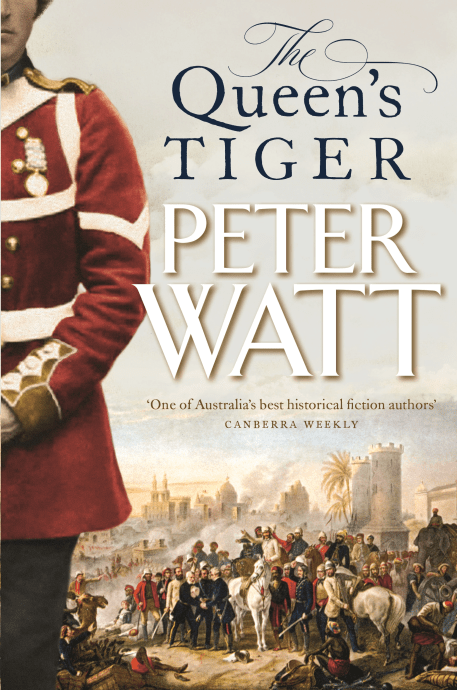
The Queen’s Tiger by Peter Watt

The Queen's Tiger Cover

Publisher: Macmillan (Trade Paperback – 12 November 2019)

Series: The Colonial series – Book 2

Length: 360 pages

My Rating: 4.5 out of 5 stars

Amazon     Book Depository

One of Australia’s best historical fiction writers, Peter Watt, returns with another exciting historical adventure in The Queen’s Tiger, the outstanding sequel to his 2018 release, The Queen’s Colonial.

Following on from the events of The Queen’s Colonial, in 1857, former Australian settler Ian Steele is still living under the guise of Samuel Forbes, a rich English noble who Ian bears an uncanny resemblance to. Ian switched places with Samuel in order to help him meet the required military service he needs to receive a vast inheritance. Serving as a captain in Queen Victoria’s army, Ian has proven himself to be a natural soldier, fighting against the odds dozens of times over against the most vicious enemies of the crown. However, despite the formidable enemies he has faced on the battlefield, Ian has encountered greater dangers far closer to home, as Samuel’s father and his murderous brother Charles are determined that Samuel will never receive his inheritance.

As Ian and his men, including his old friends Sergeant Conan Curry and Corporal Owen Williams, return from fighting the Persian army in Iran, a dangerous threat to the empire is brewing in India. Indian troops under the employ of the British East India Company have begun to mutiny, and the country, caught up in a swell of anti-British nationalism, is beginning to violently rebel against British rule. Among those caught up in the chaos are Samuel’s sister Alice and her husband the surgeon Peter Campbell, whose honeymoon turns into a brutal fight for survival.

Redeployed to India, Ian is once again leading the charge in some of the campaign’s most deadly battles against a determined foe. However, the biggest threat to his survival is happening half a world away back in England, as the real Samuel Forbes returns to London for a personal meeting under the name Ian Steele. When Samuel is spotted and his true identity is suspected, he finds himself hunted throughout England by Charles’s agents, determined to prove that Ian is an imposter. Can Ian and Samuel continue their ruse amidst the tragedy, tribulations and conflicts they encounter, or will the evil forces arrayed against them finally bring them down?

This was another fantastic book from Peter Watt, who has a true knack for producing compelling historical adventures filled with action, intrigue and family drama. The Queen’s Tiger is the second book in Watt’s Colonial series, which follows its protagonists through some of the most dangerous conflicts that the British army found itself involved with during the 19th century. I have to admit that I have been quite keen to check this book out for a little while, and not just because it quotes one of my Canberra Weekly reviews on the cover. The first book in this series, The Queen’s Colonial was an excellent read, and it did a good job following up Watt’s long-running Frontier series of which I was a big fan (make sure to check out my Canberra Weekly reviews for the last two books in this series, While the Moon Burns and From the Stars Above).

The Queen’s Tiger continues the intriguing story from the first book, which saw a simple Australian blacksmith pretend to be an English gentleman in order to serve as an officer in the Queen’s army. This was a compelling start the series, and I am glad that Watt has continued to follow through the fun blend of military action, intrigue and character interactions that have been a signature writing trend of his for some time. The Queen’s Tiger contains a wide-ranging story that covers several characters across a number of continents. This allows the author to showcase a number of different and enjoyable storylines within one book, and as such we can have one section of a book that focuses on the military action and adventure being undertaken by several of the characters in India, and the next section than looks at the sinister plotting of the book’s antagonists, or the desperate attempts of the real Samuel to keep his identity secret in England. In addition to their ongoing adventures, the author also explores the various relationships and romances that the various characters have, painting a rich tapestry of these point-of-view characters’ lives. This is a wonderful combination of storylines, all of which comes together into an excellent and highly enjoyable read.

Just like he did with the Crimean War in The Queen’s Colonial, Watt does a fantastic job bringing an intriguing historical conflict to life in this book, with his focus and examination of the Indian Mutiny of 1857. The book actually follows the entire duration of the Indian Mutiny and showcases most of the key moments of the rebellion that turned into full-scale war for independence. As a result of the way that Watt positioned his characters from the first book, the reader gets to see two separate parts of the mutiny. Alice and Peter’s storyline, which also features the new major character of Scott Campbell, focuses on how the English people who were living in India when the mutiny started would have perceived what was going on, and the desperate battle that the English forces garrisoned in India faced against a mass rebellion of their Indian soldiers. Ian’s storyline, on the other hand, shows the battles that the English relief force faced as they tried to retake the country and rescue the English citizens trapped within. This was an extremely fascinating historical event, and I think that Watt’s portrayal of this conflict was extremely intriguing and compelling. Based on the comments in the historical notes section of this book, it looks like Watt is planning to take his characters through a number of England’s various 19th century military campaigns in the following books, and I look forward to seeing where they end up next.

Needless to say, a book that has such a strong focus on soldiers and the Indian Mutiny is going to be very heavy on the action, as the protagonists fight in several battles across Indian and Iran. There are a significant number of fast-paced sequences throughout this book, from the various battles and skirmishes that occur during the mutiny, to thrilling chase scenes in the backstreets of London. Watt’s grasp of 19th century military combat is quite impressive, and there is a very realistic feel to the huge number of fight sequences that occur throughout the book, as he focuses on the tactics and weaponry of the British infantry man. As a result, there is rarely a dull or quiet moment in this book, and action fans will really appreciate the cool fights occurring throughout the book.

Peter Watt has once again delivered an electrifying and enthralling piece of historical fiction with The Queen’s Tiger. Featuring some amazing depictions of a deadly part of history, as well as a bunch of great characters whose various adventures, deceptions and relationships are particularly intriguing, this is a fantastic piece of Australian fiction that is really worth checking out.

Amazon     Book Depository

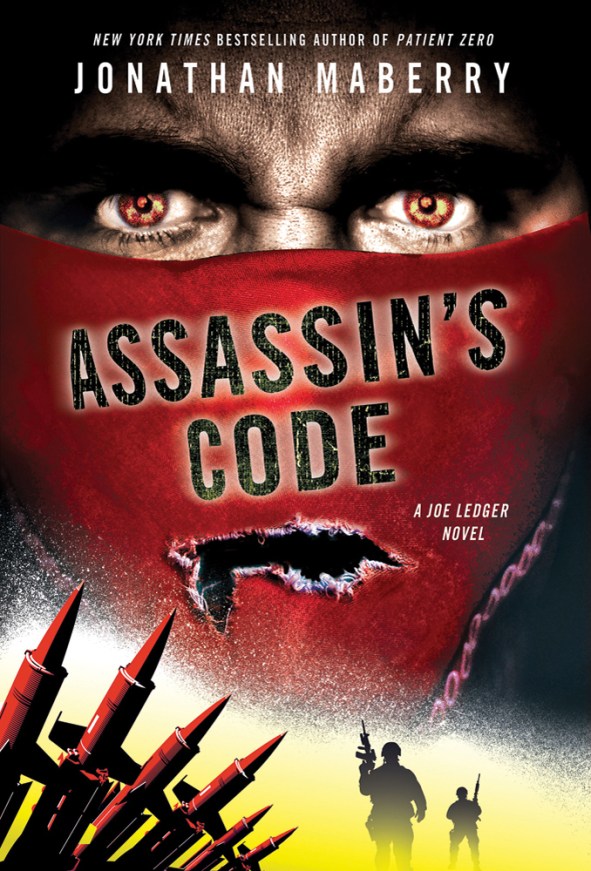
Throwback Thursday – Assassin’s Code by Jonathan Maberry

Assassin's Code Cover

Publisher: Macmillan Audio (Audiobook – 10 April 2012)

Series: Joe Ledger series – Book 4

Length: 15 hours and 35 minutes

My Rating: 5 out of 5 stars

Amazon     Book Depository

Reviewed as part of my Throwback Thursday series, where I republish old reviews, review books I have read before or review older books I have only just had a chance to read.

For this week’s Throwback Thursday, get ready for the fourth high-stakes, action-packed instalment of Jonathan Maberry’s excellent Joe Ledger series, Assassin’s Code, which sets the titular character up against a fantastic new set of antagonists.

Joe Ledger, top field agent for the elite Department of Military Sciences (DMS), is about to have a very unusual day. On assignment in Iran, Ledger and Echo Team have been tasked with rescuing American college kids held hostage by the Iranians. After successfully rescuing the hostages, Ledger is forced at gunpoint into a meeting with a high-ranking Iranian security officer. However, instead of being arrested, Ledger is given information about an impending terrorist attack that could shake the very foundations of the world.

An unknown player apparently has several nuclear weapons in play and is planning to unleash them against a number of targets around the world. As Ledger relays this information to his superiors, he is attacked by a mysterious assailant who is faster, stronger and more deadly than anything he has faced before. Barely escaping from his attacker, Ledger finds himself being pursued through the streets of Tehran by the Red Order, an ancient group of killers whose operatives appear to intimidate even Ledger’s boss, the legendary Mr Church.

As Ledger attempts to come to terms with what exactly is hunting him, he finds himself in the crosshairs of several other secret organisations, each of which has their own agendas. As Ledger gets closer to the truth, he discovers that events are being manipulated by an old enemy. An ancient conspiracy has been revealed and the fate of the world hangs in the balance. Can Ledger defeat the monsters unleashed against him or will a new world order arise?

Assassin’s Code in the fourth book in Maberry’s Joe Ledger series, which sees an elite special forces agency go up against the worst horrors that modern science and science fiction can unleash. I have already read and reviewed several books in this series so far, including the previous three novels, Patient Zero, The Dragon Factory and The King of Plagues, as well as the 10th and latest book in the series, Deep Silence. Each of these books has proven to be fantastic dark science fiction thrillers that I have had an amazing time reading, and all four of them have received a full five-star rating from me. Assassin’s Code is another incredible addition to the series, as Maberry has once again produced an intense and clever story, with some great antagonists, a complex protagonist and a heck of a lot of high-grade action.

In his fourth Joe Ledger book, Maberry has continued to utilise the same writing format that made all the other books in the series such an awesome read. While a large amount of the storyline follows Ledger and the other members of the DMS as they attempt to investigate and then counter the threats they are up against, a large amount of the book revolves around showcasing the history that led up to the book’s current events, as well as exploring the antagonists side of the story. There are several chapters that solely focus on the antagonists, showing what they are planning and the full range of their various motivations. I always love these explorations of the antagonists as I feel it creates a much more complete and interesting overall storyline, and these alternate points of view are often used to really ramp up the book’s tension and hint at events that are going to hit the protagonists.

While he continues to successfully utilises a number of these familiar writing styles, I felt that Maberry also made sure that Assassin’s Code stood out from the other books in the series. Not only does this fourth book have a lot more of a horror vibe to it than the previous two books in the series (somewhat reminiscent of the first novel, Patient Zero) but it is also told as a rush of events over a 24-hour period. Ledger is barely given an opportunity to rest as he is attacked again and again by a series of different opponents in the hostile territory of Tehran. The author has also woven together a number of interconnected conspiracies and features appearances from several individuals and organisations, each of whom has their unique agendas throughout the plot of the book, all of which need to picked through by the reader. All these various players and motivations make for a very full story, but I quite enjoyed seeing all the various revelations come to light. Assassin’s Code is also an intriguing central piece to the whole Joe Ledger series. Not only does it introduce several key characters who become major fixtures of the series but it also introduces a number of key events in the lives of characters who were introduced in the previous books. As a result, it is a must read for those people trying to get a grip on the series as a whole and is a fantastic overall read.

In my mind, one of the best things about the Joe Ledger books are the distinctive antagonists, each of whom come across as major threats not only to the protagonists, but to the entire world. So far in the series, Ledger has had to face zombies, genetically enhanced Nazis and a powerful cabal of terrorists (whose members included Osama Bin Laden) whose attacks are used to manipulate the world for profit. In Assassin’s Code, Maberry has done a fantastic job converting an old legend into a terrifying modern threat, as the major villains of this book, the mysterious Red Order and their infamous Red Knights, are essentially vampires. Maberry already has significant experience writing vampires into the modern world, thanks to his V-Wars book series (an adaption of which is coming out on Netflix in a couple of months), and he does a great job coming up with a new and somewhat plausible explanation for their existence (well, slightly more plausible than a supernatural origin), as well as a creative historical explanation for their organisation. These vampires are written as major threats for most of the book, and the fear and concern that they cause in a number of characters whose badass credentials have been firmly established in previous books is pretty impressive. The use of vampires in modern thriller was a real highlight of this book, and I really loved seeing them go up against a modern special forces unit. Maberry spends a lot of time exploring their history, as the book features a number of interludes that go back to the time of the Crusades, when they were first recruited for their mission. All of this exploration does a fantastic job of showing what true monsters these types of vampires are, which helps the reader really root for the reader. I also really liked some of the other groups featured in this book that were formed as a direct result of the existence of vampires, including a group of modern Inquisitors and the mysterious Arklight. If I had one complaint about these antagonists, it would be that they were taken down a bit too easily in the final act, and I would have preferred a more protracted or vicious fight.

In addition to the vampires, this book also features the reappearance of two key antagonists from the previous book in the series, The King of Plagues, who are major manipulators of events behind the scenes. These characters are the former King of Fear, Hugo Vox, and the mysterious priest Nicodemus, both of whom were major players in the previous book. I really liked how Maberry continued to explore both of these cool characters, and he did a fantastic job of tying their storylines into the unique events of this book. Their respective roles in the plot of this book is quite interesting, and I really enjoyed how both their storylines progressed or ended in this novel. The true reveal of who (or what) Nicodemus is has been left for a later book, and I am very curious to see what he turns out to be.

Maberry continues to do an outstanding job utilising his complex and multilayered protagonist, Joe Ledger. While on the surface, Ledger’s defining character traits are his abilities as a special forces operative and his relentless sense of humour, the character is actually extremely emotionally damaged. Thanks to the fact that Ledger is the only character whose chapters are shown from the first-person perspective (a nice distinctive touch for the central protagonist), the reader gets a much more in-depth look at his inner thoughts, and as a result you see how the events of his life, including the events of the previous three books, have impacted his psyche. It is quite refreshing to have a character who is actually emotionally affected by the events of his books, and you get the feeling that Ledger is only a short way away from truly snapping. However, in the meantime, the thick layer of humour he overlays these feelings with is great for a laugh, and it helps gives the chapters that the character is narrating a very unique and enjoyable feel. In addition to Ledger, I really liked some of the new protagonists introduced in Assassin’s Code and I look forward to exploring them more in the future. Special mention as always needs to go the awesome supporting characters of Mr Church and Ghost, Ledger’s attack dog. With his actions and woofs, Ghost honestly has more personality that some human characters in other books I have read, while Church continues to be the ultra-mysterious intelligence god who you cannot help but want to know more about. These two characters are one of the many reasons why I am excited to check out all the future books in the series.

It should come as no surprise to those who read the plot synopsis, but Assassin’s Code is filled with wall-to-wall action. Maberry has a well-established history of doing detailed research into various forms of combat, especially martial arts, which he has actually written several books on. Maberry is able to transfer all of this knowledge into his books, creating some truly amazing action sequences. There are a huge number of great and varied battle scenes throughout the course of the book, and readers are guaranteed a pulse pumping ride as a result. Also, if you have ever wondered how martial arts trained special forces soldiers would go against vampires, than this is the book for you.

Like all the other books in the Joe Ledger series, I chose to listen to the audiobook format of Assassin’s Code, narrated by Ray Porter. Coming in at around 15 hours and 35 minutes, this is a substantial audiobook; however, due to how much I enjoyed the epic story, I powered through it in a couple of days. I would strongly recommend that readers always check out the audiobook format of this series, thanks mainly to Porter’s narration. Porter, who has so far narrated all of the Joe Ledger books, has an uncanny ability to bring this central protagonist to life. His great narration fully encapsulates Ledger’s full range of emotions, from light-hearted banter, to soul-crushing despair to powerful bursts of rage, and it is really worth checking out. In addition, Porter does some really good voices for the other characters in the book, especially Mr Church, and he is probably one of my favourite audiobook narrators at the moment.

When I started reading Assassin’s Code, I knew I was going to love it, and it did not disappoint. Not only did Maberry up the ante with some incredible antagonists but he created another complex and utterly captivating story that had me hooked in an extremely short period of time. Assassin’s Code easily gets another five stars from me, and I whole-heartily recommend the audiobook format of this book. I am planning to try and read all the other Joe Ledger books in the next couple of months as I only just found out that the story is continuing in November of this year as part of a new spin-off series. Stay tuned to see what I think of the other books in this series (spoiler alert, I think I am going to love them).

Amazon     Book Depository

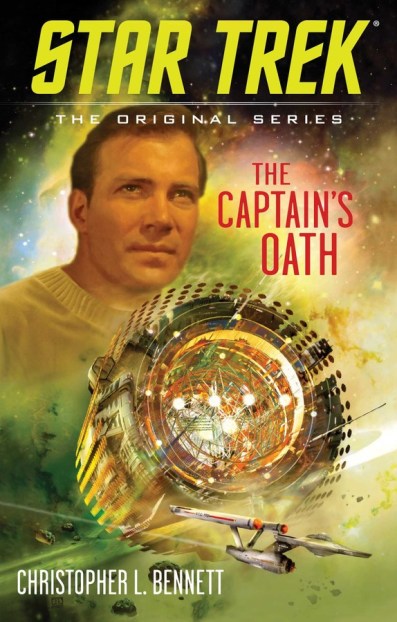
Star Trek: The Captain’s Oath by Christopher L. Bennett

Star Trek - The Captain's Oath Cover

Publisher: Simon & Schuster Audio (Audiobook – 28 May 2019)

Series: Star Trek

Length: 11 hours and 58 minutes

My Rating: 4.5 out of 5 stars

Amazon

Prepare to venture boldly into a new Star Trek: The Original Series tie-in novel which not only tells a deeply compelling story but also looks at several pivotal moments of Captain Kirk’s early Starfleet career that made him the captain we all know and love.

Captain James Tiberius Kirk is known throughout the galaxy as a great warrior, diplomat, explorer and hero. His story as the captain of the U.S.S. Enterprise is legendary, but how did a relatively young and inexperienced captain gain the right to take command of Starfleet’s most advanced and famous ship? What drives the young captain to be the best? And where did he get the tendency to bend Starfleet’s many rules in order to do the right thing?

Over three separate timelines set between 2261 and 2265, The Captain’s Oath follows Kirk’s early career as a captain. Looking at both his first command aboard the U.S.S. Sacagawea to his initial missions with the crew of the Enterprise, this book highlights several major conflicts and explorations that Kirk was involved in which shaped his personality and command style. From early conflicts with the Klingons, first contact missions that tested Kirk’s dedication to follow the Prime Directive to the letter, and diplomatic missions that had the potential to lead to war, these experiences will turn him into a captain worthy of the Enterprise.

I am fairly new to the world of Star Trek tie-in books, having only previously read two Star Trek novels that were released earlier this year, The Way to the Stars and Available Light. I was massively impressed by The Captain’s Oath, which was a spectacular and massively compelling read. Veteran Star Trek author Christopher L. Bennett, who has written a large number of Star Trek tie-in novels since 2004, crafted an excellent novel that not only showcases the past of an iconic character from the franchise but presents an exciting adventure at the same time.

The overarching narrative of The Captain’s Oath is told in three separate timelines. The first of these timelines starts in early 2261 and follows the early day of Kirk’s captaincy of the Sacagawea. The next timeline is set between 2262 and 2264, and also features Kirk as the Captain of the Sacagawea; however, this timeline starts after an undisclosed destructive event that crippled the ship and killed several of Kirk’s crew in the previous timeline, and follows Kirk’s adventures after this event. The final timeline is set in 2265 and starts the moment Kirk takes command of the Enterprise. It follows his first real mission as captain of his iconic ship, and ends just before the start of The Original Series television show. The book features lengthy chapters, with various adventures in different points of time spread throughout the course of the novel. These adventures are also usually shown from the perspectives of Kirk and some of the Starfleet personnel serving with him, although there are occasional scenes featuring characters aboard other Starfleet ships.

I did initially find it a little tricky to get my head around the use of multiple timelines, especially as I was listening to the audiobook format of The Captain’s Oath. However, once I got track of each of the three major timelines, I was able to appreciate what Bennett was doing with this writing style and how he wanted to tell the story. By using these multiple timelines, Bennett succeeds in telling a story that is much more complex and compelling than a linear story would have been. These multiple timelines allow the reader to get a much better sense of the main character and how he became the person he was in the first episode of The Original Series. By showing various stages of his time as a captain, Bennett is able to examine a number of key events that formed Kirk’s personality and command style. Through a series of intriguing missions and a ton of different scenarios, you get to see how Kirk reacts to both his success and his failures, and what lessons he takes with him. As the book progresses, you get to see how these earlier experiences affect his actions in the subsequent chronological missions. This was an extremely clever way to write the story, and I felt that the multiple timelines work extremely well together and helped create a powerful narrative that did a fantastic job showcasing the character of Captain Kirk.

I also really enjoyed the huge variety of Star Trek missions that Kirk and his crew went on throughout the course of the book. This book featured an amazing range of different missions that Starfleet are known for, including diplomatic undertakings, rescues, exploration, first contact and military missions in defence of the Federation. Some of these missions are quite complex in their individual content and in the way that most of them flow through and connect with later missions in the chronology. Bennett has come up with some truly unique and fantastic scenarios for this book, and through these various missions the reader is treated to some intriguing mysteries, intense battles and deep examinations of humanity and life. I really got into a number of these missions, including a fascinating mission where Kirk and his crew get trapped on a pre-spaceflight planet whose government is using propaganda to frighten the populace with non-existent invading aliens. However, the best scenario is a series of missions set during Kirk’s days as captain of the Sacagawea where he and his crew encounter an unusual group of aliens who are invading Federation space in some unique ships (the one on the cover). The various missions involving these new aliens not only result in some impressive space battles but also feature some intriguing diplomatic meetings and fascinating discussions about different forms of life, as the beings Kirk and his crew encounter are so alien that a number of key concepts such as territory and galactic borders are untranslatable to them. Each of the missions featured in this book were pretty amazing and are a testament to Bennett’s imagination and appreciation for the underlying material.

One of the things that I enjoyed about this book was the sheer amount of Star Trek references and lore that Bennett has managed to fit into this story. Fans of Kirk and The Original Series will be intrigued by this new look at Kirk’s early career as a captain and several of the pivotal adventures he undertook. The Captain’s Oath also features Kirk’s first meetings with several key characters from the series, including Spock, Sulu, Scotty and McCoy. Not only does the reader get an idea of the early relationship between Kirk and Spock, which only began when Kirk took command, but you also get to see Kirk befriend McCoy and then eventually talk him into becoming doctor for the Enterprise. In addition to the look at the major characters, there are also a number of great examinations of minor characters from the series. A great example of this is the inclusion of the Klingon character Captain Koloth, the villain of The Original Series episode The Trouble with Tribbles. While he was only in the book for a short period of time, it does answer a question about how Koloth and Kirk knew each other, as they recognise each other in the episode, and it shows why they disliked each other.

Perhaps the most interesting part of The Captain’s Oath was the inclusion of Gary Mitchell throughout the course of the book. In the show, Mitchell only appeared in one episode and was the original helmsman of the Enterprise before becoming the eventual antagonist of the episode Where No Man Has Gone Before. In this episode it is explained that Mitchell was one of Kirk’s oldest and closest friends, and Bennett spends a lot of time exploring this friendship in this book. Mitchell is shown to be a major influence on Kirk’s personality during the early days of him being a captain, helping him relax and become less beholden to Starfleet’s rules and regulations. Their friendship is an important part of the book, although it is a little tragic when you consider how it is destined to end. The book also features a few scenes with Lt. Kelso, who is killed by Mitchell in Where No Man Has Gone Before, and it is interesting to see some of his interactions with Mitchell and Kirk, considering his appearances in the show. It is curious to note that Bennett appears to have switched the roles of Mitchell and Kelso around, as Kelso is portrayed in the book as the helmsman, while Mitchell is the navigator. Nonetheless, the author uses the inclusion of Kelso to explain why Sulu was the ship’s physicist in this episode rather than helmsman, and why he was given the job in subsequent episodes.

Bennett has included some pretty deep Star Trek lore in this book, but do you need to be a major Star Trek fan to enjoy The Captain’s Oath? In my opinion, you do not. Obviously, hardcore Star Trek fans will get a lot more out of this book, no doubt appreciating all the references, minor characters and the backstory that Bennett has concocted. However, this book is easily enjoyable for people who only have a passing knowledge of the Star Trek shows or universe. Bennett makes the story extremely accessible, and many features from the franchise or history relevant to the story are explained in full detail, ensuring no one is left in the dark. Indeed, due to the awesome story, connection to The Original Series and the focus on such an iconic character, this is a great book to check out if you are curious about Star Trek books and want to see what they are like, and a lot of general science fiction readers will like some of the unique scenarios explored throughout the book. This would also be a really interesting book for those people whose only exposure to Star Trek has been the recent movies set in the alternate timeline, as this book shows a very different version of Kirk. Overall, I think that quite a wide audience can appreciate The Captain’s Oath, and it is a fantastic Star Trek tie-in book to check out.

While I did receive a physical copy of The Captain’s Oath, I decided to check out the audiobook version instead in order to fit it into my reading schedule. The audiobook format of this book is narrated by Robert Petkoff, who has a narrated a large number of previous Star Trek tie-in books, as well as several Star Trek novels coming out later this year. The Captain’s Oath audiobook runs for a pretty typical length of time for a Star Trek book, at just under 12 hours long, meaning that dedicated listeners should be able to get through this quite quickly. I really enjoyed listening to the audiobook format of this book, and I found that listening to the story helped enhance certain aspects of the plot, such as making the action sequences more exciting and providing the full impact of several of Kirks inspirational speeches. Petkoff is an excellent narrator whose work I have previously enjoyed when I listened to Available Light a couple of months ago. I noted back than that Petkoff did an amazing job imitating several key members of the Star Trek: The Next Generation cast, and I was very curious to see how he would go with characters from The Original Series. Petkoff’s voice work in The Captain’s Oath was pretty impressive, as he did an exceptional job bringing characters such as Spock, Scotty, Sulu and McCoy to life and making them sound very similar to their original portrayals in the show. Petkoff also did a pretty good Kirk, and I liked how he attempted to reproduce the captain’s iconic speech patterns from the show. Petkoff also had the opportunity to bring a huge range of different nationalities and alien species to life, and these were also very impressive, as he was able to produce some distinctive voice types from the show, including the specific vocal patterns of the Vulcans as well as several distinctive human accents. All of this made for an incredible listen, and I fully intend to check out the audiobook formats of any future Star Trek books narrated by Petkoff. Indeed, the next audiobook I am planning to listen to, The Antares Maelstrom, is narrated by Petkoff, and I look forward to listening to this latest book.

Star Trek: The Captain’s Oath is an exciting and captivating novel that does an outstanding job exploring the early life of Captain Kirk and examining some formative events that made him the character we all know and love. Author Christopher Bennett has created a compelling story that utilises multiple timelines and a series of intriguing missions to tell a complex tale that I had an amazing time reading. This is an excellent piece of Star Trek extended fiction that I would whole-heartily recommend for anyone who has ever been curious about learning more about Kirk’s story and the Star Trek universe prior to The Original Series.

Amazon

Throwback Thursday – Star Trek: Boldly Go, Volume 1 by Mike Johnson and Tony Shasteen

Boldly_Go_Vol._1.jpg

Publisher: IDW Publishing

Publication Date: 25 July 2017

Length: 136 pages

My Rating: 4.5 out of 5 stars

Amazon     Book Depository

Reviewed as part of my Throwback Thursday series, where I republish old reviews, review books I have read before or review older books I have only just had a chance to read.

In this Throwback Thursday, get ready to explore the first volume of an intriguing Star Trek comic book series, Boldly Go, which presents the reader with clever new story directions spinning off from the alternate timeline Star Trek movies.

I think it is time to admit to myself that I am starting to get rather hooked on Star Trek extended universe fiction. Like my obsession with everything from the Star Wars extended universe, all it took for me to dive into this new fandom was reading a few compelling Star Trek books. Amazing titles such as Available Light and The Captain’s Oath made me realise that there are some pretty interesting Star Trek books out there. I just started listening to another Star Trek audiobook today (The Antares Maelstrom by Greg Cox, which is pretty good so far). As a result, when I recently saw some other reviewers talking about a cool-sounding Star Trek comic book series that came out a couple of years ago, I immediately went and grabbed a copy of the first volume (I am very impressionable like that). What I found was an extremely compelling Star Trek adventure that had some truly intriguing and clever elements to it.

Star_Trek_Boldly_Go,_issue_1_RE.jpg

Star Trek: Boldly Go was an ongoing canon comic book series which started in 2016 and was set in the same continuity as the 2009 Star Trek film and its sequels. This continuity is an alternate timeline to the main Star Trek universe, which is known as the Kelvin Timeline due to the deviation that started with the time traveller Nero’s destruction of the U.S.S. Kelvin (Kirk’s father’s ship). This series was written by Mike Johnson, who has a lot of experience writing Star Trek comic book series, and featured contributions from several different artists. Boldly Go was the second ongoing series set in this timeline, following the 2011 Star Trek series which ran for 60 issues and was also written by Mike Johnson (which apparently had some really interesting-sounding storylines and which I might have to check out as well).

Star_Trek_Boldly_Go,_Issue_1_RI-A.jpg

Following the destruction of the U.S.S. Enterprise in Star Trek Beyond, the entire crew have been temporarily reassigned to new posts while they wait for their ship to be rebuilt. While Spock and Uhura are living on New Vulcan and Scotty is a lecturer at Starfleet Academy on Earth, Sulu, McCoy and Kirk are still serving out amongst the stars. Kirk has taken command of the U.S.S. Endeavour with McCoy begrudgingly at his side, and Sulu is serving a one-year exploration mission aboard the U.S.S. Concord.

Star_Trek_Boldly_Go,_issue_2.jpg

Events outside of their control will soon bring the former crew of the Enterprise back together, when the Concord encounters a ship of unknown design on the edge of Federation space. The ship is extremely powerful and technologically advanced and it attacks without warning, easily carving off pieces of the Concord with its destructive weapons. As alien boarders abduct members of the crew and devastate the ship, only one thing is certain: resistance is futile!

Star_Trek_Boldly_Go,_Issue_2_RI-A.jpg

The Borg Collective, one of the most dangerous races in the entire galaxy, have arrived in this version of Federation space nearly 100 years earlier than they were supposed to. Their motives are unclear, but as they attack several Federation vessels and settlements it is clear that they are en route to the capital of the Romulan Empire, Romulus. Answering the Concord’s distress call, Kirk and the Endeavour follow the Borg sphere after picking up Spock and Uhura. Forced to enter Romulan space, can Kirk and his crew save the abducted humans and defeat the Borg, or will actions provoke war with the Romulans? And what connection do the Borg have to the events that made this alternate timeline and formed this version of the Enterprise’s crew?

Star_Trek_Boldly_Go,_issue_3

This first volume of Boldly Go is a massive ball of fun that I had a great time reading. Not only does it feature a captivating and enjoyable story with some real cool twists; it also takes this Star Trek universe in some interesting directions. Featuring issues #1-6, this first volume starts a few months after the events of Star Trek Beyond and continues several of the fun storylines explored in the movies and the 2011 ongoing comic book series.

Star_Trek_Boldly_Go,_Issue_3_RI-A.jpg

This first volume features a bunch of interesting storylines. Issues #1-4 contain the volume’s major storyline, the invasion of the Borg into Federation and Romulan space. This is an extremely action-packed storyline, and I really enjoyed seeing the Borg, who are probably the best Star Trek antagonists ever created, go up against the classic crew of the Enterprise. The entire Borg storyline is cleverly written, with high stakes and explosive action sequences, and it has some really cool moments. If you have ever wanted to see what would happen if the Borg tried to assimilate Spock (and let’s face it, who wouldn’t find that awesome) then this is the comic for you.

Star_Trek_Boldly_Go,_issue_4.jpg

Issues #5 and #6 contain two different, intriguing storylines. Issue #5 contains a rather emotional story that examines the history of the fan-favourite character from Star Trek Beyond, Jaylah. Told chronologically backwards, this issue shows Jaylah’s tragic life trapped on the planet Altamid, and then goes further back to explore how she and her family were marooned there and the events of her past that would eventually lead her to Starfleet. The sixth and final issue in the volume continues some of the storylines from the first four issues of the series, reunites the always funny Scotty with the rest of the main characters and shows a rather curious story about an extremely advanced species of aliens interfering with the Endeavour in violation of their own version of the Prime Directive.

Star_Trek_Boldly_Go,_Issue_4_RI-A.jpg

While all of the storylines featured within this first volume are compelling and filled with emotional plot developments, it was also cool to see this version of the Enterprise crew once again. I really liked seeing how their adventures continued post-Star Trek Beyond, especially because, at the moment, it looks like Beyond is going to be the last film in this particular series of Star Trek films (which is a real shame, as some of the plans for the next instalment sounded particularly awesome). I did feel that the creative team of this comic did a fantastic job capturing the tone of the new movies and the personalities of these versions of the characters, and overall I found the story within this volume to be quite impressive.

Star_Trek_Boldly_Go,_issue_5.jpg

In addition to the great story, dedicated Star Trek fans will find some of plot inclusions to be extremely interesting, as they draw on some unique pieces of Star Trek lore. This volume features alternate timeline versions of characters from the original series, such as Captain Terrell, an older version of whom previously appeared in The Wrath of Khan, and there are intriguing hints at features of the Romulan Empire, such as the feared Tal Shiar. I also cannot get past how awesome it was to see the Borg in this timeline. Jackson has previously experimented with having this version of the original Enterprise crew interact with classic villains from other Star Trek shows. For example, they encountered Q in Jackson’s previous comic book series set in the Kelvin Timeline. However, it was particularly cool having the crew fight the Borg, and it resulted in a number of amazing scenes.

Star_Trek_Boldly_Go,_Issue_5_RI-A

I found the explanation for why the Borg were in Federation space during this time period to be extremely clever. In the main Star Trek universe, the Borg did not attack the Federation until the events of Star Trek: The Next Generation, set around 100 years after the start of The Original Series. However, in this comic, the Borg were attracted to the Federation much sooner than expected. The reason for this is eventually shown to be because Nero, the antagonist of the 2009 Star Trek film, constructed his massive ship, the Narada, out of Borg technology. This naturally drew the attention of the Borg, who travelled to Federation space at a much quicker rate than they did in their original appearance. While this explanation is pretty fascinating by itself, it actually results in some interesting connections with the main Star Trek universe. Technically, this alternate timeline is still considered to be within the canon of the main universe, as it was created when characters from this timeline, Nero and Spock from The Original Series, travelled back to the day Kirk was born. As a result, if the Narada contained Borg technology, then it is reasonable to assume that the Romulans are experimenting with captured Borg material in the main universe after The Next Generation ended. This has subsequently been somewhat confirmed, as the recent Comic Con trailer for the upcoming television series Picard showed images of Romulans dissecting Borg prisoners. As Picard is going to be set after the destruction of Romulus in the main Star Trek universe, it appears that this comic actually predicted events from the show before it was even in production (or else the creators of the show read this comic). This deep dive into Star Trek lore is really cool, and it is interesting to see ideas spawned in this comic have impacts in an upcoming show.

Star_Trek_Boldly_Go,_issue_6

This volume of Star Trek Beyond features some fantastic artwork from a variety of skilled artists. The main artist for the first five issues is Tony Shasteen, with Davide Mastrolonardo serving as colourist. Their combined artwork is pretty spectacular, and I really enjoyed it. Not only did they do a fantastic job of recreating the alternate timeline versions of the Enterprise crew, but the drawings of space, battles and the destruction of the Borg are amazing. I particularly liked the character designs of the Borg drones, especially when some of the Starfleet characters are converted into drones. I was also really impressed by an extended sequence that took place in Spock’s mind, where the Borg infiltrated his memories of several events of the 2009 film, and they made for a great scene. Issue #6 was drawn by Chris Mooneyham, with J. D. Mettler doing the colours. This naturally results in a noticeably different art style for this final issue, but this team does a great job of portraying some interesting scientific anomalies in space. Overall, the artwork featured within this volume is exciting and very well-done, and I had a great time seeing how the artists rolled out this adventure.

Star_Trek_Boldly_Go,_Issue_6_RI-A.jpg

Volume 1 of Star Trek Beyond is a fantastic comic book that is really worth checking out. The creative team have done a wonderful job portraying a new story that takes place in the aftermath of the last Star Trek movie. There are some really compelling story ideas taking place in this volume, and Johnson made sure to go big by bringing in a fantastic bunch of antagonists from The Next Generation. Best read by existing fans of the Star Trek franchise who will enjoy the creative team’s unique take on the characters and their adventures, this comic will also be appreciated by casual Star Trek fans who have only seen the more recent movies. I am extremely glad I decided to explore this Star Trek comic book series, and I will definitely be grabbing the next two volumes of this series when I next visit the comic book shop. This first volume gets four and a half stars from me and is an outstanding piece of Star Trek fiction.

Boldly_Go_Vol._1 (2).jpg

Amazon     Book Depository

Red Metal by Mark Greaney and Lt. Col. Hunter Ripley Rawlings IV. USMC

Red Metal Cover 2.jpg

Publisher: Audible Studios (Audiobook – 16 July 2019)

Series: Standalone/Book One

Length: 21 hours and 21 minutes

My Rating: 5 out of 5 stars

Amazon     Book Depository

Get ready for World War III, because bestselling author Mark Greaney has teamed up with Lt. Col. Hunter Ripley Rawlings IV. USMC to create an absolutely incredible military thriller, Red Metal, which looks at how a potential invasion from Russia would unfold.

After years of war in the Middle East, the United States and their allies are preparing themselves for the next conflict. Many believe that this war will occur in the Pacific Ocean against China, especially after the Chinese begin to interfere in Taiwanese politics in an attempt to reunify the island nation with the mainland. As Chinese troops gather just outside of Taiwan and the United States military is rocked by a debilitating scandal, hardly anyone is expecting a move from Russia.

Since the end of the Cold War, Russia has been in an economic decline, and it desperately requires access to various advanced resources to remain a world power. An ambitious Russian colonel has come up with a complex plan to secure a vital Rare Earth mine that has the potential to secure the country’s future. Launching a high-speed and ruthlessly coordinated attack as Christmas falls, Russian forces stream across the border into Europe, crippling NATO and cutting the continent off from the United States. As America and NATO attempt to work out the extent of Russia’s plans in Europe and counter them, they are left distracted from Russia’s true goal as a second Russian army is secretly heading towards the African coast in order to reach the mine in Kenya.

As Russia continues its advance, the fate of the free world lies in the hands of several different individuals. In Washington, a veteran Marine Lieutenant Colonel and his colleagues attempt to decipher the Russian strategy before it is too late, while in Africa, a wily old French Intelligence agent and his Special Forces son must uncover why undercover Russian agents are abroad in Djibouti. In Europe, a mixture of unprepared NATO soldiers, including a young member of the Polish militia, an out-of-his-depth American tank commander and a high-flying US pilot must fight against the odds to push back against the invading Russian force. As epic battles erupt across several countries, one thing is clear: the world will never be the same again.

Wow, just wow. A few months ago, I predicted that along with The Kremlin Strike, Red Metal was going to be one of the top military thrillers of 2019. I am more than happy to report that I was 100 per cent right, as this was an outstanding read that I had an absolute blast listening to. The team of experienced thriller writer Mark Greaney, who is best known for his work on Tom Clancy’s Jack Ryan Universe and his own bestselling Gray Man series (make sure to check out my review for the latest book in this series, Mission Critical, here) and debuting author Lt. Col. Hunter Ripley Rawlings IV. USMC, have created a sensational book that I have no choice but to award a full five stars to.

Contemporary military thriller is a genre that I have only started getting into recently, although so far I have enjoyed some great examples, including The Moscow Offensive by Dale Brown, Treason by Rick Campbell and Red War by Kyle Mills. However, in my opinion Red Metal stands heads and shoulders above all of these books and it is probably the best pure military thriller that I have read. The authors of this book have come up with a truly fascinating military scenario that sees Russia sweep across two continents and influence conflict in a third. The Russians in this book have a really clever and effective military strategy that results in a massive, widespread conflict, and the reader gets to see every step of it unfold. This entire plan seems exceedingly realistic, and it is clear that Greaney and Rawlings have put some real thought into how war could break out and how the various participants would react. They really dive into the minutiae of the whole scenario and try to cover all the angles of an invasion of Europe and Africa, including cutting off communications, setting up an alternate navigation system, hacking the US and creating a number of plausible diversions. Never before has a discussion about the different sized rail tracks and rail switching stations in Europe been so fascinating. The scope of this conflict is really impressive, and the authors do a fantastic job showcasing the various types of battle that would occur in this sort of modern-day war between major superpowers. As a result, this book is filled with fighting on land, sea, air, underwater and even in cyber space, in an impressive thought exercise which translates into a compelling piece of fiction.

I really liked how the authors chose to tell this story from a variety of different perspectives, as Red Metal features a huge number of point-of-view characters. While the story is mostly focused on a few key characters, a number of minor characters often get one or two scenes, and the reader gets to see how the war unfolds from both sides of the conflict. As a result, the reader gets a much fuller understanding of how this potential scenario would unfold and how various countries or organisations such as NATO would react to war breaking out. The authors also make great use of the various perspectives to ratchet up tension throughout the book as the readers are privy to the full extent of the Russians plans. This results in the reader being fully aware of all the mistakes that the Americans and their allies are making in this war, and by the time they get their act together it seems like it is too little, too late.

The use of various perspectives also helps to create a number of different characters that the reader can really get invested in. While many of characters introduced only have small roles in the overall narrative, the authors do some detailed explorations of the backgrounds and story arcs of several key characters. Some of these characters have really well-written and have some enjoyable or intriguing storylines. I personally enjoyed the story of Paulina, a young recruit in Poland’s Territorial Defence Force (a volunteer military reserve) the most. Paulina finds herself thrust into the middle of the Russian invasion and is quickly transformed from an innocent girl to a hard-eyed killer in a few short days thanks to the horrors of war. Paulina’s story is extremely captivating, and it is potentially the character that most non-soldiers reading this book are going to identify with as they are left thinking how they would react in a similar situation. It was really quite interesting to see what role people in the various scenarios could potentially play, and I really liked seeing what sort of difference a small group of determined soldiers could make in a conflict such this.

One of the things that I really loved about this story was the realistic portrayal of the various armed forces involved in this book and the detailed examination of everything that needs to be considered in a war. This book is chocked full of military terminology, descriptions of various weapons and tactics, slang, military history and a variety of other complex features. You have to imagine the inclusion of all of these details is largely thanks to Rawlings and his extensive military experience, and I really enjoyed how the authors were able to seamlessly insert all of this knowledge into the story. Having all this information as the story progresses is extremely fascinating and I learnt a lot of cool facts. It also really amped up the realism of the whole story, in my opinion, and I found the story to be a whole lot more compelling as a result.

It is important to point out that Red Metal is not the male character dominated, exceedingly pro-American story that some military thrillers are; instead the writers went out of their way to produce a more balanced story. For example, the book features a number of great female characters, most of whom are involved in the war in some way or another, and it was cool to see how women are utilised in the modern military. The authors also take the time to show Russia’s side of the conflict and explain their motivations for engaging in this battle against the west. While a number or Russian characters are pretty villainous and/or murderous, they do tend to have some reasonable motivations for their actions, and indeed they see themselves as the good guys in this conflict. There are also a few more pragmatic Russian officers featured in the book who are a lot more likeable, especially as they come across as a bit more compassionate and less eager for war and destruction. The United States is also not heavily portrayed as the world’s most awesome country, as some military thrillers do. Instead the country is shown to be extremely unprepared for a Russian invasion, their military command is initially easily manipulated and a response to Russia’s actions is hampered by politics or pettiness from a superior officer. That being said, the book does feature a number of extremely pro-American scenes and sentiments, and there is even a sequence where an American pilot flies into combat shouting “die Commie die”, although to be fair, it is described as a historical military mantra developed in the Cold War to help pilots time their length of fire. The end result of the conflict between America and Russia is also what you’d pretty much expect, but it still makes for one hell of a read.

While the authors have added some interesting depth to this story, at its heart it is a military thriller, and that means that this book is chocked full of action. There are a huge number of fantastic and extended battle sequences throughout the entire book, some of which are truly epic in their size and content. Readers are really spoiled for action in Red Metal, as the authors have included all manner of different types of battles with a huge range of different vehicles and weapons. This book features battles in the air, at sea, underwater in submarines, on the ground with the grunts and in a variety of locations with Special Forces regiments. There are a number of impressive and memorable sequences, including a large amount of tank on tank combat, as two enemy armoured regiments face off against each other. I personally really enjoyed a particularly brutal ambush of Russian tanks in Poland, as Polish militia attempt to defeat a superior force in the middle of a city. The main set-piece has to be an extended battle between a variety of Russian units, and a force of United States Marines down in Africa. This battle down in Africa is particularly impressive, as the authors do an awesome job of bringing the fighting to life, and the sheer chaos of war and the ferocity of both sides as they try to win through any means necessary. All this action is pretty darn amazing, and the authors really outdid themselves with it.

I chose to listen to the audiobook format of Red Metal, which is narrated by experienced audiobook narrator Marc Vietor. I am really glad that I picked up the Red Metal audiobook as it was an amazing way to enjoy this fantastic book. Vietor did an excellent job narrating this book, and I felt that listening to the story brought all the intense action to life and helped place me in the centre of the story. Due to the book featuring a huge number of different nationalities, the story featured a range of character accents, all of which Vietor did extremely well, producing distinctive and memorable voices for each of his characters. The Red Metal audiobook runs for 21 hours and 21 minutes and it is an excellent format to consume this incredible novel.

Red Metal is a tour-de-force from Greaney and Rawlings, who have produced one hell of a military thriller. These two authors are a potent writing team, as Greaney’s experience as a thriller writer and Rawlings’s military knowledge helps create an epic read that just pumps the reader full of intense action, clever storylines and memorable characters. I really hope that these two authors continue to work together in the future, as Red Metal was a really impressive first collaboration. Five out of five stars all the way, you have to check out this book.

Amazon     Book Depository