Darkside by Michael Mammay

Publisher: Harper Audio (Audiobook – 24 September 2024)

Series: Planetside – Book Four

Length: eight hours and six minutes

My Rating: 5 out of 5 stars

Amazon

One of my favourite science fiction authors returns with another fantastic and compelling military thriller in space, the highly addictive Darkside by Michael Mammay.

Back in 2018 I had the very great pleasure of reading the debut novel of new author Michael Mammay, Planetside.  An intriguing science fiction thriller that sent a retiring military officer to an alien planet to find a missing soldier, Planetside turned into quite the clever and exciting read, and I really got attached to its complex narrative and maverick protagonist.  Ending on a massive and well-written twist, Planetside was an exceptional read and was one of my favourite books of 2018.  The series continued strong from that point on as Mammary released more cool additions to the Planetside series, each of which pit the protagonist against human corruption and corporate greed in the depths of space with Spaceside (one of my favourite books of 2019) and Colonyside (one of my favourite books and audiobooks of 2021).  I have been curious to see if Mammay was planning to continue this series going forward, and I was nicely surprised earlier this year to find out that there was a fourth book coming out with Darkside.  One of my most anticipated books of 2024, Darkside was an intriguing entry to the series that once again forced the author’s protagonist to deal with old corporate threats on a distinctive new environment.

Colonel Carl Butler, former military officer turned genocidal fall-guy, has had an interesting life since his retirement from the military.  Thanks to the machinations of both the government and powerful corporation, Butler has found himself drawn into multiple conspiracies, and his direct way of dealing with the resulting controversy has made him infamous throughout the galaxy, as well as making him some very dangerous enemies.

Attempting to live out a quiet life on a remote planet, Butler finds his retirement once again disturbed when a young girl tracks him down, requesting his help in finding her missing father.  Finding it hard to say no to the desperate girl, especially when it becomes clear that something truly sinister has befallen her father, Butler reluctantly agrees to help, not realising the trouble he is about to find himself in again.

The missing father, Jorge Ramiro, had been working as the assistant for a famous archaeologist on the isolated moon of Taug.  With no electronic trace of Jorge remaining on the planet, Butler and his team chart a ship to the mining operations of Taug to find him.  However, Butler soon finds his investigation complicated by the fact that he has history with the two consortiums who control mining on Taug, Caliber and Omicron, as both have tried to kill him in the past.  Determined to find the truth no matter what, Butler relentless follows the dwindling trail of clues before him, even when that leads to the dangerous dark side of Taug where secrets lie hidden, and the two corporations are free to act without repercussion.

Michael Mammay presents another outstanding and impressive science fiction thriller that drags the reader in with its elaborate tale of intrigue, secrets, and one determined man seeking to fight the system.  Featuring a great combination of elements and a fantastically fun protagonist, Darkside was a brilliant addition to the Planetside series, and I had such an amazing time with it that it gets a full five-star rating from me.

I felt that Mammay produced another exciting and captivating narrative for his fourth Planetside book that ties in nicely to the rest of the series while providing readers with an excellent and entertaining ride capable of standing on its own feet.  Once again bringing in series protagonist Carl Butler to investigate a mysterious case on a new planet, Darkside features a fantastic tale of mystery, corporate antics and deeper intrigue.  The author does a great job of quickly setting the scene at the start of Darkside before dropping the protagonist right into the action as they attempt to find the missing father on Taug.  Seeking information from both corporations on the moon, Butler initially starts a methodical and low-key investigation.  However, things get tricky when Butler and his team discover evidence of a major coverup, and the protagonist is forced to pit the corporations against each other in his attempts to find the missing person.  This complex first half proves to be an excellent start to the novel, and Mammay ensures that the tension, stakes and mystery rise at an effectively rate, keeping the reader’s attention the entire way through.

Things take a very exciting turn around halfway through Darkside, as Butler’s investigation provoke action from his opponents that results in some extremely dramatic and intense moments.  While I had been enjoying the investigation and intrigue of the first half of the book, it was fun to dive into something much more action packed for the second half, and I really enjoyed the exciting direction that Mammay took the story.  There are some great reveals here, and I love how complicated the various corporate lies and agendas became at times.  Everything leads up to a very intense final set of sequences, as Butler finds his back against the wall and is forced to decide which devil to have in his corner.  There are some great twists here, as well as a cool chapter told from the perspective of one of the series’ major supporting characters, and it leads up to a particularly intense and moving conclusion that perfectly fit the overarching anti-corporate message of the entire series.

Darkside has an excellent and addictive style to it that really draws the reader in.  Told from the perspective of the cynical, but realistic, Colonel Butler, readers are presented an outstanding thriller novel expertly set in a futuristic setting.  Starting off with a mystery of a missing person, the story evolves into a more elaborate game of intrigue as the protagonist attempts to outsmart two rival companies.  Mammay hits the right blend of manipulation, investigation and action throughout Darkside, and readers are presented with a great story that thrills the reader while dragging them further in with the curious mystery.  This story is well set by the moon of Taug, which proves to be an outstanding setting for this intense novel.  Not only does Mammay provide some striking descriptions of this desolate moon, but the isolated nature of it, as well as more scientific elements like gravity and composition, are well utilised in the plot, creating problems and opportunities for the protagonists.  Whilst Darkside is part of a larger series, for the most part it is a standalone novel that new readers can easily dive into, especially as there is an effective summary at the front to fill in some major details about the protagonist and his previous outings.  I think I had a bit more fun having read the previous books first, especially as you appreciate how Butler’s relationship with some of the supporting characters has grown, as well as having a better understanding the protagonist’s adversarial relationship with the corporations on the moon.  Darkside was such a great addition to this series, and I had an exceptional time powering through this novel in record time.

Another major element of Darkside, and indeed the entire Planetside series, that I come to really enjoy, was the outstanding characters who sat at the heart of the story and who add some real emotional depth to the book.  This primarily refers to the protagonist and point-of-view character, Colonel Carl Butler, who is very fun to follow.  A former career soldier trying to enjoy retirement, Butler has been hit by controversy, betrayal and the downside of duty, which has made him infamous and forced him to live on a remote planet.  Despite this, he is still a cheerful figure whose desire to do good forces him into another adventure.  Witty and honourable, Butler has a very eccentric personality that results in most of Darkside’s humour, and you have to laugh at some of his clever thoughts and responses to the dark events around him.  Despite having a seemingly carefree, easy-going attitude, Butler is a canny operator at this point in the series, and it was great to see how he has finally learnt from his previous experiences of dealing with corrupt corporations.  I also really enjoy how Mammay portrays Butler’s thought process in this novel, as you get to see him weighing the options and impacts of his various potential actions, and seeing the steps Butler takes to make his decisions makes him a little more human and relatable to the reader.  As such, you really get caught up in Butler’s latest crusade, and it proves hard not to root for him the entire way, even despite his dark history.

In addition to Butler, Mammay also features a great supporting cast of characters in Darkside, most of whom play off Butler extremely well.  This includes the returning characters of Mac and Ganos, Butler’s bodyguard and computer expert respectively, who once again saddle up to help.  Mammay works these two characters back into the plot quickly and effectively, and it was great to see this team in action again.  Mac and Ganos serve as an entertaining support to Butler, especially as by this point, they have learned to anticipate their boss’s likely course of action.  I really enjoyed seeing the close camaraderie and support these three had together, and it there were some excellent and moving moments as a result.  The rest of the case also worked well around these central characters, with several new members of Butler’s team providing some intriguing plot options.  Throw in the usual collection of local soldiers who work with Butler, and a group of manipulative corporate officers who serve as the antagonists, and the cast of Darkside proves to be a fantastic part of the book, and I loved seeing them all in action.

I ended up enjoying Darkside on audiobook, which has been my preferred way of enjoying the Planetside books, primarily because of the inclusion of R. C. Bray as the narrator.  Bray, who is one of my favourite audiobook narrators, did another exceptional job voicing the characters in Darkside, and I love how well his gruff and rich voice fits Colonel Butler.  Bray’s voice work perfectly captures Butler’s sarcastic, pragmatic and rebellious streak, and you really get caught up in this excellent narrator’s central performance.  In addition to his excellent portrayal of Butler, Bray also brings all the supporting cast to life in fun and effective manner, with each character given their own distinctive voice or accent.  I particularly enjoyed the fun voice he gave to Butler’s right-hand man, Mac, which was handy considering Mac got a lengthy chapter from his perspective that really popped in Bray’s voice.  I honestly don’t think I would have enjoyed Darkside quite as much without having Bray read it out to me, and I have so much love for the paring between Bray and Mammay’s great writing.  Coming in with a runtime of just over eight hours, most people will be able to power through Darkside very quickly, and I honestly found it very hard to stop listening to this audiobook, which comes very highly recommended.

Michael Mammay continues to impress with Darkside, a brilliant addition to his fantastic Planetside series that proves hard to turn away from.  Clever, exciting, and featuring a well-written and intense story, Darkside is one of Mammay’s best Planetside novels yet, and I cannot wait to see how he continues the story in the future, especially as the rascally protagonists keeps making more and more enemies.
Amazon

Warhammer 40,000: Dead Men Walking by Steve Lyons

Dead Men Walking Cover

Publisher: Black Library (Audiobook – 30 November 2010)

Series: Warhammer 40,000

Length: 10 hours and 42 minutes

Rating: 4.75 out of 5 stars

Amazon

Two relentless foes face off in the intense Warhammer 40,000 novel, Dead Men Walking by Steve Lyons.

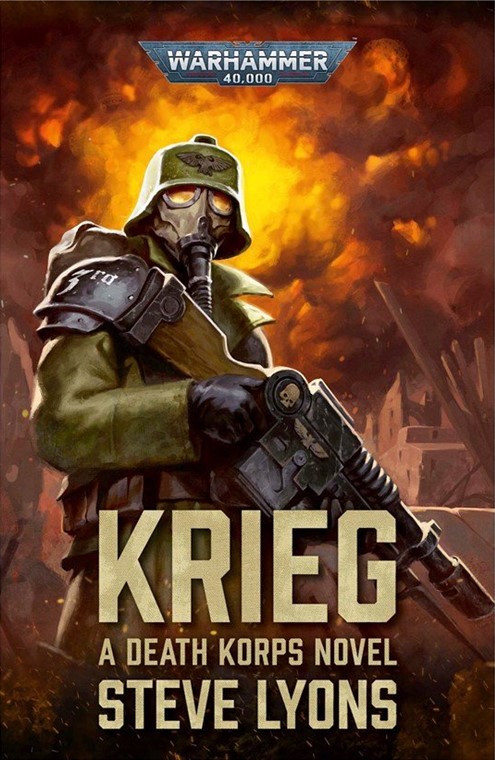
Dead Men Walking was an epic novel released back in 2010, that featured a brutal and compelling story I really fell in love with.  This novel follows the trend of books that highlight the adventures of specific regiments or units of Imperial Guard, such as Catachan Devil by Justin Woolley, Kasrkin by Edoardo Albert, Steel Tread by Andy Clark, and the Gaunt’s Ghosts books by Dan Abnett, which has been very fun.  Dead Men Walking was the author’s first look at the legendary Death Korps of Krieg, one of the most distinctive and dark regiments of Imperial Guard soldiers, who he covered again back in 2022 with Krieg.  This new novel sets the Death Korps onto a whole new battlefield with deadly results.

Hieronymous Theta is a small and relatively young world in the Imperium of Man.  Populated by nearly nine billion people, it is slowly becoming an important industrial hub, as its cities and massive spires build up.  But as the inhabitants of the capital, Hieronymous City, expand their mining operations deeper they encounter something unexpected and terrifying, the Necrons.  Unfeeling and inhuman ancient xenos encased in living metal, the Necrons are an unrelenting force determined to exterminate the human pests they find inhabiting their world by any means necessary.

As the citizens of Hieronymous City begin to panic, unable to stand against the encroaching Necrons and their deadly technology, their apparent salvation lands on the planet in the most unlikely of forms, the Death Korps of Krieg.  One of the most feared and mysterious regiments of the Astra Millitarum, the Death Korps of Krieg come from a world destroyed by civil war which seeks to redeem itself by producing soldiers solely dedicated to the Emperor and his victory.

As the Death Korps land on Hieronymous, they take the war to the Necrons and begin a determined siege to retake Hieronymous City from the outside.  But as the Krieg regiments push forward, the people of the planet soon begin to realise that the Death Korps might not be the salvation they hoped for.  The soldiers of Krieg’s only goal is to defeat the Emperor’s foes, and they are willing to sacrifice anything to achieve victory, including the citizens of Hieronymous.  With battle joined, the fate of Hieronymous hangs in the balance.  But does anyone truly win when two implacable and unrelenting armies go to war?

This was an extremely interesting, intense and dark novel from Steve Lyons, who follows up his previous Krieg novel in a big way with this outstanding read.  Featuring a moving, action-packed and highly cynical story, Dead Men Walking was probably one of the better Warhammer 40,000 books from last year, and I had an exceptional time getting through it.

I really liked the fantastic story that Lyons came up with for Dead Men Walking, especially as it successfully showcased both opposing armies, the Death Korps and the Necrons, without actually featuring any perspective characters from either side.  Instead, the focus is reserved for the other humans caught in the middle of the conflict, including the Imperial Commissar attached to the Death Korps, the governor of the planet, and several citizens who find themselves caught in the crossfire of the war and are forced to adapt to survive.  I love how Lyons set the early narrative out, with the perspective characters slowly becoming aware of the dangers beneath them.  The slow build introduction of the Necrons, a force the humans don’t know but the reader is very aware of, was handled perfectly, and there is a lot of great anticipation that pays of well when they finally attack.  The scenes of carnage and utter terror that emerge for the characters stuck in the city really hit home with their realism and intensity.  Indeed, there is a bit of a horror vibe to the story at this point, and Hieronymous City turns into an excellent wasteland setting for the characters to subsequently attempt to navigate.

Once the city is in ruins, the book turns towards the landing Death Korps, who begin prosecuting a deadly war against the Necrons.  This moves the story into a fascinating new zone, as you get some fantastic battles while also witnessing several characters soon caught up in the city as everything changes around them.  I loved the various unique, personal stories that emerged, and the focus on characters watching both the Krieg and Necron forces battle it out proves very powerful.  As the story continues, each of the main characters suffer in various ways, especially as they begin to realise that the unrelenting, victory-focused Krieg are just as dangerous as the Necrons, and there are some deeply powerful moments as they lose their humanity in the carnage of war.  All of these mostly independent character narratives go in some dark directions, especially as the background war gets even darker, and not everyone survives the various conflicts to come.  These storylines either end or coalesce together as the book comes to a head, and you really appreciate the impressive narrative that Lyons weaves together.  I loved how grim and cynical the story got at the end, and Lyons provides a particularly memorable conclusion that really highlights just how unfair the Warhammer 40,000 universe can be.

Lyons really came up with a brilliant story for Dead Men Walking, as he balanced the need to highlight two interesting Warhammer 40,000 factions, while also telling his own unique narrative.  Telling the story of the Krieg and Necrons from the perspective of the third-party characters caught in the middle of their war was such as clever move, especially as it provided some fascinating contrast between the two factions.  The author provided such a dark vibe for Dead Men Walking, and the terrified civilians, the crumbling city and the relentless troops waging war without a care for those around them were all handled brilliantly.  I think the narrative split between the various characters caught up in the fray was done well, and you get to see all sides of the conflict, and the darkest actions of both opposing foes.  I also loved how well Lyons showcased the main city setting throughout the book, as the collapse of the once proud city mirrors the loss of humanity for the various protagonists.  Dead Men Walking can easily be read as a standalone novel, and new readers can just fall into its dark and unique story.  Indeed, this might be a pretty good entry point, as the views of the confused and horrified civilians provide some good opening observations about two key factions.  Naturally, established fans of the franchise will get a lot more out of Dead Men Walking, especially as Lyons really showcases both iconic groups in some fantastic ways.

I absolutely loved the portrayal of the Krieg soldiers in Dead Men Walking, and they really are some of the most entertaining figures in the Warhammer 40,000 canon.  Unlike his other novel, Krieg, where Lyons spent a great deal of time focusing on the origins of the Krieg soldiers with flashback sequences, Dead Men Walking showcases them purely through the eyes of other human inhabitants of the Warhammer 40,000 universe.  To the common soldier or citizen of the Imperium of Man, the Death Korp are unnaturally dedicated, unwavering and heartless, focussing on the battle to the exclusion of all others.  Thanks to their harsh training, indoctrination, and history, they have a very black-and-white view of the universe and will stop at nothing to win, even if that means sacrificing their comrades or allies for a strategy.  Lyons really highlights their near-inhuman mentalities throughout the course of Dead Men Walking, and thanks to the perspectives of the non-Krieg soldiers, you see them in a much more sinister light.  There is something very concerning about the simple mathematic they put behind their strategies, and I loved how well Lyons captured how similar they are to the Necrons.  Thanks in great deal to the actions of the Krieg soldiers, this ended up being a particularly bleak book, which really hammered home how there are no good guys in this universe.

In addition to the Krieg soldiers, Dead Men Walking also featured the Necrons as the antagonists, who served as worthy opponents to the Krieg.  As with the Krieg soldiers, you don’t get a Necron perspective in Dead Men Walking, which honestly enhanced the unique story Lyons was going for.  Unlike books like other more recent Necron focussed novels like Ruin, Reign or The Infinite and the Divine, you only see these characters through the eyes of normal humans, who have no idea who or what they are.  This makes for some particularly terrifying scenes as the humans encounter overwhelming attacks from unkillable metal monsters, and Lyons really captures how the unknown is just as bad as the devastation around them.  Even when the Krieg soldiers arrive, there is very little knowledge about the Necrons, due to the secrecy of their origins, and the only intelligence about them comes from rumours of prior encounters (which includes a cheeky reference to the Ciaphas Cain novel, Caves of Ice).  I really appreciated this shrouded look at the Necrons, and it proved to be interesting to see the how a normal person would view them.

I really liked the characters in Dead Men Walking, especially as Lyons focuses the story on several normal humans who suddenly get thrust into hell and find everything they thought they knew completely upturned.  Much of this upheaval is due to the interactions with the Krieg soldiers, whose unreasonable actions cause even the most stoic soldier or commander to falter in different ways.  Watching each of these characters slowly change for the worse makes for some gripping reading, and you end up feeling great sympathy for all the point of view characters.

These great characters include Gunthar Soreson, a mine supervisor who loses everything in a single night and tries to find redemption as a soldier fighting for the Krieg.  It was absolutely fascinating to see Gunthar, who starts the book as a relatively normal and nice character, slowly lose his humanity in a similar manner to the Krieg soldiers, and his story hits particularly hard at times.  I also must highlight the character of Commissar Costellin, one of the commissars attached to the Krieg regiments, and one of the few non-Krieg soldiers featured in the book.  Commissars are fantastic figures in the Warhammer 40,000 canon, mainly because they serve as implacable disciplinarians charged with maintaining order and morale through lethal means and ensuring that the soldiers due their duty.  However, due to the unnatural discipline of the Death Korp soldiers, Costellin finds himself acting more in the role of a liaison between the Krieg and the citizens of Hieronymous.  Lyons writes some intriguing storylines around Costellin, and it was fascinating to see a commissar character who fears the resolve of his own troops, as the Death Korp leaders go too far even for him.  Finally, I really enjoyed the inclusion of the governor of Hieronymous, Hanrik, who finds both his planet under attack and his authority taken away from him when the Death Korp takes over.  I felt the storyline around Hanrik was very clever, and you had to feel for him at times, especially when he finds his loyalties tested.  All these character arcs and more are really well written and hit hard emotionally, especially with their resulting dark ends.

It should come as no surprise whatsoever that I grabbed Dead Men Walking on audiobook, as frankly no other format does Warhammer 40,000 fiction justice.  The resulting audiobook was extremely awesome, as the intensity, action, and darker elements of Dead Men Walking’s story came through in this format.  Coming in with a run time just short of 11 hours, Dead Men Walking was an easy Warhammer 40,000 audiobook to power through quickly, especially once you get stuck into its awesome narrative.  It helped that they brought back talented narrator Timothy Watson for this audiobook adaptation.  Watson, who did a great job narrating Krieg and The Lion: Son of the Forest, was in rare form again in Dead Men Walking, especially as he has the perfect voice for this darker and exciting story.  His voice work really captures the chaos and desperation of the story, and I loved the unique tones he comes up with for the various characters.  The featured Krieg soldiers all have the typical German-esque accent, which matches the regiment’s World War I aesthetic, and I liked how Watson worked to enhance these figures relentless and unwavering nature through his voice work.  The other characters of the plot, who are allowed to have emotions, are also portrayed extremely well, and Watson provides them with excellent and fitting voices that captures their feelings on the situation, especially as their encounters with both the Krieg and the Necron, wear them down.  This audiobook version of Dead Men Walking was so damn good, and it is easily the best way to enjoy this epic novel.

Steve Lyons continues to showcase why the Death Korp of Krieg are some of the most memorable figures in the Warhammer 40,000 canon with the brilliant and dark read Dead Men Walking.  Presenting a grim scenario of war and sacrifice that only gets worse when the ‘good guys’ arrive, Dead Men Walking was a particularly harrowing piece of Warhammer fiction, that I still cannot stop thinking about.  Clever, intense and a little traumatising, Dead Men Walking comes highly recommended, and I cannot wait to see what great tale Lyons comes up with next.

Amazon

Warhammer 40,000: The Fall of Cadia by Robert Rath

Warhammer 40,000 - The Fall of Cadia Cover

Publisher: Black Library (Audiobook – 5 August 2023)

Series: Warhammer 40,000

Length: 19 hours and 42 minutes

My Rating: 5 out of 5 stars

Amazon

Cadia Stands!  I ended 2023 on a very high note with one of the best Warhammer 40,000 novels of the year that follows one of the biggest events in the franchise’s recent lore, The Fall of Cadia by Robert Rath.

There were several amazing Warhammer 40,000 novels released in 2023, with some of my favourites including The Lion: Son of the Forest and Warboss by Mike Brooks, The King of the Spoil by Jonathan D. Beer and Cypher: Lord of the Fallen by John French, just to name a few.  However, in terms of sheer scale, epic battles, and larger-than-life characters, my favourite will have to be The Fall of Cadia.  As the name suggests, The Fall of Cadia follows the final battle for the planet of Cadia at the end of the 13th Black Crusade, which was a major campaign in the Warhammer 40,000 tabletop game.  The original 13th Black Crusade campaign happened back in 2003, with the official result being something of a draw.  However, in 2017, Games Workshop retconned the campaign to result in a much more substantial Chaos victory, which ended up having substantial impacts on the wider lore of the franchise, effectively reshaping the entire Warhammer 40,000 universe.

This change ended up being a pretty significant event, and Games Workshop provided some major write-ups about it that summarised the events and their explosive aftermath.  Indeed, the lore events initiated in this event have already been featured in several novels, and most of the current Warhammer 40,000 fiction examines the consequences of this campaign.  However, there has yet to be a novel solely dedicated to trying to capture the entirety of the action at the end, until now with The Fall of Cadia by Robert Rath.  Rath was a great choice of author to write this book as he is a truly amazing author of Warhammer 40,000 fiction.  His previous novels, Assassinorum: Kingmaker (one of my favourite books and audiobooks of 2022) and The Infinite and the Divine, have both been exceptional five-star reads, telling elaborate, character-driven stories that cleverly capture complex aspects of Warhammer 40,000 lore and turn them into impressive and addictive reads.  As such, he was the perfect choice to write The Fall of Cadia and he succeeded in creating a deeply moving and epic novel that perfectly brought the chaotic events that ended this infamous war to life.

In the far future of the 41st Millenium, few battlefields are more significant or more soaked in blood than that of Cadia.  A fortress world for the Imperium of Man, Cadia stands in the shadow of the Eye of Terror, a blazing rift that serves as a gateway into the Warp and the realm of the Chaos gods.  For any substantial invasion by the forces of Chaos into the Imperium to be successful, Cadia needs to be taken and destroyed, and for that task the Chaos Gods have chosen the Warmaster of the Black Legion, Abaddon the Despoiler.  Abaddon is a legendary warrior of hatred and spite who alone is capable of welding together the unruly and contentious forces of Chaos.  Over the millennia, Abaddon has launched 12 Black Crusades against Cadia, leading an unholy alliance of monsters, daemons, cultists and traitor Space Marines to battle.  However, each time Cadia has held, at great cost to the desperate Imperial defenders.  But now, as the forces of Chaos appear stronger than ever before, a 13th Black Crusade has been declared, one that looks set to destroy Cadia forever.

The Fall of Cadia starts well into the 13th Black Crusade, as, after weeks of heavy fighting, the forces of Cadia and humanity once again appear victorious, with the armies of Chaos retreating on all fronts.  However, despite the apparent victory over the heretics and the dark gods of Chaos, Lord Castellan Ursarkar Creed is uneasy, believing that the victory was too easy.  As the celebrations continue, Creed is soon proved right, as the Eye of Terror disgorges a new enemy force unmatched in size and deadly potential since the legendary Horus Heresy.

At its head flies a dread Blackstone Fortress, an alien superweapon capable of intense destruction and now crewed personally by Abaddon.  Faced with this threat, Creed attempts to bring together the various elements of humanities defenders, including legendary Space Marines, virtuous Sisters of Battle, the inhuman soldiers of the Adeptus Mechanicus, and the outmatched by steely rank-and-file troops of Cadia, determined to save their home.

As the final invasion of Cadia begins, Creed organises the defence the best he can to hold back the oncoming horde on land, in the sky, in space, and even far behind Cadian lines in their seemingly safe cities.  If Creed has any hope of succeeding, he will need to bring together the scattered armies of the Imperium on Cadia into a single cohesive force, but not all of the defenders are fighting for the same goals.  Even if these armies come together, can the legendary Creed hold off the fury of Abaddon and his dark gods?  Cadia’s last stand has begun, but who will be left alive at its end?

Robert Rath continues to showcase just how varied and impressive his talent for writing Warhammer 40,000 fiction is as he captures the incredible events of the last siege of Cadia.  The Fall of Cadia is epic in every way possible, as it presents the reader with a great coverage of these key lore events and the characters involved.  Elaborate, intense, and featuring so much damn carnage and war, The Fall of Cadia is an incredibly addictive read that got a very easy five-star rating from me.

I think it is important to point out that Robert Rath had a difficult task ahead of him when he was chosen to novelise the events surrounding the end of the 13th Black Crusade.  A lot of detailed lore has been written around this event, not only in the various guides, rulebooks and other material associated with the tabletop game but also in several years worth of novels and extended fiction that focused on the aftermath of the war.  Any novelisation about these events ran the risk of being a stale retelling of events that all Warhammer 40,000 fans already know about.  However, Rath rose to the challenge and presented a powerful, intense and memorable depiction of the events that really drags the readers in while showing just how incredible and epic a piece of Warhammer fiction can be.

To tell the events of The Fall of Cadia, Rath elected to cover everything in a massive, multilayered, character-driven narrative, told from every perspective imaginable.  Starting towards the final days of the battle, when Abaddon unleashes his true invasion of Cadia, the reader is soon engrossed a range of different storylines that cover many different angles of the battle.  Not only do we get to see the overall strategy of both sides but the reader is also thrust into personal wars and fights across the theatre.  So many amazing moments are covered, including a desperate last stand in the mountains, battles in the sky and space, Chaos infiltration in the cities, criminal enterprises, even internal dissension amongst the Chaos command.  These scenes are usually shown through the eyes of a complex characters, whose desperate fight for Cadia helps to define them and presents the reader with some impressive and captivating character arcs.  All these varied conflicts are expertly portrayed by Rath, who does a wonderful job capturing the intensity, brutality and lack of humanity involved in warfare, as his characters suffer on every battlefield imaginable.  The sheer epic and destructive nature of these conflicts really come across in Rath’s writing style, and I honestly visualised many of the scenes being described in cinematic detail in my head.

The first half of the book primarily focuses on these various scattered storylines, and it was a lot of fun to see the different theatres of war, especially as you start to get attached to the major characters.  All the battles featured are pretty awesome and intense in their own way, and I really have to emphasise just how skilled Rath is at bringing all the different elaborate bits of combat to life.  The complex story pieces start to come together in the second half, especially as each of the characters find themselves drawn to the same battlefields.  I really appreciated how the storylines tied together, and there are some brilliant moments featured here.  I also felt that the multiple deus ex machina moments towards the conclusion of a big battle sequence that Rath needed to include because they were part of the lore was handled about as well as they could be.  Rath did some good set-up for the most important of them earlier in the plot, and I liked how in many instances he tried to examine it from the perspective of the common soldier looking for miracles, so it often did not seem too ridiculous.

Everything leads up to the big final battle in the last third of the novel, and despite knowing how it was going to end, I still was extremely invested in the plot and eager to see how everything came about.  A lot of this was because I deeply enjoyed the compelling character arcs of the newer protagonists, but I was also very interested in seeing how Rath envisioned some of the more essential events.  The author really did not disappoint, as these epic and groundbreaking moments were expertly showcased to the reader in a powerful and captivating way.  The big deaths were pretty shocking and hurtful, especially if you did not know they were coming, and the major conflicts were so damn epic in their scope and impact.  The final devastating blows of the war really hit hard, especially as the climatic events featured some deeply personal moments alongside the mass devastation, which made everything that much more powerful.  I really loved how everything came together, and the poetic conclusion that highlighted the final fights of the surviving protagonists is going to stay with me for some time.  I am so damn impressed with how much passion and emotion that Rath was able to stick into this massive war story, and I honestly loved every single second spent reading The Fall of Cadia.

In addition to the amazing story, I really need to highlight the impressive array of characters featured throughout The Fall of Cadia.  Rath did a wonderful job of presenting the massive events of this book through a range of intriguing character perspectives on every side of the conflict, and there is a fantastic combination of new characters and established Warhammer 40,000 figures.  The author really tried to cover The Fall of Cadia’s narrative from every single angle he possibly could, and the resulting combination of generals, common soldiers, legendary warriors, ancient traitors and other interested onlookers, helped to make this Warhammer 40,000 story even more powerful and layered.  This includes several Chaos characters, whose tainted perspectives allow for a compelling view of both sides of the conflict.  The Fall of Cadia’s character arcs are mostly self-contained for the majority of the book, with their focus usually on that particular figure or theatre of the war.  However, there are some clever and moving interactions between the characters as the novel continues, and it is testament to Rath’s writing style and ability to create a massive web of overlaying character storylines that these interactions fit together so well into a cohesive and powerful narrative.  Rath really dove into the complex lives and personalities of every character he featured, even those that died quite quickly, and the resulting character arcs really added to the emotional impact of The Fall of Cadia.  You become heavily invested in these characters as a result, and waiting to see who survives the war is an important part of experiencing this novel.

So many big personalities were expertly featured throughout The Fall of Cadia and every reader is going to come away with their own favourites.  The better character arcs I personally loved included that of Major Marda Hellsker, who is forced to lead a desperate last stand for much of the book and grows into the leadership position thrust upon her.  Captain Hanna Keztral’s exploits in the sky also make for great reading, especially as she desperately tries to gain respect whilst flying an unarmed aircraft.  You also have to love the storylines surrounding Salvar Ghent, Cadia’s premier gangster, as he tries to exploit the war to his advantage before finding himself thrust into a much more prominent role.  I particularly loved how well Ghent interacted with some of the major figures in the book, and his entire storyline was one of the most entertaining.  The insatiable Necron collector Trazyn the Infinite was also a great inclusion in the plot, and Rath clearly had fun bringing back this hilarious character after featuring him so heavily in The Infinite and the Divine, and I got a good laugh at several of his pivotal scenes and petty moments.

However, the best characters in The Fall of Cadia had to be the opposing leaders of the war, Lord Castellan Ursarkar Creed and Abaddon the Despoiler.  Both are major figures in Warhammer 40,000 lore and Rath ensured that they were done justice in this novel.  Creed is shown to be a rough but brilliant commander, capable of inspiring an entire world while also suffering from the stresses of constantly being on the losing side.  I particularly enjoyed the subsequent inclusion of Colour Sergeant Jarran Kell alongside Creed as his long-suffering aide and best friend, and the two make for a very powerful character combination for many of the scenes shown from the defenders’ perspective.  Abaddon on the other hand is presented as the absolute beast that he is, and his obsessive desire to destroy Cadia is palpable.  I deeply appreciated that Rath showcased Abaddon as the ultimate villain in this universe, and his appearances were always exceedingly impactful.  Many of Abaddon’s appearances were cleverly shown through the eyes of his loyal servant, Dravura Morkath, whose rose-tinted opinions of her master barely covered the restrained evil within this figure.  I quite enjoyed Dravura as a character, especially as she has the most intriguing insights into the Chaos ranks, and the resolution of her storyline with Abaddon might be one of the most heartbreaking in the entire book.  These characters, and so much more, were such a brilliant part of The Fall of Cadia, and they helped turn what could have been a simple retelling of the lore into a particularly powerful and moving novel.

As with most Warhammer 40,000 novels, I feel that The Fall of Cadia is going to appeal to those fans of the franchise who already have a grip on the basics of the lore and main characters and can fully appreciate just how massive an event this book was.  Due to the material the book is based on, there were a lot of crazy events and characters featured here, some of which would be obscure even to casual fans of the game.  While Rath does an outstanding job of explaining and exploring the most important of these elements, some readers might occasionally be confused at what is going on or how certain characters came into being.  Still, I feel that most new readers can still have an exceptional time with this book, especially as the epic battles, impressive characters, and heartfelt military focused story, is so damn good.  The Fall of Cadia might even be a great gateway novel for those people trying to get into Warhammer 40,000 fiction, and it sure as hell encouraged me to read more Warhammer fiction.

One of the other things that I really appreciated about The Fall of Cadia was the way that Rath tried to paint a more nuanced picture of the planet of Cadia itself.  Cadia is usually portrayed as a bastion of military prowess and resistance without some of the issues other planets in the Imperium had, so it was quite interesting to see Rath’s different take on the subject, showing Cadia to be a planet with hidden issues and dissent.  In particular, Rath examines the problematic social structure of Cadia, where the active military are notably prioritized and those people who could not fight or be assigned other roles were considered a second-class citizen.  I loved how well Rath examined and focused on the issues surrounding this unique military class system, and it became a surprising key part of the book.  Indeed, the motivations of several characters are highly tied into these issues, with many seeking to prove themselves after being considered lesser for their contributions.  It also serves as an intriguing motivation for several antagonistic figures, and I loved just how well Rath was able to weave the structure of a planet into these intriguing character traits.  This, and more, really showcased Rath’s inventiveness and appreciation for the little details of the Warhammer 40,000 universe, and it is one of the reasons why I really enjoy his novels.

As with most Warhammer 40,000 novels, I chose to enjoy The Fall of Cadia on audiobook, which proved to be a very smart decision on my behalf as it was one of my favourite audiobooks of the year.  Coming in with a runtime of just under 20 hours, The Fall of Cadia is a bit longer than your typical Warhammer 40,000 audiobook, which reflects the massive story Rath came up with for this epic read.  I really loved how well this audiobook format brought the epic nature of this narrative to life and the many battles, wars, and unique characters felt even more impressive when read out.  I enjoyed the narration of Mark Elstob, who has previously lent his voice to other great Warhammer audiobooks, including Kal Jerico: Sinner’s Bounty by Josh Reynolds.  Elstob’s narration of The Fall of Cadia is extremely good, and I loved how passionately he presented every big event and piece of action.  I really enjoyed some of the great voices he came up with for the cast of The Fall of Cadia, and every larger-than-life character was gifted a fitting tone that perfectly captured their personalities and intensity.  His voices for the opposing leaders of the battle, Abaddon the Despoiler and Ursarkar Creed, are amazing examples of this, and you really get awesome impressions of both character’s opposing determination and charisma in some outstanding sequences.  I really cannot emphasise just how incredible this audiobook version of The Fall of Cadia is and it is definitely the best way to enjoy this world-shattering story.

Overall, The Fall of Cadia is a pretty exceptional piece of Warhammer 40,000 fiction that did such an impressive job of capturing this intriguing event from the game’s substantial lore.  Robert Rath is such an impressive author, and I am really glad he had the opportunity to cut loose and present this massive inclusion to the Warhammer 40,000 franchise.  The Fall of Cadia is easily one of my favourite books of 2023, and I loved how Rath told such an epic war tale in such a powerful and memorable way.  I honestly hope they make a movie based around this book in the future, because it would be so damn spectacular.  A highly recommended read that no Warhammer 40,000 fan should be without.

Amazon

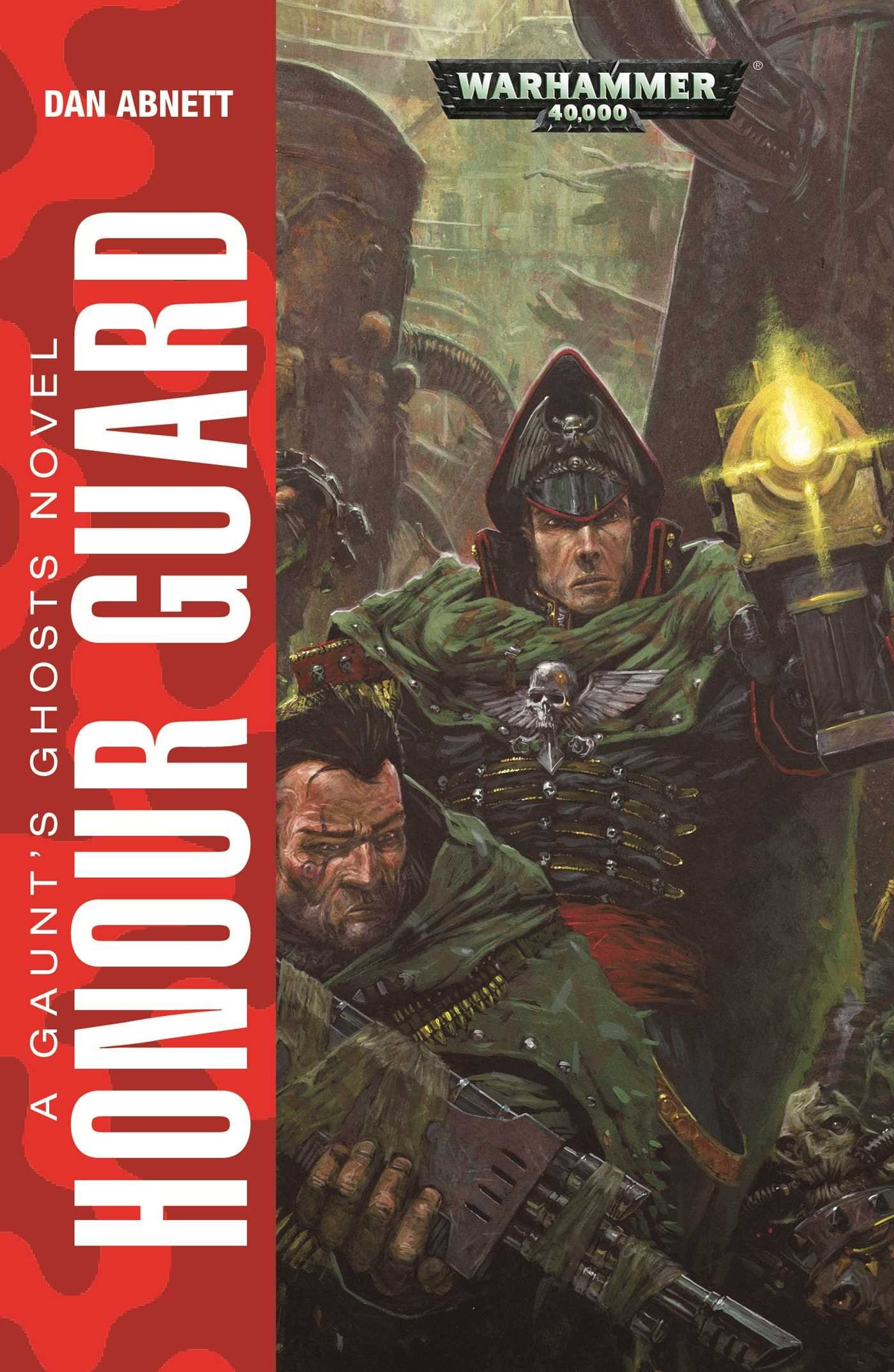
Throwback Thursday – Warhammer 40,000: Honour Guard by Dan Abnett

Warhammer 40,000 - Honour Guard Cover

Publisher: Black Library (Audiobook – July 2001)

Series: Gaunt’s Ghosts – Book Four

Length: 10 hours and 12 minutes

My Rating: 4.5 out of 5 stars

Amazon

Welcome back to my Throwback Thursday series, where I republish old reviews, review books I have read before or review older books I have only just had a chance to read.  For this week’s Throwback Thursday I’m still in a Warhammer 40,000 mood, so I decided to dive even further into Dan Abnett’s classic Gaunt’s Ghosts series with the fourth book, Honour Guard.

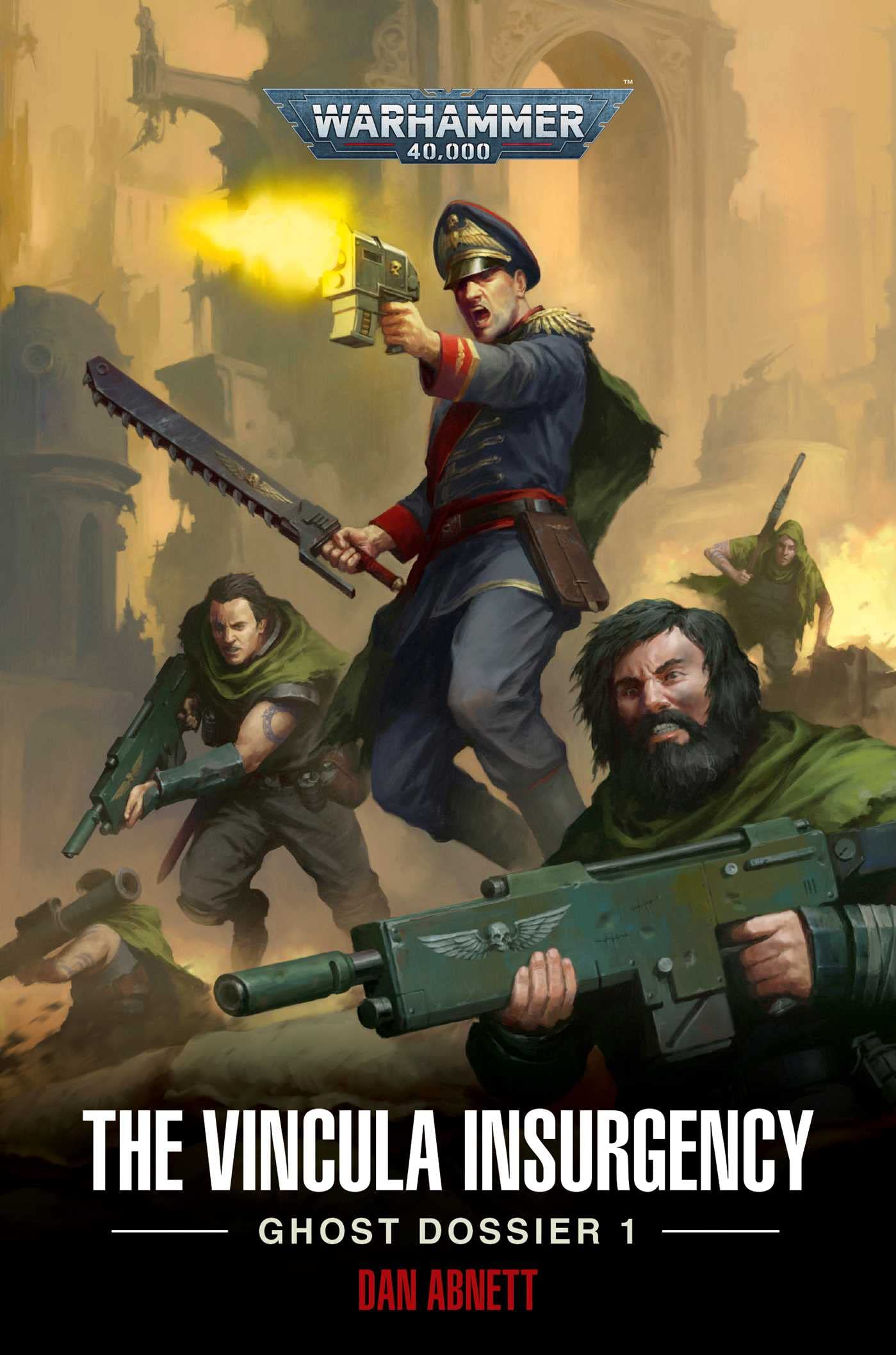
Readers of this blog will no doubt have noticed a fair increase in the number of Warhammer 40,000 novels I’ve highlighted this year, as this entire grim expanded universe has quite an addictive quality to it.  Foremost amongst these books have been the compelling works of veteran author Dan Abnett, who has written so many impressive and key parts of the Warhammer canon over the years.  I deeply enjoyed his Eisenhorn trilogy (Xenos, Malleus and Hereticus), all three of which were given pride of place in my recent post listing my favourite Warhammer 40,000 novels.  However, his best-known works are his Gaunt’s Ghosts series of books, which catalogue the adventures of the Tanith First and Only regiment of Imperial Guard, better known as Gaunt’s Ghosts.  I have had a wonderful time with the first three novels, First and Only, Ghostmaker and Necropolis, as well as the prequel novel The Vincula Insurgency, which showcased the bloody lives of the common soldier in this war-torn universe.  I have really gotten attached to this series and when I wanted a quick read, there was nothing I would rather turn to then the next Gaunt’s Ghosts book, Honour Guard.

Throughout the extended, system-spanning Sabbat World crusades, the men of the Tanith First and Only have fought against the dark forces of Chaos in every way imaginable.  Led by their heroic commander, Colonel-Commissar Ibram Gaunt, the Tanith soldiers, known colloquially as Gaunt’s Ghosts, have had many victories, but few failures.  So, when fighting on the holy Shrine World of Hagia, the Ghosts are devastated when they trigger a disastrous enemy trap that destroys a holy city and creates a psyker beacon that will draw a massive Chaos fleet down on their position.

Troubled by his failures to protect one of the most important planets in the Sabbat Worlds and made a scapegoat by his commander, Gaunt is left a broken man.  His one chance to save his career and his regiment is to lead the Tanith and an armoured company as an honour guard to a sacred shrine to recover the holy relics of Saint Sabbat.  If he can recover the relics and evacuate them from the planet before the Chaos fleet arrives, he may be able to keep the Ghosts under his command.

Beginning the arduous pilgrimage, Gaunt and his men soon discover that the road to the shrine isn’t as clear as their intelligence indicated.  A vast enemy army lies in wait for them, and the Ghosts will have to fight every step of the way to secure their objective and make their escape.  However, there are far more mysterious forces at work behind the scenes as Gaunt and some of his men soon find themselves being driven on by religious visions of Saint Sabbat herself.  Is the holy saint talking to them, or is something more sinister manipulating them?

Honour Guard was another epic science fiction military adventure that I powered through in no time at all.  Skilfully continuing the intriguing Gaunt’s Ghost story, Abnett has produced a thoughtful and intense read that throws the protagonists into a captivating action-packed scenario that really showcases the gritty nature of the Warhammer 40,000 universe.

Honour Guard has a somewhat typical Gaunt’s Ghosts story to it, and if you’ve read the series before then you know that means great characters, intense fights with big set-piece battles, and a compelling look at the common soldier in the Warhammer 40,000 universe.  This fourth book follows on from the events of Necropolis, and Abnett quickly and ably shows the changes to the regiment that the previous adventures have wrought, especially with all the new Verghastite recruits.  Abnett starts things off with an epic series of battles as the Ghosts attempt to take a Chaos controlled city.  This opening sprawl of fights is not only intense but it expertly introduces the new setting, sets up several key story points, and lets the reader know who the main characters of Honour Guard are going to be.  From there, the characters, especially the main protagonist, Gaunt, face a major setback as the city is destroyed, their allies are killed, and a massive Chaos fleet has been summoned to destroy the holy planet they are on.  There are some great moments in this early bit of the book, especially as Abnett really dives into the impacts of the failure on Gaunt.  It also sets up the intriguing story element that Gaunt is likely to lose his command and the Ghosts will be broken up as a result.

With that set up, Abnett then drives into the meat of the story, with Gaunt leading the Ghosts and an armoured regiment as an honour guard to retrieve the sacred relics of one of the Imperium’s most important saints before the enemy fleet arrives.  Framed as an easy mission to give Gaunt an honourable send off, the mission naturally goes to hell when the Ghosts discover a vast enemy army between them and their goal.  This results in several major battles on the road, and Abnett has a lot of fun combining infantry fighting with tank warfare to make the conflicts even more impressive.  Each battle is extremely fun in its own regard, and fans of action and military combat really won’t be disappointed by Honour Guard as a result.  At the same time, there is a real focus on the characters, as several of the protagonists are going through different personal struggles, especially Gaunt.  Abnett also introduces an intriguing and moving side storyline that sees several long-running Gaunt’s Ghosts characters, who were wounded and left behind, attempt to make their own way to the conflict, guided by religious visions.  Everything leads up to a final battle sequence at the objective as the honour guard are trapped with a massive enemy force coming towards them.  Abnett naturally spends pages detailing all the bloody fighting, which serves as a great backdrop to the main story elements.  While I did think that the big finale of the book was too sudden and coincidental, it did fit into the general theme of faith and miracles that were covered in a lot of the plot.  Overall, this was another great, action-heavy narrative that I was able to sit back and enjoy.

As with all Abnett’s work, Honour Guard is extremely well written, and readers who have enjoyed any of the author’s previous books will be aware of what they are in for with this fantastic novel.  The author features a great blend of action, universe building and character development throughout his novel, and readers are ensured of constant excitement or intense, character-driven moments.  The entire story is told from multiple character perspectives, as the entire cast is well represented.  Not only does this allow the reader to get interesting updates from all the intriguing characters, many of whom have been built up in previous books, but it also ensures that you get a wide view of events featured throughout the novel, including several different perspectives of each battle.  I do think that the book was lacking a good antagonist perspective (or honestly a real antagonist character), and if Abnett would have included that, the entire story would have felt a bit more complete.  Still, the sheer number of perspectives and supporting characters ensures that the reader sees every angle of the action.  That is really great, as the battle scenes are some of the best parts of the book.  Abnett never holds back when it comes to the carnage, and every massive fight, armoured vehicle engagement and or infantry push is covered in high detail.  The author really tries to highlight the brutality and trauma of war, as well as the hell each of the soldier characters goes through, and you ended up riveted to the plot as a result, especially as no side character is safe.  I am glad that Abnett keeps up his outstanding writing throughout the Gaunt’s Ghosts series and I ended up getting really caught up in Honour Guard as a result.

This proved to be another interesting addition to both the Gaunt’s Ghosts series and the wider Warhammer 40,000 universe, and fans of both are going to have a pretty great time with this new novel.  As with most of the books in the series, Honour Guard can be read as a standalone novel, although starting with the earlier books does give the reader more insight into the characters.  Abnett really tries to make each of his novels as accessible as possible, and readers new to the series or Warhammer fiction in general can easily dive in here and have a fun time with all the military action.  However, Abnett also has a lot of fun expanding out the canon in Honour Guard, especially as you get to see more regiments of the Imperial Guard in action against the forces of Chaos.  One of the most intriguing lore aspects of Honour Guard is the examination of key elements of the Sabbat Worlds, which have been the overarching focus of this series.  In particular, there is a focus on the legendary figure of Saint Sabbat, who is a personal hero of many of the characters.  This sends the story down an interesting spiral of faith and devotion in the Imperial Cult, as many have their religious beliefs tested due to the earlier events of the story.  As such, there are some great examinations of the Imperial religion, and it is fascinating to see the potential spiritual ramifications of several events throughout the novel.  I also quite enjoyed the main setting of the planet of Hagia, which is only really featured in this novel.  Abnett sets the entire world up very quickly and you soon find yourself caught up in the fight for this religious planet which is completely dedicated to worship of the Emperor and his saints.  Abnett works several religious elements of the planet into the story extremely well, and it proves to be quite fascinating backdrop for this awesome novel.

One of the best things about Abnett’s writing is his ability to construct multiple complex and intriguing characters who all go through some great development.  This is particularly true in the Gaunt’s Ghosts books, as he has constructed a pretty massive cast of characters throughout the first three books in the series who all come into play in Honour Guard.  I really enjoyed all the amazing characters in this fourth novel, especially as there is a very interesting change of dynamics due to the Verghastite recruits joining at the end of the previous novel, Necropolis.  Not only does that mean that some of the best new characters from the previous book are once again featured here, but it builds some fantastic rivalries between the soldiers as the new Ghosts attempt to gain acceptance from the men of Tanith.  Honour Guard ended up being a fantastic litmus test for Abnett’s expanded cast, especially as it introduces some compelling cultural and gender divides to the regiment, while also ensuring that all the fantastic characters the author utilised in Necropolis don’t go to waste.

Many of these great characters really stood out to me in Honour Guard, but of course most of the focus was once again on the central protagonist of Colonel-Commissar Ibram Gaunt.  This was a pretty significant novel for Gaunt, as readers get to see him at his very lowest point after he suffers a devastating defeat.  This pushes him into a depressive spiral, which is very surprising after how controlled and confident he has been in the previous novels.  Abnett really does a great job of showcasing Gaunt’s lost confidence and internal anger, and watching him overcome it becomes an intense part of the book.  The author really dives down deep into Gaunt’s motivations throughout Honour Guard, and you come away feeling a lot closer to the character as a result.  It isn’t always easy for an author to show their main protagonist dealing with defeat and loss, but Abnett did a wonderful job of it in Honour Guard, and I think it makes Gaunt a much stronger figure as a result.

Aside from Gaunt, a lot of the other characters are really well utilised throughout Honour Guard, with some great side storylines and adventures.  Colonel Corbec’s adventure with long-running Gaunt’s Ghosts characters Dorden, Brin Milo and Bragg, had some excellent moments to it, especially as many of them are still dealing with the loss of loved ones or their planet.  Abnett also makes great use of several notable characters introduced in Necropolis like Gol Kolea, Captain Ban Daur and Ana Curth in Honour Guard.  It was great to see the author spending time developing storylines around them which will continue to build throughout the series, and I enjoyed seeing them attempting to integrate into the Tanith regiment.  Even new characters like Viktor Hark, the regiments new Commissar, the slippery and entertaining killer Cuu, and troubled Trooper Vamberfeld, all added some awesome elements to the overall story.  I liked how Hark proved to be a compelling reflection of Gaunt, while Vamberfeld showcased the traumas war can have on a soldier’s mind, while also placing him right in the middle of key events.  However, some of the best character work in Honour Guard occurred around the always entertaining Major Rawne.  Rawne, who has sworn multiple times to kill Gaunt, bears witness to his commander’s fall from grace after his defeat.  However, rather than revelling in it, Rawne ends up having a big confrontation with Gaunt towards the end of the book to snap some sense in him.  Watching this cynical character be the voice of reason to Gaunt was just brilliant, and the resulting exchange added some fantastic layers to Rawne that I deeply enjoyed.  While I really would have loved some more named antagonists, the characters overall in Honour Guard were pretty exceptional, and I really loved how Abnett worked their unique personal narratives into the wider plot.

I doubt anyone is going to be too surprised that I checked out Honour Guard on audiobook, as that has been my preferred format for all Abnett’s books.  This is mainly because the action, characters, and grim setting are always translated across so effortlessly on the audiobook, and you can really appreciate all the cool detail that Abnett includes as a result.  Coming in a just over 10 hours, the Honour Guard audiobook has a pretty typical length for a Warhammer book, and I was able to quickly power through it.  As usual, I need to highlight the amazing narration of Toby Longworth, who has lent his voice to all of Abnett’s previous books.  Longworth has an outstanding voice that really captures the tone of the story and ensures that the reader can envision every single battle taking place.  His real talent is his ability to dive into every single character Abnett comes up with and give them a fitting voice that captures their personality and emotions.  There is some impressive continuation from the previous Gaunt’s Ghosts audiobooks as Longworth brings back all the voices he previously featured there, which I deeply appreciated.  He also employs an intriguing range of accents, which help to emphasise the different planets of origin for the various characters and regiments featured in the book.  This attention to detail and impressive voice work helps to make Honour Guard, and indeed all the Gaunt’s Ghosts audiobooks really stand out, and I had a wonderful time listening to the book in this format.  Easily the best way to enjoy this fantastic novel.

Honestly, there was no question about me enjoying Honour Guard, considering how much fun I have been having with the previous Gaunt’s Ghosts books.  This fourth entry has a great story and some brilliant writing by Abnett, and readers are in for an exceptional experience of bullets, blood and explosions in some the best military fiction in the Warhammer 40,000 universe.  This was an outstanding read, and I can give no higher compliment than to say that the moment I finished off Honour Guard, I started listening to the next novel in the series, The Guns of Tanith.  I honestly cannot get enough of this incredible Warhammer 40,000 series and it will be very interesting to see what unique storylines Abnett cooks up next.

Amazon

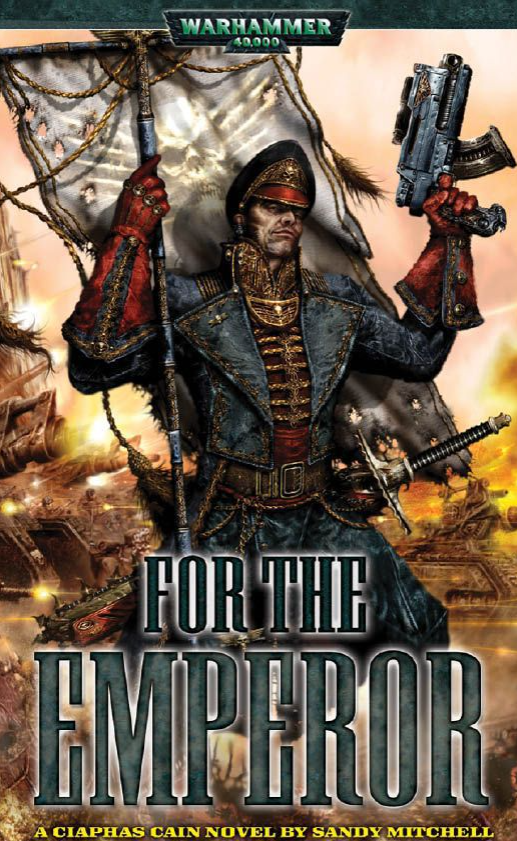
Throwback Thursday – For the Emperor by Sandy Mitchell

Warhammer 40,000 - For the Emperor Cover

Publisher: Black Library (Audiobook – 23 December 2003)

Series: Ciaphas Cain – Book One

Length: 8 hours and 57 minutes

My Rating: 4.75

Amazon

I’ve already put up one Throwback Thursday post today, for the cool Warhammer 40,000 novel, Kingsblade by Andy Clark, but the fun doesn’t end there as I am also going back to 2003 and reviewing the hilarious and deviously clever novel, For the Emperor by Sandy Mitchell, which is easily one of the funniest Warhammer books I have ever read.

Anyone who has paid the slightest bit of attention to my recent review habits would probably have noticed that I am quickly and doggedly powering through a ton of the top books in the Warhammer 40,000 range of fiction.  Not only did I recently finish off the epic Eisenhorn trilogy by Dan Abnett (featuring Xenos, Malleus and Hereticus), but I have also checked out several cool standalone novels, including Grim Repast by Marc Collins, Deus Encarmine by James Swallow and Sepulturum by Nick Kyme.  All these books are exceedingly impressive examples of Warhammer 40,000 fiction that featured their own unique elements, such as galaxy spanning conspiracies, intense horror elements, or a futurist homage to classic, gritty cop stories.  However, the one thing that they all tended to lack was a substantial and notable sense of comedy.  That is where my next entry comes in as I have finally had a chance to explore the first book in the iconic Ciaphas Cain series by Sandy Mitchell (a pseudonym for author Alex Stewart), For the Emperor, which had me laughing like crazy.

In the millennia when the forces of humanity fought to maintain the Imperium of Man, many heroes have risen from amongst the ranks of the Imperial Guard, gloriously leading mankind’s armies against the traitors, the heretics and the xenos.  Of these, few are spoken of with as much reverence and respect as the famed Commissar Ciaphas Cain, a living legend of duty, honour and courage.  Known throughout the Imperium for his daring exploits that have seen him survive the harshest of battlefields and continually lead his forces to victory, Commissar Cain is considered by many to be one of the greatest heroes of the age.

However, everything everyone knows about Cain is a lie.  In reality, he is a conniving coward who only seeks to avoid the horrors of the battlefield by any means necessary, in order to survive and make it to retirement.  Blessed with remarkable survival instincts, Cain has managed to stay alive against impossible odds many times, which has led many to believe he is a true hero capable of anything.  However, Cain’s ill-earned fame and reputation is a double-edged sword, as he is constantly chosen to journey to the worst battlefields in the Imperium, where his bad luck ensures he is in the thick of the fighting.

His latest mission sees him assigned to a newly formed Imperial Guard regiment suffering from horrific infighting and a lack of discipline.  Determined to install unity and respect amongst his new regiment, primarily so they don’t shoot him in the back, Cain is confident that he has found a relatively safe assignment.  However, his bad luck once again sees him in the thick of it, as his regiment is transferred to the backwater planet Gravalax, where a delicate situation is unfolding.  The inhabitants of Gravalax are attempting to defect to the alien Tau, who come with a message of peace and the Greater Good.  Not wishing to face the Tau and their superior technology, Cain works hard to avoid an upcoming war and ensure diplomacy will prevail.

However, after the Tau ambassador is assassinated and tensions are enflamed across the planet, Cain begins to suspect that there is more in play than he previously expected.  A shadowy conspiracy is hoping to start a war between the Tau and Imperium on Gravalax, and Cain is right in the middle of their plot.  To survive and avoid yet another war, Cain needs to work with a beautiful inquisitor to find out who is behind the attempted carnage before it is too late.  But his investigation reveals a far more dangerous enemy than expected, one that is determined to destroy all before it, starting with the terrified Cain.

Wow, oh wow, now that was a pretty damn fun book.  I had heard many times before how awesome and entertaining the Ciaphas Cain books were, and For the Emperor really did not disappoint.  Featuring a compelling story loaded with clever, dark humour, For the Emperor is a very easy book to fall in love with, and I ended up coming away really impressed with Sandy Mitchell’s amazing writing and comedic ability.

For the Emperor’s narrative itself is pretty interesting as it follows Cain through one of his most notable adventures.  Told in a chronicle perspective from Cain’s own memoirs (which may or may not be the most reliable source of information), you get to see the true Commissar Cain as he finds himself thrust into another adventure.  After a quick and very intriguing introduction, with notes from Cain’s associate, Inquisitor Amberly Vail, the story initially details Cain’s attempt to unify and control the Valhallan 296th-301st composite Imperial Guard regiment (eventually the Valhallan 597th).  These initial chapters showcase many aspects of the compelling protagonist, his deep cunning and determination to avoid damage, while also taking the time to introduce several of the major supporting characters.  The story changes after a few chapters as Cain and his new regiment arrive on Gravalax, where Cain must contend with the Tau, who are influencing parts of the local population.  Unlike most Warhammer 40,000 novels, the story doesn’t revolve around a war between the Imperial Guard and the Tau; indeed the focus on the plot is avoiding the conflict as two rival races attempt to find a diplomatic solution.  Unfortunately, some hidden force is attempting to start a war between the Tau and the humans, and Cain soon finds himself trying to maintain the peace, primarily for his own benefit.  After several intriguing and entertaining side missions, the plot eventually sees Cain and the new Inquisitor Vail lead a small, expendable force into the lair of their true enemy.  While I won’t go into detail about who they face, it results in a series of gruesome and deadly battles, where Cain’s survival skills are really put to the test.  Mitchell features a ton of action, intrigue, and odd-couple team-ups for this final major sequence, and you are really drawn into the intense storytelling, with even Cain’s sense of humour failing to cut through the brutal nature of the conflict.  Everything ends on a compelling, if slightly dark note, and you come away from the story pretty damn satisfied and ready for another intriguing adventure from this hilarious protagonist.

I really liked the fun way Mitchell wrote For the Emperor, as everything is set out to enhance the inherent comedy of the book.  While there is a ton of impressive action, adventure and intrigue, at their core all the Ciaphas Cain books are very light-hearted and add a more humorous spin to the grim Warhammer universe.  Indeed, I was getting some major Blackadder vibes from For the Emperor, as much of the plot sees the supposedly noble protagonist attempting to weasel his way out of actually getting into a fight.  Pretty much every interaction or thought in this book had me chuckling in some way, and I appreciated some of the clever jokes or references that Mitchell scattered throughout.  I also deeply enjoyed the cool chronicle format of the story, as Cain’s antics are made even funnier when you see it from his eyes.  At the same time, Mitchell includes a ton of extra notes and excerpts from other in-universe texts that not only provide intriguing context, but also add to the humour, especially as the intentionally over-the-top opinions and bad writing highlights just how crazy other members of the Warhammer 40,000 universe are.  There are also a series of notes, footnotes and quotes from supporting character Inquisitor Vail sprinkled throughout the plot to provide some additional insights, often in a humorous way.  I always deeply enjoy the use of a good footnote in fiction, especially due to my love of Terry Pratchett’s novels, and I felt that Mitchell utilised them perfectly throughout For the Emperor.  Not only do they provide additional information, but Vail’s footnotes often directly contradict Cain’s opinions and descriptions of events, and ensure a much more complex and complete overall story.

While the focus is often on the humour, Mitchell also does write a pretty compelling military thriller as the main story, which ties well into the wider Warhammer universe.  The focus on the intense conspiracy and the outbreaks of rebellion and war fit into the more humorous feel of the book extremely well, and you get quite an impressive story as a result.  There are also some rather dark moments scattered throughout the novel as well, and they provide a rather interesting contrast to the more comedic elements.  Having the character deal with some heavy moments, like being forced to kill an innocent man, provides some great balance to the story, and despite the lighter tone, you are always reminded just how grim the overlying universe truly is.

I deeply enjoyed Mitchell’s unique take on the Warhammer universe that was featured in For the Emperor, especially thanks to who is telling the story.  Most of the Warhammer 40,000 books you experience either follow a bold warrior or a common soldier, many of whom see the universe through lens of duty or ignorance.  However, the Ciaphas Cain books provide a much more down-to-earth view as the cynical Cain sees events as they truly are and he knows deep down just how deadly the universe and his own comrades are.  I really liked this alternate view of the franchise from a protagonist and it, and the inherent humour of the story, help to make this book really stand out from some other novels.  At the same time, Mitchell adds in some compelling and fascinating insights to the Tau, and other factions to the story, which really help to expand out the universe and ensure that there is plenty there for all Warhammer readers.  The examination of a more diplomatic route from the usually xenophobic Imperium of Man was also pretty damn fascinating, and it really helps to showcase how pragmatic some of Mitchell’s characters are.  This lighter tone, as well as the fun references to some other classic Warhammer 40,000 novels, ensures that all fans of the franchise are going to have an amazing time with this book, and I personally found it to be a welcome change of pace between a few heavier Warhammer novels I have recently read.  For the Emperor would also serve as a pretty good entry point into the Warhammer 40,000 universe, especially as you get a good idea of how crazy everything is, while also getting to have a laugh at it.  As such, this is an extremely good Warhammer novel, and I now fully understand why the Ciaphas Cain books are so beloved by the fandom.

I can’t mention For the Emperor without discussing the awesome and extremely entertaining collection of characters that Mitchell successfully introduces here.  For the Emperor features a substantial and compelling cast, each of whom brings something special to the story and helps to either enhance the humour or the more serious aspects of the book in their own special way.

The most important of these characters is of course Commissar Ciaphas Cain, through whose memoirs we see most of the plot unfold.  A legendary hero of the Imperium, Cain is one of the more unique figures in Warhammer 40,000 fiction, mainly because he doesn’t deserve his inflated reputation.  While he acts the great hero and everyone is in awe of his reputation, in reality he is a craven figure who is actively trying to avoid the universe’s various wars and stay alive.  Thanks to his narration throughout the book, you see him constantly manipulating the situation to his advantage.  Literally every single action he takes is done to benefit him and him alone, with an appropriate explanation or excuse to keep people from getting suspicious.  Even his more heroic actions in the book (stopping a riot, defending the Tau ambassadors, visiting the enemy stronghold) are only done because they serve him in some way or when he can’t get out of doing it without dying or losing his ill-gained fame.  I absolutely loved this unique character feature, as not only is it hilarious to see how he manages to weasel out or manipulate situations but it ensures that he is the complete opposite of the usual gruff and ultra-serious Commissar characters that are such a big part of franchise (Gaunt and Yarrick, for example).

While it would be easy to dislike such a selfish character, you really grow to enjoy Cain and his hilarious and cynical viewpoint of the universe, which is the source of much of the book’s comedy.  It also helps that nearly every one of his actions backfires on him in some way, as his attempts to stay out of the fighting usually see him put into an even worse situation.  His intriguing narration through his journals (which have been seized and classified for political reasons), adds to the comedic and emotional impact of the story, especially as you get to see him weigh his actions with the benefit of hindsight (although he is usually unrepentant).  Of course, Cain is also the textbook definition of an unreliable narrator, and you have to wonder at the truth of his words sometimes.  I did like how Mitchell tried to show that despite his desire to avoid combat, Cain is actually a pretty capable warrior and commander, and that he wouldn’t be as effective a leader if he weren’t trying to keep up his lies.  There are also some flashes of humanity and deeper emotions scattered throughout the book, and you can see that there is a good person in there somewhere, even if it is buried far beneath his instincts for self-preservation.  Honestly, Cain might be my most favourite Warhammer character since Kal Jerico, and I had such a fun time seeing his antics in For the Emperor.

Aside from Cain, I really need to highlight Inquisitor Amberly Vail, who finds herself investigating the same conspiracy Cain gets wrapped up in.  Vail is a very fun character in this book as she not only presents the fictional version of For the Emperor to the reader, but she has a big role in the actual plot.  Vail serves as Cain’s love interest, but she also is the only person in the book who sees right through Cain and knows what he truly is.  Watching her manipulate the seasoned conman is quite cathartic, and the two make an effective and interesting team throughout the book.  However, I felt that Vail’s best contribution to the novel comes in the form of her notes and footnotes throughout the account, especially as they constantly call out Cain for his actions and keep his narration mostly honest by filling in some crucial gaps.  It as also very fun to see the various different versions of Vail that appear throughout the book, as you see both how she presents herself to the reader, and the slightly altered version of her that Cain sees.  This really makes her stand out as a central character in this series and her funny notes and corrections deeply enhanced the already entertaining plot.

Another major character I need to mention is Cain’s aide-de-camp, Jurgen, the Baldrick to Cain’s Blackadder.  A stooped, smelly and scruffy being, Mitchell has made Jurgen as Baldrick-like as possible (including a scene in which he comes up with a cunning plan), and I loved every damn second of it.  Firmly believing that Cain truly is the hero he claims to be, Jurgen faithfully serves Cain, and it is a lot of fun to see the two play off each other, especially as Jurgen is honestly the most honest and likeable character in the entire book.  The rest of the cast, which include schemers, professional soldiers, and various Tau, also have their moments, and I really liked how they were portrayed in the book.  However, they all share one particularly defining feature: they all believe Cain is a hero and are led around by his manipulations.  Watching these generally smart people fall for Cain’s lies is a great part of the book’s plot, and I had so much fun seeing them act the fool in this one specific way.  Overall, though, For the Emperor has some outstanding characters to it, and it will be fun to see how they are utilised in the other Ciaphas Cain books.

Like most Warhammer novels I have the pleasure of enjoying, I chose to listen to For the Emperor’s audiobook format, which I maintain is one of the best ways to enjoy Warhammer 40,000 fiction.  All the best narrative and stylistic elements of For the Emperor comes through at an even higher quality when you listen to them, and you really find yourself getting drawn into the complex story while also laughing at the fun characters.  I felt that the production value behind For the Emperor was particularly impressive, as the audiobook features three separate narrators in experienced voice actors Stephen Perring, Penelope Rawlins and Emma Gregory.  Perring, who I enjoyed last year in the audiobook for Engines of Empire by R. S. Ford, serves as the primary narrator for most of the book as he voices all the characters and action in the chapters of For the Emperor told from Cain’s perspective.  Perring is an extremely awesome narrator and the range of epic voices he creates for the main cast are very impressive and really capture their personalities and unique physical characteristics.  I loved the cynical, tired and falsely noble voice that Perring utilises for the main character of Cain, and you have to mention the slimy and fun voicework for the character of Jurgen as it makes him sound even more like Baldrick.  Perring also narrates a couple of the in-text extracts (those written by a male author), and he ensures that they sound even more pompous and filled with misinformation, than you would get from a simple reading.

While Perring is the main narrator, the other two featured actors have amazing performances in For the Emperor’s audiobook which really add to the overall production.  Penelope Rawlins voices the character of Inquisitor Vail during the parts of the novel she writes, mainly her notes on the events going on and the various footnotes featured throughout the plot.  Rawlins’s take on Vail is slightly different to that of Perring, and you get a stronger sense of her intelligence and power through Rawlins voice, which I felt helps to emphasise that Cain’s perspective might not be the most reliable.  The change in narrator also ensures that the various notes from Vail really pop out in comparison to the main story so you always know when Vail is speaking to correct Cain’s memory of events.  The way that the footnotes are read out exactly where they fall in the text also works extremely well, and it ensures that Cain’s misinformation never gets a chance to sit properly.  The final voice actor, Emma Gregory, also provides a few interesting sections to the audiobook, particularly as she narrates one of the recurring in-universe texts that is quoted, written by an older version of one of the supporting characters (Guardswoman Sulla, who gets promoted to a general in the future). Gregory captures the pride and arrogance of Sulla, as well as her devotion to Cain, perfectly, and I felt that this additional performance was a great part of the production.  All this incredible voice work, as well as the amazing story that it brings to life, ensures that For the Emperor’s audiobook is particularly awesome and really worth listening to.  With a runtime of just under 9 hours, this is a really easy audiobook to get through, and I powered through it in only a couple of days, mainly because of how much fun I was having, and I cannot recommend this format enough.

Look, I think it is clear to see that I loved For the Emperor and had a fantastic time reading this awesome book.  Sandy Mitchell did something pretty special with this first entry in the epic Ciaphas Cain series, and I am now a massive fan of this series and the titular character.  Loaded with so much clever humour, fantastic Warhammer elements, and a strong and surprisingly intense narrative, For the Emperor is pretty much perfect, and there is so much for people to enjoy.  As a result, this book is particularly highly recommended, and I fully intend to get more Ciaphas Cain fun and manipulations in the future.

Amazon

Warhammer 40,000: The Vincula Insurgency by Dan Abnett

The Vincula Insurgency Cover

Publisher: Black Library (Audiobook – 21 May 2022)

Series: Ghost Dossier – Book One

Length: 6 hours and seven minutes

My Rating: 4.5 out of 5 stars

Amazon     Book Depository

One of the leading authors of Warhammer fiction, Dan Abnett, returns to his iconic Gaunt’s Ghosts franchise in a big way with the compelling military thriller, The Vincula Insurgency.

Few people have excelled at tie-in fiction in the same way that acclaimed author Dan Abnett has over the years.  Not only has he written multiple awesome comics and several original novels but he has contributed tie-in books to several different fandoms, including Doctor Who and Tomb Raider.  However, his most significant work has easily been within the Warhammer extended universe.  Abnett has produced a ton of impressive and compelling Warhammer novels over his career in both the Warhammer 40,000 and Warhammer Fantasy sub-series.  Some of his more notable works include some cool-sounding Warhammer comics, the Tales of Malus Darkblade novels (I’ve got a copy on my shelf waiting to be read), and some major Warhammer 40,000 novels, including multiple entries in the massive The Horus Heresy series, as well as his Eisenhorn, Ravenor and Bequin novels, which together paint one of the most complete pictures of the Imperial Inquisition).  However, I would say that his most notable series is probably the Gaunt’s Ghosts series of novels.

Set in the Warhammer 40,000 universe, the Gaunt’s Ghosts novels are part of the larger Sabbat Worlds crusades arc of fiction (which have come out of this series) following a unique regiment of soldiers, the Tanith First and Only.  The Tanith First and Only, also known as Gaunt’s Ghosts in respect to their commander, Colonel-Commissar Ibram Gaunt, are a highly skilled unit who specialise in stealth and scouting missions.  Their planet, Tanith, was destroyed shortly after their formation, hence the designation First and Only.  The Gaunt’s Ghosts series follows their battles through the Sabbat Worlds as a major part of the crusades.  This series began back in 1999 with the awesome novel, First and Only, and the latest novel, Anarch, (book 15) came out in 2019.  Generally considered one of the most iconic and compelling series in the Warhammer 40,000 universe, I have been meaning to properly read this series for ages, although so far I have only had the chance to check out First and Only.  However, Abnett recently revisited this series with the intriguing The Vincula Insurgency.  The first entry in Ghost Dossier series, which presents never-before-seen stories of the Ghosts, The Vincula Insurgency acts as a prequel to the main series and tells an impressive and fun new tale of the early regiment.

Before the battles that would make them famous throughout the Sabbat Worlds Crusades, the Tanith First and Only, under the command of Colonel-Commissar Ibram Gaunt, are still coming together as a unit.  After fighting a gruelling campaign on the planet of Voltemand, politics has forced the Tanith to remain and take over security for a backwater agricultural province and its capital, Vincula City.  Determined to get off-world and back to the frontlines, Gaunt and his regiment grudgingly prepare for the arrival of a new provincial governor and his administrators.  However, life is about to get very interesting for the Tanith forces.

A highly skilled and deadly insurgency movement has emerged within Vincular City, determined to cripple the Imperial forces within and disrupt their ability to assist the rest of the crusade.  After a series of brutal bombings, Gaunt and his troops attempt to keep the peace within the province.  However, their actions are countered at an impressive rate by the local insurgency elements, who are receiving outside help and training from a dangerous opponent who knows all the Tanith’s tricks.  Can Gaunt and his unit pull together to defeat this deadly foe?  And what happens when they discover that their mysterious opponent is linked to the Ghost’s long-dead planet?

This was another extremely awesome Warhammer novel from Abnett who has produced an intense and clever prequel to his existing Gaunt’s Ghosts novels.  The Vincula Insurgency is a relatively short novel, with a somewhat compressed story.  However, despite this length, Abnett manages to achieve quite a lot.  Not only does it set up plot points for the main series, but it also features a brilliant and very entertaining self-contained narrative that is guaranteed to keep the reader entertained.  Shown from the perspective of several of your favourite Ghosts, the author tells an excellent story that sees the protagonists under attack from a well organised insurgency group.  This results in a very fast-paced narrative that perfectly brings together the science fiction Warhammer 40,000 elements with a military thriller storyline as the Ghosts attempt to overcome the enemy attacking them from all sides.  The action flies thick and fast here, and features some impressively written battle sequences that really drag you into the heart of the fighting.  In addition, the author keeps the tension levels high throughout most of the story, and the feeling that some bad things are about to happen is never far from the reader’s mind.  The multiple character driven storylines come together extremely well within The Vincula Insurgency to create a comprehensive and powerful narrative, and I really appreciated some of the unique story elements that Abnett came up with.  This cool novel ends on an interesting note, and I will be quite intrigued to see what additional new Gaunt’s Ghosts’ stories Abnett has planned.

This was a very interesting addition to the Warhammer canon as Abnett dives back into the earlier days of his established series.  The Vincula Insurgency serves as an excellent prequel to the Gaunt’s Ghosts series, and it was great to see more of the early history surrounding this awesome unit.  Abnett makes sure to load up the book with a ton of references and hints of the events that are to come in the series, which established fans will really appreciate.  However, even those readers who are unfamiliar with the Gaunt’s Ghosts series can have fun here, as Abnett tells a very inclusive narrative that anyone can enjoy, with plenty of exposition about who the Tanith are and what is happening in the Sabbat Worlds Crusades.  Indeed, The Vincula Insurgency serves as a very good introduction to the series’ characters and storylines, and many readers could use this as a jumping point into the main Gaunt’s Ghosts novels.  Abnett also takes this opportunity to do an interesting bit of lore expansion with the Tanith troops.  Due to certain plot points, the characters dive into the Tanith culture and history, which proves to be very fascinating, especially when it may connect to a new enemy.  This also serves as a very good introduction to the wider Warhammer 40,000 canon, especially as it showcases the common trooper’s role in this chaotic universe.  I often say that stories about the common Imperial soldiers result in some of the best Warhammer 40,000 novels (Steel Tread and Krieg for example), and this was extremely true in The Vincula Insurgency.  Abnett really nails the feel of an armed insurgency in the Warhammer 40,000 setting, and the parallels between the battles in this book and in some real-world conflicts are pretty uncanny (think Iraq or Afghanistan with laser rifles).  An overall excellent addition to both the Warhammer and Gaunt’s Ghost canon that is really worth checking out.

I had a lot of fun with the characters in The Vincula Insurgency, especially as Abnett features slightly younger versions of all your favourite original Gaunt’s Ghosts protagonists.  This is a slightly different version of the Ghosts that you have seen before, as they are still coming together as a regiment and aren’t yet a fully cohesive team.  Abnett does a brilliant job featuring multiple key Gaunt’s Ghosts characters in this book, with many getting their own distinctive storylines.  I liked his portrayal of unit leader Colonel-Commissar Ibram Gaunt, who is still relatively new in his command of the regiment.  While he is still incredibly confident, skilled and an absolute badass, it was interesting to see a few differences here, such as his inability to remember the names of the members of his unit.  Other key characters include Colonel Colm Corbec, the regiment’s second in command who is sent on an alternate mission for most of the book where he learns all the joys of interacting with the upper echelons of the Imperial Guard.  Major Elim Rawne, the rebellious member of the unit has a great outing in this book, not only showcasing his established resentment for Gaunt, but also featuring him in an intriguing romance with an Administratum official that deeply impacts him.  Brin Milo, the youngest member of the Tanith, also has a major arc in this book, with the novel focusing on both his uncanny insights, and his rise to become Gaunt’s official aid.  Other characters who get some good showings in this book include Ceglan Varl, Bragg, Tolin Dorden, Oan Mkoll, and more, with all of them getting their moment to shine in this book.  I had a brilliant time seeing earlier versions of these great characters, and Abnett clearly had fun revisiting them and showcasing their older attitudes.

I ended up grabbing The Vincula Insurgency audiobook, which proved to be an excellent adaptation of this book.  With a runtime of just over six hours, listeners can really speed through The Vincula Insurgency audiobook, and the story just flows along, especially with the impressive narration from Toby Longworth.  Longworth, who is one of the more prolific Warhammer narrators, having voiced all the previous Gaunt’s Ghosts novels, is a very talented voice actor who brilliantly brings this compelling story and its great characters to life.  Not only does he address every bit of action and exposition for a powerful and impressive tone, but each of the characters are given their own distinctive and fitting voice throughout the book.  I particularly liked how he gave all the Tanith characters similar accents to denote that they all come from the same planet, and it was a very nice touch, especially as it contrasts well with the various non-Tanith characters, some of whom have other, often strongly European, accents.  This incredible voice work really helped to drag me into this captivating story, and I found myself getting a lot more invested in the characters and the plot as a result.  Easily the best way to enjoy The Vincula Insurgency, this audiobook comes highly recommended.

The always impressive Dan Abnett returns with another awesome addition to his fantastic Gaunt’s Ghosts series with The Vincula Insurgency.  Featuring an outstanding and exciting prequel narrative, The Vincula Insurgency takes an earlier version of the Tanith First and Only on an intense and action-packed adventure in captured enemy territory.  Tense, fast-paced, and loaded with compelling characters, The Vincula Insurgency is an excellent and highly enjoyable Warhammer 40,000 novel that will appeal to wide range of readers.

Amazon     Book Depository

Throwback Thursday: World War Z by Max Brooks

World War Z Cover

Publisher: Random House Audio (Audiobook – 14 May 2013, originally published 12 September 2006)

Series: Standalone

Length: 12 hours and 9 minutes

My Rating: 5 out of 5 stars

Amazon

Welcome back to my Throwback Thursday series, where I republish old reviews, review books I have read before or review older books I have only just had a chance to read.  For my latest Throwback Thursday review I take a look at the zombie horror classic, World War Z by Max Brooks, a truly epic and outstanding read.

One of the biggest novels that I have been meaning to read for ages was the highly regarded zombie novel, World War Z, also known as World War Z: An Oral History of the Zombie War.  Written by Max Brooks as a follow-up to his first book, the non-fictional The Zombie Survival Guide, World War Z is a unique novel that fully examines a zombie apocalypse from multiple perspectives.  I had heard some great things about this novel, and I even enjoyed the movie adaptation when it came out (more on that later).  Unfortunately, I never got a chance to read it and I kind of figured for a while that it might stay in my to-read pile for a while.  However, it moved much higher up my list of books to check out after I read Brooks’s 2020 novel, Devolution, which was one of my favourite novels of 2020 (as well as one of my favourite all-time horror novels).  I had also heard a lot of praise for World War Z‘s awesome audiobook edition, so when my wife and I needed some entertainment during a recent cross-country road trip, this was our first choice.

Plot Synopsis:

The Zombie War came unthinkably close to eradicating humanity. Max Brooks, driven by the urgency of preserving the acid-etched first-hand experiences of the survivors from those apocalyptic years, traveled across the United States of America and throughout the world, from decimated cities that once teemed with upwards of thirty million souls to the most remote and inhospitable areas of the planet. He recorded the testimony of men, women, and sometimes children who came face-to-face with the living, or at least the undead, hell of that dreadful time. World War Z is the result. Never before have we had access to a document that so powerfully conveys the depth of fear and horror, and also the ineradicable spirit of resistance, that gripped human society through the plague years.

Ranging from the now infamous village of New Dachang in the United Federation of China, where the epidemiological trail began with the twelve-year-old Patient Zero, to the unnamed northern forests where untold numbers sought a terrible and temporary refuge in the cold, to the United States of Southern Africa, where the Redeker Plan provided hope for humanity at an unspeakable price, to the west-of-the-Rockies redoubt where the North American tide finally started to turn, this invaluable chronicle reflects the full scope and duration of the Zombie War.

Most of all, the book captures with haunting immediacy the human dimension of this epochal event. Facing the often raw and vivid nature of these personal accounts requires a degree of courage on the part of the reader, but the effort is invaluable because, as Mr. Brooks says in his introduction, “By excluding the human factor, aren’t we risking the kind of personal detachment from history that may, heaven forbid, lead us one day to repeat it? And in the end, isn’t the human factor the only true difference between us and the enemy we now refer to as ‘the living dead’?”

Note: Some of the numerical and factual material contained in this edition was previously published under the auspices of the United Nations Postwar Commission.

Holy hell, that was an exceptional book!  I loved the powerful and expansive narrative contained within World War Z as Brooks attempts to fully encapsulate the entire experience of a zombie apocalypse in impressive detail.  Literally all the good things I heard about this book were true, and I loved his unique and very captivating way of capturing the horrors of this sort of experience, both from the zombies and other humans.  An exceptional and impressively inventive read, World War Z gets an easy five-star read from me.

I cannot get over how awesome and distinctive World War Z was as a concept.  Rather than a traditional novel, Brook’s masterpiece is written as an epistolary novel, written as in-universe oral history anthology of a zombie apocalypse.  The book, which was compiled by this universe’s version of Max Brooks, contained multiple testimonials and interviews, as Brooks seeks out and talks to multiple people who experienced the apocalypse and pulls together their various unique stories.  This book contains around 40 individual stories set out across five chapters which look at the various stages of the zombie war, from its origins all the way up to the postwar ‘new normal’.

At this point I need to make a quick note about the version of World War Z that we checked out.  There are a couple of different World War Z audiobooks out there, but for our trip we listened to the World War Z: The Complete Edition, which combines two separate audiobook adaptations of the novel, and contains all the stories from the original book.  I did look over a paperback edition of World War Z before I started this review, and it looks like our audiobook version covered the full stories well, although I did notice that some of the stories were shortened or missing minor parts.  In addition, the audiobook version did not feature any of the paperback’s footnotes, which contained technical details and notes from the author.  However, I don’t think I lost out on too much of the plot from some of these missing gaps.

I really fell in love with the various individual stories contained with World War Z as Brooks went out of his way to produce the most unique and moving tales that he could.  These are mostly standalone tales, although there are a few interesting crossovers as the book continues, with some character’s mentioning events or supporting figures from other stories in their interviews.  However, as you follow the stories within these five chapters (made up of Warnings, Blame, The Great Panic, Turning the Tide, and Good-Byes), you get a full sense of the entire war, and it quickly comes apparent how cleverly Brooks was crafting everything here.  I personally deeply enjoyed both the individual shorter tales and the much larger connected story of World War Z, and I was deeply impressed with the excellent writing style behind it.  Brooks is a true master of writing deeply personal, character-driven tales of survival, and you swiftly become attached to the various protagonists as they tell their unique stories.  The action within is gruesome, fast-paced and deeply terrifying, and there are multiple over-the-top descriptions of zombie and human violence that will stick with you forever.  This was easily one of the best zombie novels I have read in terms of storytelling and action, and everything about this tale is so damn compelling.

As I mentioned, there are roughly 40 separate stories contained within this anthology, each of which contains its own unique protagonist, supporting characters, settings and unique circumstances.  Naturally, with so many stories you have a bit of a range in terms of storytelling, with some being substantially better than others.  However, I felt that Brooks did a very good job of writing each of these stories extremely well, and there were none that particularly dragged the novel down.  There is a real mixture of narratives here, with particularly gruesome horror stories mixed in with more human-focused narrative, political plotlines, military thrillers, stories that balance on the edge of science fiction, and everything in between.  The spread of these stories works pretty well, with Brooks providing an entertaining mixture of storylines throughout the book so readers aren’t constantly bombarded by tales of horror or tragedy.  Instead, there are often fascinating, humorous and humanising stories thrown in amongst the horror.  This works to make the entire novel flow at a fantastic pace.

While pretty much all these stories are fun and tell some outstanding tales of the zombie apocalypse, there are a few that stood out to me as being a cut above the rest.  I had some early fun with the Stanley MacDonald storyline, which showed an amoral illegal surgeon in Brazil unwittingly transfer a zombie heart into a patient, which led to one of the earliest outbreaks in South America.  The Jesika Hendricks plot showed a brilliant, if very dark, take on ordinary citizens trying to flee the zombies only to experience the other dangers of surviving the winter in a desperate community.  There are several amazing and cynical storylines, such as the Breckinridge Scott and Grover Carison testimonies that showcase the capitalist opportunism that surrounded the initial outbreaks.  I also really liked the South African focused storyline around Paul Redeker, which showed a former Apartheid strategist using his stark and brutal plans to save the country from the undead hordes.  I loved the particularly inventive and clever testimony surrounding the character of Arthur Sinclair Junior, which focuses on how America was reorganised after the initial stages of the war, with the country setting its sights towards industry, construction and warfare, which really highlights the author’s impressive insights into the world.

Two other fantastic World War Z storylines set in Japan focus on two unique individuals, one an “otaku” (a computer-obsessed outsider who tried to live entirely online), and a blind “hibakusha” (a person affected by the atomic bombs used in WWII).  Both characters were outsiders in Japan before the zombie war, but the zombie invasion changed their entire lives and led to them becoming renowned warriors and survivors against all the odds.  These two storylines are extremely compelling, and I loved the way that the author utilised unique subsections of Japanese society and tried to imagine how those sorts of people would survive the zombies.  There was also a really intense storyline, told by Admiral Xu Zhicai, that details a Chinese submarine’s attempt to escape the zombies with their families, which turns into a brilliant, powerful and occasionally disturbing tale of survival, loyalty and family.  I also must mention the Terry Knox testimony that details the actions aboard the International Space Station and the Darnell Hackworth story that looks at the US army’s canine units that helped scout and herd zombies (yay for mini dachshunds, the real heroes of this book).  However, out all the testimonies featured within World War Z, my favourite had to be the ones focussing on soldier Todd Wainio.  Todd battled the zombies at multiple stages of the war, and his multiple entries paint a pretty grim picture but are easily some of the best depictions of the horror of the zombies and the challenges faced by the armed forces.  His first testimony about the army’s initial inability to combat the zombies is very chilling, and it was fascinating to hear about the changes to his training and equipment as the military adapted to fight this new and strange enemy.  I am honestly just scratching the surface of these testimonials here, as pretty much all of them were great in their own way.  However, the ones I mentioned here were my personal favourites, and I had a blast listening to them and seeing how they fit into the wider narrative.

For me, one of the main highlights of World War Z was Brooks’s incredible inventiveness and insights when it came to envisioning a potential world-wide zombie apocalypse.  Thanks to his amazing range of stories, Brooks showcases a vast global catastrophe that impacts everyone no matter where they are.  I loved his depiction of how the apocalypse emerged, and rather than a continuous attack that pretty much destroys everything in a single day, Brooks imagines a gradual catastrophe that is initially ignored and mishandled before it spreads uncontrollably.  This is covered in the early chapters of the book with some substantial skill, and you really get to see how and why everything falls apart, with appropriate zombie violence included.  While there is an understandable focus on America, I found it fascinating to see how Brooks imagined different countries would deal with this crisis, with different culturally informed strategies, and there are even some compelling references to real-life figures (the Nelson Mandela facsimile reacts in a very different way than you’d expect).  The author really dives into all the details of a zombie attack and examines all the pros and cons of various strategies humans could utilise, from fleeing, staying in defensible positions, or fighting back.  There are some brilliant testimonies that cover all of them, and Brooks’s dark depictions of unprepared or overconfident humans failing to understand the threats in front of them and paying the price for it are shocking, bleak and captivating.  Brooks also comes up with some truly unique and clever problems or impacts of the zombies, many of which are referenced or experienced by multiple characters, including floating zombies, marine zombies, feral children who survived without their parents, looters, civil wars, and even crazed humans pretending to be zombies.

These intriguing insights from Brooks’s imagination are further expanded on in the later chapters of the novel, where the author explores how the world order changed because of the zombie war.  Again Brooks dives into multiple countries here, and it was fascinating to witness which countries the author imagines will be destroyed by the zombies and which would thrive.  I really enjoyed his examinations of the way that America needed to reorganise itself and its subsequent battleplans, which were perfectly covered by several of the best characters.  Seeing countries likes Russia, China, Japan and more change in drastic ways a result of this apocalypse was really cool and compelling, especially as the author covers it in such a reasonable and logical manner.  Countries like Cuba and the West Indies thriving due to their isolation was pretty fascinating, and they stood as an interesting contrast to more prominent countries that were disadvantaged or never stood a chance thanks to their socioeconomic issues or unsuitable landscapes.  I loved some of the unique issues that some countries experienced, such as the infested Paris catacombs or the mystery around North Korea, and they leave some intriguing afterthoughts as a result.  Brooks also cleverly examines other unique impacts that the zombies are having on the world, such as extinctions (goodbye whales), changes in global relations, and long-term problems, and I was deeply fascinated and enthralled by all this impressive thinking.  All of this compelling insight and imagination really enhances the stories being told by various characters, especially as they all impact humanity’s potential survival, and I really lost myself in the author’s powerful and impressive vision of a zombie apocalypse.

While World War Z is primarily about survival and the wider impacts of a zombie apocalypse, Brooks also takes the time to cover a few interesting themes.  In particular, he uses this novel about zombies to examine humanity.  While there is a certain overlying theme about the indomitable human spirit and our ability to triumph no matter the odds, there are some very noticeable depictions of the worst parts of human nature.  I found his initial depictions of most people ignoring or ridiculing the slow rising zombie threat to be pretty realistic (keep in mind that this was written 14 years before COVID).  There are also some major critiques about corruption and government incompetence in the face of disaster that I also found to be very intriguing and insightful.  Many of the early chapters that talked about military attempts to fight back had some interesting parallels to the wars in the Middle East, and I really appreciated the author’s clever critiques of these conflicts through the medium of a zombie war.  I felt that Todd’s testimony about the first major battle of the zombie war was a great example of this, as he regales the reader with how politically motivated leadership and incompetence led to a massacre.  All of this added a thought-provoking and entertaining edge to many of the storylines in the novel, especially the earlier testimonies, and I felt that Brooks did an amazing job bringing some of his own insights and critiques into his writing.

As I mentioned a few times above, I listened to the extended audiobook adaptation of this novel, which I personally felt was the absolute best way to enjoy this epic read.  Running at just over 12 hours in length, we absolutely powered through the World War Z audiobook during our road trip, and it served as an excellent entertainment for a long drive.  I often find that having a story read out to you really helps you to absorb everything about the story, and this was particularly true with World War Z.  Not only did the narration allow you to focus on all the details of the testimonials, but the horror elements and action felt a lot more intense, especially when you were dragged into some of the more gruesome scenes.  I also feel that the audiobook version of World War Z had a better flow than the paperback novel.  The testimonials with the audiobook are a lot more separated out, treated as a new chapter each time the narrator changes.  This is very different from the paperback version, which throws multiple testimonials in a quick fire manner, with everything crammed together into the five chapters.  As such, I really felt the audiobook helped to highlight the uniqueness of each testimonial and you really got to focus on each story a lot more.

However, easily the best thing about the World War Z audiobook was the truly impressive voice cast that were featured within.  Brooks, a voice actor himself, recruited a crack team of international actors to fill out his cast, including several A-listers, who give some outstanding and amazing performances.  All these actors really dive into their various roles here, conveying the emotion, fear and insights of their protagonists, and their great voice work definitely enhanced the already cool stories of their characters.  I deeply enjoyed all their voice work throughout the audiobook, and I know that I enjoyed several testimonies even more because of the talented actors voicing them.  This cast is led by Brooks himself, who voices the interviewer, asking all the questions and meeting all the various figures the novel is set around.  Brooks does a really good job here, and his calm, collected interviewing style and additional narration helps to set the scene for the entire novel and moves the other character’s stories along at a great pace.

Aside from Brooks, there are a good 40 or so voice actors featured in the World War Z audiobook, and I was pretty impressed with all their performances.  Some standout early performances include a brief appearance from Nathan Fillion as Canadian soldier Stanley MacDonald; Paul Sorvino, who gives a very fun performances as the sketchy doctor Fernado Oliveira; and Martin Scorsese, who gives an unrepentant portrayal of corrupt businessman Breckinridge Scott.  Other great performances include Kal Penn as Sardar Khan, an Indian soldier who serves an excellent witness to an act of heroism; the late, great David Ogden Stiers, who brings Ukrainian solider Bohdan Taras Kondratiuk to life perfectly as he watches a great act of evil from his government; Common as dog trainer Darnell Hackworth; and Rob Reiner as “The Whacko” a radical politician/former Vice President who shares his strong opinions in a very fun outing.  I really need to highlight some intriguing voice performances from Simon Pegg, who does a pretty good Texan accent in the role of Grover Carlson; and Alfred Molina, whose Australian accent was pretty accurate (a rare talent).

The performances of Masi Oka and Frank Kamai really brought to life the two Japanese characters I mentioned above, as does Ric Young for Chinese Admiral Xu Zhicai’s elaborate testimony.  I also really need to highlight the brilliant work of Alan Alda in this book as he voices pivotal administrator Arthur Sinclair Junior.  Alda, whose voice I have loved since M*A*S*H, perfectly inhabits the role of this intriguing figure, and I loved hearing his narration of how America’s economy was changed.  However, out of all the voice actors in World War Z, my favourite was the always impressive and remarkable Mark Hamill, who voiced standout character Todd Wainio.  Hamill was one of the main reasons why Todd was such a great character, and I loved his outstanding performance as a former ground soldier recounting all the horror of the front line of the zombie war.  There is so much weariness, trauma and cynicism in Hamill’s voice as he narrates Todd’s testimony, and you really feel the character’s resentment and anger.  The way that Hamill describes all the gruesome gore and zombie violence was just so great, and his impressive range and tone helped to really enhance the insanity and horror of the moment.  These voice actors, and the rest of the impressive cast, are extremely epic here, and they turned this production into something extremely impressive.

A quick final note about the World War Z film.  Until I read this book, I really did not appreciate how wildly off-book the film adaptation was.  None of the true magic from the original story appears in the film at all, as they turned it into a generic action flick rather than a clever analysis of how a zombie apocalypse would change the world.  While I did enjoy the World War Z movie on its own, it is a terrible adaptation, with only small elements from the book appearing in the film.  While I can appreciate that this is not the easiest book to turn into a film, they didn’t even try.  I really do hope that someone does a proper adaptation of World War Z at some point, as it frankly deserves a lot better than what it got (perhaps a television series with each episode recreating one of the testimonies).

As you can clearly tell from the massive essay above, I deeply enjoyed World War Z by Max Brooks.  This was easily one of the best zombie novels I have ever read, and it definitely deserves its epic and highly regarded status.  Brooks’s distinctive and brilliant story was just plain amazing and I loved the outstanding combination of smaller testimonies coming together into one connected and thought-provoking tale.  The author cleverly examines every single aspect of a potential zombie apocalypse, and you find yourself not only loving the insane horror elements, but the fascinating political and social impacts that come with such an invasion.  Best enjoyed in the full audiobook format which features so many impressive voice actors, World War Z comes extremely highly recommended and I cannot hype it up enough!

World War Z Cover 2

Amazon

Warhammer 40,000: Krieg by Steve Lyons

Warhammer 40,000 - Krieg Cover

Publisher: Black Library (Audiobook – 29 January 2022)

Series: Warhammer 40,000

Length: 9 hours and 33 minutes

My Rating: 4.5 out of 5 stars

Amazon     Book Depository

Death, dishonour and duty all collide as impressive author Steve Lyons returns to the epic Warhammer 40,000 universe with Krieg, which dives into the origins of one the most iconic regiments of Imperial Guard out there, the Death Korps of Krieg.

Damn this has been a good year for Warhammer fiction so far.  We may only be in March, but 2022 has already produced a great collection of awesome Warhammer novels, including Steel Tread, The Twice-Dead King: Reign and Day of Ascension.  I have deeply enjoyed all these cool books, and when another awesome sounding tie-in novel was released on audiobook, I just had to grab it.

This latest book is Krieg by veteran science fiction author Steve Lyons.  Lyons is a new author to me, but he comes with an impressive pedigree in tie-in fiction, having written several Warhammer novels and short stories, a ton of Doctor Who novels and audio dramas, and several other intriguing novels.  I knew that I was probably going to love Krieg and I turned out to be right, as this fantastic and dark Warhammer 40,000 novel contains an intense and captivating tale of a legendary regiment.

In the grim future of the universe, there is only bloodshed and death, especially near the system-spanning Octarius War, where two brutal alien races battle for supremacy, and Imperial forces fight to stop their conflict spilling out into the greater Imperium.  However, the latest round of fighting sees a massive orc ship break through Imperial lines and crash into the massive city of Hive Arathron.  As the desperate Imperial forces fail to contain the invading orcs, all hope looks lost until a new set of deadly reinforcements arrive: the Death Korps of Krieg.

The Death Korps of Krieg are a legendary unit of peerless soldiers who are utterly fearless in battle, fanatically loyal to the Emperor, and who seem to harbour an unnatural desire to die in battle.  But who are the men of Krieg under their gasmasks and coats, and why do they fight so hard to regain their lost honour?  The answer lies thousands of years ago when Krieg attempted to cede from the Imperium, thrusting the planet into a brutal civil war.  In the end, one man stepped forward to end the fighting, and his decision doomed Krieg to become a blasted wasteland where only soldiers are grown.

As the fighting around Hive Arathron continues, many of their fellow soldiers and inquisitorial observers begin to doubt the loyalty and sanity of the Death Korps, especially when their unusual habits and creeds keep them apart from the other members of the Astra Militarium.  However, a deadly discovery deep inside the Hive will show the Imperium just how invaluable the men of Krieg are, especially when history seeks to repeat itself.  Can the Death Korps succeed against the xenos, or will Hive Arathron and its planet soon share a similar fate to Krieg?

The Warhammer 40,000 hits just keep on coming as Krieg turned out to be a truly awesome read.  Steve Lyons has produced an epic and intense novel here, and I loved the brilliant story that not only showcased a dangerous alien threat but which also examined the past of an iconic and captivating faction.

I thought that Lyons came up with an exceptional and captivating narrative for Krieg, which takes the reader on several parallel journeys throughout the history of the Warhammer 40,000 universe.  I have said multiple times before that I think some of the best Warhammer stories out there focus on the common troops, and I was proved right again as Lyons does a brilliant dive into the mind of the average solider when they experience the very worst of circumstances.  The primary storyline is set in the modern era of the canon and shows a regiment of Krieg Imperial Guard dropped into the battle for Hive Arathron to fight the orcs.  This section, which is told entirely from the perspective of supporting non-Krieg characters, shows the Death Korps in battle, with a specific highlight on their unusual appearance and practices.  At the same time, another storyline dives back into the past and shows the civil war that occurred on Krieg and the events that led up to the destruction of the planet and the formation of the modern Death Korps.  Both these storylines take up about half the book and they present the reader with two unique and interesting tales which work to complement the story from the other timeline while also depicting their own brutal military actions.  The stories start to come together towards the end when the protagonists of the contemporary storyline discover nuclear weapons in Hive Arathron, which they need to recover.  This leads to an interesting conclusion that results in some clever parallels between the historical events and the current storyline.  All this leads to a satisfying, if grim, conclusion that reveals the various fates of the supporting characters and wraps up the remaining story elements.

I was really impressed with how Krieg was written, and I think that Lyon did a really good job here.  The story ended up perfectly toeing the line between examining the lore and history of the universe and providing the reader with all the necessary excitement and adventure.  I think the decision to split the book between the two separate timelines was pretty clever, and I had a brilliant time reading the unique storylines it produced.  Both timelines were really good, and I loved the grim and powerful plot points they contained, especially as the protagonists within both suffered defeats, setbacks and brutal character realisations.  If I had to choose a favourite it would probably be the historical storyline set on Krieg, mainly because it shows the more desperate situation and substantially more character development and tragedy.  The twin storylines also did a wonderful job complementing each other, ensuring that the reader gets two separate sides of the titular regiment.  It also results in a series of different battle sequences, and I loved the interesting comparisons between a protracted civil war and a short and brutal fight against orcs.  Krieg ended up being a good standalone read, with a concise, well-paced and beautifully set-up narrative that is pretty easy to get addicted to, especially once both storylines descend into the hell of battle.  This also proved to be an extremely accessible tie-in to the Warhammer 40,000 universe, with Lyons ensuring that newer readers can easily follow what is happening with a minimal of explanation about the universe.  As such I would strongly recommend this book to a wide range of readers, and both experienced Warhammer fans and general science fiction readers will really appreciate the powerful and action-packed story contained within.

Unsurprisingly for a novel named Krieg, there is an extensive and fascinating examination of the Death Korps of Krieg in this book.  Lyons does a brilliant job of diving into this distinctive Warhammer faction, and this novel ended up being a very detailed and impressive love letter towards the infamous regiment.  Every aspect of the modern regiment is shown in exquisite detail, and you get an extremely powerful look at their design, uniform (which is based on the uniforms of World War I German trench fighters), fighting style, equipment, unique regiments, and more, including the iconic Death Riders (I was so very happy they were included, especially as you get several great fight scenes with them, including against orc bikers).  However, the real focus is on their unusual behaviour, including their determination to die in combat, their complete resolve and the fact that they never remove their masks.  Lyons really hammers home the unusualness of this regiment by only showing the modern Krieg soldiers through the eyes of regular soldiers or member of the Inquisition, all of whom are at a loss about what the Krieg are or why they fight so hard.

However, while these outsider characters are left wondering about many of these events, the readers get multiple insights thanks to the chapters that explore the historical civil war on Krieg.  Lyons does an incredible job of portraying this conflict, and it is fascinating to see the events that led up to it and the lengthy and costly war that followed.  Watching the opposing mentalities on Krieg during this time is really fascinating, and you soon get caught up in the dramatic battle that follows, especially as the situation continues to deteriorate over time.  I loved how the origins of the Krieg’s many idiosyncrasies are featured here, and you soon see what necessitated the use of certain equipment or behaviours.  The real highlight is the eventual destruction of Krieg and the subsequent formation of the modern version of the Death Korps.  The scenes that cover this destruction are pretty damn brutal, and watching the slow transition from typical soldiers to the eventual shrouded figures is extremely compelling and awesome.  I really appreciated the way in which Lyons showed off the various stages of the Krieg regiments, and the use of both the historical version of the regiment and its current formation really helped to highlight just how distinctive and cool they are.  While there are still a few secrets left hidden (what’s under the mask??), the reader leaves this book with an impressive appreciation for this awesome regiment, and it wouldn’t surprise me if it convinces several Warhammer 40,000 players to start using the Death Korps in their games.

A quick shoutout also needs to go to the fantastic characters featured throughout Krieg.  Lyons makes use of a large cast to tell this interesting story, and I liked the excellent mixture that this novel contained.  The characters featured in the contemporary line are primarily made up of non-Krieg fighters who serve as an interesting counterpoint to the nameless, faceless Death Korp soldiers.  This includes Inquisitor Ven Bruin, an older witch hunter who leads the search for the hidden weapons in Hive Arathron.  Ven Bruin is a lot gentler and less cynical that a typical Imperial Inquisitor, and he has some intriguing viewpoints on the situation, with his decisions tempered by experience and weariness.  Ven Bruin ends up holding multiple secrets throughout Krieg, and it is emotional to see him impacted by his multiple hard decisions and the lives they cost.  You also get the compelling viewpoint of Sergeant Renick, a Cadian soldier who fights alongside the Krieg.  Renick, who is a surprisingly good female character for a Warhammer novel, gives the common soldier’s viewpoint of events, and I loved seeing her slow opinion change of the Death Korps after seeing them in action against the orcs.

While there are some great characters in the Hive Arathron storyline, Lyons saves his best character work for the historical storyline on Krieg, which highlights the key people in the deadly civil war that destroyed the planet.  While there are several intriguing figures here, most of the focus is given to Colonel Jurten, the Imperial Guard commander who fights to keep Krieg in the Imperium.  Jurten is a weary veteran character who borders on the fanatical, especially when it comes to saving his home from himself.  Throughout the course of the book, you see Jurten fight a desperate war for his believes that culminates in him making a terrible decision that will impact his people for generations.  Watching Jurten’s substantial resolve slowly chip away throughout the book is very intense, and Lyon really shows the weight his beliefs and determination bear on him, especially after he makes the very worst of choices.  The other characters in this past storyline serve as an excellent support cast, and it was great to see their concerns and opinions about the battles being fought, especially compared to the resilient Jurten.  My favourite is probably the mysterious Adeptus Mechanicus tech-priest, Greel, who acts as the devil on Jurten’s shoulder, convincing him to make the tough decision about the future of Krieg.  I am still a little uncertain whether Greel was a hero or a villain (probably both; it is Warhammer), and I would be curious to find out more about him and his motivations in the future.  An excellent group of characters, I would be interested to see more of some of them in the future.

Unsurprisingly, I made sure to grab the audiobook version of Krieg, which ended up being another excellent and enjoyable experience.  I deeply enjoy Warhammer audiobooks, especially as they tend to enhance the grim and brutal stories, while also highlighting all the cool details about the Warhammer universe.  I had amazing time with the Krieg audiobook, and with a runtime of only 9 hours and 33 minutes, this was a pretty easy audiobook to get through.  The audiobook did an excellent job capturing the grim battles and blasted warzones featured throughout this awesome novel, and I could easily envisage every fight and every brutal decision.  I was also really impressed with the voice work of narrator Timothy Watson, who brought a ton of gravitas and intensity to this book.  Watson’s voice fit perfectly into this grim universe, and he did an outstanding job of capturing the various larger-than-life characters featured within, while also providing great Germanic accents to all the characters who originated from Krieg.  You really get a brilliant range of voices throughout Krieg, and I loved Watson’s ability to showcase the devotion, despair and weariness of all these great figures.  Another brilliant and wonderful Warhammer audiobook, this is easily the best way to enjoy this amazing tie-in book.

Overall, Krieg by Steven Lyons was another awesome Warhammer 40,000 novel that did a wonderful job of examining one of the game’s more unique and enjoyable faction.  Containing an action-packed narrative that highlighted the fantastic Death Korps of Krieg and showcased the events that made the soldiers they are today; Krieg was an addictive and clever read.  I loved the excellent use of a split timeline narrative, especially when it dove back into the civil war on Krieg, and the result was a grim and haunting tale of regret, duty and honour.  Highly recommended to all fans of Warhammer 40,000, you will love this beautiful and moving love letter to the iconic Death Korps and their tragic origins.

Amazon     Book Depository

The Apollo Murders by Chris Hadfield

The Apollo Murders Cover

Publisher: Quercus/Hachette Audio (Audiobook – 12 October 2021)

Series: Standalone/Book One

Length: 15 hours and 14 minutes

My Rating: 4.5 out of 5 stars

Amazon

Prepare for one of the most impressive and complex debuts of 2021, with the exciting alternate history science fiction thriller, The Apollo Murders, by former astronaut Chris Hadfield.

In 1973, former test pilot turned government liaison officer Kazimieras “Kaz” Zemeckis arrives at Huston to supervise NASA’s latest voyage into space for their 18th Apollo mission.  On paper, NASA plans to send three astronauts to the moon, seemingly on a scientific expedition.  However, Kaz is also under orders to prepare the military astronauts on board for a covert operation to investigate the Russians’ recent rover mission to the moon as well as a secret spy satellite orbiting Earth that could give the Soviets an invaluable advantage in the Cold War.

As the crew prepares for their mission, tragedy strikes when a helicopter crash results in the death of one of the astronauts.  Forced to take on a new crew member at the last minute, the team launches and begins to make for their primary mission, the spy satellite.  However, the Americans are unprepared for the satellite to be manned by Russian cosmonauts determined to defend their station.  The encounter results in a terrible accident and a cosmonaut being trapped aboard the Apollo craft as it hurtles towards the moon.

As the American and Soviet governments argue over the unfortunate events, the Apollo crew attempt to undertake a moon landing with limited crew and resources.  Forced to work together with their Russian stowaway, the crew begins to descend towards the moon on an apparent joint venture.  However, back on Earth, the Soviet government is determined to turn this to their advantage by any means necessary, even if it means utilising a long-hidden intelligence asset.  Worse, it soon becomes clear that the helicopter crash that killed one of the astronauts was no accident.  Forced to contend with the knowledge that an Apollo astronaut in space might be a murderous saboteur with nothing to lose, Kaz and the flight team at Huston can only watch helplessly as events unfold and the future of space travel is changed forever.

This was a pretty impressive debut from Chris Hadfield, who really showed a lot of talent in this book.  Hadfield, a former astronaut known for his excellent rendition of ‘Space Oddity‘ filmed aboard the ISS, was able to construct a compelling and fast-paced novel with an amazing story to it.  Combining detailed science with a complex alternate history thriller, The Apollo Murders ended up being an excellent and powerful read that I deeply enjoyed.

At the heart of this novel lies a captivating and multilayered narrative surrounding a doomed mission into space.  Set in the 1970s during the golden age of spaceflight, The Apollo Murders follows a fictional 18th Apollo mission that goes very differently than intended, with fantastic espionage thriller elements combining with the science and historical fiction storyline.  Told from a huge range of different perspectives, this book initially focuses on the planning for an Apollo flight, which intends to both explore the moon and disable a Soviet spy satellite.  However, the story takes a turn when one of the astronauts is killed, and from there the story ramps up as the astronauts blast off into space while the other characters, both American and Russian, attempt to follow them while also conducting their own investigations and espionage missions.  The novel has an explosive middle, in which the American and Soviet astronauts encounter each other in space with disastrous results.  The consequences of this encounter lead into an epic second half filled with lies, deceit, sabotage and backstabbing, as two characters in space attempt to manipulate the situation to their advantage, while everyone on the ground, including Kaz, the astronauts, mission control, the Russians and a variety of other characters try to influence what is happening.  This all builds to one hell of a conclusion, with interesting consequences for several of the characters, and one surprise after another.

I really enjoyed this cool story, and I loved the fun blend of genres that Hadfield featured throughout it.  On paper, a thriller and murder mystery set around a fictional historical space flight seems a bit too complex for its own good, but Hadfield made it work, and the story is crisp and easy to follow, with none of the component parts overwhelming any of the others.  The reader is swiftly drawn into the story and it was fun to see everything unfold, especially as Hadfield ensures that you can see all the various angles and treacheries as they occur.  The author made excellent use of multiple character perspectives to tell a rich and captivating story, and it was extremely fun to see how the various characters viewed the situation and reacted to certain events.  Each of the characters featured in this novel is set up extremely well, and the reader quickly get to see their unique personalities, history and motivations surrounding the events of this book, which makes them extremely relatable and easily to follow.  While the identity of the person responsible for the murder at the start of the novel was a tad obvious, Hadfield uses this to its full advantage, helping to establish the book’s main antagonist, turning him into quite an arrogant and unlikable figure whom the reader really starts to root against.  It was really fascinating to see all the various character arcs and storylines come full circle by the end of the narrative, and The Apollo Murders ended up being a brilliant and compelling self-contained novel.

Easily one of the best things about The Apollo Murders was the incredible amount of detail about space flight and the science of space featured within.  Throughout the narrative, Hadfield spends an amazing amount of time explaining all the relevant science and technology that is relevant to the plot as the protagonists encounter it.  At the same time, the author also features a ton of relevant anecdotes or discussion about the history of spaceflight up to this point, which often serves to highlight the scientific information being provided at the same time.  All of this is worked into the plot extremely well, and the reader is soon given insight into what the characters are doing and the significance of their actions.  While all this information had the potential to be extremely overwhelming, Hadfield manages to dole it out in appropriate snippets, ensuring that there is never too much science or history in one scene, only enough for the reader to follow what happens.  This information is usually very easy to follow, and Hadfield’s writing style ensures that all the relevant facts are explained appropriately as the reader requires.  As such, the reader is never left confused at any point, and it leaves them open to enjoy some of the epic scenes.  I really must highlight some of the great spaceflight sequences featured throughout this book, including some of the epic take-off and landing scenes.  Hadfield really paints a beautiful picture here with his writing, and the reader gets a detailed understanding of every element of the flight and what the astronaut characters are experiencing or attempting to do.  These spaceflight elements are extremely well written, and I really must commend Hadfield for the work he put into making them seem as realistic and accurate as possible.

I must also highlight the great historical elements featured in this novel.  I rather expected this to be one of the weaker spots of the book, especially with so much focus on the spaceflight or the thriller parts of the book.  Instead, the reader is treated to a detailed and compelling discussion about the state of the world in the 1970s, especially surrounding the Cold War and the capabilities of both America and the Soviet Union.  A lot of this history relates to space travel, which is probably why Hadfield knows so much about it, and he uses it to great effect throughout the novel, giving the story an appropriate feel.  However, Hadfield also takes the time to examine the competing nations of America and the Soviet Union, and there are some brilliant scenes set in both, especially when it comes to the covert geopolitical battle occurring between them.  Hadfield portrays this period perfectly, and I especially liked his great use of multiple real historical characters, including politicians, NASA flight crew, espionage heads and even a few famous astronauts such as Alan Shepard, all of whom played vital roles in fleshing out the espionage elements of the plot.  While a lot of this book is based on historical events and facts, it is set around a fictional 18th Apollo mission.  This alternate history element is a fun part of the book, and I really appreciated the way in which Hadfield tried to envision how the various governments would react to such as disastrous mission to the moon.  I feel that Hadfield captured the political and social elements of this period extremely well, and I really appreciated this examination into history, especially as it combined with the thriller and space faring elements of the book extremely well to produce an outstanding and compelling narrative.

While I did receive a physical copy of The Apollo Murders, I was unable to resist the audiobook version, which proved to be really impressive.  With a run time of just over 15 hours, I was able to power through this audiobook quickly, especially once I got engrossed in the cool story.  I felt that the audiobook format was very conducive to following the various scientific elements featured throughout the novel, and I had a wonderful time imagining the elaborate space manoeuvres brought to life by the narration.  However, the main reason that I wanted to listen to this book was due to its narrator, Ray Porter.  Porter is one of the best audiobook narrators in the world today, and I am a big fan of his voice work in the thrillers of Jonathan Maberry (such as Code Zero, Deep Silence, Rage, Relentless and Ink).  Porter ended up providing an excellent narration for The Apollo Murders, with each of the various characters presented with a compelling and fitting voice that fit their personalities and nationalities.  While it was a bit weird in places to hear a voice from one of the other books I have heard him narrate, Porter was able to produce an excellent flow throughout The Apollo Murders, and the story swiftly moved across at a great pace.  This ended up being an excellent way to enjoy this novel and I would strongly recommend checking out this audiobook version of The Apollo Murders.

The Apollo Murders is a brilliant and powerful literary debut from former astronaut Chris Hadfield, who blew me away with this amazing first novel.  The Apollo Murders contains a fantastic and complex story that blends several genres into an exciting and clever read that takes the reader on a wild and thrilling adventure into space.  Featuring a deeply fascinating look at historical space flights and based around a fictional 18th Apollo mission, The Apollo Murders was one of the best debuts of 2021 and I had a fantastic time listening to it.  This is a great novel to check out and I cannot wait to see what Hadfield writes next.

Amazon

The Colonial’s Son by Peter Watt

The Colonial's Son Cover

Publisher: Macmillan (Trade Paperback – 26 October 2021)

Series: The Colonial Series – Book Four

Length: 367 pages

My Rating: 4.5 out of 5 stars

Amazon     Book Depository

One of Australia’s best historical fiction authors, Peter Watt, returns with The Colonial’s Son, the first book in a new series that follows on from his exceptional Colonial trilogy.

Peter Watt is a fun and talented author whose work I have been deeply enjoying over the last few years.  Watt specialises in historical fiction novels with a focus on Australian characters and has so far written three great series.  This includes his long-running Frontier series, which followed two rival Australian families throughout the generations as they got involved in some of the defining moments of Australian history (check out my reviews for While the Moon Burns and From the Stars Above).  He also wrote the fantastic Colonial trilogy that followed an Australian blacksmith who joined the British army as an officer during the mid-19th century.  This was an amazing and action-packed historical series, and featured three great books, The Queen’s Colonial, The Queen’s Tiger and The Queen’s Captain.  Watt’s most recent novel, The Colonial’s Son, is a direct sequel to the Colonial series, set several years after the conclusion of The Queen’s Captain.

Sydney, 1875.  After leaving the army and returning to Australia, former British army captain, Ian Steele, better known by the moniker his troops gave him, the Colonial, has settled down and started a successful business empire.  Now the father of three children, Ian is hoping for a quiet life, but is still facing several problems, including the fact that his oldest son, Josiah Steele, is determined to follow in his footsteps and join the British army as an officer.

When an old friend from his army days requests his help, Ian takes Josiah to Queensland to visit the notorious goldfields near the Palmer River.  There, Josiah gets his first taste for action as he and his father find themselves beset by bushrangers, hostile Indigenous tribes and warring Chinese criminal organisations.  Despite experiencing the terrors and tragedies of combat, Josiah is more determined than ever to join the army and travels to England to enrol in a prestigious military academy.  However, rather than gaining a formal training, he is immediately drafted into England’s latest war as a junior officer.

Travelling to Afghanistan, Josiah and his men engage in a series of bloody battles to hold onto the dangerous land for the empire.  Gaining the attention of his commanders, Josiah is chosen for a different sort of mission and sent to the newly united Germany where an old friend may hold the answer to the future of British/German relations.  Back in Australia, Ian Steele finds himself fighting a new enemy, one whose insidious ways could bring down everything he has struggled to build.  Can Ian survive this latest threat, especially when it drives him to do the unthinkable, and will Josiah be able to live up to the impossible military legacy of the Colonial?

This was another exciting and very enjoyable novel from Watt, who has proven himself one of the best authors of Australian historical adventure novels.  The Colonial’s Son is an amazing sequel to Watt’s prior series, and I really enjoyed seeing all the characters, both new and those from the prior series, engage in this latest series of adventures.  I ended up getting through this entire novel in one day, and I had a wonderful time reading it.

This latest novel has a very Watt narrative to it, utilising his typical style of multiple character perspectives to tell a compelling overarching tale of adventure and intrigue.  The Colonial’s Son primarily follows new protagonist Josiah and previous protagonist Ian as they find themselves in all manner of dangerous situations, together and separately.  This includes facing dangers and criminal conspiracies out in the goldfields, deep personal attacks in Sydney, or the various battles and political intrigues Josiah encounters once he joins the army.  At the same time, multiple other perspectives from side characters are utilised to enrich the narrative, with everyone from villains, love interests and friends adding to the story.  Watt tells a very interesting tale in this novel, combining a coming-of-age tale with the dynastic style of his previous Frontier books, and I really appreciated the way in which the author continues several storylines from the previous trilogy.  The combination of military action, criminal activity and intrigue makes for quite a fun narrative and The Colonial’s Son proves to be extremely addictive and easy to read.  I loved the many intense fight sequences featured throughout this novel, and Watt has a real flair for bringing brutal battles to life.  While fans of the Colonial trilogy will probably get a bit more out of this book due to the connected storylines, The Colonial’s Son is very accessible to new readers.

Just like he has done with all his prior novels, Watt makes sure that The Colonial’s Son features a range of intriguing and dangerous historical locations serving as fun backdrops to this awesome story.  There is a bit of a time skip between this novel and the previous Colonial trilogy, which opened up some different wars and settings for Watt to explore.  I particularly enjoyed the scenes set in the goldfields of North Queensland, a particularly grim and unforgiving bush setting full of fun antagonists.  The second half of the novel contains several other historical locales, all of which are shown in quick succession.  This includes Victorian London, Afghanistan, Germany and even Africa, all of which are the setting for some form of conflict.  The scenes set in Afghanistan during the British occupation of this land are very interesting, especially when you consider contemporary events, and there are some noticeable similarities between the historical conflict and more recent battles.  There is also a very fascinating look at Germany, which in 1875 had only just recently been unified into a single country with a more militaristic outlook.  Watt also ensures that The Colonial’s Son contains several hints about future conflicts that the protagonist may find himself involved in.  For example, the inclusion of several prominent Chinese characters in the first half of the novel will probably result the characters getting involved in the Boxer Rebellion, which would be pretty fascinating.  Overall, there are some great historical settings in this novel, and I cannot wait to see what conflicts the characters venture into next.

Watt makes sure to feature a ton of intriguing and memorable characters throughout The Colonial’s Son, each of whom adds some interesting details to the story.  This latest novel contains a great combination of new characters and protagonists from the Colonial series.  I rather enjoyed this cool mixture of characters, especially as you get to see new protagonists develop, while also learning the fate of the surviving characters from the original trilogy.  I particularly appreciated seeing more of original protagonist Ian Steele, and it was fun to see what happened to him after all his adventures in the Colonial books.  I was honestly surprised how much of a focus Ian got in this new trilogy, but I wasn’t complaining too much as I had gotten invested in his development in the original trilogy.  New protagonist Josiah also proved to be a great addition to the plot, even if there are a lot of similarities between him and the younger version of his father from the previous trilogy.  It was kind of fun to see history repeat itself, and I like the interesting developments that occur around Josiah attempting to live up to the legacy of his father, while also making all the same mistakes he did.  There were some other fun new characters featured in this book, including a charismatic young man of Chinese descent on the road to becoming a revolutionary and a young German countess who Josiah befriends.  I also appreciated some of the compelling and unlikable antagonists featured in the novel, as Watt has a real talent for writing scummy villains for the reader to root against.  I deeply enjoyed getting to know this new batch of characters, and I look forward to seeing what happens to all these excellent figures, both new and existing, in the future books.

With his latest novel, The Colonial’s Son, Peter Watt continues to highlight just why he is the leading author of Australian historical adventures.  Featuring an incredibly fun and action-packed plot, The Colonial’s Son does not slow down throughout its entire length, and readers are treated non-stop battles and intrigue.  I loved how this latest novel continued the cool storylines from Watt’s Colonial series, and I cannot wait to see what battles and character developments occur throughout the rest of this series.

Amazon     Book Depository