Throwback Thursday – Small Favour by Jim Butcher

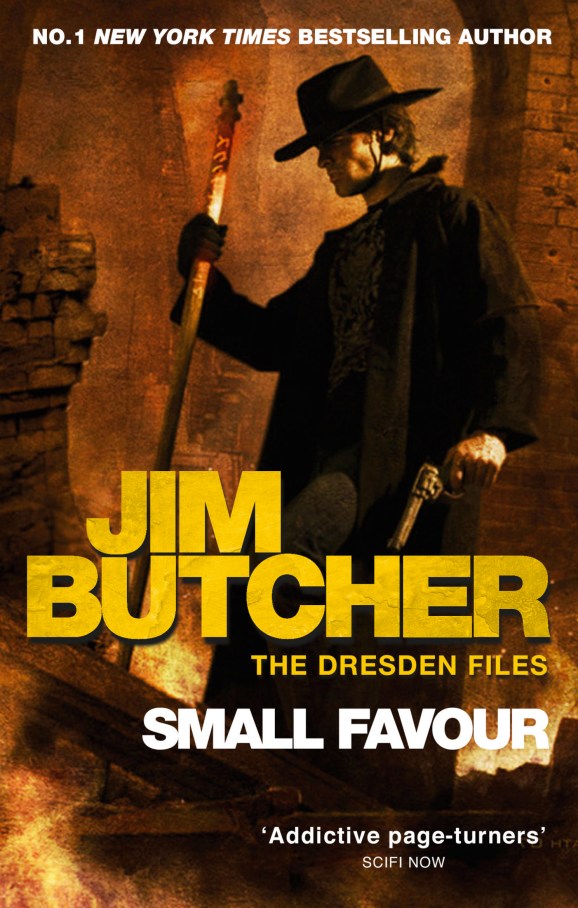
Small Favour Cover

Publisher: Penguin Audio (Audiobook – 1 April 2008)

Series: Dresden Files – Book Ten

Length: 13 hours and 49 minutes

My Rating: 5 out of 5 stars

Amazon

Welcome back to my Throwback Thursday series, where I republish old reviews, review books I have read before or review older books I have only just had a chance to read. In a very special Throwback Thursday, I present reviews for four books in the legendary Dresden Files urban fantasy series by Jim Butcher starting with the 10th book in the series, Small Favour.

Over the last few years, I have been having an absolute blast getting through the outstanding and highly addictive Dresden Files urban fantasy series by Jim Butcher.  Following a maverick wizard as he investigates supernatural crimes in Chicago while also facing all manner of dark threats, the Dresden Files books are some of the best urban fantasy novels out there and I have had such a great time reading the rest of the series.  All the other Dresden Files novels I have read, including Storm Front, Fool Moon, Grave Peril, Summer Knight, Death Masks, Blood Rites, Dead Beat, Proven Guilty, White Knight, Battle Ground and The Law have gotten a full five-star rating from me and I have been very eager to continue this great long-running series.  As such, when I was travelling around and needed an audiobook I could listen to extremely easily, there was no better choice than the next Dresden Files book, Small Favour, which really did not disappoint.

Harry Dresden, Chicago’s only professional wizard and protector against the supernatural, has been enjoying a period of rare peace and productivity in his chaotic life.  But nothing ever lasts forever, and soon Dresden finds himself thrust into a dark battle between dangerous old enemies with the fate of the world at stake.

Thanks to a debt from his reckless youth, Dresden owes three favours to Queen Mab, manipulative monarch of the Winter Court of the fae, who seeks to turn Dresden into her greatest weapon.  Her latest favour sees Dresden drawn into a surprising conflict surrounding his old rival, Chicago crime boss John Marcone.  Marcone has been kidnapped by another deadly foe of Dresden’s, the Denarians, fallen angels who are determined to turn Marcone into a new host for one of their brethren.

Strongarmed by Mab, Dresden reluctantly agrees to help save Marcone from his fate and begins a new search for his foe throughout Chicago.  However, his acceptance not only forces him up against the Denarians and their twisted leader, Nicodemus, but also puts him in the sights of Mab’s rival, the Queen of the Summer Court, who sends her deadliest servants to kill him.  Caught between two unstoppable mystical forces can Dresden and his allies survive their deadliest battle yet, especially when Nicodemus’s full destructive plot is unleashed?

Unsurprisingly I loved Small Favour, which is easily one of the better Dresden File books in this already excellent series.  Combining a fast-paced story with elaborate world building, amazing action sequences and great characters, Small Favours masterfully builds on so many of the previous books and proves to be a highly addictive read that gets another five-star rating from me.

Butcher came up with an extremely amazing story for this 10th entry in the series, and I deeply enjoyed the elaborate and complex narrative that emerged.  Once again told solely through the troubled eyes of protagonist Harry Dresden, Small Favour sees the protagonist immediately under attack again as he is dragged into a deadly series of confrontations.  Thanks to a long-running story arc surrounding his relationship with the Winter Court, Dresden is forced to save his least favourite person in the world while also contending with the deadly Summer Court and his old enemies the Denarians.  Butcher does a great job of setting up this compelling scenario, and the early action scenes where Dresden faces down gun-wielding fairies really gets you caught up in the excitement.  Thanks to the inclusion of several excellent supporting characters, as well as some of Butcher’s best antagonists, the story moves along at a cracking pace, and there are two excellent, elaborate and bloody set pieces near the centre that really caught my attention, including a dark supernatural brawl at a train station, and a parley turned war at an aquarian, both of which are very well set out and which consistently raise the stakes again and again.

After the big twist in the middle of the book, where the antagonist’s full plot is revealed, the last third of Small Favour has a desperate and dark feel to it as Dresden and his allies attempt to save the day, while also dealing with darker concerns surrounding the protagonist.  There are several interesting reveals here, as well as good closure to several long-running storylines surrounding the attempted corruption of Dresden.  Everything leads up perfectly to the big final confrontation where Dresden and his allies face off against all manner of foes in his usual flippant and creative way.  There are some great moments here, including tragedies, sacrifices, intriguing confrontations, tricks, and Dresden finally getting his own against a superior foe.  I was one the edge of my seat the entire way through this massive confrontation and it was everything I hoped it would be and more.  The reader comes away from this part of the book very satisfied, if a little traumatised by certain heartbreaking moments, and Butcher really pulls together a great ending for Small Favour.

One of the things that I really like about the Dresden Files books is that Butcher has an effective and distinctive style that will be instantly recognisable to anyone reading one of his novels.  This style, which focuses on the first-person perspective of the protagonist, really brings out the best of the story and you are always guaranteed a great blend of action, adventure, comedy, mystery and impressive character moments while Butcher constantly builds up his extended universe around the story.  Small Favour is a great example of this as Butcher pulls out all the stops to make his excellent story even more enjoyable.  The action is fast-paced and powerful, the world according to Harry Dresden is both dark and hopeful, and the humour is continuous and hilarious as the main character constantly seeks to make light of all the terrible things he encounters.  I particularly enjoyed how well several of the major action pieces came together (the dark scene in the subway station is just amazing), and I loved the undercurrent of suspicion and dread that surrounded many of the scenes and this book can get quite bleak at times.  I also need to highlight a very clever bit of writing that Butcher worked into the story where certain typical elements of Dresden’s usual magical practice are missing, hinting at some darker elements behind his actions.  These writing elements and more really help to turn Small Favour into an excellent read and I had such a great time getting through it.

Like most of the books in the Dresden Files series, Small Favour can easily be read as a standalone read and Butcher does a great job recapping key events from the prior novels that are necessary to the main story.  However, the further you get into the series the more certain characters and storylines keep recurring, so dedicated fans of the series are probably going to get the most out of reading this novel.  Small Favour also proves to be an intriguing overall novel in the wider series, especially as Butcher introduces some key story elements and settings, as well as masterfully expanding on several characters from the previous novels.  There is a certain sense of a bigger evil starting to stir here (something that is explored a lot more in the next couple of books) and there are some very cool developments here as a result.  However, this is one of the easier books to start the Dresden Files series on then some others later in the series, although I will always recommend starting at the beginning to get the full impact of Butcher’s masterful work.

One of the true highlights of the Dresden Files series has to be the excellent characters featured within it.  Butcher builds up a complex and powerful cast in each novel, including several recurring characters, and it is always a real joy to see how they develop and grow with each book.  Of course, most of the focus is on the wise-cracking wizard protagonist and narrator Harry Dresden, who is such a fantastic character to focus on.  Witty, loyal, highly perceptive and utterly disrespectful of every evil creature he encounters, Dresden is an outstanding protagonist to set this series around, especially as Butcher always effectively dives into his deeper psyche.  Despite his comedic and irreverent exterior, which is responsible for most of the book’s humour, Dresden is a deeply troubled and damaged figure, having been forced to deal with so much pain and suffering throughout the series, all of which leaves a mark on him.  Small Favour really dives into his past trauma, especially when it comes to looking at certain dark influences that he only recently threw off, and Butcher manages to put some real unease around Dresden motivations and actions as a result.  I also liked seeing the continued growth of Dresden’s magical abilities, and the fun story around Dresden being forced to save one of his rivals is quite entertaining at times.  This works wonderfully along Butcher’s typical excellent portrayal of Dresden to tell a brilliant character-driven story ,and I really enjoyed some of the complex development that occurred around the protagonist as a result.

In addition to Dresden, Butcher did an excellent job utilising an extended cast of supporting characters and villains in Small Favour, and I really enjoyed how the author was able to weave them into his elaborate tale.  Many of Butcher’s best recurring characters make an appearance here, although I think the best in this book was Michael Carpenter, the calm and redemptive Knight of the Cross who serves as a voice of reason to Dresden’s more reactive desires.  Butcher has made great use of Michael in several of the previous novels, although this is probably one of his best, especially as he is forced to deal with both Dresden’s erratic behaviour and the return of his mortal enemies.  This leads nicely into the main antagonists of the story, Nicodemus and the Denarians, who are some of the more insidious foes in the series.  The Denarians have had one major appearance in the past and Butcher nicely expands on them here in Small Favour, diving into their motivations, introducing new members, and showcasing just how sinister, manipulative and destructive they can be.  The physical, mental and moral threat they represent to both the protagonists and the world are really well built up, and I loved the complex plan that Butcher attributed to them.  Throw in the assassins of the Summer Court, the Gruffs (based on the Three Billy Goats Gruff), who get bigger and more deadly with each appearance, and this was an excellent group of characters who really enhanced and already great story.

As with all the other Dresden Files books I have enjoyed so far, I chose to listen to Small Favour on audiobook.  This once again proved to be an outstanding choice, as the audiobooks are so damn good.  This is primarily because of narrator James Marsters, who is perfect for this series.  Marsters, who is one of my favourite audiobook narrators at the moment, does such a great job when reading these books out, and I love how enthusiastically he dives into the story and the characters.  Each of the figures in Small Favour is given a perfectly fitting voice, and I have so much love for how well he encapsulates protagonist Harry Dresden and his unique personality.  Marsters clearly has a lot of fun narrating these amazing books, and it proves near impossible to stop listening to his work as he narrates this cool series.  Coming in at just under 14 hours, this was an easy audiobook to get through quickly, and I cannot recommend this format enough to anyone interested in checking it out.

Jim Butcher does it again as his 10th Dresden Files book, Small Favour, proves to be another epic read.  Featuring a clever and compelling plot, loaded with emotion, action and complex characters, Small Favour was an addictive read from start to finish which I really could not stop enjoying.  I can think of no higher praise for this book than to say that the second I finished Small Favour, I immediately dove into the next book in the series, Turn Coat, because I wanted more Dresden Files goodness, and I ended up continuing and reading four Dresden Files books in a row.

Amazon

The Shadow Casket by Chris Wooding

The Shadow Casket Cover

Publisher: Gollancz (Audiobook – 16 February 2023)

Series: The Darkwater Legacy – Book Two

Length: 32 hours and 37 minutes

My Rating: 5 out of 5 stars

Amazon

Chris Wooding continues The Darkwater Legacy in a big way with his second awesome and massive entry in this great fantasy series, The Shadow Casket.

I was recently in the mood for more epic fantasy reads, so I finally got around to checking out The Shadow Casket by Chris Wooding, which has been on my to-read list for most of the yearThe Shadow Casket is the sequel to Wooding’s exceptional 2018 novel, The Ember Blade, which I had a ton of fun reading back when it originally came out.  The Ember Blade followed a band of revolutionaries, including two young teens caught up in the carnage, as they fought to free their country from an evil empire that had conquered it a generation before.  Featuring a classic fantasy adventure plot with some awesome real-life overtones and loaded with a ton of great characters, a powerful story, and a fantastic new world, The Ember Blade was such a great read, and it got an easy five-star read from me.  I have been eagerly awaiting a sequel for some time now, and Wooding finally delivered his second Darkwater Legacy book this year with The Shadow Casket, which took the reader on another dark and captivating journey.

It has been three years since the destructive events at Hammerholt, when the ragtag band of revolutionaries, known as the Dawnwardens, managed to steal back the sacred Ember Blade and kill the Krodan Emperor’s son, seemingly lighting the fires of revolution.  However, despite the Dawnwardens’ hope that recovering the Ember Blade would encourage their people to rise in revolt, the powerful Krodan empire still reigns over Ossia, bringing new levels of terror in their occupation.  With revolution still as far away as ever, the Dawnwardens, and the Ember Blade’s champion, young Aren of Shoal Point, are forced to take a risk that could turn the tide of war.

Taking the Ember Blade out of hiding, the Dawnwardens travel to the Reaches in the far north of Osia, where the wild and rebellious clans of the Fell Folk fight amongst themselves.  Hoping to recruit the fractious clans to their cause, the Dawnwardens soon find themselves once again under attack from the Krodans and their deadliest weapons, the malevolent dreadknights.  Forced to flee with new allies and returning friends, the Dawnwardens embark on mission to find out what the Krodans are truly doing in Osia and just how far they are willing to go to maintain order.

Finding their first successes since the events of Hammerholt, the Dawnwardens form a new plan to finally strike back at the Krodans and start the revolution they have long hoped for.  However, no matter how hard they fight, the Dawnwardens constantly find themselves outmatched by the dreadknights and their foul magic.  To survive this insidious threat, the Dawnwardens hope to call upon the ancient magic of a lost artefact, the Shadow Casket, which has the potential to either save them or doom the world.  But with deadly foes facing them at every corner, and traitors within their own ranks, can the heroes succeed, or will their revolution finally be cut down?

Wooding continues his epic series in a big way with The Shadow Casket, producing an exceptional and captivating novel that was quite a treat to read.  Expertly following the existing storylines from the first book while also providing an awesome new adventure, The Shadow Casket was a gripping and powerful novel that I had an absolute blast reading.

I really loved the amazing story that Wooding came up with for The Shadow Casket, which is massive in every sense of the word.  Told from many different perspectives, The Shadow Casket has a very powerful character-driven plot that really gets you involved in the lives of all the protagonists while advancing the compelling main plot.  The transition to three years after the events of The Ember Blade was a very interesting overarching choice for this new book, but it was one that works very well, and I loved the realistic detail that the protagonist’s previous adventures didn’t magically save the day as they had hoped.  Wooding starts events off at a somewhat slow pace, which was definitely necessary as he had to re-establish all the key story elements, while also introducing the new setting of Northern Ossia and the Fell Folk.  This does mean that the initial chapters of the book might drag a little for some readers, especially those who did not read The Ember Blade first, although I appreciated the refresher on all the protagonists after all this time.  This early part of the book also sets up many plot points for the rest of The Shadow Casket, and Wooding did an outstanding job laying down a lot of groundwork here.

Things do speed up quickly after the reintroductions are done, as all hell breaks loose around the protagonists in some amazing scenes.  This early part of the book also brings back Cade and Klyssen, who were seemingly killed off at the end of The Ember Blade.  This honestly isn’t that much of a spoiler as both come back very early in the plot, and frankly it wasn’t too surprising considering the deliberate ambiguity of their “deaths” in the previous book.  Their return sets up some great character-driven plots which are very well explored in the first half of the book and have some major impacts on the overall story.  The protagonists soon find themselves involved in several distinctive character-focused quests, including the liberation of a prison camp, the machinations of a traitor, and an intriguing dive into a magical organisation that was only lightly featured in the first book.  These various storylines blend into one cohesive plot, and I liked the early focus on world building and character growth in the aftermath of the first book.  Wooding works in an interesting blend of intrigue, action, adventure, and even some horror elements, which really enhanced the classic adventure quest vibe he was trying to replicate.  I did have issues with an ungainly love triangle that got a lot of attention in the first half of The Shadow Casket, which sapped my enjoyment in places.  However, the other complex storylines that were occurring simultaneously did make up for this, and it thankfully does not last the entire length of the book.

The second half of The Shadow Casket is where things really picked up, and it features all the awesome story moments that the author had been expertly building up.  This includes a deadly adventure quest to a lethal island, which amped up the intensity of the plot, especially as secrets are revealed and tragedy awaits several characters.  These storylines and more, all lead up to epic final quarter of the novel, where the protagonists have their long-awaited mass confrontation with the enemy.  Wooding really set up everything leading up to this final quarter perfectly, and I was very excited going into it, especially as it featured a massive siege.  While there is a focus on the action in this final part of the book, Wooding also amps up the intrigue, as various parties make their moves to betray or mislead either side of the conflict.  The author plays this plot line about betrayal and intrigue perfectly, and there were times when you honestly didn’t know who was betraying who, which was so much fun to see.  This last quarter honestly has a bit of something for everyone, and I loved the inherent tragedy, the gritty battles, and the awesome resolution to so many different plotlines and character arcs.  I also really enjoyed the multitude of clever twists and reveals that Wooding layered in this part of the book, especially as I did not see several of them coming despite the great setup surrounding them.  The final play of the protagonists was particularly brilliant, and the unique siege tactics were quite inventive.  While I did think a few things were wrapped up a little too easily or positively at the end, this was honestly a very strong conclusion for this second entry, and it sets up many great storylines for the rest of the series.  I really came away from The Shadow Casket feeling very satisfied, and I cannot wait to see how my heart will get broken in the next book.

I felt that Wooding did a rather wonderful job of presenting his elaborate narrative to the reader, and his fantastic style definitely drew me into the story.  While there are a lot of positives to the author’s writing, the main thing that I was mostly grateful for was how easy he set everything up so that I could dive back into this series.  As I mentioned above, it has been over four years since I read The Ember Blade, itself a hefty read, so I was initially worried that I wouldn’t remember all the key details and get a little lost.  However, Wooding expertly led readers, both new and old, into his new book and those well-thought-out and slower paced introductory chapters really filled in all the gaps for me.  As such, there wasn’t a single moment that I was lost about what was going on, which considering how elaborate The Shadow Casket gets, is pretty damn impressive.

While The Shadow Casket is a great continuation of The Ember Blade, it also has a bit of a different tone to it.  The focus on failure, regret and fighting losing battles was quite interesting and reflected the continued failed rebellion nicely.  The book itself also comes across as more of an adventure novel, with the protagonists constantly moving and taking on new quests and journeys, rather than the more heist focused revenge plot of the first book.  This ensured that The Shadow Casket stood out a lot more than I was expecting, and it really didn’t feel like a sequel or a tired middle book.  Wooding has a great sense for pacing, and the fantastic mixture of action, character growth and betrayal and intrigue helped to turn this into quite an impressive read.  I have so much love for the multiple elaborate espionage storylines that emerged, and Wooding ensured that the reader never knew what was coming.  The excellent use of multiple character perspectives really helped with this, and it was compelling and often very moving to see the various internal struggles, history and biases that drove the characters to do what they do.  The clever alternate views of the same events also helped to create a much more expansive and captivating plot, and I think that Wooding did a great job of splitting the story up, ensuring that all the key characters got their time to shine.  There was the occasional rough chapter transition that added a touch of confusion at times, but this was usually pretty harmless, and I found the overall narrative to be very powerful and bound together excellently.  Throw in a ton of brilliant and brutal action sequences, including the extended battle at the end, and The Shadow Casket has so much going for it that you will find it very hard to put down.

One of the things I liked most about The Ember Blade was the elaborate and complex world that the book was set in.  In particular, the focal nation of Ossia was such an interesting main setting, especially as it was occupied by its stronger neighbour, who had ruled it for years.  This portrayal of Ossia had a lot of similarities to occupied France during World War II, especially as the invading Krodans were an obvious stand-in for Nazis/fascism.  This occupied fantasy nation had a certain realism to it that deeply enhanced the story, especially as the characters interacted with collaborators, rebels and locals who believed the Krodans were helping them, all while witnessing examples of Krodan cruelty.  These issues were further compounded by the fact that Ossia was already a rather fractious nation, and their lack of cooperation and unity helped the Krodan conquest years before.  Wooding continued to expand on this examination of occupied Ossia in The Shadow Casket, especially as revolution and uprisings were such an important part of the plot.  I loved the intriguing plot point about how, despite the protagonist’s actions in the first book, most of Ossia was still too cowed or wracked with infighting to join in the rebellion, making the sacrifices in the first book seem pointless.  This ensured that occupied Ossia continued to be a dangerous and compelling setting for much of the story, and Wooding doubled down on the Krodan comparisons to Nazis, especially as the Krodan’s engaged in massive retaliation strikes against the Ossian populace while also rounding up a minority group into concentration camps.  These intriguing details add a lot to the plot, and it was interesting to see how they continued from the first book.

Wooding also worked in quite a lot of world building as he sought to explore new areas within the larger fantasy realm.  This includes several intriguing and deadly new locations, such as a swamp full of dark spirits and the lethal island of Yaga, where ogres and magical slavers reign supreme.  These areas, which serve as cool settings for several key parts of the book, are great to explore, adding in some very distinctive risks, and it served as a compelling expansion of an already great world.  However, the most significant new setting is probably the northern area of Ossia known as the Reaches.  A hilly area populated by warring tribes, this part of Ossia was culturally segregated from the more urbanised southern setting before the Krogans arrived, and now is even more oppressed.  A large chunk of the novel revolves around the complex tribal politics and history of this region as the protagonists attempt to bring them together as allies while also striking back at the forces oppressing them.  Several of the best sequences, including the final battle, are set around here, and I loved the craggy and isolated feel that Wooding gave this setting.  The author also does a wonderful job expanding on some of the fantasy aspects of his series.  While there were quite a number of great and freaky magical and fantasy elements in the first book, The Shadow Casket really dives into this further, showing several different batches of magic.  This includes a fascinating examination of the Ossian druids, whose magical conclave in the first half of the novel serves as a major plot setting.  There is also a fantastic and dark examination of the magic being used by the Krogans to create their more elaborate weapons.  This look at Krogan mysticism is pretty fascinating and serves as a great contrast to their usual anti-magic dogma.  It also leads to some of the darker scenes in the book, including the exploration of a corrupted prison camp, which honestly bordered more on horror than anything else.  There are some fantastic and complex hints at the dangers to come, and I cannot wait to see how dark and compelling Wooding makes his setting in the future.

However, the most impressive and memorable part of The Shadow Casket has to be the outstanding and elaborate character work that Wooding expertly inserted into the story.  The Shadow Casket has an exceptional and memorable cast, which includes a great combination of characters from The Ember Blade, as well as several intriguing new figures.  All the characters are damaged and complex, especially after the events of The Ember Blade, and thanks to the author’s excellent use of alternating perspectives, you get to see into their minds and find out what drives them and what their intentions are.  I deeply appreciated how well the character stories altered and drove the main narrative and Wooding’s excellent character work really gets you invested in everyone’s personal journey.

As with The Ember Blade, the main character of The Shadow Casket is Aren of Shoal Point.  A teenager drafted into the rebellion by circumstances, Aren is trying to live up to his own legend after masterminding the Ember Blade heist and being declared champion.  Now a figurehead leader chafing under the responsibilities and expectations of everyone around him, Aren starts the book with a lot of his usual certainty and confidence gone, especially as the disappointments of the last three years are hanging over him.  Most of his arc involves him trying to decide whether he deserves all the fame and trust people are putting into him, as well as wondering what his destiny is.  I really liked this compelling character arc that Wooding came up with for Aren, especially as it is totally understandable that he would feel these doubts with his complex history.  While Aren probably was a more passive protagonist than some readers were hoping for, I felt his early mindset of following others fit nicely into the uncertainty he felt, and Wooding did a great job of portraying this and his eventual regained confidence.  Aren also proves to be a linchpin character for The Shadow Casket, mainly because so many other character arcs are defined by the relationships that Aren has formed over the years.  While a couple of these relationships do have some flaws in them, the rest are exceedingly emotionally rich and Aren’s connections help the other characters to grow and develop alongside him.  Aren continued to be an outstanding and complex protagonist for this second Darkwater Legacy novel and I look forward to seeing how he develops in the future.

One of the other major characters I need to highlight is Cade, Aren’s childhood friend who was forced into the adventures in the last book before heroically sacrificing himself at the end of The Ember Blade.  Cade returns quite early in The Shadow Casket, having spent three years away from his friends.  However, he is now carrying some dark secrets and a new hidden history that defines most of his actions throughout The Shadow Casket.  Cade had one of the best and most powerful character arcs in the entire novel, which I will not elaborate on too much here to avoid spoilers.  However, it was extremely well written and added some much-needed emotional depth to Cade’s character.  Wooding does an outstanding job of expanding on Cade’s character arc and story from the first book and the examination of the complex relationship between Aren and Cade resulted in some of the most moving moments in the book.

There are several great antagonistic characters in The Shadow Casket, including sinister Krodan officials and several hidden traitors, but my favourite villainous figure has to be the great character Klyssen.  A member of the Krodan secret police, Klyssen was the primary villain of The Ember Blade, and Wooding takes the opportunity to develop him further in some fantastic ways in the sequel.  Not only does he provide an alternative viewpoint to the Krodans but Wooding manages to make Klyssen into a surprisingly sympathetic character in The Shadow Casket.  Thanks to the events of The Ember Blade, Klyssen starts this new book scarred, disgraced, demoted and divorced, and is now at something of a moral and emotional crossroads.  Now driven by personal reasons, Klyssen has a bit of a redemption arc in The Shadow Casket, and it is honestly a sign of just how good Wooding is at writing characters that you actually feel sorry for this previously despicable villain.  Klyssen ends up being one of the more complex and damaged figures in the entirety of this second book, and I loved his more nuanced mindset and desperate motivations, which make his chapters particularly compelling and emotionally charged.  You really begin to feel for Klyssen, even if you don’t want to, and I really appreciated the complex additional development Wooding worked into him for this sequel.

Of course, I cannot talk about characters in The Shadow Casket without mentioning Grub, who honestly might be one of the most entertaining and hilarious figures I have ever had the pleasure to read.  Gruff, crude and inappropriate in every way imaginable, Grub is a slippery and self-obsessed figure who never fails to get a laugh thanks to his jokes, selfish mindset, fun observations on the people around him, and pure disinterest in what is actually happening.  Thanks to this humour, Grub has some of the best chapters in the entire book, and you always know you are in for a good time.  However, Wooding also creates a particularly complex and intriguing story arc around Grub that really resonates with the reader.  Coming from a culture that venerates heroic actions and tales, Grub was exiled from his people after claiming another person’s deeds.  As such, a lot of Grub’s sVVavsdtoryline involves him trying to redeem himself by become a hero, which really does not come naturally to him due to his selfish nature and upbringing.  This honesty proves to be one of the more complex story arcs in the entire book and you really get invested in his attempts to do the right thing.  A lot of this story revolves around his unlikely friendship with Aren, who serves as Grub’s moral compass, and their compelling relationship is one of the most heartwarming parts of the entire book.  I cannot emphasise just how much fun Grub is as a character, and it honestly is impossible not to fall in love with him, especially with the fantastic depth Wooding adds to his story.  While I would read an entire book about Grub, I think that Wooding did a good job not overusing him in The Shadow Casket, and blending in the other characters extremely well.

Other significant characters include Vika, a powerful druid whose connection with the spirits and the gods offers the only hope against the Krodan dreadknights.  Wooding weaves a fantastic narrative around Vika that dives into her unique and desperate personality while also using her as a focus for the more mystical elements of the book.  I quite enjoyed seeing Vika develop into more of a powerful magical user, although the emotional cost associated with it turns her into a bit of an unpredictable figure.  Wooding really laces Vika’s narrative with some powerful tragedy and distinctive moments, and while I felt that the ending of her arc could have been handled a little better, she was still an outstanding and enjoyable protagonist to follow.

I also need to highlight Mira, the team’s strategist and leader of the Dawnwardens, who comes up with elaborate plans and schemes in the name of liberation.  While Mira does not have as many chapters assigned to her as I would have liked, Wooding does a lot with her in a short amount of time, and I liked how dark the character got as the book progressed.  The dour knight Harod also proves to be an excellent protagonist, mainly because so much of his arc is based around his grief after losing the woman he loved in the last book.  Wooding does a good job expanding a bit on the typically emotionally devoid Harod in this book, especially when a fantastic new secondary character is introduced, and his martial focussed chapters have some heavy personal weight to them.  Throw in the team’s hunter, Fen, whose arc mostly survives an unenjoyable love triangle, and several great new characters, including a troubled revolutionary and a mysterious fighter with his own agenda and this proved to be an exceptionally rich novel in terms of outstanding characters.  This fantastic mixture of compelling cast members really helped to turn The Shadow Casket into an extremely powerful read and I cannot wait to see how these characters develop in the rest of the series.

Like with many epic fantasy novels, I chose to check out The Shadow Casket on audiobook, which I found to be an awesome experience.  Elaborate fantasy novels always come across better in the audiobook format for me, especially when there is a ton of detail and world building, and this was once again the case with The Shadow Casket.  Wooding’s deeply impressive setting was so much cooler when it was read out to me, and I definitely absorbed a lot more detail in this format.  It also helped that they brought back narrator Simon Bubb for this second audiobook in the series.  Bubb does such a good job highlighting all the cool action, fantastic detail, and unique features of this series in The Shadow Casket, and I really liked how effortlessly he moved events along.  Bubb also has a very good handle on the massive cast featured with this book, coming up with original and fitting voices and accents for all the characters, and bringing out all their inherent emotion and struggles.  Highlights for me include the amazing characters of Klyssen, Aren and Grub, all of who really shine through in this format in the most entertaining ways, and I cannot emphasise enough how well Bubb captures all these elaborate figures.  Coming in at over 32.5 hours, The Shadow Casket is a hefty audiobook to get through, and it is one of the longest audiobooks I have ever listened to (coming in at number five on the current list).  I did struggle a bit to get through The Shadow Casket quickly due to its length, and there were a few times where I got a bit fatigued and had to take a break for a while.  However, the compelling story kept dragging me back in, and I maintain that The Shadow Casket is very much worth checking out on audiobook, especially as this format gives you the very best experience.  The great voices, fun depiction of detail, and enhanced story absorption more than make up for the length, and The Shadow Casket audiobook comes very highly recommended as a result.

Overall, this is a very impressive book, and if I did not get it across with the massive review above, I really enjoyed The Shadow Casket.  Chris Wooding is really writing something special with his Darkwater Legacy series and The Shadow Casket proved to be an exceptional second entry.  While I did have a couple of issues with length and some character elements, the sheer power and complexity of the story ensures that The Shadow Casket gets a full five-star rating from me and I had such an incredible time getting through this amazing book.  This is easily one of the best fantasy series currently going and I cannot wait to see how it continues, even if I have to wait a while for the third book to appear.  Highly recommended, all fans of epic fantasy need to get into this series.

Amazon

The Hunger by Marsheila Rockwell

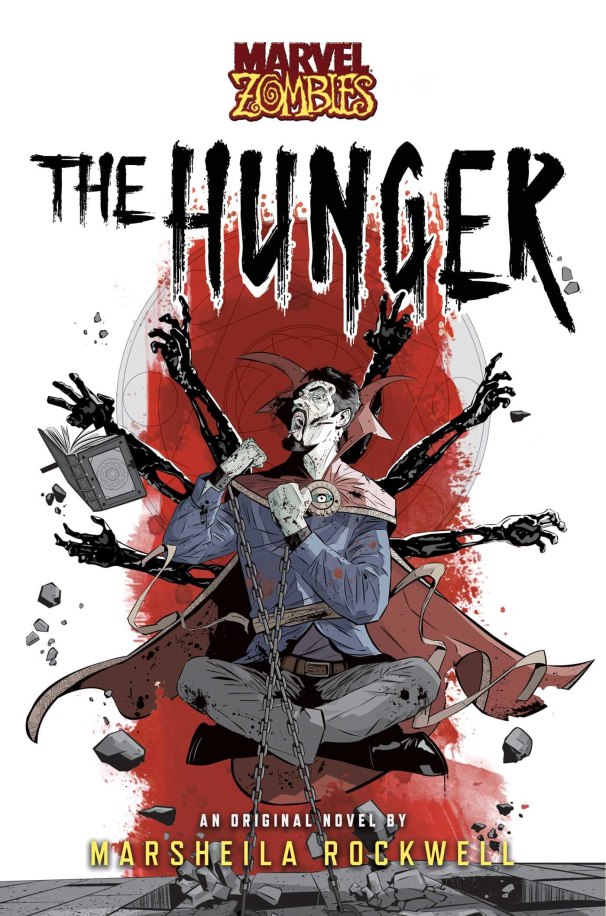
The Hunger Cover

Publisher: Aconyte Books (ebook – 3 October 2023)

Series: Marvel Zombies

Length: 249 pages

My Rating: 4.5 out 5 stars

Amazon

Prepare to dive into a wacky, time travelling, zombie filled Marvel novel with Marsheila Rockwell’s fantastic tie-in book, The Hunger.

After having a lot of fun reading the awesome Marvel Comics tie-in novel The Tyrant Skies by David Annandale earlier this year, I thought it would be an excellent idea to dive into another amazing Marvel book, especially one with a great plot like The Hunger.  Written by intriguing fantasy and science fiction author, Marsheila Rockwell, whose previous foray in Marvel fiction produced the magic Sisters of Sorcery novel, The Hunger is an awesome upcoming book that I was very happy to get an early copy of thanks to Netgalley.  Set around the iconic Marvel Zombies concept, The Hunger was a pretty epic read that I had an outstanding time with.

When a mysterious object falls to Earth, landing in New York city, it unleashes a wave of evil and despair as the world’s greatest heroes are turned into ravenous zombies determined to feast on all living flesh.  As the zombified superheroes begin to spread out across the planet, turning or eating everything before them, only Doctor Strange can briefly retain his sanity to try and find a way to avert disaster, but despite his best efforts, his overwhelming hunger threatens all around him.

With no alternative, Doctor Strange is forced to turn to one of the few magic users left unaffected by the zombie outbreak, the librarian of the Sanctum Sanctorum, Zelma Stanton, who reluctantly takes up the burden and imprisons her zombified mentor.  Despite her lack of experience, Zelma has access to all the magical knowledge and ancient artefacts in Doctor Strange’s Sanctum Sanctorum, and she hopes to find some answer to the deadly chaos consuming her planet.  But Zelma soon realises that even all the books in the Sanctum aren’t enough; if she wants to succeed, she’s going to need help.

Pulling together a ragtag team of survivors, including Runaway witch Nico Minoru, monster hunter Elsa Bloodstone and the living embodiment of insanity, Deadpool, Zelma hopes that together they can find a solution.  But their plan to trap the zombies in a time loop backfires on them, thanks to antics of Deadpool, unsurprisingly.  Now with time fracturing all around them, an evil magic threat unleashed, and the zombie horde still determined to eat everything, Zelma and her strange team need to find a way to reverse the damaged they caused while still saving the world.  But is this group of survivors truly capable of stopping the flesh-eating nightmares waiting for them?

That was an insanely fun book about zombies and time travel shenanigans that I desperately needed, and I am sure glad that I decided to check this novel out.  The Hunger was a very entertaining book that I ended up knocking out in a few hours because of how easy and fantastic it was to read.  Rockwell came up with a very impressive story that quickly grabbed my attention and took me along a wild journey loaded with so many awesome moments.  Starting off with a great new introduction to an alternate Marvel Zombies event, where Doctor Strange and pretty much every other hero gets brutally turned into zombies, the story gets bleak very quickly and rarely lightens up after that.  The resulting narrative focuses on the intriguing figure of Zelma Stanton, a supporting character in one of the recent Doctor Strange comics, and it proves to be very interesting as you follow a young, inexperienced magician as she tries to survive in a very dangerous world.  The resulting story has a lot of great features to it as Zelma finds her courage, gathers a unique group of allies, and then finds herself getting thrown into all manner of chaos as her actions produce more zombie mayhem and every time travel issues you could think of.  The second half of The Hunger is pure, unadulterated bedlam, and I frankly loved every second of it, as Rockwell comes up with some outrageous and exciting scenarios that never really slow down.  Bringing together some well set-up storylines in some excellent ways, you honestly will find it hard to put down The Hunger once you get rolling with it, and I found the entire story to be exceedingly entertaining, especially as Rockwell wove together some complex scenes that saw the characters journey through all manner of unique points the Marvel Universe timeline.  This story was a riot from start to finish, especially the fantastic extended time travel sequences, and you will come away from this book very satisfied and honestly wanting more.

Rockwell has a great writing style that I felt really lent itself to the emotionally charged and intense story that came together in The Hunger.  Primarily told from the perspective of two young female magic users, The Hunger is a strong, character-driven tale that showcases how people grow under adversity, while also treating the reader to a brilliant amount of action, carnage and Marvel comics lore.  Rockwell really leans into the Marvel Zombies background of her story to provide some gruesome and graphic moments, which I felt helped set The Hunger apart from some of the other Marvel tie-in books.  While there is a lot of humour attached to the book, mainly thanks to the inclusion of a particular merc-with-a-mouth, The Hunger gets very deep and serious at times, and I loved the impactful dive into the traumas affecting the protagonists.  I loved the fast pace that Rockwell sets for The Hunger’s story, and frankly there was not a single moment of this book where I wanted to stop, as I just wanted to see what was going to happen next.  I did think some of the early sequences of the book felt a little simplistic in their writing, which almost threw me off.  However, Rockwell found her stride as the book continued, and I loved some of the elaborate sequences that emerged, especially those that feature multiple figures, time elements and obscure bits of Marvel lore.  Some of The Hunger’s twists were very well set up in the earlier stages of the book, and I loved how well things came together in the end, especially as Rockwell made such great use of the time travel elements to tell a very entertaining story.

The Hunger serves as a rather interesting addition to the wider Marvel lore that exists as Rockwell makes fine use of several existing storylines, concepts and characters, to create a pretty fun read.  Set in a version of the main Marvel universe that is suddenly impacted by a Marvel Zombies event, The Hunger has a ton of curious and distinctive elements to it that established fans of the comics will deeply enjoy.  Not only are there a ton of different characters present, often in zombie form, but Rockwell goes out of her way to feature or reference multiple storylines from the comics.  This includes a great mixture of more recent comics and some classic storylines, both of which work extremely well in the context of the story and its time travel elements.  I felt that Rockwell did a very good job of cleverly introducing and then utilising these different storylines throughout the course of the comics, and the resulting crazy plot encounters and big moments were pretty damn awesome.  Each of the main characters also makes sure to remember or mention many key story arcs from their history, many of which have a compelling impact on the current storyline or mental state.  The author clearly has an appreciation for the various storylines and obscure characters that she featured and I loved how random and compelling the later scenes got.  While Rockwell does go to some diverse areas of the Marvel universe and history, all of these elements and characters are explored in excellent detail so that anyone with some basic knowledge of Marvel comics can easily enjoy what is going on.  I personally loved all the cool references that emerged, as well the excellent reimagining of the Marvel Zombies storyline which helped turn The Hunger into a pretty awesome tie-in novel.

As with her previous Marvel tie-in novel, Sisters of Sorcery, Rockwell chose to focus The Hunger on three intriguing and somewhat underused female characters from the Marvel canon, Zelma Stanton, Nico Minoru, and Elsa Bloodstone.  All three characters are already epic, but it was great to see them forming a team here in The Hunger, especially when faced with an insane, world-ending threat.  Of these three characters, Zelma is probably the one I knew the least about, mainly because I’ve never read any of the Doctor Strange comics she is in, but she soon proved to be the invaluable heart of this entire novel.  Rockwell did a remarkable job of introducing and utilising Zelma as a character, even to a reader like me that has had no experience with her.  You are swiftly brought up to speed on who Zelma is and why she is involved, and soon you follow this overwhelmed magical character as she is thrust into events beyond her comprehension.  I loved the overarching narrative of this character finding her confidence and ability in this ultimate post-apocalyptic setting, and it was great to see her become the hero that Doctor Strange believed her to be.  Watching her use her unique intelligence and experiences to survive and attempt to stop all the chaos is quite compelling, and you really grow to appreciate Zelma, especially as she has very relatable doubts and concerns.  Zelma is the emotional heart of this entire book and I felt that Rockwell was very wise to use her as a central character, especially with how exceptionally she is portrayed.

In addition to Zelma, I really enjoyed the fantastic use of Nico Minoru and Elsa Bloodstone in The Hunger who served as impressive joint protagonists.  I particularly loved seeing Nico Minoru here in The Hunger, mainly because I’m such a big fan of Runaways, and Rockwell featured her in an excellent way.  Focusing on her at a key part of her character development from the comics, this already jaded and wary Nico arrives on the scene after seeing her entire adopted family turned to zombies and is swiftly forced into another harrowing adventure with a new group of strangers.  I really enjoyed exploring Nico’s fears, concerns and complex history throughout The Hunger, and she served as a great secondary point-of-view character for the plot.  These female characters are further enhanced by monster hunter extraordinaire Elsa Bloodstone, who is well suited for this sort of dark, monstrous tale.  The foul-mouthed, highly confident figure is a great addition to the focal cast of the novel, especially as her loud personality plays off the more reserved Zelma and Nico for a good chunk of the novel.  While initially shown to be mostly carefree, there are some compelling darker feelings under the surface, especially related to the start of the zombie apocalypse, and I felt that Elsa was a brilliant and great addition to the plot.

The final major character in the book really needs no introduction as Rockwell features Deadpool as the much need comic relief.  Brought into the story for very unique reasons, Deadpool is his usual blend of irrelevant humour, catchy one-liners, and all-round killing machine that works well with the female protagonists to save the day.  His constant jokes, weird comments and fourth wall breaks deeply add to the enjoyment I had of the book, even with its darker story content.  So many of the best plot moments in The Hunger revolve around Deadpool’s antics, and he really is an unsurpassed character to include in a crazy book like this.  His interactions with the other protagonists are also a lot of fun, with an intriguing blend of comedic conversations, crazed resentment, and even a grudging respect for his fellow survivors.  Throw in a ton of zombified superheroes, an overpowered magical witch from history, a fun new mount for Deadpool, and some intriguing figures from the dawn of the Marvel canon, and The Hunger has an outstanding cast that are a lot of fun to follow, especially during their darker and emotionally charged moments.

The Hunger really lived up to all its great potential and I had an epic time getting through this insane and highly exciting read.  Marsheila Rockwell produced one hell of a story here that made great use of the Marvel Zombies theme and featured a bonkers story with fantastic time travel elements, complex characters, and a ton of compelling references to the wider Marvel canon.  I honestly had such an incredible time with The Hunger and readers are guaranteed to get caught up in its cool story just like me.  Highly recommended, for all Marvel fans, you will have fun with this book.

Amazon

The Will of the Many by James Islington

The Will of the Many Cover

Publisher: Gallery/Saga Press/Audible Studios (Audiobook – 23 May 2023)

Series: Hierarchy – Book One

Length: 28 hours 14 minutes

My Rating: 5 out of 5 stars

Amazon

Talented Australian author James Islington delivers one of the best fantasy books of 2023 with the compelling and complex novel, The Will of the Many, an exceptional read that I had a brilliant time reading.

I am always on the lookout for epic fantasy novels to sink my teeth into, and one that caught my eye when it was first announced was the intriguing book, The Will of the Many.  Set in a cool new magical school setting, The Will of the Many sounded liked a very fun novel and I instantly wanted to read it.  It helped that it was written by James Islington, an Australian author who had been on my radar for a while thanks to his fantastic Licanius trilogy.  While I have not had a chance to check out the Licanius books, I was very keen to dive into The Will of the Many and I was glad I got the chance a couple of weeks ago.  The Will of the Many is the first book in Islington’s new Hierarchy series, which looks set to be a major addition to the fantasy landscape especially after this incredible first book

The Catenan Republic, known as the Hierarchy, rules the world, conquering and enslaving everything before it using its unique magic of Will, which drains power, strength and mental energy from the lower classes and passes it up to those above.  To gain true power and control in the Hierarchy citizens need to battle their way to the top of the pyramid of power and influence, and only those with drive, ambition, connections or no choice can rise.

Vis is an orphan boy with a hidden past, a quick mind, and an utter disdain for the entire Hierarchy.  Lodged in a Catenan orphanage, Vis bides his time while searching for an escape from a future of ceding his Will to the higher echelons of the Hierarchy.  However, his entire life is turned upside down when a powerful Catenan nobleman offers him a chance he never expected.  Ulciscor Telimus is convinced that there are dark dealings going on at the Hierarchy’s most prestigious school, the Academy, and he needs someone to go undercover and discover what has been hidden there.  If he succeeds, he will be adopted into Ulciscor’s influential family and be given a choice about his future.

Reluctantly agreeing to Ulciscor’s terms, Vis prepares to attend the Academy, only to discover it is a dangerous place of corrupt ambition, deadly secrets and deep rivalries.  To succeed, Vis will have to rise through the Academy’s ranks by any means necessary without losing who he is as a person.  But this will be no easy task, as deadly politics, long-buried power and a murderous rebel group all seek to control him.  Worse, the more he advances, the greater the chance that his secret past will be uncovered and his enemies will put him to death.  Can Vis survive against the terrible burden that is weighing him down or will he be ground down by the unstoppable Hierarchy just like everyone else?

Islington has created a pretty exceptional fantasy novel with The Will of the Many.  Featuring a powerful, intense and character-driven plot, all set within an outstanding new fantasy world, The Will of the Many had me hooked pretty early on and I dedicated a lot of time to reading it.  I really got drawn into Islington’s amazing inventiveness and this book gets an easy five-star rating from me thanks to how damn good it is.

I have lot of love for the epic and captivating narrative that Islington set up in The Will of the Many, especially as he simultaneously tells a brilliant introductory story while also expertly setting up the rest of the series.  There are some awesome scenes in the start of this book, including an intense fight club sequence, which do an excellent job getting the reader across some key aspects of the plot, while also showcasing the emotional range and complexity of the protagonist, through whose eyes the entire story unfolds.  I was honestly already very hooked by this point in the story, but Islington quickly picks up the pace and ensures that this character-driven narrative heads off in some very compelling directions.  The introduction of Ulciscor soon presents the idea of the Academy and the dark conspiracies around it, and Islington starts the gradual process of getting the protagonist to the school environment.  Ulciscor is a great addition to the plot, especially as he plays off Vis very well, and the early sequences with him result in some major world expansion and plot movement.  It also sets up the book’s established formula of adventure, world building, politics, mystery and espionage, that carries through the rest of the story, and which ends up being a very heady combination.

Islington keeps building the story as The Will of the Many progresses, and pretty much every new revelation or intriguing world detail is really fun to behold.  There is some good early action, as well as a couple of twists that I liked at this point, but the story is still very much on track for the promised magical school setting.  However, before we get there, there are a series of cool and fascinating training montages which build up Vis as a character and really highlight the difficult tasks to come.  There is also a deeper dive into the complexities of the tasks and the secrets surrounding them, and Islington does an impressive amount of set-up in this first third.  However, the real highlight of this first part of the book is a very surprising and explosive occurrence that pushes Vis into the limelight, while also ensuring that he is caught between some very dangerous people.  This big scene is extremely memorable, bloody and very well-written, and if you weren’t riveted to The Will of the Many before, you sure as hell were now.

From there the story turns into a more magical school focused narrative, which was something that I was really looking forward to.  This intriguing setting had some great elements to it, and the story set within the Academy was a brilliant and compelling blend of education, entertaining rivalries, compelling personal interactions, and a series of secrets, as Vis attempts climb up the ranks, while also completing some of the objectives the various groups trying to control him have forced him to do.  I honestly had a ton of fun during the scenes set in the Academy, and I liked how Islington built up the setting and the fantasy elements behind it, while also slowly advancing the story and the character development.  The substantial part of the novel set in or around the Academy has some fantastic moments to it, including a few big scenes where Vis is forced to encounter deadly enemies, hard tasks, or the secrets from his past, and each of these major moments expertly expands on some part of the plot or universe you are already enjoying, whether it be secrets of the world, or some political machinations that will come back to bite the protagonist later.

Everything leads up to a major extended concluding sequence as the final test of the Academy brings all manner of trouble to the protagonist in a variety of cool and intriguing ways.  Not only do some big secrets come to life but Vis manages to learn more about the magical secrets of the world and the Hierarchy, while also being forced to deal with deadly attacks and threats from a variety of corners.  There are so many epic moments in this final section of the book, and Islington did an incredible job of tying together his many, many story threads to ensure that a variety of previous hints and revelations are well utilised.  I loved some of the elaborate tests and set-ups featured here, and it was very fun to see the protagonist try to run them while also dealing with major threats from every angle.  This final sequence has some massive moments, including major betrayals, compelling reveals about the wider world, and a very tragic death, all of which served as the perfect cherry to an already outstanding story.  While many secrets and hanging storylines are resolved by the end of the plot, quite a few still remain for the sequels.  Islington has already set up some big moments and unique ideas for the future, and I am very curious to see how they turn out.

As you can no doubt tell from my expansive summary above, I really loved this captivating narrative in The Will of the Many and I think that Islington did a really good job of presenting this complex and impressive story to the reader.  The entire book has an outstanding pace to it, and there is barely a scene that is not filled with something exciting or entertaining, whether it be a moving character moment, some compelling world building, or a thrilling bit of action.  I honestly flew through this lengthy novel, and there was no point of the book where I not highly invested in the plot nor gripped by the events unfolding.  The author’s use of a first-person perspective from the character of Vis was a very good choice of narration that allowed the author to tell a compelling character-driven story that simultaneously explored a cool new setting from the outside, while also cleverly capturing all the key elements of the plot.  The intense balancing act of lies, politics, outside influences and personal relationships that the protagonist has to maintain really shines through as a result of this use of perspective, and it was deeply compelling to see Vis attempt to overcome all the obstacles in front of him.  The intense action scenes were particularly good, and Islington perfectly portrays the desperate violence, the life-and-death confrontations, and even some complex but exciting maze running, in ways that grab the reader’s attention and keep them fully engaged.  I personally loved how Islington included so many different compelling storylines, plot points, and fascinating detail into every single page of the book, and you really cannot help but get addicted as a result.

I always love seeing a cool fantasy setting for a new series, and Islington produced a pretty intriguing and compelling one for The Will of the Many.  Much of the main setting of the book sees Islington expand on an ancient Roman society, by adding in some intriguing new details like magic, powered constructs, a rigidly hierarchical community, and a deep political divide between the military, governance and religion bodies.  This results in a very interesting background for much of the story, and Islington showcases it all through the eyes of Vis, a hostile outsider with an established hatred of the Hierarchy, which works to showcase it in even more detail, especially as Vis focuses on both the negatives and the positives of the political and cultural structures around him.  I really enjoyed the clever balance of political concerns, oppressed citizenry and unique inclusions about status and magical power that were explored as a result, and it was fantastic to see them utilised in the plot, especially as Vis has to balance all of them throughout his many guises and missions.  The most fascinating part of this whole setting has to be the focus Will, the magic of the Hierarchy, which sees people at the bottom of society sacrifice part of their strength, drive and health to those above them.  The higher up in the Hierarchy you are, the more people you have ceding their strength to you, and this gives you greater powers, including better physical attributes, the ability to control and manipulate materials to certain purposes, and other magical abilities.  Islington does a really good job of exploring and expanding on this intriguing magical system throughout The Will of the Many, especially as the narrator is also learning about it as he goes.  The author has clearly put some time and great thought into this magical system, treating it like an established science, and I liked seeing the range of abilities it produces, as well as its related social and cultural impacts.  Islington makes sure to highlight that this is not a perfect society, and the cracks that Vis witnesses throughout The Will of the Many should result in some outstanding and compelling ongoing storylines.

I need to point out that one of the main reasons I chose to grab The Will of the Many is that it had a magical school setting.  I love, love, love magical school settings in fantasy fiction, and it is one of the best backgrounds for an excellent fantasy story (make sure to check out my recent list about my favourite books with magical school settings).  The Academy in The Will of the Many is an amazing example of this, and I enjoyed how Islington utilised it as a primary location for the book’s plot.  Just like the rest of the Hierarchy, the Academy is a rigidly hierarchical place based around a pyramid structure, with the most talented students at the top, and the other students below battling to take their place.  This made for a great background of study, competition and rivalries for much of the plot, and it was fun to see the protagonist try to reach the higher classes in a short time period, especially as he was required to overcome numerous obstacles while also coming to terms with the distinctive social structure of the Academy.  Islington adds a further twist to this education setting by introducing the Labyrinth as a unique educational and testing tool.  Essentially, the Labyrinth sees participants run through an elaborate maze while being chased, manipulating a magical gauntlet to move around walls and doors, all to prove that the participant has the concentration and focus to control vast amounts of Will.  Islington did an outstanding job of showcasing this Labyrinth in multiple scenes of The Will of the Many, and it produces some very exciting and compelling scenes, especially when the stakes around it get very high.  There is also a very complex, and highly enjoyable final test that serves as a great background for much of the final confrontation.  Islington clearly has a highly inventive streak when it comes to these unique fantasy inclusions, and I personally loved every second spent in this highly competitive magical school setting.  I hope that we see more of it in the future, and this was honestly one of the better magical schools that I have personally seen in fantasy fiction.

I also must highlight the captivating and nuanced characters that were featured within The Will of the Many, especially the main protagonist, Vis, through whom we see most of the events occurring.  Vis is an outstanding central protagonist, as he is a highly educated individual who sees all the flaws in the society he is forced to live in, and goes into the story with many secrets around him, including the fact that he is secretly the deposed prince of a realm recently conquered by the Hierarchy.  Due to his many losses, his outsider status, and the sheer resentment he holds towards the Hierarchy and those who use Will, Vis has a great deal of anger, bitterness and lack of social ability that he needs to overcome.  Vis proves to be the perfect character for the complex and morally grey narrative that Islington envisions, as Vis has to put all his learned deceit and ability to keep secrets and survive to good use to infiltrate the Hierarchy and the Academy, while being blackmailed by several different people.  Vis has an interesting analytical mind, and I wonderful time seeing him try to work through the various problems, conflicts, and hostile situations he encounters, especially as nearly everything about him is a lie that he needs to keep straight.  Despite his past and the pressures he is under, he is still a mostly kind and noble figure, trying to stay true to his original ideals while still doing what is right in a very corrupt world, and it was wonderful to see him grow throughout the course of the story and finally learn to trust again.  I grew quite attached to Vis as the story continued, and it really hurts to see him suffer time and time again, especially once he comes to terms with the traumas of his past.  I am very excited to see his story continue in the future, especially as it seems like it is going to get quite complex and multifaceted in the next book.

The rest of the cast of The Will of the Many is also very strong, and I liked the compelling and varied supporting characters that Vis has to interact with, including classmates, his new adopted family, rivals, political opponents, high-ranking members of the Hierarchy, and a dedicated group of rebels with dark plans for the future.  The powerful and intriguing interactions that occurred between Vis, who is often lying about his intentions, and these other fantastic characters results in some amazing scenes, and I loved the unique relationships that Vis was able to form with them.  You grow pretty attached to some of these characters as well, and I had my heart broken with one major fatality towards the end of the novel.

To check out this impressive novel I chose to grab an audiobook copy of The Will of the Many, which proved to be a pretty exceptional way to enjoy this fantastic read.  I have a lot of love for the audiobook format when it comes to massive fantasy novels, especially as I find myself really able to absorb the complex narratives and vast new worlds extremely well when listening to it.  This was definitely the case with The Will of the Many audiobook which really allowed me to get to grips with the powerful story it contained, and I lapped up every second that I listened to.  It definitely helped that The Will of the Many audiobook featured an outstanding narrator in the form of Euan Morton, whose work I have previously enjoyed in several Star Wars audio productions (Tarkin, Dooku: Jedi Lost and Doctor Aphra).  Morton has a unique voice that I felt gave The Will of the Many some real gravitas and impact when read out, especially with the distinctive, accented tone he utilised for both Vis and the main narration of the story.  This specific great voice was pretty impressive, and it really helped to make the protagonist’s speech really stand out throughout the audiobook.  The rest of the accents and tones he utilised for the other characters in the book really worked, and I loved how much range Morton had, covering a range of different characters perfectly and gifting them very fitting voices.  All this really helps to make The Will of the Many an absolute pleasure to listen to, and I cannot recommend this format enough to people interested in this book.  With a run time of just over 28 hours, The Will of the Many audiobook does represent a substantial time challenge for potential listeners (it is the 10th longest audiobook I’ve ever listened to).  However, I would say it is well worth the investment, especially as it does not take long for you to get obsessed with this awesome book and its elaborate story.  An exceptional audiobook that is easily the best way to enjoy this amazing fantasy tale.

Unsurprisingly, I loved The Will of the Many, and it was a pretty great introduction to James Islington’s brilliant writing and inventiveness.  The Will of the Many is a captivating fantasy read that makes excellent use of its dark setting and magical school focus to craft a powerful, character-driven tale.  This is easily one of the best fantasy novels of 2023 so far and I would strongly recommend it to anyone wanting an epic read to really lose themselves in.  An exceptional novel that perfectly sets up a bold new fantasy series!

Amazon

Witch King by Martha Wells

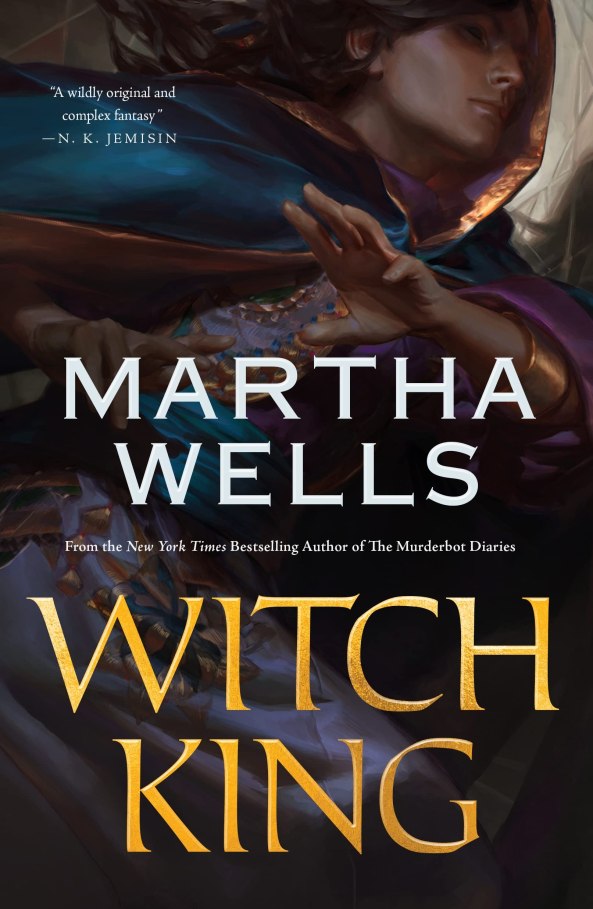
Witch King Cover

Publisher: Tor (ebook – 30 May 2023)

Series: Standalone/Book One

Length: 432 pages

My Rating: 4.5 out of 5 stars

Amazon

Acclaimed science fiction author Martha Wells returns to fantasy fiction in a big way with a cool new epic novel, Witch King.  This was an excellent and intriguing new read that I had a wonderful time reading, especially as I finally got to check out something from Wells, who has been on my to-read list for a while.  Wells is a veteran author who has several intriguing novels and series throughout her storied career, including her Ille-Rien, Books of the Raksura and Emilie, and well as tie-in books in the Star Wars and Stargate franchises.  While I am interested in reading her Star Wars book, Wells is best known for her Murderbot Diaries series, which follows a deadly security robot who has gained sentience and finds itself involved in serval complicated situation with various humans.  This series gets a lot of love in review communities and has been on my radar for a while.  However, instead I managed to get a copy of Wells’ new fantasy novel, Witch King and decided to have a read of that.  Featuring an intriguing and compelling story, Witch King was an awesome novel that I found myself really hooked on.

Kai is having a very bad day.  Awakening after an unknown period of imprisonment in a specially designed underwater cell, Kai is annoyed to find an arrogant magic user attempting to bind him to their will.  However, Kai is no mere demon, he is Kaiisteron, the Witch King, a legendary figure who, with the help of his heroic friends, saved the world from the nefarious Hierarchs and the led the current nations to freedom.

Now freed from his tomb and inhabiting the body of the mortal who foolishly tried to control him, Kai needs to find out who trapped him and why.  Accompanied by his long-time friend, the witch Ziede, and Sanja, the young woman intended to be sacrificed to him, Kai emerges once again into the world, trying to figure out what is changed and who benefited from his absence.  However, nothing is as it seems, and Kai and Ziede soon discover that their other friends and comrades have also gone missing.

Determined to get to the truth, Kai, Ziede and Sanja begin their search for answers, but soon find themselves under attack from all corners.  Dangerous magic users, powerful angelic creatures and lethal killers are all hunting for them, and everyone seems to have their own agenda.  To survive, Kai and Ziede will need to dive into their dark history, and the legendary war they fought years ago.  But the secrets they uncover will reveal dark truths about people they thought were their friends, and soon they will be forced to face the terrible consequences of their past mistakes.  Can these legendary figures survive in a world that turned against them to find their loved ones, or has their adventure finally come to an end?

This was a pretty awesome read from Wells.  Witch King has a gripping and intense story that really gets your attention early on and wows you with its elaborate world and interesting characters.  I had a great time reading this book, and while I struggled to get through it quickly, I ended up really enjoying it and I am very interested in seeing how Wells follows it up.

I really enjoyed the great story contained within Witch King, although you have to be prepared for Wells to drop you into some heavy plot right away.  There is not a lot of introduction to the characters or the world at the start of the book; instead you have to build up your own picture of events initially based on what’s going on.  This kind of makes the first few chapters a little harder to follow at times, although there is some fun action, interesting events, and great characters to grab your attention.  Wells eventually provides some of the details you need as the story continues, especially as she starts to split the story into two separate timelines, the current one and one set years in the past.  The modern timeline continues to show the characters as they get to the bottom of why they’re imprisoned and why everyone is after them, while the past timeline shows the earlier days of their history, as well as the legendary war that made them famous and which is still impacting everyone who was involved.  Both of these timelines are told from the perspective of Kai, and it provides a great overarching narrative, especially as you get to see two different sides to the same characters.  The older timeline also provides some much needed context for the modern day storyline, and Wells did a great job of balancing events from the two timelines to tell an intriguing and elaborate story.

Both awesome narratives continue at a great pace and Wells loads both up with some outstanding moments.  Out of the two, I enjoyed the chapters set in the past the most, especially as the young and inexperienced Kai was so very different from his confident and lethal persona in the future.  There was also a greater sense of desperation, oppression, and an overlay of hope in these prequel scenes which really spoke to me.  I also felt that it gave the reader a pretty good supplementary introduction into several of Witch King’s best characters, including Kai and Ziede, both of whom have some fun, complex, and LGBT+ positive arcs.  I loved seeing them as younger characters experiencing some of the worst, and most defining, moments of their lives, and Wells did an outstanding job of building that up.  However, most of the most important action occurred in the present-day storyline, and Wells writes a fantastic and powerful narrative about lost friends and relentless enemies that proved to be very compelling.  There are some great twists and turns here, most of which are rooted in their adventures in the past, and I loved some of the powerful moments that occurred.  Wells features several impressive battle scenes that make full use of the cool abilities of her magical characters, and it was particularly fun seeing Kai in action with his deadly abilities.  Both storylines come to a great conclusion that perfectly complement each other, and I liked the symmetry with the past and present, especially as it relates to the protagonists.  The final twist of the novel was pretty good and I liked how the modern-day storyline was set up to allow the narrative to continue if Wells chooses to.  However, if this was only a standalone novel, it worked really well, and I loved how impressive and fun this fantastic narrative turned out.

In addition to featuring a compelling and well-written narrative with great characters, Wells also comes up with a very distinctive and intriguing fantasy setting for Witch King, which I had a fantastic time exploring.  The world itself is a bit dark and damaged, having seen wars, magical upheaval and conquests, and it serves as a great background for the complex story.  Wells does an outstanding job of utilising some unique elements, such as demons, angelic warriors, dark magic users and mysterious tyrants to bolster the plot and produce some distinctive and exciting sequences.  This is often further enhanced by the author’s great use of the split timeline, as readers get to compare and contrast the settings and abilities of the characters after the massive time difference.  Some of the settings are really outstanding as well, with my favourite being a sinister palace first introduced in the prequel timeline.  This palace makes for an excellent backdrop for most of the early timeline’s plot, and the subsequent visit to it in the present also produces some fantastic and elaborate scenes, especially as actions in the past alter it in some very dramatic ways.  While most of these unique fantasy and world elements are impressive and fun in many ways, I did think that Wells could have done a bit of a better job introducing them.  The author really did just drop readers into the middle of the world at the start of the story with very little explanation and it takes a while to build up a full understanding of all the politics, factions, races, and basis for magic that are relevant to the plot.  While this did lead to the occasional bought of confusion during the early chapters of the book, once you get deeper into the plot (especially after the first few prequel chapters), you really grow to appreciate the elaborate world and the inventiveness Wells put into it.

Overall, Witch King was a pretty awesome and captivating fantasy read, and it was one that served as a great introduction to Martha Wells for me.  The exciting and compelling plot really drags the readers in, and the use of great characters, clever storyline splits, and an epic fantasy landscape proves to be an effective combination.  I really hope that Wells continues some of the storylines set up in Witch King in the future, and I look forward to reading more from the author if she does.

Amazon

White Night by Jim Butcher

White Night Cover

Publisher: Penguin Audio (Audiobook – 3 April 2007)

Series: Dresden Files – Book Nine

Length: 14 hours and 12 minutes

My Rating: 5 out of 5 stars

Amazon

Welcome back to my Throwback Thursday series, where I republish old reviews, review books I have read before or review older books I have only just had a chance to read.  In my latest Throwback Thursday post, I continue to explore the epic Dresden Files series by Jim Butcher, with the exceptional White Night.

Readers of this blog will have noticed that my last few Throwback Thursday posts have been all about the amazing Dresden Files by Jim Butcher.  One of the most impressive and recognisable urban fantasy series in the world today, the Dresden Files are brilliant novels that follow Harry Dresden, a wizard and magical protector of humanity, as he faces off against all manner of unique supernatural foes and mysteries in modern day Chicago.  This series features so many incredible books, such as Storm Front, Fool Moon, Grave Peril, Summer Knight, Death Masks, Blood Rites and Battle Ground, as well as the novella The Law, all of which are five-star reads.  I have been reading this series on and off since 2020, and I recently got back into it, managing to finish off two more books, Dead Beat and Proven Guilty in recent weeks.  These outstanding novels were also pretty exceptional, and I was in such a Dresden Files mood I ended up also listening to ninth book in the series, White Night, which turned out to be a pretty awesome decision.

Harry Dresden, wizard, private investigator, and now Warden for the White Council, is Chicago’s only defence against a range of supernatural threats lurking around its exterior.  However, due to his growing power, the extended war between the White Council and the Red Court vampires, and his new position as a Warden, a lethal magical law enforcer, the ordinary magical users of Chicago have grown to fear him and no longer consider him one of their own.  As such, Dresden is shocked to discover that several lesser practitioners in the city have either died in apparent suicides or simply disappeared.

Investigating the crimes, he discovers several mysterious messages that hint at a serial killer stalking female magic users in the city, one who seems to be taunting Dresden directly.  Diving into the city’s hidden magical underbelly, Dresden soon finds a group of minor witches living in fear, all of whom are convinced that Dresden has something to do with their comrade’s deaths.  Attempting to gain their trust, Dresden tries to find the truth, only to discover that all the evidence points towards his secret half-brother, the vampire Thomas Raith.

Unwilling to believe that his brother has become a murdering monster, Dresden dives deeper, only to discover a far more sinister plot lying beneath the surface.  The vampires of the White Court are on the hunt, and their malevolent schemes are expanding to capture all of Chicago, including Dresden and his friends, in their web.  Working with a range of allies, including wizards, gangsters and an old flame, can Dresden untangle the web and stop the White Court before every human magic user on the planet becomes the ultimate prey?

Damn, it really is proving impossible for me to have a bad time with one of the Dresden Files books.  The ninth novel in this series by Butcher, White Night, was another incredible addition and one that I absolutely inhaled in only a few short days.  Featuring a brilliant and well-written story loaded with the series’ great characters, White Night is an amazing and captivating read that gets another easy five-star rating from me.

Butcher has come up with a pretty epic story for White Night, and it was one that had me hooked the entire way through.  The narrative starts off in familiar ground for a Dresden Files novel, with Dresden helping the Chicago police with a suspicious death that might have magical implications.  Butcher draws the reader in at first by presenting them with a juicy and compelling case, that of a serial killer stalking minor magical practitioners in Chicago and leaving taunting messages or Dresden to find.  This story gets even more intriguing when it turns out that many witnesses or the victims’ friends consider Dresden to be the main suspect, not only because of circumstantial evidence, but because his damaged reputation.  Despite this, Dresden keeps trying to investigate, only to come across evidence that suggests his half-brother, Thomas, a White Court vampire, might be behind some of the crimes.  He also encounters his first love, Elaine, who has been hired by a local group of witches for protection, and who Dresden teams up with again to solve the case.

I really appreciated the investigative focus for the first third of the book, and it really reminded me of some of the more classic Dresden Files adventures that started the series off.  This initial investigation soon leads the protagonists into a pretty massive confrontation, and I loved how deadly and destructive things got around halfway through.  Butcher also works in a rather good flashback sequence at this point, which lends itself well to explaining the protagonist’s mental state and providing some excellent context to his recent actions.  As the story continues, Butcher starts to layer out and fully explore the major mystery of White Night in some fantastic ways.  Not only is one of the killers exposed after some fun revelations, but a massive, elaborate conspiracy is also revealed that places Dresden and his allies in a major predicament.  This leads up to an extended confrontation sequence in the last third of the book where Butcher really cuts loose and provides the reader with all the action and intense scenes that they can handle.  Not only is their a beautifully written duel sequence that was pretty cool to see, but Butcher than provides a massive battle sequence that had so much going for it.  There are explosions, betrayals, carnage and sacrifices here, and it is an impressive extended sequences that was near impossible to put down, especially as Butcher loads in epic surprise after epic surprise.  The entire sequence comes together perfectly, and I had so much fun with it, especially as it opens up some cool storylines for the future.  It also serves as a great conclusion to the narrative, and I was really impressed at the ongoing storylines that were either wrapped up or strengthen.  Everything comes together really well and it honestly left me wanting even more Dresden Files.

Butcher once again backs up his amazing story with some outstanding writing that always works to drag the reader write into the middle of the plot.  Featuring a great first-person perspective from Dresden that showcases his unique view of events, as well as his own deep personal concerns, Butcher moves White Night along at a swift pace, ensuring that every scene has something deeply interesting or exciting to keep the reader’s attention.  I really appreciated the great blend of elements within White Night, as Butcher cleverly balances action, adventure, humour, character growth and dark moments, which, along with the investigation elements, ensures that there is a little something for everyone in this book.  I particularly enjoyed some of the elaborate and intense major action sequences in White Night, especially that epic one at the end, and it was cool how massive and deadly some of them got.  Just like most of the previous Dresden Files novels, White Night can be read as a standalone urban fantasy adventure, as Butcher makes sure to recap and reference and relevant prior event, character or storyline so new readers can easily follow along and still have fun.  However, as this is a key novel in the series which concludes or continues several long-running storylines and character arcs, White Night is best enjoyed by those who have checked out the earlier Dresden Files books, especially as the emotional elements of some revelations or actions are greatly enhanced by continuous reading.  I always have so much fun with Butcher’s style in this series, and I felt that White Night was particularly well served by the author’s ability to tell an amazing story.

I have a lot of love for the cool fantasy setting that the Dresden Files utilises as the combination of modern-day Chicago and classic fantasy monsters and magic is always makes for an excellent story.  There are so many excellent elements to this fantasy society that Butcher has dreamed up over the years, and at this point in the series the lore and history of magic and its various factions is very well established.  Despite this, Butcher always finds intriguing new elements to dive into each book, which is something I really appreciate.  In White Night, he takes the time to look at the less powerful magic users in this society, the ones that don’t have enough magic to bother the White Council or interact with Dresden.  These somewhat marginalised magic users have created their own societies and communities as a result, and it was really interesting to see Dresden interact with them, especially as, due to his position as a Warden, they all fear what he represents, which is a fun reversal of how Dresden was persecuted at the start of the series.  I really loved seeing magic through the eyes of the little guy, and Butcher works them into the story in a very intriguing way.

The book also features quite a few White Court vampires, who feed on emotion and mental energy rather than blood.  The White Court are always a rather distinctive inclusion in any Dresden Files novel, and of course there is the requisite extremely beautiful women and focus on lust that are a key part of the White Court vampires.  However, several of the other factions of vampires are finally introduced here, those that induce and feed off fear and despair.  This adds a rather darker angle to parts of the book, especially when these abilities are unleashed at full blast, and it was interesting to see how badly it can be weaponised.  The accompanying vampiric schemes and backstabbing plans are also very fun, and Butcher manages to weave several elaborate ruses and plots into the narrative with some effective results.  These fantasy elements, and more, really help to create a distinctive and captivating read, and I cannot get enough of Butcher’s ability to come up with and utilise the inventive elements.

As always, the characters contained within White Night were pretty damn amazing, and I felt that their complex and powerful character arcs added so much value and intensity to the plot.  The focus is once again on protagonist and point-of-view character, Harry Dresden, who finds himself under all manner of immense pressure in White Night, which blows up around him in some big ways.  Not only is he dealing with the dual responsibilities of having an apprentice and being the magical law in Chicago, but he also has some major family issues and a tone of intense mental trauma that has been building up over the last few books.  A lot of this comes to a head in White Night, and Dresden actually comes across as a lot more angry and frustrated than he has in previous novels, especially after experiencing more losses and seeing some dreadful things.  Butcher writes some compelling and complex storylines around Dresden’s many emotional concerns in White Night, and it proves very intriguing and powerful to see him try to work through them, especially as he is in denial about several of the more prominent concerns.  The author does an amazing job exploring Dresden’s inner psyche here, and you come away feeling closer to him as a result.  White Night is actually a pretty significant book for Dresden’s character growth, especially as several long-running storylines about his mental state finish up here, and this ends up being a pretty satisfying read as a result, especially if you like how he was portrayed in the previous few novels.  Despite, or perhaps because of, his many issues, Dresden still brings his typical humour and complete disregard for decorum or his opponents to the table in White Night, and his fun comments and witty observations are responsible for most of the book’s comedy and entertainment.  As such, Dresden remains a pretty impressive and likeable central character, and I cannot wait to see what future adventures and pain he has coming to him in the future.

White Night also features a great supporting cast of friends and antagonists to liven up the plot in some awesome ways.  While most of the focus of the story is on Dresden, you see a lot of these characters and there are some fantastic and complex storylines written around them.  The most prominent of these characters in White Night is probably Dresden’s half-brother Thomas Raith, who has been a major figure for the last few books.  Due to his banishment from his vampire family, Thomas has been somewhat adrift in recent books, and it was clear that he had been keeping secrets from Dresden for various reasons.  Most of his secrets are finally revealed here in White Night and it was interesting to see what resulted.  Some of them are quite intriguing, some are pretty funny, and it was nice to finally get some answers, especially as it helped to strengthen the relationship between the two brothers.  Other great characters in White Night include Dresden’s former lover, Elaine, who has managed to bounce back since her last appearance and is trying to become more like Dresden by helping people; Dresden’s dog, Mouse, who is such a fun supernatural canine character; and the fallen angel in Dresden’s head Lasciel, who has some of the most emotionally powerful scenes in the book.  However, my favourite supporting character in White Night is probably Chicago gangster John Marcone, a mortal crime lord who dips his toes in supernatural affairs and often serves as an antagonist/uneasy ally of Dresden.  Marcone is always very fun in these books, especially as he and Dresden play off each other perfectly, and he is the perfect foil to the hot-headed protagonist.  His appearance in White Night is particularly good, as you get a deeper look at his true character, and realise he isn’t as evil as he appears.  Despite that, he still proves to be rather ruthless and Butcher writes some amazing and compelling scenes around him.  These characters and more add so much to the power and impact of White Night’s story, and I love how captivating and complex Butcher makes them.

I can’t talk about a Dresden Files novel without once again raving about its audiobook format.  I love, love, love the Dresden Files audiobooks, and there is honestly no substitute to listening to these amazing stories, especially when all the audiobooks feature the incredible vocal talents of actor James Marsters.  Marsters, who is one of my favourite audiobook narrators thanks to this series, is so damn talented, and his take on the Dresden Files books is very special.  This proves to be the case again in White Night, as Marsters utilises all his intensity and passion to bring this epic story to life.  His grip on all the major characters in White Night is pretty damn amazing, and I love how he manages to expertly portray all the characters, ensuring that the reader fully understands their personalities, emotions and inner thoughts when Marsters speaks in their voice.  This is particularly true for protagonist Harry Dresden, a character that Marsters has always done an incredible job voicing, and I deeply appreciated how the narrator was able to capture his full emotional turmoil in this fantastic audiobook.  This brilliant narration, as well as the great story it follows, ensures that White Night was another exceptional listen, and I had an outstanding time getting through this audiobook.  Coming in at just over 14 hours, White Night was slightly shorter than some of the other Dresden Files audiobooks out there, but it still takes a little bit to get through it.  However, it is well worth the time investment, and I cannot recommend White Night on audiobook enough.

Just like every Dresden Files novel I have read, White Night is an exceptional and captivating read that I had an absolute blast getting through.  Jim Butcher’s novels always drag me in with their brilliant storytelling, complex scenarios and fantastic characters, and White Night is one of his more intense and exciting inclusions in the series.  A highly recommended read and an outstanding addition to the series.  I will be reading more Dresden Files novels as soon as I can.

Amazon

Proven Guilty by Jim Butcher

Proven Guilty Cover

Publisher: Penguin Audio (Audiobook – 1 February 2006)

Series: Dresden Files – Book Eight

Length: 16 hours and 16 minutes

My Rating: 5 out of 5 stars

Amazon

Welcome back to my Throwback Thursday series, where I republish old reviews, review books I have read before or review older books I have only just had a chance to read.  This week I dive into another awesome entry in the exceptional Dresden Files series by Jim Butcher with Proven Guilty.

I have been having an outstanding time reading Butcher’s iconic and fantastic Dresden Files books over the last couple of years.  One of the absolute best urban fantasy series ever written, the Dresden Files follows titular wizard and supernatural protector, Harry Dresden, as he investigates a series of crimes and magical conspiracies in Chicago.  I got into these books back in 2020 and have been slowly getting through the series from the start, with most of the entries getting five-star reviews from me as I go.  This includes the outstanding novels, Storm Front, Fool Moon, Grave Peril, Summer Knight, Death Masks, Blood Rites, Dead Beat and Battle Ground, as well as the novella The Law.  I had so much fun reading the previous novels that I just had to dive into the eighth book this week with Proven Guilty, which proved to be another amazing read.

A year after officially becoming a Warden for the White Council of Wizards, Harry Dresden is chafing under his new role, especially the part that forces him to punish young practitioners with no real knowledge of the magic they wield.  However, he must put aside his concerns when he is warned about black magic being used in Chicago, forcing him to start a new investigation into the city’s magical underbelly.

His investigations soon lead him to a seemingly normal horror movie convention where mysterious and sinister events are taking place.  Brought in by one of the convention’s staff, Molly Carpenter, the daughter of holy knight Michael Carpenter, Dresden soon finds himself attempting to stem a series of supernatural attacks against innocent humans.  The dangerous perpetrators all appear in the form of classic horror movie monsters, and their deadly attacks soon leaves a trail of mayhem across the convention.  Forced to circumnavigate the police and other dangers waiting for him, Dresden works to hold back the dark supernatural tide, only to discover dangerous secrets that shock him to his core.

Working with his faithful dog, his vampiric half-brother, a cop with her own problems, and the most dangerous mother on the planet, Dresden attempts to right all the wrongs in front of him.  But to succeed, he’ll need to confront the forces of the Nevernever, a rogue White Court Vampire, dangerous creatures forged from fear, and even the White Council itself.  Can Dresden succeed or will his actions lead to even more suffering for those he cares about the most?

Butcher keeps his epic Dresden Files going in an amazing way with this eighth book, and I had an outstanding time reading Proven Guilty.  Featuring an elaborate plot that effortless combines mystery and supernatural elements in modern day Chicago, while also serving as a key entry in the wider Dresden Files, Proven Guilty is a powerful and deeply captivating read that I had a great time listening to.  I have so much love for this fantastic series, and Proven Guilty got another five-star rating from me as a result.

Proven Guilty has an outstanding story to it which sees the protagonist go up against a cohort of deadly enemies, some of which are disguised as horror movies creatures.  I will admit that the start of the book was a tad slow, and I honestly thought that this was going to be more of a filler novel than anything else.  However, it soon develops into an excellent story that loads up a cool mystery with some exciting encounters, deep emotional moments, strong character development, and the continuation or creation of several major storylines for the entire series.  A conflicted Dresden is dragged into everything when Molly Carpenter requests his help, and he soon finds himself looking into the mysterious events at the horror convention.  The main story goes in some very interesting directions, and I liked the great combination of investigation and fantasy elements as it continued, while several compelling side stories see Dresden facing even more danger and mystery.  Several of these storylines came together quite nicely as the book continued, and Dresden soon identifies the main perpetrator of the threat, as well as other forces taking advantage of their actions.  The impact of the big reveal of who was responsible wasn’t as significant for me, as I’d had that spoiled in advance, but it was still well crafted, especially the motivations behind it.  However, the real meat of the story revolves around darker designs as unknown forces manipulate Dresden and his allies to do their bidding.  This results in some very impressive scenes, including a massive magic battle in the Fae realm, and I loved how everything came together while also leaving some big mysteries open for later in the series.  I also really enjoyed the complex wrap-up chapters, which saw Dresden go up against the White Council in some very intense scenes, as well as providing some excellent emotional resolutions that I deeply appreciated.  Everything comes together perfectly, and this proves to be a fantastic new addition to already impressive series.

Butcher applies his usual excellent writing style to Proven Guilty, which always works well to convey his complex narratives.  Like the rest of the series, Proven Guilty moves at a swift pace, quickly taking readers from one intriguing scene to the next, all of which is great in its own particular way, whether it be character interactions, plot developments, or lore downloads.  At the same time, readers are treated to a great blend of fantasy elements, emotional moments, and a compelling investigation storyline, all of which is overlayed with a fun and signature bout of humour and snark, often directed from the protagonist.  You really get drawn into Proven Guilty as a result, and I always love Butcher’s approach to the urban fantasy style, especially as both his unique fantasy world and the cool investigative story arcs work so well together.  Like the rest of the Dresden Files books, Proven Guilty can be read as a standalone novel, although Butcher is juggling a few ongoing storylines and character arcs that had been built up in the previous entries.  While the author always does a good job of recapping key events and reintroducing key characters, I really do feel that at this point in the series readers need to have enjoyed some of the previous books to get the full emotional and story impact Butcher is conveying.  I do really need to critique one part of Butcher’s writing style for Grave Peril though, particularly how he oversexualised a teenage female character.  The Dresden Files have always featured over-the-top descriptions of women, and while Butcher has gotten better about them as the series continues, he backslid here in Proven Guilty when it came to this character.  While I do get what he was trying to do from a literary perspective, i.e. showing the vulnerability and confusion of teenagers, and how they act out a result, it honestly felt really icky to me, and I think the book would have been better off without it.  Apart from that though, Proven Guilty is very well written, and I had a wonderful time getting through it.

I always really enjoy how well Butcher manages to utilise cool and complex fantasy elements into his narratives and Proven Guilty has some outstanding examples of this.  Thanks to Dresden’s promotion to Warden in the last book, he is now a very prominent member of the White Council, and this provides him some bigger insights into the council and its members.  This results in some great political scenes, as well as a deeper dive into the council’s law enforcement wing, which exists to hunt down and punish magic users who break the laws of magic.  I found this to be pretty interesting and compelling, especially as the council’s determination to enforce the laws leads to some dark moments in the plot, and I liked the clever comparisons between them and the Chicago PD.  The case also sees a return of the Fae Summer and Winter Courts, both of which have been featured heavily in the past, and Butcher has a lot of fun revisiting both and expanding the lore surrounding them.  One of the most pivotal moments of the plot sees Dresden and his allies invading one of the most significant locations of the Winter Court, and I loved the carnage that resulted.  As always, the various scenes of magical battle and encounters are a great highlight of Proven Guilty, and Butcher has a real talent for making the featured spells feel intense and spectacular.  I also rather enjoyed the use of a horror convention (SplatterCon!!!) as a major background for the plot, especially as it allowed for a menagerie of movie monsters to emerge and attack the convention goers.  There were a ton of fun homages here as a result, and it was very entertaining to see Dresden face off against several iconic monsters in some great scenes.  These fantasy elements merge with the rest of the plot extremely well, and it was fun to see Dresden dive through the worst parts of his world to save the day.

One of the major highlights of all the Dresden Files novels in the fantastic cohort of characters that Butcher features and Proven Guilty is no exception to this as the author has utilised another fantastic group of figures, each of whom brings something emotional or compelling to the plot.  The most prominent of these is naturally series protagonist Harry Dresden, who serves as the book’s main voice.  Cocky, confident, emotionally damaged and highly conflicted, Dresden makes a great focal character and I have deeply enjoyed seeing his personal journey throughout this series.  While still responsible for most of the book’s humour thanks to his jokes and fun observations about the other characters and all things magic, Dresden is decidedly a little more serious in Proven Guilty, especially as he is still recovering from some of the traumas of the previous books, including his injuries, his possession by a fallen angel, emotional conflicts with those closest to him, and the guilt over being forced to kill two people in his previous adventure.  This provides a noticeable change to Dresden in this book, and I felt that Butcher did a wonderful job showcasing this in several emotionally charged confrontations and scenes.  At the same time, Dresden is also dealing with his misapprehensions for working for the White Council as a Warden, especially as he is having trouble believing in all their rules.  This leads him into even greater conflict as the book continues, especially when he finds out who is truly responsible for the latest evils he uncovers.  All these personal issues and traumas help to provide a deep emotional layer to the plot, and it was one that Butcher masterfully addressed, providing some compelling and satisfying resolutions to several of them.  I particularly liked how Dresden’s story is coming full circle in some ways, and it will be interesting to see how that plays out in the future.

Aside from Dresden, there are a ton of other great characters featured through Proven Guilty who add their own flavour to the plot.  This includes an excellent range of new figures and well-established supporting characters, and I liked the mixture of storylines and character arcs that emerged.  Dresden’s usual allies, Karrin Murphy and Thomas Raith are very well utilised again here, both as supporting characters for Dresden’s adventures, and as individuals with considerable personal and professional issues to deal with.  Molly Carpenter, a minor figure from the previous novels, returns in a big way here and serves as an intriguing new addition to the plot.  While I have some major concerns about Molly’s portrayal at times, her storyline had some great depth and it will be interesting to see how that develops in the future.  This use of Molly also allowed a great focus on her mother Charity, another minor character from the previous novels, who gets a fantastic showing in Proven Guilty, especially as she shows herself to be an absolute badass.  Throw in Harry’s giant dog Mouse, who is one of my favourite characters in this series now, and differing voices of Dresden’s two supernatural advisors, Bob and Lasciel, the angel and demon on his magical shoulder (both literally and figuratively), and you have a pretty outstanding cast here, and one that I always have a great time following.

As always with one of the Dresden Files novels I really need to highlight the exceptional and awesome audiobook versions which are my favourite way to enjoy this amazing books.  The format really lends itself to the intense action, fast-paced storytelling and great characters contained within Proven Guilty, and I really found myself powering through this great audiobook in no time at all.  With a run time of over 16 hours, this is one of the longer Dresden Files audiobooks, but I still managed to knock it off in a few days, as I never got sick of listening to it.  The main reason for this is the outstanding narration of actor James Marsters, who has lent his powerful voice to the entire Dresden Files series.  Marsters effortlessly dives into the story each time, and he brings some real gravitas and feeling to the plot and characters.  The various voices he produces does each member of the complex cast great justice and I love how well he portrays their feelings, interactions, and personalities.  This is mostly easily seen in main character Harry Dresden, who is suffering from a lot of different abuses by this point in the series.  Marsters really does such a great job showcasing his various emotional and personal issues and I am always so impressed with how the narrator just gets this complicated character and brings that out with his voice.  This great performance does so much to enhance the experience of listening to Proven Guilty on audiobook and I cannot recommend this format enough to people interested in checking out this cool Dresden Files entry.

Unsurprisingly, I had an outstanding time with Proven Guilty and it proved to be an excellent continuation of Jim Butcher’s epic Dresden Files series.  Featuring another brilliant story, some fantastic character growth, and even more magic and mayhem, Proven Guilty was a ton of fun to get through, and I have so much love for this series.  Indeed, I had such an incredible time with Proven Guilty that I have already started listening to the next book in the series, White Night, which I will hopefully review next week. I honestly can’t give Proven Guilty a higher compliment than that, and this is a pretty damn amazing read.

Amazon

The Malevolent Seven by Sebastien de Castell

The Malevolent Seven Cover

Publisher: Jo Fletcher Books (Trade Paperback – 9 May 2023)

Series: Standalone/Book One

Length: 373 pages

My Rating: 4.5 out of 5 stars

Amazon

Rising fantasy star Sebastien de Castell returns with a bold and highly entertaining new fantasy novel, The Malevolent Seven, that takes several dangerous and dastardly characters on a magical journey of death, deceit and despair which is so much fun to behold.

Magic is power and only the strong can hope to wield it, especially if they can make a profit out of it.  Cade Ombra is a powerful wonderist, a magic user who makes his living as a war mage, selling his services to highest bidder to fight in their wars and kill their enemies, even if his employers are monsters.  Cade has long struggled with the ethics of his job, and when his latest employment ends badly, with Cade framed for murder resulting in a relentless band of holy enforcers hunting him, he knows he needs to find a way out.

Luckily, a lucrative new job is looking for wonderists, and the payment is something he’s always desired, an artefact capable of changing everything about his life.  However, to get paid he needs to do one last very bad thing: kill seven heroic mages attempting to take down a corrupt noble and survive everything that wants to kill him along the way.  Determined to win no matter the cost, Cade and his violent colleague Corrigan set off to claim the reward before any of their rivals can.  But to succeed, they’ll need to recruit five more mages capable of taking down their powerful enemies and who have no moral qualms about killing heroes for money.

So begins a deadly recruitment mission as Cade and Corrigan seek out five mages just as crazy as they are.  But even with a mentally unstable blood mage, a fallen angel, a moral demon knight, a charismatic rat mage and a mysterious jackal, can even this mismatched bad of rogues hope to survive against the seven most deadly magic users on this plane of existence?  However, nothing about this job is as it seems, and Cade and the Malevolent Seven find themselves caught up in a deadly game between gods, demons and monsters, with the fate of the world lying in the balance.

Wow, now this was a very, very fun and addictive novel.  Sebastien de Castell wasn’t an author I was too familiar with before this point, although I had heard good things about The Greatcoats series.  However, I am now going to have to go out of my way to read more of his stuff, especially after reading the epic and entertaining The Malevolent Seven.

The Malevolent Seven was such a great read as de Castell pulls together a dark fantasy reimagining of heroic stories like Seven Samurai and The Magnificent Seven.  The book starts of strong with a great introduction to the main character, Cade Ombra, the rules of magic in this realm, and the author’s very entertaining and outrageous sense of humour.  Expertly and hilariously told from the first-person perspective of Cade, whose observations about the insane events going on around him adds so much value to the story, you soon get a great sense of what to expect from this book and de Castell does not disappoint.  The story initially focuses on Cade and his friend Corrigan’s efforts in a brutal war for a mad ruler, but things go south when their employer is killed, Cade is betrayed by his fellow wonderists, and a band of ruthless religious warriors, the Glorian Justiciars, arrive determined to hunt down Cade for his use of demonic magic.  Forced to take a new job with Corrigan to save his skin and quickly get out of dodge, the two take up the mysterious contract to kill seven heroic mages in exchange for a powerful artefact, and begin a recruitment drive for five additional mages.

I love a good recruitment montage in heist or action fiction, and this one is pretty damn fun as de Castell writes in a particularly eclectic and insane group of mages for the protagonists to recruit.  Naturally nothing goes as plan, as the two are forced to take along a half-insane junior blood mage who Cade feels responsible for.  Their subsequent recruitment attempts land them in all manner of trouble as they rescue a highly chivalrous rat mage, save a mysterious fallen angel from a pleasure ship, journey to hell to recruit a demon knight, and end up in the middle of a wasteland, chased by everyone.  This recruitment period took up more of the plot than I thought it would, but it works really well to tell a great overall narrative.  Each scene introduces the reader to more of the world and it allows a compelling dynamic to grow between the various protagonists, especially as they grow to understand each other crazy tendencies.  De Castell also builds up several intriguing long-running storylines of manipulation and betrayal as it becomes clear that someone is influencing their mission and has set gods and demons against them.  This middle section of the book is a lot of fun, and I loved how de Castell keeps up the same blend of humour, intriguing character development, and insane over-the-top moments, that really draws you in at the start of the novel.

Everything perfectly leads up to the final third of the book, when the protagonists arrive at their destination.  Of course, as can be expected by the theme of this story so far, nothing is what they thought it would be, and instead they find themselves facing off against a mysterious foe with very different motivations to what they expected.  I loved how de Castell turned the plot a little on its head at this point, as the characters find themselves in the unexpected position of being the good guys.  This leads to some amazing scenes in the final third, loaded with magic, chaotic confrontations and more, all of which is a ton of fun to see.  There is some great character growth as several storylines come full circle, as well as a ton of twists and turns.  I loved some of the epic reveals that came across, and while I saw a few coming, de Castell managed to surprise me in places, which I really enjoyed.  The final twists about why the characters were on the job and who really wins were pretty damn epic and it sets the story up nicely for a sequel, which I am definitely going to grab a copy of.  I loved how de Castell really enhanced the drama in this final third of the book, especially as several character relationships or conflicts come to the boil in some explosive and captivating ways.  This combines really well with the continued craziness of the story and the inherent humour of the plot, and you really get drawn into all the fantastic elements of this book.  The Malevolent Seven ended up being an incredible read, and I managed to power through this entire story in a couple of days and had a ton of fun doing so.

I loved the dark and despairing world that served as the cool new setting for The Malevolent Seven and de Castell has a ton of fun showcasing this new fantasy landscape throughout the book.  Loaded with petty tyrants, warring nobles, and wandering wonderists who dish out death to the highest bidder, this land is the perfect backdrop for the crazy and self-serving narrative, and I loved seeing de Castell’s great characters traverse it causing trouble.  While there are some outstanding locations, including a magically blasted wasteland and several deadly battlegrounds, the highlight of this setting is the complex magical system that the author came up with.  This magical system is primarily predicated on wonderists breaching dimensional barriers and utilising magic that they have an infinity for.  This results in several unique rules and abilities that de Castell did an outstanding job of effectively introducing, and I loved how weird some of the abilities were, especially those that played into the novel’s humour.  Some of the more interesting realms require the magical users to interact with the associated denizens, including this world’s equivalent of angels and demons, all of whom have a stake in the mortal realms.  Several of the best scenes in the book require the protagonist to make dark and forbidden deals with his demonic contact, and the manipulation of the various mystical entities from both heaven and hell becomes a key part of the book.  The author makes sure to utilise all these fantastic and lethal abilities to their full extent throughout The Malevolent Seven and the epic, ultra-destructive battles that emerged, as well as the clever combination of talents, resulted in some amazingly, electrifying sequences.  It will be interesting to see what crazy abilities de Castell brings to the table for the sequel, but it’s going to be good.

The final thing I want to highlight about The Malevolent Seven are the excellent and compelling damaged characters featured throughout the plot.  De Castell really went out of his way to make his main seven protagonists as random, broken and insane as possible, and this really works in the context of this brilliant story.  The main protagonist is point-of-view character Cade Ombra, a wonderist with a secret past whose current magical ability comes from deals with a literal demon (nice guy actually).  Because of this and many other mistakes in his life, Cade is pretty alone and damaged when the story starts, and he is constantly trying to balance his survival instincts and desire for power, with his conscience, something that keeps getting him in trouble.  De Castell builds up Cade extremely well throughout The Malevolent Seven and I liked his constant growth as he tries to do the right thing, even though it usually makes life even harder for him.  The author sets Cade up as a reluctant leader and hero, and it was intriguing to see the dynamics that form between him and the rest of the team fate brings together around him.  The rest of the titular Malevolent Seven are all pretty entertaining and uniquely crazy in their own way, and the range of diverse and entertaining personalities makes for a great overall dynamic to the story. My favourite character in the group was the excessively violent Corrigan Blight, whose thunder magic matches his outrageous personality.  Corrigan served as the straight speaking, highly reactive and trigger-happy organiser of the group, who plays off the more reserved Cade perfectly, especially as they form a unique and fragile friendship.  Other highlights include the highly charismatic and surprisingly noble Aradeus, whose rat magic proves to be highly effective if a little weird, and the novice blood mage Galass, whose spunky personality is only matched by her deadly abilities that are slowly driving her insane.  I loved this impressive and very entertaining cast and I cannot wait to see what happens to them next.

I think it is very clear that I loved The Malevolent Seven as Sebastien de Castell’s outrageous and inventive dark fantasy tale was a real joy to behold.  The great blend of fantastic humour, twisty storytelling, brutal magic and over-the-top characters, works exceedingly well and I loved the witty and extremely fun story that emerged.  The Malevolent Seven is a great read and if you are in the mood for a cool and highly compelling fantasy adventure than this is the book for you.

Amazon

Throwback Thursday – Dead Beat by Jim Butcher

Dead Beat Cover

Publisher: Penguin Audio (Audiobook – 3 May 2005)

Series: Dresden Files – Book Seven

Length: 15 hours and 7 minutes

My Rating: 5 out of 5 stars

Amazon

Welcome back to my Throwback Thursday series, where I republish old reviews, review books I have read before or review older books I have only just had a chance to read.  For this latest review I dive back into the epic Dresden Files series by Jim Butcher with the seventh entry, Dead Beat.

Over the last couple of years, I’ve had a ton of fun finally getting into the iconic Dresden Files books by legendary author Jim Butcher.  Generally considered one of the very best urban fantasy series, the Dresden Files are a deeply captivating series that follows Chicago’s resident wizard, Harry Dresden, as he investigates a series of mystical cases throughout the city, often resulting in epic moments loaded with magic.  I started this series with the latest book, Battle Ground (one of my favourite books and audiobooks of 2020), and then went back to the start to experience the series from the beginning.  So far, I have managed to read Storm Front, Fool Moon, Grave Peril, Summer Knight, Death Masks and Blood Rites, as well as last year’s novella, The Law.  All these books have been extremely good in their own way, and I have loved the elaborate stories each of them contained.  As such, when I was in the mood for something I was guaranteed to love this week, listening to the next Dresden Files book on my to-read list was an easy choice for me, with the seventh book, Dead Beat.

Harry Dresden, private wizard detective and magical protector of Chicago is always willing to help a person in need no matter the cost.  But even he is unprepared for how far he’ll have to go when an old and merciless enemy imperils one of the people closest to him.  The ancient vampire Mavra has evidence that could destroy his best friend, Karrin Murphy, and threatens to unleash it unless Dresden recovers a powerful book of magic written by the legendary, long-dead necromancer Kemmler.

With no choice but to find the book, Dresden begins his search around Chicago, attempting to discover any trace of its location.  However, his search soon leads him into conflict with a new dark power arriving in the city.  Three of Kemmler’s students have their eyes on the book and the rituals it contains, and they are willing to destroy everyone and anyone to get it, including each other, especially when the prize at stake is godhood.

Caught between the three warring necromancers and their minions, Dresden needs to find the book first to stop their dark ultimate ritual before it can decimate Chicago.  However, each of Kemmler’s students far outclasses him in terms of magical ability and ruthlessness, and with only limited allies to call upon, it looks like even Dresden will have trouble saving the day again.  To survive, he might have to a make a dark deal with an even more malevolent evil, one that that has the potential to damn him forever.

I don’t know how he does it, but every single one of Jim Butcher’s novels that I read is so damn addictive and epic that I always struggle to put it down.  Dead Beat was another outstanding entry in the Dresden Files series, and honestly it might be one of the best I have read so far.  I absolutely powered through its clever and elaborate story as I tried to get to the end, and everything about it was highly enjoyable and fun.  Dead Beat gets another easy five-star rating and I have so much love for how amazing this seventh entry in the series turned out.

Dead Beat has an amazing story to it that effortlessly drew me in with the cool combination of magic, character moments and investigative angles.  Starting off quickly with Dresden drafted into the search for a powerful magic book, the protagonist begins his new investigation, only to discover the dangerous necromancers waiting for them.  Dresden soon has deadly encounters with all three necromancers in Chicago searching for the book, as well as their various minions and associates, which results in some brilliant scenes.  Dead Beat continues by setting Dresden and his allies on a dark course as they simultaneously attempt to find the book and the full extent of the warring necromancer’s plans, while also fending off their attacks.  Dresden keeps getting confronted again and again by his foes, barely escaping each time while also learning more about what is to come.  At the same time, he is forced to deal with certain personal issues, including trauma, complicated relationships, and a literal demon in his head, tempting him with power and knowledge.  There are some great twists, dark moments and emotionally powerful scenes set up around the middle of the novel, and I loved how well Butcher laid out the storylines and hinted at some big moments to come. Everything leads up to an epic concluding final third of the book as Dresden makes some hard decisions and compromises to save the day.  The final confrontation with the bad guys is pretty damn awesome, especially as the protagonist, utilising his usual restraint and good judgment, unleashes a very monstrous response to the antagonist’s minions.  This entire narrative was enthralling from start to finish, and I cannot emphasise just how addictive and entertaining the entire story was.

Dead Beat featured Butcher’s usual excellent writing style which once again lent itself extremely well to the elaborate narrative he came up with.  The pacing of this book was constantly fast and exciting, which guarantees that the reader is always paying attention, especially as every page has either action, some intriguing bit of lore or history, or some intense and compelling character development.  Butcher also ensures that this latest novel has the right blend of great story elements to it, and I deeply enjoyed how the fantasy and mystery elements are well featured as the protagonist is forced to do detective work to get the answers.  All this is overlayed by a great smattering of humour, mostly from the funny protagonist, who approaches the dark events and villains with his usual cockiness and disrespect.  The use of a first-person perspective from Dresden is also quite effective, and I loved seeing events through his eyes, as it allows readers to fully grasp the mystery, while also showcasing the great character developments.  While Dead Beat can be read as a standalone read, especially as Butcher is good at quickly recapping events, at this point in the series readers will benefit from going back and reading the earlier Dresden Files books first.  Dead Beat proves to be a key entry in the larger series, with multiple major events occurring here, and there are a ton of references to the preceding books, including the return of several fantastic characters.  I really got a lot more out of Dead Beat’s story for having read the previous novels, especially as you get to see how much Dresden has been through in the lead up to this book.  Overall, this was a very well-written and impressive novel, and Butcher really ensured that his cool story came through perfectly.

As with the rest of the Dresden Files books, I was really impressed with the blend of fantasy and urban fiction elements in Dead Beat, especially as Butcher has come up with such an elaborate world to set his stories in.  The author adds some cool new elements into his complex world throughout Dead Beat, as Dresden is forced to deal with a whole new branch of dark magic, necromancy.  Necromancy, or the control over the dead, is always a great villainous power in fantasy fiction, and Butcher makes excellent use of it in this book, with three rival necromancers vying for power.  Each uses a different form of necromantic magic in battle, and this results in some outstanding scenes where Dresden is forced to confront them.  The resulting magical mayhem is pretty epic, and Butcher’s unique depiction of zombies was both fun and a little scary.  This intriguing new form of magic ensured that Dead Beat really stood out, and I appreciated how Butcher turned it on its head towards the end when Dresden gets creative.  These excellent portrayals of magic fit within the fantastic setting of modern-day Chicago and it is always fun to see the elaborate balance of magical and mundane features that Butcher has set up within the city.  These great fantasy inclusions blend well with the character work and mystery elements of Dead Beat, and I look forward to seeing how Butcher further expands it in future books.

One thing that I felt Butcher did particularly well in Dead Beat was how he portrayed his brilliant cast of characters.  The Dresden Files always contain great protagonists and villains, but this novel had some of the best portrayals of them to date.  This is especially true for series protagonist and point-of-view character Harry Dresden, who had a great outing here.  Dresden has always been a damaged and conflicted figure in the series, but recent traumas are really weighing him down in Dead Beat as he struggles with a terrible hand injury, as well as the malign influence of the fallen angel bound to him, Lasciel.  The protagonist spends most of the book trying to deal with the influence of Lasciel who subtly manipulates him in many ways, tempting him with power or a solution to his many problems.  Each damaging and desperate encounter that Dresden survives in Dead Beat forces him to reconsider the wisdom of refusing her help, and the subsequent internal battles produce some of the most intense and compelling scenes in the novel.  This continued temptation and manipulation alters Dresden’s personality at times, and it was interesting to see how his allies and friends treat him, especially as Dresden begins to understand the different ways that members of the magical community view him.  Of course, Dresden hides most of his internal pain with his usual hilarious wit and humour, and his irreverent opinions, funny observations, and sheer ability to annoy anyone he encounters, results in most of the book’s humour and over-the-top moments.  Throw in other concerns, including complex relationships, unrequited love, and the character’s desire to prove himself and do the right thing, and this was some of the best character work that Butcher has ever done around his main protagonist.

On top of Dresden, Butcher also features a brilliant cast of support characters and villains that really help to enliven the book.  Dead Beat features a mixture of established supporting characters, as well as several great new ones, each of whom get some excellent moments to show off throughout the book.  I particularly enjoyed how well Butcher utilised the character of Waldo Butters in Dead Beat.  Butters, a kooky and big-hearted mortal medical examiner who had minor roles in a previous novel, is thrust into the limelight during this book, becoming a major ally to Dresden.  Butcher weaves some great storylines around him as he simultaneously finds his courage and begins to understand the magical world that keeps trying to kill him.  Butters proves to be a great supporting figure to Dresden in this book, and I loved their amusing team-up and developing friendship.  There is also a couple of great hints at some of the future storylines involving Butters, and I look forward to seeing more of him.

Aside from Butters, I also enjoyed the appearance of Dresden’s half-brother, the vampire Thomas Raith, who has been crashing at Dresden’s place.  Butcher paints a fun brotherly relationship between the two in this novel, which was quite entertaining at times.  However, the more humorous elements of their relationship are often overshadowed by the deep pain within Raith as he tries to overcome the emotional damage done to him in the previous novel.  I also loved learning more about Dresden’s skull spirit companion, Bob, in Dead Beat, and his dark history proves to be quite fascinating, especially as his former nature contrasts substantially with his usually entertaining persona.  The three necromantic villains, Grevane, the Corpsetaker and Cowl, each bring a certain level of sinisterness to the table, and they prove to be exceptional antagonists in their own way.  Finally, I must highlight the inclusion of Dresden’s new dog, Mouse, who has an awesome outing in Dead Beat.  A young and growing gentle giant, Mouse is a fun animal companion to Dresden and his allies, and I look forward to seeing more of his hijinks in the future.  Honestly, the entire cast of Dead Beat was pretty damn exceptional, and their powerful interactions and internal issues, added so much to the impact and power of this awesome novel.

As with all the Dresden Files novels, I chose to listen to Dead Beat on audiobook, which was an exceptional experience as the audio format helps to enhance the great characters and magical action.  Coming in at just over 15 hours, this is a substantial audiobook, however, I manage to knock it out in a few days, especially once I got caught up in fantastic story.  Naturally, the best thing about the Dead Beat audiobook is the return of actor James Marsters as the narrator.  Marsters, who is one of my favourite audiobook narrators thanks to his work on this series, did another brilliant job in Dead Beat and I have so much love for his outstanding performance.  After lending his voice to all the previous Dresden Files novels, Marsters has all the characters down, and each figure is given a fitting and powerful voice that carries through from book to book.  I particularly appreciated his portrayal of main character Harry Dresden, and Marsters perfectly captures the protagonist’s deep emotions and cocky demeaner, ensuring that you are both drawn to his pain and entertained by his antics.  In addition to the excellent voices, Marsters also has some noticeable and contagious enthusiasm in his narration, especially when it comes to the magical battles, and you can really feel his passion and excitement in parts of the story, especially when he loudly shouts out Dresden’s magical spells.  This narration from Marsters is so damn good, and it ensures that I had an exceptional time with Dead Beat’s audiobook, while is the absolute best way to enjoy a Dresden File novel.

In the seventh entry in his iconic Dresden Files series, Dead Beat, Jim Butcher has produced another exceptional read and one that I cannot recommended enough.  Featuring a particularly impressive and captivating narration, cool magical inclusions, and some of the best character work Butcher has ever done, Dead Beat is one the best Dresden Files novels I have read so far, and I loved everything about it.  This was such an amazing book, and I am very much intending to read several more entries in this outstanding series later this year.

Amazon

Son of the Poison Rose by Jonathan Maberry

Son of the Poison Rose Cover

Publisher: Macmillan Audio (Audiobook – 10 January 2023)

Series: Kagen the Damned – Book Two

Length: 25 hours and 55 minutes

My Rating: 5 out of 5 stars

Amazon

One of my favourite authors, Jonathan Maberry, returns to his intriguing fantasy world in a big way with the second Kagen the Damned novel, Son of the Poison Rose.

Readers familiar with my blog will know I am a massive Jonathan Maberry fan, and the path to my current obsession with his work is well documented throughout The Unseen Library.  I started off by reading his fantastic 2018 novel, Deep Silence, quite early in my blogging career, and this ended up getting me into the rest of his exceptional Joe Ledger series, including The Dragon Factory, The King of Plagues, Predator One and Dogs of War.  I have also had a great time reading his sequel Rogue Team International series, which featured the epic books Rage (one of my favourite books and audiobooks of 2019) and Relentless (one of my favourite books and audiobooks of 2021), as well as the fun standalone novel Ink (one of my favourite books and audiobooks of 2020).  Needless to say, I have deeply enjoyed his cool books, and this only increased when he made his impact into the fantasy fiction world last year with Kagen the Damned.

Kagen the Damned was an amazing and exceptional dark fantasy novel that took the reader on a wild ride.  Set in a brutal fantasy world of Maberry’s own invention, Kagen the Damned followed the titular character of Kagen Vale, a highly regarded hero and palace guard of the Silver Empire who loses everything in a single night when the armies of the dread nation Hakkia invade with dark magic, led by the powerful and deadly Witch-king.  Forced to watch his parents, his empress, and the royal children he was sworn to protect die terrible deaths, a haunted Kagen flees, only to be further destroyed when he beholds his gods turning their back on him, damming him for his failure.  Now known as The Damned, Kagen travels the world in a daze before finally regaining his senses and launching an attack on the Witch-king at his coronation.  However, this reveals secrets that shock Kagen further and spelling doom for the entire world.  I had an epic time reading Kagen the Damned last year, and it ended up being one of my favourite books and audiobooks of 2022.  Between this and the cool Kagen the Damned novella I Say Your Name in the Dark Nights, I have been eagerly awaiting a second novel and I was very excited when I heard that Son of the Poison Rose was coming out.  Son of the Poison Rose was one of my most anticipated books of 2023 and I finally managed to read it a short while ago and it was everything I hoped it would be and more.

“There is blood on the ground between us!”

Following his failed assassination attempt on the Witch-king of Hakkia, Kagen Vale, better known as Kagen the Damned, is once again the run with his companions, Tuke Brakson and Filia alden-Bok, attempting to find safety and come up with a new strategy of survival and revenge.  While their plan to kill the Witch-king failed, their attack stopped the return of the Hakkian God, Hastur, while also opening up the possibility of war, as the Witch-king’s fellow monarchs see the Hakkians as vulnerable.  However, Kagen also uncovered the terrible secret that the Witch-king is his older brother Herepath, who has turned his back on everything he once believed in to unleash great evil upon the world.

Wandering the wilderness, Kagen, Tuke and Filia attempt to come up with a new way to strike back against the Hakkian forces.  Their journey eventually leads them to the north of the continent, where they attempt to recruit an army of nationless-rogues, mercenaries and fighters to their cause.  But force of arms alone will not be enough to stop the Witch-king, instead Kagen and his allies will need magic.  But with magic long banned within the Silver Empire, only the Hakkians have any real knowledge of the mystic arts.  To that end, Kagen turns to former nun turned spymistress, Mother Frey, who sends Kagen on a deadly mission to a long lost city in a dangerous jungle in the hopes of recovering ancient books of dark magic.

However, the Witch-king is far from idle while Kagen is working against him.  With his army spread thin and the nations of the former Silver Empire all gearing up for war, the future looks grim for the usurper and his advisors.  But with new dark allies arriving every day, called to his side by magic, the Witch-king plans to unleash a magical plague, one that will turn his enemies into a ravenous, unthinking horde.  With such power at the Witch-king’s command, will Kagen’s quest reveal something powerful enough to defeat him?  And even if he does, will Kagen be able to fight his own brother?

Wow, wow, wow, what an epic and exceptional book!  Maberry can really do no wrong when it comes to his writing and this impressive sequel really hammers home what a talented author he is.  Masterfully expanding on the narrative set up in the first book, Son of the Poison Rose contains Maberry’s trademark blend of intensity, awesome action, complex characters, and dark world building that I love so much.  I absolutely powered through this lengthy novel, and it earns Maberry another easy five-star rating from me as I loved every single second I spent with it.

Maberry continues his sprawling and dark narrative in Son of the Poison Rose, as this book takes the reader in some great and captivating new directions.  Taking place in the explosive aftermath of Kagen the Damned, Son of the Poison Rose starts off in a big and action-packed way as Kagen and his allies find themselves being hunted by everything the Witch-king can throw at them.  Maberry quickly establishes his usual practice of featuring a huge number of different perspectives to showcase not only the adventures of the protagonists, but also the actions and schemes of the antagonists and the impacts that their machinations have throughout the world.  The main story of Kagen is pretty epic as it sees the protagonist and his friends struggling through new lands in the search of allies and magic.  While this results in some great scenes for Kagen in the first two thirds of the book, including a great haunted house sequence, his story here feels a little meandering at times without too much progress being made.  However, this is more than made up from the various alternate perspectives and worldbuilding that occurs in the same period.  It is so damn fascinating and entertaining to see the various dark and often horrifying plots of the antagonists come into effect as they plot for war.  These storylines blend spy thriller and dark fantasy elements together really well and you are drawn into these storylines, especially as Maberry takes the opportunity to strengthen the followers of the antagonists in some big ways.  The simultaneous build-up of other complex supporting characters, as well as the many examinations of various corners of Maberry’s new fantasy world adds to the impressive tapestry of the first two thirds of the story, and I was pretty damn hooked during this part of the book.

Maberry ramps up the intensity in the final third of the book as the various intriguing storylines he set up in the start of the novel really come to fruition.  This is headlined by Kagen and his allies travelling into a dangerous jungle nation to find a legendary ancient city where magical texts are hidden.  While I was initially concerned this part of Kagen’s story was going to be rushed, it ended up being very well written and awesome, as they encounter all manner of evils out in the jungle.  This final third of the book was again firmly enhanced by the continued dive back to the antagonists, where you see their evil plot to fill the jungle with zombies and other deadly creatures to kill Kagen and his comrades.  This results in an epic series of battles which keep you on the edge of your seat, as you know Maberry will not hesitate to kill off his characters.  The author chucks in several massive revelations around this part of the book, including finally showing the motivation behind the Witch-king’s actions, and the entire narrative ends on a big note while also expertly setting the stage for even more chaos in the following novel.  This ended up being a particularly epic story and I was firmly hooked the entire way through.

Those who are familiar with Mabbery’s novels will know that the author has a very distinctive style which has worked wonders in his many thriller novels.  Maberry successfully transported this style across to the fantasy genre last year with Kagen the Damned, and I felt it really enhanced his already impressive story.  Naturally he continues it in Son of the Poison Rose and it is still really effective at conveying the vast scope of his tale.  The main basis for his style is the utilisation of a vast number of shorter perspective chapters which showcase events from multiple characters across the narrative.  This results in a vast and complex story that not only allows the reader to see the adventures of the protagonist but also highlight the other players throughout the realm, including the antagonist, his court, the members of the resistance, and even several kings and rulers from unaligned nations who are making plans for war.  Maberry further expands out the plot by including a series of intriguing, often standalone interludes, which showcase smaller, self-contained stories within the wider universe.  These interludes are usually pretty cool, both by themselves and as extensions of the larger story, and I love how inventive and dark Maberry can be at times.  This mass of perspectives really helps to create an extensive and complex plot that has so many different aspects to it.  Seeing the protagonist and antagonist constantly reacting to the actions of each other, as well as other figures in the book, really ups the stakes and intensifies the plot, and I loved how Maberry gave this fantasy novel a strong thriller feel, especially with the continues focuses on politics, espionage and revenge.

Now, one thing about Maberry’s writing style that is not going to appeal to everyone is just how dark and disturbing the author makes the story.  Maberry is a particularly over-the-top writer at times, as he really does not hold back on the gore, violence and depravity, with the characters witnessing or causing all manner of mayhem or gruesome acts.  While this excessive violence and brutality fits the dark fantasy realm that Maberry has created, particularly as it highlights just how evil the antagonist and his legions can be, it is not going to be everyone’s cup of tea.  The torture, abuse and sadism of many scenes can be a bit much at times, and anyone that dislikes that sort of inclusion is probably best served to avoid this series.  However, for those that remain, I will point out that Maberry’s attention to bloody detail does ensure that the action sequences are extremely awesome.  The author has a gift for bringing the brutality and intensity of the battlefield to life in some truly glorious scenes, and you will be enthralled by every swing of the dagger or sword that he writes.  These action scenes are a beautiful, if bloody, highlight of this book, and the overall excessiveness of some of the scenes, especially when focusing on an over-the-top villain really plays into the wider narrative and setting.

I am still in love with the cool new dark fantasy world that Maberry created in Kagen the Damned, especially as the author took his time to populate with evil creatures, Lovecraftian gods and so much damn despair.  His first book served as a brilliant introduction to the various intriguing nations, and I deeply appreciated the intricate depictions of the Hakkian invasion, as well as the subtle and slow reintroduction of magic into this world.  Maberry continues to build up this world in several ways throughout Son of the Poison Rose, which results in some amazing story elements.  The focus on several of the other realms not seen in the first book is pretty interesting, as is the examination of the complex politics of the land as these now independent nations contemplate war with Hakkia after the concluding events of Kagen the Damned.  This builds up several great storylines as these rebelling nations and the Witch-king’s court plot different strategies to win any future wars.  Maberry also has a lot of fun exploring several new lands that were only hinted at in the previous books, and the protagonists soon end up in several unique and deadly landscapes, including cursed snowscapes with mysterious creatures, lethal jungles, and massive ruined cities dedicated to overthrown gods.  All of these locations are expertly introduced and described by Maberry, who uses them to his full advantage to increase tension and ensure that all the inevitable battles have a compelling new edge to them.

Another excellent thing that Maberry continues to do in Son of the Poison Rose is show how magic is slowly returning to the land due to the machinations of the Witch-king.  Thanks to several great chapters and interludes, you get to see the full horror as old magical creatures re-emerge, including the always reliable zombie, which plays very heavily into the plot.  Maberry is no stranger when it comes to zombies, having featured them in several books before (Patient Zero and Code Zero for example) and he uses to them to great effect here, both as political tools for the antagonist, and as rabid obstacles for the protagonists.  Other awesome features include the unstoppable, demonically powered, Razor Knight, which has a great showing at the end of the book, and it will be interesting to see how that, as well as some of the other magic unleashed in Son of the Poison Rose, come into effect in the rest of the series.  I also really appreciated how Maberry kept including a few references to his other series throughout Son of the Poison Rose, which is always a lot of fun for his established fans.  The hints of connection between this world and the settings of other books from Maberry is noticeable and fun without being too mysterious for new readers.  I especially loved the inclusion of a fantastic new villainous character who readers of the Joe Ledger books will be well familiar with under a different name, which I thought was an awesome touch for those who have read his other books.  I deeply enjoyed the impressive world building that Maberry did in Son of the Poison Rose, and I look forward to seeing how else he expands it in the rest of the series.

As always, one of the absolute best parts of Son of the Poison Rose were the exceptional, complex, and well-written characters that Maberry has expertly crafted together.  This includes a great combination of established figures from the first book, as well as a good collection of new characters who add some outstanding original spice to his second book.  Thanks to huge number of perspective chapters, the Kagen the Damned series features a pretty massive cast of damaged or sinister figures that Maberry uses to full effect to tell an elaborate overarching narrative.

Unsurprisingly, most of the focus of the book falls on series titular character, Kagen Vale, better known as Kagen the Damned.  Kagen had an outstanding introduction in the first book, where you see him lose everything, including his gods, in a single night, which drives him to great despair.  While he has managed to mostly recover from this thanks to his friends, he is still haunted by that dark night, especially after learning the truth about who the Witch-king is, as well as the identity of his heirs.  Driven by even further guilt, confusion, and anger towards his brother and his treachery, Kagen continues his impressive and emotionally rich journey in Son of the Poison Rose, and I had an outstanding time along the ride with him.  Maberry writes Kagen in an outstanding way throughout this book, and you really feel his pain and continued anger as he tries to deal with everything that has happened to him.  While he does bear some noticeable similarities to Maberry’s other major protagonist, Joe Ledger, especially when it comes to lethal prowess and severe psychological damage, I think that the author does enough to set Kagen apart, especially as his painful motivating event is a lot more raw and personal, resulting in some emotionally charged sequences.

Aside from Kagen, Maberry sets up a great supporting cast who add a lot to the main storyline while also introducing their own intriguing character moments.  It was great to see the return of Kagen’s main associates, Tuke and Filia, who continue to follow him into hell.  These three characters have great chemistry together and they form an impressive emotional centre to the story, especially as Tuke and Filia serve as Kagen’s conscience and voice of reason.  I also liked the return of Mother Frey, the clever spy mistress who is attempting to control the resistance against the Hakkians.  Her insights into the world and its political players often expands the intrigue of the story and she serves as a compelling figure in the plot.  I did find it interesting that one of the major figures from the first book, Ryssa, barely appeared in this novel after her fantastic storyline in Kagen the Damned.  However, her few appearances seem to hint at some sinister things in the future, and I look forward to seeing what Maberry organises with that.  Some of the more complicated and disturbing scenes of Son of the Poison Rose revolve around the captured Alleyn and Desalyn/Gavran and Foscor, the royal twins who were captured during the invasion, psychologically broken down, and forcibly given new identities.  These two mentally mutilated children spend the entire book trying to retain and regain their memories in some pretty dark scenes and thanks to their affliction, they run the gauntlet from sweet and damaged, to homicidal maniacs.  I felt that Maberry really showcased the twins’ mental state perfectly, and their dark storyline was an excellent addition to the plot.

However, to my mind, some of the best characters in Son of the Poison Rose are the villains, who add an entertaining and impressively sinister edge to the book, while also expanding out the political intrigue aspects of the plot.  These complex antagonists are led by the evil and destructive Witch-king, who was revealed to be Kagen’s long lost brother Herepath.  Empowered by dark magic, vengeance, and a need to keep his true identity hidden, the Witch-king continues his mission to kill Kagen and ensure that and opposition to this power is utterly destroyed.  The Witch-king proves to be a particularly malevolent figure throughout Son of the Poison Rose, even after his motivations are revealed to the reader, and he is the perfect foil to Kagen and his companions.

The Witch-king is backed up by a court of loyal, terrified advisors, each of whom are dedicated to the Witch-king’s plans, while also trying to stay alive and gather their own power.  This includes the fantastic trio of Lord Nespar, Lady Kestral and Jakob Ravensmere, each of whom have their own reasons for serving the Witch-king, and who each suffer for it in different ways, especially Kestral.  Nespar and Ravensmere deeply enhance the political thriller focus of Son of the Poison Rose, as their analysis, plotting and attempts to keep the Hakkians strong on behalf of their master results in some fantastic and powerful moments.  I also must call out the mysterious new evils that join the Witch-king’s side during Son of the Poison Rose, especially as many bring their own form of magic and despair with them.  The highlight of these new characters is the fantastic and devilish Prince of Games, a mysterious figure who comes to the Witch-king’s side to give advice, counsel and chaos.  The Prince of Games really stood out to me, not just because of his portrayal in Son of the Poison Rose but because of the great, universe-spanning implications his appearance has, and I cannot wait to see what havoc he creates throughout this series.  All of the antagonists are pretty great, and they all bring their own horror and darkness to the story, especially as they all do some pretty terrible and gruesome things to stay in power.  Honestly, every character in Son of the Poison Rose is awesome and memorable in their own way, and Maberry once again shows himself to be the master at effectively bringing together a truly complex cast of damaged and misfit figures.

In my opinion, the only way to properly enjoy a Jonathan Maberry novel is to listen to its audiobook, especially if that audiobook is narrated by the legendary Ray Porter.  This has been the case for pretty much every Maberry novel I have had the pleasure of reading, including Son of the Poison Rose, and all these epic audiobooks have been something special.  Not only do Maberry’s elaborate storylines and settings get the gravitas and exposure that they deserve in this format, but Porter’s narration really amps up the dark nature of the narrative and provides perfect depictions of the characters.  Porter, who is easily one of my favourite audiobook narrators, does another exceptional job in Son of the Poison Rose and I absolutely powered through this audiobook thanks to it.  His voice really lends itself to every dark and deadly scenario that Maberry envisions in this novel, and the way that he can convey fear, hatred and pure evil with his voice is just amazing.  His real talent lies in his ability to bring all Maberry’s complex characters to life in a particularly fitting way.  I especially love how he portrays the main protagonist, Kagen Vale, and he really captures every bit of pain, despair and resolve that this battered character contains.  Throw in a series of particularly disturbing voices for all the inhuman and horrifying creatures that the characters encounter, and this is a perfect narration that adds so much to my enjoyment of an already epic book.  With a run time of nearly 26 hours, Son of the Poison Rose is a particularly long audiobook (it would come in at number 14 on my latest Longest Audiobook I Have Ever Listened To list), but it is well worth the time investment especially once you get caught up in the twisted story.  I personally powered through it extremely quickly, as the combination of the amazing writing and impressive narration ensured I was listening to it continuously and loving every damn second of it.  As such, I must once again strongly recommend the audiobook format to anyone wanting to check out Son of the Poison Rose, and you will not be disappointed if you do as this is easily one of the best audiobooks of 2023.

I could go on for ages about Son of the Poison Rose, as Jonathan Maberry has done another exceptional job with this second Kagen the Damned novel.  Featuring an electric and addictive dark fantasy narrative, loaded with carnage, battles, great characters and an elaborate world on the brink of war, Son of the Poison Rose was a joy from start to finish, especially in its audiobook format.  This is easily one of the best fantasy books I have read all year and I cannot wait to see how Maberry continues this epic story in the future.  A masterful second book in one of the best ongoing dark fantasy series!

Amazon