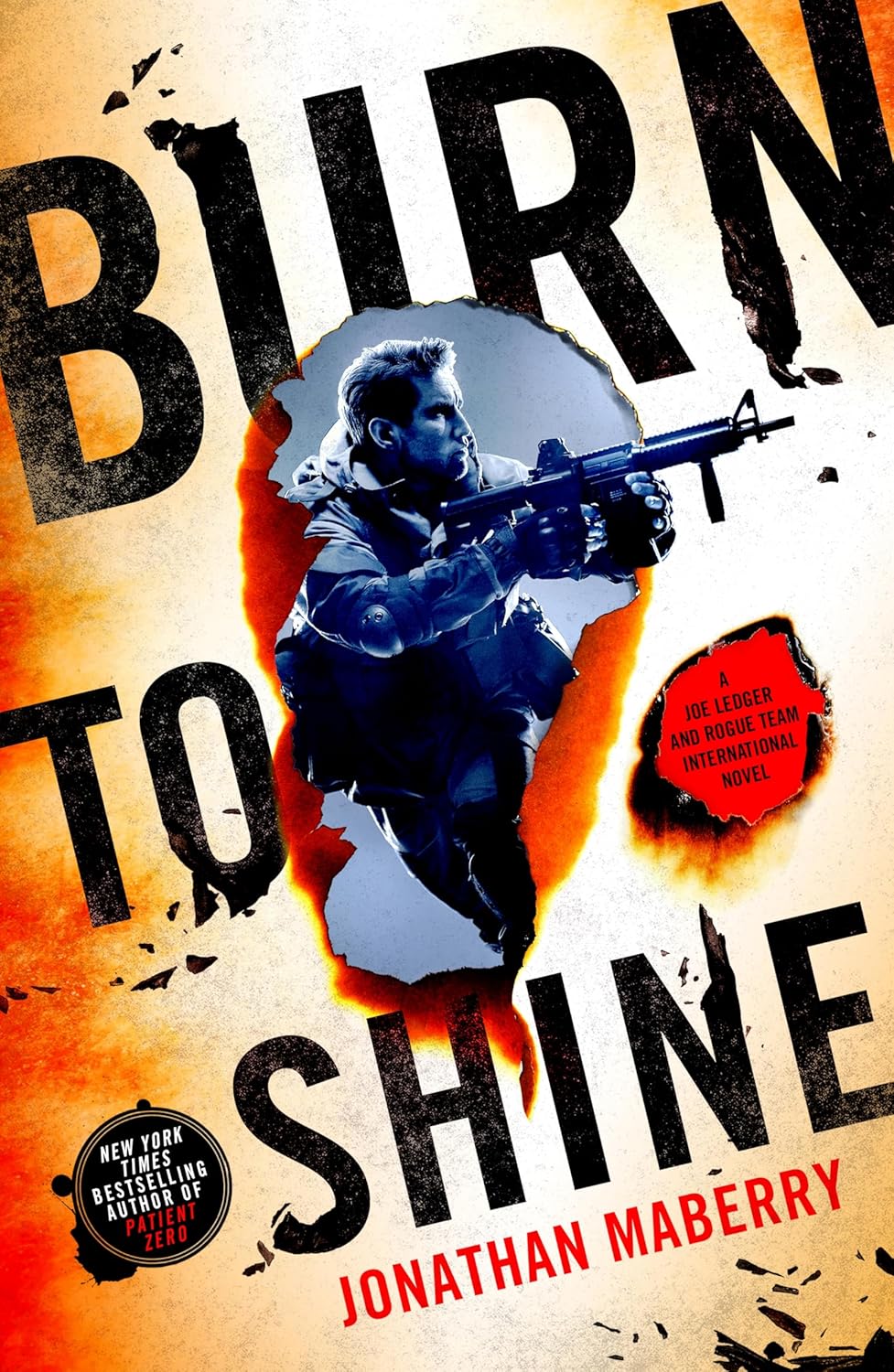
Burn to Shine by Jonathan Maberry

Publisher: Macmillan Audio (Audiobook – 4 March 2025)

Series: Rogue Team International – Book Four

Length: 19 hours and 9 minutes

My Rating: 4.75 out of 5 stars

Amazon

Bring on the chaos, carnage and craziness with the new epic Rogue Team International from Jonathan Maberry, Burn to Shine, which takes the reader on another dark and over-the-top ride in a deeply addictive thriller.

Readers of this blog will know that I am a massive Jonathan Maberry fan, having had the great pleasure getting to know and power through some of his biggest series.  Thanks to his intense writing, ability to pull together amazing characters and great attention for action and combat, all Maberry’s books really resonate with me, and pretty much all the Maberry books I have read have been 5-star novels in my mind.  Highlights include the dark 2024 science fiction novel, NecroTek, the creepy horror novel, Ink (one of my favourite books and audiobooks of 2020), as well as the brilliant Kagen the Damned dark fantasy trilogy, made up of Kagen the Damned (one of my favourite books and audiobooks of 2022), Son of the Poison Rose (one of my favourite books and audiobooks of 2023), and The Dragon in Winter (one of my favourite books and audiobooks of 2024).

While the above series and books are all outstanding, my favourite Maberry novels are the iconic and long-running Joe Ledger series.  Following the titular troubled protagonist as he works as a part of an elite government special forces team detailed to stopping terrorist attacks or criminal organisations using advanced and unusual technology, the Joe Ledger novels were impressive and complex thrillers with over-the-top dark elements, that often featured some outstanding science fiction and compelling horror elements.  The original series, which ran for 10 books, features some amazing novels, including Patient Zero, The Dragon Factory, Assassin’s Code, Predator One and Deep Silence just to name a few.  Each of these novels were amazing reads on their own, although I also got really drawn into the ongoing storylines and recurring villains.

Following the end of the original Joe Ledger books, Maberry continued many of his storylines in the sequel Rogue Team International series, bringing back the major characters and setting them up as independent intelligence operatives working for themselves.  This series was also extremely exciting, and I have appreciated the way in which the author has continued some of the complex story arcs and villainous narratives from the first series.  The Rogue Team International books have so far featured Rage (one of my favourite books and audiobooks of 2019), Relentless (one of my favourite books and audiobooks of 2021), and Cave 13 (one of my favourite books and audiobooks of 2023), each of which have been pretty damn amazing and filled with some dark and captivating narratives.

Naturally, I was very excited when I saw that there was a fourth Rogue Team International book coming out in 2025 with Burn to Shine.  The fourth book in the Rogue Team International series and the 14th overall Joe Ledger novel, Burn to Shine brings back the protagonist and his team in a big way, as they go toe-to-toe with some of the most dangerous recurring villains.  One of my most anticipated books of 2025, Burn to Shine had so much potential, and I read it the very first chance I got.

After suffering through another set of harrowing losses and intense damage to their already shredded psyche, the members of Rogue Team International are back in the fray.  Led by troubled veteran Joe Ledger and the enigmatic Mr Church, Rogue Team International continue to fight against elaborate high-tech threats and other strange occurrences across the world.  However, they are unprepared for their next dangerous threat, one that has emerged from the organisation’s combined dark past.

A powerful group of military contractors are expanding their influence across the United States, seeking to cause fear, division and political uncertainty.  At the same time, a series of planned attacks have breached and destroyed many of the world’s most secure bio-weapons research facilities, with the stolen diseases and technology being utilised to create chaos and fear through infected humans turned into living disease bombs.

As Ledger and his team try and counter these attacks, their path leads them to the mysterious town of Pine Deep, Pennsylvania, where a multitude of dark secrets are hidden.  Teaming up with old allies, new friends, and some of the more dangerous denizens of Pine Deep, Ledger and his team attempt to strike back against their enemies before a catastrophe is unleashed across the country.  But can even this deadly and unlikely group of heroes stand up to some of the team’s most dangerous enemies, including a ghost from their past who plans to burn the world to ground? 

Jonathan Maberry once again presents a gripping and deeply exciting tale with Burn to Shine.  A compelling continuation of his long-running Joe Ledger/Rogue Team International books, Burn to Shine had another great story that continued the author’s ongoing storylines by heavily diving back into the series’ past.  An excellent addition to the series that is guaranteed to keep you entertained all the way to the end.

Burn to Shine had an awesome narrative that presents its own unique tale, while also reviving multiple elements from the Maberry’s previous works, to create a novel very much designed for established fans of the author.  Starting off strong with an intense action sequence around the protagonists, Maberry also takes the time to establish multiple parallel storylines and plot threads, some of which are set well before the main narrative and showcase the emergence of the book’s antagonist and the formation of their new plan.  This allows for a very rich and intricate first half of the book, as you are given glimpses of the evil facing Joe Ledger and his team, while also watching the protagonists initially start to move to understand the new threat facing them.  This first half ends with an extended sequence inside a secret vault built to contain some of the worst bio-weapons the protagonists have encountered throughout the series.  Following a harrowing and tense descent into the vault while events get even more hectic outside, the protagonists eventually discover hints at the true mastermind of the new plot, as well as the insidious zombie-making weapon from their past that they seek to unleash.

The second half of Burn to Shine goes in some very interesting directions, as all the major characters start to converge around the town of Pine Deep, the centre of all things weird in Maberry’s shared literary universe.  Teaming up with some figures familiar to Maberry fans, the protagonists engage in a series of raids against the various bases of their opponents in some high-octane and particularly brutal sequences.  Due to the various over-the-top technologies and Maberry’s ability to imagine extremely bloody fights, these are some intense scenes, and the author really amps up the risk factor of the fights for his various recurring characters, with some very dark moments.

All this leads up to the big showdown between Ledger and the antagonists of the book, as he comes face to face with them in a very interesting location.  This showdown was very awesome, especially sandwiched amongst the other various conflict-laden storylines, and the author kept you on the edge of your seat as Ledger comes face-to-face with familiar opponents from the past.  While I love all the action and the way Maberry brought back a lot of previous story arcs, I did think that this ending was a tad rushed, and it relied way too much on having knowledge of Maberry’s first trilogy.  I also wished Maberry had taken some parts of this story a little further, perhaps with some greater tragedy, as it was a little frustrating that he didn’t follow through with the telegraphed death of a major character.  Still, this proved to be an excellent and exciting read, and there is also a very interesting final scene that provides some early, long-sought answers about one of the protagonists.

I have a great deal of love for how Maberry sets out his awesome stories, and his distinctive style always results in an impressive and layered novel, especially when it comes to his over-the-top thrillers.  Featuring a lot of dark, over-the-top elements and an at times near horror vibe, Burn to Shine was another classic Joe Ledger novel, which showcases his damaged protagonists facing off against complicated evil antagonists.  Thanks to the author’s utilisation of multiple character perspectives and scenes set in the past, this proves to be a very detailed book, and I loved the varied storylines that emerged and worked side by side with each other.  This includes a vibrant look at the antagonist’s plans from start to finish, which also involves the re-introduction of previously featured villains.  While not every detail of the antagonist’s sinister and over-the-top plans are revealed to the reader from the start, you get enough to really amp up the stakes of the plot, and it is compelling to see the protagonists act on the limited information they have.  The villainous scheme for Burn to Shine was a tad similar to some schemes from previous Maberry books, but it still produces some particularly captivating moments, especially towards the end.  I also quite enjoyed how Maberry tied the plot into a lot of modern issues, including disinformation, the use of fear in politics, fake news and AI-generated imagery, while giving it its usual excess and ultra-dark flair.  Throw in the author’s impressive action sequences, which are particularly epic, as well as the overly exaggerated villains, and this proved to be a powerful and layered novel that has all of Maberry’s typical charm and intensity.

While I had a ton of fun with Burn to Shine, this was very much a novel for the author’s established readers, although even some of them might get lost at times.  As I have hinted, the main villains of Burn to Shine are figures previously featured in prior Joe Ledger novels, including the series’ big bad, and one antagonist long believed dead.  While Maberry loads up Burn to Shine with a lot of internal recap moments in the protagonist’s head that gives the reader all the context they need to follow the plot, the true threat or emotional impact of these villains is going to be best appreciated by those who have read the previous books, especially Code Zero.  Maberry also takes the story further into his extended universe, as the plot becomes heavily enmeshed with his classic Pine Deep novels and brings in various characters from the original trilogy.  I must admit, as someone who hasn’t had the chance to read Maberry’s Pine Deep novels, I would have been a tad lost here unless I had previously read Ink, which featured several of these characters, and new readers may not quite understand their significance.  Even those who have read all the previous Joe Ledger novels might be a little confused with their inclusion, especially as these Pine Deep characters have never appeared in a Joe Ledger novel before, besides a couple of short stories.  As such, having such a big focus on them is a little surprising, and I felt that it mucked around with the flow of Burn to Shine.  Still, considering how good Maberry is at recapping or reintroducing key characters and storylines, most established Joe Ledger fans should be able to follow along fine, just keep in mind that the author is doing some deep cuts back to his previous novels.

As with all Maberry’s novels, the real heart of Burn to Shine lies in its complex characters, whose powerful stories and dark pasts allow for some deep emotional heft to the plot.  This is especially true for main protagonist, Joe Ledger, whose cracked psyche is always a key part of his appearances.  A very damaged figure, Ledger is a powerful part of Burn to Shine’s narrative and serves as the only first-person perspective character, influencing a lot of the novel as a result.  While on the surface he is a humorous, wise-cracking cowboy, determined to save the day no matter what, deep down he is haunted by all his past experiences, including the deaths of so many loved ones and the trauma of various missions.  Maberry has long perfected balancing the character’s various emotional states in his novels, and while Ledger provides a lot of the book’s humour, his darker side is a constant presence, threating to bubble out.  The author adds in some interesting additional emotional elements for Ledger to deal with this novel, including the return of an antagonist who previously caused him a lot of pain, as well as the protagonist’s battle with the knowledge that he may finally have the names of the people responsible for his earliest trauma.  The later of these is likely to be a big part of the characters’ battle with his vengeful emotional going forward, and it will be interesting to see how Maberry works them in.

Aside from Ledger, Burn to Shine is loaded with a ton of interesting supporting characters and protagonists whose various experiences help to shape the entire awesome story.  This cast includes a huge array of figures from previous Maberry books, and it was fun to see them continue to grow.  The most prominent of these characters include the mysterious Mr Church, whose secretive past has been one of the more intriguing ongoing storylines of the series.  Shown to be almost human in Burn to Shine thanks to the trauma obtained during the previous novel, Cave 13, Church has some excellent appearances in Burn to Shine, especially when it comes to facing down the antagonists.  I loved how well Maberry balanced this more fragile version of Mr Church with his mysterious persona, and the final scene where you get some interesting answers about who, or what, Church is, is very impressive.

The various other members of Rogue Team International are also great parts of the book, including the member of Ledger’s fire team, each of whom have their own distinct personality and complexity in this book.  Maberry provides some great moments for all these characters to shine, and I felt that an interesting early part of the novel where the organisation’s resident psychiatrist, Dr Rudy Sanchez, dives into the trauma all the supporting characters are feeling after Cave 13, added some excellent emotional depth to the plot.  Throw in the fascinating Pine Deep characters I mentioned above, as well as two of Maberry’s more complex and memorable antagonists, who return in a big way here, and the cast of Burn to Shine is very impressive, and you really get drawn into this dark struggles and battles.

Anyone who has read my previous Maberry reviews will know that I had no choice but to enjoy Burn to Shine on audiobook, as it is honestly the only way to enjoy one of the author’s novels.  This is primarily because of the author’s long association with legendary actor and audiobook narrator, Ray Porter, who has lent his epic voice to most of Maberry’s exciting novels, and the result is always something very special.  Porter is the perfect narrator for Maberry’s amazing and intense novels, bringing all the necessary energy, excitement and darkness you need to convey the author’s complex and twisted plots, and he is one of my favourite audiobook narrators.  Porter effortlessly brought Burn to Shine to life from the very first word, and you swiftly get drawn into the story as a result.  Everything from the dark content, the complex story elements, and the extensive action is extremely well conveyed and flows so quickly.  I particularly enjoyed how Porter once again perfectly inhabited all the characters featured in Burn to Shine, with impressive takes on all the unique figures.  Special mention must be given to Porter’s personification of the main protagonist, Joe Ledger, as the narrator has long mastered capturing all of Ledger’s pain, internal conflict and fantastic humour and presenting it to the listener in an outstanding way.  The rest of the characters are also showcased in a really awesome way, and I still love the ultra-calm and controlled voice used for Mr Church, as well as the more sinister and often unnatural voices for the crazy antagonists of the book. I honestly loved every second I spent listening to this audiobook, and it was another outstanding performance from Ray Porter and one of the best audiobooks I enjoyed in the first half of 2025.

Once again bringing all the carnage, complex characters and dark storylines you have come to expect from a Joe Ledger novel, Burn to Shine was another amazing read from Jonathan Maberry, and one I deeply enjoyed getting through.  A very interesting entry in Maberry’s long-running, combined series, Burn to Shine was an ultra-exciting and chilling Rogue Team International novel that proves very easy to power through.  I look forward to reading more of Maberry’s novels in the next few months, and I currently have the tough decision of if I want to read the advanced copy I have of his upcoming release, Cold War, or wait to listen to it on audiobook.

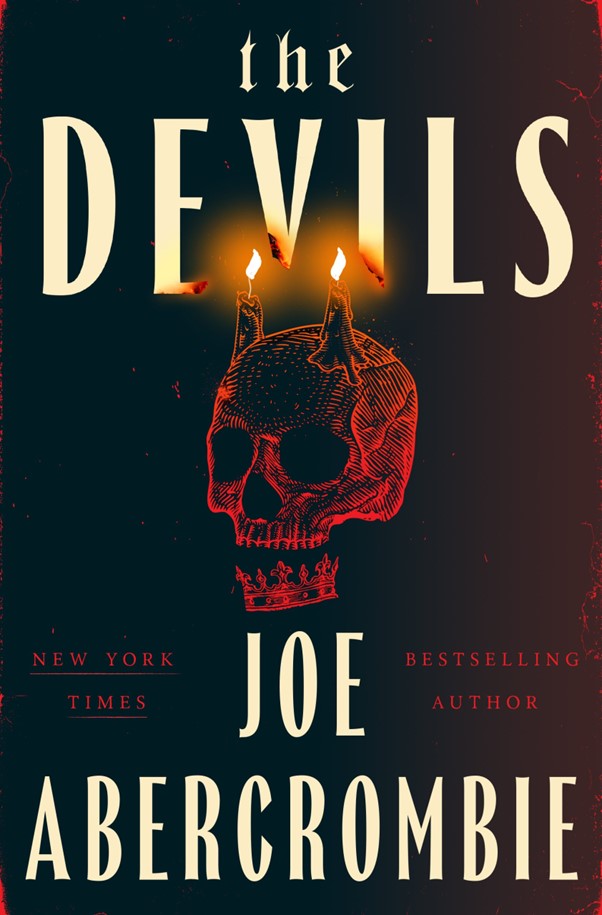
Amazon

The Devils by Joe Abercrombie

Publisher: Gollancz/Macmillan Audio (Audiobook – 13 May  2025)

Series: The Devils – Book One

Length: 25 hours and 7 minutes

My Rating: 5 out of 5 stars

Amazon

The master of grimdark fantasy fiction presents a bold and over-the-top new story with The Devils, an outstanding, addictive and highly entertaining read that you will not be able to turn away from.

Joe Abercrombie is an impressive and compelling author who has been wowing fantasy fiction authors with his complex reads for nearly 20 years.  While he has written some other cool books, like his Shattered Sea trilogy, Abercrombie is best known for his iconic First Law series of dark fantasy novels, that followed a group of highly damaged people as they tried to survive war, magic and politics in a messed-up fantasy world.  I really enjoyed the original First Law trilogy, and Abercrombie has cleverly expanded it out over the years, including with three standalone novels and his sequel Age of Madness trilogy.  The Age of Madness novels were ones that I particularly enjoyed reading, and A Little Hatred (one of my favourite books of 2019), The Trouble With Peace (one of my favourite books and audiobooks of 2020) and The Wisdom of Crowds (one of my favourite books and audiobooks of 2021), were very highly rated by me, and I could not get enough of this series.

Needless to say, I am a pretty big fan of Abercrombie’s novels, and I have been eagerly awaiting a new book from him since I finished The Wisdom of Crowds.  While I had hoped that we would be getting a new First Law novel, Abercrombie instead decided to present readers with something a little different with his new The Devils series.  Starting off with The Devils, this series is another clever dark fantasy series, set in an alternative, magic filled version of medieval Europe.  One of my most anticipated books of 2025, The Devils sounded so damn good, especially with its crazy plot and intriguing new setting.

The lands of Europe are in dire peril.  Between the constant wars, dangerous monsters, ruinous famines and deadly plagues, the various kingdoms of Europe are in poor condition, barely held together by the fractured church.  However, the real danger lies outside its borders, as the mysterious elves gather their power in the Holy Lands, preparing for another invasion of Europe that will surely lead to the destruction of all humanity.

In response to the growing threat of the elves, the church and its juvenile pope determine that a new ruler needs to be placed upon the Serpent Throne of Troy after its evil sorcerous empress dies.  With all four of the empress’s duplicitous and power-hungry sons unfit for the crown, the church surprisingly finds that their ideal candidate is a lowly street thief from the Holy City called Alex.  A ferrety sneak with no noble bearing or confidence, Alex is shocked to discover that she is really the long-lost Princess Alexia Pyrogennetos of Troy, destined to reunite the churches of Europe by claiming the throne.

Turning the reluctant and terrified Alex into a potential princess is one thing, but getting her to Troy is a far more difficult prospect, especially as her rival contenders to the throne are stalking Europe with their deadly, magically enhanced followers, determined to claim Troy for themselves.  To succeed in marching Alex through the European hellscape and placing her on the Serpent Throne, the church will need far more than prayers and the blessing of saints; they are going to need devils.  Luckily, such devils are close at hand. 

Deep within the Holy City lies the Chapel of Holy Expediency, which binds dangerous heretics and monsters and forces them to seek redemption through holy missions for the pope.  Led by the hapless Brother Diaz, the congregation of the Chapel of Holy Expediency is charged with getting Alex to Troy and placing her on the throne.  But can a terrified monk, an immortal knight, an arrogant necromancer, an invisible elf, a sarcastic vampire, an uncontrollable Viking werewolf and the most experienced woman in Europe succeed in making a street-rat an empress, or will their new mission only bring even more death and destruction to the continent? 

Joe Abercrombie once again shows why he is one of the very best authors of dark fantasy fiction with his captivating and deeply impressive new novel.  The Devils was an ultra-entertaining read that perfectly introduced the author’s intriguing setting and populated it with highly amusing characters and dark deeds.  Exciting, clever and loaded with over-the-top humour, The Devils was an absolute joy to listen to, and I loved every second I spent with it.  One of the most addictive novels of 2025 so far, The Devils gets a very-well deserved five-star rating from me, and readers are guaranteed an extra fun time with this crazy novel.

I absolutely loved the cool and highly entertaining story that Abercrombie came up with for The Devils, which was essentially a fun dark fantasy iteration of The Dirty Dozen/Suicide Squad narrative with some amazing monsters.  Providing a quick introduction to the key characters, the reader soon becomes highly invested in the narrative, as the memorable and very amusing protagonists begin their trek to Troy.  What follows is a classic travelling adventure story with some dark and comedic twists, as the protagonists encounter all manner of foes on the way to their destination, which they are forced to dispatch with ruthless efficiency.  While parts of this story start to become a tad formulaic, especially as the protagonists are intercepted multiple times by one of Princess Alexia’s cousins, with each encounter resulting in a deadly battle for survival against different occult forces, you are generally so entertained by the compelling characters, interesting interactions, and over-the-top action sequences, you don’t even really mind.  Abercrombie works to break up these encounters with some fun side quests, as well as altering the circumstances by having the characters occasionally split up into unlikely pairings, exploring the fun alternate medieval Europe that works as such an effective setting for this book.  This allows for some interesting changes of pace in the main quest narrative, while also allowing for some outrageous character moments as the reader gets to know the protagonists a little better.

Everything nicely leads up to the last third of The Devil, which sees the protagonists arrive at their destination against the odds.  Without going into much detail, things naturally go to hell, and everybody is forced to fight for their lives.  This chaotic series of events isn’t unexpected, as the reader is waiting for the other shoe to drop the entire book, but the who and the how of it makes for great reading.  Some excellent twists come to life here, often revealed in a fun meta way, and, while you see a couple of them coming, the entire ball of surprises and reveals make for quite an exciting end sequence.  These twists are well backed up by some of the grittiest action sequences in the entire book, and you are constantly on your feet waiting to see what happens next.  The entire novel ends on a tragic, if thoughtful note, especially when you’re left to consider who the true monsters of the story are.  An overall impressive narrative, that blends alternate history and classic adventure narrative threads with Abercrombie’s wild imagination to create something exceedingly entertaining and addictive.

The Devils was a very fun and well-written story as Abercrombie provides a very intense and hard-hitting tale, bound together by dark humour, over-the-top sequences, and complex characters.  Abercrombie once again showcases his skill at balancing multiple distinctive perspectives to tell an integrated and ongoing narrative, with the story cleverly bouncing between the viewpoint of several impressive protagonists.  The continued switches between the characters allows for a very elaborate narrative, and the reader is drawn into both the overarching plot and the more personal battles of the protagonists.  I liked how Abercrombie was able to tailor the descriptive narration of each of the perspective chapters to suit the character it was following, and each chapter has a slightly different tone as a result.  However, this is a very dark overall story, as the characters encounter outrageous scenarios of death and destruction, and the resulting carnage allows for some intense moments.  I will say that The Devils did feel a little sillier than some of Abercrombie’s previous novels, although the author uses this extra layer of ridiculous energy to full effect to tell an extremely addictive story.

As you would expect from Abercrombie, the intense action sequences are a highlight of The Devils, with the many brutal sequences coming to life thanks to the author’s great descriptive style.  There was a certain casualness to some of the fights, especially those featuring the plot’s more dangerous killers, and which was enhanced by the clever overall narration of the writing.  I loved how Abercrombie set out all his scenes, with a lot of subtle humour revolving around cynical description of events, especially as the author provides some ironic results and meta commentary.  This more subtle writing of events is counterbalanced by the over-the-top humour of the dialogue, especially when it comes to certain characters.  A lot of the dialogue gets downright filthy at times, with some very adult discussions coming out in outrageous fashion.  While this excessive crass language had the potential to distract from the story, I think that Abercrombie got the right balance, with the ridiculously rude dialogue fitting in well amongst the crazy events of the plot.  While the combination of ugly events, adult humour and cooky carnage isn’t going to be everyone, I think most fantasy fans are going to have a ton of fun with it, especially as it plays into Abercrombie’s grimdark style.  Throw in a clever alternative medieval Europe as the elaborate setting which will delight history buffs with the intricate differences, and The Devils was a very impressive read that perfectly plays the author’s strengths and talent for entertaining and dark fantasy fiction.

Fans of Abercrombie will know that the author specialises at making damaged and captivating characters to set his narratives around, and The Devils is no exception to this.  The author introduces an amazing cast of complex and memorable characters in The Devils, and I love the very impressive storylines that emerge around them.  This includes six separate perspective protagonists, two major supporting characters, and an array of interesting figures throughout Europe who play various roles in the outcome of the plot.  Abercrombie does an excellent job of introducing and utilising this complex cast, with all the major characters getting their chance to shine in some impressive ways.  While some of the characters in The Devils didn’t quite have the complexity of the protagonists from the First Law books, Abercrombie instead amps up the entertainment aspect of these figures, introducing several particularly hilarious, ridiculous and highly relatable monsters, each of whom added a great deal to the overall reading experience.

The first two characters I want to talk about are major perspective protagonists, Brother Diaz and the newly discovered princess, Alex.  Despite neither being members of the titular devils, both have major roles in this book and are shaped by their experiences with the monstrous pawns of the church.  Brother Diaz, a simple monk who is brought in to guide the devils, is initially shown to be a hapless and terrified figure, clearly out of his depth when it comes to the dangerous mission he has been entrusted with.  Abercrombie has a lot of fun showcasing him as a useless social climber at the start of the novel, and he initially has more of a comedic role in the plot.  However, as the story progresses, Diaz starts to gain a little confidence as he continues to survive, and you soon see flashes of the man he could be.  Despite falling to temptation (repeatedly), Diaz ends up being quite a stalwart figure in the book, and I loved some of the scenes where he got to show off his intelligence (including one particularly entertaining legal battle).  The way in which Abercrombie subtly added more and more depth to Diaz’s personality as the story continued was very impressive, and his growth as a character was a highlight of the book.  The author also ensured that Diaz was one of the more relatable characters in The Devils, especially as he continuously makes mistakes, finds himself shaken by his fears and failings, yet continues to try to do the right thing.

Much like Diaz, the other non-devil perspective protagonist, Alex, is also shown to be an imperfect figure who finds themselves thrust into events outside of their control.  Initially shown as a simple thief, Alex, or Princess Alexia Pyrogennetos, is ill prepared for the events before her, and is forced to rise to the occasion when she is declared long-lost royalty.  Mostly shown as the book’s damsel in distress, Alex is generally scared and lacking confidence, especially as she knows she is not the princess everyone wants her to be.  Like Diaz, Abercrombie writes Alex slowly rising to the occasion throughout course of The Devils’ plot, as she learns to fight back and become a leader.  I really liked following Alex’s journey in The Devils, and while the journey to the character finding her self-confidence is a long and bloody affair featuring some good twists, it ended up being a powerful part of the book’s overarching narrative.

Outside of Alex and Diaz, a lot of time is also spent following the other perspective members of The Devils, including Balthazar, Sunny and Vigga, who are a necromancer, an elf and a werewolf respectively.  These three characters are amazing, and I liked how well they played off each other and the rest of the cast with a great mixture of serious and more comedic elements.  For example, Balthazar (or to introduce him properly, Balthazar Sham Ivan Draxi), is a highly arrogant figure who chafes at being captured and controlled by the church.  Much of his story focuses on his many attempts to break the Papal binding compelling him to help Alex, while also dealing with the realisation that he is helpless against those he considers his lesser.  Much of the entertainment around Balthazar is his complete lack of self-awareness or humility, especially within his own mind, and while there are times when it appears that he is going to become a better person, he usually returns to his old personality when he hits a wall.  Sunny the elf, on the other hand, is a far more sensible character, who serves as the team’s shadow thanks to her ability to become invisible.  Despite her nice and helpful personality, Sunny is shown as an alien creature, incapable of understanding the humans who generally hate and fear her.  Imbued with a more subtle humour than her fellow devils, Sunny proves to be quite an interesting figure, especially when you examine her past and her dark experiences with humans.  Probably one of the more likeable and selfless figures in the book, Sunny’s arc adds a lot to the overall story, especially through her unlikely romance angle, and Abercrombie clearly had fun writing the various scenes where she traipses around invisible.

One of the more memorable cast members of The Devils is Vigga, a former Viking raider who was cursed as a werewolf and then captured by the church.  Crass, constantly controlled by her urges, incapable of self-restraint and particularly deadly, even when not a massive wolf, Vigga powers through the entirety of The Devils’ narrative, leaving a major impression whenever she appears.  Featuring some of the more visceral and entertaining perspectives of the book, which includes a combination of hungry sequences from her wolf mind and her more entertaining insights as a human with no impulse control and an inability to focus on anything, Vigga is responsible for a large part of The Devils’ chaotic and outrageous tone, and the book would not be anywhere near as fun without her.  However, as this is Abercrombie, there are quite a few darker moments in Vigga’s story, and you soon become absorbed with her attempts to pull together her fractured mind and control the monster within, especially when she gets close to her travelling companions.  The dark depression that occasionally befalls her because of her uncontrolled actions adds some major drama to certain tragic parts of The Devils’ plot, and Vigga comes away as one of the more sympathetic, if scary, characters in the book.

While the above perspective characters are all particularly impressive, my favourite was the team’s resident knight, Jakob of Thorn.  An old soldier cursed with immortality who has been fighting battles on behalf of the church and God for hundreds of years, Jakob is a tired and haggard figure bound by his many vows.  Suffering from the degradation of his body due to age and the many injuries inflicted on him, Jakob is weariness personified as he attempts to deal with his pain, and the guilt from his long history of death and service to the church.  Readers familiar with the author will know that Abercrombie specialises at writing tired old warriors who are sick of the death and destruction they cause, and Jakob of Thorn is one of his better ones (which is saying a lot).  I loved all of Jakob’s scenes, especially as he doggedly continues to fight despite his pain, often providing some of the book’s best quotes and insights.  Unsurprisingly, Abercrombie makes Jakob suffer a lot in this novel (what else would this sadistic author do with an immortal character?), and you learn a lot about his resolve and psyche as a result, especially as he knows he is the biggest monster of them all.  I really think that Jakob’s grittier and more self-aware perspective chapters helped to balance out the more outrageous character arcs in The Devils, and he was a perfect addition to this outstanding narrative.

The final two major characters I want to highlight are Baron Rikard, an ancient vampire, and Baptiste, a rogue hired to keep the devils in check, who seems to have experience with every profession possible in Europe.  Both these characters are excellent additions to the plot and manage to shine through, despite not being perspective characters.  Indeed, I felt that their role in the book was enhanced by the readers not having direct insights about their motivations or actions, and instead you get to enjoy the mystery surrounding them as you see them through the eyes of the other characters.  Baron Rikard, who serves as a fun, sarcastic figure who only helps when it suits him, proves to be a great inclusion in the plot, especially as his gentlemanly manners and demeaner makes him stand out amongst the other characters.  While a ridiculously charming figure (especially when he starts talking about dumplings), you are initially given the impression that Rikard is another trapped monster keen to escape his binding.  However, Abercrombie nicely turns this assumption on its head as the story continues, and I really enjoyed the character’s revealed motivation, especially as it shades all the character’s actions in a new light.

Baptiste, on the other hand, is a suave and entertaining figure whose impact on the book would be diminished if you got a deeper look at her thoughts, motivations or true history.  I particularly enjoyed how well Baptiste served as a foil to Balthazar, and they had a great back and forth that helped to define them both.  Throw in a range of other impressive supporting characters, including a barrage of outrageous or diabolical antagonists, and the cast of The Devils was something very special.  I cannot emphasise enough just how much fun all these characters were, and their moving and complex arcs and interactions really helped to give some powerful meat to The Devils’ entertaining narrative.  You really come away with some conflicted feelings for many of the protagonists, especially as none of your favourites have a truly happy ending, and it will be interesting to see what happens to the survivors in the future entries of the series.  A special shoutout as well to the fun artwork depicting several of these characters in The Devils paperback, especially as the artist really captures how the author wrote these colourful protagonists.

While I did receive a physical copy of The Devils, I ended up listening to this novel on audiobook, which was a fantastic choice.  Not only did the audiobook version allow for a fuller immersion in Abercrombie’s new fantasy universe and his crazy action sequences, but it also featured the superb voice of actor Steven Pacey.  Pacey, who is one of my favourite audiobook narrators, previously lent his voice to the audiobook versions of Abercrombie First Law novels, and he frankly does a perfect job of capturing the author’s unique tone and style.  Abercrombie’s complex writing, witty dialogue and excessive humour really come to the fore when read out by Pacey, and the narrator’s tone and cadence in The Devils always perfectly matched the intended mood of the scenes, no matter how dark or over-the-top they became.  Pacey also does some very entertaining and highly fitting voices for the key characters of The Devils, and it is amazing how well he captures all these outrageous figures.  All the defining character details, including the timid nature of Brother Diaz, the arrogance of Balthazar, the pain and weariness of Jakob, the wry amusement of Baron Rikard, the unearthly nature of Sunny and the sheer wildness of Vigga are all amazingly highlighted by Pacey’s various voices, and really come to love the characters the way that Pacey reads them out.  Thanks to Pacey’s brilliant acting and evident love for the content, this was an incredible listen, and I really cannot emphasise enough just how effectively he narrated this crazy story.  I flew through the books lengthy, 25-hour runtime due to this brilliant narration and epic narrative, and I honestly don’t believe that anyone but Steven Pacey could make Abercrombie’s amazing novels come to life in the same way.  An exceptional audiobook and one of the best things I have so far listened to in 2025.

With his trademark blend of chaos, fantastic humour and complex characters, Joe Abercrombie presents one of the very best books and audiobooks of 2025 with The Devils.  A unique and very entertaining fantasy adventure novel, The Devils pushed everything to 11 and beyond, ensuring that you couldn’t turn away.  An exceptional read from start to finish, I had so much fun with The Devils and I cannot wait to see how Abercrombie will continue this series in the future.

Amazon

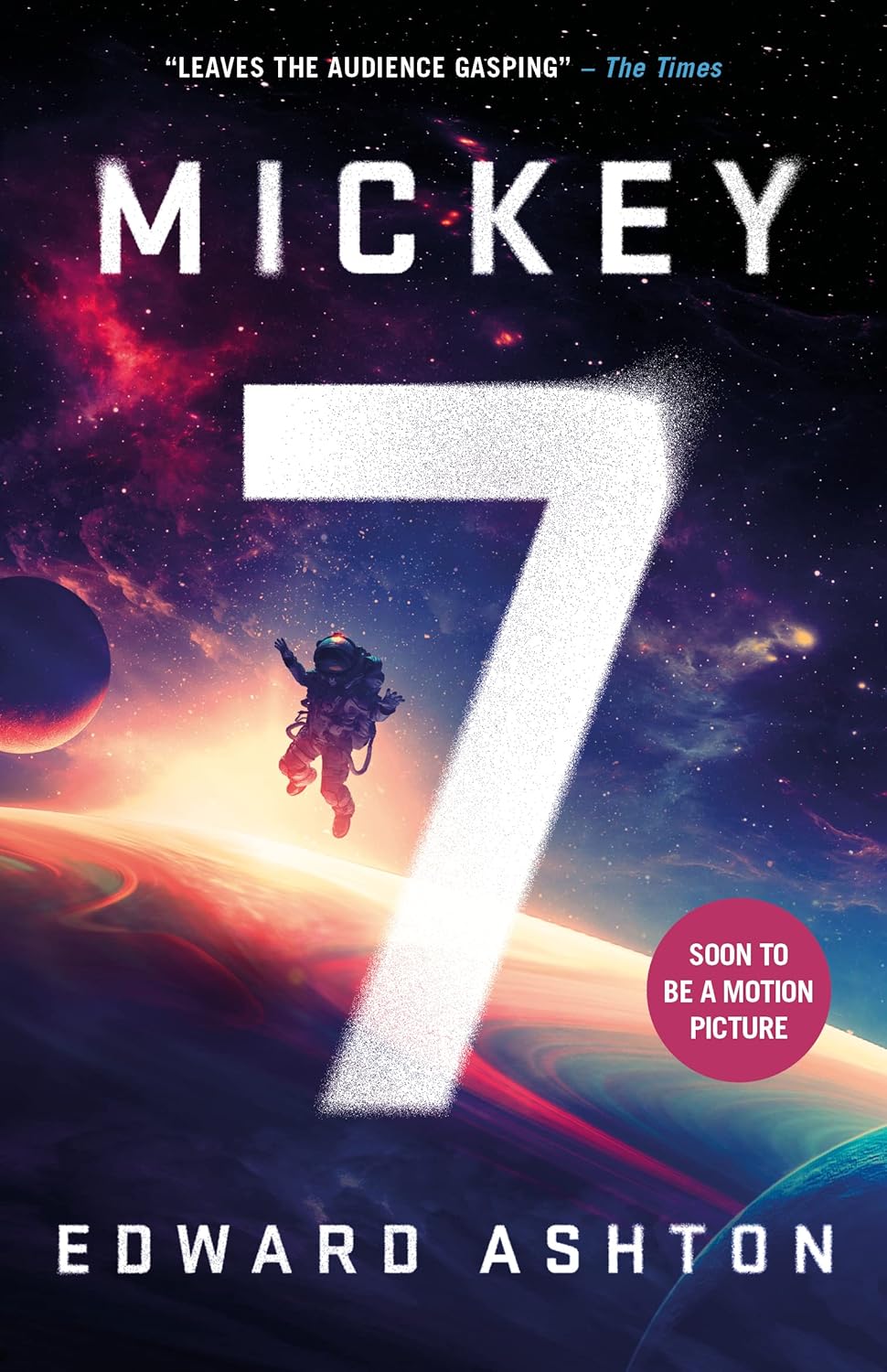
Mickey7 by Edward Ashton

Publisher: Macmillan Audio (Audiobook – 15 February 2022)

Series: Mickey7 – Book One

Length: nine hours and 15 minutes

My Rating: 5 out of 5 stars

Amazon

I finally got around to reading the awesome and darkly funny science fiction novel, Mickey7 by Edward Ashton, a very cool read that is set to have an intriguing film adaptation later this year.

Mickey7 is a book that has been on my radar for a while, as it was one of the top science fiction books of 2022.  I heard a lot of buzz about Mickey7 when it first came out, and I liked the sound of the entertaining plot that author Edward Ashton came up with.  Thanks to some excellent early praise I saw about this I really meant to read Mickey7 when it first came out but could never quite fit it into my reading schedule.  However, inspired by the upcoming film adaptation, I used a recent road trip to finally check out Mickey7 and I regret not reading it sooner.

Plot Synopsis:

Dying isn’t any fun…but at least it’s a living.

Mickey7 is an Expendable: a disposable employee on a human expedition sent to colonize the ice world Niflheim. Whenever there’s a mission that’s too dangerous—even suicidal—the crew turns to Mickey. After one iteration dies, a new body is regenerated with most of his memories intact. After six deaths, Mickey7 understands the terms of his deal…and why it was the only colonial position unfilled when he took it.

On a fairly routine scouting mission, Mickey7 goes missing and is presumed dead. By the time he returns to the colony base, surprisingly helped back by native life, Mickey7’s fate has been sealed. There’s a new clone, Mickey8, reporting for Expendable duties. The idea of duplicate Expendables is universally loathed, and if caught, they will likely be thrown into the recycler for protein.

Mickey7 must keep his double a secret from the rest of the colony. Meanwhile, life on Niflheim is getting worse. The atmosphere is unsuitable for humans, food is in short supply, and terraforming is going poorly. The native species are growing curious about their new neighbors, and that curiosity has Commander Marshall very afraid. Ultimately, the survival of both lifeforms will come down to Mickey7.

That is, if he can just keep from dying for good.


Mickey7
proved to be an outstanding and highly entertaining book that I had a wonderful time getting through in one extended listen.  Edward Ashton masterfully crafted together a memorable science fiction narrative that is clever, thought-provoking, and particularly hilarious.  As such, I felt that Mickey7 deserved a full five-star rating, and I am very much looking forward to the upcoming film adaption.

I deeply enjoyed the unique, fun and compelling narrative that Ashton pulled together for Mickey7, especially as the author blends interesting science fiction concepts with entertaining characters.  Starting off with the initial event that sees the titular seventh iteration of protagonist Mickey Barnes thrust into a situation that would lead to his death, only to survive and encounter the next iteration of himself in his bed, Mickey7 has an awesome start to it that Ashton expertly introduces and leans into.  What follows is a fantastic, character-driven tale, as Mickey7 attempts to work things out with his clone, Mickey8, while trying to hide the fact that there are duplicate versions of themselves from the rest of the colony.  Forced to also contend with other personal dramas, as well as the emergence of a dangerous alien threat, the protagonist has a lot of balls to juggle at this point, and it proves to be quite captivating to see all the chaos unfold.  There is some great drama as the story continues and the two duplicates are inevitably found out, especially as the reactions that the other characters are quite varied. 

At the same time as all the crazy events of the book are occurring, the protagonist also uses his narration to dive into his own past, including the reasons he became an expendable and all the dark deaths he has already experienced.  This character history proves to be very integral to the protagonist’s journey in the current adventure, and you grow to appreciate his motivations for surviving after learning about his previous deaths.  Mickey7 also uses his narration to examine some intriguing insights into the wider universe the book is set into.  These details of the wider universe are very cleverly worked into the plot of the story, and these expansions in the lore are not only fascinating but also provide some interesting context to the protagonist’s situation and the reasons behind the actions of himself of his fellow colonists.  This includes history of the wider universe, discussion about other colonies, as well as the reason why duplicates of expendables are so reviled.  While this examination of the human expansion and experience in the future does take up a fair bit of the book, I think that Ashton got the right balance between the focus on modern day events and these insights and commentary from the protagonist, and they come together to make quite an entertaining tale.

Everything leads up to the big conclusion of Mickey7, as the protagonists are forced to face off against the aliens with the threat of execution hanging over their heads.  Ashton does a good job of wrapping up some interesting character interactions and development towards the end of the book, especially as the protagonist grows, while also learning to deal some of the toxic personalities in his life.  The author also builds on some interesting foreshadowing that had been present since the start of the book to provide a solution to one of the main issues the protagonist is forced to deal with, and I think that Ashton used it well to help bring his entire plot together.  The final confrontation with one of the book’s main antagonists was very therapeutic for both the protagonist and the reader, and Ashton leaves the plot in a fun place that I felt wrapped up the narrative and the character growth extremely well.

This proved to be a very impressive novel, and the author ensured that Mickey7 had the right blend of character development, harsh science fiction adventure, and comedic charm to be especially captivating.  Ashton makes great use of the first-person perspective for Mickey7, as he presents a very entertaining and personal tale of survival, rebirth and finding oneself in a science fiction setting.  Simultaneously telling his own personal story while also exploring the universe that the book is set in, Mickey7 proves to be a very amusing narrator, and I really liked his take on the events and the history going on around him.  Even with the commentary on both the protagonist’s history and the wider universe, which I maintain is essential for the how great the book turned out to be, Mickey7 is still a sleek and fast-paced read that gets its messages of self-determination, human nature and the continued desire to survive out in an entertaining way.  I honestly was hooked on this book from the very beginning, and the way it was presented allowed the reader to quickly power through it, while also enjoy its message.

One of the main reasons that Mickey7 was so enjoyable was the well-written and complex characters featured within it.  This includes the main protagonist and point-of-view character, the seventh Mickey Barnes, who quickly steals your heart.  A kind but irresponsible figure, Mickey7 is the sum of his original experiences and the dark deaths he encountered as part of this expedition.  Ashton does an excellent job showcasing both his personality and his history, and I liked how well he worked them into the plot of the book.  Mickey’s many foibles and shortcomings are well expressed throughout the book, and at times the protagonist seems a little dumb, especially when you learn his history.  However, thanks to his insightful narration, you really grow to appreciate Mickey’s take on the world, and it proved quite fun to see him interact with the unique situations he encounters, especially his fraught relationship with his own clone, Mickey8.  Thanks to a few weeks’ difference in memories, Mickey8 is a surprisingly different personality to Mickey7, and I loved seeing the impact that experiences and revelations can have on a person.  I really enjoyed seeing Mickey7 come to terms with his own nature, as well as his desire to survive, and he proved a great central protagonist for this ambitious novel.

The rest of the key cast of Mickey7 proved to be intriguing in their own way.  Love interest Nasha proved to be a great companion for Mickey, and I liked the dive into their relationship, especially when it comes to how Mickey’s deaths affect her.  She also helps initiate one of the more memorable scenes in the book when she finds out there are two Mickeys running around, which is honestly very amusing (I know I sniggered a lot).  Mickey’s friend Berto is also a fantastic figure in the book, mainly because his one-sided relationship with Mickey proves to be quite detrimental to the protagonist.  The way that Ashton explores Berto’s personality and actions is quite clever and compelling, and I liked the full explanation for his actions when it comes to Mickey’s previous deaths.  I also really enjoyed the expedition’s commander, Hieronymous Marshall.  A strict, militaristic figure, Marshall serves an antagonistic role in the plot, especially when he lets his prejudice against expendables impact his decisions.  While at times Marshall is a bit of a cliche controlling boss figure, he proves to be a good foil for the rest of the characters, and I loved his outraged reactions when things don’t go his way.  These characters, and a couple more, serve as a great supporting cast to Mickey’s tale of life, and I really loved the compelling edge they gave to the plot.

As I mentioned above, I chose to check out Mickey7 on audiobook, primarily because it made for good road trip entertainment, but I ended up really enjoying this format of Mickey7, which really got the book’s unique tone and narrative across.  Coming in with a runtime just over 9 hours, this proved to be a very easy audiobook to power through quickly, and I really appreciate how much it made Ashton’s compelling and complex narrative easy to experience and enjoy.  This was primarily because of the audiobook’s main narrator, John Pirhalla, who really dove into the key characters for this book and moved the plot along at a quick and exciting pace.  Pirhalla brought some very fun voices to the Mickey7 audiobook, and I loved how effectively he captured the main character, Mickey, with his voicework.  You get the full emotional range with Pirhalla’s take on Mickey, although I loved the continued exasperated tone that seemed to capture a lot of Mickey’s personality, as the protagonist continues to encounter more over-the-top problems and experiences.  This more humorous vocal tone for the main narration certainly lightened the mood, even in some of the more tense scenes, and I personally felt it added a lot to the audiobook’s charm.  Pirhalla also provides some effective alternate voices to capture the rest of the supporting characters, including the female figures, and you really got a great sense of personality and mentality with these fitting voices.  My personal favourite would have to be the voice that Pirhalla gave to Commander Marshall, and the rough, irritated and commanding tones matched so many stereotypical older, military leaders from film and television, that you could easily picture the character every time he talked.  Throw in some effective audio effects to capture the times that the characters were communicating digitally (which also featured a second narrator, Katharine Chin, who voiced the digital communications from female characters), and this proved to be a well performed audiobook that effectively captured Mickey7’s unique plot and tone.  As such, this audiobook comes highly recommended, and I can personally guarantee that the Mickey7 audiobook is an excellent entertainment for a road trip of several hours.

Thanks to its addictive and humours narrative, cool characters and intriguing universe building, Mickey7 lived up to its hype in my estimation, and I am very glad I decided to check out this novel by Edward Ashton.  Clever and continually entertaining, Mickey7 was so much fun, and I am really glad I finally got the chance to check it out.  I am quite excited to see how the film adaptation, Mickey17 turns out, which has some real potential thanks to its top rate cast and director.  I am also planning to read the sequel to Mickey7, Antimatter Blues, very soon, and I cannot wait to see how Ashton continues the story from the first book.

Amazon

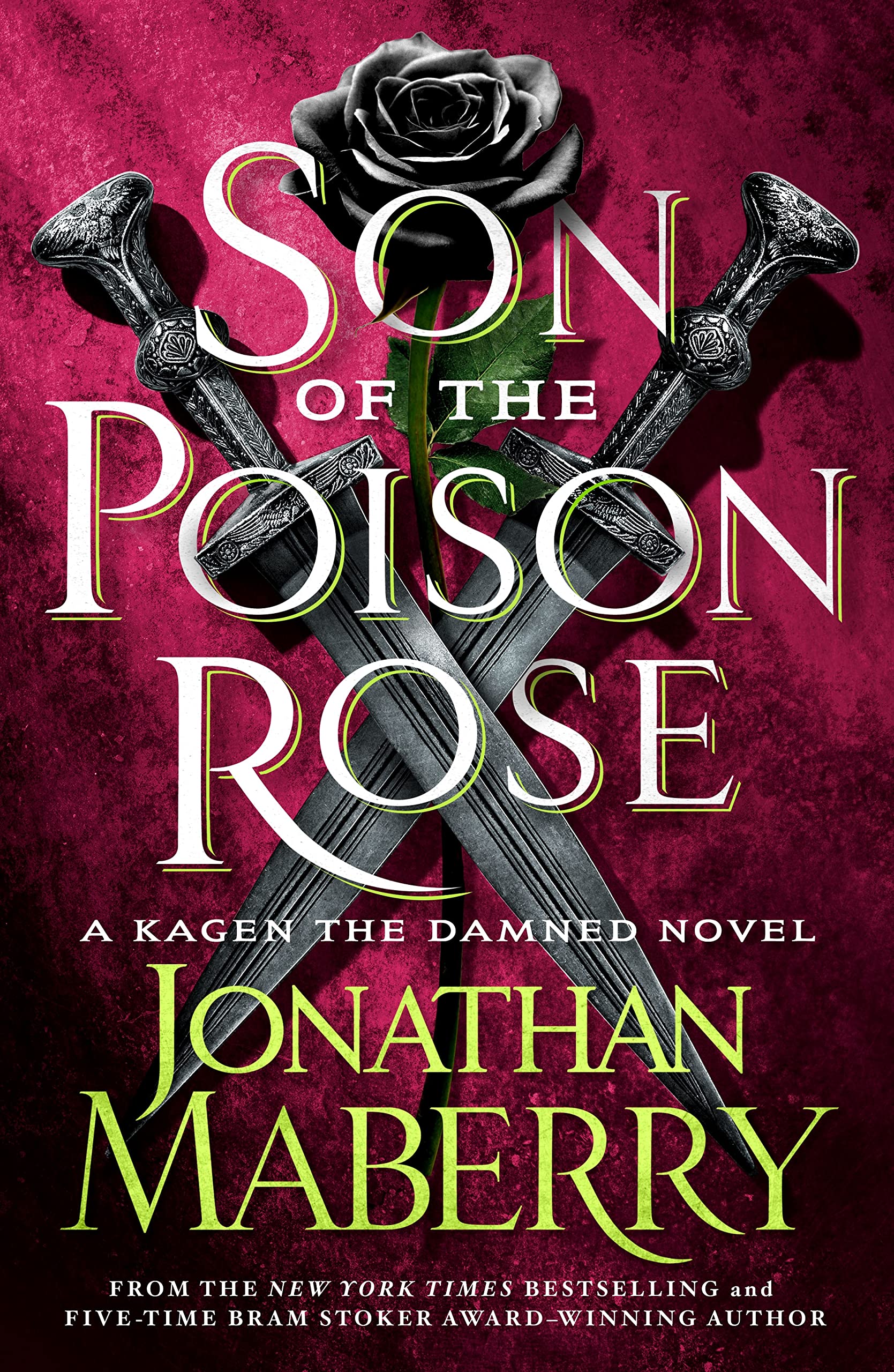
The Dragon in Winter by Jonathan Maberry

Publisher: Macmillan Audio (Audiobook – 20 August 2024)

Series: Kagen the Damned – Book Three

Length: 20 hours and 57 minutes

My Rating: 5 out of 5 stars

Amazon

The damned rush to their final battle in the epic dark fantasy novel, The Dragon in Winter, which brings an exceptional conclusion to author Jonathan Maberry’s Kagen the Damned series.

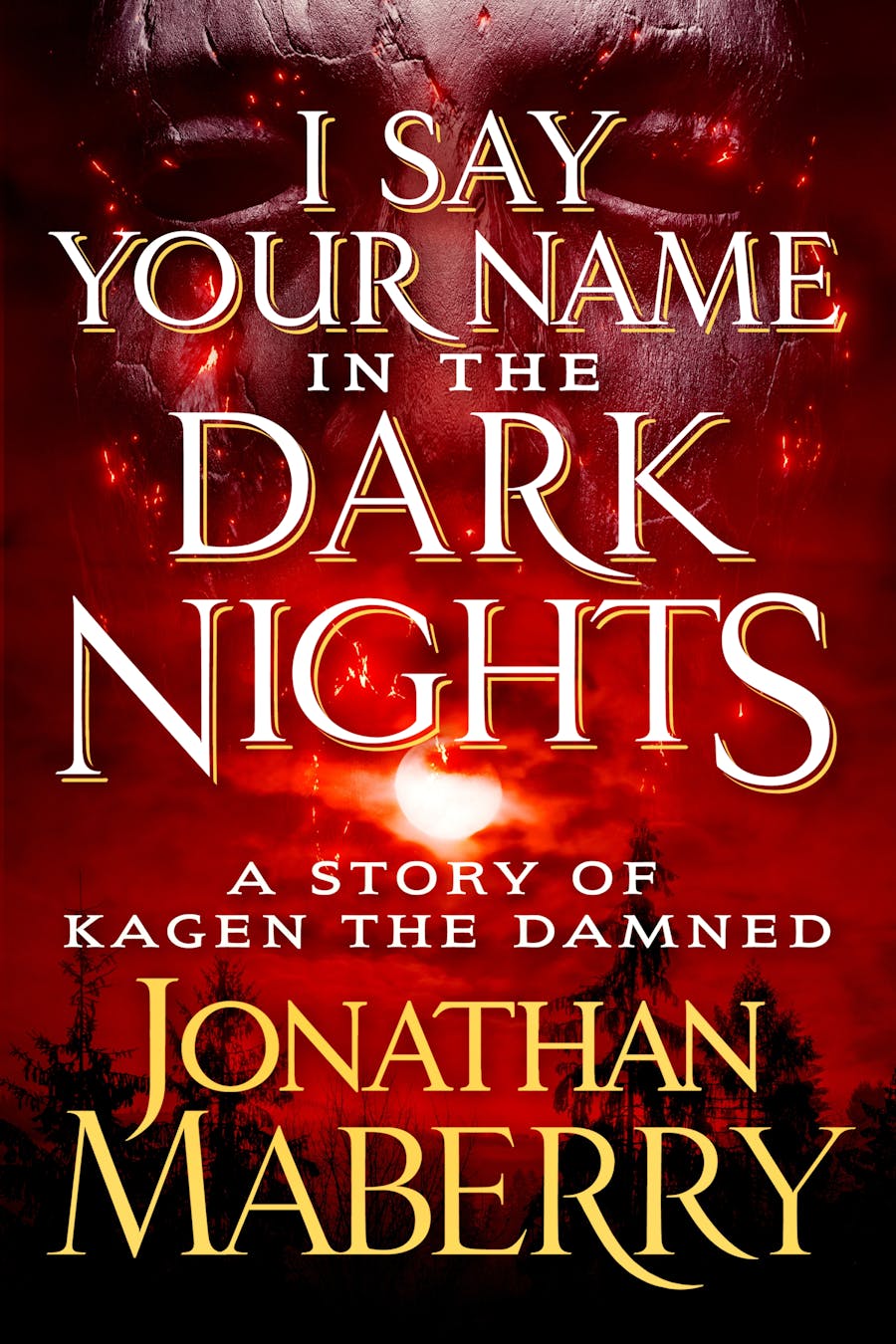
As I mentioned in my recent review for the author’s other 2024 release, NecroTek, I am a huge fan of Jonathan Maberry, having really gotten into his elaborate and deliciously gritty thrillers and other pieces of fiction since I started this blog.  While I am most familiar with the author’s long-running Joe Ledger series, one of his more intriguing recent bodies of work has been the Kagen the Damned series.  A dark fantasy fiction series that follows a highly damaged figure who seeks bloody revenge after the dastardly Witch-king uses magic to destroy his kingdom and kill the royal children in his care, the Kagen the Damned books were an incredible pivot into the fantasy fiction genre for Maberry that I deeply enjoyed.  Both of the previous books in the series, Kagen the Damned (one of my favourite books and audiobooks of 2022) and  Son of the Poison Rose (one of my favourite books and audiobooks of 2023) were five-star reads, and I have so much love for this series (which also includes the novella I Say Your Name in the Dark Nights) due to its elaborate storytelling, damaged characters, and intriguing take on the fantasy genre.  Because of how impressive the first two entries in this series are, I have been eagerly awaiting the third and seemingly final book, The Dragon in Winter, for a long time, and it was one of my most anticipated books of 2024.

Nearly a year after the bloody massacre that saw the dread Witch-king of Hakkia conquer the former Silver Empire in a single night, the war to reclaim the throne is finally here.  As the Witch-king continues to plot, planning to ascend to godhood, his enemies have rallied around the unlikely figure of Captain Kagen Vale, better known as Kagen the Damned.

Once the loyal guardian of the Silver Empire’s heirs, Kagen has survived despair, damaging revelations and damnation from his gods to stand against the Witch-king and gain the bloody vengeance he so desperately needs.  Having proven his valour in combat and his ability to face off against the darkest of magic, Kagen has managed to gather a massive army of rebels, outlaws and the soldiers of various allied nations determined to stop the Witch-king for good.  But this army of flesh and blood men will not be enough to stand against the destructive power of the Witch-king alone.

As magic continues to return to the land, Kagen and his allies soon find themselves beset by the Witch-king’s sinister powers and dread allies, as vampires, demons, magic users and other fell creatures emerge, determined to keep the Witch-king on his bloody throne.  To survive, Kagen will need to find magic of his own that will allow him to withstand the Witch-king’s power.  But the more he looks, the darker secrets he unravels, and soon everything he thought he knew about the world will come tumbling down around him.  Worse, an even more dangerous threat is rising in the frozen north, as a tortured dragon calls out in despair and is answered by a being of unimaginable power.  Can Kagen stop the Witch-king before his dark plans come to pass, or will the dread flames of vengeance consume the entire world?

What an outstanding end to one of my favourite new fantasy trilogies!  The Dragon in Winter was another exceptional novel from Jonathan Maberry that serves as a fitting and powerful end to the Kagen the Damned dark fantasy series.  Loaded with insane action, brilliantly damaged characters, and some fantastic storytelling, The Dragon in Winter was an incredible book that perfectly utilises Maberry’s distinctive style.  I had an amazing time listening to this impressive book, and it gets an easy five-star rating from me, especially on audiobook.

Maberry had to achieve a lot with this third Kagen the Damned novel, as not only did readers require a satisfying end to the trilogy, but this book needed a distinctive story much like the previous entries.  I feel that Maberry achieved both these goals, as The Dragon in Winter was a compelling and dark read that provided a great mixture of adventure, war, intrigue and character growth, all while continuing and concluding the storylines from the previous books.  This third novel starts shortly after Son of the Poison Rose and sees Kagen taking on the role of general by leading a small army against the Witch-King’s forces, while the previously established story threads about the various nations building their armies to join the war come to fruition.  Maberry does a great job of resetting the scene in these early chapters, and not only do you get to see the situation from Kagen’s perspective but multiple scenes are shown from the antagonists’ side as they make their preparations to foil the protagonist and his allies.

Much of the middle of the story follows Kagen and his unlikely allies as they prepare for the inevitable final confrontation, attempting to gain additional ways to fight against the Witch-king.  While some of Kagen’s sequences aren’t entirely necessary for the full advancement of the plot (the goblin cave sequence, for example), they are all generally intense and character building, and they all tie in nicely amongst the other storylines about war preparations and the Witch-king unleashing his dark minions upon the world.  A secondary major storyline focuses on the characters of Jheklan and Faulker, Kagen’s brothers, who journey up to the frozen Winterwilds in search of the last dragon.  This storyline proves to be quite an interesting addition to the story, as while the characters are disconnected from the rest of the plot due to distance, their actions have big impacts on the overarching narrative.  This middle part of the story ends with a major confrontation between a memorable supporting character and a dark set of antagonists, which was not only very awesome but helped to set the scene for the rest of the book.

The final third of The Dragon in Winter is all action and excitement as the final battle of the war is unleashed on multiple fronts.  Maberry expertly brings all the various ongoing storylines to the boil, as the protagonists find themselves in mortal peril.  There is a little bit of everything here, including massive war sequences, smaller battles with huge sacrifice and big revelations finally coming to the surface.  The author keeps the tension extremely high during this third act, and you are constantly on the edge of your seat, especially as your favourite characters face doom and destruction at every turn.  I loved the way many of these storylines came together, and while a couple of big moments were easy to see coming (although for me that just increased the anticipation), there were also some reveals I couldn’t have predicted.  This includes the book’s massive twist that turns around much of what you thought you knew for the last two entries in the series.  I felt that this twist was very clever, especially when you consider the subtle hints leading up to it, and I appreciated how it changed the emotional impact of some previous scenes.  Everything leads up to the big final confrontation, which was as bloody and hard-hitting as you would expect.  This confrontation was chaos, carnage and catastrophe, and I felt that it was a fitting end to a dark trilogy that revelled in bloodshed.  While I do feel that the final boss takedown was a tad anticlimactic due to who got the kill, and Maberry reigned in the tragedy far more than I expected, this conclusion was extremely awesome, and I hung on every word right to the very end.  Everything was very nicely wrapped up, although there is potential for Maberry to revisit this series in the future, which could result in some more gripping adventures.

I always love the way that Maberry manages to apply his distinctive writing style to all his novels, no matter the genre, and it always works to create a powerful and exciting read, especially in The Dragon in Winter.  The large number of short chapters allows for a quick pace, and you are constantly jumping from sequence to sequence, eager to see what will happen next.  Maberry also excels at featuring a huge range of alternating perspectives as the book continues, with the point of view jumping around various interesting characters chapter to chapter.  While much of this focuses on the main protagonist, you are often following many of the fascinating and fun supporting characters as they go about their own adventures.  There are also multiple chapters shown from the perspective of the villain or his minions, and I love how the reader are constantly let into the antagonist’s plans, which helps to raise tension as you worry that they are one step ahead.  Throw in several additional perspective chapters from one-off characters, which often help to highlight some of the darker events going on in the wider setting, and this great jump in perspectives allows for a particularly complex and layered narrative that is so fun to navigate.  Of course, the real highlight of any Maberry book is the exceptional action sequences that pump some massive excitement into the plot.  Maberry is extremely talented at envisioning fight scenes of any size or shape, and I found myself constantly enthralled by the many, many battles that were contained in The Dragon in Winter.  This includes deep personal battles, running skirmishing or even a truly massive full-on war sequence with unique participants, all of which come across extremely well thanks to the author’s powerful and descriptive writing that captures every sword thrust or slice of the protagonist’s blades.

The Dragon in Winter continues to exhibit many of the dark fantasy elements that made the first two Kagen the Damned books so awesome to read.  Maberry really dove into the genre with a vengeance in this series, and I love how he pulled together a rich and powerful fantasy world loaded with both unique features and classic fantasy creatures and monsters.  Thanks to the author’s detailed writing and tendency to effectively recap key elements of the series, readers can easily absorb all the key elements of this universe, and it proves to be fascinating to take in, especially as Maberry loads it with secrets, deep history, and hints of other lands yet to be visited.  Of course, as this is Maberry, there is also a strong Lovecraftian vibe to this universe, as many of the elder gods and other associated beings have a place in this realm.  The author does a great job of exploring these classic Lovecraftian creatures throughout the course of the series, and the way they are worked into the main plot of The Dragon in Winter is extremely clever, especially if you have seen examples of them in some of Maberry’s other series.  For readers expecting a typical fantasy read, I should warn that The Dragon in Winter, like the rest of the Kagen the Damned series, gets very dark and brutal at times, and there are a lot of strong references to violence, torture, sexual assault and other troubling features that probably won’t appeal to every reader.  I feel that while Maberry occasionally goes a bit overboard with these darker inclusions, for the most part it helps to create a powerfully grim overarching tone that raises the stakes and ensure you are constantly rooting for the protagonist to succeed and bring a bit of justice to the world.  It also works very well alongside the awesome action sequences, and for those fans of some very bloody fights, including those featuring pure evil fantasy and horror creatures, you are in for an amazing time here.

While the action, setting and clever storytelling is an exceptional part of The Dragon in Winter, I also need to highlight the various impressive characters featured throughout this book.  Due to The Dragon in Winter being the last entry in this trilogy, Maberry spends much of this book finalising key character storylines, allowing for a much more personal entry in the series that will really appeal to those readers who have grow attached the protagonists in the first two books.  As such, this final Kagen the Damned novel features an array of great characters who are so well written and who often feature their own powerful and personal character arcs. 

Like with the rest of the series, much of the book’s character work is focussed on the main protagonist, Kagen Vale, who thanks to the dark deeds he has witnessed has been given the title Kagen the Damned.  A moody and deadly figure, Kagen has gone through so much despair and darkness in this series, and it has been a powerful journey following him this far.  Maberry did an outstanding job continuing Kagen’s story in The Dragon in Winter, and it was great to see how far Kagen has come, especially as he now uses his inner darkness, past trauma, and even the damnation of his gods, to fuel his desire to fight.  While he has overcome many of his past traumas, Kagen does experience new ones in The Dragon in Winter, as he finally understands the full scope of the evils unleashed upon the world, including by his own people.  This allows for some more dramatic sequences from the protagonist, and part of the emotional strength of the story is watching Kagen overcome even these revelations, especially with the help of his friends.  I have really appreciated how well Maberry has written Kagen’s pain and deeper heart throughout the series, and it was fantastic to see some of this pain finally come to an end in this final novel.

Aside from Kagen, the rest of the supporting cast proves to be quite exceptional, and there are many fascinating characters you become attached to as a result.  I personally loved seeing more of Kagen’s two friends and comrades, Tuke and Fillia, who form a hilarious put powerful trio as they fight together against the odds.  Essentially Kagen’s conscience and voice of reason, Tuke and Filia are the perfect supporting characters to the protagonist, and I love how they constantly anticipate Kagen’s behaviour and manipulate events to ensure he does what they want.  However, they also have their own compelling adventures outside of Kagen, especially when they lead the final battle, and you care nearly as much for them (if not more) than you do Kagen by the end of things.  Maberry also invests a lot of time in The Dragon in Winter to the amusing characters of Jheklan and Faulker Vale, Kagen’s brothers and mischievous adventurers.  While they have had minor appearances in the previous novels, Maberry only featured them as major, fleshed out characters in this final book, as they lead their own expedition to the frozen Winterwilds.  While they are relatively new figures, the reader quickly becomes intrigued by their storylines, especially as it is loaded with adventure and a certain comedic charm thanks to the brother’s juvenile nature.  However, while they are often unserious, when the chips are down Jheklan and Faulker get serious quick, and Maberry ensured that they encounter some real tragedy that shows the true heart of these figures.

While there are other great supporting characters I could talk about, including a vengeful widow and a scarily powerful vampire elf, I want to finish by mentioning the various villains, who are some of the best characters in The Dragon in Winter.  This includes the sinister Witch-king and his court, who are constantly plotting to destroy the world and kill Kagen.  The Witch-king is particularly malevolent in this book, and Maberry continues to build on the revelations surrounding him in this final book, providing even more fun context and twists.  I also love the continued focus on the Witch-king’s terrified advisors, Lord Nespar and Jakob Ravensmere, who find themselves way over their heads as they try to serve their lord and their own agendas.  However, the devilishly fun character known as the Prince of Games easily steals every scene he is in, and I loved his constant manipulations and chaotic nature, especially as it brings great fun to the Witch-king’s dark court.  The Prince of Games, who has some interesting links to some of Maberry’s other series, perfectly rounded out this cast of villains, and I really appreciate how much depth and complexity these antagonists, and indeed every character in the Kagen the Damned series, brought to the overall story.

As with all Maberry’s previous books, I chose to check out The Dragon in Winter on audiobook, which is the best format to enjoy the author’s captivating narratives in.  Maberry’s short chapters, elaborate world building, intense action and over-the-top characters really come to life when they are read out loud, especially when it is done by the legendary Ray Porter.  Porter has long perfected the tones to get the most out of Maberry’s writings and his infectious and compelling voice expertly captures the inherent dark nature of Maberry’s writing and helps to send the crazy scenes of carnage straight into the listener’s head.  The narrator knows exactly how to portray Maberry’s great, larger-than-life protagonists and villains, and you can easily imagine each of the figures and their actions as Porter reads them out.  I particularly enjoy how well Porter captures the various emotional states of these characters, and you always hear the despair, anger or fear of each of these figures when they speak.  This especially true for the primary protagonist, Kagen, and I always appreciate how well the narrator showcases his many dark emotions as he goes through the wringer time and time again.  Throw in some truly chilling voices for the various villains and evil monsters that the protagonists encounter, and Porter’s performance was once again exceptional, allowing for quite an awesome audiobook.  With a runtime just short of 21 hours, this is a long audiobook to check out, although you really don’t mind as it becomes hard to stop listening to The Dragon in Winter, especially during the various climatic or intense sequences.  I had such a great time listening to The Dragon in Winter, and this such an amazing format to enjoy this latest Maberry novel on.  Indeed, I loved it so much I listed it as one of my favourite audiobooks of 2024, even before I finished it, so do yourself a favour and check out this novel on audiobook right away.

Thanks to its powerful story, intense action and damaged characters, The Dragon in Winter was another incredible read from Jonathan Maberry that I could not get enough of.  One of the best books of 2024, The Dragon in Winter was an outstanding final entry in the Kagen the Damned series, and I loved every single second I spent reading it.  Highly recommended on all formats, especially those read out by Ray Porter, The Dragon in Winter is so damn good, and it will be interesting to see if Maberry decides to return to the fantasy genre again the future.  In the meantime, we’re only a few months off from Maberry’s next book, Burn to Shine, which will probably be one of the best things I read in 2025.

Amazon

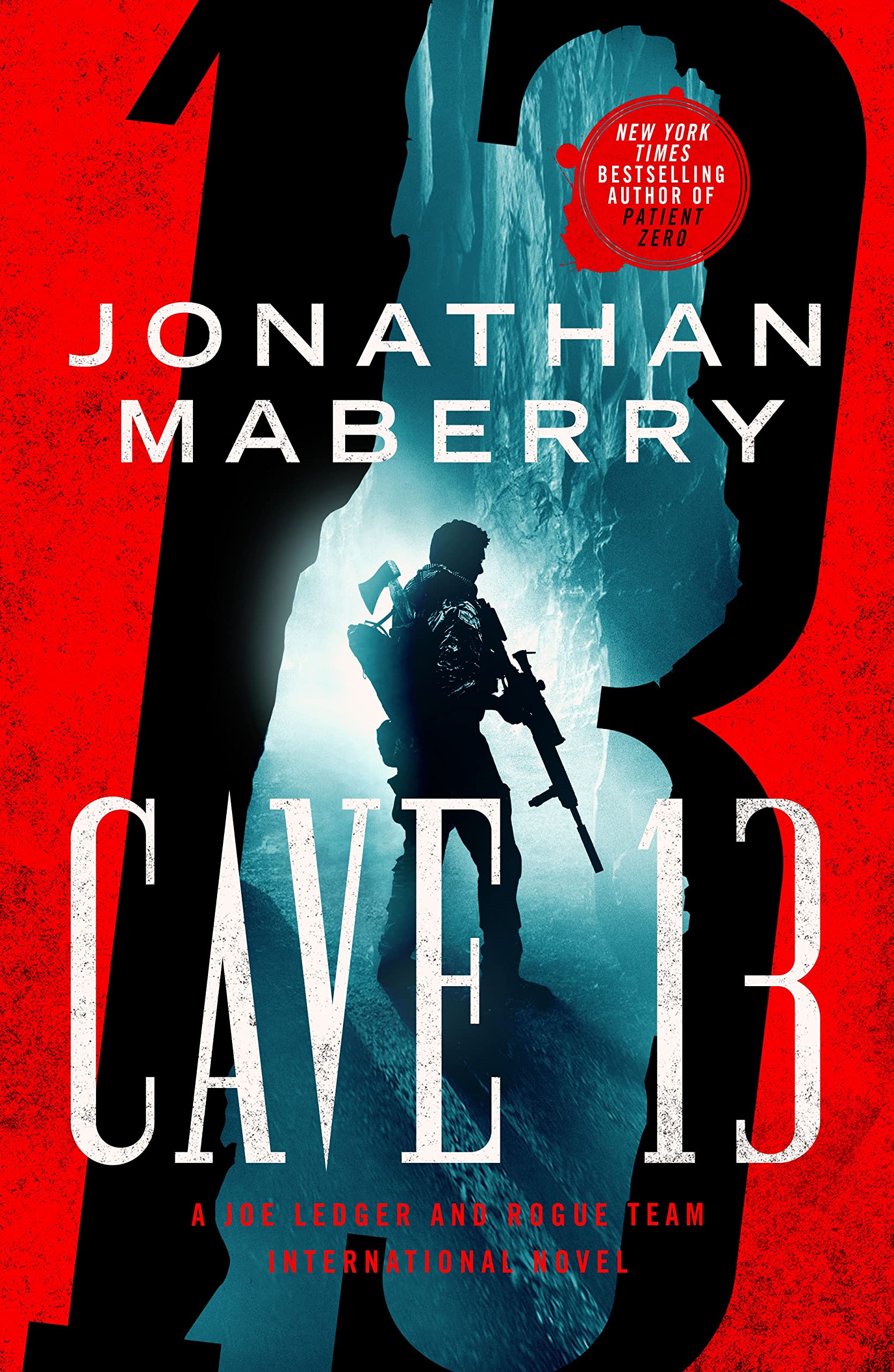
Cave 13 by Jonathan Maberry

Cave 13 Cover

Publisher: Macmillan Audio (Audiobook – 29 August 2023)

Series: Rogue Team International/Joe Ledger – Book 3/13

Length: 19 hours and 5 minutes

My Rating: 5 out of 5 stars

Amazon

One of my favourite twisted authors returns with an outstanding new entry in one of his best series with Cave 13 by Jonathan Maberry.

It has already been a massive year for fans of thriller/horror author Jonathan Maberry, who previously released the exhilarating and intense dark fantasy novel Son of the Poison Rose.  The awesome sequel to Kagen the Damned (one of my favourite novels and audiobooks of 2022), Son of the Poison Rose was one of my favourite books and audiobooks from the first half of the year, and if that had been the only Maberry novel I’d received in 2023 I would have been content.  However, Maberry chose to spoil us by providing us with another epic Joe Ledger novel, which is so damn amazing.

The Joe Ledger novels are an amazing science fiction thriller series that follows titular protagonist Joe Ledger as he attempts to stop a series of insane world-ending threats initiated by compelling group of villains.  The initial Joe Ledger series featured 10 epic books with some outrageous and addictive stories around them, including Patient Zero, The Dragon Factory, Code Zero, Predator One and Deep Silence, just to name a few.  Maberry followed up these novels with a new Joe Ledger focused series, the Rogue Team International books.  This series has so far featured Rage (one of my favourite books and audiobooks of 2019) and Relentless (one of my favourite books and audiobooks of 2021), both of which were pretty exceptional in their own ways.  As such, I have been quite excited to see a new Rogue Team International book and Cave 13 was one of my most anticipated books for 2023 as a result.

To many, Jason Aydelotte, better known to the world as Mr. Miracle, is a smiling and beatific public figure celebrated for his archaeological endeavours and his vast antiquities business.  However, beneath the smiles, Mr. Miracle is a far more ruthless and sinister operator.  Smart, determined and ambitious, Aydelotte has entered the world of international arms dealing and is willing to sell his advanced weapons to anyone who will buy them, including ISIS, and his latest product might be the scariest thing ever created.

Thanks to discoveries made in a hidden ancient Egyptian tomb, Aydelotte’s team has developed a powerful new bioweapon that drives its victims insane with a mere breath.  Its effect is terrifying and its potential for destruction in the wrong hands is immeasurable.  With the world going insane and chaos rising in the Middle East, the only people who might be able to stop such a potent weapon are Joe Ledger and the highly specialised agents of the independent intelligence agency, Rogue Team International.

However, the release of a deadly bioweapon soon proves to be the least of Ledger’s problems in the Middle East.  Far more dangerous materials were recovered from the tomb, including bizarre books of magic dating back to the time of Moses.  At the same time, greater secrets have been pillaged from a hidden cave containing even more Dead Sea Scrolls, some of which could alter the very fabric of the universe.  With threats piling up all around them, and enemies on all sides engaging in their own dangerous plots, can Ledger survive both the carnage and his own fractured mind to save the day, or will a new ruthless opponent destroy everything?

Cave 13 was another outstanding and captivating Joe Ledger adventure from Maberry that sets his troubled protagonist against another brilliantly elaborate world-ending plot.  Slick, intense and loaded with complex characters, Cave 13 was an amazing read that gets an easy five-star rating from me, especially in its audiobook format.

Maberry produced another unique and compelling story for Cave 13 that is once again perfectly told in his unique writing style.  Utilising a vast number of shorter chapters, Maberry quickly starts the story off, reintroducing the protagonist and his team, while also setting up the compelling antagonists and their complex evil plan.  A series of well-placed and absolutely fascinating interludes throughout the book provide greater context to the events that are about to unfold, and you get to see the entire genesis of the antagonist and their plans, which adds a lot to the overall story.  Maberry artfully blends this together with the main storyline that sees Ledger and his team investigate several unique occurrences, including conflicts in the Middle East, increases in unique weapon trafficking, the recovery of the Dead Sea Scrolls, as well as mysterious events that could only have been done by certain biblical magic (“you’re playing with the big boys now”).  The intriguing blend of science, mysticism, faith and mystery gives Cave 13 a particularly fun edge, and I really liked the intriguing set-up surrounding the antagonist’s plot and its full potential for destruction. At the same time, the author also dives back into the complexity surrounding his protagonist’s damaged psyche, and how this new case might affect it.

While I loved all the set-up in the first third or so of the novel, it does ensure that the initial plot is a tad slower.  This changes once Ledger and his team arrive in Israel and find themselves under attack in a particularly brutal action sequence right off the bat.  Maberry’s action scenes are always extremely awesome, and you have to love the attention and detail he puts into making them as intense as possible.  This cool action sequence is well balanced at this point by some further background, as well as a compelling sequence of events surrounding recurring side-character Toys, who finds themselves at a different side of the conflict following an undercover operation gone wrong.  This part of the story, especially the twist about the antagonist’s true plan, really increases the stakes and intensity of the story, and Maberry has a lot of fun creating some intense visual horrors for the readers, especially when it comes to a series of twisted and brutal hallucinations.

The final third of Cave 13 is probably the strongest part of the book, and I honestly was hooked the entire way through, desperately trying to get to the end.  All the great set-up, intriguing interludes, and multitudes of well-established characters comes together for the big confrontation at the end as the antagonist’s plan goes full circle and Ledger and his team once again find themselves in hell.  Things get so damn dark, desperate and freaky at this point in the book, and you are left completely worried about all your favourite characters as Maberry doesn’t have the best track record of keeping likeable cast members alive.  There are some brutal scenes here, as well as a ton of tragedy, and the reader is left on the edge of their seat right until the very end.  While I came away from parts of this book a bit shellshocked, I was overall very happy with the conclusion, which was dark, had a good twist around the villain, raised a lot of questions about the protagonists, and left you with a little ray of hope that will no doubt get snuffed out in the future.  An overall pretty epic story that really came to life in Maberry’s hands, especially thanks to his unique set out and brilliant ability to write an action sequence.

Cave 13 ended up being quite an interesting Joe Ledger novel, especially as it presents a great story and the first original villain of the Rogue Team International era, while also cleverly diving into the prior events of the series and utilising them to enhance the characters and narrative.  I really enjoyed the step away from the villains of Rage and Relentless for this one book, although I also appreciated how well the author examined the aftermath of these novels and the dark things they’ve done to the protagonist.  Like most of the Joe Ledger books, Cave 13 can be read as a standalone novel, and Maberry does a good job of recapping all the relevant prior events and characters to ensure that new readers can fully understand and appreciate everything going on.  However, established fans of Maberry are going to get the most out of Cave 13, and there are a ton of unique hints or suggestions about what is to come.  I found it particularly interesting that Maberry chose to include multiple scenes in Cave 13 that were clearly intended to set up certain events for future entries.  While these scenes are a tad disjointed from the main story, I won’t lie and say it didn’t make me excited for the next book in the series, especially when it comes to those hints about certain villains returning.  I was a little less impressed that several storylines or mysterious events from Cave 13 were deliberately left unanswered by Maberry, but I guess I’ll just have to wait and see what happens with them in the next exciting Joe Ledger novel.

As with all Maberry’s work, one of the main highlights of Cave 13 was the excellent and complex characters.  Maberry features a pretty massive cast in this novel, including a range of recurring figures from the previous novels, as well as several intriguing new figures who I really enjoyed.  As usual, Maberry does a remarkable job of showcasing all his characters, diving into the compelling histories and minds, and showcasing just how crazy or morally dubious they are (you have to be in order to survive in this universe).

Naturally, the most prominent character is protagonist Joe Ledger, who has been the leading figure and main point-of-view character in this series since the beginning.  An unstoppable action man and natural leader, Ledger is always a fun character to follow, especially as Maberry installs an overwhelming level of snark and disrespect in his personality, ensuring that every scene he’s in is full of quips, jokes and very funny observations about the crazy things he encounters.  While this alone makes him a great character, and the source of much of Cave 13’s humour, Maberry ensures that Ledger is one of his most complex protagonists ever due to the sheer amount of trauma the character experiences.  Ledger has gone through so much damage, darkness, loss and despair during the course of the series, and Maberry spends a substantial part of the protagonist’s chapters diving into this, showcasing just how emotionally and mentally battered Ledger is.  While I always love how effectively Maberry showcases the building trauma surrounding his character, it is even more poignant and important in Cave 13, as this is Ledger’s first adventure since the events of Relentless, where Ledger was taken over by a murderous personification of his own inner darkness and went on a deadly revenge trip.  Some of the most emotionally powerful parts of the book revolve around Ledger and his friends coming to terms with his terrible actions in the last book, and it is clear that Ledger has been extremely changed by the events of the prior book.  Naturally, Maberry decides to twist the knife even further in Cave 13 by subjecting Ledger to a series of traumatising visions and hallucinations thanks to the book’s big bioweapon.  This drives Ledger even further over the edge, and there are some fascinating and highly revealing scenes that give you further insights into just how cracked this protagonist is and the dangers lurking just beneath his mental surface.  Honestly one of the best and most compelling action protagonists out there, I really love how Maberry showcases Ledger in this gripping novel.

In addition to Ledger, Cave 13 features a range of other compelling characters who get their moment to shine.  My favourite would have to be the always mysterious Mr Church, the head of the secretive Rogue Team International.  A highly elusive and deadly figure whose origins and full capabilities are only hinted at; Church is easily one of the best characters featured in the entire series.  Maberry makes exceptional use of Church in Cave 13, and there are so many more tantalising hints about who or what this character might be.  This actually proves to be one of the most substantial Church novels in the entire series, and Maberry goes out of his way to not only show that this seemingly unstoppable figure is actually vulnerable, and is in some ways just as much of a bastard as the book’s villains.  There are several amazing and highly powerful monologues from Church in Cave 13 that give you some fascinating insights into his mind, especially when it comes to Ledger and the constant war that he and Church are fighting, and I loved getting an idea of just how ruthless this figure can be.  Several of these monologues are delivered to another awesome figure in Cave 13, the team’s psychiatrist, Rudy Sanchez, a notoriously calm figure who finally loses his cool in this novel after Ledger goes back into the field, straining their relationship.  I loved seeing Rudy particularly passionate and angry in Cave 13, especially when he stands up to Church, and Maberry’s portrayal of his concern really helps to highlight just how much damage was done to Ledger in the previous book.

Another major figure from Cave 13 that I need to highlight is the intriguing figure of Alexander “Toys” Chismer.  A former villain turned repentant ally, Maberry set Toys on a redemptive arc several novels ago, and it has been really paying off as Toys has turned into a fascinating figure trying to atone for his past.  His impressive long-running storyline is extremely well featured in Cave 13, and indeed he is one of the major protagonists, leading his own team and experiencing some substantial additional trauma.  Toys honestly has one of the darkest and most impressive character arcs in the entire novel, and the scenes he shared with Ledger are particularly moving and play into their complex antagonist history perfectly.  The various recurring members of Rogue Team International are well featured again in Cave 13, and it was fascinating to see how some of their character arcs have developed over the course of 13 novels.  My favourite fuzzy assassin, Ledger’s dog, Ghost, was of course awesome in this book, and I always loved just how in touch with his human’s emotions Ghost is.  There was even an intriguing extended cameo from F. Paul Wilson’s iconic protagonist, Repairman Jack, who Maberry utilises extremely well in Cave 13’s story, simultaneously working them into the plot while also diving into the Repairman’s unique life in his own series.

Finally, I must highlight some of the villains in this book.  Maberry always excels in creating complex and insane antagonists for each of his novels, and Cave 13 is no exception, as you are introduced to several intriguing villains who are set to unleash chaos upon the world.  I won’t give away too much about them and their plans here, but I will say that Maberry did an exceptional job of introducing them and diving into their various quirks, plans and desires, in some cases humanising them.  This actually helps to make them even more sinister as you start to understand and appreciate some of their actions, even if they are reprehensible.  I deeply enjoyed the complex examinations of each of Cave 13’s main villains, especially as the various interludes showcase their intriguing histories as well as the genesis of their current plans and schemes, allowing you to fully appreciate everything about them.  These villains, as well as a couple of seemingly returning antagonists hidden in the shadows, ensure that Cave 13’s stakes are always extremely high, and I loved how well the various complex character arcs mixed together to create an outstanding and powerful read.

As with every Jonathan Maberry novel I have so far had the pleasure of enjoy, I chose to check out Cave 13 on audiobook, which is the only way to enjoy one of Maberry’s epic tales.  Not only does the author’s awesome writing style and action sequences really come across well in the audiobook format, but the exceptional narration of acclaimed voice actor Ray Porter, who narrates all of Maberry’s projects, is so damn awesome.  Porter has such a brilliant handle on Maberry’s great characters, and it is always fun to hear the familiar voices of the main cast come out of Porter’s mouth again.  I particular love Porter’s take on main character Joe Ledger, as Porter always manages to capture the key parts of his personality, including the humour, mental instability and the pure rage contained within.  This, and other excellent performances, really helps to turn Cave 13 into an amazing listen, and I had such a brilliant time getting through it, and its 19-hour runtime just flew by.  Indeed, it really helped to ensure an extended road trip in an uncomfortable van was actually pretty tolerable, so kudos for that.  Easily one of the better audiobooks of 2023 so far, I cannot recommend this format enough to anyone wanting to check this epic novel out.

Unsurprisingly, I had fun with the latest Rogue Team International novel by Jonathan Maberry and it is always so damn epic to get another Joe Ledger adventure.  Cave 13 was a particularly awesome and intense entry in the series that expertly brings together an elaborate narrative, evil villains, exceptional action and complex character in an impressive overall read.  Fun, exciting and oh so darkly addictive, Cave 13 was a powerful and gripping novel that I cannot recommend enough, especially for established fans of Ledger’s amazing books.

Amazon

Son of the Poison Rose by Jonathan Maberry

Son of the Poison Rose Cover

Publisher: Macmillan Audio (Audiobook – 10 January 2023)

Series: Kagen the Damned – Book Two

Length: 25 hours and 55 minutes

My Rating: 5 out of 5 stars

Amazon

One of my favourite authors, Jonathan Maberry, returns to his intriguing fantasy world in a big way with the second Kagen the Damned novel, Son of the Poison Rose.

Readers familiar with my blog will know I am a massive Jonathan Maberry fan, and the path to my current obsession with his work is well documented throughout The Unseen Library.  I started off by reading his fantastic 2018 novel, Deep Silence, quite early in my blogging career, and this ended up getting me into the rest of his exceptional Joe Ledger series, including The Dragon Factory, The King of Plagues, Predator One and Dogs of War.  I have also had a great time reading his sequel Rogue Team International series, which featured the epic books Rage (one of my favourite books and audiobooks of 2019) and Relentless (one of my favourite books and audiobooks of 2021), as well as the fun standalone novel Ink (one of my favourite books and audiobooks of 2020).  Needless to say, I have deeply enjoyed his cool books, and this only increased when he made his impact into the fantasy fiction world last year with Kagen the Damned.

Kagen the Damned was an amazing and exceptional dark fantasy novel that took the reader on a wild ride.  Set in a brutal fantasy world of Maberry’s own invention, Kagen the Damned followed the titular character of Kagen Vale, a highly regarded hero and palace guard of the Silver Empire who loses everything in a single night when the armies of the dread nation Hakkia invade with dark magic, led by the powerful and deadly Witch-king.  Forced to watch his parents, his empress, and the royal children he was sworn to protect die terrible deaths, a haunted Kagen flees, only to be further destroyed when he beholds his gods turning their back on him, damming him for his failure.  Now known as The Damned, Kagen travels the world in a daze before finally regaining his senses and launching an attack on the Witch-king at his coronation.  However, this reveals secrets that shock Kagen further and spelling doom for the entire world.  I had an epic time reading Kagen the Damned last year, and it ended up being one of my favourite books and audiobooks of 2022.  Between this and the cool Kagen the Damned novella I Say Your Name in the Dark Nights, I have been eagerly awaiting a second novel and I was very excited when I heard that Son of the Poison Rose was coming out.  Son of the Poison Rose was one of my most anticipated books of 2023 and I finally managed to read it a short while ago and it was everything I hoped it would be and more.

“There is blood on the ground between us!”

Following his failed assassination attempt on the Witch-king of Hakkia, Kagen Vale, better known as Kagen the Damned, is once again the run with his companions, Tuke Brakson and Filia alden-Bok, attempting to find safety and come up with a new strategy of survival and revenge.  While their plan to kill the Witch-king failed, their attack stopped the return of the Hakkian God, Hastur, while also opening up the possibility of war, as the Witch-king’s fellow monarchs see the Hakkians as vulnerable.  However, Kagen also uncovered the terrible secret that the Witch-king is his older brother Herepath, who has turned his back on everything he once believed in to unleash great evil upon the world.

Wandering the wilderness, Kagen, Tuke and Filia attempt to come up with a new way to strike back against the Hakkian forces.  Their journey eventually leads them to the north of the continent, where they attempt to recruit an army of nationless-rogues, mercenaries and fighters to their cause.  But force of arms alone will not be enough to stop the Witch-king, instead Kagen and his allies will need magic.  But with magic long banned within the Silver Empire, only the Hakkians have any real knowledge of the mystic arts.  To that end, Kagen turns to former nun turned spymistress, Mother Frey, who sends Kagen on a deadly mission to a long lost city in a dangerous jungle in the hopes of recovering ancient books of dark magic.

However, the Witch-king is far from idle while Kagen is working against him.  With his army spread thin and the nations of the former Silver Empire all gearing up for war, the future looks grim for the usurper and his advisors.  But with new dark allies arriving every day, called to his side by magic, the Witch-king plans to unleash a magical plague, one that will turn his enemies into a ravenous, unthinking horde.  With such power at the Witch-king’s command, will Kagen’s quest reveal something powerful enough to defeat him?  And even if he does, will Kagen be able to fight his own brother?

Wow, wow, wow, what an epic and exceptional book!  Maberry can really do no wrong when it comes to his writing and this impressive sequel really hammers home what a talented author he is.  Masterfully expanding on the narrative set up in the first book, Son of the Poison Rose contains Maberry’s trademark blend of intensity, awesome action, complex characters, and dark world building that I love so much.  I absolutely powered through this lengthy novel, and it earns Maberry another easy five-star rating from me as I loved every single second I spent with it.

Maberry continues his sprawling and dark narrative in Son of the Poison Rose, as this book takes the reader in some great and captivating new directions.  Taking place in the explosive aftermath of Kagen the Damned, Son of the Poison Rose starts off in a big and action-packed way as Kagen and his allies find themselves being hunted by everything the Witch-king can throw at them.  Maberry quickly establishes his usual practice of featuring a huge number of different perspectives to showcase not only the adventures of the protagonists, but also the actions and schemes of the antagonists and the impacts that their machinations have throughout the world.  The main story of Kagen is pretty epic as it sees the protagonist and his friends struggling through new lands in the search of allies and magic.  While this results in some great scenes for Kagen in the first two thirds of the book, including a great haunted house sequence, his story here feels a little meandering at times without too much progress being made.  However, this is more than made up from the various alternate perspectives and worldbuilding that occurs in the same period.  It is so damn fascinating and entertaining to see the various dark and often horrifying plots of the antagonists come into effect as they plot for war.  These storylines blend spy thriller and dark fantasy elements together really well and you are drawn into these storylines, especially as Maberry takes the opportunity to strengthen the followers of the antagonists in some big ways.  The simultaneous build-up of other complex supporting characters, as well as the many examinations of various corners of Maberry’s new fantasy world adds to the impressive tapestry of the first two thirds of the story, and I was pretty damn hooked during this part of the book.

Maberry ramps up the intensity in the final third of the book as the various intriguing storylines he set up in the start of the novel really come to fruition.  This is headlined by Kagen and his allies travelling into a dangerous jungle nation to find a legendary ancient city where magical texts are hidden.  While I was initially concerned this part of Kagen’s story was going to be rushed, it ended up being very well written and awesome, as they encounter all manner of evils out in the jungle.  This final third of the book was again firmly enhanced by the continued dive back to the antagonists, where you see their evil plot to fill the jungle with zombies and other deadly creatures to kill Kagen and his comrades.  This results in an epic series of battles which keep you on the edge of your seat, as you know Maberry will not hesitate to kill off his characters.  The author chucks in several massive revelations around this part of the book, including finally showing the motivation behind the Witch-king’s actions, and the entire narrative ends on a big note while also expertly setting the stage for even more chaos in the following novel.  This ended up being a particularly epic story and I was firmly hooked the entire way through.

Those who are familiar with Mabbery’s novels will know that the author has a very distinctive style which has worked wonders in his many thriller novels.  Maberry successfully transported this style across to the fantasy genre last year with Kagen the Damned, and I felt it really enhanced his already impressive story.  Naturally he continues it in Son of the Poison Rose and it is still really effective at conveying the vast scope of his tale.  The main basis for his style is the utilisation of a vast number of shorter perspective chapters which showcase events from multiple characters across the narrative.  This results in a vast and complex story that not only allows the reader to see the adventures of the protagonist but also highlight the other players throughout the realm, including the antagonist, his court, the members of the resistance, and even several kings and rulers from unaligned nations who are making plans for war.  Maberry further expands out the plot by including a series of intriguing, often standalone interludes, which showcase smaller, self-contained stories within the wider universe.  These interludes are usually pretty cool, both by themselves and as extensions of the larger story, and I love how inventive and dark Maberry can be at times.  This mass of perspectives really helps to create an extensive and complex plot that has so many different aspects to it.  Seeing the protagonist and antagonist constantly reacting to the actions of each other, as well as other figures in the book, really ups the stakes and intensifies the plot, and I loved how Maberry gave this fantasy novel a strong thriller feel, especially with the continues focuses on politics, espionage and revenge.

Now, one thing about Maberry’s writing style that is not going to appeal to everyone is just how dark and disturbing the author makes the story.  Maberry is a particularly over-the-top writer at times, as he really does not hold back on the gore, violence and depravity, with the characters witnessing or causing all manner of mayhem or gruesome acts.  While this excessive violence and brutality fits the dark fantasy realm that Maberry has created, particularly as it highlights just how evil the antagonist and his legions can be, it is not going to be everyone’s cup of tea.  The torture, abuse and sadism of many scenes can be a bit much at times, and anyone that dislikes that sort of inclusion is probably best served to avoid this series.  However, for those that remain, I will point out that Maberry’s attention to bloody detail does ensure that the action sequences are extremely awesome.  The author has a gift for bringing the brutality and intensity of the battlefield to life in some truly glorious scenes, and you will be enthralled by every swing of the dagger or sword that he writes.  These action scenes are a beautiful, if bloody, highlight of this book, and the overall excessiveness of some of the scenes, especially when focusing on an over-the-top villain really plays into the wider narrative and setting.

I am still in love with the cool new dark fantasy world that Maberry created in Kagen the Damned, especially as the author took his time to populate with evil creatures, Lovecraftian gods and so much damn despair.  His first book served as a brilliant introduction to the various intriguing nations, and I deeply appreciated the intricate depictions of the Hakkian invasion, as well as the subtle and slow reintroduction of magic into this world.  Maberry continues to build up this world in several ways throughout Son of the Poison Rose, which results in some amazing story elements.  The focus on several of the other realms not seen in the first book is pretty interesting, as is the examination of the complex politics of the land as these now independent nations contemplate war with Hakkia after the concluding events of Kagen the Damned.  This builds up several great storylines as these rebelling nations and the Witch-king’s court plot different strategies to win any future wars.  Maberry also has a lot of fun exploring several new lands that were only hinted at in the previous books, and the protagonists soon end up in several unique and deadly landscapes, including cursed snowscapes with mysterious creatures, lethal jungles, and massive ruined cities dedicated to overthrown gods.  All of these locations are expertly introduced and described by Maberry, who uses them to his full advantage to increase tension and ensure that all the inevitable battles have a compelling new edge to them.

Another excellent thing that Maberry continues to do in Son of the Poison Rose is show how magic is slowly returning to the land due to the machinations of the Witch-king.  Thanks to several great chapters and interludes, you get to see the full horror as old magical creatures re-emerge, including the always reliable zombie, which plays very heavily into the plot.  Maberry is no stranger when it comes to zombies, having featured them in several books before (Patient Zero and Code Zero for example) and he uses to them to great effect here, both as political tools for the antagonist, and as rabid obstacles for the protagonists.  Other awesome features include the unstoppable, demonically powered, Razor Knight, which has a great showing at the end of the book, and it will be interesting to see how that, as well as some of the other magic unleashed in Son of the Poison Rose, come into effect in the rest of the series.  I also really appreciated how Maberry kept including a few references to his other series throughout Son of the Poison Rose, which is always a lot of fun for his established fans.  The hints of connection between this world and the settings of other books from Maberry is noticeable and fun without being too mysterious for new readers.  I especially loved the inclusion of a fantastic new villainous character who readers of the Joe Ledger books will be well familiar with under a different name, which I thought was an awesome touch for those who have read his other books.  I deeply enjoyed the impressive world building that Maberry did in Son of the Poison Rose, and I look forward to seeing how else he expands it in the rest of the series.

As always, one of the absolute best parts of Son of the Poison Rose were the exceptional, complex, and well-written characters that Maberry has expertly crafted together.  This includes a great combination of established figures from the first book, as well as a good collection of new characters who add some outstanding original spice to his second book.  Thanks to huge number of perspective chapters, the Kagen the Damned series features a pretty massive cast of damaged or sinister figures that Maberry uses to full effect to tell an elaborate overarching narrative.

Unsurprisingly, most of the focus of the book falls on series titular character, Kagen Vale, better known as Kagen the Damned.  Kagen had an outstanding introduction in the first book, where you see him lose everything, including his gods, in a single night, which drives him to great despair.  While he has managed to mostly recover from this thanks to his friends, he is still haunted by that dark night, especially after learning the truth about who the Witch-king is, as well as the identity of his heirs.  Driven by even further guilt, confusion, and anger towards his brother and his treachery, Kagen continues his impressive and emotionally rich journey in Son of the Poison Rose, and I had an outstanding time along the ride with him.  Maberry writes Kagen in an outstanding way throughout this book, and you really feel his pain and continued anger as he tries to deal with everything that has happened to him.  While he does bear some noticeable similarities to Maberry’s other major protagonist, Joe Ledger, especially when it comes to lethal prowess and severe psychological damage, I think that the author does enough to set Kagen apart, especially as his painful motivating event is a lot more raw and personal, resulting in some emotionally charged sequences.

Aside from Kagen, Maberry sets up a great supporting cast who add a lot to the main storyline while also introducing their own intriguing character moments.  It was great to see the return of Kagen’s main associates, Tuke and Filia, who continue to follow him into hell.  These three characters have great chemistry together and they form an impressive emotional centre to the story, especially as Tuke and Filia serve as Kagen’s conscience and voice of reason.  I also liked the return of Mother Frey, the clever spy mistress who is attempting to control the resistance against the Hakkians.  Her insights into the world and its political players often expands the intrigue of the story and she serves as a compelling figure in the plot.  I did find it interesting that one of the major figures from the first book, Ryssa, barely appeared in this novel after her fantastic storyline in Kagen the Damned.  However, her few appearances seem to hint at some sinister things in the future, and I look forward to seeing what Maberry organises with that.  Some of the more complicated and disturbing scenes of Son of the Poison Rose revolve around the captured Alleyn and Desalyn/Gavran and Foscor, the royal twins who were captured during the invasion, psychologically broken down, and forcibly given new identities.  These two mentally mutilated children spend the entire book trying to retain and regain their memories in some pretty dark scenes and thanks to their affliction, they run the gauntlet from sweet and damaged, to homicidal maniacs.  I felt that Maberry really showcased the twins’ mental state perfectly, and their dark storyline was an excellent addition to the plot.

However, to my mind, some of the best characters in Son of the Poison Rose are the villains, who add an entertaining and impressively sinister edge to the book, while also expanding out the political intrigue aspects of the plot.  These complex antagonists are led by the evil and destructive Witch-king, who was revealed to be Kagen’s long lost brother Herepath.  Empowered by dark magic, vengeance, and a need to keep his true identity hidden, the Witch-king continues his mission to kill Kagen and ensure that and opposition to this power is utterly destroyed.  The Witch-king proves to be a particularly malevolent figure throughout Son of the Poison Rose, even after his motivations are revealed to the reader, and he is the perfect foil to Kagen and his companions.

The Witch-king is backed up by a court of loyal, terrified advisors, each of whom are dedicated to the Witch-king’s plans, while also trying to stay alive and gather their own power.  This includes the fantastic trio of Lord Nespar, Lady Kestral and Jakob Ravensmere, each of whom have their own reasons for serving the Witch-king, and who each suffer for it in different ways, especially Kestral.  Nespar and Ravensmere deeply enhance the political thriller focus of Son of the Poison Rose, as their analysis, plotting and attempts to keep the Hakkians strong on behalf of their master results in some fantastic and powerful moments.  I also must call out the mysterious new evils that join the Witch-king’s side during Son of the Poison Rose, especially as many bring their own form of magic and despair with them.  The highlight of these new characters is the fantastic and devilish Prince of Games, a mysterious figure who comes to the Witch-king’s side to give advice, counsel and chaos.  The Prince of Games really stood out to me, not just because of his portrayal in Son of the Poison Rose but because of the great, universe-spanning implications his appearance has, and I cannot wait to see what havoc he creates throughout this series.  All of the antagonists are pretty great, and they all bring their own horror and darkness to the story, especially as they all do some pretty terrible and gruesome things to stay in power.  Honestly, every character in Son of the Poison Rose is awesome and memorable in their own way, and Maberry once again shows himself to be the master at effectively bringing together a truly complex cast of damaged and misfit figures.

In my opinion, the only way to properly enjoy a Jonathan Maberry novel is to listen to its audiobook, especially if that audiobook is narrated by the legendary Ray Porter.  This has been the case for pretty much every Maberry novel I have had the pleasure of reading, including Son of the Poison Rose, and all these epic audiobooks have been something special.  Not only do Maberry’s elaborate storylines and settings get the gravitas and exposure that they deserve in this format, but Porter’s narration really amps up the dark nature of the narrative and provides perfect depictions of the characters.  Porter, who is easily one of my favourite audiobook narrators, does another exceptional job in Son of the Poison Rose and I absolutely powered through this audiobook thanks to it.  His voice really lends itself to every dark and deadly scenario that Maberry envisions in this novel, and the way that he can convey fear, hatred and pure evil with his voice is just amazing.  His real talent lies in his ability to bring all Maberry’s complex characters to life in a particularly fitting way.  I especially love how he portrays the main protagonist, Kagen Vale, and he really captures every bit of pain, despair and resolve that this battered character contains.  Throw in a series of particularly disturbing voices for all the inhuman and horrifying creatures that the characters encounter, and this is a perfect narration that adds so much to my enjoyment of an already epic book.  With a run time of nearly 26 hours, Son of the Poison Rose is a particularly long audiobook (it would come in at number 14 on my latest Longest Audiobook I Have Ever Listened To list), but it is well worth the time investment especially once you get caught up in the twisted story.  I personally powered through it extremely quickly, as the combination of the amazing writing and impressive narration ensured I was listening to it continuously and loving every damn second of it.  As such, I must once again strongly recommend the audiobook format to anyone wanting to check out Son of the Poison Rose, and you will not be disappointed if you do as this is easily one of the best audiobooks of 2023.

I could go on for ages about Son of the Poison Rose, as Jonathan Maberry has done another exceptional job with this second Kagen the Damned novel.  Featuring an electric and addictive dark fantasy narrative, loaded with carnage, battles, great characters and an elaborate world on the brink of war, Son of the Poison Rose was a joy from start to finish, especially in its audiobook format.  This is easily one of the best fantasy books I have read all year and I cannot wait to see how Maberry continues this epic story in the future.  A masterful second book in one of the best ongoing dark fantasy series!

Amazon

Quick Review – I Say Your Name in the Dark Nights by Jonathan Maberry

I Say Your Name in the Dark Nights Cover

Publisher: Macmillan Audio (Audiobook – 29 November 2022)

Series: Kagen the Damned – Book 1.5

Length: 1 hours and 20 minutes

My Rating: 4.5. of 5 stars

Amazon

Get ready to dive back into the crazy world of Jonathan Maberry’s epic Kagen the Damned series with the intriguing and fun novella, I Say Your Name in the Dark Nights.

Readers of this blog will know that I am a pretty big fan of acclaimed thriller/horror author Jonathan Maberry, and my experiences getting into his books are well documented across The Unseen Library.  I have been a particular fan of his impressive Joe Ledger science fiction thriller books (which includes books like Patient Zero, The Dragon Factory, Code Zero, and Dogs of War), his sequel Rogue Team International series (made up of Rage and Relentless), as well as his standalone horror read Ink.  These excellent thrillers cleverly feature science heavy villains or reimagined supernatural foes to great effect, and I love the dark and elaborate stories they contain.

Maberry changed his game around last year when he presented his very first pure fantasy novel, Kagen the Damned.  An extremely dark and shocking read set in a new fantasy realm, Kagen the Damned follows Kagen Vale, a former hero and royal protector who loses everything in a single night when the force of the Witch-king of Hakkia suddenly invade, destroying his home, family and the children he was sworn to defend.  Traumatised by the carnage he witnesses and forsaken by his gods, Kagen believes himself truly damned and walks around the country in a daze before managing to pull himself together to launch a counterattack.  I had an outstanding amount of fun with Kagen the Damned, especially as Maberry made great use of his trademark writing style and successfully combined it with a fantasy setting and narrative.  Kagen the Damned ended up being one of my favourite books and audiobooks of 2022, and I have been very keen to continue the series.  While I haven’t had a chance to listen to the recently released sequel, Son of the Poison Rose (one of my most anticipated fantasy novels of 2023) yet, I did manage to quickly listen to the connected novella, I Say Your Name in the Dark Nights, which proved to be a lot of fun.

I Say Your Name in the Dark Nights is a short and sweet novella that showcases a quick and brutal adventure around Kagen during the period where he drunkenly wanders around the lands.  Featuring an intriguing new enemy, this is a very typical Maberry read, with a ton of violence, sex and some impressive horror iconography.

Plot Synopsis:

Kagen Vale—disgraced former palace guard, damned by his own gods, on the run from bounty hunters and assassins—discovers that no matter where you try to hide, evil can find you. In this standalone short story, Kagen the Damned squares off against a clan of ferocious supernatural predators in service to the Witch-king.


I Say Your Name in the Dark Nights
was an excellent read that is guaranteed to whet reader’s appetites between Kagen the Damned and Son of the Poison Rose.  The plot itself is fast-paced and action packed as Kagen, drunk and depressed in the woods, comes across a young woman being chased by a pack of deadly wolves and rushes to her defence.  However, Kagen soon finds himself at the mercy of his supposed damsel as she is revealed to be a deranged werewolf hired by the Witch-king to kill him.  Maberry tells an effective and exciting story around this concept, which doesn’t take long to unfold.  For example, the audiobook version I listened to was only an hour and 20 minutes long, which I finished in a single setting.  As such, you really breeze through I Say Your Name in the Dark Nights, since Maberry ensures that it has a very concise and comprehensive story to it.

I really liked how this entire narrative came together, and it was fun to see Maberry’s typical writing style compacted down into novella form.  The action is brutal and bloody, the characters are very over the top, and it serves as an interesting continuation of the previous narrative from Kagen the Damned.  The plot itself is very self-contained, and at times it felt more like an extended interlude from the first book.  As such, fans of the first novel will have the most fun with I Say Your Name in the Dark Nights, although anyone familiar with Maberry and his horror-based books will know what they are in for.  The author has a lot of experience writing werewolf fiction, and the brutal transformations, excessive violence and inhuman nature of the characters, which really freak the protagonist out, make for some striking and compelling scenes.  Due to the length, there isn’t a great deal of universe expansion here, which isn’t too surprising, as the author focuses more on the story.  However, there are a few hints at the changing world, such as Kagen being forced to deal with more and more supernatural monsters, and he luckily comes across a useful weapon that may aid him in the future.  Plus, Maberry really showcases the continued assistance/stalking that Kagen receives from the mysterious nightbirds, which hints at things to come while also increasing the Lovecraftian feel of the entire story.

A good deal of the focus of I Say Your Name in the Dark Nights is once again on the depressed and broken Kagen Vale.  Just like with Kagen the Damned, Kagen is severely damaged and drunk, having still not recovered from the devastating events of the first book.  While the action and events of the story briefly recover his wits, he is still forced to again deal with horrors outside his understanding and watching him try and overcome the odds whilst being severely outclassed is a fantastic part of this outstanding story.  Kagen of course reverts to his more bloodthirsty and deadly persona to survive, but it takes every aspect of his being to get there, and you really feel his pain, both physical and emotional.  The audiobook version really encapsulate this, especially with the always impressive narration of Ray Porter, who is such an expert at diving into Maberry’s complex and brooding protagonists.  I deeply enjoyed seeing a struggling Kagen through Porter’s narration again, and it adds some great layers and impact to the overall experience.

Unsurprisingly, I loved my latest Jonathan Maberry experience, and I Say Your Name in the Dark Nights is an impactful and captivating read.  Serving as an electrifying and compelling companion novella to the wider Kagen the Damned series, I Say Your Name in the Dark Nights provides a fun and brutal new adventure for fans to sink their teeth into, and anyone who loved Kagen the Damned will have an epic time here.  I highly enjoyed this cool novella, especially in its audiobook format, and it has got me particularly excited for the next entry in the series.  I am planning to start listening to Son of the Poison Rose this week, and I know I am going to have an exceptional time doing so.

Amazon

In the Shadow of Lightning by Brian McClellan

In the Shadow of Lightning Cover

Publisher: Macmillan Audio (Audiobook – 21 June 2022)

Series: The Glass Immortals – Book One

Length: 24 hours and 53 minutes

My Rating: 5 out of 5 stars

Amazon

One of the most inventive and compelling authors of fantasy fiction, Brian McClellan, kicks off an awesome new series with In the Shadow of Lightning, the first book in The Glass Immortals series.

Few authors over the last 10 years have had more of an explosive impact on the world of fantasy fiction then Brian McClellan.  Debuting in 2013, McClellan quickly set the world ablaze with The Powder Mage trilogy, which saw chaos and destruction unravel in a new fantasy world where gunpowder-powered mages face off against an enraged god.  I had a brilliant time with the first book in the series, Promise of Blood, and McClellan followed this initial trilogy off with the sequel, Gods of Blood and Powder trilogy, set in the same universe.  While I still need to finish the Powder Mage novels off, I was very excited to hear that McClellan was starting a new series with In the Shadow of Lightning, the first book in the author’s The Glass Immortals series.  This is an impressive and outstanding read that introduces readers to a distinctive new fantasy world, this time with a fascinating focus on glass magic.

Demir Grappo was once one of the most respected politicians, tacticians and glassdancers in the Ossan Empire.  A rising star in the assembly, a proven governor, and the only son of a prominent family, Demir’s promising career is suddenly shattered in the immediate aftermath of his greatest military victory when his army sacked and destroyed the entire city of Holikan, apparently on his orders.  Mentally broken by the massacre done in his name, Demir abandons his army and vanishes into the provinces, giving up his life of privilege for one of anonymity.

Now, nine years after the sacking of Holikan, Demir is a very different man, having spent the intervening time as a grifter with no true home.  However, everything changes when news reaches him that his mother was murdered, brutally beaten to death in public in an apparent political attack.  Determined to find her killers, Demir returns to the city of Ossa to reclaim his seat as the head of his family.  But not everyone is happy that he has returned, and Demir soon finds himself in the midst of several deadly conspiracies, while Ossa goes to war against its neighbour, all in the name of avenging his murdered mother.

To get to the centre of these conspiracies, Demir must find allies, including old friends and new acquaintances if he is to gain the power and influence he needs find answers, especially those hidden by the powerful guild families who rule Ossa.  However, as he searches, and soon finds a much more troubling secret: godglass, the source of magic within the world, is running out, and when it goes, chaos will reign.  The key to securing the future may lie in a device that could re-power inert pieces of godglass, and only one girl appears to have the skill to create such a device.  But as Demir fights to secure this new vital ally, he finds himself fighting against a mysterious new enemy, one that seems determined to destroy anyone who gets in their way.

McClellan impresses again with another incredible fantasy novel that had me instantly enthralled.  Presenting the reader with a multifaceted narrative that combines great characters with intriguing fantasy elements, In the Shadow of Lightning proved to be an outstanding start to McClellan’s new series and I had an exceptional time reading it.  Epic in scope, ambition and potential, In the Shadow of Lightning gets a full five-star rating from me and I am still reeling from just how good this was.

In the Shadow of Lightning is a particularly addictive novel, especially as McClellan presents the reader with an outstanding and complex narrative that pulls them in on so many levels.  Starting off with a compelling prelude that perfectly introduces central protagonist Demir Grappo and shows his dramatic and bloody fall from grace and sanity, the novel then undergoes a time skip which takes the reader into the current storyline, right as events are kicking off.  The initial focus is on Demir, who, after finding out his mother has been murdered, returns to Ossa to take over the family business and discover her murderers.  However, he soon finds that his mother was involved in complex dealings that might have led to her death, and that her assassination has been blamed on a neighbouring city Ossa is going to war with.  The story then splits as McClellan introduces three additional point-of-view characters, each other whom has their own distinctive story arc, closely related to Demir and the politics of Ossa.

These new characters include Thessa Foleer, a siliceer (godglass worker) from Ossa’s neighbour Grent, the breacher Idrian Sepulki and Kizzie Vorcien, an enforcer for a powerful guild-family who Demir hires to investigate his mother’s death.  Each of these new characters have their own individual storylines that tie into the plot points introduced in Demir’s initial chapters.  While these character arcs go in their own direction, their storylines are loosely connected together and form a great overarching narrative as they are dragged into war, imprisonment, political battles, conspiracies and criminal investigations.  I loved the cool blend of character-driven storylines, and everything comes together extremely well to show that something very rotten is going on within Ossa.  This is a very fast-paced story, and McClellan keeps multiple compelling plotlines running simultaneously to keep the reader’s attention, with some great reveals and amazing fight scenes scattered throughout the book.  Most of these reveals are set up and foreshadowed extremely well, with a couple of exceptions, and I didn’t see some of the twists coming, which was pretty fun.  Everything comes to a head towards the end of the novel, as all four characters find themselves in their own extremely dangerous and concerning situation.  Not only is there a massive battle for the future of Ossa but there are some shocking revelations about who is involved in the conspiracy and why.  The author leaves everything on an amazing note that not only leaves readers satisfied with the conclusion of some of the storylines but which also leaves a lot of questions unanswered and the reader wanting more.  An excellent and impressive story that dragged me in extremely quickly.

I was very impressed with how In the Shadow of Lightning’s story came together, as McClellan presented an epic and addictive offering that I snapped up extremely quickly.  I especially loved the use of four separate narrators to tell this story, and McClellan did an outstanding job of separating out their narratives.  Each narrator has their own unique story to tell, and what is really good is that they also explore a different aspect of the author’s new fantasy world, which often breaks across the associated genres.  For example, Thessa’s story focuses on the magical science behind godglass, and examines the political and social elements associated with this branch of magic.  Idrian’s tale comes across as a war tale as he is forced to participated in the deadly conflict between Ossa and Grent, where his particularly magical expertise makes him a living weapon.  Kizzie’s chapters come across as an investigation arc, as she attempts to uncover who killed Demir’s mother, and is forced to dive into the intrigues and shifting allegiances amongst the Ossan families, uncovering a deep conspiracy.  Demir serves as a bit of a joining figure; while he also has his own unique adventures, especially around Ossan politics, a lot of his arc involves interactions with the other three point of view characters.  Not only does this ensure that we get another viewpoint on the other character’s actions, as he gets involved in the godglass, espionage and the war elements that they are solely focussed on, but he helps to bring the other protagonist’s disparate storylines together into one solid and compelling narrative.

All four character-driven storylines are pretty exceptional in their own right, and this was one of those rare multi-perspective novels where you honestly can’t choose which character arc is the most intriguing or enjoyable.  I was particularly impressed with how McClellan brought these storylines together into one outstanding novel, and it makes for quite the epic read, especially as the author ensures you get the right blend of intrigue, action, magic and mystery throughout.  Despite its longer length, In the Shadow of Lightning has a pretty fast pace to it, and the readers are constantly treated to fantastic scenes that really keep your interest, either by being directly exciting, or featuring excellent examples of character development or world building.  I also really have to highlight the outstanding and amazing action sequences featured throughout this book.  McClellan has an impressive way of making these fight scenes really come to life in your mind, and it so easy to see all the epic events unfold.  These action scenes are particularly impactful when combined with the new magical features that the author has come up with, and I had so much fun seeing them unfold.  This really was an exceptional and highly entertaining read, and I loved how this entire amazing story was presented to the reader.

One of the things that most impressed me about In the Shadow of Lightning was the way in which McClellan envisioned and introduced the reader to an entirely new fantasy realm, equipped with its own distinctive magical system, all of which was substantially different from the elements featured in his previous Powder Mage novels.  While there are some similarities, namely that the Glass Immortals series also features magic, firearms, and a similar level of technology, there are quite a few differences which really make this new series stand out.  Most of the book is set in the Ossan Empire and its capital city of Ossa, which proves to be an excellent background location for the complex story.  Ossa, as well as some of the other nations mentioned reminded me of an Italian city-state, and I felt that it was an interesting change of pace to the French/English influences of Powder Mage universe.  The city is ruled by rival merchant guild families who are constantly battling for dominance, while the influence of the cities extends out to various provinces in the extended empire.  There is an intricate society set up around Ossa, and I loved the compelling interplay of industries, politics and intrigue that resulted.  McClellan examines various aspects of Ossan society, including sports, leisure, the military, and the various social levels, all of which were pretty intriguing to discover, and which painted Ossa and its people in a compelling light.  I particularly enjoyed their innate love for intrigue, contracts and business above everything else, and the fact that their national sport involves two magically enhanced people beating each other with cudgels tells you a lot about them.  Throw in some compelling snapshots of other relevant nations, as well as some sneaky hints at other mysterious beings, and the reader is given a really impressive and detailed introduction to this new world in this first book in the series, which McClellan did an outstanding job setting up.

However, the most distinctive part of this new universe is the cool magical system that forms the basis for much of the plot.  Just like with the Powder Mage novels, there are actually several different variations of magic and magic users in this series, which are connected to various forms of glass.  The first of these is the magical godglass, empowered glass items that give its users various abilities, such as strength, intelligence and enhanced senses, or which can be used to control a person.  Godglass is the most common form of magic in this series, which anyone can use, and indeed the entirety of human society in this world is based around the use of these items.  Pretty much every action a character does in this book is helped out in some way with godglass, resulting in some excellent sequences, especially during fights, and McClellan spends a lot of time exploring how it fits into his new world.  This includes multiple scenes set inside glassworks, where the godglass is forged, and you get an idea of how it is made and the significance it holds to the people of this world, including the fact that many of the characters have piercings that allow them to attach godglass to them.  Godglass actually becomes a key part of the book’s plot, once it is revealed that the supplies of magical cindersand that is used to create it is running low, resulting in an undercover war to control the remnants or finding a means of regenerating it.

The other magical elements of this new series involve the inbuilt talents of several characters, who have various degrees of sorcery in them.  The most prominent of these are the glassdancers, sorcerers who can control glass (except godglass) to an astonishing degree, and use it as a weapon.  There are multiple glassdancer characters featured throughout In the Shadow of Lightning (including the central protagonist), and you get to see multiple fights involving them, which are pretty badass.  You would never consider just how dangerous someone controlling glass could be until reading this book, and the brutal and quick ways in which they kill their opponents are pretty damn impressive.  The other major form of magical user are glazalier, who have more of a passive ability that allows them to resist the negative impacts of godglass (too much magic starts to eat away at someone) while still being able to use them.  These glazaliers are deployed as breachers, heavily armoured soldiers equipped with a ton of godglass that make them unstoppable tanks in battle, capable of killing units of men by themselves.  Acting as both a hammer and shield to their comrades, they are a lot more brutal than the subtly lethal glassdancers, and I loved the compelling contrast between the two major magical soldiers featured in this book.  McClellan does an outstanding job introducing, explaining and showcasing all these different magical elements in this first book, and I deeply enjoyed seeing the many cool ways these magical abilities and the godglass could be used, especially in the book’s many awesome action sequences.  I look forward to seeing how McClellan expands on them in the future, and I am still so impressed by how much magic the author could work into glass.

Another area where McClellan really excels as a writer is with the complex and multi-layered characters he is able to create.  This was really evident in his new novel, where several great point of view protagonists and fascinating supporting characters are perfectly introduced to the reader and become exciting focal points for the brilliant plot.

The most prominent of these is central protagonist, Demir Grappo, a brilliant strategist and politician, whose entire life is shattered in the opening prologue.  Forced back into public life after the death of his mother, Demir takes control of his family and attempts to rebuild his legacy while also finding answers.  Utilising the swindling, bluff and manipulation skills he built in the decade he was away, Demir proves to be a tough political adversary and quite an interesting figure to follow.  I loved his impressive and unique storyline, and watching him regain his political skills and self-confidence was really enjoyable, especially as he acts as a deadly glass sorcerer, businessman, politician, leader and even a general.  There are great sequences that highlight his skills, and I loved how he was able to manipulate everyone in many different ways, from being an agreeable political ally, to acting like a smarmy lord who is able to bluff his way around by sheer force of personality.  While he does come across as arrogant at times, which is partially due to the fear and respect everyone gives him due to his sorcerous abilities, McClellan ensures that the protagonist is aware of it, and works to fix his character flaws as he goes.  However, the biggest character aspect of Demir involves the trauma he carries after his actions apparently led to the massacre of an entire city.  Still haunted by the scenes from that night, Demir is forced to revisit them throughout the course of the book, especially when he meets a survivor while trying to find out who was actually responsible.  His roiling emotions around these events are his one weak spot, and the author slips in some powerful and understandable scenes where he loses control.  McClellan did a great job setting up Demir in this first book, and I have no doubt his story is going to get even more complex and painful.

McClellan ensures that all his intriguing characters have their own distinctive and compelling motivations, as well as a dark history that is explored throughout the course of In the Shadow of Lightning.  This includes Thessa Foleer, whose heartbreaking narrative and past worked perfectly in concert with Demir’s, which was appropriate as their storylines were the most closely linked.  Thessa’s story is one of constant loss, especially as everyone who seems to get close to her dies or suffers in some way, and the character goes through some major grief and trauma as a result.  The author does a good job balancing the focus on her past and her feelings of loss, with the scenes depicting her work as a siliceer, and I liked how you get some of the best insights about this book’s primary fantasy elements throughout her chapters.  McClellan sets up Thessa as quite a major character in this novel, and it will interesting to see how her story progresses in the future.

The other two point-of-view characters are Idrian Sepulki and Kizzie Vorcien, who add a lot more excitement and fun to the story.  Idrian’s scenes are some of the most action-packed, and it is very cool to see him in battle, especially as he tends to plough through entire units of men like a human tank.  However, Idrian is one of the most caring and likeable figures in the entire novel.  Primarily concerned for the lives of his comrades, Idrian goes into the battle to protect them, and the close friendships he builds with his men help define him.  However, Idrian is also battling some inner demons, and it is clear that McClellan has some tragedy planned for him in the future.  This is a little heartbreaking, as you really cannot help but enjoy Idrian’s straightforward nature and natural integrity, and anything bad that happens to him is going to strike the reader twice as hard as a result.  Kizzie, on the other hand, is a scrappy enforcer, forced to survive the intense politics of the city’s guild families.  The bastard daughter of the Vorcien family head, Kizzie desperately seeks legitimisation and acceptance from her father, if only to protect her from vicious brother.  Dragged into Demir’s hunt for his mother’s killers, Kizzie dives into the world of political intrigue and family espionage, only to find herself conflicted by the answers she seeks.  Forced to choose between friends and family, as well as between her desires and what his right, Kizzie has some great moments in this book, and her inner conflicts add a great amount of drama to the plot.

These central protagonists are well rounded out by an impressive and enjoyable series of supporting characters, each of whom add to the plot in their own unique way.  McClellan does a great job introducing all the key supporting characters featured in the plot, and there are some amazing and distinctive characters featured here, from long-time friends of the characters, to bitter enemies with their own agendas.  My favourite supporting character would probably be Baby Montego, Demir’s adopted brother who returns to help Demir with his exploits and find out who killed their mother.  A massive brute of a man and a former cudgeling world champion, Baby is considered to be the deadliest man on the planet, even though he doesn’t have any magical abilities and can’t use godglass.  He more than lives up to this reputation throughout the book, and he has some of the most exciting and action-packed sequences in the entire novel as he casually deals out violence.  At the same time, he is also a cunning thinker, and his dry humour and complete self-confidence really make him standout.  It was fantastic to see amazing characters like Baby interact with the point-of-view characters, and you get some impressive moments as a result.  Honestly, every character featured in this book was amazing in their own way, and I cannot emphasise enough how well McClellan wrote them.

As I tend to do with most massive fantasy novels, I chose to check out In the Shadow of Lightning in its audiobook format, which proved to be pretty damn awesome.  Coming in with a runtime of just under 25 hours, this is a lengthy audiobook to listen to (it comes in at number 15 on my latest longest audiobooks I have listened to list), and it took me a decent amount of time to get through it.  However, I felt that was time well spent, as I was relentlessly entertained every single second I spent listening to In the Shadow of Lightning, and there were times I wished it was even longer.  This epic novel really came to life in the audiobook format, and I loved how impressive and cool some of the big action sequences and confrontations felt when being listened to.  While I did initially struggle to keep track of the side characters in this format (having the ability to easily go back and figure out who people were would have been helpful), I was soon able to figure out who everyone was, while also absorbing a heck of a lot more detail about the new universe and its unique elements.

I was also deeply impressed with the outstanding narration In the Shadow of Lightning featured, thanks to the work of Damian Lynch.  Lynch is a veteran audiobook narrator with several epic fantasy series under his belt and he swiftly made me a big fan with his great voice work here.  He really dove into the various characters featured in the book, and you got a great sense of their personalities, emotions and actions as he narrated them.  I had fun with several of the voices he provided in this book, and I thought that protagonists like Demir, Idrian and Baby Montego, were really good, especially as you get notes of weariness in the old veteran Idrian, and the barely contained violence that resonates off Baby every time he talks.  I particularly liked the cool European accents that Lynch gave to the various characters, which helped to reinforce the Italian city-state nature of the main location, and people from other nations or cities had subtly different accents, which I thought was a very nice touch.  All this, and more, makes for an outstanding audiobook and this is easily the best way to enjoy In the Shadow of Lightning.  I had a wonderful time with this exceptional audiobook and I will definitely be grabbing the next book in this format when it comes out.

As you can no doubt see from this lengthy review, I deeply enjoyed In the Shadow of Lightning, which was such an epic book.  Brian McClellan did a remarkable job with this new novel, and he really proved his ability to set up another distinctive and exceptional fantasy series.  Loaded with so many amazing story elements, a cool new fantasy world with unique magical elements, and some impressive and complex characters, In the Shadow of Lightning was so very addictive, and I really could not stop listening to it.  A highly recommended read, especially in its audiobook format, In the Shadow of Lightning was one of the best books of 2022 and is a must read for all fantasy fans, especially those who have enjoyed McClellan’s work in the past, and I am exceedingly excited to see how The Glass Immortals series progresses from here.

Amazon

Kagen the Damned by Jonathan Maberry

Kagen the Damned Cover

Publisher: Macmillan Audio (Audiobook – 10 May 2022)

Series: Kagen the Damned – Book One

Length: 20 hours and 53 minutes

My Rating: 5 out of 5 stars

Amazon     Book Depository

One of my favourite unusual thriller writers, the legendary Jonathan Maberry, enters the world of fantasy in a big way with Kagen the Damned, a dark fantasy masterpiece with a brutal heart to it.

I have made no secret of the fact that I am a huge Jonathan Maberry fan.  I got into Maberry’s writings when I chanced upon a copy of his 10th Joe Ledger novel, Deep Silence, a few years ago, which introduced me to both Maberry’s unique writing and his iconic protagonist, the titular Joe Ledger, a badass action hero who saves the world from crazy and dark science creations.  I deeply enjoyed Deep Silence (it was one of my favourite books of 2018) and quickly moved onto his other Joe Ledger books, diving back to the start of the series with Patient Zero, and then working my way through the rest of the awesome entries, such as The Dragon Factory, Code Zero, Predator One and Dogs of War.  I also kept up with his latest releases, including the two entries in the follow-up Rogue Team International series, Rage (one of my favourite books and audiobooks of 2019) and Relentless (one of my favourite books and audiobooks of 2021), and his standalone novel Ink (one of my favourite books and audiobooks of 2020).  I have been very eager to see what awesome novel Maberry releases in 2022, and, luckily for me, that materialised in the form of Kagen the Damned.

Kagen the Damned is an interesting and unique read from Maberry, as it is his debut foray into the fantasy genre.  While many of his other books have had fantasy elements to them (albeit with a horror edge), this is his first pure fantasy fiction novel, as well as the start of his Kagen the Damned series.  Naturally I was rather curious about how Maberry would transition to a new genre, and while I was a tad disappointed that the Rogue Team International series isn’t getting a new entry any time soon, Kagen the Damned ended up pretty high on my most anticipated reads for 2022 list.  After a few weeks of other books getting in the way, I finally got the chance to listen to Kagen the Damned, and it turned out to be quite an impressive novel.

Kagen Vale was once one of the most trusted and revered fighters in the entire Silver Empire.  A scion of the legendary Vale family, who have served the Silver Empire for generations, Kagen was a beloved member of the royal court and so highly regarded that he was entrusted as the guardian of the Seedlings, the Empresses’ children.  That was until the fateful night when, out drinking and whoring, he was drugged and left for dead.  Awakening in a daze, Kagen found himself in the midst of hell as the capital of Silver Empire, Argentium, was besieged by a foe long thought dead, the dread nation of Hakkia, whose dark magic has once again emerged to blot out the world.

Arriving to the palace too late to save anyone, including the Seedlings, Kagen falls into despair at failing his sacred duty and can only watch in horror as the Gods of the Garden, the deities of the Silver Empire, turn their back on him and damning him for all time.  Now with everything and everyone he has ever known lost forever, Kagen the Damned wanders the ruined countryside a broken drunk, dreaming of revenge on the one man responsible for all his ills, the mysterious and feared Witch-king of Hakkia.

However, not everything is as lost as it seems, as shadowy figures across the world being to formulate their plans to repel the Witch-king’s evil.  As two young women embark on a deadly quest to awaken a sleeping, ancient god from beneath the waves, a covenant of resistance attempts to find their own magic to oppose the Witch-king with.  Determining that Kagen may bear the best chance of recovering the tools needed to succeed, they manipulate events to set him on his path to revenge.  However, what price will a doomed man truly pay to get the revenge he so desperately seeks, and will Kagen be ready for the terrible secrets he uncovers along the way?  Only the gods and the damned know for sure!

Well, it is now more apparent than ever that there is no Jonathan Maberry book I will not enjoy to the extreme.  Kagen the Damned is an incredible and very memorable novel from Maberry, who puts the ‘dark’ in dark fantasy, with this barbaric and action-packed journey into hell.  Making use of his trademark style, flair for horror and exceptional character work, Maberry pulls together a deeply addictive and extremely exciting story that I fell in love with very, very quickly.  This was another easy five star read for me, and I loved every single second I spent reading it.

Maberry once again blew me away with an outstanding and high-action narrative, and I quickly got very attached to Kagen the Damned.  This book has an extremely memorable start to it, showing the bloody fall of Argentium from the perspective of Kagen, who awakens from a drunken haze to find a vast army in his supposedly impenetrable city, destroying and killing everything they see.  This was a very compelling and brutal start the novel, and its one that I quite enjoyed, especially as you see just how dangerous the enemies are and the chaos they have unleashed.  Maberry does a great job of setting up multiple key storylines, settings and characters in this early section, and while the focus is primarily on Kagen, you get some interesting insights into other figures that will impact the rest of the book.  The entire first part of the book is very distinctive and really showcases how dark this novel is going to get, especially when it comes to the character of Kagen and the fate of the royal children.  This whole first section ends on a brilliant note, with Kagen left broken and damned, while the once great Silver Empire, which you only saw glimpses of, is destroyed and replaced with a new world order.

Following this epic start, the narrative slows down a little, as Maberry works to set up some alternate storylines and characters, while as taking the time to do some compelling and extended word building.  Set in the direct aftermath of the opening sequence, the story primarily splits into three different streams at this point, with the main one following a despondent Kagen as he traverses the former Silver Empire, lost in grief and drink.  At the same time, two separate storylines tell some great connected narratives, with one following two young women as they journey off into the unknown, while the rest focuses on the Hakkian takeover back in Argentium.  This focus on the Hakkians and their plans, as told by the Witch-king’s advisors, as well as a resistance group, is very awesome, and it was fascinating to see some impressive political intrigue going on behind the scenes as the antagonists work to consolidate power through various methods.  While the rest of the narrative continues in a straight line, the story around Kagen slowly adapts as he meets some new friends and begins his mission of revenge as planned, with some detours.

This leads up to the excellent final part of the book, which I powered through extremely quickly to see how everything ended.  All three major storylines are reaching there climax here, and they start to blend a lot more closely, especially the ones focusing on Kagen and the Hakkians.  Everything leads up to a highly anticipated confrontation that sees Kagen finally face his enemies, and it is just as epic as I was hoping.  There is a ton of action, tragedy, twists and revelations here, as many of the plot elements and storylines come full circle.  I loved the various reveals that happen here, and most have been set up really well throughout the extended course of the narrative.  I really should have seen the identity of the Witch-king coming, but it was the right choice by Maberry, which leaves some big questions open for the future.  Everyone will come away from Kagen the Damned extremely satisfied, as Maberry leaves everyone on a brilliant note, that ensures that readers will definitely come back for more.  This is an outstanding and deeply addictive narrative that is guaranteed to grab your attention early one and refuse to let go.

I really enjoyed how well Kagen the Damned was written, as Maberry brought his unique style to bear to help create an outstanding story.  In many ways, this novel proved to be essentially one of Maberry’s thrillers set in a fantasy universe.  Indeed, there were a lot of similarities in the style, the structure of the chapter, the pacing and even the use of familiar horror elements that I have previously seen and loved in the Joe Ledger books and I think this cool style worked well to tell an intense fantasy narrative.  As such, Kagen the Damned is a swift and well-structured book that pushes the story along at a swift pace, while also taking the time to build up the universe and the multitude of characters.  Maberry utilises a great range of story elements throughout this novel, and the readers are treated with a fantastic blend of action, intrigue, dark, over-the-top moments, horror, despair and humour, as the characters experience all manner of devastating trials and oppositions.

I also have a lot of love for the way that the author sets up the story and showcases the elaborate events that are occurring.  Maberry makes excellent use of a huge number of shorter, focused chapters told from a variety of viewpoints.  These briefer chapters really increase the pace and intensity of the book, and I deeply appreciated how the narrative quickly jumped across the various characters.  The interplay between the three central storylines, which are primarily anchored around Kagen, is extremely good, and I loved seeing the characters react to some of the same events or actions of their fellow cast members.  These storylines are also joined by a series of interludes that show the various impacts that the Hakkian invasion has on the wider world, especially those attuned to magic.  These interludes are usually very fascinating, and they are often used to introduce some minor supporting characters in a fun and unique way.  I loved the complexity that these interludes usually have, and the often self-contained stories are well structured and always feature a distinctive or chilling conclusion.  Maberry uses these interludes cleverly, often inserting them between major or extremely powerful chapters to help relieve tension, or to remind the reader of the wider stakes or events occurring around the main story.  I definitely enjoyed this larger look at the world that Maberry provided through them, and it was an outstanding part of Kagen the Damned’s story.

One of the major highlights of the writing in Kagen the Damned is the intricately described and fast-paced action, which is a major hallmark of Maberry’s writing style.  Maberry has always excelled at writing brutal fight scenes in a way that paints a vivid mental picture for the reader, and this was once again the case for Kagen the Damned.  The many, many action and fight sequences are brought to life in exquisite and bloody detail, and the reader is easily able to imagine every strike and slice as they happen.  This makes the action sequences really pop, and they were a particularly awesome highlight of this great book.  This focus on action and combat was really effective in this fantasy novel, and it was very cool to see Maberry bring his knowledge of combat and the accompanying writing skill to bear on large scale battles between armed and armoured fighters, while magic and gods blow stuff away around them.  There are some really great fight scenes loaded throughout this book, and I loved every skirmish, battle and duel that was featured within it.

While I did really love the action and brutal combat sequences within Kagen the Damned, I probably should add a warning about how dark and gruesome it can get in places.  Maberry’s writing style has always relied on over-the-top violence, cruelty and brutality to a degree, and this was once again the case in Kagen the Damned, which not only featured a ton of killing but also gruesome scenes of torture, corpse desecration and depictions of sexual violence.  While I think that these ultra-violent moments do work to showcase just how dark and savage the new world order is, they are often a bit hard to witness.  I will note that Maberry did take the time to discuss the emotional and social impacts of the various acts of sexual violence in the book, rather than just including them for gratuitous effect.  There are also some great scenes where the protagonist calls out and belittles several characters willing to commit such acts, before delivering his own violent justice, and I think that the author did his best to show have damaging it can be in his own way.  However, readers should probably be aware that these scenes exist, as people might find them to be a bit shocking.

I was also a major fan of the cool new fantasy universe that Maberry cooked up with Kagen the Damned, mainly because it is such a distinctive creation of the author.  Set on a giant continent made up of various nations, this is an impressive and compelling world, filled with a unique history, gods, people and settings.  The author does a great job of swiftly introducing this world and some of the key parts of its history in the early parts of the book, mainly so that readers can be a little more shocked at the early events and full appreciate the destruction and change that the Hakkian nation brings with it.  Maberry is clearly emulating some classic fantasy novels and settings throughout Kagen the Damned, and I loved seeing this bold new world that he has created.  There are some unique and cool elements featured within, and I liked how there are certain shades of grey shown when it comes to the morality and righteousness of the various factions.  Maberry also takes the time to highlight the changes that are coming to the world, thanks to the return of the Hakkian Witch-king, and the slow and steady resurgence of magic and the death of a certain pantheon of gods, are highlighted really well, both in the main story and the interlude chapters.

Perhaps one of the most distinctive features of this new world is the horror elements that Maberry worked into the plot.  I really should not have been surprised at the strong Lovecraftian elements that featured, as the author has used them strongly in some of his previous books.  However, it is even more explicit here in Kagen the Damned, with several notable Elder Gods playing key roles in the plot and even appearing in some epic scenes.  While I am not personally a fan of Lovecraft, I did quite like how Maberry utilised these elements throughout this book, and they gave parts of the book a darker and more eldritch quality that I quite enjoyed.  This, and certain discussions about other worlds and alternate realities, potentially links this series to some of Maberry’s existing works, and it wouldn’t surprise me if there were some form of crossover in the future, although it would have to be handled well.  I had a great time exploring this new fantasy world in Kagen the Damned, and I look forward to seeing what other surprises and dark gods appear in future entries of this series.

I also must highlight the incredible character work featured with Kagen the Damned, as Maberry went all out to create an excellent and unique cast of characters, whom the excellent narrative revolves around.  There are some amazing characters featured within this novel, and the author works hard to feature all of them in some impressive roles.  I had a lot of fun with the huge cast of Kagen the Damned, and there are deep and emotional figures featured here.

The most prominent and intriguing character is the titular Kagen, who takes on the moniker of Kagen the Damned.  Maberry really does a number on his central protagonist early on, as Kagen awakens from a drunken haze to find that everything he cared about and held dear had been lost while he slept.  Despite his best efforts to redeem himself in the battle that follows, he still fails miserably, and manages to escape the conquered capital in a fractured haze.  Broken, dazed and emotionally destroyed, Kagen becomes even more despondent when he sees his gods in the sky turn their back on him due to his failure to maintain his sacred oaths, which convinces him that he is damned.  Naturally, these events leave him severely emotionally damaged, and he spends most of the book trying to come to terms with his failure while also trying to find some way to get revenge on the Witch-king for all he has done.  A large amount of the book is dedicated to Kagen falling into despair, and Maberry presents a realistic depiction of a man who has lost everything and who is barely able to survive, relying heavily on drink and violence to get through his days.  While Kagen is eventually able to throw off much of this despair, it is still lurking within him, and he is often shown living in regret at his failure, even though no one else blames him as much as he does.  Kagen working through these complex feelings of failure results in much of the novels emotional strength, and Kagen serves as a moving and powerful heart for the entire novel.

While I did deeply enjoy this intriguing central character and his rough and emotional journey through this book, it is hard not to notice some similarities between Kagen and another one of Maberry’s protagonists from another series.  Kagen is in many ways a fantasy version of Joe Ledger, with similarities including a propensity for violence, extreme skill with knives (technically short-swords in Kagen’s case), and even a similar sense of humour during some of the lighter moments of the books.  There is also the same high level of mental damage brought on by extreme trauma, with both characters often seeking revenge against the people who wronged them and those they loved.  Despite these similarities, I still really appreciated Kagen as a protagonist, and I felt that some of his additional elements, such as his complex familiar bonds and strong sense of failure, did set him apart in some key ways.  No matter what, Kagen is a pretty awesome character to follow, and I loved seeing him continue to go through all his dark moments to keep going.

Aside from Kagen, there are several other amazing characters featured in this novel, all of whom have some outstanding storylines around them.  Two of the most prominent are Ryssa and Miri, who were in Argentium when the Hakkians invade.  Both junior members of the Silver Empire’s clergy, the two women initially appear to be primarily concerned with surviving the invasion.  However, it soon becomes apparent that Miri, whose knowledge of the gods and creatures of this world are far greater than they should be, has a different agenda.  Taking Ryssa with her on a big journey to a remote island nation, Miri soon engages in a plot to save the world her way.  Ryssa and Miri make up a fun combination that Maberry weaves some interesting storylines around.  While these characters aren’t explored as deeply as Kagen, you still get a great sense of who they are, particularly Ryssa, who is the primary point-of-view character between them.  Their entire storyline is covered in mystery and uncertainty as Ryssa is left in the dark about what is coming her way.  I liked the religious world-building that went into this character storyline, and there are some excellent moments in it loaded with tragedy and despair.  Even with their storyline being mostly separated from the rest of the characters, and it was a little predictable that Maberry would turn them into a lesbian couple, they had a compelling relationship and I felt that they added a lot to the narrative.

I also had a great deal of fun with the primary Hakkian characters featured in Kagen the Damned.  While they are ostensibly the antagonists of the book, Maberry takes the time to really establish the main four characters and presents them as a lot more complex and even sympathetic in places.  The main Hakkian character is their leader, the Witch-king, a character shrouded in mystery for most of the book.  A previously unknown figure, the Witch-king uses his magic to defeat the entire Silver Empire in a night and then spends the rest of the book trying to set himself up as the legitimate ruler of the land while also advancing the position of his brutal god.  I loved the way that Maberry kept the details about the Witch-king’s past and identity hidden for most of the narrative, although there is some great foreshadowing of his identity scattered throughout the novel.  The Witch-king cuts a fantastic and menacing figure for most of the book, and it was intriguing to see him present himself as a fair and loving ruler, while simultaneously exuding an aura of menace and dark magic.  It was pretty hilarious to see him terrify his key advisors for much of the book, and I loved all the hints about his true objectives.  An overall excellent central antagonist, I look forward to getting more details about him and his history in the rest of the series, especially after the revelations at the end of this book.

The other three key Hakkian characters are the Witch-king’s advisors, the chamberlain Lord Nespar, necromancer Lady Kestral, and newcomer Jakob.  Nespar and Kestral are fantastic characters who spend most of the book administrating the Witch-king’s will, running his empire, hunting for Kagen, and setting up the upcoming coronation of the Witch-king to become emperor.  While they are initially shown to be quite dangerous and evil, mainly due to their role in destroying the Silver Empire and Kestral’s disturbing magic, you eventually see that there is a lot more to them.  In particular, you see that they are actually extremely terrified of the Witch-king and are desperately obeying his will in order to survive.  You actually end up feeling a bit sympathetic for the pair of them, even after you see Kestral tear a corpse apart for a ritual, and I enjoyed the intrigue and politics they got involved with to rule the new empire.  The other character is Jakob, a Silver Empire historian who is drafted into the Witch-king service as his minister for propaganda.  Rechristened as Jakob Ravensmere, he becomes fully compliant in the Hakkian takeover and proves to be a very competent advisor and political mind while also working to rewrite history to increase the legitimacy of the Witch-king.  It was extremely fascinating to see Jakob discussing the control given by those who control history and propaganda, and I really enjoyed his role in the new empire.  It was also fun to see his rather quick slide towards the dark side as he fully embraces the Hakkian lifestyle and even starts to develop a taste for a power.  I always love seeing Maberry’s narrative unfold from the antagonist’s point of view, and this worked out extremely well again in Kagen the Damned.

The final characters I need to highlight are some of the excellent supporting cast surrounding Kagen.  Kagen has two excellent companions who work with him throughout the book, Tuke and Filia.  Tuke is a giant professional thief who recruits Kagen for a job that will help an anti-Hakkian resistance movement.  Tuke serves as the comic relief for much of the book, and I loved the outstanding chemistry he had with Kagen.  The two play off each other extremely well, and their excellent camaraderie and humour were pretty fun to see.  Not only does Tuke have some of the best lines (and the funniest curses) in the book, but he also serves as an emotional sounding board to Kagen, helping him get better after all the tragedy he experienced.  Filia is a strong-willed warrior and former associate of Kagen who finds herself dragged into the chaos around the war and Kagen’s wild adventures.  Filia’s no-nonsense attitude and sarcasm are a great counterpart to the other characters in Kagen the Damned, and I especially liked it when it combined with the humour of Kagen and Tuke.  These characters, and more, really enhanced the overall quality of this impressive narrative, and I loved seeing their powerful storylines unfold in some excellent and enjoyable ways.

There was no way that I was going to check out the new Jonathan Maberry novel in any format other than audiobook.  I have had some outstanding experiences with Maberry’s audiobooks over the years, and all of them have been deeply impressive and extremely enjoyable.  This again proved to be the case with Kagen the Damned, as I had an outstanding time having this dark epic read out to me, especially as it really helped me to absorb all the details of the characters and the impressive new universe.  With a runtime of just under 21 hours, this is a pretty lengthy audiobook to get through, but it is well worth the time investment, especially as it delivers the story in such an awesome way.

Easily the best thing about this audiobook is the outstanding narration from the very, very awesome Ray Porter.  Porter, who is one of my favourite audiobook narrators, who has previously narrated Maberry’s books, as well as contributing his voice to other works like The Apollo Murders and The Sandman audio adaptation.  As such, the moment I heard that Porter was also going to narrate Kagen the Damned, I knew that I had to get this audiobook.  Porter has an amazing ability to move the story along, and his voice is perfect for all the intense action, world-building and intrigue Maberry features in his novels.  I love the way that Porter dives into the various characters featured in the books, with every single person getting their own distinctive voice, while Porter also effortlessly emotes all their emotion to the listener.  This includes a very sinister voice that Porter saves for when the villains are talking or some incredibly dark moments are happening, and having him use variations of this voice to highlight just how brutal a moment is being, is always a great experience.  It also works well when the characters start speaking in the languages associated with the Elder Gods, and the resultant ceremonies and spells are quite spooky to hear in Porter’s voice.

Porter also did a particularly good job at inhabiting the voice of Maberry’s central protagonist, Kagen, and you get a real sense of who he is and the intense pain he is feeling throughout the book.  While the voice Porter uses from Kagen is a little like that of Joe Ledger from Maberry’s other audiobooks (a side effect of Porter ensuring that the main protagonist’s voice matches the tone he uses for basic narration), Porter does add a little more of a growl to it here, which helped to a degree.  This was another incredible performance from Porter, and I am so very glad that they got him back to narrate Maberry’s new series.  I cannot emphasise how outstanding the Kagen the Damned audiobook turned out to be (although I did feature it in my recent best audiobooks from the first half of 2022 list before I’d even finished it), and this is the absolute best way to enjoy Kagen the Damned.

Well, after rabbiting on for nearly seven pages, I think it is exceedingly obvious that I loved Kagen the Damned.  Jonathan Maberry’s latest novel was extremely compelling and deeply exciting, and I was really impressive with the author’s jump to the fantasy genre.  Featuring a clever, complex, and action-packed narrative loaded with destruction, thrilling revenge and some great, damaged characters, Kagen the Damned was an outstanding read and its one that I absolutely flew through.  Kagen the Damned is easily one of the top books of 2022 and this is a favourite new series for me.  I am extremely excited to see where the Kagen the Damned series will go in the future, and the next book, Son of the Poison Rose, is out in a few months’ time, and I cannot wait to get my hands on it.

Amazon     Book Depository

Relentless by Jonathan Maberry

Relentless Cover

Publisher: Macmillan Audio (Audiobook – 13 July 2021)

Series: Rogue Team International – Book Two / Joe Ledger – Book 12

Length: 18 hours and 29 minutes

My rating: 5 out of 5 stars

Amazon     Book Depository

One of my absolute favourite series returns with an absolute bang as Jonathan Maberry produces another incredible, intense and thrilling Joe Ledger novel with Relentless, the second novel in the Rogue Team International series.

Readers of my blog will be well aware of how much I love Jonathan Maberry’s Joe Ledger series.  This science fiction thriller series, which follows the titular protagonist and his team of elite soldiers as they fight all manner of crazy scientific and supernatural threats, is so much fun and is one of my favourite series.  After reading one of these fantastic books a few years ago, I sat down and listened to the entire series, from Patient Zero, all the way to the final entry, Deep Silence.  It also led me to some of Maberry’s other novels, including last year’s excellent horror novel, Ink, which was one of my favourite books and audiobooks of 2020.  The author also started the Rogue Team International series in 2019 as a sequel series to the original Joe Ledger books, featuring the same characters and universe.  The first entry in this sequel series, Rage, got a five-star rating from me and was one of the best books and audiobooks of 2019.  Due to Rage’s epic conclusion, as well as how much I enjoy Maberry’s writing, I have been eagerly awaiting Relentless for some time now and I ended up being blown away by how awesome it was.

During Rogue Team International’s (RTI) first mission, Joe Ledger and his team faced off against the dangerous pairing of criminal mastermind Kuga and his fearsome enforcer Rafael Santoro, barely managing to stop their insidious, world-changing plot.  However, their victory came at a terrible price, as Santoro delivered fiery vengeance on his foe by killing every member of Ledger’s family in a revenge attack at Christmas.  Santoro and Kuga hoped that their destructive blow would mentally destroy their hated enemy forever; instead, it unleashed their worst nightmare.

After returning to the field, Ledger leads an RTI team to an advanced laboratory where terrible genetic, biological and cybernetic experiments are being performed.  While the mission begins as a textbook RTI operation, everything changes when Ledger comes across a room full of deformed lab subjects and their cruel tormentors.  With his already fragile psyche pushed to the limit by the death of his family, Ledger finally snaps and lets something dark and dangerous from deep within take control.  With blood and bodies trailing in his wake, Ledger abandons his team and goes truly rogue.

Accompanied only by his loyal combat dog, Ghost, Ledger rampages across Europe, killing and destroying anything related to Kuga’s operation and questioning anyone who knows where he and Santoro are.  Even more concerning for the villains, Ledger is also beginning to get close to their next major operation.  Utilising cutting edge technology, Kuga’s group have developed biologically enhanced super soldiers, equipped with some of the most destructive weapons available.  Their next plan will unleash a devastating attack within America that will change the political and social landscape for generations to come.  However, not even their most advanced troops may be enough to stop the dark thing that Ledger has become, and Kuga is soon forced to make a Faustian deal with someone, or something, whose evil eclipses Ledger’s insanity.  Can Ledger defeat his hated foes and save his own soul at the same time, or will he finally be overwhelmed by his own inner darkness?

Once again Maberry shows why he is one of the most exciting and impressive thriller writers out there as Relentless was another epic and wildly captivating novel.  This latest Rogue Team International novel contains a complex and thrilling narrative that sets its already complex main character into a horrific quest for vengeance and redemption.  Throw in an incredible amount of action, a very clever and well-written story, and some memorable characters, and you have an outstanding novel that gets a full five-star rating from me.

In Relentless, Maberry produces an extremely intense and fast-paced novel that is both character driven and loaded with some of the best action you will ever read.  Following up from the dramatic conclusion of Rage, Relentless is one of the darker and more inventive books in the Joe Ledger franchise, presenting the reader with a brutal revenge story as the protagonist puts the rogue in Rogue Team International to kill anyone associated with his foes.  Maberry once again makes great use of the unique writing style that has been such a hallmark of this series, with the novel made up of shorter chapters told from a vast number of different perspectives, including several interludes set in the past, to produce a more complex and multifaceted tale and showcase the elaborate plans of the antagonists.

However, the author also tries something new in this book, with a noticeable change of focus away from the protagonist for a good portion of the early novel to highlight some major character developments.  This results in a bit less humour during the first part of the book, but this is more than made up for with a darker and more powerful storyline.  The story focus does eventually revert to the series’ usual form about halfway through the novel, just in time for the protagonist to find himself with information about a complex and intriguing evil plot that only he can stop.  This leads to a pretty epic conclusion with some fun twists and several major moments of worry and surprise, especially as you get some massive concurrent scenes as Ledger and his allies battle the enemy in several destructive and dangerous battles.  The action throughout Relentless is typical Maberry, with some very detailed and graphic depictions of the techniques and damage done, and it is near impossible not to get sucked in the combat as the powerful scenes unfold.  Readers should be warned that parts of this novel can get a little dark and gruesome as Maberry pulls no punches, but it is very much worth sticking through the blood and guts to see the captivating narrative unfold.  I quickly became sucked into his awesome story, and I loved every second of it, managing to finish it off in extremely short order.  It looks like Maberry has some intriguing plans for the future of this series, and I for one am extremely excited for that.

Like most of the Joe Ledger/Rogue Team International novels, Maberry has made Relentless extremely accessible to new readers.  While I personally would suggest reading Rage first, due to the tragic ending that plays into the events of this novel, people unfamiliar with the preceding books can jump in here and still have an excellent time reading this book.  Maberry does an amazing job recapping all the key events of the prior novels, including character bios, descriptions of technology and summaries of various cases.  As a result, the reader is never left in the dark about what is happening and who is being talked about, although the certain significance of some characters or revelations might be slightly tempered until the protagonist describes them.  One thing I would note after having read all the Joe Ledger books in the last couple of years is that Maberry tends to reuse the same phrases and terms when it comes to describing certain characters or events.  While this was fine the first few times, by book 12 in the overall series, it is very noticeable and slightly detrimental to the flow of the story.  However, this was an overall incredible novel with more than enough unique features to make it really stand out from the rest of the books in the series.

One of the best parts of any of Maberry’s novels are the complex and likeable characters featured within them.  Over the years Maberry has produced some truly great and memorable characters for the Joe Ledger novels, and it was great to see so many of them return for Relentless, especially as most of them go through some major development.  The most prominent of these is titular protagonist Joe Ledger, who has one of his most significant roles here in Relentless.  Ledger has always been an extremely troubled and damaged protagonist, which has grown more and more apparent as the series progressed as he is forced to deal with additional traumas.  However, this is the book where he truly snaps, as he is dealing with the brutal death of every member of his family.  While Ledger starts the book mostly fine (by his already low standards), it doesn’t take him long to lose the plot.  Fans of this series will understand Ledger’s mind is already broken up into three distinct personalities, the Cop, the Modern Man, and the Killer, which together form his mostly balanced psyche.  However, the events of Rage have resulted in a fourth personality, the Darkness, which subverts Ledger’s mind and leads him to commit acts of terrible violence and destruction while massively freaking everyone out.  The Darkness completely takes over Ledger, ensuring that you don’t see into his head for a good portion of the novel, which is an interesting change considering that Ledger is the only character in the series with a first-person perspective.  While this really changes the tone of this novel, it perfectly highlights just how far-gone Ledger is.  Even when he regains control of his mind and becomes a prominent point-of-view character again, the Darkness is still there, and he has to fight hard to control it.  All this makes for quite a fantastic and deep read, and it was captivating to see the protagonist deal with the traumatic events of a previous novel in such a dramatic and destructive manner.  Maberry really amps up how dangerous Ledger can be in this novel, and there are some truly disturbing and concerning scenes when the Darkness takes over.  It will be really interesting to see how Ledger comes back from the events of this book in the future, and I am extremely curious to see what happens to the character next.

In addition to the outstanding central protagonist, Maberry fills up Relentless with great supporting characters, most of whom have been introduced in previous Joe Ledger novels.  Maberry really likes a wide spread of characters throughout his novels, resulting in an interesting group of perspectives as the various supporting characters and minor inclusions experience the events of the narrative.  It was great to see many long-running side characters return in Relentless, especially as they are severely impacted by Ledger’s walk on the dark side.  While a couple of usually major characters only have a couple of scenes in this book, the usual DMS/RTI mainstays are all there.  Ledger’s squad mates, Top and Bunny, have a particularly intriguing storyline in this novel, which sees them go undercover to infiltrate Kuga’s operation while being conflicted about Ledger’s actions.  It was also great to see more of mysterious RTI leader, Mr Church, the guy who totally isn’t some sort of avenging angel or benevolent god (those are my two top guesses at this point).  While Church doesn’t get as much focus as he has in previous books, he is still a major presence, and there some more hints at his past with one of the antagonists.  There are also a couple of fun new unique characters introduced who Ledger meets up with as he pursues his quest for vengeance.  Several of them are cool, and I look forward to seeing if they show up again.

Out of all the many supporting characters, there are two that I particularly want to focus on as they had some very strong arcs within this book.  The first is Alexander Chismer, better known as Toys, the former villain who is seeking redemption and is now a close friend of Ledger’s partner Junie.  Toys goes back into the field to find Ledger, even though they really dislike each other.  Toys is a pretty smooth operator, and it was fun to see him go back to his criminal roots, even though it was for a good cause.  When he eventually catches up to Ledger, their meeting doesn’t go amazingly well (someone gets shot), but they do end up having a rather fantastic and entertaining heart-to-heart.  The comparison between their respective paths to redemption is rather deep and fascinating, and it was very intriguing to finally see these two characters interact in an extended way.  The other character I absolutely must talk about is Ledger’s dog, Ghost, the bestest boy in all of fiction.  Ghost has a pretty rough time in this novel, as he is Ledger’s only companion during his master’s dark spells and ends up getting into some very violent confrontations.  Maberry is extremely good at writing canine characters, and most readers will find it next to impossible not to fall in love with this savage, sassy cuddle monster.  Due to the many bad circumstances that Ledger and Ghost finds themselves in, I found myself feeling a lot of worry for Ghost, especially as Ledger seemed crazy enough to hurt him at times.  The fact that I felt strongly anxious for a fictional dog should tell you all you need to know about Maberry’s ability to write likeable characters, and readers should be warned that they will be experiencing feels in this novel.

It wouldn’t be a Maberry book without some impressive and complex antagonists, and this novel is chock full of villains with an intriguing master plan.  The main antagonists of Relentless are the same as Rage, with the fun combination of Kuga and Rafael Santoro.  Both Kuga and Santoro are recurring Joe Ledger antagonists (Kuga was the main villain of Kill Switch under a different name, while Santoro was a significant antagonist in The King of Plagues).  As a result, they have an amazing amount of history with Ledger and the RTI, which makes them quite dangerous foes.  Both are a bit more unhinged in this novel, especially once it becomes clear that a deranged Ledger is on their tail, and it was great to see them slowly become a little more desperate.  Despite this, they have a pretty intense and detailed plot to make a large amount of money through the sale of their advanced weapons, technology and enhanced mercenaries.  Their master plan for destruction and manipulation is very clever and takes a while to fully become apparent to the protagonist and the reader.  Maberry lays the groundwork for this plan perfectly throughout his narrative and the eventual reveal of what they are hoping for is pretty cool and leads to several amazing scenes that play off current events really well.

In addition to the antagonists that appeared in Rage, Relentless also features one of Maberry’s most mysterious and sinister villains.  Going by the name of Mr Sunday in this book (which I assume is a fun little nod to Mr Church’s fake name), this antagonist is a very creepy and dangerous being who has had some impressive appearances before (Assassins Code, Predator One and Dogs of War for example).  The moment he appeared in this book, I knew that I was going to be in for a good time, as this character is essentially the devil incarnate (there is a strong chance he is the devil).  Maberry does an incredible job building him up once again in this novel, and he ends up terrifying his potential allies just as much as his enemies.  This character’s appearance has some major implications for Ledger and Mr Church, and it is highly implied that his appearance is causing some of Ledger’s instability.  While he is mostly just coasting off Kuga and Santoro’s plans in this book, he also has his own sinister plans which come into fruition perfectly.  As a result, he is a pretty fantastic addition to the plot, and I loved the entertaining interludes that featured his elaborate sales presentations.  It looks like Maberry has some big plans for this character in the future, and I am very excited to see what chaos he has in stall for the world next.

Aside from the main villains I mentioned above, Maberry also utilises some great supporting antagonists who act as assassins and henchmen.  This includes the deranged Eve, who was introduced in Rage and who lost her partner and lover, Adam, to Ledger.  This loss has driven her even more insane, and there are several crazy chapters shown from her perspective, and she represents the typical sexual degenerate antagonist that Maberry likes.  There is also a new henchman character in Michael Augustus Stafford, a hired gun considered one of the best assassins in the world and is often referred to as the anti-Ledger due to his similar appearance to the protagonist.  Stafford leads Kuga’s hunt for Ledger throughout Europe and America and is a dogged tail for much of the book.  There are some very intense cat-and-mouse scenes occurring between the two as they attempt to get the upper hand on each other.  I really appreciated the way in which the author took the time to building up these less prominent antagonists throughout the novel, and you get a great sense of their personalities and abilities.  I would say that they don’t live up to their full potential at the end of the novel, but it was still fantastic to see their entire storyline unfold.

Another hallmark of a great Maberry book is some of cool technology featured in the story, especially as it results in some excellent and over-the-top fight scenes.  The villains get some impressive and over-the-top toys in this novel, including biological enhancements, advanced body armour that has a lethal kick to it and massive armoured exoskeletons loaded with giant guns.  Maberry has some fun building up the capability of these devices through several of the interludes, and they do not disappoint, causing all manner of chaos and destruction around the world.  That ensures that when the protagonists encounter them they are in for a real fight, as it gives their enemies an edge against RTI agents who usually have the most advanced tech.  It was really cool to see this technology in action, and Maberry dreams up some outstanding scenes around them.  All the fight sequences featuring them in Relentless are ultra-impressive, and readers are in for some great scenes, especially as many of them involve the less destructive and sleeker RTI technology versus the purely destructive Kuga weapons.  I really enjoyed seeing these advanced weapons in use, and it helps to give some of the action scenes a major boost.

Just like I have with every other Jonathan Maberry book I have enjoyed, I ended up grabbing the audiobook version of Relentless.  I have a lot of love for the Maberry audiobooks, and in my opinion it is the best way to enjoy these cool novels.  The main reason for this is the amazing recurring narrator, Ray Porter, who has lent his voice to the audiobook versions of nearly every single one of Maberry’s novels.  Porter is one of my absolute favourite narrators, and if he is voicing something, I know I am going to love it.  This narrator always manages to deftly drag the listener in and keep their complete attention throughout the entire production.  He really dives into the various characters, ensuring every one of them has an appropriate voice, with cool accents and relevant speech patterns.  He is also extremely good at portraying emotion, and he always goes out of his way to highlight a character’s feelings in their speech patterns, whether it be excitement, grief, anger, or something darker.  This is particularly noticeable with protagonist Joe Ledger.  I have noted before at how effortlessly Porter inhabits the role of this complex character, ensuring that the reader gets his full range of feelings, including his boundless rage and outrageous sense of humour (he really gets Ledger’s sarcasm).  Porter does another amazing job in Relentless, and it was really cool to hear his take on the more unhinged Ledger, and he really helps to add an extra sense of menace and anger during the scenes where Ledger is out of control.  Each of the voices used in this book are extremely good (I would critique the voice of one Australian character, but it’s a fairly minor role), and it was an absolute joy to once again listen to his narration.  With a run time of just under 18 and a half hours, this is a rather long Joe Ledger novel, although I powered through it in less than a week due to how much fun I was having.  This version of Relentless comes highly recommended, and it is already one of the best audiobooks I have listened to all year.

Well, that was a damn impressive novel.  As you can see from my rather long and happy review above, I had an outstanding time reading Relentless by Jonathan Maberry, and I found it to be an incredible read.  The Rogue Team International series continues to be one of the most thrilling series out there, and I loved the complex damaged characters and intense storyline this latest novel contained.  Easily one of my favourite books of the year, Relentless gets a five-star rating from me and is highly recommended to anyone wanting guaranteed action, fun and comprehensive darkness.

Amazon     Book Depository