The Queen’s Colonial by Peter Watt

The Queen's Colonial Cover.png

Publisher: Macmillan

Publication Date – 13 November 2018

Amazon     Book Depository

Following the conclusion of his long-running Frontier series, one of Australia’s most intriguing authors, Peter Watt, returns with a brand new adventure that features several intriguing characters involved with unique historical events during the Victorian era.

For as long as he could remember, colonial Ian Steele has always wanted to serve as an officer in the Queen’s army.  However, for a humble blacksmith living just outside of Sydney Town, this seems like an impossibility.  That is until 1852, when he meets Samuel Forbes, a young English aristocrat, poet and former Second Lieutenant in the army, who bears a striking resemblance to Ian.  After prematurely finishing his commission following a terrifying campaign against the Maori warriors in New Zealand, Samuel is living with his uncle in Australia, avoiding returning home to a father who hates him and forced him to join the army against his will.

Samuel presents Ian with an interesting proposition.  In order to receive a massive family inheritance, he needs to complete 10 years’ service in the army, but after his previous combat experiences he has no intention of heading back, preferring to seek adventure in America with the man he loves.  However, wanting to receive the money and spite the father who abandoned him, Samuel has come up with a plan: send Ian in his place and then split the inheritance between them.

After the death of his mother, Ian accepts the offer and journeys to England to take his place as a captain in the Forbes family regiment.  As he successfully integrates himself in the Forbes household, he becomes acquainted with the members of his new family.  While Samuel’s sister and younger brother welcome him with open arms, Ian quickly discovers that Samuel’s father and older brother have no intention of giving up Samuel’s portion of the inheritance.

Ian’s desire to prove himself in battle is soon rewarded, as the regiment departs England for the continent.  Nicknamed “the Queen’s colonial” by his soldiers, he gains a reputation in the fight against the Russians in the Crimean war.  But while the Russians and disease are a constant danger, the greatest threat to Ian may come from his own side.  An Australian fugitive hiding out in the regiment knows who Ian really is and could easily report him, while the devious plots of the Forbes family could strike him down at any time.

Peter Watt is a well-established historical fiction author who has been writing Australian based novels since 2000.  The Queen’s Colonial is Watt’s 19th book, and is the first book he has written since concluding his 12-book Frontier series.

In The Queen’s Colonial, Watt continues with the same distinctive style that made his previous books such a treat to read.  Throughout the book, the reader is shown various sides of the story from multiple point-of-view characters, as both the protagonists and antagonists journey through history’s most intriguing events and wars.  There is also a minor hint of spirituality, although rather than the spirit of a vengeful Indigenous Australian that was such a major character in the Frontier series, The Queen’s Colonial features visions based around old British druids.  Watt is a master of utilising multiple character perspectives to tell a strong and addictive narrative.  While a large portion of the book is focused on the main character of Ian, several of the other characters are given starring roles throughout the book, and their adventures run parallel to the main storyline featuring Ian.  This is a great way to tell a larger narrative, and it is fascinating to see how the actions of one character could impact on a different storyline.  Each of the side storylines are pretty intriguing and allow the author to expand on several fun side characters throughout the course of the novel.  Watt has engineered quite a lot of coincidental connections, which, while a tad unrealistic, is a great way of connecting these character storylines in various intriguing ways.  I was somewhat surprised that Watt did not really show what Samuel Forbes was getting up to.  Despite him being majorly important to the plot, very little is seen of his adventures after the start of the book.  I would have been interested in seeing what he was getting up to, as well as his reactions to the events happening in the other storylines.  Hopefully Watt will explore his subsequent focus on him a little more in any books that follow on from The Queen’s Colonial.

One of the best ways that Watt utilises his multiple perspectives is by showing the villainous actions of two of his main antagonists as they plot and scheme to rid themselves of the protagonist.  These storylines are mostly told from the point of view of the oldest Forbes son Charles, and feature him and his father coming up with ways to kill the man they think is the second Forbes son, Samuel, but is really Ian in disguise.  Watching them come up with several devious plans and commit terrible acts is pretty intense, especially as you watch these plots unfold in the sections of the book told from Ian’s point of view.  It is quite fun for the reader to see Ian react to events that they knew was coming, and works to make an intriguing overall narrative.

I loved Watt’s depiction of the Crimean War, as the author does a fantastic job highlighting the brutality and harsh reality of this war, and the terrible conditions that the British troops had to deal with.  Watt really captures the horrors of battle in his writing, and the reader is constantly brought into the middle of the book’s battle sequences thanks to the author’s detailed descriptions and historical features.  While the battles are harrowing and bloody, quite a number of scenes show the horrifying results of the biggest killer of the British during this war, dysentery and other diseases.  Watt is quite critical of most of the British officers who lead this army, and places most of the blame for the war’s disasters on the backs of inexperienced or incompetent officers.  This is particularly exemplified by the character of Jenkins, who is promoted up through the army thanks to his family’s connections and money, and ends up getting many people killed thanks to his cowardice, incompetence and personal prejudices.  History buffs will enjoy Watt’s focus on this war, which is often overlooked in historical fiction, especially the author’s determination to show the trials and tribulations of an infantry regiment in this war.

Peter Watt’s new book, The Queen’s Colonial, is an excellent piece of historical fiction that takes the reader on a fantastic adventure through time.  Following a 19th century New South Wales colonial into the Crimean War is a great story, and I loved Watt’s great use multiple character perspectives to tell an overarching narrative.  Watt once again shines as one of Australia’s best authors of historical fiction and readers of his latest novel will enjoy a cleverly crafted and captivating story.

My Rating:

Four and a half stars

Amazon     Book Depository

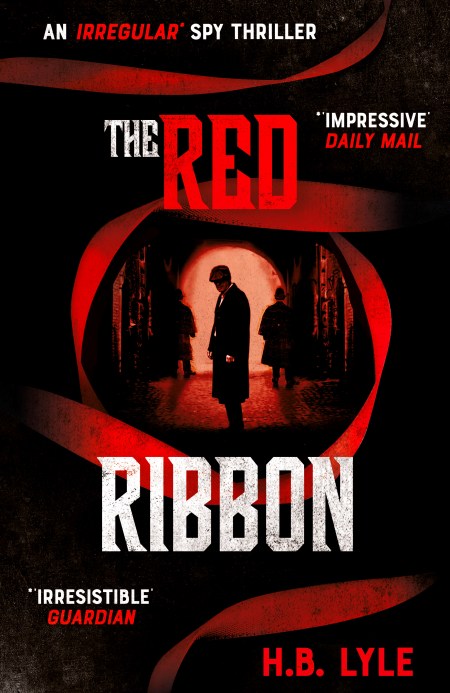
The Red Ribbon by H. B. Lyle

The Red Ribbon Cover.jpg

Publisher: Hodder & Stoughton

Publication Date – 23 August 2018

Amazon     Book Depository

Return to pre-World War I London for another compelling spy adventure in H. B. Lyle’s second book, The Red Ribbon, which is set in the same universe as Sherlock Holmes and features three exciting characters with an intriguing look at early 20th century British history and espionage.

In London, in 1910, Captain Vernon Kell is still attempting create a secret intelligence service capable of protecting England from foreign spies and infiltrators.  Despite the early success of the Secret Service Bureau, Kell’s organisation is constantly under pressure from the country’s politicians and is in danger of being absorbed into Special Branch of London’s police.

Unfortunately, Kell’s only agent, Wiggins, is distracted with his own cases and unwilling to play the political games needed to help the service survive.  Wiggins is the former leader of Sherlock Holmes’s street urchin surveillance organisation, the Baker Street Irregulars, and has picked up a few of his old master’s deductive tricks while retaining his lower-class charm and street smarts.  Wiggins is obsessed with finding the infamous anarchist, Peter the Painter, the man responsible for the death of one of Wiggins’s oldest friends, and is scouring the streets for him.

Looking for a missing girl on behalf of one of his contacts, Wiggins begins to investigate a mysterious embassy located in the affluent neighbourhood of Belgravia.  The embassy is actually a high-class brothel frequented by the rich and powerful of London.  When another girl associated with the embassy is found murdered, Wiggins attempts to find justice; however, the embassy is under the protection of someone Wiggins knows well: Tommy, a fellow former member of the Irregulars.

However, Wiggins’s personal investigations intersect with his work for Kell, as the two of them hunt for the source of a series of leaks at the highest level of government.  With the help of Kell’s wife, the suffragist Constance, Wiggins and Kell must find the connection between the events occurring around London in order to keep the country safe from sinister foreign influences.

The Red Ribbon is the follow-up to Lyle’s debut novel, The Irregular: A Different Class of Spy, and is the second book in the Irregular Spy Thriller series.  This is a great series that will appeal to a huge range of readers, as Lyle combines compelling historical fiction elements with a thrilling espionage story that has fictional links with one of the most iconic book series of all time, Sherlock Holmes.

The story within The Red Ribbon is split between the book’s three main protagonists and takes a look at each character’s different and exciting adventures.  Wiggins and Kell continue their missions from the first book, and while their investigations are ostensibly separate from each other, they eventually intersect in several clever ways.  The relationship between Wiggins and Kell is an important part of these two storylines, as Kell despairs of Wiggins’s personal investigations and wants Wiggins to solely work missions for the service.  The third focal character is Kell’s wife, Constance, who was a supporting character in the first book.  Constance becomes a much more significant character in The Red Ribbon, as the book focuses on her involvement with the suffragist and suffragette movements.  Both Wiggins and Kell become involved with Constance’s storyline in different capacities, while Constance provides significant assistance with her husband’s espionage work.  With three semi-connected stories, it does at times feel like there is too much going on for one cohesive narrative.  However, each of the stories comes together quite well in the end and provides the reader with an extremely captivating overarching narrative.

Having three separate storylines allows Lyle to highlight the differences in social classes during this historical period and highlights how different groups of people were treated.  Kell, as the influential gentleman, is forced to constantly deal with the upper-class politics and attitudes during his attempts to keep the service going.  Wiggins, who was raised on the street, deals more with the average Londoner and experiences the poverty and desperation many of them encounter.  He must also deal with the distain of the upper classes in the course of his espionage work.  While he is clearly the most competent agent in the entire British service, he is constantly looked down upon and ignored by his government superiors.  There are also several instances where Wiggins is assigned to infiltrate labour movements, something he is very reluctant to do due to his world views and background.  This divide often serves to create some significant tension with Kell, who, despite fully understanding Wiggins’s value, skills and point of view, is often exasperated by him.  The beefed-up storyline around Constance allows the reader a significant look at the suffragist movement and the early battles these women fought for equality.  In The Red Ribbon, Constance joins the much more militant suffragettes, and is constantly infuriated by the reactions of the male politicians and their oppressive policies.  The oppression of women also becomes a major point of conflict between Kell and Constance which results in a decline in their relationship, although the final payoff of this storyline is quite sweet.  I really enjoyed the way that Constance and Wiggins developed a fun comradery in this book, as their poor treatment by the upper-class men allow them to bond, with Wiggins even teaching Constance some anti-surveillance techniques.

Lyle cleverly incorporates several important historical events into this book, such as the funeral of Edward VII, the Black Friday suffragettes and suffragists protest outside Parliament and the Siege of Sidney Street.  These events are quite significant in their own right, and Lyle spends substantial time filling in their background and ensuring the reader is aware of why they are happening and why they are important.  However, they also serve as very compelling background events for the plot of The Red Ribbon and work well to enhance this already fascinating story.  In addition to these intriguing and important historical events, Lyle has also packed a number of historical figures into this story.  Quite a few prominent politicians and British civil servants have significant roles in the plot, including a young Winston Churchill, which makes the story feel a lot more authentic.  The author’s continued use of the enigmatic Peter the Painter as one of the book’s principal antagonists is another brilliant stroke, and the reader is provided with some intriguing theories about who he actually was and what his eventual fate was.  Lyle does slightly go overboard by adding in some other famous historical figures in small cameo roles, and the shoehorning in of people such as Charlie Chaplin and members of the 1910 British Antarctic Expedition seems a bit unnecessary.  That being said, it was amusing to watch Chaplin use his drunken tramp routine to help Wiggins escape a conflict in a theatre.

One of my favourite components of this book was the author’s detailed and unique look at British espionage and counter espionage in the early 20th century.  One of the book’s protagonists, Captain Kell, is an actual historical figure who is credited for creating Britain’s domestic spy service, which morphed into the modern MI5.  This fictionalised account of the early days of this organisation are quite fascinating, especially when the author looks at some of its early challenges, the political battles Kell might have had to face, and the sort of work this organisation was originally looking at.  In addition to the domestic espionage work, the protagonists of The Red Ribbon find themselves drawn into one of the most infamous espionage incidents of the era: the capture of British agents Captain Trench and Lieutenant Brandon in Germany in 1910.  This is a highly fictionalised account of the incident, as Lyle has inserted Kell and Mansfield Cummings, one of the founders of MI6, as being there.  It plays marvellously in Kell’s overall storyline, while also featuring some great scenes as the three protagonists’ attempt to evade arrest by the Germans.  Trench and Brandon are not portrayed in the best light, as Lyle has used them to further the class prejudices in Britain, portraying the two soldiers as quite incompetent spies who are captured as a result of wilfully ignoring Wiggins’s advice due to him not being a gentleman.

Another fun part of The Red Ribbon is the connection the book shares with the Sherlock Holmes novels.  The Irregular Spy Thriller series is set in the same universe as the Sherlock Holmes books.  Wiggins was mentioned several times in Arthur Conan Doyle’s original works as the leader of the Baker Street Irregulars.  As a result, Wiggins comes across as a rougher Sherlock Holmes, who uses the classic deductive method while also fighting, drinking and speaking in a lower-class manner.  As in the first book of this series, the great detective himself makes a brief appearance, providing Wiggins with a case-breaking suggestion, while casually enjoying his retirement.  The use of the Sherlock Holmes elements is definitely a defining element of the book, and while it is mostly used to draw interested readers into this historical spy thriller, Lyle successfully uses it to create a unique and enjoyable main protagonist.

B. Lyle has followed up his superb 2017 debut with another fun and exhilarating read. Continuing to use his Sherlock Holmes inspired character to great effect, Lyle weaves a full and captivating narrative that presents several unique stories chock full of adventure, mystery and interesting historical content. The Red Ribbon is an amazing second outing from Lyle which also sets up an exciting concept for a third book in the series.

My Rating:

Four and a half stars

Amazon     Book Depository

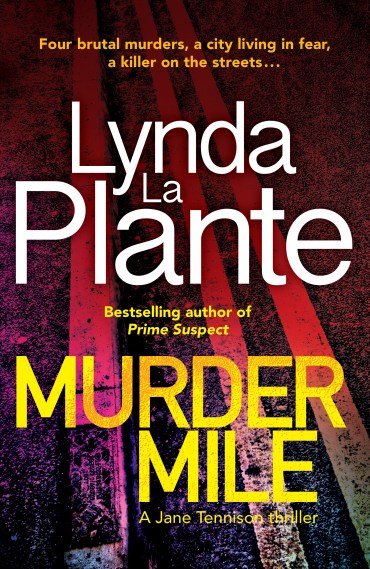
Murder Mile by Lynda La Plante

Murder Mile Cover.jpg

Publisher: Zaffre

Publication Date – 23 August 2018

Amazon     Book Depository

One of English crime fiction’s most distinctive voices, Lynda La Plante, returns with her iconic female detective, Jane Tennison, for another dark and shocking case.

In February 1979, recently promoted Detective Sergeant Jane Tennison has been posted to Peckham CID, one of the toughest beats in all of London.  Previously known as the Golden Mile due to its well-to-do shopping areas, the area is now in decline, a fact not helped by the garbage strikes besetting the entire city, ensuring that the entire area is covered rubbish and filth.

When the body of a young woman is found in the heart of Peckham, Jane and her team must investigate the suspicious circumstances surrounding her death.  But when another body is found nearby, the possibility of a serial killer raises all sorts of problems.  The media scrutinise the case and rename the area Murder Mile.  Even worse, the second victim’s son is well connected, and several important people want the matter dealt with quickly.

As more bodies are uncovered, Tennison must use all of her investigative ability to uncover this dark murderer, while also dealing with the police force’s inherent sexism and disregard for her talent that she has dealt with her entire career.  Can Tennison catch this killer, or will they find a terrible and unexpected way to win?

Lynda La Plante is a talented author and screenwriter responsible for several hit British crime series and movies.  She achieved early success with the 1983 television series, Widows, which has been adapted into a major motion picture set to be released in November this year.  Other successful shows that La Plante has created include Trial and Retribution and Above Suspicion, with nearly all of her books having been either adapted into screenplays or inspired by one of her televisions shows.  Murder Mile is the fourth book in her Jane Tennison series, which serves as a prequel series to one of La Plante’s most successful and iconic shows, Prime Suspect, which features Helen Mirren as an older Jane Tennison.  The first book in this prequel series, Tennison, also served as the basis for the short-lived prequel television series Prime Suspect 1973.

Murder Mile features a dark and disturbing mystery that serves as the central focus of this book.  The protagonist must investigate a series of murders spread out among the dilapidated Peckham area. La Plante has created an intriguing and compelling investigation storyline as Tennison and her team follow a series of promising leads across Peckham and the rest of London, finding clues in a variety of places, as well as several other bodies.  While the majority of the book leading up the conclusion of the story and the solution of the mystery is captivating in its own right, the best part of the book has to be its chilling conclusion.  Not only is the revealed antagonist a despicable creature, but the way in which they attempt to manipulate Jane and the rest of the police characters is just plain creepy.  The conclusion of the story and the ultimate reveal of the antagonist’s last actions are particularly shocking in their execution and extent.  Worse, both the reader and the protagonist can see that the villain is planning something, but you just cannot predict the terrible lengths they will go to win and spite the police.  This memorable conclusion serves as the perfect end to this dark and powerful story and represents some excellent writing from La Plante.

This story is set in 1970s London, and the author does a fantastic job bringing this iconic city to life during a period of economic downturn.  There is a certain gloom around the city, especially in Peckham, where the majority of the book’s investigation takes place.  The plot of Murder Mile is set during the infamous Winter of Discontent, a period of strikes and financial uncertainty that hit the country during 1978 and 1979.  There are several discussions about the situation from the characters and it is interesting to see a fictional perspective of this part of England’s recent history.  In addition, some of the physical effects of the ‘Winter of Discontent’ have some significant impacts on the case.  During January and February 1979, the waste collectors of London were on strike, resulting in a build-up of rubbish throughout the city.  As a result, many of the scenes set in the city feature streets strewn with garbage and littered with filth and rats.  La Plante also examines the parks that were filled with rubbish by London authorities as a stopgap measure for this situation.  This becomes particularly important in the story, as the police discover a dismembered body in one of these parks as the murderer attempted to utilise the situation for their own ends.  The author has also cleverly highlighted the police techniques and technologies that would have been available during the time.  Overall, La Plante has made full use of this chaotic period in Murder Mile, and readers will enjoy her vivid descriptions of these events.

In addition to the general descriptions of 1970s England, one of the key features of La Plante’s latest book is an examination of the inherent sexism in the London police force.  Jane as a Detective Sergeant must continue to fight to gain respect from her co-workers.  In Murder Mile she is constantly talked down to by her superiors, deals with disrespectful comments from the rank-and-file police, and must also deal with having her authority undercut by colleagues she considers to be her friends as they step in quickly to defend her.  It is infuriating to see how senior police ignore Tennison’s detective work and observations, especially as she is right most of the time.  This sexism also requires Tennison to act in a more maverick way, as her frustrations force her to work outside the main police investigation in order to prove herself – a decision that will have significant impacts on her life and career.

While the portrayal of sexism mentioned above has been used in all of the books of the Jane Tennison series, in Murder Mile La Plante has chosen to also focus on police homophobia and how it affects the investigation.  The police homophobia is quite prevalent throughout the series, especially when one of the suspects is revealed to be gay.  The police response to this is extreme, as several of the characters are quite hostile to this suspect and his relatives, alienating potentially helpful people in the investigation.  In addition, there is the stupid assumption that all homosexual males were automatically paedophiles, and this sends the investigation into several biased directions.  Tennison and several of the other characters attempt to change the minds of their colleagues, often without much success.  In addition, one of the more approachable and capable members of the police team is revealed to be homosexual in this book, which serves as a good counterpoint to the more old school and homophobic cops.  Overall, this is an intense and important part of the story, and it is intriguing to see how these old biases would likely have affected cases in the past.

Crime legend Lynda La Plante returns in fantastic form with Murder Mile, an exciting continuation of her Prime Suspect prequel series.  Featuring some deep and powerful examinations of the 1970s London police force, this absorbing mystery takes its readers to the edge of darkness and beyond.  Featuring an incredibly dark and unforgettable ending, Murder Mile is another exceptional release from La Plante and a highly recommend piece of crime fiction.

My Rating:

Four and a half stars

Amazon     Book Depository

The Fire Court by Andrew Taylor

The Fire Court Cover

Publisher: Harper Collins

Australian Publication Date – 19 March 2018

World Publication Date – 5 April 2018

Amazon     Book Depository

Bestselling author Andrew Taylor returns to the 1660’s and the scorched city of London with the thrilling murder mystery, The Fire Court.

It has only been a few short months since the Great Fire of London ravaged the city, killing many and destroying a large number of houses and buildings.  The city is now finally rebuilding itself, aided by the Fire Court, an incorruptible institution that examines legal cases around the rebuilding and ensures the best result for the city.  While the Fire Court is supposed to be neutral in all cases, there are some who seek to use it their advantage.

James Marwood, a low-level government official, is one of the few people in London doing better now than before the fire.  However, James is still caring for his ailing father, a convicted traitor whose mind has been affected by his time as a prisoner.  When his father claims to have found a murdered woman at the site of the Fire Court, James initially assumes that his father imagined the situation.  But when his father is run down in the street and killed, James begins to suspect he may have actually witnessed a murder.

As James begins to look into this possibility, he soon finds evidence that connects his suspicions to an upcoming Fire Court case that will decide who will rebuild a number of profitable properties.  His investigation once again leads him to an old acquaintance of his, Cat Lovett, the daughter of a regicide.  James previously helped Cat escape retribution for her father’s crimes, and he now turns to Cat and her new employer to gather information on the upcoming case.

When more people connected to the case turn up dead and their investigation is hampered by influential members of the court, James and Cat begin to suspect that the Fire Court may not be as incorruptible as they thought.  It soon becomes clear that death is once again stalking the streets of London and this time they will not escape unscathed.

The Fire Court is the follow-up to Taylor’s 2016 hit, The Ashes of London.  Taylor is a veteran author and has significant experience writing a range of different genres and novel types.  He has produced over 40 novels since 1982, mainly focusing on crime fiction, with some of his more recent books featuring captivating historical elements.

Taylor’s last book, The Ashes of London, was a fantastic piece of historical crime fiction that made full use of its distinctive setting of the Great Fire of London.  Having the characters solve a crime and explore the city during the immediate aftermath of such a devastating historical event was masterstroke from Taylor which has resulted in a superb and memorable piece of literature.  In The Fire Court, Taylor returns to this fascinating period to show how much rebuilding happened in the six months after the destructive fire.  The focus on the historical Fire Court that was instituted in the aftermath of this event is the most intriguing part of Taylor’s new book, and readers will be extremely interested in learning more about this unique bit of history.  Taylor does a tremendous job of introducing the role that the Fire Court played in the rebuilding of the city and how it worked.  The reader is treated to several scenes that feature cases before the court, showing how the verdicts were reached.  Several of the Fire Court’s actual judges are included as characters, which is a nice touch of historical realism.  Overall, the examination and inclusion of the historical Fire Court is a notable piece of this novel and readers will appreciate how Taylor has interlaced his complex murder mystery with this interesting historical setting.

In addition to the fire-related historical elements, Taylor has also done an outstanding job of displaying what the city of London would have looked like in the 1660s.  During their investigation of the crime the protagonists visit large and varied swathes of the city which are vividly described, which brings readers right in to the middle of this vibrant and bustling city.  This base historical setting is well written, and readers will enjoy this incredible romp back in time.

The central plot of this novel revolves around a powerful murder mystery storyline and investigation.  The Fire Court is told from the perspective of three separate narrators – James, Cat and Jemima – each of whom tries to find answers in their own way.  The investigation into the murder is very intense, and what initially starts as a single potential murder spirals into a series of killings as the culprits attempt to cover up their crimes.  This overall storyline is well written, filled with suspense, and very compelling.  Readers will be captivated by the way fire is used by both the protagonists and the antagonists throughout the book.  The use of such a tool is significant, as all the London-based characters know the power of fire and its destructive potential.  It is a potent symbol of criminal wrongdoing in this series, and the audience will be shocked by how it affects the lives of the protagonists in this book.  In addition to the symbolic use of fire, Taylor also includes a significant twist at the conclusion of the investigation that will leave the reader reeling and thinking for a very long time.

Taylor has produced a remarkable and enjoyable murder mystery that makes full use of its unique setting.  Readers will love the detailed examination of the aftermath of London’s most destructive fire and will find themselves enthralled by an excellent mystery with one hell of an ending.  This is a highly recommended read from an exceptional author.

My Rating:

Four stars

Amazon     Book Depository

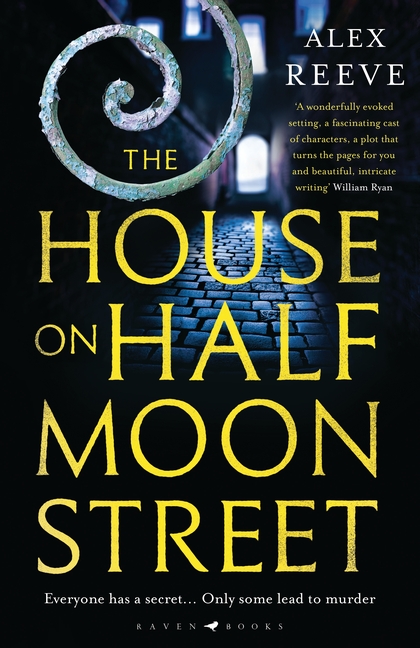
The House on Half Moon Street by Alex Reeve

The House on Half Moon Street Cover

Publisher: Raven Books

Publication Date – 3 May 2018

Amazon     Book Depository

Prepare yourself for an extraordinary tale of love, life and murder in Victorian London, all with a unique twist that will make this book one of the most talked-about pieces of historical fiction this year.

In London, in 1880, Leo Stanhope is a bright young man living the city life.  He is employed as an assistant to a London coroner and is in love with Maria, a high-class prostitute.  However, Leo also has a big secret: he was actually born Charlotte.  Born a woman, but knowing deep inside that he was a man, he ran away as a teenager and has been living as Leo ever since.  Only a few trusted people know this, and Leo fears the day he’ll be discovered.

When Maria is found dead, Leo finds himself accused of her murder.  With his life falling down around him, Leo starts his own investigation into the case.  But what does Maria’s death have to do with another corpse found drowned in the river, and how do Maria’s rich employers and an infamous London abortionist fit into the case?  Leo will risk everything to find Maria’s killers, even if that means revealing his biggest secret.

This is an outstanding debut from author Alex Reeve, who has created a fabulous addition to the historical crime genre.  The House on Half Moon Street has massive potential to expand out into a fantastic and iconic new series.

Without a doubt, the most distinctive and memorable part of The House on Half Moon Street is the main character, Leo Stanhope, who is a transgender man.  The first thing that needs to be mentioned is that Reeve has done a great job of writing this character and has produced an appropriate and non-controversial description of a transgender person.  There is a lengthy examination of the protagonist’s views about his identity, which includes descriptions of his childhood, memories of how he has always felt this way and internal monologues on how uncomfortable he felt behaving as a woman.  Reeve also does a fantastic job of portraying Leo’s fears and frustrations at the way he has to live and the way some characters, such as members of his family, treat him.  Overall, this is an emotional and insightful examination of a transgender character in a historical setting, and Reeve has chosen an excellent protagonist for his novel.

The focus on a transgender main character and gender issues works well with Reeve’s great use of the Victorian setting, as he explores how transgender people lived in historical times.  As described in the book, transgender individuals were not treated well within Victorian England.  In one scene Leo describes how someone who was living in a similar situation to himself had recently been discovered by the authorities and institutionalised as a result.  The views and responses of the people who discover his secret also reflect the attitudes of the time, although there are some obvious parallels with some modern opinions, resulting in thought-provoking social commentary.  There are also some interesting descriptions of the techniques, tools and clothing that the protagonist uses to hide his female characteristics and make himself appear more masculine.  Due to differences in technology and social expectations, these techniques are obviously different from modern alternatives and represent some interesting hypotheses from Reeve.

There are also some amazing descriptions of Victorian London, which serves as a great backdrop for this story.  Not only does the dingy Victorian setting help to highlight Leo’s dark emotional state throughout the book; it is also the perfect background for a murder mystery that revolves around the murky criminal underworld.

On top of the compelling protagonist and the wonderful use of setting, those who read The House on Half Moon Street will also be treated to a top-notch murder mystery that also delves into the criminal and policing elements of 1880s London.  The investigation into the deaths is an intense experience that takes the protagonist through a series of different suspects and clues, creating an intriguing and complex case.  The emotional impact of the case on Leo is plainly obvious due to superb story narration, and this proves to be engaging to the reader, who becomes invested in solving the case.  The final solution to the book’s mystery is very clever, and the readers will love how the case comes to its conclusion.

Historical fiction buffs will also enjoy the examination of law and order during the era, as Reeve examines several police institutions, including the work of the coroner during the time.  The protagonist also encounters some of the city’s criminal elements, and there are some surprising crimes that are covered within the book.  Reeve’s use of a transgender protagonist once again comes into play during the character’s investigations, and the reader will be drawn into the scenes where Leo attempts to hide his previous life from the police and criminals.

The House on Half Moon Street is a phenomenal new book that takes a deep and sensitive look at transgender issues in Victorian London whilst also making use of a dark and detailed historical setting and a first-rate overarching murder mystery.

My Rating:

Four stars

Amazon     Book Depository