Star Wars: Dooku: Jedi Lost

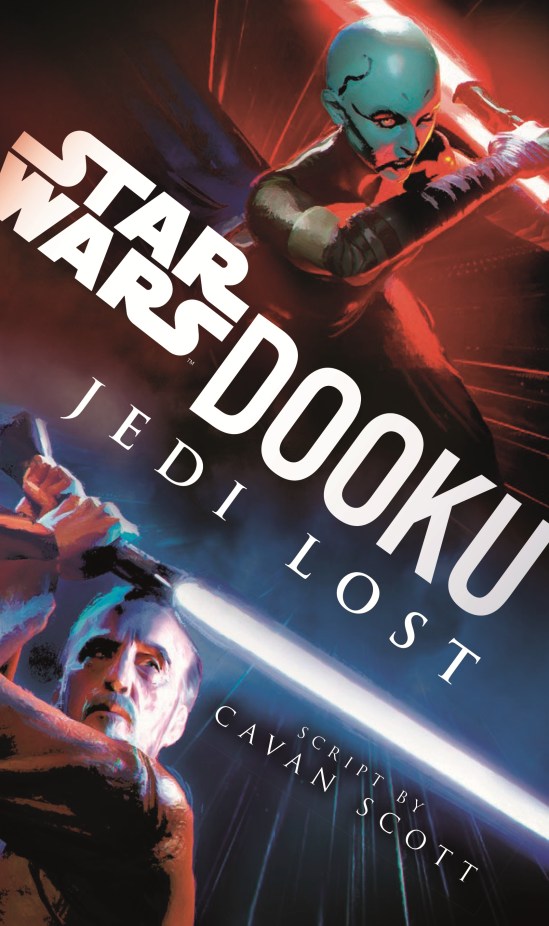
Dooku - Jedi Lost Cover

Publisher: Penguin Random House Audio (Audio Production – 30 April 2019)

Script: Cavan Scott

Cast: Orlagh Cassidy, Euan Morton, Pete Bradbury, Jonathan Davis, Neil Hellegers, Sean Kenin, January LaVoy, Saskia Maarleveld, Carol Monda, Robert Petkoff, Rebecca Soler and Marc Thompson.

Length: 6 hours and 21 Minutes

My Rating: 4.5 out of 5 stars

Amazon

Prepare for another deep dive into the Star Wars canon with an audio drama that explores the past of one the biggest villains from the prequel movies, Count Dooku, with Dooku: Jedi Lost.

Dooku: Jedi Lost was one of the more interesting pieces of Star Wars fiction that was released last year. Based on a script written by Cavan Scott, an author who has written a multitude of comics, novels and radio drama tie-ins for several different franchises, Jedi Lost was originally released as an audio production featuring several different actors, with the script also released in novel format a few months later. I have been meaning to check out this unique story for some time, as it was one of the few pieces of Star Wars fiction that I did not read in 2019. This is actually one of the first entries I am ticking off my Books I Wish I Read in 2019 list (barring The Russian by Ben Coes, which was an honourable mention), and I am really glad I decided to check this piece of fiction out.

For many in the galaxy, Count Dooku of Serenno is one of the most dangerous and evil villains that ever lived. The leader of the ruthless Separatists during the Clone Wars, apprentice to Darth Sidious and master of several ruthless assassins, Dooku is rightfully feared and hated by many. However, he once was one of the most respected and powerful members of the Jedi Council. A former apprentice to Yoda himself, and the mentor to two exceptional Padawans, Rael Averross and Qui-Gon Jinn, Dooku dedicated decades of his life to the Jedi, before suddenly leaving and taking a different path. But how did such a revered Jedi turn to the dark side of the Force? That is a question that Dooku’s new apprentice, Asajj Ventress, is trying to understand when she is given a mission to find Dooku’s missing sister. Searching for leads through Dooku’s journals and messages, Ventress is given unprecedented access into Dooku’s past.

The son of the ruthless Count of Serenno, Dooku was abandoned as baby by his father the moment his abilities with the Force were identified, only to be rescued by Yoda. Upon learning the truth about his birth years later, Dooku struggles with balancing his duties as a Jedi with his connections to his family and home planet. Conflicted, Dooku finds comfort in his friendship with the troubled young Jedi Sifo-Dyas and the mysterious Jedi Master Lene Kostana, whose mission of locating and studying Sith artefacts fascinates Dooku and leads him to his first experiences with the dark side of the Force. As Dooku rises through the ranks of the Jedi Order, he finds himself stymied by the bureaucracy and corruption of the Republic and the hypocrisy of the Jedi Council. As the first waves of darkness fall across the galaxy, how will the younger Dooku react, and what will Ventress do when she realises what sort of person her new master is?

Dooku: Jedi Lost is an incredible and deeply captivating piece of Star Wars fiction that cleverly dives into the past of one of the franchise’s most iconic villains to present a compelling and intriguing story. I ended up listening to the full cast audio production of Jedi Lost, and I really enjoyed this fantastic and intriguing book. The plot of Jedi Lost is uniquely set across several different time periods, with the details of Dooku’s life being relayed to a younger Ventress at the start of her Sith apprenticeship through journal entries, detailed messages, oral histories and even some visions of the past. Scott did an excellent job of setting his story across multiple time periods, which allowed Jedi Lost to showcase the life of the titular character while also presenting an exciting, fast-paced and at times dramatic narrative that includes several plot threads that jump from timeline to timeline. All of this results in an excellent Star Wars story which features some fascinating inclusions to the franchise’s lore and which is enhanced by the incredible audio production.

At the centre of this book lies an intriguing and captivating exploration of one of the most significant antagonists in the Star Wars canon, Count Dooku. Jedi Lost contains quite a detailed and compelling backstory for this character, and you get to see a number of key events from his life. This includes his complicated childhood, the forbidden communication he had with his sister, the connection he maintained with his home planet, parts of his apprenticeship under Yoda, the tutelage of his own two apprentices, his time on the Jedi council, his first brushes with the dark side of the Force and finally the chaotic events that led him to leave the Jedi order and take up his position as Count of Serenno. Every part of this background proved to be extremely fascinating and it paints Dooku as a much more complex character, with understandable motivations and frustrations. He actually comes across as a much more sympathetic person thanks to this production, and readers are going to have an amazing time finding out what events and betrayals drove him away from the Jedi and towards his new master. The storytelling device of having Ventress read and analyse Dooku’s old messages and journal entries ensures that the story quickly jumps through the events of his life, and no key events really seem to be missing. I personally would have like to see some more detail about Dooku’s training under Yoda or his teaching of his apprentices, although I appreciate that this was already an expansive production and there was a limit on what could be included in the script. I also wonder what sort of story this could have turned into if this was told exclusively from Dooku’s point of view, however, this first-person narration probably wouldn’t be as feasible as a full cast audio production. Overall, those fans who check out Jedi Lost are in for quite an in-depth and fascinating look at the great character that is Count Dooku, and I am sure many will enjoy this exciting examination of his backstory.

In addition to exploring the character of Count Dooku, Jedi Lost also presents those dedicated Star Wars fans with a new canon look at the Star Wars universe before the events of The Phantom Menace. You get an intriguing look at the Republic and the Jedi Order in the years leading up to events of the Skywalker Saga, and it was fascinating to see the similarities and differences between the various eras in the Star Wars lore. In particular, I found in interesting to see that the groundwork for the Clone Wars and the fall of the Jedi order had already begun, with ineffectual leadership, corruption in the Senate and complacency in the Jedi Council all eventually leading the dark events of the future. Jedi Lost also shows the earlier days of several Jedi who were supporting characters in either the movies or the animated shows. In particular, this entry focuses on Sifo-Dyas, the Jedi who foresaw the Clone Wars and was manipulated into creating the Republic’s clone army. The story explores how Dooku and Sifo-Dyas were close friends growing up, while also showing the origin of his prescient powers, and he proved to be a rather compelling side character. Jedi Lost also saw the introduction of Jedi Master Lene Kostana to the canon. Lene Kostana was a rebellious Jedi who scoured the galaxy for Sith artefacts in the belief that the Sith were going to rise again. She proved to be an interesting mentor character for Dooku, and her recklessness and unique way of thinking had some major impacts in Dooku’s character development.

I also liked how this piece of Star Wars fiction focused on the early career of Asajj Ventress, one of the best Star Wars characters introduced outside of the movies. Much of the story is set immediately after Dooku claims Ventress as his apprentice and personal assassin, which allows the reader a compelling view of Ventress’s early brushes with the dark side of the Force and the initial corruption and manipulation she experienced under Dooku. This proved to be quite an interesting part of the novel, especially as the reader got to see Ventress’s thoughts and reactions to several revelations about Dooku’s past. Thanks to the way that the audio production is set out, Scott also included a rather cool element to Ventress’s character in the way that she is hearing the voice of her dead former Jedi Master and mentor, Ky Narec. While Ky Narec’s voice was mainly included to allow Ventress to share her thoughts in this audio production without becoming a full-fledged narrator, this ethereal character gives the reader a deeper insight into Ventress’s character. I also enjoyed the discussion about Ventress’s past with Narec, and it helped produce a much more in-depth look at this fascinating character from the expanded universe.

Like most pieces of expanded universe fiction, Jedi Lost is best enjoyed by fans of the Star Wars franchise, who are most likely to appreciate some of the new pieces of lore and interesting revelations. This production also bears some strong connections with another piece of Star Wars tie-in fiction that was released last year, Master & Apprentice by Claudia Gray. Master & Apprentice was one of the most impressive Star Wars novels released last year, and it featured a story that focussed on Dooku’s apprentices, Rael Averross and Qui-Gon Jinn. Jedi Lost heavily references some of the events that occurred or are represented in Master & Apprentice, and it was interesting to see the intersections between the two separate pieces of fiction. I particularly enjoyed seeing more of the unconventional Jedi, Rael Averross, and it was great to see some additional interactions between the proper and noble Dooku, and this rough former apprentice. Despite all of this, I believe that Jedi Lost can easily be enjoyed by more casual Star Wars fans, although some knowledge about the prequel films is probably necessary.

People familiar with this blog are going to be unsurprised to learn that I chose to listen to the audio production of Jedi Lost rather than read the book that was produced from the script. I have a well-earned appreciation for Star Wars audiobooks, which are in a league of their own when it comes to production value; however, Jedi Lost is on another level to your typical Star Wars audiobook. As I mentioned above, Jedi Lost was released as a full cast audio production, which is essentially an audio recording of a play. This was the first piece of Star Wars fiction I had experienced in this medium, and I really loved how it turned out. The cast did an amazing job with the script, and they acted out a wonderful and highly enjoyable production which I thought was just incredible. The production runs for just over 6 hours and 20 minutes, and they manage to fit a lot of plot into this shorter run-time (in comparison to normal Star Wars audiobooks), as the use of dialogue results in a lot less narration. Due to the way Jedi Lost is structured, with Ventress reading out journal entries or having Dooku’s tale told to her, there is a little more narration of events then a production like this would usually have. I think this was necessary to ensure the reader was clear on what was going on at all times, and it didn’t ruin the overall flow of Jedi Lost in any way.

Jedi Lost features a very impressive and talented group of actors who go above and beyond to make this an awesome audio production. As you can see from the cast list above, this production made use of 12 separate narrators, each of whom voice a major character (with some of the actors also voicing some minor characters as well). Many of these narrators have expansive experience with voicing Star Wars audiobooks, and I have actually had the pleasure of listening to several of these actors before, including Euan Morton (Tarkin by James Luceno), Jonathan Davies (Master & Apprentice), Sean Kenin (Death Troopers by Joe Schreiber), Robert Petkoff (multiple Star Trek novels, most recently Picard: The Last Best Hope by Una McCormack) and Marc Thompson (Dark Disciple by Christie Golden, Loki: Where Mischief Lies by Mackenzi Lee and Scoundrels and Thrawn by Timothy Zahn).

There is some truly outstanding audio work done in this production, with several actors producing near-perfect replication of several iconic characters from the Star Wars franchise. I particularly have to praise Orlagh Cassidy for her exceptional portrayal of Asajji Ventress; her take on the character sounded exactly like the Ventress that appeared in The Clone Wars animated show. I was also deeply impressed by Jonathan Davis’s Qui-Gon Jinn and Marc Thompson’s Yoda, both of which were incredible replications of the characters from the movies. Davis also did a great job once again portraying Rael Averross, a fun character who he first brought to life in Master & Apprentice, and I loved the somewhat laidback voice he provides for Rael, especially as it reminds me of an older cowboy character from a western (I personally always picture Sam Elliott when I hear it). Other standout stars in this production include Euan Morton, who came up with a great take on the titular character Count Dooku. Morton was able to produce an impressive and commanding presence for this character, and he did a great job modulating the character’s voice to represent the various jumps in age that the character experienced. The same can be said for Saskia Maarleveld’s Jenza and Sean Kenin’s Sifo-Dyas, whose characters also aged extremely well throughout the course of the production. I also really loved the voice that Carol Monda provided for new character Lene Kostana, and I felt that it fit the character described in Jedi Lost extremely well. I honestly loved all the rest of the voices that were provided throughout this production, and each of them brought some real magic to Jedi Lost.

Just like with a normal Star Wars audiobook, one of the standout features of the Jedi Lost production was the incredible use of the franchise’s iconic music and sound effects. I really cannot emphasise enough how amazing it is to have one of John Williams’s epic scores playing in the background of a scene. Not only does it really get you into the Star Wars zone, but this music markedly enhances the mood of any part of the book it is playing in. Hearing some of the more dramatic scores during a touching or tragic scene really helps the reader appreciate how impactful the sequence truly is, and nothing gets the blood pumping faster during an action sequence than Duel of the Fates or some other fast-paced piece of Star Wars music. The sound effects utilised throughout this production are not only really cool but they also have added significance for an audio production like Jedi Lost which relies on dialogue rather than narration to establish the scene. Having the various classic Star Wars sound effects reflect what is going on can be really helpful, and often the clash of lightsabers and the pew-pew of blaster bolts give life to a battle sequence. I always appreciate the way that certain sound effects can help paint a picture of what is happening in the room that the dialogue is taking place. Having the susurration of a crowd or the light hum of a starship engine in the background always makes a book seem more impressive, and it makes for a fun overall listen.

Dooku: Jedi Lost was an incredible and wonderful production which I had an extremely hard time turning off. Cavan Scott’s clever and intricate script, combined with the outstanding audio production, is a truly awesome experience which I deeply enjoyed. I loved learning more about the character of Count Dooku, and I think that Scott came up with a fantastic and intriguing background for the character. Jedi Lost is an excellent piece of Star Wars fiction, and I am extremely happy that I listened to it. Highly recommended to all Star Wars fans, and if you decide to check out Jedi Lost, you have to listen to the spectacular audio production, which is just amazing.

Amazon

Star Wars: Doctor Aphra: Volume 6 – Unspeakable Rebel Superweapon

Doctor Aphra Unspeakable Rebel Superweapon

Publisher: Marvel Comics (Paperback – 10 December 2019)

Series: Doctor Aphra – Volume Six

Writer: Simon Spurrier

Pencilers: Wilton Santos, Caspar Wijngaard, Andrea Broccardo and Cris Bolson

Inkers: Marc Deering, Walden Wong and Scott Hanna

Colour Artists: Chris O’Halloran and Stephane Paitreau

Letterer: VC’s Joe Caramagna

Length: 112 pages

My Rating: 5 out of 5 stars

Amazon

The most devious woman in the galaxy, Doctor Aphra, is back, and she’s got both side of the Galactic Civil War gunning for her in the sixth volume of one of the best Star Wars series out there. I have been meaning to review this volume since it first came out in December. However, I just picked up the seventh and final volume of the current run of Doctor Aphra, so I thought I would quickly review this volume first before I get around to that.

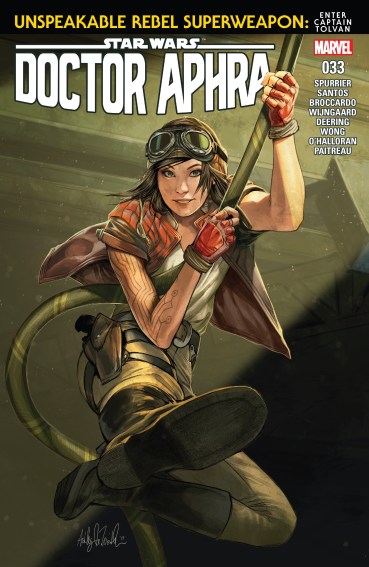
DoctorAphra-32

Doctor Aphra is one of the few ongoing Star Wars comic book series that has been released in the last couple of years, and in my opinion it is one of the strongest Star Wars series out there. The Doctor Aphra comics are set in the period of time between the fourth and fifth Star Wars films (A New Hope and The Empire Strikes Back), and follow the adventures of Doctor Chelli Aphra, renowned archaeologist, adventurer and master criminal. Aphra is an original character who was introduced in the first volume of the 2015 Darth Vader series, Vader, where she served as Darth Vader’s secret agent. Following the conclusion of the Darth Vader series, Aphra, who proved to be a very popular character, received her own spin-off series, which followed on after the events of Darth Vader and feature Aphra as she attempts to make money while trying to ensure Vader doesn’t find out that she is still alive. This series was initially written by one of the original creators of the Doctor Aphra character, Kieron Gillen, however, the second half of the series has been written by Simon Spurrier. Spurrier is the sole writer of this sixth volume of Doctor Aphra, which also features the artistic talent of a several talented artists.

In Unspeakable Rebel Superweapon, Aphra is up to her old tricks again. Despite only recently recovering from a life-threatening injury, Aphra has taken on a dangerous job robbing an alien robot death cult shrine with the help of her new sidekick and ward, Vulaada. However, while aboard the shrine, Aphra notices an ancient Jedi weapon, a sniper rifle that utilises lightsaber technology to kill opponents from vast distances. Unable to help herself, Aphra steals the rifle, starting a chaotic chain of events across the galaxy.

Already extremely unpopular with the Empire, this theft pops Aphra to the top of their most wanted list with a hefty bounty placed on her head. Captured by the Rebel Alliance first, Aphra learns that her stolen rifle is the key to a secret rebel superweapon that they plan to use to assassinate the Emperor. Sensing an opportunity to make some money and permanently get the Empire of her back, Aphra recruits her old associate, the Wookiee Black Krrsantan, in order to steal the rifle back from the Rebels. However, this puts her into conflict with her ex-girlfriend, Captain Tolvan, who is now working for Rebel Intelligence.

DoctorAphra-33

As Aphra recovers the rifle and flees to the Empire, she finds herself face to face with the mysterious Imperial Minister for Propaganda and Misinformation, Pitina Voor, the woman behind the latest Imperial manhunt for Aphra. Voor has plans for her, and Aphra is right in the middle of a vast scheme involving both the Rebels and the Empire. However, no plan has ever survived contact with the good doctor, especially when Aphra has revenge on her mind.

Unspeakable Rebel Superweapon was a superb and outstanding addition to the excellent Doctor Aphra comics, and this might actually be one of the strongest volumes in the entire series. Author Simon Spurrier tells a tight and compelling story within this volume which not only dives back into the past of the series’ titular character but which also showcases new elements of both sides of the Galactic Civil War. You also see the welcome return of several of the best characters from the series, such as Black Krrsantan and Aphra’s love interest, Captain Tolvan, as well as the introduction of an intriguing new antagonist. Featuring issues #32 – 36 of the Doctor Aphra series, this volume is a riot from start to finish (hell, the last two pages are the best in the entire volume), and I really loved the captivating tale that Spurrier wove together in these issues, especially as it features the series trademark dark humour and the focus on its self-destructive and conniving main character.

At the centre of Unspeakable Rebel Superweapon lies an amazing narrative of schemes, plots and lies as Aphra is hunted and manipulated by elements of both the Empire and the Rebel Alliance. Thanks to a recent archaeological theft, Aphra is thrust into the midst of a Rebel conspiracy to kill the Emperor and must decide what to do. Of course, Aphra being Aphra, she goes with the course of action that benefits herself the most and ends up backstabbing and manipulating both the Rebels and the Empire. This leads to some great scenes, including a heist aboard a Rebel spaceship and a sequence where Aphra hacks the entire Imperial communications system in order to sing her praises as an Imperial hero in order to avoid a summary execution. However, not everything is as it seems as the various sides are all trying to manipulate Aphra to their own ends, which results in a surprising number of different twists and turns (or as one character puts it “that is the most convoluted plan I’ve ever heard”). It was fascinating to see Aphra, the ultimate manipulator, being played by so many different sides, each of whom thinks they know how she is going to react. Aphra manages to end up on top, but it was cool to see the various ways she managed to get to the bottom of the plans surrounding her and use it to her own ends. Her motivations for doing so were really compelling, and it was amazing how the creative team had been building up to them throughout the course of the book. Of course, it doesn’t all end up Aphra’s way, and the end result of her schemes sees her come full circle to the last place she wants to be. This all makes for one hell of thrilling main storyline of intrigue and deception, and I really loved where all the twists and turns went.

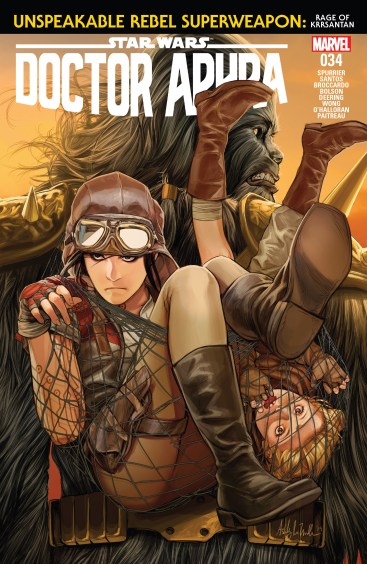
DoctorAphra-34

Just as with the rest of the entries in this series, one of the best things about the Doctor Aphra series is the titular character herself. Aphra is a complex and haunted character who seemingly lacks a moral code and will only do what is in her own best interest. The character has a rather flippant and disrespectful attitude, and most of this volume’s amazing humour is down to her clever quips and humorous observations amongst the more serious Star Wars characters. One of the things that I have really enjoyed about the Doctor Aphra series has been the examination of Aphra’s self-destructive tendencies and the way that she makes the lives of everyone she comes into contact with worse. This is continued once again in Unspeakable Rebel Superweapon, as she runs from one bad situation to the next, with her every action making her life and the lives of those around her infinity more miserable and more complicated, which makes for some very dramatic and emotional sequences. This is such an expected trait that many of the characters who Aphra has dealt with in the past or who have studied her actually expect her to make these bad or selfish decisions, and I really liked the way that this was a central plot point in the intrigue and espionage storyline. I also loved Aphra’s interactions with her love interest, Captain Tolvan, especially because, during their last meeting, Aphra purposely altered her memories to make her believe she had killed Aphra in a jealous rage. While Aphra did this with the best of intentions (it was the only way to save both Aphra and Tolvan from Vader), this has obviously had a major negative impact on their relationship, and Tolvan now actively loves and hates Aphra in equal measure and apparently has zero trust in her. This is one of the many things haunting Aphra in this volume, as she clearly knows the damage she has done to woman she loves: “I broke her heart. She’s too smart to ever help me again.” Of course, this fraught relationship is another part of the intrigue surrounding Aphra, and it was rather clever the ways in which both sides tried to manipulate Aphra through it.

In addition to the all the awesome character work happening with Aphra in the present, the readers of this volume are also treated to a look back at the characters past. In particular, you finally get to see Aphra’s mother for the first time and learn the tragic circumstances around her death. This has been hinted at for some time, all the way back to the second volume of the 2015 Darth Vader series, Shadows and Secrets. As a result, it was great to finally see the full extent of this character background, and it was fascinating to see what happened and how this has impacted on the personality of Aphra. I enjoyed the way in which the scenes from the past were mirrored in the scenes from the present, and I really liked the similarities in the way that Aphra was raised with the harsh way she is treating her new ward, Vulaada. I was also impressed by the way in which seemingly innocuous details from Aphra’s past suddenly had a big impact on her current story, and the creative team did a great job hinting about these impacts throughout the entire volume. All of this helps build up a much more complex story around the character that is Aphra, and I found this dive into her past to be extremely compelling.

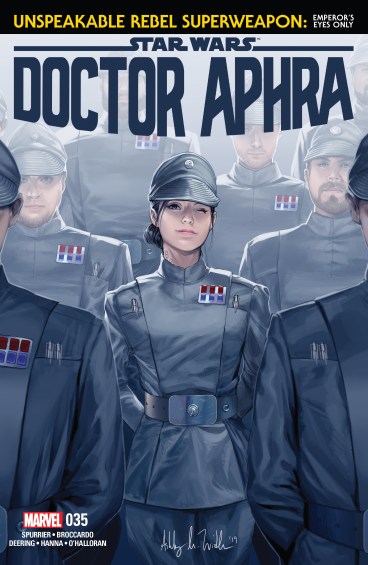
DoctorAphra-35

I also need to say how much I loved the parts of this book that featured Darth Vader, whose villainy and hatred for Aphra shine through in the few short scenes that he has. Aphra and Vader have a complicated history together, and Vader is desperate to kill Aphra once and for all (she’s faked her death on him a few times already), as she is the only living person in the galaxy who knows about his obsession with Luke Skywalker and his plans to overthrow the Emperor. Vader has two sequences in this book, both of which revolve around his determination to kill Aphra, no matter the perceived costs. While the first is really good, mainly due to Vader answering an Imperial officer’s request to state his rank with “Lord”, nothing quite beats the second appearance on the last two pages of the volume. After apparently beating all of her opponents, Aphra is sure of her safety due to her status as an Imperial hero, right up until Vader appears, lopping off heads with his lightsaber. The moment Aphra sees him, she knows she and Vulaada are dead, and she immediately hugs Vulaada and gets her to close her eyes. I really loved this scene, especially the resigned way in which she responds to Vulaada’s frantic belief that them being heroes is going to save them with “he doesn’t care”. This was a pretty outstanding end to the entire volume, and it was amazing to see the next chapter of the turbulent relationship between Aphra and Vader.

The Doctor Aphra series has always done a great job showing off several different sides of the Star Wars universe, including giving a closer look at parts of its criminal underbelly and its archaeological sector. However, in this book, we get to see new sides of both the Empire and the Rebel Alliance. In particular, we get to see the Empire’s Coalition for Progress, a sinister organisation led by new antagonist Pitina Voor that is dedicated to expanding and maintaining the Empire through manipulation, trickery and propaganda, rather than brute force. This is rather fascinating inclusion into the canon, and it was rather interesting to see a whole new side to the way that the Empire controlled the galaxy. Voor is also a rather intriguing character, with a unique vision for how the Empire should be run and maintained, and it was kind of fun to see her gripe about the PR problems that occur when you are being ruled by Sith Lords (I had to agree, the Emperor really isn’t adequately loveable). They also have a rather nifty little museum dedicated to some of the Empire’s greatest victories and propaganda coups, which the artistic team filled with several Easter eggs. I was also rather impressed by the way that the creative team explored the darker side of the Rebel Alliance by examining the covert and morally ambiguous actions of their intelligence agency. This is something that has been explored before in some other Star Wars entries, such as in Rogue One, but this volume of Doctor Aphra takes it to a new extreme with Rebel Intelligence apparently plotting to build a miniature Death Star in order to take out the Emperor and win the war. I rather liked this darker side of the Rebels, and it was interesting to see more of a Rebel organisation that uses less moral tactics to achieve their goals.

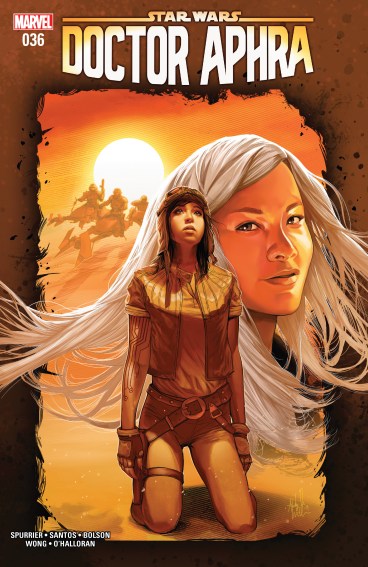
DoctorAphra-36

Unspeakable Rebel Superweapon features the work of several different artists, each of whom worked on a couple of different issues within the volume, which results in an interesting combination of styles. This means that this volume of Doctor Aphra contains a range of different art styles and techniques across the various issues. I actually liked the myriad changes that occurred issue to issue, and it was fantastic to see the different styles and artistic ideas that this large team produced. This volume contains some rather impressive and beautifully drawn scenes and sequences, which fit perfectly around Spurrier’s compelling story and which work really well together. The end result is a fantastically drawn and executed comic, which is a delight to look at.

This sixth volume of the always entertaining and incredible Doctor Aphra series, Unspeakable Rebel Superweapon, is an outstanding addition to the series, and it is one that I had an amazing time reading. This volume contains a complex plot of intrigue and doublecrosses, which sets the loveably dysfunctional protagonist down another road of self-destruction and manipulation in order to survive. Filled with some excellent and memorable story moments, and an incredible conclusion to this volume’s key storyline, Unspeakable Rebel Superweapon is relentlessly entertaining and endlessly captivating, and I had an absolute ball unwrapping it. A highly recommended read; if you have not read any Doctor Aphra yet, then you are missing out!

Amazon

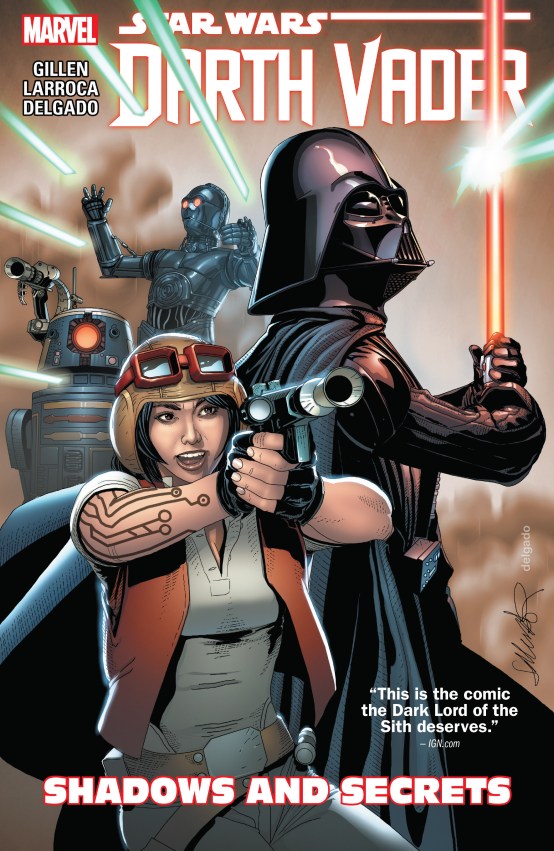
Throwback Thursday – Star Wars: Darth Vader (2015): Volume 2 – Shadows and Secrets

Darth Vader - Shadows and Secrets

Publisher: Marvel Comics

Writer: Kieron Gillen

Artist: Salvador Larroca

Colourist: Edgar Delgado

Publication Date: 5 January 2016

Length: 136 pages

My Rating: 5 out of 5 stars

Amazon

Reviewed as part of my Throwback Thursday series, where I republish old reviews, review books I have read before or review older books I have only just had a chance to read.

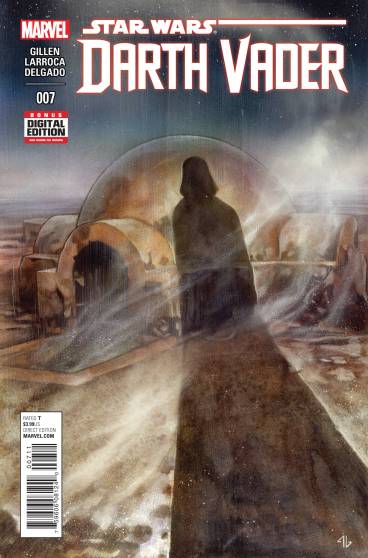
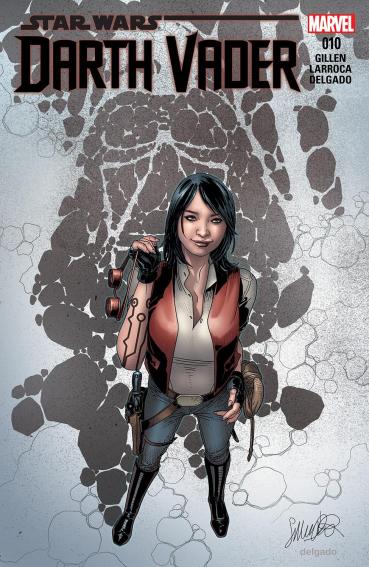
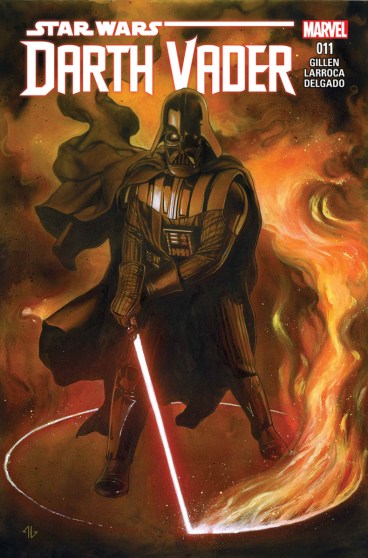
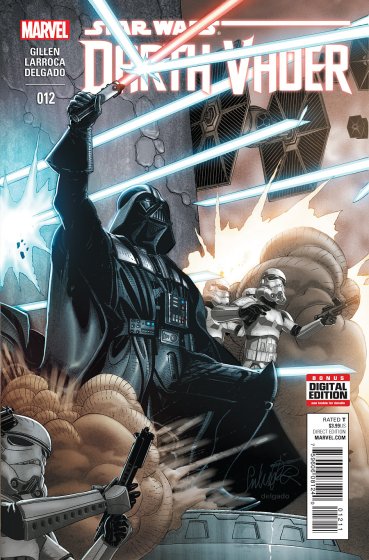
Darth Vader (2015) 7

For my latest Throwback Thursday, I take a look at the second volume of the 2015 Darth Vader series, Shadows and Secrets. This is a superb and fantastic addition to a series which I honestly consider to be one the best overall pieces of Star Wars fiction out there, as it continues to explore the complex character that is Darth Vader.

Following the events of the first volume of this series, Vader, Darth Vader now knows that the mysterious Rebel pilot who destroyed the Death Star is actually his son, Luke Skywalker, and that the Emperor has been lying to him for years. This revelation, combined with the fact that the Emperor is forcing him to compete for his favour with the scientific creations of the cybernetic genius Cylo, has crystallised Vader’s rage, and he is now determined to overthrow the Emperor and rule the Empire with his son. To that end, he has commanded his new agents, the rogue archaeologist Doctor Aphra and her two murderous droids, Triple Zero and BT-1, to gather the resources needed to pursue his agendas.

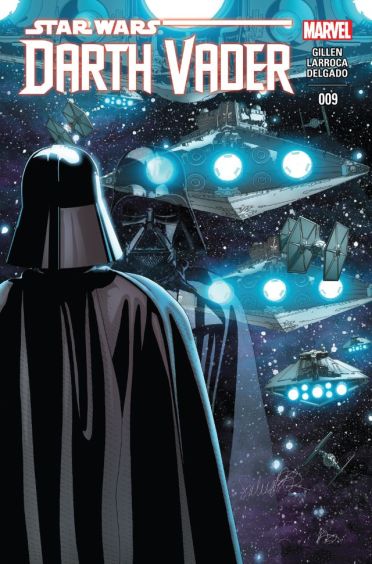
Darth Vader (2015) 9

Whilst Aphra and her criminal contacts do their work for him, Vader must appear to obey the commands of his new superior officer, Grand General Tagge. His latest mission from Tagge requires him to find out who stole a massive consignment of credits that the Empire recently seized from crime lords in the Outer Rim. There is just one problem: Aphra and a small group of bounty hunters stole the credits on his behalf. Vader attempts to cover up his involvement in the crime and lead the investigation away from Aphra. However, the arrival of his new aide, the brilliant Inspector Thanoth, may prove troublesome, as Thanoth’s investigation leads him in all the right directions.

However, despite the importance of Vader’s plans within the Empire, his main concern is the search for his son. Needing to locate and corrupt Luke before the Emperor finds out who he is, he tasks Aphra with not only finding his son’s location but to also find and silence the one person who knew that Luke was actually born. As Vader does all he can to keep Thanoth from finding Aphra and incriminating himself, he finds himself walking a fine line between victory and destruction. With new rivals and both the Empire and the Rebellions seemingly against him, can even Darth Vader get what he wants?

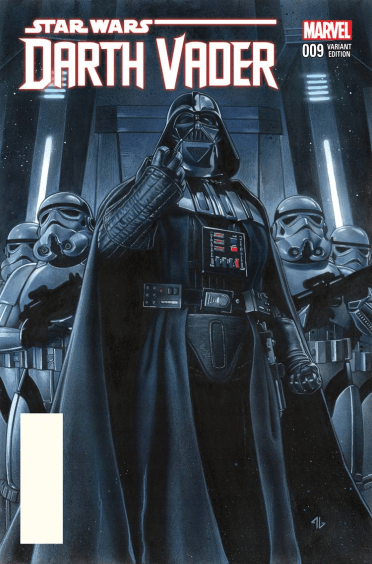
Darth Vader (2015) 9 alternate

Well this was another fantastic bit of Star Wars fiction! The first thing that I do have to admit is that Shadows and Secrets is probably my least favourite volume in the entire 2015 Darth Vader series. However, this is only because every other volume in this series is just so incredible that this one suffers a little in comparison. That being said, I absolutely loved this second volume as it contains an excellent story, some great moments, fantastic characters and some impressive artwork. Containing issues #7-12 of the Darth Vader series, Gillen and Larroca have done an incredible job with this second volume, and I still consider it to be a five-star read.

One of the best things about Shadows and Secrets is Gillen’s outstanding story, which continues some of the tantalising threads from the first volume while also introducing some great new elements. Gillen sets out a clever, well-paced story that is filled with all manner of action, adventure and intrigue, as Vader begins his duplicitous actions within the Empire, attempting to amass the resources he needs for his projects without drawing the suspicion of either his rivals in the Imperial hierarchy or his new superior. Most of the story contained within this volume is fairly self-contained, featuring a fantastic heist sequence and the subsequent fallout from this event. This fallout mostly revolves around Vader’s investigation into his own heist, which he attempts to cover up from his new aide, Inspector Thanoth. Thanoth is a genius detective of Sherlockian talents who was quickly able to get to the truth of the matter and find the culprit of the heist, despite Vader’s vest efforts. I really enjoyed this whole investigation element to the book, especially as it was fun watching Vader routinely sabotage his own investigation, often by killing any and all potential witnesses, only to have Thanoth easily breeze through these obstacles. Thanoth turned out to be an excellent new addition to this series, and I really enjoyed the intriguing partnership he formed with Vader, especially as he plays a dangerous game by continuously hinting that he knows Vader is behind the theft. This turned out to be quite an amazing and enjoyable storyline, and I really appreciated Gillen’s perfect blend of humour and serious storylines throughout the volume.

Darth Vader (2015) 10

I also loved the continued focus on Vader’s obsessive hunt for Luke Skywalker, which has taken on a new edge now that he knows he is his son. While he was already searching for him in the first volume, now that he realises who he really is, Vader decides to protect his identity and the find out the whole truth behind his birth. This is shown in the first part of Issue #7, in which Vader and Aphra visit both the Lars Homestead and Ben Kenobi’s hovel on Tatooine, where he tries to gleam some knowledge from both houses about his son, before setting off a molecular bomb to erase all useful forensic evidence. Shortly after this, Vader than sets Aphra a task of finding and interrogating a former mortician from Naboo who prepared Padme Amidala’s body for her funeral, including setting up a hologram to make it appear that she was still pregnant. This tuned out to be an outstanding sequence, as the mortician, who has a huge amount of personal loyalty towards Amidala, at first refuses to provide any information about his work, before being tortured and confirming the existence of a child. While this admission is a betrayal of his beloved Queen that clearly costs the former mortician a lot, he is able to do one last act of service for her by not revealing any details about the second child, Leia. I thought that this scene was amazing, and I liked how it helped explain how Vader was aware of Luke’s existence and status as his child, but not that he also had a daughter. I also appreciated Gillen’s focus on the loyalty the inhabitants of Naboo had to Amidala, even in death, which was even able to move the cynical Aphra. Her subsequent mention to Vader of how Amidala must have really been something was a nice touch, as Vader’s subdued and hidden reaction hints at his continuing deep feelings towards his long-dead wife. I really liked this focus on the search for Luke, as not only does it makes sense in the context of the movies, but it also showcases the lengths Vader was willing to go to find and protect his son, and it leads to the best sequence in the entire volume.

I personally really enjoyed how the creative team continued to show off Vader as a dangerous and vicious powerhouse in this volume. While it does not contain the same level of carnage that he unleashed in the first volume of the 2015 Star Wars comic book series, Shadows and Secrets contains several amazing scenes depicting his destructive abilities and personality. Whether he is stuffing a crime lord into the mouth of his own exotic beast and then easily killing the distracted monster, or whether he is taking down and entire squadron of Rebel space fighters one at a time by throwing his lightsaber at them, he is shown to be pretty impressive.

Darth Vader (2015) 11

Just like in the first volume, Doctor Aphra continues to shine as the series’s main supporting character, and her entire character arc within Shadows and Secrets is very intriguing. Throughout this volume, Aphra ends up undertaking several missions for Vader, such as trying to find the location of Luke Skywalker, and has become one of his main confidants. This puts her in a terrible position, as Vader is likely to kill her to protect his secrets, especially when Thanoth gets close to capturing her. Watching the various ways that this ultimate opportunist attempts to survive against the odds, including by brazenly withholding information from Vader in order to stop him killing her, is pretty impressive, and it makes for some great reading. Shadows and Secrets also contains one of the first deeper looks at Aphra’s internal character. During the sequence I mentioned above with the mortician, she gives a lengthy monologue about the death of her mother and how it has affected her. This was a heavy scene, and while she tries to play it off as not being very important, you can see that it has impacted her, turning her into a much more cynical and self-reliant person who has no room for idealism or blind belief. The significance of this scene is also quite crucial when you consider that much of what she said is later shown in the Doctor Aphra spinoff series and ends up becoming a defining part of her character. I also like how the noticeable changes that the creative team have inserted into Aphra’s personality when she deals with Vader. For most of the volume, Aphra comes across as an ultraconfident being who is able to manipulate and control bounty hunters, murderers and crime lords with ease. However, whenever Vader appears, there is a noticeable change in her bearing and personality, which isn’t too surprising as Aphra knows Vader is going to kill her one day.

I also have to point out how much fun the two murder droids Triple Zero and BT-1 continued to be in this novel. Essentially perverted versions of C-3PO and R2-D2, Triple Zero and BT-1 are remorseless killers who delight in murdering or torturing all organic life. These two add an insane element of humour to the entire series, and they have a number of great moments in Shadows and Secrets. Watching the two of them delight in all sorts of murder and mayhem is all sorts of fun, and you’ve got to love the weird and friendly relationship the two of them have formed with each other.

Darth Vader (2015) 12

One of the best highlights of this second volume is the amazing artwork. The artistic team, helmed by Salvador Larroca, did another fantastic job bringing the amazing story contained within Shadows and Secrets to life on the page. There are so many vibrant and imaginative panels in this volume, and the volume’s artistic team produce some amazing pieces of art that showcase the wider Star Wars universe. One of the things that continues to impressive me about this series is the way that the artistic team are able to convey so much emotion from the faceless main protagonist. Despite only ever seeing Vader’s expressionless and iconic mask, I found that I was constantly able to glean the true emotions that Vader was surely feeling at the time when I looked at him, ranging from cold menace, surprise, frustration to deeper emotions, such as sadness when Amidala is mentioned. There are some truly amazingly drawn scenes throughout this entire volume, although there are two that I would bring particular attention to. The first is the very first scene in Issue #7, which shows Vader standing out the front of the Lars Homestead, staring at Tatooine’s twin suns as they set. I absolutely loved how this drawing matched the iconic scene from A New Hope where Luke stared off in the same position, and I really appreciated the symmetry. The other piece of art that really stood out to me was a quick sequence that appeared a little later in the volume within Issue #8. In this scene, Aphra has just confidently dealt with one of the bounty hunters in her employ and is looking off in the distance speaking to someone. As she talks, Vader slowly materialises out the shadows behind her, responding to her comments. Despite the fact that Aphra’s expression does not change at all there is a notable shift in the tone of the panel when Vader appears, and you cannot help but feel the threat and menace that he exudes. This was some impressive artwork, which helped to really increase how much I loved this comic.

The second volume of the 2015 Darth Vader series, Shadows and Secrets, is a first-rate comic book that once again shows off how impressive Star Wars comics can really be. Gillen and Larroca did an incredible job following up the first volume of this epic series and I really enjoyed the complex and fun story that this second volume contained, especially when it was backed up by great characters and exceptional artwork. This is a superb addition to the series that is really worth checking out.

Amazon

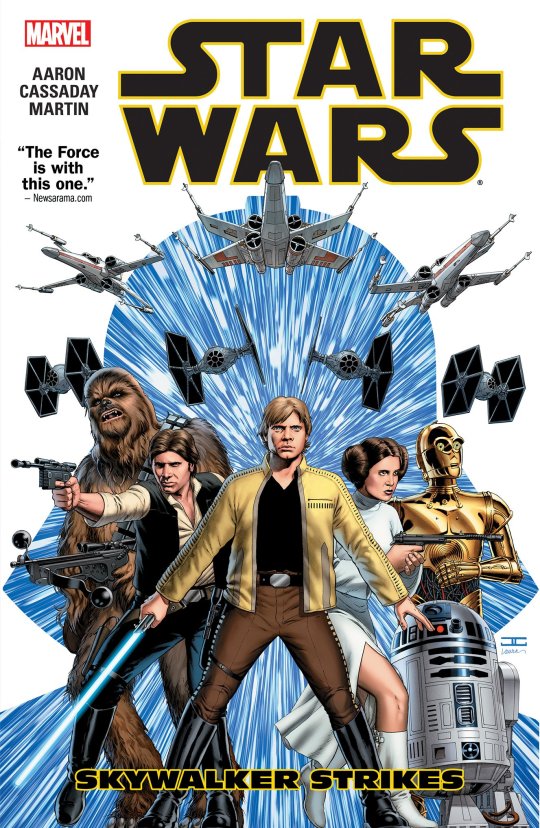
Throwback Thursday – Star Wars (2015) Volume 1: Skywalker Strikes by Jason Aaron and John Cassaday

Star Wars (2015) Volume 1 Cover.jpg

Publisher: Marvel Comics

Publication Date: 6 October 2015

Length: 160 pages

My Rating: 5 out of 5 stars

Amazon

Reviewed as part of my Throwback Thursday series, where I republish old reviews, review books I have read before or review older books I have only just had a chance to read.

I think it is fair to say that I have been in a real Star Wars mood lately. Maybe it is because of the imminent release of the final movie in the Skywalker Saga, Star Wars: The Rise of Skywalker, or perhaps it is because The Mandalorian is such an awesome TV show. Whatever the reason, I have been reading and reviewing quite a few Star Wars books and comics lately. For example, I am currently listening to Star Wars: Force Collector, I reviewed Tarkin last week and I recently read and reviewed Resistance Reborn and Vader: Dark Vision. As a result, I thought that this week would be a good time to do a Throwback Thursday on the first volume of the 2015 Star Wars comic book series, Skywalker Strikes, which did an outstanding job of introducing an extremely exciting ongoing comic series.

The Star Wars comic book series was started in 2015 and follows the adventures of the protagonists of the original Star Wars trilogy. Set shortly after the events of A New Hope, this series attempts to fill in the three years between the first film and The Empire Strikes Back. The Star Wars comics originally ran concurrently with the Darth Vader (2015) comic series until that series ended, and then proceeded to run alongside the Doctor Aphra comics. The Star Wars series ran for 75 issues and has only recently concluded. A sequel series with the same name is set to begin in early 2020, which will follow the events between The Empire Strikes Back and Return of the Jedi.

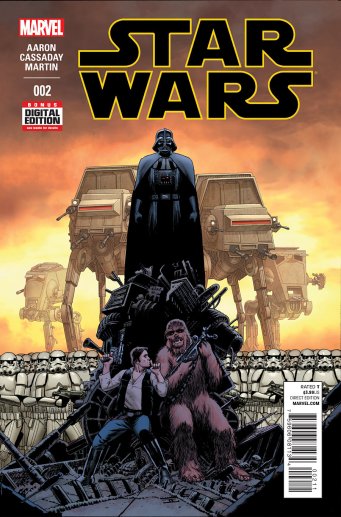
Star_Wars_Vol_2_2.jpg

Volume One of Star Wars begins shortly after the destruction of the Death Star. With the Empire in turmoil following the destruction of such a major weapon, Rebel Alliance members Luke Skywalker, Leia Organa, Han Solo, Chewbacca, C-3PO and R2-D2 use the chaos to infiltrate a key Imperial weapons factory. While they are able to destabilise the factory’s reactor core and free its slave labour force, the Rebels are unprepared for the unexpected arrival of Darth Vader.

Attempting to complete their mission while also trying to kill Vader, the Rebels find themselves hopelessly outmatched by the Dark Lord of the Sith, who is determined to capture the Rebel who blew up the Death Star. Not even Luke, with his newly discovered Jedi abilities, is able to stand up to Vader, and the Rebels barely manage to escape with their lives.

Frustrated by his failures against Vader, Luke decides to take a leave of absence from the Rebel Alliance and returns to Tatooine to contemplate his future. Travelling to the house where Obi-Wan Kenobi lived in exile for years, Luke hopes to find something that will guide him. Instead he finds himself walking into a trap, as the bounty hunter Boba Fett is lying in wait. At the same time, Leia talks Han into a scouting mission for the Rebels, but their simple mission soon attracts the wrong sort of attention. Who is the mysterious woman hunting Han, and why is claiming to be his wife?

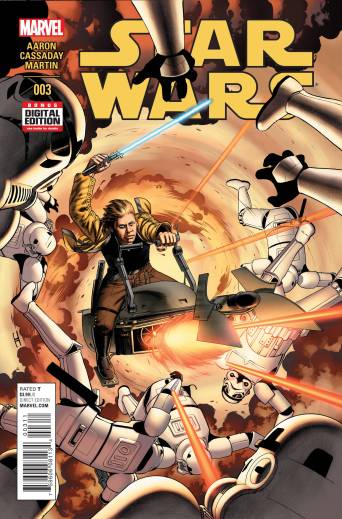
Star_Wars_3_Marvel.jpg

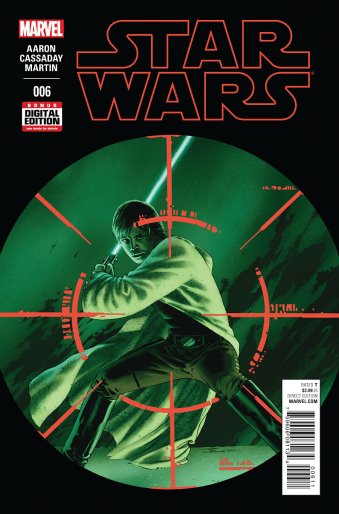
Skywalker Strikes, which is made up of Issues #1-6 of the Star Wars series, contains an outstanding story, fantastic artwork and some of the most insane Star Wars action sequences that you will ever see. The team of Jason Aaron and John Cassaday, have done an amazing job on this comic, and this first volume does a wonderful job starting off this long-running series. While all the issues in this volume are connected together pretty well, I would say that there is a distinctive break between Issues #1-3 and Issues #4-6. Issues #1-3 focuses solely on the protagonist’s attack on the weapon facility, while the last three issues feature some more independent adventures from some of the series’ various characters, as each of them is searching for something.

The sequence contained within Issues #1-3 is just incredible, and it is easily my favourite part of the entire series. What starts as a fun infiltration of an Imperial facility quickly devolves into utter chaos as Darth Vader enters the mix. What then follows is nearly three whole issues of action, explosions, fantastic first meetings and all manner of destruction as the Rebels desperately attempt to escape the factory. While all the characters involved in this part of the comic are really good, I have to say that Vader steals the show as the indestructible villain. This was actually one of the first pieces of fiction in the new Disney Star Wars canon that shows off how amazing Vader could truly be, and it is pretty darn awesome. Pretty much from the first instance he appears, he shows off the full extent of his powers by throwing stormtroopers in front of a sneak attack from Chewbacca, and then by starting to crush an AT-AT with the force. He then subsequently survives a full-on blast from the AT-AT’s cannons and hacks it to pieces with his lightsaber. He also cuts through a bunch of escaping slaves and shows his intense displeasure to his subordinates in a number of destructive ways, including twisting a stormtrooper’s head 180 degrees with the force (to be fair, he did catch sight of Vader without his helmet) and choking a Star Destroyer captain from an insane distance. I can also not be the only person who cracked up at Vader very quickly destroying an Imperial Officer moments after he said “Lord Vader will have my….” (spoilers, he was going to say head, and Vader really did). All of this destruction and action was essentially pure awesome, and I loved every second of it.

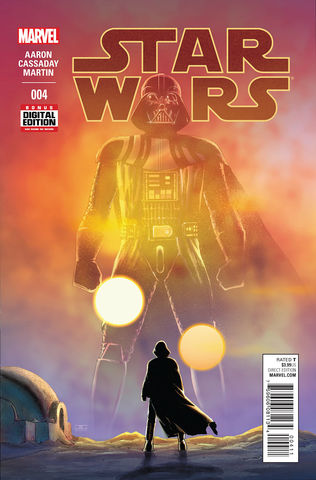
Star_Wars_Vol_2_4.jpg

In addition to all the action in this part of the book, there are also some major moments in Star Wars history that fans of the franchise are really going to enjoy. For the one thing, it actually has the first face-to-face confrontation between Luke and Darth Vader. This scene is handled extremely well. Luke, still believing that Vader is the one responsible for the death of his father, jumps at the chance to get revenge. However, as Luke runs towards Vader’s location full of confidence, he hears the disembodied voice of Obi-Wan Kenobi telling him to run. This is advice that Luke really should have taken; Vader, after berating Luke for his obvious lack of skill with the lightsaber, rather easily disarms him. While getting ready to kill Luke, Vader notices that the lightsaber he has taken off him is the very one he used to wield as Anakin Skywalker, which obviously raises some issues within him. As events at the factory spiral out of control, Luke is able to evade Vader, who starts to grow slightly more impressed by his skills. As Luke makes his escape, Vader realises that he is not only the pilot that destroyed the Death Star but also Kenobi’s last great hope. Still not fully realising the identity of the boy he just encountered, Vader rather vindictively promises to corrupt him to his purposes. All of these events are pretty incredible moments in Star Wars history, and I think that the creative team did an outstanding job introducing them in this new canon. The initial face-to-face showdown between the main protagonist and villain of the original Star Wars trilogy is a pretty significant moment, and I really loved how it was shown. The hints at the hidden history between the two are great, and the initial realisations from Vader that there is more to Luke than he realises are fantastic. I also liked how the creative team showed Luke as having no real skill with the lightsaber or the force. Considering that he only had about an hour of training with Kenobi, it really isn’t that surprising that he has no lightsaber abilities, so this is a pretty clever and realistic inclusion, especially as a good part of the following Star Wars comic series deals with some of the earliest days of his training. While these events are probably not the most significant to occur in this volume (more on that later), they are incredibly intriguing and any fan of the Star Wars franchise is going to love it.

The last three issues of Skywalker Strikes are also very entertaining, though less action-packed, since the creative team has opted instead for storytelling and showing off the state of the Empire and Rebel Alliance. While a despairing Luke sets off to find answers, Han and Leia set off to find potential locations for a new Rebel base, while Vader has a meeting with Jabba the Hut. There are some really interesting aspects to this part of the story, from the growing hopelessness in Luke as he begins to realise how far he is from becoming a Jedi, to Vader’s sudden obsession with capturing Luke, to the growing hints of romance between Han and Leia, disguised at this point as antagonism. However, I would say that it’s the newcomers to the comic series, Boba Fett and Sana Solo, that are some of the best parts of the last three issues of the volume. Fett, who has long been a fan favourite despite his complete underutilisation in the movies, shines as the badass bounty hunter as he scours Tatooine for Luke, eventually finding out all about him through some very violent means. This leads to a pretty fun showdown between Boba and Luke, as Boba ambushes him at Kenobi’s house and easily incapacitates him and R2-D2 with his cool array of weapons and tactics. It is only thanks to Luke’s first close-combat use of the force that he is able to escape, as he successfully blocks a blaster bolt while blinded (a nice homage to the training sequence from A New Hope) and moves an item with his mind. All of this was a pretty entertaining showdown, and I loved seeing Fett in action for once. We also have the mysterious Sana Solo, who has a pretty fantastic takedown of some Rodian thugs with a great piece of technology and a ruthless demeanour. She is later able to track down Han and Leia, absolutely terrifying Han before dropping one of the biggest bombshells of the book: that she is Han’s wife. While this is not explored in any great detail in this volume, it is an excellent introduction for this great character, who goes on to become a fairly major figure in the current Star Wars canon. As a result of all of this, the second half of the volume holds up pretty well to the action-packed first half, and there are plenty of major scenes, including the very big ending.

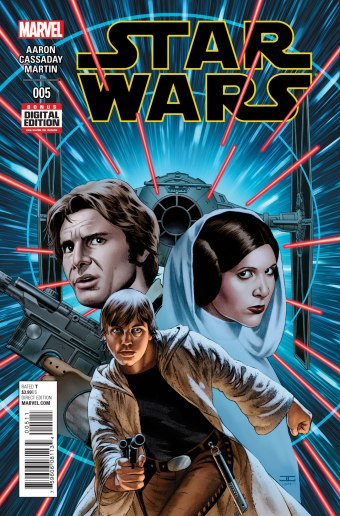
Star_Wars_Vol_2_5.jpg

While I did really like the second part of this volume, the best way to appreciate it fully is if you understand its connection to the Darth Vader (2015) series of comics. The Darth Vader series was launched right on the heels of the Star Wars comics and it is actually set in the aftermath of the first three issues of this volume. In the first issue of this concurrent comic, it is shown that Vader has actually started going rogue on the Emperor and is making his own deals with Jabba the Hutt, before the formal discussion he has with Jabba in Issue #4 of the Star Wars series. This actually clears up the somewhat cryptic discussion he has with Jabba later in the issue, where they talk about the bounty hunters he has hired, and also shows the point where he actually tasked Boba Fett with finding Luke. While none of this is absolutely vital when it comes to fully understanding the plot of Skywalker Strikes, it is interesting to see that some of the referenced events occurred in another series. However, the main reason why readers should try to understand the connection between this comic and the Darth Vader series is in the epic conclusion both of them share, where Vader learns the last name of the boy he has been hunting. Both Issue #6 of Star Wars and Darth Vader were actually released on the same day, so readers of both series were able to see this scene at the same time. The two scenes are shown in a slightly different light in each series. It is expanded a bit more in the Darth Vader series, as it plays into the feelings of resentment towards the Emperor that have been building in Vader through the series. However, I quite liked the simpler version in Issue #6 of Star Wars, as the slow-boiling rage and anger within Vader is pretty obvious, as he takes a whole page to fully react, cracking the glass on a Star Destroyer and simply whispering, “Skywalker”. As a result of this connection, the Star Wars and Darth Vader series complement each other extremely well, and I would strongly recommend reading both pretty close together. However, no matter which series you read, the sequence showing the moment where Vader realises that his son is still alive and a Jedi is pretty darn epic and really memorable.

It could be argued that splitting this volume into two separate storylines was an interesting choice from the book’s creative team. I imagine that six issues focused on the attack on the Imperial weapons factory would have been pretty epic (just imagine how much more destruction Vader could have wrought). However, I personally think they did the right thing by splitting the story and showcasing the aftermath of this action. This way you not only get the intense action of the first few stories but you also get to see the consequences of the mission, and all the implications this has for the wider Star Wars universe. In addition, there is also quite an intriguing set up for several key moments in the upcoming series as a whole, a whole new fight between Luke and another iconic Star Wars character in Boba Fett, and some amazing connections with a sister series. I really liked how the story of the entire volume came together, and I think it was an outstanding way to start this excellent series.

Star_Wars_Vol_2_6.jpg

I have to say that I was also really impressed with the awesome artwork that was featured in this first volume. The artwork was drawn by John Cassaday, and featured Laura Martin as the colourist. It is pretty amazing the way that Cassaday was able to capture the faces of the core original trilogy cast members with his artwork. Luke, Leia and Han all look really good to my eye in this volume, and the artist has also done some great renditions of other existing characters, such as Vader, Boba Fett and Jabba the Hutt. In addition, I really enjoyed all of the marvellous and exhilarating action sequences that they artistic team portrayed throughout the volume. These action scenes, especially the ones featuring Vader at the start of the book are just incredible, and I really loved seeing all the fantastic and creative violence. In addition to all the action, there are a number of scenes where the artwork helps to enhance the emotions and hidden meaning of a scene, and I will always love the way that they portrayed the closing moments of this volume. This was some first-rate Star Wars comic book art that is really worth checking out.

As you can see from the above review, I really loved this first volume of the Star Wars (2015) comic book series. The amazing creative team behind this first volume did a fantastic job with the first six issues that make up Skywalker Strikes, producing an extraordinary story which is complimented by a connection to another series and some exceptional artwork. This volume is a fantastic introduction to the flagship comic book series of the Star Wars franchise, and it comes highly recommended. No great knowledge of the expanded Star Wars canon is required to enjoy it, and indeed this may prove to be an effective gateway to the greater Star Wars universe. This gets a full five stars from me, and I am so very glad I decided to check out the Star Wars comic book series this year.

Amazon