Star Wars: Doctor Aphra: Volume 6 – Unspeakable Rebel Superweapon

Doctor Aphra Unspeakable Rebel Superweapon

Publisher: Marvel Comics (Paperback – 10 December 2019)

Series: Doctor Aphra – Volume Six

Writer: Simon Spurrier

Pencilers: Wilton Santos, Caspar Wijngaard, Andrea Broccardo and Cris Bolson

Inkers: Marc Deering, Walden Wong and Scott Hanna

Colour Artists: Chris O’Halloran and Stephane Paitreau

Letterer: VC’s Joe Caramagna

Length: 112 pages

My Rating: 5 out of 5 stars

Amazon

The most devious woman in the galaxy, Doctor Aphra, is back, and she’s got both side of the Galactic Civil War gunning for her in the sixth volume of one of the best Star Wars series out there. I have been meaning to review this volume since it first came out in December. However, I just picked up the seventh and final volume of the current run of Doctor Aphra, so I thought I would quickly review this volume first before I get around to that.

DoctorAphra-32

Doctor Aphra is one of the few ongoing Star Wars comic book series that has been released in the last couple of years, and in my opinion it is one of the strongest Star Wars series out there. The Doctor Aphra comics are set in the period of time between the fourth and fifth Star Wars films (A New Hope and The Empire Strikes Back), and follow the adventures of Doctor Chelli Aphra, renowned archaeologist, adventurer and master criminal. Aphra is an original character who was introduced in the first volume of the 2015 Darth Vader series, Vader, where she served as Darth Vader’s secret agent. Following the conclusion of the Darth Vader series, Aphra, who proved to be a very popular character, received her own spin-off series, which followed on after the events of Darth Vader and feature Aphra as she attempts to make money while trying to ensure Vader doesn’t find out that she is still alive. This series was initially written by one of the original creators of the Doctor Aphra character, Kieron Gillen, however, the second half of the series has been written by Simon Spurrier. Spurrier is the sole writer of this sixth volume of Doctor Aphra, which also features the artistic talent of a several talented artists.

In Unspeakable Rebel Superweapon, Aphra is up to her old tricks again. Despite only recently recovering from a life-threatening injury, Aphra has taken on a dangerous job robbing an alien robot death cult shrine with the help of her new sidekick and ward, Vulaada. However, while aboard the shrine, Aphra notices an ancient Jedi weapon, a sniper rifle that utilises lightsaber technology to kill opponents from vast distances. Unable to help herself, Aphra steals the rifle, starting a chaotic chain of events across the galaxy.

Already extremely unpopular with the Empire, this theft pops Aphra to the top of their most wanted list with a hefty bounty placed on her head. Captured by the Rebel Alliance first, Aphra learns that her stolen rifle is the key to a secret rebel superweapon that they plan to use to assassinate the Emperor. Sensing an opportunity to make some money and permanently get the Empire of her back, Aphra recruits her old associate, the Wookiee Black Krrsantan, in order to steal the rifle back from the Rebels. However, this puts her into conflict with her ex-girlfriend, Captain Tolvan, who is now working for Rebel Intelligence.
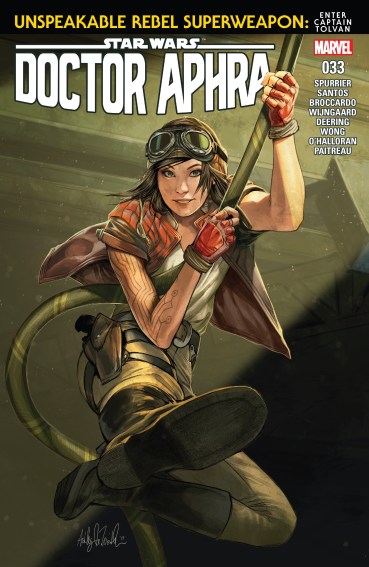
DoctorAphra-33

As Aphra recovers the rifle and flees to the Empire, she finds herself face to face with the mysterious Imperial Minister for Propaganda and Misinformation, Pitina Voor, the woman behind the latest Imperial manhunt for Aphra. Voor has plans for her, and Aphra is right in the middle of a vast scheme involving both the Rebels and the Empire. However, no plan has ever survived contact with the good doctor, especially when Aphra has revenge on her mind.

Unspeakable Rebel Superweapon was a superb and outstanding addition to the excellent Doctor Aphra comics, and this might actually be one of the strongest volumes in the entire series. Author Simon Spurrier tells a tight and compelling story within this volume which not only dives back into the past of the series’ titular character but which also showcases new elements of both sides of the Galactic Civil War. You also see the welcome return of several of the best characters from the series, such as Black Krrsantan and Aphra’s love interest, Captain Tolvan, as well as the introduction of an intriguing new antagonist. Featuring issues #32 – 36 of the Doctor Aphra series, this volume is a riot from start to finish (hell, the last two pages are the best in the entire volume), and I really loved the captivating tale that Spurrier wove together in these issues, especially as it features the series trademark dark humour and the focus on its self-destructive and conniving main character.

At the centre of Unspeakable Rebel Superweapon lies an amazing narrative of schemes, plots and lies as Aphra is hunted and manipulated by elements of both the Empire and the Rebel Alliance. Thanks to a recent archaeological theft, Aphra is thrust into the midst of a Rebel conspiracy to kill the Emperor and must decide what to do. Of course, Aphra being Aphra, she goes with the course of action that benefits herself the most and ends up backstabbing and manipulating both the Rebels and the Empire. This leads to some great scenes, including a heist aboard a Rebel spaceship and a sequence where Aphra hacks the entire Imperial communications system in order to sing her praises as an Imperial hero in order to avoid a summary execution. However, not everything is as it seems as the various sides are all trying to manipulate Aphra to their own ends, which results in a surprising number of different twists and turns (or as one character puts it “that is the most convoluted plan I’ve ever heard”). It was fascinating to see Aphra, the ultimate manipulator, being played by so many different sides, each of whom thinks they know how she is going to react. Aphra manages to end up on top, but it was cool to see the various ways she managed to get to the bottom of the plans surrounding her and use it to her own ends. Her motivations for doing so were really compelling, and it was amazing how the creative team had been building up to them throughout the course of the book. Of course, it doesn’t all end up Aphra’s way, and the end result of her schemes sees her come full circle to the last place she wants to be. This all makes for one hell of thrilling main storyline of intrigue and deception, and I really loved where all the twists and turns went.
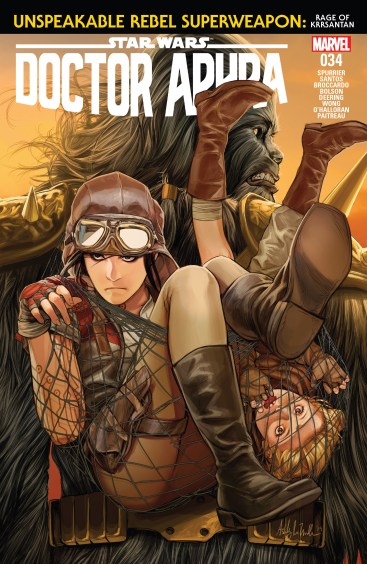
DoctorAphra-34

Just as with the rest of the entries in this series, one of the best things about the Doctor Aphra series is the titular character herself. Aphra is a complex and haunted character who seemingly lacks a moral code and will only do what is in her own best interest. The character has a rather flippant and disrespectful attitude, and most of this volume’s amazing humour is down to her clever quips and humorous observations amongst the more serious Star Wars characters. One of the things that I have really enjoyed about the Doctor Aphra series has been the examination of Aphra’s self-destructive tendencies and the way that she makes the lives of everyone she comes into contact with worse. This is continued once again in Unspeakable Rebel Superweapon, as she runs from one bad situation to the next, with her every action making her life and the lives of those around her infinity more miserable and more complicated, which makes for some very dramatic and emotional sequences. This is such an expected trait that many of the characters who Aphra has dealt with in the past or who have studied her actually expect her to make these bad or selfish decisions, and I really liked the way that this was a central plot point in the intrigue and espionage storyline. I also loved Aphra’s interactions with her love interest, Captain Tolvan, especially because, during their last meeting, Aphra purposely altered her memories to make her believe she had killed Aphra in a jealous rage. While Aphra did this with the best of intentions (it was the only way to save both Aphra and Tolvan from Vader), this has obviously had a major negative impact on their relationship, and Tolvan now actively loves and hates Aphra in equal measure and apparently has zero trust in her. This is one of the many things haunting Aphra in this volume, as she clearly knows the damage she has done to woman she loves: “I broke her heart. She’s too smart to ever help me again.” Of course, this fraught relationship is another part of the intrigue surrounding Aphra, and it was rather clever the ways in which both sides tried to manipulate Aphra through it.

In addition to the all the awesome character work happening with Aphra in the present, the readers of this volume are also treated to a look back at the characters past. In particular, you finally get to see Aphra’s mother for the first time and learn the tragic circumstances around her death. This has been hinted at for some time, all the way back to the second volume of the 2015 Darth Vader series, Shadows and Secrets. As a result, it was great to finally see the full extent of this character background, and it was fascinating to see what happened and how this has impacted on the personality of Aphra. I enjoyed the way in which the scenes from the past were mirrored in the scenes from the present, and I really liked the similarities in the way that Aphra was raised with the harsh way she is treating her new ward, Vulaada. I was also impressed by the way in which seemingly innocuous details from Aphra’s past suddenly had a big impact on her current story, and the creative team did a great job hinting about these impacts throughout the entire volume. All of this helps build up a much more complex story around the character that is Aphra, and I found this dive into her past to be extremely compelling.
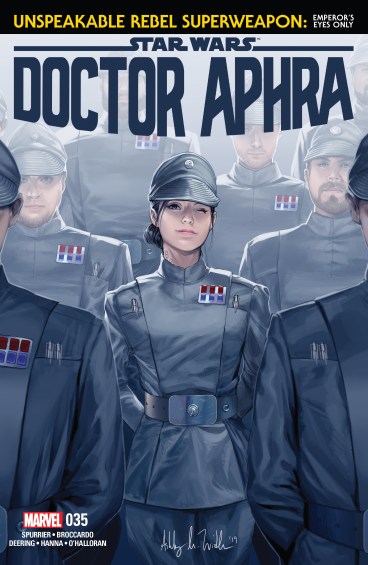
DoctorAphra-35

I also need to say how much I loved the parts of this book that featured Darth Vader, whose villainy and hatred for Aphra shine through in the few short scenes that he has. Aphra and Vader have a complicated history together, and Vader is desperate to kill Aphra once and for all (she’s faked her death on him a few times already), as she is the only living person in the galaxy who knows about his obsession with Luke Skywalker and his plans to overthrow the Emperor. Vader has two sequences in this book, both of which revolve around his determination to kill Aphra, no matter the perceived costs. While the first is really good, mainly due to Vader answering an Imperial officer’s request to state his rank with “Lord”, nothing quite beats the second appearance on the last two pages of the volume. After apparently beating all of her opponents, Aphra is sure of her safety due to her status as an Imperial hero, right up until Vader appears, lopping off heads with his lightsaber. The moment Aphra sees him, she knows she and Vulaada are dead, and she immediately hugs Vulaada and gets her to close her eyes. I really loved this scene, especially the resigned way in which she responds to Vulaada’s frantic belief that them being heroes is going to save them with “he doesn’t care”. This was a pretty outstanding end to the entire volume, and it was amazing to see the next chapter of the turbulent relationship between Aphra and Vader.

The Doctor Aphra series has always done a great job showing off several different sides of the Star Wars universe, including giving a closer look at parts of its criminal underbelly and its archaeological sector. However, in this book, we get to see new sides of both the Empire and the Rebel Alliance. In particular, we get to see the Empire’s Coalition for Progress, a sinister organisation led by new antagonist Pitina Voor that is dedicated to expanding and maintaining the Empire through manipulation, trickery and propaganda, rather than brute force. This is rather fascinating inclusion into the canon, and it was rather interesting to see a whole new side to the way that the Empire controlled the galaxy. Voor is also a rather intriguing character, with a unique vision for how the Empire should be run and maintained, and it was kind of fun to see her gripe about the PR problems that occur when you are being ruled by Sith Lords (I had to agree, the Emperor really isn’t adequately loveable). They also have a rather nifty little museum dedicated to some of the Empire’s greatest victories and propaganda coups, which the artistic team filled with several Easter eggs. I was also rather impressed by the way that the creative team explored the darker side of the Rebel Alliance by examining the covert and morally ambiguous actions of their intelligence agency. This is something that has been explored before in some other Star Wars entries, such as in Rogue One, but this volume of Doctor Aphra takes it to a new extreme with Rebel Intelligence apparently plotting to build a miniature Death Star in order to take out the Emperor and win the war. I rather liked this darker side of the Rebels, and it was interesting to see more of a Rebel organisation that uses less moral tactics to achieve their goals.
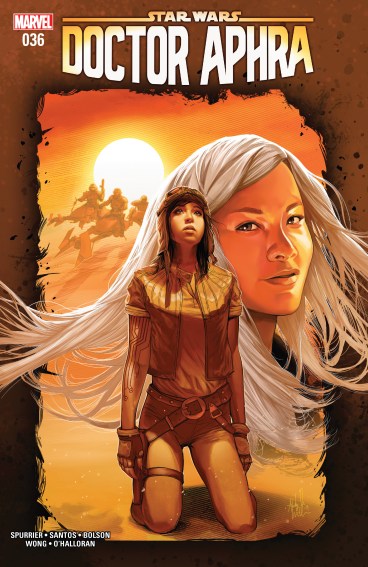
DoctorAphra-36

Unspeakable Rebel Superweapon features the work of several different artists, each of whom worked on a couple of different issues within the volume, which results in an interesting combination of styles. This means that this volume of Doctor Aphra contains a range of different art styles and techniques across the various issues. I actually liked the myriad changes that occurred issue to issue, and it was fantastic to see the different styles and artistic ideas that this large team produced. This volume contains some rather impressive and beautifully drawn scenes and sequences, which fit perfectly around Spurrier’s compelling story and which work really well together. The end result is a fantastically drawn and executed comic, which is a delight to look at.

This sixth volume of the always entertaining and incredible Doctor Aphra series, Unspeakable Rebel Superweapon, is an outstanding addition to the series, and it is one that I had an amazing time reading. This volume contains a complex plot of intrigue and doublecrosses, which sets the loveably dysfunctional protagonist down another road of self-destruction and manipulation in order to survive. Filled with some excellent and memorable story moments, and an incredible conclusion to this volume’s key storyline, Unspeakable Rebel Superweapon is relentlessly entertaining and endlessly captivating, and I had an absolute ball unwrapping it. A highly recommended read; if you have not read any Doctor Aphra yet, then you are missing out!
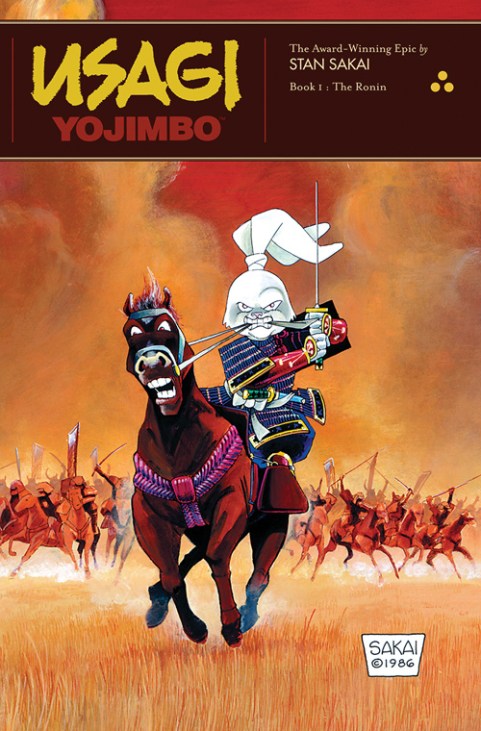
Amazon

Throwback Thursday – Usagi Yojimbo – Vol 1: The Ronin by Stan Sakai

Usagi Yojimbo The Ronin Cover

Publisher: Fantagraphics Books (Paperback – 1987)

Series: Usagi Yojimbo – Book One

Length: 144 pages

My Rating: 5 out of 5 stars

Amazon     Book Depository

Reviewed as part of my Throwback Thursday series, where I republish old reviews, review books I have read before or review older books I have only just had a chance to read.

We are now less than two months until the next amazing volume of Stan Sakai’s long running Usagi Yojimbo comic series, Bunraku and Other Stories, is released, and I am getting excited. This new volume is set to feature several brand new Usagi Yojimbo stories (including an extended story about a haunted puppet drama), but it is apparently also going to feature a look back at the very first Usagi story as part of an 35th anniversary special. For that reason, I thought that this would be an excellent time to go back and review volume one of the Usagi Yojmbo series, The Ronin, to serve as a good base for the upcoming review.

Usagi Yojimbo is a unique comic book series that Stan Sakai started back in 1984. It focuses on the adventures of Miyamoto Usagi, an anthropomorphic rabbit samurai who lives in a version of feudal Japan (early Edo period) completely populated with other anthropomorphic animals. Usagi is a ronin, a masterless samurai, who wanders the land on a warrior’s pilgrimage, helping those he encounters and occasionally working as a yojimbo (bodyguard) for hire. Throughout his journey he encounters all manner of friends and foes, including a number of creatures from Japanese folklore, and finds himself constantly drawn into the political plots of the land. This series is written and drawn in a more western comic/cartoon style rather than the Japanese magna style. However, the Usagi Yojimbo series is strongly inspired by Japanese history and culture, featuring a huge range of accurate depictions of historical events and cultural icons. This series is currently collected in 33 volumes from several different publishers, with each volume containing a number of different issues from the series. These issues are usually standalone adventures, although a number of longer storylines are continued through several issues or volumes.

I have been meaning to go back and review the first volume Usagi Yojimbo for a while now. The Usagi Yojimbo series is easily one of my favourite comic book series of all time, as Stan Sakai has created a truly epic and compelling series. While on paper a series following a rabbit samurai in a version of feudal Japan populated by other anthropomorphic animals does sound a bit ridiculous, these comics are anything but. Through a combination of outstanding storylines, complex characters, intense action, great uses of humour and an intriguing and compelling look at Japanese history and culture, Sakai has created a comic series that is extremely endearing and captivating. I have been a massive fan of this series for years, having started reading it when I was in high school (thank goodness for my surprisingly well-stocked public library) after I first saw the character in the 2003 Teenage Mutant Ninja Turtles animated series. I have previously reviewed the last two volumes of Usagi Yojimbo on my blog already (Volume 32: Mysteries and Volume 33: The Hidden), with Mysteries actually being the very first comic I ever reviewed. Both of these previous volumes received a five-star rating from me, which I have also awarded to this first volume.

Unlike the rest of the collected volumes, The Ronin doesn’t actually contain any issues from the Usagi Yojimbo series. Instead, it contains several earlier Usagi stories which were part of other publications, such as Albedo Anthropomorphics, Critters, Doomsday Squad and Usagi Yojimbo: Summer Special. All of these were collected together for the first time in 1987 into this volume (I have the 2007 reprint), and appear in chronological order. The Ronin contains 10 separate chapters of various lengths, each with their own story. These include:

  • The Goblin of Adachigahara: the very first story to feature Usagi, and the one that the upcoming Bunraku and Other Stories is going to revisit. This initial story features Usagi returning to the area near the battlefield of Adachigahara, where he lost his lord, Mifune, in a battle, forcing him to become a ronin. Seeking shelter in the hut of an old lady, he recounts his story of the battle to his host, including the betrayal of one his lord’s generals which cost them the battle. Later, Usagi battles a flesh-eating goblin, revealed to be not only the treacherous general but also the husband of his elderly host, and manages to defeat him, sparing the old lady who was going to allow him to be eaten. This was an excellent introduction to Usagi, as you got some vital information about his history, his status and his skill as a warrior. You also got a great look at his moral character, as he chooses to spare a woman who would have let him be eaten, and instead instructs her to perform funeral rights on the man who cost him everything.
  • Lone Rabbit and Child: this second story involves Usagi getting involved in the politics of the nation, as he comes to the aid of a young lord, Noriyuki, and his retainer the swordswoman Tomoe Ame. Noriyuki and Tomoe are being hunted by the agents of the evil lord Hikiji, who was also responsible for the death of Usagi’s previous lord years ago (it is later revealed he also killed Usagi’s father). Usagi agrees to escort them to safety, and they must contend with mercenaries, assassins and ninja on their quest. This is an amazing second outing, which expands on the world the series is set in, continues to show off Usagi’s skill, and sets up Hikiji as the main antagonist of the series (even if you see very little of him later on).
  • The Confession: This story follows on directly from the events of Lone Rabbit and Child, and features Usagi in the possession of a vital letter implicating Lord Hikiji in the attempt to kill Noriyuki. Usagi is ambushed by the Neko Ninja, who seek to reclaim the letter, leading to a prolonged and desperate fight in the woods. This proved to be an awesome follow-up to the previous story, which continued to highlight Usagi’s skills in combat and Sakai’s ability to drawn excellent, high-stakes fight scenes. It also showed just how nefarious an opponent Hikiji and his advisor Counsellor Hebi (a big terrifying snake) can be.
  • Bounty Hunter: Usagi is hired as a Yojimbo by the bounty hunter Gennosuke as he attempts to claim his latest bounty, the leaders of a local gang. Engaging the gang in a fight at a temple, Usagi and Gen are an effective team, eventually getting their targets, although their partnership ends on an interesting note. This was an entertaining story that served as a perfect introduction to a great character. Usagi and Gen have amazing chemistry together and Gen is an awesome side character. This is also one of the first stories to feature some more humour in the story, especially in the end, which turns out to fit in well with the overall feel of the series.
  • Horse Thief: Sakai features a lot more humour when Usagi, after interfering in a robbery by a gang of bandits, takes one of the bandit’s horses. He attempts to sell the horse in town, only to discover that it was stolen from the local magistrate, who chases him into the woods. Usagi’s problems only escalate from there, when he and his pursuers run into the bandits, prompting a massive battle in which Usagi is everyone’s enemy. The story has a great ending, steeped in irony which leaves Usagi and the reader laughing hysterically. I loved the author’s use of coincidence and bad fortune in this story, and it was fantastic to watch Usagi go from one bad situation to the next.
  • Village of Fear: This is a bit more of a horror story, as Usagi comes across a village held captive by a fearsome monster. This horror is compounded when it is revealed that the monster is a shapeshifter who has taken the form of one of the villagers. This was a relatively brief story, but it is set up and executed very well, with several great character moments, and there is even time for a quick Gone with the Wind joke.
  • A Quiet Meal: This is another of the more humorous stories in the volume, which features Usagi trying to have a quiet meal in an inn. Unfortunately, a gang of rough gamblers are causing trouble, throwing the other patrons out and trying their luck with Usagi. Usagi quickly shows them the error of the ways with some extremely fancy sword work, which causes them to flee in terror. The most noticeable feature of this entry is the fact that Usagi doesn’t speak once during the entire issue (he’s trying to have a quiet meal), and it’s up to his body language and the other characters to tell the story. This works extremely well and really helps to uplift the overall humour of the story. The way in which he sees off the ruffians is absolutely fantastic, and their absolute fear and disbelief at his skill, “this one’s been filleted”, is just great.
  • Blind Swords-Pig: This is a somewhat sadder and more dramatic story which features Usagi encountering and quickly befriending the blind pig, Zato Ino, who is seeking a peaceful place to settle down. Ino, however, is an extremely skilled warrior and wanted outlaw. Constantly hunted for his bounty, he relies on his sword skills and his ability to ‘see’ with his sense of smell. When Usagi finds out his true identity, the two engage is a fierce duel in which Ino loses his nose, truly becoming blind. This is one of the best stories in the whole of The Ronin, mainly because of the complex character that is Ino. He has a true desire for a peaceful life, but his past ensures that this can never happen, as even friendly characters like Usagi turn against him. This has turned him into a somewhat bitter creature, quick to hate those he meets “and what I hate, I kill!”, and the events of this first story help turn him into something even more angry, especially when it comes to Usagi.
  • Homecoming: This story sees Usagi return to the village of his childhood, but his return is not a peaceful one, as his village is under attack by the Mogura Ninja. Usagi must work with his childhood rival, Kenichi, to save the village; however, there is much enmity between Usagi and Kenichi, mainly because Kenichi married Mariko, the love of Usagi’s life. The two rivals must move past their differences, especially when Kenichi and Mariko’s son, Jotaro, is kidnapped by the Mogura Ninja. This was another exceptional entry in the volume, as it blends together tight action sequences with a deeper dive into Usagi’s past, including his complex and dramatic history with Kenichi and Mariko. The final pages of this issue are just heartbreaking, as it is revealed that Usagi and Mariko both kept the mementos they gave each other as young lovers, and they are both clearly in love with each other, even though they can never be together. I also really liked the Mogura Ninja in this book, especially as moles apparently make effective and deadly ninja.
  • Bounty Hunter II: This final story sees the return of Gen, who once again convinces Usagi to work with him to collect another bounty. Gen of course manages to complicate the job, and his actions backfire on Usagi, resulting in him getting into a major scrape. Despite Usagi’s understandable rage towards Gen, the two are able to part amicably, although Usage gets a small measure of appropriate revenge at the end of the story. I think that Sakai really hit his stride with the Usagi/Gen friendship in this second story, and the two of them play off each other extremely well. I really loved the end of this story, and it definitely got a big laugh out of me.

Overall, I felt that this volume contained a perfect blend of stories, and I really liked how Sakai jumped between action-based stories, to comedies and then to more dramatic tales, which helped produce a range of different emotional reactions. I did appreciate that the different issues also featured a range of different opponents and story basis, allowing the reader to understand that this series is going to focus on everything including banditry, ninja attacks, political intrigue and even the supernatural. I also think that the stories in The Ronin contained the right amount of character background for Usagi, providing enough for the reader to understand his motivations, while not being too overwhelming. This great blend of storylines and character arcs works extremely well together, and it makes for one heck of a complete volume.

The Ronin serves as an excellent introduction to this series, and I would strongly recommend that anyone interested in Usagi Yojimbo start with this volume. The stories within do a wonderful job of setting up the alternate version of historical Japan that this entire series takes place in. I absolutely love the combination of vibrant animal characters with feudal Japanese settings, and it works really well as the backdrop for an action series, especially with the political uncertainty and mass of unemployed samurai that accompanied the early years of shogunate rule. That being said, it is never quite explained why certain animals (horses and small dogs) are non-sentient, or why there are packs of dinosaur-like lizards (tokage) roaming the wilderness, although I kind of like the mystery. This volume also contains fantastic introductions for so many characters who are vital to the series, such as Gen, Tomoe, Mariko and more, and you get great insights into their characters, which are built up with each appearance they make. A lot of key character arcs or storylines start in the stories featured within this volume, and as each volume of Usagi Yojimbo is sequential, readers of the series are best served starting with this first volume. Luckily, The Ronin is a really good first entry in the series, and it is definitely worth checking out.

One of the most charming things about the Usagi Yojimbo series is the way in which Sakai sneaks so many different historical and cultural references into his stories. Most of the characters are either inspired by a real-life historical figure or a fictional character from Japanese or western culture. For example, Usagi himself is based on one of the most famed samurai of all time, Miyamoto Musashi, who is often credited with creating the two-sword fighting technique that Usagi utilises in the series, while Tomoe Ame is based on famed female samurai Tomoe Gozen. Other characters however are based on Japanese movie characters, such as Zato Ino who is a clearly a pig version of Zatoichi, the blind swordsman protagonist of a series of popular Japanese movies and televisions shows. Gen is based on the character that Toshiro Mifune portrayed in samurai films such as Yojimbo (which was later adapted into A Fistful of Dollars), and Usagi’s former lord Mifune gets his name from the actor. Other references include the title of the second story in this volume, Lone Rabbit and Kid which is a references to the manga series Lone Wolf and Cub (Sakai later creates the characters of Lone Goat and Kid as another homage to this series) and the fact that this series is partially named after the Yojimbo film. Two separate stories in this volume also reference Sakai’s previous work on the Groo the Wanderer comic, with Groo even briefly appearing in Lone Rabbit and Kid, sharing a fun stare down with Usagi. I had a great time with all these references (although I admit I had to look up a couple), and some of them are really clever. They add a lot of fun to this series and they are a real treat for readers, especially those already familiar with Japanese history, film or culture.

I am a big fan of Sakai’s art style, and each issue of Usagi Yojimbo is an absolute joy to view. Not only does he produce some outstanding action sequences with his drawings, many of which do an awesome job of depicting the samurai battle style, but he also creates some fantastic characters and breathtaking landscape scenes. Nearly every issue shows some inspiring and beautiful depiction of the Japanese countryside or a historical town, and the sheer amount of detail that he throws into his various scenes is just incredible. It’s also fun to see the various animals that can be turned into samurai, as everything from bulls, rabbits, crocodiles, rhinos, monkeys, pandas, cats and dogs appear in this first volume alone. For this first volume, however, the artwork is understandably a little inconsistent, mainly because Sakai had only just started drawing these characters. The various character designs are a little rough in places, especially if you are familiar with his later work, as Sakai is clearly experimenting with how he wants to depict these characters. A few of the action sequences are also a tad different from the later entries in this series, which can be a little jarring in places, but still really cool. Overall, though, most of the art in this book is pretty incredible, and it is fun seeking Sakai get into his groove with each new story. Sakai does an amazing job conveying emotion, action and intent through his drawings in this volume, and it turns out wonderfully. If I had to pick my favourite bit of art in this entire volume, it would be a scene in A Quiet Meal, where Usagi swings his sword around the head of a ruffian who is bothering him. While it first it appears that Usagi had done nothing, you slowly realise that the flies that Sakai had been subtly drawing around this character’s head before that point, are gone. The facial reactions of the various thugs when they realise what happened to the flies are just hilarious, and I absolutely loved it.

This first volume of the Usagi Yojimbo series, The Ronin, is an amazing and spectacular read, which I have a lot of love for. Not only does it serve as an excellent introduction to the Usagi Yojimbo series, but it contains some captivating storylines, impressive artwork and a heck of a lot of fun. Needless to say, The Ronin gets a full five stars from me, and I cannot recommend this volume and the Usagi Yojimbo series enough. Reading this first volume actually got me re-reading the entire series again, and I have already made it up to volume 17. In my book, all of them are five star reads, and you can probably expect some more reviews of them in some future instalments of Throwback Thursday. Stay tuned to see my review of the next volume of this epic series, which I already know I am going to love.

Amazon     Book Depository

A Little Hatred by Joe Abercrombie

A Little Hatred Cover

Publisher: Orion (Audiobook – 17 September 2019)

Series: Age of Madness Trilogy – Book One

Length: 20 hours and 20 minutes

My Rating: 5 out of 5 stars

Amazon

One of the very best authors of dark fantasy fiction, Joe Abercrombie, returns to his epic First Law series with A Little Hatred, an outstanding and deeply entertaining read that serves as an excellent start to a whole new trilogy.

28 years after the failed Gurkish invasion of the Union and Jezal dan Luthar’s sudden rise to the throne, the world is much changed. Industry has come to the Union, with vast factories, production lines and businesses now defining the Union’s various cities at the expense of the nation’s farmers, labourers and working classes. In this time of change, a whole new generation is ready to make its mark in the world, but the rivalries, hatreds, manipulations and disappointments of those who have come before are hard things to overcome.

In the North, war once again rocks the lands, as the forces of Stour Nightfall invade the Dogman’s Protectorate, forcing the armies of Angland to come to their aid. Young lord Leo dan Brock is desperate to seek honour and glory on the battlefield; however, his forces are too small to defeat the vast Northern hordes. Requiring help from the Union, Leo is hopeful that a relief force led by Crown Prince Orso may help to turn the tide of battle, but the Crown Prince is a man known to constantly disappoint all who pin their hopes on him. However, the arrival of the mysterious Rikke, daughter of the Dogman, may provide him with a all the help he needs, especially with her ability to see through the Long Eye. Back in the Union, Savine dan Glokta, daughter of the feared Arch Lector Glokta, is making a name for herself as a ruthless businesswoman. Dominating the world of business and industry, Savine believes that she is untouchable, but dissent amongst the working classes are about to show her how wrong she is.

As both the North and the Union find themselves on the dawn of a whole new era, chaos will absorb all before it. While this new generation attempts to find their place, they soon begin to realise what the previous generation found out the hard way that they are not the ones in charge of their destiny, and there is nothing a little hatred cannot ruin.

Joe Abercrombie is a highly acclaimed author who has produced some truly amazing pieces of dark fantasy fiction over the years. While he has written other books, such as the Shattered Sea trilogy, he is probably best known for his First Law series. The First Law series is currently made up of seven books (including A Little Hatred), which detail bloodshed, politics and manipulation in a dark fantasy world. This series started with The First Law trilogy, which debuted in 2006 with The Blade Itself and ended in 2008 with Last Argument of Kings. The First Law trilogy followed the adventures of several complex and amazing characters as they fought to not only stop the Gurkish invasion of The Union but also the end a war in the North. Abercrombie would eventually follow this original trilogy with three standalone novels, which were set after the events of The First Law trilogy. These three books, 2009’s Best Served Cold, 2011’s The Heroes and 2012’s Red Country, each had various degrees of connection to the original trilogy, and in many cases showed what happened to some of the major characters from the first three books. These standalone novels were eventually collected together into the loose Great Leveller trilogy. I absolutely loved the original First Law trilogy, and it remains amongst one of my favourite fantasy series of all times. I do need to check out all of the Great Leveller books at some point, although I have no doubt the will all prove to be first-rate reads.

A Little Hatred is Abercrombie’s first entry in the First Law series since 2012, and it is set 28 years after the events of the original trilogy and 15 years after the events of Red Country. A Little Hatred is also the first book in a new connected trilogy that Abercrombie is producing, The Age of Madness trilogy, with the next two books in this trilogy to be released in September 2020 and September 2021. I have been looking forward to reading A Little Hatred for a while now, mainly because of how much I enjoyed the original The First Law trilogy, and I was very happy to not be disappointed with this new book. A Little Hatred was an incredible and captivating read which I powered through in short order. Not only does this book get a full five stars from me, but I even listed it as one of my favourite novels from 2019 when I was only about halfway through it.

For his latest book, Abercrombie utilises the same writing style that proved to be so successful in the previous First Law books. Readers are once again in for a dark, gruesome and very adult story that follows seven main point-of-view characters as they experience the events unfolding throughout the book. While each of the seven main characters has their own unique arcs, their various stories combine throughout the course of the novel to produce a deeply compelling overall narrative. I really like all the places the story went in this book, and it turned into an excellent blend of war, political intrigue, violent social revolution and intense interaction between a number of amazing characters. Abercrombie does not hold back any punches in this story, and there are a number of intense and excessively violent fight and torture scenes in this book, and there is plenty to keep action fans satisfied. At the same time, the author also installs a fun sense of humour throughout the book, which usually relates to the personalities of the various characters who are telling the story. All of this adds up to an absolutely amazing story and you are guaranteed to get quickly get drawn into A Little Hatred’s plot.

I thought that the author’s use of multiple character perspectives was an extremely effective storytelling method, especially as the seven point-of-view characters followed in this book often find themselves on different sides in the various featured conflicts. This allows the reader to see all the relevant angles to the political, social and military conflicts that are shown in the story, whilst also advancing the book’s various character arcs. These multiple character perspectives also allow the reader to see multiple viewpoints of the same events. This is especially effective during a couple of the larger battle sequences or during a particular duel scene, where you get to see the thoughts, fears and plans of the various participants and spectators, allowing for richer and more elaborate scenes. There are also a bunch of brief scenes which are told from the perspective of several minor characters, which are used, for example, to show off the extreme chaos surrounding the takeover of a city by members of the working class. I also really liked how Abercrombie used these different character viewpoints to imbue the story with some intriguing symmetry, such as by having two separate characters spending time with their respective parents back to back in order to show the differences and similarities in their relationships. All of this produces an excellent flow to the novel, which I really appreciated, and which helped with the overall enjoyment of the book.

A Little Hatred is an excellent continuation of the previous First Law books, and Abercrombie has come up with a bold new direction for the series. This latest novel is strongly connected to the events of the previous entries in this overarching series and continues a bunch of the storylines established in the prior books. It also continues the adventures of several characters who have previously appeared in the series, showing what has happened to them in the intervening years and how their legacy is being continued. Despite this strong connection to the previous six books in the First Law series, I would say that it is not a major necessity to have read any of the prior books, as the author does a great job of rehashing all the relevant major events while also successfully reintroducing some of the main characters, allowing new readers to enjoy this book. That being said, those readers who are familiar with some of the prior books, especially The First Law trilogy, are going to have a much better understanding of the events and characters that are featured within A Little Hatred, which may also result in a change in how readers view certain characters and events. For example, one of the main characters from the original trilogy makes several appearances throughout the book, interacting with some of the point-of-view characters. As these new characters have no prior experiences dealing with him, they believe he is a fairly harmless and friendly old man, which is how he is then presented to new readers. However, those readers who are familiar with him from the original trilogy know just how dangerous he can be, and his harmless routine actually becomes a little sinister. Readers with knowledge of the events of the original trilogy are also in for a lot more cringe throughout this book, as you know all the shocking details of a certain inappropriate relationship well before it is revealed to one of the characters later in the book.

I thought it was interesting that Abercrombie included such a significant time skip between this book and the original trilogy, but I think that it really paid off and created an excellent new setting. While the North and the conflicts that defined it remained very similar to what was featured in the previous books, the main setting of the Union proved to be very different. Since the last time you saw it, the Union has started to evolve from a more medieval society to an industrial society, with factories and production lines, which in many ways were very reminiscent of the Industrial Revolution in places like England. Of course, these changes result in different types of conflicts, as the lack of traditional jobs combined with the rich ruthlessly taking the agricultural industry away from the peasants results in an interesting bout of extreme class warfare, led by the organisation called the Breakers. These Breakers bear a lot of similarities to the organised instigator of real-life industrial revolts that occurred throughout historical Europe, and it was interesting to see Abercrombie’s take on them, especially as he included an anarchist sub-group, the Burners. I really liked this intriguing focus on class revolution, and it looks like this is going to be one of the major story threads of this new trilogy. I am very curious to see how it all unwinds, and I imagine there is more anarchy, chaos and bloody revolution on the horizon.

While the above elements are all pretty outstanding, the true highlight of the First Law books has always been the complex and damaged protagonists through whose eyes the story is told. Abercrombie has a real knack for creating compelling and memorable characters, which he once again showcases within this book. There are some really enjoyable and complex characters here, and I really liked their various interactions and character arcs. These new point-of-view characters include:

  • Crown Prince Orso – son of King Jezal and notorious wastrel who, despite his outward appearance as a lazy, useless and apathetic drunk, is actually a surprisingly capable and deeply caring individual, who hides his abilities and real feelings, especially as his attempts to be a good person usually have disappointing results.
  • Savine dan Glokta – daughter of Arch Lector Glokta, Savine has capitalised on her business sense and the fear of her father to become a successful investor. As a woman in a man’s world, she is forced to be utterly ruthless like her father, and Savine mostly comes across as heartless until a traumatic experience and revelations about her past almost break her.
  • Rikke – a Northern girl who is the daughter of the Dogman. Rikke is a powerful seer with the ability to see both into both the past and the future, although she has limited control of these powers. Rikke starts the book out as quite an innocent woman, until Stour Nightfall’s invasion hardens her and makes her keener for violence and revenge.
  • Leo dan Brock – a Union lord who is the son of two of the protagonists of The Heroes. Leo is a young man’s man, eager to prove himself in combat, whose abilities have made him a popular hero. However, his impatience and desire for glory ensure calamity on the battlefield, which guilts him to try and learn a new way of command. However, once he tastes glory again, he forgets all the lessons he has learned and the friends who got him there.
  • Vick dan Teufel – a Union Inquisitor serving under Arch Lector Glokta. Despite the fact that Glokta framed her father in the original trilogy and sent her and her entire family to a prison camp, Teufel appears loyal to him and the Union, as she likes being on the winning side. Despite her misgivings about the people she works with and her respect for some of the people she is investigating, she continues her missions and tries not to get close to anyone. Teufel is actually very similar to Glokta in personality, especially as she has the familiar storyline of being forced to investigate a conspiracy that no one wants solved.
  • Gunnar Broad – a former Union soldier who returned home after many years of fighting for his country to find that the local lord has stolen his farm. Attempting to find work in the cities, Broad becomes involved in the events of the Breaker’s revolution. Broad is a killer without peer whose temper, bloodlust and the emotional trauma of war drag him into great acts of violence, even when these actions backfire on him and his family.
  • Jonas Clover – a veteran Northern warrior who finds himself serving as an advisor to the young warlord Stour Nightfall. Clover is easily my favourite character in A Little Hatred, as his sense of humour, penchant for mockery and jaded personality really stand out amongst the more serious and blood thirsty characters he interacts with and he has some of the best lines in the whole book. Clover affects an air of laziness and cowardice and is constantly spouting wisdom and council to the younger warriors, who either don’t listen or openly mock him. Despite his apparently amiable nature, Clover is actually a vicious bastard when he needs to be, and he has a couple of memorable kills throughout the book.

In addition to the above seven new point-of-view characters, there is also a bevy of great side characters which really help move the story along. While I could go on about several of them, I might just stick to Isern-i-Phail and Stour Nightfall. Isern is another older Northern character who serves as Rikke’s mentor and protector. While Isern is generally a hard and practical character she is in many ways crafted in a similar vein to Jonas Clover, gently mocking the younger characters she interacts with and producing some of the most entertaining insults and comments throughout the book. Stour Nightfall, on the other hand, is one of the primary antagonists of the book. The cocky son of Black Calder and the grandson of Bethod, one of the major antagonists of the original trilogy, Stour has a real sense of entitlement and viciousness, brought on by his famous relatives and his skill with the blade. In many ways he is a mirror to Leo dan Brock, as both are determined to seek glory in combat, and both seek to emulate the Bloody Nine, Logen Ninefingers, despite their elder’s warnings about what kind of person their hero really was. While at times Stour was a bit two-dimensional as a character, he changes after a significant event at the end of the book, and his future in the series should prove to be very interesting.

Aside from this new group of protagonists, several of the major characters from the original trilogy make a return in this book, allowing readers to get an idea of what has happened to them since their last appearances. This includes returning former point-of-view characters Jezal dan Luthar, Sand dan Glokta (who might just be the best character Abercrombie ever came up with) and the Dogman, as well as several secondary characters. While all of these characters get a few lines and are presented as major figures in the current world order, most of the focus of A Little Hatred is given over to the newer protagonists, which I think fits in well with the book’s overall focus on change. It was great to see these characters again, and there were even some major developments surrounding one of them. It was also cool to see them interact with the younger generations, especially when they see these new characters making the same mistakes they did at their age. A Little Hatred also features the return of the First of the Magi, Bayaz, who is still pulling all the strings in the world. Despite his grandfatherly appearance, Bayaz is probably the main villain of this entire series, and you just know that he is behind all of the events occurring in this book. I look forward to seeing more of the excellent villain in the future, and I cannot wait to see how and why he is manipulating everyone this time.

Rather than read a physical copy of this book, I ended up listening to the audiobook version, which was narrated by Steven Pacey. The A Little Hatred audiobook runs for 20 hours and 20 minutes, making it a fairly substantial audiobook that would actually come in at number 19 on my longest audiobook list. The audiobook format is an excellent way to enjoy A Little Hatred, as you get a real sense of all the gore and violence as it is narrated to you, as well as a better vision of the impressive, changed world that served as the setting of this book. I was really glad that they continued to utilise Steven Pacey as narrator for this new book as Pacey has narrated all the previous First Law audiobooks. It was really good to once again hear the unique voices that Pacey assigned to the characters from the original trilogy, especially as, to me, they were the defining voices of these original characters. The voices that he came up with for the new characters in this book were also good, and I think that he got the character’s personalities down pretty effectively. As a result, I would strongly recommend the audiobook format of A Little Hatred to anyone interested in checking out this book, and I am planning to listen to the rest of The Age of Madness books.

A Little Hatred by Joe Abercrombie is an outstanding and impressive new addition to his brilliant First Law series. Abercrombie has once again produced a captivating, character-based tale of bloody war and politics, while also adding some intriguing new elements to it. This is an exceptional book, which I had an absolute blast listening to. The Age of Madness is off to an extremely strong start, and I cannot wait to see where Abercrombie takes this amazing series to next.

ALH-Final-600x925

Amazon

Nuking the Moon by Vince Houghton

Nuking the Moon Cover

Publisher: Profile Books (Trade Paperback – 3 December 2019)

Series: Stand alone/Book One

Length: 296 pages

My Rating: 4.5 stars out of 5

Amazon     Book Depository

Have you ever been curious about the craziest top secret plans the world’s top militaries and intelligence agencies ever came up with? Well, wonder no longer as Vince Houghton, curator of the International Spy Museum, presents Nuking the Moon: And Other Intelligence Schemes and Military Plots Best Left on the Drawing Board, a hilarious collection of some of the most over-the-top, insane or ahead-of-their-time military and intelligence ideas that were ever thought up.

Before we start getting too far into this review, I feel I need to point out that this is actually the first review of a non-fiction book that I have ever featured on this blog. Over the last few years, I have not really read any non-fiction books, mainly because I suffered an overload of them at university. However, the moment I received Nuking the Moon, I knew that really needed to read it. That says a lot about how interesting the content was to me, as it takes a lot for me to actually sit down and read a non-fiction book cover to cover. However, I have always enjoyed reading about some of the weirdest moments in human history, especially as in many cases reality can be so much weirder than fiction. Nuking the Moon certainly sounded like it would be right up my alley, and I am so glad I decided to try it as this book proved to be an amazingly entertaining read with some truly outrageous historical accounts that were a lot of fun to learn about.

In Nuking the Moon, Houghton has written a detailed account about the history of 21 different projects, operations or schemes that were implemented, attempted or researched to some degree by a government, military, intelligence agency or private company. Each of these different projects and operations have their own chapter within this book, which is then broadly broken up into four separate sections, Adventures in the Animal Kingdom, Astonishing Operations, Truly Extraordinary Technology and “Fun” with Nuclear Weapons. The vast majority of these planned operations originated in America and the United Kingdom, and pretty much all of them were researched during the course of either World War II or the Cold War, when bold ideas were encouraged.

The first thing you need to know about Nuking the Moon is that it contains a fantastic and unique range of different historical projects and plans examined within it. There are some really entertaining and intriguing stories from history contained within this book, and while I was vaguely familiar with a few of them, the vast majority were actually completely unknown to me. This speaks not only to the obscure or hidden nature of many of these projects but also to the research ability and knowledge base of the author, which guarantees that the reader is bound to find out something new in this book. There are some truly interesting stories within this book, including the titular plan to nuke the moon, scientists implanting listening devices into trained cats, chickens being housed inside nuclear landmines to keep the electronics from freezing, misinformation campaigns about death rays, satellites containing sun guns, research into creating tidal waves with explosives, ill-advised attempts to disperse cyclones with nuclear bombs and so much more. I found all of these topics to be deeply fascinating and I think many readers will be amazed at some of things that these people came up with.

While I really enjoyed nearly every unique plan contained within this book, there were a few that really stood out for me and ended up being my favourite entries. This includes a particularly fun research project by the Allies into the viability of creating massive battleships out of ice, which I think Houghton did a really good job explaining. Not only is this chapter deeply intriguing, especially as this wild idea apparently had a huge amount of support from the American and English governments, but the author paints a great picture about the work and historical personalities involved. I particularly enjoyed the stories about how Lord Mountbatten, the head of the project, thought that the best way to show off the viability of his project to interested dignitaries was to repeatedly shoot the proposed construction material with a range of different guns.

I was also a big fan of the five separate chapters that detailed some extraordinary plans to utilise animals as weapons or intelligence assets. Two of these entries in particular were deeply fascinating and I really enjoyed learning about them. The first of these was a plan to turn bats into lethal weapons by loading them up with explosives. The reasoning behind this plan is quite dubious, and what is amazing is that it actually made it to testing, with particularly disastrous results. The mental picture that Houghton is able to conjure up while describing these tests is extremely hilarious, and it was an extremely entertaining entry for the front part of the book. The second animal-related project that was a personal highlight was another plan by the Allies to paint foxes with luminous paint and set them lose in front of an army invading Japan. The idea was that the Japanese, whose culture features many stories about foxes being a form of supernatural trickster, would be terrified by the sight of the glowing foxes and flee in terror before the Americans. This is probably one of the stories that Houghton is most scornful of, and it was really entertaining to see him tear into the inherent racism behind this plan. I also particularly liked hearing about the various setbacks involved with plan, as well as the chain of events that led to a horde of luminous foxes being released in the middle of New York. The three above chapters were easily the highpoint of the book for me, and I reckon a lot of people would enjoy learning more about the amazing plans they contained.

Now, while a lot of the various chapters in this book were absolutely fantastic to read, Nuking the Moon did have a couple of parts to it that did slightly reduce my overall enjoyment of the book. For example, I personally found the Astonishing Operations section of the book to be a little less interesting than the other major parts of the book. Sitting between the chapters that dealt with animals and weird technology, the Astonishing Operations were nowhere near as “astonishing” as some of the other parts of the book. Don’t get me wrong, some of these chapters were pretty interesting, and I did enjoy reading about the various operations, but they seemed to pale in comparison after the truly over-the-top tales told in the other parts of the book. That being said, some of these stories dragged a little, and I also thought that a couple were a bit unnecessary in their inclusion.

I felt that Houghton did an excellent job of fully exploring the various projects and operations that are featured within this book. Each of the chapters within Nuking the Moon contains quite a bit of detail about the history of the entire plan, including who came up with it, who approved it and the various people who were involved (it is actually quite amazing some of the major historical figures who had a hand in these intriguing projects). He then details the entire design process and testing phases of these projects, examining the results, including the surprising successes and disastrous failures that occurred, and then finally looking at why it was cancelled or suspended. There are some interesting historical examinations involved with each chapter, as Houghton attempts to look over all the relevant details associated with the plans or projects. I particularly liked that he examined the historical context around these proposed ideas, and actually tries to explain why the various creators thought that something this unusual or dangerous was actually necessary. I also appreciated that he looked at the impacts or future implications of some of the projects, as well as some of the connections that they have to modern technology. Overall, I think that the author did an incredible job exploring the various topics contained within this book, and I really enjoyed learning about the full extent of these projects and about how far they actually progressed.

I was also a big fan of the sarcastic and humorous writing style that Houghton utilised for most of the book. I really enjoyed this light-hearted and comedic tone, and it was definitely the perfect way to explore such outrageous and eccentric ideas and concepts. Houghton made sure to fill each chapter with a ton of funny jokes and observations, as well as some clever takedowns of parts of, or the entirety of, the plans being discussed, and I had some great laughs as I worked my way through Nuking the Moon. That being said, I do think that the author did get a bit off-topic at times, which had a slight negative impact on the flow of the book. While he does take a sarcastic approach to these ideas, Houghton is not as critical as he could have been; instead in some of the chapters he actually tries to see the concept from its creator’s point of view and explain why they thought it was a good idea. He also makes sure to highlight in the introduction that even though the projects contained within this book may seem ridiculous, if that had actually succeeded, we would consider them to be works of absolute genius. I like this slightly fairer examination of some of these entries, and it was definitely better than reading a book completely filled with negatively.

Nuking the Moon by Vince Houghton is a fun and fascinating non-fiction book that did a wonderful job of capturing, exploring and satirising some of the weirdest attempted plans and operations from the military and intelligence worlds. This is an exceedingly entertaining read which I think will appeal to a wide range of readers, and I would definitely recommend it. I actually hope that Houghton thinks about doing another book detailing some of the other crazy plans, projects and operations (because let’s face it, there are bound to be some other pretty unbelievable and true stories out there), as I for one would really be interested in see what other amazingly bad ideas people have come up with.

Amazon     Book Depository

Guest Review: The Fowl Twins by Eoin Colfer

For this entry, my lovely and talented editor Alex steps out of the shadows once again (after previously reviewing Pan’s Labyrinth) and provides us with a guest review of a book she recently picked up.

The Fowl Twins Cover.jpg

Publisher: Harper Collins (Trade Paperback – 5 November 2019)

Series: The Fowl Twins – Book One

Length: 432 pages

Rating: 5 out of 5 stars

Amazon

The Unseen Library occasionally raises the topic of auto-buy authors, and Eoin Colfer is one of mine. I’m already hyped for Highfire, so you can imagine my excitement when I happened upon a display of The Fowl Twins in a department store the other day. I didn’t even break my stride or pause to read the back cover; as soon as I saw the words “Colfer” and “Fowl” I picked up a copy and had started reading it before I reached the checkout queue. The eight Artemis Fowl books followed the eponymous juvenile criminal mastermind and his many run-ins with the People, the secret civilisation of magical beings living deep underground. The series ran from 2001 to 2012 and was one of my favourites growing up, so I was absolutely thrilled to discover that Colfer is now continuing the saga.

The Fowl Twins picks up the story several years after Artemis Fowl and the Last Guardian, the final book in the original series. Artemis himself gets a rest; this story follows his younger brothers, Myles and Beckett. Myles is undoubtedly cut from the same cloth as Artemis and their father, with a talent for the sciences, an unquenchable thirst for knowledge and a penchant for fashionable suits and cutting insults. Beckett is more interested in active pursuits and making friends with wildlife, but he shares the same cunning and passionate loyalty that Fowls are famous for. The twins were only toddlers in Artemis Fowl and the Last Guardian and have no memory of the People, and it appears that their lives have been relatively quiet since those events. But in the Fowl world quiet never lasts for long, and when a rare troll surfaces on the family estate the twins suddenly find themselves in the midst of a cat-and-mouse game with an LEP specialist, an immortal duke and a knife-wielding nun.

Given that this is the ninth book set in the Fowl universe, the story is built upon a great deal of already-established Fairy lore and, indeed, laws. However, it does not wholly rely on readers having a certain level of assumed knowledge; Colfer ensures that no reader gets left behind. The appropriate backstory and important details are provided where necessary in his usual elegant style so that new readers are informed and old fans aren’t bored by the rehashing of exposition. As an old fan myself, albeit one with an appalling memory, I really appreciated the unobtrusive reminders of previous events in the Fowl canon.

There is of course a lot for fans of the original series to enjoy, including some excellent cameos. I found that many elements of the story mirrored the original Artemis Fowl. Myles and Beckett are around the same age Artemis was in his first Fairy adventure, and it was amazing to see how their different upbringings shaped them. When we first meet Artemis, he is in a desperate pursuit to rescue his father from a Russian mafia and his mother from her rapidly deepening delirium. Myles and Beckett, on the other hand, have enjoyed an upbringing with an intact, stable family and without the inherent danger that comes with being part of an active criminal empire. They are, as a result, far more well adjusted 11-year-olds, and it was so enjoyable to see the bond the boys all share.

Also like Artemis Fowl, The Fowl Twins features at its core a plot to kidnap a Fairy creature for personal gain, but this time the Fowls are innocent. Instead, the baddie is the whimsically named Lord Teddy Bleedham-Drye, who I can’t help but imagine as a scoundrel in the style of Terry-Thomas, whose ruthless quest for immortality leads him to the Fowl estate to tackle a troll. No Fowl story would be complete without the involvement of the LEP, and Specialist Lazuli Heitz finds herself in an uncomfortably similar position to Captain Holly Short, in that her supposedly straightforward surface mission goes immediately haywire as soon as the Fowls get involved. Lazuli is an excellent addition to the main cast of characters, and her talent for quick-thinking and creative problem-solving perfectly complement those of the boys she finds herself teamed up with.

The Fowl Twins is an excellent blend of suspense and action, and Eoin Colfer’s impeccably charming style of omniscient narration means there’s never a dull moment. The story is also incredibly fast-paced, with 400-odd pages covering only a couple of days, and so compelling that I finished reading it in no time. This book is fun for all ages and would make an excellent Christmas gift for a young new reader, a 20-something who loved the original series, or really anyone who enjoys a suspenseful story with a magical element. I can’t wait to see more adventures of Myles, Beckett and Lazuli.

Amazon

Gideon the Ninth by Tamsyn Muir

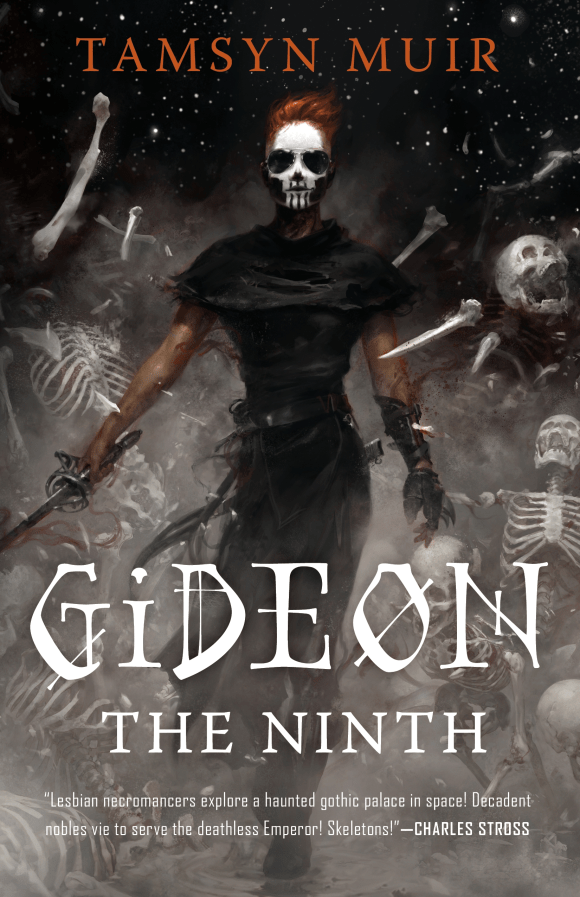
Gideon the Ninth Cover

Publisher: Tor (Hardcover – 10 September 2019)

Series: The Ninth House – Book One

Length: 448 pages

My Rating: 4.5 out of 5 stars

Amazon     Book Depository

From debuting author Tamsyn Muir comes a very unique and compelling science fiction novel filled with death, comedy and necromancers in space, Gideon the Ninth.

Before I begin reviewing Gideon the Ninth, I have to point out how impressive the design of the hardcover copy I received was. When I previously featured this book in one of my Waiting on Wednesday articles, I mentioned how much I loved the cover art. Indeed, the drawing of the book’s titular redheaded character with her face painted liked a skull surrounded by exploding skeletons is pretty damn cool. The hardcover copy also has some excellent visuals, as the outer rim of all the pages is coloured black, which definitely gives prospective readers a noticeable visual hook, especially when combined with the all-black binding underneath the jacket, emblazoned with gold writing on the spine and a single golden skull on the front. I really liked this fantastic presentation style, and it definitely left an impression on me as I started to read the book.

In the far future, a vast interstellar empire is ruled by necromancers whose control over the various magical disciplines of death make them a powerful force. Eight noble houses serve under the First House of the Emperor, and each of them has just received a message from their ruler. The heirs to each of these houses and their cavaliers, loyal sword-wielding protectors and companions, must attend the Emperor’s planet in order to compete to become the next generation of Lyctor, immortal beings of vast power.

Gideon Nav is an indentured servant to the Ninth House of the Empire, a small and impoverished house that carries a dark reputation. A skilled swordswoman, Gideon wants nothing more than to enlist in the imperial army to leave the dark crypts, the strict occult nuns and the multitude of skeletons that make up the Ninth Planet far behind. However, when her latest escape attempt fails, she finds herself offered an irresistible bargain: act as the Ninth House’s cavalier for the period of the trials and be granted her freedom. There is just one minor problem: Gideon and the heir to the Ninth House, Harrowhark Nonagesimus, an extremely powerful bone witch, absolutely hate each other.

Forced to temporarily put their differences aside, Gideon and Harrow travel to First House, only to discover it is a near ruin, looked after by a few old and mostly unhelpful servants. They soon learn that the secrets to becoming a Lyctor lie hidden within the walls around them, and the representatives of various houses can do whatever they wish to learn them. Trapped on the planet, Gideon and Harrow begin to explore the First House and encounter the heirs and cavaliers of the other houses. As the mismatched pair from the Ninth House start to unravel the various mysteries and challenges before them, a gruesome murder occurs. Something powerful is lurking within the First House, and it has the heirs in its sight. Can Gideon and Harrow work together, or will their own turbulent past and the secrets of their house tear them apart?

Gideon the Ninth is a chaotically clever and massively entertaining first novel from Tamsyn Muir, who has done an excellent job introducing readers to her intriguing new world. Gideon the Ninth is the first book in her The Ninth House series, which already has two planned sequels in the works, with the first of these currently set for release next year. After hearing the awesome plot synopsis for this book earlier in the year, I had picked this as potentially being on the best books for the latter half of 2019. I am glad to see that my instincts were once again correct, as this was an awesome read that gets four and a half stars from me.

Muir has produced an outstanding story for her first novel, as the plot for Gideon the Ninth is an amazing combination of humour, universe building, emotional character moments and a captivating set of mysteries as the protagonists attempt to uncover not only the vast secrets of the First House but the identity of the person or being that is killing them off one by one. The author has stacked this book with all manner of fantastic twists, and there are a number of major and game changing developments that are well paced out amongst the story. There is never a dull spot within the book, as even parts where no substantial plot developments are occurring are filled with excellent humour from the sarcastic narrator with a huge vocabulary of various swear words. There is also a substantial amount of action throughout the course of the book. The various fight scenes blister and explode off the page, especially thanks to the unique magical system that Muir has populated this world with. All of this results in an addictive and electrifying overall story with a very memorable ending.

The real heart of Gideon the Ninth lies in its incredible main characters, Gideon Nav and Harrowhark Nonagesimus, and the complex relationship the two of them have. Gideon is the badass, rebellious, coarse, girl-loving mistress of the blade, who serves as the book’s narrator and only point-of-view character. Gideon is an absolute blast as a main character, as she deals with every situation she comes across with an abundance of disrespect, anger and exaggerated responses, resulting in much of the book’s humour. Harrow, on the other hand, is the dark noble necromancer heir to the Ninth House, whose reserved persona, obsession with necromantic research and abilities, and vindictive nature work to make her initially appear as a polar opposite to Gideon. The relationship between these two main characters is initially extremely adversarial, as both characters declare their absolute hatred for each other, and Harrow seems determined to make Gideon’s life a living hell. As the book progresses, however, Muir really dives into the heart of the relationship between the two characters, revealing a complex history and a twin tale of woe and dark secrets that has defined them for their entire lives. The combined character arc of these two main characters was done extremely well. While you knew from the very start of the book that the two characters would eventually work together, the exact reason why this occurred was handled perfectly, and the final form of this cooperation helps create an epic and tragic conclusion to the entire book. While their relationship is not explicitly romantic (Harrow’s sexuality really is not explored in this book), they do become quite close by the end of the novel, and both characters are written exceedingly well.

In addition to Gideon and Harrow, Muir has also included a range of different characters, representing the heirs and cavaliers of the other major houses in the Empire. This results in an intriguing assortment of side characters who add a lot to the overall story. The author has made sure to invest in substantial backstories for all these additional characters, and this has a number of significant benefits for the story. Not only are the readers now blessed with an abundance of viable and duplicitous suspects for the story’s murder mystery, but each of the various representatives of the houses have their own individual secrets and motives for being at the First House. Learning more about each of these characters is quite fascinating, and a number of them have some pretty amazing character arcs. I particularly enjoyed the storyline of Palamedes Sextus of the Sixth House, who treats his necromancy more as a science than a form of magic. Sextus is the most logical character out of all the people in the book, and he serves as a major driving force of the investigation into the murders. His connection to some of the other characters in the book is a major part of the book, and the ultimate conclusion of his story arc is really cool. Muir has done an incredible job coming up with the book’s various characters, and it is a major part of why this book is so awesome.

It is quite clear that Muir has an amazing imagination, as she has produced a grim and compelling new universe to set this book in. Necromancy and a futuristic science fiction setting make for a fascinating combination, and I really loved her examination of an empire built on worshipping an immortal, necromantic Emperor and the various secrets that come with it. The sheer range of different necromantic magic featured within this book is pretty impressive, especially as each of the Imperial Houses has their own specific form of necromancy, all of which are examined throughout the book. Not only are all these different types of magic really fascinating to examine but it also results in some diverse pieces of magical action, as many of the necromancers unleash their various forms of magic throughout the book, resulting in some fantastic sequences. I do think that the author could have done a slightly better job of explaining some of the unique elements of her universe at the start of the book, as I got a little confused at some points towards the beginning; however, this was quickly chased away by deeper dives into the universe’s lore later in the book. Muir has left open a number of questions and plot directions to explore in future books in the series, and I am really curious to see what happens next.

Gideon the Ninth is a wild and exciting novel that makes use of an intriguing concept, some compelling characters and an excellent story to create an exceedingly entertaining book that was a heck of a lot of fun to read. Featuring laugh-out-loud humour, intense action and major emotional moments, this is an incredible read that is really worth checking out. Muir has hit it out of the park with her debut novel, and I cannot wait for the next book in the series.

Amazon     Book Depository

Aurora Rising by Amie Kaufman and Jay Kristoff

Aurora Rising Cover

Publisher: Allen & Unwin (Trade Paperback – 6 May 2019)

Series: Aurora Cycle – Book 1

Length: 470 pages

My Rating: 5 out of 5 stars

Amazon

The superstar team of Australian young adult fiction authors Amie Kaufman and Jay Kristoff comes together once more to create an outstanding, heartfelt and deeply entertaining new novel that may prove to be one of the best young adult books of 2019.

Kaufman and Kristoff are two of the biggest and most creative authors currently writing young adult fiction.  Kaufman is probably best known for her work with Meagan Spooner, where they have co-authored the Starbound trilogy and Unearthed series of books, the second book of which, Undying, was released earlier this year.  She is also in the process of writing her own Elementals series, with the second book, Scorch Dragons, released a month ago.  Kristoff first came into prominence with The Lotus War series, which debuted in 2012.  Since then he has also written The Nevernight Chronicle, the final book of which is set to be released in September, while his latest book, Lifel1k3, was one of the most talked about young adult releases of 2018.  Kristoff’s sequel to Lifel1k3, Dev1at3, is set to be released in a month, and he is currently working on an epic fantasy series, Empire of the Vampire, with the eponymous first book set to be released in September next year.

Kaufman and Kristoff have previously collaborated on the bestselling and award winning The Illuminae Files, a space opera epistolary series made up of three books which ran between 2015 and 2018.  Their latest collaboration, Aurora Rising, is another epic piece of young adult science fiction and is the first book in their planned Aurora Cycle series, which is currently set to feature another two books, released in 2020 and 2021.

Aurora Rising is set in the year 2380 and follows a spacefaring team of young adventurers as they attempt to save the galaxy.  In the future, humans have expanded out deep into the Milky Way, with fast intergalactic travel made possible through the Fold, dangerous space found on the other side of literal folds in the universe.  The Aurora Legion are an independent peacekeeping force made up of humans and several friendly alien races.  In order to complete their various humanitarian, exploration and peacekeeping missions, the Aurora Legion sends teams of young legionnaires, who can better withstand the rigors of the Fold, into the field.  Each team is made up of six highly trained and skilled individuals, who together can solve any problem they encounter.

Tyler Jones is the star graduating cadet of the Aurora Academy, who, thanks to his dedication and ability, will be given first pick of his fellow graduating cadets to form an elite team.  However, when an unscheduled joyride forces him to perform a risky rescue in the Fold, he misses the cadet draft, leaving him with a team of the cadets none of the other graduating squad leaders wanted.  These include (the descriptions were copied from the blurb due to accuracy):

  • His sister, Scarlet – A cocky diplomat with a blackbelt in sarcasm;
  • His best friend, Cat – A tomboy pilot who’s totally not into her squad leader, in case you were wondering;
  • Zila – a sociopath scientist with a fondness for shooting her bunkmates;
  • Finian – a smart-ass tech-whiz with the galaxy’s biggest chip on his shoulder;
  • Kal – an alien warrior with anger management issues.

Forced to make the most of his bad luck, Tyler leads his team on a routine mission that quickly turns hairy when a hostile force of aliens seek to destroy them.  However, genocidal aliens are the least of their problems, when they discover that the girl Tyler saved in the Fold, Aurora O’Malley, has stowed away on their ship.  Aurora, the only survivor of a colony ship long thought lost, is 200 years out of time and desperate to figure out what happened to her colony and the family she left behind.  The squad discovers that she is far more significant than they could ever imagine when she displays strange abilities and impossible knowledge of both the past and future.  When shadowy government agents attempt to arrest Aurora, the squad are forced to go rogue to solve the mystery and end up in a race to save the galaxy.

Aurora Rising is a spectacular read, as these skilled authors take the reader through an intense young adult science fiction adventure in an intriguing new universe.  The book’s story as a whole is an outstanding mixture of intense action, enjoyable science fiction elements and excellent character work, all wrapped up with clever storytelling that is both compelling and humorous.  There are a number of great scenes and epic moments throughout this book that really highlight this book’s unique style and the writer’s ability to tell a story.  For example, I personally liked an extended sequence that followed the protagonists as they embarked on an elaborate and seemingly impossible heist on a massive space station ruled by a vicious crime lord.  The overall result is a near perfect read that I had an absolute blast checking out.  This is an amazing piece of young adult fiction, with enough action and relatable characters to appeal to all manner of potential teen readers.  Older science fiction readers will also have a great time with this book, especially as it sets up a captivating and ambitious new trilogy that will appeal to a huge and diverse audience.

This book is told from the first-person perspectives of the book’s seven protagonists, which includes Aurora and all six members of Tyler’s squad, each of whom gets a series of chapters throughout the book to tell the story.  Kaufman and Kristoff make good use of the chapters each of the characters narrate and the reader gets a good idea of each character’s individual personality, as well as important snippets into their individual backstory.  The authors also try to differentiate these chapters out a bit for some of the characters.  For example, Zila’s chapters are rather short, blunt and analytical in nature, matching her personality, while Scarlet’s chapters feature her listing off the humorous pros and cons of her ex-boyfriends, figuring out which ones to stay in contact with.  I really enjoyed how the authors told the story through these seven separate narrators, as not only did it bring me closer to the characters but it allowed the authors to showcase various perspectives of some of the more impressive sequences and events, allowing for a fuller and more intense story.

Aurora Rising features an outstanding complement of main characters, as each member of the squad, including Aurora, are looked at in some detail.  I was very impressed with how the authors where able to create such expansive and intriguing backstories for all seven main characters, as each of them has their own issues or concerns.  For example, Tyler and Scarlett are living in the shadow of their dead father’s heroics and trying to make him proud, Cat is deeply in love with Tyler and is having a hard time keeping her feelings in check, and Zila struggles with her disconnection with other people brought on by her tragic past.  Other examples include the team’s two alien members: Finian, who to hides his feelings of abandonment behind his brilliance and snark; and Kal, who is torn between guilt about what his race’s warrior caste, of which he is a member, has done to his home planet and his surprising feelings for one of the other members of his squad.  Aurora is perhaps one of the most complex characters, waking after 200 years to find that everything and everyone she knew is dead and parts of her past have been hidden for nefarious reasons.  Add into that her discovery of uncontrollable mental abilities and the feeling that something mysterious is guiding her and she has a lot to worry about.  One of the best things about this book is that whilst all seven characters are fairly complex individually, the book’s true strength revolves around the fact that when these characters come together they are an extremely dysfunctional crew.  The crew starts off as a rebellious and overly sarcastic mess unable to work together effectively, even with their individual abilities and strengths.  However, as the book continues, they do learn to cooperate to a degree, and the reader is made to really care for them, both individually and as a whole.  I loved how these character relationships expanded and strengthened throughout the book, and I had a lot of fun with this humorous and entertaining group of people.

I really enjoyed the universe that Kaufman and Kristoff crafted to fit around this enjoyable and intriguing story.  Visions of humanity’s future can always be a bit hit or miss, but I thought that the science fiction setting that the authors utilise in this book, which sees humanity expanding and interacting with other races while dark secrets and wars build up in the background, to be a fun and well-thought-out setting.  The characters visit an interesting and inventive number of locations through the book, all of which really add to Aurora Rising’s adventure and action.

I liked the author’s concept of the Aurora Legion, an intergalactic peacekeeping organisation that sends teenage operatives into action due to science fiction reasons.  One of the things I quite enjoyed about this was how these teams were designed to have six members whose joint abilities and specialities would allow them to anticipate and overcome any problem.  As a result the teams are made up of:

  • Alphas – leaders
  • Faces – diplomats
  • Aces – pilots
  • Gearheads – mechanics/inventors/technicians
  • Tanks – combat specialists
  • Brains – science officers/medics

This team breakdown proved to be quite an interesting concept, even if they do sound like party roles in a MMORPG (tank, healer, DPS etc).  I liked this idea and the various characters slid into the roles quite effectively.

I also had a lot of fun with the universe-expanding insertions that Kaufman and Kristoff placed before a number of the book’s chapters.  These insertions are written as information pages being read by Aurora on her uniglass, an AI tablet called Magellan, who has a playful sense of humour and who also provides some amusing commentary within the story.  These information pages provide the reader extra information about the universe, including about the Aurora Legions, the roles of the squads’ various members, the history of the universe, alien species, locations the protagonists visit and other relevant inclusions.  While each of these pages contains universe factual information, Magellan adds humorous twists to each of these pages which are very entertaining and really fit into the easy going and entertaining mood of most of the book.  However, these information pages do change and get more serious in the darker parts of the book, which also helps prepare the reader for the shift in mood.  I loved these inclusions, not only appreciating the inventive universe building they allowed, but also the fun take on the classic idea of in-universe media inclusions.

Aurora Rising is an absolutely fantastic book that blasts off with action, humour and amazing characters to create a deeply compelling and relentlessly entertaining story.  Australian authors Kaufman and Kristoff are an outstanding writing duo, and their latest collaboration is an amazing piece of young adult fiction that brilliantly establishes their new trilogy and ensures that future instalments of the Aurora Cycle will be some of the most sought after young adult books for 2020 and 2021.  Aurora Rising comes highly recommended from me, and it is one of my favourite new young adult books of 2019 so far.

Amazon

Sixteen Ways to Defend a Walled City by K. J. Parker

Sixteen Ways to Defend a Walled City Cover

Publisher: Orbit (Trade Paperback Format – 9 April 2019)

Series: Standalone

Length: 350 pages

My Rating: 5 out of 5 stars

Amazon

Ok, now this was one hell of a book!!!

K. J. Parker’s Sixteen Ways to Defend a Walled City is an exceptional piece of fantasy fiction that keeps the reader enthralled with its excellent story, fantastic self-aware humour and one of the best depictions of a siege that I have ever had the pleasure of reading. The end result was an excellent read that I just had to give a full five stars to, and it has to be one of my favourite books of 2019 so far.

The Robur Empire is one of the great civilisations in the world, and at its heart lies the City, capital and seat of power of the Emperor, kept safe by its impenetrable walls, powerful armies and unsurpassed navies.  However, that safety is unexpectantly compromised when a massive force of soldiers appears out of nowhere, slaughtering the entire imperial army, crippling the navy and completely surrounded the City.

The only forces left garrisoned in the City are the men of the Empire’s Engineering Corps, led by Colonel-in-Chief Orhan, who suddenly finds himself in charge of the defence of the City.  Orhan is a coward, a glorified bridge builder, a man able to work the complex imperial military system for his own gain and a foreigner despised by most of Robur society, but he is not a great military leader.  He is, however, one of the most devious and underhanded men the army has ever seen, and these might just be the qualities needed to save the City from destruction.  As Orhan works to unite the various factions in the City to his cause and come up with a range of unique defences, he makes a shocking discovery.  A figure from his past is leading the assault against the City, and Orhan quickly realises that he might be on the wrong side of this battle.

I really enjoyed this latest book from Parker, who has created a complex and captivating fantasy tale that proves exceedingly hard to put down.  K. J. Parker is actually a pseudonym of author Tom Holt, who was able to keep the dual identity secret for 17 years before it was revealed in 2015.  Between his two identities, the author has written an amazing number of books since his 1987 debut, mostly focused on the fantasy genre.  This includes over 30 humorous fantasy novels as Tom Holt, five historical fiction novels, the Fencer, Scavenger and Engineer trilogies as Parker, a number of standalone fantasy books and a huge range of short fiction, some poems, songs and even some non-fiction work.  For those who may be concerned, no reading of any of Parker’s prior work is required to enjoy Sixteen Ways to Defend a Walled City as this latest book is a standalone novel.  Still, I will be keeping an eye out for any future books by either Tom Holt or K. J. Parker as I really enjoyed the author’s writing style and fantastic sense of humour.

Sixteen Ways to Defend a Walled City is an intriguing novel that is told from the perspective of its “hero” Orhan, who is narrating the story of his defence of this city within a historical text.  This story is incredibly entertaining, as not only does it feature a first-rate siege within an excellent fantasy location, but it is told by a complex and multi-layered character who paints the entire ordeal of being in charge in a very funny light.

I am a man who loves a good siege storyline, but this has to be one of the best ones that I have ever had the pleasure of reading.  At the start of the siege the situation looks grim, as a vast host surrounds the City, whose defenders have all been slaughtered outside the walls, with the exception of Orhan’s engineers, who lack the basic military supplies and machinery to defend the City.  As the enemy start a conventional long-term siege with advanced weaponry and superior forces, Orhan is forced to come up with something to delay their inevitable defeat in the hopes of reinforcements turning up.  Without the required men, equipment or leadership, they cannot rely on the traditional 15 methods of defending a walled city that the books suggest, so he has to rely on the on his own 16th way, which involves bluffing, chaos and mad-cap innovation.  As a result, much of the book features Orhan’s many unconventional methods to defend the City, whether it involves taking symbolic control of the entire empire, legitimising and attempting to control two rival criminal gangs or creating devastating new siege weapons.  The protagonist and his men’s engineering prowess comes in effect quite a bit throughout the book, and I loved seeing the machines and other unique defence methods that he deploys as a result.  All the various deceptions and tactics used to hold the City against this superior force is widely entertaining and I absolutely loved the siege storyline which serves as an amazing centre to this incredible story.

The setting that the author chooses for this book is pretty interesting and adds a lot of great elements to the story.  The Robur Empire is pretty much the Roman Empire, with the City being this universe’s equivalent of Rome.  I thought that the City was a fantastic setting for the vast majority of the story, and the various factions and problems with such a large city really tied into the great siege storyline.  The City’s criminal organisations, the Greens and the Blues, former charioteer supporters (very Roman) turned rival criminal unions, are the cause of a large amount of strife, and I liked how their own battles and self-importance became such a major part of this book.  I also felt that Parker did an amazing job portraying a city that sits at the heart of a massive empire, and the attitudes of the people within felt pretty accurate.

On top of the great setting, Parker has also created an intriguing, extended world for this story.  The Robur Empire is a great overall setting for most of this book, as its setup, design and attitudes are very similar to the ancient Romans.  Parker’s initially subtle use of racial identity in this empire is quite intriguing, and it becomes a major part of the book.  Essentially the empire is made up of the pure-blooded Robur, who are called blueskins due to their darker skin colouration.  Then there are those people with white skin, who are given the derogatory name of milkfaces, who are treated like second-class citizens within the empire, and who came from lands conquered by the Imperials.  Not only does this become an important plot point with the army attacking the City made up completely of milkfaces, but it is reminiscent of the Roman Empire, when the pure-blooded Roman citizens looked down upon the paler barbarians from Gaul, Britain or Germany.  I also liked how the author tried to replicate the precision military system of the Romans with the Robur, and it was fun to see how the problems of such a system came into play throughout this book, such as having the military resources of the entire empire being kept in supply depo sites rather than in the capital.  I quite enjoyed these fantastic settings, and I thought that they were an excellent place to set these complex stories.

While the siege storylines and settings are extremely amazing, this book would be nothing without its main character and the person narrating this fictional historical text, Orhan.  Orhan is an amazingly complex character, and the personality that Parker creates for his hero is outstanding.  Orhan is a milkface who has risen to high military command within the Robur Empire due to his abilities as an engineer.  As a result of his hard early life and the constant belittlement and discrimination by the blueskins he serves under, he is an incredibly cynical person with a very jaded outlook on life.  The author does an amazing job transcribing these character traits onto the page, often in a sarcastic and very entertaining manner as he describes the events going on around him, and the reader gets a great sense of the character’s frustrations.  While Orhan is attempting to defend the City, his own narrations reveal him to be an extremely self-serving and selfish person who has been forced by circumstances rather than duty to protect the City.  His motivations become even more complex as he begins to wonder if he is on the wrong side of the conflict, as the invading army is completely made up of milkfaces like himself, and even when he is doing the right thing the blueskins in the city that he is defending still treat him badly.  Even with that doubt, he is a surprisingly (especially to himself) effective commander, whose deceitful and inventive nature, as well as his extensive knowledge of history and engineering, allows him to come up with some outstanding defensive strategies.  My favourite has to involve his unique method for dealing with the enemy’s sappers, which sees him use his knowledge of the City, his craft and his ability to manipulate his opponents to create a fantastic response.  The entire sequence involving this anti-sapper technique is one of the best parts of the book, and I love the doubt and regret he experiences as a result of his actions.  Overall, Orhan is an outstanding narrator, and his depiction of the chaotic event and his part in them really made this story for me.

Sixteen Ways to Defend a Walled City is an exceptional piece of fantasy fiction, and I think I already have a contender for my future top ten books of 2019 list.  This book has to be read to fully appreciate its complexity and cleverness, and I found it to be boundlessly entertaining and widely funny.  K. J. Parker’s latest book comes highly recommended, and it is well worth checking out.

Amazon

Throwback Thursday – Moving Pictures by Terry Pratchett

Moving Pictures Cover

Publishers: Corgi and ISIS Audiobooks (14 November 1991)

Series: Discworld – Book 10

Length: 332 pages or 10 hours and 8 minutes

My Rating: 5 out of 5 stars

Amazon

Reviewed as part of my Throwback Thursday series, where I republish old reviews, review books I have read before or review older books I have only just had a chance to read.

Because my blog shares the name of a building featured in Terry Pratchett’s Discworld series, some people might have assumed that I am a fan.  You would be right, so very, very right.  I have loved Discworld since I was a small child, and my appreciation and respect for the complex writings of the late, great genius, Sir Terry Pratchett, has grown with me.  The Discworld series represents one of my ultimate comfort series of books.  It’s the series that I go back to at any time when I want something fun and familiar to enjoy.  I have read all of the adult books set in Discworld multiple times (I have yet to read all of the young adult ones), and it is an unusual year when I do not listen or read some of these books in my spare time.  Pretty much every single book in this series deserves five out of five stars or higher (with one or two exceptions that I may mark down to a 4.75 with a heavy, heavy heart), and you are unlikely to find any real criticisms about this book below.  After nearly a year of running this blog, the continued exclusion of a review of any of Pratchett’s Discworld is a travesty, and one that I seek to rectify in this somewhat late Throwback Thursday with a review of the 10th book in the series, Moving Pictures.

Before I review Moving Pictures, here is some quick context of the Discworld series for those people unfamiliar with these books.  Discworld is the main series of Sir Terry Pratchett, set upon the Discworld, world and mirror of worlds.  The Discworld, or the Disc, is a flat world that rests on the backs of four massive elephants, who themselves stand on the back of a gigantic turtle swimming in space, Great A’Tuin.  The Discworld itself features a huge range of different nations and continents that bear striking similarities to real-world locations.  This series is, without a doubt, the best series that utilises a combination of fantasy and satire in the entire world.  The seamless blend of the two elements is just incredible, and both elements do an unbelievable job at enhancing each other.  Before his death, Pratchett wrote 41 books in the Discworld series, six of which are considered young adult books.  While the books can be read in any real order, the series were mostly written in chronological order (with the exception of Small Gods), and events from earlier books in the series are often referenced.  Although most of the Discworld stories are self-contained, a number of the books are linked together by a recurring main character and are subsequently grouped together into subseries.  These include the Rincewind, Witches, City Watch, Death, Tiffany Arching and Moist von Lipwig subseries, in addition to a few standalone books that fall outside of any of the subseries.  Characters often appear in other Discworld books outside of their subseries, and there are a string of side or secondary characters who appear in multiple subseries and standalone books.

The book I am reviewing, Moving Pictures, is a standalone book that does not really fall within any of the main subseries.  It is sometimes considered part of minor subseries, called the Industrial Revolution subseries, with The Truth and Monstrous Regiment, but I am not a big fan of that distinction.  As it is the first Discworld book I am reviewing, you might think that it is my favourite book in the entire series, which is not true; although it does get five out of five stars from me and I have enjoyed it an amazing number of times, it is not my absolute favourite Discworld book, although it is high on the list.  It is, however, an easier one for me to review as there is a lot I can say about it.

Goodreads Synopsis:

‘Holy wood is a different sort of place. People act differently here. Everywhere else the most important things are gods or money or cattle. Here, the most important thing is to be important.’

People might say that reality is a quality that things possess in the same way that they possess weight. Sadly alchemists never really held with such a quaint notion. They think that they can change reality, shape it to their own purpose. Imagine then the damage that could be wrought if they get their hands on the ultimate alchemy: the invention of motion pictures, the greatest making of illusions. It may be a triumph of universe-shaking proportions. It’s either that or they’re about to unlock the dark terrible secret of the Holy Wood hills – by mistake…

The blurb above is a bit vague on the details of what is actually happening in Moving Pictures.  Essentially, the alchemists of Ankh-Morpork, the largest city on the Discworld (and a central location for many of the books), suddenly develop filmmaking, which they call moving pictures, and set up a filming base at the ancient and abandoned Holy Wood.  The moving pictures issue a weird siren call to the inhabitants of the Discworld, dragging all manners of people and creatures from across the lands and infecting them with their magic (not a metaphor).

Among those drawn to Holy Wood are Victor Tugelbend, a former student wizard, and Theda “Ginger” Withel, a small-town girl with big dreams.  Thanks to the magical on-screen chemistry between them, Victor and Ginger quickly become the superstars of the fledgling moving pictures industry, especially when the Discworld’s most infamous salesman, Cut-Me-Own-Throat Dibbler, comes to town and takes over the studios.

However, reality on the Discworld is always a bit thin, and Lovecraftian monsters (a favourite recurring antagonist of Pratchett’s early Discworld novels) are revealed to be the ones who planted the idea of moving pictures and Holy Wood in the alchemists’ heads.  Using the new sort of magic created by Holy Wood, the creatures start to break through.  With the wizards of Unseen University, the people who are supposed to guard against these sorts of incursions, distracted by the arrival of an unconventional new Archchancellor, it is up to Victor, Ginger and a ragtag band of other Holy Wood characters to save the day.

This book has so many moving parts to it that it’s hard to know where to begin when reviewing it.  While the main story is concerned with the introduction of moving pictures into the Discworld, there are a number of other entertaining storylines going on throughout the book, each one complementing the main story and creating an amazing overall narrative.  The major appeal of this book is its sharp and intelligent satire of the movie business, which also examines the nature of a film industry in a world as crazy as the Discworld.  I also quite like all the amazing characters, either introduced or built up in this book, many of whom appear in later books in the series.

This book is absolutely hilarious and filled with a huge number of clever and outrageous jokes and observations about the film industry, all of which lie on top of Pratchett’s usual humour about day-to-day life in the Discworld and his random observations, many of which are perfectly introduced in the book’s footnotes.  The main storyline is an amazing portrayal of the hectic early days of the film industry, placed in a fantasy setting.  The cameras are powered by miniature demons (who paint the pictures really, really fast), the lighting is done by salamanders, actors of all species make up the cast, the audience eat ‘banged grains’ while watching the ‘clicks’ and the film’s monsters and villains are all trolls in crude costumes.  However, literal movie magic is making people do strange things (strange even for Discworld folk), talking animals are showing up looking for work, Dwarfs are singing “Hihohihohiho” as they work, characters routinely burst into song and dance in the rain, and one producer keeps threatening to turn people into stars, all while the book’s few straight-characters look on in bemusement.  All of this is amazing, and the sheer number of fantasy-assisted jokes throughout the book is pretty unbelievable.

At its heart, Moving Pictures is a satire and a critique about the film industry as a whole.  Quite a large amount of the story is dedicated to parodying the real-life the crazy effect that movies can have on audiences and the people who make them, as the book shows some ridiculous events.  The story also reflects the insubstantial nature of fame and the fragility of dreams surrounding the movie industry.  The fast-moving world of the film industry is also shown, although sped up even more for comedic and story value, as they film creators are constantly searching and finding new advancements in their field.  A great example of this is shown when Cut-My-Own-Throat Dibbler invents and then continually advances the art of advertisement, so that, within a few short weeks, the film industry goes from ineffective text advertisements to eye-catching posters and explorations of product placement and subliminal messages.  Pratchett handles these critiques very skilfully, and you cannot help but laugh aloud as he skewers the film industry quite cleverly throughout Moving Pictures.

Pratchett also filled Moving Pictures with a ton of references to iconic films and elements of the film industry.  Many of the characters involved with the films are caricatures of famous movie actors, with Victor playing all the typical romantic or manly male heroes of the day, and Ginger is essentially Marilyn Monroe.  Several films are parodied throughout the book, such as Gone With The Wind, which becomes Blown Away, an epic love story set around a famous Ankh-Morpork Civil War.  There is a rather good King Kong parody, in which a gigantic woman kidnaps a poor defenceless Ape (the Librarian) and drags him to the roof of the tallest tower in Ankh-Morpork, all while two wizards on a broomstick shoot at it with a crossbow, with one shouting “If it bleeds, we can kill it!”  That is only scratching the surface of the references featured within this book.  A golden figure with a name starting with O plays a big part in the story, the various studios are all parodies of real-life studios, and there a huge number of funny and subtle references to various famous films.  Examples of these include Wizard of Oz, Lassie, Lawrence of Arabia, Indiana Jones, Looney Tunes, Blues Brothers, Casablanca, Tarzan and Star Trek just to name a few.  Readers can go through this book multiple times and not pick up every detail, which is a testament to the cleverness of Pratchett and his ability to come up with some hilarious references.

I have always found the way that Pratchett utilises or re-uses his characters to be extremely fascinating; while some characters appear in multiple books, a number of his main characters, especially from his earlier books, are only used once. There are several examples of this, including Mort from Mort, Pteppic from Pyramids and Esk from Equal Rites (who did appear in a later young adult novel, but there was a significant time gap between the writing of these two books).  While Pratchett may have simply had only one story in mind for these characters, I have a feeling that he simply did not like how they turned out and decided not to use them again under any circumstances.  Mort is probably the best example of this.  Despite being the protagonist of the first Death subseries book Mort, he never appears in any of the Death subseries books again (aside from one brief flashback), and is instead replaced by his own daughter, Susan.  It is interesting to note that most of the main characters who were never or rarely used again are somewhat similar to each other, being young heroes without too many obvious flaws to them.  On the other hand, the unique main characters Pratchett creates with notable flaws, such as Rincewind, the wizard who has turned cowardice into an art form, or the overly cynical and dangerous alcoholic Sam Vimes, helm multiple books.

If I have to make one criticism about this book, it is the weak and somewhat inconsistent main characters, Victor and Ginger.  Ginger is a generic female character, and while she is a good parody of Marilyn Monroe and other early screen actresses, she is pretty one-dimensional and unlikeable.  Victor starts out with some very interesting character traits, as he is described as an extremely lazy person, whose unique brand of laziness forces him to become a brilliant student wizard in order for him to succeed in his quest to fail every test he ever takes by a certain point margin to ensure he remains a student.  However, these character traits are pretty much thrown out the window a few chapters in and he becomes a typical male hero for the rest of the book.  While this sort of straight-man character was needed for this wacky adventure, it is surprising that the character never again really shows the slightest hint of some of these earlier established character traits.  It is interesting to note that neither Victor or Ginger appear in any of the subsequent Discworld novels, so I think there is a strong possibility that Pratchett might also have disliked how these characters turned out.

While one or two of his earlier main characters were somewhat unimpressive, Pratchett always managed to make up for this by creating a range of memorable and enjoyable side characters.  It was always interesting to see which of these side characters would appear in various later books, as you knew Pratchett had to like them as well.  For example, Granny Weatherwax was a supporting character in Equal Rites, but Pratchett must have liked writing her, as she became a major character in the Discworld series, even getting her own subseries with several other witch characters.  Moving Pictures is perhaps the best example of Pratchett’s love of side characters; while Victor and Ginger never appear in the Discworld again, many of the side characters introduced or developed in this book have major roles later in the series.

For example, I was always impressed with how this book turned two minor characters from Guards! Guards!, Cut-Me-Own-Throat Dibbler and Detritus the troll, and gave them more expanded roles in Moving Pictures.  Dibbler was an opportunistic merchant who got a couple of good, if minor, scenes in Guards! Guards!, but in Moving Pictures, Pratchett transformed him into a ruthless and extremely savvy salesman who gets in the front door of every major new opportunity inflicted on the Discworld, but is often forced by circumstances back to becoming a sausage-in-a-bun merchant.  Dibbler was absolutely fantastic as the stereotypical sleazy film producer, and it is unsurprising why he suddenly became a major recurring character throughout the Discworld books, not only appearing in nearly every book set in Ankh-Morpork but also having clones of him appear in the other nations and cities, all of whom sell disgusting local delicacies.  Detritus is another great example, as he goes from the simple bouncer introduced in previous books to a troll seeking love and a new way of life.  Pratchett comes up with a great personality for Detritus in this book, and it carries through to the City Watch subseries when he joins the Watch in Men at Arms and becomes a major recurring character in this subseries and other books set around Ankh-Morpork.  Other recurring characters, Death and the Librarian, are as awesome as ever, but Dibbler and Detritus are the real standout stars of this book.

Several new characters introduced in this story also make a number of reappearances throughout the rest of the Discworld series.  A good example of this is the talking dog, Gaspode, who is a fantastic and sarcastic character through the book.  He has some great scenes, with the highlight being his friendship with Laddie, a Lassie parody and idiot who Gaspode takes under his wing.  The idea of a clever, underappreciated and sarcastic talking dog side character apparently worked so well that Pratchett found a way to return his magical intelligence and ability to speak a few books later in Men at Arms (the same book Detritus reappeared in) and he then featured in several additional books.

You also have to love the new wizard characters that Pratchett also created for this book.  Before Moving Pictures, the faculty of Unseen University, with the exception of the Librarian and Rincewind, were replaced each book with a new group of senior wizards, thanks to the competitive nature of succession in the university.  However, this 10th book introduces a brand new and more permanent faculty of Unseen University, led by Archchancellor Mustrum Ridcully.  Ridcully is a fantastic character as he is big, loud and sporty man who is generally the complete opposite to any other wizard previously shown in the Discworld series.  I really enjoyed his storyline and found it to be one of the most entertaining in the entire book.  Pratchett must have agreed, as Ridcully became the only recurring Archchancellor in the Discworld series.  This also allowed for the creation and stabilisation of unique characters to make up the senior faculty of Unseen University, including the Bursar, the Dean, the Chair of Indefinite Studies and the Lecturer in Recent Runes.  While the other wizards have a fun romp breaking out to go see the moving pictures, the Bursar has a great story, as you get to see the first signs of madness that would afflict him throughout every other book he appears in, as he first encounters the stress associated with working under Ridcully.  I also liked the introduction of a young Ponder Stibbons, whose bad day while trying to escape from the university is pretty humorous, but also the complete departure from his later role as the only serious member of the faculty.  Thanks to their entertaining storylines, the wizards would appear in multiple books in the rest of the Discworld series, and while they never had their own specific subseries, they would get major inclusions in several other subseries, including substantial stories in The Last Continent, Soul Music, Lords and Ladies and The Hogfather, as well as their own novel, Unseen Academics.

While I have physically read most of the books in the Discworld series, including Moving Pictures, these days I tend to only listen to the audiobook formats of these books.  The Discworld audiobooks are pretty awesome, and the two narrators for the series, Nigel Planer and Stephen Briggs, both do an incredible job.  I find that the humour in the Discworld novels is massively enhanced by the narration, and I love listening to the stories this way.  At 10 hours and 8 minutes, this is not a long audiobook, and I always tend to power through these books really, really quickly.  Planer is a comedy veteran and has an awesome audiobook voice, and it is quite impressive the sheer range of different and distinctive voices he can come up with.  I also like his incredible consistency when it comes the multiple books in the Discworld series; for example, voices he creates for Moving Pictures are generally the same used for that character in later books he narrated.  The audiobook format of Moving Pictures is my preferred way to enjoy this book, and it is really worth trying out.

As you can see from my extremely long rant above, I absolutely love Moving Pictures and the Discworld series.  Pratchett created an incredibly complex and extremely funny novel that laughs right at the heart of the film industry.  The sheer range of references in this book is amazing, and the creation and enhancing of the various side characters featured in this book has massive ramifications for many of the later Discworld novels.  If you have yet to experience the joy of Terry Pratchett’s Discworld series, get on it as soon as you can.  It is well worth it, and Moving Pictures is a great place to start your Pratchett adventure.  I fully intend to review more books in this series in the future.

Amazon

The Secret Runners of New York by Matthew Reilly

The Secret Runners of New York Cover

Publisher: Pan Macmillan Australia (Trade Paperback Format – 26 March 2019)

Series: Standalone/Book 1

Length: 328 pages

My Rating: 4.5 out of 5 stars

Amazon

The end of the world has nothing on the horrors of high school in this fast-paced and widely entertaining new book from bestselling Australian author Matthew Reilly.

When Skye Rogers and her twin brother, Red, are forced to move to New York city, they are enrolled in the prestigious The Monmouth School, learning institute of choice for the city’s ultra-wealthy and social elite.  Even among the children of the rich and powerful there exists a well-established hierarchy, and in The Monmouth School, the top of the social ladder are the friends and cronies of the Collins sisters, Misty and Chastity.  Despite only wanting a quiet existence in her new school, Skye finds herself drawn into their orbit against her better judgement.

Skye soon discovers that hanging out with the Collins sisters is very different from the usual high school cliques.  The social group is probably the most exclusive in New York, and it comes with certain privileges.  Thanks to an ancient family secret, the Collins sisters are able to activate an ancient tunnel beneath Central Park that allows teenagers to run through an alternate version of New York: a post-apocalyptic nightmare littered with ruined buildings and filled with crazed survivors.

When Skye and her fellow runners find evidence that the New York they are visiting is actually a future version of their own timeline, they need to find a way to come to terms with the end of the world, especially as the apocalypse appears to be only days away.  As society starts to crumble and the poor rise up against the rich, Skye tries to find a way to use her knowledge of the future to save everyone she loves.  However, Skye is about to learn that her new friends are far more concerned with revenge and are planning to use the end of the world to take her down.

Matthew Reilly is a veteran author of weird and electrifying fiction, having written a number of intriguing books in the last 20 years, many of which fall within the techno-thriller or science fiction genres.  In addition to a number of fun sounding standalone novels, Reilly has also published two substantial series, the Shane Schofield series and the Jack West Jr series.  Matthew Reilly is one of those authors that I have been meaning to check out for some time, as a number of his novels sound absolutely bonkers and really creative.  I am particularly drawn to his 2014 release, The Great Zoo of China, which essentially sounds like Jurassic Park with dragons; his 2013 historical thriller The Tournament; and the books in the Jack West Jr series, which features secret organisations fighting for control of ancient artefacts with world-and universe-ending potential.

I was therefore very excited to get an advanced copy of The Secret Runners of New York, due to its intriguing time travel and armageddon concepts.  I actually really enjoyed The Secret Runners of New York and had a lot of fun reading it.  The book features a surprisingly entertaining use of over-the-top high school drama that actually combines really well with the interesting science fiction elements mentioned above.  The result is an unpredictable and amusing overall story that I had a very hard time putting down and which I powered through in very short order.

The book revolves around the students at The Monmouth School (you have to say the “The”; it’s that type of place), New York’s premier high school for the rich and snooty.  Please remind me to never send any of my theoretical children to any school thought up by Reilly, as the author creates a learning institution that is essentially a viper’s nest of bitchiness, enforced social hierarchy and petty revenge, all of which is enhanced by the fact that the characters are all ultra-rich or have massive superiority complexes.  The quote below from main character Skye, one of the few well-adjusted characters in the book, shows her experiences within the first few minutes at The Monmouth School:

“In the space of a few minutes I’d seen a taunt about sluttiness, a threatened punch to the uterus, some humble bragging by the Head Girl about the school’s social status and a dose of good old-fashioned mean-girl passive aggressiveness from Misty.  School, I reflected sadly, was school no matter how high the tuition fees were.”

I have to admit I did find Reilly’s portrayal of most of the rich teenage girls in this book to be a tad extreme and unrealistic (yes, in a book featuring time travel, that’s what I am finding unrealistic).  I have never been and never will be a teenage girl, but I hope that teenage girls in high school couldn’t possibly be as petty and vicious as the girls portrayed within this book, even if they are the daughters of the uber-privileged.  That being said, I found this over-the-top viewpoint of high school life to be extremely entertaining and it was a fantastic element throughout the book.  Watching the level-headed and somewhat cynical protagonist have to deal with this insanity was a lot of fun, especially when you would imagine most people would be more concerned with the end of the world than with who made out with which guy.  An unbelievably amusing part of the story, these high school elements are great, just try and avoid thinking about it too much.

In addition to the look at the mean girls of high school, I did quite enjoy Reilly’s critique of the ultra-rich and powerful in New York City.  The protagonist finds herself drawn into the world of debutant balls, society politics and the other classy responsibilities of being rich in New York.  Again, this is an interesting part of the story, and the rich characters with their extravagant lifestyles do offer a nice disconnect from reality.  I liked Reilly’s examination of how the rich would be targeted during apocalyptic events such as the one portrayed within this book, and it played nicely into some of the current protests and perceptions of the 1%.  it’s another glorious over-the-top element for this book that provides the reader with a lot of entertainment and a real dislike of most of the privileged characters.

The science fiction parts of this book are incredibly well done and are an excellent part of this book.  Not only is there a devastating cosmic storm that will wipe out most of humanity in hours, but there is an unrelated magical tunnel that the protagonists can use to visit the future.  Reilly does an amazing job creating a devastating and crazy post-apocalyptic New York City for the readers to explore.  I was really impressed with all the brutal descriptions of how the city was in ruins and had been dramatically reclaimed by nature as the infrastructure falls into disrepair, and the whole thing is an amazing setting that Reilly uses to full effect.  I really liked how the author uses the time travel elements within the book.  Watching the protagonists slowly work out that this world is a future version of their own timeline is amazing, and it was great seeing them see all the testimonials and letters from their families describing the events that are yet to happen in their future.  The various time travelling shenanigans used by both the protagonists and antagonists of this book helped enhance this already exciting story, and I loved the way that the characters are able to see the consequences of their actions in both timelines before they actually happen.

The author has also utilised some eye-catching visual elements throughout the book to enhance the story being told.  There are a number of maps used to show the key locations of the book, and there are even a couple of diagrams used to explain the potential time travel issues in this book.  I personally liked the way that the font changed to signify the characters going into a different timeline and thought it was a nice touch.  A range of other text techniques are used to signify angry or desperate messages on different locations, such as walls or the entirety of buildings, often conveying the emotion behind these messages.  All these visual treats are great, and they really make this book stand out.

The Secret Runners of New York is currently being marketed to the teen and young adult audiences, but this book is really on the edge of what young adult fiction is.  While it is focused on teenage characters in high school, there are a significant number of very adult inclusions throughout the book.  It is interesting to note that in an interview at the back of the book, Reilly himself indicates that he does not see this story as being as a piece of young adult fiction, and I think that is shown in the way that he wrote this over-the-top story.  There is a high level of violence, drug use, coarse language and sexual references featured throughout this book, and as a result, I would say it is not really appropriate for the younger audiences and is probably more suited for older teenage readers.  This is definitely one of those young adult marketed books that adult readers can really enjoy, and there is no upper limit on enjoying this crazy tale.

This was an incredibly entertaining and captivating book that I had a lot of fun with.  Matthew Reilly pulls no punches when it comes to portraying the book’s petty and vicious teenage rich girl antagonists, which turns an already intriguing science fiction book into a wild thrill ride of revenge, betrayal and insanity.  I have to say that I quite enjoyed my first taste of Matthew Reilly’s writing and I am extremely keen to check out some of his other works in the future.  At the moment The Secret Runners of New York is a standalone book, although the author leaves a number of storylines open for sequels or prequels, and I would be interested to see where he takes the story next.

Amazon