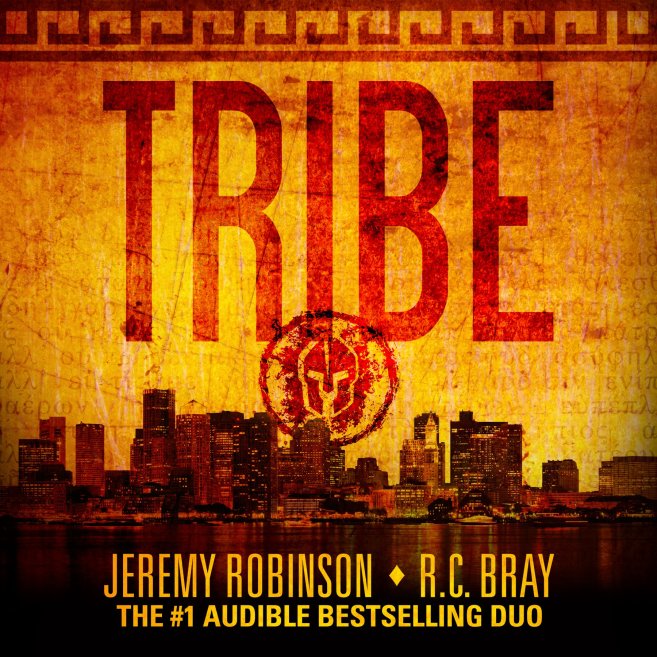
Tribe by Jeremy Robinson

Tribe Cover 2

Publisher: Breakneck Media (Audiobook – 26 November 2019)

Series: Standalone/Infinite Timeline

Length: 10 hours and 36 minutes

My Rating: 4.5 out of 5 stars

Amazon     Book Depository

Gods, mortals and everything in between will clash in Tribe, the intriguing fantasy thriller from the always entertaining Jeremy Robinson.

Last year I decided to take a chance and check out an author whose work I was unfamiliar with, and boy did that work out for me.  Jeremy Robinson had a very impressive and extensive list of awesome books to his name, most of which straddled the border between thrillers and other genres like fantasy, science fiction and horror.  The first book of his I checked out was The Dark, which followed a very likeable protagonist who gets caught up in a terrifying and horrific invasion of his neighbourhood by a horde of demons.  The Dark was an outstanding read, and I really got drawn into its awesome story, intense pacing and fun characters.  After giving The Dark a full five-star rating, I had to make sure to grab the other 2021 release from Robinson, Mind Bullet, especially as it was in the same loosely connected series.  Mind Bullet was a fantastic and highly entertaining read that followed a psychic hitman being hunted by a series of unusual but deadly assassins.  Mind Bullet was another five-star read in my book, and I had such a great time reading it.  Indeed, I loved both The Dark and Mind Bullet so much that I included them both of my top books and audiobooks lists of 2021.

Naturally, this has made me quite eager to read some more of Robinson’s work, and while I had to miss one of his 2022 releases The Order (I need to read some of the lead-up books beforehand), I did recently decide to go back and try one of his older novels, the 2019 release, Tribe, from the same storyline as The Dark and Mind Bullet.  Not only does this allow me to better follow one of Robinson’s upcoming books in the Infinite series but it had a very fun-sounding story that I really wanted to check out.  It turns out Tribe was just as fun as I hoped it would be, and I had a wonderful time getting through it.

Sarah, a 20-year-old college dropout working at a donut shop in Boston, has long struggled with the bad turns her life has taken.  Constantly plagued by bad luck and misfortune, Sarah has no one in her life she can count on, until she runs into homeless teen street punk Henry.  Henry, a kid who literally knows no fear, has randomly blown into her life and the two find themselves with a strange attachment to each other that they can’t explain.  However, life is about to get much more complicated for both when they run into each other at the local bank.

Arriving at the same time, the two manage to work together to foil a robbery that seems focused on targeting a mysterious and wealthy woman named Helen.  Taking Sarah and Henry under her wing, Helen attempts to take them to her apartment, but before they can make it they find themselves under attack by members of an ancient cult who are determined to cause as much chaos and destruction as they can.

Separated from the incredibly capable and violent Helen, Sarah and Henry find themselves alone on the streets of Boston, pursued by the cult.  Forced to keep moving and face off against a stream of determined and dangerous foes, Sarah and Henry begin to realise that there is something special about them that allows them to fight back, and which is making them stronger.  However, if they want to survive, they will need to discover the truth about who they are and what dark legacy their blood contains.  But with a dangerous figure hunting them, can Sarah and Henry live out the day, or will they become links in a master plan spanning millennia?

Tribe was an extremely entertaining and action-packed novel from Robinson, who utilises his usual fun and thrilling style to create an excellent read.  Featuring a captivating and electrifying narrative based around a couple of interesting and damaged figures, Tribe was a truly unique and captivating read that I had a fantastic time with.

Robinson crafted together a very interesting and highly exciting narrative for Tribe, which is essentially a non-stop action adventure from the very first scene.  After a quick but memorable introduction to, Sarah and Henry, the story dives right into the action, when the protagonists chance upon a violent bank hold-up.  Thanks to the impulsive Henry, the two are forced to intervene, assisting the mysterious Helen, making them heroes.  While you would imagine that would allow them to have some quiet time, Robinson puts them into the next action set piece within a few pages, as they are forced to flee an army of angry and over-the-top cultists who are hunting them.  This results in a series of impressively violent and extremely compelling fight sequences and chase scenes, as the protagonists try to survive while their lives are changing in ways that they don’t fully understand.  These initial sequences fill up the first half of the novel well, and you quickly become pretty damn invested in the narrative, especially once Robinson finally reveals the reasons behind everything and how everyone connects into the wider plot.  This first half also does a great job setting up the novel’s style, and you soon get quite used to the fantastic combination of action, character development and slick humour as the outrageous characters experience an array of over-the-top situations.

There are some rather interesting dives into Greek mythology in the second half of Tribe, which alters the course of the story and impacts everything the protagonists thought they knew about the world and themselves.  After a couple of attempted separations, the characters find themselves in some pretty dark situations as they finally face off against the big bad of the story, who ended up being an extremely sinister baddie.  The action comes thick and fast in this second half of the book, as the protagonists keep going up against a series of unique and memorable foes.  These scenes really make you appreciate Robinson’s ability to write brilliant, fast-paced action sequences, and the fantastic detail and intriguing depictions of deadly fights are so much fun to see.  I also enjoyed the strong Greek mythological motifs and elements that are slipped into this half of the book.  I think that they melded with the thriller style of the plot extremely well, and a lot of the story felt like a cool fantasy/superhero combination.  Along with some powerful reveals, major trauma, and subsequent character evolution, the protagonists become ready for the final confrontation that lays everything on the line.  The entire narrative flowed into this intense and high-stakes conclusion extremely well, and readers are in for a fun and captivating time as the protagonists go all out.  I really liked how everything turned out, and while this wasn’t my favourite of Robinson’s narratives, it was pretty damn addictive and readers will come away extremely satisfied.

I had a lot of fun with Tribe, and I am very glad that I checked it out, especially with how it plays into Robinson’s wider universe.  As I mentioned above, Tribe is part of a loosely connected series of cool books that are part of the Infinite Timeline.  While most of them are standalone reads, the further you get into the series, the more the storylines start to blend a little more, and this will all lead to several massive crossover novels, such as one being released later this year.  This is one of the main reasons why I wanted to read Tribe, as the main characters from it have appeared in the two other Robinson books I have read and will also be part of the upcoming 2022 release, Khaos.  However, readers don’t need to do any pre-reading for Tribe to enjoy it; thanks to its relatively early position in the Infinite Timeline, it doesn’t noticeably feature characters or story elements from the other novels.  As such, it is a very accessible read, and anyone who likes a fun action story can have a great time reading it.  Still, those people who are interested in Robinson’s larger series will do well to read Tribe soon, especially as it sounds like the plot of Khaos is going to come back to key details from Tribe in a big way.

I also deeply appreciated how Robinson made use of some excellent and fun central characters, Sarah and Henry, two seemingly unconnected people.  The story is set up to continuously rotate between their perspectives, which really enhances the overall quality of the narrative, especially when you get two separate views of the same events, or the characters are dealing with separate outrageous events at the same time.  The author does a great job of building up both characters throughout the novel as they start to discover their destiny and their various shared connections.  A lot of the revelations around them result in some interesting abilities and moments for the characters and watching them react to it in very different ways was very entertaining.  They also go through a lot of trauma throughout the book, and again both of them deal with it differently, which I felt was an intriguing and realistic inclusion.  Both characters are quite interesting in their own way, and they serve to balance each other out in the narrative, with Sarah acting as the moral and sensible one (at least until she unleashes the inner beast), and Henry being the wildcard.  Henry is definitely the life and soul of the much of the book.  Due to a brain condition, he lacks any sense of fear whatsoever and has no filter when it comes to doing stupid stuff.  I have mixed feelings about this; while many of these random outbursts and actions are a lot of fun, they do start to get a little repetitive and annoying after a while.  I also felt that it ensured Henry started to overshadow Sarah in parts of the book.  Still, these were some great central protagonists you quickly get attached to, and with the fantastic supporting figures, you have a lot of fun characters in this book that really enhance the narrative.

One of the most appealing things about Robinson’s books is that they all make for an amazing audiobook.  Tribe was another excellent example of this, especially as listening to the story really allows you to get to grips with the incredible and powerful action sequences.  With a run time of just over 10 and a half hours, this is a relatively quick audiobook to get through, and it is very hard not to get attached to it, especially when it features brilliant narrator R. C. Bray.  Bray is a very skilled audiobook narrator who, in addition to providing his voice to most of Robinson’s books, has also narrated several other great books and series, such as Michael Mammay’s Planetside series (Planetside, Spaceside and Colonyside), all of which were excellent audiobooks.  Bray has an exceptional voice that works really well to tell high-stakes and powerful action orientated novels while also bringing a range of interesting characters to life.  He did another outstanding job in Tribe, and all the high-octane action fights are told perfectly, with Bray really highlighting the brutal fights with his telling.  He also provides powerful and insightful voices to all the characters, with all their quirks and interesting features perfectly brought to life as a result.  As such, I had a brilliant time listening to Tribe on audiobook and felt that Bray’s excellent narration really added to my overall enjoyment of this novel.  As such, I would very much recommend the audiobook version to anyone interested in trying out Tribe, as it was a lot of fun to listen to.

Overall, Tribe was a pretty fantastic and extremely entertaining book from Jeremy Robinson.  Loaded with all the intense action, clever references to Greek mythology and intriguing characters you need for an incredible narrative, Tribe was such an epic read and it comes very highly recommended, especially as an audiobook.  I had an outstanding time, with Tribe and it will be interesting to see how these characters, as well as the protagonists of The Dark and Mind Bullet, will feature in the upcoming Khaos.

Amazon     Book Depository

The Accomplice by Steve Cavanagh

The Accomplice Cover

Publisher: Orion (Trade Paperback – 26 July 2022)

Series: Eddie Flynn – Book Seven

Length: 323 pages

My Rating: 4.75 out of 5 stars

Amazon

The murder trial of the year is in session as brilliant legal thriller author Steve Cavanagh returns with his latest Eddie Flynn novel, The Accomplice.

Last year I had the great pleasure of reading a very fun and compelling thriller novel with The Devil’s Advocate, which was the sixth book in the Eddie Flynn series by talented author Steve Cavanagh.  I had heard of Cavanagh before last year, and indeed I already had a couple of his other books currently sitting on my to-read shelf, but this was the first real chance I had to read one of his novels.  I ended up being really impressed with The Devil’s Advocate, which pitted the series’ conman turned lawyer protagonist against a murderous southern prosecutor in a story that was wildly entertaining, extremely clever, and highly addictive.  As such, I have been rather eager to see what Cavanagh would write next, and his next book, The Accomplice, had been high on my upcoming books list for a while.  Well, I just received an advance copy of The Accomplice a couple of days ago and I immediately picked it up and started reading because it had such an awesome story idea behind it.

Carrie Miller is the most hated woman in America!  A seemingly normal and unassuming housewife, the world was shocked to discover that Carrie’s husband, Daniel Miller, was the notorious and brutal serial killer known as the Sandman.  After terrorising New York for months and killing 14 people, the Sandman suddenly vanished just as the police arrived to arrest him.  While the Sandman may have been gone, Carrie was still there, and everyone, including the police, FBI, media, and the entirety of America, believes that she knew about her husband’s crimes and helped to cover them up.

As the start of her trial begins, a desperate Carrie turns to the one defence attorney that could save her, former conman and legal genius Eddie Flynn.  Convinced of her innocence and determined to help, Flynn reluctantly takes on her case.  However, this will be the most difficult case of his life, as he must convince a jaded jury and the rest of the world that Carrie had no knowledge of her husband’s crimes and took no part in the murders.  But with Carrie already convicted by the media, and no evidence or witnesses that can back up her story, Eddie will have a real fight on his hands.

As Eddie prepares for the case, a dangerous new problem enters the picture.  After a lengthy absence, the Sandman has returned to New York, and he’s determined to save his wife from a life sentence.  Even with the police, FBI and rogue serial killer specialist Gabriel Lake on his tail, the Sandman begins a new reign of terror, targeting the prosecution’s witnesses and members of the FBI.  With the stakes higher than ever, can Eddie prove Carrie’s innocence before the killer strikes again or will he and everyone he cares about face the wrath of the Sandman?

Cavanagh hits it out of the park again, providing readers with a brilliant and intense thriller that is dark and fun at the same time.  Combining fantastic legal elements with a gripping psychological narrative about a dangerous killer, The Accomplice was another impressive read from Cavanagh that was well worth the wait.

This seventh Eddie Flynn novel has a really awesome and intense story to it that takes the reader on an impressive ride that is near impossible to stop.  Starting off with a great introduction to the case, the story quickly loops in Eddie Flynn and his team, while also bringing back the great villain in the Sandman.  Following some subsequent exposition and background to the case, Eddie gets into planning the defence, only to have a substantial shock hit him as the Sandman strikes in several different directions.  As the various characters attempt to deal with the issues surrounding the Sandman’s new attacks, Eddie is forced to defend his client in impossible circumstances as the trial starts.

Thanks to his great use of multiple character perspectives, which follows everyone including Eddie, his team, and even the Sandman himself, you get a great view of the events occurring throughout the book.  The middle of this impressive novel is filled with some excellent sequences depicting the killers’ current brutal actions, the desperate search for him that envelopes several main characters, and Flynn’s always impressive legal scenes.  I loved the awesome changes in tone and focus that occurred between these various chapters, and there is an intriguing and powerful contrast between the intensive cat-and-mouse games surrounding the killer and the more legal focused scenes.  All the perspectives come together in a big way towards the end of the book, and The Accomplice has a fantastic and wildly entertaining finale.  There are some pretty cool twists loaded up here and Cavanagh does a great job setting them up throughout the narrative.  I was kind of able to predict how one of the main ones would turn out, but I was pleasantly surprised by the other, and looking back it was cleverly set up and then hidden by the other secrets.  The author ends The Accomplice on a great note, and readers will come away wildly entertained and very impressed with how everything was so neatly wrapped up.

Cavanagh was in the zone when he was writing The Accomplice, and I deeply enjoyed how the entire story came together.  Like most of Cavanagh’s novels, the pacing in The Accomplice was spot on and the reader is never really given a chance to relax or put the novel down, which ensures that they try really hard to get through everything in one go (it worked on me).  There was an excellent blend of styles throughout The Accomplice, and Cavanagh once again did a great job of combining the darker subject matter of a disturbed killer, with the lighter scenes that focused on Eddie Flynn’s outrageous behaviour.  The scenes focused on the Sandman were particularly dark and gripping, especially as you get to see directly into his diseased mind, and the use of them throughout the novel really helped to amp up the drama and threat, while also moving the narrative along in some impressive directions.  Likewise, you get some intriguing and powerful character driven scenes from some of the other major characters, such as Flynn’s investigator Bloch and newcomer Gabriel Lake, as they get obsessed with finding the Sandman and bringing him to justice.

However, my personal favourite scenes in the book are those that deal more with the legal thriller aspects of the book.  I am always a sucker for a good legal battle in fiction, and Cavanagh, a man who knows a thing or two about the law, does a brilliant job of showcasing trials, legal prep work, and the formation of a defence case throughout his novels.  The court sequences scattered throughout the novel are very well written, and it was fascinating to see the author’s take on certain prosecution and defence strategies (some of the names for the strategies were quite amusing) as the protagonists do their darndest to blow a hole in the seemingly airtight case against their client.  I really loved how Cavanagh once again let Eddie go wild during the court case, and he uses all his knowledge and flair for the dramatic to manipulate the court in some inventive and often hilarious ways.  Most of Eddie’s appearances in the court are wildly entertaining, and his over-the-top shenanigans so much fun to behold, especially when he takes down every smug opponent and obstacle in a big way.  The author has a lot of fun setting up some of these events throughout the book, and it is really entertaining to see the protagonists coming up with their eccentric plans, as the hints about what they are going to do are left purposely vague to capture the reader’s attention.  I have so much love for Cavanagh’s ability to bring some wacky ideas into the court setting, and I can’t wait to see what convoluted and hilarious strategies the protagonist employs in any future books.

On top of the great story and distinctive sequences, Cavanagh also excels at character creation and development, which adds an extra impressive layer to the narrative.  The Accomplice features an interesting complement of characters, from the established cast of the previous books to some exceptional new figures whom the current case revolves around.  Naturally, most of the focus falls on the protagonist of Eddie Flynn, who is once again brought into an impossible case.  Flynn has another strong turn in The Accomplice and gets up to all his old tricks to win.  This results in quite a few entertaining and hilarious moments, and most of the book’s strong humour is because of Flynn’s more outrageous behaviours.  However, parts of this case do really get to Flynn and show that deep down he’s a good and flawed figure who lets his work dig into him.  Watching certain stresses and griefs take their hold on him really adds to the drama and intensity of the book, and I really appreciated how Cavanagh portrayed him throughout this latest novel.

On top of Eddie, the author brings back the central legal team, who are very strongly featured throughout this seventh book.  This includes Eddie’s mentor and advisor, Harry Ford, who continues to be a solid and calming presence for much of the book.  Harry serves as an excellent foil to the more outgoing Flynn, and they work well together as a team, especially during some scenes that see Harry have a bigger impact on the story than usual.  The other two key members of the staff are the firm’s other associate, young lawyer Kate Brooks and investigator Blotch, who are well utilised throughout The Accomplice.  Both bring something very different to the story, whether it be Kate’s relative innocence and determination to help wronged women, such as their client in this book, or Blotch’s investigative knowhow, capacity for violence, and general determination.  Both prove a good match for Flynn throughout this book, and I really liked the major impacts they have on the story, as it resulted in a much more varied and fun narrative.  There is also a great look at their strong friendship, which has lasted since childhood, and it was fun to see more examples of Blotch’s overprotective nature, especially when it comes to a thieving neighbour.

Finally, there are also some excellent new characters utilised in The Accomplice, who each bring something very different to the table.  Due to their stronger involvement with this particular case, be it suspect, perpetrator or hunter, Cavanagh does spend a bit more time introducing and developing these new characters than the existing cast, and you end up getting to know them extremely well.  This includes Flynn’s new client, Carrie Miller, the wife of the infamous Sandman, who finds herself under attack from pretty much the entire country in this book.  Carrie cuts a fascinating figure as a result, and while you are constantly wondering just how innocent she is, you get to see her at her most vulnerable as everyone she knows has turned against her.  I particularly enjoyed some of her insights (her choice of favourite film is excellent), and the journal entries that the author scatters throughout the novel really enhances her tale and gives greater context to her present actions.

In addition, Cavanagh also introduces the character of Gabriel Lake, a former FBI agent turned private investigator who specialises in catching serial killers.  A brilliant man with interesting ideas about the way to hunt killers which goes against the established theories of the FBI, Lake is an integral part of the plot, as he helps Flynn with his case in the hope of catching the Sandman.  However, there is also a deep well of anger within Lake, due to both his past and his personal connection to the Sandman case, and this becomes a major problem for the protagonists as the book goes on.  You never quite know what Lake’s motivations or intentions are, and he ends up adding an entire extra layer of complexity to an already twisty plot.

The final character I need to mention is the killer known as the Sandman.  While I won’t go into too much detail here about them to preserve some plot details, they serve as a sinister and threatening figure throughout the story, and their presence really impacts the events of the narrative.  Cavanagh goes out of his way to make the Sandman appear as deadly and deranged as possible, and it was fascinating to get a glimpse into his mind, especially as he truly believes that the Sandman is his true persona.  Watching him work his deadly skills in several disconcerting point of view chapters really adds to the intensity of the narrative, and he ended up being a particularly impressive literary villain.  I really had a great time with all these amazing and complex characters, be they old and new, and Cavanagh has once again really showcased his excellent skill when it comes to writing damaged people.

Unsurprisingly, I had a wonderful time with The Accomplice and Steve Cavanagh continues to impress me as one of the more entertaining thriller authors out there today.  This latest Eddie Flynn novel has all the series trademark flair as Cavanagh presents the reader with another unique and captivating case.  I loved how The Accomplice featured a great combination of a dark killer, hilarious legal scenes, a twisty thriller plot, and some well-established characters, which result in an incredible and addictive narrative.  A deeply enjoyable read, I really must go back and check out some of the earlier Eddie Flynn novels when I get a chance.  Highly recommended!

Amazon

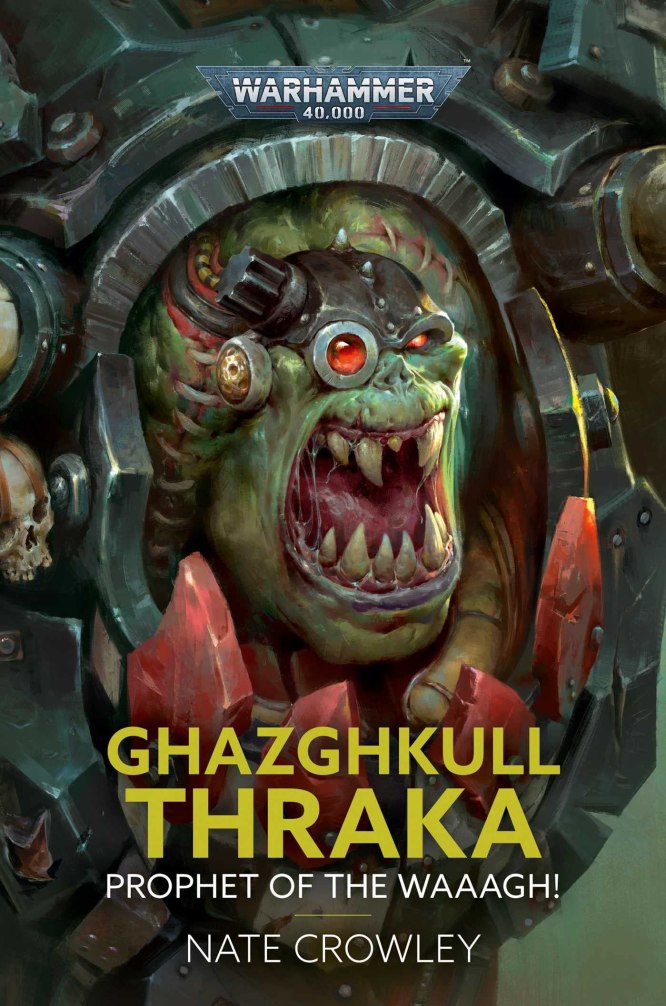
Warhammer 40,000 – Ghazghkull Thraka: Prophet of the Waaagh! by Nate Crowley

Ghazghkull Thraka - Prophet of the Waaagh! Cover

Publisher: Black Library (Audiobook – 15 March 2022)

Series: Warhammer 40,000

Length: 7 hours and 30 minutes

My Rating: 5 out of 5 stars

Amazon     Book Depository

Prepare to read one of the most amusing and downright entertaining recent additions to the Warhammer 40,000 canon with the hilarious and brilliant Ghazghkull Thraka: Prophet of the Waaagh! by outstanding author Nate Crowley.

I have been having an immense amount of fun really diving into the massive wealth of tie-in fiction surrounding the Warhammer 40,000 tabletop game this year.  Books like Steel Tread by Andy Clarke, Krieg by Steve Lyons, The Bookkeeper’s Skull by Justin D. Hill and Day of Ascension by Adrian Tchaikovsky, have really highlighted just how diverse and intense this extended universe can be.  However, the latest tie-in novel I checked out may prove to be one of my absolute favourites, as I got to learn all about one of the most iconic ork characters in this universe with Ghazghkull Thraka: Prophet of the Waaagh!

Orks are the most notorious and dangerous creatures that roam the galaxy of the 41st millennium.  Billions upon billions of the powerful, war-loving creatures can be found throughout every sector of space, fighting anyone and anything they can find, especially each other.  However, out of all these monsters, none are more feared, respected or hated than the warlord Ghazghkull Mag Uruk Thraka, chosen of the ork gods Gork and Mork and proclaimed prophet of the Waaagh!

Throughout his legendary life, Ghazghkull has done what no other ork has been able to achieve.  Bringing together innumerable warbands into one massive horde of green, Ghazghkull has warred with every faction in the cosmos, while his infamous invasions of the Imperial planet of Armageddon are the stuff of bloody legend.  Everyone knows of his epic and rivalry with his indomitable foe, Commissar Yarrick, which turned Armageddon into a perpetual warzone, but does anyone know the true story of Ghazghkull and the events that made him?

Rogue Lord Inquisitor Tytonida Falx has long attempted to discover what lurks in the minds of the xenos her order faces.  When an opportunity to find out more about Ghazghkull presents itself, she eagerly jumps at the opportunity, bringing a unique prisoner aboard her heretical ship, Ghazghkull’s banner bearer, the grot Makari.  Interrogating him, Inquisitor Falx and her team soon discover that Makari might just be the only being in the universe who knows the full truth about who, or what, Ghazghkull is, and what he plans to do next.  But, as she listens to Makari’s tale, the Inquisitor soon discovers that the shadow of Ghazghkull’s rage and desire for violence far eclipses anything that the Imperium has ever believed.

Wow, now that was a really fun and captivating read.  I knew going into Ghazghkull Thraka: Prophet of the Waaagh! that I was going to have a great time, especially after enjoying author Nate Crowley’s The Twice-Dead King novels, Ruin and Reign, but I was blown away by how awesome Ghazghkull Thraka was.  Featuring a clever and wildly entertaining story, perfectly told through various unique eyes, as well as some deeply enjoyable characters, I quickly became absorbed in the impressive story and powered through it in a couple of days.  Not only was this my favourite book from Crowley but it also probably overtakes Kal Jerico: Sinner’s Bounty as the most amusing Warhammer novel I have ever read.

I had an absolute blast with the incredible story that Crowley whipped up for Ghazghkull Thraka, as it ended up being an inventive and entertaining way to showcase an iconic Warhammer figure.  Due to his prominence within the game and the extended fiction, Ghazghkull is probably one of the most utilised non-human characters in the canon, with many different novels, game books and comics already diving into his life.  As such, Crowley needed to come up with a completely new way to examine this great character that didn’t tread on any prior works.  I think his solution to this problem was exceedingly clever, as he chose to tell the story through the eyes of the most unlikely narrator and chronicler, the grot Makari, whose unique insights and worldview turned this already known backstory into something truly special.

The story starts off in the current timeline of the Warhammer 40,000 universe and shows Inquisitor Falx obtaining Makari and interrogating him about Ghazghkull.  This causes the book to dive back into the early days of Ghazghkull as Makari chronicle his master’s existence as he saw it.  As such, you get a very specific examination of Ghazghkull’s life, with a focus on his early trials, some of his pivotal moments, and more specifically his interactions with Makari.  At the same time, the story keeps jumping back to the present, with the Inquisitor and her followers interrupting to ask specific questions and discussing whether there is any truth in what he says.  The book keeps jumping between these different perspectives, and you end up with two distinctive storylines as Makari’s presence brings some big woes for the Inquisitor in the present day.  The chronicle storyline goes at a brisk pace, especially as Makari’s interrogators get him to skip or shorten specific sections, but there is a clever and impressive logic into what parts of Ghazghkull’s life are featured or ignored.  Not only are the past and present storylines exceedingly intriguing and entertaining in their own rights, but they also come together perfectly as well, with Makari’s insights into Ghazghkull and himself impacting the actions of Falx.  While the ending was slightly too metaphysical, it served as a brilliant and powerful conclusion to this great story, and I loved seeing the entire tale come full circle in some hilarious ways.

I deeply appreciated the way that Crowley put Ghazghkull Thraka’s story together, as its distinctive and clever style really helped to enhance the chronicle contained within.  The plot device of an interrogation of an alien prisoner works extremely well to set up the main narrative, and the constant interruptions, debates and revelations that occur whenever it snaps back to the present adds to the sense of mystery and mysticism surrounding the titular figure.  While Crowley takes the story in some interesting and complex directions at times, the entire novel is paced beautifully, and there is never a single boring or slow moment within the entire thing.  I particularly liked the near constant humour that was injected into the story, a fantastic side-effect of basing the book around the funny ork species, and I laughed out loud several times as I powered through this impressively amusing read.  Like many Warhammer novels, Ghazghkull Thraka can be enjoyed as a standalone read, and the author makes sure that it features a great self-contained narrative that anyone can enjoy, even those unfamiliar with the universe and the canon.  Indeed, this would be a decent introduction to the Warhammer 40,000 canon and associated extended universe, especially as it perfectly presents one of the key factions of the universe.  Most of the unique universe elements and wider history are explained sufficiently for new readers to follow along without any issues, although some could potentially get confused by the deliberate exclusion of events previously covered in other books.  Still, Ghazghkull Thraka should turn out to be an easy and entertaining read for any science fiction fan, and I thought that this Warhammer 40,000 novel was very well written and extremely clever.

One of the things I love the most about Nate Crowley’s Warhammer novels is his brilliant ability to dive into the unique alien races of the universe and then perfectly showcase their culture and mindsets.  This was the case again in Ghazghkull Thraka, where Crowley expertly dives into the heads of the various ork and grot characters.  No matter whose perspective is shown, every scene of this book features some excellent and often highly amusing depiction of greenskin culture, as Makari attempts to explain the ork perspective as well as his place in the society as a grot.  As such, you get some incredibly detailed and compelling insights into this crude and warlike race, including their brutal hierarchy, need for violence, insane technology, and very unique worldview, which generally results in most of the book’s fantastic humour.  However, rather than the dumb, brutal and one-note figures that most authors depict, Crowley really goes out his way to show that there is a lot more to orks than you realise.  Not only do you get some excellent insights into their various clans and organisations but the various ork characters are shown to be complex beings with unique needs and the ability to formulate some very cunning plans.  There is a particularly intriguing look at the ork religion that follows the gods Gork and Mork, and this novel ends up with a spiritual edge, especially as Crowley shows the orks being extremely successful because they choose to strongly believe in themselves.  As such, you see quite a unique and compelling side to the ork race in this book, and I loved how incredibly Crowley portrayed them.

Naturally, a big part of this examination of ork culture comes from the in-depth look at the life of Ghazghkull himself.  As I mentioned before, Ghazghkull is one of the best-known characters in the entire Warhammer 40,000 canon, so most veteran readers would already be quite familiar with him and his actions.  However, Crowley does an excellent job of examining a completely new side to this character, and mostly ignores his wars at Armageddon and his intense rivalry with Commissar Yarrick, both of which have been done to death in other books.  While certain parts of his history are revisited in this novel, Crowley completely changes their implications and causes, instead focusing on Ghazghkull’s unique orkish mindset and his role as the prophet of his gods.  This new take on Ghazghkull proves to be quite unique and very captivating, as he is shown to be an overburdened being, constantly pressured by his own visions and the influence of the gods to succeed and be a uniting force for his people.  While he still retains the casual violence of his race, you really see Ghazghkull as a deep thinker, and it is fascinating to see his inner ork face off against his grand ambitions and desires.  Crowley also adds some compelling supernatural elements to his character, as Ghazghkull, as seen by Makari, bears a direct connection to the gods which he can use to alter his fellows and himself.  While this isn’t too overpowered or strange, it adds a great extra layer of menace to the character, especially for the humans, and I loved seeing the Inquisitors trying to wrap their heads around the strange occurrences.  I had a lot of fun seeing this other side of Ghazghkull, and this novel ended up being a great analysis of who they are and what they represent to their race.

I also really enjoyed the inclusion of Makari as one of the central characters, and his use as the main witness to Ghazghkull’s life worked incredibly well.  While Makari has always been associated with the character of Ghazghkull, accompanying him in his battles and waving his banner as a source of luck, Crowley really changes him in this novel and paints him as an essential part of Ghazghkull’s success and relationship with the gods.  Shown to be there the moment that Ghazghkull became the prophet, Makari follows Ghazghkull through some of his big moments and it is hilarious to see his snide view on the subject, especially as, like most grots, he a massive coward who doesn’t want to be there.  A lot of this novel’s humour is derived from Makari’s observations and responses, and I loved some of the jokes set up around it.  Crowley does an awful lot with this character, and I particularly liked how the story explained certain aspects of his previous portrayals, such as the apparent multiple versions and his surprising luck.  These are worked into the story extremely well, but it’s the relationship with Ghazghkull that becomes the most fascinating.  Just like with Ghazghkull, there is a major spiritual edge to Makari, who appears to be just as chosen and important to the plan as his master.  Makari’s mystical and religious bond enables him to have a far bigger insight into Ghazghkull’s actions than anybody else, and this really enhanced the analysis of the titular character.  However, it is in Makari’s attempts to serve and help his master achieve his destiny that we see the best Makari scenes, especially when faced with Ghazghkull’s apparent depression, the manipulation of his other followers, and his own stubbornness.  While Ghazghkull does have the inherent ork reluctance to rely on a grot, and indeed he is extremely likely to kill Makari if he starts giving advice, the moments where Makari get through to him are powerful, and I really appreciated the character work surrounding them.  There are some rocky moments between them, especially when Ghazghkull becomes dismissive of his lucky grot, and Makari’s subsequent reactions is very funny and incredibly over the top, which was so very cool.  Overall, this ended up being an excellent and surprisingly compelling portrayal of Makari, and I am exceedingly glad that Crowley featured him in this novel the way he did.

Aside from the greenskin characters, a large amount of plot revolves around the team interrogating Makari.  Crowley really went out his way to create a particularly unique group of Imperial agents who bear surprising insights into the mind of the xenos.  This team is led by Inquistor Falx, a rogue Inquisitor who bears a dangerous obsession with the alien creatures.  Falx is desperate to learn everything she can about the aliens attacking the Imperium to help defeat them and finds herself stymied by the Imperium’s controlling and non-progressive government and religion.  As such, she takes some major risks in this book to understand Makari and Ghazghkull and has some unique and dangerous methods for achieving her goals that borders on the insane/heretical.  I quite liked Falx, despite her obsessive qualities, and she proved to be a great central figure for half the novels plot, especially as her frustrations, concerns and thoughts about the evils of the Imperium, are extremely understandable.

Falx also employs a unique team of interrogators to help her with Makari, including Brother Hendriksen, a Space Wolves rune priest assigned to Deathwatch who has also fallen out of favour with the Imperium thanks to his work with Falx.  Hendriksen serves as a beastly and powerful presence on Falx’s team, and he often provides a great counterpoint to the inquisitor in both technique and common sense, often despairing at her more dangerous choices.  Crowley’s diverse cast gets even larger with the truly unique character of Cassia, a female ogryn psyker who has grown as smart as a human.  This was a fantastic and extremely distinctive addition to the cast, and her surprisingly calm demeanour, which contrasts beautifully with her immense ogryn strength, works perfectly against Hendriksen’s impatience and anger.  The final member of the team is probably the most enjoyable, with the ork character, Biter (Bites-Faces-Of-The-Face-Biter-Before-It-Can-Bite).  Biter is a member of a Blood Axes mercenary band who have dealings with Falx and who sell Makari to her, remaining behind to interpret Makari’s testimony to the humans.  Due to being a member of the Blood Axes, a group who idolise human military culture, Biter is a very distinctive figure, wearing an approximation of a military uniform and appreciating complex tactics and strategy.  However, Biter is even more intelligent and cunning than most Blood Axes, and his near human tendencies really stand out, as it is pretty unexpected from an orc.  His fantastic reactions, comedic impressions of human behaviour, and determination to antagonise the Inquisitor really make him stand out, and he was an absolute joy to behold.  These four interrogators play off each other perfectly during the present-day scenes, and their arguments, discussions and interpretations of Makari’s story give it added depth, humour and impact, especially once they start realising just how valuable their prisoner is.  This entire cast was put together extremely well, and I had an incredible time with this unique and enjoyable collection of characters.

Like most Warhammer novels I check out, I chose to grab the audiobook version of Ghazghkull Thraka, which turned out to be such a wonderful and incredible listening experience.  Not only did the story absolutely fly by in this format, allowing me to get through its seven and a half hour runtime extremely quickly, but I found that the narrative and descriptions of ork life really popped when read out.  However, the best part about the Ghazghkull Thraka audiobook is the outstanding use of narrators.  This audiobook has three separate narrators, Kelly Hotten, Paul Putner and Jon Rand, each of whom have some experience narrating other Warhammer audio productions.  Not only are each of these narrators quite talented but the way they were featured in this audiobook is extremely clever, with the voice actor changing depending on who is witnessing or telling the events of the book.  For example, Kelly Hotten serves as the narrator for the various scenes and interludes where Inquisitor Falx is witnessing Makari’s interrogation, and Hotten does a brilliant job capturing the various players of these scenes, including the Inquisitor, her unique companions, and their orkish interpreter.  Paul Putner narrates the various scenes shown directly from Makari’s perspective, and he has a lot of fun in this role, not only capturing the cowardly and sneaky mannerisms of the grot protagonist, but also providing some amusing and deep voices for the ork characters.  Finally, Jon Rand has a memorable sequence voicing Brother Hendriksen when he psychically jumps into Makari’s mind and views some of the events occurring, and he gives the character a notable accent and internal growl that fit him extremely well.  The jumps between the voice actors were done perfectly and I really loved how it changed up depending on the perspective.  All three voice actors did an amazing job with their narration, and their work, plus some fun sound effects here and there, helped to turn this into such an impressive production.  Easily the best way to enjoy Ghazghkull Thraka, you will have an incredible time listening to this audiobook.

Nate Crowley continues to shine with another entry in the Warhammer 40,000 universe, with the unbelievably entertaining Ghazghkull Thraka: Prophet of the Waaagh!  Featuring a unique and deeply amusing story that re-examines on of the canon’s most iconic alien characters, Ghazghkull Thraka has a tight and cleverly written story, loaded with action, great characters and whole mess of outstanding humour.  Not only that, but this is without a doubt one of the best portrayals of the Warhammer 40,000 orks I have seen as Crowley obviously had a ton of fun bringing them to life.  Easily one of the best (and definitely the funniest) Warhammer 40,000 novels I have been lucky enough to enjoy, Ghazghkull Thraka comes extremely highly recommended, especially in its audiobook format, and is a must read for all fans of this wonderful fandom.

Amazon     Book Depository

Desperate Undertaking by Lindsey Davis

Desperate Undertaking Cover 2

Publisher: Hodder & Stoughton (Trade Paperback – 12 April 2022)

Series: Flavia Albia – Book 10

Length: 398 pages

My Rating: 5 out of 5 stars

Amazon

Buckle up for an intense, captivating and exceedingly memorable historical murder mystery as bestselling author Lindsey Davis unleashes the 10th entry in the deeply clever and compelling Flavia Albia series, Desperate Undertaking.

It’s that awesome time when I get to gush about the newest entry in Davis’s excellent, long-running Flavia Albia series, which has been a major fixture in my reading schedule for the last several years.  The sequel series to her iconic Marcus Didius Falco novels, the Flavia Albia novels follow the daughter of Davis’s original protagonist as she solves unusual murders across ancient Rome.  Thanks to the series’ typical great combination of intriguing characters, complex mysteries, excellent historical elements and great humour, I always have an amazing time reading these novels, which usually get very high ratings from me.  Some of the more intriguing Flavia Albia novels in recent years include The Third Nero, Pandora’s Boy, A Capitol Death, The Grove of the Caesars (one of my favourite books of 2020) and A Comedy of Terrors.  Due to the quality and entertainment capability of this series, I eagerly keep an eye out for Davis’ new book each year and I was exceedingly chuffed when I got a copy of Davis’ latest novel, Desperate Undertaking.

Rome, 89 AD.  The year is coming towards an end and the city is ready to enter a sleepy holiday period.  Unfortunately, murderers are notoriously bad at taking breaks, and Flavia Albia, paid informer, dogged investigator and daughter of notorious busybody Marcus Didius Falco, is about to get dropped into the most disturbing case of her life.  With her parents away on holiday and her impromptu family preparing to settle in for the quiet period, Albia receives a job request she cannot refuse.  An aged actor, part of a troupe her parents travelled with in their youth, has been killed, horribly crucified in a public place.  Starting her investigation, Albia and her husband, Tiberius, are shocked to discover this is not the only murder confronting them as they suddenly discover the first victim’s widow was also murdered in terrible circumstances.  Her last words to Albia: “The undertaker did it…”.

Determined to find the person responsible for the horrific murders of her parent’s friends, Albia begins her investigation, diving into Rome’s theatre scene.  But when another actor associated with the troupe is killed in a cruelly inventive way, Albia begins to realise that these are no ordinary murders.  A twisted and determined serial killer is on the loose, bearing a terrible grudge against the actors and anyone associated with them.  Worse, their exceedingly public killings all bear striking similarities to some of the most brutal moments in classic plays, causing their victims to suffer in horrific ways.

With the bodies piling up and the city in an uproar, Albia must solve the most unusual and deadly case of her career before more of her parents’ friends end up dead.  But the closer she gets to the truth, the more she begins to realise that these murders bear a strong connection to one of her father’s past cases.  Worst, Albia soon realises that her connection to the currently absent Falco has made herself and everyone she loves a target of a demented killer determined to get revenge.

Davis does it again with Desperate Undertaking, producing a wildly entertaining and exceedingly clever historical murder mystery that I had a brilliant time reading.  Perfectly bringing together a disturbing mystery with an excellent historical setting, some great characters and the author’s trademark humour, Desperate Undertakings is an outstanding read and it ended up being yet another Flavia Albia book that gets a full five-star rating from me.

I must admit that I have sometimes found Davis to be a bit of an inconsistent writer; while most of her novels are extremely good, a few of them do not quite measure up in terms of substance or entertainment.  However, Desperate Undertakings is easily one of the better books in the Flavia Albia series as Davis pulled together an exceptional and dark murder mystery narrative that will leave a memorable impression on the reader.  For this latest story, Davis drops a lot of the family/household storylines that have been a significant, if slightly distracting, feature of the previous novels, and instead focuses on an intense and elaborate murder mystery that effortlessly grabbed my attention and ensured I was extremely hooked on this fantastic novel.  The book starts off extremely strong, firstly with a foreboding introductory short chapter, and then with a great series of compelling early chapters that drag the protagonist into the investigation.  These early chapters feature two dramatic (literally) and elaborate murders that really stand out due to their brutal and distinctive nature (the second one is particularly gruesome and over-the-top), as well as their connections to some of Davis’s iconic protagonists.  As such, the reader becomes really invested in the case early on, and you soon get thrust into an elaborate in clever murder inquiry storyline.  Davis sets up this investigation really well, and there are a series of great leads, potential suspects and unique theories that pan out as the novel proceeds in an excellent way.  While the novel slowed down slightly after the initial murders, the next series of killings picks the pace right up again, which the story maintains for the rest of the book.  I really enjoyed how the entire mystery came together, and there are some really clever twists and turns here, with seemingly minor characters or story elements coming back in some big ways later in the book.  Everything leads up to a big and impressive conclusion and readers will be left rocked by the elaborate and powerful nature of the plot, as well as how damn dark this novel got in places.

Desperate Undertakings is extremely well written and I loved how Davis pulled this entire novel together.  Davis once again hits the perfect blend of murder mystery, historical elements and character driven story elements in this book, as the reader is engrossed in this brilliant Roman based tale.  I did feel that this one was significantly darker in places than some of Davis’s previous novels, which I really liked, especially as it results in some particularly gruesome killings.  The story is once again told from the perspective of central character Flavia Albia as she traverses the mean streets of Rome to find her culprit.  This central focus allows for much of the books fantastic humour, as Albia’s comedic and exceedingly modern perspective of events is extremely entertaining, while also providing a Roman noir feel for the murder investigation.  Like most of the books in the Flavia Albia series, Desperate Undertakings can easily be read as a standalone read, with any relevant elements from the previous novel rehashed for the new reader.  However, Desperate Undertakings also bears a strong connection to one of Davis’s older novels, the sixth book in the Falco series, the 1994 release Last Act in Palmyra.  Multiple characters and elements from this book make an appearance here, with several of them serving big roles in this book, either as supporting characters, suspects or victims.  Davis rehashes the events of this previous book extremely well, and readers who haven’t had the chance to enjoy it are still able to enjoy Desperate Undertakings without any issues, while those who have will no doubt enjoy the fun call back.  I felt that these past elements were utilised extremely well, especially as these past events also impacted the present storyline.  This entire novel came together brilliantly, and I was extremely enthralled by its great writing and powerful story the entire way through.

I always deeply enjoy how Davis portrays the historical elements in her novels and Desperate Undertakings was a particularly good example of this.  The reader is once again treated to breathtaking depictions of ancient Rome, with everything from the chaos of the streets, the culture of the people, and the slapdash take on law enforcement used to full effect throughout the course of the plot.  There are some brilliant descriptions of some of ancient Rome’s earlier sties, especially as the murders make use of some iconic locations for the sites of their crimes, and you get an excellent sense of the city thanks to Davis’s descriptive and powerful writing.  However, the best part of these historical elements is the dive into the Roman theatre scene, which is a key part of the books plot.  Davis provides an intriguing and entertaining look at the city’s theatre elements throughout the novel, and you soon become deeply engrossed in her entertaining portrayal of these eccentric and proud actors and entertainers.

Desperate Undertakings also takes quite an intriguing look at the various plays and performances put on during this period as the killer utilises some of Rome’s bloodiest and most elaborate plays as a basis for setting up their murders.  This causes the protagonist to really dive into all the plays of the period and you get a good idea of several of the more iconic and distinctive ones, especially those that have elements of death involved.  I found it really interesting to find out about this part of Roman culture, especially the deadly twists that are sometimes involved with them, and it was a great part of the plot.  I also felt that Davis did a remarkable job working these historical theatre aspects into the plot of Desperate Undertakings, and it really helped to make the murder mystery stand out.  I particularly enjoyed how the author broke the book down into sections, each one of them named after a play that corresponds to the murder that Flavia is about to discover.  This allows for a glorious bit of foreshadowing, especially for those with an interest in classics and theatre, and it was an excellent addition to the book.  I deeply appreciate how Davis utilised these historical plays as the inspiration for her murders in Desperate Undertaking and it really gave this book a very distinctive feel.  Readers are warned that some of the murders are a bit graphic thanks to how they are portrayed in these plays, and you are in for some barbaric punishment as a result.

Another strong aspect of Desperate Undertakings was the excellent and compelling characters that Davis featured throughout.  As usual, this great cast is headed up by the intrepid Flavia Albia, who serves as the main protagonist and point-of-view character for the book.  Albia is a really entertaining protagonist, especially as Davis presents her as a cynical private investigator with very specific views of the reality of life in ancient Rome.  The daughter of another cynical protagonist, Falco, Albia spends most of the book making astute and hilarious observations about the people, locations, and events around her, and much of the book’s humour results from the amusing and noticeably modern way she sees the world around her.  As such, Albia really adds a lot to this intriguing story and it is always so much fun to see her waltzing around Rome solving her elaborate cases.  It was particularly interesting to see her reactions to the murders that occur in Desperate Undertakings.  Despite her familiarity with death and Rome’s underbelly, these killings really hit her hard due to their brutal nature and the connection that the victims have to her parents.  I felt this was a really compelling and powerful change to the character, and it really helped to highlight just how dark this book got in places.

Desperate Undertaking also features a wide cast of characters, all of whom have some entertaining or intriguing moments through the book.  Davis utilises a blend of established characters, new figures and even several characters who have not appeared since the Falco series.  All these characters are utilised extremely well in this novel, and the author does a good job of introducing (or reintroducing) them throughout the course of the plot.  As usual, this includes Albia’s husband, Tiberius, who serves as a good straight man to Albia’s eccentric antics, and helps to focus the investigation in places.  Other interesting characters include a newly introduced cop who balances between competence and political expediency and serves as another excellent foil to Albia’s more unusual investigation methods.  The various actors and theatre related figures are pretty entertaining, and Davis introduces some eccentric characters, many of whom serve as potential suspects or victims as you get to know them more.  I also felt that Davis did a good job with the killer (or killers) featured in this book, as they have a unique motivation, and a compelling personality that is slowly uncovered throughout the course of the book.  Finding out just who they are and why they are doing these dreadful killings is extremely fascinating and results in some brilliant character moments.  Other supporting characters are also extremely entertaining, including a very strong butcher and two very cultured vigils, and I had a brilliant time getting to know them all.

With the extremely awesome and captivating Desperate Undertakings, the always incredible Lindsey Davis continues to reign from atop the historical murder mystery mountain.  This latest Flavia Albia novel is exceedingly epic, containing a brilliant and dark investigation story that sees the series’ outstanding protagonist encounter a truly demented killer.  With some fascinating and distinctive historical elements, especially those surrounding the bloody and memorable plays, Desperate Undertakings really stands out and was an amazing amount of fun to read.  This was one of the better and more memorable entries in this excellent long-running series, especially with its vicious murders and great character work, and it comes extremely highly recommended.

Desperate Undertaking Cover 1

Amazon

The Kaiju Preservation Society by John Scalzi

The Kaiju Preservation Society Cover 2

Publisher: Tor (Trade Paperback – 29 March 2022)

Series: Standalone

Length: 264 pages

My Rating: 4.5 out of 5 stars

Amazon     Book Depository

Prepare to save all the monsters as bestselling and madly inventive science fiction author John Scalzi presents his latest captivating and funny novel, The Kaiju Preservation Society.

I have a lot of love for imaginative author John Scalzi, who is probably best known for his Old Man’s War and The Interdependency series, both of which make great use of high-concept science fiction elements.  I personally first experienced the author when I read his standalone novel, Redshirts a couple of years ago.  This cool and clever book served as the ultimate parody of Star Trek, focusing on an Enterprise-esque spaceship whose regular crew are extremely aware that something is very wrong as they keep dying in ridiculous situations.  I had an absolute blast with Redshirts and I have been keeping a very close eye out for anything else Scalzi was writing.  As such, I was extremely excited when I saw that his new book, The Kaiju Preservation Society was coming out this year, especially as it had such a unique and interesting plot to it.

As COVID-19 starts to run rampart through New York City, Jamie Gray’s entire life is thrown upside-down when his terrible boss steals his ideas and fires him.  Forced to work as a driver for the same food delivery app he developed, Jamie despairs at his now dead-end life, until one delivery leads to a chance encounter with an old acquaintance of his, Tom, who works for a mysterious animal rights organisation.  In desperate need of a new team member to help with their next expedition, Tom offers the job to Jamie, who jumps at the chance at a high-paying job.

However, Jamie is unprepared for just how unusual his life is about to become as the expedition first journeys to the heart of Greenland, and then through a portal into a parallel Earth filled with lush jungle, an untouched atmosphere, and giant mountain-sized creatures named kaiju.  It turns out that his new employers, known as the Kaiju Preservation Society, specialise in researching and preserving these vast creatures, while also working to keep them from leaving their own, human-less world, and traversing the barrier to ours.

Enraptured by the strange new world and exciting opportunities they present; Jamie soon takes to his role as a member of the Kaiju Preservation Society.  However, his complex and dangerous new employment is about to get even harder when strange events start occurring around camp.  It soon turns out that others have found a way to cross the boundaries between worlds and they have designs on the kaiju.  Jamie and his friends must find a way to stop these intruders before their carelessness destroys a kaiju and millions of people on our world.

Scalzi has done it again, producing a clever and wildly entertaining book that makes brilliant use of a distinctive and unique idea.  I had an incredible time reading The Kaiju Preservation Society, and I really loved the cool ideas, intelligent science fiction elements, and exciting story it contained.

The author has come up with an excellent story for The Kaiju Preservation Society that proves incredibly easy to get into and enjoy.  This is a very intriguing and captivating read that quickly drags in the audience and gets them exceedingly addicted to the plot.  Being a relatively short novel, it is an extremely fast paced, self-contained read that requires no prior experience of Scalzi’s books.  It doesn’t take long for the events of the novel to unfold, with the reader soon introduced to the key characters, new friends, and the necessary set-up for the eventual dive into kaiju land.  Once through the portal, the reader is given a crash course on the rules and attributes of the new world, the various issues the staff there are forced to contend with, and the crazy people who would choose to live amongst the monsters.  After several fantastic and action-packed sequences, often broken up by several elaborate and comedic discussions between the protagonist and his friends, the book heads towards its intriguing final third, which identifies the main threat of the book and forces the characters to act.  This final bit is extremely exciting and fun, and there are several intense moments as the characters face death, tragedy and one of the smarmiest villains I have had the pleasure of reading about.  This leads up to an amazing conclusion that wraps everything up nicely and ensures everyone leaves the book incredibly satisfied.

I mostly liked how Scalzi wrote this book, especially as he clearly had a lot of fun introducing this bold new world and its many awesome features.  The author does a lot in a short amount of time, and you are soon immersed in the excellent world of Kaijus.  Told perfectly from the perspective of the main protagonist, who, like the reader, is seeing everything in this world for the first time, you quickly get a sense of all the craziness that occurs in this land, and the various issues they experience.  I loved all the unique elements Scalzi came up with, from the impossible, nuclear-powered, mountain sized monsters with their complex biology and giant parasites, to the mass of strange creatures haunting the land, the unique landscape, and the various other awesome elements.  You get a great sense of everything in this world, and Scalzi ensures that the science is both realistic and easy to understand at the same time.  This proves to be such an impressive setting for this fantastic read, and you will wish that the author had made the book even longer just to see more of this strange new world.  While there is a good focus on monsters, exploration and science, Scalzi also makes sure to lace The Kaiju Preservation Society with a great amount of comedy that proves to be extremely entertaining and amusing.  This book is filled with so many fantastic and clever jokes, which range from comedic reactions to the outrageous events occurring around them, to fun, if random, pop culture references (for example, one of the villains is inspired by Trading Places), and multiple entertaining interactions between the eccentric central cast.  You end up really getting into this excellent story as a result and it is so very fun to read.

I did have some minor issues with some of the dialogue in The Kaiju Preservation Society, as certain exchanges came across as a little clunky.  I must note the somewhat overuse of dialogue tags (he said, she said, I said) after direct speech, which is something I noticed when I read Redshirts.  While it was not as obvious or problematic in The Kaiju Preservation Society, possibly because I read a physical version rather than the listening to the audiobook, the overuse of them still stood out a little and spoiled the flow of the book at times.  I also really wish that Scalzi could be a bit more descriptive with his writing in places, especially when it comes to the kaiju and some of the characters.  For being such a key part of the plot you often don’t fully grasp what these creatures look like, with only very general descriptions of their size and shape being featured, unless an attribute is essential to the plot.  There was also a complete lack of character description throughout the book, which I found to be a little distracting, especially as I often had no idea what a person looked like.  For example, I didn’t realise character was nonbinary until halfway through the novel when they started getting a little more focus and the them/they pronouns started being used with more regularity.  While some of this stuff is a little annoying, I felt that the strong and entertaining story more than overcomes it and you end up overlooking these minor stylistic problems.

The insanely brilliant John Scalzi continues to shine with his latest kooky and compelling science fiction read, The Kaiju Preservation Society.  Filled with a wild and captivating exploration of a distinctive alternate Earth, you will quickly fall in love with this exciting and humorous story.  I had an absolute blast getting through the awesomeness that is The Kaiju Preservation Society and I would strongly recommend it to anyone looking for something light and fun to get through.

The Kaiju Preservation Society Cover

Amazon     Book Depository

A Practical Guide to Conquering the World by K. J. Parker

A Practical Guide to Conquering the World Cover

Publisher: Orbit (Trade Paperback – 11 January 2022)

Series: The Siege – Book Three

Length: 352 pages

My Rating: 5 out of 5 stars

Amazon

2022 is off to a very good start for me, especially as I have already read an amazing novel that quite frankly may end up being one of my favourite books of the year.  This awesome read was the third and final book in K. J. Parker’s clever and compelling The Siege series, A Practical Guide to Conquering the World.

Over the last few years, I have been having an incredible time reading the incredible and deeply entertaining fantasy Siege series from K. J. Parker.  Parker, a pseudonym for bestselling author Tom Holt, has come up with something very special with The Siege series that combines an interesting new fantasy world with some brilliant humour and intriguing insights into human nature and reactions.  The first entries in The Siege series, Sixteen Ways to Defend a Walled City and How to Rule an Empire and Get Away with It, were both exceptional reads and they were among my absolute favourite books of 2019 and 2020 respectfully.  As such I have been eagerly waiting for a long time, and while I was initially disappointed that A Practical Guide to Conquering the World was delayed until the start of 2022, it ended up being such a great read and worth the wait.

The Siege series is set in an alternate fantasy world that bears some interesting similarities to ancient Europe.  The first book in the series, Sixteen Ways to Defend a Walled City, introduces the Robur Empire, a Roman-esque empire that is destroyed at the start of the novel by a coalition of enemies.  The one exception to this destruction was the Robur capital, simply known as The City, which was able to survive thanks to the actions of a military engineer and conman who was able to come up with some very inventive defences.  The second book, How to Rule an Empire and Get Away with It, was set a few years later and followed a new protagonist, an actor and playwright who is forced to impersonate the City’s figurehead after his death to keep the population’s morale and unity up to keep fighting the ongoing siege.  However, this second protagonist eventually takes control of the city and manages to evacuate it, leading the people to a new life.  The third and final book, A Practical Guide to Conquering the World, occurs during and beyond the events of both the first and second novel (if these books occurred the way they are portrayed) and features a new protagonist in a different land.

Aemilius Felix Boiannes the younger is a minor diplomat and translator assigned to the Robur embassy in the mighty Echmen Empire.  Content to live a relatively blameless life away from the people that wronged him, Felix’s life is forever changed when news of the fall of Robur reaches the Echmen.  Almost killed by the Echmen for no longer having a country, Felix’s life is only spared thanks to a debt owed by barbarian princess.  Determined to no longer live by the whims of others, Felix embarks on an ambitious plan that will reshape all of history.

When the Echmen attempt to enslave the princess’s people, Felix saves her and leads her out of Echmen territory.  Able to convince his new friend to unite the various barbarian tribes, Felix utilises his knowledge as a scholar to lead them to victory over the Echmen.  However, his ambition is not limited to conquering the greatest empire in existence, Felix is determined to take over the entire world and he already has all the tools to do so.  However, not even Felix is able to foresee all the consequences of his actions, and soon the entire world will be turned upside down.  For good or for bad, the story of Felix, the most influential and dangerous man in history, is about to begin.

Well damn, now this was one hell of a read.  Parker has come up with another exceptional read here with A Practical Guide to Conquering the World, combining a brilliant and clever story with incredible humour and an entertaining and compelling look into the human psyche.  Filled with constant laughs, intriguing developments and a truly addictive narrative, this book got an easy five-star rating from me and is near impossible to put down once you start it.

I have had a lot of fun with the great stories that Parker comes up with for this cool trilogy, especially as they are exceedingly entertaining and very unpredictable, even if, due to their complexity and cleverness, they are a bit hard to explain in my inevitable glowing reviews.  Like the rest of the series, A Practical Guide to Conquering the World is a standalone novel that can be read either by itself or as a continuation of the first two books in the series.  This novel is told in the chronicle style and tells the autobiography of the protagonist, Felix, a translator and scholar who finds himself in all manner of trouble when his nation is destroyed while he is in a foreign land.  Able to survive thanks to a recent good deed, Felix is soon dragged into the politics of the nation he is trapped in and attempts to stop the Chinese inspired Echmen empire from destroying and enslaving several neighbouring barbarian tribes.  Forced to put his scholarly knowledge to the test, Felix devises multiple brilliant and unpredictable plans to not only manipulate everyone around him, but to also defeat a massive empire and bend all its power to his ultimate goal of world domination and beyond.  This story goes in some extremely fun directions, and you honestly will not be able to put it down once you start as you become engrossed in seeing what elaborate idea Felix will come up with next.  There are some fantastic ploys and captivating twists scattered throughout this novel, and it is fascinating to see this nobody slowly gain more and more power thanks to his wit and ability to understand people.  I had an outstanding time getting through this story and it is extremely hilarious and very exciting.

A Practical Guide to Conquering the World is part of a larger series which switches protagonists with each entry, providing a new and unique tale of the aftermath of the siege of the City.  This third novel starts around the same time as the first book, Sixteen Ways to Defend a Walled City, and covers several years, going past the events of the second book, How to Rule an Empire and Get Away With It.  It is really interesting to see how this third book ties into everything, especially as the protagonist only has second-hand knowledge of the events of the prior two novels and, thanks to several clever inclusions in this book, as well as the unreliability of the narrators of the other entries, you’re not even certain those events actually occurred.  While new readers don’t need to have any knowledge of the other Siege novels to enjoy A Practical Guide to Conquering the World, I had a lot of fun seeing the mentions and discussions about the events of these prior books, especially as the protagonist is very disbelieving about what he hears.  The inclusion of a recurring character from the past book increases the connection to the rest of the series, although as she is also rather cagey, you have no idea how reliable her recollection of events is.  I loved how compelling this loosely connected series turned out to be, and it was a lot of fun to see how the entire funny saga come together into one entertaining collection.

Just like with the first two books in the series, A Practical Guide to Conquering the World is set around a single protagonist, with the story reflecting their personal account of what they experienced.  This new protagonist, Felix, is another entertaining and interesting central character, a former soldier who, after making some big mistakes and paying the cost for them, is banished to a diplomatic post in another country.  This, and his ability for languages, ironically ensures that he survives the destruction of his homeland and places him in a unique position for his goals.  I personally really enjoyed the cool story that Parker places around Felix and while there are some notable similarities between him and the other protagonists of the Siege books, mainly the fact that he is a conniving and selfish person with impressive insights into human nature and reaction, I think that there are enough differences to keep readers of the series happy.  I loved the focus on his experience with languages and scholarly research, which he uses to great effect throughout the book, manipulating translations for his advantage and then coming up with obscure or historical solutions to the various problems he faces.  Watching him turn this unique knowledge to his advantage, especially once he is inadvertently placed in the centre of world-shaping events, is really cool, and I loved seeing him succeed in his goals.  Parker adds in a great attempted redemptive arc around Felix, which serves as a surprising driving force for much of what he does.  However, readers do have to take Felix on face value, as, like the previous two protagonists of the Siege books, Felix is a bit of an unreliable narrator who may or may not be altering the story to make himself sound better to history.  The final stinger of the book, which hints at the falseness of Felix’s account, is a clever and amusing touch from Parker, and you will come away wondering just how much you believe this character.

Easily the highlight of this book is the amazing humour that Parker has laced his impressive story with.  Parker has an incredible and wicked ability with subtle comedy which permeates the entirety of A Practical Guide to Conquering the World thanks to the unique abilities that occur within.  Much of this humour is derived from the eccentric protagonists’ impressive insights into the human mind, which allows him to manipulate events and people to his favour.  Thanks to some great setup and some outrageous events, the readers get to see this protagonist subtly manipulate everyone, and his explanations for how he gets away with it and the subsequent reactions are extremely amusing.  At the same time, Parker also satirises large parts of the human experience and culture, including the inefficiencies of bureaucracy, the inevitability of betrayal in the name of survival, the herd mentality of groups of people, the unpredictability of starting your own religion, and the inherent suspicion that everyone has inside them.  All of this comes together quite brilliantly throughout the book, and you will honestly be chuckling straight from the beginning, especially as the first joke, about a massive bureaucracy nearly killing the wrong person due to a case of mistaken identity, is very cleverly put together.

Overall, K. J. Parker really did not disappoint with the third and final entry in his hilarious and impressive Siege trilogy.  A Practical Guide to Conquering the World was just as fun and clever as the first two books, and I had a brilliant time reading this captivating fantasy novel.  Containing a wildly inventive narrative set around a compelling protagonist, you will fall in love with this outstanding book, especially as Parker’s comedic inclusions will keep you laughing.  A Practical Guide to Conquering the World is easily going to be one of the best books of 2022 and if you have not checked out The Siege series yet, do yourself a favour and dive into these hilarious and addictive books.

Amazon

Mind Bullet by Jeremy Robinson

Mind Bullet 2

Publisher: Podium Audio (Audiobook – 23 November 2021)

Series: Standalone/Infinite Timeline

Length: 11 hours and 42 minutes

My Rating: 5 out of 5 stars

Amazon     Book Depository

The deliciously twisted mind of bestselling science fiction thriller author Jeremy Robinson returns with another epic and over-the-top adventure, Mind Bullet, a fantastic and captivating read.

Robinson is an outstanding author whose work I first checked out earlier this year.  Known for his Nemesis Saga and Chess Team series, Robinson is currently working on a collection of partially connected standalone novels, all of which are set within the same extended universe and which are leading up to some massive crossover novels.  I was lucky enough to read one of Robinson’s other 2021 releases earlier this year, The Dark, which was a captivating and deeply entertaining read with a bonkers story to it.  I had a wonderful time with The Dark, which got a full five-star rating from me, and it made me an instant fan of this cool writer.  As such, I was extremely intrigued when I saw that he had another novel coming out this year.  This book, Mind Bullet, was another unique and fascinating read from Robinson with a killer plot to it that I just had to pick up and check out.

In the world of high-level international assassination, Jonas is something of a legend.  Raised by two honourable killers, Jonas had set out on his own, taking on the most dangerous and difficult of jobs and succeeding in some extremely flashy ways.  Despite the ostentatious techniques used in some of his kills, Jonas has managed to stay out of the limelight and out of sight from conventional law enforcement due to fact that none of his targets ever shows any signs of violence.  That is because Jonas has a secret: he has telekinesis and can blow a small hole into people’s brains merely by concentrating on them, an unexplained ability he calls Mind Bullet.

However, despite all his success and the accompanying wealth, Jonas is unhappy and depressed.  Alone except for his sarcastic and possibly psychotic AI, Bubbles, Jonas is still grieving the loss of his dead parents, convinced that someone killed them and got away with it.  As his depression and loneliness results in Jonas taking more and more dangerous jobs, Bubbles decides to intervene for his own good.  Playing matchmaker, Bubbles determines that Madee, a local Thai food delivery woman and part-time thief, would be perfect for him.  After an awkward first meeting where Madee attempts to rob him, the two loners start to hit it off.  However, true love is about to get interrupted by the worst kind of gate crasher, the assassin group known as the Shrieking Ninja.

Angered by one of Madee’s burglaries, the Shrieking Ninjas attempt to break into Jonas’s house and kill them both.  Barely escaping from the Shrieking Ninjas’ mysterious and powerful master, Jonas goes on the run with Madee, hoping to find a way to get them off their trail for good.  However, the disastrous and very public encounter at his house has raised unwelcome attention and Jonas is shocked to find that a $10 million bounty has been placed on his head.  A mysterious organisation is determined to capture Jonas by any means necessary, and every elite assassin and hitman in America is willing to collect.  Pursued by a legion of outrageous killers, Jonas, Madee and Bubbles find themselves thrust into the midst of a dark and deadly conspiracy that lies in the heart of Jonas’s past and the secrets behind his lethal abilities.  Can this unusual group survive the onslaught headed their way, or will they be buried by a legion of lethal killers with their own unique abilities?

Wow, just wow, this novel was the absolute definition of fun.  Robinson did another amazing job with Mind Bullet, producing an intense and exciting novel that is wildly addictive and incredibly entertaining.  Featuring a brilliant, fast-paced story, Mind Bullet had me hooked from the very second I started listening to it, and I ended up powering through it in a few short days.  An outstanding and compelling read, this novel also got a five-star rating from me.

Mind Bullet has an awesome and deeply entertaining narrative that is extremely easy to read and even easier to get addicted to.  Robinson starts off strong with an audacious assassination involving an airborne car, an unethical AI, psychic powers and a parachute, which serves as the perfect introduction to Jonas and his assistant, Bubbles.  From there the story quickly evolves, with Jonas meeting the mysterious Madee while being forced to defend her from the outrageous Shrieking Ninjas (that name says it all).  Following that encounter, Jonas and Madee are forced to contend with continued attacks from even more unusual and deadly assassins, each of whom steal the scene they’re in, either by their unique methods or dangerous powers not unlike Jonas’s.  The protagonists are thrust into deadly situation after deadly situation, picking up new friends as progressively more dangerous foes attack with devastating effect.  This amazing and compelling narrative contains the right blend of forward action and intriguing backstory, as the attacks awaken memories from Jonas’s past, which he also seeks to explore.  After a series of interesting reveals after the halfway point of the book, the protagonists are thrust into their most dangerous situation yet when they encounter the book’s big bads, in an epic and twisty confrontation that brings everything together and ensures everything is out on the table.  All this leads up to an explosive conclusion that wraps up the story and the character arcs exceedingly well, while also leaving the door open for appearances in future Robinson books.

This entire story was extremely intense and addictive from the very beginning, and I had an outstanding time getting through it, and loved every single development, explosive encounter, and fantastically weird new character.  Despite its myriad elements, the entire narrative came together extremely well, and the readers are left feeling extremely satisfied, especially as this is a mostly self-contained story.  I felt that Robinson’s use of single first-person perspective to tell the whole story worked extremely well, especially as the point-of-view character was particularly entertaining and enjoyable.  Like most of Robinson’s stories, Mind Bullet’s narrative contained a great combination of humour, action, character growth and sheer insanity, which helps to produce a deeply entertaining and compelling plot that grabs the reader’s attention and holds on tight.  While substantially less dark in tone and character development than Robinson’s prior book, The Dark, Mind Bullet has serious moments which contrast extremely well with the inherent silliness to produce an overall epic read.  I honestly loved every second of this story, and there are some brilliant scenes featured throughout it, from massive and elaborate fight scenes, brutal psychic brawls both in reality and the mental plain, as well as several simpler scenes that deal with the characters and show their growth as people.

It is interesting to note that this book is part of Robinson’s wider Infinite Timeline, a collection of mostly unconnected novels set in the same overarching universe.  Robinson is currently making a play to combine the plots and characters of these standalone novels, and several upcoming novels will feature multiple characters from across the canon.  As such, Mind Bullet contains multiple references to Robinson’s prior works, mainly Tribe and The Dark, which are part of the same loosely connected storyline (the books of which are are going to have their first crossover in 2022’s Khaos).  There is also a surprising appearance from some of the protagonists of Robinson’s other books, which hints at the bigger crossover later in the series in Singularity (this universe’s version of Avengers: Endgame).  While readers can easily enjoy Mind Bullet without any knowledge of Robinson’s prior books, a couple of scenes and references might be a bit weird without context, especially as a few characters are briefly parachuted (or teleported) in.  Still, readers should be able to follow what is going on without too much difficulty, especially as Robinson does provide some explanation or interesting reaction from the protagonist, and hopefully these appearances will encourage them to check out some of the author’s other books.  I personally really enjoyed these inclusions, and it was fun to see how Robinson is getting more and more blatant with the connections between the various novels.  I am really looking forward to seeing how this entire series comes together, and I really need to go back and read some of Robinson’s other books before this happens.

One of the things that Robinson truly excels at as an author is his ability to produce some complex and relatable characters.  This is particularly true in Mind Bullet, which features a fantastic cast of compelling and relatable protagonists and antagonists with intriguing plot threads that the reader will quickly get invested in.

The most prominent character of this novel is the point-of-view protagonist, Jonas, the dangerous assassin with a heart of gold.  In many ways, Jonas was a pretty typical protagonist for Robinson, a confident and fun-loving figure who cracks a ton of jokes and has their own unique style and a liking for obscure pop culture.  I had a lot of fun following the adventure through Jonas’s eyes, especially as his hilarious view of all the outrageous stuff occurring around him and his constant quips kept me in stiches for most of the novel.  Despite this entertaining outer facade, once you dig deeper Jonas proves to be a lot more complex and emotionally damaged.  The character is chronically depressed and bored, especially after the mysterious car crash that killed his parents, and at the start of the book he has a substantial subconscious death wish.  The character evolves for the better as the novel progresses, especially as he starts to make some connections with the various side-characters.  These friendships and deeper relationships really change him for the better, although they also uncover a range of secrets from the past.  I loved the dive into the character’s psychic abilities, especially as he goes through a trial-by-fire against a range of powerful foes, each of whom is deadlier than the last.  It was also cool and intriguing to explore his hidden, traumatic past, which the author does extremely well through several clever flashback sequences.  The eventual reveal of who or what Jonas really is was done very well, and it will be interesting to see how the author expands on that in some of the future books.

My other favourite character in Mind Bullet was probably the sassy and potentially crazy artificial intelligence, Bubbles.  Bubbles, whose origins and capabilities are also unknown, is Jonas’s assistant and best friend, whose personality is growing based on her interactions with Jonas.  Thanks to the unique experiences she has gained living alongside a quipping assassin, Bubbles has developed quite a sarcastic and entertaining personality, and nearly every interaction with Bubbles results in an inappropriate joke or shocking comment which is pretty hilarious.  Like Jonas, Bubbles also develops a bit throughout the novel, and it was fascinating to see the author’s viewpoint about nature vs nurture when it comes to this character’s personality and emotions.  Despite being an AI, Bubbles is quite a caring being, even if she has developed some homicidal tendencies (especially towards ducks), and I appreciated the unique bond she forms first with Jonas, and then with some of the characters in the book.  Bubble’s meddling in Jonas’s life to keep him alive is particularly sweet, even if she tries to cover it with analytics, and it ended up being one of the major character threads of this book.  An outstanding and brilliant AI character who you will fall in love with!

Aside from Jonas and Bubbles, there are some other amazing characters throughout Mind Bullet.  Madee is another sassy and strong-willed female character (most of Robinson’s characters are sassy and sarcastic), whose break-in to Jonas’s house triggers all the events of the book.  Madee is another fun character, and I really loved the entertaining romance that bloomed between her and Jonas, despite their awkward, computer assisted meeting.  Robinson plays it pretty smart with Madee, and I loved some of the great twists surrounding her, even if by the final reveal it is apparent there is more going on with her.  Jonas also bands together with a group of other complex and entertaining characters, most of whom get pulled into his orbit as the world explodes around him.  While I did think the inclusion of several attractive female characters helping Jonas did appear a little harem-like, each of them proves to be a valuable member of the team, and I liked some of the fun character arcs surrounding them.  I also really need to highlight the fun collection of killers that come after the protagonists throughout Mind Bullet, especially as Robinson went out of his way to produce some wild and truly ridiculous figures here, including incompetent Neo Nazis, stereotypical gun-toting Texans, and foul-mouthed murderous nuns.  There are also a group of dangerous psychic killers, each of whom has their own unique history with Jonas, and whose compelling range of powers results in some dramatic action sequences when they try to fight the protagonists.  I had an outstanding time getting to know all these brilliant characters, and the sheer range of captivating figures really helps to make Mind Bullet stand out.

When Mind Bullet came out I absolutely had to grab this book in audiobook format.  This is because Mind Bullet was narrated by the incredibly talented R. C. Bray, who is one of my all-time favourite audiobook narrators (check out his narration of Michael Mammay’s Planetside, Spaceside and Colonyside).  Bray, who has narrated most of Robinson’s works, did another incredible job here, lending his fantastic and powerful voice to this wild and entertaining book.  Bray really gets Robinson’s fantastic protagonists and writing style, and he was soon moving this brilliant novel along and an ultra-fast pace, ensuring that listeners power through its 11 hour and 42 minute runtime in a very short order.  Bray really dives into the characters of the book, and I loved how he brought Jonas to life, ensuring that the reader gets the full sense of his humour, unique worldview and deeper inner struggles.  The rest of the character are also portrayed perfectly as well, especially Bubbles, and I loved the cool and amusing voices that he provides to each of them.  Bray obviously has a lot of fun here with this book, and the fantastic voices he uses for some of the more unique moments and characters are extremely entertaining and memorable.  I especially loved the ultra-serious and dramatic voice that he used for the formal name-drooping introduction of each major character’s names or codenames (which appear in the printed version in massive bold print).  I really appreciated this fun and entertaining take on the audiobook narration, and you will fall in love with Bray’s brilliant voice and entertaining style if you check out the audiobook version of this novel.

Overall, Mind Bullet is another epic and incredible read from the exceptional Jeremy Robinson.  Robinson’s latest book is crazy in all the right ways, and readers will deeply enjoy the wild and unpredictable ride that the characters go on.  Featuring an amazing group of characters, some fantastic humour, and some massive memorable scenes, Mind Bullet is an outstanding novel that I had an awesome time getting through.  Highly recommended to anyone looking for something fun, especially in its audiobook format, you need to check this book out!

Amazon     Book Depository

Aurora’s End by Amie Kaufman and Jay Kristoff

Aurora's End Cover

Publisher: Allen & Unwin Australia (Trade Paperback – 2 November 2021)

Series: Aurora Cycle – Book Three

Length: 493 pages

My Rating: 4.5 out of 5 stars

Amazon

The all-star team of Australian authors Amie Kaufman and Jay Kristoff present the third and final novel in their epic Aurora Cycle series, with the intense and clever young adult science fiction novel, Aurora’s End.

Over the last few years, I have been deeply enjoying the outstanding partnership of Amie Kaufman and Jay Kristoff.  Both Kaufman and Kristoff are accomplished authors, with several independent series to their name, such as Kristoff’s Lifel1k3 series (make sure to check out my review for the second book, Dev1at3).  However, I think that some of their strongest work has been together, as Kaufman and Kristoff have previously co-authored the acclaimed The Illuminae Files trilogy.  Their latest collaboration, The Aurora Cycle, has been a particularly amazing young adult science fiction series, and I have been really enjoying its cool story.

The Aurora Cycle novels are set in a far future when humans have expanded out into space and encountered a range of different alien species.  Peace between these species is kept by the Aurora Legion, an intergalactic collation of peacekeepers, made up of teenagers of various species (a slightly more hormonal Starfleet, slightly).  The series follows Squad 312, a group of misfits brought together thanks to the arrival of the mysterious Aurora O’Malley.  Auri is a girl out of time, who was awoken by the squad after centuries frozen in a colony ship and found herself gifted with dangerous psychic powers.  The first book in this series, Aurora Rising, introduced the squad and saw them thrust into the midst of a galactic conspiracy, as a race of plant-based aliens, the Ra’haam, who are plotting to assimilate all life, frame them as terrorists.  The second novel, Aurora Burning, expanded on the threats, the conspiracies, and the character drama, and ended with a massive cliffhanger, with all the surviving members of Squad 312 in great danger and the fate of the universe on the brink.

Following the terrible battle near Earth between the human and Syldrathi fleets, the planet-destroying superweapon was fired, but nothing turned out as expected.  Now, the various members of the galaxy’s last hope, Squad 312, have been flung throughout time.  Scarlett, Finian and Zila have been blasted back into the early days of Earth’s intergalactic travel, when there is no Aurora Legion, no friends, and a ticking clock of doom as the mysterious station they arrived at keeps blowing up.  Subsequently, Auri and Kal arrive years in the future, where the Ra’haam have won, and all hope seems lost.

Trapped in a time loop, Scarlet, Fin and Zila will initiate a desperate plan (again and again) with a new friend, but their mission may end up having unimaginable consequences.  While in the future, Auri and Kal are trapped with the only weapon that can end the Ra’haam threat, if they can get back to the present.  Forced to team up with the most dangerous being in existence, Kal’s genocidal father, Caersan, Auri and Kal embark on a dangerous mission through the Ra’haam controlled future with some unexpected help.

Back in the present, Squad 312’s leader, Tyler Jones, is also running out of time.  Still branded a fugitive by the entire galaxy, Tyler is the only person who knows that the Ra’haam are making their move to destabilise the various governments of the galaxy to start their invasion.  Forced to work alone and against the odds, Tyler needs to travel back to the one place he considers home, the highly secure Aurora Legion headquarters.  All three of these teams will need to survive impossible odds if they are to complete their missions and get back home.  But even if they succeed, can this ragtag team of teenagers really save the entire galaxy, or is the age of the plant-based parasite about to begin?

This was an outstanding novel from Kaufman and Kristoff that served as an excellent and captivating end to this impressive series.  Kaufman and Kristoff really went all out here with Aurora’s End, producing a complex and entertaining narrative that separates out the various characters and presents them with impossible temporal obstacles.  I deeply appreciate the clever narrative that the authors wove around these compelling characters, and it ended up being an exceptionally fun and enjoyable young adult science fiction book that I powered through in two days.

I absolutely loved the cool story of Aurora’s End, not only because it was really thrilling and fast-paced but because it was so ambitious.  I cannot think of another trilogy where, in the final entry, the authors decide to suddenly embark on massive time-travel adventure, with an intense narrative split across three vastly different time periods.  However, it works incredibly well, as Kaufman and Kristoff produced some epic and exciting storylines that remain mostly separate throughout the entirety of the book.  All three storylines are very distinctive, and all of them are pretty fun in their own unique way.  The storyline set hundreds of years in the past is an extremely entertaining event that sees three point-of-view characters trapped in a slowly devolving time-loop that ends every time one of them dies.  The characters are forced to work through an exploding, high-security station to find a way to travel back in time, with a substantial number of hilarious deaths and mistakes along the way.  The storyline in the present follows the Squad’s leader as he attempts to stop the entire alien invasion by infiltrating the most secure location in the entire galaxy without his squad.  Finally, you have the storyline in the future, which is an emotional and powerful post-apocalyptic narrative that sees Auri and Kal forced to contend not only with a hostile galaxy completely taken over by the Ra’haam but also with Kal’s insane and manipulative father.

I felt that all three of these storylines worked incredibly well, and each of them had their own appeal.  I honestly have a hard time faulting any of these distinct storylines, and it was one of those rare occasions in a split-storyline novel where there wasn’t a single character or timeline that I was a little less excited to read about.  If I had to choose a favourite, it would be the storyline set in the past, mainly because I loved the fun opportunities that only a time-loop story can present.  All three storylines were incredibly rich and compelling, and the authors did a good job of layering drama, excitement, character growth and humour through each of them.  While they were mostly separate from each other, the overlapping elements worked incredibly well, and the storylines ended up coming together perfectly towards the end.  The authors also do a good job wrapping up a lot of the unexplained story elements from the previous novels, with certain mysterious events and McGuffins finally revealed in their entirety.  This results in a big and epic finale where all the remaining characters are reunited to face the final threat of the Ra’haam.  It was extremely cool to see all the unique story threads finally come together.  I did think that the authors got a bit too meta-physical in the finale, especially when it came to dealing with the big-bad, but this didn’t really disrupt my overall enjoyment of the story.  I absolutely loved this wacky, clever, and well-planned out narrative, and I am still deeply impressed with how well the entire time-travel story worked.

I have really appreciated the cool and enjoyable writing style that Kaufman and Kristoff utilised throughout the Aurora Cycle, and it worked incredibly well once again in this final book.  Just like with the previous novels, Aurora’s End is told utilising six split perspectives, with each of the surviving squad members going into the final book getting multiple chapters.  Not only do these multiple perspectives help to present a rich and complex character driven narrative but it also helps the reader to really get into the heads of the main characters.  Each part of the book told by a different character has its own unique feel to it, and you really get the sense of each of the characters’ personalities and experiences.  I also love the way in which Kaufman and Kristoff layer in the action and humour throughout the entire novel, with various fun scenes featured throughout.  The action scenes are very intense, and the authors do a great job of highlighting the crazy battles that each of the characters get involved in, whether it be massive space battles, deadly close-combat fights, or sneaky attempts to move through an exploding space station.  The authors also have a great sense of humour, with many fun jokes and observations that made me laugh multiple times, especially around the fun time-loop storyline.  This made Aurora’s End a very easy novel to get through, as the natural narration and fast-paced scenes ensures that readers can power through it quickly, and with little hassle at all.  Due to this being the final entry in a series, readers are encouraged to check out the first two Aurora Cycle novels first before reading Aurora’s End.  However, those readers tempted to start and finish he series here should still be able to enjoy the story as the authors have a very inclusive writing style, and the book also features a highly detailed “stuff you should know” section at the front (very useful for both new readers and those who need a quick refresher).

Just like the previous novels in this series, Aurora’s End is marketed as a young adult read, and I would strongly recommend it to this audience.  Younger readers will deeply appreciate the use of multiple complex teenage characters kicking ass and saving the world, and I think that the authors did a good job of capturing the teenage mindset in their various protagonists.  This was also quite a mature and positive read, with multiple examples of romantic relationships, complex issues, and great portrayals of LGBT+ relationships that will be appealing to the younger audience, especially as the authors do not try to talk down to their chosen readers.  Due to some of these mature elements, I would suggest that this is a more appropriate read for older teens, and this is a series I would have really enjoyed when I was first getting into fantasy and science fiction.  Despite its marketing towards the young adult audience, this is a series easily enjoyed by older readers, and I think that most science fiction fans will have a great time with this series, if they don’t have any objections to following teenage protagonists.  Overall, I think this book will appeal to a wide range of readers and is a particularly good series for teenagers looking for a fun adventure with relatable heroes.

The last thing I want to highlight abut Aurora’s End is the excellent characters featured throughout, especially protagonists Aurora, Tyler, Kal, Scarlett, Finian and Zila.  Over the course of the Aurora Cycle, the reader has had a wonderful time getting to know all the protagonists, all of whom have grown throughout the series, while also experiencing loss, heartbreak, betrayal, and devastating revelations.  I have deeply appreciated the impressive and realistic character growth featured within, and the authors have continued this throughout Aurora’s End, with some major character moments that helped to define all of them and shown how they have grown.  Unlike the previous novels that have focused on a couple of the characters a little more, there was a much more even spread amongst the characters, with each getting their moment in the light.  Indeed, thanks to the cool time travel elements, you get to see multiple versions of one protagonist, with an older version of this character becoming a supporting figure in one of the other storylines.  I deeply appreciated the various character arcs featured throughout this novel, and Kaufman and Kristoff go out of their way to make you run the full emotional gauntlet here.  These arcs include a more comedic one surrounding the sarcastic Finian and the perhaps oversexualised Scarlett as they explore their new relationship while the world continuously explodes around them.  At the same time, the socially awkward Zila has a more serious experience in the time-loop, even as she embarks on a doomed relationship with someone who lived hundreds of years before she was born.

The other three characters also have some major and moving character arcs, especially Aurora and Kal, who are trapped in a future where the Ra’haam won, and everything has been infected by them.  This is a particularly dark storyline, and these two protagonists go through a lot, especially as they keep witnessing all manner of death and destruction around them.  Their arc is further complicated by Caersan, Kal’s father, who has similar powers to Auri and used them to destroy Kal’s home planet.  This results in some major emotional moments, as Auri and Kal are forced to work with an unrepentant Caersan, while also trying to work out their own complex emotions.  Finally, I must highlight the great development at occurred with Tyler, the team’s leader, who, after spending two novels turning Squad 312 into the ultimate team and family, ends up by himself, forced to face literal ghosts from his past with none of his established support.  Tyler really suffers in this book, and you must feel sorry for everything he goes through, even if he does start a passionate, if exceedingly violent relationship with a warrior alien princess.  All of these character arcs are really impressive, and you will be moved by everything these fantastic heroes go through, especially as not all of them will come out of it in one piece.

With this fantastic final book, the team of Amie Kaufman and Jay Kristoff have brought their amazing Aurora Cycle series to an epic and impressive conclusion.  Aurora’s End was an outstanding novel that perfectly wrapped up this excellent trilogy with fun, flair, and exceptional action.  Featuring some amazing characters and a very clever time-travel based storyline, Aurora’s End was an incredibly fun novel that comes highly recommended.  I deeply enjoyed this epic novel, and I really hope that these two brilliant Australian authors team up again in the future for another compelling series.

Amazon

The Man Who Died Twice by Richard Osman

The Man Who Died Twice Cover

Publisher: Viking/Penguin Audio (Audiobook – 14 September 2021)

Series: The Thursday Murder Club – Book Two

Length: 12 hours and 30 minutes

My Rating: 5 out of 5 stars

Amazon

Following on from his epic crime fiction debut last year, writer and television personality Richard Osman presents the second book in his Thursday Murder Club series, The Man Who Died Twice.

Richard Osman is an awesome comedic talent and personality who I have enjoyed for many years on Pointless, Would I Lie to You and other fun British panel shows.  Known for his clever wit and immense height, Osman has a great sense of humour, and I was pretty excited last year when I saw that he had written a crime fiction novel, The Thursday Murder Club, which followed a group of true crime loving retirees who investigated a nearby murder.  While I knew I was likely to have a great time reading The Thursday Murder Club, I was truly blown away and it ended up being one of the best books, audiobooks and debuts I enjoyed in 2020.  Due to this, and the fact that my review for The Thursday Murder Club received a lot of attention this year, I have been really looking forward to reading the sequel for some time and I was very excited when details about The Man Who Died Twice were finally revealed.  This awesome sequel was one of my most anticipated releases for 2021 and it did not disappoint, presenting another clever and impressive character driven mystery.

Welcome back to Coopers Chase, the sprawling aged-care community near the town of Fairhaven, England, where peace and serenity is guaranteed for all its residents, aside from the thrill-seeking members of the Thursday Murder Club, a small group of friends who spend their Thursdays investigating cold cases and gruesome murders.  Made up of the intrepid Elizabeth, Joyce, Ibrahim and Ron, the Thursday Murder club has already had great success solving the murder of the previous owner of Coopers Chase, and they are now looking for their next batch of excitement.

Their wish appears to be granted when former spy Elizabeth receives a letter from a man she thought was dead, her former colleague and ex-husband, Douglas Middlemiss.  Douglas has recently run afoul of a dangerous English mobster and an international criminal cartel after stealing a bag of valuable diamonds and securing them in a secret hiding place.  Reluctantly put into witness protection by MI5, Douglas is keeping a low profile in Coopers Chase while he plans his escape and new life in retirement.  But when an assassin breaks into his flat and tries to kill him, Douglas turns to Elizabeth for help. 

Rallying the Thursday Murder Club to her side, Elizabeth attempts to figure out which of Douglas’s enemies is trying to take him out and who knew he was hiding at Coopers Chase.  But when tragedy strikes and an unknown enemy appears to have made off with the diamonds, everything seems lost.  But this opponent is unprepared for just how relentless the Thursday Murder Club can be, as Elizabeth and her friends put an ambitious plan in place.  However, this time the Thursday Murder Club aren’t just going after a killer; now they are facing down hardened criminals and assassins with a substantially less compunction about killing senior citizens.  Will the Thursday Murder Club once again solve the unsolvable, or will this be their final case?

Wow, this was amazing novel from Osman that I had an outstanding time getting through.  Featuring another epic and captivating mystery set around a fun group of characters, and featuring Osman’s amazing subtle humour, The Man Who Died Twice was an excellent read that I powered through in a few short days, and which gets another five-star rating from me.

The Man Who Died Twice has an impressive and deeply compelling character driven narrative that follows its various protagonists as they attempt to unravel the compelling case of the twice murdered man and the stolen diamonds.  This second entry in the Thursday Murder Club series can easily be enjoyed as a standalone read, although fans of the first book will no doubt have an amazing time seeing how the various characters continue to progress throughout this second book.  Osman beautifully utilises multiple character perspectives to tell several fantastic stories throughout the book, with the protagonists also involved in several personal battles, as well as attempting to bring down a local crime lord and a vicious young thug.  All of these storylines are chock full of mystery, humour, emotion and personal tragedy, as the protagonists work through the issues and challenges in their own unique ways.  The author balances all the storylines perfectly throughout the novel, eventually producing a clever and very entertaining conclusion.  I loved how the entire narrative came together, and there are some very amusing and compelling moments featured throughout.  Thanks to Osman’s ability to provide a great wrap-up to a story, the readers are left feeling incredibly satisfied and happy, especially after every single twist and bit of character development is revealed.  Combine that with Osman’s subtle sense of humour, mostly relating to the more outrageous situations these unlikely heroes casually wander in and out of, as well as some amusing jokes about being out of touch, and the barrage of references to British pop culture, and you have a very entertaining and addictive story that proves near impossible to put down.

I really enjoyed the central mystery of The Man Who Died Twice as the Thursday Murder Club and their associates are drawn into the case of Elizabeth’s ex-husband, a MI5 agent who has stolen a bunch of diamonds from a crime lord and is now avoiding assassins in the Coopers Chase retirement community.  While the initial hunt is for the location of the hidden diamonds, it soon morphs into another murder when a mysterious killer gets too close to the prize.  This is a very interesting and well-crafted mystery, and I loved how Osman moved away from more traditional murder and into the world of espionage and international crime.  To help solve this crime, the Club are forced to work with MI5 agents and soon find themselves investigating an influential criminal middleman with ties to the Mafia, who are hunting for the diamonds.  However, the nature of the crime also suggests an inside job, and the Club are forced to investigate friends and supposed allies to figure out who is responsible.  I had a great time with this mystery, and I loved the clever misdirection and various suspects that Osman featured throughout the plot.  I was able to pick up one of the twists pretty early in, but the full scope of the conspiracy was a lot more complex than I realised, with some additional unexpected reveals that I didn’t see coming.  I deeply enjoyed the elaborate and entertaining final plan utilised by the protagonists to entrap their opponents, especially when it ends in such a comical and amusing manner.  An overall compelling and fantastic mystery, I cannot wait to see what intriguing case appears in the next book.

You can’t talk about a Thursday Murder Club novel without mentioning the outstanding and loveable characters the story is formed around.  The Man Who Died Twice follows an intriguing and eclectic mix of characters as they find themselves caught up in the events of the latest mystery.  Osman spent a great deal of time in the previous novel introducing these fantastic characters and ensuring that the reader would fall in love with them.  This enjoyment for the characters continues in The Man Who Died Twice, as each character continues to evolve, with some excellent new details revealed about them.  Osman really does a good job of utilising each of these character perspectives in the novel, and I really appreciated the way in which the tone subtly changes for each of the characters.

The main characters of this book are the two female members of the Thursday Murder Club, Elizabeth and Joyce, who have some excellent moments in this latest novel.  The first of these is Elizabeth, the former spy and investigator who is now retired and has formed the Club to keep her mind busy.  Elizabeth gets a lot of attention in this novel as the story focuses on her prior relationship with Douglas, which also examines her career in espionage.  Elizabeth is a great protagonist to follow, mainly because she is bold schemer even now as an old woman.  I always have a fun time seeing her manipulating and outsmarting everyone she comes across, especially now that most of the other characters know her game but still can’t help falling into her webs.  While there is a lot of focus on her abilities and unerring talent for danger and deception, you also get a good look at her somewhat tragic personal life.  Not only is she impacted by the return of Douglas, which raises a lot of memories from her past, but she is also still trying to hold onto her current husband, Stephen, who is suffering from dementia.  I really appreciated the complex storylines around Elizabeth, and I appreciated the way in which Osman did an intriguing dive into her past.

Joyce on the other hand is a pleasant and friendly former nurse who was the last member of the gang to join the Club.  Joyce seems like your typical, well-intentioned older lady, and I am sure that many readers will see a lot of parallels between her and their own parents or grandmothers.  However, Joyce is a brilliant thinker who uses her brain and her friendly personality to make everyone like her and then help her out.  Joyce forms a fantastic partnership with Elizabeth, and the two make an effective double team, with Joyce’s more subtle tactics and insights combining well with Elizabeth’s more direct approach.  It is a lot of fun to see Joyce investigating these brutal crimes, especially as she picks up on just as much, if not more, than the experienced spy Elizabeth.  I also really appreciate the way in which Joyce’s chapters are written, with her point-of-view shown in a series of diary entries.  This different storytelling technique helps Joyce stand out as a protagonist, especially as it highlights her entertaining personality, including the revelations and observations she has about modern technology and younger people (I had so many chuckles at her forays on Instagram).

The male members of the Thursday Murder Club are Ibrahim and Ron,  who are a little underutilised compared to Elizabeth and Joyce in this novel, but they both get their intriguing storylines which were really well-written and compelling.  This is particularly true for Ibrahim, the group’s shy intellectual, who is forced to deal with a brutal physical attack from a young criminal at the start of the book, a scene which really hit me hard due to how much I got to know this harmless character during the first book.  This attack leaves Ibrahim scarred mentally as well as physically, and he spends the rest of the novel feeling quite afraid and unwilling to leave Coopers Chase.  Osman does some deep and emotional character work on Ibrahim here, and readers end up getting quite invested in his recovery as well as his intense mental journey.  This attack on Ibrahim is also the primary catalyst for Ron’s storyline, which probably gets the least amount of attention out of all the main characters.  Ron, the former union leader, who always puts on a classic tough-guy persona, is deeply impacted by the attack on his best friend and spends the early part of the book constantly by his side.  However, once it becomes clear that Ibrahim is alright, he then leads the charge against his friend’s attacker, and uses Elizabeth’s contacts to bring the thug to justice.  I felt that Osman hit the right notes with Ron in this book, and I appreciated seeing both his emotional side and his vengeful side, and I loved how they both came from the same place of love.

The final characters I want to mention are the associated members of the Thursday Murder Club, younger characters who have been drawn into the orbit of the compelling senior citizens.  These include police officers Donna and Chris, both of whom had an entertaining introduction to the Club in the previous novel and are now firm friends with them.  Donna and Chris spend most of the book attempting to bring down a Fairhaven crime lord while also dealing with their personal issues.  Chris, who was a bit of a sad-sack character in the first novel, has been revitalised by his blooming relationship with Donna’s mother.  While happy and now health conscious, this results in a lot of soul-searching by Chris, who is unsure how to pursue the romance, especially once his girlfriend is threatened by the criminal they are hunting.  Donna, on the other hand, continues her unlucky hunt for love and purpose in this novel, going from one bad date to another while also being suitably horrified by her boss sleeping with her mother.  While Donna does not get as much focus in this novel as she did in The Thursday Murder Club, she still had some great character moments, and I deeply appreciated that touching scene she had with Ibrahim.  I also need to mention Bogdan, who, after being a major suspect in the first novel, has moved on to a supporting role in this book due to his firm friendship with Elizabeth and her husband.  Simply put, Bogdan is the coolest person in Fairhaven and a true friend, helping Elizabeth with her projects by doing all manner of unusual requests, from looking after Stephen to buying a large amount of cocaine.  He has some really good scenes in this book, and Osman sets him up as quite the bright, mysterious action man with a heart of gold.  Throw in some other well-established and explored side characters in addition to the above and you have an exciting and compelling cast with a great story around them.

One of the key things about this series that I really appreciate is the way in which Osman attempts to champion the aging process and show how capable and interesting older members of the community can be.  The Man Who Died Twice is another great example of this, as it contains multiple amazing examples of older protagonists doing impossible things and manipulating people half their age in some elaborate and entertaining ways.  It was a lot of fun once again seeing these older characters taking charge, and Osman has a very unique and entertaining take on the aging process and the mindset of older people.  However, not everything is about the positives of aging, as the author once again presents some sad and dark elements that added some powerful drama to the narrative.  Throughout the course of the story, there are plenty of discussions about illness, living with regrets, and the growing realisation that death is just around the corner.  There was a particular focus on the vulnerability of the elderly, especially with Ibrahim’s storyline, as it shakes both the victim and all his friends.  There is also a compelling look at Stephen’s battle with dementia, which includes Elizabeth’s attempt to keep him in their apartment despite what may be medically best for him, resulting in some touching and emotional scenes, especially once the double meaning of the novel’s title becomes clear.  I really appreciated the author’s unique and compelling take on the aging process, and it was great to see more of the novel’s fun senior protagonists.

While I was lucky enough to receive a physical copy of The Man Who Died Twice, I decided in the end to listen to the audiobook format of this novel, which was a fantastic choice.  The Man Who Died Twice has a runtime of 12 and a half hours, although the last 40 minutes or so is an interesting interview.  I found myself getting through this audiobook extremely quickly, not just because of the amazing story but because the audiobook has a great pace to it and some excellent narration by actress Lesley Manville.  Manville, who also narrated The Thursday Murder Club, does another wonderful job in this second novel, and it was great to hear her impressive take on this fantastic story.  Manville has come up with some amazing voices for the various characters, with each person getting their own distinctive and fitting voice, with some great continuation from the first book.  Each of the character’s voices work extremely well, and I really appreciated the way in which Manville can ascribe age, emotion, and personality with her vocal work.  I had an outstanding time listening to Manville tell this cool story, and it was made even better by a fun discussion between Osman and Manville at the end of the book.  This nice and unique talk between author and narrator was an outstanding and fitting way to finish of this audiobook, especially as it offers some cool insights into the book you have just been enjoying.  I particularly enjoyed finally getting an explanation about why Osman doesn’t narrate his own novel, and I actually agree with his reasoning for it.  Overall, this was another exceptional audiobook adaptation, and I would strongly recommend this format to anyone and everyone keen to check out The Man Who Died Twice.

With his second entry in the spectacular Thursday Murder Club series, Richard Osman continues to showcase he is just as talented at writing crime fiction as he is at comedy.  The Man Who Died Twice is an outstanding and wildly entertaining read that combines an impressive story with a clever mystery, some complex and likeable characters, and a brilliant sense of humour.  This was a spectacular read and I had an incredible time getting through this fantastic sequel, especially in its amazing audiobook format.  The Man Who Died Twice was one of the best books of 2021 and I cannot wait to see where Osman takes this series next.

Amazon

Throwback Thursday – Summer Knight by Jim Butcher

Summer Knight Cover

Publisher: Buzzy Multimedia (Audiobook – 3 September 2002)

Series: The Dresden Files – Book Four

Length: 11 hours and 13 minutes

My Rating: 5 out of 5 stars

Amazon

Welcome back to my Throwback Thursday series, where I republish old reviews, review books I have read before or review older books I have only just had a chance to read.  In this week’s Throwback Thursday I continue to explore the incredibly fun Dresden Files series by Jim Butcher with the fourth book, Summer Knight.

Readers of this blog will be familiar with my recent exploration of the epic Dresden Files series by the outstanding Jim Butcher, widely considered one of the best urban fantasy series out there.  After having an absolute blast last year with the latest book in the series, Battle Ground (one of the best books and audiobooks of 2020), I have spent a bit of time this year checking out the earlier entries in the series.  I have so far had the pleasure of listening to the first three Dresden Files novels, Storm Front, Fool Moon and Grave Peril, each of which got a five-star rating from me, and when I wanted a good audiobook to check out, the next entry in the series made the most sense.  The fourth Dresden Files novel is the impressive and compelling Summer Knight, which sets the protagonist against the fairest and most vicious opponents yet.

Following the events of Grave Peril, the White Council of wizards is at war with the Red Court of the vampires, and it is all Harry Dresden’s fault.  With vampire attacks increasing and his life consumed with finding a cure for the vampirism affecting his ex-girlfriend, Dresden is once again dragged into the conflict when the White Council arrives in Chicago.  Considered by many wizards to be a dangerous maverick, Dresden will need to find a powerful bargaining chip if he is to continue receiving the protection of the council.  Unfortunately for Dresden, the perfect opportunity has been given to him; he just wishes it were anything else.

Harry has been contacted by Winter Queen Mab, the powerful leader of the Winter Court of the Faeries, who offers him a dangerous bargain: in exchange for forgiving a previous debt, and for allowing certain concessions to the warring White Council, Harry must work a case for her.  The Winter Queen desperately needs Harry to find out who murdered a seemingly normal human, and with his life entirely in the White Council’s hands, he has no choice but to comply.  However, when it is revealed that the victim was the Summer Knight, the rival Faerie Summer Court’s mortal champion, Harry begins to realise that this will be no easy case, especially as a great deal of the Summer Court’s power was stolen after the murder.

With the Summer Court and the Winter Court gearing up for war in response to the Summer Knight’s death, Harry must quickly race to find the killer before Earth’s climate is destroyed by these powerful magical forces.  However, this is no simple case, and to solve the murder Dresden is forced to confront some of the most dangerous and malicious magical beings in existence.  Worse, the Summer Court have hired their own investigator, Dresden’s first love, Elaine, the woman who broke his heart and tried to kill him.  Can Dresden solve this murder before it is too late or will the entire world tremble at the destruction of an all-out war?

Summer Knight was another impressive and wildly entertaining release from Butcher, which did a wonderful job expanding his universe in some amazing ways.  Perfectly flowing on from the events of the previous novel, Summer Knight has an incredible story, some great characters, as well as some clever new fantasy inclusions that set up multiple future novels extremely well.  I had an absolute blast listening to Summer Knight’s audiobook format, and unsurprisingly it gets another five stars from me.

Summer Knight Cover 3

This latest entry from Butcher has a pretty amazing story that is extremely easy to enjoy.  Like the rest of the Dresden Files novels, Summer Knight can be easily read as a standalone read, although there are some compelling story threads that are continued from the prior books.  The novel starts with a damaged Harry Dresden dealing with hit squads, angry vampires and his own irritated wizard brethren.  After a fun and action-packed opening scene, Dresden soon gets drawn into another dangerous case as Mab, the Winter Queen, buys Dresden’s debt to his fairy godmother and uses it and the wizards war against the Red Court to trap him into investigating a case.  The subsequent magical murder investigation proves to be pretty fantastic, as Dresden is forced to dive into the murky magical underworld of the warring Fae courts.  After some deadly attacks, fascinating internal wizard politics, and an interesting side story about neutral half-Fae teenagers, Dresden soon uncovers the reason for the victim’s death.  I liked the twist surrounding who was responsible for murder as well as the revelation of their master plan.  Butcher did a really good job of disguising the people behind it and their methods, especially as most of the clues were often cleverly in plain sight.  This all leads up to a massive and epic conclusion, where Dresden and his allies find themselves fighting through two armies of rival Fae to try and stop the end of the world.  There are some awesome moments during this part of the novel, and Butcher throws together some epic clashes, interesting revelations, and a tragic death.  I had a particularly good chuckle at the surprising way in which the big bad was taken down, and it proved to be a great way to end this novel.  I felt that Butcher once again hit the right balance of action, drama, comedy, and character development throughout Summer Knight’s narrative, and this was another exciting and addictive read.

I really enjoyed the way in which Butcher expanded out the Dresden Files’ universe in Summer Knight, with several impressive inclusions turning this fourth book into a significant entry in the series.  Not only are events and inclusions from the previous three novels fit into this book seamlessly, but it also successfully introduces some elements that were a prominent feature of the 17th book in the series.  The most significant inclusions are those surrounding the rival Winter and Summer Courts of the Fae.  Butcher utilises a mixture of Faerie lore and his own pre-existing explanations of magical creatures to create a compelling group of characters, locked in a constant and balanced war between the Summer and Winter Courts.  The author does a good job introducing the various creatures, rules, and roles of these two competing groups of Faeries, which serves as a great basis for much of the narrative.  I also loved the fascinating examination of the differences between the two rival courts, with the Summer Court shown as caring and artistic sorts, while the Winter Court are colder and darker.  Of course, with Faeries, not everything is as it seems, and it was really intriguing the way the various plot reveals around them unfolded.  There was also a great focus on the White Council, the governing body of wizards that Dresden is a member of.  While the White Council has been mentioned in the previous novels, this was the first time that we get a deep look at their inner politics, especially as the more maverick Dresden has dragged them into a war with the Red Court of the vampires (so many Courts, so little time).  There was a particularly great council meeting towards the start of the book where Dresden and his mentor are forced to navigate the politics of the White Council to keep Dresden alive, and it was an interesting part of the book.  I really appreciated the detail that Butcher put into these expansions, and I look forward to seeing how else he expands on them between the fourth and 17th book.

As always, one of the best parts of this Dresden Files novel was the outstanding and well-developed characters, all of whom continue to develop and evolve as the novel continues.  This is particularly true with central protagonist and point-of-view character Harry Dresden.  When Summer Knight starts, Dresden is still reeling from the events of the previous three novels, particularly Grave Peril, where his lover partially turned into a vampire and then left him.  This has left Dresden an emotional mess, especially as he has spent the intervening time ignoring some of the other dangers coming at him while he fruitlessly searches for a cure to vampirism.  Dragged into this case against his will, Dresden soon starts to regain his old personality as he slowly overcomes his grief thanks to his friends and the intervention of some magical beings.  It was great to see Dresden start to heal as the book progresses, and I really appreciated the way in which Butcher explored the trauma surrounding his protagonist.  Even though he is a bit emotionally compromised, Dresden continues to be the main source of the novel’s comedy due to his sense of humour.  It is always fun to see Dresden’s witty take on the insane events occurring around him and I found myself cracking up several times throughout Summer Knight.

In addition to Dresden, Summer Knight contains an excellent group of side and supporting characters, including a combination of existing characters and newer inclusions that were introduced in this novel.  I liked the return of the werewolf gang, the Alphas, who were previously featured in the second novel, Fool Moon.  The Alphas, particularly their leader, Billy, serve as backup to Dresden for most of the novel, and it was really fun to see how much they have grown since their introduction, turning into mystical vigilantes, while also remaining a pack of nerds.  It was also great to see more of police lieutenant Karrin Murphy, who serves as a compelling female opposite to Dresden for most of the novel.  Murphy, who has also gone through a lot in the last few books, is showing a fair bit of trauma in this novel, and she ends up having some deep discussions with Dresden about it.  Despite her lack of magical abilities, Murphy serves as some impressive backup for Dresden, managing to take down several foes, including an ogre with a chainsaw.  There were also more signs of the growing romance between her and Dresden which becomes a big part of the series later, and I like the way in which Butcher is slowly building it up.  I also must highlight the inclusion of Dresden’s first love, Elaine Mallory, who suddenly reappears in his life, working for the Summer Court.  Elaine has been mentioned several times in the previous books and is a cause for a lot of Dresden’s mistrust and romantic failures.  It was great to finally meet her and see the full extent of her complex relationship with Dresden.  Elaine naturally brings out a lot of emotional issues with Dresden throughout the book, and she serves as an interesting supporting character, especially as you have no idea about her true loyalties.  These supporting characters, and more, really add a lot to the overall story and I had a great spending time with them.

Like I have with the rest of the Dresden Files novels, I made sure to grab the audiobook version of Summer Knight, a choice I am extremely thankful for.  The Dresden Files audiobooks are pretty damn awesome, mainly because of their excellent choice of narrator, actor James Marsters.  Marsters has an amazing voice, and he perfectly dives into the various characters featured within the novels, making these audiobooks an absolute treat to listen to.  I especially love the way he gets into the emotional head of the main protagonist, as well as the sheer enthusiasm he exhibits while yelling out spell conjurations.  I also enjoyed the fun voices that he assigns to some of the smaller pixies that appeared in this novel, as well as the very fitting voices that the rest of the cast received.  This voice work is pretty amazing and it ensures that readers can fly through the audiobook in no time at all.  Summer Knight’s run time was just over 11 hours, but it only took me a few days to get through due to how engrossed I got in the story, as well as the audiobook adaption.  As with all Dresden Files entries, Summer Knight comes highly recommended in its audiobook format, and I fully intend to check out the rest of the series in this same way.

Summer Knight by Jim Butcher was another exceptional entry in the awesome Dresden Files series and I had an incredible time listening to it.  With a captivating story, some complex characters and some awesome new fantasy inclusions, I deeply enjoyed this novel, and it is really worth checking out, especially in its audiobook format.  Butcher continues to shine as one of the best authors of urban fantasy and look forward to working my way through the Dresden Files in the next few years.

Summer Knight Cover 2

Amazon