A Death in Berlin by Simon Scarrow

Publisher: Headline (Trade Paperback – 11 March 2025)

Series: Berlin Wartime/Criminal Inspector Schenke Thriller – Book Three

Length: 385 pages

My Rating: 4.5 out of 5 stars

Amazon

One of the world’s leading historical fiction authors returns with another intriguing and captivating historical murder mystery with the outstanding read, A Death in Berlin.

I have made no bones about the fact that I am a major fan of historical fiction author Simon Scarrow, who has been diving into awesome scenarios from history for over 20 years.  While I probably know him best from his outstanding Eagles of the Empire Roman historical fiction series (see my review for the latest entry, Revenge of Rome), Scarrow has also written some other amazing series, including his current ongoing Berlin Wartime Thriller novels.  Set in Berlin towards the start of World War II, the series follows a studious and troubled police detective as he attempts to uphold justice in a city overrun with murderous Nazis.  The first two books in this series, Blackout and Dead of Night, were both very impressive, and I have been eagerly awaiting this third novel in the series, A Death in Berlin, for some time.

Berlin, May 1940.  As the German army prepares for its invasion of France and Western Europe, crime still roams the street of Berlin, and it falls to CI Horst Schenke and his investigative Kripo to keep order and maintain justice, a job made markedly harder by the dark policies of their Nazi overloads.  Despite his own dislike of the Nazi regime, which grows increasingly suspicious of him, Schenke is determined to do his job, especially when it comes to the criminals controlling the streets.

Assigned to find the source of forged ration coupons that are disrupting the war effort, Schenke and his team find themselves investigating a growing gang war when a prominent black-market operator is gunned down in the dead of night.  Convinced that the gangster’s murder is related to the forged coupons, Schenke leads the Kripo into investigating the criminal underworld that lies beneath Berlin.

However, this is no ordinary gang crime.  A dark series of events have led to the death of their victim, and the Kripo investigators soon uncover a dangerous conspiracy to profit from the war.  Worse, the gangster they are chasing are protected by powerful Nazi leaders, and Schenke must continue to walk a fine line in avoiding their attention.  But when his enemies uncover his deepest secret, can Schenke survive with his honour intact, or will he need to make a dark deal to get what he wants?

A Death in Berlin was another excellent novel from Scarrow, who cleverly combines exciting crime fiction elements with a compelling historical setting.  Clever, action-packed, and constantly moving, A Death in Berlin was an outstanding read, and I think this might be his best Berlin Wartime Thriller novel yet.

I really liked the cool story that Scarrow came up with for A Death in Berlin, especially as this latest novel features a complex narrative revolving around Berlin gangsters and crime wars.  Starting off fast and getting into the heart of the case, readers soon become invested in finding out who was behind the killing of the gang leader and what impact it is having on the larger criminal underworld of Berlin in the leadup to the invasion of France.  Thanks to an excellent early shootout, the stakes of the book become even higher, as the protagonist finds himself in the middle of a gang war, which he is forced to navigate to solve the main mystery of the book.  Scarrow also continues to focus on the complex life of protagonist CI Horst Schenke, who constantly finds himself coming to the attention of his Nazi superiors, despite his dislike of the party and his secret romance with Ruth, a Jewish woman hiding out in Berlin.

Following this great initial setup, Scarrow takes the plot of A Death in Berlin in some outstanding directions, especially as there is quite a compelling mystery here, with multiple potential suspects and motivations for the murder, many of which lead to other alternate crimes investing the Nazi controlled city.  Scarrow cleverly reveals the involved parties at key parts of the book, and while there aren’t too many surprises, it was very interesting to see how everything tied together.  The final third of the book is probably the best, as the protagonist finds himself trapped by his own secrets and is forced to make compromises to keep those important to him safe.  This leads to a massive and intense final confrontation, as the protagonist risks everything with some unlikely allies in a brilliant, action-packed set piece.  The final revelations revealed during this climax brought the entire story together nicely, and I really appreciated how the tight and complex mystery was resolved.  This was an overall fun and exciting narrative, and one that is quite easy to power through quickly, especially once you get caught up in the mystery.

Scarrow did an outstanding job pulling together A Death in Berlin, as the novel was a compelling and exciting read with a lot of awesome elements behind it.  The author successfully blends an excellent murder mystery storyline around the intriguing historical elements of his series, showcasing the potential hurdles a police detective needed to face during the Nazi regime.  At the same time, there is a fantastic emotional heart to A Death of Berlin, as the protagonist continues his ill-advised romance with Ruth, while also being forced to once again confront the dark side of the government he is wilfully working for.  I felt that Scarrow perfectly balanced these elements throughout A Death in Berlin, and there is a little something for everyone here, including a ton of amazing action and firefights, as the protagonist attempts to bring down a dangerous collection of emboldened criminal gangs.  As such, this is a very easy book to get into and follow, and while there are some references to the previous Berlin Wartime Thriller novels, for the most part A Death in Berlin acts as an accessible standalone novel, which allows for a wider audience.

For me, one of the more intriguing elements of A Death in Berlin was the author’s excellent examination of life in Berlin during the early days of World War II.  Scarrow has always done an amazing job showcasing the uncertainty, fear and underlying issues of Berlin in the early days of the war in this series, and I enjoyed how he further outlined the tension involved with the pre-invasion of France.  The overarching fear that certain members of the public have with the Nazi regime is still a key part of the plot, and while the protagonist isn’t as directly targeted by the Nazis as he was in previous books, he still has to play by their twisted rules, especially when invited to a party of the Nazi elite, where he meets some very high-level members.  However, it was the focus on the criminal element infesting Berlin during these years that I found to be particularly fascinating, as Scarrow explores the potential scams, nightspots and other enterprises that would have been run in early wartime.  While coupon forgeries have been mentioned in previous novels, it was fascinating to see the entire novel focussed on the control of this valuable wartime currency, and it resulted in some truly compelling scenes.  Despite this being a more crime-fiction novel than a book examining hidden Nazi plots or killers, the influence of the Nazi government still plays a big role in the murder investigation elements of the book, especially as the protagonist and his colleagues must worry about high-level party members protecting the criminals.  These elements proved to be an outstanding part of the book, and I really appreciated how well Scarrow worked it into the main plot of the book.

As with the rest of the series, Scarrow does some excellent character work in A Death in Berlin, bringing together a complex cast of characters to work the case, each of whom are dealing with their own issues associated with Nazi-controlled Germany.  The most prominent of these is the protagonist and main point-of-view character, CI Horst Schenke, a former race car driver turned police investigator.  While generally shown to be a studious and steadfast lawman, Schenke’s life has become even more complicated due to his growing dislike of the Nazis and his refusal to join the party, much to the displeasure of his superiors.  It is fascinating to see the seemingly strait-laced Schenke walking the line between doing the right thing and surviving the Nazis, especially as he has fallen in love with the fiery Ruth, a Jewish woman who has managed to stay hidden in Berlin after the first purges.  Many of Schenke’s more radical actions in this book are driven by his complicated relationship with Ruth, and you really grow attached to both characters, especially when their secret relationship causes great risk for them. 

Other great characters A Death in Berlin include Schenke’s main police backup, Sergeant Hauser and former Gestapo agent Liebwitz.  These two prove to be an excellent double act behind Schenke, as not only do the three form an effective crime fighting force, but they also showcase alternate viewpoints of Germany during this period.  Hauser is a former World War I soldier and family man, who is the classic everyman figure who supports the Nazi regime.  Despite this, he merely wants to support his country and has some doubts about the more extreme actions of Hitler.  Liebwitz is a more unusual figure, who honestly steals the show in some ways.  An exceedingly logical figure who has gravitated away from the Gestapo to be a police investigator, Liebwitz finds his life still bound by his Nazi training, despite the many flaws he sees in it, and he is well used as a compelling alternative point-of-view character.  However, as with the previous book, the influence of Schenke and the investigation of crimes that show the true evils of the Nazis are slowly changing Liebwitz’s way of thinking, and it will be fascinating to see where Scarrow takes his character arc in the future.  Throw in a series of entertaining and over-the-top Berlin criminals and the cast of A Death in Berlin is quite entertaining, and I really enjoyed how their complicated arcs impacted the overall narrative.

Simon Scarrow continues his outstanding Berlin Wartime Thriller series in a massive way with the captivating and impressive novel, A Death in Berlin.  Combining a great crime fiction narrative with a clever historical background setting, A Death of Berlin proved quite addictive, and I had an incredible time getting through it.
Amazon

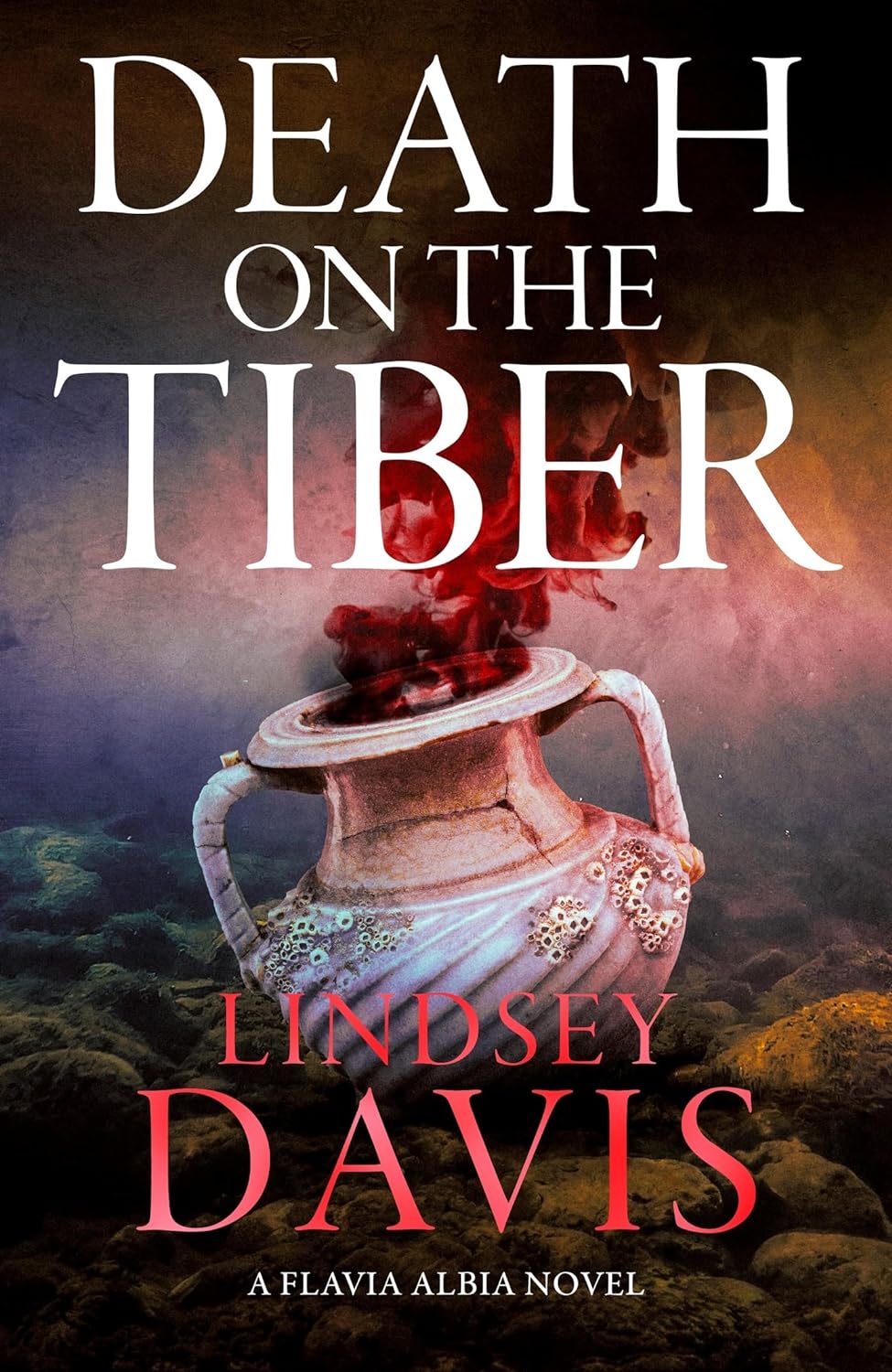
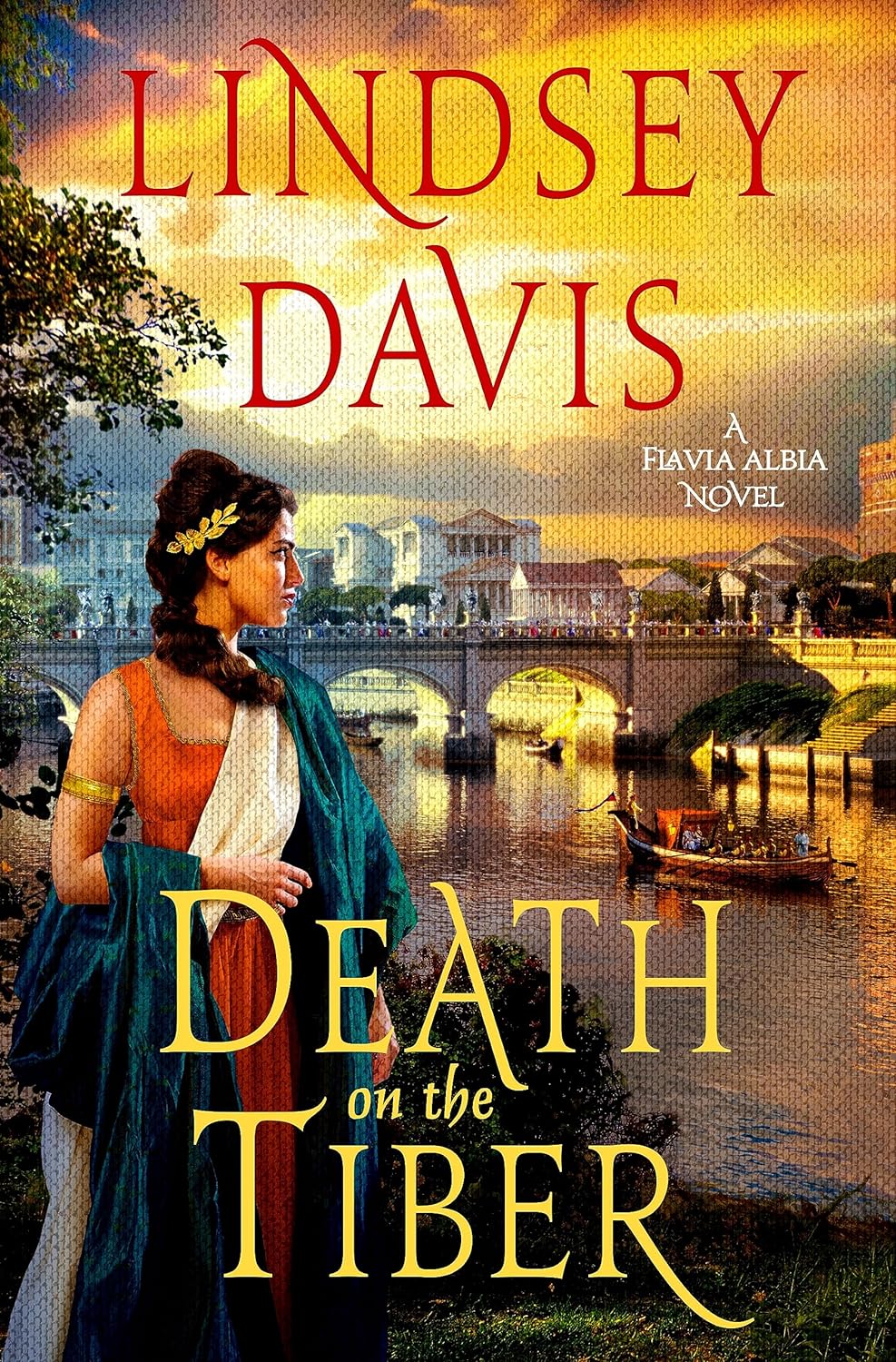
Quick Review – Death on the Tiber by Lindsey Davis

Publisher: Hodder & Stoughton (Trade Paperback – 9 April 2024)

Series: Flavia Albia – Book 12

Length: 380 pages

My Rating: 4.75 out of 5 stars

Amazon

Those in the mood for a clever murder mystery in ancient Rome look no further than the 2024 entry in the long-running Flavia Albia series with Death on the Tiber by Lindsey Davis.

I am a huge fan of historical fiction, and one of my favourite ongoing historical series is the outstanding Flavia Albia books by veteran author Lindsey Davis.  The Flavia Albia books, which are a sequel series to the author’s long-running Falco series, follow a determined private investigator in ancient Rome who takes on a range of complex cases and murder investigations, often encountering many of the city’s over-the-top inhabitants.  I have had an amazing time reading this series over the years, including The Third NeroPandora’s BoyA Capitol DeathThe Grove of the Caesars (one of my favourite books of 2020), A Comedy of TerrorsDesperate Undertakings (one of my favourite books of 2022) and Fatal Legacy.  As such, I try to read every new Flavia Albia book that comes out, and after accidently avoiding it for much of 2024, I recently finished off the 12th book in the series, Death on the Tiber.


Plot Synopsis:

Rome is in chaos. The empire of a mobster chief is falling apart following his death. Rivals, fearsome relatives and associates are taking up position to vie for the spoils.

With hideous murders in the streets of Rome, a lone female traveller arrives with an agenda of her own. But when her corpse is dragged out of the river bearing signs of foul play, Flavia Alba is drawn in, concerned about her fellow Briton’s fate.

Alba’s quest to find the killer becomes deeply personal when she discovers a man at the centre of the plot is an old adversary of hers. Will she be obsessed by revenge? Can she let the past go, or will it consume her?

Death on the Tiber was a great addition to the Flavia Albia series that features its own distinctive crimes, while also cleverly tying into several of the author’s previous Falco and Flavia Albia books. 

The plot of Death on the Tiber is very compelling, as the protagonist, Flavia Albia, finds herself drawn into the investigation of a murdered tourist pulled out of the Tiber.  However, the case becomes personal for Albia when she discovers the victim’s connection to the gangster Florius, an old foe of her fathers, who years before committed unspeakable evils against Albia and who may have finally returned to Rome.  Determined to finally hunt down Florius and make him pay for his crimes, Albia begins her investigation and soon finds herself embroiled in a deadly gang war that could tip the balance of Rome’s underworld.  Forced to compete with a range of interested parties, including her own vengeful father and uncle, the Roman military and several gangsters and their families who Flavia has previously encountered through her work, the protagonist slowly begins to piece together the events that lead to the victim’s death and the connection to her quarry’s current location.

This proved to be a highly personal and complex entry in the series, and one that I felt served as a love letter to the author’s prior works.  A huge range of characters from previous Flavia Albia novels, as well as major figures from the preceding Falco books, are featured throughout Death on the Tiber as the author takes the opportunity to tie together a range of ongoing storylines related to a major antagonist of the Falco books.  This allows for quite a fascinating read, especially for those readers familiar with the previous works, and it was awesome to see Davis bring together a compelling cast of returning figures. 

The plot moves in some interesting directions as the book nears the end, and Davis adds in a range of compelling layers to the case, including disgruntled mobster wives, a big gang war for the control of Rome, and alternating bands of Roman officials seeking to disrupt events.  The conclusion for the book proves to be very emotionally charged, especially as the protagonist comes face to face with her biggest monster and finally gets some closure.  The main mystery of Death on the Tiber is also extremely well written and utilised, and Davis does an excellent job tying in a lot of the novel’s leads and investigative plots into the main hunt for the returning Florius.  While the reveal of the ultimate culprit behind the killing isn’t especially surprising, the way in which Davis addresses their fate is particularly impressive, and it leads to a very fun final moment in the book.  I loved this last little twist, which I honestly think tied the book together very nicely, and it certainly was one of the moments that has stuck with me since finishing Death on the Tiber off.

This ended up being another strong Flavia Albia book as Davis continues to utilise her trademark style in Death on the Tiber.  Focused primarily through the sarcastic and cynical Flavia, Death in the Tiber evolves into a twisty hunt for answers, that brings together mystery, criminal intrigue, and the protagonist’s various personal connections.  Davis has a very compelling way of writing her stories, and her examinations of Rome through the protagonist’s eyes are often light-hearted, sarcastic, and applying modern mentalities to the ancient society.  This results in an impressive read, especially as Davis lays down an exceptional combination mystery and revenge-focussed narrative.  While I really enjoyed how well Davis revisited multiple previous books from both the Falco and Flavia Albia series, it does mean that readers do need a bit of pre-knowledge of these earlier works to fully appreciate Death on the Tiber’s plot.  Davis does provide some much-needed context at times, which will allow some new or forgetful readers to enjoy this book, but I personally think that people should have at least read the last few Flavia Albia books before Death on the Tiber to really get this book.

Despite the series’ general comedic vibe, Death on the Tiber gets very dark at times, especially as the protagonist is forced to revisit her traumatic history.  The author does an excellent job of diving into Flavia’s trauma and pain on the subject, and it was nice for this compelling protagonist to finally get some closure.  Davis nicely balances some of these darker moments by including an extensive cast of eccentric characters, many of whom are continuing their storylines from both the Falco and Flavia Albia series, and there are some very fun moments scattered throughout Death on the Tiber as a result.  This includes a fun competitiveness with Flavia’s father, Falco, a dive into some other important parental figures in her life, as well as her very strong relationship with her supportive and relentless husband.  I personally loved the return of all the various major gangsters Flavia has dealt with over the years, and it was fun to see her try to investigate them after prior experiences.  However, two of Flavia’s female relatives end up stealing the show in Death on the Tiber, especially at the end where they showed an ironic sense of justice.  An overall great extended cast that served to connect this book to the larger series in some outstanding ways.

With Lindsey Davis’s typical impressive writing and a cool plot laden with mystery and criminal intrigue, Death on the Tiber was an amazing entry in one of my favourite historical fiction series.  Entertaining, addictive and very moving, Death on the Tiber had me hooked from the very beginning, and I wish I’d read it sooner.  I look forward to continuing the Flavia Albia series this year, especially as Davis has a cool book coming out in April set around the ruins of Pompei with There Will Be Bodies.

Amazon

Waiting on Wednesday – A Death in Berlin by Simon Scarrow

Welcome to my weekly segment, Waiting on Wednesday, where I look at upcoming books that I am planning to order and review in the next few months and which I think I will really enjoy.  Stay tuned to see reviews of these books when I get a copy of them.  In this week’s Waiting on Wednesday, I check out an epic upcoming historical murder mystery with A Death in Berlin by Simon Scarrow.

Amazon

Readers of this blog will know that I am a massive fan of historical fiction author Simon Scarrow, whose various books set across multiple historical periods has produced some gripping and fantastic reads.  I am primarily a fan of his Eagles of the Empire series, the latest book of which, Revenge of Rome, I am planning to read next.  However, I am looking ahead with this post to the next Scarrow book coming out with A Death in Berlin, the third book in the author’s Berlin Wartime thriller series.

The Berlin Wartime books are an addictive and captivating series that focus on dark murder investigations in Berlin during World War II.  Following CI Horst Schenke, a Kripo investigator and one of the few good cops left in the city, the series sees the protagonist investigate sinister murders that occur against the backdrop of the war and the Nazi regime.  Inevitably, Schenke runs up against powerful Nazis and members of the SS as the major crimes he investigates skirt the dark secrets of the Nazi government.  The first two books in this series, Blackout and Dead of Night were impressive reads that expertly combined compelling narratives with the ominous historical setting and produced some amazing books.  As such, I make sure to keep a close out for any additional books in the series, and it looks like we are going to be blessed with a new entry in the series in 2025 with A Death in Berlin.

A Death in Berlin, which is currently set for release in March 2025, will once again force Schenke to take up a risk-laden investigation likely to put him at odds with his Nazi masters.  This new book will see Schenke go up against corrupt and protected gangster running crime in Berlin, while war rages all around.

Plot Synopsis:

BERLIN. MAY 1940. AS HITLER PREPARES TO INVADE WESTERN EUROPE, THERE IS BLOODSHED CLOSER TO HOME

CI Horst Schenke is an investigator with the Kripo unit. Powerless against the consequences of the war, he fights to keep criminals off his patch. But with doubts growing about his loyalty to the Nazi regime, he is walking a tightrope. If his relationship with a Jewish woman is exposed, a dreadful fate awaits.

Berlin’s gangsters run their crime rings with impunity. Decadent senior Nazis protect them. Schenke is different. He won’t turn a blind eye when innocents are caught in the crossfire between warring gangs. But dangerous enemies know everything about him. They will do whatever it takes to bend him to their will . . .

From the seedy wartime nightlife scene to aristocratic homes frequented by the Führer, as the distant war spirals ever closer, A Death in Berlin conveys the horror and banality of evil – and the terrible danger for those who dare stand against it.


A Death in Berlin
sounds like another amazing novel from Scarrow, and I am very excited to dive into this new murder mystery.  The first two books in this series have been outstanding, and I look forward to seeing some of the ongoing storylines continue as the moral protagonist attempts to deal with the evils of the regime that hold power in his country.  I am also intrigued to get a closer look at the German crime rings in action during the war, and this will likely lead to another clever and complex murder investigation.  I have no doubt Scarrow will tie the crime fiction elements of this book around some interesting historical elements, and I cannot wait to see how this elaborate and exciting story will unfold.

Based on how much I have enjoyed the first two novels in this series, there is no way that I won’t be grabbing A Death in Berlin next year.  Simon Scarrow is such a good author, and I have really enjoyed his impressive Berlin Wartime novels, especially as it allows him to explore wartime Berlin through the eyes of a conflicted protagonist.  I am very curious to see how this new story will unfold, and I have no doubt I am going to find it fascinating and compelling.  A Death in Berlin is currently one of my most anticipated historical fiction novels for next year, and I will dive into it the first chance I get.

Quick Review – The Death of Dora Black by Lainie Anderson

Publisher: Hachette Australia (Trade Paperback – 28 August 2024)

Series: Petticoat Police Mystery – Book One

Length: 312 pages

My Rating: 4.25 out of 5 stars

Amazon

Australian author Lainie Anderson presents a fun and compelling historical murder mystery that looks at a unique Australian historical figure with The Death of Dora Black.

Plot Synopsis:

Summer, Adelaide, 1917. The impeccably dressed Miss Kate Cocks might look more like a schoolmistress than a policewoman, but don’t let that fool you. She’s a household name, wrangling wayward husbands into repentance, seeing through deceptive clairvoyants, and rescuing young women (whether they like it or not) with the help of a five-foot cane and her sassy junior constable, Ethel Bromley.

When shop assistant Dora Black is found dead on a city beach, Miss Cocks and Ethel are ordered to stay out of the investigation and leave it to the men. But when Dora’s workmate goes missing soon after, the women suspect something sinister, and determine to take matters into their own hands. After all, who knows Adelaide better than the indomitable Miss Cocks?

*In 1915, Fanny Kate Boadicea Cocks became the first policewoman in the British Empire employed on the same salary as men. This novel is a rich exploration of that little-known chapter of Australian history.*


The Death of Dora Black
was a particularly interesting and entertaining read from Lainie Anderson, who has struck upon a fascinating figure to set her book around.  The first book in Anderson’s new Petticoat Policy Mystery series, The Death of Dora Black was a clever novel that blended the real-life history of the infamous Miss Kate Cocks with the author’s own crime fiction narrative.

Starting out in Adelaide, 1917, the book’s story sees formidable real-life police officer Miss Kate Cocks become embroiled in a deadly murder mystery when shop assistant Dora Black is found dead on the city’s beach.  What follows is an excellent story that blends the historical exploits of Cocks, which included helping the needy of Adelaide in her own unique way and attempting to save the morality of the young women of the city with her cane, with a gritty informal murder investigation.  This later investigation of course adds most of the meat to the story, as Cocks, and her junior constable Ethel Bromley, uncover a dark conspiracy of murder, drugs and kidnapping, with its roots deep in the heart of the city.

Anderson brings these disparate elements together into a fantastic overall read, and it was fascinating to see the more cozy and historical elements you would associate with Kate Cocks and her real-life actions blend with a darker murder plot.  I felt that Anderson’s main murder mystery was very well set out, and the resulting investigation by two underestimated women got quite thrilling and exciting.  There are some dark moments and intriguing twists featured throughout this plot, and Anderson produces a particularly powerful crime fiction narrative.  The entire murder mystery and the investigative arc came together extremely well, and I really enjoyed seeing Anderson’s unique protagonists trying to solve the case in their own unique way.  The background setting of Adelaide during World War I also added quite a lot to the narrative, and the author provided a complex and detailed recreation of the historical setting.

The real highlight of The Death of Dora Black was the intriguing main protagonists, Miss Kate Cocks and her junior constable Ethel Bromley.  The two protagonists play off each other extremely well throughout the course of the novel, and the blend of personalities, with the strict but caring Kate and the sassy and exceedingly keen Ethel, proved to be a winning combination.  Readers will particularly enjoy Anderson’s portrayal of Miss Kate Cocks in this book, especially as the author tried to capture all this unique figures’ quirks and historical reputation.  Anderson, who is a major expert on Kate Cocks, paints her as a particularly complex and conflicted figure driven by her religious principals but also willing to do the moral choice and help anyone in need.  It was fascinating to see Miss Cocks wander around historical Adeliade, distributing her moral judgement with her cane, while also solving problems no-one else can.  Anderson succeeded in capturing various aspects of her occasionally controversial history, and I really appreciated the way in which she converted her into a fearsome crime-fighting force, capable of hunting down murderers and drug smugglers.  The utilisation of this very distinctive figure helped to turn The Death of Dora Black into something very special, and I look forward to more exploits with Miss Kate Cocks in the future.

Overall, I felt that The Death of Dora Black was an amazing and highly entertaining novel from Lainie Anderson, who successfully brings her real-life historical protagonist to life and sets a wonderfully enjoyable crime fiction book around her.  Clever, fascinating, and with a lot of crossover appeal to many different readers, The Death of Dora Black was a great book, and I had a ton of fun getting through it.

Amazon

Dead of Night by Simon Scarrow

Dead of Night Cover

Publisher: Headline (Trade Paperback – 14 February 2023)

Series: Berlin Wartime Thriller – Book Two

Length: 422 pages

My Rating: 4.75 out of 5 stars

Amazon

One of my favourite historical fiction authors, the always impressive Simon Scarrow, dives back into turbulent World War II Germany with his latest compelling read, Dead of Night, an excellent and intense historical thriller with a dark twist to it.

Readers of this blog will know that I have long been a fan of Simon Scarrow ever since I read his first exceptional novel many years ago.  I particularly enjoy his long-running Eagles of the Empire series, an outstanding adventure series that follows two Roman officers as they travel throughout the empire.  The Eagles of the Empire books are some of the best historical fiction I have ever read, and I have had the pleasure of reviewing several of them, including The Blood of Rome, Traitors of Rome, The Emperor’s Exile, The Honour of Rome and Death to the Emperor.  Aside from his Roman novels, Scarrow has also written several other series and standalone books set in various periods of history.  This includes his 2021 release, Blackout, a gritty and complex murder mystery set in Nazi-controlled Berlin.  Blackout was an awesome book, and I was very happy to hear that Scarrow was producing a sequel, Dead of Night, which turned out to be another outstanding read.

Berlin, January 1940.  As Germany’s invasion of Poland rolls along, the Nazis continue to take complete control of their own country.  While the people of Berlin wait to see how the Allies will retaliate, a mysterious death is about to occur with massive ramifications.  A prominent SS doctor and his wife return home, having had a seemingly normal night attending a concert with the Nazi elite of the city.  However, by the morning, the doctor will be dead in his study, the result of an apparent suicide.

After his last near-fatal brush with the Nazi state, Criminal Inspector Horst Schenke of the Berlin Kripo is determined to simply do his job and stay off the party’s radar.  However, when Ruth Frankel, the Jewish woman whose life he saved during his previous investigation, reappears, Horst is once again dragged into unwanted trouble.  The dead SS doctor is an old friend of Ruth’s family, and Ruth has promised his widow that she would help find out the truth behind his death, and Horst is her tool to do so.

Reluctantly agreeing to help, Horst looks into the case and quickly realises that the doctor’s death was no suicide.  However, his superiors soon pull him off the investigation and forbid him from digging any further.  But with his curiosity peaked, Horst cannot turn away, especially when he manages to connect the victim to the mysterious deaths of several children throughout Germany.  Determined to find the truth no matter what, Horst soon discovers a terrible secret that places him in the firing line of the entire Nazi party and other volatile factions in the city.  Can Horst survive this new case, or will the regime he despises finally take him off the board?

This was an excellent read from Scarrow, who has been on a real roll lately with his awesome books.  Dead of Night not only served as an incredible sequel to Blackout, but it also features an intense and historically powerful narrative that had me hooked from the very beginning.

Dead of Night follows several of the same characters from the first book, primarily Criminal Inspector Horst Schenke, who serves as the main protagonist and point of view character, in another intriguing and complex case.  Schenke must again work with Ruth Frankel to investigate the apparent suicide of a prominent SS doctor, which produces an intriguing and compelling early investigation storyline that I really enjoyed.  However, Schenke soon runs into political problems, as well as threats of violence, which force him to conduct a subtle investigation.  At the same time, Schenke’s socially crusading love interest, Karin, requests that he look into the mysterious deaths of several children at a remote medical institute.  This second investigation takes up a good chunk of the novel and the protagonists dive into really starts to enhance the intensity of the plot.  This is because Scarrow starts to utilise particularly sinister elements of Nazi history in the plot, which ensures that the novel gets fairly dark in tone and content.  Scarrow is very subtle in how he brings these elements to the character’s attention, and there is a lot of emotion and disgust that emerges in the story as the protagonists realise what is going on.

From there the two divergent investigations start to come together as subtle clues that the author introduced in the first half of the book are brought to light again.  The revelation of how the two cases are connected is pretty captivating, especially as it gives the ‘antagonists’ of the novel a very compelling and relatable motivation.  The protagonist is forced to make some hard decisions as they come to terms with just what is going on and this leads to some great scenes about the differences between duty and what is right.  Everything leads up to an emotionally charged confrontation which cleverly brings the entire story together and wraps up all the remaining mysteries and character arcs.  This final major sequence is pretty damn awesome and it results in some of the most dramatic and powerful moments in the entire novel.  I really liked how the entire novel came together at the end, especially as the protagonist is left in several unenviable positions while he watches his country descend further into darkness.  I felt that the entire novel was very well paced out, and it doesn’t take long for the readers to get hooked on the story, especially with the two quality mysteries that Scarrow came up with.  The blend of mystery, dark historical moments, and intriguing character interactions is pretty perfect, and it works to create a memorable and haunting tale.  Combined with some of the great twists, many of which are based around evil parts of real-life history, and I felt that Dead of Night surpassed is predecessor in some very awesome ways

For me, the best thing about Dead of Night was the fantastic and distinctive wartime setting that surrounded the plot.  Stories set in Nazi controlled Germany are always intense and dark for obvious reasons, but I felt that Scarrow did a particularly outstanding job of capturing it, especially as he pairs the dark mood with a gritty winter backdrop.  Just like with Blackout, there is a focus on the evils of the Nazi regime in Dead of Night, and quite a lot of the plot is devoted to seeing how normal citizens, including non-political police officers, view what their city and country has turned into.  There is a good focus on the fear and control that the Nazis blanket the city with, and the investigation angles of the narrative become even more complex and compelling due to the protagonist being constantly blocked by his Nazi and SS superiors.  However, the best, or worst, historical elements of the book revolve around one of the cases that Inspector Schenke is dragged into, specifically around the death of several children.  This case thrusts the protagonist right into the heart of some of the darkest things the Nazis ever did to their own people, which really gives this entire book a powerfully tragic edge.  Scarrow uses this historical inclusion to his full advantage, as not only does it provide an excellent motivation for some of the crimes being committed, but it also increases the emotional conflict of the protagonist.  Scarrow really does not hold back when it comes to showcasing these historical horrors and the readers get a full idea of what is going on and the sort of people behind it.  This dark historical inclusion really helped to turn Dead of Night’s narrative into something particularly distinctive and captivating, and I felt that Scarrow did a fantastic job of drawing the reader in by giving them knowledge of this terrible moment from history.

I also need to highlight some of the excellent characters featured within Dead of Night, several of whom carry on from the previous novel in the series.  Most of the focus is around Inspector Horst Schenke, one of the few senior police officers left in Berlin without a connection to the Nazi Party.  Dedicated to the law, Schenke, a man already traumatised by his past, keeps finding it harder and harder to do his job in the new regime.  Despite his best efforts, Schenke keeps getting dragged into the middle of the several Nazi plots and hidden schemes, which constantly place him in political danger.  I loved the deep conflict that this builds within him as he is forced to choose between ignoring what he discovers, or trying to get justice and doing something.  Further complicating matters are his relationships with the two women in his life, his girlfriend, Karin, and the Jewish women he previously saved, Ruth Frankel.  Both keep pushing him to do more to oppose the Nazis or get to the truth of crimes they are covering up, and he is forced to balance his desires to help them with his sense of pragmatism while trying to protect them from the Nazis.

Other great characters in this book include Schenke’s police backup, Sergeant Hauser and former Gestapo agent Liebwitz.  These two are great supporting characters and they provide interesting counterviews to German life, with Hauser being a more everyman figure, while Liebwitz is bound up by his Gestapo training.  Despite the apparent differences between Hauser and Liebwitz, the two work together well and serve as good support to Schenke, and I liked the fun odd-couple team that they formed.  They also have some intriguing moments throughout the book, especially when they encounter some of the horrors of the Nazi regime.  While Hauser has some great emotional reactions, especially when it comes to the death of children, Liebwitz has the more intriguing responses, as he balances his loyalty to the state with his own past experiences and conscious.  Watching him come to terms with some of the evils he witnesses makes for some powerful reading and I am glad that Scarrow added in these intriguing alternate characters.  I also really enjoyed the complex main antagonists of the story, as they had quite a powerful motivation for some of the crimes committed in the book.  While they are not as noble as they believe, the antagonist’s goal still serves to trouble the protagonist’s sense of justice, and interesting compromises have to be made as a result.  I deeply appreciated some of the deep characters that Scarrow featured in this novel and I look forward to seeing how they are utilised in any future books in the series.

Simon Scarrow continues to impress me as one of the best historical fiction authors out there with this incredible new read.  Dead of Night has a brilliant and powerful story behind it that takes full advantage of its bleak and historically rich setting.  Featuring an outstanding investigation narrative and some dark insights into the horrors of the Nazi regime, Dead of Night will easily grab your attention and ensure you will not forget it anytime soon.  A highly recommended novel from one of my favourite authors.

Amazon

Waiting on Wednesday – Fatal Legacy by Lindsey Davis

Welcome to my weekly segment, Waiting on Wednesday, where I look at upcoming books that I am planning to order and review in the next few months and which I think I will really enjoy.  I run this segment in conjunction with the Can’t-Wait Wednesday meme that is currently running at Wishful Endings.  Stay tuned to see reviews of these books when I get a copy of them.  For my latest Waiting on Wednesday, I look at one of my most anticipated historical fiction reads of 2023, with the epic and captivating sounding Fatal Legacy by Lindsey Davis.

Fatal Legacy Cover

Amazon     Book Depository

Early each year I get a particularly satisfying historical murder mystery fix with the exceptional writing of Lindsey Davis, who has been pumping out hits since 1989.  Best known for her Marcus Didius Falco series, Davis’s work focuses on ancient Rome and generally see her protagonist, originally the titular Falco, investigate a series of elaborate crimes.  The Falco books ended in 2010, but Davis soon followed them up with her current series, the Flavia Albia books, which follow the daughter of Falco as she gets involved in a series of similar investigations to her father.

I have been a pretty big fan of the Flavia Albia series since the get go, having received a copy of the first book, The Ides of April, when it came out in 2013, and I had an absolute blast with it.  I have since gone on to read most of the books in this series and I absolutely love the fantastic blend of dark mystery, compelling characters, fun humour, and interesting historical details that often require the protagonist to dive into some unique aspect of Roman life.  Each of the previous books in the series have been excellent in their own way, and I have had an absolute blast with awesome books such as The Third Nero, Pandora’s Boy, A Capitol Death, The Grove of the Caesars (one of my favourite books of 2020), A Comedy of Terrors and Desperate Undertakings (one of my favourite books from the first half of 2022).  Many of these books have gotten five-star reviews from me and I have such an amazing time getting through all of them.

Naturally, after absolutely enjoying the first 10 books in the Flavia Albia series, there is no way I am going to miss the 11th, and luckily I don’t have to wait too much longer for it.  The next Flavia Albia book will be Fatal Legacy, which is currently set for release in April 2023.  I already love the sound of this upcoming books as it will see the protagonist involved in a complex feud between two rival families:

Synopsis:

The next witty, must-read book in the Flavia Albia series.

An unpaid bar bill leads Flavia Albia to her most bitter and complex case yet.

Decades earlier Appius Tranquillus Surus wrote his will: it freed his slaves and bequeathed his businesses to them. He left an orchard to the Prisci, a family he was friendly with, on the condition that his freedmen could still take its harvest.

The convoluted arrangement has led to a feud between the two families, each of which has its own internal strife. Endless claims and counterclaims lead to violence and even death. Lawyers have given up in exasperation as the case limps on. The original will has disappeared, along with a falsified codicil – and might there be another one?

But is there a solution? Two youngsters from each side of the divide, Gaius Venuleius and Cosca Sabatina, have fallen in love, which could unite the feuding families. There is only one problem: were Sabatina’s grandmother and father really liberated in the Surus will? If not, the stigma of slavery will stop the marriage and the dispute will rage on forever.

Reconciliation seems impossible, but Albia will try. Her investigation must cut through decades of secrets, arguments, lies and violence to reach a startling truth.

Now, while I was already quite excited for this cool upcoming book, the above synopsis has got me very intrigued for Fatal Legacy.  This is mainly because the protagonist will find herself drawn into quite a complex sounding case, with feuding families attempting to gain control of a wealthy track of land.  This case itself sounds more like a legal thriller than anything else and I can’t wait to see Davis’s great take on the Roman legal system.  This will pair nicely with the inevitable murders, thefts, and schemes that Flavia Ablia will be forced to investigate, and I am sure that she will have to dig deep into both family’s secrets to find the truth.  Throw in a doomed, Shakespearian romance between two young lovers from each family and this has all the makings for another Lindsey Davis classic that I will have a wonderful time reading.

Based on how much fun and excitement I have had with the Flavia Albia series in the past, I was pretty damn hyped for Fatal Legacy, even before I knew what it was going to be about.  However, now that I can see just how interesting the new Davis’s story is going to be, I am even more pumped.  The plot synopsis above is extremely epic and I cannot wait to see what complex and twisty narrative, rich with historical detail, that the author comes up with.  I am already highly confident Fatal Legacy is going to be one of the best historical fiction books I read in 2023, and I will make every effort to grab a copy as soon as I can.

Fatal Legacy Cover 2

Waiting on Wednesday – Dead of Night by Simon Scarrow

Welcome to my weekly segment, Waiting on Wednesday, where I look at upcoming books that I am planning to order and review in the next few months and which I think I will really enjoy.  I run this segment in conjunction with the Can’t-Wait Wednesday meme that is currently running at Wishful Endings.  Stay tuned to see reviews of these books when I get a copy of them.  In this week’s Waiting on Wednesday, I look at a fantastic upcoming historical murder mystery with Dead of Night by Simon Scarrow.

Dead of Night Cover

Amazon     Book Depository

I have been in a real historical fiction mood over the last week, having read several awesome and enjoyable reads with great historical settings to them.  As such, I wanted to feature a historical fiction book in my Waiting on Wednesday post and who better to look at then one of my favourite authors, Simon Scarrow.  Readers of this blog will know I have been a major fan of Scarrow for years, and reviews for several of his latest books, such as The Blood of Rome, Traitors of Rome, The Emperor’s Exile and The Honour of Rome, can be found here.  The above books all fall within his Eagles of the Empire series, and I have a lot of love for his Roman historical fiction work.  I am especially keen for his next novel, Death to the Emperor, which is out very soon, however, the Eagles of the Empire books aren’t Scarrow’s only ongoing series.

Last year Scarrow released an intriguing and enjoyable historical murder mystery novel with Blackout.  Set in Nazi controlled Berlin just before the outbreak of World War II, Blackout followed an honest police detective who attempts to investigate a series of brutal murders throughout the city during a harsh winter.  This case was complicated by the political implications of the murders, and the protagonist was forced to go up against the dangerous and insidious Nazi party, while trying to maintain his own soul.  I deeply enjoyed Blackout and I had an amazing time exploring Scarrow’s foray in the crime fiction, especially as it worked well with the exceptional historical elements.

Due to how much I enjoyed Blackout (as well as my general love of all things Scarrow), I have been keeping an eye out for a potential sequel for a couple of years now, and I was very happy when some details about it where released.  This second Blackout novel will be Dead of Night, which is currently set for release in February 2023, and it appears that it will continue some of the excellent elements contained in the first book.

I really like the sound of the plot for Dead of Night, especially as the book will continue to follow the first novel’s protagonist, Criminal Inspector Horst Schenke, as he finds himself caught up in another complex and problematic murder investigation.  This time, Schenke finds himself barred from investigating the suspicious death of a SS doctor and must once again contend with the machinations of his Nazis superiors as he attempts to solve the crime.  The plot sounds amazing, and it looks like Scarrow will once again combine a great mystery, with an examination of the Nazi regime and how it took over key German institutions, like the police.

As such, I am pretty excited for Dead of Night, and I already know I am going to have a brilliant time getting through this book.  Not only am I excited for the sequel to Blackout, but I am just generally happy to get another Scarrow book so soon after the upcoming Eagles of the Empire book.  I have no doubt that Dead of Night is going to be one of the best historical fiction reads of 2023 and I look forward to getting through this compelling mystery.

Synopsis:

The stunning new thriller set in wartime Berlin from the author of Blackout: ‘A wonderfully compelling thriller, reeking of authenticity, and a terrific depiction of the human world within the chilling world of the Third Reich’ Peter James

BERLIN. JANUARY 1941. Evil cannot bring about good . . .

After Germany’s invasion of Poland, the world is holding its breath and hoping for peace. At home, the Nazi Party’s hold on power is absolute.

One freezing night, an SS doctor and his wife return from an evening mingling with their fellow Nazis at the concert hall. By the time the sun rises, the doctor will be lying lifeless in a pool of blood.

Was it murder or suicide? Criminal Inspector Horst Schenke is told that under no circumstances should he investigate. The doctor’s widow, however, is convinced her husband was the target of a hit. But why would anyone murder an apparently obscure doctor? Compelled to dig deeper, Schenke learns of the mysterious death of a child. The cases seem unconnected, but soon chilling links begin to emerge that point to a terrifying secret.

Even in times of war, under a ruthless regime, there are places in hell no man should ever enter. And Schenke fears he may not return alive . . .

Desperate Undertaking by Lindsey Davis

Desperate Undertaking Cover 2

Publisher: Hodder & Stoughton (Trade Paperback – 12 April 2022)

Series: Flavia Albia – Book 10

Length: 398 pages

My Rating: 5 out of 5 stars

Amazon

Buckle up for an intense, captivating and exceedingly memorable historical murder mystery as bestselling author Lindsey Davis unleashes the 10th entry in the deeply clever and compelling Flavia Albia series, Desperate Undertaking.

It’s that awesome time when I get to gush about the newest entry in Davis’s excellent, long-running Flavia Albia series, which has been a major fixture in my reading schedule for the last several years.  The sequel series to her iconic Marcus Didius Falco novels, the Flavia Albia novels follow the daughter of Davis’s original protagonist as she solves unusual murders across ancient Rome.  Thanks to the series’ typical great combination of intriguing characters, complex mysteries, excellent historical elements and great humour, I always have an amazing time reading these novels, which usually get very high ratings from me.  Some of the more intriguing Flavia Albia novels in recent years include The Third Nero, Pandora’s Boy, A Capitol Death, The Grove of the Caesars (one of my favourite books of 2020) and A Comedy of Terrors.  Due to the quality and entertainment capability of this series, I eagerly keep an eye out for Davis’ new book each year and I was exceedingly chuffed when I got a copy of Davis’ latest novel, Desperate Undertaking.

Rome, 89 AD.  The year is coming towards an end and the city is ready to enter a sleepy holiday period.  Unfortunately, murderers are notoriously bad at taking breaks, and Flavia Albia, paid informer, dogged investigator and daughter of notorious busybody Marcus Didius Falco, is about to get dropped into the most disturbing case of her life.  With her parents away on holiday and her impromptu family preparing to settle in for the quiet period, Albia receives a job request she cannot refuse.  An aged actor, part of a troupe her parents travelled with in their youth, has been killed, horribly crucified in a public place.  Starting her investigation, Albia and her husband, Tiberius, are shocked to discover this is not the only murder confronting them as they suddenly discover the first victim’s widow was also murdered in terrible circumstances.  Her last words to Albia: “The undertaker did it…”.

Determined to find the person responsible for the horrific murders of her parent’s friends, Albia begins her investigation, diving into Rome’s theatre scene.  But when another actor associated with the troupe is killed in a cruelly inventive way, Albia begins to realise that these are no ordinary murders.  A twisted and determined serial killer is on the loose, bearing a terrible grudge against the actors and anyone associated with them.  Worse, their exceedingly public killings all bear striking similarities to some of the most brutal moments in classic plays, causing their victims to suffer in horrific ways.

With the bodies piling up and the city in an uproar, Albia must solve the most unusual and deadly case of her career before more of her parents’ friends end up dead.  But the closer she gets to the truth, the more she begins to realise that these murders bear a strong connection to one of her father’s past cases.  Worst, Albia soon realises that her connection to the currently absent Falco has made herself and everyone she loves a target of a demented killer determined to get revenge.

Davis does it again with Desperate Undertaking, producing a wildly entertaining and exceedingly clever historical murder mystery that I had a brilliant time reading.  Perfectly bringing together a disturbing mystery with an excellent historical setting, some great characters and the author’s trademark humour, Desperate Undertakings is an outstanding read and it ended up being yet another Flavia Albia book that gets a full five-star rating from me.

I must admit that I have sometimes found Davis to be a bit of an inconsistent writer; while most of her novels are extremely good, a few of them do not quite measure up in terms of substance or entertainment.  However, Desperate Undertakings is easily one of the better books in the Flavia Albia series as Davis pulled together an exceptional and dark murder mystery narrative that will leave a memorable impression on the reader.  For this latest story, Davis drops a lot of the family/household storylines that have been a significant, if slightly distracting, feature of the previous novels, and instead focuses on an intense and elaborate murder mystery that effortlessly grabbed my attention and ensured I was extremely hooked on this fantastic novel.  The book starts off extremely strong, firstly with a foreboding introductory short chapter, and then with a great series of compelling early chapters that drag the protagonist into the investigation.  These early chapters feature two dramatic (literally) and elaborate murders that really stand out due to their brutal and distinctive nature (the second one is particularly gruesome and over-the-top), as well as their connections to some of Davis’s iconic protagonists.  As such, the reader becomes really invested in the case early on, and you soon get thrust into an elaborate in clever murder inquiry storyline.  Davis sets up this investigation really well, and there are a series of great leads, potential suspects and unique theories that pan out as the novel proceeds in an excellent way.  While the novel slowed down slightly after the initial murders, the next series of killings picks the pace right up again, which the story maintains for the rest of the book.  I really enjoyed how the entire mystery came together, and there are some really clever twists and turns here, with seemingly minor characters or story elements coming back in some big ways later in the book.  Everything leads up to a big and impressive conclusion and readers will be left rocked by the elaborate and powerful nature of the plot, as well as how damn dark this novel got in places.

Desperate Undertakings is extremely well written and I loved how Davis pulled this entire novel together.  Davis once again hits the perfect blend of murder mystery, historical elements and character driven story elements in this book, as the reader is engrossed in this brilliant Roman based tale.  I did feel that this one was significantly darker in places than some of Davis’s previous novels, which I really liked, especially as it results in some particularly gruesome killings.  The story is once again told from the perspective of central character Flavia Albia as she traverses the mean streets of Rome to find her culprit.  This central focus allows for much of the books fantastic humour, as Albia’s comedic and exceedingly modern perspective of events is extremely entertaining, while also providing a Roman noir feel for the murder investigation.  Like most of the books in the Flavia Albia series, Desperate Undertakings can easily be read as a standalone read, with any relevant elements from the previous novel rehashed for the new reader.  However, Desperate Undertakings also bears a strong connection to one of Davis’s older novels, the sixth book in the Falco series, the 1994 release Last Act in Palmyra.  Multiple characters and elements from this book make an appearance here, with several of them serving big roles in this book, either as supporting characters, suspects or victims.  Davis rehashes the events of this previous book extremely well, and readers who haven’t had the chance to enjoy it are still able to enjoy Desperate Undertakings without any issues, while those who have will no doubt enjoy the fun call back.  I felt that these past elements were utilised extremely well, especially as these past events also impacted the present storyline.  This entire novel came together brilliantly, and I was extremely enthralled by its great writing and powerful story the entire way through.

I always deeply enjoy how Davis portrays the historical elements in her novels and Desperate Undertakings was a particularly good example of this.  The reader is once again treated to breathtaking depictions of ancient Rome, with everything from the chaos of the streets, the culture of the people, and the slapdash take on law enforcement used to full effect throughout the course of the plot.  There are some brilliant descriptions of some of ancient Rome’s earlier sties, especially as the murders make use of some iconic locations for the sites of their crimes, and you get an excellent sense of the city thanks to Davis’s descriptive and powerful writing.  However, the best part of these historical elements is the dive into the Roman theatre scene, which is a key part of the books plot.  Davis provides an intriguing and entertaining look at the city’s theatre elements throughout the novel, and you soon become deeply engrossed in her entertaining portrayal of these eccentric and proud actors and entertainers.

Desperate Undertakings also takes quite an intriguing look at the various plays and performances put on during this period as the killer utilises some of Rome’s bloodiest and most elaborate plays as a basis for setting up their murders.  This causes the protagonist to really dive into all the plays of the period and you get a good idea of several of the more iconic and distinctive ones, especially those that have elements of death involved.  I found it really interesting to find out about this part of Roman culture, especially the deadly twists that are sometimes involved with them, and it was a great part of the plot.  I also felt that Davis did a remarkable job working these historical theatre aspects into the plot of Desperate Undertakings, and it really helped to make the murder mystery stand out.  I particularly enjoyed how the author broke the book down into sections, each one of them named after a play that corresponds to the murder that Flavia is about to discover.  This allows for a glorious bit of foreshadowing, especially for those with an interest in classics and theatre, and it was an excellent addition to the book.  I deeply appreciate how Davis utilised these historical plays as the inspiration for her murders in Desperate Undertaking and it really gave this book a very distinctive feel.  Readers are warned that some of the murders are a bit graphic thanks to how they are portrayed in these plays, and you are in for some barbaric punishment as a result.

Another strong aspect of Desperate Undertakings was the excellent and compelling characters that Davis featured throughout.  As usual, this great cast is headed up by the intrepid Flavia Albia, who serves as the main protagonist and point-of-view character for the book.  Albia is a really entertaining protagonist, especially as Davis presents her as a cynical private investigator with very specific views of the reality of life in ancient Rome.  The daughter of another cynical protagonist, Falco, Albia spends most of the book making astute and hilarious observations about the people, locations, and events around her, and much of the book’s humour results from the amusing and noticeably modern way she sees the world around her.  As such, Albia really adds a lot to this intriguing story and it is always so much fun to see her waltzing around Rome solving her elaborate cases.  It was particularly interesting to see her reactions to the murders that occur in Desperate Undertakings.  Despite her familiarity with death and Rome’s underbelly, these killings really hit her hard due to their brutal nature and the connection that the victims have to her parents.  I felt this was a really compelling and powerful change to the character, and it really helped to highlight just how dark this book got in places.

Desperate Undertaking also features a wide cast of characters, all of whom have some entertaining or intriguing moments through the book.  Davis utilises a blend of established characters, new figures and even several characters who have not appeared since the Falco series.  All these characters are utilised extremely well in this novel, and the author does a good job of introducing (or reintroducing) them throughout the course of the plot.  As usual, this includes Albia’s husband, Tiberius, who serves as a good straight man to Albia’s eccentric antics, and helps to focus the investigation in places.  Other interesting characters include a newly introduced cop who balances between competence and political expediency and serves as another excellent foil to Albia’s more unusual investigation methods.  The various actors and theatre related figures are pretty entertaining, and Davis introduces some eccentric characters, many of whom serve as potential suspects or victims as you get to know them more.  I also felt that Davis did a good job with the killer (or killers) featured in this book, as they have a unique motivation, and a compelling personality that is slowly uncovered throughout the course of the book.  Finding out just who they are and why they are doing these dreadful killings is extremely fascinating and results in some brilliant character moments.  Other supporting characters are also extremely entertaining, including a very strong butcher and two very cultured vigils, and I had a brilliant time getting to know them all.

With the extremely awesome and captivating Desperate Undertakings, the always incredible Lindsey Davis continues to reign from atop the historical murder mystery mountain.  This latest Flavia Albia novel is exceedingly epic, containing a brilliant and dark investigation story that sees the series’ outstanding protagonist encounter a truly demented killer.  With some fascinating and distinctive historical elements, especially those surrounding the bloody and memorable plays, Desperate Undertakings really stands out and was an amazing amount of fun to read.  This was one of the better and more memorable entries in this excellent long-running series, especially with its vicious murders and great character work, and it comes extremely highly recommended.

Desperate Undertaking Cover 1

Amazon

Quick Review – A Comedy of Terrors by Lindsey Davis

A Comedy of Terrors Cover

Publisher: Hodder & Stoughton (Trade Paperback – 1 April 2021)

Series: Flavia Albia – Book Nine

Length: 386 pages

My Rating: 4 out of 5 stars

Amazon

I am a big fan of several great historical fiction series currently running, but one I find to be particularly entertaining is the Flavia Albia series from bestselling author Lindsey Davis.  Davis has been dominating the ancient historical murder mystery scene for years, first with her extensive Marcus Didius Falco novels, and then with the successor Flavia Albia series, which follows the daughter of the original series’ protagonist.  While I never had the opportunity to get into the Falco novels, I have been reading the Flavia Albia books since the outset and have had a brilliant time with all of them, including The Third Nero, Pandora’s Boy, A Capitol Death, and The Grove of the Caesars, each of which have been excellent in their own way.  Indeed, this is such a great series that I have been pretty eager to start reading the latest novel, Desperate Undertaking, which I just got my hands on a couple of days ago.  I really want to read it next, but before I start, I absolutely must do a review of the preceding novel in the series, A Comedy of Terrors.

A Comedy of Terrors was the ninth book in the Flavia Albia series and was released this time last year.  I had initially planned to read A Comedy of Terrors when it first came out, but unfortunately, it took me a little longer to grab it than I intended.  By the time I was able to fit it into my reading schedule, I was a bit rushed off my feet with other reviews and other reading (excuses, excuses!), so I never got a chance to really write anything about it when I finished.  This was an inexcusable oversight of my behalf, and it is one that I really wanted to fix before checking out Desperate Undertaking, so here we are.

Plot Synopsis:

In Rome, 89 A.D., poisonings, murders, and a bloody gang war of retribution breaks out during the festival of Saturnalia, and when her husband, Tiberius, becomes a target, it’s time for Flavia Albia to take matters into her own hands — in Lindsey Davis’s next historical mystery, A Comedy of Terrors.

Flavia Albia, daughter and successor of private informer Marcus Didius Falco is twiddling her thumbs with no clients during the December festival of Saturnalia. But that doesn’t mean all is quiet. Her husband Tiberius and the Fourth Cohort are battling organized crime interests that are going to war over the festival nuts. A series of accidental poisonings, then bloody murders of rival nut-sellers, and finally a gruesome warning to Tiberius from the hidden criminal powers to back off.

Albia has had just about enough and combines forces with Tiberius to uncover the hidden criminal gangs trying to worm their way into the establishment at a banquet of the emperor Domitian.


A Comedy of Terrors
was another fun book from Davis that takes the reader back to ancient Rome to investigate an intriguing mystery.  In this case, the book revolves around Flavia and her family’s dangerous interaction with a criminal gang who are trying to take advantage of a religious festival and have come into conflict with Flavia’s husband Tiberius.  This results in an interesting story which sees Flavia getting involved in several conflicts, intimidation attempts, assorted mysteries and other connected events, all in the name of investigating the gang’s activities and trying to bring them down.  At the same time, Flavia is dealing with multiple personal and familial issues, as she and Tiberius now find themselves responsible for Tiberius’s semi-orphaned nephews.

I must admit that this wasn’t my absolute favourite Flavia Albia novel, and I felt that the story was lacking some of the usual flair and tight storytelling that I usually so enjoy from Davis’s novels.  A Comedy of Terrors’s narrative was a bit unfocused in places, particularly when it came to main storyline involving the ancient Roman gang.  Rather than the series’ typical attention on a central investigation, this was a bit more of a meandering affair, which, while interesting in places, did seem to go on some random tangents.  There was also a much greater examination of the protagonist’s home life, as not only did Flavia and Tiberius have their young relatives to look after, but there was also some domestic drama around their unusual household of slaves, servants and random family members.  While I enjoyed seeing the continued domestic evolution of the formerly wild Flavia and the notoriously honest Tiberius, which resulted in several rather entertaining scenes, I could see newer readers who came for the mystery getting a bit frustrated with this extra attention on family life.  Still, A Comedy of Terrors did have some great moments throughout its plot, and Davis did the usual excellent job of combining crime fiction and historical elements together into an entertaining story filled with the writer’s fantastic sense of humour.  In addition, the characters were sharply written as always, there were some intriguing historical crime fiction elements to the plot (who would have thought there was criminal opportunity in festival nuts?), and I still really enjoy the author’s inclusion of modern attitudes and reactions in this historical environment.  I particularly loved the final resolution of the case which saw a classic gangster move turned around on its user in dramatic fashion, which served as an amazing end to this fantastic book.

Overall, A Comedy of Terrors was another great addition to the Flavia Albia series by Lindsey Davis.  While it lacked some of the focus and compelling mystery of some of Davis’ most impressive reads, this was still a clever piece of historical crime fiction, and I loved seeing the continuation of her character-driven storylines.  A must read for fans of this series, I cannot wait to see what happens in the 10th book, Desperate Undertakings.

Amazon

A Comedy of Terrors Cover 2

Black Drop by Leonora Nattrass

Black Drop Cover

Publisher: Viper (Trade Paperback – 15 February 2022)

Series: Laurence Jago – Book One

Length: 343 pages

My Rating: 4.25 out of 5 stars

Amazon     Book Depository

Intriguing and talented new author Leonora Nattrass presents a compelling historical thriller debut with Black Drop, a fantastic novel that drags readers into the conspiracies and issues of late 18th century London.

In July of 1794, as the terror of the French Revolution reaches its height and the war on the continent goes poorly for the British army, uncertainty and fear of violent change infect the people of London.  For Laurence Jago, clerk to the Foreign Office, his position is even more uncertain that those around him.  A young man with hidden French heritage, Jago fears the day that his connections to his mother’s nation will be discovered, especially after spending years serving as a spy for sinister French agent Aglantine.

Now believing himself to be free from Aglantine’s employment, Jago is thrust into an untenable situation when vital confidential information about the British army is leaked from his office to the press.  Suspected by his peers of leaking the information and under investigation, Jago fears that all his secrets and former dealings are about to come out.  His problems are only further compounded when he discovers the body of a fellow clerk in his rooms, supposedly dead by suicide.

When the blame for the leak is shifted onto the dead man, Jago is freed of the suspicion against him.  However, Jago knows that the dead clerk was incapable of stealing the letter and believes that he was murdered.  Determined to find out the truth behind the death, Jago finds himself investigating the highest level of the British civil service and their political masters.  Out of his depth and thwarted at every turn, Jago will risk everything to root out the culprit before they strike to disrupt England again.  However, can he succeed without revealing his own dark secrets, or will Jago hang as a traitor instead of the murderer?

Black Drop is an excellent and clever novel that I had a great time reading as Nattrass perfectly combines a compelling spy thriller/murder mystery storyline with intriguing and detailed historical fiction elements.  This resulted in one of the more unique and fantastic debuts of 2022 and I really enjoyed Black Drop’s impressive story.

This awesome debut novel has an excellent story that expertly combines intriguing spy thriller and murder mystery elements with a character driven historical narrative to create a compelling and impressive read.  Set throughout key events of 1794 and told as a chronicle from the perspective of central character, Laurence Jago, Black Drop presents the reader with an intriguing tale of murder, political machinations and the threat of revolution at the heart of the period’s government.  Nattrass sets the scene perfectly at the start, introducing the key characters while also highlighting the feelings of unrest and dissent as the fear and inspiration from the French revolution hits London.  From there, the story starts to unfold in some interesting directions as the protagonist finds himself involved in political and espionage adventures while also investigating the murder of a fellow clerk, which appears to be connected.  At the same time, the slow-paced story utilises some intriguing aspects from the protagonist’s life as he struggles with dark secrets from his past that have potential implications on the current events.

Following this introduction and the initial parts of the narrative, the middle of Black Drop starts to bring in certain key historical events and figures, which results in some fantastic moments and character interactions, especially once an antagonistic figure becomes more prominent.  While the middle of this novel did drag in places, I felt that Nattrass was providing the reader with the right blend of intrigue, mystery, historical detail and character growth to produce a great overall story.  You really get to grips with the protagonist and the key aspects of the setting during this part of the book, especially when Jago hits a major personal downturn earlier than expected, and interesting reveals enhance the reader’s attachment to the mystery.  The story really starts to pick up once it gets to Nattrass’s recreation of the infamous trial surrounding supposed radical and revolutionary Thomas Hardy.  The ridiculous, and mostly accurate depiction of the trial (with certain elements from other trials thrown in for greater effect), proves to be a great high point for the novel, especially as other key parts of the plot are slotted in perfectly around it.  I did feel that the novel started to come undone around the conclusion a little, especially when it came to the big reveal.  While there were a couple of good twists around certain characters, the solution to the main mystery and the intrigue seemed a little weak to me, and I was a little disappointed with how it turned out, especially as you barely get to see anything about the final confrontation.  Still, this did not affect the overall quality of the story too much, especially as the author throws in an excellent wrap-up for the protagonist’s storyline in this novel which has a lot of potential for a sequel.  While much of the story can be a little sluggish and lacking a lot of action, I had a great time getting through Black Drop, and I loved how the excellent interplay of elements came together so well.

One of the most distinctive parts of Black Drop is the sheer amount of fascinating historical detail that was fit into the story.  Nattrass has clearly done her research on the period and the reader is presented with a fantastic and powerful view of London in the late 18th century.  Not only are there some brilliant and vibrant depictions of historical London but the reader gets some fascinating views into the inner workings of the government at the time.  Substantial parts of the book are dedicated to examining the civil service and the political hierarchy of the day, with multiple influential figures featured as supporting characters.  This proves to be a deeply fascinating part of the book, and I loved how Nattrass was able to weave these intriguing details into the thriller plot, becoming a key part of Black Drop’s story.  I also deeply appreciated the way in which Nattrass explores the social and political issues of the day, especially where it relates to the concerns in London about an uprising similar to what happened in France.  As such, you get a full spectrum of personalities from across London, as royalists and loyalists clash with potential radicals who are targeted by the worried government.  This all cumulates in the fantastic court case of Thomas Hardy, a shoemaker accused of radical actions and attempted rebellion.  This historical trial is expertly recreated by Nattrass to include all of its most interesting parts, including several extremely ridiculous elements from history (a blowgun murder conspiracy).  Nattrass also cleverly combines in some elements from related trials that occurred around the same time as the Hardy case for some amusing dramatic effect, and this extended sequence ended up being one of my favourite parts of the novel.  The overall hint of discontent by many members of London’s society, as well as the innate fear of the established institutions, is portrayed beautifully, and you get a great sense of the public issues during this period.  All these impressive historical elements are handled extremely well by Nattrass, and while it did get a tad tedious in places, it was an excellent part of the book that I deeply enjoyed.

To back up her unique historical tale, Nattrass has furnished Black Drop with a compelling array of characters with some complex and compelling character arcs.  This book actually contains a great combination of original characters and historical figures, with many major figures in 18th century British politics and the civil service featured in substantial roles throughout the book.  Not only does this brilliantly enhance the already substantial historical details of Black Drop, but it also results in some fascinating interactions and depictions as the fictional characters, including the point-of-view character, observe them.  Due to the complexity of the story, Black Drop makes use of a pretty large cast of characters, and while a few of them blend together, most come across as pretty distinctive with some interesting and fun character traits.

The best character of Black Drop is the protagonist Laurence Jago, who also serves as the book’s sole point-of-view character.  Jago turns out to be a particularly complex and damaged individual whose emotional attachment to the case and the state of London society provides some intriguing drama and insight into the events of the book.  Already made quite distinctive by his unique green-glass spectacles, Jago proves to be an impressive and captivating figure, especially as he has some major issues.  Secretly half-French, Jago lives a conflicted and fear-filled life, especially with the intense anti-French attitudes sprinkling the city.  This, combined with his foolish youthful dalliance of being a spy for France, ensures that he has a powerful sense of guilt, and is constantly worried about being discovered, especially once other accusations are made against him.  The discovery of a dead friend, combined with his guilt, the pressures of work, and the constant fear of discovery really strain his mind, and while he doggedly tries to find out the truth behind the murder, he starts to crack and nearly blows his cover.  Watching him trying to hide his own secrets while uncovering the lies and machinations of those around him becomes pretty intense, especially as you grow quite attached to this damaged soul.  His mental state further deteriorates once he becomes addicted to Black Drop (an opium concoction), which dulls his worried and troubled mind, while also leaving him lethargic and susceptible to danger.  This proves to be a serious handicap to his abilities, and it is fascinating to see him try to balance all his issues with the hunt for the truth.  All these issues and concerns result in a very conflicted and emotionally drained character, who Nattrass portrays perfectly, and it was very powerful to see Jago’s entire story unfold.

Aside from Jago there is a rich cast of supporting characters, each of whom add to the story in their own distinct way.  I particularly want to focus on two who ended up being the best supporting figures in different ways.  The first of these is William Philpott, a fiction British reporter character, who arrives in England from and extended stay in America and sets up his paper and family residence next to Jago’s lodgings.  An eccentric, rambunctious and slightly uncouth fellow, Philpott stands in stark contrast to the various stuffy characters that make up the majority of the cast, which ensures that the reader is quickly drawn to him.  Not only does he serve as a lighter character in the novel and a firm confidant for the protagonist, but you also get an interesting viewpoint into his changing feelings about the events occurring throughout London.  Philpott starts the novel as a strong, patriotic figure who fully intends to support the government in his paper when it comes to the court cases against the supposed radicals.  However, upon viewing some of the injustices they are committing, such as their harassment of and unfair case against Thomas Hardy, Philpott becomes more sympathetic, supporting the dissenting voices and writing fair accounts of the proceedings.  This interesting middle ground perspective on the historical events of the book proves to be extremely interesting, and I loved how Philpott’s unique storyline unfolded, especially as it results in him throwing some valuable lifelines to the troubled Jago.

The other character of note is real-life historical figure and future British Prime Minister George Canning, who serves a much more antagonistic role in this novel.  Canning, who at this point in the time period was a young MP with connections to the sitting PM, William Pitt, gets embroiled in the case quite early in the novel, thanks to his connection to the dead man and the suspicions surrounding Jago.  Portrayed in Black Drop as an uncaring and malicious man, Canning is a menacing antagonist for much of the novel, constantly butting heads with Jago and complicating his investigation.  I loved the use of this intriguing historical character, especially as Nattrass turns him into a very unlikable figure, who you cannot help but hate.  Not only does Nattrass do a great job of examining some of the historical elements surrounding him at this period of time but she also layers in some fantastic references to future events in his life, such as the infamous duel that he would eventually take part in.  However, his real benefit is the impact he has on the story and the deep rivalry he forms with the protagonist.  Watching these two battle it out in different arenas is very amusing, especially as Jago is constantly outmatched by this influential politician, and I do hope that we see more of Canning in future books in this series.  These great characters, and more, all add a great deal to this intriguing novel, and I really appreciated how fantastic and compelling they turned out to be.

Overall, Black Drop by Leonora Nattrass is an impressive and captivating piece of historical crime fiction that I am really glad I decided to check out.  Making excellent use of some fascinating historical elements, Nattrass did an amazing job of producing a clever and enjoyable spy thriller/murder mystery storyline in 18th century London, which came together very well.  Filled with great historical events and compelling characters, Black Drop was an absolute treat to read, and I look forward to seeing how Nattrass’s next book will turn out, especially as the sequel, Blue Water, is apparently set for release in October this year.

Amazon     Book Depository