Originally published in the Canberra Weekly on 11 April 2019.
Expert reviews of the latest and the best in Fantasy, Historical Fiction, Science Fiction and Crime Fiction from an Australian reviewer.

Originally published in the Canberra Weekly on 11 April 2019.
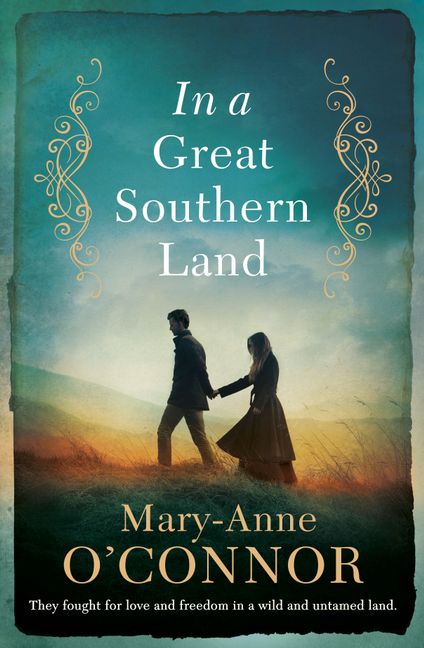
Publisher: HQ (Trade Paperback format – 18 March 2019)
Series: Standalone
Length: 416 pages
My Rating: 4.5 out of 5 stars
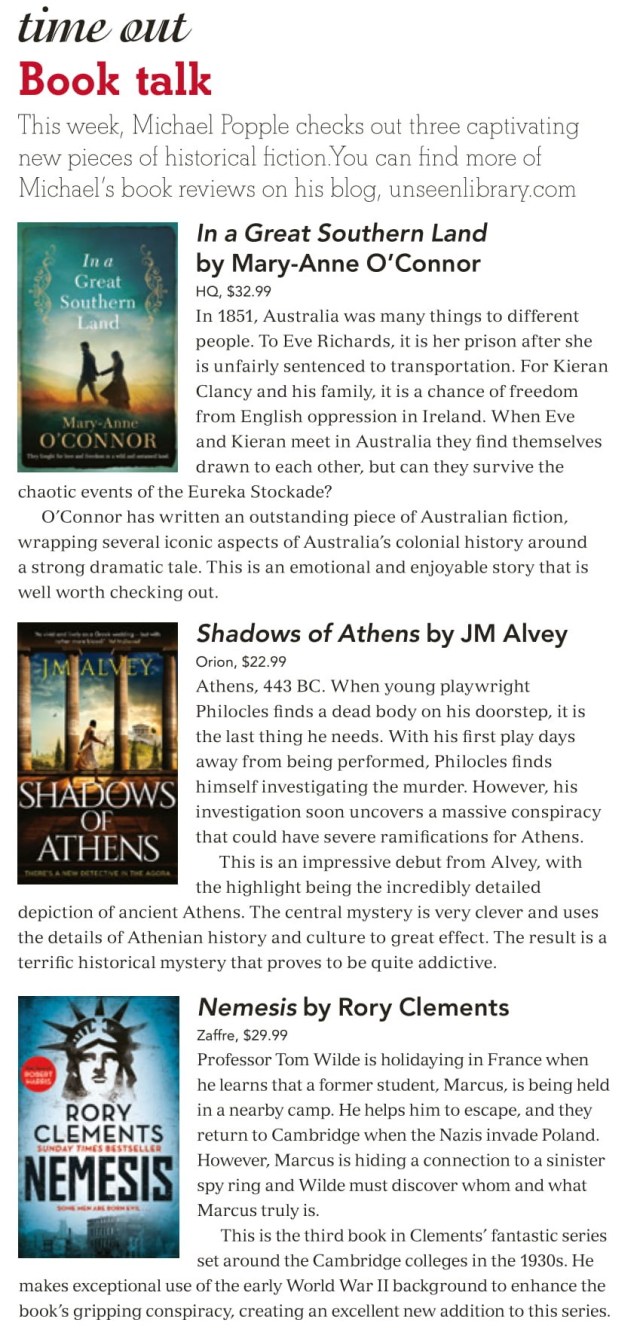
Historical drama author Mary-Anne O’Connor once again presents the readers with a powerful and moving journey through a number of iconic moments in Australian history with her fourth book, In a Great Southern Land, which focuses on Australia’s colonial history and the chaos surrounding the infamous Eureka Stockade.
In 1851, the colonised but still mythical continent of Australia represents many things for many different people. For the Clancy family living in Ireland it represents freedom, as they seek their own land away from the British aristocracy that controls their country. For young Eve Richards it represents a harsh prison; she is unfairly transported as a convict after losing everything that she cares about.
Once in New South Wales, Eve briefly encounters the wild but kind Clancy brother, Kieran, who manages to save her from a harsh life in the Tasmanian colonies. Following a bad experience as he left Ireland, Kieran is wondering around Australia in search of a new purpose, while his family, including his brother, Liam, and his sister, Eileen, settle in Orange. Despite the love of his family, Kieran’s temper and thirst for adventure leads him down to the goldfields at Ballarat, close to where Eve is employed as a convict servant.
It does not take long for Kieran and Eve to find each other again, and the two are soon drawn together romantically. However, their plans for their future and a life together are imperilled by events occurring around the goldfields. The corrupt colonial regime is imposing harsh taxes on the miners attempting to scratch a living at the fields, and resentment and hostility is growing. When several shocking events become a catalyst for revolt among the miners, Kieran finds himself being forced to choose between supporting his friends or marrying Eve. Can Kieran and Eve’s relationship survive the chaos of the Eureka Stockade, or will tragedy once again strike them both?
This is the fourth book from Australian author Mary-Anne O’Connor, who specialises in historical dramas set in the backdrop of significant events in Australia’s history. Her 2015 debut, Gallipoli Street, features aspects of World Wars I and II as well as the Great Depression. Her second book, Worth Fighting For, is set in World War II, while her third book, War Flower, focuses on Australia in the 1960s, including the country’s involvement in the Vietnam War. In a Great Southern Land is the author’s first foray into a 19th century setting, and her love and dedication to recounting parts of Australia’s complex and chaotic history once again shines through.
At its heart, In a Great Southern Land is a dramatic story of several individuals who are searching for a new beginning, and find love, loss and upheaval in their new home. I have to admit that dramatic novels are not usually the sort of book that I am naturally drawn to, but something about this book really appealed to me and I had a great time reading it. The main characters are extremely sympathetic and realistic, and the reader can not help but get drawn into their story. A lot of bad stuff affects all of them, especially Kieran and Eve, and you are left hoping that they can hang on and find the happiness that they deserve. I quite enjoyed the romance angle between Kieran and Eve; it came about quite naturally and had quite a satisfying conclusion. I really got into this fantastic story and I was impressed by how this fantastic dramatic tale was woven so effectively into the book’s amazing historical elements.
One of the things I quite liked about this book was O’Connor’s ability to examine and bring several aspects of Australia’s colonial history to life. Several iconic parts of the mid-19th century Australian experience are explored by the author, including the transportation of convicted criminals from England to Australia, the often terrible convict lifestyle, the resettlement of Irish settlers to various parts of Australia and the trials and tribulations of those seeking their fortunes in the goldfields. On top of that, O’Connor also explores various Australian locations, including historical Sydney, Melbourne, Orange and Ballarat. All of these examinations of history are deeply fascinating, and I really enjoyed reading about them. The author has obvious skill at portraying all the historical aspects, and the reader gets a real sense of what it would have been like to experience these historical events, ordeals and locations.
The most significant historical event that occurs within this book is the Eureka Stockade, which plays a huge role in the overall story. O’Connor does an amazing job examining this interesting and often venerated piece of Australia’s colonial history and explores so many of the key elements surrounding the event. As such, the reader gets an excellent idea of what events led up to the Eureka Stockade, and why the participants thought it was necessary to organise as they did. The actual battle at the Eureka Stockade is pretty brutal and tragic for the reader and becomes one of the major parts within the book. I quite liked the examination of the aftermath of the event, especially the rather entertaining, but apparently accurate, courtroom sequence, which I was not as familiar with. O’Connor does a fantastic job brining the Eureka Stockade to life, and I was quite impressed with how it was utilised in the telling of the book’s dramatic storylines.
I really enjoyed the author’s underlying examination of freedom and control that seemed to permeate a large amount of In a Great Southern Land’s plot. Throughout the story, the main characters experience high amounts of oppression or prejudice, often from upper-class English characters, due to a wide range of social factors. For example, before the Clancy family leave for Australia, they are oppressed by the rich, English family who controls their land and whose greed takes something precious from Kieran. Eve is taken advantage of by the son of the household she works for and is then cast out when the affair is discovered without the son standing up for her. Even when they reach the promised land of Australia, the characters are still oppressed. The Clancy family still face discrimination for being Irish, with the police targeting Kieran, and one particularly dislikeable doctor refusing to leave a party to treat someone from Ireland. Eve, on the other hand, is treated poorly as a convict, and even after she finds work with a nice, wealthy family, she and Kieran are forced to act a certain way with Eve’s employers in order to gain permission to marry. This underlying oppression and the resentment and anger that these characters felt plays wonderfully into the events that led up to the Eureka Stockade, and it was intriguing to see how these events affected the characters’ decisions in relation to these events.
In this book, Mary-Anne O’Connor has produced another outstanding historical drama that the reader really gets drawn into. The main story is deep and emotive and ties in well with O’Connor’s rich and detailed depictions of historical events that represent key points in Australia’s colonial history. In a Great Southern Land is an amazing and powerful read that I was quite happy to find myself really enjoying. I ranked this book 4.5 stars, and I will be quite interested to see what period of Australian history O’Connor decides to explore next.
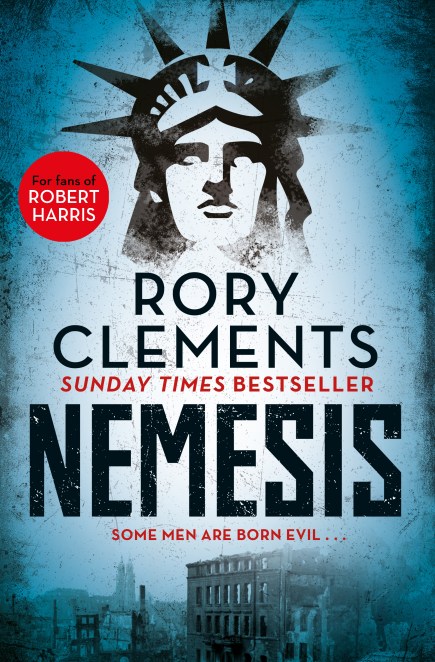
Publisher: Zaffre (Trade Paperback Format – Australia – 3 March 2019)
Series: Tom Wilde – Book 3
Length: 317 pages
My Rating: 4 out of 5 stars
Historical thriller and murder mystery author Rory Clements returns with the third book in his electrifying and clever Tom Wilde series, Nemesis.
August 1939. War is on the horizon, and while most of the world is preparing for the next great conflict, Cambridge Professor Tom Wilde is enjoying a holiday in France with his partner, Lydia. That is, until a mysterious man alerts him to the fact that one of his former students, an idealistic young man by the name Marcus Marfield, is currently being held in an internment camp on the France-Spain border after his involvement in the Spanish Civil War. When Wilde finds Marfield at the camp he moves quickly to secure his release, and they flee the country just as the Germans begin their invasion of Poland.
Back in England, the country moves to a war footing, as the Allies attempt to persuade America to join them against the Nazis. While many Americans oppose joining the war, the sinking of the passenger ship the SS Athenia may be the spark that brings them into the war. With the Nazis attempting to convince the world that Churchill orchestrated the sinking of the Athenia to galvanise American support against Germany, Wilde and his companions return to Cambridge.
Once back in the city, Wilde begins to notice a change come over Marfield. At first attributing it to his shell shock following his battles in Spain, a series of mysterious deaths around Cambridge all seem to link to the recently returned Marfield. These events are tied to a deadly conspiracy to keep America out of the war for good. A spy ring is active in Cambridge, and Wilde must find a way to uncover it before it is too late. Can Wilde once again avert disaster, and what role does Marfield play in this conspiracy?
After the excellent first two books in his Tom Wilde series, Corpus and Nucleus, Clements continues the adventure of his series’ titular character, Tom Wilde, as he investigates a series of Nazi espionage activities around Cambridge in the lead-up to World War II. I have quite enjoyed this series in the past and was looking forward to continuing the story in Nemesis. The latest book is a thrilling story that takes place just at the outset of the war and utilises the several historical events and figures to turn this into quite an intriguing tale.
Nemesis is a really good historical thriller which combines a great spy story with the historical context of early World War II. The previous books in the Tom Wilde series have all contained compelling and complex mysteries with huge implications for England and the allies, and Nemesis is no different. Clements has crafted together an excellent mystery that has massive, worldwide implications, and I really enjoyed unravelling the mystery, especially as the author presents all sorts of doublecrosses, twists, cover-ups and mysterious deaths to confuse the reader away from the main goal of the antagonists. The antagonists’ master plan is quite out there, and it is one of those plots that would have had massive historical implications. I quite like the role that new character Marcus Marfield played in this plot, as the protagonists and the reader are constantly trying to work out what his secrets are and what kind of person he truly is. Overall, I found the thriller and mystery elements of this book to be quite clever and captivating, and readers will enjoy uncovering the full extent of the antagonist’s overall plot.
One of the most interesting parts of the Tom Wilde series so far was its setting during the chaotic pre-World War II period. In Nemesis, Clements sets his story right at the start of the war and immediately shows all the panic and preparation that followed this declaration of war. Clements did a fantastic job portraying the low-key sense of dread and paranoia that the inhabitants of England would have felt in the build-up to the war in the previous books in the series, and in Nemesis these feelings are realistically amplified now that the war has begun. The author has quite a good grasp on a number of historical events and feelings during this period, and I quite liked seeing the Cambridge viewpoint of the war. The Cambridge setting has always been a fantastic highlight of this series, but it was quite intriguing to see the author incorporate all the various changes to the city that occurred as a result of the war into his novel. Clements dives deep into the Cambridge lifestyle when it comes to the war, whether it involves the removal of the rare books from the colleges, the preservation of the stained glass windows, the roles that the professors were being assigned in the war effort or even the many Communist professors throwing away their party membership cards when it became clear that the Soviets were supporting the Nazis.
Clements also ties his story in quite closely with one of the more interesting early events of World War II: the sinking of the passenger liner the SS Athenia as it sailed across the Atlantic. I was deeply fascinated not only with the depictions of this event, but the discussions and conspiracy theories that resulted from it. This was especially true when it came to the examination about the sinking of the ship being used to bring the United States into the war. The likelihood of America joining in the war became a major part of the story, and it was interesting to see what the European characters thought about America’s reluctance to enter the war, especially as one of the protagonists is an American character, and one of the chief architects of America’s isolationist policy, Joe Kennedy, was the United States Ambassador to England at the time. I thought that the historical elements that Clements explored were a real highlight of this book, and readers will enjoy his literary examination of these events.
While the main focus of the book’s story is a conspiracy and the start of the war, Clements does take his time to continue to develop a number of the characters introduced in the previous books. For example, Wilde continues to deepen his relationship with his romantic partner, Lydia, and I quite liked the role that Lydia played in investigating the case alongside Wilde. There is also a significant focus on Wilde’s American friend Jim Vanderberg and his family, especially as Vanderberg’s family are passengers aboard the Athenia. Phillip Eaton, the British spy who was hit by a car in the last book of the series makes a return in Nemesis, and the reader gets to see his struggles to recover from his horrific injuries while still working as an intelligence officer. A number of intriguing new characters are introduced in this book and it will be interesting to see what role they and the existing characters will play in any future entries in this series.
In the latest book of his enjoyable Tom Wilde series, Nemesis, Rory Clements once again delivers a captivating historical thriller that brings the reader into the early days of World War II. Featuring an incredible overarching mystery and some detailed examinations of intriguing historical events and settings, Nemesis is a deeply interesting book that is well worth checking out. I am very curious to see where Clements takes the series next, and I look forward to seeing what impact Thomas Wilde will have on the rest of World War II.
Welcome to my weekly segment, Waiting on Wednesday, where I look at upcoming books that I am planning to order and review in the next few months and which I think I will really enjoy. Stay tuned to see reviews of these books when I get a copy of them.
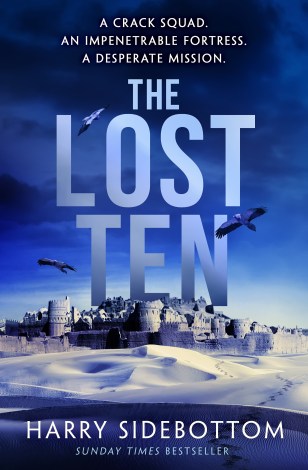
This week I will be looking at an exciting new historical fiction novel that is coming out in April 2019, The Lost Ten by Harry Sidebottom. Harry Sidebottom is a well-established historical fiction author whose novels set in the Roman Empire are some of the best in the business. I have long been a huge fan of Sidebottom. I have previously mentioned how his second book, King of Kings, was one of the first books I ever reviewed, and I absolutely loved his most recent release, 2018’s The Last Hour. So I am extremely eager to get my hands on The Lost Ten, which sounds like it will be quite a fantastic read.
Goodreads synopsis:
A desperate rescue attempt deep behind enemy lines . . . this nail-biting adventure has all the hard-edged appeal of the Bravo Two Zero mission.
When Valens, a junior officer in the Roman Army, joins a crack squad of soldiers on a dangerous mission, little does he know what’s in store for him. Tasked with rescuing the young Prince Sasan, who has been imprisoned in the impenetrable Castle of Silence, the troops set out across Mesopotamia and into the mountains south of the Caspian Sea.
Deep in hostile territory, inexperienced Valens finds himself in charge. And as one by one his soldiers die or disappear, he begins to suspect that there is a traitor in their midst, and that the rescue is fast becoming a suicide mission.
Valens must marshal this disparate group of men and earn their respect, before it’s too late…
I love the sound of this plot synopsis, as it implies that Sidebottom will continue his winning formula from The Last Hour, where he combined pulse-pounding thriller elements with his usual detailed and intriguing historical fiction plots. This worked extremely well with The Last Hour, which was essentially 24 in Rome, and I am excited to see how a high-risk special forces mission will play out in this ancient setting.
I very intrigued by the Castle of Silence that is referenced in the synopsis, which brings a very intense and impenetrable stronghold to mind. From the other details contained within plot summary, it sounds like the Romans will have to infiltrate the Parthian Empire. I love the idea of a small force getting into this massive and sprawling empire, and I am very interested to see how the Parthians are able to insert a spy into a crack Roman unit.
Overall, I am extremely excited for this latest book from Harry Sidebottom, who has to be one of my favourite historical fiction authors. The Lost Ten sounds like it will be a thrilling and action-packed novel, and I really cannot wait for Sidebottom to once again blow my mind with his thriller/historical fiction hybrids.
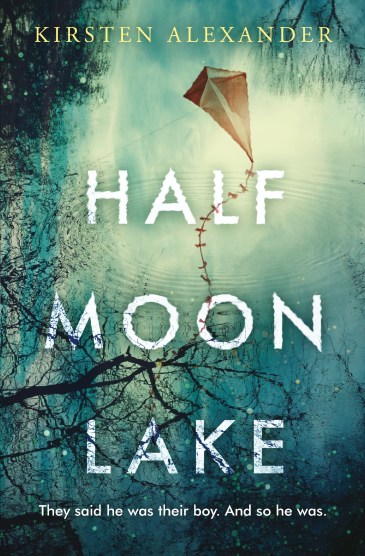
Debuting Australian author Kirsten Alexander presents a dramatic, captivating and hard-hitting novel of desperation and loss loosely based around a real and shocking historical event.
In the summer of 1913, a young boy, Sonny Davenport, walks into the woods around his family’s summer home at Half Moon Lake, Louisiana, and never returns. Despite a widespread search of the surrounding area by an army of volunteers, no trace of the boy can be found. As the search grows in volume, the disappearance becomes headline news across the country, especially as Sonny’s parents, John Henry and Mary Davenport, are wealthy and influential members of their home town of Opelousas. For the next two years, the Davenports engage in a desperate hunt for Sonny across the south, offering a massive reward for information on their missing son. But with no substantiated leads, the Davenports slowly lose hope and Mary sinks more and more into her despair.
However, just when everything seems lost, a boy matching Sonny’s description is found wandering around several southern towns in the company of a tramp. As the world watches, Mary meets the child and claims that he is Sonny. But is he truly her missing son? There are a number of differences between the two boys and many are convinced that the Davenports have taken in the wrong child and the real Sonny is still out there.
As the people of Opelousas, including many of the Davenport’s friends and servants, debate the true identity of this young boy, a kidnapping trial for the tramp begins. However, the proceedings are thrown into chaos when Grace Mills, an unwed farm worker, arrives in town, claiming that the boy is her son.
This is an outstanding first book from Alexander, who has created a powerful and memorable story based partially around real-life events. Half Moon Lake is a fantastic and dramatic story that dives deep into the hearts and psyche of its characters and the historical elements of the time to create a lasting impact on the reader. I was very surprised about how addictive I found this book to be, as the intense character emotions and the dramatic actions that they take to alleviate their grief and the grief of their loved ones was just incredible. I am still reeling from several of the revelations and developments that occurred towards the end of the book, many of which will stick with me for a long time.
One of the most intriguing aspects of this book is that is partially based on a real-life historical event, the disappearance of Bobby Dunbar, which took place in America’s south in the early 20th century. Bobby Dunbar disappeared when he was four. After months of searching, a young boy was found some distance away who appeared similar to Bobby and was claimed by Bobby’s parents, despite many people voicing their doubts about the boy’s true identity. In addition, a second woman attempted to claim the child as her own son, and a legal case was initiated to determine the identity of the child. I was unfamiliar with the Bobby Dunbar case before I read Half Moon Lake and did not look up the details of it until after I finished the book. As a result, I was amazed that the intense story was so closely based on a real story. This case and its eventual results are absolutely fascinating, and I felt that Alexander did a fantastic job of capturing the essence of this event and installing it within her story.
For example, the author does an excellent job of portraying the probable emotions, feelings and opinions of people who would have been involved in the real-life disappearance, as she utilises a number of different character perspectives throughout her book. Readers of Half Moon Lake get a great idea of the despair all of the parents in this story would have experienced, the fear and confusion of the children, and the bewilderment and conflicted emotion of everyone else involved in the case. I felt that Alexander’s portrayal of the missing child’s mother was done particularly well, as the readers gets to see her so filled with realistic fear, grief and despair that it drives her to try and claim a child that might not even be hers. I also quite enjoyed the way that the author explored the highly publicised nature of the child’s disappearance and how the media at the time covered the case, dividing those following the case as they try to determine the true fate of the missing child and the real identity of the discovered child. I also loved the way that the author looked at how the media scrutiny of the time might have affected the individuals involved in the case, and how this could have potentially influenced their actions and decisions.
I also really liked the way that the period’s ideas of class came into effect during this book. There are some key examinations of the different ways that the rich and the poor were treated during this time, and how this would have impacted the investigation, the search for the missing child, the media scrutiny and overall results of the big trial that served as an important scene at the end of the book. Also significant and intriguing was the way in which Alexander looked at how concerns for personal and familial reputations might have come into these events, resulting in several characters undertaking various actions that they knew to be wrong, all in the name of protecting someone’s social standing and reputation. The story is set in America’s south during the early 20th century, and as such there are a number of African American characters who are involved with the case. Race and the perception of certain ethnicities came into this book a lot more than I thought it would, and I thought that Alexander did a fantastic job capturing how these characters might have been ignored or disciplined for trying to get involved in proceedings. All of these elements result in an amazing historical tapestry which forms an excellent setting for this story.
Overall, this is an amazing debut from Australian author Kirsten Alexander, who uses the inspiration of a fascinating real-life case to craft an epic and powerful story. There are so many great story elements spread throughout Half Moon Lake, as the character’s emotions and despair drive them to desperate and immoral acts. It features a narrative that is at times sad and at other times darn right appalling, and several reveals and character decisions at the end of the book will leave you shocked and will stick in your mind long after you finish reading it. I loved this spectacular first book from Alexander and I am looking forward to seeing where she goes next.
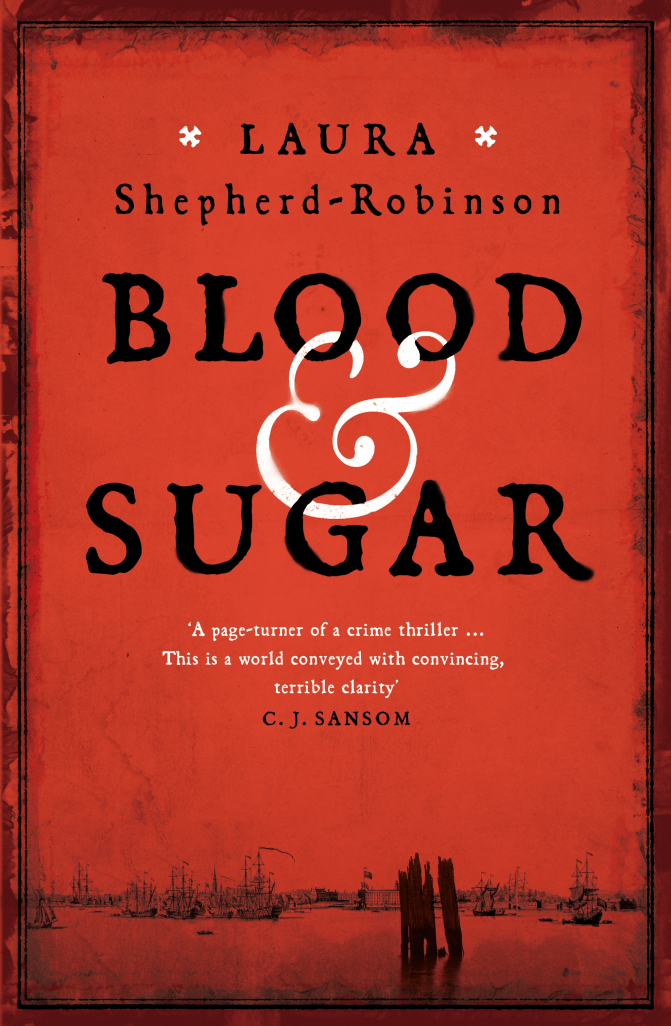
From the creative mind of Laura Shepherd-Robinson comes this powerful, dark and extremely captivating historical murder mystery, which might just be one of the most impressive debuts of early 2019.
In June 1781, a horrific murder is discovered on the dock of the slaver port of Deptford, outside of London. The body has been brutally tortured in a variety of ways associated with the slave trade, and his chest has been branded with a slaver’s mark. The dead man was Tad Archer, a passionate abolitionist who had been causing trouble throughout Deptford as part of his abolitionist campaign.
Days later, Captain Harry Corsham, a war hero who fought in the American Revolution, currently attached to the War Office and about to embark on a promising career as a politician, receives a visit from Tad’s sister, who is searching for her missing brother. Tad, an old estranged friend of Harry’s, was apparently in Deptford to expose a secret that could potentially end the British slave trade. Travelling to Deptford, Harry discovers the terrible fate of Tad and is determined to bring his killer to justice.
In order to discover who is responsible for his friend’s the murder, Harry must uncover the secret that Tad believed could permanently end the slave trade. But as Harry investigates further, he finds himself embroiled in a conspiracy that reaches to the very heart of the realm. Powerful forces wish to see murder covered up and anyone connected to the dark secret silenced. Harry soon finds himself on the wrong side of men who can easily destroy his career and family. Undeterred, Harry presses on with his investigation, but he may prove to be unprepared for the cruel killer stalking him through Deptford.
Blood & Sugar is the debut novel of Laura Shepherd-Robinson, a fantastic new voice in the historical murder mystery genre. Shepherd-Robinson has created an outstanding novel that masterfully blends a fantastic and clever murder mystery with some powerful and evocative historical content. The result is a terribly addictive novel that highlights this debuting author’s obvious ability to craft an excellent and compelling story. From how the story is written, Blood & Sugar will probably be a standalone novel, although I do hope that Shepherd-Robinson sticks with the historical fiction and murder mystery genres, as she has an amazing talent with both.
At the heart of this amazing book is a complex and intriguing murder mystery that sets the book’s protagonist off on a dangerous and dark investigation of the slave trade. While the investigation is originally focused on the murder of Tad Archer, it spirals out into to encapsulate several additional murders and a larger and more widespread conspiracy which may or may not be connected to the initial murder. Each of these mysteries is clever, well thought-out and guaranteed to grab the reader’s curiosity and keep them going through the story to work out the incredible solution. The author has also populated her story with a number of distinctive and complex characters, each of whom has their own hidden secrets and dark pasts. In order to solve Blood & Sugar’s overarching mystery, the protagonist has to unravel each of these character’s lies and personal secrets, each of which add a new layer to book’s excellent plot. These characters are all extremely self-serving and naturally suspicious, providing the reader with a huge pool of potential suspects. The investigation into each of these mystery elements is extremely well written, and I really loved all the solutions to the book’s various mysteries. I was really impressed with the conclusion to each of the personal mysteries that are uncovered throughout the narrative, and some of them were extremely satisfying to see come to a conclusion.
In addition to the outstanding mystery storyline, Shepherd-Robinson has also created an amazing and realistic historical setting for her story. I felt that the author did a terrific job capturing the essence of 18th century England, from the streets of London to the docklands of Deptford. There was a particular focus on the then port town of Deptford, which served as a major plot focus for the book, as well as several other riverside locations. I loved this examination of Deptford, and I found the examination of this part of its dark history to be absolutely fascinating. These locations serve as an appropriately dingy setting for such a dark story, and I really enjoyed it.
A major part of this book was the focus on the evil slave trade that was a major business during the 18th century in England. As part of the plot, the author spends a significant amount of time exploring every facet of English slavery and the slave trade in the 1780s, including the economics behind it, the burgeoning abolitionist movement, slave laws throughout England during this period and how it was a major part of Deptford’s economy and way of life. These details are extremely interesting and disconcerting, as Shepherd-Robinson pulls no punches when it comes to describing the brutal actions of the slavers and the cold business that they practiced. The slave trade also serves as an incredibly effective background motive and catalyst for the murders and the conspiracy that the protagonist finds himself drawn into. The author crafts an incredibly captivating mystery storyline around the English slave trade, and I was both intrigued and appalled to find that certain horrendous elements of this plot were based around a real-life historical slave event. Blood & Sugar is definitely a must-read for those unafraid to learn more about the cruelty of the English slave trade and who wish to see it creatively used as a major plot point in this captivating story.
While Blood & Sugar featured a number of duplicitous and villainous characters who serve as excellent antagonists, Shepherd-Robinson has also crafted a compelling and layered protagonist to tell this story as the book’s narrator. On the surface, Captain Harry Corsham is your typical English hero, a former soldier determined to find the man responsible for the death of his friend. However, as the book progresses, the reader finds out that there is a lot more to Harry’s character than first meets the eye. Harry is a deeply conflicted character in many ways, but throughout this book he struggles with his opinions about slavery and the abolitionist movement. In his past he was a strong supporter of abolishing the slave trade, but since he has entered politics and married into an influential family, he is more aware of the current political realities around the slave trade. But as he spends more and more time investigating the Deptford slave traders, he finds himself being drawn more and more into the abolitionist way of thinking. The author has also written in a fairly realistic portrayal of PTSD for Harry after the horrors he experienced fighting in the American Revolution. This is an intriguing character trait, and one that comes into play the more horrors that Harry experiences during this book. Shepherd-Robinson has also included some amazingly well-written and very surprising personal developments for her protagonist that really change everything in the latter half of the book. All these character elements add layers to this central protagonist, and I liked the emotional and ethical impacts that they caused on the story.
Overall, I thought that Blood & Sugar was a powerful and captivating historical murder mystery that expertly combines an intriguing and clever mystery storyline with some first-rate historical backgrounds and plot points. This is an exceptional debut from Laura Shepherd-Robinson which showcases her amazing talent and superb ability as a writer. This was an easy five stars from me, and I am really excited to see what sort of story this fresh and inventive author writes next.
Originally published in the Canberra Weekly on 7 February 2019.

From acclaimed young adult fiction author Gwenda Bond comes this first official tie-in novel to the television sensation, Stranger Things.
It is 1969, and while America languishes in the midst of the Vietnam War, shadowy events with long-term implications are starting to take place in the small town of Hawkins, Indiana. The enigmatic Dr Martin Brenner has arrived at the Hawkins National Laboratory to start conducting a series of experiments as part of the CIA’s secretive MKUltra program. Arriving with him is the doctor’s most gifted test subject, a young girl simply known by the number Eight, who can create illusions with her mind.
In a nearby college campus in Bloomington a young student, Terry Ives, signs up as a test subject for a government experiment at her university. When she meets Dr Brenner her determination and curiosity impresses him enough to include her in his new experiment. Travelling to and from the Hawkins National Laboratory in an unmarked van, Terry meets her fellow participants in the experiment, Alice, Gloria and Ken. Each of the participants has a unique set of skills or abilities, which Brenner hopes to draw out through administration of psychedelic drugs and other invasive techniques.
As the months pass and the experiments become harsher and even more unethical, Terry attempts to find out more about who Dr Brenner really is and what the objective of his experiments are. When Terry discovers Eight, she begins to question everything that Dr Brenner has done. With their academic and personal lives deeply tied to the experiment, Terry and her fellow test subjects must find a way to leave the program. But Dr Brenner is determined to keep each of them involved in his project, and he will do whatever he can to not only trap each of them, including doing the unthinkable to Terry.
It is near impossible to be unaware of the cultural phenomenon that is Stranger Things, the Netflix show that takes its audience on a dark journey into a world of alternate universes and psychokinetic powers with a healthy dose of 80s nostalgia. Stranger Things: Suspicious Minds is the first official tie-in novel to the television series, and it provides its readers with a prequel story that not only reveals some much-needed backstory to one of the series’ most beloved protagonists (no, not Barb), but also highlights the true nature of a sinister character from the first series. Suspicious Minds is written by young adult author Gwenda Bond, who has significant experience writing tie-in novels, having previously written the intriguing-sounding Lois Lane series, which focuses on a younger version of the famed comic book journalist.
Despite Bond’s background as a young adult fiction author, this book is much more targeted towards an older audience. The overall story can be quite dark in places, featuring canon-typical violence and horror themes, and the final chapters of the book show the antagonist doing some exceedingly cold and ruthless actions towards the protagonists. Due to me being a fan of the television series, I did have a good inkling about how this story was going to end, but I still really enjoyed the dark twist regarding the main character and antagonist at the conclusion of the book and thought that it was quite cleverly done. One of the other reasons I enjoyed Suspicious Minds was due to Bond’s outstanding story that contained some excellent allusions to the Stranger Things television show and a brand-new historical context to set the story within.
It does need to be said that Suspicious Minds is really a story for those fans of the Stranger Things television show. This book is set some years before the television show and reveals how Eleven came to be in the custody of the Hawkins National Laboratory. As a result, one of the main characters of this book is Eleven’s mother, Terry Ives, who was briefly seen in Season 1 and Season 2 of the show. Some investigation in the first season and pretty powerful flashback in the second season have revealed some of these events, but not a lot of context was given. As a result, viewers were uncertain about how Terry came to the attention of the government, who or where Eleven’s father was, or why Eleven was considered to be so special even before she was born. All of these questions and more are answered within Suspicious Minds, and Bond is able to construct a fantastic background for this part of the television show.
In addition to the focus on Terry Ives and the origin of Eleven, Bond spends a significant amount of time focusing on the character of Dr Martin Brenner. Dr Brenner is one of the main antagonists of the first season of Stranger Things, as he is not only the person responsible for containing and abusing Eleven but also the man in charge of the cover-up surrounding Will Byers’s disappearance. For a good part of Season 2 of the show, it was assumed that Dr Brenner had died in the Demogorgon attack in the Season 1 finale; however, it was eventually revealed that he was alive and in hiding. This probably means that he will be a major character again in Season 3 of the show, which means that the content of this book is extremely interesting for fans of the show. Throughout Suspicious Minds, Bond goes out of her way to highlight what a cold and calculating character Brenner really is and to examine in more detail the crimes that he perpetuated against Eleven’s mother. I found this examination of Dr Brenner to be absolutely fascinating, and the battle of wits that occurred between Terry and Brenner was a fantastic plot focus for this book. By the end of the story, Brenner has been built up as a considerable antagonist, and it will be extremely interesting to see how much of Suspicious Minds’ characterisation of him will appear in future episodes of the show.
Aside from the necessary focus on these main two characters and their creation of Eleven, Bond also included a few curious connections to the show that I did quite enjoyed. For example, there is a bit of a focus on the character of Eight/Kali, who appeared in a second season episode of the television show. Suspicious Minds shows her as a young child, and focuses on her relationship with the Dr Brenner and some other characters. There are also a few obligatory references to the Upside Down and the Demogorgon which, while interesting, do not overwhelm the rest of the plot. I was also rather amused by Bond spending some time explaining how a photograph of Dr Brenner and his test subjects was taken so it could fit into the plot of Season 1. Overall, I did enjoy these references, but I was relieved that Bond did not go too overboard with them and instead focused on her own unique story, resulting in a narrative that stood by itself and could potentially be enjoyed by someone who has not watched the show.
One of the most beloved parts of the Stranger Things television show is its use of 80s nostalgia, as it provides its viewers with epic amounts of cultural and historical references. Bond does a good job replicating this scene-setting in the book by highlighting parts of that late 60s and early 70s American culture and society. While there are several fun cultural references throughout the book, I liked how a large amount of the plot and background story focused on America’s involvement in the Vietnam War, which was dominating society at this point. Suspicious Minds contains a number of references to the war, and Bond spends a good amount of time highlighting the various attitudes towards the war, including the divide between younger students and the older generations. Several key events of this time are either shown or alluded to, such as Nixon’s “Silent Majority” speech, the 1969 National Draft Lottery and the Kent State University Massacre. These result in some great settings for the story, and the impacts that they have on the characters and the overall plot of this book are really quite clever and interesting. I also quite enjoyed how Bond tried to replicate the fantasy roleplaying vibe of the Stranger Things kids in this book by having her protagonists take inspiration from a fantasy source. As Dungeons & Dragons would not be released until a few years after the events of this book, Terry and her friends refer to themselves as the Fellowship of the Ring, as each of them are major fans of The Lord of the Rings books. I really enjoyed Bond’s decision to include this as a reflection of the show, and I loved how she chose a more time-appropriate series to serve as their inspiration.
Gwenda Bond’s novel, Suspicious Minds, is a compelling new addition to the Stranger Things universe which serves as a fantastic prequel to the television series. Utilising an excellent combination of Stranger Things characters and intriguing historical events, this novel paints a dark and tragic picture of the origins of one of the franchise’s most iconic characters, while also examining the dark side of an early antagonist. Highly recommend for those readers interested in expanding their knowledge of the Stranger Things’ universe, this book is also a dark and captivating story that will stick in the reader’s minds even if they are not fans of the franchise.
Welcome to my weekly segment, Waiting on Wednesday, where I look at upcoming books that I am planning to order and review in the next few months and which I think I will really enjoy. Stay tuned to see reviews of these books when I get a copy of them.
Historical fiction and murder mysteries have long been blended together in order to produce some incredible and unique works of fiction over the years. I am a huge fan of this popular genre mashup, and have personally reviewed several of these books over the last year. Examples include one of my top books of the year, Tombland by C. J. Sansom; the incredible murder investigation set during Cromwell’s England in Destroying Angel by S. G. MacLean; and even some more contemporary historical mysteries such as Murder Mile by Lynda La Plante. Each of these books is a lot of fun, and I find that the combination of history and mystery elements usually work together extremely well to create some incredible stories.
Some of the most intriguing examples of historical murder mysteries are set in much more ancient civilisations, such as Greece or Rome, which allow for some much more unique stories. Examples include Steven Saylor’s Roma Sub Rosa series or Australian author Gary Corby’s The Athenian Mysteries, which are a particular favourite of mine. With some extremely interesting releases just around the corner, this week I will be looking at two upcoming murder mystery books set in ancient times that I am extremely eager to get copies of.
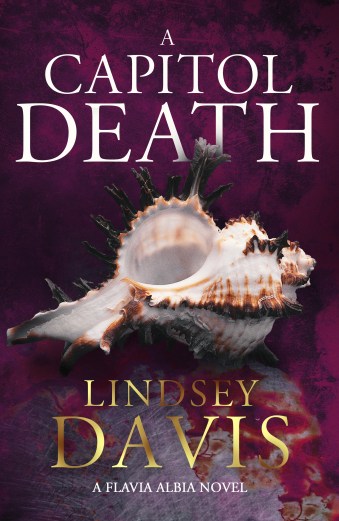
The first of these books is A Capitol Death by Lindsey Davis. Davis has long been the gold standard of ancient historical murder mysteries, with books such as her long-running Marcus Didius Falco series and its follow-up, the Flavia Albia series, both of which contain amazing mysteries set in the heart of ancient Rome. I have been a huge fan of the Flavia Albia series for years, and have read all six previous books in the series. I also reviewed the sixth book in the series, Pandora’s Boy, early last year, awarding it five stars. As a result, I have huge hopes for A Capitol Death, which will be the seventh book in the series, and based on Davis’s previous work I already know I am going to love it.
In Rome, ruled by the erratic Emperor Domitian, Flavia Albia is dragged into the worst sort of investigation—a politically charged murder—in Lindsey Davis’s next historical mystery, A Capitol Death.
A man falls to his death from the Tarpeian Rock, which overlooks the Forum in the Capitoline Hill in Ancient Rome. While it looks like a suicide, one witness swears that she saw it happen and that he was pushed. Normally, this would attract very little official notice but this man happened to be in charge of organizing the Imperial Triumphs demanded by the emperor.
The Emperor Domitian, autocratic and erratic, has decided that he deserves two Triumphs for his so-called military victories. The Triumphs are both controversial and difficult to stage because of the not-so-victorious circumstances that left them without treasure or captives to be paraded through the streets. Normally, the investigation would be under the auspices of her new(ish) husband but, worried about his stamina following a long recovery, private informer Flavia Albia, daughter of Marcus Didius Falco, steps in.
What a mistake that turns out to be. The deceased proves to have been none-too-popular, with far too many others with much to gain from his death. With the date of the Triumphs fast approaching, Flavia Albia must unravel a truly complex case of murder before danger shows up on her own doorstep.
The synopsis for the new book sounds pretty incredible, as the series’ titular investigator, Flavia Albia, steps up to investigate an intriguing new mystery. It sounds like this investigation will dive into some political intrigue surrounding the unpopular Emperor Domitian. Davis has combined mysteries with ancient Roman politics before, such as in the series’ fifth book, The Third Nero, and the end result was pretty spectacular. I am hoping that Davis will continue to provide the reader with her trademark blend of powerful mysteries, amazing historical elements and outrageous humorous moments, and I am looking forward to any big comedy set pieces, such as the incredible climax to The Third Nero or the big brawl sequence in Pandora’s Boy. The story in the previous book also hinted at the return of an old antagonist from the original Falco series, and I am looking forward to seeing if that comes into play within A Capitol Death.
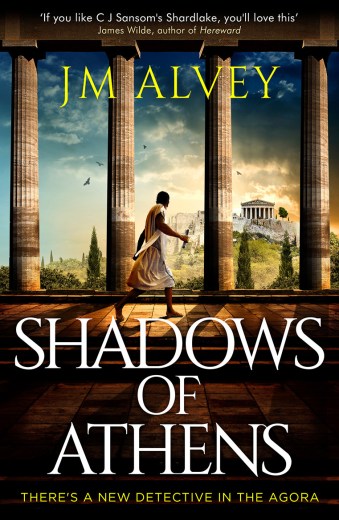
The second book that I am interested in checking out is a new mystery from debuting author J. M. Alvey. This new book, Shadow of Athens, is set to be released in March and will take place in Athens in 443 BC.
443 BC, and, after decades of war with Persia, peace has finally come to Athens. The city is being rebuilt, and commerce and culture are flourishing.
Aspiring playwright Philocles has come home to find a man with his throat cut slumped against his front gate. Is it just a robbery gone wrong? But, if so, why didn’t the thieves take the dead man’s valuables? With the play that could make his name just days away, he must find out who this man is, why he has been murdered – and why the corpse was left in his doorway.
But Philocles soon realises he has been caught up in something far bigger, and there are those who don’t want him looking any further . . .
This sounds like it could be a really cool book read. A murder mystery set in ancient Greece has a lot of potential, and I will be interested to see if Alvey’s book will fully explore the historical complexities of this ancient city while also producing a compelling mystery. I liked that the protagonist of Alvey’s book will be an actual real-life Greek historical figure, in this case, the famous tragic playwright Philocles. Placing real-life historical figures in the middle of fictional murders is always a compelling story choice, and I am really hoping that Alvey will explore this protagonist’s work as a playwright. It also sounds like the investigation within Shadow of Athens might play into Athenian politics and will probably have something to do with the war with Persia, both of which are incredibly appealing to me and will hopefully lead to some great story developments.
In addition to the awesome-sounding premise, I have to say that I really enjoyed the striking cover art that this new book had, and I found that its eye-catching imagery really grabbed my imagination. Shadow of Athens already has some very positive pre-reviews from some notable authors, including one of my favourite historical fiction authors at the moment, Andrew Taylor. As a result of these endorsements, combined with the intriguing plot synopsis, Shadow of Athens is probably the historical fiction debut I am most looking forward to at the moment and I am excited to see how impressive this new author is.
As a result, I think that both of these books have a lot of potential, and could prove to be some of my favourite reads of early 2019.
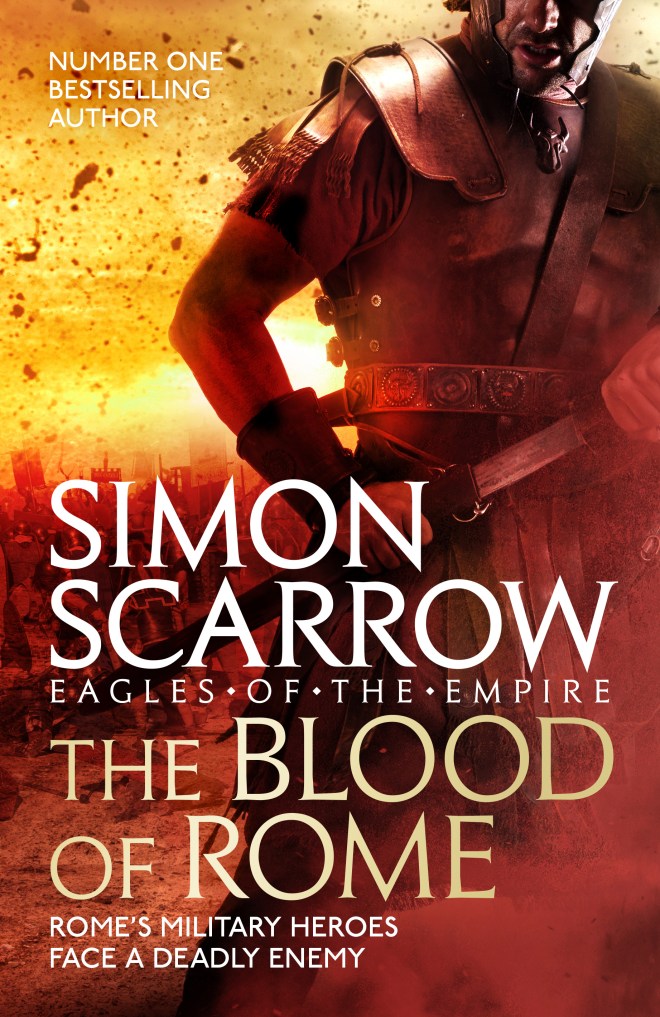
One of the best and most prolific writers of Roman historical fiction, Simon Scarrow, returns with another outstanding adventure of his two Roman protagonists, Cato and Marco.
In AD 55, Nero has recently ascended to the throne, and the Roman Empire prepares itself for war with its great rival, the Parthian Empire, which sits to the east of Rome’s territories. This recent conflict is centred on the neutral border kingdom of Armenia, which sits between the two great empires. Years earlier, the brash Iberian prince Rhadamistus conquered Armenia and declared himself king, ruling as a terrible tyrant. In response, a recent Parthian backed invasion routed Rhadamistus from Armenia and placed a Parthian prince on the throne. Unwilling to let this strategic territory fall into Parthian hands, Rome sends its greatest general, Corbulo, to the east to reclaim Armenia for Rhadamistus and meet any subsequent hostilities from the Parthians.
The recently promoted Tribune Cato and his long-time companion, Centurion Marco, desperate to escape the deadly politics of Rome, lead the escort for General Corbulo. When an early opportunity to take Armenia with minimal interference from the Parthians presents itself, the only forces that Corbulo can rely on are Cato and Marco’s elite cohort of Praetorian Guards. Placed in command of an advance force, Cato must lead a mixed column of Romans and King Rhadamistus’s troops through unknown and hostile terrain towards Armenia’s capital. Forced to balance his orders against the desires of the unstable Rhadamistus, Cato struggles to maintain the strength of himself and his men. With traitors and enemies all around them, can Cato and Marco succeed, or will they find themselves killed in a strange land?
Scarrow is one of the leading authors of the historical fiction genre, whose work over the last 18 years is comparable to such established authors of the genre as Bernard Cornwell, Ben Kane or Conn Iggulden. The Eagles of the Empire series, which started in 2000 with Scarrow’s debut, Under the Eagle, is the author’s most distinctive work, and features some superb description of Roman military action. In addition to his main series, Scarrow has also written several other great pieces of historical fiction. He co-wrote the Roman Arena and Invader novella series with T. J. Andrews, which are set in the same universe as the Eagles of the Empire series. He also wrote the epic Wellington and Napoleon Quartet, also known as the Revolution Quartet, which provided an impressive examination of the opposing lives of Napoleon Bonaparte and the Duke of Wellington. In addition to his series work, Scarrow has also written two standalone novels, The Sword and the Scimitar, which covers the siege of Malta, and Hearts of Stone, a dramatic novel set in Greece during World War II. All of Scarrow’s novels are amazing pieces of historical fiction, and are really worth checking out if you are a fan of the genre.
The Blood of Rome is the 17th book in The Eagles of the Empire series, and follows the two protagonists’ return to Rome’s Eastern provinces for the first time since the eighth book in the series, Centurion. I have always been a massive fan of this series and consider it to be one of the best pieces of Roman military fiction series on the market today. After reading all of the previous books in The Eagles of the Empire series, I was particularly keen to get a copy of The Blood of Rome and eager to see where the protagonist’s latest adventure would take them. After powering through it in a day, the result was pretty much what I expected: I loved Scarrow’s latest literary offering. This latest book contains another fantastic historical fiction story, as the protagonists embark on an exciting campaign into an interesting new historical setting and it was great to see how the characters continue to evolve and progress in their lives.
Scarrow’s The Eagles of the Empire series has always boasted some incredible depictions of ancient Roman military combat, with most books containing several battles of varying size used to highlight the strengths and weaknesses of the Roman tactics and techniques. This is continued in the Blood of Rome, with several battles featured throughout the book. While most of these battles are small and quick skirmishes that differ from the traditional Roman battle sequences, the Roman soldier’s tactics and training and the effectiveness of their equipment are on full display, creating some amazing scenes. In addition to the classic Roman legionnaires, which make up the bulk of Cato and Marco’s forces, Scarrow also focuses on the more unusual forces that the Roman’s used in combat, in the form of a cohort of auxiliary slingers, as well as a detachment of Roman siege equipment. Both of these distinctive units get a good showing throughout the book, and both are fascinating to see in action. The author also contains an interesting portrayal of Roman soldiers fighting side-by-side with allied troops, and it is intriguing to see the issues and advantages involved with such allies. Overall, The Blood of Rome is another excellent example of Scarrow’s skill at portraying Roman military action sequences, and is one of the best parts of this book.
This book is also set in an extremely fascinating historical period and focuses on the rivalry between Rome and Parthia. The continuous conflict between Rome and Parthia has always been a great literary background for many pieces of Roman historical fiction, and Scarrow has already examined it in some of his earlier books. The conflict within The Blood of Rome continues to explore this legendary rivalry, and is an opening book in what appears to be a sequence of novels that will focus on an expanded war between the two rival nations. This first book in this sequence looks at a rather minor opening conflict, played out as a proxy war within Armenia, but it contains a great examination of the politics at the time and the differences in battle style and tactics of the two nation’s militaries. I really enjoyed the examination of the role of border kingdoms and provinces, such as Armenia, stuck in the middle of these two proud and ambitious empires. The main story of The Blood of Rome, the invasion of Armenia and Rhadamistus’s attempts to claim the throne, are real pieces of history, and it was really interesting to see them utilised in this story. All of the historical background for this book is incredibly fascinating and I had a great time reading about an amazing period of history.
The character of Rhadamistus was another intriguing addition to the book that added a whole new element to story. Rhadamistus is a well-known historical tyrant and brutal man of ambition, and Scarrow did a good job showcasing the character’s casual cruelty and arrogance. He was a pretty despicable character as a result, and watching the protagonists attempt to placate and counter his more ruthless actions added some dramatic twists to the story. Scarrow examines certain parts of Rhadamistus’s life, and it was very fascinating to see his eventual fate and the role his reign as king had on the rival empires of Rome and Parthia.
I really liked Scarrow’s depiction of one of his main characters, Cato, throughout this novel. Cato has never had an easy life, having been forced into the army at an early age, but the events of the last few books have been particularly hard on him. As a result, certain incidents within The Blood of Rome finally push him over the edge, and it was a refreshing change of pace to see one of these usually indomitable characters show some real vulnerability. This was a very realistic inclusion, and I thought it added some much-needed character growth to Cato. It also served an essential story element, as his condition resulted in Cato being open to Rhadamistus’s manipulation. This was a great part of The Blood of Rome that represents some intriguing adaptation within this long-running series.
Simon Scarrow once again produces an epic piece of historical fiction as he continues his outstanding The Eagles of the Empire series. His long-running protagonists, Cato and Marco, are once again thrust into a fantastic historical military fiction adventure, and there are a ton of great elements for the readers to enjoy. Another amazing outing from Scarrow, this is a highly recommended read for all fans of the historical fiction genre, as the author continues to produce some of the best Roman military fiction in the business.

 The Unseen Library