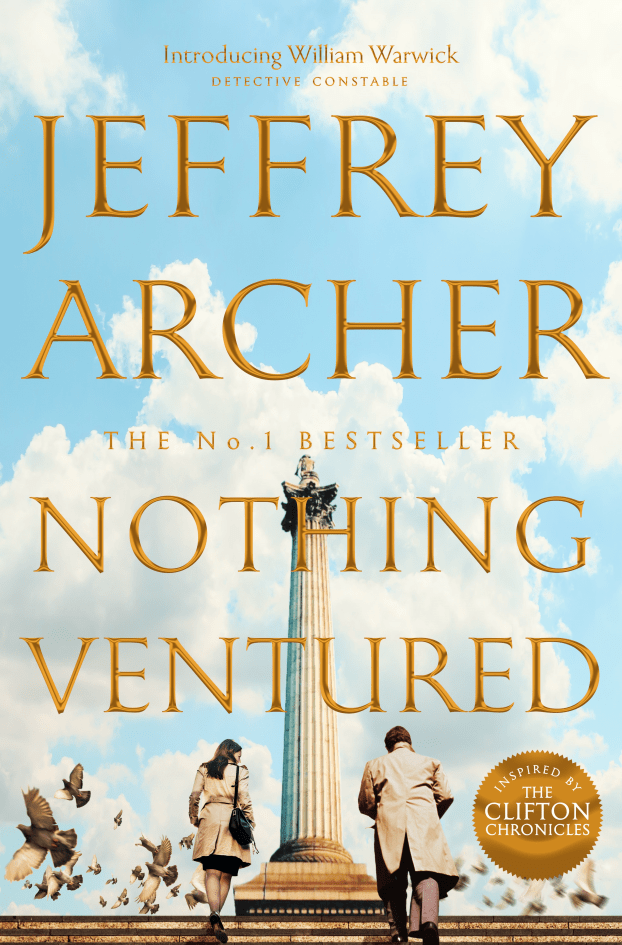
Nothing Ventured by Jeffrey Archer

Nothing Ventured Cover

Publisher: Macmillan (Trade Paperback – 10 September 2019)

Series: William Warwick series – Book 1

Length: 323 pages

My Rating: 4 out of 5 stars

Amazon

One of the biggest names in modern fiction, Jeffrey Archer, returns with Nothing Ventured, an intriguing piece of historical crime fiction that starts up his brand-new William Warwick series.

William Warwick, son of a respected London defence attorney, has always dreamed of becoming a detective in the London Metropolitan Police Force. Despite the opposition of his father, William enrols as a trainee police officer at the start of the 1980s after finishing university. Armed with determination, sharp observation skills, an education in fine art and a can-do spirit, William is unaware of the adventures in store for him.

After quickly making the rank of detective constable, William is assigned to Scotland Yard’s Arts and Antiquities squad. While also investigating of a series of different art crimes and frauds across London, the squad is mainly concerned with capturing Miles Faulkner, a criminal mastermind responsible for the thefts and forgeries of some of the most expensive art in England. All previous attempts to capture Faulkner have failed miserably, as the criminal is always two steps ahead of the police.

As William becomes more and more involved in investigating the various crimes Faulkner is organising, he makes a crucial breakthrough when he befriends Faulkner’s wife, Christina. Christina is willing to return a valuable stolen Rembrandt from Faulkner’s personal collection in return for help from the police. Can Christina be trusted, or will Faulkner once again evade justice and continue his dastardly schemes? In addition, what happens when William falls head over heels in love with Beth, a research assistant at the museum the Rembrandt was stolen from, whose family secrets may drive a terrible wedge between her and William?

I have mentioned before how Jeffrey Archer, or the Lord Archer of Weston-super-Mare as a Member of the British House of Lords, is one of the more colourful professional novelists in the world today. Archer has produced over 30 diverse books since 1976, including several standalone novels, a bestselling long-running series, several collections of short stories, three plays, three non-fiction books about his time spent in prison, and four children’s books. I have read several of his books in the past, although I only have his 2018 book, Heads you Win, currently reviewed on my blog at the moment.

Nothing Ventured is a fantastic new novel from Archer and is the first book in a planned eight-part William Warwick crime fiction series. The William Warwick series actually has a very interesting origin, as William Warwick served as the protagonist of a fictional series of books written by the main character in Archer’s most iconic series, the Clifton Chronicles, Harry Clifton. Following the end of the Clifton Chronicles in 2016 and several requests from his fans to expand on the adventures of Warwick, Archer started on this series. The William Warwick series will examine the career of its titular character and show the various cases he investigates that helped him to become a great detective.

This series is off to a good start with Nothing Ventured, as Archer creates a compelling and enjoyable read that does a fantastic job introducing the readers to his new protagonist and showing the early days of his police career. Archer has always excelled at creating historical fiction narratives that focus on the lives of specific characters, and Nothing Ventured is no exception. Within this book, the reader gets a great idea of the character of Warwick and sees the struggles and early influences that drive him to become a successful police detective. The reader is also introduced to a bevy of interesting side characters, many of whom are set up to be major friends, colleagues, love interests or antagonists of Warwick through the future books of the series. Overall, Archer does a superb job setting up his overarching series in Nothing Ventured, and the intriguing mysteries explored within, as well as the introduction of a likeable new protagonist, should ensure readers will check out future instalments of this series.

One of the most intriguing aspects about Nothing Ventured was the focus on the artistic world and the subsequent fraud or theft that accompanies it. At the start of the book, the protagonist studies art history at university and subsequently develops a life-long love for the artistic greats. This appreciation of art becomes an important part of his future career, as it helps him join the Arts and Antiquities squad. Throughout the course of Nothing Ventured, Warwick and his colleagues investigate a number of different instances of art fraud, including forgeries of famous works, fraudulent signatures of historical figures and the forging of fake antique coins, among several other interesting examples. I thought that this was an absolutely fascinating focus for this book, and I really enjoyed reading about all the different ways art fraud could be committed. It also allowed for a number of unique and compelling mysteries, and readers will enjoy seeing the diverse outcomes that result from these cases. I also enjoyed the various discussions about art that permeated the book’s narrative. Archer is obviously very passionate and knowledgeable about classic artworks and antiquities, and this shines through in his writing. I am hoping that this focus on art will continue in future books of the William Warwick series, as it really helped set this book apart from some other historical mystery series.

The focus on the art world in Nothing Ventured also allowed Archer to introduce a great antagonist in the form of Miles Faulkner. Faulkner is a criminal mastermind who specialises in crimes involving art and is the bane of the Arts and Antiquities squad. Faulkner is a great gentleman-thief character, who is in many ways quite similar to Warwick, especially when it comes to his love and appreciation of artistic works. However, unlike Warwick, he uses his knowledge for his own benefit and is a fantastic master criminal. I really enjoyed the various ways that Faulkner was able to outsmart the police in this book, and he proved to be a worthy opponent to Warwick and his colleagues. The reveal of the true depths of Faulkner’s intelligence and deviousness in the last sentence of the book is masterfully done and Archer is clearly setting the character up as one of the major antagonists of this series. I look forward to seeing him return in future entries in this series, and I am sure he will continue to be a great villain.

Readers should also keep an eye out for the chapters in which Archer splits the focus between two separate events occurring at the exact same time. This is done a couple of times throughout the course of the book, and these split chapters are a lot of fun to read. They are mostly done to highlight the differences between two similar events happening in different areas; for example, showing two different police operations occurring at the same time, or two unrelated court cases with implications for the protagonist that are running in separate court rooms. The inclusion of these simultaneous events was done really cleverly in places, and it resulted in a couple of amazing and compelling chapters which I felt were some of the book’s best scenes. I hope that Archer continues to utilise this writing technique in the future books of this series, as it was a true highlight of Nothing Ventured.

Jeffrey Archer has once again created a thrilling and intriguing novel that focuses on the life of an English protagonist in a historical fiction setting. Nothing Ventured is the compelling first instalment of a crime fiction series with some real potential. Within this first book of the William Warwick series, Archer has come up with an intriguing life story to follow, introducing some great characters and producing some captivating mysteries and criminals that readers will love to unravel in future books. The massive planned William Warwick series should ensure Archer remains one of the bestselling historical fiction authors for the next eight years, and I look forward to seeing how the career and life of the titular main character progresses in the next instalment of the series.
Amazon

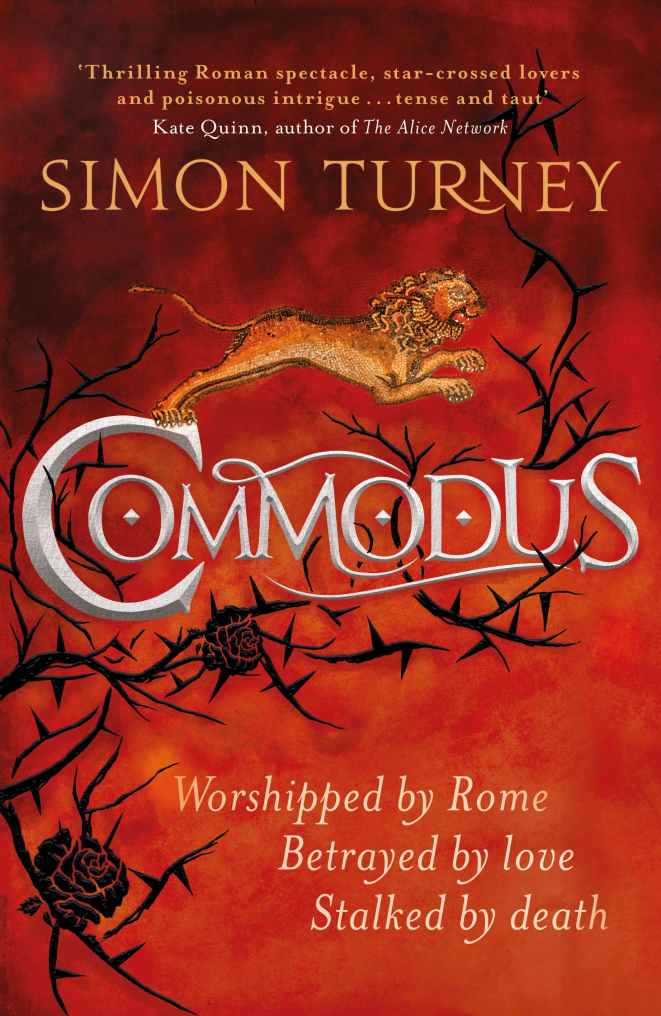
Commodus by Simon Turney

Commodus Cover

Publisher: Orion (Trade Paperback – 11 June 2019)

Series: The Damned Emperors – Book 2

Length: 482 pages

My Rating: 5 out of 5 stars

Amazon

Acclaimed historical fiction author Simon Turney catalogues another infamous ruler of Rome in the second book of his The Damned Emperors series, Commodus.

Rome, 162 AD. The Roman Empire is in a rare period of peace and stability, with two brothers, Marcus Aurelius and Lucius Verus, both ruling as Emperor. The future also looks bright, as for the first time in Rome’s history, two male heirs have been born to a ruling Emperor. However, only one of these children is destined to become Emperor and make his own mark on history. His name is Commodus.

Raised as Rome’s golden child, Commodus eventually succeeds his father as Emperor following a period of war, rebellion and disease. Beloved by the people and loathed by the Senate, Commodus styles himself as Hercules reborn, becoming a great patron and competitor of gladiatorial fights, chariot races and other feats of martial strength. However, behind the scenes, Commodus’s life has been filled with tragedy and despair, and he hides a darker side beneath his golden exterior.

As Commodus succumbs more and more to his inner demons, Rome is rocked by power struggles and plots, as his family and servants attempt to control or usurp the unpredictable Emperor. Only one woman, Marcia, truly understands Commodus and can keep his mind together. Born a simple palace servant, Marcia was the love of Commodus’s life and a skilled player of Roman politics. However, not even Marcia can contain Commodus’s self-destructive urges forever, and eventually she must decide whether she will die at the hands of her great love or make the ultimate betrayal.

Commodus is the second book in Turney’s The Damned Emperors series, which takes a look at some of the most tragic, infamous and self-destructive rulers of ancient Rome. After presenting an exciting tale of insanity and vengeance in Caligula, Turney now takes a look at one of the most intriguing emperors in Roman history, Commodus. The result is a powerful, well-written and captivating piece of historical fiction that I absolutely fell in love with and which easily earns a full five-star rating from me.

Commodus is truly one of the more fascinating figures in Roman history, which is saying a lot. While most would probably know him as the villain in the movie Gladiator, as portrayed by Joaquin Phoenix, he actually had a long and controversial reign, with many events that are hard to believe. As a result, a book focusing on his life is bound to be interesting; however, Turney goes above and beyond, presenting a well-researched and deeply compelling novelisation of Commodus’s life. Not only does Turney explore some of the more extraordinary aspects of Commodus’s reign, such as his devotion to becoming the new Hercules, his exploits in the arena or the cult of personality he formed around himself, but Turney also attempts to explain why he may have done them. This results in a clever and thought-provoking look at the entirety of Commodus’s life, including several formative events that are known, or are likely to have happened, and which may have led to some of his more extreme actions later in life. I really enjoyed the potential scenarios that Turney came up with to explain Commodus’s personality, and his justifications featured towards the end of the book are really quite interesting and very compelling. There are also some interesting historical tweaks to some of Commodus’s actions, but I feel that these work in the wider aspect of the story and help to create a more believable narrative. The end result is an outstanding examination of this fascinating historical figure which will allow the reader to see Commodus in a whole new light.

Turney has done an amazing job telling this story, thanks in part to the use of an excellent point-of-view character. The story is told from the perspective of Marcia, the women in love with Commodus, and is set out as a personal chronicle of Marcia’s actions, which run parallel to the life of Commodus. Turney takes more historical liberties with this character and re-imagines Marcia as a close childhood friend of Commodus. The use of Marcia as the story’s narrator and the subsequent re-imagining of parts of her life story are done extremely well, allowing the author to have a single, consistent narrator who is constantly close to the main character. This was the best way to tell the complete story of Commodus’s life, and it was an amazing storytelling device from Turney which completely justifies historical variations in the character.

Using Marcia as the point-of-view character also allowed Turney to tell an addictive historical tale of love, revenge, ambition and tragedy. Marcia is a tragic character in this book, and her storyline is really quite powerful. The daughter of a servant in the Imperial Palace, Marcia is allowed to grow close to Commodus, becoming his childhood friend and confidant before circumstances conspire to keep them apart. However, Marcia’s determination to be with Commodus results in a series of power plays, plots and other nefarious actions as she tries both to free herself and to deal with other people who wish to influence the Emperor. Despite some of the terrible actions she commits, Marcia comes across as a very sympathetic character in this book, and your heart goes out to her with some of the setbacks she encounters. Her romance with Commodus, while caring and filled with love, is also very dramatic, as Commodus’s moods and the influences of others in his circle often place strains and boundaries on them being together. The final, tragic result of this story is told extremely well, as the reader gets to see the highs of their love, swiftly followed by the swift, one-sided deterioration of their relationship. This results in a devastating conclusion to the book, and the reader is left reeling at how this romance comes to an end.

In addition to the story of Commodus and Marcia, Turney also does an excellent job exploring Roman history and events during the span of Commodus’s life in the second half of the second century. Some truly fascinating events occurred during this period of Roman history, including wars, plagues and the reign of proxy tyrants such as Cleander and Perennis. The author covers these events in some detail, and it is really interesting to see how some of the events unfolded, how long they lasted and what actions led up to them. Commodus is also filled with a number of intriguing depictions of Roman life, and the various ancient Roman settings proved to be an amazing background for this great story.

Commodus is a first-rate novel and easily one of my favourite pieces of historical fiction for 2019. Turney is an incredibly skilled author whose dedication to historical detail pairs well with his amazing ability to tell a dramatic and powerful story. Commodus comes highly recommended, and I cannot wait to see which flawed ruler of Rome Turney focuses on in his next instalment of The Damned Emperors series.

Amazon

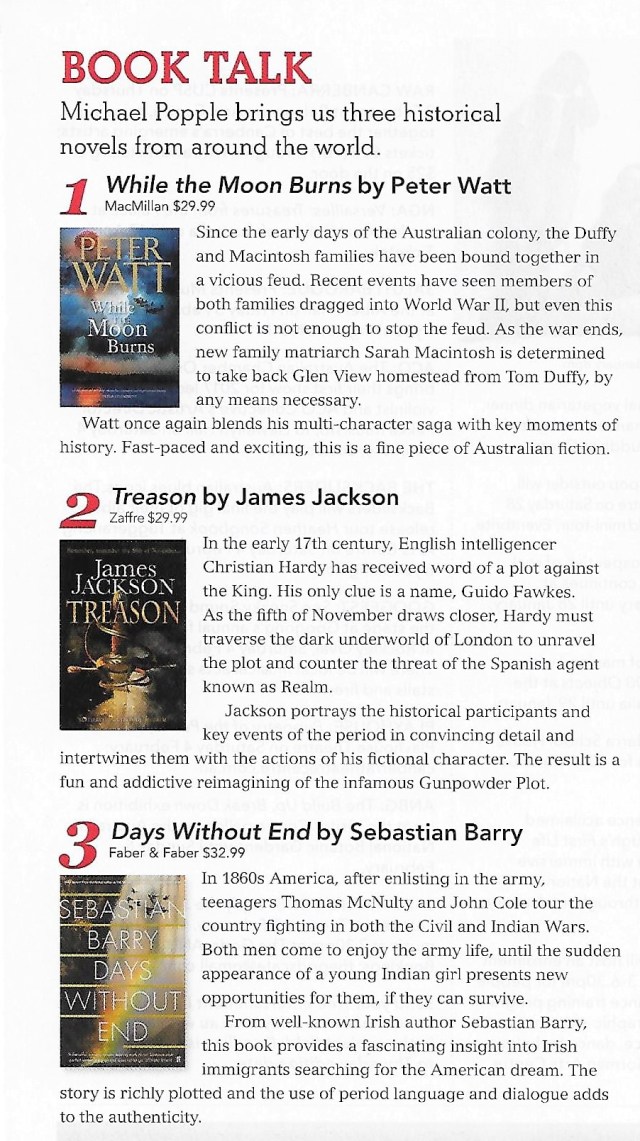
Throwback Thursday – Canberra Weekly Column – Historical Fiction

Reviewed as part of my Throwback Thursday series, where I republish old reviews, review books I have read before or review older books I have only just had a chance to read.

Historical Column-Canberra Weekly-19 January 2017-1 (Cropped).jpg

Originally published in The Canberra Weekly on 19 January 2017.

My above review for While the Moon Burns ended up being featured on the back cover of the paperback release of the book, as well as on the back cover of it’s sequel, From the Stars Above.

Make sure to also check out my reviews for the sequel to Treason, Cradle, as well as my reviews for Peter Watt’s next two books, From the Stars Above and The Queen’s Colonial.

The Emerald Tablet by Meaghan Wilson Anastasios

The Emerald Tablet Cover

Publisher: Macmillan (Trade Paperback – 25 June 2019)

Series: Benedict Hitchens series – Book 2

Length: 404 pages

My Rating: 4 out of 5 stars

Amazon     Book Depository

It’s time for another exciting archaeological adventure in the turbulent 1950s as Meaghan Wilson Anastasios returns with the second book in her Benedict Hitchens series, The Emerald Tablet.

Anastasios is an Australian academic who started writing fiction back in 2014 when she co-wrote her first historical fiction novel, The Water Diviner, with her husband, Andrew Anastasios. This first book was fairly successful and was loosely adapted into a film of the same name featuring Russel Crowe. Last year, Meaghan Anastasios wrote her first solo novel, The Honourable Thief. The Honourable Thief serves as the first book in the Benedict Hitchens series, which follows the adventures of the series’ titular protagonist, Benedict Hitchens, an ambitious American archaeologist living in Turkey.

In The Honourable Thief, Hitchens, a respected academic and war hero, was seduced by the beautiful Eris, who showed him a fabulous collection of artefacts she had apparently recovered. The seduction and the artefacts were revealed to be part of an elaborate con which ended up ruining Hitchens’s academic reputation and forced him to live a life of exile in Istanbul. The incident also provided Hitchens with a series of clues which eventually leads him to the hidden tomb of Achilles. However, this was revealed to be part of a further con: while he was able to find the tomb, Eris and her employer, Garvé, a man who Hitchens had significant history with during World War II, subsequently stole the tomb’s greatest treasure, the Shield of Achilles.

Now, a year later in 1956, Hitchens’s excavation of Achilles’s tomb has helped restore his academic reputation, and his life is back on track. However, he has never forgotten Eris, who still has a hold on his heart even after she betrayed him. When he finds out that Eris, now calling herself Essie, is in Istanbul researching a rare and ancient document, he decides to investigate what she is up to. He quickly discovers that she and Garvé are searching for the Emerald Tablet, a legendary artefact rumoured to hold powerful alchemical secrets that could alter the world.

Determined to keep the Emerald Tablet out of Garvé’s hands, Hitchens begins his own hunt for the tablet. With his friend the crooked antiques dealer Ilhan Aslan at his side, Hitchens follows a series of clues deep into the Middle East. However, this is a dangerous time, as tensions between Egypt, Israel and the European powers are at an all-time high. Hitchens and Aslan soon find that the Emerald Tablet’s trail leads them right into the middle of the chaotic Suez Canal crisis. With agents of the various world powers also searching for the tablet and a murderous assassin following Hitchens’s every move, can he recover the tablet before it is too late, or will Garvé once again outsmart him? And what will happen when Hitchens once again comes face-to-face with the woman who stole his heart?

This was a fantastic follow-up to Anastasios’s first solo novel, and the author has done a great job continuing the story from the first Benedict Hitchens book. The Emerald Tablet has a fast-paced and exciting story focused on the search for an intriguing artefact and featuring an interesting look at a major historical event of the 1950s. In addition, Anastasios tries out some new storytelling methods and a focus on one of the villains from the first novel, which work well to create a fascinating overall narrative. All of this results in an amazing book which I had a fun time reading.

While the first book in the series, The Honourable Thief, employed several separate timelines spread out through the book, Anastasios chose a different format for The Emerald Tablet. This second book is told in a linear way, with the events occurring in a chronological order. This time, however, the story is told from the perspectives of Hitchens and Eris/Essie, who show two different sides of the hunt for the Emerald Tablet.

I really enjoyed the central hunt for the Emerald Tablet that formed the main part of the book. Not only has Anastasios chosen an absolutely fascinating artefact for all the characters to chase but she has created a compelling archaeological and historical mystery surrounding its hidden location. The point-of-view characters are forced to follow a series of elaborate historical clues, many of which can be interpreted in different ways thanks to historical context or locations. Having the two-separate point-of-view characters works incredibly well for this part of the story, as both Hitchens and Eris receive different hints or have conflicting interpretations of the same historical clues, which results in them searching in different locations. This central story is filled with a number of great twists and betrayals, and I quite liked how the protagonists had to contend with agents of the various world powers who have an interest in the tablet for their own ends. Agents of the American, Soviet, British, Israeli and Turkish governments all have a role to play in the adventure, as well as agents of the central antagonist, Garvé. Not only does this increase the action and intrigue of the book but it also raises the stakes of the hunt for the artefact. The reader is constantly left guessing about the location and nature of the artefact Hitchens is hunting for. This was an excellent central narrative for this book, and I had a great time exploring this new archaeological mystery.

Just like she did with The Honourable Thief, Anastasios has chosen a fascinating treasure that the book’s various characters are trying to locate. The Emerald Tablet is an intriguing item out of history and mythology, which is rumoured to hold the secrets to transmutation. The author does a fantastic job of exploring the various myths and theories about the origins and nature of the tablet and the reader gets a great idea of its potential and why it has been hidden. It was a great summary of such an intriguing and unique item from history, especially as the author plays up the mystical side of the whole artefact. There are also outright hints that magic or alchemy, especially the alchemical transmutation of the Emerald Tablet, are real in this universe, which not only makes this story just that little more entertaining, but it could result in some fun adventures in the future. The whole mystical angle also allowed the author to explore some of the occultist groups of the early 20th century, such as the followers of Aleister Crowley, who was quite a peculiar historical figure. Readers will find all of this incredibly riveting, and I felt that these curious subjects added a lot of interest to the overall story.

Anastasios’s use of historical Turkey and Crete was one of the highlights of The Honourable Thief, and I loved that she has once again chosen another captivating historical setting to use as the backdrop for this sequel. While the author does set a bit of The Emerald Tablet in Turkey, this book also explores the Suez Crisis of 1956, as the point-of-view characters spend time in Egypt and Israel and witness some of the crisis firsthand. Most of the course of the war is shown through the excellent use of realistic newspaper clippings set at the front several chapters that showcase how the situation between Egypt, Israel, France, England, the United States and other nations broke down and led to conflict. However, the accounts from Hitchens and Eris reveal that parts of the crisis where instigated as a cover for some of the sides to attempt to seize the Emerald Tablet. This makes for a fun tweak to history which fits the rest of the story quite well. The use of two separate point-of-view characters also allowed for a broader vision of the crisis, as one character mostly viewed it from Egypt, while the other saw it from within Israel, and both characters interacted with members of the country who had opinions about the upcoming conflict. I once again really enjoyed Anastasios’s use of 1950s historical settings, especially the Suez Crisis, and I feel it is one of the best parts of her Benedict Hitchens books.

There is a lot of good character work included in The Emerald Tablet. Not only do we finally get a close look at the mysterious character from the first book, Eris, but we get to further explore the psyche of Hitchens following the traumatic events of the previous book. Eris’s background is revealed in this book and it is a pretty interesting tale. I really enjoyed seeing her side of the story in this book. Not only does it allow the author to showcase this character’s past and her association with the villainous Garvé but we also get to see her motivations for the actions in this book and The Honourable Thief, including her feelings for Hitchen’s following her betrayal of him. Hitchens was already a fairly emotionally damaged character in the first book due to the death of his wife during World War II. However, Eris’s betrayal in the previous book has also had a marked impact on him, and he is obsessed with finding her again. This becomes one of his main motivations in The Emerald Thief, and he goes to extreme lengths to try and claim the tablet before she does, partially to frustrate her and partially in case it leads him to her. Their eventual meeting is an excellent part of the book, and we finally get to see how their relationship might be without the manipulations of Garvé. Certain complications will likely make this relationship an intriguing part of any future books in the series, and I look forward to them reuniting again. Can I also say: thank goodness that Hitchens wised up a little in this book. After some serious blunders from the genius archaeologist in the first book, I was glad that it took a little more to fool him this time.

I feel the need to comment on some of the rather racy scenes that Anastasios included in this book which may prove to be a bit surprising for some readers. Not only is there a rather disturbing ritualistic orgy as part of the story but there was a rather explicit scene in the first few pages of the book that nearly threw me off right at the start. I personally thought that these scenes were a bit unnecessary and somewhat distracting from the main story, but there were some plot reasons for them, and the rest of the story is really enjoyable.

Overall, The Emerald Tablet is an extremely entertaining novel, which does a superb job building on the foundations of the first book in the series. Anastasios has done an outstanding job combining together a fascinating archaeological mystery with emotional character work and an excellent historical setting. The Emerald Tablet is an amazing read, and I look forward to seeing what crazy artefact Benedict Hitchens attempts to find in his next book.

Amazon     Book Depository

The New Achilles by Christian Cameron

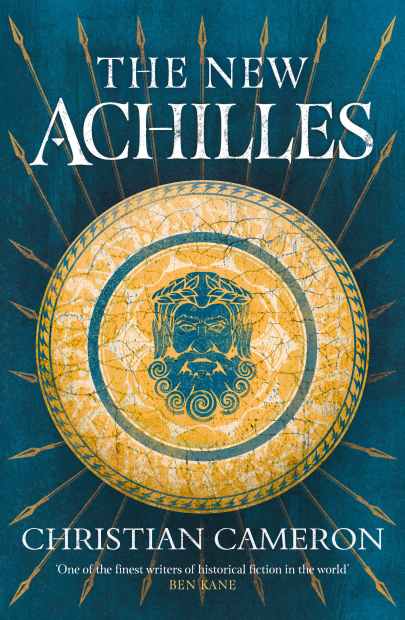
The New Achilles Cover

Publisher: Orion (Hardcover – 18 April 2019)

Series: The Commander series – Book 1

Length: 399 pages

My Rating: 4 out of 5 stars

Amazon     Book Depository

Acclaimed historical fiction author Christian Cameron once again returns to his favourite setting of ancient Greece with his latest novel, The New Achilles.

Greece, 223 BCE. War has come to Greece, as the various Mediterranean powers, including Egypt, Rome and Macedon, engage in a proxy battle on Greek soil. In a sacred sanctuary near the city of Epidauros, Alexanor, a former marine from Rhodes, has spent several years training to become a healer, seeking to escape his violent past. However, war will find Alexanor once again when the Spartans invade the nearby city of Megalopolis, forcing the surviving defenders to bring their wounded to Alexanor’s sanctuary.

Among the wounded is the leader of the men who attempted to fight against the Spartans at Megalopolis, a young man called Philopoemen. After saving his life, Alexanor finds his future tied into that of Philopoemen, who is destined to become one of ancient Greece’s greatest military leaders. Allied with the armies of Macedon against the Spartans and their Egyptian paymasters, Philopoemen proves to be a capable military commander. More importantly, his bravery and skill in battle earn the respect of his fellow Greeks, many of whom consider him to be Achilles reborn.

When prevailing political and military currents require Philopoemen to help with a civil war on Crete, Alexanor travels with him. There they will attempt to take on the powerful city-state of Knossos with an eclectic mix of troops and minimal support from Macedon and the Achaean League. Can Philopoemen and Alexanor succeed, or will the new Achilles fall short of his destiny?

Christian Cameron is a skilled author who has written a number of books throughout his career. While the author is probably best known for his historical fiction work, he has also branched off into fantasy under his pseudonym of Miles Cameron, including his Masters & Mages series, the first book of which, Cold Iron, I previously reviewed here. His latest book, The New Achilles, is the first book in his The Commander series, which will follow the life of the historical figure Philopoemen. This is the third of Cameron’s series which focuses on ancient Greece, with his Tyrant and Long War series both focusing on different periods of ancient Greek history. I have always found that Cameron has a very thorough writing style, and he tends to throw himself into the historical details of his books. This is continued with The New Achilles, as the reader is presented with a very complex tale that may prove a little harder to connect with. However, this book is well worth sticking with, as the author has created an outstanding historical tale that focuses on quite a remarkable character from history.

While The New Achilles does contain some other story elements, at its core it is an intriguing story about the life of Philopoemen. Philopoemen was a skilled general and political leader who was responsible for turning the Achaean League into a viable military power in Greece. He is sometimes known as “the last of the Greeks” (I believe that the next book in this series will be called The Last Greek) due to being one of the last great Greek generals before the Roman era. I have to admit that this was a historical character I had no real experience with, so I was extremely curious to see the author’s vision of his life and deeds. Cameron tackled the story with his usual highly detailed writing style, presenting a comprehensive novelisation of several key events of Philopoemen’s life, his earliest successes and his campaign on Crete. However, there is apparently a large amount of this man’s story left to tell, as he accomplished a great many deeds during his long life. I felt that the author did a fantastic job of capturing the personality of this larger-than-life figure, and I really enjoyed the well-paced story that showed his early rise to prominence.

The story is told from the perspective of the fictional character Alexanor, who, after healing Philopoemen, continues to encounter him and eventually becomes his friend and confidant, accompanying him on several adventures. I liked the use of an outside narrator to tell Philopoemen’s story, and Alexanor is an excellent character in his own right, as he constantly has to balance his duties as a medically trained priest with his desire to help Philopoemen win his battles and his wars. There are issues from his past that he has to deal with, including trauma from a previous war, a lost love and family strife, all of which make for an intriguing character. Another benefit of having a priest as a narrator is that it allows the author to spend time exploring ancient Greek medicine. This was a particularly fascinating element of the book’s story and it was extremely intriguing to see how ancient medicine compares to more modern techniques, and the differences and similarities in knowledge are quite interesting. It also results in some compelling ethical deliberations from the narrator about the dissection of human corpses, which, while strictly forbidden, could result in greater medical knowledge. Overall, I quite enjoyed the author’s use of Alexanor as a narrator, and his focus on his life was an intriguing and enjoyable addition to the story.

This book is set during quite a chaotic period of Mediterranean history, with a huge number of different ancient empires and city-states engaging in various wars and conflicts, many of which have an impact on The New Achilles’s story. Cameron makes sure to examine the various political implications of many of the conflicts occurring around the same time as the events Philopoemen was involved with, and it is quite fascinating to see what effect something like the war between Carthage and Rome could have on the inhabitants of Greece. In addition to the consequences of these distant wars or events, Cameron also looks at the political and national makeup of the various forces arrayed in the conflicts that Philopoemen and Alexanor are involved with. These could get quite complex at times, with a range of alliances, competing city-states and mercenary forces involved or attempting to intervene in a conflict. An example of how complex things could get could be seen in the protagonists extended conflict on Crete, where Philopoemen led a force of Achaean League troops to support one Cretan city state against the on the behest of Macedon. The opposing Cretan city-state was supported by the Ptolemaic dynasty of Egypt, whose Spartan allies joined in and led the fight against Philopoemen. Various other mercenary groups of different nationalities such as the Thracians and the Illyrians were also employed in this conflict and had various roles in the battles and politics. While the sheer number of different historical groups can get a bit overwhelming at times, Cameron does a great job explaining their history and their allegiances, and it is quite fascinating to see the roles they played in various conflicts.

Like many of Cameron’s previous books, the author’s dedication to historical detail and accuracy in The New Achilles is extremely impressive. Each page is full of intriguing elements from history, and it is easy for the reader to find themselves transported to this classical historical landscape. The author not only looks at the military and political aspects of this historical setting; he also examines day-to-day life for the various Greek civilisations. Cameron also makes use of a whole glossary of historical Greek terms and names throughout The New Achilles, all of which gave his story a greater sense of authenticity.

The New Achilles features a huge number of battle scenes and sequences, as the author captures a number of the historical fights Philopoemen was involved with. These battle sequences were extremely exciting, as the author presents some gritty and blood battle scenes. These were quite spectacular, and I loved the realism contained within the story as even the victors find themselves covered in all manner of wounds, and rarely is there a battle where the main characters come out unscathed. This is particularly true for Philopoemen, who tends to suffer injuries in nearly every battle he gets involved with, due to throwing himself into the heart of the fight. I thought this was a clever inclusion from the author, as not only does this reflect some historical accounts of the relevant battles but it is incredibly refreshing to see a hero that does not emerge from a battle unscathed. I quite enjoyed the examination of Greek battle tactics and weaponry, and the battle sequences in this book are fairly spectacular and well worth checking out.

Christian Cameron’s latest book, The New Achilles is a detailed and compelling examination of a truly remarkable, if overlooked, historical figure. The story of Philopoemen’s life proves to be an amazing focus for the plot, and Cameron brings a number of intriguing aspects of the ancient Greek period to life with his trademark detail orientated writing style. This was an incredibly interesting and captivating read, and I am looking forward to seeing how Philopoemen’s life progresses from here in future instalments of The Commander series.

Amazon     Book Depository

Emperor of Rome by Robert Fabbri

Emperor of Rome Cover

Publisher: Corvus (February 2019)

Series: Vespasian – Book 9

Length: 349 pages

My Rating: 4.5 out of 5 stars

Amazon

After eight years of being one of my favourite yearly highlights of the Roman historical fiction scene, Robert Fabbri brings his bestselling Vespasian series to an end with the ninth and final book, Emperor of Rome.

Rome, 68 AD. Vespasian started his life as the second son of a rich but rural Roman family from the Sabine Hills. Looked down upon by the older Roman families for his family’s humble origins, Vespasian was never expected to obtain any major power in Rome. But after nearly 40 years of political intrigue, unusual adventures and a distinguished military career, Vespasian may actually be in a position to claim the ultimate prize: becoming Emperor of the Roman Empire.

Ever since he first arrived at the city of Rome at the young age of 16, Vespasian has lived under several unhinged or easily manipulated emperors of the Julio-Claudian line, each of whom was worse than the last. The latest of these emperors, the ruthless and insane Nero, has ordered Vespasian to put down a major rebellion in the Roman province of Judaea. However, this appointment is the ultimate no-win situation. If he fails in his task, his family’s prestige and political future are over. But if he succeeds in bringing the rebellion to an end with a successful military campaign, he will incur Nero’s lethal jealousy for obtaining glory that could make him more popular than the Emperor. As Vespasian debates what course of action to take, news from Rome will change everything.

The rebellion of several legions and their noble commanders has forced Nero to commit suicide, and his death results in a massive power vacuum. Vespasian, being in charge of two legions and having allies governing key provinces, is now a major contender for the throne, especially with his brother Sabinus lobbying for him back in Rome. Moreover, for years Vespasian has been gifted with signs and portents of his eventual rise to power, and he wants to claim his destiny. However, Vespasian is not the only person with dreams of imperial power, and several others are marching on Rome. The Year of the Four Emperors has begun, and only one man will be left standing.

Robert Fabbri’s Vespasian series are fun and at times over-the-top novelisations of the life of one of Rome’s most important emperors. The main series is made up of nine books, but there is also a related standalone novel, Arminius: The Limits of Empire, as well as the ebook-only Crossroads series. I have been a huge fan of the series for some time and have read and reviewed several of the books in the series, as well as the Arminius novel, although only my review for the previous Vespasian novel, Rome’s Sacred Flame, is currently featured on my blog. This series really has been a favourite of mine for some time, and I have been looking forward to Emperor of Rome for a few months. Unfortunately, this book does mark the end of the series, as Fabbri brings his epic story to a close and finally brings his chosen Emperor to the throne.

Emperor of Rome is a fantastic new addition to this awesome series. It tackles the chaotic period following the death of Nero, known as the Year of the Four Emperors. I felt that Fabbri did a fantastic job finally showing the ascension of Vespasian to the throne and covering a number of other interesting historical events, many of which would have widespread implications in the future. The overall story is a great blend of action and politics, and it also ends the story of several important characters from the series, as well as the rise of some of the next generation of Roman politicians and rulers.

Emperor of Rome is primarily told from the point of view of its protagonist, Vespasian, as he campaigns in the east of the Roman Empire. This allows for Fabbri to tell a different story to some of the other historical fiction novels that feature the Year of the Four Emperors. Rather than get bogged down in the politics happening in Rome, the focus is instead completely on Vespasian and his companions as they observe the chaotic events occurring in Rome from afar while trying to decide the best time for Vespasian to make his move. I thought that this was a rather clever way to look at the story as it let Fabbri examine the potential political, military and personal implications of each of Vespasian’s actions during this period, especially as early moves on Vespasian’s part might have seen him be overthrown by some other potential candidate for the throne. Emperor of Rome also showcases the early reign of Vespasian to a degree, and it was great to finally see the character gain the throne after nine books.

In addition to the examination of Vespasian’s bid to become emperor, Fabbri also focussed on Vespasian’s campaign in Judea, which is a significant event in Middle Eastern history. For much of the book, the province of Judea (modern Israel/Palestine) and its Jewish population are in revolt against the Romans. Vespasian, and later his son Titus, lead a particularly vicious campaign against the population, killing or enslaving thousands. Fabbri spends quite a lot of time describing the events of this conflict, sometimes known as the First Jewish-Roman War, and mostly relies on the accounts of the Romano-Jewish historian Josephus, who wrote several works on the subject and actually appears as a character in Emperor of Rome, as a basis for this story. Fabbri does an amazing job providing an account of this conflict. A number of key events of this war are covered in this book, including several ridiculous events that apparently actually occurred around the siege of Jotapata. I was greatly intrigued by the author’s novelisation of this conflict, as I had not read too much about it before in other works of historical fiction. The author brings a gritty realism to the conflict and does not hold back on the probable violence, cruelties and dehumanisation of the Jewish people that would have occurred during this war. This was a captivating but essential part of Vespasian’s story, and one that was necessary to explore in order to fully understand the actions required to become Emperor.

Several of the previous books in the Vespasian series have had an enjoyable supernatural edge to them, as the protagonist encountered ancient gods, prophets and sorcerers, as well as some biblical figures from early Christianity. This is continued in Emperor of Rome, mainly in the form of omens and prophecies that Vespasian has received in the previous books that show he is destined to be a great ruler, such as his viewing of a phoenix while on a mission in Africa. In this book, many of these signs come together, encouraging Vespasian to finally make his bid for Emperor. The look at the influence of such omens and prophecies added an intriguing element to the overall story. I also liked how some of the prophecies and predictions of the some of the characters were relevant to larger historical events in the future, such as the spread of Christianity or the current conflict in modern Israel/Palestine. These supernatural elements have always been one of the things that helped distinguish the Vespasian books from other Roman historical fiction series out there, and it was great to see so many of the events from the previous books finally come together here in the final chapter of the book.

Emperor of Rome is an amazing conclusion to this outstanding and entertaining historical fiction series. Fabbri has always had the fantastic ability to turn historical fact into wild and captivating tale filled with action, intrigue and historical excesses, and in this final book he once again takes several intriguing historical events and uses them to craft another excellent story. I will miss reading the Vespasian series each year, but at the same time I am also very excited, as Fabbri’s next series, The Alexander Legacies, is set to be released next year, and it sounds like it will look at some other exciting times in ancient history.

Amazon

Waiting of Wednesday – Loki: Where Mischief Lies by Mackenzi Lee

Welcome to my weekly segment, Waiting on Wednesday, where I look at upcoming books that I am planning to order and review in the next few months and which I think I will really enjoy.  Stay tuned to see reviews of these books when I get a copy of them.

I am a man that loves a good and complex anti-hero story, so for this week’s Waiting on Wednesday I check out an absolutely spectacular-sounding book that is set to be released in September 2019: Loki: Where Mischief Lies.

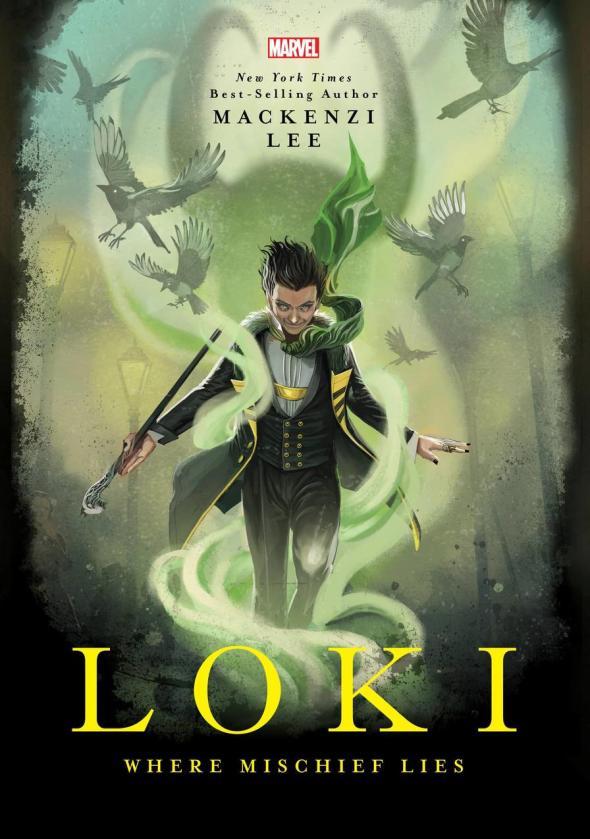
Loki Where Mischief Lies.jpg

Loki: Where Mischief Lies is the first of three young adult novels that acclaimed author Mackenzi Lee has been contracted to write by Marvel Comics. Each of these books will focus on a different Marvel anti-hero and will feature a historical setting. The first of these anti-heroes is the master of mischief himself, Loki, Prince of Asgard, who, thanks to the Marvel Cinematic Universe, has to be one of the most popular comic book villains at the moment.

Even before Tom Hiddleston brought him to life with some significant swagger in the MCU, the character of Loki has been a major figure in the Marvel Comics universe. A re-imagining of the Norse god of mischief, Loki is portrayed as a powerful magician who battles against his brother, the superhero Thor, out of jealousy or for control of Asgard or the world. He has been a recurring Marvel villain for over 60 years and is the villain responsible for the formation of the Avengers. Over the years, a large amount of complexity has been added to his character, with some significant developments to his motivations and history, and a number of notable shifts in his allegiance and relationship with Thor and the rest of Asgard. As a result, I am quite eager to see any sort of novel written about Loki, especially one that sounds as awesome as this one.

Goodreads Synopsis:
Before the days of going toe-to-toe with the Avengers, a younger Loki is desperate to prove himself heroic and capable, while it seems everyone around him suspects him of inevitable villainy and depravity . . . except for Amora. Asgard’s resident sorceress-in-training feels like a kindred spirit-someone who values magic and knowledge, who might even see the best in him.

But when Loki and Amora cause the destruction of one of Asgard’s most prized possessions, Amora is banished to Earth, where her powers will slowly and excruciatingly fade to nothing. Without the only person who ever looked at his magic as a gift instead of a threat, Loki slips further into anguish and the shadow of his universally adored brother, Thor.

When Asgardian magic is detected in relation to a string of mysterious murders on Earth, Odin sends Loki to investigate. As he descends upon nineteenth-century London, Loki embarks on a journey that leads him to more than just a murder suspect, putting him on a path to discover the source of his power-and who he’s meant to be.

There are so many amazing elements to unwrap in the plot synopsis, but the bottom line is I think I am going to like this. Not only do we have a comic book novelisation focusing on an amazing character, but we have Loki investigating murders in 19th century London. Historical fiction is one of my favourite genres, and a murder mystery in 19th century London is always a great basis for a good story. Combine that with comic book shenanigans and a young Loki investigating the crimes, and you have a book with insane amounts of potential.

I am also quite excited by the choice of author for this trilogy. Mackenzi Lee is a fantastic author known for her unique and powerful novels, most of which are set in 19th century England. I am very much looking forward to seeing her take on the character of Loki, and I cannot wait to see what sort of backstory and conflicted thought processes she attributes to this amazing character.

One of the things about Where Mischief Lies that is getting a lot of attention is the author’s apparent intention to make Loki a genderfluid and pansexual character. This is based on a tweet from December 2017, in which Lee responds to someone’s question about Loki being queer in her upcoming book. Lee correctly points out that Loki “is a canonically pansexual and gender fluid character” and then ends it with “So.”. Based on that, quite a lot of people are assuming she will explore this aspect of the character in her book. Loki’s gender identity and sexuality have been featured in many comics, with the character reincarnating as a female several times, and there are also some examples of Loki romancing members of various genders. I am quite interested in seeing how much of this is explored in Where Mischief Lies, and I am sure it will result in quite an intriguing part of the story.

I am uncertain whether I will grab a physical copy of this book or try to get it on audiobook. While I love the awesome cover for Where Mischief Lies and imagine it would look great on a hardcover book, I do love a good audiobook and I have had excellent experiences with comic book based audiobooks in the past. They have also gotten Marc Thompson, one of the best Star Wars audiobook narrators, to narrate this book. I have recently finished listening to one of his Star Wars audiobooks and would be really intrigued to see what voice he would attribute to Loki and the other iconic Marvel characters.

This has the potential to be an outstanding novel, and I am really looking forward to seeing how Lee tackles the character of Loki. The plot of this book sounds like a huge amount of fun, and I am sure there will be some amazing story and character developments throughout the book. I think this is going to be one of the best tie-in novels of the year and I plan to get it as soon as it comes out.

Stranger Things: Darkness on the Edge of Town by Adam Christopher

Darkness on the Edge of Town Cover.jpg

Publisher: Century (Trade Paperback – 4 June 2019)

Series: Stranger Things

Length: 411 pages

My Rating: 4 out of 5 stars

Amazon     Book Depository

With the third season of the sensational and entertaining television show Stranger Things fast approaching (4 July cannot come fast enough), another tie-in novel, Darkness on the Edge of Town by Adam Christopher, has been released and offers another intriguing look into the wider Stranger Things universe. This story heads back into 1970s and focuses on the life of Hawkins police Chief Jim Hopper, portrayed in the show by David Harbour, and presents a thrilling and curious new adventure.

Stranger Things is one of the hottest televisions shows on at the moment, featuring a captivating plot, some incredible characters, amazing young actors and the fun use of 1980s nostalgia, all of which come together into one hell of a show. With the final season of Game of Thrones just wrapped up, the third season of Stranger Things is the next big release I am looking forward to (with the possible exception of Good Omens), and I fully intend to binge-watch it the weekend it comes out. It is not surprising that some tie-in material has been released to capitalise on the success of the show, and, truth be told, they have actually been a little restrained with it, with only one tie-in novel and one comic book series released so far. While I have not had a chance to the read the comic book series, The Other Side, which looks at Will Beyers’ time in the Upside Down in Season 1, I did previously read and review the first official Stranger Things tie-in novel, Suspicious Minds by Gwenda Bond, a few months ago. Suspicious Minds was set back in 1969 and looked at how Eleven was born and then subsequently stolen by the US Government, and it proved to be quite a thrilling read which explored some fascinating backstory to the television show.

As a result, I was very keen to check out what the next Stranger Things tie-in novel was like and what secrets it might reveal about the show. Darkness on the Edge of Town is set to be released on 4 June 2019, exactly one month before the release of Stranger Things’ third season, which is going to be set around Independence Day in 1985. Another Stranger Things book, which I will also try to get a copy of, Runaway Max, is also due out on 4 June, and this book will be aimed at a young adult audience.

Darkness on the Edge of Town was written by New Zealand-born author Adam Christopher, who has some experience with tie-in novels, having previously written three books that tie in to the Dishonoured video game and two books that tie in to the Elementary television show. Christopher is probably best known for his 2012 debut novel, Empire State, as well his Ray Electromatic Mysteries and Spider Wars series. I have not previously read any of Christopher’s work before, but several of his books, especially Empire State (a noir superhero thriller with parallel words, yes please!), sound like a lot of fun and I may have to check them out in the future.

Darkness on the Edge of Town’s story starts in December 1984, around two months after the end of the second season of Stranger Things. While enjoying a quiet Christmas with his adopted daughter, Eleven, Jim Hopper is suddenly brought back to his past when Eleven pulls out a cardboard box marked “New York”. Despite his reluctance, Hopper begins to tell Eleven the story of the greatest case he solved before tragedy forced him back to Hawkins.

On Independence Day in 1977, after returning from the Vietnam War, Jim Hopper is living in New York City with his wife, Diane, and his daughter, Sara. While the city deals with bankruptcy and a heatwave, Hopper, a rookie NYPD detective, finds himself investigating a series of brutal, ritualistic murders with his new partner, Rosario Delgado. The murderer has already killed three people, leaving a mysterious card at each crime scene. Before Hopper and Delgado can make any progress, their investigation is shut down by shadowy federal agents who order them off the case. Disobeying orders and putting his career on the line, Hopper continues to investigate the murders and is able to connect the deaths to the mysterious leader of the Viper gang, who is reputed to have paranormal powers. Going undercover to infiltrate the Vipers, Hopper makes some startling revelations about the scope and devastation of the gang leader’s sinister plans, and he must do everything he can to protect his city from an upcoming evil.

This was quite an interesting and engaging novel from Christopher, who not only manages to examine some interesting aspects of the Stranger Things television show but also creates his own intriguing story set during an interesting time in American history. The story is split between two separate time periods. Some of the story is set in December 1984 and follows the older Hopper as he tells the story to Eleven, while the majority of the book is set back in 1977 and follows Hopper and his partner as they investigate the brutal murders and the Vipers. Most of the book comes across as a dark murder mystery thriller that also spends significant time examining the psyche of its protagonist. I quite liked the murder mystery angles of the 1977 storyline, and it provides an interesting counterpoint to the more science fiction/horror/young protagonist focus of the television show.

The previous Stranger Things novel, Suspicious Minds, explored in detail events that featured in the show in flashbacks. Darkness on the Edge of Town, however, is a character study that may not have too much relevance to franchise’s overall story. While this might not appeal to some Stranger Things fans, it does allow Christopher a lot more freedom to explore the character of a younger Hopper. The result is a fantastic story that dives deep into the psyche of this great character and really lets the reader see what drives Hopper and what initially convinced him to become a police officer. There are some amazing parts to this examination of the character, but I personally liked the way that Christopher decided to focus on the lasting effects of Hopper’s service in Vietnam. This is explored in some detail, and the reader gets a really good idea of how emotionally vulnerable Hopper was even before his daughter became sick and his wife left him. I also thought that the author did a great job showing Hopper’s relationship with Eleven in the 1984 storylines, and their oddball father-daughter relationship comes across quite well.

In addition to the focus on the character of Hopper, this book also contains a few plot points that tie into the wider Stranger Things universe. The contents of the mysterious box Hopper had hidden in his house, which Eleven uncovered in Season 2, becomes a major part of this book’s story. In addition, there are several things that could potentially become significant in the future, and which the reader can leave to their own imagination. The first thing that comes up is a physic prediction about clouds or tendrils of darkness covering the world, mentioned a few pages in and repeated throughout the book. While events that occur later in the book do fit in with some of these predictions, the imagery of the Mind Flayer from the show comes to mind every time this vision is mentioned, and in some ways, it fits the predictions a little better. In addition, quite early in the book the antagonist is rumoured to have mental abilities as a result of government experiments. For a large part of the book, the reader is left wondering whether he actually has abilities like Eleven and, if he does, how he is connected to the institute that Eleven was being tested in. All of these, plus some other great references, will prove to be deeply appealing to fans of the television show, and I will be really intrigued to see if any of these references might appear in the third season of the show (do these authors have the inside track on the series?).

One of the most interesting parts of Darkness on the Edge of Town was its setting in 1970s New York City. The 1970s, especially 1977, were a pretty chaotic period in the city’s history, which serves as an excellent backdrop to this dark and gritty tale. Not only was the city suffering through a severe economic downturn but there was also a tremendous heatwave, especially in July of 1977, when the vast majority of the storyline is set. The Son of Sam killer was also active during this time, a fact commented on in several parts of the book, which also ties into the darker ‘70s crime nature of this book. I liked the way that Christopher was able to bring the atmosphere of this period to life in his book, as well as the way he was able to tie the story into a certain major event that occurred in New York in July 1977. This great use of setting really added a lot to the story and helped turn Darkness on the Edge of Town into quite a compelling read.

One of the reasons why Stranger Things is such a success is the show’s writers and creators have such an amazing ability to channel its viewers’ nostalgia for the 1980s into each episode. Writers of these tie-in novels also attempt to capitalise on this nostalgia by highlighting aspects of that decade’s culture in their writing. I previously felt that Gwenda Bond did an amazing job of that in Suspicious Minds, and Christopher also did his job exploring parts of that culture, specifically when it relates to New York City. As a result, there are several fun references to relevant movies, television shows, books, sports and music for fans of the 1970s to notice and reminisce about. Whether the characters are having fun thoughts about M*A*S*H or cheeky discussions about whether Princess Leia will end up with Luke or Han in Star Wars, there are some really fun inclusions throughout the book, and Christopher luckily does not go too overboard loading his story up with these references. I personally quite liked the way that the author envisioned the New York City gangs at this point, and the main one that Hopper encounters has a very Warriors vibe around it. An extended sequence later in the book kind of put me in mind of Escape from New York (although that was released in ’81). I really enjoyed the strong nostalgia included in the book, and it added a certain amount of fun to the book that fans of the show will greatly appreciate.

Darkness of the Edge of Town is a fantastic new addition to the burgeoning Stranger Things extended universe, and Adam Christopher does an amazing job of exploring one of the show’s main characters. The author’s examination of Jim Hopper is a deep and emotional dive into the character’s psyche, and it proves to be an effective and compelling centre to this book. Christopher is also able to utilise ’70s nostalgia and fan interest in the franchise quite effectively and turn this into an excellent tie-in novel to this complex and enjoyable show. The end result is an excellent character-driven story that will greatly appeal to fans of Stranger Things. This book is really worth checking out, especially before the third season of the show is released, and I look forward to seeing what other tie-in novels Christopher produces in the future.

Amazon     Book Depository

Guest Review: Pan’s Labyrinth: The Labyrinth of the Faun by Guillermo del Toro and Cornelia Funke

For this entry, my editor and future wife Alex managed to talk me into letting her do a review.  We hope you enjoy this guest review, and Alex may do some more in the future.

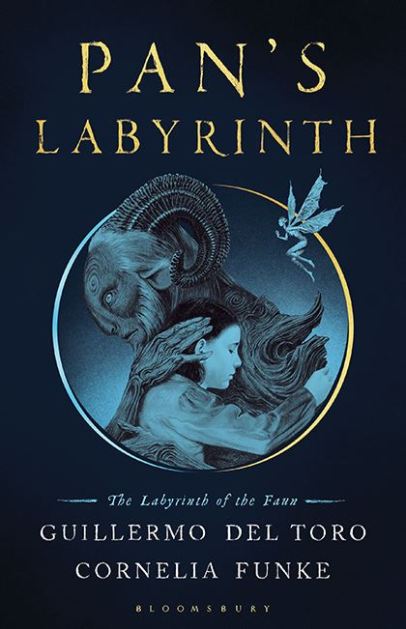
Pan's Labyrinth Cover

Publisher: Bloomsbury (Trade Paperback – 2 July 2019)

Series: Pan’s Labyrinth

Length: 297 pages

Rating: 5 out of 5 stars

Amazon

As the chief editor for The Unseen Library, I read far more book reviews than books, but every now and then the mood strikes just right, and I am fortunate to share a house filled to the brim with books waiting to be enjoyed. I thought I’d commemorate the latest occasion by writing a review of my own:

Pan’s Labyrinth is a Spanish-language dark fantasy film written and directed by acclaimed filmmaker Guillermo del Toro. Thirteen years after its release, Guillermo del Toro and bestselling author Cornelia Funke have transformed the screenplay of the film into a beautiful work of prose.

Pan’s Labyrinth is part of a modern tradition of fairytales in which children have fantastic adventures whilst the adults are busy with war. In Spain, in 1944, young Ofelia and her mother join the household of Capitan Vidal, who is responsible for hunting down the anti-fascist guerrillas hiding in the mountainous forests nearby. Left to her own devices and enchanted by fairy tales, Ofelia is drawn to the ancient stone labyrinth near their new home. There she meets the Faun, who tells her she is in fact the missing princess of the Underground Kingdom. In order to reclaim her place in the kingdom and escape her terrible new stepfather, she must prove her courage and worthiness by completing three tasks. This is easier said than done; these tasks themselves are life-threateningly perilous, but Ofelia must also try to protect herself and her heavily pregnant and ailing mother from the ruthless Capitan and the rebels at the door.

Guillermo del Toro is renowned for making visually stunning films, and Pan’s Labyrinth was no exception; in fact, it won Academy Awards for Best Cinematography, Best Art Direction and Best Makeup. I am happy to report that the novelisation of Pan’s Labyrinth faithfully re-imagines the amazing sets, characters and creatures of the film. In the absence of cinematography, visual design and Doug Jones in monster makeup, the authors have relied on using a great deal of descriptive language to bring scenes to life in text. This is also supported by a number of illustrations throughout the book which clearly drew from the art of the film. It had been many years since I last saw the film, but the imagery of the story is so well produced that I was easily able to imagine many long-forgotten scenes according to del Toro’s vision.

There are many advantages of this novelisation. In particular, the book gives a great deal of insight into various characters not afforded by the film. We see Ofelia’s thought processes as she observes the adults around her and as she obeys or defies the Faun’s instructions. We understand the fierce motivation of Mercedes and Dr Ferreira as they desperately try to assist the rebels in the hills without being discovered. Most terrifying of all, we catch a glimpse of the inner mind of Capitan Vidal, the Wolf, whose horrendous acts of violence rival those of the Pale Man. The inner monologues of these characters provided in the book enable us to have a greater appreciation of their perspectives, actions and motivations.

For the most part, the novelisation follows the story of the film faithfully, but it also includes a number of additional chapters. These feature stories of the Underground Kingdom and its magic bleeding into the Upper Kingdom, creating the lore and mythology that surrounds the Spanish landscape in which the story is set. These grim and interconnected fairy tales provide amazing context for the enigmatic Faun and the nature and gravity of the tasks Ofelia must complete, as well as being beautiful and moving stories in their own right.

Fans of the film will know exactly what to expect from the novelisation of Pan’s Labyrinth and will appreciate the additional fairy tales and insights it provides. Those who haven’t seen the film (and there is always a cohort of cinemagoers that dislikes or struggles with subtitled films) will feel as though they had, as this gruesome and fantastic story has been beautifully transferred onto the page.

Waiting on Wednesday – The Bear Pit by S. G. MacLean

Welcome to my weekly segment, Waiting on Wednesday, where I look at upcoming books that I am planning to order and review in the next few months and which I think I will really enjoy.  Stay tuned to see reviews of these books when I get a copy of them.

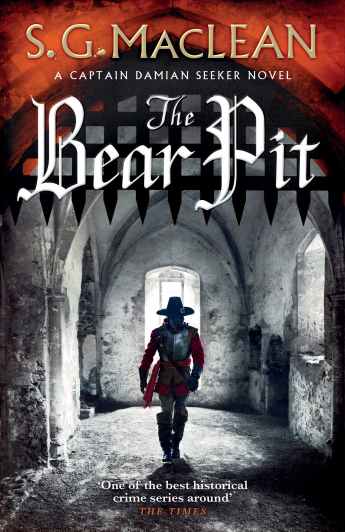
The Bear Pit Cover.jpg

In this week’s Waiting on Wednesday, I take a look at The Bear Pit by S. G. MacLean, one of the historical fiction books of 2019 that I am looking forward to the most.  The Bear Pit is the fourth book in MacLean’s The Seeker series, which follows Captain Damian Seeker as he uncovers conspiracies and solves murders in Cromwell’s England.  I absolutely loved the third book in The Seeker series, Destroying Angel, last year, and I am eager to see where the author takes the series next.

Hachette Australia Synopsis:

London, 1656: Captain Seeker is back in the city, on the trail of an assassin preparing to strike at the heart of Oliver Cromwell’s Republic

The Commonwealth is balanced on a knife edge. Royalists and disillusioned former Parliamentarians have united against Oliver Cromwell, now a king in all but name. Three conspirators, representing these factions, plan to assassinate the Lord Protector, paving the way back to the throne for Charles Stuart once and for all.

Captain Damian Seeker, meanwhile, is preoccupied by the horrifying discovery in an illegal gambling den of the body of a man ravaged by what is unmistakably a bear. Yet the bears used for baiting were all shot when the sport was banned by Cromwell. So where did this fearsome creature come from, and why would someone use it for murder?

With Royalist-turned-Commonwealth-spy Thomas Faithly tracking the bear, Seeker investigates its victim. The trail leads from Kent’s coffee house on Cornhill, to a German clockmaker in Clerkenwell, to the stews of Southwark, to the desolate Lambeth Marshes where no one should venture at night.

When the two threads of the investigation begin to join, Seeker realises just what – and who – he is up against. The Royalists in exile have sent to London their finest mind and greatest fighter, a man who will stop at nothing to ensure the Restoration. Has Seeker finally met his match?

From the description above it sounds like this will be a book that heavily combines murder mystery with historical conspiracy, as the protagonist hunts a murderer in London while also attempting to stop several assassins coming for his boss.  The murder sounds like it will be incredibly fun part of this book, especially with a non-existent bear being the potential murder weapon.  I will be very interested to see what solution MacLean comes up with for this murder and I hope it will be something very inventive.  I am also looking forward to the conspiracy part of the book, and I am sure that the assassins and mysterious Royalist agent will prove to be impressive antagonists for this book.  The murder and the conspiracy parts of this book will no doubt be tied together, and I am looking forward to an excellent overall story.

I am also looking forward to diving back to the chaotic and intriguing historical setting of Cromwell’s England that the author used to such great effect in the previous books.  I thought this setting worked really well in Destroying Angel’s small-town setting, and I am curious to see how the city of London looks like in this interesting historical period.  It also sounds like the protagonist will be forced to visit several unique locations around the city, and I am sure that will result in some fun and exciting plot points.

The Bear Pit is shaping up to be an incredible new addition to The Seeker series, and I am really looking forward to this coming out in July.  If the story matches the fantastic sounding description, I am sure that this will be another five-star book and it should be pretty awesome.