Timeless by R. A. Salvatore

Timeless Cover.jpg

Publisher: Harper Voyager

Publication Date – 4 September 2018

Amazon     Book Depository

From one of fantasy’s most legendary writers, R. A. Salvatore, comes another electrifying adventure of swords and steel, as Salvatore once again presents a thrilling tale of his iconic protagonist, the dark elf Drizzt Do’Urden.

Centuries ago, the city of Menzoberranzan gave birth to a drow whose talents with the blade were unsurpassed by any other practitioner.  This drow’s name was Zaknafein.  Desired by an ambitious noble house and its twisted Matron, Malice, Zaknafein would become a pawn in the battle of intrigue and positioning that have eternally plagued Menzoberranzan.  His only relief from his arduous life was his friendship with the young mercenary Jarlaxle.

Years later, a young Drizzt Do’Urden fled the city and the violent ways of his people.  However, his escape was only capable thanks to the twofold sacrifice of his father, Zaknafein, who not only allowed himself to be sacrificed to the dark goddess Lolth but also willed his resurrected body to its absolute destruction in order to stop its hunt for Drizzt in the catacombs of the Underdark.  Not only was Zaknafein his father; he was also the man responsible for Drizzt’s moral code and, most importantly, the man who taught Drizzt how to fight, turning him into the most skilled sword wielder in all of Faerun.

But now, after years of Drizzt’s adventures on the surface world, something truly amazing has happened: Zaknafein has been returned to life and has found his way to the surface world.  No-one is certain how he has been resurrected or why, but Zaknafein is determined to be reunited with his son, even if he has changed far more than he could ever imagine.

The world has also changed in the last few years.  The Sword Coast is undergoing a period of rare peace.  The dwarves, led by Drizzt’s friend King Bruenor Battlehammer, rule in Gauntlgrym, while the city of Luskan is secretly ruled by Jarlaxle and his mercenary band, Bregan D’aerthe.  With their territories connected by magical gates, Bruenor, Jarlaxle and the halfling community of Bleeding Vines have formed an alliance, ensuring the security of the realm.  However, the ambitious and greedy Lord Neverember, ruler of Neverwinter, is a constant thorn in their side as he plots to steal power from the lands around him.  While usually only a minor nuisance, Neverember has been making deals with a mysterious noble house of Waterdeep and a minor dwarven clan for vast sums of money.  As the allies investigate further, they uncover the start of a destructive demonic conspiracy that could destroy all they have built.  What foul plans are being hatched, and what will happen with Drizzt and Zaknafein find themselves in the middle of a demon stronghold?

R. A. Salvatore is one of the most experienced and enduring authors of fantasy fiction in the world today. Having written more than 60 fantasy books since his 1988 debut, Salvatore has created a number of worlds and characters across his career, from his 12 books in the Corona universe, which includes the 2018 release Child of a Mad God, to his Chronicles of Ynis Aielle trilogy, The Crimson Shadow series, The Cleric Quintet and The Spearwielder’s Tale trilogy. Salvatore is also somewhat infamously known for his foray into Star Wars fiction, with his 1999 release, Vector Prime, which saw the canonical death of Chewbacca in the original expanded universe, a decision that has since been retconned following the Disney acquisition of the franchise.  However, his most iconic and popular books would have to be his long-running series that follows the adventures of the dark elf Drizzt Do’Urden.

The character of Drizzt Do’Urden was first introduced in Salvatore’s debut novel, The Crystal Shard, which is also the first book in The Icewind Dale trilogy.  The Icewind Dale trilogy is set within the Forgotten Realms universe, a large-scale interconnected collection of fantasy books from a range of different authors, all set within the titular Forgotten Realms, a spinoff location of the Dungeons & Dragons roleplaying franchise.  The Icewind Dale trilogy featured a band of powerful characters including Drizzt, the dwarf chieftain Bruenor Battlehammer, the barbarian warrior Wulfgar, the halfling thief Regis and Bruenor’s adopted human daughter, Catti-brie.  While these characters all had their own adventures within this series, it was clear that Salvatore had intended to focus his series on Wulfgar and make him the main protagonist.

However, the character of Drizzt proved to be particularly popular with the fans.  A large amount of this may be a result of the characters anomalous nature, as not only is Drizzt a dark elf living above the surface, but he was one of the few good dark elves in fantasy fiction at that point in time.  The dark elves, also known as the drow, are a race of dark-skinned elves who live in the Underdark, the dark catacombs that lie under the continent of Faerun, in the world of Abeir-Toril.  In the Forgotten Realms universe, dark elves are generally an evil and self-serving race who consider themselves superior to the other races in the Forgotten Realms and often conduct destructive raids against the surface world.  As a result of this popularity, Salvatore chose to focus on Drizzt more and more as his series progressed.  This included establishing the character as one of the greatest practitioners of the sword in the Forgotten Realms, as well as introducing an equally matched adversary, Artemis Entreri.

This focus on Drizzt continued into Salvatore’s second Forgotten Realms series, The Dark Elf trilogy, which was a prequel series to The Icewind Dale trilogy.  The Dark Elf trilogy focused on the birth of Drizzt in the dark elf city of Menzoberranzan, a female-led society dedicated to the worship of the demonic spider god Lolth.  While this is where Drizzt was raised and first learnt how to wield his iconic dual blades, the character of Drizzt never fit in, except with his father Zaknafein, who tried to teach him that the dark elves, especially those dedicated to the worship of Lolth, were evil.  Drizzt would escape Menzoberranzan at the end of the first book in the trilogy, Homeland, and spend the next two books exploring the world outside the city, eventually coming to the surface and finding his home in the Icewind Dale.  Since then, Drizzt and his companions have undergone a number of adventures both above and below the surface of Faerun, with numerous changes impacting these protagonists.  Timeless is the 34th book to feature Drizzt or his companions, and is one of the few ongoing series still being produced in the Forgotten Realms universe.

Timeless is the first book in Salvatore’s new Noname trilogy, and while the series is invariably going to focus on Drizzt, this first book mostly takes a look at the returning Zaknafein.  As a result, the majority of the story is set in the current chronology of Salvatore’s universe and sees Zaknafein attempting to find his place in the new world he has returned to, while also exploring a new threat to the Companions of the Hall (Drizzt and his friends).  There is also a second timeline that is set many years before the events of Homeland and focuses on the early life of Zaknafein.  While both storylines are enjoyable, I found myself drawn more to the prequel storyline, which focused more on the elaborate and exciting intrigues of the drow and how Zaknafein and Jarlaxle became the drow we all came to know and love.  The contemporary storyline is mostly focused on the reuniting of Zaknafein and Drizzt after their many years apart, both in and out of text.  Their emotional reunion forms the heart of this storyline, while Zaknafein’s exploration of this new world he finds himself in is an intriguing part of the book.  A side effect of this is that some of the longstanding characters, such as Wulfgar and Bruenor, have a reduced role in the book.  While I hope they feature more later in this trilogy, I felt the story was able to survive without them.  This book also spends a lot of time setting up the storyline and threats that will form the focus of this new series.  To that end, Salvatore has done an incredible job, creating several intriguing storylines that readers will enjoy following in future books and presenting the protagonists with a number of potential threats for the series.  However, Salvatore has also ensured that the reader will be hit with some severe emotional gut-punches in this first instalment, ensuring that they are dragged into the next book in this trilogy.  I enjoyed going back and forth between these two separate storylines.  Each of these storylines complemented the other one perfectly and highlighted the character of Zaknafein in more detail.

While The Icewind Dale trilogy and the series that followed it are excellent pieces of fantasy fiction, my favourite Drizzt Do’Urden series has always been The Dark Elf trilogy, which I consider one of the best origin story arcs in all of fantasy fiction.  As a result, I was always going to enjoy any novel tied to this prequel trilogy.  Timeless contains a number of call-backs to this original trilogy and works to provide the reader with some interesting and unexplored backstory for the great character of Zaknafein, including how he became associated with the house of Do’Urden.  It also shows the formation of his distinctive character traits, such as his sense of mercy, his hatred of the female dark elves who enslaved him and his intense rebellion against the drow’s patron goddess, Lolth.  Some of the most emotional parts of this original trilogy revolved around Drizzt and Zaknafein as they attempted to escape from the harsh landscape of Menzoberranzan and Zaknafein’s eventual sacrifices to save his son from Lolth’s evil grasp.  Therefore it was amazing to see the two of them finally reunite after all these years in the most appropriate manner possible: a duel.  Watching Drizzt slowly realise that the person fighting against him is actually his long lost father is incredible and something that I really enjoyed.

It was also a lot of fun to see the earlier days of one of my favourite characters, Jarlaxle.  Jarlaxle is a flamboyant and deceptively cunning drow mercenary who is one of the most compelling characters in Salvatore’s books.  The character was first introduced in the second book of The Dark Elf trilogy, Exile, and quickly revealed himself to be a very memorable character.  Salvatore utilised him in a number of his follow-up series, and even gave him his own trilogy with Artemis Entreri.  I was therefore very happy to see him in both timelines of Timeless, as it provides the reader with some great entertainment as well as answering some interesting questions, like how he came up with his distinctive look.  His bromance with Zaknafein was another fun part of both storylines, and I liked seeing the previous connection these two great characters had with each other.  Overall, fans of Salvatore’s preceding books, especially The Dark Elf trilogy will love Timeless and become engrossed in seeing one of the most impactful characters in Drizzt’s life return after more than 20 years and 30 books.

As you would expect from a novel about Drizzt Do’Urden and Zaknafein, two of the most pumped-up sword users in all of fantasy fiction, there is an absolute ton of action and swordplay in this book.  Throughout the course of Timeless, the father and son duo engage in a number of exciting battles and extravagant duels as they face off against a variety of different foes in both of the book’s timelines.  There is so much going on in this book for readers to enjoy, from battles against demonic foes to Zaknafein and Jarlaxle taking on the most devious of drow opponents they can find in the prequel timeline.  The halfling Regis, who is generally one of the most entertaining characters in Salvatore’s books, also has an amazing sequence as he infiltrates a hidden vault, using a combination of alchemy, daring do and the well-honed thieves’ instincts and skills he has been displaying since The Crystal Shard.  Jarlaxle also steals any fight scene he is involved with, using his various magical devices and hidden weapons to cause all manner of chaos against his opponents, resulting in some of the most entertaining parts of the books.

However, easily the best action sequences have to be the duels between Drizzt and Zaknafein.  These two blade masters are generally regarded as the two best fighters in all of the Forgotten Realms and have not faced each other since the early 1990s.  As a result, Salvatore presents several highly detailed duels between the father and son.  These duels are written in incredible detail and Salvatore does a fantastic job highlighting the speed, intensity and skill that these two combatants have as they battle against each other in scenes which hark back to their original amazing duels in Homeland.  Ultimately, Salvatore is once again able to capture the magic that these two combatants had in their original appearances and their fights take on a completely new edge with the emotional intensity of these characters’ reunion.

Salvatore has once again provided his readers with an exhilarating adventure that pits the monsters and villains of the Forgotten Realms against your favourite fantasy heroes.  This is definitely a book that will have the most impact for existing fans of Salvatore’s Forgotten Realms novels, and as such I really enjoyed Timeless.  While newer readers may have a little trouble following the plot after 34 books worth of backstory (39 if you include The Cleric Quintet), Salvatore’s writing will ensure they get an electrifying adventure that will encourage them to look back at the original books in this series.  An outstanding fantasy adventure from one of the best writers in the business, this is fantastic read that is well worth checking out.

My Rating:

Four and a half stars

Amazon     Book Depository

Throwback Thursday: The Empire Trilogy by Raymond E. Feist and Janny Wurts

The Empire Trilogy Cover.jpg

Publishers: Doubleday, HarperCollins

Publication Dates:

Daughter of the Empire – 1987    Amazon

Servant of the Empire – 1990       Amazon

Mistress of the Empire – 1992      Amazon

Collected Volume –                        Amazon

Reviewed as part of my Throwback Thursday series, where I republish old reviews, review books I have read before or review older books I have only just had a chance to read.

If you are a fan of Raymond E. Feist’s books, check out my review of his latest work, King of Asheshttps://unseenlibrary.com/2018/05/30/king-of-ashes-by-raymond-e-feist/

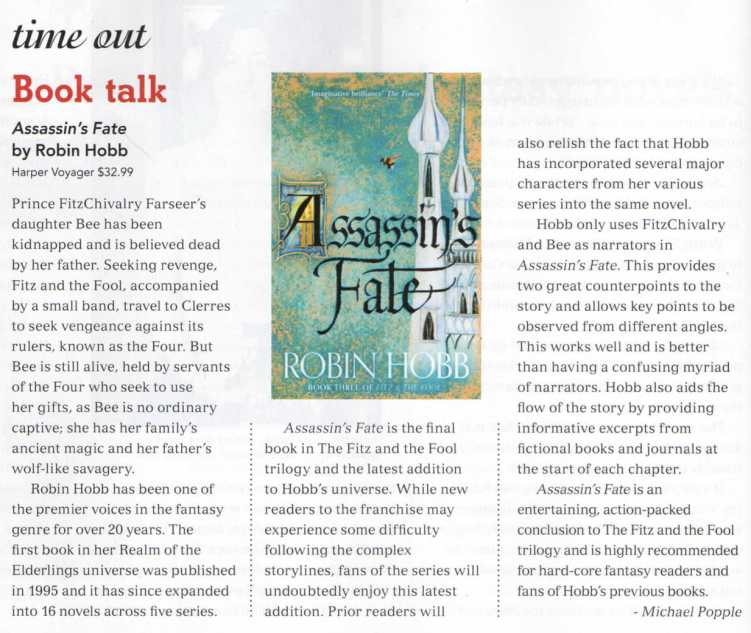
Set in the same universe as fantasy author Raymond E. Feist’s legendary Riftwar Cycle is The Empire Trilogy, which serves as a fantastic companion series to his main body of work.  This trilogy, made up of Daughter of the Empire, Servant of the Empire and Mistress of the Empire was written in collaboration with fellow fantasy author Janny Wurst and represents an intriguing piece of literature that shines not only as a side series to Feist’s first two books but also as a substantial and powerful standalone series.

I first came across this series during my school days, when I had to read Daughter of the Empire for a fantasy literature course (great book, terrible teacher).  I was already very familiar with Feist’s massive fantasy universe, having read all the other books available in the series at that point, though in a somewhat eclectic order.  I had not previously attempted to read The Empire Trilogy before this point, but I eagerly dived into Daughter of the Empire when I got my copy from the school library.  I was immediately entranced by the story and read it several times in that semester, especially during the more boring classes.  Upon completing the first book, I also sought out the second and third books in the series in order to see how the fantastic storylines continued.  In recent years, I was lucky enough to find audiobook copies of the entire trilogy, and have since re-listened to it several times.  These more recent perusals only confirmed my enjoyment of this series, as well as my love of Feist’s massive fantasy world.

The first book of The Empire Trilogy, Daughter of the Empire, was published in 1987, one year after the final book in The Riftwar Saga, the first trilogy in Feist’s massive Riftwar Cycle.  In many ways, Daughter of the Empire and the second book, Servant of the Empire, serve as accompaniments to Feist’s original series, as both plots are set at the same time and events that occur in Magician and Silverthorn have significant impacts within The Empire Trilogy.

Daughter of the Empire Cover.jpg

The Empire Trilogy follows Mara of the Acoma, a young woman who becomes the Ruling Lady of her house after the sudden death of her male relatives.  Through the course of this series, Mara must become a strong ruler to maintain the honour of her family and ensure the survival of all the people pledged to her house.  Mara must use all of her cunning to overcome powerful opponents while adapting new methods and viewpoints that are uncommon in her regimented culture in order to survive.

This series is set in the world of Kelewan, a vast planet inhabited by several strange alien species, and mainly focuses on the inhabitants of the massive Empire of Tsuranuanni.  The Tsurani were introduced in Feist’s first book, Magician, where they travel through a magical rift to the world of Midkemia and clash with the inhabitants of this new planet in an event known as the Rift War.  The Tsurani are a race of humans based on a combination of real world cultures, such as the Japanese, Koreans and the Aztecs.  For example, the overriding Tsurani ideal of honour, an exceedingly important concept in the books that strongly influences their culture and way of life, is very strongly based on feudal Japanese ideals of the samurai and bushido.  Kelewan is explored within Magician through the eyes of Feist’s main protagonist, Pug.  Midkemia is the main setting for the books in the Riftwar Cycle.  While Kelewan is visited in later books of the Riftwar Cycle, most notably in Silverthorn, it becomes a more underutilised setting as Feist’s overall series continues, before eventually being destroyed in Wrath of a Mad God.

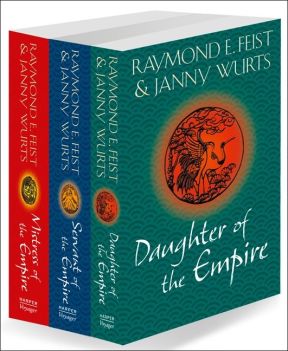
Each of the books in this trilogy contains epic and captivating stories that not only highlight life in these alien planets but also show a tale of survival and victory against all odds as the protagonist, Mara, faces and overcomes the superior forces arrayed against her.  The first book in the trilogy is Daughter of the Empire, which introduces many of the series’ main characters and storylines.  The protagonist and main point-of-view character is Mara of the Acoma, who is dramatically pulled from her peaceful life as a novice priestess into the deadly and treacherous world of Tsurani politics.  Mara’s father and brother were killed during a battle on Midkemia because of treachery from the most powerful house in the Empire, the Minwanabi.  As a result, Mara is forced to take on the role of Ruling Lady to save her house from being destroyed and her retainers taken as slaves or forced to become honourless bandits.  With the vast majority of her soldiers killed in Midkemia, Mara must find creative ways to stop the Minwanabi and other rival houses from wiping her out.

Mara proves to be an effective leader, bending Tsurani traditions to her favour, recruiting talented followers and forming new alliances.  Her machinations result in a political marriage to a brutal husband whom Mara must endure until the moment is right to remove him.  Watching the protagonist rebuild her house through any means necessary is a fantastic focus of this book which really allows the reader to get a strong idea of Tsurani politics, ideals and culture, as well as Mara’s determination as the central protagonist.  The climax of the book is set within the Minwanabi stronghold, which Mara has been forced to visit in order to attend a celebration for the Warlord (the Tsurani equivalent of a feudal Japanese Shogun).  This final part of the book is filled with significant tension and fear, as everyone is well aware that the Minwanabi will murder Mara before she leaves the party.  Mara must find a way to use the Tsurani honour system to prevent her own assassination while also striking a blow against her opponent.  Daughter of the Empire is an exceptional introduction to this fantastic series, and is a spectacular novel in its own right.

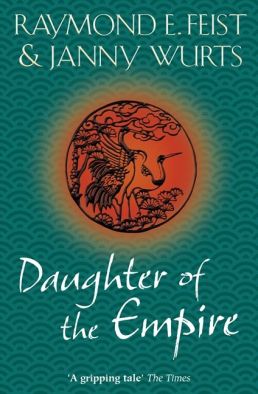
Feist and Wurst followed up their first entry in this series with another sensational novel that doubles down on the action and intrigue and contains some of the best sequences in the entire series.  Servant of the Empire directly follows on from the events of the first book and sees Mara and her house still in great peril.  Mara may have overcome the previous ruling lord of the Minwanabi, but her enemies are still the most powerful house in the Empire.  While the new lord is nowhere near as competent as his father was, he has called up the family’s most devious and destructive member, Tasaio, the man who organised the death of Mara’s father and brother.  As the Minwanabi plot against the Acoma, Mara is distracted by her acquisition of a group of Midkemian slaves, especially the charismatic Kevin of Zūn.  As Mara and Kevin fall in love, the Acoma are drawn into a series of battles on many different fronts, but Kevin’s alien way of thinking offers Mara a distinct advantage.  But events completely outside Mara’s control may have the greatest impact on the future of her house.  Both the magician Pug and the chaotic event of the Riftwar bring significant change to the Empire, and Mara and her enemies must seek new ways to turn these events to their advantage.  While Mara’s relationship with Kevin provides her with strength, it also represents her greatest weakness.

Servant of the Empire Cover.jpg

There is a lot going on within this book, including a number of large-scale battle sequences, as well several scenes focusing on the Empire’s political intrigue.  The standout scenes for me have to be either the extended sequence in the arena which features a different point of view to the chaotic magic unleased by Pug in Magician, or the sequences where the biggest houses in the Empire stage a night-time battle of assassins in the halls of the Imperial Palace.  While this might be my favourite book in the series, I am not the biggest fan of the way the romance angle between Mara and Kevin is portrayed.  Kevin, however, is a fantastic addition for this book, and it is intriguing to have a character that has a similar viewpoint as the reader to observe and comment on Tsurani honour, politics and culture.

The third book in the series, Mistress of the Empire, is set some years after Servant of the Empire and sees Mara and the Acoma once again up against a superior enemy.  After their victories in the second book, the Acoma are now the most powerful house in the Empire, but Mara’s sins have come back to haunt her.  When the Hamoi Tong assassins initiate a devastating strike at the Acoma, the Assembly of Magicians forestalls Mara’s vengeance against the house she holds responsible.  The magicians, known throughout the Empire as “Great Ones” are determined to limit the Acoma’s influence, and Mara soon finds herself in a hidden war against the most destructive force in all of Kelewan.  At the same time, her former brother-in-law, Jiro of the Anasati, seeks retribution against Mara, while her loyal Spy Master Arakasi seeks to find a way to finally destroy the Hamoi Tong.  Travelling outside the Empire, Mara uncovers dark secrets about the Assembly, and her actions will have major impacts on the future of Tsurani life.

Mistress of the Empire is an excellent conclusion to this trilogy that not only provides a compelling story with exciting new additions but also neatly wraps up storylines from the previous two books.  While this book probably has the least connections to the events of Feist’s main series, it dives deeper into the history and hidden lore of Kelewan and the Empire, including the Assembly of Magicians, a sinister and powerful group in Feist’s universe.  Many of the main characters get satisfying endings to their storylines, and we get to see several chapters told from the point of view of the Spy Master Arakasi.  Arakasi is one of the series’ best characters; however, due to the nature of his work, the readers usually do not get to see him in action, instead only hearing second-hand accounts of his missions.  Readers get to enjoy scenes that focus on Arakasi’s investigations into both the Assembly of Magicians and the Hamoi Tong, which also serve to expand on Arakasi as a character.  Readers will also enjoy the fact that, after two books in which the antagonists need to keep up the appearance that they are obeying the Tsurani code of honour in their battles with the Acoma, Mara is now forced to go up against an opponent outside the typical laws and practices of the Empire.

One of the most interesting aspects of this series is how the authors have tied the books into the events of Feist’s original trilogy.  There are actually a few pre-emptive mentions of characters and events that become an important part The Empire Trilogy in Feist’s first book, Magician.  For example, the Shinzawai, a major house, whose members become key characters in The Empire Trilogy, are first introduced in this book as friends of Pug.  During Pug’s adventures in Kelewan, there is mention of a visit to the Lady of the Acoma, an event that subsequently occurs in Servant of the Empire.  The Minwanabi betrayal of the Acoma forces is also described to the Midkemian protagonists of Magician by a former Tsurani slave in an attempt to highlight the Tsurani system of honour and politics.  The first book in The Empire Trilogy, Daughter of the Empire is actually set in the time gap between the two halves of Magician, and takes a closer look at the impact that the Riftwar has had in Kelewan.

A more direct connection to the series is established in Servant of the Empire.  As mentioned above, long-running Riftwar Cycle protagonist, Pug, makes several appearances in this book, mirroring events that occur in second half of Magician.  Events that occur in Feist’s original trilogy have severe impacts on the plans of Mara and her enemies, such as the destruction of a huge number of Tsurani lords in the final battle of Magician and the death of the new Warlord in Silverthorn.  All of these become significant plot points in Servant of the Empire, and it is absolutely fascinating to see the impacts of events in other books.

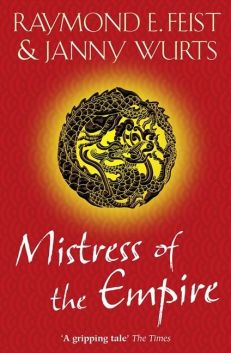
Mistress of the Empire Cover.jpg

The most spectacular crossover event comes about halfway through Servant of the Empire, which shows some of the cataclysmic events from Magician from a whole new perspective.  In the second half of Magician, the powerful magician Pug unleashes his full fury on an arena full of Tsurani, sending wave after wave of magical attacks and disasters on the arena’s audience.  The scene is very intense when told from Pug’s point of view; however, readers of the second book in The Empire Trilogy are shown the absolute terror and destruction that a member of this crowd experienced during these events.  Mara, Kevin and a few Acoma retainers are present when the magical attack occurs and must flee through the panicking mob while also avoiding enemy assassins.  The sheer chaos and dread experienced by these characters and the surrounding crowd is astounding, and turns an incredible scene from Magician into one of the most intense and memorable sequences Feist has ever written.

Throughout the series, the Mara and her house are engaged in significant conflict with other factions in the Tsuranuanni Empire.  In the first two books, their opponents are primarily the most powerful house in the Empire, the Minwanabi, while the third book sees Mara in conflict with another influential house, as well as the Assembly of Magicians and the Hamoi Tong assassins.  As a result, the main focus of these books is usually the battles for supremacy between the Acoma and their opponents.  However, what sets these stories apart from other fantasy novels is the way that these battles are fought.  While an all-out war would probably ensure a quicker conclusion to this struggle, the Acoma and their enemies are forced to fight within their nation’s rules of conflict and honour.  As a result, the participants are forced to fight in a far more shadowy conflict.  While there are battles between armies, often with one side in disguise, the participants also fight using economics, espionage and politics.  Throughout the book, the protagonist makes alliances, build up her resources and use her influence to mould the politics of the realm to her advantage.  The reliance on honour is a fascinating part of this battle, and the reader will enjoy seeing the protagonist use this concept of honour to manipulate her opponents.  The real fun comes when the various participants are no longer bound by the rules and are able to unleash much more devastating and direct attacks on each other, such as the massive battle in the imperial palace that takes place in Servant of the Empire.  The battles for survival and control of the Tsuranuanni Empire represent an absolutely captivating and exciting part of this series, especially when the Acoma spymaster Arakasi gets involved.

Readers of The Empire Trilogy are also gifted with a deeper understanding and appreciation of the people, races and culture of Kelewan.  This world and some of its history was explored in Feist’s earlier books, including Magician, where an extended magical vision showed the reader key points in the planet’s history.  However, for those readers who wish to have a truly deep understanding of life in Kelewan, and the Tsuranuanni Empire in particular, the books in this trilogy are the best things to read.  Through the protagonist’s eyes the reader gets to explore the various pieces of land that make up the Empire, as well as the creatures that inhabit these lands.  Feist and Wurst also spend significant amount of time looking at the Cho’ja, the ant-like alien creatures who were first introduced in MagicianDaughter of the Empire takes a very interesting look at the Cho’ja, especially as an early part of the book focuses on the protagonist’s attempts to win a Cho’ja colony for her land.  In order to do this, she enters a hive and negotiates with a newly hatched queen in order to provide Mara with additional warriors and access to silk spinners.  In order to gain an edge on her competition, Mara attempts to understand the cultural differences between her race and the Cho’ja, and is able to come up with some intriguing conclusions as a result.  These initial and interesting observations of this race are then massively expanded upon in Mistress of the Empire when Mara, in an attempt to find out the secrets of the Assembly of Magicians, uncovers the true history of the Cho’ja and the ancient pacts they are bound to.  Readers will be absolutely fascinated by the lore of these creatures, and there are some great scenes featuring Cho’ja economy and their skills in battle.  In addition to the Cho’ja, Feist and Wurst also explore some of the human nations that exist in Kelewan, including the desert tribes of Dustari and the Thuril.  These explorations aren’t as detailed as the authors’ look at the Cho’ja and the Tsurani, but are intriguing in their own right, as the authors create some unique cultural features for them.

While the examination of the Cho’ja and the other human races of Tsurani is an intriguing and detailed part of the books in The Empire Trilogy, it pales in comparison to the massive amount of time spent exploring Kelewan’s main civilisation, the Tsuranuanni Empire.  The vast majority of the three books is spent within the Empire, with only a small portion of Mistress of the Empire spent outside.  Feist introduced a lot of the elements of the Tsurani in Magician, but this is expanded on substantially in this series.  Readers who read through these books will be left with an incredible amount of information about Tsurani politics, religion, culture, societal makeup and various other parts of day-to-day life in the Tsuranuanni Empire.  The use and examination of Tsurani politics at many different levels is an extremely compelling part of these books, and the various meetings and manipulations that occur represent a very enjoyable part of the book.  The concept of Tsurani honour is also explored in great detail.  Honour is a massive and defining part of Tsurani culture, and the various characters risk everything to maintain it.  Living or dying without honour is considered the worst thing imaginable as it will impact on the individual’s reincarnation in the next life.  The concept of honour is particularly skewed towards the Tsurani nobles, and it often takes an outside perspective, like that of Kevin, to identify how unfair the system is.  Mara becomes particularly adept at using this honour system to her own advantage.  While absolutely devoted to maintaining her family’s honour, her interactions with Kevin lead her to try and make some substantial changes in Tsurani society.  The books in the trilogy also reveal some deeper understandings about Tsurani history and the various secret organisations such as the Assembly of Magicians have been protecting.  While physically reading these books allows the reader to absorb a lot of this lore, I would also suggest that people check out the various audiobooks that have been produced, which can help listeners to absorb more of these amazing story elements.

I do have a few minor criticisms about this series, but nothing that is really going to change my high regard for it.  There are some unnecessary scenes where Mara is scolded and nagged by her nurse, Nacoya, who quickly becomes one of the series’ more annoying characters.  I felt that some of the scenes featuring Nacoya’s constant criticism took away from Mara’s image as a skilful and intelligent leader, and just made her seem like a foolish girl.  Luckily Nacoya is easily overshadowed by several of the other supporting characters, such as Keyoke, Arakasi and Lujan.  I also found parts of the relationship between Mara and Kevin in Servant of the Empire to be very frustrating, especially as they seemed to keep cycling through the same problems and issues.  Luckily, Kevin’s ‘barbarian’ insights and ideas more than make up for this, as he produces some excellent battle and political tactics throughout the book.  Overall, these are some fairly minor criticisms from me, and I really love all three of these books.

The Empire Trilogy from Raymond E. Feist and Janny Wurst is a spectacular fantasy series set in the same incredible universe as the Riftwar Cycle.  This trilogy of books is an amazing series in its own right; however, it’s real strength comes from it being a clever tie-in to Feist’s main series of books.  Featuring some incredible story elements, exceptional action-packed scenes and a detailed setting stuffed full of lore, The Empire Trilogy is some of these two talented authors’ best works, which still stand up to this day.  The series is required reading for anyone who has read Magician and other books in the Riftwar Cycle, but it also comes highly recommended for those readers looking for that next fantasy series to fall in love with.

My Rating (Series and Each Book):

Four and a half stars

Awakened by James S. Murray and Darren Wearmouth

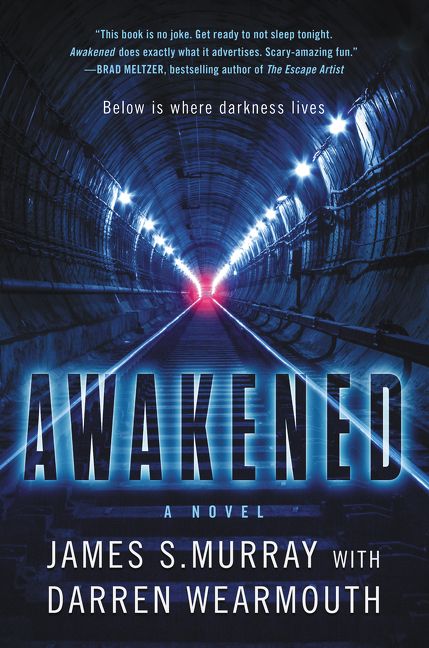
Awakened Cover.jpg

Publisher: Harper Voyager

Publication Date – 26 June 2018

Amazon     Book Depository

First-time author James Murray, of Impractical Jokers fame, teams up with veteran science fiction writer Darren Wearmouth to bring you the fast-paced, action-packed horror extravaganza, Awakened.

It is the unveiling of New York’s newest subway line, one of the most ambitious underground construction programs in the world.  The new express line will travel through a series of new tunnels that are now connecting the various suburbs previously separated by the Hudson River.  At the centre of this new expansion is the Visitor’s Pavilion, a gleaming state-of-the-art control centre and shopping hub situated beneath the Hudson.

The first run of the new system has been set up as a massive event, featuring the press, civic dignitaries, New York City’s mayor and even the president of the United States.  However, when the train rolls into the Visitor’s Pavilion it is not the triumphant occurrence that the waiting crowd was expecting; instead it is a scene of carnage.  The train that arrives is deserted, with all the passengers missing.  Not only that, but ragged holes have been made in the side of the carriages and the floors are covered in blood.

As the crowd panics and attempts to flee what appears to be a massive terrorist attack, an explosion rocks the tunnels and methane starts to flood the entire subway system.  As the tunnels begin to fill with gas and the slightest spark could result in another explosion, those trapped in the Visitor’s Pavilion soon discover that a far more dangerous threat is stalking them.  Something has been living under New York and the construction of the new tunnels has woken it up.  As this new threat starts to pick off both the trapped crowd and the rescuers attempting to reach them, it falls to New York’s mayor Tom Cafferty, NYPD SWAT member Sarah Bowcut and subway technician Diego Munoz to discover what is down in the dark with them.  The more they dig, the more they realise that they are dealing with something far more dangerous than they could possibly imagine, and that a sinister conspiracy has been keeping it hidden from the rest of the world.

This bold new book is the result of a collaboration between comedian James “Murr” Murray and Darren Wearmouth, a science fiction and horror writer with a number of joint novels already under his belt.  The idea for Awakened was originally developed by Murray some years ago, and represents the first novel in a new series that the two authors have been working on, with two future additions already planned for 2019 and 2020.

Awakened is a captivating adventure, science fiction and horror hybrid that goes straight for the reader’s imagination whilst throwing their action centres into overdrive.  This is one of the fastest-paced novels of 2018, as the book’s characters are forced to be quick and decisive in order to escape death.  There are ton of great sequences as the characters encounter the various dangers converging on them and must work on a range of elaborate and desperate escape and rescue attempts.  Murray and Wearmouth are able to weld together some exciting scenarios around this concept, and readers will enjoy watching the characters adapting to the problems they encounter, such as methane in the tunnels stopping them from using guns or flames to defend themselves.  In addition to these excellent action sequences, Awakened contains some truly creepy scenes that will really appeal to horror aficionados.  The characters are assailed with a range of strange sightings, noises from the darkness and the disturbing voices of children crying for help from just outside the character’s line of sight.  This pulse-pounding content is absolutely fantastic and ideal for those who love a startling adventure.

Murray and Wearmouth have also created an intriguing monster to attack the protagonists in the subway tunnel.  Without giving too much away, Awakened’s monstrous element is unique and plays into humanity’s fear of the dark and the creatures that could reside there.  The nature of the threat is revealed at just the right time, as the authors waited until the audience would be sufficiently engrossed in the book.  The eventual full reveal is one of the most memorable parts of the book, as it contains some great reactions from the characters encountering them, whilst at the same time rewarding the reader’s curiosity in a big way.  The authors work to ensure that their audience’s imagination and curiosity is continuously piqued throughout the entire story.  There is also a complex and fascinating conspiracy element that is woven into this part of the book which is intriguing to discover and unravel.  It is definitely a notable part of the story, and it looks like it will be major part of the next books in series.

The authors make significant use of multiple perspectives and viewpoints throughout Awakened.  This type of storytelling often works well for these large-scale horror novels, and this book is no exception.  This breakdown of point-of-view characters allows the reader a much larger picture of what is going on, especially as the various viewpoints tie together into one massive, high-powered story.  It is fun watching the actions of one group of people impact the decisions or choices of another group of people who are located in a different part of the book’s sprawling, underground setting.  This also allows the reader to see smaller scenarios that add to the whole story, such as one fantastic sequence which sees someone attempt to rescue the passengers only to meet their doom.  Despite it being this character’s only scene, his death affects the rest of the characters and there are multiple viewings of his corpse throughout the book to spook those who had no idea of his fate.

It is also worth noting that Murray and Wearmouth have made several homages to other works of horror within Awakened.  I was particularly drawn to several noticeable references and parallels throughout the book to Jurassic Park.  For example, there is a great reference early in the book involving the phrase “no expense had been spared” being used when discussing the celebrity written audio elements of the initial ride.  In addition, some of the characters actually compare their situation to Jurassic Park, which I found to be amusing.  These are a fun element to watch out for, and readers will enjoy noticing these throughout the book, while at the same time, appreciating that they do not overwhelm Awakened’s central horror based theme.

Awakened is a fantastic horror read that really amps up the adventure and action, leaving the reader excited for more.  With a sinister monstrous element and an enjoyable narrative containing an elaborate conspiracy-laden storyline, this collaboration between Murray and Wearmouth is a roaring success and readers should be eager to see what this duo cooks up next.

My Rating:

Four stars

Amazon     Book Depository

Low Chicago Edited by George R. R. Martin

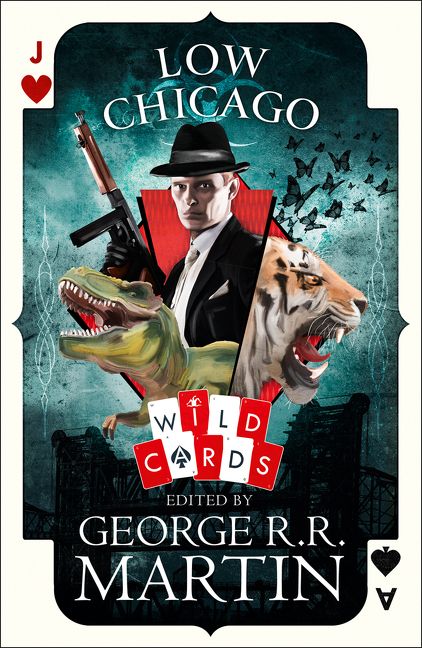
Low Chicago Cover.jpg

Publisher: Harper Voyager

Publication Date – 12 June 2018

Amazon     Book Depository

From of eight of the world’s leading science fiction and fantasy writers comes the latest addition to the superhero-filled Wild Cards universe, edited by fantasy legend George R. R. Martin.

Wild Cards is one of the more interesting series currently running in the world today due to its distinctive anthology format and the unusual way the series came into existence.  The stories that would eventually form the Wild Cards books were originally written as part of a lengthy Superworld role-playing game campaign that had Martin as gamemaster.  Martin and the other players, all of whom were science fiction writers, created elaborate backstories for the campaign and characters, which were eventually incorporated into the first book in the series, a dark and gritty superhero based anthology also called Wild Cards.  The following entries in the series, despite routinely changing authors, tended to follow the same format as the original book by combining together a series of short stories into a connected narrative.  Low Chicago is the 25th Wild Cards book to be released since the 1987 debut, with two other entries due to be published later in 2018.

The Wild Cards books are set in an alternative universe where an alien virus, known as the Wild Card virus, was released in 1946 above New York City.  This virus affected thousands throughout the planet, killing most of the people it came into contact with and altering the DNA of the survivors.  The vast majority of the infected who remained alive were mutated physically and are now referred to as Jokers.  However, a small percentage gained superhuman abilities and powers and are referred to as Aces.  The stories that followed have been set between 1946 and a time period that usually corresponds to the book’s real world publication date.

In Low Chicago, Martin continues to serve as editor.  The book includes input from two long-running Wild Cards contributors, John J. Miller and Melinda M. Snodgrass, who authored stories in the original Wild Cards.  There is also input from previous contributors Paul Cornell, Marko Kloos, Mary Anne Mohanraj and Kevin Andrew Murphy, as well as newcomers to the series, Saladin Ahmed and Christopher Rowe.

Low Chicago starts in 2017, where a high-stakes poker game has been set up in the city’s famous Palmer House Hotel by a prominent mafia boss.  Each of the seven players has a one million dollar buy-in, and is allowed to bring two attendants including bodyguards.  However, all hell breaks loose when a mysterious assailant targets one of the players, causing the other players and attendants, many of whom are powerful Aces, to unleash their abilities throughout the room.  In the middle of the chaos one of the bodyguards unleashes his own mysterious power and accidently scatters everyone in the room back in time.

Now with history changing outside the hotel, it falls to John Nighthawk and the Sleeper, Croyd Crenson, to travel back to various points of Chicago’s past and find the people trapped there before the present unravels.  But among those who have been sent back are some of the world’s most dangerous criminals, who have decided to change time for their own benefit.  Stuck throughout key points of Chicago’s history, can the time travellers be recovered before the present is permanently altered?

Like many of the books in the franchise, Low Chicago is an anthology featuring several short stories that have been combined together into one overarching and interconnected narrative.  Each of the short stories is unique and features one or more of the characters sent back in time, or inhabitants of the timeline they encounter.  Whilst these short stories all have the same starting plot point, they all have different focuses thanks to that story’s specific characters or time periods.  As a result there are several varied stories, each with their own unique features.  For example, the story Stripes, by Markos Kloos, features a fantastic narrative about the half-human, half-tiger character Khan being trapped in Chicago in 1929 and getting involved in the events surrounding the St. Valentine’s Day Massacre.  Not only is the narrative about an obviously powered individual attempting to influence such an iconic moment in a mob war fun and exciting, but Kloos also includes some significant and heartfelt ethical and emotional decisions that really make you feel for the character of Khan.  At the same time, the story Meathooks on Ice is a complex and emotional story from Saladin Ahmed that focuses on a young and troubled Ace, Meathooks, as he attempts to find redemption and his place in the world back in prehistoric times.

In addition to the overarching time travel plot feature, each of these short stories is also connected together by the characters of John Nighthawk and Croyd Crenson, who could be considered the book’s main protagonists.  Nighthawk and Crenson either appear in the stories themselves or later interact with a story’s central character in order to resolve the specific storyline.  Nighthawk and Crenson are also the main characters of the book’s central storyline, A Long Night at the Palmer House, written by one of the founding authors of Wild Cards, John J. Miller.  This central storyline, told from the viewpoint of John Nighthawk, a character created by Miller in a previous book, is broken up into 11 parts and spread between Low Chicago’s other stories.  The first part of this storyline features the initial poker game and shows the events leading up to the other characters being sent back in time, while the reminder of this storyline focuses on the protagonists’ attempts to find them.  Large portions of this storyline directly tie into Low Chicago’s other short stories, but there are also some sections where they hunt down characters not featured in any of the other short stories.  Miller has included some great scenes in this central storyline, and they get particularly compelling when they encounter the results of the other characters meddling in time and they have to discuss the ethical implications of resetting the timeline.  One particularly outstanding example of this is a sequence that requires the characters to navigate through and fix up a messed up dystopia caused by one of the runaway Aces.

Despite the different authors and the varied content of Low Chicago’s stories, many of the entries complement each other and fit together really well as a result.  Nearly all of the stories contain links to the Wild Cards universe, make full use of Chicago’s rich history, have a comparable dark humour, feature intense action sequences, tell the story in the third person from point of view characters, and have a very similar pace.  There is however, one story that doesn’t follow this trend.  A Bit of a Dinosaur, by Paul Cornell, stands out from the rest of the entries in Low Chicago, as it breaks from third person narration that the other authors utilised, and is instead written in the first person.  Cornell capitalises on this by ramping up the humour in the story and making it a little lighter in tone than the other stories in the book.  The first line of A Bit of a Dinosaur, “I think it’s important to say, immediately, that I am no way responsible for the extinction of the dinosaurs” really sets the tone for this whole short story and it only gets better from there.

One of the most enjoyable parts of Low Chicago is the rich history of the book’s titular city, Chicago.  Throughout all of the short stories, the reader is transported to various periods of Chicago’s history in order to witness several of the most significant events in the city’s past.  These include The Great Chicago Fire of 1871, the Black Sox scandal of 1919, the opening of the first Playboy Club, the St. Valentine’s Day Massacre, the disastrous 1968 Democratic National Convention and the 1893 World’s Columbian Exposition.  All of the authors take significant pains to explore the significance of these events and the impact they had on Chicago and the rest of America.  The reader is given a crash course in the history of these proceedings, and also experiences the author’s interpretation of several key historical figures.  Many of these events occurred before the 1946 release of the Wild Card virus which removed the Wild Cards universe storyline from real world history, and it is fun to watch these events get altered due to the inclusion of several super-powered beings.  It is also extremely fascinating to see the various authors’ interpretations of the historical occurrences that happened after 1946, as they occur in a world where superpowers and mutations are rampant.  As a result, the authors have provided some inventive and captivating alterations that will prove to be highly enjoyable for the reader.

Fans of the Wild Cards universe will also love the deep connections that Low Chicago’s stories have with the rest of the franchise.  In addition to some interesting and complex new characters, Low Chicago features a huge range of characters who originated in the previous Wild Cards books.  There is a deep focus on the history of many of these characters and the readers get to see them placed in a range of unique and compelling situations.  In addition, the authors make full use of the overarching time travel storyline as they visit a range of characters who were killed off in previous books or whose main adventures occurred in storylines set many years before 2017.  Long-time fans of this series will love the inclusion of or nods to these early characters, especially as several have significant roles in the narrative.

Readers unfamiliar with this series may be slightly overwhelmed at the start of the book, but all of the authors contributing to Low Chicago do an amazing job of providing the relevant exposition and explanation for all the characters and the overall history of the Wild Cards universe.  Indeed, Low Chicago might be a perfect book for first time readers of the Wild Cards franchise, as the huge range of characters and the focus on time travel provides the reader with a huge amount of backstory and history that the previous books did not need to contain.

Low Chicago is an outstanding new release that is a sensational and memorable inclusion to one of the best science fiction series currently on the market.  It makes incredible use of its distinctive anthology format and the overarching time travel storyline throughout Chicago’s history that is an inspired and marvellous in its execution.  Low Chicago really stands out from the rest of the books in the Wild Cards franchise and readers will not be disappointed by this latest offering.

My Rating:

Four and a half stars

Amazon     Book Depository

The Fire Court by Andrew Taylor

The Fire Court Cover

Publisher: Harper Collins

Australian Publication Date – 19 March 2018

World Publication Date – 5 April 2018

Amazon     Book Depository

Bestselling author Andrew Taylor returns to the 1660’s and the scorched city of London with the thrilling murder mystery, The Fire Court.

It has only been a few short months since the Great Fire of London ravaged the city, killing many and destroying a large number of houses and buildings.  The city is now finally rebuilding itself, aided by the Fire Court, an incorruptible institution that examines legal cases around the rebuilding and ensures the best result for the city.  While the Fire Court is supposed to be neutral in all cases, there are some who seek to use it their advantage.

James Marwood, a low-level government official, is one of the few people in London doing better now than before the fire.  However, James is still caring for his ailing father, a convicted traitor whose mind has been affected by his time as a prisoner.  When his father claims to have found a murdered woman at the site of the Fire Court, James initially assumes that his father imagined the situation.  But when his father is run down in the street and killed, James begins to suspect he may have actually witnessed a murder.

As James begins to look into this possibility, he soon finds evidence that connects his suspicions to an upcoming Fire Court case that will decide who will rebuild a number of profitable properties.  His investigation once again leads him to an old acquaintance of his, Cat Lovett, the daughter of a regicide.  James previously helped Cat escape retribution for her father’s crimes, and he now turns to Cat and her new employer to gather information on the upcoming case.

When more people connected to the case turn up dead and their investigation is hampered by influential members of the court, James and Cat begin to suspect that the Fire Court may not be as incorruptible as they thought.  It soon becomes clear that death is once again stalking the streets of London and this time they will not escape unscathed.

The Fire Court is the follow-up to Taylor’s 2016 hit, The Ashes of London.  Taylor is a veteran author and has significant experience writing a range of different genres and novel types.  He has produced over 40 novels since 1982, mainly focusing on crime fiction, with some of his more recent books featuring captivating historical elements.

Taylor’s last book, The Ashes of London, was a fantastic piece of historical crime fiction that made full use of its distinctive setting of the Great Fire of London.  Having the characters solve a crime and explore the city during the immediate aftermath of such a devastating historical event was masterstroke from Taylor which has resulted in a superb and memorable piece of literature.  In The Fire Court, Taylor returns to this fascinating period to show how much rebuilding happened in the six months after the destructive fire.  The focus on the historical Fire Court that was instituted in the aftermath of this event is the most intriguing part of Taylor’s new book, and readers will be extremely interested in learning more about this unique bit of history.  Taylor does a tremendous job of introducing the role that the Fire Court played in the rebuilding of the city and how it worked.  The reader is treated to several scenes that feature cases before the court, showing how the verdicts were reached.  Several of the Fire Court’s actual judges are included as characters, which is a nice touch of historical realism.  Overall, the examination and inclusion of the historical Fire Court is a notable piece of this novel and readers will appreciate how Taylor has interlaced his complex murder mystery with this interesting historical setting.

In addition to the fire-related historical elements, Taylor has also done an outstanding job of displaying what the city of London would have looked like in the 1660s.  During their investigation of the crime the protagonists visit large and varied swathes of the city which are vividly described, which brings readers right in to the middle of this vibrant and bustling city.  This base historical setting is well written, and readers will enjoy this incredible romp back in time.

The central plot of this novel revolves around a powerful murder mystery storyline and investigation.  The Fire Court is told from the perspective of three separate narrators – James, Cat and Jemima – each of whom tries to find answers in their own way.  The investigation into the murder is very intense, and what initially starts as a single potential murder spirals into a series of killings as the culprits attempt to cover up their crimes.  This overall storyline is well written, filled with suspense, and very compelling.  Readers will be captivated by the way fire is used by both the protagonists and the antagonists throughout the book.  The use of such a tool is significant, as all the London-based characters know the power of fire and its destructive potential.  It is a potent symbol of criminal wrongdoing in this series, and the audience will be shocked by how it affects the lives of the protagonists in this book.  In addition to the symbolic use of fire, Taylor also includes a significant twist at the conclusion of the investigation that will leave the reader reeling and thinking for a very long time.

Taylor has produced a remarkable and enjoyable murder mystery that makes full use of its unique setting.  Readers will love the detailed examination of the aftermath of London’s most destructive fire and will find themselves enthralled by an excellent mystery with one hell of an ending.  This is a highly recommended read from an exceptional author.

My Rating:

Four stars

Amazon     Book Depository