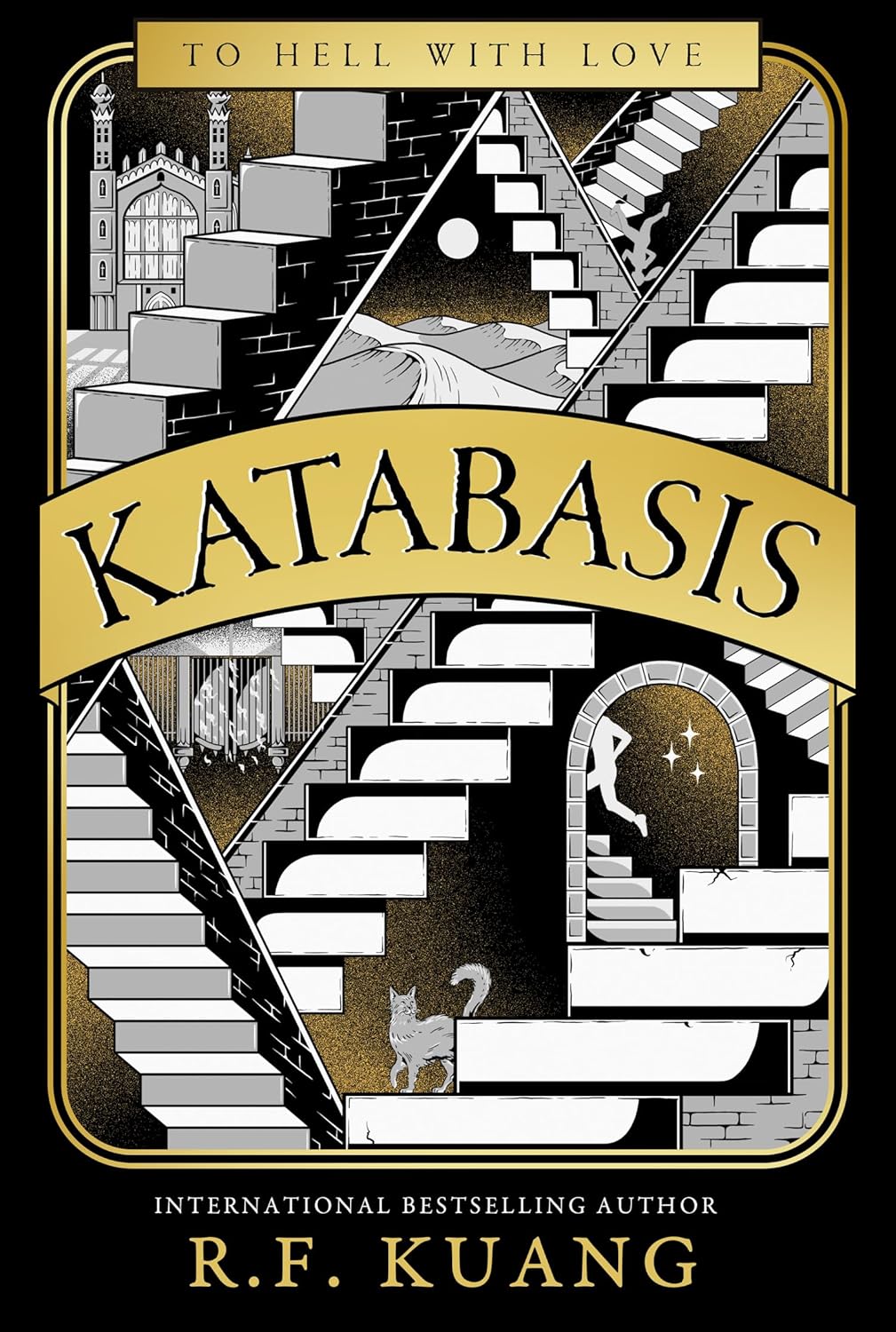
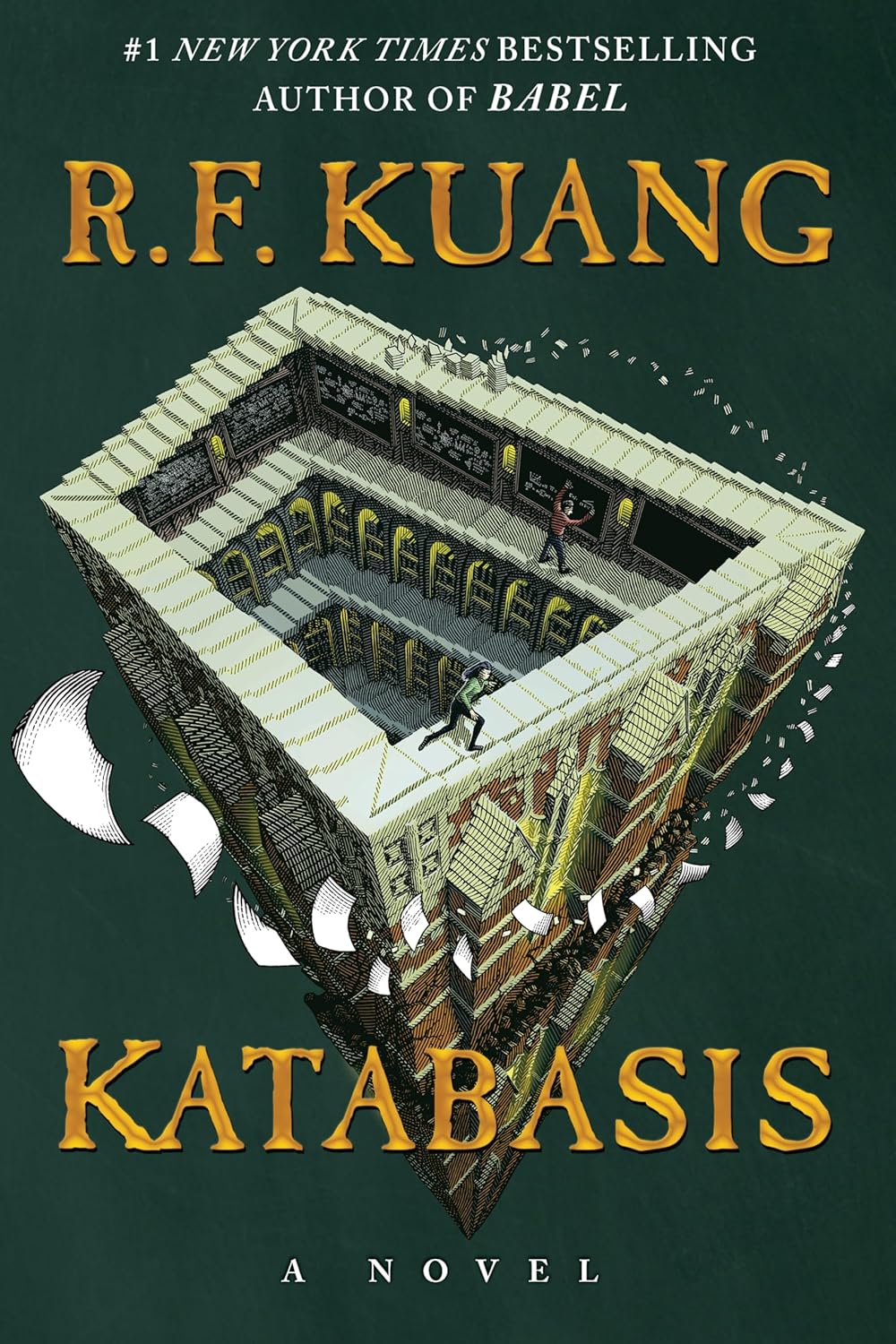
Katabasis by R. F. Kuang

Publisher: Harper Voyager (Trade Paperback – 26 August 2025)

Series: Standalone/Book One

Length: 549 pages

My Rating: 4.5 out of 5 stars

Amazon

Acclaimed author R. F. Kuang produces one of the more distinctive and intelligent fantasy novels of 2025 with her elaborate and compelling Katabasis.

Rebecca Kuang, who mostly goes by R. F. Kuang, is a very interesting author who has been making a big impact on the fantasy scene in recent years.  Known for her elaborate and dark fantasy novels that often feature strong Chinese inspiration, Kuang has written some intriguing novels over the years, including her bestselling Poppy War trilogy, as well as the standalone novels Babel (also released as Babel, or the Necessity of Violence), and her contemporary satirical novel Yellowface.  I have been meaning to read something from Kuang for a while, especially after seeing a lot of love for her works online, so I made sure to seek out a copy of her 2025 release, Katabasis.  An intricate read with some excellent academic twists, Katabasis was a compelling novel with a very unique plot.

Plot Synopsis:

Dante’s Inferno meets Susanna Clarke’s Piranesi in this all-new dark academia fantasy from R. F. Kuang, the #1 New York Times bestselling author of Babel and Yellowface, in which two graduate students must put aside their rivalry and journey to Hell to save their professor’s soul—perhaps at the cost of their own.

Katabasis, noun, Ancient Greek:

The story of a hero’s descent to the underworld

Alice Law has only ever had one goal: to become one of the brightest minds in the field of Magick. She has sacrificed everything to make that a reality: her pride, her health, her love life, and most definitely her sanity. All to work with Professor Jacob Grimes at Cambridge, the greatest magician in the world.

That is, until he dies in a magical accident that could possibly be her fault.

Grimes is now in Hell, and she’s going in after him. Because his recommendation could hold her very future in his now incorporeal hands and even death is not going to stop the pursuit of her dreams….

Nor will the fact that her rival, Peter Murdoch, has come to the very same conclusion.

With nothing but the tales of Orpheus and Dante to guide them, enough chalk to draw the Pentagrams necessary for their spells, and the burning desire to make all the academic trauma mean anything, they set off across Hell to save a man they don’t even like.

But Hell is not like the storybooks say, Magick isn’t always the answer, and there’s something in Alice and Peter’s past that could forge them into the perfect allies…or lead to their doom.

Katabasis was an outstanding novel from Kuang, who presents a highly academic and moving journey into the underworld.  Featuring a very distinctive style, Katabasis was a thoughtful and intricate fantasy read with some outstanding character moments, which really draw you in with its drama and complexity.

Kuang envisions a compelling standalone narrative for Katabasis, which combines an intelligent adventure into the afterlife with some great character-driven story elements.  Following protagonists Alice and Peter as they journey together into Hell to recover the soul of their recently deceased professor, Katabasis has a bit of a slow start to it, primarily due to the highly theoretical nature of this world’s magic system and the various ideas of Hell.  Kuang is forced to explore a lot of this in the early part of the book, but it serves as an excellent basis for the rest of the novel, especially when combined with hints at the troubled relationship between Alice and Peter, as well as their own dark histories.  Once the story gets going in earnest, it proves to be a lot more exciting, especially when exploring the different planes of Hell, and Kuang soon adds in some other dark threats that further imperil the protagonists.

The second half of Katabasis is particularly good, as the protagonists continue their journey down the various levels of Hell, now being hunted by murderous constructs and their sinister masters.  Kuang really amps up the risk factor for this part of the book, and there are some great scenes here, including one that completely changes the trajectory of the narrative.  At the same time, the author fully reveals the traumatic pasts of both protagonists, which really alters the way you see them and their motivations for undertaking this adventure.  Following some dark tragedy and excellent searches for self-discovery amongst the other trapped souls in Hell, the big threat of the story is eventually resolved, and the goal of the protagonists is reached.  Kuang does an excellent job wrapping the book up, with the final decision of the main protagonist serving as a great full-circle moment for the entire proceeding plot.  I quite liked the hopeful note that the author left her fantastic novel on, which I felt was quite fitting and allowed the reader to come away very satisfied and moved.

I felt that Kuang utilised a very distinctive, and personal style for Katabasis, that really helped her to make the classic journey into Hell story her own.  A powerful, character-driven book, Kuang brings together a great adventure narrative that is constantly enhanced by a range of academic elements and the author’s own complex magick system.  There is a substantial dive into both the concept of Hell, and the study of the novel’s archaic magick, and Kuang cleverly dives into the deep detail of both as the book continues.  Fans of Dante’s Inferno and other classic texts about Hell will love the constant references and comparisons that occur throughout the course of the story, and it was fun to see the differences between what the protagonists expect and what they experience.  I felt that this mixture of homages and the author’s own imagination was very impressive, and the author went above and beyond to set up this setting and her magick system, including with several great maps of Hell that appear in the version of the book I got.  I also felt that the author’s compelling dive into the torture that is advanced academia and the various pressures, lies and rivalries that formed was particularly gripping.  Kuang clearly adds a lot of her own experiences with academia, especially in the elite British universities, into the protagonist’s past, and it gave a gritty bit of academic realism to the plot.  It does need to be said that Kuang made her novel a little too complex at times, and there are a few sections which drag as the protagonist’s dive into obscure lore, elaborate equations, or complicated logic.  Still, for the most part Katabasis was a well-written and addictive standalone read, that will really appeal to established fans of the author.

I think that another major highlight of Katabasis was the excellent character work that Kuang featured throughout the plot.  Focused primarily on the main characters of Alice Law and Peter Mudoch, both protagonists are initially portrayed as brilliant and highly ambitious academics whose journey into Hell only seems to enhance their own rivalry.  However, as the book continues, Kuang does a masterful job of diving deeper into their backstories and showcasing more of their pasts to give their current adventure and motivations more meaning.  It turns out that both characters are a lot more damaged than you’d initially realised, due to their own experiences in academia, their interactions with their supervisor, and the crippling rivalry that has formed between them.  The slow reveal of the full extent of their damage, which also includes both characters reevaluating previous information and conclusions they’ve made, is very impressive, and each revelation adds some greater emotional heft to the plot.  Combine that with the gradual evolution and repair of the relationship between Alice and Peter as the book continues, and this was quite a powerful journey for the two protagonists, especially as they experience even more tragedy, betrayal and uncertainty in Hell.

While most of the book is focused on Alice and Peter, I do have to also highlight how well Kuang set up supporting character Professor Jacob Grimes in the Katabasis.  Despite being dead and appearing mostly in flashbacks and the memories of the protagonists, Professor Grimes serves as an influential figure in the plot, primarily for the impact he had on his various students.  Initially shown as a brilliant and supportive academic, the flashbacks shown throughout the course of Katabasis soon reveal a more malicious side to Grimes, which really changes your view of the protagonists’ journey to save him.  Kuang’s slow burn reveal of all of Grimes’s flaws and manipulation was just perfect, and I loved how your perception of this shadowy figure the plot is chasing changes the more honest and open the protagonists become.  The full extent of Grimes’s actions, and his students’ complicated feelings for him, is such a compelling part of the Katabasis’s plot, and I liked how well it’s tied into the larger problems with academia.  I really do appreciate how well Kuang set up Professor Grimes as a dark supporting figure in this book, whose influence has major implications to the story, even if he only actually appears in the present adventure once.  Throw in some other intriguing denizens of Hell, including a twisted family doing their own dark experiments on the dead in brutal fashion, and Kuang really showcased her ability to write complex and damaged characters in Katabasis.

Overall, Katabasis was a highly compelling and deeply intricate fantasy novel that was a distinctive highlight of the 2025 reading year.  I certainly got the full experience of Kuang’s intriguing imagination with this elaborate book, and the resulting story was an interesting take on dark academic fantasy.  Clever, moving and full of some unique features, Katabasis was an outstanding read that is really worth checking out.

Amazon

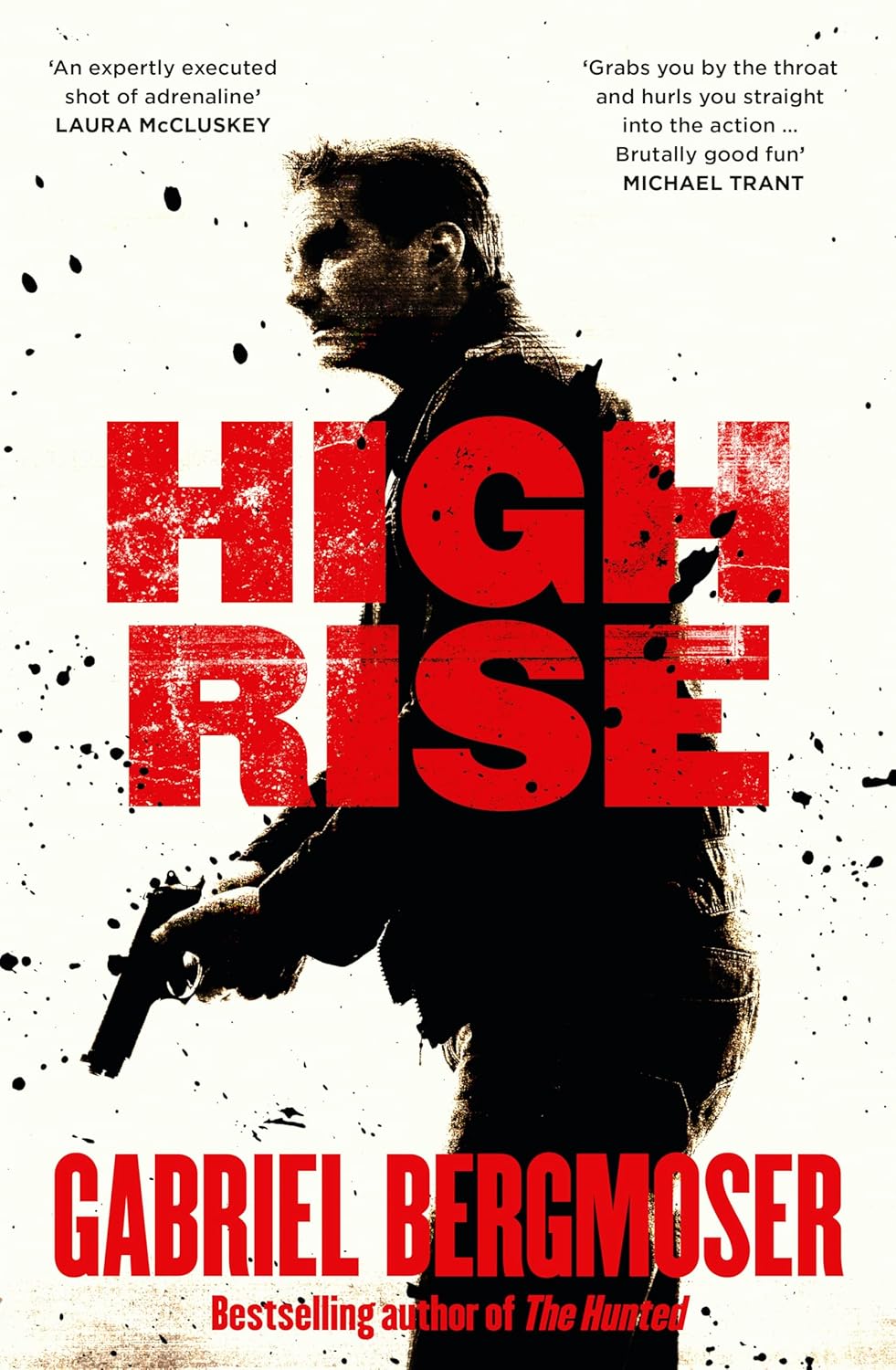
High Rise by Gabriel Bergmoser

Publisher: Harper Collins (Trade Paperback – 1 August 2025)

Series: Standalone/The Hunted spin-off

Length: 309 pages

My Rating: 4.5 out 5 stars

Amazon

Prepare for carnage as rising Australian author Gabriel Bergmoser presents a high-octane and beautifully brutal thriller, High Rise, an outstanding and deeply entertaining novel with some real intensity behind it.

Gabriel Bergmoser is an intriguing author who has written some compelling and exciting pieces of Australian fiction over the last few years.  Originally known more for his work as a playwright, Bergmoser has been more active as a thriller author in recent years with his Hunted books, as well as the standalone novel The CaretakerHigh Rise serves as continuation of Bergmoser’s previous Hunted books, The Hunted and The Inheritance, as well as some of the author’s separately released Audible Originals, and follows a supporting character from The Inheritance on his own brutal adventure.

Plot Synopsis:

After a year of searching, rogue ex-cop Jack Carlin has finally found his estranged daughter, Morgan, holed up in the top floor of a rundown, grimy high-rise building. The trouble is, Jack’s unconventional policing and information-gathering methods in the past has made him some serious enemies. And what Jack doesn’t know as he heads into the building, intent on saving his daughter, is firstly, that Morgan doesn’t want to be saved – particularly not by him – and secondly, that the entire criminal underworld in the city are on their way too… There’s a bounty on his head, and they’re after his blood – and they don’t mind if Morgan is collateral damage.

As bounty hunters and gang members converge on the building, father and daughter are thrown into a desperate fight for survival through fifteen storeys of deadly enemies – with only each other to rely on. Die Hard meets The Raid, but the funnier, grittier Australian version. Fast, furious and ferocious, this is thriller writing at its nail-biting, unputdownable best.

Now that was a load of fun.  High Rise was a highly entertaining and relentlessly exciting Australian novel, as Bergmoser unleashes one of his dangerous protagonists on a horde of criminals.  Featuring a continuous blast of action, violence and family drama, High Rise was an amazing and addictive novel that I absolutely powered through.

I had a great time reading the ultra-exciting narrative featured within High Rise, especially as Bergmoser eagerly created an Australian thriller in the same vein as some classic over-the-top action films.  Starting off fast with an effective reintroduction to protagonist Jack Carlin, Bergmoser sets up the main points of the narrative extremely well, and you soon get stuck into the main part of the book, with Jack finding himself trapped on the top floor of a high-rise building filled with petty criminals, bikies, thugs and even some professional hitmen.  What follows is an entertaining blitz of outrageous and brutal action as Jack, and his daughter Morgan, attempt to fight their way downstairs.

Unsurprisingly for an action-packed brawl against criminals and killers, the plot of High Rise moves at a very quick pace.  Bergmoser does a good job splitting the narrative between the two main protagonists, Jack and Morgan, which allows the author to dive into their strained relationship, as well as their own complicated pasts.  Thanks to some creative splitting up, both characters have some interesting solo moments in the middle part of the novel, which also features some unlikely allies.  The climax of the story comes on fast, and there are a couple of good twists there, as well as the appearance of a figure fans of Bergmoser will be very familiar with.  While the identity of the main antagonist of the novel isn’t too surprising, some of the supporting villains were quite fun, especially as the author made good use of the character history he introduced in this novel.  Everything leads up to an intense and emotionally charged finale, which features even more over-the-top action for the reader to enjoy, including some very unique weaponry for an urban Australian setting.  The conclusion of the High Rise was quite poignant and served as a good wrap up to the character development Bergmoser had been exploring throughout the book.  This was an overall exciting and intense narrative that has a lot of great moments for action fans.

Bergmoser did a great job of showcasing his action-packed story throughout High Rise, and this proved to be a very entertaining and addictive read as a result.  The many, many fight sequences I have already gushed about are well-written, and readers can easily visualise these brutal battles and over-the-top sequences thanks to Bergmoser’s descriptive style.  The author also successfully kept up his frenetic pace the entire way through, which allowed me to easy power through this book quickly.  There is a certain level of humour to High Rise, especially with a range of clueless goons and other entertaining characters, and things do get a little ridiculous at times.  This bit of comedic charm is well balanced by the deeper personal issues of the two protagonists, whose dysfunction is further showcased by various flashback sequence, which Bergmoser works into the plot without slowing the pace of the book down.  As such, there are no impediments to powering through this book quickly, and I guarantee most readers will knock this off in only a few sessions.

As I mentioned at the start of the novel, High Rise serves as an extension to the author’s Hunted series.  The protagonist has previously appeared in some of Bergmoser’s previous novels and audiobook releases, most prominently The Inheritance, while another of the author’s protagonists is reintroduced later in the novel.  Despite being part of a larger series, any reader interested in checking out High Rise should be able to follow the plot of this novel without any issues.  Indeed, I personally haven’t had the chance to read Bergmoser’s previous books, and I was able to enjoy High Rise quite easily.  While there are references to previous events from the series, and the author is a little cagey at first about the protagonist’s connections to Maggie, the main character of The Hunted and The Inheritance, Bergmoser quickly fills in any necessary gaps with his accessible writing, and new readers should be able to follow along easily.  As such, High Rise is a great book for any thriller reader, and indeed it works quite well as an introduction to Bergmoser and his writing style.

While I did decide to read High Rise mainly because of its fun-sounding plot and the excessive violence it promised, I came away appreciating the great character work that Bergmoser featured.  Most of the book follows main protagonist Jack Carlin and his daughter Morgan, both of whom have a troubled past and a tense relationship with each other.  The author does an excellent job diving into their complex personal history, especially with the novel’s regular split in perspective, and you get some intriguing insights into their pasts, much of which impacts their current motivations and reactions.  This includes Carlin’s regretful history as a corrupt cop, much of which impacted his relationship with Morgan, who herself suffered a dark childhood due to her mother, as well as her own alcohol induced mistakes.  These character elements become cleverly entwined with the main narrative, and the antagonism and mistrust between the two added to the drama of the plot.  I think that Bergmoser handled this troubled relationship very well, and it was a great highlight of High Rise’s plot, especially attempt to address it in their own troubled way.

While High Rise is primarily focused on Jack and Morgan, several other characters do get their moment to shine.  This includes Maggie, the protagonist of several of the author’s previous books, who has a more supporting role in this novel after appearing later in the plot.  Due to her lack of perspective chapters, Maggie does have less of an impact than the author’s previous novels, but her intense personality and unique friendship with Jack ensure she stands out.  Other key figures, including a Swedish assassin and the violent former member of a bikie club that Jack and Maggie previously destroyed, add some interesting flair to the plot, especially when some unlikely alliances form, and both had some memorable histories and appearances here.  Throw in an army of low-level thugs and criminals who also attempt to claim the bounty on Jack, including some who have history with him, and High Rise features a very entertaining cast of characters, and it was very fun to see them try to kill each other.

Gabriel Bergmoser continues to produce extremely thrilling and entertaining Australian crime fiction content with his latest novel High Rise.  A relentlessly brutal novel, loaded with action, bloodshed and some fantastic emotional depth, High Rise was a great read that I had an amazing time getting through.  Highly recommended!

Amazon

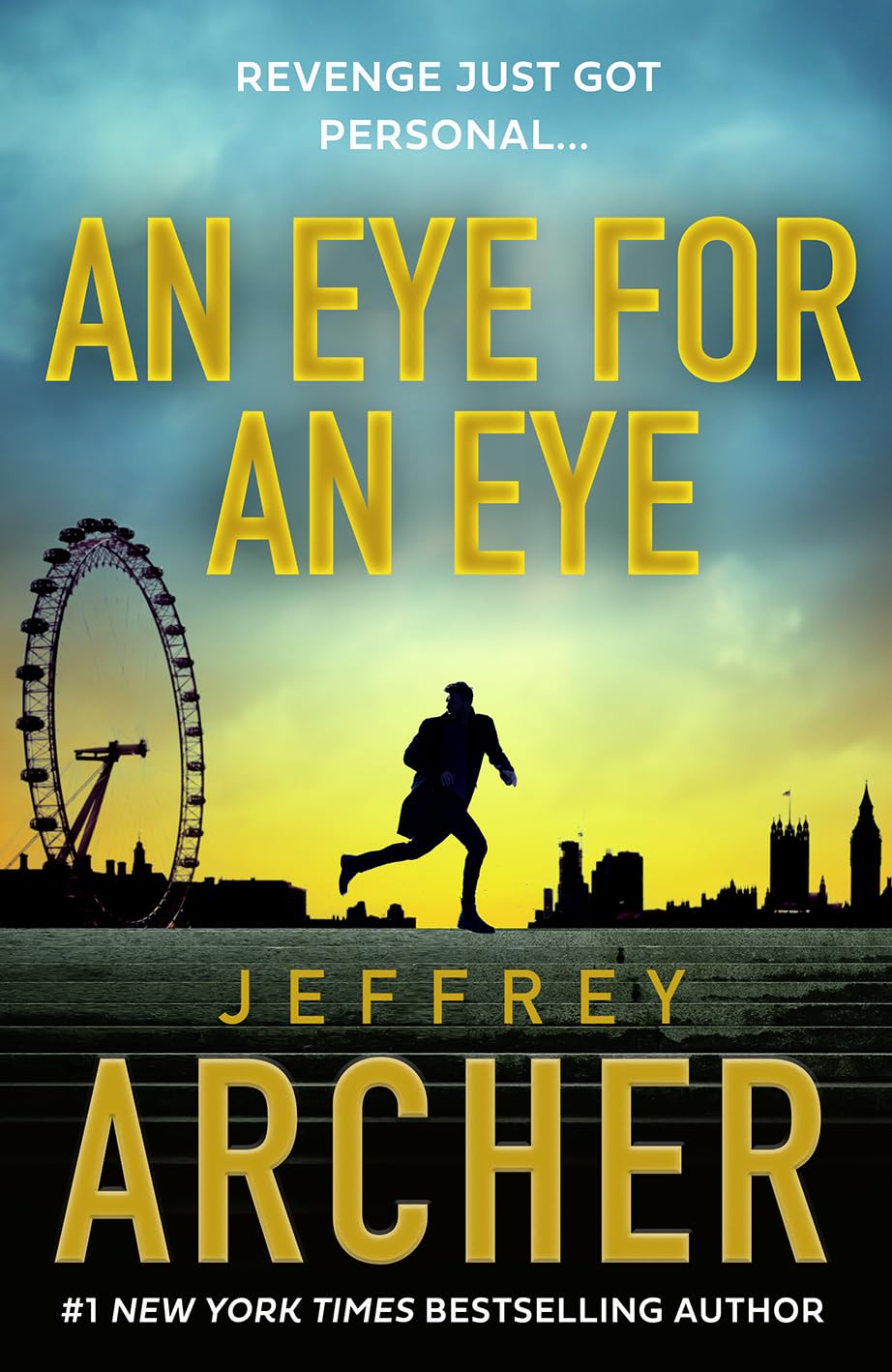
Quick Review – An Eye For An Eye by Jeffrey Archer

Publisher: Harper Collins (ebook – 24 September 2024)

Series: William Warwick – Book Seven

Length: 384 pages

My Rating: 4.5 out of 5 stars

Amazon

One of the world’s most interesting and well-known authors, Jeffrey Archer, returns for the penultimate entry in his long-running William Warwick series, An Eye For An Eye.

Well-known British figure Jeffrey Archer has carved an intriguing niche for himself as a crime fiction author over the last few decades.  Known for his compelling and fast-paced crime fiction reads, which often contain a historical element to them, Archer has written a huge body of work, including his Kane and Abel books, his Clifton Chronicles and standalone novels such as Heads You Win.  His most recent focus has been his entertaining William Warwick series, which follows the titular protagonist as he rises the ranks of the Metropolitan Police over a period of years while solving a series of complex crimes and facing off against his dastardly nemesis.  I have had a brilliant time with several books in this series, including Nothing Ventured, Hidden in Plain Sight, Turn a Blind Eye and Traitors Gate, all of which have proven to be quite exciting and enjoyable.  As such, it was an easy choice to grab the latest entry in the series, An Eye For An Eye, which had an excellent plot behind it.  The seventh book in the series, An Eye For An Eye is the second to last William Warwick book, and Archer keeps the excitement going all the way to the end.

Plot Synopsis:

In one of the most luxurious cities on earth…

A billion-dollar deal is about to go badly wrong. A lavish night out is about to end in murder. And the British government is about to be plunged into crisis.

In the heart of the British establishment…

Lord Hartley, the latest in a line of peers going back over two hundred years, lies dying. But his will triggers an inheritance with explosive consequences.

Two deaths. Continents apart. No obvious connection.

So why are they both at the centre of a master criminal’s plot for revenge?

And can Scotland Yard’s William Warwick uncover the truth before it’s too late…

The ultimate race-against-time is about to begin.


Archer pulls together another compelling, intense and exciting story for An Eye For An Eye that combines an intriguing new storyline with some of the series’ existing plotlines.  Starting off with a murder in Riyadh that throws the British government into turmoil, the plot sees William Warwick and his team drawn into an international concern, as one of their team members, the roguish Inspector Ross Hogan, is recruited to save a British government delegate and the heir to the Hartley family, who has been framed and falsely imprisoned for murder.  However, things become even more problematic when the protagonist’s old criminal rival, Miles Faulkner, becomes involved with the plot, desperate to not only have his revenge against Warwick, Hogan, and their loved ones but also steal a valuable letter from the Hartley family.

What follows is the usual game of cat and mouse between the protagonists and the vengeful Faulkner, as Warwick’s team attempts to counter the criminal’s various ploys, while also trying to find evidence that will allow them to put him away again.  This combines nicely with the larger storyline around the international conspiracy involving the imprisonment of the British delegate, and I liked the compelling back-and-forth twists as the protagonists doggedly try to stop Faulkner getting out on top.  There are some fun twists as we get towards the end of the book, and readers are treated to the usual fast-paced excitement that they have come to know and appreciate over the course of the series.  Everything comes together nicely in a gripping cliffhanger conclusion as Archer lays the groundwork for the final book in the series, which looks set to be the big showdown between the long-time series rivals.

As with the previous books in the William Warwick series, An Eye For An Eye was a really entertaining and fast-paced read that kept dragging the reader along with it.  Featuring a wonderful blend of intrigue, schemes, complex thrills and interesting character work, An Eye For An Eye was very fun and you honestly have a hard time putting down the constantly moving story.  Archer once again brings back his eccentric group of protagonists, which include Chief Superintendent William Warwick, his boisterous family, the various key police officers he has teamed up over the years, as well as a fun collection of rogues and victims introduced in this plot.  Thanks to Archer’s use of quick-changing character perspectives, you get an interesting look at the plot from various points of view, which allowed for an intricate tale with a lot of moving parts to it.

Out of all these characters, my favourite has to be the main series antagonist, Miles Faulkner, a master criminal and schemer who the protagonist has been feuding with since the very first novel.  Thanks to their lengthy history and many defeats, Faulkner is a little obsessed with Warwick, Hogan, and their colleagues and families, engaging in a series of plots against them that range from killing their key witness to trying to get Warwick’s wife fired from her gallery directorship.  While this rivalry and the elaborate means that Faulkner utilises to spite and try to destroy the protagonists is very over the top, especially as it has been going now for seven books and over 20 in-series years, it is frankly very entertaining, and I love how much energy Archer puts into writing Faulkner as the ultimate gentleman criminal.  The back-and-forth schemes and ploys between Faulkner and the protagonists are always a highlight of any book in the series, and An Eye For An Eye showcases this perfectly, delighting both new readers and those already invested in the long-running feud.  Indeed, the conclusion of this book brings this into focus perfectly, and I cannot wait to see how they finish off this feud in the final William Warwick book later this year.

Jeffery Archer once again impresses with his exciting and captivating William Warwick novel, An Eye For An Eye.  Setting his fun protagonists on a compelling new crime fiction adventure while also featuring the author’s fantastic recurring villain, An Eye For An Eye had me hooked the entire way through, and it is so easy to sit back and enjoy this fantastic read.  A gripping and highly enjoyable novel, I look forward to seeing how Archer wraps up the series with his next and final William Warwick book.

Amazon

Endgame by Sarah Barrie

Publisher: HQ (Trade Paperback – 1 November 2024)

Series: Lexi Winter – Book Four

Length: 398 pages

My Rating: 4.75 out of 5 stars

Amazon

Outstanding Australian author Sarah Barrie brings her dark and powerful Lexi Winter series to a compelling conclusion with the exceptional novel Endgame.

Over the last couple of years, I have been really enjoying Australian author Sarah Barrie’s epic Lexi Winter crime fiction series.  One of the darker Australian series I have had the pleasure of reading, the Lexi Winter books follow a former vigilante turned police officer as she takes down some of the worst criminals in Sydney, including a deadly paedophile ring.  This series started with the amazing read, Unforgiven (one of my favourite Australian books of 2021), and continued with the excellent follow-ups Retribution (one of my favourite Australian books of 2022) and Vendetta (one of my favourite Australian books of 2023).  Due to this, Endgame has been one of my most anticipated books of 2024, and I was very eager to see how this novel would unfold, especially as it was marketed as the final book in the Lexi Winter series.

Former vigilante hacker Lexi Winters finally has her life together.  Now a decorated police officer studying to take her detective exams, Lexi’s biggest challenge is balancing her career with her hectic personal life, especially when it comes to looking after her ward, the former runaway Cait.  However, despite her best efforts at normalcy Lexi can never truly relax, especially as she knows her nemesis Vaughn is waiting to get revenge on her.

When a series of brutal murders begins around Sydney, Lexi finds herself brought aboard when it becomes clear they are connected to a resurfaced Vaughn.  Determined to prove that he is better than her, Vaughn challenges Lexi to a very public game of murder.  Five people will be killed by the end of the month, but if Lexi can identify and save the final victim, Vaughn will turn himself in.

With the eyes of nation on them and public support seeming to lie on Vaughn’s side, Lexi finds her sanity tested like never before.  The more she digs into Vaughn’s dark crimes, the further she finds herself slipping over the edge, especially as she begins to see strange figures and ghosts wherever she goes.  With Vaughn’s attacks on her becoming even more personal and her own colleagues losing faith in her, Lexi has no choice but to keep playing her nemesis’s twisted game, even if it will lead to her death.  But Lexi has come too far to lose now, and she will do whatever she must to force an endgame between her and Vaughn.

Barrie continues to showcase why she is one of Australia’s most compelling crime fiction authors with this shocking and powerful final Lexi Winter novel.  Featuring a complex and captivating story loaded with dark moments and intense character work, Endgame was an exceptional novel that I honestly could not get enough of.

Endgame has an excellent and layered narrative behind it that not only stands on its own but helps to bring the entire Lexi Winter series to a powerful end.  Starting off with an interesting and horror-esque introduction that initially seems detached from the main plot, you quickly get drawn into the main narrative when Lexi discovers that her old nemesis, the long-feared Vaughn, has returned to finally get his revenge on her.  Barrie ensures that the story gets very addictive very early as you are drawn into the villain’s challenge, stop him murdering five people and he will turn himself in.

The resulting story moves at a fast and powerful pace as the protagonists do their best to try to find Vaughn and uncover his murders, all while he seems to be one step ahead of them utilising the media to his advantage.  The author keeps increasing the stakes for this main case again and again as Lexi is attacked close to home (literally and figuratively), and she finds herself a desperate mess as well as a constant target by the public.  At the same time, Endgame features a parallel plot involving the mysterious deaths of several teenagers that appear to have been committed by a vengeful spirit.  This secondary storyline, whilst initially a bit odd in the wider context of Endgame’s main narrative, works pretty well, and I liked the unique directions it helped to take the plot, and it links into the main case very well by the end.  Barrie ends up producing quite a fascinating and complex mystery for the protagonists to unfold and I loved some of the intriguing twists that unfold as a result.  While I was able to predict a few things, many of the major reveals were pleasantly surprising and I really appreciated the way in which Barrie layered the relevant clues and hints throughout the earlier plot.  Everything leads up to the big conclusion, which constantly has you on the edge of your seat and serves as a fitting finale to this amazing Australian series.

As with the previous entries in the Lexi Winter series, Endgame is a particularly intense character-driven murder mystery with a very gritty edge to it.  Making good use of its Australian urban setting, Endgame features a powerful plot that both stands on its own, while also serving as a compelling conclusion to the rest of the series.  While Barrie provides more than enough background in the main plot to allow new readers to come in and read Endgame as a standalone novel, for the most part readers are advised to read the rest of the books in the series first, especially as that allows you to get the full emotional impact of the book thanks to the great conclusion of several ongoing storylines and character arcs.

The overall narrative of Endgame is complex and moving, and I appreciated how it was told through several intriguing character perspectives that allowed for a multi-layered view of events.  The way in which the two separate murder plotlines and the multiple character arcs are brought together works extremely well, and Barrie ensures readers are constantly left guessing about how events are going to unfold.  The author also keeps things very dark, as not only are there multiple references to rape and brutal murders but the protagonist endures a range of attacks on herself and those closest to her that are guaranteed to shock most readers.  I appreciate how Barrie doesn’t hold back when it comes to highlighting the impacts of these various crimes, although I can imagine some readers may have a hard time with it.  Throw in some interesting modern commentary about how manipulation of social media and the tabloids allow monsters to become heroes to certain people, and Endgame proved to be one of the more intense Lexi Winter entries, but one that perfectly fits the series’ uncompromising themes and content.

One of the best things about Endgame was the multiple intriguing characters who the plot was set around.  The most prominent of these is series protagonist Lexi Winter, who has had a unique and damaging storyline throughout the series.  However, thanks to the help of her friends and family who she has learnt to let in, Lexi has managed to pull her life together to where it is now.  While Barie does continually make Lexi way too combative and unreasonable, for the most part she is a great protagonist to follow, and I have really appreciated seeing her grow throughout the series.  It was particularly moving to see her take on the role of mentor and guardian in this final book for the runaway Cait, especially as she seeks to help her ward avoid the same mistakes she made when younger.  There is also a good end to a long-running will-they, won’t-they romance arc, which I felt got handled well and which allowed for some additional stakes for the plot.  Much of Endgame revolves around Lexi trying to hold onto her new happiness when her enemy reappears, and the resulting battle to stay in control and not give in to her old habits makes up much of the books dramatic core.  I felt that Barrie did an outstanding job showcasing her protagonist’s battle for self-control in the face of great adversity and trauma, and the author made sure to really build on the dark events of the previous novels.  As such, you get a compelling bit of character work in Endgame around this distinctive and damaged protagonist, which really helps to turn this final entry into something extremely moving.

In addition to Lexi, Endgame also features an array of compelling supporting characters, which includes a mixture of established figures from the previous books, and several new characters who come into this story for this final entry.  Most of these characters proved to be quite interesting, and while a couple, such as Olivia, prove to be quite hard to like in a detrimental way to the plot, for the most part they add a lot to the book.  Highlights for me include Lexi’s ward, Cait, who proves to be a fun addition to the story, especially as she serves as a great foil to the now more serious Lexi.  Lexi’s biker associates were also interesting, especially as they allowed for some memorable interactions with the various police characters, while a new police bodyguard for Lexi ended up being a great addition to the plot.  However, it’s the villains of the narrative who really shine here.  This includes a group of wild teenagers, whose dark behaviour dives into a certain modern societal problem.  Another hidden antagonist added some interesting horror flair to the book, and I appreciated how well Barrie inserted them into the plot.  Finally, the main villain, Vaughn, was such a brilliant and impactful overarching antagonist that you could not wait to see get taken down.  Barrie has used Vaughn as an intimidating bogeyman figure since the first Lexi Winter book, and his long-awaited reappearance here really did not disappoint, especially as he creates a cult of personality around himself as he terrorises the protagonist.  Vaughn proves to be a particularly despicable figure, driven by his own ego to finally beat Lexi, and his nefarious use here was a key part of why Endgame was so impactful.

Overall, Endgame was a deeply captivating and impressive piece of Australian crime fiction that I could not get enough of.  Sarah Barrie did an excellent job bringing her Lexi Winter series to a powerful end, and Endgame’s unique mystery and compelling high stakes really helped to drag readers in.  This was one of the better pieces of Australian fiction this year, and I cannot recommend this series enough to those looking for a darker crime fiction read in the Australian setting.  While I am sad that the Lexi Winter series is over, I am glad we got such an impactful final entry, and I look forward to seeing what Sarah Barrie writes next.

Amazon

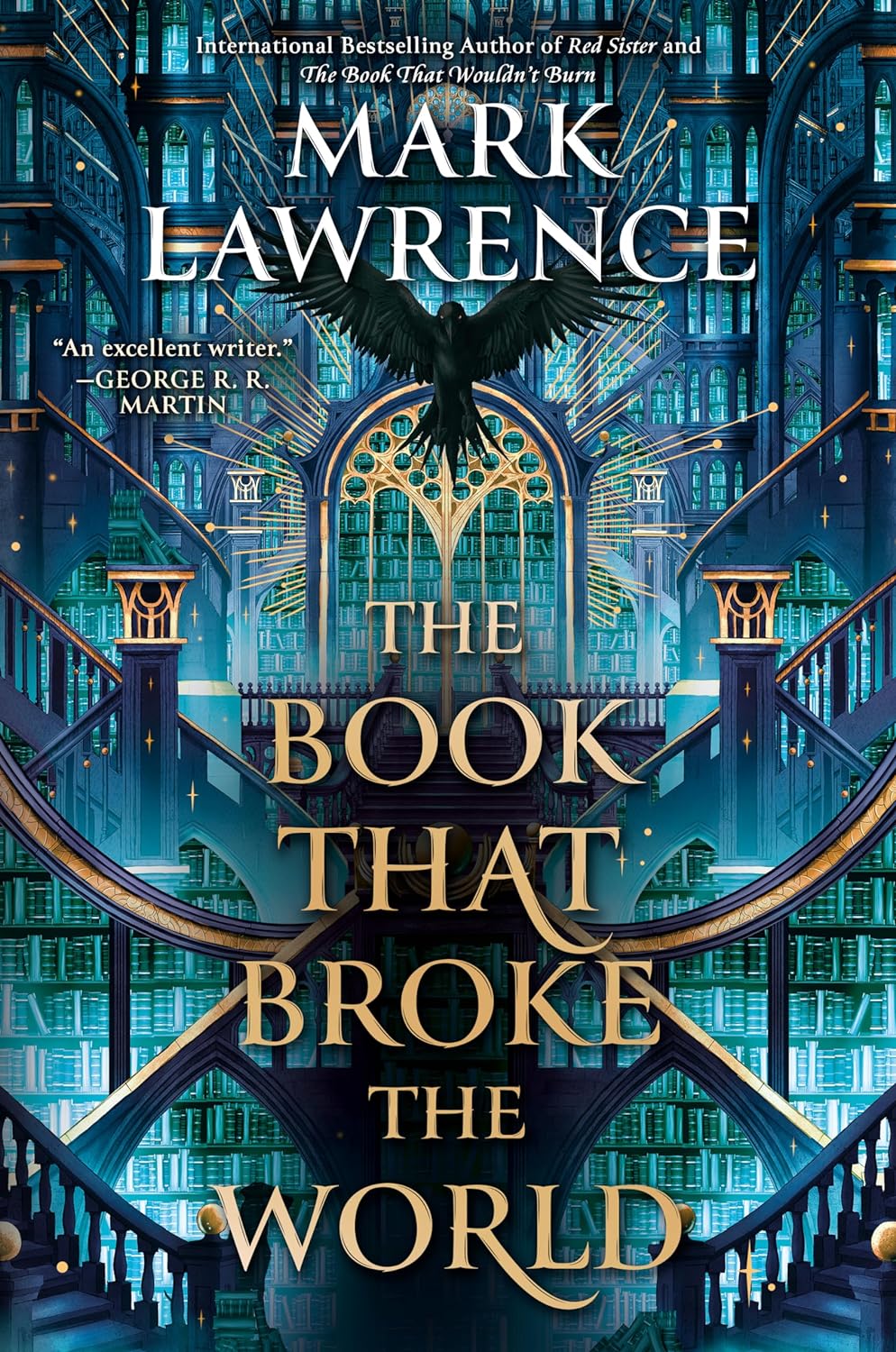
Quick Review – The Book That Broke the World by Mark Lawrence

Publisher: Harper Voyager (Trade Paperback – 9 April 2024)

Series: The Library Trilogy – Book Two

Length: 369 pages

My Rating: 4.5 out of 5 stars

Amazon

The master of elaborate fantasy fiction continues his outstanding and intricate Library trilogy with the captivating novel, The Book That Broke the World.

Mark Lawrence is an exceptional author who has been wowing fantasy and science fiction fans since 2011 with impressive reads that borrow heavily from both genres.  Some of his better-known series include the Broken Empire novels, the Book of the Ancestor trilogy and The Book of the Ice trilogy (which includes The Girl and the Stars and The Girl and the Mountain).  His current body of work, the Library trilogy, might be his most ambitious series yet as he envisions a complex and intense story of hope, discovery and secrets within an impossible library that bends time, reality and the lives of its many alien inhabitants.  The first book in the series, The Book That Wouldn’t Burn, was an epic read that told the story of Evar and Livira, two teenagers brought to the library in very different circumstances, who work to uncover its many mysteries.  This was such a great read, especially as Lawrence loaded in a particularly clever central twist that blew my mind, and The Book That Wouldn’t Burn ended up being one of my favourite books of 2023.  As such, the sequel, The Book That Broke the World, was one of my most anticipated reads for 2024, and it ended being a very interesting second entry in this amazing series.


Plot Synopsis:

We fight for the people we love. We fight for the ideas we want to be true.

Evar and Livira stand side by side and yet far beyond each other’s reach. Evar is forced to flee the library, driven before an implacable foe. Livira, trapped in a ghost world, has to recover her book if she’s to return to her life. While Evar’s journey leads him outside into the vastness of a world he’s never seen, Livira’s destination lies deep inside her own writing, where she must wrestle with her stories in order to reclaim the volume in which they were written.

And all the while, the library quietly weaves thread to thread, bringing the scattered elements of Livira’s old life – friends and foe alike – back together beneath new skies.

Long ago, a lie was told, and with the passing years it has grown and spread, a small push leading to a chain of desperate consequences. Now, as one edifice topples into the next with ever-growing violence, it threatens to break the world. The secret war that defines the library has chosen its champions and set them on the board. The time has come when they must fight for what they believe, or lose everything.

The Library Trilogy is about many things: adventure, discovery, and romance, but it’s also a love letter to books and the places where they live. The focus is on one vast and timeless library, but the love expands to encompass smaller more personal collections, and bookshops of all shades too.


Lawrence had to achieve a lot in this sequel, as he needed provided a compelling follow-up to his previous novel while also advancing the story in a clever and unique manner.  I felt that he succeeded on all fronts, as The Book That Broke the World proved to be just as complex, intense and addictive as the first book in the series.  Set in the immediate aftermath of the shocking events of The Book That Wouldn’t Burn, The Book That Broke the World continues to follow star-crossed lovers Evar and Livira as they to try and find each other despite the insurmountable odds of existing in different times and being born different species who are constantly at war with each other.  This new novel once again sees them parted, primarily due to one of the characters being a ghostly presence in the other protagonists’ time, and they soon end up discovering new periods of history within the library as war, strife and a new dangerous race upset the balance of events.  There is a certain feeling of tragedy and frustration for much of Evar and Livira’s narrative, as the two remain separated from each other, and you really get invested in their story, as well as the lives of their associated supporting characters, especially as the blending of timelines leads to some new interactions.

While it was great to continue to follow the adventure of the same main characters from the first book, the thing that made The Book That Broke the World’s narrative really stand out was the inclusion of new point-of-view protagonists whose additional narrative supported the unique story of Evar and Livira.  The first of these, Arpix, was a major secondary character in The Book That Wouldn’t Burn, and his use as a perspective protagonist here was very effective, especially as it allowed for a more measured view of some of the crazy events occurring throughout the book.  Arpix was a great character in this sequel, and I especially enjoyed seeing him interact with Evar and his family as Lawrence throws him into a delightful romance narrative with a very unlikely but entertaining figure.

However, it was the other additional point-of-view character who really turned The Book That Broke the World into something special, as Lawrence introduced a seemingly new protagonist, Celcha, a slave in the city surrounding the library, who finds herself drawn to its secrets thanks to the machinations of her unusual brother and the ghosts that visit him.  A member of an alien species who came from a different period than Evar and Livira, Celcha has an intriguing narrative within The Book That Broke the World, as she tries to escape the manipulations of other visitors from the library while also trying to learn more about her species.  Celcha’s narrative is at first separated from the rest of the storylines, and it is initially unclear what role it is going to play in the larger plot.  However, the way that Lawrence ends up tying it together with the rest of the plot is very clever, especially as he utilises the uncertainty of when Celcha’s story fits into the overarching timeframe of the narrative to tie up many mysteries from the first book while weaving in a complex new player.  These intriguing, character driven arcs come together extremely well by the end of the story, and you will be amazed at how well Lawrence’s many complex puzzle pieces fit together by the end for an addictive and memorable narrative.

As with most of Lawrence’s writing, The Book That Broke the World is a very complex and lore-heavy book that requires readers to really pay attention to the many, many details loaded into the overall text of the plot.  This results in a very elaborate narrative as Lawrence is constantly working in compelling details about his intriguing universe while also layering down constant hints and plot points that will become relevant later for twists and other reveals.  Readers really get caught up in the majesty of the massive setting of the Library trilogy, and I really appreciated how Lawrence was capable of blending fantasy elements with more science fiction focused occurrences, like advanced technology and time travel.  I also loved how well the author used the various character perspectives to further enhance the scope of the narrative and the setting, and you must appreciate the mystery and scope of his ambitious setting and the elaborate narrative around it, especially when it comes to the many fascinating side characters and protagonists he works in the plot.

While this proves to be a great book to read, it isn’t always the easiest novel to follow, as Lawrence throws in a lot of high-concept moments and plot points that sometimes seem a little too complicated for the narrative’s own good.  Readers are also required to remember a lot of key details from The Book That Wouldn’t Burn to fully appreciate the scope and cleverness of this second entry in the series.  While I was able to recall most of the details of the first book (the recap at the front was quite helpful), I can imagine some readers might have a little more difficulty, especially if there is a big gap between reads in the series.  Despite that, I think it would be possible to jump into the Library series from this second novel, but you really would be better off reading The Book That Wouldn’t Burn first as it allows you to become much more invested in the various compelling character arcs and emotionally laden storylines.

Mark Lawrence continues to showcase his inventive and unique fantasy style with The Book That Broke the World.  Providing readers with a complex and compelling sequel to his first Library novel, The Book That Broke the World continues the intense narrative in some fantastic directions, while constantly working to make the plot even more intricate and powerful.  An outstanding piece of fantasy fiction that will keep you guessing to the end, The Book That Broke the World comes highly recommended, and I look forward to the fast-approaching final entry in the series that is out in a few months’ time.

Amazon

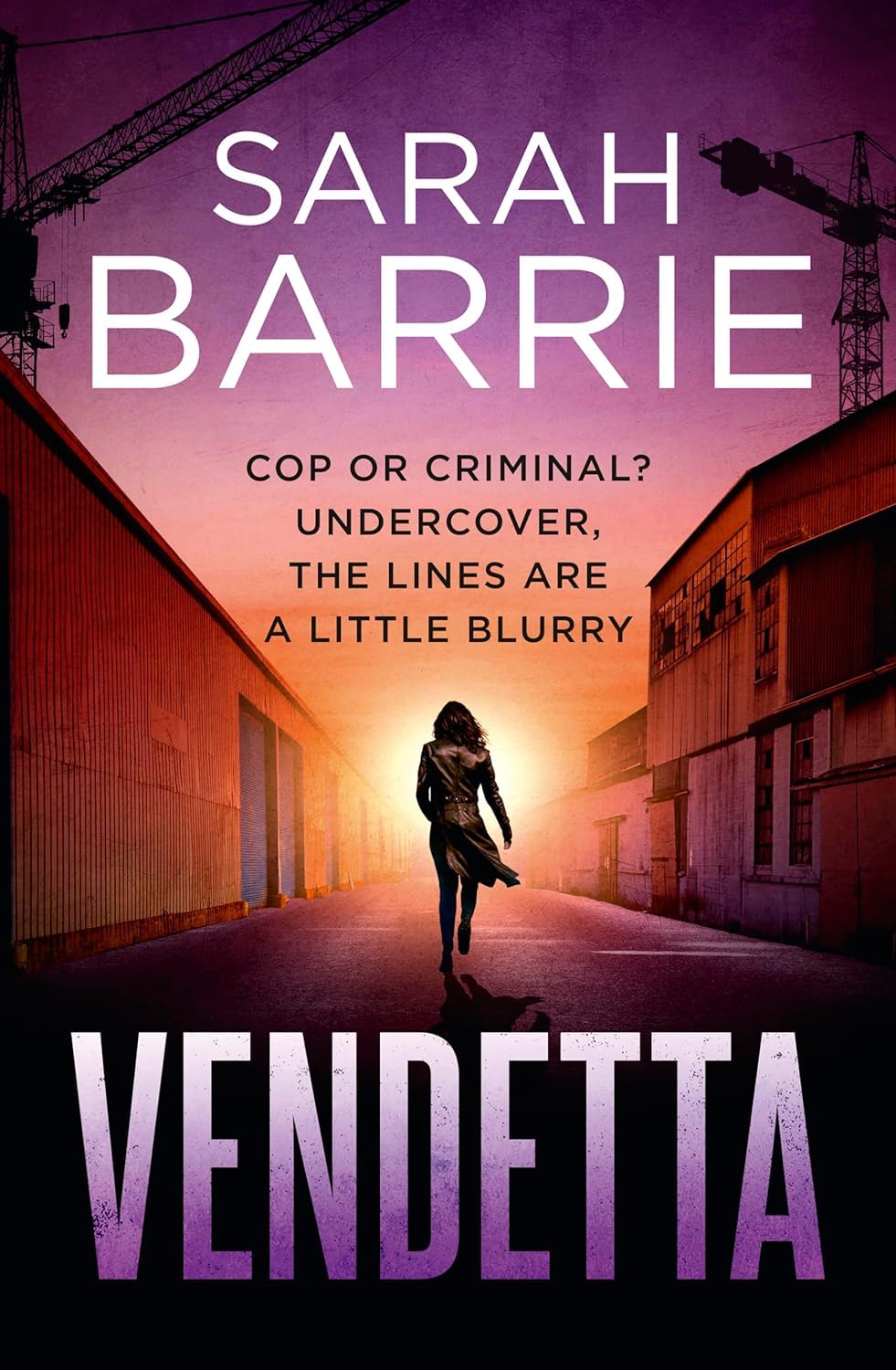
Vendetta by Sarah Barrie

Vendetta Cover

Publisher: HQ (Trade Paperback – 15 November 2023)

Series: Lexi Winter – Book Three

Length: 392 pages

My Rating: 4.5 out of 5 stars

Amazon

One of Australia’s most impressive crime fiction authors, Sarah Barrie, returns with the third book in her gritty Lexi Winter series, Vendetta.

For the last couple of years one of my favourite new Australian crime fiction series has been the Lexi Winter books by Sarah Barrie.  Set in Sydney and central New South Wales, the series follows Lexi Winter, a vigilante hacker who bears a massive and righteous hatred for child molesters.  The first book in the series, Unforgiven, saw Lexi attempt to take down a serial killing paedophile with connections to her complex past in a dark and bloody read.  This first book in the series served as a great introduction to Lexi and her police supporting characters, while also giving some fantastic insights into the events that formed her.  The second book, Retribution, saw Lexi as a newly initiated police officer who still broke the rules, especially when it came to hunting down her nemesis and destroying everyone who helped him.  The first two books in this series are so damn good, and I have been keen to see how this series would continue.  I recently got my wish as I just finished off the third book in the series, Vendetta, which proved to be an exceptional and dark read.

After taking down a notorious crime family, maverick rookie police officer and occasional vigilante hacker Lexi Winter is riding high.  However, a sudden phone call is going to take her down a dark path that will force her to revisit some of the worst parts of her past.  Two old friends she owes deeply are in trouble with a well-connected local motorcycle club, Chaos Reigns, and the only way Lexi can save them is to go undercover and pretend to work for the gang.

However, as Lexi begins her new assignment, she finds herself confronting a long-hidden ghost from her past.  Years ago, Lexi found a family with another outlaw motorcycle club, the Combat Crew, who harnessed her natural talent with computers and taught her every dirty trick she knows.  With members of Combat Crew making up the senior levels of Chaos Reigns, Lexi finds herself forced to deal with hardened criminals who know more about her troubled history than anyone else.  Forced to assume her old persona, Lexi works to once again earn their trust, but not everyone is convinced that she is on the level, especially when her connections with the police are discovered.  Worse, members of her police team are convinced that her undeclared past with Combat Crew makes her too much of a liability and soon Lexi’s loyalties are tested like never before.

But suspicions and secrets are the least of Lexi’s problems when she finds herself in the middle of a series of explosive attacks aimed at the members of Chaos Reigns.  The former president of Combat Crew, Arthur Cronin, has been released from prison and is more than willing to blow up anyone he feels was responsible for the murder of his wife and child.  Caught between deranged bikies and suspicious friends, Lexi must use all her skills to survive and save who she can.  But as the case takes more from her and more of her colleagues begin to turn on her, Lexi will be forced to finally decide where her loyalties belong and what side of the law she truly exists on.

Sarah Barrie continues to showcase why she is one of Australia’s fastest rising crime fiction stars with another powerful and gritty read.  Vendetta had one of the strongest plots of the entire Lexi Winter series so far, as not only did it present the reader with a great murder mystery/thriller plot but it also featured some intriguing character work.  Barrie does an excellent job of moving the plot of Vendetta away from the previous novels, and the interesting redirect towards a motorcycle club, a firm favourite villain organisation in Australian crime fiction, makes for an interesting change of pace.

The main story proves to be an intricate and compelling mixture of character driven narratives as the plot jumps across several excellent characters, most of whom were introduced in the prior novels.  The story primarily follows troubled protagonist Lexi Winter who is forced to go undercover in a motorcycle club to save some old friends.  Initially pretending to be a criminal, Lexi soon finds her cover blown and must work all sides as she tries to retain both the trust of her police colleagues and her old associates.  Having the protagonist forced back with the bikies who trained her was a masterstroke from Barrie, and I loved how conflicted it made both her and the reader, as you don’t know which way she’s going to turn.  Barrie really hammers home the importance of Lexi’s chapters by showing everything from her perspective in the first person, and you really feel connected to her adventure as a result.  The author makes things even more interesting by introducing a crazed bikie leader seeking revenge, internal police politics making things difficult for Lexi, and personal conflicts amongst the protagonists finally coming to the surface in some damaging ways.

The last half of Vendetta is probably the best.  After the great set-up at the start, Lexi is fully imbedded in Chaos Reigns and is committing all manner of criminal acts for them.  Watching Lexi at her worst was so damn powerful, especially as she appears to turn on her friends, and the resulting drama, anger and conflict made for some excellent reading.  You are constantly on your edge of your seat as the various story elements start to come together and the police start to close in on Lexi, Chaos Reigns’ criminal actions, and the mad bomber.  Things get pretty dark at times, and Barrie works in some big twists.  I saw a few of these coming, but the main reveals at the end were cleverly hidden and well set up in the first half of the book.  I loved the exciting and compelling end to the plot that allowed the protagonist to really shine and setting up some interesting future adventures.  Everything about this story was extremely awesome, and I really got invested in the high-stakes plot and the deeper personal aspects that resulted as well.

Despite the central crime being unconnected to the main series antagonist, Vendetta was a great Lexi Winter novel that masterfully moved the series and characters along.  I honestly think that the series needed a book with a different investigative target at this point in the ongoing narrative, and it builds up anticipation for the next interaction with the main villain in future entries.  The change in focus also allows Vendetta to be enjoyed more as a standalone novel than the second book, although I did notice a few minor plot gaps from the previous entries that Barrie could have done a better job exploring.  Barrie also continues some of the prevailing themes of the previous book, including comparisons between vigilantism and official police work, as Lexi tries to decide what side of the law best works for her to get her required revenge.  Naturally, those readers who checked out the prior novels are probably going to get a lot more out of Vendetta, and indeed it helped to explain certain character actions from the previous book that never quite made sense to me.  However, Vendetta is honestly a great and gritty piece of Australian fiction anyone can enjoy.

Once again, a major highlight of this series is the outstanding cast of compelling and damaged protagonists, each of whom has their own unique stories.  This is particularly true of the series’ titular protagonist, Lexi Winter, who Barrie has turned into quite a conflicted and complex figure.  We have already seen quite a lot of Lexi’s dark past in the previous books, especially in Unforgiven, and Vendetta builds on this extremely well, giving us insights into her criminal past, including the origins of her hacking abilities.  I loved how well this past was explored and featured throughout Vendetta, and it gave this already fantastic character some extra layers, especially it explores why she is more reliant to do things on her own then go through official channels.  This complex past with the motorcycle club ensured that Lexi had a particularly compelling and exciting storyline in Vendetta as she finds herself caught between her prior loyalties and the friends she made in the last two books.  As such, the reader spends much of the story unsure whose side Lexi is truly on, especially when key police characters turn against her, and I was constantly on the edge of my seat waiting to see how this would turn out.  I think Barrie resolved this extremely well, as Lexi’s strong moral compass always guided her along the right path, and I also enjoyed how parts of Lexi’s narrative come full circle, especially when she finds herself a protégé.  There is also some intriguing examination of Lexi’s view on relationships and love, much of which is impacted by her past, and I appreciated the compelling and mostly tasteful way that Barrie explored this.  I cannot wait to see how Lexi’s story continues in the future, as she is without a doubt the best character in the series.

In addition to Lexi, Vendetta features a brilliant and compelling cast of additional characters, many of whom have appeared in prior novels in the series.  Barrier introduces some great development and personal drama to surround these characters and it works to enhance the already powerful story.  Detective Senior Sergeant Finn Carson is once again very solid as the male lead of the book, and Barrie makes good use of his unique friendship/relationship with Lexi to build up some serious drama as he tries to work out her actions and motivations.  Lexi’s mentor, Detective Inspector Rachael Langly, also proves to be compelling figure in Vendetta, especially as, after going to bat for Lexi time and time again, it looks like her protégé has turned on her.  Finally, I was particularly happy that we got some further developments around Detective Sergeant Lisa “Cass” Cassidy.  Cass was an interesting inclusion in the second novel, although for some unexplained reason her main character attribute was being dismissive and hostile towards Lexi.  Barrie expanded on this in Vendetta, as Cass was revealed to have a hidden connections to Lexi’s past which is explored in this current case.  As such, Cass spends much of the book trying to hide her involvement with Lexi and her prior mistakes involving the bikies.  This adds some major fire and drama to the plot, and while Cass proves to be one of the more unlikable characters in the story Barrie masterfully paints her as a victim, and I deeply appreciated her journey and the deeper pain behind her actions.  Throw in a great collection of bikies and other criminals, including her old mentor and protector, and the intense personal connections in Vendetta really jump up, resulting in an outstanding read.

Sarah Barrie continues to showcase why she is one of Australia’s best current crime fiction authors with the outstanding third Lexi Winter book.  Featuring a particularly strong story that takes the reader on a dark journey in both the past and the present, Vendetta is a great read that had me hooked all the way to the end.  Loaded with violence, bad decisions and damaged characters, Vendetta one of Barrie’s best novels yet and I cannot recommend it enough.

Amazon

Quick Review – The Mystery Guest by Nita Prose

The Mystery Guest Cover

Publisher: Harper Collins (Trade Paperback – 29 November 2023)

Series: Molly the Maid – Book Two

Length: 327 pages

My Rating: 4 out of 5 stars

Amazon

Last year I was lucky enough to receive a copy of The Maid, the debut novel of Nita Prose, which proved to be an excellent read.  Following a cleaning obsessed maid with a unique outlook on life who gets accused of a murder at her fancy hotel, The Maid was a fantastic read that made great use of its unique protagonist and her compelling personality.  The Maid ended up begin great book and one of my favourite debuts of 2022.  As such, I was pretty excited when I received a copy of Prose’s new novel, The Mystery Guest.  A sequel to The Maid, The Mystery Guest introduces a new compelling mystery that Prose’s protagonist needs to uncover.

Plot Synopsis:

Molly Gray is not like anyone else. With her flair for cleaning and proper etiquette, she has risen through the ranks of the glorious five-star Regency Grand Hotel to become the esteemed Head Maid. But just as her life reaches a pinnacle state of perfection, her world is turned upside down when J.D. Grimthorpe, the world-renowned mystery author, drops dead—very dead—on the hotel’s tea room floor.

When Detective Stark, Molly’s old foe, investigates the author’s unexpected demise, it becomes clear that this death was murder most foul. Suspects abound, and everyone wants to who killed J.D. Grimthorpe? Was it Lily, the new Maid-in-Training? Or was it Serena, the author’s secretary? Could Mr. Preston, the hotel’s beloved doorman, be hiding something? And is Molly really as innocent as she seems?

As the case threatens the hotel’s pristine reputation, Molly knows she alone holds the key to unlocking the killer’s identity. But that key is buried deep in her past—because long ago, she knew J.D. Grimthorpe. Molly begins to comb her memory for clues, revisiting her childhood and the mysterious Grimthorpe mansion where she and her dearly departed Gran once worked side by side. With the entire hotel under investigation, Molly must solve the mystery post-haste. If there’s one thing Molly knows for sure, it’s that dirty secrets don’t stay buried forever…

This was an interesting and fast-paced follow-up to The Maid that I’m glad I decided to check out.  Prose does a wonderful job reintroducing the character of Molly Gray, and the new mystery surrounding her is very clever, distinctive and featuring some fun meta commentary on mystery writers.

Starting off strong with the sudden poisoning of the mystery writer in question, you quickly get sucked into the case, especially when it becomes clear that Molly is hiding a personal connection to the victim.  As with the first book in the series, Prose splits the narrative across time periods, with one part of the story set in the present as Molly inadvertently starts to investigate the case, and the other set back in the protagonist’s past, exploring her upbringing and the history she has with the victim.  I liked the split between these two parts of the story, and the author does a good job of working key clues and character motivations into the scenes set in the past, which come full circle by the end of the book. I did think that the scenes set in the present were a little too similar in tone and content to that of the first book, with Molly coming into conflict with Detective Stark, Cheryl being an unnecessary cow, and a series of misunderstandings forcing Molly further into the investigation.  However, the dives into Molly’s past helped to cut this familiarity to an acceptable degree, and I really enjoyed learning more about the protagonist’s past.

Both these story arcs blend well into a complete and intriguing narrative and I had a fantastic time seeing the entire story coming together.  The mystery itself was quite strong, and I liked the unique motivations and characters that emerged as a result.  The way the crime was solved thanks to Molly’s attention to detail and knowledge of the maidly arts was a little over the top, but I can forgive that considering the plot and the characters involved.  Prose also works in some subtle but compelling character arcs that see several existing and new supporting figures go in some interesting directions, and I particularly enjoyed the changing attitudes of Detective Stark after how portrayal in the previous novel.  An overall clever and strong murder mystery book, I really enjoyed seeing how this all came together.

I main highlight of The Mystery Guest is protagonist Molly Gray, who is one of the more unique and entertaining crime fiction characters you are likely to see.  An obsessive, socially awkward woman with a unique outlook on life and human interactions, Molly has found her calling as a maid, especially as it allows her to clean up other people’s messes.  Much of The Mystery Guest’s uniqueness comes from the way that Molly observes her world and interacts with the people in it.  Her ability to remember small details is matched by her inability to understand people’s emotions and motivations, which can often get her into trouble.  I felt that Prose did a good job of expanding on Molly’s personality in The Mystery Guest, and it was great to see become more assertive and capable, especially after receiving her coveted promotion to Head Maid.  At the same time, Prose also dives into Molly’s childhood, which, while it is a little convenient that she had connections with the victim, provides more insights into Molly’s personality and some of the events that formed her.  I deeply enjoyed how Prose worked to grow Molly as a person in this sequel while also maintaining her atypical outlook and mentality, and it will be interesting to see how this character is developed in the future.  I do worry that Prose is going to get diminishing returns on how much one can enjoy Molly’s character as the series continues, but I’ll be happy to be proven wrong about that.

Overall, The Mystery Guest proves be an intriguing and captivating sequel to The Maid and I enjoyed the new mystery that Nita Prose came up with.  Making great use of her main character and presenting a complex, domestic murder, The Mystery Guest was a fantastic read that you can make quick work of.

Amazon

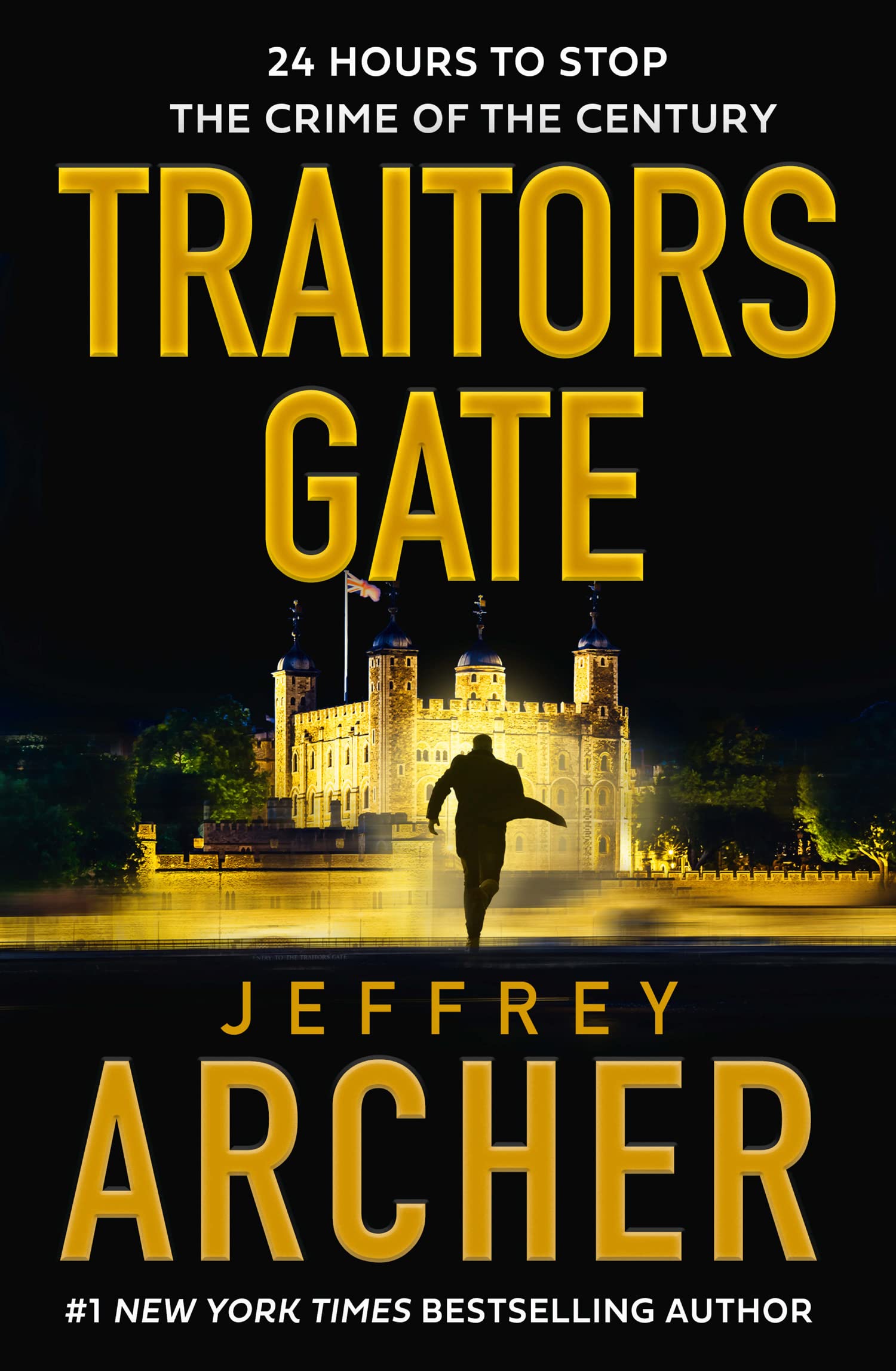
Traitors Gate by Jeffrey Archer

Traitors Gate Cover 2

Publisher: Harper Collins (ebook – 26 September 2023)

Series: William Warwick – Book Six

Length: 384 pages

My Rating: 4.5 out of 5 stars

Amazon

Bestselling author Jeffrey Archer returns with another exciting addition to his fun and compelling William Warwick series with Traitors Gate.

Jeffrey Archer is a well-known and interesting British figure: a former politician, a convicted criminal, a life peer and member of the House of Lords.  However, these days Archer is best known as a bestselling author, having written a large catalogue of novels that usually contain a historical or thriller element to them.  Some of his works include the Kane and Abel series, his well-known Clifton Chronicles and a range of standalone books like Heads You Win.  I particularly enjoy the William Warwick series, which is a fun and entertaining collection of historical thrillers.

The William Warwick novels, which originated within the fiction universe of the Clifton Chronicles series, follows the life and career of titular protagonist William Warrick, an idealistic London police officer who rises through the ranks while solving a series of dastardly crimes.  This series, which is defined by its character-driven plots, new criminal focuses for each novel, and the protagonist’s bitter rivalry with a notorious crook, are always very entertaining and feature some compelling stories.  I personally really enjoyed the first three books in the series, Nothing Ventured, Hidden in Plain Sight, and Turn a Blind Eye, although I unfortunately missed the next two books in the series.  Luckily, I was able to grab a copy of the upcoming sixth William Warwick book, Traitors Gate, which honestly might be one of the best entries in the series.

London, 1996.  There is nothing more sacred nor valuable in the entire realm than the crown Jewels of England.  Kept secure within the Tower of London, the jewels are only brought out once a year for the Queen to attend the State Opening of Parliament.  Providing security for the transfer between the Tower and the palace is one of the most important jobs done by the Metropolitan Police, and this vital duty is now overseen by Chief Superintendent William Warwick and his crack team.  Thanks to all the elaborate precautions around the transfer, the jewels are considered unstealable, but there is one audacious crook who is about to prove them wrong.

For years, William has sought to bring down notorious criminal mastermind Miles Faulkner, a gentleman thief and deadly rogue who has brought nothing but misery to William’s friends and family.  But despite the best effort of William and the men under his command, Faulkner has always managed to elude justice as he continues to hatch his despicable plots and thefts.

However, Faulkner also has a vengeful streak, and when William manages to finally get one over on his rival by recovering a stolen artwork, Faulkner decides it is time to get his final retribution against William and everyone close to him.  Pulling together a team of rogues and villains, Faulkner sets in place his boldest plan yet: steal the Crown Jewels and ruin the career of William and the other police involved in its protection.  Can William stop this plan before everything he loves is destroyed, or has Faulkner finally won their decades-long game of cat and mouse?

Archer continues to impress with his latest William Warwick book, which honestly had me hooked the entire way through.  An intriguing continuation of his fun ongoing series, Traitors Gate was a great character-driven thriller that was fun from start to finish.

Traitors Gate has a great story to it that expertly combines existing storylines from the series with an excellent and wildly entertaining new plot.  Once again focusing on protagonist William Warwick and fantastic antagonist Miles Faulkner, Archer sets up a great story that takes their rivalry to a new level.  The author does an outstanding job of setting this up, with the early parts of the novel recapping key events from the previous William Warwick novels whilst highlighting the protagonist’s current role in protecting the Crown Jewels.  The first half of Traitors Gate follows some intriguing story threads focused on several key existing characters that eventually lead to William getting one over on Faulkner in their long-running feud.  This first half of this book is very entertaining, especially as the rivalry between the protagonist and antagonist is so damn fun, and you really get drawn into the unique and continuing character stories.

The second half of the book really amps up a notch as Faulkner initiates a series of elaborate and daring revenge plots against those who wronged him, while also setting up his master heist.  These various storylines, which include a con job and a fantastically fun court sequence, work together well to tell an excellent overall story, and they play into the build-up for the big conclusion extremely well.  However, the crown jewel (pun intended) of the plot has to be the great heist scene, which was so damn tense and exciting.  Archer sets the entire thing up perfectly, and by constantly switching back and forth between various characters on both sides, you get quite the intense and captivating sequence.  This entire heist is a ton of fun from conception to implementation and leads to a compelling final part of the novel which sees the characters all desperately trying to come out on top.  The various elements of this, from the fun characters involved, the multiple elaborate steps the antagonists take, and the ticking clock the protagonists need to beat, are designed to keep the reader on their toes, and I had such a fun time seeing everything unfold.  The entire story honestly comes together extremely well, and frankly this was one of the more impressive and addictive stories that Archer has come up with yet.

Archer pulled this excellent story together in his typical style that focuses on the characters and makes great use of quick jumps between various perspectives.  I loved the multiple fantastic storylines that emerge as a result, and the author does a great job of balancing the various elements and character arcs.  Archer also proves very apt at building suspense and laying down the ground work for the key sequences for his story where the real magic happens.  Watching some of the more impressive scenes, such as the excellent entertaining court sequences (which are generally the highlight of all the William Warwick books) and the brilliant heist, are so much fun, and you really appreciate the planning and build-up he puts into it.  The author also makes excellent use of the 1990s London setting for the majority of the plot, and I have really enjoyed how the William Warwick books have moved from the 80s to the 90s, incorporating real-life events as they go.  The 1996 election plays a key role in the plot of Traitors Gate, and I loved the historical colour that Archer added to the plot, including a great in-story presentation about Colonel Blood and his own infamous Crown Jewel heist.  I also really need to highlight the way that Archer makes each of his novels inclusive and open so that new readers can easily dive into Traitors Gate.  Thanks to some quick and effective recaps and reintroductions, new readers can start the series at Traitors Gate without any issues, and indeed even after missing the last two books in the series, I was able to dive in without any pause at all.  This book comes together so well and I had a great time reading it.

I really need to highlight the fantastic and outrageous characters the plot of Traitors Gate follows.  Throughout the course of six William Warwick books, Archer has built up quite an intriguing cast of characters to follow, and he does an excellent job of breaking up the story between them.  There is a notable divide between the protagonists and the antagonists throughout the course of Traitors Gate, and watching the cast play off each other with their moves and countermoves is exceedingly fun.  Each of the protagonists, especially the police characters, are very righteous in their dealings (William goes by the nickname “Choir Boy”, for example), although they aren’t averse to breaking the rules if it gets them justice, which makes for some great scenes.  However, it’s the baddies are the ones who really make the book extremely entertaining.

Archer has done such a great job building up main antagonist Miles Faulkner throughout the course of the series, and the elaborate and spiteful rivalry he forms with William and his friends drives so much of the plot.  Faulkner honestly steals every scene he is in with his elaborate schemes, villainous persona, and sheer petty hate of the protagonists, and I have so much fun following throughout the book.  I also have a lot of fun with secondary antagonist Booth Watson QC, Faulkner’s lawyer, who seems to act for every criminal and villain in the William Warwick series.  A morally corrupt lawyer who specialises in every devious legal trick you can think of, Watson is nearly as bad as Faulkner, and he proves to be such a delightful thorn in the protagonist’s side.  Watching him legally manipulate and pontificate is so much fun, especially when he faces off against William’s straightlaced and proper father, Sir Julian Warwick, who he brings out the worst in.  These two characters are at their best when they face off against each other in the courtroom, and it so damn entertaining to see them get childish and outraged in the middle of a trail.  These characters, and more, add so much enjoyment to Traitors Gate and I look forward to seeing the epic rivalry between William and Faulkner continue in the future.

Jeffery Archer has produced a fantastic and awesome new addition to his always entertaining William Warwick series with Traitors Gate.  Featuring a fun and inventive narrative that makes great use of the bitter rivalries of Archer’s well-established cast, Traitors Gate is a highly addictive and exciting novel that has some outstanding moments to it.  Slick, hilarious and always compelling, Traitors Gate is an amazing novel that is well worth checking out.

Traitors Gate Cover

Amazon

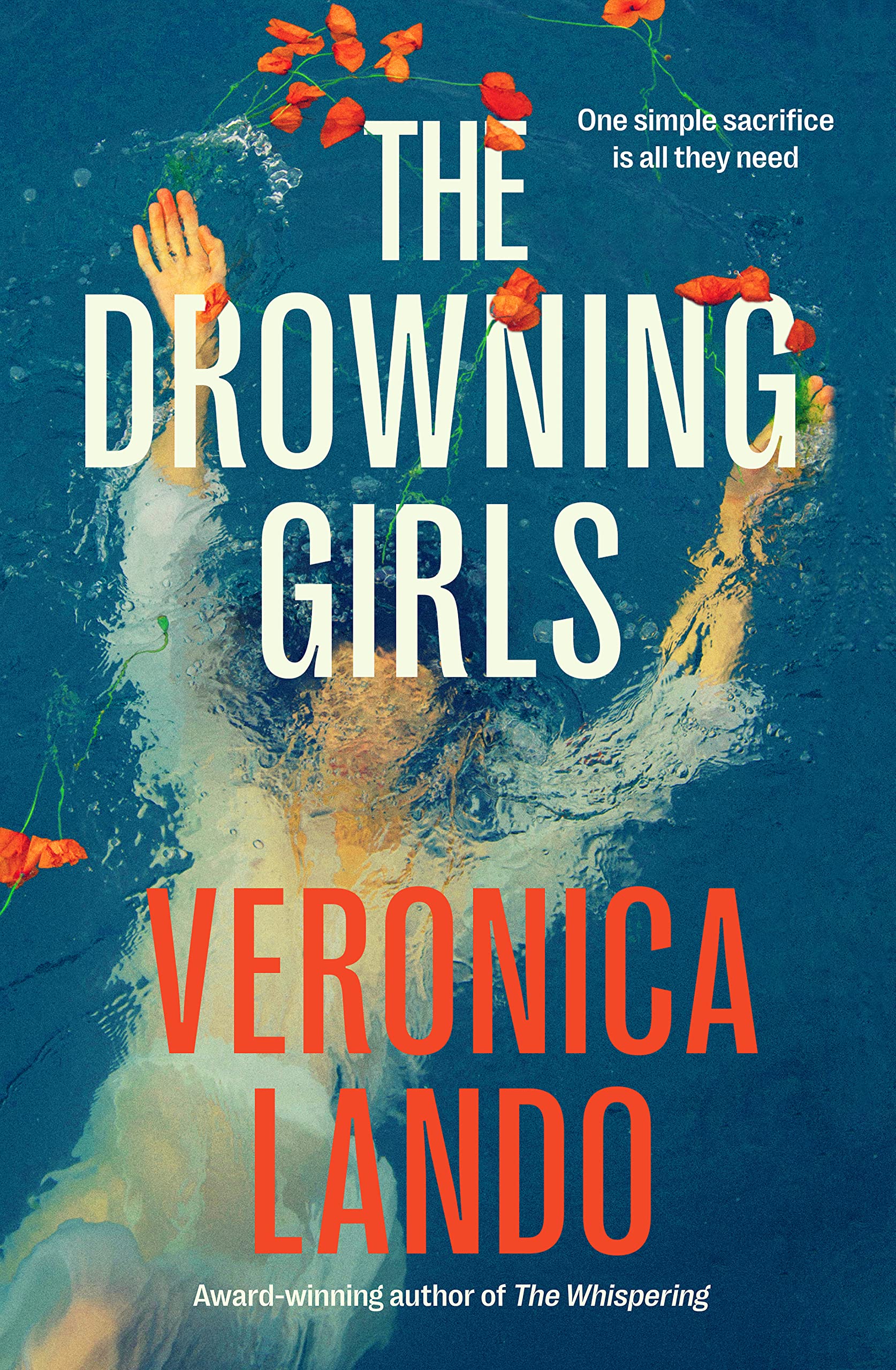
The Drowning Girls by Veronica Lando

The Drowning Girls Cover

Publisher: Harper Collins Australia (Trade Paperback – 5 July 2023)

Series: Standalone

Length: 323 pages

My Rating: 4.5 out of 5 stars

Amazon

Rising Australian crime fiction author Veronica Lando presents a particularly intense and captivating read in her latest gritty release, The Drowning Girls.

Port Flinders in the north of Australia is a desperate town, suffering from depleted fishing and a poor economic future.  The only thing that is keeping the tiny town going is its infamous Drowning Girl Festival, which draws vast crowds of tourists to the town’s mangrove-lined shores each year.  The festival honours a statue that is symbolically dropped into the water in a seemingly harmless bit of fun, recognising an old legend that a woman must be sacrificed each year to revitalise the town’s fishing.  But not everyone thinks that the legend is untrue, especially as a tragic drowning of two girls 25 years earlier seemed to save the town.

As the new festival beings, Nate Bass arrives, set to temporarily fill in as the town’s sole teacher.  Forced to take the job after an incident at his last school, Port Flinders is the last place Nate ever wanted to come back to, as he has history with the town and its sinister festival.  However, the past has a way of coming back to haunt everyone, and soon a new development in the towns infamous history emerges.

A dead woman is pulled from the water at the height of festivities, but is she the victim of an unfortunate drowning accident, or has someone sacrificed her to the ocean?  As Nate finds himself drawn to the case, he is forced to dive back into his tragic childhood to events that have haunted him for 25 years, especially when the identity of the drowned woman is revealed.  To discover the truth, the past and present will need to come together, but is Nate ready to reveal his biggest mistake to the world?

The Drowning Girls was a very distinctive and captivating bit of Australian fiction by Lando which deeply impressed me when I checked it out.  Set around a compelling rural Australian setting with some major baggage associated with it, The Drowning Girls has a great story to it that features an excellent blend of mystery, emotional dives into the past, and some major character moments that really drew me in.

The story itself is told through two separate perspectives, that of Nate Bass, the town’s substitute teacher who returns during the height of the Drowning Girl Festival, and a young boy nicknamed Tack, who provides an intriguing alternate perspective of certain events.  Both get embroiled in the mysterious drownings that occur in Port Flinders in different ways, and their character-driven narratives swiftly come together to tell a story of tragedy, friendship, and secrets.  Nate’s story serves as the central focus of much of The Drowning Girl’s plot, and his exploration of the town’s history, the mindset of its people, and the impact of the festival adds some great depth to the story, especially as the author introduces some excellent supporting characters/suspects in the case.  The story revolving around Tack is an interesting coming-of-age tale, which shows the young protagonist trying to fit in around Port Flinders, while also learning about the mysteries of the festival.  This secondary storyline is a little harder to get into at the start, but the intriguing inclusions it features have some fantastic and fascinating impacts on the larger story.

There is a great reveal about halfway through the book that completely changes everything you thought you knew about The Drowning Girls’ plot, and which brings the two separate storylines together in an outstanding way.  I loved how Lando turned everything around at that point, and it led to a pretty addictive and exceptional second half of the book, which I honestly had a hard time putting down.  There are even more excellent twists revealed towards the end of the book, as well as some deeper dives into the protagonist, as he explores all the trauma from his past, as well as the deadly events from 25 years earlier.  The full extent of both the drownings in the past and the present are intense and very clever, and the elaborate and dramatic mystery that Lando came up with is extremely impressive and moving.  This entire story comes together pretty perfectly, and the full extent of the book’s tragic and moving storyline results in some truly shocking moments.  I honestly did not see the book’s big conclusion coming, and the Lando ensured that readers will come away from The Drowning Girls shocked and deeply moved.

There are a lot of great elements to The Drowning Girls that I enjoyed, and Lando has a real talent for writing and creativity that really connected with me.  Her creation of the fictional town of Port Flinders is fantastic, and she does a remarkable job of capturing the feel of a dying tourist town in Australia’s far north.  Everything about this town, including the crippling isolation, the rowdy tourists, the oppressive feel of the surrounding mangroves, and the various people who choose to call such a location home, feels highly realistic and it works into the dark storyline of The Drowning Girls extremely well.  I also loved the intense feelings invoked by the mysterious festival that is such a key part of the book’s plot, and you have to love the dark symbolism that Lando chose to associate with it.  You can almost understand the desperation that some of the town’s residents feel when it comes to the festival, and I felt that it was an outstanding and creepy plot focus that really stood out.  However, one of the best elements of The Drowning Girls was the main protagonist, Nate Bass, who has a complicated past and a deep and traumatic connection to the town.  Seeing the slow unravelling of Nate’s personal history is an outstanding and moving part of the book, and you really get attached to him as a result.  Watching him unload his guilt, trauma and resentment is some of the most powerful parts of the book, and you really must appreciate everything that Lando puts her protagonist through.  Thanks to the author’s great use of the split storyline, as well as the fantastic blend of drama and mystery that emerges throughout the narrative, The Drowning Girls’ story really shines through, and I came away with a huge appreciation for Lando’s style.

The Drowning Girls by Veronica Lando is one of the more unique and complex Australian crime fiction books I have so far read this year, and I was really impressed with how compelling and dark she was able to make it.  Featuring a clever and twisted mystery with some major character moments, The Drowning Girls is a highly recommended read and easily one of my favourite pieces of Australian fiction in 2023 so far.

Amazon

The Book That Wouldn’t Burn by Mark Lawrence

The Book That Wouldn't Burn Cover

Publisher: Harper Voyager (Ebook – 1 May 2023)

Series: The Library trilogy – Book One

Length: 570 pages

My Rating: 5 out of 5 stars

Amazon

One of the world’s inventive and compelling fantasy authors returns with one of his best novels yet, the highly addictive and ambitious novel, The Book That Wouldn’t Burn, which sets off his new The Library trilogy.

Few authors have had the impact on the fantasy genre than Mark Lawrence has in the last few years, as the author has truly impressed readers throughout the world with his unique and captivating novels that routinely blend fantasy and science fiction elements.  His series include The Broken Empire trilogy, The Red Queen’s War series, and The Book of the Ancestor series.  I myself only started reading Lawrence’s work a couple of years ago with his compelling The Book of the Ice series, which followed several powered teens on a grim frozen planet.  I had an outstanding time with this series, which included The Girl and the Stars and The Girl and the Mountains.  While I still have to read the third book, The Girl and the Moon, I really enjoyed these books, and it was a pretty clever series.  As such, I was very keen to check out Lawrence’s new novel, The Book That Wouldn’t Burn, especially as it had a very intriguing plot synopsis behind it.

Throughout the world, there is nothing more important, more significant, nor more permanent than the library.  Built inside a mountain near the great city of Crath, the library contains an impossible number of books fitted within innumerable rooms that no one person can access.  The sheer amount of knowledge contained within the library represents the greatest power in the world, allowing its keepers and the King of Crath to wield great control in the world.  Into this vast and elaborate repository of knowledge and secrets, two young people are about to meet in unusual circumstances.

Livira is a young girl raised in the Dust, the desolate wasteland that surrounds Crath.  Plucky, curious, and incapable of giving up, Livira is a rarity among her people as she seeks to know more about the world outside her home.  But when the alien sabbers destroy her village and kill her people, Livira finds herself lost in the wilderness.  Rescued and brought to Crath, Livira soon becomes certain that her future lies in the library.  Overcoming prejudice and her own humble background, Livira learns to navigate the library and soon begins to find out some of its deeper secrets.  However, the most mysterious of these might be another strange inhabitant of the library, Evar.

Evar and his small family have known nothing but the library their entire lives.  Released after unknown eons frozen as children inside the library’s mysterious Mechanism, Evar and his siblings have grown up in a vast chamber of the library, learning from the books and becoming masters of specialised subjects.  However, Evar has always desired more and has long tried to find a way to leave their book filled prison.  His discovery of a portal within his home soon leads him to a place outside of time where he meets an exploring Livira.  Together, the two attempt to find the true history of the library and the threats it has withstood over the years.  But dark evils haunt the library, and soon the two explorers must find a way to uncover the truth behind the sabbers, their own history, and other deadly threats waiting for them in the future.  Can these two children of the library survive the revelations in front of them, or will the truth tear them apart in ways they can’t even understand?

Well damn, now this was a seriously impressive and epic book.  Lawrence has honestly outdone himself here with this incredible read, and this might be one of the best books he is ever written, which is saying something.  The Book That Wouldn’t Burn features one of the most elaborate settings and narratives you are likely to see in fantasy fiction, and this results in a powerful and moving read that will keep you guessing time and time again.  I had an exceptional time reading The Book That Wouldn’t Burn, and it would be impossible for me to give it anything less than a five-star rating.

The Book That Wouldn’t Burn is told from two separate perspectives, that of Livira and Evar, and covers their very different lives and experiences within the libraries.  These two character-driven storylines are initially kept separate from each other as Lawrence spends a good chunk of the book introducing the protagonists, setting up their unique stories, and bringing together the elaborate setting that the story is based around.  Both of these storylines are very interesting and fun off the bat, with Livira having her life torn apart, only to find purpose in the library, while Evar details his life lived purely within the library.  While both storylines are really good, I initially got drawn into Livira’s the most, especially as her outsider perspective of the library allows you to really appreciate how alien and strange the massive house of books is.  Livira’s storyline advances at an extended clip, covering years of her life as she learns, grows, and fully develops her adventurous personality as she seeks to fully understand the secrets of the library and everything within it.  Evar’s storyline on the other hand is a little more sedate in its pacing, as it is set only along the course of a few days as he tries to finally understand the structure that has kept him prisoner for so many years.

The first half of the book that showcases these two characters’ initial introduction and growth are pretty damn entertaining, and it does a wonderful job of setting the scene for Lawrence’s elaborate story and background location.  However, the story doesn’t find its true strength until the two protagonists meet and their storylines becomes a lot more intertwined.  Due to the impossible physics and requirements of the library, there is a compelling time element to the meetings between the characters, which Lawrence captures masterfully, and which really alters their perspectives of each other.  Once they are able to properly interact, the two characters grow close and spend an interesting chunk of the novel exploring their respective worlds, as well as the history of the library.  Lawrence really lays the world building on thick during these parts of the book, and it serves to bring the two protagonists together, which just ensures the last act of the book is as tragic, moving and devastating as possible.  The author drops some massive bombshell twists around two-thirds of the way through, which completely throws you and makes you rethink everything you have thought about the preceding narrative.  I honestly was pretty damn shocked at this epic and devastating revelation, and while I had already been pretty damn addicted to the story by this point, this was the moment I realised what a masterpiece The Book That Wouldn’t Burn truly was.

The final third of the novel gets even better as certain background elements of Livira’s storyline finally come to fruition and her entire life begins burning around her.  This causes her and many of the supporting characters from her part of the book to end up interacting with the characters from Evar’s storyline, which is a very interesting change of pace from the previous parts of the book.  There are also some frenetic conflicts and some very dark moments as everything you have previously known about the settings, the characters and the history of the library is thrown around in some excellent and compelling ways.  There are several great new twists in this final section of the book, and Lawrence gets very metaphysical with the reveals, relying on his setting’s unique temporal properties to mess with your mind and bring you surprise after surprise.  I really loved just how cool and complicated this novel got towards the end, and Lawrence leaves an awesome and open conclusion for you to enjoy while drawing you in towards the next book in the series.  I came away from this narrative desperately wanting more, especially after being blown away by all the twists within the book, and I cannot wait to see what happens next.

Those who are familiar with Lawrence will know that he is a very impressive and talented author, and I really liked how he developed his story and displayed all its outstanding elements to the reader.  The Book That Wouldn’t Burn is a particularly complex read, loaded with damaged characters, elaborate storylines and an inventive major setting.  Lawrence approaches his latest novel with his usual flair and imagination, expertly showcasing every clever detail of this world to the reader and keeping them enthralled the entire way through.  Due to the complexity of the story, you really need to dive into every single word that Lawrence writes, and it honestly took me a little longer to get through this lengthy novel than I expected, mainly because of how much focus I needed to fully appreciate everything.  That said, it has a very good pace to it and there is never really a dull moment as you are constantly drawn into what is happening or the elaborate depictions of the library.

I felt that the author’s use of two narrators was particularly effective, especially as they give very different views of what is happening around them and the setting they find themselves in.  The extra expansiveness of the separate narration really helps to expand the scale of the book, and it takes some major temporal shifts for the two protagonist’s storylines to align.  Once they do, the two separate character arcs intertwine extremely well, and I loved seeing their interactions through each other’s eyes, as well as the elaborate adventures they find themselves involved with.

Lawrence also was very skilled at setting up some of the book’s big twists, and while many of them surprised me when I read them, looking back you could see the subtle clues leading up to them, and you really appreciate just how clever the author was in the earlier stages of the book.  The initial big twist is probably the best, and you really have to love how careful Lawrence was with some of the dialogue and character descriptions to pull that off.  Some of the subsequent twists are a little less shocking, mainly because you are on guard at that point, but I did like how well some of the reveals based around the protagonist’s journey through time were utilised and hinted at in earlier scenes.  The fact that there are completely different faces to some of the major early figures of the book was very cool, and it was clear that the author had a very impressive plan while writing the early stages of the book.  These excellent writing elements, and more, served to enhance an already captivating story, and I cannot get past how well Lawrence set everything up.

There is no way I can move forward without talking about the elaborate library setting that was such an epic centrepiece of The Book That Wouldn’t Burn.  I love how the author’s ultimate major setting is a library, which is something that all readers can really appreciate.  While we can all imagine a pretty massive or full library, Lawrence amped that imagination up to an 11 in this book, describing a seemingly impossible structure, made up of innumerable rooms filled with massive climbable bookshelves and a seemingly infinite number of books and tomes.  The sheer scale of this setting when described by Lawrence boggles the mind to a degree, and it really is an outstanding setting for this story as it is the perfect place for exploration, adventure, and even habitation.  The library naturally features Lawrence’s trademark blend of fantasy and science fiction elements, and the structure has a transdimensional or alien feel to it, as the protagonists find different mechanisms within the structure, as well as strange and unique ways to travel through it.  This blend of fantasy and science fiction elements worked particularly well, especially as you get to experience an intriguing contrast between ancient advanced technology and endless shelves of paper books.

The more unique elements of the library, including the portals, the robotic guardians, the locked doors, and more, are worked into the plot extremely well, and it was fascinating to see how they impacted the story, especially while the characters attempted to find out their origins.  The time travel aspects of the library proved to be particularly awesome, and I loved how Lawrence used them, and other cool features, to twist the narrative in some powerful and unexpected directions, completely changing everything you thought you knew.  It was also really effective how Lawrence explored the library through two very different sets of eyes, as Livira and Evar see it in different ways based on their respective history and cultures.  These alternate views added even more depth to the epic setting, and you have to love the continued focus on exploration, especially when it resulted in some of the best scenes in the book.  Honestly, I could go on and on for pages about just how impressive this outstanding setting is, so let me just be blunt and say: read The Book That Wouldn’t Burn, as you really won’t be disappointed when it comes to this elaborate library setting and the dark world it inhabits.

The final thing that I really need to highlight are the great characters contained within The Book That Wouldn’t Burn, which Lawrence did an outstanding job pulling together.  There is a rich and compelling cast of characters featured within this novel, and their unique stories and experiences play a big role in how the story develops.  However, most of the character work is saved for the point of view protagonists, Livira and Evar.  Both characters have intriguing and tragic backgrounds brought about by encounters with sabbers, and they have found sanctuary within the library as a result.  However, this is where their storylines differ as Livira seeks out the treasures of the library and works to get deeper within, while Evar looks to escape and find a whole new world to explore. This leads to some very conflicted character moments, and it was fascinating to see how these characters’ intriguing histories influences their understanding of the world and what they want.  Both protagonists are well established and utilized by the author in The Book that Wouldn’t Burn, and their distinctive character arcs give the book a different flavour chapter to chapter as you explore both their lives.

I personally enjoyed Livira a little more as a protagonist, as her adventurous spirit, drive to be the best and sheer pluck were quite entertaining to see, especially as it allowed her to uncover so many cool secrets about the library.  However, you also have to appreciate the darker background and narrative around Evar, a man trapped all his life in the library, and who has known only limited contact and love in his life.  Evar’s entire life has been nothing but uncertainty, abandonment and a certain amount of inadequacy as he has only known a few other people, each of whom are the absolute experts in their fields.  These two protagonists, when they meet, prove to be a powerful and interesting combination, and Lawrence was quite masterful and subtle when it came to weaving their chapters together.  You really appreciate the pain, loss and sacrifices that both protagonists make throughout the book, and the bond they formed together, soon becomes such a key part of the story.  While they do experience some major, mind-blowing setbacks, you grow really attached to both of them, and seeing them continue and dive even deeper into the unknowable heart of the library, makes for powerful reading.

Aside from Livira and Evar, The Book That Wouldn’t Burn features an extensive and compelling cast of supporting characters, whose interaction with the protagonists adds some intriguing elements to the plot, especially as many of them are filled with some great surprises.  Both Livira and Evar’s storylines had some excellent supporting figures whose appearances are primarily limited to their respective narrator’s timeline.  My favourite supporting character in the Livira chapters had to be Malar, a rough and tough solider who becomes Livira’s protector mostly against his will.  His gruff attitude is a fun contrast to Livira’s bright and curious nature, and they have some entertaining scenes together, especially as he grows to care for her, and Lawrence works in some particularly compelling story elements around him in the later part of the book.

Evar’s chapters also feature a great range of supporting characters, and due to the more constricted nature of his story and setting, you get to know them a lot better than some of the cast associated with Livira.  These characters include Evar’s adopted siblings, Starval, Kerrol and Clovis, who were also trapped in the Mechanism as children and grew up with him in the library.  However, unlike Evar, who emerged relatively normal, each of Evar’s siblings were warped by the knowledge of the Mechanism and are now masters of a particular subject, including assassination and espionage, war and psychology.  Each of these siblings is now fairly damaged as a result of their complex upbringings and childhood traumas, and it was fascinating to see their unique mindsets, especially through the eyes of Evar, who holds a special place in each of their hearts.  These characters were all raised by the animatronic constructs, the Assistant and the Soldier, servants of the library who took charge of them, and I liked the fun interactions that resulted from them, especially once Lawrence worked his twisty magic on them.  All of these characters and more are pretty damn interesting, and I loved how complex and emotionally charged their interactions became.

Frankly I could go on and on about this book, but I still do not think I would really be able to fully encapsulate just how much I enjoyed The Book That Wouldn’t Burn.  This complex and clever fantasy novel is a true masterpiece from Mark Lawrence, who utilised all his impressive writing skills and imagination to create a unique and powerful read.  The Book That Wouldn’t Burn’s elaborate narrative and massive library setting really grabbed my attention and I had such an epic time getting through this outstanding novel.  Easily one of the best fantasy books of 2023, you need to check The Book That Wouldn’t Burn out, especially if you are already a fan of Mark Lawrence’s amazing works.

Amazon