Originally published in the Canberra Weekly on 15 February 2024.
A copy of this column also appeared on the Canberra Daily website.
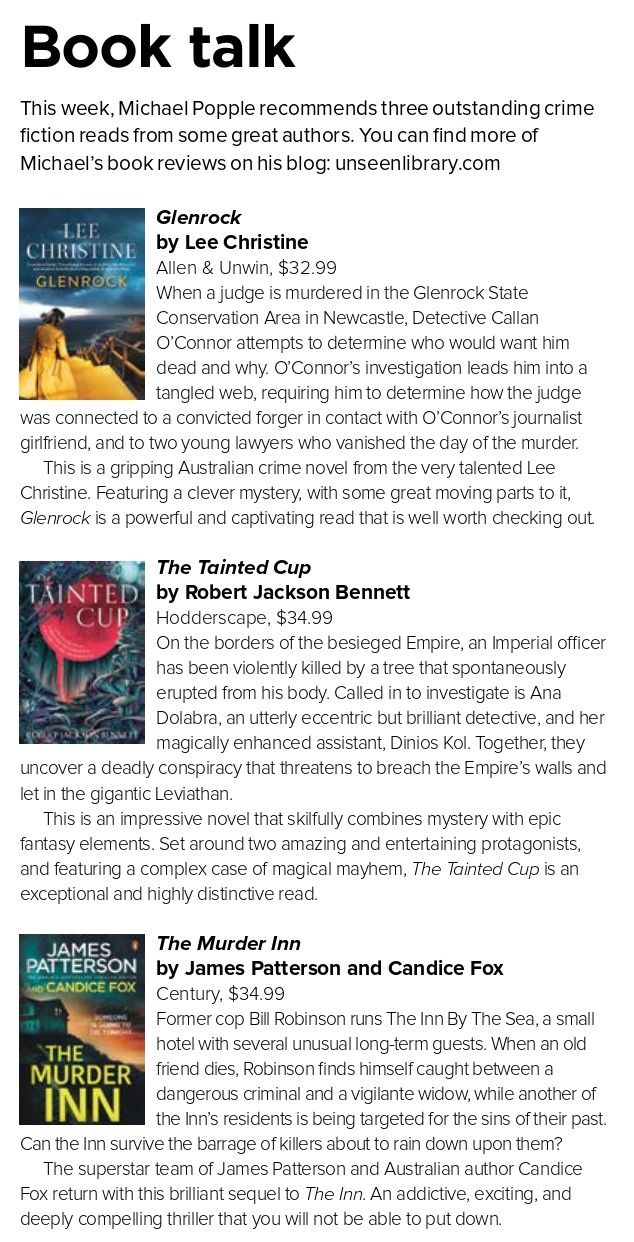
Make sure to check out my extended reviews for Glenrock, The Tainted Cup and The Murder Inn.
Expert reviews of the latest and the best in Fantasy, Historical Fiction, Science Fiction and Crime Fiction from an Australian reviewer.

Originally published in the Canberra Weekly on 15 February 2024.
A copy of this column also appeared on the Canberra Daily website.
Make sure to check out my extended reviews for Glenrock, The Tainted Cup and The Murder Inn.
Originally published in the Canberra Weekly on 7 September 2023.
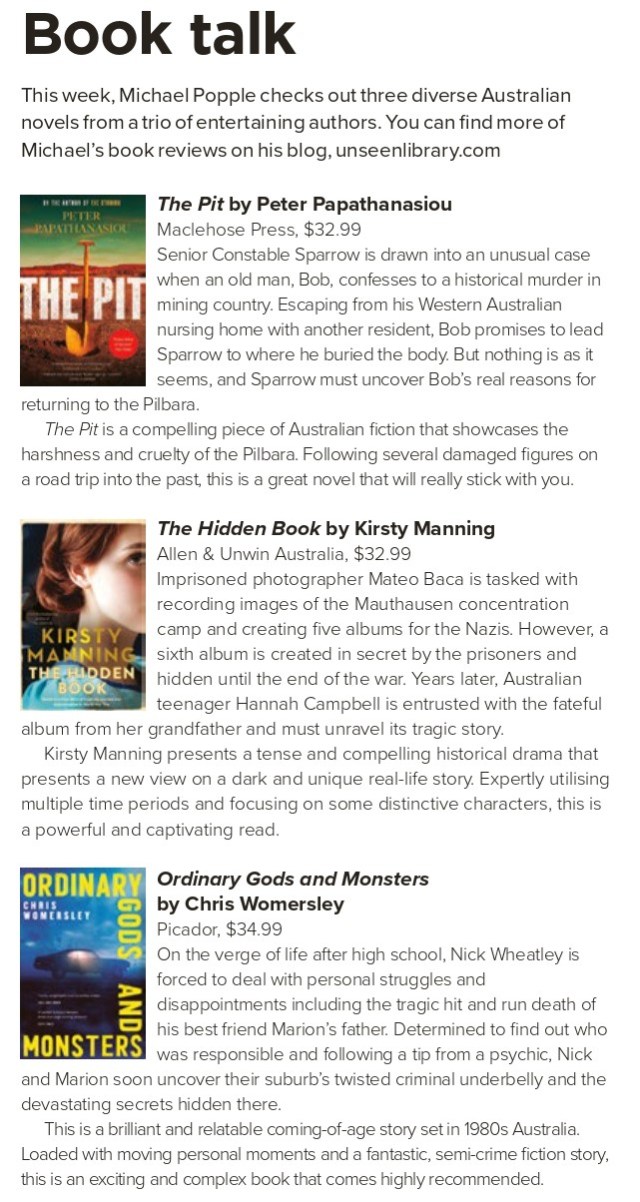
Make sure to check out my extended reviews for The Pit, The Hidden Book and Ordinary Gods and Monsters.
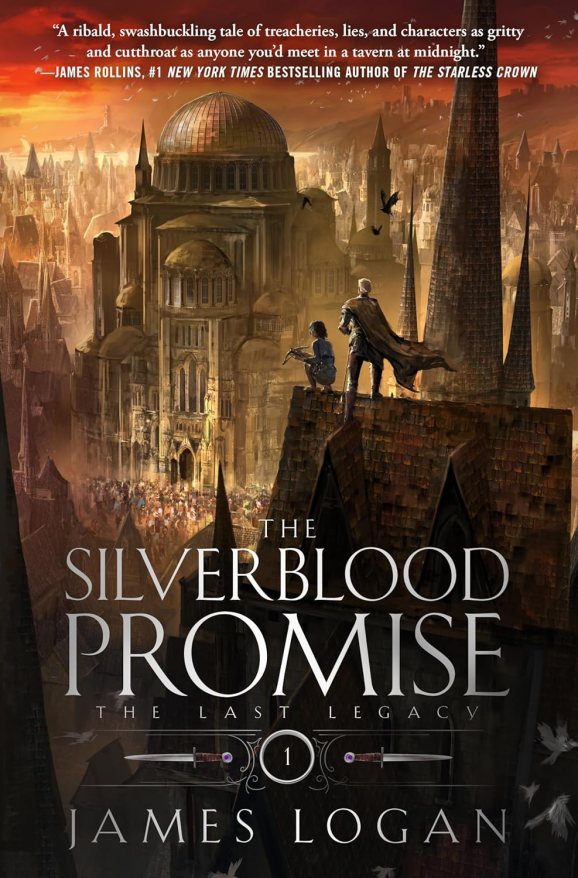
Publisher: Arcardia (Trade Paperback – 30 April 2024)
Series: The Last Legacy – Book One
Length: 595 pages
My Rating: 4.75 out of 5 stars
Promising new author James Logan presents an epic fantasy debut in the form of The Silverblood Promise, the first entry in his planned The Last Legacy series, and one of my most anticipated books of 2024.
Lukan Gardova, the disgraced heir of a noble family, is a man who has lost everything following a duel that ended tragically. Forced to drop out of his prestigious academy and abandoned by his family, Lukan travels the wild edges of the world, gambling, drinking, and seeking what adventure he can. Despite his malaise and despair, Lukan is still shaken when he is informed that his estranged father has been murdered by mysterious assassins.
Armed with fresh purpose and a determination to find out who was responsible for his father’s death, Lukan follows the only clue he has, a note his dying father wrote in his own blood. The names it contains lead him to Saphrona, an old and prosperous city ruled by merchant princes where everything can be bought. Filled with rogues, scoundrels, thieves, and miscreants, Saphrona seems an unlikely place to find his reclusive, academic father’s killers.
Engaging in an exhaustive search throughout Saphrona, Lukan discovers that the answers he seeks lie with one of the city’s merchant princes. Unfortunately, they have been condemned to death for the murder of another merchant prince, and if Lukan wants the information they have, he will first have to prove their innocence. Working with an unlikely group of criminal acquaintances, Lukan follows the few clues surrounding the merchant prince’s unusual murder. But the further he digs, the more danger he finds himself in. There is a deadly conspiracy at work in Saphrona, one that seeks to undermine everything the city stands for. Forced to contend with desperate nobles, deadly criminals, and dangerous forces beyond his comprehension, Lukan fights to keep his promise and find the truth behind his father’s murder.
Wow, now this was an awesome debut from Logan and one that I was really glad I got the chance to read. The Silverblood Promise has been on my radar for a while, and Logan did not disappoint with its excellent and exciting story, which is loaded with action, intrigue, cool fantasy elements and some great characters. Entertaining and fast-paced, The Silverblood Promise was an absolute joy to read, and I had an amazing time getting through it.
The Silverblood Promise has a deeply compelling narrative behind it that kept drawing me in with its intrigue, revelations and exciting adventure. While this is a lengthy novel, I honestly powered through it as it proved very easy to get caught up in the story. Logan maintains a very fast pace the entire way through The Silverblood Promise, and I enjoyed the mixture of action, character development and unique fantasy inclusions that the reader is treated to. Starting off with a strong introduction that effectively showcases the protagonist and his current situation, the reader is quickly thrust into the main background city of Saphrona, which proves to be a fantastic setting. Able to quickly interpret his one clue, the protagonist works with several connected figures to try and contact the person his father sent him after. What follows is a series of interlocking quests as Lukan must befriend a master forger, mastermind a break-in to a notorious prison, and then discover who set up one of the city’s leaders for murder. This results in a constant stream of adventures as Lukan jumps from one hurdle to the next, uncovering dark secrets about the city, and making unlikely friends.
The revelations about the true villain of the story occurs about two-thirds of the way through The Silverblood Promise, and while it isn’t too surprising, their methods and motivations are, especially as they reveal some interesting figures to the story. Forced to go up against some big fish, Lukan is caught up in their power play, which adds a lot of chaos to the narrative, and must desperately come up with a plan to fight back. The resulting carnage and confrontations are well handled, and I loved the great combinations of intrigue, battles and clever ploys that brought everything together. All the action within The Silverblood Promise is sharp and well written, and you get drawn into the many confrontations and battles of wits that emerge. Logan proved very able at hiding hints about the big bad’s schemes throughout much of the plot, and it was fun to see it all come together. I had such a great time with this impressive story, and I ended up reading the last 300 pages of the book in less than a day, it was that damn good. The reader comes away both satisfied and wanting more, which is lucky as it is clear Logan has some big plans for the series, with the adventure set to continue.
I felt that Logan came up with an excellent fantasy setting for The Silverblood Promise, and I really enjoyed how he utilised the new world throughout his plot. Filled with magic, adventurers, complex cities, mysterious interdimensional beings, and powerful artefacts from long-lost advanced races, there is so much for the reader to enjoy here, especially when hints about far greater hidden powers are also included. While a couple of the fantasy elements in The Silverblood Promise are a little derivative of other fantasy works, I personally didn’t mind, mainly because Logan makes them his own and they fit nicely into the fast and intense narrative of The Silverblood Promise.
While I loved the new fantasy world as a whole, the setting highlight of this book is the city of Saphrona, where most of the plot is set. Saphrona proves to be a complex and compelling trade city ruled by merchant princes and filled with dangerous commerce, criminal enterprises, alien structures, unlikely monsters, and all manner of political intricacies and plots. Readers will really enjoy unwinding the various elements of this city and it proved to be fun watching the protagonist explore Saphrona and attempt to find answers and stop a major disaster unfold. In a way Saphrona becomes a character in its own right as the book progresses, and I really appreciated how effectively Logan introduced the reader to the setting and inserted the story in its survival and underlying politics. Logan also ensured that readers got a good deal of information about some of the other locations outside of Saphrona, which are likely to become relevant to the plot in future books of the series. While a of map of the continent or Saphrona would have been appreciated, readers come away with a great sense of the world and will be interested in seeing more stories within it. Indeed, it looks like Logan plans to set each of The Last Legacy books in a different city of the world, and I for one am very excited to see what other memorable locations Logan will come up with.
I also really need to highlight the fun and memorable characters who were featured throughout The Silverblood Promise. Logan did a great job pulling together an intriguing and often outrageous cast for his first book, and I loved some of the awesome storylines that emerged. Most of the focus revolves around protagonist and primary point-of-view character, Lukan Gardova, a former noble turned roguish adventurer who finds himself way over his head in Saphrona. Lukan is a great central figure for this book, and he brings a lot of emotion to the story due to his disastrous past and determination to find his father’s killer. I felt that Logan provided just the right amount tragic history for his protagonist to enhance the dramatic tone of the book, and the character’s frustrations at the dangerous tasks he finds himself involved with, as well as his own stubborn need to move forward, were very relatable. Lukan also provides a fun scoundrel vibe to the plot at times, and it was interesting to see his cynical perspective on events throughout the book. I liked how Logan set Lukan up as a newcomer to the main setting of Saphrona, as this allowed the reader to see the city fresh through the eyes of someone unfamiliar with it, which enhanced the majesty, strangeness and cruelty of the setting. As such, I felt that Lukan was an excellent central protagonist, and I look forward to seeing how his story evolves in the future, especially as there are many more secrets around his family that need to be revealed, and other character elements that need to be expanded upon.
Aside from Lukan, The Silverblood Promise features an interesting array of fun figures, the majority of whom are locals to Saphrona. I loved all the unique characters that emerged, especially as Lukan is forced to deal with killers, scheming nobles, a mysterious forger, a blind beggar with way too much knowledge, an unlikely crime lord and a notorious band of mercenaries that Lukan is forced to alternatively fight or make deals with. One of the most distinctive characters is an infamous thief who joins the main cast late in the story, but who proves to be a fantastic addition thanks to her skills, kindness and pragmatism. However, my favourite character would have to be the young street urchin and pickpocket, Flea, who forms an unlikely partnership with Lukan early in the story. Hired by Lukan to help him around the city, Flea proves to be an invaluable ally, despite her age, and works to keep her benefactor alive against all manner of dangers. Bold, curious and utterly unflappable, Flea is a highly entertaining figure, especially as she keeps jumping into danger while also proving to be far wiser than Lukan. Flea and Lukan serve as fun contrasts to each other, and I liked their entertaining banter and the touching bond they form throughout the course of the book. This fantastic partnership really helped to make The Silverblood Promise that much more special, and all the characters featured within this book were really well written and cleverly featured.
Overall, The Silverblood Promise is an excellent and exciting fantasy novel that had me hooked the entire way through. Intense, compelling and wildly entertaining, The Silverblood Promise was very awesome, and James Logan did wonders with his debut novel. I will definitely be grabbing the eventual sequel to The Silverblood Promise when it comes out, and I cannot wait to see how this adventure continues and how Logan develops as an author.

Publisher: Jo Fletcher Books (Trade Paperback – 26 March 2024)
Series: Court of Shadows – Book One
Length: 482 pages
My Rating: 5 out of 5 stars
Prepare yourself for a riveting good time in the impressive and wildly entertaining fantasy novel, Play of Shadows by the always amazing Sebastien de Castell.
Last year I had the very great pleasure of being introduced to Sebastien de Castell when I received a copy of his book The Malevolent Seven. Set outside his major series, The Malevolent Seven was a wickedly clever and chaotic book that followed seven dangerous mages who suddenly find themselves as humanity’s last hope. I had a wonderful time with The Malevolent Seven, and it honestly was one of the most entertaining fantasy books I read in 2023. As such, I was curious to read more from de Castell and I recently got the chance when I received a copy of his new novel, Play of Shadows. Serving as the first official book in his new Court of Shadows series, Play of Shadows is set within de Castell’s overarching Greatcoats universe, where most of his novels have been set, including his original Greatcoats books, the Spellsinger series and his Argosi series. While I haven’t had the pleasure of reading any of de Castell’s Greatcoats books before, I loved the awesome sounding story of Play of Shadows, and I decided to check it out, which proved to be a very wise decision.
Damelas Chademantaigne is one of the most unfortunate people in the entire city of Jereste. The grandson of two legendary Greatcoats, Damelas has always had a strong sense of justice, but he lacked the skills with a sword needed to back it up. So when he finds himself forced to accept a duel from the Vixen, the most feared duellist in the entire city, to save his ailing grandfather, his chances of surviving the night seem impossible. However, a fleeing Damelas finds sanctuary in the most unlikely of places: the Operato Belleza and its resident acting company, the Knights of the Curtain.
Now part of the illustrious company, Damelas finds himself protected by the city’s laws regarding actors and begins to eek a living as a minor player. However, his temporary haven soon becomes a deadly trap when one night he spontaneously manifests the spirt of the city’s greatest historical villain, Corbier, the Red-Eyed Raven. Identified as a newly emerged Veristor, an actor who can literally bring the past to life during a play, Damelas begins to constantly hear Corbier’s voice in his head and finds himself exploring the notorious rogue’s life each time he appears on stage. Forced to continue by the machinations of Jereste’s new duke, Damelas begins to tell the untold true history of Corbier, and it soon becomes apparent that he was far from the unrepentant monster everyone believed him to be.
As the play continues, Damelas gains the attention of the entire city, who become enthralled with finding out the truth. However, not everyone wants the past to come out, and soon Damelas finds out just how dangerous the theatre can be as he is targeted by the city’s nobles, a militant band of bravos, and the Vixen seeking her pound of flesh. Diving deeper into Corbier’s mind, Damelas beings to uncover a deadly conspiracy that threatens the entire realm. But can a mere actor, even one personifying a legendary fighter, survive the onslaught of villains on his tail? It’s going to take all of Damelas’s courage and skills as an actor, as well as the help of an eccentric collection of fellow players to make it to final curtain.
Wow, now this was an outstanding and epic book that I could just not put down. I was unprepared for how impressive Play of Shadows would be as de Castell unleashes a brilliant and complex read, loaded with intrigue, adventure, and a ton of theatrical humour. Entertaining and enthralling in equal measures, this was an incredible read and one that gets a full five-star review from me.
Play of Shadows is an epic book full of big personalities, big stakes, and an elaborate story of intrigue, adventure, and self-discovery. Set in the Three Musketeer’s inspired realm of the Greatcoats books, Play of Shadows initially seems set to feature the same focus on duels, bravos and rogues, as the rest of the series as the protagonist is forced to flee a fight from the infamous duellist, the Vixen, which sets him on course for his destiny. However, the first scene of Play of Shadows, in which Damelas escapes his pursuers by tricking his way into becoming an actor, changes expectations and perfectly sets the scene for the rest of the exciting, compelling, and wildly entertaining novel. I love how de Castell set a fantasy novel around the theatre , and having the protagonist be an actor rather than a master swordfighter is a great touch, especially for a Greatcoats book. Indeed, much of the book is set out like a play, which proves to be a clever guideline for the plot, while also allowing in the author’s fantastic humour about actors, the theatre, and the protagonist’s unlikely situation.
From there the story evolves into a compelling direction, as Damelas finds himself at the centre of the all the intrigue infecting the city, especially once he starts to manifest the great historical villain Corbier, the Red-Eyed Raven, as part of a legendary magical gift. This allows him to showcase the true events surrounding the past, which differ very greatly from the established history of the city. Due to the deep secrets hidden amongst the true history, the protagonist finds himself the target of many interested parties and becomes a tool in the battle between shadowy forces. The plot of Play of Shadows then begins to revolve around the three separate acts of the resulting play that tells the real story of Corbier. Each of these different acts reveal new secrets about the past that impact the present, and prove to be excellent centres for the plot, especially as each performance becomes increasingly deadly for Damelas and his fellow players, and there intense, action-packed, tragic moments occurring after each of them.
Between each of these acts of the play, Damelas is forced to interact with a variety of deadly and over-the-top figures, each of whom have a different motive to help or to kill the protagonist. The author also uses this time to provide new insights into both the historical and present-day conspiracies being uncovered as Damelas and his friends attempt to discover the true secrets of the city. De Castell does a really good job of building up the stakes in each of these intermissions, and there are some amazing set-pieces loaded here, from high-intensity duels, larger-scale battles between unlikely foes, and a raft of political intrigue and personal issues. Everything leads up to Play of Shadow’s massive climax, where the final act of the play unfolds, and all the secrets are revealed. There are some excellent twists and turns here, and while a couple of reveals are a little overly foreshadowed, the overall picture that is exposed is quite interesting and ensures that the rest of the trilogy is going to be very interesting. The big climax fight is so over-the-top bonkers, as all manner of magic, betrayals, personal vendettas, duels, and even an outrageous monologue, are used to resolve the issue. The reader comes away intensely satisfied, amused, and very curious about the future of the series.
Play of Shadows was a fast-paced, exciting, and continuously amusing book that was so much fun to get through, while also maintaining a darker edge that struck readers with tragedy and intense moments when they least expected it. This set-up of the book around the various acts of the play worked extremely well, and I loved how de Castell kept bringing the book back to the importance of the arts, even in the swordcraft-focused nation of the Greatcoats series. The magic of performance, both literal and figurative, is a major part of the book’s setting, which I thought was a clever choice from de Castell that made Play of Shadows really stand out. Much of the book’s humour is derived from the outrageous members of the acting troupe and their takes on the dramatic events overtaking their city. This comedic feature of the book was so much fun, and some of the best scenes involved the actors attempting to pivot the scenes around the protagonist’s unlikely visions. Other highlights include impromptu moments that made the actors great heroes in real life, or a sudden, extremely risqué monologue that manages to keep an approaching army at bay. This overarching action and entertaining theatre focus is well-balanced by a high level of intrigue and a dash of mystery, due to the elaborate conspiracies that seem to be infesting the city. De Castell does an exceptional job of contrasting these intriguing elements throughout Play of Shadows, and I really got drawn into its story as a result.
As I mentioned above, Play of Shadows falls within de Castell’s wider Greatcoats universe, which I personally don’t have any experience with. I must admit that I was initially a little wary of reading Play of Shadows, not only because I had no pre-knowledge of the other Greatcoats books, but because de Castell also released another Court of Shadows book last year with Crucible of Chaos, which serves as book zero in the series (Play of Shadows is the first official novel). However, my fears proved to be for naught as Play of Shadows stands on its own and easily welcomes new readers in. While there are references to the wider Greatcoats universe, having no pre-knowledge of this doesn’t impact a reader’s enjoyment or understanding of this book, and anything that does is naturally explained. Even the inclusion of a couple of characters from the previous series towards the end of the story was well handled, and the reader can easily follow what is happening while getting a good idea about who the characters are. The same is true for the apparent prequel, Crucible of Chaos, and people can easily start the Court of Shadows series here, rather than with book zero. While I am sure that established Greatcoats fans would probably get a little more out of these references than I was, this is a very good book for those readers who want to experience de Castell’s style or wider universe for the first time. As such, I would recommend Play of Shadows to all fantasy fans, and you really don’t need to do any other reading first. I am really looking forward to seeing how the Court of Shadows series continues, and I may also go back and read some of the other Greatcoats’ books, mainly because I am really enjoying de Castell’s writing and unique stories. I must try and read Crucible of Chaos before anything else though, and I will be interested in seeing how it unfolds and connects with this current book.
One of the great highlights of Play of Shadows is the excellent cast of characters featured throughout the book, all of whom add so much to the fantastic plot of the book. Naturally, most of the focus goes towards central protagonist and point-of-view character Damelas Chademantaigne, whose unexpected exploits in the theatre lead to so much drama. Damelas is a great entertaining fantasy protagonist, with a complex past, an often-irreverent take on current events that leads to a good chunk of the book’s excellent humour, and a desire to change the world, even if it wants to kill him. De Castell works in some amazing character development for Damelas, as he attempts to escape his pragmatic past that saw him run from a duel, to become the unlikely hero of his city. Watching him gain the skills and courage he needs thanks to the murderous spirit in his mind is just great, and de Castell does a wonderful job of highlighting his abilities as a Veristor. The tight line between controlling his gift and insanity is quite thin, and I loved the various sequences where he tried to showcase the past on stage, only for it to go in unexpected directions. Damelas goes through a lot in Play of Shadows, especially as he witnesses the many tragic consequences of his search for the truth, and I felt that de Castell perfectly showcases his doubts, fears and anger at how he is being manipulated. This was some incredible character work and I look forward to seeing how de Castell features Damelas in the future books now that he has found his purpose.
The rest of the cast of Play of Shadows are also quite impressive, and I love the huge array of outrageous and memorable figures that de Castell expertly dropped into the story. The historical ghost, Corbier the Red-Eyed Raven, was a brilliant ethereal figure in Damelas’s head, and the author has a lot of fun contrasting the instinctive and expert killer that is Corbier, with the inexperienced and pragmatic Damelas. In addition, Damelas’s acting companions, the Knights of the Curtain, also prove to be exceptional figures, and you really grow to care for this outrageous and eclectic group of actors. Every Knight brings something fun to the table, although my favourite had to be Damelas’s best friend, Beretto, the gentle giant, who steals every scene he’s in with his jokes, insights, and desire to ship Damelas with dangerous killers. However, props also need to go to head actor Abastrini and director Shoville, both of whom rise above expectations and show they have heart and the true passion of an actor. I also had a lot of fun with the Vixen, the ruthless duellist who serves as one of the best villains in the book. Her vengeful pursuit of Damelas is a major part of the book, and the various encounters they have, especially once Damelas gains the skills and courage to fight back, are very awesome. Throw in a beautiful assassin, a sarcastic musician who doubles as a secret agent, a duke with a complex past, and Damelas’s grandfather, a legendary retired Greatcoat who has some brilliant scenes, including one amazing sequence that shows why you don’t mess with old fighters, and the cast of Play of Shadows is something truly special. I had so much fun witnessing the battles and hijinks of this amazing group of characters, and I cannot wait to follow their future adventures in the rest of the series.
Overall, Play of Shadows was a particularly impressive novel from Sebastien de Castell that has made me very keen to read the rest of his books. Loaded with action, intrigue, humour, and an entertaining ode to the magic of the theatre, Play of Shadows was a remarkable and highly fun fantasy novel that I could not get enough of. Easily one of the best books I have so far read in 2024, Play of Shadows comes highly recommended, and I cannot wait to see how this outstanding series continues. You will not be disappointed by this book!
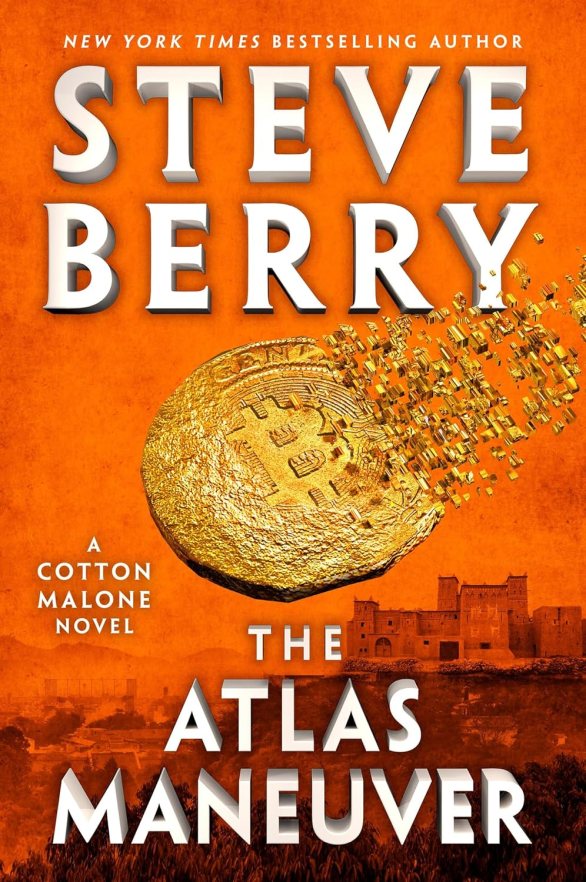
Publisher: Hachette Audio (Audiobook – 20 February 2024)
Series: Cotton Malone – Book 18
Length: 13 hours and 21 minutes
My Rating: 4.5 out of 5 stars
The always exciting Steve Berry continues his long-running Cotton Malone series with the intriguing and addictive novel, The Atlas Maneuver, which once again blends modern plots with historical riddles.
Over the last few years, I have been having a wonderful time getting to know the works of acclaimed thriller author Steve Berry. Known for his intricate and complex works that dive into the past, Berry is an amazing author whose style and story focus really appeals to me. I have had a wonderful time getting through the last several books in his main series, the Cotton Malone books, as well as his standalone novel, The Omega Factor. Cotton Malone is a particularly fun series following the titular Cotton Malone as he attempts to stop sinister modern-day plots that have their roots in ancient conspiracies and secrets. All the Cotton Malone books I have read have been extremely epic in their own way, including The Malta Exchange, The Warsaw Protocol, The Kaiser’s Web, and The Last Kingdom (one of my favourite books of 2023), and I cannot recommend them enough.
As World War II entered its final phase, the retreating Japanese hid vast quantities of looted gold and other stolen valuables throughout the Philippines. Stored in hidden underground bunkers, the gold was supposed to be used to rebuild Japan after the war and expand its interests. But with the location of the vaults lost, most of the gold remained hidden, except for a small fraction recovered by the United States government and the nascent CIA, who kept it for themselves in secret.
In the present day, retired Justice Department agent Cotton Malone, is in Switzerland, working for an old CIA friend to keep a potential asset safe. However, when someone tries to take his target out, Cotton soon finds himself thrust into the middle of a dangerous battle between a shadowy branch of CIA and the Bank of St. George, one of the world’s oldest financial institutions, with whom the recovered gold was entrusted.
Forced to act, Cotton begins to unravel a dangerous conspiracy and discovers that the directors of the Bank of St. George are seeking to initiate a radical plot involving bitcoin, the elusive online currency, which could destabilise the entire financial world and leave them in control. Working with a skilled Japanese agent, his lover, and a ghost from his past, Cotton seeks to stop the plot before it is too late. But with a deadly team of CIA assassins also closing in, no-one is safe and everyone is a target.
This was a pretty interesting novel from Berry that I had an excellent time with. Thanks to its unique thriller story combining historical secrets with contemporary mysteries and plots, The Atlas Maneuver proved to be an amazing and intricate novel that I found to be quite impressive.
I really enjoyed the compelling story that Berry came up with for his latest novel, especially as he once again successfully blends an elaborate historical conspiracy with an exciting modern thriller story. This story came together extremely well and overall proved to be quite an exciting read as Berry comes up with several compelling story arcs that you become absorbed in. Starting off with a glimpse at the origins of the hidden Japanese war loot, The Atlas Maneuver soon jumps to Cotton Malone as he finds himself drawn into a plot to disrupt the world economy by a powerful bank through bitcoin. Working with an old flame whose financial brilliance is behind much of the bank’s plans, Cotton desperately tries to keep her safe, while also contending with a relentless Japanese agent. At the same time, Cotton’s partner Cassiopeia Vitt and old CIA associate Derrick Koger attempt to discover the location of the lost wartime gold that was supposed to be in the bank’s possession. Their inquiries lead them into conflict with the bank, as well as a shadowy arm of the CIA that attempts to take out everyone associated with the case.
The alternating thrusts of the hunt for lost gold and the attempts to stop the elaborate financial attack make for great reading, and Berry continuously raised the stakes while also dragging the story back to the past with the fun historical inclusions. While the story did drag in places, especially around the middle, I honestly couldn’t turn away from this book at times, especially when the action got particularly intense and there were multiple fun figures to follow. Berry perfectly sets up the big conclusion of The Atlas Maneuver, which has surprisingly more devastation than expected. I loved the dark and ironic ending to some of the storylines that emerged, and I felt this strong finish enhanced the entire book as a result. Berry also leaves the story on an excellent emotional cliffhanger, that I feel is really going to pay off later in the series, and I will ensure I come back for the next Cotton Malone book.
I really liked how Berry set out his methodical and intense story as he once again relied on his classic style that prioritised historical inclusions, while also ensuring that the new book is accessible to all readers. Thanks to the author’s excellent use of multiple perspectives, you get a great wide-angle perspective story, which allows you to understand the motivations, desires and actions of most of the opposing parties. I always love books that show the story from the antagonist’s perspective, and this was a great example of that as you got to see the leader of the evil bank manipulate one of the other main characters, while also trying to implement her wider plan. Berry utilises these multiple perspectives to tell an excellent overarching story, and while the parts focusing on Cassiopeia Vitt and Derrick Koger felt a little too detached from Cotton Malone’s storyline, for the most part this was a very cohesive tale. The writing is also very tight and fluid in The Atlas Maneuver as Berry does a great job moving the story along, while also including his trademark historical lectures and flashbacks. The mixture of modern-day action, elaborate schemes and examinations of the past was pretty on-point for this latest Cotton Malone book, and you really get drawn into the story as a result. There were also some fantastic character interactions, especially as the protagonist is forced to interact with a love interest from his past who looks set to change the status quo of the series. I had such a good time reading this book, and it proved to be an excellent addition to Cotton Malone series.
I always love the elaborate and compelling dives into various parts of history that Berry takes the reader on in the Cotton Malone series. Berry, who clearly does his research on all things history, once again set his new novel around a unique piece of history, which has intriguing implications for the modern day thriller storyline. In this case, much of the story revolves around Yamashita’s gold, the infamous treasure hoard supposedly located in the Philippines. The author does a deep dive into the subject highlighting all the history surrounding it, as well as mentioning many of the intriguing details that followed it as people attempted to find it. Much of the plot of The Atlas Maneuver revolves around the fate of this gold, and Berry really does a great job of highlighting its importance and the cultural implications surrounding it. While certain elements of Yamashita’s gold featured in The Atlas Maneuver were exaggerated or changed for narrative purposes, you really get a good grounding in history surrounding it. I found this focus on the lost treasure to be highly fascinating, especially as it wasn’t something I was too familiar about before. However, this only proved to be the tip of the historical iceberg, as other intriguing historical events were also cleverly featured throughout the book. compelling examinations about the early days of the CIA, banking history, the financial affairs of Switzerland and Luxembourg, and post-war recovery of Japan are also covered in interesting detail, much of which helps to give context to the current story and which are cleverly inserted into the modern-day plot. These historical elements are truly fascinating, and I love the unique conspiracies and hidden secrets that Berry creates utilising them.
In addition to this 20th century history, Berry also chooses to dive into something a little more modern with a detailed look at bitcoin, which also has a significant impact to the plot of The Atlas Maneuver. Berry dives into the history surrounding bitcoin, how it came into being and how it eventually expanded out in a major currency. While some of this history is altered for the book, there is still a lot of detail about its origins and how it become prevalent throughout the world, which I honestly didn’t know a lot about, and was quite fascinating. Berry also tries to capture other aspects of bitcoin, such as its function, how it is mined, and how it is currently viewed throughout the world. There is a focus on bitcoin’s potential, and how it can be used to change economies and grant financial freedoms to people. I liked how Berry took a neutral, if hopeful, stance around bitcoin, as while certain characters are critical of the cryptocurrency, many see its potential and hope to make the world a better place through its usage. I honestly found the entire inclusion of bitcoin to be highly interesting, and the focus on its manipulation, creation and exploitation drove the plot to some cool places.
Another aspect of all Berry’s books that I really enjoy is his highly detailed examinations of various intriguing places that his protagonists end up in. These background settings are always a key part of the book, and I like how well Berry incorporates them into the story, especially as the history or unique locations are invariably explored or utilised in the plot. While The Atlas Maneuver lacks some of the grandiose sites that I enjoyed in the previous books, there is still a range of cool locations featured here that are well done. This includes deep looks at several cities and locations with Switzerland and Luxembourg, as well as a lengthy excursion to Morocco. Berry loving describes all the historical cities, lakes and other key locations in high detail, and it is always very clear when he is working from memory, especially as some of his characters’ reactions clearly mirror his own. These detailed depictions always allow the reader to effectively envision the locations quite clearly, and it is a lot of fun imagining the daring exploits taking place in these picturesque locales. I always love Berry’s descriptions of these locations, not only because I find the history fascinating, but because there are so many places featured in these books that I want to visit. As such, this is a great part of The Atlas Maneuver, and I cannot wait to see what cool locations Berry features in his next book.
As has been my custom with most of the Cotton Malone series, I ended up listening to The Atlas Maneuver on audiobook, which ended up being a pretty great way to enjoy this book. Coming in a nearly 13 and a half hours, this is a moderately long audiobook, so it took me a little while to get through it. However, I felt that the way it helped to portray the intense action and thrilling storyline was very impressive, especially as having the story read out to me engrained the elaborate historical details a little better. The Atlas Maneuver once again featured the fantastic voice work of veteran audiobook narrator Scott Brick, who has lent his voice to all the previous Cotton Malone books. Brick has a very serviceable voice that works well for the thriller books he usually narrates, especially as it helps to highlight the great action sequences and elaborate conspiracies. Thanks to his good voice work, the plot of The Atlas Maneuver moves along at a brisk pace, and I really got swept up in the elaborate story. As such, I feel that the audiobook version is a great way to enjoy The Atlas Maneuver, and I had an excellent time getting through it.
Overall, The Atlas Maneuver by Steve Berry was an amazing book that I had an outstanding time getting through. Once again successfully combining intriguing and elaborate historical conspiracies with an exciting thriller storyline, The Atlas Maneuver was a blast from start to finish and will be deeply appreciated by both fans of the long-running Cotton Malone series and new readers experiencing Berry’s writing for the first time. A compelling read that comes highly recommended.

Publisher: Hodder & Stoughton (Trade Paperback – 25 January 2024)
Series: de Norton trilogy – Book Two
Length: 387 pages
My Rating: 4.75 out of 5 stars
Ready to dive into an intense and fantastic historical adventure, then look no further than the epic new novel from Ian Ross, War Cry.
Last year I had the very great pleasure of reading the epic novel, Battle Song. Written by author Ian Ross, who had made a name for himself with his Roman historical fiction, Battle Song was an outstanding and compelling novel that really blew me away. Set during Simon de Montfort’s rebellion against the English crown, Battle Song followed a rogue knight and his squire, as they attempt to find the best side to fight on. I had an outstanding time with Battle Song, especially as Ross combined a unique story with intriguing historical background and some great characters. Battle Song ended up being one of my favourite books of 2023, and I had such a great time getting through it. As such, I have been eager to see how Ross was going to follow Battle Song up and I recently got my hands on the sequel War Cry. One of my most anticipated reads for 2024, War Cry proved to be an outstanding book that I quickly powered through.
England, 1265. Following his decisive victory at the Battle of Lewes, the English lord Simon de Montford is now the de-facto ruler of England. Holding the king and the crown prince prisoner, de Montford has ambitious plans to increase the power of the nobles while he champions the rights of the common people. However, de Montford’s control is not absolute, with several powerful lords still loyal to the royal family and desperately seeking to restore their rule. Worse, many of de Montford’s allies in the initial rebellion have grown wary of his power and ambitions.
As the political climate of England once again changes, the recently knighted Adam de Norton finds himself reclaiming his ancestral lands. Finally having everything he always longed for, Adam looks to settle down and enjoy the prosperous future set out before him. But the dual loyalties of England weigh heavily around him, and soon rumours of a new rebellion emerge, dragging Adam back to war.
Returning to the service of de Montford, Adam seeks to prove his worth in battle. However, despite owing everything to de Montford, Adam begins to wonder if he should truly be fighting this war. As the war progresses, Adam finds himself pushed to the limit and his loyalties tested, especially when he finds himself on the opposite side of his former mentor and master, Robert de Dunstanville. Can Adam survive the brutal civil war unfolding around him, or has he chosen the wrong side of the conflict?
This was an awesome book from Ian Ross, who provided an outstanding follow up to his previous epic read. War Cry had an amazing and powerful story behind it, which honestly had me hooked the entire way through. I had such a great time with this book, and I ended up powering through it in only a short couple of days.
War Cry featured a powerful, brutal, addictive narrative that expertly ties together a personal story, while also diving into a particularly unique and fascinating period of English history. This story is told exclusively from the perspective of returning protagonist Adam de Norton, who, after his adventures in the first book, has become a knight with his family estates returned to him. The initial scenes of War Cry follow Adam as he attempts to restore his lands, while also facing conflict from several intriguing new enemies. However, he is also soon forced to navigate the new political situation of England. Despite his desire to stay out of the war, Adam is compelled by honour to return to the side of Simon de Norton as his rivals rise in rebellion against him.
This leads to an intriguing narrative that follows the subsequent campaigns that occurred in the period after de Norton’s rise to power. Adam finds himself caught up in several key conflicts and events, including the escape of a certain hostage, a quick siege, and a collection of deadly battles across the breadth of the country. At the same time, Adam is also caught up in several personal dramas, as he tries to reconcile his loyalties to de Norton, his friendship with Robert de Dunstanville, and his forbidden romance with Joane. Ross did a great job of blending the historical and the personal together, and you get a great simultaneous look at the protagonist’s struggles, while also seeing the events of the war progress around him. Thanks to the historical record, events get grimmer and grimmer for the protagonist as War Cry continues and you get really invested in seeing how everything unfolds, especially if you aren’t familiar with this particular English civil war. Everything leads up to another climatic battle, where Adam and many of the supporting characters of the book meet their fates, one way or another. The book ends on a pretty unique and dark note, and you will come away shocked at the cliffhanger, while also longing for more.
I really enjoyed how War Cry came together, as this epic piece of historical fiction was designed to hit hard and keep you on your toes. I particularly loved some of the book’s unique historical elements, as Ross continued to explore the Simon de Norton rebellion against the English crown, which was such a major highpoint of Battle Song. This unique civil war was a brilliant backdrop for the series, and Ross meticulously covers all the key events that followed de Norton’s victory at the Battle of Lewes here in War Cry. You really get invested in this historical element of the book, especially as Ross expertly showcases some of the deadliest battles and places his protagonist right in the middle of them. All these fight scenes are extremely well written, and Ross excels at highlighting the chaotic feel of battle, as Adam constantly finds himself amid a brutal melee of battle, especially during the final fight, and one particularly intense sequence on a bridge. However, War Cry is much more than a rendition of a compelling historical war, it is also a deeply personal tale of love, loyalty, honour, and friendship, as the protagonist attempts to come to terms with his complex life and relationships while caught up in the battles. As such, there is a little something for everybody in War Cry, and most fans of historical fiction will absolutely love this book. War Cry was also a very worth sequel to Battle Song, and I cannot emphasise just how well Ross built on his original narrative and provided a gripping continuation in this sequel.
As with Battle Song, War Cry features a compelling combination of characters, including a mixture of fiction and real historical figures caught up in the war. Ross did a great job of blending the two groups together, and I loved the range of unique knights and lords that emerged and the compelling interactions that followed. There is a real focus on twisted loyalties and uncertain honour as many of the characters change alliances throughout the book, desperate to be on the winning side. I did think that Ross might have at times included too many supporting characters, especially when it came to the various knights and lords, as you sometimes get worn down with a flurry of knightly names and titles that proves hard to remember. However, this is generally a minor issue, especially when most of the character focus is reserved for recurring protagonists from the first book.
I really enjoyed seeing more of protagonist Adam de Norton, who is such a compelling centre for much of the plot. After witnessing his exploits as a squire in the first book, it was great to finally see Adam as a knight in War Cry, even though that causes him more trouble than he hoped for. Constantly dragged through battle after battle thanks to his still somewhat naïve sense of duty, Adam finds his loyalties fraying at times as he tries to stay true to who he is. This proves hard as he is once again going up against the more self-centred views of his mentor, while also harbouring a forbidden love that he knows he cannot act on. Several other characters also shine throughout War Cry, although my favourite is probably Robert de Dunstanville, Adam’s former mentor and friend. While we get less of Robert in War Cry than I expected, he still proves to be a fascinating figure, serving as Adam’s dark conscience and trying to get him to do the smart thing rather than the right thing. The two come to blows at several points throughout War Cry, and it was fascinating to see how their relationship has changed now that Adam has become his own man. Robert also has some of the more fascinating character arcs. After finally getting he wanted, he is still unhappy, and his attempts to reverse that cause only heartache for him. I really enjoyed seeing these characters and more develop even further in War Cry, and there are some surprising fates for several of them that I honestly did not see coming. It will be interesting to see what happens to the remaining protagonists in the future, and I really hope we get a third book soon as I am very invested in their stories.
Overall, War Cry by Ian Ross was an outstanding piece of historical fiction that I cannot recommend enough. Expertly continuing Ross’s outstanding 2023 novel, Battle Song, War Cry thrusts the reader into the bloody centre of a fascinating English historical war, while also focusing on some complex and likeable characters. Loaded with battle, intrigue and relatable protagonists, War Cry proved to be highly addictive, and I had an incredible time getting through it.
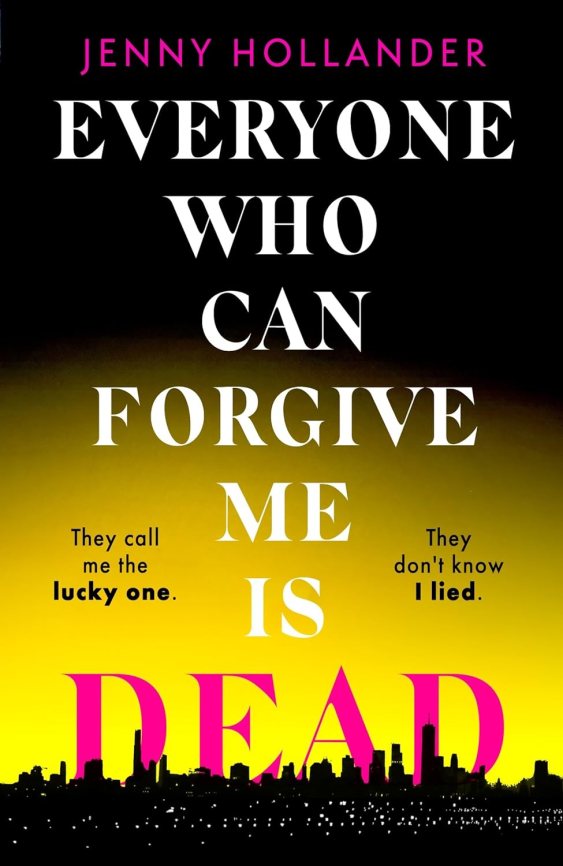
Publisher: Constable (Trade Paperback – 13 February 2024)
Series: Standalone
Length: 326 pages
My Rating: 4.25 out of 5 stars
Debuting author Jenny Hollander presents a memorable first book with Everyone Who Can Forgive Me is Dead, an excellent read that provides a powerful insight into grief and trauma.
Plot Synopsis:
THEY CALL ME THE LUCKY ONE. THEY DON’T KNOW I LIED.
Nine years ago, Charlie Colbert’s life changed for ever.
On Christmas Eve, as the snow fell, her elite graduate school was the site of a chilling attack. Several of her classmates died. Charlie survived.
Years later, Charlie has the life she always wanted at her fingertips: she’s editor-in-chief of a major magazine and engaged to the golden child of the publishing industry.
But when a film adaptation of that fateful night goes into production, Charlie’s dark past threatens to crash into her shiny present.
Charlie was named a ‘witness’ in the police reports. Yet she knows she was much more than that.
The truth about that night will shatter everything she’s worked for. Just how far will she go to protect it?
Everyone Who Can Forgive Me is Dead is an outstanding first book from Hollander, who provides a gripping and intense narrative for readers to get stuck into. Told through the eyes of main character Charlie Colbert, the story quickly engrosses you. Charlie has rebuilt her life after a brutal attack years ago, but when secrets from the past threaten to come forth, Charlie is forced to interact with her fellow survivors once again. At the same time, Charlie also begins reliving the events leading up to that fateful night in her head, desperately trying to remember everything that happened to truly understand everything that she’s been running from.
The resulting story is very good, and Hollander has come up with a gripping, character-driven book that you can really sink your teeth into. The combination of past and present storylines is quite effective, and I liked how you got to see the protagonist’s dark reactions in the present while slowly learning about the events that traumatised her and the people involved. The way in which Hollander reveals all the secrets of the past is handled exceptionally well, and I loved the combination of flashbacks, discussions in the present, and quotes from fictional news articles that hint at what happened. The full events of the past storyline turn out to be far more complicated than you initially think, and the author throws in some incredibly clever twists. I honestly was surprised at some of the more brilliant reveals that come to light, and you really appreciate Hollander’s ability to misdirect the audience into assuming certain things happened. The full reveal and the fallout in the present for the protagonist are pretty amazing, and I loved how everything came together. The reader really comes away feeling satisfied, especially as everyone gets what they truly deserve at the end.
While I loved the intricate story that Hollander pulled together for Everyone Who Can Forgive Me is Dead, I think the most distinctive aspect of the book is the author’s focus on trauma and how different people deal with it. This is mainly done through the eyes of the main character, Charlie, who is forced to continuously live with the trauma, guilt and emotional damage that followed the college massacre. While a lot of this trauma results in a memory black hole for the protagonist, you get to see other aspects of it as the book continues, as she is dragged back into the past and begins to relive all the dark feelings that emerge. The author’s portrayal of how a person would deal with such events, as well as how it would impact their memory, feels extremely realistic, and you can really feel the emotional damage done to Charlie and those closest to her as they try to help. Other characters are also forced to deal with the trauma in other ways, and the different levels of regret, involvement and despair prove to be a captivating part of the book. Throw in a cynical, if realistic, look at how the public idolises dark events, and Everyone Who Can Forgive Me is Dead proves to be quite an emotional rollercoaster. This emotional charge really enhances the impact of the book, and I deeply appreciated how Hollander worked the protagonist’s attempts to remember and overcome her past into the overarching story.
Overall, I found Everyone Who Can Forgive Me is Dead to be an excellent and compelling first novel from Jenny Hollander that is really worth checking out. Thanks to the great blend of personal storytelling, moving emotion, and dark secrets, readers come away from Everyone Who Can Forgive Me is Dead deeply moved, and I look forward to seeing what intriguing reads Hollander writes in the future.
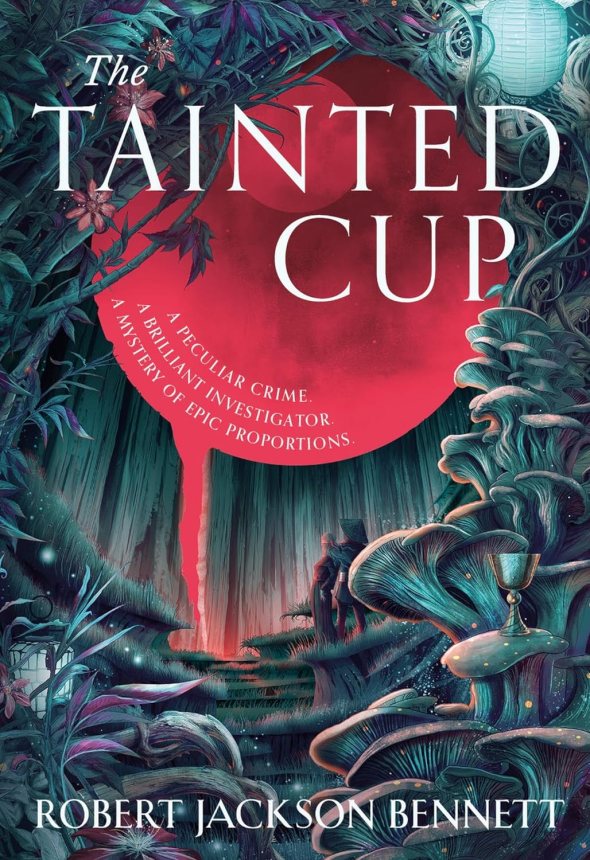
Publisher: Hodderscape (Trade Paperback – 13 February 2024)
Series: Shadow of the Leviathan – Book One
Length: 420 pages
My Rating: 5 out of 5 stars
Acclaimed fantasy author Robert Jackson Bennett kicks off a brilliant new series with the captivating and impressive novel, The Tainted Cup, which sees two unique investigators dive into an enthralling magical murder.
Robert Jackon Bennett is an outstanding author who has been writing since 2010 with his debut novel, Mr. Shivers. Best known for his iconic The Divine Cities trilogy, as well as the intricate The Founders trilogy (of which I read Foundryside), Bennett has been on a real roll of late, and I have been meaning to read more of his works. I finally got the chance when I recently received a copy of his latest novel, The Tainted Cup, an intriguing combination of the crime fiction and fantasy genres. I instantly fell in love with The Tainted Cup’s awesome sounding plot and The Tainted Cup ended up being one of my most anticipated reads of 2024 for very good reason.
In an opulent mansion in the backwater province of Daretana, an unusual case emerges when an important Imperial officer is apparently killed when a tree spontaneously erupted from his body. Even in the unpredictable Empire of Khanum, which is constantly besieged by Leviathans, giant beings from the ocean whose blood and bodies can mutate the land and create unique contagions, this is a shocking death.
The job of discovering what caused this unusual death falls to Ana Dolabra, an Imperial investigator known both for her staggering intellect and her many oddities. Able to make connections no-one else can, Ana begins her unique investigation, using her new assistant, Dinios Kol, as her proxy. Din, an engraver magically altered to possess a perfect memory, acts as his boss’s eyes on the case, and begins to gather all the raw information Ana needs to uncover the full mystery. The conclusion she makes about the case: murder!
Determining the case to be an unusual and deadly form of magical poisoning, Ana and Din manage to find one of the culprit’s accomplices. But it quickly becomes apparent that this is only the beginning of their investigation when several engineers responsible for maintaining the great outer walls of the Empire against the Leviathan threat are killed in a similar manner in the next canton. Determined to discover who is responsible for both the murders and the resulting Leviathan attacks, Ana and Din journey to the wall to find out more. What they discover is an elaborate conspiracy, one that threatens the entire Empire and could result in the death of everyone to the Leviathans.
The Tainted Cup ended up being an incredible read from Bennett who masterfully blended a complex mystery with unique fantasy elements and amazing characters to tell a gripping and powerful story. I had such a great time with this book and honestly couldn’t put it down until I worked out every secret and twist that Bennett loaded into this outstanding five-star read.
Bennett comes up with an excellent premise for The Tainted Cup that is essentially a twisty Sherlock Holmes tale of intrigue and conspiracy, set in a cool new fantasy realm besieged by giant monsters. Told from the perspective of main character Dinios Kol, who works as the eyes of his peculiar master, Ana Dolabra, the eccentric criminal investigator, Bennett quickly and effectively introduces the mystery of a man killed when a tree explodes out of him. I’ve read a lot of amazing mystery novels over the years, and frankly this must be one of the more unique murder tools I’ve seen, and Bennett uses it to full effect to tell such a great story. The initial investigation proves to be quite impressive, as Ana manages to quickly solve the murder using the observations provided by Dinios, finding the catspaw responsible for this first crime in a fantastic scene that really highlights to the author what a great investigator this protagonist truly is.
However, this is only the start of the case, as several similar deaths occur in the next town over, killing multiple engineers and damaging the massive walls that protect the Empire. The resulting chaos results in Dinios and Ana travelling to the nearby garrison town where the engineers were billeted to try and work out who is responsible and why. The situation swiftly degenerates as the protagonists uncover additional murders, corruption, secrets and lies, as everyone tries to hide who is responsible for the killings. What results is an elaborate and addictive investigation as Ana sends Dinios on a series of investigative missions to get closer to the truth and uncover the conspiracies infecting the Empire, while the threat of an approaching Leviathan literally looms on the horizon. I was on the edge of my seat the entire way through the second half of the book, as I desperately waited to see who was responsible and why. While I saw a couple of the big twists coming, the full picture that emerged was extremely impressive, and I honestly loved every clever reveal and surprise that Bennett loaded into the story. Not only are the main mystery and the underlying conspiracies behind it solved perfectly, but Bennett sets up the entire trilogy to be something truly special. I cannot wait to see how this series continues in the future, and I already know it is going to be amazing.
I really loved how Bennett set out The Tainted Cup, especially as his great blend of storytelling elements and genres helped to turn it into a particularly fun and captivating read. The elaborate and intriguing mystery blended well with the other unique elements of the book, and Bennett did an outstanding job of keeping the pace of The Tainted Cup fast and exciting, layering the story with reveals and hints to keep the reader firmly attached. There were so many times that I needed to stop reading but just couldn’t as I wanted to see what was going to happen next. While this book is mostly a little dark and emotionally charged, Bennett also layers the plot with a good amount of humour, mostly tied into the main investigator, which I think really turned The Tainted Cup into something special. This humour tied in nicely with both the more serious mystery and fantasy elements and helped to cut down the tension in an effective and targeted way. Throw in some fantastically elaborate action sequences, unique fantasy battles, and vivid descriptions of the world through the eyes of a complex protagonist, and you will come away with a great appreciation for Bennett’s fantastic writing style.
One of the more memorable features of The Tainted Cup was the awesome new fantasy realm that Bennet imagined for the plot, as well as the intriguing and unique magic that infested it. The plot of the book is completely set within the Empire of Khanum, a walled-off nation completely dedicated to protecting itself from the Leviathan, gigantic, mutated creatures from the seas that are constantly trying to make landfall and destroy everything within. I also loved how the magical elements of The Tainted Cup revolve around the manipulation of strange plants and biological grafts that enhance the physical and mental abilities of the humans. A lot of these plant elements are tied into the Leviathan, and it was fascinating to see the impacts it has both on the land and on the people within it. This is a pretty awesome background for this already fantastic plot, and it reminded me pretty strongly of Attack on Titan or Pacific Rim. Bennett does an outstanding job working the plot of The Tainted Cup around this cool background, and it was fascinating to try and work out how the protection of the wall and the threats of the Leviathan and other magical concerns plays into the main plot. There are some unique conspiracies produced as a result, as well as a some very distinctive killers and suspects, and I was really impressed with how Bennett came up with all these new elements and ensured that become so intrinsic to the plot. The author also makes sure to hint at some future secrets throughout The Tainted Cup, such as the true nature of the Leviathan, which I have no doubt will be revealed in future novels in a big way.
Another awesome element I really need to highlight about The Tainted Cup was the two main protagonists, Dinios Kol and Ana Dolabra. These two honestly make this entire book, with Dinios serving as the harried subordinate while Ana is the brilliant, if slightly unhinged and blunt, investigative savant. Bennett expertly captures the classic detective/sidekick dynamic that was made so famous with Sherlock Holmes and Watson, with Dinios serving the Watson role as point of view character and the sounding board for Ana’s observations and solutions to the various murders encountered. Not only is this very cool in the fantasy context, but Bennett works to make Ana even more outrageous than some of the more recent Sherlock Holmes adaptations, as she is an agoraphobic, disgraced, drug-addicted figure, who mostly goes around wearing a blindfold and terrifying everyone she encounters. I loved Ana so much, and so much of the humour of the book comes from her unusual behaviour. Despite these eccentricities, Ana is still shown to be a brilliant investigator, and I think that Bennett masterfully found the balance between genius and madwoman for this protagonist.
I really appreciated how Dinios proves to be the perfect foil for his unusual master, and it was great to see the story unfold through his eyes, especially as he proves to be a keen student and an interesting figure in his own right. Initially shown to be a little desperate and naive, with secrets of his own, Dinios slowly becomes more confident as the book continues, and I enjoyed seeing him come into his own the more involved with the case he became. His student/friend relationship with Ana was heartwarming at times, and he also serves as the more responsible member of the team, using rules and commonsense to stop Ana from going too far. Dinios gets a well-written glow-up as the book continues, thanks to a revelation about his abilities, and while that potentially makes him a little overpowered as a character, I assume that Bennett has some interesting long-term storytelling involved with them that I cannot wait to see.
Thanks to the masterful combination of mystery, unique fantasy elements and amazing characters, The Tainted Cup was an outstanding read that really showcased Robert Jackson Bennett’s ability as an author. Inventive, entertaining, and emotionally charged, The Tainted Cup is perfect for both fans of fantasy fiction and unique mysteries, and there is so much to fall in love with here. Easily one of the best books of 2024 so far, The Tainted Cup comes highly recommended, and I cannot wait to see how Bennett follows this amazing read off in the future.

Publisher: Orbit (Trade Paperback – 21 November 2023)
Series: Corax – Book Two
Length: 321 pages
My Rating: 5 out of 5 stars
One of the funniest fantasy authors in the game presents a fantastic second entry in his closely released Corax trilogy with the hilarious and brutally brilliant Saevus Corax Captures the Castle.
In 2023, fantasy author K. J. Parker (a pseudonym of author Tom Holt), had an incredible blast of creativity as he managed to release an entire trilogy within the space of a month with the outstanding Corax series. Set to follow an infamous battlefield salvager, the titular Saevus Corax, as he finds himself getting dragged into all manner of unusual scenarios, this series sounded so damn fun. I was particularly intrigued, especially as these books were set in the same universe as his epic The Siege series, which featured Sixteen Ways to Defend a Walled City (one of my favourite books of 2019), How to Rule an Empire and Get Away with It (one of my favourite books of 2020) and A Practical Guide to Conquering the World (one of my favourite books of 2022).
While I managed to get all three of Parker’s Corax books last year, I only had the chance to read the first novel, Saevus Corax Deals with the Dead before 2023 ended. This first entry in the trilogy was pretty damn incredible, and I loved the wonderful and highly entertaining story it contained, especially as it was masterfully layered with Parker’s trademark humour. Saevus Corax Deals with the Dead got an easy five-star rating from me, and it ended up being one of my favourite books of 2023. As such, I really want to get through the other two Corax books as soon as possible so I quickly powered through the second one, Saevus Corax Captures the Castle, last weekend. Saeuvs Corax Captures the Castle was another outstanding read that I had such I wonderful time with.
Several years after his last outrageous adventure when he was crowned a king against his will, Saevus Corax is back to what he knows best, battlefield salvage. While it is not the most glamorous work, it provides a living for his large crew of outcasts and rogues, as they tour their world’s many scattered battlefields, rescuing and repurposing everything they can recover from the dead. However, a nemesis with a personal grudge will send Corax on a dangerous path he might have no escape from.
When several of his men are kidnapped, Corax’s only apparent chance to save them is to capture a delipidated castle in the middle of nowhere. Utilising his unconventional tactics and knowledge of warfare, Corax begins his impromptu siege, only to discover that his old flame, the beautiful con artist Stauracia, is in charge of the castle’s defence, and she has no intention of losing to Corax again.
But why is Corax’s new unwelcomed employer so determined to capture the castle, and what are they hoping to achieve by using Corax’s motley crew? The truth has the potential to plunge the whole world into war if Corax can’t keep it under wraps. However, Corax soon finds himself distracted by revelations from his past, as he finds hope being dangled before his eyes. Can Corax survive this latest misadventure and the dastardly rivals it brings, or has he finally met his match?
The second Corax book proved to be just as funny, addictive, and inventive as the first awesome entry, and I had such an outstanding time with Saevus Corax Captures the Castle. Placing his wonderfully witty and world-weary protagonist on the course for more unusual conflict, Saevus Corax Captures the Castle had me fully hooked from the very first word and I just had to give it another full five-star rating.
Parker came up with a pretty clever and memorable narrative for Saevus Corax Capture the Castle, which proved to be a lot of fun to read. Starting with another entertaining look at one of the group’s salvage jobs, the book soon places Corax’s entire group in a bad situation when members of the salvage band are kidnapped, and the only way to get them back is by capturing a castle. So begins a battle of wits as Corax pits his innate knowledge of war and human nature against the manipulation of his old foe Stauracia, as they both try and work out why they have been charged with looking after an isolated castle. This impromptu siege between two groups of people who do not actually want to be there proves to be quite entertaining, and it serves as a fun focus for the first half of the book. This first half also features several flashbacks into Corax’s past, especially the events that have occurred since Saevus Corax Deals with the Dead, which provides some interesting motivations and looks at the connections between Corax and the book’s main antagonist.
Thanks to some deeply personal manipulations, there is an interesting and dramatic plot change in the second half of Saevus Corax Captures the Castle, as Corax finds himself motivated to journey alone to a forbidden nation. This change from a siege to an independent journey actually works really well in the context of the story, and it builds on a lot of cleverly hidden elements and clues from the earlier plot. You are really on the edge of your seat during this second part of the book, especially as Corax is in the direst of scenarios, and I loved seeing him use his understanding of people to get out of trouble. The ending of this misguided quest proves to be very clever and a little heartbreaking, as Corax finds what he is looking for, but it’s not what he wants. It does allow him a few bits of knowledge that let him destroy his opponents back home and get the payday, although nothing is every that simple for Corax. I liked the intriguing tone that Parker left this second book on, especially as like the first book, the protagonist soon realises that he’s happiest when back doing what he does best.
Saevus Corax Captures the Castle features the exact same writing style as the first book in the series, which you tend to notice when you read these books in quick succession. I personally liked this continuation of style, especially as it is what made me a fan of Parker in the first place, and it results in quite an entertaining story. Told in a chronicle format from the perspective of main character Saevus Corax, the book is his account of events, filled with his commentary, observations and memories, to tell an intriguing tale. Corax proves to be a very fun narrator, and his ultra-cynical take on the world has an entertaining influence on the story which is hard not to enjoy. The resulting mixture of betrayals, manipulations and unconventional warfare really comes together into quite a comprehensive and fun story thanks to this great narration, and I was chuckling the entire way through.
The series continues to utilise the unique world that Parker came up with for both the Corax books and The Siege novels, and the fun references to some of the prior events are quite amusing. As I mentioned in my review for Saevus Corax Deals with the Dead, this series is in some ways more of an alternate history novel rather than a fantasy book, as it does not feature any magic or unnatural elements. Instead, we get a world of war, politics, and domineering nations, which acts as a satirical mirror of our own history. I would still prefer some form of map up front to keep track of where the characters are going and where some of the nations being discussed are in relation to each other, but you can get by without one. While there are a few mentions of the previous novel in the series, Saevus Corax Captures the Castle is for the most part a standalone novel, and anyone interested in a particularly fun tale can dive in here no problem. However, I would personally suggest going from the start of the trilogy, if for no other reason than some of the jokes in this sequel are a little funnier after Saevus Corax Deals with the Dead, and you get the full understanding of the unique relationship between Corax and Stauracia. It also solves one of the main mysteries from the first book, and it would not surprise me if a couple of story elements from this novel are featured in the third and final novel in the series.
As you would expect from a first-person perspective novel like this, most of the focus is on the titular Saevus Corax, whose unique adventures we are following. Corax is a very typical Parker protagonist, in that he is an intelligent and cynical being who would rather live a simple life doing what he does best, but instead finds himself thrust into complex and dangerous events. This proves to be a fun character dynamic, and I loved seeing the often-exasperated Corax forced to deal with people trying to outsmart and manipulate him while he is just trying to do the right thing. Luckily his strong ability to understand how people think and then use that to outplay them often keeps him out of trouble, and it is quite entertaining to see him casually stop a clever enemy plan, just because they are doing exactly what he would. His distrustful, intense, and often very honest outlook on life really impacts how the reader sees the world he lives in, and you really grow to appreciate his take on events, especially as he knows everyone is out to get him. However, readers do get to see another side of Corax in this second book, especially as you get to see how his one previous attempt at romance worked out, and the impacts its tragic ending has on him cause him to act out in some big ways. As such, this is a very intriguing book for this great character, and I had a wonderful time seeing him develop even further.
Aside from Corax, the cast of Saevus Corax Captures the Castle is pretty fun, as Parker comes up with an interesting group of self-centred, occasionally loyal, but mostly treacherous figures to partner up with our favourite rogue. The most prominent of these is Stauracia, who was both a secondary antagonist of the first novel and the protagonist’s love interest. Stauracia is a con-artist who has run afoul of Corax and his group before, and who finds herself forced to work both with and against them in this novel. Smart, manipulative, and utterly lovely, Stauracia is the perfect foil for the more subdued Corax, and they have some amazing chemistry in this book. I loved the unique relationship that bloomed between them that is often driven more by dislike or mistrust than anything else, but both of them come away a bit better from knowing the other. Other major characters include the group of unlikely companions that make up Corax’s battlefield scavengers. Their constant bickering makes for a fun background to many scenes, and I like how they are usually annoyed with Corax’s antics, although they keep following because no-one else could do the job better. Throw in a great villain, whose prior connections to Corax result in some brutal plots against him, and the cast of Saevus Corax Capture the Castle are extremely entertaining, and I loved seeing the unique narrative that formed around them.
Overall, Saevus Corax Captures the Castle was a highly fun and utterly amazing novel from K. J. Parker that I cannot recommend enough. Featuring all the humour, entertaining cynicism and clever characters that made the first Corax book so incredible, Saevus Corax Captures the Castle serves as an outstanding sequel that continues the series in an awesome way. An outstanding and epic read, this was such a great book and I cannot wait to read the final Corax novel as soon as I can.

Publisher: Hachette Australian (Trade Paperback – 30 August 2023)
Series: PI Lane Holland – Book Two
Length: 344 pages
My Rating: 4.5 out of 5 stars
Impressive rising Australian crime fiction star Shelley Burr follows up her amazing debut with the complex and addictive rural murder mystery, Ripper.
In 2022 I had the very great pleasure of reading Shelley Burr’s debut novel, Wake. An awesome book that followed two compelling protagonists as they investigated an infamous missing persons case in a small Australian town, Wake really had me hooked from the get go. Wake ended up being one of my favourite debuts and favourite pieces of Australian fiction in 2022, and I have been eager to see how Burr would follow that up for a while. Burr did not disappoint, as she recently released an intriguing sequel, Ripper (also released as Murder Town).
Seventeen years ago, the small town of Rainier was rocked by a series of brutal killings that saw three people murdered and the infamous killer captured in a heroic effort by the police. Thanks to these tragic events, Rainier is now known as an infamous murder town, with people far more interested in checking out the site of the Rainier Ripper’s trial of destruction rather than the town’s quaint charm and bush location.
Now, after years of neglect and changing economic times, Rainier is starting to financially fail. The town’s only hope might be a dark tourism company that is eager to exploit Rainier’s infamous name. However, when the tour operator is brutally killed in the same location as one of the Ripper’s victims, it opens old wounds and forces the locals, long traumatised by the events of that massacre, to uncover long buried secrets.
Gemma Guillory knows everything about the Rainier Ripper, especially as her teashop was the location of the original Ripper’s final killing. When the new murder occurs, Gemma is brought back to her painful past and is determined to discover whether this new crime was done by a copycat or if the real Rainier Ripper escaped justice years before. Receiving unlikely help from incarcerated investigator Lane Holland, Gemma begins to chip away at years of secrets and lies she didn’t even know surrounded her. But is Gemma truly ready for the truth, especially as a dangerous killer is still hiding in town, waiting to kill again?
I really enjoyed Ripper and felt that it was a fantastic follow-up to Burr’s first novel. I deeply appreciated the complex, moving and character driven murder mystery storyline at Ripper’s centre, especially as it forced its complex protagonist to simultaneously look at events in the past and current concerns.
The book starts off very strong, with a flashback to the original killings, followed by a good recap of the events that made Rainier infamous, and some excellent set up around the current day town, including the proposal to start a dark tourism company and some of the personal problems impacting the key locals. Naturally, things get dark quickly, as a new body is found in the same location of one of the Rainier Ripper’s victims, and the population of Rainier, especially primary protagonist Gemma Guillory, is dragged back into their complex history. The following story is very powerful, as the protagonist begins to dive back into her towns past to try and find the killer, which also forces her to look at those closest to her in a new light. At the same time, the returning protagonist from Wake, imprisoned investigator Lane Holland, is tasked by his prison warden to interrogate the Rainier Ripper to determine if he has any additional information about the case.
Burr moves Ripper’s intriguing plot along at a quick pace, and I liked how complex and intricate the mystery soon became. Solving the crime involves a great mixture of current intuitions about the key characters, memories of the past, and interrogations by Holland in prison. The mystery branches off into some interesting places, and the protagonists need to do some emotionally charged digging to find out what really happened. The resulting solutions to the mystery are very clever, and Burr did a wonderful job laying down subtle but effective clues throughout the main body of the book. I really enjoyed how there wasn’t just one solution, but multiple secrets and reveals that had to come to light for the full truth to be revealed, and there was an outstanding domino effect of revelations and twists. I cannot emphasise enough just how impressive this full range of reveals was, and Burr did a great job weaving together the solutions into one moving and complex narrative.
I think Burr hit the right blend of mystery, excitement and character storylines in Ripper, and the author ensured that everything moved along at an exciting and enjoyable clip. I really enjoyed how much of the story relied on diving into the complex lives of the key Rainier residences, and the author balanced some interesting character storylines in both the present day and in the past. This was especially true of main character Gemma Guillory, and her return to the past, coupled with revelations around the lies of her loved ones, added some powerful emotion to the story. If I had one complaint, it would probably be that Burr worked a little too hard to insert Lane Holland into the plot. While I do appreciate that Burr is trying to set up an ongoing series with Lane Holland as the connecting character, the plot of Ripper might have been a bit sleeker without him. Still, it was fun getting a sequel to Wake and I’m very keen to see what exciting mysteries Burr cooks up in the future.
Ripper by Shelley Burr was another outstanding and compelling read from a talented, rising Australian author. This second rural Australian murder mystery from Burr was extremely compelling and featured an intense narrative, loaded with great twists and complicated characters. I had a brilliant time getting through Ripper and it was one of the top pieces of Australian crime fiction I read last year.

 The Unseen Library