A Practical Guide to Conquering the World by K. J. Parker

A Practical Guide to Conquering the World Cover

Publisher: Orbit (Trade Paperback – 11 January 2022)

Series: The Siege – Book Three

Length: 352 pages

My Rating: 5 out of 5 stars

Amazon

2022 is off to a very good start for me, especially as I have already read an amazing novel that quite frankly may end up being one of my favourite books of the year.  This awesome read was the third and final book in K. J. Parker’s clever and compelling The Siege series, A Practical Guide to Conquering the World.

Over the last few years, I have been having an incredible time reading the incredible and deeply entertaining fantasy Siege series from K. J. Parker.  Parker, a pseudonym for bestselling author Tom Holt, has come up with something very special with The Siege series that combines an interesting new fantasy world with some brilliant humour and intriguing insights into human nature and reactions.  The first entries in The Siege series, Sixteen Ways to Defend a Walled City and How to Rule an Empire and Get Away with It, were both exceptional reads and they were among my absolute favourite books of 2019 and 2020 respectfully.  As such I have been eagerly waiting for a long time, and while I was initially disappointed that A Practical Guide to Conquering the World was delayed until the start of 2022, it ended up being such a great read and worth the wait.

The Siege series is set in an alternate fantasy world that bears some interesting similarities to ancient Europe.  The first book in the series, Sixteen Ways to Defend a Walled City, introduces the Robur Empire, a Roman-esque empire that is destroyed at the start of the novel by a coalition of enemies.  The one exception to this destruction was the Robur capital, simply known as The City, which was able to survive thanks to the actions of a military engineer and conman who was able to come up with some very inventive defences.  The second book, How to Rule an Empire and Get Away with It, was set a few years later and followed a new protagonist, an actor and playwright who is forced to impersonate the City’s figurehead after his death to keep the population’s morale and unity up to keep fighting the ongoing siege.  However, this second protagonist eventually takes control of the city and manages to evacuate it, leading the people to a new life.  The third and final book, A Practical Guide to Conquering the World, occurs during and beyond the events of both the first and second novel (if these books occurred the way they are portrayed) and features a new protagonist in a different land.

Aemilius Felix Boiannes the younger is a minor diplomat and translator assigned to the Robur embassy in the mighty Echmen Empire.  Content to live a relatively blameless life away from the people that wronged him, Felix’s life is forever changed when news of the fall of Robur reaches the Echmen.  Almost killed by the Echmen for no longer having a country, Felix’s life is only spared thanks to a debt owed by barbarian princess.  Determined to no longer live by the whims of others, Felix embarks on an ambitious plan that will reshape all of history.

When the Echmen attempt to enslave the princess’s people, Felix saves her and leads her out of Echmen territory.  Able to convince his new friend to unite the various barbarian tribes, Felix utilises his knowledge as a scholar to lead them to victory over the Echmen.  However, his ambition is not limited to conquering the greatest empire in existence, Felix is determined to take over the entire world and he already has all the tools to do so.  However, not even Felix is able to foresee all the consequences of his actions, and soon the entire world will be turned upside down.  For good or for bad, the story of Felix, the most influential and dangerous man in history, is about to begin.

Well damn, now this was one hell of a read.  Parker has come up with another exceptional read here with A Practical Guide to Conquering the World, combining a brilliant and clever story with incredible humour and an entertaining and compelling look into the human psyche.  Filled with constant laughs, intriguing developments and a truly addictive narrative, this book got an easy five-star rating from me and is near impossible to put down once you start it.

I have had a lot of fun with the great stories that Parker comes up with for this cool trilogy, especially as they are exceedingly entertaining and very unpredictable, even if, due to their complexity and cleverness, they are a bit hard to explain in my inevitable glowing reviews.  Like the rest of the series, A Practical Guide to Conquering the World is a standalone novel that can be read either by itself or as a continuation of the first two books in the series.  This novel is told in the chronicle style and tells the autobiography of the protagonist, Felix, a translator and scholar who finds himself in all manner of trouble when his nation is destroyed while he is in a foreign land.  Able to survive thanks to a recent good deed, Felix is soon dragged into the politics of the nation he is trapped in and attempts to stop the Chinese inspired Echmen empire from destroying and enslaving several neighbouring barbarian tribes.  Forced to put his scholarly knowledge to the test, Felix devises multiple brilliant and unpredictable plans to not only manipulate everyone around him, but to also defeat a massive empire and bend all its power to his ultimate goal of world domination and beyond.  This story goes in some extremely fun directions, and you honestly will not be able to put it down once you start as you become engrossed in seeing what elaborate idea Felix will come up with next.  There are some fantastic ploys and captivating twists scattered throughout this novel, and it is fascinating to see this nobody slowly gain more and more power thanks to his wit and ability to understand people.  I had an outstanding time getting through this story and it is extremely hilarious and very exciting.

A Practical Guide to Conquering the World is part of a larger series which switches protagonists with each entry, providing a new and unique tale of the aftermath of the siege of the City.  This third novel starts around the same time as the first book, Sixteen Ways to Defend a Walled City, and covers several years, going past the events of the second book, How to Rule an Empire and Get Away With It.  It is really interesting to see how this third book ties into everything, especially as the protagonist only has second-hand knowledge of the events of the prior two novels and, thanks to several clever inclusions in this book, as well as the unreliability of the narrators of the other entries, you’re not even certain those events actually occurred.  While new readers don’t need to have any knowledge of the other Siege novels to enjoy A Practical Guide to Conquering the World, I had a lot of fun seeing the mentions and discussions about the events of these prior books, especially as the protagonist is very disbelieving about what he hears.  The inclusion of a recurring character from the past book increases the connection to the rest of the series, although as she is also rather cagey, you have no idea how reliable her recollection of events is.  I loved how compelling this loosely connected series turned out to be, and it was a lot of fun to see how the entire funny saga come together into one entertaining collection.

Just like with the first two books in the series, A Practical Guide to Conquering the World is set around a single protagonist, with the story reflecting their personal account of what they experienced.  This new protagonist, Felix, is another entertaining and interesting central character, a former soldier who, after making some big mistakes and paying the cost for them, is banished to a diplomatic post in another country.  This, and his ability for languages, ironically ensures that he survives the destruction of his homeland and places him in a unique position for his goals.  I personally really enjoyed the cool story that Parker places around Felix and while there are some notable similarities between him and the other protagonists of the Siege books, mainly the fact that he is a conniving and selfish person with impressive insights into human nature and reaction, I think that there are enough differences to keep readers of the series happy.  I loved the focus on his experience with languages and scholarly research, which he uses to great effect throughout the book, manipulating translations for his advantage and then coming up with obscure or historical solutions to the various problems he faces.  Watching him turn this unique knowledge to his advantage, especially once he is inadvertently placed in the centre of world-shaping events, is really cool, and I loved seeing him succeed in his goals.  Parker adds in a great attempted redemptive arc around Felix, which serves as a surprising driving force for much of what he does.  However, readers do have to take Felix on face value, as, like the previous two protagonists of the Siege books, Felix is a bit of an unreliable narrator who may or may not be altering the story to make himself sound better to history.  The final stinger of the book, which hints at the falseness of Felix’s account, is a clever and amusing touch from Parker, and you will come away wondering just how much you believe this character.

Easily the highlight of this book is the amazing humour that Parker has laced his impressive story with.  Parker has an incredible and wicked ability with subtle comedy which permeates the entirety of A Practical Guide to Conquering the World thanks to the unique abilities that occur within.  Much of this humour is derived from the eccentric protagonists’ impressive insights into the human mind, which allows him to manipulate events and people to his favour.  Thanks to some great setup and some outrageous events, the readers get to see this protagonist subtly manipulate everyone, and his explanations for how he gets away with it and the subsequent reactions are extremely amusing.  At the same time, Parker also satirises large parts of the human experience and culture, including the inefficiencies of bureaucracy, the inevitability of betrayal in the name of survival, the herd mentality of groups of people, the unpredictability of starting your own religion, and the inherent suspicion that everyone has inside them.  All of this comes together quite brilliantly throughout the book, and you will honestly be chuckling straight from the beginning, especially as the first joke, about a massive bureaucracy nearly killing the wrong person due to a case of mistaken identity, is very cleverly put together.

Overall, K. J. Parker really did not disappoint with the third and final entry in his hilarious and impressive Siege trilogy.  A Practical Guide to Conquering the World was just as fun and clever as the first two books, and I had a brilliant time reading this captivating fantasy novel.  Containing a wildly inventive narrative set around a compelling protagonist, you will fall in love with this outstanding book, especially as Parker’s comedic inclusions will keep you laughing.  A Practical Guide to Conquering the World is easily going to be one of the best books of 2022 and if you have not checked out The Siege series yet, do yourself a favour and dive into these hilarious and addictive books.

Amazon

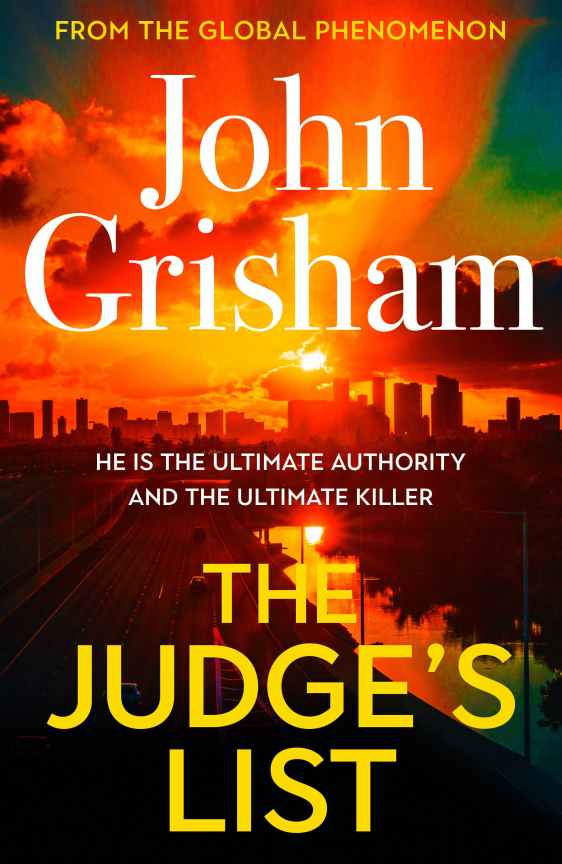
The Judge’s List by John Grisham

The Judge's List Cover

Publisher: Hodder & Stoughton (Trade Paperback – 19 October 2021)

Series: Standalone/The Whistler – Book Two

Length: 359 pages

My Rating: 5 out of 5 stars

Amazon

Those interested in a tense, complex and brilliant thriller should definitely check out the latest novel from legendary crime fiction author John Grisham, The Judge’s List.

Grisham is an exceedingly talented author who has been producing impressive and distinctive legal-based thrillers since his 1989 debut, A Time to Kill.  Grisham has since written over 40 novels, made up of mostly standalone reads with a couple of series thrown in, such as his Theodore Boone children’s thrillers.  Most of these books have been absolute hits, with several being turned into massive films or other adaptations such as The Firm, The Pelican Brief, The Rainmaker, and The Runaway Jury.  While I have enjoyed some of the movies that came out of his work, I haven’t actually ever read one of Grisham’s novels before.  So when I received a copy of Grisham’s latest book, The Judge’s List, I decided to check it out, not only to finally see how this author writes but because I really liked the sound of its awesome plot.

Throughout America’s long judicial history, no judge has ever been convicted or charged with murder, but that is about to change.  In Florida all criminal accusations against judges are handled by the Florida Board on Judicial Conduct, and their chief investigator is Lacy Stolz.  Still recovering from her ordeals during her last big case and forced to deal with the chronic underfunding affecting her agency, Lacy is strongly considering a new career path.  However, an intriguing new case may relight the fire within her when a mysterious woman contacts her, wishing to report a serious crime.

For years, Jeri Crosby has been hunting the man who murdered her father using every investigative trick and avenue she can find, while concealing her identity behind a series of elaborate aliases.  Jeri finally believes that she knows who killed her father, and her prime suspect is a sitting judge in Florida.  While this judge appears to be a dedicated legal professional, Jeri believes that he is the most dangerous form a serial killer capable of concealing his identity and using his vast legal and forensic knowledge to hide his tracks and keep his very existence secret from the police.

Determined to stop this killer no matter what, Jeri provides all her evidence to Lacy, who she believes can connect the pieces she cannot.  While initially reluctant to investigate a murder, even one potentially committed by a judge, Lacy is eventually dragged into the case by her own curiosity and sense of justice.  However, the suspected killer is no easy target; he is a compassionless psychopath capable of hunting down anyone who has ever wronged him and permanently ending them.  Now he has both Lacy and Jeri on his list of potential victims, and he is coming for both of them!

This was an amazing novel from Grisham which proves that I really should have read some of his stuff a long time ago.  The Judge’s List has a captivating and clever narrative that pits two determined women against a lethal and brilliant killer determined to survive no matter the costs.  Serving as a sequel to Grisham’s previous novel, The Whistler, The Judge’s List was an outstanding thrill ride that I had an incredible time reading.

I deeply enjoyed the amazing story of The Judge’s List as Grisham came up with an extremely clever and impressive thriller narrative.  The author starts things off extremely quickly, reintroducing the protagonist of The Whistler, Lacy Stoltz, and bringing her into contact with new character Jeri Crosby, who tells Lacy the story about the man who murdered her father.  Grisham drip feeds the details of who the killer is and what they have done to the reader, ensuring that they have just enough to whet their curiosity, without overloading them.  Thanks to the compelling and unique story that the clearly fearful Jeri tells, the readers are swiftly wrapped up in the plot, and this brilliant introduction ensures that they will come back for more.  The novel swiftly continues from here as Jeri reveals more details about the murderer she is stalking, setting him up as a real monster who is seemingly supernatural in his ability to avoid detection and destroy those hunting him.  As Lacy gets closer to starting the investigation, you start to get some scenes shown from the perspective of the killer, whose intense and chilling point of view serves as a grim counterpoint to that of the protagonists.  While Grisham initially keeps the identity of the killer hidden during his scenes to help cast doubt on Jeri’s story, you soon get a very good picture of who the killer is and why they are committing their crimes.

This proves to be an exceptional setup for when the killer become aware of the investigation and starts to take some drastic measures to eliminate their pursuers and fulfil their master plan.  I loved the impressive and clever cat-and-mouse game that soon develops as the killer attempts to stay one step ahead of the protagonists while also discovering who they are and how they can be eliminated.  There are some powerful and brutal moments in this second part of the book, and I honestly had a very hard time putting it down once I got concerned for the characters.  This second half of the book was just outstanding and it all leads up to an intriguing and surprising conclusion.  While I might have preferred a more legal-based ending, perhaps with some sort of trial, I appreciated the brilliant moves that the antagonist pulled and it was an overall satisfying and fantastic way to wrap this excellent story up.

I had a great time with the impressive writing style in this book and it has definitely made me want to check out more of Grisham’s work in the future.  The author tells a clever and sharp story, and there are some amazing twists and turns that I didn’t see coming.  I appreciated how the author revealed the identity of the killer quite early in the book and the rest of the narrative follows the protagonists’ attempts to prove it and then catch him, which was a refreshing change.  Thanks to the cool plot point of the killer being a well-respected genius judge, this proves to be a very complex and intense investigation, and you are honestly uncertain if the protagonists will succeed in their investigation.  I found the inclusion of a judicial conduct board to be an interesting investigative base for the narrative, and it was fascinating to see Grisham utilise his legal knowledge to make this organisation and the characters associated with it feel very realistic.  The author’s use of various perspectives worked well here, especially as you get some amazing shots from the antagonists’ point of view, and you really end up with a full and distinctive plot.  I can say with confidence that readers need no knowledge of any of Grisham’s previous books to enjoy The Judge’s List despite it being a sequel to The Whistler.  I deeply enjoyed the story this book contained and the way that Grisham told it, and it proved to be very addictive.

I also need to highlight the great characters contained within The Judge’s List, especially its two central protagonists, Lacy Stoltz and Jeri Crosby.  Lacy is the returning protagonist from The Whistler, and Grisham introduces some great storylines around her that impact how she investigates the case in this book.  Lacy is still traumatised and damaged after the murder attempt that occurred in the first book, which makes her reluctant to get involved with another dangerous case, especially with the increased profile her previous success has given her.  Lacy has also reached a bit of a mid-life crisis here as she is facing stagnation in both her career and her romantic life.  This becomes a major part of her character as the book progresses, and it was interesting to see her try and balance them with her role in the case.  I also liked the intriguing reluctant investigator angle that Grisham worked into this character, as Lacy isn’t convinced that she should be involved with a murder case.  However, her inherent curiosity and sense of justice keep dragging her back into the investigation despite her better judgement, and it makes for an intriguing story angle.  I had a great time getting to know Lacy in this book and I would love to see more of her in the future.

The other major protagonist is Jeri Crosby, who has been hunting the book’s killer for years.  The author does an amazing job with this character, and you soon get introduced to a dedicated woman deeply obsessed with finding the person who murdered her father.  I loved the great storylines written around Jeri, and it was amazing to see the various impacts of her obsession, including failed relationships and estrangements from family.  Despite her obsession, Jeri is a very collected and cautious person who has adapted to hunt the monster that killed her father.  For most of the book Jeri appears to be extremely paranoid, due to her belief that the killer can track down any pursuer and make them disappear, and I loved how Grisham justified her concerns.  Watching this character finally get to bask in the success of her lifelong venture is pretty cool, although I do question some of Jeri’s choices during the final stages of the case.  Still, this was a brilliant bit of character work here and I deeply enjoyed diving into the psyche of this obsessed character.

While I deeply enjoyed the protagonists of The Judge’s List, the true standout character must be its complex and dangerous antagonist who serves as a brilliant counterbalance to Lacy and Jeri.  Grisham has gone out of his way to produce a truly impressive and distinctive antagonist here, and I loved the concept of a murderous judge who uses their position and knowledge to get away with their crimes.  The author sets them up perfectly, first introducing the idea of the killer through Jeri’s eyes, and then fleshing them out in person with several excellent and thrilling chapters shown from their perspective.  From there, you find yourself caught in the mental web of an unrepentant killer, who acts on petty grudges for their own self-satisfaction.  You really get a sense of what this villain is capable as the book continues, and I found myself really starting to hate him, which is enraging as he manages to slip a lot of nets and proves to be near impossible to catch.  Grisham does a brilliant job diving into the head of this great antagonist, and the reader is given a powerful view into their motivations and history, ensuring that they know how and why he became a killer.  I really enjoyed following this excellent antagonist, and I thought that his character arc went perfectly, and it was fascinating to see the lengths they will go to win, no matter the personal cost.

Overall, The Judge’s List was an intense and impressive novel from John Grisham, which is making me really regret not checking out any of his books sooner.  This latest novel had a brilliant and powerful plot that takes the reader deep into the mind of a demented killer.  Filled with complex and compelling character moments and a thrilling and twist-filled narrative, I had an exceptional time reading The Judge’s List and it comes extremely highly recommended.  I will definitely be reading more books from Grisham in the future, and I cannot wait to see what other outstanding novels he has written.

Amazon

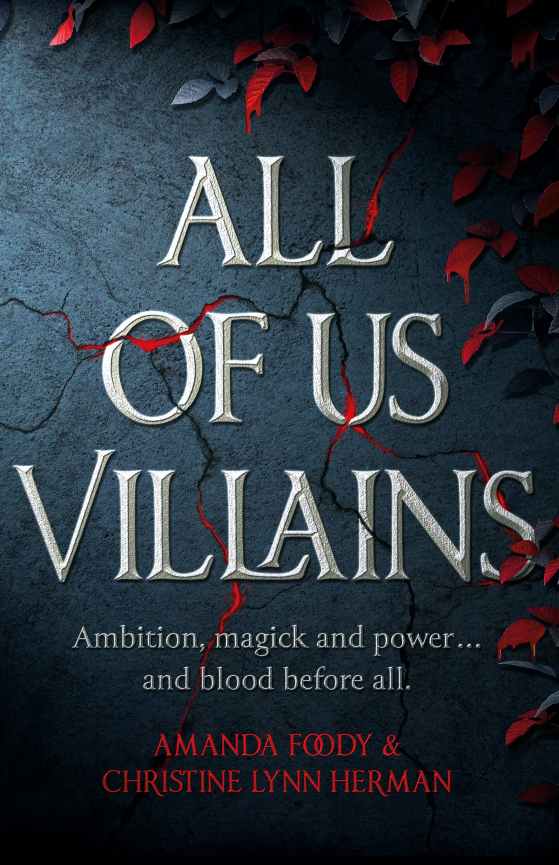
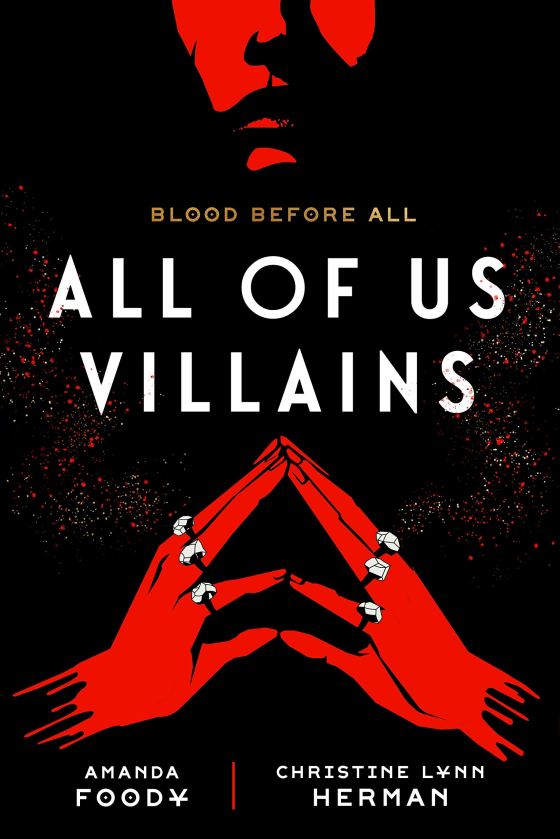
All of Us Villains by Amanda Foody and Christine Lynn Herman

All of us Villains Cover

Publisher: Gollancz (Trade Paperback – 9 November 2021)

Series: All of Us Villains – Book One

Length: 388 pages

My Rating: 4.5 out of 5 stars

Amazon     Book Depository

The writing team of Amanda Foody and Christine Lynn Herman presents their first awesome joint novel, with the impressive and dark young adult fantasy book, All of Us Villains.

Foody and Herman are both established authors, having previously released cool-sounding novels and series, such as Foody’s bestselling The Shadow Game series and Herman’s The Devouring Gray novels.  While I have not had the opportunity to check out either of these authors’ previous books, I was very interested by All of Us Villains when I first heard about it a few months ago.  I loved the unique and compelling plot synopsis, and I was also intrigued by all the buzz from other reviewers.  I instantly jumped on it once I received my own copy and I was very impressed with its clever and compelling story.

In a world still powered by spells and curses, nothing is more precious than high magick, which can super-charge any spell and provide its wielder with insane amounts of power.  The only reliable source of high magick left in the world can be found in the remote city of Ilvernath, a dour and depressing settlement whose prosperity and fame can be traced to seven ancient families.  The ability to see and manipulate this high magick can only belong to one family at a time, and control ensures their prosperity for an entire generation.  However, to gain this right, each family must make an unbelievable sacrifice.

Every generation, when the Blood Moon starts to rise, a magical tournament is enacted that pits the very best of the families against each other.  However, this is no gentle tournament of magick; it is a brutal, curse-created fight to the death, with each family forced to nominate a young champion to represent them.  Only one champion can survive the tournament, and no-one ever emerges unscathed.

Twenty years after the last competition, a new Blood Moon starts to rise, and the families make ready for the latest battle for supremacy.  However, this tournament will be very different than any before.  Someone from the seven families has published a tell-all book, detailing every aspect of the tournament and informing the world of the hidden atrocities that have been committed in the name of power.  With the world now obsessed with every aspect of the tournament, all attention is now focussed on Ilvernath and the seven champions.

Thrust into the public spotlight, all seven champions must now deal with the intense infamy the tournament produces as they prepare to fight.  Forced to balance their own feelings on death and survival with the intense pressure placed upon them by their families and tradition, none are truly ready for the horrors they will be forced to endure.  However, this tournament also offers its competitors a chance to survive and end the curse that has blighted their families for centuries.  But not all the competitors are willing to give up the chance of ultimate power and are prepared to pay any price to win.  Let the games begin!

Damn, now this was a really great novel.  The brilliant new writing team of Foody and Herman produced an outstanding book in All of Us Villains, and I really got stuck into its story incredibly quickly.  The authors did a wonderful job of utilising a new version of the always popular teenage death tournament to fit into a brilliant and moving narrative.  Filled with complex characters and intense personal moments, All of Us Villains is an awesome and powerful book that I deeply enjoyed.

All of Us Villains has an excellent narrative that is a lot of fun to get into.  Focused on four of the seven participants of the latest death tournament, this is an amazing character driven story that really dives into the protagonists’ psyches as they prepare for the ultimate challenge.  The authors do an awesome job setting the scene for this fantastic story, and the readers are quickly hooked by the four complex main characters and the interesting scenario.  Roughly the first half of the book is dedicated to the setup before the tournament begins, which I think ensured the perfect balance between development and bloodshed.  You come away from the first half appreciating each of the characters and deeply caring about the outcome of the upcoming battle.  I was particularly impressed with one great early twist that surrounded one main character’s family preparations, and it added some major impact to his storyline.  Once the tournament begins, readers are in for a whirlwind of emotions and excitement as all the characters enact their strategy to win while all bearing a heavy emotional weight or magical handicap.  There are some intense and captivating sequences here and the readers are constantly on the edge of their seat, especially with some unique interactions, alliances and motivations, including one character who attempts to destroy the entire tournament from the inside.  This all leads up to a devastating and powerful conclusion, filled with death, despair, betrayal and complete emotional devastation, as all the characters make their choices and everything crumbles around them.

I really loved this cool narrative and I found myself getting really caught up in the constant heartbreak and bloodshed.  I am a massive fan of the teenage death tournament premise, and the authors do a great job of working this established story elements into their setting extremely well.  While there isn’t as much intense violence in the actual tournament as some readers would probably hope, I think that the authors’ choice to focus on the characters and their intense emotions about being forced into this fight by their families turned All of Us Villains into a better book. The authors’ use of multiple character perspectives works extremely well here, especially as it forces you to choose between your favourite characters as you try and work out who you want to survive, while also ensuring a really in-depth look at the setting and the tournament.  While I did find the final twist of this novel slightly predictable, the rest of the reveals and unpredictable actions were really cool, and I was shocked and surprised multiple times while reading.  This was also a great first entry, with the story ending on a compelling final note that will ensure that I will be coming back for the next book.  This was a deeply accessible and enjoyable read that has a lot of appeal to a vast array of varied readers, especially its intended young adult audience who will really love the complex story, clever setting and fantastic characters.

I had a lot of fun with the captivating and inventive setting and scenario that the authors have come up with for All of Us Villains.  While the world itself is a bit of a familiar alternate world with magic, the town of Ilvernath and the tournament it hosts more than makes up for it.  The authors spend a substantial amount of time establishing the setting, showcasing how the participants live, the vile history surrounding their families, as well as the tournament which plays a major role in their existence.  The people of Ilvernath, especially the seven families, are explored in detail, and it was fascinating to see the various opinions and expectations surrounding them.  This becomes even more apparent as a clever media saturation element is worked into the narrative as the tournament has been exposed to the public and has gained substantial attention, changing the entire nature of the tournament.  Excerpts from the tell-all-book that caused this attention are featured at the start of each chapter, which I deeply enjoyed.  Not only is it fascinating to see an inside perspective on the events, the families, and the tournament history, but it helps to expand the lore of this world in a fun way.  I also quite enjoyed the cool magical system of this novel, which is channelled through spell-laden rings powered.  The authors spend a lot of time exploring this magical system, especially as they show off various aspects of it, including spell/curse crafting and the subsequent casting.  You get a real sense of how this system works in a very short amount of time, and there are some unique and intense spells that get chucked into the mix, resulting in some big story moments.

The highlight of All of Us Villains is the death tournament, which gets a lot of attention and development.  The authors perfectly explain the lore, rules, and quirks of the tournament, and it is fascinating to see it unfold once the characters are thrown into it.  Cut off from the rest of the world by a magical barrier, the participants need to kill each other within a set period or else everyone left alive will die.  There are some fantastic rules and inclusions set into this tournament, including seven artefacts with their own unique benefits and seven strongholds that the champions can hold up in.  These items and strongholds have their own significance and connections to the seven families, and it was interesting to see their impact on the events of the tournament.  The authors’ clever use of excerpts from the tell-all book works extremely well to highlight elements of the tournament, and I loved all this crucial part of the book.  There are also some new elements introduced for this specific tournament, as parts of the curse start to break apart due to the unpredictable actions of the participants.  This opens new opportunities and possibilities that were quite fascinating to see.  I look forward to seeing what happens around this tournament in rest of this series, especially as more bloodshed and destruction is inevitable.

As I mentioned multiple times above, the best thing about this cool book is the fantastically complex and compelling central characters.  The focus of All of Us Villains is on the seven participants of the tournament, with a particular emphasis on the four main characters.  The authors really dive into these four characters, highlighting their personalities, emotions, and their thoughts on the tournament they are about to embark on.  Each character is very well established, and there are some extremely complex and powerful storylines and character arcs set up around them.  It is a testament to the authors’ writing that I tended to enjoy each separate perspective about equally, and there were none that I disliked more than any of the others, which is a real peril in novels with a lot of narrators.  I will say that this intense focus on only four of the main characters does detract a lot of attention and interest away from the rest of the supporting cast, especially the three other family champions, but I think it is worth it for the impressive development put into the central protagonists.

The first of these characters is Alistair Lowe, the powerful scion of the Lowe family.  The Lowes win most of the tournaments and are generally considered the villains of Ilvernath and its history due to their monstrous personalities.  Alistair has been raised his entire life to win the tournament by any means necessary and has fully accepted his role as the monster of the story, even if he isn’t as evil as everyone assumes or wants him to be.  However, an interesting and unexpected romance soon starts to change his mind and he is convinced that changing his ways and saving the others might be a good idea.  However, a particularly vicious twist towards the end of the novel completely alters the entire trajectory of his character arc and will leave you reeling in shock while it loads up the epic feels.  I felt that out of all the characters, Alistair had the most moving and complex storyline as well as the most substantial development, and he swiftly becomes the character you bond with the most.  I am deeply intrigued to see what happens to him in the next book and I have a feeling that there is both great tragedy and great evil in his future.

The next central champion is Isobel Macaslan, a bright and powerful magick user from a highly resented family.  I loved the great work that the authors put into developing her.  At first Isobel appears to be one of the most confident and enthusiastic figures in this book, especially as she is the one leaning into the publicity surrounding the tournament the most.  However, it soon becomes apparent that she was forced to be champion thanks to the machinations of her uncaring family and her former best friend, who threw her to the press.  Isobel has a lot of issues going into the tournament, with the mass attention and the unfair expectations placed upon her forcing her to take some big risks which severely disadvantage her as she enters the tournament.  Isobel ends up developing some unique connections throughout All of Us Villains, and the friendships and relationships she develops form the emotional heart of much of the narrative.  The reader sees Isobel go to some dark places in this book and it is hard to see all the heartbreak and despair she experiences.

I was also a major fan of the underdog Gavin Grieve, who has an amazingly complex and relatable story arc.  Gavin is the champion from the Grieve family, who have never won the tournament and are generally looked down upon by everyone in town.  Gavin is a sad and angry character since everyone underestimates him and his chances, while also showering him with scorn as it was apparently a Grieve who wrote the tell-all expose about the tournament.  This anger leads to him making a dangerous deal that provides him with impressive power at a great price.  This was an amazing story inclusion, especially as it turns Gavin into a bit of a beast due to finally having power and an advantage over the other families.  This leads him to do some reckless and cruel things, and it was fascinating to see the events of the tournament and its bloody legacy slowly corrupt this character before your eyes.

The final point-of-view character was Briony Thorburn, the confident wildcard.  Unlike all the other major characters, Briony wants to compete in the tournament and has spent her entire life getting ready for it, going as far as to dump her boyfriend, one of the other competitors, so she would feel less guilty about killing him.  However, events outside of her control impact her participation and she is forced to take some drastic actions.  This leads to her significantly reconsidering her position and gives her a fantastic arc about trying to save all her fellow participants and try to break the tournament once and for all.  Watching her attempt to make up for all her past mistakes while also convincing the other champions to change hundreds of years of tradition is pretty brilliant, and I found it to be a compelling arc that fleshed out the story perfectly.

In their first collaboration, the brilliant team of Amanda Foody and Christine Lynn Herman have produced one of the best young adult fantasy novels of 2021 with All of Us Villains.  This amazing novel contains an excellent story set around an intense magical teenage death tournament that takes the reader into some incredible directions.  Filled with tragedy, impressive character development, and a ton of impressive twists, All of Us Villains is an exceptional read that comes highly recommended novel.

All of us Villains Cover 2

Amazon     Book Depository

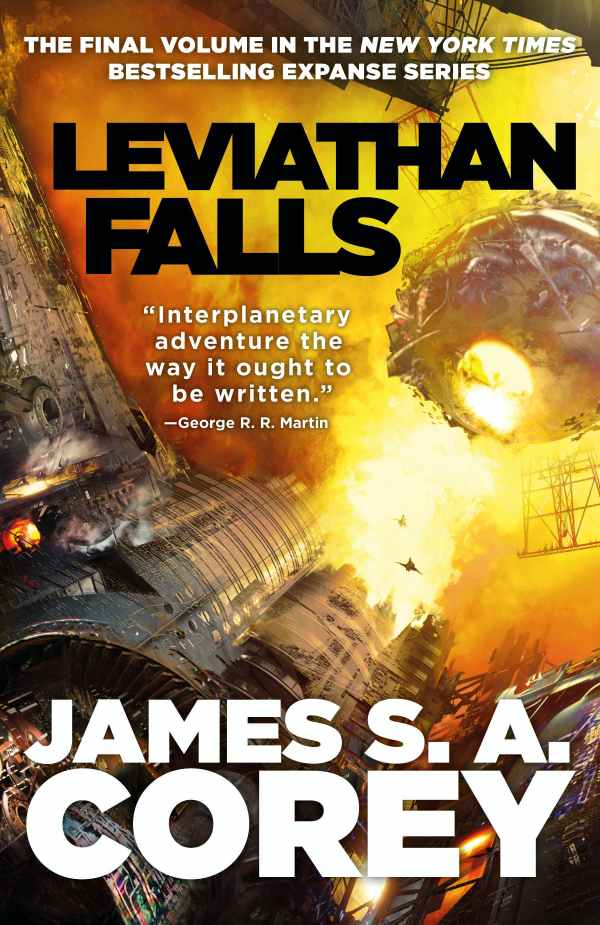
Leviathan Falls by James S. A. Corey

Leviathan Falls Cover

Publisher: Orbit/Recorded Books (Audiobook – 30 November 2021)

Series: The Expanse – Book Nine

Length: 19 hours and 40 minutes

My Rating: 4.5 out of 5 stars

Amazon     Book Depository

For my last review of 2021 I check out the epic and highly anticipated final book in the iconic The Expanse series by James S. A. Corey, Leviathan Falls.

For the last ten years the science fiction genre has been dominated by the impressive and captivating The Expanse series.  Written by James S. A. Corey, the joint pen name of authors Daniel Abraham and Ty Franck, The Expanse series consists of nine awesome novels that navigate the troubles and wars of future humans in both our solar system, and other systems accessed by ancient alien technology.  This has been a pretty amazing series which has moved from wars between Earth, Mars and the Belt, to intergalactic travel and battles between galactic empires and interdimensional aliens.  I have been really enjoying this series lately, and the last two novels, Persepolis Rising and Tiamat’s Wrath were extremely fun, especially as they utilised the conquering Laconian Empire, which forced the protagonists to form a rebel movement known as the underground.

The plot of Leviathan Falls starts a few months after the events of Tiamat’s Wrath, which saw the underground destroy Laconia’s shipyards and free James Holden, captain of the Rocinante, and Teresa Duarte, the daughter of the Laconian high consul.  Now the Rocinante flies throughout the various settled systems attempting to keep the underground alive and bring down the faltering Laconian Empire.  At the same time, unnatural and destructive alien forces, disturbed by the intergalactic technology used to traverse space, are reaching into our universe and attempting to exterminate all human life.

The best hope for humanity may lie in the hands of the Laconian high consul, Winston Duarte, whose alien enhancements have given him unnatural insight into the universe.  However, Winston Duarte is currently missing, having vanished from his room as he attempts to unleash his ambitious master plan.  To find him, the Laconians unleash their ultimate hunter, Colonel Aliana Tanaka, who focuses on the Rocinante, determined to use Teresa as bait.  At the same time, Dr Elvi Okoye leads a desperate scientific mission to uncover the secrets of the ancient aliens whose technology has allowed humanity to expand throughout the universe.  But her progress is dependent on the lives of the mysterious half-alien children in her care, whose ability to connect with the past could save the future.

As the situation in the universe becomes even more desperate, the crew of Rocinante are once again thrust into the midst of the battle for humanity’s survival.  Entering a desperate alliance and faced with near certain extinction, the Rocinante and their allies embark on a final battle for the future.  However, not only are they facing the malevolent forces from outside their universe, but also the radical and altered Winston Duarte, whose plan to save the species comes with an impossible price.  Can Holden and his crew stop him before it is too late, or is the final chapter in humanity’s story?

Leviathan Falls was another intense and impressive science fiction read from Corey, who brings this epic series to an end in a big way.  This ninth and final Expanse novel had a captivating and intense narrative filled with amazing and realistic science fiction elements, complex characters, and a fitting and heartbreaking conclusion that wraps everything up extremely well.  This ended up being a fantastic novel and I was glad I had a chance to see how everything finished up.

There is a great narrative for this book that takes the reader on a powerful and compelling ride as the authors seek to wrap everything up.  Leviathan Falls continues several of the storylines set up in the previous novels, especially Tiamat’s Wrath, and takes them towards their inevitable conclusion.  Told through multiple characters, including several minor figures, this is a slow-burn narrative that methodically sets up the various storylines and explores them to their full extent.  The story gets quite complex in places as the protagonists attempt to survive not only the various battles between the Laconians and the underground but also the malevolent entities attempting to take them down from another universe.  The first half of the story focuses on a cat-and-mouse battle between the protagonists on the Rocinante and the Laconian Colonel Tanaka, while there are some interesting examinations of Elvi’s attempts to understand the threat facing humanity.  These storylines lead up to a big event that sets up the intense and exciting second half of the novel and forces the previously disparate characters to come together and face the major threat.  This results in a massive, extended sequence that forces several characters to make some major decisions, and a moving conclusion that is both devastating and a fitting ending to the franchise.

The team behind The Expanse have a really unique writing style that I think fits the epic scope of their series.  Using an intense amount of description, as well as some colourful analogies, the authors paint a brilliant picture of the events occurring around them that perfectly encapsulates the insanities and complexities of the situation.  The Expanse series is known for its realistic approach to science fiction, and this continues through in Leviathan Falls as the reader gets a real sense of the awesome nature of space flight through the various characters’ eyes.  While some of the science fiction elements are obviously invented solely for the narrative, most of the human technology in this book appears to be quite realistic and well thought out.  I also love the cool take on space travel, communication and fights, with many of the events in space taking hours or days to complete due to distance and light delays.  This is particularly impressive during the battle sequences which rely more on calculations and manoeuvres than fast-paced firepower, and it really added to the intensity of multiple scenes throughout the book.

While I enjoyed the narrative and the way that the authors told the story, Leviathan Falls did drag a little in places.  I honestly think they could have streamlined this into a better novel by taking out, say, 50 to 100 pages, and I personally would have cut all the chapters told from the perspective of Kit Kamal, which have no major impact on the overall story.  I also think that the authors went a tad overboard in places trying to make some of the elements and experiences seem a little cleverer than they needed to be, such as certain long-winded interludes.  While I understand that this is their writing style and it usually works, I felt that it made parts of the book a little unwieldy and unnecessarily complex.  Being the grand finale, it was also a very inaccessible novel for new readers, especially as so much of the plot relies on knowledge of some of the preceding books, particularly Persepolis Rising and Tiamat’s Wrath.  However, the rest of Leviathan Falls story more than compensates for some of the above issues, and this still ended up being an excellent and compelling read.

Fans of this series will no doubt appreciate some of the excellent world building that took place in Leviathan Falls.  The author introduces some interesting and compelling expansions of various elements of lore and technology within this universe, especially when it comes to the two ancient alien races who the protagonists have been encountering throughout the series.  It was rather fascinating to see how certain elements were utilised throughout the plot, and they ended up enhancing the narrative extremely well.  I loved all the use of alien technology, especially as there are some great call-backs to the previous books and the weird molecules and artefacts the protagonists previously encountered.  There was also a good wrap up with the universe that I really appreciated, and it think it ends everything on a compelling and interesting note.

Leviathan Falls features an impressive cast of complex characters, and the multiple perspectives are used to great effect throughout the book to craft a massive and elaborate narrative.  I liked the cool range of characters in this book, especially as it primarily focuses on the well-established cast from the previous novels, as well as one great new antagonist.  The vast array of perspectives proves to be a lot of fun to explore, although I do question the necessity of one or two overutilised point-of-view characters.  I also appreciated some of the development that occurred around the recurring cast of the series.  This included a tangible sense of weariness that multiple characters experienced, especially the series’ long-running protagonists, which helped to reflect how they have aged and evolved over the years, especially in the face of so much adversity.  There are also a couple of interesting inclusions that I quite enjoyed, including one excellent character whose return will come as a pleasant surprise to fans of The Expanse.

There are several extremely awesome characters that I really must highlight in this book, including protagonist James Holden, the captain of the Rocinante and main character of the series.  Holden has gone through a lot throughout The Expanse novels, and it shows in Leviathan Falls.  The character is clearly dealing with some PTSD following his extended imprisonment in the prior novel, and there are some compelling and intense trauma storylines around him.  Holden has a particularly major moment in this novel, and it ended up being an interesting and moving novel for this great central character.  Aside from Holden, you also must love the work put into the surviving crew members of the Rocinante, Naomi Nagata, Amos Burton and Alex Kamal, each of whom have their own interesting storylines and serve as great point-of-view characters.  I particularly enjoyed the increased focus on Naomi now that she’s the head of the underground, and it was still fascinating to see her as a confident and capable leader.  Amos’s storyline was also rather interesting, especially after he died and was resurrected by alien technology in the previous novel.  This gives him some unique perspectives throughout the book, although there were only so many times you can hear about the “unnatural pauses” he now has.

In addition to the Rocinante crew members, several other exceptional characters also really stood out to me.  I continued to enjoy the inclusion of Elvi Okoye, the brilliant scientist who was drafted into the Laconian military force as the leading expert on alien technology.  Elvi offers most of the scientific insight into the events occurring in the novel, and it was interesting to see her experiences as she attempts to understand the ancient alien technology and discover a solution to the mysterious attacks plaguing the various human systems.  I also really appreciated Colonel Aliana Tanaka, a Laconian soldier who is sent to track down the missing Winston Duarte by hounding the Rocinante and trying to take back Teresa Duarte.  Despite being a new character, Tanaka has one of the best arcs in the entire novel, as she is forced to contend with not only the boldness of the protagonists but also her own instabilities and issues.  While she initially appears to be a mostly rage filled attack-dog, the author soon expands on her character and backstory turning her into a very complex and somewhat sympathetic figure.  This is particularly true after a major event results in an unwelcome intrusion in her mind, and her inability to cope makes her even wilder and angrier.  These brilliant characters really helped to enhance Leviathan Fall’s plot and it was an absolute pleasure to see all the great character driven story arcs come to an end.

While I did receive a physical copy of Leviathan Falls, I ended up listening to the audiobook version to fit this book into my reading schedule.  This was a pretty good audiobook, and I had a fantastic time getting through it.  Leviathan Falls has a decent run time of just under 20 hours, which did take me a while to get through, especially in some of the spots where my engagement slipped a little.  Despite the length, this was a fantastic audiobook adaptation and I appreciated the impressive narration from Jefferson Mays, who has previously lent his voice to all the previous The Expanse novels.  Mays’ voice seems to fit the massive and epic format of the series extremely well and I found myself appreciating and following some of the heavy scientific elements, battle sequences and intriguing analogies a bit better with his work.  He also provides some excellent voices to the various characters featured in the series which fit their various personalities and helped to showcase their emotions.  I had an awesome time listening to this latest audiobook and it is an impressive way to check this novel out.

After nine epic novels, The Expanse series by James S. A. Corey finally comes to end with the fantastic Leviathan Falls.  This final book does an excellent job of tying together the various story threads from the previous novels and giving this impressive series the outstanding conclusion it deserves.  Filled with complex characters, a powerful and rich science fiction setting, and an intriguing central storyline, Leviathan Falls was an awesome read.  An amazing and cool conclusive episode, Leviathan Falls is really worth checking out and I loved its compelling and exciting story.

Amazon     Book Depository

Cytonic by Brandon Sanderson

Cytonic Cover

Publisher: Gollancz (Audiobook – 23 November 2021)

Series: Skyward – Book Three

Length: 14 hours and 28 minutes

My Rating: 5 out of 5 stars

Amazon

One of the best authors of fantasy and science fiction in the world today continues his incredible and brilliant Skyward young adult science fiction series, with the third epic instalment, Cytonic.

This was another incredible book from the amazingly talented Brandon Sanderson, who I would say is one of the top authors in the world today.  Debuting back in 2005, Sanderson has written many brilliant and complex fantasy and science fiction novels and was personally selected to finish off Robert Jordan’s iconic The Wheel of Time series.  Sanderson has since written a great collection of books, most of which have been part of his interconnected Cosmere universe.  This includes his groundbreaking The Stormlight Archive series, which started in 2010 with The Way of Kings, as well as his bestselling Mistborn series.  While the extremely prolific Sanderson is constantly adding to his Cosmere novels, he has also been working on several other series, such as his Skyward books.

The Skyward series are an excellent young adult science fiction series that follows the character of Spensa Nightshade, a misfit who rose to become a fighter pilot to defend her planet from alien invaders.  Made up of Skyward and Starsight, this great series has proven to be truly fantastic, and these first two novels were amongst the best books of 2018 and 2019 respectfully.  The first book detailed Spensa’s training as a pilot, which saw her save her planet and discover that her people were intentionally trapped on their planet in a penal colony.  The second book, Starsight, followed Spensa as she infiltrated the alien capital in disguise to discover what the aliens wanted, and what plans they had for her planet.  However, after being betrayed, Spensa learns that the Superiority government want to use the mysterious interdimensional beings known as the Delvers as weapons against the humans.  This third book in the series, Cytonic, follows on immediately after the events of Starsight and continues Spensa’s adventure, showing what happened to her after she dove into a Superiority interdimensional portal at the end of the second book.  Sanderson also released several novellas around the same time as Cytonic, including Sunreach, Redawn and Evershore, which add context to the universe and focus on some of the side characters from the previous novels.

Following her dive into the mysterious portal in the middle of Starsight to escape the Superiority, Defiant Defence Force pilot and amateur spy, Spensa Nightshade, finds herself in all manner of trouble when she arrives in the realm known as the Nowhere.  The Nowhere is a unnatural and chaotic dimension outside our universe that hosts the Delvers, destructive creatures that are being manipulated by the Superiority into destroying humanity, especially the psychically empowered beings known as Cytonics, such as herself.

Determined to find out more about both the Delvers and her own Cytonic abilities, Spensa remains in the Nowhere to find the clues that will uncover the history behind her own power and that of her enemies.  However, the Nowhere is a weird and mysterious place, made up of floating fragments of multiple planets and filled with all manner of creatures, alien pirates and Superiority forces.  Worse, the very nature of the Nowhere slowly changes the people within it, draining their memories and making them forget everything important to them.

Alone except for her unhinged ship AI, M-Bot, and a forgetful intergalactic explorer, Spensa begins her quest.  As Spensa hunts down fragments from the past, she soon finds herself under attack from the Delvers, who are desperate to destroy her and the threat she poses to their entire race.  With mysterious monsters, dangerous physics and hostile aliens closing in on her, Spensa is thrust into the great adventure she always wanted.  However, the closer she gets to the truth about herself and the delvers, the more she begins to realise just how high the cost of knowledge and power can be.

This was an exceptional and addictive read from Sanderson, who once again takes the reader on a complex and powerful ride.  Cytonic was an excellent continuation of the unique story started in Skyward and then expanded on in Starsight, and I love the powerful journey contained in this novel.  Featuring a brilliant combination of a clever narrative, a unique new setting and some amazingly entertaining characters, this was an exceptional read that gets a full five-star rating from me.

I deeply enjoyed this incredible narrative, especially as it continues the cool plot from the previous two novels.  One of the best things about this series is the amazing amount of variance in storylines, with the first book reading like a flight academy story (teenage Top Gun), while the second book was an espionage book set in the heart of alien territory.  This third book turned out to be a wild and epic adventure novel, which places the protagonist in a unique and dangerous new setting and requires her to complete a great quest to save her friends and escape.  This great change of tone really made for a compelling read, and I loved the inventive pivots featured in this book.

Cytonic starts right after the events of Starsight, quickly resolving the cliffhanger from the second book, while also placing Spensa immediately in danger yet again.  Once the new main character, Chet, is introduced, Cytonic’s story quickly sets the protagonist on her mission, travelling to one location after another to learn the past of the universe and her enemies.  There are some brilliant sequences set throughout this part of the book, as Spensa gets to grips with the strange new dimension she has found herself in, while also enjoying the cool adventure she is having.  Around halfway through the book, several key new characters are introduced, as Spensa is forced to join an alien pirate gang to advance any further into the Nowhere.  What follows are some brilliant character moments as Spensa starts to find her place in this dimension, while also worrying about her friends back home.  After some intense and exciting space fighter fights, Spensa and her companions eventually get towards the end run of the book, learning everything they came to while trying to escape the Delvers.  The final major sequence of the book is loaded up with an intense amount of action, drama and major twists, as everything you think you know is changed around, and some big events occur that will rock you right in the feels.  This was a brilliant and extremely fast-paced narrative, with the protagonists never sitting still for long as they encounter danger and adversity around every corner.  Despite the intense pace, Sanderson also works a lot of character development and emotional encounters throughout the book, and you get an extremely well-balanced story that is very easy to get addicted to.

I deeply enjoyed Sanderson’s excellent writing style which helped to make Cytonic particularly accessible and fun to read.  Told exclusively from the perspective of Spensa, the reader gets a detailed and upfront examination of all the events occurring in front of her in addition to her own hilarious observations and reactions.  I find that the Skyward novels have a very different tone from some of Sanderson’s other works, and I appreciate the cool and perfect combination of intense science fiction elements, with compelling character development, impressive action sequences and outrageous and exciting humour that was featured in Cytonic.  The various fighter combat sequences are particularly good, and while they aren’t as plentiful as some of the other Skyward novels, there are still some exciting and elaborately written scenes that pit Spensa against other pilots or entities in high-stakes combat.  I will say that Cytonic does, at times, seem like a bridging novel in the series, setting up events for the big finale and sidelining several supporting characters.  However, I still really liked this great read, and I had an amazing amount of fun with its clever adventure framing.

Before starting Cytonic I was a little worried about how easy it was going to be for me to follow, especially as it had been nearly two years since I read Starsight, and I might have forgotten a lot of detail.  I was also concerned because I did not have a chance to read any of the novellas that Sanderson released around Cytonic, which some readers claimed were vital to the plot.  I personally felt that I was able to read this book without a refresher as Sanderson ensured that certain key details were summarised within the text extremely well, and I was swiftly able to remember anything that might have slipped my mind.  I also found that my enjoyment didn’t suffer from having not read any of the novellas, mainly because it was such a Spensa focused story.  The novellas detailed events that occurred back on Detritus and the Superiority during Spensa’s absence, and they only have minor impacts on the plot.  As such, readers can manage without them, although I think I will read them soon to find out what else has been happening in the wider universe.  One of the other things that I really appreciated about Cytonic is that it is extremely appealing to a wide range of readers.  While it is marketed as a young adult novel to teenagers, I honestly think that readers of most age ranges can really enjoy this book.  Older readers will deeply appreciate the complex characters and intriguing science fiction elements, while younger fans will love the cool action and hilarious humour.  Combined, this makes for an awesome read that I would strongly recommend to anyone interested in a great science fiction read.

I really must rave about the fantastic setting and universe building contained within Cytonic.  Sanderson really went all out expanding the Skyward universe in this latest novel, and the reader gets a ton of information as key elements from the previous novels are finally explained in full, such as Cytonics and the Delvers.  While readers may occasionally feel overwhelmed by all the new inclusions and background information that Sanderson shoved into this novel, I personally found it really fascinating and I appreciated having several questions answered.  There are some great scientific and character elements built into who and what Cytonics, Delvers, and the Nowhere are, and I think they were woven into the exciting plot extremely well.  Established elements from the previous two novels are also reintroduced expertly throughout Cytonic, and it was great to get some updates on the history, disputes and characters that were such a cool feature of the first two novels.  I particularly loved the fun reimagining of key parts of human culture that have been warped by years of retellings and misunderstandings.  Spensa’s love of stories ensures that several of these are featured throughout Cytonic, and it was always amusing to hear distorted version of well-known movies and books, such as Spensa’s epic and hilarious retelling of The Lion King.

I also need to gush about the incredible new setting of the Nowhere, which serves as the primary location for the entire narrative.  The Nowhere is a weird and haunting dimension outside of real space that is filled with all manner of wonder and danger.  Revolving around a faux-star containing Delvers, the rest of the Nowhere contains a ton of floating fragments of land and soil, containing all manner of elements from the planets they originated from.  This makes for a brilliant and shifting landscape which was really fun to explore and even more cool to fly over.  However, the real brilliance of this setting lies in the impact it has on the characters’ minds.  People stuck in the Nowhere, which includes pirates, miners, outcasts and anyone the Superiority wants to get rid of, are slowly having their memories, personality and sense of time sucked away by the weird space, with only certain figments of reality slowing the process down.  This naturally has some substantial impacts on the plot and the characters, with Spensa constantly trying to hold on to what is important to her.  This exceptionally clever and inventive setting is a great backdrop to this amazing narrative, and it was extremely cool to see Spensa and her friends try to navigate and overcome the various elements of the Nowhere.  Sanderson is a true master of creating unique and captivating universes, and I cannot wait to see what happens in this one next.

There is no way that you cannot talk about one of Sanderson’s novels without highlighting the many exceptional and complex characters featured within.  Cytonic, and the Skyward series in general, is a perfect example of this, as the readers are treated to a range of unique and entertaining protagonists, each of whom add an incredible amount to the overall story.  Due to the events of the plot, there is a much more limited range of characters in this novel, although the three main characters more than make up for it with their bold personalities and captivating backstories.

The most prominent of theses is point-of-view character and main protagonist Spensa Nightshade.  Spensa is a great character who has gone through an amazing amount during the trilogy, transforming to loner weirdo child who was reviled as the daughter of a traitor, to a heroic pilot, then to a daring spy.  In this third book, she becomes a wilderness adventurer on a quest to save her people, which plays perfectly to her personality, which has been warped by her youth of listening to wild stories.  As such, Spensa has a great time in this book, and it is deeply entertaining to see her adventure around and become a space pirate.  While there are a lot of fun moments with Spensa, Sanderson also takes the time to once again dive into her personality, showing how much she has grown since the start of the first book, as well as the unique relationships she has formed.  Spensa is faced with some hard choices in this book as she attempts to return home, and there is an impressive examination of her damaged psyche, especially surrounding all the responsibilities that have been thrust upon her.  This makes for a complex and compelling portrayal in this novel, and while you may laugh at Spensa’s antics you know that there is a lot going on within her head.  There are some interesting developments around Spensa in this book, particularly when it comes to her Cytonic powers, and it will be fascinating to see how she further develops in the next novel.

I also deeply enjoyed the character of M-Bot, the silly and distracted artificial intelligence who Spensa discovered in a crashed ship in the first book.  After being disassembled by the Superiority in Starsight, M-Bot now flies around in a tiny cleaning drone and finds himself going through some big changes.  In particular, he has gained full sapiency in this book, and he immediately goes on an emotional bender, trying to understand the complex feelings he is now experiencing, while also dealing with his sense of betrayal after Spensa abandoned him in the previous book.  This dive into sentience adds some really entertaining layers to M-Bot in Cytonic, and he is even more amusing and charming than before, which I didn’t think was possible.  Readers will swiftly fall in love with M-Bot again, and it was so much fun following him around, especially as he continues to develop his unique friendship with Spensa.  M-Bot has some amazing moments and ridiculous dialogue in this book, and you will not be prepared for everything that occurs with him.

The other major character of this book is new protagonist Chet Starfinder, a human Cytonic explorer who lives in the Nowhere and decides to help Spensa achieve her goals and escape back to her universe.  Chet is an eccentric being who combines aspects of all the famous literary explorers into his personality, thanks to his love of stories and his inability to remember life outside of the Nowhere.  Readers will enjoy getting to know Chet, and it was fascinating to see the cool dynamic that grows between him and Spensa as they take on a fun partnership to traverse the Nowhere.  Sanderson opens some big questions surrounding who Chet is at the start of Cytonic, and it was a lot of fun finding out who exactly he was and what his motivations for helping Spensa are.  I deeply enjoyed Chet’s unique and compelling storyline and he proved to be a brilliant addition to the novel.

Aside from these main three characters, Cytonic also features an interesting supporting cast.  Most of these characters are new, with characters from the preceding novels barely featured here (they appear in the accompanying novellas).  These new characters are the trapped inhabitants of the Nowhere who find Spensa and become part of her journey.  These include the Broadsiders, an alien pirate band who Spensa joins and swiftly grows close to thanks to their inclusive nature and love of great pilots.  It was fascinating to see Spensa, who has had to fight for inclusion her entire life, gain some more friends, even though she knows she can’t stay with them.  There are some great figures amongst this bunch, and I loved some of the unique alien features they had.  Sanderson reintroduced one of the best characters from the Starsight in the book, who proves to be quite an entertaining and lovable inclusion, even if they are experiencing some memory issues.  Some of the main series antagonists have minor appearances in this book, plotting from afar and setting some evil plans in motion.  While it would have been interesting to see more about them, especially as they were only introduced in the prior novel, I think keeping them mostly apart from Spensa worked in the context of the unique plot that Sanderson was trying to develop.  I also deeply enjoyed the strange creatures known as the Delvers.  The Delvers are dangerous and powerful interdimensional beings who exist on a whole other form of reality and consciousness.  Sanderson does a fantastic job exploring what exactly these beings are, and you get a real sense of their dangerous emotions and outlook on life.  I really appreciated the author’s clever use of these seemingly less than humourous monsters as the antagonists of this book, and it proved to be a welcome addition to the plot.  Every character in this book is extremely awesome, and readers will have an exceptional time exploring their complex personalities as the plot unfolds.

While I did receive a physical copy of this book, I chose to enjoy the audiobook version of Cytonic instead to fit it into my reading schedule.  This proved to be an extremely wise decision as the audiobook was a fantastic way to check Cytonic out, something I had previously found when listening to Skyward.  There are actually two versions of the Cytonic audiobook available, but I chose to listen to the Sophie Aldred version, as she was the narrator who I listened to previously.  This version of Cytonic had a run time of just under 14 and a half hours, making it a relatively quick audiobook to get through, especially once I got incredibly hooked on the story.  I really enjoyed listening to Cytonic and I found that the audiobook version helped my appreciation of both the new setting of the Nowhere and the various cool space fighter sequences featured throughout.  Aldred is an outstanding narrator, and I had an exceptional time with the various voices she featured throughout Cytonic.  She hits the character of Spensa perfectly, fully capturing her daring and adventurous personality, and enhancing all her many quirks.  I also loved the cool voice she used for M-Bot, including the fun accent, which fully showed of his computer origin, as well as the many unusual behavioural quirks that have developed within him.  This great narration deeply enhanced this already cool novel and I had a wonderful time listening to this incredible audiobook.

With the third entry in the epic Skyward series, Cytonic, acclaimed author Brandon Sanderson continues to shine as one of the absolute best modern fantasy and science fiction writers out there.  Cytonic is another captivating and impressive young adult science fiction read that perfectly continues the outstanding narrative from the previously Skyward novels.  Featuring some incredible characters, an intense and moving narrative, and a bold and inventive new setting, Cytonic is an exceptionally awesome read that you will get addicted to.  I had a fantastic time with this novel and I cannot wait to see how Sanderson wraps up this series in the future.

Cytonic Cover 2

Amazon

Quick Review – The Dying Squad by Adam Simcox

The Dying Squad Cover

Publisher: Gollancz (Trade Paperback – 27 July 2021)

Series: The Dying Squad – Book One

Length: 360 pages

My Rating: 4 out of 5 stars

Amazon     Book Depository

Intriguing new author, Adam Simcox, presents his compelling debut novel, the fun and fascinating supernatural crime fiction read, The Dying Squad, which proves that just because you are dead, it doesn’t mean that you can’t get justice.

The Dying Squad was a fantastic and intriguing first novel from Simcox that contained a fascinating premise about a man forced to solve his own murder as a ghost.  I loved the sound of this book when I first heard about it, and I was very glad when I received a copy a while ago.

Synopsis:

WHO BETTER TO SOLVE A MURDER THAN A DEAD DETECTIVE?

When Detective Inspector Joe Lazarus storms a Lincolnshire farmhouse, he expects to bring down a notorious drug gang; instead, he discovers his own body and a spirit guide called Daisy-May.

She’s there to enlist him to The Dying Squad, a spectral police force who solve crimes their flesh and blood counterparts cannot.

Lazarus reluctantly accepts and returns to the Lincolnshire Badlands, where he faces dangers from both the living and the dead in his quest to discover the identity of his killer – before they kill again.

This was an awesome and intriguing read and I ended up really getting into this fantastic supernatural novel.  Set initially in the apparently crime-ridden wilds of Lincolnshire, the novel quickly establishes itself by killing off the protagonist, Joe Lazarus, and introducing him to his co-lead the bombastic and entertaining Daisy-May, a member of the ghost-run investigative unit, known as the Dying Squad, there to recruit Lazarus.  The book then jumps to the Pen (purgatory), where Lazarus is given the chance to save his soul by solving his own murder.  Returning with Daisy to the real world, Lazarus must investigate his death while facing several limitations, including the fact that the real world is affecting his memories, and he must work to uncover his own past to discover who killed him.  At the same time, dangerous events are occurring in the Pen as a mysterious being leads an uprising of the seemingly mindless souls imprisoned there, while back in the real world, a dangerous creature stalks Lazarus and Daisy-May, seeking to drag them down below.

I really enjoyed the cool story featured within The Dying Squad, and Simcox has come up with something particularly unique and compelling here.  The author does a great job of quickly introducing all the relevant story elements, and the reader is soon expertly enthralled in the book’s compelling mystery.  I loved the unique investigation that takes place throughout the novel, especially as the protagonists must deal with a range of different problems, including the sinister Xylophone Man (he’s a lot more threatening than the name implies), the deceit of living humans, fading memories, and the protagonist’s desire to interfere in events, even when they’re not supposed to.  At the same time, the protagonist’s boss back in the Pen is forced to deal with a universe-ending revolt, as desperate lost souls attempt to tear down the walls of reality.  While Daisy May and some of the other characters are dragged between these two plot threads, Lazarus continues to follow the trial towards his death by investigating several potential suspects and slowly regaining his own memories.  This eventually leads to several startling revelations, including a very clever reveal about who was behind his death and their reasons why.  This investigation eventually leads back to the wider universe story about the rebelling souls, and there are some great moments, especially when the protagonists are forced to make some hard and afterlife-altering choices.  I really enjoyed this unique blend of storylines, as well as some of the cool characters featured throughout the book, and The Dying Squad ended up being quite a fun and interesting read.

I definitely need to highlight the unique world building featured throughout The Dying Squad.  Simcox has come up with a detailed and fascinating scenario, involving supernatural ghosts going back to Earth to investigate unsolved murders.  This results in several memorable and compelling settings, including the dark and dreary Pen, a version of Purgatory, where lost and forgotten souls congregate in confusion and apathy (unless roused by a dangerous soul with ulterior motives).  At the same time, you also have the setting of Earth, which ends up being an unnatural location for departed souls, even the protagonists.  As such, the characters who venture there to investigate encounter all manner of obstacles, from rogue spirits to the very air itself, which drains dead souls of their memories unless precautions are taken.  These various elements, especially the memory loss and the typical incorporeal nature of ghosts, are worked into the investigation aspect of the story extremely well, and it added a layer of complexity and uncertainty that really enhanced the mystery.  At the same time, Simcox really went for broke exploring the wider universe and the focus on the events in the Pen soon become a major part of the plot.  While I deeply enjoyed the potential universe ending event, I cannot help thinking that maybe more of the story could have been spent on beefing up the investigation angle of the book, especially as some of the culprits and twists ended up being a little easy to spot.  That being said, it was a fascinating part of the story that ended up being explored extremely well, and it really enhanced the stakes of the plot.  It will be interesting to see what the focus of the next novel will be, but I am sure that I will enjoy it.

Overall, this ended up being quite a clever read, and I think that Simcox did a great job of combining a complex murder investigation with complex and fascinating supernatural elements.  I had a lot of fun with The Dying Squad, and it is an excellent compelling new debut to check out in 2021.

Amazon     Book Depository

The Apollo Murders by Chris Hadfield

The Apollo Murders Cover

Publisher: Quercus/Hachette Audio (Audiobook – 12 October 2021)

Series: Standalone/Book One

Length: 15 hours and 14 minutes

My Rating: 4.5 out of 5 stars

Amazon

Prepare for one of the most impressive and complex debuts of 2021, with the exciting alternate history science fiction thriller, The Apollo Murders, by former astronaut Chris Hadfield.

In 1973, former test pilot turned government liaison officer Kazimieras “Kaz” Zemeckis arrives at Huston to supervise NASA’s latest voyage into space for their 18th Apollo mission.  On paper, NASA plans to send three astronauts to the moon, seemingly on a scientific expedition.  However, Kaz is also under orders to prepare the military astronauts on board for a covert operation to investigate the Russians’ recent rover mission to the moon as well as a secret spy satellite orbiting Earth that could give the Soviets an invaluable advantage in the Cold War.

As the crew prepares for their mission, tragedy strikes when a helicopter crash results in the death of one of the astronauts.  Forced to take on a new crew member at the last minute, the team launches and begins to make for their primary mission, the spy satellite.  However, the Americans are unprepared for the satellite to be manned by Russian cosmonauts determined to defend their station.  The encounter results in a terrible accident and a cosmonaut being trapped aboard the Apollo craft as it hurtles towards the moon.

As the American and Soviet governments argue over the unfortunate events, the Apollo crew attempt to undertake a moon landing with limited crew and resources.  Forced to work together with their Russian stowaway, the crew begins to descend towards the moon on an apparent joint venture.  However, back on Earth, the Soviet government is determined to turn this to their advantage by any means necessary, even if it means utilising a long-hidden intelligence asset.  Worse, it soon becomes clear that the helicopter crash that killed one of the astronauts was no accident.  Forced to contend with the knowledge that an Apollo astronaut in space might be a murderous saboteur with nothing to lose, Kaz and the flight team at Huston can only watch helplessly as events unfold and the future of space travel is changed forever.

This was a pretty impressive debut from Chris Hadfield, who really showed a lot of talent in this book.  Hadfield, a former astronaut known for his excellent rendition of ‘Space Oddity‘ filmed aboard the ISS, was able to construct a compelling and fast-paced novel with an amazing story to it.  Combining detailed science with a complex alternate history thriller, The Apollo Murders ended up being an excellent and powerful read that I deeply enjoyed.

At the heart of this novel lies a captivating and multilayered narrative surrounding a doomed mission into space.  Set in the 1970s during the golden age of spaceflight, The Apollo Murders follows a fictional 18th Apollo mission that goes very differently than intended, with fantastic espionage thriller elements combining with the science and historical fiction storyline.  Told from a huge range of different perspectives, this book initially focuses on the planning for an Apollo flight, which intends to both explore the moon and disable a Soviet spy satellite.  However, the story takes a turn when one of the astronauts is killed, and from there the story ramps up as the astronauts blast off into space while the other characters, both American and Russian, attempt to follow them while also conducting their own investigations and espionage missions.  The novel has an explosive middle, in which the American and Soviet astronauts encounter each other in space with disastrous results.  The consequences of this encounter lead into an epic second half filled with lies, deceit, sabotage and backstabbing, as two characters in space attempt to manipulate the situation to their advantage, while everyone on the ground, including Kaz, the astronauts, mission control, the Russians and a variety of other characters try to influence what is happening.  This all builds to one hell of a conclusion, with interesting consequences for several of the characters, and one surprise after another.

I really enjoyed this cool story, and I loved the fun blend of genres that Hadfield featured throughout it.  On paper, a thriller and murder mystery set around a fictional historical space flight seems a bit too complex for its own good, but Hadfield made it work, and the story is crisp and easy to follow, with none of the component parts overwhelming any of the others.  The reader is swiftly drawn into the story and it was fun to see everything unfold, especially as Hadfield ensures that you can see all the various angles and treacheries as they occur.  The author made excellent use of multiple character perspectives to tell a rich and captivating story, and it was extremely fun to see how the various characters viewed the situation and reacted to certain events.  Each of the characters featured in this novel is set up extremely well, and the reader quickly get to see their unique personalities, history and motivations surrounding the events of this book, which makes them extremely relatable and easily to follow.  While the identity of the person responsible for the murder at the start of the novel was a tad obvious, Hadfield uses this to its full advantage, helping to establish the book’s main antagonist, turning him into quite an arrogant and unlikable figure whom the reader really starts to root against.  It was really fascinating to see all the various character arcs and storylines come full circle by the end of the narrative, and The Apollo Murders ended up being a brilliant and compelling self-contained novel.

Easily one of the best things about The Apollo Murders was the incredible amount of detail about space flight and the science of space featured within.  Throughout the narrative, Hadfield spends an amazing amount of time explaining all the relevant science and technology that is relevant to the plot as the protagonists encounter it.  At the same time, the author also features a ton of relevant anecdotes or discussion about the history of spaceflight up to this point, which often serves to highlight the scientific information being provided at the same time.  All of this is worked into the plot extremely well, and the reader is soon given insight into what the characters are doing and the significance of their actions.  While all this information had the potential to be extremely overwhelming, Hadfield manages to dole it out in appropriate snippets, ensuring that there is never too much science or history in one scene, only enough for the reader to follow what happens.  This information is usually very easy to follow, and Hadfield’s writing style ensures that all the relevant facts are explained appropriately as the reader requires.  As such, the reader is never left confused at any point, and it leaves them open to enjoy some of the epic scenes.  I really must highlight some of the great spaceflight sequences featured throughout this book, including some of the epic take-off and landing scenes.  Hadfield really paints a beautiful picture here with his writing, and the reader gets a detailed understanding of every element of the flight and what the astronaut characters are experiencing or attempting to do.  These spaceflight elements are extremely well written, and I really must commend Hadfield for the work he put into making them seem as realistic and accurate as possible.

I must also highlight the great historical elements featured in this novel.  I rather expected this to be one of the weaker spots of the book, especially with so much focus on the spaceflight or the thriller parts of the book.  Instead, the reader is treated to a detailed and compelling discussion about the state of the world in the 1970s, especially surrounding the Cold War and the capabilities of both America and the Soviet Union.  A lot of this history relates to space travel, which is probably why Hadfield knows so much about it, and he uses it to great effect throughout the novel, giving the story an appropriate feel.  However, Hadfield also takes the time to examine the competing nations of America and the Soviet Union, and there are some brilliant scenes set in both, especially when it comes to the covert geopolitical battle occurring between them.  Hadfield portrays this period perfectly, and I especially liked his great use of multiple real historical characters, including politicians, NASA flight crew, espionage heads and even a few famous astronauts such as Alan Shepard, all of whom played vital roles in fleshing out the espionage elements of the plot.  While a lot of this book is based on historical events and facts, it is set around a fictional 18th Apollo mission.  This alternate history element is a fun part of the book, and I really appreciated the way in which Hadfield tried to envision how the various governments would react to such as disastrous mission to the moon.  I feel that Hadfield captured the political and social elements of this period extremely well, and I really appreciated this examination into history, especially as it combined with the thriller and space faring elements of the book extremely well to produce an outstanding and compelling narrative.

While I did receive a physical copy of The Apollo Murders, I was unable to resist the audiobook version, which proved to be really impressive.  With a run time of just over 15 hours, I was able to power through this audiobook quickly, especially once I got engrossed in the cool story.  I felt that the audiobook format was very conducive to following the various scientific elements featured throughout the novel, and I had a wonderful time imagining the elaborate space manoeuvres brought to life by the narration.  However, the main reason that I wanted to listen to this book was due to its narrator, Ray Porter.  Porter is one of the best audiobook narrators in the world today, and I am a big fan of his voice work in the thrillers of Jonathan Maberry (such as Code Zero, Deep Silence, Rage, Relentless and Ink).  Porter ended up providing an excellent narration for The Apollo Murders, with each of the various characters presented with a compelling and fitting voice that fit their personalities and nationalities.  While it was a bit weird in places to hear a voice from one of the other books I have heard him narrate, Porter was able to produce an excellent flow throughout The Apollo Murders, and the story swiftly moved across at a great pace.  This ended up being an excellent way to enjoy this novel and I would strongly recommend checking out this audiobook version of The Apollo Murders.

The Apollo Murders is a brilliant and powerful literary debut from former astronaut Chris Hadfield, who blew me away with this amazing first novel.  The Apollo Murders contains a fantastic and complex story that blends several genres into an exciting and clever read that takes the reader on a wild and thrilling adventure into space.  Featuring a deeply fascinating look at historical space flights and based around a fictional 18th Apollo mission, The Apollo Murders was one of the best debuts of 2021 and I had a fantastic time listening to it.  This is a great novel to check out and I cannot wait to see what Hadfield writes next.

Amazon

It Ends in Fire by Andrew Shvarts

It Ends in Fire Cover 2

Publisher: Jimmy Patterson Books (Hardcover – 9 November 2021)

Series: Standalone/Book One

Length: 369 pages

My Rating: 4.5 out of 5 stars

Amazon     Book Depository

After wowing the world with his debut trilogy, impressive young adult fantasy author Andrew Shvarts return with a fantastic and entertaining read that cleverly parodies the classic magical school fantasy setting with It Ends in Fire.

Shvarts is a great author whose work I have been rather enjoying over the last couple of years.  Shvarts debuted back in 2017 with his Royal Bastards trilogy, which followed a group of illegitimate children as they found themselves caught up in the conspiracies and plots of their dangerous parents.  Made up of Royal Bastards, City of Bastards (which has an extremely explosive ending), and War of the Bastards (one of my favourite books of 2019), this was an awesome trilogy, and it has made me very keen to read more of Shvarts’s books.  As a result, when I heard that Shvarts had a new novel coming out, one set in one of my favourite settings, a magical school, I knew I had to grab it.  I have been waiting for It Ends in Fire for a while, and I was quite excited when I received a copy the other day.

Prepare to visit the Republic, a land of magic, deceit and corrupted power, where the Wizards rule and the non-magical people, the Humbles, are brutally oppressed.  At the heart of the Republic is Blackwater Academy, the most prestigious school of magic in the land, where the elite Wizards are trained and forged into scheming, power-hungry sadists.  Blackwell Academy has survived for centuries and remains a great power in the Republic, but nobody is prepared for the arrival of its latest student.

As a child, Alka Chelrazi watched as her parents were brutally murdered by a powerful Wizard, and she has since sworn vengeance.  Taken in by a rebel group, Alka has grown into their most lethal weapon thanks to her own magical abilities and has spent her life training to do the impossible: infiltrate Blackwell.  Taking the identity of a dead Wizard unknown to anyone, Alka is tasked with entering the school, learning all its secrets, and burning it to the ground from the inside.

Determined to carry out her duty to the very end, Alka attempts to find her bearings and learn everything she can.  However, Blackwell is unlike any other school in the Republic, its lessons are lethal, the rivalries are fierce, and some students will do anything to succeed, even kill their classmates.  To complete her mission, Alka will need to use every skill and trick at her disposal to recruit allies, take out her rivals and help a motley crew of outcasts to win the Academy’s Great Game.  However, with dangerous politics, power-hungry rivals, suspicious professors, and an evil headmaster all arrayed against it, can Alka succeed in bringing down the Academy, or will the fires of her revolution be snuffed out before it can begin?

This was an awesome and compelling new book from Shvarts, who has produced another deeply entertaining and intense read.  It Ends in Fire has a powerful and captivating narrative that not only contains a great story about revenge and finding oneself, but which also parodies certain magical school stories.  I had a great time reading this novel, and I became quite addicted to it as it went along.

It Ends in Fire has a brilliant and exciting narrative that moves at a fast pace and ensures that the reader is never bored.  Shvarts starts the story off with a bang, introducing the protagonists and point-of-view narrator, Alka, and showing her initial steps in infiltrating the academy.  The start quickly showcases some of the lead characters, the stakes of her mission, and the new and somewhat familiar setting of Blackwell Academy, as well as the surrounding Republic.  At the same time, Shvarts includes a series of framing chapters that are set in the protagonist’s past, showcasing her motivations, her many personal tragedies and the training she undertook for her infiltration.  From there the story quickly progresses into a compelling arc around the character’s darker magical school experience, while also building up her personal history.  There are some fun magical lessons, budding rivalries and caste systems woven into the narrative, and it was intriguing to see this ultimate outsider attempt to get into the flow of this elite school.  The crux of the narrative revolves around three magical contents that the various school houses compete in for glory and reputation (as well access to the Republic Senate, which interests Alka).  These competitions are pretty awesome, and serve as the major story highlights, much in the same way as the Quidditch matches and the Triwizard Tournament in the Harry Potter novels.  I particularly enjoyed the first and third one, and it was pretty fun to see the protagonist engage in some heavy cheating to pull it off.

This all leads up to a big and brutal finale, where the protagonist finally gets to unleash her true personality on her foes, and which potentially sets up some interesting directions for any resultant series in the future.  There is a great blend of character development, world building, magical adventure, intrigue and personal betrayal throughout this story, and I ended up getting really stuck into this brilliant narrative.  I pretty much read the last 200 pages in a single day, especially as it contained two of the competitions and a fantastic duel, and I really loved how everything came together.  It Ends in Fire turned out to be fairly self-contained and feels a lot like a standalone read.  That being said, it has some potential to be a larger series, and I would be interested to see where it goes, especially as there are some outstanding storylines to explore.  Like Shvarts’s previous novels, It Ends in Fire is aimed towards a young adult audience with its teenage protagonist and supporting characters.  Due to some more mature elements, this novel is probably best suited towards an older teenage audience, who will no doubt appreciate the author’s realistic take on teenage education.  This novel will also hold a lot of appeal to adult fantasy fans, especially those who grew up on Harry Potter, as this novel acts in many ways like a clever and fun parody of these classic novels.  An overall excellent story with some fun twists and major memorable moments.

I must say that I was also incredibly impressed with the new fantasy setting that Shvarts came up with for It Ends in Fire.  This new fantasy world is a brilliant and complex collection of nations brought together by an oppressive magical regime ruled by powerful Wizards who control the non-magical people, the Humbles.  The author does a great job setting up this cool new world, and I loved the examination of a magical regime and the unique cultural and social circumstances that would evolve in such a regime.  I particularly enjoyed the fun examination of the Republic’s politics, especially when it came to the impacts of the protagonist’s actions within Blackwater Academy.  It was also very compelling to see the clever hierarchies that see even some Wizards oppressed or disenfranchised, ensuring that the situation is even more complex than the protagonist, who was raised by rebellious Humbles who hate all Wizards, initially believed.  This proves fertile ground for the main narrative that follows Alka attempting to take the system down from the inside, and it was a solid background to the narrative.  I also really appreciated the cool new magical system that Shvarts came up with for his new novel.  In It Ends in Fire, Wizards cast spells by entering a time-dilated field known as the Null, where they carve glyphs into the air with Loci (magical wands) to unleash elemental spells.  This is an awesome magical system, which allows for some amazing and complex duals and battles.  The slow-motion aspect of the Null ensures that there is some clever strategy involved, as well as some intense explanation from the protagonist, and I deeply enjoyed some of the fun an epic clashes that occurred.

In addition to the cool magic and fun overarching setting, I also must highlight Blackwater Academy, which serves as a dark mirror to other magical schools that have been featured in fantasy novels and media.  In many ways, Blackwater Academy is a twisted version of Hogwarts; an elite magic school, with houses, elaborate classes and competitions.  Shvarts does an amazing job of working altered versions of these classic magic school elements into his own setting, and pretty much every scene has something reminiscent of these established school settings.  However, all these elements are twisted and converted into something far darker and more adult.  The teachers are crueller, the rich rival kills with impunity, the lessons are more deadly, and the headmaster is essentially Dumbledore (a highly respected wizard who turned down political leadership to be a teacher), except evil and self-serving.  I really liked how Shvarts included these elements in his novels, and it was a lot of fun to not only spot the similarities but also see how the author had twisted them into something different (for example, the protagonist is chucked into the universe’s version of Hufflepuff, and then turns them into a strong team).  This resulted in a fantastic and compelling setting that is both familiar and rather distinct at the same time.

While there are a lot of similarities to Hogwarts and other classic magical schools, Blackwater Academy also has some truly unique features, which also enhance how awesome it is as a primary setting.  The near murderous rivalries between the houses added some excellent conflict to the narrative, and I found the Humble village located next to the school to be a great inclusion, especially as all the inhabitants are absolutely terrified of their Wizard clientele.  I also really loved the unique challenges that the students had to compete in throughout the year into order to win the Great Game.  While the inclusion of a three-event competition is somewhat familiar, the challenges themselves are special, and Shvarts obviously had a lot of fun coming up with something new for the young Wizards to compete in.  This entire clever setting and compelling magical system help to transform It Ends in Fire into an incredible read, and I hope that Shvarts will explore it more in the future.

I also need to quickly highlight the great characters within this novel.  It Ends in Fire features a fantastic and entertaining cast whose unique stories add a lot of depth and drama to this brilliant tale.  The most prominent of these is protagonist and narrator Alka, a rebel and wizard who infiltrates the Blackwater Academy with dreams of destroying it and everyone in it.  Alka is a complex and intriguing figure who must overcome a lot of emotional turmoil in this novel while also encountering conflicts, revelations and disturbing truths about the nature of evil.  Shvarts did an awesome job setting Alka up throughout this novel, and I appreciated the way in which elements of her past life are blended into the primary story.  Alka’s unique history and experience with Wizard culture ensures that she is the perfect narrator, ensuring that the reader learns about many parts of the world’s unique aspects through her constant questioning and research.  I also appreciated the complex romantic relationships that form between her and two other characters, especially as both are sweet and moving in their own ways, while also naturalising Alka’s bisexuality.  The rest of the characters in It Ends in Fire are also set up pretty well, and I liked the cool blend of arrogant rich wizards, bitter Humbles and lower-tiered Wizards who struggle in life nearly as much as the Humbles.  Shvarts utilised a wonderfully eclectic group of supporting characters throughout this novel, and I enjoyed some of the friendships and rivalries that formed, as well as the similarities that some characters have to notable Harry Potter characters.  The author introduces some interesting storylines and character development arcs around them, and you end up getting attached to their survival alongside Alka.  It will be interesting to see if Shvarts will continue to explore them in the future, and I hope he does, as I would love to see what happens to them next.

With his latest novel, It Ends in Fire, Andrew Shvarts continues to dominate the young adult fantasy genre with a complex and powerful read.  It Ends in Fire has a brilliant and entertaining narrative that takes a rebellious soul into the heart of enemy territory, an evil and twisted magical school.  I loved how Shvarts cleverly subverted a classic fantasy setting with his fantastic narrative and world building, and the resulting story is loaded with magical action, amazing character develop, and multiple fun, high-concept sequences.  It Ends in Fire is a highly recommended young adult fantasy novel and you will have a wonderful and amazing time reading it.

Amazon     Book Depository

Among Thieves by M. J. Kuhn

Among Thieves Cover

Publisher: Gollancz (Trade Paperback – 14 September 2021)

Series: Standalone/Book One

Length: 343 pages

My Rating: 4.5 out of 5 stars

Amazon

Magic, betrayal and the ultimate fantasy heist await in Among Thieves by M. J. Kuhn, one of the most exciting and compelling debuts of 2021.

Welcome to the city of Carrowwick, where life is cheap and three powerful gangs fight for supremacy and control of its notorious underground.  Out of all the thieves, rogues and assassins found within Carrowwick, no one is more feared than Ryia Cautella.  Better known as ‘the Butcher’, thanks to her uncanny skill with her twin hatchets, Ryia is sworn to notorious gang-leader Callum Clem, and is the chief enforcer and hidden blade of his Saints gang.  But while she seems content to spend her time fighting, drinking, and womanizing, deep down Ryia harbours a dark secret and a hidden past.

Thanks to an incredibly rough childhood, Ryia is in hiding from the most dangerous person in the entire realm, the Guildmaster, the powerful magic user who serves as the de facto ruler of the continent of Thamorr.  The Guildmaster runs a continent-spanning organisation whose operatives locate, capture and bind every child with magical potential in order to sell them to the highest bidder.  Forced to flee from city to city, constantly changing her identity, Ryia has no chance at a future while the Guildmaster is after her, and there is only so long that she can avoid her fate.  However, a chance encounter soon reveals a potential way out of her desperate situation, although it will mean journeying to the most dangerous place in the world, the Guildmaster’s Island, to steal a powerful magical artefact.

Determined to gain her freedom, Ryia prepares to attempt the impossible and infiltrate the Guildmaster’s Island during the annual auction where the bound and brainwashed magic users are sold.  However, not even the mighty Butcher can break into this impenetrable fortress alone.  Reluctantly forced to work with a team, Ryia sets out with a motley crew of rogues and miscreants, including a forger, a conman, a fallen soldier, and a smuggler.  But can this disparate crew pull off their impossible job, or are they all marching towards their deaths?  Worse, who among the crew can really be trusted, as every member has their own reason for being there, and none of them would hesitate to stab the others in the back to achieve their goals.  Let the heist begin!

This was a brilliant and outstandingly entertaining debut from M. J. Kuhn, who has done a remarkable job with her first book.  Among Thieves has a fun and clever story that takes its fantastically motley group of protagonists on an intense and thrilling adventure.  I loved the great blend of enthralling characters, an interesting new fantasy setting and an outstanding narrative, and this ended up being one of the best debut novels I have read in 2021.

Among Thieves has a really awesome narrative that I had an absolute blast getting through.  Frankly, I was very keen to read this novel the moment I saw it was a fantasy heist novel, as I love it when dark magical settings combine with classic crime fiction heist storylines.  Kuhn really did not disappoint as Among Thieves’ narrative is extremely well set out and does a great job bringing together its disparate genre threads.  The world, the various characters, and the dark tone of the book are set out quickly in an entertaining and easy-to-follow manner in the first 100 pages.  The reader gets a great sense of all the key players of this book, especially as the author makes excellent use of a multiple-perspective storytelling device, with all five members of the heist crew narrating several chapters within the book.

Once the scenario and the characters are established, Kuhn quickly moves into the exciting centre of the novel, which sees the protagonists infiltrating the Guildmaster’s island to find the treasure they seek and steal it.  The characters face some major adversity here, from betrayals within and without, as well as the unfortunate attention of rivals, law enforcement and the forces of their target.  This leads to several intense and entertaining scenes as the protagonists attempt to overcome these obstacles while their own personal demons and ambitions come to the surface.  There is a major twist about two-thirds through Among Thieves that is not only fun and a little unexpected but which also sets up the final arc of the novel extremely well.  This final third of the book sees the various characters make their final plays for the prize (if they still want it), while several revelations and twists are brought to the surface.  I deeply enjoyed the way that the story turned out, especially the reveal of the book’s real winner, and Kuhn chucks in some great surprises towards the end.  The entire story is an amazing blend of intrigue, action, thievery and relatable character interactions, which helps to produce a fast-paced and captivating narrative that I had a really hard time setting down.  Kuhn also makes sure to leave a few storylines wide open, which would translate into a sequel extremely well.  I really hope that the author continues this storyline in the future as I cannot wait to see how this awesome narrative finishes up.

Easily one of the best things about this amazing novel was the great mixture of unique and entertaining characters.  As I mentioned above, Among Thieves’ story features five central protagonists, the members of the heist crew, each of whom has their perspective shown at various points of the book.  This includes:

  • Ryia, a hardnosed and incredibly powerful killer who parties hard, flirts mercilessly with every female character and kicks ass in some incredibly violent ways. While Ryia appears to be a fun and entertaining character most of the time, she has a very dark past, filled with regret, betrayal, and the shocking actions of her father.  Thanks to her tendency to use humour and crassness as a distraction to hide deeper pain, Ryia proves to be both an entertaining and tragic figure, and it was deeply compelling to see her storyline unfold.  I loved the focus on her twisted loyalties, especially as she initially plans to betray her crew for her own ends.  However, she goes through some major development as the book continues, and slowly establishes some emotional connections she has been missing throughout most of her life.  A brilliant and fun central character, you will fall in love with this axe-wielding maniac.
  • Tristan, the youngest member of the group and their resident sleight of hand expert, specialising in gambling, cheating and pickpocketing. Tristan is bit of a dandy who was forced into the Saints after incurring a substantial debt, later sticking around due to his unrequited love with Ryia.  Like Ryia, Tristan has a lot of secrets from his past and is also a bit of a fugitive.  Tristan ends up being forced into some very unfortunate positions as the book continues due to various betrayals (his and other peoples), and he ends up being quite a major figure in the story.  I deeply enjoyed some of the great twists surrounding him, and it looks like Kuhn has some intriguing plans for him in the future.
  • Nash, the smuggler, a ship captain of great skill and cunning who transports the gang to the Guildmaster’s Island and helps them pull off their heist. Nash is a fun character who has some interesting storylines surrounding her inconvenient relationship with gang leader Callum Clem.  While I quite liked her as a protagonist, she was one of the least developed characters in the novel, mainly because she is the only one who didn’t have a plan to betray the gang.  Kuhn does add some interesting details to her arc towards the end of Among Thieves, as she is forced to deal with her growing attraction to Ivan, her conflicted loyalty to the insane Callum, and her own ambitions and survival instincts.
  • Ivan, the forger who serves as another entertaining character with a compelling storyline around him. Ivan is ultra-talented master of all sorts of forgery, including documents, tattoos, disguises, and everything in between.  A natural charmer and brilliant actor, Ivan manages to win the hearts of many, including Nash and the reader.  However, he also has a secret past as a freedom fighter, and he sees this job as an opportunity to free his imprisoned brother and re-start his revolution.  I found Ivan to be a funny and charming figure, and like I did with Ryia and Tristan, I deeply appreciated the inclusion of a hidden past which motivates his potential betrayal.  Ivan ends up in an interesting place at the end of the novel, and it will be fascinating to see how his gamble will play out.
  • Evelyn, the former city guard of Carrowwick and Among Thieves’ final point-of-view character. Evelyn is a complex and intense figure, a former honourable officer who is dishonoured and disinherited partially thanks to Ryia’s actions.  After a massive bender, she is convinced to join the heist crew by Callum Clem in exchange for being allowed to capture Ryia, whose imprisonment would restore her honour and position.  Evelyn has one of the best character arcs in the entire novel, especially as she plays a fish-out-of-water character, as the former cop trapped among a group of thieves.  This allows her to serve as an excellent foil to Ryia, and the two have a very adversarial relationship, which naturally develops some romantic overtones as the book progresses.  I liked how Evelyn slowly became more devious and criminally minded as the book progresses, and she was an excellent addition to the story, bring some great humour, drama and integrity (briefly) to the narrative.

Overall, I felt that Kuhn did an amazing job establishing all these main characters, and each of them brings something unique and fun to the story.  There was a pretty good balance between each of these characters, and it was very enjoyable getting to know all five of them.  That being said, having five separate motivations/planned betrayals was a bit much on top of the heist storyline, and it muddied the main plot just a little.  Still, I think that Kuhn made it work and it wasn’t too overwhelming.  All five characters have great chemistry with each other, and their distinctive perspectives helped to highlight the various mad plans and ideas in a very entertaining light.  I had an amazing time following these five rogues, and I look forward to seeing what happens to them in any future novels Kuhn writes.  I am also very curious about the side character who was cleverly given a point-of-view chapter at the end of the book, and I am sure it will result in a brilliant and villainous performance in the next book.

In addition to the awesome story and complex characters, I also was quite taken by the intriguing new fantasy world that Kuhn came up with.  Among Thieves is set in the continent of Thamorr, which is made up of five kingdoms who all pay homage to the Guildmaster, who controls the supply and demand of the magically powered supersoldiers each nation relies on.  Kuhn does a great job of introducing and setting up this new fantasy world, and the reader is soon dragged into the great crime-riddled city of Carrowwick, with its warring gangs, and the eventual travel to the Guidmaster’s island, a grim and hopeless magical fortress.  The interplay of the rival gangs, the political upheaval of several kingdoms, and the creation of obedient magical beings are all fantastic and add some great depth and background to the story.  I also loved the cool magical system Kuhn works into the narrative really well, ensuring that the control of people with magical potential becomes a major plot point.  This amazing setting serves as the perfect backdrop to the fast-paced and clever narrative, and it was quite fascinating to see the characters explore every compelling aspect of it.  It looks like this fantasy world will be massively expanded in the future novels, and I cannot wait to what cool new elements Kuhn introduces next.

With her debut novel, Among Thieves, new author M. J. Kuhn has shown herself to be an outstanding and impressive new talent on the fantasy fiction stage.  Among Thieves has an awesome and captivating heist-centric storyline, and I loved the cool combination of intense fantasy and thrilling crime fiction elements.  This all results in a powerful and intense narrative based on five brilliant and complex characters, which proves to be exceedingly addictive and thrilling.  I had an excellent time reading Among Thieves and this was easily one of the best debut novels of 2021.

Amazon

The Bone Ship’s Wake by R. J. Barker

The Bone Ship's Wake Cover

Publisher: Orbit/Hachette Audio (Audiobook – 28 September 2021)

Series: The Tide Child Trilogy – Book Three

Length: 20 hours and 49 minutes

My Rating: 5 out of 5 stars

Amazon     Book Depository

One of the fastest rising fantasy authors in the world today, the brilliant and exceedingly talented R. J. Barker, brings The Tide Child trilogy to an end in epic fashion with the exceptional and powerful The Bone Ship’s Wake, one of the best fantasy reads of 2021.

There have been some really impressive fantasy authors producing great reads over the last few years, but in my opinion none have been as consistently amazing and addictive as R. J. Barker.  Barker burst onto the scene in 2017 with Age of Assassins, the first book in The Wounded Kingdom trilogy, and soon followed it up with two additional outstanding reads, Blood of Assassins and King of Assassins.  While I have a lot of love for this brilliant trilogy, especially the final novel King of Assassins, Barker has since eclipsed it with his second series, The Tide Child trilogy.

The Tide Child trilogy is a grim and powerful series that follows a unique set of characters in an exceptional, character driven, adventure tale.  The Tide Child books are set in a dark fantasy world, primarily made up of deadly oceans and seas which have produced a harsh breed of warring humans.  The inhabitants of this world traverse these oceans in ships made of the harvested bones of sea dragons, known as the keyshans, the creation of which led to the mass extinction of these dragons.  The first novel in this series, The Bone Ships, set the scene for this great series and introduced the primary characters as they set out on an epic quest to hunt the last sea dragon aboard the boneship, Tide Child.  This was an exceptional read that ended up being one of the best books and audiobooks of 2019.  Barker followed this up in 2020 with Call of the Bone Ships, a great sequel that saw the crew of Tide Child engage in a rebellion against the established order.  Call of the Bone Ships ended on a pretty massive cliffhanger that set the scene for an exceptional and stunning conclusion.  As such, the final entry in this trilogy, The Bone Ship’s Wake, was one of my most anticipated reads of 2021, and Barker did not disappoint here, as he produced an epic and captivating read.

It has been a year since the climactic battle that saw the boneship Tide Child and the rebel fleet barely escape the wrath of the Hundred Isles after being forced to abandon shipwife Meas Gilbryn.  In that time, loyal deck keeper Joron Twiner has taken on the mantle of leadership for the rebel black ships and turned them into a fleet of marauding pirates.  Now known by all as the feared Black Pirate, Joron constantly raids the Hundred Isles, determined to weaken its fleet and devastate its defences for an invasion from the rival Gaunt Islands, Joron’s only true priority is to discover the location of his lost commander and rescue her.

After a particularly vicious raid nearly sees the destruction of Tide Child, Joron is only more determined to find the shipwife before the entire fleet is lost.  With time running out for Joron thanks to the insidious keyshan’s rot that is slowly eating away at his body, Joron embarks on an ambitious plan to find and rescue Meas by returning to the most dangerous place in the world, the capital city of the Hundred Isles.

Accompanied by a small crew, Joron hopes to infiltrate the city and force Meas’s location from the ruthless rule of the Hundred Isles, Meas’ estranged mother.  However, all Joron will discover is blood and betrayal, as dangerous forces seek to take control of the oceans for their own nefarious ends.  Worse, Joron must continue to struggle with the dangerous legacy of the magical gullaimes, who believe that he is the Caller, the man who can sing up the keyshans and use them to destroy the world.  Will Joron and his crew succeed against impossible odds, or will the final voyage of the Tide Child result only in the death of everyone and everything Joron loves and cares about?

Well damn, now that was an incredibly awesome book.  I have said time and time again that Barker seems to get better with every book he writes, and I honestly believe that The Bone Ship’s Wake is the very best so far.  The Bone Ship’s Wake has an exceptional narrative filled with emotion, tragedy and powerful action on the high seas, which perfectly wraps up this epic series and provides the reader with an emotional and captivating goodbye.  Easily one of the best books of the year, The Bone Ship’s Wake gets a full five-star rating from me.

This final entry in The Tide Child trilogy has an extremely powerful, character-driven narrative to it, which perfectly continues the epic tales told in the preceding novels while also providing an extremely satisfying and moving conclusion to the entire series.  Told nearly exclusively from the perspective of central protagonist Joron Twiner, The Bone Ship’s Wake starts one year after Call of the Bone Ships, with some major changes occurring to the world and the characters during this period.  Told in three parts, this book has a bit of a slower introduction, which Barker uses to full effect to highlight the situation the characters find themselves in, while also reintroducing all the key elements of the fantasy world.  The first part of the novel is primarily used to show how far Joron has come, placing him in command of a ship as he faces off against his enemies.  This outstanding introduction sets up several key storylines while also featuring a tense and detailed chase out on the seas, with deadly and monstrous consequences.  The second part of the novel follows a desperate Joron, after leaving his ship and most of his crew behind, as he embarks on a dangerous all-or-nothing quest to save his shipwife and bring her back to the fleet.  This second part is loaded with some major dramatic moments, intrigue, treachery, and politics, which does an outstanding job expanding the already captivating storylines, while also serving as a great buffer from the nautical heavy start and end of the novel.  The story goes in some amazing directions here, and Barker throws in some captivating and surprising twists that alter everything you thought about how the story would end.

All this leads up to the conclusion of the novel, which sees the surviving primary characters caught in a desperate situation on the high seas.  After some daring actions and clever plans which have some unfortunate costs, all the characters are perfectly set up for their final places the series’ brilliant storyline.  This last part of the novel is deeply thrilling and powerful, and it honestly proves impossible to put it down as you wait to see how everything comes to an end.  Barker really amps up the desperation and hopelessness during this part of The Bone Ship’s Wake, as the crew of Tide Child and its allies are pressed in some destructive naval actions.  It all leads up to one final gambit, with the lives and the hopes of the survivors held in the balance.  This epic conclusion is extremely dramatic and powerful, with some big sacrifices and major character moments that will leave you breathless and deeply moved.  I thought that this amazing conclusion perfectly wrapped up the entire series, with all the key storylines and character arcs coming to a very satisfying and emotional end.  I loved every single second I spent getting through this exceptional story, and every brilliant turn, clever revelation and powerful character moment is still firmly engrained in my mind.

I really need to highlight Barker’s fantastic writing style, which brings this brilliant story to life.  It has been an absolute pleasure to see Barker grow as an author throughout the last few years, especially as he utilises more and more complex techniques with each passing novel.  The Bone Ship’s Wake is a particularly good example of this, as an amazingly well paced novel that slowly builds momentum as the story requires, with the intensity of the book turning on a dime, from the deep slowness of sailing to the fast pace of an epic nautical battle.  This is often accentuated by the author’s great use of repetition, with key sentences throughout the novel repeated multiple times to build up tension or to highlight the rapidity of duty aboard a ship.  This pacing and repetition almost gives The Bone Ship’s Wake a pulse, and you can feel the rhythmic build towards the high points of a novel.

I was once again deeply impressed by Barker’s incredible ability to produce a nautically focused novel.  Nautical novels require an insane amount of detail and dedication to work, and Barker has done that in spades throughout The Tide Child trilogy.  Thanks to Barker’s ultra-detailed writing style, life aboard the boneships is brought to life for the reader, showcasing every single action of the crew or movement of the ship.  The reader gets an amazing sense of what is happening aboard Tide Child, and you feel that you are aboard the ship itself, watching the crew in action.  This works particularly well during some of the intense, high-concept naval battles, where the actions of multiple ships are followed, ensuring that the reader gets a great idea about what is going on.  Barker also works in a lot of ship details that are unique to the series’ fantasy universe, allowing for a much more distinctive and compelling time at sea.  The combination of traditional nautical elements and fantasy features, such as ships crafted from dragon bone, ultra-powerful bolt throwers, wind calling bird men and the various monsters stalking the deeps is particularly striking and really helps this cool trilogy stand out.  This is honestly one of the best series set on a ship you are ever likely to read, and I am still so impressed with how well Barker was able to feature it in his novels.

I also must highlight the cool, dark fantasy world that Barker has created for this series.  Throughout this trilogy Barker has put an amazing amount of work into crafting this complex and deadly fantasy world, containing hostile oceans with only a few small islands, where the inhabitants are forced to fight on ships made from dragon bone.  I have had an outstanding time exploring this complex and compelling landscape, and I have a lot of love for some of the more unique details, including the enslaved gullaime (bird-like windtalkers), crazy monsters, the gender reversed human society which includes subtle changes like ships being consider male by their crews, and the constant naval warring and raiding such a landscape has created.  Barker does some very interesting expansions in this final entry, resulting in some substantial changes and journeys to new locations within the world.  There are some cool new creatures, including a mist-spewing kraken, as well as some fascinating and intense developments amongst the established creatures, including the gullaimes and the keyshans.  I similarly appreciated the way Barker examined the troubles with his female dominated society, especially as the motivations for some of the antagonists are closely tied into it.  Overall, I had a wonderful time with my last exploration of this unique and dangerous setting, and I cannot wait to see what sort of distinctive setting Barker comes up with next, although I already know it will be pretty incredible.

You cannot talk about any novel in The Tide Child series without praising the outstanding character work that Barker has done.  Each of these novels has done an exceptional job of building up all the major characters, from the central point-of-view perspective, to the various supporting characters found upon the central ship setting.  I have deeply enjoyed seeing each of these characters develop into better and well-rounded figures as this series has progressed, and Barker makes sure to give them an impressive send-off in this final entry.  Pretty much all the key surviving characters get some great moments throughout The Bone Ship’s Wake, and most of their associated storylines come to an end, one way or another.  This naturally results in some intense emotional moments throughout the novel, especially as readers of this series will have become deeply attached to a lot of these characters, and you will not be prepared for how some of these characters go out!

Just like in the previous two novels, the central focus of The Bone Ship’s Wake was on Joron Twiner, the deck keeper (first mate) of Tide Child, who has grown from scared drunkard to experienced officer within the course of the series.  Twiner has gone through an incredible amount during the last two books, and when we first see him again in The Bone Ship’s Wake, he is a very different person.  Joron has since lost a leg and is now infected by the keyshan’s rot, an incurable disease that is slowly eating him alive.  Despite this, he has finally taken on command of his vessel and an extended fleet and fashioning himself a new persona, that of the Black Pirate, a notorious killer of ill-repute.  This is a fascinating change for Joron, and it is absolutely amazing to see how the differences between this character and the one we first saw in The Bone Ships.  While this change is substantial, it has been well built up in the last few books, and it was great to finally see Joron take on the command he was always meant to have.  Despite this, Joron still has some uncertainty dogging his steps that proves great to explore, especially as he is hesitant to risk the lives of those under his command on his missions.  Joron is also forced to deal with the insane prophecy and power hanging over his head, as he is forced to contemplate his ability to summon the sea dragons and potentially end the world.  Throw in his unwillingness to take on the role of his mentor, and the extreme guilt he feels for all the lives he has taken in her name since the conclusion of the last book, and you have a quite a conflicted figure, desperate to do anything to redeem himself.  This makes for some amazing character moments, and I really appreciated the sheer amount of development that went into Twiner in this novel.  A lot of Twiner’s storylines come full circle in this novel, and there are some extremely satisfying moments  between him and the other characters in the novel.  I deeply enjoyed this flawed and uncertain protagonist throughout this series, and Baker ensures that he is given a fitting and powerful ending.

The novel also spends a lot of time examining Tide Child’s shipwife, Meas Gilbryn, also known as Lucky Meas.  When we last saw Meas, she was surrendering herself to the Hundred Isles to give her fleet a chance to escape.  In the year that follows, she has been brutally tortured by her captors, who are attempting to gain all her secrets, especially regarding the sea dragons.  Due to her capture, and the primary focus on Joron, we don’t see that much of Meas for the first half of The Bone Ship’s Wake, and when we finally do, she is very different.  Rather than the always confident captain we are used to, we have a broken and brooding figure, unsure of the correct actions to take and unprepared for how much her legend has spread in the year she has been gone.  This makes for a very interesting counterpoint to the growth in Joron, and it is fascinating to see the slight role reversal that occurs between them.  I loved this exceptional character change that occurred around Meas, and Barker uses it to full effect to create some dramatic and emotionally charged moments.  The author also ensures that several lingering questions about Meas are answered, especially as she finally gets some closure with members of her family, such as her mother.  It was also amazing to see the unique relationship she forged with Joron come full circle, as the man she chose to be her second surpasses her.  The outstanding character work surrounding Meas, especially when it comes to her connection to Joron, added so much to the overall quality of this novel, and it was great to see how Barker altered and explored this character in The Bone Ship’s Wake.

I have to highlight the outstanding storylines surrounding the Gullaime, the ship’s windtalker of legendary power, who is destined to destroy the world alongside Joron.  This humanoid bird creature is always an entertaining figure in the novel, due to their unique appearance and outrageous behaviour and Barker does an exceptional job giving unique avian features to it.  However, like the other characters, the Gullaime goes through some big events in this final novel, especially once certain species detail is revealed, as well as the full scope of its powers and prophesised responsibilities.  Out of the all the characters in this series, the Gullaime is probably the easiest to like, and the end of its story cuts deep to the heart.

I also really appreciated Cwell’s storyline in this novel, especially after all the changes that occurred around her in this series.  Cwell initially started as a secondary antagonist who led a mutiny against Joron in the previous novel.  Despite this, Joron spared her life and kept her as his shadow, a silent bodyguard always watching his back.  This final book really explores the extent of this bond forged between them, as Cwell’s loyalty is tested multiple times throughout the course of the novel.  Barker is such a canny writer when it comes to Cwell, and it was fascinating to see some of her final depths in this book, especially as you honestly have no idea what she is going to do and whether she will end up betraying Joron.  It was also great to see more of Farys, the young woman Joron mentored through the series, and who now finds herself as his second.  Farys has a complex and compelling storyline in this novel, and I really appreciated how much time Barker put into enhancing her role in this final novel.  I also want to give callouts to recurring characters Mevans, Solemn Muffaz and Aelerin the courser, who all have some great moments in this novel, and whose roles each had their own emotional weight.  There is also a certain interesting reveal about one side character, right at the end of the novel that was a little surprising to me, but which I really appreciated, especially as Barker set up some great hints about them as the novel progressed.  Overall, all the side characters in this book are extremely awesome, and I am so deeply impressed with the work that Barker put into them, and the outstanding impacts that had on this already epic and captivating tale.

While I did receive a physical copy of The Bone Ship’s Wake, I ended up enjoying this novel in its audiobook format, not only for scheduling reasons but because I knew that I would have an amazing experience with it.  The Bone Ship’s Wake’s audiobook format has a substantial runtime of just under 21 hours, which does require a substantial time investment to enjoy.  I can guarantee that the time spent is well worth it, as the audiobook format perfectly gets the reader into the flow of the story and the detailed fantasy world of the series, and I found myself really absorbing all the many details Barker places into his writing.  I was also deeply impressed with the narration of Jude Owusu, who really threw himself into voicing the various books in The Tide Child trilogy.  Owusu has a brilliant voice that perfectly fit the epic, marine based tale, and which perfectly translated every single action and move to the listener.  Owusu has an excellent range of voices for the various characters featured throughout the novel, and each character ended up with a distinctive voice that perfectly fit their personality and demeanour.  I particularly enjoyed the weird and hyper-excited voices he utilised for the various gullaime characters, fully highlighting their birdlike characteristics in his voicing.  I felt that the narrator did an amazing job of injecting all the relevant emotion into the tale, and you have no doubt what the characters are feeling as they speak.  This brilliant and powerful voice work really helped to bring this epic tale to life, and I loved every single second of this fantastic audiobook.  This format comes very highly recommend, and it was easily one of the best audiobooks I have had the pleasure of listening to in 2021.

With The Bone Ship’s Wake, the final incredible and epic entry in The Tide Child trilogy, the unstoppable R. J. Barker has once again shown the world he is the future of the fantasy genre.  This outstanding and captivating nautical fantasy novel masterfully wrapped up one of the best trilogies I have ever read, ensuring that the reader will be emotionally blasted by this brilliant and clever tale.  The entire story came together perfectly, and fans of this series will be amazed and moved by the fates of so many well-established characters.  Not only was this Barker’s best book to date, but The Bone Ship’s Wake is also one of the most impressive novels I have enjoyed all year.  An exceptional five-star read that comes very highly recommended, especially in its audiobook format.  Anyone who loves fantasy needs to read this series!

Amazon     Book Depository