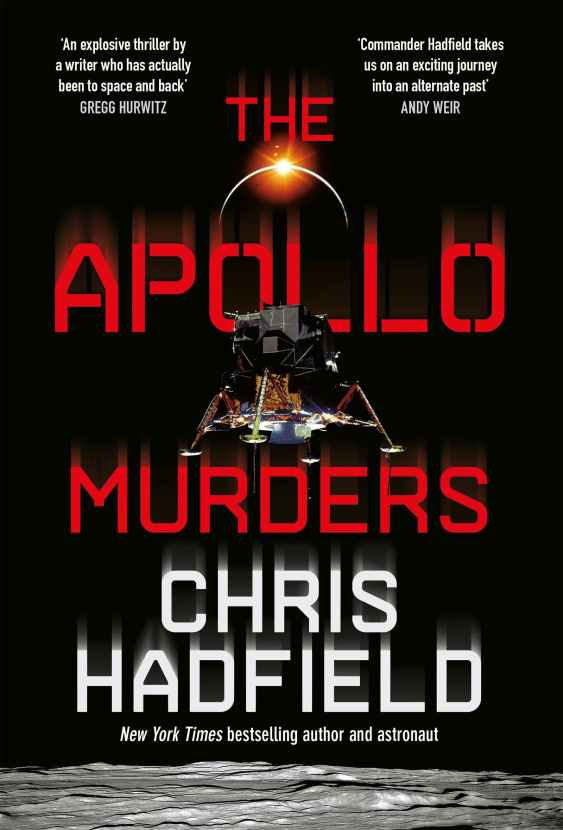
The Apollo Murders by Chris Hadfield

The Apollo Murders Cover

Publisher: Quercus/Hachette Audio (Audiobook – 12 October 2021)

Series: Standalone/Book One

Length: 15 hours and 14 minutes

My Rating: 4.5 out of 5 stars

Amazon

Prepare for one of the most impressive and complex debuts of 2021, with the exciting alternate history science fiction thriller, The Apollo Murders, by former astronaut Chris Hadfield.

In 1973, former test pilot turned government liaison officer Kazimieras “Kaz” Zemeckis arrives at Huston to supervise NASA’s latest voyage into space for their 18th Apollo mission.  On paper, NASA plans to send three astronauts to the moon, seemingly on a scientific expedition.  However, Kaz is also under orders to prepare the military astronauts on board for a covert operation to investigate the Russians’ recent rover mission to the moon as well as a secret spy satellite orbiting Earth that could give the Soviets an invaluable advantage in the Cold War.

As the crew prepares for their mission, tragedy strikes when a helicopter crash results in the death of one of the astronauts.  Forced to take on a new crew member at the last minute, the team launches and begins to make for their primary mission, the spy satellite.  However, the Americans are unprepared for the satellite to be manned by Russian cosmonauts determined to defend their station.  The encounter results in a terrible accident and a cosmonaut being trapped aboard the Apollo craft as it hurtles towards the moon.

As the American and Soviet governments argue over the unfortunate events, the Apollo crew attempt to undertake a moon landing with limited crew and resources.  Forced to work together with their Russian stowaway, the crew begins to descend towards the moon on an apparent joint venture.  However, back on Earth, the Soviet government is determined to turn this to their advantage by any means necessary, even if it means utilising a long-hidden intelligence asset.  Worse, it soon becomes clear that the helicopter crash that killed one of the astronauts was no accident.  Forced to contend with the knowledge that an Apollo astronaut in space might be a murderous saboteur with nothing to lose, Kaz and the flight team at Huston can only watch helplessly as events unfold and the future of space travel is changed forever.

This was a pretty impressive debut from Chris Hadfield, who really showed a lot of talent in this book.  Hadfield, a former astronaut known for his excellent rendition of ‘Space Oddity‘ filmed aboard the ISS, was able to construct a compelling and fast-paced novel with an amazing story to it.  Combining detailed science with a complex alternate history thriller, The Apollo Murders ended up being an excellent and powerful read that I deeply enjoyed.

At the heart of this novel lies a captivating and multilayered narrative surrounding a doomed mission into space.  Set in the 1970s during the golden age of spaceflight, The Apollo Murders follows a fictional 18th Apollo mission that goes very differently than intended, with fantastic espionage thriller elements combining with the science and historical fiction storyline.  Told from a huge range of different perspectives, this book initially focuses on the planning for an Apollo flight, which intends to both explore the moon and disable a Soviet spy satellite.  However, the story takes a turn when one of the astronauts is killed, and from there the story ramps up as the astronauts blast off into space while the other characters, both American and Russian, attempt to follow them while also conducting their own investigations and espionage missions.  The novel has an explosive middle, in which the American and Soviet astronauts encounter each other in space with disastrous results.  The consequences of this encounter lead into an epic second half filled with lies, deceit, sabotage and backstabbing, as two characters in space attempt to manipulate the situation to their advantage, while everyone on the ground, including Kaz, the astronauts, mission control, the Russians and a variety of other characters try to influence what is happening.  This all builds to one hell of a conclusion, with interesting consequences for several of the characters, and one surprise after another.

I really enjoyed this cool story, and I loved the fun blend of genres that Hadfield featured throughout it.  On paper, a thriller and murder mystery set around a fictional historical space flight seems a bit too complex for its own good, but Hadfield made it work, and the story is crisp and easy to follow, with none of the component parts overwhelming any of the others.  The reader is swiftly drawn into the story and it was fun to see everything unfold, especially as Hadfield ensures that you can see all the various angles and treacheries as they occur.  The author made excellent use of multiple character perspectives to tell a rich and captivating story, and it was extremely fun to see how the various characters viewed the situation and reacted to certain events.  Each of the characters featured in this novel is set up extremely well, and the reader quickly get to see their unique personalities, history and motivations surrounding the events of this book, which makes them extremely relatable and easily to follow.  While the identity of the person responsible for the murder at the start of the novel was a tad obvious, Hadfield uses this to its full advantage, helping to establish the book’s main antagonist, turning him into quite an arrogant and unlikable figure whom the reader really starts to root against.  It was really fascinating to see all the various character arcs and storylines come full circle by the end of the narrative, and The Apollo Murders ended up being a brilliant and compelling self-contained novel.

Easily one of the best things about The Apollo Murders was the incredible amount of detail about space flight and the science of space featured within.  Throughout the narrative, Hadfield spends an amazing amount of time explaining all the relevant science and technology that is relevant to the plot as the protagonists encounter it.  At the same time, the author also features a ton of relevant anecdotes or discussion about the history of spaceflight up to this point, which often serves to highlight the scientific information being provided at the same time.  All of this is worked into the plot extremely well, and the reader is soon given insight into what the characters are doing and the significance of their actions.  While all this information had the potential to be extremely overwhelming, Hadfield manages to dole it out in appropriate snippets, ensuring that there is never too much science or history in one scene, only enough for the reader to follow what happens.  This information is usually very easy to follow, and Hadfield’s writing style ensures that all the relevant facts are explained appropriately as the reader requires.  As such, the reader is never left confused at any point, and it leaves them open to enjoy some of the epic scenes.  I really must highlight some of the great spaceflight sequences featured throughout this book, including some of the epic take-off and landing scenes.  Hadfield really paints a beautiful picture here with his writing, and the reader gets a detailed understanding of every element of the flight and what the astronaut characters are experiencing or attempting to do.  These spaceflight elements are extremely well written, and I really must commend Hadfield for the work he put into making them seem as realistic and accurate as possible.

I must also highlight the great historical elements featured in this novel.  I rather expected this to be one of the weaker spots of the book, especially with so much focus on the spaceflight or the thriller parts of the book.  Instead, the reader is treated to a detailed and compelling discussion about the state of the world in the 1970s, especially surrounding the Cold War and the capabilities of both America and the Soviet Union.  A lot of this history relates to space travel, which is probably why Hadfield knows so much about it, and he uses it to great effect throughout the novel, giving the story an appropriate feel.  However, Hadfield also takes the time to examine the competing nations of America and the Soviet Union, and there are some brilliant scenes set in both, especially when it comes to the covert geopolitical battle occurring between them.  Hadfield portrays this period perfectly, and I especially liked his great use of multiple real historical characters, including politicians, NASA flight crew, espionage heads and even a few famous astronauts such as Alan Shepard, all of whom played vital roles in fleshing out the espionage elements of the plot.  While a lot of this book is based on historical events and facts, it is set around a fictional 18th Apollo mission.  This alternate history element is a fun part of the book, and I really appreciated the way in which Hadfield tried to envision how the various governments would react to such as disastrous mission to the moon.  I feel that Hadfield captured the political and social elements of this period extremely well, and I really appreciated this examination into history, especially as it combined with the thriller and space faring elements of the book extremely well to produce an outstanding and compelling narrative.

While I did receive a physical copy of The Apollo Murders, I was unable to resist the audiobook version, which proved to be really impressive.  With a run time of just over 15 hours, I was able to power through this audiobook quickly, especially once I got engrossed in the cool story.  I felt that the audiobook format was very conducive to following the various scientific elements featured throughout the novel, and I had a wonderful time imagining the elaborate space manoeuvres brought to life by the narration.  However, the main reason that I wanted to listen to this book was due to its narrator, Ray Porter.  Porter is one of the best audiobook narrators in the world today, and I am a big fan of his voice work in the thrillers of Jonathan Maberry (such as Code Zero, Deep Silence, Rage, Relentless and Ink).  Porter ended up providing an excellent narration for The Apollo Murders, with each of the various characters presented with a compelling and fitting voice that fit their personalities and nationalities.  While it was a bit weird in places to hear a voice from one of the other books I have heard him narrate, Porter was able to produce an excellent flow throughout The Apollo Murders, and the story swiftly moved across at a great pace.  This ended up being an excellent way to enjoy this novel and I would strongly recommend checking out this audiobook version of The Apollo Murders.

The Apollo Murders is a brilliant and powerful literary debut from former astronaut Chris Hadfield, who blew me away with this amazing first novel.  The Apollo Murders contains a fantastic and complex story that blends several genres into an exciting and clever read that takes the reader on a wild and thrilling adventure into space.  Featuring a deeply fascinating look at historical space flights and based around a fictional 18th Apollo mission, The Apollo Murders was one of the best debuts of 2021 and I had a fantastic time listening to it.  This is a great novel to check out and I cannot wait to see what Hadfield writes next.
Amazon

It Ends in Fire by Andrew Shvarts

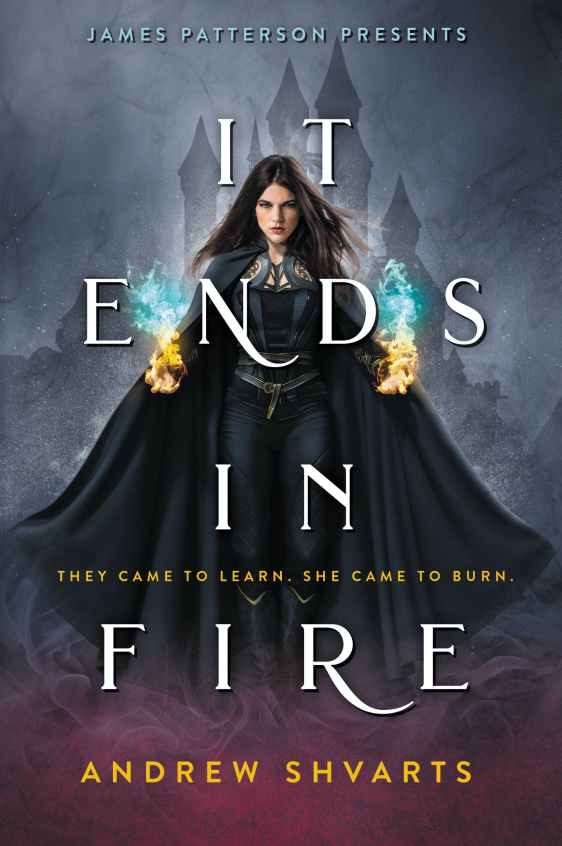
It Ends in Fire Cover 2

Publisher: Jimmy Patterson Books (Hardcover – 9 November 2021)

Series: Standalone/Book One

Length: 369 pages

My Rating: 4.5 out of 5 stars

Amazon     Book Depository

After wowing the world with his debut trilogy, impressive young adult fantasy author Andrew Shvarts return with a fantastic and entertaining read that cleverly parodies the classic magical school fantasy setting with It Ends in Fire.

Shvarts is a great author whose work I have been rather enjoying over the last couple of years.  Shvarts debuted back in 2017 with his Royal Bastards trilogy, which followed a group of illegitimate children as they found themselves caught up in the conspiracies and plots of their dangerous parents.  Made up of Royal Bastards, City of Bastards (which has an extremely explosive ending), and War of the Bastards (one of my favourite books of 2019), this was an awesome trilogy, and it has made me very keen to read more of Shvarts’s books.  As a result, when I heard that Shvarts had a new novel coming out, one set in one of my favourite settings, a magical school, I knew I had to grab it.  I have been waiting for It Ends in Fire for a while, and I was quite excited when I received a copy the other day.

Prepare to visit the Republic, a land of magic, deceit and corrupted power, where the Wizards rule and the non-magical people, the Humbles, are brutally oppressed.  At the heart of the Republic is Blackwater Academy, the most prestigious school of magic in the land, where the elite Wizards are trained and forged into scheming, power-hungry sadists.  Blackwell Academy has survived for centuries and remains a great power in the Republic, but nobody is prepared for the arrival of its latest student.

As a child, Alka Chelrazi watched as her parents were brutally murdered by a powerful Wizard, and she has since sworn vengeance.  Taken in by a rebel group, Alka has grown into their most lethal weapon thanks to her own magical abilities and has spent her life training to do the impossible: infiltrate Blackwell.  Taking the identity of a dead Wizard unknown to anyone, Alka is tasked with entering the school, learning all its secrets, and burning it to the ground from the inside.

Determined to carry out her duty to the very end, Alka attempts to find her bearings and learn everything she can.  However, Blackwell is unlike any other school in the Republic, its lessons are lethal, the rivalries are fierce, and some students will do anything to succeed, even kill their classmates.  To complete her mission, Alka will need to use every skill and trick at her disposal to recruit allies, take out her rivals and help a motley crew of outcasts to win the Academy’s Great Game.  However, with dangerous politics, power-hungry rivals, suspicious professors, and an evil headmaster all arrayed against it, can Alka succeed in bringing down the Academy, or will the fires of her revolution be snuffed out before it can begin?

This was an awesome and compelling new book from Shvarts, who has produced another deeply entertaining and intense read.  It Ends in Fire has a powerful and captivating narrative that not only contains a great story about revenge and finding oneself, but which also parodies certain magical school stories.  I had a great time reading this novel, and I became quite addicted to it as it went along.

It Ends in Fire has a brilliant and exciting narrative that moves at a fast pace and ensures that the reader is never bored.  Shvarts starts the story off with a bang, introducing the protagonists and point-of-view narrator, Alka, and showing her initial steps in infiltrating the academy.  The start quickly showcases some of the lead characters, the stakes of her mission, and the new and somewhat familiar setting of Blackwell Academy, as well as the surrounding Republic.  At the same time, Shvarts includes a series of framing chapters that are set in the protagonist’s past, showcasing her motivations, her many personal tragedies and the training she undertook for her infiltration.  From there the story quickly progresses into a compelling arc around the character’s darker magical school experience, while also building up her personal history.  There are some fun magical lessons, budding rivalries and caste systems woven into the narrative, and it was intriguing to see this ultimate outsider attempt to get into the flow of this elite school.  The crux of the narrative revolves around three magical contents that the various school houses compete in for glory and reputation (as well access to the Republic Senate, which interests Alka).  These competitions are pretty awesome, and serve as the major story highlights, much in the same way as the Quidditch matches and the Triwizard Tournament in the Harry Potter novels.  I particularly enjoyed the first and third one, and it was pretty fun to see the protagonist engage in some heavy cheating to pull it off.

This all leads up to a big and brutal finale, where the protagonist finally gets to unleash her true personality on her foes, and which potentially sets up some interesting directions for any resultant series in the future.  There is a great blend of character development, world building, magical adventure, intrigue and personal betrayal throughout this story, and I ended up getting really stuck into this brilliant narrative.  I pretty much read the last 200 pages in a single day, especially as it contained two of the competitions and a fantastic duel, and I really loved how everything came together.  It Ends in Fire turned out to be fairly self-contained and feels a lot like a standalone read.  That being said, it has some potential to be a larger series, and I would be interested to see where it goes, especially as there are some outstanding storylines to explore.  Like Shvarts’s previous novels, It Ends in Fire is aimed towards a young adult audience with its teenage protagonist and supporting characters.  Due to some more mature elements, this novel is probably best suited towards an older teenage audience, who will no doubt appreciate the author’s realistic take on teenage education.  This novel will also hold a lot of appeal to adult fantasy fans, especially those who grew up on Harry Potter, as this novel acts in many ways like a clever and fun parody of these classic novels.  An overall excellent story with some fun twists and major memorable moments.

I must say that I was also incredibly impressed with the new fantasy setting that Shvarts came up with for It Ends in Fire.  This new fantasy world is a brilliant and complex collection of nations brought together by an oppressive magical regime ruled by powerful Wizards who control the non-magical people, the Humbles.  The author does a great job setting up this cool new world, and I loved the examination of a magical regime and the unique cultural and social circumstances that would evolve in such a regime.  I particularly enjoyed the fun examination of the Republic’s politics, especially when it came to the impacts of the protagonist’s actions within Blackwater Academy.  It was also very compelling to see the clever hierarchies that see even some Wizards oppressed or disenfranchised, ensuring that the situation is even more complex than the protagonist, who was raised by rebellious Humbles who hate all Wizards, initially believed.  This proves fertile ground for the main narrative that follows Alka attempting to take the system down from the inside, and it was a solid background to the narrative.  I also really appreciated the cool new magical system that Shvarts came up with for his new novel.  In It Ends in Fire, Wizards cast spells by entering a time-dilated field known as the Null, where they carve glyphs into the air with Loci (magical wands) to unleash elemental spells.  This is an awesome magical system, which allows for some amazing and complex duals and battles.  The slow-motion aspect of the Null ensures that there is some clever strategy involved, as well as some intense explanation from the protagonist, and I deeply enjoyed some of the fun an epic clashes that occurred.

In addition to the cool magic and fun overarching setting, I also must highlight Blackwater Academy, which serves as a dark mirror to other magical schools that have been featured in fantasy novels and media.  In many ways, Blackwater Academy is a twisted version of Hogwarts; an elite magic school, with houses, elaborate classes and competitions.  Shvarts does an amazing job of working altered versions of these classic magic school elements into his own setting, and pretty much every scene has something reminiscent of these established school settings.  However, all these elements are twisted and converted into something far darker and more adult.  The teachers are crueller, the rich rival kills with impunity, the lessons are more deadly, and the headmaster is essentially Dumbledore (a highly respected wizard who turned down political leadership to be a teacher), except evil and self-serving.  I really liked how Shvarts included these elements in his novels, and it was a lot of fun to not only spot the similarities but also see how the author had twisted them into something different (for example, the protagonist is chucked into the universe’s version of Hufflepuff, and then turns them into a strong team).  This resulted in a fantastic and compelling setting that is both familiar and rather distinct at the same time.

While there are a lot of similarities to Hogwarts and other classic magical schools, Blackwater Academy also has some truly unique features, which also enhance how awesome it is as a primary setting.  The near murderous rivalries between the houses added some excellent conflict to the narrative, and I found the Humble village located next to the school to be a great inclusion, especially as all the inhabitants are absolutely terrified of their Wizard clientele.  I also really loved the unique challenges that the students had to compete in throughout the year into order to win the Great Game.  While the inclusion of a three-event competition is somewhat familiar, the challenges themselves are special, and Shvarts obviously had a lot of fun coming up with something new for the young Wizards to compete in.  This entire clever setting and compelling magical system help to transform It Ends in Fire into an incredible read, and I hope that Shvarts will explore it more in the future.

I also need to quickly highlight the great characters within this novel.  It Ends in Fire features a fantastic and entertaining cast whose unique stories add a lot of depth and drama to this brilliant tale.  The most prominent of these is protagonist and narrator Alka, a rebel and wizard who infiltrates the Blackwater Academy with dreams of destroying it and everyone in it.  Alka is a complex and intriguing figure who must overcome a lot of emotional turmoil in this novel while also encountering conflicts, revelations and disturbing truths about the nature of evil.  Shvarts did an awesome job setting Alka up throughout this novel, and I appreciated the way in which elements of her past life are blended into the primary story.  Alka’s unique history and experience with Wizard culture ensures that she is the perfect narrator, ensuring that the reader learns about many parts of the world’s unique aspects through her constant questioning and research.  I also appreciated the complex romantic relationships that form between her and two other characters, especially as both are sweet and moving in their own ways, while also naturalising Alka’s bisexuality.  The rest of the characters in It Ends in Fire are also set up pretty well, and I liked the cool blend of arrogant rich wizards, bitter Humbles and lower-tiered Wizards who struggle in life nearly as much as the Humbles.  Shvarts utilised a wonderfully eclectic group of supporting characters throughout this novel, and I enjoyed some of the friendships and rivalries that formed, as well as the similarities that some characters have to notable Harry Potter characters.  The author introduces some interesting storylines and character development arcs around them, and you end up getting attached to their survival alongside Alka.  It will be interesting to see if Shvarts will continue to explore them in the future, and I hope he does, as I would love to see what happens to them next.

With his latest novel, It Ends in Fire, Andrew Shvarts continues to dominate the young adult fantasy genre with a complex and powerful read.  It Ends in Fire has a brilliant and entertaining narrative that takes a rebellious soul into the heart of enemy territory, an evil and twisted magical school.  I loved how Shvarts cleverly subverted a classic fantasy setting with his fantastic narrative and world building, and the resulting story is loaded with magical action, amazing character develop, and multiple fun, high-concept sequences.  It Ends in Fire is a highly recommended young adult fantasy novel and you will have a wonderful and amazing time reading it.

Amazon     Book Depository

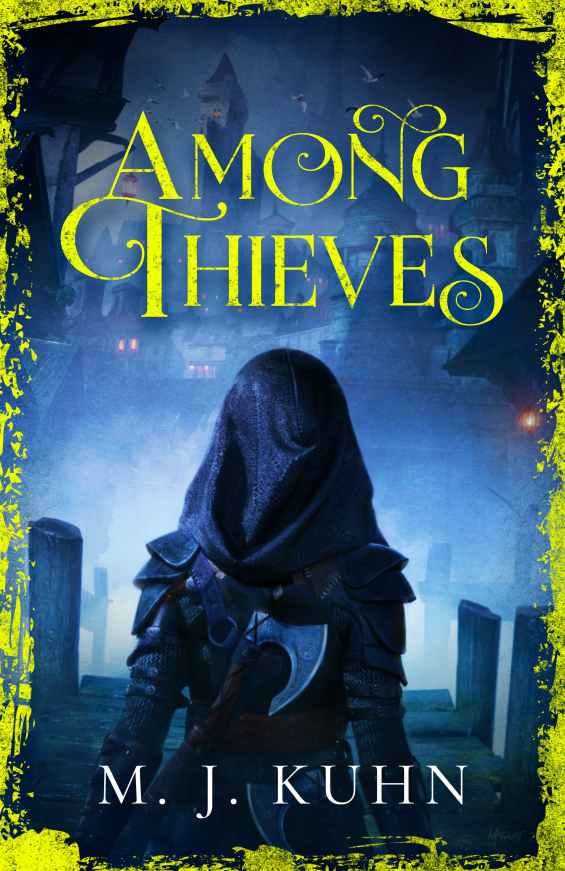
Among Thieves by M. J. Kuhn

Among Thieves Cover

Publisher: Gollancz (Trade Paperback – 14 September 2021)

Series: Standalone/Book One

Length: 343 pages

My Rating: 4.5 out of 5 stars

Amazon

Magic, betrayal and the ultimate fantasy heist await in Among Thieves by M. J. Kuhn, one of the most exciting and compelling debuts of 2021.

Welcome to the city of Carrowwick, where life is cheap and three powerful gangs fight for supremacy and control of its notorious underground.  Out of all the thieves, rogues and assassins found within Carrowwick, no one is more feared than Ryia Cautella.  Better known as ‘the Butcher’, thanks to her uncanny skill with her twin hatchets, Ryia is sworn to notorious gang-leader Callum Clem, and is the chief enforcer and hidden blade of his Saints gang.  But while she seems content to spend her time fighting, drinking, and womanizing, deep down Ryia harbours a dark secret and a hidden past.

Thanks to an incredibly rough childhood, Ryia is in hiding from the most dangerous person in the entire realm, the Guildmaster, the powerful magic user who serves as the de facto ruler of the continent of Thamorr.  The Guildmaster runs a continent-spanning organisation whose operatives locate, capture and bind every child with magical potential in order to sell them to the highest bidder.  Forced to flee from city to city, constantly changing her identity, Ryia has no chance at a future while the Guildmaster is after her, and there is only so long that she can avoid her fate.  However, a chance encounter soon reveals a potential way out of her desperate situation, although it will mean journeying to the most dangerous place in the world, the Guildmaster’s Island, to steal a powerful magical artefact.

Determined to gain her freedom, Ryia prepares to attempt the impossible and infiltrate the Guildmaster’s Island during the annual auction where the bound and brainwashed magic users are sold.  However, not even the mighty Butcher can break into this impenetrable fortress alone.  Reluctantly forced to work with a team, Ryia sets out with a motley crew of rogues and miscreants, including a forger, a conman, a fallen soldier, and a smuggler.  But can this disparate crew pull off their impossible job, or are they all marching towards their deaths?  Worse, who among the crew can really be trusted, as every member has their own reason for being there, and none of them would hesitate to stab the others in the back to achieve their goals.  Let the heist begin!

This was a brilliant and outstandingly entertaining debut from M. J. Kuhn, who has done a remarkable job with her first book.  Among Thieves has a fun and clever story that takes its fantastically motley group of protagonists on an intense and thrilling adventure.  I loved the great blend of enthralling characters, an interesting new fantasy setting and an outstanding narrative, and this ended up being one of the best debut novels I have read in 2021.

Among Thieves has a really awesome narrative that I had an absolute blast getting through.  Frankly, I was very keen to read this novel the moment I saw it was a fantasy heist novel, as I love it when dark magical settings combine with classic crime fiction heist storylines.  Kuhn really did not disappoint as Among Thieves’ narrative is extremely well set out and does a great job bringing together its disparate genre threads.  The world, the various characters, and the dark tone of the book are set out quickly in an entertaining and easy-to-follow manner in the first 100 pages.  The reader gets a great sense of all the key players of this book, especially as the author makes excellent use of a multiple-perspective storytelling device, with all five members of the heist crew narrating several chapters within the book.

Once the scenario and the characters are established, Kuhn quickly moves into the exciting centre of the novel, which sees the protagonists infiltrating the Guildmaster’s island to find the treasure they seek and steal it.  The characters face some major adversity here, from betrayals within and without, as well as the unfortunate attention of rivals, law enforcement and the forces of their target.  This leads to several intense and entertaining scenes as the protagonists attempt to overcome these obstacles while their own personal demons and ambitions come to the surface.  There is a major twist about two-thirds through Among Thieves that is not only fun and a little unexpected but which also sets up the final arc of the novel extremely well.  This final third of the book sees the various characters make their final plays for the prize (if they still want it), while several revelations and twists are brought to the surface.  I deeply enjoyed the way that the story turned out, especially the reveal of the book’s real winner, and Kuhn chucks in some great surprises towards the end.  The entire story is an amazing blend of intrigue, action, thievery and relatable character interactions, which helps to produce a fast-paced and captivating narrative that I had a really hard time setting down.  Kuhn also makes sure to leave a few storylines wide open, which would translate into a sequel extremely well.  I really hope that the author continues this storyline in the future as I cannot wait to see how this awesome narrative finishes up.

Easily one of the best things about this amazing novel was the great mixture of unique and entertaining characters.  As I mentioned above, Among Thieves’ story features five central protagonists, the members of the heist crew, each of whom has their perspective shown at various points of the book.  This includes:

  • Ryia, a hardnosed and incredibly powerful killer who parties hard, flirts mercilessly with every female character and kicks ass in some incredibly violent ways. While Ryia appears to be a fun and entertaining character most of the time, she has a very dark past, filled with regret, betrayal, and the shocking actions of her father.  Thanks to her tendency to use humour and crassness as a distraction to hide deeper pain, Ryia proves to be both an entertaining and tragic figure, and it was deeply compelling to see her storyline unfold.  I loved the focus on her twisted loyalties, especially as she initially plans to betray her crew for her own ends.  However, she goes through some major development as the book continues, and slowly establishes some emotional connections she has been missing throughout most of her life.  A brilliant and fun central character, you will fall in love with this axe-wielding maniac.
  • Tristan, the youngest member of the group and their resident sleight of hand expert, specialising in gambling, cheating and pickpocketing. Tristan is bit of a dandy who was forced into the Saints after incurring a substantial debt, later sticking around due to his unrequited love with Ryia.  Like Ryia, Tristan has a lot of secrets from his past and is also a bit of a fugitive.  Tristan ends up being forced into some very unfortunate positions as the book continues due to various betrayals (his and other peoples), and he ends up being quite a major figure in the story.  I deeply enjoyed some of the great twists surrounding him, and it looks like Kuhn has some intriguing plans for him in the future.
  • Nash, the smuggler, a ship captain of great skill and cunning who transports the gang to the Guildmaster’s Island and helps them pull off their heist. Nash is a fun character who has some interesting storylines surrounding her inconvenient relationship with gang leader Callum Clem.  While I quite liked her as a protagonist, she was one of the least developed characters in the novel, mainly because she is the only one who didn’t have a plan to betray the gang.  Kuhn does add some interesting details to her arc towards the end of Among Thieves, as she is forced to deal with her growing attraction to Ivan, her conflicted loyalty to the insane Callum, and her own ambitions and survival instincts.
  • Ivan, the forger who serves as another entertaining character with a compelling storyline around him. Ivan is ultra-talented master of all sorts of forgery, including documents, tattoos, disguises, and everything in between.  A natural charmer and brilliant actor, Ivan manages to win the hearts of many, including Nash and the reader.  However, he also has a secret past as a freedom fighter, and he sees this job as an opportunity to free his imprisoned brother and re-start his revolution.  I found Ivan to be a funny and charming figure, and like I did with Ryia and Tristan, I deeply appreciated the inclusion of a hidden past which motivates his potential betrayal.  Ivan ends up in an interesting place at the end of the novel, and it will be fascinating to see how his gamble will play out.
  • Evelyn, the former city guard of Carrowwick and Among Thieves’ final point-of-view character. Evelyn is a complex and intense figure, a former honourable officer who is dishonoured and disinherited partially thanks to Ryia’s actions.  After a massive bender, she is convinced to join the heist crew by Callum Clem in exchange for being allowed to capture Ryia, whose imprisonment would restore her honour and position.  Evelyn has one of the best character arcs in the entire novel, especially as she plays a fish-out-of-water character, as the former cop trapped among a group of thieves.  This allows her to serve as an excellent foil to Ryia, and the two have a very adversarial relationship, which naturally develops some romantic overtones as the book progresses.  I liked how Evelyn slowly became more devious and criminally minded as the book progresses, and she was an excellent addition to the story, bring some great humour, drama and integrity (briefly) to the narrative.

Overall, I felt that Kuhn did an amazing job establishing all these main characters, and each of them brings something unique and fun to the story.  There was a pretty good balance between each of these characters, and it was very enjoyable getting to know all five of them.  That being said, having five separate motivations/planned betrayals was a bit much on top of the heist storyline, and it muddied the main plot just a little.  Still, I think that Kuhn made it work and it wasn’t too overwhelming.  All five characters have great chemistry with each other, and their distinctive perspectives helped to highlight the various mad plans and ideas in a very entertaining light.  I had an amazing time following these five rogues, and I look forward to seeing what happens to them in any future novels Kuhn writes.  I am also very curious about the side character who was cleverly given a point-of-view chapter at the end of the book, and I am sure it will result in a brilliant and villainous performance in the next book.

In addition to the awesome story and complex characters, I also was quite taken by the intriguing new fantasy world that Kuhn came up with.  Among Thieves is set in the continent of Thamorr, which is made up of five kingdoms who all pay homage to the Guildmaster, who controls the supply and demand of the magically powered supersoldiers each nation relies on.  Kuhn does a great job of introducing and setting up this new fantasy world, and the reader is soon dragged into the great crime-riddled city of Carrowwick, with its warring gangs, and the eventual travel to the Guidmaster’s island, a grim and hopeless magical fortress.  The interplay of the rival gangs, the political upheaval of several kingdoms, and the creation of obedient magical beings are all fantastic and add some great depth and background to the story.  I also loved the cool magical system Kuhn works into the narrative really well, ensuring that the control of people with magical potential becomes a major plot point.  This amazing setting serves as the perfect backdrop to the fast-paced and clever narrative, and it was quite fascinating to see the characters explore every compelling aspect of it.  It looks like this fantasy world will be massively expanded in the future novels, and I cannot wait to what cool new elements Kuhn introduces next.

With her debut novel, Among Thieves, new author M. J. Kuhn has shown herself to be an outstanding and impressive new talent on the fantasy fiction stage.  Among Thieves has an awesome and captivating heist-centric storyline, and I loved the cool combination of intense fantasy and thrilling crime fiction elements.  This all results in a powerful and intense narrative based on five brilliant and complex characters, which proves to be exceedingly addictive and thrilling.  I had an excellent time reading Among Thieves and this was easily one of the best debut novels of 2021.

Amazon

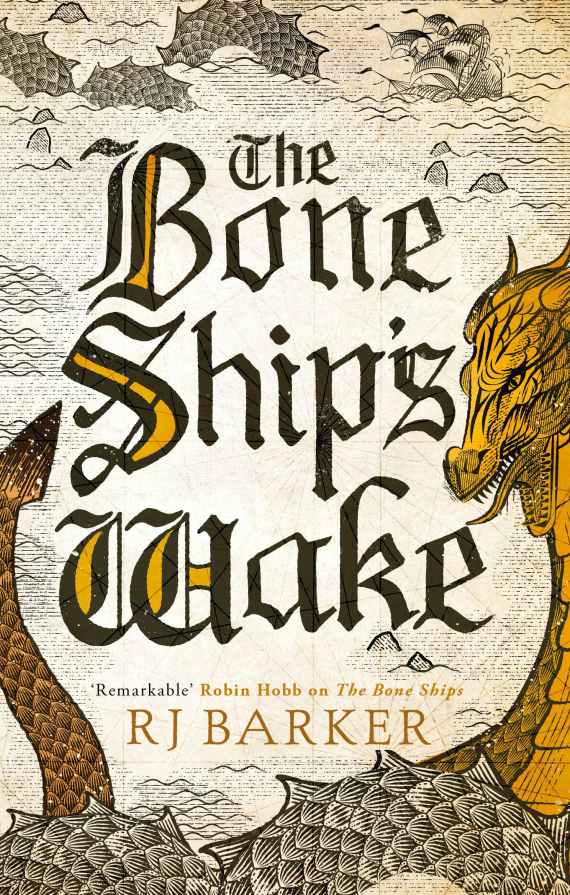
The Bone Ship’s Wake by R. J. Barker

The Bone Ship's Wake Cover

Publisher: Orbit/Hachette Audio (Audiobook – 28 September 2021)

Series: The Tide Child Trilogy – Book Three

Length: 20 hours and 49 minutes

My Rating: 5 out of 5 stars

Amazon     Book Depository

One of the fastest rising fantasy authors in the world today, the brilliant and exceedingly talented R. J. Barker, brings The Tide Child trilogy to an end in epic fashion with the exceptional and powerful The Bone Ship’s Wake, one of the best fantasy reads of 2021.

There have been some really impressive fantasy authors producing great reads over the last few years, but in my opinion none have been as consistently amazing and addictive as R. J. Barker.  Barker burst onto the scene in 2017 with Age of Assassins, the first book in The Wounded Kingdom trilogy, and soon followed it up with two additional outstanding reads, Blood of Assassins and King of Assassins.  While I have a lot of love for this brilliant trilogy, especially the final novel King of Assassins, Barker has since eclipsed it with his second series, The Tide Child trilogy.

The Tide Child trilogy is a grim and powerful series that follows a unique set of characters in an exceptional, character driven, adventure tale.  The Tide Child books are set in a dark fantasy world, primarily made up of deadly oceans and seas which have produced a harsh breed of warring humans.  The inhabitants of this world traverse these oceans in ships made of the harvested bones of sea dragons, known as the keyshans, the creation of which led to the mass extinction of these dragons.  The first novel in this series, The Bone Ships, set the scene for this great series and introduced the primary characters as they set out on an epic quest to hunt the last sea dragon aboard the boneship, Tide Child.  This was an exceptional read that ended up being one of the best books and audiobooks of 2019.  Barker followed this up in 2020 with Call of the Bone Ships, a great sequel that saw the crew of Tide Child engage in a rebellion against the established order.  Call of the Bone Ships ended on a pretty massive cliffhanger that set the scene for an exceptional and stunning conclusion.  As such, the final entry in this trilogy, The Bone Ship’s Wake, was one of my most anticipated reads of 2021, and Barker did not disappoint here, as he produced an epic and captivating read.

It has been a year since the climactic battle that saw the boneship Tide Child and the rebel fleet barely escape the wrath of the Hundred Isles after being forced to abandon shipwife Meas Gilbryn.  In that time, loyal deck keeper Joron Twiner has taken on the mantle of leadership for the rebel black ships and turned them into a fleet of marauding pirates.  Now known by all as the feared Black Pirate, Joron constantly raids the Hundred Isles, determined to weaken its fleet and devastate its defences for an invasion from the rival Gaunt Islands, Joron’s only true priority is to discover the location of his lost commander and rescue her.

After a particularly vicious raid nearly sees the destruction of Tide Child, Joron is only more determined to find the shipwife before the entire fleet is lost.  With time running out for Joron thanks to the insidious keyshan’s rot that is slowly eating away at his body, Joron embarks on an ambitious plan to find and rescue Meas by returning to the most dangerous place in the world, the capital city of the Hundred Isles.

Accompanied by a small crew, Joron hopes to infiltrate the city and force Meas’s location from the ruthless rule of the Hundred Isles, Meas’ estranged mother.  However, all Joron will discover is blood and betrayal, as dangerous forces seek to take control of the oceans for their own nefarious ends.  Worse, Joron must continue to struggle with the dangerous legacy of the magical gullaimes, who believe that he is the Caller, the man who can sing up the keyshans and use them to destroy the world.  Will Joron and his crew succeed against impossible odds, or will the final voyage of the Tide Child result only in the death of everyone and everything Joron loves and cares about?

Well damn, now that was an incredibly awesome book.  I have said time and time again that Barker seems to get better with every book he writes, and I honestly believe that The Bone Ship’s Wake is the very best so far.  The Bone Ship’s Wake has an exceptional narrative filled with emotion, tragedy and powerful action on the high seas, which perfectly wraps up this epic series and provides the reader with an emotional and captivating goodbye.  Easily one of the best books of the year, The Bone Ship’s Wake gets a full five-star rating from me.

This final entry in The Tide Child trilogy has an extremely powerful, character-driven narrative to it, which perfectly continues the epic tales told in the preceding novels while also providing an extremely satisfying and moving conclusion to the entire series.  Told nearly exclusively from the perspective of central protagonist Joron Twiner, The Bone Ship’s Wake starts one year after Call of the Bone Ships, with some major changes occurring to the world and the characters during this period.  Told in three parts, this book has a bit of a slower introduction, which Barker uses to full effect to highlight the situation the characters find themselves in, while also reintroducing all the key elements of the fantasy world.  The first part of the novel is primarily used to show how far Joron has come, placing him in command of a ship as he faces off against his enemies.  This outstanding introduction sets up several key storylines while also featuring a tense and detailed chase out on the seas, with deadly and monstrous consequences.  The second part of the novel follows a desperate Joron, after leaving his ship and most of his crew behind, as he embarks on a dangerous all-or-nothing quest to save his shipwife and bring her back to the fleet.  This second part is loaded with some major dramatic moments, intrigue, treachery, and politics, which does an outstanding job expanding the already captivating storylines, while also serving as a great buffer from the nautical heavy start and end of the novel.  The story goes in some amazing directions here, and Barker throws in some captivating and surprising twists that alter everything you thought about how the story would end.

All this leads up to the conclusion of the novel, which sees the surviving primary characters caught in a desperate situation on the high seas.  After some daring actions and clever plans which have some unfortunate costs, all the characters are perfectly set up for their final places the series’ brilliant storyline.  This last part of the novel is deeply thrilling and powerful, and it honestly proves impossible to put it down as you wait to see how everything comes to an end.  Barker really amps up the desperation and hopelessness during this part of The Bone Ship’s Wake, as the crew of Tide Child and its allies are pressed in some destructive naval actions.  It all leads up to one final gambit, with the lives and the hopes of the survivors held in the balance.  This epic conclusion is extremely dramatic and powerful, with some big sacrifices and major character moments that will leave you breathless and deeply moved.  I thought that this amazing conclusion perfectly wrapped up the entire series, with all the key storylines and character arcs coming to a very satisfying and emotional end.  I loved every single second I spent getting through this exceptional story, and every brilliant turn, clever revelation and powerful character moment is still firmly engrained in my mind.

I really need to highlight Barker’s fantastic writing style, which brings this brilliant story to life.  It has been an absolute pleasure to see Barker grow as an author throughout the last few years, especially as he utilises more and more complex techniques with each passing novel.  The Bone Ship’s Wake is a particularly good example of this, as an amazingly well paced novel that slowly builds momentum as the story requires, with the intensity of the book turning on a dime, from the deep slowness of sailing to the fast pace of an epic nautical battle.  This is often accentuated by the author’s great use of repetition, with key sentences throughout the novel repeated multiple times to build up tension or to highlight the rapidity of duty aboard a ship.  This pacing and repetition almost gives The Bone Ship’s Wake a pulse, and you can feel the rhythmic build towards the high points of a novel.

I was once again deeply impressed by Barker’s incredible ability to produce a nautically focused novel.  Nautical novels require an insane amount of detail and dedication to work, and Barker has done that in spades throughout The Tide Child trilogy.  Thanks to Barker’s ultra-detailed writing style, life aboard the boneships is brought to life for the reader, showcasing every single action of the crew or movement of the ship.  The reader gets an amazing sense of what is happening aboard Tide Child, and you feel that you are aboard the ship itself, watching the crew in action.  This works particularly well during some of the intense, high-concept naval battles, where the actions of multiple ships are followed, ensuring that the reader gets a great idea about what is going on.  Barker also works in a lot of ship details that are unique to the series’ fantasy universe, allowing for a much more distinctive and compelling time at sea.  The combination of traditional nautical elements and fantasy features, such as ships crafted from dragon bone, ultra-powerful bolt throwers, wind calling bird men and the various monsters stalking the deeps is particularly striking and really helps this cool trilogy stand out.  This is honestly one of the best series set on a ship you are ever likely to read, and I am still so impressed with how well Barker was able to feature it in his novels.

I also must highlight the cool, dark fantasy world that Barker has created for this series.  Throughout this trilogy Barker has put an amazing amount of work into crafting this complex and deadly fantasy world, containing hostile oceans with only a few small islands, where the inhabitants are forced to fight on ships made from dragon bone.  I have had an outstanding time exploring this complex and compelling landscape, and I have a lot of love for some of the more unique details, including the enslaved gullaime (bird-like windtalkers), crazy monsters, the gender reversed human society which includes subtle changes like ships being consider male by their crews, and the constant naval warring and raiding such a landscape has created.  Barker does some very interesting expansions in this final entry, resulting in some substantial changes and journeys to new locations within the world.  There are some cool new creatures, including a mist-spewing kraken, as well as some fascinating and intense developments amongst the established creatures, including the gullaimes and the keyshans.  I similarly appreciated the way Barker examined the troubles with his female dominated society, especially as the motivations for some of the antagonists are closely tied into it.  Overall, I had a wonderful time with my last exploration of this unique and dangerous setting, and I cannot wait to see what sort of distinctive setting Barker comes up with next, although I already know it will be pretty incredible.

You cannot talk about any novel in The Tide Child series without praising the outstanding character work that Barker has done.  Each of these novels has done an exceptional job of building up all the major characters, from the central point-of-view perspective, to the various supporting characters found upon the central ship setting.  I have deeply enjoyed seeing each of these characters develop into better and well-rounded figures as this series has progressed, and Barker makes sure to give them an impressive send-off in this final entry.  Pretty much all the key surviving characters get some great moments throughout The Bone Ship’s Wake, and most of their associated storylines come to an end, one way or another.  This naturally results in some intense emotional moments throughout the novel, especially as readers of this series will have become deeply attached to a lot of these characters, and you will not be prepared for how some of these characters go out!

Just like in the previous two novels, the central focus of The Bone Ship’s Wake was on Joron Twiner, the deck keeper (first mate) of Tide Child, who has grown from scared drunkard to experienced officer within the course of the series.  Twiner has gone through an incredible amount during the last two books, and when we first see him again in The Bone Ship’s Wake, he is a very different person.  Joron has since lost a leg and is now infected by the keyshan’s rot, an incurable disease that is slowly eating him alive.  Despite this, he has finally taken on command of his vessel and an extended fleet and fashioning himself a new persona, that of the Black Pirate, a notorious killer of ill-repute.  This is a fascinating change for Joron, and it is absolutely amazing to see how the differences between this character and the one we first saw in The Bone Ships.  While this change is substantial, it has been well built up in the last few books, and it was great to finally see Joron take on the command he was always meant to have.  Despite this, Joron still has some uncertainty dogging his steps that proves great to explore, especially as he is hesitant to risk the lives of those under his command on his missions.  Joron is also forced to deal with the insane prophecy and power hanging over his head, as he is forced to contemplate his ability to summon the sea dragons and potentially end the world.  Throw in his unwillingness to take on the role of his mentor, and the extreme guilt he feels for all the lives he has taken in her name since the conclusion of the last book, and you have a quite a conflicted figure, desperate to do anything to redeem himself.  This makes for some amazing character moments, and I really appreciated the sheer amount of development that went into Twiner in this novel.  A lot of Twiner’s storylines come full circle in this novel, and there are some extremely satisfying moments  between him and the other characters in the novel.  I deeply enjoyed this flawed and uncertain protagonist throughout this series, and Baker ensures that he is given a fitting and powerful ending.

The novel also spends a lot of time examining Tide Child’s shipwife, Meas Gilbryn, also known as Lucky Meas.  When we last saw Meas, she was surrendering herself to the Hundred Isles to give her fleet a chance to escape.  In the year that follows, she has been brutally tortured by her captors, who are attempting to gain all her secrets, especially regarding the sea dragons.  Due to her capture, and the primary focus on Joron, we don’t see that much of Meas for the first half of The Bone Ship’s Wake, and when we finally do, she is very different.  Rather than the always confident captain we are used to, we have a broken and brooding figure, unsure of the correct actions to take and unprepared for how much her legend has spread in the year she has been gone.  This makes for a very interesting counterpoint to the growth in Joron, and it is fascinating to see the slight role reversal that occurs between them.  I loved this exceptional character change that occurred around Meas, and Barker uses it to full effect to create some dramatic and emotionally charged moments.  The author also ensures that several lingering questions about Meas are answered, especially as she finally gets some closure with members of her family, such as her mother.  It was also amazing to see the unique relationship she forged with Joron come full circle, as the man she chose to be her second surpasses her.  The outstanding character work surrounding Meas, especially when it comes to her connection to Joron, added so much to the overall quality of this novel, and it was great to see how Barker altered and explored this character in The Bone Ship’s Wake.

I have to highlight the outstanding storylines surrounding the Gullaime, the ship’s windtalker of legendary power, who is destined to destroy the world alongside Joron.  This humanoid bird creature is always an entertaining figure in the novel, due to their unique appearance and outrageous behaviour and Barker does an exceptional job giving unique avian features to it.  However, like the other characters, the Gullaime goes through some big events in this final novel, especially once certain species detail is revealed, as well as the full scope of its powers and prophesised responsibilities.  Out of the all the characters in this series, the Gullaime is probably the easiest to like, and the end of its story cuts deep to the heart.

I also really appreciated Cwell’s storyline in this novel, especially after all the changes that occurred around her in this series.  Cwell initially started as a secondary antagonist who led a mutiny against Joron in the previous novel.  Despite this, Joron spared her life and kept her as his shadow, a silent bodyguard always watching his back.  This final book really explores the extent of this bond forged between them, as Cwell’s loyalty is tested multiple times throughout the course of the novel.  Barker is such a canny writer when it comes to Cwell, and it was fascinating to see some of her final depths in this book, especially as you honestly have no idea what she is going to do and whether she will end up betraying Joron.  It was also great to see more of Farys, the young woman Joron mentored through the series, and who now finds herself as his second.  Farys has a complex and compelling storyline in this novel, and I really appreciated how much time Barker put into enhancing her role in this final novel.  I also want to give callouts to recurring characters Mevans, Solemn Muffaz and Aelerin the courser, who all have some great moments in this novel, and whose roles each had their own emotional weight.  There is also a certain interesting reveal about one side character, right at the end of the novel that was a little surprising to me, but which I really appreciated, especially as Barker set up some great hints about them as the novel progressed.  Overall, all the side characters in this book are extremely awesome, and I am so deeply impressed with the work that Barker put into them, and the outstanding impacts that had on this already epic and captivating tale.

While I did receive a physical copy of The Bone Ship’s Wake, I ended up enjoying this novel in its audiobook format, not only for scheduling reasons but because I knew that I would have an amazing experience with it.  The Bone Ship’s Wake’s audiobook format has a substantial runtime of just under 21 hours, which does require a substantial time investment to enjoy.  I can guarantee that the time spent is well worth it, as the audiobook format perfectly gets the reader into the flow of the story and the detailed fantasy world of the series, and I found myself really absorbing all the many details Barker places into his writing.  I was also deeply impressed with the narration of Jude Owusu, who really threw himself into voicing the various books in The Tide Child trilogy.  Owusu has a brilliant voice that perfectly fit the epic, marine based tale, and which perfectly translated every single action and move to the listener.  Owusu has an excellent range of voices for the various characters featured throughout the novel, and each character ended up with a distinctive voice that perfectly fit their personality and demeanour.  I particularly enjoyed the weird and hyper-excited voices he utilised for the various gullaime characters, fully highlighting their birdlike characteristics in his voicing.  I felt that the narrator did an amazing job of injecting all the relevant emotion into the tale, and you have no doubt what the characters are feeling as they speak.  This brilliant and powerful voice work really helped to bring this epic tale to life, and I loved every single second of this fantastic audiobook.  This format comes very highly recommend, and it was easily one of the best audiobooks I have had the pleasure of listening to in 2021.

With The Bone Ship’s Wake, the final incredible and epic entry in The Tide Child trilogy, the unstoppable R. J. Barker has once again shown the world he is the future of the fantasy genre.  This outstanding and captivating nautical fantasy novel masterfully wrapped up one of the best trilogies I have ever read, ensuring that the reader will be emotionally blasted by this brilliant and clever tale.  The entire story came together perfectly, and fans of this series will be amazed and moved by the fates of so many well-established characters.  Not only was this Barker’s best book to date, but The Bone Ship’s Wake is also one of the most impressive novels I have enjoyed all year.  An exceptional five-star read that comes very highly recommended, especially in its audiobook format.  Anyone who loves fantasy needs to read this series!

Amazon     Book Depository

The Honour of Rome by Simon Scarrow

The Honour of Rome Cover

Publisher: Headline (Trade Paperback – 9 November 2021)

Series: Eagles of the Empire – Book 20

Length: 431 pages

My Rating: 4.5 out of 5 stars

Amazon

One of the best authors of Roman historical fiction, Simon Scarrow, returns with another exceptional adventure back in time with The Honour of Rome.

2021 has been a particularly good year for Simon Scarrow readers, as this acclaimed historical fiction author has released two fantastic novels.  The first of these, Blackout, was a clever historical murder mystery novel set in pre-war Nazi Germany, which contained a fantastic and impressive story.  While I deeply enjoyed Blackout, I was a little more excited for the next awesome entry in Scarrow’s long-running Eagles of the Empire series.  The Eagles of the Empire books follow two officers in the Roman army, Centurion Marco and Prefect Cato, as they fight in multiple battle fields across the Roman Empire.  I have been a major fan of this series for years and have had the pleasure of reading every prior entry in it, while also reviewing some of the latest entries, including The Blood of Rome, Traitors of Rome and The Emperor’s Exile.  As such, I was very excited when I received the latest entry in this series, The Honour of Rome, a couple of days ago, and instantly started reading it.  The Honour of Rome is the 20th novel in this series and takes its great protagonists on another intense adventure.

Britannia, 59 AD.  After retiring from the Roman Legions, former Centurion Marco has travelled back to Britannia 15 years after he helped conquer it.  Now a married man, Marco is hoping for a quiet life, enjoying the fruits of the successful inn in Londinium that he half-owns with his mother.  However, not everything is as calm as he hoped.  There are rumours about the tribes being restless once again, and the streets of Londinium are alive with criminal gangs.

Upon arriving at his mother’s inn, Marco discovers that she is being extorted for protection money by a ruthless gang.  Determined to stop this, Marco attempts to resist the gangsters, only to find himself outmatched and a potential pawn into the middle of a vicious gang war.  At the same time, Marco finds himself drawn into the defence of the colony, especially when one of the local tribes refuses to pay any more taxes.

After a bloody punitive raid with a group of veteran reserve soldiers, Marco returns to Londinium, only to face the consequences for his defiance.  Beaten and bloodied, Marco is unsure how to fight back until his old friend Cato appears.  Cato, who has left Rome without leave to hide Nero’s exiled mistress, is always willing to back Marco up in any sort of fight, and he has an ambitious plan to end the gang problem once and for all.  Will the team of Marco, Cato, and their veteran allies be enough to overcome the city’s vicious gangs, or have these proud war heroes finally met their match?

This was another awesome novel from Scarrow, who has once again produced an exciting and fast-paced historical fiction read that perfectly envisions the landscape of Roman-occupied England.  The Honour of Rome is a great read, and I loved the cool combination of historical and crime fiction elements throughout it.  I ended up reading this book in only a few short days and loved every second of it.

Scarrow has come up with another amazing and entertaining story for this compelling book, which takes his long-running protagonists on another intense and bloody adventure.  One of the things that I have always enjoyed about the Eagles of the Empire series is the range of different subgenres that can be blended with its historical fiction elements.  The Honour of Rome is a great example of this as Scarrow utilises a crime fiction based storyline that blends with the overarching historical elements extremely well.  The protagonist is swiftly drawn into a vicious confrontation with two warring gangs of criminals upon his arrival in Londinium, which proves to be an outstanding basis for the main storyline.  At the same time, he once again becomes involved in the Roman garrison’s ongoing conflicts with the local Britons.  This combination of crime and military elements is very effective throughout the novel, and I liked seeing the conflicts with both gangsters and rebellious natives.  This also allows Scarrow to bring in several solider characters into the main crime-fiction storyline as backup as the story progresses, and it was pretty fun to see a bunch of retired soldiers taking on the antagonists.  The author really sets up everything extremely well in this book, and there isn’t a moment of calm or quiet throughout the entire novel, as the protagonist gets involved in several intense and well-written fights and battle sequences.  I found the last third of the novel to be particularly exciting, especially as the protagonists attempt an ambitious and risky strategy.  This results in the predictable satisfying, if bloody, conclusion, and Scarrow has made sure to set up some cool new storylines that will no doubt be the basis for the next few books.  An enjoyable and action-packed thrill-ride from start to finish, I had a fantastic time reading this latest historical adventure.

One of the more interesting things about The Honour of Rome was the noticeable change in character focus that helped set it apart from the other Eagles of the Empire books, namely that it spent most of the narrative focusing on only one of the series’ protagonists.  This is not too surprising, especially as the previous book in the series, The Emperor’s Exile, focused on Cato to such a degree that I kind of assumed that Scarrow was planning to permanently retire Marco.  However, I’m pleased to say I was wrong about this, as two-thirds of this latest book is exclusively told from Marco’s perspective.  I had a great time following Marco in this novel, and it is always a lot of fun to see the gruff and hard-headed Centurion in action.  There are some great moments surrounding Marco in this novel, from being out of his depth when it comes to combating criminals rather than enemy soldiers, to his great camaraderie with the fellow veterans in the colony.  You also have to love the fun interactions that occur around him as he finds himself stuck between his strong-willed wife and his equally strong-willed mother.  This ended up being a really good Marco novel, and I deeply enjoyed it.  Of course, Cato does show up towards the end of the book, and the novel is soon back to its typical dynamic, with Cato taking tactical lead.  There are also some interesting long-term storylines surrounding Cato, especially as he has fled from Rome with the Emperor’s exiled mistress.  It was great to see this team in action once again, especially as they enact another madcap scheme, and I had another fun time following them.

I also rather enjoyed the cool historical setting featured within this great novel, as the protagonists once again return to Britannia.  Historical Britannia is a well-utilised setting in the Eagles of the Empire books, having been the location of several of the earlier novels, including the first five entries in the series.  It made me a little nostalgic to see this damp and gloomy setting once again, especially as it proves to be just as chaotic and violent as ever.  This book makes full use of its clever move from the more traditional battlefields of Britannia to the city of Londinium, and I loved the inclusion of a crime-ridden, early London, especially as Scarrow tries his best to show it in all its dark and rapidly expanding glory.  I also enjoyed the inclusion of the veterans’ colony that was a major secondary setting for much of the book.  It proved to be fascinating to follow these characters who have chosen to settle in this harsh country and spending time conquering it, and I liked their inclusion in the novel.  It was pretty cool to see these retired soldiers in reserve taking on enemies, both on a proper battlefield and against the criminal element, and I thought it was a fun and compelling inclusion to the story.  I also appreciated that, after several books, we finally get a continuation of the Boudica storylines that were set up in some of the earlier novels.  Scarrow is also clearly setting up Boudica’s rebellion for later in the series, and I cannot wait to see how our protagonists, with their established history with Boudica and her people, will fit into it.

With this awesome 20th entry in his amazing Eagles of the Empire series, Simon Scarrow continues to highlight why he is one of the absolute best authors of historical fiction in the world today.  The Honour of Rome has a brilliant and compelling story that perfectly blends historical and crime fiction elements together into one thrilling tale.  I had a wonderful time reading this great book, and I deeply appreciated the way in which Scarrow continues the adventures of his compelling characters by once again returning them to the familiar setting of occupied Britannia.  The Honour of Rome is another highly recommended historical read, and I cannot wait to see what happens next in this series.

Amazon

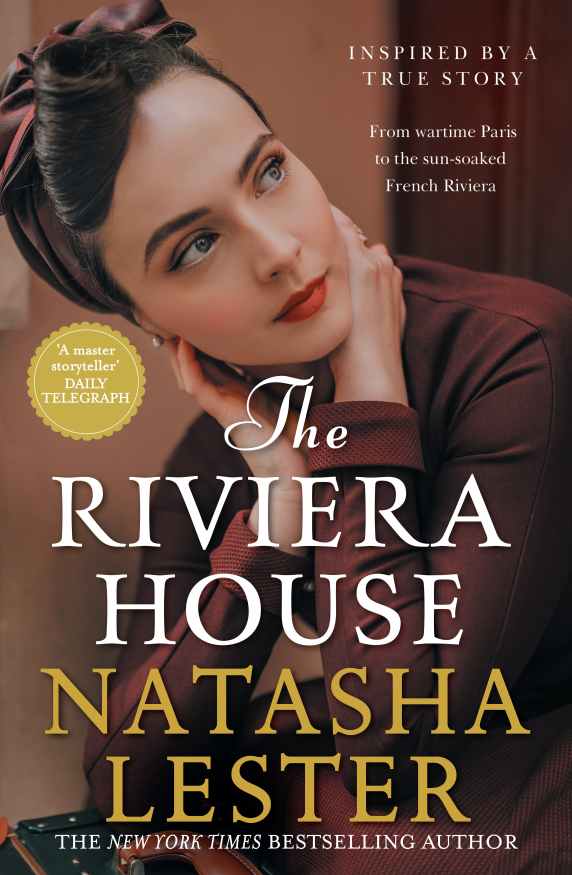
The Riviera House by Natasha Lester

The Riviera House Cover

Publisher: Hachette Australia (Trade Paperback – 1 September 2021)

Series: Standalone

Length: 452 pages

My Rating: 4.25 out of 5 stars

Amazon     Book Depository

Bestselling Australian author Natasha Lester returns with a powerful and intense historical drama that presents a multigenerational tale of love, loss, culture, and the horrors of the Nazi occupation of France, in The Riviera House.

Paris, 1939.  With the war about to start and fears of a Nazi invasion becoming more apparent, Éliane Dufort, a young art student who works part time at the Louvre, watches the staff store away the gallery’s most expensive artworks and begin to hide them throughout France.  Determined to survive the upcoming war, the last thing Éliane should have done was fall in love, however when she meets one of her brother’s friends, Xavier, she cannot help herself, and they soon begin a whirlwind romance.  However, with the Nazis right outside of Paris, Xavier leaves for England, breaking her heart.

With Xavier gone and most of her family killed by the Nazis as they tried to flee the city, Éliane vows to fight the invaders by any means necessary.  Her connection to the Louvre lands her a job working for the enemy in the vast warehouse the Nazis are using to store the artwork looted from France.  Working with the legendary Rose Valland, Éliane is tasked with recording every single piece of art that the Germans steal, as well as attempting to discover where they are being sent.  However, Éliane soon gains the unfortunate romantic attention of a powerful Nazi officer, while a returning Xavier, now a treacherous art expert working for Hermann Göring, threatens to destroy her cover.

Many years later, vintage fashion expert Remy Lang travels to the French Riviera and arrives at a beautiful house that was part of a mysterious inheritance from her unknown biological parents.  Hoping to escape from her intense grief at the loss of her husband and child, Remy soon becomes involved with a visiting family living at the neighbouring villa, including charming photographer Adam.  As she attempts to understand her feelings for Adam amidst her sorrow, Remy soon stumbles upon a shocking mystery when she chances upon a catalogue detailing artworks stolen from France during the war, which includes a painting that hung in her bedroom as a child.  Determined to get to the bottom of this mystery, Remy attempts to trace her past and the history of the unexplained painting.  But the story she uncovers is one of great tragedy and shocking revelations that will change everything Remy thought she knew about her past.

This was an outstanding and deeply impressive historical drama from Natasha Lester, who has previously written some great historical dramas, such as The Paris Secret and The French PhotographerThe Riviera House is a particularly compelling and intense novel that perfectly brings two separate timelines together into one moving narrative, while also focusing on two distinctive and complex groups of characters.  This results in a brilliant and moving read that is guaranteed to haunt you long after you finish reading.

Lester tells a deep and captivating tale in this novel that is moving, intense and very addictive to behold.  The author utilises a split timeline throughout The Riviera House, with one storyline set during World War II in Paris, while the other is based in the modern day and takes place in several locations, although primarily in the French Riviera.  The book jumps back and forth between these two timelines, with the speed of transition increasing the closer it gets to the conclusion.  Both storylines contain their own plot, characters, and interesting features, and they come together to form quite an intense overarching narrative.

The first storyline of The Riviera House is the World War II storyline, which follows the character of Éliane Dufort.  Éliane, after suffering several great losses because of the Nazi invasion, becomes embroiled with the French Resistance and soon gets a job working for the Nazis, assisting in their loot warehouse, and helping historical figure Rose Valland create her record of stolen works.  However, the story gets increasingly complicated as the book progresses, with Éliane torn between her remaining family, her love/hate relationship with the traitor Xavier, and her forced relationship with a powerful Nazi member who has fallen for her.  The entire story comes to a head in the closing days of the Nazi occupation, when Éliane is forced to risk everything dear to her, and soon encounters just how tragic the war is and how evil people can be, even those closest to you.

This part of The Riviera House is an amazing bit of historical fiction, exploring the history of the time while also featuring an emotional and moving tale of love, hope and courage.  I really connected with this half of the novel, due to the thrilling and intense story that shows a grim picture of the period and featuring some memorable moments.  The story of Éliane and her family is full of tragedy and suspense, and if you are looking for a happy read than you have come to the wrong place.  While I did see most of the major twists coming, I appreciated how this narrative came together, as well as the clever way it led into The Riviera House’s other timeline.  I also deeply enjoyed the unique historical aspects of this novel, particularly around the Nazis’ systematic looting of French art.  Lester really dove into this part of the war, providing a detailed account how the Germans stole the art, stored it, and eventually shipped it away as the war progressed.  This tale features several real-life historical figures who are worked into the plot extremely well and who add an extra layer of authenticity to the tale.  One of the most interesting historical figures is Rose Valland, the courageous art historian who risked everything to pull together a record of the looted artwork.  Valland, who has inspired characters in films such as The Train or The Monuments Men, was a fascinating character in this novel, and I liked how Lester tied Éliane’s story into that of Valland.  I felt that this examination of the Nazi art theft was both fascinating and cleverly utilised, and it helped to provide some extra power and intensity to the novel.

The other timeline in The Riviera House is based in modern times and follows Remy Lang, a fashion figure who is spending time in the French Riviera, trying to escape her grief over the tragic death of her husband and child, and soon meets some new people who help her move on.  This storyline was more of a pure dramatic tale and focuses on Remy’s grief, her new romance, and the friction brewing between the family she has just met.  I got quite attached to the potent emotional elements featured in this book, especially as Lester really focuses on the lingering impacts of grief, such as the guilt survivors feel when thinking about something new or considering moving on.  Add in quite a compelling mystery element to it, as Remy and her new friend Adam start investigating the connection that Remy had to the other story, such as her long-dead biological parents and several mysterious inheritances.  These connections to the storyline set in the past compliment the protagonist’s current issues and concerns extremely well, and it was really fascinating to see her work out how her life was shaped by the original protagonists many years before.

I ended up really liking both timelines within the novel, although I did prefer the storyline set in World War II due to its interesting historical research, complex characters riven by war, and terrible tragic moments.  I must admit that I am not usually the biggest fan of historical dramas that feature two separate timelines (it really is an overused device in historical dramas).  However, I think that it was utilised extremely well in The Riviera House, and the two separate storylines melded together into a fantastic overarching read.  I loved how Lester was able to provide subtle hints about the fate of the historical protagonists in the contemporary storylines, although the full revelations about them was often hidden and not revealed until later.  I also really appreciated finding out how the events of the World War II story led into the later plot, and the full truth about how everything occurred is not only great to behold in the historical storyline, but it also has some major impacts on the modern-day protagonist.  This really enhanced The Riviera House’s plot and the overall drama of the book, and it helped to produce an excellent overall narrative.

I also quickly wanted to highlight some of the cool and fascinating cultural elements that Lester slipped into her novel, particularly around art and fashion.  I already mentioned how much I enjoyed the interesting and in-depth examination of the Nazis’ looting and the plans to stop them, however, I also appreciated the way in which Lester examined the art itself, as well as the people who were fighting to protect it.  You really get a sense of the beauty and subtlety of the different artworks featured throughout the book, but more than that you also get to explore what makes people passionate for art.  This book contains several characters who appreciated the true value that this art had to themselves and the nation, so much so that they were willing to risk their lives for it.  This forms a major part of the historical storyline’s plot, and I think that Lester did a wonderful job exploring it.  In addition, the contemporary storyline features a compelling examination about the appeals of vintage fashion.  Lester, who has previously explored fashion in some of her past novels (for example, a major part of her previous novel, The Paris Secret, revolves around vintage gowns), did a good job explaining the current obsession with vintage fashion, as well as how people can make money off it.  While I usually care very little about any sort of clothing fashion, Lester’s descriptions proved to be very intriguing, and I found myself appreciating her obvious passion for the subject.  Both these cultural inclusions enhanced the story, especially as they were strongly related to the various protagonist’s motivations and obsessions, and I really appreciated they time that Lester took to feature them.

Overall, I felt that The Riviera House by Natasha Lester was an excellent and well-crafted historical drama with some powerful elements to it.  Lester did a wonderful job of crafting a compelling, multi-period storylines that combined historical and contemporary narratives into a single, moving tale.  I particularly enjoyed the cool focus on the Nazi occupation and art obsession, which resulted in a thrilling and very tragic tale.  The Riviera House is a highly recommended book and a must-read for all fans of historical drama.

Amazon     Book Depository

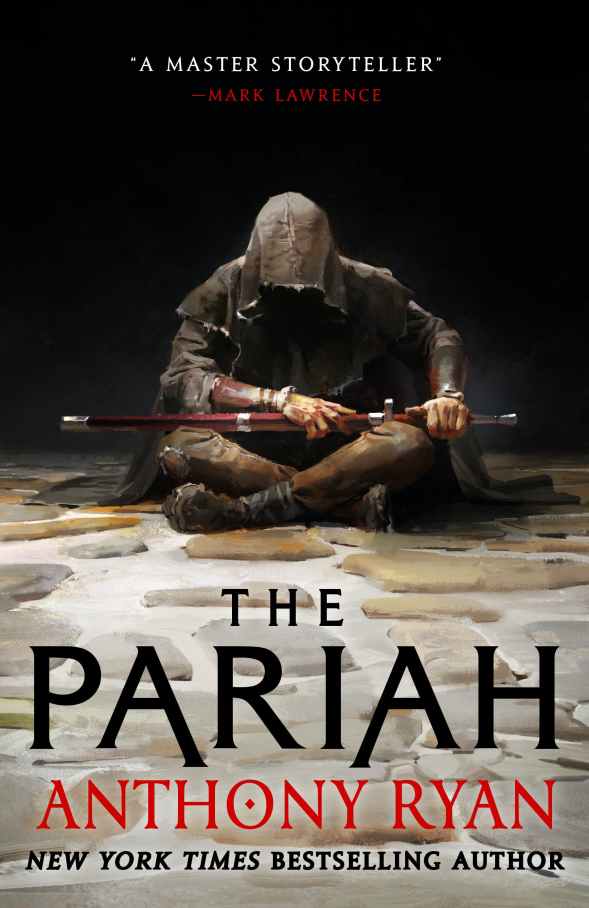
The Pariah by Anthony Ryan

The Pariah Cover

Publisher: Orbit (Audiobook – 24 August 2021)

Series: The Covenant of Steel – Book One

Length: 19 hours and 57 minutes

My Rating: 5 out of 5 stars

Amazon

Bestselling fantasy author Anthony Ryan returns with the first book in an epic, brand new series, The Pariah, a massive and captivating tale of one young man destined to alter an entire kingdom.

Anthony Ryan is an impressive and highly regarded fantasy author who has been a leading figure in the fantasy fiction landscape for the last 10 years.  Ryan has already written several compelling series, including the Raven’s Shadow trilogy (succeeded by the Raven’s Blade duology), the Slab City Blues series, the Draconis Memoria trilogy and his Seven Swords series.  All these series sound pretty awesome, and I have been meaning to check out some of Ryan’s works for years, especially his Raven’s Shadow books.  Unfortunately, I never had the opportunity to go back and read any of them, which I really regret.  So when I was lucky enough to receive a copy of The Pariah a couple of weeks ago, I was very interested in checking it out, especially as it serves as the first book in the brand new The Covenant of Steel series, which I thought would be a good way to experience Ryan’s writing style.  I am very glad that I did as The Pariah was an outstanding and powerful fantasy read that I had a wonderful time getting through.

Alwyn is a young outlaw, trained by his band to steal, kill, spy and deceive.  Raised in the massive and forbidding forest known as the Shavine Marches, in the heart of the kingdom of Albermaine, Alwyn serves the notorious Deckin Scarl, a feared and revered bandit king who rules the forests with an iron fist.  Following a deadly civil war, Deckin finds himself with an opportunity to eliminate a recently installed duke and his family and seize his power and lands.  However, before he can enact his ambitious and murderous plan, the bandit horde is betrayed, Deckin is executed and Alwyn is imprisoned, sent to work a lifetime in the labour prison known as the Pit Mines.

Determined to escape the mines and get revenge on the person responsible for the death of everyone he knew and loved, Alwyn finds himself under the sway of an inspirational cleric imprisoned alongside him.  Under her tutelage, Alwyn learns a subtler art and becomes a scribe of great skill.  However, his desire for freedom and revenge is never far from his mind, and he soon leads the inmates of the pit in an ambitious escape attempt, and so sets forth a series of events that will change Albermaine forever

Managing to escape from the prison and find sanctuary, Alwyn learns much and finds himself taking on many guises including that of scribe, scholar, advisor, and thief, as he attempts to find safety, wealth, and revenge.  However, fate never appears to be on Alwyn’s side, and his bad luck eventually forces him to join a military company serving a noble lady who believes herself touched by the gods.  Pledging himself to this company to save his life, Alwyn traverses battlefields and warzones across Albermaine, encountering some of the unusual people who inhabit this chaotic realm.  His adventures will place him at the centre of the formative events of the kingdom and the church, but how will this scribe of bastard birth rise to become one of the most infamous figures of the age?

This was an outstanding novel from Ryan and one that makes me really regret not checking out some of his previous novels earlier.  The Pariah contains an epic and comprehensive fantasy tale that sees a flawed protagonist traverse a compelling and well-established new fantasy realm.  I had an amazing time getting through this impressive novel and it gets a full five-star rating from me.

The Pariah has a really great story that I got pretty damn addicted to.  This latest book from Ryan is told in the chronicle form, as penned by its protagonist, Alwyn Scribe, who recounts his life story, including the early events which are the focus of this book.  Ryan dives right into The Pariah’s narrative extremely quickly, with details of the setting and history weaved in as the tale progresses.  The story has an intriguing start to it, showing Alwyn as the young member of a bandit crew with an ambitious leader.  However, the story goes in some very interesting and devastating directions fast, with a brutal massacre changing the entire status quo for the protagonist and forcing him onto a new path.  The rest of the story follows Alwyn as he becomes mixed up with a series of inspirational leaders, mysterious magic users, and fun side characters, whose plans and beliefs forces the protagonist into great adventure and intrigue.  This leads to some awesome and memorable scenes, including a dangerous prison break, some epic battle sequences, and innumerable mysteries and revelations, several of which are left open for the author to explore in the rest of the series.  This all leads to an intriguing and action-packed conclusion that showcases the protagonist’s growth, while also setting up the future entries in the series pretty well.

I deeply enjoyed the author’s impressive writing style in this novel, especially with the entire novel set out in the form of first-person chronicle.  Due to the cool stories that it can tell, I have a lot of love for the chronicle format, and I felt Ryan did a really good job of utilising it in The Pariah.  The post-examination of Alwyn’s story from his older self provides a unique and compelling view of the events unfolding around him, and I enjoyed the various notes from his older self that hint at future events and hidden secrets.  These discussions of future events help to add a certain amount of anticipation and suspense at various points at the novel, such as the early hints about the ambush at the bandit camp or mentions about future dark meetings with certain characters.  I also found the focus of this book to be quite interesting, especially as a large portion of the novel was more concerned with setting up future storylines, rather than moving the story along at a quicker pace.  This is a very classic epic fantasy move from Ryan, and it quite enjoyed the way in which he took the time to establish the protagonist, the supporting cast, and the settings, with a particular focus on some of the formative events of Alwyn’s life.  While I enjoyed this set-up, it does steal a little excitement and momentum from the narrative, although I think the sheer amount of interesting setting detail and the intriguing potential of several established, long-term storylines more than makes up for it.  All these interesting writing elements helped to turn The Pariah into a very exciting and compelling read, and I really loved the way in which they enhanced the already awesome narrative.

I also quite enjoyed the new setting that Ryan set up for The Covenant of Steel series, which has an interesting medieval European feel to it, equipped with knights, forest-dwelling bandits, and religious crusades.  The entire novel is set within the Western Duchies of Albermaine, a nation riven by civil war, invasion and religious instability.  This proves to be an outstanding and compelling background to the awesome story contained with The Pariah, especially as the protagonist finds himself visiting some of the more unique locations of this setting during major historical events.  I personally enjoyed the cool forest lair portrayed in the start of the novel, mainly because Ryan was trying to emulate a darker version of the Robin Hood tale, but there is also a deadly prison mine and an elaborate cathedral that serve as major settings which I thought were really good.

There is also a great focus on the political and religious makeup of Albermaine, and this results in some fascinating storylines.  I really liked the focus on the martyr-based and corrupt overarching religious organisation that has substantial control of the kingdom, as that forms a driving point of the plot, with the protagonist becoming involved with several unorthodox clergy members, who bring down the wrath of the rest of the church for their actions.  Also, I am kind of curious to see if a prophesied end-of-the world event that multiple characters preach about actually occurs in future novels, especially as it would be a pretty fun story moment if it did.  The protagonist also seems drawn to several people with magical abilities considered heretical by the church, which offers an interesting counterpoint to his other threats, especially as each of these magical characters produce impressive mysteries and potential dark storylines.  I was impressed with how much time the author takes to imbue his setting with a massive amount of detail and after the quick start to the narrative, the reader is given a crash course in the history and politics of the realm.  Despite the level of detail, I think that Ryan spread the world building out to an acceptable degree, and I never felt too overwhelmed with the various explanations and world expansions.  I had a wonderful time traversing Albermaine with the protagonist and I look forward to seeing what additional developments and storylines occur within it in the future novels.

As I mentioned above, the novel is solely told from the perspective of protagonist Alwyn, later known as Alwyn Scribe once he takes up his profession, who is penning the events of his younger life.  Alwyn is an interesting protagonist to follow and thanks to the author’s use of the chronicle style, you really get a sense of the character’s personality, motivations, and intentions as the novel progresses.  Initially starting off as a young thief with immense loyalty to his chief, Alwyn goes through a lot as the novel progresses, forced to make hard decisions and encountering horrors, mistakes and a load of enemies as his tale progresses.  I found Alwyn to be a complex and compelling figure, and I didn’t always like him or his decisions, especially when he was reckless and rash.  However, he does grow as the novel progresses and, while he still has a lot more development to go, I felt that he was a better character at the end of the novel.  I liked the various talents that Alwyn develops throughout the novel, and it was fun to have a more complex and less noble figure, thanks to his past as a thief and conman.  I especially enjoyed his transition into a scribe, which the character soon sees as his primary profession, and it certainly is an interesting and compelling role for a fantasy protagonist.  I liked the way in which the older version of the character tells the story, especially as there are some great reflections about his actions and his personality during that time, and you can often hear the protagonist’s regret over what he did and what is to come.  I cannot wait to see what happens to this character in the future, and I kind of suspect that his tale is not going to come to a very happy end.

Aside from Alwyn, The Pariah is filled with a massive contingent of side and supporting characters who Alwyn meets throughout his adventures.  These characters are featured perfectly throughout the narrative and I loved the unique and compelling ways in which they influenced the overall story.  Ryan invests a lot of time into developing many of these characters, even some who had more minor roles, providing interesting personal histories and personality traits to make them stand out, and I appreciated how complex and compelling their storylines could turn out to be.  I found it interesting that there was a focus on inspiration leaders, with Alwyn falling in with three separate figures in this novel, each of whom commanded his loyalty through different means and whom he became close with in different ways (one is a surrogate father, another a teacher, while the third has a very complicated and constantly evolving relationship with the protagonist).  There were also some interesting antagonists featured throughout the novel, and while a couple died before their time, Ryan made sure to leave some of the better ones alive for the next entry in the series, and I am sure they will have an impact there.  Each of the characters featured in The Pariah added a lot to the plot, and I cannot wait to see what unique figures are featured in Ryan’s next entry.

While I did receive a physical copy of The Pariah, I decided to try out the audiobook format instead.  I am glad that I did as this was an excellent and enjoyable audiobook that was really fun to listen to.  Due to its massive story, The Pariah has a decent run time of just under 20 hours, although I managed to get through it in less than a week as I really got into the amazing story.  The audiobook moved at a great pace, ensuring that there were never any dull or slow moments for the listener to get bogged down in.  I also found that the audiobook format was a great way to absorb the intense amount of world-building, and it also lent itself to some of the exciting fight scenes extremely well.  I was also impressed by the narration of Steven Brand, who brought a wonderful energy to this format.  Brand has an amazing voice and he quickly leapt into the role of the narrator, telling the unique tale of the protagonist’s life and inhabiting the character seamlessly.  I loved the distinctive and well-fitted voices that Brand used throughout The Pariah, and he really helped to turn this format into something special.  As a result, the audiobook version of this book comes highly recommended and I will probably end up listening to the rest of this series in this format.

The Pariah by Anthony Ryan is an epic and deeply compelling piece of fantasy fiction that is really worth reading.  Perfectly setting up Ryan’s intriguing new series, The Pariah was an awesome outing from this talented author, and I loved the brilliant story, complex characters and chaotic setting that was featured throughout it.  I cannot wait to see how this awesome series is going to turn out, and The Covenant of Steel novels look set to be one of the most iconic fantasy series of the next few years.

Amazon

The Wisdom of Crowds by Joe Abercrombie

The Wisdom of Crowds Cover

Publisher: Gollancz (Audiobook – 14 September 2021)

Series: The Age of Madness – Book Three

Length: 23 hours and 36 minutes

My Rating: 5 out of 5 stars

Amazon

One of the best authors of dark fantasy, Joe Abercrombie, returns with the final book in his brilliant Age of Madness trilogy, the thrilling and deeply captivating The Wisdom of Crowds.

Joe Abercrombie is a particularly impressive author whose work I have been really enjoying over the last few years ever since I dove into his iconic First Law trilogy.  This great dark fantasy trilogy followed a group of complex and damaged characters who are thrust into a series of dangerous adventures in a corrupt fantasy world.  The original trilogy was pretty damn perfect, and I loved the outstanding story and universe that Abercrombie came up with.

Following his original books, Abercrombie wrote three standalone novels that continued the universe’s overall story in different ways before introducing his Age of Madness trilogy in 2019.  The Age of Madness trilogy is set around 20 years after the events of the First Law books and follows the children of the original trilogy’s protagonists as they are engulfed in additional chaotic events, including war, revolution, and lots of betrayal.  This trilogy has already featured two outstanding five-star novels, A Little Hatred (one of the best books of 2019) and The Trouble With Peace (one of the best books and audiobooks of 2020).  Due to how awesome the previous novels were, I was deeply excited for The Wisdom of Crowds, and it turned out to be another exceptional read with an impressive story to it.

Following King Orso’s decisive victory over the rebellious young hero Leo dan Brock and his wife, Savine dan Glokta, Orso believes that he has finally gained control of the Union.  However, he is unprepared for the chaos and destruction that is about to befall the kingdom.  The revolution, known as the Great Change, has finally descended upon the Union, with the people rising up and overthrowing the hated nobles.  Led by former Arch Lector Pike, known by the masses as the Weaver, the rebelling Breakers and Burners soon take the capital, Adua, bringing hope and destruction in equal measure.

Imprisoned by the mob, Orso soon discovers that there is nothing lower than a deposed king.  The freed Citizen Leo and Citizeness Savine must adapt and find new ways to manipulate a mob that both loves and hates them.  The newly raised up Chief Inspector Teufel must soon decide where her loyalties lie as she begins to see the insanity of the new rulers, while former soldier Gunnar Broad once again finds himself causing trouble as a key citizen of the new regime.  At the same time, the magically prescient Rikke has taken control of the North, capturing the former King Stour Nightfall.  However, taking the North and keeping it are two very different things, especially as the forces of her family’s old enemy, Black Calder, advance towards her, determined to free Stour.  With enemies around every corner and even her closest allies beginning to doubt her, Rikke must implement a drastic plan and make use of every tool at her disposal, even notorious turncoat Jonas Clover.

As the Great Change starts to devolve into anarchy, the death toll starts to rise and no one is safe, least of all those who have profited in the past.  Soon hard choices will need to be made and only the strongest and most cunning will survive.  The Age of Madness is well and truly here, but who will live and who will die as the fires of anger, resentment and despair burn throughout the land?  No matter who survives, the Union and the North will never be the same again, especially with unseen hands manipulating events from the shadows.

How the hell does Abercrombie do it?  I knew in advance that this was going to be an awesome book, but I was yet again blown away by the author’s clever blend of captivating storylines, outstanding characters, and outstanding dark fantasy settings.  The Wisdom of Crowds served as an excellent conclusion to the Age of Madness trilogy, and I found myself absolutely powering through this amazing novel in no time at all.  This gets another five-star review from me as I had such an incredible time reading it.

Abercrombie has come up with an exceptional narrative for his latest novel, and I deeply enjoyed the captivating and extremely dark story contained within The Wisdom of Crowds.  This novel has an impressive and memorable start to it with the aftermath of the previous novel immediately giving way to the Great Change.  This uprising quickly overcomes the existing government and changes everything, with Orso imprisoned, Savine and Leo freed from captivity and incorrectly hailed as heroes of the people, and characters like Gunnar Broad and Inquisitor Teufel pushed to the fore due to their suffering under the previous regime.  After a great extended revolution sequence, Abercrombie spends a good chunk of the first act of the novel showcasing all the severe changes to the setting of the Union, including the impacts to the protagonists, as well as the nation’s quick decline after the initial glorious revolution.  At the same time, you have the events in the North occurring at the same pace, with Rikke trying to solidify her power in the face of a rising opposition.  Most of the novel’s major storylines are either set up here or transported over from the previous novels, and it moves at a great pace with some fantastic moments.  The novel really heats up in the second act, when a group of extremists take over the Union and Rikke’s war in the North gathers speed.  The storyline set in the Union during this section of the novel is filled will all manner of insanity and terror, and this is probably one of the darkest parts of the entire book.  While there is a noticeable focus on the craziness of a Burner revolution, there is also a lot of character development occurring here, with most of the protagonists starting their last bit of major growth here, with their big plans set up.  This second act is capped off with a massive battle in the North that changes the entire fabric of that setting and provides a great deal of fantasy action and bloodshed to keep the reader satisfied, while also featuring a pretty fun story twist.

All this leads up to an impressive final act which takes up the last third of the novel.  Most of this is set in the Union and showcases the protagonists making their moves.  There are some very good scenes here, with a mixture of big character moments, destructive fights, and a cool trial sequence, which help this part of the book really stand out.  All of this leads to a major change in the plot that occurs with roughly a quarter of the novel left to go.  While there are some great scenes involved with this big shift, I must admit I was a little surprised that the book didn’t end right there, due to the resulting significant change of pace, and I wonder if Abercrombie might have been better off using this final quarter in another novel.  However, the story is still extremely cohesive, especially as it leads up to some major reveals and big character moments that had me gasping with surprise.  I really did not see some of the big twists coming, even though they were really well set up throughout the trilogy (although I really should have known who was behind everything).  The book concludes on an interesting note, with some noticeable tragedy and some outstanding character moments as the surviving protagonists settle into their new roles.  I did think that Abercrombie may have spent too much time setting up events for his next trilogy, with multiple scenes containing open-ended events that will clearly get picked up in later books.  However, to be fair it did get me excited for the next novel like it was supposed to, and I don’t think it took too much away from the overall narrative.  This was such an awesome story, and The Wisdom of Crowds’ character focus had me hooked the entire way through.

Abercrombie has a real talent for writing awesome and complex dark fantasy novels, and I really enjoyed his outstanding and compelling style.  I deeply appreciated his excellent use of multiple character perspectives to tell a rich and vibrant tale, as the story seamlessly flicks between seven major characters throughout the book.  The spread of character perspectives has been an outstanding feature of all the author’s First Law novels, and it is extremely cool to see this complex tale told from various points of view.  Not only does it ensure you get a brilliant, multifaceted exploration of the setting and the progress of the plot, but it really helps the reader get into the mind of the characters and see their personalities, emotions and opinions.  I also really appreciated the two great extended sequences that were told through the eyes of multiple supporting or one-off characters, especially as it captured the chaos and destruction of both revolution and a major battle.  The author has quite a vivid and adult writing style, which works with the realistic characters and complex storylines extremely well.  Not only does this result in some particularly graphic and powerful action sequences, including one amazing and massive pitched battle, but it also works in some distinctive and very adult dialogue.  While some of the language gets a tad over the top at times, it does give the book a very realistic feel and is a lot of fun.  Readers should be warned that this is a pretty dark tale including torture, ultra-violence and a lot of brutal deaths.

I have to say that I was quite impressed with the changes to the major setting of the Union in this novel.  While the other significant setting, the North, remains pretty much the same (its always snow, death and blood there), the Union is majorly impacted quite early on as part of the revolution known as the Great Change, which Abercrombie had been expertly setting up throughout the trilogy.  The Great Change, which was brought on by rioting workers and peasants disenfranchised by the industrial revolution that was such an amazing and distinctive feature of this trilogy, hits the city with most of the nobles, the wealthy, the ruling Closed Council, and the King all arrested.  This initial overthrowing was done pretty perfectly, with several chaotic sequences, and it eventually leads to a whole new era for the nation.  This part of the novel was very clearly inspired by the French Revolution, and I deeply appreciated the way in which the author evoked the iconic imagery of destructive historical events into his fantasy novel.  I loved the initial set-up of the new democratic government that replaced the monarchy, and I had a good chuckle at the character’s glorious ideas of a utopian society with a pompous constitution.  However, the real fun occurs when these high ideals fail miserably and are replaced by a general purge where no-one is safe.  Abercrombie did a really good job here of capturing the terror, uncertainty and horrible human nature that accompanies these sorts of purges, with a series of one-sided trials and brutal executions in front of a cheering crowd.  This chaotic setting serves as an outstanding backdrop to novel’s various storylines, and it was an amazing and dark part of The Wisdom of Crowds that made it really stand out.

As with the rest of Abercrombie’s books set in this connected universe, one of the absolute best things about The Wisdom of Crowds was the exceptional and complex characters.  Just like the previous two novels in the Age of Madness trilogy, the story is primarily shown from the perspective of seven unique and well-established point-of-view characters.  Each of these characters is extremely complex and layered as Abercrombie has been setting up some fantastic storylines around each of them throughout the course of the series.  These characters include:

  • Orso – the son of King Jezal, a point-of-view character from the original trilogy, and current High King of the Union, for whatever that title is worth. Orso is a very fun character who has probably grown the most out of all the characters featured in this series, going from a foppish, unmotivated prince, to a decisive, competent and victorious king in the second novel.  Despite his victory over his rival Leo and his secret half-sister (and former lover) Savine, Orso soon finds himself a prisoner when the Great Change leads to a people’s revolt.  Despite being imprisoned and constantly mocked by everyone, Orso keeps most of the confidence he built up in the previous novels and is a constant figure of comedy, especially with his great sarcastic observations of the events around him.  Abercrombie has done a masterful job with Orso over the last three books, and I really appreciated his growth and humour, making him one of my favourite characters in this trilogy.  Due to this it is pretty hard to see him get taken down and condemned by his people, especially as he is a much better ruler than everyone thinks he is.  I once again found myself really pulling for him in this novel, and I think he was the character I wanted to survive and win the most.
  • Savine dan Brock (formerly dan Glokta) – a formidable businesswoman and adoptive daughter of Arch Lector Glokta (the best character from the original series). Savine has been an awesome character in this trilogy, experiencing some massive highs and significant lows.  After marrying Leo and organising a revolt against her half-brother Orso in the previous novel, Savine starts this novel in chains.  However, once the Great Change occurs, she is quickly freed and must find her place amongst the revolutionaries.  Rightly terrified of being tried for her ruthless business practices, and changed by motherhood, Savine engages in charity works and tries to save herself through generosity.  I quite enjoyed Savine’s storyline in this latest novel and it had some awesome moments.  While I do think she was a bit underutilised in the middle of the book, she eventually emerges in full form and shows everyone why she is the most dangerous person in the Union.  There are some outstanding scenes surrounding her, especially that awesome court sequence, and I quite liked where her story ended up.
  • Leo dan Brock – the former governor of Angland and shining hero of the Union, before he had an arm and leg blown off during his big battle against Orso in the previous book. Leo starts this novel a shell of his former self, full of regret that his recklessness and arrogance caused his injuries and the death of his friends.  However, this regret soon turns to anger and ruthlessness as he uses his hero status to become a key part of the Great Change, attempting to manipulate it for his benefit.  I must admit that Leo was always my least-favourite character in this series, and I liked how the features I disliked about him led to his downfall in the previous book.  Abercrombie perfectly follows this up by making him a much more unlikable character in this novel, and I deeply appreciated the realistic way his personality was twisted and darkened by anger, jealousy and frustration, giving him a new ruthless edge.  Out of the characters in The Wisdom of Crowds, Leo probably goes through the most development in this novel, and it was pretty captivating to see where his new hate and frustrations led him.
  • Rikke – a Northern protagonist and the daughter of the Dogman, Rikke has had a very interesting story arc within this series due to her magical Long Eye, which allows her to see into the future. Rikke was able to outsmart all her opponents in the previous novel, taking the Northern capital and capturing her opponent, Stour Nightfall.  Now Rikke is forced to lead her people against Stour’s father, Black Calder, while also trying to balance the concerns and treachery of her allies.  I have been really impressed with Rikke’s storyline throughout The Age of Madness, and I liked the great transition from scared girl to effective leader.  This book continues to showcase her skills, even if she still appears a bit rash and too clever for her own good.  She ends up being forced to make some hard and heartless decisions, which really highlights just how far she has come.  There are some outstanding movements with Rikke in this novel, and I particularly loved the good twist around her that occurred at the big battle scene (I did see it coming, but it was still a lot of fun).  I also loved the fantastic scene where she confronts Bayaz, the First of the Magi, as it was one of the first times that you see the master manipulator of the series appearing rattled and impotent.  Rikke was a really well set up character and I really appreciated the epic and compelling storylines around her.
  • Vick dan Teufel – a Union inquisitor and protégé of Arch Lector Glokta, Vick is a master spy and investigator. Despite all her skills, Vick was taken by surprise by the revelation that Pike is the Weaver and is forced into supporting the Great Change against her will.  Falling back on her old survivalist mentality to support the winners, Vick is eventually shaken into action by the destruction caused by the Burners and finds herself supporting the losing side.  After being a little underused in the previous novel, Vick has a very strong outing in The Wisdom of Crowds and her character changers are quite essential to the plot.  Like Leo, Vick goes through a fair bit of development in this novel, although her development is a lot more positive as she tries to do what is right rather than what will keep her alive.  Vick also experiences some very crushing moments, and it was fascinating that out of all the characters, she maintained the moral high ground the best.
  • Gunnar Broad – a former Union soldier with a gift for extreme violence, who has been both a Breaker and a servant to Savine as an enforcer and bodyguard. Imprisoned after the last book, Gunnar is freed with Savine and Leo and once again finds himself drawn into the fight, despite his desire to stay out of trouble and get back to his family.  While he once again tries to be a good person at first, he is eventually seduced by the dark appeal of the Burners and truly loses himself, giving into his inner violence and anger.  While he does do some redemptive actions, Gunnar remains a bit of a lost cause, which is pretty tragic to see.  Gunnar proved to be a great character throughout this series, despite a lack of any real development, and I enjoyed his darker scenes and compelling personal insights.
  • Jonas Clover – the cunning and treacherous veteran Northern warrior who, after spending the last two books serving Stour Nightfall, betrayed him at the end of The Trouble with Peace and sided by Rikke. However, he soon finds his loyalty divided between Rikke and Black Calder, with both sides aware of his tendency to turn on the losing side, and he must finally decide who to support.  Due to his very entertaining personality and cynical viewpoint about the world, Clover was my favourite character in the series, and I love all the clever insights and subtle jokes that are characteristic of his scenes.  I really appreciated his mindset of patience, self-restraint and picking your moment, which is mostly unheard of amongst the other Northerners, and which usually sees him through most conflicts.  Despite this, Clover is finally forced to face the music in this novel after his various betrayals come back to bite him.  While he doesn’t always make the best decision, his entertaining and canny attitude ensures that the reader is constantly amused by his antics, and I am really glad that Abercrombie included him in this series.  It will be interesting to see how he is utilised in the future, especially as the author tried to evoke some similarities between his journey and that of original character Logan Ninefingers.

I deeply enjoyed each of these impressive characters, with each one bringing something very memorable and entertaining to the table.  While a couple of these characters were a bit underutilised in previous novels, I think that Abercrombie struck the right balance in The Wisdom of Crowds, with each of them shown in pretty much equal measure.  All seven character arcs are pretty awesome in their own right, but the real strength is the way that they come together to tell the overall story.  It was pretty cool to see multiple character perspectives of the same events, especially as each of these complex characters have very different views on what has happened.  I think that each of the arcs ended extremely well, with each of the characters going in some very interesting and surprising directions.  I was a bit surprised by who was left standing and in control at the end of the novel, and I must admit that I really did not foresee the fates of several of the characters.  Abercrombie sets up each of these events incredibly well, and there were some very fitting endings or transformations here.  It was interesting to see how some of these characters ended up mirroring the cast of the First Law trilogy, which seemed fitting as some were inspired by these prior characters, while others tried to escape becoming them.  I also really appreciated the way that barely any of the primary characters end up being portrayed as good people by the end of it.  While all of them initially tried to do the right thing, even the best of them is forced to make some terrible compromises which shatter their morality and impact their personality.  As a result, the reader is left with little sympathy for some of the surviving characters, and it was once again really amazing to have such morally ambiguous and naturally selfish characters.  It looks like Abercrombie might strongly feature the remaining characters again in his next trilogy, and I cannot wait to see how their various story arcs are continued.

Aside from the seven focal characters above, The Wisdom of Crowds also featured a vast collection of supporting and side characters, each of whom added a ton to the novel.  Most of the supporting characters where previously introduced in the first two novels of this trilogy, as well as a few holdouts from the original trilogy, and there weren’t too many new characters in this final novel.  The author ensures that the reader has a pretty good idea of these characters’ feelings and motivations, and it was fascinating to see the complex and powerful storylines told around several of them.  There are some really good twists around a few characters in particular, and I have to admit that I did not see most of them coming, with Abercrombie doing some masterful writing to set up these reveals throughout the entire trilogy.  Many of these side characters inspired some excellent and moving storylines, although readers should be aware that, as this is the final novel, quite a few of these characters did not survive, and I was particularly cut up by the death of one major supporting character near the end.  It will be very interesting to see what happens to the survivors in the future, and I am especially curious about a couple of key characters from the original trilogy who are set for some major events in Abercrombie’s next outing.

While I did get a physical copy of this book, I ended up listening to the audiobook instead, which proved to be an awesome decision.  The Wisdom of Crowds has a substantial runtime of 23 hours and 36 minutes (it would have placed 17th on my latest longest audiobooks list).  However, despite its length, I was able to power through it in about a week, especially after I got pretty damn hooked on the awesome story.  I found that this format moved the story along at a pretty fast pace, and it was a great way to absorb the fun and compelling details of this dark and epic tale.  It also works extremely well thanks to the outstanding voice work of the incredible Steven Pacey, who is one of my absolute favourite audiobook narrators at the moment.  Pacey, who has narrated all the other books in the First Law and Age of Madness trilogies, does another outstanding job with The Wisdom of Crowds.  Not only does he ensure that every aspect of the narrative comes across in a fun and compelling way; he also ensures that every character is perfectly brought to life.  Pacey brings back all the fun and fitting voices that were featured in Abercrombie’s previous novels, which proved to be a lot of fun, especially as he perfectly captures the unique personalities and characteristics of these fantastic figures.  Pacey makes a lot of effort to portray all the emotion and intensity of the characters, and you really get a sense of the heartbreak and darkness that surrounds all of them, especially by the end of the story.  This results in another incredible audiobook which I had an outstanding time listening to; at one point I managed to listen to it for over five hours straight and was not bored in the slightest.  As a result, I would strongly recommend The Wisdom of Crowds’ audiobook version, and it is easily one of the best audiobooks I have listened to in 2021.

With another incredible and powerful story, filled with outrageous and complex characters, impressive settings and clever twists, Joe Abercrombie brings his latest trilogy to end with the brilliant The Wisdom of Crowds.  This final book in the Age of Madness trilogy was an exceptional read, and I deeply enjoyed the dark and clever places this amazing book went.  An epic and captivating dark fantasy experience, readers are guaranteed to power through The Wisdom of Crowds in no time at all, especially as they become more and more engrossed with the excellent central protagonists.  A must-read for all Abercrombie fans, this was easily one of the best books I have read in 2021 so far and I cannot wait to see what madness and destruction are unleashed in the author’s next awesome series.

The Wisdom of Crowds Cover 2

Amazon

The Devil’s Advocate by Steve Cavanagh

The Devil's Advocate Cover

Publisher: Orion (Trade Paperback – 27 July 2021)

Series: Eddie Flynn – Book 6

Length: 403 pages

My Rating: 4.5 out of 5 stars

Amazon

Bestselling thriller author Steve Cavanagh returns with another exciting and over-the-top fun legal thriller, The Devil’s Advocate, an awesome read with a very entertaining plot.

Randal Korn is an evil man, a dangerous killer, and an unrepentant corrupting influence on everyone around him.  Unfortunately for the residents of Sunville County, Alabama, Randal Korn is also their District Attorney, who uses his skills and influence to get the legal system to commit his killings for him.  Known as the King of Death Row, Korn has sent more men to the electric chair than any other district attorney in US history, deriving great pleasure from every life his prosecutions have taken.  However, not all of Korn’s victims have been guilty, a fact that Korn knows and deeply relishes.

When a young woman, Skylar Edwards, is found brutally murdered in Buckstown, Alabama, the corrupt sheriff’s department quickly arrests the last person to see her alive, her innocent African American co-worker Andy Dubios.  After the racist cops quickly beat a confession out of him, Andy is set to stand trial with Korn prosecuting a seemingly airtight case.  With the entire town already convinced of his guilt and with no chance of a fair trial, Andy’s death looks certain, until Eddie Flynn arrives in town.

Hired after Andy’s previous lawyer goes missing, former conman turned brilliant New York lawyer Eddie Flynn heads down to Alabama with his team to try and save Andy’s life.  However, the moment he arrives, Eddie begins to understand just how stacked the deck is.  Thanks to Korn’s immense influence, the entire town is hostile to him, the police are refusing to cooperate, witnesses are threatened or arrested by the sheriff, the judge is already on the prosecutor’s side, and any potential juror will already believe that Andy is guilty.  To save his client’s life, Eddie will have to use every single trick he has to con the jury into finding Andy not guilty, but even that might not be enough.  Worse, it soon becomes apparent that the killing of Skylar Edwards was only the start.  A dangerous murderer still stalks Buckstown, killing whoever gets in their way to achieve their own sinister agenda, and their sights are now firmly set on Eddie.

This was a pretty awesome and wildly entertaining novel from the talented Steve Cavanagh.  A lawyer himself, Cavanagh burst onto the crime-fiction scene a few years ago with his debut novel, The Defence, the first book in his Eddie Flynn series.  There have since been several other Eddie Flynn books, each of which places the protagonist in a unique legal situation.  I have been meaning to read some of Cavanagh’s books for a while now due to the awesome sounding plot synopsis and I currently have a couple of his novels sitting on my shelf, waiting to be read.  Unfortunately, I have not had the chance yet, although I think I will have to make a bit of an effort after reading The Devil’s Advocate, which I was lucky enough to receive a little while ago.  The Devil’s Advocate was an outstanding and captivating novel and I swiftly got drawn into the exciting and amusing narrative.

The Devil’s Advocate has an awesome story to which is extremely addictive and enjoyable.  When I picked up this book, I initially intended only read around 50 pages in my first sitting, however, once I started I honestly could not put it down, and before I knew it I was halfway through and it was well past my bed time.  Cavanagh produces an extremely cool narrative that starts with an awesome scene that introduces the main antagonist and ensures that you will really hate him.  From then, Cavanagh quickly sets up the initial mystery, the introduction of the legal case, and the plot that brings the protagonist to Alabama.  The rest of the narrative neatly falls into place shortly after, with the full details of the case, the corruption of the main setting, and the massive injustice that is taking place, coming to light.  From there, the protagonists attempt to set up their case while facing sustained and deadly opposition from pretty much everyone.  While the initial focus is on the legal defence aspect of the thriller, the story quickly branches out into several captivating storylines, including an examination of the antagonist’s corrupting influence on the town, planned action from a white supremacist groups, attempts to run off or kill the protagonists, as well as mystery around who really killed Skylar.  All these separate storylines are really fascinating and come together with the plot’s central legal case to form an exceptionally fun and electrifying story.  The reader is constantly left guessing about what is going to happen next, especially with multiple red herrings and false reveals, and I ended up not predicting all the great twists that occurred.  While I did think that Cavanagh went a little too political with the overall message of the book, The Devil’s Advocate had an outstanding ending and I had an exceptional time getting through this thrilling story.

One of the best parts of this entire story is the outrageous and unfair legal case that the protagonists must attempt to win.  This case forms the centre of The Devil’s Advocate’s plot, with most of Eddie and his colleagues’ appearances focused on their upcoming legal battle.  Cavanagh really went out his way to create a truly unique and compelling set of legal circumstances for the protagonists to wade through, with the case so tightly sewn up against their innocent client before they even get there.  Despite this, the protagonist goes to work with a very effective, if unconventional, legal strategy that plays to the antagonist’s underhanded tactics.  The entire legal case soon devolves into crazy anarchy, with both sides doing outrageous actions to win, which Cavanagh writes up perfectly.  I found myself getting quite invested in the case, especially after witnessing several blatant examples of the prosecution’s corruption, and these terrible actions really got me rooting for the protagonist, who had some entertaining tricks of his own.  This all leads up to an excellent extended trial sequence, where the various strategies and manipulations in the first two-thirds of the novel come into play.  There are some brilliant and entertaining legal manoeuvrings featured here, with the protagonist initially focusing more on pissing off the prosecution and the judge rather than producing alternative evidence.  However, there are some great reveals and cross-examinations towards the end of the book, as Eddie has a very good go at dismantling the case.  The way it finally ends is pretty clever, and I really liked the way some of it was set up, even if it relied a little too much on a minor character’s conscience finally flaring.

Cavanagh also featured some great and entertaining characters in The Devil’s Advocate, with a combination of new characters and returning protagonists from the previous novels.  The author makes great use of multiple character perspectives throughout this novel, especially as it allows the reader to see the various sides of the battle for Buckstown’s soul.  Seeing the moves and counter-moves of the protagonists and antagonists enhances the excitement of the novel, especially as it shows the creation of several traps that could potentially destroy Eddie and his client.  Most of the characters featured in the novel are very entertaining, although I think in a few cases Cavanagh went a little over-the-top, with some of the villains being a bit cartoonish in their evilness.

The main character of this novel is series hero Eddie Flynn, the former conman who now works on impossible cases as a defence attorney.  Eddie was an awesome central protagonist, especially as his unique sense of justice and criminal background turns him into one of the most entertaining and likeable lawyers you are likely to ever meet.  I loved the very underhanded way in which he worked to win his case, and the variety of tricks and manipulations that he used were extremely fun to see in action, especially as it rattles the police antagonists and completely outrages the other lawyers and judges.  I loved his style in the courtroom scenes, especially as most of his appearances eventually end up with him thrown in jail for contempt (it is a pretty wise legal strategy).  Eddie has a very fun code in this novel, and I think that I will enjoy seeing the earlier novels in which he transitions from conman to lawyer.

Eddie is also supported by a fantastic team from his small law practice, each of whom get several chapters to themselves and who serve as great alternate characters who in some way overshadow the main protagonist.  These include his wise old mentor character, Harry; the younger lawyer, Kate; and the badass investigator, Bloch.  Each of them brings something fun and compelling to the overall story, and I liked the way that Cavanagh ensured that they all get their moment throughout The Devil’s Advocate.  I really enjoyed some of the great sub-storylines surrounding these three supporting protagonists.  Examples of this include Harry, a genuine silver fox with the ability to attract a certain type of older lady, who serves as the team’s heart and soul, although he’s not opposed to some improper legal tactics.  I also enjoyed Kate’s appearances as a secondary trial attorney, especially as she serves as a good alternate to the flashier Eddie, while also finding her feet in a murder case that has rattled her.  I personally enjoyed the gun-toting investigator Bloch the most, mainly because of her hard-assed attitude and inability to be intimidated by the various monsters lurking around town.  Bloch has some very intense and exciting scenes, and it was really entertaining to see her stare down rabid militiamen and crooked cops.  These protagonists end up forming an impressive and cohesive team, and it was a real joy to see them in action.

I also must highlight the outstanding villain of the story that was Randal Korn.  Korn is a truly evil and terrifying creation who is pretty much the direct opposite of the more heroic Eddie.  Cavanagh has clearly gone out of his way to create the most outrageously despicable antagonist he could, and it really works.  Korn, who apparently is a bit of a pastiche parody of five real-life American prosecutors who always seek the death penalty, is a man who became a lawyer solely so he would have a legal way to kill people.  The pleasure he receives from controlling people and ensuring that they die, even if they are innocent or undeserving, is terrifying, and it ensures that the character will go to extreme lengths to win his case.  The author does a fantastic job painting him as a despicable figure, including through several point of view chapter, and there are some interesting examinations about his psyche and his desires.  Having such an easily hated villain really draws the reader into the narrative, mainly because the reader cannot help but hope that he gets what is coming to him.  Despite that, I think Cavanagh went a little overboard in some places (the self-mutilation and the rotting smell are a bit much), and the whole soulless creature angle is layered on a bit too thickly.  Still, the author achieved what he wanted to with this antagonist, and I had a wonderful time hating this character from start to finish.

The final point-of-view character that I want to mention is the mysterious figure known as the Pastor.  The Pastor is another antagonist of this novel whose identity is kept hidden from the reader for much of the book.  This is mainly because he is the real killer of Skylar Edwards, whose death was part of an elaborate plan.  The Pastor is another great villain for this novel, due to his crazed personality, murderous tendencies and horrendous motivations for his crimes.  I think that Cavanagh did a great job utilising this second villain in his novel, and I liked the tandem usage he had with Korn.  I was especially impressed with the clever mystery that the author had surrounding his identity, which was kept hidden right till the very end.  It took me longer than I expected to work out who the Pastor was, thanks to some clever misdirects from the author, but the eventual reveal was extremely good and helped tie the entire story together.  Readers will have a lot of fun trying to work out who this character is, and I really enjoyed the extra villainy that they brought to the table.

The fantastic Steve Cavanagh has once again produced a captivating and intense legal thriller with The Devil’s Advocate.  This latest Eddie Flynn thriller was an amazing ball of crazy fun that I powered through in two sustained reading sessions.  With some over-the-top characters, a clever legal case, and an exciting overarching conspiracy, The Devil’s Advocate proved to be next to impossible to turn down and is really worth checking out.  I will definitely be going back and reading some of Cavanagh’s earlier books, and I look forward to seeing what insane scenarios he comes up with in the future.

Amazon

Billy Summers by Stephen King

Billy Summer Cover

Publisher: Hodder & Stoughton (Trade Paperback – 3 August 2021)

Series: Standalone

Length: 433 pages

My Rating: 5 out of 5 stars

Amazon

Stephen King returns with another exceptional read, Billy Summers, an awesome and memorable character driven thriller that has proved to be one of the best books of the year so far.

2021 has been quite an amazing year for Stephen King, who has released two outstanding and impressive novels in a short period of time.  His first book of 2021 was the interesting horror novel, Later, which followed a child who can see and talk to the recently deceased.  While I have not had a lot of experience reading Stephen King novels in the past, I really got into Later due to its likeable characters and thrilling narrative, and it ended up being one of the best audiobooks I listened to in the first part of 2021.  Due to how much I liked Later, I made sure to keep an eye out for any additional Stephen King releases, and I was extremely intrigued to see that he had a second book coming out with a great-sounding plot.  As a result, this second novel, Billy Summers, was one of my most anticipated reads for the second half of the year, and I was excited when I received my copy, especially as it contained a really cool story.

Billy Summers is an assassin and gun for hire.  A maestro with a sniper rifle and a master of elaborate escapes, there are few killers better than him.  However, for all his skills, Billy has one unusual quirk: he has a conscience and a moral code which limits him to only taking out contracts on targets he considers to be bad guys.  After a lifetime of killing, as both an assassin and a soldier, Billy wants out, and he is willing to take one final job to retire.  Luckily, his employer has a job that fits all his criteria.

Taken to the small city of Red Bluff on the East Coast of America, Billy is hired to kill a notorious gangster and killer who is currently locked up in Los Angeles but due to be extradited back to Red Bluff.  Billy’s boss wants the target dead the moment he arrives to stop him making a deal with the authorities ahead of his murder trial.  With a massive pay cheque on the line, Billy accepts the job, despite some odd stipulations.  As part of their plan to take out their target, Billy will need to take on the identity of an author working in the office complex overlooking the courthouse and maintain his cover for as long as it takes the extradition process to go through.

Despite misgivings about the job, Billy dives into the role as required and soon establishes himself as a regular figure in the office block.  As he waits for his target to arrive, Billy begins to get to know the people around him and takes the opportunity to write a memoir about his life and the decisions that led to him becoming a killer.  However, the closer he gets to the conclusion of the job, the more he suspects that nothing involved with this assassination is on the level, and that his bosses intend from him to die as well.  Making his own plans in case things go sideways, Billy prepares to end his career as an assassin on his own terms.  But then he meets Alice, and everything changes.

Well damn, how the hell does King do it?  After nearly 45 years of writing, you’d think the man would run out of unique and compelling ideas, but that apparently is not the case, as his latest book, Billy Summers, turned out to be quite an exceptional read.  King has produced an impressive and powerful story that follows a complex and well-established protagonist as he experiences life for the first time.  With some outstanding characters, a deeply thrilling storyline and some intriguing insights into the human condition, this was an outstanding read that was easily one of the best books I read in 2021 and which got a full five-star review from me.

Billy Summers contains a pretty addictive and powerful story that I found to be really cool.  The book is primarily told through the eyes of the titular Billy and shows him as he prepares to take on his final job.  King does a great job of introducing the character and the scenario, and you are soon placed into the midst of a very cool storyline as Billy moves into suburbia under an assumed identity to build his cover.  This results in some compelling character interactions, as Billy simultaneously prepares for his assassination mission with his employers while also getting close to some of the people he encounters and starts to see what a normal life feels like.  At the same time, he also builds up a third identity to use after the job is completed, which requires him to assume a different disguise and create some additional personal connections.  He also starts writing a personal memoir which tells a slightly altered version of his life story, including his rough childhood, his military career, and his early contract work.  This mixture of intriguing and fascinating story threads come together extremely well in the first half of the novel, and you get quite a unique and compelling narrative which perfectly blends thriller excitement with personal character growth.

After a big moment halfway through the novel, the entire storyline dramatically changes, especially as Billy is introduced to a key character, Alice.  While there is still a large amount of focus on the job from the first half of the novel and its consequences, the story noticeably morphs at this point, really diving into the relationship that develops between these two characters.  The storyline also moves away from some of the prior relationships that were introduced, and moves into a road trip, with Billy now accompanied by Alice.  There are some really good sequences in this second half of the novel, as well as a continued exploration of Billy’s past.  King does a fantastic job morphing the various story threads and plot ideas into a cohesive and captivating narrative, and I really enjoyed the powerful combinations.  The set pieces are a series of awesome action sequences, which help tie up several of the main story threads and lead up to the book’s epic conclusion.  While King is often criticised for his endings, I felt that Billy Summers had an exceptional and incredible conclusion that I deeply enjoyed.  This great conclusion is both tragic and memorable, and it ties together the entire novel extremely well, helping to turn Billy Summers into one of the best stories I have read all year.

I really enjoyed King’s writing style in this novel, especially as it focused a lot on character development and interactions between unique people.  The entire novel has a very philosophical bent to it, as King and his characters take time to explore the human experience, especially those aspects of life that people on the outside, such as BIlly, miss out on.  While you wouldn’t think that this would pair well with a thriller story about an assassin, it actually works extremely well, especially when combined with Billy’s journaling scenes, and readers are guaranteed to fall in love with this distinctive form of storytelling.  I also liked the author’s great use of various settings which help to show off the uniqueness of America’s landscapes.  King features several different locations, including suburbia, the inner city, the wide open road, the isolated Colorado mountains, and even some more famous locations, like fabulous Las Vegas.  Each location offers the reader and the characters something new to enjoy or appreciate, and King makes sure to capture both the beauty and the ugliness of these various settings.  While King does move away from some of his more extreme murder sprees in this novel, there are some dark moments in this book.  Not only are there some very graphic action sequences, but readers should also be warned about the sexual violence content, especially one scene where Billy enacts some justice.  I’m also slightly concerned that King might end up getting sued by Rupert Murdoch for a certain facsimile character who does some bad things.  Overall, though, I really enjoyed the way King told his latest unique story, and there is something for everyone in it.

As I mentioned above, I don’t have the most experience reading Stephen King novels, with only a few of his more recent reads under my belt.  Despite this, I was easily able to enjoy Billy Summers, especially as it is a standalone thriller with one-shot characters.  As a result, this is a book that any reader can easily pick up and get into, and I really liked how open the author made Billy Summers.  However, fans of King, as well as those people generally aware of his work, will probably have fun seeing the references to some of King’s previous books.  One of his more iconic works is referenced several times, especially as the protagonists end up spending time near a pivotal location.  While this is not particularly essential to the plot, it was a nice callback, and I think that most people will appreciate the fun self-homage.  I also found it interesting that both of King’s novels of 2021 had a compelling focus on writing, which becomes a key part of the plot.  While Later focused more on the publishing side of things, Billy Summers contains a fantastic examination of the difficulties of putting your ideas to paper as a writer, with the protagonist attempting to write his life story in his downtime.  While there are several fantastic advantages to the writing subplot, such as it being a great way to introduce the protagonist’s backstory in a compelling and episodic manner, I also quite enjoyed seeing the depiction of the writing process, and the various difficulties of telling a story.  It very much felt that King was pouring some of his own experiences with writing into these sections of the novel, and it was incredibly fun and insightful to see one of the world’s greatest authors depict the difficulties of writing in one of his novels.

Another area that Billy Summers excelled in is the fantastic central and supporting characters.  King does a remarkable job of introducing a diverse cast of characters, each of whom affect the character in various ways, either by showing him what his missing, or showing him what he is better than.  The most focused character is naturally the titular protagonist, Billy Summers, a brilliant contract killer who only kills bad people.  Billy is a remarkably complex figure, who builds several different personalities and personas around himself for professional reasons and protection.  I really enjoyed the intriguing portrayal of this character, mainly because you got to see at least four different versions of him in the first half of the book.  While the narrator is the calm and collected lover of classic novels who is basically a good guy, despite being an elite professional killer able to see every angle and work out the best way to kill someone and escape, that is a viewpoint that only the readers sees, at least at the start of the novel.  Billy hides this real side of himself from the rest of the world, effecting a less intellectual personality to his criminal associates, which he calls his “dumb self”, to fool them and think he’s less of a threat.

While his dumb self is usually enough to get by, his new assignment requires him to take up the identity of a struggling author who moves into a suburban neighbourhood and a local office block to focus on his upcoming bestseller.  Billy is forced to integrate into these social systems to keep his cover, and he soon makes friends amongst the people he meets, many of whom have an impact on him due to their honesty, innocence, and normality, all of which Billy has long given up.  He also builds up yet another identity to rent an additional house, which he plans to use as a safe house if the job goes wrong, which forces him to deal with additional normal people.  On top of that, he also takes the opportunity to write a memoir of his life, not only to maintain his cover but to satisfy his own curiosity about the writing process.  This proves to be a delicate balancing act, as he attempts to give an honest account of his past while also trying to keep up the charade of being dumb in case his employers read the story he writes.  This results in a unique, multifaceted character, and you get hints at the true nature of Billy, not just from the narration, but from seeing the similarities and differences between the various versions he presents to the world.

Billy’s life changes even further when he meets Alice, a woman who he meets at the very worst time of her life.  Saving her initially to maintain his cover, Billy soon finds himself drawn to protecting Alice, who has no-one and is having trouble getting over her trauma.  Billy soon works in a fantastic and touching relationship with Alice, as the two become close and help each other see the world in other ways.  Not only is Alice a great character in her own right, especially as King presents a very real and moving portrayal of a damaged and lost woman, but she also brings out the best in Billy.  While Alice does imprint on Billy due to her trauma, she also encourages him and gets him to continue writing his book.  This powerful bond they form soon becomes a central part of the book’s plot, and it is extremely fascinating and compelling to see what happens to them.  These exceptional characters and deep personalities really turn Billy Summers into an exceptional read, and I become severely invested in their story, even though I knew it was likely to end badly.

Stephen King has once again shows why he is the premier fiction author in the world today with another intense and exquisite read in Billy Summers.  Featuring a deep and captivating narrative about a complex character, Billy Summers was an absolute treat to read, and comes highly recommended.  Readers will swiftly fall in love with the unique narrative and compelling leading figures, and I guarantee that you will have trouble putting this excellent novel down.  Easily one of the best books of 2021, I cannot praise Billy Summers enough.

Billy Summers Cover 2

Amazon