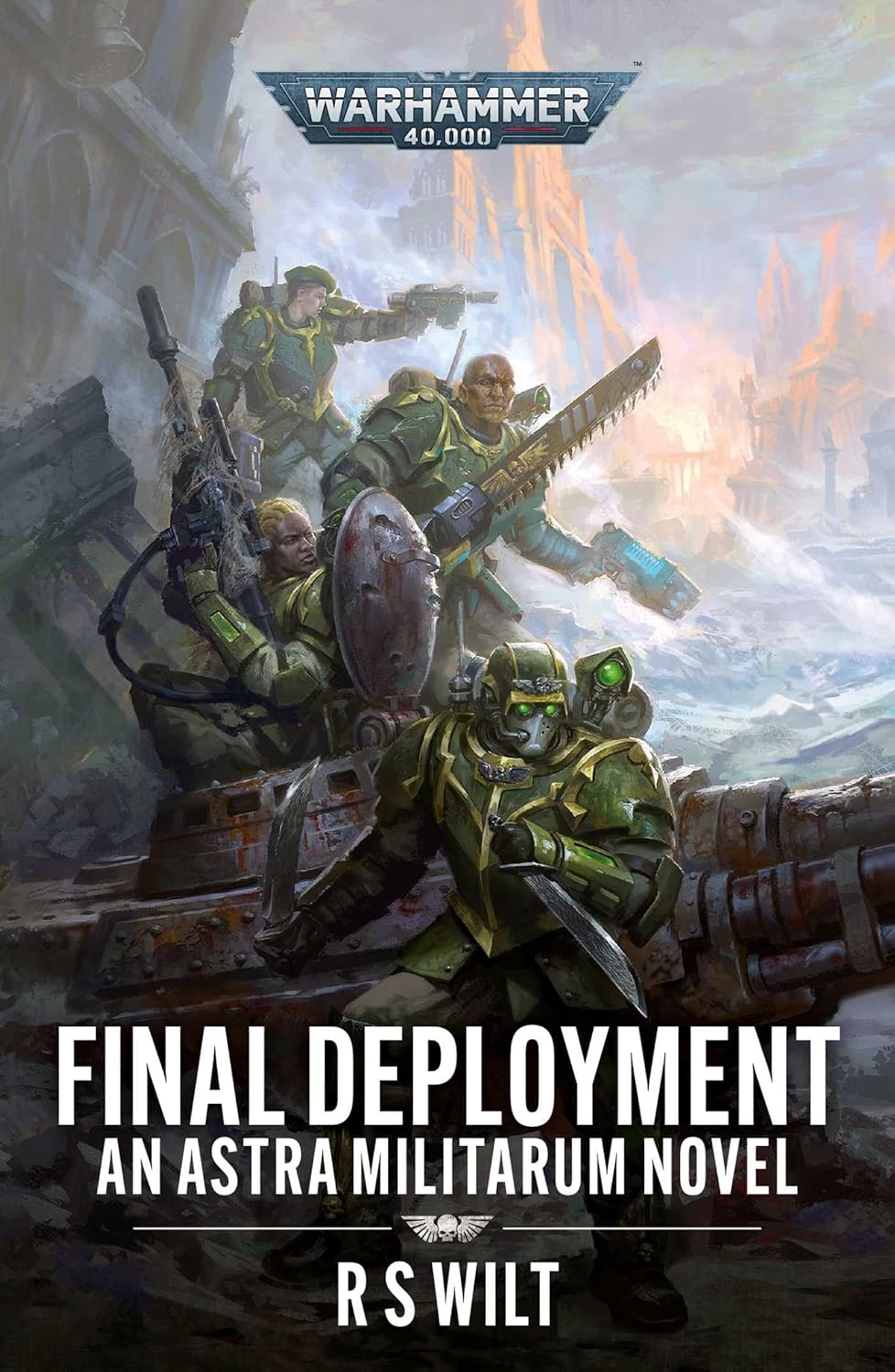
Warhammer 40,000: Final Deployment by R. S. Wilt

Publisher: Black Library (Audiobook – 30 August 2025)

Series: Warhammer 40,000

Length: 11 hours and 23 minutes

My Rating: 4.5 out of 5 stars

Amazon

Prepare for battle as R. S. Wilt presents his debut novel, Final Deployment, a captivating read that perfectly highlights bloody war in the grimdark future of the Warhammer 40,000 universe.

There are few franchises that bring me as much joy as the Warhammer 40,000 series, which follows the numerous factions of the infamously grimdark 41st millennium.  The sheer amount of imaginative stories and tales that are featured in this universe, as well as the talented authors who contribute to it, is quite impressive, and includes some major established writers.  I particularly like how the Warhammer 40,000 publishers also give some interesting opportunities to new authors looking to break into the fantasy or science fiction space.  Many aspiring authors have had their very first novel published in the Warhammer canon recently, and I deeply enjoy reading debuts from these new writers.  Examples of this include Fire Made Flesh by Denny Flowers, The King of the Spoil by Jonathan D. Beer, Ashes of Cadia by Jude Reid, Longshot by Rob Young, Deathworlder by Victoria Hayward and Lord of Excess by Rich McCormick, to name a few.  Many of these debuts are first class reads, and I’ve featured a few on my favourite Warhammer 40,000 novels lists over the years.

Due to my previous awesome experiences with debuts in this franchise, I am always very excited to check out first Warhammer 40,000 novels from new authors, especially those with epic plots.  The latest example of this is Final Deployment by R. S. Wilt, which was the author’s very first novel.  Spinning off from his previously published short story Eradicant, Final Deployment had a very exciting plot behind it that follows the most lethal human soldiers in the grimdark future, the Tempestus Scions.

In the far future, the Imperium of Man battles for survival on thousands of planet-spanning battlefields, with untold numbers of human soldiers fighting and dying every day against monsters, xenos and heretics.  Of these soldiers, none are more deadly or skilled than the Tempestus Scions.  Moulded into unquestionable killing machines from a young age with relentless training and mental manipulation, the Tempestus Scions serve as an elite force with the soldiers of mankind, taking on the missions that no other soldier could complete.

Amongst these Tempestus Scions are the fighters of First Eradicant squad of the Xian Tigers.  Led by Tempestor Traxel and “inspired” by Commissar Fennech, First Eradicant are an unusual regiment made up of several misfit Scions damaged by the battles they have seen.  Deployed to the planet of Rilis, a formerly loyal world now fighting a brutal civil war, First Eradicant is tasked with destroying the rebelling regiments and bringing order to the planet.  Utilising their superior training and equipment, First Eradicant quickly turn the tide against the enemy and being to lead the loyalist forces on Rilis to victory.  However, their success leads them discover the full strength of the traitors, as well as their dark allegiances.

After a disastrous battle that sees their loyalist allies massacred, First Eradicant find themselves facing monstrous opponents even more lethal than they are; three Chaos Space Marines from the Iron Warriors legion.  Determined to slay the ancient, genetically enhanced traitors, First Eradicant take the fight to the Iron Warriors across the planet.  However, with their leader traumatised by past battles and Commissar Fennech playing his own sinister games, can even the best human soldiers in the galaxy defeat the evolved might of the Chaos Space Marines?

R. S. Wilt starts his professional writing career off in explosive fashion with this amazing and compelling debut. Final Deployment was a deeply exciting character-driven Warhammer 40,000 story that followed several highly damaged characters as they attempted to survive the horrors of war. Intense, action-packed and deeply addictive, Final Deployment was an outstanding read that I had an incredible time getting through.

I really enjoyed the epic and deeply exciting narrative that Wilt pulled together for Final Deployment, which perfectly showcases futuristic special forces soldiers going after a deadlier opponent.  Set after the events of the author’s previous short story Eradicant, Final Deployment has a quick and effective start to it, as Wilt first sets the scene for the war on Rilis, before introducing the members of First Eradicant as they literally drop onto the scene.  Each of the protagonists, especially lethal and reckless recon trooper Norroll, gets their moment to shine in these opening scenes, which also work well to highlight Wilt’s intense writing style.  You are soon dragged into the story, and while the initial parts of the book are a tad slow, that changes with the pivotal battle around a third of the way through that sees the Chaos Space Marines arrive in bloody fashion.

Wilt did an outstanding job of changing the tone of Final Deployment after this big moment, as the protagonists find themselves heavily on the backfoot, and there are some notable PTSD elements hitting Tempestor Traxel.  The rest of the novel revolves around the protagonists attempting to hunt down and stop the Chaos Space Marines, no matter how the rest of the war is going.  The story from that point is essentially broken down into three distinctive parts, each of which showcase the very different, but equally brutal, fights against the separate deadly antagonists.  Wilt does an excellent job setting up the scenarios around these battles, which include infiltrating a deadly facility, a brutal ambush by a daemonic possessed foe, and an air drop into enemy territory, and you soon get enthralled in the protagonist’s desperate mission.  These events work extremely well as a sequential and cohesive narrative, and you get really absorbed in the mission of the slowly dwindling group of Tempestus Scions.  Everything leads up to the desperate final confrontation between the protagonists and their deadliest foe, which hits hard and keeps you guessing about who is going to survive.  I felt this entire story came together perfectly, and the ending does an excellent job wrapping up Final Deployment as a standalone Warhammer 40,000 story, with the potential left open for a sequel.  An overall excellent narrative that was quite impossible to put down at times.

While the story is very cool, I also felt that Final Deployment was extremely well written, as Wilt produces a powerful, character-driven narrative that focused on the horrors of war in the grimdark future.  Expertly utilising the iconic Warhammer 40,000 universe in this clever and brutal war story, I loved how the intense personal narratives blended with the more outrageous elements of franchise.  Wilt puts his evident skill at writing brilliant and bloody action sequences to good use in Final Deployment, and the resulting firefights and close combat sequences were some of the more intense and striking you are likely to see in Warhammer fiction.  The author maintains an excellent, fast pace throughout the entire novel, and there wasn’t a single slow moment or inclusion that didn’t play into the story in some interesting or compelling way.  I also appreciated the great use of alternate perspectives, as the story cleverly jumps between several key characters.  This is primarily utilised to showcase multiple angles to the book’s awesome action sequences, which was a ton of fun.  However, I also enjoyed how Wilt took the opportunity to examine the plot from the perspective of several interesting supporting character, including a couple of antagonists.  This helps Wilt to present an even more layered narrative, and it is always really entertaining to see the villain’s reactions to the protagonist’s actions.

Final Deployment is also an excellent and entertaining addition to the Warhammer 40,000 franchise, which works well as an exciting standalone novel.  Despite diving straight into the universe, Final Deployment is accessible to readers no matter their experience with Warhammer fiction, as the author provides a lot of intriguing universe details.  This includes the Tempestus Scions, who serve as the human faction’s ultimate special forces unit outside of the genetically enhanced Space Marines.  The author does an incredible job showcasing the skill and tactics of the Scions throughout Final Deployment, and you really appreciate that they are a highly trained and better equipped regiment.  While Wilt somewhat exaggerates the effectiveness of the Scions and their equipment for narrative purposes (especially carapace armour), you get a realistic sense of these figures in combat, and I appreciated how the characters were slowly debilitated by injuries and losses.  There is also a fascinating look at the harsh training and religious brainwashing these figures undergo, which fits the grimdark Warhammer 40,000 universe perfectly.  Other elements of Warhammer fiction are cleverly utilised here, and I loved the author’s depiction of just how dangerous Space Marines and their chaotic counterparts are compared to normal humans, even the Tempestus Scions.  The damage three Iron Warriors were able to do to the loyalist army, and the lengths the protagonists went to beat them, was so beautifully excessive, and I felt it was an appropriate amount of power scaling.  Thanks to these cool features from the Warhammer 40,000 universe, this book will primarily appeal to established fans of the franchise, although thanks to Wilt’s great writing, new readers will also have a lot of fun with it, even if they didn’t read the author’s previous short story.

While much of the appeal of Final Deployment was its epic story, great writing, and impressive action, I also felt the complex characters helped to make it even more special.  Primarily set around a group of Tempestus Scions, Final Deployment featured an intriguing look at these figures, their damaged pasts, and the struggles they experience on and off the battlefield.  Wilt does an excellent job of splitting the focus of Final Deployment over much of the extended cast, and indeed its nominal main characters, Tempestor Traxel and Commissar Fennech, don’t have that much of the book shown from their perspective.  Instead, most of the story is told through the eyes of other key members of the squad, including Norroll and the squad’s medic, Daviland.  This allows these secondary figures in the squad much more room to shine, and I felt the book was stronger as a result.  Norroll in particularly was quite a fun character.  An overly reckless Scion, Norroll finds himself caught between loyalty to Traxel and his squad, and his own death wish, and it was often really intriguing to see him in the middle of the bloodiest scenes in the book.  Daviland served as an excellent counter to Norroll’s more outrageous perspectives, especially as she is one of the saner members of the squad.  A transplant from another regiment, Daviland provides an interesting outsider’s perspective to the book, especially as she has a lot less mental damage the rest of First Eradicant.  Despite her loyalty primarily being to Fennech, Wilt writes an excellent storyline around Daviland becoming closer to her squad, and I felt that her perspective scenes were some of the more thoughtful and provided some great insights in the minds of the rest of the characters. 

Of the rest of the cast, Tempestor Traxel and Commissar Fennech, had the most presence.  Despite not serving as perspective characters, both were major parts of the book’s plot, and Wilt did an excellent job showcasing their personalities and issues through the eyes of the other protagonists.  This includes Traxel’s mental trauma at once again facing Chaos Space Marines after a previous deadly mission, and his impacted leadership adds an extra layer of difficulty to the protagonists’ mission.  Fennech, on the other hand, was a great portrayal of a classic, cold-blooded Imperial commissar, shooting allies first and never asking questions.  Fennech served an interesting role as both an ally/gun-bearing motivator, and a potential secondary antagonist to First Eradicant, especially as he questions their effectiveness and resolve.  While Fennech’s storyline doesn’t go as far as it could have, and I would have liked seeing some of the book through his steely eyes, I felt that he was an outstanding inclusion to Final Deployment’s cast that added some excellent alternative menace.

In addition to these characters, I enjoyed how the rest of First Eradicant also got their time to shine in this novel.  Featuring a mixture of existing members and later transfers from another squad, each of these characters had their own unique charm, and their compelling interactions added a lot to the novel’s enjoyment.  While there isn’t an excessive amount of development with some of these characters, which is mainly down to the mental indoctrination they’ve gone through, they were still fun to follow.  Just make sure not to get too attached to them, as the death toll in this novel is quite high.  Wilt matches these excellent perspective characters with several additional outsider characters, including several gloriously over-the-top antagonists, and the clash of styles and mentalities increased the overall fun and excitement I had with Final Deployment.

Unsurprisingly, I ended up listening to Final Deployment on audiobook, rather than seeking out a physical copy of the book.  I always find that the audiobook format brings out the very best of the grimdark Warhammer 40,000 universe and the unique characters that inhabit it, and the Final Deployment audiobook was a great example of this.  Perfectly narrated by Andrew Wincott, who previously impressed me with his voice work in Deathwatch: Shadowbreaker by Steve Parker and Huron Blackheart: Master of the Maelstrom by Mike Brooks, the intense action and harsh nature of war featured in Final Deployment really comes through in this audiobook, and I loved hearing all the intense firefight sequences come to life.  Wincott did an excellent job moving this intense story along at a quick clip, while also providing all the characters with distinctive voices that really fit their unique and gritty personalities.  The fun mixture of voices between the battle-weary human soldiers and the more unnatural forces of Chaos was extremely enjoyable, and you really get drawn into the compelling narrative as a result.  I honestly flew through the over 11-hour long audiobook in no time at all, and I loved every second I spent listening to it, especially some of the more brutal and deadly fight sequences.

Loaded with awesome action, damaged characters and an epic narrative, Final Deployment by R. S. Wilt was an incredible read and an amazing piece of Warhammer 40,000 fiction.  A fast-paced novel that follows some intense protagonists through hell and back, Final Deployment was an outstanding debut from Wilt, and comes very highly recommended, especially on audiobook.  I look forward to seeing how Wilt’s writing career continues in the future, and I am sure I will enjoy any additional contributions to the Warhammer franchise.

Amazon

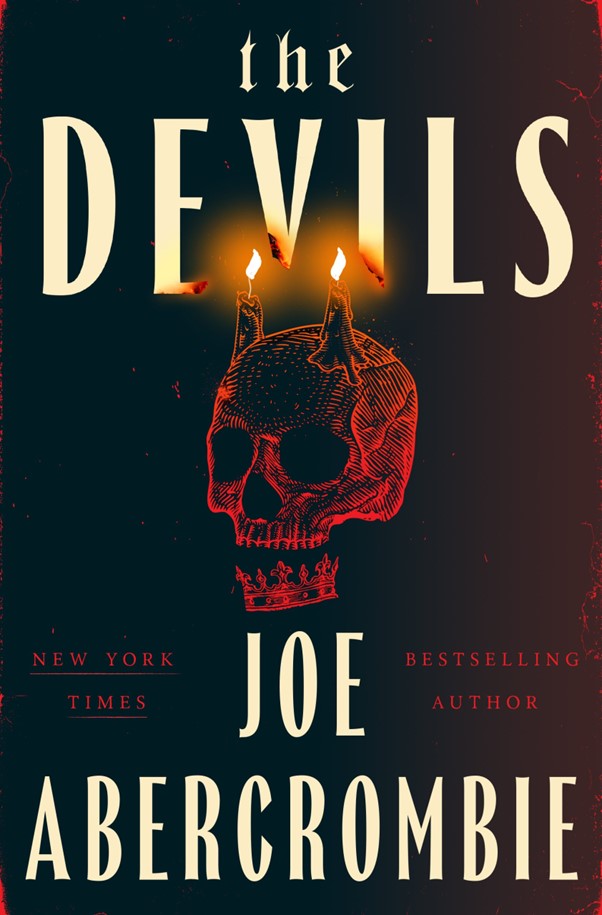
The Devils by Joe Abercrombie

Publisher: Gollancz/Macmillan Audio (Audiobook – 13 May  2025)

Series: The Devils – Book One

Length: 25 hours and 7 minutes

My Rating: 5 out of 5 stars

Amazon

The master of grimdark fantasy fiction presents a bold and over-the-top new story with The Devils, an outstanding, addictive and highly entertaining read that you will not be able to turn away from.

Joe Abercrombie is an impressive and compelling author who has been wowing fantasy fiction authors with his complex reads for nearly 20 years.  While he has written some other cool books, like his Shattered Sea trilogy, Abercrombie is best known for his iconic First Law series of dark fantasy novels, that followed a group of highly damaged people as they tried to survive war, magic and politics in a messed-up fantasy world.  I really enjoyed the original First Law trilogy, and Abercrombie has cleverly expanded it out over the years, including with three standalone novels and his sequel Age of Madness trilogy.  The Age of Madness novels were ones that I particularly enjoyed reading, and A Little Hatred (one of my favourite books of 2019), The Trouble With Peace (one of my favourite books and audiobooks of 2020) and The Wisdom of Crowds (one of my favourite books and audiobooks of 2021), were very highly rated by me, and I could not get enough of this series.

Needless to say, I am a pretty big fan of Abercrombie’s novels, and I have been eagerly awaiting a new book from him since I finished The Wisdom of Crowds.  While I had hoped that we would be getting a new First Law novel, Abercrombie instead decided to present readers with something a little different with his new The Devils series.  Starting off with The Devils, this series is another clever dark fantasy series, set in an alternative, magic filled version of medieval Europe.  One of my most anticipated books of 2025, The Devils sounded so damn good, especially with its crazy plot and intriguing new setting.

The lands of Europe are in dire peril.  Between the constant wars, dangerous monsters, ruinous famines and deadly plagues, the various kingdoms of Europe are in poor condition, barely held together by the fractured church.  However, the real danger lies outside its borders, as the mysterious elves gather their power in the Holy Lands, preparing for another invasion of Europe that will surely lead to the destruction of all humanity.

In response to the growing threat of the elves, the church and its juvenile pope determine that a new ruler needs to be placed upon the Serpent Throne of Troy after its evil sorcerous empress dies.  With all four of the empress’s duplicitous and power-hungry sons unfit for the crown, the church surprisingly finds that their ideal candidate is a lowly street thief from the Holy City called Alex.  A ferrety sneak with no noble bearing or confidence, Alex is shocked to discover that she is really the long-lost Princess Alexia Pyrogennetos of Troy, destined to reunite the churches of Europe by claiming the throne.

Turning the reluctant and terrified Alex into a potential princess is one thing, but getting her to Troy is a far more difficult prospect, especially as her rival contenders to the throne are stalking Europe with their deadly, magically enhanced followers, determined to claim Troy for themselves.  To succeed in marching Alex through the European hellscape and placing her on the Serpent Throne, the church will need far more than prayers and the blessing of saints; they are going to need devils.  Luckily, such devils are close at hand. 

Deep within the Holy City lies the Chapel of Holy Expediency, which binds dangerous heretics and monsters and forces them to seek redemption through holy missions for the pope.  Led by the hapless Brother Diaz, the congregation of the Chapel of Holy Expediency is charged with getting Alex to Troy and placing her on the throne.  But can a terrified monk, an immortal knight, an arrogant necromancer, an invisible elf, a sarcastic vampire, an uncontrollable Viking werewolf and the most experienced woman in Europe succeed in making a street-rat an empress, or will their new mission only bring even more death and destruction to the continent? 

Joe Abercrombie once again shows why he is one of the very best authors of dark fantasy fiction with his captivating and deeply impressive new novel.  The Devils was an ultra-entertaining read that perfectly introduced the author’s intriguing setting and populated it with highly amusing characters and dark deeds.  Exciting, clever and loaded with over-the-top humour, The Devils was an absolute joy to listen to, and I loved every second I spent with it.  One of the most addictive novels of 2025 so far, The Devils gets a very-well deserved five-star rating from me, and readers are guaranteed an extra fun time with this crazy novel.

I absolutely loved the cool and highly entertaining story that Abercrombie came up with for The Devils, which was essentially a fun dark fantasy iteration of The Dirty Dozen/Suicide Squad narrative with some amazing monsters.  Providing a quick introduction to the key characters, the reader soon becomes highly invested in the narrative, as the memorable and very amusing protagonists begin their trek to Troy.  What follows is a classic travelling adventure story with some dark and comedic twists, as the protagonists encounter all manner of foes on the way to their destination, which they are forced to dispatch with ruthless efficiency.  While parts of this story start to become a tad formulaic, especially as the protagonists are intercepted multiple times by one of Princess Alexia’s cousins, with each encounter resulting in a deadly battle for survival against different occult forces, you are generally so entertained by the compelling characters, interesting interactions, and over-the-top action sequences, you don’t even really mind.  Abercrombie works to break up these encounters with some fun side quests, as well as altering the circumstances by having the characters occasionally split up into unlikely pairings, exploring the fun alternate medieval Europe that works as such an effective setting for this book.  This allows for some interesting changes of pace in the main quest narrative, while also allowing for some outrageous character moments as the reader gets to know the protagonists a little better.

Everything nicely leads up to the last third of The Devil, which sees the protagonists arrive at their destination against the odds.  Without going into much detail, things naturally go to hell, and everybody is forced to fight for their lives.  This chaotic series of events isn’t unexpected, as the reader is waiting for the other shoe to drop the entire book, but the who and the how of it makes for great reading.  Some excellent twists come to life here, often revealed in a fun meta way, and, while you see a couple of them coming, the entire ball of surprises and reveals make for quite an exciting end sequence.  These twists are well backed up by some of the grittiest action sequences in the entire book, and you are constantly on your feet waiting to see what happens next.  The entire novel ends on a tragic, if thoughtful note, especially when you’re left to consider who the true monsters of the story are.  An overall impressive narrative, that blends alternate history and classic adventure narrative threads with Abercrombie’s wild imagination to create something exceedingly entertaining and addictive.

The Devils was a very fun and well-written story as Abercrombie provides a very intense and hard-hitting tale, bound together by dark humour, over-the-top sequences, and complex characters.  Abercrombie once again showcases his skill at balancing multiple distinctive perspectives to tell an integrated and ongoing narrative, with the story cleverly bouncing between the viewpoint of several impressive protagonists.  The continued switches between the characters allows for a very elaborate narrative, and the reader is drawn into both the overarching plot and the more personal battles of the protagonists.  I liked how Abercrombie was able to tailor the descriptive narration of each of the perspective chapters to suit the character it was following, and each chapter has a slightly different tone as a result.  However, this is a very dark overall story, as the characters encounter outrageous scenarios of death and destruction, and the resulting carnage allows for some intense moments.  I will say that The Devils did feel a little sillier than some of Abercrombie’s previous novels, although the author uses this extra layer of ridiculous energy to full effect to tell an extremely addictive story.

As you would expect from Abercrombie, the intense action sequences are a highlight of The Devils, with the many brutal sequences coming to life thanks to the author’s great descriptive style.  There was a certain casualness to some of the fights, especially those featuring the plot’s more dangerous killers, and which was enhanced by the clever overall narration of the writing.  I loved how Abercrombie set out all his scenes, with a lot of subtle humour revolving around cynical description of events, especially as the author provides some ironic results and meta commentary.  This more subtle writing of events is counterbalanced by the over-the-top humour of the dialogue, especially when it comes to certain characters.  A lot of the dialogue gets downright filthy at times, with some very adult discussions coming out in outrageous fashion.  While this excessive crass language had the potential to distract from the story, I think that Abercrombie got the right balance, with the ridiculously rude dialogue fitting in well amongst the crazy events of the plot.  While the combination of ugly events, adult humour and cooky carnage isn’t going to be everyone, I think most fantasy fans are going to have a ton of fun with it, especially as it plays into Abercrombie’s grimdark style.  Throw in a clever alternative medieval Europe as the elaborate setting which will delight history buffs with the intricate differences, and The Devils was a very impressive read that perfectly plays the author’s strengths and talent for entertaining and dark fantasy fiction.

Fans of Abercrombie will know that the author specialises at making damaged and captivating characters to set his narratives around, and The Devils is no exception to this.  The author introduces an amazing cast of complex and memorable characters in The Devils, and I love the very impressive storylines that emerge around them.  This includes six separate perspective protagonists, two major supporting characters, and an array of interesting figures throughout Europe who play various roles in the outcome of the plot.  Abercrombie does an excellent job of introducing and utilising this complex cast, with all the major characters getting their chance to shine in some impressive ways.  While some of the characters in The Devils didn’t quite have the complexity of the protagonists from the First Law books, Abercrombie instead amps up the entertainment aspect of these figures, introducing several particularly hilarious, ridiculous and highly relatable monsters, each of whom added a great deal to the overall reading experience.

The first two characters I want to talk about are major perspective protagonists, Brother Diaz and the newly discovered princess, Alex.  Despite neither being members of the titular devils, both have major roles in this book and are shaped by their experiences with the monstrous pawns of the church.  Brother Diaz, a simple monk who is brought in to guide the devils, is initially shown to be a hapless and terrified figure, clearly out of his depth when it comes to the dangerous mission he has been entrusted with.  Abercrombie has a lot of fun showcasing him as a useless social climber at the start of the novel, and he initially has more of a comedic role in the plot.  However, as the story progresses, Diaz starts to gain a little confidence as he continues to survive, and you soon see flashes of the man he could be.  Despite falling to temptation (repeatedly), Diaz ends up being quite a stalwart figure in the book, and I loved some of the scenes where he got to show off his intelligence (including one particularly entertaining legal battle).  The way in which Abercrombie subtly added more and more depth to Diaz’s personality as the story continued was very impressive, and his growth as a character was a highlight of the book.  The author also ensured that Diaz was one of the more relatable characters in The Devils, especially as he continuously makes mistakes, finds himself shaken by his fears and failings, yet continues to try to do the right thing.

Much like Diaz, the other non-devil perspective protagonist, Alex, is also shown to be an imperfect figure who finds themselves thrust into events outside of their control.  Initially shown as a simple thief, Alex, or Princess Alexia Pyrogennetos, is ill prepared for the events before her, and is forced to rise to the occasion when she is declared long-lost royalty.  Mostly shown as the book’s damsel in distress, Alex is generally scared and lacking confidence, especially as she knows she is not the princess everyone wants her to be.  Like Diaz, Abercrombie writes Alex slowly rising to the occasion throughout course of The Devils’ plot, as she learns to fight back and become a leader.  I really liked following Alex’s journey in The Devils, and while the journey to the character finding her self-confidence is a long and bloody affair featuring some good twists, it ended up being a powerful part of the book’s overarching narrative.

Outside of Alex and Diaz, a lot of time is also spent following the other perspective members of The Devils, including Balthazar, Sunny and Vigga, who are a necromancer, an elf and a werewolf respectively.  These three characters are amazing, and I liked how well they played off each other and the rest of the cast with a great mixture of serious and more comedic elements.  For example, Balthazar (or to introduce him properly, Balthazar Sham Ivan Draxi), is a highly arrogant figure who chafes at being captured and controlled by the church.  Much of his story focuses on his many attempts to break the Papal binding compelling him to help Alex, while also dealing with the realisation that he is helpless against those he considers his lesser.  Much of the entertainment around Balthazar is his complete lack of self-awareness or humility, especially within his own mind, and while there are times when it appears that he is going to become a better person, he usually returns to his old personality when he hits a wall.  Sunny the elf, on the other hand, is a far more sensible character, who serves as the team’s shadow thanks to her ability to become invisible.  Despite her nice and helpful personality, Sunny is shown as an alien creature, incapable of understanding the humans who generally hate and fear her.  Imbued with a more subtle humour than her fellow devils, Sunny proves to be quite an interesting figure, especially when you examine her past and her dark experiences with humans.  Probably one of the more likeable and selfless figures in the book, Sunny’s arc adds a lot to the overall story, especially through her unlikely romance angle, and Abercrombie clearly had fun writing the various scenes where she traipses around invisible.

One of the more memorable cast members of The Devils is Vigga, a former Viking raider who was cursed as a werewolf and then captured by the church.  Crass, constantly controlled by her urges, incapable of self-restraint and particularly deadly, even when not a massive wolf, Vigga powers through the entirety of The Devils’ narrative, leaving a major impression whenever she appears.  Featuring some of the more visceral and entertaining perspectives of the book, which includes a combination of hungry sequences from her wolf mind and her more entertaining insights as a human with no impulse control and an inability to focus on anything, Vigga is responsible for a large part of The Devils’ chaotic and outrageous tone, and the book would not be anywhere near as fun without her.  However, as this is Abercrombie, there are quite a few darker moments in Vigga’s story, and you soon become absorbed with her attempts to pull together her fractured mind and control the monster within, especially when she gets close to her travelling companions.  The dark depression that occasionally befalls her because of her uncontrolled actions adds some major drama to certain tragic parts of The Devils’ plot, and Vigga comes away as one of the more sympathetic, if scary, characters in the book.

While the above perspective characters are all particularly impressive, my favourite was the team’s resident knight, Jakob of Thorn.  An old soldier cursed with immortality who has been fighting battles on behalf of the church and God for hundreds of years, Jakob is a tired and haggard figure bound by his many vows.  Suffering from the degradation of his body due to age and the many injuries inflicted on him, Jakob is weariness personified as he attempts to deal with his pain, and the guilt from his long history of death and service to the church.  Readers familiar with the author will know that Abercrombie specialises at writing tired old warriors who are sick of the death and destruction they cause, and Jakob of Thorn is one of his better ones (which is saying a lot).  I loved all of Jakob’s scenes, especially as he doggedly continues to fight despite his pain, often providing some of the book’s best quotes and insights.  Unsurprisingly, Abercrombie makes Jakob suffer a lot in this novel (what else would this sadistic author do with an immortal character?), and you learn a lot about his resolve and psyche as a result, especially as he knows he is the biggest monster of them all.  I really think that Jakob’s grittier and more self-aware perspective chapters helped to balance out the more outrageous character arcs in The Devils, and he was a perfect addition to this outstanding narrative.

The final two major characters I want to highlight are Baron Rikard, an ancient vampire, and Baptiste, a rogue hired to keep the devils in check, who seems to have experience with every profession possible in Europe.  Both these characters are excellent additions to the plot and manage to shine through, despite not being perspective characters.  Indeed, I felt that their role in the book was enhanced by the readers not having direct insights about their motivations or actions, and instead you get to enjoy the mystery surrounding them as you see them through the eyes of the other characters.  Baron Rikard, who serves as a fun, sarcastic figure who only helps when it suits him, proves to be a great inclusion in the plot, especially as his gentlemanly manners and demeaner makes him stand out amongst the other characters.  While a ridiculously charming figure (especially when he starts talking about dumplings), you are initially given the impression that Rikard is another trapped monster keen to escape his binding.  However, Abercrombie nicely turns this assumption on its head as the story continues, and I really enjoyed the character’s revealed motivation, especially as it shades all the character’s actions in a new light.

Baptiste, on the other hand, is a suave and entertaining figure whose impact on the book would be diminished if you got a deeper look at her thoughts, motivations or true history.  I particularly enjoyed how well Baptiste served as a foil to Balthazar, and they had a great back and forth that helped to define them both.  Throw in a range of other impressive supporting characters, including a barrage of outrageous or diabolical antagonists, and the cast of The Devils was something very special.  I cannot emphasise enough just how much fun all these characters were, and their moving and complex arcs and interactions really helped to give some powerful meat to The Devils’ entertaining narrative.  You really come away with some conflicted feelings for many of the protagonists, especially as none of your favourites have a truly happy ending, and it will be interesting to see what happens to the survivors in the future entries of the series.  A special shoutout as well to the fun artwork depicting several of these characters in The Devils paperback, especially as the artist really captures how the author wrote these colourful protagonists.

While I did receive a physical copy of The Devils, I ended up listening to this novel on audiobook, which was a fantastic choice.  Not only did the audiobook version allow for a fuller immersion in Abercrombie’s new fantasy universe and his crazy action sequences, but it also featured the superb voice of actor Steven Pacey.  Pacey, who is one of my favourite audiobook narrators, previously lent his voice to the audiobook versions of Abercrombie First Law novels, and he frankly does a perfect job of capturing the author’s unique tone and style.  Abercrombie’s complex writing, witty dialogue and excessive humour really come to the fore when read out by Pacey, and the narrator’s tone and cadence in The Devils always perfectly matched the intended mood of the scenes, no matter how dark or over-the-top they became.  Pacey also does some very entertaining and highly fitting voices for the key characters of The Devils, and it is amazing how well he captures all these outrageous figures.  All the defining character details, including the timid nature of Brother Diaz, the arrogance of Balthazar, the pain and weariness of Jakob, the wry amusement of Baron Rikard, the unearthly nature of Sunny and the sheer wildness of Vigga are all amazingly highlighted by Pacey’s various voices, and really come to love the characters the way that Pacey reads them out.  Thanks to Pacey’s brilliant acting and evident love for the content, this was an incredible listen, and I really cannot emphasise enough just how effectively he narrated this crazy story.  I flew through the books lengthy, 25-hour runtime due to this brilliant narration and epic narrative, and I honestly don’t believe that anyone but Steven Pacey could make Abercrombie’s amazing novels come to life in the same way.  An exceptional audiobook and one of the best things I have so far listened to in 2025.

With his trademark blend of chaos, fantastic humour and complex characters, Joe Abercrombie presents one of the very best books and audiobooks of 2025 with The Devils.  A unique and very entertaining fantasy adventure novel, The Devils pushed everything to 11 and beyond, ensuring that you couldn’t turn away.  An exceptional read from start to finish, I had so much fun with The Devils and I cannot wait to see how Abercrombie will continue this series in the future.

Amazon

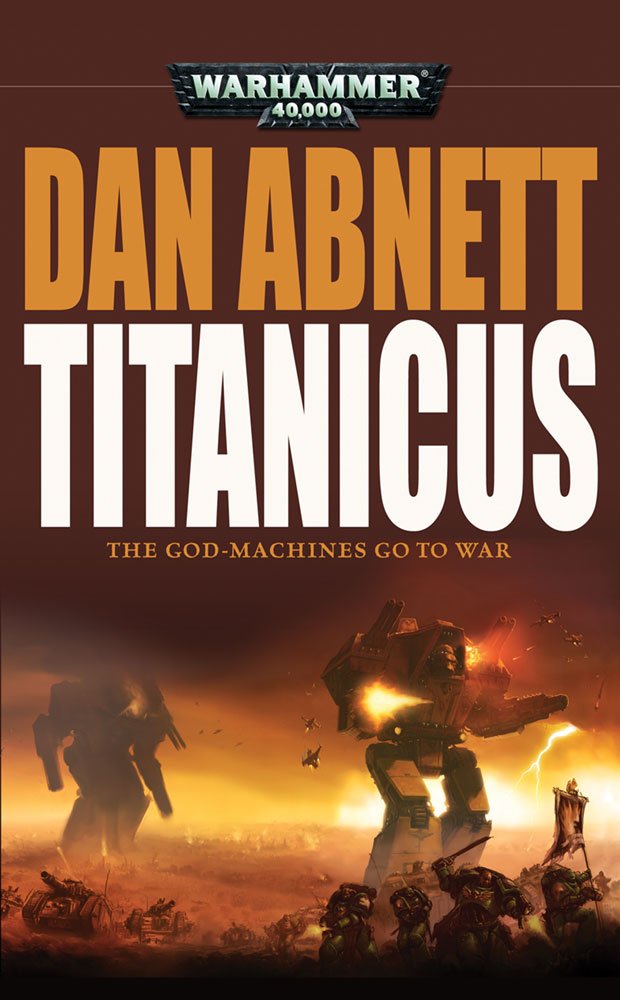
Warhammer 40,000: Titanicus by Dan Abnett

Publisher: Black Library (Audiobook – 1 September 2008)

Series: Warhammer 40,000/Sabbat Worlds Crusade

Length: 13 hours and 38 minutes

My Rating: 5 out of 5 stars

Amazon

The Titans walk to war in this brutal and captivating Warhammer 40,000 novel from the legendary Dan Abnett, Titanicus.

Of the many great Warhammer 40,000 authors out there, few are as impressive as Dan Abnett, who has envisioned an incredible number of awesome battlefields and unique character-focused war stories across the Warhammer universe.  Abnett has written a ton of exceptional and powerful books around the franchise, including several series considered to be the seminal texts of the extended universe.  This includes his brilliant Eisenhorn trilogy (XenosMalleus and Hereticus), and he has multiple entries in my favourite Warhammer 40,000 books list.  However, his best-known series is the Gaunt’s Ghosts books, which I am currently in the middle of reading.

The Gaunt’s Ghosts books are a key series of Warhammer 40,000 fiction that follows the frontline human soldier of this grimdark universe.  Set in an extended multi-planet campaign, known as the Sabbat Worlds Crusade, the Gaunt’s Ghosts books follow a ragged regiment of soldiers as they attempt to survive the dark servants of Chaos coming for them.  I am having an exceptional time reading the Gaunt’s Ghosts series, with books like First and Only, Ghostmaker, Necropolis, Honour Guard, The Guns of Tanith, Straight Silver and Sabbat Martyr, really impressing me with the complex stories and intense action.  While I need to read more of the Gaunt’s Ghosts books, I have taken a quick break to read some of the spin-off novels Abnett wrote around his main series.  Also set around the Sabbat Worlds Crusade, these spin-off novels follow other campaigns in this massive sector spanning war and provide Warhammer fans with a more in-depth view of these battles.  These spin-offs include the exceptional Double Eagle, which I had the great pleasure of reading last year, and which featured so many awesome duels between flyers.  Titanicus was another spectacular book shows a new and highly destructive battlefront of the crusade by focusing on the iconic Titan Legions of the Adeptus Mechanicus.

As war rage across the stars, the forces of Chaos constantly seek a way to disrupt the vital Sabbat World Crusade and destroy the human forces fighting to bring new worlds into the Imperium of Man.  To that end, the archenemy launches an ambitious and devastating surprise assault on the vital forge world of Orestes, whose under-strength defenders find themselves under mass attack from Chaos Titan war engines.  With both the citizens of the Imperium of Man and the forges of the Adeptus Mechanicus under threat, the planet appeals for help and soon finds its prayers answered from the stars in dramatic fashion.

Fresh from their own wars and heading out to join the crusade, the Titans of the Legio Invicta arrive on Orestes, determined to help their Mechanicus brethren.  Finding the forces of Orestes severely outwatched, the Invicta Titans stride to war, causing everything to tremble at the god-machines wrath.  Soon the world is engulfed in an engine war, with both sides wielding enough firepower to crack the planet and the entire population of Orestes caught in the conflict.

But as the war continues, a far more insidious threat arises that could impact far more than just the war on Orestes.  Deep secrets from within Orestes Forge soon begin to spill out, risking a schism between the Imperium of Man and the Adeptus Mechanicus.  With the planet trembling under the battling machines and enemy forces growing by the day, can Legio Invicta overcome the peril growing within their brotherhood before Orestes and the entire galaxy is put to the flame?

Dan Abnett presets another brilliant war story that is epic in every definition of the word.  Successfully presenting the awesome power of the Titans, Titanicus is a deeply compelling and impressive Warhammer 40,000 novel that I honestly could not get enough of.  Intense, exciting and so darn cool, Titanicus gets an easy five-star rating from me, as Abnett once again shows just how talented he is.

Titanicus had a particularly awesome and multi-layered standalone war narrative behind it that hooked me thanks to the author’s nuanced take on the destructive conflicts of the Warhammer 40,000 universe.  Starting off with some dark death to hammer home how grim the situation is, you are soon thrust into the main story as the planet of Orestes comes under attack and the defenders are pushed to the limit.  However, hope soon arrives with the landing of Legio Invicta, who back up Orestes’s existing Titans and defenders with their own engines and troops.  Abnett quickly and effectively sets up multiple character specific storylines as the book progresses that show various alternative viewpoints of the war.  The author works hard to showcase multiple levels of the conflict, from the top commanders all the way to the lowliest of soldiers, and I really enjoyed some of the intriguing storylines that emerged.  This includes desperate tales of survival by following human troops caught behind enemy lines and pursued by mechanical monsters, compelling dives into the minds of the Titan pilots, looks at the various political forces on Orestes, and even some fascinating storylines inside the Adeptus Mechanicus forge.  Abnett did an amazing job highlighting the desperate strife and the complex conflicts these figures endured, and you get a fantastic overarching look at the machine war that proves hard to look away from. 

As the plot of Titanicus continues, the various storylines go in some interesting directions, as you follow each of the characters or groups on their own unique journeys.  Abnett did a really good job of ensuring these unique storylines effectively played off each other as the book continues, and the way characters reacted to events from other plotlines was quite clever and helped to produce a cohesive and intense overarching narrative.  The introduction of a compelling storyline around intrigue and dissent amongst the Adeptus Mechanicus characters provides some extra drama and character conflicts, which added some interesting complexity to the plot, especially as it gave you an alternative group of antagonists which worked well alongside the menacing forces of Chaos, whose perspective you don’t see.  I appreciated how well Abnett set this storyline up in advance, and there are some clever hints to this, and other big events, earlier in the plot.

The final third of Titanicus is particularly impressive and intense, as the author brings together his various storylines extremely well.  I especially enjoyed some of the massive action sequences, while the resolution of the Adeptus Mechanicus storyline was powerful and full of drama as big personalities try to overcome mistrust and dissent.  While I would have liked to have seen the final battle in full, I think Abnett’s effective summary worked pretty well, and I understand that spending another few hours in combat would have watered down the author’s main message.  Each major character’s arc is resolved in a very satisfying manner, and there is an excellent blend of dramatic moments and intense action to keep the reader hooked.  I appreciated how a couple of these conclusions were more depressing, rather than being uniformly happy, which fits both the grimdark nature of Warhammer 40,000 as well as Abnett’s overarching themes that war has no true winners.  This story really came together well, and I deeply enjoyed the complex standalone narrative that Abnett came up with.

This was another insanely well written novel from Abnett, who excels at telling dark, deeply personal war stories from multiple perspectives.  The author provides the perfect balance of excitement, deep intrigue and fantastic character growth in Titanicus, all expertly set within the amazing Warhammer 40,000 universe, and it proves to be such an addictive read.  I personally became engrossed in the various character-driven storylines that emerged throughout the plot, especially the long-running storylines that lasted the entire book.  However, even the more minor character arcs, such as the occasional scene from a normal citizen living in the city to an extended look at the crew of a doomed machine, was hard hitting and Abnett really gets you invested in these personal tales.  As I mentioned above, these often-separate storylines worked extremely well in concert with each other, and Abnett did such a good job pulling them together into a brilliant, overarching narrative. 

Of course, you can’t talk about Titanicus’s writing without going into how incredible the action sequences are.  Abnett crafts together so many deeply intense and powerful battle scenes throughout Titanicus that constantly had the blood pumping as you watched your favourite characters brave the dark gauntlet of battle time and time again.  The author had a lot of fun envisioning war on multiple fronts, and I loved how we got to see infantry fights, tank battles and entertaining skirmishes between various augmented foes as the story continued.  However, easily the most awesome thing about Titanicus is the Titans themselves.  Insanely massive and powerful walking war machines, the Titans steal any scene they are in, and there are so many great reactions as the normal human characters see the Titans fight, especially when the despoiled enemy machines advance on them.  However, it is the sequences shown from the perspective of the Titan pilots themselves that are the best, as you become fully immersed into the battles in the scenes as the machines rain down destruction and depth.  You can honestly feel the insane powerful and destructive ability of the Titans as you move throughout Titanicus, and every single battle involving one of these massive walkers is epic on so many levels. 

As with the rest of Abnett’s books, Titanicus proved to be a particularly strong entry in the Warhammer 40,000 canon.  Serving as a companion piece to the Gaunt’s Ghosts books, Titanicus is a must-read to anyone who has enjoyed Abnett’s main series and the overarching campaign it is a part of.  However, as there are no overlapping characters or major storylines, Titanicus can also be easily read as a standalone novel, and indeed would be a great introduction to Abnett’s writing style and his ability to write awesome war stories.  Titanicus would also be the perfect entry novel to anyone interested in exploring Warhammer 40,000 fiction, especially science fiction readers who love the idea of giant piloted war machines.  The cool action, complex character arcs and fantastic standalone narrative ensures that anyone can really dive into Titanicus and have a brilliant time, and I honestly think this book would appeal to a wide range of different readers.

However, as with most books in the franchise, Titanicus will mostly appeal to those established Warhammer 40,000 fans who will love Abnett’s dive into some unique aspects of the universe.  Naturally, this is primarily going to be around the Titans, who are a very awesome part of the Warhammer 40,000 setting that are often underutilised in fiction due to being too overpowered (or getting badly nerfed when they do appear).  I think Abnett did these war machines perfect justice in Titanicus, and you really come away appreciating every aspect of them, including their raw power, their powerful spirit, and the love the crews have for them.  However, Abnett also dives into the dark side of the machine, and some of the sequences that show the pilots losing their humanity were particularly jarring.  Honestly, I thought Abnett’s portray of the Titans was just brilliant, and I have yet to see another Warhammer author do any better.  Abnett also takes a lot of time to dive into the lore surrounding the Adeptus Mechanics.  While these parts of the book might be slightly confusing for newer readers, established fans will love seeing Abnett explore these machine-worshipping figures, especially as a theological schism becomes a major plot issue.  Other cool lore aspects include examining the uneasy relationship between the Imperium and the Mechanicus on planets they share, the dark side of human life on a planet under siege, and even little fun moments, like a toy maker finally finding success as he makes models of the Titans battling across the world.  All these elements make Titanicus a particularly epic read for fans of the franchise, and I personally loved seeing Abnett’s take on all these cool universe inclusions.

While the writing, story and Warhammer 40,000 elements are all exceptional on their own, what really brings them together and makes Titanicus truly awesome are the multiple cool characters scattered throughout the plot.  Abnett introduces a huge range of fantastic and complex characters in Titanicus who you grow quite attached to as the plot continues.  All the characters, from major figures to minor one-scene characters, are fantastically written and cleverly influence the plot in their own cool ways.  Highlights for me included the desperate crew of a destroyed tank who try to escape on foot, only to find more danger in front of them.  A group of inexperienced conscripts who are completely unprepared for the horrors of war also prove to be really entertaining, and you grow invested in their struggles to survive and the tragedies that await them.  Abnett also examines several intriguing Adeptus Mechanicus figures within the Orestes Forge, whose frustrations, ambitions and struggles for power are far more human than they’d like to believe.  However, the best character arc for me was the one that revolved around the crew of a Legio Invicta’s Titan who are forced to accept an Orestes’ Princeps (the pilot plugged into the Titan’s mind) when their own dies without a successor.  The resulting conflicts between the inexperienced and arrogant outsider pilot and the veteran Legio Invicta crew, which includes the Titan’s moderati (second-in-command), who finds himself under a suspended death sentence, sets the scene perfectly, and you become really intrigued in seeing how the Titan will survive.  Watching these figures come together as a crew is a highlight of Titanicus, although Abnett does an excellent job twisting that around later when internal conflict splits the protagonists.  All these characters, and many more, gave Titanicus some real emotional heft, and I became so damn invested in seeing the final fate of so many of these outstanding protagonists.

I think that it’s kind of a given that I listened to Titanicus on audiobook rather than seeking out a physical copy of the book.  Warhammer audiobooks are so damn good, and frankly there is no better way to enjoy the franchise’s awesome narratives and compelling action.  This is particularly true for Titanicus, as the intricate details and impressive combat sequences really shine through even better when read out.  I especially loved how incredibly epic the various Titan-on-Titan battles came across in this audiobook format, and the fantastic voice of narrator Toby Longworth ensured that you were enrapt by every single second of carnage.  Longworth, who is one of my favourite audiobook narrators, always does an exceptional job bringing Abnett’s amazing stories to life, and he was once again exceptional here in Titanicus.  Longworth captures all the characters in Titanicus perfectly, and you get a real sense of their personalities, emotions and their reactions to the insane events of the book.  This includes the various Adeptus Mechanicus figures, which Longworth voices in all their mechanical glory, and you can just imagine these augmented figures, and indeed all the complex characters of Titanicus, as Longworth describes them.  This makes for such an exceptional experience, and I flew through the audiobook’s near 14-hour long runtime extremely quickly.  There is honestly no other way to enjoy Titanicus than on audiobook, and you are guaranteed to have an amazing time.

Dan Abnett continues to showcase why he is such a highly regarded author of Warhammer fiction with the brilliant and captivating Titanicus.  Perfectly showcasing a war between one of the franchise’s most epic components, the massive Titan war engines, Titanicus was an exceptional read from start to finish and one that I cannot recommend enough.  I had such a great time with Titanicus, and I look forward to reading even more Warhammer 40,000 books from Dan Abnett this year.

Amazon

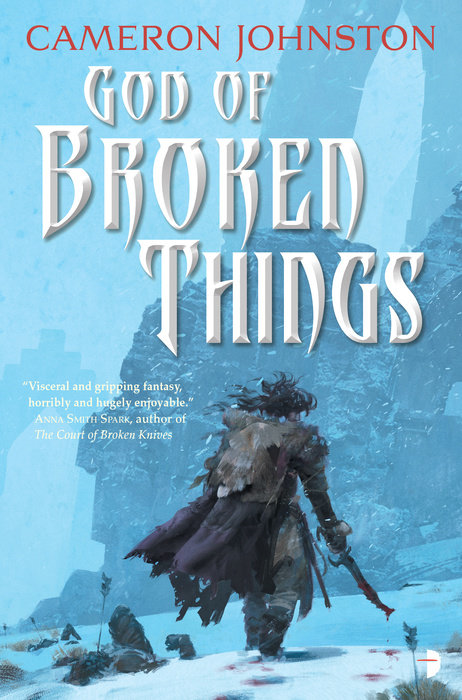
God of Broken Things by Cameron Johnston

god of broken things cover

Publisher: Angry Robot (Paperback – 11 June 2019)

Series: Age of Tyranny – Book 2

Length: 312 pages

My Rating: 4.75 out of 5 stars

Amazon

Those readers looking for the next entertaining grimdark fantasy adventure to sink their teeth into need look no further than God of Broken Things, the electrifying second book in Cameron Johnston’s Age of Tyranny.

It has only been a few short months since the devastating attack by the Skallgrim raiders on the city of Setharis, which severely weakened the city. Despite repulsing the Skallgrim and their monstrous hordes, Setharis is still in incredible danger. The Skallgrim forces are massing to launch another attack on Setharis, and the Skallgrim’s masters, the parasitic alien lifeforms known as the Scarrabus, are determined to enslave the entire city to their will. Setharis’s salvation once again rests in the hands of its most hated son, Edrin Walker.

Edrin is powerful magus whose rare abilities allow him to crack open and control the minds of all those around him. His breed of magus, known as tyrants, are feared throughout the world due to their propensity to lose control and use their magic to rule whole civilisations. Despite his role in saving the city from the Skallgrim, Edrin is still distrusted by both the common people and his fellow magus of the Arcanum. However, his skills may be the only thing that can win the war against the Skallgrim and the Scarrabus.

A massive force of Skallgrim are advancing over the mountain passes of the Clanholds, hoping to launch a fresh assault on Setharis. Against his will, Edrin is forced to lead a small army to reinforce the tribes of the Clanholds against the Skallgrim army. Accompanied by a small personal bodyguard of killers and thieves, Edrin leads his forces into the mountains, where far more dangerous things than the Skallgrim and their monsters lurk. Spirits, demons, gods and his own deadly past all lie in wait for Edrin, whose powers have been altered following his battle with a treacherous god. Can Edrin and his forces hold back the Skallgrim, or will he succumb to one of the many horrors in the mountains? And what happens when the tyrant comes out to play?

Johnston is a talented author whose debut novel, The Traitor God, really impressed me last year thanks to its awesome story and enjoyable main character. As a result, I was extremely keen to get a copy of the sequel, God of Broken Things, this year and was very happy when I received it a few weeks ago. God of Broken Things turned out to be a fantastic follow-up to the first book and I had an incredible time reading it. Not only does Johnston present another wildly entertaining story for the reader to enjoy, but he also does a fantastic job of expanding his dark fantasy world and exploring the complex mind of his main character.

I really liked where Johnston took the story in this book. While The Traitor God’s story of a hunt for answers in the dark fantasy city was cool, I really liked seeing the main character go to war in God of Broken Things. The whole storyline of Edrin leading an army up into the Clanholds, a dangerous mountainous environment filled with all manner of horrors and dangers was really cool, especially as he kept encountering worse situations and more terrifying opponents. This resulted in some epic moments and massive battles, and Johnston also took the opportunity to explore the history of several of the different races mentioned within the first books, including the Scarrabus, the Ogarim and some more mystical creatures like spirts and demons. This expansion of the Age of Tyranny universe was quite intriguing, and I wonder if there will be more exploration of the world and the various mentioned multiverses in future books. I also liked the deeper look that the author took into his protagonist’s past, showing some of the activities that occurred during the years he was exiled from Setharis. I loved the various twists and epic moments that Johnston sprinkled throughout the book’s plot, and there was never a dull moment in the entire story. I especially enjoyed how the final battle in God of Broken Things ended, especially as the author included a clever red herring in the book’s formatting to throw the reader off. Overall, this was an incredible story, and Johnston did an amazing job trapping me within this entertaining narrative.

One of the best parts of this book was the author’s continued focus on the protagonist, Edrin Walker, who serves as the book’s narrator and point-of-view character. Edrin was already a fairly complex character in The Traitor God, where he was portrayed as a powerful exiled magus hated, distrusted and ostracised by everyone due to the specific nature of his magical gift. Because of the way he is treated he acts hostile and uncaring to the world, while still participating in the odd act of heroism and compassion. This is continued in the second book, where Edrin continues to battle with his natural instincts and irritation while trying to do the right thing, especially for the few people who actually like or respect him. I really liked the way that the author continued to show Edrin exploring his moral side in this book as, against his better judgement, he actually attempts to help people and keep Setharis safe. The various sacrifices that he subsequently makes for the greater good are very much against the grain of his original character, and it is interesting to see this side of Edrin grow.

Due to the way he is treated, Edrin is an incredibly jaded character, and the author utilises this in a number of clever ways. Not only does this ensure that Edrin is the most likeable character in the book, mostly because he stands in sharp contrast to all the other magus characters, who are elitist snobs, but it also makes him a really entertaining narrator. The character’s sarcastic and mocking manner permeates the entire way he tells the story, resulting in some great reactions and a very amusing overall story.

Edrin continues to get into all sorts of entertaining misadventures in God of Broken Things, and it is hard not to love the unorthodox way he deals with things. Not only does he lead a bodyguard of deranged killers into battle but he rarely ever takes things seriously, no matter who he is dealing with. I love the disrespect and mockery that the character shows when encountering anyone in authority, be it friend or foe, magus or human, god or monster, and I laughed out loud at the way he got his revenge on one of Setharis’s gods in this book. It was also great to see the character apply his particular brand of bastardry to the battlefield, coming up with all manner of unconventional traps and attacks for the forces that are up against him. I particularly loved the cool way he took down the main antagonist of this book, and it really reflected both his cunning and his growth as a character.

The main character’s mind-bending magic continues to be a really cool part of this series, especially as his abilities become even more powerful in God of Broken Things. Johnston’s portrayals of the way that Edrin’s powers to break into and manipulate the minds of all those around him is done extremely well and it results in a number of epic scenes. I never realised how many creative ways someone could magically manipulate a person’s mind until seeing some of the scenes in this book, as Johnston comes up with some very inventive ways to utilises his protagonist’s magic. I especially loved seeing Edrin using these powers in the middle of the battle, as there are some awesome ways he disadvantages his enemies and helps his allies. However, the author also explores the consequences of the tyrant powers, as Edrin continuously runs the risk of taking things too far and grossly abusing his powers. Several examinations of the character’s guilt over some of the mental actions he commits become a compelling part of the story, and the character’s mental magic is a great part of the book.

Those readers who are looking for an explosive amount of fantasy action are in for a real treat with this book. Johnston makes sure to include a ton of battles and fight sequences in God of Broken Things, as the ragtag defenders of the Clanholds face off against a massive horde of Skallgrim, Scarrabus, demons and monsters. All of these fight scenes are incredibly brutal as Johnston depicts some amazing battles throughout this book. Most of these scenes are enhanced through the use of magic, and the sheer destructive power of the various characters’ magical abilities is pretty impressive. The various demons and monsters the protagonist finds himself up against in this book are pretty gruesome and offer up some pretty great battle scenes as a result. Overall, the action in God of Broken Things is quite superb, and fans of bloody fantasy fights will not be disappointed.

Cameron Johnston’s second outing, God of Broken Things, is an amazing piece of grimdark fantasy fiction that proved to be just as much fun as his debut novel, The Traitor God. I had an incredible time reading God of Broken Things as the excellent combination of story, magical action and character work kept me trapped until the very last page. Readers are guaranteed to love this outstanding dark fantasy read, and I strongly recommend this book to anyone looking for a fun and powerful adventure. The ending of the book makes it a little unclear if Johnston will continue the Age of Tyranny series, but I will be keeping a close eye out for any future books from this rising star in the grimdark fantasy genre.

Amazon

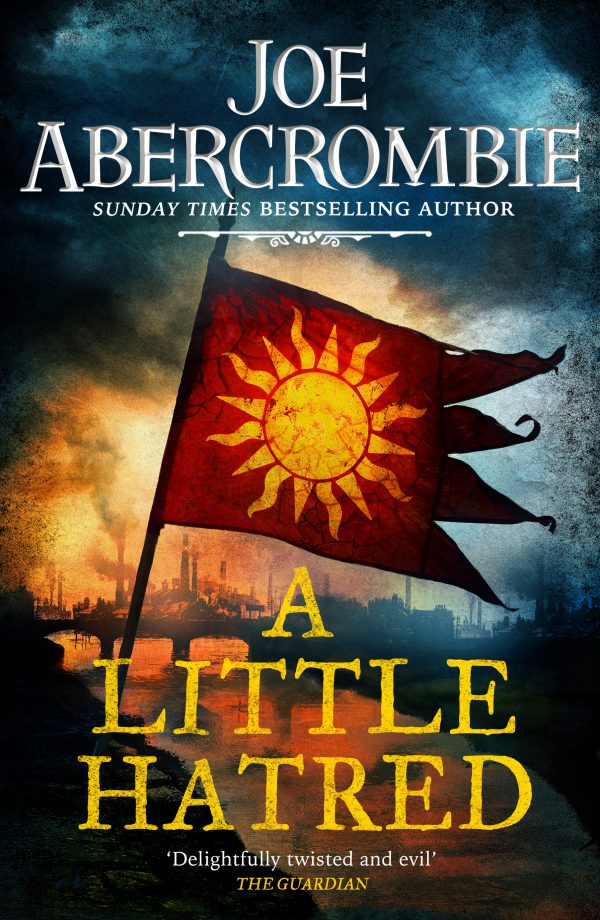
Waiting on Wednesday – A Little Hatred by Joe Abercrombie

Welcome to my weekly segment, Waiting on Wednesday, where I look at upcoming books that I am planning to order and review in the next few months and which I think I will really enjoy.  Stay tuned to see reviews of these books when I get a copy of them.

For this week’s edition of Waiting on Wednesday, I check out what has to be one of the most anticipated upcoming fantasy novels of 2019, A Little Hatred by Joe Abercrombie.  A Little Hatred will be the first book in the new The Age of Madness trilogy, which will follow up Abercrombie’s iconic grimdark fantasy trilogy, The First Law trilogy.

A Little Hatred Cover.jpg
The First Law trilogy, released between 2006 and 2008, was an epic trilogy that has long been considered the gold standard of the grimdark fantasy genre.  Featuring several memorable but incredibly flawed main characters, this trilogy was an outstanding piece of fantasy fiction that featured some truly dark moments, including brutal deaths, numerous torture sequences, berserk rages and magical cannibals.  Since the original trilogy’s end, Abercrombie has expanded out his fantasy universe with three standalone novels, Best Served Cold, The Heroes and Red Country, all of which were set after the events of The First Law trilogy and featured a number of characters from the original books.

I only got into The First Law trilogy a few years ago, but I found myself quite enjoying this outstanding grimdark adventure and the excellent characters that Abercrombie created.  The First Law trilogy is very unique, and I am quite intrigued to see how the author will continue his work.  The Age of Madness trilogy will be set nearly 30 years after the events of The First Law trilogy, and will apparently follow several new characters, including the children of some of the characters from the previous books.

Goodreads Synopsis:

The chimneys of industry rise over Adua and the world seethes with new opportunities. But old scores run deep as ever.

On the blood-soaked borders of Angland, Leo dan Brock struggles to win fame on the battlefield, and defeat the marauding armies of Stour Nightfall. He hopes for help from the crown. But King Jezal’s son, the feckless Prince Orso, is a man who specialises in disappointments.

Savine dan Glokta – socialite, investor, and daughter of the most feared man in the Union – plans to claw her way to the top of the slag-heap of society by any means necessary. But the slums boil over with a rage that all the money in the world cannot control.

The age of the machine dawns, but the age of magic refuses to die. With the help of the mad hillwoman Isern-i-Phail, Rikke struggles to control the blessing, or the curse, of the Long Eye. Glimpsing the future is one thing, but with the guiding hand of the First of the Magi still pulling the strings, changing it will be quite another…

I like the sound of some of the plot points being explored in this book.  The idea of the world advancing into a more industrial age could have some interesting potential, and it will be interesting to see how this world’s devastating magic will play a part in it.  I also like the sound of the characters involved in this book.  While some of the characters sound new and unattached to other books in the series, several have connections to the original trilogy and some of the other books in the series.  I most like the sound of Savine dan Glokta, the daughter of one of the best characters from the original series, Inquisitor Glokta, and I will love to see how someone raised by the ruthless inquisitor will handle the business world.  I also like that Bayaz, the First of the Magi, is returning once again.  He was a fantastic, if morally challenged, character, as well as an ace manipulator, so it will be good to see him pull the strings again in this book, and maybe he will get some just deserts in this series.  It will also be interesting to see where some of the original characters from The First Law series ended up, and whether they are still alive.  The original series left some storylines for these characters open and I am curious to see if they will be resolved in this new trilogy.

Overall, A Little Hatred sounds like it will be an amazing start to this new storyline in Abercrombie’s dark fantasy universe, and I will be interested to see how it goes.  This book currently has a release date of 17 September 2019, with the following two books in the trilogy being released in September 2020 and 2021.  I am planning to review The First Law trilogy as part of my Throwback Thursday series in the next couple of weeks, and I will have to check out the three standalone books in the universe to see how the story progresses in the years between The First Law trilogy and A Little Hatred.  Hopefully I will able to get through all three of them before September, and I look forward to experiencing more of this first-rate grimdark fantasy tale.

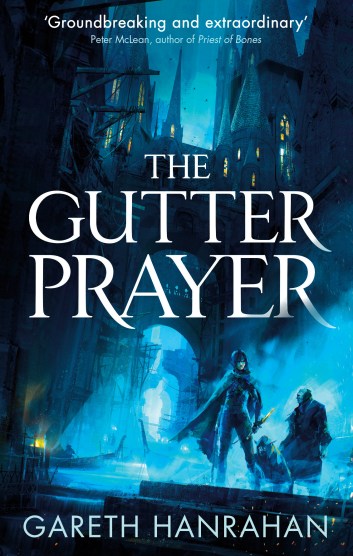
The Gutter Prayer by Gareth Hanrahan

The Gutter Prayer Cover.jpg

Publisher: Orbit (Paperback Edition – 17 January 2019)

Series: Black Iron Legacy (Book 1)

Length: 512 pages

My Rating: 4.5 out of 5 stars

Amazon     Book Depository

From debuting author Gareth Hanrahan comes the grimdark fantasy book that everyone has been talking about, The Gutter Prayer.  This debut novel has been getting some serious hype from a lot of fantasy reviewers, so I was very happy when I got my copy earlier in the week, as it will give me a chance to check it out for myself.

For thousands of years, the large, sprawling city of Guerdon has survived against all manner of attacks and calamity.  In recent years, the city’s alchemical industry has taken off, producing powerful weapons and twisted creations to sell to Guerdon’s warring neighbours, involved in the destructive Godswar.  But with the rival nation’s eyes on Guerdon, refugees flooding into the city and the city’s various factions fighting for power, the potential for chaos is great.

In the middle of all this, three mismatched young thieves – stranger to the city, Cari; the Stone Man, Spar; and Rat the ghoul – find their lives changed forever.  Hired by the leader of the city’s criminal element, these three thieves attempt to break into an important civic building, only to be nearly killed by a massive explosion and framed for the crime.  Pursued by the Alchemist Guild’s murderous enforcers, the Tallowmen, and the relentless thief-taker, Jere, the three friends attempt to escape their pursuers, but find themselves entangled in a terrible plot to bring destruction to the city.

Ancient creatures are rising from the city’s bloody past, and the city’s old gods are prepared to rise once again.  As Cari, Spar and Rat uncover the full extent of these gods’ power, they must contend with others who seek to use the chaos for their own ends.  With everything on the line, can the three friends find a way to stop the events unfolding, or will their failure result in the destruction of everything they hold dear?

This is Hanrahan’s first fictional book, although the author has written a number of gaming manuals and fantasy guides over the years.  However, with the evident popularity of The Gutter Prayer among the fantasy community, it seems extremely likely that this will not be Hanrahan’s only book.  Indeed, the author already has plans for a sequel, and The Gutter Prayer will form part of this planned Black Iron Legacy series.

I thought that The Gutter Prayer was an ambitious and intriguing new entry to the fantasy genre, and it is definitely worthy of the hype around it.  Hanrahan presents a wide-ranging and dark story of magic, religion and betrayal, and he sets it within an imaginative new fantasy landscape with a ton of unique fantasy elements and creatures.  The story is then based around several great characters, each of whom has their own compelling arc within the narrative.  The result is an excellent and memorable novel that showcases Hanrahan’s creativity and serves as an amazing introduction into a bold new fantasy universe.

This book contained a fantastic and intense story which focused on a variety of different characters and follows their attempts to investigate and forestall the strange events occurring around them.  I really enjoyed this story, although I had a little bit of a hard time getting into it at the start of the book due to mass of story and fantasy elements I was bombarded with.  However, I am extremely glad that I powered past this first part of the book because once I was able to place all the story elements together I appreciated the book’s wild and intricate plot.  One of the main things that I really loved about this book was the inclusion of a significant number of different characters and factions, each with their own motivations and hidden secrets.  As a result, you have no idea who is going to do what next and who is going to betray the protagonists to serve their own needs, creating an unpredictable story.  The narrative is also extremely dark, and readers should be prepared for characters dying or being altered in some way or another.  This is some fantastic storytelling from Hanrahan, and an overall clever narrative.

One of the most talked-about elements of this book is the author’s use of a huge range of unique fantasy elements.  Hanrahan has come up with and expertly utilised a ton of creative, inventive and at times just plain creepy new fantasy elements.  The best example of this has to be the Tallowmen, humans that have been turned into living candles, often as punishment for crimes.  These creatures are strong, lethal and fast, serving as the guards and law enforcers of the Alchemist Guild.  Their terrifying appearance, distinctive abilities and the glow of their candle flames as they hunt down the protagonists are extremely memorable.  Another terrifying inclusion is the Ravellers, servants of the city’s ancient gods who have the ability to unravel people out of existence and take on their appearance.  There are also the ghouls and Stone Men.  Stone Men are humans infected with a disease that slowly turns them into stone, although their condition can be held back by an alchemical compound.  The depictions of their condition are pretty horrific, and there is the interesting double-edged sword of the disease: they become stronger the more their condition progresses, but they also become less able to live normal lives.  The ghouls, humanoid creatures who feast of the dead flesh of humans, are an element that most fantasy fans will be familiar with, but Hanrahan has made some clever alterations to these creatures by expanding on their life cycle and making them a key part of the city’s history.  Another awesome creation is the Crawling Ones, a sentient hive of worms who take a human shape and are powerful magic users.

In addition to the above unique fantasy creatures, The Gutter Prayer also introduces the author’s great new twist on fantasy gods.  The world of the Dark Iron Legacy is filled with a vast pantheon of powerful gods, which forms a critical part of this universe.  Many of the deities outside of the city are engaged in a massive conflict known as the Godswar, where these gods and their followers are involved in battles against each other for supremacy.  While we get a brief look at this in The Gutter Prayer, most of the focus of this book is on the gods of Guerdon.  While a few other religions are mentioned within the city, the main two pantheons are the Kept Gods and the Black Iron Gods.  Both of these different gods are extremely intriguing, and I particularly loved the concept of the Kept Gods, who are chained and whose intake of prayer is controlled by their church to limit their power and control their actions.  The Black Iron Gods are a darker and more ancient pantheon with a great history, a horde of sinister followers and a captivating physical presence.  I also liked this universe’s concept of saints, those humans gifted power by their connection to the gods.  There are a couple of saints featured throughout the book who form an integral part of the plot, powering through the story with a range of different powers and abilities.  Quite frankly, all of these unique fantasy elements are deeply intriguing, and Hanrahan uses all of them perfectly to enhance his outstanding story.  I do hope that the Godswar will be explored in future books, as that sounded like a really fun concept that I would be deeply interested in.

Guerdon is a decent grimdark fantasy city, and it serves as the primary setting for most of the city.  The city’s range of interesting and unique residence allows for a fascinating overall story and makes this a fantastic setting.  I really like how the city is home to a range of competing factions, such as the Alchemists, the Church, the criminal organisation known as the Brotherhood, politicians and the city’s non-human races, each of whom have different plans for the future of the city.  This is a pretty typical dark, crime-ridden fantasy city, but it works really well as a setting for this story.  The author’s deep exploration of the history of his fantasy city served as a useful plot point, and I love how the city’s past came back to haunt it in a number of ways.

I have to say that I was really impressed with Hanrahan’s character work within this book.  The author introduces a number of amazing characters, most of whom get deep and satisfying story arcs.  The main three characters are particularly great.  I really liked Spar, who is not only the son of one of the city’s most famous criminals, but who is also a Stone Man.  It is through this character’s eyes that we get the best view of the living hell of life as a Stone Man, as Spar is forced to deal with all the unpleasant side effects that his condition brings.  At the same time he must deal with his family legacy as he fights to achieve his father’s dream of a more noble Brotherhood while forced to work for its current corrupt leader.  Rat the ghoul is another interesting character.  As a ghoul, he is generally supposed to live under the city, but he likes living above the streets with his friends.  Rat is constantly conflicted between loyalty to his friends and to his race’s ancient promises, as well as dislike for the traditional ghoul lifestyle.  Finally, there is the mysterious young thief, Cari, who holds a dark secret in her past.  Cari is a rebellious young female protagonist who is developing strange new powers.  The exploration of her past and her abilities is a key part of the book and a good basis for a large portion of this plot.  I liked the way that these three characters cared for each other and how their stories remain interconnected even as they have their own unique adventures within the story.

While these three main characters serve as an extremely powerful narrative base for The Gutter Prayer, the author also focuses on a couple of additional point-of-view characters, including the veteran thief-taker, Jere; Cari’s cousin, Eladora; and the saint of the Kept Gods, Arla.  These characters do not get as large a focus as the book’s three main characters, but their parts of the book are quite significant.  Each of them also has a full character arc within the book, and they all develop or change in substantial ways.  Jere is a grizzled private investigator obsessed with taking down the Brotherhood, and his investigations for the first two-thirds of the book provide the reader with some vital plot detail.  I really liked the end to Jere’s character arc, which was both dark and satisfying.  Eladora is a sheltered scholar who gets a rather rude awakening about life throughout the course of this book.  Eladora is not my favourite character, but I did like her gradual transformation from damsel in distress to something more useful.  Finally, there is Arla, who would have to be my favourite side character.  Arla is a saint of the Kept Gods blessed with fiery powers as a result.  Arla is a badass and entertaining character who spends most of the book fighting her opponents with her fiery sword and generally not acting in a way most people would consider saint-like.  I especially love when she utilises her god-empowered voice to command people, as she is usually swearing while doing this.  This comes up in the text in all caps, and you have to imagine it sounds pretty impressive in this book’s audiobook format.  There were a number of other entertaining side or minor characters throughout the book that the author put to good use, and I will enjoy seeing what role they will play in any future books in the series.

Overall, I truly enjoyed The Gutter Prayer and was impressed by Hanrahan’s magnificent debut.  This was an excellent piece of grimdark fantasy which expertly combined some very inventive fantasy elements together with a fantastic story and some excellent characters.  With this first book Hanrahan has shown some incredible talent as a fantasy storyteller whose outstanding imagination is his biggest asset.  This is a highly recommended book which lives up to the substantial hype surrounding it.  I am already extremely keen for any additional books in the Black Iron Legacy, especially as the interview at the end of the book implies that Hanrahan has some brilliant ideas for the rest of the series.

Amazon     Book Depository