
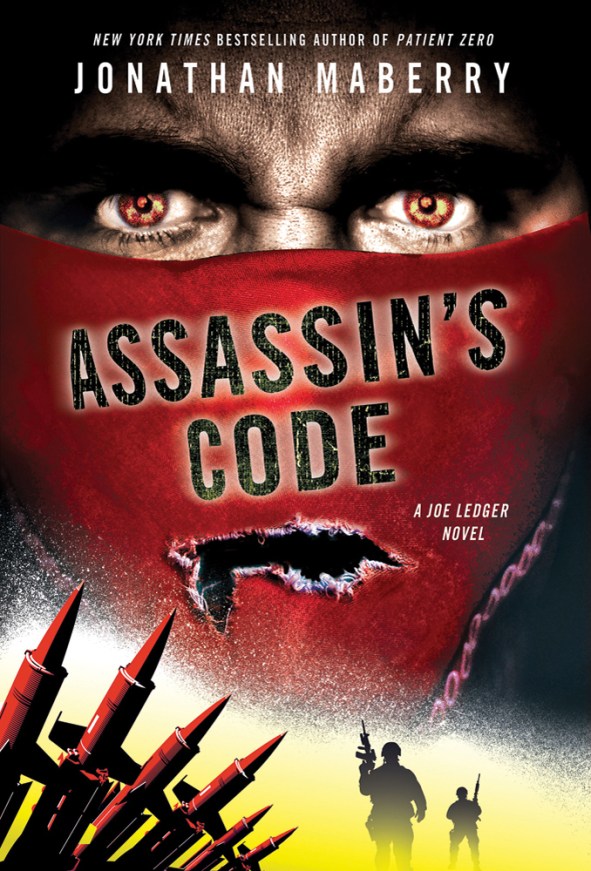
Throwback Thursday – Assassin’s Code by Jonathan Maberry

Assassin's Code Cover

Publisher: Macmillan Audio (Audiobook – 10 April 2012)

Series: Joe Ledger series – Book 4

Length: 15 hours and 35 minutes

My Rating: 5 out of 5 stars

Amazon     Book Depository

Reviewed as part of my Throwback Thursday series, where I republish old reviews, review books I have read before or review older books I have only just had a chance to read.

For this week’s Throwback Thursday, get ready for the fourth high-stakes, action-packed instalment of Jonathan Maberry’s excellent Joe Ledger series, Assassin’s Code, which sets the titular character up against a fantastic new set of antagonists.

Joe Ledger, top field agent for the elite Department of Military Sciences (DMS), is about to have a very unusual day. On assignment in Iran, Ledger and Echo Team have been tasked with rescuing American college kids held hostage by the Iranians. After successfully rescuing the hostages, Ledger is forced at gunpoint into a meeting with a high-ranking Iranian security officer. However, instead of being arrested, Ledger is given information about an impending terrorist attack that could shake the very foundations of the world.

An unknown player apparently has several nuclear weapons in play and is planning to unleash them against a number of targets around the world. As Ledger relays this information to his superiors, he is attacked by a mysterious assailant who is faster, stronger and more deadly than anything he has faced before. Barely escaping from his attacker, Ledger finds himself being pursued through the streets of Tehran by the Red Order, an ancient group of killers whose operatives appear to intimidate even Ledger’s boss, the legendary Mr Church.

As Ledger attempts to come to terms with what exactly is hunting him, he finds himself in the crosshairs of several other secret organisations, each of which has their own agendas. As Ledger gets closer to the truth, he discovers that events are being manipulated by an old enemy. An ancient conspiracy has been revealed and the fate of the world hangs in the balance. Can Ledger defeat the monsters unleashed against him or will a new world order arise?

Assassin’s Code in the fourth book in Maberry’s Joe Ledger series, which sees an elite special forces agency go up against the worst horrors that modern science and science fiction can unleash. I have already read and reviewed several books in this series so far, including the previous three novels, Patient Zero, The Dragon Factory and The King of Plagues, as well as the 10th and latest book in the series, Deep Silence. Each of these books has proven to be fantastic dark science fiction thrillers that I have had an amazing time reading, and all four of them have received a full five-star rating from me. Assassin’s Code is another incredible addition to the series, as Maberry has once again produced an intense and clever story, with some great antagonists, a complex protagonist and a heck of a lot of high-grade action.

In his fourth Joe Ledger book, Maberry has continued to utilise the same writing format that made all the other books in the series such an awesome read. While a large amount of the storyline follows Ledger and the other members of the DMS as they attempt to investigate and then counter the threats they are up against, a large amount of the book revolves around showcasing the history that led up to the book’s current events, as well as exploring the antagonists side of the story. There are several chapters that solely focus on the antagonists, showing what they are planning and the full range of their various motivations. I always love these explorations of the antagonists as I feel it creates a much more complete and interesting overall storyline, and these alternate points of view are often used to really ramp up the book’s tension and hint at events that are going to hit the protagonists.

While he continues to successfully utilises a number of these familiar writing styles, I felt that Maberry also made sure that Assassin’s Code stood out from the other books in the series. Not only does this fourth book have a lot more of a horror vibe to it than the previous two books in the series (somewhat reminiscent of the first novel, Patient Zero) but it is also told as a rush of events over a 24-hour period. Ledger is barely given an opportunity to rest as he is attacked again and again by a series of different opponents in the hostile territory of Tehran. The author has also woven together a number of interconnected conspiracies and features appearances from several individuals and organisations, each of whom has their unique agendas throughout the plot of the book, all of which need to picked through by the reader. All these various players and motivations make for a very full story, but I quite enjoyed seeing all the various revelations come to light. Assassin’s Code is also an intriguing central piece to the whole Joe Ledger series. Not only does it introduce several key characters who become major fixtures of the series but it also introduces a number of key events in the lives of characters who were introduced in the previous books. As a result, it is a must read for those people trying to get a grip on the series as a whole and is a fantastic overall read.

In my mind, one of the best things about the Joe Ledger books are the distinctive antagonists, each of whom come across as major threats not only to the protagonists, but to the entire world. So far in the series, Ledger has had to face zombies, genetically enhanced Nazis and a powerful cabal of terrorists (whose members included Osama Bin Laden) whose attacks are used to manipulate the world for profit. In Assassin’s Code, Maberry has done a fantastic job converting an old legend into a terrifying modern threat, as the major villains of this book, the mysterious Red Order and their infamous Red Knights, are essentially vampires. Maberry already has significant experience writing vampires into the modern world, thanks to his V-Wars book series (an adaption of which is coming out on Netflix in a couple of months), and he does a great job coming up with a new and somewhat plausible explanation for their existence (well, slightly more plausible than a supernatural origin), as well as a creative historical explanation for their organisation. These vampires are written as major threats for most of the book, and the fear and concern that they cause in a number of characters whose badass credentials have been firmly established in previous books is pretty impressive. The use of vampires in modern thriller was a real highlight of this book, and I really loved seeing them go up against a modern special forces unit. Maberry spends a lot of time exploring their history, as the book features a number of interludes that go back to the time of the Crusades, when they were first recruited for their mission. All of this exploration does a fantastic job of showing what true monsters these types of vampires are, which helps the reader really root for the reader. I also really liked some of the other groups featured in this book that were formed as a direct result of the existence of vampires, including a group of modern Inquisitors and the mysterious Arklight. If I had one complaint about these antagonists, it would be that they were taken down a bit too easily in the final act, and I would have preferred a more protracted or vicious fight.

In addition to the vampires, this book also features the reappearance of two key antagonists from the previous book in the series, The King of Plagues, who are major manipulators of events behind the scenes. These characters are the former King of Fear, Hugo Vox, and the mysterious priest Nicodemus, both of whom were major players in the previous book. I really liked how Maberry continued to explore both of these cool characters, and he did a fantastic job of tying their storylines into the unique events of this book. Their respective roles in the plot of this book is quite interesting, and I really enjoyed how both their storylines progressed or ended in this novel. The true reveal of who (or what) Nicodemus is has been left for a later book, and I am very curious to see what he turns out to be.

Maberry continues to do an outstanding job utilising his complex and multilayered protagonist, Joe Ledger. While on the surface, Ledger’s defining character traits are his abilities as a special forces operative and his relentless sense of humour, the character is actually extremely emotionally damaged. Thanks to the fact that Ledger is the only character whose chapters are shown from the first-person perspective (a nice distinctive touch for the central protagonist), the reader gets a much more in-depth look at his inner thoughts, and as a result you see how the events of his life, including the events of the previous three books, have impacted his psyche. It is quite refreshing to have a character who is actually emotionally affected by the events of his books, and you get the feeling that Ledger is only a short way away from truly snapping. However, in the meantime, the thick layer of humour he overlays these feelings with is great for a laugh, and it helps gives the chapters that the character is narrating a very unique and enjoyable feel. In addition to Ledger, I really liked some of the new protagonists introduced in Assassin’s Code and I look forward to exploring them more in the future. Special mention as always needs to go the awesome supporting characters of Mr Church and Ghost, Ledger’s attack dog. With his actions and woofs, Ghost honestly has more personality that some human characters in other books I have read, while Church continues to be the ultra-mysterious intelligence god who you cannot help but want to know more about. These two characters are one of the many reasons why I am excited to check out all the future books in the series.

It should come as no surprise to those who read the plot synopsis, but Assassin’s Code is filled with wall-to-wall action. Maberry has a well-established history of doing detailed research into various forms of combat, especially martial arts, which he has actually written several books on. Maberry is able to transfer all of this knowledge into his books, creating some truly amazing action sequences. There are a huge number of great and varied battle scenes throughout the course of the book, and readers are guaranteed a pulse pumping ride as a result. Also, if you have ever wondered how martial arts trained special forces soldiers would go against vampires, than this is the book for you.

Like all the other books in the Joe Ledger series, I chose to listen to the audiobook format of Assassin’s Code, narrated by Ray Porter. Coming in at around 15 hours and 35 minutes, this is a substantial audiobook; however, due to how much I enjoyed the epic story, I powered through it in a couple of days. I would strongly recommend that readers always check out the audiobook format of this series, thanks mainly to Porter’s narration. Porter, who has so far narrated all of the Joe Ledger books, has an uncanny ability to bring this central protagonist to life. His great narration fully encapsulates Ledger’s full range of emotions, from light-hearted banter, to soul-crushing despair to powerful bursts of rage, and it is really worth checking out. In addition, Porter does some really good voices for the other characters in the book, especially Mr Church, and he is probably one of my favourite audiobook narrators at the moment.

When I started reading Assassin’s Code, I knew I was going to love it, and it did not disappoint. Not only did Maberry up the ante with some incredible antagonists but he created another complex and utterly captivating story that had me hooked in an extremely short period of time. Assassin’s Code easily gets another five stars from me, and I whole-heartily recommend the audiobook format of this book. I am planning to try and read all the other Joe Ledger books in the next couple of months as I only just found out that the story is continuing in November of this year as part of a new spin-off series. Stay tuned to see what I think of the other books in this series (spoiler alert, I think I am going to love them).
Amazon     Book Depository

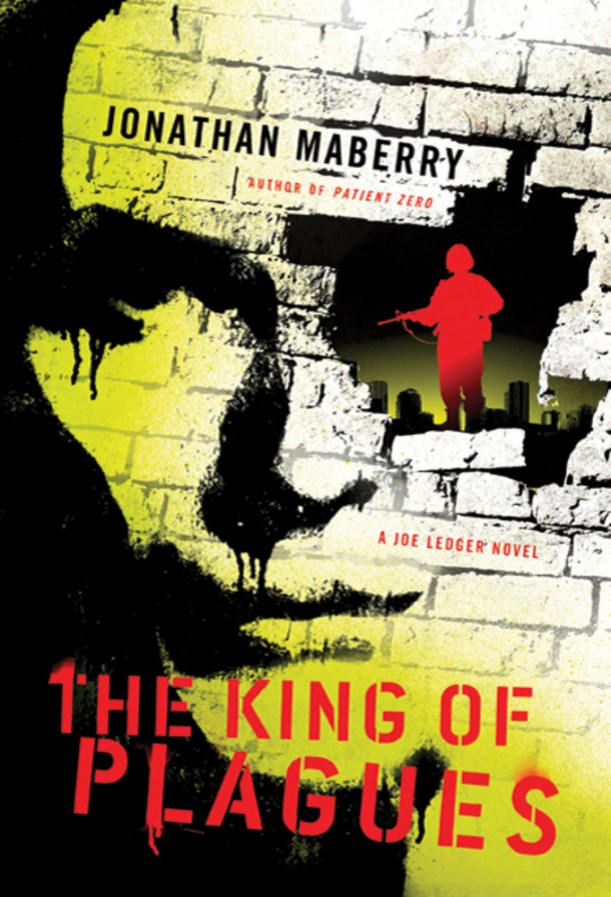
Throwback Thursday – The King of Plagues by Jonathan Maberry – Audiobook Review

The King of Plagues Cover.jpg

Publisher: Blackstone Audio (8 April 2011)

Series: Joe Ledger series – Book 3

Length: 16 hours and 10 minutes

My Rating: 5 out of 5 stars

Amazon     Book Depository

Reviewed as part of my Throwback Thursday series, where I republish old reviews, review books I have read before or review older books I have only just had a chance to read.

Over the last year or so, reading and reviewing all of the books in Jonathan Maberry’s Joe Ledger series has been something of a passion project for me. I absolutely loved the 10th and latest book in the series, Deep Silence, when I read it last year and found its superb blend of the horror, science fiction and thriller genres to be incredibly compelling and a whole lot of fun to read. Since then, I have gone back and read and reviewed the first two books in the series, Patient Zero and The Dragon Factory, and I found that I enjoyed them just as much as Deep Silence. As a result, when I got a gap in my reading schedule recently, I decided to check out the third book in the series, The King of Plagues, and once again found myself drawn into the world of Joe Ledger and the DMS.

Following the events of The Dragon Factory, which saw the death of the women he loved, Joe Ledger has left the chaotic world of the Department of Military Sciences (DMS) behind. Living in London, Ledger is suddenly thrust back into the field when an explosion levels a busy London hospital, killing everyone inside in one of the worst acts of terrorism the world has ever seen. Horrified by this callous attack, Ledger returns to active duty with the DMS and is immediately targeted by a hit team, before traveling to investigate a second attack at an Ebola research laboratory.

It does not take long to identify that the people behind these attacks are the group known as the Seven Kings. The Seven Kings are a mysterious secret society that Ledger and the DMS have dealt with before, as they influence and equip terrorist organisations around the world. Pledging fealty to a shadowy goddess and having a small army of highly trained mercenaries and the ability to influence highly placed people around the world, the Seven Kings are determined to change the world for their own benefit and are willing to kill anyone to achieve their goals.

As part of their plan to destabilise the world and benefit from the resulting economic chaos, the Seven Kings are planning to unleash weaponised versions of the Ten Plagues of Egypt that will not only kill untold masses but which will cripple the Seven Kings’ major opponents. If that was not bad enough, an old enemy from Joe Ledger’s past has resurfaced and is working with the Seven Kings to extract his revenge as the King of Plagues. Can Ledger and the DMS stop the devastating plans of the Seven Kings, or will the world once again bear witness to the devastation of the Ten Plagues?

The King of Plagues was another excellent addition to the Joe Ledger series that I had a fantastic time listening to. Maberry once again presents an exciting and addictive story that combines thriller action, a despicable evil scheme and a great group of characters, all told in Maberry’s distinctive writing style. This was an outstanding novel and yet another book in the Joe Ledger series that gets a five-star rating from me.

I always really enjoy the way that Maberry sets out the plots of his Joe Ledger books. The author utilises a huge range of different character perspectives across a number of different time periods to tell a full and complex overall story. By doing this the author is able to showcase a number of sides of the story. Not only does the reader get to see the protagonist’s story, but they also get to see how the antagonist’s evil scheme was planned and executed. Overall, this was a spectacular way to tell the story, and I always think that the reader gets so much more out of these books as a result. Maberry also did a fantastic job making this book accessible to readers unfamiliar with the series. While reading the Joe Ledger series out of order may result in some series spoilers for some of the earlier books, readers are easily able to start exploring this series with The King of Plagues and not have their enjoyment of the story suffer as a result.

The King of Plagues is filled with an amazing roster of characters, each of whom brings a lot of depth and emotion to the story. The main protagonist, Joe Ledger, has to be one of the biggest smartasses in fiction, and it is always a delight to watch him quip and make sarcastic comments across the world. However, despite that flippant exterior, Ledger is a complex emotional wreck who is still dealing with all manner of trauma and is barely containing his anger and bloodlust, especially when dealing with terrible events like the one in this book. I always find it fascinating when Maberry dives into the psyche of the series’ titular character, and it was especially poignant in The King of Plagues, as Ledger is still dealing with the loss of his love interest from the first two books, Grace Courtland. However, Ledger is not the only great character in this book. One of my favourites has to be Mr Church, the mysterious leader of the DMS, who everyone seems to be afraid of. Church once again shines in his role as the ultimate spymaster, but in this book he has some additional scenes that add to his character. In just one scene he shows the reader just why everyone is so afraid of him. There is also an attempt to humanise the character with some interesting reveals towards the end of the book, and I found those worked well and helped me like Church even more.

This book also featured the introduction of several other new characters. The main one of these, Circe O’Tree, is a brilliant young woman with a major chip on her shoulder who works as an analyst helping the DMS. I thought she was an intriguing character, especially due to her connections with the Seven Kings and several members of the DMS and her ability to analyse human behaviour. The King of Plagues also saw the introduction of the infamous Aunt Sallie, the second-in-command of the DMS, who is fearfully mentioned several times in the first two books. Aunt Sallie is a pretty fun character, and I am looking forward to seeing more of her scary, no-nonsense charm in the future. Funnily enough, one of my favourite characters was actually a dog, as The King of Plagues sees the inclusion of Ledger’s DMS attack dog, Ghost. Ghost was actually introduced in short story set between the second and third novels, Dog Days, but this is the first time readers of the main series get to see him in action. Despite being a ferocious and well-trained killing machine, Ghost is an absolutely adorable character who is responsible for some very funny moments in the story. Also, because he is such a good boy, you cannot help but get attached to him, and really get worried when he is in danger.

In addition to the great cast of protagonists, Maberry also utilises a great cast of antagonists in this novel in the form of The Seven Kings. The Seven Kings are an evil secret organisation who revel in deception and lies as they put their various plots and schemes into place. The identities of the various members of the Seven Kings is certainly interesting, and I really enjoyed this group and found them to be a fantastic group of antagonists. I absolutely loved the complex and devastating grand evil plan that they came up with in this story, and the full scope of their plot was pretty darn impressive. I was a little wary of this group at first, as they were introduced as some great threat that the DMS had apparently faced before, although there hadn’t been any mention of them in any of the previous books. However, in a number of interlude chapters set in the months before the current events of the plot, their lack of mention in the previous book is explained and they are presented as a force to be reckoned with. I quite liked this group of antagonists, and while certain revelations about them were not as surprising as in other Joe Ledger books, such as The Dragon Factory, for example, I did like certain developments that occurred within the Seven Kings, and I look forward to seeing how certain members show up again.

One of the things that makes the Seven Kings really sinister is their use of coercion and manipulation to achieve all their goals. At the most disturbing level, they target a number of people across the world with families and manage to terrify them so much that they will commit terrorist acts in order to save their loved ones. There are some quite chilling scenes in this book where the chief enforcer for the Seven Kings threatens these victims, and the lengths these innocent people will go to and the evils they will commit in the name of their families are horrifying at times. In addition, the Seven Kings use Twitter and other social media to fan the fires of hatred around the world, creating conspiracies and prejudice against certain ethnic groups that eventually result in violence. This examination of the evils of social media and how it can be used to spread hate is pretty fascinating, and it’s interesting to note that, as the book was written in 2011, it precedes a lot of the more recent and highly publicised incidents of Twitter being used to influence people. These inclusions really help set the Seven Kings apart from other villains in the Joe Ledger series and makes sure the reader is both disgusted and impressed by their methods.

The King of Plagues also saw the return of two antagonists from a previous book in the series, who join up with the Seven Kings to help them fulfil their master plan. I felt that both of these characters were used to their full potential within this book, and both had some truly intriguing and clever story arcs which contrasted quite impressively. For example, one starts on the long, hard road to redemption, while the other falls even further down the rabbit hole to pure evil. I won’t go into any more detail in order to avoid spoilers, but these two characters were extremely impressive, and were the main characters showing the inner workings of the Seven Kings.

Like the rest of the books in the Joe Ledger series, The King of Plagues is rich with action and firefights, as the protagonists engage in a number of battles with the minions of the Seven Kings. The action comes thick and fast throughout the book, and Maberry’s knowledge and research into various forms of armed and unarmed combat is extremely obvious. The way some of the firefights are paced out is pretty spectacular, and it is always impressive what a well-trained special operations team can do. Maberry really shines when it comes to the hand-to-hand combat sequences, though, as Ledger rips through his opponents with his martial arts prowess. The fight sequences in this book are straight up awesome, and those readers who love an action-packed book will be well catered to with The King of Plagues.

One of the things that I quite enjoyed about The King of Plagues was the author’s decision to include a number of celebrity cameos throughout the story. Not only does the protagonist encounter some famous singers and actors as part of the plot (including having a weird conversation at the end of the book with a famous rock star), but a number of celebrities are put into some interesting and deadly positions throughout the plot. I also had a good laugh at Maberry’s inclusion of a terrorist think tank made up of thriller writers coming up with the most outrageous situations they could think of, especially as that becomes a major plot point later in the book (and may have serious ramifications later in the series). The authors named dropped in these scenes are pretty impressive, and I thought it was a cute touch from Maberry to include his contemporaries like that. The use of the celebrities was an interesting choice from Maberry, but I think it fits into the wacky vibe of the Joe Ledger series quite well, and it was not too distracting from the main plot.

As with the previous books in the Joe Ledger series, I listened to The King of Plagues on audiobook. The audiobook is around 16 hours and 10 minutes long and is narrated by Ray Porter, who has to be my favourite audiobook narrator at the moment. Porter has an amazing vocal range, and I love the way that he portrays the main character of this book, Joe Ledger. Porter really brings Ledger to life in these audiobooks, not only amplifying the character’s sarcasm and smartass nature, giving real anger and sadness to Ledger when needed. The rest of the characters in this series are also really well done. I have mentioned before how much I love the voice he uses for Mr Church, and Porter really gets a lot of mileage out his Boston accent for some of the other characters. In addition to Porter’s awesome vocal work, I found that listening to The King of Plagues really helped bring me into the story. Not only does the action really pop in this format but listening to the antagonists come up with their evil plans and threats can be quite chilling at times. As a result, I would strongly recommend that readers check out the audiobook version of The King of Plagues. I know I will be checking out the rest of the books in the Joe Ledger series on audiobook as well.

Once again, I had an absolute blast listening to a book in Jonathan Maberry’s Joe Ledger series, as The King of Plagues was another outstanding addition to this fantastic series. Featuring a well-written and captivating story, some amazing characters, an evil and over-the-top plot, a number of intriguing plot points and some of the best action sequences in modern thriller fiction, this was an incredible read. I cannot wait to check out the fourth book in this series, and quite frankly all of the upcoming books sound like they have some truly outrageous stories.

Amazon     Book Depository