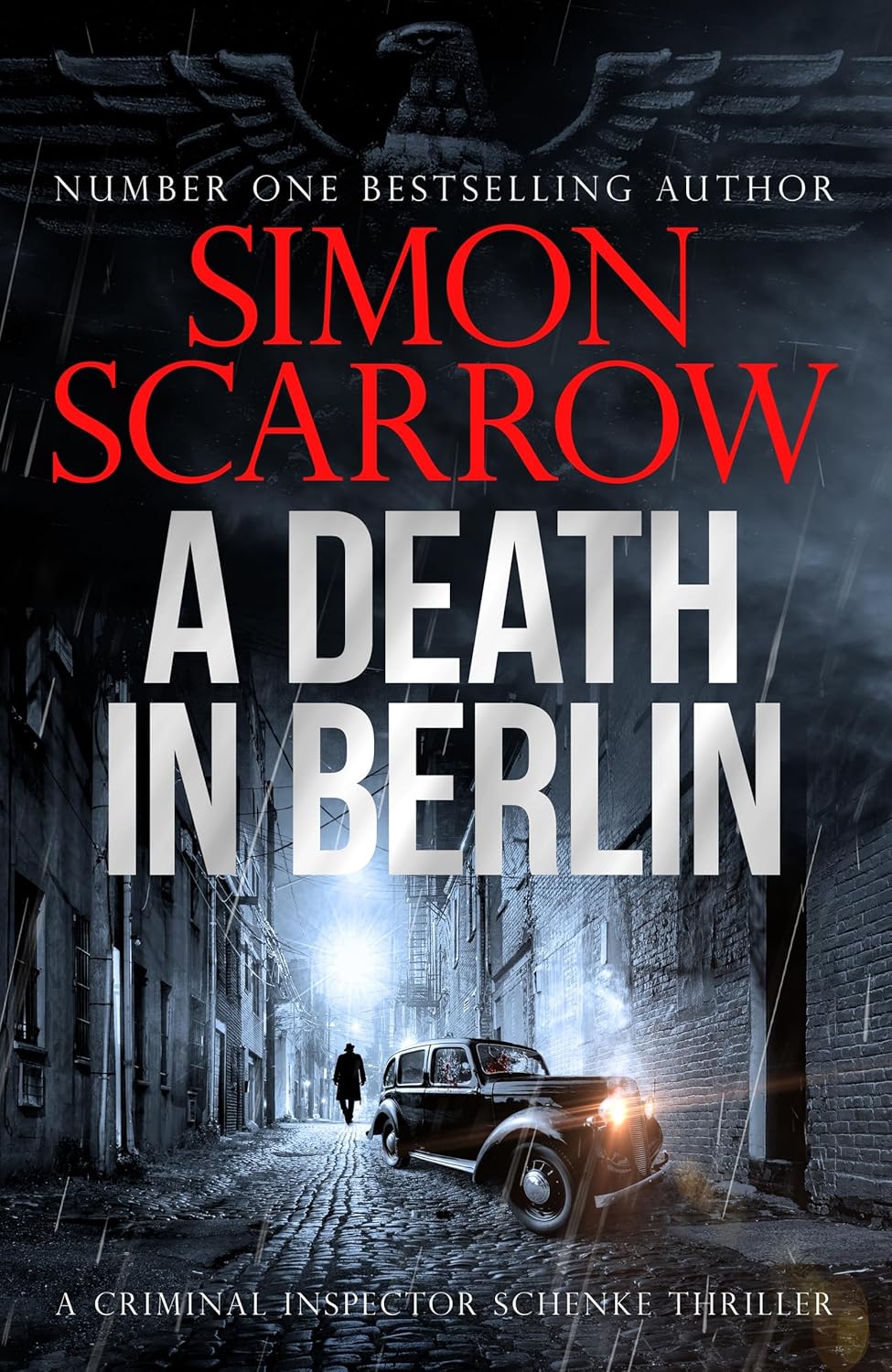
A Death in Berlin by Simon Scarrow

Publisher: Headline (Trade Paperback – 11 March 2025)

Series: Berlin Wartime/Criminal Inspector Schenke Thriller – Book Three

Length: 385 pages

My Rating: 4.5 out of 5 stars

Amazon

One of the world’s leading historical fiction authors returns with another intriguing and captivating historical murder mystery with the outstanding read, A Death in Berlin.

I have made no bones about the fact that I am a major fan of historical fiction author Simon Scarrow, who has been diving into awesome scenarios from history for over 20 years.  While I probably know him best from his outstanding Eagles of the Empire Roman historical fiction series (see my review for the latest entry, Revenge of Rome), Scarrow has also written some other amazing series, including his current ongoing Berlin Wartime Thriller novels.  Set in Berlin towards the start of World War II, the series follows a studious and troubled police detective as he attempts to uphold justice in a city overrun with murderous Nazis.  The first two books in this series, Blackout and Dead of Night, were both very impressive, and I have been eagerly awaiting this third novel in the series, A Death in Berlin, for some time.

Berlin, May 1940.  As the German army prepares for its invasion of France and Western Europe, crime still roams the street of Berlin, and it falls to CI Horst Schenke and his investigative Kripo to keep order and maintain justice, a job made markedly harder by the dark policies of their Nazi overloads.  Despite his own dislike of the Nazi regime, which grows increasingly suspicious of him, Schenke is determined to do his job, especially when it comes to the criminals controlling the streets.

Assigned to find the source of forged ration coupons that are disrupting the war effort, Schenke and his team find themselves investigating a growing gang war when a prominent black-market operator is gunned down in the dead of night.  Convinced that the gangster’s murder is related to the forged coupons, Schenke leads the Kripo into investigating the criminal underworld that lies beneath Berlin.

However, this is no ordinary gang crime.  A dark series of events have led to the death of their victim, and the Kripo investigators soon uncover a dangerous conspiracy to profit from the war.  Worse, the gangster they are chasing are protected by powerful Nazi leaders, and Schenke must continue to walk a fine line in avoiding their attention.  But when his enemies uncover his deepest secret, can Schenke survive with his honour intact, or will he need to make a dark deal to get what he wants?

A Death in Berlin was another excellent novel from Scarrow, who cleverly combines exciting crime fiction elements with a compelling historical setting.  Clever, action-packed, and constantly moving, A Death in Berlin was an outstanding read, and I think this might be his best Berlin Wartime Thriller novel yet.

I really liked the cool story that Scarrow came up with for A Death in Berlin, especially as this latest novel features a complex narrative revolving around Berlin gangsters and crime wars.  Starting off fast and getting into the heart of the case, readers soon become invested in finding out who was behind the killing of the gang leader and what impact it is having on the larger criminal underworld of Berlin in the leadup to the invasion of France.  Thanks to an excellent early shootout, the stakes of the book become even higher, as the protagonist finds himself in the middle of a gang war, which he is forced to navigate to solve the main mystery of the book.  Scarrow also continues to focus on the complex life of protagonist CI Horst Schenke, who constantly finds himself coming to the attention of his Nazi superiors, despite his dislike of the party and his secret romance with Ruth, a Jewish woman hiding out in Berlin.

Following this great initial setup, Scarrow takes the plot of A Death in Berlin in some outstanding directions, especially as there is quite a compelling mystery here, with multiple potential suspects and motivations for the murder, many of which lead to other alternate crimes investing the Nazi controlled city.  Scarrow cleverly reveals the involved parties at key parts of the book, and while there aren’t too many surprises, it was very interesting to see how everything tied together.  The final third of the book is probably the best, as the protagonist finds himself trapped by his own secrets and is forced to make compromises to keep those important to him safe.  This leads to a massive and intense final confrontation, as the protagonist risks everything with some unlikely allies in a brilliant, action-packed set piece.  The final revelations revealed during this climax brought the entire story together nicely, and I really appreciated how the tight and complex mystery was resolved.  This was an overall fun and exciting narrative, and one that is quite easy to power through quickly, especially once you get caught up in the mystery.

Scarrow did an outstanding job pulling together A Death in Berlin, as the novel was a compelling and exciting read with a lot of awesome elements behind it.  The author successfully blends an excellent murder mystery storyline around the intriguing historical elements of his series, showcasing the potential hurdles a police detective needed to face during the Nazi regime.  At the same time, there is a fantastic emotional heart to A Death of Berlin, as the protagonist continues his ill-advised romance with Ruth, while also being forced to once again confront the dark side of the government he is wilfully working for.  I felt that Scarrow perfectly balanced these elements throughout A Death in Berlin, and there is a little something for everyone here, including a ton of amazing action and firefights, as the protagonist attempts to bring down a dangerous collection of emboldened criminal gangs.  As such, this is a very easy book to get into and follow, and while there are some references to the previous Berlin Wartime Thriller novels, for the most part A Death in Berlin acts as an accessible standalone novel, which allows for a wider audience.

For me, one of the more intriguing elements of A Death in Berlin was the author’s excellent examination of life in Berlin during the early days of World War II.  Scarrow has always done an amazing job showcasing the uncertainty, fear and underlying issues of Berlin in the early days of the war in this series, and I enjoyed how he further outlined the tension involved with the pre-invasion of France.  The overarching fear that certain members of the public have with the Nazi regime is still a key part of the plot, and while the protagonist isn’t as directly targeted by the Nazis as he was in previous books, he still has to play by their twisted rules, especially when invited to a party of the Nazi elite, where he meets some very high-level members.  However, it was the focus on the criminal element infesting Berlin during these years that I found to be particularly fascinating, as Scarrow explores the potential scams, nightspots and other enterprises that would have been run in early wartime.  While coupon forgeries have been mentioned in previous novels, it was fascinating to see the entire novel focussed on the control of this valuable wartime currency, and it resulted in some truly compelling scenes.  Despite this being a more crime-fiction novel than a book examining hidden Nazi plots or killers, the influence of the Nazi government still plays a big role in the murder investigation elements of the book, especially as the protagonist and his colleagues must worry about high-level party members protecting the criminals.  These elements proved to be an outstanding part of the book, and I really appreciated how well Scarrow worked it into the main plot of the book.

As with the rest of the series, Scarrow does some excellent character work in A Death in Berlin, bringing together a complex cast of characters to work the case, each of whom are dealing with their own issues associated with Nazi-controlled Germany.  The most prominent of these is the protagonist and main point-of-view character, CI Horst Schenke, a former race car driver turned police investigator.  While generally shown to be a studious and steadfast lawman, Schenke’s life has become even more complicated due to his growing dislike of the Nazis and his refusal to join the party, much to the displeasure of his superiors.  It is fascinating to see the seemingly strait-laced Schenke walking the line between doing the right thing and surviving the Nazis, especially as he has fallen in love with the fiery Ruth, a Jewish woman who has managed to stay hidden in Berlin after the first purges.  Many of Schenke’s more radical actions in this book are driven by his complicated relationship with Ruth, and you really grow attached to both characters, especially when their secret relationship causes great risk for them. 

Other great characters A Death in Berlin include Schenke’s main police backup, Sergeant Hauser and former Gestapo agent Liebwitz.  These two prove to be an excellent double act behind Schenke, as not only do the three form an effective crime fighting force, but they also showcase alternate viewpoints of Germany during this period.  Hauser is a former World War I soldier and family man, who is the classic everyman figure who supports the Nazi regime.  Despite this, he merely wants to support his country and has some doubts about the more extreme actions of Hitler.  Liebwitz is a more unusual figure, who honestly steals the show in some ways.  An exceedingly logical figure who has gravitated away from the Gestapo to be a police investigator, Liebwitz finds his life still bound by his Nazi training, despite the many flaws he sees in it, and he is well used as a compelling alternative point-of-view character.  However, as with the previous book, the influence of Schenke and the investigation of crimes that show the true evils of the Nazis are slowly changing Liebwitz’s way of thinking, and it will be fascinating to see where Scarrow takes his character arc in the future.  Throw in a series of entertaining and over-the-top Berlin criminals and the cast of A Death in Berlin is quite entertaining, and I really enjoyed how their complicated arcs impacted the overall narrative.

Simon Scarrow continues his outstanding Berlin Wartime Thriller series in a massive way with the captivating and impressive novel, A Death in Berlin.  Combining a great crime fiction narrative with a clever historical background setting, A Death of Berlin proved quite addictive, and I had an incredible time getting through it.
Amazon

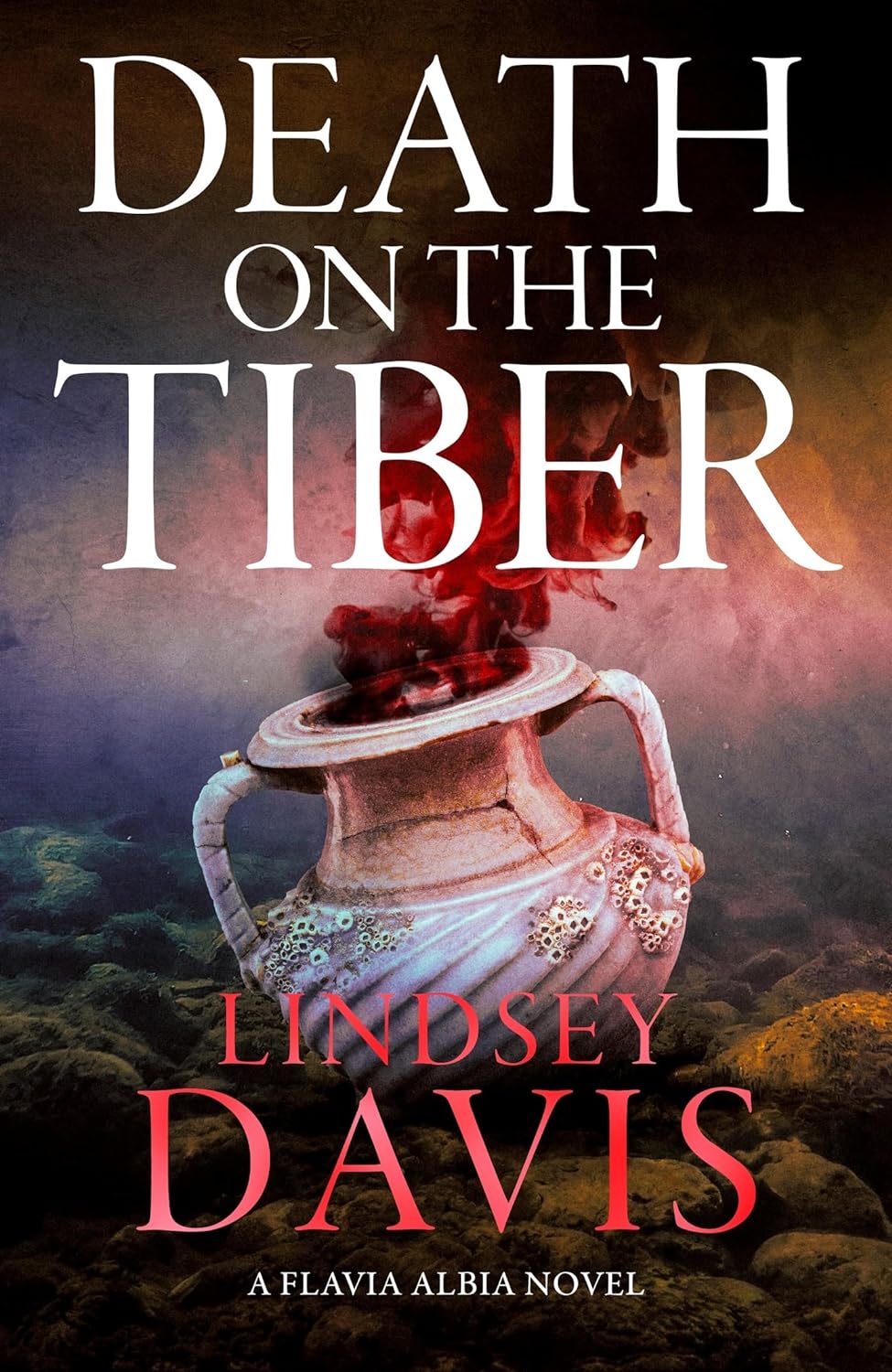
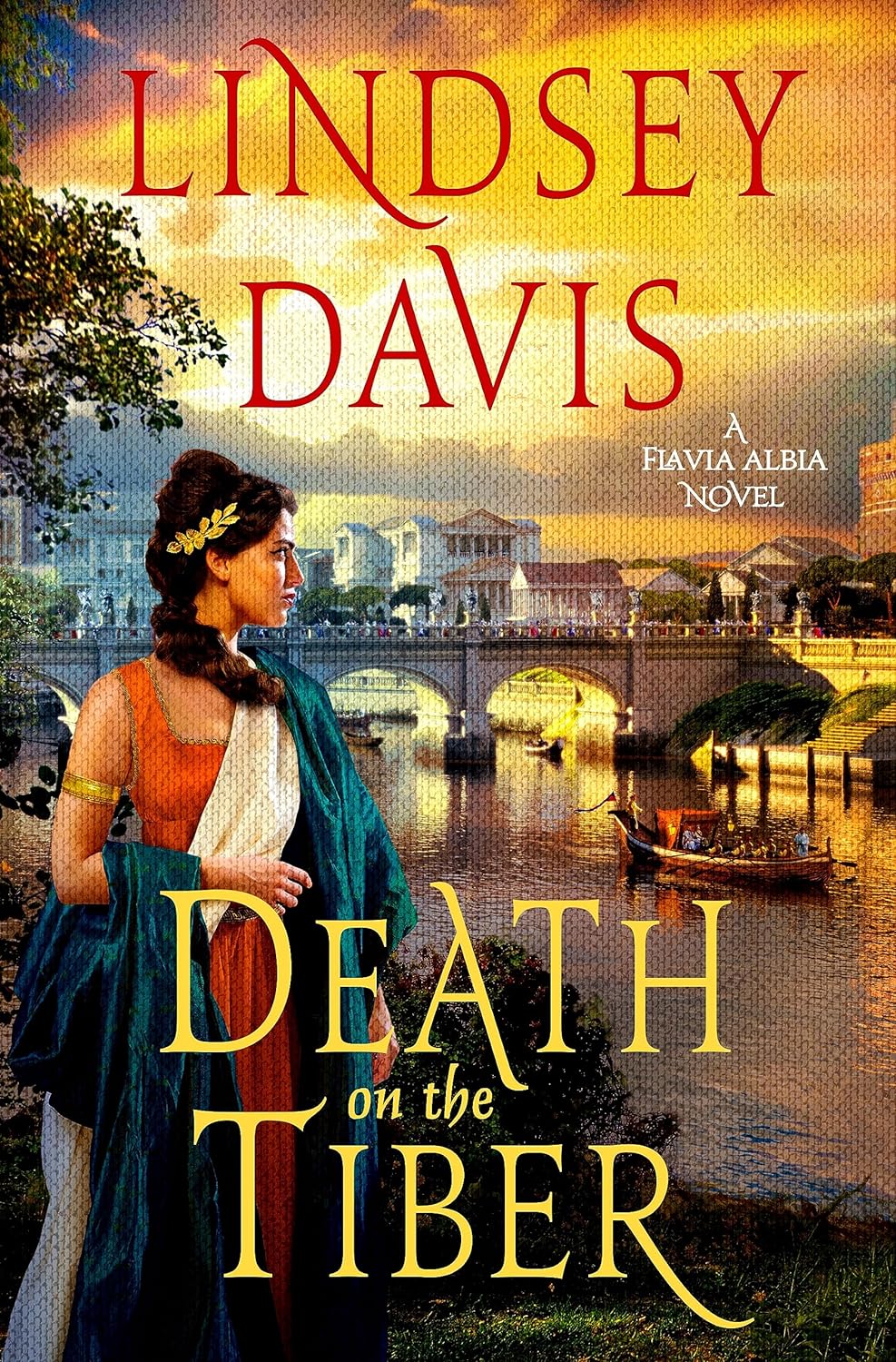
Quick Review – Death on the Tiber by Lindsey Davis

Publisher: Hodder & Stoughton (Trade Paperback – 9 April 2024)

Series: Flavia Albia – Book 12

Length: 380 pages

My Rating: 4.75 out of 5 stars

Amazon

Those in the mood for a clever murder mystery in ancient Rome look no further than the 2024 entry in the long-running Flavia Albia series with Death on the Tiber by Lindsey Davis.

I am a huge fan of historical fiction, and one of my favourite ongoing historical series is the outstanding Flavia Albia books by veteran author Lindsey Davis.  The Flavia Albia books, which are a sequel series to the author’s long-running Falco series, follow a determined private investigator in ancient Rome who takes on a range of complex cases and murder investigations, often encountering many of the city’s over-the-top inhabitants.  I have had an amazing time reading this series over the years, including The Third NeroPandora’s BoyA Capitol DeathThe Grove of the Caesars (one of my favourite books of 2020), A Comedy of TerrorsDesperate Undertakings (one of my favourite books of 2022) and Fatal Legacy.  As such, I try to read every new Flavia Albia book that comes out, and after accidently avoiding it for much of 2024, I recently finished off the 12th book in the series, Death on the Tiber.


Plot Synopsis:

Rome is in chaos. The empire of a mobster chief is falling apart following his death. Rivals, fearsome relatives and associates are taking up position to vie for the spoils.

With hideous murders in the streets of Rome, a lone female traveller arrives with an agenda of her own. But when her corpse is dragged out of the river bearing signs of foul play, Flavia Alba is drawn in, concerned about her fellow Briton’s fate.

Alba’s quest to find the killer becomes deeply personal when she discovers a man at the centre of the plot is an old adversary of hers. Will she be obsessed by revenge? Can she let the past go, or will it consume her?

Death on the Tiber was a great addition to the Flavia Albia series that features its own distinctive crimes, while also cleverly tying into several of the author’s previous Falco and Flavia Albia books. 

The plot of Death on the Tiber is very compelling, as the protagonist, Flavia Albia, finds herself drawn into the investigation of a murdered tourist pulled out of the Tiber.  However, the case becomes personal for Albia when she discovers the victim’s connection to the gangster Florius, an old foe of her fathers, who years before committed unspeakable evils against Albia and who may have finally returned to Rome.  Determined to finally hunt down Florius and make him pay for his crimes, Albia begins her investigation and soon finds herself embroiled in a deadly gang war that could tip the balance of Rome’s underworld.  Forced to compete with a range of interested parties, including her own vengeful father and uncle, the Roman military and several gangsters and their families who Flavia has previously encountered through her work, the protagonist slowly begins to piece together the events that lead to the victim’s death and the connection to her quarry’s current location.

This proved to be a highly personal and complex entry in the series, and one that I felt served as a love letter to the author’s prior works.  A huge range of characters from previous Flavia Albia novels, as well as major figures from the preceding Falco books, are featured throughout Death on the Tiber as the author takes the opportunity to tie together a range of ongoing storylines related to a major antagonist of the Falco books.  This allows for quite a fascinating read, especially for those readers familiar with the previous works, and it was awesome to see Davis bring together a compelling cast of returning figures. 

The plot moves in some interesting directions as the book nears the end, and Davis adds in a range of compelling layers to the case, including disgruntled mobster wives, a big gang war for the control of Rome, and alternating bands of Roman officials seeking to disrupt events.  The conclusion for the book proves to be very emotionally charged, especially as the protagonist comes face to face with her biggest monster and finally gets some closure.  The main mystery of Death on the Tiber is also extremely well written and utilised, and Davis does an excellent job tying in a lot of the novel’s leads and investigative plots into the main hunt for the returning Florius.  While the reveal of the ultimate culprit behind the killing isn’t especially surprising, the way in which Davis addresses their fate is particularly impressive, and it leads to a very fun final moment in the book.  I loved this last little twist, which I honestly think tied the book together very nicely, and it certainly was one of the moments that has stuck with me since finishing Death on the Tiber off.

This ended up being another strong Flavia Albia book as Davis continues to utilise her trademark style in Death on the Tiber.  Focused primarily through the sarcastic and cynical Flavia, Death in the Tiber evolves into a twisty hunt for answers, that brings together mystery, criminal intrigue, and the protagonist’s various personal connections.  Davis has a very compelling way of writing her stories, and her examinations of Rome through the protagonist’s eyes are often light-hearted, sarcastic, and applying modern mentalities to the ancient society.  This results in an impressive read, especially as Davis lays down an exceptional combination mystery and revenge-focussed narrative.  While I really enjoyed how well Davis revisited multiple previous books from both the Falco and Flavia Albia series, it does mean that readers do need a bit of pre-knowledge of these earlier works to fully appreciate Death on the Tiber’s plot.  Davis does provide some much-needed context at times, which will allow some new or forgetful readers to enjoy this book, but I personally think that people should have at least read the last few Flavia Albia books before Death on the Tiber to really get this book.

Despite the series’ general comedic vibe, Death on the Tiber gets very dark at times, especially as the protagonist is forced to revisit her traumatic history.  The author does an excellent job of diving into Flavia’s trauma and pain on the subject, and it was nice for this compelling protagonist to finally get some closure.  Davis nicely balances some of these darker moments by including an extensive cast of eccentric characters, many of whom are continuing their storylines from both the Falco and Flavia Albia series, and there are some very fun moments scattered throughout Death on the Tiber as a result.  This includes a fun competitiveness with Flavia’s father, Falco, a dive into some other important parental figures in her life, as well as her very strong relationship with her supportive and relentless husband.  I personally loved the return of all the various major gangsters Flavia has dealt with over the years, and it was fun to see her try to investigate them after prior experiences.  However, two of Flavia’s female relatives end up stealing the show in Death on the Tiber, especially at the end where they showed an ironic sense of justice.  An overall great extended cast that served to connect this book to the larger series in some outstanding ways.

With Lindsey Davis’s typical impressive writing and a cool plot laden with mystery and criminal intrigue, Death on the Tiber was an amazing entry in one of my favourite historical fiction series.  Entertaining, addictive and very moving, Death on the Tiber had me hooked from the very beginning, and I wish I’d read it sooner.  I look forward to continuing the Flavia Albia series this year, especially as Davis has a cool book coming out in April set around the ruins of Pompei with There Will Be Bodies.

Amazon

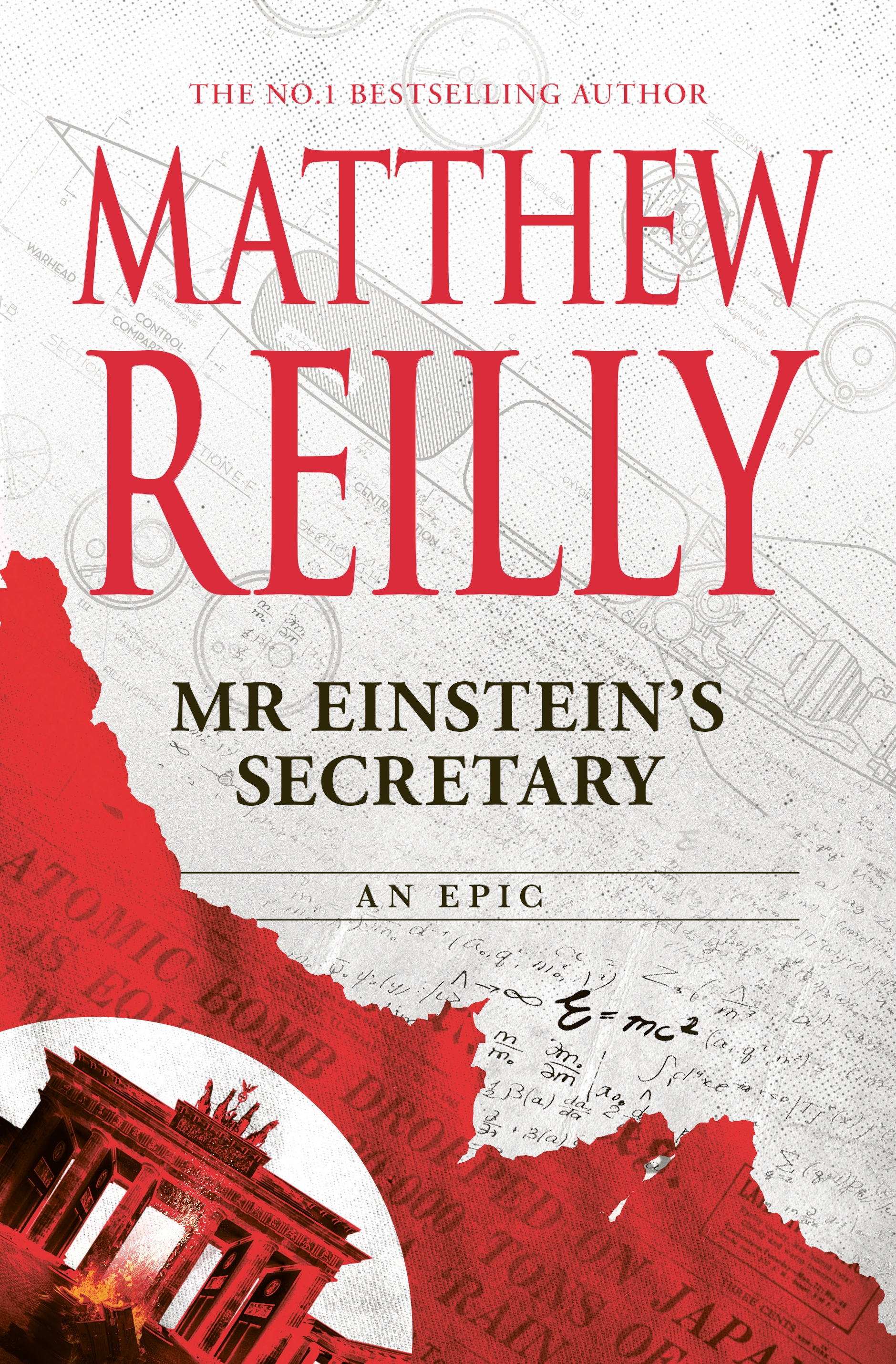
Mr Einstein’s Secretary by Matthew Reilly

Mr Einstein's Secretary Cover

Publisher: Macmillan Australia (Trade Paperback – 17 October 2023)

Series: Standalone

Length: 464 pages

My Rating: 5 out of 5 Stars

Amazon

Acclaimed Australian author Matthew Reilly presents one of the most entertaining, moving and brilliant historical fiction reads of 2023 with his compelling and well-written novel, Mr Einstein’s Secretary.

Matthew Reilly is a highly creative Australian author who has been wowing audiences for years with his elaborate and inventive thrillers and science fiction novels.  Known for his Shane Schofield and Jack West Jr series, as well as several impressive standalone reads, Reilly has produced an intriguing array of fiction throughout his career, much of which revolves around ancient secrets and action-seeking protagonists.  I have personally only had the pleasure of reading one of Reilly’s novels so far, the intriguing 2019 release, The Secret Runners of New York, which saw a group of teenagers travel back and forth between the modern city and a future dystopia.  I really enjoyed this cool book and I have been meaning to read more of Reilly’s works.  As such, when I got a copy of Reilly’s first foray into historical fiction, a favourite genre of mine, with Mr Einstein’s Secretary, I had to check it out, and boy was I glad that I did.

Born at the start of the 20th century in Berlin to an American mother and a German father, Hanna Fischer is a curious young woman whose greatest wish in life is to study physics like her mother and her neighbour the great Albert Einstein.  However, when her peaceful existence is violently turned upside down in 1919, Hanna has no choice but to flee to America and make a new life for herself in New York.

Forced to give up her dreams of studying physics, Hanna makes the fateful choice to enrol in a prestigious school for secretaries.  Her decision will place her in the orbit of some of the most interesting people in the city, including business tycoons, socialites, gangsters and one determined Treasury agent, as she works to find a way to return home.  But as the years go by, it soon becomes apparent that the Germany she left behind is no longer her home, especially when Hanna returns to Einstein’s orbit as his secretary.

Trapped in Germany when the Nazis come to power, Hanna is recruited as an American spy and soon finds herself serving as secretary to several high-ranking Nazis.  Caught between dangerous men, lethal intelligence operatives and her own conflicted loyalties, Hanna attempts to uncover the terrible truths of the Nazi regime without her own secrets coming out.  But not everything in Hanna’s life is as it seems, and one dangerous part of her past will always come back to haunt her.

Mr Einstein’s Secretary was a fascinating and compelling read that had me hooked very early thanks to its unique style, focus on various gripping parts of early 20th century history, and fantastic characters.  Loaded with some fascinating detail, a ton of action and a wonderful life story, I honestly couldn’t put this book down at times and I managed to power through the entire second half of the book in a single afternoon.  Due to its clever writing and brilliant story, I just had to give Mr Einstein’s Secretary a full five-star rating, and this is honestly one of the best historical fiction novels of 2023.

Reilly tells a very unique story in Mr Einstein’s Secretary that primarily focuses on protagonist Hanna Fischer and her experiences living through some of the most turbulent parts of history.  Reilly really piqued my interest early on when the first-perspective narrative opens on the protagonist’s funeral, with the reader apparently seeing it through her ghost’s eyes.  While having the narrator’s funeral upfront can sometimes be problematic, I think it worked out well for this book, especially as Reilly introduces a few key characters for the reader to keep an eye out for, before jumping into three key scenes from the protagonist’s life.  These scenes are three separate interrogations that the protagonist experienced during her intriguing career, each one undertaken by a different regime, including the American police, the Nazis, and the Soviets.  All of these interrogations are key reference points in the main story, and you are immediately intrigued to see the chain of events that leads the protagonist to each of them, as well as how she managed to get out of the deadly situations each time.

After this excellent introduction, the story begins in earnest with a more traditional chronological approach.  Starting with her childhood in Berlin where she lived next to Albert Einstein, Hanna’s story quickly fills with tragedy and adversity, especially as the early clouds of fascism and the consequences of World War I cause her to lose everything and force her to flee to America, where she is enrolled in a secretary school.  This early part of the book is well set out, introduced several key characters, and really showcased some of the defining early moments for the protagonist that would serve her well in the future, as well as exploring the impacts that chance and simple choices can have on a person.  The next section of the novel set in New York is initially a bit slower, but it soon picks up, especially when the Prohibition Era kicks in.  Reilly has an excellent way of portraying someone’s personal story in the most interesting way, and I loved seeing Hanna’s life in America, especially when it combined early corporate America with gangster lifestyle and the burgeoning physics scene.  There is a compelling sojourn back to Germany for Hanna that results in nothing but heartbreak, especially when her twin is involved, and I really enjoyed the protagonist’s encounters with a New York gangster during this time, especially as it showcases just how practical and cold Hanna can be when necessary.  This part of the book ends when it reaches the events of the first interrogation, and the protagonist becomes a more permanent secretary to Einstein.

From there, the plot of Mr Einstein’s Secretary moves at a much quicker pace, especially when Hanna gets dragged into the events surrounding the rise of the Nazi regime.  Trapped in Germany after Hitler’s rise to power, Hanna is recruited to spy on the Nazis and becomes the secretary to key members of the party.  Thanks to this, Hanna has an excellent view of the full evils of the Nazis and becomes involved in several espionage missions against them and the Soviets.  This part of the book combines spy thriller moments with compelling and dark historical detail, and you really get caught up in Hanna’s life as an operative, especially when it goes side by side with some of the major moments of the Nazi regime.  I was absolutely powering through this part of the book it was so darn fascinating, especially as Hanna had to also deal with personal issues and her growing revulsion about what she was witnessing.  Reilly keeps the plot moving quickly in the final third of the book, and there are some truly intense scenes leading up to the fall of Berlin, especially when Hanna is forced to make some hard choices and faces the ultimate betrayal.  I loved some of the shocking moments and twists that emerged in this last section of the novel, especially as it places the protagonist in some major trouble, and the resulting scenes have you constantly on the edge of your seat.  Everything ends on a pretty comfortable and satisfying note, and I felt that Reilly resolved his story in an excellent if crowd-pleasing way.  An overall outstanding, gripping and electrifying story from start to finish.

While this impressive story is pretty strong and exciting in its own right, what really elevates Mr Einstein’s Secretary is the author’s clever and distinctive writing style.  I loved how Reilly set up the entire story as the memories of a shadowy figure watching their own funeral, especially as events unfolding before them reminds the protagonist of some of the most traumatic memories of her life.  The initial focus on the three defining interrogation sequences produces an extra strong start for the novel, and the fascinating foreshadowing that resulted really heightened the reader’s anticipation for the rest of the story.  While the story does transfer to a more traditional biographical novel after these scenes, Reilly breaks this up masterfully by having the narrator suddenly remember other similar events of her life, and then having this scene unfold.  For example, when the character visits a certain location as a child, Reilly will then insert a quick paragraph showing the same location at a different part of her life.  This switch between time periods proves to be a fascinating and powerful way of expressing the character’s linked memories, and it also adds in some interesting additional foreshadowing and some fascinating contrasts.  Reilly does a wonderful job of highlighting what part of the character’s life these memories are from by changing the font type around, and I loved how multilayered the novel got as a result.  An additional font choice towards the end of the book also highlights a shocking and dark change in narrative focus, as a similar figure starts to tell the story in their own twisted way.  These unique writing elements really helped to turn Mr Einstein’s Secretary into quite a distinctive read, and I deeply appreciated Reilly’s desire to experiment and tell a historical story his own way.

Aside from Reilly’s intriguing narration and style choices, I also think that Mr Einstein’s Secretary had an excellent balance of action, intensity, drama and romance to appeal to a wide audience of readers.  The author does a remarkable job of developing his protagonist while simultaneously exploring so many fascinating historical events and moments, especially in New York and Germany.  So many key historical events in the lead-up to and eventual outbreak of World War II are covered in excellent detail, and Reilly does an outstanding job of working his protagonist into these events and making her a witness and participant.  I loved Reilly’s depictions of 1920s New York, which served as a grand backdrop for much of the early narrative, and the author takes the time to showcases several key periods of the decade, from the early roaring twenties with the economic boom, the prohibition era, and the eventual Wall Street crash.  There are also some fascinating, if necessarily dark, depictions of the rise of the Nazi regime in Germany, which Reilly captures perfectly, especially through the eyes of his protagonist who has her own issues with the Nazis due to her family and her association with Einstein. There is even an intriguing discussion about historical physics, with the protagonist having a fantastic inside track, and watching her spy on the German attempts at nuclear technology is an intriguing part of the book, especially after seeing Oppenheimer earlier this year.  Reilly utilises all these historical events extremely well, and his use of them allows for some great support characters, especially as there is a combination of fun original characters and multiple real life historical figures.  I had such a brilliant time with the historical focus of Mr Einstein’s Secretary, and it proved to be a powerful, exciting and well-balanced read.

Matthew Reilly does it again with his first major foray in historical fiction.  Mr Einstein’s Secretary is a powerful and captivating tale of life, love and loss in the run up to World War II and I loved every second spent with Reilly’s compelling protagonist.  Featuring a brilliant and unique style from the author that deeply enhances an already fascinating narrative, Mr Einstein’s Secretary was a treat from start to finish, and I cannot recommend it enough.

Amazon

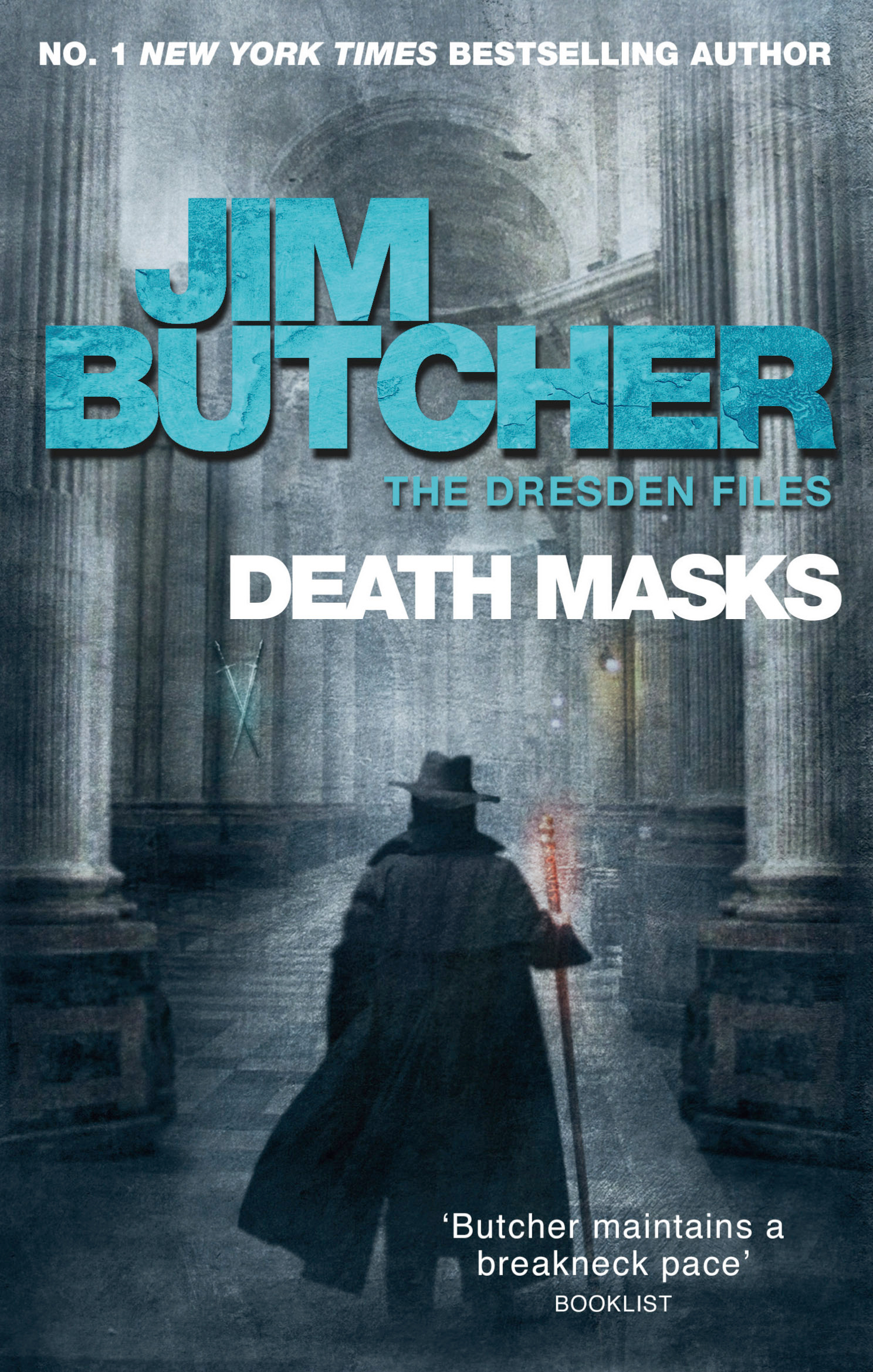
Throwback Thursday – Death Masks by Jim Butcher

Death Masks Cover

Publication: Penguin Audio (Audiobook – 1 August 2003)

Series: Dresden Files – Book Five

Length: 11 hours and 17 minutes

My Rating: 5 out of 5 stars

Amazon

Welcome back to my Throwback Thursday series, where I republish old reviews, review books I have read before or review older books I have only just had a chance to read.  For my latest Throwback Thursday, I highlight another excellent entry in Jim Butcher’s iconic Dresden Files series, with Death Masks.

Fans of this blog will know that I have been having a magical time (pun intended) discovering and getting into the long-running Dresden Files series by acclaimed fantasy author Jim Butcher.  Set in Chicago, the Dresden Files novels follow the adventures of Harry Dresden, wizard for hire and protector of the city against any supernatural threat that comes its way.  This has been Butcher’s major series for years, but I only got into it back in 2020 when I checked out the 17th entry, Battle Ground.  Due to its exceptional plot and the all-out magical war for Chicago that it depicted, this was a pretty epic novel that was not only one of the best books and audiobooks of 2020 but also an excellent recruiting tool for new Dresden Files fans.  It didn’t take me long after reading Battle Ground to check out some of the earlier entries in the series, such as Storm Front, Fool Moon, Grave Peril and Summer Knight, as well as the novella, The Law.  I have had such an epic time with this series that when I felt like a guaranteed five-star book, I immediately decided to check out the next book in the series, with the fifth Dresden Files entry, Death Masks.

Harry Dresden, Chicago’s resident professional wizard, is once again thrust into the middle of far more trouble than he ever dreamed of when a television panel show introduces him to an array of people who want something from him.  Not only does he find himself forced into a duel against a powerful Red Court vampire noble but he is also hired by a Vatican priest to recover a revered stolen holy relic, the Shroud of Turin.

Determined to make the most of these new events, Dresden takes the case and begins to search for the shroud while also preparing for his upcoming fight to the death.  However, many people are interested in obtaining the shroud for their own use, and Dresden finds himself under attack by hitman, gangsters, criminals, and far, far worse.  The Denarians, an ancient and despicable group of fallen angels, have designs on the shroud, and not even Dresden’s most powerful and holy allies, the Knights of the Cross, may be enough to save him.

As Dresden attempts to recover the shroud, he finds that the Denarians and their deadly leader, Nicodemus, have a nefarious plot for the shroud that could destroy everything that Dresden holds dear.  Working with allies old and new, Dresden must overcome the Denarian threat before it is too late, while also managing to defeat the Red Court vampire gunning for him.  With everything on the line, has Dresden finally bitten off more than he can chew?  And what happens when the lost love of his life returns to town, battling her own demons?

Wow, Butcher just cannot strike out!  This is yet another book from him that I have no choice but to award a full five-star rating to.  Death Masks has a deeply addictive narrative that grabs your attention from the very first page and refuses to let go, and some complex and entertaining characters to match.

Death Masks has a pretty awesome story to it that got really addictive very quickly.  Starting off a few months after the events of Summer Knight, Death Masks contains several, great layered storylines, all of which are pretty exciting and intense in their own way and which cross over well to create a complete and powerful narrative.  The first of these immediately places Dresden in the path of several dangerous enemies and opponents as he is dragged into a new case, recovering the stolen Shroud of Turin.  Despite being warned off by his allies, the Knights of the Cross, Dresden naturally pursues, which sets him against established foes, like Chicago’s gangster king, and a powerful new cadre of enemies, who represent one of the biggest threats that Dresden has gone up against at this point in the series.  At the same time, the protagonist is forced to accept a formal duel to the death against a powerful vampire lord, as part of the ongoing storyline about his war with the Red Court, and he also helps the police investigate a disfigured corpse that seems to have been simultaneously infected by every disease known to man.  These events are further complicated by the re-emergence of Susan Rodriguez, his former love interest whose romance was crushed when she was partially turned into a vampire, and who he still holds a massive torch for.

Each of these storylines is quite interesting on its own, and Butcher writes some interesting scenes around all of them, with the primary focus being on the search for the shroud and the fight against the Denarians.  These storylines start pulling together about hallway through the book, and Butcher really raises the stakes for the protagonist, especially when he experiences some major and heartbreaking setbacks.  I really loved the unique blend of character development, fantasy and urban crime that is utilised throughout most of this story, and it is always so much fun to see the protagonist attempting to understand the complex plots arranged against him as he tries to save his friends and city.  Everything leads up to an extremely exciting final third where Dresden and his allies are thrust into a series of battles with massive stakes involved that leave them broken and nearly beaten.  I honestly could not stop listening to the final few hours of this book, and I pretty much powered through the entire second half in less than a day.  There are some epic and very moving moments featured in the big conclusion, and Butcher did a brilliant job of bringing everything together and ensuring that the reader will come back for future instalments of his work.  I particularly loved the final little twist that saw the book’s major villain get one over the protagonist, and I am extremely keen to see what happens with that storyline going forward.

I have so much love for Butcher’s writing style when it comes to the Dresden Files novels, and Death Masks was a particularly good example of this.  Like the rest of the series, Death Masks is told exclusively from the perspective of its central character, Harry Dresden, and this places you right into the midst of all the action and investigations, and you see all the steps as Harry tries to outwit his various foes.  This use of Dresden as the central figure also ensures that the reader gets quite a lot of humour in the story, and the continuous jokes and funny insights really help to make the story that much more fun to enjoy.  There is a great focus on character development and introductions in this novel that I deeply enjoyed, and this works really well with the mystery elements and established fantasy setting to create an excellent narrative.  Butcher keeps the pace of the book sharp and fast here, and all the big events quickly and effectively fall into place where needed.  I liked how the protagonist dealt with multiple problems and cases simultaneously, and Butcher did a good job of balancing and combining these initially separated storylines and threats where necessary.  I did think that Butcher did go over the top in places when it came to the romance sequences, and some of the scenes were a little questionable at times.  Still, this didn’t impact my overall enjoyment of the Death Masks, and I had a blast seeing everything unfold.

Death Masks proved to be a particularly significant entry in the Dresden Files series, and it is a must-read for all fans as a result.  Butcher perfectly sets up several ongoing storylines here while also successfully continuing some established character arcs and introducing a whole new batch of great and interesting characters.  There are so many key events and interactions going on in Death Masks, many of which will be vital for the rest of the series, and I know it helped to give some additional context for some of the events in the later books I have read.  However, like most Dresden Files novels, Death Masks is extremely accessible to new readers, and Butcher always makes a point to expand on the existing storylines and characters in a way that new readers can understand and follow without boring the existing fans.  As such, this is a book with a lot of appeal to many readers, and all fantasy fans can dive in extremely easily.

Death Masks is also a major book for character work, and readers who love the impressive and exciting Dresden Files cast are in for a great time here.  I felt that Butcher presented a great balance of established and new characters in this novel, and there is an excellent focus on development and the emotional issues impacting the protagonist.  Many of the new characters will become major recurring figures in the series from now on and deeply enjoyed seeing how their story started.  Most of the character work hinged on protagonist Harry Dresden, who is the true heart and soul of the book.  I always enjoy quirky and rebellious protagonists in novels with a first-person perspective, and the Dresden Files are a great example of this.  Dresden was his usual funny and disrespectful self for the entirety of Death Masks, and it was so much fun seeing him sass every person he encountered, especially when it enrages the villains.  There is also a great emotional component to Dresden in Death Masks that I enjoyed, as he is still going through a lot of issues.  His already complicated feelings about his past failed romance come full circle here when the girl that got away (well, got turned into a vampire) returns and he is forced to finally confront his repressed feelings for her.  There are also some major moments where Dresden is forced to confront the consequences of his mistakes, especially when they cost other characters, and I loved some of the interactions that occurred as a result.

One of the big returns for Death Masks is the character of Susan Rodriguez, Dresden’s love interest who has been missing for a couple of books.  Susan was partially turned into a vampire during her last appearance and left Dresden as a result.  This book sees her return, and there is a complete change of character because of her transformation, being a lot more confident as well as some more notable abilities.  I liked most of the Susan storyline in this book, not only because fans finally get some closure for the romance between her and Harry but also because she now has some mysterious connections and is working as a covert anti-vampire agent.  There are some great moments with Susan in the book, although I did find one scene to be pretty ridiculous, even though it was supposed to be the sequence that served as the climax of the Dresden/Susan romance arc.  Who knew that all you needed to cure vampiric thirst was a bondage session (I’m barely joking here, that happened).  I mostly ignored this awkward scene (try listening to it whilst on your lunch break at work) from my overall grading of Death Masks, just because it was so much of an outlier, but it was a little weird.  Still, I’m glad we got a return from Susan, and it was interesting to see how much she had changed since the last book.

I also enjoyed the use of the Knights of the Cross in Death Masks, and they served as excellent comrade characters for Dresden.  The Knights of the Cross are three modern day crusaders who wield legendary holy swords and serve as God’s fist on Earth.  We had previously met one of them in Grave Peril, Michael Carpenter, and I loved seeing him again, especially as he is essentially a badass Ned Flanders with a sword and a mission from God.  His mentorship of Harry is a key part of his character arc in the series, and it is really interesting to see him serve as a conscience to the rebellious and faithless Harry.  The two other knights introduced in this book also add a lot to the plot.  The rookie knight, Sanya, was really fun, and I liked his more refreshing take on the role and responsibilities he wields.  However, the best of them was Shiro, the elder knight who acts as the group’s guiding light and who has stood against evil for decades.  I love the depiction of this Japanese badass who literally has fallen angels quaking in their boots, and he was a wise and brilliant character that did a lot in a few short appearances.  Shiro was probably my favourite of the three in this book, and his fantastic dialogue with Harry, especially that description of how he became a Christian, was some of Butcher’s best writing.

Finally, I must talk about the villains, who added a great deal to the story.  Readers are spoiled for choice in Death Masks when it comes to villains, as there are several different groups and individuals who turned up looking to kill Dresden throughout the book.  The first of these is Don Paolo Ortega, a Red Court vampire who seeks to end the war between his people and the wizards of the White Council by killing Dresden in a duel.  Ortega appears to be a mostly reasonable and honourable figure despite his desire to kill Dresden, and I liked the fun banter he had with the protagonist.  I was also glad to see more of Chicago gangster Johnny Marcone, who is one of the best recurring figures in the series.  Marcone always serves as such an excellent foil to Dresden, and their constant sparring and back and forth is a lot of fun to see.  It was particularly interesting to see Marcone become even more involved in the mystical world in this novel, mainly due to the respect he has for Dresden’s abilities, and this serves as a major step towards his current incarnation later in the series.

However, the best villains in the story are probably the group known as the Denarians, a collection of fallen angels possessing desperate or evil humans.  The Denarians are some of the most dangerous beings in the entire Dresden Files, and Butcher gives them an impressive introduction in this novel, showing them as agents of chaos determined to cause as much grief as possible.  Their leader, Nicodemus, is probably one of the most intriguing and sinister figures I’ve yet see Butcher write, and he pretty much always had Dresden on the ropes.  I particularly loved his first major interaction with the protagonist, especially as he was able to completely rattle Dresden, who could barely do anything in response.  The characters were barely able to survive his machinations throughout the book, and he truly showcased how much of a threat he could and would be.  A masterful villain, I cannot wait to see more of him in some of the future books.  All these characters, and more (future superstar Butters has an interesting introduction this book), really add to the captivating story, and I loved how well Butcher developed and featured them in Death Masks.

Unsurprisingly, I chose to enjoy Death Masks on audiobook, which was another excellent and impressive experience.  I really love the Dresden Files audiobooks and Death Masks was another good example of why.  Not only does the format really capture the essence of the story and help the listener become immersed in the urban fantasy world, but it also features some of the best voice work you are likely to find in an audiobook.  That is because Death Masks is narrated by actor James Marsters, who always does a spectacular job brining this series to life.  After providing narration for the first four books in the series, Marsters really knows what he is doing when he gets to Death Masks, and he swiftly dives in and gives the epic narrative everything it needs.  All the characters are voiced perfectly, with some extremely fitting and powerful voices given to them that expertly portray their personalities, ethnicities and mentalities.  Due to the great range of characters in Death Masks, Marsters is required to play a range of figures, from an evil fallen angel, three ultra-good holy knights, a gangster, multiple vampires and more, all of which come out really well.  However, the best work is saved for protagonist and point-of-view character Harry Dresden.  Marsters perfectly inhabits the role of Dresden, and you get the full breadth of his complexities, inner pain, and weird sense of humour, as Marsters narrates the book through his eyes.  You really get the best understanding of Dresden through Marsters’s voice work, and that really adds to the quality of the entire read.  As such, this format comes extremely highly recommended, and you need to try Death Masks’ audiobook as soon as you can.

Another Dresden Files book down, another five-star rating from me.  Death Masks was another epic and exceptional entry in this amazing series, and I continue to be impressed by how well Jim Butcher writes these great books.  Thanks to its excellent and utterly addictive narrative and brilliant character work, Death Masks is probably one of the best Dresden Files novels I have read so far, and I had such a great time with it.  I can think of no higher compliment than to say it made me so happy, I instantly started listening to the next book in the series, Blood Rites, the moment I finished Death Masks.  Make sure to come back next week to check that Throwback Thursday out.

Amazon

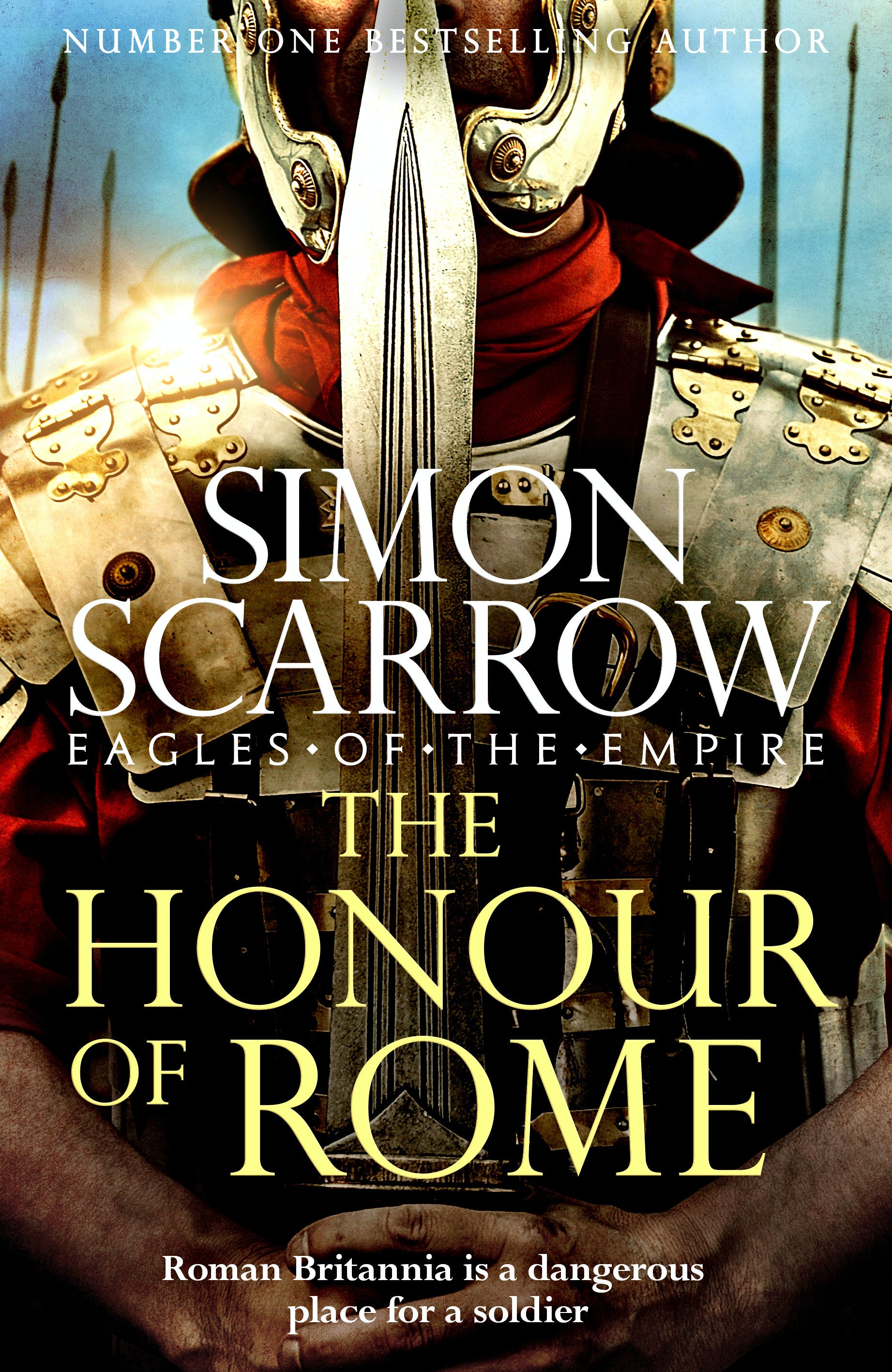
The Honour of Rome by Simon Scarrow

The Honour of Rome Cover

Publisher: Headline (Trade Paperback – 9 November 2021)

Series: Eagles of the Empire – Book 20

Length: 431 pages

My Rating: 4.5 out of 5 stars

Amazon

One of the best authors of Roman historical fiction, Simon Scarrow, returns with another exceptional adventure back in time with The Honour of Rome.

2021 has been a particularly good year for Simon Scarrow readers, as this acclaimed historical fiction author has released two fantastic novels.  The first of these, Blackout, was a clever historical murder mystery novel set in pre-war Nazi Germany, which contained a fantastic and impressive story.  While I deeply enjoyed Blackout, I was a little more excited for the next awesome entry in Scarrow’s long-running Eagles of the Empire series.  The Eagles of the Empire books follow two officers in the Roman army, Centurion Marco and Prefect Cato, as they fight in multiple battle fields across the Roman Empire.  I have been a major fan of this series for years and have had the pleasure of reading every prior entry in it, while also reviewing some of the latest entries, including The Blood of Rome, Traitors of Rome and The Emperor’s Exile.  As such, I was very excited when I received the latest entry in this series, The Honour of Rome, a couple of days ago, and instantly started reading it.  The Honour of Rome is the 20th novel in this series and takes its great protagonists on another intense adventure.

Britannia, 59 AD.  After retiring from the Roman Legions, former Centurion Marco has travelled back to Britannia 15 years after he helped conquer it.  Now a married man, Marco is hoping for a quiet life, enjoying the fruits of the successful inn in Londinium that he half-owns with his mother.  However, not everything is as calm as he hoped.  There are rumours about the tribes being restless once again, and the streets of Londinium are alive with criminal gangs.

Upon arriving at his mother’s inn, Marco discovers that she is being extorted for protection money by a ruthless gang.  Determined to stop this, Marco attempts to resist the gangsters, only to find himself outmatched and a potential pawn into the middle of a vicious gang war.  At the same time, Marco finds himself drawn into the defence of the colony, especially when one of the local tribes refuses to pay any more taxes.

After a bloody punitive raid with a group of veteran reserve soldiers, Marco returns to Londinium, only to face the consequences for his defiance.  Beaten and bloodied, Marco is unsure how to fight back until his old friend Cato appears.  Cato, who has left Rome without leave to hide Nero’s exiled mistress, is always willing to back Marco up in any sort of fight, and he has an ambitious plan to end the gang problem once and for all.  Will the team of Marco, Cato, and their veteran allies be enough to overcome the city’s vicious gangs, or have these proud war heroes finally met their match?

This was another awesome novel from Scarrow, who has once again produced an exciting and fast-paced historical fiction read that perfectly envisions the landscape of Roman-occupied England.  The Honour of Rome is a great read, and I loved the cool combination of historical and crime fiction elements throughout it.  I ended up reading this book in only a few short days and loved every second of it.

Scarrow has come up with another amazing and entertaining story for this compelling book, which takes his long-running protagonists on another intense and bloody adventure.  One of the things that I have always enjoyed about the Eagles of the Empire series is the range of different subgenres that can be blended with its historical fiction elements.  The Honour of Rome is a great example of this as Scarrow utilises a crime fiction based storyline that blends with the overarching historical elements extremely well.  The protagonist is swiftly drawn into a vicious confrontation with two warring gangs of criminals upon his arrival in Londinium, which proves to be an outstanding basis for the main storyline.  At the same time, he once again becomes involved in the Roman garrison’s ongoing conflicts with the local Britons.  This combination of crime and military elements is very effective throughout the novel, and I liked seeing the conflicts with both gangsters and rebellious natives.  This also allows Scarrow to bring in several solider characters into the main crime-fiction storyline as backup as the story progresses, and it was pretty fun to see a bunch of retired soldiers taking on the antagonists.  The author really sets up everything extremely well in this book, and there isn’t a moment of calm or quiet throughout the entire novel, as the protagonist gets involved in several intense and well-written fights and battle sequences.  I found the last third of the novel to be particularly exciting, especially as the protagonists attempt an ambitious and risky strategy.  This results in the predictable satisfying, if bloody, conclusion, and Scarrow has made sure to set up some cool new storylines that will no doubt be the basis for the next few books.  An enjoyable and action-packed thrill-ride from start to finish, I had a fantastic time reading this latest historical adventure.

One of the more interesting things about The Honour of Rome was the noticeable change in character focus that helped set it apart from the other Eagles of the Empire books, namely that it spent most of the narrative focusing on only one of the series’ protagonists.  This is not too surprising, especially as the previous book in the series, The Emperor’s Exile, focused on Cato to such a degree that I kind of assumed that Scarrow was planning to permanently retire Marco.  However, I’m pleased to say I was wrong about this, as two-thirds of this latest book is exclusively told from Marco’s perspective.  I had a great time following Marco in this novel, and it is always a lot of fun to see the gruff and hard-headed Centurion in action.  There are some great moments surrounding Marco in this novel, from being out of his depth when it comes to combating criminals rather than enemy soldiers, to his great camaraderie with the fellow veterans in the colony.  You also have to love the fun interactions that occur around him as he finds himself stuck between his strong-willed wife and his equally strong-willed mother.  This ended up being a really good Marco novel, and I deeply enjoyed it.  Of course, Cato does show up towards the end of the book, and the novel is soon back to its typical dynamic, with Cato taking tactical lead.  There are also some interesting long-term storylines surrounding Cato, especially as he has fled from Rome with the Emperor’s exiled mistress.  It was great to see this team in action once again, especially as they enact another madcap scheme, and I had another fun time following them.

I also rather enjoyed the cool historical setting featured within this great novel, as the protagonists once again return to Britannia.  Historical Britannia is a well-utilised setting in the Eagles of the Empire books, having been the location of several of the earlier novels, including the first five entries in the series.  It made me a little nostalgic to see this damp and gloomy setting once again, especially as it proves to be just as chaotic and violent as ever.  This book makes full use of its clever move from the more traditional battlefields of Britannia to the city of Londinium, and I loved the inclusion of a crime-ridden, early London, especially as Scarrow tries his best to show it in all its dark and rapidly expanding glory.  I also enjoyed the inclusion of the veterans’ colony that was a major secondary setting for much of the book.  It proved to be fascinating to follow these characters who have chosen to settle in this harsh country and spending time conquering it, and I liked their inclusion in the novel.  It was pretty cool to see these retired soldiers in reserve taking on enemies, both on a proper battlefield and against the criminal element, and I thought it was a fun and compelling inclusion to the story.  I also appreciated that, after several books, we finally get a continuation of the Boudica storylines that were set up in some of the earlier novels.  Scarrow is also clearly setting up Boudica’s rebellion for later in the series, and I cannot wait to see how our protagonists, with their established history with Boudica and her people, will fit into it.

With this awesome 20th entry in his amazing Eagles of the Empire series, Simon Scarrow continues to highlight why he is one of the absolute best authors of historical fiction in the world today.  The Honour of Rome has a brilliant and compelling story that perfectly blends historical and crime fiction elements together into one thrilling tale.  I had a wonderful time reading this great book, and I deeply appreciated the way in which Scarrow continues the adventures of his compelling characters by once again returning them to the familiar setting of occupied Britannia.  The Honour of Rome is another highly recommended historical read, and I cannot wait to see what happens next in this series.

Amazon

Quick Review – The Widow’s Follower by Anna Weatherly

The Widow's Follower

Publisher: Self-Published (Trade Paperback – 8 June 2021)

Series: Bermagui Mystery – Book Two

Length: 222 pages

My Rating: 4 out of 5 stars

Prepare for a quick and fun historical murder mystery with The Widow’s Follower, an excellent and compelling second novel from Canberran author Anna Weatherly.

Synopsis:

1919, Sydney.  No-one was shedding tears for the death of Roy Maguire, especially not his wife. She’d been hiding from him for the past five years and now she’d come back to reclaim her freedom. It should’ve been simple. So why was she finding herself the object of interest for half the criminals in Sydney? At first it was mystifying. Then it was terrifying.

This is the second novel involving May Williams, once the wife of Sydney crime figure Roy Maguire. This time May travels to Sydney where she finds that extricating herself from her abusive husband is a dangerous business, even when he’s dead.


The Widow’s Follower
is the second novel from Weatherly, following on from her 2018 debut, Death in the Year of Peace.  This series is a fantastic historical murder mystery series that follows a young woman in 1919 who takes the name May Williams and flees from Sydney to the small town of Bermagui to escape from her abusive, criminal husband.  The first book sets the scene for this series while also presenting a murder mystery as the protagonist attempts to uncover a killer in town.  This sequel is set right after the initial book and sees May return to Sydney after the death of her husband.

I really liked the interesting story contained within The Widow’s Follower, as it combines historical fiction elements with an interesting, gangster-filled mystery, as well as featuring some great character development.  Despite being relatively short for a novel, clocking in at just over 200 pages, Weatherly manages to achieve a lot in this book.  The Widow’s Follower primarily focuses on May being harassed by gangsters and criminals around Sydney as she attempts to settle her late husband’s affairs.  This gets complicated when it becomes apparent that before his death, her husband had stolen a great deal of money from his employers and managed to annoy all the big movers in town.  This forces May to investigate her husband’s last few days to find the money to save herself and her friends from these gangster’s ruthless attentions.  She also starts investigating the murder of her husband’s lover, a crime he was accused of before his death, as she cannot believe that even he could kill the father of his illegitimate child, whose welfare May also becomes concerned about.

This leads to an intriguing and extremely fast-paced story, as May is drawn into a twisted web of lies, manipulations and additional murders, while also trying to decide about her future.  There is an interesting blend of storylines contained within this novel, and I quite liked the exciting and dramatic directions that it went in, especially as May slowly gets closer to the truth.  May finds herself the target of several dangerous people from Sydney’s underbelly, each of whom is interested in her for all the wrong reasons.  At the same time, May’s friends back in Bermagui find themselves in danger, and this results in some compelling discussions about May’s future and whether she wants to stay in Sydney, where she has some chance at professional success, or return to the small town and pursue love.  These enjoyable storylines cleverly set up a massive twist about three quarters of the way through that I honestly did not see coming.  This cool twist changes everything about the novel, and I deeply appreciated how it was foreshadowed and the implications it has on the rest of the story.  The final part of the book is an intensely paced, as May finds herself in the middle of a dangerous conflict between some of the antagonists, while also reeling from some big revelations.  I really found myself glued to the final part of the book, especially as it contained some cool scenes, such as a multi-person chase throughout the streets of Sydney.  The book ends on a positive note, and it will be interesting to see where Weatherly takes the story next, especially as the protagonist’s storyline seems mostly fulfilled.

I also appreciated the cool setting of this novel, the historical city of Sydney in 1919.  Weatherly spends a significant amount of time exploring Sydney throughout the novel, and you end up getting a great sense of its size, layout and people during the early 20th century.  The author goes out of their way to try and emulate the historical version of this city, including by featuring clippings from real-life historical newspapers at the start of every chapter, a fun technique that I felt helped drag me into the moment.  Weatherly also spends time examining how recent world events had impacted the city, such as the recent Spanish Flu pandemic (very topical) and the slow return of Australian troops from the European battlefronts of World War I.  This fascinating setting added a lot to the authenticity and intrigue of The Widow’s Follower’s story, and it was really fun to explore this captivating historical locale.

Overall, I had a wonderful time with The Widow’s Follower, and I ended up reading pretty much the entire thing in one sitting.  Anna Weatherly came up with a clever and entertaining tale, and I had a great time getting to the bottom of the intense mystery that was featured within.  A fantastic and enjoyable piece of Australian historical fiction, this is a great book to check out and I look forward to seeing what this new author produces in the future.

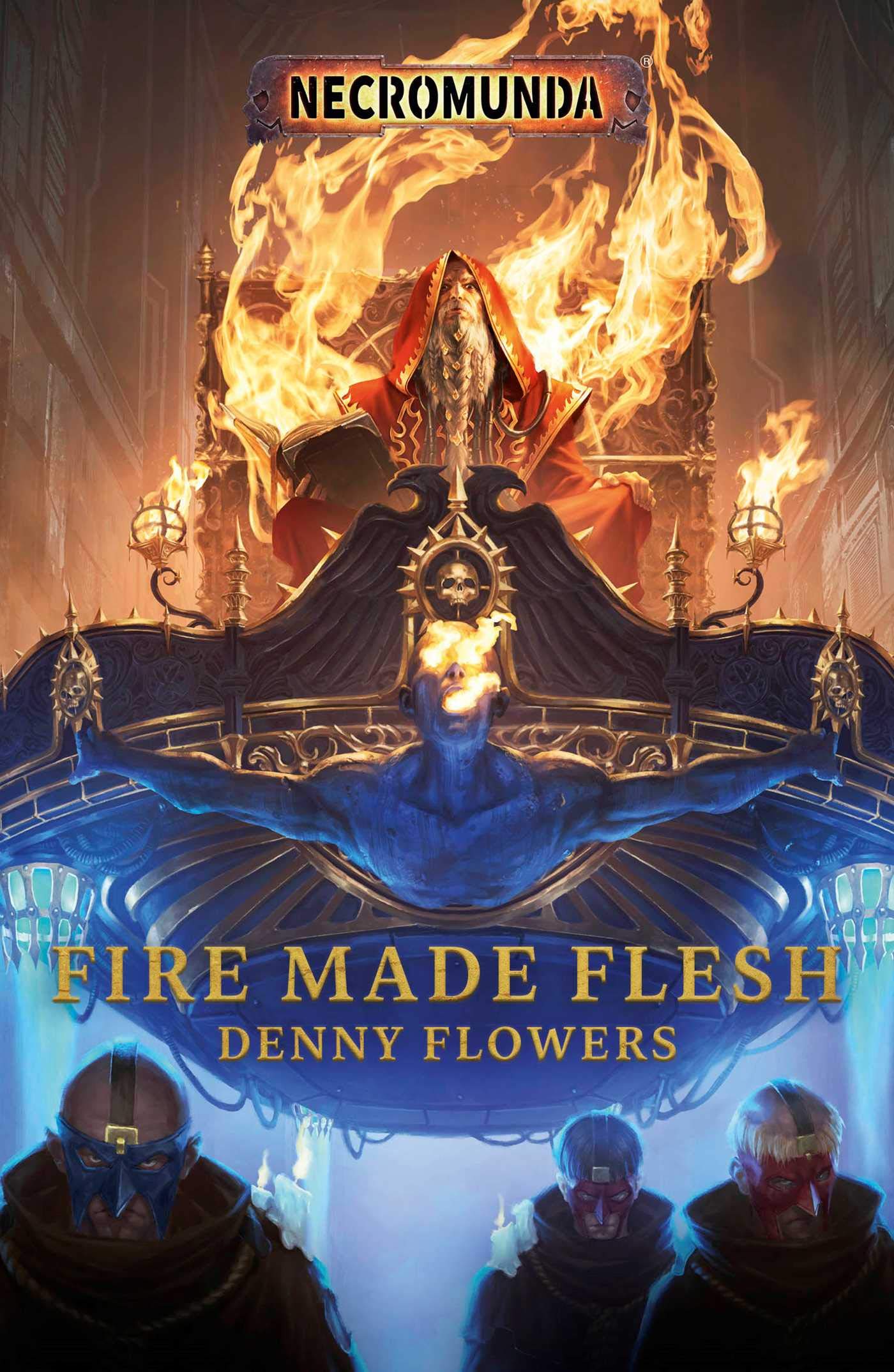
Fire Made Flesh by Denny Flowers

Fire Made Flesh Cover

Publisher: Black Library (Audiobook – 5 June 2021)

Series: Necromunda

Length: 13 hours and 29 minutes

My Rating: 4.25 out of 5 stars

Amazon     Book Depository

Prepare to return to the violent and deadly world beneath the hive cities of Necromunda, as Denny Flowers presents an outstanding and compelling entry in the Warhammer 40,000 universe with Fire Made Flesh.

Over the last year or so I have been having fun exploring the immense extended universe that has sprung up around the Warhammer 40,000 and Warhammer Fantasy tabletop games.  I have so far read several cool entries in the Gortrex and Felix fantasy series (Trollslayer, Skavenslayer and Daemonslayer), as well as the awesome science fiction reads First and Only and Deathwatch: Shadowbreaker.  However, my favourite Warhammer novel so far was the deeply entertaining Kal Jerico: Sinner’s Bounty, which was part of the Necromunda sub-series, another tabletop game set in the gothic Warhammer 40,000 universe.

The Necromunda games and extended universe are all set in and around the towering and immense hive city, Hive Primus, capital of the industrial planet of Necromunda.  Hive Primus is a city of billions, with the inhabitants crammed together in a massive hive structure located both above and below ground.  Necromunda fiction is primarily based in the Underhive, the foundational layers of the hive and below, made up of tunnels, habitation zones and caverns, most of which have been abandoned as the hive was built up.  The Underhive is filled with various gangs and feuding families who fight in these tunnels for riches, dominance and glory.  This unique landscape makes for some impressive stories, such as the awesome narrative of the latest Necromunda novel, Fire Made Flesh.

Deep underneath Hive Primus many secrets and treasures lay hidden in the darkness, waiting to be found by bold adventurers, but none are spoken of with more reverence than the lost habitation dome, Periculus.  Periculus was once a flourishing base of commerce where both sanctioned trade and illicit dealings were held, and vast wealth was accumulated.  However, Periculus was mysteriously abandoned years ago when its inhabitants were killed, and all knowledge of its location has been lost.  Now, after years of searching, someone has rediscovered the dome, and all hell is about to break loose.

Believing that the ruins of Periculus hold innumerable treasures and opportunities, various gangsters, Guilders, hive scum and opportunists have descended into the Underhive, hoping to stake their claim.  However, none of the people moving towards Periculus are more dangerous than the revered Lord Silas Pureburn of the Guild of Fire.  Holding a monopoly on energy production in the Underhive and gifted with a holy flame from the God Emperor himself, Pureburn inspires loyalty and religious fervour wherever he goes.  However, behind his holy facade of purity and flame lies a dark soul determined to dominate everything and everyone he encounters.  One of the few people to see the truth about Pureburn is young Guilder Tempes Sol.  Sol, a scion of the Mercator Lux, the Guild of Light, has found himself bested by Pureburn many times, and he is determined to discover the truth behind his improbable works.  After an unholy accident scars Sol and leaves him with an unusual power, he is forced to flee his guild and travel to Periculus, where his only hope of redemption lies in exposing Pureburn as a fraud.

However, upon arriving at Periculus, Sol discovers a settlement on the edge.  Pureburn has gathered around him an army of religious fanatics who control Periculus through fear, fire and bloodshed.  Determined to stop his insidious influence before it is too late, Sol attempts to forge alliances with other newly arrived inhabitants of Periculus who have been disadvantaged by Pureburn.  However, the deeper Sol dives into Pureburn’s actions, the more danger he finds himself in, as this seemingly holy man hides a dark and disturbing secret.  Worse, even more terrible dangers are affecting people within the dome, as twisted creatures roam the shadows, and the humans are struck with a dark rage that drives them to great acts of violence.  As the forces within gather for a final deadly confrontation, the fate of both Periculus and the entirety of Hive Primus hangs in the balance.

Fire Made Flesh was an interesting and impressive read that did an amazing job of bringing the twisted maze of the Necromunda Underhive to life.  This was actually the debut novel of author Denny Flowers, who has previously written some fun Necromunda short fiction and novellas but had yet to produce a full-length book.  This turned out to be a pretty awesome first novel from Flowers, and I had an outstanding time getting through the intense story, especially with its unique locales and outrageous characters, and it was a fantastic piece of Necromunda fiction.

At the heart of Fire Made Flesh lies a compelling and intense story that showcases the unique and deadly battle for control of Periculus.  After some set-up to show the rediscovery of the lost dome, Flowers starts establishing the various characters and their motivations, exploring how and why they are heading to Periculus.  Told from multiple character perspectives, the reader gets an interesting look at each point-of-view character, as well as the people they travel with.  While this was a good introduction to the many complex aspects and figures of the novel, it did make the pacing of the first third of Fire Made Flesh a tad slow, with a couple of difficult sections.  However, these pacing issues are resolved around halfway through Fire Made Flesh, once all the primary characters make it to Periculus.  From that point onward, the book really picks up, especially as the reader has grown attached to protagonists by this point.  From there the rest of the story is extremely fast, with a big moment two-thirds in, resulting in utter bedlam across Periculus and thrusting each of the characters into extreme danger.  After several intense and action-packed sequences, the entire narrative gets wrapped up extremely well in a satisfying conclusion, with each of the fun character arcs set up throughout the book coming together wonderfully.  I had an absolute blast with this narrative, and I felt that it had the right blend of action, intrigue, character development and Warhammer 40,000/Necromunda detail, to keep every reader happy.  I was really impressed by how Flowers was able to bring the disparate storylines together into one entertaining read, and I ended up powering through the last half of the novel in less than a day.  I also deeply enjoyed some of the cool twists and reveals right near the end, as they contained some excellent character moments.  Interestingly, the story is left open for a sequel, and I know I will be curious to see what happens in the Underhive next time.

Fire Made Flesh is an excellent addition to the Necromunda range of fiction, and I appreciated how Flowers attempted to examine and recreate the various elements of the unique landscape and culture featured within this fictional location.  Flowers really dived into the lore surrounding Necromunda, and the reader is soon engulfed in discussions about the social order, technology, and religious zeal of the Hive City.  While the author did a good job of trying to give context to this setting and its various features, readers may get a little overwhelmed with all the unique lore elements that are shovelled into it, especially at the front of the book when Flowers was trying to set everything up.  While I managed to keep my head around what was happening and what the characters were talking about, I could easily see a reader who has less experience with Warhammer 40,000/Necromunda lore, being a bit more confused and potentially getting lost.  Still, this ended up being a great Necromunda novel, and I loved the way in which the author featured the various gangs and controlling interests.  I especially enjoyed the in-depth examination of the Guilders, Hive Primus’s merchant class, who provide the various services to keep the settlements running.  Fire Made Flesh features members from the various guilds, each of whom have different professions, including slavers, energy providers, fuel dispensers and corpse grinders (people who process bodies to produce corpse-starch, the hive’s primary food source).  Readers get a pretty intense crash course in Necromunda lore in this book and will end up having a good understanding of how Underhive works.  There are a lot of details that will appeal to long-term fans of the Necromunda game and its associated extended fiction, and they will no-doubt love to see another entertaining and dark adventure.  While there are some connections to previous novels, including some of Flower’s short-fiction, I would say its easy enough for most people familiar with the Warhammer 40,000 universe to jump into this book without getting too lost, and even general science fiction fans should be able to have fun with this novel.

Flowers also makes great use of the dark and dangerous setting that is the Underhive throughout Fire Made Flesh.  The Underhive is already an awesome and well-established setting, but Flowers really tried to show just how hostile and unpredictable it could be.  There are some great descriptions of the tight walkways, giant caverns and isolated settlements which prove to be an outstanding backdrop to the dark narrative, and I had a lot of fun exploring some new locations in this novel.  Periculus itself is also an impressive setting, as the reader is treated to an intriguing look at a newly formed town that is slowly getting to its feet in the ruins of an abandoned settlement, and all the strife that comes as a result.  The depictions of the town surrounded by monsters, coated with powdered bone, and filled with fractious groups with enflamed personalities, really helps to set the mood for much of the novel, especially as it all comes crumbling down again.  I deeply enjoyed this cool setting and I think that it was an exceptional addition to a fun novel.

I also had a lot of fun with the compelling collection of characters featured in Fire Made Flesh.  Flowers made use of several entertaining point-of-view characters throughout this novel, including several protagonists of his previous short fiction reads, and this results in a vibrant and well set-up blend of personalities and compelling personas.  The central protagonist is Tempes Sol, the young Guilder genius who spends his days attempting to understand power, electricity, and technology.  Tempes has a rather rough journey in this novel, mostly brought on by his obsession with stopping the book’s antagonist, Pureburn, who has bested him in several prior encounters.  However, this time Tempes is suffering from the after-effects of a psychic attack, which has gifted him strange lightning abilities associated with his cybernetic upgrades.  Cast out of his guild and on the run, Tempes is a desperate figure in this novel, attempting to show the hypocrisy of Pureburn while also trying to redeem himself and understand his new powers.  I felt that Tempes had a very interesting storyline in this novel, and I found his personal growth and the exploration of his personal technology to be quite fascinating.  I wasn’t the biggest fan of his impulsive behaviour and self-righteous personality, but he did start to shed those as the novel progressed, while also developing a certain amount of savviness, especially when it came to some of his supposed allies.  It looks like Flowers is setting Tempes up for some interesting storylines in the future, and I would be quite keen to see this protagonist in another book at some point.

I was also a big fan of the antagonist of Fire Made Flesh, Lord Silas Pureburn.  Pureburn is another Guilder character who specialises in bringing fire and fuel to isolated communities, even when it shouldn’t be possible.  This, and his family’s legacy as keepers of a holy flame, sees him given religious reverence by the general population, as well a collection of devoted, if deranged, followers, who view him as a celebrated champion of the Emperor.  However, Pureburn is really a deceitful and manipulative being, who cares only for profit and his own selfish goals.  Flowers does an amazing job setting this antagonist up and the reader is soon pretty sick of his hypocrisy and arrogance, something that become really apparent after you read a few of his point of view chapters.  Pureburn ends up annoying or alienating every single protagonist in this book, which results in a loose alliance as everyone attempts to take him down.  I love a villain so evil that he brings different people together, and this was a great antagonist to hate, especially once you find out the true source of his power.

Aside from this compelling protagonist and entertaining antagonist, this novel also featured a great range of additional characters with whom the reader gets to spend time with.  My personal favourite had to be Lord Credence Sorrow, a corpse grinder contracted to bring food to Periculus against his will.  Sorrow is a lover of fine things, and his enjoyment of delicate items and gourmet food is at odds with his profession of turning corpses into edible powder.  This character has a brilliant amount of flair, and all his scenes are particularly entertaining, especially as he keeps finding himself stuck between some dangerous employers, resulting in quite a fun and fitting overarching storyline.  I also had a great time with the oddball partnership of Caleb Cursebound, the self-proclaimed ninth most dangerous man in the Underhive, and his silent Ratskin partner Iktomi.  These two make a great pair, especially as Caleb has all the bluster and personality, while Iktomi has a wicked amount of lethal skill, making them a surprisingly effective team, and I loved the entertaining odd-couple vibes that they gave out throughout the book.  I also must highlight Anquis, a member of the notorious Delaque family of spies and infiltrators.  Anguis spends most of the novel helping Tempes achieve his goals with her intelligence-gathering and manipulations.  However, it soon becomes quite clear that Anguis is playing her own games, and no one, especially Sol, knows what she is really after.  The final character I want to talk about is Virae the Unbroken, a Chain Lord (slaver) and pit fighter, who is hired to capture unlucky civilians and bring them to Periculus for labour purposes.  Despite initially appearing as a blunt and unforgiving figure, Virae soon proves to be one of the most complex and best-written characters in the entire novel.  Virae is a former slave herself, who proved herself to be tough and unbreakable, resulting in her title and her eventual promotion to slaver.  However, she really struggles with her profession in this novel, especially after many of her charges die on the journey to Periculus.  Her battles for survival, especially in the face of Pureburn’s evilness are pretty excellent, and I loved her eventually transformation into a bloody figure of vengeance.  This turned out to be an outstanding collection of characters, and I deeply appreciated how Flowers used them to enhance Fire Made Flesh’s great narrative and make it even more exciting and compelling.

I decided to grab the audiobook version of Fire Made Flesh.  This format has a decent run time of around 13 and a half hours, and I ended up powering through it in only a few days, especially once the story started to get very exciting and fun.  I had an outstanding time getting through this audiobook, and one of the main reasons for this was the impressive narration of Joe Jameson, whose work I have previously highlighted in awesome fantasy audiobooks like King of Assassins by R. J. Barker, and The Kingdom of Liars and The Two-Faced Queen by Nick Martell.  These previous works by Jameson have been some of best audiobooks of their respective release year, and Jameson is easily one of my favourite narrators.  He has an outstanding voice for fantasy and science fiction, and I love the way he can make a story move at a fast pace while also ensuring that the listener is absorbing all the detail and obscure lore with interest.  Jameson did a really good job of voicing each of the characters within Fire Made Flesh, and while some of the voices were very similar to those he used in the other books, I think that they fitted this new group of characters extremely well.  You get a real sense of the various emotions and personalities of each of these characters, and his affinity for voicing outrageous figures such as religious zealots and conniving businessmen proved very useful here.  I had a great time with this audiobook, and it was an amazing way to enjoy this dark and compelling story.

Fire Made Flesh by Denny Flowers is an exciting and captivating novel in the Necromunda series.  This is an entertaining and intense science fiction read that makes full use of the unique Warhammer 40,000 universe, the cool setting of the Underhive, and some great and memorable new characters, to produce an electrifying tale.  I had a fantastic time reading this book and I cannot wait to see what other adventures wait for this outrageous group of characters in any future Necromunda novels Flowers writes.

Amazon     Book Depository

Quick Review – Breakout by Paul Herron

Breakout Cover

Publisher: Headline (Trade Paperback – 9 March 2021)

Series: Standalone

Length: 291 pages

My Rating: 4 out of 5 stars

Amazon     Book Depository

Prepare yourself for one of the most exhilarating and action-packed novels of 2021 with the ultra-exciting thriller novel, Breakout by Paul Herron.

Breakout is an intriguing and fantastic novel that caught my eyes earlier this year.  This fun book was written by Paul Herron, the pseudonym for established author and screenwriter Paul Crilley.  Crilley, whose body of work includes his Delphic Division, The Invisible Order and The Chronicles of Abraxis Wren novels, appears to have taken this opportunity to dive into the thriller genre in a big way with Breakout.  While I have not read any of Herron/Crilley’s books before, I found myself really drawn to this latest novel due to its outrageous and fun-sounding plot.

Synopsis:

As explosive as a Hollywood blockbuster, this high-concept thriller is perfect for fans of James Patterson, David Baldacci and Gregg Hurwitz.

A LETHAL STORM. THE MOST DEADLY PRISON. WHO WILL SURVIVE THE NIGHT?

Jack Constantine – a former cop who killed one of his wife’s murderers in an act of vengeance – is serving his time in Ravenhill penitentiary, a notorious ‘supermax’ home to the most dangerous convicts in the country.

When an apocalyptic superstorm wreaks havoc across the USA, the correctional officers flee the prison…but not before opening every cell door. The inmates must fend for themselves as lethal floodwaters rise and violent anarchy is unleashed.

Teaming up with Kiera Sawyer, a Correctional Officer left behind on her first day of work, Constantine has one chance of survival – he must break out of a maximum security prison. But with the building on the verge of collapse, and deadly chaos around him, time is running out…

Breathless, exhilarating and brilliantly original, this high-octane thriller is perfect for fans of Gregg Hurwitz, Lee Child and David Baldacci – and blockbuster action movies like John Wick.

As you can imagine, the idea of a supermax prison with all the inmates loose and a destructive superstorm on the way was something that sounded pretty damn awesome and it was one of the main reasons that I wanted to read Breakout.  There were so many cool things that could happen with such a narrative and Herron made sure to produce an epic and fast-paced narrative that is guaranteed to keep your attention through every electrifying scene.

The best way to describe Breakout is that it is very similar to the most insane action movie script you have ever seen.  Herron has essentially written nearly 300 pages of wall-to-wall excitement and movement, as the protagonists are thrust into an unthinkable situation with very little chance of survival.  The author does an incredible job setting up the initial threads of this great story, with compelling and detailed introductions of the troubled central character, Jack Constantine, the prison, the storm, and the other personalities contained within the prison.  The author also makes good use of some flashback sequences at the start that not only tell Jack’s story but also set up some major plot points, such as two characters the protagonist really wants to kill and a major antagonist.  All of this set up ensures that when the mayhem begins, it can go on at a continuous pace, with Jack, the trapped rookie prison guard, Keira Sawyer, and other associates running into problem after problem without any additional background information.  These obstacles include rival prison gangs, flooding, insane winds, collapsing buildings, impromptu fight clubs, a deranged cult leader, and a vengeful gangster.  These inclusions ensure that the reader can barely take a breath without something cool happening, and it is extremely easy to read this novel in one sitting.  All this leads up to big conclusion as the protagonist has to make some big decisions, as well as deal with the consequences of a few good twists that Herron added.  I deeply enjoyed this entire narrative, and action lovers everywhere are going to have an absolute blast getting through this fun book.

Breakout contains an intriguing array of characters, although I must admit that I was not taken by central protagonist, Jack Constantine.  Constantine is a bit of an ass at the best of times, as he is very arrogant and selfish.  I honestly had a hard time feeling any sympathy for the character at times, mainly because he brings all his problems on himself.  However, the deficits of this lead character are more than made up for in some of the supporting characters and antagonists featured throughout the book.  The most prominent of those is Keira Sawyer, a first-day prison guard who finds herself trapped in the prison and needs to work with Constantine to survive and escape.  I felt that the author did a great job with Keria, a strong and passionate character with a hidden backstory.  While Herron could have written Keria as a damsel in distress, he instead showed her to be a tough and resourceful figure, capable of holding her own and gaining the respect of the inmates.  I also really have to highlight Constantine’s friend and cellmate, Felix, the fantastic teller of tales.  Felix is an intensely funny character with a very unique outlook on life and the prison system.  This character is insanely likeable, and together with Constantine and Keria, Felix helps to form an excellent central trio of protagonists who you cannot help but cheer for as the action commences.

I was also quite impressed by the antagonists of this story.  Herron ensures that the protagonists have to face off with a huge raft of different criminals and gangsters as they attempt to make their escape, and it was really cool to see the range of personalities that emerged.  The main antagonist is Malcolm Kincaid, a dangerous and sadistic Miami crime figure who was able to get away with terrible acts of violence for years until Constantine framed him for murder.  Kincaid is rightfully pissed and spends much of the novel trying to brutally kill Constantine and his friends, while also causing general mayhem around the prison, including initiating an involuntary Russian roulette tournament.  Kincaid was an excellent main antagonist, and I loved some of the twists that were revealed around him.  The other villain I really liked was Preacher, a demented serial killer with a major religious bent who convinces some of the prison’s more insane members to join him in a fun little murder cult.  Preacher was a pretty intense baddie, and I loved the inclusion of a murderous cultist and his friends to an already fun story.  The final antagonist I want to talk about is the superstorm itself.  The storm, Hurricane Anna, is an absolute beast that wrecks the entirety of Florida, as well as several other states.  Herron does an amazing job bringing this crazy storm to life throughout the book, and you get to experience a number of powerful scenes where characters encounter Anna in all its windy glory.  The entire storm was an insane and fantastic addition to the plot, and it was so cool to see the character attempt to escape its pure destructive power.

Overall, I felt that Breakout was an extremely fun and exciting novel that was an absolute treat to read.  Due to all the incredible action, crazy villains and major set pieces, this is an outstanding thriller that readers will have a fantastic time getting through, especially as the action never ends.  It honestly would not surprise me if this was turned into a major blockbuster film in the next few years (perhaps with Dwayne Johnson), and it is one that I know I would deeply enjoy.  Highly recommended to anyone who wants to increase their heart rate, Breakout is an incredibly awesome read!

Priest of Bones by Peter McLean

Priest of Bones Cover.jpg

Publisher: Jo Fletcher Books

Publication Date – 2 October 2018

Amazon

For those looking for some down and dirty fantasy crime, look no further than Priest of Bones, the new release from fantasy author Peter McLean, which provides the reader with a dark, violent and downright entertaining story.

After achieving victory in a devastating war, thousands of soldiers begin the long and weary journey back home through a countryside ravished by war, plague and famine.  Among those soldiers returning to the industrial city of Ellinburg is Thomas Piety, priest of Our Lady of Eternal Sorrows and leader of a small and loyal band of killers.  Thomas has taken his duty as a soldier and a priest seriously, but now it is time for him to return to what he knows best: crime.

A successful crime lord before his conscription, Thomas believed he had left his territory in capable hands.  However, upon his return he discovers that his entire criminal empire has been taken over by a new gang that appears to have origins outside of Ellinburg.  With no choice but to reclaim what is his, Thomas and his soldiers, including his loyal sergeant, Bloody Anne, and his damaged brother, Jochan, do what they do best and go to war.

As Thomas and his gang, the Pious Men, reclaim territory and re-establish themselves in Ellinburg, they begin to realise that they are facing an opponent far more dangerous than the usual gangs and criminals of the city.  Their opponents are organised, have the best weapons money can buy and even have a couple of magic users.  To make matters worse, Thomas finds himself entrapped by one the deadly Queen’s Men, the feared order of spies and assassins loyal to queen, who have some special plans for the Pious Men.  Now, Thomas and his soldiers must embark on a dangerous and bloody crusade against the other gangs of Ellinburg.  Victory will mean control of the city’s crime, while defeat will spell doom for them all.

Priest of Bones is an excellent example of fantasy crime fiction done right as McLean has produced a story that is action-packed, incredibly intriguing and very enjoyable.  McLean has been writing fantasy for a few years and is probably best known for The Burned Man series, an urban fantasy crime series that focused on a magical hitman.  He also has a few short stories to his name, including some set in the Warhammer 40,000 universe.  Priest of Bones is the first book in his new War for the Rose Throne series, which will continue next year with the highly anticipated Priest of Lies.

The story contained within this first book is an amazing fantasy crime narrative which sees the protagonist work to reclaim his criminal holdings from a powerful new gang that has moved into the city while he was gone.  This starts out exactly as you would expect from this sort of story as the protagonists attempt to regain territory, one business at a time, while their opponents launch counterattacks and raids of their own.  The protagonists come up with some effective plans for taking territory and show what happens when a bunch of soldiers engage in some brutal urban combat.  There is a large amount of action throughout this book, which McLean records in bloody and enthralling detail.  This action mostly takes the form of small skirmishes and battles, although there are some magical battles which do result in some more gory and spectacular deaths.  All of this is incredibly fun, and it works very well with the intriguing side stories and character exploration to create a compelling overall narrative.  As the book progresses, an element of political intrigue takes hold as new players enter the game.  This represents an interesting but subtle change to the pace of the book and doesn’t result in any loss of action or excitement.  In many ways, it appears to be a setup for the next book in the series, which sounds like it’s going to have a much more political focus to it.  McLean wraps this all up with a memorable conclusion that I won’t elaborate on, but is the perfect ending for this outstanding and extremely enjoyable piece of fantasy crime.

The central gang that McLean looked at in the plot, the Pious Men, are a strong bunch of characters who serve as a fantastic focal point for this series.  All of the Pious Men are former soldiers who have recently survived the war and are still haunted by the horrors they experienced, especially at the devastating siege of Abingon.  Quite a few of the characters from this small band of soldiers are explored throughout the book, and while some of these characters only get minor mentions, a number do get expanded roles throughout the book and are shown to have some form of development or are slotted into a role that they make their own.  One of the most interesting features of this book is the way that McLean has focused on just how badly the war has messed up these characters, as pretty much all of them are suffering from PTSD in some way or another, referred to by the characters in the book as battle shock.  This is handled very well and allows for some fantastic scenes, as characters who initially come across as quite amiable for most of the book go berserk when attacked, while other characters who appear quite strong find themselves crippled by these memories.

The leader of this group of former soldiers turned criminals is Thomas Piety, who serves as the book’s main protagonist and only point-of-view character.  Thomas is a good central character to anchor this story, who for the most part comes across as a cold and calculating person who knows how to get what he wants.  As Priest of Bones continues, it is slowly revealed that there is a lot more to Thomas’s character than what is originally believed, as he is trying to hide not only the emotional damage from Abingon but the dark memories from his childhood that are still driving him to this day.  It is interesting to see Thomas try and reconcile his new role as a priest of Our Lady of Eternal Sorrows with his role as a soldier and crime lord.  It is also intriguing to see that one of his deeper motivations is based on his belief that his criminal enterprises not only will make his city a better place but may also save it from a similar fate to Abingon, something he is desperate to never see again.  As the story is completely shown through Thomas’s viewpoint, the reader gets the benefit of his cynical attitude as well as his humorous and accurate insights throughout the book.  This is a great focal character for this book, and I had fun exploring his full depths.

Quite a lot of time is also spent exploring the other members of the Pious Men that follow Thomas back from the war.  The best of these characters is easily Bloody Anne, the hard-as-nails sergeant who is Thomas’s most loyal soldier and friend.  There is detailed examination of Anne’s past which reveals a lot about her current character, including her distrust of magic users.  This turns into quite a nice side story, as Anne finally starts to overcome her past enough to start exploring a relationship with the prostitute Rosie.  Thomas’s brother, Jochan, is also an intriguing character who fits in well with this darker story.  Jochan is your standard unhinged killer, who has some of the funniest lines and can be found in the middle of all the big fight scenes.  His presence results in a lot of the book’s tension, as he and Thomas clash about everything.  McLean has also created a very traumatic backstory for Jochan that not only helps to humanise the character as the reader gets further into the book but also explains a lot about Thomas’s deeper motivation and the guilt he feels whenever he thinks of his brother.  Other great characters that the reader should keep an eye out for are the fake knight Sir Eland, the mysterious barmaid Ailsa and Billy the Boy, the Pious Men’s good luck charm who is clearly going to be a very important character throughout the rest of the series.

In Priest of Bones, Peter McLean has delivered a fast-paced and captivating piece of fantasy crime that is filled with a ton of graphic violence, a number of exhilarating fight scenes and some excellent character driven story work.  This new book is a wonderful introduction to the new War for the Rose Throne series, and I’m already looking forward to the follow-up book in 2019.  Clever, bloody and all sorts of fun, readers will have a blast checking this book out.

My Rating:

Four and a half stars

Amazon

Hit-Girl, Volume 1: Colombia by Mark Millar and Ricardo Lopez Ortiz

Hit-Girl Colombia Cover.png

Publisher: Image Comics

Publication Date – 26 June 2018

Amazon     Book Depository

The baddest little vigilante in America goes international in this outrageous new series from comic book legend Mark Millar.

Hit-Girl is the moniker of Mindy McCready, a pre-teen vigilante killer who is the Kick-Ass universe’s most effective and terrifying hero.  Introduced early on in the first volume of the Kick-Ass comic, Mindy was a 10-year-old girl who had been indoctrinated by her father, Big Daddy, into becoming an expert killer and crime fighter.  Despite an attempt to live a normal life after the death of her father, Mindy has reverted to her vigilante ways with her trademark extreme violence and sassy attitude.

HitGirl_01-1.png

Following the events of the Kick-Ass 3 comic, Hit-Girl has decided to take her vigilante gig international and bring her version of justice to criminals around the world.  However, with her partner, Dave Lizewski, the original Kick-Ass, retired, and his replacement (a young man Hit-Girl randomly recruited off the street) deciding to quit in the face of armed criminals, Hit-Girl is all on her own.  With a request for help in Colombia looking too big to handle by herself, Hit Girl decides to recruit a partner as deadly and deranged as herself.

HitGirl_02-1.png

Enter Fabio ‘Mano’ Mendoza, the most ruthless and dangerous hitman in Palmira, Colombia.  Freeing him from imprisonment, Hit-Girl ‘convinces’ Mano to help her with her mission, utilising an explosive device to keep him in line.  Armed with an array of advanced and insanely destructive weapons, Mano helps Hit-Girl turn all of the city’s gangsters into corpses.  But what will happen when Hit-Girl forces Mano to target his own gang?

HitGirl-03_cvrB.jpg

Hit-Girl was created by author Mark Millar, one of the most impressive and recognisable names in modern comics.  Millar has worked with a number of different publishers throughout his career, including DC, where left his mark on titles including Swamp Thing, Superman and The Flash, and Marvel, where he wrote the iconic Civil War series and had significant input in Marvel’s Ultimate Universe, which serves as the inspiration for many recent comic book movies.  Millar has also created a number of the best alternate universe stories these two major comic book publishers have ever produced, from the inventive Superman: Red Son to the incredible Old Man Logan, which served as the basis for 2017’s best comic book movie, Logan.  Millar has also created a range of independent series, many of which are quite dark and brutal, such as Kingsman: The Secret Service, Jupiter’s Legacy, Superior and Wanted.  However, one of Millar’s most iconic works is his independent series, Kick-Ass, which was adapted into a fantastic movie in 2010 that helped dramatically increase the author’s general profile.  Kick-Ass ran for three volumes, and the final issue revealed that Kickass and the above independent series all exist in a shared universe, known as the Millarverse.  Readers may recognise several of the above comics from recent movies, with Kingsman and Wanted both having been adapted into big screen movies.  In addition to this current Hit-Girl series, Millar is currently working with Netflix to create a number of intriguing new comics, such as The Magic Order, and a range of movies and television series.

HitGirl_04-1.png

A large amount of the success of Kick-Ass can be attributed to the character of Hit-Girl, a sensational addition to both the comics and the subsequent movie adaption.  Hit-Girl is easily the most popular character in the series due to the sheer craziness of having a 10-year-old girl tearing through groups of dangerous criminals while swearing her head off.  This cool character continued in the movie, where Chloë Grace Moretz brought Hit-Girl to life in all her foul-mouthed, murderous glory, albeit with an altered costume.  Hit-Girl appeared in all three volumes of Kick-Ass, and has already been the star of her own Hit-Girl miniseries comic, much of which was adapted into the Kick-Ass 2 movie.  This current series of Hit-Girl represents the first work that has been done on the Kick-Ass storyline since 2014.  The first volume of this new series is called Colombia and contains issues #1-4.  The second volume of this series will continue Hit-Girl’s international murder spree as she heads to Canada, and will be released in late October.

HitGirl.Issue1.coverC.jpg

This new Hit-Girl series contains pure insanity as the titular character goes on a rampage down in Colombia.  There are some fantastic sequences throughout this book as artist Ricardo Ortiz draws a series of demented murders and deaths as Hit-Girl and Mano attack and kill hundreds of gang members in Palmira.  These gang members suffer an insane amount of different gruesome deaths including being shredded by bullets, sliced by swords, shot with arrows, killed by a train, blown up into tiny pieces, vaporised by flesh-eating gas, and thrown off buildings.  Ortiz’s artwork pulls no punches during these scenes, with the highlight having to be the microwave gun that cooks one gang member from the inside out.  There are also a ton of great action sequences throughout this book, with the artist presenting some excellent battle artwork that really highlights the fast-paced and frenetic action portrayed within.  Some of these scenes are so wonderfully over the top that it is hard not to laugh, such as the sequences where Hit-Girl and Mano are forced to overcome a zoo of coked-up animals standing between them and their target.  This is some brilliant work from the artist and a real highlight of the volume.

HitGirl.Issue1.coverD.jpg

While all the superfluous violence is outstanding, this first volume of Hit-Girl is far more than just about the killing of criminals.  It is actually a complicated revenge plot, and Millar has created a fantastic overarching story for this entire volume.  Watching the full extent of Hit-Girl’s plan unfold is so much fun, especially when you realise just how much she is playing all the other characters in the book.  Hit-Girl revealing that her plan involves saving a kid who served as her patsy from joining a gang is pretty powerful, especially when the kid is left wondering about the origin of the ‘final message’ from his brother.  By the end of these four issues, all the characters get what they deserve, leaving the reader extremely satisfied with the result, while Hit-Girl is left determining where to go for her next rampage against crime.

Hit-Girl is once again a fantastic main character for this book, and Millar and Ortiz’s portrayal of her is absolutely amazing.  Placing murderous attitude and terrifying adult personality inside the body of a little girl is still spectacular to see, and it is quite jarring and very entertaining to see this little kid doing crazy stuff like jumping up and down in excitement while requesting that her associate perform a particularly gruesome murder.  Ortiz presents some incredible changes in facial expression throughout the book that really show off the dual personality of the character.  In some scenes, she looks quite innocent and childlike, while in others, she looks positively demonic, especially when she establishes control of a situation.  While she is mostly portrayed as destructive, adult and emotionless, there are times when she comes across as more human and acting her age.  She spends several scenes getting closer to Mano, and the two work out that they have some interesting similarities, including being manipulated by a controlling father figure for most of their lives.  In hindsight, it is quite horrifying that she spent time getting close to Mano, considering the multiple ways she was playing him and her eventual intentions for him, but it is still great to see her team up with someone who has the same killer instinct, as well as a similar moral compass.  I also love the scene at the end when Hit-Girl allows her ally, Camila to get a chance at revenge, but is not surprised when she does not take the shot, stating “you’re a good person”.  Hit-Girl’s facial expression while she says that is perfect, as it helps portray the fact that our protagonist knows she is not a good person and never will be.  Overall, this is some amazing character work and Hit-Girl is still an amazing protagonist.

Mark Millar is once again in top form as he brings in the first volume of his new Hit-Girl series.  Featuring some outstanding artwork from Ricardo Ortiz, Hit-Girl Volume 1: Colombia contains an insane amount of graphic and entertaining violence and death, while also containing a fun and satisfying story with an awesome main character.  I am already excited for the next volume of this new series, and I cannot wait to see what chaos Hit-Girl causes in Canada.

My Rating:

Five Stars

Amazon     Book Depository