V2 by Robert Harris

V2 Cover

Publisher: Hutchinson (Ebook – 15 September 2020)

Series: Standalone

Length: 312 pages

My Rating: 4.25 out of 5 stars

Amazon

One of the most talented historical fiction authors in the game, Robert Harris, dives deep into the history of the infamous Nazi V2 rocket program in his latest novel, V2.

Harris is an impressive and well-regarded novelist who has been writing fiction for nearly 30 years.  A former journalist, Harris’s initial books were a series of non-fiction novels in the 1980’s on various subjects, including a book that is considered to be the definitive account of the investigation into The Hitler Diaries scandal which later inspired a drama-documentary miniseries.  His first fiction novel was the 1992 release, Fatherland, an alternate history novel that depicted Germany wining World War II.  He has since gone on to write a number of other fascinating novels, most of which have a historical edge to them, including Pompeii, The Ghost (later adapted into the film The Ghost Writer), The Fear Index and Munich.  Harris is one of those authors I have been meaning to read more of, but so far I have only checked out his 2013 release, An Officer and a Spy, which featured a fascinating account of the Alfred Dreyfus affair in 19th century France, and which was an outstanding piece of historical fiction.  I also currently have his 2019 release, The Second Sleep, on my bookshelf and it was one of the novels I most regret not reading last year.  As a result, I was rather interested when I got a copy of V2, which sounded like quite a fun and intriguing historical read.

In November 1944, while the Allies advance on Berlin, the Nazis are desperate to avoid defeat at all cost.  Placing his hopes in new technology, Hitler funnels vast resources into his V2 rocket program, the most sophisticated weapon on the planet.  The V2s are powerful ballistic missiles capable of delivering an explosive warhead deep into enemy territory at immense speeds.  Hitler has ordered the production of 10,000 rockets and from an isolated forest in occupied Holland, the Germans launch them towards London, causing immense damage.

Rudi Graf is a German scientist who has long dreamt of sending rockets to the moon, and who now regrets his role in the creation of the V2.  Stationed at the V2 launch site, Graf desperately tries to hang onto his humanity as he watches his dream cause only destruction and death.  At the same time, in London, Kay Caton-Wash, an officer in the WAAF, is experiencing the full horror of the V2 rockets as she barely survives one of their strikes.  Over the course of five days, these two strangers are about to be connected by their circumstances.  As Graf is forced to launch even more of his rockets at London, Kay becomes involved with a secret mission to locate and destroy the V2 launch sites in Holland.  Travelling to Belgium, armed with only a slide rule and some equations, Kay works to end the V2 menace once and for all.  However, danger and duplicity are around every corner, and both Graf and Kay soon begin to realise that they cannot trust anyone.  As both rush towards their destinies, their actions will have unintended consequences on the over, changing the course of history forever.

V2 was a clever and compelling novel from Harris, who did a wonderful job wrapping an intriguing, character-driven story around one of the most remarkable military programs of World War II.  Like the majority of Harris’s novels, V2 is a standalone book that can be easily enjoyed by anyone in the mood for informative historical tale or war story that shows the horrors of war and the terrible ways that a person’s dreams can be twisted for evil purposes.

Harris has come up with a captivating narrative for this book.  The focus of V2 is split between two fictional point-of-view characters, Kay and Graf, and follows their respective experiences over a period of five days, with several flashback scenes thrown in for context.  This proved to be a rather intriguing read, and I liked how the author tied a mostly fictional story around some fascinating historical events, such as the creation and implementation of the V2 rockets.  Both of the two separate storylines are quite intriguing and both go in some exciting directions, including Kay getting involved in a secret military operation while Graf tries to keep his sanity as he navigates the politics, treachery and sadism of his Nazi controllers.  However, the real appeal of this narrative is the way in which the two separate story arcs intersect throughout the novel.  For example, the novel starts with Graff witnessing and assisting the launch of a V2 rocket, which then lands and changes Kay’s life.  As the story proceeds, the various actions and reactions of these two point-of-view characters impacts the events occurring around the other character, resulting in danger and tragedy in equal measures.  While I really liked the fascinating individual narratives and the cool way in which the storylines overlapped, I did think that the main story ended rather suddenly and lacked a substantial or satisfying conclusion.  This narrative desperately needed some big, exciting hook at the end to really tie everything together, even if it was historically inaccurate.  Still, V2’s story was really good and easy to get into, and I had a fantastic time reading it.

In order to tell this fascinating tale, Harris utilises two great fictional characters, Kay and Graf, through whose eyes we see the events unfold.  Both of these characters are rather interesting and I quite enjoyed both their individual character arcs.  However, of the two, I definitely found Graf to be the more compelling character.  This is because Graf is a particularly tortured individual, a brilliant scientist who is forced to work for the Nazis to bomb England.  There are some excellent scenes throughout this book that show Graf agonising over his actions working for the Nazis, who have perverted his childhood dream of creating spacefaring rockets into weapons of mass destruction.  Harris also spends much more time exploring Graf’s past, investing in a series of flashbacks that show how Graf became obsessed with rocketry, how he became involved with the V2 project and some of the tragedies that working with the Nazis have brought.  Add in a very captivating storyline that shows Graf starting to rebel against the actions of his Nazi handlers and attempting to find a small measure of redemption out in the wilds of Holland and you have a very impressive and enjoyable character arc that does rather outshine the storyline Harris sets up for Kay.  That being said, Kay is still an interesting focus character in V2, and I did enjoy her arc of trying to find and destroy the V2 launch sites by travelling to Belgium with several other members of the WAAF to work out the trajectories of the rocket flights.  It was also really cool to see this portrayal of a WAAF, a female air force officer, throughout the book, especially one deployed outside of England, and I found it interesting to examine the varied roles that they played throughout the war.  Overall, these two characters do an outstanding job telling this story, and I had a great time seeing how their individual arcs unfolded.

The real highlight of this novel has to be the author’s incredible and captivating portrayal of the infamous V2 rocket program.  Harris has clearly done his research on the subject as he does an amazing job examining all the key aspects of the program and bringing them to life.  This includes a detailed examination of the history of the project, the technical aspects of the rockets and various examinations of how they fly and what they can do.  Harris makes good use of the various flashback sequences in Graf’s chapters to examine the full fascinating history of the project, including the origins of the rockets, identifying who the key architects of the project were and how the project came to the attention of the Nazis.  This includes some compelling depictions of several major historical figures associated with the V2s, such as the project’s leader and main creative driver, Wernher von Braun, as well as several key Nazi characters who had a hand in the project in some way or another.  The author also provides the reader with an unfiltered depiction of the devastating effect that these rockets had on the inhabitants of London when they hit and he actually features several real, historical rocket strikes that occurred during the timeline of the novel, including the most devastating attack that hit London.  The depictions of the horror and the carnage that the rockets caused were really striking, especially as Harris tries to capture the psychological impact that these unstoppable and ultra-fast rockets had on the populace.  I really loved learning more about the V2 rockets and it was easily the most fascinating and captivating part of the entire book.  I especially appreciated the way in which Harris used his dual character perspectives to examine the project from the point of view of the Germans and the Allies, and it was great to see the clash of understandings and opinions about the rockets.  It was also really fascinating to learn more about the Allies’ covert attempts to identify and demolish the V2 launch sites, and this was a great addition to the novel.  All of these historical aspects are immensely enjoyable and fascinating and they add a heck of a lot to the story.

V2 by Robert Harris is a particularly clever and intriguing World War II novel that presents the reader with a fascinating and memorable examination of the infamous V2 rocket program.  Featuring a compelling story, fantastic characters and an outstanding historical focus, V2 was an awesome and captivating read that is really worth checking out.
Amazon

Stormblood by Jeremy Szal

Stormblood Cover

Publisher: Gollancz (Trade Paperback – 4 June 2020)

Series: The Common – Book One

Length: 538 pages

My Rating: 4.5 out of 5 stars

Amazon

In the mood for an epic and elaborate science fiction debut?  Then you will definitely want to check out Stormblood by Australian author Jeremey Szal, a compelling and ingenious novel that was a heck of a lot of fun to read.

In humanity’s far future, our species has just emerged from a brutal and destructive civil war between the seemingly benevolent Harmony and the ruthless Harvester empire.  Harmony were able to win the war by creating the Reapers, elite soldiers who were injected with stormtech, the DNA of an extinct alien race, which permanently altered their bodies, making them stronger, faster and more effective soldiers.  However, stormtech also had terrible side effects, making the host become addicted to their own adrenaline, which impacted on their minds and dramatically increased their natural aggression.

When the war ends, millions of Reapers are left shells of their former selves, having to deal with the terrible addictive impact of the alien DNA in their system, while stormtech became widely traded as an illicit drug across the galaxy.  Amongst these former soldiers is Vakov Fukasawa, a member of an elite Reaper fireteam, who has managed to overcome his addiction to stormtech and now makes a living taking on dangerous odd jobs on Compass, a mega-city built into a massive asteroid.  Vakov has grown vastly disillusioned with Harmony and their methods, but when he is approached by their agents to assist with an investigation, he is once again compelled into their service.

Somebody is killing his fellow former Reapers by poisoning the stormtech being passed around the city.  In order to save the comrades he fought beside, Vakov agrees to help with the investigation, especially when it is revealed that Harmony’s only lead is Vakov’s estranged brother.  However, the more Vakov investigates, the more people keep trying to kill him, and he soon finds himself caught in a vast conspiracy that threatens Compass and the entirety of Harmony.  Can Vakov put a stop to this horrifying plot, or will untold death and destruction rain down on him and everything he fought for?

Stormblood is an intriguing and impressive new science fiction novel that takes the reader on an action-packed thrill ride.  This is the debut novel from Australian author Jeremy Szal, which also serves as the first book in his The Common series of books.  I have been looking forward to this science fiction release for a while as I thought it sounded like a rather interesting novel, and I was really glad when I received a copy.  I ended up having a fantastic time reading this amazing and clever novel, and it is one of the best debut books I have so far read this year.

At the centre of this novel lies a captivating and exciting narrative that follows the adventures of the book’s primary protagonist, Vakov Fukasawa, as he tries to uncover who is trying to kill all his fellow former soldiers.  This results in a fast-paced military thriller storyline filled with all manner of action and adventure as Vakov jumps from one lead to the next in order to get to the bottom of the plot he is investigating.  This story goes in some dramatic directions, and I had fun unravelling the complex conspiracy storyline that emerged.  The combat comes very hot and heavy throughout the entirety of the story, with some unique science fiction elements added in to really make them pop.  Readers should also be prepared for some rather dark sequences, such as a rather claustrophobic torture scene.  Szal also spends a lot of time building up and exploring his protagonist, Vakov, showing him to be a complex character who is haunted by his past and strongly concerned for the people he is close to.  Several chapters within this book are dedicated to showing the events that formed him, including his traumatic childhood and his military service.  There is also a compelling focus on the strained relationship between Vakov and his brother, which becomes a major part of the plot as the two eventually face off as adversaries in some fantastic dramatic scenes.  I became really engrossed with this elaborate storyline and I ended up reading the entire book rather quickly, despite its somewhat substantial length.  An overall outstanding story, I cannot wait to see what happens in the next books in the series, but I have a feeling I am really going to enjoy them.

One of the key highlights of Stormblood is the outstanding new science fiction universe that Szal has come up with as a setting for the story.  Szal clearly has considerable imagination, as he produces a vast and exhilarating science fiction location populated with a multitude of different people and alien races.  The majority of the story is set within the gigantic space city of Compass, an amazing expanse of different places, climates and structures, all laid out in vertical levels.  This was a really cool place to explore, and this is clearly the tip of the iceberg as Szal hints at a number of other intriguing locations and planets throughout the book, and I can easily see future entries in the series expanding out to a bunch of other locations.  I was also extremely impressed with all the different technology, biological enhancements, spaceships, and alien races that appeared throughout the novel.  There are a number of new and fantastic science fiction ideas here, and I really enjoyed the way that Szal worked all of these technologies and aliens into the book’s plot, especially as most of them provide some amazing enhancements to the story.  A number of the book’s intense sequences really stand out due to the technology that the author comes up with, such as weird weapons, advanced combat suits, all manner of enhanced opponents, and a particularly freaky security room that is keyed to a person’s biology (you do not want to know what happens when the owner dies).  All these proved to be a lot of fun, and Szal has an awesome and imaginative vision of the future.

Out of all the cool science fiction elements in this book, I really have to highlight stormtech, the alien DNA that is injected into humans to give them enhanced abilities.  Stormtech is a key part of Stormblood as a plot device and because of the impacts that it has on the book’s point-of-view character.  Quite a lot of the story is dedicated to examining the transformative qualities of stormtech and the effects that it has had on former Reapers like Vakov.  In particular, the alien DNA has left him addicted to his own adrenaline, and it is constantly driving him to perform risky or aggressive acts so that he can get the accompanying adrenaline high.  This proved to be a fascinating part of Stormblood’s story, as the author spends a lot of time examining how stormtech impacts his protagonist’s mind and his constant struggle to control it.  Several of the flashback scenes are particularly well utilised here, as they show Vakov and his fireteam’s initial experiences with stormtech during the war and the terrible effects it had on them the more action they saw.  The version of Vakov who was introduced at the start of the main story is one who has managed to gain command over his addiction, although he is constantly struggling to maintain that control, especially as the events of plot compel him into more and more dangerous situations and new experiences with experimental stormtech, resulting in some dramatic consequences.  This was an extremely captivating aspect of the Stormblood’s narrative, and Szal does an outstanding job examining the impacts of addiction on the protagonist and then using it to add additional compelling layers to his main character.

Stormblood is an excellent and exciting science fiction novel from talented new Australian author Jeremy Szal.  Szal’s creativity and ability to tell a complex and thrilling story really shines through in his debut book, and I had an outstanding time enjoying this epic read.  I fully intend to grab the second book in this series when it comes out and I have a feeling that Szal is going to have a major impact on the science fiction genre in the next few years.

Amazon

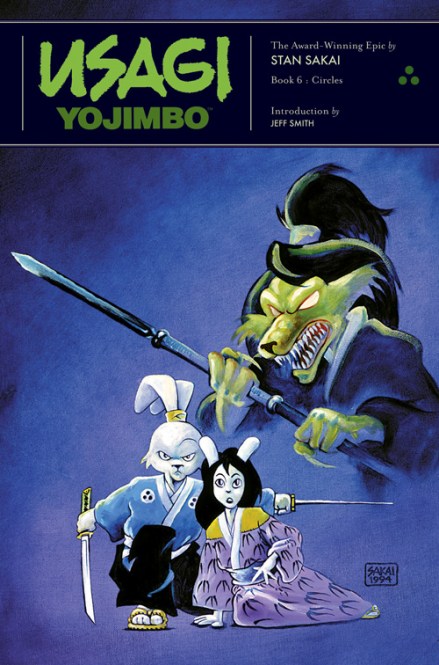
Throwback Thursday: Usagi Yojimbo: Volume 6: Circles by Stan Sakai

Usagi Yojimbo Circles

Publisher: Fantagraphics Books (Paperback – 1994)

Series: Usagi Yojimbo – Book Six

Length: 164 pages

My Rating: 5 out of 5 stars

Amazon     Book Depository

Reviewed as part of my Throwback Thursday series, where I republish old reviews, review books I have read before or review older books I have only just had a chance to read.

For this latest Throwback Thursday, after reviewing Lone Goat and Kid a couple of weeks ago, I am still in a Usagi Yojimbo mood, so I thought I would check out the sixth volume of this fantastic comic book series, Circles.

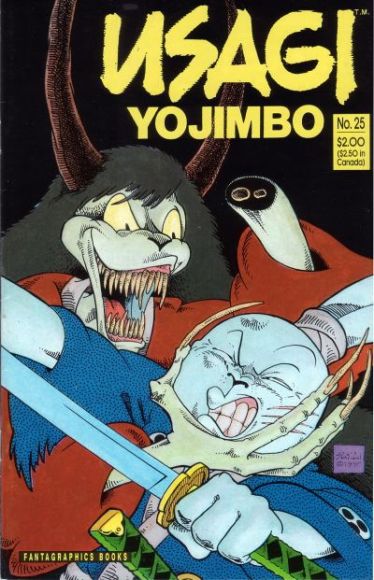
Usagi 25

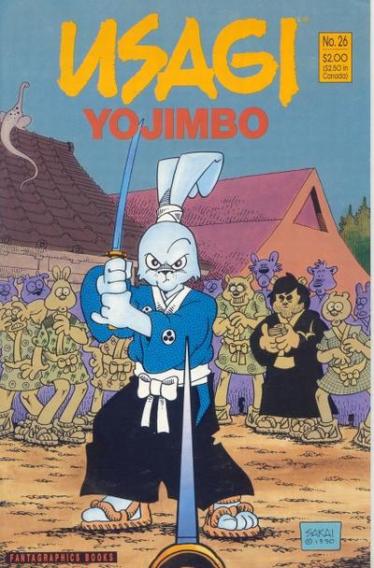
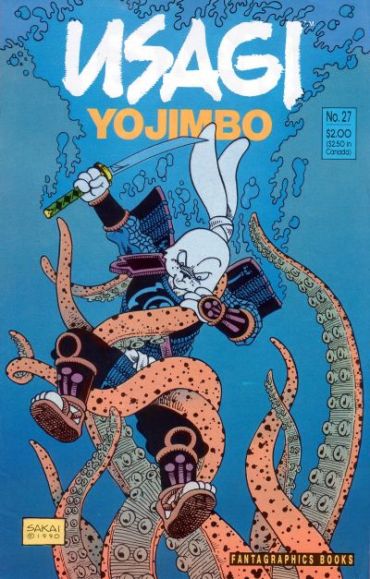
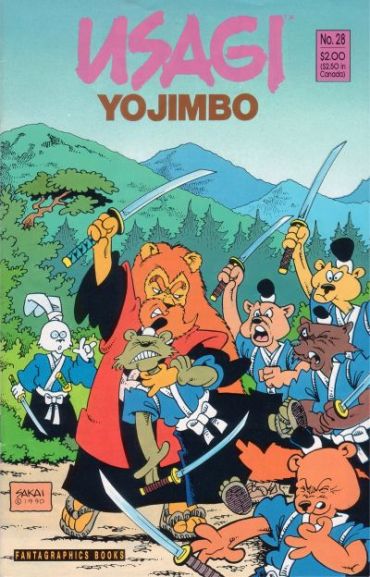
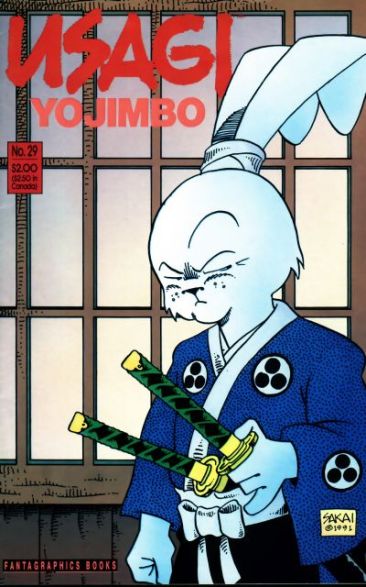
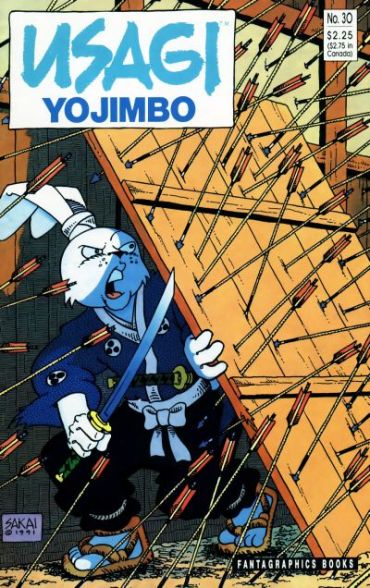
Circles is another fun and exciting addition to this excellent series which I honestly cannot praise enough (although I have been trying very hard in my last several Throwback Thursday articles). This sixth volume once again presents the reader with several outstanding and inventive stories that chronicle the adventures of the rabbit samurai, Miyamoto Usagi, as he journeys around a unique version of historical Japan. This volume contains five separate stories, derived from issues #25 – 31 of the Fantagraphics Books run on the Usagi Yojimbo series, as well as a short story taken from Critters number #50 (a comic magazine that had some early Usagi Yojimbo appearances). There are some rather amazing stories featured within this volume, and I had an incredible time reading them.

The first story contained within this sixth volume is called The Bridge, which sees Usagi encountering a demon out of Japanese folklore. During a dark a stormy night, Usagi is entering a village from across a bridge when suddenly he lashes out with his sword behind him, convinced something is sneaking up on him. When he finds nothing there, Usagi shrugs it off and enters the nearest inn, only to learn from the villagers that the bridge he just crossed has been possessed by a demon, and Usagi’s back now bears the claw marks of the demon. Awaking next morning, the villagers find a severed monstrous hand on the bridge, which Usagi appeared to have cut off the night before. Taking the hand into the inn, Usagi and villagers wait for a priest to arrive in order to perform an exorcism on the severed limb, but the demon of the bridge has other plans.

Usagi 26

This was a rather good supernatural story that sees Usagi go up against one of Japan’s many demons and monsters. Several significant elements from this story are taken from the story of the demon of Rashomon Gate, including the severing of the arm and the demon disguising itself as an old woman to recover its severed limb (although unlike the samurai in the legend, Usagi doesn’t fall for it). The demonic antagonist of this story is rather sinister in its drawing style and methods of attack, and it proves to be a dangerous opponent for Usagi. I love the extended fight on the bridge, and I especially enjoyed the way that the whole event ended, providing a side-character in the story their moment of vengeance. Overall, this was a tight, well-written story that was a lot of fun to read.

The next story in this volume is titled The Duel, and, as the name suggests, it features some duels between samurai. Usagi arrives in a village and is challenged to a public duel by the local champion while the watching villagers place bets with a travelling bookmaker, a duel that eventually results in Usagi’s opponent’s death. Completing the duel, Usagi meets and has lunch with a fellow unemployed samurai, Shubo, who subtly takes his measure. It is revealed that Shubo, who is a talented swordsman, is in league with the bookmaker who manipulates the odds of Shubo’s duels in order to make money off the betters. Shubo, who needs the money to provide for his wife and child, believes that he can beat Usagi, and the bookmaker inflates the odds in Usagi’s favour so that they can clean up when Shubo wins. Forcing Usagi into a duel, the two engage in a quick fight to death, with tragic results.

Usagi 27

This was a really clever and captivating single story that Sakai did an incredible job writing. The whole story concept is just brilliant, and Sakai sets it up and executes the plot brilliantly. There are some amazing scenes throughout The Duel, and the story features an excellent mix of comedy and tragedy which work together amazingly to produce a gripping narrative. Usagi, as the reluctant participant of this duel, is pissed at the entire affair, and his outraged reaction to the town people cheering his victory is rather good, especially as the peasants show over-the-top fake remorse in order to get him to go away so they can collect their winnings: “We are lower than the scum at the bottom of a stagnant pool!” While there is some fun and well-deserved karma coming down onto the bookkeeper who overextends himself and tries to escape, nothing quite takes away from the tragedy of Shubo’s wife and young child. The final panel of this story is incredibly heartbreaking, as it shows the wife and child waiting just outside the village for him to return. But as the light in the sky gets darker and darker, you can see the worry start to work its way onto the wife’s face, until she breaks down completely in the final panel, fully realising that her husband is dead. The wife comes across as a massively tragic character in this story, and the major impact that this final page has is a testament to how amazing Sakai’s storytelling and illustrations are.

The third story in the volume is the rather short entry, Yurei, which is the story that appeared in Critters. In this tale, Usagi, who is camping at the edge of a river, awakens to find a Yurei, a ghost, floating before him. The ghost imparts her tragic story to Usagi; she was betrayed and murdered by her husband, and she now seeks justice. Usagi then awakens and finds a woman’s hairpin on the ground next to him. Thinking his encounter with the ghost was just a dream, he travels to a nearby inn and attempts to trade the pin for a meal. What he does not realise is that the innkeeper is the murderous husband from the ghost’s tale, and his discovery of the pin leads to a series of deadly events. This was a good, fast-paced story which tells a compact and intriguing tale. I loved the supernatural elements in this story, and it was interesting to see Usagi portrayed as a tool of fate, who wonders into some ghostly revenge without even realising it. This was a fantastic short entry in this volume and was great to check out.

USagi 28

The next entry in Circles is an entertaining and over-the-top tale titled My Lord’s Daughter. In this story, Usagi, who is telling a bedtime tale to children, is shown as the classic hero from Japanese legend, fighting through vast hordes of demons, monsters, and obstacles to rescue a beautiful princess from an Oni. This was a fun take on some of the traditional Japanese heroic legends, and it was cool to see Sakai draw a classic tale with Usagi as the protagonist. Sakai has some obvious fun setting the Usagi hero fearlessly against armies of demons and monsters, and he comes up with some clever fight sequences and scenes in this book, from a brutal duel with an Oni, to an underwater battle between Usagi, a shark and a giant octopus wielding several swords in its tentacles. This is an entertaining and exciting story, and I had a good laugh at the end reference to Sakai’s old comic, Groo the Wanderer.

Now let us get to the fifth story of this book, which is kind of the main event of the entire volume. This is a big story, told across four issues, titled Circles. This story follows Usagi as he returns home for the first time since the events of volume one, The Ronin. There are actually a couple of distinctive parts to this story, especially the first issue, which is somewhat separate from the rest of the story (with the exception of some build-up at the end). For this first part, Usagi, on his way back home, decides to stop at his old master’s house to pay his respects to the grave marker of Katsuichi, the man who taught him how to wield a blade. The story then shows a flashback, which serves as a continuation to part of the origin story Usagi told in the second Usagi Yojimbo volume, Samurai, about Usagi’s past. In the flashback, it is shown that Usagi’s master was ambushed and seemingly killed by members of the Dogora Fencing School after Usagi beat their students in a tournament. However, upon arriving at Katsuichi’s old house, he discovers that his master is still alive, having survived the ambush, and has taken on a new student. I liked this revisit of Usagi’s origin story with Katsuichi, although the whole death scene in the flashback comes a little bit out of nowhere. Still, it was interesting to see how much Usagi has matured since he was learning the way of the sword, and it was nice to see the teacher and student reuniting. The flashback sequence is also top quality, and Sakai illustrates up a storm in this one, showing a fierce battle and some intense emotions from Usagi, who goes from a full-on berserker rage as he gets his revenge on his master’s killer to an intense grief in just a few scenes.

Usagi 29

The story then continues as Usagi journeys back to his village, only to be confronted by his old childhood rival, Kenichi. It turns out that Jotaro, Kenichi’s son with Usagi’s former love, Mariko, has gone missing, and bandits are roaming the area. While Usagi and Kenichi are able to defend their town from a raiding party, the attackers reveal that Jotaro has been kidnapped by the bandits and are holding him hostage. Leading an army of local peasants against the bandit’s hideout, Kenichi and Usagi hope to rescue Jotaro and end the raids that have been plaguing them. However, what they do not realise is that the bandits are being led by the deranged and dangerous former adversary of Usagi, Jei, a mysterious and seemingly unkillable murder with a black blade, who hopes to use Jotaro to get his revenge on Usagi. But even Jei is not the most dangerous thing that lies ahead, as old resentments between Usagi and Kenichi, their shared love for Mariko and certain revelations may tear everything apart.

Wow, I have to say that the final three issues of Circles are just incredible. There is so much to unpack from them, as Sakai brings together a brilliant and powerful story. First of all, it was great to see Jei return as a villain once again. Jei, who was introduced in volume 3, The Wanderer’s Road, is an outstanding antagonist, and his continued feud with Usagi is just brilliant. The two engage in a fantastic and extended duel in this story, and Sakai did a fantastic job showing off each combatant’s skill and martial ability through his drawings. I also love the extensive battle between Kenichi’s peasant army and the bandits, which proved to be rather eye-catching. Not only is there a beautifully drawn sequence in the misty forest before the big battle in which Usagi does a great Jei impersonation to scare a bandit sentry, but Sakai illustrates a massive battle between the two forces. The massive single panel that shows the pitched battle is just impressive, and I love the detailed and entertaining scene that the author produced here.

Usagi 30

While all of the above is pretty amazing, what really makes this captivating story is the complex relationship between Usagi, Kenichi and Mariko. There are so many great layers plastered into this relationship. Usagi and Mariko were deeply in love when they were younger, and they still have great feelings for each other. However, Mariko ended up marrying Kenichi, and she is bound by duty, and her child, to him, no matter how she feels about Usagi. Kenichi, on the other hand, has always borne antagonism towards Usagi, which has been compounded over the years by their differences in skill and the fact that Usagi was chosen to serve Lord Mifune and left the village. However, Kenichi’s resentment towards Usagi is even greater, as he knows that Usagi is in love with his wife, and that these feelings are reciprocated by Mariko.

This leads to some outstanding scenes throughout this story, as these three try to come to terms with their complicated emotions. I particularly loved one scene in the middle of the story, where Usagi and Mariko discuss their feelings and reveal that they still both love each other, although Mariko makes it clear that they can never be together. The scene ends when Kenichi interrupts them, and while the look of heartbreak and shame on Mariko’s face is notable, what really gets me is the way that Kenichi’s usual stern/angry look is replaced with one of sad resignation in the last panel once he realises how Mariko still feels about Usagi. Despite this, Kenichi comes across in this story as a surprisingly honourable and well-intentioned character who puts aside his negative feelings for Usagi for the greater good, and it is a fantastic examination of a character who has mostly been antagonistic in the previous volumes. Sakai also drops a massive bombshell at the end of this story, when he reveals that Jotaro is actually Usagi’s son, and that Kenichi has known this and raised him as his own. Because of this, Mariko asks Usagi to leave and not try to settle down in their home village, as she fears it will put a wedge between Jotaro and Kenichi, who she sees as Jotaro’s true father. Usagi regretfully accepts this in another dramatic and captivating scene, although Mariko arranges for Usagi to see Jotaro as he leaves, and Usagi has a heartfelt time with his son, noting the similarities between them, and even suggesting Jotaro seek out Katsuichi as a teacher in later years. All of this is some first-rate storytelling and character development, and cannot praise Sakai enough for this amazing, emotional storyline. This is actually the last book that Kenichi and Mariko appear in (so far), and I think that Sakai did a fantastic job tying their love triangle together. All in all, Circles is easily my favourite story in this entire volume (The Duel comes close), and it is worth grabbing this volume just to check this key story out.

Usagi 31

It should come as no surprise to anyone considering all the praise I elicited above that I am giving this sixth volume of Usagi Yojimbo a full five star rating. This was another incredible comic book that features Sakai’s outstanding blend of powerful stories, memorable characters, intense action, fun references and depictions of traditional Japanese culture and history and some truly impressive artwork. I absolutely loved this volume, and this entire awesome series, comes highly recommended and is an unquestionable must-read.

Amazon     Book Depository

The Last Smile in Sunder City by Luke Arnold

The Last Smile in Sunder City

Publisher: Orbit (Trade Paperback – 6 February 2020)

Series: Fletch Phillips Archives – Book One

Length: 318 pages

My Rating: 4.75 out of 5 stars

Amazon

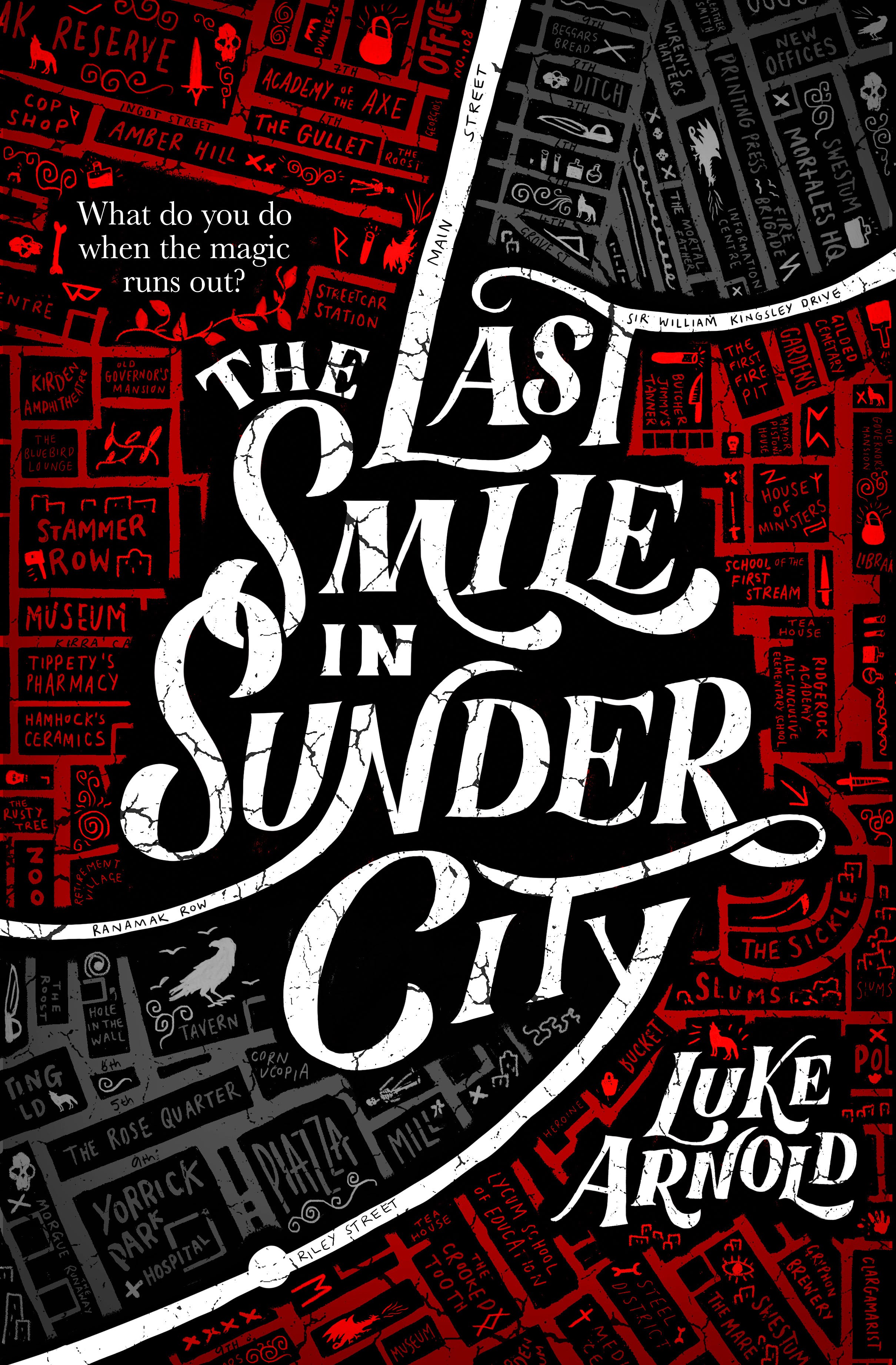
From debuting Australian author Luke Arnold comes The Last Smile in Sunder City, an absolutely superb piece of fantasy fiction that presents a unique and powerful story of loss, redemption and despair in fantastic new universe.

The Last Smile in Sunder City is the debut novel of Australian actor Luke Arnold. Arnold, who has appeared in a number of Australian television shows and movies, is probably best known internationally for playing Long John Silver in the pirate adventure series Black Sails. Arnold has now made the rather interesting career change to writing fantasy fiction with this first book, which is the start of a new series known as the Fetch Phillips Archives. I have actually been looking forward to The Last Smile in Sunder City for a little while now, as I liked the intriguing-sounding plot synopsis and I thought that this book had some real potential.

The continent of Archetellos has always had magic, with nearly every race or being having some access to the power that ran through the lands, extending their lives and giving them rare and amazing abilities. With these powers, the magical races ruled Archetellos, until the humans, the only race not gifted with magic, attempted to steal it for themselves. This resulted in the event known as the Coda, which saw all magic erased from the world. Overnight, the multitudes of beings who relied on magic for their very existence either died or were stricken down. The few survivors of these former magical races are now deformed, crippled and slowly dying in pain.

Fetch Phillips has been many things in his life (a guard, a peacekeeper, a soldier and a criminal) but now he is barely eking out a living as a man for hire in the former magical industrial hub known as Sunder City, which has been suffering ever since its magical fires went out. For a small fee Fetch will help you with whatever problem you have, although his sobriety will cost you extra. He only has only one condition: he won’t work for humans; his only clients are those former magical beings who need his help, because it’s Fetch’s fault that their magic is gone and never coming back.

Fetch’s latest case sees him hired by a school that specialises in teaching the children of former magical creatures. One of their professors, an ancient vampire who is slowly turning to dust, has gone missing, and the school is desperate to find him. Diving into the shady underbelly of the city, Fetch attempts to find some trace of the vampire or anyone who wanted to hurt him. But when one of the vampire’s students, a young siren, also disappears, Fetch needs to step up his game to find them. However, even without magic there are still monsters in Sunder City, and Fetch may not be able to survive his encounter with them.

This was a really impressive piece of fantasy fiction. With The Last Smile in Sunder City, Arnold has absolutely nailed his debut, presenting a clever and captivating fantasy mystery which makes full use of its inventive setting and excellent central protagonist to create an impressive and memorable book. This is a truly enjoyable story that contains a fascinating central mystery that blends extremely well with the book’s fantasy elements. I had a great time unravelling the full extent of this intriguing story, and Arnold takes the plot in some very interesting directions, producing some excellent twists and clever false leads. This is less of an action-based novel and more of an exploratory story which sets out the world and features a man of the city running through his contacts to investigate a curious disappearance. I think this worked out extremely well for this book, as it fitted into the book’s classic PI vibe while serving as a great introduction to the city which is no doubt going to be the main setting for any future books in this series. Arnold has also created a couple of fantastic subplots which not only help to explore the world but also help to expand on the compelling darker tone that has been injected into this book.

Without a doubt, the major highlight of this book is the deeply inventive and fascinating new world that Arnold has produced. When I first read The Last Smile in Sunder City’s plot synopsis about a world where magic no longer existed, I was intrigued and thought that it sounded like an interesting idea. However, I was not prepared for just how impressive and creative this turned out to be. In order to tell his story, the author first created a detailed fantasy world that was filled with a huge variety of classic magical creatures of all shapes and sizes, where magic was the ultimate power and in which humans, who have no access to magic, are second-class citizens. While this would have been an interesting place to set a fantasy mystery, the author immediately flips this setting on its head by showing how humans attempted to steal the magic from its source (via an animation intended for children that was cut across by the protagonist’s memories, which was a fantastic way to introduce this plot point), and how their intrusion resulted in the complete destruction of magic.

This of course leads to a very interesting world, as now all the creatures and beings who previously survived on magic have had their lives irreversibly altered. Arnold spends a good part of the book exploring the impact of this loss of magic, examining the impacts on the previously immortal elves who all suddenly died from old age, the werewolves and other shapeshifters who found themselves deformed and stuck at the halfway point between human and animal, the vampires who all lost their fangs and are slowly crumbling to dust, sirens whose human husbands all simultaneously left them, and so much more. There are also some cool examinations of the change in status quo, with humans now becoming the dominant species on the continent thanks to their superior numbers (humans were not affected by the Coda) and their ability to use technology as a substitute for the magic that used to run everything. Of course, humans being humans, there are a couple of examples of humanity taking revenge against the magical creatures that previously dominated the continent, which the author does a good job of working into the plot. All of this proves to be an extremely fascinating and enjoyable overarching backdrop to the story of The Last Smile in Sunder City, and I really have to congratulate Arnold on his amazing imagination. Every detail about this creative world was really cool, and I loved seeing how his vision of a fantasy realm bereft of magic come to life.

The main location of this book is the titular Sunder City. Sunder City is a former magical metropolis which has suffered in the post-Coda period. Once a place of marvels and magically-powered industry, the city is now a shell of its former self, with most magical beings now living in slums and struggling to get by without their abilities. There is a bit of a Depression-era vibe to Sunder City, especially as Arnold does an excellent job of imbuing much of the city with a sense of despair, resentment and hopelessness. This really turned out to be a fantastic city to serve as the book’s primary setting, and I really enjoyed the protagonist’s exploration of it as he attempts to find the missing people. There are some really intriguing elements to this city which are worked into the overarching mystery plot extremely well, such as a hostile police force, businesses catering to former magical creatures and gangs of humans trying to cause trouble. All of this is pretty amazing, and I look forward to seeing more adventures and mysteries take place in Sunder City, especially if the author spends time looking at new types of former magical creatures that weren’t featured in this first book.

In addition to the compelling story and outstanding settings, Arnolds rounds out this awesome book with an intriguing central protagonist, Fetch Phillips. Fetch, who also serves as the book’s narrator, is a drunk, depressed and broken man, who is essentially a classic noir PI in a fantasy world. While Fetch can at times be funny or entertaining, mostly due to his sarcastic and confrontational style, his defining characteristics are his overwhelming guilt and despair. This is due to the fact that he is largely responsible for the humans destroying magic, which resulted in so much death and suffering. The full story behind Fletch’s involvement in this atrocity is chronicled in the book through a series of flashbacks which show his origin, the friendships he formed and the events and emotions that led up to his darkest moment. Due to his role in the causing the Coda, and the fact that he betrayed the trust of several friends, Fletch is filled with all manner of self-loathing and must now deal with his complicated emotions towards other humans, who he detests, and the former magical creatures he is compelled to help, most of whom now hate him. Despite all this darkness, there is a little bit of light within Fletch as he struggles against his demons and his past to find redemption and live up to a promise he made. I thought that this portrayal of Fletch was a great part of the book, and I loved the complexity that Arnold has imparted on his protagonist. I also really enjoyed the way that the author showed off the character’s past, centring the flashbacks on the four tattoos he has on his arm, and exploring the meaning behind them. This mixture of the mystery in the present and the look at the events in the character’s past worked really well together, and they help show off an amazing central protagonist who is going to be a fantastic centrepiece for this series going forward.

The Last Smile in Sunder City by Luke Arnold is a superb and highly addictive fantasy mystery that presents the reader with a fantastic and thrilling story. While the book is mostly a clever and enjoyable mystery, its true strengths are the unique and captivating settings and the complicated, well-written protagonist, both of which help to transform this amazing novel into a first-rate read. Thanks to this excellent debut, Arnold has proven that he is a talent to be reckoned with in the fantasy genre, and I am looking forward to seeing what he produces next. The Last Smile in Sunder City comes highly recommended, and I think many people are going to enjoy this exciting new Australian author.

Amazon

Star Wars: Force Collector by Kevin Shinick

ForceCollector-Cover

Publisher: Listening Library (Audiobook – 19 November 2019)

Series: Star Wars

Length: 8 hours and 13 minutes

My Rating: 4 out of 5 stars

Amazon     Book Depository

We are less than a week away from the final movie in the main Star Wars saga, The Rise of Skywalker, so it is about time that I got around to reviewing the final Star Wars novel of 2019, Star Wars: Force Collector by Kevin Shinick.

This is a book that I have been looking forward to for some time. Force Collector is a curious Star Wars young adult novel with an intriguing-sounding plot behind it, and it would have ordinarily been on my reading list anyway. However, as it is one of several books being released under the title of Journey to Star Wars: The Rise of Skywalker (other examples of which include Resistance Reborn), it was one I definitely needed to check out before the movie comes out in a few short days.

This book was written by Kevin Shinick, who is probably best known for his work writing and developing television shows such as Robot Chicken, the 2017 Spider-Man animated show, Mad and Disjointed. In addition, Shinick has also written several comics for DC and Marvel, including Avenging Spider-Man, Superior Carnage and Axis: Hobgoblin. Force Collector is actually Shinick’s debut novel and he has produced a great Star Wars book with a rather interesting concept that provides a clever new viewpoint into the events of the Star Wars films.

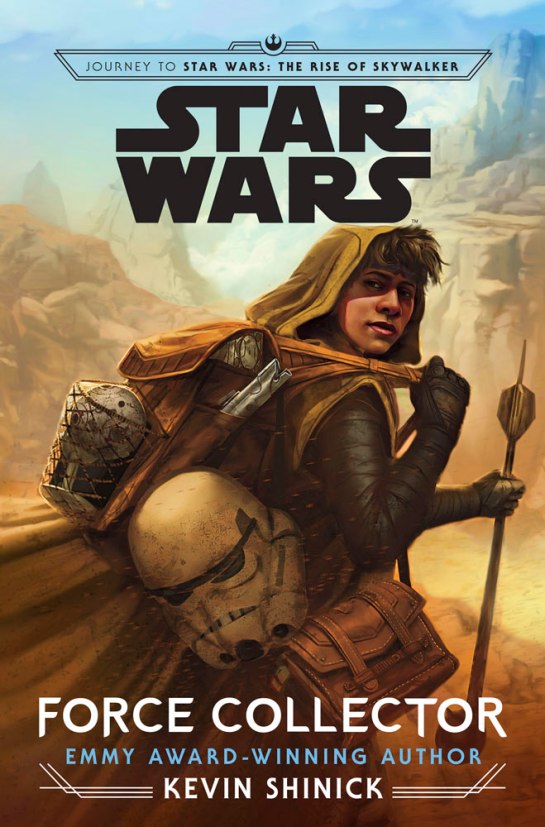
Set shortly before the events of The Force Awakens, Force Collector revolves around Karr, a teenage boy living on a backwater planet. Karr lives a difficult life; anytime he touches an item that has witnessed an important or traumatic event, he gets a searing headache and blacks out. However, these items also impart onto him a vision of the history associated with it, allowing him to glimpse into the past. While his parents search for a rational explanation for his episodes, Karr’s grandmother knows the real reason for strange visions: he is gifted with the Force.

Attempting to learn how to control his abilities, Karr struggles with his training and hopes to find someone who can teach him in the ways of the Force. However, all the Jedi are long dead, and no-one on his planet knows what happened to them. Determined to learn more, Karr begins to collect historical items which he hopes will allow him to have some vision of the Jedi and learn where to find them. However, the few meagre artefacts he can lay his hands on are unable to provide him with the knowledge he seeks.

When Karr’s grandmother dies and his parents attempt to send him away to a school on the other side of the planet, he finally has enough. Determined to find an actual Jedi to help him, Karr, his droid RZ-7, and his school’s new troublemaker, Maize, steal a First Order ship belonging to Maize’s father and set out on an adventure. Travelling from one planet to the next, Karr and his friends attempt to trace the history of the Jedi. Finding obscure item after obscure item, Karr is eventually able to piece together the events that led to the downfall of the Jedi order and the rise of the Empire. However, the greatest secrets may lay even closer to home than he imagined.

Force Collector is a fun and intriguing novel which provides a unique and clever examination of the events of the Skywalker Saga, and which I am very glad I decided to check out. Featuring a great group of central characters (Karr, Maize and RZ-7) who grow closer as they progress in their adventure, and a rather captivating story, this was an amazing Star Wars read. I particularly liked the idea of a character who could revisit the Star Wars past through the objects he touches, as it allows Shinick to take the reader on a journey through a number of events in the Star Wars canon. Some really interesting bits of Star Wars history are examined through the course of this book, and it features some compelling visits to a number of iconic locations. That being said, this is a rather low-stakes novel, as the protagonists’ great adventure comes across at times like an unusually eventful school excursion (indeed, that is the explanation they give to the people they encounter). As a result, this might not be the best book for people looking for an exciting or action-packed novel (Thrawn: Treason or Master and Apprentice might be a better 2019 Star Wars release for those readers), however, the examination of Star Wars history makes this book an outstanding read for major fans of the franchise.

In order to tell his story, Shinick has filled his novel with all manner of references to the wider Star Wars universe. Not only does the reader get to see a number of visions from the past as part of the protagonists’ quest to find out more about the Jedi, but they also visit a number of familiar locations. These include Jakku (where Rey was living), Utapau (where Obi-Wan killed General Grievous) and even Batuu (the planet where the Galaxy’s Edge theme park area is set, and which has also served as the setting for several books such as the recent release Black Spire), just to name a few. Our protagonists encounter a number of unique individuals or items which witnessed some of the most iconic moments out of the films. For example, at Utapau he discovers the walking stick of the planet’s leader, which reveals the conversation the leader had with Obi-Wan when he landed. On another planet he runs across a pilot who witnessed Obi-Wan cutting the hand off Ponda Baba in the Mos Eisley cantina on Tatooine. There are some really cool and, in some cases, obscure items that Karr touches throughout the story, and the events they showed were really interesting.

In addition, Shinick also focuses on exploring the Star Wars universe just prior to the events of Star Wars Episode VII: The Force Awakens. Force Collector appears to occur just before the start of The Force Awakens, and there are a number of references to the shape of the universe and the plans of the First Order. Shinick also uses this to allow the protagonists to visit and have some fascinating interactions with a couple of characters who appeared in the movie, such as Unkar Plutt or Maz Kanata. The meeting with Maz Kanata in particular was intriguing, and it was cool to see all these characters just before the events of the film rained down hellfire on their locations. In the end, this book contained all manner of references from across the films, the animated television shows and even some of the other books that make up the current Star Wars canon, making this a perfect read for dedicated fans of the franchise.

One of the most intriguing things that I liked about the story was its examination of how the characters in the wider Star Wars universe during this period perceived the Jedi and the events of the Skywalker Saga. Shinick makes it clear quite early on in the book that, during the period that novel was set, most of the galaxy saw the Jedi as a myth and barely anyone knows that much about them anymore. Even the protagonists, Karr and Maize, both of whom consider themselves somewhat more knowledgeable on the subject that most people, barely have any idea of what they were capable of or why they were destroyed. The various theories and histories of the Jedi that are postulated at the start of the novel are so obviously wrong to anyone who has seen the movies that it is quite a jarring experience. I found it deeply fascinating to see how it only took a generation or so for the legend of the Jedi to be degraded, and it explains why characters like Finn and Rey in The Force Awakens barely knew anything about them. The subsequent search for the truth is also interesting, and I liked how the characters attempted to piece together the events of the film. This search was hampered by the fact that the information they received was a random selection of events that were not in any chronological order. This ensures that they get a confused picture of all the events of the Skywalker saga, which they need to try and piece together to fully understand the lessons of the past. All of this was a really cool and unique take on the events of the films, and it was fun trip down memory lane.

While I really enjoyed all the cool references to the rest of the Star Wars franchise, I struggled to see how this book will actually tie into the events of the upcoming The Rise of Skywalker film, despite that being one of the major advertised features of the book. While this book did spend a bit of time expanding on the overall universe around the current trilogy of Star Wars films, there was nothing specific about The Rise of Skywalker in it. While this did not massively impact my enjoyment of the novel, I kept waiting for the story to kick off in another direction, perhaps after some of the galaxy-altering events that were shown in The Force Awakens took place, or feature a more major character from the films. It never did, and I very much doubt that the main character in this book is going to show up in the new movie (although I could be mistaken). The main connection I could find in this novel was the confirmation that a certain character is at the heart of all the major events of the Skywalker Saga, so much so that only touching an item of theirs was enough to make Karr understand all of the events of the films completely. This is something I believe that the Star Wars creative team wishes to reinforce, as the trailers and rumours indicate big things are happening to this character in the final movie, which will help signal the fact that the Skywalker Saga is truly over. There is also a mention of Karr holding onto a couple of certain Jedi items in case they will be needed in the future, but again I doubt this is going to feature in The Rise of Skywalker. As a result, while Force Collector serves more as an interesting recap for some of the prior Star Wars events, don’t expect any major revelations about the upcoming film.

Rather than grab a physical copy of this book, I ended up listening to the Force Collector audiobook, which was narrated by Euan Morton. Running at just over eight hours in length, this is a pretty short audiobook that most people should be able to get through rather quickly. As usual, I had a lot of fun listening to this Star Wars audiobook, as it featured all of the classic Star Wars music and sound effects, which really help to make the franchise’s audiobook formats so unique. Narrator Euan Morton is an old hand at narrating Star Wars audiobooks; I recently enjoyed his narration of Tarkin, for example. He does another fantastic job with the narration in Force Collector, coming up with a number of unique and distinctive voices for the characters who only appear in this novel, while also doing great impressions of characters who previously appeared in the film. I was particularly impressed with the realistically teenage voices he was able to come up with for Karr and Maize, and I also like how he did not really recycle any of the voices he used in the previous Star Wars audiobook of his I heard. All of this results in another outstanding audiobook adaption of a Star Wars novel, and it is easily one of my favourite franchises to check out in this format.

Star Wars: Force Collector by Kevin Shinick is a fantastic book that features a captivating and unique story, which is richly layered in references to the prior movies and other pieces of Star Wars fiction. While it does not contain an obvious connection to the upcoming The Rise of Skywalker film, it is still a really interesting and exciting novel that is worth checking out, especially as it provides a compelling recap of some of the previous films in the franchise. Aimed towards a younger audience, Force Collector will be easily enjoyed by all Star Wars fans, especially those who are familiar with the expanded fiction. However, even those readers who have seen the films will be able to appreciate the story in this book. An overall great read, this book is a lot of fun and is an excellent piece of Star Wars fiction.

Amazon     Book Depository

Throwback Thursday – Code Zero by Jonathan Maberry

Code Zero Cover.jpg

Publisher: Macmillan Audio (Audiobook – 25 March 2014)

Series: Joe Ledger series – Book Six

Length: 16 hours and 6 minutes

My Rating: 5 out of 5 stars

Amazon     Book Depository

Reviewed as part of my Throwback Thursday series, where I republish old reviews, review books I have read before or review older books I have only just had a chance to read.

The ghosts of the past come back to haunt Joe Ledger and the DMS big time in this sixth book in Jonathan Maberry’s high-octane science fiction/military thriller Joe Ledger series.

For years, the Department of Military Sciences (DMS) has saved the world from some of the most deadly and insane weapons that science can create: race-specific bioweapons, genetically enhanced super soldiers, powerful plagues capable of killing people in the most horrendous way and even a pathogen that is capable of bringing its victims back to life as zombies. Each of these has been stopped by DMS agents and the legendary Joe Ledger, but these horrors are about to resurface in the most devastating of ways.

The mysterious hacker and terrorist Mother Night has been causing the DMS trouble for months, but when she broadcasts a call for anarchy, no-one is prepared for what happens next. Across America, Mother Night’s followers unleash hundreds of random acts of violence, causing horrendous amounts of terror and destruction. As Joe Ledger and the DMS attempt to counter them, a subway car full of people in New York is infected with something disturbingly familiar, the Seif-al-Din zombie pathogen that bought Ledger to the DMS in the first place.

As Ledger and Echo Team are once again forced to contend with the zombie victims of the pathogen, they find themselves targeted from several devastating angles. As the threats become more and more personal, it soon becomes apparent that they are facing someone who knows the DMS intimately and who is willing to use the most lethal tools at their disposal to win. Can Ledger and the DMS survive, or will the world burn at the hands of Mother Night?

Jonathan Maberry’s Joe Ledger books are one of my favourite series at the moment, and I love each book’s excellent blend of compelling storytelling, complex characters, over-the-top villains, electrifying action and insane plot points, which come together into fantastic, first-rate narratives. Ever since I read and got hooked on the tenth book in this series, Deep Silence, about this time last year, I have been periodically reading and reviewing the earlier novels in sequence. So far, I have read the first six novels, Patient Zero, The Dragon Factory, The King of Plagues, Assassin’s Code, The Extinction Machine and this novel, Code Zero. I am actually reviewing this book a little out of order, as I recently powered through both The Extinction Machine and Code Zero while I was away on holidays. As Code Zero is fresher in my mind, I decided to review it first, and I will hopefully get a review for The Extinction Machine up soon as well (the plan is to get it done before the next Joe Ledger book, Rage, comes out in November, but we’ll see how we go).

Considering how much I absolutely loved the rest of the books in the series, it is going to come as no surprise to anyone that I also really enjoyed Code Zero. This sixth book was pretty spectacular, and it is easily one of my favourite books in the entire series, only just being beaten out by The Dragon Factory. In Code Zero, Maberry has made sure to utilise several of the excellent features from the previous Joe Ledger books that l really love and have commented on previously, such as a first-rate story filled with intense action, a smartassed and damaged protagonist, a great group of side characters (including one of the best dogs in all of fiction) and a clever utilisation of flashbacks and multiple perspectives. This book also features some other great story and character elements that really make it stand out from the rest of the series, and which help make it such an outstanding and epic read.

I have mentioned before that one of the best things about the Joe Ledger books is the awesome antagonists that Maberry creates for each of the novels. These have so far included genetically modified Nazis, world-event manipulating masterminds and even a group of vampires. However, the villain of Code Zero, Mother Night, is perhaps one of the most interesting and complex antagonists that Maberry has come up with. Mother Night is an outstanding character who not only has a close connection with the DMS, but whose elaborate master plan does a great deal of damage. I really liked how Maberry used a series of flashback filled interludes to explore the background of this character. These flashbacks show how Mother Night is connected to all the DMS characters and examine how her exposure to various characters and threats from the previous books slowly corrupted her, and why she was compelled to become a terrorist. Despite this being the first book that Mother Night has appeared in, Maberry did a sensational job tying the character into many of the key events from the first three novels, and showing how she was actually involved with some of the previous threats. All of these cool connections really help up the personal stakes for all of the protagonists, and it allows Mother Night to actually hit Joe Ledger and his team harder than anyone else has before, resulting in an extra dramatic and compelling story.

Maberry also uses Mother Night’s plot to examine some rather interesting elements of the modern world. For example, the anarchist movement is explored in some detail, as Mother Night uses anarchist elements in her call to arms, gathering up members of America’s disenfranchised youth to form an army. There is also a rather intriguing look at the role video games can play in violence or espionage. This is not done in an attempt to demonise video games; instead Maberry, through several of the videogame savvy characters, explores how important problem-solving is for gamers, and how the skills obtained there can have real-world applications in both the espionage and defence worlds. The subsequent study of game theory and the desire to win that some gamers feel is particularly fascinating, and it adds very some interesting layers to the story and Mother Night’s overall character.

In addition to this incredible antagonist, the other thing that I absolutely loved about Code Zero is the fact that Maberry decided to bring back some of the iconic threats and story elements from the previous books in the series. Not only did the author do an outstanding job of working these pre-existing story elements into Code Zero’s plot, but their reappearance was also an excellent homage to the earlier books and a real treat for fans of the series. I really enjoyed seeing Ledger have to go up against threats like the walkers and the berserkers again, especially as each of these threats have pretty strong emotional triggers for him due to devastating previous missions. It was also really interesting to see the new and various ways that the antagonist utilised these existing elements in her own plans, and there were some really fun combinations of the insane scientific elements, such as a couple of berserkers who have been infected with Generation 12 of the Seif-al-Din Pathogen, and it’s as awesome as you’d expect.

As this is a Joe Ledger book, Code Zero is of course filled to the brim with all the action and fire fights that you could ever need. Due to the presence of so many varied threats, including some of the monsters from the previous books, Code Zero probably has some of the most intriguing fight scenes in the entire series. This book is filled with a number of elaborate battle sequences in which the protagonists face off against a variety of different opponents at the same time. These opponents can include walkers, berserkers and gunmen disguised as zombies hiding amidst the walking dead, which is just so many layers of awesome. Maberry has an exceptional talent for writing fight sequences, and all this amazing action really helps to get the adrenaline pumping. I also have to commend all of the first-rate zombie scenes in the book, as the author crafts some truly horrifying scenes that showcase how terrifying and emotional damaging it would be to face off against these undead monsters.

As with all the previous books in the Joe Ledger series, I chose to listen to the audiobook format of Code Zero which was narrated by Ray Porter. Clocking in at just over 16 hours, I managed to get through this audiobook fairly quickly, mainly because I started listening to it while on an international flight. I think it is pretty clear at this point that I really enjoy listening to the audiobook versions of the Joe Ledger books, mainly due to the narration of the outstanding Ray Porter. I have sung Porter’s praises in all of my previous reviews, and I really cannot express what a good job he does bring the series titular protagonist to live with his voice work. Code Zero was no exception, and I would strongly recommend the audiobook format to anyone even vaguely interested in this book.

Code Zero by Jonathan Maberry is another spectacular book in the Joe Ledger series, and one that I absolutely loved. Maberry continues to utilise some of the amazing story elements that made his previous six books so darn enjoyable, and he ups the ante with another exceptional antagonist and the clever reuse of memorable story elements from previous books in the series. All of this results in another science fiction/thriller masterpiece that gets an easy five out five stars from me, and it is possibly one of the most enjoyable books I have read so far this year.

Amazon     Book Depository

Star Wars: Master & Apprentice by Claudia Gray – Audiobook Review

Master & Apprentice Cover

Publisher: Random House Audio (16 April 2019)

Series: Star Wars

Length: 11 hours and 42 minutes

My Rating: 4.75 out of 5 stars

Amazon

2019 is shaping up to be an amazing year for fans of the new Star Wars extended universe, a group of which I consider myself to be a proud member, with so many awesome Star Wars books and comics being released.  After reviewing the first Star Wars book for 2019, Queen’s Shadow, a few weeks ago, I have been really looking forward to getting to grips with the franchises second 2019 novel, Master & Apprentice by Claudia Gray.

Master & Apprentice is a canon Star Wars novel set around eight years before the events of Star Wars Episode I: The Phantom Menace.  It focuses on two of the main characters from this prequel movie, Jedi Knight Qui-Gon Jinn and his Padawan, Obi-Wan Kenobi.

Qui-Gon Jinn is an experienced and powerful Jedi Knight, having been trained in the Force by the legendary Count Dooku, who himself was trained by Master Yoda, and is ready to face any threat or danger that lies in front of him.  However, his greatest challenge may prove to be his own Padawan, Obi-Wan Kenobi.  The two Jedi are polar opposites to each other: while Obi-Wan is by-the-book and rigid in his respect of rules and protocol, Qui-Gon routinely shows very little regard for the rules and laws that bind the Jedi and constantly finds himself at odds with the Jedi Council.  Despite years of working together, the two Jedi struggle to understand each other.  Qui-Gon sees every mistake of Obi-Wan’s as his own, while Obi-Wan is unable to understand the reasoning behind Qui-Gon’s actions, nor his obsession with the ancient Jedi prophecies that many see as dangerous and unreliable.  Their tenuous and strained relationship is further tested when Qui-Gon is unexpectantly offered a place on the Jedi Council, a move that would likely end their partnership.  With feelings of betrayal and failure hanging over both of them, they are suddenly assigned a critical mission that is likely to be their last as master and apprentice.

Fellow Jedi Rael Averross, another former apprentice of Dooku, has requested Qui-Gon’s help with a difficult political dispute on the planet of Pijal.  Averross has been serving as regent for the planet’s young queen, who is days away from ascending to the throne and signing an important treaty.  A series of attacks which has rocked the planet is apparently the work of The Opposition, a band of political performance artists turned terrorists.  Once the two Jedi arrive on the planet, they quickly find that the situation is far more complicated than initially believed.  With corruption and secrets around every corner, Qui-Gon and Obi-Wan attempt to get to the bottom of everything, even utilising a pair of jewel smugglers to help with their inquiries.  However, their investigations are hampered by their opposing points of view, which only worsen when Qui-Gon places great stock in a dark vision of the future he has foreseen.  Can they overcome their differences to unravel the plot, or will they fail their mission?

Claudia Gray, also known as Amy Vincent, is a prolific and experienced author, best known for her first body of work, the Evernight series, which started in 2008.  Since then she has written a number of other series, including the Spellcaster, Firebird and Constellation series, as well as the standalone novel Fateful.  Gray also has a huge amount of experience writing Star Wars fiction, having previously written three Star Wars tie-in novels in the new extended universe, including Lost Stars, Bloodline and Leia, Princess of Alderaan.  As a result, the story of Qui-Gon Jinn and Obi-Wan Kenobi is in safe hands as Gray produces an outstanding, compelling and character-driven novel that delves deep into the Star Wars lore to create an amazing story.

Master & Apprentice presents a clever and exciting story that sees the protagonist attempt to uncover the mysterious events unfolding on Pijal, while also dealing with their many personal and emotional issues.  The story is told from the perspective of a range of characters in the book, and each of them adds their own thoughts and experiences to the story.  The overall story arc on Pijal becomes quite complex, with many different and intriguing sides to the conflict, and the people behind the events are not who you think.  I had an amazing time enjoying this book.

In this fantastic piece of fiction Gray goes into some intriguing parts of the Star Wars universe and lore.  This is actually the furthest back the new extended universe books go, so it offers the reader a great opportunity to see some of aspects of the pre-movie Star Wars universe.  While there are some hints at the events to come, as well as references to some major characters in the upcoming movies, the book contains a significant amount of new content and antagonists.  It is actually quite refreshing to read a Star Wars book that is not tied into the Skywalker family or featuring the Empire or the First Order as an antagonist.  I quite enjoyed the look at the pre-The Phantom Menace universe, including the new planet of Pijal, and the inclusion of the immoral Czerka Corporation, who previously appeared in the pre-Disney Star Wars universe.  While those fans of the Star Wars franchise who like to consume more than the movies will absolutely love this book, Master & Apprentice should prove to be fairly easy to read for those people who have at least seen The Phantom Menace, as it is a pretty intriguing science fiction adventure.

Those readers who are interested in a deeper dive into the Jedi of the Republic era are in for a real treat in this book, as Gray delves into aspects of their history and lifestyle.  Throughout Master & Apprentice there are a number of scenes set in the Jedi Temple, as well as a number of discussions about how and why the Jedi do what they do.  Perhaps one of the key things highlighted in this book is how the traditional Jedi master and apprentice program worked.  Several different apprenticeships are shown, and the reader gets a good idea of what is entailed in this relationship, what training the Padawans go through and how the process turns them into the eventual guardians of peace in the galaxy.

One of the most unique and fascinating aspects of Star Wars and Jedi lore that Gray examines are the fabled Jedi prophecies.  The prophecies were created long ago by an ancient group of Jedi sages, and are reputed to reveal events from the future.  The prophecies become a key part of the story, as not only do they drive a wedge between Qui-Gon and Obi-Wan but they are also shown to have a major influence over Dooku when Qui-Gon was his Padawan.  The prophecies have been mentioned in the movies before, with the most famous prophecy about the coming of a chosen one who will bring balance to the Force, referring to Anakin Skywalker/Darth Vader.  While the chosen one prophecy is referenced in Master & Apprentice, several other prophecies are mentioned, including one that comes true in this book.  I was really quite intrigued by the author’s examination of the prophecies; while they have been mentioned in the movies, I did not know too much about them.  Dedicated fans will no doubt have fun trying to tie some of these prophecies into the movies and other associated pieces of Star Wars media.  For example, there is one that clearly refers to Princess Leia that is repeated a couple of times.  I personally was very curious about one prophecy that was mentioned towards the end of the book, which was referenced as being obsessed over by Count Dooku.  It was a particularly portentous-sounding prophecy, and I wonder if it will have anything to do with recent revelations in the trailer for the next Star Wars movie, The Rise of Skywalker.

The story contained within Master & Apprentice is a strong, character-driven affair which features a compelling central cast, each of whom gets an in-depth analysis from Gray.  Not only is there some compelling examinations of the main two characters, Qui-Gon and Obi-Wan, but Gray also introduces several intriguing and entertaining new characters who really add a lot to the story.

There is a great examination of the younger Qui-Gon Jinn and Obi-Wan Kenobi in this book, as Gray examines not only the relationship between the two characters but also aspects of their past and their personalities.  When the two characters are introduced in the first prequel film, The Phantom Menace, very little is known about them, save that Obi-Wan is nearing the end of his apprenticeship and the two of them disagree on certain matters, such as the future of Anakin Skywalker.  Master & Apprentice offers a whole new, deeper examination of these characters and explores how these two Jedi came together and appeared so close, despite some differences in their personalities and styles.  I thought that this deep dive into the relationship between these key movie characters was utterly fascinating, and it made me reconsider aspects from the movie.  The strained relationship between the two characters becomes a major factor of the book, and Gray creates an emotional storyline around it as Qui-Gon and Obi-Wan work to overcome their issues while facing external threats.  This was an excellent part of the book which readers will quite enjoy.

In addition to looking at their relationship and how the two characters become close, Gray also looks at other aspects of their past.  This is particularly true for Qui-Gon, as Gray spends time highlighting Qui-Gon’s apprenticeship to Dooku and his friendship with Rael through a series of flashbacks.  These flashback scenes are quite interesting as they show several key events that were responsible for turning Qui-Gon into the character he was in the movie and go a long way to explain why he was such a hesitant master for most of Master & Apprentice.  There was also an intriguing and extended look at how and why Qui-Gon became so obsessed with the Jedi prophecies.  Qui-Gon’s research and fascination with the prophecies becomes a major part of the book, which really appealed to me, and which also explains a lot about the Qui-Gon’s actions in The Phantom Menace.  For example, it explains why Qui-Gon was so sure that he had found the Chosen One in Anakin Skywalker, and why he was determined to train him, even if it meant defying the will of the council.  These storylines also explain certain aspects of Obi-Wan’s personality that occur within the movies.  For example, the bond and respect that are formed between Obi-Wan and his master explain why he was so willing to take on Anakin as an apprentice after Qui-Gon’s death in The Phantom Menace.  It also adds another layer to Anakin’s betrayal in Revenge of the Sith, as Anakin has not only betrayed Obi-Wan and the Jedi but also Qui-Gon’s memory and his belief in Anakin as the chosen one.  This might explain why Obi-Wan, upon defeating Anakin, so passionately shouted “YOU WERE THE CHOSEN ONE.”  There were also some cute aspects to Obi-Wan’s life that are explained, such as why he had such an aversion to flying and how he was able to ride the lizard mount in Revenge of the Sith.  I quite liked how both characters developed over the course of the book, and I felt that Gray did an amazing job bringing these characters to life and providing an excellent story about their past.

While Gray’s portrayal of the main two characters is really good, I also have to say how much I loved some of the side characters that the author introduced in this book.  My favourite has to be Rael Averross, the unconventional Jedi who has a connection to Qui-Gon’s past.  Rael Averross is pretty much the opposite of all the Jedi readers would mostly be familiar with.  He’s a hard drinking, womanising (which he claims is technically not against the rules of being a Jedi), death stick using scoundrel, who hates nearly every aspect of being a Jedi Knight.  He was an extremely entertaining character whose actions and scruffy appearance are part of a persona the character has created to disguise the guilt, fear and resentment from his past.  I also liked how he was the only character able to identify and point out what the actual result of someone fulfilling the prophecy and finding the chosen one, something that every other Jedi apparently missed.  Rael was such an interesting counterpoint to the other Jedi characters in Master & Apprentice, and his influence on a young Qui-Gon was quite intriguing.  It will be interesting to see if Rael shows up again (I believed he is used in a recent Star Wars audiobook, Dooku: Jedi Lost) as he has the potential to be a key character in the new Disney expanded universe.

Other characters utilised within this book are the two jewel smugglers co-opted by the Jedi to be their guides on Pijal, Pax and Rahara.  While both these characters are a lot of fun, the standout one has to be Pax.  Pax is a gaudy and socially inept character whose inability to interact with other people is due to the fact he was raised by a ship full of protocol droids.  Pax is full of sass, sarcasm and insults, and is easily the most entertaining character in this entire book.  Rahara is also a great character.  A former slave of the Czerka Corporation, Rahara is the more normal of the two characters.  However, her former enslavement still haunts her and drives much of her more noble actions in this book.  Individually, both these characters are pretty cool, but together they form a great team who play off each other well.  Their emotional attachment to each other is another great part of the book and seeing the lengths that the usually pragmatic Pax will go to for Rahara is very heart-warming.

There were also a few flashback scenes featuring Qui-Gon’s mentor and future Star Wars antagonist Count Dooku.  All of these scenes were shown from the point of view of Qui-Gon as Dooku’s apprentice, and they paint a picture of a rigid and severe Jedi who was already showing signs of being tempted to the Dark Side of the Force.  This was a very intriguing portrayal, although I believe that the audiobook Dooku: Jedi Lost, which was released around the same time as Master & Apprentice, contains a lot more of Dooku’s backstory and motivations, and I am definitely going to check this other audiobook out at some point.

As usual, I was deeply, deeply impressed with the audiobook version of this Star Wars book.  The company behind these audiobooks really go the extra mile to make them special, and these tie-in novels are quickly becoming my favourite series to listen to rather than read.  The Master & Apprentice audiobook runs for 11 hours and 42 minutes, and I found that I was able to get through this book quite quickly.  I always find I absorb a lot more of the story with the audiobook format, and with this book I was really able to enjoy the character strife, as well as the new world building that Gray included.  Props need to be given to the amazing sound effects that seem to permeate nearly every single scene in this book.  Firstly, I absolutely love how the incredible and iconic music from the Star Wars movies is used during some of the book’s major scenes.  The music, especially some of the big orchestral moments that defined key parts of the original Star Wars movies, is quite incredible and it does an amazing job of forcefully dragging the reader into the story.  The additional sound effects used throughout the book easily replicate the actions going on around the characters, often using established and recognisable sound from the movies.  I also loved how some of the sound effects could be so effective at creating an appropriate background for the scene by adding in engine noises or the susurration of a loud crowd.

The audiobook format of Master & Apprentice is narrated by Jonathan Davis, who has previously provided his voice to several other Star Wars audiobooks.  I was deeply impressed with Davis’ incredible voice acting range in this book, as the voices he comes up with for the characters are outstanding.  For example, he produces incredible voices for the book’s two main characters, Qui-Gon and Ob-Wan as he damn near succeeds in replicating the two actors voices from The Phantom Menace.  On top of that, his Yoda voice is spot-on, and sounded just like Frank Oz in the movies.  I also liked the voices that the narrator came up with for some of his new characters.  His voice for Rael, for example, does an amazing job capturing the character’s personality, including his more carefree attitude, and the simmering anger that exists for most of his interactions with Qui-Gon.  I also quite like the voice and tone he uses for Pax, and the character’s inbuilt arrogance and emotional shallowness really shine through.

Master & Apprentice is so far my favourite Star Wars book of 2019, and I absolutely fell in love with its excellent story and powerful character work.  Gray takes her readers deep into the Star Wars lore, allowing fans of the franchise to further examine two of the best characters from The Phantom Menace movie.  The combination of Jonathan Davis’ exceptional narration and the production company’s perfect use of classic Star Wars music and sound effects resulted in an absolutely fantastic audiobook that comes highly recommended.  This is one hell of a book, and I cannot wait to see how the rest of the year’s Star Wars books turn out.

Amazon

Firefly: Big Damn Hero by James Lovegrove and Nancy Holder

Firefly Big Damn Hero Cover.png

Publisher: Titan Books (Hardcover edition – 20 November 2018)

Series: Firefly

Length: 334 pages

My Rating: 4.25 out of 5 stars

Amazon     Book Depository

Ready for something shiny? Serenity flies again in this fantastic new Firefly tie-in novel that takes the reader back to the original television series and reunites the crew of your favourite spaceship for another amazing adventure.

Firefly, for those people unfamiliar with it, was a science fiction television show that ran for one season back in 2002-03.  Created by Joss Whedon of Buffy the Vampire Slayer, Angel and The Avengers movie fame, Firefly is widely regarded as one of the best science fiction television shows of all time.  Featuring a fun group of main characters all played by amazing actors, this western-themed epic in space had some extremely clever and well-written storylines and an outstanding core concept.  Unfortunately, the show was cancelled after only one season (clearly the evillest thing that anyone at Fox has ever done), although it gained cult status after it was released on DVD.  Its post-airing popularity allowed Whedon to create the movie, Serenity, which closed one of the show’s major storylines, while also taking out a couple of major characters (I am still upset about one of those, he was a leaf on the wind, god damn it).  Following the movie, the Firefly universe has mostly continued in the form of several different comic books, usually created with Whedon’s direct input as either a writer or producer.  Do not be surprised if I review several of these Firefly/Serenity comics in the future, either as part of my Throwback Thursday series or when I review the collected edition of the current ongoing Firefly series.

If my notations above did not give it away, I am a huge fan of the Firefly franchise (and generally anything written/created by Joss Whedon), so I was always going to love this novel.  However, all prior biases aside, I found that Big Damn Hero was an excellent tie-in novel, and I powered through this book in extremely short order.

Big Damn Hero is written by James Lovegrove with bestselling author Nancy Holder (author of nearly 20 Buffy the Vampire Slayer tie-in books) credited as coming up with the original story concept.  Joss Whedon is also acknowledged as the original creator of the Firefly universe and is credited as a consulting editor.  Lovegrove is a veteran writer who has published a number of books since his 1990 debut, The Hope.  Readers may be familiar with his long-running Pantheon series, his recent work on the 2011 Sherlock Holmes series or the three books he has currently written for his The Cthulhu Casebooks series, which also features Sherlock Holmes.  Big Damn Hero is the first novel in a new Firefly tie-in trilogy from Titan Books which brings fans a completely new set of Firefly adventures.  Two additional books are set to be released later this year, with The Magnificent Nine coming out in March and Generations being published in October.

The Firefly franchise is set approximately in the year 2517, where humanity has expanded out into a new star system and terraformed a number of planets and moons.  The central planets were fully terraformed and heavily populated, while the outer planets and moons are more rugged, desert-like and with smaller populations.  The television series is set six years after the end of a brutal war between the Union of Allied Planets (the Alliance) and the Independents (also known as the Browncoats, a name also given to the fans of the franchise), which saw the Alliance gain complete control of the star system.

The show and associated media follow the adventures of the crew of the Firefly-class spaceship Serenity as they travel across the system participating in a variety of illegal or barely legal jobs.  The ship is captained by Malcom “Mal” Reynolds, a former sergeant in the Independent army who named the Serenity after the bloodiest battle in the entire war.  Joining him are former Independent army corporal and second in command of the ship Zoe; Zoe’s husband and Serenity’s pilot Wash; mercenary Jayne; ship’s mechanic Kayle; companion Inara; Shepherd Book; and the fugitive siblings Simon and River Tam.  Most of the crew’s adventures in the show followed their various jobs, personal stories and a particular focus on the events surrounding the Tam siblings becoming fugitives.

Big Damn Hero is set a few weeks after the events of the television show’s 12th episode, The Message, and starts the same way most Firefly adventures start, with the crew taking on a new job.  Initially contracted to transport volatile explosives off Persephone for their regular booker, crime lord Badger, the crew decide to take on some additional cargo from a mysterious new contact.  However, the meet turns out to be a trap and Mal is kidnapped and taken off-world.

With the explosives nearing a point of instability, the rest of Serenity’s crew is forced to leave Persephone to continue their original contract.  With only limited leads and the Alliance on their tail, the crew split up in order to locate their captain and maintain the safety of the ship.  Meanwhile, Mal awakens to find that he has been kidnapped by a squad of former Browncoats who are fanatically hunting down former members of the Independent army who they deem responsible for the Independents’ defeat in the war.  Mal has been named a traitor and a coward by old friend from before the war and must now defend himself in an impromptu trial.  As secrets from Mal’s past are brought to the surface, he finds himself at the mercy of a frenzied mob of former friends and comrades demanding his blood.  Can the crew of the Serenity save him, or will Mal pay for his past sins?

Perhaps the best praise I could heap on this book is that I very easily saw this story as a new episode of the show.  Like several of Firefly’s episodes, Big Damn Hero contains a compelling story that is split between the current adventures while also examining the past of one of its characters, in this case Mal.  This exploration into the past then comes into play for the main adventure, as it not only shows the reader events that were formative in Mal’s current character but also explains the actions of the book’s antagonists.  I felt that the plot of Big Damn Hero was a bit of an homage to the show’s fifth episode, Safe, as there were a number of similarities.  Safe was also interspersed with character flashbacks and the main plot of that episode features members of Serenity’s crew being kidnapped and subsequently imperilled while the rest of the crew are forced to take Serenity away from the area for an urgent plot reason.  Safe also featured the crew of Serenity arriving to save the day at the last minute in order to be the “big damn heroes”, a term the crew coined in Safe.  I also felt that the author tapped into elements of the lasting impacts of the war that were featured in episodes such as The Message or in the movie Serenity.  Throughout this book, various characters are shown to be negatively impacted by the war, whether this has made them cold and determined or raging bags of revenge.  Overall, I felt that the author captured the heart of these episodes quite well and helped turn them into a fantastic new addition to the Firefly franchise.

While this is mainly a book about Mal and his past coming back to haunt him, Lovegrove does spend a bit of time focusing on the other members of Serenity’s crew.  As a result, nearly all of the other crew members have at least one chapter told from their point of view.  This allows the reader, especially those who are unfamiliar with the television series, to get a good idea of who the characters are and what their general personality or motivation is.  Aside from Mal, Zoe gets the most focus out of all the other characters, as she not only attempts to find her missing captain but must also take command of Serenity to ensure its safety from other threats encroaching on it.  Zoe is pretty awesome in these chapters, and I felt that the author captured her determination, badassery and extreme loyalty to Mal after serving with him during the war.  Shepherd Book also gets a few entertaining chapters throughout the book, as he leads the investigation into Serenity’s missing captain.  Lovegrove continues to expand on Book’s mysterious past, as the supposedly humble shepherd has high-level military contacts, investigative skills and tactical abilities (those curious to find out Book’s past should check out the comic book Serenity: The Shepherd’s Tale).  Most of the rest of the characters also get their moments to shine: Jayne is his usual over-the-top violent self, Inara uses her position and companion training to manipulate several opponents, and River does River things, such as making fun of Badger’s accent or taking out armed goons surprisingly easily.  This focus on the whole crew of Serenity was very reminiscent of the show, and it is obvious that Lovegrove has a great appreciation for franchise’s characters.

In addition to looking at the main characters, Lovegrove also features a number of characters or references from the television show and movie that are likely to be extremely attractive to the franchises fans.  Lovegrove has included a huge range of stuff, from fan favourite side character Badger to Jayne’s fabulous knitted hat and a number of other call-backs to previous episodes and antagonists.  It is possible the author might have gone a bit overboard in places with these inclusions.  When the Hands of Blue are mentioned and it is implied that they could be nearby, that really got my hopes up and I was disappointed when they did not show up in any way.  However, I personally loved all the call-backs and references and it really played to my well-defined sense of nostalgia.

One of the inclusions I really enjoyed in Big Damn Hero was the new insight into main character Malcolm Reynolds’s backstory.  While the show and movie did provide some insights into his actions during the war against the Alliance, not a lot else about his past was ever shown.  Big Damn Hero, however, provides the reader with several chapters that delve into his past and show Mal as a rambunctious teenager on his home world of Shadow.  It is quite amusing to see several of Mal’s personality traits imposed on a younger version of the character, and fans will have fun getting this insight into the early days of this character.  I quite liked these flashback scenes, especially as they show some of Mal’s early tragedies and the events that led up to him joining the Independent army.  This is a fantastic addition to the plot, and I really appreciated this deeper look into one of my favourite characters.

Big Damn Hero is a superb new addition to the Firefly franchise that sees the crew of Serenity go on another dangerous adventure.  Not only does the author dive into the past of one of one of the show’s main characters but he presents a compelling and moving story of the harsh life at the edge of the verse while expertly utilising each of the show’s major characters.  The result is a fantastic tie-in novel that does a great job of capturing the Firefly universe and continuing one of my favourite science fiction series.  I had a lot of fun reading Big Damn Hero, although I am aware that a lot of that is due to my love of the show and movie.  People who are unfamiliar with the Firefly franchise will probably have a harder time following this novel, although I felt that Lovegrove did a good job setting this up as a book any science fiction fan could enjoy.  I am giving this book a rating of 4.25, although some of this rating is due to my nostalgia and love of the series as a whole.  I am very much looking forward to the next two Firefly tie-in novels that Titan Books are releasing later this year, and 2019 is going to be a great year for fans of the Firefly franchise.

Amazon     Book Depository