Recursion by Blake Crouch Review

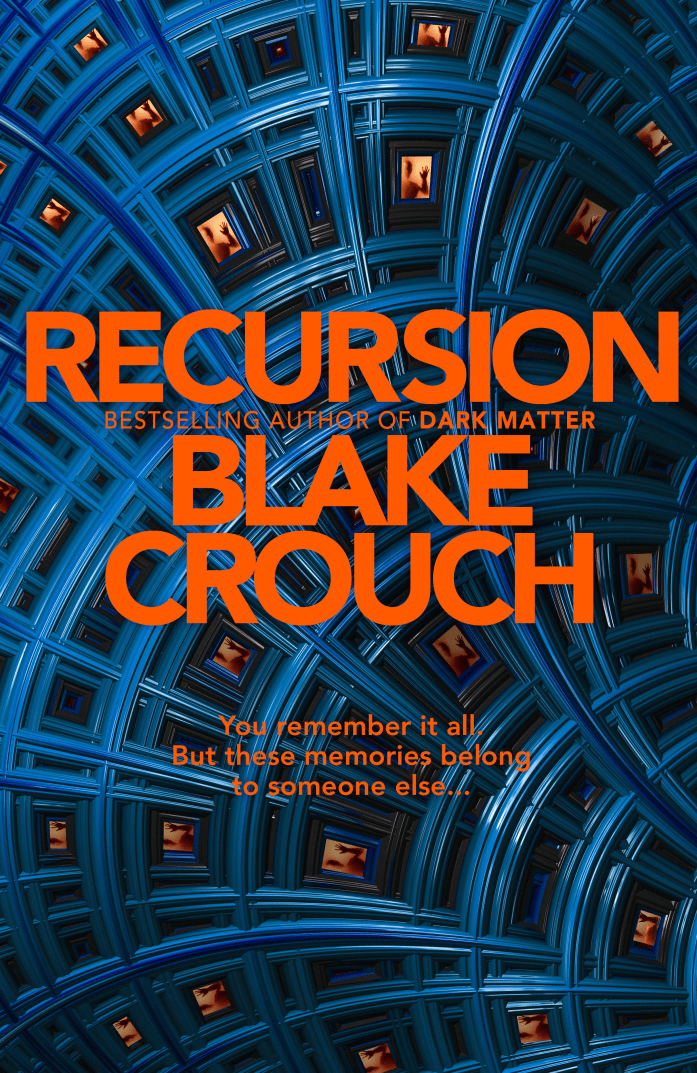
Recursion Cover

Publisher: Random House Audio (Audiobook – 11 June 2019)

Series: Standalone

Length: 10 hours and 47 minutes

My Rating: 5 out of 5 stars

Amazon

Get ready for one of the most impressive and compelling science fiction books of the last few years with Blake Crouch’s outstanding 2019 release, Recursion.

Crouch is one of the more intriguing and highly regarded science fiction and thriller authors out there now, having produced a fantastic catalogue of intense and addictive novels over his career.  Best known for his Wayward Pines trilogy (adapted into a television series of the same name), Crouch’s books for the last few years have been a collection of fantastic standalone science fiction thrillers, such as the bestselling Dark Matter.  These novels often combine intense thriller storylines with high-concept science fiction elements to produce some epic and captivating reads.  So far, I have only read one of Crouch’s books, his 2019 release, Recursion, which was an exceptional and amazing read.  Unfortunately, I didn’t review it back then, even though it was one of my top books and audiobooks of 2019.  As I have just started reading Crouch’s latest book, Upgrade, I thought this would be a good opportunity to quickly give Recursion the love it deserves, as this honestly was one of the better books of 2019.

Synopsis:

Memory makes reality.

That’s what New York City cop Barry Sutton is learning as he investigates the devastating phenomenon the media has dubbed False Memory Syndrome—a mysterious affliction that drives its victims mad with memories of a life they never lived.

That’s what neuroscientist Helena Smith believes. It’s why she’s dedicated her life to creating a technology that will let us preserve our most precious memories. If she succeeds, anyone will be able to re-experience a first kiss, the birth of a child, the final moment with a dying parent.

As Barry searches for the truth, he comes face-to-face with an opponent more terrifying than any disease—a force that attacks not just our minds but the very fabric of the past. And as its effects begin to unmake the world as we know it, only he and Helena, working together, will stand a chance at defeating it.

But how can they make a stand when reality itself is shifting and crumbling all around them?


Recursion
was a powerful and deeply complex novel that perfectly brought together an impressive and thrilling narrative about choices, survival, and fixing mistakes, with some outstanding and clever science fiction concepts.  Based around the concept of memory, Recursion eventually devolves into a deeply compelling time travel narrative as its amazing two protagonists are dragged into a terrifying struggle to save the world.

The narrative of Recursion is split between grizzled cop Barry Sutton and brilliant scientist Helena Smith, both of whom have tragic pasts and memories that they would kill to get a do-over for.  Their storylines are initially kept separate, as Barry attempts to investigate a mysterious illness that is causing people to suddenly awaken with a second set of memories about a life that didn’t happen, driving them insane.  At the same time, Helena works with a mysterious corporate benefactor to develop a machine that will allow people to relive their most important memories, but her boss soon takes control of the project and morphs it into something very different with impossible knowledge.

It is soon revealed that Helena’s boss is using her memory machine to travel back to the time that the important memories were created in order to alter the timeline for his and his friend’s advantage.  The false memory syndrome is a side effect of this process, as people eventually start to remember all the changes that have been made due to the time travelling villains.  Both Barry and Helena are dragged into this conspiracy, as Barry is bribed to stop investigating by reliving and altering the memory of his daughter’s death, while Helena fights to stop it before it’s too late.  Eventually teaming up once the world starts going crazy with multiple memories, Barry and Helena are too late, with the various nations launching nukes against America to stop them ruling the world through time travel.  Helena is barely able to escape by diving back in time to a point in her personal years before the events of the book.

From there the novel turns into an intense time travel thriller as Helena works through her past and attempts to perfect her machine and stop time travel from ever existing.  Continuously recruiting a younger Barry, Helena is unable to find a solution before the world regains its lost memories and is forced to travel back again and again to avoid the inevitable arrests and nuclear strikes and ends up living multiple lifetimes.  This leads to a desperate series of attempts to save the world, which results in a fantastic and clever conclusion that fits the unique science fiction elements and characters of this book extremely well.

Recursion’s entire narrative comes together extremely well and serves as a powerful standalone read.  I loved how the story developed throughout the course of the book, and I found the second half of the novel, with the multiple examples of time travel to be some of the best parts of Recursion, especially as the stakes are raised higher than ever before.  This is a very well-written and fast-paced thriller, and Crouch brings in some fascinating concepts that work extremely well in the context of the clever narrative he pulled together.  The blend of intense action, compelling characters and complex science fiction elements is pretty damn perfect, and readers really get drawn into this narrative as a result.  I was personally addicted to Recursion very early in the game, and I had an outstanding time seeing how everything came together.

Crouch explores a lot of unique and compelling scientific elements which become an excellent part of the overall book.  The author presents a very complex and intriguing series of concepts around human memory, time travel, and everything in between, and makes some very interesting and well-researched points about them.  While most of these concepts are high-level science, Crouch takes the time to explain them carefully, and I found myself following along with the ideas fairly well.  While I did think the leap from memory experiments to time travel were a little over-the-top, it did become an incredible part of the narrative, and I really loved how well time travel was used in the story.  I love a good time travel story, and Recursion was one of the better ones that I have read, especially as it covers it in a unique way, while also highlighting the many dangers of unchecked changes to the time stream.  I loved how well the author was able to weave a compelling and powerful story around these concepts, and you will come away from this book really thinking about all the implications of this potential technology, as well as the importance of memory to the human psyche.

I also deeply enjoyed the outstanding pair of protagonists, Barry Sutton and Helena Smith, whom the story is set around.  Not only does Crouch do a wonderful job splitting the narrative between them, often in some very clever ways, but he also builds both characters up extremely well, showcasing their deep inner pain.  Both have experienced a lot of tragedy in their lives, and thanks to the technology being explored here, they are given the chance to relive it and change it.  Watching them go through these deep emotional moments, as well as witnessing the various mistakes they make as they try to fix the world, is pretty damn heartbreaking, and you really grow to appreciate their struggles, especially if you can relate to their tragic memories.  As such, you grow attached to them rather quickly, and I liked how Crouch made sure to build in a compelling, if unique, relationship between them.  While both grow close during their first meeting, their romantic relationship takes on a whole new edge once time travel is brought into it and it turns into powerful romantic bond that literally last lifetimes.  I really grew close to both Barry and Helena while reading Recursion, and they are an outstanding pair of protagonists to follow.

I must admit that I was a little wary about listening to the Recursion audiobook, as a colleague of mine who read the novel before me indicated that it might prove a little challenging to keep track of the various time periods without a physical copy to flip through.  However, I really did not have any trouble keeping track of what was going on in the story while listening to the audiobook, and indeed I found that the format helped me understand the concepts more.  I also enjoyed the combined narration of Jon Lindstrom and Abby Craden, with Lindstrom reading the chapters told from Barry’s perspective and Craden doing the same for Helena’s chapters.  This split in narration worked really well, and I liked how it changed each time the character perspective did.  With a run time of just under 11 hours, this was a fairly easy audiobook to get through, and I powered through it very quickly.  An overall excellent way to enjoy this fantastic book.

Recursion by Blake Crouch is an epic and exceptional read that really showcases the author’s impressive writing skill and ability to come up with some truly unique concepts.  This science fiction masterpiece is so damn awesome, and there is a very good reason that it was one of my favourite books of 2019.  A five-star read and highly recommended in every way possible, I loved Recursion, and I can’t wait to finish off and review Upgrade next.

Amazon

Throwback Thursday: Blood Rites by Jim Butcher

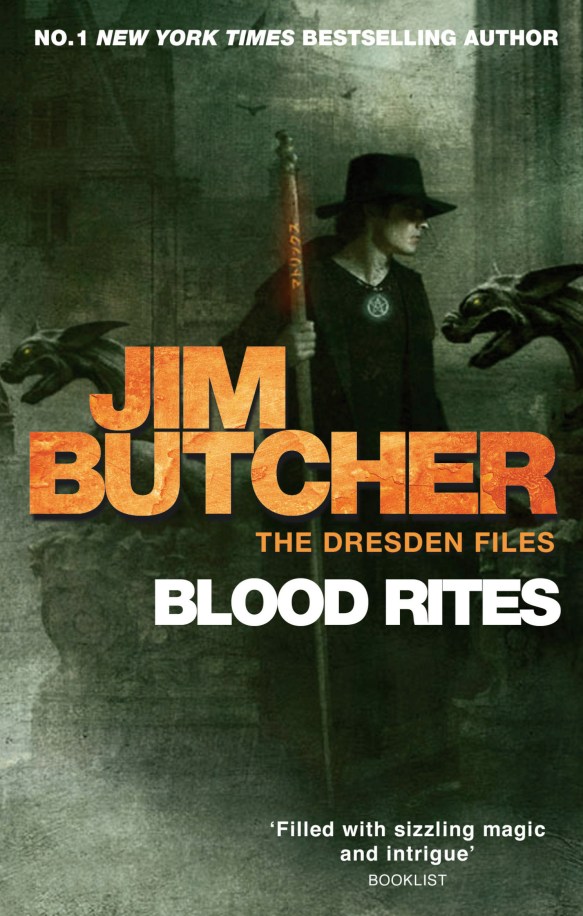
Blood Rite Cover

Publisher: Penguin Audio (Audiobook – 3 August 2004)

Series: Dresden Files – Book Six

Length: 13 hours and 5 minutes

My Rating: 5 out of 5 stars

Amazon

Welcome back to my Throwback Thursday series, where I republish old reviews, review books I have read before or review older books I have only just had a chance to read.  For my latest Throwback Thursday I keep diving into the epic Dresden Files urban fantasy series with the impressive sixth book, Blood Rites.

Last week, in my review for the outstanding fifth book in the Dresden Files series, Death Masks, I mentioned how I had also started listening to the next book in the series, Blood Rites.  I honestly had so much fun reading Death Masks last week (as I did with the rest of the Dresden Files series, such as Storm Front, Fool Moon, Grave Peril, Summer Knight, Battle Ground and The Law), that I had to immediately dive into the next book as soon as I could.  The sixth novel in the series, Blood Rites, was another epic novel which had an impressive and captivating plot to it.

Harry Dresden, Chicago’s resident wizard and protector from the paranormal, continues to eke out a deadly living through his chaotic career of odd mystical jobs while also defending the city against the worst monsters lurking in the shadows.  However, his latest job may place him in the most uncomfortable spot yet, on the set of an adult movie, which finds itself under attack from a deadly and relentless curse.

Taking the case as a favour to his vampire friend and suspicious ally Thomas Raith, Dresden goes undercover on set and attempts to discover who is responsible for cursing the movie’s cast and crew, and why.  However, Dresden’s heroics on set make him a target, and he soon finds the curse striking at him, attempting to end his investigation before he can find the magical murderer.  Worse, enemies old and new are bursting out of the shadows, as two separate courts of vampires attempt to strike Dresden down.

As Dresden continues to search for the murderer wielding the curse, he is forced to fend off attacks from the lethal Black Court.  Led by a powerful elder vampire with a serious grudge against Dresden, the Black Court will stop at nothing to destroy him and any of his friends that gets in their way.  However, the greatest threat may reside in the White Court, to which Thomas belongs.  The White Court vampires are manipulative and subtle killers, using their alluring presence to suck the life out of everyone they touch.  Caught between warring members of the White Court family, Dresden must use all his wits to escape their wrath and uncover hidden truths if he is to survive.  But what secret from the past connects Dresden to the White Court and their machinations, and is Dresden really ready for the dark knowledge waiting for him?

Whelp, it seems that it is pretty impossible for Butcher to write a dud novel.  Blood Rites is an exceptional addition to the wider Dresden Files series, and it was another one that I have no choice but to give a full five-star review to.  Featuring an intense and deeply captivating narrative, Blood Rites was an incredible read and I quickly got sucked into its unique story, compelling mysteries and dark, damaged characters.

I just loved the elaborate, dark and powerful narrative that Butcher featured in Blood Rites, as the author comes up with a complex tale that expertly brings together a dark urban fantasy with a thrilling murder mystery storyline.  Like the rest of the Dresden Files books, Blood Rites exclusively follows protagonist and point-of-view character Harry Dresden as he finds himself forced to face off against a series of dangers and threats at the same time.  The most prominent of these includes an investigation into a deadly curse aimed at the female employees of an adult entertainment studio, which sees Dresden go undercover on set to try and save the remaining cast and determine who the killer is.  This also leads him into a confrontation with the White Court of the vampires, especially when his vampire friend, Thomas Raith, requests his help.  At the same time, vampires from the Black Court are after Dresden for his actions in Grave Peril, which forces him to call in some major backup to take them on.  Unfortunately, this also leads him into conflict with his supposed allies, as well as his former mentor, when secrets from the past are revealed.  Dresden is also hit with a whole bundle of personal drama, especially when he discovers unfortunate truths about his long-dead mother, and there is an interesting growth in the relationship between him and several supporting characters.

As a result, there are many plot elements scattered around Blood Rites, which makes for quite an elaborate overall story.  Luckily, Butcher does an excellent job of introducing all these separate narrative threads to the reader, and you swiftly get drawn into all of them.  After a good and necessary bit of setup, the story roars off at a quick and captivating pace, and the reader has a great time jumping from storyline to storyline.  Everything starts to come together near the middle of the book, where you get some excellent action scenes, including a particularly funny death sequence involving a vampire and a frozen turkey, and the fallout of these scenes leads to some great dramatic moments with big personal revelations.  Following this, the story zooms along, and you soon find a partial and problematic solution to the murder case, while the protagonist is also forced to deal with an all-out assault on the Black Court, while also dealing with dark secrets from his allies.  The attack on the Black Court was one of the best sequences in the book, and the surrounding drama results in some major revelations that fans of the series will lap up.  The remaining storylines then come together perfectly for the finale, as Dresden solves the murder and faces off against its overall architect in a brilliant and extended dark sequence.  I loved how this entire narrative unfolded, and some of the concluding notes will leave you wanting to dive into the rest of the series to see what happens next.

To bring Blood Rites’ great story to life, Butcher utilises his typical style and techniques, which I always immensely enjoy.  The entire narrative is paced perfectly, and you quickly get drawn into the various plotlines, especially with their great combination of characters, intriguing plots, fantasy elements, and dramatic moments.  All of this is overlayed with Butcher’s distinctive humour, most of which is expelled through his cocky point-of-view protagonist, and it helps to enhance the overall powerful and entertainment of the book, especially when the protagonist tries to deflect from his many issues with comedy.  The narrative pretty much goes non-stop, and you get bounced through multiple excellent and powerful scenes, all of which are very fun to see.  I loved how the author balanced out action, character growth, universe building and more in each of the sequences, and there is something quite entertaining and fun for all manner of readers.  I wasn’t as keen on Butcher’s continued attempts to spice up the story with more adult themes, such as the adult film set or the lust-inducing White Court vampires, although it was pretty tame compared to some of the scenes in the last book (that bondage scene, yikes!), and Butcher wove some very compelling narratives around all of them that I deeply enjoyed.  I did enjoy how inclusive Butcher made this novel to new readers, and anyone could easily jump into Blood Rites and enjoy it, even if they haven’t read a Dresden Files book before.  However, there is also a lot to appeal to established fans of the series, especially as there are multiple major reveals and secrets featured here, many of which will lead to big story moments down the track.  As such, I deeply appreciated how this story came together, and pretty much everyone will have a great time getting through it.

I really enjoyed some of the cool fantasy elements featured throughout Blood Rites as Butcher seeks to expand on the lore and magic of his unique universe.  There are some great and intriguing fantasy inclusions here, with the obvious focus being on the various Vampire Courts.  The three main factions of Vampires have all been featured in previous books, although most of the focus has been on the Red Court, whom Dresden is at war with.  Blood Rites, however, has a far bigger spotlight on the two of the other courts who have major differences in powers and appearances.  Most of the focus is on the White Court, who are essentially this universe’s version of succubi, extremely beautiful and seductive creatures who feed off the life energy of those who desire them.  The White Court go on to become a major faction in the Dresden Files series, but this is one of the first books that fully explores them in substantial detail.  As such, you quickly get across their unique abilities, strengths, weaknesses and powers throughout this book, and they come across as quite a distinctive group as a result.  You really get to understand their entire society and worldview, as well as seeing some very different members of the factions, and Butcher writes some compelling storylines around them, while also putting in some very vivid depictions of their powers in action.  I loved how sinister and villainous members of the White Court appear at times, and there is something quite insidious about their abilities that creeps out the protagonists and reader.  A truly complex and excellent group that I had a lot of fun exploring.

Almost in direct comparison to the White Court is the Black Court.  The Black Court are a completely different group of living dead, portrayed more like the classic vampires from Bram Stoker’s novel (indeed, the Dracula novel was an elaborate propaganda attack by their enemies).  Shown as ugly, decaying, blood-hungry creatures that are more monsters than their original human forms, the Black Court are a much more obvious threat with much clearer motives.  There are some brutal and powerful scenes featuring the Black Court in this book, and it was really interesting to see Dresden and his allies go up against them with some classic vampire-hunting weapons, albeit with some fun modern twists to them.  I also deeply appreciated the fantastic parallels between the Black Court and the White Court vampires featured in the Blood Rites; whilst they are both extremely dangerous, their diverse methods and powers troubled Dresden in different ways.  These cool vampires, plus some other great new supernatural threats, added a lot to the complexity of the narrative and I loved the excellent detail and lore that Butcher imbued them with.

As usual, one of the highlights of this Dresden Files book is the compelling and impressive characters the story revolves around.  Butcher features an intriguing and fantastic group of characters in this book, with a compelling blend of established supporting characters and several new figures, many of whom will go on to have substantial roles in the rest of the series.  I had a brilliant time with all these characters, especially as Butcher endeavours to write some outstanding and distinctive storylines around them.

As usual, the most prominent character is Harry Dresden, the wizard protagonist and point-of-view character of the series.  Like most of the recent books, Blood Rites is an emotionally damaging book for Dresden.  Not only is he forced to deal with another harrowing case that racks his sanity, but he also finds out some long-buried secrets that prove quite damaging to behold.  In particular, there is a deep dive into his past and his missing family, both of which are hard subjects for him, and he finds himself with some unexpected connections that he has long been missing.  It was truly fascinating to see this long buried and painful part of Dresden’s past explored, and Butcher ensures that the reader gets struck in the feels with some of the powerful scenes that are explored.  Other interactions and reveals see Dresden re-evaluate some of his relationships in this novel, and there were some intriguing and harsh discussions between him and other characters as a result.  I did think that Butcher is over-playing the whole chivalrous-to-a-fault aspect of Dresden, as he continues to be a tad sexist and constantly underestimates woman, usually to his own detriment.  It’s honestly getting a little old, and I hope it gets phased out a bit in future books.  Still, I deeply enjoyed the fantastic development around Dresden in Blood Rites, and it greatly enhanced the narrative.

This book also featured a great appearance from previous supporting characters Karrin Murphy and Thomas Raith, who both play a major role in Blood Rites.  This proved to be quite a pivotal novel for both characters, and I really appreciated the way that Butcher built on their previous appearances and used them to write some impressive and powerful storylines around them.  This proves to be one of the more intriguing looks at Murphy so far in the series, especially as it dives into her complicated family life, and I liked the early hints here about the future relationship between her and Dresden.  Murphy gets dragged far further into Dresden’s magical activities than ever before here, and she is forced to balance her responsibilities as a cop with the necessity of killing monsters, something she has great difficulty with.  An overall badass character, Murphy has some brilliant and action-packed scenes in Blood Rites, and I love how well she serves as a foil to the more ridiculous Dresden.

Thomas, on the other hand, gets quite an intense and deeply personal storyline here as you get the most in-depth look at this elusive and compelling vampire character.  Not only do you get a great look at the rest of his family as the book explores the White Court, but you finally find the reasons why he is always helping Dresden, which leads to some emotional and compelling scenes.  A lot of time is also spent exploring the battle between Thomas’s humanity and the monster within, especially when it comes to feeding on those around him.  This comes to a head when his need to feed and survive hurts someone close to him and he has trouble coming to terms with what he’s done, especially when Dresden harshly confronts him.  Throw in his complicated family and intense daddy issues, and Thomas goes through the emotional wringer in this book, which proves to be very illuminating.  Butcher sets Thomas up as quite a substantial supporting character in this book, and I look forward to seeing more of him in the future.

Aside from these main characters, there is also a great collection of supporting characters who add a lot to the story, and there are some awesome appearances here.  I really enjoyed seeing more of mysterious mercenary Kincaid in this book, especially after his fun appearance in Death Masks.  Kincaid is a badass killer who is hired by Dresden to kill the Black Court, only to end up being a bigger threat to Dresden when the wizard lacks to money to pay him.  Kincaid has some excellent and action-packed scenes, and I was intrigued by his backstory, especially the hints at his dark, dark past.  I also loved the use of Dresden’s mentor, Ebenezar McCoy, an older wizard who raised him and taught him magic.  Butcher writes some amazing scenes around McCoy, especially once Dresden finds out just how many secrets the old man has been keeping from him.  Throw in a batch of great vampire characters (including the sinister Lord Raith and the compelling Lara Raith), some entertaining members of the adult film industry (including the fantastic diva Trixie Vixen), and the first appearance of Mouse, Dresden’s puppy, and you have an amazing cast of characters here that Butcher gleefully and impressively wraps the story around.  Each of these characters is very fun and intriguing in their own way, and I loved the elaborate and moving scenes that they star in.

Naturally I chose to check out Blood Rites on audiobook, which I maintain is the absolute best way to enjoy the Dresden Files books.  The captivating story and excellent characters really fit into this format extremely well, and I find myself absorbing the narrative and the author’s fantastic style a lot better this way.  With a runtime of just over 13 hours, Blood Rites is the noticeably longer than the previous books in the series (they get progressively longer and longer as the series goes, with some later books like Cold Days reaching nearly 19 hours in length).  Despite the increased run time, I still found myself knocking this audiobook off in no time at all, especially once I got stuck into the excellent and powerful story.  I must also highlight the incredible voice work of the always awesome James Marsters, who did another spectacular job narrating this fantastic novel.  At this point in the series, Marsters has really hit his stride when it comes to narrating, and he voices each audiobook with some impressive passion, effortlessly bringing the dark events and complex characters to life and ensuring that everything sticks in the listener’s mind.  All the characters are voiced extremely well, with the highlight again being protagonist Harry Dresden, who Marsters inhabits effortlessly.  He really understands the character’s anguish, pain, and dark humour, and this comes across in his narration perfectly.  Thanks to his epic performance in Blood Rites, and the other Dresden Files audiobooks, Marsters remains one of my favourite audiobook narrators, and I cannot recommend the Blood Rites audiobook enough as a result.

My dive into the early Dresden Files novels continues to be incredibly epic, as I once again fell in love with one of Jim Butcher’s unique reads, Blood Rites.  This fantastic novel has so much going for it, and I had a brilliant time exploring the powerful urban fantasy/crime fiction based narrative.  Featuring a deeply compelling mystery, a ton of intriguing parallel storylines, and some impressive and emotionally charged character development, Blood Rites is another exceptional book that is so much fun to get through.  Honestly, if I didn’t have such a backlog of awesome recent audiobook releases, I would probably be diving into the seventh Dresden Files novel right now, but hopefully I will get a chance later this year.  If you haven’t checked out the Dresden Files books after my previous glowing reviews, then you really need to get your butt into gear and start reading them now!

Amazon

Throwback Thursday – Death Masks by Jim Butcher

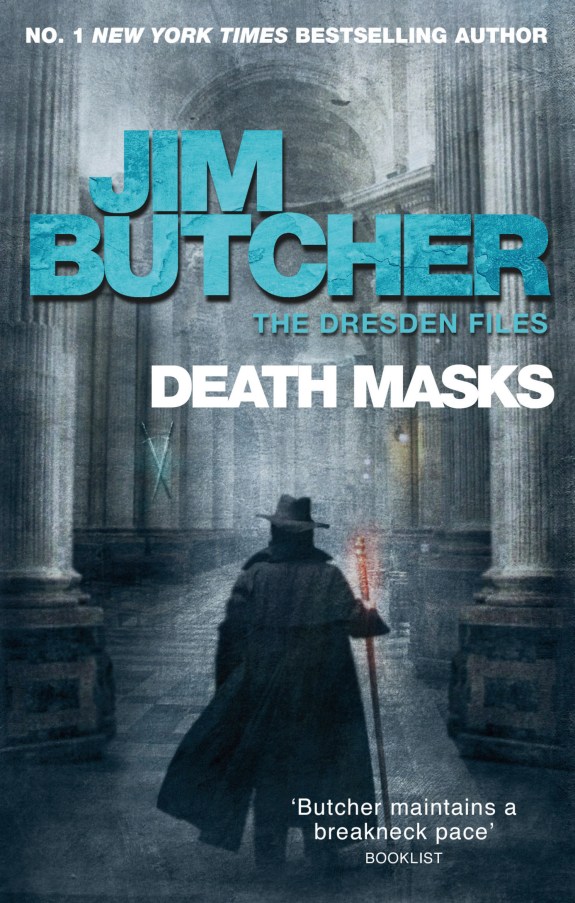
Death Masks Cover

Publication: Penguin Audio (Audiobook – 1 August 2003)

Series: Dresden Files – Book Five

Length: 11 hours and 17 minutes

My Rating: 5 out of 5 stars

Amazon

Welcome back to my Throwback Thursday series, where I republish old reviews, review books I have read before or review older books I have only just had a chance to read.  For my latest Throwback Thursday, I highlight another excellent entry in Jim Butcher’s iconic Dresden Files series, with Death Masks.

Fans of this blog will know that I have been having a magical time (pun intended) discovering and getting into the long-running Dresden Files series by acclaimed fantasy author Jim Butcher.  Set in Chicago, the Dresden Files novels follow the adventures of Harry Dresden, wizard for hire and protector of the city against any supernatural threat that comes its way.  This has been Butcher’s major series for years, but I only got into it back in 2020 when I checked out the 17th entry, Battle Ground.  Due to its exceptional plot and the all-out magical war for Chicago that it depicted, this was a pretty epic novel that was not only one of the best books and audiobooks of 2020 but also an excellent recruiting tool for new Dresden Files fans.  It didn’t take me long after reading Battle Ground to check out some of the earlier entries in the series, such as Storm Front, Fool Moon, Grave Peril and Summer Knight, as well as the novella, The Law.  I have had such an epic time with this series that when I felt like a guaranteed five-star book, I immediately decided to check out the next book in the series, with the fifth Dresden Files entry, Death Masks.

Harry Dresden, Chicago’s resident professional wizard, is once again thrust into the middle of far more trouble than he ever dreamed of when a television panel show introduces him to an array of people who want something from him.  Not only does he find himself forced into a duel against a powerful Red Court vampire noble but he is also hired by a Vatican priest to recover a revered stolen holy relic, the Shroud of Turin.

Determined to make the most of these new events, Dresden takes the case and begins to search for the shroud while also preparing for his upcoming fight to the death.  However, many people are interested in obtaining the shroud for their own use, and Dresden finds himself under attack by hitman, gangsters, criminals, and far, far worse.  The Denarians, an ancient and despicable group of fallen angels, have designs on the shroud, and not even Dresden’s most powerful and holy allies, the Knights of the Cross, may be enough to save him.

As Dresden attempts to recover the shroud, he finds that the Denarians and their deadly leader, Nicodemus, have a nefarious plot for the shroud that could destroy everything that Dresden holds dear.  Working with allies old and new, Dresden must overcome the Denarian threat before it is too late, while also managing to defeat the Red Court vampire gunning for him.  With everything on the line, has Dresden finally bitten off more than he can chew?  And what happens when the lost love of his life returns to town, battling her own demons?

Wow, Butcher just cannot strike out!  This is yet another book from him that I have no choice but to award a full five-star rating to.  Death Masks has a deeply addictive narrative that grabs your attention from the very first page and refuses to let go, and some complex and entertaining characters to match.

Death Masks has a pretty awesome story to it that got really addictive very quickly.  Starting off a few months after the events of Summer Knight, Death Masks contains several, great layered storylines, all of which are pretty exciting and intense in their own way and which cross over well to create a complete and powerful narrative.  The first of these immediately places Dresden in the path of several dangerous enemies and opponents as he is dragged into a new case, recovering the stolen Shroud of Turin.  Despite being warned off by his allies, the Knights of the Cross, Dresden naturally pursues, which sets him against established foes, like Chicago’s gangster king, and a powerful new cadre of enemies, who represent one of the biggest threats that Dresden has gone up against at this point in the series.  At the same time, the protagonist is forced to accept a formal duel to the death against a powerful vampire lord, as part of the ongoing storyline about his war with the Red Court, and he also helps the police investigate a disfigured corpse that seems to have been simultaneously infected by every disease known to man.  These events are further complicated by the re-emergence of Susan Rodriguez, his former love interest whose romance was crushed when she was partially turned into a vampire, and who he still holds a massive torch for.

Each of these storylines is quite interesting on its own, and Butcher writes some interesting scenes around all of them, with the primary focus being on the search for the shroud and the fight against the Denarians.  These storylines start pulling together about hallway through the book, and Butcher really raises the stakes for the protagonist, especially when he experiences some major and heartbreaking setbacks.  I really loved the unique blend of character development, fantasy and urban crime that is utilised throughout most of this story, and it is always so much fun to see the protagonist attempting to understand the complex plots arranged against him as he tries to save his friends and city.  Everything leads up to an extremely exciting final third where Dresden and his allies are thrust into a series of battles with massive stakes involved that leave them broken and nearly beaten.  I honestly could not stop listening to the final few hours of this book, and I pretty much powered through the entire second half in less than a day.  There are some epic and very moving moments featured in the big conclusion, and Butcher did a brilliant job of bringing everything together and ensuring that the reader will come back for future instalments of his work.  I particularly loved the final little twist that saw the book’s major villain get one over the protagonist, and I am extremely keen to see what happens with that storyline going forward.

I have so much love for Butcher’s writing style when it comes to the Dresden Files novels, and Death Masks was a particularly good example of this.  Like the rest of the series, Death Masks is told exclusively from the perspective of its central character, Harry Dresden, and this places you right into the midst of all the action and investigations, and you see all the steps as Harry tries to outwit his various foes.  This use of Dresden as the central figure also ensures that the reader gets quite a lot of humour in the story, and the continuous jokes and funny insights really help to make the story that much more fun to enjoy.  There is a great focus on character development and introductions in this novel that I deeply enjoyed, and this works really well with the mystery elements and established fantasy setting to create an excellent narrative.  Butcher keeps the pace of the book sharp and fast here, and all the big events quickly and effectively fall into place where needed.  I liked how the protagonist dealt with multiple problems and cases simultaneously, and Butcher did a good job of balancing and combining these initially separated storylines and threats where necessary.  I did think that Butcher did go over the top in places when it came to the romance sequences, and some of the scenes were a little questionable at times.  Still, this didn’t impact my overall enjoyment of the Death Masks, and I had a blast seeing everything unfold.

Death Masks proved to be a particularly significant entry in the Dresden Files series, and it is a must-read for all fans as a result.  Butcher perfectly sets up several ongoing storylines here while also successfully continuing some established character arcs and introducing a whole new batch of great and interesting characters.  There are so many key events and interactions going on in Death Masks, many of which will be vital for the rest of the series, and I know it helped to give some additional context for some of the events in the later books I have read.  However, like most Dresden Files novels, Death Masks is extremely accessible to new readers, and Butcher always makes a point to expand on the existing storylines and characters in a way that new readers can understand and follow without boring the existing fans.  As such, this is a book with a lot of appeal to many readers, and all fantasy fans can dive in extremely easily.

Death Masks is also a major book for character work, and readers who love the impressive and exciting Dresden Files cast are in for a great time here.  I felt that Butcher presented a great balance of established and new characters in this novel, and there is an excellent focus on development and the emotional issues impacting the protagonist.  Many of the new characters will become major recurring figures in the series from now on and deeply enjoyed seeing how their story started.  Most of the character work hinged on protagonist Harry Dresden, who is the true heart and soul of the book.  I always enjoy quirky and rebellious protagonists in novels with a first-person perspective, and the Dresden Files are a great example of this.  Dresden was his usual funny and disrespectful self for the entirety of Death Masks, and it was so much fun seeing him sass every person he encountered, especially when it enrages the villains.  There is also a great emotional component to Dresden in Death Masks that I enjoyed, as he is still going through a lot of issues.  His already complicated feelings about his past failed romance come full circle here when the girl that got away (well, got turned into a vampire) returns and he is forced to finally confront his repressed feelings for her.  There are also some major moments where Dresden is forced to confront the consequences of his mistakes, especially when they cost other characters, and I loved some of the interactions that occurred as a result.

One of the big returns for Death Masks is the character of Susan Rodriguez, Dresden’s love interest who has been missing for a couple of books.  Susan was partially turned into a vampire during her last appearance and left Dresden as a result.  This book sees her return, and there is a complete change of character because of her transformation, being a lot more confident as well as some more notable abilities.  I liked most of the Susan storyline in this book, not only because fans finally get some closure for the romance between her and Harry but also because she now has some mysterious connections and is working as a covert anti-vampire agent.  There are some great moments with Susan in the book, although I did find one scene to be pretty ridiculous, even though it was supposed to be the sequence that served as the climax of the Dresden/Susan romance arc.  Who knew that all you needed to cure vampiric thirst was a bondage session (I’m barely joking here, that happened).  I mostly ignored this awkward scene (try listening to it whilst on your lunch break at work) from my overall grading of Death Masks, just because it was so much of an outlier, but it was a little weird.  Still, I’m glad we got a return from Susan, and it was interesting to see how much she had changed since the last book.

I also enjoyed the use of the Knights of the Cross in Death Masks, and they served as excellent comrade characters for Dresden.  The Knights of the Cross are three modern day crusaders who wield legendary holy swords and serve as God’s fist on Earth.  We had previously met one of them in Grave Peril, Michael Carpenter, and I loved seeing him again, especially as he is essentially a badass Ned Flanders with a sword and a mission from God.  His mentorship of Harry is a key part of his character arc in the series, and it is really interesting to see him serve as a conscience to the rebellious and faithless Harry.  The two other knights introduced in this book also add a lot to the plot.  The rookie knight, Sanya, was really fun, and I liked his more refreshing take on the role and responsibilities he wields.  However, the best of them was Shiro, the elder knight who acts as the group’s guiding light and who has stood against evil for decades.  I love the depiction of this Japanese badass who literally has fallen angels quaking in their boots, and he was a wise and brilliant character that did a lot in a few short appearances.  Shiro was probably my favourite of the three in this book, and his fantastic dialogue with Harry, especially that description of how he became a Christian, was some of Butcher’s best writing.

Finally, I must talk about the villains, who added a great deal to the story.  Readers are spoiled for choice in Death Masks when it comes to villains, as there are several different groups and individuals who turned up looking to kill Dresden throughout the book.  The first of these is Don Paolo Ortega, a Red Court vampire who seeks to end the war between his people and the wizards of the White Council by killing Dresden in a duel.  Ortega appears to be a mostly reasonable and honourable figure despite his desire to kill Dresden, and I liked the fun banter he had with the protagonist.  I was also glad to see more of Chicago gangster Johnny Marcone, who is one of the best recurring figures in the series.  Marcone always serves as such an excellent foil to Dresden, and their constant sparring and back and forth is a lot of fun to see.  It was particularly interesting to see Marcone become even more involved in the mystical world in this novel, mainly due to the respect he has for Dresden’s abilities, and this serves as a major step towards his current incarnation later in the series.

However, the best villains in the story are probably the group known as the Denarians, a collection of fallen angels possessing desperate or evil humans.  The Denarians are some of the most dangerous beings in the entire Dresden Files, and Butcher gives them an impressive introduction in this novel, showing them as agents of chaos determined to cause as much grief as possible.  Their leader, Nicodemus, is probably one of the most intriguing and sinister figures I’ve yet see Butcher write, and he pretty much always had Dresden on the ropes.  I particularly loved his first major interaction with the protagonist, especially as he was able to completely rattle Dresden, who could barely do anything in response.  The characters were barely able to survive his machinations throughout the book, and he truly showcased how much of a threat he could and would be.  A masterful villain, I cannot wait to see more of him in some of the future books.  All these characters, and more (future superstar Butters has an interesting introduction this book), really add to the captivating story, and I loved how well Butcher developed and featured them in Death Masks.

Unsurprisingly, I chose to enjoy Death Masks on audiobook, which was another excellent and impressive experience.  I really love the Dresden Files audiobooks and Death Masks was another good example of why.  Not only does the format really capture the essence of the story and help the listener become immersed in the urban fantasy world, but it also features some of the best voice work you are likely to find in an audiobook.  That is because Death Masks is narrated by actor James Marsters, who always does a spectacular job brining this series to life.  After providing narration for the first four books in the series, Marsters really knows what he is doing when he gets to Death Masks, and he swiftly dives in and gives the epic narrative everything it needs.  All the characters are voiced perfectly, with some extremely fitting and powerful voices given to them that expertly portray their personalities, ethnicities and mentalities.  Due to the great range of characters in Death Masks, Marsters is required to play a range of figures, from an evil fallen angel, three ultra-good holy knights, a gangster, multiple vampires and more, all of which come out really well.  However, the best work is saved for protagonist and point-of-view character Harry Dresden.  Marsters perfectly inhabits the role of Dresden, and you get the full breadth of his complexities, inner pain, and weird sense of humour, as Marsters narrates the book through his eyes.  You really get the best understanding of Dresden through Marsters’s voice work, and that really adds to the quality of the entire read.  As such, this format comes extremely highly recommended, and you need to try Death Masks’ audiobook as soon as you can.

Another Dresden Files book down, another five-star rating from me.  Death Masks was another epic and exceptional entry in this amazing series, and I continue to be impressed by how well Jim Butcher writes these great books.  Thanks to its excellent and utterly addictive narrative and brilliant character work, Death Masks is probably one of the best Dresden Files novels I have read so far, and I had such a great time with it.  I can think of no higher compliment than to say it made me so happy, I instantly started listening to the next book in the series, Blood Rites, the moment I finished Death Masks.  Make sure to come back next week to check that Throwback Thursday out.

Amazon

The Lawless Land by Boyd and Beth Morrison

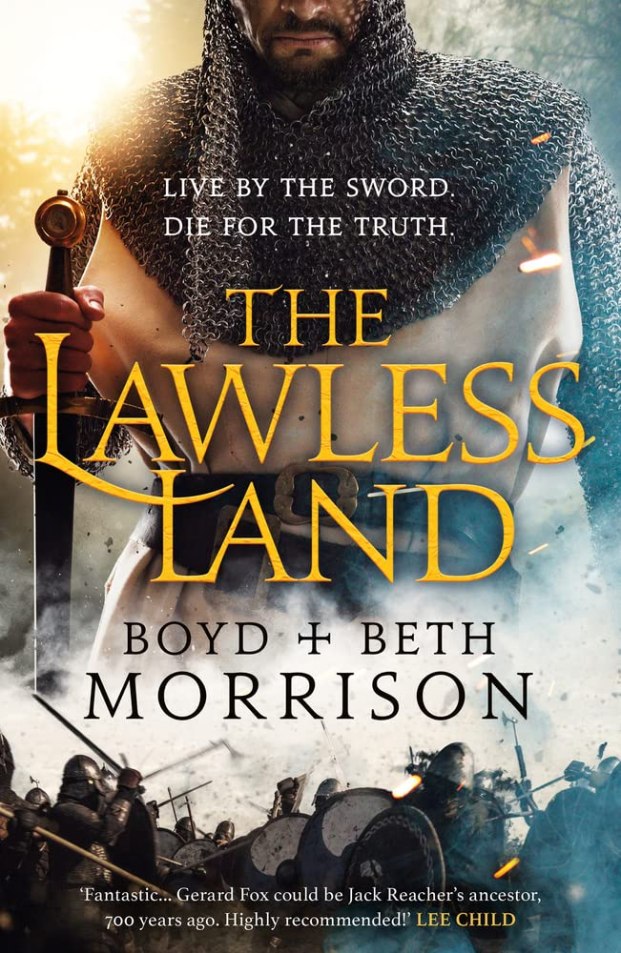
The Lawless Land Cover

Publisher: Head of Zeus (Trade Paperback – 31 May 2022)

Series: Standalone/Book One

Length: 474 pages

My Rating: 5 out of 5 stars

Amazon

Get ready for one of the most thrilling historical adventures of 2022 with the wildly entertaining and deeply captivating medieval fiction novel, The Lawless Land, by the outstanding team of Boyd and Beth Morrison.

Despite my recent focus on other genres, historical fiction in all its forms remains one of my favourite book categories to check out, especially with awesome new novels coming out all the time.  One of the best examples of this is The Lawless Land, which I was lucky enough to receive a copy of a little while ago.  The Lawless Land was a fascinating read that takes some great protagonists on a bold adventure through medieval Europe.  This book was written by Boyd and Beth Morrison, a brother and sister team who have deeply impressed me.  This was a rather interesting combination of writers, as Boyd Morrison is an acclaimed thriller and historical fiction author, and Beth Morrison is the Senior Curator of Manuscripts at the J. Paul Getty Museum and has a PHD in history.  These overachieving siblings really cooked up something special here with their first book, and I loved the outstanding story it contained.

In 1351, Europe is in utter chaos as the Hundred Years’ War rages in France and the Pestilence ravages the countryside, depopulating towns and devastating cities.  These are dark days indeed, and only the desperate and the foolish can be found traversing the roads.  Unfortunately, this includes skilled knight Gerard Fox, whose lands and titles have been taken from him as punishment for a crime against the church, and who is now forced to wander the world by himself, desperate to reclaim his family’s honour.

Journeying towards the castle of Lord Tonbridge, the one man who may be able to prove his innocence, Gerard witnesses a band of armed men waylaying a noblewoman.  Impulsively jumping into action, Gerard saves the women, slaughtering her attackers and forever changing his life.  The young woman, Lady Isabel, is Lord Tonbridge’s betrothed, who has fled from her future husband, taking with her a sacred relic she is sworn to protect.  Forced to abandon his own quest, Gerard agrees to escort Isabel to safety, however, he is unaware of the chaos that is about to be unleashed upon him.

Tonbridge had promised Isabel’s relic to an ambitious Cardinal in Paris, one who is determined to rise to the station of Pope.  Desperate to reclaim the relic and use it to cement his position, the Cardinal and his pawn, Tonbridge, unleash their substantial forces to hunt down Gerard and Isabel.  Fleeing their pursuers, Gerard and Isabel traverse the breadth of England and France to find safe harbour for the relic.  Forced to contend with dangerous foes around every corner, Gerard, Isabel, and their faithful companions will face the worse that medieval Europe has to offer and more.  But worse lies in wait for Gerard, as he bears a dark connection with his pursuers that will ensure they will never stop hunting him.

Wow, now this was a really cool historical fiction novel.  The exceptional writing team behind The Lawless Land have produced an outstanding novel that is extremely exciting, action-packed, and character driven, while also being heavy on the historical detail and accuracy.  This results in an exceptional and epic historical thriller read that I had an absolute blast getting through and which gets a well-deserved five-star rating from me.

The Lawless Land was such a cool read, and I quickly fell in love with its brilliant and exceptional story.  Essentially an adventure thriller set in medieval times, the authors start The Lawless Land off very quickly, showing the protagonist in battle as he saves the damsel in distress, only to end up in even more trouble.  Effectively introducing the key characters early on, you get a real sense of the novels impressive style right at the start, especially with its gritty feel and intense action sequences.  The story soon evolves into a high stakes chase across Europe, as Gerard, Isabel and their companions try to outrace and outwit their opponents to save Isabel’s relic and get revenge for Gerard.  The authors make excellent use of multiple character perspectives here to showcase the chase from both sides, and you get a good look at the various schemes and ploys of the antagonists, as well as the full depths of their villainy.  These amazing and action-packed scenes are expertly interspersed with some flashback chapters that examine the full history and tragedy of the protagonists, especially Gerard, and work to fully establish the enmity between him and the antagonists.  This entire first half of the book is very well written, and the authors’ excellent style will appeal to wide range of readers, not just historical fiction fans, as anyone who enjoys a great adventure or gripping thriller read, can get really engrossed in this excellent story.

This perfectly sets up the second half of this epic novel, which sees the character involved in all manner of carnage and battle as they attempt to win.  I honestly powered through the last 250 pages or so in a day; I was having that much fun reading it.  This second part has everything, including jousting tournaments, prison breaks, desperate chases, elaborate skirmishes, political intrigue, skullduggery and more action than you can shake a stick at.  There is even a full-on judicial duel (think The Last Duel), which was one of the most impressive and gritty fights in the entire book.  There are some intriguing twists, clever reveals, major tragedies, and some outstanding action throughout this entire second half, and it was so much fun to see it all unfold.  I really must highlight the impressive action of The Lawless Land, as all the fights felt particularly realist and very epic, and you can honestly feel every powerful swing and strike of steel on steel.  The authors bring all the established story elements of The Lawless Land together extremely well in the end, and readers will come away satisfied, especially with the fun conclusion and the great ending for the characters.  While this is ostensibly a standalone read, and the authors do wrap up everything really well, there is potential for a sequel at the end, and I for one would not be opposed to seeing more from these characters in the future.

One of the most compelling parts of The Lawless Land was the brilliant dive into the history of medieval Europe.  The writing team clearly did their research when it came to this novel, which is hardly surprising considering the scholarly expertise of one of its authors.  As such, this novel is loaded with impressive and captivating historical detail which isn’t overshadowed by some of the more over-the-top action.  You get a great sense of the how bleak and brutal the continent was at this point in history, with some chilling depictions of plague and pestilence, as well as some intriguing looks at The Hundred Years’ War, including a full flashback chapter to the Battle of Crécy.  The authors spend time exploring a ton of fascinating stuff from this period, including knightly conduct, the power and influence of the church, day to day life for people in cities and the countryside, and so much more.  I particularly loved the scenes set around a tournament in France, where the protagonist engages in a series of jousts.  The sheer amount of detail and realism around these scenes are so very cool, and you can really picture how everything would have looked and felt.  There is also a great examination of medieval manuscripts (again, because of one of the author’s academic focuses), which become a key part of The Lawless Land’s plot, and it was really interesting to examine the significance and process behind them.  All this impressive work around the setting and other historical elements of The Lawless Land really enhanced the overall quality of the book, and I loved how seamlessly it was worked into the epic narrative.

I also must highlight the fantastic characters featured within The Lawless Land, which includes an awesome balance of likeable protagonist and maniacal villains who hunt them.  The story is perfectly split between the two groups, and you get some fun and intense competing views of events throughout the story as a result.  The protagonists are headlined by the awesome character of Gerard Fox, a wandering knight, banished from his family’s lands by the church following a confrontation with one of the antagonists years ago.  Dragged into this conspiracy by accident, Gerard becomes Isabel’s companion and protector, and tries to escort the relic to safety.  A man of action and honour, Gerard is haunted by his past and his many failures, which include watching his brother die in battle, and being tricked into losing everything.  He is also obsessed with discovering the true fate of his mother, and her mysterious disappearance and certain revelations draw him into this conspiracy even further.  A lot of the novel revolves around Gerard’s past, and it was fascinating to see him come to terms with it and try to balance this current quest with his own desires.  Gerard ends up being a pretty awesome protagonist to follow, especially with his martial prowess, unique weaponry, penchant for mischief and trickery (like a certain French fox), and his unbending desire to do the right thing.

Gerard is accompanied by some interesting companions, and the most prominent of these is Lady Isabel.  A noblewoman who was forced into marriage, Isabel seeks to protect her family’s most sacred relic from her betrothed and goes to great length to escape him.  Although she is initially seen as a bit of a damsel in distress, you soon begin to realise that there is a lot more to Isabel than what first appears, as she is an incredibly capable woman with some keen insights and strategies that prove invaluable to her companions.  The authors work some excellent storylines around Isabel in this novel, and you really come to appreciate and enjoy her pluck, courage and intelligence.  There is also a very clever twist about this character revealed in the second half of the book, which was set up extremely well by the authors, including in some flashbacks that both hint at and hide the truth from the reader.  I also should mention the fun supporting characters of Henri and Youssef, two friendly rogues who have substantial history and friendship with Gerard.  Henri and Youssef are excellent additions to the protagonists, and their fun personalities balance well with Gerard and Isabel’s to create a very likeable group of heroes that you become quite attached to, even if that leads to eventual heartbreak for the reader.

I also need to talk about The Lawless Land’s outstanding trio of villains who dog the protagonists’ steps throughout the entire narrative.  This includes the evil Lord Tonbridge, Isabel’s betrothed who she runs away from.  While Tonbridge is mainly hunting them for Isabel’s relic, it also becomes clear that Tonbridge is even more obsessed with righting the perceived slight to his honour and is eager for vengeance.  However, Tonbridge is also partially subservient to villainous French cardinal Molyneux, who has promised him power and a kingship if he succeeds.  Molyneux is particularly despicable, as an ambitious and immoral member of the church who is attempting to become Pope.  Using his influence and the protection of the church for his advantage, Molyneux gains large amount of money and land through unscrupulous means and has some dark history with Gerard’s family, which deeply impacts both his and Gerald’s motivations to confound each other.  The final villain is Molyneux’s vassal and bastard son Basquin, who serves as the protagonist’s main pursuer.  A skilled swordsman and tactician, Basquin is a worthy, if not superior, foe to Gerard, whom he bears a powerful grudge against.  There is some fascinating history behind Basquin that became quite an awesome part of the plot, and it was great to see the intense and captivating confrontations between the two.  The authors take Basquin in some intriguing directions in this book, especially when his own desires clash with that of his abusive father, forcing him to go rogue and enact his own ambitious plan.  All these villains were extremely well written, and it proved highly entertaining to see them go up against Gerard, Isabel and the rest throughout The Lawless Land.  I had such a great time with the characters in this book, and their intense relationships, rivalries and schemes added so much to the power of the novel.

Overall, The Lawless Land was an exceptional and impressive historical fiction read from the great new team of Boyd and Beth Morrison.  These two talented writers came up with something very special with The Lawless Land, and I loved the outstanding and highly addictive narrative contained in this book.  Featuring a ton of epic action, some amazing characters, and some superb historical detail, The Lawless Land was an incredible read that comes very highly recommended by me.

Amazon

Kagen the Damned by Jonathan Maberry

Kagen the Damned Cover

Publisher: Macmillan Audio (Audiobook – 10 May 2022)

Series: Kagen the Damned – Book One

Length: 20 hours and 53 minutes

My Rating: 5 out of 5 stars

Amazon     Book Depository

One of my favourite unusual thriller writers, the legendary Jonathan Maberry, enters the world of fantasy in a big way with Kagen the Damned, a dark fantasy masterpiece with a brutal heart to it.

I have made no secret of the fact that I am a huge Jonathan Maberry fan.  I got into Maberry’s writings when I chanced upon a copy of his 10th Joe Ledger novel, Deep Silence, a few years ago, which introduced me to both Maberry’s unique writing and his iconic protagonist, the titular Joe Ledger, a badass action hero who saves the world from crazy and dark science creations.  I deeply enjoyed Deep Silence (it was one of my favourite books of 2018) and quickly moved onto his other Joe Ledger books, diving back to the start of the series with Patient Zero, and then working my way through the rest of the awesome entries, such as The Dragon Factory, Code Zero, Predator One and Dogs of War.  I also kept up with his latest releases, including the two entries in the follow-up Rogue Team International series, Rage (one of my favourite books and audiobooks of 2019) and Relentless (one of my favourite books and audiobooks of 2021), and his standalone novel Ink (one of my favourite books and audiobooks of 2020).  I have been very eager to see what awesome novel Maberry releases in 2022, and, luckily for me, that materialised in the form of Kagen the Damned.

Kagen the Damned is an interesting and unique read from Maberry, as it is his debut foray into the fantasy genre.  While many of his other books have had fantasy elements to them (albeit with a horror edge), this is his first pure fantasy fiction novel, as well as the start of his Kagen the Damned series.  Naturally I was rather curious about how Maberry would transition to a new genre, and while I was a tad disappointed that the Rogue Team International series isn’t getting a new entry any time soon, Kagen the Damned ended up pretty high on my most anticipated reads for 2022 list.  After a few weeks of other books getting in the way, I finally got the chance to listen to Kagen the Damned, and it turned out to be quite an impressive novel.

Kagen Vale was once one of the most trusted and revered fighters in the entire Silver Empire.  A scion of the legendary Vale family, who have served the Silver Empire for generations, Kagen was a beloved member of the royal court and so highly regarded that he was entrusted as the guardian of the Seedlings, the Empresses’ children.  That was until the fateful night when, out drinking and whoring, he was drugged and left for dead.  Awakening in a daze, Kagen found himself in the midst of hell as the capital of Silver Empire, Argentium, was besieged by a foe long thought dead, the dread nation of Hakkia, whose dark magic has once again emerged to blot out the world.

Arriving to the palace too late to save anyone, including the Seedlings, Kagen falls into despair at failing his sacred duty and can only watch in horror as the Gods of the Garden, the deities of the Silver Empire, turn their back on him and damning him for all time.  Now with everything and everyone he has ever known lost forever, Kagen the Damned wanders the ruined countryside a broken drunk, dreaming of revenge on the one man responsible for all his ills, the mysterious and feared Witch-king of Hakkia.

However, not everything is as lost as it seems, as shadowy figures across the world being to formulate their plans to repel the Witch-king’s evil.  As two young women embark on a deadly quest to awaken a sleeping, ancient god from beneath the waves, a covenant of resistance attempts to find their own magic to oppose the Witch-king with.  Determining that Kagen may bear the best chance of recovering the tools needed to succeed, they manipulate events to set him on his path to revenge.  However, what price will a doomed man truly pay to get the revenge he so desperately seeks, and will Kagen be ready for the terrible secrets he uncovers along the way?  Only the gods and the damned know for sure!

Well, it is now more apparent than ever that there is no Jonathan Maberry book I will not enjoy to the extreme.  Kagen the Damned is an incredible and very memorable novel from Maberry, who puts the ‘dark’ in dark fantasy, with this barbaric and action-packed journey into hell.  Making use of his trademark style, flair for horror and exceptional character work, Maberry pulls together a deeply addictive and extremely exciting story that I fell in love with very, very quickly.  This was another easy five star read for me, and I loved every single second I spent reading it.

Maberry once again blew me away with an outstanding and high-action narrative, and I quickly got very attached to Kagen the Damned.  This book has an extremely memorable start to it, showing the bloody fall of Argentium from the perspective of Kagen, who awakens from a drunken haze to find a vast army in his supposedly impenetrable city, destroying and killing everything they see.  This was a very compelling and brutal start the novel, and its one that I quite enjoyed, especially as you see just how dangerous the enemies are and the chaos they have unleashed.  Maberry does a great job of setting up multiple key storylines, settings and characters in this early section, and while the focus is primarily on Kagen, you get some interesting insights into other figures that will impact the rest of the book.  The entire first part of the book is very distinctive and really showcases how dark this novel is going to get, especially when it comes to the character of Kagen and the fate of the royal children.  This whole first section ends on a brilliant note, with Kagen left broken and damned, while the once great Silver Empire, which you only saw glimpses of, is destroyed and replaced with a new world order.

Following this epic start, the narrative slows down a little, as Maberry works to set up some alternate storylines and characters, while as taking the time to do some compelling and extended word building.  Set in the direct aftermath of the opening sequence, the story primarily splits into three different streams at this point, with the main one following a despondent Kagen as he traverses the former Silver Empire, lost in grief and drink.  At the same time, two separate storylines tell some great connected narratives, with one following two young women as they journey off into the unknown, while the rest focuses on the Hakkian takeover back in Argentium.  This focus on the Hakkians and their plans, as told by the Witch-king’s advisors, as well as a resistance group, is very awesome, and it was fascinating to see some impressive political intrigue going on behind the scenes as the antagonists work to consolidate power through various methods.  While the rest of the narrative continues in a straight line, the story around Kagen slowly adapts as he meets some new friends and begins his mission of revenge as planned, with some detours.

This leads up to the excellent final part of the book, which I powered through extremely quickly to see how everything ended.  All three major storylines are reaching there climax here, and they start to blend a lot more closely, especially the ones focusing on Kagen and the Hakkians.  Everything leads up to a highly anticipated confrontation that sees Kagen finally face his enemies, and it is just as epic as I was hoping.  There is a ton of action, tragedy, twists and revelations here, as many of the plot elements and storylines come full circle.  I loved the various reveals that happen here, and most have been set up really well throughout the extended course of the narrative.  I really should have seen the identity of the Witch-king coming, but it was the right choice by Maberry, which leaves some big questions open for the future.  Everyone will come away from Kagen the Damned extremely satisfied, as Maberry leaves everyone on a brilliant note, that ensures that readers will definitely come back for more.  This is an outstanding and deeply addictive narrative that is guaranteed to grab your attention early one and refuse to let go.

I really enjoyed how well Kagen the Damned was written, as Maberry brought his unique style to bear to help create an outstanding story.  In many ways, this novel proved to be essentially one of Maberry’s thrillers set in a fantasy universe.  Indeed, there were a lot of similarities in the style, the structure of the chapter, the pacing and even the use of familiar horror elements that I have previously seen and loved in the Joe Ledger books and I think this cool style worked well to tell an intense fantasy narrative.  As such, Kagen the Damned is a swift and well-structured book that pushes the story along at a swift pace, while also taking the time to build up the universe and the multitude of characters.  Maberry utilises a great range of story elements throughout this novel, and the readers are treated with a fantastic blend of action, intrigue, dark, over-the-top moments, horror, despair and humour, as the characters experience all manner of devastating trials and oppositions.

I also have a lot of love for the way that the author sets up the story and showcases the elaborate events that are occurring.  Maberry makes excellent use of a huge number of shorter, focused chapters told from a variety of viewpoints.  These briefer chapters really increase the pace and intensity of the book, and I deeply appreciated how the narrative quickly jumped across the various characters.  The interplay between the three central storylines, which are primarily anchored around Kagen, is extremely good, and I loved seeing the characters react to some of the same events or actions of their fellow cast members.  These storylines are also joined by a series of interludes that show the various impacts that the Hakkian invasion has on the wider world, especially those attuned to magic.  These interludes are usually very fascinating, and they are often used to introduce some minor supporting characters in a fun and unique way.  I loved the complexity that these interludes usually have, and the often self-contained stories are well structured and always feature a distinctive or chilling conclusion.  Maberry uses these interludes cleverly, often inserting them between major or extremely powerful chapters to help relieve tension, or to remind the reader of the wider stakes or events occurring around the main story.  I definitely enjoyed this larger look at the world that Maberry provided through them, and it was an outstanding part of Kagen the Damned’s story.

One of the major highlights of the writing in Kagen the Damned is the intricately described and fast-paced action, which is a major hallmark of Maberry’s writing style.  Maberry has always excelled at writing brutal fight scenes in a way that paints a vivid mental picture for the reader, and this was once again the case for Kagen the Damned.  The many, many action and fight sequences are brought to life in exquisite and bloody detail, and the reader is easily able to imagine every strike and slice as they happen.  This makes the action sequences really pop, and they were a particularly awesome highlight of this great book.  This focus on action and combat was really effective in this fantasy novel, and it was very cool to see Maberry bring his knowledge of combat and the accompanying writing skill to bear on large scale battles between armed and armoured fighters, while magic and gods blow stuff away around them.  There are some really great fight scenes loaded throughout this book, and I loved every skirmish, battle and duel that was featured within it.

While I did really love the action and brutal combat sequences within Kagen the Damned, I probably should add a warning about how dark and gruesome it can get in places.  Maberry’s writing style has always relied on over-the-top violence, cruelty and brutality to a degree, and this was once again the case in Kagen the Damned, which not only featured a ton of killing but also gruesome scenes of torture, corpse desecration and depictions of sexual violence.  While I think that these ultra-violent moments do work to showcase just how dark and savage the new world order is, they are often a bit hard to witness.  I will note that Maberry did take the time to discuss the emotional and social impacts of the various acts of sexual violence in the book, rather than just including them for gratuitous effect.  There are also some great scenes where the protagonist calls out and belittles several characters willing to commit such acts, before delivering his own violent justice, and I think that the author did his best to show have damaging it can be in his own way.  However, readers should probably be aware that these scenes exist, as people might find them to be a bit shocking.

I was also a major fan of the cool new fantasy universe that Maberry cooked up with Kagen the Damned, mainly because it is such a distinctive creation of the author.  Set on a giant continent made up of various nations, this is an impressive and compelling world, filled with a unique history, gods, people and settings.  The author does a great job of swiftly introducing this world and some of the key parts of its history in the early parts of the book, mainly so that readers can be a little more shocked at the early events and full appreciate the destruction and change that the Hakkian nation brings with it.  Maberry is clearly emulating some classic fantasy novels and settings throughout Kagen the Damned, and I loved seeing this bold new world that he has created.  There are some unique and cool elements featured within, and I liked how there are certain shades of grey shown when it comes to the morality and righteousness of the various factions.  Maberry also takes the time to highlight the changes that are coming to the world, thanks to the return of the Hakkian Witch-king, and the slow and steady resurgence of magic and the death of a certain pantheon of gods, are highlighted really well, both in the main story and the interlude chapters.

Perhaps one of the most distinctive features of this new world is the horror elements that Maberry worked into the plot.  I really should not have been surprised at the strong Lovecraftian elements that featured, as the author has used them strongly in some of his previous books.  However, it is even more explicit here in Kagen the Damned, with several notable Elder Gods playing key roles in the plot and even appearing in some epic scenes.  While I am not personally a fan of Lovecraft, I did quite like how Maberry utilised these elements throughout this book, and they gave parts of the book a darker and more eldritch quality that I quite enjoyed.  This, and certain discussions about other worlds and alternate realities, potentially links this series to some of Maberry’s existing works, and it wouldn’t surprise me if there were some form of crossover in the future, although it would have to be handled well.  I had a great time exploring this new fantasy world in Kagen the Damned, and I look forward to seeing what other surprises and dark gods appear in future entries of this series.

I also must highlight the incredible character work featured with Kagen the Damned, as Maberry went all out to create an excellent and unique cast of characters, whom the excellent narrative revolves around.  There are some amazing characters featured within this novel, and the author works hard to feature all of them in some impressive roles.  I had a lot of fun with the huge cast of Kagen the Damned, and there are deep and emotional figures featured here.

The most prominent and intriguing character is the titular Kagen, who takes on the moniker of Kagen the Damned.  Maberry really does a number on his central protagonist early on, as Kagen awakens from a drunken haze to find that everything he cared about and held dear had been lost while he slept.  Despite his best efforts to redeem himself in the battle that follows, he still fails miserably, and manages to escape the conquered capital in a fractured haze.  Broken, dazed and emotionally destroyed, Kagen becomes even more despondent when he sees his gods in the sky turn their back on him due to his failure to maintain his sacred oaths, which convinces him that he is damned.  Naturally, these events leave him severely emotionally damaged, and he spends most of the book trying to come to terms with his failure while also trying to find some way to get revenge on the Witch-king for all he has done.  A large amount of the book is dedicated to Kagen falling into despair, and Maberry presents a realistic depiction of a man who has lost everything and who is barely able to survive, relying heavily on drink and violence to get through his days.  While Kagen is eventually able to throw off much of this despair, it is still lurking within him, and he is often shown living in regret at his failure, even though no one else blames him as much as he does.  Kagen working through these complex feelings of failure results in much of the novels emotional strength, and Kagen serves as a moving and powerful heart for the entire novel.

While I did deeply enjoy this intriguing central character and his rough and emotional journey through this book, it is hard not to notice some similarities between Kagen and another one of Maberry’s protagonists from another series.  Kagen is in many ways a fantasy version of Joe Ledger, with similarities including a propensity for violence, extreme skill with knives (technically short-swords in Kagen’s case), and even a similar sense of humour during some of the lighter moments of the books.  There is also the same high level of mental damage brought on by extreme trauma, with both characters often seeking revenge against the people who wronged them and those they loved.  Despite these similarities, I still really appreciated Kagen as a protagonist, and I felt that some of his additional elements, such as his complex familiar bonds and strong sense of failure, did set him apart in some key ways.  No matter what, Kagen is a pretty awesome character to follow, and I loved seeing him continue to go through all his dark moments to keep going.

Aside from Kagen, there are several other amazing characters featured in this novel, all of whom have some outstanding storylines around them.  Two of the most prominent are Ryssa and Miri, who were in Argentium when the Hakkians invade.  Both junior members of the Silver Empire’s clergy, the two women initially appear to be primarily concerned with surviving the invasion.  However, it soon becomes apparent that Miri, whose knowledge of the gods and creatures of this world are far greater than they should be, has a different agenda.  Taking Ryssa with her on a big journey to a remote island nation, Miri soon engages in a plot to save the world her way.  Ryssa and Miri make up a fun combination that Maberry weaves some interesting storylines around.  While these characters aren’t explored as deeply as Kagen, you still get a great sense of who they are, particularly Ryssa, who is the primary point-of-view character between them.  Their entire storyline is covered in mystery and uncertainty as Ryssa is left in the dark about what is coming her way.  I liked the religious world-building that went into this character storyline, and there are some excellent moments in it loaded with tragedy and despair.  Even with their storyline being mostly separated from the rest of the characters, and it was a little predictable that Maberry would turn them into a lesbian couple, they had a compelling relationship and I felt that they added a lot to the narrative.

I also had a great deal of fun with the primary Hakkian characters featured in Kagen the Damned.  While they are ostensibly the antagonists of the book, Maberry takes the time to really establish the main four characters and presents them as a lot more complex and even sympathetic in places.  The main Hakkian character is their leader, the Witch-king, a character shrouded in mystery for most of the book.  A previously unknown figure, the Witch-king uses his magic to defeat the entire Silver Empire in a night and then spends the rest of the book trying to set himself up as the legitimate ruler of the land while also advancing the position of his brutal god.  I loved the way that Maberry kept the details about the Witch-king’s past and identity hidden for most of the narrative, although there is some great foreshadowing of his identity scattered throughout the novel.  The Witch-king cuts a fantastic and menacing figure for most of the book, and it was intriguing to see him present himself as a fair and loving ruler, while simultaneously exuding an aura of menace and dark magic.  It was pretty hilarious to see him terrify his key advisors for much of the book, and I loved all the hints about his true objectives.  An overall excellent central antagonist, I look forward to getting more details about him and his history in the rest of the series, especially after the revelations at the end of this book.

The other three key Hakkian characters are the Witch-king’s advisors, the chamberlain Lord Nespar, necromancer Lady Kestral, and newcomer Jakob.  Nespar and Kestral are fantastic characters who spend most of the book administrating the Witch-king’s will, running his empire, hunting for Kagen, and setting up the upcoming coronation of the Witch-king to become emperor.  While they are initially shown to be quite dangerous and evil, mainly due to their role in destroying the Silver Empire and Kestral’s disturbing magic, you eventually see that there is a lot more to them.  In particular, you see that they are actually extremely terrified of the Witch-king and are desperately obeying his will in order to survive.  You actually end up feeling a bit sympathetic for the pair of them, even after you see Kestral tear a corpse apart for a ritual, and I enjoyed the intrigue and politics they got involved with to rule the new empire.  The other character is Jakob, a Silver Empire historian who is drafted into the Witch-king service as his minister for propaganda.  Rechristened as Jakob Ravensmere, he becomes fully compliant in the Hakkian takeover and proves to be a very competent advisor and political mind while also working to rewrite history to increase the legitimacy of the Witch-king.  It was extremely fascinating to see Jakob discussing the control given by those who control history and propaganda, and I really enjoyed his role in the new empire.  It was also fun to see his rather quick slide towards the dark side as he fully embraces the Hakkian lifestyle and even starts to develop a taste for a power.  I always love seeing Maberry’s narrative unfold from the antagonist’s point of view, and this worked out extremely well again in Kagen the Damned.

The final characters I need to highlight are some of the excellent supporting cast surrounding Kagen.  Kagen has two excellent companions who work with him throughout the book, Tuke and Filia.  Tuke is a giant professional thief who recruits Kagen for a job that will help an anti-Hakkian resistance movement.  Tuke serves as the comic relief for much of the book, and I loved the outstanding chemistry he had with Kagen.  The two play off each other extremely well, and their excellent camaraderie and humour were pretty fun to see.  Not only does Tuke have some of the best lines (and the funniest curses) in the book, but he also serves as an emotional sounding board to Kagen, helping him get better after all the tragedy he experienced.  Filia is a strong-willed warrior and former associate of Kagen who finds herself dragged into the chaos around the war and Kagen’s wild adventures.  Filia’s no-nonsense attitude and sarcasm are a great counterpart to the other characters in Kagen the Damned, and I especially liked it when it combined with the humour of Kagen and Tuke.  These characters, and more, really enhanced the overall quality of this impressive narrative, and I loved seeing their powerful storylines unfold in some excellent and enjoyable ways.

There was no way that I was going to check out the new Jonathan Maberry novel in any format other than audiobook.  I have had some outstanding experiences with Maberry’s audiobooks over the years, and all of them have been deeply impressive and extremely enjoyable.  This again proved to be the case with Kagen the Damned, as I had an outstanding time having this dark epic read out to me, especially as it really helped me to absorb all the details of the characters and the impressive new universe.  With a runtime of just under 21 hours, this is a pretty lengthy audiobook to get through, but it is well worth the time investment, especially as it delivers the story in such an awesome way.

Easily the best thing about this audiobook is the outstanding narration from the very, very awesome Ray Porter.  Porter, who is one of my favourite audiobook narrators, who has previously narrated Maberry’s books, as well as contributing his voice to other works like The Apollo Murders and The Sandman audio adaptation.  As such, the moment I heard that Porter was also going to narrate Kagen the Damned, I knew that I had to get this audiobook.  Porter has an amazing ability to move the story along, and his voice is perfect for all the intense action, world-building and intrigue Maberry features in his novels.  I love the way that Porter dives into the various characters featured in the books, with every single person getting their own distinctive voice, while Porter also effortlessly emotes all their emotion to the listener.  This includes a very sinister voice that Porter saves for when the villains are talking or some incredibly dark moments are happening, and having him use variations of this voice to highlight just how brutal a moment is being, is always a great experience.  It also works well when the characters start speaking in the languages associated with the Elder Gods, and the resultant ceremonies and spells are quite spooky to hear in Porter’s voice.

Porter also did a particularly good job at inhabiting the voice of Maberry’s central protagonist, Kagen, and you get a real sense of who he is and the intense pain he is feeling throughout the book.  While the voice Porter uses from Kagen is a little like that of Joe Ledger from Maberry’s other audiobooks (a side effect of Porter ensuring that the main protagonist’s voice matches the tone he uses for basic narration), Porter does add a little more of a growl to it here, which helped to a degree.  This was another incredible performance from Porter, and I am so very glad that they got him back to narrate Maberry’s new series.  I cannot emphasise how outstanding the Kagen the Damned audiobook turned out to be (although I did feature it in my recent best audiobooks from the first half of 2022 list before I’d even finished it), and this is the absolute best way to enjoy Kagen the Damned.

Well, after rabbiting on for nearly seven pages, I think it is exceedingly obvious that I loved Kagen the Damned.  Jonathan Maberry’s latest novel was extremely compelling and deeply exciting, and I was really impressive with the author’s jump to the fantasy genre.  Featuring a clever, complex, and action-packed narrative loaded with destruction, thrilling revenge and some great, damaged characters, Kagen the Damned was an outstanding read and its one that I absolutely flew through.  Kagen the Damned is easily one of the top books of 2022 and this is a favourite new series for me.  I am extremely excited to see where the Kagen the Damned series will go in the future, and the next book, Son of the Poison Rose, is out in a few months’ time, and I cannot wait to get my hands on it.

Amazon     Book Depository

The Law by Jim Butcher

The Law Cover

Publisher: Podium Audio (Audiobook – 5 July 2022)

Series: The Dresden Files – Book 17.5

Length: 3 hours and 22 minutes

My Rating: 5 out of 5 stars

Amazon

Prepare to dive back into the wild world of Jim Butcher’s iconic Dresden Files series with the latest impressive novella, The Law.

Readers of this blog might have noticed that I usually don’t go out of my way to read too many novellas or short stories and instead usually focus on full-length novels and comics.  This isn’t so much a deliberate choice as I just prefer whole books I can really sink my teeth into.  However, I had to make an exception for the latest Dresden Files novella that Jim Butcher just dropped, as I have been deeply enjoying this epic series.

The Dresden Files are a long running series of urban fantasy novels that follow protagonist Harry Dresden, a wizard who protects the people of Chicago from the magic beings and creatures they don’t even know exist.  People may remember that I first got into the Dresden Files back in 2020 when I checked out the 17th entry in the series, Battle Ground.  While I did enter this series late in the game, I still had an outstanding time with Battle Ground and it ended up being one of my top books and audiobooks of 2020.  In fact, I enjoyed it so much that I went back and started reading the series from the beginning.  So far, I have been able to read the first four Dresden Files novels, Storm Front, Fool Moon, Grave Peril and Summer Knight, all of which have been pretty impressive and captivating reads.  This dive into the older novels, plus my lingering enjoyment of Battle Ground, ensured that I was ready and eager for any new Dresden Files content that came my way, and Butcher just delivered with his latest novella, The Law.

Set a month after the events of Battle Ground, The Law sees Harry Dresden and the city of Chicago still recovering from the invasion of the Titan Ethniu and her forces, which resulted in significant destruction.  However, Dresden is primarily mourning the tragic death of his love, Karrin Murphy, and even his new responsibilities as lord of a castle and protector of Chicago isn’t enough to keep his mind off his loss.  Determined to snap Dresden out of his funk, his friends decide to get him back to basics and introduce him to someone in need of a good investigator.

Enter Maya, a former prostitute turned tutor whose grassroots education company helps to supplement the education of Chicago’s working-class children.  Working hard, Maya has managed to turn her tutoring business into a viable, if low-profit, franchise that prioritises helping as many children as possible.  However, Maya’s past life is about to come back to haunt her in the form of her former pimp, Tripp Gregory, who initiates a bogus lawsuit against Maya’s company for a ridiculous sum.  Unable to afford a lawyer and desperate for help, Maya has no choice but to turn to Chicago’s resident miracle worker, Harry Dresden.

Deciding to the take on the case and hoping to quietly warn Tripp away from Maya, Dresden soon discovers that sometimes the most dangerous opponent is a greedy idiot concerned only for themselves.  Worse, Tripp and the case have unexpected connections to the magical world, with dangerous players taking an interest in its outcome.  Forced to deal with old and new foes of considerable power, Dresden will need all his wit and will if he is to save Maya’s business and ensure that justice is found.

Well, that has gone a long way to convincing me to check out more novellas in the future.  The Law was an epic read that took Butcher’s always outstanding Dresden File’s protagonist on a short, but extremely sweet, adventure.  Bringing Butcher’s usual flair and style, while also expanding on events from the last book, The Law was a great read that gets a full five-star rating from me.

Butcher pretty much teaches a master class on how to do a short, concise and captivating story here in The Law as, despite its length, this novella had an impressive and fun narrative that I found to be utterly addictive.  Not only does it serve as a great follow up to Battle Ground but it showcases some amazing character work while presenting the protagonist with an intriguing new adventure.  The story is so much fun, and I loved how it started as seemingly non-magical job and then morphed into something more dangerous and problematic as Dresden finds that it has connections with the magical world that forces him to deal with some of Chicago’s key players, including some old enemies.  Bringing a small but enjoyable amount of legal thriller aspect to the series’ usual urban fantasy crime fiction style, The Law goes in some fantastic directions, as Dresden attempts to placate all the players while also serving his client.  There is a great bit of action, a ton of humour, some intriguing revelations, and even some pretty dark moments, which combine extremely well to create quite the impressive narrative.  I loved how Butcher wrapped the entire novella up, especially with that one conference scene near the end, and the reader comes away very satisfied and entertained with the entire affair.  I cannot emphasise how great this story was, and I was so damn enthralled by it that I nearly finished it in an entire sitting.

One of the things that I particularly liked about The Law is the way that it serves as a bridging novella between Battle Ground and any future entries in the series.  Butcher spends a lot of time in this story looking at the aftermath of the previous novel, especially as Battle Ground featured that epic battle that saw Chicago nearly levelled.  As such, Butcher packs The Law with a ton of callbacks to the events of the last book, and there is a huge focus on how the various characters are dealing with the aftermath, especially Dresden.  There is also a very fascinating look at the rebuilding that is occurring during this time, as well as the current state of the citizenry, many of whom are traumatised or damaged because of a battle most of them couldn’t even fully comprehend.  I really appreciated seeing the various figures featured in The Law remembering or trying to understand the events of Battle Ground, whether they are a magical person who lost someone, a normal person who went through hell, or even one of Dresden’s Knights of the Bean, who now bear a dark connection with the protagonist.  Some of the details that came out as a result are deeply fascinating, and there are even a few hints about where some potential future storylines might go, such as increased Government awareness of magic (you see evidence of them covering up the events of Battle Ground here), or the increased fear that might lead to humans attacking magic kind in the future.  All of these are featured heavily in The Law, and I liked how it was well utilised for the current story, while also showing fans of the series how different the landscape of Chicago will be in the future.  I would say that this focus on the aftermath of Battle Ground did make The Law a little less accessible to those readers who haven’t read the latest Dresden Files novel, however, I think that if you are interested in reading this, then you should definitely read Battle Ground first.

I also must talk about the great character work featured in The Law.  Despite its shorter length, Butcher manages to fit a decent number of characters in The Law, and there are some impressive character arcs and development that occurs as a result.  Naturally, most of this is focused on series protagonist and central point-of-view character, Harry Dresden, who puts on his usual brave face for most of this novella, bringing his usual insights and wicked humour to the new case.  However, it soon becomes very apparent that Dresden is still heavily traumatised by the events of Battle Ground, where he lost so much because of the war.  Despite his best efforts to hide it, Dresden is a wreck for much of the story, and it was quite confronting and moving to see him experience blackouts and emotional strains due to the tragedies he has experienced.  I think that Butcher covered his protagonist’s trauma and grief in a pretty realistic way, and I liked how he tried to use an old-fashioned investigatory case as a coping method for Dresden.  It was great to see Dresden going back to his roots as a private investigator after the chaotic and world-altering events of the last few books, and it was interesting to see how much the character’s powers, methods, insights and choices have changed as a result of everything he’s seen.  The Law ended up being quite an intense and fantastic look in the recovering Dresden and readers will like seeing his emotional damage, his recovery, and even some of his darker moments that are contained within this excellent novella.

Aside from Dresden, The Law features an excellent array of supporting characters, who bring a lot to the narrative.  Butcher made sure to include a combination of new faces and existing characters to fill out the cast, and I had a blast with how they were utilised throughout.  Several of the funniest and most interesting recurring figures from the series had substantial roles here, including Bob, Gentleman John Marcone, and even Mab, and each of their appearances and interactions with Dresden were entertaining and fitting with their previous appearances.  I enjoyed many of the great new characters that Butcher introduced here.  Some of them, including a devilish lawyer with a shrouded identity, may come back in the future, and it will be interesting to see how they are utilised.  I also enjoyed main antagonist, Tripp Gregory, mainly because he was so different that Dresden’s usual antagonists.  Rather than being a magical creature or a major threat, Tripp is a normal and rather idiotic criminal, who has a surprising power: he’s too stupid to believe in magic and too self-centred to avoid all the trouble Dresden is bringing his way.  Dresden’s reactions to having to deal with such a selfish and unusual opponent makes Tripp’s inclusion totally worth it, and I had fun seeing his arc unfold.  These characters, and more, were awesome inclusions to The Law, and their unique inputs added a lot the quality and entertainment value of the entire novella.

Finally, a quick note on the audiobook format, which was how I enjoyed The LawThe Law audiobook has a very short run time of just over three hours and is a relatively easy audiobook to get through.  I always find myself really getting into Butcher’s excellent stories in this audio format, and this continued here with The Law, and it really helped me enjoy all the novella’s fun and entertaining details.  Probably the biggest thing about The Law audiobook was the choice of narrator.  I was deeply, deeply shocked when I discovered that long-time Dresden Files voice actor, the legendary James Marsters, wasn’t narrating The Law, and instead Butcher himself took over and voiced the entire thing.  Surprisingly, this ended up working out rather well and Butcher turned out to be a pretty competent and enjoyable audiobook narrator.  Don’t get me wrong, he’s no James Marsters (a point Butcher makes up-front, after promising Marsters would come back for future novels), but he does a really good job considering his lack of experience.  All the characters are given good, distinctive voices that fit their personalities and showcase their emotions and reactions perfectly.  His voice for Dresden was particularly good, and Butcher captured his creation’s cocky nature and damaged inner self perfectly.  While some of the accents he did were a little iffy, this was an overall fantastic performance from Butcher, and it was fun to see him contribute to his work in this way.  The Law audiobook ended up being an excellent and impressive way to enjoy this fantastic story, and it is easy the format I would most strongly recommend.

Jim Butcher continues to expand his epic Dresden Files series in some fantastic ways with the new novella, The Law.  Containing a compact, but highly impressive story loaded with some of Butcher’s best characters, The Law proved to be extremely entertaining and a lot of fun to get through.  Serving as a perfect follow-up to the major events of the last novel, The Law was an excellent and powerful entry in this long-running series that is a must read for all Dresden Files fans.

Amazon

Warhammer 40,000: Assassinorum: Kingmaker by Robert Rath

Assassinorum Kingmaker Cover

Publisher: Black Library (Audiobook – 2 April 2022)

Series: Warhammer 40,000

Length: 11 hours and 12 minutes

My Rating: 5 out of 5 hours

Amazon     Book Depository

The most lethal assassins in the Warhammer 40,000 universe go face to face with a gigantic foe in the impressive and deeply thrilling Assassinorum: Kingmaker by amazing author Robert Rath.

I know I’ve said this before, but 2022 is turning out to be a fantastic year for Warhammer fiction.  Thanks to my recent obsession with this franchise, I have been deeply enjoying all the new tie-in novels associated with this table-top game, as a bevy of talented authors seek to expand on the already massive lore.  I have already had a lot of fun with books like Steel Tread, The Bookkeeper’s Skull, Day of Ascension, Kreig, Ghazghkull Thraka: Prophet of the Waagh!, Reign and The Vincula Insurgency, but I may have just finished one of the most purely entertaining and awesome new entries, Assassinorum: Kingmaker.  Written by Robert Rath, who previously wrote the intriguing Necron focused book, The Infinite and The Divine, Assassinorum: Kingmaker had a very appealing story that instantly grabbed my attention and which ended up being an outstanding read.

In the 41st millennium, a new generation of war has engulfed the Imperium of Man, as the forces of Chaos press mankind from all sides and the recently resurrected Roboute Guilliman leads his forces on a new crusade.  Enemies attack the Imperium from all corners, often hidden in the shadows, and all the Emperor’s agents must work to find and eliminate them.  The most deadly, effective and feared of these agents are the members of the Officio Assassinorum, elite modified assassins who kill all of the Emperor’s enemies without mercy or fear, and who many believe are merely myth.

When the mechanical warriors of the Knight World of Dominion fail in their duty, the Imperial overlords task Vindicare assassin, Absolom Raithe, to travel to the planet and kill Dominion’s High Monarch, Lucien Yavarius-Khau, and managed the succession of a suitable replacement.  However, this will be no easy kill as the High Monarch has long ago bonded himself to his massive war machine, remaining permanently within its heavily armoured cockpit.  To kill this near-invulnerable king, Raithe is forced to recruit a kill-team with variable talents, featuring the Callidus assassin Sycorax and the Vanus assassin Avaaris Koln.

Infiltrating the planet using returning Knight, Sir Linoleus Rakkan, who has been co-opted into their plans, the assassins arrive to find a world in turmoil.  The planet’s two rival ruling houses are in constant battle with each other, and in the ensuing chaos, anti-Imperial sentiment is high, and the already invincible High Monarch is under heavy guard.  Seeking to infiltrate the court of Dominion, the kill team begin to manoeuvre themselves into position, while manipulating the feuding knights around them.  However, the assassins soon begin to realise that not everything is as it seems, and a dark secret lies at the heart of this noble planet.  Can Raithe’s team achieve their goals, or are they destined to die at the hands of a dangerous foe with malicious plans for the entire Imperium?

Damn! Damn! Damn! What an over-the-top and extremely cool Warhammer 40,000 novel that I deeply, deeply loved.  Robert Rath really went out of his way to make Kingmaker as awesome as possible, and the result is an extremely thrilling, electrifying and epic read, loaded with so many cool elements.  This was honestly one of the best Warhammer novels I have had the pleasure of reading and I have very little choice but to give it a full-five star read.

I really, really loved the cool story in this book, which essentially boiled down to ultra-elite assassins attempting to kill the king of a planet of mecha, which is such an awesome idea.  Despite this being a heavy concept to achieve, Rath managed to achieve it in spades, providing readers a fantastic and clever narrative that instantly grabs your attention.  This book starts off extremely well, introducing the world of Dominion, the unique mission, and the four central characters of the three assassins, and their Knight patsy, and generally setting up all the key elements of Kingmaker to ensure some outstanding moments later.  From there, the story turns into a bit of an espionage thriller, as the three assassins begin their infiltration of the court, impersonating the knight Rakkan, and coming to grips with the unique world they have arrived at.  Rath provides an excellent balance of story elements in this first half of the novel, and the reader gets a fantastic mixture of character development, massive universe building, political intrigue, spy elements and some early mecha-action, all of which is a ton of fun and ensures that the reader is firmly addicted with this novel.

While I deeply enjoyed the excellent story elements contained with this first half of Kingmaker, it’s the second half that made me a major fan of this book, as Rath amps up the action, excitement and thrills in a massive way.  Following a major, action-packed moment around the halfway mark that sees all the characters in their element, the protagonists soon have a new objective.  This leads to several great sequences of entertaining mayhem and death as the protagonists attempt to manipulate local politics to their advantage.  However, the fun doesn’t last much longer, as the book enters its final phase and big conclusion.  While it initially appears that everything is going to plan, you just know it will end badly as there is still a lot of book left to go.  However, you do not appreciate just how bad things have gotten for the protagonists until they are suddenly hit from every direction and hell reigns down all around them.

The story essentially devolves into all-out war for its last quarter, as the protagonists find themselves facing enemies all around, and all four main characters are forced go in some amazing directions at this point as they attempt to stymie the damage before them, with varying degrees of success.  Rath really pulls out all the stops here, and the reader is dragged into non-stop action on every front, from a mass of deadly mecha fights, close combat against abominations in the bowels of an ancient castle, and an intense gun fight against overwhelming numbers.  At the same time, there are a ton of big revelations occurring here as a lot of the storylines Rath has been patiently setting up throughout the rest of Kingmaker finally come to fruition.  I honestly did not notice some of the clues that Rath set out in the earlier stages of the novel, but once you realise what he has done, it really becomes apparent how much detail and planning the author put into the story.  Everything comes together extremely well at the very end, and Rath wraps up most of the storylines perfectly, leaving the reader very, very satisfied, with all their action needs firmly quenched.  However, he also leaves a couple of storylines opened, which could potentially lead to some form of sequel in the future, which I would be very excited for.  An, epic story with so much going for it!

Rath has a great and exciting writing style which I deeply enjoyed and which I found to really enhance the cool story.  The author was able to successfully blend multiple key elements together into a very cohesive narrative which delivered the right combination of action, intrigue, character moments, world building, a little humour and more.  This was a very fast-paced and exciting story, especially during some of the key moments at the centre and towards the end, and there was honestly not a single slow moment that made me even considering turning this book off.  With the use of multiple character perspectives, particularly of the four main characters, the reader is gifted a massive overarching view of the key events occurring throughout the novel, and they are always right in the centre of the story.  I particularly need to highlight the very impressive action sequences, as Rath had a real talent when it came to displaying violence and death, whether it be by the hands of the assassins, or via the multiple Knights featured throughout the book.  There is a wonderful interchange between perspectives during some of the more impressive action sequences, with the reader is shown multiple angles of key events, which really helped to enhance how epic they were.  I was really drawn to one sequence where you see a group of characters “talking” before it flashes over to another character quickly and efficiently killing everyone nearby.  Elements like this really drew me into Kingmaker’s story and were a lot of fun to see in action.

Kingmaker proves to be a very impressive addition to the Warhammer 40,000 canon, especially as Rath ensures that the reader leaves with a healthy amount of knowledge about the universe, and several major factions within it.  Ostensibly a standalone read (although there is room to expand out into an extended series), this is a book that will appeal to a wide range of Warhammer fans, especially as it focuses on two particularly unique and brilliant Imperial sub-factions, the dual use of which clash together perfectly to create an awesome narrative.  As such, a little bit of pre-knowledge about the Warhammer 40,000 universe, its recent history and the various major groups are useful to help you enjoy this story fully.  However, Rath did a great job of explaining a lot of these key universe elements throughout his story, and general science fiction fans should be able to pick up on the context easily enough.  As such, Kingmaker has a pretty broad appeal, and I loved seeing the great ways he expanded and explored some crazy groups.

The first faction that Rath deeply explored in Kingmaker is the Officio Assassinorum, the Imperium’s elite, hidden network of ruthless trained killers, who most people believe are a myth.  Trained, conditioned and modified to become the deadliest killers in the galaxy, the Officio Assassinorum are a pretty badass part of the Warhammer 40,000 universe, and there are only a few novels currently about them.  However, Rath really goes to town exploring them, and as they come together as a Kill Team to take facilitate the plot’s main mission.  Kingmaker features three different types of Imperial assassins from Officio Assassinorum temples, each of whom has their own unique skills, methods and technology.  As such, you are given a great insight into three additional sub-factions, with the Vindicare, Callidus and Vanus temples all featured here.  Rath really does a great job showcasing these different assassins throughout Kingmaker, and you come away with some major insights into how these assassins operate, what their skills are, and how they work or don’t work together.  There is also a deep and intriguing examination of the inner minds of these assassins, and you get a good idea of their opinions on the events unfolding, as well as their general thoughts on being deadly killers in service to the Emperor.  I really enjoyed the unique and compelling team-up of assassins featured in Kingmaker, and their technologically focussed attacks and elaborate methods worked well in contrast to the other major faction in this book, the Imperial Knights.

Imperial Knights are another great human sub-faction from the Warhammer 40,000 game, and one that I really didn’t know too much about before this novel.  However, that changed really quickly as, despite Kingmaker being labelled as an Assassinorum novel, Rath spent just as much time, if not more, examining members of a Knight World.  Knight Worlds in the Warhammer 40,000 universe are unique planets that have evolved into a feudal system equivalent to Earth’s medieval period, with peasants and other servants serving the noble houses who field Knights for war.  I always love seeing the cool range of different societies, cultures and technology levels throughout the Warhammer universe, and the Knight Worlds are especially fun, as they have gone out of their way to stay as a feudal society, rather than become standard Imperial worlds.  The contrast between the spoiled nobility and the poorer peasants in this futuristic context is just great, and I loved seeing so many Medieval elements being altered to fit into a degree of advanced technology, while still retaining a lot of traditional elements (e.g. footmen with laser rifles).  However, rather than riding to battle on a horse, these knights are mounted in the Imperial Knight war machines, massive mecha that, while not as large as the god-sized Titans, are still impressive walking weapons.  Rath has a lot of fun showcasing these Knights throughout Kingmaker, and you end up getting a good look at the unique machines, which are bounded to their pilot, and which contain the spirts of all their previous riders.  The impressive Knight-on-Knight battles throughout the book are extremely good, no matter their context, and I particularly enjoyed the focused look at the war machines’ apparent sentience, as the riders are bombarded with the thoughts and voices of the previous riders.

Dominion also proves to be a great and complex setting for Kingmaker, and I loved all the unique politics and elaborate back stabbings it created.  Featuring two rival houses, Stryder and Rau, as they battle for supremacy, Rath explores its rather elaborate and distinctive rulership and court as the assassin characters search for a weak spot.  Dominion’s status as a somewhat independent planet in the Imperium was also pretty intriguing, and it was fascinating to see members of the planet arguing over whether they should serve themselves or help the Emperor.  An overall deeply impressive examination of the Imperial Knights and their worlds, I deeply enjoyed how well Rath was able to work this faction into his complex narrative and it really highlighted his attention to detail and his love for the lore.

I also need to highlight the great characters featured within Kingmaker as Rath has created an excellent collection of enticing figures whose unique personal stories deeply enhanced the overall tale.  This was a fantastic group of deep and complex characters, and their statuses within this universe ensured that they all had some unique experiences.  Most of Kingmaker’s narrative is spread amongst the three members of the Assassinorum who represent a different Assassinorum Temple, and as such have very different viewpoints on the universe and the best way to operate as killers.  This provides some compelling initial conflict amongst them as they try to work together, something none of them are really good at.  However, they soon start to come together as a team as the novel continues, and they ended up playing off each other’s strengths and personalities to create an excellent, core group of protagonists.

The Assassinorum characters in Kingmaker are headlined by Absolom Raithe, the Vindicare assassin who has been appointed team leader.  An infamous sniper, tactician, and resolute loner, Raithe struggles the most with working as a team, and his initial attempts at leadership aren’t that successful.  The author adds in some additional issues for Raithe as the story continues, especially as he is forced to deal with an injury and taking on roles that are outside his comfort zone, producing some dangerous risks for the team.  However, Raithe ends up growing a lot as a leader as the book continues, while his multiple sniper scenes contain some of the best action in the entire novels.

Apart from Raithe, there is also a lot of focus on Sycorax, a Callidus assassin who specialises in infiltration and whose enhanced abilities allow her to morph her shape.  Due to her role impersonating Rakkan for most of the novel, Sycorax is one of the most significant characters in the book, and she ends up with some thrilling and intrigue laden sequences.  Watching her take on multiple personalities throughout the novel is really cool, and it was captivating to watch her more elaborate methods strongly clash with Raithe’s more direct attempts throughout the book.  Sycorax also provides the reader with some of the best and most intense insights into being an Imperial Knight pilot, as she is required to bond with Rakkan’s Knight Jester for much of the book.  Seeing an outsider character interact with Jester’s mind, which contains the spirits of its previous riders, was extremely fascinating, and you get a good sense of the difficulties and insanities involved with piloting such a machine.  In addition, the experiences and memories she obtained from the link impacted on Sycorax’s psyche and ensure that she gets some fantastic interactions with Rakkan, while also gaining a better understanding of the people and machines she is trying to manipulate.

The final assassin character in Kingmaker is Koln, a Vanus assassin with a skill in technology, data manipulation and analysis.  Even though Koln tended to get the least focus of the assassin characters, I really grew to like this tech-focused assassin, especially after her awesome introduction at the start of the book.  Koln proved to be an excellent third member of the Assassinorum team, balancing out the impulsive Raith and manipulative Sycorax well.  Her ability to kill just by manipulating some data, providing an elaborate forgery, or by hacking into a device was really fun, and I really appreciated the examination of the lesser utilised Vanus assassins.  Koln had some interesting story moments in Kingmaker, particularly towards the end of the novel, and it sounds like the author has some intriguing plans for her in the future.

I also need to highlight the character of Sir Linoleus Rakkan, a noble of Dominion who is co-opted into the plans to kill the high monarch and becomes a member of the assassin team.  At the start of the book, he is introduced as an ambitious pilot attempting to raise his fortunes.  However, after nearly being killed, he becomes a mercenary Freeblade, fighting against the forces of Chaos, before being kidnapped by the assassins.  Initially a depressed prisoner who relies heavily on drink to mask his emotional pain and the issues surrounding his disabled legs, the assassins manage to convince him to help Sycorax impersonate him on Dominion and use his return to gain access to the court.  Due to being a son of both the rival Stryder and Rau houses, Rakkan provides some great insights into both houses and the royal court, as well providing instruction on how to pilot a Knight.  It was a lot of fun to see Rakkan’s reactions to many of the early events of the book, especially as he is forced to watch himself being impersonated, providing information to help them pull off the charade.  While Rath could have left Rakkan as a useful, one-note character, he instead spent a good portion of the novel evolving Rakkan and ensuring that he ended up being a key part of the plot.  Not only does he mature greatly after witnessing some of the key moments of the mission and Sycorax’s impersonation of him, but Rath also dives into his past and the connection he has to his father, a Dominion hero whose glorious death Rakkan continually witnesses due to his connection to Jester, which his father died in.  This obsession with his family and the past eventually leads him to some big revelations in the present, and he ends up having some major and exciting moments in the last half of the novel.  Rakkan ended up being one of the most complex and entertaining characters in Kingmaker, and I really appreciate the excellent way in which the author developed him.

Aside from these four main characters, Kingmaker is loaded with an excellent group of supporting characters, most of whom are members of the Dominion nobility.  As I mentioned above, I had an amazing time seeing the diverse and contentious Knights of Dominion, especially as most of them are engaged in a brutal blood feud between the two ruling families.  Several of these noble characters have some intriguing storylines throughout Kingmaker, with an interesting focus on the members of the Court, the king’s inner circle who are hiding some major and disturbing secrets.  Of the rest of the noble characters, the best is probably Rakkan’s mother, the leader of the Stryder family, Baroness Hawthorn Astair-Rakkan, a domineering and ambitious woman who spends most of the novel trying to manipulate Rakkan for her own gain.  Baroness Hawthorn had some excellent moments throughout the novel, and I especially loved her collection of hounds, each of whom are humorously named after famous Imperial commanders, just to show off her arrogance and disrespect to the Imperial Guards.  Hawthorn’s story arc really changes towards the end of the book, and it will be interesting to see if we get some extra appearances from her in the future.  The other major supporting character of Kingmaker is Gwynne, Rakkan’s loyal Sacristan (Jester’s mechanic, a low-level Tech Priest with some additional cultural restrictions).  Gwynne serves as another ally to the main characters, and her knowledge of the Knights and their inner workings proves invaluable, as does her inquiring mind.  The author weaves some subtle, but important, storylines around Gwynne in Kingmaker, and she ends up serving a key and impressive role.  Overall, this was an excellent collection of characters, and I deeply enjoyed how well Rath used them throughout Kingmaker’s narrative.

Like many of the newer Warhammer novels I have been lucky enough to enjoy, I chose to check out Kingmaker on audiobook, which I found to be an awesome way to enjoy this book.  Coming in with a run time of just over 11 hours, this was a decently long Warhammer novel, but I honestly flew through it in just a few days, especially once I got fully addicted to its impressive story.  The audiobook format really helped me dive into the highly detailed setting and narrative, and I deeply appreciated how much more epic it made the action sequences.  Having the intense and over-the-top fighting between the various mechanical Knights was an outstanding experience, and you got the full impact of every powerful strike.  I also really enjoyed the excellent narration of veteran audiobook voice actor Gareth Armstrong, who has done a ton of other narration for the Warhammer franchise.  Armstrong’s work in Kingmaker was very good, and I loved the great array of voices he features for the various characters, capturing the ethereal and strange nature of the assassin characters and the more robust, proud and arrogant nobles of Dominion.  There was a great contrast between these two groups, and I loved how Armstrong succeeded in making every single character stand out on their own.  An overall exceptional way to enjoy this wonderful Warhammer book, the Kingmaker audiobook is without a doubt the best way to enjoy this novel, and I deeply enjoyed every single second I spent listening to it.

I think it is fair to say that I deeply enjoyed Assassinorum: Kingmaker.  Robert Rath crafted together a brilliant and exceptionally entertaining Warhammer 40,000 novel that was loaded with action, fun and great characters.  Featuring lethal assassins facing down massive Imperial Knights, Kingmaker has a little bit of everything, including political intrigue, impressive use of Warhammer elements, and some fantastic war sequences towards the end.  Easily one of the most impressive and captivating Warhammer novels of 2022, Kingmaker is a must-read for all fans of the franchise, and you are guaranteed to have an incredible time with this epic book.

Amazon     Book Depository

Against All Gods by Miles Cameron

Against all Gods Cover

Publisher: Gollancz (E-book – 23 June 2022)

Series: The Age of Bronze – Book One

Length: 465 pages

My Rating: 5 out of 5 stars

Amazon     Book Depository

The always impressive and inventive Miles Cameron returns with another awesome novel, Against All Gods, a compelling epic with a truly divine story.

There are few authors with more of a diverse catalogue of books than the talented Miles Cameron.  The pseudonym of historical fiction author Christian Cameron (who has also released novels with his father, Kenneth Cameron, under the joint pseudonym Gordon Kent), Cameron has been on a real roll with his fantasy and science fiction novels lately.  Not only did he have great success with his incredible Master and Mages series, which included Cold Iron and Dark Forge (one of my favourite novels and audiobooks of 2019), but he also successful released his first foray into science fiction last year with Artifact Space (one of my favourite books of 2021).  As such, I have been keenly anticipating Cameron’s latest read and I was extremely excited to receive an early copy of his latest fantasy novel, Against All GodsAgainst All Gods is the awesome first entry in his new The Age of Bronze series, which follows a group of desperate mortals as they attempt to overthrow an entire deadly pantheon of gods.

In a damaged world filled with death, despair and injustice, the gods rule with an iron fist.  Secure in their power and glory after destroying or banishing the previous pantheon, the current gods make games of the lives of mortals, controlling them for their own gain and punishing them on a whim.  However, the gods are not as secure as they would hope, and all it will take is one spark to ignite a deadly rebellion against them.

When the daughter of powerful magos and aristocrat, Gamash of Weshwesh, is killed by a malicious god, it sets off a chain of events that will change everything.  Determined to get revenge, Gamash finds himself a willing tool of an older god who exists to stir up chaos and challenge her new masters.  Following the signs laid out before him, Gamash receives weapons that can hurt the corrupt divine beings and embarks on a quest to challenge the gods once and for all.

As Gamash’s quest continues, he is soon joined by an eclectic mixture of mortals, all of whom have their own issues with the current deities and who have been manipulated to fight against them.  Faced with dangers at every turn and soon caught up amid multiple divine conspiracies, these reluctant rebels soon begin to understand the full extent of the danger they find themselves in.  Determined not to be mere pawns in a cosmic game of immortal gods, the rebels will decide to do the impossible: go up against all the gods and win!

Wow, Cameron continues to impress me with his unique and incredible story writing.  Against All Gods is a distinctive and powerful read that takes multiple fantastic characters on an epic adventure through a great new fantasy landscape.  I loved the powerful narrative that Against All Gods contained, and it really did not take me long to become incredible addicted to its twisty and compelling tale.  Complex, utterly enthralling and very fun, Against All Gods was an excellent read and I honestly have no choice but to give it a full five-star rating.

Against All Gods has an outstanding story that I had a wonderfully entertaining time reading.  Essentially a Bronze Age inspired fantasy that sees multiple mortal characters caught up in the multiple machinations of the gods, this is a particularly fun and over-the-top narrative that you cannot help but fall in love with.  Against All Gods’ narrative has an excellent flow to it that individually introduces the substantial main cast and showcases their various pasts and issues they have with the ruling pantheon.  These initially separate storylines come together towards the centre of the book, once all the protagonists are thrust together by their unseen benefactor, and it swiftly evolves into a powerful plot, with the same events beautifully showcased from multiple different narrators.  At the same time, much of the story follows the machinations of the gods as they plot and backstab against each other, while also attempting to counter the actions of the mortal characters.  These scenes set in Heaven are often the most entertaining parts of the book, especially as Cameron produces a ton of twists and facilitates the multiple scheming deities, each of whom has their own plans.  These multiple storylines combine for a massive and awesome conclusion, as the protagonists come face-to-face against the gods in their opening salvo.  There are some truly epic scenes in this final part of the novel, and Cameron ends the book with some fun surprises and reveals that indicate how awesome the rest of The Age of Bronze series is going to be.

I really liked the style of Against All Gods, which is a slight departure from some of Cameron’s previous novels.  Despite the Bronze Age setting, the characters, attitudes and personalities are a bit more modern than some of Cameron’s existing fantasy books, and I think this really fit Against All Gods’ over-the-top narrative extremely well.  This is easily one of Cameron’s more elaborate narratives, and I loved how he started utilising a large range of character perspectives, rather than focusing on a single central protagonist.  Again, this works extremely well for this novel’s plot, and it helps to introduce the various outrageous characters and highlight the completely insane pantheon of gods who are fighting behind the scenes of the main story.  Cameron’s proven ability to craft a complex and highly detailed story is once again on display here, and every scene comes across in a powerful and expansive way, painting a powerful picture.  This works particularly well during the many impressive action sequences, and the reader is really drawn into the intense battles and fights that occur.  The narrative itself has an excellent blend of world building, character development and classic adventure, all of which is bound together by a healthy and entertaining dose of intrigue and deceit.  I was very quickly drawn into the unique story that Cameron was telling here, and I found it very hard to put this book down in places, as I really wanted to see what happened next.

You can’t discuss Against All Gods without mentioning the impressive and highly complex new world that Cameron has come up with.  Cameron has clearly combined two of his literary loves here, producing an intense and dangerous Bronze Age fantasy world clearly inspired by ancient Greece, especially its mythology.  As such, you get some glorious scenes of bronze covered soldiers facing off against each other, elaborate Mediterranean inspired cities, and a ton of awesome depictions of ancient seafaring ships.  However, there are some noticeable differences as this version of the world is ruled over by a corrupt and dangerous pantheon of new gods.  Centuries ago, this pantheon arrived in this world, mostly destroying the previous pantheon, and completely taking over the lands.  Their rule has become an insanely despotic one, where only they and their minions profit, while the people are now forced to worship them and ignore their old gods while powering the petty choices of their new masters.  The subsequent world is a dark and brutal place which serves as an excellent background to the powerful and exciting narrative Cameron has come up with for Against All Gods.  The idea of a Bronze Age society totally dominated by an evil pantheon of invading gods is exceedingly inventive, and Cameron really makes it work, showcasing all the ways that the gods screw over humanity and control them.  There are so many fun details here, with the new hierarchy, the multiple magical eyes that turn the lands into a divine surveillance state, and even the enforced reliance on bronze, as the gods have removed all iron from the world.  Throw in several awesome cultures, some unique creatures (the Dry Ones are pretty awesome), and even a marauding army of murderous savages, and you have a brilliant backdrop to this story that I found to be extremely cool.  I look forward to seeing how this setting evolves in the future and I am sure that Cameron has some more bonkers ideas for it.

One of the other great things about Against All Gods was the impressive and compelling collection of characters that Cameron focuses the story on.  There is a great group of point-of-view figures throughout this novel, and the author generally breaks these up into mortal and divine characters.  Most of the novel focuses on a small band of mortals who are framed as the protagonists of the series, each of whom has their own grudges and reasons to dislike the gods.  I felt that Cameron did an awesome job of presenting all these main characters at the start of Against All Gods, and their extended introductory chapters really allow the reader to get to know them and understand their unique stories and histories.  These characters include Gamash, a powerful magos seeking revenge against the gods after they kill his daughter, and who serves as a tragic figurehead for most of the plot.  He is joined by other impressive characters, like Era, a singer and dancer, whose extreme confidence, impressive sarcasm and tough exterior are at great odds with her warm interior.  Era, who is also an excellently represented lesbian character, serves as a great foil to the rest of the cast.  She really plays off Zos, a Godborn warrior, whose martial prowess and cynical worldview brings him into conflict with the gods, especially after he incurs their wrath.  The major protagonists are well rounded out by Pollon, a former highborn scribe and intellectual, whose cushy life is crushed in a matter of days, which convinces him to go up against the gods.

These four protagonists are backed up by an intriguing and eclectic mixture of supporting characters, each of whom bring something special and fun to the mix.  This includes the crew of the Hakran ship, Untroubled Swan, led by Aanat, another substantial point-of-view figure.  The Hakran are a curious group of characters, serving as one big polygamist family, which makes for some very interesting dynamics in the book.  They are also major pacifists who are manipulated into helping the heroes and who constantly find their wishes and way of life threatened by the actions of their new comrades.  I also had a lot of fun with Daos, a mysterious child adopted by Era, who bears an odd gift that allows him to see the world in different ways, and who helps to guide the protagonists to some interesting directions.  These characters and more (there is a fantastic stuffed bear and donkey combination that works surprisingly well) are a lot of fun to watch, and the constant interactions and intriguing developments help to enhance the plot.  While the plot was a bit bogged down in places with too many characters at once, this was an overall good collection of supporting figures who had some fun storylines between them.

I also really must highlight the fantastic god characters in Against All Gods.  Cameron has gone out of his way to create a truly vicious, conceited and manipulative troop of deities, each of whom is in it for their own benefit or power.  This pantheon is led by the bull-headed thunder god, Enkul-Anu (essentially Zeus), a powerful and stubborn being who conquered the previous gods and installed his kin as the new rulers of this world.  Forced to control a group of idiotic, rebellious or half-insane gods, as well as the always troublesome mortals, Enkul-Anu is an angry and exasperated figure in this novel, constantly at his wits ends with the stupidity and self-serving nature of the other gods.  Even though he’s the brutal main villain, you can’t help but feel a little for Enkul-Anu at times as he must deal with all the issues his followers have created.  He is well matched by an excellent group of other gods, including a fantastically depraved and eternally underestimated god of drunkenness and orgies, Druku; his beauty-obsessed consort, Sypa; his ambitious son and herald, Nisroch; and two troublesome sisters, the Huntress and the Blue Goddess, who constantly seek to destroy him.  All these excellent characters, plus several insane greater gods and their ultra-keen offspring, serve as a brilliant pantheon of villains, and I had so much fun with their manipulative and selfish actions.  The intriguing interactions between these characters are extremely entertaining, and you won’t believe who comes out on top at times.  I can’t wait to see how these gods continue their battles in the future, especially after the results of this book’s crazy conclusion.

With Against All Gods, the first book in his brilliant new fantasy series, Miles Cameron continues to shine as one of the most inventive authors out there.  Featuring an extremely compelling narrative that pits likeable mortal characters against selfish, all-powerful gods in a Bronze Age setting, Against All Gods is a layered and deeply entertaining book that comes highly recommended.  This was a truly awesome read and I look forward to seeing how Cameron continues The Age of Bronze series in the future.  The next book in this series, currently titled Storming Heaven, is set for release in a year’s time, and I personally can’t wait to get my hands on it.

Amazon     Book Depository
The Sandman – Act 1 (Audiobook) by Neil Gaiman and performed by a full cast

Sandman Act 1 Cover

Publisher: Audible Original (Audio Drama – 15 July 2020)

Series: The Sandman

Script: Neil Gaiman and Dirk Maggs (script adapter)

Director: Dirk Maggs

Cast: Neil Gaiman, James McAvoy, Kat Dennings, Taron Egerton, Riz Ahmed, Samantha Morton, Bebe Neuwirth, Andy Serkis, Michael Sheen, Justin Vivian Bond, Arthur Darvill, William Hope, Mathew Horne, Reginald D. Hunter, Sue Johnston, Paterson Joseph, Josie Lawrence, Anton Lesser, Joanna Lumley, Miriam Margolyes, Tom Alexander, Stephen Critchlow, Blake Ritson, Oris Herhuero, Karen Batke, Ray Porter, Michael Roberts, Kerry Shale, Andrew James, Simon Vance, Sandra Dickinson, Ellen Thomas, Cathy Tyson, Sandra-Mae Luyx, Amaka Okafor, Shey Greyson, Laurel Lefkow, Harry Myers, Mack Keith Roach, Laurence Bouvard, Toby Longworth, Daniel Weyman, Samantha Beart, Cliff Chapman, Felicity Duncan, Julia Winwood, Nicholas Boulton, John MacMillan, Tracy Wiles and Adam Thomas Wright.

Length: 11 hours and 2 minutes

My Rating: 5 out of 5 stars

Amazon

Thanks to a lengthy and productive road trip, I have finally breached the realm of dreams and explored the iconic and powerful creation that is Neil Gaiman’s The Sandman.  In this review I check out the first act of its impressive full-cast audiobook adaptation.

Back in 1989, mind-bending author Neil Gaiman unleashed his most iconic comic creation when he introduced the complex and dark The Sandman.  Centred on the mysterious character of Dream, the anthropomorphic personification of dreams, The Sandman was a clever and intense hybrid of horror, fantasy and superhero storylines released as part of the Vertigo comic imprint, which was associated with the DC Comics universe.  This series was considered a revolutionary success and its unique and colourful story cemented Gaiman’s legacy in comic circles, as The Sandman and its spinoffs are still very highly regarded.

Now I must make a bit of a confession: I have never actually read The Sandman and it is a bit of a gap in my comic book knowledge.  I just never seemed to be in a position to read these comics despite hearing how good they were.  However, with the upcoming television adaptation of The Sandman set for release later this year, I thought that it was about time that I tried to check it out.  Luckily, the good folks at Audible decided to make this rather easy for me as they recently released a full-cast audiobook adaptation of The Sandman.  Not only was this a great opportunity for me to check out this cool comic in my favourite format, but this adaptation featured a truly remarkable cast of actors, with the production pulled together by the highly acclaimed Dirk Maggs.

There are many strange, unusual and powerful creatures inhabiting the universe, but only seven siblings, known as the Endless, are truly immortal.  The Endless, each a personification of a human concept, have their own realms and powers, with the most mysterious and unique belonging to Dream.  Known by many names, including Morpheus, he is the manifestation of all dreams and stories, and governs the Dreaming, the vast realm made up of creation’s collected dreams.  Unchanging since the dawn of time, Morpheus’s eternal life is about to get more complicated than he ever believed.

Summoned by a mystical cult seeking to capture his sister, Death, Morpheus finds himself trapped and powerless on Earth.  Stripped of his tools of office and placed within a magical cage, Morpheus is kept as a prisoner for over 70 years.  When he eventually escapes from his captors, Morpheus returns to his realm only to find it in tatters, with several of his servants missing and his own powers greatly weakened.  To ensure the continued stability of the Dreaming, Morpheus must endeavour to regain his full strength by recovering his lost tools of power.

However, this is no easy task as all three items have been scattered across the world and are now in the hands of several dangerous foes.  To obtain them, he will have to contend with human magician John Constantine, face down Lucifer and battle the malicious Justice League foe known as Doctor Destiny.  From dangerous demons to rogue dreams and even his own siblings, Morpheus will face great challenges and unique creations on his road back from capture.  But even if Morpheus does succeed, is he prepared for the full chaos his absence has wrought on the world?

I’ve been exceedingly foolish by neglecting The Sandman for so long.  This is such a unique and epic tale that contains powerful looks at revenge, change, human perception and the power of dreams and stories, and so much more, as Gaiman cleverly examines elements of the human psyche through the eyes of an elusive immortal.  The impressive and exceedingly memorable story contained within these early entries of The Sandman, are deeply captivating and I found myself really getting drawn into the amazing narrative and distinctive characters.  Throw in an exceptional voice cast and a brilliant audiobook production, and I honestly have no choice but to give this a full five-star review.

When I first heard about The Sandman audiobook I did wonder if it would provide a more abridged version of the narrative.  However, it appears that this production was a pretty faithful and full adaptation of issues #1-20 of The Sandman comic.  As such you get an intense and fully developed story that is guaranteed to grasp your attention and send your imagination into overdrive, especially by the two major storylines contained within these first 20 issues.  The first of these, the “More than Rubies” storyline, examines Morpheus’s capture by human occultists in the early 20th century, his decades-long imprisonment, his eventual escape, and his subsequent attempts to recover his tools of office to regain his lost power.  This storyline serves as a pretty awesome and captivating start to the entire production and it contains several distinctive and addictive chapters.  The initial chapters that deal with Morpheus’s imprisonment set up a lot of major storylines for the rest of the series, give you some fantastic early impressions of this world, introduce some key concepts and provide readers with their first compelling look at the main character.  From there, the story gets even more exciting as you follow Morpheus as he attempts to recover his items of power from some dangerous individuals.  This sets up some brilliant chapters as he deals with everyone’s favourite magician, John Constantine, in a horrific tale that provides readers with their first glimpse at the true danger of dreams.  From there, Morpheus goes straight to hell as he attempts to retain his helm from an army of demons while also dealing with the nefarious Lucifer in what is possibly one of the most entertaining parts of the entire production.  That is then followed by a particularly dark storyline that sees Morpheus forced to contend with damaged DC comics supervillain Doctor Destiny, who is using Morpheus’s own powers to destroy the world.  This initial main storyline is particularly good, with an amazing and captivating flow to it that is guaranteed to make you a fan of The Sandman.

The other major storyline of this first act of The Sandman sees Morpheus attempt to contend with a new dangerous threat impacting the Dreaming.  This threat turns out to be young woman, Rose Walker, who is a powerful Dream Vortex.  To fully understand her, Morpheus finds himself getting involved in her hunt for her missing brother, and soon finds himself in conflict with several of his missing creations, each of whom has their own agenda in the real world.  At the same time, Morpheus must contend with the machinations of his powerful siblings as they attempt to manipulate him for his own ends.  This second major storyline, The Doll’s House, is an extremely good follow-up to the introductory issues and continues several plot points, with several characters returning in interesting ways.  Indeed, as you traverse through this storyline, it becomes apparent how much the author set up in the initial major storyline, and this helps to make The Doll’s House flow extremely well.  This major storyline itself is pretty damn fun, and I liked how it split between Morpheus and several of the other major players, particularly Rose Walker and The Corinthian.  The entire thing goes in some rather interesting directions, from the traumatised dreaming mind of a young boy also containing several lost superheroes, to a serial killer convention where some of Morpheus’s most dangerous creations have arrived.  This entire storyline is pretty damn twisty and trippy in places, but it comes together extremely well and has some amazing high points to it.  I particularly enjoyed the sequences depicting the serial killer convention, which was both entertaining and disturbing in equal measures but which also has an outstanding payoff to it.  The Doll’s House ends the major storylines on an extremely high note and it will ensure that you will come back for the second act desperately wanting more.

Aside from the two main storylines, The Sandman also contains several filler arcs that take place around the main storylines, including all the stories contained in the collected volume Dream Country.  While I would usually be a little disappointed to have a gap occur between some of the main storylines like this, it worked really well.  Not only do these filler chapters serve as a bit of a palate cleanser, breaking up the major storylines, but they also provide a lot of additional context for the wider The Sandman universe by expanding on many of the supporting characters, such as Morpheus’s relatives or some of the strange people he encounters through his travels.  Each of these storylines lasts for a single chapter (an issue from the comic), and are fairly self-contained, coming together and concluding in short order.  Each of these filler stories is quite intriguing in their own right, especially as these stories are a little more metaphysical and often contain a dark, thought-provoking cautionary tale.  There is also an interesting range of settings and time periods for many of these stories, as some occur many years before the events of the major storylines, due to the immortal nature of Morpheus and his siblings.  I honestly enjoyed each of these separate storylines, not only because of the fantastic ways that they expanded The Sandman universe but because of the way that each story hit a different emotional note.  My favourite was probably Men of Good Fortune (issue #13 of the comic), a brilliant story that sees Morpheus and Death encounter a man, Hob Gadling, who is certain of his desire never to die.  Intrigued, Morpheus ensures his immortality and arranges to meet him once every 100 years in the same tavern.  So begins a fantastic story that skips across centuries as you see Hob continue to exist and change through the centuries.  Watching him achieve the highs and lows of an immortal is deeply fascinating, as is his compelling and deeply personal interactions with Morpheus as they discuss his experiences and his desires to stay alive.  The conclusion of this story proves to be particularly moving, and it helps to humanise Morpheus after several issues of him being emotionally distant.  Other interesting filler arcs include Morpheus meeting with Death and following her around in her complex and sad duties, another sees William Shakespeare, who years earlier made a Faustian bargain with Morpheus, debut A Midsummer’s Night Dream to a host of elven nobility in a touching performance.  All these filler arcs, and more, add a certain gravitas to the overall book, and I think that they really helped to enhance the major storylines they were set around.

I was really impressed with all these major and minor storylines, especially as the writing behind them was particularly powerful and brilliant.  Everything flows together extremely well and you can see that Gaiman is setting up a ton of fascinating storylines for the future, while also ensuring that the current plot points stand on their own and are extremely fun.  Everything about this story is interesting, and while the author does occasionally go in some zany, grotesque and unique directions, it generally proves to be entertaining and eventually fits back into the major storylines in a great way.  Gaiman seeks to create a massive and powerful epic that not is not only filled with action and excitement but which causes the reader to stop and think about certain states of being or metaphysical aspects such as dreaming.  This is often achieved, especially in the audiobook format, with distinctive and powerful dialogues that showcase the unique attributes of the characters and the dramatic and dangerous situations they find themselves in.

I personally loved how there were a range of different styles and elements featured throughout the plot as The Sandman didn’t conform to one particular genre.  The story could at any time jump from unique fantasy adventure to a deep character driven narrative or end up being a bleak and deeply disturbing horror tale.  For example, one of the best chapters in this act of The Sandman was a dark, disturbing and somewhat detached horror narrative they fit in right after a chapter involving the Justice League and certain Batman villains.  In this story the deadly Doctor Dee, having stolen Morpheus’s dream stone, holds several people hostage in a diner over the course of a day.  Throughout this day (which is counted down hour by hour for some impressive dramatic impact), Doctor Dee toys with his pets, diving deep into their personal lives and using disturbing elements from their past to manipulate their emotions and their reactions.  This results in several extremely disturbing hours as the bad doctor makes them experience lust, despair, hatred, animalist urges, religious zeal and more to entertain him as he waits, and it turns this chapter into a horrific experience in between some more action packed or fantasy issues.  This frequent change in genre really helps to make this first act stand out, and all the different storylines and elements work well with the overall dark gothic theme of The Sandman.  It also helps to make The Sandman a bit more accessible to different readers as there is something here for all fans of horror, fantasy and comics, although some basic knowledge of DC and Vertigo comics may be somewhat helpful.

This story is greatly helped by the complex and exceedingly memorable characters featured throughout.  The most notable of these characters is the titular Sandman himself, central character Dream/Morpheus, an immortal anthropomorphic personification who lives in creation’s dreams and serves as their lord and master.  I loved how Morpheus is portrayed in this first act as the reader really gets to sink their teeth into the character and find out what makes him tick.  Gaiman ensures you get the most out of Morpheus by immediately showing him at his worst, imprisoned for decades by humans with his powers stolen from him.  While you don’t get a lot of insight into who or what he is at the beginning, once he escapes you find out everything you need about his motivations, responsibilities and personalities.  Gaiman initially paints Morpheus as a callous and detached being, removed from humanity and more concerned with his own needs and realm than the people he interacts with.  While it does make it a little harder to root for him in some of the earlier storylines, I think this coldness helped to stoke some real mystery around the character and you wanted to find out more about him and his past.  Once the first major story arc ends and you get into some of the filler stories, especially the one involving the interaction with his sister Death, you start to understand him a lot better and soon see that his a basically good person, just with some major personality flaws brought on by his immortal existence and purpose.  Don’t get me wrong, at times he is still a pretty hard character to like, especially when details about his love life are revealed, but he is generally a lot more likeable than most of the other immortal or non-human characters you encounter, and you get really invested in his continual struggles.  By the end of his first act you will become extremely addicted to his story arc, and I cannot wait to see how Morpheus’s narrative continues in the future.

Gaiman has come up with an eclectic and distinctive group of characters to support the story, with a fantastic combination of original characters, mythological figures and even a few established DC and Vertigo comic characters.  These great characters are featured to various degrees throughout the story, with some being continuously used, while others only get brief flashes.  All of them are pretty fantastic, and I loved seeing how Gaiman worked them into his brilliant narrative.  There are so many notable characters throughout this first act to talk about, especially as they were portrayed by some outstanding actors (more on that later), and I could honestly spend pages talking about all of them, however, in the interests of saving time I might just limit it to my absolute favourites.  I must highlight Dream’s sister Death; rather than a traditional mournful or skeletal figure, Death is shown as a cheerful young woman who bears great compassion and kindness to those she reaps.  This is a really interesting change to the usual personification of Death you see in fiction, and it works really well, especially as Death here serves as a great positive foil to her dour brother Dream and the other Endless.  As such, she swiftly becomes a favourite character to follow, especially with her many different appearances.  I also must mention Gaiman’s great use of John Constantine, everyone’s favourite drunk English wizard, who has a notable chapter towards the start of the story.   Lucifer himself is also brilliant as a brief secondary antagonist, and Gaiman lays some interesting story seeds here for him.  The comedic duo of Cain and Abel brings some fun to several stories, as does Morpheus’s servant, Matthew the Raven.  Rose Walker serves as an excellent protagonist of the second major storyline, and I enjoyed her very English protector, Gilbert, who has some intriguing scenes.  Finally, I was rather impressed with the great early antagonist Doctor John Dee, better known as the Justice League villain Doctor Destiny.  Gaiman went out of his way to make Doctor Dee as creepy and deranged as possible in this comic and he has some outstanding, if shockingly horrifying, scenes throughout the More than Rubies storyline.  He, and other great villains like The Corinthian, add some intriguing danger and a ton of depravity to the story, and I had an absolute blast getting to know all these great characters.

As I mentioned before, I chose to check out the full-cast audio adaptation of The Sandman rather than reading the original comics, and this greatly impacted my experiences of how I absorbed this unique story.  However, while I probably missed out on some brilliant artwork, I think that this audio adaptation was the perfect way to enjoy this elaborate and massive story.  As far as I can tell, the audio production faithfully adapts all the comic storylines throughout its run, with the movement and action of the comic page replaced with narration, sound effects and probably altered dialogue where necessary for the benefit of the listener.  While this is probably a little different than the comic, I think that it captured the tone, characters, and intent of The Sandman exceedingly well, and the resulting production is pretty damn impressive.  Not only does it feature some brilliant acting, but the production team makes outstanding use of a ton of cool sound effects and some moving music to create something extremely special.

While this audio production has many great features, without a shadow of a doubt its most defining aspect is the incredibly stacked voice cast who bring the various characters to life.  Someone clearly sold their soul to get the eventual cast for The Sandman, as some exceedingly talented actors are featured here giving some intense and powerful performances.  These great performances deeply enhance the entirety of The Sandman and turn this already outstanding story into something that you will listen to again and again.  This voice cast is led by the insanely talented James McAvoy, who voices main character Morpheus.  McAvoy is extremely good in this production, showcasing all his acting range to bring this complex character to life in all his dark, gothic and detached glory.  Thanks to the way he voices the character, listeners really get a sense of how ethereal and distant Morpheus can be, as well as the intense weight of the events of this story and the relationships he has formed.  You really get the full gambit of Morpheus’s emotions during this first act and McAvoy covers them all perfectly, embodying the character’s rage, sorrow, impatience and intense regret extremely well.  This performance really serves to enhance the character of Morpheus in this production of The Sandman, and McAvoy was the perfect actor to helm this entire series.

The rest of the voice cast is just as impressive, with several major celebrities featured here.  Taron Egerton has a notable time voicing the iconic John Constantine and his pretty damn good here, bringing the distinctive magician to life extremely well.  Edgerton brilliantly brings forth Constantine’s full emotional range throughout The Sandman, and you get a great sense of his cheeky demeanour which overlays his insane amount of guilt and despair.  This was a very good version of Constantine, and indeed after listening to this production, Edgerton would be my choice for Constantine if they chose to do another major movie with him.  In addition, Kat Dennings has a major role in this audiobook as Death.  Dennings is pretty amazing here, and she brings some real life (pun intended) to this major role, showcasing this character’s intense warmth and friendliness, as well as her exasperations when it comes to her brother.  Dennings really made this unique character her own, and I deeply enjoyed her performance.  I also had a lot of fun with Andy Serkis who voices Matthew the Raven, Dream’s messenger and servant.  Matthew is a fairly comedic role which Serkis fills perfectly, giving the raven a sarcastic and everyman feel that fit the lines really well and helped to make him a very distinctive and fun figure.

Other big-name actors include Bebe Neuwirth, who perfectly voices a prophetic cat with aspirations to change the world through dreaming.  Riz Ahmed is pretty terrifying as The Corinthian and you get some major serial killer vibes from his performance.  Arthur Davill has a great couple of appearances as William Shakespeare, while the legendary Joanna Lumley has an unfortunately short appearance as Lady Johanna Constantine, although she gets her time to shine in future productions.  Likewise, Michael Sheen has only a short appearance as Lucifer Morningstar, although he brings some incredible flair to the character, dripping style, venom and power.  Like Joanna Lumley, Sheen will get his time to shine in future instalments of this audio series, so don’t be too disappointed with his limited appearances here.  I loved William Hope as Doctor Dee, as he gives the villain some deep malevolence and insanity.  Michael Roberts and Kerry Shale are fun as Cain and Able respectfully, while Paterson Joseph has a great sequence as The Demon Choronzon.  I was also very happy to see that one of my favourite audiobook narrators, Ray Porter, was featured here, voicing multiple supporting characters.  All of Porter’s portrayals were very fun, although I think he was best as Gilbert, providing some fun British pomp to the character.  Finally, Neil Gaiman himself has a massive role in this production as the Narrator, which is pretty damn appropriate.  Gaiman is great as the narrator, with his distinctive voice perfectly moving the story along, as he describes events, actions and settings, as well as providing a massive dose of exposition.  I was really impressed with Gaiman’s continued performance here, and I honestly don’t know if anyone else could have done such an impactful and meaningful job of it.  I am honestly only just scratching the surface of this cast, as there are a ton of other actors featured throughout The Sandman in some way.  However, all of them are extremely good and their work on this show is just superb.

As you can no doubt tell from the elaborate and long-winded review above, I had an outstanding time with this audio production of The Sandman, and I am so very happy that I got to finally experience Neil Gaiman’s amazing series.  Everything about this audiobook was impressive, with an elaborate and dark narrative, gritty characters, fantastic performances and some incredible world building.  There is truly something for everybody here, as readers unfamiliar with The Sandman can easily jump in and learn everything they want to know about the series (I’m now ready for that upcoming Netflix series), while established fans will no doubt enjoy it performed by such a talented team of actors.  I had such a good time listening to this first act that once I finished, I immediately jumped into listening to the second act, which has an even better and expanded voice cast.  I will hopefully review that in a few weeks, but in the meantime do yourself a favour and listen to this incredible audio production of The Sandman, as you will not regret it.

Amazon

Warhammer 40,000 – Ghazghkull Thraka: Prophet of the Waaagh! by Nate Crowley

Ghazghkull Thraka - Prophet of the Waaagh! Cover

Publisher: Black Library (Audiobook – 15 March 2022)

Series: Warhammer 40,000

Length: 7 hours and 30 minutes

My Rating: 5 out of 5 stars

Amazon     Book Depository

Prepare to read one of the most amusing and downright entertaining recent additions to the Warhammer 40,000 canon with the hilarious and brilliant Ghazghkull Thraka: Prophet of the Waaagh! by outstanding author Nate Crowley.

I have been having an immense amount of fun really diving into the massive wealth of tie-in fiction surrounding the Warhammer 40,000 tabletop game this year.  Books like Steel Tread by Andy Clarke, Krieg by Steve Lyons, The Bookkeeper’s Skull by Justin D. Hill and Day of Ascension by Adrian Tchaikovsky, have really highlighted just how diverse and intense this extended universe can be.  However, the latest tie-in novel I checked out may prove to be one of my absolute favourites, as I got to learn all about one of the most iconic ork characters in this universe with Ghazghkull Thraka: Prophet of the Waaagh!

Orks are the most notorious and dangerous creatures that roam the galaxy of the 41st millennium.  Billions upon billions of the powerful, war-loving creatures can be found throughout every sector of space, fighting anyone and anything they can find, especially each other.  However, out of all these monsters, none are more feared, respected or hated than the warlord Ghazghkull Mag Uruk Thraka, chosen of the ork gods Gork and Mork and proclaimed prophet of the Waaagh!

Throughout his legendary life, Ghazghkull has done what no other ork has been able to achieve.  Bringing together innumerable warbands into one massive horde of green, Ghazghkull has warred with every faction in the cosmos, while his infamous invasions of the Imperial planet of Armageddon are the stuff of bloody legend.  Everyone knows of his epic and rivalry with his indomitable foe, Commissar Yarrick, which turned Armageddon into a perpetual warzone, but does anyone know the true story of Ghazghkull and the events that made him?

Rogue Lord Inquisitor Tytonida Falx has long attempted to discover what lurks in the minds of the xenos her order faces.  When an opportunity to find out more about Ghazghkull presents itself, she eagerly jumps at the opportunity, bringing a unique prisoner aboard her heretical ship, Ghazghkull’s banner bearer, the grot Makari.  Interrogating him, Inquisitor Falx and her team soon discover that Makari might just be the only being in the universe who knows the full truth about who, or what, Ghazghkull is, and what he plans to do next.  But, as she listens to Makari’s tale, the Inquisitor soon discovers that the shadow of Ghazghkull’s rage and desire for violence far eclipses anything that the Imperium has ever believed.

Wow, now that was a really fun and captivating read.  I knew going into Ghazghkull Thraka: Prophet of the Waaagh! that I was going to have a great time, especially after enjoying author Nate Crowley’s The Twice-Dead King novels, Ruin and Reign, but I was blown away by how awesome Ghazghkull Thraka was.  Featuring a clever and wildly entertaining story, perfectly told through various unique eyes, as well as some deeply enjoyable characters, I quickly became absorbed in the impressive story and powered through it in a couple of days.  Not only was this my favourite book from Crowley but it also probably overtakes Kal Jerico: Sinner’s Bounty as the most amusing Warhammer novel I have ever read.

I had an absolute blast with the incredible story that Crowley whipped up for Ghazghkull Thraka, as it ended up being an inventive and entertaining way to showcase an iconic Warhammer figure.  Due to his prominence within the game and the extended fiction, Ghazghkull is probably one of the most utilised non-human characters in the canon, with many different novels, game books and comics already diving into his life.  As such, Crowley needed to come up with a completely new way to examine this great character that didn’t tread on any prior works.  I think his solution to this problem was exceedingly clever, as he chose to tell the story through the eyes of the most unlikely narrator and chronicler, the grot Makari, whose unique insights and worldview turned this already known backstory into something truly special.

The story starts off in the current timeline of the Warhammer 40,000 universe and shows Inquisitor Falx obtaining Makari and interrogating him about Ghazghkull.  This causes the book to dive back into the early days of Ghazghkull as Makari chronicle his master’s existence as he saw it.  As such, you get a very specific examination of Ghazghkull’s life, with a focus on his early trials, some of his pivotal moments, and more specifically his interactions with Makari.  At the same time, the story keeps jumping back to the present, with the Inquisitor and her followers interrupting to ask specific questions and discussing whether there is any truth in what he says.  The book keeps jumping between these different perspectives, and you end up with two distinctive storylines as Makari’s presence brings some big woes for the Inquisitor in the present day.  The chronicle storyline goes at a brisk pace, especially as Makari’s interrogators get him to skip or shorten specific sections, but there is a clever and impressive logic into what parts of Ghazghkull’s life are featured or ignored.  Not only are the past and present storylines exceedingly intriguing and entertaining in their own rights, but they also come together perfectly as well, with Makari’s insights into Ghazghkull and himself impacting the actions of Falx.  While the ending was slightly too metaphysical, it served as a brilliant and powerful conclusion to this great story, and I loved seeing the entire tale come full circle in some hilarious ways.

I deeply appreciated the way that Crowley put Ghazghkull Thraka’s story together, as its distinctive and clever style really helped to enhance the chronicle contained within.  The plot device of an interrogation of an alien prisoner works extremely well to set up the main narrative, and the constant interruptions, debates and revelations that occur whenever it snaps back to the present adds to the sense of mystery and mysticism surrounding the titular figure.  While Crowley takes the story in some interesting and complex directions at times, the entire novel is paced beautifully, and there is never a single boring or slow moment within the entire thing.  I particularly liked the near constant humour that was injected into the story, a fantastic side-effect of basing the book around the funny ork species, and I laughed out loud several times as I powered through this impressively amusing read.  Like many Warhammer novels, Ghazghkull Thraka can be enjoyed as a standalone read, and the author makes sure that it features a great self-contained narrative that anyone can enjoy, even those unfamiliar with the universe and the canon.  Indeed, this would be a decent introduction to the Warhammer 40,000 canon and associated extended universe, especially as it perfectly presents one of the key factions of the universe.  Most of the unique universe elements and wider history are explained sufficiently for new readers to follow along without any issues, although some could potentially get confused by the deliberate exclusion of events previously covered in other books.  Still, Ghazghkull Thraka should turn out to be an easy and entertaining read for any science fiction fan, and I thought that this Warhammer 40,000 novel was very well written and extremely clever.

One of the things I love the most about Nate Crowley’s Warhammer novels is his brilliant ability to dive into the unique alien races of the universe and then perfectly showcase their culture and mindsets.  This was the case again in Ghazghkull Thraka, where Crowley expertly dives into the heads of the various ork and grot characters.  No matter whose perspective is shown, every scene of this book features some excellent and often highly amusing depiction of greenskin culture, as Makari attempts to explain the ork perspective as well as his place in the society as a grot.  As such, you get some incredibly detailed and compelling insights into this crude and warlike race, including their brutal hierarchy, need for violence, insane technology, and very unique worldview, which generally results in most of the book’s fantastic humour.  However, rather than the dumb, brutal and one-note figures that most authors depict, Crowley really goes out his way to show that there is a lot more to orks than you realise.  Not only do you get some excellent insights into their various clans and organisations but the various ork characters are shown to be complex beings with unique needs and the ability to formulate some very cunning plans.  There is a particularly intriguing look at the ork religion that follows the gods Gork and Mork, and this novel ends up with a spiritual edge, especially as Crowley shows the orks being extremely successful because they choose to strongly believe in themselves.  As such, you see quite a unique and compelling side to the ork race in this book, and I loved how incredibly Crowley portrayed them.

Naturally, a big part of this examination of ork culture comes from the in-depth look at the life of Ghazghkull himself.  As I mentioned before, Ghazghkull is one of the best-known characters in the entire Warhammer 40,000 canon, so most veteran readers would already be quite familiar with him and his actions.  However, Crowley does an excellent job of examining a completely new side to this character, and mostly ignores his wars at Armageddon and his intense rivalry with Commissar Yarrick, both of which have been done to death in other books.  While certain parts of his history are revisited in this novel, Crowley completely changes their implications and causes, instead focusing on Ghazghkull’s unique orkish mindset and his role as the prophet of his gods.  This new take on Ghazghkull proves to be quite unique and very captivating, as he is shown to be an overburdened being, constantly pressured by his own visions and the influence of the gods to succeed and be a uniting force for his people.  While he still retains the casual violence of his race, you really see Ghazghkull as a deep thinker, and it is fascinating to see his inner ork face off against his grand ambitions and desires.  Crowley also adds some compelling supernatural elements to his character, as Ghazghkull, as seen by Makari, bears a direct connection to the gods which he can use to alter his fellows and himself.  While this isn’t too overpowered or strange, it adds a great extra layer of menace to the character, especially for the humans, and I loved seeing the Inquisitors trying to wrap their heads around the strange occurrences.  I had a lot of fun seeing this other side of Ghazghkull, and this novel ended up being a great analysis of who they are and what they represent to their race.

I also really enjoyed the inclusion of Makari as one of the central characters, and his use as the main witness to Ghazghkull’s life worked incredibly well.  While Makari has always been associated with the character of Ghazghkull, accompanying him in his battles and waving his banner as a source of luck, Crowley really changes him in this novel and paints him as an essential part of Ghazghkull’s success and relationship with the gods.  Shown to be there the moment that Ghazghkull became the prophet, Makari follows Ghazghkull through some of his big moments and it is hilarious to see his snide view on the subject, especially as, like most grots, he a massive coward who doesn’t want to be there.  A lot of this novel’s humour is derived from Makari’s observations and responses, and I loved some of the jokes set up around it.  Crowley does an awful lot with this character, and I particularly liked how the story explained certain aspects of his previous portrayals, such as the apparent multiple versions and his surprising luck.  These are worked into the story extremely well, but it’s the relationship with Ghazghkull that becomes the most fascinating.  Just like with Ghazghkull, there is a major spiritual edge to Makari, who appears to be just as chosen and important to the plan as his master.  Makari’s mystical and religious bond enables him to have a far bigger insight into Ghazghkull’s actions than anybody else, and this really enhanced the analysis of the titular character.  However, it is in Makari’s attempts to serve and help his master achieve his destiny that we see the best Makari scenes, especially when faced with Ghazghkull’s apparent depression, the manipulation of his other followers, and his own stubbornness.  While Ghazghkull does have the inherent ork reluctance to rely on a grot, and indeed he is extremely likely to kill Makari if he starts giving advice, the moments where Makari get through to him are powerful, and I really appreciated the character work surrounding them.  There are some rocky moments between them, especially when Ghazghkull becomes dismissive of his lucky grot, and Makari’s subsequent reactions is very funny and incredibly over the top, which was so very cool.  Overall, this ended up being an excellent and surprisingly compelling portrayal of Makari, and I am exceedingly glad that Crowley featured him in this novel the way he did.

Aside from the greenskin characters, a large amount of plot revolves around the team interrogating Makari.  Crowley really went out his way to create a particularly unique group of Imperial agents who bear surprising insights into the mind of the xenos.  This team is led by Inquistor Falx, a rogue Inquisitor who bears a dangerous obsession with the alien creatures.  Falx is desperate to learn everything she can about the aliens attacking the Imperium to help defeat them and finds herself stymied by the Imperium’s controlling and non-progressive government and religion.  As such, she takes some major risks in this book to understand Makari and Ghazghkull and has some unique and dangerous methods for achieving her goals that borders on the insane/heretical.  I quite liked Falx, despite her obsessive qualities, and she proved to be a great central figure for half the novels plot, especially as her frustrations, concerns and thoughts about the evils of the Imperium, are extremely understandable.

Falx also employs a unique team of interrogators to help her with Makari, including Brother Hendriksen, a Space Wolves rune priest assigned to Deathwatch who has also fallen out of favour with the Imperium thanks to his work with Falx.  Hendriksen serves as a beastly and powerful presence on Falx’s team, and he often provides a great counterpoint to the inquisitor in both technique and common sense, often despairing at her more dangerous choices.  Crowley’s diverse cast gets even larger with the truly unique character of Cassia, a female ogryn psyker who has grown as smart as a human.  This was a fantastic and extremely distinctive addition to the cast, and her surprisingly calm demeanour, which contrasts beautifully with her immense ogryn strength, works perfectly against Hendriksen’s impatience and anger.  The final member of the team is probably the most enjoyable, with the ork character, Biter (Bites-Faces-Of-The-Face-Biter-Before-It-Can-Bite).  Biter is a member of a Blood Axes mercenary band who have dealings with Falx and who sell Makari to her, remaining behind to interpret Makari’s testimony to the humans.  Due to being a member of the Blood Axes, a group who idolise human military culture, Biter is a very distinctive figure, wearing an approximation of a military uniform and appreciating complex tactics and strategy.  However, Biter is even more intelligent and cunning than most Blood Axes, and his near human tendencies really stand out, as it is pretty unexpected from an orc.  His fantastic reactions, comedic impressions of human behaviour, and determination to antagonise the Inquisitor really make him stand out, and he was an absolute joy to behold.  These four interrogators play off each other perfectly during the present-day scenes, and their arguments, discussions and interpretations of Makari’s story give it added depth, humour and impact, especially once they start realising just how valuable their prisoner is.  This entire cast was put together extremely well, and I had an incredible time with this unique and enjoyable collection of characters.

Like most Warhammer novels I check out, I chose to grab the audiobook version of Ghazghkull Thraka, which turned out to be such a wonderful and incredible listening experience.  Not only did the story absolutely fly by in this format, allowing me to get through its seven and a half hour runtime extremely quickly, but I found that the narrative and descriptions of ork life really popped when read out.  However, the best part about the Ghazghkull Thraka audiobook is the outstanding use of narrators.  This audiobook has three separate narrators, Kelly Hotten, Paul Putner and Jon Rand, each of whom have some experience narrating other Warhammer audio productions.  Not only are each of these narrators quite talented but the way they were featured in this audiobook is extremely clever, with the voice actor changing depending on who is witnessing or telling the events of the book.  For example, Kelly Hotten serves as the narrator for the various scenes and interludes where Inquisitor Falx is witnessing Makari’s interrogation, and Hotten does a brilliant job capturing the various players of these scenes, including the Inquisitor, her unique companions, and their orkish interpreter.  Paul Putner narrates the various scenes shown directly from Makari’s perspective, and he has a lot of fun in this role, not only capturing the cowardly and sneaky mannerisms of the grot protagonist, but also providing some amusing and deep voices for the ork characters.  Finally, Jon Rand has a memorable sequence voicing Brother Hendriksen when he psychically jumps into Makari’s mind and views some of the events occurring, and he gives the character a notable accent and internal growl that fit him extremely well.  The jumps between the voice actors were done perfectly and I really loved how it changed up depending on the perspective.  All three voice actors did an amazing job with their narration, and their work, plus some fun sound effects here and there, helped to turn this into such an impressive production.  Easily the best way to enjoy Ghazghkull Thraka, you will have an incredible time listening to this audiobook.

Nate Crowley continues to shine with another entry in the Warhammer 40,000 universe, with the unbelievably entertaining Ghazghkull Thraka: Prophet of the Waaagh!  Featuring a unique and deeply amusing story that re-examines on of the canon’s most iconic alien characters, Ghazghkull Thraka has a tight and cleverly written story, loaded with action, great characters and whole mess of outstanding humour.  Not only that, but this is without a doubt one of the best portrayals of the Warhammer 40,000 orks I have seen as Crowley obviously had a ton of fun bringing them to life.  Easily one of the best (and definitely the funniest) Warhammer 40,000 novels I have been lucky enough to enjoy, Ghazghkull Thraka comes extremely highly recommended, especially in its audiobook format, and is a must read for all fans of this wonderful fandom.

Amazon     Book Depository