Point Nemo by Jeremy Robinson

Point Nemo Cover

Publisher: Podium Audio (Audiobook – 5 April 2024)

Series: Standalone/Book One

Length: 9 hours and 31 minutes

My Rating: 5 out of 5 stars

Amazon

The always entertaining and intense Jeremy Robinson returns with a compelling and dark science fiction adventure that takes the reader on one hell of a mushroom trip with Point Nemo.

Jeremy Robinson is an intriguing author who has been contributing some exiting and wild books to various genres for nearly 20 years.  Best known for his over-the-top science fiction and horror thrillers, Robinson has written a ton of fantastic books over the years, including his Chess Team, Nemesis Saga and Antarktos Saga series, as well as an awesome collection of standalone novels.  I am mostly familiar with the books in Robinson’s more recent Infinite Timeline connected universe, which feature a huge collection of compelling standalone novels that gradually came together as the series continued.  I had a wonderful time with several entries from this universe, including Tribe, The Dark and Mind Bullet, the latter two of which were amongst my favourite books and audiobooks of 2021.  I have been meaning to read a lot more of Robinson’s books, and I finally got the chance when I grabbed a copy of his latest audiobook, Point Nemo.  Originally a screenplay by Robinson, the author morphed Point Nemo into a complex novel that I really got stuck into.

Alien life has been discovered, and it’s far closer to Earth than we ever realised.  Mission Specialist Julie Rohr, an astrobiologist, has been sent to the International Space Station to study a strange, migratory space dust called xylem that has unusual properties that could benefit all of humanity.  However, despite appearing benign, the xylem is both alive and extremely insidious, causing the International Space Station to fail and crash towards Earth, dragging Julie with it.  The destination of the crash landing is Point Nemo.

Lying in the heart of the South Pacific, Point Nemo is the most remote and desolate place on the entire planet.  Thanks to its strong and isolating currents, Point Nemo is essentially a dead zone, devoid of life or any form of land, which makes it the perfect place for the world governments to crash their satellites.  However, that is no longer the case, as a mysterious island has begun growing in the middle of Point Nemo without anyone knowing.  Worse, the island appears to be made up of xylem, and it has begun moving towards inhabited waters.

Determined to investigate this mysterious occurrence and rescue Julie and her research, the US government sends in a small team to find her.  Among the team is Julie’s estranged father, renowned mycologist Dr Finn Maddern, who journeys from his isolation in the Amazon rainforest to save his daughter.  However, that might prove to be harder than expected as the xylem-forged island is swiftly evolving, becoming ever more dangerous and giving birth to an array of strange and terrifying creatures.  As the team begins to suffer tragic loses, it quickly becomes apparent that the island has hostile intentions for all of humanity, and if it escapes Point Nemo, it could destroy all life on the planet.  Can Julie and her father find the secrets of the alien island before its too late, or will they end up food for the malicious life forms coming for all of humanity?

Jeremy Robinson produces another high intensity, clever, and exciting read that had me hooked the entire way through.  Point Nemo was a very impressive science fiction thriller that make excellent use of the author’s intriguing story concept to create an intriguing and haunting story.

Point Nemo had an outstanding and epic narrative behind it that is heavy on the action, intriguing science fiction elements, and just a bit of body horror, which allows for an intense and fast-paced read.  Starting off with a few explosive space station crashes, and never slowing down from there, Point Nemo grabbed my attention very early on, and I liked the unique scenarios that Robinson kept introducing to the plot.  There is a fast but comprehensive introduction to the various key players to the story, including primary protagonist and point of view character, Dr Finn Maddern, a literal jungle-man scientist who joins to the team to save his daughter.  The protagonists are soon dropped onto the mysterious island, where they quickly begin to understand the unique makeup of the island, and the unusual biological processes going on.  I felt the first half of this book was very strong, and while it loses a little of its storytelling punch due to the need to introduce the scenario, it was still extremely gripping.

The second half of Point Nemo is where things really pick up, as Robinson begins to unleash the full horror of the island the protagonists find themselves trapped on.  There are some gruesome deaths, insane action sequences, and some very dark moments, as the protagonists begin to understand the full horror of the quickly evolving alien island, and desperately try to find a way to either escape or stop the island from destroying the world.  This leads up to a very desperate and compelling conclusion, as the protagonists risk everything to save the day, only to encounter tragedy and more and more deadly alien creatures.  The various action sequences littering the second half of the Point Nemo were exceptional and I really liked the sheer tension that Robinson was able inject into the book at times, especially in the final, extended struggle.  I cannot emphasise how captivating and exciting this second half of Point Nemo was, and I powered through it so damn quickly.  Robinson ends everything on an interesting note that potentially hints at a sequel to come, and I look forward to seeing how he might expand on this fantastic narrative in the future.

Robinson has a very fun and distinctive style for his novels which he reuses again for Point Nemo.  Told pretty much exclusively from the first-person perspective of his excellent and compelling protagonists Finn Maddern, the reader is quickly thrust into the action while also being treated to some very relatable insights from his protagonist.  As is typical with a Robinson book, Point Nemo moves very fast and is very explosive at time, with the protagonists quickly falling in line with the adventure into the unusual scenario.  This book did feel a little overly cinematic at times, probably because that this novel was originally a screenplay, but Robinson has done an outstanding job of fleshing out his original concept into a complete and complex book.  Readers unfamiliar with Robinson’s style might not fully appreciate the more casual dialogue and character traits that he utilises, but I think it works extremely well, especially as there is a lot of fun humour and realistic reactions spread out here.

All the protagonists are very relatable and human in their portrayal, and I found myself getting attached to those that survived.  Even those who die due to their own mistakes are quite easy to understand (to a degree, one character’s death was very frustrating), as they have very human traits of stubbornness and pride.  Protagonist Finn Maddern was easily the standout of the book, and while his brilliance and humour are typical Robinson protagonist traits, you have to love his jungle scientist background, especially as it sets him up very nicely as a protagonist for this book without turning him into an impossible action hero.  Finn’s central perspective for the vast majority of the story is very easy to follow, and Robinson builds him up as quite a complex figure with a powerful past thanks to his first-person narration.  The author does switch up the perspective of Point Nemo at times, especially towards the end, and this proves to be quite an effective writing move at times, as it really shows how serious and game-changing events are getting.  Point Nemo ended up being a very good standalone book from Robinson, which can be easily enjoyed by any reader looking for a highly thrilling read, although established fans of the author will no doubt appreciate the fun joke references to some of his other works.

I think one of the strongest elements of Point Nemo was the unique science fiction elements that Robinson came up with as the basis for his story.  A mysterious alien spore that crashes satellites, enhances biology, creates a massive, connected living island in the ocean and evolves various crazy alien creatures is an outstanding concept that the author uses to full effect in their narrative.  The author does an excellent job of breaking down the science behind these elements and presenting it to the reader in a compelling way.  There are also some fun dives into mycology, especially as Earth fungi and mushrooms bear some interesting similarities to the alien spores and play a big role in the overall story.  The unique island and its fantastic creatures prove to be an amazing part of the book, and I loved how crazy and over-the-top Robinson made them.  The various dangers and creatures encountered by the protagonists are legitimately scary at times, and Robinson allows them to make his story particularly gruesome at times.  This includes some dark body horror moments that will stick in my mind, and which allows for a particularly shocking narrative that will keep readers very engrossed.  I honestly cannot talk up Robison’s science fiction elements enough, especially as this very inventive story basis allowed for a particularly exciting and captivating narrative.

There are several series and authors out there whose works I would always recommend that potential readers should check out on audiobook.  Jeremy Robinson is one of these, as all the novels of his that I have enjoyed have been in their audiobook format, which were really damn awesome.  This is once again true for Point Nemo, which proved to be an incredible listen.  Coming in with a run time of nine and a half hours, the Point Nemo audiobook was a lot of fun, especially as it enhanced Robinson’s exciting adventure, while also showcasing the intense action in all its gory glory.  It also helped that Point Nemo was narrated by the legendary R. C. Bray, who is one of my favourite audiobook narrators.  Robinson and Bray have a great partnership going, with Bray narrating most of the author’s recent books.  Bray has an incredible voice that works extremely well for thrillers and high excitement tales, and any audiobook read by him becomes instantly better.  His tones work wonders in the first-person chapters of Point Nemo, and I loved the deep and likeable tones he assigns to the various characters.  His narration for the main character, Finn Maddern, was particularly good, and Bray really captured the multiple elements of this complex character.  I love how Bray was able to simultaneously bring out Finn’s humour, passion and intensity with his voice work, and you really get drawn into his personal journey as a result.  Due to this voice work, as well as how the story was enhanced by being read out, I would strongly recommend the audiobook format as the best way to enjoy Point Nemo.

Jeremy Robinson continues to show why he is one of the best and most insanely inventive authors of the science fiction thriller.  Point Nemo is an exciting, addictive, and slightly insane read that had me hooked all the way through, especially as Robinson brought out some amazing and impressive science fiction elements to really enhance his action-packed story.  I had such a great time with Point Nemo, especially with its audiobook format with narrator R. C. Bray, who helped to turn this into a five-star read.  I cannot recommend Point Nemo enough, and I look forward to more books from Robison in the future, especially if the audiobooks are as epic as this one was.

Amazon

You Like It Darker by Stephen King

You Like It Darker Cover

Publisher: Hodder & Stoughton (Trade Paperback – 21 May 2024)

Series: Standalone/Collection

Length: 484

My Rating: 5 out of 5 stars

Amazon

The master of shocks, thrills and chills, Stephen King, returns with a highly addictive collection of short stories that showcase his awesome writing ability in the epic book, You Like It Darker.

Stephen King is an author who needs very little introduction from me considering he’s been one of the world’s top authors for over 40 years.  Readers of this blog will know that I have come to the Stephen King fandom rather late in life, having only read his more recent releases.  However, the King books I have read were extremely epic, and I absolutely loved the awesome and inventive stories they contained.  This includes the epic thriller Mr Mercedes, the deeply personal tale Later, the fascinating Fairy Tale and the utterly addictive Billy Summers (one of my favourite books of 2021).  My favourite King book was his 2023 novel, Holly, which told a deep and chilling tale that is still stuck in my mind.  Not only was Holly one of the absolute best books and audiobooks of 2023, but it is also one of my very favourite horror books.  Due to this, I have been keeping a very close eye out for more content from this legendary author, including his latest book, You Like It DarkerYou Like It Darker was a short story omnibus book, which feature 12 unique stories from King, each of which have a dark shine to them.

I must admit that when I first heard about You Like It Darker, I wasn’t too sure I was going to read it.  This was primarily because I am not the biggest fan of short stories or novellas, as I prefer reading stories with more meat to them.  However, because it is Stephen King, and there is a certain guaranteed awesomeness associated with any of his works, I decided to give You Like It Darker a try, and boy was that a good decision.  The various stories contained within You Like It Darker was exceptional, and I ended up getting really stuck into everything contained in this impressive book.

The first story featured in this volume is the entertaining Two Talented Bastids.  A somewhat light-hearted start to a book dedicated to dark narratives, Two Talented Bastids tells the story of a famous and skilled author and his best friend, a highly regarded painter, both of whom grew up in a small town (near King’s iconic setting of Castle Rock) and managed to make it big.  Told through the writings of the author’s son, this story recounts the compelling small-town life of these fun figures, before eventually diving into the events that suddenly awakened their talents.

Two Talented Bastids was a very interesting and compelling start to You Like It Darker, which really played to the author’s strengths.  King is known for his ability to craft together tales of small-town life and intricate character backstories, which he does here in excellent detail.  The focus on these two friends who eventually make it big was moving and personal, and I liked the great way this story unfolds from the perspective of the loving, if overshadowed, son.  Because this is King, the story goes in some unusual directions, with an unnatural reason behind the protagonist’s renowned talents.  This twist away from conventional life was fun and surprisingly wholesome, and it was nice to see a good deed get rewarded in a King book.  As such, this was a surprisingly light start for You Like It Darker, but one loaded with humour, fantastic characters, and some great examples of human nature.  I felt that Two Talented Bastids was an excellent appetiser that showcased King’s writing style in advance of the crazier stories to come, and it got me in the mood for more tales about unusual people.

The next two short stories are the intriguing The Fifth Step and Willie the Weirdo.  Both stories are amongst the shortest entries contained within this book, and they prove to be an intriguing follow up to Two Talented Bastids, especially as they bring King’s promised darkness.  The first of these, The Fifth Step, is a short but impactful story that sees an older gentleman encounter a stranger at the local park who wishes to tell his personal confession as part of an addiction program.  This short story concludes with a sharp and memorable ending, and you have to appreciate the way that King effectively sets the scene in just 10 pages before bringing it to a sudden end.  Willie the Weirdo is also very dark, as it shows a strange young boy, the titular Willie, becoming close to his dying grandfather in his final days, hoping to see him die.  This is a bit of a weird story (unsurprisingly), but it’s one that I felt was very strong, as King showcases the strange nature of the two protagonists through a series of ghoulish conversations.  The final moments of Willie the Weirdo really bring the whole story together in a fantastic way, and readers are left to rethink all the previous aspects of the story thanks to a few subtle inclusions.  Both entries are great in their own way, and I liked how they substantially darkened the mood after the lighter starting story.

The fourth story in this book is probably my favourite, the excellent Danny Coughlin’s Bad Dream.  The longest entry in Some Like It Darker, Danny Coughlin’s Bad Dream is a brilliant tale that sees the titular Danny Coughlin, a small-town high school janitor, begin to have vivid dreams about a body at a location he’s never been to.  Hoping to alleviate the dread brought on by his visions, Danny finds and travels to the location from his dreams, only to discover that there really is a body buried there.  His attempts to subtly alert the police only lead to him being becoming the lead suspect and the detectives investigating the murder, especially the zealous Inspector Franklin Jalbert, begins an aggressive campaign against him.

While I enjoyed the preceding stories in this book, Danny Coughlin’s Bad Dream is the entry that made me fall in love with You Like It Darker.  The author works in an intriguing but simple concept of a normal man having a true psychic dream and turned it into a compelling and utterly intense tale of obsession and inner darkness as the protagonist loses everything due to events outside of his control.  The horror of this story is brought about by an excellent combination of circumstances and dark human nature as the protagonist, Danny Coughlin, is completely innocent of the killings and is instead a particularly likeable figure trying to do the right thing in the light of unexplainable events.  However, the stubborn and obsessive Inspector Jalbert, incapable of believing the protagonist’s supernatural explanation, relentlessly hounds Danny, trying to get him to confess to the murder.  His inability to do so, as well as the lack of evidence supporting Danny’s guilt, drive Jalbert, a homage to Inspector Javert from Les Misérables, to worse acts against his suspect, and it was fascinating to see Jalbert’s blind adherence to justice and his own personal issues turn him into a bigger villain than the man he is hunting.

King does such an amazing job with both his main characters in Danny Coughlin’s Bad Dream, and they play off each other perfectly, with the innocent and honourable Danny, trying to fend off the growing instability of Jalbert.  King takes this story in some excellent directions, and I found myself constantly on the edge of my seat waiting to see how everything would unfold.  The resulting conclusion is dark, moving, and sadly inevitable, and you can’t help but feel for both the main characters, even when they do the wrong thing.  Throw in an intriguing look at various forms of faith, as the characters are forced to confront their own feelings about visions and the supernatural, and Danny Coughlin’s Bad Dream proves to be an outstanding read that I could not get enough of.  I really cannot emphasise what a brilliant story this was, and I maintain it was the most impactful and captivating entry in You Like It Darker.

The next story is the interesting Finn, which I must admit was my least favourite, although that might just be because I was unfairly measuring it against the preceding Danny Coughlin’s Bad DreamFinn was a curious tale about a terminally unlucky teenager who finds himself kidnapped in a case of mistaken identity by an unusual team of crooks.  This was a rather fun and fast-paced story that saw an unwitting Finn attempting to survive this latest example of his unusually terrible luck.  I did enjoy this story to a degree, although I honestly am not sure if I was missing a connection to some other work of King, as there were quite a few unanswered questions at the end.  Still, the story unfolds in an interesting way, and King does a great job of introducing his unique take on the protagonist’s life story and the formulative events of his childhood.

Following Finn, King brings the book back on the dark track with the short, but intense, road trip story On Slide Inn Road.  This story sees a dysfunctional family attempt to take a shortcut up the titular road, only to encounter obstacles, both from the landscape, and from other travellers.  I liked the progression from casual family story whose drama was primarily drawn from the actions of the easily aggravated father to a much more serious story including a pair of hijackers.  King’s intriguing take on how three separate generations of one family in the car deal with this sudden threat was quite impactful, and I loved how the family dynamics quickly change as a result.  Another short but effective story that I ended up really enjoying.

King continues with another two quick stories that feature intriguing concepts.  The first, Red Screen, sees a married cop interrogate a murderer who has a wild theory about an alien invasion.  This was a quick story, and a little predictable, but great to read, primarily because the reader could see how it was going to end, and the resulting anticipation increased their enjoyment.  This is followed by the thoughtful story, The Turbulence Expert, which follows a passenger on a bumpy airplane flight.  As the flight progresses, you discover that the nervous, frequent-flying protagonist has a specific reason for being on this plane.  The Turbulence Expert was another cool entry in this book, and I think I enjoyed it more than Red Screen, primarily because King gives it a little more room to breathe.  The interactions between the main passengers of the plane feel quite realistic, and there is a fun balance between the mundane experiences of some passengers, and the more unnatural feelings of the protagonist.  The Turbulence Expert had one of the more compelling scenarios behind it, and I wouldn’t have minded a longer inclusion as a great story could have developed if given more room.

The ninth story in You Like It Darker is the sweet Laurie.  Another relatively short entry, Laurie follows an older widower who finds comfort in a small puppy, the titular Laurie, foisted upon him by a concerned sister.  This was a very moving tale that will appeal to all dog fans, especially as it is very easy to relate to the companionship that the initially reluctant protagonist feels as he becomes more and more attached to his new furry friend.  King does a great job of capturing the many ups and downs of dog ownership in a very short amount of time, and you really feel yourself getting drawn to the initially troubled and lonely protagonist, and his dog.  Of course, because this is a King story, things do have to get dark, and the author honestly does not hold back here with a shocking threat.  This sudden moment of danger really drags the reader in, especially as the previous pages with the protagonist and Laurie made you really care for both, and you worry that King is about to bring some utter tragedy to the two.  As such, Laurie has the distinction of being both the most heartfelt and most stress-inducing story in You Like It Darker, and I really appreciate how many feels King fit into this one short story.

The next story is probably the entry existing fans of King are going to be most interested in, Rattlesnakes.  One of the longer and most intense stories in this book, Rattlesnakes has the interesting distinction of being a sequel to one of King’s more iconic works, Cujo.  Set in 2020, decades after the events of Cujo, Rattlesnakes follows Vic Trenton, the husband/father from the book, who was forced to move on after the death of his son and the resulting trauma of his wife.  Now retired, Vic has moved into a luxury house in Florida owned by his friend and former business partner to wait out COVID.  However, the house sits in a usual area, haunted by the tragic deaths of two young twins years earlier at the hands (or fangs) of the area’s now destroyed rattlesnake population.  Encountering the twin’s still grieving mother, Vic once again begins to feel the pull of the supernatural as the ghosts of the area’s past begin to focus on him.

Rattlesnakes ended up being one of the most intense and powerful entries in the entirety of You Like It Darker, and readers quickly become engrossed in this tale of long-lasting grief and the impacts it has on sanity.  Making good use of COVID times as a background, Rattlesnakes ends up being a twisty and complex tale that combines King’s aptitude for writing haunting horror tales with character-focused internal drama.  Thanks to the unique history he bestows upon the Florida location that the protagonist finds himself trapped in, there is some excellent background to build the narrative around, and I really became engrossed in the resulting haunting tale.  You really grow to understand the various character’s psyches as the story continues, and it proves interesting to determine whether the protagonist is being haunted or is experiencing his own form of grief and trauma.  This proves to be a very gripping horror read, and you come away feeling very thoughtful about the protagonist’s experiences and the potential dark future awaiting him.

In addition to its excellent self-contained narrative, one of the major appeals of Rattlesnakes is that it is a sequel to Cujo.  King provides a very intriguing follow-up to what happened to the parents in Cujo after the death of their child, and it was fascinating to see what followed the dark events more than 40 years after the original book came out.  The author paints a tragic picture of the grief and anger that followed, as well as how both characters moved on in their own separate ways.  I felt this ended up being a rather interesting sequel that will appeal to both hardcore fans of King, as well as those with a more general knowledge of this  iconic book.  The story in Rattlesnakes is not predicated in having read Cujo, and King makes sure to concisely recount the events of the previous book where necessary.  While I am sure those who have enjoyed Cujo previously will get a little more out of this story than those who haven’t, anybody can come into Rattlesnake and appreciate it’s complex and intense story.

The penultimate story of You Like It Darker is the intriguing The Dreamers.  Another relatively short entry in the book, The Dreamers is set in the 1970s and follows a Vietnam veteran turned professional stenographer who accepts a job with a professor performing unusual experiments out in the countryside surrounding Castle Rock.  This narrative quickly forces the protagonist into examining the dark side of dreams as the professor awakens unusual occurrences with his subjects.  This proved to be a pretty intense and complex story that was heavy on the horror, and I was getting some major Lovecraftian vibes from it.  The story gets into some dark places as the unnatural experiments continue, and it was fascinating to see inside the mind of the protagonist as he finds himself still involved despite his best judgement.  The story ends on a sharp and thoughtful note, and I came away quite curious about what was going on.  I do think this is one of the stories that could have benefited from a bit more expansion by King, but it still proved to be a captivating tale that added some essential darkness towards the end of this book.

The final story in this volume was the moving and hopeful story, The Answer Man.  Much like the first story in You Like It Darker, The Answer Man showcases King’s ability to effectively tell a compelling character-driven life story as it focuses on Phil Parker, a young lawyer who is agonising about his dream to move to a small town which he believes will become a major hub in the future.  However, Phil’s life is changed by three encounters with the mysterious Answer Man, a stranger who, in exchange for a small fee, provides Phil with answers to his various questions, while revealing uncomfortable secrets about the future.  These answers deeply impact the protagonist in various ways, both good and bad, and will have ongoing consequences for him and those around him, for decades to come.

I deeply enjoyed The Answer Man, which was a particularly strong entry to end You Like It Darker on.  King once again falls back on his innate ability to tell a compelling life story (which I highlighted in Two Talented Bastids), with the chronicle of Phil’s life proving to be an intriguing, if tragic, story that I really connected with.  The tale of a big city lawyer who moves to small town against the advice/wishes of his family and in-laws, only to face further issues, contentious cases and family tragedy, is interesting on its own, especially in King’s capable hands, but the inclusion of the Answer Man character really enhances everything.  Coming in with great patter, a fun attitude, and some otherworldly abilities, the Answer Man provides true answers to the protagonist’s questions, even if Phil would be better off not knowing them.  I loved seeing the ways that the protagonist’s already remarkable life is further influenced by his interactions with the Answer Man, and it led to some truly powerful and intense scenes.  This honestly was a very clever and thoughtful story, and the whole concept of the mysterious Answer Man was one that really appealed to me.  I think that King could easily do a whole novel around encounters with the Answer Man, and I hope that they might appear again in the future.  Due to the impact of this unlikely figure, The Answer Man story goes in some fantastic directions, with the protagonist experiencing triumph and tragedy in equal measures, but which ends on a hopeful note and the protagonist finding peace.  While not as dark as some of the other entries in this book, I felt that The Answer Man was a perfect end to an outstanding collection of short stories, and one that will leave you very thoughtful.

Overall, I was really impressed with how King brought this entire selection of short stories together in You Like It Darker.  Each of the stories, no matter how short, grabbed my attention, and I really fell in love with the amazing stories contained within.  Most of these entries were truly exceptional, with Danny Coughlin’s Bad Dream, Rattlesnake, Laurie and The Answer Man, being some of my favourites.  These amazing stories raised the quality of the entire volume for me, while the other entries also provided dark moments and compelling ideas that will appeal to all manner of readers.  King did a good job of setting out the stories in You Like It Darker, and each of the entries flowed effortlessly into the next.  Many of these stories complimented each other, and I enjoyed the contrast of having a lighter tale follow a particularly dark entry, and vice versa.  I also felt that You Like It Darker was very open to readers with various levels of experience when it comes to Stephen King.  While established fans will love seeing more unique stories from the author, including an intriguing sequel to Cujo, new readers can also have an amazing time here, especially with the range of narratives and the changing levels of horror, dread, and inner darkness.  I personally had an incredible time with all the distinctive and addictive novellas and short stories contained in this book, and together they ensured that You Like It Darker was one of the best things I read in the first half of 2024.

You Like It Darker Cover 2

Amazon

Crucible of Chaos by Sebastien de Castell

Crucible of Chaos Cover

Publisher: Jo Fletcher Books (Audiobook – 7 December 2023)

Series: Court of Shadows – Book 0.5

Length: 12 hours and 32 minutes

My Rating: 5 out of 5 stars

Amazon

In the mood for a witty, intense and highly unusual murder mystery?  Make sure to grab Crucible of Chaos, an outstanding and impressive novel from Sebastien de Castell, which serves as a prelude to his Court of Shadows series.

Earlier this year I was very lucky to receive the first book in Sebastien de Castell’s Court of Shadows series, Play of Shadows.  Set in the author’s Greatcoats universe, Play of Shadows was a truly epic and outstanding read that saw an unlucky actor with unusual gifts attempt to unravel a dark conspiracy inflicting his city.  I deeply enjoyed Play of Shadows, which was one of the best books I have read so far in 2024, and I was intrigued to check out more from de Castell, an author who had previously impressed me with his hilarious standalone novel, The Malevolent Seven.  While de Castell has several great series to his name, the book that caught my eye the most was the late 2023 release, Crucible of Chaos, which apparently served as a prelude to the other Court of Shadows novels.  Curious to see how this prequel would turn out, I grabbed the audiobook version of Crucible of Chaos and started listening to it, and boy was I glad that I did.

Travelling duellist and scholar Estevar Borros is a Greatcoat, one of the king’s legendary sword-fighting magistrates.  However, even amongst the unusual ranks of the Greatcoats, Estevar is peculiar, not just for his girth, but because of skills in deductive reasoning and his obsession with investigating the supernatural.  Known as the King’s Crucible, Estevar has travelled the lands of Tristia, seeking out unusual occurrences and trying to determine whether their cause is natural or supernatural.  However, even this renowned investigator of supernatural is unprepared for the chaos awaiting him in Tristia’s most holy site.

Summoned by his old acquaintance Abbot Venia, Estevar travels to Isola Sombra, an isolated island abbey considered the religious heart of Tristia.  According to Venia’s letter, the monks of the abbey are starting to fracture into factions following the recent murder of the gods, each with their own ideas of who the nation should worship in the future.  A frightened Venia needs Estevar, in his position as a magistrate and an authority on the supernatural, to arbitrate the debate and to help keep the fighting monks in line.

Despite his better judgement, Estevar, already suffering from a wound after a failed duel, agrees to travel to Isola Sombra, but what he finds there will chill him to his very soul.  Arriving amid a brutal storm, Estevar finds that the monks have fallen into madness, and now three factions are at war on the island, desperate to claim it for their own.  Worse, the abbot has been murdered, and evidence of dark magic lingers throughout the abbey.

Determined find a reasonable explanation for the insanity infesting Isola Sombra, Estevar begins his investigation, hoping to find the source of the chaos rippling across the island.  Alone except for a mysterious girl and his trusty mule, a wounded Estevar needs to face off against three very dangerous groups of monks, each of whom have deadly intentions for the interfering Greatcoat.  Worse, there are far more dangerous things awaiting the inhabitants of Isola Sombra, even if Estevar doesn’t believe in them.  Can the justice-loving Estevar stop the insanity of Isola Sombra with his deduction, sword and courtroom etiquette before it’s too late, or has the King’s Crucible finally found a mystery to insane for even him?

Wow, what an amazing and compelling novel.  Crucible of Chaos was another outstanding book from de Castell, and one that really grabbed my attention from the very beginning.  Containing an elaborate story, great writing, amazing characters, and so much more, Crucible of Chaos was a joy to read from start to finish, and one that I have little choice but to give a full five-star rating.

De Castell came up with an impressive novel that sets a classic detective story into The Three Musketeer inspired Greatcoats universe.  Readers are quickly introduced to two of the main characters, Estevar Borros and his trusty steed, as the dejected pair arrive at Isola Sombra to investigate a religious feud enveloping the island and its abbey.  While that is an interesting premise for a story, de Castell raises the stakes by introducing murder, mysterious mysticism, fearful locals, unnatural storms, and three warring factions of monks, which Estevar needs to unravel to get his beloved justice.  What follows is a complex and highly entertaining murder investigation as Estevar, with the help of a mysterious girl, begins to interrogate key members of the remaining monks to find out what they know and how their fighting and the resulting murder came about.  This proves to be quite addictive, and I found myself getting really drawn into this excellent mystery and the unique fantasy elements surrounding it.

The story takes a very interesting turn around halfway through as Estevar gets some dramatic proof that the events on Isola Sombra are more supernatural than he thought they would be.  This leads the protagonist into some dark places as he tries to fully understand everything that is happening, and who is ultimately responsible for the crimes committed.  De Castell cleverly lays out some intriguing revelations, as well as some tragic secrets that are cleverly hinted at by false memory and lies, and I had so much fun following all the breadcrumbs.  Everything leads up to several great confrontations, as Estevar first deals with some political intrigue that ties Crucible of Chaos into the rest of the series, before once again facing the strange powers haunting the island.  There are some inspiring moments here, especially as strange bedfellows fight together against the darkness, before the protagonist initiates a unique trial to reveal the whole truth.  The solution to the mystery is very clever, and I was really impressed with how de Castell pulled the whole thing together.  The conclusion really goes over-the-top as justice meets religion in some dark ways, and you will come away very impressed and satisfied with the dark, yet hopeful, story that emerged.

I love the tone that de Castell set out for Crucible of Chaos, mainly because there are so many elements that he managed to fit into his story.  The blend of mystery, character development, and unique fantasy inclusions from his pre-existing universe is extremely awesome, and I loved how the author managed to create such an elaborate and focused story.  The investigation element of Crucible of Chaos was the book’s true heart, and I have a lot of respect for the complex series of crimes that emerged, especially as de Castell managed to incorporate religious conspiracies, political intrigues and supernatural occurrences into the mystery’s solution.  There are so many moments of desperation, despair, and dark hope contained within this book, and the reader is constantly left feeling either intrigued by the mystery or shocked by the revelations that emerged.  It helped that de Castell’s characters are all so vibrant and entertaining, and there is a captivating humour that runs through the book that proves hard not to enjoy.  This whole novel comes together with a great pace that never lets up, and I honestly could not stop listening to Crucible of Chaos at times, especially when all seemed dire, or the protagonist was on the hunt for justice.

As I mentioned above, I came to Crucible of Chaos after reading Play of Shadow, so I was interested in seeing how it would fit into both the Court of Shadows series and the Greatcoats universe.  While there are obvious connections to both, for the most part Crucible of Chaos is more of a standalone novel than anything else, as the plot is primarily focused on the intense mystery the protagonist finds himself trapped in.  While there are a lot of strong references to previous Greatcoats novels, de Castell does an outstanding job of rehashing these events in a thorough and sensible manner, allowing the readers to get all the necessary context that they need.  Readers also do not need to get this book first to enjoy the next book in the series, Play of Shadows, which was reassuring in hindsight, and I kind of like how independent the two books are from each other.  The only real connection lies in a couple of revelations towards the end of Crucible of Chaos that hint at dark deeds on the horizon and a shadowy hand manipulating events from afar.  As such, Crucible of Chaos is a very accessible book for new readers and serves as a great introduction to the various series associated with it.

I will say that Crucible of Chaos did provide some interesting insights into the nation of Tristia, which serves as the primary setting for the Greatcoats series.  There are substantial examinations of the nation’s history, the backstory from the prior books, and other worldbuilding that de Castell has previously come up with, and I found this to be quite fascinating.  The often fractured and duellist obsessed nation of Tristia is an amazing background for this story, and I enjoyed the multiple discussions about the role of the Greatcoats as magistrates and keepers of the king’s peace, especially as the protagonist is quite passionate about the ideals of justice they represent.  However, a lot of Crucible of Chaos’ focus lies around the religion of the world, as the gods of Tristia become a major aspect of the plot.  Indeed, key events of the original Greatcoats series become vitally important here as the protagonist needs to consider the impact that the previous murder of the gods has had on the current religious institutions.  I really liked the constant contrasts between the philosophies of human justice and religious practice that becomes recurring theme in Crucible of Chaos, and I rather enjoyed seeing both unique elements of this landscape.

While I loved the story and the dive into the Greatcoats universe, the absolute best part of Crucible of Chaos were the exceptional characters that de Castell set his narrative around.  Each of them was complex and endearing in their own fun way, and I really enjoyed the powerful storylines that the author wrote around them.  The most prominent of these is protagonist and point-of-view character Estevar Borros.  A member of the king’s Greatcoats, Estevar was a very distinctive protagonist, mainly because he didn’t fit the typical fantasy protagonist mould that most readers would be familiar with.  A rather girthy and older duellist, Estevar is nonetheless a formidable warrior, often able to overcome younger or more in shape opponents through skill and trickery.  However, for this adventure, Estevar recently lost a duel due to his own arrogance and is forced to investigate the events on Isola Sombra while wounded and exhausted, and with his tools and authority missing.  I deeply appreciated the multiple handicaps that de Castell placed on his protagonist, especially as it enhanced the intensity of the plot, and it was compelling to see Estevar deal not only with his wounds but his own dark temperament, while trying to solve the case.  Despite his disadvantages, Estevar proves to be a capable investigator, and his deductive ability, which results in him being shown as a supernatural obsessed cross between Sherlock Holmes and Porthos.  I deeply enjoyed how determined and curious Estevar was throughout the plot, and he was a fun character to follow as he keeps up a genial and pleasant demeaner for most of the book, with some fun cracks of humour.  However, we do see some great flashes of emotion from Estevar at key moments, especially when he realises just how deranged the crime he is investigating is.  I was a huge fan of Estevar from the opening pages, and he is a protagonist I would love to see again in the future.

Aside from Estevar, de Castell features several other exceptional characters that you have a fantastic time following.  This includes the mysterious young female lead, Caeda, who serves as Estevar’s impromptu assistant during the investigation, determined to help find the truth on the island.  Shown initially as an energetic and enthusiastic figure, Caeda plays well off Estevar, and I liked the entertaining partnership they formed, even if Caeda is keeping secrets, which eventually leads to some tragic revelations.  However, the character you are most likely to fall in love with is Estevar’s mule, Imperious.  Much more than a stubborn mule, Imperious is the bravest, most rambunctious and expressive character in the entire novel, and de Castell has a lot of fun throwing him into the story in entertaining ways.  A dangerous and near unstoppable figure, Imperious stole every scene he was in, and you honestly end up caring for this heroic mule more than any other character in the book.  Throw in a cadre of mad monks, including an obsessive inquisitor, a wannabe general, and a lecherous sorcerer lord, and the cast of Crucible of Chaos proves to be really fun and intriguing to follow.

While I was tempted to grab a physical copy of Crucible of Chaos, I ended up getting the audiobook version instead, which proved to be an epic format to enjoy the book in.  Coming in with a runtime of 12 and a half hours, this was a moderately long audiobook, but it was one I managed to power through in less than a week due to how caught up I got in the story.  I found that the audiobook format really helped me to enjoy the complex narrative that de Castell came up with, and having it read out helped me to appreciate the depictions of the dark abbey and the elaborate mystery that much more.  It helped that Crucible of Chaos was narrated by one of my favourite audiobook narrators, Joe Jameson, whose work I enjoyed so much in the Legacy of the Mercenary Kings audiobooks (The Kingdom of Liars, The Two-Faced Queen and The Voyage of the Forgotten).  Jameson has a great voice for fantasy fiction, and I loved how he brings the elaborate story of Crucible of Chaos to life with his recitation.  The narrator had some great voices for the various characters, and while a few are similar to those he used in other audiobooks his other works, they all expertly fit the character they were assigned to perfectly.  I particularly enjoyed the distinctive and overly accented voice that Jameson gave to the main character, Estevar Borros, which perfectly fit his foreign origins, as well as his personality and physical attributes.  This booming, cheerful, yet penetrating voice, really captured the protagonist, and I could always envision this amazing character whenever Jameson spoke.  This, and other great voices, really helped to turn the Crucible of Chaos audiobook into something really special, and I cannot recommend this format enough to someone interested in this book.

Overall, Crucible of Chaos proved to be a remarkable and highly impressive novel from Sebastien de Castell that I had such an outstanding time reading.  Combining a unique story with great characters and compelling elements from the Greatcoats universe, Crucible of Chaos was a truly epic novel that I could not get enough off.  I look forward to seeing what other intriguing adventures occur in the rest of the Court of Shadows books, and this is swiftly becoming one of my favourite ongoing fantasy series.

Amazon

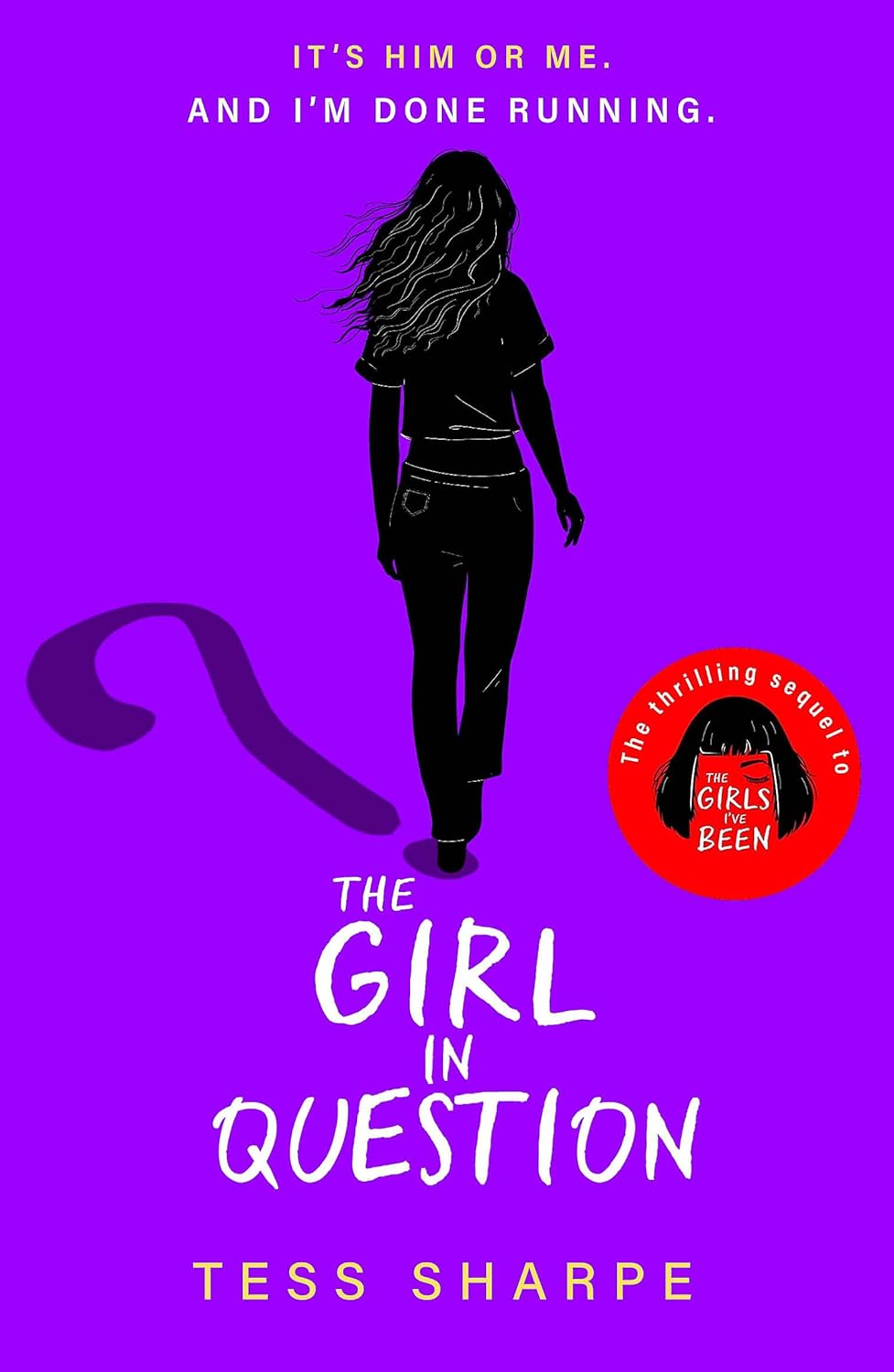
The Girl in Question by Tess Sharpe

The Girl in Question Cover

Publisher: Hodder Children’s Books (Trade Paperback – 9 April 2024)

Series: The Girls I’ve Been – Book Two

Length: 442 pages

My Rating: 5 out of 5 stars

Amazon

In the mood for a clever, emotionally charged young adult thriller with some real heart behind it?  Look no further than one of the best books of 2024 so far, The Girl in Question by Tess Sharpe.

Back in early 2021 I had the very great pleasure of reading an outstanding young adult thriller that had caught my eye thanks to its intriguing narrative and the promise it was being turned into a Netflix series.  That book was The Girls I’ve Been by Tess Sharpe, which proved to be an extremely impressive read I had a wonderful time getting through.  The Girls I’ve Been followed Nora O’Malley, a young teenager with a dark past as a con artist, who had managed to escape her abusive mother and gangster stepfather and find happiness with her older sister in a small town.  Caught up in a bank robbery, Nora was forced to bring back her old tricks to save her friends, only for her actions to reveal her location to those hunting her.  The Girls I’ve Been was such a great read, and I had such an amazing time getting through it.  As such, I was very excited when I heard that Sharpe was releasing a sequel this year with The Girl in Question, one of my most anticipated books of 2024, which continued the story from the first novel in a big way.

Former con artist Nora O’Malley is enjoying life while she can.  Having recently finished high school, Nora is excited for the careers and futures that her girlfriend Iris and her best friend Wes are planning for.  However, Nora knows that her own future is bleak and unlikely to be long.  Her secret past has been exposed, and with her murderous stepfather Raymond now free from prison, it’s only a matter of time before he comes to kill her.

Determined not to live in despair while waiting to die, Nora agrees to accompany Iris and Wes on a summer hiking trip.  The long trek through the woods is everything Nora could want to relax, even with Wes’s new girlfriend, Amanda, tagging along, and she is able to put the thoughts of imminent death out of her head.  That is, until Amanda is taken hostage in the night and their camp comes under attack from Raymond’s vengeful goons.

Split up in the woods without backup, help or leverage, Nora, Iris and Wes’s chances seem dire.  But these are no ordinary teenagers.  All three have gone through hell in their lives and none are willing to give up on each other.  Working together to fight back, the three friends seek to survive together.  However, there are unknown players in the woods, and Nora will need to use all her skills at manipulation to keep herself and her friends alive.  But nothing is as it seems, and deep secrets amongst the trio could break them apart well before they are hunted down.

The Girl in Question was another excellent young adult thriller from Tess Sharpe that expertly built on the story from the first book, while taking the characters in some interesting directions.  Sharp, clever, and highly intense, The Girl in Question is guaranteed to keep you on your toes as you get drawn into the action.

Sharpe comes up with a great story for The Girl in Question, taking the protagonists through hell and back as they attempt to survive the dangerous forces coming for them.  Set a couple of years after the events of The Girls I’ve Been, The Girl in Question starts with an intriguing prelude that hints at events to come, before diving into the main story, with Nora and her friends planning a trip into the forest.  Sharpe does a good job of exploring the aftermath of the first book, the strong relationships between the main characters, and the general apprehension felt by the protagonist about her potential upcoming doom.  There are also several hints that the protagonists know far more than they should, and they have secrets they are keeping from everyone.  Soon the characters find themselves stuck in the woods, which quickly results in chaos as the bad guys find them and prepare to kill them.

This first third of the plot is really intriguing and fun, but the action really kicks in for the last two thirds of the book.  Sharpe does a great job of utilising the dark situation the protagonists are stuck in, and I loved the feeling of isolation and desperation that they feel.  There is also a good use of flashbacks throughout this early part of the book to explore more of Nora’s past with the antagonist, especially as it introduces a couple of the goons running around the woods.  All three of the main protagonists react in some great ways, and I loved seeing them take charge and fight back, while also dealing with their own personal issues.  This works until around halfway through, whereupon Sharpe reveals a pretty massive twist that changes the entire direction of the story and makes you realise nothing was what you thought.  There is a great extended flashback that sets up some very interesting character development, before the action returns to present and results in some intriguing interactions.  Sharpe throws in some great moments and reveals leading towards the conclusion, and I for one was very hooked as the elaborate and thrilling story continued.  The final confrontation was everything you would hope it to be as Sharpe ensures that everyone gets what they deserve, one way or another.  Throw in a few fun and often dark final twists and turns, including some well-deserved revenge, and this proves to be quite a fantastic read that I really could not get enough of.

Unlike a lot of other sequels that I read, I felt that The Girl in Question didn’t massively work as a standalone novel; people really need to check out the previous novel first.  While Sharpe does do a decent recap of The Girls I’ve Been for new readers, so many story elements from the first book are referenced in the sequel that you’d be much better off getting through that previous novel in advance.  However, no matter what, you are in for a treat with The Girl in Question, as Sharpe produces a powerful thriller that expertly utilises all the best elements from the first book.  The great changes in perspective, especially between the two main characters, the short, sharp, action-packed chapters, as well as the excellent flashbacks and fun little lists thrown in between chapters work together well to tell a great story.  You really get a great sense of the action, and the slow build towards the various twists works well, especially with the occasional hint of what is to come.  I loved how Sharpe maintained a very quick story pace, and there is honestly not a quiet moment where something thrilling or emotionally charged is taking place.

Like the previous novel in the series, The Girl in Question proves to be an excellent piece of young adult fiction that will appeal to a wide teenage audience and beyond.  While most of the story focus is on the characters or the over-the-top crime thriller elements, Sharpe does take the time to discuss issues relevant to teenagers, like the uncertainty of the future, complicated friendships, and abusive parents, the latter of which is a recurring theme amongst the main characters.  I really appreciated how Sharpe doesn’t talk down to her teenage audience when it comes to these elements, or the dark crime fiction inclusions, and these readers will no doubt love this gritty novel and its fantastic story.

At its heart, The Girl in Question is driven by its compelling central cast, as Sharpe continues to explore the lives of three damaged teenagers as they attempt to overcome their respective pasts, and the dark threats of the future coming for them.  As with the first book, a large amount of the character focus revolves around protagonist Nora O’Malley, the daughter of a notorious con artist who was used as a tool in her mother’s ploys before breaking free in dramatic fashion.  Ever since the events of the last book, Nora has been living in fear as her location has been leaked and her vengeful stepfather is likely coming for her.  This ensures a healthy dose of fatalism in Nora, and she is forced to choose between her instinct to run and her current connections and relationships.  Nora proves to be a real firecracker of a protagonist, and I like how dark she can get as she tries to protect those closest to her.  Determined, manipulative and deadly, Nora walks a thin line between the criminal she was raised to be and the caring person her friends turned her into and must come to terms with what her natural inclination to deceive costs those around her.  I really enjoyed following Nora as a central protagonist and Sharpe takes her storyline in some interesting directions.

In addition to Nora, the other two main characters are Nora’s girlfriend Iris, and their best friend Wes.  Both these characters have grown a lot closer to Nora since the last book, as the trauma of their pasts and the bank robbery they find themselves stuck in have ensured they have become a tight unit.  Of the two, Iris gets most of the focus, and she ends up narrating nearly half the book.  Iris is an interesting counterpoint to Nora, especially as she is a little more innocent and unused to the dangers of Nora’s life and worries about being helpless.  Despite that, she proves to be quite formidable as the book progresses, and indeed she might be the most dangerous member of the group.  Wes, on the other hand, is a solid and compelling addition to the group, serving as the man of action who is desperately trying to keep his friends safe from the dangers around him.  While he is not focused on as heavily as Nora and Iris, Wes is a major figure, and it was interesting to see how his friendship with the two girls has changed him, as well the trauma surrounding him from his abusive father.  The bond between these three characters is a major part of The Girl in Question’s strength, and it was great to see them work together as the novel progressed.  This bond is tested in places, especially as they are forced to lie to each other, but this was an overall nice character dynamic that produced an epic read.  Other characters of note include Wes’s girlfriend, Amanda, whose own secrets plays in an interesting role in the plot, one very good dog, an ambitious FBI agent who takes a stroll in the woods for her own ends, and a bevy of great antagonists, including the big-bad Raymond.  These characters all add so much to the book, and I loved the powerful story arcs around them all.

Tess Sharpe has produced another outstanding young adult thriller with The Girl in Question.  Perfectly following on from the previous novel, The Girl in Question was a powerful, clever and compelling read that had me hooked the entire way through.  This was such an amazing book and I look forward to seeing what unique and powerful young adult adventures Sharpe comes up with in the future.

Amazon

The Gathering by C. J. Tudor

The Gathering Cover

Publisher: Michael Joseph (ebook – 16 April 2024)

Series: Standalone/Book One

Length: 412 pages

My Rating: 5 out of 5 stars

Amazon

Acclaimed author C. J. Tudor continues her excellent run of clever and dark thrillers with the intense, inventive, and gripping horror murder mystery, The Gathering.

C. J. Tudor is a talented and highly inventive author who has been producing some intriguing reads over the last couple of years. Starting with her 2018 debut, The Chalk Man, Tudor has consistently produced some compelling books with clever horror or psychological thriller elements. Her other books include The Hiding Place (also titled The Taking of Annie Thorne), The Other People, The Burning Girls and The Drift.  While Tudor’s intriguing novels have often stood out to me, generally because their unique plots, I unfortunately haven’t had the opportunity to read any of her prior works, which is something I really regret.  However, this has recently changed as I was lucky enough to receive a copy of Tudor’s latest book, The Gathering, an intriguing murder mystery thriller with some distinctive element behind it.

Welcome to the small town of Deadhart, Alaska, home to a small population of living humans and a colony of vampyrs.  Maligned and hunted beings throughout the world, vampyrs in America now have legal protection from unsanctioned killings, as long as they don’t harm any humans.  While members of the Colony attempt to stay away from humans, old hatreds, prejudices and grudges rear their ugly head when a young teenager is found murdered with his throat ripped out and his body drained of blood.

Detective Barbara Atkins, a specialist in vampyr killings and physiology, is sent to Deadhart to determine if a vampyr committed the murder and authorise a cull if the Colony is unwilling to hand over the perpetrator.  Arriving in the small town, Barbara finds the local inhabitants afraid and angry, looking for vengeance for the death of the boy and determined to wipe out the vampyrs for good, especially as this case bears a striking similarity to a previous killing blamed on the Colony 25 years ago.

Beginning her investigation, Barbara soon discovers that there is far more to the case then initially appears.  Much of the evidence has been staged, and no one is willing to tell her the truth about what has really going on in town.  When more deaths occurring throughout Deadhart and the town in uproar, Barbara deputises former Deadhart sheriff Jenson Tucker, whose investigation into the previous killings nearly left him for dead.

As Barbara and Jenson attempt to discover the culprit, it soon becomes clear that someone is attempting to stir up a conflict between the people of Deadhart and their vampyr neighbours.  With both settlements on the warpath, Barbara and Jenson need to dive into Deadhart’s dark history to truly understand the crime before them.  But is the killer a bloodthirsty vampyr, a psychotic human with a taste for chaos, or something far worse?

Tudor absolutely blew me away with this exceptional and highly clever read.  The Gathering was a brilliant book that expertly combined an inventive and well-established concept with a complex murder mystery.  Loaded with intriguing and damaged characters and a dark story of death, revenge and oppression, The Gathering was an extremely awesome book that I could not turn away from.

Thanks to its vampyr focused murder mystery, I knew I was going to really enjoy the plot behind The Gathering well in advance of reading it, and boy was I proven right.  Tudor does a wonderful job quickly and effectively setting the scene, and you are soon introduced to the town of Deadhart, the concept of vampyrs and the particulars of the murder.  What follows is a complex case as protagonist Barbara Atkins is forced to investigate as an outsider, as most of the town is filled with anti-vampyr sentiment.  Further complications are added when Atkins finds a range of dark secrets hidden throughout Deadhart, both in the present and in the past, which have bearing on the modern case.  At the same time, the various residents of Deadhart and the Colony react in different ways to the murder, using it to restart old grudges or bring long-festering hurts to the surface.

The Gathering’s narrative progresses at a fast and compelling pace, and you are soon treated to revelation after revelation, as well as several additional killings.  I loved the combination of a modern-day investigation and dives back into various periods of Deadhart’s history that emerged, especially as clues in the past have huge bearings on the modern story.  Tudor cleverly builds up several simultaneous mysteries and ongoing storylines, and soon the protagonist is not only trying to discover who the killer is but prevent a war between Deadhart and the Colony.  Everything leads up nicely to a pretty epic conclusion, which was well foreshadowed, with some pretty awesome revelations coming to the fore.  I loved how well several compelling character arcs came full circle during this confrontation, and the main antagonist of the plot proved to be quite sinister and well established.  Several other tertiary mysteries are also solved near the end, and Tudor ensures that many storylines are tied off in a satisfying and clever way.  There are some awesome twists at the end, including one surrounding one of the book’s most compelling characters, and this last twist in particular is likely to lead to additional books in the series.  I honestly was the hooked the entire way through this amazing story, and I really appreciate how Tudor brought it together.

I’m a huge sucker for classic for thrillers with distinctive twists to them, and The Gathering was a great example of this.  Tudor managed to pull together a complex murder mystery that not only features an isolated Alaskan town with a dark history and multiple complex and haunted characters, but also contains an elaborate vampiric society and history.  All these elements are used extremely well throughout The Gathering, and I was extremely impressed with how Tudor was able to tie everything so effectively together.  Tudor makes sure to tell multiple character-focused storylines at the same time, which allows for a more multifaceted plot that goes in some very interesting direction.  The split focus on several captivating and distinctive figures works wonders to enhance this, and Tudor uses this to showcase the rising tension in the town, and the various perspectives surrounding it.  There are some great plot lines here, and the way that they interacted and came together was very impressive.  I was particularly impressed by the chapters that kept coming back to an unnamed figure being held prisoner by a mysterious captor.  This storyline was weaved throughout the novel, and I was constantly left guessing about who the figures were and how it would work into the main story.  The reveal surrounding it was not what I was expecting, but I loved how well it set up a major twist at the end.  Other character-focused storylines also proved to be just as compelling, and the way everything came together was very impressive.  I honestly knocked out this book in just over a day, it was that damn good, and I cannot emphasise how cleverly Tudor brought everything together.

One aspect of this book that I really must highlight is just how great a setting Deadhart proved to be as it enhances the plot of The Gathering in so many excellent ways.  The well-written depictions of the frigid Alaskan wilderness and secluding storms allows Tudor to bring together a classic thriller background of an isolated, snowed-in town, where the protagonist is unable to get backup and is forced to rely on unlikely help from the local outsider.  While this always makes for a great story background, Tudor enhances it by building up a dark history around Deadhart and the Colony, that plays so well into the modern storyline.  This unique history of the town was expertly explored by Tudor, and it worked to produce a much more complicated mystery, one dotted with historical grudges and family feuds.  I particularly loved how effectively Tudor explored the growing terror infesting Deadhart as the killings continue, as both the humans and the isolated vampyrs begin to fear what is to come.  This undercurrent of fear and the resulting rage it leads to is almost palpable at times, and you can fully understand how and why the various characters act the way they do.

Another element of The Gathering that really impressed me was how well Tudor set up an alternate world where vampyrs exist.  The whole concept of the vampyrs as biological offshoots with several classic vampiric traits, including blood drinking and an aversion to sunlight, is quickly and effectively established by Tudor, who does a wonderful job of immediately bringing readers into this world.  As the book continues, the reader gets a more in-depth look at the vampyrs, their biology, their psychology, and their history, especially when it comes to their interactions with humans.  This examination of the interaction with humans is particularly key, as Tudor explores the prejudices that emerged, as humans learned to hate the entire species.  Featuring some fantastic parallels between other social rights issues, the relationship between the two species is explored in detail, and then applied to isolated Deadhart.  Watching the prejudices of the town come to light again was a great part of the book, especially as it is well contrasted by looks at the vampyr community.  As the story continues, you soon realise that there are monsters on both sides of the biological line, and figuring out who is crossing this line is a major part of the plot.  Defining vampyrs in both a scientific and social way proved to be very interesting, and I liked the attempts at humanising the figures and making them less of a horror monster.  That being said, there are some dark and scary scenes in The Gathering, especially when the vampyrs get angry.  Overall, the use of vampyrs is in The Gathering was very cleverly, and Tudor really highlighted her writing ability by setting this up so effectively.

The final element of the book I want to highlight is the amazing group of complex and damaged characters featured throughout The Gathering.  Tudor clearly has an aptitude for bringing together a compelling cast, as the reader is treated to a range of different figures, each of whom have their own compelling histories and dark pasts mottled by the troubled relationships between humans and vampyrs.  The most prominent of these is the visiting detective, Barbara Atkins, who is forced to battle mystery, local hatred, and her own unique feelings about vampyrs as she determines whether a cull is required.  Showcased as the calm and reasonable inclusion to the investigation, Barbara finds herself severely tested by the town’s prejudices and mistrust, while trying to find the truth no matter what.  Much of Barbara’s actions are guided by rationality, although there is an intriguing look back into her past, as her own experiences with small towns with vampyr colonies plays a big role in her motivations.  As such, she is an excellent central protagonist, and I loved how well she played the outsider figure coming into town.

In addition to Barbara, The Gathering also features a complex group of locals, each of whom have their own connection to Deadhart’s dark history and the hostile relationship between the town and the Colony.  Standouts include former sheriff Jenson Tucker, whose previous investigation of a vampyr death left him as the town pariah.  Tucker goes through a powerful redemption arc in The Gathering, and he proved to be an able secondary protagonist as he comes to terms with his many secrets.  Other great characters include an ancient vampyr, trapped in the form of a child, whose connection to the dark side of Deadhart becomes a driving force for their revenge.  There is also a mysterious local preacher determined to bring violence to the vampyrs, and who proves to be an intriguing counterpoint to the main protagonist Barbara.  Finally, the various members of an original Deadhart family with a long simmering hatred for all thing vampyr, adds a great amount of drama to the plot, not only because of their connections to the previous killing in town but because their well-established fear of vampyrs leads to much of The Gathering’s conflict.  These characters, and more, are very well written, and their dark attitudes, fearful actions and unique viewpoints add a great deal to this already impressive and emotionally charged novel.

C. J. Tudor deeply impressed me as The Gathering turned out to be one hell of a read. Expertly utilising her inventive and clever alternate world in conjunction with a captivating mystery, Tudor wrote a particularly epic tale in The Gathering, and I had such a lot of fun getting through it. An intense and powerful read, The Gathering is one of the best books I have read so far in 2024 and I cannot recommend it enough.

The Gathering Cover 2

Amazon

Play of Shadows by Sebastien de Castell

Play of Shadows Cover

Publisher: Jo Fletcher Books (Trade Paperback – 26 March 2024)

Series: Court of Shadows – Book One

Length: 482 pages

My Rating: 5 out of 5 stars

Amazon

Prepare yourself for a riveting good time in the impressive and wildly entertaining fantasy novel, Play of Shadows by the always amazing Sebastien de Castell.

Last year I had the very great pleasure of being introduced to Sebastien de Castell when I received a copy of his book The Malevolent Seven.  Set outside his major series, The Malevolent Seven was a wickedly clever and chaotic book that followed seven dangerous mages who suddenly find themselves as humanity’s last hope.  I had a wonderful time with The Malevolent Seven, and it honestly was one of the most entertaining fantasy books I read in 2023.  As such, I was curious to read more from de Castell and I recently got the chance when I received a copy of his new novel, Play of Shadows.  Serving as the first official book in his new Court of Shadows series, Play of Shadows is set within de Castell’s overarching Greatcoats universe, where most of his novels have been set, including his original Greatcoats books, the Spellsinger series and his Argosi series.  While I haven’t had the pleasure of reading any of de Castell’s Greatcoats books before, I loved the awesome sounding story of Play of Shadows, and I decided to check it out, which proved to be a very wise decision.

Damelas Chademantaigne is one of the most unfortunate people in the entire city of Jereste.  The grandson of two legendary Greatcoats, Damelas has always had a strong sense of justice, but he lacked the skills with a sword needed to back it up.  So when he finds himself forced to accept a duel from the Vixen, the most feared duellist in the entire city, to save his ailing grandfather, his chances of surviving the night seem impossible.  However, a fleeing Damelas finds sanctuary in the most unlikely of places: the Operato Belleza and its resident acting company, the Knights of the Curtain.

Now part of the illustrious company, Damelas finds himself protected by the city’s laws regarding actors and begins to eek a living as a minor player.  However, his temporary haven soon becomes a deadly trap when one night he spontaneously manifests the spirt of the city’s greatest historical villain, Corbier, the Red-Eyed Raven.  Identified as a newly emerged Veristor, an actor who can literally bring the past to life during a play, Damelas begins to constantly hear Corbier’s voice in his head and finds himself exploring the notorious rogue’s life each time he appears on stage.  Forced to continue by the machinations of Jereste’s new duke, Damelas begins to tell the untold true history of Corbier, and it soon becomes apparent that he was far from the unrepentant monster everyone believed him to be.

As the play continues, Damelas gains the attention of the entire city, who become enthralled with finding out the truth.  However, not everyone wants the past to come out, and soon Damelas finds out just how dangerous the theatre can be as he is targeted by the city’s nobles, a militant band of bravos, and the Vixen seeking her pound of flesh.  Diving deeper into Corbier’s mind, Damelas beings to uncover a deadly conspiracy that threatens the entire realm.  But can a mere actor, even one personifying a legendary fighter, survive the onslaught of villains on his tail?  It’s going to take all of Damelas’s courage and skills as an actor, as well as the help of an eccentric collection of fellow players to make it to final curtain.

Wow, now this was an outstanding and epic book that I could just not put down.  I was unprepared for how impressive Play of Shadows would be as de Castell unleashes a brilliant and complex read, loaded with intrigue, adventure, and a ton of theatrical humour.  Entertaining and enthralling in equal measures, this was an incredible read and one that gets a full five-star review from me.

Play of Shadows is an epic book full of big personalities, big stakes, and an elaborate story of intrigue, adventure, and self-discovery.  Set in the Three Musketeer’s inspired realm of the Greatcoats books, Play of Shadows initially seems set to feature the same focus on duels, bravos and rogues, as the rest of the series as the protagonist is forced to flee a fight from the infamous duellist, the Vixen, which sets him on course for his destiny.  However, the first scene of Play of Shadows, in which Damelas escapes his pursuers by tricking his way into becoming an actor, changes expectations and perfectly sets the scene for the rest of the exciting, compelling, and wildly entertaining novel.  I love how de Castell set a fantasy novel around the theatre , and having the protagonist be an actor rather than a master swordfighter is a great touch, especially for a Greatcoats book.  Indeed, much of the book is set out like a play, which proves to be a clever guideline for the plot, while also allowing in the author’s fantastic humour about actors, the theatre, and the protagonist’s unlikely situation.

From there the story evolves into a compelling direction, as Damelas finds himself at the centre of the all the intrigue infecting the city, especially once he starts to manifest the great historical villain Corbier, the Red-Eyed Raven, as part of a legendary magical gift.  This allows him to showcase the true events surrounding the past, which differ very greatly from the established history of the city.  Due to the deep secrets hidden amongst the true history, the protagonist finds himself the target of many interested parties and becomes a tool in the battle between shadowy forces.  The plot of Play of Shadows then begins to revolve around the three separate acts of the resulting play that tells the real story of Corbier.  Each of these different acts reveal new secrets about the past that impact the present, and prove to be excellent centres for the plot, especially as each performance becomes increasingly deadly for Damelas and his fellow players, and there intense, action-packed, tragic moments occurring after each of them.

Between each of these acts of the play, Damelas is forced to interact with a variety of deadly and over-the-top figures, each of whom have a different motive to help or to kill the protagonist.  The author also uses this time to provide new insights into both the historical and present-day conspiracies being uncovered as Damelas and his friends attempt to discover the true secrets of the city.  De Castell does a really good job of building up the stakes in each of these intermissions, and there are some amazing set-pieces loaded here, from high-intensity duels, larger-scale battles between unlikely foes, and a raft of political intrigue and personal issues.  Everything leads up to Play of Shadow’s massive climax, where the final act of the play unfolds, and all the secrets are revealed.  There are some excellent twists and turns here, and while a couple of reveals are a little overly foreshadowed, the overall picture that is exposed is quite interesting and ensures that the rest of the trilogy is going to be very interesting.  The big climax fight is so over-the-top bonkers, as all manner of magic, betrayals, personal vendettas, duels, and even an outrageous monologue, are used to resolve the issue.  The reader comes away intensely satisfied, amused, and very curious about the future of the series.

Play of Shadows was a fast-paced, exciting, and continuously amusing book that was so much fun to get through, while also maintaining a darker edge that struck readers with tragedy and intense moments when they least expected it.  This set-up of the book around the various acts of the play worked extremely well, and I loved how de Castell kept bringing the book back to the importance of the arts, even in the swordcraft-focused nation of the Greatcoats series.  The magic of performance, both literal and figurative, is a major part of the book’s setting, which I thought was a clever choice from de Castell that made Play of Shadows really stand out.  Much of the book’s humour is derived from the outrageous members of the acting troupe and their takes on the dramatic events overtaking their city.  This comedic feature of the book was so much fun, and some of the best scenes involved the actors attempting to pivot the scenes around the protagonist’s unlikely visions.  Other highlights include impromptu moments that made the actors great heroes in real life, or a sudden, extremely risqué monologue that manages to keep an approaching army at bay.  This overarching action and entertaining theatre focus is well-balanced by a high level of intrigue and a dash of mystery, due to the elaborate conspiracies that seem to be infesting the city.  De Castell does an exceptional job of contrasting these intriguing elements throughout Play of Shadows, and I really got drawn into its story as a result.

As I mentioned above, Play of Shadows falls within de Castell’s wider Greatcoats universe, which I personally don’t have any experience with.  I must admit that I was initially a little wary of reading Play of Shadows, not only because I had no pre-knowledge of the other Greatcoats books, but because de Castell also released another Court of Shadows book last year with Crucible of Chaos, which serves as book zero in the series (Play of Shadows is the first official novel).  However, my fears proved to be for naught as Play of Shadows stands on its own and easily welcomes new readers in.  While there are references to the wider Greatcoats universe, having no pre-knowledge of this doesn’t impact a reader’s enjoyment or understanding of this book, and anything that does is naturally explained.  Even the inclusion of a couple of characters from the previous series towards the end of the story was well handled, and the reader can easily follow what is happening while getting a good idea about who the characters are.  The same is true for the apparent prequel, Crucible of Chaos, and people can easily start the Court of Shadows series here, rather than with book zero.  While I am sure that established Greatcoats fans would probably get a little more out of these references than I was, this is a very good book for those readers who want to experience de Castell’s style or wider universe for the first time.  As such, I would recommend Play of Shadows to all fantasy fans, and you really don’t need to do any other reading first.  I am really looking forward to seeing how the Court of Shadows series continues, and I may also go back and read some of the other Greatcoats’ books, mainly because I am really enjoying de Castell’s writing and unique stories.  I must try and read Crucible of Chaos before anything else though, and I will be interested in seeing how it unfolds and connects with this current book.

One of the great highlights of Play of Shadows is the excellent cast of characters featured throughout the book, all of whom add so much to the fantastic plot of the book.  Naturally, most of the focus goes towards central protagonist and point-of-view character Damelas Chademantaigne, whose unexpected exploits in the theatre lead to so much drama.  Damelas is a great entertaining fantasy protagonist, with a complex past, an often-irreverent take on current events that leads to a good chunk of the book’s excellent humour, and a desire to change the world, even if it wants to kill him.  De Castell works in some amazing character development for Damelas, as he attempts to escape his pragmatic past that saw him run from a duel, to become the unlikely hero of his city.  Watching him gain the skills and courage he needs thanks to the murderous spirit in his mind is just great, and de Castell does a wonderful job of highlighting his abilities as a Veristor.  The tight line between controlling his gift and insanity is quite thin, and I loved the various sequences where he tried to showcase the past on stage, only for it to go in unexpected directions.  Damelas goes through a lot in Play of Shadows, especially as he witnesses the many tragic consequences of his search for the truth, and I felt that de Castell perfectly showcases his doubts, fears and anger at how he is being manipulated.  This was some incredible character work and I look forward to seeing how de Castell features Damelas in the future books now that he has found his purpose.

The rest of the cast of Play of Shadows are also quite impressive, and I love the huge array of outrageous and memorable figures that de Castell expertly dropped into the story.  The historical ghost, Corbier the Red-Eyed Raven, was a brilliant ethereal figure in Damelas’s head, and the author has a lot of fun contrasting the instinctive and expert killer that is Corbier, with the inexperienced and pragmatic Damelas.  In addition, Damelas’s acting companions, the Knights of the Curtain, also prove to be exceptional figures, and you really grow to care for this outrageous and eclectic group of actors.  Every Knight brings something fun to the table, although my favourite had to be Damelas’s best friend, Beretto, the gentle giant, who steals every scene he’s in with his jokes, insights, and desire to ship Damelas with dangerous killers.  However, props also need to go to head actor Abastrini and director Shoville, both of whom rise above expectations and show they have heart and the true passion of an actor.  I also had a lot of fun with the Vixen, the ruthless duellist who serves as one of the best villains in the book.  Her vengeful pursuit of Damelas is a major part of the book, and the various encounters they have, especially once Damelas gains the skills and courage to fight back, are very awesome.  Throw in a beautiful assassin, a sarcastic musician who doubles as a secret agent, a duke with a complex past, and Damelas’s grandfather, a legendary retired Greatcoat who has some brilliant scenes, including one amazing sequence that shows why you don’t mess with old fighters, and the cast of Play of Shadows is something truly special.  I had so much fun witnessing the battles and hijinks of this amazing group of characters, and I cannot wait to follow their future adventures in the rest of the series.

Overall, Play of Shadows was a particularly impressive novel from Sebastien de Castell that has made me very keen to read the rest of his books.  Loaded with action, intrigue, humour, and an entertaining ode to the magic of the theatre, Play of Shadows was a remarkable and highly fun fantasy novel that I could not get enough of.  Easily one of the best books I have so far read in 2024, Play of Shadows comes highly recommended, and I cannot wait to see how this outstanding series continues.  You will not be disappointed by this book!

Amazon

Warhammer 40,000: Straight Silver by Dan Abnett

Straight Silver Cover

Publisher: Black Library (Audiobook – 1 December 2002)

Series: Gaunt’s Ghosts – Book Six

Length: 9 hours and 52 minutes

My Rating: 5 out of 5 stars

Amazon

After having a blast reading and reviewing The Traitor’s Hand, my desire for more things Warhammer 40,000 needed to be sated, so I dove into the exceptional and gritty Gaunt’s Ghost book by Dan Abnett, Straight Silver.

While there are some truly impressive Warhammer 40,000 authors out there, few can match Dan Abnett in terms of quality and impact.  One of the most significant authors of Warhammer fiction, Abnett has produced a great number of books in the franchise over the years, which includes several must-read series for all Warhammer fans.  These include his substantial contributions to the massive Horus Heresy series, as well as the iconic Inquisitor extended series.  The Inquisitor books include his impressive and highly compelling Eisenhorn trilogy, made up of Xenos, Malleus and Hereticus, and which are amongst my favourite literary trilogies.  While I am a huge fan of these novels, probably his most grounded and well-known contribution to the Warhammer 40,000 canon are the Gaunt’s Ghosts novels.

The Gaunt’s Ghosts books are an extended series that follows the members of the Tanith First-and-Only, a weary and battle-hardened regiment of Imperial Guard soldiers.  Led by Colonel-Commissar Ibram Gaunt and known for their stealth abilities and the destruction of their home planet, the Tanith First-and-Only have taken up the name Gaunt’s Ghosts and are fighting in the massive Sabbat World Crusades hoping to find a new planet to call home.  This series emphasises the common human soldier and the gruelling realities of war in the grim Warhammer 40,000 future, and it is one of the most compelling series out there.  I have had an outstanding time with this series and all the books I have read, including First and Only, Ghostmaker, Necropolis, Honour Guard, The Guns of Tanith, and the prequel novel The Vincula Insurgency, have been extremely epic and complex, perfectly blending great characters with intense action.  Despite still having several books to go, the Gaunt’s Ghosts novels are one of my favourite Warhammer 40,000 series for a very good reason and I had no hesitation diving into the next book of the series, Straight Silver, when I needed something fun to read.

As the massive Sabbat World Crusades gain traction against humanity’s enemies, the Imperial forces finally have the capacity to send aid to the long-isolated planet of Aexe Cardinal.  There the loyalist nations of the Aexe Alliances have been locked in a gruelling 40-year war against the Chaos corrupted Shadik Republic.  Amongst the Imperial reinforcements sent to Aexe Cardinal are the veteran Ghosts of the Tanith First-and-Only, who are ready to make a dent in a new foe.

However, upon arriving on Aexe Cardinal, the Ghosts are surprised to find themselves under the command of the Aexe Alliance rather than their own generals.  Forced to serve the whims of their new allies for political reasons, the Ghosts are soon thrust into the archaic way of fighting that have led the war to linger for decades.  Worse, their new commanders refuse to use the Ghosts to their full potential, and the lightly armoured scouts find themselves fighting in bloody trench warfare.

Forced to endure confined conflict in ill-maintained trenches, the Ghosts find death constantly on the horizon as raids, bombardments, gas weaponry, and their own shattered morale begin to take their toll.  To keep his regiment alive and sane, Gaunt volunteers his troops for the most dangerous missions where the Ghost’s scouting skills can be best utilised.  However, the resulting campaigns will test Gaunt and his troops to the utter limit as the relentless forces of Chaos come crashing down upon them.

Straight Silver proved to be an exceptional entry to this amazing Warhammer 40,000 series.  Featuring some powerful and gritty action that took its protagonists to dark places, this sixth entry in the Gaunt’s Ghosts series was so damn good that I managed to power through it in no time at all.

Abnett did a brilliant job coming up with a particularly intense and dark story that plants the protagonists and the reader into the middle of a gritty warzone.  The main story is initially a little basic, with the Ghosts arriving on a new planet and finding themselves caught up in another long-standing war.  However, the book takes an outstanding turn when the Ghosts, who work best as a scout force, are forced into an elaborate trench warfare scenario.  Thanks to the excellent World War I inspired setting, the Ghosts are figuratively thrust back into the past and are forced to fight an old-fashioned type of war with their lasguns going up against firearms, chemical shells, and fixed lines of trenches.  The constant grim trench battles, raids and fights across no man’s land that dominate the first half of this book are very intense, gory, and pointless, and the reader is swiftly drawn into the unusual and dangerous scenario the Ghosts find themselves in.  Abnett masterfully captures so many aspects of this grim scenario, and you have to appreciate how brutal he makes the battles and the terrible conditions the characters find themselves in.

All these initial battles are expertly shown through the eyes of the many recurring characters of the Gaunt’s Ghosts series, and you swiftly begin to feel their despair and the rising tensions within them.  This works well with many of the existing character arcs, as several figures deal with grudges, uncertainty about duty, and growing relationships.  This excellent use of character arcs and perspectives humanises the fight, and you can’t help but get dragged even more into their hopeless situations.  I particularly enjoyed how Abnett deliberately made the antagonists a purely human force, with no named enemy characters serving as the villain.  This helps to reinforce that the true antagonist of the plot is human nature and their ability to wage unforgiving war, as the two opposing armies destroy everything around them.

While Abnett could have kept the characters in the trenches for a while and still had a good book, he chooses to accelerate the plot about halfway through Straight Silver, as the Ghosts are given a chance to prove themselves by going on two deadly missions.  This splits the story, as Gaunt leads half the characters on a series of deadly raids behind enemy lines, while another small group of key characters find themselves away from the fighting as they scout a critical location in the woods.  Naturally both storylines result in deadly chaos for the relevant protagonists, but I loved how they played out.  The storyline with Gaunt was brutal infiltration across no man’s land at its finest, and there are so many shudder-inducing moments as they continuously encounter the horrors of war.  The other storyline is much more a slow burn, as the characters find themselves isolated in the woods and only have themselves to fight with, as the grudges and resentments introduced at the start of the book are refreshed.  While the characters come together when an enemy presents itself, they are still caught up in their raw emotions, and this results in some dark moments.  Both storylines are resolve in an impressive and compelling manner, and the reader will come away enthralled, excited, and a little angry, as one excellent villain gets away with everything again.  You are honestly left wanting more, especially as Abnett throws in some tantalising hints for the future, and the bloody battles and horrors of Straight Silver will stay with you long after you’ve finished.

As with most books in the Gaunt’s Ghosts series, Straight Silver can be read as a mostly standalone read, as many of the key characters and story arcs are expertly reintroduced throughout the course of the book.  While readers will always get more out of Straight Silver if they read the other Gaunt’s Ghosts books first, especially as that will allow them to become more attached to the characters, a new reader can easily pick up Straight Silver and have an outstanding time getting through it.  Straight Silver and the Gaunt’s Ghosts books can also be readily enjoyed by those people with minimal pre-knowledge of the Warhammer 40,000 universe.  The Gaunt’s Ghosts books exist in their own little pocket of the universe, with the story completely focused on their own struggle as soldiers.  As such, this makes these books perfect entry level reads for those wishing to learn more about Warhammer 40,000 fiction, and anyone with a love for science fiction or military fiction is going to love Straight Silver.

I’m always impressed with the amazing range of characters that Abnett fits into each of his Gaunt’s Ghost novels, as the author tries to constantly capture the entire experience of the regiment in a Band of Brothers sort of way.  Unlike his Eisenhorn books, which had one perspective character, the Gaunt’s Ghosts follow many different protagonists, which allows you to see a massive picture of events unfolding.  This works really well, and I loved the huge range of unique perspectives and personalities that emerged, as well as the different views of the fights and internal conflicts.  I did think that Straight Silver might have featured a few too many different perspectives, as Abnett tried to bring some new characters to the fore.  This meant that several of the established cast from the previous book didn’t have a chance to shine here and were often sidelined, while the newer characters didn’t impress as much in their first big appearance.

There were still a ton of great character arcs going on, and even with less time in the spotlight, many of these characters made the most of it.  Main protagonist Colonel-Commissar Ibram Gaunt gets a good showing, especially as he is forced into conflict with his friend, the highly moral Chief Medic Tolin Dorden, and he is forced to balance his responsibilities as a Commissar with the love he holds for his soldiers.  Newly promoted Sergeant Tona Criid proves to be an absolute badass character, and it was great to see her take command and kick butt.  Sergeant Agun Soric has some great scenes as he slowly comes to realise his latent psychic abilities, while the formerly charismatic Gol Kolea is a hard figure to read about, after suffering a head wound in the previous book and losing his intelligence.  However, the best storyline in Straight Silver involves the mad sniper Hlaine Larkin and the nefarious trooper Lijah Cuu (sure as sure).  Thanks to their interactions in the previous book, the slippery murderer Cuu has a major grudge against Larkin and is determined to kill him, just like he did Bragg.  This results in a deadly game of cat and mouse between the two, as Larkin tries to survive both the enemy and Cuu.  Cuu comes away as such a good villain for this book (even more than the enemy), and you can’t help but hate the guy, especially as there is something slick and scary in his every appearance.  These characters, and many more, helped to turn Straight Silver into an exceptional read, and you really get wrapped up in their unique experiences of war.

I doubt anyone who has every read one of my Warhammer reviews will be surprised that I ended up listening to Straight Silver on audiobook.  All Warhammer books are so much better in this format, and the Gaunt’s Ghosts audiobooks are a great example of this, especially with narrator Toby Longworth.  Longworth, who is one of my favourite audiobook narrators, has lent his voice to most of Abnett’s Warhammer audiobooks, and he always does a remarkable job moving the story along and describing the book’s epic battle sequences.  This is extremely evident in Straight Silver, and I very quickly powered through this audiobook because of how good it is.

I especially loved the awesome voices that Longworth came up with for the various characters featured throughout the book, and he goes out of his way to ensure that every figure has their own distinctive and fitting voice.  Many of these voices are carried over from the previous audiobooks, and it was great to get the continuity for each of the recurring characters, so much so that by this point listeners of the other Gaunt’s Ghosts books can figure out who is talking just by hearing their particular tone.  One thing I particularly appreciate is the range of accents that Longworth distributes across the audiobook.  Each group of soldiers, such as the original Tanith troopers, the new Verghastite recruits, and the soldiers of Aexe Cardinal, are given their own distinctive accents, and this cool attention to detail is what makes Longworth such a good narrator.  This was such an epic audiobook; with a runtime of nearly ten hours, most people can power through it, especially when they get caught up in the epic story.

Straight Silver is a particularly epic and impressive addition to the Gaunt’s Ghosts series as Dan Abnett takes his fame regiment down into battle hell.  Loaded with intense moments, a powerful background setting, and multiple engaging character arcs, Straight Silver is an exceptional read, and it is honestly one of the strongest Gaunt’s Ghosts books I have so far read.  An utterly addictive Warhammer 40,000 novel, I can give it no higher honour as a reviewer than to say the moment I finished it, I instantly grabbed the next book in the series, read it, and will be putting up a review for it now.

Amazon

The Maleficent Seven by Cameron Johnston

The Maleficent Seven Cover 2

Publisher: Angry Robot (Trade Paperback – 10 August 2021)

Series: Standalone

Length: 416 pages

My Rating: 5 out of 5 stars

Amazon

One of the fastest rising authors of dark fantasy fiction, Cameron Johnston, returns with his most entertaining book yet, the outstanding and epic novel, The Maleficent Seven.

Cameron Johnston is a great author who I was lucky to come across a few years ago with his debut novel, The Traitor God.  Bought on a whim because it sounded cool, The Traitor God ended up being one of my favourite fantasy books of the year thanks to its excellent revenge storyline.  The Traitor God was such an epic read and I ended up grabbing the intriguing sequel the following year, God of Broken ThingsGod of Broken Things (one of my favourite books of 2019) proved to be an outstanding sequel, and it ensured that I would be keeping an eye out for more of Johnston’s work.  This included his 2021 novel, The Maleficent Seven, which had an awesome plot behind it.  I honestly have been meaning to read The Maleficent Seven for ages but could never fit it into my schedule.  That was until last year, when I managed to power through the entire book in a single plane ride.  The Maleficent Seven ended up being a pretty darn exceptional novel that I wish I read a hell of a lot sooner.

It is a dangerous time in the lands of Essoran, as the Lucent Empire, a nation of apparent holiness and light, continuously expands, sweeping away all opposition and either burning or converting the survivors to their faith.  Despite their apparent benevolence, the Lucent Empire has a dark side dedicated to destroying all magic, heretics, and anything it deems evil through fire, blood and death.  The final stage of their invasion is set, but to proceed they first need to cross through the mountain road, which exits at the small town of Tarnbrooke.  All looks lost for the inhabitants of Tarnbrooke, who are likely to burn in the Lucent Empire’s light, until an unlikely figure appears to lead them.

Forty years ago, the dread demonologist Black Herron led a black horde of bloodthirsty soldiers, dark creatures and monsters on a deadly campaign that rocked all Essoran.  Total conquest of the realm looked certain, until she suddenly disappeared the eve of the final battle.  Without the will of their leader to hold them together, the army fell to infighting allowing their enemies to prevail.  No one knew what happened to Black Herron, until she reappears in Tarnbrooke, having lived there in disguises for decades.

Determined to stop the Lucent Empire and their fanatical leader no matter what, Black Herron takes over the town and prepares it for siege.  But even a being as powerful as Black Herron is unable to stop an entire divinely infused army by herself.  Instead, Herron seeks to bring together the six deadly captains of her army, whose skills and ferocity helped her to nearly conquer the world.  Together, this assortment of dangerous beings, including a vampire, a necromancer, an orc chieftain, a war god, a pirate queen and a deranged alchemist, might stand a chance against the coming storm.  But first they need to learn to work together once more, especially as each of them have a very different reasons to fight with Black Herron again.

The Maleficent Seven is a powerful, captivating and fantastically over-the-top novel that showcases Cameron Johnston’s impressive writing skill and ability to bring together great characters with dark fantasy settings.

Now, as you can probably guess from the name, The Maleficent Seven is a dark fantasy take on classic films like The Magnificent Seven and its predecessor, Seven Samurai.  Johnston sets the scenario perfectly, first introducing protagonist Black Herron and her previous evil horde, which disbands in the starting chapter.  From there, we get a time skip and are introduced to the book’s antagonists in the form of the Lucent Empire, their divinely empowered inquisitors and their leader, the Falcon Prince.  Their initial actions are enough to paint them as dangerous religious zealots who use their divine light and apparent holiness as a shield for their dark ambitions.  Their quest leads them on the road to Tarnbrooke, where the elderly Black Herron waits for them, having decided to make a stand and bring together her six former captains.

The first half of the book is dedicated to recruiting the six captains, who have scattered across the world.  All evil or deadly figures, none of them particularly wants to fight another war, but each are drawn back for different reasons, including family, pride, revenge and more.  Johnston does a good job of breaking up the recruitment process throughout the early chapters, and each of the revealed captains turn out to be crazier than the last, enhancing your anticipation for how they are going to act in the coming battles.  At the same time, you get to know the Lucent Empire, as they send agents against the captains, trying to eliminate the danger they pose.  Johnston lays down some very solid groundwork in this first half of the book, and you quickly get drawn to each of the seven main characters for various reasons.  There are a great range of character arcs spread out amongst these unlikely protagonists, and while a couple of them are purposely irredeemable, the rest prove to be surprisingly likeable and complex.  Johnston also takes the time to build up the antagonist, showcasing just how sinister they truly are, while also providing some slightly predictable revelations about their leader.

The second half of the book is dedicated to the battle for Tarnbrooke, which after seeing how crazy the first half of The Maleficent Seven is, you know is going to be good.  There is some good additional setup once the captains arrive in town, with the building of siegeworks, the training of the townsfolk, and other unusual preparations, all of which is reminiscent of the films the book is an homage to.  Johnston also builds up some additional character interactions that I really enjoyed, as certain townsfolk become connected to different saviours and there is some good follow-up regarding the protagonist’s prior adventures.  The resulting siege is everything you could hope for and more.  I am a huge fan of sieges in fiction (check out my previous list on the subject) and The Maleficent Seven is a particularly good example of an epic siege, especially as Johnston goes very over-the-top when it comes to the different weapons and methods the defenders employ.  Everything from vampiric conversion, exploding pigs and drugged townspeople are used to hold the line against the enemy in several brilliant and brutal fight sequences, while a major sea battle simultaneously occurs, featuring, amongst other combatants, a giant kraken.  All the fighting is fierce, desperate, and pretty damn bleak, while the characters each go through their own intriguing and powerful journeys.  I honestly was enthralled once the main fighting started, and Johnston really did not let up until the end.

The final sequence of the main fight turns into an impressive and extremely horrific brawl for survival as the protagonists fight against increasingly desperate odds.  There are also several betrayals as certain telegraphed plots from the evil protagonists come to fruition, and everyone fights to survive and come out on top.  You will be a bit unprepared for who lives and who dies during the final few chapters as Johnston loads up some fantastic twists and cool revelations that constantly leave you guessing.  Even when you’re sure you know who is going to survive, Johnston swiftly changes everything around with a few hilariously ironic reveals, as well as some more tragic deaths.  I liked how Johnston imbued the story with a certain level of hope towards the end, even if that was somewhat overshadowed by the carnage surrounding it.  There were also some darker moments in the conclusion, as certain characters realise just how damned they truly are.  Throw in a final great twist that really tied together a hidden motivation from the very start, and Johnston ends The Maleficent Seven on the perfect note for the reader.

Johnston did a remarkable job with this awesome book, and I loved how dark, powerful, and compelling The Maleficent Seven turned out to be.  Thanks to the unique array of characters, insane fight sequences and entertaining twists, The Maleficent Seven will prove really appealing to a wide array of readers, especially as Johnston got the right balance of action, tragedy, and humour throughout the entire read.  I especially loved how well the author flipped the established concept of heroes defending a town from villains on its head with the inclusion of seven fantasy supervillains leading the charge against a holy army.  The clever reveal that the apparently good warriors are far more sinister than the literal monsters is so well handled, and it was impressive to see a classic idea so well refreshed.  Throw in some excellent world building, an interesting collection of fantasy creatures and the sheer overwhelming chaos of a desperate siege, and there is something in The Maleficent Seven for all fantasy fans.

Something I really loved about The Maleficent Seven was the cool collection of characters who made up the key cast.  All the titular seven are very well represented throughout the book, and it proves very hard not to fall in love with each crazy member of the team; thanks to the narrative split, you get some intriguing insights into their motivations, actions, and history.

Of these characters, my favourite was probably Tiarnach, the fading war god who has fallen on hard times.  Thanks to the death of all his followers and his inability to fight against the Lucent Empire, Tiarnach starts the book off as a broken, drunken figure with barely any power left.  Joining Black Herron’s cause to get revenge and some form of redemption, Tiarnach becomes the defenders’ nominal drill instructor, trying to whip the townsfolk into a fighting force.  The connection Tiarnach forms with the townsfolk, his journey towards redemption, and the fact that he is one of the few characters without ulterior motivations, ensures that readers are drawn towards him.  He easily has one of the best, most tragic character arcs in the entire book, and I really enjoyed how Johnston utilised him.  The same can also be said for the legendary orc warrior, Amogg.  Amogg leaves her responsibilities behind to sate her desire for battle and alleviate her restlessness.  Thanks to her blunt and entertaining personality, Amogg was another character the reader connects to.  However, Johnston ensured that she became a true favourite when she begins to turn the women of Tarnsdale into an effective fighting force against their will.  Watching her empower and lead a band of fighting women into battle was very impressive, and her storyline was heartwarming and bleak in equal measures.

The other five characters each have their moment to shine.  The vampire, Lorimer Felle, was a suave and brutal figure whose inability to die, connection to his one loyal servant, and desire for destruction left a major impression.  Verena, the pirate queen, was also really good, although she kind of gets overshadowed by the other characters.  Jerak the alchemist was the most unhinged, and I loved how he ended up becoming more of a danger to his friends than his enemies thanks to his gruesome experiments.  Maeven, the necromancer, has one of the more complex story arcs in the book as she blurs the line between ambition, revenge and a desire for family.  While she fights alongside the others, her own need for vengeance and power leads her down a dark path, especially with her connections to the Lucent Empire’s leader.  Maeven’s entire story goes in some very dark directions, and I appreciated the dark note Johnston left it on.  Finally, the leader of the group, Black Herron, has a very interesting storyline that runs the gambit from dark queen to unlikely hero.  Johnston does a great job showcasing her rise and fall throughout the story, and the question of why she chose to abandon her conquest and her army is a fantastic part of the book.  All these protagonists are outstanding in their own way, and I loved how Johnston was able to weave together some compelling, entertaining, and occasionally sad storylines around such wonderfully outrageous figures.

Look, with a story this awesome there was no way I wasn’t going to love The Maleficent Seven, and I think my lengthy review above proves this point extremely well.  Cameron Johnston was on fire when he wrote his third full-length novel, and The Maleficent Seven proved to be a particularly intense, clever and impressive read.  Bringing together entertaining characters with insane violence amid a classic story scenario, The Maleficent Seven proved near impossible to put down and I loved every second I spent reading it.  A highly recommended read for all fans of dark fantasy, I cannot wait to see how Johnston’s next book (coming out later this year) turns out.

Amazon

Peace Talks by Jim Butcher

Peace Talks Cover

Publisher: Penguin Audio (Audiobook – 14 July 2020)

Series: Dresden Files – Book 16

Length: 12 hours and 52 minutes

My Rating: 5 out 5 stars

Amazon

After nearly four fantastic years, I have officially come full circle with the epic Dresden Files series as I check out the final book I needed to read with the entertaining and compelling entry, Peace Talks.

Back in 2020, I had the very great pleasure of discovering Jim Butcher’s iconic Dresden Files urban fantasy series.  A powerful, action-packed, and intense read, Battle Ground was one of my favourite books and audiobooks of 2020, even though I started with the 17th entry in the series.  I had so much fun with Battle Ground that I instantly went back and listened to the first Dresden Files novel, Storm Front, which cemented my love for the series.  Since then, I have been slowly working my way through the entire Dresden Files audiobook collection, loving every second of it.  There are so many exceptional entries in this amazing series, with some of my favourites including Fool Moon, Dead Beat, Small Favour, Changes, Ghost Story, and Skin Game, just to name a few.  There was frankly not a single book in this series I didn’t love, and I had such a wonderful time with each of them.  I have been on the final stretch of this series for the last couple of months, which ended when I got through the intriguing Peace Talks.

Harry Dresden, professional wizard, White Knight, and supernatural defender of Chicago is adjusting to many of the changes in his life, including a new romance and his duties as a father.  However, things always have a way of becoming even more complicated for Dresden as the sins of his past and his twisted loyalties come back to haunt him, especially when an important gathering of supernatural entities is set to take place in his city.

Ever since Dresden destroyed the Red Court of vampires, the Fomor, an ancient and long hidden kingdom, have been making a play for power.  Their dark exploits have led them into conflict with many supernatural nations, and after years of skirmishes, the Fomor are finally ready to talk peace with the larger supernatural world in Chicago.  Assigned to summit as security for the White Council of wizards, as well as a liaison between the wizards and the Winter Court of Queen Mab, Dresden has his hands full, especially as he expects all hell to break loose.

As the various delegations descend upon Chicago, Dresden is proved right when his vampire half-brother, Thomas Raith, instigates a diplomatic incident that could lead to his death.  Forced to work with Thomas’ sister, Lara Raith, Dresden works to free his brother without starting a war.  But his actions soon draw the ire of several people close to him, especially as his loyalty to the White Council are in doubt.  Worse, an ancient evil has arrived in Chicago, one determined to destroy all chances of peace and bring about untold disaster.  Can Dresden save his brother while preparing for a force capable of destroying everything he has sworn to protect?

Peace Talks is a compelling addition to the long-running Dresden Files series that takes readers on an interesting ride in the lead up to the next big adventure.  Filled with great character moments, intriguing revelations, and some cool world-building, this was a solid addition to the series that I absolutely powered through.

Butcher comes up with a good story for Peace Talks that not only sets up some interesting plot points for later, but also tells its own unique narrative that is hard to put down.  To fully enjoy Peace Talks, you must appreciate that it is primarily a prelude for Butcher’s other 2020 release, Battle Ground, and as such a lot of story elements from it don’t get any real payoff until the second book.  As I’d already read Battle Ground before getting to Peace Talks, I could see where a lot of the hints, character arcs and storylines were going, so I think that gave me a bit more appreciation for what Butcher was doing here.

The story itself is an excellent character-driven narrative that contains a lot of great elements I really appreciated.  Starting off by showcasing the new normal for Dresden as a parent and partner, the story quickly moves along to the introduction of the summit, which brings several recurring characters back into the mix.  As various troubles begin to build on the horizon, the story introduces its major hurdle as Thomas apparently attempts to assassinate the leader of a supernatural nation.  Convinced of his innocence, Dresden reluctantly works with Thomas’ sister Lara to try to free him, resulting in a prison break sequence during a busy event.  Dresden’s determination to save his secret brother even at the risk of war begins to alienate several of his allies, including his grandfather, eventually resulting in an epic confrontation that was the highpoint of the book.  At the same time, the peace conference proves to be an intriguing addition to the plot, as you get to see some compelling interactions from multiple supporting characters, including many who haven’t been in the same book before.  The conclusion of the summit comes rather fast and shockingly, with the major antagonist for the next book arriving and making their intentions clear, and you come away greatly anticipating the chaos to come in Battle Ground.

I loved how Peace Talks came together as Butcher brings his usual charm, sharp writing and entertaining wit to the table in a big way.  Peace Talks features the trademark blend of mystery, adventure, character development, fantasy elements and snarky humour that I deeply enjoy about all the Dresden Files books, and it’s hard not to get caught up in the story.  There is a great focus on intrigue, politics and personal perception in this book, and I liked how a lot of the threats were more subtle and in the realm of future consequences rather than direct action.  Butcher also focused on setting up for the next book, and much of Peace Talks is geared towards providing context and character introductions for the coming war in Battle Ground.  While in some ways this reliance on setting things up for the next book made the events of Peace Talks seem a little less important, it was an overall strong book, and a great entry to the wider Dresden Files series.  While I do think that people should be really starting the series earlier than the 16th entry, new readers could slot themselves into the Dresden Files series here as Butcher continues his accessible style, minus a few references to some short stories.  Peace Talks also features some clever and subtle clues to major twists and big events in Battle Ground which you don’t fully appreciate until you read the following book.  I honestly came away from Peace Talks with an even greater appreciate for Butcher’s long-term writing skills, as well as his ability to expertly telegraph some major events.

I did feel that certain elements of Peace Talks did feel a bit rushed, especially when it came to the big bad who was revealed at the end of the peace summit.  Having already read Battle Ground, I was expecting more buildup for the villain Ethniu in Peace Talks, especially as she hasn’t been mentioned at all in any of the preceding 15 books.  However, she kind of just shows up, kicks ass for a few seconds, and then leaves, making her threats for the next book.  You don’t even get any history for her aside from the fact that she’s a long-dormant Titan who is annoyed at the world.  In hindsight, this is a little weak, and some explanation about who she is, how she took over the Fomor, or her history with the other magical leaders would have been good.  Butcher also failed to really set up any connection between her and Dresden before their fights in Battle Ground, which I think you needed.  This and other rushed bits of character interaction towards the end of Peace Talks weakened the overall story of both books, and it was clear that Butcher was keen to finish Peace Talks off and get into the major war sequences of the sequel.

As with most Dresden Files entries, Peace Talks excelled in the character department, which was a major highlight of the book.  Peace Talks features a huge cast of characters, most of whom are being reintroduced from previous novels so Butcher can feature them in Battle Ground.  As such, Peace Talks is loaded with some compelling interactions and character moments, especially as the protagonist must deal with a range of friends, family and foes who he hasn’t seen in years.

Naturally, most of the character work revolves around protagonist and point of view character Harry Dresden.  Dresden is such a fun character to follow, mainly because of his immaturity, sense of humour, and the lack of fear and respect he holds for powerful beings.  However, while deep down Dresden is still the same loveable rogue we’ve been following for years, he has been experiencing some major changes in his life that have had some intriguing impacts on his personality.  Peace Talks sees him dealing with a lot of these major life events in various ways, and it was interesting to see how much Dresden and his situation has changed since the start of the series.  Much of the book revolves around his changing relationships with certain people, including his new romance with Karrin Murphey, which finally came official in the previous book Skin Game.  This romance is one of the nicest parts of the whole book, and the two characters are just perfect for each other, which twists certain future emotional knives a little deeper.  It was also sweet to see Dresden as a father, even with their complicated relationship and the trauma surrounding them.

However, I think the most dramatic character relationship that was featured in Peace Talks involved Dresden and his mentor/recently revealed grandfather Ebenezar McCoy.  The two of them have been rocky for years, but their emotions finally spilled over in Peace Talks, especially when it came to Dresden’s relationship with Thomas and his plans to raise his daughter.  The anger between the two bubbles over throughout the course of Peace Talks, mainly because Dresden is forced to hide the true reasons for helping Thomas due to McCoy’s hatred of vampires.  The eventual and inevitable confrontation is very brutal as the two are unable to come to common ground and both think they are in the right.  The big fight between them is one of the best scenes in the book, and it simultaneously showed how powerful McCoy truly is while also highlighting how much more skilled Dresden has gotten over the years.  The eventual result is very heartbreaking, showcasing the fact that no one can hurt you more than family, while also containing a fun bit of sneakiness from Dresden.  It will be interesting to see where this relationship goes in the future, but it’s clear this family has some major issue to work out.

In addition, it was also particularly interesting to see Lara Wraith, leader of the White Court and Thomas’s half-sister become such a prominent character again in Peace Talks.  Butcher spent a good chunk of Peace Talks reintroducing Lara as a major character who is going to be a big part of the series going forward.  While this does result in the usual overly sexualised shenanigans that have accompanied Lara since her introduction in the infamous adult-film focused Blood Rites, Lara mostly proves to be a compelling and complex character.  Indeed, there were some moving examinations of her relationship with Thomas that showed just how much she cared for him.  While the differing goals and expectations for Thomas result in some conflict between Dresden and Lara, they prove to be an effective team, with a bit of hostility buried beneath them.  Considering these two are going to be forced to spend a lot of time together in the future, I liked how Butcher built up their relationship here, and it will be interesting to see how it develops in the future.  Overall, I felt the characters featured in Peace Talks were handled really well, and I loved the unique and powerful interactions that emerged.

As with the entire Dresden Files series, I ended up listening to Peace Talks on audiobook, and frankly there is no better way to enjoy one of these epic novels.  Coming in with a runtime just shy of 13 hours, this was slightly shorter Dresden Files book, especially when compared to the other later books in the series.  This shorter runtime allowed me to power through Peace Talks in no time at all, especially as I was once again wrapped up in the silky tones of narrator James Marsters.  Marsters, who is one of my favourite audiobook narrators, primarily due to his work in this series, is so damn good, and I love how effective he is at telling Butcher’s story.  Marsters honestly gets the tone of each scene perfectly and the way he inhabits each of the featured characters is just amazing.  I once again must highlight how well he portrays protagonist Harry Dresden in this book, and you can really sense the character’s conflicted emotions.  Due to the large cast associated with Peace Talks, Butcher needs fill in quite a few roles, including a ton of recurring figures from previous novels.  I felt that he did a great job voicing all of them, and it was fun to see him dust off a few voices that we haven’t seen in a few books.  Everything came together perfectly with Masters narration in Peace Talks, and this was another epic Dresden Files audiobook that I just loved listening to.

Jim Butcher provides another powerful and intriguing addition to the Dresden Files series here in Peace Talks.  Simultaneously setting up the events for the sequel Battle Ground while also telling a powerful, character-driven tale of betrayal and family trouble, Peace Talks was a great read that proves hard to put down, especially for established fans of the series.  A highly recommended book that leads to bigger things.

Amazon

Skin Game by Jim Butcher

Skin Game Cover

Publisher: Penguin Audio (Audiobook – 27 May 2014)

Series: Dresden Files – Book 15

Length: 15 hours and 49 minutes

My Rating: 5 out of 5 stars

Amazon

I was once again in the mood for a guaranteed hit, so I looked no further than Jim Butcher’s exceptional Dresden Files series, with the 15th book Skin Game.

As readers of this blog will know, for the last couple of years I have been having a wonderful time getting through Jim Butcher’s iconic Dresden Files series.  One of the most well-known and impressive urban fantasy series, the Dresden Files follow the titular wizard, Harry Dresden, as he investigates magical crimes and protects Chicago from supernatural threats.  This series is so damn cool, and I have loved the unique combination of mystery, great characters, and intensive world building as Butcher pulls together a brilliant, modern fantasy universe.  I honestly have loved every single book in the Dresden Files series, although I feel that the last few additions I have read, including Changes, Ghost Story and Cold Days are Butcher at his finest, especially as he really built in some elaborate and original stories.  As such, I had no reservations about checking out the 15th book in the series, Skin Game, especially as it had a pretty damn awesome plot behind it.

Harry Dresden, Chicago’s sole practicing wizard and the new anointed Winter Knight, is in trouble.  Trapped on his island in the middle of Lake Michigan with a magical parasite in his head, Dresden has only days left to live.  Salvation soon appears when his boss, Queen Mab, arrives on the island, offering to save him.  However, nothing from Mab is ever free, and the conditions for her help might prove even more lethal.

To pay off an old debt, Mab has loaned out Dresden to one of his most hated and dangerous foes, the fallen angel Nicodemus Archleone.  To further his dark goals, Nicodemus is planning to break into the personal vault of the Greek god Hades to loot several valuable artefacts.  However, Nicodemus can’t do it alone and he hires a group of rogues, thieves and specialists, as well as Dresden, to pull off the job.  If they succeed, they will all come away insanely rich, but if they fail, their souls be trapped forever in the underworld.

As the job proceeds, it quickly becomes apparent that Nicodemus has no intention of letting any of his heist crew live, especially Dresden and his allies.  To survive, Dresden needs to work out how to both counter the many obstacles between them and the treasure they seek, while also finding a way to stop Nicodemus without breaking the agreements that bind the two together.  Can Dresden outsmart one of the most treacherous and deceptive beings in all creation while keeping everyone alive?  Let the games begin!

Wow, what an awesome book.  I am constantly impressed with how Butcher continues to produce outstanding and epic reads throughout this series, and nearly every Dresden Files book is better than the last.  Skin Game was a pretty great example of this, as Butcher produces one of his most entertaining stories yet with so many twists, betrayals and fantastic revelations.

I cannot emphasise enough just how cool the plot of Skin Game is, especially as Butcher comes up with a particularly clever and exciting heist storyline that the narrative is centred around.  After effectively following through from the events of the prior novel, the reader is soon thrust into the new scenario, which sees Dresden forced to work for his old enemy Nicodemus.  This leads to a classic heist scenario, with Dresden meeting Nicodemus’s unique crew, gathering up new members, and pulling together the resources need to break into the vault, even if the target is a much more supernatural than usual.  Butcher also adds in the fantastic dynamic between Dresden and Nicodemus as they plot against each other.  Both knows that the other is planning to betray them at some point, however they are forced to play by the rules in public to preserve the magical bargain between Nicodemus and Mab.  This leads to a great series of betrayals, manipulations and confrontations, as Dresden walks a thin line while trying to stop Nicodemus.  At the same time, several great recurring characters are brought back, which results in some powerful and personal character-driven storylines that I really got invested in.

There are so many great story elements ongoing through the bulk of Skin Game’s narrative, that by the time you get to the main event, the heist, you are extremely hooked.  The heist in question is everything you would hope it to be, as Dresden and his erstwhile crew of rogues, engage in some daring exploits to achieve their goals.  They are some brilliant set pieces, intriguing revelations, and several brutal twists, including one heartbreaking moment surrounding the main antagonist.  Everything leads up to the inevitable betrayal which sees Dresden and Nicodemus finally face off after dancing around each other all book.  I loved some of the scenes that followed, especially as there is a particularly great twist shown through a well-placed flashback that changes your entire perspective of the earlier story.  A subsequent sequence also presents some of the most emotionally charged moments of Skin Game, especially when it comes to one of my favourite supporting characters.  Everything gets wrapped up nicely by the end, and I loved some of the final revelations in the book, especially when you finally understand who was running the true game and why.

Butcher applies his usual excellent writing skills to Skin Game, and I love how effectively he tells this latest powerful and entertaining story; since it is once again told solely from the perspective of the protagonist, you are treated to Dresden’s typically amusing take on the events occurring around him.  This proves to be quite funny at times, although Butcher adds in a good level of drama and highly personal character development which I think balances out the book and ensures Skin Game can hit you at multiple emotional levels.  I love how Butcher experimented a bit with elements of Skin Game’s writing, especially with how he worked in some very clever, and well planned out twists and revelations, which I felt was one of the strongest points of the novel.  Butcher also really amps up the unique action, intrigue and adventure of the story, and I was constantly engrossed with how the story was going.  The depictions of the underworld and its defences were very striking, and I loved some of the unique scenarios Dresden found himself in.   This entire story come across extremely well with the writing, and I enjoyed every second I spent listening to it.

One of the things I have enjoyed getting through the Dresden Files series is how accessible Butcher makes each novel, as any entry in the series can be read somewhat independently from the others.  However, the deeper you get into the Dresden Files, the more the new book references elements from previous novels, while also building on existing storylines and character arcs.  Skin Game is a great example of this, as new readers can come in and have a wonderful time reading it, especially as Butcher does a good job explaining all the key plot points new readers might be unfamiliar with.  However, established fans of the series will get a lot more out of this book, as Butcher continues or concludes several amazing storylines here.  In particular, there are a lot of references to the last two books that featured Nicodemus as an antagonist, Death Masks and Small Favour, as Dresden continues his deadly fight against his old foe, while remembering all the previous battles that have occurred.  Several great character arcs also come full circle in Skin Game, which proves to be quite moving, especially to those readers who have laboured through the rest of the series and are already quite attached to the main cast.  As such, I probably would recommend reading the rest of the series before trying out Skin Game, mainly because you are in for a much more impactful time if you do so.  However, for those who want a fun and moving fantasy heist novel, you can easily dive into Skin Game and have an outstanding time witnessing all the betrayal, lies and deceit.

As always, one of the best elements of this Dresden Files novel was the exceptional character work.  Butcher always excels at creating complex and powerful character arcs that showcase the many different layers of each excellent protagonist and villain, and Skin Game is no exception.  Indeed, Skin Game was one of the best character-focused books Butcher has released, as it features an interesting cast and some deep and intense character arcs that showcase just how much many of the protagonists have changed.

Naturally, most of the focus of Skin Game revolves around protagonist and point-of-view character, Harry Dresden.  The wizard defender of Chicago, Dresden has gone through a hell of a lot in the last few books, which starts to catch up to him in Skin Game.  While he is still his usual flippant and disrespectful self, you can really see the cracks forming in Dresden’s psyche, especially as he balances the many responsibilities and traumas afflicting him.  Not only is his personality being altered by his decision to become the Winter Knight, but he is dealing with so much guilt for some of his recent actions.  This has made Dresden start to doubt himself, and he has trouble at times seeing whether he is still the same good guy he was at the start of the series, especially when some of his friends start to lose faith in him.  However, thanks to the help of those closest to him, Dresden regains a bit of himself as Skin Game continues, although the dark battles along the way once again take their toll on him.  Butcher works in some extremely powerful and emotional scenes around Dresden in Skin Game, especially as he finally gets closure with some other characters, including his daughter (the scene where they finally talk nearly had me in tears).  While Butcher really did amp up the heavy emotion around Dresden here, you still get a healthy dose of the protagonist’s distinctive with and humour, especially when it comes to the outrageous events, he finds himself in.  The unique situation where Dresden is forced to work with one his enemies prove a rich ground for the protagonist’s humour to come out.  It also allowed the reader to see how much smarter and more mature Dresden has become after fighting against all comers for over a decade.  I really loved how Dresden was able to anticipate many of the coming betrayals and pull together a particularly effective counter that shook up everything.  Butcher does such a great job writing Dresden, and it has been extremely fun to see this character once again grow.

Aside from Dresden, Skin Game featured an excellent collection of recurring characters from the previous books, each of whom had their own unique and powerful character arc that Butcher expertly continued with.  This includes Karrin Murphy, the former cop, who Dresden recruits as his muscle for the job.  Murphy is always one of the best characters in a Dresden Files novel, and Skin Game was a great example of this, as she once again serves as Dresden’s unwavering backup and conscience.  Skin Game proves to be a major novel for Murphy, especially as they finally resolved the romantic tension between Dresden and Murphy that had been building since the first book, Storm Front.  I really appreciate how well Butcher kept up the will-they/won’t-they atmosphere of these two characters for so long, and it was great to finally get some closure on that, even if I know I’m going to get my heart broken in Battle GroundSkin Game also saw the return of one of Butcher’s best characters, Michael Carpenter, the former Knight of the Cross who has been out of action for several books.  Michael gets back into the fray for this novel, and it was so good to finally see him return to his old ways.  The ultimate good-guy character, Michael is always a reassuring presence in any Dresden Files novel, and the interactions he has with Dresden are some of the most moving in the entire book, especially as he provides Dresden insights and emotional support like no one else can.

While I love Murphy and Michael, probably my favourite supporting character in the book is Waldo Butters.  The nerdy and kind medical examiner has been getting a real glow-up as the series continues, and you finally see how serious he has become by the events of Skin Game, especially after having to hold down the fort during Dresden’s enforced absence.  The events of the last few years have really changed Butters, and some of the interactions he has with Dresden are surprisingly intense, especially as Butters no longer trusts the main character.  Butcher had a lot of fun turning Butters into a magical superhero in Skin Game, and I loved some of the unique magical inventions that Butters uses to face off against forces way outside his weight class.  There is also the major turning point for Butters at the end of the book, where he shows just how noble he truly is, and the universe rewards him in a big way.  In many ways, Butter is the true MVP of Skin Game, and his future storyline looks very bright, especially as Butcher could easily do a whole spinoff series focused solely on him.

Of course, no Dresden Files book would be complete without a great villain, and Skin Game has one of the very best with the return of Nicodemus.  A fallen angel possessing an ancient, evil human, Nicodemus is a particularly suave and dapper figure, who always makes a huge impact when he appears.  Nicodemus falls into the role of heist leader extremely well, and I loved the fun dynamic that emerges between him and Dresden, especially as they both hate each other and known that betrayal is imminent on both fronts.  Some of the confrontations he has with the protagonists are pretty brutal, and you get to see just how dangerous he can be as a villain.  While Nicodemus is mostly his usual calm self for most of the book, certain big events push him over the edge, especially as he makes some big sacrifices.  It was both satisfying and a little heartbreaking to see him so damaged as a result, especially when the truth about the events are fully revealed.  I cannot wait to see Nicodemus return in some future books, especially as he is going to be even more dangerous and desperate.  Throw in a truly entertaining and dangerous group of fellow heisters, old enemies, Dresden’s loveable dog, Mouse, and a fantastic Greek god who proves surprisingly similar to the protagonist, and you have an incredible group of characters who help turn Skin Game into something truly special.

Unsurprisingly, I chose to listen to Skin Game on audiobook, which is frankly the best way to enjoy a Dresden Files book.  Coming in with a runtime of just under 16 hours, Skin Game was a decently long audiobook, although I was able to power through it very quickly, especially after getting caught up in Butcher’s impressive story.  As always, the audiobook format really enhances Skin Game’s presentation, and the novel’s humour, intense action and great characters really come through when read out.  Most of this is due to one of my favourite narrators, actor James Marsters, who has lent his voice to all the books in the series.  Marsters is so damn entertaining as a narrator, and I love how well he inhabits the various characters featured in the book, especially the protagonist.  Each character is given a very fitting voice, whether it be the dapper voice of Nicodemus, the calm tones of Michael Carpenter, or the hilariously British voice of Binder (which always reminds me of Spike).  Not only are these voices entertaining, but Marsters does such a good job of conveying emotion and feeling through his characters, including through the protagonist’s deep narration.  This was such a great way to enjoy Skin Game, and I cannot recommend the audiobook format of this book enough.

Overall, Skin Game proved to be an exceptional and highly addictive addition to Jim Butcher’s always impressive Dresden Files series.  Loaded with an outstanding heist story, amazing characters, and tons of sacrifice and betrayal, Skin Game was a particularly strong Dresden Files book and one I cannot recommend enough.  An incredible read that gets a very easy five-star rating from me.

Amazon