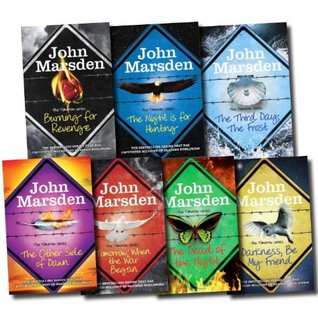
Publishers: Pan Macmillan Australia and Bolinda Audio
Books:
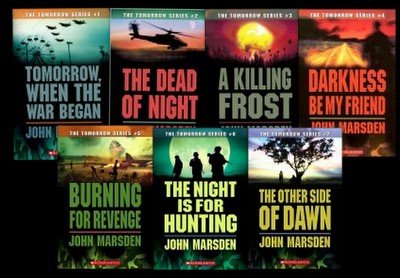
1. Tomorrow, When the War Began (1993) – Amazon Book Depository
2. The Dead of the Night (1994) – Amazon Book Depository
3. The Third Day, the Frost (1995) – Amazon Book Depository
4. Darkness, Be My Friend (1996) – Amazon Book Depository
5. Burning for Revenge (1997) – Amazon Book Depository
6. The Night is for Hunting (1998) – Amazon Book Depository
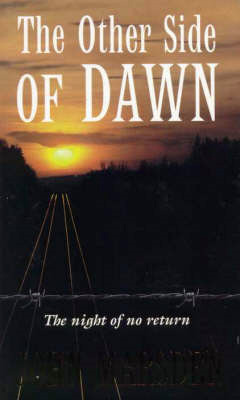
7. The Other Side of Dawn (1999) – Amazon Book Depository
Series Rating: 5 out of 5 stars
Reviewed as part of my Throwback Thursday series, where I republish old reviews, review books I have read before or review older books I have only just had a chance to read.
For this week’s Throwback Thursday review, I dive back into one of the most popular and iconic Australian fiction series of all times, John Marsden’s epic Tomorrow series.

The Tomorrow series, by bestselling and award-winning Australian author John Marsden, is a powerful and thought-provoking young adult series that was released in the 1990s. Made up of seven books, the series began in 1993 with Tomorrow, When the War Began and ended in 1999 with The Other Side of Dawn. The Tomorrow series follows a small group of young teenage protagonists as they deal with a foreign invasion of Australia which forces them to hide in the bush and engage in a guerrilla war to win. Thanks to its strong characters, frank depictions of war and trauma and its excellent utilisation of Australia’s bush and rural landscape, the Tomorrow series has become one of the most highly regarded and popular Australian series of all times, with millions of copies sold in Australia alone (which, considering our relatively small population, is pretty impressive). It is also considered a must-read series for young Australian readers, and it is still required reading in many schools to this day.
I have been a major fan of this series for a very long time. I remember reading these books while I was at school, both for classes and for my own enjoyment, and I was enthralled by its depictions of war and its captivating story, which stoked my imagination for years. Re-reading it at an older age, I began to appreciate the more complex nature of its story and the characters portrayed within. I have re-read or re-listened to these books many times over the years, and it still remains one of my most favourite series of all times. I have actually been planning to review this as part of my Throwback Thursday series for some time, and after recently mentioning it in my First Ten Books I Reviewed list, where it placed No. 1 thanks to a review project at school, I have decided it was time to share why I love this series and why those who readers unfamiliar with it should check it out.
The Tomorrow series is set in the 1990s, around the same time as the books were written, in a fictional area of Australia. The plot revolves around seven teenagers, Ellie, Corrie, Homer, Fiona, Lee, Robyn and Kevin, who live in and around the rural town of Wirrawee. During the holiday period they decide to head out to a remote and mostly unexplored area of the bush, known as Hell, for a week of camping. Isolated from the rest of the world, they are mostly unaware of events transpiring beyond their bush hideaway. Once they finish their trip, they emerge from Hell to find their farms and houses abandoned and their town occupied by soldiers. It soon becomes apparent that all of Australia has been invaded by a foreign nation, with Wirrawee being one of the initial points of occupation due to its proximity to a harbour that is vital to the invader’s supply network. Using Hell as a base, the protagonists have to come to terms with the new reality they find themselves in, and they must band together to not only survive, but to try and find some way to oppose the invading army.
The first book, Tomorrow, When the War Began, sets up the story and introduces the readers to the main characters. The book starts with the seven main characters heading off into the bush, and then returning to find that their world has changed. Not knowing what had happened and only initially finding that their families are missing, they venture into Wirrawee and encounter their first batch of enemy troops. After some initial conflicts, which include Lee getting shot, Ellie blowing up an enemy patrol and Corrie’s house getting destroyed by a missile, the group retreats back to Hell with newcomer Chris, who had also managed to hide from the invaders. Once back in the bush, they initially work on gathering information about the enemy forces and on turning Hell into a long-term home for themselves. However, as it becomes obvious that the war is going poorly for Australia and the invading army is here to stay, they decide to attempt a major act of sabotage. Their plan works, but tragedy forces two members of the group to surrender themselves to enemy custody while the rest of the group remain hidden in Hell. Tomorrow, When the War Began is an excellent novel that does a great job introducing the reader to the characters and setting up an amazing story. While Tomorrow, When the War Began would have been a great standalone novel, it also does an outstanding job setting up the rest of the series. There are so many good parts to this novel, but I have to say that the early scenes in which the protagonists start putting the clues together and slowly begin to work out that their town and country have been invaded are among some of the best in the entire series, especially with the tension and uncertainty that the characters are experiencing.
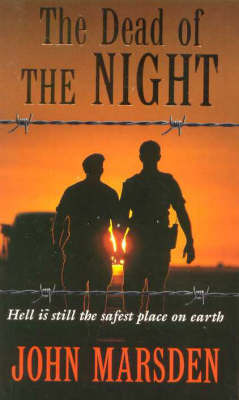
The second book in the series, The Dead of the Night, starts only a few weeks after the events of the first book. Still reeling from the loss of two of their friends, the remaining members of the group engage in more attacks or acts of sabotage, before finding a group of adult rebels who have managed to avoid capture. However, the teenage protagonists quickly realise that the adult rebels have no idea what they are doing, and disaster strikes when they encounter the enemy. The protagonists manage to escape back to Hell, where they successfully undertake another massive attack, although another unforeseen tragedy is revealed in the aftermath. This is a great follow-up to Tomorrow, When the War Began and it continues several interesting story threads from the first book, while also setting up some new characters and situations. The scenes with the teenage protagonists encountering the adult rebels are not my favourite, but the counterpoints between the two groups are extremely fascinating. In addition, the various covert actions that the group undertakes in this book, as well as the characters starting to show evidence of war trauma, offers some well-written and powerful moments to the series.
The next book, The Third Day, the Frost (released as A Killing Frost in the US and Canada), takes the protagonists out of their comfort zone as they leave Hell and the Wirrawee area in order to launch a seemingly impossible attack on the enemy’s nearby harbour complex. Their hopes are buoyed when they manage to reconnect with a lost friend whose newfound knowledge may prove to be the key to pulling off their attack. However, their success is short lived as they fall into the clutches of the enemy army and are soon sentenced to death. They eventually manage to escape, but their freedom comes at a great cost. This is easily one of the darker books in the Tomorrow series, especially the parts where the remaining main characters are caught and held in prison. Some of the sequences in the book are pretty cool, especially the assault on Cobbler’s Bay, and this book is one of the ones I enjoy the most in the entire series.

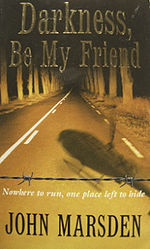
Following the events of The Third Day, the Frost, the series experiences a seven-month time-skip as the remaining main characters recover in New Zealand. As a result, the fourth book, Darkness, Be My Friend, feels a lot like it is the beginning of a slightly different second half of this series, resulting in some significant changes and character developments. This book starts with the protagonists being asked to return to Australia in order to escort a band of army commandoes to a high-value target in the Wirrawee area. While initially reluctant to return, the protagonists eventually agree to head back for a short mission. However, when the commandoes go missing, the protagonists find themselves once again trapped in occupied territory and are forced to use their wits and experience to survive and fight back. Darkness, Be My Friend is a really interesting and significant instalment in the series. Not only are there a number of major changes in Wirrawee, including several shocking deaths, but this is the book where the trauma and PTSD angles of Marsden’s storytelling really come into effect, as all of the main characters are completely shell-shocked after the events of the first three books, and it takes them a lot to get back to their former operational readiness. This book does feature some great scenes, including a night-time escape on horseback and a failed attack on the enemy which necessitates another desperate escape.
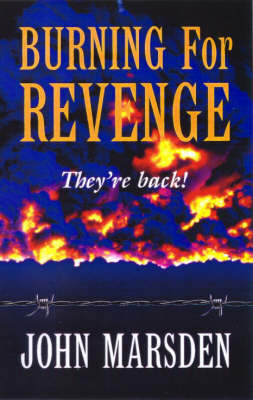
The fifth book in the series, Burning for Revenge, sees the protagonists once again holed up in Hell, hiding from the enemy army. With no chance of extraction back to New Zealand, the young guerrillas decided to leave their sanctuary and find a new target to attack. Fate intervenes, and they find themselves in a position to do a lot of damage to the enemy. I really enjoyed Burning for Revenge, even though it suffers from some pacing issues. The major offence takes place in the middle of the book, and while the corresponding sequences are epic in their scale, destruction and savagery, the second half of the book, in which the characters hide out in a nearby city, really peters out in comparison. The parts of the book set in the city do offer an interesting change of location, and also feature some compelling story points, but it does seem to be a bit lacking after the big attack. But the major action sequence, the lengthy escape and the significant story developments that occur more than make up for it.
The next book, The Night is for Hunting, is set right after the events of Burning for Revenge and sees the protagonists still hiding out in the suburbs of Stratton. Their new way of life is shattered when they witness troops capturing some of the wild street children who also haunt the ruins of Stratton. Rescuing the small group from the enemy, the protagonists escape back to Hell, and must find a way to adapt to their new charges. However, Hell may not be the safe haven they remember; violence visits them in the bush for the first time. The Night is for Hunting is probably my least favourite book in the Tomorrow series, although it still is an extremely enjoyable book and an essential part of the series. It is a little hard to deal with this book’s change of focus from war to childcare, but the focus on the new war orphans who require care allows for some interesting scenes and some intriguing character development. Most of the child characters are pretty annoying, but their leader, Gavin, more than makes up for it, as the deaf badass has some amazing scenes through this book. The final action sequences above Hell are also quite jarring, as the bush location that has been built up as a safe haven for your favourite characters is invaded.
The seventh and final book in the Tomorrow series, The Other Side of Dawn, begins immediately after the conclusion of the sixth book. After taking out the enemy patrol that infiltrated Hell, the protagonists need to escape before the soldiers are reported missing. However, instead of an extraction back to New Zealand, they are given a new mission: to venture out and perform as many attacks as possible. The war is in its final days and any damage they can do will help determine the future of Australia. Setting off again, the protagonists prepare for their final battle. Who will survive and what will the country look like after they are done? This is a really good conclusion to the series that features a number of great scenes. Not only are many of the story threads that ran through the entire series wrapped up but the protagonists find themselves drawn further into the wider war than they ever have been before. Marsden tries some different stuff in this book, including a significant amount of the book focusing on an isolated Ellie, and it works to create not only an enjoyable novel but also an excellent end to this great series.
While all seven books in the series are deeply entertaining and extremely well written, their real strength lies in their continuation as a series. Marsden does an outstanding job linking all of the books in the series together, creating one lengthy and captivating story that you cannot wait to get to the end of. The sheer amount of character development that occurs throughout the series, as well as the various attacks and input in the war effort, is amazing, and the Tomorrow series really needs to be read in its entirety and in order.
The Tomorrow series is told from the first-person perspective of the main character, Ellie, who is chronicling the adventures of the protagonists so there is a record of what they did during the war in case they are captured or killed. I always quite enjoyed having the story told in this manner, as it gave the series a lot of realism and is supposed to evoke other famous wartime chronicles. Ellie is a unique narrator, as she really does not tell a straight story of the entire adventure. While she endeavours to cover all the events that are occurring, she goes off on a huge number of tangents, recalling stories from her past, analysing the thoughts and feelings in her head, or engaging in some deep emotional debate about the situations the characters find themselves in. While this may seem random, it goes a long way to explaining the narrator’s thought process, as it helps her break down events she cannot quite handle and interpret them as something more recognisable to her. It is also through her eyes that we see the other characters, and as such we get a really good idea of their past and their potential motivations, as Ellie knows huge amounts about their past and tells a number of funny stories or analogies that help highlight their character traits and personalities. Because all of the main characters are her friends, Ellie’s feelings of closeness and love for these characters really shines through and ensures that the readers really care for all the other characters. One of the things I quite liked about the chronicle format of this series was that Marsden went out of his way to explain the text’s creation and how the protagonist was able to preserve them through the war. The chronicles also have an impact on the story, especially in the second book, as the characters read and react to Ellie’s inner thoughts and observations about the series’ opening events.
I absolutely love the overarching story concept of this series, which sees Australia being invaded by a hostile enemy force who quickly takes over the country, forcing a small group of young people to fight back. While some comparisons with Red Dawn can be made, there are some significant differences to the story, such as its focus on Australia, character development and the more realistic story of young people surviving in a war zone. I always felt that the idea that Australia, with its relatively small population and relative isolation from Europe and America, could be invaded and completely conquered in such a short period is a lot more realistic than similar events occurring in America. In addition, the way that the teenage protagonists operate is a lot more realistic in the Tomorrow series. The characters spend most of their time mainly trying to survive and avoid capture or death at the hands of their enemy. Even when they attempt an attack, they plans usually attempt to avoid a direct fire fight, as they realise that any attempts to do so would likely see them killed. Instead, they mostly travel without guns, hoping that if captured, the enemy would believe they were kids who were hiding and not actual guerrillas. I also liked how the protagonists’ planned assaults on the enemy are more opportunistic in nature and rely more on improvisation and everyday items rather than training or proper military explosives or weapons. Most of their attacks involve petrol, gas and weapons farmers would use (although one attack was achieved by toasters), and even when they receive some better equipment from the New Zealand army, they utilise it in a way adult soldiers would not think about. The author’s depiction of Australia’s invasion is really interesting, and the attack and the international reaction to it feel quite realistic, even in more modern times. I really love the ideas that Marsden comes up with when it comes to the actions his protagonists undertake to survive the war, and it is clear that he dedicated a lot of time and attention to coming up with these actions. As a result of this, and the realistic depiction of Australia being invaded, the Tomorrow series has always fired my imagination about what I would do if Australia were invaded, and I have to admit I would be tempted to do what these protagonists would do and try and hide out in the bush.
The way that the war is depicted in this series is quite intriguing. Due to the story being told from Ellie’s perspective as a chronicler, the reader only gets a fairly narrow view of the war, as the protagonists lack any knowledge of what is happening due to their isolation. Having the protagonists only finding out about the invasion days after it occurs, and then retreating to their hidden base for long periods of a time is quite a cool concept, and I always found that it added so much to the story, especially realism; you cannot expect teen civilians in the bush to have knowledge of troop movements. Another clever plot device that the Tomorrow series makes use of is the fact that the series has no singular antagonist; instead, the protagonists see every member of the invading army as an equal threat. While the character of Major Harvey in the second and third book is an antagonist, he is really just a cog in the military machine that is conquering Australia. Much more negative focus is put on the enemy army as a whole, even though they are fairly faceless, with only one member of their forces ever really named, and that was in the last book. I always felt that Marsden considered war and the reasons for it as the book’s primary villain, as the harsh depictions of it and its aftermath are very convincing.
As you would expect from a series that focuses on invasion, war and guerrilla attacks, there is a heck of a lot of action going on within these books. Marsden has some real skill when it comes to writing these scenes, and the reader is dragged right into the middle of the carnage as the narrator describes everything that they see. I was also impressed with how realistic these scenes were, and the author does not pull any punches when it comes to describing the carnage, with some truly gruesome or violent events occurring all over the place. There are a huge number of scenes that come to mind in the series, but the one that I would say is the most descriptive is the airfield sequence in Burning for Revenge. The devastation, destruction and fire that occur in the scene is just insane, and you can’t help but feel the heat of the flames and explosions that are occurring all around the narrator. This intense action adds so much to the story and really highlights the author’s skill as a writer.

One of the most distinctive aspects of the Tomorrow series is Marsden’s extremely realistic and insightful depictions of emotional and psychological trauma as a result of war and death. The inclusion of this sort of trauma is prevalent throughout the entire series and affects all of the characters in some way or another. Marsden started featuring these depictions of trauma quite early in the series, as within the first book alone two of the characters suffer from panic attacks after seeing or being forced to commit severe acts of violence. This trauma continues to define many of the characters throughout the rest of the books, and large parts of the series deal with them trying to come to terms with the various traumatic experiences, the deaths of loved ones and all the horrendous acts of violence they have committed. The most obvious example of these occurs in the fourth book, Darkness, Be my Friend, where at the start all the surviving characters are deeply shell-shocked and emotionally distraught after everything they have done, as well as only narrowly escaping from the death sentence at the enemy prison and witnessing another one of their friends dying. Even after months recovering in New Zealand, none of them have come close to coming to terms with what happened to them, and the stream of emotion that followed the discussions about heading back to Australia really cuts to the reader’s core. This is especially true when at least two characters have mental breakdowns when back in Australia, especially Kevin, whose mind essentially shuts down for most of the fifth book in response to everything that happens. Some of Ellie’s descriptions of the depression or despair she experiences throughout the course of the series are just heartbreaking, but they really drive home how the war has affected her and how devastating the events of the book are.
The Tomorrow series features a fantastic core group of characters who are thrust unprepared into a war setting. The characters are a diverse and interesting bunch. Due to his background as a teacher in a rural area of Australia, Marsden has a good idea of the lifestyle of rural kids, and he incorporates this into his characters. After the various adventures with these characters, the reader does really start to care for them, and they really feel the dark points strongly, such as when they are imprisoned. I liked the way that Marsden portrayed their relationship, as the characters become dependent on each other in their isolation and situation. Each of the main characters goes through some significant character development throughout the books, as the situations they face force them to become more responsible or more vicious, depending on their circumstances. None of the characters are unaffected by this, whether it is the initially rebellious Homer turning into a compassionate leader, or the initially pampered Fiona becoming a more independent and resilient person. Perhaps the best example of character changes is Lee. In the first book he is a more easy-going character whose main story arc involves his romance with Ellie. However, when he witnesses the brutality of the enemy in the second book, he starts to show more signs of violence and anger, killing several soldiers in brutal fashion. When he finds out that his parents have died, he becomes eager for vengeance, acting out more against the group and putting them in danger with his decisions.
As the narrator, we spend the most time with Ellie, and as a result we really get a deep dive into her character, personality and motivations. Throughout the series, so many things happen to Ellie that fundamentally change her as a person. One of the things I really liked about this series as a whole is the way that Ellie maintains her quirky outlook on life even when terrible things happen to her or when she is forced to do terrible things to survive. Ellie is the first one of the characters to kill someone, and the many deaths she witnesses or is forced to participate in haunt her for all of the books. With her strong and overwhelming personality, I always thought that Ellie was an outstanding main character for this series, and she is a fantastic creation of Marsden.
Much of the Tomorrow series is set in the Australian bushland. Marsden is a very descriptive author, and throughout the course of his books, he really brings the bush to life with his fantastic writings. The reader really gets a sense of the beauty and strangeness of the bush, and the narrator, who has spent her entire life near the bush, gives several poetic and inspiring accounts of why she loves the bush so much. There are a number of great bush locations featured throughout the series, and this landscape takes on a life of its own at times. I loved the location and thought that it contrasted well with some other locations, such as the city the characters spend time in during the last three books. The immortal bush remains undamaged through the entire series, while the city becomes more and more devastated every time the characters visit. I loved the use of the bush, and it is an outstanding location that adds so much to the series.
These books are an excellent young adult series that are a must read for its intended audience. Some of the violence and other content may be considered a bit much for some younger audiences, although I did read this when I was quite young and I personally think that the underlying lessons and themes well outweigh the risks. Marsden, as a teacher who worked with teenagers, really wanted to portray a group of teenage protagonists in a positive light by showing them as capable beings rather than as the lazy troublemakers of popular media. Without a doubt, Marsden was able to achieve this, showing a group of teenagers who able to adapt and survive in the most hostile of locations, becoming heroes and survivors where their contemporaries were mostly captured in the early days of the invasion. Even those adults they encounter after the invasion are mostly incompetent, especially the group known as Harvey’s Heroes in The Dead of the Night. These characters, including some of their antagonists, actually try to treat them like children, which is galling when the protagonists are far more capable. However, the protagonists are able to survive where the adults do not, and even some of the professional soldiers they work with in the later books are unable to do the things they do. As a result, this book does a great job of showing what teenagers are capable of when they face adversity. However, while it does show them stepping up, the books do not glorify war for young people, as all their actions are done out of necessity, and they are left with some terrible mental and physical scars. I would strongly recommend this series for all young readers, and I believe that older readers will become enthralled in the story contained within.
As the Tomorrow series is one of the most popular and well-known book series in Australia for the last 20 years, there have been a couple of attempts at adapting the books to the screen. While this is not necessarily important to enjoying the story, it is intriguing to see how these adaptations have gone, especially as I do not think either of them gets the story 100% correct. The first adaption the Tomorrow series had was the 2010 film, Tomorrow, When the War Began, which stared a young, mostly Australian cast, a couple of whom have gone on to some international success. I quite liked the film, which I felt mostly captured the heart and intent of the first book. However, there were some scenes that were way over the top or slightly stupid, such as having the religious Robyn killing a whole bunch of soldiers while the camera pans sadly to a playground to represent innocence lost, or the final scene showing the protagonists outfitted like a major paramilitary group. The film also did a really good job of moving the story out of the 90s and setting it in 2010 by cleverly inserting recent technology into the story. For example, there is one memorable scene where all the characters simultaneously check their cell phone reception when they first discover Ellie’s farm abandoned, rather than having one person checking the landline. The second adaptation was a television show that ran for one season in 2016. While it roughly covered the events of the first book, they really took a lot of artistic licence, which honestly did not pay off. For example, they spent a huge amount of time focussing on what was happening with the captured parents, even though the parents where pretty much non-entities in the first book. Stuff like this really added nothing to the story, and I personally thought it was quite stupid and kind of ruined the show for me.

Marsden actually continued the story of the Tomorrow series in a sequel trilogy known as The Ellie Chronicles. The Ellie Chronicles ran between 2003 and 2006 and focused on Ellie as she struggles to adapt to life in post-war Australia. I have actually not had the chance to read or listen to The Ellie Chronicles before, which is weird considering how much I love the Tomorrow series. I have a copy of these books and I will try to get through them at some point in the future as I am deeply curious to see what happens to these beloved characters in peace time (Is the leader of the Australian terrorist group mentioned in the synopsis Lee? He was still pretty murderous at the end of the series).
While I originally read the physical copies of these books, I mostly choose to listen to the stories on audiobook. The audiobooks are all narrated by Suzi Dougherty, and mostly run for around seven hours, with the final book, The Other Side of Dawn, running for over nine hours. When I do my re-listen of these books, I try to get through the entire series in one go and I am generally able to do so quite quickly, as the compelling story keeps me enraptured for all seven books. Doherty does an amazing job when it comes to these books and she comes up with some outstanding voices for all the characters she portrays. I especially feel she gets the character of Ellie down perfectly, which has a real trickle-down effect to the rest of the book, as Ellie is the character narrating the entire series. I really enjoy listening to the series and I think I become a lot more attached to the series when I do. I would strongly recommend listening to the Tomorrow series on audiobook; it is an amazing way to enjoy these fantastic books.
As you can see from my rather long review, there is so much about the Tomorrow series that I enjoy. To my mind it is one of the best book series I have ever read, and even after the many years since I first read it, I am still enthralled by the epic story it contains. Each of the books within the Tomorrow series is excellent, but when taken as a whole, the series becomes some sensational. I highly recommend this entire series and I am so glad that many Australian schools still require their students to read it.

 The Unseen Library