
The Dragon in Winter by Jonathan Maberry

Publisher: Macmillan Audio (Audiobook – 20 August 2024)

Series: Kagen the Damned – Book Three

Length: 20 hours and 57 minutes

My Rating: 5 out of 5 stars

Amazon

The damned rush to their final battle in the epic dark fantasy novel, The Dragon in Winter, which brings an exceptional conclusion to author Jonathan Maberry’s Kagen the Damned series.

As I mentioned in my recent review for the author’s other 2024 release, NecroTek, I am a huge fan of Jonathan Maberry, having really gotten into his elaborate and deliciously gritty thrillers and other pieces of fiction since I started this blog.  While I am most familiar with the author’s long-running Joe Ledger series, one of his more intriguing recent bodies of work has been the Kagen the Damned series.  A dark fantasy fiction series that follows a highly damaged figure who seeks bloody revenge after the dastardly Witch-king uses magic to destroy his kingdom and kill the royal children in his care, the Kagen the Damned books were an incredible pivot into the fantasy fiction genre for Maberry that I deeply enjoyed.  Both of the previous books in the series, Kagen the Damned (one of my favourite books and audiobooks of 2022) and  Son of the Poison Rose (one of my favourite books and audiobooks of 2023) were five-star reads, and I have so much love for this series (which also includes the novella I Say Your Name in the Dark Nights) due to its elaborate storytelling, damaged characters, and intriguing take on the fantasy genre.  Because of how impressive the first two entries in this series are, I have been eagerly awaiting the third and seemingly final book, The Dragon in Winter, for a long time, and it was one of my most anticipated books of 2024.

Nearly a year after the bloody massacre that saw the dread Witch-king of Hakkia conquer the former Silver Empire in a single night, the war to reclaim the throne is finally here.  As the Witch-king continues to plot, planning to ascend to godhood, his enemies have rallied around the unlikely figure of Captain Kagen Vale, better known as Kagen the Damned.

Once the loyal guardian of the Silver Empire’s heirs, Kagen has survived despair, damaging revelations and damnation from his gods to stand against the Witch-king and gain the bloody vengeance he so desperately needs.  Having proven his valour in combat and his ability to face off against the darkest of magic, Kagen has managed to gather a massive army of rebels, outlaws and the soldiers of various allied nations determined to stop the Witch-king for good.  But this army of flesh and blood men will not be enough to stand against the destructive power of the Witch-king alone.

As magic continues to return to the land, Kagen and his allies soon find themselves beset by the Witch-king’s sinister powers and dread allies, as vampires, demons, magic users and other fell creatures emerge, determined to keep the Witch-king on his bloody throne.  To survive, Kagen will need to find magic of his own that will allow him to withstand the Witch-king’s power.  But the more he looks, the darker secrets he unravels, and soon everything he thought he knew about the world will come tumbling down around him.  Worse, an even more dangerous threat is rising in the frozen north, as a tortured dragon calls out in despair and is answered by a being of unimaginable power.  Can Kagen stop the Witch-king before his dark plans come to pass, or will the dread flames of vengeance consume the entire world?

What an outstanding end to one of my favourite new fantasy trilogies!  The Dragon in Winter was another exceptional novel from Jonathan Maberry that serves as a fitting and powerful end to the Kagen the Damned dark fantasy series.  Loaded with insane action, brilliantly damaged characters, and some fantastic storytelling, The Dragon in Winter was an incredible book that perfectly utilises Maberry’s distinctive style.  I had an amazing time listening to this impressive book, and it gets an easy five-star rating from me, especially on audiobook.

Maberry had to achieve a lot with this third Kagen the Damned novel, as not only did readers require a satisfying end to the trilogy, but this book needed a distinctive story much like the previous entries.  I feel that Maberry achieved both these goals, as The Dragon in Winter was a compelling and dark read that provided a great mixture of adventure, war, intrigue and character growth, all while continuing and concluding the storylines from the previous books.  This third novel starts shortly after Son of the Poison Rose and sees Kagen taking on the role of general by leading a small army against the Witch-King’s forces, while the previously established story threads about the various nations building their armies to join the war come to fruition.  Maberry does a great job of resetting the scene in these early chapters, and not only do you get to see the situation from Kagen’s perspective but multiple scenes are shown from the antagonists’ side as they make their preparations to foil the protagonist and his allies.

Much of the middle of the story follows Kagen and his unlikely allies as they prepare for the inevitable final confrontation, attempting to gain additional ways to fight against the Witch-king.  While some of Kagen’s sequences aren’t entirely necessary for the full advancement of the plot (the goblin cave sequence, for example), they are all generally intense and character building, and they all tie in nicely amongst the other storylines about war preparations and the Witch-king unleashing his dark minions upon the world.  A secondary major storyline focuses on the characters of Jheklan and Faulker, Kagen’s brothers, who journey up to the frozen Winterwilds in search of the last dragon.  This storyline proves to be quite an interesting addition to the story, as while the characters are disconnected from the rest of the plot due to distance, their actions have big impacts on the overarching narrative.  This middle part of the story ends with a major confrontation between a memorable supporting character and a dark set of antagonists, which was not only very awesome but helped to set the scene for the rest of the book.

The final third of The Dragon in Winter is all action and excitement as the final battle of the war is unleashed on multiple fronts.  Maberry expertly brings all the various ongoing storylines to the boil, as the protagonists find themselves in mortal peril.  There is a little bit of everything here, including massive war sequences, smaller battles with huge sacrifice and big revelations finally coming to the surface.  The author keeps the tension extremely high during this third act, and you are constantly on the edge of your seat, especially as your favourite characters face doom and destruction at every turn.  I loved the way many of these storylines came together, and while a couple of big moments were easy to see coming (although for me that just increased the anticipation), there were also some reveals I couldn’t have predicted.  This includes the book’s massive twist that turns around much of what you thought you knew for the last two entries in the series.  I felt that this twist was very clever, especially when you consider the subtle hints leading up to it, and I appreciated how it changed the emotional impact of some previous scenes.  Everything leads up to the big final confrontation, which was as bloody and hard-hitting as you would expect.  This confrontation was chaos, carnage and catastrophe, and I felt that it was a fitting end to a dark trilogy that revelled in bloodshed.  While I do feel that the final boss takedown was a tad anticlimactic due to who got the kill, and Maberry reigned in the tragedy far more than I expected, this conclusion was extremely awesome, and I hung on every word right to the very end.  Everything was very nicely wrapped up, although there is potential for Maberry to revisit this series in the future, which could result in some more gripping adventures.

I always love the way that Maberry manages to apply his distinctive writing style to all his novels, no matter the genre, and it always works to create a powerful and exciting read, especially in The Dragon in Winter.  The large number of short chapters allows for a quick pace, and you are constantly jumping from sequence to sequence, eager to see what will happen next.  Maberry also excels at featuring a huge range of alternating perspectives as the book continues, with the point of view jumping around various interesting characters chapter to chapter.  While much of this focuses on the main protagonist, you are often following many of the fascinating and fun supporting characters as they go about their own adventures.  There are also multiple chapters shown from the perspective of the villain or his minions, and I love how the reader are constantly let into the antagonist’s plans, which helps to raise tension as you worry that they are one step ahead.  Throw in several additional perspective chapters from one-off characters, which often help to highlight some of the darker events going on in the wider setting, and this great jump in perspectives allows for a particularly complex and layered narrative that is so fun to navigate.  Of course, the real highlight of any Maberry book is the exceptional action sequences that pump some massive excitement into the plot.  Maberry is extremely talented at envisioning fight scenes of any size or shape, and I found myself constantly enthralled by the many, many battles that were contained in The Dragon in Winter.  This includes deep personal battles, running skirmishing or even a truly massive full-on war sequence with unique participants, all of which come across extremely well thanks to the author’s powerful and descriptive writing that captures every sword thrust or slice of the protagonist’s blades.

The Dragon in Winter continues to exhibit many of the dark fantasy elements that made the first two Kagen the Damned books so awesome to read.  Maberry really dove into the genre with a vengeance in this series, and I love how he pulled together a rich and powerful fantasy world loaded with both unique features and classic fantasy creatures and monsters.  Thanks to the author’s detailed writing and tendency to effectively recap key elements of the series, readers can easily absorb all the key elements of this universe, and it proves to be fascinating to take in, especially as Maberry loads it with secrets, deep history, and hints of other lands yet to be visited.  Of course, as this is Maberry, there is also a strong Lovecraftian vibe to this universe, as many of the elder gods and other associated beings have a place in this realm.  The author does a great job of exploring these classic Lovecraftian creatures throughout the course of the series, and the way they are worked into the main plot of The Dragon in Winter is extremely clever, especially if you have seen examples of them in some of Maberry’s other series.  For readers expecting a typical fantasy read, I should warn that The Dragon in Winter, like the rest of the Kagen the Damned series, gets very dark and brutal at times, and there are a lot of strong references to violence, torture, sexual assault and other troubling features that probably won’t appeal to every reader.  I feel that while Maberry occasionally goes a bit overboard with these darker inclusions, for the most part it helps to create a powerfully grim overarching tone that raises the stakes and ensure you are constantly rooting for the protagonist to succeed and bring a bit of justice to the world.  It also works very well alongside the awesome action sequences, and for those fans of some very bloody fights, including those featuring pure evil fantasy and horror creatures, you are in for an amazing time here.

While the action, setting and clever storytelling is an exceptional part of The Dragon in Winter, I also need to highlight the various impressive characters featured throughout this book.  Due to The Dragon in Winter being the last entry in this trilogy, Maberry spends much of this book finalising key character storylines, allowing for a much more personal entry in the series that will really appeal to those readers who have grow attached the protagonists in the first two books.  As such, this final Kagen the Damned novel features an array of great characters who are so well written and who often feature their own powerful and personal character arcs. 

Like with the rest of the series, much of the book’s character work is focussed on the main protagonist, Kagen Vale, who thanks to the dark deeds he has witnessed has been given the title Kagen the Damned.  A moody and deadly figure, Kagen has gone through so much despair and darkness in this series, and it has been a powerful journey following him this far.  Maberry did an outstanding job continuing Kagen’s story in The Dragon in Winter, and it was great to see how far Kagen has come, especially as he now uses his inner darkness, past trauma, and even the damnation of his gods, to fuel his desire to fight.  While he has overcome many of his past traumas, Kagen does experience new ones in The Dragon in Winter, as he finally understands the full scope of the evils unleashed upon the world, including by his own people.  This allows for some more dramatic sequences from the protagonist, and part of the emotional strength of the story is watching Kagen overcome even these revelations, especially with the help of his friends.  I have really appreciated how well Maberry has written Kagen’s pain and deeper heart throughout the series, and it was fantastic to see some of this pain finally come to an end in this final novel.

Aside from Kagen, the rest of the supporting cast proves to be quite exceptional, and there are many fascinating characters you become attached to as a result.  I personally loved seeing more of Kagen’s two friends and comrades, Tuke and Fillia, who form a hilarious put powerful trio as they fight together against the odds.  Essentially Kagen’s conscience and voice of reason, Tuke and Filia are the perfect supporting characters to the protagonist, and I love how they constantly anticipate Kagen’s behaviour and manipulate events to ensure he does what they want.  However, they also have their own compelling adventures outside of Kagen, especially when they lead the final battle, and you care nearly as much for them (if not more) than you do Kagen by the end of things.  Maberry also invests a lot of time in The Dragon in Winter to the amusing characters of Jheklan and Faulker Vale, Kagen’s brothers and mischievous adventurers.  While they have had minor appearances in the previous novels, Maberry only featured them as major, fleshed out characters in this final book, as they lead their own expedition to the frozen Winterwilds.  While they are relatively new figures, the reader quickly becomes intrigued by their storylines, especially as it is loaded with adventure and a certain comedic charm thanks to the brother’s juvenile nature.  However, while they are often unserious, when the chips are down Jheklan and Faulker get serious quick, and Maberry ensured that they encounter some real tragedy that shows the true heart of these figures.

While there are other great supporting characters I could talk about, including a vengeful widow and a scarily powerful vampire elf, I want to finish by mentioning the various villains, who are some of the best characters in The Dragon in Winter.  This includes the sinister Witch-king and his court, who are constantly plotting to destroy the world and kill Kagen.  The Witch-king is particularly malevolent in this book, and Maberry continues to build on the revelations surrounding him in this final book, providing even more fun context and twists.  I also love the continued focus on the Witch-king’s terrified advisors, Lord Nespar and Jakob Ravensmere, who find themselves way over their heads as they try to serve their lord and their own agendas.  However, the devilishly fun character known as the Prince of Games easily steals every scene he is in, and I loved his constant manipulations and chaotic nature, especially as it brings great fun to the Witch-king’s dark court.  The Prince of Games, who has some interesting links to some of Maberry’s other series, perfectly rounded out this cast of villains, and I really appreciate how much depth and complexity these antagonists, and indeed every character in the Kagen the Damned series, brought to the overall story.

As with all Maberry’s previous books, I chose to check out The Dragon in Winter on audiobook, which is the best format to enjoy the author’s captivating narratives in.  Maberry’s short chapters, elaborate world building, intense action and over-the-top characters really come to life when they are read out loud, especially when it is done by the legendary Ray Porter.  Porter has long perfected the tones to get the most out of Maberry’s writings and his infectious and compelling voice expertly captures the inherent dark nature of Maberry’s writing and helps to send the crazy scenes of carnage straight into the listener’s head.  The narrator knows exactly how to portray Maberry’s great, larger-than-life protagonists and villains, and you can easily imagine each of the figures and their actions as Porter reads them out.  I particularly enjoy how well Porter captures the various emotional states of these characters, and you always hear the despair, anger or fear of each of these figures when they speak.  This especially true for the primary protagonist, Kagen, and I always appreciate how well the narrator showcases his many dark emotions as he goes through the wringer time and time again.  Throw in some truly chilling voices for the various villains and evil monsters that the protagonists encounter, and Porter’s performance was once again exceptional, allowing for quite an awesome audiobook.  With a runtime just short of 21 hours, this is a long audiobook to check out, although you really don’t mind as it becomes hard to stop listening to The Dragon in Winter, especially during the various climatic or intense sequences.  I had such a great time listening to The Dragon in Winter, and this such an amazing format to enjoy this latest Maberry novel on.  Indeed, I loved it so much I listed it as one of my favourite audiobooks of 2024, even before I finished it, so do yourself a favour and check out this novel on audiobook right away.

Thanks to its powerful story, intense action and damaged characters, The Dragon in Winter was another incredible read from Jonathan Maberry that I could not get enough of.  One of the best books of 2024, The Dragon in Winter was an outstanding final entry in the Kagen the Damned series, and I loved every single second I spent reading it.  Highly recommended on all formats, especially those read out by Ray Porter, The Dragon in Winter is so damn good, and it will be interesting to see if Maberry decides to return to the fantasy genre again the future.  In the meantime, we’re only a few months off from Maberry’s next book, Burn to Shine, which will probably be one of the best things I read in 2025.
Amazon

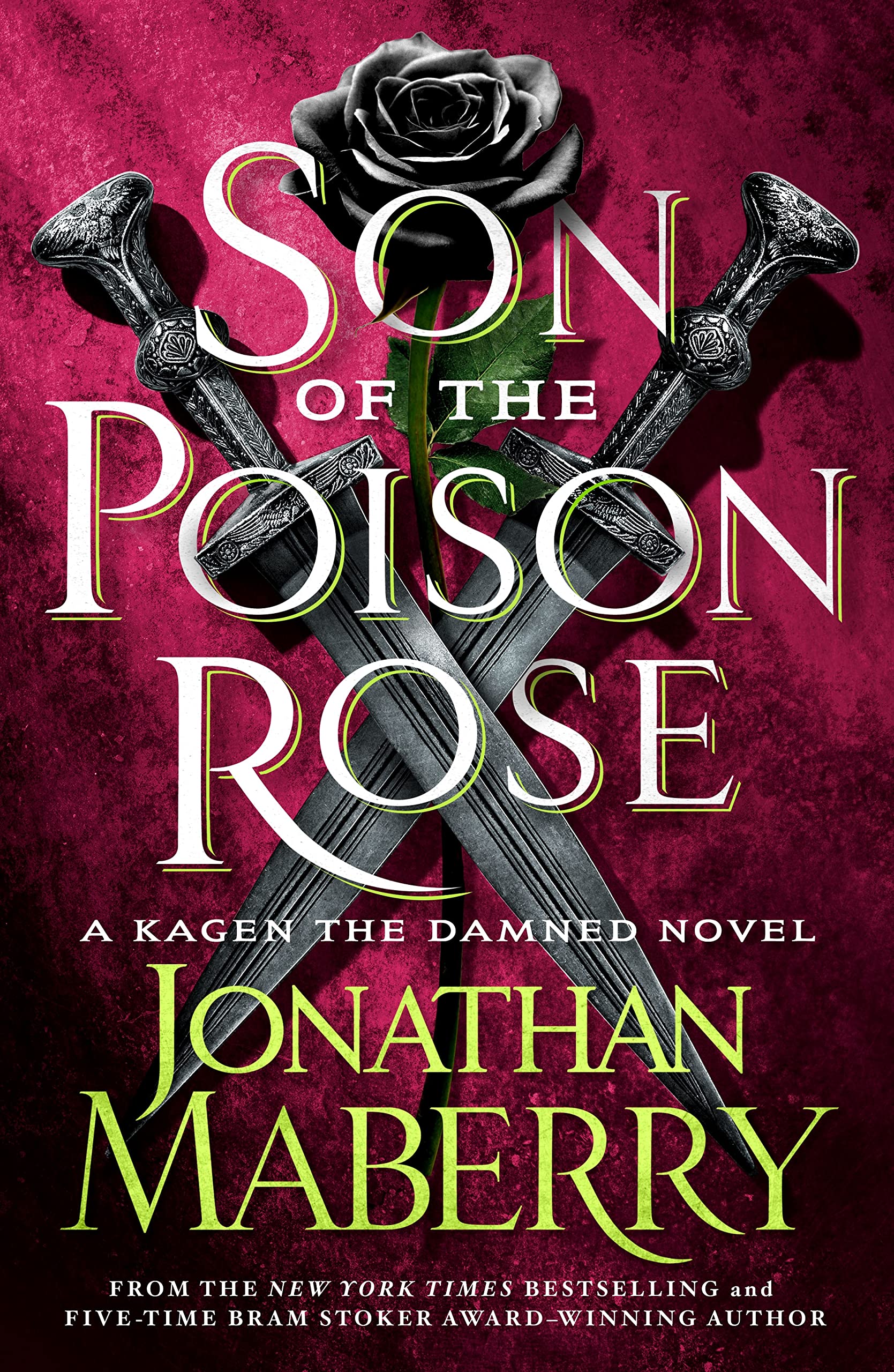
Son of the Poison Rose by Jonathan Maberry

Son of the Poison Rose Cover

Publisher: Macmillan Audio (Audiobook – 10 January 2023)

Series: Kagen the Damned – Book Two

Length: 25 hours and 55 minutes

My Rating: 5 out of 5 stars

Amazon

One of my favourite authors, Jonathan Maberry, returns to his intriguing fantasy world in a big way with the second Kagen the Damned novel, Son of the Poison Rose.

Readers familiar with my blog will know I am a massive Jonathan Maberry fan, and the path to my current obsession with his work is well documented throughout The Unseen Library.  I started off by reading his fantastic 2018 novel, Deep Silence, quite early in my blogging career, and this ended up getting me into the rest of his exceptional Joe Ledger series, including The Dragon Factory, The King of Plagues, Predator One and Dogs of War.  I have also had a great time reading his sequel Rogue Team International series, which featured the epic books Rage (one of my favourite books and audiobooks of 2019) and Relentless (one of my favourite books and audiobooks of 2021), as well as the fun standalone novel Ink (one of my favourite books and audiobooks of 2020).  Needless to say, I have deeply enjoyed his cool books, and this only increased when he made his impact into the fantasy fiction world last year with Kagen the Damned.

Kagen the Damned was an amazing and exceptional dark fantasy novel that took the reader on a wild ride.  Set in a brutal fantasy world of Maberry’s own invention, Kagen the Damned followed the titular character of Kagen Vale, a highly regarded hero and palace guard of the Silver Empire who loses everything in a single night when the armies of the dread nation Hakkia invade with dark magic, led by the powerful and deadly Witch-king.  Forced to watch his parents, his empress, and the royal children he was sworn to protect die terrible deaths, a haunted Kagen flees, only to be further destroyed when he beholds his gods turning their back on him, damming him for his failure.  Now known as The Damned, Kagen travels the world in a daze before finally regaining his senses and launching an attack on the Witch-king at his coronation.  However, this reveals secrets that shock Kagen further and spelling doom for the entire world.  I had an epic time reading Kagen the Damned last year, and it ended up being one of my favourite books and audiobooks of 2022.  Between this and the cool Kagen the Damned novella I Say Your Name in the Dark Nights, I have been eagerly awaiting a second novel and I was very excited when I heard that Son of the Poison Rose was coming out.  Son of the Poison Rose was one of my most anticipated books of 2023 and I finally managed to read it a short while ago and it was everything I hoped it would be and more.

“There is blood on the ground between us!”

Following his failed assassination attempt on the Witch-king of Hakkia, Kagen Vale, better known as Kagen the Damned, is once again the run with his companions, Tuke Brakson and Filia alden-Bok, attempting to find safety and come up with a new strategy of survival and revenge.  While their plan to kill the Witch-king failed, their attack stopped the return of the Hakkian God, Hastur, while also opening up the possibility of war, as the Witch-king’s fellow monarchs see the Hakkians as vulnerable.  However, Kagen also uncovered the terrible secret that the Witch-king is his older brother Herepath, who has turned his back on everything he once believed in to unleash great evil upon the world.

Wandering the wilderness, Kagen, Tuke and Filia attempt to come up with a new way to strike back against the Hakkian forces.  Their journey eventually leads them to the north of the continent, where they attempt to recruit an army of nationless-rogues, mercenaries and fighters to their cause.  But force of arms alone will not be enough to stop the Witch-king, instead Kagen and his allies will need magic.  But with magic long banned within the Silver Empire, only the Hakkians have any real knowledge of the mystic arts.  To that end, Kagen turns to former nun turned spymistress, Mother Frey, who sends Kagen on a deadly mission to a long lost city in a dangerous jungle in the hopes of recovering ancient books of dark magic.

However, the Witch-king is far from idle while Kagen is working against him.  With his army spread thin and the nations of the former Silver Empire all gearing up for war, the future looks grim for the usurper and his advisors.  But with new dark allies arriving every day, called to his side by magic, the Witch-king plans to unleash a magical plague, one that will turn his enemies into a ravenous, unthinking horde.  With such power at the Witch-king’s command, will Kagen’s quest reveal something powerful enough to defeat him?  And even if he does, will Kagen be able to fight his own brother?

Wow, wow, wow, what an epic and exceptional book!  Maberry can really do no wrong when it comes to his writing and this impressive sequel really hammers home what a talented author he is.  Masterfully expanding on the narrative set up in the first book, Son of the Poison Rose contains Maberry’s trademark blend of intensity, awesome action, complex characters, and dark world building that I love so much.  I absolutely powered through this lengthy novel, and it earns Maberry another easy five-star rating from me as I loved every single second I spent with it.

Maberry continues his sprawling and dark narrative in Son of the Poison Rose, as this book takes the reader in some great and captivating new directions.  Taking place in the explosive aftermath of Kagen the Damned, Son of the Poison Rose starts off in a big and action-packed way as Kagen and his allies find themselves being hunted by everything the Witch-king can throw at them.  Maberry quickly establishes his usual practice of featuring a huge number of different perspectives to showcase not only the adventures of the protagonists, but also the actions and schemes of the antagonists and the impacts that their machinations have throughout the world.  The main story of Kagen is pretty epic as it sees the protagonist and his friends struggling through new lands in the search of allies and magic.  While this results in some great scenes for Kagen in the first two thirds of the book, including a great haunted house sequence, his story here feels a little meandering at times without too much progress being made.  However, this is more than made up from the various alternate perspectives and worldbuilding that occurs in the same period.  It is so damn fascinating and entertaining to see the various dark and often horrifying plots of the antagonists come into effect as they plot for war.  These storylines blend spy thriller and dark fantasy elements together really well and you are drawn into these storylines, especially as Maberry takes the opportunity to strengthen the followers of the antagonists in some big ways.  The simultaneous build-up of other complex supporting characters, as well as the many examinations of various corners of Maberry’s new fantasy world adds to the impressive tapestry of the first two thirds of the story, and I was pretty damn hooked during this part of the book.

Maberry ramps up the intensity in the final third of the book as the various intriguing storylines he set up in the start of the novel really come to fruition.  This is headlined by Kagen and his allies travelling into a dangerous jungle nation to find a legendary ancient city where magical texts are hidden.  While I was initially concerned this part of Kagen’s story was going to be rushed, it ended up being very well written and awesome, as they encounter all manner of evils out in the jungle.  This final third of the book was again firmly enhanced by the continued dive back to the antagonists, where you see their evil plot to fill the jungle with zombies and other deadly creatures to kill Kagen and his comrades.  This results in an epic series of battles which keep you on the edge of your seat, as you know Maberry will not hesitate to kill off his characters.  The author chucks in several massive revelations around this part of the book, including finally showing the motivation behind the Witch-king’s actions, and the entire narrative ends on a big note while also expertly setting the stage for even more chaos in the following novel.  This ended up being a particularly epic story and I was firmly hooked the entire way through.

Those who are familiar with Mabbery’s novels will know that the author has a very distinctive style which has worked wonders in his many thriller novels.  Maberry successfully transported this style across to the fantasy genre last year with Kagen the Damned, and I felt it really enhanced his already impressive story.  Naturally he continues it in Son of the Poison Rose and it is still really effective at conveying the vast scope of his tale.  The main basis for his style is the utilisation of a vast number of shorter perspective chapters which showcase events from multiple characters across the narrative.  This results in a vast and complex story that not only allows the reader to see the adventures of the protagonist but also highlight the other players throughout the realm, including the antagonist, his court, the members of the resistance, and even several kings and rulers from unaligned nations who are making plans for war.  Maberry further expands out the plot by including a series of intriguing, often standalone interludes, which showcase smaller, self-contained stories within the wider universe.  These interludes are usually pretty cool, both by themselves and as extensions of the larger story, and I love how inventive and dark Maberry can be at times.  This mass of perspectives really helps to create an extensive and complex plot that has so many different aspects to it.  Seeing the protagonist and antagonist constantly reacting to the actions of each other, as well as other figures in the book, really ups the stakes and intensifies the plot, and I loved how Maberry gave this fantasy novel a strong thriller feel, especially with the continues focuses on politics, espionage and revenge.

Now, one thing about Maberry’s writing style that is not going to appeal to everyone is just how dark and disturbing the author makes the story.  Maberry is a particularly over-the-top writer at times, as he really does not hold back on the gore, violence and depravity, with the characters witnessing or causing all manner of mayhem or gruesome acts.  While this excessive violence and brutality fits the dark fantasy realm that Maberry has created, particularly as it highlights just how evil the antagonist and his legions can be, it is not going to be everyone’s cup of tea.  The torture, abuse and sadism of many scenes can be a bit much at times, and anyone that dislikes that sort of inclusion is probably best served to avoid this series.  However, for those that remain, I will point out that Maberry’s attention to bloody detail does ensure that the action sequences are extremely awesome.  The author has a gift for bringing the brutality and intensity of the battlefield to life in some truly glorious scenes, and you will be enthralled by every swing of the dagger or sword that he writes.  These action scenes are a beautiful, if bloody, highlight of this book, and the overall excessiveness of some of the scenes, especially when focusing on an over-the-top villain really plays into the wider narrative and setting.

I am still in love with the cool new dark fantasy world that Maberry created in Kagen the Damned, especially as the author took his time to populate with evil creatures, Lovecraftian gods and so much damn despair.  His first book served as a brilliant introduction to the various intriguing nations, and I deeply appreciated the intricate depictions of the Hakkian invasion, as well as the subtle and slow reintroduction of magic into this world.  Maberry continues to build up this world in several ways throughout Son of the Poison Rose, which results in some amazing story elements.  The focus on several of the other realms not seen in the first book is pretty interesting, as is the examination of the complex politics of the land as these now independent nations contemplate war with Hakkia after the concluding events of Kagen the Damned.  This builds up several great storylines as these rebelling nations and the Witch-king’s court plot different strategies to win any future wars.  Maberry also has a lot of fun exploring several new lands that were only hinted at in the previous books, and the protagonists soon end up in several unique and deadly landscapes, including cursed snowscapes with mysterious creatures, lethal jungles, and massive ruined cities dedicated to overthrown gods.  All of these locations are expertly introduced and described by Maberry, who uses them to his full advantage to increase tension and ensure that all the inevitable battles have a compelling new edge to them.

Another excellent thing that Maberry continues to do in Son of the Poison Rose is show how magic is slowly returning to the land due to the machinations of the Witch-king.  Thanks to several great chapters and interludes, you get to see the full horror as old magical creatures re-emerge, including the always reliable zombie, which plays very heavily into the plot.  Maberry is no stranger when it comes to zombies, having featured them in several books before (Patient Zero and Code Zero for example) and he uses to them to great effect here, both as political tools for the antagonist, and as rabid obstacles for the protagonists.  Other awesome features include the unstoppable, demonically powered, Razor Knight, which has a great showing at the end of the book, and it will be interesting to see how that, as well as some of the other magic unleashed in Son of the Poison Rose, come into effect in the rest of the series.  I also really appreciated how Maberry kept including a few references to his other series throughout Son of the Poison Rose, which is always a lot of fun for his established fans.  The hints of connection between this world and the settings of other books from Maberry is noticeable and fun without being too mysterious for new readers.  I especially loved the inclusion of a fantastic new villainous character who readers of the Joe Ledger books will be well familiar with under a different name, which I thought was an awesome touch for those who have read his other books.  I deeply enjoyed the impressive world building that Maberry did in Son of the Poison Rose, and I look forward to seeing how else he expands it in the rest of the series.

As always, one of the absolute best parts of Son of the Poison Rose were the exceptional, complex, and well-written characters that Maberry has expertly crafted together.  This includes a great combination of established figures from the first book, as well as a good collection of new characters who add some outstanding original spice to his second book.  Thanks to huge number of perspective chapters, the Kagen the Damned series features a pretty massive cast of damaged or sinister figures that Maberry uses to full effect to tell an elaborate overarching narrative.

Unsurprisingly, most of the focus of the book falls on series titular character, Kagen Vale, better known as Kagen the Damned.  Kagen had an outstanding introduction in the first book, where you see him lose everything, including his gods, in a single night, which drives him to great despair.  While he has managed to mostly recover from this thanks to his friends, he is still haunted by that dark night, especially after learning the truth about who the Witch-king is, as well as the identity of his heirs.  Driven by even further guilt, confusion, and anger towards his brother and his treachery, Kagen continues his impressive and emotionally rich journey in Son of the Poison Rose, and I had an outstanding time along the ride with him.  Maberry writes Kagen in an outstanding way throughout this book, and you really feel his pain and continued anger as he tries to deal with everything that has happened to him.  While he does bear some noticeable similarities to Maberry’s other major protagonist, Joe Ledger, especially when it comes to lethal prowess and severe psychological damage, I think that the author does enough to set Kagen apart, especially as his painful motivating event is a lot more raw and personal, resulting in some emotionally charged sequences.

Aside from Kagen, Maberry sets up a great supporting cast who add a lot to the main storyline while also introducing their own intriguing character moments.  It was great to see the return of Kagen’s main associates, Tuke and Filia, who continue to follow him into hell.  These three characters have great chemistry together and they form an impressive emotional centre to the story, especially as Tuke and Filia serve as Kagen’s conscience and voice of reason.  I also liked the return of Mother Frey, the clever spy mistress who is attempting to control the resistance against the Hakkians.  Her insights into the world and its political players often expands the intrigue of the story and she serves as a compelling figure in the plot.  I did find it interesting that one of the major figures from the first book, Ryssa, barely appeared in this novel after her fantastic storyline in Kagen the Damned.  However, her few appearances seem to hint at some sinister things in the future, and I look forward to seeing what Maberry organises with that.  Some of the more complicated and disturbing scenes of Son of the Poison Rose revolve around the captured Alleyn and Desalyn/Gavran and Foscor, the royal twins who were captured during the invasion, psychologically broken down, and forcibly given new identities.  These two mentally mutilated children spend the entire book trying to retain and regain their memories in some pretty dark scenes and thanks to their affliction, they run the gauntlet from sweet and damaged, to homicidal maniacs.  I felt that Maberry really showcased the twins’ mental state perfectly, and their dark storyline was an excellent addition to the plot.

However, to my mind, some of the best characters in Son of the Poison Rose are the villains, who add an entertaining and impressively sinister edge to the book, while also expanding out the political intrigue aspects of the plot.  These complex antagonists are led by the evil and destructive Witch-king, who was revealed to be Kagen’s long lost brother Herepath.  Empowered by dark magic, vengeance, and a need to keep his true identity hidden, the Witch-king continues his mission to kill Kagen and ensure that and opposition to this power is utterly destroyed.  The Witch-king proves to be a particularly malevolent figure throughout Son of the Poison Rose, even after his motivations are revealed to the reader, and he is the perfect foil to Kagen and his companions.

The Witch-king is backed up by a court of loyal, terrified advisors, each of whom are dedicated to the Witch-king’s plans, while also trying to stay alive and gather their own power.  This includes the fantastic trio of Lord Nespar, Lady Kestral and Jakob Ravensmere, each of whom have their own reasons for serving the Witch-king, and who each suffer for it in different ways, especially Kestral.  Nespar and Ravensmere deeply enhance the political thriller focus of Son of the Poison Rose, as their analysis, plotting and attempts to keep the Hakkians strong on behalf of their master results in some fantastic and powerful moments.  I also must call out the mysterious new evils that join the Witch-king’s side during Son of the Poison Rose, especially as many bring their own form of magic and despair with them.  The highlight of these new characters is the fantastic and devilish Prince of Games, a mysterious figure who comes to the Witch-king’s side to give advice, counsel and chaos.  The Prince of Games really stood out to me, not just because of his portrayal in Son of the Poison Rose but because of the great, universe-spanning implications his appearance has, and I cannot wait to see what havoc he creates throughout this series.  All of the antagonists are pretty great, and they all bring their own horror and darkness to the story, especially as they all do some pretty terrible and gruesome things to stay in power.  Honestly, every character in Son of the Poison Rose is awesome and memorable in their own way, and Maberry once again shows himself to be the master at effectively bringing together a truly complex cast of damaged and misfit figures.

In my opinion, the only way to properly enjoy a Jonathan Maberry novel is to listen to its audiobook, especially if that audiobook is narrated by the legendary Ray Porter.  This has been the case for pretty much every Maberry novel I have had the pleasure of reading, including Son of the Poison Rose, and all these epic audiobooks have been something special.  Not only do Maberry’s elaborate storylines and settings get the gravitas and exposure that they deserve in this format, but Porter’s narration really amps up the dark nature of the narrative and provides perfect depictions of the characters.  Porter, who is easily one of my favourite audiobook narrators, does another exceptional job in Son of the Poison Rose and I absolutely powered through this audiobook thanks to it.  His voice really lends itself to every dark and deadly scenario that Maberry envisions in this novel, and the way that he can convey fear, hatred and pure evil with his voice is just amazing.  His real talent lies in his ability to bring all Maberry’s complex characters to life in a particularly fitting way.  I especially love how he portrays the main protagonist, Kagen Vale, and he really captures every bit of pain, despair and resolve that this battered character contains.  Throw in a series of particularly disturbing voices for all the inhuman and horrifying creatures that the characters encounter, and this is a perfect narration that adds so much to my enjoyment of an already epic book.  With a run time of nearly 26 hours, Son of the Poison Rose is a particularly long audiobook (it would come in at number 14 on my latest Longest Audiobook I Have Ever Listened To list), but it is well worth the time investment especially once you get caught up in the twisted story.  I personally powered through it extremely quickly, as the combination of the amazing writing and impressive narration ensured I was listening to it continuously and loving every damn second of it.  As such, I must once again strongly recommend the audiobook format to anyone wanting to check out Son of the Poison Rose, and you will not be disappointed if you do as this is easily one of the best audiobooks of 2023.

I could go on for ages about Son of the Poison Rose, as Jonathan Maberry has done another exceptional job with this second Kagen the Damned novel.  Featuring an electric and addictive dark fantasy narrative, loaded with carnage, battles, great characters and an elaborate world on the brink of war, Son of the Poison Rose was a joy from start to finish, especially in its audiobook format.  This is easily one of the best fantasy books I have read all year and I cannot wait to see how Maberry continues this epic story in the future.  A masterful second book in one of the best ongoing dark fantasy series!

Amazon

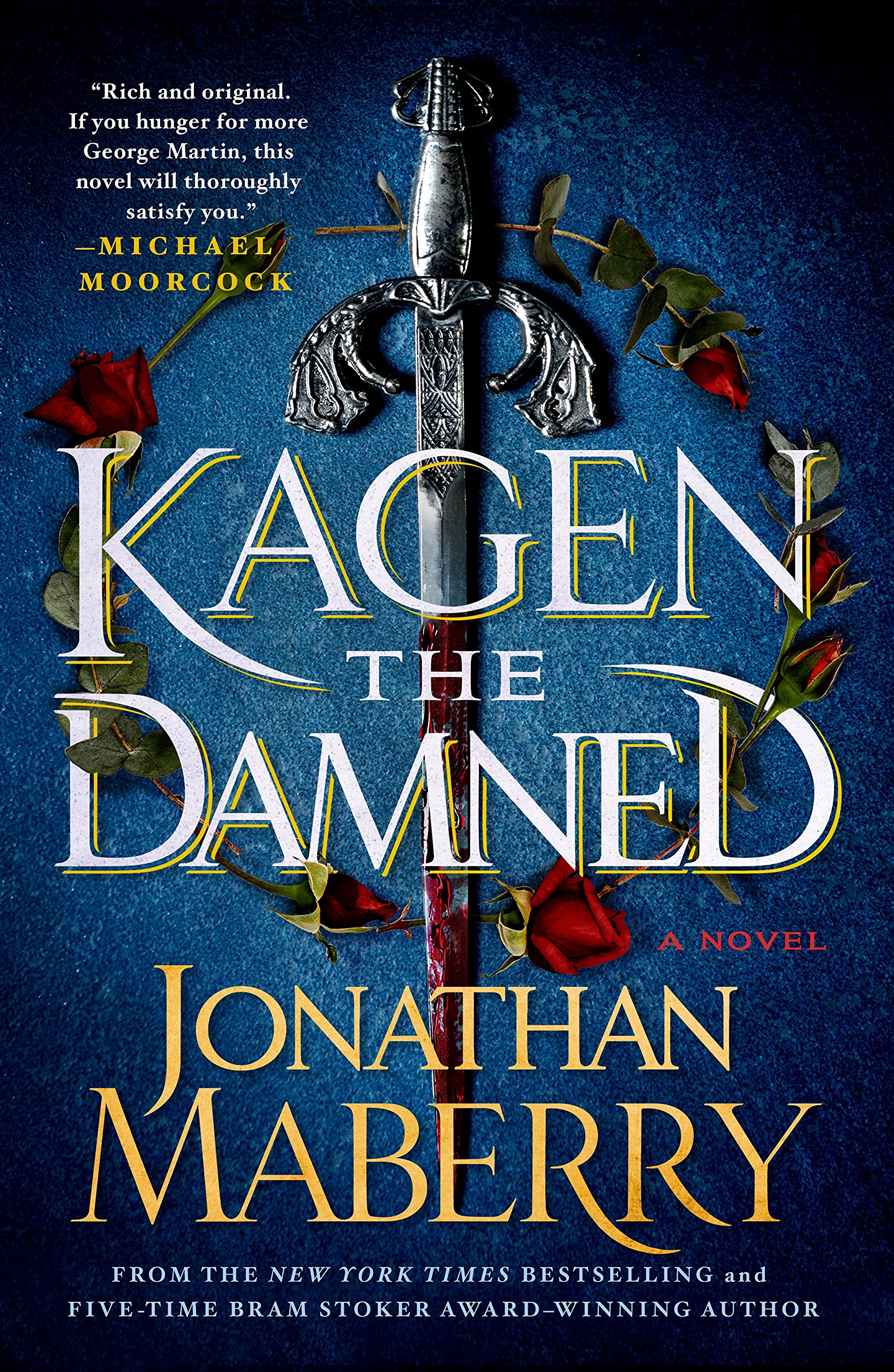
Kagen the Damned by Jonathan Maberry

Kagen the Damned Cover

Publisher: Macmillan Audio (Audiobook – 10 May 2022)

Series: Kagen the Damned – Book One

Length: 20 hours and 53 minutes

My Rating: 5 out of 5 stars

Amazon     Book Depository

One of my favourite unusual thriller writers, the legendary Jonathan Maberry, enters the world of fantasy in a big way with Kagen the Damned, a dark fantasy masterpiece with a brutal heart to it.

I have made no secret of the fact that I am a huge Jonathan Maberry fan.  I got into Maberry’s writings when I chanced upon a copy of his 10th Joe Ledger novel, Deep Silence, a few years ago, which introduced me to both Maberry’s unique writing and his iconic protagonist, the titular Joe Ledger, a badass action hero who saves the world from crazy and dark science creations.  I deeply enjoyed Deep Silence (it was one of my favourite books of 2018) and quickly moved onto his other Joe Ledger books, diving back to the start of the series with Patient Zero, and then working my way through the rest of the awesome entries, such as The Dragon Factory, Code Zero, Predator One and Dogs of War.  I also kept up with his latest releases, including the two entries in the follow-up Rogue Team International series, Rage (one of my favourite books and audiobooks of 2019) and Relentless (one of my favourite books and audiobooks of 2021), and his standalone novel Ink (one of my favourite books and audiobooks of 2020).  I have been very eager to see what awesome novel Maberry releases in 2022, and, luckily for me, that materialised in the form of Kagen the Damned.

Kagen the Damned is an interesting and unique read from Maberry, as it is his debut foray into the fantasy genre.  While many of his other books have had fantasy elements to them (albeit with a horror edge), this is his first pure fantasy fiction novel, as well as the start of his Kagen the Damned series.  Naturally I was rather curious about how Maberry would transition to a new genre, and while I was a tad disappointed that the Rogue Team International series isn’t getting a new entry any time soon, Kagen the Damned ended up pretty high on my most anticipated reads for 2022 list.  After a few weeks of other books getting in the way, I finally got the chance to listen to Kagen the Damned, and it turned out to be quite an impressive novel.

Kagen Vale was once one of the most trusted and revered fighters in the entire Silver Empire.  A scion of the legendary Vale family, who have served the Silver Empire for generations, Kagen was a beloved member of the royal court and so highly regarded that he was entrusted as the guardian of the Seedlings, the Empresses’ children.  That was until the fateful night when, out drinking and whoring, he was drugged and left for dead.  Awakening in a daze, Kagen found himself in the midst of hell as the capital of Silver Empire, Argentium, was besieged by a foe long thought dead, the dread nation of Hakkia, whose dark magic has once again emerged to blot out the world.

Arriving to the palace too late to save anyone, including the Seedlings, Kagen falls into despair at failing his sacred duty and can only watch in horror as the Gods of the Garden, the deities of the Silver Empire, turn their back on him and damning him for all time.  Now with everything and everyone he has ever known lost forever, Kagen the Damned wanders the ruined countryside a broken drunk, dreaming of revenge on the one man responsible for all his ills, the mysterious and feared Witch-king of Hakkia.

However, not everything is as lost as it seems, as shadowy figures across the world being to formulate their plans to repel the Witch-king’s evil.  As two young women embark on a deadly quest to awaken a sleeping, ancient god from beneath the waves, a covenant of resistance attempts to find their own magic to oppose the Witch-king with.  Determining that Kagen may bear the best chance of recovering the tools needed to succeed, they manipulate events to set him on his path to revenge.  However, what price will a doomed man truly pay to get the revenge he so desperately seeks, and will Kagen be ready for the terrible secrets he uncovers along the way?  Only the gods and the damned know for sure!

Well, it is now more apparent than ever that there is no Jonathan Maberry book I will not enjoy to the extreme.  Kagen the Damned is an incredible and very memorable novel from Maberry, who puts the ‘dark’ in dark fantasy, with this barbaric and action-packed journey into hell.  Making use of his trademark style, flair for horror and exceptional character work, Maberry pulls together a deeply addictive and extremely exciting story that I fell in love with very, very quickly.  This was another easy five star read for me, and I loved every single second I spent reading it.

Maberry once again blew me away with an outstanding and high-action narrative, and I quickly got very attached to Kagen the Damned.  This book has an extremely memorable start to it, showing the bloody fall of Argentium from the perspective of Kagen, who awakens from a drunken haze to find a vast army in his supposedly impenetrable city, destroying and killing everything they see.  This was a very compelling and brutal start the novel, and its one that I quite enjoyed, especially as you see just how dangerous the enemies are and the chaos they have unleashed.  Maberry does a great job of setting up multiple key storylines, settings and characters in this early section, and while the focus is primarily on Kagen, you get some interesting insights into other figures that will impact the rest of the book.  The entire first part of the book is very distinctive and really showcases how dark this novel is going to get, especially when it comes to the character of Kagen and the fate of the royal children.  This whole first section ends on a brilliant note, with Kagen left broken and damned, while the once great Silver Empire, which you only saw glimpses of, is destroyed and replaced with a new world order.

Following this epic start, the narrative slows down a little, as Maberry works to set up some alternate storylines and characters, while as taking the time to do some compelling and extended word building.  Set in the direct aftermath of the opening sequence, the story primarily splits into three different streams at this point, with the main one following a despondent Kagen as he traverses the former Silver Empire, lost in grief and drink.  At the same time, two separate storylines tell some great connected narratives, with one following two young women as they journey off into the unknown, while the rest focuses on the Hakkian takeover back in Argentium.  This focus on the Hakkians and their plans, as told by the Witch-king’s advisors, as well as a resistance group, is very awesome, and it was fascinating to see some impressive political intrigue going on behind the scenes as the antagonists work to consolidate power through various methods.  While the rest of the narrative continues in a straight line, the story around Kagen slowly adapts as he meets some new friends and begins his mission of revenge as planned, with some detours.

This leads up to the excellent final part of the book, which I powered through extremely quickly to see how everything ended.  All three major storylines are reaching there climax here, and they start to blend a lot more closely, especially the ones focusing on Kagen and the Hakkians.  Everything leads up to a highly anticipated confrontation that sees Kagen finally face his enemies, and it is just as epic as I was hoping.  There is a ton of action, tragedy, twists and revelations here, as many of the plot elements and storylines come full circle.  I loved the various reveals that happen here, and most have been set up really well throughout the extended course of the narrative.  I really should have seen the identity of the Witch-king coming, but it was the right choice by Maberry, which leaves some big questions open for the future.  Everyone will come away from Kagen the Damned extremely satisfied, as Maberry leaves everyone on a brilliant note, that ensures that readers will definitely come back for more.  This is an outstanding and deeply addictive narrative that is guaranteed to grab your attention early one and refuse to let go.

I really enjoyed how well Kagen the Damned was written, as Maberry brought his unique style to bear to help create an outstanding story.  In many ways, this novel proved to be essentially one of Maberry’s thrillers set in a fantasy universe.  Indeed, there were a lot of similarities in the style, the structure of the chapter, the pacing and even the use of familiar horror elements that I have previously seen and loved in the Joe Ledger books and I think this cool style worked well to tell an intense fantasy narrative.  As such, Kagen the Damned is a swift and well-structured book that pushes the story along at a swift pace, while also taking the time to build up the universe and the multitude of characters.  Maberry utilises a great range of story elements throughout this novel, and the readers are treated with a fantastic blend of action, intrigue, dark, over-the-top moments, horror, despair and humour, as the characters experience all manner of devastating trials and oppositions.

I also have a lot of love for the way that the author sets up the story and showcases the elaborate events that are occurring.  Maberry makes excellent use of a huge number of shorter, focused chapters told from a variety of viewpoints.  These briefer chapters really increase the pace and intensity of the book, and I deeply appreciated how the narrative quickly jumped across the various characters.  The interplay between the three central storylines, which are primarily anchored around Kagen, is extremely good, and I loved seeing the characters react to some of the same events or actions of their fellow cast members.  These storylines are also joined by a series of interludes that show the various impacts that the Hakkian invasion has on the wider world, especially those attuned to magic.  These interludes are usually very fascinating, and they are often used to introduce some minor supporting characters in a fun and unique way.  I loved the complexity that these interludes usually have, and the often self-contained stories are well structured and always feature a distinctive or chilling conclusion.  Maberry uses these interludes cleverly, often inserting them between major or extremely powerful chapters to help relieve tension, or to remind the reader of the wider stakes or events occurring around the main story.  I definitely enjoyed this larger look at the world that Maberry provided through them, and it was an outstanding part of Kagen the Damned’s story.

One of the major highlights of the writing in Kagen the Damned is the intricately described and fast-paced action, which is a major hallmark of Maberry’s writing style.  Maberry has always excelled at writing brutal fight scenes in a way that paints a vivid mental picture for the reader, and this was once again the case for Kagen the Damned.  The many, many action and fight sequences are brought to life in exquisite and bloody detail, and the reader is easily able to imagine every strike and slice as they happen.  This makes the action sequences really pop, and they were a particularly awesome highlight of this great book.  This focus on action and combat was really effective in this fantasy novel, and it was very cool to see Maberry bring his knowledge of combat and the accompanying writing skill to bear on large scale battles between armed and armoured fighters, while magic and gods blow stuff away around them.  There are some really great fight scenes loaded throughout this book, and I loved every skirmish, battle and duel that was featured within it.

While I did really love the action and brutal combat sequences within Kagen the Damned, I probably should add a warning about how dark and gruesome it can get in places.  Maberry’s writing style has always relied on over-the-top violence, cruelty and brutality to a degree, and this was once again the case in Kagen the Damned, which not only featured a ton of killing but also gruesome scenes of torture, corpse desecration and depictions of sexual violence.  While I think that these ultra-violent moments do work to showcase just how dark and savage the new world order is, they are often a bit hard to witness.  I will note that Maberry did take the time to discuss the emotional and social impacts of the various acts of sexual violence in the book, rather than just including them for gratuitous effect.  There are also some great scenes where the protagonist calls out and belittles several characters willing to commit such acts, before delivering his own violent justice, and I think that the author did his best to show have damaging it can be in his own way.  However, readers should probably be aware that these scenes exist, as people might find them to be a bit shocking.

I was also a major fan of the cool new fantasy universe that Maberry cooked up with Kagen the Damned, mainly because it is such a distinctive creation of the author.  Set on a giant continent made up of various nations, this is an impressive and compelling world, filled with a unique history, gods, people and settings.  The author does a great job of swiftly introducing this world and some of the key parts of its history in the early parts of the book, mainly so that readers can be a little more shocked at the early events and full appreciate the destruction and change that the Hakkian nation brings with it.  Maberry is clearly emulating some classic fantasy novels and settings throughout Kagen the Damned, and I loved seeing this bold new world that he has created.  There are some unique and cool elements featured within, and I liked how there are certain shades of grey shown when it comes to the morality and righteousness of the various factions.  Maberry also takes the time to highlight the changes that are coming to the world, thanks to the return of the Hakkian Witch-king, and the slow and steady resurgence of magic and the death of a certain pantheon of gods, are highlighted really well, both in the main story and the interlude chapters.

Perhaps one of the most distinctive features of this new world is the horror elements that Maberry worked into the plot.  I really should not have been surprised at the strong Lovecraftian elements that featured, as the author has used them strongly in some of his previous books.  However, it is even more explicit here in Kagen the Damned, with several notable Elder Gods playing key roles in the plot and even appearing in some epic scenes.  While I am not personally a fan of Lovecraft, I did quite like how Maberry utilised these elements throughout this book, and they gave parts of the book a darker and more eldritch quality that I quite enjoyed.  This, and certain discussions about other worlds and alternate realities, potentially links this series to some of Maberry’s existing works, and it wouldn’t surprise me if there were some form of crossover in the future, although it would have to be handled well.  I had a great time exploring this new fantasy world in Kagen the Damned, and I look forward to seeing what other surprises and dark gods appear in future entries of this series.

I also must highlight the incredible character work featured with Kagen the Damned, as Maberry went all out to create an excellent and unique cast of characters, whom the excellent narrative revolves around.  There are some amazing characters featured within this novel, and the author works hard to feature all of them in some impressive roles.  I had a lot of fun with the huge cast of Kagen the Damned, and there are deep and emotional figures featured here.

The most prominent and intriguing character is the titular Kagen, who takes on the moniker of Kagen the Damned.  Maberry really does a number on his central protagonist early on, as Kagen awakens from a drunken haze to find that everything he cared about and held dear had been lost while he slept.  Despite his best efforts to redeem himself in the battle that follows, he still fails miserably, and manages to escape the conquered capital in a fractured haze.  Broken, dazed and emotionally destroyed, Kagen becomes even more despondent when he sees his gods in the sky turn their back on him due to his failure to maintain his sacred oaths, which convinces him that he is damned.  Naturally, these events leave him severely emotionally damaged, and he spends most of the book trying to come to terms with his failure while also trying to find some way to get revenge on the Witch-king for all he has done.  A large amount of the book is dedicated to Kagen falling into despair, and Maberry presents a realistic depiction of a man who has lost everything and who is barely able to survive, relying heavily on drink and violence to get through his days.  While Kagen is eventually able to throw off much of this despair, it is still lurking within him, and he is often shown living in regret at his failure, even though no one else blames him as much as he does.  Kagen working through these complex feelings of failure results in much of the novels emotional strength, and Kagen serves as a moving and powerful heart for the entire novel.

While I did deeply enjoy this intriguing central character and his rough and emotional journey through this book, it is hard not to notice some similarities between Kagen and another one of Maberry’s protagonists from another series.  Kagen is in many ways a fantasy version of Joe Ledger, with similarities including a propensity for violence, extreme skill with knives (technically short-swords in Kagen’s case), and even a similar sense of humour during some of the lighter moments of the books.  There is also the same high level of mental damage brought on by extreme trauma, with both characters often seeking revenge against the people who wronged them and those they loved.  Despite these similarities, I still really appreciated Kagen as a protagonist, and I felt that some of his additional elements, such as his complex familiar bonds and strong sense of failure, did set him apart in some key ways.  No matter what, Kagen is a pretty awesome character to follow, and I loved seeing him continue to go through all his dark moments to keep going.

Aside from Kagen, there are several other amazing characters featured in this novel, all of whom have some outstanding storylines around them.  Two of the most prominent are Ryssa and Miri, who were in Argentium when the Hakkians invade.  Both junior members of the Silver Empire’s clergy, the two women initially appear to be primarily concerned with surviving the invasion.  However, it soon becomes apparent that Miri, whose knowledge of the gods and creatures of this world are far greater than they should be, has a different agenda.  Taking Ryssa with her on a big journey to a remote island nation, Miri soon engages in a plot to save the world her way.  Ryssa and Miri make up a fun combination that Maberry weaves some interesting storylines around.  While these characters aren’t explored as deeply as Kagen, you still get a great sense of who they are, particularly Ryssa, who is the primary point-of-view character between them.  Their entire storyline is covered in mystery and uncertainty as Ryssa is left in the dark about what is coming her way.  I liked the religious world-building that went into this character storyline, and there are some excellent moments in it loaded with tragedy and despair.  Even with their storyline being mostly separated from the rest of the characters, and it was a little predictable that Maberry would turn them into a lesbian couple, they had a compelling relationship and I felt that they added a lot to the narrative.

I also had a great deal of fun with the primary Hakkian characters featured in Kagen the Damned.  While they are ostensibly the antagonists of the book, Maberry takes the time to really establish the main four characters and presents them as a lot more complex and even sympathetic in places.  The main Hakkian character is their leader, the Witch-king, a character shrouded in mystery for most of the book.  A previously unknown figure, the Witch-king uses his magic to defeat the entire Silver Empire in a night and then spends the rest of the book trying to set himself up as the legitimate ruler of the land while also advancing the position of his brutal god.  I loved the way that Maberry kept the details about the Witch-king’s past and identity hidden for most of the narrative, although there is some great foreshadowing of his identity scattered throughout the novel.  The Witch-king cuts a fantastic and menacing figure for most of the book, and it was intriguing to see him present himself as a fair and loving ruler, while simultaneously exuding an aura of menace and dark magic.  It was pretty hilarious to see him terrify his key advisors for much of the book, and I loved all the hints about his true objectives.  An overall excellent central antagonist, I look forward to getting more details about him and his history in the rest of the series, especially after the revelations at the end of this book.

The other three key Hakkian characters are the Witch-king’s advisors, the chamberlain Lord Nespar, necromancer Lady Kestral, and newcomer Jakob.  Nespar and Kestral are fantastic characters who spend most of the book administrating the Witch-king’s will, running his empire, hunting for Kagen, and setting up the upcoming coronation of the Witch-king to become emperor.  While they are initially shown to be quite dangerous and evil, mainly due to their role in destroying the Silver Empire and Kestral’s disturbing magic, you eventually see that there is a lot more to them.  In particular, you see that they are actually extremely terrified of the Witch-king and are desperately obeying his will in order to survive.  You actually end up feeling a bit sympathetic for the pair of them, even after you see Kestral tear a corpse apart for a ritual, and I enjoyed the intrigue and politics they got involved with to rule the new empire.  The other character is Jakob, a Silver Empire historian who is drafted into the Witch-king service as his minister for propaganda.  Rechristened as Jakob Ravensmere, he becomes fully compliant in the Hakkian takeover and proves to be a very competent advisor and political mind while also working to rewrite history to increase the legitimacy of the Witch-king.  It was extremely fascinating to see Jakob discussing the control given by those who control history and propaganda, and I really enjoyed his role in the new empire.  It was also fun to see his rather quick slide towards the dark side as he fully embraces the Hakkian lifestyle and even starts to develop a taste for a power.  I always love seeing Maberry’s narrative unfold from the antagonist’s point of view, and this worked out extremely well again in Kagen the Damned.

The final characters I need to highlight are some of the excellent supporting cast surrounding Kagen.  Kagen has two excellent companions who work with him throughout the book, Tuke and Filia.  Tuke is a giant professional thief who recruits Kagen for a job that will help an anti-Hakkian resistance movement.  Tuke serves as the comic relief for much of the book, and I loved the outstanding chemistry he had with Kagen.  The two play off each other extremely well, and their excellent camaraderie and humour were pretty fun to see.  Not only does Tuke have some of the best lines (and the funniest curses) in the book, but he also serves as an emotional sounding board to Kagen, helping him get better after all the tragedy he experienced.  Filia is a strong-willed warrior and former associate of Kagen who finds herself dragged into the chaos around the war and Kagen’s wild adventures.  Filia’s no-nonsense attitude and sarcasm are a great counterpart to the other characters in Kagen the Damned, and I especially liked it when it combined with the humour of Kagen and Tuke.  These characters, and more, really enhanced the overall quality of this impressive narrative, and I loved seeing their powerful storylines unfold in some excellent and enjoyable ways.

There was no way that I was going to check out the new Jonathan Maberry novel in any format other than audiobook.  I have had some outstanding experiences with Maberry’s audiobooks over the years, and all of them have been deeply impressive and extremely enjoyable.  This again proved to be the case with Kagen the Damned, as I had an outstanding time having this dark epic read out to me, especially as it really helped me to absorb all the details of the characters and the impressive new universe.  With a runtime of just under 21 hours, this is a pretty lengthy audiobook to get through, but it is well worth the time investment, especially as it delivers the story in such an awesome way.

Easily the best thing about this audiobook is the outstanding narration from the very, very awesome Ray Porter.  Porter, who is one of my favourite audiobook narrators, who has previously narrated Maberry’s books, as well as contributing his voice to other works like The Apollo Murders and The Sandman audio adaptation.  As such, the moment I heard that Porter was also going to narrate Kagen the Damned, I knew that I had to get this audiobook.  Porter has an amazing ability to move the story along, and his voice is perfect for all the intense action, world-building and intrigue Maberry features in his novels.  I love the way that Porter dives into the various characters featured in the books, with every single person getting their own distinctive voice, while Porter also effortlessly emotes all their emotion to the listener.  This includes a very sinister voice that Porter saves for when the villains are talking or some incredibly dark moments are happening, and having him use variations of this voice to highlight just how brutal a moment is being, is always a great experience.  It also works well when the characters start speaking in the languages associated with the Elder Gods, and the resultant ceremonies and spells are quite spooky to hear in Porter’s voice.

Porter also did a particularly good job at inhabiting the voice of Maberry’s central protagonist, Kagen, and you get a real sense of who he is and the intense pain he is feeling throughout the book.  While the voice Porter uses from Kagen is a little like that of Joe Ledger from Maberry’s other audiobooks (a side effect of Porter ensuring that the main protagonist’s voice matches the tone he uses for basic narration), Porter does add a little more of a growl to it here, which helped to a degree.  This was another incredible performance from Porter, and I am so very glad that they got him back to narrate Maberry’s new series.  I cannot emphasise how outstanding the Kagen the Damned audiobook turned out to be (although I did feature it in my recent best audiobooks from the first half of 2022 list before I’d even finished it), and this is the absolute best way to enjoy Kagen the Damned.

Well, after rabbiting on for nearly seven pages, I think it is exceedingly obvious that I loved Kagen the Damned.  Jonathan Maberry’s latest novel was extremely compelling and deeply exciting, and I was really impressive with the author’s jump to the fantasy genre.  Featuring a clever, complex, and action-packed narrative loaded with destruction, thrilling revenge and some great, damaged characters, Kagen the Damned was an outstanding read and its one that I absolutely flew through.  Kagen the Damned is easily one of the top books of 2022 and this is a favourite new series for me.  I am extremely excited to see where the Kagen the Damned series will go in the future, and the next book, Son of the Poison Rose, is out in a few months’ time, and I cannot wait to get my hands on it.

Amazon     Book Depository