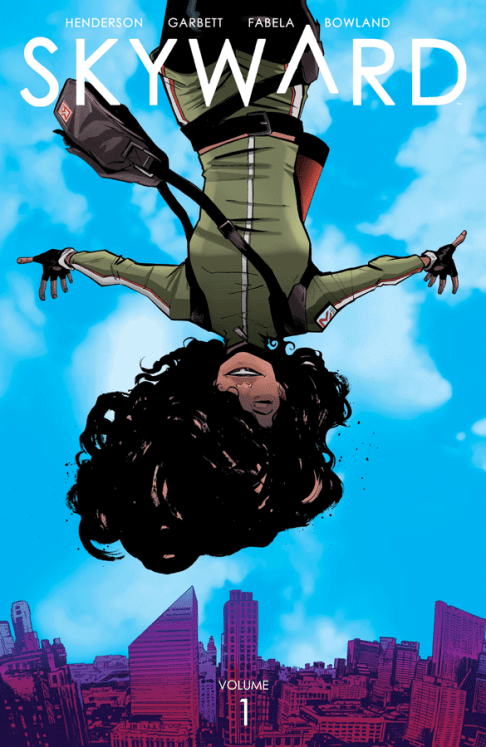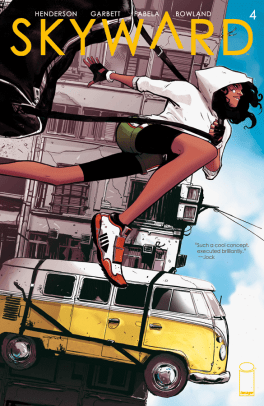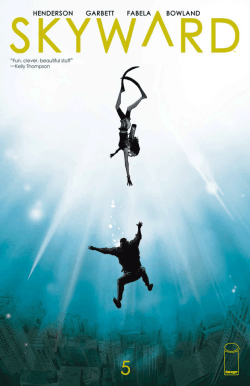
Skyward, Volume 1: My Low G Life by Joe Henderson and Lee Garbett

Skyward Volume 1 Cover.png

Publisher: Image Comics

Publication Date – 25 September 2018

Amazon     Book Depository

Those looking for the next amazing comic book adventure they can get addicted to should look no further than Skyward, one of 2018’s breakout hits, which takes away a fundamental force and replaces it with a sensational story.

One day, around the planet, gravity all but disappeared, and the one thing that was previously holding everything to Earth’s surface all of a sudden became a fraction of what it previously was.  In the resultant chaos, huge swathes of the population simply floated away into the atmosphere.  Those that remained were forced to adjust to a new world with different rules.
Skyworld_01-1.png

Twenty years later, humanity has adapted to its new low-gravity reality.  For some, such as Willa Fowler, it’s the only way of life they have ever known, and Willa excels at navigating the skies above Chicago.  Living with her father, Nathan, a brilliant scientist traumatised by the events that sent his wife tumbling into the skies, Willa scrapes a living as a high-speed delivery girl with a number of risky and dangerous tricks up her sleeve.  But when her father reveals he has a way to bring gravity back, Willa doesn’t believe him and instead plans a meeting with Roger Barrow, her father’s rich former research partner, who has created much of the technology that allows the world to survive its new situation.  Descending to ‘The Streets’ of Chicago, the lowest level, inhabited by its richest citizens, Willa quickly discovers that Barrow is not the saviour she thought he would be.  Instead he is determined to keep gravity from returning, and will go to extreme lengths to stop Willa and her father.

Skyward_02-1.png

This is one of the first comic book works from Henderson, whose main claim to fame is as showrunner for the Lucifer television show.  The artist, Garbett, is probably best known for his work on the comic Loki: Agent of Asgard.  Together, this new team has created an incredible new comic book series that has already been picked up by Sony for a potential feature film, and it will be intriguing to see how this challenging and creative series will be adapted to the screen.  This first volume contains issues #1-5 of this new series.

Skyward contains an excellent story that examines life in a different and catastrophically affected version of Earth while also presenting an action-packed adventure with a wild protagonist.  The central idea of this series, the removal of gravity, is a crazy concept that allows for an exceptional overall package that combines great storytelling with incredible and unique artwork.  Throughout this first volume, there is a great combination of humour, action, character development and powerful emotional moments, all set within a fascinating new world shown in great artistic detail.

Skyward_03-1.png

It was quite intriguing to see the various ways in which a lack of gravity could affect the world that we live in.  Henderson and Garbett have come up with a range of different ways for the characters in this book to navigate around the skyline, and it is interesting to see the range of tools that are shown in the artwork.  The creative team has done an amazing job highlighting the various ways that the lack of gravity has affected the world, from food production to water gathering to human mobility.  One of the more intriguing aspects of the new world is the way in which guns have become obsolete due to the recoil pushing shooters back through the air, making it an ineffective weapon and more dangerous to the user than the target.  That said, the protagonist, Willa, has some more extreme and effective uses for the gun she carries around with her.  Perhaps the most intriguing idea presented in Skyward is the location known as The Streets, the lowest street level of Chicago, where the city’s richest inhabitants live in a state of denial at the changes that have happened and are trying to live like there is still gravity.  This includes wearing grav-boots to keep them stuck to the ground and forcing a man with no legs to sit in a wheelchair rather than floating in the air as he would prefer.  There are also some crazy inventions, like a magnetised hem to keep a dress from rising up.  These inhabitants of The Streets are absolutely terrified of the sky and have a very different lifestyle from the people living in Chicago’s skyline, who have embraced the new world.  One funny scene involves Willa traumatising an obnoxious bouncer by wrecking his grav-boots and making him float up into the sky a little.  Overall, this is a fun new world to set this great story in and has a lot of potential for future volumes of this series, where additional changes to day-to-day life are no doubt going to be revealed.

Skyward_04-1.png

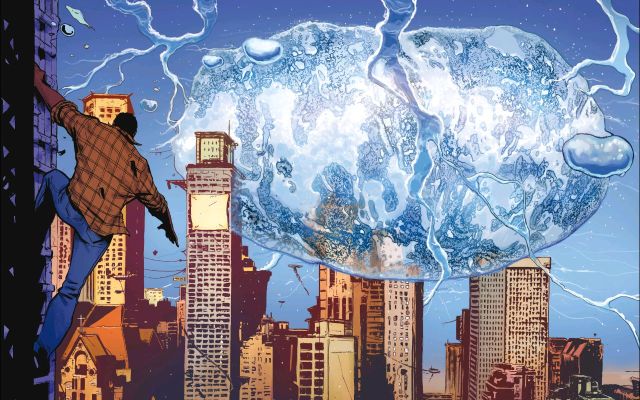
The artwork in Skyward is just gorgeous and is definitely a key highlight of this incredible book.  The creative team have done an outstanding job showing off the low-gravity concept in art form, creating some fantastic scenes and drawings.  Most of the characters are shown floating around and navigating the air, which creates some amazing panoramas of the city from high above for the reader to enjoy.  All the characters, even those rich individuals trying to ignore the lack of gravity, are shown with their hair floating up in the sky, and multiple scenes have various liquids floating in the air around the characters attempting to have drinks.  It also means that fight scenes are constantly surrounded by droplets of blood that float around the characters and add a whole new sense of realism and brutality to the story.  The artistic highlight of this book has to be the incredible and exceptional drawings of the storm in low gravity that becomes such a massive part of the background in the later part of the volume.  Due to the effects of the low gravity, the storm manifests itself as a gigantic ball of water in the sky, surrounding several high-rise buildings.  The first drawing of this is amazing, and the following scenes which show the main characters navigating around this bubble and creating massive pockets of air are just fantastic, and represent some exceptional comic book art.  I was also suitably terrified by several of the drawings in this volume, from the opening scenes which show multiple people being lifted away by the low gravity, to the horrifying shot of the planet Earth and its new artificial ring, made up of planes, cars, ships, other debris and of course multiple dead animals and humans that have not decayed in their 20 years in orbit.  Lee Garbett and the creative team have outdone themselves in Skyward and I cannot speak highly enough of the artwork in this book.

Skyward Picture 1.jpg

The main character, Willa, is an excellent protagonist for this series.  As a character who has never known what it’s like to live in a world with gravity, Willa’s antics through the air are pretty crazy and she does some amazing and unpredictable things throughout the book.  Whether it’s using a gun to gain rapid altitude and to come down again, or blowing out a window underwater in a low-gravity storm of water after creating an air pocket with her oxygen tank.  The constant incredulity of the other characters as she does these things is very amusing and makes it quite clear that these actions are not the social norm in the new world.  My favourite quote of the books is when the antagonist, realising that Willa is about to blow open a window with her gun says ‘She wouldn’t…’ while Willa’s friend who is being held hostage responds with ‘Oh, she would.’ I must again return to the artwork of Skyward when it comes to showing off this main character.  The artists do a fantastic job highlighting the joy on Willa’s face as she flies around in the upper city; she looks like she was born to float.  I also loved the drawings that show off her crazy antics, from the early sequence which shows her using a gun to blast off away from people attacking her, to that fantastic scene where she blows open the underwater window.  The drawings themselves are incredible and really show off the action, while the looks of shock and amazement on the faces of onlookers tell a whole new story.  Henderson and Garbett have created a perfect main character and protagonist in Willa, and I can’t wait to see what she gets up to in future volumes of this series.
Skyward_05-1.png

Skyward is an incredible new series from the fantastic team of Henderson and Garbett.  I really enjoyed the central concept of a lack of gravity, as it allowed the creative team to present a bold and exceptional new setting for this exciting and powerful story.  I really cannot hype up the artwork of this series enough, and I love the various ways that the artists show off what impacts these gravitational changes would have to everyday life on the planet.  An outstanding five-star start to a series with incredible potential, this is the perfect read for current comic book readers and a great starting point for those trying to break into the medium.

My Rating:

Five Stars

Amazon     Book Depository

Murder Mile by Lynda La Plante

Murder Mile Cover.jpg

Publisher: Zaffre

Publication Date – 23 August 2018

Amazon     Book Depository

One of English crime fiction’s most distinctive voices, Lynda La Plante, returns with her iconic female detective, Jane Tennison, for another dark and shocking case.

In February 1979, recently promoted Detective Sergeant Jane Tennison has been posted to Peckham CID, one of the toughest beats in all of London.  Previously known as the Golden Mile due to its well-to-do shopping areas, the area is now in decline, a fact not helped by the garbage strikes besetting the entire city, ensuring that the entire area is covered rubbish and filth.

When the body of a young woman is found in the heart of Peckham, Jane and her team must investigate the suspicious circumstances surrounding her death.  But when another body is found nearby, the possibility of a serial killer raises all sorts of problems.  The media scrutinise the case and rename the area Murder Mile.  Even worse, the second victim’s son is well connected, and several important people want the matter dealt with quickly.

As more bodies are uncovered, Tennison must use all of her investigative ability to uncover this dark murderer, while also dealing with the police force’s inherent sexism and disregard for her talent that she has dealt with her entire career.  Can Tennison catch this killer, or will they find a terrible and unexpected way to win?

Lynda La Plante is a talented author and screenwriter responsible for several hit British crime series and movies.  She achieved early success with the 1983 television series, Widows, which has been adapted into a major motion picture set to be released in November this year.  Other successful shows that La Plante has created include Trial and Retribution and Above Suspicion, with nearly all of her books having been either adapted into screenplays or inspired by one of her televisions shows.  Murder Mile is the fourth book in her Jane Tennison series, which serves as a prequel series to one of La Plante’s most successful and iconic shows, Prime Suspect, which features Helen Mirren as an older Jane Tennison.  The first book in this prequel series, Tennison, also served as the basis for the short-lived prequel television series Prime Suspect 1973.

Murder Mile features a dark and disturbing mystery that serves as the central focus of this book.  The protagonist must investigate a series of murders spread out among the dilapidated Peckham area. La Plante has created an intriguing and compelling investigation storyline as Tennison and her team follow a series of promising leads across Peckham and the rest of London, finding clues in a variety of places, as well as several other bodies.  While the majority of the book leading up the conclusion of the story and the solution of the mystery is captivating in its own right, the best part of the book has to be its chilling conclusion.  Not only is the revealed antagonist a despicable creature, but the way in which they attempt to manipulate Jane and the rest of the police characters is just plain creepy.  The conclusion of the story and the ultimate reveal of the antagonist’s last actions are particularly shocking in their execution and extent.  Worse, both the reader and the protagonist can see that the villain is planning something, but you just cannot predict the terrible lengths they will go to win and spite the police.  This memorable conclusion serves as the perfect end to this dark and powerful story and represents some excellent writing from La Plante.

This story is set in 1970s London, and the author does a fantastic job bringing this iconic city to life during a period of economic downturn.  There is a certain gloom around the city, especially in Peckham, where the majority of the book’s investigation takes place.  The plot of Murder Mile is set during the infamous Winter of Discontent, a period of strikes and financial uncertainty that hit the country during 1978 and 1979.  There are several discussions about the situation from the characters and it is interesting to see a fictional perspective of this part of England’s recent history.  In addition, some of the physical effects of the ‘Winter of Discontent’ have some significant impacts on the case.  During January and February 1979, the waste collectors of London were on strike, resulting in a build-up of rubbish throughout the city.  As a result, many of the scenes set in the city feature streets strewn with garbage and littered with filth and rats.  La Plante also examines the parks that were filled with rubbish by London authorities as a stopgap measure for this situation.  This becomes particularly important in the story, as the police discover a dismembered body in one of these parks as the murderer attempted to utilise the situation for their own ends.  The author has also cleverly highlighted the police techniques and technologies that would have been available during the time.  Overall, La Plante has made full use of this chaotic period in Murder Mile, and readers will enjoy her vivid descriptions of these events.

In addition to the general descriptions of 1970s England, one of the key features of La Plante’s latest book is an examination of the inherent sexism in the London police force.  Jane as a Detective Sergeant must continue to fight to gain respect from her co-workers.  In Murder Mile she is constantly talked down to by her superiors, deals with disrespectful comments from the rank-and-file police, and must also deal with having her authority undercut by colleagues she considers to be her friends as they step in quickly to defend her.  It is infuriating to see how senior police ignore Tennison’s detective work and observations, especially as she is right most of the time.  This sexism also requires Tennison to act in a more maverick way, as her frustrations force her to work outside the main police investigation in order to prove herself – a decision that will have significant impacts on her life and career.

While the portrayal of sexism mentioned above has been used in all of the books of the Jane Tennison series, in Murder Mile La Plante has chosen to also focus on police homophobia and how it affects the investigation.  The police homophobia is quite prevalent throughout the series, especially when one of the suspects is revealed to be gay.  The police response to this is extreme, as several of the characters are quite hostile to this suspect and his relatives, alienating potentially helpful people in the investigation.  In addition, there is the stupid assumption that all homosexual males were automatically paedophiles, and this sends the investigation into several biased directions.  Tennison and several of the other characters attempt to change the minds of their colleagues, often without much success.  In addition, one of the more approachable and capable members of the police team is revealed to be homosexual in this book, which serves as a good counterpoint to the more old school and homophobic cops.  Overall, this is an intense and important part of the story, and it is intriguing to see how these old biases would likely have affected cases in the past.

Crime legend Lynda La Plante returns in fantastic form with Murder Mile, an exciting continuation of her Prime Suspect prequel series.  Featuring some deep and powerful examinations of the 1970s London police force, this absorbing mystery takes its readers to the edge of darkness and beyond.  Featuring an incredibly dark and unforgettable ending, Murder Mile is another exceptional release from La Plante and a highly recommend piece of crime fiction.

My Rating:

Four and a half stars

Amazon     Book Depository

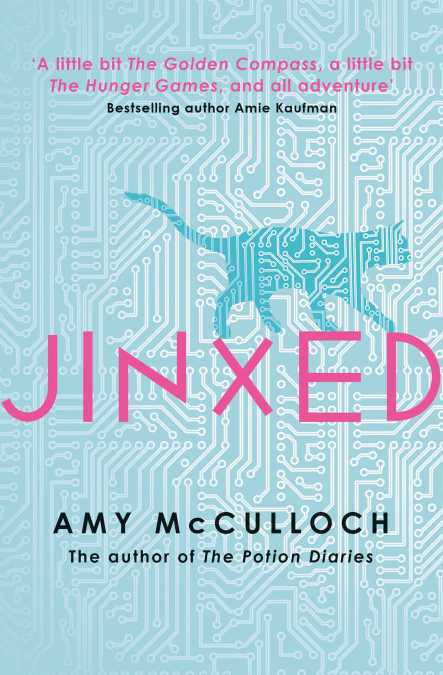
Jinxed by Amy McCulloch

Jinxed Cover.jpg

Publisher: Simon & Schuster

Publication Date – 9 August 2018

Amazon     Book Depository

Creative young adult fiction author Amy McCulloch returns with a fun and compelling techno-thriller that takes an incredible and entertaining look at the potential future of your favourite devices and combines them with a unique idea of how to make them even more user-friendly.

In the near future, the must-have technological device is the baku, your brand new best friend.  Bakus combine all the features of your smart devices and internet connection with a constant companion in the form of a robotic animal that is customisable to your needs and price range.  Low range bakus take the form of small creations like insects, while the most advanced baku are created to look like birds of prey or large land animals.  Not only are bakus the most popular form of communication device, but in this day and age, even basic bakus are needed to fully experience day-to-day life.

Lacey Chu has big dreams of working for Moncha Corp, the company which designs and creates the baku, as well as working for her idol, Moncha’s founder, Monica Chan.  However, the only way to achieve that dream is to get accepted into the exclusive Profectus Academy, the elite tech school whose graduates become the designers, coders and creators of the next generation of baku.  When Lacey is rejected from the academy and can no longer afford her dream baku, she is crushed.  That is until she finds Jinx, a ruined cat baku that appears to have been abandoned at the bottom of a canyon.  Bringing it home to fix, Lacey’s fortunes appear to immediately turn around when her application for the Profectus Academy is suddenly accepted and Jinx is listed as the advanced baku she is required to have for classes.

Arriving in the academy, she finds it a very different place than she imagined.  The students and faculty are obsessed with Baku Battles, the academy-sponsored fights between bakus that help determine a student’s rank and prestige in the academy.  Finding herself drafted onto a Baku Battle team, Lacey starts to learn all about the inner workings of the baku.  The more she learns, the more she begins to realise that something is very different about Jinx.  Jinx is not the usual mindless machine; Jinx can think for himself, has his own personality and is even starting to communicate with Lacey.  As Jinx begins to mess with parts of Lacey’s life, she begins to fully comprehend the implications of Jinx’s existence.  What shadowy secret lies at the heart of Moncha, and will Lacey and her friends be able to save Jinx from them?

Amy McCulloch is a well-established young adult fiction author who has written a number of books since her 2013 debut.  McCulloch also writes under the name Amy Alward and mostly focuses on young adult fantasy novels as part of her Potion and The Knots Sequence series.  Jinxed is her first foray into the science fiction genre and represents an exciting techno-thriller that explores an intriguing piece of future technology and the exciting adventure that happens around it.

The overall story of Jinxed is an excellent mixture of science fiction, thriller and teen drama elements, all set within a captivating academy background.  As a result, throughout the book, there is a ton for the reader to enjoy as they are introduced to the technology around the baku and see the narrator investigate a conspiracy centred around the creation of Jinx, all while dealing with the highs and lows of school life.  It is a fun combination of different story elements that works towards a great overall narrative.  I was able to work out what one of the twists was going to be quite early in the book, but it didn’t really impact my enjoyment of the story.  There are some great moments throughout, as well as a surprising ending that makes me very curious to read any sequels that McCulloch brings out.

The baku are an essential part of this story and are a really interesting element that McCulloch has chosen to use.  Many science fiction and technology based authors are currently attempting to predict what the next big piece of technology will be in the world, with many of them focusing on what the next ground-breaking piece of communications technology will be.  While many of these suggestions seem quite plausible and seem to support the current trends in technology, this is the first book I’ve seen that suggests combining a person’s smart device with a robotic pet.  The narrator suggests that the fiction justification for the creation of the baku was to give people a companion that is both helpful and which also limits their dependencies and addictions to mobile phones and smart devices.  It’s a rather fun concept and it is cool to see how McCulloch imagines how these creations would work.

The baku are broken down into various levels of sophistication, from the basic models which look like insects and can only do the most basic of tasks, to the ultra-sophisticated versions which come in the form of some very powerful creatures.  It is also intriguing to see how many of the book’s various characters start to care for their bakus like they are real animals, and the bond that they form as a result, even if their bakus aren’t sentient.  The bond that forms between Lacey and Jinx is fairly unique, however, as Jinx is an early form of artificial intelligence, and it is nice to see it develop through the course of the book as Lacey risks her life to help Jinx.  There are a few great scenes which show Jinx trying to come to grips with his existence, whether he is helping other bakus, questioning how baku are made, or by attempting to exist among a group of real life cats.  A truly intriguing postulation about future technologies, McCulloch has created a unique and fascinating idea that works well within this narrative.

Most of the action of this book is contained within fights between the bakus rather than between any of the human characters.  This is mostly done in the Baku Battles tournament at the school, where several bakus fight each other in a free-for-all brawl.  I love a good fictional tournament, and each of the bakus has various techniques.  As a result, the fights within the book can become quite fun and energetic as eagle, boar, tiger, cat and frog bakus all fight in various ways.  I also enjoyed the scoring concept that McCulloch came up with for this tournament, as the surviving team receives all the points, but their opponents can steal them if they can repair their team’s bakus sufficiently by the next day.  This is an intriguing stipulation for a tournament which allows McCulloch to show off several scenes of the narrator doing advanced repair work.  These tournament battles do a good job of moving the plot along and work into the books various elements very well, whether by giving the narrator access to certain locations to investigate secrets, or by bringing her closer to or further apart from other characters in the books, to allowing a closer examination of the workings and mindsets of the book’s technological elements.

Amy McCulloch’s latest book, Jinxed is a high-octane technological thriller that makes use of amazing science fiction elements to create an enthralling adventure.  Aimed for a young adult audience, the lack of any substantial violence, except between the book’s distinctive robotic animals, makes this a perfect read for a wide range of younger readers.  At the same time, the intriguing concept of future technology and its wide range of applications, including for high-stakes gladiatorial battles, makes it intriguing for an older readers.  This is an absolutely fantastic book from McCulloch.  I really enjoyed it and I’m looking forward to seeing where it goes next.

My Rating:

Four and a half stars

Amazon     Book Depository

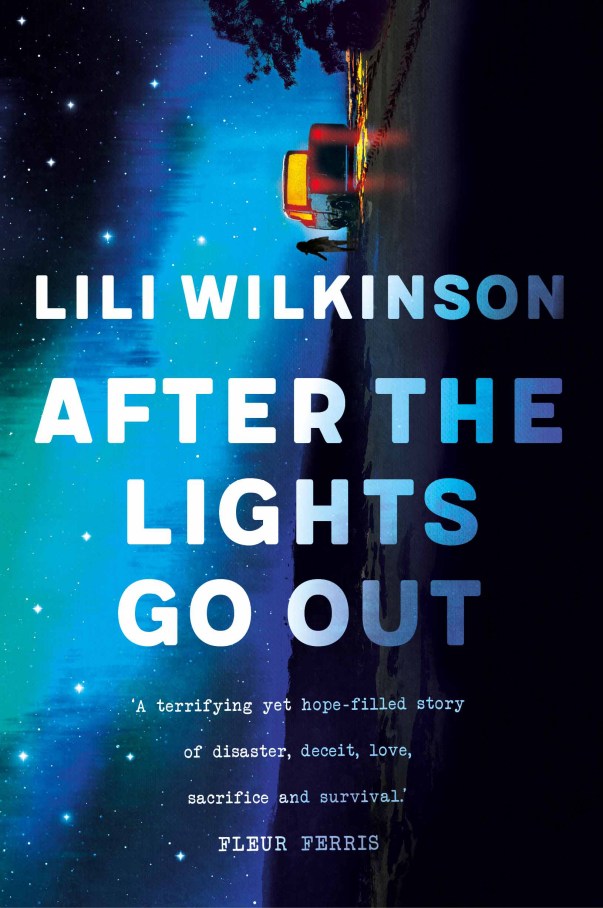
After the Lights Go Out by Lili Wilkinson

After the Lights Go Out

Publisher: Allen & Unwin

Publication Date – 1 August 2018

Amazon     Book Depository

From bestselling Australian author Lili Wilkinson comes After the Lights Go Out, an incredible and powerful young adult adventure set in the heart of the bush that asks the impossible question: should a person choose family or community in an emergency?

Seventeen-year-old Prudence Palmer is a young woman living outside the small Australian outback town of Jubilee with her father, Rick, and her younger twin sisters, Grace and Blyth.  To the other inhabitants of the town, they are just another mining family, living close to Rick’s workplace.  However, they are actually hiding a much deeper secret: they are doomsday preppers.  Convinced that the world will soon suffer some form of imminent catastrophe, Rick has moved his daughters off the grid to Jubilee and has constructed a hidden bunker out the back of his property.  Filled with a substantial amount of food, medicine, equipment, weapons and entertainment, the bunker has everything they need to survive the end of the world.  The girls have also been trained to survive and are ready to react against a variety of scenarios.

While Rick is sure a world-changing disaster is just around the corner, Pru is less certain, and is happy to keep her family’s activities a secret.  So it is a great shock to her when something actually happens and every electrical device, modern car and generator in Jubilee suddenly fails.  With Rick gone, Pru and her sisters must suddenly implement their survival plan without their father’s guidance and make the hard decision to hide their bunker and supplies from their friends in the town.  With food, water and medicine becoming scarce, and with no transportation, communications or other vital necessities, the town starts to fall apart.  As the situation gets even worse, Pru and her sisters must decide between helping their friends or doing as they have been trained and survive alone.

Lili Wilkinson is an exciting Australian author who has produced 10 intense and dramatic young adult novels since her 2006 debut, Joan of Arc: The Story of Jehanne Darc.  Her eleventh novel, After the Lights Go Out is an outstanding standalone book that could potentially replace Tomorrow, When the War Began as the go-to disaster story for Australian young adult audiences.  This book contains a dramatic and moving main story that plunges the world into chaos and places the potential survival of a small town in the hands of one young woman.

At the heart of this book lies a tough moral dilemma for the narrator Pru when she must decide between helping her local community and guaranteeing her family’s survival.  Pru’s father, Rick, a hardcore survivalist, has stocked the family bunker with enough supplies to keep Pru and her sisters alive for several years.  He has also taught his daughters to never help anyone but themselves, and to keep all their supplies for the family.  When a disaster strikes and Rick goes missing, it is up to Pru and her sisters to make the decision, and at first they choose to keep the bunker and supplies hidden from their friends in Jubilee.  As the situation in the town gets worse, Pru’s guilt conflicts with her father’s training and instructions.  This internal debate is intensified when she falls in love with newcomer Mateo and watches him and his mother doing everything they can to save the townsfolk, despite the fact they are not locals and have no significant connection to people living there.  Watching Pru’s internal struggle and the external debate with her sisters is intense, and the reader is left wondering what they would do in a similar situation.  How Pru’s eventual decision affects her family and her relationships with the people of Jubilee is very memorable, and hits all the right emotional notes in this excellent story.

After the Lights Go Out contains an intriguing examination of the doomsday prepper phenomenon that is currently occurring around the world.  The main character’s father believes every single conspiracy theory that exists and is determined to prepare his daughters for anything.  It is clear that Wilkinson has done some significant research into survivalists and their various techniques, and as a result her characters are prepared for every doomsday scenario and have a ton of supplies and a high-tech bunker at their disposal.  There is a lot of discussion and exposition about the various survivalist conspiracies, plans to live in an altered world, the necessary techniques and the ideal supplies that every prepper should have.  Despite most doomsday preppers being American, many of the techniques in this book have an Australian flavour to them, as the girls know the local fauna, flora and means of survival out in the harsh bush conditions.  While every preparation the Palmer family has undertaken is fascinating to read about, I found the examination of the improvised medical techniques the characters use to be particularly outstanding.  This includes including one memorable and somewhat graphic sequence where the narrator needs to perform some rudimentary dentistry.  Overall, the use of the doomsday preppers’ planning and theories is an incredibly intriguing part of this story that provides the reader with some cool facts and the results of the author’s in-depth research.

Wilkinson has also populated the book with some excellent characters who really bring the story together.  While the Palmer sisters are good central characters and Pru is a great narrator who has to make a huge range of tough decisions, the best character has to be the Palmer father, Rick.  Rick is a crazed survivalist who is convinced that the world is about to end and whose paranoia has driven him to outback Australia.  When one of his disaster scenarios actually comes true, he becomes even more erratic, and watching his fears overcome his love for his daughters is very tragic to behold.  There is also Mateo, the young American tourist and liberal city-slicker who is essentially the opposite of Pru when it comes to life experiences.  The relationship between him and Pru is nice.  It evolves at a natural pace and offers the reader some different insights into the situation and the motivations of the Palmer sisters.  Another effective character is Keller Reid, the older boy with an unhealthy obsession with Pru’s younger sisters.  Keller is a particularly despicable character who serves as a very annoying minor antagonist who moves the plot around.  Watching him through the narrator’s eyes, you cannot help but hate him and hope he gets some eventual comeuppance.  The other townsfolk of Jubilee are a good mixture of characters, and it’s nice seeing them come together as a community rather than break down and kill each other as Rick believed they would.

Another part of this book that stood out to me was Wilkinson’s use of the powerful Australian landscape and the examination of small country towns.  The author provides some vivid images of the distinctive Australian bush, and looks at the various features that make it an intriguing backdrop for a story about survivalists.  The author also produces some exceptional portrayals of the close communities that exists in small town Australia and how they their isolation might be both a benefit and a detriment to their survival in a doomsday scenario.  It is definitely a unique setting for a catastrophe novel such as After the Lights Go Out, and one which I felt really added to the beauty and intensity of the story.

I really enjoyed this book and thought it was an incredible piece of literature from Wilkinson.  Because of its excellent story and the phenomenal look it takes at survivalists and their viewpoint of the world, I think this book is perfect for its intended young adult audience, which could prove to be very empowering and enjoyable read for them.  Parents should aware that there are some adult moments and a couple of graphic scenes, but this excellent and informative story is worth the risk.  After the Lights Go Out is a deep and powerful five-star book that provides its readers with an excellent examination of doomsday preppers.  This is definitely one of the best young adult books I have read this year and I cannot recommend this outstanding Australian book enough.

My Rating:

Five Stars

Amazon     Book Depository

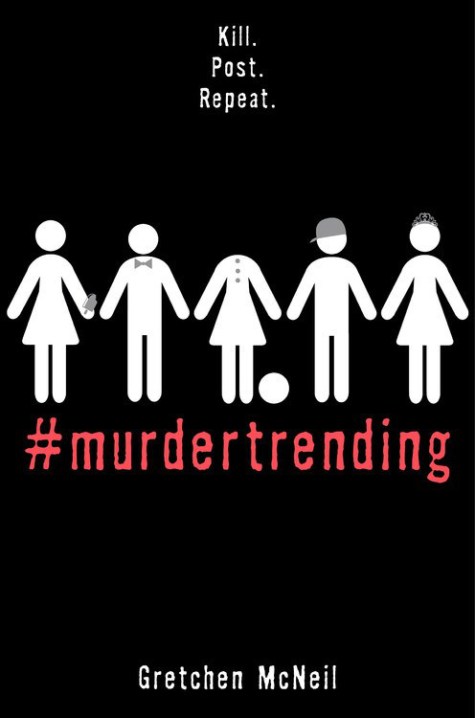
#MurderTrending by Gretchen McNeil

#MurderTrending Cover.jpg

Publisher: Freeform Books

Australian Publication Date – 25 September 2018

World Publication Date – 7 August 2018

Amazon     Book Depository

From one of young adult fiction’s most thrilling authors comes a dark and captivating story of death and madness that is really going to trend online.

When seventeen-year-old Dee Guerrera awakens in a strange room dressed in a princess outfit, she knows she is about to be executed on live TV.  Falsely convicted of the murder of her stepsister, Dee has been sentenced to die on Alcatraz 2.0, America’s most popular reality television show.  Created by a mysterious television producer known only as The Postman, Alcatraz 2.0 is an island prison where America’s most notorious inmates are hunted down by a series of flamboyant and beloved executioners.

So when Dee comes face to face with one of these killers, she’s supposed to run into his murder room and suffer a terrible death for the entertainment of the masses.  However, Dee has other plans, and goes off script in a major way.  Her actions will make her the most notorious girl in the world and move her to the top of every executioner’s kill list.  Teaming up with a posse of other teenage inmates, Dee needs to quickly learn the rules of this island and figure out a way to avoid being picked off by the psychopaths stalking her.  Can Dee and her new friends, the Death Row Breakfast Club, stay alive long enough to prove Dee’s innocence?  A ghost from her past is haunting her, and Dee doesn’t have much time before her execution goes viral.

Gretchen McNeil is an experienced young adult fiction writer, whose previous work includes several books aimed at the older teen audience.  These include the horror suspense book Ten, the supernatural thriller Possess and teen murder mystery series Don’t Get Mad.  #MurderTrending is the seventh book from McNeil, and it follows in a similar vein to her previous books, with teenage protagonists fighting against a dark, murderous force.  #MurderTrending is an extremely fast-paced and crazy read that proves to be very entertaining, and is the first part of McNeil’s MurderTrending series.  A second book in this series has already been announced and #MurderFunding will be released next August, with an interesting-sounding connection to the first book.

The concept of a group of people being hunted or pitted against each other in an isolated area with the whole world watching is an idea that has been utilised many times before.  Movies and shows such as The Condemned, Death Race, Battle Royale, Dead Man Wonderland and The Hunger Games have all used this concept in one way or another.  I personally think that the plot of #MurderTrending is very similar to The Running Man, with eccentrically dressed hunters chasing after criminals, although it is easy to build a connection between this book and The Hunger Games due to the focus on teenagers.  I think that the author is very aware of these previous movies, as not only does the main character mention The Hunger Games within the book, but one of the other protagonists continually quotes old action movies, including several Arnold Schwarzenegger classics.  While this plot device has been used before, McNeil introduces some new elements, while also doubling down on the concept by making his killers and their executions as crazy and over the top as possible.  The killers in particular are extremely eccentric and include among others, an explosive orientated hipster, two murderous twins, a fashionista with some deadly accessories and a Prince Charming stand-in who hunts girls dressed as princesses through a trap-filled maze while brandishing an oversized cake knife.  As a result, this version of the prison reality television show is particularly amusing, and the over-the-top kills sometimes come across as more humorous than sinister.

While the overarching plot premise of an island prison has been used before, McNeil cleverly enhances this story with some great imitation of the current social media and internet communities.  The entire adventure is being livestreamed to the outside world, and is considered to be the most popular form of entertainment in America.  As a result, the world is constantly talking about the murders on social media, and the author has included sections of a number of fictional forums at the end of several chapters, where various online personalities talk about the events in a number of ways.  This includes praise for the inventive kills, requests, opinions on the various inmates, conspiracy theories and competitions to make the most viral #.  These are particularly intriguing and compelling inclusions that also add a bit of realism to the story, as the reader can easily imagine that social media activity like this would totally happen in a dystopian world where executions are streamed as a form of entertainment.  In addition to all the discussion and use of social media in the story, the protagonist also talks about the various internet fandoms, fan clubs, gambling, merchandise, shipping, fan theories, fan fiction and message boards that have formed up around Alcatraz 2.0.  This is again a fascinating inclusion, with a smack of predictive realism to it, and I utterly loved McNeil’s inventive and modern inclusions around the classic murder prison/reality show concept.  It also sounds like this concept will become a major part of the next book in the series, and I am very keen to see how that turns out.

I thought that the overall story for this book was very well done and created an intriguing and entertaining narrative that was really easy to enjoy.  In addition to her ingenious use of the overarching plot device and setting, McNeil has also created a compelling and thrilling story that is filled with a number of great twists and intense scenes where the book’s fun characters are put into real peril.  While the reveal of the final boss is strongly tied into the character’s past, and isn’t too shocking, how that character gets there is fairly clever, and the twist about the mastermind of the island was pretty surprising.  While the ease with which the protagonist was able to defeat some of the infamous murderers who served as secondary antagonists at the end of the book is a bit unbelievable, I did find myself really hooked on this great story, and I powered through the book to find out how it was going to end.

#MurderTrending is marketed towards a young adult audience, and it’s the sort of amusing and crazy book I would have enjoyed when I was younger.  Due to the large amount of violence and pretty graphic killings, I would suggest that this book is probably more appropriate for an older teenage audience, but based on today’s standards it’s really not too bad.  Out of all the potential readers, the older teenage audience will probably enjoy McNeil’s use of social media and internet cultures the most, as they will be able to relate to the characters and fandom subculture of the people posting on social media within the book.  This is one of those young adult books that would really appeal to older readers, and I would really recommend this to anyone who is looking for an enjoyable and over-the-top read.

Gretchen McNeil is once again at top form as she presents a bloody and action-packed young adult adventure.  Featuring a fun and unrestrained take on a classic fictional plot device and some very ingenious use of current social media and internet trends, this extremely entertaining story is a fantastic read for both teenagers and older readers alike.  #MurderTrending is one of the craziest reads of 2018, and I cannot wait to see what insanity McNeil brings to her next adventure.

My Rating:

Four stars

Amazon     Book Depository

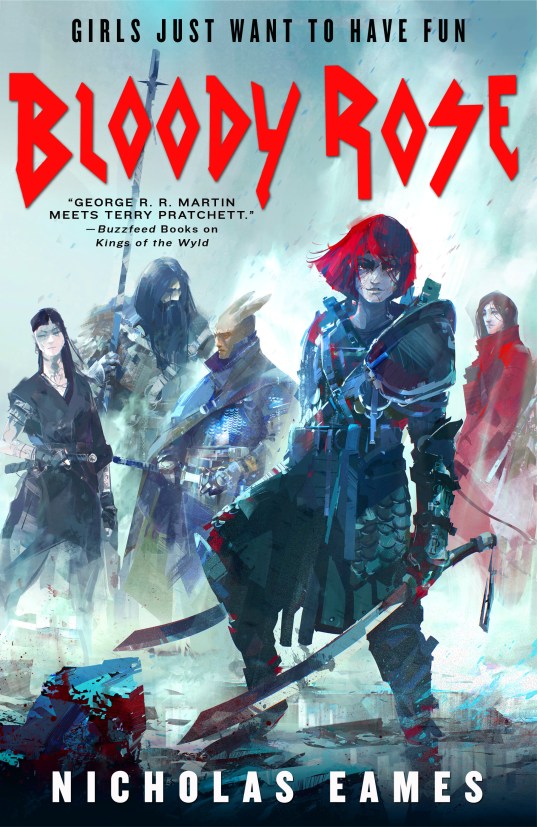
Bloody Rose by Nicholas Eames

Bloody Rose Cover.jpg

Publisher: Orbit

Publication Date – 10 July 2018

Amazon

Sensational fantasy author Nicholas Eames follows up his exceptional debut with the five-star novel Bloody Rose, featuring an epic quest storyline which takes its protagonists through a series of wild adventures in a spectacular and large-scale fantasy landscape.

In the human lands of Grandual, mercenary bands hold a celebrity status among the people.  Originally formed to help protect against the horrors of the world, most bands now spend their days touring from city to city, fighting monsters in arenas in order to gain fame, glory and money.  The most famous of these bands is Fable, led by the notorious Bloody Rose, daughter of the land’s greatest hero, Golden Gabe.  Years after her father led a mercenary army to rescue her from a horde of monsters, Rose has reformed Fable with the druin Freecloud, the shaman Brune, the Inkwitch Cura and their booker, the waggish satyr Roderick.  With a massive chip on her shoulder, Rose is determined to take on the toughest jobs and challenges that she can find.

In the city of Ardburg, Tam Hasford is sick of her job slinging drinks at the local pub to the famous mercenaries passing through.  As the daughter of two mercenaries herself, Tam craves adventure, and when Fable rolls into town looking for a new bard, Tam jumps at the opportunity to travel with Bloody Rose and her band.  Gaining a well-deserved reputation for her singing and an accidental reputation as a fighter, Tam receives the moniker ‘The Bard’ and a crash course in the mercenary lifestyle of drinking, gambling, fighting and good times.

But while Tam is having fun in her new role, there is still work to be done.  A massive monster horde has once again left the wilds and is threatening several human cities.  All of Grandual’s mercenary bands are gathering to meet them, all except Fable.  Rose is leading her band in the opposite direction and appears unconcerned with the potential devastation the monsters could cause.  Has Bloody Rose lost her nerve or does she have a far more dangerous quest in mind?  While Fable’s plan to become legends may prove to be successful, they will have far more destructive consequences than anyone could ever predict.

Bloody Rose is the incredible sequel to Eames’s 2017 debut, Kings of the Wyld, and forms the second book in Eames’s The Band series.  Set several years after the events of the first book, Eames switches up the story, focusing on the adventures of Rose and her band of mercenaries, while telling the narrative through the eyes of new point-of-view character Tam.  While there are many tie-ins with the first book, including several of the main characters, Eames has mostly shifted the focus onto a new generation of characters.

Although Bloody Rose is the second instalment in this series, curious readers can easily start their adventure with this book.  This book’s point-of-view character, Tam, never directly experienced the battles of the first entry in the series, and she ends up having quite a few conversations that describe or dramatise the events of the previous novel.  As a result, new readers who start with Bloody Rose will not experience any confusion and will be able to enjoy this story right off the bat.  That being said, readers who start with this book will probably get a hankering to read Kings of the Wyld due to how amazing Bloody Rose is.

This is a substantial piece of fantasy literature with a powerful story that is guaranteed to draw the reader in from the first page.  The huge scope of this story is just remarkable, as what begins as a simple adventure story transforms into an epic battle for the survival of all life in the world.  Much of this scope is the result of the significant number of secondary characters and antagonists that are introduced throughout the book.  It is a testimony to Eames’s skill as a writer that all these characters don’t overwhelm the story, and the reader finds themselves interested in seeing how each these characters ends up.  The use of a brand new point-of-view character to tell this story is a clever move from Eames as it allows a fresh insight into this world of mercenary bands and monsters, moving on from the old veterans that were the focus of Kings of the Wyld.

The author has infused his narrative with a huge amount of humour, most of it quite adult and over the top in nature.  This humorous tone infects quite a lot of the way that the book is told and makes it a very fun read.  There are some extremely funny scenes through the book, from debates about fake cockatrices, to the antics of a drunken satyr, to discussions about the dietary requirements of minotaurs.  While this humour is a key and overwhelmingly fun part of the story, Eames does get deadly serious in several parts of the book when the protagonists encounter dark days.  These darker scenes are felt particularly hard by the reader, mainly due to the sudden shift away from the lighter tone of the rest of the book.  While there are several examples of this throughout the story, I found that the final scenes of this book were particularly intense and had me absolutely captivated.  This clever combination of the outstanding comedy overtones and the gripping dramatic moments works exceedingly well and turns Bloody Rose’s story into one of the best fantasy narratives I’ve had the pleasure of reading.

In addition to the great use of comedy, drama and story, Eames has also packed this book with a significant amount of action and adventure.  The protagonists of this story essentially fight everyone as they adventure across the land, and participate in all sorts of combat, including arena battles with monsters, fights with titanic creatures, large-scale battles and even a few tavern brawls.  All these action sequences work well with the book’s other elements.  Not only do these battles result in some devastating moments but Eames also includes some comedy in these fight scenes, which can prove to be very entertaining.  Readers should also keep an eye out for the fun and inventive combat tactics used throughout this book, which are not only destructive but creative.  Never has red hair been used in battle so effectively.  With as much conflict and combat as you’ll ever need in a book, this is a perfect read those looking for those looking for their next injection of thrilling action and adventure.

Eames has also created a vast world to be the setting for this story, filled with a huge number of fantasy creatures and massive amount of world building lore.  Having such a large and well-established world is essential for a story of this magnitude.  The protagonists do a substantial amount of travel from one end of Grandual to the other, exploring large cities, small towns, barren wastes, massive battlefields and dangerous forested areas.  The author has also filled this story with every classic fantasy and mythological creature one could think of, as well as a few unique creatures from his own imagination.  All these creatures are a great addition to the story, resulting in some very fun battle sequences throughout the book, especially when their a huge number of these creatures in action.  One of the more intriguing races is the druin, the rabbit-eared humanoids created by Eames which used to rule all the humans and monsters of this fantasy world.  There is some fascinating history around the druin which has some significant impacts on the story, as well as gifting these creatures with some cool abilities that come into play in a variety of great ways.

The author has also spent time developing a fantastic band of main characters for the reader to follow on their adventure.  Using his new narrator, Tam, to full effect, the reader is given an introduction to every member of Fable and learns their history and motivations in significant and interesting detail.  A decent amount of time is spent looking at all of the members of Fable and the reader is given a deep understanding of each of them.  Each member of the band is a fairly unique fighter and character in their own right, but together they form a fun team.  Eames really hammers home how close these band members become throughout the book, and the reader becomes attached to the characters as they grow closer together.  This makes any potential harm or trauma they experience particularly hard for the reader to experience, and really adds to the books emotional depth.

With the follow-up to his epic debut, Eames has once again demonstrated why he is one of the freshest and most exciting new voices in fantasy fiction.  This exceptional story is an action-packed bonanza that sees several compelling characters engage in a heroic quest across an impressive fantasy landscape.  With the perfect blend of comedic adventure, epic fantasy storytelling and some dramatic character moments, Bloody Rose is an exceptional and excellent read that is guaranteed to become your new favourite story.

My Rating:

Five Stars

Amazon

Throwback Thursday: The Empire Trilogy by Raymond E. Feist and Janny Wurts

The Empire Trilogy Cover.jpg

Publishers: Doubleday, HarperCollins

Publication Dates:

Daughter of the Empire – 1987    Amazon

Servant of the Empire – 1990       Amazon

Mistress of the Empire – 1992      Amazon

Collected Volume –                        Amazon

Reviewed as part of my Throwback Thursday series, where I republish old reviews, review books I have read before or review older books I have only just had a chance to read.

If you are a fan of Raymond E. Feist’s books, check out my review of his latest work, King of Asheshttps://unseenlibrary.com/2018/05/30/king-of-ashes-by-raymond-e-feist/

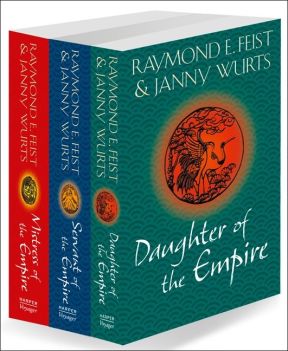
Set in the same universe as fantasy author Raymond E. Feist’s legendary Riftwar Cycle is The Empire Trilogy, which serves as a fantastic companion series to his main body of work.  This trilogy, made up of Daughter of the Empire, Servant of the Empire and Mistress of the Empire was written in collaboration with fellow fantasy author Janny Wurst and represents an intriguing piece of literature that shines not only as a side series to Feist’s first two books but also as a substantial and powerful standalone series.

I first came across this series during my school days, when I had to read Daughter of the Empire for a fantasy literature course (great book, terrible teacher).  I was already very familiar with Feist’s massive fantasy universe, having read all the other books available in the series at that point, though in a somewhat eclectic order.  I had not previously attempted to read The Empire Trilogy before this point, but I eagerly dived into Daughter of the Empire when I got my copy from the school library.  I was immediately entranced by the story and read it several times in that semester, especially during the more boring classes.  Upon completing the first book, I also sought out the second and third books in the series in order to see how the fantastic storylines continued.  In recent years, I was lucky enough to find audiobook copies of the entire trilogy, and have since re-listened to it several times.  These more recent perusals only confirmed my enjoyment of this series, as well as my love of Feist’s massive fantasy world.

The first book of The Empire Trilogy, Daughter of the Empire, was published in 1987, one year after the final book in The Riftwar Saga, the first trilogy in Feist’s massive Riftwar Cycle.  In many ways, Daughter of the Empire and the second book, Servant of the Empire, serve as accompaniments to Feist’s original series, as both plots are set at the same time and events that occur in Magician and Silverthorn have significant impacts within The Empire Trilogy.
Daughter of the Empire Cover.jpg

The Empire Trilogy follows Mara of the Acoma, a young woman who becomes the Ruling Lady of her house after the sudden death of her male relatives.  Through the course of this series, Mara must become a strong ruler to maintain the honour of her family and ensure the survival of all the people pledged to her house.  Mara must use all of her cunning to overcome powerful opponents while adapting new methods and viewpoints that are uncommon in her regimented culture in order to survive.

This series is set in the world of Kelewan, a vast planet inhabited by several strange alien species, and mainly focuses on the inhabitants of the massive Empire of Tsuranuanni.  The Tsurani were introduced in Feist’s first book, Magician, where they travel through a magical rift to the world of Midkemia and clash with the inhabitants of this new planet in an event known as the Rift War.  The Tsurani are a race of humans based on a combination of real world cultures, such as the Japanese, Koreans and the Aztecs.  For example, the overriding Tsurani ideal of honour, an exceedingly important concept in the books that strongly influences their culture and way of life, is very strongly based on feudal Japanese ideals of the samurai and bushido.  Kelewan is explored within Magician through the eyes of Feist’s main protagonist, Pug.  Midkemia is the main setting for the books in the Riftwar Cycle.  While Kelewan is visited in later books of the Riftwar Cycle, most notably in Silverthorn, it becomes a more underutilised setting as Feist’s overall series continues, before eventually being destroyed in Wrath of a Mad God.

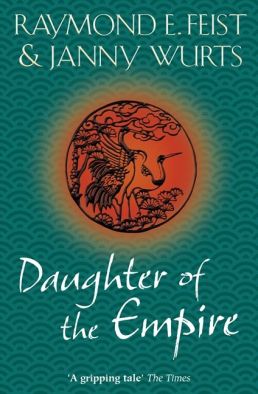
Each of the books in this trilogy contains epic and captivating stories that not only highlight life in these alien planets but also show a tale of survival and victory against all odds as the protagonist, Mara, faces and overcomes the superior forces arrayed against her.  The first book in the trilogy is Daughter of the Empire, which introduces many of the series’ main characters and storylines.  The protagonist and main point-of-view character is Mara of the Acoma, who is dramatically pulled from her peaceful life as a novice priestess into the deadly and treacherous world of Tsurani politics.  Mara’s father and brother were killed during a battle on Midkemia because of treachery from the most powerful house in the Empire, the Minwanabi.  As a result, Mara is forced to take on the role of Ruling Lady to save her house from being destroyed and her retainers taken as slaves or forced to become honourless bandits.  With the vast majority of her soldiers killed in Midkemia, Mara must find creative ways to stop the Minwanabi and other rival houses from wiping her out.

Mara proves to be an effective leader, bending Tsurani traditions to her favour, recruiting talented followers and forming new alliances.  Her machinations result in a political marriage to a brutal husband whom Mara must endure until the moment is right to remove him.  Watching the protagonist rebuild her house through any means necessary is a fantastic focus of this book which really allows the reader to get a strong idea of Tsurani politics, ideals and culture, as well as Mara’s determination as the central protagonist.  The climax of the book is set within the Minwanabi stronghold, which Mara has been forced to visit in order to attend a celebration for the Warlord (the Tsurani equivalent of a feudal Japanese Shogun).  This final part of the book is filled with significant tension and fear, as everyone is well aware that the Minwanabi will murder Mara before she leaves the party.  Mara must find a way to use the Tsurani honour system to prevent her own assassination while also striking a blow against her opponent.  Daughter of the Empire is an exceptional introduction to this fantastic series, and is a spectacular novel in its own right.

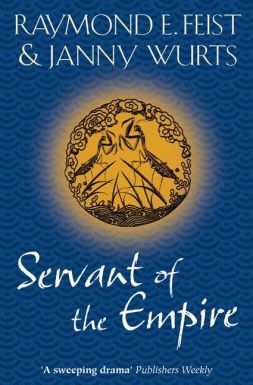
Feist and Wurst followed up their first entry in this series with another sensational novel that doubles down on the action and intrigue and contains some of the best sequences in the entire series.  Servant of the Empire directly follows on from the events of the first book and sees Mara and her house still in great peril.  Mara may have overcome the previous ruling lord of the Minwanabi, but her enemies are still the most powerful house in the Empire.  While the new lord is nowhere near as competent as his father was, he has called up the family’s most devious and destructive member, Tasaio, the man who organised the death of Mara’s father and brother.  As the Minwanabi plot against the Acoma, Mara is distracted by her acquisition of a group of Midkemian slaves, especially the charismatic Kevin of Zūn.  As Mara and Kevin fall in love, the Acoma are drawn into a series of battles on many different fronts, but Kevin’s alien way of thinking offers Mara a distinct advantage.  But events completely outside Mara’s control may have the greatest impact on the future of her house.  Both the magician Pug and the chaotic event of the Riftwar bring significant change to the Empire, and Mara and her enemies must seek new ways to turn these events to their advantage.  While Mara’s relationship with Kevin provides her with strength, it also represents her greatest weakness.
Servant of the Empire Cover.jpg

There is a lot going on within this book, including a number of large-scale battle sequences, as well several scenes focusing on the Empire’s political intrigue.  The standout scenes for me have to be either the extended sequence in the arena which features a different point of view to the chaotic magic unleased by Pug in Magician, or the sequences where the biggest houses in the Empire stage a night-time battle of assassins in the halls of the Imperial Palace.  While this might be my favourite book in the series, I am not the biggest fan of the way the romance angle between Mara and Kevin is portrayed.  Kevin, however, is a fantastic addition for this book, and it is intriguing to have a character that has a similar viewpoint as the reader to observe and comment on Tsurani honour, politics and culture.

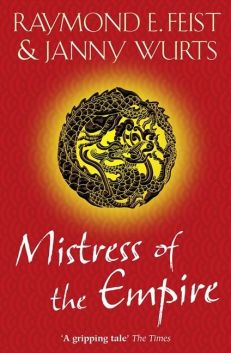
The third book in the series, Mistress of the Empire, is set some years after Servant of the Empire and sees Mara and the Acoma once again up against a superior enemy.  After their victories in the second book, the Acoma are now the most powerful house in the Empire, but Mara’s sins have come back to haunt her.  When the Hamoi Tong assassins initiate a devastating strike at the Acoma, the Assembly of Magicians forestalls Mara’s vengeance against the house she holds responsible.  The magicians, known throughout the Empire as “Great Ones” are determined to limit the Acoma’s influence, and Mara soon finds herself in a hidden war against the most destructive force in all of Kelewan.  At the same time, her former brother-in-law, Jiro of the Anasati, seeks retribution against Mara, while her loyal Spy Master Arakasi seeks to find a way to finally destroy the Hamoi Tong.  Travelling outside the Empire, Mara uncovers dark secrets about the Assembly, and her actions will have major impacts on the future of Tsurani life.

Mistress of the Empire is an excellent conclusion to this trilogy that not only provides a compelling story with exciting new additions but also neatly wraps up storylines from the previous two books.  While this book probably has the least connections to the events of Feist’s main series, it dives deeper into the history and hidden lore of Kelewan and the Empire, including the Assembly of Magicians, a sinister and powerful group in Feist’s universe.  Many of the main characters get satisfying endings to their storylines, and we get to see several chapters told from the point of view of the Spy Master Arakasi.  Arakasi is one of the series’ best characters; however, due to the nature of his work, the readers usually do not get to see him in action, instead only hearing second-hand accounts of his missions.  Readers get to enjoy scenes that focus on Arakasi’s investigations into both the Assembly of Magicians and the Hamoi Tong, which also serve to expand on Arakasi as a character.  Readers will also enjoy the fact that, after two books in which the antagonists need to keep up the appearance that they are obeying the Tsurani code of honour in their battles with the Acoma, Mara is now forced to go up against an opponent outside the typical laws and practices of the Empire.

One of the most interesting aspects of this series is how the authors have tied the books into the events of Feist’s original trilogy.  There are actually a few pre-emptive mentions of characters and events that become an important part The Empire Trilogy in Feist’s first book, Magician.  For example, the Shinzawai, a major house, whose members become key characters in The Empire Trilogy, are first introduced in this book as friends of Pug.  During Pug’s adventures in Kelewan, there is mention of a visit to the Lady of the Acoma, an event that subsequently occurs in Servant of the Empire.  The Minwanabi betrayal of the Acoma forces is also described to the Midkemian protagonists of Magician by a former Tsurani slave in an attempt to highlight the Tsurani system of honour and politics.  The first book in The Empire Trilogy, Daughter of the Empire is actually set in the time gap between the two halves of Magician, and takes a closer look at the impact that the Riftwar has had in Kelewan.

A more direct connection to the series is established in Servant of the Empire.  As mentioned above, long-running Riftwar Cycle protagonist, Pug, makes several appearances in this book, mirroring events that occur in second half of Magician.  Events that occur in Feist’s original trilogy have severe impacts on the plans of Mara and her enemies, such as the destruction of a huge number of Tsurani lords in the final battle of Magician and the death of the new Warlord in Silverthorn.  All of these become significant plot points in Servant of the Empire, and it is absolutely fascinating to see the impacts of events in other books.
Mistress of the Empire Cover.jpg

The most spectacular crossover event comes about halfway through Servant of the Empire, which shows some of the cataclysmic events from Magician from a whole new perspective.  In the second half of Magician, the powerful magician Pug unleashes his full fury on an arena full of Tsurani, sending wave after wave of magical attacks and disasters on the arena’s audience.  The scene is very intense when told from Pug’s point of view; however, readers of the second book in The Empire Trilogy are shown the absolute terror and destruction that a member of this crowd experienced during these events.  Mara, Kevin and a few Acoma retainers are present when the magical attack occurs and must flee through the panicking mob while also avoiding enemy assassins.  The sheer chaos and dread experienced by these characters and the surrounding crowd is astounding, and turns an incredible scene from Magician into one of the most intense and memorable sequences Feist has ever written.

Throughout the series, the Mara and her house are engaged in significant conflict with other factions in the Tsuranuanni Empire.  In the first two books, their opponents are primarily the most powerful house in the Empire, the Minwanabi, while the third book sees Mara in conflict with another influential house, as well as the Assembly of Magicians and the Hamoi Tong assassins.  As a result, the main focus of these books is usually the battles for supremacy between the Acoma and their opponents.  However, what sets these stories apart from other fantasy novels is the way that these battles are fought.  While an all-out war would probably ensure a quicker conclusion to this struggle, the Acoma and their enemies are forced to fight within their nation’s rules of conflict and honour.  As a result, the participants are forced to fight in a far more shadowy conflict.  While there are battles between armies, often with one side in disguise, the participants also fight using economics, espionage and politics.  Throughout the book, the protagonist makes alliances, build up her resources and use her influence to mould the politics of the realm to her advantage.  The reliance on honour is a fascinating part of this battle, and the reader will enjoy seeing the protagonist use this concept of honour to manipulate her opponents.  The real fun comes when the various participants are no longer bound by the rules and are able to unleash much more devastating and direct attacks on each other, such as the massive battle in the imperial palace that takes place in Servant of the Empire.  The battles for survival and control of the Tsuranuanni Empire represent an absolutely captivating and exciting part of this series, especially when the Acoma spymaster Arakasi gets involved.

Readers of The Empire Trilogy are also gifted with a deeper understanding and appreciation of the people, races and culture of Kelewan.  This world and some of its history was explored in Feist’s earlier books, including Magician, where an extended magical vision showed the reader key points in the planet’s history.  However, for those readers who wish to have a truly deep understanding of life in Kelewan, and the Tsuranuanni Empire in particular, the books in this trilogy are the best things to read.  Through the protagonist’s eyes the reader gets to explore the various pieces of land that make up the Empire, as well as the creatures that inhabit these lands.  Feist and Wurst also spend significant amount of time looking at the Cho’ja, the ant-like alien creatures who were first introduced in MagicianDaughter of the Empire takes a very interesting look at the Cho’ja, especially as an early part of the book focuses on the protagonist’s attempts to win a Cho’ja colony for her land.  In order to do this, she enters a hive and negotiates with a newly hatched queen in order to provide Mara with additional warriors and access to silk spinners.  In order to gain an edge on her competition, Mara attempts to understand the cultural differences between her race and the Cho’ja, and is able to come up with some intriguing conclusions as a result.  These initial and interesting observations of this race are then massively expanded upon in Mistress of the Empire when Mara, in an attempt to find out the secrets of the Assembly of Magicians, uncovers the true history of the Cho’ja and the ancient pacts they are bound to.  Readers will be absolutely fascinated by the lore of these creatures, and there are some great scenes featuring Cho’ja economy and their skills in battle.  In addition to the Cho’ja, Feist and Wurst also explore some of the human nations that exist in Kelewan, including the desert tribes of Dustari and the Thuril.  These explorations aren’t as detailed as the authors’ look at the Cho’ja and the Tsurani, but are intriguing in their own right, as the authors create some unique cultural features for them.

While the examination of the Cho’ja and the other human races of Tsurani is an intriguing and detailed part of the books in The Empire Trilogy, it pales in comparison to the massive amount of time spent exploring Kelewan’s main civilisation, the Tsuranuanni Empire.  The vast majority of the three books is spent within the Empire, with only a small portion of Mistress of the Empire spent outside.  Feist introduced a lot of the elements of the Tsurani in Magician, but this is expanded on substantially in this series.  Readers who read through these books will be left with an incredible amount of information about Tsurani politics, religion, culture, societal makeup and various other parts of day-to-day life in the Tsuranuanni Empire.  The use and examination of Tsurani politics at many different levels is an extremely compelling part of these books, and the various meetings and manipulations that occur represent a very enjoyable part of the book.  The concept of Tsurani honour is also explored in great detail.  Honour is a massive and defining part of Tsurani culture, and the various characters risk everything to maintain it.  Living or dying without honour is considered the worst thing imaginable as it will impact on the individual’s reincarnation in the next life.  The concept of honour is particularly skewed towards the Tsurani nobles, and it often takes an outside perspective, like that of Kevin, to identify how unfair the system is.  Mara becomes particularly adept at using this honour system to her own advantage.  While absolutely devoted to maintaining her family’s honour, her interactions with Kevin lead her to try and make some substantial changes in Tsurani society.  The books in the trilogy also reveal some deeper understandings about Tsurani history and the various secret organisations such as the Assembly of Magicians have been protecting.  While physically reading these books allows the reader to absorb a lot of this lore, I would also suggest that people check out the various audiobooks that have been produced, which can help listeners to absorb more of these amazing story elements.

I do have a few minor criticisms about this series, but nothing that is really going to change my high regard for it.  There are some unnecessary scenes where Mara is scolded and nagged by her nurse, Nacoya, who quickly becomes one of the series’ more annoying characters.  I felt that some of the scenes featuring Nacoya’s constant criticism took away from Mara’s image as a skilful and intelligent leader, and just made her seem like a foolish girl.  Luckily Nacoya is easily overshadowed by several of the other supporting characters, such as Keyoke, Arakasi and Lujan.  I also found parts of the relationship between Mara and Kevin in Servant of the Empire to be very frustrating, especially as they seemed to keep cycling through the same problems and issues.  Luckily, Kevin’s ‘barbarian’ insights and ideas more than make up for this, as he produces some excellent battle and political tactics throughout the book.  Overall, these are some fairly minor criticisms from me, and I really love all three of these books.

The Empire Trilogy from Raymond E. Feist and Janny Wurst is a spectacular fantasy series set in the same incredible universe as the Riftwar Cycle.  This trilogy of books is an amazing series in its own right; however, it’s real strength comes from it being a clever tie-in to Feist’s main series of books.  Featuring some incredible story elements, exceptional action-packed scenes and a detailed setting stuffed full of lore, The Empire Trilogy is some of these two talented authors’ best works, which still stand up to this day.  The series is required reading for anyone who has read Magician and other books in the Riftwar Cycle, but it also comes highly recommended for those readers looking for that next fantasy series to fall in love with.

My Rating (Series and Each Book):

Four and a half stars

Phantom by Leo Hunt

Phantom Cover.jpg

Publisher: Orchard

Publication Date – 9 August 2018

Amazon     Book Depository

From bestselling author Leo Hunt comes an electrifying and fast-paced young adult science fiction adventure that takes an intriguing look at the future of technology, as well as the crime and consequences these advances could lead to.

In the far future, humanity has built towers and skyscrapers up in a major way, leaving the ground far below.  The rich and powerful live in the City, the highest level of construction, far above the poisoned ground.  Up in the City, luxuries such as sunlight, clean water, jobs and corpbloc homes are available to its hardworking corporate-owned population.  Those who do not have money live in the undercity slums, where the sun never shines and poisoned water is flooding up from the ground.

One of the inhabitants of the undercity is orphaned teenager Nova, who earns a living going up into the City and stealing from the corporate workers.  In a world where everyone has technology implanted in their heads, a skilled hacker like Nova can obtain everything from money to information.  Nova’s most important tool is Phantom, a powerful program created by the shadowy anticorporation hacker, the Moth, which hides the identity of hackers while they commit their crimes.

While Nova is only just scraping by, her skills have caught the attention of the Moth, who has a dangerous job for her.  The Moth needs Nova to infiltrate the powerful Bliss Inc and uncover their most treasured corporate secret.  Posing as a prospective assistant for the CEO of Bliss Inc, Nova goes deep undercover, changing her identity and her appearance to sneak in.  However, her mission is about to get far more complicated then she could have ever imagined.  Caught between the dark secrets of Bliss Inc and the mysterious ambitions of the Moth, Nova is going to be lucky to get out of this heist alive.

Phantom is the latest book from young adult author Leo Hunt and represents his first foray into the science fiction genre.  Hunt’s previous works have mainly focused on the fantasy and horror genres, with his 13 Days of Midnight trilogy featuring a young man who develops necromantic powers.  Phantom is an interesting new direction for Hunt, who has created a fantastic piece of young adult science fiction with strong techno-thriller elements.

This book is contains an intriguing science fiction story that takes the reader through a unique futuristic city and presents them with a thrilling and technology driven adventure.  Phantom’s story contains a superb combination of story elements which come together to form an entertaining and fast-paced plot with compelling pieces of betrayal, technologically assisted espionage and corporate intrigue.  There are a few good twists throughout the book, but I did find that one of the big reveals towards the end of the book was a little easy to predict as a result of the author only utilising on a small number of characters throughout most of the narrative.  This was more than made up for by the shocking and deeply intriguing reveals that followed the protagonist uncovering the hidden secret motivations of the book’s various antagonists.  All of these hidden surprises result in some great story elements and have a strong relation with the book’s focus on technology.

Phantom is intended for a young adult audience, and it works well as an absorbing and exciting introduction into science fiction and technology-based thrillers.  Younger readers will love the interesting examination of the potential future technology and will find the exciting adventure storyline quite fun.  The violence contained within the book is not too graphic whilst also allowing for some strong action-packed scenes.  There are some minor mentions of mind-alerting technology and substances, but nothing too inappropriate for the younger audience.  There are also some subtle but important LGTB elements that come into play later in the story, and Hunt handles these quite well.  Overall, I would recommend this book to all teenagers, and even some younger readers, who will find a lot to enjoy in this wonderful book.

The best and most compelling features of Phantom are the amazing technological elements that form a significant part of the plot and which take a particularly intriguing look into humanity’s reliance on technology and how we are likely to advance in the future.  In this potential future, everyone has neural implants inserted in them at birth that act as a mobile connection to the internet as well as a phone, music player, bank card and personal identification all in one.  This is an interesting thing to examine, especially as humans are constantly getting closer and closer to incorporating our personal technology into our own bodies.  Hunt does a great job presenting some of the potential benefits and problems that humans could experience with this sort of technology, and takes a stimulating look at that the ways that it could impact on our lives.  Quite a few things are explored throughout Phantom, from examinations of how this technology will influence human identity to how it could be abused for criminal reasons, such as stealing money, hacking someone to take control of their body or producing technology that mimics recreational drugs.  Other technological questions come into play later in the book and result in some deep emotional scenes as well as some interesting questions about ethics and the nature of humanity.  These fictional technological elements represent some truly fascinating ideas from Hunt that readers will find very captivating.

In addition to Hunt’s intriguing postulations about future technology, another compelling story element is the inventive and imaginative setting for the story.  The entirety of Phantom is set within a fictional metropolis that is constantly being built up and is split between the soaring spires of the rich and the sprawling slum-like undercity where the poor live.  Throughout the story, the protagonist journeys from areas of the city flooded with poisoned water and inhabited with humans and animals that have never seen sunlight, to the very top of the city, above the clouds.  There is a detailed exploration the city’s disparate economic zones, and significant time is spent interacting with the populace in both these areas, resulting in some fascinating comparisons.  This is an amazing setting for this science fiction and technology focused story and represents another intriguing look into the future by Hunt.

Leo Hunt’s latest book, Phantom, is an absorbing and thrilling tale of adventure and crime in a futuristic city.  Containing some extremely enthralling technological elements and a fantastic city setting where the differences between the rich and poor have never been more obvious, this is another outstanding release from Hunt that will be perfect for those younger readers looking to break into the science fiction or techno-thriller genres.

My Rating:

Four stars

Amazon     Book Depository

Dreadful Company by Vivian Shaw

Dreadful Company Cover.jpg

Publisher: Orbit

Publication Date – 24 July 2018

Amazon     Book Depository

Those looking for an entertaining, intriguing and different take on the horror genre should investigate Dreadful Company, the latest book from author Vivian Shaw, which contains a thrilling story based around the doctor to your favourite fictional monsters.

Greta Helsing is London’s medical practitioner for the undead, providing specialised treatment to the city’s hidden community of ghouls, vampires, mummies and zombies.  After being called to Paris to attend a supernatural medical conference, Greta’s plans to enjoy a stimulating discourse and debate on monster medicine is ruined when she is suddenly kidnapped off the street.  Her abductors turn out to be a coven of young and murderous vampires led by the unhinged Corvin, who bears a particular grudge against Greta’s vampire friend Ruthven.  Even more concerning, a member of Corvin’s coven is using magic to summon small and friendly magical creatures.  While the creatures may be harmless, the ripples they are causing in reality are not, and represent a significant threat to our world.

While Greta is trapped in the tunnels and catacombs below Paris, her friends arrive in the city to save her.  Legendary elder vampire Ruthven and Greta’s vampyre boyfriend, Sir Francis Varney, team up with Paris’s guardian werewolf, two immortal paranormal investigators and the city’s resident demon to free Greta and put an end to the dimensional instability.  But Greta and her companions are about to find out that there are weirder and more dangerous things than a collection of bloodthirsty vampires in the tunnels underneath Paris.

Dreadful Company is Shaw’s follow-up to her 2017 debut novel, Strange Practice, and is the second book in her Dr Greta Helsing series.  Dreadful Company returns several of the protagonists from the first book while also adding in a healthy number of new and exciting characters.  A third book in the series is already planned; I will definitely be keeping an eye out for Grave Importance next year.

Shaw’s latest book contains a fun and electrifying adventure that pits several ancient beings and their doctor against a coven of vampires and the magical catastrophe they have created.  The author tells her story through a range of characters to show many different perspectives of the adventure taking place.  Not only is every single protagonist – including returning characters Greta, Ruthven and Varney, as well as new characters the werewolf St Germain, the remedial psychopomps Brightside and Dammerung and the demon Irazek – a point of view character, but so are several of the young vampires who serve as the book’s antagonists.  This allows Shaw to tell a much wider story.  Not only is the central adventure explored in greater detail from a several angles, but the motivations, shared histories and the underlying thought processes of the story’s key players are presented to the reader.

Shaw has made a smart decision to change the book’s main setting from London to Paris.  Many writers can get bogged down in one location during their series, but Shaw did a fantastic job adapting her story to a completely new and unique cityscape, a trend that she will apparently continue to follow in her 2019 addition to the series.  Shaw makes full use of several iconic Paris locations, particularly the catacombs and tunnels underneath the streets, which are the perfect setting for a horror story.  Overall, Dreadful Company contains a rather exciting adventure story that makes spectacular use of its horror and fantasy elements, while also making use of the humour and history of its many point-of-view characters to lighten the darker tone of the book and create a unique and entertaining read.

I was extremely happy that Shaw included more examples of monster medicine within Dreadful Company.  The examination of the medical techniques used on supernatural characters was one of the best features of Strange Practice, and was a very unique and compelling element of this first book.  There are a number of wonderful general monster medicine scenes throughout the book, including a supernatural medicine conference where topics include ‘An overview of the various treatment modalities for tissue degeneration in Class A revenants’ (how to stop bits falling off zombies).  Readers will really enjoy Dreadful Company’s interesting focus on the medicine of vampires.  Shaw did spend a little time exploring the biology and treatment of vampires in the first book, which is expanded upon in Dreadful Company.  There are several discussions about vampire anatomy and physiology, including some of the features of the different vampire subspecies.  There is also a detailed look at the effect of certain substances on vampiric characters, including drugs and garlic, as well as the surprisingly devastating absinthe.  The protagonist is also forced to treat a number of different vampire characters for a variety of different conditions, including an overdose, stab wounds and an infection caused by a ghoul bite.  Once again, Shaw’s inclusion of monster medicine was an amazing part of this book, and I am looking forward to the third novel in the series, Grave Importance, which will focus on the care of mummies.

Aside from the examination of vampire biology, Shaw has also included a fascinating look into the different vampire mentalities, particularly when it comes to the old school versus the young bloods.  The two elder vampire characters, Ruthven and Varney, are reformed from their violent past and are instead trying to live normal and peaceful lives alongside humans.  The younger vampires, on the other hand, are bloodthirsty creatures who don’t follow any rules, kill indiscriminately and indulge in drugs and wanton behaviour.  The differences between the behaviours of these two different types of vampires are quite noticeable, especially when the younger vampires try to live up to all of the vampire stereotypes, such as sleeping in coffins, wearing elaborate clothes and makeup, making up dumb names for themselves, developing a superiority complex and trying out various ways to make themselves glitter.  While these inclusions are extremely fun, the readers will really experience chills when they see how angry the usually calm characters Ruthven and Varney get when they encounter these younger vampires and realise what taboos they have broken.

In addition to the creative and captivating use of vampire characters throughout the book, Shaw has referenced several other classic horror creatures and villains.  There are several allusions to Frankenstein and The Phantom of the Opera, with the protagonists actually visiting the Phantom’s underground lair at one point.  There are also other creatures, such as magically summoned hair monsters, well monsters and a whistle-summoned spirit, all of which play an interesting role in the plot.  Some great humour also comes from the inclusion of several ghosts, many of whom can be found having a lively party in Paris’ iconic Père Lachaise cemetery.  Highlights of this scene include a snarky Oscar Wilde and a musical Jim Morrison, both of whom have some great interactions with the new characters, Brightside and Dammerung.

Dreadful Company sees new author Vivian Shaw return with another fun and thrilling horror novel that contains a fast-paced adventure and a light comedy enhance tone.  Shaw has invested in a range of new characters, a fresh setting and some appealing fantasy and horror elements.  The author’s clever and memorable inclusion of monster medicine once again shines through as the book’s best feature, as well as the detailed examination of the vampire psyche.  An absolutely amazing second outing from Shaw, Dreadful Company is a fantastic read that will prove to be both unique and captivating to a huge range of readers.

My Rating:

Four and a half stars

Amazon     Book Depository

City of Bastards by Andrew Shvarts

City of Bastards Cover

Publisher: Hyperion

Australian Publication Date – 31 July 2018

World Publication Date – 5 June 2018

Amazon     Book Depository

Young adult fantasy author Andrew Shvarts has a dramatic return with City of Bastards, an explosive and incredible follow-up to his electrifying 2017 debut.

After her father’s declaration of rebellion against the crown, Tilla, bastard daughter of Lord Kent, turned against him by rescuing the king’s daughter, Princess Lyriana, from his clutches.  Fleeing her father’s lands in the west of the Kingdom of Noveris, Tilla, Lyriana, and Tilla’s boyfriend, Zell, make the journey to the capital city of Lightspire, the opulent and magical city where Lyriana’s father reigns.

Attempting to put aside the horrors she experienced while fleeing from the west, Tilla settles down in a life of luxury as a student in the city’s prestigious university.  However, not everything is as shiny and golden as Tilla had hoped it would be.  She faces ostracism from the most of the city’s population as her father continues to wage war against the kingdom.  On top of that, Zell appears unsatisfied with city life and is growing distant from her.  Tilla and Lyriana are still mourning the death of Tilla’s brother, Jax, and not even their hard partying lifestyle is making them feel any better.

Their new lives are only destined to last for so long before disaster strikes.  When Tilla finds her roommate dead, she knows that a mysterious mage she encountered is behind the death.  But no-one seems willing to believe her, and the death is quickly ruled a suicide and pushed under the rug.  When she is then attacked by the rogue mage, something considered impossible, Tilla begins to realise that there is something very rotten in the heart of the Lightspire.  With her father apparently keeping the king’s invincible army of mages at bay, and shadowy cultists sowing chaos in the city, Tilla uncovers a terrible plot that could shake the entire foundation of the kingdom.  With the king’s inquisitor hunting her as a traitor and the whole word turned against her, can Tilla and her friends stop the evil unfolding in front of them before it’s too late?

City of Bastards is Shvarts’s second book, and is the sequel to last year’s release, Royal Bastards.  This is a fantastic new series of young adult fantasy books, with a third entry already planned for 2019.  These books are marketed towards a young adult audience, but this is a series that will also prove to be massively appealing to older readers as well.  Fair warning to parents: this is probably not the best series for younger readers, as the huge amounts of drugs, drinking, sex and teen angst make this books more appropriate for an mid to older teenage audience.

This novel contains a truly captivating story of intrigue and murder in the heart of a magnificent and magical city.  Shvarts combines some excellent thriller and fantasy elements together to create a superb overall narrative, which includes a large-scale conspiracy that proves to be particularly impressive.  There is a well-written and absorbing investigation angle getting towards the conclusion of this plot, and the full scope of this conspiracy is very elaborate and uses some intriguing magical elements.  There are a number of surprising twists, betrayals and dramatic reveals that will hook the readers, while the conclusion of the story is epic in its size and consequences.  Overall, this is an extremely compelling fantasy thriller story that has not been simplified for a younger audience.

Shvarts has also created an intricate and intriguing cityscape that serves as an excellent setting for the story.  There are some memorable locations visited throughout the course of the narrative, and the author does a fantastic job showing the differences between the richer areas of the Lightspire and the districts where the everyday citizens live.  Exploration through the city by the protagonist highlights this class difference and the corruption of the rich, all of which forms a significant story element later in the book.  The author also introduces some fascinating fantasy elements, such as large-scale magical messages, unique methods of transportation, rebellious anti-magic fanatics, the kingdom’s hidden magical heart and substantial catacombs under the city that hold dark and powerful secrets.  All of these elements play a significant role in City of Bastards’ story, and meld in perfectly with the protagonist’s investigation and the vast underlying conspiracy.

The entirety of City of Bastards is narrated by the book’s protagonist, Tilla.  Shvarts does an amazing job of capturing the essence of a modern teenager in the book’s narration, and the reader really feels that they are accompanying a rebellious young woman on her quest throughout the city.  As a result, the book is filled with sarcasm, funny jokes, humorous observations and a certain amount of complaining about the situation.  The story is also infected with a bit of teen angst, which is amusing to see amongst storylines dealing with the future of a civilisation and will no doubt prove to be relatable to many readers.  In addition to the humour, this narration also allows the reader to see the protagonist’s many vulnerabilities throughout the course of the story.  Overall, the protagonist’s narration adds a lot to this book, and is definitely one of its more appealing features.

A highlight of the book has to be the realistic focus on trauma and the powerful consequences of the first book.  Some of the very best young adult books are those which do not shy away from heavy topics, featuring gritty and realistic portrayals of trauma and PTSD as they try to highlight the often unseen or unconsidered costs of their character’s attempted heroism or battles for survival.  In City of Bastards, Tilla, Lyriana and Zell spend a significant amount of time dealing with the terrible things the encountered in the first book, including the death of Jax, Tilla’s brother and Lyriana’s love interest.  Lyriana’s transformation is the most dramatic, as is she suffering not only from Jax’s loss but also from the guilt and trauma following her decision to break her oath of pacifism and kill someone with her magic.  As a result, she turns from the sensible and respectful character she was in Royal Bastards to a hard-drinking wreck who acts out in a number of different ways and has a hard time dealing with her feelings.  Tilla is also traumatised by the death of Jax, and while at times she seems to be processing it better, her depression is compounded by the dramatic changes in her life and the outright disdain that many characters show her.  Overall, this realistic portrayal of trauma and vulnerability in the characters is very well written and adds a real emotional edge to the story.

City of Bastards is an amazing piece of young adult fantasy that makes substantial use of its new setting to create an epic, conspiracy-laden storyline that proves to be exceedingly captivating.  This is a powerful sequel to Andrew Shvarts’s first book, and fans of Royal Bastards will be entranced by the author’s focus on the first book’s devastating consequences.  This is one of the best pieces of young adult fiction of 2018.  I had a real hard time putting this book down, and it comes highly recommend.

My Rating:

Four and a half stars

Amazon     Book Depository