Timeless by R. A. Salvatore

Timeless Cover.jpg

Publisher: Harper Voyager

Publication Date – 4 September 2018

Amazon     Book Depository

From one of fantasy’s most legendary writers, R. A. Salvatore, comes another electrifying adventure of swords and steel, as Salvatore once again presents a thrilling tale of his iconic protagonist, the dark elf Drizzt Do’Urden.

Centuries ago, the city of Menzoberranzan gave birth to a drow whose talents with the blade were unsurpassed by any other practitioner.  This drow’s name was Zaknafein.  Desired by an ambitious noble house and its twisted Matron, Malice, Zaknafein would become a pawn in the battle of intrigue and positioning that have eternally plagued Menzoberranzan.  His only relief from his arduous life was his friendship with the young mercenary Jarlaxle.

Years later, a young Drizzt Do’Urden fled the city and the violent ways of his people.  However, his escape was only capable thanks to the twofold sacrifice of his father, Zaknafein, who not only allowed himself to be sacrificed to the dark goddess Lolth but also willed his resurrected body to its absolute destruction in order to stop its hunt for Drizzt in the catacombs of the Underdark.  Not only was Zaknafein his father; he was also the man responsible for Drizzt’s moral code and, most importantly, the man who taught Drizzt how to fight, turning him into the most skilled sword wielder in all of Faerun.

But now, after years of Drizzt’s adventures on the surface world, something truly amazing has happened: Zaknafein has been returned to life and has found his way to the surface world.  No-one is certain how he has been resurrected or why, but Zaknafein is determined to be reunited with his son, even if he has changed far more than he could ever imagine.

The world has also changed in the last few years.  The Sword Coast is undergoing a period of rare peace.  The dwarves, led by Drizzt’s friend King Bruenor Battlehammer, rule in Gauntlgrym, while the city of Luskan is secretly ruled by Jarlaxle and his mercenary band, Bregan D’aerthe.  With their territories connected by magical gates, Bruenor, Jarlaxle and the halfling community of Bleeding Vines have formed an alliance, ensuring the security of the realm.  However, the ambitious and greedy Lord Neverember, ruler of Neverwinter, is a constant thorn in their side as he plots to steal power from the lands around him.  While usually only a minor nuisance, Neverember has been making deals with a mysterious noble house of Waterdeep and a minor dwarven clan for vast sums of money.  As the allies investigate further, they uncover the start of a destructive demonic conspiracy that could destroy all they have built.  What foul plans are being hatched, and what will happen with Drizzt and Zaknafein find themselves in the middle of a demon stronghold?

R. A. Salvatore is one of the most experienced and enduring authors of fantasy fiction in the world today. Having written more than 60 fantasy books since his 1988 debut, Salvatore has created a number of worlds and characters across his career, from his 12 books in the Corona universe, which includes the 2018 release Child of a Mad God, to his Chronicles of Ynis Aielle trilogy, The Crimson Shadow series, The Cleric Quintet and The Spearwielder’s Tale trilogy. Salvatore is also somewhat infamously known for his foray into Star Wars fiction, with his 1999 release, Vector Prime, which saw the canonical death of Chewbacca in the original expanded universe, a decision that has since been retconned following the Disney acquisition of the franchise.  However, his most iconic and popular books would have to be his long-running series that follows the adventures of the dark elf Drizzt Do’Urden.

The character of Drizzt Do’Urden was first introduced in Salvatore’s debut novel, The Crystal Shard, which is also the first book in The Icewind Dale trilogy.  The Icewind Dale trilogy is set within the Forgotten Realms universe, a large-scale interconnected collection of fantasy books from a range of different authors, all set within the titular Forgotten Realms, a spinoff location of the Dungeons & Dragons roleplaying franchise.  The Icewind Dale trilogy featured a band of powerful characters including Drizzt, the dwarf chieftain Bruenor Battlehammer, the barbarian warrior Wulfgar, the halfling thief Regis and Bruenor’s adopted human daughter, Catti-brie.  While these characters all had their own adventures within this series, it was clear that Salvatore had intended to focus his series on Wulfgar and make him the main protagonist.

However, the character of Drizzt proved to be particularly popular with the fans.  A large amount of this may be a result of the characters anomalous nature, as not only is Drizzt a dark elf living above the surface, but he was one of the few good dark elves in fantasy fiction at that point in time.  The dark elves, also known as the drow, are a race of dark-skinned elves who live in the Underdark, the dark catacombs that lie under the continent of Faerun, in the world of Abeir-Toril.  In the Forgotten Realms universe, dark elves are generally an evil and self-serving race who consider themselves superior to the other races in the Forgotten Realms and often conduct destructive raids against the surface world.  As a result of this popularity, Salvatore chose to focus on Drizzt more and more as his series progressed.  This included establishing the character as one of the greatest practitioners of the sword in the Forgotten Realms, as well as introducing an equally matched adversary, Artemis Entreri.

This focus on Drizzt continued into Salvatore’s second Forgotten Realms series, The Dark Elf trilogy, which was a prequel series to The Icewind Dale trilogy.  The Dark Elf trilogy focused on the birth of Drizzt in the dark elf city of Menzoberranzan, a female-led society dedicated to the worship of the demonic spider god Lolth.  While this is where Drizzt was raised and first learnt how to wield his iconic dual blades, the character of Drizzt never fit in, except with his father Zaknafein, who tried to teach him that the dark elves, especially those dedicated to the worship of Lolth, were evil.  Drizzt would escape Menzoberranzan at the end of the first book in the trilogy, Homeland, and spend the next two books exploring the world outside the city, eventually coming to the surface and finding his home in the Icewind Dale.  Since then, Drizzt and his companions have undergone a number of adventures both above and below the surface of Faerun, with numerous changes impacting these protagonists.  Timeless is the 34th book to feature Drizzt or his companions, and is one of the few ongoing series still being produced in the Forgotten Realms universe.

Timeless is the first book in Salvatore’s new Noname trilogy, and while the series is invariably going to focus on Drizzt, this first book mostly takes a look at the returning Zaknafein.  As a result, the majority of the story is set in the current chronology of Salvatore’s universe and sees Zaknafein attempting to find his place in the new world he has returned to, while also exploring a new threat to the Companions of the Hall (Drizzt and his friends).  There is also a second timeline that is set many years before the events of Homeland and focuses on the early life of Zaknafein.  While both storylines are enjoyable, I found myself drawn more to the prequel storyline, which focused more on the elaborate and exciting intrigues of the drow and how Zaknafein and Jarlaxle became the drow we all came to know and love.  The contemporary storyline is mostly focused on the reuniting of Zaknafein and Drizzt after their many years apart, both in and out of text.  Their emotional reunion forms the heart of this storyline, while Zaknafein’s exploration of this new world he finds himself in is an intriguing part of the book.  A side effect of this is that some of the longstanding characters, such as Wulfgar and Bruenor, have a reduced role in the book.  While I hope they feature more later in this trilogy, I felt the story was able to survive without them.  This book also spends a lot of time setting up the storyline and threats that will form the focus of this new series.  To that end, Salvatore has done an incredible job, creating several intriguing storylines that readers will enjoy following in future books and presenting the protagonists with a number of potential threats for the series.  However, Salvatore has also ensured that the reader will be hit with some severe emotional gut-punches in this first instalment, ensuring that they are dragged into the next book in this trilogy.  I enjoyed going back and forth between these two separate storylines.  Each of these storylines complemented the other one perfectly and highlighted the character of Zaknafein in more detail.

While The Icewind Dale trilogy and the series that followed it are excellent pieces of fantasy fiction, my favourite Drizzt Do’Urden series has always been The Dark Elf trilogy, which I consider one of the best origin story arcs in all of fantasy fiction.  As a result, I was always going to enjoy any novel tied to this prequel trilogy.  Timeless contains a number of call-backs to this original trilogy and works to provide the reader with some interesting and unexplored backstory for the great character of Zaknafein, including how he became associated with the house of Do’Urden.  It also shows the formation of his distinctive character traits, such as his sense of mercy, his hatred of the female dark elves who enslaved him and his intense rebellion against the drow’s patron goddess, Lolth.  Some of the most emotional parts of this original trilogy revolved around Drizzt and Zaknafein as they attempted to escape from the harsh landscape of Menzoberranzan and Zaknafein’s eventual sacrifices to save his son from Lolth’s evil grasp.  Therefore it was amazing to see the two of them finally reunite after all these years in the most appropriate manner possible: a duel.  Watching Drizzt slowly realise that the person fighting against him is actually his long lost father is incredible and something that I really enjoyed.

It was also a lot of fun to see the earlier days of one of my favourite characters, Jarlaxle.  Jarlaxle is a flamboyant and deceptively cunning drow mercenary who is one of the most compelling characters in Salvatore’s books.  The character was first introduced in the second book of The Dark Elf trilogy, Exile, and quickly revealed himself to be a very memorable character.  Salvatore utilised him in a number of his follow-up series, and even gave him his own trilogy with Artemis Entreri.  I was therefore very happy to see him in both timelines of Timeless, as it provides the reader with some great entertainment as well as answering some interesting questions, like how he came up with his distinctive look.  His bromance with Zaknafein was another fun part of both storylines, and I liked seeing the previous connection these two great characters had with each other.  Overall, fans of Salvatore’s preceding books, especially The Dark Elf trilogy will love Timeless and become engrossed in seeing one of the most impactful characters in Drizzt’s life return after more than 20 years and 30 books.

As you would expect from a novel about Drizzt Do’Urden and Zaknafein, two of the most pumped-up sword users in all of fantasy fiction, there is an absolute ton of action and swordplay in this book.  Throughout the course of Timeless, the father and son duo engage in a number of exciting battles and extravagant duels as they face off against a variety of different foes in both of the book’s timelines.  There is so much going on in this book for readers to enjoy, from battles against demonic foes to Zaknafein and Jarlaxle taking on the most devious of drow opponents they can find in the prequel timeline.  The halfling Regis, who is generally one of the most entertaining characters in Salvatore’s books, also has an amazing sequence as he infiltrates a hidden vault, using a combination of alchemy, daring do and the well-honed thieves’ instincts and skills he has been displaying since The Crystal Shard.  Jarlaxle also steals any fight scene he is involved with, using his various magical devices and hidden weapons to cause all manner of chaos against his opponents, resulting in some of the most entertaining parts of the books.

However, easily the best action sequences have to be the duels between Drizzt and Zaknafein.  These two blade masters are generally regarded as the two best fighters in all of the Forgotten Realms and have not faced each other since the early 1990s.  As a result, Salvatore presents several highly detailed duels between the father and son.  These duels are written in incredible detail and Salvatore does a fantastic job highlighting the speed, intensity and skill that these two combatants have as they battle against each other in scenes which hark back to their original amazing duels in Homeland.  Ultimately, Salvatore is once again able to capture the magic that these two combatants had in their original appearances and their fights take on a completely new edge with the emotional intensity of these characters’ reunion.

Salvatore has once again provided his readers with an exhilarating adventure that pits the monsters and villains of the Forgotten Realms against your favourite fantasy heroes.  This is definitely a book that will have the most impact for existing fans of Salvatore’s Forgotten Realms novels, and as such I really enjoyed Timeless.  While newer readers may have a little trouble following the plot after 34 books worth of backstory (39 if you include The Cleric Quintet), Salvatore’s writing will ensure they get an electrifying adventure that will encourage them to look back at the original books in this series.  An outstanding fantasy adventure from one of the best writers in the business, this is fantastic read that is well worth checking out.

My Rating:

Four and a half stars

Amazon     Book Depository

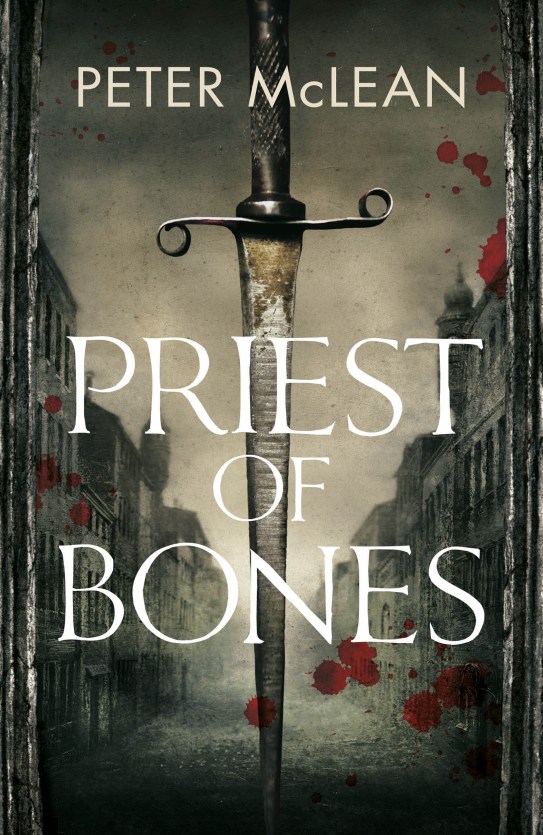
Priest of Bones by Peter McLean

Priest of Bones Cover.jpg

Publisher: Jo Fletcher Books

Publication Date – 2 October 2018

Amazon

For those looking for some down and dirty fantasy crime, look no further than Priest of Bones, the new release from fantasy author Peter McLean, which provides the reader with a dark, violent and downright entertaining story.

After achieving victory in a devastating war, thousands of soldiers begin the long and weary journey back home through a countryside ravished by war, plague and famine.  Among those soldiers returning to the industrial city of Ellinburg is Thomas Piety, priest of Our Lady of Eternal Sorrows and leader of a small and loyal band of killers.  Thomas has taken his duty as a soldier and a priest seriously, but now it is time for him to return to what he knows best: crime.

A successful crime lord before his conscription, Thomas believed he had left his territory in capable hands.  However, upon his return he discovers that his entire criminal empire has been taken over by a new gang that appears to have origins outside of Ellinburg.  With no choice but to reclaim what is his, Thomas and his soldiers, including his loyal sergeant, Bloody Anne, and his damaged brother, Jochan, do what they do best and go to war.

As Thomas and his gang, the Pious Men, reclaim territory and re-establish themselves in Ellinburg, they begin to realise that they are facing an opponent far more dangerous than the usual gangs and criminals of the city.  Their opponents are organised, have the best weapons money can buy and even have a couple of magic users.  To make matters worse, Thomas finds himself entrapped by one the deadly Queen’s Men, the feared order of spies and assassins loyal to queen, who have some special plans for the Pious Men.  Now, Thomas and his soldiers must embark on a dangerous and bloody crusade against the other gangs of Ellinburg.  Victory will mean control of the city’s crime, while defeat will spell doom for them all.

Priest of Bones is an excellent example of fantasy crime fiction done right as McLean has produced a story that is action-packed, incredibly intriguing and very enjoyable.  McLean has been writing fantasy for a few years and is probably best known for The Burned Man series, an urban fantasy crime series that focused on a magical hitman.  He also has a few short stories to his name, including some set in the Warhammer 40,000 universe.  Priest of Bones is the first book in his new War for the Rose Throne series, which will continue next year with the highly anticipated Priest of Lies.

The story contained within this first book is an amazing fantasy crime narrative which sees the protagonist work to reclaim his criminal holdings from a powerful new gang that has moved into the city while he was gone.  This starts out exactly as you would expect from this sort of story as the protagonists attempt to regain territory, one business at a time, while their opponents launch counterattacks and raids of their own.  The protagonists come up with some effective plans for taking territory and show what happens when a bunch of soldiers engage in some brutal urban combat.  There is a large amount of action throughout this book, which McLean records in bloody and enthralling detail.  This action mostly takes the form of small skirmishes and battles, although there are some magical battles which do result in some more gory and spectacular deaths.  All of this is incredibly fun, and it works very well with the intriguing side stories and character exploration to create a compelling overall narrative.  As the book progresses, an element of political intrigue takes hold as new players enter the game.  This represents an interesting but subtle change to the pace of the book and doesn’t result in any loss of action or excitement.  In many ways, it appears to be a setup for the next book in the series, which sounds like it’s going to have a much more political focus to it.  McLean wraps this all up with a memorable conclusion that I won’t elaborate on, but is the perfect ending for this outstanding and extremely enjoyable piece of fantasy crime.

The central gang that McLean looked at in the plot, the Pious Men, are a strong bunch of characters who serve as a fantastic focal point for this series.  All of the Pious Men are former soldiers who have recently survived the war and are still haunted by the horrors they experienced, especially at the devastating siege of Abingon.  Quite a few of the characters from this small band of soldiers are explored throughout the book, and while some of these characters only get minor mentions, a number do get expanded roles throughout the book and are shown to have some form of development or are slotted into a role that they make their own.  One of the most interesting features of this book is the way that McLean has focused on just how badly the war has messed up these characters, as pretty much all of them are suffering from PTSD in some way or another, referred to by the characters in the book as battle shock.  This is handled very well and allows for some fantastic scenes, as characters who initially come across as quite amiable for most of the book go berserk when attacked, while other characters who appear quite strong find themselves crippled by these memories.

The leader of this group of former soldiers turned criminals is Thomas Piety, who serves as the book’s main protagonist and only point-of-view character.  Thomas is a good central character to anchor this story, who for the most part comes across as a cold and calculating person who knows how to get what he wants.  As Priest of Bones continues, it is slowly revealed that there is a lot more to Thomas’s character than what is originally believed, as he is trying to hide not only the emotional damage from Abingon but the dark memories from his childhood that are still driving him to this day.  It is interesting to see Thomas try and reconcile his new role as a priest of Our Lady of Eternal Sorrows with his role as a soldier and crime lord.  It is also intriguing to see that one of his deeper motivations is based on his belief that his criminal enterprises not only will make his city a better place but may also save it from a similar fate to Abingon, something he is desperate to never see again.  As the story is completely shown through Thomas’s viewpoint, the reader gets the benefit of his cynical attitude as well as his humorous and accurate insights throughout the book.  This is a great focal character for this book, and I had fun exploring his full depths.

Quite a lot of time is also spent exploring the other members of the Pious Men that follow Thomas back from the war.  The best of these characters is easily Bloody Anne, the hard-as-nails sergeant who is Thomas’s most loyal soldier and friend.  There is detailed examination of Anne’s past which reveals a lot about her current character, including her distrust of magic users.  This turns into quite a nice side story, as Anne finally starts to overcome her past enough to start exploring a relationship with the prostitute Rosie.  Thomas’s brother, Jochan, is also an intriguing character who fits in well with this darker story.  Jochan is your standard unhinged killer, who has some of the funniest lines and can be found in the middle of all the big fight scenes.  His presence results in a lot of the book’s tension, as he and Thomas clash about everything.  McLean has also created a very traumatic backstory for Jochan that not only helps to humanise the character as the reader gets further into the book but also explains a lot about Thomas’s deeper motivation and the guilt he feels whenever he thinks of his brother.  Other great characters that the reader should keep an eye out for are the fake knight Sir Eland, the mysterious barmaid Ailsa and Billy the Boy, the Pious Men’s good luck charm who is clearly going to be a very important character throughout the rest of the series.

In Priest of Bones, Peter McLean has delivered a fast-paced and captivating piece of fantasy crime that is filled with a ton of graphic violence, a number of exhilarating fight scenes and some excellent character driven story work.  This new book is a wonderful introduction to the new War for the Rose Throne series, and I’m already looking forward to the follow-up book in 2019.  Clever, bloody and all sorts of fun, readers will have a blast checking this book out.

My Rating:

Four and a half stars

Amazon

Foundryside by Robert Jackson Bennett

Foundryside Cover.jpg

Publisher: Jo Fletcher Books

Publication Date – 28 August 2018

Amazon

Hot on the heels of his sensational first trilogy, Robert Jackson Bennett has produced another outstanding fantasy read with Foundryside, a bold and exiting novel that brings together an excellent mixture of action, intrigue and humour and powers it with a great location and some inventive and enjoyable new fantasy elements.

In the city of Tevanne, everything runs on scrivings, magical inscriptions that make inanimate objects sentient and allow them do incredible things.  Scrivings give the city of Tevanne incredible power and influence, and the creation of scrivings has been refined into an industrial process controlled by four powerful merchant houses.  These merchant houses have complete control of the city, and those living outside their compounds are a poor, desperate bunch, attempting to eek a living from a city that doesn’t care for them.

For escaped slave Sancia Grado, the only way to survive is to steal.  Gifted with unique abilities, Sancia is one of the city’s most successful thieves, who dreams of escaping from both the city and the discomfort her abilities provide her.  When Sancia is offered a significant sum of money to steal a valuable artefact from the heavily guarded city docks, she jumps at the chance.  But not everything is as it seems, and after stealing the item, Sancia is betrayed and is now being hunted by shadowy figures with incredibly advanced scrived devices.

At the same time, the guard captain Gregor Dandolo is also hunting for Sancia, determined to bring her to justice for her destructive theft.  Caught in the middle of a conspiracy that spans the entire city, Sancia and Gregor are thrust together and must search for new allies if they are to survive.  As the mysterious assassins descend upon them, their lives may depend on the abilities of one powerful artefact.  But while they find a way to fight back, an ancient evil is about to be unleashed which could bring the entire city down around them.

Bennet is a well-established fantasy writer who is probably best known for The Divine Cities series, which concluded in 2017.  Readers may also be familiar with some of his standalone works, including The Troupe, Mr. Shivers and the science fiction book The Company ManFoundryside is the latest book from Bennet and represents the start of the captivating new The Founders trilogy.  Foundryside contains a powerful and captivating story set within a fascinating city and containing some very unique magical elements that are a truly enjoyable part of the book.  The main story contains a significant amount of adventure as the book’s protagonists attempt to uncover a conspiracy around the origin of the book’s central magical element.  Readers will be left guessing about the secrets behind the conspiracy, while several of the book’s dramatic twists will leave them reeling from the emotional gut punches.  The final conclusion of the book sets up some exciting options for the rest of the series, which I will definitely be checking out when they are released.

One of the main highlights of this book is the fantastically unique magical fantasy element known as scrivings.  Scrivings are a form of magical writings that enhance items they are engraved on, giving them certain properties, abilities or autonomy.  For example, carts can be scrived to make them travel from point A to point B, items can be scrived to move at a greater speed by making them believe they are dropping from a great height, and materials such as wood can be made to believe they have the hardness or consistency of stone.  There are a huge range of elaborate rules around scrivings, and the author has presented some fascinating background lore which provides some interesting explanations around the creation and utilisation of these items.  An unexpected side effect of the scriving process is that the scrived items are given a form of magical sentience.  Throughout the book, Sancia is at times gifted with the ability to listen to the listen to the thoughts of the scrived items, and the items are shown to be shouting out their defined roles and the rules they have to follow, often in the form of riddles.  There are quite a few funny scenes when some of the characters attempt to manipulate scrived items by exploiting loopholes in their programming, and watching people and magical items have a debate is very amusing.  The use of scriving throughout Foundryside allows the author to create some fantastic and, at times, over-the-top action sequences as the characters wield weapons that have been imbued with the ability to hit harder or faster than conventional, or items that give other risky benefits in combat.  The hidden history of the scrivings is also quite intriguing, and watching the characters uncover it is an essential and enjoyable part of the plot.  Overall, Bennett’s magical scrivings are a fantastic part of this book that readers will really love to discover.

In addition to the creative magical elements, Bennett has also set his story in an amazing new fantasy cityscape.  The city of Tevanne is full of scrived items, and Bennett has done a great job inserting these magical items into every part of the city’s day-to-day life.  An interesting feature of this city is the way that significant portions of the city has been broken up into ‘campos’, merchant enclaves where scrived items are created at an industrial level.  Each of these four campos is ruled over by a powerful merchant house, and a large amount of the book’s excellent intrigue elements are fuelled by the competition between these houses.  The campos also serve as interesting social boundaries, with the people living inside having everything that they need, while those living outside, in the area known as the Commons or Foundryside, are barely getting by.  Having areas of the city completely controlled by rich merchants is an element with a lot of potential, especially when these merchants have their own private guards and are essentially laws unto themselves.  Bennett makes full use of this, creating thrilling sequences that feature his characters sneaking into and around these heavily guarded compounds.  The control and distribution of power, here represented by the creation of scrivings, is also a compelling part of the book, and Bennett has created some great characters and scenarios around this development.

I really have to mention the strong and funny characters that are featured throughout Foundryside and are an incredible part of this exciting story.  The main protagonist is Sancia Grado, an escaped slave and thief who finds herself thrust into the centre of a deep conspiracy.  There is a lot going on with Sancia, with her tragic backstory, her unique scriving based powers that are both a blessing and a curse, and her fun and fierce attitude developed from a life on the streets.  All these elements combine together into one awesome character, and Bennett uses her to full effect as his central protagonist.  The book’s other main characters are also quite entertaining and enjoyable.  There is Gregor Dandolo, the tough and law-abiding soldier whose sense of duty draws him into the middle of the conspiracy.  Gregor is a very action based character, but his backstory is also quite traumatic and he shares some great moments with Sancia, a character he initially has very little in common with.  There are also some amazing scenes where Gregor must come to terms with the actions of his family’s merchant house, as well as some strong and emotive twists involving his history.  Other characters include the master scriver, Orso Ignacio, who acts as the book’s resident mad scientist and comes with some very fun ideas, from an audacious break in plan to a funny solution to his legal problems at the end of the book.  I also really enjoyed Orso’s assistant, Berenice, who Bennett uses to great effect as the book’s straight woman for the more outrageous characters, especially Orso, while also serving as Sancia’s love interest.  While all these characters are really enjoyable focuses for the book, the hands-down best character has to be Clef, the sentient key.  Before this book I would have had a hard time believing that a talking key could be a great central character, but I’m very happy that Bennett has proven me wrong.  Not only is Clef a fun and enjoyable character that the reader becomes strongly attached to, but a huge amount of Foundryside’s best humour comes from Clef’s banter and observations.  Bennett has really outdone himself when it comes to these characters and I had a great time watching their adventures.

With an amazing story, fantastic humour, enjoyable and memorable characters and some unique and fascinating fantasy elements, Bennett has once again shown the world what a talented fantasy writer he is.  Foundryside is another outstanding release from Bennett, and I had a lot of fun with this book.  Readers of this book are in for a real treat and they will be very eager to see where The Founders trilogy goes next.

My Rating:

Four and a half stars

Amazon

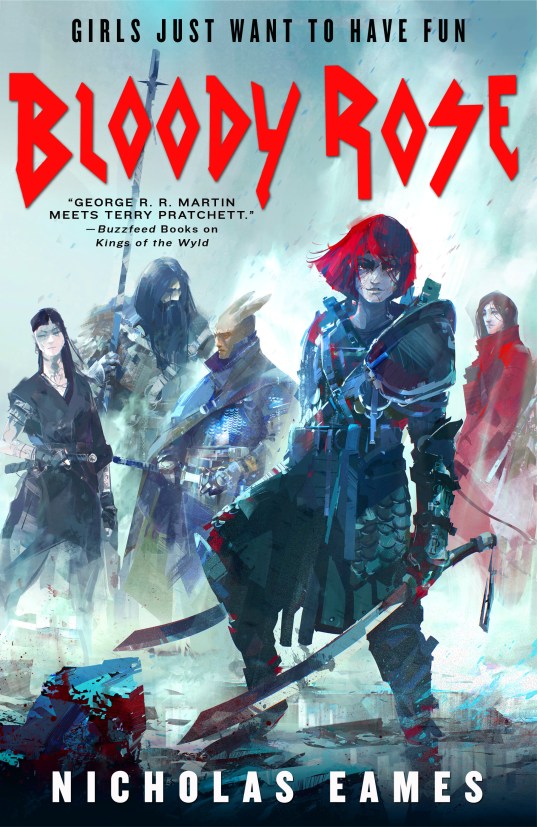
Bloody Rose by Nicholas Eames

Bloody Rose Cover.jpg

Publisher: Orbit

Publication Date – 10 July 2018

Amazon

Sensational fantasy author Nicholas Eames follows up his exceptional debut with the five-star novel Bloody Rose, featuring an epic quest storyline which takes its protagonists through a series of wild adventures in a spectacular and large-scale fantasy landscape.

In the human lands of Grandual, mercenary bands hold a celebrity status among the people.  Originally formed to help protect against the horrors of the world, most bands now spend their days touring from city to city, fighting monsters in arenas in order to gain fame, glory and money.  The most famous of these bands is Fable, led by the notorious Bloody Rose, daughter of the land’s greatest hero, Golden Gabe.  Years after her father led a mercenary army to rescue her from a horde of monsters, Rose has reformed Fable with the druin Freecloud, the shaman Brune, the Inkwitch Cura and their booker, the waggish satyr Roderick.  With a massive chip on her shoulder, Rose is determined to take on the toughest jobs and challenges that she can find.

In the city of Ardburg, Tam Hasford is sick of her job slinging drinks at the local pub to the famous mercenaries passing through.  As the daughter of two mercenaries herself, Tam craves adventure, and when Fable rolls into town looking for a new bard, Tam jumps at the opportunity to travel with Bloody Rose and her band.  Gaining a well-deserved reputation for her singing and an accidental reputation as a fighter, Tam receives the moniker ‘The Bard’ and a crash course in the mercenary lifestyle of drinking, gambling, fighting and good times.

But while Tam is having fun in her new role, there is still work to be done.  A massive monster horde has once again left the wilds and is threatening several human cities.  All of Grandual’s mercenary bands are gathering to meet them, all except Fable.  Rose is leading her band in the opposite direction and appears unconcerned with the potential devastation the monsters could cause.  Has Bloody Rose lost her nerve or does she have a far more dangerous quest in mind?  While Fable’s plan to become legends may prove to be successful, they will have far more destructive consequences than anyone could ever predict.

Bloody Rose is the incredible sequel to Eames’s 2017 debut, Kings of the Wyld, and forms the second book in Eames’s The Band series.  Set several years after the events of the first book, Eames switches up the story, focusing on the adventures of Rose and her band of mercenaries, while telling the narrative through the eyes of new point-of-view character Tam.  While there are many tie-ins with the first book, including several of the main characters, Eames has mostly shifted the focus onto a new generation of characters.

Although Bloody Rose is the second instalment in this series, curious readers can easily start their adventure with this book.  This book’s point-of-view character, Tam, never directly experienced the battles of the first entry in the series, and she ends up having quite a few conversations that describe or dramatise the events of the previous novel.  As a result, new readers who start with Bloody Rose will not experience any confusion and will be able to enjoy this story right off the bat.  That being said, readers who start with this book will probably get a hankering to read Kings of the Wyld due to how amazing Bloody Rose is.

This is a substantial piece of fantasy literature with a powerful story that is guaranteed to draw the reader in from the first page.  The huge scope of this story is just remarkable, as what begins as a simple adventure story transforms into an epic battle for the survival of all life in the world.  Much of this scope is the result of the significant number of secondary characters and antagonists that are introduced throughout the book.  It is a testimony to Eames’s skill as a writer that all these characters don’t overwhelm the story, and the reader finds themselves interested in seeing how each these characters ends up.  The use of a brand new point-of-view character to tell this story is a clever move from Eames as it allows a fresh insight into this world of mercenary bands and monsters, moving on from the old veterans that were the focus of Kings of the Wyld.

The author has infused his narrative with a huge amount of humour, most of it quite adult and over the top in nature.  This humorous tone infects quite a lot of the way that the book is told and makes it a very fun read.  There are some extremely funny scenes through the book, from debates about fake cockatrices, to the antics of a drunken satyr, to discussions about the dietary requirements of minotaurs.  While this humour is a key and overwhelmingly fun part of the story, Eames does get deadly serious in several parts of the book when the protagonists encounter dark days.  These darker scenes are felt particularly hard by the reader, mainly due to the sudden shift away from the lighter tone of the rest of the book.  While there are several examples of this throughout the story, I found that the final scenes of this book were particularly intense and had me absolutely captivated.  This clever combination of the outstanding comedy overtones and the gripping dramatic moments works exceedingly well and turns Bloody Rose’s story into one of the best fantasy narratives I’ve had the pleasure of reading.

In addition to the great use of comedy, drama and story, Eames has also packed this book with a significant amount of action and adventure.  The protagonists of this story essentially fight everyone as they adventure across the land, and participate in all sorts of combat, including arena battles with monsters, fights with titanic creatures, large-scale battles and even a few tavern brawls.  All these action sequences work well with the book’s other elements.  Not only do these battles result in some devastating moments but Eames also includes some comedy in these fight scenes, which can prove to be very entertaining.  Readers should also keep an eye out for the fun and inventive combat tactics used throughout this book, which are not only destructive but creative.  Never has red hair been used in battle so effectively.  With as much conflict and combat as you’ll ever need in a book, this is a perfect read those looking for those looking for their next injection of thrilling action and adventure.

Eames has also created a vast world to be the setting for this story, filled with a huge number of fantasy creatures and massive amount of world building lore.  Having such a large and well-established world is essential for a story of this magnitude.  The protagonists do a substantial amount of travel from one end of Grandual to the other, exploring large cities, small towns, barren wastes, massive battlefields and dangerous forested areas.  The author has also filled this story with every classic fantasy and mythological creature one could think of, as well as a few unique creatures from his own imagination.  All these creatures are a great addition to the story, resulting in some very fun battle sequences throughout the book, especially when their a huge number of these creatures in action.  One of the more intriguing races is the druin, the rabbit-eared humanoids created by Eames which used to rule all the humans and monsters of this fantasy world.  There is some fascinating history around the druin which has some significant impacts on the story, as well as gifting these creatures with some cool abilities that come into play in a variety of great ways.

The author has also spent time developing a fantastic band of main characters for the reader to follow on their adventure.  Using his new narrator, Tam, to full effect, the reader is given an introduction to every member of Fable and learns their history and motivations in significant and interesting detail.  A decent amount of time is spent looking at all of the members of Fable and the reader is given a deep understanding of each of them.  Each member of the band is a fairly unique fighter and character in their own right, but together they form a fun team.  Eames really hammers home how close these band members become throughout the book, and the reader becomes attached to the characters as they grow closer together.  This makes any potential harm or trauma they experience particularly hard for the reader to experience, and really adds to the books emotional depth.

With the follow-up to his epic debut, Eames has once again demonstrated why he is one of the freshest and most exciting new voices in fantasy fiction.  This exceptional story is an action-packed bonanza that sees several compelling characters engage in a heroic quest across an impressive fantasy landscape.  With the perfect blend of comedic adventure, epic fantasy storytelling and some dramatic character moments, Bloody Rose is an exceptional and excellent read that is guaranteed to become your new favourite story.

My Rating:

Five Stars

Amazon

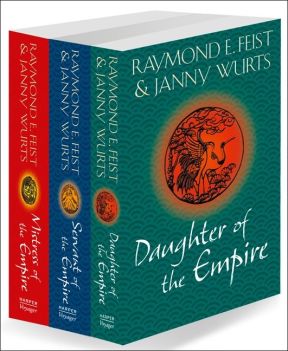
Throwback Thursday: The Empire Trilogy by Raymond E. Feist and Janny Wurts

The Empire Trilogy Cover.jpg

Publishers: Doubleday, HarperCollins

Publication Dates:

Daughter of the Empire – 1987    Amazon

Servant of the Empire – 1990       Amazon

Mistress of the Empire – 1992      Amazon

Collected Volume –                        Amazon

Reviewed as part of my Throwback Thursday series, where I republish old reviews, review books I have read before or review older books I have only just had a chance to read.

If you are a fan of Raymond E. Feist’s books, check out my review of his latest work, King of Asheshttps://unseenlibrary.com/2018/05/30/king-of-ashes-by-raymond-e-feist/

Set in the same universe as fantasy author Raymond E. Feist’s legendary Riftwar Cycle is The Empire Trilogy, which serves as a fantastic companion series to his main body of work.  This trilogy, made up of Daughter of the Empire, Servant of the Empire and Mistress of the Empire was written in collaboration with fellow fantasy author Janny Wurst and represents an intriguing piece of literature that shines not only as a side series to Feist’s first two books but also as a substantial and powerful standalone series.

I first came across this series during my school days, when I had to read Daughter of the Empire for a fantasy literature course (great book, terrible teacher).  I was already very familiar with Feist’s massive fantasy universe, having read all the other books available in the series at that point, though in a somewhat eclectic order.  I had not previously attempted to read The Empire Trilogy before this point, but I eagerly dived into Daughter of the Empire when I got my copy from the school library.  I was immediately entranced by the story and read it several times in that semester, especially during the more boring classes.  Upon completing the first book, I also sought out the second and third books in the series in order to see how the fantastic storylines continued.  In recent years, I was lucky enough to find audiobook copies of the entire trilogy, and have since re-listened to it several times.  These more recent perusals only confirmed my enjoyment of this series, as well as my love of Feist’s massive fantasy world.

The first book of The Empire Trilogy, Daughter of the Empire, was published in 1987, one year after the final book in The Riftwar Saga, the first trilogy in Feist’s massive Riftwar Cycle.  In many ways, Daughter of the Empire and the second book, Servant of the Empire, serve as accompaniments to Feist’s original series, as both plots are set at the same time and events that occur in Magician and Silverthorn have significant impacts within The Empire Trilogy.
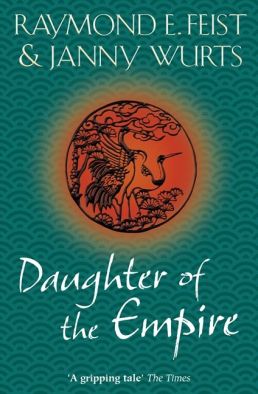
Daughter of the Empire Cover.jpg

The Empire Trilogy follows Mara of the Acoma, a young woman who becomes the Ruling Lady of her house after the sudden death of her male relatives.  Through the course of this series, Mara must become a strong ruler to maintain the honour of her family and ensure the survival of all the people pledged to her house.  Mara must use all of her cunning to overcome powerful opponents while adapting new methods and viewpoints that are uncommon in her regimented culture in order to survive.

This series is set in the world of Kelewan, a vast planet inhabited by several strange alien species, and mainly focuses on the inhabitants of the massive Empire of Tsuranuanni.  The Tsurani were introduced in Feist’s first book, Magician, where they travel through a magical rift to the world of Midkemia and clash with the inhabitants of this new planet in an event known as the Rift War.  The Tsurani are a race of humans based on a combination of real world cultures, such as the Japanese, Koreans and the Aztecs.  For example, the overriding Tsurani ideal of honour, an exceedingly important concept in the books that strongly influences their culture and way of life, is very strongly based on feudal Japanese ideals of the samurai and bushido.  Kelewan is explored within Magician through the eyes of Feist’s main protagonist, Pug.  Midkemia is the main setting for the books in the Riftwar Cycle.  While Kelewan is visited in later books of the Riftwar Cycle, most notably in Silverthorn, it becomes a more underutilised setting as Feist’s overall series continues, before eventually being destroyed in Wrath of a Mad God.

Each of the books in this trilogy contains epic and captivating stories that not only highlight life in these alien planets but also show a tale of survival and victory against all odds as the protagonist, Mara, faces and overcomes the superior forces arrayed against her.  The first book in the trilogy is Daughter of the Empire, which introduces many of the series’ main characters and storylines.  The protagonist and main point-of-view character is Mara of the Acoma, who is dramatically pulled from her peaceful life as a novice priestess into the deadly and treacherous world of Tsurani politics.  Mara’s father and brother were killed during a battle on Midkemia because of treachery from the most powerful house in the Empire, the Minwanabi.  As a result, Mara is forced to take on the role of Ruling Lady to save her house from being destroyed and her retainers taken as slaves or forced to become honourless bandits.  With the vast majority of her soldiers killed in Midkemia, Mara must find creative ways to stop the Minwanabi and other rival houses from wiping her out.

Mara proves to be an effective leader, bending Tsurani traditions to her favour, recruiting talented followers and forming new alliances.  Her machinations result in a political marriage to a brutal husband whom Mara must endure until the moment is right to remove him.  Watching the protagonist rebuild her house through any means necessary is a fantastic focus of this book which really allows the reader to get a strong idea of Tsurani politics, ideals and culture, as well as Mara’s determination as the central protagonist.  The climax of the book is set within the Minwanabi stronghold, which Mara has been forced to visit in order to attend a celebration for the Warlord (the Tsurani equivalent of a feudal Japanese Shogun).  This final part of the book is filled with significant tension and fear, as everyone is well aware that the Minwanabi will murder Mara before she leaves the party.  Mara must find a way to use the Tsurani honour system to prevent her own assassination while also striking a blow against her opponent.  Daughter of the Empire is an exceptional introduction to this fantastic series, and is a spectacular novel in its own right.

Feist and Wurst followed up their first entry in this series with another sensational novel that doubles down on the action and intrigue and contains some of the best sequences in the entire series.  Servant of the Empire directly follows on from the events of the first book and sees Mara and her house still in great peril.  Mara may have overcome the previous ruling lord of the Minwanabi, but her enemies are still the most powerful house in the Empire.  While the new lord is nowhere near as competent as his father was, he has called up the family’s most devious and destructive member, Tasaio, the man who organised the death of Mara’s father and brother.  As the Minwanabi plot against the Acoma, Mara is distracted by her acquisition of a group of Midkemian slaves, especially the charismatic Kevin of Zūn.  As Mara and Kevin fall in love, the Acoma are drawn into a series of battles on many different fronts, but Kevin’s alien way of thinking offers Mara a distinct advantage.  But events completely outside Mara’s control may have the greatest impact on the future of her house.  Both the magician Pug and the chaotic event of the Riftwar bring significant change to the Empire, and Mara and her enemies must seek new ways to turn these events to their advantage.  While Mara’s relationship with Kevin provides her with strength, it also represents her greatest weakness.
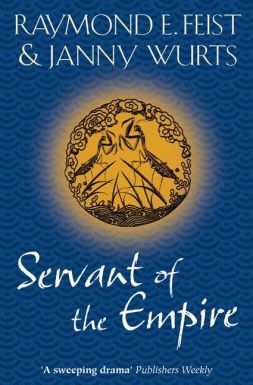
Servant of the Empire Cover.jpg

There is a lot going on within this book, including a number of large-scale battle sequences, as well several scenes focusing on the Empire’s political intrigue.  The standout scenes for me have to be either the extended sequence in the arena which features a different point of view to the chaotic magic unleased by Pug in Magician, or the sequences where the biggest houses in the Empire stage a night-time battle of assassins in the halls of the Imperial Palace.  While this might be my favourite book in the series, I am not the biggest fan of the way the romance angle between Mara and Kevin is portrayed.  Kevin, however, is a fantastic addition for this book, and it is intriguing to have a character that has a similar viewpoint as the reader to observe and comment on Tsurani honour, politics and culture.

The third book in the series, Mistress of the Empire, is set some years after Servant of the Empire and sees Mara and the Acoma once again up against a superior enemy.  After their victories in the second book, the Acoma are now the most powerful house in the Empire, but Mara’s sins have come back to haunt her.  When the Hamoi Tong assassins initiate a devastating strike at the Acoma, the Assembly of Magicians forestalls Mara’s vengeance against the house she holds responsible.  The magicians, known throughout the Empire as “Great Ones” are determined to limit the Acoma’s influence, and Mara soon finds herself in a hidden war against the most destructive force in all of Kelewan.  At the same time, her former brother-in-law, Jiro of the Anasati, seeks retribution against Mara, while her loyal Spy Master Arakasi seeks to find a way to finally destroy the Hamoi Tong.  Travelling outside the Empire, Mara uncovers dark secrets about the Assembly, and her actions will have major impacts on the future of Tsurani life.

Mistress of the Empire is an excellent conclusion to this trilogy that not only provides a compelling story with exciting new additions but also neatly wraps up storylines from the previous two books.  While this book probably has the least connections to the events of Feist’s main series, it dives deeper into the history and hidden lore of Kelewan and the Empire, including the Assembly of Magicians, a sinister and powerful group in Feist’s universe.  Many of the main characters get satisfying endings to their storylines, and we get to see several chapters told from the point of view of the Spy Master Arakasi.  Arakasi is one of the series’ best characters; however, due to the nature of his work, the readers usually do not get to see him in action, instead only hearing second-hand accounts of his missions.  Readers get to enjoy scenes that focus on Arakasi’s investigations into both the Assembly of Magicians and the Hamoi Tong, which also serve to expand on Arakasi as a character.  Readers will also enjoy the fact that, after two books in which the antagonists need to keep up the appearance that they are obeying the Tsurani code of honour in their battles with the Acoma, Mara is now forced to go up against an opponent outside the typical laws and practices of the Empire.

One of the most interesting aspects of this series is how the authors have tied the books into the events of Feist’s original trilogy.  There are actually a few pre-emptive mentions of characters and events that become an important part The Empire Trilogy in Feist’s first book, Magician.  For example, the Shinzawai, a major house, whose members become key characters in The Empire Trilogy, are first introduced in this book as friends of Pug.  During Pug’s adventures in Kelewan, there is mention of a visit to the Lady of the Acoma, an event that subsequently occurs in Servant of the Empire.  The Minwanabi betrayal of the Acoma forces is also described to the Midkemian protagonists of Magician by a former Tsurani slave in an attempt to highlight the Tsurani system of honour and politics.  The first book in The Empire Trilogy, Daughter of the Empire is actually set in the time gap between the two halves of Magician, and takes a closer look at the impact that the Riftwar has had in Kelewan.

A more direct connection to the series is established in Servant of the Empire.  As mentioned above, long-running Riftwar Cycle protagonist, Pug, makes several appearances in this book, mirroring events that occur in second half of Magician.  Events that occur in Feist’s original trilogy have severe impacts on the plans of Mara and her enemies, such as the destruction of a huge number of Tsurani lords in the final battle of Magician and the death of the new Warlord in Silverthorn.  All of these become significant plot points in Servant of the Empire, and it is absolutely fascinating to see the impacts of events in other books.
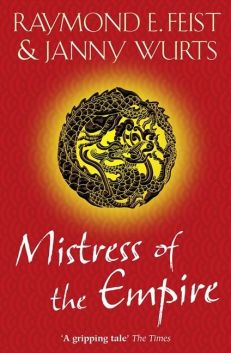
Mistress of the Empire Cover.jpg

The most spectacular crossover event comes about halfway through Servant of the Empire, which shows some of the cataclysmic events from Magician from a whole new perspective.  In the second half of Magician, the powerful magician Pug unleashes his full fury on an arena full of Tsurani, sending wave after wave of magical attacks and disasters on the arena’s audience.  The scene is very intense when told from Pug’s point of view; however, readers of the second book in The Empire Trilogy are shown the absolute terror and destruction that a member of this crowd experienced during these events.  Mara, Kevin and a few Acoma retainers are present when the magical attack occurs and must flee through the panicking mob while also avoiding enemy assassins.  The sheer chaos and dread experienced by these characters and the surrounding crowd is astounding, and turns an incredible scene from Magician into one of the most intense and memorable sequences Feist has ever written.

Throughout the series, the Mara and her house are engaged in significant conflict with other factions in the Tsuranuanni Empire.  In the first two books, their opponents are primarily the most powerful house in the Empire, the Minwanabi, while the third book sees Mara in conflict with another influential house, as well as the Assembly of Magicians and the Hamoi Tong assassins.  As a result, the main focus of these books is usually the battles for supremacy between the Acoma and their opponents.  However, what sets these stories apart from other fantasy novels is the way that these battles are fought.  While an all-out war would probably ensure a quicker conclusion to this struggle, the Acoma and their enemies are forced to fight within their nation’s rules of conflict and honour.  As a result, the participants are forced to fight in a far more shadowy conflict.  While there are battles between armies, often with one side in disguise, the participants also fight using economics, espionage and politics.  Throughout the book, the protagonist makes alliances, build up her resources and use her influence to mould the politics of the realm to her advantage.  The reliance on honour is a fascinating part of this battle, and the reader will enjoy seeing the protagonist use this concept of honour to manipulate her opponents.  The real fun comes when the various participants are no longer bound by the rules and are able to unleash much more devastating and direct attacks on each other, such as the massive battle in the imperial palace that takes place in Servant of the Empire.  The battles for survival and control of the Tsuranuanni Empire represent an absolutely captivating and exciting part of this series, especially when the Acoma spymaster Arakasi gets involved.

Readers of The Empire Trilogy are also gifted with a deeper understanding and appreciation of the people, races and culture of Kelewan.  This world and some of its history was explored in Feist’s earlier books, including Magician, where an extended magical vision showed the reader key points in the planet’s history.  However, for those readers who wish to have a truly deep understanding of life in Kelewan, and the Tsuranuanni Empire in particular, the books in this trilogy are the best things to read.  Through the protagonist’s eyes the reader gets to explore the various pieces of land that make up the Empire, as well as the creatures that inhabit these lands.  Feist and Wurst also spend significant amount of time looking at the Cho’ja, the ant-like alien creatures who were first introduced in MagicianDaughter of the Empire takes a very interesting look at the Cho’ja, especially as an early part of the book focuses on the protagonist’s attempts to win a Cho’ja colony for her land.  In order to do this, she enters a hive and negotiates with a newly hatched queen in order to provide Mara with additional warriors and access to silk spinners.  In order to gain an edge on her competition, Mara attempts to understand the cultural differences between her race and the Cho’ja, and is able to come up with some intriguing conclusions as a result.  These initial and interesting observations of this race are then massively expanded upon in Mistress of the Empire when Mara, in an attempt to find out the secrets of the Assembly of Magicians, uncovers the true history of the Cho’ja and the ancient pacts they are bound to.  Readers will be absolutely fascinated by the lore of these creatures, and there are some great scenes featuring Cho’ja economy and their skills in battle.  In addition to the Cho’ja, Feist and Wurst also explore some of the human nations that exist in Kelewan, including the desert tribes of Dustari and the Thuril.  These explorations aren’t as detailed as the authors’ look at the Cho’ja and the Tsurani, but are intriguing in their own right, as the authors create some unique cultural features for them.

While the examination of the Cho’ja and the other human races of Tsurani is an intriguing and detailed part of the books in The Empire Trilogy, it pales in comparison to the massive amount of time spent exploring Kelewan’s main civilisation, the Tsuranuanni Empire.  The vast majority of the three books is spent within the Empire, with only a small portion of Mistress of the Empire spent outside.  Feist introduced a lot of the elements of the Tsurani in Magician, but this is expanded on substantially in this series.  Readers who read through these books will be left with an incredible amount of information about Tsurani politics, religion, culture, societal makeup and various other parts of day-to-day life in the Tsuranuanni Empire.  The use and examination of Tsurani politics at many different levels is an extremely compelling part of these books, and the various meetings and manipulations that occur represent a very enjoyable part of the book.  The concept of Tsurani honour is also explored in great detail.  Honour is a massive and defining part of Tsurani culture, and the various characters risk everything to maintain it.  Living or dying without honour is considered the worst thing imaginable as it will impact on the individual’s reincarnation in the next life.  The concept of honour is particularly skewed towards the Tsurani nobles, and it often takes an outside perspective, like that of Kevin, to identify how unfair the system is.  Mara becomes particularly adept at using this honour system to her own advantage.  While absolutely devoted to maintaining her family’s honour, her interactions with Kevin lead her to try and make some substantial changes in Tsurani society.  The books in the trilogy also reveal some deeper understandings about Tsurani history and the various secret organisations such as the Assembly of Magicians have been protecting.  While physically reading these books allows the reader to absorb a lot of this lore, I would also suggest that people check out the various audiobooks that have been produced, which can help listeners to absorb more of these amazing story elements.

I do have a few minor criticisms about this series, but nothing that is really going to change my high regard for it.  There are some unnecessary scenes where Mara is scolded and nagged by her nurse, Nacoya, who quickly becomes one of the series’ more annoying characters.  I felt that some of the scenes featuring Nacoya’s constant criticism took away from Mara’s image as a skilful and intelligent leader, and just made her seem like a foolish girl.  Luckily Nacoya is easily overshadowed by several of the other supporting characters, such as Keyoke, Arakasi and Lujan.  I also found parts of the relationship between Mara and Kevin in Servant of the Empire to be very frustrating, especially as they seemed to keep cycling through the same problems and issues.  Luckily, Kevin’s ‘barbarian’ insights and ideas more than make up for this, as he produces some excellent battle and political tactics throughout the book.  Overall, these are some fairly minor criticisms from me, and I really love all three of these books.

The Empire Trilogy from Raymond E. Feist and Janny Wurst is a spectacular fantasy series set in the same incredible universe as the Riftwar Cycle.  This trilogy of books is an amazing series in its own right; however, it’s real strength comes from it being a clever tie-in to Feist’s main series of books.  Featuring some incredible story elements, exceptional action-packed scenes and a detailed setting stuffed full of lore, The Empire Trilogy is some of these two talented authors’ best works, which still stand up to this day.  The series is required reading for anyone who has read Magician and other books in the Riftwar Cycle, but it also comes highly recommended for those readers looking for that next fantasy series to fall in love with.

My Rating (Series and Each Book):

Four and a half stars

Dreadful Company by Vivian Shaw

Dreadful Company Cover.jpg

Publisher: Orbit

Publication Date – 24 July 2018

Amazon     Book Depository

Those looking for an entertaining, intriguing and different take on the horror genre should investigate Dreadful Company, the latest book from author Vivian Shaw, which contains a thrilling story based around the doctor to your favourite fictional monsters.

Greta Helsing is London’s medical practitioner for the undead, providing specialised treatment to the city’s hidden community of ghouls, vampires, mummies and zombies.  After being called to Paris to attend a supernatural medical conference, Greta’s plans to enjoy a stimulating discourse and debate on monster medicine is ruined when she is suddenly kidnapped off the street.  Her abductors turn out to be a coven of young and murderous vampires led by the unhinged Corvin, who bears a particular grudge against Greta’s vampire friend Ruthven.  Even more concerning, a member of Corvin’s coven is using magic to summon small and friendly magical creatures.  While the creatures may be harmless, the ripples they are causing in reality are not, and represent a significant threat to our world.

While Greta is trapped in the tunnels and catacombs below Paris, her friends arrive in the city to save her.  Legendary elder vampire Ruthven and Greta’s vampyre boyfriend, Sir Francis Varney, team up with Paris’s guardian werewolf, two immortal paranormal investigators and the city’s resident demon to free Greta and put an end to the dimensional instability.  But Greta and her companions are about to find out that there are weirder and more dangerous things than a collection of bloodthirsty vampires in the tunnels underneath Paris.

Dreadful Company is Shaw’s follow-up to her 2017 debut novel, Strange Practice, and is the second book in her Dr Greta Helsing series.  Dreadful Company returns several of the protagonists from the first book while also adding in a healthy number of new and exciting characters.  A third book in the series is already planned; I will definitely be keeping an eye out for Grave Importance next year.

Shaw’s latest book contains a fun and electrifying adventure that pits several ancient beings and their doctor against a coven of vampires and the magical catastrophe they have created.  The author tells her story through a range of characters to show many different perspectives of the adventure taking place.  Not only is every single protagonist – including returning characters Greta, Ruthven and Varney, as well as new characters the werewolf St Germain, the remedial psychopomps Brightside and Dammerung and the demon Irazek – a point of view character, but so are several of the young vampires who serve as the book’s antagonists.  This allows Shaw to tell a much wider story.  Not only is the central adventure explored in greater detail from a several angles, but the motivations, shared histories and the underlying thought processes of the story’s key players are presented to the reader.

Shaw has made a smart decision to change the book’s main setting from London to Paris.  Many writers can get bogged down in one location during their series, but Shaw did a fantastic job adapting her story to a completely new and unique cityscape, a trend that she will apparently continue to follow in her 2019 addition to the series.  Shaw makes full use of several iconic Paris locations, particularly the catacombs and tunnels underneath the streets, which are the perfect setting for a horror story.  Overall, Dreadful Company contains a rather exciting adventure story that makes spectacular use of its horror and fantasy elements, while also making use of the humour and history of its many point-of-view characters to lighten the darker tone of the book and create a unique and entertaining read.

I was extremely happy that Shaw included more examples of monster medicine within Dreadful Company.  The examination of the medical techniques used on supernatural characters was one of the best features of Strange Practice, and was a very unique and compelling element of this first book.  There are a number of wonderful general monster medicine scenes throughout the book, including a supernatural medicine conference where topics include ‘An overview of the various treatment modalities for tissue degeneration in Class A revenants’ (how to stop bits falling off zombies).  Readers will really enjoy Dreadful Company’s interesting focus on the medicine of vampires.  Shaw did spend a little time exploring the biology and treatment of vampires in the first book, which is expanded upon in Dreadful Company.  There are several discussions about vampire anatomy and physiology, including some of the features of the different vampire subspecies.  There is also a detailed look at the effect of certain substances on vampiric characters, including drugs and garlic, as well as the surprisingly devastating absinthe.  The protagonist is also forced to treat a number of different vampire characters for a variety of different conditions, including an overdose, stab wounds and an infection caused by a ghoul bite.  Once again, Shaw’s inclusion of monster medicine was an amazing part of this book, and I am looking forward to the third novel in the series, Grave Importance, which will focus on the care of mummies.

Aside from the examination of vampire biology, Shaw has also included a fascinating look into the different vampire mentalities, particularly when it comes to the old school versus the young bloods.  The two elder vampire characters, Ruthven and Varney, are reformed from their violent past and are instead trying to live normal and peaceful lives alongside humans.  The younger vampires, on the other hand, are bloodthirsty creatures who don’t follow any rules, kill indiscriminately and indulge in drugs and wanton behaviour.  The differences between the behaviours of these two different types of vampires are quite noticeable, especially when the younger vampires try to live up to all of the vampire stereotypes, such as sleeping in coffins, wearing elaborate clothes and makeup, making up dumb names for themselves, developing a superiority complex and trying out various ways to make themselves glitter.  While these inclusions are extremely fun, the readers will really experience chills when they see how angry the usually calm characters Ruthven and Varney get when they encounter these younger vampires and realise what taboos they have broken.

In addition to the creative and captivating use of vampire characters throughout the book, Shaw has referenced several other classic horror creatures and villains.  There are several allusions to Frankenstein and The Phantom of the Opera, with the protagonists actually visiting the Phantom’s underground lair at one point.  There are also other creatures, such as magically summoned hair monsters, well monsters and a whistle-summoned spirit, all of which play an interesting role in the plot.  Some great humour also comes from the inclusion of several ghosts, many of whom can be found having a lively party in Paris’ iconic Père Lachaise cemetery.  Highlights of this scene include a snarky Oscar Wilde and a musical Jim Morrison, both of whom have some great interactions with the new characters, Brightside and Dammerung.

Dreadful Company sees new author Vivian Shaw return with another fun and thrilling horror novel that contains a fast-paced adventure and a light comedy enhance tone.  Shaw has invested in a range of new characters, a fresh setting and some appealing fantasy and horror elements.  The author’s clever and memorable inclusion of monster medicine once again shines through as the book’s best feature, as well as the detailed examination of the vampire psyche.  An absolutely amazing second outing from Shaw, Dreadful Company is a fantastic read that will prove to be both unique and captivating to a huge range of readers.

My Rating:

Four and a half stars

Amazon     Book Depository

City of Bastards by Andrew Shvarts

City of Bastards Cover

Publisher: Hyperion

Australian Publication Date – 31 July 2018

World Publication Date – 5 June 2018

Amazon     Book Depository

Young adult fantasy author Andrew Shvarts has a dramatic return with City of Bastards, an explosive and incredible follow-up to his electrifying 2017 debut.

After her father’s declaration of rebellion against the crown, Tilla, bastard daughter of Lord Kent, turned against him by rescuing the king’s daughter, Princess Lyriana, from his clutches.  Fleeing her father’s lands in the west of the Kingdom of Noveris, Tilla, Lyriana, and Tilla’s boyfriend, Zell, make the journey to the capital city of Lightspire, the opulent and magical city where Lyriana’s father reigns.

Attempting to put aside the horrors she experienced while fleeing from the west, Tilla settles down in a life of luxury as a student in the city’s prestigious university.  However, not everything is as shiny and golden as Tilla had hoped it would be.  She faces ostracism from the most of the city’s population as her father continues to wage war against the kingdom.  On top of that, Zell appears unsatisfied with city life and is growing distant from her.  Tilla and Lyriana are still mourning the death of Tilla’s brother, Jax, and not even their hard partying lifestyle is making them feel any better.

Their new lives are only destined to last for so long before disaster strikes.  When Tilla finds her roommate dead, she knows that a mysterious mage she encountered is behind the death.  But no-one seems willing to believe her, and the death is quickly ruled a suicide and pushed under the rug.  When she is then attacked by the rogue mage, something considered impossible, Tilla begins to realise that there is something very rotten in the heart of the Lightspire.  With her father apparently keeping the king’s invincible army of mages at bay, and shadowy cultists sowing chaos in the city, Tilla uncovers a terrible plot that could shake the entire foundation of the kingdom.  With the king’s inquisitor hunting her as a traitor and the whole word turned against her, can Tilla and her friends stop the evil unfolding in front of them before it’s too late?

City of Bastards is Shvarts’s second book, and is the sequel to last year’s release, Royal Bastards.  This is a fantastic new series of young adult fantasy books, with a third entry already planned for 2019.  These books are marketed towards a young adult audience, but this is a series that will also prove to be massively appealing to older readers as well.  Fair warning to parents: this is probably not the best series for younger readers, as the huge amounts of drugs, drinking, sex and teen angst make this books more appropriate for an mid to older teenage audience.

This novel contains a truly captivating story of intrigue and murder in the heart of a magnificent and magical city.  Shvarts combines some excellent thriller and fantasy elements together to create a superb overall narrative, which includes a large-scale conspiracy that proves to be particularly impressive.  There is a well-written and absorbing investigation angle getting towards the conclusion of this plot, and the full scope of this conspiracy is very elaborate and uses some intriguing magical elements.  There are a number of surprising twists, betrayals and dramatic reveals that will hook the readers, while the conclusion of the story is epic in its size and consequences.  Overall, this is an extremely compelling fantasy thriller story that has not been simplified for a younger audience.

Shvarts has also created an intricate and intriguing cityscape that serves as an excellent setting for the story.  There are some memorable locations visited throughout the course of the narrative, and the author does a fantastic job showing the differences between the richer areas of the Lightspire and the districts where the everyday citizens live.  Exploration through the city by the protagonist highlights this class difference and the corruption of the rich, all of which forms a significant story element later in the book.  The author also introduces some fascinating fantasy elements, such as large-scale magical messages, unique methods of transportation, rebellious anti-magic fanatics, the kingdom’s hidden magical heart and substantial catacombs under the city that hold dark and powerful secrets.  All of these elements play a significant role in City of Bastards’ story, and meld in perfectly with the protagonist’s investigation and the vast underlying conspiracy.

The entirety of City of Bastards is narrated by the book’s protagonist, Tilla.  Shvarts does an amazing job of capturing the essence of a modern teenager in the book’s narration, and the reader really feels that they are accompanying a rebellious young woman on her quest throughout the city.  As a result, the book is filled with sarcasm, funny jokes, humorous observations and a certain amount of complaining about the situation.  The story is also infected with a bit of teen angst, which is amusing to see amongst storylines dealing with the future of a civilisation and will no doubt prove to be relatable to many readers.  In addition to the humour, this narration also allows the reader to see the protagonist’s many vulnerabilities throughout the course of the story.  Overall, the protagonist’s narration adds a lot to this book, and is definitely one of its more appealing features.

A highlight of the book has to be the realistic focus on trauma and the powerful consequences of the first book.  Some of the very best young adult books are those which do not shy away from heavy topics, featuring gritty and realistic portrayals of trauma and PTSD as they try to highlight the often unseen or unconsidered costs of their character’s attempted heroism or battles for survival.  In City of Bastards, Tilla, Lyriana and Zell spend a significant amount of time dealing with the terrible things the encountered in the first book, including the death of Jax, Tilla’s brother and Lyriana’s love interest.  Lyriana’s transformation is the most dramatic, as is she suffering not only from Jax’s loss but also from the guilt and trauma following her decision to break her oath of pacifism and kill someone with her magic.  As a result, she turns from the sensible and respectful character she was in Royal Bastards to a hard-drinking wreck who acts out in a number of different ways and has a hard time dealing with her feelings.  Tilla is also traumatised by the death of Jax, and while at times she seems to be processing it better, her depression is compounded by the dramatic changes in her life and the outright disdain that many characters show her.  Overall, this realistic portrayal of trauma and vulnerability in the characters is very well written and adds a real emotional edge to the story.

City of Bastards is an amazing piece of young adult fantasy that makes substantial use of its new setting to create an epic, conspiracy-laden storyline that proves to be exceedingly captivating.  This is a powerful sequel to Andrew Shvarts’s first book, and fans of Royal Bastards will be entranced by the author’s focus on the first book’s devastating consequences.  This is one of the best pieces of young adult fiction of 2018.  I had a real hard time putting this book down, and it comes highly recommend.

My Rating:

Four and a half stars

Amazon     Book Depository

Early Riser by Jasper Fforde

Early Riser Cover.jpg

Publisher: Hodder & Stoughton

Publication Date – 2 August 2018

Amazon

One of modern literature’s quirkiest writers returns after a six-year hiatus to produce the eccentric and incredibly entertaining new release, Early Risers.

In an alternate version of our Earth, the entire world freezes over each winter, plunging the planet into a deep cold for the entire season.  Humanity has adjusted to this different climate by developing ways to hibernate each winter, sleeping through the long, cold months in specially designed habitations and ensuring that their bodies have enough stored fat to keep them alive.  Only a few weird and unconventional individuals choose to ignore their bodies’ need to sleep, and instead spend winter awake.  One such group are the Winter Consuls, a collection of misfits and rogues responsible for ensuring the safety of the sleeping population, whilst also patrolling against the horrors of the winter world.

In Wales, Charlie Worthing is about to experience his first winter as a new recruit in the Winter Consuls.  His first mission sees him drawn to Sector Twelve, base of the powerful HiberTech company and one of the most disreputable areas of the country, known for its controversial Winter Consuls.  Trapped within this sector, Charlie must contend with all the dangers that winter can hold.  Between the cold, his desire to fall asleep, the stamp-collecting addicted Villains, the mindless and cannibalistic Nightwalkers and the possibly mythical WinterVolk, Charlie is unlikely to survive his first winter.

However, all these threats pale in comparison to the damaging potential of a viral dream being passed around the inhabitants of Sector Twelve.  When Charlie starts to have the same dream, he finds himself thrust into a dangerous conspiracy with world changing consequences.  As Charlie becomes a target, he must work out who in this unforgiving world he can really trust, and who is using him to further their own aims.

Jasper Fforde is an exceptional author who has produced several novels since his 2001 debut, all of which were remarkable and very different from your standard read.  With an unusual style and superb skill, Fforde’s work is reminiscent of some of the novels produced by authors such as Terry Pratchett or Lemony Snicket.  Fforde has created some enjoyable and addictive reads over the years, including Shades of Grey, the Nursery Crime Division books and his exceptional Thursday Next series.  Early Riser is a standalone novel that takes the reader to another unique alternate Earth and presents them with an intriguing and very original story.

Fforde has a pattern of creating unique worlds to act as settings for his entertaining narratives.  These worlds often have elaborate rules and details that make the book’s story very distinctive.  For example, Shades of Grey is set in a world where people can only perceive limited shades of colour and social hierarchy is determined by how many shades and hues a person can identify.  The Thursday Next series is set in an alternate version of Earth where the Crimea War never ended, time travel exists and journeys into the literary world is both possible and heavily policed by characters from famous books.

Fforde continues this trend in Early Riser, creating another detailed alternate Earth setting.  This version of Earth experiences exceedingly cold winters and humanity has to hibernate each year as a result.  This is an absolutely eccentric and inventive concept, and it is fascinating to see how Fforde adapts a new fictional world around it and looks at how humanity has adapted to having to hibernate.  Like several of his other books, the story of Early Riser is set within this world’s version of Wales.  There is a focus on different types of technologies, especially those that help people successfully hibernate, different buildings and new societal norms.  One example of this is the concept that, in this colder world, larger, fatter people are more desirable and socially acceptable as they are more likely to survive their hibernation period, whilst skinny people, or those who choose not to hibernate, are seen as detrimental wastes of space.  Fforde further backs this up by creating an inventive alternate history for the world, including some funny and satirical depictions of an appropriately altered entertainment world.  Many elements of these alternate histories and new social norms are told directly within the story, but Fforde also fleshes out these ideas with a huge range of extra and very humorous details in footnotes and in-universe book excerpts at the start of every chapter.

Fforde has also ensured that Early Riser is particularly memorable by filling his story with a range of interesting and creative characters and threats.  Throughout the book, the protagonist encounters and examines the history, background and lore behind the threats roaming around the winter.  These include the Villains, aristocratic thieves who are the descents of British nobility who act in a stereotypically upper class way and are obsessed with stamp collecting and obtaining domestic servants through force.  There are also Nightwalkers, humans whose minds failed to withstand the hibernation process.  As a result, the Nightwalkers have been reduced to a zombie-like state and are potentially cannibalistic, although their urges can be controlled with comfort food.  Fforde has also included the mysterious WinterVolk, supernatural beings who reside in the winter world and have certain powers and tendencies.  There is particular focus on the Gronk, one of the newer WinterVolk, and the author includes discussions about the Gronk’s formation, its first appearance, its habit of taking the unworthy and only leaving behind their carefully folded clothes in the snow, all while singing Rodgers and Hammerstein hits.  In addition there are a range of wacky side characters throughout the series.  These side characters usually have some sort of zany quirk or a distinctive characteristic that proves to be entertaining for the reader whilst the protagonist often has to play straight man.  The standout example of this has to be the two one-eyed women who are both trying to get the protagonist on their side and who share an interesting connection with each other.  All of these imaginative literary inventions combine into one substantial and unforgettable story that will charm the reader with its quirky and fun nature.

While it is easy to focus on the unusual and humorous inclusions that Fforde has filled Early Riser with, readers will also enjoy the book’s compelling story.  The narrative is very stimulating and enjoyable, as it initially focuses on the protagonist’s introduction to life in the winter world, and then shifts to him attempting to unravel the conspiracy surrounding Sector Twelve.  Like many of the other inclusions within this book, the conspiracy is very complex and a tad strange, but it works well as the focus for a central investigative narrative.  Readers will enjoy the journey to the end of the mystery, and there are a few interesting twists along the way.  Overall, I thought that the inclusions and elements mentioned above worked well with the mystery, and while many of the solutions and suspects are bizarre, the book’s many unique inclusions do not overwhelm the story, but instead enhance it, resulting in a great story.

Jasper Fforde has once again produced a distinctive piece of literature that stands out thanks to its elaborate and original concept, its many fun story details and inclusions, and a solid and gripping central story.  Some readers may find the plot and story elements a bit weird, but this book will easily charm those who get in to Early Riser’s unashamed quirkiness and silly nature.  This is definitely one of the most inventive books of this entire year and a creative and exceptional new read from a fanciful and fantastic author.

My Rating:

Four and a half stars

Amazon