We are Blood and Thunder by Kesia Lupo

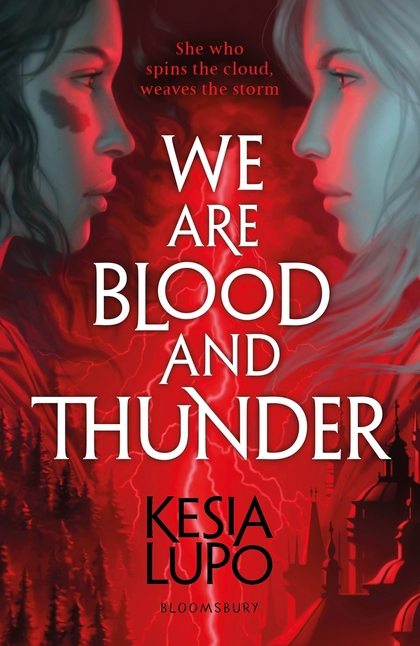
We are Blood and Thunder Cover

Publisher: Bloomsbury YA (Trade Paperback – 4 April 2019)

Series: Standalone / Book 1

Length: 400 pages

My rating: 4.5 out of 5 stars

Amazon

From first-time author Kesia Lupo comes We are Blood and Thunder, a clever, inventive and at times dark young adult fantasy novel that represents a brilliant start to a bold new fantasy world.

In the nation of Valorian, a powerful magical curse has been laid upon the city of Duke’s Forest. The curse has wrapped the entire city in a mystical storm cloud filled with death, sickness and despair. Following a series of virulent pestilences brought on by the storm cloud, the city has been placed in quarantine, although passage in or out of the cloud is already extremely difficult. Now, six years after the curse first struck Duke’s Forest, the fate of the city and all who live within will lie upon the shoulders of two young women.

Lena is a cryptling, one of the deformed or marked offspring of Duke’s Forest’s inhabitants who live in the sprawling crypts underneath the city and watch over the Ancestors, the interred dead of the city, who are worshiped as gods. Lena, whose birthmark saw her abandoned as a baby, led a quiet life below the city until strange things started happening all around her. Accused of being a mage by the magic-hating Lord Justice, Lena just barely escapes execution when she encounters Constance in the mists outside the city. Constance is the daughter of Duke’s Forest’s ruler, the Duke, and has returned to the city to reclaim what is hers. Trained as a mage, Constance recognises the magic within Lena and sends her outside the mist while she continues back to Duke’s Forest. However, this fateful meeting will have huge consequences on the lives of both women.

Once outside the mists, Lena encounters the huntsman Emris, a magic user trained to locate untrained mages like Lena, known as Rogues, who has been pursuing Constance for magical crimes she has been accused of. Emris brings Lena back to the City of Kings, the capital of Valorian, where she attempts to learn how to control her magic. However, her unusual magical abilities and status as a Rogue bring her to the attention of some of the city’s worst inhabitants. Back in Duke’s Forest, Constance finds that her city and her father have fallen under the control of the tyrannical Lord Justice. Keeping her status as a mage hidden, Constance attempts to regain control of Duke’s Forest while also searching for the source of the curse surrounding the city. As both Lena and Constance attempt to survive in their respective cities, fate keeps bringing their destinies together. The future of Duke’s Forest rests in the hands of these young women. Can they save the city, or will they be the storm that destroys it?

We are Blood and Thunder is a clever and extremely captivating young adult fantasy novel that I read a little while ago but only just got a chance to review. I wish I had gotten a review of this book up a little earlier as it is a fantastic first book and I have been quite keen to sing the author’s praises for a while. We are Blood and Thunder is the debut novel of exciting new talent Kesia Lupo and presents a powerful story filled with magic, betrayal, personal growth and the hunt for power. At the moment, We are Blood and Thunder is a standalone novel, but the author has indicated on Goodreads that she may set future books within the same universe.

The story of We are Blood and Thunder is told from the perspectives of Lupo’s two main characters, Lena and Constance. Each character narrates about half the book and tells their separate narratives through alternating chapters. This allows Lupo to tell two separate stories that are not only very different in content but which help show a far wider area of the new fantasy world that Lupo has created. I found both of the storylines contained within this book to be extremely fascinating. The first storyline, which is narrated by Lena, follows the character as she journeys to the City of Kings to learn more about magic. While there, she learns more about her mysterious powers and finds herself embroiled in the conflict between the Temples that control magic and an influential mage outside the control of the Temples who has the ear of the King. The second storyline, which is narrated by Constance, is a darker story of political intrigue, murder and dark magic within the walls of Duke’s Forest, as Constance attempts to find the heart of the storm cloud before it is too late, while also attempting to neutralise the tyrannical Lord Justice.

While the magical learning, emotional growth and world building featured within Lena’s storyline are really good, I did prefer the Constance storyline a little more. All the dark political manoeuvring within the unique setting of the cursed Duke’s Forest and the battle between Constance and the Lord Justice were pretty darn compelling, and I had a very hard time putting down the book while I was reading the Constance chapters. While both of these storylines are really good, I was quite impressed by the way that Lupo was able to combine the two separate stories together into one amazing overarching narrative. I felt that the two storylines really complemented each other and helped make each respective storyline better. For example, the explanations of this fantasy universe’s magic in Lena’s chapters help the reader understand some of the magical elements occurring in Constance’s chapters. At the same time, many of the preparations and relationships Constance forged for her desperate return to Duke’s Forest impact Lena as she uncovers dark secrets within the City of Kings. There are also a number of excellent plot twists cleverly hidden throughout the book that are slowly revealed in both storylines. I thought some of these twists, especially a big reveal towards the end of the book, were just amazing and helped turn this into an epic and electrifying story. I felt that the author’s use of the two separate storylines was an incredible way to tell the story, and the overall narrative was quite outstanding.

In addition to her excellent twin storylines, Lupo also came up with two awesome fantasy cities: the City of Kings and Duke’s Forest. The City of Kings is your classic fantasy capital with massive temples and palaces, where everything appears to be perfect and harmonious on the surface. However, there are some dark secrets at the heart of this city, and the magical politics prove to be a major threat to one of the book’s main characters. While this is a great setting, I have to say that the city of Duke’s Forest is the far more impressive setting. Even before the city was cursed, Duke’s Forest would have been an amazing fantasy setting, with its massive crypts staffed by abandoned children and its rabid intolerance of magic. However, by turning it into a city on the brink of death, surrounded by dangerous magical mists and clouds, Duke’s Forest transformed into a much more intriguing and memorable fantasy setting. Lupo does an amazing job bringing this inventive location to life, and I was impressed by the sense of despair and hopelessness that seemed to hang in the air in each chapter set in this city. These two city settings were great, and I felt that they both enhanced the book’s narratives. Duke’s Forest in particular added a sense of urgency to Constance’s hunt for the heart of the storm cloud. I am very curious to see what other locations Lupo will create for the nation of Valorian in the future, and I look forward to exploring more of this clever fantasy world.

I also quite enjoyed the interesting magical elements that the author utilised in We are Blood and Thunder. Lupo has invented some great magical lore in this book, and I had a lot of fun exploring the various aspects of it. Not only is there a city-wide magical curse but there is also a whole new system of magic for the reader to enjoy. I quite liked the intriguing magical systems that Lupo came up with, and there are a number of great elements to them. These include the vision-filled practice of mages binding their magic to a god in order to control their power, which then influences their magical power and abilities, as well as mages who don’t bind their powers and then subsequently lose control and become a Radical, a destructive being controlled by the underlying darkness in magic. These magical elements are mostly explored by Lena. As a member of an ostracised minority who lived beneath a quarantined city where all knowledge of magic was punished, Lena is a perfect character to explore Lupo’s magical elements. Lena has the same lack of knowledge of this world’s mage as the reader, so the readers get a baseline explanation of magic that also makes sense to the plot. I quite enjoyed the various magical elements that the author came up with in this book, and I am sure that she will further expand upon them in later books in this universe.

We are Blood and Thunder is an outstanding debut from Kesia Lupo which combines some amazing and complex character-based storylines with inventive fantasy settings and cool magical fantasy elements to create an awesome overall book. Lupo has some considerable skill when it comes to a compelling young adult fantasy book, and We are Blood and Thunder is an excellent first outing for this talented author. I look forward to reading more of Lupo’s work in the future, especially if she returns to the excellent world she created in We are Blood and Thunder.

Amazon

Throwback Thursday – Legend by David Gemmell

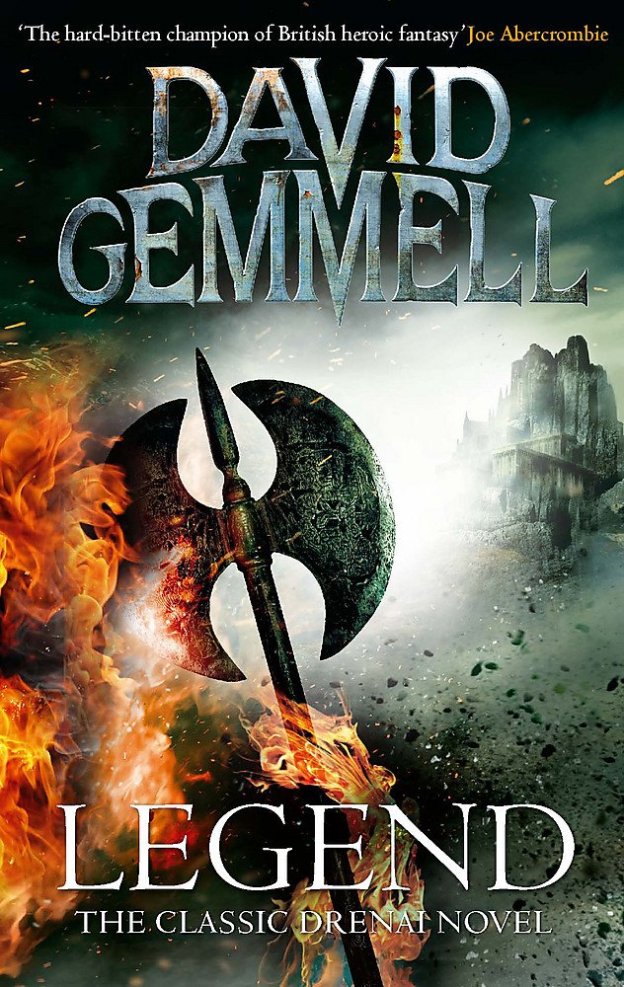
71IuPaXC5kL.jpg

Publisher: Hachette Audio (22 June 2017) – originally published by Century (April 1984)

Series: Drenai – Book 1

Length: 13 hours and 13 minutes

My Rating: 5 out of 5 stars

Amazon

Reviewed as part of my Throwback Thursday series, where I republish old reviews, review books I have read before or review older books I have only just had a chance to read.

In this week’s Throwback Thursday, I try out a fantasy book that has been on my mind for many years, the 1984 classic fantasy novel, Legend, by the late, great David Gemmell.

Legend was the debut novel from Gemmell, an impressive author who wrote over 30 novels between 1984 and his death in 2006, most of which fell within the fantasy genre. Some of his works included the Rigante, Stones of Power, Jon Shannow and Hawk Queen fantasy series, as well as the Troy and Greek historical fiction series. However, his most famous body of work has to be the Drenai series. Featuring 11 books, the Drenai series were a collection of loosely connected novels set within the same fantasy universe. While the storylines are all linked in some way or another, especially books like the three Waylander novels, the series can pretty much be read in any order, which is kind of what I did.

I actually have a bit of a random history with the Drenai series, as I happened to listen to the 10th book in the series, White Wolf, some years ago. For the life of me I cannot think why I would have grabbed this fantasy book off the shelf. Whatever the reason, the story of White Wolf stuck with me, and I would find myself occasionally remembering details of the plot, while completely forgetting the book’s title or the author’s name. I was eventually able to figure out what book it was thanks to the one clear detail I could remember (the names of the protagonist’s famous swords) and tracked down another audiobook copy of White Wolf to listen to a few years ago. I also really enjoyed White Wolf the second time around and was eager to find out more about the rest of the books in the series.

Out of all of the books in the Drenai series that I looked at, the one that appealed to me the most was the very first one in the series, Legend. Legend tells the story of an epic and desperate siege that sets up the entire Drenai universe and contains the defining story of Gemmell’s most iconic character, Druss the Legend, who also appeared in White Wolf. Many of the story elements of Legend deeply appealed to me, and it also made practical sense to start at the beginning of the series, especially as it serves as a significant point in the series’ chronology. Unfortunately, due to a combination of a lack of time, problems finding a copy of Legend, and a requirement to focus on more recent books, I never got a chance to read Legend or dive deeper into the Drenai series. However, it always remained high on my to-read list, and I am so happy that I finally got a chance to read it.

Legend is the story of the siege of Dros Delnoch, the fortress city that acts as a gateway to the declining Drenai Empire. Dros Delnoch is the greatest fortress in the world. Sitting in the middle of a narrow pass and guarded by six high walls and a great keep, the city should be able to withstand any attack. However, the charismatic Nadir warlord Ulric has forged together a mighty host of 500,000 Nadir tribesmen, which he plans to sweep over the walls of Dros Delnoch.

If the city is able to hold for a few months, a new Drenai army will be able to reinforce the battlements. But with only a small force of 10,000 soldiers within the city, many of them raw recruits, this seems to be an impossible task. However, help soon arrives from the most unlikely of places. Former solider Regnak follows his newfound love to the city, despite his apparent cowardice and dark secrets. A gentleman bandit leads his band of outlaws to man the walls, partly for money and partly to make up for his past sins. The mysterious band of mystical warrior priests, known as The Thirty, also arrives to fulfil their destiny to die in battle. Each group has a role to play in the defence of the city, but only one of the new defenders will give the Nadir pause and raise the defenders’ hopes, the greatest hero of the age, Druss the Legend.

For decades, Druss has fought and defeated every enemy he has come across, but there is one thing even he cannot overcome: time. Now a grizzled veteran of 60 years, Druss has come to the city for one final battle, but first he needs to come to terms with his status as a living legend. Even as an old man Druss is still a dangerous person, and there is a reason that he is known as Deathwalker by the Nadir. As the siege begins, heroes will rise, tragedy will stalk the defenders and a legend will end, but will anything be enough to withstand the Nadir horde?

Well damn, that was a pretty epic book and one that was well worth the wait it took for me to get around to reading this. Legend was an incredible and enthralling read that had me hooked from the very beginning all the way to the very last word. It is a classic piece of fantasy action and adventure. Gemmell loaded his story with some truly compelling and flawed characters to create an outstanding read. Featuring a ton of amazing, pulse pounding action, heartbreaking tragedy and an epic siege, this book was absolutely fantastic, and I am really glad I read it.

Probably the main thing that I liked about the book was Gemmell’s outstanding portrayal of a massive fantasy siege. I have always loved the classic siege storyline, and there is something about a huge army attacking a castle that I cannot turn away from. The siege of Dros Delnoch within Legend is easily one of the best sieges that I have ever read, as Gemmell produces a magnificent battle around the city that lasts nearly the entire book. The whole setup for the siege is pretty insane, with 500,000 Nadir tribesmen (who bear a lot of similarities to the historical Huns) attacking a Drenai (essentially Roman) city with six massive walls. The author does an amazing job properly pacing out this siege throughout the novel, including appropriating enough time to really showcase all the pre-siege activities, including training, preparation of the defences and initial sabotages before the first battle even happens. Once the battle begins, though, it is a non-stop barrage of action as the defenders fight off multiple assaults each day.

Due to the author’s excellent storytelling and character work, the reader becomes extremely invested in the fate of the defenders, and each time a wall falls, or the attackers gain an inch, you are mentally rooting for them to fight back. There are a number of discussions and plans that take place throughout the book, and it is quite fascinating to see the thought and planning that the author put into the defence of his city. I especially liked how the city’s six walls played into the battle, as the defenders’ decisions on how and when to hold these battlements provided some great moments and debates for the reader to appreciate. The siege lasts the entire book and features a huge number of epic fight sequences, all of which will get your adrenaline racing and your heart pounding. I loved every second of the siege that was featured in this book, and I hope to see it brought to life on screen one day (provided they do it right).

In addition to its first-rate siege, Legend also features a large number of complex and well-written characters. The first is Regnak, who turns into one of the book’s main characters. Regnak is a former soldier who is first presented as a coward, looking to flee all personal responsibility, although this is quickly revealed to be a side effect of being a natural ‘baresark’. However, when he meets Virae, the daughter of the Earl of Dros Delnoch, he falls in love and follows her back to the siege. Regnak has a great storyline about finding one’s inner courage and overcoming one’s issues, and while his romance with Virae is a bit weird at times, it does result in some tragic scenes throughout the book. Next you have the members of The Thirty, an order of 30 warrior priests who enter the fight knowing that 29 of their members are going to die. Not only do the priests represent most of the fantasy elements of this book thanks to their physic abilities but their ability to see into the future results in some interesting debates about destiny and fate. Quite a few members of The Thirty are introduced, although most of their story is focused on their youngest member, Serbitar, and his mentor, Abbot Vintar, as Serbitar has the hardest time accepting the future and wants to change it to help the defenders.

Without a doubt, the best character in the entire book is Druss the Legend. Druss is Gemmell’s most iconic character and has appeared in several other books in the Drenai series, all of which occur before the events of Legend. These include The First Chronicles of Druss the Legend, which details the rise of Druss and the events that made him a legend, The Legend of Deathwalker, which features an earlier encounter with Ulric and the Nadir, and White Wolf, where I first encountered the character of Druss. However, Legend is definitely the character’s defining book, as it features the conclusion of his epic life and his final stand.

There is a lot of great character work involved with Druss, and the man is a pretty epic character. He is an older man, many years past his prime, who was faced with a choice: die in glory at Dros Delnoch or decline into obscurity. Choosing to die in battle (mainly to spite Death), Druss arrives in Dros Delnoch ready to fulfil his destiny. Gemmell does an outstanding job portraying Druss as an old and wise warrior who is weakened by age but is still a far more capable warrior than many of the others involved with the siege. While readers will enjoy the action sequences featuring Druss, the main thing about the character is the way that he attempts to come to terms with his status as a living legend whose body can no longer keep up with his myth. Druss knows that his reputation as a man who always wins is one of the main things that keeps the soldiers going, and he is constantly working to inspire the soldiers and show that he is still the super human many of them think he is. However, at the same time he must deal with the tangible impacts of age and must try to overcome them in order to survive and inspire on the battlefield. This examination of a man uncertain about his continuing place in the world and who knows he is going to die very soon is extremely well done, and readers cannot help but fall in love with the character and get very invested in his storyline, even though you know how it is going to end. The Druss that is featured in Legend is probably one of the finest fantasy characters that I have read, and I look forward to reading some additional books featuring him in the future.

The book also features an amazing cast of secondary characters, each of whom adds so much to the story featured within Legend. These characters include:

  • Orrin – the commander of the forces defending Dros Delnoch. Orrin is a nobleman who is inexperienced and ill-suited for command. However, once Druss arrives, he works hard to change his ways and become a worthy leader of his troops. He has an amazing redemption arc and turns into quite a likeable character.
  • Bowman – a forest bandit who Druss convinces to join the defence of the city. Initially pretending he is there for money; it is eventually revealed that he is searching for some sort of redemption as well. Bowman’s sarcastic wit adds some necessary humour to the story and he proves to be quite a likeable character.
  • Gilad and Bregan – two farmers who sign up to the army and find themselves becoming heroes of Dros Delnoch. These two characters allow Gemmell to show the story of the common defender of the city. Together they have quite a surprisingly compelling storyline, and the readers actually get quite invested in their survival.
  • Hogun – one of the few professional soldiers in the city. Hogun serves as a great secondary observer for most of the book, and his growing respect and camaraderie with the other defenders mirrors the reader’s growing attachment to all those people featured within Legend.
  • Ulric – leader of the Nadir horde attacking the city. Ulric is presented as a visionary like Atilla the Hun or Genghis Khan, who has united his people against a common threat and now seeks to create a mighty empire. I quite liked how Ulric, despite being the antagonist, is only partially presented as an evil man. Instead, he sees all the violence he does as necessary and he even grows to respect the defenders of the city, especially Druss. Ulric turns out to be quite a complex and well-written antagonist that reader ends up respecting to a degree.
  • Caessa – a female member of Bowman’s band, who harbours a deep secret. She’s not my favourite character, but her storyline has a few intriguing twists, and it is interesting to see her growing attachment to Druss.

In addition to all the characters mentioned above, there are also a huge bevy of other minor characters from both sides of the conflict whose point of view and feelings are examined throughout the book. Not only does this allow for a number of short and, in some cases, tragic stories for the reader to enjoy; it also increases the scope of the battle. Overall the character work is pretty impressive, and pretty much every character allowed for a richer and more captivating tale to be told. If I had one criticism of Legend’s characters, it would be that the female characters are mostly portrayed as over-emotional, irrational or downright catty in most of their interactions, which makes the book feel a bit socially dated at times.

I ended up listening to an audiobook version of Legend narrated by Sean Barrett. At only 13 hours and 13 minutes, Legend represents a fairly quick listen, especially when you get stuck into the story. I had a fantastic time listening to the audiobook version of this book, and I felt that it really helped me sink into the story and appreciate all the amazing action and drama going on in the city. Barrett has an excellent voice for an older fantasy like Legend, and I really felt he got to the heart of most of the book’s characters. I strongly recommend the audiobook version of Legend, and I will probably check out the other books in the series on audiobook as well.

Legend really did not disappoint, as it easily met every single one of my high expectations. I enjoyed every minute of this exceptional book and it gets an easy five stars for me. I cannot overstate how epic in scale and writing the siege featured in this book was, and all of the characters within this story are just sensational, especially the Legend himself, Druss. I fully intend to check out some additional books in Gemmell’s Drenai series in the future, although there are so many interesting choices that I’m not too sure where to start. Be sure to check out future instalments of Throwback Thursday to see which other Gemmell books I look at.

Amazon

The Unbound Empire by Melissa Caruso

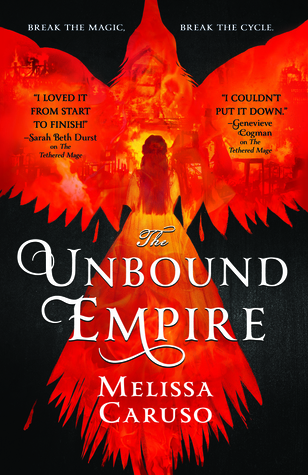
The Unbound Empire Cover (WoW)

Publisher: Orbit (Trade Paperback – 25 April 2019)

Series: Swords and Fire – Book 3

Length: 508 pages

My Rating: 5 out of 5 stars

Amazon

One of the fast-rising authors of fantasy fiction, Melissa Caruso, brings her outstanding debut series to an end with the third book in the Swords and Fire trilogy, The Unbound Empire.

It is always a bittersweet moment when a great book series comes to an end. For the last two years, the Swords and Fire trilogy has been one of my favourite new fantasy series due to its excellent combination of characters, story, intrigue, fantasy elements and world building. I absolutely loved the first book in the series, The Tethered Mage, and I felt that Caruso did an excellent job following this up with The Defiant Heir, which made my Top Ten Reads For 2018 list and my Top Ten Books I Loved with Fewer than 2,000 Ratings on Goodreads list. As a result, I have been eagerly waiting for The Unbound Empire for the last year, and it even featured in my very first Waiting on Wednesday post.

The Swords and Fire series is set on the continent of Eruvia, which is made up of two great nations, the Serene Empire of Raverra and the loosely collected states of Vaskandar. The Serene Empire is the home of our protagonists, and is a land where magic is controlled by the government, led by the Doge and the Council of Nine. All mages who are identified as having enough power are conscripted into the army as a Falcon. Each Falcon is bound to a non-magical handler, a Falconer, who is entrusted to control and protect their Falcon. One such Falconer is Lady Amalia Cornaro, heir to one of the most powerful families in Raverra and future member of the Council of Nine. While the nobility is usually forbidden from becoming Falconers, desperate circumstances forced Amalia to be bound to the powerful and rebellious fire warlock Zaira.

Vaskandar, on the other hand, is a far wilder nation, ruled by the Witch Lords, magicians whose powerful vivomancy literally flows through their land, making them part of everyone and everything in their domain. War is always looming between these two nations, and while Vaskandar as a nation has decided to remain out of the most recent conflict, nothing can stop an individual Witch Lord from attacking. The cruel and ambitious Witch Lord Ruven, the Skinwitch, has long wanted to conquer and rule over The Serene Empire. His most recent ambitions have been stymied by the combined actions of Amalia and Zaira, who managed to stop his plan to unleash a destructive volcano, although it came at great cost to Amalia.

However, Ruven is far from done and is determined to gain new land, either in the Serene Empire or in the domains of the other Witch Lords. Launching a series of attacks against the Empire’s capital, Raverra, as well as several outlying holdings, with a range of horrifying strategies, Ruven is able to cause significant damage. But while he launches his attacks, he is also trying to recruit Amalia to his cause by any means necessary, as her unique heritage gives her the ability to usurp the domains of other Witch Lords. As Amalia and Zaira race to counter Ruven’s actions, Amalia finds herself once again torn between love, duty and friendship, as the responsibilities of her office clash with the friendships she has formed. As Amalia struggles to maintain her humanity in the heat of war, Ruven’s greatest cruelty might be the thing that finally breaks her and leads to the fall of the Serene Empire.

Caruso once again knocks it out of the park with The Unbound Empire, creating a satisfying conclusion to her series that still contains her trademark storytelling ability and character work. The final book in the Swords and Fire trilogy does a great job utilising the previous entries of the series and also attempts to tie up all of the existing loose storylines and plot points. The Unbound Empire is filled with some really emotional storylines, a number of powerful magical action sequences and several surprising plot developments. The end result is another five-star book from Caruso that I powered through in quite a short period.

At the heart of this book lies the series’ main two characters, the narrator and point-of-view character, Amalia, and the fire warlock Zaira. The challenging and evolving relationship between the initially sheltered Falconer and the rebellious and infinitely destructive Falcon has always been a major part of this series. While the two characters have been establishing a better relationship with each book, it was great to see the two of them becoming even closer in this book and helping each other deal with some major issues. I also liked how both characters’ stories come full circle in this book, as Amalia becomes more and more like her mother, while Zaira finally confronts a number of her personal demons and for once starts to consider having a future. The author’s depiction of the doubt and guilt that Amalia is feeling after the events of the last book forced her to kill her cousin added some extra emotional depth to the story, and I liked the inclusion of such a realistic emotional reaction. The character arcs for the two main characters were incredible, and it was great to see how much they had evolved over the course of the trilogy.

Caruso has also developed a number of great side characters for this series, and she continues to expertly utilise them in this final book. The main two side characters of The Unbound Empire were Amalia’s love interests: Captain Marcello of the Serene Empire; and the Witch Lord Kathe, known as the Crow Lord. Throughout the course of the book, Amalia is caught between them; while she loves Marcello, her position makes a relationship impossible, and Kathe presents a more suitable match. Marcello’s storyline in this book is pretty significant, and there are some substantial and emotive changes to his character that really helped make The Unbound Empire extra compelling. I also really liked the deeper dive into Kathe’s personality and backstory, as well as the natural strengthening of the relationship between Amalia and Kathe. Thankfully the book’s love triangle aspect wasn’t too over-the-top or filled with insufferable toxic jealousy, as both the men understand the difficult position Amalia is in. The arc of Zaira’s love interest, Terika, is really sweet, and I liked how she continues to have a positive effect of Zaira’s personality. Other side characters, such as the Amelia’s powerful and unflappable mother; the surprisingly lethal Cornaro servant, Ciardha; and Marcello’s eccentric artificer sister, Istrella, all shine through in this book, and all of them add quite a lot to this book’s story.

No great fantasy story would be complete without a despicable antagonist threatening the heroes, and luckily this book has a truly evil and threatening villain. The Witch Lord Ruven is a powerful Skinwitch, a person with the ability to control and alter other creatures just by touching him. Not only is this power by itself pretty horrifying but Ruven uses it in some fairly novel and evil ways, unleashing all manner of horrors upon the protagonists. I thought that Ruven had some of the best magical powers in the entire series, and his abilities were really fun to see in this book. Caruso also tried to humanise the character in places throughout this book, which was a nice touch and added some new depth to the story, although he does mostly come off as utterly irredeemable. Overall, I feel that Ruven was an excellent villain and his antagonism really helped make this book and the series as a whole.

I have always loved the complex fantasy world and elements that the author came up with for this series. The various forms of magic and resulting rules that form the backbone of this book are very imaginative, and I loved how Caruso was able to utilise them in her story. There are some amazing new versions of the magic and fantasy elements from the previous two books included in The Unbound Empire, as well as some new locations to explore. While the world building is not as intense as the first two books in the trilogy, Caruso still offers some great new elements, and I had a lot of fun seeing these extra expansions to the universe. Hopefully Caruso will come back to this world at some point in the future, as I had a lot of fun there over the course of the series.

The Unbound Empire was another incredible piece of fantasy fiction from author Melissa Caruso that expertly wraps up her debut trilogy. This has got to be one of the best debut fantasy trilogies I have had the pleasure of reading, and it has been a lot of fun absorbing the excellent tales of magic, adventure and intrigue that Caruso has woven over the last two years. I have really loved the Swords and Fire trilogy, and while I am sad to see it go, I am excited to see where Caruso goes next as this author has amazing potential for the future. I highly recommend each and every book in the series and encourage you to get wrapped up in the magic and characters of this series if you have not had a chance to read it.

Amazon

Waiting on Wednesday – The Kingkiller Chronicles – Book 3 by Patrick Rothfuss

Welcome to my weekly segment, Waiting on Wednesday, where I look at upcoming books that I am planning to order and review in the next few months and which I think I will really enjoy.  Stay tuned to see reviews of these books when I get a copy of them.

For this week’s Waiting on Wednesday, I am going to look at the book that is easily number 1 on my personal must-read list, the third book in Patrick Rothfuss’s epic The Kingkiller Chronicle, which is at the moment tentatively titled Doors of Stone.

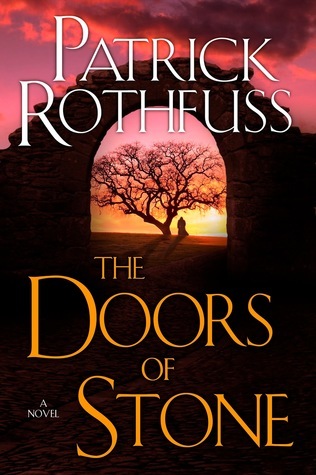
Doors of Stone - Fan Cover.jpg

There are several problems with wanting to read this book. I have no idea when it is going to be released, nor do I have a firm idea of the book’s plot. Even the title, Doors of Stone, might change, and the cover I have included above is a fan-made cover that features on Goodreads. Nonetheless, it tops my list mostly due to how exceptionally awesome the first two books in the series were.

The Kingkiller Chronicles is a series of massive fantasy books written by Patrick Rothfuss. The first book in the series, The Name of the Wind, was released in 2007, and the second book, The Wise Man’s Fear, was released in 2011. The series focuses on a young man called Kvothe, a legendary figure known throughout the land as a master magician, swordfighter, musician and adventurer who gained the epitaph ‘Kingkiller’ after killing a king and igniting a war that is still being fought to this day. Kvothe has since hidden himself from the world, disguising himself as an innkeeper in a small town. At the start of The Name of the Wind, Kvothe is recognised by a renowned historian known as Chronicler, who wishes to know and record the true story of Kvothe’s life. Kvothe agrees and tells Chronicler that his story will take three days to tell, with each day of storytelling corresponding to one of the three planned books in The Kingkiller Chronicles.

Over the course of the first two days, Kvothe regales Chronicler with a long and detailed story of his early life, starting with his childhood as a travelling performer, his early training and the violent death of his family and performing troupe by the Chandrian, which are mythical demonic creatures his father somehow angered. Kvothe eventually makes his way to the University, the most prestigious education institute in the world, where he manages to gain admission despite his lack of funds. There he learns various forms of magic, as well as other academic interests, while also gaining a reputation as a musical prodigy. The story told during the first day mainly recounts his first year in the University, while the second day recounts more of his educational experiences, as well as a long and fateful trip outside the University. At the same time as the story is being told, strange events are occurring around Kvothe’s inn, and it soon becomes apparent that Kvothe has somehow lost most of his magic and martial skill since the events he described.

These first two books in The Kingkiller Chronicles are absolutely incredible and are by far two of the best fantasy novels I have ever read. The story of Kvothe is a deeply fascinating, and Rothfuss has an uncanny ability to tell a captivating tale that plucks at the imagination and stays with a reader long after they have read the book. The series is set in an amazingly detailed world, filled with all manner of intriguing secrets and history, many of which the protagonist is destined to unravel. I am a huge fan of fantasy books that feature schools, magical education or extensive training sequences, and The Kingkiller Chronicles is easily the most well-written and enjoyable example of this sort of fantasy sub-genre that I have ever read. I also love how Rothfuss’s story contains such a major focus on music, and the various songs and performances in the two books pretty much flow off the page. There is honestly so much to love about both of these books that I could go on for pages and pages about both of them (something I intend to do in future reviews). Unsurprisingly to anyone who has read these books, The Kingkiller Chronicles is a massive bestseller, and many consider it to be the best fantasy series in the world today. The series has also been optioned for adaption, with rumours of both a movie and television series in the near future. Lin-Manuel Miranda is even attached to the television show and will compose the show’s music, which is pretty darn exciting.

Unfortunately, this series has remained unfinished, and the third book has yet to appear. Readers have been waiting for this third book since 2011, and it is probably one of the most anticipated fantasy releases in the world today, rivalled only by the next book in A Song of Ice and Fire, or perhaps The Thorn of Emberlain (my Waiting on Wednesday review for The Thorn of Emberlain certainly gets a lot a views). The third book in The Kingkiller Chronicles, which will feature the third and final day of Kvothe’s story to Chronicler, will apparently conclude all the events of Kvothe’s life that led to his current life of exile and the loss of his powers. Unfortunately, after eight years of waiting, there is still no sign of the book on the horizon, and no-one is certain when the third book will be published.

Rothfuss has apparently been working on this book for some time, with a note on Goodreads in 2012 indicating he was working on polishing the book and he hoped to transform it from a 3½-star book to a five-star book. Since then there have been innumerable speculations from a variety of sources about when the book would be released, but these potential release dates keep getting pushed back. There has been some recent discussion about the book coming out in 2019, with some interviews or Q&As with Rothfuss apparently indicating this. Rothfuss also sparked speculation in January 2019 when he retweeted some fan art that contained the words “I want to return in 2019 – Kvothe”. However, as we are now in mid-May and there have been no official announcements, a 2019 release date seems incredibly unlikely. I honestly doubt that this book will even be released in 2020. An interview from April 2019 indicates he is still working on it, and I imagine that even when he is finished with it the publication process is going to take a while. I had hoped that the work on the movies or television shows might spur the author on, although progress on both of these projects is also apparently going quite slowly as well. As a result, it might be a while before we see the third book in this series, which is a real shame, as there are so many open plot points that need to be concluded in order to give this story a satisfactory conclusion.

While no plot synopsis for the third book has been released yet, it is possible to puzzle out what needs to happen in it. According to dialogue in the first two books, a number of events need to occur to define the story of Kvothe. These include Kvothe’s banishment from the University; his meeting with his assistant, Bast; the loss of his great love; the battle he apparently had with an angel to bring her back; the events that broke him and his magic; and, most importantly, his meeting with and subsequent murder of a king. In addition to all of these, there ought to be some explanation for all the open plot points, such as the mysterious artefact from the Maer’s new, bigoted wife (who is totally his aunt), the reason for the mysterious stone door in the University archives or the identity and origin of the Chandrian, just to name a few. There also has to be an explanation for the events occurring at the inn, such as the reason he is being hunted by demons, and there also needs to be some indication of where Rothfuss’s universe will go from there.

I actually think that all these open plot points that need to be addressed are why Rothfuss is having such a hard time finishing the book. For the life of me, I cannot see how it is possible to include or explore all of these potential plot points in one book and keep the story as interesting or rich in detail as the first two books in the series. As a result, he may have shot himself in the foot by claiming that the story could be told in just three days/books, and I think that he may have let the story get way more extensive than he originally intended (not that I’m complaining).

Whatever the reason, it seems like we may be waiting a while to read the third book in The Kingkiller Chronicles, although I will make sure to grab a copy as soon as it is available, and I know many readers will be doing the same. The third book is going to be epic, and I am really looking forward to seeing how Rothfuss ends this chapter in his story. I may do another one of these Waiting on Wednesday articles for this book later down the track when more details of the plot are revealed, or when a proper cover comes out. I also intend to eventually post a review of the first two books in The Kingkiller Chronicles at some point in the future; I just need to carve out some time to reread them first.

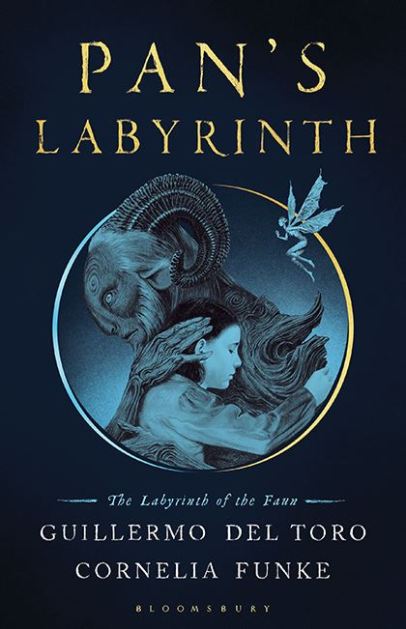
Guest Review: Pan’s Labyrinth: The Labyrinth of the Faun by Guillermo del Toro and Cornelia Funke

For this entry, my editor and future wife Alex managed to talk me into letting her do a review.  We hope you enjoy this guest review, and Alex may do some more in the future.

Pan's Labyrinth Cover

Publisher: Bloomsbury (Trade Paperback – 2 July 2019)

Series: Pan’s Labyrinth

Length: 297 pages

Rating: 5 out of 5 stars

Amazon

As the chief editor for The Unseen Library, I read far more book reviews than books, but every now and then the mood strikes just right, and I am fortunate to share a house filled to the brim with books waiting to be enjoyed. I thought I’d commemorate the latest occasion by writing a review of my own:

Pan’s Labyrinth is a Spanish-language dark fantasy film written and directed by acclaimed filmmaker Guillermo del Toro. Thirteen years after its release, Guillermo del Toro and bestselling author Cornelia Funke have transformed the screenplay of the film into a beautiful work of prose.

Pan’s Labyrinth is part of a modern tradition of fairytales in which children have fantastic adventures whilst the adults are busy with war. In Spain, in 1944, young Ofelia and her mother join the household of Capitan Vidal, who is responsible for hunting down the anti-fascist guerrillas hiding in the mountainous forests nearby. Left to her own devices and enchanted by fairy tales, Ofelia is drawn to the ancient stone labyrinth near their new home. There she meets the Faun, who tells her she is in fact the missing princess of the Underground Kingdom. In order to reclaim her place in the kingdom and escape her terrible new stepfather, she must prove her courage and worthiness by completing three tasks. This is easier said than done; these tasks themselves are life-threateningly perilous, but Ofelia must also try to protect herself and her heavily pregnant and ailing mother from the ruthless Capitan and the rebels at the door.

Guillermo del Toro is renowned for making visually stunning films, and Pan’s Labyrinth was no exception; in fact, it won Academy Awards for Best Cinematography, Best Art Direction and Best Makeup. I am happy to report that the novelisation of Pan’s Labyrinth faithfully re-imagines the amazing sets, characters and creatures of the film. In the absence of cinematography, visual design and Doug Jones in monster makeup, the authors have relied on using a great deal of descriptive language to bring scenes to life in text. This is also supported by a number of illustrations throughout the book which clearly drew from the art of the film. It had been many years since I last saw the film, but the imagery of the story is so well produced that I was easily able to imagine many long-forgotten scenes according to del Toro’s vision.

There are many advantages of this novelisation. In particular, the book gives a great deal of insight into various characters not afforded by the film. We see Ofelia’s thought processes as she observes the adults around her and as she obeys or defies the Faun’s instructions. We understand the fierce motivation of Mercedes and Dr Ferreira as they desperately try to assist the rebels in the hills without being discovered. Most terrifying of all, we catch a glimpse of the inner mind of Capitan Vidal, the Wolf, whose horrendous acts of violence rival those of the Pale Man. The inner monologues of these characters provided in the book enable us to have a greater appreciation of their perspectives, actions and motivations.

For the most part, the novelisation follows the story of the film faithfully, but it also includes a number of additional chapters. These feature stories of the Underground Kingdom and its magic bleeding into the Upper Kingdom, creating the lore and mythology that surrounds the Spanish landscape in which the story is set. These grim and interconnected fairy tales provide amazing context for the enigmatic Faun and the nature and gravity of the tasks Ofelia must complete, as well as being beautiful and moving stories in their own right.

Fans of the film will know exactly what to expect from the novelisation of Pan’s Labyrinth and will appreciate the additional fairy tales and insights it provides. Those who haven’t seen the film (and there is always a cohort of cinemagoers that dislikes or struggles with subtitled films) will feel as though they had, as this gruesome and fantastic story has been beautifully transferred onto the page.

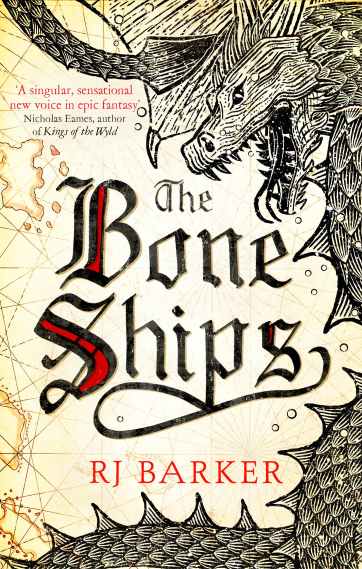
Waiting on Wednesday – The Bone Ships by RJ Barker

Welcome to my weekly segment, Waiting on Wednesday, where I look at upcoming books that I am planning to order and review in the next few months and which I think I will really enjoy.  Stay tuned to see reviews of these books when I get a copy of them.

The Bone Ships Cover.jpg
For this week’s Waiting on Wednesday, I check out the new upcoming book from one of the fastest rising stars in fantasy fiction, RJ Barker.  Barker shot to prominence in 2017 with his debut novel, Age of Assassins, which was quite an impressive piece of fantasy fiction.  Age of Assassins was the first book in The Wounded Kingdom trilogy, and the rest of the trilogy, made up of Blood of Assassins and King of Assassins, were released to high critical acclaim in quite a remarkably short time period.  With The Wounded Kingdom trilogy finished, Barker has moved on to a brand new series with The Bone Ships, the first book in his planned The Tide Child series, which is set to be released in September 2019.

I really enjoyed Barker’s The Wounded Kingdom trilogy, with Age of Assassins and Blood of Assassins being among the top fantasy books I read in 2017 and 2018 respectfully.  I still have to read King of Assassins, even after featuring it on my Books I Wish I Read in 2018 Top Ten list.  Despite not getting around to reading it yet, King of Assassins is still quite high up on my must-read list, especially as I have heard that it is the strongest book in this inventive and exciting trilogy.  I hope that I will get a chance to read it in the next few months, and I would like to read it before I look at Barker’s upcoming book.

A number of details about The Bone Ships have already been released.  The book’s amazing cover has been out for some time, and plot details about the book are available on Goodreads.

Goodreads Synopsis:

A crew of condemned criminals embark on a suicide mission to hunt the first sea dragon seen in centuries in the first book of this adventure fantasy trilogy.

Violent raids plague the divided isles of the Scattered Archipelago. Fleets constantly battle for dominance and glory, and no commander stands higher among them than “Lucky” Meas Gilbryn.

But betrayed and condemned to command a ship of criminals, Meas is forced on suicide mission to hunt the first living sea-dragon in generations. Everyone wants it, but Meas Gilbryn has her own ideas about the great beast. In the Scattered Archipelago, a dragon’s life, like all lives, is bound in blood, death and treachery.

The above summary sounds like The Bone Ships is going to be a lot of fun, as Barker goes from a trilogy about assassins to a book that focuses on a suicide squad of pirates as they attempt to kill a dragon.  I mean, that is just plain awesome: pirates fighting dragons!  Even if I weren’t already familiar with Barker’s ability as a fantasy author, I would already be trying to get a copy of this book.  With Baker at the helm of this epic-sounding story, I have no doubts that this book will an absolute joy to read, and I am really looking forward to it.

The Bone Ships has real potential to be one of the best fantasy books of 2019, and no doubt it will be one of the most sought-after releases this September.  I am quite excited for this latest novel from Barker, and I am sure it will prove to be an interesting book to review.

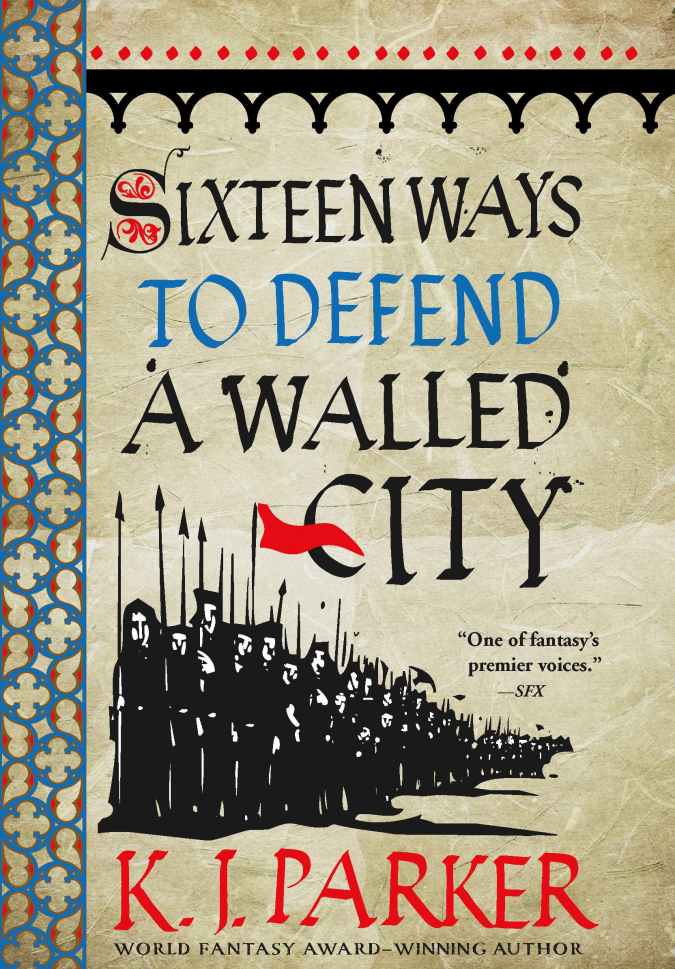
Sixteen Ways to Defend a Walled City by K. J. Parker

Sixteen Ways to Defend a Walled City Cover

Publisher: Orbit (Trade Paperback Format – 9 April 2019)

Series: Standalone

Length: 350 pages

My Rating: 5 out of 5 stars

Amazon

Ok, now this was one hell of a book!!!

K. J. Parker’s Sixteen Ways to Defend a Walled City is an exceptional piece of fantasy fiction that keeps the reader enthralled with its excellent story, fantastic self-aware humour and one of the best depictions of a siege that I have ever had the pleasure of reading. The end result was an excellent read that I just had to give a full five stars to, and it has to be one of my favourite books of 2019 so far.

The Robur Empire is one of the great civilisations in the world, and at its heart lies the City, capital and seat of power of the Emperor, kept safe by its impenetrable walls, powerful armies and unsurpassed navies.  However, that safety is unexpectantly compromised when a massive force of soldiers appears out of nowhere, slaughtering the entire imperial army, crippling the navy and completely surrounded the City.

The only forces left garrisoned in the City are the men of the Empire’s Engineering Corps, led by Colonel-in-Chief Orhan, who suddenly finds himself in charge of the defence of the City.  Orhan is a coward, a glorified bridge builder, a man able to work the complex imperial military system for his own gain and a foreigner despised by most of Robur society, but he is not a great military leader.  He is, however, one of the most devious and underhanded men the army has ever seen, and these might just be the qualities needed to save the City from destruction.  As Orhan works to unite the various factions in the City to his cause and come up with a range of unique defences, he makes a shocking discovery.  A figure from his past is leading the assault against the City, and Orhan quickly realises that he might be on the wrong side of this battle.

I really enjoyed this latest book from Parker, who has created a complex and captivating fantasy tale that proves exceedingly hard to put down.  K. J. Parker is actually a pseudonym of author Tom Holt, who was able to keep the dual identity secret for 17 years before it was revealed in 2015.  Between his two identities, the author has written an amazing number of books since his 1987 debut, mostly focused on the fantasy genre.  This includes over 30 humorous fantasy novels as Tom Holt, five historical fiction novels, the Fencer, Scavenger and Engineer trilogies as Parker, a number of standalone fantasy books and a huge range of short fiction, some poems, songs and even some non-fiction work.  For those who may be concerned, no reading of any of Parker’s prior work is required to enjoy Sixteen Ways to Defend a Walled City as this latest book is a standalone novel.  Still, I will be keeping an eye out for any future books by either Tom Holt or K. J. Parker as I really enjoyed the author’s writing style and fantastic sense of humour.

Sixteen Ways to Defend a Walled City is an intriguing novel that is told from the perspective of its “hero” Orhan, who is narrating the story of his defence of this city within a historical text.  This story is incredibly entertaining, as not only does it feature a first-rate siege within an excellent fantasy location, but it is told by a complex and multi-layered character who paints the entire ordeal of being in charge in a very funny light.

I am a man who loves a good siege storyline, but this has to be one of the best ones that I have ever had the pleasure of reading.  At the start of the siege the situation looks grim, as a vast host surrounds the City, whose defenders have all been slaughtered outside the walls, with the exception of Orhan’s engineers, who lack the basic military supplies and machinery to defend the City.  As the enemy start a conventional long-term siege with advanced weaponry and superior forces, Orhan is forced to come up with something to delay their inevitable defeat in the hopes of reinforcements turning up.  Without the required men, equipment or leadership, they cannot rely on the traditional 15 methods of defending a walled city that the books suggest, so he has to rely on the on his own 16th way, which involves bluffing, chaos and mad-cap innovation.  As a result, much of the book features Orhan’s many unconventional methods to defend the City, whether it involves taking symbolic control of the entire empire, legitimising and attempting to control two rival criminal gangs or creating devastating new siege weapons.  The protagonist and his men’s engineering prowess comes in effect quite a bit throughout the book, and I loved seeing the machines and other unique defence methods that he deploys as a result.  All the various deceptions and tactics used to hold the City against this superior force is widely entertaining and I absolutely loved the siege storyline which serves as an amazing centre to this incredible story.

The setting that the author chooses for this book is pretty interesting and adds a lot of great elements to the story.  The Robur Empire is pretty much the Roman Empire, with the City being this universe’s equivalent of Rome.  I thought that the City was a fantastic setting for the vast majority of the story, and the various factions and problems with such a large city really tied into the great siege storyline.  The City’s criminal organisations, the Greens and the Blues, former charioteer supporters (very Roman) turned rival criminal unions, are the cause of a large amount of strife, and I liked how their own battles and self-importance became such a major part of this book.  I also felt that Parker did an amazing job portraying a city that sits at the heart of a massive empire, and the attitudes of the people within felt pretty accurate.

On top of the great setting, Parker has also created an intriguing, extended world for this story.  The Robur Empire is a great overall setting for most of this book, as its setup, design and attitudes are very similar to the ancient Romans.  Parker’s initially subtle use of racial identity in this empire is quite intriguing, and it becomes a major part of the book.  Essentially the empire is made up of the pure-blooded Robur, who are called blueskins due to their darker skin colouration.  Then there are those people with white skin, who are given the derogatory name of milkfaces, who are treated like second-class citizens within the empire, and who came from lands conquered by the Imperials.  Not only does this become an important plot point with the army attacking the City made up completely of milkfaces, but it is reminiscent of the Roman Empire, when the pure-blooded Roman citizens looked down upon the paler barbarians from Gaul, Britain or Germany.  I also liked how the author tried to replicate the precision military system of the Romans with the Robur, and it was fun to see how the problems of such a system came into play throughout this book, such as having the military resources of the entire empire being kept in supply depo sites rather than in the capital.  I quite enjoyed these fantastic settings, and I thought that they were an excellent place to set these complex stories.

While the siege storylines and settings are extremely amazing, this book would be nothing without its main character and the person narrating this fictional historical text, Orhan.  Orhan is an amazingly complex character, and the personality that Parker creates for his hero is outstanding.  Orhan is a milkface who has risen to high military command within the Robur Empire due to his abilities as an engineer.  As a result of his hard early life and the constant belittlement and discrimination by the blueskins he serves under, he is an incredibly cynical person with a very jaded outlook on life.  The author does an amazing job transcribing these character traits onto the page, often in a sarcastic and very entertaining manner as he describes the events going on around him, and the reader gets a great sense of the character’s frustrations.  While Orhan is attempting to defend the City, his own narrations reveal him to be an extremely self-serving and selfish person who has been forced by circumstances rather than duty to protect the City.  His motivations become even more complex as he begins to wonder if he is on the wrong side of the conflict, as the invading army is completely made up of milkfaces like himself, and even when he is doing the right thing the blueskins in the city that he is defending still treat him badly.  Even with that doubt, he is a surprisingly (especially to himself) effective commander, whose deceitful and inventive nature, as well as his extensive knowledge of history and engineering, allows him to come up with some outstanding defensive strategies.  My favourite has to involve his unique method for dealing with the enemy’s sappers, which sees him use his knowledge of the City, his craft and his ability to manipulate his opponents to create a fantastic response.  The entire sequence involving this anti-sapper technique is one of the best parts of the book, and I love the doubt and regret he experiences as a result of his actions.  Overall, Orhan is an outstanding narrator, and his depiction of the chaotic event and his part in them really made this story for me.

Sixteen Ways to Defend a Walled City is an exceptional piece of fantasy fiction, and I think I already have a contender for my future top ten books of 2019 list.  This book has to be read to fully appreciate its complexity and cleverness, and I found it to be boundlessly entertaining and widely funny.  K. J. Parker’s latest book comes highly recommended, and it is well worth checking out.

Amazon

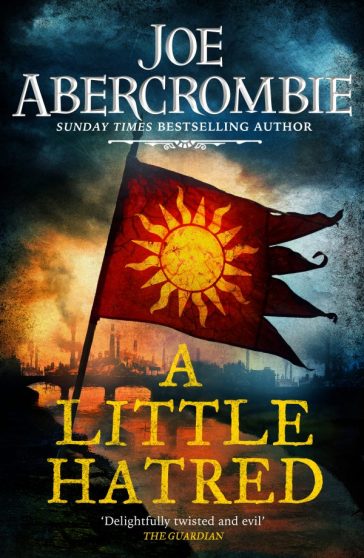
Waiting on Wednesday – A Little Hatred by Joe Abercrombie

Welcome to my weekly segment, Waiting on Wednesday, where I look at upcoming books that I am planning to order and review in the next few months and which I think I will really enjoy.  Stay tuned to see reviews of these books when I get a copy of them.

For this week’s edition of Waiting on Wednesday, I check out what has to be one of the most anticipated upcoming fantasy novels of 2019, A Little Hatred by Joe Abercrombie.  A Little Hatred will be the first book in the new The Age of Madness trilogy, which will follow up Abercrombie’s iconic grimdark fantasy trilogy, The First Law trilogy.

A Little Hatred Cover.jpg
The First Law trilogy, released between 2006 and 2008, was an epic trilogy that has long been considered the gold standard of the grimdark fantasy genre.  Featuring several memorable but incredibly flawed main characters, this trilogy was an outstanding piece of fantasy fiction that featured some truly dark moments, including brutal deaths, numerous torture sequences, berserk rages and magical cannibals.  Since the original trilogy’s end, Abercrombie has expanded out his fantasy universe with three standalone novels, Best Served Cold, The Heroes and Red Country, all of which were set after the events of The First Law trilogy and featured a number of characters from the original books.

I only got into The First Law trilogy a few years ago, but I found myself quite enjoying this outstanding grimdark adventure and the excellent characters that Abercrombie created.  The First Law trilogy is very unique, and I am quite intrigued to see how the author will continue his work.  The Age of Madness trilogy will be set nearly 30 years after the events of The First Law trilogy, and will apparently follow several new characters, including the children of some of the characters from the previous books.

Goodreads Synopsis:

The chimneys of industry rise over Adua and the world seethes with new opportunities. But old scores run deep as ever.

On the blood-soaked borders of Angland, Leo dan Brock struggles to win fame on the battlefield, and defeat the marauding armies of Stour Nightfall. He hopes for help from the crown. But King Jezal’s son, the feckless Prince Orso, is a man who specialises in disappointments.

Savine dan Glokta – socialite, investor, and daughter of the most feared man in the Union – plans to claw her way to the top of the slag-heap of society by any means necessary. But the slums boil over with a rage that all the money in the world cannot control.

The age of the machine dawns, but the age of magic refuses to die. With the help of the mad hillwoman Isern-i-Phail, Rikke struggles to control the blessing, or the curse, of the Long Eye. Glimpsing the future is one thing, but with the guiding hand of the First of the Magi still pulling the strings, changing it will be quite another…

I like the sound of some of the plot points being explored in this book.  The idea of the world advancing into a more industrial age could have some interesting potential, and it will be interesting to see how this world’s devastating magic will play a part in it.  I also like the sound of the characters involved in this book.  While some of the characters sound new and unattached to other books in the series, several have connections to the original trilogy and some of the other books in the series.  I most like the sound of Savine dan Glokta, the daughter of one of the best characters from the original series, Inquisitor Glokta, and I will love to see how someone raised by the ruthless inquisitor will handle the business world.  I also like that Bayaz, the First of the Magi, is returning once again.  He was a fantastic, if morally challenged, character, as well as an ace manipulator, so it will be good to see him pull the strings again in this book, and maybe he will get some just deserts in this series.  It will also be interesting to see where some of the original characters from The First Law series ended up, and whether they are still alive.  The original series left some storylines for these characters open and I am curious to see if they will be resolved in this new trilogy.

Overall, A Little Hatred sounds like it will be an amazing start to this new storyline in Abercrombie’s dark fantasy universe, and I will be interested to see how it goes.  This book currently has a release date of 17 September 2019, with the following two books in the trilogy being released in September 2020 and 2021.  I am planning to review The First Law trilogy as part of my Throwback Thursday series in the next couple of weeks, and I will have to check out the three standalone books in the universe to see how the story progresses in the years between The First Law trilogy and A Little Hatred.  Hopefully I will able to get through all three of them before September, and I look forward to experiencing more of this first-rate grimdark fantasy tale.

Throwback Thursday – Moving Pictures by Terry Pratchett

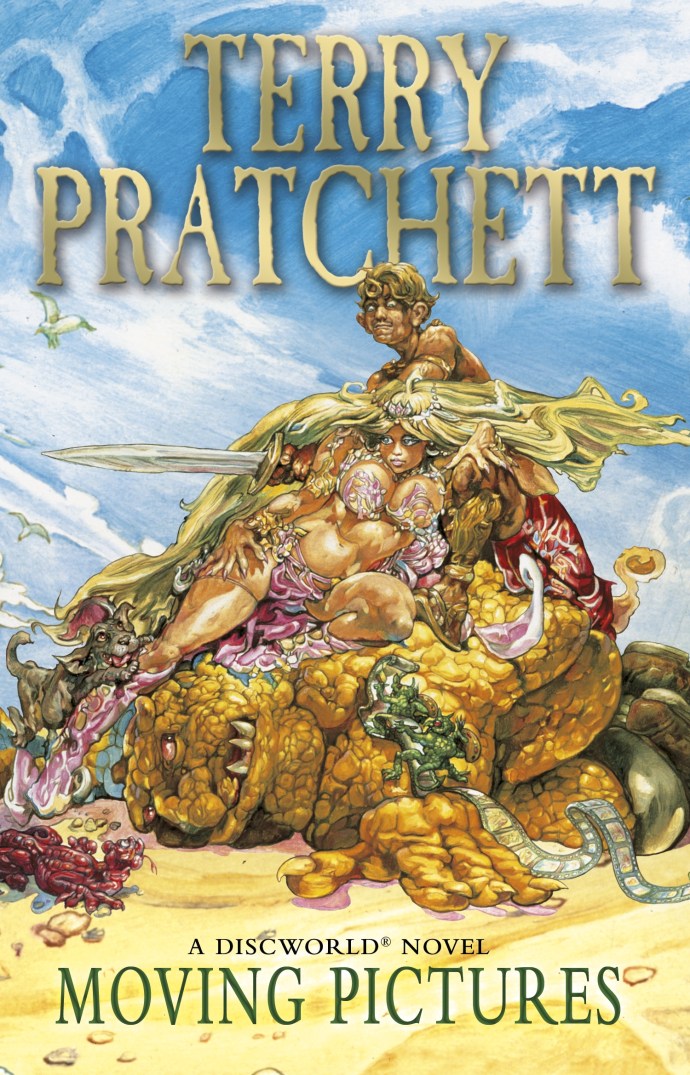
Moving Pictures Cover

Publishers: Corgi and ISIS Audiobooks (14 November 1991)

Series: Discworld – Book 10

Length: 332 pages or 10 hours and 8 minutes

My Rating: 5 out of 5 stars

Amazon

Reviewed as part of my Throwback Thursday series, where I republish old reviews, review books I have read before or review older books I have only just had a chance to read.

Because my blog shares the name of a building featured in Terry Pratchett’s Discworld series, some people might have assumed that I am a fan.  You would be right, so very, very right.  I have loved Discworld since I was a small child, and my appreciation and respect for the complex writings of the late, great genius, Sir Terry Pratchett, has grown with me.  The Discworld series represents one of my ultimate comfort series of books.  It’s the series that I go back to at any time when I want something fun and familiar to enjoy.  I have read all of the adult books set in Discworld multiple times (I have yet to read all of the young adult ones), and it is an unusual year when I do not listen or read some of these books in my spare time.  Pretty much every single book in this series deserves five out of five stars or higher (with one or two exceptions that I may mark down to a 4.75 with a heavy, heavy heart), and you are unlikely to find any real criticisms about this book below.  After nearly a year of running this blog, the continued exclusion of a review of any of Pratchett’s Discworld is a travesty, and one that I seek to rectify in this somewhat late Throwback Thursday with a review of the 10th book in the series, Moving Pictures.

Before I review Moving Pictures, here is some quick context of the Discworld series for those people unfamiliar with these books.  Discworld is the main series of Sir Terry Pratchett, set upon the Discworld, world and mirror of worlds.  The Discworld, or the Disc, is a flat world that rests on the backs of four massive elephants, who themselves stand on the back of a gigantic turtle swimming in space, Great A’Tuin.  The Discworld itself features a huge range of different nations and continents that bear striking similarities to real-world locations.  This series is, without a doubt, the best series that utilises a combination of fantasy and satire in the entire world.  The seamless blend of the two elements is just incredible, and both elements do an unbelievable job at enhancing each other.  Before his death, Pratchett wrote 41 books in the Discworld series, six of which are considered young adult books.  While the books can be read in any real order, the series were mostly written in chronological order (with the exception of Small Gods), and events from earlier books in the series are often referenced.  Although most of the Discworld stories are self-contained, a number of the books are linked together by a recurring main character and are subsequently grouped together into subseries.  These include the Rincewind, Witches, City Watch, Death, Tiffany Arching and Moist von Lipwig subseries, in addition to a few standalone books that fall outside of any of the subseries.  Characters often appear in other Discworld books outside of their subseries, and there are a string of side or secondary characters who appear in multiple subseries and standalone books.

The book I am reviewing, Moving Pictures, is a standalone book that does not really fall within any of the main subseries.  It is sometimes considered part of minor subseries, called the Industrial Revolution subseries, with The Truth and Monstrous Regiment, but I am not a big fan of that distinction.  As it is the first Discworld book I am reviewing, you might think that it is my favourite book in the entire series, which is not true; although it does get five out of five stars from me and I have enjoyed it an amazing number of times, it is not my absolute favourite Discworld book, although it is high on the list.  It is, however, an easier one for me to review as there is a lot I can say about it.

Goodreads Synopsis:

‘Holy wood is a different sort of place. People act differently here. Everywhere else the most important things are gods or money or cattle. Here, the most important thing is to be important.’

People might say that reality is a quality that things possess in the same way that they possess weight. Sadly alchemists never really held with such a quaint notion. They think that they can change reality, shape it to their own purpose. Imagine then the damage that could be wrought if they get their hands on the ultimate alchemy: the invention of motion pictures, the greatest making of illusions. It may be a triumph of universe-shaking proportions. It’s either that or they’re about to unlock the dark terrible secret of the Holy Wood hills – by mistake…

The blurb above is a bit vague on the details of what is actually happening in Moving Pictures.  Essentially, the alchemists of Ankh-Morpork, the largest city on the Discworld (and a central location for many of the books), suddenly develop filmmaking, which they call moving pictures, and set up a filming base at the ancient and abandoned Holy Wood.  The moving pictures issue a weird siren call to the inhabitants of the Discworld, dragging all manners of people and creatures from across the lands and infecting them with their magic (not a metaphor).

Among those drawn to Holy Wood are Victor Tugelbend, a former student wizard, and Theda “Ginger” Withel, a small-town girl with big dreams.  Thanks to the magical on-screen chemistry between them, Victor and Ginger quickly become the superstars of the fledgling moving pictures industry, especially when the Discworld’s most infamous salesman, Cut-Me-Own-Throat Dibbler, comes to town and takes over the studios.

However, reality on the Discworld is always a bit thin, and Lovecraftian monsters (a favourite recurring antagonist of Pratchett’s early Discworld novels) are revealed to be the ones who planted the idea of moving pictures and Holy Wood in the alchemists’ heads.  Using the new sort of magic created by Holy Wood, the creatures start to break through.  With the wizards of Unseen University, the people who are supposed to guard against these sorts of incursions, distracted by the arrival of an unconventional new Archchancellor, it is up to Victor, Ginger and a ragtag band of other Holy Wood characters to save the day.

This book has so many moving parts to it that it’s hard to know where to begin when reviewing it.  While the main story is concerned with the introduction of moving pictures into the Discworld, there are a number of other entertaining storylines going on throughout the book, each one complementing the main story and creating an amazing overall narrative.  The major appeal of this book is its sharp and intelligent satire of the movie business, which also examines the nature of a film industry in a world as crazy as the Discworld.  I also quite like all the amazing characters, either introduced or built up in this book, many of whom appear in later books in the series.

This book is absolutely hilarious and filled with a huge number of clever and outrageous jokes and observations about the film industry, all of which lie on top of Pratchett’s usual humour about day-to-day life in the Discworld and his random observations, many of which are perfectly introduced in the book’s footnotes.  The main storyline is an amazing portrayal of the hectic early days of the film industry, placed in a fantasy setting.  The cameras are powered by miniature demons (who paint the pictures really, really fast), the lighting is done by salamanders, actors of all species make up the cast, the audience eat ‘banged grains’ while watching the ‘clicks’ and the film’s monsters and villains are all trolls in crude costumes.  However, literal movie magic is making people do strange things (strange even for Discworld folk), talking animals are showing up looking for work, Dwarfs are singing “Hihohihohiho” as they work, characters routinely burst into song and dance in the rain, and one producer keeps threatening to turn people into stars, all while the book’s few straight-characters look on in bemusement.  All of this is amazing, and the sheer number of fantasy-assisted jokes throughout the book is pretty unbelievable.

At its heart, Moving Pictures is a satire and a critique about the film industry as a whole.  Quite a large amount of the story is dedicated to parodying the real-life the crazy effect that movies can have on audiences and the people who make them, as the book shows some ridiculous events.  The story also reflects the insubstantial nature of fame and the fragility of dreams surrounding the movie industry.  The fast-moving world of the film industry is also shown, although sped up even more for comedic and story value, as they film creators are constantly searching and finding new advancements in their field.  A great example of this is shown when Cut-My-Own-Throat Dibbler invents and then continually advances the art of advertisement, so that, within a few short weeks, the film industry goes from ineffective text advertisements to eye-catching posters and explorations of product placement and subliminal messages.  Pratchett handles these critiques very skilfully, and you cannot help but laugh aloud as he skewers the film industry quite cleverly throughout Moving Pictures.

Pratchett also filled Moving Pictures with a ton of references to iconic films and elements of the film industry.  Many of the characters involved with the films are caricatures of famous movie actors, with Victor playing all the typical romantic or manly male heroes of the day, and Ginger is essentially Marilyn Monroe.  Several films are parodied throughout the book, such as Gone With The Wind, which becomes Blown Away, an epic love story set around a famous Ankh-Morpork Civil War.  There is a rather good King Kong parody, in which a gigantic woman kidnaps a poor defenceless Ape (the Librarian) and drags him to the roof of the tallest tower in Ankh-Morpork, all while two wizards on a broomstick shoot at it with a crossbow, with one shouting “If it bleeds, we can kill it!”  That is only scratching the surface of the references featured within this book.  A golden figure with a name starting with O plays a big part in the story, the various studios are all parodies of real-life studios, and there a huge number of funny and subtle references to various famous films.  Examples of these include Wizard of Oz, Lassie, Lawrence of Arabia, Indiana Jones, Looney Tunes, Blues Brothers, Casablanca, Tarzan and Star Trek just to name a few.  Readers can go through this book multiple times and not pick up every detail, which is a testament to the cleverness of Pratchett and his ability to come up with some hilarious references.

I have always found the way that Pratchett utilises or re-uses his characters to be extremely fascinating; while some characters appear in multiple books, a number of his main characters, especially from his earlier books, are only used once. There are several examples of this, including Mort from Mort, Pteppic from Pyramids and Esk from Equal Rites (who did appear in a later young adult novel, but there was a significant time gap between the writing of these two books).  While Pratchett may have simply had only one story in mind for these characters, I have a feeling that he simply did not like how they turned out and decided not to use them again under any circumstances.  Mort is probably the best example of this.  Despite being the protagonist of the first Death subseries book Mort, he never appears in any of the Death subseries books again (aside from one brief flashback), and is instead replaced by his own daughter, Susan.  It is interesting to note that most of the main characters who were never or rarely used again are somewhat similar to each other, being young heroes without too many obvious flaws to them.  On the other hand, the unique main characters Pratchett creates with notable flaws, such as Rincewind, the wizard who has turned cowardice into an art form, or the overly cynical and dangerous alcoholic Sam Vimes, helm multiple books.

If I have to make one criticism about this book, it is the weak and somewhat inconsistent main characters, Victor and Ginger.  Ginger is a generic female character, and while she is a good parody of Marilyn Monroe and other early screen actresses, she is pretty one-dimensional and unlikeable.  Victor starts out with some very interesting character traits, as he is described as an extremely lazy person, whose unique brand of laziness forces him to become a brilliant student wizard in order for him to succeed in his quest to fail every test he ever takes by a certain point margin to ensure he remains a student.  However, these character traits are pretty much thrown out the window a few chapters in and he becomes a typical male hero for the rest of the book.  While this sort of straight-man character was needed for this wacky adventure, it is surprising that the character never again really shows the slightest hint of some of these earlier established character traits.  It is interesting to note that neither Victor or Ginger appear in any of the subsequent Discworld novels, so I think there is a strong possibility that Pratchett might also have disliked how these characters turned out.

While one or two of his earlier main characters were somewhat unimpressive, Pratchett always managed to make up for this by creating a range of memorable and enjoyable side characters.  It was always interesting to see which of these side characters would appear in various later books, as you knew Pratchett had to like them as well.  For example, Granny Weatherwax was a supporting character in Equal Rites, but Pratchett must have liked writing her, as she became a major character in the Discworld series, even getting her own subseries with several other witch characters.  Moving Pictures is perhaps the best example of Pratchett’s love of side characters; while Victor and Ginger never appear in the Discworld again, many of the side characters introduced or developed in this book have major roles later in the series.

For example, I was always impressed with how this book turned two minor characters from Guards! Guards!, Cut-Me-Own-Throat Dibbler and Detritus the troll, and gave them more expanded roles in Moving Pictures.  Dibbler was an opportunistic merchant who got a couple of good, if minor, scenes in Guards! Guards!, but in Moving Pictures, Pratchett transformed him into a ruthless and extremely savvy salesman who gets in the front door of every major new opportunity inflicted on the Discworld, but is often forced by circumstances back to becoming a sausage-in-a-bun merchant.  Dibbler was absolutely fantastic as the stereotypical sleazy film producer, and it is unsurprising why he suddenly became a major recurring character throughout the Discworld books, not only appearing in nearly every book set in Ankh-Morpork but also having clones of him appear in the other nations and cities, all of whom sell disgusting local delicacies.  Detritus is another great example, as he goes from the simple bouncer introduced in previous books to a troll seeking love and a new way of life.  Pratchett comes up with a great personality for Detritus in this book, and it carries through to the City Watch subseries when he joins the Watch in Men at Arms and becomes a major recurring character in this subseries and other books set around Ankh-Morpork.  Other recurring characters, Death and the Librarian, are as awesome as ever, but Dibbler and Detritus are the real standout stars of this book.

Several new characters introduced in this story also make a number of reappearances throughout the rest of the Discworld series.  A good example of this is the talking dog, Gaspode, who is a fantastic and sarcastic character through the book.  He has some great scenes, with the highlight being his friendship with Laddie, a Lassie parody and idiot who Gaspode takes under his wing.  The idea of a clever, underappreciated and sarcastic talking dog side character apparently worked so well that Pratchett found a way to return his magical intelligence and ability to speak a few books later in Men at Arms (the same book Detritus reappeared in) and he then featured in several additional books.

You also have to love the new wizard characters that Pratchett also created for this book.  Before Moving Pictures, the faculty of Unseen University, with the exception of the Librarian and Rincewind, were replaced each book with a new group of senior wizards, thanks to the competitive nature of succession in the university.  However, this 10th book introduces a brand new and more permanent faculty of Unseen University, led by Archchancellor Mustrum Ridcully.  Ridcully is a fantastic character as he is big, loud and sporty man who is generally the complete opposite to any other wizard previously shown in the Discworld series.  I really enjoyed his storyline and found it to be one of the most entertaining in the entire book.  Pratchett must have agreed, as Ridcully became the only recurring Archchancellor in the Discworld series.  This also allowed for the creation and stabilisation of unique characters to make up the senior faculty of Unseen University, including the Bursar, the Dean, the Chair of Indefinite Studies and the Lecturer in Recent Runes.  While the other wizards have a fun romp breaking out to go see the moving pictures, the Bursar has a great story, as you get to see the first signs of madness that would afflict him throughout every other book he appears in, as he first encounters the stress associated with working under Ridcully.  I also liked the introduction of a young Ponder Stibbons, whose bad day while trying to escape from the university is pretty humorous, but also the complete departure from his later role as the only serious member of the faculty.  Thanks to their entertaining storylines, the wizards would appear in multiple books in the rest of the Discworld series, and while they never had their own specific subseries, they would get major inclusions in several other subseries, including substantial stories in The Last Continent, Soul Music, Lords and Ladies and The Hogfather, as well as their own novel, Unseen Academics.

While I have physically read most of the books in the Discworld series, including Moving Pictures, these days I tend to only listen to the audiobook formats of these books.  The Discworld audiobooks are pretty awesome, and the two narrators for the series, Nigel Planer and Stephen Briggs, both do an incredible job.  I find that the humour in the Discworld novels is massively enhanced by the narration, and I love listening to the stories this way.  At 10 hours and 8 minutes, this is not a long audiobook, and I always tend to power through these books really, really quickly.  Planer is a comedy veteran and has an awesome audiobook voice, and it is quite impressive the sheer range of different and distinctive voices he can come up with.  I also like his incredible consistency when it comes the multiple books in the Discworld series; for example, voices he creates for Moving Pictures are generally the same used for that character in later books he narrated.  The audiobook format of Moving Pictures is my preferred way to enjoy this book, and it is really worth trying out.

As you can see from my extremely long rant above, I absolutely love Moving Pictures and the Discworld series.  Pratchett created an incredibly complex and extremely funny novel that laughs right at the heart of the film industry.  The sheer range of references in this book is amazing, and the creation and enhancing of the various side characters featured in this book has massive ramifications for many of the later Discworld novels.  If you have yet to experience the joy of Terry Pratchett’s Discworld series, get on it as soon as you can.  It is well worth it, and Moving Pictures is a great place to start your Pratchett adventure.  I fully intend to review more books in this series in the future.

Amazon