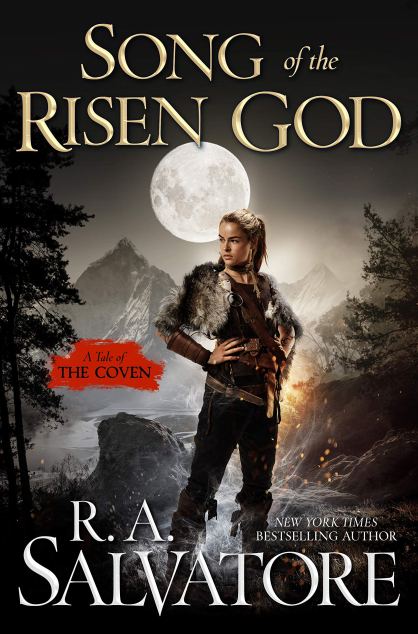
Song of the Risen God by R. A. Salvatore

Song of the Risen God Cover

Publisher: Audible Studios (Audiobook – 28 January 2020)

Series: Coven trilogy – Book Three

Length: 17 hours and 3 minutes

My Rating: 5 out of 5 stars

Amazon     Book Depository

Legendary fantasy author R. A. Salvatore brings his Coven trilogy to an explosive and enthralling end with the third and final novel, Song of the Risen God.

The Coven trilogy is an exciting series that Salvatore has been writing over the last three years, which is set in the world of Corona, the setting of his previous series, The DemonWars Saga. This new trilogy follows the adventures of an interesting group of characters in the lands surrounding Loch Beag, including the imposing mountain, Fireach Speuer. The first two novels in this series, Child of a Mad God and Reckoning of Fallen Gods, have both been extremely good, and I have been enjoying reading some of Salvatore’s non-Forgotten Realms fantasy work. I am a massive fan of Salvatore’s writing and I have been looking forward to finishing this series off for some time now. Salvatore certainly did not disappoint with the final entry in this trilogy, as this final novel is potentially my favourite book in the entire series.

War has once again come to the world of Corona, as a new evil leads its forces on a mission of conquest and destruction. The wild lands surrounding Loch Beag and Fireach Speuer have never been peaceful, but now a massive army of invaders is marching across them, determined to conquer and kill all before them. These mysterious invaders are the Xoconai, a lost race of humanoids from the other side of Fireach Speaur. Now, with their reborn god leading the charge on his mighty dragon, the Xoconai are commanded to expand their empire to the opposing coast.

With no hope of defeating the vast host that has suddenly appeared above them, the few surviving inhabitants of the villages surrounding Loch Beag flee through the wilds to find sanctuary. Led by the powerful witch Aoelyn, the frontiersman Talmadge and the ranger Aydrian Wyndon, the villagers move towards the apparent safety of Honce-the-Bear, the most powerful human kingdom in Corona. There they hope to warn the people of Honce-the-Bear of the approaching danger and gather a force that can push back the Xoconai.

However, the dark ambition of the Xoconai god, Scathmizzane, knows no limit, and his magical powers are as vast as they are terrifying in their origin. Using these powers, Scathmizzane is able to accelerate the Xoconai invasion at a tremendous pace, striking right at the heart of Honce-the-Bear, and managing to overpower both their armies and the magic of the Abellican monks. As the Xoconai horde advances, it falls to Aoelyn, Aydrian and their companions to stop them by any means necessary. But can even the most powerful magic user on the continent and a fallen king be able to throw back the invading armies, or will Scathmizzane’s dark power fall across all the lands?

Song of the Risen God is a really impressive and captivating read that provides the reader with an entertaining adventure in one of Salvatore’s detailed and expansive fantasy universe. This final book in the Coven trilogy is a cool addition to the trilogy that not only acts as a satisfactory conclusion to this new series but which also ties it even more firmly into the wider world of Corona.

This book contains an epic and wide-ranging narrative that showcases the dramatic aftermath of the second novel in the series, Reckoning of the Fallen Gods, which saw a massive army and a dragon-riding god descend on the isolated setting of the first two novels. In this third novel, the protagonists are chased all the way to one of this world’s key settings, the kingdom of Honce-the-Bear, where they must fight to save the world from the invading horde. This turned out to be a rather interesting departure from the previous novels in the Coven trilogy, which were much smaller in their scope, tending to focus on a handful of closely related villages in a single location. I actually liked this change of pace, as it made for a much more impressive conclusion, and I quite enjoyed seeing the characters interact with the wider world. This turned out to be an extremely exciting and fast-paced novel that contained a lot of entertaining action and large-scale battle sequences, although the author does not skimp on the intriguing dialogue, creative world building or compelling character development. Salvatore utilises a host of point-of-view characters to tell this story from a variety of different angles, which leads to a rich and comprehensive overall narrative. I am also glad that the author continues to feature in-world texts at the beginning of each part of the novel, which provides some fascinating insights into some characters, and contains some clues about a big twist towards the end of Song of the Risen God. Overall, this was an extremely captivating story with a great blend of elements, and I had a fantastic time reading it.

One of the more distinctive parts of Song of the Risen God is how it connects with some of the previous books set in the world of Corona. Corona is a unique fantasy world created by Salvatore, which has previously served as the setting for 13 novels, including the previous two Coven books. The first seven of these books are all part of the same series, known as The DemonWars Saga, which established many elements of this world, including the kingdom of Honce-the-Bear, the Abellican order of monks and the world’s gem based magical system. The Coven series has always been set in Corona, but the first novel in this trilogy, Child of a Mad God, had very little to do with these prior books. More of a connection was established in Reckoning of Fallen Gods, especially with the appearance of Aydrian, who was a major figure in the later DemonWars books. However, in Song of the Risen God, Salvatore fully combines this trilogy with his prior series, by bringing the protagonists and antagonists of the previous Coven books into the main location of The DemonWars Saga and having them interact with these established characters and settings.

Immersing this series more fully into the wider fantasy world was an interesting choice from Salvatore, and it one of the major things that distinguishes Song of the Risen God from the previous books in the trilogy. This was not a sudden or random decision from Salvatore, as there have been hints that this was going to happen in the previous two books, especially once Aydrian was introduced as a major character. I rather enjoyed the way that Salvatore so dramatically expanded the setting and started using elements from The DemonWars Saga in this novel, as it made for a much more expansive and fascinating story. I never actually read any of the books in The DemonWars Saga (a regrettable gap in my Salvatore knowledge), and before reading Song of the Risen God, I had no real idea what happened in this series, aside from what was discussed in the second Coven novel. However, I found that you really didn’t need any pre-existing knowledge of these earlier books, as Salvatore spends a good amount of time explaining some of the major story events that occurred during these novels and how they impact the current plot. As a result, at no point while reading Song of the Risen God was I in anyway confused by what was going on, and I always had a good idea how the plot was tied into the wider universe. I really appreciated being able to enjoy the entirety of the plot without having to read The DemonWar Saga first (which admittedly sounds pretty awesome, and I might have to check them out at some point), and I think that Salvatore did a fantastic job recapping the events of this prior series in text. Fans of The DemonWars Saga will no doubt like the fact that Salvatore is once again exploring this world, and many will be interested in seeing how much the universe has changed in the intervening years, as well as the major developments that occur as part of Song of the Risen God.

As I mentioned above, Song of the Risen God is the third and final book in the Coven trilogy, which does mean that this book might be a bit harder to follow for those readers who try to jump into the series at the very end (although that would be true for any trilogy). Salvatore does do a good job of recapping and exploring some of the key events of the first two novels, so most readers should be able to follow it well enough. I think that Song of the Risen God proved to be a great conclusion to the entire trilogy, as all of the major storylines were wrapped up rather well. The ending of the book also suggests that Salvatore is planning an additional Corona based series in the future, and if so, it is likely to focus on some of the major characters from the Coven trilogy. I personally would be extremely interested in a follow up series to these books, especially after all the major events that occurred in this novel, and I look forward to seeing what Salvatore cooks up next.

One of the major highlights of Song of the Risen God was the incredible raft of characters. This book had a massive and diverse group of characters featured within it, including the protagonists of the previous two books, characters from The DemonWars Saga and original characters who appeared for the first time within this book. Salvatore did a fantastic job diving down into several of these protagonists, and there was some rather intriguing character development that occurred throughout Song of the Risen God, most of which has some interesting roots in some of Salvatore’s previous novels.

A good portion of the book focuses on Aoelyn, who has served as the main protagonist for the first two Coven novels. Aoelyn is a witch who has spent the previous books trying to escape the clutches of her vicious tribe, the Usgar. In this novel, Aoelyn finally has her freedom, and finds herself in a brand new world, although she still seems to be dealing with some of the same prejudices and problems that occurred amongst the Usgar. Aoelyn spends a good portion of this book continuing to come to terms with her magical powers, which both define her and frighten her, as she has seen how magic can corrupt individuals, and she also attempts to take responsibility for the Xoconai invasion, which she inadvertently caused by killing a demon in the first Coven novel. I felt that Salvatore covered her character arc rather well, and there were quite a few intriguing moments, including Aoelyn making new friends and finding closure with some of the antagonists from the first two novels. I also liked some of the interesting developments that occurred towards the end of the novel with Aoelyn, which not only impact her outlook on life, but which may have some major impacts on any future Corona novels that feature her.

In addition to Aoelyn, quite a few other characters have some fantastic moments within Song of the Risen God. Bahdlahn, the former Usgar slave and Aoelyn’s childhood friend, probably had the most dramatic character development of all within this novel, as he grew and grew with every new encounter and experience within the plot. You cannot help but get attached to Bahdlahn, especially as he goes from wide-eyed former slave who had barely seen anything of the world, all the way up to an elite knight and resistance fighter in Honce-the-Bear. Bahdlahn is another character who has some interesting developments towards the end of this novel, and it looks like Salvatore has some big plans for him in the future. The former Usgar witch Connebragh also has a rather fascinating, if shorter, storyline within this book, as she befriends two former inhabitants of the lakeside villages, despite the long hostility between her tribe and theirs, and helps them survive the Xoconai invasion. The frontier explorers Talmadge and Khotai are also well utilised towards the front of the book, and there are some great moments with them, especially as Khotai regains her mobility in a rather unique way, although both disappear for the last third of the book. Salvatore also invests time in showing the viewpoint of a couple of key Xoconai characters, which I think really adds a lot to the story. Rather than having the Xoconai solely being mindless followers of Scathmizzane, these character perspectives help show them as being rather similar to humans, and two characters in particular have some very interesting viewpoints that lead them to question the word of their god as they attempt to fight his holy war.

All of these character arcs are great, but my personal favourite has to be the one surrounding Aydrian Wyndon. Aydrian is a major character within The DemonWars Saga, as the son of the original protagonists, who eventually became the main antagonist of the series after being possessed by a demon. Freed from his corruption at the end of the series and banished from Honce-the-Bear, which he ruled for a brief time, Aydrian has taken up the role of a ranger, which led to him meeting and helping the protagonists of the Coven series in the previous novel. In this book, he finds the threat of the Xoconai so great that he is forced to return to Honce-the-Bear, despite his banishment, to warn his former people. This leads to several outstanding scenes where he revisits the hurt and despair that he previously caused as a despotic and murderous king, and it serves as a fantastic defining characteristic as he searches for redemption. Aydrian has an absolutely incredible storyline throughout this novel, and his inclusion really added a whole lot to the overall narrative.

In addition to the fantastic story and amazing characters, I also have to once again highlight some of the enjoyable fantasy elements that Salvatore includes in this novel. At the fore of this is the cool gem-based magic that is one of the defining features of the stories set in Corona. This gem magic is an excellent concept, and it proved to be particularly fascinating in this novel as Aoelyn, a self-taught magical gem user, encounters members of the Abellican Church, who also use this form of magic, although in an apparently lesser way. Salvatore makes full use of all this cool magic throughout Song of the Risen God, and there are some rather impressive and destructive examples of the universe’s various magics, which were a lot of fun to see. I really enjoyed some of the cool and unique fantasy elements contained within this book, and it was a rather exciting addition to the story.

I ended up listening to the audiobook format of Song of the Risen God rather than grabbing a physical copy. This audiobook runs for just over 17 hours and is narrated by Tim Gerald Reynolds, who has provided narration for several of Salvatore’s previous books, including the other Coven books. I really enjoyed the audiobook version, and it proved to be a fantastic way to absorb and experience the cool story and the intriguing settings and characters. This is a bit of a longer audiobook and it took me over a week to fully listen to it, although my audiobook listening schedule has been a bit messed up lately. I felt that Reynolds did a really good job narrating this audiobook, and his fantastic voice really helped me get sucked into this fun story. Reynolds had a great handle on all the characters featured within Song of the Risen God, and I liked all the voices that he came up with for them. I ended up having an amazing time listening to this audiobook, and this is a truly excellent format to enjoy this novel in.

Song of the Risen God is a very impressive and deeply enjoyable fantasy novel that comes highly recommended. R. A. Salvatore once again shows why he is one of my favourite authors as he produces a slick and captivating read which is not only fantastic in its own right but which concludes an epic trilogy and ties it into a wider fantasy universe. This proved to be an absolutely amazing read, and I think I have to award it a full five-star rating based on how much fun I had listening to it. Salvatore has done it once again, and I look forward to checking out his next book in a few months.

Amazon     Book Depository

Waiting on Wednesday – World of Warcraft: Shadows Rising by Madeleine Roux

Welcome to my weekly segment, Waiting on Wednesday, where I look at upcoming books that I am planning to order and review in the next few months and which I think I will really enjoy.  I run this segment in conjunction with the Can’t-Wait Wednesday meme that is currently running at Wishful Endings. Stay tuned to see reviews of these books when I get a copy of them. In my latest Waiting on Wednesday, I check out the next upcoming tie-in novel to the World of Warcraft franchise, Shadows Rising by Madeleine Roux.

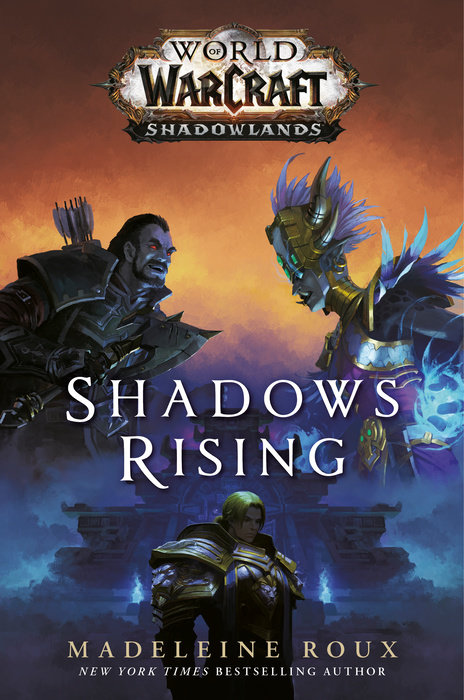
Shadows Rising Cover

This upcoming book is going to be the latest addition to rather fun franchise which is based around the MMORPG World of Warcraft and its precursor Warcraft games. The Warcraft franchise has been around for nearly 30 years at this point (and now I feel old), and in addition to the great games, it has produced a multitude of additional content from novels, comics, South Park parodies (that’s how you know you’ve made it) and even its very own movie. People who are unfamiliar with the Warcraft games may be surprised to know that they have a rich and complex internal lore, and there are some rather captivating and well-written storylines featured within the games which is often refined in the tie-in material. Unsurprisingly, this is another franchise that I have a lot of history with, and I have been a big fan of everything Warcraft since I got my copy of Reign of Chaos. I particularly love the fantastic and intricate storylines, history and universe lore that has been crammed into this franchise, and I have read several of the previous tie-in novels that have been released (for example, check out my review of the previous World of Warcraft novel Before the Storm). While I may not play the game as much as I used to, I do still keep my eye on how the universe plot is going (especially with the gorgeous and impressive cinematics they use to convey key moments) and I am eager to see what elements of this are included in this upcoming book.

Shadows Rising is the latest World of Warcraft tie-in novel and is currently set for release in July 2020. Shadow Rising is the official prequel novel to the upcoming Shadowland expansion, which is coming out later this year at some point. This novel will help bridge the gap between this upcoming expansion and the events of the current expansion, Battle for Azeroth, and will focus on the aftermath of Sylvanas Windrunner abandoning the Horde and setting out on her dark quest to destroy the world.

Goodreads Synopsis:

“The Horde is nothing!” With those infamous words, Sylvanas Windrunner betrayed and abandoned the Horde she vowed to serve. The Dark Lady and her forces now work in the shadows as both the Horde and Alliance, including her own sister, Alleria, race to uncover her next move. Struggling to shoulder the crushing weight of leadership, King Anduin entrusts the void elf and High Exarch Turalyon to uncover Sylvanas’s whereabouts.

The Horde now stands at a crossroads. The various factions form a council, leaving the mantle of warchief to rest. Thrall, Lor’themar Theron, Baine Bloodhoof, First Arcanist Thalyssra, and many other familiar faces rise to this new challenge. But the threats are numerous, and the distrust runs too deep.

When the council is derailed by a failed assassination attempt on Talanji—the Zandalari queen and a key ally—Thrall and the rest of the Horde leaders are forced into action. They empower the young troll shaman Zekhan, still grieving the loss of Varok Saurfang, with a critical mission to aid Talanji and help uncover the rising threat against her.

Meanwhile, Nathanos Blightcaller and Sira Moonwarden have been tasked by the Dark Lady with a terrifying gambit: to kill the troll loa of death himself, Bwonsamdi.

As Zekhan and Talanji work to save Bwonsamdi, their journey will be a key turning point in bolstering the Horde against the coming darkness and finding themselves along the way. Failure to save their allies and the trickster god will surely doom them—but through success, they may rediscover what makes the Horde strong.

Now this sounds like it is going to be a rather cool and intriguing novel, and I think that this plot has quite a lot of potential. It looks like Roux is going for a rather wide-ranging plot that will cover several key Warcraft characters and feature multiple unique storylines. I myself am particularly keen to see what happens with the leadership of the Horde in the aftermath of the last game, and a council of rulers rather than one specific warchief should produce some rather intriguing story moments. I also look forward to seeing what is running through the mind of Sylvanas Windrunner during all of this, and I am interested to see why some her followers are remaining so damn loyal to her.

Aside from the great-sounding story, I am also interested in the choice of author for this book. Madeleine Roux is an author who I have not previously had the pleasure of reading before, although some of her novels sound rather fun and might be worth checking out in the future. What intrigues me the most is that Roux is primarily a horror author, and I am curious to see if Shadows Rising will have more of a horror take to it than some of the other Warcraft novels. Even if it does not, I am always eager to try out new authors, and I am looking forward to seeing what sort of bold and captivating adventures Roux produces within the rich Warcraft universe.

I have to say that I am very much looking forward to checking out this new World of Warcraft novel in a few months. Due to my love of the franchise, I was always going to grab the next Warcraft tie-in novel when it came out, especially after seeing the related World of Warcraft in-game cinematics and trailers that were released last year. However, after reading the above synopsis and learning more about the new author attached to it, I am much more excited for it now and I think that I am going to have an outstanding time reading Shadows Rising.

Waiting on Wednesday – Dead Man in a Ditch by Luke Arnold

Welcome to my weekly segment, Waiting on Wednesday, where I look at upcoming books that I am planning to order and review in the next few months and which I think I will really enjoy.  I run this segment in conjunction with the Can’t-Wait Wednesday meme that is currently running at Wishful Endings. Stay tuned to see reviews of these books when I get a copy of them. For this latest Waiting on Wednesday article, I check out the urban fantasy novel, Dead Man in a Ditch, the sequel to Luke Arnold’s amazing debut, The Last Smile in Sunder City.

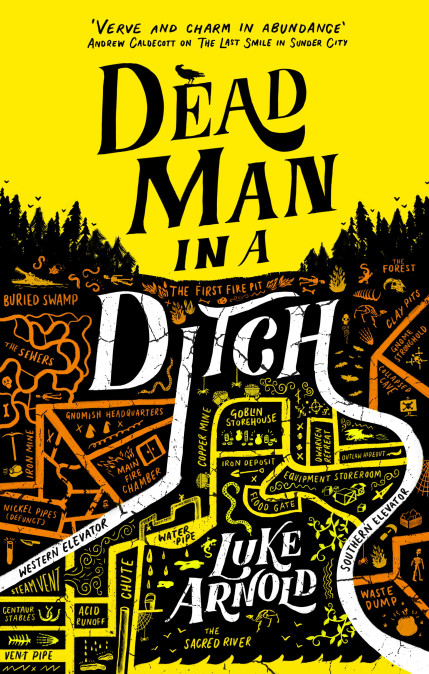
Dead Man in a Ditch Cover

I have got to hand it to the feature author of this article, Australian actor and writer Luke Arnold: he is going out of his way to make sure that 2020 is his year. Not only did he have his writing debut with his first novel, The Last Smile in Sunder City, one of the more impressive fantasy releases I checked out in early 2020, but he is bringing out a sequel to this excellent debut less than seven months later, with Dead Man in a Ditch, which is currently set to come out in September 2020.

The Last Smile in Sunder City was the first book in The Fletch Phillips Archives, which follows the titular protagonist, Fletch Phillips. The series is set in a world formerly dominated by magic and magical creatures, with humans living as an oppressed and overlooked underclass. However, this all changed when a group of humans, guided by a young and naïve Fletch, somehow destroyed all the magic in the world, leading to a chaotic new landscape in which the formerly magical creatures do their best to survive and humanity is on the rise thanks to their technology.

I really enjoyed The Last Smile in Sunder City when I read it earlier this year, especially as Arnold crafted together an exciting and compelling murder mystery storyline and set it in a unique and impressive new fantasy world, the distinct nature of which really helped to enhance the story. As a result, I am rather looking forward to seeing another fun story set in this inventive universe, and I am very curious to see how Dead Man in a Ditch stacks up to The Last Smile in Sunder City, and whether Arnold can follow with another great book.

Goodreads Synopsis:

The name’s Fetch Phillips–what do you need?

Cover a Gnome with a crossbow while he does a dodgy deal? Sure.

Find out who killed Lance Niles, the big-shot businessman who just arrived in town? I’ll give it shot.

Help an old-lady Elf track down her husband’s murderer? That’s right up my alley.

What I don’t do, because it’s impossible, is search for a way to bring the goddamn magic back.

Rumors got out about what happened with the Professor, so now people keep asking me to fix the world.

But there’s no magic in this story. Just dead friends, twisted miracles, and a secret machine made to deliver a single shot of murder.

Well, I like the sound of where this latest book is going. It looks like Arnold is going to combine together a bunch of competing mystery storylines and interweave them together into one intriguing narrative. It also looks like the protagonist is going to continue to explore the series’ overarching storyline about the disappearance of magic in the world, and the various attempts by the former magical creatures to recover their lost power. I have a lot of confidence that this second book from Arnold is going to be just as entertaining and exciting as The last Smile in Sunder City, and I am really looking forward to grabbing Dead Man in a Ditch later this year.

House of Earth and Blood by Sarah J. Maas

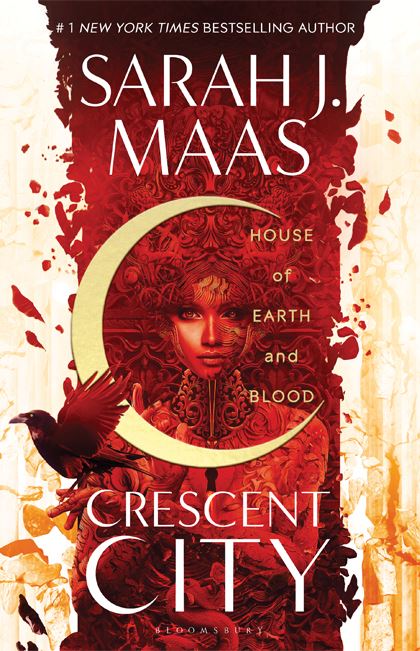
House of Earth and Blood Cover

Publisher: Bloomsbury/Audible Studios (Audiobook – 3 March 2020)

Series: Crescent City – Book One

Lenght: 27 hours and 50 minutes

My Rating: 5 out of 5 stars

Amazon

Prepare to meet your new obsession! One of the world’s top young adult fantasy fiction authors, Sarah J. Maas, breaks into the adult fantasy fiction genre in a big way with the first book in her brand-new Crescent City series.

Sarah J. Maas is an author that needs very little introduction. She is one of the most highly regarded young adult fantasy authors in the world today, having written two major bestselling series and a couple of standalone young adult novels. Maas debuted in 2012 with Throne of Glass, the first novel in her acclaimed seven-book long Throne of Glass series, and she has since gone on to write a second major series, A Court of Thorns and Roses. I have been meaning to check out some of Maas’s main series for a while now, especially Throne of Glass, as I have heard some very good things about them. Unfortunately, the only book of Maas’s that I have so far read was her DC Comics tie-in novel, Catwoman: Soulstealer, which I really enjoyed, especially as Maas had an amazing understanding of some iconic comic characters. As a result, I was interested when I heard about her new book, House of Earth and Blood, and I was curious to see how her first adult fiction novel would turn out. This is the first book in the Crescent City series, which presumably will be the author’s main body of work for the next few years. I received a physical copy of this book to review, although I eventually decided to listen to the audiobook format to fit it into my reading schedule, and I have to say I was rather impressed.

Welcome to Crescent City, a bustling metropolis where magic and technology meet in a world ruled over by all-powerful godlike creatures. Bryce Quinlan is a half-Fae, half-human, party girl at the low end of her world’s magical hierarchy, content to live her days clubbing and celebrating with her best friend, the powerful werewolf Alpha Danika Fendyr. All that changes the night Danika and her entire wolf pack are brutally slaughtered while Bryce is out partying. Bryce arrives home just in time to encounter the demon that committed the act, chasing it out into the streets before it escapes, never to be seen again.

Two years later, Bryce is a shell of her former self. Still reeling from the death of the closest person in her life, Bryce finds herself without direction or purpose. However, the revelation that a fresh wave of killings that mirror the bloody way Danika and her pack were taken out quickly changes that. Due to her experiences with the unknown species of demon and her intimate knowledge of Danika’s movements and history, Bryce is tasked by the governor of Crescent City to find who or what is summoning the destructive demons and unleashing them upon seemingly random members of the populace. However, Bryce will not be working on this case alone, as she finds herself teamed up with the governor’s personal assassin, the brooding, dangerous and surprisingly attractive fallen angel, Hunt Athalar.

Begrudgingly agreeing to work together, Bryce and Hunt start to scour the dark underbelly of their city, attempting to find any leads to who summoned the demon. However, they soon run afoul of many of Crescent City’s inhabitants, some of whom do not want the pair to uncover the truth. As they dig further, they begin to uncover a terrible conspiracy with terrible connections to Bryce’s traumatic past and which threatens all of Crescent City. However, the closer they come to the truth, the more pain and torment the two damaged souls uncover, especially as both of them try to fight the intense feelings blooming between them. With the fate of Crescent City hanging in the balance, can Bryce and Hunt get to the bottom of these killings, or will they be overwhelmed by all the hurt that is about to come their way?

Well damn, that turned out to be one hell of a book. I do have to admit that I’m not usually a fan of major romantic subplots in the novels I read (I know, typical male, Bryce would probably be calling me an Alphahole), and I was a little apprehensive that the romantic angles described in the book’s synopsis would overwhelm the fantasy story. However, any doubts I had about whether I was going to enjoy House of Earth and Blood were quickly blown away in the early stages of the story, especially once I hit the major plot development about 70 pages in. From there I was absolutely hooked on the story, as Maas kept piling on revelations, shocking moments, character development and an impressive murder mystery. I ended up really loving this amazing novel, and I ended up giving it a five-star rating.

I really enjoyed the way that Maas told this story, and this book contained an expansive and deeply addictive narrative that proved hard to put down at times. House of Earth and Blood is told from several character perspectives, most notably Bryce and Hunt, although quite a bit of the story is shown from the perspective of Bryce’s half-brother, Ruhn Danaan. Having these three main point-of-view characters results in a much more expansive story, as each of them has their own contributions to the plot, although there is a huge amount of crossover between each of their storylines. While Mass tends to focus most of her character development and storylines around Bryce, Hunt and Ruhn, there are a number of additional supporting characters, some of whom have some rather interesting roles throughout the book. Maas also includes a huge amount of foreshadowing throughout the book, hinting at several things that are to come further along in the narrative. While it is obvious where some of this foreshadowing is going, some of it was only noticeable in hindsight, and some of these more subtle inclusions made me really appreciate the author’s clever writing style.

One of the best things about this book was the incredible and intriguing new fantasy world. The Crescent City series is set on a version of Earth called Midgard, which was invaded thousands of years ago by vast armies of various magical creatures, ending humankind’s dominance of the planet. The modern world of Midgard is a chaotic and fascinating place, filled will all manner of magic and creatures who live in a hierarchal system, with all-powerful beings at the top and humans at the very bottom. There are so many cool elements to this world, from the unique magical systems, the different factions and organisations, and a vast multitude of different magical creatures with their own traits and characteristics. Maas dedicates a substantial amount of time exploring all these different elements of her new world, and the result is an impressive and vast setting which serves as a fantastic backdrop to this exciting story. I also liked the rather fun similarities between this fantasy world and the modern world, and it was interesting to see fantasy creatures running around with modern technology such as phones and guns. I also had a rather good laugh at some of the television shows that the author featured in the book, including a rather trashy-sounding True Blood inspired television show, which was made fun of relentlessly for its sexual content (which is kind of ironic considering how much sex was in this novel). Maas is clearly a master of universe building, and she has come up with a really great fantasy world that holds a lot of potential for future novels in the series, as well as opening up the possibilities of spin-off stories around some of the fantastic side characters introduced. I personally would love to see a novel based around the character of Fury Axtar, the mysterious assassin friend of Bryce, who has a minor role in the book.

In addition, Maas has also come up with a rather clever murder mystery storyline that I had an outstanding time unwrapping. The vast majority of House of Earth and Blood’s plot revolves around the murder of Danika Fendyr and her pack, as well as the similar murders that are occurring in the modern day. The subsequent investigation by Bryce and Hunt turned into a rather captivating storyline, as they explored the underbelly of their fascinating city, trying to find leads and uncover who had a motive to kill Danika. This whole mystery storyline goes to some very interesting places, and Maas comes up with a number of red herrings, alternate suspects, potential leads and side mysteries (a missing magical horn and a new street drug), all of which come together into a pretty incredible and clever narrative. I was actually rather surprised about who the culprit turned out to be, although Maas does set up the reveal rather well, and there are some rather clever hints in hindsight. That being said, while I didn’t know who the culprit was in advance, I totally knew where the final showdown with them was going to take place, and how the whole confrontation was bound to go down (there was a literal Chekov’s gun there). Still, it turned into quite a good confrontation scene, and I had a good laugh at the over-the-top way that the villain was taken down for good. This was a rather impressive element of the story, and I hope that Maas includes some more clever mysteries in her future books.

While I really loved the fantastic story, incredible world building and captivating mystery, the true centre of this book are the two compelling and exceedingly damaged main characters who Maas sets the story around, Bryce Quinlan and Hunt Athalar. Maas does some outstanding work setting these characters up, exploring their pasts and developing their personalities and emotions throughout the book. Bryce starts House of Earth and Blood as a seemingly carefree party girl with major daddy issues. However, the loss of Danika in the book’s first act severely changes her, as she has to deal with an extreme amount of guilt, isolation and social hatred in the following two years. This really alters her as a character and turns her into an extremely vulnerable person with a real emotional investment in the case, who hides all her true feelings behind a sassy and angry façade. Hunt, on the other hand, is a powerful fallen angel who lost his freedom and the love of his life in a failed rebellion against the ruling gods of the planet, and has spent the last several decades being tortured and used by the victorious archangels, and is now the personal assassin of the governor of Crescent City. Now known throughout the city as the Umbra Mortis, the Shadow of Death, Hunt is a simmering pot of anger who is resentful of how he has been treated all his life, and who is determined to be set free. Like Bryce, he is deeply invested in solving the case, as its resolution will allow him to take a serious step towards freedom, and on the surface he is the more serious of the duo. However, also like Bryce, Hunt has some major vulnerabilities and he is hurting deep inside. Both Bryce and Hunt are incredibly interesting protagonists, and I am really impressed with the layers that Maas was able bring to their characters, which added a significant amount to the story.

While Bryce and Hunt are amazing characters in their own right, the real magic comes when they are paired together. It is obvious from the start that these two are going to hook up at some point, but the journey to get there was written extremely well. The combination of these two exceedingly vulnerable and complex characters in the story is great, and it makes for some incredible and dramatic story moments, as Bryce and Hunt slowly work out all their issues and history. The way they slowly go from dislike to mutual respect to lust/romance is accompanied with a slow exchange of secrets, facts and personality reveals, and I had an amazing time seeing them come together as a couple. This turned into quite a good romantic subplot, although the two of them have some major bumps and betrayals along the way. Still, there are some rather nice moments in their relationship, from the way that they take care of each other after traumatic events, to funny reveals and mutual moments of protecting one and other. Bryce and Hunt make for a great pair, and I am really impressed with the way that Maas portrayed them and the complex story she wove around them. It looks like there are more secrets and backgrounds about both coming up in the future books, and I am looking forward to seeing where Maas takes them in the future.

While this book had some amazing elements, I did find this novel to be a tad trashy at times. As I mentioned above, this is Maas’s first foray into non-young adult fiction, and she certainly did not shy away from adding all manner of adult content into her book. While I can certainly appreciate Maas wanting to differentiate this book from some of her young-adult fiction work, I honestly think she overcompensated. This book is filled with a huge amount of adult language and sexual content, as pretty much every character in this book is crude, rude, oversexed and incredibly thirsty. While some of this served a purpose, such as showing what sort of party-girl character Bryce was before the traumatic incident, the sheer amount of stuff that Maas included was a bit over the top, and I found it to be somewhat distracting at times. This book also introduced me to the brand-new term, Alphahole. In the context of this book, an Alphahole is the term that Bryce gives to any magical male who thinks that their abilities and power give them the right to control women and run their lives, especially those women with less magical power than them (i.e. humans and half-humans like Bryce). Unfortunately, in this book pretty much every male that Bryce encounters is an Alphahole in her opinion; even the more redeemable characters like Hunt or Ruhn are deemed Alphaholes at the start of the novel, especially once they venture an opinion about her behaviour or actions. While I appreciate that this dislike for domineering men is part of Bryce’s character due to her father, and controlling guys really aren’t that cool in either fiction or real life, I do think that Maas kind of overdid their inclusion just a bit and I was honestly getting sick of hearing Alphahole as a descriptive term by the end of the book (although it became less apparent as the story progressed).

As I mentioned above, I ended up listening to the audiobook version of House of Earth and Blood. This audiobook has a runtime of 27 hours and 50 minutes and is narrated by Elizabeth Evans. I am rather glad that I decided to check out this format of the book. While I probably would have finished it off faster if I had read a physical copy (it took me a few weeks to get through the audiobook), I always feel that I absorb more of the novel when I listen to it, especially with longer books. This proved to be really useful when listening to House of Earth and Blood, as Maas packed so much plot and world building into this immense novel, and I think I ended up getting more out of this book by utilising this format. I have to say that I was also immensely impressed with Elizabeth Evans’s narration. Evans did an incredible job bringing the story to life, and her steady and emotional dictation of the story really helped me get to the end. I really loved the cool voices that Evans was able to come up with for all the characters, and I think that each of them matched the distinctive personalities of each character. Evans produced a huge range of different voices for these characters, and I really liked how she was able to alter them to reflect the ethereal or magical nature of some of the characters featured in the book, as well as hint at how powerful some of these creatures were by modulating her tone and adding a commanding quality to it. This was an impressive and deeply enjoyable audiobook adaptation, and I would strongly recommend it to anyone interested in enjoying House of Earth and Blood. That being said, be careful where you listen to this book, as it can be a little awkward to hear some of the steamy sex scenes when you are out in public. I somehow managed to be out shopping during two separate and particularly graphic scenes, and it proved very hard to keep a straight face while I was trying to grab groceries.

House of Earth and Blood is an incredible adult fiction debut from Sarah J. Maas, who has produced another outstanding and captivating read. There are so many excellent and enjoyable story elements in this book, and I absolutely loved every second I spend listening to it, even though some parts were a little over the top at times. This was an awesome start to Maas’s new Crescent City series, and I cannot wait to see what impressive and addictive story the author comes up with next. This novel comes highly recommended, and it gets a full five-star rating from me.

Amazon

Black Leviathan by Bernd Perplies

Black Leviathan Cover

Publisher: Tor (Trade Paperback – 25 February 2020)

English Edition Translated by Lucy Van Cleef

Length: 331 pages

My Rating: 4.25 out 5 stars

Amazon

Get ready for an exciting fantasy adventure from acclaimed German author, Bernd Perplies, with Black Leviathan, an extremely fun and inventive novel that is essentially Moby Dick with dragons.

Bernd Perplies is a best-selling German fantasy and science fiction writer who debuted in 2008 with his first book, Son of the Curse Bringer. He has since authored several different series, including the Star Trek Prometheus trilogy, which he co-wrote with Christian Humberg and which were the first Star Trek books licensed to be written outside of the United States. Black Leviathan was initially released back in 2017 in Germany under the title The Dragon Hunter, and it is the first book in his Sea of Clouds series. This is the first one of Perplies’s solo books to be released in English (his Star Trek books got an English releases), and it was translated by Lucy Van Cleef.

Welcome to the Cloudmere, a floating expanse of thick cloud, mists, floating islands and mountain tops high above the ground. Thanks to the magical kyrillian crystals, which allow anything holding them to float in the air, airships now also fly through the Cloudmere attempting to harvest the useful resources available in this harsh landscape. The most valuable of resources come from the dragons, the ferocious beasts that soar amongst the clouds and mountains. Various species of dragons exist, each with their own special talents and defences, and each of which are valuable in their own way. However, hunting dragons is a dangerous occupation, and only the bravest, the most skilled or the extremely desperate set out into the Cloudmere as a drachenjäger, a dragon hunter.

Lian is a young man living in the floating city of Skargakar. The city’s entire economy revolves around the hunting and processing of dragons, and Lian himself makes a small earning carving kyrillian crystals. Lian also looks after his father, Lonjar Draksmasher, a famed drachenjäger of yesteryear whose injuries have driven him to drink. But when Lonjar is murdered in front of him, Lian instinctively gets revenge on the criminal who killed him, and now needs to get out of town quickly or face the wrath of his victim’s father, the most dangerous crime lord in the city. Taking up his father’s magical hunting spear and accompanied by his best friend, Canzo, Lian seeks work aboard one of the many drachenjäger ships leaving the city. The only one willing to take them on is the infamous Carryola.

Boarding the Carryola they find themselves working with an eclectic and effective crew of drachenjägers, and Lian believes that he has reached relative safety. However, the captain of the Carryola, Adaron, has an obsession that may prove to be the doom of Lian and the rest of the crew. Adaron is determined to hunt down and kill the Firstborn Gargantuan, a rare Black Leviathan dragon, a creature out of legends and one of the most destructive beings lurking in the Cloudmere. Now caught between a powerful dragon and a crazed captain, Lian must find a way to survive, but he quickly learns that death is always lying just around the corner in the Cloudmere.

This turned out to be a fantastic and deeply enjoyable fantasy adventure novel which I had an absolute blast reading. Black Leviathan features a fast-paced and action-packed story of a group of dragon hunters flying around in the sky chasing after a mythical and gigantic dragon, and what’s not to love about that? Perplies introduces a ship full of distinctive and compelling characters (most of whom you shouldn’t get too attached to), including an obsessive and ruthless captain, and sets them up against a powerful foe. This results in quite a fun and exciting novel, and I enjoyed some of the intriguing directions that Perplies took the story. While some elements of the story are a little bit typical of action adventure novels, such as characters whose death is a foregone conclusion the moment you meet them, this was an excellent story that is extremely easy to enjoy, and very hard to put down.

One of the best parts of Black Leviathan is the clever and inventive new world that Perplies has created as a backdrop for his fun story. The author did an outstanding job producing a unique fantasy world up in the clouds, filled with all manner of sentient races, exotic locations and intriguing magical technologies, all of which prove to be really fascinating to explore throughout the course of the story. The Cloudmere is an amazing location for a fantasy novel, and I really enjoyed seeing an entire book spent up in the clouds, either in floating cities or aboard magically powered airships. However, the highlight of this new world has to be the various species of dragons that roam the Cloudmere and dragon hunters that chase after them. Black Leviathan features a world where dragon hunting is a vast and profitable industry, and it is really quite interesting to see the various aspects of dragon hunting and its subsequent applications within this novel. There are some obvious similarities between this fictional dragon hunting industry and the real-life historical whale hunting industry and was really cool to see Perplies reinvent this iconic historical trade with fantasy creatures, floating ships and a sea of clouds.

The dragon hunting aspect of the book also results in some pretty incredible action sequences. There are some really exciting and fun dragon hunting scenes featured throughout Black Leviathan and watching the crew of an airship attempt to take down a dragon in mid-air was easily some of my favourite parts of the entire book. Perplies came up with some very clever hunting techniques for his drachenjäger, and it was very cool to see all of them unfold, especially as many require the protagonist to jump onto the back of the targeted dragon and kill them while riding on their back. This fantasy world also has many different types of dragon with a variety of different abilities (some breath fire, some have sword-like tails), each of which results a different sort of hunt with its own range of difficulties. Of course, the biggest hunt of all is when they catch up with Gargantuan, the titular Black Leviathan, the largest and most powerful dragon in the Cloudmere. That hunt goes about as well as expected, and it was extremely exciting to see the crew attempt to use their tried-and-tested techniques against this beast.

I mentioned at the start of this review that Black Leviathan was a bit like Moby Dick. That is because it features a captain who is obsessed with killing a specific rare beast who wronged him years ago, in this case a black dragon rather than a white whale. The entirety of this feud is actually shown in this book, as the first two chapters deal with Adaron’s first ship getting destroyed by Gargantuan, with nearly all his friends dying, including his fiancé, whose hand he was holding when she was eaten (with Adaron left holding her severed arm). As a result, the Adaron we see in the present is a much harder man who bears a great hatred for all dragons and is determined to find and kill Gargantuan no matter the cost. This results in a great story of obsession and hatred as Adaron scours the Cloudmere for his prey, while also attempting to kill any other dragon he comes across. The author has done a great job showing Adaron as an eccentric and damaged character from the first time the protagonist meets him. Not only does he order his own whipping every time a member of his crew gets killed by a dragon but he also keeps the skeletal hand of his fiancé in his cabin as a constant reminder of his mission to kill his prey. However, as the book progresses, it becomes more and more obvious that his obsession with finding Gargantuan has driven him insane. Not only does Adaron sacrifice his crew’s safety to locate the dragon but he ignores the concerns of the people serving under them and he even utilises dark practices to find his prey. This all results in a great final showdown with Gargantuan at the end of the book, and I think that the author did an amazing job concluding this captivating story arc.

Black Leviathan by Bernd Perplies is an excellent and deeply enjoyable fantasy adventure that combines a great central story with an extremely creative fantasy world to create a compelling and fun read. This book is filled to the brim with action and adventure and is guaranteed to get any fantasy lover’s pulse racing. I really loved this book, and I look forward to any future English releases of Perplies work. I do note that Perplies released a second book in this series in 2018, The World Finder, and hopefully we’ll get to see that in English in the next year or so.

u1_978-3-596-29671-2

Amazon

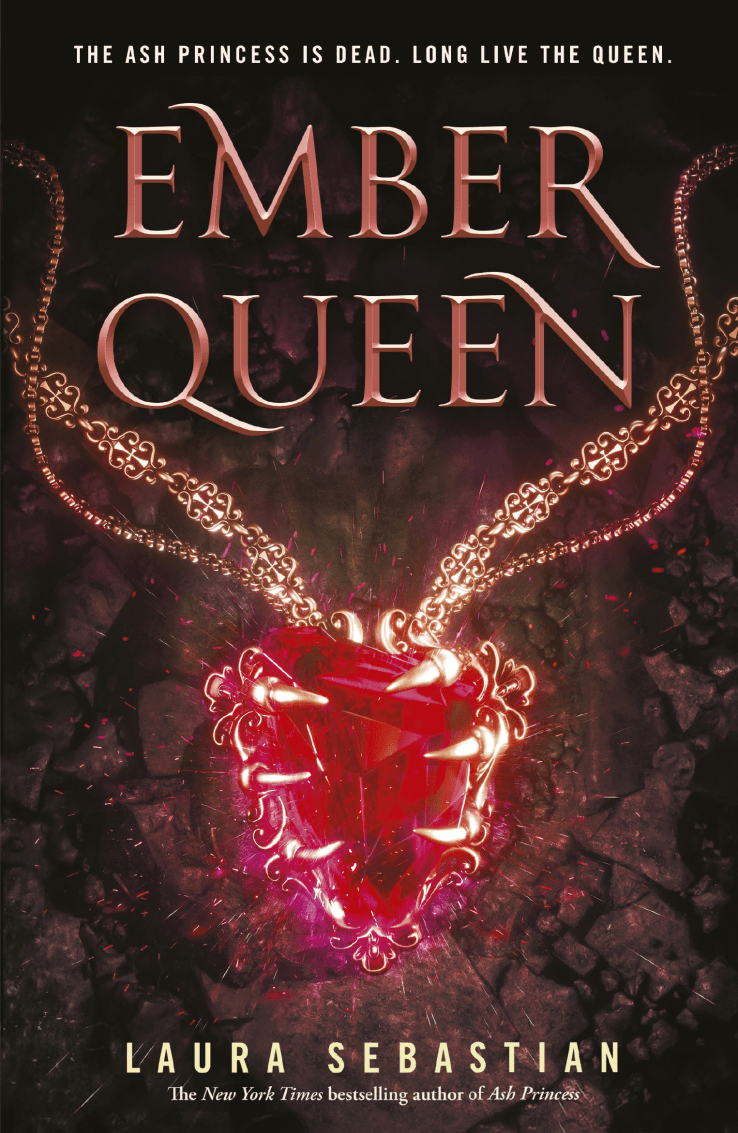
Ember Queen by Laura Sebastian

Ember Queen Cover

Publisher: Pan Macmillan Australia (Trade Paperback – 11 February 2020)

Series: Ash Princess – Book Three

Length: 465 pages

My Rating: 4.25 out of 5 stars

Amazon     Book Depository

Young adult fantasy fiction author Laura Sebastian brings her debut series to a close in a big way with Ember Queen, the excellent and exciting conclusion to the Ash Princess trilogy.

Years ago, when the vicious Kalovaxians invaded the island of Astrea, they killed their queen, enslaved the Astrean people and stole their sacred magical gems. Princess Theodosia, heir the Astrean throne, was imprisoned and spent over 10 years as a captive of the Kalovaxian Kaiser, belittled by the mocking title of “Ash Princess”. However, this imprisonment didn’t break Theo; instead, with the help of her friends, she was able to escape to forge her own destiny. Now Theo has returned to Astrea, leading an army made up of freed Astreans, pirates, refugees and forces from the other nations the Kalovaxians have ruined. Hoping to free her people, Theo and her friends believe that they finally have the advantage over the Kalovaxians. However, the sins of Theo’s past have come back to haunt her.

Cress is a young Kalovaxian noblewoman who claimed Theo as her best friend during Theo’s imprisonment, despite being the daughter of the man who killed Theo’s mother. Theo chose to poison Cress and her father when she made her escape, and while she succeeded in killing Cress’s father, the magical poison she used had unexpected side effects on Cress. Despite being burned and mutilated, Cress survived, with the fire-imbued poison granting her powerful and deadly magical abilities. Using these to her advantage, Cress has done the unthinkable, killing the Kalovaxian Kaiser, poisoning Theo and claiming power over Astrea as the Kaiserin.

Barely surviving her own poisoning after a sojourn down into the magical Fire Mine, Theo must now find a way to free Astrea from her former best friend. With her own fire magic greatly increased, Theo plots to take the fight straight to the Kalovaxians. However, Cress has her own plans, and whole of Astrea may burn in order for her to get her revenge. Who will rise as the Ember Queen, and will the winner have anything left to rule?

Wow, talk about an impressive end to a great trilogy. Ember Queen is an amazing book from Laura Sebastian, who over the last couple of years has done an excellent job establishing herself as one of the best new young adult fantasy fiction authors. This is the third and final book in Sebastian’s debut Ash Princess trilogy, and this is definitely another superb addition to this fun series. I have been enjoying this trilogy since the beginning, reading Ash Princess in 2018 and Lady Smoke in 2019, both of which are pretty fantastic novels. Ember Queen turned out to be an excellent conclusion to this entire trilogy, and I had a great time reading it.

Sebastian has pulled together an excellent story for the final volume of the Ash Princess series, and I really liked the way in which she wrapped up the entire trilogy. After the first two novels dealt with the oppression of Astrea by the Kalovaxians, we finally get to see Theo’s big attempt to free her country from the invaders. I loved the way that Sebastian changed the theme of each novel, with the first novel relying on espionage, the second on diplomacy, and this third book on war. Sebastian produced a compelling narrative around this battle for the control of Astrea, and I really liked some of the directions that the story went into, especially when some intriguing new fantasy elements were introduced by the antagonist. Overall, I was really impressed with how Ember Queen turned out, especially as Sebastian used it to expertly conclude this awesome trilogy.

One of the main strengths of the Ash Princess trilogy has always been its great characters, who evolve throughout the course of the books. This is particularly true for Ember Queen, as Sebastian wraps up many of the character threads that have been introduced in the previous books, resulting in some excellent character devolvement as well as some satisfying conclusions for many character arcs. The main example of this is the series protagonist and point-of-view character, Princess Theodosia (Theo). Throughout the course of the first two books, Theo has grown substantially as a character, from a meek and seemingly broken prisoner to a cunning spy and manipulator, to a canny diplomat to finally an effective military commander. We finally get to see Theo take up the reins of leadership and responsibility that she has been somewhat apprehensive of in the previous books, as she starts making the hard decisions needed to ensure the freedom of her people. I really liked seeing all this character growth from the protagonist and I also appreciated the fact that Sebastian had Theo look back and own many of her prior mistakes and decisions that she regretted. Overall, I thought that Sebastian did an amazing job portraying Theo’s entire arc, and I think that she concluded her story in an impressive and enjoyable manner.

Sebastian has also produced some great conclusions to the arcs of the various side characters that were featured within this trilogy. For example, Soren has an intriguing story during Ember Queen, as he finds himself once again caught between the woman he loves and supports, Theo, and his people, the Kalovaxians. Like Theo does with the Astreans, Soren must come to a decision about his role as a leader of the Kalovaxians, and I think that his story and romance with Theo came together quite well. Blaise, Theo’s childhood friend and secondary love interest, also has an excellent arc within this book, finally getting some closure over his relationship with Theo, as well as the conclusion to his mine-madness arc. Several of the other supporting characters get some great advancement within this book as well. Artemisia, Erik and Heron all have their individual tales expanded on, and it’s great to see how comfortable and close they, Theo, Soren and Blaise have come together as a group. I particularly liked the way that Theo has gotten closer to Artemisia, her tough-as-nails cousin and bodyguard, and I had a good laugh at the way that Art allowed Theo a one-off session of girl talk as a way of calming her down before the final battle. New character Maile is an interesting addition to the series, and while she initially comes across as rather abrasive, she eventually becomes part of the group, resulting in a significant revelation for one of the characters.

The main thing that really made Ember Queen stand out to me was the complex relationship between the protagonist of the book, Theo, and the antagonist, Cress. This has always been a rather interesting relationship, as within the first book Theo and Cress were, in theory, best friends, referring to the other as their heart’s sister, even if Cress was actually rather controlling and manipulative. Theo eventually allowed Cress and her father to be poisoned at the end of the first book, and Cress now holds a heavy grudge against Theo for her betrayal. She has also evolved as a character since this first book, morphing into a much more confident woman who has taken control of her people in a way that is somewhat reminiscent of Theo’s growth as a leader. However, this is where some of the similarities end, as Cress is now a bit of a black mirror to Theo, as she is cruel, ruthless, determined to win whatever the cost and has no compunction about killing innocents. Despite all this, Theo is still drawn to her old friend, and the two of them have a compelling emotional bond (as well as an actual magical bond) throughout this novel. Theo feels guilty for the way that she betrayed and poisoned Cress, and she has a bit of a hard time seeing the evil person that she has become, and is more inclined to consider mercy than her friends would like. Cress, on the other hand, acts as ruthlessly as possible towards Theo and her friends, and is actually an extremely convincing antagonist for this book. Despite her actions, the reader gets to see that Cress is still deeply concerned with what Theo thinks about her and her plans, and there are still hints of a connection. However, her sense of betrayal, anger and determination to keep her newfound power always start to overwhelm any connection she feels to her old friend, and this leads to some devastating and heart-breaking confrontations. This whole dynamic between protagonist and antagonist is a really amazing part of Ember Queen, and adds significantly to the overall quality of the story.

I have always appreciated the magical system that Sebastian has featured in her Ash Princess books. This magic is elemental in nature, based around fire, earth, water or air (similar to the magic in Avatar: The Last Airbender, with a few key differences), and is exclusive to the Astreans, due to the presence of the magical mines located on their island. This magic has been a bit of an understated affair in the previous books, as the plots of those novels focused on espionage and diplomacy and required smaller, more subtle displays of magic. However, in Ember Queen, the Astreans are now at war, and so the magical gloves are off. This book is filled with a number of great examples of just how powerful or effective Astrean magic can be and it is a really cool addition to the series. Seeing the formerly enslaved or dispossessed Astreans unleash their power against their oppressors is a little cathartic, and it certainly makes for some great, if devastating, scenes. Sebastian also does some intriguing morphing of her magical system when it comes to Theo, Cress and some other characters, and this results in a rather interesting plot line that I liked.

Like the rest of the books in this series, Ember Queen is a rather good piece of young adult fiction. Sebastian has created an amazing story that features a group of young people growing as characters and sacrificing everything for freedom, friendship and justice. This a great book for younger readers, and while there is plenty of violence, war and fighting, there is nothing too graphic or over-the-top that makes it inappropriate for younger readers. I personally really appreciated Sebastian’s excellent portrayal of several LGBT+ characters within this book, especially as two of these characters had one of the best romantic relationships in the entire series. Despite being angled towards younger readers, Ember Queen is one of those books that can be enjoyed by a wider audience of people. There is definitely something for everyone in this book and it is really worth checking out.

Ember Queen by Laura Sebastian is a wonderful novel that not only contains a captivating story, but which also does an awesome job concluding the author’s debut trilogy. In this final book in the Ash Princess trilogy, Sebastian presents a desperate battle for freedom, complete with intriguing magical elements, excellent characters, complex interactions between the protagonist and antagonist and a fantastic story. All of this comes together in a first-rate read, which is a great conclusion to this series. I note that Sebastian has her next body of work already planned out, with the first book in her upcoming young adult fantasy series, Constellation of Chaos, set for release next year. This new book has an interesting plot synopsis out already and I am planning to grab this book when it comes out. Until then, Ember Queen is an excellent book from Sebastian and it is really worth seeing how this fantastic trilogy ends.

Amazon     Book Depository

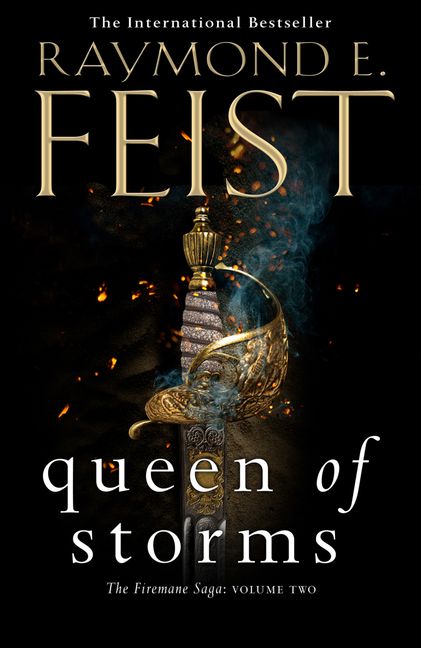
Waiting on Wednesday – Queen of Storms by Raymond E. Feist

Welcome to my weekly segment, Waiting on Wednesday, where I look at upcoming books that I am planning to order and review in the next few months and which I think I will really enjoy.  I run this segment in conjunction with the Can’t-Wait Wednesday meme that is currently running at Wishful Endings. Stay tuned to see reviews of these books when I get a copy of them. For this week’s Waiting on Wednesday, I check out an upcoming novel which I recently predicted will get a full five-star rating from me, Queen of Storms by Raymond E. Feist.

Queen of Storms Cover

Queen of Storms is one of those books that I know I am going to absolutely love well before I actually read it. This is mainly because it is written by one of my favourite authors of all time, Raymond E. Feist. Feist is easily one of the best fantasy authors of the last 40 years, having created an amazing body of work with his long-running overarching fantasy series, The Riftwar Cycle, which started way back in 1982 with his iconic debut novel, Magician. I am a massive fan of these books, as it was one of the first big fantasy series that I ever got into. I particularly enjoyed Magician (I did a re-read of it a few years ago and it still holds up) and I routinely reread The Empire trilogy (co-written with Janny Wurts), every couple of years. Feist finished The Riftwar Cycle back in 2013 (it featured 30 books by the end) and has now moved on to a whole new series.

Queen of Storms is the second book in The Firemane Saga, which is completely separate from the events of The Riftwar Cycle and started in 2018 with King of Ashes. King of Ashes was an incredible book which presented an excellent new fantasy adventure in a compelling new world. I really enjoyed the amazing story that was featured within this novel, and it did a great job of introducing the universe, the main characters and the overarching series narrative. As a result, I am exceedingly excited to check out Feist’s sequel and I cannot wait to see where he takes the story next. Queen of Storms is set for release on 14 July 2020, although a detailed plot synopsis and two impressive covers are currently available.

Goodreads Synopsis:

Hatushaly and his young wife Hava have arrived in the prosperous trading town of Beran’s Hill to restore and reopen the fire-damaged Inn of the Three Stars. They are also preparing for the popular midsummer festival, where their friends Declan and Gwen will be wed.

But Hatu and Hava are not the ordinary loving couple they appear to be. They are assassins from the mysterious island of Coaltachin, home to the powerful and lethal Nocusara, the fearsome “Hidden Warriors.” Posing as innkeepers, they are awaiting instructions from their masters in the Kingdom of Night.

Hatu conceals an even more dangerous secret. He is the last remaining member of the legendary Firemanes, the ruling family of Ithrace. Known as the Kingdom of Flames, Ithrace was one of the five greatest realms of Tembria, ruled by Hatu’s father, Stervern Langene, until he and his people were betrayed. His heir, Hatu—then a baby—was hidden among the Nocusara, who raised him to become a deadly spy.

Hatu works hard to hide his true identity from all who would seek to use or to destroy him, as fate has other plans for the noble warrior. Unexpected calamity forces him to make choices he could not have dreamed awaited him.

A series of horrific events shatters the peace of Beran’s Hill, bringing death and devastation and unleashing monstrous forces. Once more, the Greater Realms of Tembria are threatened—and nothing will ever be the same again.

This sounds like it is going to be an outstanding novel, and after reading the above synopsis, I am sure that Feist is going to produce another compelling tale of magic, intrigue and adventure. There is honestly no chance that I am not going to absolutely love Queen of Storms, and I am going to have a hard time waiting until July to get this book.

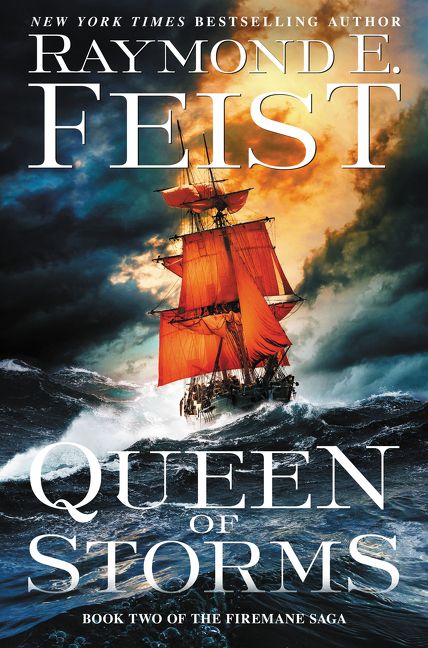
Queen of Storms Cover 2

Waiting on Wednesday – Aurora Burning, TRUEL1F3 and Empire of the Vampire

Welcome to my weekly segment, Waiting on Wednesday, where I look at upcoming books that I am planning to order and review in the next few months and which I think I will really enjoy.  I run this segment in conjunction with the Can’t-Wait Wednesday meme that is currently running at Wishful Endings. Stay tuned to see reviews of these books when I get a copy of them. For this Waiting on Wednesday, I check out three intriguing books coming out later this year which have all been authored by Australian author Jay Kristoff.

Kristoff is a bestselling science fiction and fantasy author who is currently one of the top writers of young adult fiction in the world today. Kristoff has been absolutely dominating the young adult market ever since his debut in 2012, Stormdancer, the first book in The Lotus War series. Since then he has gone one to produce a number of impressive books, including his highly regarded The Nevernight Chronicle, which concluded last year, and The Illuminae Files, which he co-authored with fellow Australian Amie Kaufman. Kristoff is an impressively prolific writer who has the ability to produce a number of excellent books each year. In 2019 alone he produced three separate novels, Aurora Rising, DEV1At3 and Darkdawn, all of which were entries in three different series. I actually only became familiar with Kristoff’s work last year when I ended up reading two of his three 2019 releases, both of which really impressed me with their inventive, fast-paced stories that were loaded with cool science fiction elements and enjoyable humour. As a result, I fully intend to read all three of these upcoming books and thought it would be interesting to examine all three of them in this one Waiting on Wednesday post.

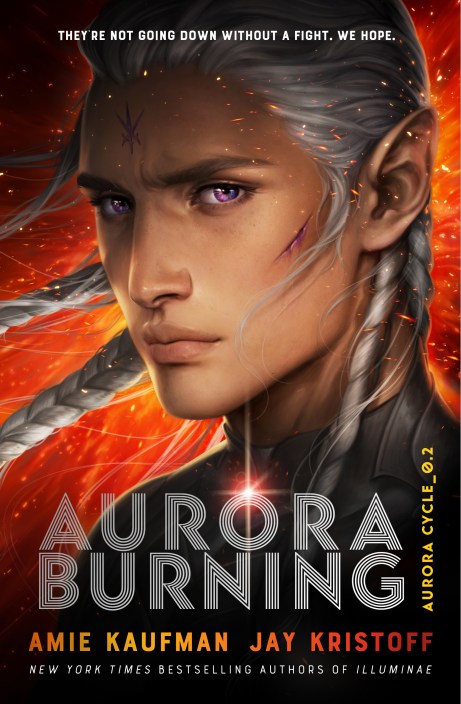
Aurora Burning Cover

The first one of Kristoff’s books to be released is the young adult fiction novel, Aurora Burning. Aurora Burning is the sequel to 2019’s Aurora Rising and is also the second book in The Aurora Cycle, which he is again co-writing with Amie Kaufman. Aurora Rising, which is set in the far future, followed a mismatched crew of youths who are members of an interstellar peacekeeping group. Their first mission sees them forced to go rogue and investigate the hidden secrets of a mysterious girl, Aurora, who they rescued from stasis aboard an ancient transport ship. This turned into a fantastic and action-packed thrill ride that I really enjoyed, and I ended up giving it a full five stars when I reviewed it. As a result, I am really keen to check out the sequel, especially as Kristoff and Kaufman are going to continue a number of the fun story threads from the first book. Aurora Burning is currently set for release 28 April 2020 and I have high hopes that it will be just as much fun as the first entry in this series.

Goodreads Synopsis:

Our heroes are back… kind of. From the bestselling co-authors of the Illuminae Files comes the second book in the epic series about a squad of misfits, losers, and discipline cases who just might be the galaxy’s best hope for survival.

First, the bad news: an ancient evil—you know, your standard consume-all-life-in-the-galaxy deal—is about to be unleashed. The good news? Squad 312 is standing by to save the day. They’ve just got to take care of a few small distractions first.

Like the clan of gremps who’d like to rearrange their favorite faces.

And the cadre of illegit GIA agents with creepy flowers where their eyes used to be, who’ll stop at nothing to get their hands on Auri.

Then there’s Kal’s long-lost sister, who’s not exactly happy to see her baby brother, and has a Syldrathi army at her back. With half the known galaxy on their tails, Squad 312 has never felt so wanted.

When they learn the Hadfield has been found, it’s time to come out of hiding. Two centuries ago, the colony ship vanished, leaving Auri as its sole survivor. Now, its black box might be what saves them. But time is short, and if Auri can’t learn to master her powers as a Trigger, the squad and all their admirers are going to be deader than the Great Ultrasaur of Abraaxis IV.

Shocking revelations, bank heists, mysterious gifts, inappropriately tight bodysuits, and an epic firefight will determine the fate of the Aurora Legion’s most unforgettable heroes—and maybe the rest of the galaxy as well.

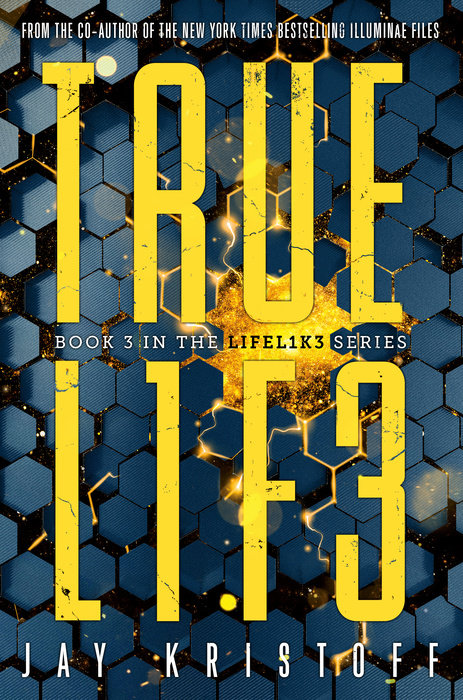
TRUEL1F3 Cover

The second book of Kristoff’s that is being released this year is another young adult novel, TRUEL1F3, the third and final book in his LIFEL1K3 series. This series is set in the post-apocalyptic America and follows a cyborg, a mutant, a robot and a seemingly normal girl as they find themselves contending with warring mega-corporations, violent fanatics and vengeful murderous cyborgs. The LIFEL1K3 books started in 2018 with LIFEL1K3, which was one of the most popular young adult novels of the year and it was quickly followed up with a second book DEV1AT3 in 2019. TRUEL1F3, which is going to be released on 30 June 2020, follows on from a massive cliff hanger at the end of DEV1AT3 and is set to conclude this epic series with a bang. This book has a really exciting sounding plot synopsis as well as a truly excellent cover, and I am very curious to see how this amazing series ends.

Goodreads Synopsis:

Best friends have become enemies.

Lovers have become strangers.

And deciding whose side you’re on could be the difference between life and death.

For Eve and Lemon, discovering the truth about themselves–and each other–was too much for their friendship to take. But with the country on the brink of a new world war – this time between the BioMaas swarm at CityHive and Daedalus’s army at Megopolis, loyalties will be pushed to the brink, unlikely alliances will form and with them, betrayals.

But the threat doesn’t stop there, because the lifelikes are determined to access the program that will set every robot free, a task requiring both Eve and Ana, the girl she was created to replace.

In the end, violent clashes and heartbreaking choices reveal the true heroes…and they may not be who you think they are.

Empire of the Vampire precover

The final book that I am going to feature in this article is Empire of the Vampire, Kristoff’s first non-young adult fiction novel. It features a rather cool story set on a world where the sun failed to rise, which lead to humanity being conquered by the emerging vampire legion. I really like sound of this novel, and I have a strong feeling that it is going to be an epic and amazing book. I actually just featured Empire of the Vampire on my Top Ten Books I Predict Will be 5 Star Reads list, and I truly believe that based on its awesome sounding plot, this book has the potential to be a perfect five star novel. I am a tad uncertain when this book is going to be released, as I have seen release dates for both September 2020 and September 2021. However, no matter when it is released, I am really looking forward to checking it out.

Goodreads Synopsis:

Twenty-four years have passed since the last sunrise, and for almost three decades, the creatures of the night have walked the day without fear. Once, humanity fought bravely against the coldblood legions, but now, we exist only in a few scattered settlements—tiny sparks of light in a growing sea of darkness.

Gabriel de León is the last of the Silversaints, a holy order dedicated to defending realm and church, now utterly destroyed. Imprisoned for the murder of the vampiric king, Gabriel is charged with telling the story of his life.

His tale spans years, from his youth in the monastery of San Michon, to the forbidden love that spelled his undoing, and the betrayal that saw his order annihilated. Most importantly, Gabriel will tell the story of the Grail—the legendary cup prophesied to bring an end to the eternal night, whose location is known to a single person: A smart-mouthed teenage urchin named Dior.

Their journey with a band of unlikely allies would see Dior and Gabriel forge an unbreakable bond, and set the broken paragon on a road to redemption.

But now, the Grail is shattered. And with the cup of the Redeemer destroyed and the last Silversaint awaiting execution, what can bring an end to this undying empire?

As you can from the above, 2020 is going to be an amazing year for fans of Jay Kristoff. I am very excited for all three of these upcoming novels, especially as I know I am going to love each and every one of them.

A Little Hatred by Joe Abercrombie

A Little Hatred Cover

Publisher: Orion (Audiobook – 17 September 2019)

Series: Age of Madness Trilogy – Book One

Length: 20 hours and 20 minutes

My Rating: 5 out of 5 stars

Amazon

One of the very best authors of dark fantasy fiction, Joe Abercrombie, returns to his epic First Law series with A Little Hatred, an outstanding and deeply entertaining read that serves as an excellent start to a whole new trilogy.

28 years after the failed Gurkish invasion of the Union and Jezal dan Luthar’s sudden rise to the throne, the world is much changed. Industry has come to the Union, with vast factories, production lines and businesses now defining the Union’s various cities at the expense of the nation’s farmers, labourers and working classes. In this time of change, a whole new generation is ready to make its mark in the world, but the rivalries, hatreds, manipulations and disappointments of those who have come before are hard things to overcome.

In the North, war once again rocks the lands, as the forces of Stour Nightfall invade the Dogman’s Protectorate, forcing the armies of Angland to come to their aid. Young lord Leo dan Brock is desperate to seek honour and glory on the battlefield; however, his forces are too small to defeat the vast Northern hordes. Requiring help from the Union, Leo is hopeful that a relief force led by Crown Prince Orso may help to turn the tide of battle, but the Crown Prince is a man known to constantly disappoint all who pin their hopes on him. However, the arrival of the mysterious Rikke, daughter of the Dogman, may provide him with a all the help he needs, especially with her ability to see through the Long Eye. Back in the Union, Savine dan Glokta, daughter of the feared Arch Lector Glokta, is making a name for herself as a ruthless businesswoman. Dominating the world of business and industry, Savine believes that she is untouchable, but dissent amongst the working classes are about to show her how wrong she is.

As both the North and the Union find themselves on the dawn of a whole new era, chaos will absorb all before it. While this new generation attempts to find their place, they soon begin to realise what the previous generation found out the hard way that they are not the ones in charge of their destiny, and there is nothing a little hatred cannot ruin.

Joe Abercrombie is a highly acclaimed author who has produced some truly amazing pieces of dark fantasy fiction over the years. While he has written other books, such as the Shattered Sea trilogy, he is probably best known for his First Law series. The First Law series is currently made up of seven books (including A Little Hatred), which detail bloodshed, politics and manipulation in a dark fantasy world. This series started with The First Law trilogy, which debuted in 2006 with The Blade Itself and ended in 2008 with Last Argument of Kings. The First Law trilogy followed the adventures of several complex and amazing characters as they fought to not only stop the Gurkish invasion of The Union but also the end a war in the North. Abercrombie would eventually follow this original trilogy with three standalone novels, which were set after the events of The First Law trilogy. These three books, 2009’s Best Served Cold, 2011’s The Heroes and 2012’s Red Country, each had various degrees of connection to the original trilogy, and in many cases showed what happened to some of the major characters from the first three books. These standalone novels were eventually collected together into the loose Great Leveller trilogy. I absolutely loved the original First Law trilogy, and it remains amongst one of my favourite fantasy series of all times. I do need to check out all of the Great Leveller books at some point, although I have no doubt the will all prove to be first-rate reads.

A Little Hatred is Abercrombie’s first entry in the First Law series since 2012, and it is set 28 years after the events of the original trilogy and 15 years after the events of Red Country. A Little Hatred is also the first book in a new connected trilogy that Abercrombie is producing, The Age of Madness trilogy, with the next two books in this trilogy to be released in September 2020 and September 2021. I have been looking forward to reading A Little Hatred for a while now, mainly because of how much I enjoyed the original The First Law trilogy, and I was very happy to not be disappointed with this new book. A Little Hatred was an incredible and captivating read which I powered through in short order. Not only does this book get a full five stars from me, but I even listed it as one of my favourite novels from 2019 when I was only about halfway through it.

For his latest book, Abercrombie utilises the same writing style that proved to be so successful in the previous First Law books. Readers are once again in for a dark, gruesome and very adult story that follows seven main point-of-view characters as they experience the events unfolding throughout the book. While each of the seven main characters has their own unique arcs, their various stories combine throughout the course of the novel to produce a deeply compelling overall narrative. I really like all the places the story went in this book, and it turned into an excellent blend of war, political intrigue, violent social revolution and intense interaction between a number of amazing characters. Abercrombie does not hold back any punches in this story, and there are a number of intense and excessively violent fight and torture scenes in this book, and there is plenty to keep action fans satisfied. At the same time, the author also installs a fun sense of humour throughout the book, which usually relates to the personalities of the various characters who are telling the story. All of this adds up to an absolutely amazing story and you are guaranteed to get quickly get drawn into A Little Hatred’s plot.

I thought that the author’s use of multiple character perspectives was an extremely effective storytelling method, especially as the seven point-of-view characters followed in this book often find themselves on different sides in the various featured conflicts. This allows the reader to see all the relevant angles to the political, social and military conflicts that are shown in the story, whilst also advancing the book’s various character arcs. These multiple character perspectives also allow the reader to see multiple viewpoints of the same events. This is especially effective during a couple of the larger battle sequences or during a particular duel scene, where you get to see the thoughts, fears and plans of the various participants and spectators, allowing for richer and more elaborate scenes. There are also a bunch of brief scenes which are told from the perspective of several minor characters, which are used, for example, to show off the extreme chaos surrounding the takeover of a city by members of the working class. I also really liked how Abercrombie used these different character viewpoints to imbue the story with some intriguing symmetry, such as by having two separate characters spending time with their respective parents back to back in order to show the differences and similarities in their relationships. All of this produces an excellent flow to the novel, which I really appreciated, and which helped with the overall enjoyment of the book.

A Little Hatred is an excellent continuation of the previous First Law books, and Abercrombie has come up with a bold new direction for the series. This latest novel is strongly connected to the events of the previous entries in this overarching series and continues a bunch of the storylines established in the prior books. It also continues the adventures of several characters who have previously appeared in the series, showing what has happened to them in the intervening years and how their legacy is being continued. Despite this strong connection to the previous six books in the First Law series, I would say that it is not a major necessity to have read any of the prior books, as the author does a great job of rehashing all the relevant major events while also successfully reintroducing some of the main characters, allowing new readers to enjoy this book. That being said, those readers who are familiar with some of the prior books, especially The First Law trilogy, are going to have a much better understanding of the events and characters that are featured within A Little Hatred, which may also result in a change in how readers view certain characters and events. For example, one of the main characters from the original trilogy makes several appearances throughout the book, interacting with some of the point-of-view characters. As these new characters have no prior experiences dealing with him, they believe he is a fairly harmless and friendly old man, which is how he is then presented to new readers. However, those readers who are familiar with him from the original trilogy know just how dangerous he can be, and his harmless routine actually becomes a little sinister. Readers with knowledge of the events of the original trilogy are also in for a lot more cringe throughout this book, as you know all the shocking details of a certain inappropriate relationship well before it is revealed to one of the characters later in the book.

I thought it was interesting that Abercrombie included such a significant time skip between this book and the original trilogy, but I think that it really paid off and created an excellent new setting. While the North and the conflicts that defined it remained very similar to what was featured in the previous books, the main setting of the Union proved to be very different. Since the last time you saw it, the Union has started to evolve from a more medieval society to an industrial society, with factories and production lines, which in many ways were very reminiscent of the Industrial Revolution in places like England. Of course, these changes result in different types of conflicts, as the lack of traditional jobs combined with the rich ruthlessly taking the agricultural industry away from the peasants results in an interesting bout of extreme class warfare, led by the organisation called the Breakers. These Breakers bear a lot of similarities to the organised instigator of real-life industrial revolts that occurred throughout historical Europe, and it was interesting to see Abercrombie’s take on them, especially as he included an anarchist sub-group, the Burners. I really liked this intriguing focus on class revolution, and it looks like this is going to be one of the major story threads of this new trilogy. I am very curious to see how it all unwinds, and I imagine there is more anarchy, chaos and bloody revolution on the horizon.

While the above elements are all pretty outstanding, the true highlight of the First Law books has always been the complex and damaged protagonists through whose eyes the story is told. Abercrombie has a real knack for creating compelling and memorable characters, which he once again showcases within this book. There are some really enjoyable and complex characters here, and I really liked their various interactions and character arcs. These new point-of-view characters include:

  • Crown Prince Orso – son of King Jezal and notorious wastrel who, despite his outward appearance as a lazy, useless and apathetic drunk, is actually a surprisingly capable and deeply caring individual, who hides his abilities and real feelings, especially as his attempts to be a good person usually have disappointing results.
  • Savine dan Glokta – daughter of Arch Lector Glokta, Savine has capitalised on her business sense and the fear of her father to become a successful investor. As a woman in a man’s world, she is forced to be utterly ruthless like her father, and Savine mostly comes across as heartless until a traumatic experience and revelations about her past almost break her.
  • Rikke – a Northern girl who is the daughter of the Dogman. Rikke is a powerful seer with the ability to see both into both the past and the future, although she has limited control of these powers. Rikke starts the book out as quite an innocent woman, until Stour Nightfall’s invasion hardens her and makes her keener for violence and revenge.
  • Leo dan Brock – a Union lord who is the son of two of the protagonists of The Heroes. Leo is a young man’s man, eager to prove himself in combat, whose abilities have made him a popular hero. However, his impatience and desire for glory ensure calamity on the battlefield, which guilts him to try and learn a new way of command. However, once he tastes glory again, he forgets all the lessons he has learned and the friends who got him there.
  • Vick dan Teufel – a Union Inquisitor serving under Arch Lector Glokta. Despite the fact that Glokta framed her father in the original trilogy and sent her and her entire family to a prison camp, Teufel appears loyal to him and the Union, as she likes being on the winning side. Despite her misgivings about the people she works with and her respect for some of the people she is investigating, she continues her missions and tries not to get close to anyone. Teufel is actually very similar to Glokta in personality, especially as she has the familiar storyline of being forced to investigate a conspiracy that no one wants solved.
  • Gunnar Broad – a former Union soldier who returned home after many years of fighting for his country to find that the local lord has stolen his farm. Attempting to find work in the cities, Broad becomes involved in the events of the Breaker’s revolution. Broad is a killer without peer whose temper, bloodlust and the emotional trauma of war drag him into great acts of violence, even when these actions backfire on him and his family.
  • Jonas Clover – a veteran Northern warrior who finds himself serving as an advisor to the young warlord Stour Nightfall. Clover is easily my favourite character in A Little Hatred, as his sense of humour, penchant for mockery and jaded personality really stand out amongst the more serious and blood thirsty characters he interacts with and he has some of the best lines in the whole book. Clover affects an air of laziness and cowardice and is constantly spouting wisdom and council to the younger warriors, who either don’t listen or openly mock him. Despite his apparently amiable nature, Clover is actually a vicious bastard when he needs to be, and he has a couple of memorable kills throughout the book.

In addition to the above seven new point-of-view characters, there is also a bevy of great side characters which really help move the story along. While I could go on about several of them, I might just stick to Isern-i-Phail and Stour Nightfall. Isern is another older Northern character who serves as Rikke’s mentor and protector. While Isern is generally a hard and practical character she is in many ways crafted in a similar vein to Jonas Clover, gently mocking the younger characters she interacts with and producing some of the most entertaining insults and comments throughout the book. Stour Nightfall, on the other hand, is one of the primary antagonists of the book. The cocky son of Black Calder and the grandson of Bethod, one of the major antagonists of the original trilogy, Stour has a real sense of entitlement and viciousness, brought on by his famous relatives and his skill with the blade. In many ways he is a mirror to Leo dan Brock, as both are determined to seek glory in combat, and both seek to emulate the Bloody Nine, Logen Ninefingers, despite their elder’s warnings about what kind of person their hero really was. While at times Stour was a bit two-dimensional as a character, he changes after a significant event at the end of the book, and his future in the series should prove to be very interesting.

Aside from this new group of protagonists, several of the major characters from the original trilogy make a return in this book, allowing readers to get an idea of what has happened to them since their last appearances. This includes returning former point-of-view characters Jezal dan Luthar, Sand dan Glokta (who might just be the best character Abercrombie ever came up with) and the Dogman, as well as several secondary characters. While all of these characters get a few lines and are presented as major figures in the current world order, most of the focus of A Little Hatred is given over to the newer protagonists, which I think fits in well with the book’s overall focus on change. It was great to see these characters again, and there were even some major developments surrounding one of them. It was also cool to see them interact with the younger generations, especially when they see these new characters making the same mistakes they did at their age. A Little Hatred also features the return of the First of the Magi, Bayaz, who is still pulling all the strings in the world. Despite his grandfatherly appearance, Bayaz is probably the main villain of this entire series, and you just know that he is behind all of the events occurring in this book. I look forward to seeing more of the excellent villain in the future, and I cannot wait to see how and why he is manipulating everyone this time.

Rather than read a physical copy of this book, I ended up listening to the audiobook version, which was narrated by Steven Pacey. The A Little Hatred audiobook runs for 20 hours and 20 minutes, making it a fairly substantial audiobook that would actually come in at number 19 on my longest audiobook list. The audiobook format is an excellent way to enjoy A Little Hatred, as you get a real sense of all the gore and violence as it is narrated to you, as well as a better vision of the impressive, changed world that served as the setting of this book. I was really glad that they continued to utilise Steven Pacey as narrator for this new book as Pacey has narrated all the previous First Law audiobooks. It was really good to once again hear the unique voices that Pacey assigned to the characters from the original trilogy, especially as, to me, they were the defining voices of these original characters. The voices that he came up with for the new characters in this book were also good, and I think that he got the character’s personalities down pretty effectively. As a result, I would strongly recommend the audiobook format of A Little Hatred to anyone interested in checking out this book, and I am planning to listen to the rest of The Age of Madness books.

A Little Hatred by Joe Abercrombie is an outstanding and impressive new addition to his brilliant First Law series. Abercrombie has once again produced a captivating, character-based tale of bloody war and politics, while also adding some intriguing new elements to it. This is an exceptional book, which I had an absolute blast listening to. The Age of Madness is off to an extremely strong start, and I cannot wait to see where Abercrombie takes this amazing series to next.

ALH-Final-600x925

Amazon