Warhammer 40,000 – Brutal Kunnin by Mike Brooks

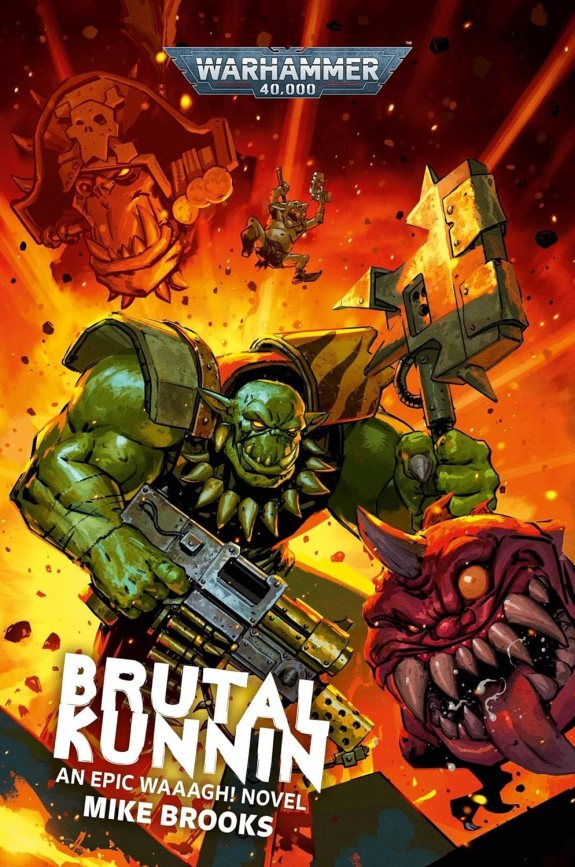
Brutal Kunnin Cover

Publisher: Black Library (Audiobook – 22 June 2001)

Series: Warhammer 40,000: Ufthak Blackhawk – Book One

Length: 8 hours and 20 minutes

My Rating: 4.5 out of 5 stars

Amazon

Get ready for a scrap as one of the fastest rising authors Warhammer fiction, Mike Brooks, presents a fast-paced and wildly entertaining book that follows the orks as they bring carnage to a new planet with Brutal Kunnin.

One of the most impressive rising stars in Warhammer fiction at the moment is Mike Brooks, who has been on an outstanding roll lately.  An excellent talent with a great understanding of Warhammer lore and factions, Brooks has written several impressive novels in the last few years, all of which have contained clever stories featuring unique figures from the franchise.  I have had a wonderful time with several of these books, with Huron Blackheart: Master of the Maelstrom, Warboss and The Lion: Son of the Forest (one of my favourite books and audiobooks of 2023) being outstanding in their own way.  Because Brooks has some intriguing books coming out this year, I thought I would go back and check out one of his first major contributions to the Warhammer 40,000 canon with the thrilling novel, Brutal Kunnin, which I ended up having an amazing time with.

Out of all the dangerous creatures that infest the known galaxy, few things have more potential for violence and destruction than an ork warband.  Unfortunately for the Adeptus Mechanicus forge world of Hephaesto, they are about to caught in the middle of two rival warbands ready to show each other just who the hardest gits truly are.

Ufthak Blackhawk is a newly minted nob in the fleet of Da Meklord, who eagerly follows his boss to Hephaesto, looking for loot, glory, and the chance to break some skulls.  However, when Da Meklord forces arrive in orbit, they soon discover that another ork force is already there, as the ships of Freebooter Kaptin Badrukk lay siege to the planet.  Rather than fighting each other, Da Meklord and Badrukk form a temporary alliance to kill the human defenders before turning on each other.

Leading his troops to the surface, Ufthak looks ready to prove himself, only to find himself coming face to face with the most advanced weaponry and upgraded troops in the entire Imperium of Man.  However, even the highly specialised and disciplined soldiers of the Adeptus Mechanicus are unprepared for the green tide about to roll down upon them, especially when their troops are bogged down by incompetent leaders and infighting from within.  Worse, a darker threat lies waiting in the bowels of Hephaesto, one that has no qualms about killing both ork and augmented humans to achieve its bloody goals.  Can Ufthak lead his troops to victory against all comers, including an enemy that even he can’t headbutt into submission?

Brutal Kunnin was a particularly fun and thrilling novel from Brooks that takes great looks at two fantastic Warhammer factions, while also presenting an action-packed story.  Funny, brutal and loaded with laughs, this is a particularly awesome novel that makes great use of the ork faction.

I really enjoyed the fantastic story featured within Brutal Kunnin, especially as Brook produced an addictive and exciting read.  The trick with ork focused Warhammer 40,000 novel is that you usually aren’t going to get a serious story out of it; instead the writer needs to lean into the humour surrounding the whole faction.  Brooks did a really good job of this, as he primarily focuses on the volatile orks as they land on Hephaesto and begin fighting against both the Adeptus Mechanicus soldiers and other orks due to the rival fleets in order.  While this is extremely fun, it doesn’t necessarily result in a complete or fully engrossing story, so Brooks cleverly adds in a parallel storyline which helps to turn Brutal Kunnin into something particularly awesome.

This secondary storyline follows members of the Adeptus Mechanicus, particularly Zaefa Varaz, who serves as an alternative protagonist, as they witness the ork invasion unfold.  About half the book is told from the perspective of the various Adeptus Mechanicus characters, which adds a lot of meat to the story.  Not only do you get the entertaining perspective of smart characters being completely unprepared for the unusual and direct actions of the orks, but there is a lot of internal conflict as the planet’s leadership fight amongst themselves.  At the same time, various conspiracies lurking beneath Hephaesto’s surface comes to life which present even greater threats to the defenders.  I really loved how well the intrigue laden human characters contrasted with the straightforward, action-packed ork chapters, and it helped to produce a very effective story.  Brooks loads in some big set pieces as the story rushes by, and you really get drawn into the carnage that unfolds as the orks get closer to their goal and all hell breaks loose within the main city of Hephaesto.  The author sets up a very entertaining ending for Brutal Kunnin, with the right characters coming away on top, while others get their just deserts.  An overall exceedingly amusing, exciting, and cleverly set up story that you can’t put down.

I felt that Brooks did a really good job of setting out Brutal Kunnin’s story, especially with the split between the ork perspective and that of the inhabitants of Hephaesto.  The ork chapters are exclusively shown from Ufthak Blackhawk’s perspective, while the rest of the book is shown from multiple point-of-view characters to tell their side of the narrative.  Having only one ork protagonist was a clever choice from Brooks, as it ensured that side of the story was focused, character driven and didn’t get watered down with a group of similar ork characters.  I loved how well Brooks was able to express the unique perspectives of the various characters throughout the course of Brutal Kunnin, and you really get the sense of how each of these races sees the universe.  The various ork chapters are naturally loaded with humour, mostly brought on by their unique insights into the humans they face, and you have to laugh at some of the outrageous events that occur there.  This humour blends in nicely with the more serious chapters focusing on the Adeptus Mechanicus, and Brook hits the right balance between silly and intense here.  The resulting action is also very well written, and Brook made sure to fill up the story with so many compelling and over-the-top fights, which anyone can appreciate.

Unlike some of the more elaborate Warhammer novels out there, I felt that Brutal Kunnin was particularly accessible to new readers, and indeed could be a good entry point into the Warhammer 40,000 universe.  Brooks really leaned into showing how crazy and dark this universe can be throughout the course of the book, and the unique humour, over-the-top action, and interesting figures will appeal to a wide audience, especially to those interested in seeing what Warhammer 40,000 is all about.  Of course, there is a lot in it for established fans of the franchise, especially as Brooks brings several fantastic factions to life.

Naturally most of this focus revolved around the orks, who are always some of the funniest figures in the canon.  Essentially the Warhammer universe’s answer to football hooligans, the orks are the rude, crude, and always entertaining green horde, who only live for a fight.  You know what you are in for with an ork book.  Brooks did a particularly good job of capturing the orks in Brutal Kunnin, especially as you see them from both interior and exterior perspectives.  Most of what you see comes from the eyes of Ufthak Blackhawk, whose insights into the ork horde, its leaders, and the unique culture of violence, strength and domination, prove quite intriguing and usually entertaining.  Blackhawk’s chapters are loaded with the typical ork humour, as well as the entertaining observations of the humans they face, and I loved how well Brooks captured the ork mind.  This is well complemented by scenes shown from the perspective of the orks opponents, most of whom are completely unable to comprehend the threat coming towards them.  Indeed, much of the ork’s success is due to the other factions underestimating them, and it was quite satisfying to see some of the more arrogant characters lose badly due to their false preconceptions.  Other distinctive characters also have some compelling views about the orks, with one daemon’s insights in the matter being particularly fascinating.  If I had one complaint about the orks in Brutal Kunnin, it would be that Brooks somewhat overpowers them, as they tear through everything in front of them.  While this worked for narrative purposes, and showcased just how advantaged the orks were by their opponent’s arrogance, I could see fans of the other factions getting a little annoyed about how quickly the orks take down some big units.  Still, this is a very minor complaint, and I felt that Brutal Kunnin ended up being a pretty awesome book about the orks, and I loved how much fun Brooks had writing this faction.

Aside from the orks, Brutal Kunnin has a surprisingly in-depth look at the Adeptus Mechanicus, the Tech Priests of Mars.  Essentially humanity’s mechanics, inventors, and mass production specialists, the Adeptus Mechanicus worship technology and live to perfect their devices and expand their knowledge.  About half the book is shown from several Adeptus Mechanicus personalities on the planet as they attempt to fight back against the orks, and there are various scenes that showcase their combat capabilities, weird units, and excessive augmentation.  However, the true highlight of Brook’s use of the Adeptus Mechanicus characters, was how well he captured their ambitious and machine altered mindset.  Every scene featuring an Adeptus Mechanicus character has that figures perception and mind influenced by internal calculations and computer augmentations, which helped to show how most of this faction are more machine than man.  However, no matter how augmented they are, these characters are still human, especially when it comes to their ambitious, desires, and inability to work together.  In many ways, the main antagonist of Brutal Kunnin was these character’s hubris rather than the orks, as these big personalities were often more concerned with each other, and this cost them dearly.  Throw in a mysterious outsider from another faction, and Brutal Kunnin ends up being a pretty interesting piece of Warhammer 40,000 fiction, that fans will have a lot of fun with.

As with most Warhammer novels I have the pleasure of enjoying, I chose to check out Brutal Kunnin on audiobook rather than seeking out a physical copy.  Naturally this proved to be a pretty fun experience as Brutal Kunnin has an outstanding audiobook format that really enhances the amazing and fun story of this book.  With a run time of nearly eight and a half hours, this is a pretty typical sized Warhammer audiobook which I was able to power through quickly thanks to its fast-paced story.  It also helped that Brutal Kunnin had an awesome narrator in Tom Allenby.  Allenby is a narrator who I wasn’t familiar with before this book, but he quickly impressed me with his excellent range of voices.  Allenby proved quite adept at voicing the various inhuman figures in the story, whether it be an ork or a member of the Adeptus Mechanicus.  He did such a good job capturing the essence of these figures throughout the production, and I loved how all the various characters got their own unique voice that proved fitting to their personalities.  Allenby also did a great job of narrating the intense and entertaining action throughout the course of Brutal Kunnin, and the listener really gets a good sense of what is going on.  As such, I would strongly recommend the Brutal Kunnin audiobook format to anyone interested in checking this piece of Warhammer fiction out, as you guaranteed to have an amazing time with it.

Mike Brooks continues to impress me with his outstanding additions to the Warhammer canon.  Brutal Kunnin was a pretty damn amazing read that showcased the author’s ability to showcase some of the more distinctive figures from the game.  This was a wildly entertaining and exciting Warhammer 40,000 novel that comes very highly recommended.

Amazon

Warhammer 40,000: The Lion: Son of the Forest by Mike Brooks

The Lion - Son of the Forest Cover

Publisher: Black Library (Audiobook – 22 April 2023)

Series: Warhammer 40,000

Length: 12 hours and 15 minutes

My Rating: 4.75 out of 5 stars

Amazon

One of the fastest rising authors of Warhammer 40,000 fiction, Mike Brooks, returns with another exceptional read, this time covering one of the most significant events in recent Warhammer fiction, the return of Lion El’Johnson with The Lion: Son of the Forest.

At this point I think that my love for all things Warhammer is pretty well established, especially after my lengthy post earlier this year detailing my favourite Warhammer 40,000 novels.  I have been having a ton of fun in 2023 with this cool franchise, and I have just managed to finish off the newest Warhammer novel with The Lion: Son of the Forest.  This is the latest book from the very impressive Mike Brooks, who has been making a real name for himself in Warhammer 40,000 fiction and who seems to get better with every one of his books that I read.  His previous novel, Huron Blackheart: Master of the Maelstrom was a great read about an excellent established villain, and I had a lot of fun with his most recent book, Warboss, a highly entertaining novel about the always crazy orks.  However, I think that The Lion is probably his most ambitious and captivating novel yet as he covers the return of the Primarch of the Dark Angels, Lion El’Johnson.  This is a pretty big deal in Warhammer circles, and I was very impressed with how Brooks puts his own spin on the return to create an epic and powerful read.

At the dawn of the Imperium of Man, there was no force more deadly nor more loyal to the Emperor than the Dark Angels, the first Legion of Space Marines.  Led by their implacable and unstoppable Primarch and genefather, Lion El’Johnson, better known as the Lion, nothing was able to stop the Dark Angels as they crusaded from planet to planet dispensing the Emperor’s will.  However, following the events of the Horus Heresy and the Lion’s inability to save the Emperor, the Dark Angels imploded from within.  Treachery and years of resentment saw the Legion engage in a brutal and sudden civil war, which resulted in the destruction of the Dark Angel’s home world of Caliban, the scattering of the traitor Dark Angels throughout time and space as the Fallen, and the disappearance and apparent death of the Lion right when the galaxy needed him most.

Now in the 41st millennium, humanity is facing the greatest threat since the Horus Heresy.  The fall of Cadia spawned the Great Rift, a sprawling gap of daemon infested space that split the already crumbling Imperium in two, distributing travel, communications and coordination between humanity’s armies.  Into this darkness, the dread forces of Chaos emerge, destroying all before them, while other malign threats begin to eat away the remains of the Imperium.  The doom of all mankind seems certain, but hope is about to emerge in the most unlikely of places.

After a 10,000-year absence, the Lion awakens on the far-flung and devastated planet of Camarth, with no memory of how he got there.  Discovering one of his former sons, the Fallen Zabriel, the Lion soon discovers what has happened to the Imperium in his absence, as well as the terrible threats of the Great Rift and the forces of Chaos.  Unsure of his purpose or what has happened to him, the Lion sets out to preserve humanity from the forces trying to destroy it.  Rallying members of the Fallen from their long exile, the Lion begins a new campaign throughout the besieged systems of man, while trying to reconcile himself to everything he has lost.  But a dangerous and well-organised Chaos warband, the Ten Thousand Eyes, led by two of the Lion’s Fallen sons, are determined to destroy the returned Primarch and enact an ambitious plan with galaxy shattering consequences.  Can an isolated Lion survive the insanity of the 41st millennium, or has he returned only to face his doom?

Wow, now this was a pretty damn awesome Warhammer 40,000 novel.  Mike Brooks continues to really impress me with this cool new book, and I loved the elaborate and captivating tale contained within The Lion: Son of the Forest.  Featuring an intriguing and emotionally charged narrative that perfectly revives a key Warhammer 40,000 character, The Lion is an outstanding read and I think this is probably Brooks’ best Warhammer novel yet.

The Lion had a particularly interesting narrative that was firmly set around the return of Lion El’Johnson, and I loved the unique tale that Brooks came up.  The initial scenes of the book are quite fascinating as Brooks presents a symbol laden couple of chapters to show the Lion’s initial return, which I felt was a great way to start the story as it set up a lot of intriguing moments and gave the book quite a distinctive theme.  The introduction of two new alternate perspective characters a few chapters in helps to morph the story into a more typical Warhammer 40,000 narrative as it sees the Lion and other former members of the Dark Angels awaken in the current timeline.  The story soon sees the Lion reunite with one of his former sons and begin to reclaim a conquered Imperial planet from a notorious Chaos warband while trying to understand the new universe he’s in.  Getting back to his roots as a protector, the Lion soon is soon drawn into larger affairs, thanks a mysterious new ability he has obtained, and he sets out to do the right thing and right the wrongs of his past.  His actions not only lead him to more of his sons, ensuring that this book has a deep emotional heart to it, but it also leads him into conflict with a dangerous enemy, one that has big plans for him.

The Lion’s narrative is pretty epic in its scope and power as Brooks tells an exciting and compelling story about both the past and the present, and how one hero can make a difference.  The story features some great moments, including cool battles, emotional reunions, and dives into ancient history, as the characters come to grips with what the Lion’s return means to the greater universe.  Everything leads up to an ultra-intense finale as the Lion encounters a truly fallen son and is forced to reckon with the sins of his Legion and family.  I really enjoyed this epic narrative and Brooks sets out all the events extremely well, ensuring that readers will follow one excellent scene to the next.  While not every mystery is explained, the author does lay out some intriguing events that will grab a lot of Warhammer fans attention, and it leaves it open for more awesome books in the future.  I had an incredible time with The Lion and I managed to finish it off in a short amount of time.

This outstanding story is beautifully brought to life in Brooks’s capable hands as he deploys an excellent and captivating writing style throughout The Lion.  Brooks really had a tall order here in bringing back a key character from the Warhammer mythos and I think that he handled in an outstanding way by focusing on the emotional aspects of the character, rather than a pure action novel.  While The Lion does have some outstanding battle sequences designed to showcase just how epic a Space Marine can be, the focus is really on character development as Brooks examines three outstanding point of view figures while also telling an excellent narrative about characters trying to find their place in a strange new galaxy.

I loved how the author split the story across the three different perspectives, and I enjoyed how he made them so distinctive by using different styles and tenses for each of them.  For example, Baelor’s chapters use a third-person narration to show his struggles without going too deep into his head, the scenes shown from Zabriel’s eyes are written in a first person chronicle style as he recounts his story as if writing a journal, while the chapters focusing on the Lion are also in the third person, but feature a different, more epic style, which at times put me in mind of an older story or saga.  These different styles really fit the characters and their specific stories, and I appreciated how Brooks utilised these changes of styles to really tell a complex by subtly layering a classic Warhammer tale with pain, emotional damage, and uncertainty.

I felt that the author got the right balance of action and adventure with character growth, and you really get attached to the protagonists and their unique experiences in the Warhammer 40,000 universe.  I also loved how Brooks layered the story with a ton of Arthurian symbolism, as the Lion is meant to mirror King Arthur in this book, returning during his people’s darkest hour after dying during a war with his sons.  This included an excellent take on the Green Knight tale, with a dark Warhammer 40,000 twist to it, which also leads to one of the book’s funniest moments with a Monty Python homage.  I really got drawn into this outstanding story thanks to the way that Brooks told it, and this was an excellent and captivating read.

Now, this one of those Warhammer 40,000 novels that I probably wouldn’t recommend to new Warhammer readers as the story dives into some deep canon elements of the franchise.  Due to its focus on the return of Lion El’Johnson, a particularly important character that was only recently brought back in the game as a major event, The Lion is a key book in the Warhammer 40,000 expanded universe, and I felt readers needed a good understanding of the lore to fully appreciate its story.  This is because is strongly related to the history of the Dark Angels, and indeed all the Space Marines, and while Brooks does revisit and explain these events, having a more in-depth knowledge really does make that story that much clearer and more intriguing.  For those established fans of Warhammer 40,000 fiction, you are in for a real treat as Brooks expertly expands the lore while also providing some intriguing insights into established canon.  Seeing the Lion return and interact with his Fallen brethren was so damn cool, and it really tied into some of the best bits of Dark Angel lore that has been building for years and years.

I loved how the story examined both the current state of the Warhammer 40,000 universe, as well as the Horus Heresy, and it was fantastic to see characters who survived the Heresy arrive in the current universe and see what has been unleashed by the arrival of the Great Rift.  There are also a ton of jokes, references, and in-universe discussions that I had a lot of fun with, including intriguing new descriptions of events of the Horus Heresy, as well as more intriguing Dark Angels history.  I personally deeply enjoyed seeing the various ancient characters discuss the events that happened after they disappeared, and their reactions at the state of the Imperium, the deification of the Emperor to godhood, and what happened to the Dark Angels in the Lion’s absence, and this lead to some outstanding scenes.  The Lion proved to be a pretty epic piece of Warhammer 40,000 fiction and I was really impressed with how Brooks told such a unique and important story.

As I mentioned before, The Lion is a very powerful character driven novel as Brooks focuses on a cast of damaged and dispossessed figures thrust into an uncompromising future.  This is mostly clearly seen in the main character of Lion El’Johnson, the legendary Primarch of the Dark Angels and son of the Emperor, who returns after 10,000 years of mysterious disappearance.  Brooks paints quite the intriguing and complex picture around the Lion, showing him as a being out of time who, after experiencing some of the greatest losses and betrayals imaginable, awakens 10,000 years in the future with no idea of what happened to him.  The Lion is shocked at what the Imperium has become and how badly the universe has changed without him there.  Forced to reconcile with both this new future and his many failures, the older and wiser Lion heads back to the basics of his youth, protecting humans from monsters while also trying to reconnect with his lost sons, the Fallen, who he has mixed feelings about.  Brooks’s characterisation of the Lion is very different to what we’ve seen in previous novels, which I think a smart move, as the character is tired and lonely in this reality, and very much aware of the mistakes he has throughout his life.  Watching him relive some of the worst decisions he made during the Horus Heresy is very moving, and I loved how his insights into the past allowed him to move forward with his rediscovered sons and attempt to forgive them.  While there are a still a lot of questions around how the Lion returned (something I hope Brooks addresses in the future), I think that this was a pretty impressive return of such a key character, and I look forward to seeing more books focused on him.

The other major characters featured within The Lion are former Dark Angels who rebelled against their father thousands of years ago and were scattered throughout time and space following the destruction of Caliban.  Known collectively as the Fallen, these Space Marine characters have very complex feelings about Lion El’Johnson, especially as many believe he betrayed them and the Imperium, and they have all spent the intervening years being relentlessly hunted by the modern Dark Angels and their successor chapters.  This intriguing background was fertile ground for rich character development and backgrounds, and a large portion of the novel’s emotional depth relied heavily on the Lion meeting and reconciling with his lost sons.  Brooks produces several brilliant scenes that showcase the turbulent relationship between the Lion and the returning Fallen, and it was fascinating to see the Lion, a usually stubborn and proud character, admit that he was wrong and try to make amend to his sons.  I loved the intriguing group of characters that emerged in a supporting role as a result, especially as Brooks set them up as counterpoints to the Knights of the Round Table to match the Arthurian vibes around the Lion.

The most prominent of these supporting characters is Zabriel, the first Fallen that the returned Lion encounters, who serves as his guide to the new universe.  Zabriel has some amazing scenes in this book, especially as he provides the Lion with the first taste of the trauma the Fallen have experienced thanks to their father, and he makes sure the Lion knows that.  His well written chapters really capture his deep emotional conflict throughout The Lion, as he tries to reconcile the betrayals of the past with the hope that surrounds the revelation that Lion El’Johnson has returned.  His interactions with other members of the Fallen are really impressive as well, and I think he had some of the best chapters in the book.  Zabriel’s intriguing perspective is well matched by the other major point of view character, Baelor, a fellow Fallen who has chosen to continue following his former commander Seraphax, who he believes has a great plan to save the Imperium.  To achieve this goal, Seraphax has taken to wielding dark magic and is working with the followers of Chaos, forming the deadly warband, The Ten Thousand Eyes.  This forces Baelor to make a lot of compromises as he works to maintain his loyalty to Seraphax, even though they are doing terrible things.  The return of the Lion really throws Baelor for a loop, and there is a great undercurrent of denial to him as he tries to process all the implications that this has for him.  Brooks paints a brilliantly narrative of conflicted loyalty and duty around Baelor which worked wonderfully with all his chapters depicting the horrors of Chaos.  The rest of the Fallen characters in The Lion are very well written, and while some of them didn’t get a lot of focus, I loved some of the distinctive personalities that emerged.  It will be interesting to see how many of them are featured in the future, especially as there are still some secrets I wouldn’t mind knowing (who is The Red Whisper?), and I deeply appreciated how well Brooks featured them here.

To nobody’s great surprise, I checked out The Lion on audiobook, which is easily the best way to enjoy any good Warhammer novel.  Naturally, The Lion was pretty damn epic in this form, and everything about the book is greatly enhanced by the narration, as the epic story, amazing characters, and intriguing additions to the Warhammer universe, all come to life when read out.  I particularly enjoyed the voice work of Timothy Watson, who previously impressed me in last year’s Warhammer 40,000 audiobook, Krieg.  Watson has a wonderfully booming and commanding voice that worked well with all the powerful Space Marine characters in The Lion.  The narrators take on the confident and radiant tones of Lion El’Johnson was particularly awesome, and I really felt that he captured both the majesty of the character, as well as his deeper uncertainty and regret.  The other Space Marine characters are also extremely well captured, and I liked the fun range of voices that emerged, especially as they all seemed to fit that respective character and convey the key parts of their identity to the listener.  The villains are also cleverly narrated, and Watson goes out of his way to make them sound as inhuman as possible in places.  Coming in with a run time of over 12 hours, The Lion has a decent length for a Warhammer audiobook, although Watson’s fantastic narration moves the story along at a swift pace, ensuring that the listener is constantly hooked on the plot.  This entire production was just amazing, and I had an exceptional time listening to The Lion on audiobook, which is such an epic way to enjoy a Warhammer 40,000 novel.

Mike Brooks continues to rise through the ranks of Warhammer 40,000 authors with his outstanding new novel, The Lion: Son of the Forest.  The impressive and captivating read brilliantly brings back one of the most significant characters in the Warhammer canon and places him in an intense and deeply powerful tale of betrayal, forgiveness and displacement.  I had such an epic time with The Lion: Son of the Forest and this probably the best Warhammer book of 2023 so far.  I cannot wait to see what happens to this iconic character in the future, nor can wait to get my next Mike Brooks novel.  Highly recommended and required reading for all fans of Warhammer fiction.

Amazon

Star Wars: Thrawn Ascendancy: Greater Good by Timothy Zahn

Star Wars - Thrawn Ascendancy - Greater Good Cover

Publisher: Penguin Random House Audio (Audiobook – 27 April 2021)

Series: Thrawn Ascendancy – Book Two

Length: 16 hours and 17 minutes

My Rating: 4.75 out of 5

Amazon

One of the most impressive authors of Star Wars fiction in the world today, the legendary Timothy Zahn, returns with another epic entry in his Thrawn Ascendancy series, Greater Good, which continues to explore the early life of that awesome Star Wars character, Grand Admiral Thrawn.

Zahn is an outstanding author who has been writing Star Wars fiction since 1991, with the highly regarded Heir to the Empire.  Since then, Zahn has written several amazing Star Wars novels in both the current canon and the Star Wars Legends canon.  While I have not read all of Zahn’s Star Wars novels (yet!), the ones I have were all incredible and are some of my all-time favourite Star Wars novels (such as the awesome Star Wars: Scoundrels).  However, his most distinctive works have all surrounded the awesome character of Thrawn.

Grand Admiral Thrawn is an alien officer in the Imperial Navy, renowned for his amazing tactical knowledge, brilliance in battle and ability to discern insights about his opponents by observing their personality or culture, especially art.  Ever since his introduction in Heir to the Empire, Thrawn has been a firm favourite among the fans, so much so that he was one of the few characters from the Legends extended universe reintroduced in the new canon.  This reintroduction was done in the third season of the Star Wars: Rebels animated series, where he served as an impactful antagonist for the third and fourth season.  It also looks like Thrawn will also be getting a live-action appearance at some point in the future after his name was dropped in The Mandalorian, which is pretty damn exciting.

The character has been heavily featured in the current range of Star Wars novels, as Zahn was brought back in to write some exciting new Thrawn-based novels.  This started with a brand new Thrawn trilogy in 2017, made up of Thrawn, Alliances and Treason, which showed how Thrawn joined the Imperial Navy and his early career as an officer.  These novels were all incredible reads (Thrawn got a five-star review from me, and Treason was one of the best books I read in 2019), and I loved the character’s unique adventures.  Thrawn’s story was furthered expanded last year with Chaos Rising; the first novel in Zhan’s Thrawn Ascendancy series, which examines the character’s pre-Empire life.

While the armies of the Republic and the Separatists battle for supremacy in the Clone Wars, another deadly conflict is occurring beyond the bounds of known space.  Deep in the unexplored regions, known as the Chaos, the mighty Chiss Ascendancy have just defeated the forces of General Yiv the Benevolent, shattering his empire, the Nikardun Destiny, and bringing peace back to their territories.  As the Chiss Ascendancy returns to normal, they are unaware that they are still under attack from a malevolent and clever foe that is determined to finish off the Chiss once and for all.

On a Chiss agricultural planet, a group of peaceful and seemingly harmless aliens have arrived, seeking to temporarily make a home.  In addition to their good nature, kind hearts and unique spices, these aliens have also brought something of great value that many people will kill for.  As news of the alien’s resources spread, cracks begin to appear in the very foundation of the Ascendancy, as the various powerful families fight for supremacy.

With civil war on the horizon, the future of the Chiss Ascendancy may lay in the hands of the brilliant and infamous Senior Captain Mitth’raw’nuruodo of the Chiss Expansionary Defence Fleet.  Thrawn, who is personally responsible for the defeat of Yiv and the Nikardun, is currently investigating the origins of their attack on the Ascendancy and, in doing so, comes across a previously unknown planet destroyed by its own deadly civil war.  As Thrawn attempts to explore this new mystery, he soon finds himself in the midst of a dark conspiracy.  An unseen force is attempting to take control of the entire Chaos, and the Chiss are the greatest obstacle to their plot.  Hamstrung by politics, family ties and his own inability to see the deeper motivations of his fellow Chiss, can Thrawn stop the oncoming conflict before it is too late, or will the Chiss Ascendancy burn from the inside out?

Zahn has once again produced an exceptional and outstanding piece of Star Wars fiction that further explores the fantastic early adventures of his greatest creation.  Greater Good is an excellent middle novel in this cool trilogy, and readers will deeply enjoy this book’s blend of intricate storytelling, great characters and impressive universe-building.  All of this results in an exciting and compelling novel that quickly draws readers in and has absolutely no trouble keeping their attention.  I had an outstanding time getting through this great novel and I was able to power through its audiobook format in no time at all.

At the heart of this outstanding novel is a clever and addictive narrative that follows Thrawn and a bevy of supporting characters as the Chiss Ascendancy finds itself in danger from an indirect attack.  Greater Good follows on immediately after Chaos Rising, and examines the next stage of a compelling conspiracy against the Chiss, while also focusing on Thrawn’s battles during this period.  The author utilises a substantial number of alternate perspectives to tell a rich and varied story and, while Thrawn is the centre of much of the book’s plot, Zahn has widened the focus of the novel with several compelling storylines and characters.  These include an investigation into the origins of a Nikardun attack on a remote planet, several jaunts out into different parts of space, internal political conflicts that are a threat to Thrawn, and exciting encounters with other inhabitants of the Chaos.  There is also a substantial focus on a new plot to destroy the Chiss, which includes several compelling flashback sequences that examines the origins and initial planning of the conspiracy.  This use of flashback is pretty impressive, and while certain aspects of the antagonist’s storyline are a tad odd, it was still an interesting tale.  I really enjoyed the vast array of different storylines and character arcs that really highlighted the richness of the setting and the unique plotlines they could inspire.  While some of these storylines might seem rather disconnected at times, Zahn cleverly brings them together at the end of the novel, resulting in a very impressive and intriguing conclusion.

As with most of Zahn’s novels, Greater Good is loaded to the brim with Star Wars lore and intriguing universe-expanding ideas as the author dives deeper into the origins, culture and history of the Chiss Ascendancy.  Zahn really expands on what he introduced in his previous Thrawn and Thrawn Ascendancy novels, especially Chaos Rising, and highlights the proud Chiss warrior culture.  A vast amount of new information of the Ascendancy is featured within this latest book, and the reader gets a fascinating look at the planets, political makeup and social hierarchy of this race, especially at the family level.  Not only is this really intriguing, especially for those readers who have enjoyed Zahn’s previous additions to the Star Wars canon, but the author uses it extremely well within the plot.  Much of the main narrative, including the conspiracy that threatens to destroy the Chiss, is based on their family makeup and the accompanying politics and family mentalities that go along with that.  I felt that Zahn integrated this into the narrative extremely well, forcing the characters to navigate their unusual and insane politics in order to survive.

The author also expands the reader’s knowledge of the previously unexplored area of the Star Wars universe known as the Chaos.  The Chaos, thanks to certain celestial anomalies, is harder to navigate and transverse than regular space; it is a mess of isolated planets, unknown societies and new alien races.  Zahn introduces several new aliens throughout this novel, with each unusual race playing an interesting role in the overall story.  I love the unique Star Wars setting of the Chaos, especially as many of the established Star Wars rules and technology are not as present.  For example, the various warships have some different armaments and shielding, such as acid-filled missiles, resulting in some unique and previously unseen battle tactics.  It was also interesting to see the different takes on the Force that the inhabitants of the Chaos have come up with.  Without any Jedi present, the various races within the Chaos each have their own interpretations or uses for the Force, such as the Chiss Sky-Walkers, young children who can use the Force to help ships navigate the Chaos more effectively, and it was intriguing to encounter different views of this throughout Greater Good.  Hardcore Star Wars fans will enjoy the intriguing additions that Zahn makes to the expanded universe, and the final few pages hint at some major lore introductions occurring in the next Thrawn Ascendancy novel that I am rather curious about.

While this was a great book and piece of Star Wars fiction, I did feel that it required some pre-knowledge of Zahn’s prior works.  The narrative of Greater Good is heavily linked to the events of its preceding novel, Chaos Rising, and while the author does re-explain some of the elements or storylines, a lot of the plot does rather assume you read the first book.  Having greatly enjoyed Chaos Rising, I was able to follow this quite easily, but I could easily see some newer readers getting a little lost or overwhelmed in places.  In addition, parts of the Thrawn Ascendancy series are heavily linked to the events of the previous Thrawn trilogy, and certain references or comments might not make much sense unless you had already read these books.  As a result, I would suggest newer readers check out some of Zahn’s earlier novels first, although it is still possible to enjoy Greater Good without it.  Those readers who have enjoyed these prior books are definitely in for a great treat though and will find the deeper dive into the Chiss and Thrawn’s past to be really enjoyable.

I cannot review one of Zahn’s Thrawn-centric novels without talking about the awesome space battle sequences they contain.  Each of these awesome books features some impressive and detailed space battles as the protagonists encounter a range of ships and fleets that they must fight against.  Greater Good is a particularly good example of this, as Zahn has written several outstanding sequences that are attention-grabbing and fun.  The sheer level of detail and planning that Zahn puts into these action sequences is incredible, and you get an amazing sense of what is occurring during the battle as well as the associated tactics and plans.  The sequences involving Thrawn are easily the best, as Zahn goes out of his way to showcase the character’s tactical brilliance.  This results in some very elaborate sequences, as Thrawn quickly determines the weaknesses of his opponents and uses that knowledge to craft intricate and somewhat insane strategies to utterly defeat them.  Watching these plans come to fruition is always amazing, especially as the reader has no idea in advance what is going on in Thrawn’s mind.  Instead, you only get to see the brilliance and impact of his tactics at the same time as the other characters, and it is always a lot of fun seeing how Thrawn was able to come to his conclusions about his opponents and use them against him.  Zahn comes up with some outstanding sequences for Greater Good that are guaranteed to leave readers on the edge of their seats.

In addition to the awesome narrative, action and universe-building, Greater Good also features an awesome collection of characters, each of whom add so much to the novel.  Naturally, the most impressive character is Thrawn himself.  Even amongst his own people, Thrawn is a strange being who sees the world in a very unique way, and everyone he encounters is impressed by his tactical know-how and unnatural observational skills.  I always enjoy the way in which Zahn depicts Thrawn’s actions in the novel, as Thrawn is one of the few characters whose perspective we do not see.  Instead, Thrawn is only portrayed through the eyes of the major point-of-view characters who observe and react to his actions.  Not only does this remove the inherent difficulties in depicting Thrawn’s mind, but it really enhances the impacts of his deductions and subsequent reactions.  The observing characters view Thrawn making his moves or claiming some impossible bit of knowledge, and then slowly work out how he did it, either through their own observations or thanks to comments by Thrawn.  This is done in a similar manner to the classic Sherlock Holmes novels, with the supporting characters in Greater Good acting in the role of Watson to witness and be impressed by the protagonist’s intelligent leaps.  Like with Sherlock Holmes, the use of the outside narrator in Greater Good deeply enhances the impact of Thrawn’s action, resulting in some awesome scenes.

One of the intriguing aspects of Thrawn’s character in Greater Good that I appreciated was the way in which Zahn continued to highlight his character’s one major weakness: politics.  Thrawn has absolutely no concept of politics, family alliances or some of the inner conflicts impacting the Chiss, and as such is unable to defend himself or others against political ambitions or vindictiveness.  I always really enjoy this trait in the Thrawn novels, especially as it gives Thrawn a noticeable weakness, while also enhancing the impact his fellow supporting characters have, as all of them understand politics better and can help Thrawn in this arena.  This blindness to political realities is particularly important in Greater Good, as not only is Thrawn being attacked by politicians from within his own family but the main threat facing the Chiss is more political than militaristic in nature.  This results in a rather intriguing handicap for Thrawn throughout Greater Good, and it was cool to see the sort of plan that the character came up with to compensate for it, as well as the mistakes he then makes.  Overall, Thrawn is a pretty awesome and fascinating character to follow, and I cannot wait to see what events happen to him in the final book in the trilogy.

Aside from Thrawn, I also really enjoyed some of the supporting characters featured throughout Greater Good.  In addition to being perfect conduits to observing Thrawn’s actions, each of these characters have their own intriguing storylines, many of which are continuing from Chaos Rising.  Examples of this include Thrawn’s old friend, Admiral Ar’alani, Thrawn’s second in command Mid Captain Samakro, the former Sky-Walker Thalias, who has tied her fate with that of Thrawn, and the powerful Mitth family politician, Thurfian, who serves as a secondary antagonist.  Each of these characters is further developed in Greater Good, and I enjoyed some of the cool storylines that Zhan is coming up for them.  Thurfian’s storyline is particularly intriguing going into the next novel, as the final scenes hint that he is going to come into possession of some very interesting knowledge soon.

Zhan also introduces several great new characters throughout Greater Good, many of whose narratives are tied into the malevolent plot to destroy the Chiss.  I found myself quite intrigued by the character of Lakinda, a fellow Senior Captain in the Chiss Expansionary Defence Fleet, who serves alongside Thrawn.  Not only does Lakinda offer an intriguing alternate observation angle on Thrawn, tinged with a bit of jealously and mistrust, but this character provides greater insight into the Chiss family structure.  Lakinda is an extremely loyal member of a mid-tier Chiss family, and she often finds her loyalties conflicted as she attempts to choose between family and the fleet.  This results in some captivating and emotional sequences which really help to highlight the unusual nature of Chiss society.

I also quite liked how Zahn spends time following the main antagonist of Greater Good, the mysterious alien Haplif.  Haplif and his people have been hired by a mysterious third party to orchestrate chaos and dissent within the Chiss Ascendancy to destroy them.  As a result, he masterminds an ingenious plot to promote conflict between various members of the Ascendancy.  I really enjoyed the complex and clever plot that this character came up with, and it was really cool to see him manage to manipulate several people throughout the course of the book, and he was an interesting alternative to the previous antagonist, Yiv.  It was a little odd to see Haplif, a supposedly brilliant planner and master manipulator, find his plans constantly stymied by a spoiled teenager and a backwater rancher, but it was fun to see his arrogance work against him.  All of these characters are amazing, and I really appreciate the time and effort that Zahn put into developing them.

It will not surprise anyone that I ended up listening to this Star Wars novel’s audiobook format rather than seeking out a physical copy of the book.  I absolutely love Star Wars audiobooks, and this was another excellent example that comes highly recommended.  The Greater Good audiobook has a runtime of just over 16 hours, which, while substantial for a Star Wars novel, is extremely easy to get through, especially once you become engrossed in Zahn’s cool story.  Like most modern Star Wars audiobooks, Greater Good makes amazing use of the classic Star Wars sound effects and film score to enhance the story.  I particularly enjoyed its use in Greater Good’s various space combat sequences, and it really amps up how epic those scenes were.

The real standout of this audiobook was the outstanding narration by Marc Thompson.  Thompson is an experienced narrator of Star Wars fiction who, aside from contributing his voice to all the books in the Thrawn and Thrawn Ascendancy novels, has also narrated awesome audiobooks like Light of the Jedi, Doctor Aphra, Dooku: Jedi Lost, Dark Disciple and more.  Thompson does an incredible voice for Thrawn that is filled with the character’s control, intelligence, and gentle menace, and which is very, very close to how the character is portrayed in Star Wars: Rebels.  This amazing voice for Thrawn is easily one of the best parts of the audiobook, and it is fun to listen to the character lay out his elaborate strategies in Thompsons’s awesome tones.  Aside from Thrawn, Thompson also produces a great range of different voices for Greater Good’s supporting characters.  Each character gets their own distinctive voice, which matches their personality and physical qualities, and the listener is never in doubt about who is talking.  I also quite enjoyed how Zahn makes fun accommodations for the various different species featured within the audiobook, tailoring his voices to make them sound more alien at times.  Zahn also gives more rural accents to some of the Chiss characters featured in this novel who are from, or are located on more backwater planets, which I thought was a very nice touch.  All of these amazing features help to turn the Greater Good audiobook in an absolute treat for your ears, and it is an incredible way to enjoy this epic novel.

Thrawn Ascendancy: Greater Good is another exceptional piece of Star Wars fiction from Timothy Zahn.  Featuring his iconic and impressive creation, Grand Admiral Thrawn, Greater Good serves as an outstanding second entry in the Thrawn Ascendancy series, which charts the early life of this great character.  With a clever and exciting story, chock full of universe building, fantastic characters and some unique and memorable battle moments, Greater Good is an excellent novel that comes highly recommended.  I have so much love for Zahn’s Thrawn and Thrawn Ascendancy novels and, after really enjoying Greater Good, I am very excited to see how this series ends.  The final book in the Thrawn Ascendancy trilogy, Lesser Evil, is coming out in November 2021, and I cannot wait to get my hands on it.

Amazon

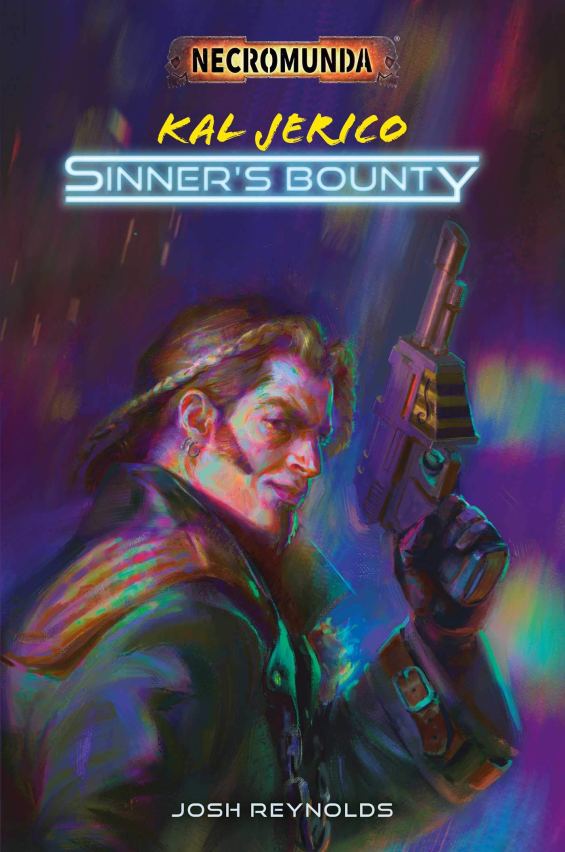
Kal Jerico: Sinner’s Bounty by Joshua Reynolds

Kal Jerico - Sinner's Bounty Cover

Publisher: Black Library (Audiobook – 29 February 2020)

Series: Necromunda – Book 11

Length: 14 hours and 43 minutes.

My Rating: 4.75 out of 5 stars

Amazon

After enjoying the exciting novel Deathwatch: Shadowbreaker by Steve Parker last year I once again dive into the intricate Warhammer 40K expanded universe with another fantastic tie-in novel.  This time however, I check out the awesome pulse pounding Necromunda adventure, Kal Jerico: Sinner’s Bounty by Joshua Reynolds, which reintroduces the iconic and entertaining bounty hunter Kal Jerico.

Warhammer 40K fiction is a particularly fascinating franchise built around Games Workshop’s tabletop war game of the same name, which follows armies, heroes and monsters as they fight for supremacy in a gothic far future.  While Warhammer 40K started as models and gaming, it has since evolved into a massive expanded universe, featuring comics, video games, board games, a film, an upcoming television show and a vast collection of tie-in novels written by an impressive group of science fiction authors.  This is a really fantastic universe that I have a great deal of love for as I was a major Warhammer nerd when I was younger (heck, I’ll admit it, I’m still a Warhammer nerd).  Thanks to an incredible amount of lore, history and character bios that have been created to accompany the various iterations of the tabletop game, this universe has so much potential for great fiction and stories that are a lot of fun to explore.

While my last dive into Warhammer 40K fiction focused on the wider wars of Space Marines versus aliens, this time I am looking at something very different as I check out my first Necromunda novel.  Necromunda fiction is based around the spin-off Necromunda game which was launched in the 1990s.  Set in the same universe as the rest of Warhammer 40K, this sub-franchise takes place on the industrial planet of Necromunda, a desolate husk of a world devastated by thousands of years of pollution and expansive industrial ambition.  The stories take place within and under the Hive Cities, vast multi-layered industrial hubs resembling termite mounds that reach both high into the sky and deep underground, and which are home to untold billions of inhabitants.  Broken up with the wealthy on the top spires and the poor on the bottom and below (the Underhive), control and influence of these cities is constantly fought over by powerful clans, families, and gangs, resulting in a huge range of different conflicts, which fuel both the tabletop game and the associated fiction.  With Game Workshop’s recent relaunch of the Necromunda game a couple of years ago, several new Necromunda novels have been published, including this novel which focuses on one of the most intriguing characters ever created as part of this game, Kal Jerico.

Kal Jerico, the self-proclaimed greatest bounty hunter in Necromunda, was introduced back in 1998 in the Kal Jerico comic strip, written by Gordon Rennie and drawn by Karl Kopinski, which appeared in the Warhammer Monthly magazine.  The Kal Jerico comic ran for 30 comic strips between 1998 and 2004, although the character subsequently appeared in three Kal Jerico novels written by Will McDermott (with Gordon Rennie co-authoring the first novel), Blood Royal, Cardinal Crimson and Lasgun Wedding.  I am a bit of a Kal Jerico fan, as I was lucky enough to receive several Warhammer Monthly magazines when I was a kid and I used to really enjoy all the cool and fantastic comics contained within.  Out of all the comics, the Kal Jerico ones were always my favourite and I absolutely loved seeing the outrageous and daring adventures of this cocky bounty hunter.  My love for this character is the main reason that I decided to check Sinner’s Bounty out, and I was really interested to see a more modern take on the character years after seeing him appear in comic book form.

In the sordid depths of Hive Primus, the biggest hive city on Necromunda, a daring crime has been committed and all hell is about to break loose in the aftermath.  The infamous and manic preacher, Desolation Zoon, led a brazen robbery on a guilder tithe-hall, stealing vast quantities of weaponry, credits, imported goods and other mysterious treasures.  Now, with his band of fanatical followers, Zoon is heading downhive in an armoured mining hauler, modified with an impressive amount of firepower.  However, these zealots are not the only ones heading downhive as they are being followed by every hired gun and killer in Hive Primus, each of whom wants a piece of the massive bounty that has been placed on Zoon’s head.

At the forefront of the rogues, killers and gangers chasing after Zoon is the infamous bounty hunter Kal Jerico.  Travelling with his faithful sidekick, Scabbs, the murderous woman he was forced to marry, Yolanda, and his cyber-mastiff, Wotan, Jerico is determined to catch up to Zoon and claim both the money and the accompanying reputation boost.  To claim their prize, this unconventional team will need to traverse some of the most dangerous locations in the Underhive and face off against giant monsters, dangerous tunnel creatures and mutant cannibals, as well as all their friendly bounty hunter colleagues.

However, as they get closer to capturing Zoon, Jerico and his cohorts will swiftly discover that is far from the simple bounty mission they thought it was.  Many powerful people, both inside and outside of Hive Primus, have a stake in Zoon’s capture, and soon Jerico will face off against some old rivals who are just as likely to settle old grudges as they are to claim Zoon’s bounty.  Worst, something dark and dangerous is rising in the deeps of the Underhive, and Kal is about to find himself in the middle of a massive fight that even his unnatural good luck may be able to save him from.

Now, that was a fun novel!  Sinner’s Bounty is an awesome read that not only successfully reintroduces a fan-favourite character but which also provides a pulse-pumping science fiction adventure for reader in the mood for an exciting and captivating story.  To tell this impressive new Kal Jerico novel, the Black Library has recruited veteran tie-in author Joshua Reynolds to continue the legacy started by authors like Renni and McDermott.  Reynolds is a talented author who is well-established in Warhammer fiction, having written a substantial amount of Warhammer 40K and Warhammer fantasy novels over the years, following a wide range of different characters and storylines.  I ended up really enjoying Reynold’s Kal Jerico novel and I was deeply impressed with the excellent combination of compelling narrative, great characters, and an iconic setting, all wrapped up with a fantastic sense humour, that helped to turn Sinner’s Bounty into such an exceptional read.

Sinner’s Bounty contains an epic tale of greed, adventure and friendship in the twisting tunnels of the Underhive that provides a ton of action and excitement.  Reynolds starts this story off with a bang (well, several bangs, a multitude of bangs if I am going to be honest), setting up first the main plot catalyst in Desolation Zoon and his mission, before introducing Jerico and his partners as they encounter their first obstacle on their hunt.  This entertaining first encounter serves as a fantastic introduction to the main protagonists, and Reynolds swiftly hurries them on their way, ensuring that they encounter more of the deadly elements of life in the Underhive, such as their lethal competitors.  At the same time, Reynolds starts introducing several additional characters who embark on the same mission of catching up with Jerico and Zoon.  These additional side characters introduce some intriguing alternate viewpoints and opinions, especially as each of them have their own agendas and motivations for being there.  These alternate viewpoints work extremely well in conjunction with the main narrative around Jerico, and Reynolds starts adding more and more in as the novel progresses, with nearly every supporting character and plot point coming together towards the end of the book.  Reynolds writes up a big conclusion with every major character in the same location forced to work together to survive in a scenario that was fantastically reminiscent of The Magnificent Seven.  At the same time, every character attempts to betray each other, resulting in some extremely entertaining and fun sequences, with the reader unsure who is going to end up on top and who is going to survive.  All of this is wrapped up perfectly, with a clever and fitting conclusion to the main story, while several open story threads set up some additional stories for the future.  All of this was deeply captivating, and while I personally got hooked on the cool story within the first few pages, there is so much intense action, clever betrayals and compelling plot points, that most readers will find themselves wanting to see how this awesome book ends as quickly as possible.

While many tie-in novels in the Warhammer 40K range have a somewhat limited audience, often requiring pre-knowledge of game lore, I felt that Sinner’s Bounty was extremely accessible and can be easily enjoyed by anyone interested in a fun science fiction adventure.  Reynolds does an exceptional job introducing all the relevant elements of Necromunda throughout the course of Sinner’s Bounty, and the reader is easily able to understand what is happening and why without any issue whatsoever.  Indeed, Reynolds makes this book so accessible that I would recommend Sinner’s Bounty as a fantastic introductory novel to anyone interested in seeing what Warhammer 40K fiction is all about, especially the Necromunda subset.  At the same time, Reynolds also ensures that Sinner’s Bounty caters for established fans, as there are a ton of references to the Necromunda game, previous Kal Jerico adventures and wider Warhammer 40K lore.  Not only do huge amounts of elements from the tabletop game make it into Sinner’s Bounty’s story, but Reynolds skilfully references events that occurred within both the Kal Jerico comics and novels, recapping them for new readers while also making some jokes about the events that occurred.  This great blend of references and detail makes Sinner’s Bounty an excellent Warhammer 40K novel for all readers and you are guaranteed to have a good time no matter how familiar you are with Kal Jerico or this fictional universe.

Without a doubt one of the best highlights of this entire novel was the incredible setting of the Underhive of Necromunda.  Reynolds goes all out throughout the course of this book to bring this grim, cavernous and incredibly deadly expanded setting to life in all its gory glory, and it is spectacular.  The reader gets a real sense of how life in the dark under a massive hive city must be like and the author has included all manner of details about crumbling façade, the unusual life forms and perilous living conditions that its many, many inhabitants must face.  Naturally, this turns out to be an outstanding setting for this action-packed storyline, and I had an amazing time seeing which horror or unique landscape would appear next.  Reynolds also loads up his novel with a huge amount of additional detail about the various gangs, families, and groups that control Hive Primus and inhabit the Underhive, which proves to be deeply fascinating.  The author really goes out of his way to provide a fantastic introduction to several factions that were featured in the tabletop game, allowing readers with limited knowledge of this universe to easily follow who these groups are and how they relate to wider story and world.  All of this proved to be extremely fascinating and readers are guaranteed to want to dive back into the depths to see more outstanding adventures here.

Another impressive part of Sinner’s Bounty was the extremely likeable and distinctive characters whose adventure the readers follow during this multi-perspective narrative.  Many of these characters were originally introduced in the previous comics and novels and Reynolds does an excellent job revitalising them and fitting them into his fantastic story.  The main protagonist of Sinner’s Bounty is the titular Kal Jerico, the Underhive’s most dashing and fashionable bounty hunter.  I really enjoyed the excellent version of Jerico that appeared in this novel, and the author has styled him as a particularly bold, resourceful, vain, and exceedingly lucky figure who moves from place to place bringing chaos and destruction.  Jerico is a very entertaining character, constantly delivering witticisms and fun one-liners to his compatriots, his enemies and himself, and you cannot help but enjoy seeing everything going wrong around him as he manages to annoy or enrage everyone he comes across.  It was particularly fun to see so many other characters get drawn into the events of this book partially out of spite towards Jerico, after being bested by him in previous adventures.  Despite his outer edge of pragmatism, greed and selfishness, Sinner’s Bounty shows that Jerico has a bit of a soul when it comes to some of the other people he encounters.  Not only is he shown to care about both his companions, despite several discussions where he implies he would sell them for his own benefit, but he also has a deeply ingrained sense of honour that drives him to do the right thing, even if it puts him in greater risk.  This makes for a fantastic and enjoyable character and I had a wonderful time seeing him scamper around in the Underhive making enemies and generally pissing everyone off.

In addition to his own vaunted self, Jerico also brought along two of his long-term associates Scabbs and Yolanda, both of whom have been part of the Kal Jerico series since the beginning (Scabbs appeared in Issue #1, while Yolanda was introduced in #2).  Both characters are heavily featured in Sinner’s Bounty and proved to be an excellent addition to the story.  The most significant inclusion is probably Scabbs, Jerico’s long-time friend and sidekick with a serious skin condition (hence the name Scabbs), who often unwillingly follows Jerico into danger.  Scabbs is a fun character who serves as a great counterpoint to Jerico’s insanity, often complaining about the terrible plans and generally looking for a more intelligent way to complete the mission.  Scabbs has a rather significant character arc within Sinner’s Bounty which forces him to examine his half-ratskin (a gang/clan in Necromunda) past, especially when he encounters Amenute, a ratskin mystic who is inexplicably drawn to him.  This forces Scabbs to re-examine his loyalties to Jerico, and it is intriguing to see this character act rashly as he faces off against powerful gangs to save his new acquaintance.

Next we have Yolanda, the dangerous and unpredictable wild woman who is currently Jerico’s wife (see the previous Kal Jerico novel, Lasgun Wedding).  Despite this marital relationship with Jerico, Yolanda is a just as likely to cut her husband’s throat as she is to help him, as she only serves her own best interest or her desires to kill as many people as possible.  Yolanda is another great character, especially as the reader is constantly left waiting for her inevitable betrayal of Jerico and Scabbs (I also had a good chuckle at an early joke about a poet trying to describe Yolanda, which does not go well for the poet!).  While Yolanda is a tad one-dimensional at times, Reynolds does a good job of trying to explore her inner psyche, showcasing some interesting parallels between her and Jerico, as both fled from a cushy life in the Spire to experience the joys of the Underhive, and there are some hints of some genuine feelings for Jerico, even though the two mockingly reference their sham marriage throughout the book.  I had a lot of fun with both these supporting characters and they proved to be an excellent accompaniment to Jerico’s antics.

Aside from these three protagonists, Reynolds has also loaded up Sinner’s Bounty with a raft of side characters, each of whom has their own agenda or plan, most of which revolve around killing Jerico (the guy is very popular).  The side characters featured within this book are an intriguing combination of established Necromunda bounty hunters and power brokers (I believe several are playable characters in the tabletop game), and original characters.  As a result, the reader gets to follow a range of religious fanatics, outrageous bounty hunters, scheming gangas, deranged mutants (including an entertainingly grandiose queen) and a whole range of other intriguing figures.  Thanks to the author’s excellent use of multiple perspectives, the reader gets a useful and suitable introduction to each of these characters, ensuring that they can be easily slotted into the narrative when necessary and cause their little bit of havoc.

Out of all these supporting characters, one of my favourites had to be the Adjurator (a fancy bounty hunter) Baertrum Arturos III, who serves as a major point-of-view character and secondary antagonist for this novel.  Baertrum is a slippery and treacherous hunter who is drawn into this chase not just for money but for the opportunity to one-up Jerico, who he has a deadly rivalry with.  Baertrum’s scenes are fun to read, especially as he is usually coming up with a new way to betray the other characters, and the reader has a great time hating him throughout the book.  I also liked the character of Desolation Zoon, the mad preacher whose brazen heist is the cause of all the events of this book.  Reynolds creates a particularly intriguing character in Zoon, showcasing him as a tired old preacher who, after a lifetime of piety and bloodshed, is starting to lose his faith and question his past actions.  However, this old dog still has some holy fire in him, and readers are in for a great time seeing him lay into his enemies with sword and blistering verse in equal measure.  Zoon has some particularly fantastic exchanges with Jerico in the second half of the novel, and I really enjoyed seeing this compelling figure come to life and be utilised throughout the book.  Overall, I thought that each of the characters in this exceptional novel were pretty damn fantastic and I had an exceptional time watching them attempt to survive and betray everyone they encounter.

I chose to grab Sinner’s Bounty on audiobook, which ended up being an amazing way to experience this fantastic and compelling novel.  The Sinner’s Bounty audiobook had a decent run time of just under 15 hours, which I managed to get through in about a week with a few extended listening sessions once I really got hooked on its outrageous tale.  I had a lot of fun listening to this audiobook and I found that the cool action sequences and gloriously gory setting of the Underhive were particularly awesome in this format.  A lot of this is down to the excellent narration of the talented Mark Elstob.  Elstob, who has previously narrated a small but interesting collection of audiobooks, has a lot of fun with Sinner’s Bounty as he comes up with some unique voices for this fantastic science fiction adventure.  All of the characters are gifted with a fitting and fun voice that really captures the depth of their personality, whether they be a scheming bounty hunter, a former aristocrat or a fantastical preacher, while also modulating to match their emotional state at that time.  This makes several of the battle scenes particularly fun, especially when you have characters like Desolation Zoon shouting out religious verse during a fight.  I also really appreciated the more nasal or gravelly voices the narrator came up for the various Abhuman or mutated beings featured within the book, and it was great to have some of the more different characters identified differently (I need to give a particular shoutout to one of characters, a mutant pirate captain, to whom Elstob gives a very enjoyable Scottish accent).  Overall, this was an outstanding way to enjoy Sinner’s Bounty and I would strongly recommend it to anyone interested in this book.

Kal Jerico: Sinner’s Bounty is an outstanding Warhammer 40K novel that reintroduces the epic Kal Jerico back to his adoring public after a lengthy absence.  The always impressive Joshua Reynolds has produced another outstanding Warhammer novel, containing an exciting and compelling adventure story, equipped with an incredible setting and some fantastic characters.  This results in an addictive and entertaining novel that I had an absolutely awesome time getting through and which made me so very glad that Kal Jerico is back.  Here’s hoping that we’ll get some more Kal Jerico novels in the future, especially if they feature more of Reynolds’s epic writing.

Amazon

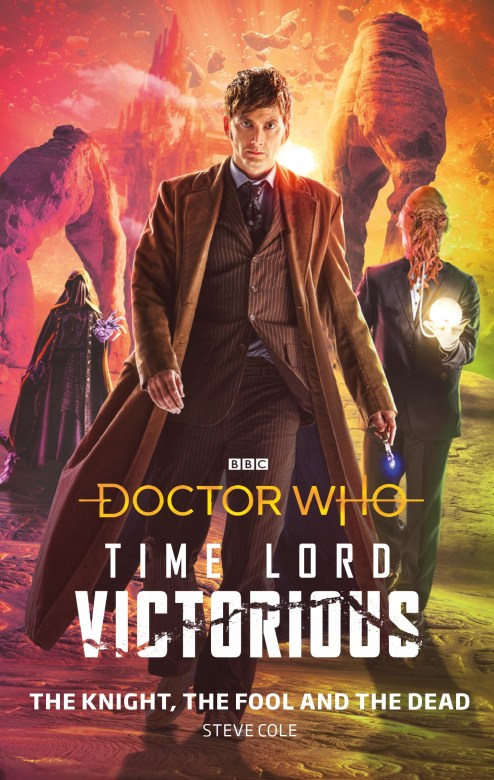
Doctor Who: Time Lord Victorious: The Knight, The Fool and The Dead by Steve Cole

Doctor Who - The Knight, The Fool and The Dead Cover

Publisher: BBC Books (Hardcover – 1 December 2020)

Series: Time Lord Victorious – Book One

Length: 178 pages

My Rating: 4.25 out of 5 stars

Amazon     Book Depository

Prepare to follow the Tenth Doctor into one of his darkest adventures as he faces death itself in the early days of the universe with the first novel in the Time Lord Victorious multimedia series, Doctor Who: The Knight, The Fool and The Dead, by bestselling author Steve Cole.

Shortly after the events of the 2009 television special The Waters of Mars, the Tenth Doctor attempts to outrun his guilt and his prophesised death by fleeing deep into the past to the Dark Times.  Near the birth of the universe, life flourishes and death is barely known.  Only a few rare people die, and most beings live for vast quantities of time.  That is until the Kotturuh arrive and turn the peaceful and bountiful planet that the Doctor is visiting into a dead world within seconds.

The Kotturuh are a vile and terrible race who are spreading throughout the cosmos dispensing death and destruction on an unbelievable scale.  Worshiping a mysterious equation, the Kotturuh view themselves as the arbiters of life and death, travelling to planets and dispensing mortality.  With each new species they encounter, they decree what that species’ lifespan will be, whether centuries or moments, and any who have lived beyond their set time are instantly killed.

Determined to stop the Kotturuh’s reign of terror, the Doctor and a small team of companions begin to work on a defensive strategy that will ensure life forms are immune to the Kotturuh’s power.  After travelling to the Kotturuh’s world and witnessing the equation that they follow, the Doctor begins to formulate a plan that will not only stop the Kotturuh for good but may even put an end to the Doctor’s greatest enemy, death.  Determined to change all of time and space so that life will win for all time, the Doctor will become more than just a Time Lord, he will be The Time Lord Victorious.

Now it will probably surprise no-one who is familiar with my blog that I am quite a fan of Doctor Who (just add it to the massive list of fandoms that I follow).  Despite my love of the televisions shows, I have not gotten into the Doctor Who novels, audio dramas or comics, although that may change in the future.  The Knight, The Fool and The Dead is an intriguing and compelling Doctor Who tie-in novel that takes the reader on a fantastic and exciting ride with the Tenth Doctor.  Written by Steve Cole, who has written a huge number of Doctor Who novels and audio dramas among other intriguing works, this book is a vital entry in the Time Lord Victorious project.  Time Lord Victorious is a connected series of Doctor Who tie-ins told across multiple forms of media, including novels, comics, audio dramas and various other formats, which sees various incarnations of the Doctor encounter similar foes and each-other in a massive adventure.  The Knight, The Fool and The Dead, is a major part of this expanded tie-in series, introducing one of the main antagonistic species and producing some of the major connected moments.

The Knight, The Fool and The Dead had an intriguing and enjoyable narrative which places the Tenth Doctor in an interesting and deadly conflict.  I had an awesome time reading this amazing story and, in many ways, it felt like an episode of Doctor Who, with the Doctor being confronted by danger, recruiting a unique team of individuals, including an immortal, a mad scientist and a time travelling Ood hitman (a hitood??), before finding an inventive solution to the conflict.  This proved to be a fun and enjoyable adventure, although it does get somewhat dark towards the end, mainly due to the Doctor’s vulnerable mental state and the reckless course of action that he undertakes.  While the book mostly follows the Tenth Doctor and his companions, there are also some flashback scenes to some of previous Doctors, each of which show the Doctor telling one of his companions the same story in different ways.  These flashback scenes are very interesting, especially to fans of the franchise, and they have some clever connections to the main story and to the overarching events of the Time Lord Victorious.  Due to how short the novel is (only 178 pages), The Knight, The Fool and The Dead, is extremely fast paced, although Cole does an amazing job setting everything up in a short period and then ensuring that the story that follows is cohesive with a good flow.  I found myself powering through this novel in extremely short order, especially once I got stuck into the excellent story, and I really enjoyed how the entire narrative turned out.  I particularly liked the intriguing and shocking cliff-hanger, which definitely makes me want to check out the next novel in the series.

This latest novel from Cole proved to be quite an enjoyable Doctor Who tie-in novel that really captures the tone and feel of the television show.  Like many pieces of tie-in fiction, The Knight, The Fool and The Dead, is best read by fans of the Doctor Who franchise, especially those who loved the Tenth incarnation of the Doctor.  Due to it being part of the Time Lord Victorious project, The Knight, The Fool and The Dead has some intriguing connections to the wider universe, with several other significant figures and characters making appearances, resulting in a lot of references for eagle-eyed fans.  While some knowledge of the wider Doctor Who canon would be ideal for readers of this novel, I felt that the story contained within The Knight, The Fool and The Dead was accessible to newcomers who should have fun getting through this interesting science fiction adventure.  While this novel is connected to a huge range of other Doctor Who media releases, I felt that readers did not need to have enjoyed any of the other entries in the Time Lord Victorious series before this book to follow the story.  While The Knight, The Fool and The Dead is a major entry in this connected franchise and is necessary reading for people trying to enjoy the Time Lord Victorious as a whole, this book can easily be enjoyed on its own.  I am rather curious about some of the comics and other novels being created as part of this, and I might have to check them out at some point in the future.

One of the things I enjoyed most about this book was the author’s portrayal of the Doctor.  The Knight, The Fool and The Dead features the Tenth Doctor, who was played by David Tennant on television, as the central protagonist of this book, and I felt that Cole did an outstanding job of bringing this iconic character to life.  Cole captures so much of this Doctor’s personality, including the way he speaks and thinks, so much so that while I was reading through this novel my brain automatically read all of the Doctor’s lines to me in Tennant’s voice.  This helped turn The Knight, The Fool and The Dead into such a fun story, especially as Tennant’s Doctor is probably my favourite version of the character.  However, the real highlight of Cole’s portrayal of the Tenth Doctor is how the author brings a much darker and conflicted tone to the character.  This version of the Tenth Doctor is only shortly removed from the climatic events of The Waters of Mars, where the Doctor’s hubris led to the suicide of a woman he was trying to save.  Because of this, and because his own upcoming death has been foretold, the Doctor has fled back in time to try to outrun his problems.  I really enjoyed the way in which the author portrays a much more unpredictable and emotionally ragged Doctor throughout this book, especially one who is still getting flashes about what happened during his last adventure.  This somewhat damaged Doctor ends up making some rather rash and dangerous decisions, especially when an opportunity to end all death comes before him.  The way in which the author works this more damaged version of this fantastic character into the narrative is extremely cool and I really appreciate the way in which he brings the story back to the events of the television series.

Overall, Doctor Who: The Knight, The Fool and The Dead by Steve Cole is an excellent and compelling Doctor Who tie-in novel.  Thanks to its quick narrative and fantastic depiction of the Tenth Doctor, I had an absolute blast getting through this new book, which serves as a key entry in a captivating multi-media series.  This is a great book to check out, especially if you are a major Doctor Who fan, and I will need to get the next novel in this series, All Flesh is Glass, to see how this storyline ends.

Amazon     Book Depository

Star Trek: More Beautiful Than Death by David Mack

Star Trek More Beautiful than Death Cover

Publisher: Simon & Schuster Audio (Audiobook – 11 August 2020)

Series: Star Trek – Kelvin Timeline – Book Two

Length: 8 hours and 16 minutes

My Rating: 4.5 out of 5

Amazon     Book Depository

Prepare to once again dive into the alternate timeline version of the Star Trek universe, known as the Kelvin timeline, in this latest exciting tie-in novel from acclaimed author David Mack, Star Trek: More Beautiful Than Death.

Set shortly after the events of the 2009 Star Trek film, in which the planet of Vulcan was destroyed by the mad Romulan Nero, Captain James T. Kirk is now captain of USS Enterprise.  Given a new mission, the Enterprise and its crew are ordered to rendezvous with Spock’s father, Ambassador Sarek, and escort him to the planet of Akiron.  Akiron, a resource-rich world containing a substantial amount of dilithium, has recently sent out a distress signal to the Federation, who are hoping to exchange aid for favourable trading rights.

Arriving at Akiron, they find the planet in a state of chaos as the population are under attack by demonic dark-energy creatures, known as wights, who strike from the darkness, eat energy, and appear to suck the life right out of any living being.  Determined to save the people of Akiron no matter what, Kirk begins his preparations to investigate the wights.  However, before he can act, Sarek orders Kirk to abandon the mission and leave Akiron.

Refusing to obey Sarek’s orders, Kirk attempts to find the cause of the terrible events on Akiron and save who he can.  With the help of an old mystic who believes that Kirk has faced the wights in his prior lives the Enterprise crew are soon able to discover the source of the wights on Akiron and the deadly potential their invasion has.  As Kirk and his crew attempt to save the entirety of the planet they must overcome several deadly attacks as well as the sinister agenda of Sarek’s Vulcan aide, L’Nel, who hatches a dangerous personal plan to kill Spock.  Can the Kirk and the Enterprise succeed, or will darkness engulf everything it touches?

Over the last couple of years, I have had a great pleasure of reading/listening to several amazing pieces of Star Trek fiction and I always love seeing the unique and varied tales that the talented team of tie-in authors can come up with.  More Beautiful Than Death is an excellent example of this as it features a fantastic and captivating tale of exploration and desperation within an interesting part of the Star Trek canon.  This latest novel is written by a true veteran of Star Trek fiction, David Mack, who has not only written a ton of different tie-in novels but who also has writing credits for two episodes of Star Trek: Deep Space NineMore Beautiful Than Death is set in the alternate timeline introduced in the 2009 film Star Trek, known as the Kelvin timeline.  This is the second Kelvin timeline novel I have read this year after previously enjoying The Unsettling Stars, and it set between the events of Star Trek and Star Trek: Into DarknessMore Beautiful Than Death ended up being an impressive and exciting Star Trek novel, and I had an amazing time listening to it.

Mack has come up with an excellent narrative for More Beautiful Than Death which sees the crew of this alternate timeline Enterprise attempt to defend an alien planet from a series of demonic creatures.  The author writes this much like an episode of a Star Trek series, with the crew arriving at the planet, analysing the situation, facing all manner of conflicts, getting beat up and then engaging in a course of action to save the day.  I felt that this worked extremely well for the novel and readers are treated to a captivating and dramatic science fiction story that easily keeps the attention from start to finish.  The stakes are high throughout More Beautiful Than Death, and Mack keeps the tension and excitement going through much of the book, focusing both on the mission at hand and on the contentious personalities aboard the ship.  There are a number awesome action-packed sequences throughout the book, and I especially enjoyed the various scenes that showed the Enterprise being attacked by the wights, forcing the crew to flee from an opponent they cannot even touch.  There is also a particularly good subplot around the Vulcan characters aboard the Enterprise, with the mysterious character of L’Nel apparently plotting to kill Spock.  I really enjoyed the way that Mack explored this subplot, showing L’Nel’s attack on Spock as a prelude to the rest of the book, and then slowly exploring the events that led up to it in the main story.  This subplot combined with the main narrative extremely well and the result is a deeply compelling overall novel that I had an amazing time listening to.

Like many Star Trek tie-in novels, More Beautiful Than Death is best enjoyed by those readers who have some familiarity with the franchise.  However, I felt that Mack made his latest book extremely accessible to new readers, and anyone can have a great time enjoying the fast-paced and intriguing novel with minimal knowledge of Star Trek lore.  There are a lot of fun Star Trek elements associated with this novel, and I really enjoyed the author’s intriguing additions to the canon.  Not only does this book serve as an excellent follow-up to the 2009 movie, showing the early missions of this younger Enterprise crew, but Mack also utilises the alternate timeline setting of this novel to come up with clever alterations to the classic Star Trek lore.  One part of the book’s narrative ends up being an extremely ingenious homage to a key episode of The Original Series.  Mack cleverly inserts this compelling altered version of this episode throughout the book, and it was deeply fascinating to see it unfold, especially as the events of the Star Trek film have ensured it is sufficiently different.  This revision of a classic Star Trek episode was extremely impressive and it was one of my favourite parts of the entire book.  All of this makes for an amazing Star Trek read, and fans of the franchise are in for a real treat with this book.

In addition to some cool call-backs to The Original Series, Mack also does an exceptional job bringing the Kelvin timeline versions of the Enterprise crew to life.  The author ensures that all of the main characters in this book are portrayed slightly differently to how they are in The Original Series.  For example, Kirk is a lot more impulsive, younger and combative than the classic version.  Spock is a little stiffer, as he has only been influenced by Kirk a short while.  Uhura is a lot more combative and emotional, mainly due to her relationship with Spock.  Scotty is a lot more humorous, channelling his inner Simon Pegg, while McCoy is a lot gruffer and even more reluctant to get involved in the usual crazy Enterprise adventures (if that was possible).  All this makes for a tie-in novel that is a lot more in line with the newer generation of films and I personally appreciated the effort from the author.  I was tad disappointed that Sulu and Chekhov were not featured as heavily as the other major characters in the novel (something I have noticed in other Star Trek tie-in novels), but this was still a great novel for Star Trek characters.

I also appreciated how Mack takes the time to explore the psyches of several of his major characters, especially as it produces some compelling and dramatic results.  This includes a deep dive into this version of Captain Kirk, such as exploring his mental state after the events of the 2009 film, with a particular focus on the guilt and hopelessness he felt over watching the destruction of Vulcan, which has made him more determined to save entire worlds.  There is also an intriguing inclusion about Kirk’s past lives, with a couple featured as part of the plot.  This leads into some great discussion about how the character is destined to be thrust into great and tumultuous events, which I quite enjoyed.  Spock also gets a major focus in More Beautiful Than Death, thanks to the author’s inclusion of other Vulcan characters like Sarek and L’Nel.  Spock’s complicated relationship with his father and other Vulcans is a major theme throughout the novel, and aspects of his life aboard the Enterprise, particularly Spock’s romantic attachment to Uhura and his loyalty to Kirk, increase the tension.  This adds an excellent amount of drama to the narrative and it plays extremely well into the clever subplot around L’Nel, resulting in an intriguing and compelling narrative arc.  I had a great time diving down into several of these characters, and it helped to produce a much more complete and emotionally driven narrative.

As I do with most Star Trek books, I ended up checking out More Beautiful Than Death in its audiobook format rather than getting a physical copy.  The More Beautiful Than Death audiobook has a run-time of just over eight hours, making it an extremely easy audiobook to get through quickly.  I had an amazing time listening to this audiobook, especially as it features the vocal talents of the outstanding Robert Petkoff.  I have mentioned Petkoff before in several my reviews as he is the go-to narrator for any piece of Star Trek fiction that gains an audiobook format, due to his fantastic ability to perfectly replicate the cast members of both The Original Series and The Next Generation television shows.  Petkoff did another exceptional job in More Beautiful Than Death, expertly bringing every key member of the Enterprise’s crew to life and providing fantastic voices for each of them.  While they do sound more like The Original Series cast than the actors from the 2009 Star Trek film, this was still excellent work from Petkoff, and listeners are well aware which character is speaking at every point in the audiobook.  I also liked the voices that Petkoff utilised for the various supporting characters in More Beautiful Than Death, and there are some great differentiation in tones between the various alien species, such as for the Vulcan characters Sarek and L’Nel.  All of this makes for an epic listen, and Star Trek fans are strongly advised to check out More Beautiful Than Death in its audiobook format.

With his latest novel, David Mack continues to explore and add to the Star Trek expanded universe, this time diving into the intriguing Kelvin timeline.  More Beautiful Than Death is an excellent and entertaining read that takes the reader on a gripping adventure in space.  Thanks to the author’s excellent use of characters, Star Trek elements and his fantastic and unique narrative, More Beautiful Than Death is a fantastic Star Trek tie-in novel which will really appeal to established fans of this franchise.  Highly recommended.

Amazon     Book Depository

Firefly: Generations by Tim Lebbon

Firefly Generations

Consulting Editor: Joss Whedon

Publisher: Titan Books (Hardcover – 3 November 2020)

Series: Firefly – Book Four

Length: 287 pages

My Rating: 4.5 out of 5 stars

Amazon     Book Depository

Over the last couple of years, there has been a resurgence of tie-in fiction around the Firefly television series, such as a new range of comics that was released by Boom!  However, the tie-in fiction I have been enjoying the most has been the excellent Firefly novels released by Titan Books.  I have so far had the great pleasure of reading and reviewing the first three novels in the series, Big Damn Hero, The Magnificent Nine and The Ghost Machine.  All three of these Firefly novels have been extremely fun to read and The Ghost Machine was one of my favourite books from the first half of 2020.  As a result, I have been eagerly awaiting the next novel in the series, Firefly: Generations by bestselling author Tim Lebbon.  Lebbon is an intriguing author who has been writing since the late 1990s across a variety of different genres.  Not only has he written several of his own novels and series, including Coldbrook, Relics and the Toxic City series, but he also authored an impressive amount of tie-in fiction, including a Star Wars novel, the official novelisation of The Cabin in the Woods and, most notably, the Rage Wars series, which encompassed both the Predator and Alien franchises.  Generations is the author’s first foray into the Firefly universe and it was originally set for release last year, before being temporarily delayed.  However, it was well worth the wait as this new novel from Lebbon is an extremely good Firefly tie-in novel that sees the crew of the Serenity embark on another dangerous adventure in space.

Set between the events of the television show and the Serenity movie, Generations sees the crew of Serenity once again low on cash after another poor job.  Hoping to turn their fortunes around by visiting a backwater planet with some potential smuggling jobs, the crew are disappointed by a lack of work.  However, an intriguing new opportunity presents itself when Mal wins a mysterious and seemingly unreadable map from an old mercenary.

While initially sceptical of its worth, Mal is convinced he may have something when a rival group of smugglers attack the crew, desperate to retrieve the map.  Curious, the crew investigate further and find that their wayward psychic, River Tam, can read the map and believes that it leads to an abandoned Generation ship, one of the massive vessels that brought humans to this galaxy from Earth-that-was.  With the potential for priceless salvage too much to resist, Mal and his crew decide to follow the map out into deep space, hoping for a miracle.

Arriving at the coordinates indicated on their map, they find the wreck of the Generation ship exactly where expected and loaded with valuables.  However, the ship appears to have been recently visited by the Alliance, who have made some surprising modifications to it.  Even worse, the closer they get to the ship the more animated River becomes, convinced that something is waiting for them.  Ignoring River’s cryptic warnings, Mal leads a team aboard, but what they find will haunt them to the end of their days.  Something extremely dangerous has awakened on the ship, and it is very, very angry!

Firefly: Generations is an impressive and exciting novel that sees the crew of Serenity embark on another thrilling money-making expedition in space.  This particular adventure was a rather cool one, and I really loved the way in which the author sends the characters off to explore a seemingly abandoned ship.  Lebbon sets his story up extremely well, and the subsequent action-packed narrative moves as an exceedingly fast pace as the protagonists quickly encounter all manner of problems that require them to escape from the ship before it is too late.  While this is a story that revolves around thrilling action and excitement, Lebbon makes time for several character-driven arcs, and the reader gets some excellent backstory and universe lore.  In many ways, this felt like an episode of the Firefly television show, and I had an extremely hard time putting the book down once I got drawn into the story.  Overall this was an amazing and enjoyable novel, and I had an awesome time reading Generations.

As part of this excellent story, Lebbon makes sure to bring several of the key Firefly characters to life throughout his book.  While Inara and Shepherd Book are mostly absent, the rest of the cast of the television show take part in this intriguing adventure, and I think it worked a little better with the smaller group of characters.  Lebbon did a great job with their characterisations in this novel and most of the featured characters are well utilised throughout the story, especially as they each spent time as a point-of-view character.  The always entertaining Captain Malcolm Reynolds serves as the driving force of much of the plot in this book, obtaining the map and taking his crew out on the adventure.  Mal was a lot of fun throughout the book, providing the reader with a number of clever jokes and observations about the dangerous events they are encountering and trying to work his way around it.  Wash was also particularly funny throughout this book, mainly because, out of all the characters, he was the most apprehensive about visiting the Generation ship.  Wash keeps up an amusing patter throughout the book, and there are several great scenes where he is forced to deal with some uninvited guests aboard Serenity.  I also quite enjoyed the use of Jayne and Kaylee throughout Generations, as they both get a lot of focus as they team up together.  Kaylee has a particularly deep attachment to the events occurring throughout the book, due to her fascination with the Generation ships, and this leads her into the heart of the action, somewhere she usually tries to avoid.  Luckily, she spends most of her time with the dangerous Jayne, who is up to his usual mercenary ways, attempting to loot the ship for anything valuable.  While Jayne maintains his typical gruff exterior for much of the book, there are some excellent moments when he opens up to Kaylee and shows how much closer he has grown to the rest of crew as a result of their adventures.  However, some of the most interesting scenes in this book concern River, who finds herself coming face to face with a dangerous figure from her terrifying past.  River has a unique history with the main antagonist of this book, which results in her attempting to establish a connection with him.  However, it doesn’t take long for this connection to take a dark turn, and she is forced to make some hard decisions about whether she wants to continue on with her crew or with someone she has an intense connection with.  Not only are River’s scenes quite emotionally deep, by Lebbon presents several great sequences where she uses her combat training to overwhelm the crew in order to get to where she wants to go.  I did think that Zoe and Simon were a bit underutilised throughout the novel, however, they still served vital supporting roles throughout the plot and they had some fun interactions with the rest of the characters.

In addition to his portrayal of the main characters from the television show, Lebbon also features some intriguing new antagonists for Generations’ story.  This includes the mysterious person who the crew encounter aboard the Generation ship, Silas, someone with a connection River’s past.  Silas is quite an interesting character, mainly due to the parallels between him and River, and it proved to be quite fascinating to see him in action throughout Generations, especially as he is one of the most dangerous things the crew has ever encountered.  Lebbon has also introduced a new female duo the mysterious agents known as The Hands of Blue (two by two, hands of blue).  Lebbon presents a compelling take on these two characters, and it is one of the first times fans of the show get to see inside the heads of any members of this secretive group.  I quite liked the utilisation of them in this book, especially as the author spends time showing just how bonded and weird these characters are and it was great to get some more information on this mysterious group.  Having both Silas and The Hands of Blue (with their associated Alliance backup) as antagonists in this novel really raised the stakes of this action packed novel and it was exciting to see the three-way fight that resulted between these two competing antagonists and the crew of Serenity.  I really enjoyed all the excellent character work in this book and it resulted in some amazing and intense scenes.

One of the things that I enjoyed the most about Generations was the way in which Lebbon spends time exploring and expanding on the Firefly universe.  Not only does the author do an amazing job replicating the old-west feel of this great science fiction series, continuing the cool adventures in a post-civil war landscape, but he also expands on the lore of this universe.  As part of this, Lebbon provides a lot of background and details about the transition of humanity to the star system where the Firefly series is set, including the massive Generation ships they used as transport, providing the reader with insights into their construction and how the technology has changed in the period between the exodus from Earth and the events of this book.  It was really fascinating to see the characters from the television show explore this ship and learn more about their long-forgotten history and past.  It was particularly entertaining to see them interact with some of the technology and cultural items from our time period, and there are numerous jokes around the characters not understanding certain brands or references.  In addition to this intriguing expansion of the Firefly timeline, certain reveals in the plot necessitate a deeper look into the history of River and the program that made her, and you get some other hints at what projects and military testings the Alliance does.  All of this makes for a fantastic addition to the Firefly cannon and fans of the franchise will appreciate some of the cool new additions that Lebbon brings to the table.  While Generations is probably best read by those people familiar with the Firefly show, the novel is also extremely accessible to newcomers to the series, who will no doubt enjoy the cool and enjoyable science fiction adventure.

Firefly: Generations by Tim Lebbon is a thrilling novel that takes the reader on a wild and compelling adventure into the amazing Firefly universe.  Generations contains an impressive and exciting story that makes excellent use of the characters from the Firefly television show while also exploring the franchise’s expanded universe.  A fun and easily enjoyable novel, this book comes highly recommended to all Firefly fans and you are guaranteed to have an amazing time getting through this awesome book.

Amazon     Book Depository

Star Trek: Discovery: Die Standing by John Jackson Miller

Die Standing Cover

Publisher: Simon & Schuster Audio (Audiobook – 14 July 2020)

Series: Star Trek: Discovery

Length: 12 hours and 15 minutes

My Rating: 4.5 out of 5 stars

Amazon     Book Depository

One of the leading authors of media tie-in fiction, John Jackson Miller, returns with his second Star Trek: Discovery novel, Die Standing, an awesome and captivating read that follows the adventures of an excellent protagonist, the evil version of Michelle Yeoh’s Philippa Georgiou.

After the dramatic conclusion of the first season of Star Trek: Discovery, Emperor Philippa Georgiou, former ruler of the Terran Empire, a power-hungry and xenophobic human interstellar empire from a twisted alternate universe, has been stranded in the main Federation’s universe.  Biding her time while trapped on the Klingon home planet of Qo’noS, Georgiou is finally given a the opportunity she has been waiting for when Starfleet’s covert spy organisation, Section 31, offers her a chance to work as one of their agents.  However, Georgiou is far more interested in gaining her freedom and plotting to use Section 31’s resources to flee beyond Starfleet’s control.

Georgiou’s plans change when she receives news about a mysterious attack on one of Starfleet’s military vessels by a malicious and dangerous cosmic entity, one that her counterpart in this universe may have seen years before.  Intrigued by the description of the attack, Georgiou decides to remain with Section 31, especially as it bears a striking similarity to a powerful superweapon that was kept from her when she was Emperor.

Determined to use this weapon to regain her stolen power and take control of this weaker universe, Georgiou accepts Section 31’s proposal to travel to an isolated section of space where the creature was first witnessed.  Travelling with two mismatched minders who are already well out of their depth, Georgiou attempts to contact an old flame of this universe’s Georgiou, one who has a lot of influence in this quadrant of space.  Forced to conduct a subtle investigation amongst the secretive alien races of the sector, Georgiou and her companions follow the clues that will lead them to the entities they seek.  But what will happen when the former Terran Emperor has ultimate power within her grasp?  Will she ensure the safety of the Federation she despises, or will another universe bow before her might?

This was a fun and impressive new novel from bestselling author John Jackson Miller.  Miller is an interesting author who has a lot of experience writing tie-in stories, having previously written several pieces of Star Wars fiction as well as some notable Star Trek novels.  I have not previously read anything from Miller before, although I think that will have to change due to how much I enjoyed Die Standing.  Miller has written a couple of books that have been on my radar for a bit, including a previous Star Trek: Discovery novel, The Enterprise War, and the Star Wars: A New Dawn novel, which ties into the Star Wars: Rebels animated show.  This latest novel from Miller is an exceptional read, as he has come up with a wildly entertaining and clever novel based around the excellent character of Philippa Georgiou.  Backed up with an extremely compelling story, some interesting side characters and some wonderful universe-building, this is one of the better if not the best Star Trek novels of 2020, and ended up being an awesome read.

At the heart of this fantastic novel is a captivating and intense narrative that sees the protagonist and her companions venture into an unknown area of space in search of a creature with deadly potential.  This was an extremely clever and well-written character-driven story that features an excellent Star Trek narrative, filled with all manner of espionage, betrayal and war.  I really liked the way that the author blended together familiar Star Trek elements with a thrilling espionage narrative, especially one that was centred on a morally ambiguous protagonist who plans to betray everyone she encounters.  This makes for a number of great scenes, and I really liked the fascinating and clever places that the story went.  There are a number of particularly good twists featured throughout the book, and while I was able to predict where some parts of the story were going to go, I found myself pleasantly surprised and intrigued at some of the other reveals.  I also enjoyed the way in which Miller worked in some compelling comparisons between the two mirror universe, one mostly good and the other mostly evil, and it served as a clever and distinctive part of the book, especially as Miller does a lot with only one scene set in the Terran universe.  All of this makes for an exciting and powerful story that readers are going to have a wonderful time reading.  I really enjoyed the dark, thrilling and twist laden narrative and it honestly did not take me long to become hopeless addicted to this incredible Star Trek novel.

Die Standing is one of those tie-in novels that require some prior knowledge of its associated content to fully enjoy.  In this case, readers really do need to have a good understanding of the Star Trek: Discovery television show, as much of the story is derived from key events in the first and second seasons.  In particular, knowing the full tale around the character of Philippa Georgiou (both versions) is quite essential to fully appreciate the book’s story elements and character work.  At the very least, having some general knowledge of the Star Trek universe and the events of some of the shows would be useful, especially as the book is fairly dependent on some established story elements, such as the evil alternate universe.  That being said, Miller does do a really good job making this novel accessible to those readers whose knowledge of the genre might be lacking, and many of the key elements are explained in sufficient detail to follow the story and enjoy it.  However, this is definitely a novel most suitable for established Star Trek fans, especially as the author loads it up with a ton of fun or clever references to Star Trek: Discovery and some of the other television shows.  For example, this novel features the great inclusion of a younger version of the Dax symbiont (see more below), and I personally really liked how a major part of the book’s plot revolved around a key moment from Captain Kirk’s backstory (from The Original Series episode Obsession), not only showing the event from a different perspective, but also adding in some explanation for its origins and the reaction from Starfleet.  Die Standing also serves as a rather good bridge between the first and second seasons of Star Trek: Discovery, and it does an excellent job setting up the main character for her reintroduction to the show.

While this book did have an exceptionally captivating story and some cool Star Trek elements, the absolute highlight of this book has to be its wonderful protagonist (and occasional antagonist), the evil Terran version of Philippa Georgiou.  Die Standing features Georgiou in all her evil glory and she quickly makes an impression of the reader, especially after one particularly brutal and entertaining prison break sequence at the start of the book.  Pretty much every scene that features Georgiou is highly entertaining, and the snarky, arrogant personality she displays to anyone she meets proves to be spot on to how she is portrayed in the television show.  While I really enjoyed this character in Star Trek: Discovery (she is easily one of the best parts of the show) I personally felt that Miller actually helped to make Georgiou an even more compelling character throughout the course of this book.  The author really dives down into her personality and motives, showing just how twisted and self-serving she can be while also reflecting on all the things she has lost and the changes she is forced to deal with.  Georgiou goes through some fascinating self-examinations in Die Standing, especially when she is confronted with the legacy of her dead counterpart in this universe, and this serves as a fantastic emotional centre of the book.  The author’s impressive use of this fantastic character works extremely well, and it certainly helps Die Standing stand out from some of the other Star Trek novels of 2020.

Die Standing also features an excellent cast of side characters who add a lot to the story.  There are two characters who particularly stand out, Emony Dax and Sean Finnigan, who both serve as alternate protagonists, with significant parts of the book told from their perspective.  While Dax and Finnigan are nowhere near as dynamic as Georgiou, they are both distinctive in their own ways, and Miller does a good job at making them both likeable and compelling parts of Die Standing.  Emony is a young Trill gymnast who is the third host of the Dax symbiont.  This makes her an earlier incarnation of the Dax character who appeared in the Star Trek: Deep Space Nine television in two different guises (Jadzia Dax and Ezri Dax).  Thanks to her youth, both as a symbiont and a host, this version of Dax is a little more unsure and scared then her later counterparts, but is determined thanks to the terrible things she witnesses at the start of the book.  While she is initially extremely cowed by Georgiou’s overwhelming personality, Dax grows throughout the book and is eventually able to influence Georgiou.  Deep Space Nine fans will no doubt enjoy seeing this earlier version of Dax, and I rather appreciated the excellent character growth she experienced.  The other main character, Sean Finnigan, is definitely one of the more entertaining characters in this book.  Finnigan is an unashamedly Irish character who serves as the book’s comic relief.  A wild and unruly former Star Fleet officer, Finnigan is drafted into the mission due to an interesting connection he has to Georgiou, as a murderous, brainwashed version of himself served as the Emperor’s assassin in the mirror universe.  While Finnigan is a mostly entertaining character, joking, drinking and socialising with all everyone he meets, there are some deeper elements to his character, especially as he spends a good part of the book trying to balance his real personality with the more insane version of himself that Georgiou tries to bring out.  Dax and Finnigan form a compelling team with Georgiou, and they ended up being an extremely good trio the anchor the story around.

I also quite enjoyed the intriguing Star Trek universe-building that Miller featured throughout Die Standing.  A key part of this book’s story is set within an isolated section of space that is home to three distinctive alien races who are attempting to stay separate from the Federation.  All of these species are quite intriguing and inventive, and include a race of giant living spindles, an intensely warlike species of living tanks and a group of gaseous psychics.  Miller does an exceptional job exploring each of the three new alien species throughout the course of the book and giving them each unique characteristics, histories, and personalities.  Not only are these aliens quite fascinating in their own right but each of their specific traits plays into the overall story extremely well, with some fantastic twists tied into them.  In addition, Miller also spends time exploring some of the differences between the main Star Trek universe and the mirror universe that contained the Terran Empire.  Not only is there an excellent opening sequence set in this mirror universe that showcases the brutal nature of this alternate reality, but there are a number of fantastic discussions that examine how different these universes could be.  Miller ensures that the protagonist Georgiou spends a good amount of time recounting some of the horrifying details of her universe to her companions (mostly to unnerve them), and it proves quite entertaining to hear all of her various stories, especially as most are apparently not exaggerated.  I also loved the fun way that Miller altered famous historical quotes to show how different the universes could be, with a number of classic lines twisted into something far more brutal and cynical, such as “Let them eat field rations” from General Antoinette.  The book itself is also broken up into five separate sections, based upon the Terran stages of grief (for coping with a loss of status): defiance, murder, plundering, destruction and vengeance, with each sections starting up with a quote from the Terran universe that describe its history.  Needless to say that Star Trek fans are going to love the cool additions that Miller works into the expanded universe in this novel, and I personally had a wonderful time seeing all the inventive and entertaining things that the author could come up with.

Like most of the Star Trek books I have had read in the past, I chose to check out Die Standing’s audiobook format.  This was, as always, an excellent way to enjoy this clever Star Trek novel, and I had a wonderful time listening to the story unfold.  Die Standing has a run time of 12 hours and 15 minutes, which is actually the longest Star Trek audiobook that I have so far listened to, but I was still able to breeze through it in relatively short order once I got hooked on the story.  In order to tell this amazing book, Die Standing makes use of the vocal talents of narrator January LaVoy.  This is the first audiobook I have heard narrated by LaVoy, although she did voice a minor character in Star Wars: Dooku: Jedi Lost.  She has also served as narrator for several books I have physically read, such as Star Wars: Galaxy’s Edge: Black Spire, Star Wars: Last Shot and The Night Swim, and she has also narrated a couple of books I am hoping to checking out in the future, including Star Wars: Phasma.  I have to admit that I was initially a little thrown to have LaVoy as narrator, as this was the first Star Trek audiobook I have listened to that was not narrated by Robert Petkoff.  However, it makes a lot more sense to feature LaVoy as narrator due to the female lead, and I really enjoyed listening to her narration of this book.  LaVoy did an incredible job bringing the characters to life throughout Die Standing and she ascribed some very apt and distinctive voices to each of them.  I was particularly impressed with the fantastic voice she utilised for Philippa Georgiou, and I felt it was very similar to how the character was portrayed in the television show.  LaVoy makes sure to channel all of Georgiou’s scorn and sarcasm to the reader, and it was an absolute treat to listen to her villainous rants throughout the book.  I also quite enjoyed the voice that LaVoy utilised for Sean Finnigan, Irish accent included, and it helped to enhance him as a fun and entertaining character.  All of this leads to quite an exceptional Star Trek audiobook and I would strongly recommend this format to anyone interested in checking out Die Standing.

Star Trek: Discovery: Die Standing is an amazing and impressive Star Trek novel from John Jackson Miller that was an absolute joy to read.  Miller has crafted together a captivating and clever narrative for this book that follows several excellent protagonists on a high-stakes adventure through all manner of intrigue and betrayal.  Featuring some compelling story elements, fantastic world-building and an awesome evil protagonist, Die Standing was an exceptional novel and it ended up being one of my favourite Star Trek novels I have so far had the pleasure to read.  A highly recommend piece of tie-in fiction, fans of the Star Trek: Discovery television show really need to check this fantastic book as soon as possible.

Amazon     Book Depository

Star Trek: Agents of Influence by Dayton Ward

Agents of Influence Cover

Publisher: Simon & Schuster Audio (Audiobook – 9 June 2020)

Series: Star Trek: The Original Series

Length: 11 hours and 41 minutes

My Rating: 4 out of 5 stars

Amazon     Book Depository

One of the leading figures in the Star Trek expanded universe, Dayton Ward, returns with another exciting and compelling novel about the Enterprise, Star Trek: Agents of Influence.

For years, the United Federation of Planets and the Klingon Empire have been engaged in a dangerous cold war, with each side trying to gain an advantage over the other through any means necessary.  Starfleet Intelligence has launched an ambitious secret plan to infiltrate the Klingons with surgically altered spies.  Thanks to radical surgery, advanced technology and intensive cultural and linguistic training, these undercover agents have managed to infiltrate the highest echelons of the Klingon government, obtaining some of the most sensitive intelligence about Klingon technology, military plans and political ploys.

However, Starfleet’s three most highly placed agents have somehow been discovered.  With their cover blown, the agents manage a daring escape from the Klingon home world and engage their emergency extraction procedure.  The agents successfully make their rendezvous with the USS Endeavour at the edge of Klingon space before everything goes terribly wrong.  A Klingon warship suddenly engages them in combat while mysterious energy fluctuations ensure that both ships are destroyed.

With hostilities between the Federation and the Klingons building, Starfleet dispatches Captain James T. Kirk and the crew of the USS Enterprise to the crash site in the hope of salvaging the situation.  Forced to comb through some of the most dangerous territory in the entire galaxy, Kirk hopes to find the remnants of the Endeavour and any survivors of their crash.  However, mysterious events are occurring within the border zone and the Enterprise soon encounters unnatural conditions, pirates, Klingon warships and a top-secret weapons experiment.  Kirk and his crew must navigate through all these dangers carefully if they are to avoid another destructive war.  However, it soon becomes clear that Starfleet are not the only ones with highly placed spies and Kirk must find a way to uncover an enemy agent if his crew are to survive.

Dayton Ward is a veteran science fiction author who is easily best known for his work on the Star Trek expanded universe.  Ward has written a significant number of Star Trek novels over the years, which tie-in to several of the different Star Trek television series and movies.  I have so far only read one of his books before, Star Trek: The Next Generation novel, Available Light, which I really enjoyed.  This new novel from Ward, Agents of Influence, is a brilliant standalone novel that follows the Enterprise during the period that Star Trek: The Original Series was set.

One of the things that I really like with Star Trek extended fiction is the amazing range of different stories that the authors can produce within the expanded universe.  Agents of Influence is a really good example of this, as Ward has come up with an excellent story that highlights a very interesting aspect of life in this universe: espionage between the various alien races.  This proves to be a really cool plot basis which the author utilises to his full advantage by producing an exciting and action-packed narrative.  This is a fast-paced book that sees the various characters involved in all manner of danger and intrigue as they attempt to extract the spies and thwart the efforts of their Klingon opponents.  There are several excellent action sequences designed to get the blood pumping, including a couple of fights between starships and one particularly cool pitched battle between two large opposing forces in spacesuits in the bowels of an asteroid.  There is also a really compelling storyline that sees the protagonists attempt to locate a spy aboard their ship, with a number of potential suspects adding in intrigue and drama as a result.  The author makes effective use of multiple narrators to tell his story and this ensures that the reader gets to see every side of this exciting and enjoyable narrative, including from several antagonist characters.  This helps to really pump up the intrigue and action, and I really appreciated seeing the different sides of the conflict, especially as you get to see rival plans go up against each other.  The various character perspectives also helps to build up all the major side characters present throughout the book, allowing the readers to get a good idea of who they are and what their stakes in the plot are.  All of this comes together into an exciting and compelling overall read that is very easy to enjoy.

Agents of Influence was also excellent piece of Star Trek fiction, set during the events of Star Trek: The Original Series.  Ward once again does an incredible job capturing the tone and feel of the original Star Trek television series into this book and it actually felt like I was watching an episode of the original show.  The author is really talented at bringing iconic Star Trek characters to life in his novel and each of The Original Series characters featured in this book gets their chance to shine throughout the narrative.  Like most novels that tie in to a particular media franchise, Agents of Influence is a book that will mainly appeal to dedicated Star Trek fans, who will appreciate Ward’s latest contributions to the extended universe.  There are a variety of fun references to various episodes of The Original Series, including some of the episodes that featured characters using plastic surgery to alter their appearance and disguise themselves as members of other species, such as the iconic episode The Trouble with Tribbles.  Ward also makes several references to some of the other novels in the Star Trek expanded universe, especially those featured in the Star Trek: Vanguard series of books.  This includes the USS Endeavour and its crew, who previously appeared in these novels, with some of their previous adventures and their interactions with the Enterprise explored throughout the course of the book.  However, all of these references are really well explained to the reader and even people who have less familiarity with Star Trek and some of the expanded fiction should still be able to enjoy this novel without any issues.

I ended up checking out the audiobook version of Agents of Influence, which turned out to be an extremely fun and easy way to enjoy this fantastic book.  The Agents of Influence audiobook has a run time of nearly 12 hours and is narrated by Robert Petkoff.  This is a fairly typical length for a Star Trek audiobook, and I found that I was able to power through this one’s intriguing narrative in rather short order while getting a feel for the plot and the characters.  One of the main reasons for this is the exceptional narration provided by Robert Petkoff, who is easily the most prominent narrator of Star Trek fiction.  Petkoff is an amazingly skilled narrator whose work I have really appreciated in a range of previous Star Trek audiobooks, including The Unsettling Stars, Picard: The Last Best Hope, The Captain’s Oath and The Antares Maelstrom.  Petkoff has the amazing ability to replicate the voices of the various cast members of The Original Series (as well as the cast members from The Next Generation), and this is on full display in the Agents of Influence audiobook.  Petkoff once again did an outstanding job bringing all the key Enterprise crew members to life, and at times you would be hard pressed to tell the difference between some of the voices he did and the original crew.  This, combined with the amazing species specific voices that Petkoff produces, really helps to bring the reader into the story, and I had an awesome time listening to the story unfold.

Star Trek: Agents of Influence is a compelling and clever standalone Star Trek tie-in novel that takes the reader on a bold new adventure back with the cast of The Original Series.  Dayton Ward has produced a slick and enjoyable Star Trek novel chock full of action, intrigue and references, that I had an amazing time listening to.  A highly recommend read for those fans of the Star Trek franchise which will also appeal to more casual viewers and science fiction readers.

Amazon     Book Depository

Throwback Thursday – Star Wars: Thrawn by Timothy Zahn – Audiobook Review

Thrawn Cover

Publisher: Random House Audio (11 April 2017)

Series: Star Wars

Length: 16 hours and 56 minutes

My Rating: 5 out of 5 stars

Amazon

Reviewed as part of my Throwback Thursday series, where I republish old reviews, review books I have read before or review older books I have only just had a chance to read.

While Disney are currently releasing quite a large number of Star Wars tie-in novels and comics, none of them quite had the history behind them that Thrawn did. Timothy Zahn is probably one of the best authors of Star Wars fiction of all time, having written several books in the previous Star Wars expanded universe (now rebranded as Star Wars Legends) before Lucasfilm was bought out in 2012. Without a doubt, his most iconic contribution to the Star Wars universe was the character of Grand Admiral Thrawn, who was introduced in his 1991 book, Heir the Empire, the first book in Zahn’s original Thrawn trilogy. Grand Admiral Thrawn was the Empire’s greatest tactician and naval commander, who led the war against the protagonists of the original Star Wars trilogy following the events of Return of the Jedi and proved to be an effective major antagonist. Thrawn swiftly became a fan favourite, and Zahn revisited the character several times.

While Thrawn was an amazing character, many assumed that he was unlikely to be seen again after Disney shelved the original expanded universe to allow for their own stories and characters. However, Disney surprised many when they announced that Thrawn would be brought back to their extended universe in the Star Wars Rebels animated show. Thrawn was introduced as the show’s main antagonist for the third and fourth season and he shone as the villain of the show, bringing his tactical abilities and unique view of war to bear against the rebels. Brought to life with the voice work of the extremely talented Lars Mikkelsen, Thrawn is easily one of my favourite things about the show’s last two seasons and was a fantastic addition to the plot.

Disney also decided to include Thrawn in their slowly building collection of Star Wars novels, with a whole new Thrawn trilogy commissioned from Timothy Zahn. Given the unique opportunity to have a second go at introducing one of his most iconic creation, Zahn has so far written two books in this series, Thrawn and Alliances. I read and reviewed Alliances last year, but I unfortunately missed getting a copy of Thrawn when it first came out. With the third and final book, Treason, coming out at the end of July, I decided to finally go back and check out an audiobook copy of Thrawn.

In the Star Wars Legends canon, Thrawn was active for a long period of time, essentially from before the events of Attack of the Clones until several years after the events of Return of the Jedi, with a lengthy service in the Imperial Navy. In this book, however, Zahn has to reintroduce his character in a much earlier and compacted period of Star Wars history, as his character could only have come to prominence between Revenge of the Sith and the third season of Star Wars Rebels in the Disney canon. I was quite keen to see this new version of the character, especially as Zahn gets to once again show how an alien managed to rise to the highest of ranks in the xenophobic Imperial military.

Several years after the fall of the Galactic Republic and the Jedi, the Empire reigns supreme throughout the galaxy and is always looking to expand its control. A routine survey of an unexplored world in Wild Space uncovers a small, ramshackle settlement with items featuring writing in an unknown alien language. As the Imperial survey team investigates, they find themselves under attack from an unseen adversary who manages to inflict heavy causalities with minimal resources. Retreating back to their ship, the Imperials discover that their attacker, a blue-skinned, blue-haired alien, has stowed away on their transport. The alien identifies himself as Mitth’raw’nuruodo, a member of the Chiss Ascendency, a legendary race from the Unknown Regions. The Imperial commander takes Mitth’raw’nuruodo, or Thrawn, to Coruscant to be presented to the Emperor, who he impresses with his tactical ability and his mysterious connection to the Clone War General, Anakin Skywalker.

Taking Thrawn into his service, the Emperor makes him an officer in the Imperial Navy, along with his translator, cadet Eli Vanto. As Thrawn and Vanto are first enrolled in the Imperial Naval Academy and then assigned junior roles on a ship, they face opposition and resentment from other members of Navy. However, thanks to Thrawn’s unparalleled tactical and strategic mind, as well as his ability to understand and predict the actions of his opponents on the battlefield, the two are able to rise in the Imperial hierarchy.

As Thrawn is quickly promoted up the ranks, he starts to become obsessed with the enigmatic Nightswan, a brilliant rogue tactician who has been helping criminals and dissidents defy the Empire across the galaxy. At the same time, Thrawn’s inability to understand the political realities of the Imperial Navy proves to be a major threat. Luckily the politically ambitious Arihnda Pryce is willing to provide help, as long Thrawn assists with her plans to gain political power and become governor of her home planet of Lothal. As rebellion spreads through the galaxy, Thrawn leads the assault to cut it down as he heads towards his promotion as Grand Admiral.

This was a pretty outstanding novel. I absolutely loved Thrawn and it is probably the best canon Star Wars novel in that I have so far had the pleasure of reading. Zahn did an amazing job revamping his iconic character by presenting a fantastic new story that not only harkens back to the author’s original novels but also fits the character perfectly into the Disney timelines. Thrawn is an excellent balance of character work, action, political intrigue and exploration of the Star Wars universe, all of which adds up to an incredible novel that I was nearly unable to stop listening to and which results in an easy five-star rating from me.

The events of this book take place over the course of nine years, between the events of Revenge of the Sith and A New Hope. More specifically, it starts 11 years after Revenge of the Sith, and continues directly at the start of the third season of Star Wars Rebels, approximately two years before A New Hope. Thrawn is split into two separate storylines: one that follows the rise of Thrawn through the Imperial Navy and another that focuses on the machinations of Arihnda Pryce as she becomes governor of Lothal. The Thrawn storyline is mostly told from the perspective of Thrawn’s companion, Eli Vanto, although a few chapters are shown from Thrawn’s perspective alone. While the two storylines start off showing Thrawn and Pryce’s separate rises to power and are not initially connected, once the two characters start working together, their stories mesh together a lot more. While I had a stronger preference for the parts of the book focussing on Thrawn, I did quite enjoy the sections focusing on Pryce, as they had some compelling elements and showed a different side of the Empire. The two separate storylines mesh together quite well, and together they tell a complete and intriguing story that highlights how the characters obtained the relevant positions in the Imperial hierarchy that they had when introduced in Star Wars Rebels.

At the heart of this book is the focus on Thrawn, an absolutely amazing central protagonist, whose escapades and adventures are some of the best parts of the book. Zahn has done an amazing job reinventing Thrawn for this new era of Star Wars history, keeping all the character traits that made him such a hit in the original expanded universe, while fitting his character timeline into a much shorter period. Thrawn is still the same highly intelligent alien with an unmatched tactical mind and an appreciation for the culture and art of the various people he encounters. However, in this universe, he achieves his rank of Grand Admiral in a far shorter period of time. Starting with his rescue on a remote planet after ambushing Imperial forces (the entire scene is a rewrite of Zahn’s 1995 short story, Mist Encounter, although with a few necessary changes), this book shows him joining the Imperial Academy, and then climbing the ranks all the way up to Grand Admiral within a few short years. The entire story of Thrawn’s early career in the Imperial Navy is absolutely fascinating, and I really enjoyed this look at the character’s history, especially as his rapid promotions were due to the multiple intriguing military actions he oversaw. His entire storyline is extremely well paced out, and the reader gets a full story that is incredibly captivating. This was a really clever reimagining of the character’s history, and it is a great story to tell.

Zahn does a great job showcasing Thrawn as an utterly brilliant individual who is clearly smarter than everyone else he encounters. There are some great characteristics to Thrawn, like the way he is able to get into his opponents’ heads and anticipate their actions and intentions. His shear analytic ability is showcased so many times throughout the book, most notably in the way that he analyses the emotions and body language of all the people he encounters. For example, whenever Thrawn is talking with someone, the reader gets a short description of the facial reactions or emotions that the character talking to Thrawn is exhibiting. I’m unsure what this looks like in the hard copy of the book, but in the audiobook version the narrator uses his chilling Thrawn voice rather than his baseline narrator voices. From these short descriptions, the reader gets an idea of what Thrawn thinks the other character is thinking, and it is deeply fascinating to see how this affects Thrawn’s actions. I loved that the author continued to show how Thrawn gains insight into a people’s culture and personalities through their art. Throughout the book, Thrawn is shown appreciating a potential opponent’s art and culture, and then using the conclusions and observations he gleams from the items to alter his strategies or the way that he deals with them. This is a fantastic character trait that I am glad Zahn continued to use in his works.

Probably one of the best things about the character of Thrawn in this book is the inventive and brilliant strategies that he comes up with to defeat his enemies. Throughout the course of the book, Thrawn utilises some deeply inventive plans for both large-scale conflicts and smaller battles, and it is always very entertaining to watch these plans come to fruition. I loved some of the strategies that Thrawn used in this book; whether he is swamping a shielded fortress with artificial tidal waves or using Clone Wars era buzz droids to take out a pirate ship, the end result is just spectacular. In many ways, the Thrawn in this book is a bit like Sherlock Holmes, if Sherlock worked for an evil space empire. His opponent, Nightswan, is essentially Moriarty (a man nearly as smart as Thrawn, who sells his tactical abilities to members of the underworld), and the author uses this to make the battle scenes even more intense, as a brilliant attack from Nightswan is countered by an even more sophisticated move from Thrawn. In addition, Thrawn also has a loyal sidekick in Eli Vanto, who is essentially the Watson to Thrawn’s Sherlock. Not only are there certain similarities between the two within the story, such as the way that Thrawn takes Vanto and train him in his methods, turning Vanto into an extremely competent strategist, but Zahn also uses him in a similar literary way to Watson in the Sherlock Holmes novels. Vanto is used as a proxy for the audience, so when he questions Thrawn on how he came up with his plans or anticipated his opponents, the audience gets a full explanation within the scope of the story. Thrawn was an extremely awesome character in this book, and his presence helps turn this into an outstanding read.

In addition to the character of Thrawn, Zahn also looks at Governor Arihnda Pryce, another major antagonist from Star Wars Rebels. Zahn spends a good amount of time showing Pryce’s past and how she went from a nobody to a powerful planetary governor with major political connections and a history working with Grand Admiral Thrawn. I liked this look at Pryce; her story is pretty compelling and it offers a great look at the political side of the Empire. Pryce is already a pretty despicable character in Star Wars Rebels (she is responsible for the tragic death of one of the main characters), but this book does a masterful job of showing just how evil she is. While it starts off showing her experiencing early hardship and difficulties, she quickly stops being a character you can root for the moment she has any sort of power within her grasp. The way she turns on her friends and her extreme act of self-preservation towards the end of the book are pretty dark, and you cannot help but dislike the character even more after reading her full arc in this book. This was some really good character work, and Zahn does an amazing job showcasing Pryce’s motivations and despicable nature.

If you are a fan of massive and electrifying space battles, there is a lot for you to love in Thrawn. Zahn has packed this book with a huge number of large and impressive battles between Imperial ships and the various pirates and rebels that are encountered throughout the story. There are some really fun ship-to-ship battles throughout this book, and they are absolutely spectacular to watch unfold. Thanks to the brilliant adversary that Thrawn faces for most of the book, the characters face some unique opposition, such as Clone War era ships, like the vulture droids, and an impressive island base with massive guns. These result in some amazing sequences, especially when Thrawn comes up with a surprising strategy to defeat the opposition. I had a lot of fun listening to these battle sequences, and they are a real highlight I feel that many readers will enjoy.

Thrawn takes quite an interesting look at certain parts of the Star Wars universe, and fans of the series will enjoy the author’s canonical deep dive into the Empire at the height of its power. Quite a lot of time is spend showcasing the ins and outs of the Imperial Navy, and readers get a good idea of how it operates and its system of command as the main character rises through the ranks during the course of the book. In addition to the military side of the Empire, the storyline focusing on Governor Pryce highlights how brutal Imperial politics is during this period, as she attempts to gain power and influence. Zahn also includes a number of key characters from Star Wars lore and inserts them into his story. Characters such as Grand Moth Tarkin and Colonel Wullf Yularen (a background Imperial character in A New Hope who was given an expanded role in The Clone Wars animated show) are used quite successfully in this book and offer some interesting insights into additional aspects of the Empire. There are also the obligatory hints at the Death Star (seriously, nearly every piece of Star Wars fiction set in the period has some mention of a “secret Imperial project”) and other elements of the Star Wars movies. I quite enjoyed this intriguing look at the Empire between the events of the first two trilogies, and it helped with the story.

Like most Star Wars tie-in novels, Thrawn is intended more for dedicated fans of the franchise, although I felt that this book would be particularly accessible to those readers with only a basic knowledge of the Star Wars franchise. Zahn does an excellent job explaining key aspects of the Star Wars universe that fans who are only familiar with the movies might not understand, and the book features some really fun and exciting moments. As a result, this might be the perfect book to try if you are interested in exploring the Star Wars expanded universe for the first time, especially if you happened to enjoy Thrawn in Star Wars Rebels. There really is so much in here for dedicated Star Wars fans to enjoy, and those readers who grew up with Zahn’s original Thrawn trilogy will no doubt be extremely curious to see this new version of the character.

Like most of the Throwback Thursday books I review, I chose to listen to the audiobook version of Thrawn rather than read the physical copy. The Thrawn audiobook is narrated by veteran Star Wars audiobook narrator Marc Thompson and runs for 16 hours and 56 minutes. I have mentioned before that listening to a Star Wars audiobook is an intriguing experience, as the productions are filled with all manner sound effects, including a number of iconic sounds from the Star Wars franchise. Thrawn continues this tradition, featuring a huge number of sound effects in pretty much every scene. These sound effects are really effective at creating an ambiance and atmosphere, and the reader gets a whole other experience of the events occurring in the book. This includes a background susurration during parties and large gatherings or the sound of blaster fire during a battle sequence. While I really love how most of these sound effects work, I did have a slight issue with an effect used to alter the voices of a certain alien species. The producers added a high-pitched screeching echo to the voices of the aliens known as the Afe in order to simulate their unique vocal patters as described in the book. However, this sound effect is extremely distracting and unpleasant, and I found it hard to listen to the dialogue of the Afe characters. While these characters were only in the book for a short while, their voices were extremely memorable and it is hard to forget that screeching sound. On the plus side, the audiobook also featured several pieces of John Williams’s epic music from the Star Wars films at key parts of the book, which helped enhance several of the scenes and bring the audience into the story.

In addition to all the sound effects and music, the Thrawn audiobook also featured the vocal talents of narrator Marc Thompson. Thompson is an extremely talented voice actor, and his work in Thrawn was pretty amazing. He has an excellent voice for the character of Thrawn that not only sounds like Lars Mikkelsen from Star Wars Rebels but which also carries all of the character’s intelligence and charm. Thompson comes up with a great voice for Eli Vanto, utilising an accent that screams space yokel and which stands out from the voices of other Imperial characters in this book. I was also quite impressed with how Thompson was able to imitate key characters from the Star Wars universe. For example, Thompson does a great Emperor Palpatine voice and also comes up with passable imitation of Grand Moth Tarkin. I felt that Thompson really got the heart of many of the characters he narrated, whether by showcasing Thrawn’s cool intelligent manner or by replicating the arrogance that comes off many of the book’s Imperial characters. As a result, I would wholeheartedly recommend the audiobook version of Thrawn, as not only do the producers continue to make good use of sound effects and music, but they also use an amazing narrator to bring this story to life.

I had an absolute blast going back and listening to Thrawn for the first time. This is an exception piece of Star Wars fiction and Zahn does an outstanding job bringing his iconic character, Grand Admiral Thrawn, into the new Disney canon. Featuring a ton of amazingly entertaining moments and some excellent character work, Thrawn is an exceedingly fun book that will prove to be extremely appealing to both hardcore Star Wars fans and novice readers. This was a wonderful five-star read, and I cannot wait to see how Zahn wraps up this trilogy.

Amazon