Quick Review – Landfall by James Bradley

Publisher: Penguin (ebook – 23 April 2025)

Series: Standalone

Length: 336 pages

My Rating: 4.25 out of 5 stars

Amazon

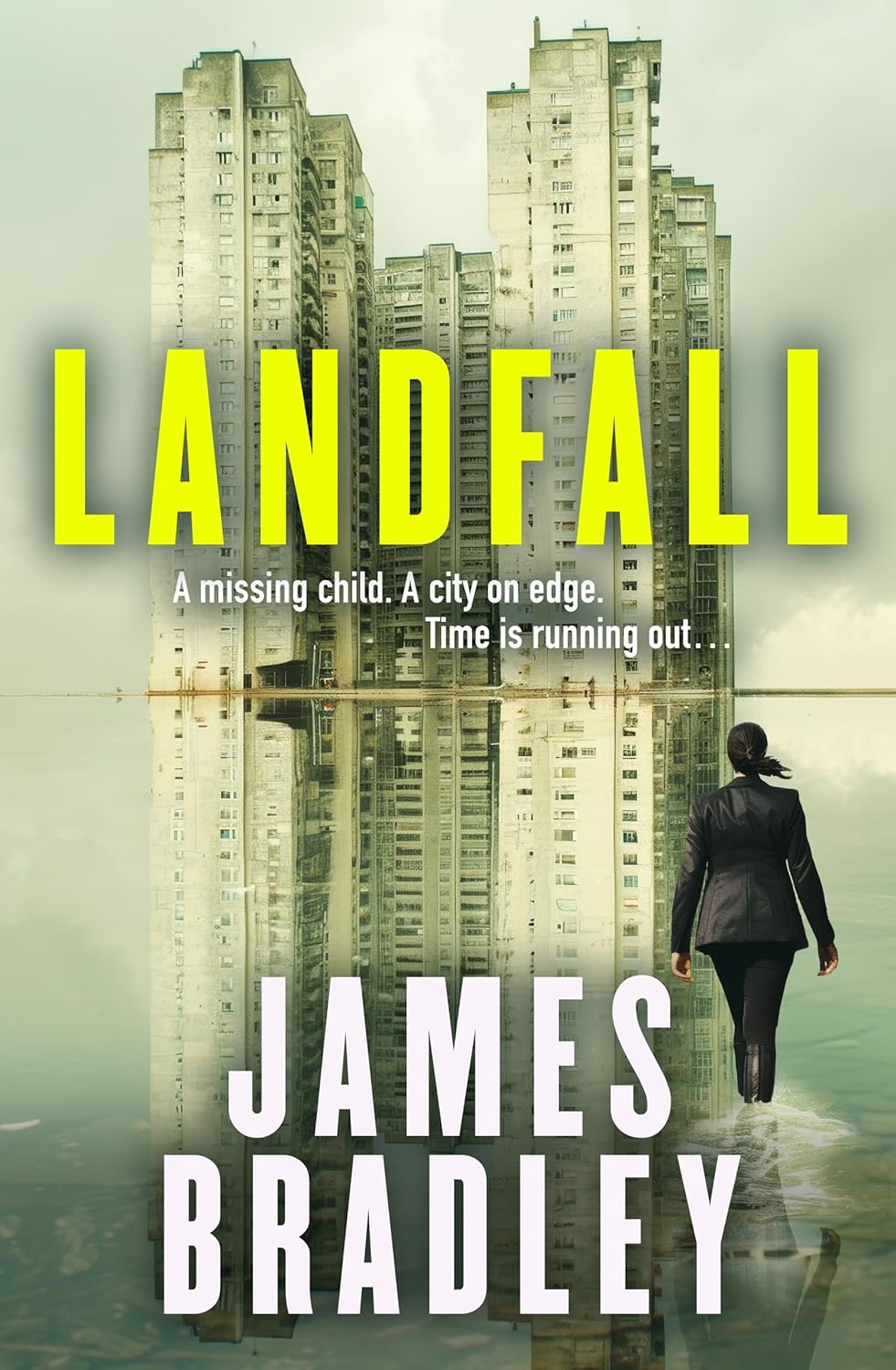
Those in the mood for a though-provoking and powerful Australian crime fiction read would do well to check out the excellent 2025 release, Landfall.  Written by acclaimed Australian author James Bradley, Landfall was a clever and intense standalone novel that presented a gritty crime fiction scenario in a dark Australian future.

Plot Synopsis:

In an already swamped city, a disastrous weather system looms, making the search to find a missing child urgent.

A missing child.

A city on edge.

Time is running out…

The world is in the grip of climate catastrophe. Sydney has been transformed by rising sea levels, soaring temperatures and rocketing social divide and unrest.

When a small girl on the margins goes missing, Senior Detective Sadiya Azad is assigned to find her. She knows exactly what it is to be displaced, and swallowed by the landscape. A murder at the site of the child’s disappearance suggests a connection and web of corruption, but fear keeps eyes turned and mouths closed.

With few leads to go on and only days until a deadly storm strikes the city, Sadiya and offsider Detective Sergeant Paul Findlay find themselves locked in a race against time.

Chilling and utterly compelling, Landfall is crime writing at its best – and a terrifying vision of the future bearing down on us.

Landfall was an excellent and exciting novel from earlier this year that presented a compelling crime fiction read with a complex and emotionally charged background setting.  Taking place in a dystopian version of modern Sydney that is starting to flood due to climate change, Landfall follows Senior Detective Sadiya Azad and her new partner, Detective Sergeant Paul Findlay, as they attempt to find a child who went missing around the Tideline, a slum area of the city that has been most impacted by rising sea levels.  However, they soon find their investigation hampered by multiple elements including corrupt policing, uncooperative family members with their own political agendas, rampart social divides and more.  This proves to be a strong start to Landfall, and Bradley does a good job of setting up the reality of Sydney, as well as introducing the case and some of the key players.

The story takes an interesting turn when a murdered body is found at a site connected to the child’s disappearance.  Assuming the two cases are linked, the protagonists are forced to investigate suspects related to the murder victim and her corporate ties, and the missing child, trying to find out who is responsible, while also dealing with the dark threat of an oncoming tropical cyclone that looks set to destroy half the city.  At the same time, several other key perspective character are introduced, including Tasim, a refugee living on the streets, who witnesses the abduction and finds himself dragged into events, and Sadiya’s dementia-suffering father, Arman, whose fractured mind provides greater context to their family’s history, as well as showing the early days of some of the environmental crisis’s impacting the world.

These character-focused storylines combine nicely to create an intriguing and compelling overall narrative, and I liked the various themes and outlooks at the future they contained.  The main investigative focus of Sadiya’s narrative is well balanced by the more human stories of Tasim and Arman, and Bradley also makes use of some intense flashback sequences to really build up the tragedy surrounding all these figures.  The mystery narrative also goes in some interesting directions, and while the culprit isn’t too surprising, Bradley does a good job focusing on the characters building their case and pulling together the conclusions.  Unsurprisingly, the climax of Landfall comes together amid the cyclone, with all the characters facing the storm in different ways.  This last part of the book, while dramatic and featuring a high-stakes backdrop, was a little rushed, and could have used a little padding to make it more satisfying.  Still, this is a mostly well-balanced narrative that allows for a good conclusion to the main story arc while also allowing Bradley to make all his thematic points.

Landfall ended up being an excellent overall read and Bradley succeeded in pulling together a complex novel with a lot of moving parts to it.  The central mystery element of the novel, while compelling on its own, was greatly enhanced by the author’s examinations of the future, which features some dire predictions and warnings, wrapped up in very human stories to make them even more impactful.  While an excellent police protagonist, I felt that Sadiya’s personal story was a bit overshadowed by Tasim and Arman’s arcs, especially as Tasmin’s story about losing his family to heatwaves and the harsh journey to Australia, as well as the very realistic depictions of dementia with Arman.  All three of these character’s stories are well wrapped up in the final chapters of the book, although I do wish there had been another chapter or two just to showcase what happened in the aftermath.  The overall focus on the potential dire future for Sydney and the world was probably the most impressive and notable part of Landfall, and Bradley provided a compelling, if terrifying, portrait of probable events to come that gives this book a fantastic edge that scrapes the edge of overshadowing the main mystery, and allows for quite a powerful overall read.

With its complex characters, intense story, and compelling visions of the future, Landfall by James Bradley was one of the more distinctive Australian novels of 2025, and I was glad I got the chance to check out my first book from the author.  An extremely interesting novel that blends crime fiction with social messaging, Landfall comes highly recommended, especially for those with one eye on the future.

Amazon

Quick Review – Outrider by Mark Wales

Publisher: Pan Macmillan Australia (Trade Paperback – 25 June 2024)

Series: Standalone/Book One

Length: 354 pages

My Rating: 4 out of 5 stars

Amazon

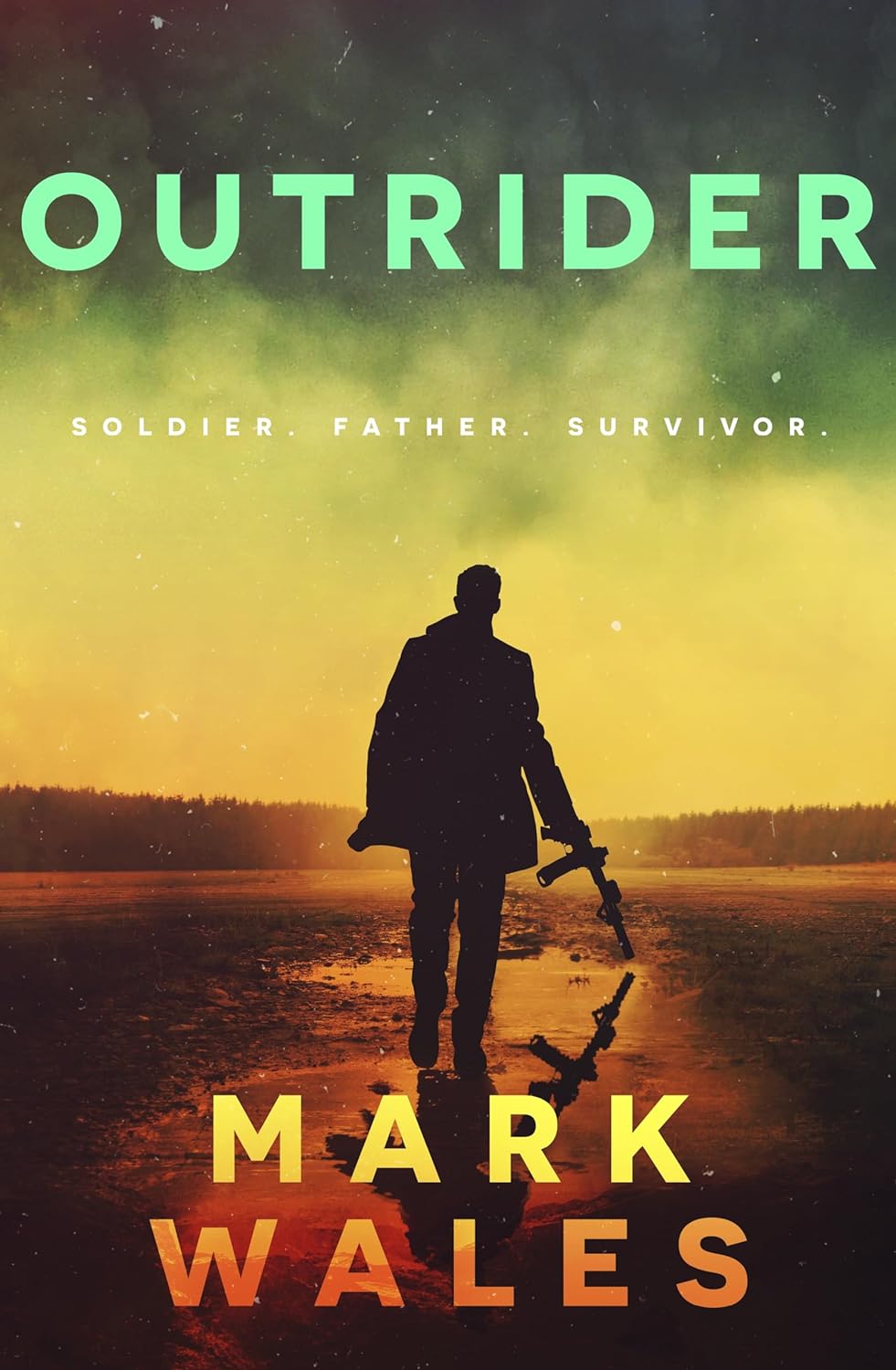
Former Australian soldier and current media personality Mark Wales presents a particularly exciting debut novel with the gripping thriller Outrider.  A gritty, intense, and absolutely action-packed dystopian thriller, Outrider is an awesome Australian novel readers will have a hard time getting away from.

Plot Synopsis:

Jack Dunne will do anything to save his son.

A violent civil war. An unstoppable enemy. One road to freedom.

In the wake of a global conflict, foreign forces occupy part of Australia, quashing all but a few pockets of local resistance. The tense stalemate ends in 2034, when Jack Dunne reignites the war.

Dunne is an Outrider, one of the last elite special operations soldiers in the Resistance. As the enemy prepare to eliminate the freedom fighters once and for all, he is tasked with his final mission.

If Dunne and his eleven-year-old son achieve the impossible, and survive, they’ll secure their future across the border in Free Australia.

But the road to victory will be bloody.

A cinematic action-thriller from bestselling author and veteran Mark Wales. Explosive and exhilarating, Outrider is a heartfelt father-and-son story of survival, resistance and hope.


Outrider
was an intriguing and complex novel that envisions a dark near future for Australian and sets loose a bold new action hero into the resulting carnage.  Set after a Chinese invasion of Australia, Outrider follows formidable resistance solider Jack Dunne and his son, Harry, as they attempt to save the lives of the last standing rebel fortress in Victoria from an upcoming war.  Given a mission to journey across occupied Australia to recover a military asset who can provide specialised assistance in the upcoming battle to come, Jack and his son will need to run a gauntlet of bandits, Chinese soldiers and members of the collaborating Victorian militia working for them.

This was an intense and exciting piece of Australian fiction, and Wales really dug deep to present an authentic tale of desperation and war.  Quickly and effectively introducing the 2034 dystopian setting, Wales takes the reader right into the action with a series of brutal early encounters that also set the rest of the narrative in motion.  From there, the story turns into an intense, Mad Max-style road trip as Jack and Harry embark on their journey to reach the required military asset and bring them back before it was too late.  This proves to be an excellent continued sequence, as the protagonists encounter obstacles and conflict, while also endearing themselves to the reader with a dive into their motivations and the history of events that drive Jack on.  The second half of Outrider proves to be even more epic and intense, as the protagonists desperately attempt to overcome the deadly forces coming for them.  This all leads up to the massive and impressive full on war sequence, with the fate of free Australia in the balance.  Wales does not disappoint when it comes to this final massive fight sequence, and readers will be blown away by how impressive the carnage gets.

Wales really dug deep here and produced an outstanding and fantastic debut novel that I just could not get enough of.  Making excellent use of his initial plot idea of a futuristic invaded Australia, Wales launches into a sharp and exciting narrative, that keeps grown in intensity as the book continues.  Unsurprisingly, considering the author’s background, the action sequences in Outrider are particularly well written, and Wales does an excellent job portraying the carnage of combat to the reader.  Each of these action sequences are well paced out and highly realistic (well, besides the highly advanced weapons), and the reader gets really drawn into them as a result as you can practically feel every shot or explosion.  While the main appeal of Outrider is the action and exciting story, I really appreciated that Wales took the time to set up several complex and compelling characters.  I felt that his protagonist, Jack Dunne, was an outstandingly damaged and angry main figure, whose loss of his wife is still raw for much of the book.  These intense emotions, as well as the bond he continues to form with his young son as they journey across Australia, adds a powerful edge to Wales’ narrative, and it helped Outrider be more than just an awesome action novel.

The final fantastic element I want to highlight about Outrider is the intriguing background setting of an invaded Australia.  Wales paints a haunting and disturbing picture of how this potential invasion would occur and in what form it would look like, and I liked the dark realism behind his ideas.  I particularly enjoyed how he portrayed the Chinese as only occupying key sections of Australia, rather than the whole continent, which honestly makes a lot of sense, and it allows the protagonist to slip between different parts of the country as a result.  The dive into collaborators and traitor militias continuing most of the fighting against the resistance, with China and the US playing proxy wars in the background, also had a tinge of realism behind it, even if we’d like to think differently.  Finally, the grim details surrounding the invasion add an urgent edge to the plot, and you find yourself pulling for the protagonists even more, especially after a powerful scene where they witness certain train carriages going by.  All of this proves to be an incredible background to a particularly exciting and engrossing read, and I loved seeing Wales’ intense look into the future.

Outrider by Mark Wales proved to be a particularly cool Australian thriller that I had an awesome time getting through.  An inventive and intense debut novel from Wales, Outrider comes highly recommended, especially for fans of Australian fiction with a ton of action, and it is really worth checking it.

Amazon

Quick Review – Alien Clay by Adrian Tchaikovsky

Alien Clay Cover

Publisher: Tor (Audiobook – 28 March 2024)

Series: Standalone

Length: 13 hours and 55 minutes

My Rating: 4.5 out of 5 stars

Amazon

Adrian Tchaikovsky continues to dominate the science fiction genre with his intriguing new novel, Alien Clay, an awesome read that blends high-concept science with a fantastic and insightful look at human nature.

Chronic overachiever Adrian Tchaikovsky is an author who is swiftly becoming one of my favourite science fiction and fantasy writers.  A master of complex and highly inventive fiction, Tchaikovsky has deeply impressed me in recent years with some of his outstanding works, including Day of Ascension (one of my favourite Warhammer 40,000 novels), the novella Ogres, City of Last Chances (one of my favourite audiobooks of 2023) and House of Open Wounds (one of my favourite books of 2023).  Due to how awesome these recent books have been, I have been keeping a close eye on Tchaikovsky’s upcoming releases, and I was pleasantly surprised to find out that he had four books coming out in 2024, including three science fiction reads and a cool fantasy release.  The first out this year is the fantastic novel, Alien Clay, which saw a group of convicts deal with unnatural issues inside and outside their prison complex on a hostile alien world.

Plot Synopsis:

They travelled into the unknown and left themselves behind . . .

On the distant world of Kiln lie the ruins of an alien civilization. It’s the greatest discovery in humanity’s spacefaring history – yet who were its builders and where did they go?

Professor Arton Daghdev had always wanted to study alien life up close. Then his wishes become a reality in the worst way. His political activism sees him exiled from Earth to Kiln’s extrasolar labour camp. There, he’s condemned to work under an alien sky until he dies.

Kiln boasts a ravenous, chaotic ecosystem like nothing seen on Earth. The monstrous alien life interacts in surprising, sometimes shocking ways with the human body, so Arton will risk death on a daily basis. However, the camp’s oppressive regime might just kill him first. If Arton can somehow escape both fates, the world of Kiln holds a wondrous, terrible secret. It will redefine life and intelligence as he knows it, and might just set him free . . .


Alien Clay
was another awesome and complex read from Tchaikovsky that combined his trademark love of high-concept science fiction, with cynical examinations of human nature and society.  Set in a dark future where a tyrannical government places intense doctrinal limitations on scientific study, Alien Clay is told from the perspective of Professor Arton Daghdev, an ecologist who has been exiled to the Kiln labour camp in dramatic fashion due to his radical scientific and political thoughts.  Initially employed as a lab assistant researching the highly unusual biology and apparent extinct intelligent life on Kiln, Arton walks the thin line between rebel and survivor.  However, his actions soon lead to him to be forced to explore the planet’s surface, and the changes wrought by the alien biology outside will have a profound effect on everyone left on Kiln.

This proved to be another excellent standalone novel from Tchaikovsky, and you must appreciate his ability to craft another unique setting and set up a compelling narrative within it.  The alien planet the narrative is set around is loaded with unusual biological life that bonds with both itself and the human invaders in a very memorable manner, and I loved how weird things got at times.  Tchaikovsky blends the story of the protagonist attempting to survive on the planet, with an intriguing focus around political ideology, revolution, and scientific freedom of the future human society.  As such, Alien Clay turns into a mixture of science fiction adventure and a political dystopian thriller, as the protagonist is forced to navigate both to survive.  These elements are explored in immense detail by the author, and I loved how effortlessly he brings the unique future to life while also layering in some subtle critiques and observations about our own current society and where it is possibly going.

Tchaikovsky did a great job of showcasing all the unique features of Alien Clay through the eyes and mind of his protagonist, who is the position to understand all the science, politics, and social elements of the setting.  Loaded with a tragic and complex backstory, Arton proves to be a compelling and relatable protagonist to follow.  Forced to overcome the enforced conflicts of his society, the shock at being trapped on an alien world, his stymied scientific curiosity, and so many more setbacks, Arton attempts to find solace in the groundbreaking biology of Kiln.  However, when his plans for Kiln go out the window, thanks to the fantastically villainous warden of the prison camp, Arton and a group of other entertaining and compelling prisoners find out just how alive Kiln can be.  Tchaikovsky does an excellent job of combining various story elements, including the adventures on Kiln, Arton’s personal rebellious history, and all manner of scientific weirdness, into a single cohesive narrative, and the resulting explosive plot goes in some very interesting directions.  The author keeps the tension and intrigue up for as long as he can, including through cleverly skipping a key part of the story and only featuring it later through flashbacks.  The ending of the book is very Tchaikovsky and makes excellent use of his scientific and social observations and messaging.

I ended up listening to the audiobook version of Alien Clay, which proved to be a very enjoyable and interesting experience.  The audiobook, which had a run time of just under 14 hours, did a great job of telling Tchaikovsky’s complex story, and I appreciated how the story was presented in this format.  The unique and intriguing ideas from Tchaikovsky, both scientific and political in nature, really come across more effectively in this format, and I felt that I understood the many nuanced themes and messages that Tchaikovsky was trying to impart with his story a little better.  I also really enjoyed the narration featured in the Alien Clay as narrator Ben Allen proved to be an excellent addition to the production.  Allen did an amazing job capturing the complex figures with Alien Clay, and his compelling tones really helped to convey all the weird science and alien creatures that the protagonist encountered, as well as the intense personal issues surrounding the protagonist and his companions.  I honestly really enjoyed the Alien Clay audiobook, and I felt that this was a really great way to enjoy this compelling story.  There is also a fun interview between Allen and Tchaikovsky at the end, that will definitely appeal to fans of the author.

Overall, Alien Clay was a clever and unique science fiction novel that I had a fantastic time listening to.  Blending Adrian Tchaikovsky’s brilliant imagination and ability to tell a compelling and complex story, Alien Clay had me hooked the entire way through, and I loved how inventive and scientifically crazy the story got at times.  I am hoping to get to Tchaikovsky’s second novel of the year, Service Model, soon, and I have no doubt it is also going to be an outstanding read.

Amazon

Alien Clay Cover 2

Upgrade by Blake Crouch

Upgrade Cover

Publisher: Macmillan (Trade Paperback – 7 July 2022)

Series: Standalone

Length: 341 pages

My Rating: 5 out of 5 stars

Amazon

The master of the high-concept science fiction thriller, Blake Crouch, returns with another exceptional and deeply addictive standalone read, Upgrade, which takes the reader on a deep journey into the world of genetic engineering.

In the near future, Earth is facing multiple threats and catastrophes that are slowly destroying the human race.  However, the greatest threat to humanity may come from within, as advances in genetic engineering and manipulation have allowed scientists to change DNA itself.  Following a massive genetic disaster that led to the destruction of an entire food supply and the deaths of hundreds of millions of people, all genetic research has been made illegal and is strictly policed by world governments.

Logan Ramsay is an agent in the newly created Gene Protection Agency that enforces the research ban in the United States and which comes down hard on anyone illegally modifying genes.  The son of the scientist responsible for the last crisis, Logan works to atone for his role in her work and no longer believes in the benefits of genetic research of that kind.  However, when a raid goes wrong and Logan is targeted by a bomb designed to inject an unknown gene hack into him, Logan’s entire life and grasp on humanity is changed forever.

With enhanced physical and mental capacities, Logan has been upgraded into something superhuman.  Forced to leave his family behind and flee from his own agency, Logan soon finds himself caught up in a war for control of humanity’s future, with dangerous forces seeking to change everything about the species.  To survive and prevent another genetic catastrophe, Logan must dive deep into his past and his family’s legacy.  But the more upgraded he becomes, the harder it is for him to care about everyone’s fate.

Wow, Crouch does it again with Upgrade, combining an intense and compelling thriller storyline with an outstanding and highly detailed scientific principle, to create an exceptional and extremely addictive story.  I knew that I was going to enjoy Upgrade when I got it, especially after having such a brilliant time with Crouch’s previous novel, Recursion, and the author really did not disappoint.  Upgrade is a gripping and powerful read, and I ended up powering through it in very quick order once I got addicted to its excellent plot.

I absolutely loved the exciting and clever science fiction thriller narrative that Crouch featured in Upgrade, which swiftly drags you in with its unique story and compelling concepts.  Crouch really kicks everything off in high gear right from the start, providing a quick but efficient introduction to the protagonist, Logan Ramsay, and the dystopian future of the novel, before kicking off the key plot events.  The protagonist is almost immediately placed into danger from a booby trap that alters his genetics, and he is forced to deal with the side effects as he is upgraded to superhero levels.  Forced to escape from his own employers, Logan must come to terms with the changes being done to him, while also diving into some deep family drama as he realises his connection to the person behind it.  After a journey of discovery, Logan ends up in a war to decide the future of humanity’s genetics, as he goes up against a group determined to alter humans against their will.  This led to some big and intense sequences as genetically enhanced beings face off in some powerful and cleverly crafted moments.  Everything is wrapped up in a compelling and emotionally heavy way, and readers will come away very happy after getting caught up in Upgrade’s elaborate and highly entertaining story.

I felt that Crouch did a brilliant job setting out Upgrade’s narrative, and it is perfectly designed to keep the reader absorbed in the plot.  I loved the faster pace of the book, which ensured that you power through the novel very quickly, although it isn’t so fast that you lose sight of its many featured scientific elements.  There are several time skips throughout the course of the plot, which help to move the story along and set up some interesting changes in the character’s situation.  The story is set in a near-futuristic dystopian setting which has been rocked by a series of environmental and genetic disasters.  Seeing some of the author’s suggested futures for certain famous cities (a semi-abandoned Las Vegas and a partially flooded New York), was very interesting, and it worked well with some of the other cool science fiction elements featured throughout.  I also appreciated Crouch’s interesting philosophical take on what it means to be human and the depths of human nature.  There are multiple discussions between the key characters in Upgrade, as they debate the changes being undertaken, as well as humanity’s overwhelming self-destructive tendencies.  This becomes a rather interesting overall theme for the book, and a captivating motivation for some of the characters.  I also must highlight the awesome action sequences spread out through the book, which add some exciting punch to the narrative.  Not only are these very entertaining, but I loved how they were showcased through the protagonist’s eyes, especially once his upgrades take over, and the clinical detail he attributes to various actions give them a fun twist.  This fantastic narrative really comes together well throughout Upgrade, and I felt that this was an exceptional read.

I deeply enjoyed the compelling and intense scientific framework that went into Upgrade.  Crouch does an impressive and expansive dive into the world of genetics for this book, and the reader is soon inundated with information about DNA, genes, and genetic research.  It is very clear that the author has really done their research when it comes to this subject, and this combined with his immense imagination results in some intriguing story elements.  Crouch postulates multiple potential genetic upgrades to humans and other species throughout this book and how such manipulations could be brought about.  As such, you see a lot of very cool stuff throughout Upgrade, particularly enhanced human beings who move and think at superhuman rates.  The author paints a very interesting and compelling picture about what such enhanced humans would be capable of, and it was fascinating to experience them throughout the course of the plot especially as you see them happening through the eyes of someone going through these changes.  There are various evolutions of these genetic upgrades throughout the novel and watching the characters become more and more powerful while simultaneously losing their humanity is a fantastic and captivating element.  Crouch also presents some compelling and thought-provoking discussions about whether genetic engineering should be allowed and would humanity benefit from it.  The different points of view and the resultant debates are an outstanding part of book, and I am sure that many people will come away from Upgrade with a different opinion on the subject.

While Crouch does dive deep into the science for Upgrade, I found that I was able to follow along with the various premises without too many issues.  The author really tries to explain the genetic science to the reader in an interesting way, which I really appreciated.  There were no points in the book where I couldn’t follow what was happening, and I ended up getting really interested in all the potential genetic manipulations that might be possible in the future.  I also felt that these scientific elements were worked into the plot of Upgrade extremely well, and the awesome thriller narrative really wrapped around it.  Overuse of genetic manipulation is a real potential threat in the future, so having government agencies, underground labs and world-affecting schemes in place isn’t too far-fetched, and these science elements serve as a rich ground for the cool storylines.  I loved seeing upgraded humans facing off against agents and SWAT teams, and it resulted in some brilliant scenes.  The underlying message about the responsibility of those involved in genetic research played well with the action-packed narrative, and I was once again really impressed with how the author can seamlessly combine science with fiction.

Another outstanding element of Upgrade was its fantastic protagonist and point-of-view character, Logan Ramsay.  Logan is quite a fascinating and complex character, especially as Crouch establishes him as the son of the brilliant genetic scientist who caused the ban and was partially responsible for the resulting mass deaths.  For most of the novel he is trying to redeem himself for these actions, mainly through his work as a government agent.  However, his entire life changes when he becomes genetically enhanced, and there are some deep emotional scenes and narrative threads that are explored because of this.  While he is initially horrified by the changes, Logan soon realises they are exactly what he always wanted, and he must reconcile that with his perceptions of humanity and the damage he has already caused.  At the same time, he is also finding himself changing, and the continued and detailed examinations of all his upgrades and altered perceptions are showcased in an excellent way by the author.  The increased physical and mental capacities are worked into his character well, and it was fascinating to see the first-person perspective of everything that happens to him.  I particularly appreciated the slow loss of his emotional self and as the book proceeds, he becomes less and less human in many ways, unable to connect with the people around him.  This is sad in a lot of ways, especially as he must give up his family, but you get an impressive understanding of everything the protagonist is going through and grow closer to him as a result.  There is some excellent character work around this protagonist in Upgrade, and I really appreciated the emotional depth that it brought to this already captivating story.

With Upgrade, Blake Crouch continues to shine as one of the most creative and brilliant authors of science fiction in the world today.  The compelling, science-based ideas he comes up with combine perfectly with his exciting and emotionally powerful storylines to create an excellent narrative with amazing characters.  I had such a great time with Upgrade, and it is one of the better science fiction novels I have read so far in 2022.  I also think it was also really good in comparison to the other Crouch book I have read, Recursion, which I hold in really high regard.  While I think that Recursion had the better overall narrative, I appreciated the scientific elements of Upgrade a little more and I felt it fit into the plot a little better.  As such, I think that Upgrade is another five-star read, and it comes very highly recommended by me.  A must-read for all science fiction fans in 2022!

Amazon

Outcast by Louise Carey

Outcast Cover

Publisher: Gollancz (Trade Paperback – 25 January 2022)

Series: Inscape – Book Two

Length: 394

My Rating: 4.75 out of 5

Amazon     Book Depository

Impressive rising science fiction author Louise Carey continues her awesome first series with Outcast, a brilliant and powerful cyberpunk thriller read that is incredibly fun and very clever.

Outcast is a sequel to Carey’s debut novel from last year, Inscape, which told a unique and intriguing story about espionage, betrayal and corporate politics in a cyberpunk world.  Set in the distant future after a major calamity, the fractured world is now ruled over by all-powerful and advanced corporations who battle for dominance while they attempt to create the latest in weaponry and bio-tech upgrades.  The protagonist of the series, Tantra, works as an intelligence operative for one of the largest companies, InTech, and investigates a mysterious theft that could have dire consequences for her company.  Filled with dystopian cyberpunk elements, such the built-in communication and information technology known as scapes, this ended up being an excellent and captivating science fiction thriller that was one of my favourite debuts of 2021.  Carey has continued her amazing series in a big way here with Outcast, which serves as an outstanding and impressive sequel to her first solo book.

Following the success of her first mission, Tantra’s life has been turned upside down.  Despite saving her company and uncovering a traitor, Tantra has been sidelined by a jealous supervisor and now works as a lowly security guard.  Worse, Tantra now knows the terrible truth: that the company who gave her everything has long controlled her mind with the invasive Harlow Programming, which she has since been freed from.  With her loyalties tested, Tantra is thrust back into the thick of the action when she discovers a bomb sent to InTech’s headquarters.

InTech soon finds itself thrust into a brutal corporate war with its main competitor, Throughfront.  The bombing of their headquarters is the latest in a series of attacks on InTech assets, and the board are desperate to get them under control.  Determining that she is their best operative to stop the culprits behind the attack, Tantra is assigned to the case.  Teaming up once again with her former partner, Cole, the brilliant scientist with severe gaps in his memory, Tantra attempts to find the culprit before they cripple InTech for good.

But, facing opposition from both deadly internal InTech politics and lethal external forces, their chance of succeeding seems slim, especially when they are banished to a remote InTech facility in the Unaffiliated Zone for the remainder of their investigation.  Barely escaping a deadly assassination attempt, this unconventional team find themselves caught in the middle of a dangerous conspiracy that is determined to bring InTech down for good.  However, when they discover that InTech is planning their own sinister machinations, will Tantra and Cole still be as eager to save their company?

Wow, Carey follows up her excellent solo debut in a big way here with Outcast.  This second book was even better than Inscape, taking the reader on a wild and action-packed adventure through the author’s unique cyberpunk world.  Bringing together some amazing characters with a powerful and thought-provoking narrative about control and the potential evils of technology, this was an exceptional read I powered through in a few short days.

Outcast has an excellent story that perfectly continues the fantastic narrative started in Inscape.  Taking place shortly after the events of the first book, Outcast sees a struggling Tantra and Cole once again placed in the middle of a big investigation with major implications, this time involving the destruction of company drones outside the city, which is impacting the company’s food supply.  At the same time, Tantra finds herself forced to deal with deadly company internal politics, while Cole finds himself involved with a mysterious rebel group who are attempting to stop InTech’s more troublesome activities, including their latest upgrade.  This forces them to venture outside of the city where they encounter unaffiliated mercenaries, enemy agents, dangerous rebels and deep secrets about InTech’s past.  The middle of this novel is filled with an excellent series of great emotional sequences, action scenes, world building, character development and shocking twists, as the protagonists get closer to finding out who is behind the attacks, as well as the true plans of their parent company.  This leads up to a brilliant final sequence where the protagonists are forced to make some very hard decisions in a great no-winners situation.  This leads up to the amazing and powerful conclusion where the protagonists, despite their best efforts, are left devastated by the events that unfolded, and which ensures that all the readers will be back for the third entry in this awesome series.

There are so many cool elements to Outcast which really help to turn it into a first-class read.  I deeply enjoyed the way the impressive story unfolded, and Carey makes great use of a couple of alternate character perspectives to tell a unique and multifaceted tale, such as the entertaining scenes told from the perspective of a smarmy and desperate secondary antagonist.  The author does a great job of combining a thriller storyline with the unique science fiction elements, and it results in a fast-paced and action-packed story that takes the time to explore certain technological implications.  There are some brilliant twists loaded throughout the book which are well paced out and ensure that the reader is constantly on their toes.  I liked how, despite the sheer amount of world building featured in the first book, Outcast still came across as an accessible novel, and new readers can probably jump into the series here.  That being said, I think you would be missing out if you didn’t try Inscape first as this sequel does an amazing job building on and expanding some excellent storylines from Carey’s debut.  However, nothing will compete with the awesome ending that this novel has, and the reader is chucked through the emotional wringer as the book’s characters are put into an impossible situation, which produces some very dark results for them.

The excellent cyberpunk science fiction elements of this series once again shine in Outcast as Carey continues to explore the advanced biotech that was such a great feature of the first novel.  Not only is a lot of this technology very cool, especially as it results in some brilliant moments in some of the action sequences, but this mind-connected technology continues to be a key part of the plot.  Multiple storylines examine the ethics behind this technology, especially as the protagonists are now fully aware of the full extent of their parent company’s attempts to program their employees’/residents’ minds using their scapes.  This leads to some intriguing and deep discussions, especially as you get to see corporate greed and a desire for control weighed up against the rights of a person and their desire for independent thought and identity.  This exciting look at the series’ unique technology becomes even more intense and important as Outcast continues, especially when certain new advancements are revealed which could have devastating impacts on all the characters.  I loved how deep and captivating some of the scenes involving this technology get, and it results in some of the best bits of the entire book.  I cannot wait to see what happens with these cool technological aspects later in the series and I imagine it is going to be very fun.

I was also very impressed with the incredible character work featured throughout this book as Carey did a wonderful job expanding on her complex and damaged protagonists.  Like Inscape, Outcast is primarily focused on the characters of Tantra, a young intelligence officer, and Cole a formerly unethical scientist whose memory was completely erased, giving him a very different personality while retaining his brilliant mind.  These two formed a unique and fun pairing in Inscape, where they both experienced a lot of development and trauma, and it was great to see them back together again here.

Both characters had some brilliant moments throughout the novel, especially Tantra, who realised in the first book that her mind and her actions have been subtly controlled by a program her entire life.  Now rid of the Harlow Programming, Tantra is in full control of her mind, but must keep this hidden from InTech, who would kill her or reprogram her if they found out.  Forced to act like the obedient drone they think she is, Tantra chafes against the restrictions and contradictions of her superiors and the company, as she can see many of the injustices or manipulations now that her mind is solely hers.  This also results in are also some excellent ethical and loyalty implications for her as she can finally see how nefarious InTech, the company who raised her, really are, and she must decide whether she is still loyal to them.  It was especially powerful to see how her relationship with Reet, her lifelong romantic partner, has been changed.  Reet is still infected by the Harlow Programming, and Tantra can only watch as she toes the company line and fails to understand Tantra’s many concerns, criticisms or newly awakened point of view.  This puts some real strain on their relationship, and it was heartbreaking to see Tantra suffer even though she is now free.  This was easily the best character work in the entire book, and if the tragedies and hard decisions that occurred towards the end of Outcast are any indication, Tantra is going to be in for a rough ride in the third book.

Cole also had some outstanding moments in Outcast as he continues to struggle with his sense of self and identity following his memory loss and the eventual revelation that his past self was responsible for many of InTech’s evils, including the Harlow Programming.  Now mistreated and mistrusted by InTech, Cole works with a mysterious group outside of InTech to try and bring them down, while also attempting to learn more about his past actions and what led him to do what he did.  He does get some of the answers he wants as the story progresses, especially when he is reunited with an old colleague, but it only leads to tragedy and despair.  Cole’s story gets pretty dark in places, especially when he realises how InTech have repurposed and enhanced his original work, and it was fascinating to learn more about his past mistakes.

Aside from these two, there are several awesome supporting characters who also add a lot to the novel, especially as several of them are utilised as point of view characters.  This includes Douglas Kenway, a senior director at InTech and Tantra’s boss, who is determined to keep his position and power no matter what.  Convinced that Tantra is gunning for his job, he spends most of the novel trying to undermine her, while also inching closer to discovering the truth about her lack of Harlow Programming.  Kenway serves as an excellent secondary antagonist, and his dive into company politics and sabotage of the protagonist adds a fantastic and entertaining edge to the novel that I really enjoyed.  Despite his self-centred nature, Kenway does provide an intriguing alternate perspective on the events of the book, and he gives some corporate context for much of what is going on.  I also really liked how his fears were mostly realised towards the end of the book, although not in the way he expected.  I should also mention new character, Fliss, the leader of a rogue gang out in the Unaffiliated Zone who gets dragged into the conspiracy attacking InTech.  Fliss provides another great alternate perspective, especially as she and her friends have no technological upgrades to their bodies and are naturally human.  I liked the story that surrounded Fliss, especially as she struggles to control her gang when forced to work for a corporation, and she ended up being an excellent addition to the plot.  These characters, and more, help to turn Outcast into a first-rate book, and I deeply enjoyed seeing all these amazing personal stories unfold.

Louise Carey continues to shine as one of the most impressive new authors of cyberpunk fiction out there with her second novel, Outcast.  This outstanding sequel does a brilliant job of continuing the powerful storylines from Inscape, while also introducing new dangers, betrayals, and some great characters.  Filled with action, intense character moments and captivating cyberpunk science fiction elements, Outcast is a fantastic novel that proves to be exceedingly addictive and fun.  I am really starting to get hooked on this outstanding series, and all cyberpunk and science fiction fans need to do themselves a favour and check out Carey’s impressive Inscape series.

Amazon     Book Depository

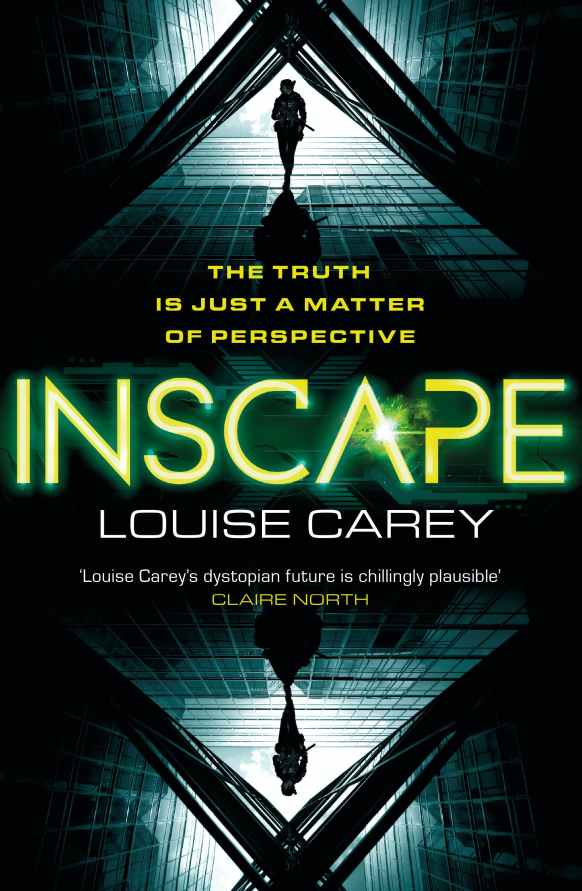
Inscape by Louise Carey

Inscape Cover

Publisher: Gollancz (Trade Paperback – 27 January 2021)

Series: Inscape – Book One

Length: 426 pages

My Rating: 4.5 out of 5 stars

Amazon     Book Depository

The future is a cyperpunk nightmare in Inscape, the fantastic and clever science fiction thriller debut from amazing author Louise Carey.

Years after an apocalyptic event, the world is now run by corporations who battle for control and influence.  One of the most powerful corporations is InTech, which sits on the cutting edge of a variety of technologies and advances and which does not take any prisoners in their war for dominance.  When a valuable piece of information is stolen, InTech sends a team of agents into the unaffiliated zone to retrieve them.  However, only one agent will return alive and unharmed.

Tanta has spent her entire life training to work and fight for InTech.  An orphan who was raised solely because of the company’s good will, Tanta is crushed when her first mission ends in near failure.  Attacked by a mysterious enemy agent with advanced weapons technology, Tanta is barely able to survive and is subsequently tasked with retrieving the information that the thief stole.  Teaming up with an unconventional technical genius, Cole, Tanta begins her investigation, only to discover that someone is attacking InTech’s interests around their city.

Believing the culprits to be working for a rival corporation, Tanta and Cole attempt a dangerous infiltration into their city.  However, their mission quickly runs into problems when their contact is captured and Tanta’s tech appears to be compromised.  Attempting to survive in enemy territory, the two InTech agents engage in a risky heist to find answers.  But with all evidence pointing to a traitor high up in InTech’s ranks, can Tanta and Cole survive their dangerous mission, or will secrets from both their pasts destroy them and everything they love?

I am really glad that I decided to check this cool debut out as it ended up being a pretty impressive science fiction read.  Inscape was the first solo novel from author Louise Carey, who has previously written several novels and comics with her father, comic author Mike Carey, and her mother, Linda Carey.  Carey has come up with an exciting and compelling read in her first novel, especially as it combines an excellent science fiction thriller storyline with some great characters and an inventive and unique cyberpunk setting.

At the centre of this fantastic debut is an outstanding narrative that combines an electrifying spy thriller novel with some compelling science fiction.  Carey starts Inscape off quickly, with Tanta and her comrades brutally attacked by a dangerous enemy agent out while trying to recover some stolen files.  After this great opening scene, which sets up most of the narrative perfectly, Tanta is chucked into the midst of a massive conspiracy which sees her beloved corporation under attack, and which requires her to find who stole the files and for what purpose.  The rest of the novel is captivating and clever, as readers become engrossed by Inscape’s fantastic thriller elements as the protagonists attempt to get to the bottom of the conspiracy, which includes an extended undercover sequence where they infiltrate a rival corporation’s city to discover what they know.  This entire awesome sequence, which takes nearly a third of the novel, is extremely exciting, as Tanta and Cole are forced to rely on the minimal of resources to not only survive but to also pull off a daring prison break.  I really fell in love with this novel during this part of the story, and Carey makes sure to end it with an amazing conclusion which sees some major secrets come out and significant developments moments occur for the main characters.  I felt that the author wrapped Inscape up perfectly and readers will deeply enjoy where the story leaves off, especially as there are some great hints as to where the series will go from here.

One of the key things that I really loved about Inscape was the amazingly inventive and distinctive cyberpunk themed world that Carey created as a background to her awesome story.  The world of Inscape is set several years after an apocalyptic technological event which left much of the world in ruins.  Most civilisation now revolves around massive corporations who manage cities and safe zones while monitoring their citizens and assigning resources to the most useful.  There were also some intriguing pieces of technology introduced in this novel, such as the communications and information devices built into everyone’s heads, known as scapes, which serve as a key part of Inscape’s story.  This was an impressive and well-designed science fiction setting, and I enjoyed the cool blend of advanced technology, changing social norms and predictions of future corporate control.  I felt that Carey did an amazing job of introducing information and key points about the setting and advanced technology as the novel progresses, and it proves to be an excellent backdrop to Inscape.  I also appreciated the way in which technology like the scapes are utilised throughout the story as the instantaneous communication and information they contain help to enhance some of the action orientated scenes as well as amp up the intrigue and connections between characters.  You also occasionally get the opposite effects where this technology is deactivated and the protagonists are forced to rely on their own senses, which can be rather jarring for them.  Carey works in some compelling discussions about over-reliance on technology, free will and corporate greed throughout Inscape, all of which adds a darker and fascinating edge to the entire story.  All of this makes Inscape a very intriguing read that fans of science fiction and cyberpunk will deeply enjoy.

Another wonderful aspect of Inscape was the fantastic characters featured within, particularly the three main point-of-view characters.  Carey makes excellent use of multiple character perspectives throughout the novel to provide compelling alternate viewpoints of key events and character actions, which I felt really added a lot to the overall narrative.  In addition, the author introduces several amazing characters, most of whom either have a compelling base to their unique personalities or who go through some substantial development throughout the course of the novel.

The most prominent of these is central protagonist Tantra, a young woman who was raised by InTech since she was orphaned and who has been training all her life to be an agent for them.  Tantra starts the novel as a particularly zealous and passionate character who is unquestionably loyal to her corporation and her handler, Jen.  A skilled survivor, fighter and intuitive investigator, Tantra serves as a great protagonist for the early part of the novel, as she swiftly and efficiently begins the hunt for the person who is attacking her beloved InTech.  However, as the novel progresses, Tantra goes through some substantial changes, especially after she discovers some harsh truths about InTech and herself.  While this turns her into a much more likeable and free-spirited person, it does raise certain questions about Tantra’s true self and her motivations, which is rather intriguing and captivating to see.  Tantra is a fairly badass character throughout the entirety of Inscape, and I deeply enjoyed her intensity, intelligence, capacity for violence and acting abilities, the last of which results in a couple of fun scenes.  I also enjoyed how Carey made her a lesbian character, and she has a nice and touching relationship with a fellow orphan, Reet, although certain aspects of the narrative make Tantra contemplate how and why their relationship occurred.  This was a fantastic central protagonist, and I am curious to see what happens to her in the future.

The next major character in the novel is Cole, an InTech scientist who finds himself partnered with Tantra on the case to find the missing information.  Cole is a great character, a brilliant man who has recently lost his memories due to a technological mishap.  As a result, he spends much of the novel attempting to work out who he is, which impacts much of his personality and motives.  Cole ended up being a rather fun and interesting addition to Inscape, and I loved the unusual team that he forms with Tantra.  In many ways, Tantra and Cole are complete opposites, as Cole has a bit of an anti-authoritarian streak and sees the other characters and corporations in a different light to his partner.  Cole is also far less trained as a corporate operative and finds himself extremely overwhelmed when out in the field.  In several great sequences he is shown to be very out of his depth and is forced to rely on Tantra’s skill and knowledge, which is particularly jarring for him as he is substantially older than her.  I very much enjoyed seeing Cole finding his feet throughout this book and getting a crash course in espionage and survival from his teenage partner, and I liked the fun and substantive friendship he formed with Tantra.  Several great secrets and reveals come out about Cole as the novel progresses, and it results in some great discussions about whether he is the same person that he was before he lost his memories.  These reveals are likely to have a major impact in some future novels and should result in some intriguing story arcs.

The final major point-of-view character in this novel is Jen, Tantra’s handler at InTech, who Tantra views as a mentor and mother figure.  Jen is an ambitious and driven woman who is determined to climb the InTech ranks, and who sees her control over Tantra as the way to do it.  I really liked the way that Carey portrays Jen through the various perspectives as you get a very different viewpoint of who and what Jen is.  For example, in Tantra’s eyes Jen can do no wrong, and is one of the few people that she loves and respects.  However, when Cole sees her actions, he realises just how manipulative Jen is and how little she actually cares for Tantra.  Jen’s true ruthlessness and uncaring nature is further explored in some of the scenes shown from her perspective, and it is fantastic to see the differing viewpoints about her motives and actions.  Jen serves a great role throughout the novel as Tantra’s motivation and as a dangerous controlling figure and I really enjoyed seeing the entirety of her storyline unfold.  Each of these three main characters were written pretty perfectly and I loved the fantastic development and exploration that Carey did with them in Inscape.

Inscape by Louise Carey was an incredible and addictive debut novel that ended up being a really fun and compelling read.  Carey did a wonderful job of blending an excellent thriller narrative with some great science fiction elements, amazing characters, and a clever examination about humanity’s over-reliance on technology.  I look forward to seeing how this series continues in the future, especially after this amazing first novel, and Inscape is really worth checking out.

Amazon     Book Depository

Quick Review – The Space Between Worlds by Micaiah Johnson

The Space Between Worlds Cover

Publisher: Hodder & Stoughton (Trade Paperback – 11 August 2020)

Series: Standalone

Length: 329 pages

My Rating: 4 out of 5 stars

Amazon     Book Depository

Interested in reading a compelling and clever science fiction novel that takes place across multiple alternate dimensions? You need to check out The Space Between Worlds by Micaiah Johnson, one of the most fascinating debuts of 2020.

The Space Between Worlds was an intriguing novel that I was lucky enough to receive and read last year.  This fantastic first novel from Johnson was an exciting and deep read, but I completely failed to review it after finishing it and I have been meaning to write something up for a while.  As we have just gotten into the second month of 2021, I have finally had a chance to rectify this by doing a quick review of The Space Between Worlds, which was a truly impressive and captivating first outing from Johnson.

Synopsis:

A stunning science fiction debut, The Space Between Worlds is both a cross-dimensional adventure and a powerful examination of identity, privilege, and belonging.

‘My mother used to say I was born reaching, which is true. She also used to say it would get me killed, which it hasn’t. Not yet, anyway.’

Born in the dirt of the wasteland, Cara has fought her entire life just to survive. Now she has done the impossible, and landed herself a comfortable life on the lower levels of the wealthy and walled-off Wiley City. So long as she can keep her head down and avoid trouble, she’s on a sure path to citizenship and security – on this world, at least.

Of the 380 realities that have been unlocked, Cara is dead in all but 8.

Cara’s parallel selves are exceptionally good at dying – from disease, turf wars, or vendettas they couldn’t outrun – which makes Cara wary, and valuable. Because while multiverse travel is possible, no one can visit a world in which their counterpart is still alive. And no one has fewer counterparts than Cara.

But then one of her eight doppelgangers dies under mysterious circumstances, and Cara is plunged into a new world with an old secret. What she discovers will connect her past and future in ways she never could have imagined – and reveal her own role in a plot that endangers not just her earth, but the entire multiverse.

Johnson has come up with a very compelling story in The Space Between Worlds that follows Cara, who makes a living hopping across alternate realities to obtain useful data and information that her parent company can utilise.  Cara, who originally lived in a violent wasteland slum outside the gleaming city where her employers are based, is given a new reality to visit when her doppelganger from that reality apparently dies.  However, when she arrives at the new world, she finds that not everything is as it seems, and she encounters a vastly different and infinitely more dangerous version of the town that she grew up in.  Her visit to this reality places her in even more danger when it uncovers some long-buried secrets about her own world, including something from Cara’s own past that she has long tried to keep hidden.  This was an extremely compelling and fast-paced story that proved very easy to get addicted to.  Johnson’s narrative is filled with some fantastic and impressive twists and turns as Cara finds herself amid a dark conspiracy that has its roots in the dimensional travel that keeps her employed.  While it is easy to read this book only for the cool science fiction thriller elements, readers will also become enthralled with the deep character moments as the protagonist tries to come to term with who she is and whether all the versions of her are cursed or damaged in the same way.  All of this makes for an excellent story which is extremely fun to read.

My favourite part of The Space Between Worlds had to be the exceptional alternate reality elements that were such a distinctive part of the book’s plot.  In this dystopian future, Earth contains at least 380 alternate realities that can only be visited by someone whose duplicate in that universe is already dead.  Each of these realities is slightly different, with differing personal decisions resulting in changes to the lives and personalities of its inhabitants.  Johnson did a fantastic job introducing the entire concept around the alternate reality travel to the reader, including with a few entertaining quotes and anecdotes, and I liked how the author envisioned how travelling between dimensions could be utilised and how it could happen.  The scenes featuring the jump to the alternate realities are really trippy, and I loved the quasi-religious nature that those interdimensional travellers take as they view the space that exists between realities.

While all the theory, science and practicalities behind Johnson’s version of reality-jumping is cool, the real beauty is the way in which the author works it into the plot of the book.  Throughout the course of The Space Between Worlds you see several different alternate versions of the same dystopian future, and it was really intriguing to see the subtle differences between them.  The real shock is when the latest world Cara visits turns out to be completely upside down, as several key people in her lives have changed dramatically, including Nik Nik, a brutal warlord to whom Cara’s destiny is constantly tied no matter which reality they are in.  Seeing a completely different version of some of the featured characters in this novel really drives home just how significant a single moment can be and how certain events can change everything about someone.  The author works a lot of the cool revelations, similar character histories and unique details about each character across the cosmos into the overarching plot, helping to create a thrilling tale with some powerful and intense character studies.  I had an outstanding time seeing these cool alternate reality science fiction elements coming into play throughout the book and they proved to be a fantastic and clever addition to the narrative.

The Space Between Worlds by Micaiah Johnson was an extremely compelling and cleverly inventive science fiction debut that is really worth checking out.  I loved the complex and fascinating tale of choices, fate and thrilling betrayals that the author wove through the course of this book, and this was a fantastic book to check out.  I look forward to seeing what Johnson will cook up next and I am sure that it will result in another intriguing and captivating read.

The Ballad of Songbirds and Snakes by Suzanne Collins

The Ballad of Songbirds and Snakes Cover

Publisher: Scholastic Audio (Audiobook – 19 May 2020)

Series: The Hunger Games – Book 0

Length: 16 hours and 16 minutes

My Rating: 4 out of 5 stars

Amazon

It is time to return to Panem as bestselling young adult fiction author Suzanne Collins presents the thrilling prequel to her acclaimed The Hunger Games series, The Ballad of Songbirds and Snakes.

It has been 10 years since the third and final book in The Hunger Games trilogy was published. Since then the series has gone from strength the strength, thanks to the four films that converted these books into an ultra-popular franchise. Like many, I jumped onto The Hunger Games bandwagon after the first film was released, and I ended up listening to all three of the novels in quick succession. This of course turned me into a pretty major fan of the franchise, and I eagerly watched the next three films as they were released. As a result, I was extremely intrigued when I heard that Collins was writing a prequel novel, and I have been looking forward to it for some time. I ended up listening to the audiobook version of The Ballad of Songbirds and Snakes right after its release, and it proved to be an extremely interesting book that I rather enjoyed.

It has only been a decade since the Capitol won the war that ravished Panem, defeating the Districts and forcing them back under Capitol control. As punishment for their crimes, every year two children from each of the 12 surviving Districts are forced to compete in the Hunger Games, a brutal fight to the death from which there is only one survivor. While many in both the Capitol and the Districts view the Games as distasteful, for one young man it represents an invaluable opportunity.

Coriolanus Snow is a young academy student whose family has fallen on hard times after the war. Coriolanus’s one chance to get into the Capitol university and have a chance at wealth and prestige is to successfully mentor one of the tributes in the annual Hunger Games and ensure that they win. The odds seem to be against him when he is given the female tribute from District 12, generally considered the lowest tribute with the worst odds of surviving. However, when his tribute, the wild and alluring Lucy Gray Baird, sings on stage at the reaping, Coriolanus’s hopes rise, as her antics capture the attention of everyone in the Capitol. Determined to succeed no matter the cost, Coriolanus soon finds his fate entwined with that of Lucy Gray. But as he gets closer and closer with his tribute, just how far is Coriolanus willing to go, and how will his decisions now affect the future of Panem forever?

The Ballad of Songbirds and Snakes is a captivating and entertaining read that serves as a fascinating prequel to the original Hunger Games novels. Collins comes up with a fantastic, character-driven story that focuses on the main antagonist of the first trilogy, President Snow, while also diving back into the past of her unique dystopian future, showing the early days of the Hunger Games. I have to admit that I had rather high expectations going into this novel, and I ended up being a little disappointed at times with how it turned out. This was a rather less exciting read than the previous Hunger Games books, as Collins spends a lot of time exploring society, human nature and the psyche of the villainous protagonist. It was also way too long, and I think it could have been shortened down a little. Despite probably being my least favourite Hunger Games novel so far, The Ballad of Songbirds and Snakes is still a really good book that I had an amazing time listening to it.

This book contains an intriguing plot that follows the protagonist as he becomes involved in the events of the 10th annual Hunger Games. The story is broken up into three distinctive parts, each of which takes up about a third of the book’s narrative. The first part deals with the lead-up to the Hunger Games, the second part follows the actual Hunger Games as Snow watches from the outside, while the last third of the book details the aftermath of the games, and features a new adventure for the protagonist. Each of these three parts proved to be enjoyable in their own right, and together they formed a rather compelling overall narrative. I was a little surprised that the actual Hunger Games ended about two-thirds of the way into the story. When the novel suddenly jumped to a post-Hunger Games storyline with third of the book still to go, I honestly thought that Collins had made a mistake, and would have been better off portraying an extended Hunger Games. However, this third part served as a rather good conclusion to the entire novel, and I actually really liked some of the major plot elements that occurred there, especially as they were the most transformative part of the novel for the main character. There are a lot of cool moments within this story, as well as a bevy of supporting characters, many of whom Collins is able to give a bit of depth to with a few short paragraphs. I actually really enjoyed where this story went, and while I did envision it going in a different direction, I think that Collins did a good job with it in the end.

One of the key things about The Ballad of Songbirds and Snakes is that it serves as an origin story for President Snow, the main antagonist of the original Hunger Games trilogy. It features an 18-year-old Snow as the main character and is told completely from his perspective. I understand that quite a few people were not exactly thrilled that President Snow was the focus of this novel, and many did not want to see a book that followed a young version of him. While I can understand their feelings about this, I personally enjoyed seeing something that focused on Snow and his early history. I have read and enjoyed many stories in the past that focus on a villain, or which features them as a major protagonist, and it can often be quite fun to see their perspectives and motivations. The Ballad of Songbirds and Snakes is a good example of this, and I found it fascinating to see a younger Snow and watch his involvement in his first Hunger Games.

Collins has an interesting take on the character of the young President Snow, and presents the reader with some key moments from his life, as well as some of the people who helped shape him into the villain we know in the later books. The author spends time exploring elements of his childhood, such as showing how he suffered during the war, not only losing both his parents, but also nearly dying from starvation as the Districts besieged the Capitol. There are also some intriguing examinations of his family, such as the grandmother who gifted him his love of roses, and the revelation that the character of Tigress, who appeared in the third book (fourth movie), is actually Snow’s cousin and closest living relative. However, despite these more humanising elements, Snow is shown to be a truly irredeemable person even before the transformative events of the novel. From the very start of the book, Collins portrays him as a manipulative and conceited individual, constantly sucking up to people in order to get what he wants, resentful of those around him who have more than he does and concerned most of all with status. While there are some intriguing nature versus nurture elements to his early behaviours, Snow is shown to be just an unpleasant person. This of course makes him a hard protagonist to get behind for this book, and for most of the story you really were not rooting for him to succeed. Despite this, I found his story to be rather compelling and I enjoyed seeing this mostly amoral teenager attempt to succeed, while presenting the reader with various, weak or selfish justifications for his actions in his mind.

While he is already a pretty despicable person, it is the events of The Ballad of Songbirds and Snakes that truly turn him into the cutthroat person that takes control of the Capitol in the future. Thanks to a combination of his experiences and some perceived betrayals (which are always worse from his point of view), as well as the mentorship of the Capitol’s sadistic head gamemaker, Doctor Gaul, Snow becomes much more ruthless and ambitious, and some of his actions towards the end of the book show just how evil he has become. It was also cool to see him embrace the philosophy around the Hunger Games, as well as developing a hatred of District 12 and certain other symbols and songs, all of which the character would carry with him to the main trilogy 60 years in the future. All of this analysis of Snow’s character formed a captivating heart to the story, and I liked the more villain-centric novel, even if this great antagonist did come across as a winy child at times. I will be intrigued to see more of the events that influenced Snow in the future, although I can appreciate that many others would prefer stories based around Collins’s protagonists.

The other major character that I have to discuss is Snow’s tribute from District 12, Lucy Gray Baird. Lucy Gray is an entertaining and likeable character who steps off the page right at the moment of her introduction and sticks in the mind. Lucy Gray is a very different tribute to that of Katniss from the main trilogy, being a singer and rebellious entertainer who effortlessly makes everyone fall in love with her, and who relies on cunning and underhanded tactics to survive rather than martial prowess. She also serenades both the reader and the other characters with a variety of different songs, and I quite enjoyed seeing several of the musical numbers she came up with, especially as you find out the origins of one of the musical pieces that appear in the original trilogy. Lucy Gray is the character who the reader is most drawn to, and you find yourself even hoping that Snow succeeds, as this will ensure Lucy Gray’s survival. Snow and Lucy Gray end up having a bit of an awkward romance, which on the surface seems nice, although you only see it from Snow’s point of view, and he becomes rather possessive of her in his own mind. I would have been interested to see Lucy Gray’s thoughts on Snow, as it could have really changed the whole dynamic of their relationship. Overall, though, Lucy Gray is a great new character, and the way her arc in this book ends really helps drive home how terrible Snow can be.

The thing that I think most people, especially established fans of The Hunger Games novels, will enjoy about this prequel novel is the substantial world building that Collins does. The author does an outstanding job showing off an early version of Panem, which is still recovering from the impacts of the war, and where control over the Districts is not yet complete. This is a rather different Capitol to what you see in the other The Hunger Games books, as there are no elaborate costumes, outrageous styles, strange cosmetic surgery or excessive luxuries. Instead it is a far more subdued Capitol, with less food, traumatised people and rubble still in the streets. This made for a curious contrast to what we see in the future books, and it was interesting to see the differences and similarities. There are also some exciting flashbacks to the war itself from the memory of Snow, and it was cool to learn a little more about that. Naturally, The Ballad of Songbirds and Snakes contains a lot of foreshadowing to the events of the original Hunger Games trilogy, and fans will enjoy seeing historical views of certain key events, locations and people.

One of the most fascinating aspects of this world building is the author’s exploration of the early Hunger Games and how they took place. These Games are very different to the elaborate affairs shown in the original trilogy. Up until this point the Hunger Games are rather basic, with the tributes simply thrown into an abandoned sports arena with a bunch of weapons. There are some great comparisons between these more basic games and the games that we are more familiar with, such as the way that the tributes are treated, as rather than the luxurious train with all the fancy food that Katniss and Peeta travelled in, the tributes for these Hunger Games arrive starved and injured in a livestock train. This is also the games where they start to experiment with some of the elements that are recognisable from the main games, such as having a mentor, brief interviews with a Flickerman (in this case, Lucky Flickerman, the local news weatherman and amateur magician), gambling and sponsors. It was really cool to see the origins of these ideas, and why they were implemented, and it makes for a truly fascinating addition to the book. Collins also really dives into the philosophy behind the Games, and why the leaders of the Capitol were so eager for them to succeed and why they believed that they helped control the Districts. The origin of the Games is also revealed, as well as some of the key players, and I think it served as an invaluable piece of this universe’s lore. I quite liked learning more about the early days of the Hunger Games, and I imagine that a lot of readers will love to find out how such a terrible event came to pass.

The actual Hunger Games that took place in The Ballad of Songbirds and Snakes was a shorter and more barebones affair than what we have seen before. The tributes are fighting in an actual sporting arena, rather than a terraformed zone, and most of them spend the time hiding in the tunnels. Due to the fact that we are seeing it from Snow’s point of view, and because the arena only has a couple of cameras that only cover a fraction of the area, there are a lot of periods of inactivity and blank time, where the reader has no idea what is going on. This made for a much more disrupted experience, and while it was interesting to see the games unfold from the outside (something we saw a little bit of in the movie, but not in the books), it was nowhere as exciting as it could have been. That being said, there are still some really cool moments of child murder, and I did like seeing the mentor’s role in winning the games. The way in which the games came to an end was also rather clever, and it played into the events occurring outside with Snow. While it could have been longer, more exciting and perhaps more intense, this was still a fun part of the novel, and I look forward to seeing more fights to the death in any future Hunger Games novels Collins writes.

As I mentioned above, I ended up listening to the audiobook version of The Ballad of Songbirds and Snakes rather than grab a physical copy, and I am rather glad that I did, as it proved to be a great way to enjoy this book. The Ballad of Songbirds and Snakes audiobook is narrated by Santino Fontana and has a run time of just over 16 hours. This was a rather extensive run time for a Hunger Games novel; it was around five hours longer than any of the previous audiobooks in the series. That being said, I was able to get through this audiobook in a rather short period of time, and I found myself really engaged by this format, as it helped explore all the elements of this earlier version of Panem. Santino Fontana proved to be a very good narrator for this novel and he does an excellent job bringing the book’s large host of characters to life. The various voices he does fit the characters rather well, and I thought that his narration helped to highlight how horrible Snow could be at times. I also liked how Fontana’s narration worked with the multiple songs that Collins featured throughout the novel, and his spoken version of them sounded rather cool. As a result, I would definitely recommend the audiobook version of The Ballad of Songbirds and Snakes to people interested in checking this book out, as it was a wonderful format to enjoy this great story with.

The Ballad of Songbirds and Snakes was a curious and unique new addition to The Hunger Games franchise, which I thought turned out to be a rather good read. Collins ended up writing an intriguing, character-based narrative that showed a new side to the main antagonist of her original trilogy. While this book is not without its flaws, I had a wonderful time reading it, and once I got into its plot I had a hard time putting it down. Ideal for those fans of the previous Hunger Games novel, this book should make for an interesting movie in the future, and I am planning to grab any future novels from Collins set in this universe.

Amazon

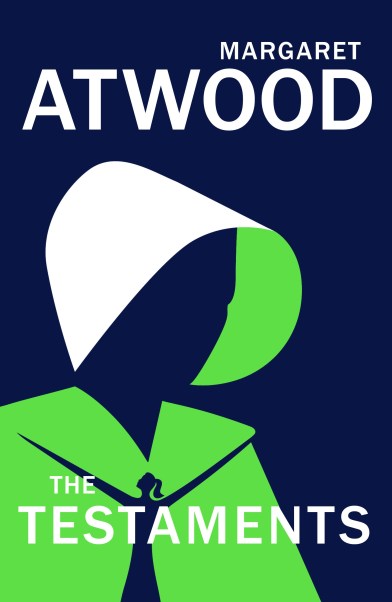
Guest Review: The Testaments by Margaret Atwood

In her latest guest review, the Unseen Library’s editor, Alex, checks out one of the biggest releases of the year, and also sets herself up to do some more reviews for the blog in the future.

The Testaments Cover

Publisher: Chatto & Windus (Hardcover – 10 September 2019)

Series: The Handmaid’s Tale – Book 2

Length: 419 pages

My Rating: 5 out of 5 stars

Amazon

Unlike the Unseen Librarian himself, who seems to have no problem zipping through several books a week, I tend to buy books faster than I read them. I was very pleased, and not at all surprised, to find there’s a phrase for this in Japanese: tsundoku, meaning one who acquires books with every intention of reading them, but who never gets around to it. Well, it’s high time that I try to kick this habit and delve into my shelf of unread books, beginning with The Testaments by Margaret Atwood.

We received a copy of The Testaments way back in September 2019, before the honeymoon hiatus, but unfortunately the large, heavy hardback wouldn’t have fared well in my suitcase, so although I was keen to read it I was forced to leave it behind. Unfortunately several other distractions (including Eoin Colfer’s The Fowl Twins) meant it wasn’t until the post-Christmas calm that I took the time to finish it off, but I am so glad that I did, because this is a first-rate book that didn’t deserve to wait so long for my attention.

The Handmaid’s Tale reported the experiences of Offred, a Handmaid to a powerful Commander in the post-revolutionary United States, the totalitarian Republic of Gilead. The Testaments picks up the story several years later, and features accounts of three women and their own struggles for survival in Gilead. I won’t go into detail about the plot of the book (I’m sure reviewers with better time management skills have beaten me to it), only to say that it was incredibly engaging and suspenseful. Those who enjoyed The Handmaid’s Tale will love to see how the world has changed over the years.

I was absolutely thrilled by all of the world-building in The Testaments. The new regime of Gilead is fascinating, but in The Handmaid’s Tale details are limited to what Offred chooses to share in her narrative, which itself is limited by what Offred knows, given the sheltered and isolated life she is forced to live as a Handmaid. The Testaments, on the other hand, with its multiple narrators, presents a far broader view of life in Gilead. The first narrator is an Aunt, one of the powerful matrons who train the Handmaids and teach the children. In fact, she is none other than Aunt Lydia, the indomitable battleaxe responsible for the indoctrination of Offred who features so prominently in the original book. The second narrator is Agnes Jemima, the daughter of a powerful Commander. Her story is recorded after her liberation from Gilead and provides a fascinating insight into the experiences of a child growing up in the regime. The third narrator is Daisy, a child growing up in Canada. From her we get an outside view of Gilead—how the terrible society is viewed by its near neighbours and how the Mayday resistance seeks to help its people. The three tales are each engaging in their own right, but as they become more and more intertwined the story only gets better.

There are elements of the story that tie into the television adaptation of The Handmaid’s Tale, but literary purists who have not watched the show will enjoy The Testaments just the same. Since it is a sequel, however, I would say that it will be best enjoyed by those who have read The Handmaid’s Tale or seen at least the first season of the show. The Testaments is a book that was 35 years in the making, but it was well worth the wait.

Starsight by Brandon Sanderson

Starsight Cover 2.jpg

Publisher: Gollancz (Trade Paperback – 26 November 2019)

Series: Skyward – Book 2

Length: 461 pages

My Rating: 5 out of 5 stars

Amazon

From one of the best authors of fantasy and science fiction in the world today, Brandon Sanderson, comes Starsight, an outstanding and addictive young adult science fiction read which continues the wildly entertaining adventures of a young starfighter years in the future.

Starsight is the second book in the Skyward series and follows on from the 2018 release of the same name. Skyward was a fantastic young adult science fiction book that told a compelling tale of bravery, determination and camaraderie in humanity’s distant future. Skyward was an amazing read, and it was easily one of my favourite books of 2018. As a result, I have been looking forward to Starsight for a while now, and it was one of my most anticipated releases for the second part of this year.

The Skyward series is set on the planet of Detritus, a desolate world that houses a population of humans in the caverns beneath the surface. The humans on Detritus are the remnants of a once great intergalactic human civilisation that has been destroyed in a war with a superior alien civilisation. Forced into hiding within the planet for hundreds of years, humanity eventually returned to the surface utilising scavenged starfighters to escape and build a military outpost to fight back against the alien ships who continue to harass the planet.

In Skyward, the reader is introduced to Spensa Nightshade, a young woman determined to become a pilot in the Defiant Defence Force (DDF), the military organisation that fights the alien invaders. While talented, Spensa faced opposition to being accepted into the military due to an apparent act of cowardice by her father years before. Despite the odds, Spensa was accepted in the DDF and was trained to become a skilled pilot, fighting in a number of actions against the enemy, while also trying to find out what actually happened to her father. Along the way, Spensa discovered an ancient but advanced human ship that had crash-landed on Detritus. Upon repairing the ship, Spensa discovered it had an AI installed in its computers, which she called M-Bot. After stopping an extremely destructive alien attack with the help of M-Bot, Spensa was compelled to fly through Detritus’s atmosphere, where she made several startling discoveries, the first of which was that Spensa and her family are powerful cytonics, beings with mental powers who are capable of traversing vast distances through space with their ability. The second discovery she made was that the aliens attacking Detritus were not simply mindless aggressors determined to wipe out humanity; instead they are members of an interstellar conglomeration called the Superiority, who are attempting to contain humanity within the planet. The Superiority hold a great fear of humans, who they see as an extremely dangerous and violent species, and Detritus is actually a prison planet/wildlife preserve where humans can live without disrupting the rest of the galaxy. Unfortunately, the actions of the DDF in reclaiming the surface and utilising spaceships have forced the Superiority to reconsider their approach, and they are now working to kill all the humans.

Usually this is the part of the review where I would give a brief plot synopsis of the new book and then go into an analysis of what I liked about it. However, this is going to prove a little hard to do without revealing some spoilers. While I don’t typically avoid talking about plot points that occur around 50-100 pages into book (I don’t particularly consider something happening that early to be a spoiler), I am a little more wary with Starsight. This is mainly because the plot of the book features some immediate substantial changes from the story that appeared in Skyward, none of which are really hinted at in any of the official online plot synopsis or book blurbs. As I am publishing this review a week before Starsight’s official release date, I think it is best that I put up a spoiler alert below, before I start going into the book in any real detail.

For those readers who do not want to risk any spoilers, I will say now that Starsight is an incredible book that I really, really enjoyed. Sanderson tells a wildly entertaining and highly addictive story that features some memorable characters, high-stakes events, some of the best science fiction action I have ever read and a ton of inventive world building. I honestly think that this is one of the best releases of 2019, and it easily gets a full five-star rating from me (if only I could go higher). I would highly recommend this book to anyone interested in an epic science fiction read, and if you loved Skyward, you are going to love this book.

Anyway, if you are not interested in learning any more details about this book’s plot or characters (which I do explore to a substantial degree), I would suggest you stop reading now, as everything below this paragraph has a spoiler alert in effect.

SPOILER ALERT:

Starsight is set a few months after the events of Skyward, and humanity has been busy. Thanks to Spensa and Skyward Flight, as well as the advanced technology contained with M-Bot, the DDF has managed to capture several of the planet’s ancient orbiting defensive platforms, which have allowed them to push the Superiority forces out of Detritus’s obit. However, despite these successes, humanity is still trapped on Detritus, and the eventual Superiority mass retaliation will likely wipe out everyone on the planet. Their only chance at survival is to flee from Detritus and find a new planet to make their home, somewhere the Superiority cannot find them. However, the only way to do this is with some form of hyperdrive, which humanity lacks access to, and Spensa’s cytonic teleportation abilities are too restrictive for mass use.

The crash-landing of an unknown alien spacecraft on Detritus may provide the solution that will ensure humanity’s survival. The pilot of this craft is a member of a non-Superiority species who has been invited for diplomatic reasons to enlist in a new Superiority fighter squadron, and she is able to pass on the cytonic coordinates to the squadron’s base to Spensa. Disguised with M-Bot’s holographic technology, Spensa travels to the Superiority space city, Starsight, in order to infiltrate the Superiority military and find and steal a working hyperdrive.

Joining the new Superiority squadron, Spensa discovers that she and her fellow recruits are being trained to fight the delvers, titanic inter-dimensional beings that dwell in the nowhere, who are capable of devastating planets if they are drawn into our dimension by an over-use of cytonic ability. But as Spensa attempts to complete her mission, she finds herself caught amidst the politics of the various Superiority races, many of whom wish for the complete and utter destruction of her people. Can Spensa navigate the strange new world she finds herself in, or will her actions result in the destruction of all she knows?

As you can see from the above synopsis, Starsight goes in some very interesting and unpredictable directions. I personally loved all of these new story elements, and the idea of Spensa having to infiltrate a mostly unknown alien society was a really clever and intriguing central plot idea that I think worked extremely well. The subsequent narrative is a fantastic blend of different story elements, which includes some great new characters, settings and plot directions, as well as some of the best parts of Skyward. For example, not only do you get to see a whole new take on the excellent space fighter training plot point that made the first book so amazing, but you also get a science fiction spy thriller story filled with all manner of political intrigue. This was a fantastic book to get into, and Sanderson has made sure that the plot is accessible to readers who did not get a chance to check out Skyward last year. However, I would strongly recommend reading Skyward first, not only because it will give you a better idea of the characters and certain plot elements, but because it is such an awesome book in its own right.

One of my favourite things about the first book in the Skyward series was the excellent group of characters that Sanderson focused on, including Spensa, M-Bot and the members of Skyward Flight. Throughout Skyward the reader got to know and care for these characters, and it was actually a little bit distressing when bad things happened to them. Skyward continues to look at several of the characters from the first book, although readers who grew attached to Skyward Flight might be a tad disappointed as Sanderson shifts the focus away from them and introduces the reader to a whole new group of alien characters.

Spensa is still the main point-of-view character for this second book and serves as a fantastic central protagonist. In many ways, Spensa is still the same impatient and reckless pilot that was such to see in the first book. However, it soon becomes obvious that the experiences, relationships and life lessons that she has faced since joining the DDF have tempered her in many ways, especially as she has to deal with the intense responsibility of being her people’s greatest hope for survival. I really enjoyed watching Spensa as she was forced to assimilate into the alien cultures on Starsight, and it was interesting to see how she reacted when she realised not everyone there is as evil as she believed. The opinions and support she gives to her alien friends result in some emotional moments, and it was really heart-warming to see how far she has progressed since the last book.

While Spensa is a great central protagonist, to my mind the best character in the entire book is still her sentient ship, M-Bot. M-Bot is the snarky and hilarious artificial intelligence that Spensa discovered crashed on Detritus, and together they form an efficient and enjoyable team. M-Bot honestly has all the best lines in the book, and nearly every interaction with Spensa results in some excellent jokes or banter. Despite the humour, M-Bot is a pretty complicated character, especially as in this book he is attempting to work out the full limits of his consciousness and code. He is continuously attempting to prove that he is actually alive, and these attempts result in safeguards in his system attempting to shut him down. I really enjoyed the way that Sanderson continues to utilise M-Bot. Even though he is a ship, he is still a fantastic and highly enjoyable character to focus on and we even get a reason for his mushroom obsession in this book.

Spensa’s new flight of Superiority comrades features an eclectic bunch of aliens, each with their own quirks and unique personalities. These include a figment called Vapour, who is essentially a sentient smell that can take control of ships and pilot them. Vapour is the ultimate spy and requires Spensa to be constantly on her toes. There is also the dione draft, Morriumur. Dione are a race of non-violent aliens high up in the Superiority hierarchy, who have a unique breeding system that combines the parents into one new being. This is a process that can take several goes, as the family of the newly bred dione may choose to reform a young dione so that they have an ideal personality. Morriumur is a draft, spending the first few months of their life testing out their personality to see if they are an ideal member of the species. Morriumur, who has slightly more violent tendencies than most of their species, is trying to prove that they belong as a starfighter, but the combined expectations of their family and the inner thoughts that they are not worthy, are a constant hindrance to them as a pilot.

While both of the above characters are pretty cool, and Sanderson spends a good amount of time exploring them, two members of Spensa’s new flight really stood out. The first of these is Brade, a human from another prison world who has been recruited as a cytonic enforcer by one of the book’s central antagonists. Brade, after being taken from her parents as a child, has essentially been brainwashed all her life to consider humans as evil and inferior, and this has a major damaging effect on her psyche. The interactions between her and Spensa throughout the book are quite fascinating, and she proved to be one of the most complex characters in this book. My favourite new character, however, had to be Hesho, who is totally not king of the kitsen. The kitsen are a race of tiny gerbil-like aliens who have recently converted from a monarchy to a democracy in an attempt to become a Superiority race. Hesho leads a group of around 50 kitsen who pilot one heavily armed fighter in Spensa’s squadron like it’s a capital ship. Hesho and the kitsen are really hilarious characters, mainly because Hesho is attempting to convince the Superiority that he is no longer ruling his people as a king, and instead the kitsen have embraced democracy. Unfortunately, despite Hesho insisting he is no longer a monarch in every interaction he has, his people continue to worship him, which kind of undercuts this message. I also found the similarities in the personalities between the kitsen and the Spensa we first encountered in Skyward to be very amusing, as the kitsen attempt to compensate for their size with extreme confidence and boasting like Spensa used to (for example, the first ship we see the kitsen flying is called Big Enough to Kill You).

All of the above characters are great, and I really loved the way that I was once again drawn into their various personalities and histories. It was a bit of a shame not to see too much of the characters I liked so much from the first book (although we do get an idea of what various members of Skyward Flight are up to), but I think the new characters that Sanderson introduced more than made up for it.

In addition to the fantastic character work, one of the other best features of Starsight is the epic and fast-paced action sequences that punctuate much of the book. Just like in Skyward, Sanderson presents a huge number of different scenes where Spensa is fighting or training in a fighter. The sheer amount of detail that goes into these various action sequences is pretty amazing, and I was able to picture all the flying and manoeuvres perfectly. The author comes up with a number of clever new scenarios in this book, including the fancy flying and combat required to fight a delver, or having Spensa fly in the type of craft she has been fighting against for her entire military career. All of the action in this book is first-rate, and I can guarantee that you will get lost in some of the incredible action sequences.

I have always been impressed by the elaborate worlds that Sanderson can create for his stories. Whether it is the vast fantasy world that he came up with for The Stormlight Archive, the supervillain dominated alternate version of Earth that appeared in The Reckoners trilogy, or the fantastic science fiction planet of Detritus that was the main setting for Skyward, Sanderson always delivers complex and intricate settings for his story, complete with huge amounts of backstory. In Starsight, Sanderson once again produces a huge and detailed new setting for his outstanding story. The alien civilisation that is living on Starsight is very impressive, and I love all the different alien races that he has come up with for this story. Many of the aliens have some very complex and fascinating history, a great deal of which featured in the story. I really look forward to seeing how Sanderson expands this universe even further in the final book in the trilogy, and I cannot wait to see what new aliens or civilisations he comes up with.

As you can see from this rather lengthy review, there is a lot to love about this book. Sanderson does an impressive job of combining the intriguing new story direction, the amazing characters, intense action and fascinating new setting into one concise narrative, and the end result is a perfect book. While Starsight is being marketed as a young adult book, and indeed it would prove appropriate for most young readers, it is really a novel that can be enjoyed by any reader of any age. I cannot recommend this book enough, and I am eagerly awaiting the next book in this series (which seems to be 2021 at this point, so far away!).

Amazon