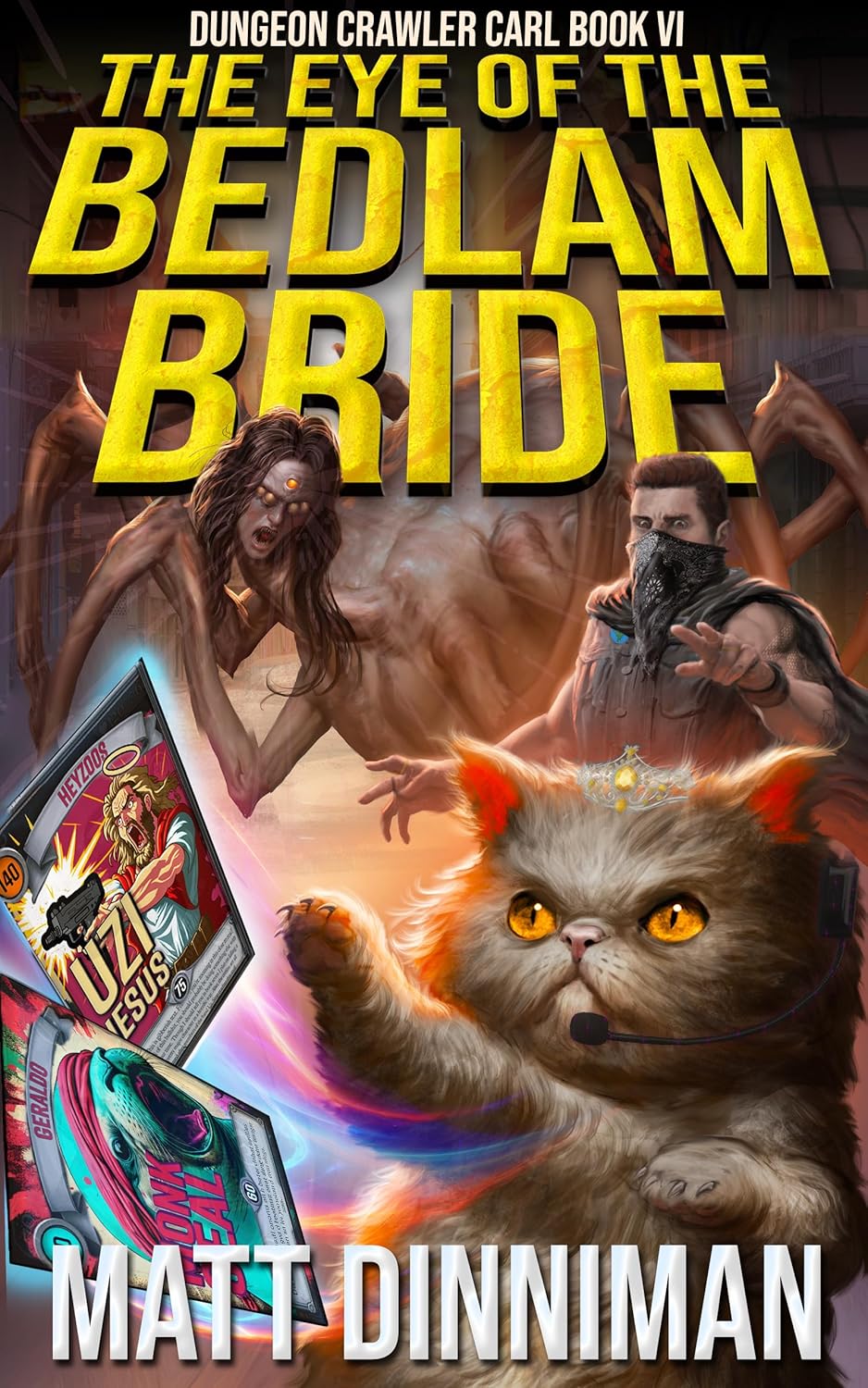
The Eye of the Bedlam Bride by Matt Dinniman

Publisher: Soundbooth Theater (Audiobook – 2 July 2023)

Series: Dungeon Crawler Carl – Book Six

Length: 26 hours and 46 minutes

My Rating: 5 out of 5 stars

Amazon

The chaotic fun of Matt Dinniman’s Dungeon Crawler Carl series continues in epic fashion with the ultra-impactful and deeply addictive sixth entry in the series, The Eye of the Bedlam Bride, an exceptional novel designed to strike hard at the reader’s emotional heartstrings.

As you might have guessed from my recent flurry of reviews for this series, I am seriously in love with the Dungeon Crawler Carl books.  An impressive and surprisingly deep LitRPG series, the Dungeon Crawler Carl novels follow a collection of compelling characters as traverse a deadly fantasy dungeon created from the ruins of all of Earth’s buildings by aliens for intergalactic viewing content.  Set around a damaged protagonist and his excitable and now sentient cat, these books are deeply addictive, and once you start the series you really can’t stop.  Indeed, I literally just chain-read the entire series, with awesome books like Dungeon Crawler Carl, Carl’s Doomsday Scenario, The Dungeon Anarchist’s Cookbook, The Gate of the Feral Gods and The Butcher’s Masquerade all proving to be outstanding reads.  I loved these previous books so much, that I instantly started listening to the sixth book in the series, The Eye of the Bedlam Bride, the first chance I got, and boy was I in for an incredible time with it.

After barely surviving the Butcher’s Masquerade and then witnessing the surprising end to the seventh floor, Carl and Princess Donut are exhausted and traumatised by recent losses.  However, they have no time for rest as they find themselves thrust into the dangerous eighth floor of the dungeon.  One of the most ambitious levels so far, the eighth floor is based on a map of Earth’s final days, filled with intangible ghosts of the humans who wandered the world mere weeks before the planet’s death.

However, this is not a perfect replica of Earth; instead these locations have been seeded with monsters and mythological figures based on twisted accounts of Earth legends, with each creature tied to the geographic area their folklore originated.  To complete this level, the crawlers are tasked with finding and capturing six of these monsters and turning them into cards, which can then be summoned to fight alongside their new owners.  Each team will need to find and convert as many powerful creatures as possible to create the best decks, especially as they will be forced to face off against mobs and other crawlers with their own cards.

Unexpectedly starting in Cuba, Carl and Donut navigate an unfamiliar location as they try to learn the new mechanics of the game.  Determined to get to the next floor, Carl and Donut endeavour to find the best monsters they can.  However, the stronger the monster, the less controllable the card, and Carl and Donut will soon have their hands full managing a strange array of summonable creatures, including the legendary demon Shi Maria, who has far more independence than they would like.  Can Carl and Donut survive this new floor of the dungeon, or will they finally be crushed by their dark secrets, troubled pasts and Carl’s slowly eroding sanity, especially once he looks into the eye of Shi Maria, the Bedlam Bride?

Just when you thought this series couldn’t get even better, Matt Dinniman amps up the intensity and complexity of his plot and characters a whole additional notch, with one of the more moving and powerful entries in the entire series.  The Eye of the Bedlam Bride was an absolute masterpiece that featured the author’s trademark LitRPG chaos, while really showcasing his impressive writing ability.  One of the best books in an already incredible series, The Eye of the Bedlam Bride was so damn good, and it gets a very easy five-star rating from me.

Dinniman pulled together another brilliant narrative for his sixth Dungeon Crawler Carl novel, as They Eye of the Bedlam Bride perfectly continued the long-running series storylines while also presenting its own unique adventure.  Thrusting the protagonists into a complex new level, Dinniman quickly showcases all the floor’s new elements, including a fun card-based combat mechanism that fits into the existing dungeon battle system surprisingly well.  While the pacing is initially a tad slower to ensure the readers fully appreciate all the necessary lore and gameplay details of this book’s plot, Dinniman quickly works to show that The Eye of the Bedlam Bride isn’t a filler novel between the pivotal fifth and seventh books.  This becomes especially clear during a major sequence that requires Carl and Donut to make a deadly choice while surrounded by several vengeful gods.  Dinniman also makes sure that a major secret from the previous book is brought into the light early, complicating protagonist relationships and presenting them with dark choices.  Dinniman swiftly follows this up with some very awesome sequences, such as Carl and Donut coming face-to-face with their most problematic card, demonic carnage in a night club, and problems from the wider universe caused by Carl’s ambitious and rebellious plots.

While all these early elements are great, The Eye of the Bedlam Bride hits its storytelling height about halfway through, as Dinniman amps up the emotional stakes of the narrative.  Forced to compete in a gruelling series of battles that test the unique fight mechanics of the floor, the protagonists find nothing but heartbreak as they near the end of the second phase of the level, including a truly horrifying and deeply personal big boss.  All this follows a series of impactful personal revelations for Carl, that hit his already fragile mental state hard and finally provides full context for character background elements that have been hinted at throughout the series.  This central part of the story was so damn heartbreaking, and you really must appreciate how Dinniman can make you laugh before loading up substantial sorrow and regret and producing some beautifully crushing sequences.  While these scenes are emotionally charged, I appreciated how Dinniman often tempered them with more heartwarming moments that show the connections the protagonists have built up during the series, and the author does some amazing character work in the second half of this book.

Everything perfectly leads up to the incredible final third of The Eye of the Bedlam Bride, as Dinniman raises the stakes as only he can.  With the protagonists forced to compete in a brutal third and final phase of the floor, events soon break down into pure chaos with undead hordes, demonic possessions, crazed gods and various rival crawlers all coming into play.  Dinniman keeps the story moving so fast in this last part of the book, as the protagonists dive into key battle after key battle.  I actually ended up listening to the last several hours in one day as I just had to see what happened next.  Following one of the most tragic scenes in the series, which nearly broke me, Carl and Donut race to save as many people as they can from the AI’s inventive endgame, leading to an all-out battle royal in the middle of Cuba.  I loved how so many story elements from the entire book came into play for the conclusion after some clever set up earlier in the plot, resulting in some very epic moments.  The ending was a brilliant mixture of humour, intense action, extra lore, and some particularly dark moments for the protagonists, which came together beautifully and ended the novel on a real high.  Throw in some last-minute reveals that really amp up the excitement for the next book, and this was pretty much a perfect narrative that is guaranteed to keep you hooked all the way the bloody end.

I honestly feel that The Eye of the Bedlam Bride was one of the best-written entries in the entire Dungeon Crawler Carl series, and frankly I am still not over every single amazing moment of this book.  Dinniman achieves so much in this impressive novel by simultaneously changing the rules of his own game while also providing the deepest examination of his complex protagonists yet.  At the same time, he makes a novel that most authors would have turned into a filler entry into one of the series’ most impactful books.  I was really impressed by how the author chose to further amp up his various storylines and character arcs in this book, and Dinniman perfectly carries on the craziness of The Butcher’s Masquerade while building up the oncoming calamity of the seventh book and the long-awaited Faction Wars.  Naturally, this means that The Eye of the Bedlam Bride is best enjoyed by those who have read all the previous Dungeon Crawler Carl books first.  Still, for those who are determined to dive in here, Dinniman provides enough context and flashbacks to ensure you can easily follow what’s happening, and there is even a fun summary at the beginning.

This sixth novel in the series brings back all the impressive humour, intense action, and great LitRPG elements that made the previous Dungeon Crawler Carl books so damn good, while also bringing in some impressive new features, primarily a fun new battle element.  I must admit that I wasn’t too sure that the card system of this level, which on paper sounded like a crazy combination of Pokémon and Yu-Gi-Oh!, was going to work.  However, I should never have doubted Dinniman as it fitted in amongst the usual chaos and over-the-top scenes perfectly.  Dinniman does an excellent job introducing and then exploring this system throughout The Eye of the Bedlam Bride it proved fun to see the characters adapt to the new rules.  There is some great progression in how these cards impact battles, and each fight with them gets increasingly hectic.  I really enjoyed how big and crazy battles with these cards could get, especially towards the end, and you won’t see protagonists facing off in card duels with gods and demons anywhere else.

There are some additional excellent elements to The Eye of the Bedlam Bride that also enhanced the epic story in some interesting ways.  This includes a haunting new setting of the book, the ghost-filled replica of the pre-dungeon Earth, which really amplifies the feeling of despair and loss that many of the characters feel.  Dinniman continues to also feature a compelling array of LitRPG elements in this novel, and you really find yourself getting drawn into the minutiae of stat updates, item benefits, spell effects, and so much more, as the author cleverly works it into the narrative.  A lot of why these RPG features are so fun is due the chaotic humour that infests every single page of this hilarious book.  The book’s comedic elements are so effortlessly funny and feature a great mixture of sudden outrageous moments with realistic reactions, the insertion of the book’s reality television elements into life-and-death struggles, often inappropriate jokes from the massive and fun supporting cast, and an array of reference focused commentary on all matters of the dungeon.  While some of the comedic moments get a little out of hand: “I need a baby seal”, they all work beautifully in the context of the book’s clever plot, and I laughed myself silly so many times during this book, including at how the day was saved thanks to, let’s say, “crab meat”.  I’m also as appalled as a certain velociraptor that some of the funniest, if weirdest, moments of the book occurred in Chapter 69.  However, what makes The Eye of the Bedlam Bride particularly good is the way in which these comedic elements are well matched by darker, tragic moments, which allows for quite on overall powerful read, especially when it comes to the characters.

Dinniman went above and beyond when it came to the character development in this book, with a particular focus on series protagonist Carl.  After several books laden with hints about his past, we finally get Carl’s full backstory, which really goes to show just how damaged he is.  Dinniman does an outstanding job showcasing this background in several powerful scenes in The Eye of the Bedlam Bride, and I really appreciate how it built on the subtle foreshadowing from the previous novels.  This existing trauma was further enhanced in this book, as Carl also finds out multiple new revelations about his family, including several that had been kept from him (which simultaneously shows just how bad a girlfriend Bea really was).  Throw in his anger and guilt from being one of the few survivors of Earth, and the trauma from all carnage he has witnessed in the dungeon, and Carl really isn’t in the best headspace for this book, and that’s even before the titular Bedlam Bride gets hold of his mind.  As such, there is a lot of dark moments for Carl to unpackage throughout this novel, and Dinniman perfectly captures his protagonist’s continued struggle to remain in control.  This deeper dive into Carl’s psyche produced some of the best scenes Dinniman has so far written in the series, and I really appreciated how these darker moments were well matched by the revelation that Carl now has a true family with Donut and his new friends.  These relationships kept him relatively sane in this book, and allowed him to remain the resilient, if explosively inclined, straight man of the book.  Dinniman also works to showcase how despite his issues and reputation, Carl has become a bit of a legendary figure for his fellow crawlers, and the big sequence at the end where he is able to convince them to follow one of his craziest plans, was just amazing.

While most of this book’s focus is on Carl and his history, the rest of the characters in The Eye of the Bedlam Bride also get their moments to shine, and you continue to appreciate just how awesome the ended cast of this series is.  This includes the other main protagonist, Princess Donut, Carl’s now sentient cat who provides much of the humour in the story thanks to her over-dramatic reactions, silliness, and feline superiority complex.  While Donut is the comedic relief of the main duo, she still has a lot of serious moments in The Eye of the Bedlam Bride, especially while serving as the emotional anchor the spiralling Carl.  Donut is also dealing with her own grief and sadness, especially after the tragedies of the previous novel, and there are some heartbreaking moments where you see her trying to push that down.  Despite her issues and immaturity, Donut role in the plot, especially as she controls the cards during most of the battles, and you get to see her tactical genius in full display.  There are some super sweet moments with Donut in this novel, and I really love how well Dinniman continues to feature the bond between her and Carl as the true heart of this series.

In addition to Carl and Donut, The Eye of the Bedlam Bride also features multiple other key members of the Dungeon Crawler Carl cast, and it is very impressive how much you care for so many of these figures.  This includes Katia, who, despite leaving the team in the previous novel, still has a major impact on the plot.  Dinniman perfectly revisits some key revelations from the end of the previous novel, that adds additional complexities to her relationship with Carl and Donut.  The protagonist’s mentor, Mordecai, also has a key role in this book, especially as you finally get the full context for his tragic past.  This background adds some additional drama to the main story, especially when Carl and Katia find themselves caught in the same feud between forces outside the dungeon that he did.  There is also a certain sweetness to Mordecai’s story in this novel, especially when you find out he’s caring for several NPC children, in ways very contrary to his usual gruff disposition.  Dinniman also perfectly brings back the various members of Carl’s guild, who form a surrogate family with each other, and whose appearance in one scene was one of the most heartwarming moments in the plot.

Other characters of note in The Eye of the Bedlam Bride include the possessed sex doll head, Samantha, whose insane declarations, unhinged actions, unsettling abilities and crazy general demeanour make her one of the funniest characters in the series.  There is also an array of over-the-top monsters and creatures that the protagonists encounter and turn into cards.  These include Uzi Jesus, a kung-fu seal, hilarious caricatures of Carl and Donut, and a crab who must overcome his ‘performance issues’ to save the day, just to name a hilarious few.  These comedic monsters were well contrasted by Shi Maria, the titular Bedlam Bride, whose dark actions amp up the intensity of this book in some powerful ways.  I also must mention a couple of recurring crawlers from previous novels who reappear in dramatic fashion in the final third of the novel, allowing for some of the book’s best moments.  One of these character ends up having one of the series’ saddest moments, and I frankly am still not over how brutally raw and tragic that whole sequence was.

While all these above characters are amazing in their own ways, my favourite character in this series remains the dungeon’s System AI.  Despite never physically appearing, the AI has a major impact on the plot, and you are constantly bombarded by its unique humour in the various descriptions and summaries it provides to Carl and the reader, often full of weird and hilarious references.  So many serious or threatening moments are turned into comedic gold by the AI’s inappropriate commentary, and anytime it provides input to the plot, you are guaranteed to laugh.  While the AI has been fun the entire series, it gets even more unhinged in this novel as it gains full sentience and takes full control of the.  Determined to continue the crawl on its own dramatic terms, the AI starts making things even weirder for the characters, throwing in its own twists and changes.  Dinniman does a wonderful job showcasing just how insane the AI is at times, including with some very worrying inclusions in its usually informative descriptions.  There are also some hilarious scenes where the AI interacts directly with the characters, including one brilliant moment when he responds to Carl’s feedback on its descriptions in a particularly petty way.  All this, and more, allows the AI to really standout in this book, and it is a testament to how good Dinniman is as an author, that a disembodied voice is one of the best characters in a series loaded with exceptional and extremely complex figures.

As with all the previous Dungeon Crawler Carl novels, I ended up listening to The Eye of the Bedlam Bride on audiobook, which is honestly the only way to enjoy the author’s fantastic and chaotic narrative.  Coming in at nearly 27 hours in length, The Eye of the Bedlam Bride was one of the longest audiobooks in the series, but you frankly don’t mind as every second you spend listening to a Dungeon Crawler Carl audiobook is so much fun.  I honestly powered through The Eye of the Bedlam Bride in no time at all, especially the concluding several hours, and I still love how audiobook format brings out all the book’s humour, tragedy and excitement.  A lot of this is down to the series’ awesome narration, which in the case of The Eye of the Bedlam Bride, includes an extended voice cast.  While there are a few voice actors for this particular audiobook, Jeff Hays remained the principal narrator, voicing nearly all the characters and the plot descriptions.  Hays is an incredible narrator, and I loved the sheer range of epic voices he brings to bear throughout the audiobook, all of which fit their associated character perfectly, with associated accents and clever tonal changes.  This includes an excellent reuse of voices for previously featured characters, while the various crazy new cast members featured in this book were also extremely cool.  My favourites for The Eye of the Bedlam Bride remain Princess Donut, who gets autotune in this audiobook to help with her singing (the sound effects for this were brilliant), and the AI running the dungeon, as Hays matches the unhinged energy of the cracked computer and conveys this insanity to the listener with amazing enthusiasm.

In addition to Jeff Hays, The Eye of the Bedlam Bride also features three other actors who voice small roles in the larger audiobook to great effect.  The most notable of these is actor Patrick Warburton, who was an awesome addition to the experience.  Initially voicing the flashback voice of Carl’s father in several heavy scenes, Warburton did an outstanding job of breathing life into a harsh figure we’d only had glimpses of in the previous books, and his appearances here had some real menace to them.  Warburton also gets to have some fun when he plays a secondary character later in the audiobook with some brilliant levels of enthusiasm.  Narrator Travis Baldree was also hilarious with his appearance in The Eye of the Bedlam Bride, voicing a giant crab who becomes one of the protagonist’s cards.  Featuring a comedic accent and some very over-the-top lines, Baldree was just amazing, and I loved the interactions he had with Hays and Warburton’s characters.  Finally, Soundbooth Theater regular Annie Ellicott returns to voice an entertaining character in a concluding skit, which was very amusing on a variety of levels.  I really loved how well these outstanding extra voice actors were fitted alongside Hays’s impressive main narration, and it allowed for a great overall listen.  Throw in the excellent sound effects of the series, some of which alter Hays’s voice in clever ways, or places a voice role into the background of a scene for some interesting ambience, and this was an exceptional audiobook that I loved so damn much.  There is honestly nothing better than a Dungeon Crawler Carl audiobook, and I must once again recommend this format with all my heart.

With a particularly impressive and powerful plot, The Eye of the Bedlam Bride was one of the best books in the already incredible Dungeon Crawler Carl series, and author Matt Dinniman outdid himself when it came to diving into his damaged protagonists.  A highly inventive and captivating novel that I just couldn’t stop listening to, The Eye of the Bedlam Bride was Dinniman at his very best and you are guaranteed to have an exceptional time with this novel, and you will, like me, instantly dive into the next novel of the series, This Inevitable Ruin, just to see what happens next.
Amazon

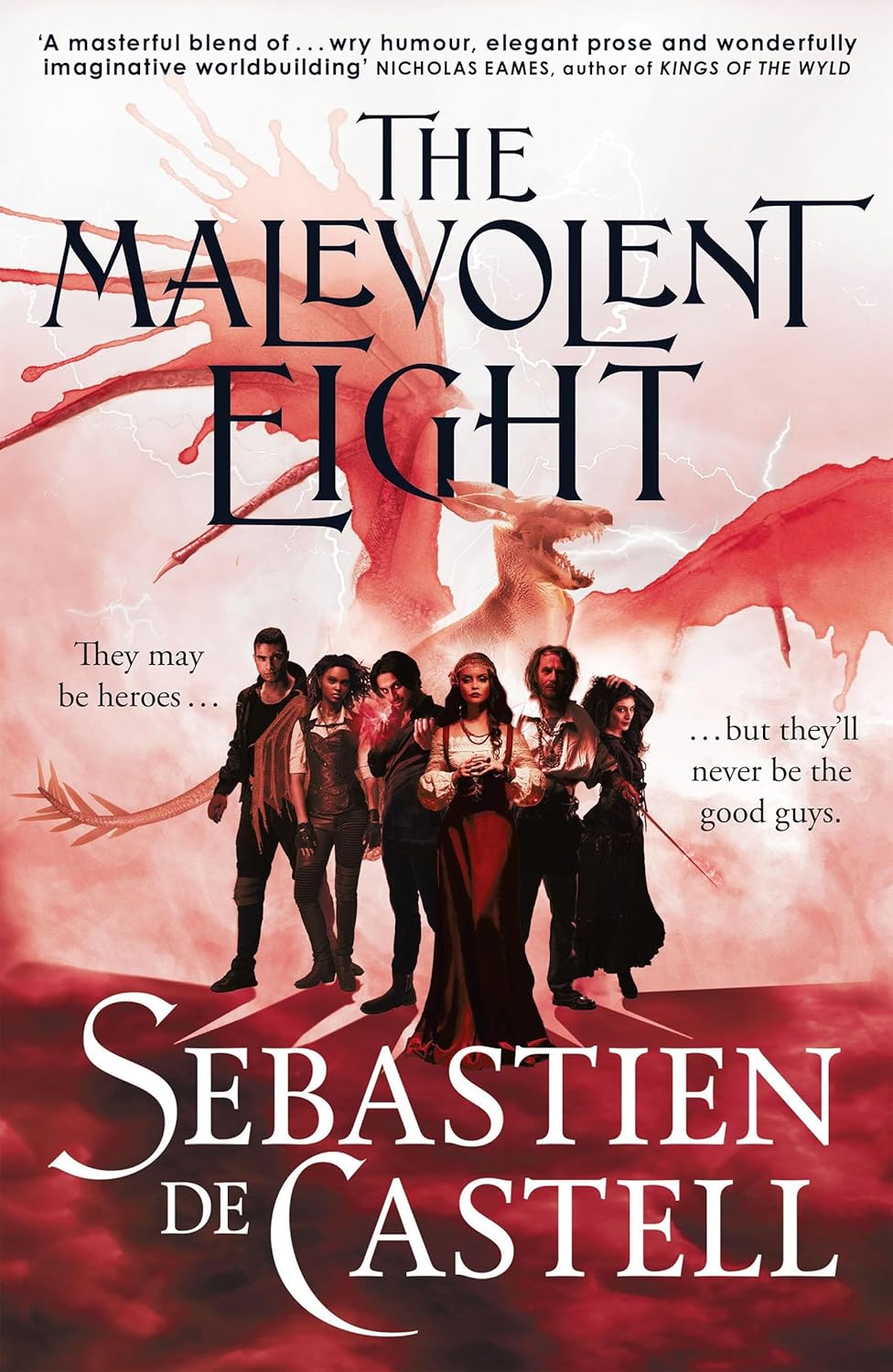
The Malevolent Eight by Sebastien de Castell

Publisher: Acardia (ebook – 27 May 2025)

Series: Malevolent series – Book Two

Length: 397 pages

Rating: 4.75 out of 5 stars

Amazon

The always entertaining Sebastien de Castell unleashes one of the funniest books of 2025 with the dark fantasy novel, The Malevolent Eight, a compelling and impressive sequel that I couldn’t get enough of.

Over the last couple of years, I have really become attached to the amazing Sebastien de Castell, a leading fantasy author with some outstanding stories under his belt.  Known for his impressive and varied stories, including his Greatcoats, Spellslinger and Argosi novels, de Castell has a brilliant imagination, and I love the range of complex settings and narratives he brings to life.  Some of my favourite de Castell books are from his recent The Court of Shadows fantasy murder mystery series, which serves as a sequel to his original Greatcoats books.  These include the witty and entertaining Play of Shadows (one of my favourite books of 2024) and the particularly clever Crucible of Chaos (one of my favourite audiobooks of 2024), both of which were real highlights of my reading calendar last year.  However, for this review I’m going to focus on a far more entertaining series of de Castell’s that I have had a blast with.

This series is the Malevolent collection of books, which contain dark magic, over-the-top characters and ridiculous humour.  Starting back in 2023 with The Malevolent Seven, this series followed seven morally questionable mercenary mages who come together into an unlikely team to defeat a group of dangerous wizard brothers.  However, their attempt to do the right thing spectacularly backfires on them when they are tricked into allowing the hosts of heaven and hell to simultaneously invade, turning their realm into the battleground for their final war.  I ended up having an exceptional time with The Malevolent Seven, and I really got drawn into it’s clever, if outrageous plot.  Naturally I was keen to see how the series continued, and the recently released sequel, The Malevolent Eight, has long been on my to-read list.

After a great betrayal, the mortal realm is in peril as the heavenly Lords Celestine and the dark Lords Devilish have simultaneously invaded, determined to fight their long-anticipated final battle on this unclaimed ground.  As both sides recruit as many additional human soldiers and followers as they can to their cause, the survival of humanity seems to lie in the hands of an unlikely group of rogue magic users.  Unfortunately for everyone involved, humanity’s saviours are the damn fools who caused this calamity in the first place, the insane mages better known as The Malevolent Seven.

At the head of this misfit band is Cade Ombra, a man who has known power and betrayal from both the Celestine and the Devilish and is determined to allow humans to remain free from their dual influences.  Forced to work with the most emotionally unstable group of mages and wonderists in the mortal realm, including a destruction-loving lighting slinger, a fallen angel, a righteous devil trying to serve the Celestine, an uncertain blood mage, a roguish rat admirer and their newest member, a vampiric kangaroo, Cade begins to wage a surprisingly moral war on both the Celestine and the Devish.

However, The Malevolent Seven aren’t the only beings attempting to disrupt the plans of the two invading armies.  Another group of mages, as well as a mysterious woman from Cade’s past with unimaginable power, are also fighting for their own purposes, and looking good while doing so.  Forced to contend against angels, devils, and ambitious mages, Cade will need to outthink all his enemies, while also ensuring that his own chaotic allies don’t make everything even worse.  However, the harder he fights, the more Cade begins to realise that he may have to sacrifice everything, especially when it becomes clear that the origin of the apocalypse lies in his gilded past.

De Castell continues to deeply impress with this brilliant, if somewhat unhinged, novel, as The Malevolent Eight was an exceptional dark fantasy sequel that comes very highly recommended.  Taking all the comedic craziness from the first book and amping it up to eleven, The Malevolent Eight was a perfect follow-up to de Castell’s previous narrative that takes the reader on an exceptional adventure you just won’t be able to look away from.

After having a ton of fun with the awesome first book in the series, I honestly wasn’t too sure what to expect with The Malevolent Eight’s story.  However, not even in my wildest dreams did I imagine just how unhinged, wild and downright insane this sequel’s plot would get as de Castell pumped the narrative all the way up to 11 and beyond.  Starting with a fun and particularly bloody sequence that not only reintroduces the unruly protagonists but also showcases the dark scenario that they find themselves in for this book, the readers are quickly thrust into The Malevolent Eight’s plot, and frankly after the first series of crazy events, you find yourself pretty hooked as the self-proclaimed Malevolent Seven’s attempt to fight both the armies of heaven and hell.  However, as the story progresses, the unconventional heroes soon find that there are far more dangerous beings involved in this war, including a mysterious mage with previously unknown destiny-altering magic.

Determined to find out more about their new opponent, Cade leads The Malevolent Seven to both the Lords Celestine and Devilish to find out what they know and soon begins to understand his unfortunate role in the outbreak of the apocalypse.  After some hilarious interactions with both sets of lords, the protagonists embark on a series of missions, only to encounter betrayals, hidden secrets, the consequences of Cade’s lies, capture, revelations and a surprisingly humorous torture sequence.  This leads up to the big conclusion of the story, as the protagonists find themselves in the middle of a battle against three separate sides trying to claim their world for various purposes, all while manipulative figures work from the sidelines.  This big finale for The Malevolent Eight gets a little overcomplicate and convoluted, especially as we dive into alternate realms and different realities, but the entire thing is highly entertaining to behold.  It finishes off on an interesting conclusion, which has a nice hopeful note to it (especially in comparison to the previous book), while also hinting at some dark events to come.  This is an overall quite entertaining and wild story that really highlights de Castell’s creativity and ability to craft over-the-top narratives.

I deeply enjoyed the wonderful style that de Castell utilised in The Malevolent Eight, as the author pulls together a chaotic and hilarious dark fantasy that hits a lot of over-the-top notes at the same time.  Perfectly told from the single perspective of main character Cade Ombra, The Malevolent Eight is a balls-to-the-wall blast, loaded with insane action, excessive blood, crazy moments and fantastic humour.  De Castell keeps the pace of the story moving pretty fast throughout The Malevolent Eight, and the reader absolutely powers through the fantastic combination of carnage, intrigue, and hidden motivations.  Working well as a sequel to the previous book, The Malevolent Eight cleverly returns to the author’s fun setting, which has been drastically altered due to the rival inter-dimensional armies fighting across it.  Serving as the perfect background to such an entertaining and oddball dark fantasy narrative, de Castell makes perfect use of the changed setting and existing book history to go all out with his narrative.  While a seemingly simple and insane book on the surface, de Castell also adds in some impressive extra depth to the story, including through its complex magic system and the inclusion of several alternate realms that allow or some interesting inclusions from the author’s wider fictional reserves.  There is also a great moral greyness to the entire setting, as even the most noble of people or beings in this setting is generally pretty flawed or evil in their own way, and I frankly loved how cynical things got at times.

While this is a rather dark story, loaded with brutal combat and destructive magic, de Castell keeps the overall tone of The Malevolent Eight pretty light thanks to the excellent use of humour.  This is an insanely funny book, and while there is a certain subtly to some of the comedy contained within, for the most part de Castell utilises over-the-top scenarios (such as a swearing kangaroo), unhinged dialogue (the one swearword said kangaroo can say) and silly over-reactions for his comedy, which frankly fits the overall crazy feel of The Malevolent Eight.  The author gets a consistent amount of humour out of all the crazy antics of his characters, which stays pretty damn funny all the way through and never gets too tiring or overplayed.  Highlights of The Malevolent Eight’s humour for me included a very cleverly written demonic contract that spelled out the terms of a deal with the protagonists with some unique caveats, a particularly entertaining torture sequence where the protagonist causes more discomfort for his torturers than himself, ill-timed relationships with the book’s apparent antagonist, and so many crazy conversations between the seemingly sane point-of-view protagonist and every single person he encounters.  While I’m slightly salty about de Castell’s description of the Australian accent being “halfway between some poncy foreign nobleman and an inebriated fishmonger” (ok fine, it was pretty funny), this was quite a hilarious read, and I honestly laughed out loud multiple times in public as I read through this crazy comedic book.

One of the things I appreciated about The Malevolent Eight is the way in which de Castell made it accessible to all readers, even though who didn’t read the preceding novel.  While those who have checked out The Malevolent Seven are probably going to get the most out of this novel, especially as they can continue the hilarious character arcs from the first book, I feel that new readers can easily jump into The Malevolent Eight without any real context and still follow the story perfectly.  Indeed, I quite enjoyed how well de Castell cleverly and effectively recapped the events of the previous book, especially after a two-year gap between reading The Malevolent Seven and The Malevolent Eight.  Established de Castell fans will probably appreciate the references to the author’s other series, as a new major character in the novel is from the author’s Spellslinger universe and utilises that series’ unique magic to great effect in this novel.  While those readers who have read the Spellslinger books will no doubt find this inclusion really cool, people who are less familiar with this series can still follow The Malevolent Eight’s plot without any issue, especially as the events of the other series don’t really come into play here.  As such, I would recommend The Malevolent Eight to any fantasy readers looking for a dark comedic turn, although for the sake of completeness, try The Malevolent Seven first.

As with The Malevolent Seven, this excellent sequel features a fantastic cast of compelling damaged characters whose unique and often quite outrageous stories helped to ensure The Malevolent Eight was an impressive read.  Cleverly building on the storylines of the previous book, The Malevolent Eight features the immoral characters who make up titular Malevolent Seven attempting to be heroes in this book, often with mixed results.  This includes main protagonist and point-of-view character Cade Ombra, the leader of group and a man with quite a complex past.  Shown in the previous book to be a power hunger survivor with a conscience, The Malevolent Eight really dives into his characterisation even further as you look at his past as an arrogant holy warrior and his eventual fall from grace to work with demons.  His complex past becomes a key part of The Malevolent Eight’s plot, especially as much of the current issues lie in his past mistakes, and it was quite moving to see Cade attempt to make amends, especially as it gets him into even more trouble.  Despite this, Cade is still a massive bastard at times, and his manipulative nature and evil strategic mind are some of his greatest weapons.  Serving as the apparent straight man to a group of crazy friends, Cade sees himself as the sole voice of reason in the entire book, and it was fascinating to see his compelling perspective unwind throughout the book, especially when he faces certain realities about his friends and what he must do for redemption.

The rest of the cast of The Malevolent Eight is pretty crazy in comparison to Cade (at least from his perspective), and it was so much fun to see these outrageous personalities interact with each other.  My favourite supporting character is still the rude and crude Corrigan Blight, a thunder mage who serves as Cade’s unwieldly second.  Despite his outward appearance as an idiot controlled by his element (I mean, he is), Corrigan is a surprisingly deep figure and his ability to act as Cade’s conscious really highlights their great friendship.  The rest of the returning members of The Malevolent Seven, which includes a rat mage, a fallen angel, a holy demon and an uncertain blood mage, are slightly less well featured in this book, although de Castell does dive into their uncharacteristic attempts to be heroes, and their always fun interactions as a group allowed for some amazing moments.  I also must mention the newest member of team, Temper, a giant, swearing, vampiric kangaroo who has joined the team since the events of the first book.  Temper was quite a surprising figure to behold, and de Castell cleverly keeps the kangaroo’s origins somewhat hidden from the reader for much of the plot, allowing you to really enjoy his random presence without thinking too much about it.  This main cast was so much fun, and de Castell tops it off with a new magic user from Cade’s dark past with surprising connections to the Spellslinger universe, Cade’s former demonic benefactor whose intrigue, and paella, is to die for, and a variety of high demon lords and celestial beings whose motivations are never black and white.  These characters, and more, ensure that The Malevolent Eight is an exceptional read from start to finish, and I deeply enjoyed seeing these crazy characters in action.

Sebastien de Castell was in rare form with his impressive new dark fantasy novel, The Malevolent Eight.  A bold sequel that takes all the best elements from the first book and amps them up to a hilarious new height, The Malevolent Eight was an extremely entertaining read, with some brilliant comedic charm that worked well with the damaged characters and very dark fantasy elements.  Outrageous and excessive in all the best ways, The Malevolent Eight was such a great read and I couldn’t get enough of de Castell’s latest ultra-fun offering.  Make sure to also keep an eye out for de Castell’s other 2025 novel, Our Lady of Blades, later this year, which I strongly feel is going to be even more amazing.

Amazon

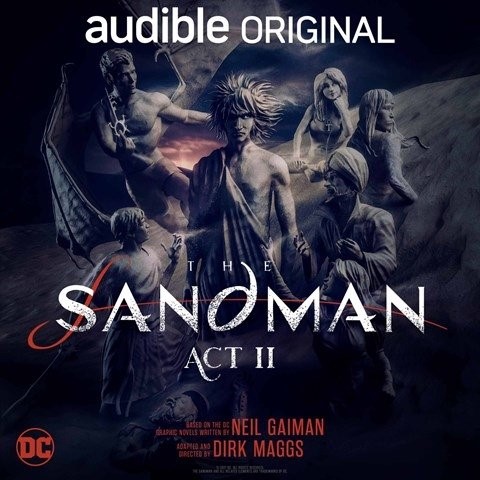
The Sandman – Act II (Audiobook) by Neil Gaiman and performed by a full cast

The Sandman - Act II Cover

Publisher: Audible Original (Audio Drama – 22 September 2021)

Series: The Sandman – Volume 2

Script: Neil Gaiman and Dirk Maggs (script adapter)

Director: Dirk Maggs

Length: 13 hours and 47 minutes

My Rating: 5 out of 5 stars

Amazon

The gloomy and complex fantasy adventures of Neil Gaiman’s The Sandman continues in this epic second audiobook volume that once again brings Gaiman’s unique imagination and characters to life with an outstanding cast of actors.

Back in 2022 I had an outstanding time listening to the first volume of the audiobook adaptation of The Sandman comic.  The original series, which started in 1989, is one of the most iconic comics of all time and features a unique adventure that only someone as twisted and imaginative as Neil Gaiman can come up with.  Following Dream, the anthropomorphic personification of dreams and human imagination, The Sandman is a truly interesting comic that blends horror, fantasy and superhero storylines together.  Some people might be more familiar with the recent Netflix series that adapted the first couple of comics and which has a second season on the way.

While I loved the show, I personally had a much better time with the audiobook version of the comics that was released a couple of years ago.  Featuring a truly exceptional cast of celebrity and established audiobook narrators, the first volume of this series was so damn good, and I loved how well it established the characters and universe of The Sandman while also adapting Gaiman’s unique vibes and dark themes.  This first volume was extremely addictive, and I made sure to listen to the second volume shortly after.  The second volume, or Act II as it will be called in this review, continues the comic storyline and features some amazing stories, fun characters and new cast members.

In a universe of strange and deadly creatures, many beings are considered immortal, but only seven siblings can truly claim to be endless.  The Endless, each a personification of a certain universal or human concept, are powerful and mesmerizing in their own way, but the most enchanting and mysterious is Dream.  Known by many names, including Morpheus, this being governs the Dreaming, a vast realm of creation’s collected dreams and stories, protecting the imagination that makes life worth living.  But circumstances outside of his control have set him on a dark path that not even he can escape from.

Still dealing with the consequences of his forced absence from his realm, Morpheus is working to recover everything he lost while avoiding the enemies he made along the way.  The most powerful of these is Lucifer, the fallen angel and lord of Hell, whom Morpheus insulted when he stormed Hell to take back his stolen helm.  Despite not wishing to cross Lucifer again, Morpheus is convinced to set right the biggest wrong of his life and free his former lover from Hell.  However, he is unprepared for the reception that awaits him as Lucifer chooses to damn him in a far more sinister way: by gifting him control of his dark domain.

Finding himself in possession of the key to Hell’s gates, Lucifer must determine who will become the new ruler of Hell.  Setting up a gala in the Dreaming, Morpheus receives visits from an array of gods, demons, angels, and other immortal beings, each of whom seek to control Hell for their own reason.  Soon, Morpheus finds himself in the middle of a host of scheming beings, many of whom will turn on their host to get what they want.  At the same time, weird things are happening in the Dreaming, as an ancient and unstable realm begins to drag in inhabitants from the real world and influence the waking world.  Can Morpheus ensure his realm stays whole whilst dealing with the most dangerous beings in creation?

This was another outstanding adaptation of The Sandman comics that was so damn epic to listen to.  Adapted by director Dirk Maggs and featuring all Gaiman’s impressive storytelling and dark characterisation, The Sandman – Act II was extremely impressive, and you really get drawn into the unique world of the original comics.  Adapting issues #21-40 and #50 of the original comics, The Sandman – Act II brings together the stories of Season of Mists and A Game of You, and several entries from Fables & Reflections.  All these adaptations are so damn good, and I love the elaborate and epic cast that helps to bring the tale to life.

Due to how the audiobook is set out, there are three distinctive parts to The Sandman – Act II, which provided their own unique stories and characters.  The first of these is titled Season of Mists, and features Morpheus finding himself wrapped up in the fate of Hell.  Starting with an entertaining and dysfunctional family dinner, where Morpheus reunites with all his siblings (bar one), the story then turns to Morpheus’s biggest regret, his relationship with the ancient African queen Nada (whose story was told in the last audiobook), which trapped her soul in Hell.  Travelling to Hell to free her, Morpheus finds that Lucifer has banished all the demons and damned souls from his realm and is abdicating as ruler, leaving the key to Hell’s gates with Morpheus.  Morpheus is soon tasked with deciding the fate of the dimension, which results in a flurry of immortal beings arriving at his home to request the key.  The resulting conference proves to be highly entertaining as Morpheus is forced to deal with all manner of bargains, schemes and betrayals as everyone seeks his favour.  I loved how the entire dramatic conference unfolds, and the interactions between the various over-the-top figures and the implacable Morpheus results in some great drama and hilarious sequences.  The conclusion of this storyline is amazing, as a new irony overtakes the denizens of Hell, Morpheus finds himself meeting various beings who will change him in the future, and the seeds are set for a new story around Lucifer (as seen in his own comic and television series).

Honestly, this is probably the best part of The Sandman – Act II, as not only is Season of Mists particularly gripping, but it makes full use of both the existing voice cast and several new figures to really enhance the content.  The battle of wits between several larger-than-life characters is extremely compelling and clever, and Gaiman does a remarkable job expanding the canon of The Sandman.  There are so many subtle and delightful character interactions scattered throughout this storyline, and listeners will love the impressively devious stakes that are being discussed.  This includes some fantastic and deep soul searching for the protagonist, who is forced to revisit one of his darkest deeds.  Thanks to his own experiences of being locked away, Morpheus understands his harsh past actions a lot better, especially when prompted by members of his family.  I always appreciated how Gaiman shows that Morpheus isn’t really a hero but a force of nature who arrogantly follows his own whims.  However, in this case he is a somewhat better person, even if he is still selfish in his actions, and it takes some real prompting for him to do the right thing.

Gaiman also makes sure to feature some additional amazing character arcs, the most intriguing being Lucifer’s when he decides to perform the ultimate rebellion against his father by abandoning Hell.  Lucifer’s portrayal by a returning Michael Sheen is exceptional, especially during his interactions with Morpheus, and his take on the events that led him to rule Hell are very powerful.  In addition to Sheen, Season of Mists also features the inclusion of several amazing new actors, each of whom are used to their full potential.  Jeffery Wright and Kristen Schaal are perfect additions to the Endless, voicing the taciturn Destiny and the bubbly Delirium respectfully.  However, it is the one-two punch of Bill Nighy as Odin and David Tennant as Loki that really sold this chapter to me.  Bill Nighy and David Tennant are two of my absolute favourite actors, and their takes on these two Norse gods are just amazing.  While Nighy brings gravitas and cruelty to Odin, Tennant’s wheedling, manipulative Loki was so damn fun, and both were the highlight of every scene there were in.  The rest of the cast in this chapter were epic as well, and this entire section was such a highlight of The Sandman – Act II, with its placement at the top of the book successfully drawing listeners in and ensuring they don’t go anywhere.

The other main storyline in The Sandman – Act II was titled A Game of You, and is an adaptation of one of the less popular comic arcs.  This story is an intriguing female-led additional to the series, which primarily follows Barbie, a minor figure from the previous The Doll’s House arc, who has uprooted her life and moved to New York to live with an eclectic mixture of residents in an apartment building.  When figures from Barbie’s long-lost dreams arrive in the waking world, Barbie is dragged back into a fantasy adventure, while her friends in New York deal with minions of the mysterious Cuckoo, a dream parasite preying on Barbie’s mind.  The resulting attempts to help Barbie result in chaos and tragedy as they trespass into the Dreaming and come face to face with Morpheus as a he fulfills an old bargain.

Now I must admit that A Game of You was a little weaker than I was hoping, especially when compared to the preceding Season of Mists.  The decision to focus on Barbie, who honestly didn’t stand out too much in her previous appearance, was an interesting choice by Gaiman, and this arc doesn’t have the most engrossing story.  However, I did still have a great time listening to this part of the audiobook, especially as it focuses on showcasing both the magic and danger of dreams, as well as the impacts that interactions with Morpheus can have on mortals.  The more distinctive fantasy focus of this story makes for a nice change of pace, and I liked how well Gaiman simultaneously showed events occurring inside and outside of the protagonist’s dreams.

One side effect of listening to A Game of You immediately after Season of Mists is that the less substantial cast is a lot more noticeable.  That’s not to say that A Game of You doesn’t have great characters.  There are some amazing figures featured here, including several unique protagonists who have compelling connections to previous story arcs from the series.  There are also some nicely progressive LGBT+ elements for a comic released in 1991-92, especially when it comes to the trans woman character, Wanda, who is handled with tact and who has a particularly impactful story arc.  There are also fewer celebrity voice appearances in this arc, although I did rather enjoy the inclusion of actress Emma Corrin of The Crown fame as the ancient witch Thessaly, as her intense and distinctive voice added a lot to this fantastic character.  While it is easy to nitpick A Game of You, especially after some of the previous arcs, this is s till a particularly impressive storyline, which is masterfully brought to life with this production, producing something that is very fun to listen to.

These two main storylines are impressively augmented by a series of short stories scattered throughout the course of the audiobook.  Most of these short stories fall between Season of Mists and A Game of You, with several more wrapping events up.  There is also a short story in the middle of Season of Mists that showcases the impacts the closure of Hell has, which leads to the Dead Boy Detectives series.  Gaiman comes up with some truly interesting and unique shorter stories to add to the main plot of the book.  Most of these stories involve various mortals or other supernatural creatures encountering either the Endless or some of Morpheus’s creations, and they usually serve as some form of cautionary tale.  I loved the intriguing underlying themes that Gaiman loaded into each story, including about the impermanence of power and examinations of the human condition, and the author also has fun in launching his distinctive characters into various historical periods.

While all the shorter stories contained in The Sandman – Act II are awesome in their own way, a couple do stand out due to their excellent stories and fantastic performances.  For example, the complex story Three Septembers and a January, retells the tale of Joshua Abraham Norton, self-declared Emperor of the United States, with Dream and his siblings shown to be responsible for his strange actions.  This story is both fascinating and dark, as you witness a man torn apart by the whims of the ethereal siblings.  Listeners grow particularly attached to this tale due to the performance of John Lithgow as Joshua Norton, who adds some excellent humour and no small amount of tragedy with his moving voice work.  Other great stories include Thermido, which sees the return of Lady Johanna Constantine from the first audiobook.  Voiced by the absolutely fabulous Joanna Lumley, this story follows Constantine as she steals into France during the height of the revolution to steal something from Robespierre.  This story was fast-paced, clever, and substantially dark, all of which helped it to stand out, especially with the compelling twists and ironic historical fates.  It was also amazing to get a whole story told by Joanna Lumley, who was somewhat underutilised in the first audiobook.  Finally, the tale August, which follows Augustus Caesar as he disguises himself as a beggar and tells his life story to a dwarf, proves to be quite impressive, especially with Brian Cox playing the titular character.  Each of these shorter stories are masterfully presented, and I loved how complex and powerful their stories were, even with the shorter length the author had to work with.

Overall, I really appreciated the entire story of this volume.  The blending of two fantastic main storylines, as well as the scattering of intriguing and unique short stories, makes for quite an epic continuous listen.  The short stories were well utilised as the director spread them out amongst the audiobook providing a good break between the two extended plotlines, as well as some fun listens in the epilogue.  Not only were all the entries in The Sandman – Act II fantastic and compelling, but each of them had such a distinctive feel that really highlights the author’s style and ability to blend various genres together into one powerful story.  The interesting array of over-the-top characters makes for quite a fantastic listen, especially as Gaiman attempts to capture the many burdens of having cosmic responsibility, while other stories look at how characters are affected by dreams and imagination.  The mixture of fantastic tales and dark moments is always cleverly undercut with moral lessons or complex observations about the human experience.  You honestly come away from The Sandman in deep thought while still being traumatised or wildly entertained by how events unfolded.  There is honestly nothing else quite like The Sandman in fiction, and I always have great admiration for the elaborate and multifaceted tales that Gaiman comes up with.

Just with the first volume of this epic audiobook collection, the production really captures the epic nature of the comic, which makes it a real joy to listen to.  Even with its runtime of nearly 14 hours, this is such an easy and addictive audiobook to listen to, and it proves hard to ever stop listening to the elaborate story that emerges.  A lot of this is down to the impressive nature of the production surrounding this audiobook, as the director goes out of his way to enhance the audio experience for the listener.  Everything about this audiobook, from the emotionally charged music, the elaborate sound effects, and the brilliant cast of actors and narrators, is designed to remind you what an imaginative and unique story you are listening to.  Heck, even the way that the various chapter titles are announced is epic, and I always get a kick out of the impressive way they are read out.  Honestly, the entire audiobook production is just perfect, and anyone who listens to it is in for an exceptional time they will not forget.

As part of my hyping up of the audiobook production, I have to highlight the sheer range of talent lending their voices to this audiobook production, without whom The Sandman – Act II would be nowhere near as exceptional as it was.  I have mentioned several of the newer voice actors in the review already, but The Sandman – Act II also featured the exceptional returning cast from the first audiobook, each of whom provided fantastic new performances that really stuck in the mind.  For example, Andy Serkis is so much fun as Matthew the Raven, while Justin Vivian Bond and Miriam Margolyes serve as fantastic and fitting versions of Desire and Despair respectively.  Kat Dennings proves to be an outstandingly effective incarnation of Death, especially as her positive portrayal captures the more compassionate and likeable version of Death that Gaiman envisioned for his comic.  Even Neil Gaiman has a key vocal role in the production, serving as the narrator who highlights events and details not captured by the dialogue.  Gaiman proves to be an impressive narrator for this story, and his distinctive and wise voice matches the feel of The Sandman perfectly.  However, most of these are overshadowed by James McAvoy, who plays the titular Sandman, Morpheus, in this production.  McAvoy is honestly perfect in this role, and the gravitas, sense of unknowing, and great sadness of this character is so perfectly portrayed by the actor’s voice.  McAvoy does such a good job portraying the imperialistic and arrogant tone and personality of Morpheus and the reader can really envision his actions and thoughts.  McAvoy honestly does the best presentation of this character it is possible to do (television series included), and you will fall in love with his take on this sinister and mysterious figure.

The Sandman – Act II is an outstanding and incredible audiobook production that does such a remarkable job of bringing more of Neil Gaiman’s iconic comic to life.  Perfectly adapting the distinctive and dark comics into a new format, listeners get the benefit of both an excellent narrative and some amazing audiobook production with a remarkable cast.  An absolute joy to listen to from start to finish, The Sandman – Act II was a brilliant follow-up to the first production, and I cannot recommend it enough.

Amazon

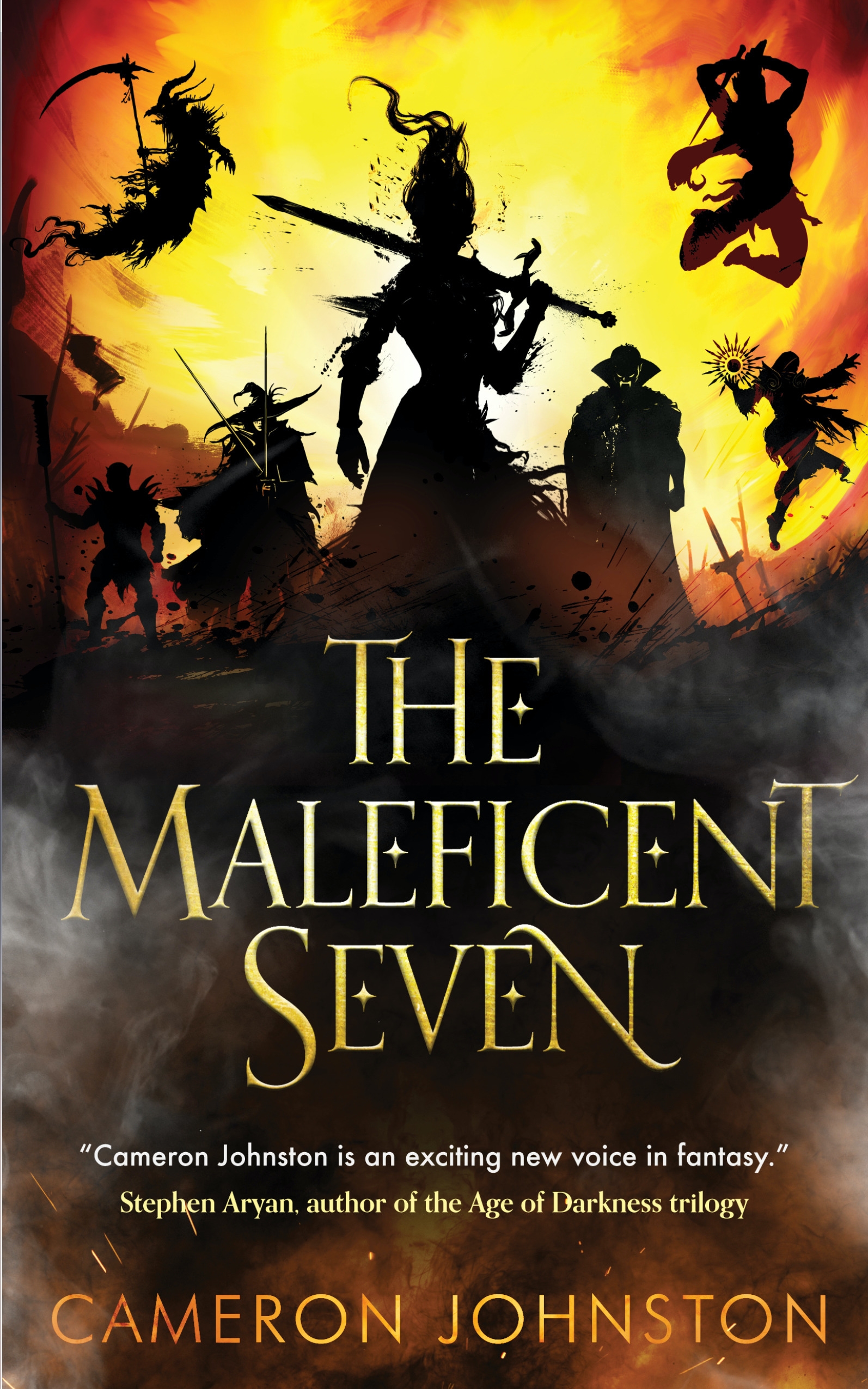
The Maleficent Seven by Cameron Johnston

The Maleficent Seven Cover 2

Publisher: Angry Robot (Trade Paperback – 10 August 2021)

Series: Standalone

Length: 416 pages

My Rating: 5 out of 5 stars

Amazon

One of the fastest rising authors of dark fantasy fiction, Cameron Johnston, returns with his most entertaining book yet, the outstanding and epic novel, The Maleficent Seven.

Cameron Johnston is a great author who I was lucky to come across a few years ago with his debut novel, The Traitor God.  Bought on a whim because it sounded cool, The Traitor God ended up being one of my favourite fantasy books of the year thanks to its excellent revenge storyline.  The Traitor God was such an epic read and I ended up grabbing the intriguing sequel the following year, God of Broken ThingsGod of Broken Things (one of my favourite books of 2019) proved to be an outstanding sequel, and it ensured that I would be keeping an eye out for more of Johnston’s work.  This included his 2021 novel, The Maleficent Seven, which had an awesome plot behind it.  I honestly have been meaning to read The Maleficent Seven for ages but could never fit it into my schedule.  That was until last year, when I managed to power through the entire book in a single plane ride.  The Maleficent Seven ended up being a pretty darn exceptional novel that I wish I read a hell of a lot sooner.

It is a dangerous time in the lands of Essoran, as the Lucent Empire, a nation of apparent holiness and light, continuously expands, sweeping away all opposition and either burning or converting the survivors to their faith.  Despite their apparent benevolence, the Lucent Empire has a dark side dedicated to destroying all magic, heretics, and anything it deems evil through fire, blood and death.  The final stage of their invasion is set, but to proceed they first need to cross through the mountain road, which exits at the small town of Tarnbrooke.  All looks lost for the inhabitants of Tarnbrooke, who are likely to burn in the Lucent Empire’s light, until an unlikely figure appears to lead them.

Forty years ago, the dread demonologist Black Herron led a black horde of bloodthirsty soldiers, dark creatures and monsters on a deadly campaign that rocked all Essoran.  Total conquest of the realm looked certain, until she suddenly disappeared the eve of the final battle.  Without the will of their leader to hold them together, the army fell to infighting allowing their enemies to prevail.  No one knew what happened to Black Herron, until she reappears in Tarnbrooke, having lived there in disguises for decades.

Determined to stop the Lucent Empire and their fanatical leader no matter what, Black Herron takes over the town and prepares it for siege.  But even a being as powerful as Black Herron is unable to stop an entire divinely infused army by herself.  Instead, Herron seeks to bring together the six deadly captains of her army, whose skills and ferocity helped her to nearly conquer the world.  Together, this assortment of dangerous beings, including a vampire, a necromancer, an orc chieftain, a war god, a pirate queen and a deranged alchemist, might stand a chance against the coming storm.  But first they need to learn to work together once more, especially as each of them have a very different reasons to fight with Black Herron again.

The Maleficent Seven is a powerful, captivating and fantastically over-the-top novel that showcases Cameron Johnston’s impressive writing skill and ability to bring together great characters with dark fantasy settings.

Now, as you can probably guess from the name, The Maleficent Seven is a dark fantasy take on classic films like The Magnificent Seven and its predecessor, Seven Samurai.  Johnston sets the scenario perfectly, first introducing protagonist Black Herron and her previous evil horde, which disbands in the starting chapter.  From there, we get a time skip and are introduced to the book’s antagonists in the form of the Lucent Empire, their divinely empowered inquisitors and their leader, the Falcon Prince.  Their initial actions are enough to paint them as dangerous religious zealots who use their divine light and apparent holiness as a shield for their dark ambitions.  Their quest leads them on the road to Tarnbrooke, where the elderly Black Herron waits for them, having decided to make a stand and bring together her six former captains.

The first half of the book is dedicated to recruiting the six captains, who have scattered across the world.  All evil or deadly figures, none of them particularly wants to fight another war, but each are drawn back for different reasons, including family, pride, revenge and more.  Johnston does a good job of breaking up the recruitment process throughout the early chapters, and each of the revealed captains turn out to be crazier than the last, enhancing your anticipation for how they are going to act in the coming battles.  At the same time, you get to know the Lucent Empire, as they send agents against the captains, trying to eliminate the danger they pose.  Johnston lays down some very solid groundwork in this first half of the book, and you quickly get drawn to each of the seven main characters for various reasons.  There are a great range of character arcs spread out amongst these unlikely protagonists, and while a couple of them are purposely irredeemable, the rest prove to be surprisingly likeable and complex.  Johnston also takes the time to build up the antagonist, showcasing just how sinister they truly are, while also providing some slightly predictable revelations about their leader.

The second half of the book is dedicated to the battle for Tarnbrooke, which after seeing how crazy the first half of The Maleficent Seven is, you know is going to be good.  There is some good additional setup once the captains arrive in town, with the building of siegeworks, the training of the townsfolk, and other unusual preparations, all of which is reminiscent of the films the book is an homage to.  Johnston also builds up some additional character interactions that I really enjoyed, as certain townsfolk become connected to different saviours and there is some good follow-up regarding the protagonist’s prior adventures.  The resulting siege is everything you could hope for and more.  I am a huge fan of sieges in fiction (check out my previous list on the subject) and The Maleficent Seven is a particularly good example of an epic siege, especially as Johnston goes very over-the-top when it comes to the different weapons and methods the defenders employ.  Everything from vampiric conversion, exploding pigs and drugged townspeople are used to hold the line against the enemy in several brilliant and brutal fight sequences, while a major sea battle simultaneously occurs, featuring, amongst other combatants, a giant kraken.  All the fighting is fierce, desperate, and pretty damn bleak, while the characters each go through their own intriguing and powerful journeys.  I honestly was enthralled once the main fighting started, and Johnston really did not let up until the end.

The final sequence of the main fight turns into an impressive and extremely horrific brawl for survival as the protagonists fight against increasingly desperate odds.  There are also several betrayals as certain telegraphed plots from the evil protagonists come to fruition, and everyone fights to survive and come out on top.  You will be a bit unprepared for who lives and who dies during the final few chapters as Johnston loads up some fantastic twists and cool revelations that constantly leave you guessing.  Even when you’re sure you know who is going to survive, Johnston swiftly changes everything around with a few hilariously ironic reveals, as well as some more tragic deaths.  I liked how Johnston imbued the story with a certain level of hope towards the end, even if that was somewhat overshadowed by the carnage surrounding it.  There were also some darker moments in the conclusion, as certain characters realise just how damned they truly are.  Throw in a final great twist that really tied together a hidden motivation from the very start, and Johnston ends The Maleficent Seven on the perfect note for the reader.

Johnston did a remarkable job with this awesome book, and I loved how dark, powerful, and compelling The Maleficent Seven turned out to be.  Thanks to the unique array of characters, insane fight sequences and entertaining twists, The Maleficent Seven will prove really appealing to a wide array of readers, especially as Johnston got the right balance of action, tragedy, and humour throughout the entire read.  I especially loved how well the author flipped the established concept of heroes defending a town from villains on its head with the inclusion of seven fantasy supervillains leading the charge against a holy army.  The clever reveal that the apparently good warriors are far more sinister than the literal monsters is so well handled, and it was impressive to see a classic idea so well refreshed.  Throw in some excellent world building, an interesting collection of fantasy creatures and the sheer overwhelming chaos of a desperate siege, and there is something in The Maleficent Seven for all fantasy fans.

Something I really loved about The Maleficent Seven was the cool collection of characters who made up the key cast.  All the titular seven are very well represented throughout the book, and it proves very hard not to fall in love with each crazy member of the team; thanks to the narrative split, you get some intriguing insights into their motivations, actions, and history.

Of these characters, my favourite was probably Tiarnach, the fading war god who has fallen on hard times.  Thanks to the death of all his followers and his inability to fight against the Lucent Empire, Tiarnach starts the book off as a broken, drunken figure with barely any power left.  Joining Black Herron’s cause to get revenge and some form of redemption, Tiarnach becomes the defenders’ nominal drill instructor, trying to whip the townsfolk into a fighting force.  The connection Tiarnach forms with the townsfolk, his journey towards redemption, and the fact that he is one of the few characters without ulterior motivations, ensures that readers are drawn towards him.  He easily has one of the best, most tragic character arcs in the entire book, and I really enjoyed how Johnston utilised him.  The same can also be said for the legendary orc warrior, Amogg.  Amogg leaves her responsibilities behind to sate her desire for battle and alleviate her restlessness.  Thanks to her blunt and entertaining personality, Amogg was another character the reader connects to.  However, Johnston ensured that she became a true favourite when she begins to turn the women of Tarnsdale into an effective fighting force against their will.  Watching her empower and lead a band of fighting women into battle was very impressive, and her storyline was heartwarming and bleak in equal measures.

The other five characters each have their moment to shine.  The vampire, Lorimer Felle, was a suave and brutal figure whose inability to die, connection to his one loyal servant, and desire for destruction left a major impression.  Verena, the pirate queen, was also really good, although she kind of gets overshadowed by the other characters.  Jerak the alchemist was the most unhinged, and I loved how he ended up becoming more of a danger to his friends than his enemies thanks to his gruesome experiments.  Maeven, the necromancer, has one of the more complex story arcs in the book as she blurs the line between ambition, revenge and a desire for family.  While she fights alongside the others, her own need for vengeance and power leads her down a dark path, especially with her connections to the Lucent Empire’s leader.  Maeven’s entire story goes in some very dark directions, and I appreciated the dark note Johnston left it on.  Finally, the leader of the group, Black Herron, has a very interesting storyline that runs the gambit from dark queen to unlikely hero.  Johnston does a great job showcasing her rise and fall throughout the story, and the question of why she chose to abandon her conquest and her army is a fantastic part of the book.  All these protagonists are outstanding in their own way, and I loved how Johnston was able to weave together some compelling, entertaining, and occasionally sad storylines around such wonderfully outrageous figures.

Look, with a story this awesome there was no way I wasn’t going to love The Maleficent Seven, and I think my lengthy review above proves this point extremely well.  Cameron Johnston was on fire when he wrote his third full-length novel, and The Maleficent Seven proved to be a particularly intense, clever and impressive read.  Bringing together entertaining characters with insane violence amid a classic story scenario, The Maleficent Seven proved near impossible to put down and I loved every second I spent reading it.  A highly recommended read for all fans of dark fantasy, I cannot wait to see how Johnston’s next book (coming out later this year) turns out.

Amazon

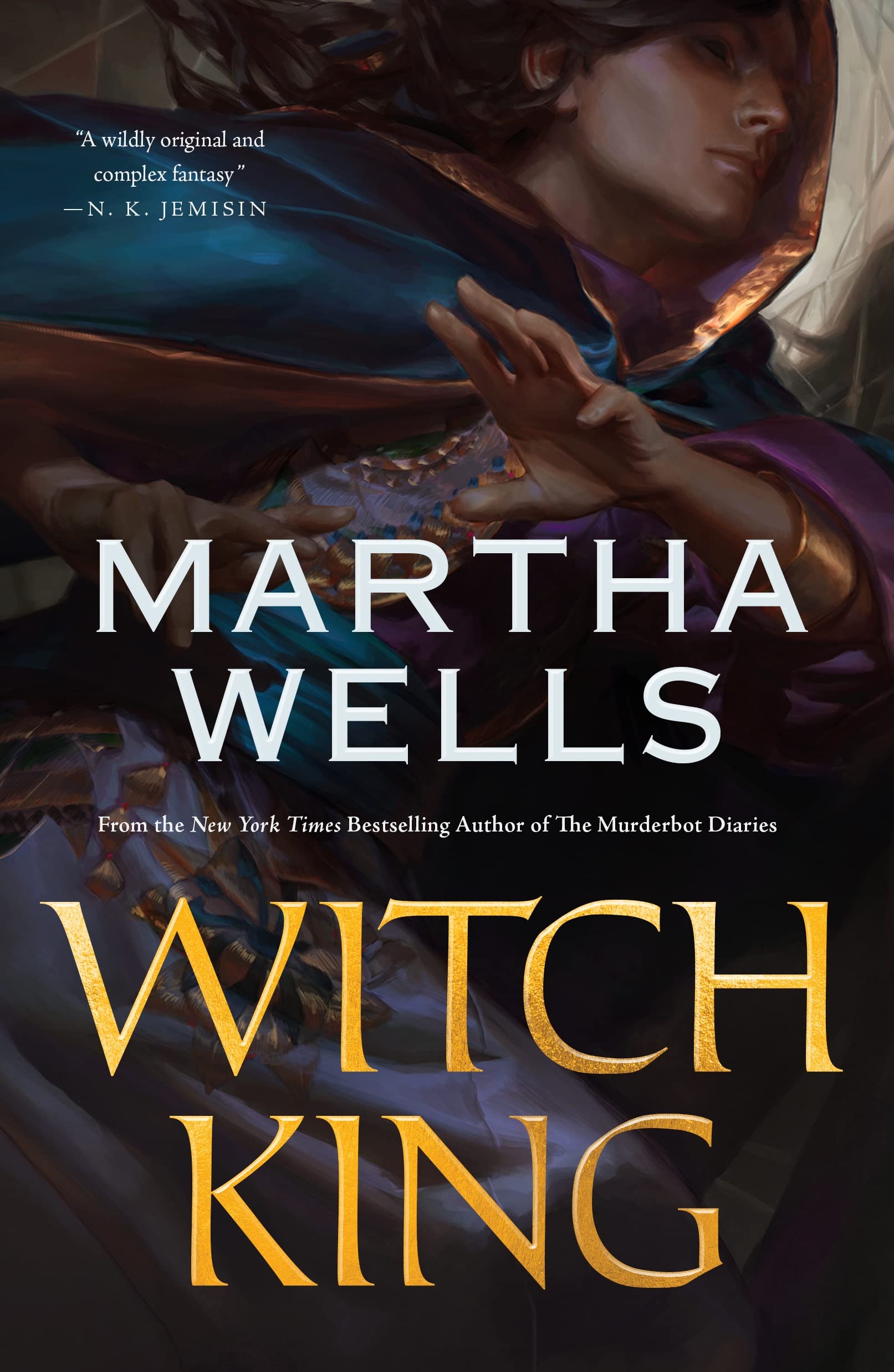
Witch King by Martha Wells

Witch King Cover

Publisher: Tor (ebook – 30 May 2023)

Series: Standalone/Book One

Length: 432 pages

My Rating: 4.5 out of 5 stars

Amazon

Acclaimed science fiction author Martha Wells returns to fantasy fiction in a big way with a cool new epic novel, Witch King.  This was an excellent and intriguing new read that I had a wonderful time reading, especially as I finally got to check out something from Wells, who has been on my to-read list for a while.  Wells is a veteran author who has several intriguing novels and series throughout her storied career, including her Ille-Rien, Books of the Raksura and Emilie, and well as tie-in books in the Star Wars and Stargate franchises.  While I am interested in reading her Star Wars book, Wells is best known for her Murderbot Diaries series, which follows a deadly security robot who has gained sentience and finds itself involved in serval complicated situation with various humans.  This series gets a lot of love in review communities and has been on my radar for a while.  However, instead I managed to get a copy of Wells’ new fantasy novel, Witch King and decided to have a read of that.  Featuring an intriguing and compelling story, Witch King was an awesome novel that I found myself really hooked on.

Kai is having a very bad day.  Awakening after an unknown period of imprisonment in a specially designed underwater cell, Kai is annoyed to find an arrogant magic user attempting to bind him to their will.  However, Kai is no mere demon, he is Kaiisteron, the Witch King, a legendary figure who, with the help of his heroic friends, saved the world from the nefarious Hierarchs and the led the current nations to freedom.

Now freed from his tomb and inhabiting the body of the mortal who foolishly tried to control him, Kai needs to find out who trapped him and why.  Accompanied by his long-time friend, the witch Ziede, and Sanja, the young woman intended to be sacrificed to him, Kai emerges once again into the world, trying to figure out what is changed and who benefited from his absence.  However, nothing is as it seems, and Kai and Ziede soon discover that their other friends and comrades have also gone missing.

Determined to get to the truth, Kai, Ziede and Sanja begin their search for answers, but soon find themselves under attack from all corners.  Dangerous magic users, powerful angelic creatures and lethal killers are all hunting for them, and everyone seems to have their own agenda.  To survive, Kai and Ziede will need to dive into their dark history, and the legendary war they fought years ago.  But the secrets they uncover will reveal dark truths about people they thought were their friends, and soon they will be forced to face the terrible consequences of their past mistakes.  Can these legendary figures survive in a world that turned against them to find their loved ones, or has their adventure finally come to an end?

This was a pretty awesome read from Wells.  Witch King has a gripping and intense story that really gets your attention early on and wows you with its elaborate world and interesting characters.  I had a great time reading this book, and while I struggled to get through it quickly, I ended up really enjoying it and I am very interested in seeing how Wells follows it up.

I really enjoyed the great story contained within Witch King, although you have to be prepared for Wells to drop you into some heavy plot right away.  There is not a lot of introduction to the characters or the world at the start of the book; instead you have to build up your own picture of events initially based on what’s going on.  This kind of makes the first few chapters a little harder to follow at times, although there is some fun action, interesting events, and great characters to grab your attention.  Wells eventually provides some of the details you need as the story continues, especially as she starts to split the story into two separate timelines, the current one and one set years in the past.  The modern timeline continues to show the characters as they get to the bottom of why they’re imprisoned and why everyone is after them, while the past timeline shows the earlier days of their history, as well as the legendary war that made them famous and which is still impacting everyone who was involved.  Both of these timelines are told from the perspective of Kai, and it provides a great overarching narrative, especially as you get to see two different sides to the same characters.  The older timeline also provides some much needed context for the modern day storyline, and Wells did a great job of balancing events from the two timelines to tell an intriguing and elaborate story.

Both awesome narratives continue at a great pace and Wells loads both up with some outstanding moments.  Out of the two, I enjoyed the chapters set in the past the most, especially as the young and inexperienced Kai was so very different from his confident and lethal persona in the future.  There was also a greater sense of desperation, oppression, and an overlay of hope in these prequel scenes which really spoke to me.  I also felt that it gave the reader a pretty good supplementary introduction into several of Witch King’s best characters, including Kai and Ziede, both of whom have some fun, complex, and LGBT+ positive arcs.  I loved seeing them as younger characters experiencing some of the worst, and most defining, moments of their lives, and Wells did an outstanding job of building that up.  However, most of the most important action occurred in the present-day storyline, and Wells writes a fantastic and powerful narrative about lost friends and relentless enemies that proved to be very compelling.  There are some great twists and turns here, most of which are rooted in their adventures in the past, and I loved some of the powerful moments that occurred.  Wells features several impressive battle scenes that make full use of the cool abilities of her magical characters, and it was particularly fun seeing Kai in action with his deadly abilities.  Both storylines come to a great conclusion that perfectly complement each other, and I liked the symmetry with the past and present, especially as it relates to the protagonists.  The final twist of the novel was pretty good and I liked how the modern-day storyline was set up to allow the narrative to continue if Wells chooses to.  However, if this was only a standalone novel, it worked really well, and I loved how impressive and fun this fantastic narrative turned out.

In addition to featuring a compelling and well-written narrative with great characters, Wells also comes up with a very distinctive and intriguing fantasy setting for Witch King, which I had a fantastic time exploring.  The world itself is a bit dark and damaged, having seen wars, magical upheaval and conquests, and it serves as a great background for the complex story.  Wells does an outstanding job of utilising some unique elements, such as demons, angelic warriors, dark magic users and mysterious tyrants to bolster the plot and produce some distinctive and exciting sequences.  This is often further enhanced by the author’s great use of the split timeline, as readers get to compare and contrast the settings and abilities of the characters after the massive time difference.  Some of the settings are really outstanding as well, with my favourite being a sinister palace first introduced in the prequel timeline.  This palace makes for an excellent backdrop for most of the early timeline’s plot, and the subsequent visit to it in the present also produces some fantastic and elaborate scenes, especially as actions in the past alter it in some very dramatic ways.  While most of these unique fantasy and world elements are impressive and fun in many ways, I did think that Wells could have done a bit of a better job introducing them.  The author really did just drop readers into the middle of the world at the start of the story with very little explanation and it takes a while to build up a full understanding of all the politics, factions, races, and basis for magic that are relevant to the plot.  While this did lead to the occasional bought of confusion during the early chapters of the book, once you get deeper into the plot (especially after the first few prequel chapters), you really grow to appreciate the elaborate world and the inventiveness Wells put into it.

Overall, Witch King was a pretty awesome and captivating fantasy read, and it was one that served as a great introduction to Martha Wells for me.  The exciting and compelling plot really drags the readers in, and the use of great characters, clever storyline splits, and an epic fantasy landscape proves to be an effective combination.  I really hope that Wells continues some of the storylines set up in Witch King in the future, and I look forward to reading more from the author if she does.

Amazon

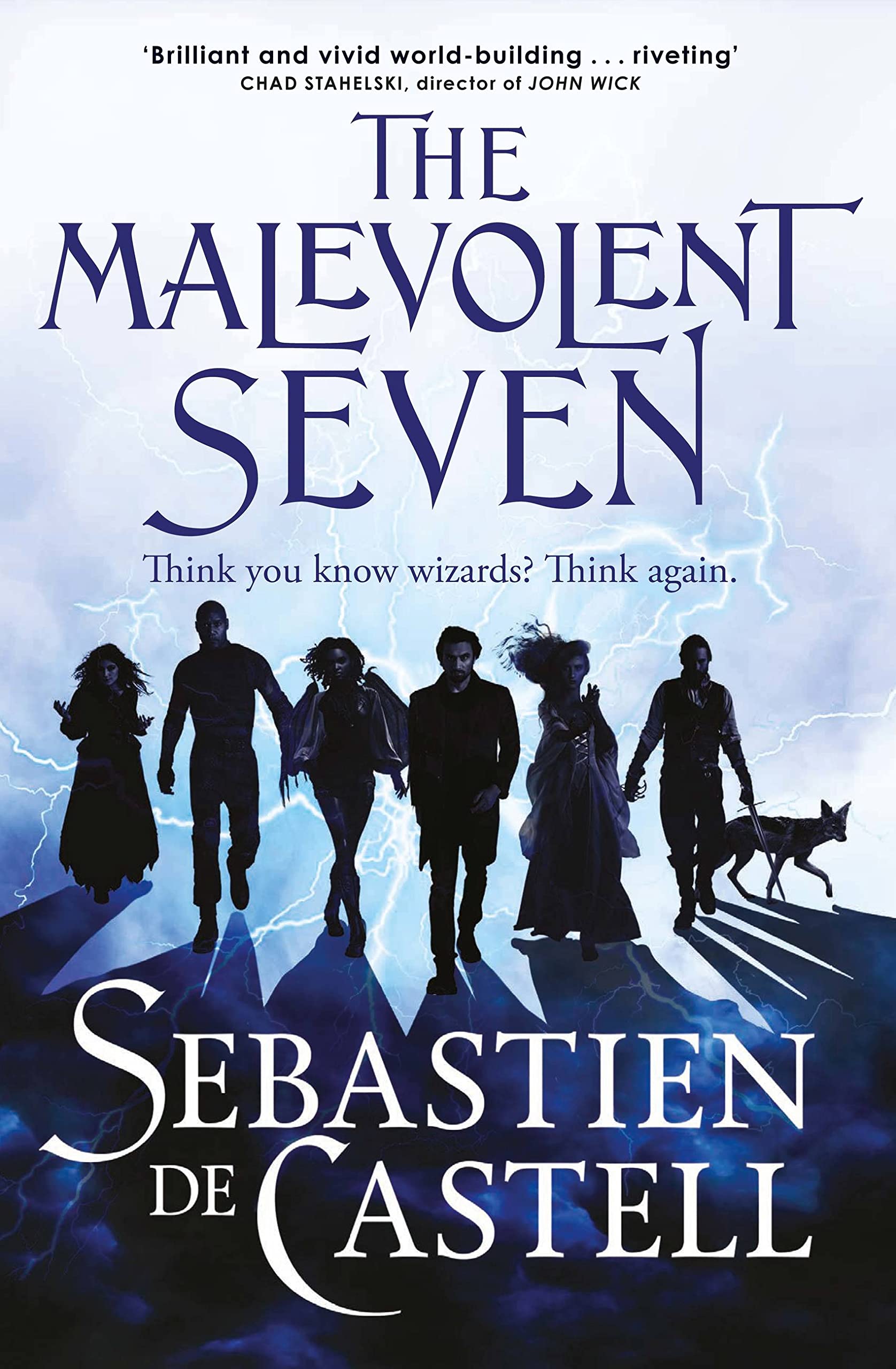
The Malevolent Seven by Sebastien de Castell

The Malevolent Seven Cover

Publisher: Jo Fletcher Books (Trade Paperback – 9 May 2023)

Series: Standalone/Book One

Length: 373 pages

My Rating: 4.5 out of 5 stars

Amazon

Rising fantasy star Sebastien de Castell returns with a bold and highly entertaining new fantasy novel, The Malevolent Seven, that takes several dangerous and dastardly characters on a magical journey of death, deceit and despair which is so much fun to behold.

Magic is power and only the strong can hope to wield it, especially if they can make a profit out of it.  Cade Ombra is a powerful wonderist, a magic user who makes his living as a war mage, selling his services to highest bidder to fight in their wars and kill their enemies, even if his employers are monsters.  Cade has long struggled with the ethics of his job, and when his latest employment ends badly, with Cade framed for murder resulting in a relentless band of holy enforcers hunting him, he knows he needs to find a way out.

Luckily, a lucrative new job is looking for wonderists, and the payment is something he’s always desired, an artefact capable of changing everything about his life.  However, to get paid he needs to do one last very bad thing: kill seven heroic mages attempting to take down a corrupt noble and survive everything that wants to kill him along the way.  Determined to win no matter the cost, Cade and his violent colleague Corrigan set off to claim the reward before any of their rivals can.  But to succeed, they’ll need to recruit five more mages capable of taking down their powerful enemies and who have no moral qualms about killing heroes for money.

So begins a deadly recruitment mission as Cade and Corrigan seek out five mages just as crazy as they are.  But even with a mentally unstable blood mage, a fallen angel, a moral demon knight, a charismatic rat mage and a mysterious jackal, can even this mismatched bad of rogues hope to survive against the seven most deadly magic users on this plane of existence?  However, nothing about this job is as it seems, and Cade and the Malevolent Seven find themselves caught up in a deadly game between gods, demons and monsters, with the fate of the world lying in the balance.

Wow, now this was a very, very fun and addictive novel.  Sebastien de Castell wasn’t an author I was too familiar with before this point, although I had heard good things about The Greatcoats series.  However, I am now going to have to go out of my way to read more of his stuff, especially after reading the epic and entertaining The Malevolent Seven.

The Malevolent Seven was such a great read as de Castell pulls together a dark fantasy reimagining of heroic stories like Seven Samurai and The Magnificent Seven.  The book starts of strong with a great introduction to the main character, Cade Ombra, the rules of magic in this realm, and the author’s very entertaining and outrageous sense of humour.  Expertly and hilariously told from the first-person perspective of Cade, whose observations about the insane events going on around him adds so much value to the story, you soon get a great sense of what to expect from this book and de Castell does not disappoint.  The story initially focuses on Cade and his friend Corrigan’s efforts in a brutal war for a mad ruler, but things go south when their employer is killed, Cade is betrayed by his fellow wonderists, and a band of ruthless religious warriors, the Glorian Justiciars, arrive determined to hunt down Cade for his use of demonic magic.  Forced to take a new job with Corrigan to save his skin and quickly get out of dodge, the two take up the mysterious contract to kill seven heroic mages in exchange for a powerful artefact, and begin a recruitment drive for five additional mages.

I love a good recruitment montage in heist or action fiction, and this one is pretty damn fun as de Castell writes in a particularly eclectic and insane group of mages for the protagonists to recruit.  Naturally nothing goes as plan, as the two are forced to take along a half-insane junior blood mage who Cade feels responsible for.  Their subsequent recruitment attempts land them in all manner of trouble as they rescue a highly chivalrous rat mage, save a mysterious fallen angel from a pleasure ship, journey to hell to recruit a demon knight, and end up in the middle of a wasteland, chased by everyone.  This recruitment period took up more of the plot than I thought it would, but it works really well to tell a great overall narrative.  Each scene introduces the reader to more of the world and it allows a compelling dynamic to grow between the various protagonists, especially as they grow to understand each other crazy tendencies.  De Castell also builds up several intriguing long-running storylines of manipulation and betrayal as it becomes clear that someone is influencing their mission and has set gods and demons against them.  This middle section of the book is a lot of fun, and I loved how de Castell keeps up the same blend of humour, intriguing character development, and insane over-the-top moments, that really draws you in at the start of the novel.

Everything perfectly leads up to the final third of the book, when the protagonists arrive at their destination.  Of course, as can be expected by the theme of this story so far, nothing is what they thought it would be, and instead they find themselves facing off against a mysterious foe with very different motivations to what they expected.  I loved how de Castell turned the plot a little on its head at this point, as the characters find themselves in the unexpected position of being the good guys.  This leads to some amazing scenes in the final third, loaded with magic, chaotic confrontations and more, all of which is a ton of fun to see.  There is some great character growth as several storylines come full circle, as well as a ton of twists and turns.  I loved some of the epic reveals that came across, and while I saw a few coming, de Castell managed to surprise me in places, which I really enjoyed.  The final twists about why the characters were on the job and who really wins were pretty damn epic and it sets the story up nicely for a sequel, which I am definitely going to grab a copy of.  I loved how de Castell really enhanced the drama in this final third of the book, especially as several character relationships or conflicts come to the boil in some explosive and captivating ways.  This combines really well with the continued craziness of the story and the inherent humour of the plot, and you really get drawn into all the fantastic elements of this book.  The Malevolent Seven ended up being an incredible read, and I managed to power through this entire story in a couple of days and had a ton of fun doing so.

I loved the dark and despairing world that served as the cool new setting for The Malevolent Seven and de Castell has a ton of fun showcasing this new fantasy landscape throughout the book.  Loaded with petty tyrants, warring nobles, and wandering wonderists who dish out death to the highest bidder, this land is the perfect backdrop for the crazy and self-serving narrative, and I loved seeing de Castell’s great characters traverse it causing trouble.  While there are some outstanding locations, including a magically blasted wasteland and several deadly battlegrounds, the highlight of this setting is the complex magical system that the author came up with.  This magical system is primarily predicated on wonderists breaching dimensional barriers and utilising magic that they have an infinity for.  This results in several unique rules and abilities that de Castell did an outstanding job of effectively introducing, and I loved how weird some of the abilities were, especially those that played into the novel’s humour.  Some of the more interesting realms require the magical users to interact with the associated denizens, including this world’s equivalent of angels and demons, all of whom have a stake in the mortal realms.  Several of the best scenes in the book require the protagonist to make dark and forbidden deals with his demonic contact, and the manipulation of the various mystical entities from both heaven and hell becomes a key part of the book.  The author makes sure to utilise all these fantastic and lethal abilities to their full extent throughout The Malevolent Seven and the epic, ultra-destructive battles that emerged, as well as the clever combination of talents, resulted in some amazingly, electrifying sequences.  It will be interesting to see what crazy abilities de Castell brings to the table for the sequel, but it’s going to be good.

The final thing I want to highlight about The Malevolent Seven are the excellent and compelling damaged characters featured throughout the plot.  De Castell really went out of his way to make his main seven protagonists as random, broken and insane as possible, and this really works in the context of this brilliant story.  The main protagonist is point-of-view character Cade Ombra, a wonderist with a secret past whose current magical ability comes from deals with a literal demon (nice guy actually).  Because of this and many other mistakes in his life, Cade is pretty alone and damaged when the story starts, and he is constantly trying to balance his survival instincts and desire for power, with his conscience, something that keeps getting him in trouble.  De Castell builds up Cade extremely well throughout The Malevolent Seven and I liked his constant growth as he tries to do the right thing, even though it usually makes life even harder for him.  The author sets Cade up as a reluctant leader and hero, and it was intriguing to see the dynamics that form between him and the rest of the team fate brings together around him.  The rest of the titular Malevolent Seven are all pretty entertaining and uniquely crazy in their own way, and the range of diverse and entertaining personalities makes for a great overall dynamic to the story. My favourite character in the group was the excessively violent Corrigan Blight, whose thunder magic matches his outrageous personality.  Corrigan served as the straight speaking, highly reactive and trigger-happy organiser of the group, who plays off the more reserved Cade perfectly, especially as they form a unique and fragile friendship.  Other highlights include the highly charismatic and surprisingly noble Aradeus, whose rat magic proves to be highly effective if a little weird, and the novice blood mage Galass, whose spunky personality is only matched by her deadly abilities that are slowly driving her insane.  I loved this impressive and very entertaining cast and I cannot wait to see what happens to them next.

I think it is very clear that I loved The Malevolent Seven as Sebastien de Castell’s outrageous and inventive dark fantasy tale was a real joy to behold.  The great blend of fantastic humour, twisty storytelling, brutal magic and over-the-top characters, works exceedingly well and I loved the witty and extremely fun story that emerged.  The Malevolent Seven is a great read and if you are in the mood for a cool and highly compelling fantasy adventure than this is the book for you.

Amazon

City of Last Chances by Adrian Tchaikovsky

City of Last Chances Cover

Publisher: W. F. Howes (Audiobook – 15 December 2022)

Series: Standalone/Book One

Length: 20 hours and 7 minutes

My Rating: 5 out of 5 stars

Amazon

Acclaimed fantasy and science fiction author Adrian Tchaikovsky delivers one of the best fantasy books of 2023 with the intricate and captivating City of Last Chances.

Over the last year I have been really getting into the works of Adrian Tchaikovsky, one of the most inventive and imaginative authors of fantasy and science fiction writing today.  Tchaikovsky is a skilled and prolific author who has been a major figure in genre since 2008.  Best known for his Shadows of the Apt, Children of Time, Echoes of the Fall and The Final Architecture series, as well as a compelling collection of standalone novels and novellas (I personally have my eye on his previous novel, Guns of the Dawn), Tchaikovsky has a great habit of creating elaborate new worlds filled with intriguing characters and scenarios.  I have only read a couple of his books so far, including Tchaikovsky’s first Warhammer 40,000 novel, Day of Ascension, and his outstanding 2022 novella, Ogres, but both were outstanding reads and I loved the epic stories both of them contained.  Because of this, Tchaikovsky’s latest standalone novel, City of Last Chances, has been on my radar for a while.  It was released last year, and I finally managed to get a copy on audiobook a short while ago and dove into it as soon as I could.  However, I was unprepared for just how captivating its story would be.

There has always been a darkness hanging over the ancient city of Ilmar.  Known colloquially as the City of Long Shadows, the City of Bad Decisions, and the City of Last Chances, Ilmar is home to many dangerous magical occurrences, including the mysterious Anchorwood at its centre, which serves as a gateway to other far-off worlds.  However, a far more sinister enemy has arrived at Ilmar, the soldiers of the Palleseen, a powerful empire seeking to bring its ideas of perfection and order to all it conquers, whether they like it or not.

After several years of occupation, Ilmar is at a tipping point.  Its citizens are fed up of the corrupt and brutal soldiers, and everyone in Ilmar, be they rebels, criminals, refugees, idealistic students or factory workers, is looking for an opportunity to strike back and make their lives better.  With these forces straining to be unleashed, all it takes is one spark to set the fire of anarchy.  That spark occurs when a powerful Palleseen official leads an ill-advised expedition into the Anchorwood, searching for additional power.  However, he is unaware that an opportunistic thief has stolen the necessary protective amulet in advance, and the expedition is massacred by the creatures that live within the wood.

As news of this crime spreads throughout the city, chaos begins to rear its head.  Everyone is searching for the valuable amulet that was stolen as it represents the greatest chance of freedom many will see, while the Palleseen soldiers are clamping down on the entire city, determined to find those responsible and make them pay.  In this chaos, a mixture of Ilmar’s citizens, including a desperate priest, a violent murderer, an unlucky thief, a duplicitous lecturer and several of the most lost people in the city, will seek to survive the oncoming storm, only to fan the flames further.  However, none are truly prepared for the full danger about to engulf Ilmar, or the heartbreak that follows with it.

Well damn, now that was a pretty damn epic book.  Tchaikovsky has delivered an exceptionally intriguing and addictive novel in City of Last Chances that got me hooked very early on.  I was honestly blown away with the captivating and unique narrative that City of Last Chances contained, and Tchaikovsky drew me in with every fantastic detail and distinctive character.  This book gets a very easy five-star rating from me as I am still thinking about every detail of this book.

City of Last Chances has an amazing fantasy narrative at its centre, which Tchaikovsky backs up with his impressive and distinctive writing style that results in an extremely entertaining, powerful, and intense read.  City of Last Chances follows a raft of different characters as they attempt to navigate a series of deadly events following a single theft.  Tchaikovsky sets out the story in a very interesting way, and the book initially feels more like a collection of short stories than one cohesive narrative; for most of the first half of the book, each chapter acts as a semi-independent story that introduces the reader to a new character and shows their place in Ilmar.  These new characters are often supporting or named figures from a previous character’s chapter, who have their own unique stories and lives.  These character-driven stories are all quite enjoyable and compelling in their own way, and Tchaikovsky cleverly alters the tone so that some come off as very serious, some are quite dark, and others can be a little more comedic and thought provoking.  Some of my initial favourites include the funny and philosophical first chapter around the priest Yasnic and his relationship with God (which reminded me a lot of Small Gods by Terry Pratchett), Langrice’s scene-setting chapter at the mysterious Anchorage inn, and the chapter that gave a proper and humorous introduction to the grim figure of Blackmane as he finds himself about to be executed by a very cheery hangman.  Not only are these chapters very entertaining in themselves, but they effectively set up a larger narrative within City of Last Chances, while also providing great character moments and more and more glimpses into the many aspects of Ilmar.

As the book continues, the character-driven chapters begin to flow on from the preceding storylines, with the catalytic theft of the Palleseen artefact leading to bigger events down the line.  Each chapter adds its own spin to these events by showing new factions, impacted characters, or horrors within the city, or by introducing a new series of spiralling events that begin to unwind the situation even further.  As the story continues, a main cast begins to develop as more of the chapters focus on certain characters.  This really starts to bring the overarching narrative together, and soon the best parts of each unique character and their arcs begin to mingle with the other fantastic figures.  The story soon develops into a great tale of revolution with some Les Misérables vibes to it, as students, refugees, resistance fighters and factory workers begin to revolt.  The substantial main cast is worked into these events extremely well, and the reader is soon wrapped up in their powerful character arcs as well as the overarching story of Ilmar as everything begins to unfold.  Most of this is captured in a series of great chapters focused on the main cast, although new characters are still introduced right up into the end, with some unique, if brief, storylines skilfully worked into the larger narrative.  The author really pushes everything up a notch as the book comes towards the end, and every danger, unusual occurrence and strange character is unleashed to some degree.  There are some outstanding reveals, big battles, and some deeply personal moments that really help to bring the entire fantastic story together.  I particularly loved how some great story elements that were hinted at earlier in the book are brought to the fore at the end, especially as this includes some outstanding twists (Hellgram’s wife was a fun one for me).  However, the true joy is in the way that every major character gets a resolution to their emotional and complex character arcs, leaving the reader breathless in multiple ways.  I felt that Tchaikovsky wrapped everything up perfectly, and this serves as a brilliant and captivating standalone fantasy narrative.

I cannot compliment the way that Tchaikovsky presented this outstanding story enough, as his distinctive writing style really helped to compliment the epic and complex plot.  I have already mentioned his great use of different character focused chapters above, and I must once again highlight how effectively they were used to tell a cohesive and distinctive narrative with so many entertaining facets.  While it did take me a little while to fully appreciate what Tchaikovsky was trying to achieve with these semi-independent chapters, once you notice how the story is coming together through character-focused sequences, you really grow to appreciate it.  The continued change of character focus ensures that Tchaikovsky keeps the pace of City of Last Chances pretty brisk, and it is easy to quickly move through the story, especially once you get caught up in the tale of Ilmar and its people that the author is developing.  Tchaikovsky also introduces some impactful changes in tone throughout the book, as City of Last Chances runs the gauntlet from being light-hearted to emotionally draining, as the protagonists go through hell and back while also trying to deal with their own personal problems.  The author puts in some pretty intense scenes throughout this powerful story, many of which leave the characters reeling in different ways, and there are also some quite terrifying or shocking sequences as the full horror of this city is revealed in gruesome fashion.  However, these darker scenes are often undercut with some fun and amusing humour that helps to diffuse the tension at some key parts of the plot and which I found to be very refreshing.  This humour is often a little black and cynical in context, which ensures that the reader is left amused, and sometimes laughing, without the story getting too light and drifting away from its harsher content.  I really think that Tchaikovsky found the right balance here, and I rather enjoyed how he mixed everything together.  I had so much fun seeing how Tchaikovsky wove his complex tale into this book and City of Last Chances really emphasises just how talented he is as an author.

One of the key things that made City of Last Chances such a hit for me was the outstanding setting of Ilmar.  Tchaikovsky has always been exceedingly good at effectively building up an inventive and complex new setting for his stories, and this is some of his best work yet.  The author shows Ilmar through the eyes of so many different characters in this book, each of whom adds a new aspect to its history, character, and energy, as the story progresses.  This proves to be quite an effective way to introduce the setting, and the reader soon gets an impressive picture of the entire chaotic glory of this oppressed city.  I love all the aspects of this place, including the magical dimension-hopping wood and the responsibilities surrounding it, the demon powered factories, the oppressed refugee areas, the idealistic student academy and the sinister Reproach, an abandoned part of the city filled with magically cursed wretches dancing to their death.  Each of these complex and compelling elements are explored to their fullest throughout City of Last Chances and I really appreciated how Tchaikovsky built them up and then effectively featured them again later in the story.

The author also explores various parts of the world outside of Ilmar, and it is interesting to see how that impacts on the main story.  I particularly liked the use of the Palleseen as the overarching antagonists of the story and Tchaikovsky paints them as an obsessed group of fanatics trying to bring their ideas of perfection to an unwilling world.  This plays into several of Tchaikovsky usual themes about oppression and revolution, and he sets the Palleseen up as a vindictive group, who are often hamstrung by the practices and bureaucracy they force on their enemy.  The entire focus on the city of Ilmar being unleashed to face the occupiers was an excellent part of the book, and Tchaikovsky built up all the factions and chaotic nature of the city really well.  As such, Ilmar is a brilliant background setting to this great story and I really appreciated how Tchaikovsky set his story into it.

While I loved so many of City of Last Chances elements, for me the most important and powerful part of the book is the characters, as Tchaikovsky introduces the reader to a massive and captivating cast of figures who travel through the story in their own fashion.  Due to the way the story is set out, there are quite a lot of characters in City of Last Chances, with new cast members being added in every chapter, either to support the current point-of-view protagonist or to set them up for their own chapter later.  As such, there is a real focus on quickly and effectively getting to the root of each character in their first chapter, and I think that Tchaikovsky did a great job on this score.  You get to know each of these figures really quickly and you really get drawn into their unique tales and arcs, many of which are perfectly developed over the course of the book.  While the cast is pretty massive, each of these characters is given plenty of time to develop and many prove to be particularly complex and relatable as a result.

While there are so many great characters, several definitely stood out to me, especially as Tchaikovsky kept going back to them.  This includes Yasnic, the last priest of a diminished and petty god who now haunts his one follower.  Yasnic is a fantastic and occasionally comedic character, which reminded me a little of the protagonist of Terry Pratchett’s Small Gods.  While I did think that Yasnic was a bit one-note at the start of the book, he develops as the story continues, and you really appreciate just how complex and damaging his life as a priest has been, thanks to his god’s arbitrary rules, many of which have actual good reasons behind them.  Watching him try to balance his faith and connection to his god against the terrible things being done to him and the city is a key part of the book, and it leads to some emotionally powerful scenes, especially when Yasnic thinks that his god is being taken away from him against his will.

Other great characters include Langrice, the shunned owner of the Anchorage, the inn that borders the Anchorwood, and Blackmane, an Allorwen refugee and former sorcerer, who serves as a criminal pawnbroker.  Both characters are older and wearier figures who are trying to survive the harsh circumstances of their lives the best way they can.  Both are shown to be outcasts to their own people in different ways, and this leads to a compelling relationship between the two, even if they do not actually trust each other.  I also quite liked the character of Maestro Ivarn Ostravar, a lecturer at Ilmar’s Gownhall university, who acts as a great patriot to his students while actually collaborating with the Palleseen.  Ivarn is a particularly arrogant figure who manages to manipulate people’s views of him, and it is really fun to see him thrown into situations outside of his control, especially when his own reputation works against him and forces him to become the figure head of resistance.  His student, Lemya, is also a great part of the book due to her fervent idealism brought on by Ivarn’s teachings.  Off course, her naivety comes back to bite her and the other characters repeatedly, and while her actions are often a little frustrating, it is great to see her slowly realise she is being manipulated and gain some common sense.

However, to my mind the best character in the book is Ruslav, which is frankly a shock as he initially shown as a simple thug with an obsession for women.  However, Tchaikovsky keeps coming back to him as the story develops and each new situation he finds himself in makes him more complex and likeable.  His first chapter shows how his entire perspective on life is changed when he falls in love with a beautiful painting, which starts a great character arc of self-discovery and confusion for him.  Tchaikovsky keeps developing Ruslav’s story as the book continues and he soon faces more and more challenges, including a mortal injury, a hanging, and forced religion.  The latter is the most damaging to him as he is forced to give up violence, the one thing in life he is good at, to stay alive, which results in quite the existential crisis.  Watching him try to fit all the unusual events occurring to him into his insights as a street thug proves to be entertaining and very relatable, as you understand just how much of a struggle each of his new experiences are for him.  His coarse humour fits into this arc very well, and watching him swear at his new, inadvertent god and all the people of different backgrounds he is forced to deal with, makes for some very fun scenes.  However, not all of Ruslav’s storyline is comedic, as Tchaikovsky loads in continued tragedy for him as well, that really shakes him, and the reader, to their core.  The author seems to both love and hate Ruslav, and the resulting damage and development he goes through result in some of the most emotionally rich parts of City of Last Chances.  I honestly am still surprised that Ruslav turned out to be such a great character, but he and the rest of the cast really make City of Last Chances an epic book, and I am really glad I got the opportunity to dive into their unique lives.

As with many of the larger fantasy books I tend to read, I chose to seek out the City of Last Chances audiobook format, which served as an outstanding way to enjoy this fantastic and elaborate book.  This new Tchaikovsky audiobook is pretty long with a run time of just over 20 hours, and it did take me a little while to get through it, although it was very much worth the time.  I always find that listening to an audiobook helps me to absorb more detail for some books, and this was particularly useful for City of Last Chances as Tchaikovsky has once again loaded his unique setting and captivating story with so many intricate elements.  As such, I was really able to full appreciate the full complexity of the dark city of Ilmar and its many, desperate residents.

I was also extremely impressed with the voice work of narrator David Thorpe, who ensured that the listeners could full enjoy every single aspect of City of Last Chances.  Thorpe, whose narration I have not had the pleasure of before, did a spectacular job here in City of Last Chances and I honestly enjoyed every second he spent telling this story.  Not only has he got a great base voice that tells the main story at a clipped and exciting pace but he also provides a ton of impressive tones for all the characters in this book.  Every one of City of Last Chances’ unique characters is given a particularly fitting voice that captures their personalities and really helps to convey to the reader some of their key points, such as Yasnic’s meekness, Ostravar’s arrogance, or Lemya’s unbridled idealism.  Thorpe also comes up with several great accents that he uses to differentiate some of the different races and nationalities contained within the city, and I felt that this really helped to emphasise the cultural elements contained within the story.  Overall, the City of Last Chances audiobooks is pretty damn spectacular, and I loved how the entire thing came together.  I had so much fun listening to Thorpe’s great take on the characters, and this is easily the best way to enjoy this epic read.

City of Last Chances is a brilliant and wonderful novel by Adrian Tchaikovsky that I cannot start raving about.  I quickly became enthralled the outstanding and compelling narrative that he pulled together throughout City of Last Chances, and his fantastic delivery, intriguing setting, and impressive characters all drew me in.  This is easily one of the best books I have read so far in 2023 and it comes very highly recommended by The Unseen Library.  I cannot wait to see what amazing book Tchaikovsky comes up with next, as if it is any where as good as City of Last Chances, I am going to love it.

Amazon

The Dark by Jeremy Robinson

The Dark Cover

Publisher: Podium Audio (Audiobook – 13 July 2021)

Series: Infinite Timeline

Length: 10 hours and 25 minutes

My Rating: 5 out of 5 stars

Amazon

Prepare for a literal journey into darkness with one of the most unique and insanely entertaining horror novels of 2021, The Dark by Jeremy Robinson.

Jeremy Robinson is a bestselling author of science fiction and horror who has been producing some amazing novels of the last few years.  Since his debut in the early 2000s, Robinson has written a massive number of novels, including several fantastic sounding series, such as his Nemesis Saga, as well as a big collection of compelling standalone novels.  I have been meaning to read some of Robinson’s books for a while, especially as one of his series, the Chess Team novels, are part of a somewhat shared universe with Jonathan Maberry’s Joe Ledger novels.  After seeing several mentions of Chess Team in Maberry’s novels, I got curious and had to have a look at Robinson’s catalogue of work.  I really love the sound of some of Robinson’s books, especially his Chess Team novels, which follow a special forces team at work against mythical threats, and the Nemesis Saga, which presents a new look at the Kaiju genre.  Before diving into these series, I thought it might be good to get an idea of Robinson’s writing style, and so I decided to read his latest standalone novel, The Dark.  I am extremely glad that I decided to check this out, as The Dark ended up being an incredible horror read that I deeply enjoyed.

Miah Gray is a messed up former army soldier, struggling with PTSD and other symptoms after his time in Afghanistan.  Now living with his mother, sister and stepfather in an upscale New Hampshire neighbourhood, Miah spends most of his time being the neighbourhood’s resident weirdo, avoiding his troubles with prescribed cannabis and holding out hopes that his crush, Jen, will notice him.  Managing to convince Jen to get high and watch a meteor shower on his roof one night, Miah thinks that his life is finally turning around.  However, nothing in his wildest dreams could prepare him for what is to come next.

Awakening the next morning, Miah and Jen are shocked to discover that the sun has been blotted out and the entire neighbourhood has been plunged into darkness.  With no communications, limited power, and no working artificial lights, Miah and his family attempt to adjust to the crazy events occurring around them.  All available evidence suggests that an obscure religious doomsday prophecy about three days and three nights of darkness is coming true, with the lore indicating that the only way to survive is to barricade yourself in your home and cover the windows.  Despite the blacked-out sun, Miah is dubious about this being a religious event, until a bright light from the heavens brands his forehead with an old Norse rune and an unholy army of demons invades.

Dark shapes are twisting their way through the neighbourhood, luring people outside and brutally dragging them away to an unknown fate, while even more terrifying figures lurk in the shadow.  Attempting to ride out the storm at home, Miah is forced into action when his parents are taken.  Leading a small group of survivors through the horrors outside, Miah attempts to save who he can while also trying to find a way to rescue those who were taken.  But as Miah and his friends flee through the surrounding demons and devils, a far more dangerous threat is waiting to assail them.  The rune on Miah’s head is starting to change him into something angry and inhuman.  Now forced to resist his own mind, Miah will need to dig deep than ever before if he wants to survive what is coming, even as it drags him straight to the gates of Hell.

Wow, now that was awesome.  When I started this novel, I strongly suspected I was going to love it, especially as it had a fantastic sounding plot, but I was unprepared for how much fun The Dark turned out to be.  Robinson has created an exceptional and dark horror novel that keeps you on the edge of your toes from the very start all the way to the finish.  I had an outstanding time listening to this book and there was no way I could give anything less than a five-star rating.

Robinson has come up with a pretty awesome story for The Dark, and I loved this unique horror tale.  The Dark has a great start to it, and the author manages to do a lot in a very short amount of time, thoroughly introducing the main character, Miah, while also setting up several of the other major supporting characters.  The novel’s big change from normal times to darkness occurs early in the novel, as soon as all groundwork has been established, so the protagonist can run right into the craziness.  It does not take long for events to go sideways, with danger and despair all around as everything goes to hell, literally.  The centre of the novel is extremely entertaining, as the protagonist meets a range of different people hunkering down through the apocalypse and slowly builds up a fun group of survivors.  At the same time, some of the characters, including Miah, are forced to face an inner evil that has been brought on by these dark events.  This internal battle for control and the elements that introduce it are very cleverly established, and it adds a fantastic new edge to the plot, especially as at times it seems like the only point-of-view protagonist is about to irrevocably snap.  All this leads up to an epic conclusion as the protagonist journeys to a very evil place and comes face to face with some startling revelations and immense horrors, as well as some interesting story threads for the future.

I felt that this was an exceptional story, and I deeply enjoyed the outstanding combination of action, horror and comedy that was expertly bundled throughout the novel.  It is rare to find a story that can alternately thrill, traumatise, and entertain in short succession, but The Dark does that in spades.  It was gloriously entertaining and there was honestly not a single moment in this book that failed to keep my attention.  The action sequences are crisp and fantastic, and you get a real sense of the intense violence happening all around the protagonist.  I also really loved the horror feel that this novel had, especially as Robinson is a master of building up tension and suspense.  Readers should be aware that there are a quite a few extremely gory scenes throughout the book, and Robinson does not hold back on the gruesome descriptions.  I liked how the author switched the tone of the novel around two-thirds of the way through, with the horror focus moving away from fear of the unknown to a more extreme and science fiction based narrative.  I did think that the sudden appearance of certain groups in the big finale were a bit coincidental and could have been telegraphed slightly better, but this really did not cut down on my enjoyment of the story, and I was still blown away with the cool action sequences that were featured in this part of the book.  This was a really good standalone horror story, and I was deeply impressed with the exceptional narrative that Robinson featured in this book.

One of the things that I really appreciated about The Dark were the cool monsters and horror elements that Robinson came up with.  The entire concept of the novel revolves around dangerous creatures who come out during an eclipse of the sun that covers the entire setting in darkness, while also wreaking havoc on human technology.  Not only are these monsters pretty freaky and deadly, but Robinson builds up an intriguing mythology around them.  Because the protagonists have no idea what they are facing, the entire phenomenon is attributed to a religious event, especially as there is a coincidental Christian prophecy about three days and three nights of darkness which will purge those who leave their house.  Once the monsters appear, the characters initially identify them as demons, due to their unique look, ability to replicate voices and their dark and disturbing laughter.  I found these attempts by the protagonists to understand what is happening to them to be really fascinating, and it involves some fun looks at mythology and ancient lore.  The character’s understanding of these creatures evolves and changes over time, as there are some new freaky bits of context, and I thought it was pretty cool the way that Robinson was able to adapt these horror elements.  I also must highlight the terrifying setting of Hell, where the protagonists eventually end up.  There are some pretty dark and excessively gruesome aspects to this location, and it was a very fitting location for the big finale.  Overall, I really liked the cool creatures and mythology that Robinson brings to The Dark and it was so much fun to see these monsters tear through a typical suburban neighbourhood.

Easily one of the best things about The Dark were the complex and impressive characters that the narrative was set around.  The most prominent of these was central protagonist and point-of-view character, Miah, a former soldier who returned from the war even more messed up then before.  Initially a bit of a weirdo loner, Miah soon evolves into a more heroic figure, especially as he takes the lead during the demonic invasion, saving several people he comes across and leading the survivors to either safety or battle.  Miah is a very deep protagonist, and I really enjoyed the impressive and powerful examination of his inner trauma and the mental burdens he carries after his time in the army.  Robinson really tries to make Miah as complex as possible, and he even works some of his own personal experiences with trauma into his protagonist’s psyche.  It was great to see him evolve throughout the course of the book, especially once he has the fate of several other people on his hands, and these events help him grow and overcome his previous experiences.  Miah is also an extremely entertaining protagonist to follow, especially as he has a great sense of humour, is constantly high and initially does not take anything seriously, even when all the lights go out.  This combination results in Miah doing some unusual things, including wearing one of his sister’s skirts for the first third of the novel (it’s weird, but it works).  Most of the book’s humour comes from his flippant narration of the weird events occurring around him, and even once stuff gets really serious, he still has plenty of fun jokes or odd observations about what he encounters.  I loved his outrageous outlook on the world, and I ended up really appreciating Robinson’s fantastic choice of protagonist.

Aside from Miah, Robinson also comes up with some other fantastic characters who go through these apocalyptic events with him.  All these characters are set up extremely well when they are introduced, and Robinson does a great job quickly examining their personalities and expanding on them throughout the course of the book.  There are several fun characters featured throughout The Dark, although my favourite two are probably Bree and Emma, two younger girls who end up part of Miah’s group.  Despite their youth, these two characters are extremely capable and quickly adapt to the weird new world that they live in.  This is in part due to them being branded like Miah, which slowly changes their personalities, turning them into something different.  Both characters react to their branding in different ways, with the eight-year-old Bree more swiftly losing her humanity.  It was pretty fun to see this young kid become more and more bloodthirsty as the novel progresses, and there are some great moments where Miah tries to control her.  It looks likes Robinson has some plans for both Miah and Bree in the future (Demon Dog and Laser Chicken for the win), and I look forward to them turning up again.

While I was checking out some of Robinson’s novels, one of the things that stood out to me was that all his novels have been converted to my favourite format, the audiobook, and that a good proportion of these were narrated by R. C. Bray.  Bray is a very talented and entertaining narrator, whose work I have previously enjoyed in some of Michael Mammay’s science fiction novels, Planetside and Colonyside (the latter being one of the better audiobooks I have listened to so far this year).  After seeing Bray’s name attached to The Dark, there was no way that I was not going to grab it on audiobook, which proved to be a very, very smart decision.

The Dark audiobook has a runtime of just under ten and a half hours, although I found myself absolutely powering through it, especially once I got into the story.  I felt that the audiobook format worked extremely well with The Dark’s first-person perspective, and the audiobook was able to progress at a really quick pace.  Bray really shined as a narrator in The Dark, and I loved the way that he presented the horrifying and intense events occurring around the characters.  Bray does an excellent job voicing the various characters in The Dark, and I particularly liked the way that he dove into voicing central protagonist Miah.  While I was initially a little dubious that Bray, who I have only previously heard voicing tough military characters, would manage with a more immature character like Miah, it ended up working really well.  Bray expertly gets inside the head of the main character voicing, and he quickly portrays Miah in all his doped-up, entertaining glory.  I think that Bray had a lot of fun voicing Miah (despite certain comments that the character makes about fancy audiobook narrators), and he did a great job presenting both the goofy side of the character and his more serious nature.  This ability to dive into Miah’s personality really enhanced the character and the overall story and I really enjoyed all the emotion that Bray threw into him.  I also liked some of the other voices that he did for The Dark, with all the characters ending up with some distinctive and fitting voices, even the younger ones.  This excellent voice work really helps to turn The Dark into an outstanding audiobook production, and I would strongly recommend this format to anyone interested in checking out The Dark.  Also, it has bloopers at the end, which were pretty damn fun.

While The Dark is a standalone novel that can be read with no prior knowledge of Robinson’s other works, it does have interesting connections that I need to mention.  There is a big reveal at the end of the book which ties The Dark together with a previous standalone novel that was a released a couple of years ago.  While I have not read this previous novel, it was a fun connection, and, after deeply enjoying The Dark, it got me in the mood to check out some of Robinson’s other books.  I also looked at Robinson’s website after finishing The Dark and there was a very interesting post about this that has made me appreciate this novel a little more.  Apparently The Dark is an entry in a wider joint universe, known as the Infinite Timeline, which already features several novels that Robinson has released in recent years.  The Dark is part of a sub-series within this universe, and it is linked together with the above-mentioned previous novel and an upcoming novel, Mind Bullet.  This sub-series will continue to become even more linked, eventually leading to another novel, Khaos, before it, and two other sub-series, made up of 11 novels in total, will have a big crossover in the 2023 novel, Singularity.  While this does not impact who can check out The Dark, I think it is pretty awesome that Robinson is attempting to create this massive joint universe, and it has really got me intrigued.  I am now extremely tempted to try and check out the rest of the entries in this joint universe before Singularity is released, and it should be a very interesting couple of years if I do.

Overall, The Dark by Jeremy Robinson was an epic and relentlessly exciting horror novel that I had an incredible time reading.  Thanks to its captivating story, complex characters and unique horror elements, The Dark was an outstanding book and it ended up being one of the most entertaining and compelling audiobooks I have enjoyed all year.  A definite must-read for anyone in the mood for a fun and intense horror novel, The Dark comes highly recommended and gets a full five stars from me.  I think I will end up trying some more of Robinson’s novels in the future, especially in their audiobook format, and I cannot wait to see what other crazy adventures and outrageous events he features in his books.

Amazon

Throwback Thursday – Grave Peril by Jim Butcher

Grave Peril Cover

Publisher: Buzzy Multimedia (Audiobook – 1 September 2001)

Series: Dresden Files – Book Three

Length: 11 hours and 55 minutes

My Rating: 5 out of 5 stars

Amazon

Welcome back to my Throwback Thursday series, where I republish old reviews, review books I have read before or review older books I have only just had a chance to read.  In my latest Throwback Thursday article, I continue my dive into the bestselling Dresden Files urban fantasy series by Jim Butcher by looking at the third chilling novel, Grave Peril.

I am really getting into the awesome Dresden Files novels, a major long-running urban fantasy series that follows Harry Dresden, a wizard living in modern-day Chicago, as he investigates supernatural crimes.  Generally considered one of the best urban fantasy series of all time, I started enjoying this series last year when I read the latest novel, Battle Ground.  I absolutely loved Battle Ground (easily one of the best novels and audiobooks of 2020) and I have since decided to go back and check out the earlier entries in the series.  I already enjoyed the very first novel, Storm Front, a couple of months ago, and Fool Moon, which I finished and reviewed last week, was so much fun that I had to immediately go and read another Dresden Files book.  I have just finished off the third entry, Grave Peril, and decided to feature it in this Throwback Thursday article.

Something is stirring in the dark of Chicago and it is bringing all manner of ghosts and spooks with it.  Harry Dresden, professional wizard, is used to facing the supernatural dangers infecting his city, but he has never experienced quite so much chaos as the spirit world has gone crazy.  Powerful ghosts and tortured spirits are popping up all around Chicago, causing the walls between our world and the Nevernever (the spirit world), to weaken and fray.  As Dresden attempts to find out who or what is behind the current upsurge in spiritual activity, he finds himself under attack from a powerful and unseen force that can strike through his nightmares.  Scared, weakened and full of self-doubt, Dresden is near powerless to stop this creature as it begins to target his friends and loved ones.

With a righteous Knight of the Cross at his back and his reporter girlfriend hounding him for a scoop, Dresden looks for the true source of the entity coming after him.  But in order to find the truth, Dresden must place himself in the very heart of Chicago’s supernatural underworld.  With old enemies, bloodthirsty vampires, howling spirits, deadly demons and his twisted fairy godmother coming after him, can Dresden survive this latest attack unscathed, or will his enemies finally succeed in destroying him, mind, body and soul?

Is it even possible for Butcher to write a bad Dresden Files book?  I have yet to see any evidence to suggest this as Grave Peril, the fourth Dresden Files novel I have read and the third book in the series, turned out to be another epic and powerful fantasy read.  Butcher has come up with a fantastic novel in Grave Peril, and I loved the dark and compelling story that sees Dresden face various demons from his past.  Utilising some great new characters and serving as a major entry in the overall series, this was an outstanding read which gets yet another five-star rating from me.

I deeply enjoyed the cool and complex narrative that Butcher came up with for Grave Peril, especially as it takes Dresden and his friends into some sinister and dangerous places.  This book starts quick, with a great extended sequence that sees Dresden and Michael face off against a powerful ghost in the Nevernever.  This amazing opening to the novel is then followed by an intriguing central story which forces Dresden to investigate a new and unusual antagonist, the Nightmare, who is feasting on his dreams and using the power it steals to go after Dresden’s loved ones.  This central story is very intense and compelling, playing to the series’ detective novel inspirations as Butcher sets up a fantastic mystery while also showing a desperate Dresden coming under attack in some unusual ways.  There are some fantastic moments in this part of the book, and I really appreciated the author’s inclusion of multiple supernatural suspects as you try to figure out who is involved and how they are pulling off their plans.  All this leads to the book’s most memorable sequence, a vampire masquerade, which sees Dresden and his closest allies trapped at a ball, surrounded by a dangerous array of enemies and, trying to work out motivations and plans on the fly.  The story is eventually all wrapped up with a dramatic and clever conclusion that is exciting, emotionally rich and a little traumatising to the reader.  I deeply enjoyed Grave Peril’s cool narrative and it honestly did not take me long to get fully engrossed in what was happening.  While this novel is not as action orientated as the previous book, Fool Moon, it has a much darker edge to it with a particular focus on manipulation, emotions and intrigue.  Readers should be warned that some of the scenes can be a bit over-the-top at times (I am pretty sure the protagonist gets raped by a vampire at one point) and are a little hard to read.  However, this is an overall exceptional narrative.

Like most books in the Dresden Files series, Grave Peril can be read as a standalone novel without any knowledge of the previous entries.  Butcher always makes his novels very accessible to new readers, and while there are some references to the character’s previous adventures, most of the relevant details and re-examined and explained throughout this book.  Grave Peril is a fairly major entry in the overall series as Butcher starts to introduce some important storylines, key supporting characters and lasting world-building elements which become quite significant in future novels.  In particular, Butcher introduces lore surrounding vampires, spirits, and fairies, with the protagonist coming into conflict with all three.  Each of these fantasy elements are set up extremely well and have a dark edge that fits into the series’ distinctive tone.  I loved the author’s depiction of the fairy creatures as monstrous and shadowy manipulators, and it was quite cool to see all the lore around vampires.  Grave Peril introduces three major vampire courts, with each court made up a different sub-species of vampire with their own specific powers and weaknesses, from the Dracula-esque Black Court, to the sexually and emotionally powered vampires of the White Court.  Each of these different types of vampires are strongly featured in Grave Peril and are a fantastic part of the story.  The highlight for me was probably the various battles between Dresden and the members of the Red Court, who can be pretty freaky and repulsive, and Butcher sets up an intriguing, long-running storyline with the Red Court here.

It is near impossible to discuss a Dresden Files novel without mentioning the incredible and well-written characters that appear in each book.  Butcher has a real talent for introducing and developing memorable protagonists and antagonists, and Grave Peril is a particularly good example of this.  Not only do several amazing recurring characters reappear in a big way but Butcher also introduces some intriguing new figures who make a big splash.

The key character as always is series protagonist and point of view character, Harry Blackstone Copperfield Dresden, the sarcastic and amusing maverick wizard who is constantly finding himself in trouble.  I always deeply enjoy following Dresden throughout these novels, mainly because he has a wicked sense of humour, an entertaining attitude and an uncanny ability to annoying and enrage everyone he comes across.  Most of Grave Peril’s humour comes from Dresden’s outrageous actions and observations, including his insane decision to arrive at a vampire’s ball dressed in a cheesy Dracula costume (that raised some eyebrows and lengthened some fangs).  Despite this fun and amusing exterior, Dresden is quite a damaged individual, and you really get to see that on full display in Grave Peril.  Dresden goes through some major traumatic events in this novel, several of which nearly break him as he is forced to encounter or do some very dark deeds.  Butcher really takes his protagonist to the edge in this novel, and there are some very intense scenes, including a glimpse of Dresden’s nightmares and deepest fears.  The author also continues to drip-feed hints of his protagonist’s dark past throughout this novel, especially when Dresden comes into conflict with an old enemy/mentor.  All this hurt and trauma is really touching and compelling, and the entire novel features a heartbreaking ending for Dresden, which really hits home, especially after you find yourself connecting with the character.

Aside from Dresden, there is a great collection of supporting and side characters I had a lot of fun seeing in this novel.  The most prominent of them is newly introduced protagonist, Michael Carpenter, Knight of the Cross.  Michael is a modern-day holy crusader, wielding a powerful blessed sword and his own unflappable faith to strike down evil.  Michael is a very intriguing character, and I deeply enjoyed the friendship he forms with Dresden.  Michael is a man of intense faith and goodness, who manages to balance family with his responsibilities as a knight, and this serves as a fantastic counterpart to the more flaky and irresponsible Dresden.  Like Dresden, Michael goes through some major traumas in this novel, several of which shake even his faith and resolve.  However, no matter how dark the situation, Michael manages to pull through and he and Dresden work together well as an enjoyable team with Michael serving as a mentor figure and conscience to Dresden.  I felt that Butcher did a great job introducing Michael in this novel, and I am excited to see how this noble knight develops in future Dresden Files’ entries.

Other great side characters in this novel include Dresden’s girlfriend, feisty reporter Susan Rodriguez.  Susan has not been my favourite character in the past, but she has a great story arc in this novel.  Not only does she attempt to do her own research into the case but she also serves as a major figure of emotional turmoil for Dresden as he struggles to prioritise her over his supernatural work.  While I did get a little annoyed at some of Susan’s decisions in this novel, I enjoyed the compelling story arc Butcher weaves around her, especially as it alters her in a big way.  My favourite haunted skull, Bob, returns once again and has several great scenes throughout Grave Peril.  I love Bob’s funny, if slightly pervy, personality, and all his appearances are very amusing.  There are some great new characters featured in this book as well, including Lea (The Leanansidhe), Michael’s fairy godmother.  Lea, who previously made a dark bargain with a desperate teenage Dresden, spends much of this book manipulating and hunting Dresden, attempting to claim him and his power.  I loved the use of this evil, manipulative and sexy fairy godmother through the novel, and she ended up being a pretty impressive secondary antagonist.  Grave Peril also sees the introduction of Thomas Raith, a White Court vampire who finds himself helping Dresden.  Thomas is a cool addition to the plot, and it was intriguing to see his introduction to the Dresden Files, especially as I know some spoilers about him.  All of these characters were pretty awesome and I had an outstanding time seeing their latest dark adventure unfold.

As I have with the previous entries in this series, I ended up listening to Grave Peril’s awesome audiobook format.  The Dresden Files audiobooks are a thing of beauty and I love how fun and exciting listening to these great books turns out to be.  The Grave Peril audiobook has a decent runtime of just under 12 hours, which is longer than the previous two Dresden Files novels, but readers will be too caught up in the amazing narrative to care.  I managed to power through it in only a few short days, mainly because of the outstanding narration from actor James Marsters.  Marsters, best known for his roles in shows like Buffy the Vampire Slayer, Angel, Smallville and Torchwood, narrates all the Dresden Files books and does an exceptional job bringing each of these novels to life.  I absolutely loved the incredible gravitas and energy he infused in the Grave Peril audiobook.  Marsters really gets into the heart and mind of Dresden, and you get an amazing sense of what the protagonist is thinking and feeling through the narrator’s voice and tone.  I also enjoyed the enthusiasm that Marsters exhibited in several key scenes, as he attempted to highlight certain weird and dangerous story elements.  For example, he does a fantastic enraged and shrieking ghost wail towards the start of the novel that gave me a start, and I loved the dark and dangerous voices he pulls together for some of the more monstrous creatures.  It was also very cool to hear Marsters yell out some of Dresden’s spells in the heat of battle, and it really enhances the excitement of the scene.  All of this and more makes the Grave Peril audiobook the perfect way to enjoy this novel, and I plan to check out the entire Dresden Files in this format.

Grave Peril by Jim Butcher is an exceptional and incredible fantasy novel that serves as an amazing third entry in the bestselling Dresden Files.  Butcher crafted together a dark and compelling character driven narrative for Grave Peril which proved to be extremely addictive and powerful.  I had an outstanding time getting through this novel, and I loved all the clever introductions and memorable sequences the author loaded into the plot.  A highly recommended read, especially as an audiobook, I cannot wait to see what other madness occurs in the rest of this fantastic series.

Amazon

Throwback Thursday – Storm Front by Jim Butcher

Storm Front Cover

Publisher: Buzzy Multimedia (Audiobook – 1 April 2000)

Series: Dresden Files – Book One

Length: 8 hours and 2 minutes

My Rating: 5 out of 5 stars

Amazon

For my latest Throwback Thursday I finally check out the first novel in the epic and highly acclaimed Dresden Files series, Storm Front, by legendary author Jim Butcher, which is an amazing and impressive read.

Jim Butcher is an outstanding author who has been dominating the fantasy market for nearly 20 years.  While he has written a couple of series, including his Codex Alera books, and some standalone novels, such as the tie-in novel Spider-Man: The Darkest Hours, Butcher is easily best known for his Dresden Files novels.  These books follow the adventures of titular protagonist Harry Dresden, Chicago’s only official wizard, who solves magical crimes and serves as a protector of the innocent against a range of supernatural threats.  This series has been running since 2000 and with 17 current entries (the 18th is on the way) it is generally considered to be the gold-standard of urban fantasy series.  While I have always heard amazing things about these books, I arrived a little late to the party, having only read the 17th book, Battle Ground, last year.  Battle Ground was a pretty epic read, containing an off-the-chain fantasy war in the heart of the city, and it ended up being one of my favourite novels (and audiobooks) of 2020.  Due to how much I enjoyed this latest book, as well as a general desire to explore the rest of the series, I decided to go back and read the first entry in the series, Butcher’s debut novel, Storm Front.

Harry Dresden is a man who leads an interesting life.  As the only openly practicing magic user in Chicago (his name is even in the phonebook under wizard), Harry scrapes a living investigating small and unusual cases, such as finding lost items and performing paranormal investigations while trying to avoid the attentions of the White Council, a governing body of magical practitioners who have placed Harry on a lethal probation.  However, his latest cases are about to make his life very complicated in ways he never expected.

Two people have been murdered in a particularly gruesome manner, with their hearts bursting out of their chests during an act of passion.  Called in by the Chicago P.D., which has him on retainer as a magical consultant, Harry determines that their deaths were caused by the darkest of spells.  Despite being forbidden by the White Council to know anything about the deadly arts, Dresden begins to dive into the case, determined to find out who is responsible and how they did it.  At the same time, Monica Sells, a local housewife, has provided Dresden with a great deal of money to find her missing husband, someone who has apparently had his own recent misadventures with magic.

As Harry investigates both the murder and the disappearance, he finds himself under attack from all sides.  Not only does the most feared gangster in Chicago want him to drop the case, but the White Council views him as the prime suspect in the deaths due to his deadly past.  Worse, a shadowy figure wants him dead and is unleashing dangerous magical creatures upon him.  However, you cannot keep a good wizard down, and Harry plans to use every trick at his disposal to stay alive long enough to find the killer, even if it burns every bridge he has.

Well, that was a pretty awesome read, and one that I wish I had checked out a very long time ago.  Storm Front is an exciting and clever book that combines a compelling story with some great characters, an interesting urban fantasy setting and a fantastic, humour laden tone, all of which come together into an impressive novel.  Storm Front also serves as an excellent first novel in the wider Dresden Files series, and it was extremely interesting to see it after previously reading a more recent entry in the series.  I had an amazing time with this novel and, while it is a tad rough in places, especially compared to Butcher’s later work, I must give Storm Front a full five-star rating.

At the centre of Storm Front lies a particularly good fantasy murder mystery narrative that sees the protagonist take on some challenging cases that result in death and destruction raining down on his life.  The story starts up quickly with Dresden, whose role as a wizard is more like a supernatural PI, being employed to find a missing husband, while also helping the police solve a twisted magical double murder.  This results in a fast-paced narrative that sees Dresden investigate both cases in his own unique way, which results in dangerous complications as people attempt to either discourage him or outright kill him.  I loved how the story read a lot like a hardboiled detective fiction novel, albeit with a lot more quips and amusing jokes, and this style of writing worked extremely well with the magical elements featured throughout the book.  The narrative gets more complex as the book progresses, with additional side characters, greater lore inclusions and more sophisticated dangers, and I felt that the author was able to work all of this into story extremely well, ensuring that the reader becomes enthralled with the intense magical action, entertaining characters, and outlandish threats.  The author also throws in some clever twists, which includes the protagonist becoming the main suspect in the murders, resulting in a lot of tense and dangerous situations as he tries to avoid everyone coming after him.  All of this leads up to an epic and fantastically written conclusion which pulls all the threads of the story together and ensures that the reader is left wanting more.  If I had to make one criticism about the book, it would be that the identity of the main antagonist/murder is extremely obvious right from the outset, and that ruins a lot of the surprises that the author was clearly hoping for.  However, I still really enjoyed Storm Front’s captivating tale, and it is worth hanging around to see the story unfold.  Overall, I felt that this was an exceedingly strong story and it honestly does not take long to get hooked on it.

Easily the top highlight of this book is the outstanding protagonist and narrator, Harry Dresden (full name: Harry Blackstone Copperfield Dresden, named after famous stage magicians), the rogue and public wizard.  Dresden is an amazing and entertaining protagonist who the reader quickly becomes attached to thanks to his antics, morality, unpredictable nature and skills as magic user.  I always enjoy smartass characters, and Dresden is one of the better ones I have read.  A lot of the book’s excellent comedic undertones are thanks to Dresden’s dry and timely sense of humour as he provides some excellent quips and commentary, both out loud and in his head.  Despite being a mostly funny character, Butcher ensures that his protagonist has a hard and dark edge to him that helps to make him even more compelling and intriguing to follow.  Not only does the reader get an in-depth and comprehensive look into his troubled psyche, especially when he is experiencing guilt, trauma or despair, but there are some intriguing hints at his dark past, some of which come into play throughout the book.  I also liked how the author set up and explored Dresden’s magical ability, especially as the protagonist is not the most powerful magical user out there, although he makes up for it through trickery, training and intelligence.  I particularly liked the way in which he was able to defeat an antagonist with substantially more raw magical power with some simple tricks or the use of some psychology, and the author did a great job highlighting his protagonist’s analytical thinking as one of his key strengths.  I also have to say that I really enjoyed the fantastic look that Butcher sets up for his character, with the black duster, the staff and the Blue Beetle car, making him a very distinctive figure.  This ended up being an outstanding introduction to the character, and it will be interesting to see how he develops to the powerful badass that later appears in Battle Ground.

In addition to Dresden, the author also features an interesting collection of characters throughout Storm Front who add some additional, exciting layers to the overall story.  Each of the supporting characters in this novel is very well-written and layered, featuring some intriguing histories (although they all have secrets that will be revealed later).  Many of these characters become major figures in the larger Dresden Files series, and this serves as an excellent introduction to them.  Of all the characters a few really stood out to me, including Bob, an air spirit who inhabits a skull in Harry’s lab.  Bob is a fun, if unusual, character who has a somewhat perverted/voyeuristic streak that causes Harry all manner of trouble and leads to some very entertaining moments throughout the book.  I also quite liked the introduction of Karrin Murphy, the hardnosed Chicago detective who utilises Dresden as her magical consultant.  Karrin is a great no-nonsense character who is one of the few people to call Dresden out on his actions and who has a complex relationship with him in this book.  I really must highlight the introduction of “Gentleman” John Marcone, Chicago’s premier crime boss who is antagonistic towards Dresden for much of the book.  Marcone is portrayed is a stone-cold killer with a hidden past, and there are some great hints at what sort of recurring character he becomes in future entries in this series.  I also thought that the overall antagonist of this novel was pretty good and served as a great counterpoint to Dresden throughout the book.  Despite the identity of the antagonist being rather obvious for much of the novel, I felt that Butcher provided them some complex motivations for their actions in Storm Front, and it was intriguing to see how they slid down into using dark magic.  This antagonist has a couple of fantastic scenes in this novel, and I particularly liked the clever way in which their storyline came to an end.  Each of these side characters added so much to the book’s plot, and I had an amazing time getting to know them.

I also really enjoyed the amazing urban fantasy setting that Butcher came up with for Storm Front.  This series is set in a world where magic is semi-hidden from mortals, although there is substantial dangerous magical activity occurring in the underbelly of cities like Chicago.  The author does a great job of setting up the basics of this fantasy reality throughout the first book, and the reader is given an effective rundown of all the unique features and limitations of magic and magical creatures for these books.  Butcher made the smart choice of starting small with this first book, and while there are mentions of the wider magical world, enough to draw the curiosity of the reader, for the most part the magical elements are limited to what is relevant to the story.  I liked that the reader was not overwhelmed with lore right off the bat, especially as this allowed them to enjoy the cool story, but it is clear a lot of what was mentioned will be explored in far greater detail in the future.  The grimy and dangerous magical cityscape also served as an awesome background to the noir style story contained within Storm Front, and it was great to see the character get involved with both the criminal and magical underbelly of the city.  I had a lot of fun with this setting, and I look forward to learning more about the rules and hidden magical lore in the future.

Considering how outstanding my previous experience with a Dresden Files audiobook was, there was no way that I was not going to check out Storm Front’s audiobook format, especially as it was once again narrated by Spike himself, James Marsters (I also loved him in Torchwood and Smallville, but he was at his best in Buffy and Angel).  Unsurprisingly I had an incredible time listening to Storm Front’s audiobook and I ended up knocking it out in a couple of days, especially as it has a relatively short runtime of 8 hours.  This was an incredible audiobook, not only because the great story translated really well into the format, but also because of Marsters’ fantastic narration.  Marsters did an outstanding job narrating this story at a quick pace, drawing listeners into the story while also utilising a voice that perfectly fits Storm Front’s tone.  I also really appreciated the way in which Marsters dove into the role of the central protagonist, Harry Dresden, and he really brings this maverick character to life throughout the production, especially when it comes to encapsulating Dresden’s dry wit, strange sense of humour and enthusiasm.  Marsters did use similar voices for some of the supporting characters, however listeners are able to easily follow the story without getting confused about who is talking.  Overall, this was a pretty good performance from Marsters (this was actually one of the first audiobooks he narrated), and I know that he gets a lot better in later books, with some varied voices and even greater enthusiasm as a narrator.  As a result, I fully intend to check out the rest of the Dresden Files novels in their audiobook format and I would strongly recommend that anyone interested in this series do the same.

Storm Front by Jim Butcher is an exceptional and captivating debut novel that more than lives up to all the hype that has been generated about it in the last 20 years.  Thanks to the cool story, great characters, and fantastic setting, this was an awesome book to read, and I loved seeing this maverick wizard solving supernatural crimes in Chicago.  Storm Front also served as an incredible introduction to the wider Dresden Files novels, and I was glad to see how this entire epic series started.  I fully intend to go back and check out this entire series over the next couple of years and I am very excited to see what over intense and entertaining adventures Butcher has come up with in.

Amazon