Five Broken Blades by Mai Corland

Publisher: Recorded Books (Audiobook – 7 May 2024)

Series: The Broken Blades – Book One

Length: 15 hours and 1 minute

My Rating: 4.5 out of 5 stars

Amazon

I was in the mood for some awesome fantasy fiction, so I decided to check out something a little different for me, Five Broken Blades by new author Mai Corland.  The debut adult book from Corland, who previously wrote children’s and young adult fiction under the name Meredith Ireland, Five Broken Blades was an addictive and exciting fantasy novel with some tragic romance at its core.

In the kingdom of Yusan, the God King Joon is a tyrannical and despised figure whose rule has seen the lives of the poor and innocent disadvantaged even further.  There are many people who want Joon dead, but to even think about it is high treason, punished by the most painful of deaths.  Worse, killing the king is next to impossible, as he is immortal, granted extended life and invulnerability by his magical crown.  Despite this, a small group of desperate killers are about to try to take him down.

Mysteriously summoned from across the nation, five of the most dangerous killers and rogues in Yusan have been tasked with working together and doing the impossible, stealing Joon’s crown and killing him in public.  Each of the five has their own reason for taking part in this apparent suicide mission, including a hired hitman seeking the money he needs for his redemption, a trapped poison-maiden hoping to gain freedom for herself and her sister, the royal spymaster looking for revenge, a banished prince who wants his life back, and a slippery thief seeking to reconnect with her family.

As the group begin to put their plan into motion, these independent killers will need to learn to work together with the rest of the group if they have any hope of surviving.  However, each of them has their own deeper motivations regarding their planned mission, and none of them truly trusts the other rogues they have been tasked with working with.  As they get closer to their goal, the five experience setbacks, twisted romance and unexpected opportunities.  But can they succeed and kill a God King, especially when they have a traitor in their midst?

Five Broken Blades was an excellent and highly enjoyable novel from Corland, who produced an amazing debut adult fantasy novel.  A clever fantasy novel with some entertaining romance elements, Five Broken Blades has an outstanding story of deceit, betrayal and bloodshed set in a Korean-influenced fantasy realm, which really drew me in with its impressive and fun story.

I had an outstanding time with the elaborate story that Corland came up with for Five Broken Blades, and the author produces an intense and moving, character-driven story.  Despite the name and the discussion about the five killers in the synopsis, there are actually six protagonists in this book, which produces a well-balanced narrative with a variety of intriguing character perspectives, arcs and motivations.  Corland starts the book by initially focusing on three of the protagonists and working the reader into their own unique circumstances and backstory.  The author does a good job of quickly and effectively introducing these figures in the initial chapters of the book, and then pairing them off with an additional protagonist who seeks to bring them into the main assassination plot of the book.  These new characters generally serve as great foils for the initial protagonists, and Corland then works to expand their roles in the book, providing their own backgrounds and motivations for being there.  Once established together, these three pairs of characters, then set off to meet up with the other protagonists as they plan their attempted regicide.

The first half of the book primarily focuses on the three separate pairs as they set up their own storylines both individually and as a couple, which I felt worked to really hammer home the complex character arcs Corland was setting up.  There are some fantastic moments in these early pages, including fights against monstrous birds, pirate warfare, and some intense personal scenes.  While the romantic entanglements that emerge within all three of these initial pairs are very predictable and forced, you generally grow attached to all six protagonists, and it proves interesting to see the various hidden motivations and background, especially as Corland expertly trickles out their respective secrets to the reader.  While I quite enjoyed getting to know the characters separately, I felt that Five Broken Blades’s story really took off once all six characters joined together in one group.  The six protagonists all play off each other nicely, and it was intriguing to see the different opinions they had of the rest of the group.  The mismatched styles and motivations make for some compelling interactions, and Corland also works in a particularly intense fight sequence, that helps to cement the protagonists as a team.

While there is some excellent camaraderie, and more romantic tension, the second half of the narrative is strongly defined by mistrust and secrets.  Corland does an excellent job of showcasing the conflicting motivations and hidden desires of the protagonists to the reader, and it was entertaining seeing the various ways the characters all lied to each other as they progressed.  Everything leads up to an intense final act, where the assassination attempt is made, and everyone’s secrets are brought out into the light.  There are some excellent reveals here, and I loved the big twist that comes out as a result.  While I did feel that the identity of the traitor in the group was slightly predictable, the full extent of their motivations and the reasons why they are there was compelling, and it ties in well with all the other clever reveals.  The last few chapters of Five Broken Blades were so damn good, especially as nearly every big question from the book is answered, and I loved the excellent cliff-hanger that Corland left it on, as it really raises the bar for the sequel’s potential plot.

I really enjoyed how Corland set out Five Broken Blades, and the exciting narrative came across in an excellent way.  The key highlight of this is probably the use of six separate perspective characters to tell the complex story.  While too many narrators can sometimes ruin a story, I felt that Corland had the right balance, as Five Broken Blades’ story never felt too crowded or diluted.  While the author probably could have left out Tiyung’s perspective, for the most part the split and switch between narrators worked extremely well, and I loved how it enhanced the overall story and allowed the author to explore multiple compelling character arcs.  The way in which the specific character-focused chapters started off long at the start of the book, allowing for introductions and initial character development at the front, and then got shorter once all six protagonists were together, was very clever as well, and I appreciated how the sudden shift in perspectives with the shorter chapters helped with some of the books more intense or action-packed scenes.

Corland ensures that there is a great mixture of different story elements featured throughout Five Broken Blades, and I personally appreciated how the focus on the characters was balanced with action and so much intrigue.  All this is well surrounded by an intriguing new fantasy realm, Yusan, with some distinctive Korean influences.  While I did feel that parts of this world were a little basic, for the most part this was an excellent background setting, and I appreciate how well Corland worked her fantasy ideas into the larger narrative.

Another key aspect of Five Broken Blades was the inclusion of multiple romance arcs, due to this book being marketed as a romantasy.  I must admit that I’m not the biggest fan of romantasy fiction, and while a good romance arc can greatly enhance a fantasy story, I don’t go out of my way for books that feature excessive romance added in purely to make it a mixed genre novel.  Still, I gave Five Broken Blades a chance, and I honestly thought that Corland did a great job with the romance elements.  While two of the main three romances are very forced (although Euyn and Mikail’s arc of betrayal and forgiveness was pretty strong), for the most part they were fun or interesting to see unfold.  It helped that they didn’t overwhelm the rest of the story and instead were well balanced against the constant machinations of the characters.  Indeed, the romances added an extra layer of heartbreak to some of the betrayals, which ensured a more intense plot.  As such, Five Broken Blades was a romantasy most fantasy fans can probably enjoy, although people will have issues with the predictable way that all three of the initial pairs of protagonists couple up.

While the excellent and twisty story is a great part of Five Broken Blades, the best part of this book is the well-crafted main characters who the narrative is set around.  Corland came up with six excellent protagonists for this book, all of whom have complex and tragic backstories that come into play throughout the course of the book.  Indeed, the narrative is strongly driven by each of their personal tales and experiences, and you really get drawn into the backgrounds and thoughts of the protagonists, especially as understanding their motivations and interactions with the other protagonists is key to working out the upcoming twists.

Of these characters, I felt that Royo and Sora were probably the best written, and I loved their complex stories filled with tragedy, regret and a loss of freedom.  Royo, the tough street thug with a severe need for redemption proves to be the heart of the story, especially as he has a particularly tragic backstory.  He is well matched by the beautiful Sora, a young woman who was forced into a life of death as a poison-maiden, whose poisonous body brings death to those who try to get close to her.  Required to perform assassinations to keep her sister safe, Sora longs for freedom, and will take any opportunity to get revenge and ensure her sister’s safety.  Royo and Sora and well matched by the entertaining pairing of Euyn and Mikail, whose respective arcs were nearly as complex as theirs.  Euyn, the former crown prince of Yusan, had been forced from his life of luxury due to his murderous predilections, and now seeks to become king after years on the run and a better understanding of the common people.  However, Euyn is constantly bedevilled by his former lover Mikail, the royal spymaster, who blows into his life once again to recruit Euyn for the plot against his brother.  Mikail is probably the most entertaining figure in the book, and I loved his constant manipulation of the others.  Corland did a good job of building up a complex backstory behind Mikail, and you grow to like him even more once you understand the reasons behind his inner rage and the lengths he wishes to go to resolve it.

While these four protagonists are pretty awesome, I did feel that the story was slightly let down by the other two protagonists Aeri and Tiyung.  Tiyung is underused (he’s not one of the titular five broken blades), and his unrequited love with Sora and rebellion against his father had some benefit for the story.  However, I had a hard time liking the character of Aeri.  While she did grow on you a little as Five Broken Blades continued, I honestly felt that Aeri’s bubbly personality really didn’t match the other figures in the book, and it was hard to take her seriously as a protagonist.  Corland makes her way too manic (and horny if we’re being honest), and her chapters are a bit too discordant to the rest of the book.  Still, she had some interesting background elements, and there were some compelling reveals around her that explain her unusual behaviours.  Throw in several great additional characters, including some villainous nobles, and this proved to be an outstanding cast, who really help to turn Five Broken Blades into a distinctive and powerful read.

I ended up grabbing the audiobook version of Five Broken Blades, which I always find to be a great medium to enjoy a fun fantasy book.  This proved particularly true for Five Broken Blades, and I loved how well the audiobook format enhanced its compelling and exciting story in some fun ways.  I particularly enjoyed the inclusion of six separate narrators, Greg Chun, Zion Jang, Roger Yeh, Donald Chang, Jaine Ye and Sophie Oda, each of whom voiced the chapters of a particular point of view character.  I really love audiobooks with multiple narrators, and when done right it can help to produce an epic listen.  I felt that the Five Broken Blades audiobook was a great example of this, as all six narrators did an amazing job voicing their protagonist throughout the novel, and you really saw them dive into the role of their specific character, capturing their essence and personality.  While this mixture of narrators does result in an interesting array of different takes on the main characters when they appear in other protagonist’s chapters (a natural side effect of having multiple narrators), I honestly felt the flow of this audiobook was extremely strong, and narrators came together extremely well to produce an excellent overall performance.

Audiobook highlights include Royo’s narration, which really captured the tortured and tough nature of the figure, as well as his exasperation of Aeri’s antics.  Sora was also perfectly showcased as a reluctant assassin in all her manipulative glory, and you really felt for her tragic story because of the voice work.  I was also a big fan of the audiobook’s main portrayal of Euyn, and I also loved his narrator’s take on Mikail, which I felt was a little better than that character’s own voice actor.  While I wasn’t the biggest fan of Aeri’s chapters, especially towards the beginning, for the most part this was an overall epic production, and I really loved how this elaborate audiobook came together.  With a runtime of 15 hours, this is a lengthy audiobook, but that really gave the six narrators the room they needed for their performance, and I managed to get through this audiobook relatively quickly.  This was an overall fantastic and elaborate audiobook, and I would strongly recommend this format to anyone interested in checking out Five Broken Blades.

I ended up having an outstanding time with Five Broken Blades, especially as Mai Corland came up with an excellent and captivating story of betrayal, intrigue and complex motivations.  An entertaining and addictive read from the very beginning, Five Broken Blades was a great fantasy read that makes excellent use of all its story elements, characters, and romantic inclusion.  An impressive debut adult novel from Corland, Five Broken Blades is really worth the read, and I am really keen for the sequel coming out early next year.

Amazon

Waiting on Wednesday – Gunnawah and The Reunion

Welcome to my weekly segment, Waiting on Wednesday, where I look at upcoming books that I am planning to order and review in the next few months and which I think I will really enjoy.  Stay tuned to see reviews of these books when I get a copy of them.  In this latest Waiting on Wednesday, I highlight two intriguing upcoming Australian crime fiction debuts.

2025 is already shaping up to be a big year for Australian crime fiction debuts, as there are several compelling and epic novels from first-time authors set for release next year.  I always love checking out compelling Australian fiction from new authors, and it is fun to see these writers develop their style and produce complex reads set in our distinctive landscapes.  As such, I am very excited for 2025, especially with the focuses of today’s Waiting on Wednesday set for release right at the start of the year.

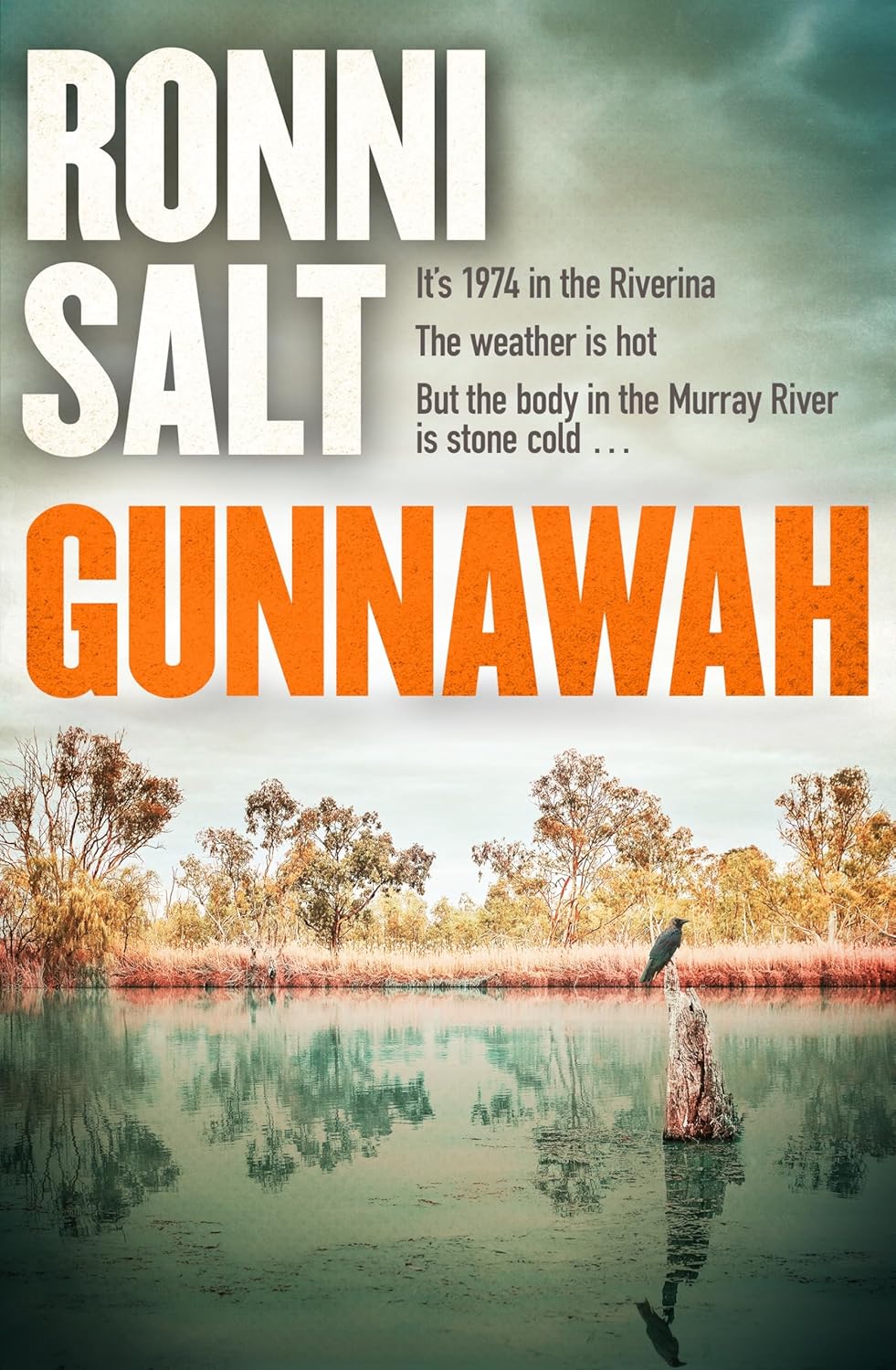
The first debut I want to highlight is the awesome and unique sounding novel, Gunnawah from new author Ronni Salt.  Set for release on 1 January 2025, Gunnawah is an interesting crime fiction novel, that will feature a rural mystery with a historical background setting.

Plot Synopsis:

It’s 1974 in the Riverina

The weather is hot

But the body in the Murray River is stone cold . . .

A captivating and compulsive crime thriller about guns, drugs and a young woman dead on the money

Riverina 1974:

When nineteen-year-old farmgirl Adelaide Hoffman applies for a cadetship at the Gunnawah Gazette, she sees it as her ticket out of a life too small for her. Its owner, Valdene Bullark, sees something of the girl she once was in young Adelaide.

Val puts Adelaide straight to work. What starts as a routine assignment covering an irrigation project soon puts Adelaide on the trail of a much bigger story. Water is money in farming communities, and when Adelaide starts asking questions, it’s as if she’s poked a stick in a bull ant’s nest. Violence follows. Someone will do whatever it takes to stop Adelaide and Val finding out how far the river of corruption and crime runs.

Shady deals. Vested interests. A labyrinth of lies. It seems everyone in Gunnawah has a secret to keep. But how many want to stop Adelaide dead?

Set deep in the heart of rural Australia during the era of Gough Whitlam, pub brawls and flared jeans, Gunnawah is a compulsive crime thriller of corruption, guns and drugs from Australian Noir’s most arresting new voice.

I feel that Gunnawah has a lot going for it, especially as Salt looks set to combine rural crime antics with Australia’s distinctive 1970s vibe.  The combination of 70s nostalgia, unique criminal activity, and plucky characters trying to get to the truth has some big potential, and I’m personally interested in seeing what sort of story Salt has planned here, especially with the focus seemingly on corruption around farmland irrigation.  This is one of the more distinctive crime fiction books coming out in 2025, and I have a feeling that Gunnawah is going to be a top debut of next year, and I cannot wait to see how Salt will impress us.

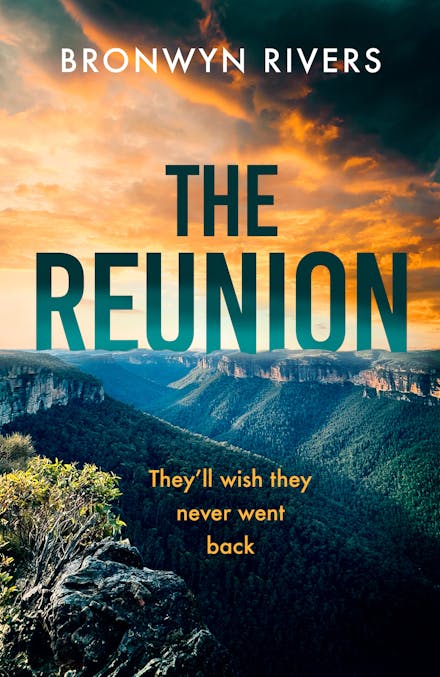
The other fascinating Australian crime fiction debut coming out in early 2025 that I want to highlight is The Reunion by Bronwyn Rivers.  Set in the iconic and beautiful Blue Mountains wilderness, The Reunion will see five isolated protagonists relive the sins of their shared past as the truth comes for them.  The Reunion has a very cool story concept around it that has really grabbed my attention, and I am quite keen to grab it in February 2025.

Plot Synopsis:

THEY’LL WISH THEY NEVER WENT BACK.

Ten years ago, six teenagers hiked into the Blue Mountains wilderness – and only five came out alive.

The survivors have barely seen each other since the tragic bushwalk. Yet when an invitation arrives to attend a 10-year memorial of their friend’s death, Hugh, Charlotte, Alex, Laura and Jack find themselves travelling back into the rugged landscape where it all began.

The weekend at an isolated homestead in the bush – no phone signal, no distractions – should be a chance to reflect and reconnect.

But each of the friends has been carrying secrets from the fateful hike. And someone will stop at nothing to get the truth.

This is another particularly cool sounding book, and I think that Rivers has an excellent story idea that is really going to pay off.  The classic scenario of isolated protagonists revisiting a traumatic event from years before is always a reliable basis for a story, and I am curious to see how Rivers will make it her own.  Unwrapping the separate and joint secrets of five protagonists has a lot of potential, and I cannot wait to see what sort of twists and compelling reveals this new author comes up with.  I am also very excited to see how Rivers will utilise the wilderness setting of the Blue Mountains in The Reunion.  I literally just got back from a holiday in the Blue Mountains, so I can imagine some of the elaborate bushland settings and locals that can be used to hide secrets, bodies and lies.

Overall, I think that both Gunnawah and The Reunion have a lot of potential and I am very excited to read them.  I cannot wait to see how these first Australian crime fiction novels from Ronni Salt and Bronwyn Rivers will turn out and they will probably be amongst my top debut novels of 2025.

Warhammer 40,000: Renegades: Lord of Excess by Rich McCormick

Publisher: Black Library (Audiobook – 6 April 2024)

Series: Warhammer 40,000: Renegades – Book Two

Length: 14 hours and 17 minutes

My Rating: 5 out of 5 stars

Amazon

Prepare to break the bounds of sensation, desire and treachery in the amazing Warhammer 40,000 novel, Lord of Excess by Rich McCormick, the second book in the fantastic Renegades series.

I have been having a great time with the huge variety of unique and elaborate Warhammer 40,000 books coming out in recent years, and it is always fun to see the impressive reads the franchise is producing.  One of the things I particularly enjoy about the Warhammer 40,000 fiction machine is the way in which it gives new authors the chance to shine, with several talented authors writing their very first book as part of the Warhammer canon.  I have already talked about one particularly good Warhammer 40,000 debut this year with Deathworlder by Victoria Hayward, but another incredible first novel I had the great pleasure of reading was Lord of Excess by new author Rich McCormick.

Lord of Excess was an exceptional book that was released as part of the loosely connected Renegades series that looks at a different band of traitor Space Marines as they make their dark way through the universe.  For example, the first Renegades book, Harrowmaster by Mike Brooks, looked at the nefarious Alpha Legion, and I am sure that future entries will dive into the other traitor legions with some fun stories.  Lord of Excess is the second Renegades book, and it provides the reader with an outstanding and unique story focussed on the ultimate beings of excess, the Emperor’s Children.

At the dawn of the Imperium, the Emperor’s Children were the master of mankind’s most loyal and revered Space Marine Legions, dedicated to the fight for humanity while seeking perfection in all things.  However, during the tumultuous events of the Horus Heresy, the Emperor’s Children followed their Primarch into treachery, and turned against their Emperor, falling into the service of the ruinous powers of Chaos.

Now, millennia later, the Emperor’s Children are a twisted remnant of their former glory.  Scattered into smaller warbands, the Emperor’s Children now only seek pleasure and sensation in hedonistic service to the Chaos God Slaanesh, the lord of obsession and excess.  One such band is the feared and infamous group known as the Adored.  Lead by the tainted Space Marine Xantine, the Adored has ravaged the galaxy for centuries, taking slaves and bringing untold torment, but Xantine has never found what he truly desires, until now.

Suddenly dropped out of the Warp, the Adored find themselves in orbit about the isolated planet of Serrine.  A wealthy and corrupt planet of the Imperium, Serrine has been long cut off from the rest of humanity due to corrupted currents of the Warp.  Sensing the opportunity to carve out a place for himself, Xantine decides to take control of Serrine, and turn it into the perfect society, dedicated to loving him.  However, making true perfection is an impossible task, and Xantine soon finds his rule challenged by both the population of Serrine and those closest to him.  Worse, there are darker forces at work within the bowels of Serrine, and soon the world will be engulfed in perfect destruction.

Lord of Excess was an exceptional and impressive Warhammer 40,000 novel that achieved so very much for the reader.  Featuring a complex and compelling tale of betrayal, deceit and corruption, loaded with fun characters and larger-than-life personalities, Lord of Excess was an entertaining and elaborate read from the very start, and I could not get enough of it.

I really loved the story contained with Lord of Excess, and I find it hard to believe that this was McCormick’s very first novel.  The plot of Lord of Excess is an elaborate and continuous tale of woe and failed ambition as it charts main character, Xantine of the Emperor’s Children, as he attempts to bring perfection to the world of Serrine.  Starting off by introducing Xantine and his renegade Space Marines, you are soon shown the world of Serrine, an isolated and mismanaged Hiveworld with plenty of its own problems, including an uprising from a genestealer cult.  Taking advantage of these chaotic events, an obsessive Xantine leads his mostly apathetic Emperor’s Children to the planet’s surface, telling the locals they are there to save them.  This proves to be an intriguing start, as the reader is shown a battle between two very different group of villains, which is essentially the equivalent of the cenobites from Hellraiser facing off against xenomorphs from Alien (with both sides using a lot of purple).  This fight against the genestealers is a fun first part of the book, and I honestly thought that McCormick was going to stretch that conflict out for the entirety of Lord of Excess.  However, the author instead chooses to cleverly end this conflict about a third of the way through the book, and the rest of the novel goes in some very interesting directions.

Following this introduction, Lord of Excess than goes through a series of time skips, as you follow the unlucky course of Serrine under the “benevolent” rule of the Emperor’s Children.  Each new version of Serrine you see is somehow worse the previous version, and it proves extremely entertaining to watch the inherent downsides of the protagonist’s twisted version of perfection.  The plot cleverly rotates between the machinations of Xantine and his Adored as they fight over the course of their warband, and several intriguing human inhabitants of Serrine, whose reaction to the fate of their planet varies across the emotional spectrum.  The plot goes in some very interesting and entertaining directions, as Xantine finds himself continuously beset by betrayal, mostly of his own making, while many others are driven to extreme lengths by Xantine’s actions, and other malign foes hiding beneath Serrine’s surface.  Things continuously get darker and darker as the plot continues, leading up to a brutal and amusing conclusion.  I loved the various elaborate twists and captivating revelations that McCormick cleverly worked into the plot, and his accompanying character work really helps to sell it.  The book ends on a fantastic note, with devilish and deserved endings for many members of the cast, and the ultimate fates of everyone really reminds you that Lord of Excess is a grimdark book focussing on deranged villains.

McCormick really showcased his effective and powerful writing style in Lord of Excess, and I loved the elaborate and multifaceted book that he ended up creating.  The fantastic story has so many deep elements to it, and it transcends the typical action-focused Warhammer fiction by providing nuanced portrayals of society, human nature, and the impossible search for perfection.  That’s not to say that there isn’t action in Lord of Excess, as McCormick loads the book with multiple over-the-top and entertaining fight sequences that prove hard not to love.  However, he also balances these battles with intriguing character work, long-running elaborate story elements, and complex depictions of intriguing Warhammer features.  The way in which the author cleverly shifts the narrative around several fantastic characters works to create a fun and layered story with many moving parts to it.  I also love how descriptive and visual McCormick got at times.  The author clearly had fun describing the many excesses and mutations of the Adored, and you really got a clear and vivid sense of the twisted nature of the beings involved.  This ended up being such an outstanding read, and McCormick did such a great job bringing his elaborate story to life in the absolute best way.

I felt that Lord of Excess was a pretty awesome Warhammer 40,000 novel, that will really appeal to a varied audience.  Established Warhammer fans will love the fantastic depictions of the Emperor’s Children featured within this book, and I love how well McCormick captured the complexities of these renegade Space Marines and the depths to which they have sunk.  While he doesn’t do a full deep dive into the history of the Emperor’s Children, McCormick provides some detailed flashbacks into their past, that Warhammer readers will appreciate, which also providing some good context for new readers.  While this book did spend a lot of time examining the Emperor’s Children, it also featured its own unique and clever narrative, which really utilised the grimdark nature of the wider Warhammer setting to its advantage.  Readers are gifted by a truly complex and intense read, and I felt that Lord of Excess is an amazing example of just how good a Warhammer 40,000 novel can be.  This would be a pretty good entry point for new readers keen to check out the elaborate Warhammer 40,000 fictional universe, especially as you can get an amazing sense of the overall cruel, deadly and often ironic nature of this fantastic overarching setting.

Easily the key strengths of Lord of Excess were the elaborate, distinctive and damaged characters that McCormick centred his story around.  There are some brilliant characters featured in this book, from ancient traitor Space Marines lost in their own obsessions, to the normal inhabitants of Serrine, whose lives are irrevocably turned upside down by the arrival of the Adored.  These elaborate character arcs are very intriguing, and McCormick expertly features them throughout his story, ensuring that the reader becomes intrigued by the fates of these various figures.  The most prominent character is the Adored leader, Xantine.  An ambitious and twisted being, Xantine finds himself drawn to the world of Serrine and sees it as an opportunity to create a perfect world, much like the previous planets the Emperor’s Children called home.  Xantine proves to be an intriguing central figure for the book, especially as you get drawn into his obsession and the disdain of his followers for his vision.  Thanks to the machinations of the daemon S’janth, who shares Xantine’s body, you get some fascinating insights into this character’s mind, and you soon appreciate the depths of his determination to be perfect, which stems from his daddy issues and dark personal history.  I loved seeing how the events of the book were driven with this figures love of perfection, and Xantine proved to be an excellent dark heart to this entire story.

In addition to Xantine, Lord of Excess features several other great characters, all of whom are damaged in fantastic and intriguing ways.  This includes the various members of the Adored, each of whom has their own unique obsessions and focuses.  McCormick really had fun when it came to these corrupted figures, and there are some delightfully over-the-top characters as a result.  These other members of the Adored often come into conflict with Xantine, primarily due to their incompatible obsessions, and I loved the barbed interactions that followed, especially as Xantine both loves and hates his fellow renegades.  While several of these characters stood out, the best one was probably Vavisk.  Vavisk, a Noise Marine, is obsessed with finding the perfect sound, and often finds himself lost in his horrifying music.  However, Vavisk is also Xantine’s closest friend, and the unique bond of brotherhood between these two figures, proves to be a key part of the book, especially as the potential for it to break is always there.

Other major characters include several inhabitants of Serrine who attempt to survive the actions of Xantine.  Due to a creation myth, many people on Serrine initially see Xantine as a destined saviour, and the eventual revelation of his true nature leads to much heartache for them.  These characters provide an outstanding alternative perspective to that of Xantine and the other Adored, and I loved seeing the various reactions to the evil that came to their planet.  Key figures include the young man Arqat, whose rage at the injustices performed against him drives him to some dark places.  The mysterious Cecily founds salvation and escape thanks to the patronage of Xantine, although her loyalty costs her deeply.  While the foppish noble Pierod, seeks to take advantage of the arrival of the Adored, which has blistering ups and downs for him.  I really enjoyed these three human characters, and their unique storylines, some of which were nearly as extensive as Xantine’s, helped to turn Lord of Excess into a particularly brilliant read as you get drawn into their various tales of woe and opportunity.  While Pierod’s story was probably the most entertaining, due to his naked ambition and greed, you honestly connect to all three of them, and it proves fascinating to see where their encounters with the Adored takes them.  McCormick writes some grim and fitting fates for all three of them, and the other humans of Serrine, and seeing the journey they take to get there, is so damn entertaining.

As with most Warhammer 40,000 novels I enjoy, I ended up grabbing Lord of Excess on audiobook, which is just the best way to appreciate a piece of Warhammer fiction.  Coming in with a runtime of over 14 hours, the Lord of Excess audiobook is a decent length, but one you can get through quickly once you become caught up in the outstanding plot.  I love how well this format highlighted the epic narrative featured with Lord of Excess, and you get a real sense of the plot’s chaotic delights, unnatural horrors, and devilish figures when they are read out to you.  It helped that the Lord of Excess audiobook was helmed by one of the very best Warhammer 40,000 narrators, Richard Reed.  Reed has been killing it in recent years with his work in Warhammer 40,000 fiction, including The Infinite and the Divine by Robert Rath, Ruin and Reign by Nate Crowley and Grim Repast by Marc Collins, all of which were greatly enhanced by his impressive voice work.  His work in Lord of Excess is particularly awesome, as he once again produces an impressive range of unique voices to fit the big personalities of the plot.  This includes multiple mutated and utterly corrupted Space Marines, and Reed provides very fitting voices for them, as well as the unlucky humans caught up in their machinations.  The over-the-top story comes out so much better because of Reed’s compelling narration, and I love how effectively he captured the various insane figures.  This amazing voice work turned the Lord of Excess audiobook into something very special, and I had an exceptional time getting through it.

Lord of Excess by Rich McCormick is an absolutely brilliant and amazing piece of Warhammer 40,000 fiction that I could not get enough of.  Expertly combining elaborate elements of the Warhammer 40,000 canon with a complex narrative and darkly damaged characters, Lord of Excess was so much fun to read, and it proves impossible not to get caught up in this epic debut.  This might be one of the smartest and most compelling pieces of Warhammer 40,000 fiction release so far in 2024.  A truly outstanding Warhammer 40,000 book from a particularly amazing new author, Lord of Excess comes very highly recommended, and Rich McCormick is an author with big things in his future.

Amazon

Quick Review – Song of the Samurai by C. A. Parker

Publisher: Running Wild Press (ebook – 7 May 2024)

Series: Standalone

Length: 283 pages

My Rating: 4.25 out of 5 stars

Amazon

Intriguing new author C. A. Parker dives into an intriguing area of Japanese history with his debut novel, Song of the Samurai, a fantastic and deeply compelling historical read that I had a wonderful time getting through.

Fans of this blog will know that I have a lot of love for historical fiction, as it was one of the original genres that I started with as a book reviewer, and I still try to enjoy a range of great historical reads whenever I get the chance.  I also have a lot of love for Japanese history due to some amazing personal travels as well as my long-running fandom of the Usagi Yojimbo comics by Stan Sakai.  While there have been some very interesting Japanese historical fiction novels over the years (Child of Vengeance by David Kirk comes to mind), this setting doesn’t get utilised as some other historical backgrounds, which is a real shame when you consider just how awesome and complex the setting truly is.  As such, when I came across Song of the Samurai, I couldn’t pass it up, as it sounded like such an intriguing read.

Plot Synopsis:

Japan, 1745, is a land under the iron grip of the Tokugawa shoguns. Roads are monitored, dissent stifled, and order maintained through blackmail and an extensive network of informers. Amid rumors of rebellion, Kurosawa Kinko– samurai and monk– is expelled in disgrace as the head music instructor of his Zen temple in Nagasaki. He begins an odyssey across Japan, dogged by agents and assassins from an unknown foe. Along his journey, Kinko encounters a compelling cast of merchants, ronin, courtesans, spies, warriors, hermits, and spirits, on a quest to redeem his honor. Inspired by the life of the historical Kurosawa Kinko (1710-1771), master of the shakuhachi flute and founder of the Kinko-ryu school, Song of the Samurai takes the reader on a richly-textured exploration of feudal Japan and the complexities of the human spirit.


Song of the Samurai
is the debut novel of C. A. Parker and provides readers with a compelling and fascinating historical adventure that also utilises the author’s personal passions and passes on a heartfelt message about spirituality and self-determination.

The plot of Song of the Samurai is a fictionalised narrative of real-life historical figure Kurosawa Kinko, who is known for his teachings and spiritual journeys to learn the Japanese shakuhachi flute.  Parker reimagines Kinko’s history somewhat by showing him as a young man who undertakes an extended pilgrimage from his original temple in Nagasaki all the way to the capital in Edo.  Banished from his temple due to a romantic scandal, Kinko initially starts the journey in disgrace, but soon embraces his pilgrimage, learning more and more about the people of Japan.  This ended up feeling like a bit of a quest narrative, and Parker throws in some fantastic side stories brought on by the multitude of intriguing and unique supporting characters the protagonist encounters along the way, including bandits, spies, courtesans, peasants, fellow monks and more.

While many of these side storylines don’t last too long, they do weave together into a compelling tapestry of events that aim to enhance Kinko’s personal journey.  There is a particular focus on the spiritual, as Kinko begins to fully appreciate the significance of the shakuhachi and the music that he plays, as well as the many different people who make up the nation of Japan.  I loved the impressive character development that surrounded the protagonist throughout this book, and the growth in spirit and attitude makes for a moving heart to this great narrative.  Parker also works in a compelling recurring storyline about espionage and potential rebellion against the ruling Shogun family, as Kinko finds himself wandering the outskirts of dangerous actions.  This part of the book adds in a little necessary excitement and action, and I think it balanced well with the historical and personal elements of the narrative.  While I did think this espionage element could have been a stronger part of the plot, especially as it gets sidelined several times throughout Song of the Samurai, for the most part this was a particularly engrossing and captivating story, and one that I had had a fun time getting through.

As a huge admirer of Japanese history, I felt that Parker did an exceptional job of capturing the feel and impact of the setting throughout his narrative, and the many, many depictions of Feudal Japan was an impressive part of Song of the Samurai.  Thanks to his wandering protagonist, Parker visits a ton of major cities and towns throughout Japan, and I loved the elaborate descriptions that were featured, especially as the author goes out of his way to cover some of the most intriguing parts of the country.  I personally loved it when Kinko visited locations I have been to, and you can really feel the author’s love for the setting through his writing.  Parker also makes sure to fit in a lot of discussion about key parts of Japanese history and mythology throughout the book, often included as part of a conversation or the protagonist’s thoughts.  While some of these historical inclusions weren’t as organic as they could have been, for the most part I found them to be very fascinating, and they added some excellent context to the locations the protagonist visited.

Unsurprisingly when you consider the title of the book and the author’s passion for the shakuhachi flute, there is a huge focus on music in Song of the Samurai.  The playing of the shakuhachi is a huge part of the protagonist’s identity as a monk and as a man, and the author really tries to capture Kinko’s love of the flute with his excellent writing.  The many, many scenes of Kinko playing his music are some of the best parts of Song of the Samurai, and it allowed the author to showcase the protagonist’s spiritual connection to the music and provide him with new insights into the world around him, especially as he finds music in many different people and locations.  The extended sequence where Kinko spent time learning music from a hermit monk on-top of the mountain was particularly fascinating, and I liked how moving those scenes came across.  I felt that the author did an excellent job of readapting Kurosawa Kinko’s life story in the book by showcasing these early stages of his lifelong mission to collect and understand music, and you will come away from Song of the Samurai with a whole new appreciation for traditional Japanese music.

Overall, I felt that Song of the Samurai was an outstanding and intriguing debut novel from C. A. Parker, and one I was very glad I decided to check out.  Featuring an outstanding historical story that blended great characters with unique locations, Song of the Samurai was an excellent read, and one of the more unique novels of 2024.

Amazon

Warhammer 40,000: Deathworlder by Victoria Hayward

Warhammer 40,000 - Deathworlder Cover

Publisher: Black Library (Audiobook – 23 April 2024)

Series: Warhammer 40,000

Length: 11 hours and 1 minute

My Rating: 4.75 out of 5 stars

Amazon

Debuting author Victoria Hayward presents one of the year’s most compelling entries to the Warhammer 40,000 canon, with the outstanding and grim novel, Deathworlder.

I have made no bones about how much love I have for Warhammer 40,000 extended fiction, which honestly features some of the very best media tie-in novels currently being written.  One of the things I particularly love about Warhammer fiction is the sheer range of compelling and impressive authors that are adding to the lore and narrative of this universe.  While a good chunk of the novels come from grizzled veteran Warhammer authors, the Black Library has also been cleverly utilising a range of intriguing new writers to offer fresh stories to the franchise, and some of the best books in recent years have been an author’s very first novel.  In 2023 alone there were several outstanding Warhammer 40,000 novels from first time authors, including The King of the Spoil by Jonathan D. Beer, Creed: Ashes of Cadia by Jude Reid, and Longshot by Rob Young, all of which were among my favourite debuts of the year.

2024 also looks set to a be a good year for authors making their debut through Warhammer fiction, especially when it comes to Deathworlder, the very first novel by exciting new author Victoria Hayward.  Featuring a compelling and exciting plot, Deathworlder has been on my radar for a while, and I ended up grabbing Deathworlder on audiobook as soon as I could.

There are many dangerous foes and deadly enemies stalking the galaxy in the far future, but none are as insidious, destructive and terrifying as the alien menace, the tyranids.  Made up of innumerable biological lifeforms, the tyranids traverse the galaxy, devouring entire planets and adding it to their biomass.  Hundreds of former human planets have fallen to the hivefleets of the tyranids, and the next world to be consumed is the planet of Lazulai.

Once a magnificent planet of beauty and rich resources, Lazulai is currently on the brink of destruction.  The armies of humanity were unable to hold back the invading tyranid hordes, and now the planet has begun to change as it is devoured by the alien lifeforms covering its surface.  Only a few small pockets of resistance remain, including the 903rd Catachan Night Shrikes, who garrison one of the last fortresses still standing.  However, hope remains in the most unlikely of places.

Receiving intelligence about a mysterious piece of archeotech that may hold the key for saving the entire system, Major Wulf Khan is given one final mission to retrieve the technology.  Leading a small mixed squad, Major Khan must use all the innate Catachan skills of infiltration and survival in extreme environments to lead her soldiers through the alien jungles that have sprouted up in the wake of the tyranid advance.  However, while the Catachans might be the best jungle fighters humanity has to offer, they are facing off against an unstoppable foe, capable of adapting to the greatest of obstacles.  Can Khan and her Catachans prove they are the deadliest survivors in the galaxy or will the tyranid horde consume them alongside the last remnants of Lazulai?

Deathworlder was a particularly dark and intense Warhammer 40,000 novel that grabbed my attention from the very beginning.  Hayward came up with a wonderful story that expertly highlighted the opposing Warhammer factions while also making full use of some very strong character work to tell an emotionally charged narrative.

I really liked how Deathworlder’s story unfolded as it proved to be a gritty, character-driven tale of survival.  Starting off by expertly showing the end of the planet setting and the despair being felt by the various protagonists, the story quickly moves along into the main quest, with the Catachan protagonist, Major Wulf Khan, leading a small squad of troops out to recover valuable technology before the planet dies.  The story is primarily split between the perspectives of Khan and the Cadian Lieutenant Kaede Anditz, who joins the squad as a guide towards their final objective.  This leads to an intriguing first half of the book, as the eclectic squadron of protagonists begins their trek towards the objective.  There are some dark and grim moments here, especially as large chunks of the protagonist’s comrades get killed in the lead-up to their mission, and the reader is soon engulfed in the horrifying early stages of the destruction of the planet.

The second half of Deathworlder only gets darker, as the protagonists encounter more and more obstacles on their quest.  I really appreciated how Hayward focused on the alien and human monsters that the protagonists are forced to deal with, and the author ensures that emotions are constantly running hot as the characters encounter worse and worse things.  A particularly powerful moment splits the perspectives of the book even further, while also leading to some very dark experiences.  There are some excellent action set pieces, compelling character moments, and dark examinations of humanity on the edge, through this part of the book, and I honestly found it impossible to put Deathworlder down at times as a result.  Everything leads up to the final sequence as the protagonists encounter even darker surprises and revelations as they attempt to survive.  There are several exceedingly tense moments where you are constantly left wondering if any of the protagonists are going to make it, and I loved how desperate things got.  Hayward ends everything on an intriguing note, and readers will come away very moved by how this great narrative came together.

I felt that Hayward had a great dark tone for Deathworlder that really showcases just how deadly and hopeless parts of the Warhammer 40,000 universe can be.  The focus on characters who had already accepted that they were going to die, as well as the terrible changes that a loss in this universe can result in, gave a particularly intense edge to the book, which I felt made helped it really stand out.  Things get quite dark in Deathworlder, as Hayward really wanted to highlight the terrors of the tyranid, and I honestly got a major horror vibe at times, especially when it came to some particularly gruesome deaths (the field of stuck soldiers still makes me shudder).  While there is plenty of action, tragedy and lore dumps, I felt that the author’s decision to really focus on the book’s unique characters and camaraderie was very clever, and I became really invested due to the exceptional character work.  Deathworlder also proved to be a very strong addition to the Warhammer 40,000 franchise, and Hayward ensures that there is plenty of appeal for both established fans and new readers.  Indeed, I felt that Deathworlder would be a very good entry point into the larger fiction surrounding the Warhammer 40,000 franchise, especially as Hayward’s fresh writing shows just how complex a novel set in this grimdark universe can be.

While Deathworlder would be a good entry point for new readers, established Warhammer 40,000 fans will also get quite a lot out of this book, especially as Hayward expertly highlights two exceptional factions, the Catachans and the tyranids.

Essentially an army of Rambos, the Catachans have been a fan favourite regiment for ages and are always a great inclusion to any narrative.  I have read a few books around the Catachans, including Catachan Devil by Justin Woolley.  These novels, while fun, always tend to focus on the more stereotypical aspects of the Catachans: muscles, jungle craft and big knives.  However, Hayward takes a bit more of nuanced look at the Catachans in Deathworlder, showing them to be a complicated group of soldiers who fall back on the hard-talking jungle killer personas when the going gets tough.  While one very fun character does live up to the stereotype, primarily for comedic effect, for the most part the Catachans are shown as practical survivors, who in this book, are at the end of their tethers.  As such, you see a much more compelling side to the Catachans, and it was fascinating to see how complex the members of the regiment are, as well as how damaged they are by the constant fighting and slaughter.  The author’s use of alternative perspectives allows the readers to see the Catachans in various lights, both from within their own minds, and through the eyes of the Cadian Lieutenant Kaede Anditz, who grows to respect their culture and methods as the book continues.  I really appreciated this more realistic and grounded look at the Catachans in Deathworlder, and Hayward really showcased her ability to portray an iconic human regiment.

While the Catachans get a lot of the focus, you also really need to highlight the tyranids in Deathworlder, who serve as an outstanding antagonist.  While I have enjoyed a few great books where the tyranids were terrifying monsters, including Day of Ascension by Adrian Tchaikovsky, Leviathan by Darius Hinks and Duty Calls by Sandy Mitchell, Deathworlder might be one of the best portrayals of the tyranids that I have so far read.  That is primarily because Hayward’s story is set on a world already being devoured by the tyranids.  The resulting scenes of destruction, despair and digestion prove to be quite horrific, and few writers have really captured just how disturbing this scenario would be.  I felt the various scenes where the protagonists, who themselves are being slowly digested by falling spores, encounter the continuous horrors of the dying world, were so damn good.  The human experience with these horrors is a key part of Deathworlders appeal, and the despairing reactions from both the hardened soldier protagonists, as well as civilians they encounter along the way, really sells just how horrifying the situation truly is.  Even the more typical tyranid threat is well represented in Deathworlder.  The author really captures the fear associated with hordes of ravenous, chitinous aliens as they overrun simple soldiers.  While the tyranids are occasionally depowered by the protagonist’s plot armour, for the most part they are outstanding monsters, and the constant threat they could suddenly represent, proves to be a fantastic part of the novel.  As such, fans who love tyranids are in for a real treat with Deathworlder, and seldom are they a better monstrous villain than in this book.

I cannot write my review of Deathworlder without once again mentioning the impressive characters featured within this book.  Hayward excelled at introducing and exploring complex and damaged protagonists, and their very human, very determined actions, prove to be the true heart and soul of the narrative.  You go through a lot with these characters, and their overwhelming humanity in the face of continuous horrors and loss makes for a very powerful read.  There are some great characters here, including main protagonist Major Wulf Khan, a grizzled Catachan fighter who finds her desire to complete the mission constantly challenged by the losses of those around her.  Her trusted orderly, Sergeant Rutger Haruto, proves to be an excellent backup, especially as his constant curiosity and sensible nature helps to keep his commander in check.  Alternate point-of-view character Lieutenant Kaede Anditz is another excellent addition to the cast, and I think that his unique perspective of the Catachans he suddenly finds himself serving with ensured that their compelling portrayal in Deathworlder really came through.  Anditz is also going through a lot of trauma, especially after witnessing the slaughter of every Cadian soldier on Lazulai, and Hayward really ensures that his guilt and horror really shine through in his chapters.

While the characters above are great, my favourite was probably Trooper Falke Adair.  A muscled Catachan with a heavy flamer, Adair is essentially a walking Catachan stereotype, something she really acts up as the book continues.  Crass, disrespectful and always looking for a fight, Adair steals any scene she becomes a part of, and her over-the-top mannerisms and actions are very entertaining.  However, as the book continues, and characters, particularly Anditz, get closer to her, you see that much of her bravado is a front, and she proves to be one of the most complex figures in the entire novel.

I also must highlight the brilliant character of Lamya.  A Genestealer Cult propagandist, Lamya is captured at the start of the novel and dragged along by the squad for her knowledge.  An arrogant and slightly unhinged noble turned tyranid-worshipping stooge, Lamya plays off the other characters perfectly, and her distain for those around her is so much fun.  However, the more they traverse Lazulai, the more Lamya comes face to face with the horrors that her cult helped to bring to her planet.  Caught between her own beliefs and the horrors she witnesses, Lamya goes quite insane as the book continues, while also providing some of the most compelling perspective of events in the entire novel.  Throw in a scheming Tech Priest and a silent Catachan sniper, and this proves to be an outstanding cast of main characters that you really grow attached to as you watch their intense personal and physical journey.

Unsurprisingly, I chose to check out Deathworlder on audiobook, which is just the best way to enjoy a Warhammer novel.  This was very much the case with Deathworlder, and I loved how effectively and vividly the story came across as it was being read out to me.  The exciting action, captivating characters, and horrendous horrors of the narrative really came to life, especially when read out by talented narrator Gabrielle Nellis-Pain, whose work on The King of the Spoil audiobook last year was very fun.  Nellis-Pain did another outstanding job with Deathworlder, and I love how effectively she told Hayward’s elaborate story.  I particularly enjoyed the excellent voices she gifted to the various characters within Deathworlder, and she very effectively captured the cool protagonists in all their martial glory.  This was particularly true for the over-the-top Catachan protagonists, and you could really visualise the muscular characters as she narrated.  Nellis-Pain also ensured that appropriate alternate accents were given to characters from other human factions, such as the Cadians or the Adeptus Mechanicus, and I particularly enjoyed how well the narrator expressed the mechanical nature of the latter.  I honestly believe that this book wouldn’t have been as impactful if I had physically read it, and I strongly recommend the audiobook version as a result.  Coming in with a run time of 11 hours, Deathworlder was so much fun to listen to, and you can power through it in no time at all.

With her very first novel, Deathworlder, debuting author Victoria Hayward shows she is a writing force to be a reckoned with, especially when it comes to Warhammer fiction.  Deathworlder was an outstanding Warhammer 40,000 novel that features a truly dark and intense narrative, loaded with great characters and compelling depictions of Warhammer universe.  An exceptional read from start to finish, I cannot talk this novel up enough, and I am really intrigued to see how Hayward follows up her amazing debut.

Amazon

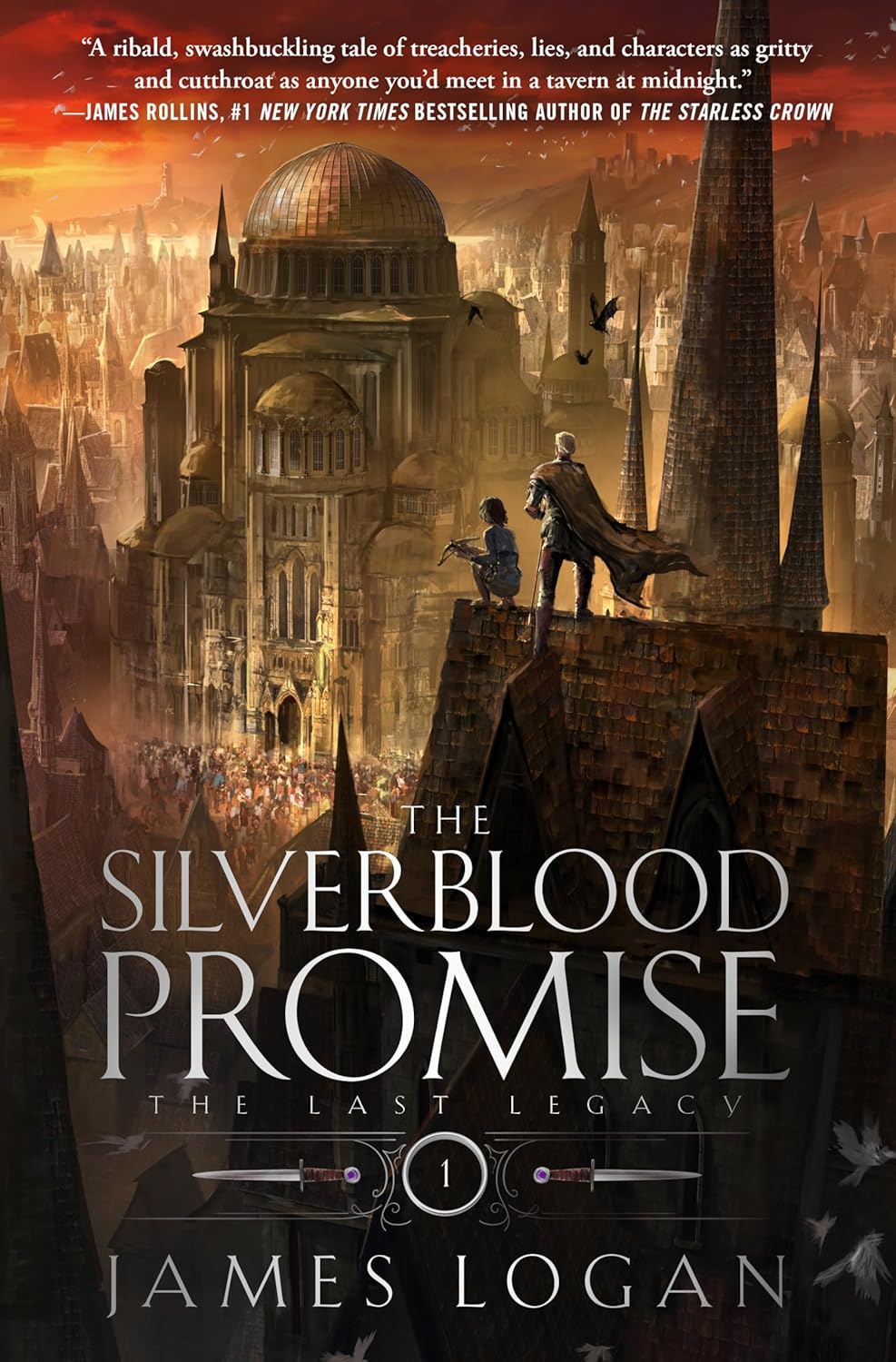
The Silverblood Promise by James Logan

The Silverblood Promise Cover

Publisher: Arcardia (Trade Paperback – 30 April 2024)

Series: The Last Legacy – Book One

Length: 595 pages

My Rating: 4.75 out of 5 stars

Amazon

Promising new author James Logan presents an epic fantasy debut in the form of The Silverblood Promise, the first entry in his planned The Last Legacy series, and one of my most anticipated books of 2024.

Lukan Gardova, the disgraced heir of a noble family, is a man who has lost everything following a duel that ended tragically.  Forced to drop out of his prestigious academy and abandoned by his family, Lukan travels the wild edges of the world, gambling, drinking, and seeking what adventure he can.  Despite his malaise and despair, Lukan is still shaken when he is informed that his estranged father has been murdered by mysterious assassins.

Armed with fresh purpose and a determination to find out who was responsible for his father’s death, Lukan follows the only clue he has, a note his dying father wrote in his own blood.  The names it contains lead him to Saphrona, an old and prosperous city ruled by merchant princes where everything can be bought.  Filled with rogues, scoundrels, thieves, and miscreants, Saphrona seems an unlikely place to find his reclusive, academic father’s killers.

Engaging in an exhaustive search throughout Saphrona, Lukan discovers that the answers he seeks lie with one of the city’s merchant princes.  Unfortunately, they have been condemned to death for the murder of another merchant prince, and if Lukan wants the information they have, he will first have to prove their innocence.  Working with an unlikely group of criminal acquaintances, Lukan follows the few clues surrounding the merchant prince’s unusual murder.  But the further he digs, the more danger he finds himself in.  There is a deadly conspiracy at work in Saphrona, one that seeks to undermine everything the city stands for.  Forced to contend with desperate nobles, deadly criminals, and dangerous forces beyond his comprehension, Lukan fights to keep his promise and find the truth behind his father’s murder.

Wow, now this was an awesome debut from Logan and one that I was really glad I got the chance to read.  The Silverblood Promise has been on my radar for a while, and Logan did not disappoint with its excellent and exciting story, which is loaded with action, intrigue, cool fantasy elements and some great characters.  Entertaining and fast-paced, The Silverblood Promise was an absolute joy to read, and I had an amazing time getting through it.

The Silverblood Promise has a deeply compelling narrative behind it that kept drawing me in with its intrigue, revelations and exciting adventure.  While this is a lengthy novel, I honestly powered through it as it proved very easy to get caught up in the story.  Logan maintains a very fast pace the entire way through The Silverblood Promise, and I enjoyed the mixture of action, character development and unique fantasy inclusions that the reader is treated to.  Starting off with a strong introduction that effectively showcases the protagonist and his current situation, the reader is quickly thrust into the main background city of Saphrona, which proves to be a fantastic setting.  Able to quickly interpret his one clue, the protagonist works with several connected figures to try and contact the person his father sent him after.  What follows is a series of interlocking quests as Lukan must befriend a master forger, mastermind a break-in to a notorious prison, and then discover who set up one of the city’s leaders for murder.  This results in a constant stream of adventures as Lukan jumps from one hurdle to the next, uncovering dark secrets about the city, and making unlikely friends.

The revelations about the true villain of the story occurs about two-thirds of the way through The Silverblood Promise, and while it isn’t too surprising, their methods and motivations are, especially as they reveal some interesting figures to the story.  Forced to go up against some big fish, Lukan is caught up in their power play, which adds a lot of chaos to the narrative, and must desperately come up with a plan to fight back.  The resulting carnage and confrontations are well handled, and I loved the great combinations of intrigue, battles and clever ploys that brought everything together.  All the action within The Silverblood Promise is sharp and well written, and you get drawn into the many confrontations and battles of wits that emerge.  Logan proved very able at hiding hints about the big bad’s schemes throughout much of the plot, and it was fun to see it all come together.  I had such a great time with this impressive story, and I ended up reading the last 300 pages of the book in less than a day, it was that damn good.  The reader comes away both satisfied and wanting more, which is lucky as it is clear Logan has some big plans for the series, with the adventure set to continue.

I felt that Logan came up with an excellent fantasy setting for The Silverblood Promise, and I really enjoyed how he utilised the new world throughout his plot.  Filled with magic, adventurers, complex cities, mysterious interdimensional beings, and powerful artefacts from long-lost advanced races, there is so much for the reader to enjoy here, especially when hints about far greater hidden powers are also included.  While a couple of the fantasy elements in The Silverblood Promise are a little derivative of other fantasy works, I personally didn’t mind, mainly because Logan makes them his own and they fit nicely into the fast and intense narrative of The Silverblood Promise.

While I loved the new fantasy world as a whole, the setting highlight of this book is the city of Saphrona, where most of the plot is set.  Saphrona proves to be a complex and compelling trade city ruled by merchant princes and filled with dangerous commerce, criminal enterprises, alien structures, unlikely monsters, and all manner of political intricacies and plots.  Readers will really enjoy unwinding the various elements of this city and it proved to be fun watching the protagonist explore Saphrona and attempt to find answers and stop a major disaster unfold.  In a way Saphrona becomes a character in its own right as the book progresses, and I really appreciated how effectively Logan introduced the reader to the setting and inserted the story in its survival and underlying politics.  Logan also ensured that readers got a good deal of information about some of the other locations outside of Saphrona, which are likely to become relevant to the plot in future books of the series.  While a of map of the continent or Saphrona would have been appreciated, readers come away with a great sense of the world and will be interested in seeing more stories within it.  Indeed, it looks like Logan plans to set each of The Last Legacy books in a different city of the world, and I for one am very excited to see what other memorable locations Logan will come up with.

I also really need to highlight the fun and memorable characters who were featured throughout The Silverblood Promise.  Logan did a great job pulling together an intriguing and often outrageous cast for his first book, and I loved some of the awesome storylines that emerged.  Most of the focus revolves around protagonist and primary point-of-view character, Lukan Gardova, a former noble turned roguish adventurer who finds himself way over his head in Saphrona.  Lukan is a great central figure for this book, and he brings a lot of emotion to the story due to his disastrous past and determination to find his father’s killer.  I felt that Logan provided just the right amount tragic history for his protagonist to enhance the dramatic tone of the book, and the character’s frustrations at the dangerous tasks he finds himself involved with, as well as his own stubborn need to move forward, were very relatable.  Lukan also provides a fun scoundrel vibe to the plot at times, and it was interesting to see his cynical perspective on events throughout the book.  I liked how Logan set Lukan up as a newcomer to the main setting of Saphrona, as this allowed the reader to see the city fresh through the eyes of someone unfamiliar with it, which enhanced the majesty, strangeness and cruelty of the setting.  As such, I felt that Lukan was an excellent central protagonist, and I look forward to seeing how his story evolves in the future, especially as there are many more secrets around his family that need to be revealed, and other character elements that need to be expanded upon.

Aside from Lukan, The Silverblood Promise features an interesting array of fun figures, the majority of whom are locals to Saphrona.  I loved all the unique characters that emerged, especially as Lukan is forced to deal with killers, scheming nobles, a mysterious forger, a blind beggar with way too much knowledge, an unlikely crime lord and a notorious band of mercenaries that Lukan is forced to alternatively fight or make deals with.  One of the most distinctive characters is an infamous thief who joins the main cast late in the story, but who proves to be a fantastic addition thanks to her skills, kindness and pragmatism.  However, my favourite character would have to be the young street urchin and pickpocket, Flea, who forms an unlikely partnership with Lukan early in the story.  Hired by Lukan to help him around the city, Flea proves to be an invaluable ally, despite her age, and works to keep her benefactor alive against all manner of dangers.  Bold, curious and utterly unflappable, Flea is a highly entertaining figure, especially as she keeps jumping into danger while also proving to be far wiser than Lukan.  Flea and Lukan serve as fun contrasts to each other, and I liked their entertaining banter and the touching bond they form throughout the course of the book.  This fantastic partnership really helped to make The Silverblood Promise that much more special, and all the characters featured within this book were really well written and cleverly featured.

Overall, The Silverblood Promise is an excellent and exciting fantasy novel that had me hooked the entire way through.  Intense, compelling and wildly entertaining, The Silverblood Promise was very awesome, and James Logan did wonders with his debut novel.  I will definitely be grabbing the eventual sequel to The Silverblood Promise when it comes out, and I cannot wait to see how this adventure continues and how Logan develops as an author.

Amazon

Quick Review – Hollywood Hustle by Jon Lindstrom

Hollywood Hustle Cover

Publisher: Crooked Lane Books (ebook – 6 February 2024)

Series: Standalone/Book One

Length: 261 pages

My Rating: 4 out of 5 stars

Amazon

I was recently lucky enough to receive an early copy of the intriguing thriller debut, Hollywood Hustle.  Written by actor Jon Lindstrom, who has appeared in quite a few crime fiction shows and films himself, Hollywood Hustle had a cool story about the price of fame and the dark side of Hollywood which I really liked the sound of.

Plot Synopsis:

Winston Greene, a has-been film star, wakes one morning to find his six-year-old granddaughter at his bedside—traumatized, unattended, and gripping onto a thumb drive. She comes bearing video proof that her mother, Win’s troubled adult daughter, has been kidnapped by a murderous gang demanding all his “movie money” for her safe return. But what they don’t know is…his movie money is long gone.

Unable to go to the police for fear the kidnappers will make good on their promise to kill his daughter, Winston turns to two close friends—a legendary Hollywood stuntman and a disgraced former LAPD detective.

There’s no easy way out for Winston or his daughter—the gang is violent and willing to do anything to get the money they’re after, and Winston begins to realize that to get his daughter back, he’ll have to beat the kidnappers at their own game.

This propulsive and tense thriller will transport readers to the seedier side of LA, depicted in bold prose by a Hollywood insider.


Hollywood Hustle
ended up being a fun first book from Lindstrom, which takes the reader on an exiting and fast-paced adventure through a dark Hollywood kidnapping.  Lindstrom starts things off quickly, with the readers given an effective introduction to the main character, fading actor Winston Greene, and the unthinkable scenario he finds himself in.  After an initial focus on Greene, the author branches out the focus of the story, splitting the perspective between various characters, including Greene, his two loyal friends, the kidnappers, and more, to create a wonderful and highly entertaining narrative.

Much of the story follows Greene, as he is forced to try and raise cash he doesn’t have to secure his daughter’s release.  While he goes about that, you get to see what the kidnappers are up to, as their botched operation quickly comes undone in several different ways.  At the same time, one of Greene’s friends begins an investigation into the case, while a nosey tabloid journalist tries to scoop up dirt on the troubled actor.  These various storylines all come crashing together, and I liked how well Lindstrom was able to tell a cohesive tale while also focusing on his characters.  I did find that some of the dialogue was a little weak in places, and the story did get a little derivative at times, but this was mostly a great read.  I especially enjoyed how Lindstrom took the plot in some surprising and unpredictable directions, and several over-the-top deaths really spiced things up.  While I didn’t love one plot twist at the end that relied on an overused writing cliché, I ended up having a lot of fun with this cool story, and I managed to finish it off in only a couple of days.

I really enjoyed Hollywood Hustles’ great story, and there were some excellent writing elements that helped it stand out.  Lindstrom set a great pace for the entire book, and I appreciated how he got right down to business.  I felt the entire story flowed efficiently and effectively, and he didn’t make the story overstay its welcome, finishing it off at just the right time.  Splitting the perspective chapters between the various characters involved in the plot also worked well, as you quickly get multiple eyes on the dangerous unfolding situation.  I liked the great mixture of distinctive character perspectives that emerged, and the slow-burn introduction of the three kidnappers was pretty awesome, especially as they all have compelling individual backstories, and it quickly becomes apparent that none of them are natural team players.  Honestly these three antagonists proved to be a major highlight of the entire story, and their dysfunctional relationship, over-the-top actions, and well-crafted pasts that examine interesting, failed takes on the American dream increased my enjoyment of the entire book.

However, most of Lindstrom’s character work revolves around protagonist Winston Greene, who serves as the heart and soul of the book.  A formerly famous actor who has reached has-been status and now only works bit gigs, Greene is a character with many parallels in real life, which makes his story even more relatable.  Initially shown to be a flawed but caring man, Lindstrom slowly reveals several of his darker demons, including the price he paid for fame, his battle with alcoholism, his struggles being a father and husband, and the guilt he harbours for his past mistakes.  Lindstrom builds in a very good narrative about Greene trying to redeem himself throughout the course of Hollywood Hustle, especially when it comes to his daughter and granddaughter, and you really find yourself pulling for him as a result.  The author also uses Greene’s character to help highlight the many negatives involved with a Hollywood career, which adds an interesting and personal edge to much of the plot.  The protagonist’s cynical views of the acting scene, especially after a complicated and currently expired movie career, make for a great inclusion, and I personally loved the fun fictional movie quotes attributed to Greene that are scattered throughout the novel.  Greene really felt like a character that Lindstrom was pouring himself into, and I deeply appreciated how compelling and powerful his story got at times.

Overall, I quite liked Hollywood Hustle, and I felt that it was a good, solid debut from this interesting author.  While Jon Lindstrom has some growing to do as a writer, this was an excellent first effort, especially when it comes to creating great characters, and I hope we see some more entertaining books from Lindstrom in the future.

Amazon

Top Ten Tuesday – My Favourite Debuts of 2023

Top Ten Tuesday is a weekly meme that currently resides at The Artsy Reader Girl and features bloggers sharing lists on various book topics. The official topic for this week involved Bookish Goals for 2024 which, while interesting, isn’t something I plan to contribute to.  Instead, I am going to be continuing listing some of my favourite books of 2023 (make sure to check out my previous lists that highlight my favourite sequels, audiobooks, pre-2023 novels, new-to-me authors in 2023, and favourite books of 2023), by examining my favourite debuts released in 2023.

2023 was an awesome year for debuts as there were an excellent array of new authors releasing some impressive and entertaining first novels which I was lucky enough to receive.  I always love checking out new authors when they produce their first book or dive into a whole new genre, and I was blown away with some of the debut talent on display this year.  As such, I am glad that I can highlight some of the absolute best of these releases in this Top Ten list.

To be eligible for this list, the book had to be a 2023 release that was either the author’s first novel ever, or a novel that was different from an author’s previous work (their debut in the genre).  I didn’t end up reading as many debuts in 2023 as I did in previous years, but I was still able to pull together a full list of 10 books.  I am pretty happy with the results, and I feel captures my favourite debuts of the year and highlights them accordingly.  So, let us see what made the cut.

Top Ten List:

The King of the Spoil by Jonathan D. Beer

The King of the Spoil Cover

The Warhammer 40,000 franchise had a strong year when it came to fiction, and I was very happy to see that the franchise gave several impressive new authors the opportunity to write their first novel ever.  I read several of these intriguing debuts last year and the first one I’m going to highlight here is The King of the Spoil by Jonathan D. Beer, Beer’s first full-length novel.  A compelling, entertaining and amazing novel in the Warhammer Crime sub-series, The King of the Spoil showcases the fallout following the assassination of a major gang lord in a massive, crime ridden city.  An extremely epic and very fun debut that comes highly recommended.

Amazon


Headland by John Byrnes

Headland Cover

A great Australian crime fiction debut that sees three cops trapped in a flooding town, while a killer hunts them.

Amazon


How to Kill a Client by Joanna Jenkins

How to Kill a Client Cover

An impressive legal thriller from new Australian author Joanna Jenkins.  How to Kill a Client followed several members of a prestigious Australian law firm after one of their most important, and unpleasant, clients, is murdered and the lawyers become potential suspects.  Witty, gripping, and extremely addictive.

Amazon


Ashes of Cadia by Jude Reid

Creed - Ashes of Cadia Cover 2

After writing several Warhammer 40,000 short stories and novellas, Jude Reid released her first full-length novel in 2023 with Ashes of Cadia.  Forcing a complex protagonist to return to the desolate ruins of her home planets, years after her legendary father lost it in battle, Ashes of Cadia was a moving and dark novel that had me hooked from the very beginning.

Amazon


Deadly Game by Michael Caine

Deadly Game Cover

Legendary actor Michael Caine begins his writing career in his 90s with this fun and over-the-top thriller about a maverick London police officer hunting for stolen nuclear material.

Amazon


Judgement Day by Mali Waugh

Judgement Day Cover

A gripping Australian murder mystery that saw a damaged detective attempt to solve the sinister murder of a family court judge who was killed in her own chambers.  One of the best pieces of Australian fiction all year and a top debut that comes very highly recommended.

Amazon


Longshot by Rob Young

Longshot Cover

The last Warhammer 40,000 novel I am going to feature on this list is Longshot.  The debut novel of impressive new author Rob Young, Longshot follows a veteran sniper as she attempts to overwhelm an advanced alien force while also dealing with the prejudices of her own comrades.

Amazon


Echo Lake by Joan Sauers

Echo Laker Cover

A fun and entertaining cozy crime fiction read that makes good use of the local Australian scenery.  A favourite debut of mine in 2023, especially as Sauers expertly featured several nearby towns I am very familiar with.

Amazon


The Interpreter by Brooke Robinson

The Interpreter Cover

A unique and intriguing debut from Australian author Brooke Robinson that followed a court interpreter in London who begins to twist her translations to put people she thinks are guilty away.  However, when someone catches on to what she is doing, she finds her entire life spiralling around her.  An excellent and compelling debut from a great new author.

Amazon


The Girl from London by Olivia Spooner

The Girl From London Cover

The final debut on this list is The Girl from London by Olivia Spooner, a fantastic and intense historical drama.  While Spooner has written a couple of books before, The Girl from London was her first historical novel, and I enjoyed her unique World War II story that cleverly retold the story of a civilian ship destroyed by the Nazis off the coast of New Zealand.  An outstanding book, I hope Spooner writes more historical books in the future.

Amazon


Well, that is the end of this list.  As you can, there were some incredible debut novels that came out this year and I had a blast getting through all of them.  Each of the above debuts are really worth checking out, and I had an amazing time exploring these talented authors’ first forays into fiction.  I am really excited to see what these authors produce next, and I have a feeling that quite a few are going to become major names in their genres.  I am also excited to see what amazing debuts come out in 2024, and I have already enjoyed my first debut from this year with Argylle by Elly Conway.  Make sure to check back this time next year to see what debuts from 2024 are the best from this year.

Warhammer 40,000: Creed: Ashes of Cadia by Jude Reid

Creed - Ashes of Cadia Cover 2

Publisher: Black Library (Audiobook – 9 September 2023)

Series: Warhammer 40,000

Length: 14 hours and 36 minutes

My Rating: 4.5 out of 5 stars

Amazon

Exciting new Warhammer 40,000 author Jude Reid presents an action-packed and captivating novel that takes the reader to one of the most desolate places in the franchise’s universe, the ruins of Cadia, with the exciting novel Creed: Ashes of Cadia.

Last year proved to be an outstanding year for new authors producing their first Warhammer 40,000 novel, with several highly talented authors, such as Rob Young (Longshot) and Jonathan D. Beer (The King of the Spoil), producing amazing and intense reads in this fantastic universe.  One of the most interesting of these 2023 Warhammer 40,000 debuts was the impressive and captivating Creed: Ashes of Cadia by new author Jude Reid.  Reid’s first full novel after writing multiple Warhammer 40,000 short stories, Ashes of Cadia takes the reader on an epic journey with a new major protagonist.

Years after the fall of Cadia to the dread forces of Chaos, the Imperium of Man is still reeling from the carnage wrought in its aftermath which saw a massive warp rift cleave their besieged intergalactic realm in two.  Led by the returned Primarch Roboute Guilliman, humanity fights back as best it can in a great crusade, but its victories are never enough.  When word reaches Guilliman of a potential weapon on the most unlikely of locations, desperation requires him to investigate, and there is only one person he can call on for this dangerous mission.

After continually proving herself on the field of battle, Ursula Creed has succeeded her father, Ursarkar E. Creed, in becoming the new lord castellan of Cadia.  Leading the remaining Cadian forces in the Imperium, Ursula hopes to erase the stain of her legendary father’s great defeat, however, she can never seem to leave behind his complicated legacy.  When summoned by Guilliman for a secret mission, Creed is shocked to discover that she is being sent back to one place she never thought to return to, the shattered remains of Cadia.

Accompanied by a select team of Cadians with an unusual mixture of skills and experience, Ursula is sent to the surface to recover her father’s final battle plans and the secret weapons they supposedly lead to.  However, the surface of Cadia is a blasted wasteland, filled with foul energies and unnatural magic that causes even the dead to attack the invaders.  Left without support and hopelessly outnumbered, Ursula must lead her unprepared followers onwards in the hope of securing the prize.  But terrible evils lay claim to the remnants of Cadia, and Ursula will be forced to confront both the forces of Chaos and her own inescapable legacy as the daughter of Creed if she wants to survive.  Can Ursula succeed where her father failed and redeem Cadia, or is she already lost?

Reid had a very ambitious story idea for Ashes of Cadia, in that she needed to provide a human solider focused, character-driven adventure narrative that simultaneously examined the complex legacy of the Cadians in a new way, while also providing the reader with an intense and action-packed read.  Reid more than succeeded, as Ashes of Cadia takes the reader back to Cadia, one of the most significant landscapes in the Warhammer 40,000 universe and puts several intriguing and damaged protagonists through absolute hell.

Starting off a little slow to establish the main cast, remind people about the Cadian legacy, and set up the mission, Ashes of Cadia doesn’t really speed up until the protagonists land on shattered Cadia, and naturally all hell breaks loose.  The protagonists essentially find themselves thrust into a zombie apocalypse scenario, as a sorcerer attacks with a horde of living dead and decimates the protagonist’s team, leaving them trapped on the planet.  The disparate band of damaged and disillusioned survivors are forced to journey across the ravished planet to find either an escape or the rumoured secret weapon, encountering all manner of horrors, tragedy and continuous losses of supporting characters, all the while being hunted.  At the same time, the cast become more and more disheartened and internal conflicts seek to fracture them in a range of emotionally charged scenes.  This harsh adventure takes them to several key places on the ruins of the planet, as they get closer to their various personal goals.  There are some interesting false starts and twists, as well as some heartbreaking scenes, and you are constantly on edge, especially as a new danger of betrayal might emerge just around the corner.  I liked the reveal of Creed’s treasure in the novel, especially as it has some interesting potential consequences for the future of the Cadians, and the use of Creed’s daughter as a protagonist was a smart choice.  While I did see the big twist of the book regarding a certain traitor coming, it was still really well written, and I loved how Reid tried to misdirect with multiple bloody red herrings.  Everything leads up to a big, brutal, and over-the-top final confrontation, the sees the survivors redeemed in various ways, and it ended up being a fantastic and powerful piece of Warhammer 40,000 fiction.

Reid wrote a very intense and personal novel here with Ashes of Cadia, and I really enjoyed her captivating writing style.  Expertly splitting the focus of the book between several complex and unconventional soldiers with their own individual baggage, Ashes of Cadia becomes a much more emotionally charged novel than I was expecting, but the result was an impressive read, especially as you quickly get invested in the various character arcs.  However, Reid is no slouch when it comes to the action, as the many combat sequences are sharp and brutal, keeping you on your toes as any of your favourite figures can quickly fall.  While the pace of Ashes of Cadia does slow a bit at the beginning and in the middle, for the most part Reid keeps her novel moving along, and I had a hard time putting it down as a result.  I especially loved how well Reid portrayed the fallen planet of Cadia throughout this novel, especially as she really laid out the horrors and dangers associated with this planet.  Fans of Warhammer 40,000 fiction who know this planet well will be shocked by how disturbing and different it turns out, and I loved that we finally got an adventure in the ruins.  A brilliant and exceptionally written novel, you will have a lot of fun with this book.

As I have mentioned a few times in this review, Ashes of Cadia is a significant piece of Warhammer 40,000 fiction, mainly because it provides a continuation to a lot of the major story elements that have been a big part of the franchises fiction since the lore changes surrounding the fall of Cadia.  Quite a bit of in-universe time has taken place since that event, and most of the recently released Warhammer fiction focuses on how the loss of the planet effected the Imperium and the many Cadian soldiers fighting throughout it.  If followed through, the events of Ashes of Cadia are going to give these Cadian characters and stories new purpose, and I loved that we also have new Creed character to follow in Ursula.  Reid does an excellent job of building up to these reveals, and there was another interesting look at how traumatised and demoralised the Cadians are, which really fit into the plot of this book.  There are also a lot of references to other novels and events from the lore that fans of the franchise will appreciate, and I personally liked how it had some connections to another Warhammer 40,000 novel from last year, The Fall of Cadia by Robert Rath (one of my favourite books and audiobooks of 2023).  As such, Ashes of Cadia is probably best enjoyed by those established fans of the Warhammer 40,000 universe, especially those who have enjoyed the recent influx in Cadian fiction.  However, there is still a lot for newer readers to the franchise to enjoy, especially as Reid does a wonderful job of explaining the key lore elements that lead up to this story.  General fans of adventure, science fiction and even horror, can have a lot of fun with Ashes of Cadia, and this turned into quite an intense and bloody war narrative.

Easily the most distinctive part of Ashes of Cadia is the complex and damaged cast of characters that make up the main cast.  Reid produced some unique figures for this impressive narrative, and their individual stories, as well as the general despair of the Cadian trooper following the loss of their planet, proves to be a major driving point in the plot, and I really enjoyed seeing the various character arcs unfold.

Ashes of Cadia’s story had three primary point of characters, and Reid did a pretty good job of jumping the story around them, showcasing each of their unique and well-written storylines.  The most prominent of these is the titular Ursula creed, the current lord castellan of the lost planet of Cadia.  The daughter of the beloved Cadian leader who lost the planet before disappearing, Ursula has big boots to fill, especially as she is resentful for her father’s legacy and the fact she barely knew him.  The resulting insecurities, responsibilities and bitterness play a huge part in her character arc, and watching her walk in the steps of her father and attempt to become the leader he was proved to be a great part of the plot.

The next major character, Shael Laskari, adds a more general viewpoint to the story as a recently graduated cadet who is chosen to accompany Creed to the surface for propaganda reasons.  Inexperienced and fearful, Laskari is the everywoman of Ashes of Cadia, and it proved interesting to see her deal with the unknown horrors of the planet while also trying to find her courage in her squad.  Reid also does an exceptional job with the unique character of Mac Ossian.  A former medic and member of a Cadian regiment, Ossian was assigned to a penal legion after killing his former commander, and now finds himself back on Cadia as part an expendable distraction.  Managing to meet up with Creed’s unit, Ossian spends much of the book trying to prove his loyalty and worth, while also wondering if Creed and Cadia still deserves his surface.

These central characters are accompanied by several fantastic supporting cast members, several of which have their own exceptional character arcs.  I personally really enjoyed Colonel Hadrian Aurelius Van Haast, who serves as a guide with local knowledge of the area.  Van Haast is a stupendously arrogant figure, who you can’t help but dislike, and he added a fantastic dynamic to the cast.  However, this arrogance is a cover for a much darker secret, which Reid slowly and expertly reveals as the book continues.  I also must highlight Ossian’s fellow penal legionnaire Liga Yager, another prisoner who tries to survive after being dropped on Cadia to die.  Due to her much more cynical perception of Creed and the Cadians, as well as her compelling backstory, Yager goes on a very different path than Ossian, and proved to be a devil on his shoulder that speaks some much-needed truth.  Finally, I loved the villain of the story, the Death Guard sorcerer, Livor Opilionis, who is mostly called The Huntsman throughout the book.  The Huntsman is a gloriously sinister and dangerous foe, who relentlessly hunts them throughout the ruins of Cadia, heralded by his hunting horn and packs of plague zombies, and the confrontations the protagonists have with him always leads to carnage.  This outstanding cast of characters, and more, really turned Ashes of Cadia into an amazing novel, and I loved the brilliant character arcs that Reid developed around them.

As with most Warhammer 40,000 books I check out, I made sure to grab Ashes of Cadia on audiobook.  The Warhammer 40,000 audiobooks are always pretty damn awesome, and I love how much the action, horror and unique setting came through in this format.  Coming in with a decent runtime of just over 14 and a half hours, Ashes of Cadia was a very easy book to listen to, and I managed to knock it off quickly.  It helped that Ashes of Cadia was narrated by the superbly talented Colleen Prendergast, who is swiftly becoming the go-to narrator of Warhammer 40,000 audiobooks with female Cadian protagonists.  Prendergast has a great and intense voice for Warhammer 40,000 fiction, and I love how well she was able to move the plot along.  She also provides a series of great and fitting voices for the cast of this book, especially the female characters.  I loved how dignified and complex she made some of these characters, as well as how monstrous and threatening the main antagonist sounded in his terrifying scenes.  As such, Ashes of Cadia was an absolute joy to listen to and I would strongly recommend this audiobook version to anyone interested in this fantastic piece of Warhammer 40,000 fiction.

Creed: Ashes of Cadia was a fantastic, dark and captivating novel from Jude Reid, who produce an impressive debut with some intriguing potential for the wider Warhammer 40,000 universe.  Loaded with action, intrigue and several complex characters, Creed: Ashes of Cadia was an excellent read that cleverly ties into the history and existing lore of this complex and highly fun franchise.  Intense, moving, and oh so brutal, Ashes of Cadia comes highly recommended, especially for fans of Warhammer 40,000 fiction.

Amazon

Quick Review – Deadly Game by Michael Caine

Deadly Game Cover

Publisher: Hodder & Stoughton (Trade Paperback – 28 November 2023)

Series: Standalone/Book One

Length: 327 pages

My Rating: 4 out of 5 stars

Amazon

Legendary actor Sir Michael Caine presents his debut novel, the fun and ultra-exciting thriller, Deadly Game, which follows a maverick cop investigating a case with world-changing implications.

I’m sure I’m not the only person who was surprised when they saw that Michael Caine was releasing a novel in late 2023.  While I absolutely love Michael Caine as an actor, I didn’t realise he had any aspirations as an author, so Deadly Game was easily one of the more interesting releases of last year.  As I am a fan of unusual thrillers, I naturally had to get my hands on a copy of this book, especially as it had an interesting plot behind it.  While I was mainly intrigued by its author, Deadly Game proved to be a wonderful and compelling book that I had a great time reading.

Plot synopsis:

DCI Harry Taylor has no respect for red tape or political reputations – but he’s great at catching criminals.

And all his unorthodox skills will be needed as an extraordinary situation unfolds on his a metal box of radioactive material is found at a dump in Stepney, East London, but before the police can arrive it is stolen in a violent raid.

With security agencies across the world on red alert, it’s Harry and his unconventional team from the Met who must hit the streets in search of a lead. They soon have two wildly different suspects, aristocratic art dealer Julian Smythe in London and oligarch Vladimir Voldrev in Barbados. But the pressure is on. How much time does Harry have, and how many more players will join the action, before the missing uranium is lighting up the sky?

Caine had an interesting story idea for Deadly Game that I think worked quite well.  The mysterious and violently taken radioactive material amps the stakes of the book right off the bat, and it perfectly sets up the story about DCI Harry Taylor’s team being let off the leash to hunt down the material without any oversight or restrictions.  The early goings of this story are a lot of fun, and I liked the build-up of different villains who might be involved in the theft.  The book got particularly fun when Caine introduced the two rival crime lords, Julian Smythe and Vladimir Voldrev, who come in as major suspects to the crime.  Due to their connections, it is likely that at least one has the material or knows where it is, and their extreme hatred for each other means that they are willing to trade stories about their rival to the police.  I loved the fantastic way that Caine portrayed both these over-the-top villains, and their introductory scenes with the protagonist, as well as some of the fun background that went into them, were highly entertaining, especially as they both played off the serious protagonist extremely well.

The second half of Deadly Game is where the fun really begins, as Taylor and his team get close to finding the material, only for their various opponents to get the drop on them in several ways.  There are some great scenes here, and I liked the efficient way in which Taylor and his team deal with the neo-Nazis for example.  However, things take a pretty major turn near the end, and it was a bit surprising just how far Ciane took this part of the story.  I loved the sudden darker tone that resulted, and it made for quite an intense final third of the book.  Everything leads up to the big confrontation with the hidden antagonist of the novel, and I really loved the fun, well-planned out and utterly over-the-top twist that resulted here.  It was somehow simultaneously smart and ridiculous, and I loved everything about it.  The story wraps up quite nicely from there, and there are hints that Caine might have some sequels in the works, which I personally wouldn’t mind, as I had a lot of fun with the outrageous narrative in Deadly Game.

Deadly Game had a quite a unique feel to it that revels in its roughness and over-the-top nature.  Something about how the characters talked and acted felt very cockney, and it honestly reminded me a lot of some of the author’s tough-guy roles in film.  While certain elements of this writing style aren’t going to appeal to everyone, I had a fun with it, and particularly enjoyed the amazing action scenes, the intriguing characters, and the elaborate and fun scenarios that emerged.  While some of the characters, both protagonist and antagonist, are a little silly and weird in places, they still proved to be a fantastic group of people to follow, and the resulting chaos from their actions makes for an excellent story.  The main character’s portrayal as a cop who hates politics and red tape and just wants to get the job done wasn’t amazingly original, but it worked for the story being told, and Caine did try to make him somewhat nuanced.  I think that Caine got the right balance of intrigue, mystery, suspense and action throughout the course of Deadly Game, and I was very interested in finding out who was behind the events and how things unfolded.  There was something cinematic in a lot of the resulting scenes, and it wouldn’t surprise me if Caine had a film adaptation in mind whilst writing it. Indeed, a Guy Ritchie directed version of Deadly Game could be pretty fun, especially if they got Hugh Grant in to play either of rival gangsters.

Overall, I had a great time with Deadly Game, and it proved to be an awesome and interesting debut from the legendary Michael Caine.  While not everyone is going to love this novel, I felt it was really entertaining, and it was great to dive into its outrageous plot, especially with some of the big moments and twists towards the end.  As such, I would recommend this book to anyone looking for something exciting, and if the idea of a thriller written by Michael Caine appeals to you, then you’ll probably enjoy Deadly Game.  It will be interesting to see what happens to this in the future, and I personally wouldn’t mind some sort of adaptation or sequel at some point.

Amazon