Throwback Thursday – Turn Coat by Jim Butcher

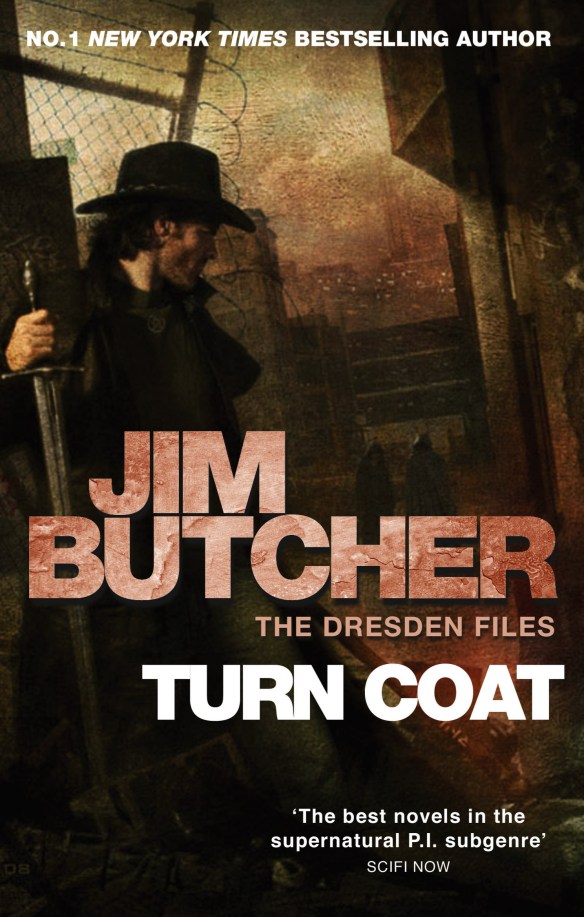
Turn Coat Cover

Publisher: Penguin Audio (Audiobook – 7 April 2009)

Series: Dresden Files – Book 11

Length: 14 hours and 36 minutes

My Rating: 5 out of 5 stars

Amazon

It’s a Dresden Files multi-feature today! In addition to reviewing Small Favour, I also check out the 11th book in the series, Turn Coat.

As I mentioned in my other post tonight, I have been in a real Dresden Files mood recently.  Thanks to how much fun I had with Small Favour, I immediately started listening to the 11th entry in the series, Turn Coat, which was another excellent novel.  I managed to finish off Turn Coat in a couple of days, and it proved to be another amazing entry in the series, tying up several long-running storylines while diving into some of the unique relationships surrounding the protagonist.

Throughout his entire magical career, professional wizard Harry Dresden has been feared and despised by the White Council of Wizard after killing his crazed mentor with magic.  Despite his crime being in self-defence, Dresden was watched and harassed for most of his life by a Warden of the White Council tasked with slicing his head off if he showed any dark magical inclinations.  The man who so relentlessly watched him was the implacable Warden Morgan, who still suspects Dresden of dark magic to this day.  So when Morgan shows up wounded at Dresden’s apartment asking for help, Dresden is reluctant to provide it.

Morgan has been accused of betraying the White Council and murdering one of its most senior members.  Despite the long history of hatred, Dresden agrees to help him, fully aware that Morgan is incapable of committing the acts he is accused of.  But by sheltering Morgan, Dresden has made himself a target of the White Council, and the only way to survive is to identify the real murderer before Morgan is discovered.

Digging into the case, Dresden soon uncovers an insidious conspiracy that threatens the fragile stability of the White Council and the world of magic it governs.  Forced to face off against friends, mercenaries, rogue vampires and one of the most dangerous mystical creatures in existence, a skinwalker, Dresden finds himself walking a razor’s edge.  If he succeeds, he could start a civil war within the White Council, but if he fails, he will be executed alongside Morgan.  With danger all around, can Dresden survive both his enemies and his own complicated feelings for Morgan?

This was a very interesting and compelling entry in the Dresden Files series, and I had quite a bit of fun with it.  Unlike the preceding novel, Small Favour, Turn Coat has a bit of a slower pace to it, and there is more of a focus on conspiracy, mystery and character growth rather than full on action.  The story has a very strong start, especially as Butcher brings back one of the more complex supporting characters: Morgan.  A lot of the story revolves around the contentious history between Dresden and Morgan, and the powerful tension between them makes for some excellent moments in the story.  I liked the central premise of Dresden attempting to uncover a conspiracy at the heart of the White Council and it follows up several key storylines from the rest of the series.  The shadowy plot that emerges is very intriguing, and the mixture of players, as well as a particularly terrifying antagonist, really ensures that the story is highly compelling the entire way through.  Everything leads up to the big fight sequence at the end of the book quite nicely and it was fun to see the unusual array of Dresden’s allies face off against a dangerous and deadly force.  The following big reveal of who the real antagonist of the story is was also very well set up and quite clever, although I was able to figure out the culprit some time in advance.  Still, this really didn’t detract from the impact of the reveal and the subsequent tragic events really hit the reader hard.  Butcher ends Turn Coat on a troubled and tragic note, with more questions than answers, and I quite enjoyed the darker, less hopeful tone that emerged as a result.

Butcher applied his typical writing style to Turn Coat, which I greatly appreciated, especially as it makes jumping from book to book in the series easy when I’m in the mood for something familiar to escape into.  Thanks to Butcher’s great continued use of the first-person perspective, you get a complex and intense story in Turn Coat, especially as much of the narrative focussed on Dresden’s hunt for the traitor and his other personal issues.  The protagonist’s usual glib outlook on life helped to provide much of the book’s humour, which melded well with the compelling fantasy and investigation elements of the book.  Butcher made Turn Coat particularly dark in places, and the haunting depictions of certain creatures and the inherent tragedy of much of the plot helped Turn Coat really stand out.  I personally enjoyed how well Butcher expanded the lore surrounding the White Council and the subsequent magical politics and backstabbing that emerged was a fascinating inclusion.  As with most of the Dresden Files books, Turn Coat can be read as a standalone novel or a starting point to the larger series, although much of the enjoyment of this 11th book relies on the continuation of key storylines and character arcs from the previous novels.  However, Butcher does an outstanding job of rehashing key events and characters were needed, so it is very easy to follow along if you start here.

I once again need to highlight some of the amazing characters featured in Turn Coat, each of whom expertly enhance the overall story.  Obviously, Dresden gets most of focus in Turn Coat and he proves to be as entertaining and enraging as usual.  Dresden has quite a lot of emotional baggage to unpack here, especially when it comes to his past with Morgan, and their hostility and inability to agree on the White Council and the laws of magic makes for some excellent scenes.  That being said, it is clear that Dresden has grown a lot as a person and a mentor by this point in the series, and his ability to plan ahead and outthink his opponents is quite impressive.  Thanks to how the story unfolds, the intriguing and harsh character Morgan got quite a lot of focus and I was really glad to see more of him here in Turn Coat.  Morgan has only had a few appearances in the series and is usually treated as a secondary antagonist thanks to his hostile attitude towards Dresden.  Butcher spends much of Turn Coat unpacking Morgan’s personality, and you finally get to understand why he’s so strict and concerned about dark wizardry.  The scenes featuring both Dresden and Morgan are some of the best in the book, and I deeply appreciated how Butcher was able to both expand upon and wrap up their turbulent relationship here.

Aside from Dresden and Morgan, Turn Coat also features an outstanding and compelling supporting cast, each of whom adds a lot to the overall story.  Recurring characters Molly Carpenter and Thomas Raith each get a great focus in Turn Coat for different reasons, with Molly trying to deal with the inherent prejudice of the White Council against her and Dresden, while Thomas is tortured for a good part of the book and reverts to his baser instincts.  Dresden’s current love interest, Anastasia Luccio, also has a great outing in Turn Coat, and certain elements of her emotional state prove quite vital to the story in some clever and quite tragic ways.  Dresden’s giant dog, Mouse, who is always a scene stealer, has some fantastic moments in Turn Coat, especially when he proves to be the only intelligent adult in the room when it comes to Molly, Morgan and Luccio.  There are also some great scenes featuring small pixie Toot-Toot and wizard elder Listens-to-Wind, who are very entertaining and fun in their own ways.  Finally, I really need to highlight one of the more sinister figures of the book, the skinwalker (also known as a Naagloshii), a Native American spirit who bursts into the scene by driving Dresden insane with fear.  Butcher did an amazing job building them up as a mega shapeshifting threat quite early in the story, and their powerful abilities and dark nature really comes across throughout the entire story.  These characters and more each added so much to the story and I had an amazing time seeing all of them get even further developed by this talented author.

As with Small Favour and the other Dresden Files books I have enjoyed over the years, I chose to grab the audiobook version of Turn Coat, which is just the best way to enjoy this amazing novel.  Thanks to the narration of the always talented James Marsters, Turn Coat was a real joy to listen to, and I love how well Marsters dives into the various characters.  His fun takes on many of the figures, especially protagonist Harry Dresden, are just perfect, and you must appreciate how well he knows all of the cast at this point.  Marsters does a lot of fantastic voices in Turn Coat, although I particularly enjoyed the voice he used for new character Binder, who sounds an awful lot like a certain blonde vampire from Buffy the Vampire Slayer.  I absolutely powered through this outstanding audiobook, and despite its 14 and a half hour run time, I managed to listen to it in an enjoyable two days.  Easily to best way to enjoy a Dresden Files novel, you will not be disappointed by the Turn Coat audiobook.

As you can no doubt tell from the gushy review about, I had a lot of fun with Turn Coat, and it was an outstanding addition to one of the very best fantasy series out there.  Slick, emotionally rich and building on some amazing long-running storylines, Turn Coat had so much going for it that I honestly could not put it down.  Heck, thanks to how awesome both Turn Coat and Small Favour was, I listened to yet another Dresden Files book, Changes, which I am also featuring today.  This is such an epic series, and Turn Coat is another five-star read that I cannot recommend enough.

Amazon

Throwback Thursday – Warhammer 40,000: Malleus by Dan Abnett

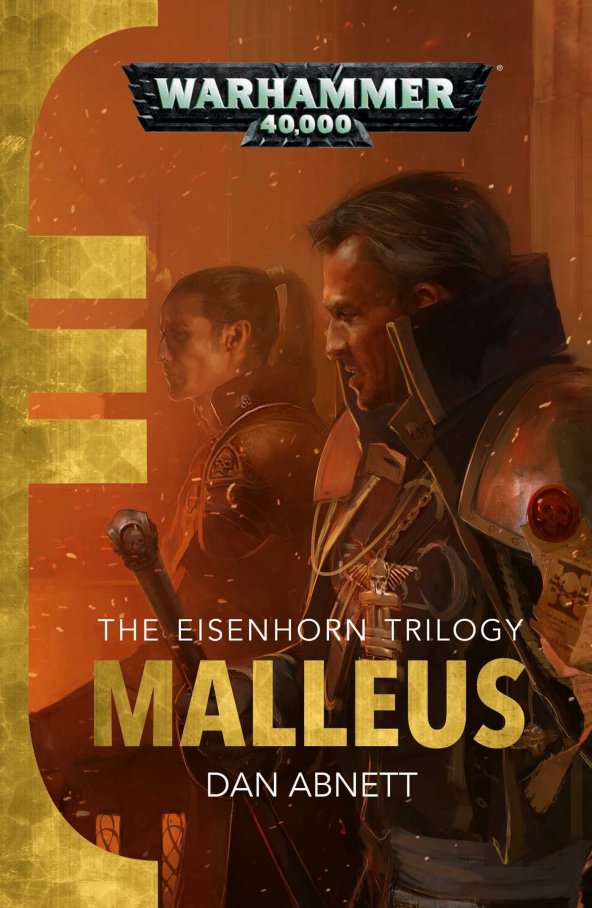
Warhammer 40,000 - Malleus Cover

Publisher: Black Library (Trade Paperback – 27 December 2001)

Series: Eisenhorn – Book Two

Length: 10 hours and 13 hours

My Rating: 5 out of 5 stars

Amazon     Book Depository

Welcome back to my Throwback Thursday series, where I republish old reviews, review books I have read before or review older books I have only just had a chance to read.  For this week’s Throwback Thursday, I continue my extensive dive into the Warhammer 40,000 universe with the awesome, galaxy-spanning thriller, Malleus by Dan Abnett.

For one of my latest Throwback Thursday reviews, I took a look at one of Dan Abnett’s iconic Warhammer 40,000 novels, Xenos, the first book in the incredible Eisenhorn trilogy.  This fantastic book, which followed Inquisitor Gregor Eisenhorn, a hunter of dark influences in the Imperium of Man, was a clever and compelling read that saw Eisenhorn face off against a range of terrible foes who seek to destroy humanity from within.  I had an outstanding time with Xenos, which really showcased Abnett’s skill as an author (I have also really enjoyed his Gaunt’s Ghosts novels, including First and Only, Ghostmaker and The Vincula Insurgency).  Indeed, I enjoyed it so much that I quickly decided to continue the Eisenhorn trilogy by listening to the second book in the series, Malleus, another exceptional read that takes its protagonist on another dark and engrossing adventure.

In the 41st Millennium, the dark enemies of mankind, whether they be heretical, daemonic, or alien in nature, continue to try and destroy the Imperium of Man from within.  It falls to dedicated inquisitors, such as Gregor Eisenhorn, to battle their malign influences by whatever means they deem necessary.  But what happens when the very institutions that Eisenhorn has long fought to uphold are turned against him?

Whilst battling against deadly alien influences on an isolated planet, Eisenhorn is made aware of certain allegations against his character which suggest that he has been corrupted by the influence of Chaos.  Initially planning to ignore the rumours and continue his vital work safeguarding humanity, his plans are put on hold when a terrible act of destruction unfolds on the planet of Thracian Primaris.  Investigating its causes, Eisenhorn is thrust into another deadly conspiracy, one tied to a foe he last encountered 100 years before, the daemonhost Cherubael.

Chasing after Cherubael and his minions, Eisenhorn attempts to discover what their latest unholy plan is.  However, his investigation reveals that Cherubael is just a pawn, and that the true mastermind of the plot he has uncovered may be a fellow inquisitor.  However, before Eisenhorn can find and confront them, he himself is declared a heretic and renegade by puritan members of his order, forcing him to flee.  Chased by the members of the Ordo Malleus, as well as other deadly hunters loyal to Imperium, Eisenhorn must work outside the bounds of his usual authority to prove his innocence and find the true culprits.  But to defeat his enemies, Eisenhorn may be forced to cross a dangerous line and become the very thing he has sworn to destroy.

Damn, Abnett was on a major roll when he wrote the Eisenhorn novels, as the second book, Malleus, is getting another five-star rating from me.  Brilliantly combining a taut and intrigue-laden plot with the darkest elements of the Warhammer 40,000 universe, Malleus is an addictive and powerful read that proves near impossible to stop listening to.

Malleus has an incredible story that I found to be pretty damn addictive.  Set 100 years after the events of Xenos, Malleus continues to follow Inquisitor Eisenhorn as he investigates several malign cults and figures throughout his sub-sector of space.  The story soon ties into some of the lingering storylines from Xenos as the daemonhost Cherubael makes another appearance, framing Eisenhorn as a heretic.  After a massive and suitably destructive series of events, Eisenhorn is thrust into a whole new investigation, trying to finally hunt down the figures that vexed him during the events of Xenos.  Traversing the sector in pursuit of Cherubael and other rogue inquisitors, Eisenhorn finds himself thrust into battle after hopeless battle, and his constant losses war with his determination to finish the case.  The protagonist faces several major hurdles towards the middle of the book, including capture and imprisonment by a fellow inquisitor for false crimes.  Eventually escaping, Eisenhorn spends much of the book as a fugitive hunted by loyalist forces, which is an exciting new element that Abnett plays to full effect to enhance the plot.  The overarching mystery/conspiracy plot of the book comes together extremely well, and I loved the outstanding investigation angle that follows as Eisenhorn desperately tries to find the evidence that not only ends the threat but exonerates him.  This hunt for answers is actually set over a substantial period of time, mainly due to the delays associated with space travel, but this only increases the power of the plot as you witness Eisenhorn lose years of his life being hunted.  Everything leads up to a massive confrontation with plenty of bloody battles and dangerous decisions that leave several fantastic characters dead or damaged.  The ultimate conclusion is pretty impressive, especially as Abnett really starts to showcase his protagonist’s inevitable fall from grace here, and he leaves the book on a particularly dark note that was so damn awesome.

Just like with Xenos, Abnett has a fantastic writing style that really helps to enhance Malleus’s narrative and make the book very addictive and exciting.  Perfectly utilising an excellent chronicle style that allows you to see inside Eisenhorn’s head, you are swiftly drawn into the complex plot.  Abnett keeps up a swift and intense pace the entire way through, and you barely have a moment to stop and breathe before the next intriguing event takes over.  The blend of intrigue, Inquisition politics, sector-spanning conspiracies, complex character development, unique Warhammer concerns, and impressive action is a heady mix and you get really get caught up in the hunt for the antagonists and Eisenhorn’s fight to prove his innocence.  I loved how intense and deadly some of the crazy battle scenes got and Abnett has great skill at showcasing his characters in mortal danger.  His attention to detail also results in some breathtaking sequences, and I was really impressed by that epic parade sequence, especially its ultra-chaotic ending.  Abnett also takes the time in Malleus to set up some future storylines and alternate books, with some fun hints at novellas/short stories you should check out, while also quickly introducing his next major protagonist, Ravenor.  All these brilliant writing elements, and more, really help to drag you into this elaborate narrative, and I deeply enjoyed the more intrigue-focused stories that are the hallmark of the Eisenhorn books.  A worthy and powerful sequel to Xenos that really showcases the awesome characters and continues the outstanding and elaborate storylines.

I really loved the elaborate Warhammer 40,000 elements that Abnett featured within Malleus as the author dives right into the heart of the Inquisition and their battles.  Just like with Xenos, you get a great understanding of the various internal threats that the Imperium faces in this universe, as Eisenhorn attempts to combat various conspiracies and threats.  However, there is also a much deeper look at the inner workings of the often hidden Inquisition Ordos, especially as Eisenhorn is forced to work against the factions associated with them, including the Ordo Malleus, who think he has been compromised.  The ensuing hunt for answers leads the protagonist, and by extension the reader, on a mighty chase around various unique planets in the Imperium, including Cadia before the fall, and Abnett has a lot of fun exploring the intriguing elements associated with these locations, as well as the general lore surrounding inquisitors, daemons and more.  I did find it interesting that one of the major McGuffins of the book, the mysterious pylons of Cadia, ended up seeming a little more important in hindsight after the 13th Black Crusade, and you have to wonder if the antagonist’s villainous plan didn’t actually have some merit.  I felt that this was a particularly awesome Warhammer 40,000 book and I deeply appreciated how the universe’s unique elements and lore were able to seamlessly support the elaborate tale that Abnett wrote here.  Due to Abnett’s detailed and compelling writing style, new Warhammer readers could easily start their exploration of the franchise with Malleus and get a rather good idea of the universe.  However, I would really recommend starting with Xenos, as you get a much better introduction to key details and characters there.  An overall exceptional read that makes full use of the massive, extended setting.

A highlight of any Abnett book is always the outstanding and highly complex characters, and Malleus has those in spades.  The focus is once again on series protagonist and narrator, Gregor Eisenhorn, who grows as a character with each passing adventure.  I really liked how Abnett portrayed Eisenhorn in Malleus and his compelling mission for justice and redemption is pretty intense.  The Eisenhorn here is a different creature to that in Xenos, especially as, after 100 additional years in the Inquisition, he is a lot more experienced and skilled in his work.  Now commanding a small army of followers, Eisenhorn has different methods and resources than before, but the same determination, loyalty and kindness (at least compared to other inquisitors) is still there.  However, Malleus sees Eisenhorn go through some major battles, both mentally and physically, as he is forced to confront an enemy within his own order while defending his own methods and character.  Watching him declared a heretic by his fellow inquisitors is pretty brutal, and Abnett throws in a heartbreaking prison scene to keep the readers intrigued.  These events, coupled with some personal losses, and the continued presence of beings far more powerful than him, force Eisenhorn to make deals and cross lines he really shouldn’t.  I love how each of the Eisenhorn books show the protagonist’s slow fall towards radicalism, and Malleus is an interesting starting point for that, as you understand why Eisenhorn is forced to go down this route.  While he ends the book with most of his humanity and integrity intact, that brilliant final scene shows that he is getting awfully comfortable with his feet over a line he previously feared, and I cannot wait to see how far he falls in the next Eisenhorn novel.

On top of Eisenhorn, Abnett features a pretty awesome collection of supporting characters who assist the inquisitor in his investigation and they each add their own distinctive personality to the narrative.  There is a good continuation of character arcs from the first book as several of his followers from Xenos make a return here, including the entertaining Savant Aemos, former Arbites investigator Fischig and his dedicated psychic blank Bequin.  Each of them is a little older, wiser and more familiar with the hardships of being an inquisitor’s acolyte, and I liked the stronger relationships that developed amongst them, particularly Bequin, who really comes into her own in this book as a veteran.  There are several interesting new characters added as well, such as the bounty hunter Nayl or brash pilot Medea Betancore (replacing her father Midas), and I felt that their distinctive personalities added a fun and entertaining edge to the narrative.  I was surprised that new character Gideon Ravenor, who goes on to get his own spinoff series, only had a relatively small appearance in this book, as I figured he would be a pretty major character to get his own story.  Still, he gets a good introduction here and it will be interesting to see how his arc plays out in the future.

Malleus also features several intriguing antagonists, each of whom test Eisenhorn and his colleagues in different ways.  While there are the usual array of cultists, aliens and other creatures, most of the antagonists in this novel prove to be other inquisitors, who are either working on their own radical plots or who believe that Eisenhorn is the true heretic who needs to be stopped.  This adds a very interesting dynamic to the story and it was fascinating to see the varied philosophies and plots amongst the rival orders and factions.  I did find it interesting that the main villain of the story, a mysterious inquisitor acting from the shadows, only had a very minor appearance in the book, and while you feel his presence, a bigger appearance from him might have been in order.  However, this character is more than made up for by his principal minion, the daemonhost Cherubael, who returns after his fantastic appearance in Xenos.  Cherubael is a brilliantly sinister character who steals every single scene they are in thanks to their menacing monologues and intriguing insights.  The outstanding obsession he forms with Eisenhorn is a great deal of fun and I loved seeing this evil figure toy with the inquisitor and force him to go to great lengths to defeat him.  Abnett really knows how to write an outstanding character, even in a limited amount of time, and it will be fascinating to see what happens to these characters in the next Eisenhorn book.

I of course chose to listen to Malleus on audiobook, as it is my preferred way of enjoying great Warhammer books, and I was not disappointed with how it turned out.  This fantastic format once again deeply enhanced the quality of the story and you can practically see the awesome battle scenes and other breath-taking elements of the wider Warhammer 40,000 universe.  Narrator Toby Longworth, who is the go-to narrator for all of Abnett’s Warhammer audiobooks, does another outstanding job with Malleus, and I loved how he was able to keep the pace of the production going.  He also has an outstanding voice that really conveys the dark and dangerous nature of the universe, while also perfectly bringing the characters to life.  I deeply appreciated how Longworth made sure to utilise the same character tones that he previously featured in Xenos here, and it gave the Malleus audiobook a great sense of continuation.  All the new characters are also given excellent voices, and I loved how awesome he made them sound, especially the more supernatural or alien beings that the protagonist comes across.  I was frankly hooked on this audiobook from the very start, and it is an exceptional way to enjoy this epic narrative.  With a run time of just over 10 hours, I managed to power through this audiobook very quickly, and this is definitely the best format for the Eisenhorn series.

Dan Abnett continues to showcase why he is one of the absolute best Warhammer authors out there with the second book in his superb and beloved Eisenhorn trilogy, Malleus.  Featuring a powerful and incredibly captivating narrative of conspiracy, heretics and desperation, Malleus takes Abnett’s compelling protagonist on an even darker journey of despair, compromise and hard choices.  Brutal, intense and impossible to put down, Malleus is easily one of the best Warhammer books I have ever read, and I cannot get over how exceptional it was.  A very highly recommended book, I plan to check out the third and final Eisenhorn book soon as I can to see how this epic series ends.

Amazon     Book Depository

Warhammer 40,000: Grim Repast by Marc Collins

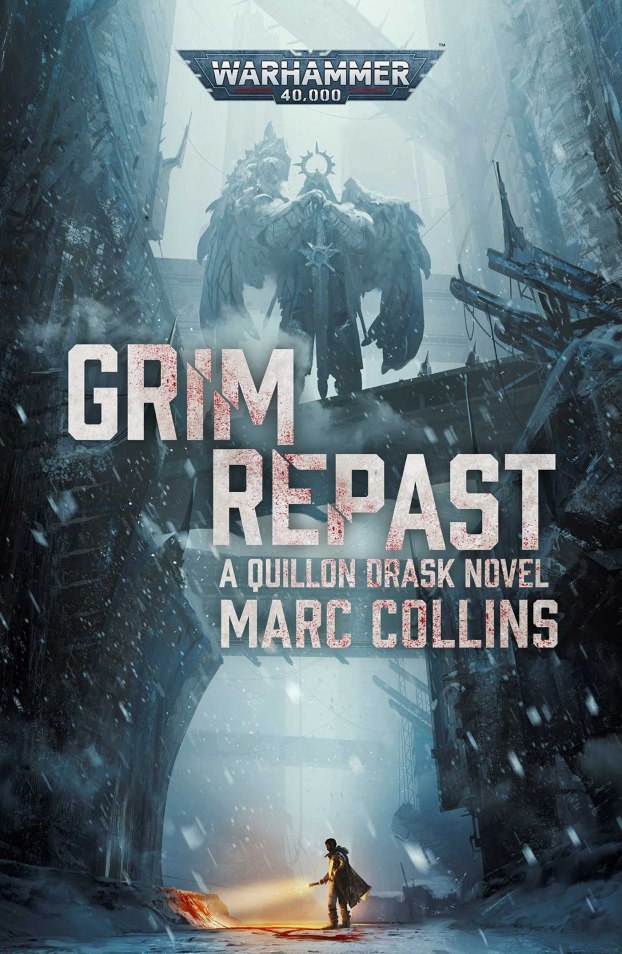
Warhammer 40,000 - Grim Repast Cover

Publisher: Black Library (Audiobook – 25 September 2021)

Series: Warhammer Crime

Length: 9 hours and 52 minutes

My Rating: 4.5 out of 5 stars

Amazon     Book Depository

Prepare for a gruesome and dark murder mystery novel in the gritty Warhammer 40,000 universe with the incredible and awesome Warhammer Crime novel, Grim Repast by Marc Collins.

I have made no secret of the fact that I am currently in the middle of a big Warhammer reading frenzy, having recently reviewed several awesome books, including two novels in my last Throwback Thursday posts (Xenos by Dan Abnett and Deus Encarmine by James Swallow).  However, I am still not done with the tie-in books in this very cool franchise as I have just finished another outstanding read, this time a book which is part of the Warhammer Crime sub-series.

The Warhammer Crime books are a fantastic and captivating series which, as the name suggests, blends crime fiction storylines with the epic Warhammer 40,000 universe.  All set within the tortured and sprawling human city of Varangantua, these great novels tell a range of entertaining and complex crime stories, including dark murder mysteries and elaborate thrillers, which make great use of the gothic futuristic setting.  I have so far enjoyed two Warhammer Crime entries, Dredge Runners and The Wraithbone Phoenix by Alec Worley, both of which were pretty epic reads.  These initial awesome reads really sold the Warhammer Crime series to me, and I have been interested in enjoying another entry.  I ended up choosing the great sounding read, Grim Repast, by rising Warhammer author Marc Collins.  One of Collins’s first full-length novels, Grim Repast is an exceptional read with one of the darkest crime narratives I have ever had the pleasure of reading.

“This city eats men….”

Veteran probator Quillon Drask thinks that he has seen all the dangers, depravities and villains that Varangantua has to offer, but he is about to discover a whole new level of horror.  Already traumatised and ostracised after his last lethal case and the betrayal that accompanied it, Drask’s first new investigation is not the simple job he was hoping for, as a body has been found in the dying district of Polaris.  The victim, a businessman on the wrong side of town, has been gruesomely mutilated, the implications of his injuries have frightening implications.

As more bodies are discovered, Drask finds himself chasing after a deadly killer who murders and dismembers without compunction and who has a sudden obsession with tormenting Drask.  Forced to play a deadly game that uncovers the corruption of his own organisation and sets him against the city’s elite, Drask finds himself alone and afraid against an enemy he doesn’t understand.  Only his twisted insights into the criminal mind, as well as the lessons of his career and devious dead mentor, offer the answers that he needs to solve the case and stop the killer.  However, not even Drask’s dark mind can comprehend the true horrors that lie beneath his city, one that connects to Varangantua’s past and a dangerous hunger that has always controlled people like him.

Wow, Marc Collins really came out swinging with this epic and outstanding Warhammer Crime entry.  Grim Repast is probably one of the best pure mystery novels set in the Warhammer universe that I have so far read, and I loved how seamlessly Collins was able to blend a dark, psychological crime fiction narrative with the grim and repressive atmosphere of a Warhammer 40,000 city.

Collins has cooked up a pretty wicked story for Grim Repast, which brings together multiple elements from across the genres to really highlight just how epic and complex a Warhammer story can be.  Following the compelling and damaged protagonist and narrator Probator Quillon Drask through the deadly streets of Varangantua as he chases after a lethal serial killer, Grim Repast is first and foremost a crime novel, and one that really grabs the reader’s attention.  Coming off as a dark psychological thriller with classic noir detective elements to it, the protagonist is forced to delve into the darkest heart of his massive, gothic city when he investigates several connected murders whose victims have been butchered in inventive and dark ways.

Collins sets up the case extremely well and then adds some intriguing complications to it where Drask is forced to investigate against the opposition of his bosses and their corporate controllers.  Bringing together a ton of character growth, disturbing developments in the murder case, as well as some fun action as Drask comes face-to-face with the killer in disguise, the plot moves quickly, and you are soon very hooked on finding the killer and the people pulling the strings behind them.  Forced to contend with the interference of a giant corporation, the protagonist finds himself in the middle of a dark conspiracy and, after the typical cop requirement of being suspended without his gun or badge, investigates on his own.  The mystery itself is well-set out and slowly unfolds, even if the overall culprit behind it isn’t too surprising.  However, the obvious suspect isn’t a narrative weakness, as the power of the story revolves around the protagonist fighting through the corruption and the insanity to confront his suspect, as well as the wider implications and horrors his investigation reveal.  The last third of the story is particularly brutal and grim as the protagonist uncovers some pretty horrendous crimes tied into the dark past of Varangantua, and is forced to face them by himself.  Everything ends in a pretty bloody manner, and I had a wonderful time seeing how this entire awesome crime narrative came together.  I loved the cool conclusion of this book, and the hints at some potential adventures for this character is something I would be extremely keen for.

This was a very well written book, and I really appreciated how Collins was able to tell such an effective and powerful story.  Featuring a quick pace and a brilliant focus on a very damaged protagonist, Grim Repast keeps you on your toes the entire time, and I loved how well it blended multiple crime fiction elements for the story while also making full use of the grim Warhammer setting.  The crime itself has some outstanding elements to it, and I was getting some major Jack the Ripper vibes from the plot as Drask receives several taunting notes from the killer.  Collins really brings about a dark and desperate tone around the characters and the city itself, and this lends itself perfectly to the complex crimes, especially as the murders have far deeper meaning and consequences than are initially seen.  The use of corruption and dangerous corporations helped to ensure that the character had even more mysteries and obstacles to overcome, which I thought was an outstanding bonus hook to the story.  The fantastic focus on murder and mystery rather than on wider universe elements ensures that Grim Repast also serves as a pretty good entry into Warhammer 40,000 fiction, especially for crime fiction lovers.  While some elements of the story hint or briefly discuss larger events or bits of the universe’s wider lore, you really don’t need to understand it to enjoy this book, and anybody who loves a complex and gloomy crime fiction can easily have their first taste of Warhammer fiction here without any issues.

Perhaps one of the best elements of Grim Repast that Collins featured was the setting of Varangantua itself.  While the continent-spanning city of Varangantua has appeared in the other Warhammer Crime books, I don’t think I fully appreciated just how good a setting it is until reading Grim Repast.  Collins sets out to make the city as dreary, deadly and dark as possible, and you find yourself getting lost amongst its constricting streets, compelling people and many hidden dangers.  The author honestly sets the city up as a character in itself, and it is quite powerful to see the protagonist move amongst its streets as Varangantua works to consume him, mind, body and soul.  To just make things a little grimmer, Collins chooses to set most of the story in the section of the city known as Polaris, an icy, desolate part of town that is slowly dying due to a lack of commerce.  I love how Polaris’s fortunes seem to match that of the protagonist himself, and Collins really amps up the noir vibes of Polaris with a ton of neon signs, dingy apartments and corrupt cops, making it feel that little bit more like a classic police story.

However, no matter how dingy and gothic Varangantua may be, it is still a futuristic city, so the universe’s advanced technology and other wider Warhammer elements are integrated into the city as well.  There are some great scenes where the city’s law enforcement utilises interesting investigation methods to solve the brutal murders, and I liked seeing the set up of a police force within the Warhammer 40,000 setting, especially as it is as corrupt or degraded as most things within the Imperium of Man.  I also really enjoyed how Collins was able to tie the mystery into the history of the city itself, with key parts of Varangantua’s past coming to the surface during the course of Grim Repast.  This gives the book a lot more substance when it is fully revealed, especially as it increases the overall stakes of the book, and I really appreciated and enjoyed how Collin’s utilised this brilliant setting throughout his book.

I also have to highlight the outstanding central protagonist and point-of-view character, Quillon Drask.  Collins created a wonderful character in Drask, a beaten down and emotionally damaged cop, reminiscent of classic pulp or noir detectives and investigators.  Still emotionally traumatised by the betrayal of his mentor during the last case, Drask attempts to find some normalcy in his work.  However, Drask is now isolated from the rest of his force, not just because of his propensity for finding the weirdest cases, but because of the taint surrounding his mentor.  Drask channels much of his anger and trauma into the new case, but he soon confronts forces that even he can’t fight through.  His obsession with this new case, his well-founded hatred of the aristocracy, and his desire for redemption, lead him to continue his investigation despite his boss’s orders, which leads him into all manner of trouble.  Collins did an outstanding job showcasing this character’s intense mental trauma throughout Grim Repast, and he really comes across as a complex and dark individual.  Despite being a troubled soul, you can’t help but like Drask, as his grim stubbornness just keeps forcing him towards the abyss, and nothing he does in the book, not even solving the murders, brings him any real comfort.  I loved how Collins also explored his penchant for getting into the darkest parts of the human mind and empathising with killers, and he reminded me a bit of Will Graham from the Hannibal Lector franchise, which isn’t too surprising considering that there are some major Thomas Harris influences in this book.  Drask gives a great running commentary on his dark observations of the city around him, and Collins really dives into the mind of his character throughout the course of the book.  This really adds to the book’s overall tone and quality, and I absolutely loved how Collins set out his central protagonist.

If I were to make one major complaint about Grim Repast, it would be that Collins relied a little too much on people reading his short story, Cold Cases, first.  Appearing in the Warhammer Crime anthology book, No Good Men, Cold Cases was the previous (and first) appearance of Quillon Drask, in which he hunted down another notorious killer.  Collins brought up Cold Cases multiple times throughout the course of Grim Repast, as the events helped form the protagonist and led to his mental/profession state in Grim Repast.  While I appreciate that Collins was trying to tie his new book back into this introductory story, I found it a bit confusing and irritating at times, mainly because I haven’t read Cold Cases.  I kind of got a little tired of the continued references to Cold Cases throughout Grim Repast, as it messed with the initial flow and enjoyment of this novel.  While you can pick up the events of Cold Cases through context as Grim Repast continues, I felt that Collins could have either eased up on the references a little or featured a better summary of this short story at the start, especially as it was such a big part of the protagonist’s motivations.  While this wasn’t a massive issue in my enjoyment of Grim Repast, it bugged me the entire way through, and it is something readers interested in Grim Repast should be aware of.  Overall, though, this was a pretty epic read, and I would recommend it, even with this issue.

To no-one’s surprise I ended up listening to the Grim Repast audiobook, which was pretty damn awesome.  I have so much love for Warhammer 40,000 audiobooks, especially as they are always so successful at capturing the dark tone of the settings as well as the complex stories.  I felt that Grim Repast was a particularly good example of this, as its audiobook really drew the reader into the cold surrounds of Varangantua and refused to let you leave.  It helped that Grim Repast was narrated by the highly talented Richard Reed, who previously impressed me with his narration of Nate Crowley’s The Twice-Dead King books, Ruin and Reign.  Reed has a naturally tough and rugged voice that does Grim Repast’s story a lot of justice, as his tones perfectly fit the noir-esque city of Varangantua.  I especially enjoyed how he portrayed Quillon Drask throughout the book, giving him a very gravelly tone that showcased his gruff exterior, while also expertly conveying the protagonist’s inner turmoil and pain.  You really get the full sense of who Drask is through Reed’s great voice work, and I really cannot emphasise how much value Reed’s narration added to this awesome audiobook.  With a runtime of just under 10 hours, Grim Repast is an easy audiobook to quickly power through, and you will really find yourself getting dragged into this elaborate and powerful tale in this format.

Fans of crime fiction, Warhammer fiction and everything in between should look no further than Grim Repast by Marc Collins for their next epic read.  Bringing together a complex and twisted murder mystery with the iconic setting of Varangantua in the Warhammer 40,000 universe, Grim Repast is an outstanding amalgamation of mystery, a dark psychological thriller, and the madness of the grim Warhammer 40,000 future, all of which makes for one hell of a dark and emotionally charged story.  I had an amazing time reading this powerful read, and it comes very highly recommended.

Amazon     Book Depository

Throwback Thursday: World War Z by Max Brooks

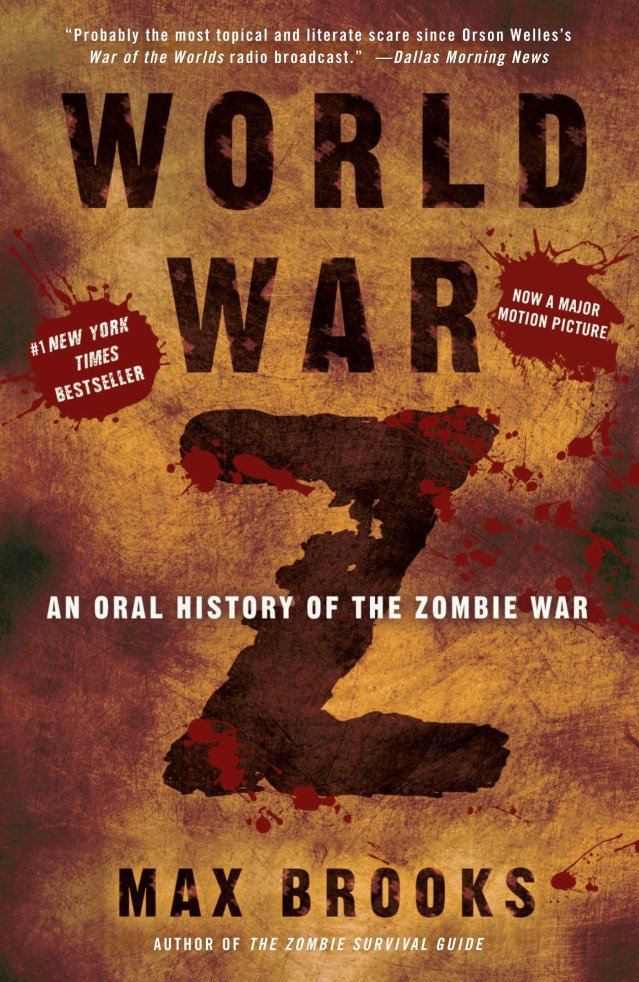
World War Z Cover

Publisher: Random House Audio (Audiobook – 14 May 2013, originally published 12 September 2006)

Series: Standalone

Length: 12 hours and 9 minutes

My Rating: 5 out of 5 stars

Amazon

Welcome back to my Throwback Thursday series, where I republish old reviews, review books I have read before or review older books I have only just had a chance to read.  For my latest Throwback Thursday review I take a look at the zombie horror classic, World War Z by Max Brooks, a truly epic and outstanding read.

One of the biggest novels that I have been meaning to read for ages was the highly regarded zombie novel, World War Z, also known as World War Z: An Oral History of the Zombie War.  Written by Max Brooks as a follow-up to his first book, the non-fictional The Zombie Survival Guide, World War Z is a unique novel that fully examines a zombie apocalypse from multiple perspectives.  I had heard some great things about this novel, and I even enjoyed the movie adaptation when it came out (more on that later).  Unfortunately, I never got a chance to read it and I kind of figured for a while that it might stay in my to-read pile for a while.  However, it moved much higher up my list of books to check out after I read Brooks’s 2020 novel, Devolution, which was one of my favourite novels of 2020 (as well as one of my favourite all-time horror novels).  I had also heard a lot of praise for World War Z‘s awesome audiobook edition, so when my wife and I needed some entertainment during a recent cross-country road trip, this was our first choice.

Plot Synopsis:

The Zombie War came unthinkably close to eradicating humanity. Max Brooks, driven by the urgency of preserving the acid-etched first-hand experiences of the survivors from those apocalyptic years, traveled across the United States of America and throughout the world, from decimated cities that once teemed with upwards of thirty million souls to the most remote and inhospitable areas of the planet. He recorded the testimony of men, women, and sometimes children who came face-to-face with the living, or at least the undead, hell of that dreadful time. World War Z is the result. Never before have we had access to a document that so powerfully conveys the depth of fear and horror, and also the ineradicable spirit of resistance, that gripped human society through the plague years.

Ranging from the now infamous village of New Dachang in the United Federation of China, where the epidemiological trail began with the twelve-year-old Patient Zero, to the unnamed northern forests where untold numbers sought a terrible and temporary refuge in the cold, to the United States of Southern Africa, where the Redeker Plan provided hope for humanity at an unspeakable price, to the west-of-the-Rockies redoubt where the North American tide finally started to turn, this invaluable chronicle reflects the full scope and duration of the Zombie War.

Most of all, the book captures with haunting immediacy the human dimension of this epochal event. Facing the often raw and vivid nature of these personal accounts requires a degree of courage on the part of the reader, but the effort is invaluable because, as Mr. Brooks says in his introduction, “By excluding the human factor, aren’t we risking the kind of personal detachment from history that may, heaven forbid, lead us one day to repeat it? And in the end, isn’t the human factor the only true difference between us and the enemy we now refer to as ‘the living dead’?”

Note: Some of the numerical and factual material contained in this edition was previously published under the auspices of the United Nations Postwar Commission.

Holy hell, that was an exceptional book!  I loved the powerful and expansive narrative contained within World War Z as Brooks attempts to fully encapsulate the entire experience of a zombie apocalypse in impressive detail.  Literally all the good things I heard about this book were true, and I loved his unique and very captivating way of capturing the horrors of this sort of experience, both from the zombies and other humans.  An exceptional and impressively inventive read, World War Z gets an easy five-star read from me.

I cannot get over how awesome and distinctive World War Z was as a concept.  Rather than a traditional novel, Brook’s masterpiece is written as an epistolary novel, written as in-universe oral history anthology of a zombie apocalypse.  The book, which was compiled by this universe’s version of Max Brooks, contained multiple testimonials and interviews, as Brooks seeks out and talks to multiple people who experienced the apocalypse and pulls together their various unique stories.  This book contains around 40 individual stories set out across five chapters which look at the various stages of the zombie war, from its origins all the way up to the postwar ‘new normal’.

At this point I need to make a quick note about the version of World War Z that we checked out.  There are a couple of different World War Z audiobooks out there, but for our trip we listened to the World War Z: The Complete Edition, which combines two separate audiobook adaptations of the novel, and contains all the stories from the original book.  I did look over a paperback edition of World War Z before I started this review, and it looks like our audiobook version covered the full stories well, although I did notice that some of the stories were shortened or missing minor parts.  In addition, the audiobook version did not feature any of the paperback’s footnotes, which contained technical details and notes from the author.  However, I don’t think I lost out on too much of the plot from some of these missing gaps.

I really fell in love with the various individual stories contained with World War Z as Brooks went out of his way to produce the most unique and moving tales that he could.  These are mostly standalone tales, although there are a few interesting crossovers as the book continues, with some character’s mentioning events or supporting figures from other stories in their interviews.  However, as you follow the stories within these five chapters (made up of Warnings, Blame, The Great Panic, Turning the Tide, and Good-Byes), you get a full sense of the entire war, and it quickly comes apparent how cleverly Brooks was crafting everything here.  I personally deeply enjoyed both the individual shorter tales and the much larger connected story of World War Z, and I was deeply impressed with the excellent writing style behind it.  Brooks is a true master of writing deeply personal, character-driven tales of survival, and you swiftly become attached to the various protagonists as they tell their unique stories.  The action within is gruesome, fast-paced and deeply terrifying, and there are multiple over-the-top descriptions of zombie and human violence that will stick with you forever.  This was easily one of the best zombie novels I have read in terms of storytelling and action, and everything about this tale is so damn compelling.

As I mentioned, there are roughly 40 separate stories contained within this anthology, each of which contains its own unique protagonist, supporting characters, settings and unique circumstances.  Naturally, with so many stories you have a bit of a range in terms of storytelling, with some being substantially better than others.  However, I felt that Brooks did a very good job of writing each of these stories extremely well, and there were none that particularly dragged the novel down.  There is a real mixture of narratives here, with particularly gruesome horror stories mixed in with more human-focused narrative, political plotlines, military thrillers, stories that balance on the edge of science fiction, and everything in between.  The spread of these stories works pretty well, with Brooks providing an entertaining mixture of storylines throughout the book so readers aren’t constantly bombarded by tales of horror or tragedy.  Instead, there are often fascinating, humorous and humanising stories thrown in amongst the horror.  This works to make the entire novel flow at a fantastic pace.

While pretty much all these stories are fun and tell some outstanding tales of the zombie apocalypse, there are a few that stood out to me as being a cut above the rest.  I had some early fun with the Stanley MacDonald storyline, which showed an amoral illegal surgeon in Brazil unwittingly transfer a zombie heart into a patient, which led to one of the earliest outbreaks in South America.  The Jesika Hendricks plot showed a brilliant, if very dark, take on ordinary citizens trying to flee the zombies only to experience the other dangers of surviving the winter in a desperate community.  There are several amazing and cynical storylines, such as the Breckinridge Scott and Grover Carison testimonies that showcase the capitalist opportunism that surrounded the initial outbreaks.  I also really liked the South African focused storyline around Paul Redeker, which showed a former Apartheid strategist using his stark and brutal plans to save the country from the undead hordes.  I loved the particularly inventive and clever testimony surrounding the character of Arthur Sinclair Junior, which focuses on how America was reorganised after the initial stages of the war, with the country setting its sights towards industry, construction and warfare, which really highlights the author’s impressive insights into the world.

Two other fantastic World War Z storylines set in Japan focus on two unique individuals, one an “otaku” (a computer-obsessed outsider who tried to live entirely online), and a blind “hibakusha” (a person affected by the atomic bombs used in WWII).  Both characters were outsiders in Japan before the zombie war, but the zombie invasion changed their entire lives and led to them becoming renowned warriors and survivors against all the odds.  These two storylines are extremely compelling, and I loved the way that the author utilised unique subsections of Japanese society and tried to imagine how those sorts of people would survive the zombies.  There was also a really intense storyline, told by Admiral Xu Zhicai, that details a Chinese submarine’s attempt to escape the zombies with their families, which turns into a brilliant, powerful and occasionally disturbing tale of survival, loyalty and family.  I also must mention the Terry Knox testimony that details the actions aboard the International Space Station and the Darnell Hackworth story that looks at the US army’s canine units that helped scout and herd zombies (yay for mini dachshunds, the real heroes of this book).  However, out all the testimonies featured within World War Z, my favourite had to be the ones focussing on soldier Todd Wainio.  Todd battled the zombies at multiple stages of the war, and his multiple entries paint a pretty grim picture but are easily some of the best depictions of the horror of the zombies and the challenges faced by the armed forces.  His first testimony about the army’s initial inability to combat the zombies is very chilling, and it was fascinating to hear about the changes to his training and equipment as the military adapted to fight this new and strange enemy.  I am honestly just scratching the surface of these testimonials here, as pretty much all of them were great in their own way.  However, the ones I mentioned here were my personal favourites, and I had a blast listening to them and seeing how they fit into the wider narrative.

For me, one of the main highlights of World War Z was Brooks’s incredible inventiveness and insights when it came to envisioning a potential world-wide zombie apocalypse.  Thanks to his amazing range of stories, Brooks showcases a vast global catastrophe that impacts everyone no matter where they are.  I loved his depiction of how the apocalypse emerged, and rather than a continuous attack that pretty much destroys everything in a single day, Brooks imagines a gradual catastrophe that is initially ignored and mishandled before it spreads uncontrollably.  This is covered in the early chapters of the book with some substantial skill, and you really get to see how and why everything falls apart, with appropriate zombie violence included.  While there is an understandable focus on America, I found it fascinating to see how Brooks imagined different countries would deal with this crisis, with different culturally informed strategies, and there are even some compelling references to real-life figures (the Nelson Mandela facsimile reacts in a very different way than you’d expect).  The author really dives into all the details of a zombie attack and examines all the pros and cons of various strategies humans could utilise, from fleeing, staying in defensible positions, or fighting back.  There are some brilliant testimonies that cover all of them, and Brooks’s dark depictions of unprepared or overconfident humans failing to understand the threats in front of them and paying the price for it are shocking, bleak and captivating.  Brooks also comes up with some truly unique and clever problems or impacts of the zombies, many of which are referenced or experienced by multiple characters, including floating zombies, marine zombies, feral children who survived without their parents, looters, civil wars, and even crazed humans pretending to be zombies.

These intriguing insights from Brooks’s imagination are further expanded on in the later chapters of the novel, where the author explores how the world order changed because of the zombie war.  Again Brooks dives into multiple countries here, and it was fascinating to witness which countries the author imagines will be destroyed by the zombies and which would thrive.  I really enjoyed his examinations of the way that America needed to reorganise itself and its subsequent battleplans, which were perfectly covered by several of the best characters.  Seeing countries likes Russia, China, Japan and more change in drastic ways a result of this apocalypse was really cool and compelling, especially as the author covers it in such a reasonable and logical manner.  Countries like Cuba and the West Indies thriving due to their isolation was pretty fascinating, and they stood as an interesting contrast to more prominent countries that were disadvantaged or never stood a chance thanks to their socioeconomic issues or unsuitable landscapes.  I loved some of the unique issues that some countries experienced, such as the infested Paris catacombs or the mystery around North Korea, and they leave some intriguing afterthoughts as a result.  Brooks also cleverly examines other unique impacts that the zombies are having on the world, such as extinctions (goodbye whales), changes in global relations, and long-term problems, and I was deeply fascinated and enthralled by all this impressive thinking.  All of this compelling insight and imagination really enhances the stories being told by various characters, especially as they all impact humanity’s potential survival, and I really lost myself in the author’s powerful and impressive vision of a zombie apocalypse.

While World War Z is primarily about survival and the wider impacts of a zombie apocalypse, Brooks also takes the time to cover a few interesting themes.  In particular, he uses this novel about zombies to examine humanity.  While there is a certain overlying theme about the indomitable human spirit and our ability to triumph no matter the odds, there are some very noticeable depictions of the worst parts of human nature.  I found his initial depictions of most people ignoring or ridiculing the slow rising zombie threat to be pretty realistic (keep in mind that this was written 14 years before COVID).  There are also some major critiques about corruption and government incompetence in the face of disaster that I also found to be very intriguing and insightful.  Many of the early chapters that talked about military attempts to fight back had some interesting parallels to the wars in the Middle East, and I really appreciated the author’s clever critiques of these conflicts through the medium of a zombie war.  I felt that Todd’s testimony about the first major battle of the zombie war was a great example of this, as he regales the reader with how politically motivated leadership and incompetence led to a massacre.  All of this added a thought-provoking and entertaining edge to many of the storylines in the novel, especially the earlier testimonies, and I felt that Brooks did an amazing job bringing some of his own insights and critiques into his writing.

As I mentioned a few times above, I listened to the extended audiobook adaptation of this novel, which I personally felt was the absolute best way to enjoy this epic read.  Running at just over 12 hours in length, we absolutely powered through the World War Z audiobook during our road trip, and it served as an excellent entertainment for a long drive.  I often find that having a story read out to you really helps you to absorb everything about the story, and this was particularly true with World War Z.  Not only did the narration allow you to focus on all the details of the testimonials, but the horror elements and action felt a lot more intense, especially when you were dragged into some of the more gruesome scenes.  I also feel that the audiobook version of World War Z had a better flow than the paperback novel.  The testimonials with the audiobook are a lot more separated out, treated as a new chapter each time the narrator changes.  This is very different from the paperback version, which throws multiple testimonials in a quick fire manner, with everything crammed together into the five chapters.  As such, I really felt the audiobook helped to highlight the uniqueness of each testimonial and you really got to focus on each story a lot more.

However, easily the best thing about the World War Z audiobook was the truly impressive voice cast that were featured within.  Brooks, a voice actor himself, recruited a crack team of international actors to fill out his cast, including several A-listers, who give some outstanding and amazing performances.  All these actors really dive into their various roles here, conveying the emotion, fear and insights of their protagonists, and their great voice work definitely enhanced the already cool stories of their characters.  I deeply enjoyed all their voice work throughout the audiobook, and I know that I enjoyed several testimonies even more because of the talented actors voicing them.  This cast is led by Brooks himself, who voices the interviewer, asking all the questions and meeting all the various figures the novel is set around.  Brooks does a really good job here, and his calm, collected interviewing style and additional narration helps to set the scene for the entire novel and moves the other character’s stories along at a great pace.

Aside from Brooks, there are a good 40 or so voice actors featured in the World War Z audiobook, and I was pretty impressed with all their performances.  Some standout early performances include a brief appearance from Nathan Fillion as Canadian soldier Stanley MacDonald; Paul Sorvino, who gives a very fun performances as the sketchy doctor Fernado Oliveira; and Martin Scorsese, who gives an unrepentant portrayal of corrupt businessman Breckinridge Scott.  Other great performances include Kal Penn as Sardar Khan, an Indian soldier who serves an excellent witness to an act of heroism; the late, great David Ogden Stiers, who brings Ukrainian solider Bohdan Taras Kondratiuk to life perfectly as he watches a great act of evil from his government; Common as dog trainer Darnell Hackworth; and Rob Reiner as “The Whacko” a radical politician/former Vice President who shares his strong opinions in a very fun outing.  I really need to highlight some intriguing voice performances from Simon Pegg, who does a pretty good Texan accent in the role of Grover Carlson; and Alfred Molina, whose Australian accent was pretty accurate (a rare talent).

The performances of Masi Oka and Frank Kamai really brought to life the two Japanese characters I mentioned above, as does Ric Young for Chinese Admiral Xu Zhicai’s elaborate testimony.  I also really need to highlight the brilliant work of Alan Alda in this book as he voices pivotal administrator Arthur Sinclair Junior.  Alda, whose voice I have loved since M*A*S*H, perfectly inhabits the role of this intriguing figure, and I loved hearing his narration of how America’s economy was changed.  However, out of all the voice actors in World War Z, my favourite was the always impressive and remarkable Mark Hamill, who voiced standout character Todd Wainio.  Hamill was one of the main reasons why Todd was such a great character, and I loved his outstanding performance as a former ground soldier recounting all the horror of the front line of the zombie war.  There is so much weariness, trauma and cynicism in Hamill’s voice as he narrates Todd’s testimony, and you really feel the character’s resentment and anger.  The way that Hamill describes all the gruesome gore and zombie violence was just so great, and his impressive range and tone helped to really enhance the insanity and horror of the moment.  These voice actors, and the rest of the impressive cast, are extremely epic here, and they turned this production into something extremely impressive.

A quick final note about the World War Z film.  Until I read this book, I really did not appreciate how wildly off-book the film adaptation was.  None of the true magic from the original story appears in the film at all, as they turned it into a generic action flick rather than a clever analysis of how a zombie apocalypse would change the world.  While I did enjoy the World War Z movie on its own, it is a terrible adaptation, with only small elements from the book appearing in the film.  While I can appreciate that this is not the easiest book to turn into a film, they didn’t even try.  I really do hope that someone does a proper adaptation of World War Z at some point, as it frankly deserves a lot better than what it got (perhaps a television series with each episode recreating one of the testimonies).

As you can clearly tell from the massive essay above, I deeply enjoyed World War Z by Max Brooks.  This was easily one of the best zombie novels I have ever read, and it definitely deserves its epic and highly regarded status.  Brooks’s distinctive and brilliant story was just plain amazing and I loved the outstanding combination of smaller testimonies coming together into one connected and thought-provoking tale.  The author cleverly examines every single aspect of a potential zombie apocalypse, and you find yourself not only loving the insane horror elements, but the fascinating political and social impacts that come with such an invasion.  Best enjoyed in the full audiobook format which features so many impressive voice actors, World War Z comes extremely highly recommended and I cannot hype it up enough!

World War Z Cover 2

Amazon

The Kingdom of Liars by Nick Martell

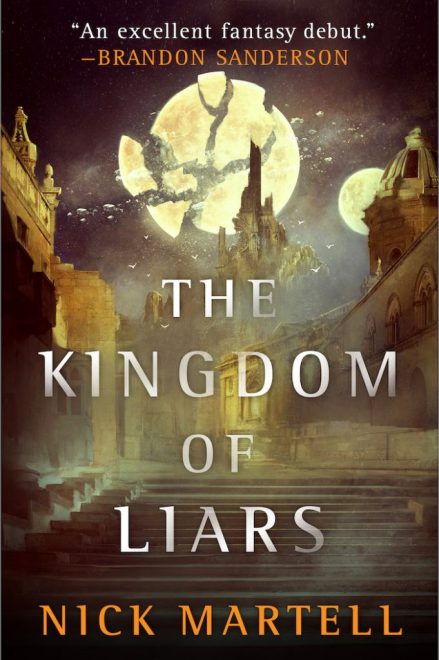
The Kingdom of Liars Cover

Publisher: Gollancz (Audiobook – 7 May 2020)

Series: The Legacy of the Mercenary Kings – Book One

Length: 15 hours and 37 minutes

My Rating: 5 out of 5 stars

Amazon     Book Depository

Impressive new fantasy author Nick Martell presents The Kingdom of Liars, an outstanding fantasy novel that is easily one of the top debuts of 2020.

Welcome to The Hollows, the slowly disintegrating capital of once-great kingdom where magic costs memory to used.  Once a shining beacon of culture and nobility, the city is now a shadow of its former self, surrounded by firearm-wielding rebels while petty nobles fight for scraps within and a corrupt prince plots for power.  While the people suffer under the rule of a grieving king, their only hope of survival may lie in the hands of the son of the kingdom’s most despised traitor.

Michael Kingman was only a child when he was branded a traitor for the crimes of his father.  Once the King’s loyal right-hand man, Michael’s father, David Kingman, was convicted and executed for the murder of the King’s nine-year-old son, and his family was cast out into poverty and infamy.  Now, 10 years later, Michael makes a living running petty cons on minor nobility while desperately trying to escape the legacy of his family.  However, after a devastating rebel attack rocks the city and kills someone close to him, Michael is determined to change his destiny.

Accepting employment with an eccentric and powerful noble, Michael is given a chance to re-enter noble society and find evidence that proves that his father was framed for the prince’s murder.  Participating in the Endless Waltz, the social highlight of year, Michael needs to gain influence and supporters in the court in order to gain an invitation into the king’s palace, where he believes the evidence he needs to vindicate his father can be found.  However, nearly everyone in the Endless Waltz has their own agenda and no-one wants to see a traitor’s son succeed.  Can Michael prove his father’s innocence and restore his family’s place in the kingdom, or is he doomed to share his fate and be executed as a traitor?

So, this is a book I have been meaning to read for quite some time.  Despite it coming out in May this year, I only managed to get around to listening to it a couple of weeks ago and I instantly realised I made a mistake in not reading this one sooner as The Kingdom of Liars was an epic and deeply impressive novel that I had an outstanding time listening to.  This was the debut novel from new author Nick Martell, which serves as the first entry in his planned The Legacy of the Mercenary Kings series (which is a cool series name btw).  This amazing novel from Martell contains a deeply captivating and complex story that proved incredibly irresistible to me, especially when you throw in the great characters and inventive new fantasy world that the author came up.  The end result is an exceptional and powerful read that gets a full five-star rating from me.

At the heart of this awesome book is a first-rate story that sees the protagonist, Michael Kingman, attempt to navigate his treacherous city in order to find the truth behind the death of his father.  Martell starts his narrative off with an impressive opening sequence that sees Michael being found guilty of the murder of the king, a charge he does not refute.  The story then backtracks a few weeks and the full story of Michael Kingman and his adventures is revealed to the audience through the first-person narration of Michael in a way that is reminiscent of a historical chronicle and shows how the protagonist goes from street hustling to regicide in a short period of time.  This proved to be an extremely epic tale loaded with conspiracy, political intrigue, lies, deceit and dark magic, as Michael primarily battles through a series of intense social occasions while also attempting to outwit or survive the machinations of jealous royals, betrayed friends, dangerous mercenaries, fickle nobles and scheming rebels.  At the same time, he also has to work out the motivations for the various people he encounters, most of whom have deep secrets or interesting connections to Michael and his family, as well as diving down into the history of The Hollows and the Kingman family.

There is quite a lot going on in this book, and the readers get to witness a series of different storylines and character arcs, all of which are loaded up with surprise twists and intriguing revelations.  All these storylines prove to be quite entertaining and very cleverly written and I had a great time seeing how each of them unwound.  These separate story arcs come together extremely well, and it results in a deeply compelling overall narrative which proved very hard to stop reading.  I loved all the narrative surprises that Martell came up with throughout The Kingdom of Liars and he added in some great twists which did an outstanding job keeping my attention.  While I was able to guess some of the reveals that Martell was telegraphing, several others caught me completely by surprise, which is something I deeply appreciate in a novel.  I was particularly impressed by the eventual reveal of the main antagonist and I thought that the choice of character was a real masterstroke from Martell.  I was immensely annoyed with myself for not picking up on it sooner, especially as I missed an obvious clue.  I cannot emphasise how I much loved this clever narrative, and I look forward to seeing how Martell continues this captivating tale in the future.

Because he serves as the central protagonist and only point-of-view character, most of The Kingdom of Liars is spent examining the character of Michael Kingman.  Michael is a complex and damaged protagonist who finds himself burdened with the legacy of his great family and the deeds of his traitor father.  At the start of the novel, Michael is a rather self-destructive being, who attempts to find redemption from random and pointless acts of heroism and by skimming some cash off the nobles he despises.  However, after a series of personal losses, Michael begins the path to redeeming himself and his family by attempting to prove his father’s innocence and he starts to reconnect with figures from his past, including several he had forgotten.  I quite enjoyed the character of Michael and it proved to be quite fascinating to see his constant internal battle to determine his identity and his place within the world.  Do not get me wrong, at times Michael proved to be a frustrating protagonist to follow due to his stubbornness and anger, but I think this examination of his damaged emotions helped to make him a stronger character who the reader could emphasise with more.  Thanks to the various events and revelations that become apparent to Michael as the story progresses, the protagonists develops substantially throughout The Kingdom of Liars and by the end he is a vastly different character who is placed in an interesting position for the next novel.  I look forward to seeing how Michael’s story continues throughout the rest of The Legacy of the Mercenary Kings series and I am sure it is going to be suitably dramatic and enjoyable.

In addition to the central protagonist, Martell includes an impressive supporting cast of characters who guide, befriend, manipulate, or try to kill Michael throughout the course of the narrative (sometimes they try to do all four at once).  I really enjoyed the various supporting characters that the author included in The Kingdom of Liars, especially as he ensures that each of them has a substantial and compelling backstory that is somehow interwoven with Michael’s past.  It proves to be extremely fascinating to see how each of these characters play into the larger picture of the narrative, especially as everyone has an alternate motive when it comes to dealing with Michael.  While each of the characters is suitably complex, there are a couple I need to particularly highlight.  This includes the other Kingman children, Gwen and Lyon, both of whom have been impacted by their father’s execution in a similar way to Michael, but who both deal with it in alternate ways, either by running from their family’s name or by subtly investigating it through their own means.  These two prove to be a dramatic counterpoint to Michael’s inner struggle about being a Kingman and it was fascinating to see the various, high-tension discussions they have with the protagonist on the subject.

There is also the excellent character of Trey, Michael’s best-friend, who, thanks to a tragic event early in the novel, ends up becoming more of an antagonist due to major feelings of betrayal that emerge between the two.  Trey ends up become a fantastic part of the book’s plot, as Michael is forced to constantly worry about his former friend attempting to kill him, while also attempting to do what is best for Trey’s well-being.  The various sequences with Trey are amongst the most emotional and powerful in the novel, and they add a real dramatic kick to the overall story.  The end of The Kingdom of Liars hints at a dark future for Trey in the rest of the series and I cannot wait to see what he has in store for him.  I also had quite a liking for the mysterious mercenary, Dark, a dangerous and shadowy being who Michael becomes inadvertently entangled with.  Dark is a fun and ultra-powered figure throughout the novel, and he had some great interactions with the protagonist.  However, out of all these characters my favourite is easily Charles Domet, the rich and powerful drunkard with innumerable secrets.  Domet serves as an excellent mentor character for Michael, while also being one of the most entertaining members of the cast.  I loved every scene that Domet appeared in, especially as he had a particularly intriguing backstory.  Each of these characters, and more, added substantially to The Kingdom of Liars, and it will be fascinating to see how each of them evolves in the future.

On top of the outstanding and clever story and the complex characters, Martell also invests in a captivating and highly inventive new fantasy realm, primarily set around the city of The Hollows.  This is a dark and dangerous world, with the major feature being a fractured moon hanging in the sky with occasional pieces falling to world below and causing substantial damage, while also offering cryptic remarks to those people who hold the shards.  The Hollows itself serves as an excellent setting for the novel, thanks to its dangerous politics, oppressed people, besieging rebels and withering monarchy.  Watching the scion of a once powerful house that was renowned as a force for good attempt to navigate the avenues of power throughout The Hollows proves to be extremely compelling and I really enjoyed it.  There are also some intriguing examinations of the city’s history, and each revelation about the past added a new layer to elaborate story that Martell came up with for The Kingdom of Liars.  The author has also come up with an intriguing magical system which allows people to wield substantial power at the cost of their own memories, ensuring that each magic user must work hard to maintain control.  I found this memory factor of this magical system to be very clever and it added a lot of great elements to the overall story, especially as several characters, including the protagonist, experience memory losses throughout the novel, which hinders them, and by extension the reader, from seeing the full picture.  There is also a rather intriguing comparison between magic and firearms throughout the story, as the nobles wield arcane power, while the rebels have guns.  This results in some thrilling sequences and it should be fun to see more elaborate fight scenes in the future.  Overall, this was a deeply enjoyable and compelling new setting and Martell really showed off his creativity in this first novel.  It seems likely that Martell is planning to massively expand this world in the future The Legacy of the Mercenary Kings novels and I am confident there will be some fantastic new inclusions in the future (like who actually fractured the moon).

As I mentioned above, I ended up buying The Kingdom of Liars’ audiobook format rather than grabbing a physical copy of the book.  I am extremely happy that I chose to do this as the audiobook was particularly good and it proved to be a fantastic way to enjoy this awesome novel.  I had an amazing time seeing the cool fantasy world that Martell came up be bought to life in this format and I found myself really getting into the story details as I listened to it.  The Kingdom of Liars audiobook has a relatively substantial run time of 15 hours and 37 minutes, although I found myself powering through it extremely quickly due to how much I enjoyed the story.  The audiobook features the narration of Joe Jameson, who I recently talked about in my review of King of Assassins by R. J. Barker.  Jameson’s narration in The Kingdom of Liars is pretty amazing and he does an incredible job inhabiting the various characters featured within the novel.  I think his voice and narration style really fit the way that this novel was written, and I felt that the point-of-view protagonist really came to life in his hands.  All of this results in a captivating and deeply enjoyable audiobook and this is the format I would recommend to anyone who wishes to check out The Kingdom of Liars.

The Kingdom of Liars is an incredible, compelling, and deeply exciting novel that I had an absolutely wonderful time listening to this year.  Debuting author Nick Martell really outdid himself with this first novel in his The Legacy of the Mercenary Kings series and this superb book comes highly recommended.  I loved everything about this book, including the two different but equally awesome covers that it was released with (see above and below), and I know I am going to have an amazing time following this series in the future.  The next The Legacy of the Mercenary Kings novel, The Two-Faced Queen, is set for release in March next year, and it looks set to be one of the top books of 2021.

The Kingdom of Liars Cover 2

Amazon     Book Depository

Blunt Force by Lynda La Plante

Blunt Force Cover

Publisher: Zaffre (Trade Paperback -25 August 2020)

Series: Tennison – Book Six

Length: 415 pages

My Rating: 4.25 out of 5 stars

Amazon     Book Depository

The leading lady of crime fiction, Lynda La Plante, returns with another compelling entry in her excellent Tennison series, Blunt Force.

Lynda La Plante is a talented screenwriter and author who has been a leading figure in crime fiction since the 1980s with her combination of enjoyable novels and popular television shows and movies.  Some of her notable works include Widows, which has been alternatively a novel, a television series and a film, the Trial and Retribution television series, and several other novels that have been inspired by La Plante’s various television shows, specials or films.  Perhaps her most impressive piece of fiction is the iconic British television series, Prime Suspect, which ran in the early 1990s (with follow-up seasons running in 2003 and 2006), starring Helen Mirren as the lead character, Jane Tennison.  This show was immensely popular, and in recent years La Plante has started revisiting the character by doing a series of prequel novels that follow a young Jane Tennison in the 1970s and 80s, starting with 2015’s Tennison.  Not only did Tennison inspire the Prime Suspect 1973 television series but it was also resulted in several sequel novels.  I have been rather enjoying this series over the last couple of years (check out my reviews for Good Friday, Murder Mile and The Dirty Dozen), and I was excited when I recently received my copy of the sixth book in the series, Blunt ForceBlunt Force is set in the early 1980s and continues to follow Tennison on her journey to become the respected investigator we see in the original television show.

After being unfairly kicked out of the high-profile Flying Squad, Detective Sergeant Jane Tennison’s career is on a downward trajectory.  Assigned to the sleepy police station of Gerald Road in London’s affluent Knightsbridge area, Jane must content with working petty crimes and minor offenses.  However, a good murder is always just around the corner for Jane, as a gruesome and bloody crime scene is discovered on her beat containing a brutally disembowelled body.

The victim, Charlie Foxley, was a well-known celebrity agent, representing a multitude of the richest and most influential actors, models and writers on the planet.  However, he was also a cruel and vindictive man whose ruthless business practices, sordid personal life and complicated familiar bonds leaves behind a raft of potential suspects who each had a very real reason to kill him.  In order to catch this murderer, Jane and her colleagues will need to dive into the dazzling world of show business to find out more about their victim.  But not everything is as innocent or glamorous as it first appears, and Jane must get to the bottom of Foxley’s dodgy dealings if she is to solve the case.

La Plante has once again produced an exciting and compelling crime fiction novel that explores the earlier life of her long-running protagonist.  This a particularly great read that combines a fantastic and clever murder mystery with an intriguing historical period and La Plante’s trademark examination of sexism in the London police force.  Just like the prior books in the series, Blunt Force is an extremely accessible novel and readers who are unfamiliar with the previous Tennison novels or the Prime Suspect television series can easily dive into this story without any issues.  That being said, established La Plante/Prime Suspect fans will no doubt really enjoy seeing how Jane’s character continues to evolve throughout the course of the series as well as witnessing her investigate another significant case from earlier in her career.

Blunt Force mainly revolves around the brutal murder of a celebrity agent who is found butchered in his apartment.  This leads to quite an intense and elaborate murder investigation as Tennison and her colleagues dive into the life of the deceased agent and attempt to find out who killed him.  The case goes into some very interesting directions as La Plante loads up the book with a ton of plausible misleads, multiple potential suspects with compelling motives, conflicting police politics and a whole load of misdirects.  This includes a collection of duplicitous celebrities and rival agents, shady characters who the victim had dealings with and a particularly unhinged ex-wife who is definitely hiding something.  The story follows Tennison and several of her fellow detectives as they methodically examine each new lead that comes up.  I liked the realistic and evenly paced investigation storyline, with police slowly working their way through suspects by questioning them multiple times, collecting and analysing new evidence and looking for inconsistencies in stories and claims.  The eventual solution for the murder turned out to be quite clever, and I liked how it required Tennison to dive deep into the victim’s life and profession to come up with a hidden motivation.  The author ensures there is some decent foreshadowing about who the killer is, although I did not see the eventual reveal coming, and I was quite satisfied with the result.  Overall, this was a fantastic murder mystery storyline and I had an amazing time seeing it all come together.

As with the rest of the novels in the Tennison series, La Plante uses Blunt Force to explore and critique the historical institutional sexism that existed within the Metropolitan police.  This is always a fascinating and relevant element to the story, and La Plante does a fantastic job showing both overt and more subtle examples of what Tennison has to go through as one of the few female detectives in the force at this time.  There are several notable inclusions in this novel, from Jane being unfairly dismissed from the Flying Squad, the condescension of her peers, rumours of the reasons why she left the Flying Squad being spread around the office and some new superiors doubting her ability and observations as a result.  However, one of the most noticeable elements of this is the disconnect between Jane and her colleagues over investigating elements of the motive for the murder.  Through the course of her work, Jane is able to identify the real reason Foxley is killed and wants to further investigate that, as well as attempting to help/find another potential victim.  However, her male colleagues, more concerned with the big, glamorous murder, ignore this part of the case, leaving Jane frustrated and a little disenchanted with her colleagues.  I really appreciated these scenes within Blunt Force, especially as La Plante writes them extremely well and it was a distinctive and compelling part of the story.

In addition to this there is also a rather intriguing subplot that deals with Tennison getting involved with the infamous Operation Countryman.  Operation Countryman was an anti-police-corruption investigation that ran in the late 1970s and early 1980s, and featured members of rural police forces investigating the London police.  This investigation has been mentioned and discussed several times in the previous Tennison novels, especially in the prior book The Dirty Dozen, and it finally comes to a head in Blunt Force.  Throughout the course of this book Jane is approached and recruited by members of Operation Countryman due to her work with the Flying Squad and some of the corruption that was implied in the prior books.  This proves to be a really fascinating part of the story, especially as La Plante cleverly brings in events from previous Tennison adventures, revealing some fantastic forward planning on her part, as well as tying this storyline into some of the real-life targets of the operation.  I also liked how this tied into the rest of the narrative contained within Blunt Force, as much of the protagonist’s motivation to help remove a certain corrupt cop could be attributed to her frustrations with the main investigation.  This was a very interesting part of the story, and I look forward to seeing if La Plante features more of Operation Countryman in her future novels, perhaps showing what sort of backlash Tennison faces from her colleagues for assisting the operation take down a fellow cop.

The always impressive Lynda La Plante has once again delivered an exciting and captivating novel with Blunt Force.  This was a fantastic book that not only contains a gripping and clever murder mystery but which continues the dramatic and intriguing tale of one of La Plante’s most iconic protagonists, Jane Tennison.  This was an amazing entry in the Tennison series, and I look forward to seeing what crime the protagonist finds herself involved with next year.

Amazon     Book Depository

Throwback Thursday: Veronica Mars: The Thousand-Dollar Tan Line by Rob Thomas and Jennifer Graham

Veronica Mars - The Thousand Dollar Tan Line Cover

Publishers: Vintage Books

                        Random House Audio

Publication Date – 25 March 2014

Amazon

Reviewed as part of my Throwback Thursday series, where I republish old reviews, review books I have read before or review older books I have only just had a chance to read.

For this week’s Throwback Thursday, I will be looking at the thrilling and enjoyable first tie-in novel to the Veronica Mars franchise, The Thousand-Dollar Tan Line.

Veronica Mars was a highly regarded (at least for the first two seasons) teen crime television series that aired for three seasons between 2004 and 2007.  The show, staring Kristen Bell in her breakout role as the titular character, was an incredibly fun and compelling mixture of teen drama and serious investigation.  Veronica Mars is a teenage private investigator who finds herself investigating the murder of her best friend, following a cover up by the town’s rich and powerful inhabitants.  The first two seasons featured epic season-long mysteries, while the third season contained two half-season mysteries.  Each episode also featured a mystery-of-the-week storyline that would often play some part in that season’s overarching storyline.  In addition to the intriguing and complex mystery based storylines, fans of the show could also enjoy the heartfelt drama and romance between the show’s main characters, as well as the interesting social dichotomy of the show’s main location, Neptune, California.  Unfortunately, the show was cancelled after its third season, and fans were given an unsatisfactory and incomplete series finale.

However, due to support of the Veronica Mars hardcore fans, referred to as “Marshmallows”, as well as an incredibly successful Kickstarter campaign, the show was revived with a 2014 Veronica Mars feature film.  This new movie was set nine years after the show’s third season and showed Veronica’s return to Neptune.  The creators attempted to capitalise on the success of the Veronica Mars film by creating some additional material in the Veronica Mars universe.  This included the meta web series Play it Again, Dick as well as two novels set in the aftermath of the movie.  The Thousand-Dollar Tan Line was the first of these novels released, coming out the same month as the Veronica Mars movie, while the second book, Mr. Kiss and Tell was published a year later in 2015.  Both books were written by series creator Rob Thomas and short story author Jennifer Graham, and Thomas has stated that they are both considered to be cannon.

I only ended up watching the Veronica Mars show a few years ago, but found myself really getting into the excellent storylines and memorable characters.  I managed to avoid any spoilers so I was able to enjoy the incredible mysteries of the first two seasons, both of which were very clever, with complicated and hard to predict solutions.  After enjoying both the shows and the movies, I also decided to check out the associated books and obtained an audiobook copy of The Thousand-Dollar Tan Line, which I have listened to several times.  With the recent announcement of a Veronica Mars revival series airing in 2019 to be set five years after the events of the film, I decided this would be the perfect opportunity to re-listen to and review The Thousand-Dollar Tan Line as part of my Throwback Thursday series.  I am particularly interested to see if Thomas will continue to consider this book as canon when the new series of the show is released, as there are significant narrative developments that may prove hard to explain to those who haven’t read this book.

Neptune, California is usually the home of sun, sand, the ultra-rich, their low-income employees and a corrupt sheriff’s department.  But something else has descended on Neptune: spring breakers.  With busloads of college students descending on Neptune, the town has been turned into one long and boozy event.  It’s all fun and games until one girl disappears from a party and her case is picked up by the conservative media as a call to action against Neptune and spring break.

After nine years away, Veronica Mars has returned to Neptune, the town where she experienced so many traumatic events.  After saving her former/current boyfriend Logan from a murder investigation, Veronica has given up her career as a lawyer and has returned to her old addiction, private investigating.  With her father still recovering from a suspicious car crash, Veronica has taken over Mars Investigations and is desperately trying to keep the business afloat with small, petty cases.

With the media storm around the missing girl intensifying, Veronica is called in to find her before Neptune’s spring break economy is ruined.  Diving into the parties and sordid holiday fun, Veronica soon finds that the house that the girl disappeared from is owned by a dangerous pair of brothers with serious criminal connections.  Though Veronica is convinced that the owners of the house are behind the disappearance, the case becomes even more complicated when a second girl disappears from the same house.  Worse, the second girl has a shocking connection to Veronica’s past that will rock her to the core.

While it would have been easy for the authors just to create a lazy tie-in novel, Thomas and Graham actually created a complex and multi-layered mystery narrative that serves to keep the readers excited and guessing the entire time they are enjoying it.  There is quite a lot going on within this mystery storyline, as for most of it, the protagonist is uncertain about what crime she is actually investigating.  There are a lot of false leads, suspects, hidden clues and several pulse-pounding scenes in which Veronica finds her life threatened as she attempts to uncover a major break in the case.  The final conclusion of the investigation is pretty clever and has a few sneaky twists that are hard to see coming.  The authors also amp up the drama during certain parts of the book as Veronica is forced to confront some heavy subjects from her past, as well as the anger and despair of the people she is investigating.  There is also further antagonism between Veronica and the towns’ corrupt sheriff, who Veronica is actively investigating for corruption, as well as a dramatic fight with her father, Keith, who is dismayed by his daughter’s decision to remain in Neptune as a private investigator, a decision which caused her much grief in the past.

One of the more interesting things about the original show was the social makeup of the fictional setting of the town of Neptune.  In the show, Neptune is home to both a rich upper class, known as the “09ers” in reference to Neptune’s fictional postcode, and the people who work for them or are employed in the town’s businesses and local economy.  As a result, several of the episodes of the original series focused on this discrepancy between these two distinct social classes, which was often represented by the rich students receiving unfair advantages at Neptune High.  This was continued in the 2014 Veronica Mars movie, which showed that the sheriff’s department had become especially corrupt and were more focused on protecting the rich and powerful than arresting real criminals, as seen when they framed a side character, Weevil, with a planted gun.  The Thousand-Dollar Tan Line continues to explore how corrupt the city has become under the new sheriff, and how incompetent the police have become.  This is shown early on in the book when Veronica is hired by the Neptune Chamber of Commerce to find the missing girls, as the town’s business leaders lack confidence in the sheriff’s investigative skills.  When Veronica queries why they still support him, they make it clear that his policy of doing what the richer citizens want makes him a desirable tool.  There are also some dark reveals about the serious crimes he turns a blind eye to in order to avoid confrontation and stay in power.

While there is less focus on the town’s social divide, the authors did add a new element to the plot of this Veronica Mars book: spring breakers.  The plot of this book shows the town completely overrun with drunk, drugged-up and sexually excited college students keen to enjoy the beaches and parties of Neptune.  Thomas and Graham pull no punches when it comes to these descriptions, attempting to fully encapsulate the chaotic and at times dangerous activities that the students get up to, often highlighting how their behaviour at times degenerates to the level of a drunken mob.  This spring break background serves as an entertaining and intriguing background for the murder mystery storyline.  There is a good amount of humour watching Veronica acting the part of a drunken sorority girl as she attempts to blend in with the crowd, as this is in complete opposition to her usual prickly demeanour.  This spring break storyline will also be an interesting read for those planning to check out the upcoming revived season of Veronica Mars, which is apparently going to focus on a spring break serial killer which initiates a conflict between the upper and lower classes of the town.

As this is a tie-in book to a television and movie franchise, The Thousand-Dollar Tan Line appeals to fans of Veronica Mars the most.  Readers will be relieved to see that Veronica still maintains her trademark sarcasm and the jaded personality she developed at a young age when she learned how much other people sucked.  This book is set only a few months after the Veronica Mars film, and shows the aftermaths of the events that occurred during it.  Long-time Veronica Mars characters Wallace Fennel, Keith Mars and Cindy “Mac” Mackenzie all appear in the book in significant roles, while minor movie antagonist, Dan Lamb, returns in a similar role for this book.  In addition, other popular characters like Logan Echolls, Dick Casablancas, Eli “Weevil” Navarro and Cliff McCormack have smaller roles within the book.  While it is good to see them again, their minor appearances have mainly been added in for fan service.  One of the most memorable things about this book for fans of the show are the significant developments that happen in Veronica’s personal life, as a character from her past returns with some massive changes.  While these developments serve an important part of the book’s plot and offer some excellent and well-appreciated emotional moments, I will be very surprised if they carry through into the new season of the television show.  Overall, The Thousand-Dollar Tan Line serves as a fantastic addition to the Veronica Mars franchise and contains a huge number of elements that will prove extremely appealing to fans of the original show.

The Thousand-Dollar Tan Line is definitely one of those novels that is best enjoyed in its audiobook format.  This is because the Rob Thomas and the producers of the audiobook were able to get Kristen Bell to come in and narrate this version of the book.  As Kristen Bell does a bit of in-show narration, it makes sense for her to continue it here, with Veronica serving as the only point-of-view character.  Having her narrate the actions of the book and everything she sees makes it feel a lot like the television show and gives it a natural and authentic feel.  It was also pretty amusing to hear Bell do the voices of her co-stars from the shows and movies throughout the book.  I think she does a pretty good job of her narration of the other character’s voices, as there are distinctive approximations of all the relevant characters, in addition to new voices for the exclusive book characters.  Overall, if fans of this franchise are keen to experience a new Veronica Mars adventure, this is their best option.  Written by the show’s creator and voiced by its lead actresses, the audiobook version of The Thousand-Dollar Tan Line is essentially just another episode of the show, and is the best way for fans of the Veronica Mars show to enjoy.  At 8 hours 43 minutes, it is a quick audiobook to get through.

The Thousand-Dollar Tan Line is an excellent piece of the amazing Veronica Mars franchise which presents the reader with a continuation of this fun universe and allows fans of the show to see what happens next to their favourite characters.  Featuring a clever and intricate central mystery that twists and turns in multiple unexpected ways, this book is a fantastic read as told by its iconic protagonist.  Best enjoyed in its audiobook format with the voice of Veronica Mars herself, Kristen Bell, narrating the story, this is a recommended read for all fans of the fans of the show, and may prove to be an intriguing introduction for newcomers to the franchise.

My Rating:

Four and a half stars

Amazon