Throwback Thursday – Warhammer 40,000: Hereticus by Dan Abnett

Warhammer 40,000 - Hereticus Cover

Publisher: Black Library (Audiobook – 30 July 2022)

Series: Eisenhorn – Book Three

Length: 9 hours and 48 minutes

My Rating: 5 out of 5 stars

Amazon     Book Depository

Welcome back to my Throwback Thursday series, where I republish old reviews, review books I have read before or review older books I have only just had a chance to read.  For this latest Throwback Thursday, I finish off the outstanding and iconic Eisenhorn trilogy by legendary Warhammer author, Dan Abnett, by reviewing the exceptional novel, Hereticus.

I have mentioned several times in the last few weeks that one of my absolute favourite authors of Warhammer fiction lately is the amazingly talented Dan Abnett, whose works have shaped a generation of lore and extended fiction.  I have really enjoyed several of the books in his excellent Gaunt’s Ghosts novels, such as First and Only, Ghostmaker and The Vincula Insurgency, which provide some captivating depictions of the common soldier in the Warhammer 40,000 universe.  However, based on what I have read so far, Abnett’s best series is the epic Eisenhorn trilogy, which follows titular character Inquisitor Eisenhorn as he attempts to protect humanity from a range of diabolical threats.  The first book, Xenos, served as an excellent introduction to Eisenhorn and his major supporting characters, while Malleus showed an older Eisenhorn as he attempts to unravel a massive conspiracy painting him as the villain.  I absolutely loved these outstanding novels and they both got a full five-star rating from me, and I immediately dove into the third and final book, Hereticus, as I really wanted to find how everything ended.

For over 150 years, Inquisitor Gregor Eisenhorn has loyally served the Imperium of Men, disrupting and ending multiple conspiracies and plots by heretics, daemons, and malicious xenos.  Throughout all this time, Eisenhorn has always tried to avoid the lure of the radical path that many of his fellow inquisitors tread, determined not to be corrupted by the forces he has sworn to destroy.  But desperation can drive even the best man towards the brink and Eisenhorn’s previous deal with a dark figure is coming back to haunt him.

Overseeing a Inquisitorial examination of the planet of Durer, Eisenhorn receives news that an old foe, one who cost him the life of a dear friend, is active on world.  Assembling his forces, Eisenhorn is unprepared for the full horror that awaits him, as his enemy unleashes an ancient evil capable of destroying worlds.  Facing tragedy and near death, Eisenhorn is forced to do the unthinkable and use foul rites to summon forth a greater evil in the form of the daemonhost Cherubael to survive.

Shocked and disgusted by his actions, Eisenhorn attempts to recover and atone for his mistakes.  However, before he can begin, his manor house is raided by a dangerous army of mercenaries and all his forces throughout the sector are brutally destroyed in an instant.  On the run with only a few loyal followers left, Eisenhorn needs to discover the identity of whoever is orchestrating his downfall before it is too late.  But to defeat his enemy, Eisenhorn is forced to dive deeper into heresy and call upon dark forces that are best left untouched.  Can Eisenhorn retain his sanity and soul, or is the price of his victory his own utter damnation?

Wow, just wow.  After how epic Xenos and Malleus proved to be, I knew that there was no way that I wasn’t going to love Hereticus.  However, I was unprepared for just how brutal and intense Abnett made this final book in the Eisenhorn trilogy, as Hereticus ended up being an exceptional read that perfectly ends his great series on a very high note.  Loaded with action, intrigue, and some amazingly complex characters, Hereticus gets another five-star rating from me, and this is honestly one of the best trilogies I have ever read.

Part of the reason why I enjoyed Hereticus so much is because it has an exceptionally epic story to it that really drags you in from the offset.  Set 50 years after the events of Malleus (150 years since the start of the series), Hereticus starts off big and never really slows down.  The book has a calamitous introduction that sees Eisenhorn and his comrades forced to confront a Chaos Titan which decimates them and forces Eisenhorn to call upon his captured daemonhost Cherubael.  This fantastic introduction not only perfectly continues the story from Malleus but also shows Eisenhorn’s progression towards radicalism as he uses his new knowledge in some pretty dark ways.  Following this introduction, which splits his main team up, the story continues strongly, as there is a major and extended battle sequence in the heart of Eisenhorn’s sanctum, which sees him forced out on the run.  Becoming a fugitive from new enemies, old foes, and the Inquisition itself, the rest of the novel is a very captivating and intense character-driven read that shows a desperate Eisenhorn continue to make radical decision after radical decision, all in the name of defeating his enemies, no matter the cost.  There are some extremely moving and powerful scenes scattered through the second half of the book, as Eisenhorn comes to terms with many of his long-running comrades, many of whom do not agree with his methods, as well as some deadly confrontations.  Everything leads up to a trippy and action-packed finale, as Eisenhorn finally faces down an old enemy.  While the ultimate confrontation is short and the main antagonist only has a brief appearance in the book, the real joy of the story is the hunt to find out who they are and what they are after, with a focus on investigation, intrigue, and ethics.  The conclusion leaves everyone extremely satisfied, and Abnett leaves the series open for follow-up, even if a ton of character-centric storylines are permanently closed by a series of deaths and destruction.

The author once again does an amazing job presenting the complex story contained within Hereticus and I have a lot of love for the writing style that Abnett utilised in this series.  Blending tense galaxy-spanning intrigue with the hunt for dark forces, massive mysteries, complex revenge plots, and a focus on the corruption of the spirit, there is a ton of fun for a lot of readers in this book, and I loved the elaborate conspiracy that was the fantastic focus of the plot.  I especially enjoyed the overall theme of Hereticus that saw Abnett try and bring a lot of storylines and character arcs full circle back to the original novel in the trilogy, Xenos.  The history of all the characters in the book, as well as multiple prior events, are essential parts of Hereticus’s plot, and I loved how the author was able to tie together a ton of compelling overlying storylines that really highlights the importance of the first two novels.  The primary storytelling method, a chronicle style from Eisenhorn’s perspective, adds a lot of power and flair to the overall book, especially as it enhances the character-driven aspect of the story and gives you some intriguing insights into the conflicted protagonist’s mind.  There are a ton of great scenes showcased as result of this first-person perspective, from multiple massive battles, to intimate conversations and even a very well-written psychic interrogation sequence.  Abnett has a great eye for detail and some of the resulting action sequences and unique locations are painted in such a way that the reader fully grasped every action or cool element of the setting.  This, and so much more, really helps Hereticus’ exceptional story shine through and I had so much fun seeing how this entire novel unfolded.

Like most of Abnett’s books, Hereticus can be read as a standalone novel, especially as the author does an exceptional job of recapping key events, characters, and relationships from the previous Eisenhorn entries.  However, to get the full emotional impact of epic narrative, I would strongly recommend checking out Xenos and Malleus first, as you really understand how the character has changed over the course of the series, as well as how well the storylines have continued.  I also felt that Hereticus proved to be a particularly good entry into the wider Warhammer 40,000 canon as Abnett continues to explore some of the most intriguing parts of this grim universe, including the dark cults that are constantly a threat to the Imperium’s stability and the Inquisitors who hunt them.  The fantastic dive into the different types of Inquisitors and their different ways of fighting the enemy is pretty cool and I loved seeing the various rivalries and discussions that eventuated, especially as Eisenhorn has an opinion on everything.  This book also takes the reader to a variety of unique locations within the Warhammer universe, with several unique planets becoming key settings for the plot.  I loved seeing the variety of worlds out there in this massive universe, and Abnett has fun tying the events of this book into some of the wider canon aspects of the franchise.  I would say that overall the Eisenhorn trilogy really is one of the best series to start reading Warhammer 40,000 fiction with, especially as you get a completely different and more elaborate story than the classic military fiction plots that make up the majority of the genre.

As always, I can’t go away from an Eisenhorn book without talking about the exceptional character work that Abnett brings to the table.  This is especially true in Hereticus, as Abnett brings so many compelling character arcs to a tragic and moving end, while also ensuring that his impressive protagonist is changed forever.

As you would expect, the focus of Hereticus is on protagonist Gregor Eisenhorn, who serves as the book’s primary narrator.  I mentioned during my previous reviews of these books that I have loved the complex and powerful story that Abnett has woven around Eisenhorn.  Starting off as a relatively innocent and uncontroversial Inquisitor who was just trying to do what is right, Eisenhorn has slowly slipped down the path of the radical by employing the methods and powers of his heretical foes.  Abnett has showcased this gradual fall perfectly in the first two books, and while he made some questionable decisions out of desperation in Malleus, you still believed that he could be redeemed.  Hereticus really has you doubt this as he begins to employ darker methods during this book, which not only cost him but impact the people around him.  However, this is not entirely his fault, as forces outside of his control drive him to do so.  Pretty much every mistake that Eisenhorn has made in his past seems to come back to bite him in Hereticus, and these events, and more, force him to make hard decisions to survive and defeat foes who are even worse than him.  While he does bad things, you can fully understand and appreciate why he feels he needs to do so, even if you don’t agree with them.  Despite these bad things, Eisenhorn remains a sympathetic character for most of the book, and his own realisation that what he is doing is wrong just makes the entire story that much sadder.  However, there is a layer of arrogance over this that makes you slightly concerned about Eisenhorn’s actions, and you’re never quite sure just how far he has truly fallen.  Abnett covers Eisenhorn’s overall character arc pretty damn perfectly, and while the author throws the protagonist’s decline into overdrive in this book, it felt pretty natural and showcases just how destructive desperation is as his good intentions lead him to hell.

On top of Eisenhorn, Hereticus features a bevy of compelling supporting characters who add their own complex spin to the story.  Many of the supporting characters from the first two books are once again featured in this third Eisenhorn novel, and I really appreciated how Abnett sought to bring many of their arcs and storylines full circle here.  Unfortunately for fans of the series, wrapping up their storylines results in most of the supporting character’s deaths or severe injury, and quite a substantial number of supporting figures from the first two books have their final appearance here.  While I won’t go into too much detail, several of these deaths are pretty damn tragic, especially after they follow on from some noble self-sacrifices or major character moments.  I was honestly shocked at how brutal Abnett was when it came to killing off his supporting characters, but all of these instances really worked in the context of the story and ensured that Hereticus ended up being particularly memorable.  Before these major deaths, though, the author dives into the powerful relationships that each of these supporting characters has with Eisenhorn, and there are some deeply emotional moments scattered through, especially as each of them have their own opinion about Eisenhorn’s recent actions and whether he has gone too far.  Watching his oldest friends become disgusted or outraged by his actions really hammers home how far Eisenhorn has fallen, especially as he drags several characters down with him.  Throw in some outstanding central antagonists, all of whom have a complex history with Eisenhorn, and some intriguing cameos from the previous novels, and this was an exceptionally character rich novel designed to hit you in the feels.

As with all of Abnett’s books to date, I grabbed the audiobook version of Hereticus, which was once again an exceptional way to enjoy this amazing novel.  Coming in at just under 10 hours and featuring the impressive narration of Abnett’s go-to audiobook narrator, Toby Longworth, this format was an excellent way to enjoy this book, and I managed to power through this entire story in no time at all.  Longworth really brings the entire story to life with his excellent narration, and he makes sure to infuse all the characters with a ton of personality, while also tailoring their voices to match their history and physical (or metaphysical) attributes.  I also thought that several of the best scenes of this book, including some desperate battles, a cool interrogation scene, and some particularly poignant character interactions, were made even more epic in this format, as the exceptional acting from Longworth showcased them in a way they truly deserved.  I was utterly enthralled the entire way through Hereticus’s audiobook and this was easily the best way to experience Abnett’s compelling tale.

Overall, I felt that Hereticus was a pretty amazing book and a suitably epic finale to Dan Abnett’s original Eisenhorn trilogy.  Bringing together a powerful story with some unique Warhammer 40,000 elements and an exceptional dive into the mind of a fallen inquisitor, Hereticus was utterly addictive and ended up being one of the best Warhammer books I have ever read.  I was really impressed with how Abnett concluded this incredible trilogy, and I felt that Hereticus was an excellent final entry that tied together some of the complex storylines from the first two books.  I cannot recommend this entire trilogy enough; it truly is one of the cornerstones of Warhammer 40,000 fiction.  I look forward to reading more from Abnett in the future, especially as there are several spin-offs associated with this trilogy, as well as a recently released fourth Eisenhorn book in The Magos.  However, I think I will try and get through some Gaunt’s Ghosts books first, before diving back into Abnett’s Inquisitor stories, although if I ever want a powerful Warhammer thriller, I know where to look.

Amazon     Book Depository

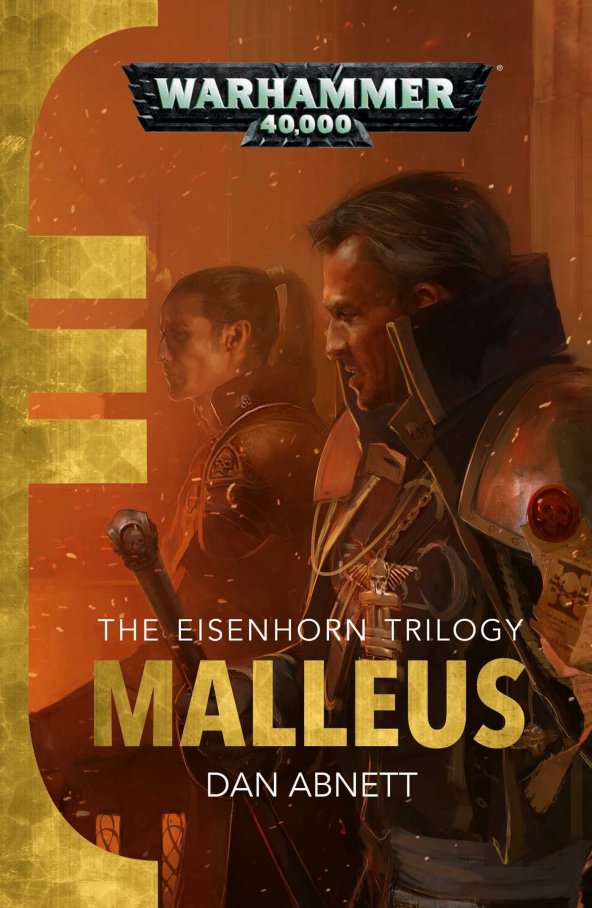
Throwback Thursday – Warhammer 40,000: Malleus by Dan Abnett

Warhammer 40,000 - Malleus Cover

Publisher: Black Library (Trade Paperback – 27 December 2001)

Series: Eisenhorn – Book Two

Length: 10 hours and 13 hours

My Rating: 5 out of 5 stars

Amazon     Book Depository

Welcome back to my Throwback Thursday series, where I republish old reviews, review books I have read before or review older books I have only just had a chance to read.  For this week’s Throwback Thursday, I continue my extensive dive into the Warhammer 40,000 universe with the awesome, galaxy-spanning thriller, Malleus by Dan Abnett.

For one of my latest Throwback Thursday reviews, I took a look at one of Dan Abnett’s iconic Warhammer 40,000 novels, Xenos, the first book in the incredible Eisenhorn trilogy.  This fantastic book, which followed Inquisitor Gregor Eisenhorn, a hunter of dark influences in the Imperium of Man, was a clever and compelling read that saw Eisenhorn face off against a range of terrible foes who seek to destroy humanity from within.  I had an outstanding time with Xenos, which really showcased Abnett’s skill as an author (I have also really enjoyed his Gaunt’s Ghosts novels, including First and Only, Ghostmaker and The Vincula Insurgency).  Indeed, I enjoyed it so much that I quickly decided to continue the Eisenhorn trilogy by listening to the second book in the series, Malleus, another exceptional read that takes its protagonist on another dark and engrossing adventure.

In the 41st Millennium, the dark enemies of mankind, whether they be heretical, daemonic, or alien in nature, continue to try and destroy the Imperium of Man from within.  It falls to dedicated inquisitors, such as Gregor Eisenhorn, to battle their malign influences by whatever means they deem necessary.  But what happens when the very institutions that Eisenhorn has long fought to uphold are turned against him?

Whilst battling against deadly alien influences on an isolated planet, Eisenhorn is made aware of certain allegations against his character which suggest that he has been corrupted by the influence of Chaos.  Initially planning to ignore the rumours and continue his vital work safeguarding humanity, his plans are put on hold when a terrible act of destruction unfolds on the planet of Thracian Primaris.  Investigating its causes, Eisenhorn is thrust into another deadly conspiracy, one tied to a foe he last encountered 100 years before, the daemonhost Cherubael.

Chasing after Cherubael and his minions, Eisenhorn attempts to discover what their latest unholy plan is.  However, his investigation reveals that Cherubael is just a pawn, and that the true mastermind of the plot he has uncovered may be a fellow inquisitor.  However, before Eisenhorn can find and confront them, he himself is declared a heretic and renegade by puritan members of his order, forcing him to flee.  Chased by the members of the Ordo Malleus, as well as other deadly hunters loyal to Imperium, Eisenhorn must work outside the bounds of his usual authority to prove his innocence and find the true culprits.  But to defeat his enemies, Eisenhorn may be forced to cross a dangerous line and become the very thing he has sworn to destroy.

Damn, Abnett was on a major roll when he wrote the Eisenhorn novels, as the second book, Malleus, is getting another five-star rating from me.  Brilliantly combining a taut and intrigue-laden plot with the darkest elements of the Warhammer 40,000 universe, Malleus is an addictive and powerful read that proves near impossible to stop listening to.

Malleus has an incredible story that I found to be pretty damn addictive.  Set 100 years after the events of Xenos, Malleus continues to follow Inquisitor Eisenhorn as he investigates several malign cults and figures throughout his sub-sector of space.  The story soon ties into some of the lingering storylines from Xenos as the daemonhost Cherubael makes another appearance, framing Eisenhorn as a heretic.  After a massive and suitably destructive series of events, Eisenhorn is thrust into a whole new investigation, trying to finally hunt down the figures that vexed him during the events of Xenos.  Traversing the sector in pursuit of Cherubael and other rogue inquisitors, Eisenhorn finds himself thrust into battle after hopeless battle, and his constant losses war with his determination to finish the case.  The protagonist faces several major hurdles towards the middle of the book, including capture and imprisonment by a fellow inquisitor for false crimes.  Eventually escaping, Eisenhorn spends much of the book as a fugitive hunted by loyalist forces, which is an exciting new element that Abnett plays to full effect to enhance the plot.  The overarching mystery/conspiracy plot of the book comes together extremely well, and I loved the outstanding investigation angle that follows as Eisenhorn desperately tries to find the evidence that not only ends the threat but exonerates him.  This hunt for answers is actually set over a substantial period of time, mainly due to the delays associated with space travel, but this only increases the power of the plot as you witness Eisenhorn lose years of his life being hunted.  Everything leads up to a massive confrontation with plenty of bloody battles and dangerous decisions that leave several fantastic characters dead or damaged.  The ultimate conclusion is pretty impressive, especially as Abnett really starts to showcase his protagonist’s inevitable fall from grace here, and he leaves the book on a particularly dark note that was so damn awesome.

Just like with Xenos, Abnett has a fantastic writing style that really helps to enhance Malleus’s narrative and make the book very addictive and exciting.  Perfectly utilising an excellent chronicle style that allows you to see inside Eisenhorn’s head, you are swiftly drawn into the complex plot.  Abnett keeps up a swift and intense pace the entire way through, and you barely have a moment to stop and breathe before the next intriguing event takes over.  The blend of intrigue, Inquisition politics, sector-spanning conspiracies, complex character development, unique Warhammer concerns, and impressive action is a heady mix and you get really get caught up in the hunt for the antagonists and Eisenhorn’s fight to prove his innocence.  I loved how intense and deadly some of the crazy battle scenes got and Abnett has great skill at showcasing his characters in mortal danger.  His attention to detail also results in some breathtaking sequences, and I was really impressed by that epic parade sequence, especially its ultra-chaotic ending.  Abnett also takes the time in Malleus to set up some future storylines and alternate books, with some fun hints at novellas/short stories you should check out, while also quickly introducing his next major protagonist, Ravenor.  All these brilliant writing elements, and more, really help to drag you into this elaborate narrative, and I deeply enjoyed the more intrigue-focused stories that are the hallmark of the Eisenhorn books.  A worthy and powerful sequel to Xenos that really showcases the awesome characters and continues the outstanding and elaborate storylines.

I really loved the elaborate Warhammer 40,000 elements that Abnett featured within Malleus as the author dives right into the heart of the Inquisition and their battles.  Just like with Xenos, you get a great understanding of the various internal threats that the Imperium faces in this universe, as Eisenhorn attempts to combat various conspiracies and threats.  However, there is also a much deeper look at the inner workings of the often hidden Inquisition Ordos, especially as Eisenhorn is forced to work against the factions associated with them, including the Ordo Malleus, who think he has been compromised.  The ensuing hunt for answers leads the protagonist, and by extension the reader, on a mighty chase around various unique planets in the Imperium, including Cadia before the fall, and Abnett has a lot of fun exploring the intriguing elements associated with these locations, as well as the general lore surrounding inquisitors, daemons and more.  I did find it interesting that one of the major McGuffins of the book, the mysterious pylons of Cadia, ended up seeming a little more important in hindsight after the 13th Black Crusade, and you have to wonder if the antagonist’s villainous plan didn’t actually have some merit.  I felt that this was a particularly awesome Warhammer 40,000 book and I deeply appreciated how the universe’s unique elements and lore were able to seamlessly support the elaborate tale that Abnett wrote here.  Due to Abnett’s detailed and compelling writing style, new Warhammer readers could easily start their exploration of the franchise with Malleus and get a rather good idea of the universe.  However, I would really recommend starting with Xenos, as you get a much better introduction to key details and characters there.  An overall exceptional read that makes full use of the massive, extended setting.

A highlight of any Abnett book is always the outstanding and highly complex characters, and Malleus has those in spades.  The focus is once again on series protagonist and narrator, Gregor Eisenhorn, who grows as a character with each passing adventure.  I really liked how Abnett portrayed Eisenhorn in Malleus and his compelling mission for justice and redemption is pretty intense.  The Eisenhorn here is a different creature to that in Xenos, especially as, after 100 additional years in the Inquisition, he is a lot more experienced and skilled in his work.  Now commanding a small army of followers, Eisenhorn has different methods and resources than before, but the same determination, loyalty and kindness (at least compared to other inquisitors) is still there.  However, Malleus sees Eisenhorn go through some major battles, both mentally and physically, as he is forced to confront an enemy within his own order while defending his own methods and character.  Watching him declared a heretic by his fellow inquisitors is pretty brutal, and Abnett throws in a heartbreaking prison scene to keep the readers intrigued.  These events, coupled with some personal losses, and the continued presence of beings far more powerful than him, force Eisenhorn to make deals and cross lines he really shouldn’t.  I love how each of the Eisenhorn books show the protagonist’s slow fall towards radicalism, and Malleus is an interesting starting point for that, as you understand why Eisenhorn is forced to go down this route.  While he ends the book with most of his humanity and integrity intact, that brilliant final scene shows that he is getting awfully comfortable with his feet over a line he previously feared, and I cannot wait to see how far he falls in the next Eisenhorn novel.

On top of Eisenhorn, Abnett features a pretty awesome collection of supporting characters who assist the inquisitor in his investigation and they each add their own distinctive personality to the narrative.  There is a good continuation of character arcs from the first book as several of his followers from Xenos make a return here, including the entertaining Savant Aemos, former Arbites investigator Fischig and his dedicated psychic blank Bequin.  Each of them is a little older, wiser and more familiar with the hardships of being an inquisitor’s acolyte, and I liked the stronger relationships that developed amongst them, particularly Bequin, who really comes into her own in this book as a veteran.  There are several interesting new characters added as well, such as the bounty hunter Nayl or brash pilot Medea Betancore (replacing her father Midas), and I felt that their distinctive personalities added a fun and entertaining edge to the narrative.  I was surprised that new character Gideon Ravenor, who goes on to get his own spinoff series, only had a relatively small appearance in this book, as I figured he would be a pretty major character to get his own story.  Still, he gets a good introduction here and it will be interesting to see how his arc plays out in the future.

Malleus also features several intriguing antagonists, each of whom test Eisenhorn and his colleagues in different ways.  While there are the usual array of cultists, aliens and other creatures, most of the antagonists in this novel prove to be other inquisitors, who are either working on their own radical plots or who believe that Eisenhorn is the true heretic who needs to be stopped.  This adds a very interesting dynamic to the story and it was fascinating to see the varied philosophies and plots amongst the rival orders and factions.  I did find it interesting that the main villain of the story, a mysterious inquisitor acting from the shadows, only had a very minor appearance in the book, and while you feel his presence, a bigger appearance from him might have been in order.  However, this character is more than made up for by his principal minion, the daemonhost Cherubael, who returns after his fantastic appearance in Xenos.  Cherubael is a brilliantly sinister character who steals every single scene they are in thanks to their menacing monologues and intriguing insights.  The outstanding obsession he forms with Eisenhorn is a great deal of fun and I loved seeing this evil figure toy with the inquisitor and force him to go to great lengths to defeat him.  Abnett really knows how to write an outstanding character, even in a limited amount of time, and it will be fascinating to see what happens to these characters in the next Eisenhorn book.

I of course chose to listen to Malleus on audiobook, as it is my preferred way of enjoying great Warhammer books, and I was not disappointed with how it turned out.  This fantastic format once again deeply enhanced the quality of the story and you can practically see the awesome battle scenes and other breath-taking elements of the wider Warhammer 40,000 universe.  Narrator Toby Longworth, who is the go-to narrator for all of Abnett’s Warhammer audiobooks, does another outstanding job with Malleus, and I loved how he was able to keep the pace of the production going.  He also has an outstanding voice that really conveys the dark and dangerous nature of the universe, while also perfectly bringing the characters to life.  I deeply appreciated how Longworth made sure to utilise the same character tones that he previously featured in Xenos here, and it gave the Malleus audiobook a great sense of continuation.  All the new characters are also given excellent voices, and I loved how awesome he made them sound, especially the more supernatural or alien beings that the protagonist comes across.  I was frankly hooked on this audiobook from the very start, and it is an exceptional way to enjoy this epic narrative.  With a run time of just over 10 hours, I managed to power through this audiobook very quickly, and this is definitely the best format for the Eisenhorn series.

Dan Abnett continues to showcase why he is one of the absolute best Warhammer authors out there with the second book in his superb and beloved Eisenhorn trilogy, Malleus.  Featuring a powerful and incredibly captivating narrative of conspiracy, heretics and desperation, Malleus takes Abnett’s compelling protagonist on an even darker journey of despair, compromise and hard choices.  Brutal, intense and impossible to put down, Malleus is easily one of the best Warhammer books I have ever read, and I cannot get over how exceptional it was.  A very highly recommended book, I plan to check out the third and final Eisenhorn book soon as I can to see how this epic series ends.

Amazon     Book Depository

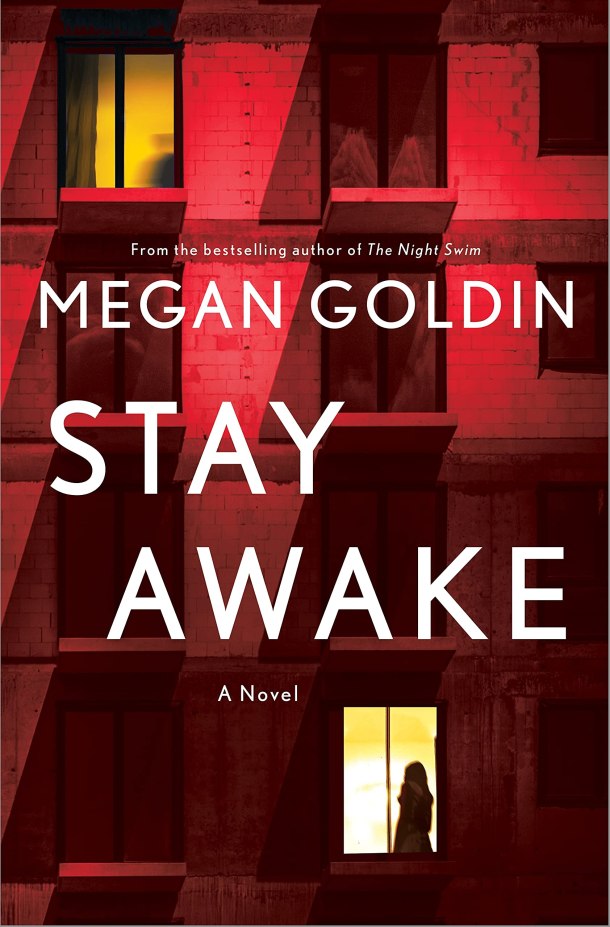
Quick Review – Stay Awake by Megan Goldin

Stay Awake Cover 2

Publisher: Michael Joseph (Trade Paperback – 16 August 2022)

Series: Standalone

Length: 352 pages

My Rating: 4.5 out of 5 stars

Amazon     Book Depository

One of Australia’s most talented crime fiction writers, Megan Goldin, returns with another powerful and captivating read, Stay Awake, a unique and gripping novel that deals with memory, murder and a ton of traumatic suspense.

Over the last few years, crime fiction fans have been getting more and more impressed with the outstanding writings of Australian author Megan Goldin.  Goldin has so far written several epic and clever thrillers, and I have had a lot of fun reading two of her most recent books, The Escape Room (one of the best Australian books of 2018) and The Night Swim (one of the best Australian books of 2020).  Both of these books had outstanding plots, whether it was The Escape Room’s twisty tale of revenge or The Night Swim’s deep and emotionally charged story of justice for women, and I cannot recommend them enough.  After having such an epic time with her previous novels, I was very excited when I received a copy of Goldin’s latest book, Stay Awake, last year.  Featuring an outstanding story with an awesome hook to it, Stay Awake was an epic read that lived up to all my expectations.

Plot Synopsis:

Liv Reese wakes up in the back of a taxi with no idea where she is or how she got there. When she’s dropped off at the door of her brownstone, a stranger answers―a stranger who now lives in her apartment and forces her out in the cold. She reaches for her phone to call for help, only to discover it’s missing, and in its place is a bloodstained knife. That’s when she sees that her hands are covered in black pen, scribbled messages like graffiti on her skin: STAY AWAKE.

Two years ago, Liv was living with her best friend, dating a new man, and thriving as a successful writer for a trendy magazine. Now, she’s lost and disoriented in a New York City that looks nothing like what she remembers. Catching a glimpse of the local news, she’s horrified to see reports of a crime scene where the victim’s blood has been used to scrawl a message across a window, the same message that’s inked on her hands. What did she do last night? And why does she remember nothing from the past two years? Liv finds herself on the run for a crime she doesn’t remember committing as she tries to piece together the fragments of her life. But there’s someone who does know exactly what she did, and they’ll do anything to make her forget―permanently.

In the vein of SJ Watson’s Before I Go to Sleep and Christopher Nolan’s cult classic Memento, Megan Goldin’s Stay Awake is an electrifying novel that plays with memory and murder.

This was a fantastic and captivating read by Goldin that really highlights her amazing ability as an author.  Stay Awake is a fast-paced and exceedingly addictive novel that grabs your attention early on and refuses to let go thanks to its very clever story.  Starting off with the main character, Liv Reese, finding herself covered in blood and with everything she thought she knew gone or altered around her, Goldin sets up an incredible introduction that sets up an amazing follow up story.

The book gets even more interesting once the author introduces Liv’s peculiar situation: thanks to a past trauma, her mind resets itself each time she goes to sleep and she cannot remember anything from the past two years.  This results in a brilliant story, which features three separate intriguing perspectives of events.  Not only do you get the exciting main story of a confused Liv running through New York City, attempting to get to grips with her lost life, but you also see events from two years in the past which led up to the trauma that claimed her memory.  At the same time, the book also follows Detective Darcy Halliday, who is assigned to investigate a dead body connected to Liv, and soon becomes obsessed with finding the amnesiac protagonist.  These three major plot lines are expertly weaved together as the book continues and you soon find yourself drawn into the exciting mystery of who Liv is and whether she committed the murder that Darcy is investigating.  Goldin also amps up the story by having Liv being chased by a mysterious figure who is intent on finding and killing her to protect their secret.

However, the real highlight of Stay Awake’s story has to be the continued memory lapses experienced by the protagonist throughout the course of her chapters in the present.  Due to her condition, Liv actually loses her memory several times throughout the course of her storyline, causing her mind to completely reset to two years in the past.  This is a very fascinating character element, and I felt the author used it extremely well.  It is very compelling and a little scary to watch Liv make the same mistakes and visit the same people repeatedly, especially as she has no knowledge of the last two years, such as certain deaths or relationships.  Watching her come to grips with her chaotic life, only to lose it again in the next chapter, is simultaneously heartbreaking and fascinating, and you honestly cannot tear yourself away from this gripping book.  Thanks to the killer using Liv’s condition against her, the story further devolves into a dark and unique game of cat and mouse, with Liv forced to find answers about her life while avoiding a danger that she unaware exists.  Everything comes together extremely well as the book concludes, and I loved the clever solution to the main mystery of Liv and the various murders, especially as the hints to it are subtly laid down in the three alternate plot lines, even if the protagonists doesn’t remember them.  A truly awesome crime fiction narrative that is expertly written by its talented author, who has produced another very unique crime story.

Overall, I was once again deeply impressed with Goldin, and I felt that Stay Awake was a particularly great novel from her.  Goldin really pulls together a distinctive crime fiction story in this standalone thriller, and I was really glad that the amnesia angle of her plot paid out so effectively.  Stay Awake really helps to cement Goldin as one of Australia’s, and the world’s, most inventive new authors, and I cannot wait to read her next book, Dark Corners, which is set for release later this year.

Stay Awake Cover

Amazon     Book Depository

Throwback Thursday – Warhammer 40,000: Xenos by Dan Abnett

Warhammer 40,000 - Xenos Cover

Publisher: Black Library (Audiobook – 1 May 2001)

Series: Eisenhorn – Book One

Length: 9 hours and 55 minutes

My Rating: 5 out of 5 stars

Amazon

Welcome back to my Throwback Thursday series, where I republish old reviews, review books I have read before or review older books I have only just had a chance to read.  In my latest Throwback Thursday I continue to review the awesome Warhammer 40,000 works of Dan Abnett with his impressive and dark space thriller, Xenos.

For my Throwback Thursday last week, I talked about legendary Warhammer fiction author Dan Abnett and his Gaunt’s Ghosts series, which is one of the pillars of Warhammer 40,000 fiction.  I have already had a lot of fun reading several of the Gaunt’s Ghosts novels (including First and Only, Ghostmaker and The Vincula Insurgency), so I thought I would take the opportunity to check out one of Abnett’s other major Warhammer entries, the Eisenhorn series, which I have heard some extremely good things about.  Set in a different area of the Warhammer 40,000 universe than the Gaunt’s Ghosts books, the Eisenhorn books are a darker and more intense series that follows a troubled Imperial Inquisitor hunting down a deadly conspiracy at the heart of humanity.

In the dark future, the Imperium of Man is under constant attack from aliens, monsters and daemons who seek to destroy or corrupt all within.  However, the greatest threat to the Imperium comes from within as diabolical heretics, witches and cultists work from the shadows to weaken the Imperium, worship the forces of Chaos, and bring humanity crashing down around them.  The only protection humanity has against these nefarious and hidden threats are the members of the Inquisition, deadly agents who wield great power and authority to pursue their investigations by any means necessary.

Gregor Eisenhorn is a talented and experienced Inquisitor who has long fought against the shadows constantly threatening stability and order.  When he finally corners and kills an old adversary amid a dark ritual, Eisenhorn hopes that his actions have permanently ended an ongoing source of Chaos and despair in the Imperium.  However, evidence he recovers from the crime scene hints at a greater conspiracy that threatens several local systems.

Travelling to a prosperous system hub, Eisenhorn restarts his investigation, determined to get to the bottom of this new danger.  However, he is unprepared for the full scope of the hidden forces of Chaos that wait for him, as a massive and hidden cabal rises in opposition against him.  As multiple planets within the system burn due to the action of the Chaos cultists, Eisenhorn works with a series of unique allies to bring this cult to heel before they cause irreparable damage to the Imperium.  However, the more sinister danger may come from the prize that his enemies are seeking, an ancient and dark tome of knowledge, known as the Necroteuch, which has the potential to burn the universe and turn the entire Inquisition against Eisenhorn.

Xenos was another exceptional novel from Abnett, and one that really showcases his ability to tell a varied and complex tale.  This is a dark, powerful, and impressive character-driven read, and I loved the switch to dark intrigue and heretical investigations, which made for such an incredible story.  I was an instant fan of Xenos’s clever and highly addictive plot, and I must give it a full five-star rating for how awesome it was.

I was deeply impressed with the outstanding and compelling story that Abnett featured in Xenos, especially as it was very different in style and substance to his previous works I have enjoyed.  While the Gaunt’s Ghosts novels are gritty war stories that focus on the common soldier, Xenos was a powerful and twisty space thriller that saw a determined Inquisitor attempt to root out the manipulations of Chaos far away from the battlefields.  The story itself is extremely clever and well-paced, and it swiftly draws you in with its dark events, especially its intense and action-packed introduction.  Despite killing his nemesis early in the story, Eisenhorn is forced to keep digging even further as he uncovers more conspiracies and plots.  Utilising undercover methods, interrogations, obscure evidence and a series of bloody fights, Eisenhorn and his unique comrades follow the trail across the sub-sector, attempting to discover the true plot of their enemies.  This leads to several large and memorable set pieces, and I loved the constant change of locations, especially as it allowed you to get a whole new idea of the scope of their foes plans and the desperate battles being fought to stop them.  I also enjoyed the quieter scenes that were laid out between them as they not only added some great intrigue, but also highlighted the personal nature of the protagonist’s quests and the bonds he forged along the way.  The plot is eventually resolved after several major battles, including some very trippy sequences, and I came away from this book very satisfied and wanting more, especially as Abnett laid some intriguing hints about deeper conspiracies towards the end.  I was absolutely hooked the entire way through this narrative and I had such an amazing time reading this exciting and compelling story.

Xenos was an extremely well written Warhammer novel, and I really appreciated how Abnett was able to seamlessly change writing style and tone for this darker read.  The author makes excellent use of a first-person perspective for Xenos, as the story is in a chronicle format being written by the central character of Inquisitor Eisenhorn.  This allows for a much more personal and protagonist-centric narrative which really draws you into the hunt as you see the protagonist’s obsession with capturing the heretics and ending the threat to the Imperium.  Abnett keeps the pace pretty fast and intense throughout the entirety of Xenos, even during the sequences between the main action-packed scenes, and you are constantly engaged with the hunt or the intriguing relationships between the characters.  I was personally very impressed with how Abnett was able to blend a lot of distinctive story elements together throughout Xenos to produce an excellent story.  The way that the author combines Warhammer, thriller, mystery, science fiction and even horror (the Chaos creatures can get pretty bad at times) elements together is just amazing, and it opens up the appeal of the book to a wide range of readers.  I loved the continued and powerful hunt throughout the Imperium, especially as all the protagonist’s actions and attempts to end the threat result in major consequences for those around him.  This was a deeply captivating and intense read, and I cannot empathise how addictive and fun I found it.

One of the main reasons I chose to check out Xenos and the Eisenhorn series, aside from generally loving Abnett’s writing, is it is generally considered to be one of the best series to start a dive into Warhammer fiction.  After powering through Xenos, I can confirm this as Abnett uses the lore and the darker side of the Warhammer universe to its full advantage throughout this fantastic thriller tale.  While some slight knowledge of the large Warhammer 40,000 universe might be helpful to understand parts of Xenos, new readers unfamiliar with the franchise can easily dive into this book and follow the story with no problem, and any science fiction fan can have an amazing time reading it.  Abnett patiently and competently explores key details of the Warhammer universe as the story continues, although never in a way that interferes with the captivating flow of the book.  As such, you get a good view of the overall state of humanity and the Imperium during this novel, with a particular focus on the Inquisitors and their mission.  The Inquisitors have always been a fascinating and complex part of Warhammer 40,000 lore, and this series really highlights just how dangerous their tasks are, as well as the fine line they walk in their hunt for justice and purity.  Naturally, this dive into the Inquisition will also make this book very appealing to experienced Warhammer readers as well, and Abnett is considered to be one of the best franchise authors for a reason.  I have a deep appreciation for all the cool lore elements that were featured here, and I particularly enjoyed how Xenos offers a very different story to many of the other Warhammer 40,000 books out there, and really highlights just how complex the universe can be.

I was also very impressed by the exceptional character work that Abnett featured with Xenos, as this compelling read features some great characters.  The primary figure of this book is naturally Inquisitor Gregor Eisenhorn, who serves as the main protagonist and narrator of the story.  I felt that Xenos served as a particularly good introduction to this iconic Warhammer figure, and I found myself getting quite attached to his journey.  A no-nonsense and extremely practical Inquisitor, Eisenhorn is seen by many as a cold and calculating man, although deep down he is a caring individual who feels great attachment to his friends and comrades.  Abnett portrays Eisenhorn as a pretty reasonable figure, preferring subtle investigations, which makes him appear a bit radical to some of his fellow Inquisitors whose preferred methods are to kill anyone with any potential for evil.  It was very interesting to see him as a pretty strait-laced guy in Xenos, especially as I have heard of how radical he gets in the future, and I think it was very smart of Abnett to showcase him in this way first to enhance the impact of his future actions.  However, Eisenhorn does go through a lot in Xenos, including mental, psychical and spiritual tortures, and you can really see the damage done to him and how his desire for vengeance and getting the job done by any means grows.  I cannot wait to see how his story advances in the next few books, as I know that Abnett has damaging days in store for him.

In addition to Eisenhorn, Abnett loads Xenos with a ton of interesting supporting characters, all of whom are seen through Eisenhorn’s eyes.  This includes Eisenhorn’s eccentric entourage of follows and agents, including a data-obsessed scholar, a skilled pilot, a grim justice operative and his newest associate, Bequin, a psychic blank who is drafted into the war against Chaos against her will.  This unusual team prove to be great backup to the dour Eisenhorn, and I liked the genuine connection that Eisenhorn forms with them, especially as it shows that he really isn’t the monster many people think he is.  Other characters of note include the varied and distinctive fellow inquisitors that either assist or oppose Eisenhorn, and the various deadly enemies he goes up against.  Rather than have one specific antagonist in Xenos, Abnett featured a cabal of Chaos worshipping foes, each of whom despises Eisenhorn for what he represents.  While there isn’t a massive focus on any specific villain, each of the major players in the cabal are pretty distinctive, and I liked the overall effect that Eisenhorn is fighting a multi-faced beast in Chaos, rather than a specific evil.  These outstanding characters really enhanced this epic and captivating narrative and I look forward to seeing what other insane figures show up in this series as it progresses.

Unsurprisingly, I chose to enjoy Xenos in its audiobook format, which is frankly the best way to experience any Warhammer novel.  With a run time of just under 10 hours, I absolutely powered through this audiobook and I found that it perfectly conveyed all of Abnett’s elaborate and compelling story elements.  This was partially due to the brilliant narration of veteran voice actor Toby Longworth, who has lent his fantastic vocal talents to most of Abnett’s Warhammer books.  Longworth did another remarkable job here with Xenos, and I loved his take on this slighter darker narrative.  I deeply appreciated all the voices he provided to the characters in Xenos, especially as he is not just recycling the voices he uses in the Gaunt’s Ghosts books.  Each of the voices here are pretty fitting to their respective character and there is some fantastic variation based on plot details such as the speaker’s planet of origin, species, inclination, and personality.  This excellent voice work really enhanced my enjoyment of this captivating read and I would strongly recommend this format to anyone interested in reading Xenos.

The first entry in Dan Abnett’s Eisenhorn series, Xenos, lives up to all the hype surrounding it as it proved to be an exceptional and highly addictive read.  Perfectly combining an elaborate thriller story with the dark Warhammer 40,000 universe, Xenos was a joy to read from start to finish.  I cannot recommend this novel enough and my plan is to listen to yet another book from Abnett in the next couple of days.

Amazon

The Bullet That Missed by Richard Osman

The Bullet That Missed Cover

Publisher: Viking/Penguin Audio (Audiobook – 15 September 2022)

Series: Thursday Murder Club – Book Three

Length: 11 hours and 17 minutes

My Rating: 5 out of 5 stars

Amazon

Murder, comedy and the most badass team of investigators you are every likely to read about come together perfectly in the new Thursday Murder Club novel, The Bullet That Missed by Richard Osman.

Over the last three years, some of the most impressive and outright entertaining murder mystery novels have been part of the Thursday Murder Club series by British television personality Richard Osman.  Set in a luxury retirement village in the English countryside, the Thursday Murder Club books follow the adventures of four outrageous pensioners who spend their free time solving cold cases.  However, their lives get even more complicated when several murders occur around their village, and they endeavour to find out who committed them.  The series started with The Thursday Murder Club in 2020, which had an outstanding blend of mystery, great characters and humour, all of which came together in a perfect and deeply addictive read.  The Thursday Murder Club ended up being one of my favourite books, audiobooks and debuts of 2020, and I cannot rave about it enough.  Osman followed this first book up last year with The Man Who Died Twice, an excellent sequel that presents the reader with another great mystery, while also exploring the characters even further.  I had another amazing time with The Man Who Died Twice, and it also ended up being one of the best things I read all year, making my top books and audiobooks of 2021 lists.  Needless to say after the first two epic books, I have been very excited for the third Thursday Murder Club novel, and The Bullet That Missed has been one of my most anticipated reads for 2022 for a while now. 

After their last exciting adventure, Elizabeth, Joyce, Ibrahim and Ron, are continuing to solve murders in their spare time.  Their latest case sees them dive into an infamous cold case in which a young, highflying television reporter was murdered just before breaking a story on a major crime ring, with her body never recovered from the ocean.  Teaming up with the reporter’s famous presenter colleague, the Thursday Murder Club eagerly begin their investigation, hoping to shed light on her murder while having fun with their new high-profile friends.

However, it soon becomes apparent that the people behind the reporter’s death might still be active and are attempting to cover their tracks.  Their only witness in the case is found dead in her prisoner cell shortly after the club attempts to question her, and even the notorious crime lord many believe responsible for killing their original victim is afraid to talk.

Not ones to be deterred, the club continues their investigation and soon long-hidden secrets from the past come spilling out.  However, as they close on the killer, a completely different threat emerges from Elizabeth’s past.  A mysterious new nemesis wants Elizabeth to return to her assassin roots and kill an old contact from her spy days, if she does not, everyone close to her will die.  Forced to choose between her friends and her conscience, Elizabeth needs to find a way to defuse the situation before someone gets hurt.  But is this new encounter just the thing the Thursday Murder Club needs to solve their latest crime before the murderer strikes again?

Well damn, what another brilliant and impressive read.  Richard Osman went all out for his third book and I honestly think that The Bullet That Missed is some of his best work yet, possibly even eclipsing the original The Thursday Murder Club.  Bringing together an elaborate and deeply enjoyable mystery storyline with some brilliant characters, outstanding humour, and a heck of a lot of great twists, I was instantly addicted to this latest book from Osman and couldn’t wait to find out how everything ended.  An extremely captivating read, The Bullet That Missed gets a very emphatic five-star rating from me, and I had an incredible time reading it.

I loved, loved, loved the exceptional story that Osman came up with for The Bullet That Missed, especially as Osman provided a perfect blend of mystery, character growth and genuine human moments that the reader can’t help but eat up.  Starting off shortly after the events of the last book, The Bullet That Missed sees the Thursday Murder Club using their usual charm and manipulative practices to investigate another cold case, gaining insight through the victims’ old colleagues, while also dragging in their usual friends and police colleagues.  They soon find themselves in the middle of a cracking mystery and use their connections and well-earned insights to examine the various clues and persons of interests associated with the case.  At the same time, Elizabeth is quite literally dragged into a dark place by a mysterious new figure who knows about her past and who forces her to choose between killing an old colleague from her spy days or watching Joyce and the rest of her friends die.  This side plot adds quite a bit to the overall story, especially the introduction of several awesome new characters, and I really enjoyed how Osman tied it into the main mystery. 

Combined with the various scenes that show the day-to-day lives of the many characters in the book, as well as some genuinely heartbreaking moments of love and loss, this proves to be one heck of a story that I was particularly rivetted to.  I loved the unique investigation that resulted from the mystery, and the characters have so many clever and hilarious ways of getting to the truth.  Osman throws in an appropriate number of red herrings and suspects, which serves to effectively muddy the water and keep the readers in suspense as they try to work out which of the many suspicious characters might have had a hand in the killings.  I was able to pick out the main villain a fair bit in advance, although the journey to getting there and the eventual reveal was really good, and I loved every single second of it.  I also didn’t see a bunch of the final twists coming, and you really appreciate all the cleverly hidden hints and clues that Osman seeded throughout the book.  I came away from The Bullet That Missed exceedingly satisfied with how the story unfolded, and I really cannot emphasise just how amazing and awesome the plot was.

On top of this, Osman has an awesome writing style that I feel really enhances the elaborate and powerful narrative of The Bullet That Missed.  I particularly enjoyed how the author made great use of multiple character perspectives throughout the book to tell the elaborate narrative.  While the focus is generally on the four members of the Thursday Murder Club, the perspectives of all the other characters in the book are shown several times throughout the story.  Not only does this allow you to get multiple intriguing views of the main mystery and the club’s actions, including from the book’s many suspects, but it also ensures that the reader gets closer to all these characters by learning their motivations, feelings, and personal histories.  This makes for a much more compelling narrative, especially as you grow attached to the new characters quickly, while also getting to experience the powerful human developments impacting the main cast.  Osman does a great job of keep the pace pretty consistent and enjoyable throughout the entirety of The Bullet That Missed, and you are constantly exposed to intriguing mystery developments, deeper emotional moments from the characters, or a ton of entertaining humour which can’t help but make you chuckle.  This keeps up throughout the entire book, although it does pick up at several points, especially when the club are making some big moves, and it always works out well. 

While one of the best things about The Bullet That Missed is the compelling mystery, a discussion of this book really would not be complete without mentioning the fantastic humour loaded into it.  Osman is undeniably a very funny man, and he puts his excellent comedic skills to great use in this series, and particularly in The Bullet That Missed, with nearly every page containing some subtle, fun, comedic elements that I absolutely loved.  A large amount of this humour revolves around the various ways in which the older characters of the book manage to outwit and manipulate the younger people they come across, whether it be by acting senile, or forcing them to accommodate them out of politeness.  At the same time, the main characters’ very diverse and highly amusing viewpoints of the world around them, especially involving modern society or pop culture, are extremely funny, and it is entertaining to see an older perspective on this crazy modern world.  Osman fits in quite a huge number of references to British culture throughout the course of the book, and I had a lot of fun hearing all the clever references to iconic shows and products that the character’s mention throughout the book, especially as they often talk about them in a very clever way.  Throw in some fantastic coincidences, a lot of jokes about turning old, several hilarious self-referential jabs about the trouble with writing crime novels, and the perfect banter that occurs between the four main protagonists and their exasperated cohorts, and The Bullet That Missed was an exceedingly funny read that is guaranteed to keep you wildly amused with its various antics.

As always, one of the strongest parts of this latest Thursday Murder Club novel is the characters.  Osman has created an amazing group of protagonists for this series, and he continues to build on them with each book, showcasing their strengths, personalities, and inherent vulnerabilities, as the find themselves in dangerous and unique situations.  Most of the focus is again on the four members of the Thursday Murder Club who, by this third book, are really quite well established, and the reader is already very attached.  Osman keeps up the wonderful interpersonal dynamic that was such an impressive feature of the first two books, and it continued to work extremely well in The Bullet That Missed, with several great new developments added in.  Elizabeth and Joyce are once again set up as the book’s main characters, with a huge chunk of the book dedicated to them.  Elizabeth, the former spy, proves to be an excellent manipulator, and it is always fun to see her talk about her days as a trained assassin, especially when her past comes back to haunt her.  Joyce, on the other hand, is a legitimate sweetheart, and she really is the heart and soul of the book.  I love how Osman changes the perspective in all her chapters to reflect her journalling the events of the story, and she provides some of the best descriptions of the events going on in the book.  It is also very fun to see her in action as, despite appearing to be a harmless, sweet old lady, she is a tough as nails and can be just as manipulative as Elizabeth when she needs to be (the scene in which she meets the Viking was perfect). 

Ron and Ibrahim are also used to great effect in The Bullet That Missed and both have some impressive outings in this book.  I loved the many scenes featuring Ron, especially as he really stands out from the rest of the crowd by being a blue-collar rabble rouser who holds on to the old-school tough guy mentality.  A lot of Ron’s story in The Bullet That Missed revolves around the other characters breaking through his tough exterior, especially as he has a new love interest in this book who gets him to open up in several amusing ways.  I also loved the sense of vulnerability that surrounds Ron when he starts to realise that a lot of the men of his generation are starting to go and he suddenly doesn’t have as many people to connect with anymore, which gets used to great effect when he manages to get information by playing snooker with an old criminal with a similar mindset to him.  The final main character is Ibrahim, who is honestly one of the nicest, most genuine characters you are ever likely to meet in fiction.  Ibrahim gets an outstanding showing in this book, and it was really a relief to see him recovered after the terrible beating he received in The Man Who Died Twice.  I loved how he was able to use his psychology skills in this book, and he even spent time working with the woman responsible for his beating, which results in some excellent scenes.  All four of these main characters continued to impress me in this latest book and I cannot wait to see how their next adventure unfolds.

Aside from these major characters, The Bullet That Missed also contains a substantial supporting cast of entertaining characters who Osman uses to great effect throughout the course of the narrative.  These characters include a combination of some entertaining new figures, as well as many returning characters who made such an impact in the previous novels.  Many of these returning characters have been built up in a big way in the previous books, and it was great to see a lot of their character development continue, especially as they are generally better off after having met the Thursday Murder Club.  I really loved that the three main supporting characters from the first novel, DCI Chris Hudson, PC Donna De Freitas and Bogdan, each come into The Bullet That Missed with some positive storylines surrounding them, and the new romance between Donna and Bogdan was so damn nice. 

All the new characters in The Bullet That Missed were also very entertaining: an older makeup artist who takes a liking to Ron, a gigantic Scandinavian crime lord known only as the Viking, an eccentric local TV news host, and the local Chief Constable who also moonlights as a less-than-successful mystery writer.  These great characters added a lot of flavour to the narrative, and it was fascinating to see how many were worked into the plot, especially as Osman was setting several of them up for returning appearances.  I particularly loved the retired KGB officer turned criminal finance advisor, Viktor Illyich, who is an old contact of Elizabeth and who finds himself being hunted.  He was a brilliant and entertaining addition to the plot, especially with his great methods of manipulation.  You have to love that amazing scene where he applies his techniques to a young Virgin Media representative. 

However, the best recurring character has to be Elizabeth’s husband, Stephen, who has been a bit of a tragic figure throughout the series due to his dementia, which Elizabeth tries to hide from the world.  Stephen is perhaps the best character Osman has written, as the author provides a deep and extremely powerful view of the impacts dementia has on the sufferer and those closest to them.  Watching Stephen slowly lose himself while Elizabeth suffers beside him has provided some of the most heartbreaking parts of this series.  Stephen still proves himself to be a brilliant and caring figure, and Osman writes some great scenes for him in the series, especially when he plays chess with Bogdan, and it is always fun when he provides fantastic insights into Elizabeth’s cases.  He was particularly effective in this book, especially after being kidnapped, and his knowledge and surprising criminal contacts allow Elizabeth to outsmart one of their enemies in several amazing scenes.  Of course, these scenes are also loaded with sadness; with every positive step Stephen takes, he also loses a little, and every time he forgets a detail or a person it breaks your heart a little bit more.  Honestly, every character in this book is pretty damn epic, and clearly creating amazing characters is one of Osman’s biggest strengths as a writer.  I look forward to all the amazing character work that is bound to appear in the next Thursday Murder Club, and I am sure that I will fall in love with every single cast member once again.

While I did receive a physical copy of The Bullet That Missed, I chose to instead grab the audiobook version of this novel, as I had such an amazing time listening to the first two books in this format.  As it was, I ended up being surprised and slightly disappointed to discover that Lesley Manville, who narrated the first two Thursday Murder Club books, wasn’t returning for this third entry.  However, my disappointment was exceedingly short lived when I found out that she had been replaced by the amazing Fiona Shaw, who I have loved for years in things like the Harry Potter films, Killing Eve and Andor.  Unsurprisingly, Shaw did an outstanding job narrating The Bullet That Missed, and she masterfully portrayed all the characters in a very fun and entertaining way.  I loved all the great voices she used for this awesome audiobook, and each character got their own distinctive tone that allowed the reader to easily pick up who they were.  Shaw brings a huge range of different accents to the table, and while her Swedish accent was purposely a little silly, it still fit the character extremely well.  However, what really impressed me was the effort that Shaw took in matching the voices of most of the recurring characters with Lesley Manville’s previous take on them.  All the four main members of the cast, as well as supporting characters like Donna and Bogdan, sounded extremely like their appearances in the previous two audiobooks, and while Shaw did do her own take on a couple of figures, I personally deeply appreciated her attempts to keep some continuity with the previous audiobooks.  Shaw also kept the audiobook rolling along at a brisk pace, and the 11 hour and 17 minute runtime passed along in no time whatsoever, especially as you get deeper and deeper into the plot.  Throw in another lovely interview with Richard Osman at the end and I felt that this was an absolutely incredible audiobook, and definitely the best format by which to enjoy The Bullet That Missed.  I will be extremely happy if Shaw chooses to come back for the fourth Thursday Murder Club audiobook next year.

Richard Osman continues to show the world just how much talent he has a murder mystery writer with the third exceptional entry in the amazing Thursday Murder Club series, The Bullet That Missed.  Continuing to follow his brilliant pensioner protagonists as they solve a complex murder in some clever and funny ways, The Bullet That Missed was an incredible addition to the series that is guaranteed to have you hooked from start to finish.  I cannot recommend this book enough, and if you haven’t started reading the Thursday Murder Club books yet, you are really missing out.

Amazon

Dead Man’s Hand by James J. Butcher

Dead Man's Hand Cover

Publisher: Ace (Hardcover – 29 November 2022)

Series: The Unorthodox Chronicles – Book One

Length: 373 pages

My Rating: 4.5 out of 5 stars

Amazon     Book Depository

Murder, magic and mayhem are about to be unleashed in the impressive urban fantasy debut from exciting new author James J. Butcher, Dead Man’s Hand.

I think it is fair to say that no recent urban fantasy book has intrigued me more than the compelling Dead Man’s Hand by James J. Butcher.  Not only did it have a striking cover, a cool name, and an awesome synopsis, but the author himself is very interesting.  Despite the fact this is his first novel, Butcher is a name that comes with some expectations, due to him being the son of legendary fantasy author Jim Butcher.  Jim Butcher has pretty much set himself up as the gold standard of urban fantasy fiction thanks to his iconic Dresden Files series that follows wizards in modern Chicago.  I am a pretty big fan of the Dresden Files and when I first heard that Jim Butcher’s son was releasing his own book, I was immediately curious about it.  As such, I made sure to get a copy of Dead Man’s Hand as soon as it came out, and I was very happy that I did.  The first book in his series, The Unorthodox Chronicles, Dead Man’s Hand was a superb read that I had an amazing time getting through.

On the mean streets of Boston, a dark murder has occurred whose ramifications will shake the city’s magical community.  The victim was Samantha Mansgraf, an extremely powerful witch and one of the most effective agents of the Department of Unorthodox Affairs, the government department that polices magic users and keeps the peace between the ordinary Usuals and the paranormal Unorthodox.  Her body has been found mangled and tortured, and the only clue is a secret message she left behind which simply reads, “Kill Grimsby.”

This message can only relate to one person, Grimshaw Griswald Grimsby, whose future as an Auditor for the Department of Unorthodox Affairs was unceremoniously ruined by the victim.  Now working in a terrible fast food job extremely close to where Mansgraf was killed, Grimsby seems the most likely suspect for her murder.  However, there is one major flaw in this theory; Grimsby is magically incapable of committing the crime.  Only able to cast a few minor spells and hampered by an old injury, there is no way that Grimsby could have killed the victim.  But this fact isn’t going to be enough to stop everyone coming after him.

Targeted by both the Department and the monsters actually responsible for Mansgraf’s murder, Grimsby finds himself in a whole lot of trouble.  His only hope of survival is to team up with Mansgraf’s old partner, the legendary Huntsman Leslie Mayflower, an expert at killing all things magical, and find out who is really behind this gruesome murder.  However, Grimsby and Mayflower soon find themselves caught in the midst of a deadly magical conspiracy, one where every potential loose end needs to be killed.  To survive, Grimsby and Mayflower will need to dig deep and uncover the darkest secrets from Boston’s magical community.  However, can an old broken down Hunstman and a failed witch manage to take on the evil coming for them, or are they about to be as dead as Mansgraf?

Butcher comes out the gate swinging with his first magical adventure, and I really enjoyed the result.  Dead Man’s Hand is a clever and cool new novel that sets up Butcher’s planned series while also presenting the reader with a captivating character driven story, filled with mystery, murder and magical mayhem.  I managed to knock this book out in a couple of days, and it proved to be a wonderful and impressive debut.

Dead Man’s Hand has a great urban fantasy narrative to it that follows two interesting and complex characters caught in the middle of a magical conspiracy.  Butcher kicks the story off quickly, with Mayflower getting involved in the hunt for his former partner’s killer, which leads him to Grimsby, who is initially a suspect, until it becomes very clear he couldn’t have pulled off such a destructive killing.  When Grimsby is attacked by the apparent murderer, the two start to work together and they focus their investigation into finding a dangerous artefact that the victim had hidden before her death.  That leads them into all manner of trouble, including demonic gangsters, freaky constructs, and Department agents, all of whom are coming after them with lethal intent.  This results in a great twisty and slick narrative, as the characters need to uncover multiple mysteries while also confronting the many unusual creatures coming for them.  There are several great action-packed confrontations loaded into this book, and Butcher makes excellent use of his distinctive new magical universe to create some memorable sequences.  Everything leads up to a big and powerful conclusion where, after some personal betrayals, the two protagonists are forced to come together to take out the culprit and save the day.  While the ultimate reveal of who the killer is was a little predictable, Butcher did it in an entertaining way and the stakes were pretty damn high by the end of it.  Butcher also ramped up the tension for the final confrontation and you honestly had no idea how the book was going to conclude and who was going to pull through.  I was personally hooked all the way to end and I came away pretty happy with the conclusion, especially as Butcher sets up some potential sequels in the future and I have a feeling that this is the first entry in an awesome long-running series.

I quite enjoyed Butcher’s writing style for Dead Man’s Hand and I think that the excellent story came across really well in the end.  The story moved at a very quick pace, and Butcher really did not slow down for anything, hitting the reader with a ton of action, intrigue and moving character development from start to finish.  Like most good urban fantasy novels, Dead Man’s Hand had a fantastic blend of mystery and fantasy elements, and you are soon swept up in the hunt for the magical killer, especially as it reveals a complex and deadly conspiracy.  This helped to create quite a compelling and exciting read, which comes across like a buddy-cop romp thanks to the entertaining partnership between the two main characters.  The story is broken up between these two character’s perspectives and you get to see how they come together as a dysfunctional but effective team, and I loved the fun veteran/extreme-rookie dynamic that their partnership achieved.  Butcher further enhances the story by featuring a ton of comedic humour, most of which was brought in by the chatty and snarky main character.  Readers will no doubt notice that Butcher took some inspiration from his father when it came to writing humour, especially when it came to the main character’s snark, as well as some of the very over the top scenes and inclusions.  There are some pretty ridiculous moments, especially surrounding the character of Grimsby (his stint as a food entertainer was fun at the start), and things only get more over the top as you go (let’s just say that there is something very interesting in a box, and leave it at that).  While this was amusing, I was glad that most of the focus remained on the more serious elements of the book, which came together extremely well.  This ended up being a very strongly written book, especially for a debut, and I was pretty impressed with Butcher’s great style and writing ability.

Butcher’s series, The Unorthodox Chronicles, has an interesting urban fantasy setting to it, and I was impressed with the new world.  While I am sure that some will try to unfairly compare it to his father’s urban fantasy world, I felt that Butcher did a good job making it stand out on its own the reader is successfully introduced to many cool key details in this first book.  This series takes place in a version of Boston where the world is aware that magic exists, and magical creatures and magic users are kept in line by the Department of Unorthodox Affairs and their deadly agents known as Auditors.  I was quite intrigued by the inherent bureaucracy surrounding an unhidden magical world and it was fun how wizards are treated in a world where people are aware of them.  The visible magic itself is pretty simple, but effective, with magic users drawing their own inner-magic (Impetus) from within and launching it out using simple keyword spells.  Some of the effects of these spells are pretty fun and the protagonist manages to achieve a lot with some very basic combinations.  Butcher further populates his world with some freaky magical creatures, who give the book a darker and intense edge, especially those human familiars, who make for quite an effective and deadly enemy.  However, one of the most distinctive features of this universe is the Elsewhere, a dark, alternate magical realm that most wizards can perceive and which have its own rules.  The Elsewhere is so weird and crazy that all magic users need eye protection on all the time or else they will be driven mad by the things they see.  One excellent extended sequence sees the protagonist forced to visit the realm (which can be achieved by travelling through mirrors), and it came across as a pretty gruesome place to journey, thanks to all the creepy creatures and its inherent time dilation.  I loved all the cool details contained in this new world and I am quite excited to see how Butcher plans to expand on it in the future.

Aside from the amazing story and intriguing fantasy elements, one of the main strengths of Dead Man’s Hand was its excellent main two characters, who Butcher uses to great effect as alternating narrators of the story.  Both central protagonists are very damaged and complex in their own ways, and their eventual team-up helps them both to develop and escape the ruts they find themselves in at the start of the book.  The main character is Grimshaw Griswald Grimsby, an orphaned wizard who was badly scarred as a child in a fire that killed his family.  Grimsby previously attempted to become an Auditor for the Department, but he found his path blocked by the murder victim, mainly due to his inability to do complex spells and because his scars weaken his magic.  Now trapped in an embarrassing dead-end job, Grimsby starts the book off depressed and resentful, with zero confidence in himself.  However, this changes as the story continues and he is able to prove himself to his new mentor character, Mayflower, who, while gruff, helps mould him into a better person.  The one thing he cannot change is his motor mouth as Grimsby is constantly talking and joking, giving off a magical level of snark.  Much of the book’s humour comes from Grimsby’s irreverent view of the world and there are some great jokes flying out his mouth here.  I also loved seeing Grimsby’s inventiveness throughout the book, especially as he can only really cast three weaker spells, which requires him to be very imaginative in how he uses them, especially in self-defence.  There are also some fantastic storylines surrounding his traumatic past, as well as some more contemporary storylines about whether he actually belongs in this dangerous lifestyle or whether he should seek a quieter life.  While it would be easy to compare Grimsby to another snarky urban fantasy protagonist (say the one written by Butcher senior), I think that Grimsby stands on his own, and there are still quite a few layers for Butcher to uncover in the future.

The other major character is Leslie Mayflower, better known as the Huntsman, a bitter retired agent who specialises in killing magical creatures and beings.  Eternally grouchy and bitter at the Department, Mayflower dives into the case seeking revenge and comes across Grimsby, eventually partnering with him.  Mayflower is the direct opposite to Grimsby for much of the book, and I loved how Butcher portrayed him as a past-his-prime killer who returns for one last job.  Shown to be full of regret, self-loathing and a desire for revenge, Mayflower was a powerful part of the book, especially once Butcher pairs him with Grimsby.  These two made for a great team, and watching the positive Grimsby start to have an impact on Mayflower’s personality was a fun part of the book.  Despite still being mistrustful for most of the book, Mayflower soon grows to appreciate the partnership with Grimsby, and it was quite moving to see the character have something to live for again.  While you do see a lot of his personality and intensity in Dead Man’s Hand, I liked that Butcher was a little vague when it came to his past, and I am hoping that the author will dive into more of his history in future books.  Both central protagonists were extremely well written and very damaged in their own way, and this makes for a great story focus, especially as there are some excellent scenes when they start working together.

Overall, I thought that Dead Man’s Hand was an excellent and captivating first book from James J. Butcher, and it is one that I had an amazing time reading.  Fast-paced, hilarious, and filled with all manner of magical chaos, Dead Man’s Hand served as a powerful and enjoyable first entry in the author’s new series, and it comes highly recommended as a result.  I will definitely be grabbing the next book in this series when it comes out and I look forward to seeing how Butcher’s career progresses from here.

Amazon     Book Depository

In the Shadow of Lightning by Brian McClellan

In the Shadow of Lightning Cover

Publisher: Macmillan Audio (Audiobook – 21 June 2022)

Series: The Glass Immortals – Book One

Length: 24 hours and 53 minutes

My Rating: 5 out of 5 stars

Amazon

One of the most inventive and compelling authors of fantasy fiction, Brian McClellan, kicks off an awesome new series with In the Shadow of Lightning, the first book in The Glass Immortals series.

Few authors over the last 10 years have had more of an explosive impact on the world of fantasy fiction then Brian McClellan.  Debuting in 2013, McClellan quickly set the world ablaze with The Powder Mage trilogy, which saw chaos and destruction unravel in a new fantasy world where gunpowder-powered mages face off against an enraged god.  I had a brilliant time with the first book in the series, Promise of Blood, and McClellan followed this initial trilogy off with the sequel, Gods of Blood and Powder trilogy, set in the same universe.  While I still need to finish the Powder Mage novels off, I was very excited to hear that McClellan was starting a new series with In the Shadow of Lightning, the first book in the author’s The Glass Immortals series.  This is an impressive and outstanding read that introduces readers to a distinctive new fantasy world, this time with a fascinating focus on glass magic.

Demir Grappo was once one of the most respected politicians, tacticians and glassdancers in the Ossan Empire.  A rising star in the assembly, a proven governor, and the only son of a prominent family, Demir’s promising career is suddenly shattered in the immediate aftermath of his greatest military victory when his army sacked and destroyed the entire city of Holikan, apparently on his orders.  Mentally broken by the massacre done in his name, Demir abandons his army and vanishes into the provinces, giving up his life of privilege for one of anonymity.

Now, nine years after the sacking of Holikan, Demir is a very different man, having spent the intervening time as a grifter with no true home.  However, everything changes when news reaches him that his mother was murdered, brutally beaten to death in public in an apparent political attack.  Determined to find her killers, Demir returns to the city of Ossa to reclaim his seat as the head of his family.  But not everyone is happy that he has returned, and Demir soon finds himself in the midst of several deadly conspiracies, while Ossa goes to war against its neighbour, all in the name of avenging his murdered mother.

To get to the centre of these conspiracies, Demir must find allies, including old friends and new acquaintances if he is to gain the power and influence he needs find answers, especially those hidden by the powerful guild families who rule Ossa.  However, as he searches, and soon finds a much more troubling secret: godglass, the source of magic within the world, is running out, and when it goes, chaos will reign.  The key to securing the future may lie in a device that could re-power inert pieces of godglass, and only one girl appears to have the skill to create such a device.  But as Demir fights to secure this new vital ally, he finds himself fighting against a mysterious new enemy, one that seems determined to destroy anyone who gets in their way.

McClellan impresses again with another incredible fantasy novel that had me instantly enthralled.  Presenting the reader with a multifaceted narrative that combines great characters with intriguing fantasy elements, In the Shadow of Lightning proved to be an outstanding start to McClellan’s new series and I had an exceptional time reading it.  Epic in scope, ambition and potential, In the Shadow of Lightning gets a full five-star rating from me and I am still reeling from just how good this was.

In the Shadow of Lightning is a particularly addictive novel, especially as McClellan presents the reader with an outstanding and complex narrative that pulls them in on so many levels.  Starting off with a compelling prelude that perfectly introduces central protagonist Demir Grappo and shows his dramatic and bloody fall from grace and sanity, the novel then undergoes a time skip which takes the reader into the current storyline, right as events are kicking off.  The initial focus is on Demir, who, after finding out his mother has been murdered, returns to Ossa to take over the family business and discover her murderers.  However, he soon finds that his mother was involved in complex dealings that might have led to her death, and that her assassination has been blamed on a neighbouring city Ossa is going to war with.  The story then splits as McClellan introduces three additional point-of-view characters, each other whom has their own distinctive story arc, closely related to Demir and the politics of Ossa.

These new characters include Thessa Foleer, a siliceer (godglass worker) from Ossa’s neighbour Grent, the breacher Idrian Sepulki and Kizzie Vorcien, an enforcer for a powerful guild-family who Demir hires to investigate his mother’s death.  Each of these new characters have their own individual storylines that tie into the plot points introduced in Demir’s initial chapters.  While these character arcs go in their own direction, their storylines are loosely connected together and form a great overarching narrative as they are dragged into war, imprisonment, political battles, conspiracies and criminal investigations.  I loved the cool blend of character-driven storylines, and everything comes together extremely well to show that something very rotten is going on within Ossa.  This is a very fast-paced story, and McClellan keeps multiple compelling plotlines running simultaneously to keep the reader’s attention, with some great reveals and amazing fight scenes scattered throughout the book.  Most of these reveals are set up and foreshadowed extremely well, with a couple of exceptions, and I didn’t see some of the twists coming, which was pretty fun.  Everything comes to a head towards the end of the novel, as all four characters find themselves in their own extremely dangerous and concerning situation.  Not only is there a massive battle for the future of Ossa but there are some shocking revelations about who is involved in the conspiracy and why.  The author leaves everything on an amazing note that not only leaves readers satisfied with the conclusion of some of the storylines but which also leaves a lot of questions unanswered and the reader wanting more.  An excellent and impressive story that dragged me in extremely quickly.

I was very impressed with how In the Shadow of Lightning’s story came together, as McClellan presented an epic and addictive offering that I snapped up extremely quickly.  I especially loved the use of four separate narrators to tell this story, and McClellan did an outstanding job of separating out their narratives.  Each narrator has their own unique story to tell, and what is really good is that they also explore a different aspect of the author’s new fantasy world, which often breaks across the associated genres.  For example, Thessa’s story focuses on the magical science behind godglass, and examines the political and social elements associated with this branch of magic.  Idrian’s tale comes across as a war tale as he is forced to participated in the deadly conflict between Ossa and Grent, where his particularly magical expertise makes him a living weapon.  Kizzie’s chapters come across as an investigation arc, as she attempts to uncover who killed Demir’s mother, and is forced to dive into the intrigues and shifting allegiances amongst the Ossan families, uncovering a deep conspiracy.  Demir serves as a bit of a joining figure; while he also has his own unique adventures, especially around Ossan politics, a lot of his arc involves interactions with the other three point of view characters.  Not only does this ensure that we get another viewpoint on the other character’s actions, as he gets involved in the godglass, espionage and the war elements that they are solely focussed on, but he helps to bring the other protagonist’s disparate storylines together into one solid and compelling narrative.

All four character-driven storylines are pretty exceptional in their own right, and this was one of those rare multi-perspective novels where you honestly can’t choose which character arc is the most intriguing or enjoyable.  I was particularly impressed with how McClellan brought these storylines together into one outstanding novel, and it makes for quite the epic read, especially as the author ensures you get the right blend of intrigue, action, magic and mystery throughout.  Despite its longer length, In the Shadow of Lightning has a pretty fast pace to it, and the readers are constantly treated to fantastic scenes that really keep your interest, either by being directly exciting, or featuring excellent examples of character development or world building.  I also really have to highlight the outstanding and amazing action sequences featured throughout this book.  McClellan has an impressive way of making these fight scenes really come to life in your mind, and it so easy to see all the epic events unfold.  These action scenes are particularly impactful when combined with the new magical features that the author has come up with, and I had so much fun seeing them unfold.  This really was an exceptional and highly entertaining read, and I loved how this entire amazing story was presented to the reader.

One of the things that most impressed me about In the Shadow of Lightning was the way in which McClellan envisioned and introduced the reader to an entirely new fantasy realm, equipped with its own distinctive magical system, all of which was substantially different from the elements featured in his previous Powder Mage novels.  While there are some similarities, namely that the Glass Immortals series also features magic, firearms, and a similar level of technology, there are quite a few differences which really make this new series stand out.  Most of the book is set in the Ossan Empire and its capital city of Ossa, which proves to be an excellent background location for the complex story.  Ossa, as well as some of the other nations mentioned reminded me of an Italian city-state, and I felt that it was an interesting change of pace to the French/English influences of Powder Mage universe.  The city is ruled by rival merchant guild families who are constantly battling for dominance, while the influence of the cities extends out to various provinces in the extended empire.  There is an intricate society set up around Ossa, and I loved the compelling interplay of industries, politics and intrigue that resulted.  McClellan examines various aspects of Ossan society, including sports, leisure, the military, and the various social levels, all of which were pretty intriguing to discover, and which painted Ossa and its people in a compelling light.  I particularly enjoyed their innate love for intrigue, contracts and business above everything else, and the fact that their national sport involves two magically enhanced people beating each other with cudgels tells you a lot about them.  Throw in some compelling snapshots of other relevant nations, as well as some sneaky hints at other mysterious beings, and the reader is given a really impressive and detailed introduction to this new world in this first book in the series, which McClellan did an outstanding job setting up.

However, the most distinctive part of this new universe is the cool magical system that forms the basis for much of the plot.  Just like with the Powder Mage novels, there are actually several different variations of magic and magic users in this series, which are connected to various forms of glass.  The first of these is the magical godglass, empowered glass items that give its users various abilities, such as strength, intelligence and enhanced senses, or which can be used to control a person.  Godglass is the most common form of magic in this series, which anyone can use, and indeed the entirety of human society in this world is based around the use of these items.  Pretty much every action a character does in this book is helped out in some way with godglass, resulting in some excellent sequences, especially during fights, and McClellan spends a lot of time exploring how it fits into his new world.  This includes multiple scenes set inside glassworks, where the godglass is forged, and you get an idea of how it is made and the significance it holds to the people of this world, including the fact that many of the characters have piercings that allow them to attach godglass to them.  Godglass actually becomes a key part of the book’s plot, once it is revealed that the supplies of magical cindersand that is used to create it is running low, resulting in an undercover war to control the remnants or finding a means of regenerating it.

The other magical elements of this new series involve the inbuilt talents of several characters, who have various degrees of sorcery in them.  The most prominent of these are the glassdancers, sorcerers who can control glass (except godglass) to an astonishing degree, and use it as a weapon.  There are multiple glassdancer characters featured throughout In the Shadow of Lightning (including the central protagonist), and you get to see multiple fights involving them, which are pretty badass.  You would never consider just how dangerous someone controlling glass could be until reading this book, and the brutal and quick ways in which they kill their opponents are pretty damn impressive.  The other major form of magical user are glazalier, who have more of a passive ability that allows them to resist the negative impacts of godglass (too much magic starts to eat away at someone) while still being able to use them.  These glazaliers are deployed as breachers, heavily armoured soldiers equipped with a ton of godglass that make them unstoppable tanks in battle, capable of killing units of men by themselves.  Acting as both a hammer and shield to their comrades, they are a lot more brutal than the subtly lethal glassdancers, and I loved the compelling contrast between the two major magical soldiers featured in this book.  McClellan does an outstanding job introducing, explaining and showcasing all these different magical elements in this first book, and I deeply enjoyed seeing the many cool ways these magical abilities and the godglass could be used, especially in the book’s many awesome action sequences.  I look forward to seeing how McClellan expands on them in the future, and I am still so impressed by how much magic the author could work into glass.

Another area where McClellan really excels as a writer is with the complex and multi-layered characters he is able to create.  This was really evident in his new novel, where several great point of view protagonists and fascinating supporting characters are perfectly introduced to the reader and become exciting focal points for the brilliant plot.

The most prominent of these is central protagonist, Demir Grappo, a brilliant strategist and politician, whose entire life is shattered in the opening prologue.  Forced back into public life after the death of his mother, Demir takes control of his family and attempts to rebuild his legacy while also finding answers.  Utilising the swindling, bluff and manipulation skills he built in the decade he was away, Demir proves to be a tough political adversary and quite an interesting figure to follow.  I loved his impressive and unique storyline, and watching him regain his political skills and self-confidence was really enjoyable, especially as he acts as a deadly glass sorcerer, businessman, politician, leader and even a general.  There are great sequences that highlight his skills, and I loved how he was able to manipulate everyone in many different ways, from being an agreeable political ally, to acting like a smarmy lord who is able to bluff his way around by sheer force of personality.  While he does come across as arrogant at times, which is partially due to the fear and respect everyone gives him due to his sorcerous abilities, McClellan ensures that the protagonist is aware of it, and works to fix his character flaws as he goes.  However, the biggest character aspect of Demir involves the trauma he carries after his actions apparently led to the massacre of an entire city.  Still haunted by the scenes from that night, Demir is forced to revisit them throughout the course of the book, especially when he meets a survivor while trying to find out who was actually responsible.  His roiling emotions around these events are his one weak spot, and the author slips in some powerful and understandable scenes where he loses control.  McClellan did a great job setting up Demir in this first book, and I have no doubt his story is going to get even more complex and painful.

McClellan ensures that all his intriguing characters have their own distinctive and compelling motivations, as well as a dark history that is explored throughout the course of In the Shadow of Lightning.  This includes Thessa Foleer, whose heartbreaking narrative and past worked perfectly in concert with Demir’s, which was appropriate as their storylines were the most closely linked.  Thessa’s story is one of constant loss, especially as everyone who seems to get close to her dies or suffers in some way, and the character goes through some major grief and trauma as a result.  The author does a good job balancing the focus on her past and her feelings of loss, with the scenes depicting her work as a siliceer, and I liked how you get some of the best insights about this book’s primary fantasy elements throughout her chapters.  McClellan sets up Thessa as quite a major character in this novel, and it will interesting to see how her story progresses in the future.

The other two point-of-view characters are Idrian Sepulki and Kizzie Vorcien, who add a lot more excitement and fun to the story.  Idrian’s scenes are some of the most action-packed, and it is very cool to see him in battle, especially as he tends to plough through entire units of men like a human tank.  However, Idrian is one of the most caring and likeable figures in the entire novel.  Primarily concerned for the lives of his comrades, Idrian goes into the battle to protect them, and the close friendships he builds with his men help define him.  However, Idrian is also battling some inner demons, and it is clear that McClellan has some tragedy planned for him in the future.  This is a little heartbreaking, as you really cannot help but enjoy Idrian’s straightforward nature and natural integrity, and anything bad that happens to him is going to strike the reader twice as hard as a result.  Kizzie, on the other hand, is a scrappy enforcer, forced to survive the intense politics of the city’s guild families.  The bastard daughter of the Vorcien family head, Kizzie desperately seeks legitimisation and acceptance from her father, if only to protect her from vicious brother.  Dragged into Demir’s hunt for his mother’s killers, Kizzie dives into the world of political intrigue and family espionage, only to find herself conflicted by the answers she seeks.  Forced to choose between friends and family, as well as between her desires and what his right, Kizzie has some great moments in this book, and her inner conflicts add a great amount of drama to the plot.

These central protagonists are well rounded out by an impressive and enjoyable series of supporting characters, each of whom add to the plot in their own unique way.  McClellan does a great job introducing all the key supporting characters featured in the plot, and there are some amazing and distinctive characters featured here, from long-time friends of the characters, to bitter enemies with their own agendas.  My favourite supporting character would probably be Baby Montego, Demir’s adopted brother who returns to help Demir with his exploits and find out who killed their mother.  A massive brute of a man and a former cudgeling world champion, Baby is considered to be the deadliest man on the planet, even though he doesn’t have any magical abilities and can’t use godglass.  He more than lives up to this reputation throughout the book, and he has some of the most exciting and action-packed sequences in the entire novel as he casually deals out violence.  At the same time, he is also a cunning thinker, and his dry humour and complete self-confidence really make him standout.  It was fantastic to see amazing characters like Baby interact with the point-of-view characters, and you get some impressive moments as a result.  Honestly, every character featured in this book was amazing in their own way, and I cannot emphasise enough how well McClellan wrote them.

As I tend to do with most massive fantasy novels, I chose to check out In the Shadow of Lightning in its audiobook format, which proved to be pretty damn awesome.  Coming in with a runtime of just under 25 hours, this is a lengthy audiobook to listen to (it comes in at number 15 on my latest longest audiobooks I have listened to list), and it took me a decent amount of time to get through it.  However, I felt that was time well spent, as I was relentlessly entertained every single second I spent listening to In the Shadow of Lightning, and there were times I wished it was even longer.  This epic novel really came to life in the audiobook format, and I loved how impressive and cool some of the big action sequences and confrontations felt when being listened to.  While I did initially struggle to keep track of the side characters in this format (having the ability to easily go back and figure out who people were would have been helpful), I was soon able to figure out who everyone was, while also absorbing a heck of a lot more detail about the new universe and its unique elements.

I was also deeply impressed with the outstanding narration In the Shadow of Lightning featured, thanks to the work of Damian Lynch.  Lynch is a veteran audiobook narrator with several epic fantasy series under his belt and he swiftly made me a big fan with his great voice work here.  He really dove into the various characters featured in the book, and you got a great sense of their personalities, emotions and actions as he narrated them.  I had fun with several of the voices he provided in this book, and I thought that protagonists like Demir, Idrian and Baby Montego, were really good, especially as you get notes of weariness in the old veteran Idrian, and the barely contained violence that resonates off Baby every time he talks.  I particularly liked the cool European accents that Lynch gave to the various characters, which helped to reinforce the Italian city-state nature of the main location, and people from other nations or cities had subtly different accents, which I thought was a very nice touch.  All this, and more, makes for an outstanding audiobook and this is easily the best way to enjoy In the Shadow of Lightning.  I had a wonderful time with this exceptional audiobook and I will definitely be grabbing the next book in this format when it comes out.

As you can no doubt see from this lengthy review, I deeply enjoyed In the Shadow of Lightning, which was such an epic book.  Brian McClellan did a remarkable job with this new novel, and he really proved his ability to set up another distinctive and exceptional fantasy series.  Loaded with so many amazing story elements, a cool new fantasy world with unique magical elements, and some impressive and complex characters, In the Shadow of Lightning was so very addictive, and I really could not stop listening to it.  A highly recommended read, especially in its audiobook format, In the Shadow of Lightning was one of the best books of 2022 and is a must read for all fantasy fans, especially those who have enjoyed McClellan’s work in the past, and I am exceedingly excited to see how The Glass Immortals series progresses from here.

Amazon

The Martyr by Anthony Ryan

The Martyr Cover

Publisher: Orbit/Hachette Audio (Audiobook – 28 June 2022)

Series: The Covenant of Steel – Book Two

Length: 19 hours and 42 minutes

My Rating: 5 out of 5 stars

Amazon

The always impressive Anthony Ryan continues his outstanding Covenant of Steel series with The Martyr, which was hands down one of the best fantasy novels of 2022.

Anthony Ryan is an extremely talented author who has been one of the leading authors of fantasy fiction for the last decade, producing several intriguing and major series.  Best known for his Raven’s Shadow trilogy (which was followed on by the Raven’s Blade duology), Slab City Blues, The Draconis Memoria and Seven Swords series, Ryan has a substantial catalogue of fantasy works to his name, most of which sound pretty damn epic.  However, I have so far only read the books from his latest series, The Covenant of Steel series, which has proven to be exceptional.  The first book in The Covenant of Steel was last year’s deeply compelling release, The Pariah, an excellent novel that set up a deeply intriguing and highly addictive character-driven tale of adventure, conspiracy and war.

The Pariah told the adventure of Alwyn Scribe, a young outlaw who was raised by brutal bandit chief.  However, his time as a member of a notorious band of villains came to a bloody end when his entire gang is brutally killed by the crown and his mentor is executed.  Imprisoned in a mine, Alwyn finds a new mentor in an imprisoned religious figure, who teaches him to be a talented scribe, and he is eventually able to escape.  Chance and self-preservation lead him to join the Covenant Company of Lady Evadine Courlain, a pious woman whose religious visions, sermons and sheer faith allow her to bring together a band of dedicated soldiers.  Swiftly growing loyal to her, Alwyn becomes one of her key followers, and saves her from certain death several times as they fight across the Kingdom of Albermaine.  I deeply enjoyed the elaborate and extremely addictive narrative contained within The Pariah, and this ended up being one of my absolute favourite books and audiobooks of 2021 (as well as being one of my favourite new-to-me authors of the year as well).  As such, I was extremely happy to receive a copy of The Martyr a little while ago, although I held out reading it until I could get a copy of the audiobook version as well.

The Martyr takes places shortly after the bloody conclusion to The Pariah and sees Alwyn Scribe now firmly in the service of Lady Evadine Courlain, whose apparent resurrection has led to her being proclaimed a living martyr of the Covenant church.  However, this and the fanatical devotion of the faithful of Albermaine have placed her in the crosshairs of both the Crown and the Covenant, both of whom see her as a dangerous pretender to their power.  Unable to kill her without starting a religious rebellion, the king decides to use Evadine for his own purposes.

Sent south to the Duchy of Alundia to put down a rebellion and stop a series of religious attacks upon the Covenant faithful, Alwyn, Evadine and the Covenant Company take up residence in a small, dilapidated castle, which soon draws the attention of the Alundian nobility.  Besieged by a massive army, Alwyn and his companions must survive the onslaught if they are to pass on Evadine’s message for the future.  However, not everything is as it seems.  Dark forces are in play and Alwyn soon finds himself in the middle of treacheries, both new and old, as he desperately stands beside his mistress.  Forced to dive into the secret past of the land, Alwyn soon discovers that many of the things that Evadine preaches are true, including the legend of the Scourge that destroyed the world and threatens to re-emerge.  But is Alwyn fully prepared for all the heartache, betrayal and bloodshed his quest is about to unleash?

Anthony Ryan is on fire once again with his second book in The Covenant of Steel series.  The Martyr is an epic and deeply addictive read that perfectly follows on from Ryan’s previous book and in some ways surpasses it with its impressive storytelling and amazing characters.  Thanks to its incredible story and cool expansion of Ryan’s fantasy universe, I had an outstanding time getting through The Martyr, and it receives an easy five-star rating from me.

I had such an outstanding time with the epic story that Ryan pulled together for The Martyr, especially as it cleverly expands on the narrative from the first book, while also taking the characters in some awesome new directions.  The book has a very strong start to it, which follows on from a useful, and slightly humorous, summary of the events of The Pariah.  From there, we quickly see the fallout from the last book, with the protagonist Alwyn and his comrades forced to engage in the politics of the realm to ensure that living martyr Evadine is allowed to continue her work.  The narrative is still told from Alwyn’s perspective as he recounts the events in chronicle form, so I was quickly hooked, and I liked the immediate dive into fantastic political intrigue and compelling universe building.  However, the story only gets even more awesome from there, as the protagonist and his company are deployed to a war setting, which turns out to be particularly epic as they are soon caught up in some outstanding siege scenarios.

Now, I frankly had no idea how Ryan was going to improve on the outstanding story from The Pariah, but having a siege storyline was a pretty good way to go about it.  I love sieges, and Ryan featured an incredible example here, as a large amount part of the book revolves around two amazing battles between attackers and castle defenders.  The first of these sees the protagonists trapped inside a dilapidated fortress facing off against a larger army, which proved to be a lot of fun.  The author really captures the chaos and drama of an impromptu siege with this earlier one, and the carnage comes quick and fast as the characters are forced to bring the attackers to battle before repelling them, using their wits and limited resources.  The action here is pretty intense and shown in excellent detail, as Ryan does not hold back on the brutality and the complexities of a siege.  I had such a great time with this first siege, and words cannot describe how ecstatic I was that he followed it up with a second siege, with the protagonists now acting as besiegers, in a more traditional siege, with artillery, sapping and even a deadly storm of the breach with the point-of-view character in the front.  These two sieges were pretty damn exceptional and have some of the best and most bloody action scenes in the entire book.  I particularly liked how well the author contrasted the differing experiences that the protagonist experienced as both a defender and an attacker, and it was fascinating and very fun to see him on both sides of the wall, especially as he learns from his experiences to become a better invader.  However, it is not all about the action, as you have some compelling political considerations going on here, as well as some great character development and the protagonist gets closer to some of the other characters during the heat of combat.

Following the sieges, the story goes in some interesting and unique directions, as Ryan continues the epic of Alwyn Scribe by expanding the universe around him.  This includes a visit to a dangerous foreign land, where he learns some harsh and surprising truths about the universe he lives in and his place within it.  This results in some trippy but deeply fascinating scenes, especially as there are some interesting reveals and some great hints for the future.  Ryan also once again dives into the political intrigue, as the protagonists are involved in some great fights for the future of the realm.  Watching the protagonists fight both on and off the battlefield is pretty cool, and the sheer threats growing around them in the last quarter of the book bode well for the future of the series.  There are some interesting reveals towards the end of The Martyr, and Ryan also works to tie up a few loose ends from the previous book, which I was very happy to have closure on.  Everything ends on a very intriguing note, as Ryan leaves behind a great little cliff-hanger reveal that will be very thought-provoking in the lead-up to the next book.  I had such a great time with this story, and it really drew me in with its fantastic moments and complex, overarching storylines.

I am a pretty big fan of how The Martyr’s story came together, and Ryan has a great writing style that really enhanced the whole experience.  I absolutely loved the chronicle style that he uses to detail the plot.  Told completely from the protagonist’s perspective as he writes down all he experiences, you get a unique view of the events occurring, especially as the protagonist writes in funny or insightful comments that show his opinions of the events in hindsight.  At the same time, they allow the protagonist to air his many regrets, and you get a certain sense of foreboding for some of the events that are to come, either in this book or in the rest of the series.  I was pretty consistently entertained by this style of writing, and I think that it also added in some extra humour to a somewhat darker fantasy story, especially as the protagonist is quite a funny and unconventional figure.  The Martyr’s story has an amazing blend of different elements, and while I lavished my love above on the great action, especially during the siege sequences, most of the book is about the development of the protagonist and his attempts to keep Evadine alive.  This results in a brilliant combination of politics, intrigue, great interactions between figures, and some awesome character development, which works to produce quite an addictive read.  Watching Alwyn trying to come to grips with the many dangers threating his friends, while also unpicking the multitude of mysteries and secrets surrounding him is just great, and Ryan keeps adding in new secrets and supporting storylines to keep the reader interested.  While there is a lot going on within The Martyr, the pace is pretty fast and consistently exciting, and at no point was I not immensely entertained, either by the powerful action or fascinating world building.  Due to the amount of lore and history featured in the first book, I would strongly suggest that interested readers get through The Pariah before trying out The Martyr, and fans of the first book will really enjoy where this second book goes and how Ryan effectively tells the story.

I was very impressed with all the cool ways that Ryan expanded the series’ setting in The Martyr, as he adds in some great additional history, expands on some of the mysterious religious and mystical aspects of the first, while also showing off some fascinating new lands.  This additional context around parts of the nation of Albermaine proves to be pretty damn intriguing, and you learn a lot more about it, while also seeing a lot more about its internal politics and rule, especially as the characters are forced to deal with the royalty and the church.  The inclusion of the Duchy of Alundia, where much of the plot takes place, was also pretty excellent, especially as Ryan portrays it as a more rugged and dangerous locale, whose unique take on the Covenant religion leads to a veritable holy war when Evadine and her company arrive.  However, the most captivating new part of the book has to involve the protagonist’s journey to the Caerith Wastes.  Alwyn has been haunted by members of the mysterious Caerith race since the start of The Pariah, and their strange ways and powerful magics have been both a boon and a curse to him.  As such, a journey to their homeland was always inevitable, and Ryan ensures that there are many surprises, mysteries and some interesting reveals for the protagonist when he finally arrives.  Ryan did a really good job introducing this new race of people in the story, and there are some great scenes where Alwyn attempts to learn more of them, while using his own personal history to stay alive with them.  The subsequent reveals about some of their powers and how it has been impacting Alwyn are pretty amazing.  One reveal, which illuminates the origins of Alwyn’s historical chronicle that the entire series is based on, was particularly compelling, and it sheds a whole new light on everything you have been reading.  Overall, Ryan did a fantastic job expanding his fantasy realm in The Martyr, and I look forward to seeing what cool inclusions he features in the next book.

Easily one of the best things about The Martyr was the outstanding and complex characters that were such a key part of the book.  Ryan expands on many of the great characters from the first book and takes their unique narratives in some amazing new directions.  The compelling and dramatic interactions that occur between these figures results in some powerful moments and I deeply enjoyed seeing the outstanding ways their tales and lives evolved in this second book.

The character who naturally gets the most focus is central protagonist and sole point-of-view character, Alwyn Scribe.  A former bandit who, thanks to a series of influential leaders and friends, became first a talented scribe and then a soldier, Alwyn is a man with a past and a fast mind who now finds himself in the centre of his nation’s crisis.  Dedicated to the Lady Evadine, Alwyn spends much of this book advancing her cause, while also evolving further as a character.  While he still primarily considers himself to be a scribe, Alwyn ends up taking on more and more different roles as he finds himself thrust into Evadine’s adventures, including being a knight, a military commander, a politician and a spymaster.  As such, you see him go through some major leaps and developments as he tries to reconcile what he is with what he needs to be to keep those around him alive.  This proves to be quite fascinating, and I loved the various unique situations he finds himself in, especially as he begins to realise some of the mystical mysteries the world contains and his place in them.  Alwyn continues to be an excellent main character for this series, and I loved his depictions of how the events of the book unfold, especially as his later insights from when he chronicles his adventures add both weight and humour to the current story.  His unique background as a criminal and a scribe continues to serve him well in The Martyr, and he has some very inventive ways of solving problems that often rely on his criminal or academic past.  I also deeply enjoyed seeing him take on a role as a teacher and mentor to several younger characters in this book, and it was a nice to see Alwyn come full circle after all the mentorship he received in the first book.  I had a great time seeing how he grew into the new roles in this book, and it will be fascinating to see what different positions he takes on in the future, especially as he becomes more and more devoted to Evadine, not matter how crazy their adventures become.

That leads nicely to the other major character I wanted to highlight, Lady Evadine Courlain.  Evadine is a fascinating figure in this series, a pious and devote noblewoman who has been receiving prophetic visions all her life.  Believing these visions to be from the Seraphile (the divine focus of the Covenant religion), Evadine created her own military company in the hopes of averting the Second Scourge (an apocalyptic calamity).  After miraculously recovering from a fatal wound, Evadine has now been declared a Risen Martyr, and believes herself to have been raised up by the Seraphile, despite it actually being caused by a magical bargain struck by Alwyn.  Now a major religious figure, Evadine has become a threat to both the church and the crown and must deal with their attempts to destroy her while she attempts to achieve her mysterious goals.  I deeply enjoy Evadine as a character, particularly as there is such an inherent mystery behind her, as you have no idea whether she is actually divinely blessed or just crazy.  Ryan portrays her as both at times, and while it is easy to assume the latter, she keeps coming up with knowledge and insights that should be impossible to achieve.  Watching her continue to evolve as a religious figure in The Martyr is both fascinating, and a little concerning, as you really have no idea where her story is going to go, or what insanity or divine revelation may come from her next.  Evadine serves as a quite a good foil to the more cynical character of Alwyn, and they become quite an intriguing team in The Martyr, with Alwyn providing the means to many of her successes, while strongly disbelieving her divine status.  There is also a certain growing instability in Evadine that underlies much of the book and adds to the general tension between her an Alwyn.  This, as well as a few intriguing reveals, makes Evadine one of the most compelling and unique figures in the series and it is clear that Ryan has some very, very interesting plans for her future.

Aside from Alwyn and Evadine, The Martyr is loaded with a ton of great supporting characters who add a substantial amount to the overall narrative.  Many of these characters carry over from the first book, and there are some intriguing and dramatic developments that occur in The Martyr that prove to be quite shocking and fun in places.  Great examples of this include the disgraced knight Wilhum Dornmahl, who is a major figure in the Covenant Company’s ranks, Ayin a murderous young girl Alwyn takes under his wing and teaches, and the mysterious Sack Witch, who haunts the character, despite barely appearing in the book.  In addition, Ryan introduces many new great characters in the second book, or else finally introduces and expands on characters mentioned in The Pariah.  Two minor characters from the first book who really stood out to me in the sequel were Princess Leannor, the king’s sister, who serves as a canny and complex political adversary to Alwyn; and Ehkbert Bauldry, a legendary knight who Alwyn bears a grudge against, but who also proves to be an interesting ally.  Both have some intriguing interactions with Alwyn, especially as they know he has some substantial dirt on them that makes him quite a threat.  I also must highlight outstanding new characters like Juhlina, better known as a The Widow, a deadly Covenant Company soldier with a tragic backstory and unstoppable rage, and Lilat, another new mentee for Alywn.  These characters were all extremely fun and compelling, and I loved how Ryan fit them into the story and made them shine.

As I mentioned above, I did receive a psychical copy of The Martyr a little while ago, however, I held off reading it until the audiobook version came out.  While I did regret not diving into the story as soon as I got it, I think it was more than worth it as the audiobook format of The Martyr was pretty damn exceptional.  Coming in with a run time of just under 20 hours, The Martyr has a decent length to it, although I found myself getting through it in just a week, mainly because I was just so addicted to Ryan’s outstanding story.  The audiobook format really helped with my enjoyment of this book, and I really found myself getting drawn into the elaborate narrative through the narration.  I definitely absorb more narrative detail when I listen to a book, and this was particularly noticeable with The Martyr audiobook, as I found all the cool story elements, details about the setting, intriguing characters and epic action popped more into my head through this format.  I also really need to highlight the exceptional voice work of actor Steven Brand (who I best know as the villain from The Scorpion King) who has lent his voice to the audiobook versions of all of Ryan’s works.  Brand is an extremely talented audiobook narrator who deftly captures the many characters contained with The Martyr and gives them distinctive and compelling voices that really fit the character and showcase their emotions.  I particularly liked the way in which he portrays protagonist and narrator Alwyn Scribe, and you really get a sense of the character’s emotional state, as well as the sense of weariness the chronicle format conveys through Brand’s voice.  This ended up being a pretty awesome audiobook and it was definitely my preferred way to enjoy The Martyr.  As such, this format is highly recommended, and when I get around to reading the rest of Ryan’s books, I will be grabbing their audiobook versions.

After all the gushing above, I think it is fair to say that I deeply enjoyed Anthony Ryan’s latest book.  The Martyr was an exceptional and deeply addictive read that I felt perfectly continued the amazing groundwork he established in The Pariah.  This second entry in The Covenant of Steel series was something special, and I had such an epic time seeing what unique and captivating adventures and battles the great protagonists found themselves in.  The Martyr was such an outstanding fantasy read, and I can’t wait to see how Ryan continues this awesome series in the future.  A truly incredible read!

Amazon

Upgrade by Blake Crouch

Upgrade Cover

Publisher: Macmillan (Trade Paperback – 7 July 2022)

Series: Standalone

Length: 341 pages

My Rating: 5 out of 5 stars

Amazon

The master of the high-concept science fiction thriller, Blake Crouch, returns with another exceptional and deeply addictive standalone read, Upgrade, which takes the reader on a deep journey into the world of genetic engineering.

In the near future, Earth is facing multiple threats and catastrophes that are slowly destroying the human race.  However, the greatest threat to humanity may come from within, as advances in genetic engineering and manipulation have allowed scientists to change DNA itself.  Following a massive genetic disaster that led to the destruction of an entire food supply and the deaths of hundreds of millions of people, all genetic research has been made illegal and is strictly policed by world governments.

Logan Ramsay is an agent in the newly created Gene Protection Agency that enforces the research ban in the United States and which comes down hard on anyone illegally modifying genes.  The son of the scientist responsible for the last crisis, Logan works to atone for his role in her work and no longer believes in the benefits of genetic research of that kind.  However, when a raid goes wrong and Logan is targeted by a bomb designed to inject an unknown gene hack into him, Logan’s entire life and grasp on humanity is changed forever.

With enhanced physical and mental capacities, Logan has been upgraded into something superhuman.  Forced to leave his family behind and flee from his own agency, Logan soon finds himself caught up in a war for control of humanity’s future, with dangerous forces seeking to change everything about the species.  To survive and prevent another genetic catastrophe, Logan must dive deep into his past and his family’s legacy.  But the more upgraded he becomes, the harder it is for him to care about everyone’s fate.

Wow, Crouch does it again with Upgrade, combining an intense and compelling thriller storyline with an outstanding and highly detailed scientific principle, to create an exceptional and extremely addictive story.  I knew that I was going to enjoy Upgrade when I got it, especially after having such a brilliant time with Crouch’s previous novel, Recursion, and the author really did not disappoint.  Upgrade is a gripping and powerful read, and I ended up powering through it in very quick order once I got addicted to its excellent plot.

I absolutely loved the exciting and clever science fiction thriller narrative that Crouch featured in Upgrade, which swiftly drags you in with its unique story and compelling concepts.  Crouch really kicks everything off in high gear right from the start, providing a quick but efficient introduction to the protagonist, Logan Ramsay, and the dystopian future of the novel, before kicking off the key plot events.  The protagonist is almost immediately placed into danger from a booby trap that alters his genetics, and he is forced to deal with the side effects as he is upgraded to superhero levels.  Forced to escape from his own employers, Logan must come to terms with the changes being done to him, while also diving into some deep family drama as he realises his connection to the person behind it.  After a journey of discovery, Logan ends up in a war to decide the future of humanity’s genetics, as he goes up against a group determined to alter humans against their will.  This led to some big and intense sequences as genetically enhanced beings face off in some powerful and cleverly crafted moments.  Everything is wrapped up in a compelling and emotionally heavy way, and readers will come away very happy after getting caught up in Upgrade’s elaborate and highly entertaining story.

I felt that Crouch did a brilliant job setting out Upgrade’s narrative, and it is perfectly designed to keep the reader absorbed in the plot.  I loved the faster pace of the book, which ensured that you power through the novel very quickly, although it isn’t so fast that you lose sight of its many featured scientific elements.  There are several time skips throughout the course of the plot, which help to move the story along and set up some interesting changes in the character’s situation.  The story is set in a near-futuristic dystopian setting which has been rocked by a series of environmental and genetic disasters.  Seeing some of the author’s suggested futures for certain famous cities (a semi-abandoned Las Vegas and a partially flooded New York), was very interesting, and it worked well with some of the other cool science fiction elements featured throughout.  I also appreciated Crouch’s interesting philosophical take on what it means to be human and the depths of human nature.  There are multiple discussions between the key characters in Upgrade, as they debate the changes being undertaken, as well as humanity’s overwhelming self-destructive tendencies.  This becomes a rather interesting overall theme for the book, and a captivating motivation for some of the characters.  I also must highlight the awesome action sequences spread out through the book, which add some exciting punch to the narrative.  Not only are these very entertaining, but I loved how they were showcased through the protagonist’s eyes, especially once his upgrades take over, and the clinical detail he attributes to various actions give them a fun twist.  This fantastic narrative really comes together well throughout Upgrade, and I felt that this was an exceptional read.

I deeply enjoyed the compelling and intense scientific framework that went into Upgrade.  Crouch does an impressive and expansive dive into the world of genetics for this book, and the reader is soon inundated with information about DNA, genes, and genetic research.  It is very clear that the author has really done their research when it comes to this subject, and this combined with his immense imagination results in some intriguing story elements.  Crouch postulates multiple potential genetic upgrades to humans and other species throughout this book and how such manipulations could be brought about.  As such, you see a lot of very cool stuff throughout Upgrade, particularly enhanced human beings who move and think at superhuman rates.  The author paints a very interesting and compelling picture about what such enhanced humans would be capable of, and it was fascinating to experience them throughout the course of the plot especially as you see them happening through the eyes of someone going through these changes.  There are various evolutions of these genetic upgrades throughout the novel and watching the characters become more and more powerful while simultaneously losing their humanity is a fantastic and captivating element.  Crouch also presents some compelling and thought-provoking discussions about whether genetic engineering should be allowed and would humanity benefit from it.  The different points of view and the resultant debates are an outstanding part of book, and I am sure that many people will come away from Upgrade with a different opinion on the subject.

While Crouch does dive deep into the science for Upgrade, I found that I was able to follow along with the various premises without too many issues.  The author really tries to explain the genetic science to the reader in an interesting way, which I really appreciated.  There were no points in the book where I couldn’t follow what was happening, and I ended up getting really interested in all the potential genetic manipulations that might be possible in the future.  I also felt that these scientific elements were worked into the plot of Upgrade extremely well, and the awesome thriller narrative really wrapped around it.  Overuse of genetic manipulation is a real potential threat in the future, so having government agencies, underground labs and world-affecting schemes in place isn’t too far-fetched, and these science elements serve as a rich ground for the cool storylines.  I loved seeing upgraded humans facing off against agents and SWAT teams, and it resulted in some brilliant scenes.  The underlying message about the responsibility of those involved in genetic research played well with the action-packed narrative, and I was once again really impressed with how the author can seamlessly combine science with fiction.

Another outstanding element of Upgrade was its fantastic protagonist and point-of-view character, Logan Ramsay.  Logan is quite a fascinating and complex character, especially as Crouch establishes him as the son of the brilliant genetic scientist who caused the ban and was partially responsible for the resulting mass deaths.  For most of the novel he is trying to redeem himself for these actions, mainly through his work as a government agent.  However, his entire life changes when he becomes genetically enhanced, and there are some deep emotional scenes and narrative threads that are explored because of this.  While he is initially horrified by the changes, Logan soon realises they are exactly what he always wanted, and he must reconcile that with his perceptions of humanity and the damage he has already caused.  At the same time, he is also finding himself changing, and the continued and detailed examinations of all his upgrades and altered perceptions are showcased in an excellent way by the author.  The increased physical and mental capacities are worked into his character well, and it was fascinating to see the first-person perspective of everything that happens to him.  I particularly appreciated the slow loss of his emotional self and as the book proceeds, he becomes less and less human in many ways, unable to connect with the people around him.  This is sad in a lot of ways, especially as he must give up his family, but you get an impressive understanding of everything the protagonist is going through and grow closer to him as a result.  There is some excellent character work around this protagonist in Upgrade, and I really appreciated the emotional depth that it brought to this already captivating story.

With Upgrade, Blake Crouch continues to shine as one of the most creative and brilliant authors of science fiction in the world today.  The compelling, science-based ideas he comes up with combine perfectly with his exciting and emotionally powerful storylines to create an excellent narrative with amazing characters.  I had such a great time with Upgrade, and it is one of the better science fiction novels I have read so far in 2022.  I also think it was also really good in comparison to the other Crouch book I have read, Recursion, which I hold in really high regard.  While I think that Recursion had the better overall narrative, I appreciated the scientific elements of Upgrade a little more and I felt it fit into the plot a little better.  As such, I think that Upgrade is another five-star read, and it comes very highly recommended by me.  A must-read for all science fiction fans in 2022!

Amazon

The Coward by Stephen Aryan

The Coward Cover

Publisher: Angry Robot (Audiobook – 28 April 2021)

Series: Quest for Heroes – Book One

Length: 14 hours and 50 minutes

My Rating: 4.5 out of 5 stars

Amazon     Book Depository

Prepare for a legendary quest with a complex and damaged hero as bestselling author Stephen Aryan presents the first book in his new fantasy duology, The Coward.

Aryan is an awesome fantasy author who has been writing some great books over the last few years.  Aryan debuted back in 2015 with Battlemage, the first book in The Age of Darkness trilogy, which focused on a brutal magical war.  After finishing this initial trilogy, Aryan released a sequel trilogy, the Age of Dread trilogy, which was set 10 years after the events of the first trilogy, which focused on the consequences of the first trilogy, especially the fear and prejudice its magical war brought on every mage in this fantasy world.  I ended up reading the second book in this trilogy, Magefall, and quite enjoyed its interesting story.  Unfortunately, I never got a chance to finish the trilogy off or go back and check out some of the earlier books, which I kind of regret.  But I did get the chance last year to read the first book in his new series, The Coward, the first instalment of the Quest for Heroes duology.

Everyone in the Five Kingdoms knows the legend of Kell Kressia, the most renowned hero in all the lands.  At the young age of 17, Kell volunteered to join a band of legendary warriors and heroes on their greatest quest ever: travelling to the far north and killing the Ice Lich to save the world.  Twelve men ventured to the north, and only Kell returned, having slain the Ice Lich, leaving the land’s greatest heroes behind in death.  Kell’s fame as a hero spread throughout the land thanks to song and story.  However, not everything you hear in stories is true.

Ten years later, Kell is living the simple life on his family’s farm, content with the peace and quiet and avoiding people where possible.  However, fate has a funny way of catching up with heroes, and when word reaches the kingdoms of further trouble in the north, Kell is called for once again.  A terrible evil is said to have taken root in the fortress of the Ice Lich, and their power threatens the entire world.

Taking up his famous sword and ready to revisit the dangers up north, Kell sets out.  However, Kell is carrying a dark and desperate secret: he is no true hero; instead he is just a lucky man broken by his experiences and with no intention of returning to hell.  However, caught up in his own legend, and with a new band of heroes forming around him, Kell has no choice but to once again venture forth, even if it means his death.  Everyone is convinced that Kell will once again save the world, but can the hero win when he doesn’t even believe in himself?

This was a fantastic and clever fantasy novel from Aryan that I had an excellent time reading.  Aryan came up with an outstanding story for The Coward, based on a complex protagonist forced to relive his worst experiences.  I deeply enjoyed this cool novel and I managed to power through its entertaining and compelling narrative in no time at all.

The Coward has an awesome and captivating plot that quickly draws the reader in and ensures that they are held captive by the compelling quest.  I was honestly a fan of this book the moment I read the first line: “Kell Kressia, slayer of the Ice Lich and saviour of the Five Kingdoms, tripped on a rake and fell into a pile of horse shit.”  This perfectly set the scene for the entire novel, and showcased Aryan’s fun and compelling take on classic fantasy quest heroes.  The story initially develops primarily around Kell and showcases his severe emotional damage, as well as the fact that the legendary events of the past are mostly false, no matter what the bards and histories say.  Quickly dragged back into the fray by an ambitious king, Kell is tasked with travelling back to the scene of his last adventure and killing whatever evil he discovers there.  Naturally Kell, having learnt his lesson the first time, graciously accepts the request, and then tries to run away the first chance he gets.  However, thanks to a starstruck young man following in his footsteps, Kell is trapped into the mission and decides the best way to survive is to recruit a new bunch of heroes, and soon pulls together a small, eclectic group of rogues and warriors to take up the quest.

Most of these events take place in the first half of the book, and you really get to grips with the central characters while also fully understanding Kell and his pain.  Interspersed with flashbacks to the true story of the original quest, Aryan does a wonderful job of painting the risks of the upcoming journey to the reader, and you know that some brutal events are in store for the protagonists in the future.  At the same time, there is an excellent subplot that shows political intrigue throughout the Five Kingdoms, as a nefarious church attempts to take control of the lands, while the kings use Kell and his quest as pawns in a great political game.  This results in some dangerous moments for the protagonists on their way to their destination, and I liked the compelling and thrilling change of pace the dive into court politics presented.

Everything leads up to the big trek up North that dominates the second half of the book.  What follows is a bleak and captivating series of events that ensures that Kell and his companions hit every single monster and deadly creature that the author could think off, including wraiths, cunning ice sharks and an aggressive herd of lethal arctic beasts.  These scenes are all written extremely well, and Aryan does an excellent job of showcasing the deadly stakes of the mission, and there is even a memorable, and frankly surprising, tragedy just before the final major sequence.  This sequence, which sees the heroes re-enter the Ice Lich’s fortress, is paced extremely well, and leads to a brutal and intense final confrontation with their enemy.  While I did think that Aryan was a little too mysterious when it came to who or what this antagonist was, they certainly left their mark on the story, and it was fascinating to see their impacts.  Aryan fits in a couple of concluding chapters to set up the characters for the next book, while also containing some interesting surprises that will come into play in the future.  The reader comes away from The Coward extremely satisfied, and I felt that this was a very well-crafted narrative that not only stands on its own, but which leaves the reader curious to find out what happens next.

I deeply enjoyed the way that Aryan set this entire narrative up, and I felt that all the distinctive narrative threads fell into place extremely well.  Running at a swift and enjoyable pace, The Coward’s fantastic and elaborate story quickly drags you in, especially with its focus on a damaged protagonist and his new quest.  The author was extremely good at balancing deep and damaging character insights with a fast-paced action narrative, and you really had to feel for the protagonist as he revisited his trauma, while also selfishly encouraging him to keep going with the quest.  There is an excellent layer of dark humour over the entire story, and I liked how the action and adventure of the main storyline was well balanced by the alternate scenes of political intrigue that also set up the main villain of the second book.  I also deeply appreciated the captivating and clever dive into the dark side of an epic fantasy quest, and the traumatic memories of the events really shape the protagonist and the narrative in some excellent ways, while also proving to be an interesting and fun alternate perspective of classic fantasy novels.  Aryan features several fun allusions and homages to other iconic fantasy works in this book, and I appreciated his distinctive take on how a classic fantasy story adventure would really go.

I also quite enjoyed the fantastic and impressive new fantasy landscape that Aryan introduced in The Coward.  This first book is set in the Five Kingdoms, a collection of lands who are currently experiencing hardship, especially with a poor harvest and the increasing cold.  Despite the efforts of the authoritarian Church of the Shepherd to quash them, rumours abound that the Five Kingdoms are facing a threat from the north again, just like they did years before.  Aryan does a great job setting up the Five Kingdoms, and you swiftly get an idea of the many problems and conflicts befalling them, especially as their church is slowly increasing its influence and power, attempting to undermine its kings.  This proves rich ground for the early part of the narrative, and it was amazing to get introduced to this land.  I particularly loved the exploration of the myth of the protagonist throughout the lands, and the impact it had on the people, both in terms of morale and celebration, as well as politically.  Having multiple characters recite a famous in-universe retelling of the original quest was particularly fun, especially as the inconsistencies and blatant lies attached to them soon become extremely apparent.  The best setting in the entire book, however, was easily the North, were much of the second half of the book takes place.  Although it is similar to other famous fantasy winter landscapes, Aryan works to make his fairly distinctive, especially with the unique creatures and threats that lurk within.  The author really makes the landscape seem as brutal, barren and isolated as possible, and it is very intense to see the characters travel through it, particularly when Kell encounters remnants of the original quest, and is forced to relive his previous horrors again.  I had a lot of fun exploring Aryan’s intriguing world in this book and I look forward to seeing how it is expanded out in the sequel.

While I deeply enjoyed the narrative and had a great time exploring the new fantasy realm, easily the best thing about this book is the character work.  Aryan has done a real masterclass with some of the characters in The Coward, and you swiftly get attached to the main band of heroes, especially the protagonist Kell Kressia, all of whom are damaged or hiding something.  Watching them endure through terrible hardship and come together as a group is just wonderful, and I loved how attached I ended up feeling them as the novel progressed.

Most of the focus of the plot is directed to Kell Kressia, the titular coward.  Kell is a fantastic and memorable figure who draws you in with his unique story of woe.  The lone survivor of a legendary quest he undertook as a naïve teenager, Kell suffered a lot during the previous journey, and despite the renown and love lauded upon him, Kell ended up with nothing to show for his quest and has lived a simple life ever since.  In the current story, Kell has grown up significantly and is now content to be alone.  However, when he is sent on another quest, he attempts to flee, only to be dragged in against his will.  I really appreciated the development that Aryan put into Kell, especially as I figured that the twist would be that he’s a fraud.  However, despite the title, you realise that Kell isn’t really a coward; instead he is a deeply traumatised man who is now wise enough not to repeat the mistakes of his youth.  Rather than seeking battle, he tries to avoid it, but when he is forced to complete the quest, he reveals himself to be quite competent and able to lead his companions, even if he doesn’t want to.  I had an amazing time with Kell in this book, and you really sympathise with him once you find out the whole truth behind him.  I loved seeing how much he matured since the original quest, and the canny and realistic new hero is a very understandable figure as a result.  Aryan builds in a bit of closure for Kell in The Coward, especially as he comes to terms with the dark events from his past and finally starts to move on, but he does have to suffer some more tragedy along the way.  I also liked seeing him manipulate and utilise his status as a legendary hero throughout the book, even if he doesn’t believe it, and it was fun to see people who knew in the past underestimate him, not realising how much he’s grown up.  Kell is an excellent and impressive protagonist, and I can’t wait to see what Aryan puts him through next.

Another major character I need to highlight is Gerren, a young and idealistic teenager.  Following Kell’s example from the stories, Gerren finds Kell on his quest and stubbornly follows along, attempting to become a hero in his own right, despite Kell’s many attempts to get rid of him.  Realising that Kell doesn’t want to be there and means to run away, Gerren becomes quite angry and uses Kell’s own legend to trap him in the quest.  However, the further he travels with Kell and the heroes, the more he realises that Kell was right, and he soon regrets his decision.  I loved how Aryan used Gerren in The Coward, as the character essentially ends up being a younger version of Kell, making all the mistakes that his hero did, and becoming a dark mirror to him.  Watching Gerren mimic Kell’s life is pretty moving for all involved, and I loved seeing Kell’s reaction, especially as he tries to save Gerren from all the pain he suffered, which results in some amazing scenes.  Aside from being an emotional anchor on Kell, Gerren also goes through quite a lot of development in his storyline, as he grows from naïve kid to serious adventurer.  Watching his resentment to Kell grow and then fade when he realises what Kell was trying to protect him from is amazing, and you really wish that he would turn back at some point, not just for his sake but for Kell’s.  You also grow really attached to Gerren as the book goes on, and he served as an intriguing companion to the protagonist and really helped amp up the dramatic heft of Kell’s trauma.

Aside from Kell and Gerren, I really must highlight the rest of the fantastic band of heroes that travel with him, as Aryan brings together an eclectic and complex group, each of whom are there for very different reasons.  This includes the mysterious but entertaining bard Vahli, the hilarious pairing of Bronwyn and Malormir, two outrageous heroes with many a tale behind their deeds, and the monstrous but heroic non-human character of Willow.  Willow is probably the most intriguing out of these, as her entire species is something of a mystery, with a strange connection to the events of the plot.  Willow grows to be quite a significant figure as the book continues, and I am looking forward to seeing how the author expands on her in the future.  All these characters and more (the villainous Revenant Mother Britak was a fantastic secondary antagonist), were very impressive, and their unique and powerful adventure, as well as the many deep secrets in their past, help to turn The Coward into an exceptional character driven novel.

Like many great epic fantasy books, I would strongly recommend The Coward’s audiobook format.  Narrated by actor Matt Wycliffe, The Coward flows along at an excellent pace as an audiobook, and you really get caught up in the adventure and epic fight scenes out on the snow.  Wycliffe does some amazing and fitting voices for the various characters, and you really get caught up in their personalities and emotional depths through this narration.  With a run time of just under 15 hours, this is a slightly lengthy audiobook to get through, but I found myself powering through a very short amount of time thanks to the compelling story and characters.  A wonderful way to enjoy this amazing and clever novel.

Overall, The Coward by Stephen Aryan was one of the more captivating and intriguing fantasy novels of 2021 and it is one that is well worth checking out.  I loved elaborate narrative and impressive character work in this outstanding read, and readers will find themselves getting dragged into its compelling adventure tale.  I had an exceptional time with The Coward last year, and I really regret not reviewing it sooner.  I will hopefully read the next book in this duology, The Warrior, in the coming weeks, and I have no doubt it will be just as awesome as The Coward.

Amazon     Book Depository