Play of Shadows by Sebastien de Castell

Play of Shadows Cover

Publisher: Jo Fletcher Books (Trade Paperback – 26 March 2024)

Series: Court of Shadows – Book One

Length: 482 pages

My Rating: 5 out of 5 stars

Amazon

Prepare yourself for a riveting good time in the impressive and wildly entertaining fantasy novel, Play of Shadows by the always amazing Sebastien de Castell.

Last year I had the very great pleasure of being introduced to Sebastien de Castell when I received a copy of his book The Malevolent Seven.  Set outside his major series, The Malevolent Seven was a wickedly clever and chaotic book that followed seven dangerous mages who suddenly find themselves as humanity’s last hope.  I had a wonderful time with The Malevolent Seven, and it honestly was one of the most entertaining fantasy books I read in 2023.  As such, I was curious to read more from de Castell and I recently got the chance when I received a copy of his new novel, Play of Shadows.  Serving as the first official book in his new Court of Shadows series, Play of Shadows is set within de Castell’s overarching Greatcoats universe, where most of his novels have been set, including his original Greatcoats books, the Spellsinger series and his Argosi series.  While I haven’t had the pleasure of reading any of de Castell’s Greatcoats books before, I loved the awesome sounding story of Play of Shadows, and I decided to check it out, which proved to be a very wise decision.

Damelas Chademantaigne is one of the most unfortunate people in the entire city of Jereste.  The grandson of two legendary Greatcoats, Damelas has always had a strong sense of justice, but he lacked the skills with a sword needed to back it up.  So when he finds himself forced to accept a duel from the Vixen, the most feared duellist in the entire city, to save his ailing grandfather, his chances of surviving the night seem impossible.  However, a fleeing Damelas finds sanctuary in the most unlikely of places: the Operato Belleza and its resident acting company, the Knights of the Curtain.

Now part of the illustrious company, Damelas finds himself protected by the city’s laws regarding actors and begins to eek a living as a minor player.  However, his temporary haven soon becomes a deadly trap when one night he spontaneously manifests the spirt of the city’s greatest historical villain, Corbier, the Red-Eyed Raven.  Identified as a newly emerged Veristor, an actor who can literally bring the past to life during a play, Damelas begins to constantly hear Corbier’s voice in his head and finds himself exploring the notorious rogue’s life each time he appears on stage.  Forced to continue by the machinations of Jereste’s new duke, Damelas begins to tell the untold true history of Corbier, and it soon becomes apparent that he was far from the unrepentant monster everyone believed him to be.

As the play continues, Damelas gains the attention of the entire city, who become enthralled with finding out the truth.  However, not everyone wants the past to come out, and soon Damelas finds out just how dangerous the theatre can be as he is targeted by the city’s nobles, a militant band of bravos, and the Vixen seeking her pound of flesh.  Diving deeper into Corbier’s mind, Damelas beings to uncover a deadly conspiracy that threatens the entire realm.  But can a mere actor, even one personifying a legendary fighter, survive the onslaught of villains on his tail?  It’s going to take all of Damelas’s courage and skills as an actor, as well as the help of an eccentric collection of fellow players to make it to final curtain.

Wow, now this was an outstanding and epic book that I could just not put down.  I was unprepared for how impressive Play of Shadows would be as de Castell unleashes a brilliant and complex read, loaded with intrigue, adventure, and a ton of theatrical humour.  Entertaining and enthralling in equal measures, this was an incredible read and one that gets a full five-star review from me.

Play of Shadows is an epic book full of big personalities, big stakes, and an elaborate story of intrigue, adventure, and self-discovery.  Set in the Three Musketeer’s inspired realm of the Greatcoats books, Play of Shadows initially seems set to feature the same focus on duels, bravos and rogues, as the rest of the series as the protagonist is forced to flee a fight from the infamous duellist, the Vixen, which sets him on course for his destiny.  However, the first scene of Play of Shadows, in which Damelas escapes his pursuers by tricking his way into becoming an actor, changes expectations and perfectly sets the scene for the rest of the exciting, compelling, and wildly entertaining novel.  I love how de Castell set a fantasy novel around the theatre , and having the protagonist be an actor rather than a master swordfighter is a great touch, especially for a Greatcoats book.  Indeed, much of the book is set out like a play, which proves to be a clever guideline for the plot, while also allowing in the author’s fantastic humour about actors, the theatre, and the protagonist’s unlikely situation.

From there the story evolves into a compelling direction, as Damelas finds himself at the centre of the all the intrigue infecting the city, especially once he starts to manifest the great historical villain Corbier, the Red-Eyed Raven, as part of a legendary magical gift.  This allows him to showcase the true events surrounding the past, which differ very greatly from the established history of the city.  Due to the deep secrets hidden amongst the true history, the protagonist finds himself the target of many interested parties and becomes a tool in the battle between shadowy forces.  The plot of Play of Shadows then begins to revolve around the three separate acts of the resulting play that tells the real story of Corbier.  Each of these different acts reveal new secrets about the past that impact the present, and prove to be excellent centres for the plot, especially as each performance becomes increasingly deadly for Damelas and his fellow players, and there intense, action-packed, tragic moments occurring after each of them.

Between each of these acts of the play, Damelas is forced to interact with a variety of deadly and over-the-top figures, each of whom have a different motive to help or to kill the protagonist.  The author also uses this time to provide new insights into both the historical and present-day conspiracies being uncovered as Damelas and his friends attempt to discover the true secrets of the city.  De Castell does a really good job of building up the stakes in each of these intermissions, and there are some amazing set-pieces loaded here, from high-intensity duels, larger-scale battles between unlikely foes, and a raft of political intrigue and personal issues.  Everything leads up to Play of Shadow’s massive climax, where the final act of the play unfolds, and all the secrets are revealed.  There are some excellent twists and turns here, and while a couple of reveals are a little overly foreshadowed, the overall picture that is exposed is quite interesting and ensures that the rest of the trilogy is going to be very interesting.  The big climax fight is so over-the-top bonkers, as all manner of magic, betrayals, personal vendettas, duels, and even an outrageous monologue, are used to resolve the issue.  The reader comes away intensely satisfied, amused, and very curious about the future of the series.

Play of Shadows was a fast-paced, exciting, and continuously amusing book that was so much fun to get through, while also maintaining a darker edge that struck readers with tragedy and intense moments when they least expected it.  This set-up of the book around the various acts of the play worked extremely well, and I loved how de Castell kept bringing the book back to the importance of the arts, even in the swordcraft-focused nation of the Greatcoats series.  The magic of performance, both literal and figurative, is a major part of the book’s setting, which I thought was a clever choice from de Castell that made Play of Shadows really stand out.  Much of the book’s humour is derived from the outrageous members of the acting troupe and their takes on the dramatic events overtaking their city.  This comedic feature of the book was so much fun, and some of the best scenes involved the actors attempting to pivot the scenes around the protagonist’s unlikely visions.  Other highlights include impromptu moments that made the actors great heroes in real life, or a sudden, extremely risqué monologue that manages to keep an approaching army at bay.  This overarching action and entertaining theatre focus is well-balanced by a high level of intrigue and a dash of mystery, due to the elaborate conspiracies that seem to be infesting the city.  De Castell does an exceptional job of contrasting these intriguing elements throughout Play of Shadows, and I really got drawn into its story as a result.

As I mentioned above, Play of Shadows falls within de Castell’s wider Greatcoats universe, which I personally don’t have any experience with.  I must admit that I was initially a little wary of reading Play of Shadows, not only because I had no pre-knowledge of the other Greatcoats books, but because de Castell also released another Court of Shadows book last year with Crucible of Chaos, which serves as book zero in the series (Play of Shadows is the first official novel).  However, my fears proved to be for naught as Play of Shadows stands on its own and easily welcomes new readers in.  While there are references to the wider Greatcoats universe, having no pre-knowledge of this doesn’t impact a reader’s enjoyment or understanding of this book, and anything that does is naturally explained.  Even the inclusion of a couple of characters from the previous series towards the end of the story was well handled, and the reader can easily follow what is happening while getting a good idea about who the characters are.  The same is true for the apparent prequel, Crucible of Chaos, and people can easily start the Court of Shadows series here, rather than with book zero.  While I am sure that established Greatcoats fans would probably get a little more out of these references than I was, this is a very good book for those readers who want to experience de Castell’s style or wider universe for the first time.  As such, I would recommend Play of Shadows to all fantasy fans, and you really don’t need to do any other reading first.  I am really looking forward to seeing how the Court of Shadows series continues, and I may also go back and read some of the other Greatcoats’ books, mainly because I am really enjoying de Castell’s writing and unique stories.  I must try and read Crucible of Chaos before anything else though, and I will be interested in seeing how it unfolds and connects with this current book.

One of the great highlights of Play of Shadows is the excellent cast of characters featured throughout the book, all of whom add so much to the fantastic plot of the book.  Naturally, most of the focus goes towards central protagonist and point-of-view character Damelas Chademantaigne, whose unexpected exploits in the theatre lead to so much drama.  Damelas is a great entertaining fantasy protagonist, with a complex past, an often-irreverent take on current events that leads to a good chunk of the book’s excellent humour, and a desire to change the world, even if it wants to kill him.  De Castell works in some amazing character development for Damelas, as he attempts to escape his pragmatic past that saw him run from a duel, to become the unlikely hero of his city.  Watching him gain the skills and courage he needs thanks to the murderous spirit in his mind is just great, and de Castell does a wonderful job of highlighting his abilities as a Veristor.  The tight line between controlling his gift and insanity is quite thin, and I loved the various sequences where he tried to showcase the past on stage, only for it to go in unexpected directions.  Damelas goes through a lot in Play of Shadows, especially as he witnesses the many tragic consequences of his search for the truth, and I felt that de Castell perfectly showcases his doubts, fears and anger at how he is being manipulated.  This was some incredible character work and I look forward to seeing how de Castell features Damelas in the future books now that he has found his purpose.

The rest of the cast of Play of Shadows are also quite impressive, and I love the huge array of outrageous and memorable figures that de Castell expertly dropped into the story.  The historical ghost, Corbier the Red-Eyed Raven, was a brilliant ethereal figure in Damelas’s head, and the author has a lot of fun contrasting the instinctive and expert killer that is Corbier, with the inexperienced and pragmatic Damelas.  In addition, Damelas’s acting companions, the Knights of the Curtain, also prove to be exceptional figures, and you really grow to care for this outrageous and eclectic group of actors.  Every Knight brings something fun to the table, although my favourite had to be Damelas’s best friend, Beretto, the gentle giant, who steals every scene he’s in with his jokes, insights, and desire to ship Damelas with dangerous killers.  However, props also need to go to head actor Abastrini and director Shoville, both of whom rise above expectations and show they have heart and the true passion of an actor.  I also had a lot of fun with the Vixen, the ruthless duellist who serves as one of the best villains in the book.  Her vengeful pursuit of Damelas is a major part of the book, and the various encounters they have, especially once Damelas gains the skills and courage to fight back, are very awesome.  Throw in a beautiful assassin, a sarcastic musician who doubles as a secret agent, a duke with a complex past, and Damelas’s grandfather, a legendary retired Greatcoat who has some brilliant scenes, including one amazing sequence that shows why you don’t mess with old fighters, and the cast of Play of Shadows is something truly special.  I had so much fun witnessing the battles and hijinks of this amazing group of characters, and I cannot wait to follow their future adventures in the rest of the series.

Overall, Play of Shadows was a particularly impressive novel from Sebastien de Castell that has made me very keen to read the rest of his books.  Loaded with action, intrigue, humour, and an entertaining ode to the magic of the theatre, Play of Shadows was a remarkable and highly fun fantasy novel that I could not get enough of.  Easily one of the best books I have so far read in 2024, Play of Shadows comes highly recommended, and I cannot wait to see how this outstanding series continues.  You will not be disappointed by this book!

Amazon

Lone Wolf by Gregg Hurwitz

Lone Wolf Cover 2

Publisher: Michael Joseph (Trade Paperback – 20 February 2024)

Series: Orphan X – Book 9

Length: 420 pages

My Rating: 4.5 out of 5 stars

Amazon

Leading thriller author Gregg Hurwitz continues his high-octane Orphan X series in a big way with the epic and compelling novel, Lone Wolf.

The Orphan X books by Gregg Hurwitz is an epic series that follows a former elite government assassin, Evan Smoak, known to the intelligence community as Orphan X.  Upon leaving the program, Smoak decided to make up for his prior misdeeds by becoming an elite vigilante, The Nowhere Man, who helps those with nowhere else to turn.  This series started back in 2016 with Orphan X, although I personally started reading it with the fourth book, Out of the DarkOut of the Dark had a great plot behind it that really drew me in, as Evan went to war with a corrupt US President.  This resulted in an amazing and highly entertaining read that made me a fan of Hurwitz’s writing and ensured I would grab the next book in the series, Into the FireInto the Fire was a particularly epic read, and the Orphan X books quickly entered my yearly must-read books list as a result.  I have since had an outstanding time reading the following releases, with Prodigal Son, Dark Horse and The Last Orphan being awesome in their own way.  As such, when 2024 came around, I had very little choice but to read the latest Orphan X book, Lone Wolf, which took the protagonist in another interesting direction with a deadly adventure.

Evan Smoak, better known as either as Orphan X or the Nowhere Man, is suffering a personal crisis.  Having reached out to his long-lost father, Evan is in a dangerous emotional spiral, and is no longer the calm and confident secret agent he once was.  Looking for an easy mission to get back into his stride, Evan finds himself with an unusual job, helping a young girl find her lost dog.  Initially reluctant, Evan agrees to help, but this unlikely job will lead the infamous vigilant into all manner of trouble.

An elite female hitwoman is in Los Angeles, taking out a range of seemingly unconnected people.  Known only as the Wolf, she excels in targeted strikes and apparent accidental deaths, leaving no trace behind.  However, her final kill leaves behind two witnesses when Evan arrives on the scene looking for the lost dog.  Forced to intervene to save the daughter of the Wolf’s last victim, Evan finds himself a target of an assassin just as deadly as himself.

With the girl he just saved still in danger from a vengeful Wolf, Evan decides to save her and stop this killer terrorising his city.  But first, he needs to work out who hired her and what secrets lie behind their deaths.  His investigation leads him to two rival tech billionaires, both of whom had a motive for hiring the assassin and organising the killings.  To save the day, Evan needs to find out which of them is responsible and destroy them and the psychotic killer they hired.  But is the emotionally compromised Nowhere Man up to the task?

Lone Wolf was another outstanding addition to the Orphan X series that really showcased Hurwitz’s distinctive writing style.  Blending an intense, action-packed story, with some outstanding character development, this was an amazing book that I deeply enjoyed reading.

Hurwitz comes up with a pretty excellent story for Lone Wolf that dragged me in very quickly.  Starting off with some intense and personal character work around Evan Smoak that follows through from the last few books, Hurwitz does a good job setting the scene for much of the story off the bat, especially when it comes to the protagonist’s distracted headspace and his reliance on his unconventional family.  The author also spends this time introducing one of the book’s main villains, the Wolf, who serves as an effective mirror for Orphan X.  This initial setup works very well, as you quickly get drawn into the plot by the Wolf callous nature, while also getting invested in the protagonist’s emotional well-being.  These story aspects quickly collide, as Evan, who finds himself helping his recently discovered niece, accidently intrudes upon one of the Wolf’s kills.  The resulting extended action sequence is glorious, as Evan is forced to contend with the assassin and an army of cops, while trying to keep the daughter of the Wolf’s last victim alive.  This entire action scene is a major highlight of the first half of the book, and Hurwitz wrote a brilliant continuous and frenetic chase sequence that pushes Evan to the limit.

Following this chase sequence, the pace of the book slows down a little, although Evan still finds himself in trouble as he enters a game of cat-and-mouse with the Wolf over the fate of the bystander he just saved.  Forced to determine who hired the Wolf, Evan begins a compelling investigation angle where he probes two rival billionaires with twisted and unique morals.  At the same time, Evan also finds himself in several intriguing personal situations, including trouble with his half-brother, mentoring his adopted daughter, and even a rather entertaining side-story about a battle for control of his building’s HOA.  These work to keep the unique feel of the Orphan X series intact, and I loved how emotionally rich the book got at times.

The final third of Lone Wolf is mostly awesome, starting off with a great sequence that sees Evan interrogate a gang of thugs who have details he needs about the Wolf.  The very entertaining and over-the-top way he goes about getting said information is so damn good, and it was another major highlight off the book.  Unfortunately, the rest of the novel seems a little rushed, and frankly Hurwitz could have benefited from including another 100 pages or so to really wrap everything up perfectly.  While it is still a fun and exciting read, the reveal about who is truly behind everything isn’t too surprising, despite some attempts at misdirection.  In addition, the final confrontation against the main antagonists is somewhat weak, and could have been a little more epic, especially as one character went down way too easily.  Still, the deep character development aspects of the story end up being extremely strong, and I liked the intriguing final twist that is going to cause additional drama in the next book.  As such, I felt this was a really good story and I got so wrapped up in it.

I really enjoyed how Lone Wolf came together, especially as Hurwitz brought his usual blend of intensity and compelling human moments to this latest book.  There is a great balance here between character development and thriller action, which I deeply appreciated.  Indeed, I felt this was one of the better-balanced novels that Hurwitz has written recently.  While the action sequences are always the highlight of this book, I have really appreciated how Hurwitz seeks to offset them with more typical moments, and the focus on character relationships and ordinary occurrences, such as a funny HOA election, adds a certain level of fun to the book.  I really do think this was a great entry in the Orphan X series, and like most of the books in this series, Lone Wolf can mostly be read as a standalone, as Hurwitz is good at revisiting the key plot points from the previous books.  However, those readers going in with a greater understanding of some of the characters, especially the protagonist and his complex relationships, will get a bit more out of this book, and it was fantastic to see the further development.

As I have alluded to a few times above, a lot of Lone Wolf’s strength lies in the excellent character work that Hurwitz layers into the story.  Much of this is done to attempt to humanise the usually deadly protagonists featured within, especially as many of them are trying to adjust to a more civilian focused life after years being government assassins.  The most prominent of these is Evan Smoak, the infamous Orphan X who his trying to redeem himself as the Nowhere Man.  While Evan is usually a calm figure, minus his OECD, in this book he finds himself completely outside of his headspace as a bad encounter with his biological father at the start throws him completely out of whack.  This was a very interesting situation, and it was really moving to see this implacable figure so out of sorts and relying on his family, both adopted and newly discovered, to find himself.  Watching Evan grapple with the many personal battles surrounding him is an amazing part of the book, and you really get drawn into his emotional concerns.  At the same time, Evan continues to struggle with the more mundane elements of a normal existence, and the various awkward encounters he has with certain family members and the residence of his building, show you just how lost and damaged he truly is.  All this results in a great portrait of a complex figure, and Evan Smoak is honestly one of the best and most unique thriller protagonists out there.

While Evan is the focus of the book, he would be nothing without the unique array of side characters that have been drawn to him over the years and who supporting him in various ways.  The most prominent of these is Joey Morales, Evan’s surrogate daughter and former trainee spy who serves as his tech support.  Flippant, immature and only slightly more normal than her mentor, Joey serves as the major humanising force in Evan’s life and is a key ally, despite being a teenager.  Joey is always a fun highlight, especially as she can push the protagonist’s buttons while bringing out his protective side.  However, I liked how Hurwitz showed in Lone Wolf that despite her advanced knowledge of the world of espionage, she is still a teenager girl, and the scenes where Evan talks her through a social crisis, is surprisingly heartwarming and really captures their close relationship.  The other major character is Tommy Stojack, Evan’s armourer and one of the few constant figures in his life.  While cantankerous and unusual, Tommy serves as Evan’s rock for much of the series, and it was great to see him in this role again.  While Tommy isn’t too controversial in Lone Wolf, there were some interesting developments with him that are going to be cool to follow in the next book.

Of course, no thriller would be complete without its villains, and Hurwitz did a great job of this with both the Wolf and the nefarious billionaire who may be behind her.  Both are threatening in their own way, although I think I preferred the Wolf, as her deadly skills, ruthlessness, and enjoyment of the kill, made her an interesting opponent for Evan.  The billionaire figure was also great, and his various monologues about the state of society and how his control of personal information allows him to control people in so many ways, was nearly as menacing as the killing.  Throw in some intriguing new family elements for the protagonist, as well as the eccentric residence of his apartment complex (minus his long-term love interest who has been seemingly cut from the books), and this was an excellent group of characters whose interactions deeply enhanced the narrative.

Gregg Hurwitz continues to impress with his latest addition to the very cool Orphan X series with Lone Wolf.  An emotionally charged thriller with powerful character work, Lone Wolf is an outstanding read that comes highly recommended.  I cannot wait to see how Hurwitz follows up Lone Wolf in the future and I remain a massive fan of this amazing series.

Lone Wolf Cover

Amazon

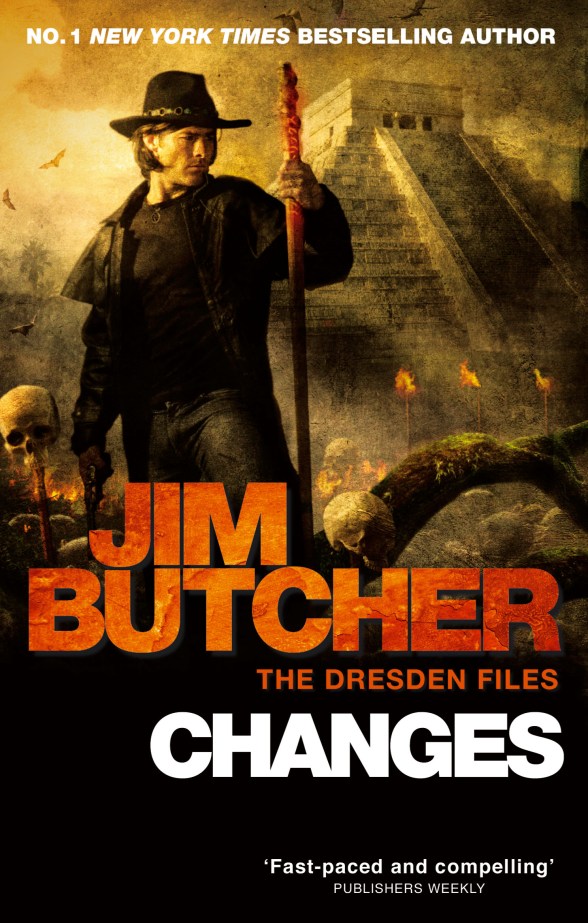
Peace Talks by Jim Butcher

Peace Talks Cover

Publisher: Penguin Audio (Audiobook – 14 July 2020)

Series: Dresden Files – Book 16

Length: 12 hours and 52 minutes

My Rating: 5 out 5 stars

Amazon

After nearly four fantastic years, I have officially come full circle with the epic Dresden Files series as I check out the final book I needed to read with the entertaining and compelling entry, Peace Talks.

Back in 2020, I had the very great pleasure of discovering Jim Butcher’s iconic Dresden Files urban fantasy series.  A powerful, action-packed, and intense read, Battle Ground was one of my favourite books and audiobooks of 2020, even though I started with the 17th entry in the series.  I had so much fun with Battle Ground that I instantly went back and listened to the first Dresden Files novel, Storm Front, which cemented my love for the series.  Since then, I have been slowly working my way through the entire Dresden Files audiobook collection, loving every second of it.  There are so many exceptional entries in this amazing series, with some of my favourites including Fool Moon, Dead Beat, Small Favour, Changes, Ghost Story, and Skin Game, just to name a few.  There was frankly not a single book in this series I didn’t love, and I had such a wonderful time with each of them.  I have been on the final stretch of this series for the last couple of months, which ended when I got through the intriguing Peace Talks.

Harry Dresden, professional wizard, White Knight, and supernatural defender of Chicago is adjusting to many of the changes in his life, including a new romance and his duties as a father.  However, things always have a way of becoming even more complicated for Dresden as the sins of his past and his twisted loyalties come back to haunt him, especially when an important gathering of supernatural entities is set to take place in his city.

Ever since Dresden destroyed the Red Court of vampires, the Fomor, an ancient and long hidden kingdom, have been making a play for power.  Their dark exploits have led them into conflict with many supernatural nations, and after years of skirmishes, the Fomor are finally ready to talk peace with the larger supernatural world in Chicago.  Assigned to summit as security for the White Council of wizards, as well as a liaison between the wizards and the Winter Court of Queen Mab, Dresden has his hands full, especially as he expects all hell to break loose.

As the various delegations descend upon Chicago, Dresden is proved right when his vampire half-brother, Thomas Raith, instigates a diplomatic incident that could lead to his death.  Forced to work with Thomas’ sister, Lara Raith, Dresden works to free his brother without starting a war.  But his actions soon draw the ire of several people close to him, especially as his loyalty to the White Council are in doubt.  Worse, an ancient evil has arrived in Chicago, one determined to destroy all chances of peace and bring about untold disaster.  Can Dresden save his brother while preparing for a force capable of destroying everything he has sworn to protect?

Peace Talks is a compelling addition to the long-running Dresden Files series that takes readers on an interesting ride in the lead up to the next big adventure.  Filled with great character moments, intriguing revelations, and some cool world-building, this was a solid addition to the series that I absolutely powered through.

Butcher comes up with a good story for Peace Talks that not only sets up some interesting plot points for later, but also tells its own unique narrative that is hard to put down.  To fully enjoy Peace Talks, you must appreciate that it is primarily a prelude for Butcher’s other 2020 release, Battle Ground, and as such a lot of story elements from it don’t get any real payoff until the second book.  As I’d already read Battle Ground before getting to Peace Talks, I could see where a lot of the hints, character arcs and storylines were going, so I think that gave me a bit more appreciation for what Butcher was doing here.

The story itself is an excellent character-driven narrative that contains a lot of great elements I really appreciated.  Starting off by showcasing the new normal for Dresden as a parent and partner, the story quickly moves along to the introduction of the summit, which brings several recurring characters back into the mix.  As various troubles begin to build on the horizon, the story introduces its major hurdle as Thomas apparently attempts to assassinate the leader of a supernatural nation.  Convinced of his innocence, Dresden reluctantly works with Thomas’ sister Lara to try to free him, resulting in a prison break sequence during a busy event.  Dresden’s determination to save his secret brother even at the risk of war begins to alienate several of his allies, including his grandfather, eventually resulting in an epic confrontation that was the highpoint of the book.  At the same time, the peace conference proves to be an intriguing addition to the plot, as you get to see some compelling interactions from multiple supporting characters, including many who haven’t been in the same book before.  The conclusion of the summit comes rather fast and shockingly, with the major antagonist for the next book arriving and making their intentions clear, and you come away greatly anticipating the chaos to come in Battle Ground.

I loved how Peace Talks came together as Butcher brings his usual charm, sharp writing and entertaining wit to the table in a big way.  Peace Talks features the trademark blend of mystery, adventure, character development, fantasy elements and snarky humour that I deeply enjoy about all the Dresden Files books, and it’s hard not to get caught up in the story.  There is a great focus on intrigue, politics and personal perception in this book, and I liked how a lot of the threats were more subtle and in the realm of future consequences rather than direct action.  Butcher also focused on setting up for the next book, and much of Peace Talks is geared towards providing context and character introductions for the coming war in Battle Ground.  While in some ways this reliance on setting things up for the next book made the events of Peace Talks seem a little less important, it was an overall strong book, and a great entry to the wider Dresden Files series.  While I do think that people should be really starting the series earlier than the 16th entry, new readers could slot themselves into the Dresden Files series here as Butcher continues his accessible style, minus a few references to some short stories.  Peace Talks also features some clever and subtle clues to major twists and big events in Battle Ground which you don’t fully appreciate until you read the following book.  I honestly came away from Peace Talks with an even greater appreciate for Butcher’s long-term writing skills, as well as his ability to expertly telegraph some major events.

I did feel that certain elements of Peace Talks did feel a bit rushed, especially when it came to the big bad who was revealed at the end of the peace summit.  Having already read Battle Ground, I was expecting more buildup for the villain Ethniu in Peace Talks, especially as she hasn’t been mentioned at all in any of the preceding 15 books.  However, she kind of just shows up, kicks ass for a few seconds, and then leaves, making her threats for the next book.  You don’t even get any history for her aside from the fact that she’s a long-dormant Titan who is annoyed at the world.  In hindsight, this is a little weak, and some explanation about who she is, how she took over the Fomor, or her history with the other magical leaders would have been good.  Butcher also failed to really set up any connection between her and Dresden before their fights in Battle Ground, which I think you needed.  This and other rushed bits of character interaction towards the end of Peace Talks weakened the overall story of both books, and it was clear that Butcher was keen to finish Peace Talks off and get into the major war sequences of the sequel.

As with most Dresden Files entries, Peace Talks excelled in the character department, which was a major highlight of the book.  Peace Talks features a huge cast of characters, most of whom are being reintroduced from previous novels so Butcher can feature them in Battle Ground.  As such, Peace Talks is loaded with some compelling interactions and character moments, especially as the protagonist must deal with a range of friends, family and foes who he hasn’t seen in years.

Naturally, most of the character work revolves around protagonist and point of view character Harry Dresden.  Dresden is such a fun character to follow, mainly because of his immaturity, sense of humour, and the lack of fear and respect he holds for powerful beings.  However, while deep down Dresden is still the same loveable rogue we’ve been following for years, he has been experiencing some major changes in his life that have had some intriguing impacts on his personality.  Peace Talks sees him dealing with a lot of these major life events in various ways, and it was interesting to see how much Dresden and his situation has changed since the start of the series.  Much of the book revolves around his changing relationships with certain people, including his new romance with Karrin Murphey, which finally came official in the previous book Skin Game.  This romance is one of the nicest parts of the whole book, and the two characters are just perfect for each other, which twists certain future emotional knives a little deeper.  It was also sweet to see Dresden as a father, even with their complicated relationship and the trauma surrounding them.

However, I think the most dramatic character relationship that was featured in Peace Talks involved Dresden and his mentor/recently revealed grandfather Ebenezar McCoy.  The two of them have been rocky for years, but their emotions finally spilled over in Peace Talks, especially when it came to Dresden’s relationship with Thomas and his plans to raise his daughter.  The anger between the two bubbles over throughout the course of Peace Talks, mainly because Dresden is forced to hide the true reasons for helping Thomas due to McCoy’s hatred of vampires.  The eventual and inevitable confrontation is very brutal as the two are unable to come to common ground and both think they are in the right.  The big fight between them is one of the best scenes in the book, and it simultaneously showed how powerful McCoy truly is while also highlighting how much more skilled Dresden has gotten over the years.  The eventual result is very heartbreaking, showcasing the fact that no one can hurt you more than family, while also containing a fun bit of sneakiness from Dresden.  It will be interesting to see where this relationship goes in the future, but it’s clear this family has some major issue to work out.

In addition, it was also particularly interesting to see Lara Wraith, leader of the White Court and Thomas’s half-sister become such a prominent character again in Peace Talks.  Butcher spent a good chunk of Peace Talks reintroducing Lara as a major character who is going to be a big part of the series going forward.  While this does result in the usual overly sexualised shenanigans that have accompanied Lara since her introduction in the infamous adult-film focused Blood Rites, Lara mostly proves to be a compelling and complex character.  Indeed, there were some moving examinations of her relationship with Thomas that showed just how much she cared for him.  While the differing goals and expectations for Thomas result in some conflict between Dresden and Lara, they prove to be an effective team, with a bit of hostility buried beneath them.  Considering these two are going to be forced to spend a lot of time together in the future, I liked how Butcher built up their relationship here, and it will be interesting to see how it develops in the future.  Overall, I felt the characters featured in Peace Talks were handled really well, and I loved the unique and powerful interactions that emerged.

As with the entire Dresden Files series, I ended up listening to Peace Talks on audiobook, and frankly there is no better way to enjoy one of these epic novels.  Coming in with a runtime just shy of 13 hours, this was slightly shorter Dresden Files book, especially when compared to the other later books in the series.  This shorter runtime allowed me to power through Peace Talks in no time at all, especially as I was once again wrapped up in the silky tones of narrator James Marsters.  Marsters, who is one of my favourite audiobook narrators, primarily due to his work in this series, is so damn good, and I love how effective he is at telling Butcher’s story.  Marsters honestly gets the tone of each scene perfectly and the way he inhabits each of the featured characters is just amazing.  I once again must highlight how well he portrays protagonist Harry Dresden in this book, and you can really sense the character’s conflicted emotions.  Due to the large cast associated with Peace Talks, Butcher needs fill in quite a few roles, including a ton of recurring figures from previous novels.  I felt that he did a great job voicing all of them, and it was fun to see him dust off a few voices that we haven’t seen in a few books.  Everything came together perfectly with Masters narration in Peace Talks, and this was another epic Dresden Files audiobook that I just loved listening to.

Jim Butcher provides another powerful and intriguing addition to the Dresden Files series here in Peace Talks.  Simultaneously setting up the events for the sequel Battle Ground while also telling a powerful, character-driven tale of betrayal and family trouble, Peace Talks was a great read that proves hard to put down, especially for established fans of the series.  A highly recommended book that leads to bigger things.

Amazon

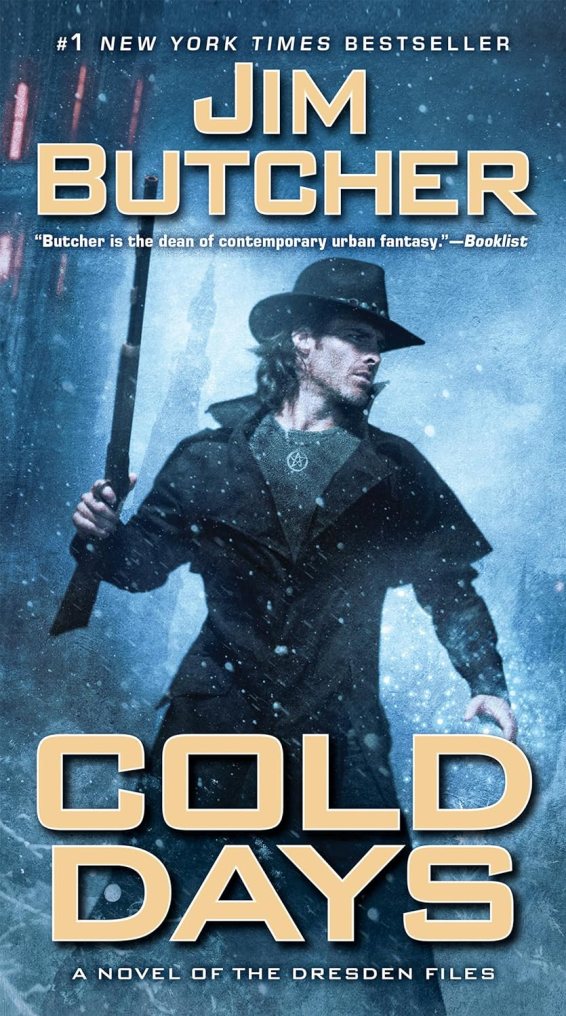
Throwback Thursday – Cold Days by Jim Butcher

Cold Days Cover

Publisher: Penguin Audio (Audiobook – 27 November 2012)

Series: Dresden Files – Book 14

Length: 18 hours and 47 minutes

My Rating: 5 out of 5 stars

Amazon

Welcome back to my Throwback Thursday series, where I republish old reviews, review books I have read before or review older books I have only just had a chance to read.  For this week’s Throwback Thursday, I check out yet another exceptional entry in Jim Butcher’s outstanding Dresden Files urban fantasy series with Cold Days.

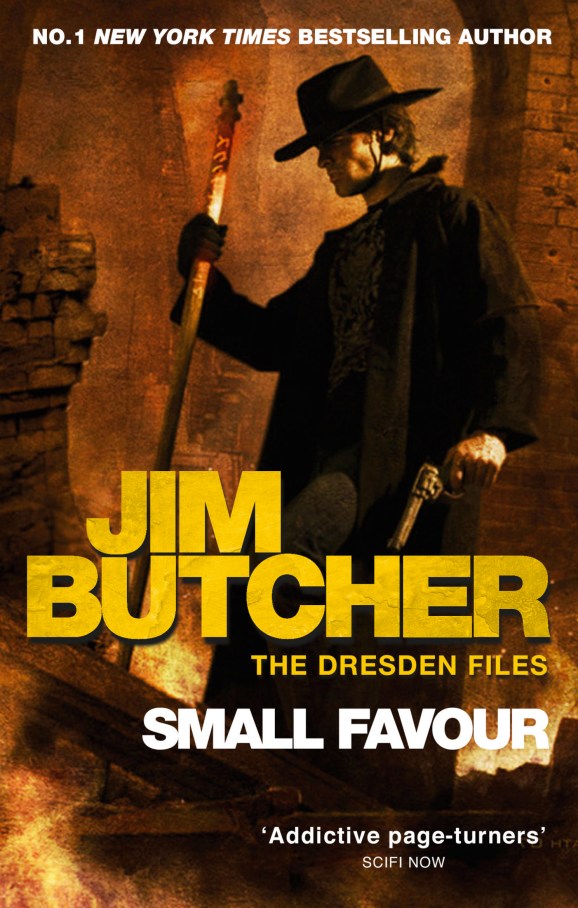
Readers of this blog will know that I have been having an incredible time getting through the epic Dresden Files series by Jim Butcher.  An iconic urban fantasy series, the Dresden Files follows maverick wizard Harry Dresden as he defends the city of Chicago from all manner of supernatural threats.  This series is so impressive, and I have been steadily making my way through out it since 2020.  My previous burst of reading saw me get through four of these amazing books in a row, including Small Favor, Turn Coat, Changes and Ghost Story, and while that momentarily sated my interest in this series, I am still very keen to continue, and I’m hoping to finish it off this year.  I’m already off to a good start as I just knocked off the 14th book in the series, Cold Days, which proved to be another gripping and clever read.

Despite his best efforts, professional wizard Harry Dresden is once again alive, and his troubles are only just beginning.  Forced into a Faustian deal to gain the power he needed to save his daughter, Dresden, now finds himself indebted to Mab, Queen of Air and Darkness and ruler of the Winter Court of the Faerie.  While he’d hoped his murder would get him out of this dark responsibility, Mab had other plans and now Dresden finds himself dragged back to life as the Winter Knight, Mab’s personal champion and hitman.

Determined not to fall under the alluring sway of his new position and power, Dresden finds himself once again thrust into the middle of a conflict outside of his abilities when Mab sets him on his first mission, killing her own immortal daughter.  Grappling with such an impossible task, Dresden returns to his beloved Chicago, only to find even more trouble awaiting him there.  Demonreach, the mystical island in the middle of Lake Michigan that Dresden bound himself to, is under magical siege, and it if falls, billions will die.

With only 24 hours to complete both his allotted assassination and save Demonreach, Dresden soon finds himself under attack from all manner of foes, including manipulative faeries, dangerous beings originating from outside of reality, and former friends with new agendas.  To survive, Dresden will need to reconnect with his old allies and work with them to prevent a dark cataclysm.  But faced with impossible choices and hidden enemies, Dresden soon finds himself unsure who to trust.  Worse, his new powers are working to change him into something primal and dark.  Can Harry defeat both his foes and his own inner darkness before it is too late?

I doubt anyone is going to be surprised to find out that I loved Cold Days.  Butcher did a wonderful job continuing his exceptional series, especially as he presents the reader with a complex and intriguing new adventure, loaded with mystery, sacrifice and surprises.  A gripping read from start to finish, Cold Days gets another easy five-star rating from me, and I had an amazing time getting through it.

At this point in the series, Butcher had been on a real roll, and the last two books, Changes and Ghost Story, had exceptional stories that dramatically shifted the status quo for the protagonist.  This trend continued in Cold Days as Butcher simultaneously reintroduced Dresden back to the world after his death, showed his first adventure as the Winter Knight, and provided some massive detail about the major antagonist that his been hinted about since the start of the series.  I honestly was hooked on Cold Days the second I started it, especially as it begins with a particularly entertaining training montage, before dumping the protagonist right into the midst of complex Winter Court politics.  From there, Dresden is given an impossible task, and his attempts to understand his new mission reveal additional obstacles, including the danger posed by Demonreach.  This swiftly morphs into a classic Dresden Files novel, with the protagonist attempting to solve several concurrent mysteries, while entertaining antagonists try to take him off the board.  A lot of the story involves the always fascinating and manipulative Faeries, and I liked how well Butcher expanded the lore surrounding them.  Naturally, this means that the protagonist must deal with politics, intrigue, and so many betrayals, as he finds himself in the middle of their deadly games.

Once Dresden fully understands the stakes of his new mission, he is forced to make some big decisions, especially as the true antagonists of this book are obscured and hidden.  Everything leads up to a massive and extended final confrontation, which was pretty damn awesome to see, especially as Dresden leads some interesting forces to war and finds himself going up against some big players.  There are some brilliant and well-setup twists at the end of Cold Days that really highlight just how manipulative a certain character is, as well as how good Butcher is at planning ahead with his writing, and the status-quo of the series changes once again.  This entire story was so damn entertaining, clever and moving, and I just flew through it.

As always, I love the excellent first-person style that Butcher utilises to tell his Dresden Files stories, and Cold Days came across in a fun and entertaining way.  Told exclusively from the perspective of protagonist Harry Dresden, you are given a front row seat to the chaotic events of the book as they occur, and I always love the fantastic blend of mystery, action, humour and character moments that result from this.  Cold Days was a particularly good example of this, and it featured an amazing pace, loaded with major set pieces and powerful interactions between the protagonist and other characters.  The action scenes were particularly fun, and I loved how well Butcher was able to enhance the battles with the continuously expanding lore surrounding his excellent series.  Everything about this book was a lot of fun, and this ended up being an impressive entry in the wilder Dresden Files series.

One of the things I particularly enjoyed about Cold Days was the intriguing and impressive ways that Butcher provides some massive expansions to his universe.  Cold Days features some major revelations which completely shift the entire perspective of the Dresden Files, especially as you get some reveals about who the true antagonists of previous books were.  The protagonist’s place in this universe is greatly enhanced, as not only does he get some major power boosts but the true responsibilities of certain posts he took on are revealed.  As such, the stakes of Cold Days and the future books in the series are now higher than ever, which I personally enjoyed.  These changes were an outstanding natural progression of story elements from the previous 13 novels, and it was great to get some payoffs to some of the clever hints Butcher has been lacing into the series since book one.  Because of this, I would strongly recommend that readers go back and read the series from the start rather than beginning with Cold Days, as you will get so much more out of it.  At the very least, I think you need to read the previous two novels, Changes and Ghost Story first, as some of the major story elements and character arcs from there are concluded or continued here.  However, if you decide to start reading the series here at Cold Days, you should still be able to follow along, especially as Butcher always ensures that key elements and characters are always succinctly and effectively reintroduced.

I must really highlight the excellent character work featured in Cold Days, as Butcher does an outstanding job featuring a huge cast of fascinating figures, each of whom plays an important role in the complex plot.  Naturally most of this focus revolves around the point of view protagonist, Harry Dresden, who has been going through a real emotional and personal roller coaster in the last few books.  Not only did he recently find out he had a daughter who was hidden from him, but he was forced to accept a deal with Mab to save her, which he then tried to get out of by dying.  Fully resurrected by the start of Cold Days, Dresden is forced to deal with the consequences of his choices.  It was interesting to see the usually moral and independent Dresden under the control of a historically malevolent figure like Mab, and his attempts to understand her motivations and his place in this new regime are a huge part of the plot.  At the same time, his new powers are slowly changing him, and he is constantly forced to fight back against various primal urges.  This results in some very interesting personal moments, especially as Dresden is finally properly reunited with his friends and family.  I loved how emotional and powerful parts of this book get, especially as Dresden comes to terms with some of the darker moments and thoughts that have plagued him over the last few adventures.  As such, this is an important entry in Dresden’s personal story, and I look forward to seeing what other develops occur in the future.  Of course, while this book does get emotional and moving at times, Dresden was still mostly the same funny and disrespectful figure he always was, and much of Cold Days’ humour was derived from him making fun of and picking fights with people way outside his weight class.  I have so much love for most of Dresden’s character traits, even when being turned slowly evil, and Cold Days is so much more entertaining with him as the narrator.

In addition to Dresden, Cold Days featured a great batch of returning figures, each of whose storylines are also expanded on once Dresden returns.  I loved some of the interactions that occurred in Cold Days, especially as we once again got to see the fun sibling relationship Dresden has with his brother, Thomas, and there was finally some movement on the long-simmering romance between Dresden and Karin Murphy.  It was great to also see more of recurring characters Butters, Bob the skull and Dresden’s dog, Mouse, who are all quite entertaining in their own way.  However, I think the most interesting character development occurred around Dresden’s apprentice, Molly Carpenter.  Like Dresden, Molly has gone through a ton of trauma in the last few books, and it was great to see her mostly on her feet in this novel.  Of course, as Butcher is a cruel author, we had to know it wouldn’t last, and some very significant changes occur to Molly in the big conclusion.  Butcher did a great job setting the scene for these changes, and it will be interesting to see how much her personality changes in the next few books.  I still don’t love the constant hints about a potential romance between Dresden and Molly that were featured here; if they ever get together in a future book, it will be gross.

Aside from these familiar figures, Butcher also loads Cold Days up with nearly every Faerie character and figure he had, including several sinister new antagonists.  The Dresden Files books featuring the Faerie Courts and characters can often be quite entertaining and I think Butcher did a really good job of showcasing the intricate figures who make up these courts in Cold Days. Mab was a fantastic, dark and sinister figure for much of the book as Dresden’s new master, and I enjoyed how she cast a big shadow over much of the plot.  While mostly shown to be villainous, Butcher did attempt to humanise her in places, and it was great to finally get some more depth around her.  The rest of Faeries all had their own unique purpose in the story, and you are never quite certain whose side they are on, especially when more revelations come through as part of this book.  All the characters in Cold Days were very impressive and well-written, and I really appreciated how their complex character arcs helped to enhance an already powerful story.

As usual, I ended up enjoying Cold Days on audiobook, which is honestly just the best way to enjoy a Dresden Files novel.  Coming in with a run time of just under 19 hours, Cold Days was one of the longest Dresden Files audiobooks, but I still managed to power through it in one fantastic week.  Butcher’s outstanding storytelling is always deeply enhanced by this format, and you really get the full experience of the action, unique fantasy elements and cool characters through it.  Of course, the epic voice work from long-running narrator James Marsters is a huge factor in this.  Marsters always moves the story along perfectly, and it is hard not to get caught up in the plot when he dives into the cool features and narrative.  I still really love all the unique and enthusiastic voices he brings to the table, and all the characters, be they new or established, came across perfectly here.  I always deeply appreciate how well Marsters can dive into protagonist and point of view character Harry Dresden, and his narration once again pulled out all this character’s pain, inner turmoil, and relentless cheek.  Marsters also has a lot of fun with the various monsters, faeries and other ethereal figures featured throughout Cold Days, and he always ensures these mysterious creatures come across as something inhuman or terrifying.  This great voicework really turns the Cold Days audiobook into something deeply addictive and fun, and I really cannot recommend this format enough.

Look, there was no way I wasn’t going to enjoy Cold Days, as frankly the entirety of the Dresden Files series has been pretty damn impressive.  However, I felt that Jim Butcher did a really good job with this 14th book, as Cold Days features a compelling and emotionally charged narrative that expertly continues some of the most impressive storylines from the last few entries.  Loaded with action, compelling lore expansion, and Butcher’s distinctive humour, Cold Days was an exceptional book that I cannot recommend enough.  I love this series so much and I cannot wait to finish it off this year.

Amazon

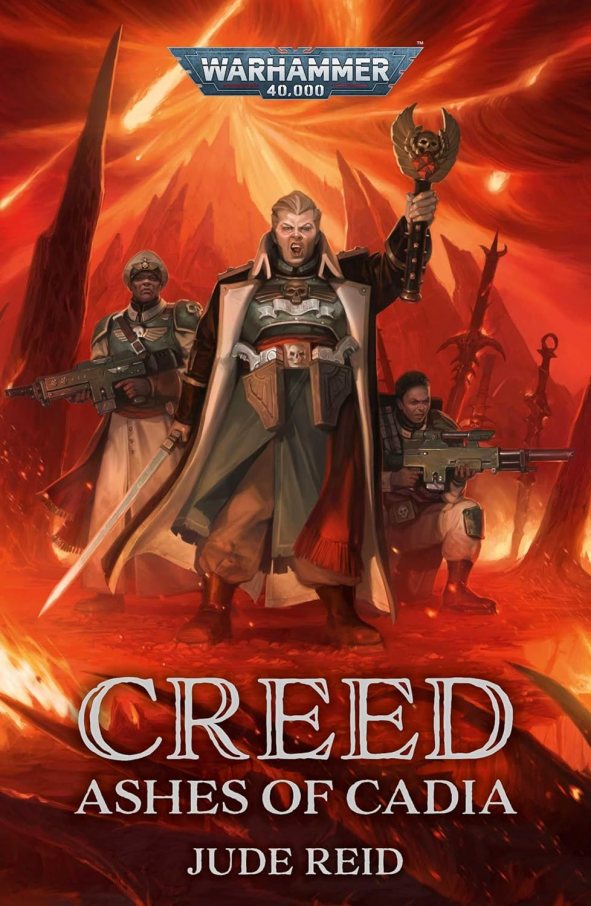
Warhammer 40,000: Creed: Ashes of Cadia by Jude Reid

Creed - Ashes of Cadia Cover 2

Publisher: Black Library (Audiobook – 9 September 2023)

Series: Warhammer 40,000

Length: 14 hours and 36 minutes

My Rating: 4.5 out of 5 stars

Amazon

Exciting new Warhammer 40,000 author Jude Reid presents an action-packed and captivating novel that takes the reader to one of the most desolate places in the franchise’s universe, the ruins of Cadia, with the exciting novel Creed: Ashes of Cadia.

Last year proved to be an outstanding year for new authors producing their first Warhammer 40,000 novel, with several highly talented authors, such as Rob Young (Longshot) and Jonathan D. Beer (The King of the Spoil), producing amazing and intense reads in this fantastic universe.  One of the most interesting of these 2023 Warhammer 40,000 debuts was the impressive and captivating Creed: Ashes of Cadia by new author Jude Reid.  Reid’s first full novel after writing multiple Warhammer 40,000 short stories, Ashes of Cadia takes the reader on an epic journey with a new major protagonist.

Years after the fall of Cadia to the dread forces of Chaos, the Imperium of Man is still reeling from the carnage wrought in its aftermath which saw a massive warp rift cleave their besieged intergalactic realm in two.  Led by the returned Primarch Roboute Guilliman, humanity fights back as best it can in a great crusade, but its victories are never enough.  When word reaches Guilliman of a potential weapon on the most unlikely of locations, desperation requires him to investigate, and there is only one person he can call on for this dangerous mission.

After continually proving herself on the field of battle, Ursula Creed has succeeded her father, Ursarkar E. Creed, in becoming the new lord castellan of Cadia.  Leading the remaining Cadian forces in the Imperium, Ursula hopes to erase the stain of her legendary father’s great defeat, however, she can never seem to leave behind his complicated legacy.  When summoned by Guilliman for a secret mission, Creed is shocked to discover that she is being sent back to one place she never thought to return to, the shattered remains of Cadia.

Accompanied by a select team of Cadians with an unusual mixture of skills and experience, Ursula is sent to the surface to recover her father’s final battle plans and the secret weapons they supposedly lead to.  However, the surface of Cadia is a blasted wasteland, filled with foul energies and unnatural magic that causes even the dead to attack the invaders.  Left without support and hopelessly outnumbered, Ursula must lead her unprepared followers onwards in the hope of securing the prize.  But terrible evils lay claim to the remnants of Cadia, and Ursula will be forced to confront both the forces of Chaos and her own inescapable legacy as the daughter of Creed if she wants to survive.  Can Ursula succeed where her father failed and redeem Cadia, or is she already lost?

Reid had a very ambitious story idea for Ashes of Cadia, in that she needed to provide a human solider focused, character-driven adventure narrative that simultaneously examined the complex legacy of the Cadians in a new way, while also providing the reader with an intense and action-packed read.  Reid more than succeeded, as Ashes of Cadia takes the reader back to Cadia, one of the most significant landscapes in the Warhammer 40,000 universe and puts several intriguing and damaged protagonists through absolute hell.

Starting off a little slow to establish the main cast, remind people about the Cadian legacy, and set up the mission, Ashes of Cadia doesn’t really speed up until the protagonists land on shattered Cadia, and naturally all hell breaks loose.  The protagonists essentially find themselves thrust into a zombie apocalypse scenario, as a sorcerer attacks with a horde of living dead and decimates the protagonist’s team, leaving them trapped on the planet.  The disparate band of damaged and disillusioned survivors are forced to journey across the ravished planet to find either an escape or the rumoured secret weapon, encountering all manner of horrors, tragedy and continuous losses of supporting characters, all the while being hunted.  At the same time, the cast become more and more disheartened and internal conflicts seek to fracture them in a range of emotionally charged scenes.  This harsh adventure takes them to several key places on the ruins of the planet, as they get closer to their various personal goals.  There are some interesting false starts and twists, as well as some heartbreaking scenes, and you are constantly on edge, especially as a new danger of betrayal might emerge just around the corner.  I liked the reveal of Creed’s treasure in the novel, especially as it has some interesting potential consequences for the future of the Cadians, and the use of Creed’s daughter as a protagonist was a smart choice.  While I did see the big twist of the book regarding a certain traitor coming, it was still really well written, and I loved how Reid tried to misdirect with multiple bloody red herrings.  Everything leads up to a big, brutal, and over-the-top final confrontation, the sees the survivors redeemed in various ways, and it ended up being a fantastic and powerful piece of Warhammer 40,000 fiction.

Reid wrote a very intense and personal novel here with Ashes of Cadia, and I really enjoyed her captivating writing style.  Expertly splitting the focus of the book between several complex and unconventional soldiers with their own individual baggage, Ashes of Cadia becomes a much more emotionally charged novel than I was expecting, but the result was an impressive read, especially as you quickly get invested in the various character arcs.  However, Reid is no slouch when it comes to the action, as the many combat sequences are sharp and brutal, keeping you on your toes as any of your favourite figures can quickly fall.  While the pace of Ashes of Cadia does slow a bit at the beginning and in the middle, for the most part Reid keeps her novel moving along, and I had a hard time putting it down as a result.  I especially loved how well Reid portrayed the fallen planet of Cadia throughout this novel, especially as she really laid out the horrors and dangers associated with this planet.  Fans of Warhammer 40,000 fiction who know this planet well will be shocked by how disturbing and different it turns out, and I loved that we finally got an adventure in the ruins.  A brilliant and exceptionally written novel, you will have a lot of fun with this book.

As I have mentioned a few times in this review, Ashes of Cadia is a significant piece of Warhammer 40,000 fiction, mainly because it provides a continuation to a lot of the major story elements that have been a big part of the franchises fiction since the lore changes surrounding the fall of Cadia.  Quite a bit of in-universe time has taken place since that event, and most of the recently released Warhammer fiction focuses on how the loss of the planet effected the Imperium and the many Cadian soldiers fighting throughout it.  If followed through, the events of Ashes of Cadia are going to give these Cadian characters and stories new purpose, and I loved that we also have new Creed character to follow in Ursula.  Reid does an excellent job of building up to these reveals, and there was another interesting look at how traumatised and demoralised the Cadians are, which really fit into the plot of this book.  There are also a lot of references to other novels and events from the lore that fans of the franchise will appreciate, and I personally liked how it had some connections to another Warhammer 40,000 novel from last year, The Fall of Cadia by Robert Rath (one of my favourite books and audiobooks of 2023).  As such, Ashes of Cadia is probably best enjoyed by those established fans of the Warhammer 40,000 universe, especially those who have enjoyed the recent influx in Cadian fiction.  However, there is still a lot for newer readers to the franchise to enjoy, especially as Reid does a wonderful job of explaining the key lore elements that lead up to this story.  General fans of adventure, science fiction and even horror, can have a lot of fun with Ashes of Cadia, and this turned into quite an intense and bloody war narrative.

Easily the most distinctive part of Ashes of Cadia is the complex and damaged cast of characters that make up the main cast.  Reid produced some unique figures for this impressive narrative, and their individual stories, as well as the general despair of the Cadian trooper following the loss of their planet, proves to be a major driving point in the plot, and I really enjoyed seeing the various character arcs unfold.

Ashes of Cadia’s story had three primary point of characters, and Reid did a pretty good job of jumping the story around them, showcasing each of their unique and well-written storylines.  The most prominent of these is the titular Ursula creed, the current lord castellan of the lost planet of Cadia.  The daughter of the beloved Cadian leader who lost the planet before disappearing, Ursula has big boots to fill, especially as she is resentful for her father’s legacy and the fact she barely knew him.  The resulting insecurities, responsibilities and bitterness play a huge part in her character arc, and watching her walk in the steps of her father and attempt to become the leader he was proved to be a great part of the plot.

The next major character, Shael Laskari, adds a more general viewpoint to the story as a recently graduated cadet who is chosen to accompany Creed to the surface for propaganda reasons.  Inexperienced and fearful, Laskari is the everywoman of Ashes of Cadia, and it proved interesting to see her deal with the unknown horrors of the planet while also trying to find her courage in her squad.  Reid also does an exceptional job with the unique character of Mac Ossian.  A former medic and member of a Cadian regiment, Ossian was assigned to a penal legion after killing his former commander, and now finds himself back on Cadia as part an expendable distraction.  Managing to meet up with Creed’s unit, Ossian spends much of the book trying to prove his loyalty and worth, while also wondering if Creed and Cadia still deserves his surface.

These central characters are accompanied by several fantastic supporting cast members, several of which have their own exceptional character arcs.  I personally really enjoyed Colonel Hadrian Aurelius Van Haast, who serves as a guide with local knowledge of the area.  Van Haast is a stupendously arrogant figure, who you can’t help but dislike, and he added a fantastic dynamic to the cast.  However, this arrogance is a cover for a much darker secret, which Reid slowly and expertly reveals as the book continues.  I also must highlight Ossian’s fellow penal legionnaire Liga Yager, another prisoner who tries to survive after being dropped on Cadia to die.  Due to her much more cynical perception of Creed and the Cadians, as well as her compelling backstory, Yager goes on a very different path than Ossian, and proved to be a devil on his shoulder that speaks some much-needed truth.  Finally, I loved the villain of the story, the Death Guard sorcerer, Livor Opilionis, who is mostly called The Huntsman throughout the book.  The Huntsman is a gloriously sinister and dangerous foe, who relentlessly hunts them throughout the ruins of Cadia, heralded by his hunting horn and packs of plague zombies, and the confrontations the protagonists have with him always leads to carnage.  This outstanding cast of characters, and more, really turned Ashes of Cadia into an amazing novel, and I loved the brilliant character arcs that Reid developed around them.

As with most Warhammer 40,000 books I check out, I made sure to grab Ashes of Cadia on audiobook.  The Warhammer 40,000 audiobooks are always pretty damn awesome, and I love how much the action, horror and unique setting came through in this format.  Coming in with a decent runtime of just over 14 and a half hours, Ashes of Cadia was a very easy book to listen to, and I managed to knock it off quickly.  It helped that Ashes of Cadia was narrated by the superbly talented Colleen Prendergast, who is swiftly becoming the go-to narrator of Warhammer 40,000 audiobooks with female Cadian protagonists.  Prendergast has a great and intense voice for Warhammer 40,000 fiction, and I love how well she was able to move the plot along.  She also provides a series of great and fitting voices for the cast of this book, especially the female characters.  I loved how dignified and complex she made some of these characters, as well as how monstrous and threatening the main antagonist sounded in his terrifying scenes.  As such, Ashes of Cadia was an absolute joy to listen to and I would strongly recommend this audiobook version to anyone interested in this fantastic piece of Warhammer 40,000 fiction.

Creed: Ashes of Cadia was a fantastic, dark and captivating novel from Jude Reid, who produce an impressive debut with some intriguing potential for the wider Warhammer 40,000 universe.  Loaded with action, intrigue and several complex characters, Creed: Ashes of Cadia was an excellent read that cleverly ties into the history and existing lore of this complex and highly fun franchise.  Intense, moving, and oh so brutal, Ashes of Cadia comes highly recommended, especially for fans of Warhammer 40,000 fiction.

Amazon

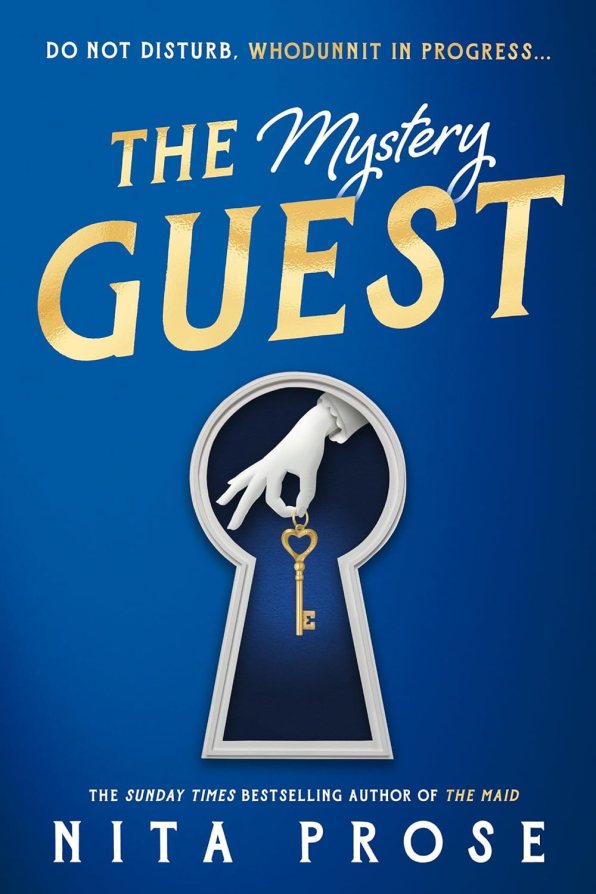
Quick Review – The Mystery Guest by Nita Prose

The Mystery Guest Cover

Publisher: Harper Collins (Trade Paperback – 29 November 2023)

Series: Molly the Maid – Book Two

Length: 327 pages

My Rating: 4 out of 5 stars

Amazon

Last year I was lucky enough to receive a copy of The Maid, the debut novel of Nita Prose, which proved to be an excellent read.  Following a cleaning obsessed maid with a unique outlook on life who gets accused of a murder at her fancy hotel, The Maid was a fantastic read that made great use of its unique protagonist and her compelling personality.  The Maid ended up begin great book and one of my favourite debuts of 2022.  As such, I was pretty excited when I received a copy of Prose’s new novel, The Mystery Guest.  A sequel to The Maid, The Mystery Guest introduces a new compelling mystery that Prose’s protagonist needs to uncover.

Plot Synopsis:

Molly Gray is not like anyone else. With her flair for cleaning and proper etiquette, she has risen through the ranks of the glorious five-star Regency Grand Hotel to become the esteemed Head Maid. But just as her life reaches a pinnacle state of perfection, her world is turned upside down when J.D. Grimthorpe, the world-renowned mystery author, drops dead—very dead—on the hotel’s tea room floor.

When Detective Stark, Molly’s old foe, investigates the author’s unexpected demise, it becomes clear that this death was murder most foul. Suspects abound, and everyone wants to who killed J.D. Grimthorpe? Was it Lily, the new Maid-in-Training? Or was it Serena, the author’s secretary? Could Mr. Preston, the hotel’s beloved doorman, be hiding something? And is Molly really as innocent as she seems?

As the case threatens the hotel’s pristine reputation, Molly knows she alone holds the key to unlocking the killer’s identity. But that key is buried deep in her past—because long ago, she knew J.D. Grimthorpe. Molly begins to comb her memory for clues, revisiting her childhood and the mysterious Grimthorpe mansion where she and her dearly departed Gran once worked side by side. With the entire hotel under investigation, Molly must solve the mystery post-haste. If there’s one thing Molly knows for sure, it’s that dirty secrets don’t stay buried forever…

This was an interesting and fast-paced follow-up to The Maid that I’m glad I decided to check out.  Prose does a wonderful job reintroducing the character of Molly Gray, and the new mystery surrounding her is very clever, distinctive and featuring some fun meta commentary on mystery writers.

Starting off strong with the sudden poisoning of the mystery writer in question, you quickly get sucked into the case, especially when it becomes clear that Molly is hiding a personal connection to the victim.  As with the first book in the series, Prose splits the narrative across time periods, with one part of the story set in the present as Molly inadvertently starts to investigate the case, and the other set back in the protagonist’s past, exploring her upbringing and the history she has with the victim.  I liked the split between these two parts of the story, and the author does a good job of working key clues and character motivations into the scenes set in the past, which come full circle by the end of the book. I did think that the scenes set in the present were a little too similar in tone and content to that of the first book, with Molly coming into conflict with Detective Stark, Cheryl being an unnecessary cow, and a series of misunderstandings forcing Molly further into the investigation.  However, the dives into Molly’s past helped to cut this familiarity to an acceptable degree, and I really enjoyed learning more about the protagonist’s past.

Both these story arcs blend well into a complete and intriguing narrative and I had a fantastic time seeing the entire story coming together.  The mystery itself was quite strong, and I liked the unique motivations and characters that emerged as a result.  The way the crime was solved thanks to Molly’s attention to detail and knowledge of the maidly arts was a little over the top, but I can forgive that considering the plot and the characters involved.  Prose also works in some subtle but compelling character arcs that see several existing and new supporting figures go in some interesting directions, and I particularly enjoyed the changing attitudes of Detective Stark after how portrayal in the previous novel.  An overall clever and strong murder mystery book, I really enjoyed seeing how this all came together.

I main highlight of The Mystery Guest is protagonist Molly Gray, who is one of the more unique and entertaining crime fiction characters you are likely to see.  An obsessive, socially awkward woman with a unique outlook on life and human interactions, Molly has found her calling as a maid, especially as it allows her to clean up other people’s messes.  Much of The Mystery Guest’s uniqueness comes from the way that Molly observes her world and interacts with the people in it.  Her ability to remember small details is matched by her inability to understand people’s emotions and motivations, which can often get her into trouble.  I felt that Prose did a good job of expanding on Molly’s personality in The Mystery Guest, and it was great to see become more assertive and capable, especially after receiving her coveted promotion to Head Maid.  At the same time, Prose also dives into Molly’s childhood, which, while it is a little convenient that she had connections with the victim, provides more insights into Molly’s personality and some of the events that formed her.  I deeply enjoyed how Prose worked to grow Molly as a person in this sequel while also maintaining her atypical outlook and mentality, and it will be interesting to see how this character is developed in the future.  I do worry that Prose is going to get diminishing returns on how much one can enjoy Molly’s character as the series continues, but I’ll be happy to be proven wrong about that.

Overall, The Mystery Guest proves be an intriguing and captivating sequel to The Maid and I enjoyed the new mystery that Nita Prose came up with.  Making great use of her main character and presenting a complex, domestic murder, The Mystery Guest was a fantastic read that you can make quick work of.

Amazon

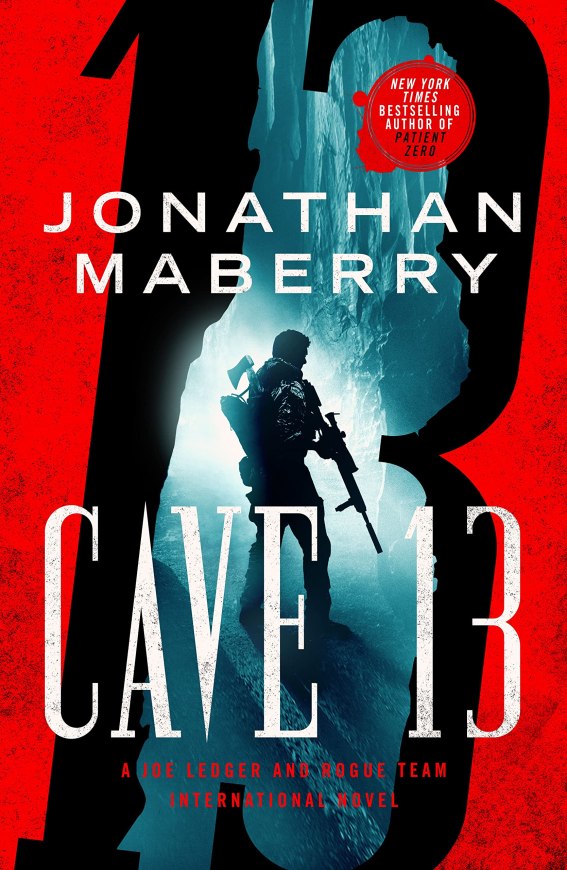
Cave 13 by Jonathan Maberry

Cave 13 Cover

Publisher: Macmillan Audio (Audiobook – 29 August 2023)

Series: Rogue Team International/Joe Ledger – Book 3/13

Length: 19 hours and 5 minutes

My Rating: 5 out of 5 stars

Amazon

One of my favourite twisted authors returns with an outstanding new entry in one of his best series with Cave 13 by Jonathan Maberry.

It has already been a massive year for fans of thriller/horror author Jonathan Maberry, who previously released the exhilarating and intense dark fantasy novel Son of the Poison Rose.  The awesome sequel to Kagen the Damned (one of my favourite novels and audiobooks of 2022), Son of the Poison Rose was one of my favourite books and audiobooks from the first half of the year, and if that had been the only Maberry novel I’d received in 2023 I would have been content.  However, Maberry chose to spoil us by providing us with another epic Joe Ledger novel, which is so damn amazing.

The Joe Ledger novels are an amazing science fiction thriller series that follows titular protagonist Joe Ledger as he attempts to stop a series of insane world-ending threats initiated by compelling group of villains.  The initial Joe Ledger series featured 10 epic books with some outrageous and addictive stories around them, including Patient Zero, The Dragon Factory, Code Zero, Predator One and Deep Silence, just to name a few.  Maberry followed up these novels with a new Joe Ledger focused series, the Rogue Team International books.  This series has so far featured Rage (one of my favourite books and audiobooks of 2019) and Relentless (one of my favourite books and audiobooks of 2021), both of which were pretty exceptional in their own ways.  As such, I have been quite excited to see a new Rogue Team International book and Cave 13 was one of my most anticipated books for 2023 as a result.

To many, Jason Aydelotte, better known to the world as Mr. Miracle, is a smiling and beatific public figure celebrated for his archaeological endeavours and his vast antiquities business.  However, beneath the smiles, Mr. Miracle is a far more ruthless and sinister operator.  Smart, determined and ambitious, Aydelotte has entered the world of international arms dealing and is willing to sell his advanced weapons to anyone who will buy them, including ISIS, and his latest product might be the scariest thing ever created.

Thanks to discoveries made in a hidden ancient Egyptian tomb, Aydelotte’s team has developed a powerful new bioweapon that drives its victims insane with a mere breath.  Its effect is terrifying and its potential for destruction in the wrong hands is immeasurable.  With the world going insane and chaos rising in the Middle East, the only people who might be able to stop such a potent weapon are Joe Ledger and the highly specialised agents of the independent intelligence agency, Rogue Team International.

However, the release of a deadly bioweapon soon proves to be the least of Ledger’s problems in the Middle East.  Far more dangerous materials were recovered from the tomb, including bizarre books of magic dating back to the time of Moses.  At the same time, greater secrets have been pillaged from a hidden cave containing even more Dead Sea Scrolls, some of which could alter the very fabric of the universe.  With threats piling up all around them, and enemies on all sides engaging in their own dangerous plots, can Ledger survive both the carnage and his own fractured mind to save the day, or will a new ruthless opponent destroy everything?

Cave 13 was another outstanding and captivating Joe Ledger adventure from Maberry that sets his troubled protagonist against another brilliantly elaborate world-ending plot.  Slick, intense and loaded with complex characters, Cave 13 was an amazing read that gets an easy five-star rating from me, especially in its audiobook format.

Maberry produced another unique and compelling story for Cave 13 that is once again perfectly told in his unique writing style.  Utilising a vast number of shorter chapters, Maberry quickly starts the story off, reintroducing the protagonist and his team, while also setting up the compelling antagonists and their complex evil plan.  A series of well-placed and absolutely fascinating interludes throughout the book provide greater context to the events that are about to unfold, and you get to see the entire genesis of the antagonist and their plans, which adds a lot to the overall story.  Maberry artfully blends this together with the main storyline that sees Ledger and his team investigate several unique occurrences, including conflicts in the Middle East, increases in unique weapon trafficking, the recovery of the Dead Sea Scrolls, as well as mysterious events that could only have been done by certain biblical magic (“you’re playing with the big boys now”).  The intriguing blend of science, mysticism, faith and mystery gives Cave 13 a particularly fun edge, and I really liked the intriguing set-up surrounding the antagonist’s plot and its full potential for destruction. At the same time, the author also dives back into the complexity surrounding his protagonist’s damaged psyche, and how this new case might affect it.

While I loved all the set-up in the first third or so of the novel, it does ensure that the initial plot is a tad slower.  This changes once Ledger and his team arrive in Israel and find themselves under attack in a particularly brutal action sequence right off the bat.  Maberry’s action scenes are always extremely awesome, and you have to love the attention and detail he puts into making them as intense as possible.  This cool action sequence is well balanced at this point by some further background, as well as a compelling sequence of events surrounding recurring side-character Toys, who finds themselves at a different side of the conflict following an undercover operation gone wrong.  This part of the story, especially the twist about the antagonist’s true plan, really increases the stakes and intensity of the story, and Maberry has a lot of fun creating some intense visual horrors for the readers, especially when it comes to a series of twisted and brutal hallucinations.

The final third of Cave 13 is probably the strongest part of the book, and I honestly was hooked the entire way through, desperately trying to get to the end.  All the great set-up, intriguing interludes, and multitudes of well-established characters comes together for the big confrontation at the end as the antagonist’s plan goes full circle and Ledger and his team once again find themselves in hell.  Things get so damn dark, desperate and freaky at this point in the book, and you are left completely worried about all your favourite characters as Maberry doesn’t have the best track record of keeping likeable cast members alive.  There are some brutal scenes here, as well as a ton of tragedy, and the reader is left on the edge of their seat right until the very end.  While I came away from parts of this book a bit shellshocked, I was overall very happy with the conclusion, which was dark, had a good twist around the villain, raised a lot of questions about the protagonists, and left you with a little ray of hope that will no doubt get snuffed out in the future.  An overall pretty epic story that really came to life in Maberry’s hands, especially thanks to his unique set out and brilliant ability to write an action sequence.

Cave 13 ended up being quite an interesting Joe Ledger novel, especially as it presents a great story and the first original villain of the Rogue Team International era, while also cleverly diving into the prior events of the series and utilising them to enhance the characters and narrative.  I really enjoyed the step away from the villains of Rage and Relentless for this one book, although I also appreciated how well the author examined the aftermath of these novels and the dark things they’ve done to the protagonist.  Like most of the Joe Ledger books, Cave 13 can be read as a standalone novel, and Maberry does a good job of recapping all the relevant prior events and characters to ensure that new readers can fully understand and appreciate everything going on.  However, established fans of Maberry are going to get the most out of Cave 13, and there are a ton of unique hints or suggestions about what is to come.  I found it particularly interesting that Maberry chose to include multiple scenes in Cave 13 that were clearly intended to set up certain events for future entries.  While these scenes are a tad disjointed from the main story, I won’t lie and say it didn’t make me excited for the next book in the series, especially when it comes to those hints about certain villains returning.  I was a little less impressed that several storylines or mysterious events from Cave 13 were deliberately left unanswered by Maberry, but I guess I’ll just have to wait and see what happens with them in the next exciting Joe Ledger novel.

As with all Maberry’s work, one of the main highlights of Cave 13 was the excellent and complex characters.  Maberry features a pretty massive cast in this novel, including a range of recurring figures from the previous novels, as well as several intriguing new figures who I really enjoyed.  As usual, Maberry does a remarkable job of showcasing all his characters, diving into the compelling histories and minds, and showcasing just how crazy or morally dubious they are (you have to be in order to survive in this universe).

Naturally, the most prominent character is protagonist Joe Ledger, who has been the leading figure and main point-of-view character in this series since the beginning.  An unstoppable action man and natural leader, Ledger is always a fun character to follow, especially as Maberry installs an overwhelming level of snark and disrespect in his personality, ensuring that every scene he’s in is full of quips, jokes and very funny observations about the crazy things he encounters.  While this alone makes him a great character, and the source of much of Cave 13’s humour, Maberry ensures that Ledger is one of his most complex protagonists ever due to the sheer amount of trauma the character experiences.  Ledger has gone through so much damage, darkness, loss and despair during the course of the series, and Maberry spends a substantial part of the protagonist’s chapters diving into this, showcasing just how emotionally and mentally battered Ledger is.  While I always love how effectively Maberry showcases the building trauma surrounding his character, it is even more poignant and important in Cave 13, as this is Ledger’s first adventure since the events of Relentless, where Ledger was taken over by a murderous personification of his own inner darkness and went on a deadly revenge trip.  Some of the most emotionally powerful parts of the book revolve around Ledger and his friends coming to terms with his terrible actions in the last book, and it is clear that Ledger has been extremely changed by the events of the prior book.  Naturally, Maberry decides to twist the knife even further in Cave 13 by subjecting Ledger to a series of traumatising visions and hallucinations thanks to the book’s big bioweapon.  This drives Ledger even further over the edge, and there are some fascinating and highly revealing scenes that give you further insights into just how cracked this protagonist is and the dangers lurking just beneath his mental surface.  Honestly one of the best and most compelling action protagonists out there, I really love how Maberry showcases Ledger in this gripping novel.

In addition to Ledger, Cave 13 features a range of other compelling characters who get their moment to shine.  My favourite would have to be the always mysterious Mr Church, the head of the secretive Rogue Team International.  A highly elusive and deadly figure whose origins and full capabilities are only hinted at; Church is easily one of the best characters featured in the entire series.  Maberry makes exceptional use of Church in Cave 13, and there are so many more tantalising hints about who or what this character might be.  This actually proves to be one of the most substantial Church novels in the entire series, and Maberry goes out of his way to not only show that this seemingly unstoppable figure is actually vulnerable, and is in some ways just as much of a bastard as the book’s villains.  There are several amazing and highly powerful monologues from Church in Cave 13 that give you some fascinating insights into his mind, especially when it comes to Ledger and the constant war that he and Church are fighting, and I loved getting an idea of just how ruthless this figure can be.  Several of these monologues are delivered to another awesome figure in Cave 13, the team’s psychiatrist, Rudy Sanchez, a notoriously calm figure who finally loses his cool in this novel after Ledger goes back into the field, straining their relationship.  I loved seeing Rudy particularly passionate and angry in Cave 13, especially when he stands up to Church, and Maberry’s portrayal of his concern really helps to highlight just how much damage was done to Ledger in the previous book.

Another major figure from Cave 13 that I need to highlight is the intriguing figure of Alexander “Toys” Chismer.  A former villain turned repentant ally, Maberry set Toys on a redemptive arc several novels ago, and it has been really paying off as Toys has turned into a fascinating figure trying to atone for his past.  His impressive long-running storyline is extremely well featured in Cave 13, and indeed he is one of the major protagonists, leading his own team and experiencing some substantial additional trauma.  Toys honestly has one of the darkest and most impressive character arcs in the entire novel, and the scenes he shared with Ledger are particularly moving and play into their complex antagonist history perfectly.  The various recurring members of Rogue Team International are well featured again in Cave 13, and it was fascinating to see how some of their character arcs have developed over the course of 13 novels.  My favourite fuzzy assassin, Ledger’s dog, Ghost, was of course awesome in this book, and I always loved just how in touch with his human’s emotions Ghost is.  There was even an intriguing extended cameo from F. Paul Wilson’s iconic protagonist, Repairman Jack, who Maberry utilises extremely well in Cave 13’s story, simultaneously working them into the plot while also diving into the Repairman’s unique life in his own series.

Finally, I must highlight some of the villains in this book.  Maberry always excels in creating complex and insane antagonists for each of his novels, and Cave 13 is no exception, as you are introduced to several intriguing villains who are set to unleash chaos upon the world.  I won’t give away too much about them and their plans here, but I will say that Maberry did an exceptional job of introducing them and diving into their various quirks, plans and desires, in some cases humanising them.  This actually helps to make them even more sinister as you start to understand and appreciate some of their actions, even if they are reprehensible.  I deeply enjoyed the complex examinations of each of Cave 13’s main villains, especially as the various interludes showcase their intriguing histories as well as the genesis of their current plans and schemes, allowing you to fully appreciate everything about them.  These villains, as well as a couple of seemingly returning antagonists hidden in the shadows, ensure that Cave 13’s stakes are always extremely high, and I loved how well the various complex character arcs mixed together to create an outstanding and powerful read.

As with every Jonathan Maberry novel I have so far had the pleasure of enjoy, I chose to check out Cave 13 on audiobook, which is the only way to enjoy one of Maberry’s epic tales.  Not only does the author’s awesome writing style and action sequences really come across well in the audiobook format, but the exceptional narration of acclaimed voice actor Ray Porter, who narrates all of Maberry’s projects, is so damn awesome.  Porter has such a brilliant handle on Maberry’s great characters, and it is always fun to hear the familiar voices of the main cast come out of Porter’s mouth again.  I particular love Porter’s take on main character Joe Ledger, as Porter always manages to capture the key parts of his personality, including the humour, mental instability and the pure rage contained within.  This, and other excellent performances, really helps to turn Cave 13 into an amazing listen, and I had such a brilliant time getting through it, and its 19-hour runtime just flew by.  Indeed, it really helped to ensure an extended road trip in an uncomfortable van was actually pretty tolerable, so kudos for that.  Easily one of the better audiobooks of 2023 so far, I cannot recommend this format enough to anyone wanting to check this epic novel out.

Unsurprisingly, I had fun with the latest Rogue Team International novel by Jonathan Maberry and it is always so damn epic to get another Joe Ledger adventure.  Cave 13 was a particularly awesome and intense entry in the series that expertly brings together an elaborate narrative, evil villains, exceptional action and complex character in an impressive overall read.  Fun, exciting and oh so darkly addictive, Cave 13 was a powerful and gripping novel that I cannot recommend enough, especially for established fans of Ledger’s amazing books.

Amazon

Throwback Thursday – Ghost Story by Jim Butcher

Ghost Story Cover

Publisher: Penguin Audio (Audiobook – 4 August 2011)

Series: Dresden Files – Book 13

Length: 17 hours and 36 minutes

My Rating: 5 out of 5 stars

Amazon

So by this point in my explosion of Throwback Thursday articles I think I’ve made it pretty clear that I have been really enjoying the epic Dresden Files series lately.  This amazing series has so much going for it, and after listening to and reviewing Small Favour, Turncoat and Changes, I honestly had no choice but to dive into the 13th entry in the series, Ghost Story, especially as it continued on from a great cliffhanger at the end of Changes, and boy am I glad that I did.

Harry Dresden is dead.  Brutally and suddenly gunned down following his victory over the Red Court of vampires and his decision to sell his soul to Queen Mab, Dresden’s life is over, and his body is lost to the murky depths of Lake Michigan.  However, nothing is ever simple for Chicago’s only professional wizard and supernatural protector, and even his own death proves to be far too complicated for his own good.

Waking up in spiritual realm between life and death, Dresden is given an option to travel back to Chicago as ghost to clear up his irregular death.  If he manages to find out who killed him, he may save the lives of the friends he left behind, but if he fails, he will be wiped from existence completely.  Determined to save those he loved, Dresden elects to return home and finds himself back in his city, but in the six months he has been away, everything has changed.

Without his protection, Chicago has become a target of deadly dark powers wishing to capitalise on the destruction of the Red Court.  Worse, his allies have each been affected by his death, and their attempts to keep Chicago safe in his absence have led many of them upon a dark path.  Determined to save who he can, Dresden calls upon the services of ectomancer Mortimer Lindquist.  However, Mortimer is facing his own difficulties as a sinister force seeks to capture him using an army of dark spirits.  To help Mortimer and his friends, and to discover who has behind his death, Dresden will need to master his new ghostly abilities and face down some of the deadliest creatures stalking the afterlife of Chicago.  But even if he succeeds, is the remnants of Dresden’s soul ready for the dark truths and hidden secrets lurking just around the corner?

Well damn, the further I get in this series the more I appreciate just how good an author Jim Butcher is.  Ghost Story is another exceptional and epic Dresden Files book, and it might be one of the very best things he has ever written.  A dark and complex character-focused tale that places its protagonist is his most unique situation yet, Ghost Story has so much going for it, and I loved every second I spent reading it.

Ghost Story probably has one of the most unique and memorable narratives in the entire Dresden Files series, primarily because the protagonist and narrator is dead.  Cleverly following on from the intense cliffhanger of Changes, in which Dresden gets shot and killed in the final scene of the book, Ghost Story sees Dresden’s shade sent back to Chicago six months later to solve his own murder.  The initial scenes of Ghost Story are pretty interesting, and I quite liked how Butcher set up the scenario and reinforced it with the book’s first major action sequence at Mortimer Lindquist’s house, where the protagonist learns some of the rules about being a spirit and has his first encounter with the book’s antagonist.  The story really takes off when Dresden meets up with all his old friends and sees how much things have changed since his death.  The emotional damage his murder has caused is pretty damn moving, and the unintended consequences of his victory against the Red Court serve as a good set-up for some new long-running storylines.

The narrative from here continues at a brisk pace as Dresden attempts to simultaneously solve his murder, aid his lost apprentice, help a bunch of street kids being controlled by a minor sorcerer, and save Mortimer from a dangerous entity.  The last one proves to be the major storyline of the book, especially as it involves an old foe of Dresden’s, and the protagonist is forced to use all his limited ghost powers to save him.  This leads to several intense and distinctively dark set pieces, including a memorable storming of the beaches, an invisible ghost duel, and some major sacrifices.  The final confrontation of the book is very impressive, especially as it helps to reveal the full truth behind Dresden’s murder.  Butcher was really clever in setting this up big reveal, and I thought it was very fitting and complex, especially as it ties nicely to some events in Changes and hints at some great evils yet to come.  The scenes that follow are some of the best and most emotionally charged, as many of the characters get closure, and you get to see just how important Dresden is to his friends and family.  In some ways I kind of wish that Butcher ended series here, as there was a certain finality to some of the storylines that I really appreciated.  However, I’m also not upset that Butcher chose to continue the Dresden Files even further, and the inevitable scene returning Dresden to life was handled extremely well, setting up a whole new course for the protagonist.

I really liked how effectively Butcher wrote Ghost Story so that it had a different feel to most of the other Dresden Files books.  Thanks to the protagonist’s ghostly form, there is less traditional action and adventure, although Dresden compensates for this by bringing in a lot more world building and a lot of emotional character moments.  Thanks to the situation of the protagonist and the general gloomy atmosphere of the current setting, this is a much more subdued and grimmer Dresden Files novel than you might be used to.  Luckily, Butcher does try to break through this darker content with Dresden’s usual humour, which helped to lighten up some of the other characters in the book.  The usual investigative elements are still strongly represented here, especially as Dresden has to find his own killer, and I really enjoyed how the protagonist’s new limitations forced him to think about the case in new ways.  The main mystery is set up extremely well throughout this book, with clues hidden both in Ghost Story and Changes.  I particularly appreciated how the subtle absence or mention of a recurring character ended up being a clue, and it’s a brilliant bit of writing once you understand it.  Butcher really got the right blend of story elements here in Ghost Story, and I liked how he made the book a bit darker while still allowing established readers the sense of familiarity to keep them going.  These excellent writing decisions really enhanced the overall impact of the book, especially when combined with the exceptional character work and intriguing new fantasy elements.

Ghost Story is honestly one of the most significant entries in the entire Dresden Files series, not only because it resolves the cliffhanger from the previous novel but because it starts to change the status quo of the series’ wider world.  A lot of major ongoing storylines start in Ghost Story, and the six-month gap between Changes and Ghost Story also results in some intriguing changes to the main setting and supporting cast.  These changes are pretty jarring for established fans but are really clever, and I liked the darker picture of the world they painted.  Unlike most of the books in the Dresden Files series, Ghost Story really should not be read as a standalone novel or an entry into the series.  While Butcher does do his usual excellent recaps, there are just too many big story elements going on in Ghost Story for it to be an effective launchpad for new readers.  The emotional impact of the character interactions will also be reduced for those unfamiliar with the characters, and the big reveal at the end also loses a lot of punch if you haven’t read Changes.

One of the things that I really enjoyed about Ghost Story was the way in which Butcher worked some cool new fantasy elements into the story.  The spiritual world and the undead aren’t unfamiliar concepts to the series, especially with previous entries like Grave Peril and Dead Beat, but Ghost Story takes it in a whole new fascinating direction with Dresden’s death and return as a spirt.  This transformation forces Dresden to learn about spirits and ghosts extremely quickly, especially when he needs to utilise all his new abilities to save his friends.  This proves to be an excellent and complex inclusion, and Butcher does an amazing job of completely changing the abilities of his protagonist for an entire book.  The resultant changes and new talents are very cool, and I loved the dive into what ghosts are and how they can affect the world around them.  It also allows for some impressive scenes, and it was a lot of fun seeing pitched battles between ghostly magical practitioners while the mortals are completely unaware.  Throw in some intriguing new long-term baddies, the Fomor, and some new abilities for established characters, and Ghost Stories proves to be a book where Butcher was at his most inventive.

As with all the Dresden Files novels, one of the key highlights of Ghost Story is the excellent characters and the elaborate personal stories that Butcher weaves around them.  The characters arcs in Ghost Story are particularly poignant and moving, even compared to Butcher’s usual high emotional standard, as the lingering impacts of the protagonist’s death drive many of them to do things they would never expect.

Naturally, most of the focus returns to protagonist Harry Dresden, who experiences some major life changes after dying.  Despite losing his physical body, Dresden maintains much of his usual drive, humour and general disrespect for all the dangerous and scary creatures out there, and if there were ever a character who would excel as a nosey and noble ghost, it would be Dresden.  However, despite his outer façade of good cheer and comedic charm, Dresden is experiencing a great deal of emotional turmoil, because of both the events of the previous books and his regrets of leaving those close to him behind.  There are some brilliant examinations of the pure guilt he feels, especially around his destructive choices in Changes and their impact on his friends.  Despite all this, Dresden is still his usual bold and determined self, and I had an excellent time watching him come to terms with his spiritual nature and his new abilities.  Dresden had to be a lot more passive in this book, which honestly drove him a little crazy at times, and it was an interesting change of pace to see him so helpless.  Butcher also used this book to dive back into Dresden’s past, providing us with some intriguing looks at his early adventures, including his first traumatic apprenticeship, which has been mentioned but not fully explored until now.  I really enjoyed how Dresden was portrayed in this book, especially as Butcher wrote some particularly emotional and hard-hitting scenes for him, and this was one of his most unique adventures.  I look forward to seeing what happens to him next, especially as he comes to terms with certain new facts of his life in the rest of the series.

While Dresden does get a lot of compelling and emotionally rich development in Ghost Story, I really need to highlight how exceptionally well Butcher featured several of his key supporting characters in this novel.  Many of the characters the reader has grown to know and love throughout the course of this series really change in Ghost Story, especially as they have all had to spend six months dealing with the death of Dresden and the crazy world that developed in his absence.  There is some outstanding and brilliant development here as a result, and I really appreciated how effectively Butcher examined the impacts of grief, anger and guilt.

This excellent development can be particularly seen in the character of Karrin Murphey, who, after losing her position in the police and her potential romantic partner in Dresden, was forced into a dangerous war to keep Chicago safe from supernatural threats.  The resulting fights made her a lot more dangerous and unforgiving than we’ve previously seen, especially as she barely manages to keep her grief and anger contained.  The always fun Waldo Butters also grows up a lot for Ghost Story, especially now he is the holder of Bob the Skull.  Butters honestly becomes a better character with each appearance in the series, and it was great to see him being a more determined and bold figure here to try and live up to Dresden’s example.  I also really loved how well Butcher featured the character of Mortimer Lindquist in Ghost Story, as he had a sizeable role here.  A somewhat minor figure from several of the previous Dresden Files novels, Mortimer has been slowly growing into a better person with each appearance, something attributed to Dresden’s influence.  However, Ghost Story is the book were he finally shines, as you get some real insights into his abilities and heart.  While he might not be a traditional heroic figure, he does his best in this book, especially when it comes to helping the lost spirits of Chicago, and I really enjoyed how Butcher featured him, and his ghostly companions, in this novel.

While I loved all the work for the characters above, the most impactful and tragic character development revolves around the fascinating character of Molly Carpenter, Dresden’s wizard apprentice.  Molly has always been a potentially dangerous figure due to her talent for mental magic.  However, the loss of Dresden drives her off the deep end as her guilt and sorrow turn her into something a lot more dangerous and unhinged.  Molly ends up becoming the murderous, magical vigilante, the Rag Lady, to scare sinister creatures away from Chicago, and begins living on the streets, untrusted by her former friends.  This is such a powerful and surprising transformation from her previous appearances, although it’s not too surprising considering some of the darker things she’s done in the past.  Butcher does an exceptional job of diving into her grief, her growing power, and the reasons behind her actions, and it is very heartbreaking to see Molly go down such a dark path.  The full extent of her mental issues is a major part of the book’s plot, and I think that Molly had some of the best development in this whole emotionally charged novel.

As with all the other Dresden Files novels I enjoyed, I made sure to check out Ghost Story on audiobook, which frankly never fails to impress me.  Coming in with a runtime of just over 17 and a half hours, Ghost Story is one of the longer Dresden Files audiobooks, but you really don’t mind as Butcher packed so much awesome moments into this complex story.  Interestingly enough, Ghost Story is the only Dresden Files audiobook that has two separate versions to it, as actor John Glover provided the narration for the first version before James Marsters narrated a second edition a few years later.  While I did love John Glover in Smallville, I decided to listen to the Marsters version, mainly because I have gotten so used to him over the previous 12 Dresden Files audiobooks.  Marsters of course was exceptional here, and his particularly emotional and heartfelt performance in Ghost Story really highlights why he is one of my favourite audiobook narrators at the moment.  There is honestly no better way to enjoy a Dresden Files novel than by having it read out by James Marsters, and this format comes very highly recommended.

Overall, the fourth and final Dresden Files novel I review here today, Ghost Story, was an impressive and highly captivating read, especially when it comes to powerful characters and intriguing fantasy changes as Jim Butcher really showcased his writing skills here.  Exciting, emotionally charged and featuring a very different story than fans are used to, Ghost Story is one of the strongest books Butcher has ever written, and I was hooked the entire way through.  I honestly cannot express just how epic and awesome this series is at times, and I look forward to getting through the last few Dresden Files novels in the coming months.

Amazon

Throwback Thursday – Changes by Jim Butcher

Changes Cover

Publisher: Penguin Audio (Audiobook – 15 April 2010)

Series: Dresden Files – Book 12

Length: 15 hours and 26 minutes

My Rating: 5 out of 5 stars

Amazon

As promised in the previous posts for Small Favour and Turn Coat, this Throwback Thursday is a four-way special as I look at another epic entry in the exciting and fun Dresden Files series by Jim Butcher.  This review looks at the 12th entry in the series, Changes, which is one of the most intense and compelling books that Butcher has so far produced.

It is Harry Dresden’s darkest hour.  For years, Dresden has been Chicago’s only defence against the various mystical and monstrous threats that seek to destroy it.  His crusade to keep Chicago safe resulted in a deadly war between the White Council of wizards and the vampires of the Red Court, with Dresden firmly in the centre of the battle.  After years of fighting, the Red Court look set to launch their final killing blow, aimed directly at a weak spot Dresden was unaware he even had: his daughter.

Kept from him by his former lover, Susan Rodriguez, Dresden is shocked to discover that he has a child and that she has been kidnapped by a vengeful vampire noble.  Determined to get his daughter back no matter the cost, a reckless Dresden begins a new battle against the Red Court.  However, with the White Council unwilling to back him, Dresden has few options available to him as he is relentlessly hunted by agents of the Red King.

Injured, tired and desperate, Dresden will need all his most powerful allies to survive, but even the full might of Dresden’s most loyal friends isn’t enough to overwhelm the forces in front of them.  To succeed, Dresden may be forced to compromise everything he has ever believed in, especially if it brings him the tools and power he needs to save his daughter.  But the price demanded may be far more terrible than anything he could imagine.

Well damn, now this must be one of the most intense and powerful entries in this already outstanding series.  Butcher outdid himself with Changes as he wraps up several brilliant storylines while also taking his protagonist to the very edge in the worst ways possible.

Butcher provides a very powerful start to Changes, which places Harry in a dark position as he finds out that he has a daughter and that she has been kidnapped by Red Court vampires.  This expertly follows on from several long-running storylines around Dresden’s war with the Red Court (including those started Grave Peril and Death Masks), and it was really interesting to see an emotionally untethered Dresden trying to come to terms with having a child and the evils being done to them.  The first half of Changes is highly compelling, especially as Dresden faces attacks and obstacles he hasn’t seen before, with his office building getting blown up and increased interest from law enforcement in the city.  There are several great set pieces here, and Butcher quickly builds up the many threats surrounding Dresden as well as unprecedented stakes.

However, Butcher really saves the best for the second half of the book, as Dresden finds himself going down some dark roads to save his child.  After a particularly heartbreaking moment in the centre of the book, the weakened Dresden is forced to make a Faustian deal in one of Changes most powerful scenes.  However, this proves to be only the beginning as Dresden leads all his allies to the big final battle, which was something particularly impressive.  There are several outstanding fight sequences, including a magical pitched battle with everyone involved, and the ending sequence of the entire event is pretty dark.  There are losses, tragedies and massive changes featured here, and you really are left blown away by just how epic and brutal Butcher made everything.  However, that is only the beginning as, after a series of revelations and sacrifices, Butcher chooses to end Changes on a massive cliffhanger, one that is guaranteed to shock every Dresden Files fan and force them to dive right into the next book.

Changes is definitely one of the most impressive and expansive entries in the entire Dresden Files series, and it had me hooked the entire way through.  Thanks to the massive battles, intense and extremely epic action scenes, and the game-changing and emotionally charged moments where the protagonist is forced to make all the hard decisions, it honestly proves very hard to put Changes down and I loved how well Butcher wrapped up several long-running storylines while setting up key elements for some of the later novels.  This is one of the darker books in the Dresden Files series, although Butcher still manages to maintain a good amount of inherent humour and investigative focus.  I felt that the typical Dresden humour blended well with the more desperate and brutal parts of the book, especially as it helps to underline just how grim Changes becomes in places.  Unlike some of the previous books in the series, I would not recommend Changes as a place to start reading the Dresden Files books.  While Butcher provides his usual excellent recap of prior events throughout the book, there are way too many ongoing storylines and complex character moments featured here that you won’t get the full effect of unless you understand the full history of the protagonist and all he’s overcome.  This was honestly one of the better books in the entire series, especially with how much Butcher raised the stakes, and I love just how well the entire story came together.

Out of all the Dresden Files novels Changes has some of the best character moments in the entire series, mainly because of just how big events turned out to be.  Dresden, despite his attempts to keep his usual defiant humour intact, is emotionally wrecked time and time again in this book following the revelation that he has a daughter he didn’t know about.  Enraged, desperate and determined to not leave her alone like he was as a child, Dresden is forced into some very dark places to save her, and the resulting scenes where he sells his soul are very heartbreaking and emotionally charged.  A lot of these compromises come after he has been physically chopped away at throughout the book, and you can really understand why he is forced to make these decisions and just how much they cost him spiritually and morally to do so.  As such, Dresden spends a good chunk of this book unsure of whether he is making the right decisions, but he remains determined to do so all the same and would even go further if needed.  Despite this, Dresden still has the support of his friends, and it was great to see how they kept him grounded and certain that he was on the right path.  I particularly enjoyed the fun Lord of the Rings analogy that was revealed to him by his friends to show how they see him (he’s more of a Sam than a Gandalf), and Dresden’s concern that he might instead be a different, less heroic character from the series hits you right in the feels.  I may never forgive Butcher for how brutally and effectively he tugged at my heartstrings in Changes when it came to Dresden and this is probably one of the most substantial novels in the entire series when it comes to his character development.

Aside from Dresden, Changes features a great range of supporting characters, many of whom return to help the protagonist in his hour of need.  A lot of focus went into Susan Rodriguez, Dresden’s former lover and the secret mother of his child, who has struggled with her vampiric corruption since the third book.  While there is a certain amount of resentment towards her for her actions, you can completely understand why Susan might try to keep her daughter away from both herself and Dresden, which is honestly heartbreaking.  Butcher does a great job of featuring Susan again here after a lengthy absence, and I felt that he wrapped up her storyline and the relationship she had with Dresden really well.  Several other characters get a great showing in Changes, with Murphy becoming a literal Holy Knight for one particularly glorious sequence and Dresden’s apprentice Molly really showcasing her skills and her emotional vulnerability.  I also must mention one of my favourite characters, Dresden’s dog, Mouse, who continues to be one of the best figures in the series, especially here where he reveals more of his supernatural potential and his actual intelligence.  The scene where you can hear him talking is just hilarious, especially as Mouse has a very different view about his relationship with his human.  These characters and more really help to turn Changes into one of the most emotionally charged books in the entire Dresden Files series, and I loved seeing each and every one of them.

As has been the recurring theme with the Dresden Files, I checked out Changes on audiobook, which was another epic listen.  Narrator James Marsters can do no wrong with this audiobook, and with a runtime of 15.5 hours, you will find yourself quite engrossed with this elaborate tale.  Thanks to Marsters’s exceptional narration, I absolutely powered through this audiobook, and I loved the sheer emotion and power he brought to the production.  The epic set pieces were particularly cool in this audiobook, and I loved how well the climatic battles came across in this format.  As a result, Changes is definitely best enjoyed as an audiobook and I cannot recommend this format enough.

Unsurprisingly, Changes also gets a five-star rating from me and it was honestly one of the most impressive Dresden Files novels that Butcher has written.  The powerful character work and brutal story had me hooked the entire way through, and it honestly has some of the most significant moments in the entire series.  In fact it was so good that it instantly made me start listening to yet another Dresden Files novel, Ghost Story (that cliffhanger at the end left me no choice), which I am also reviewing today.  This is an exceptional read that once again shows why Butcher is such an incredible author.

Amazon

Throwback Thursday – Small Favour by Jim Butcher

Small Favour Cover

Publisher: Penguin Audio (Audiobook – 1 April 2008)

Series: Dresden Files – Book Ten

Length: 13 hours and 49 minutes

My Rating: 5 out of 5 stars

Amazon

Welcome back to my Throwback Thursday series, where I republish old reviews, review books I have read before or review older books I have only just had a chance to read. In a very special Throwback Thursday, I present reviews for four books in the legendary Dresden Files urban fantasy series by Jim Butcher starting with the 10th book in the series, Small Favour.

Over the last few years, I have been having an absolute blast getting through the outstanding and highly addictive Dresden Files urban fantasy series by Jim Butcher.  Following a maverick wizard as he investigates supernatural crimes in Chicago while also facing all manner of dark threats, the Dresden Files books are some of the best urban fantasy novels out there and I have had such a great time reading the rest of the series.  All the other Dresden Files novels I have read, including Storm Front, Fool Moon, Grave Peril, Summer Knight, Death Masks, Blood Rites, Dead Beat, Proven Guilty, White Knight, Battle Ground and The Law have gotten a full five-star rating from me and I have been very eager to continue this great long-running series.  As such, when I was travelling around and needed an audiobook I could listen to extremely easily, there was no better choice than the next Dresden Files book, Small Favour, which really did not disappoint.

Harry Dresden, Chicago’s only professional wizard and protector against the supernatural, has been enjoying a period of rare peace and productivity in his chaotic life.  But nothing ever lasts forever, and soon Dresden finds himself thrust into a dark battle between dangerous old enemies with the fate of the world at stake.

Thanks to a debt from his reckless youth, Dresden owes three favours to Queen Mab, manipulative monarch of the Winter Court of the fae, who seeks to turn Dresden into her greatest weapon.  Her latest favour sees Dresden drawn into a surprising conflict surrounding his old rival, Chicago crime boss John Marcone.  Marcone has been kidnapped by another deadly foe of Dresden’s, the Denarians, fallen angels who are determined to turn Marcone into a new host for one of their brethren.

Strongarmed by Mab, Dresden reluctantly agrees to help save Marcone from his fate and begins a new search for his foe throughout Chicago.  However, his acceptance not only forces him up against the Denarians and their twisted leader, Nicodemus, but also puts him in the sights of Mab’s rival, the Queen of the Summer Court, who sends her deadliest servants to kill him.  Caught between two unstoppable mystical forces can Dresden and his allies survive their deadliest battle yet, especially when Nicodemus’s full destructive plot is unleashed?

Unsurprisingly I loved Small Favour, which is easily one of the better Dresden File books in this already excellent series.  Combining a fast-paced story with elaborate world building, amazing action sequences and great characters, Small Favours masterfully builds on so many of the previous books and proves to be a highly addictive read that gets another five-star rating from me.

Butcher came up with an extremely amazing story for this 10th entry in the series, and I deeply enjoyed the elaborate and complex narrative that emerged.  Once again told solely through the troubled eyes of protagonist Harry Dresden, Small Favour sees the protagonist immediately under attack again as he is dragged into a deadly series of confrontations.  Thanks to a long-running story arc surrounding his relationship with the Winter Court, Dresden is forced to save his least favourite person in the world while also contending with the deadly Summer Court and his old enemies the Denarians.  Butcher does a great job of setting up this compelling scenario, and the early action scenes where Dresden faces down gun-wielding fairies really gets you caught up in the excitement.  Thanks to the inclusion of several excellent supporting characters, as well as some of Butcher’s best antagonists, the story moves along at a cracking pace, and there are two excellent, elaborate and bloody set pieces near the centre that really caught my attention, including a dark supernatural brawl at a train station, and a parley turned war at an aquarian, both of which are very well set out and which consistently raise the stakes again and again.

After the big twist in the middle of the book, where the antagonist’s full plot is revealed, the last third of Small Favour has a desperate and dark feel to it as Dresden and his allies attempt to save the day, while also dealing with darker concerns surrounding the protagonist.  There are several interesting reveals here, as well as good closure to several long-running storylines surrounding the attempted corruption of Dresden.  Everything leads up perfectly to the big final confrontation where Dresden and his allies face off against all manner of foes in his usual flippant and creative way.  There are some great moments here, including tragedies, sacrifices, intriguing confrontations, tricks, and Dresden finally getting his own against a superior foe.  I was one the edge of my seat the entire way through this massive confrontation and it was everything I hoped it would be and more.  The reader comes away from this part of the book very satisfied, if a little traumatised by certain heartbreaking moments, and Butcher really pulls together a great ending for Small Favour.

One of the things that I really like about the Dresden Files books is that Butcher has an effective and distinctive style that will be instantly recognisable to anyone reading one of his novels.  This style, which focuses on the first-person perspective of the protagonist, really brings out the best of the story and you are always guaranteed a great blend of action, adventure, comedy, mystery and impressive character moments while Butcher constantly builds up his extended universe around the story.  Small Favour is a great example of this as Butcher pulls out all the stops to make his excellent story even more enjoyable.  The action is fast-paced and powerful, the world according to Harry Dresden is both dark and hopeful, and the humour is continuous and hilarious as the main character constantly seeks to make light of all the terrible things he encounters.  I particularly enjoyed how well several of the major action pieces came together (the dark scene in the subway station is just amazing), and I loved the undercurrent of suspicion and dread that surrounded many of the scenes and this book can get quite bleak at times.  I also need to highlight a very clever bit of writing that Butcher worked into the story where certain typical elements of Dresden’s usual magical practice are missing, hinting at some darker elements behind his actions.  These writing elements and more really help to turn Small Favour into an excellent read and I had such a great time getting through it.

Like most of the books in the Dresden Files series, Small Favour can easily be read as a standalone read and Butcher does a great job recapping key events from the prior novels that are necessary to the main story.  However, the further you get into the series the more certain characters and storylines keep recurring, so dedicated fans of the series are probably going to get the most out of reading this novel.  Small Favour also proves to be an intriguing overall novel in the wider series, especially as Butcher introduces some key story elements and settings, as well as masterfully expanding on several characters from the previous novels.  There is a certain sense of a bigger evil starting to stir here (something that is explored a lot more in the next couple of books) and there are some very cool developments here as a result.  However, this is one of the easier books to start the Dresden Files series on then some others later in the series, although I will always recommend starting at the beginning to get the full impact of Butcher’s masterful work.

One of the true highlights of the Dresden Files series has to be the excellent characters featured within it.  Butcher builds up a complex and powerful cast in each novel, including several recurring characters, and it is always a real joy to see how they develop and grow with each book.  Of course, most of the focus is on the wise-cracking wizard protagonist and narrator Harry Dresden, who is such a fantastic character to focus on.  Witty, loyal, highly perceptive and utterly disrespectful of every evil creature he encounters, Dresden is an outstanding protagonist to set this series around, especially as Butcher always effectively dives into his deeper psyche.  Despite his comedic and irreverent exterior, which is responsible for most of the book’s humour, Dresden is a deeply troubled and damaged figure, having been forced to deal with so much pain and suffering throughout the series, all of which leaves a mark on him.  Small Favour really dives into his past trauma, especially when it comes to looking at certain dark influences that he only recently threw off, and Butcher manages to put some real unease around Dresden motivations and actions as a result.  I also liked seeing the continued growth of Dresden’s magical abilities, and the fun story around Dresden being forced to save one of his rivals is quite entertaining at times.  This works wonderfully along Butcher’s typical excellent portrayal of Dresden to tell a brilliant character-driven story ,and I really enjoyed some of the complex development that occurred around the protagonist as a result.

In addition to Dresden, Butcher did an excellent job utilising an extended cast of supporting characters and villains in Small Favour, and I really enjoyed how the author was able to weave them into his elaborate tale.  Many of Butcher’s best recurring characters make an appearance here, although I think the best in this book was Michael Carpenter, the calm and redemptive Knight of the Cross who serves as a voice of reason to Dresden’s more reactive desires.  Butcher has made great use of Michael in several of the previous novels, although this is probably one of his best, especially as he is forced to deal with both Dresden’s erratic behaviour and the return of his mortal enemies.  This leads nicely into the main antagonists of the story, Nicodemus and the Denarians, who are some of the more insidious foes in the series.  The Denarians have had one major appearance in the past and Butcher nicely expands on them here in Small Favour, diving into their motivations, introducing new members, and showcasing just how sinister, manipulative and destructive they can be.  The physical, mental and moral threat they represent to both the protagonists and the world are really well built up, and I loved the complex plan that Butcher attributed to them.  Throw in the assassins of the Summer Court, the Gruffs (based on the Three Billy Goats Gruff), who get bigger and more deadly with each appearance, and this was an excellent group of characters who really enhanced and already great story.

As with all the other Dresden Files books I have enjoyed so far, I chose to listen to Small Favour on audiobook.  This once again proved to be an outstanding choice, as the audiobooks are so damn good.  This is primarily because of narrator James Marsters, who is perfect for this series.  Marsters, who is one of my favourite audiobook narrators at the moment, does such a great job when reading these books out, and I love how enthusiastically he dives into the story and the characters.  Each of the figures in Small Favour is given a perfectly fitting voice, and I have so much love for how well he encapsulates protagonist Harry Dresden and his unique personality.  Marsters clearly has a lot of fun narrating these amazing books, and it proves near impossible to stop listening to his work as he narrates this cool series.  Coming in at just under 14 hours, this was an easy audiobook to get through quickly, and I cannot recommend this format enough to anyone interested in checking it out.

Jim Butcher does it again as his 10th Dresden Files book, Small Favour, proves to be another epic read.  Featuring a clever and compelling plot, loaded with emotion, action and complex characters, Small Favour was an addictive read from start to finish which I really could not stop enjoying.  I can think of no higher praise for this book than to say that the second I finished Small Favour, I immediately dove into the next book in the series, Turn Coat, because I wanted more Dresden Files goodness, and I ended up continuing and reading four Dresden Files books in a row.

Amazon