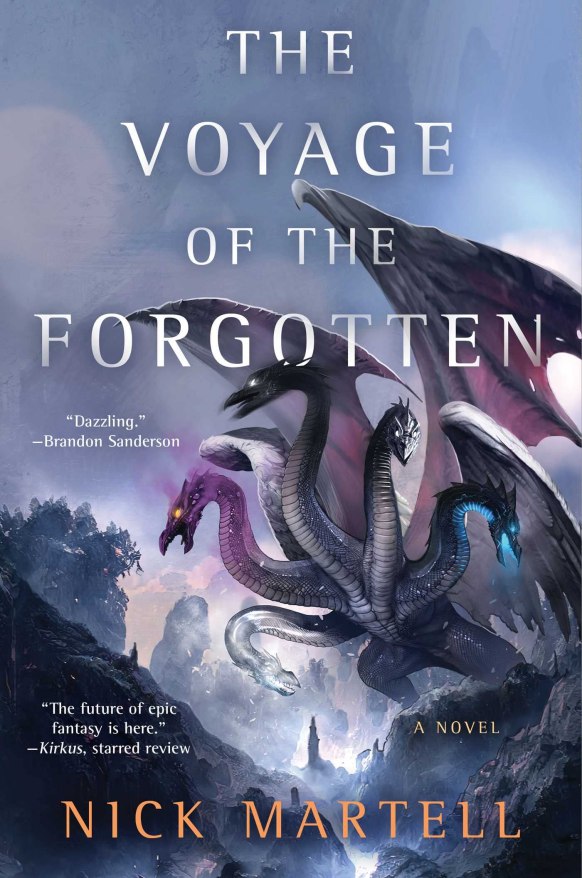
The Voyage of the Forgotten by Nick Martell

The Voyage of the Forgotten Cover

Publisher: Gollancz (Audiobook – 3 November 2022)

Series: The Legacy of the Mercenary King – Book Three

Length: 19 hour and 47 minutes

My Rating: 5 out of 5 stars

Amazon     Book Depository

One of the very last books I read in 2022 might be one of the very best: the latest epic novel from Nick Martell, The Voyage of the Forgotten, which showcases just how much of an impressive, rising talent this outstanding author truly is.

Since 2020, one of my absolute favourite new fantasy authors has been the very, very talented Nick Martell, who burst into the scene in a big way with his elaborate and compelling The Legacy of the Mercenary King trilogy.  This series started with The Kingdom of Liars, an exceptional book that introduced Martell’s intriguing fantasy world and distinctive protagonist Michael Kingman.  The scion of a formerly great family whose patriarch was executed for a murder he didn’t commit, Michael spent most of The Kingdom of Liars trying to prove his father’s innocence while also finding himself dragged into various conspiracies infecting his home city of Hollow.  I had an amazing time reading The Kingdom of Liars, and it ended up being one of my favourite books, audiobooks and debuts of 2020.  Martell expertly followed his first novel up a year later with the equally incredible The Two-Faced Queen, which continued many of the fantastic story threads from the first book.  However, the stakes were raised even further with the protagonist forced to deal with immortals, dragons, assassins, serial killers and more, all while trying to stop the woman he loves from killing him.  This was another exceptional read, and The Two-Faced Queen was easily one of the best books and audiobooks of 2021.  Naturally, there was no way that I would not read the third and final book in the series as soon as I could.  This third book, The Voyage of the Forgotten, was one of my most anticipated reads of 2022, and I eagerly dove into it just before the year came to a close.

After proving his father’s innocence and restoring his family’s place in Hollow society, Michael Kingman should be happy.  However, the closer he comes to victory, the more tragedy and defeat he suffers.  Not only is the love of his life, Serena, the queen of Hollow, engaged to a merchant prince with his own elaborate agenda, but dangerous conspiracies centred on Michael seem to emerge from around every corner.  His sister is enslaved to an immortal Wolven King who seeks war with his soon to be freed brothers, while his mercenary mentor, Dark, is becoming one of the most dangerous creatures in existence, using his stolen dragon magic to wreak havoc and destruction in the name of love.  However, his true enemy remains Angelo Shade, Dark’s father, who seeks to bring back his dead wife and will burn the world, and everything Michael loves, to achieve it.

Thrust once again into this deadly battle of forces outside his league or ability to comprehend, Michael only has his wits, his barely trained magic ability, and a few dedicated friends to fight against the immortal schemers who have spent years bringing their elaborate plans to fruition.  However, Michael is well used to being outclassed and underestimated by everyone he goes up against, and he resolves once again to make everyone pay to keep those he loves safe from harm.

Gathering his allies, Michael embarks on a foolish quest to fully understand all the world’s secrets that have long been hidden from him and ensure that he has the weapons to survive.  But his course of action will put him at odds with the deadly mercenaries of Regal Company, all three of the ancient Wolven Kings, and even his own mercenary company.  Defeating all of them seems impossible, but that has never stopped him from trying before.  Can even the legendary stubborn Michael Kingman succeed and achieve his goals of becoming a Mercenary King when fate itself seems set against him?  And even if he succeeds, is he willing to pay the terrible price that victory demands?

Wow oh wow, what an epic book.  Nick Martell continues to deeply impress me with his captivating story writing ability as he brings this trilogy to a powerful and momentous end that I was instantly addicted to.  The Voyage of the Forgotten was a truly exceptional read, loaded with amazing characters, elaborate fantasy lore and an intense story that refused to drop my attention.  I can find no higher praise for this book than the fact that I named it one of my favourite books of 2022 well before I had even finished it; the first half was that damn good.

Martell has come up with a pretty epic narrative for The Voyage of the Forgotten, and it is one that I will not forget in a hurry.  However, the first thing that I need to say about the story is: if you haven’t read the first two The Legacy of the Mercenary Kings novels, go back and start at the beginning.  Martell has loaded the entire series with a ton of intricate and interesting lore, and he starts rapid firing back to the events of the last two books extremely early on in the story.  While there is a useful Dramatis Personae, as well as a fun summary of previous events from one of the side characters, which helped to refresh my memory, if you haven’t read the previous books you will get lost very quickly when trying to read The Voyage of the Forgotten.  The narrator is constantly making references to previous events, revelations, or characters who only appeared in the prior books, and it can get a little confusing if you don’t know what he is talking about.  As such, I would strongly recommend reading (or re-reading) The Kingdom of Liars and The Two-Faced Queen in advance, which is a very small chore considering how amazing they are.

Now, if you’re up to speed on the prior books, you are in for a real treat when it comes to The Voyage of the Forgotten’s story.  Told mainly from the perspective of protagonist and calamity-magnet Michael Kingman, Martell weaves together an intriguing, action-packed and character-driven conclusion to the elaborate story he set up in the first two books, which also leaves a lot of room for the larger series to grow in the future.  The author once again primarily utilises a chronicle style from Michael’s perspective, which really helps to tell this unique story, especially as it forces Michael’s chaotic and hilarious personality into the story and made every scene seem that little more entertaining and personal.

The narrative itself starts quickly and effectively, with a series of fun battles, big confrontations, and a horde of vengeful dragons, all of which ensures that the reader is quickly reintroduced to the chaotic main character and the multiple tangled webs and conspiracies that he has found himself involved in.  The story quickly advances to the main issue of this book as Serena Hollow loses her memory, and Michael is forced into an epic quest to find a cure.  This of course leads Michael to fight against the entire world, as everyone is opposed to his quest, and this ends up resulting in multiple intriguing or over-the-top encounters.  At the same time, Michael is constantly trying to unravel the mysteries of the world and his many enemies.  There are some epic scenes and sequences in this first half of the book that I really fell in love with, and Martell has some fantastic writing chops behind him that makes his outrageous concepts really work and come to life.  For example, one of the best sequences in the first half of the book sees Michael trapped in his own mind, forced to experience multiple loops of a historical battle from an ancient time.  The constant death and fighting that occurs over innumerable rotations slowly drives the protagonist mad, which Martell captures perfectly in exquisite detail.  Partnered with this intriguing sequence are several scenes showing an external view of Michael’s body, which has been taken over by a malevolent entity.  This ended up being one of the best moments of the entire book, especially as it has a very fun ending.

In addition to the action, Martell continues to unwind or add to the overlying layers of conspiracies, plots and personal or historical secrets that have always been such a fun part of this series.  Several long-running story threads are finally resolved in the first half of the book, and it is so much fun to see Michael finally get quite a few intriguing answers.  Martell really does not hold back with the revelations in The Voyage of the Forgotten, and the entirety of the book is loaded with characters unburdening their secrets (at least some of them) or discussing the unique history of the wider world.  I absolutely loved every sequence where revelations about this universe and its fun inhabitants came to the surface, and it was fascinating to see how they fit into the wonderful tapestry that Martell has woven throughout this trilogy.  This universe building is further enhanced by a series of great interludes with alternate narrators, which show events outside of Michael’s knowledge and experiences.  Not only do these help to showcase some of the fun supporting characters from the first two books but it also deepens the narrative and shows what schemes his friends, and more importantly his enemies, are up to, which provides some fun foreshadowing.

Everything really comes to a head in the second half of the book as Michael and his companions are thrust towards their destinies.  After several major setbacks and further revelations that show off the sheer scope and intricacies of the story, you and the protagonist are dragged back on the road towards the final epic confrontation.  The author sets all of this off perfectly by finally answering some big secrets that have been bedevilling the protagonist since the beginning, and there is a particularly cool twist that makes you rethink every major event of the first two books.  I really loved how Martell briefly changed the narration around when this big twist is revealed and had Michael address the audience directly to reveal why he never mentioned certain details in his previous storytelling.  This helped to really sell the effectiveness of this major reveal, as well as showcase a previously unseen alternate layer to the character’s personality, and I personally thought that this was bit of pure genius from Martell.  All this leads up to the big final confrontation as Michael finally comes face to face with Angelo Shade, the main architect of his family’s pain, as well as some other surprising foes.  This big conclusion is everything you would want it to be, with some epic moments, utter tragedy and multiple character arcs coming full circle in all the right ways.  While parts of this conclusion do get a bit overly complicated and metaphysical, I felt that it came together pretty damn perfectly in ways that really fit the universe and the controversial main character to a T.  Readers will come away from this conclusion both heartbroken and hopeful, and I felt that it was an exceptional and very on-brand ending to one of the more distinctive fantasy trilogies of the last few years.

I honestly think that Martell wrapped this book up extremely well, and my only major disappointment is that there was not more crammed in, as I would have gladly listened to several more hours of it.  The exceptional narrative, backed up with extensive lore, amazing character development and the very distinctive writing style helped to make this final book really pop, and I was honestly impressed every step of the way.  I was also very happy with how Martell handled the sheer range of extensive storylines that he had set up in the previous books.  My main concern before reading the final book was that Martell would be unable to wrap up every storyline or plot point he had set up.  Indeed, there are still quite a lot of potential storylines and questions that were unresolved by the end of the book, but Martell is clearly setting up a sequel trilogy of some design in the same universe.  Some of the best ongoing storylines have been left to continue in the future, and I for one am very excited for that as I hope to spend many more years getting lost in Martell’s world.  I felt that the author was cleverly selective when it came to which storylines ended in The Voyage of the Forgotten, as he chose to close off the ones connected with protagonist Michael Kingman, while leaving others open.  This ensures that any future stories will probably focus on some of the other characters that Martell has set up in this trilogy, and indeed it is pretty clear who that will be.  I personally look forward to seeing a new take on this universe in the future, and it will be very interesting to see how the narrative continues with a major change in perspective.

One of the things that has always impressed me about The Legacy of the Mercenary King trilogy is the elaborate and well-thought-out fantasy world that the story has been set in.  Its dark and grim nature, coupled with the intricate history, compelling magic system, and diverse people, has always added so much to the story, and this remains true in The Voyage of the Forgotten.  Because he did not shut off this universe completely, Martell was given free rein to continue to expand on his elaborate universe, and boy did he.  The reader is treated to a ton of extra information and history about this amazing world, including some of the strongest glimpses about the mysterious Wolven Kings, the world’s various immortals and other unique creatures, and their long-running battles throughout history.  There are several glimpses of the past thanks to magic, and you really learn a lot about what previously befall many of the immortal characters and how this affects their current motivations.  In addition, several new cities, islands, nations, groups and other great elements are featured heavily in the plot as Michael and his companions explore the wider world and engage on some massive sea voyages.  Martell does a great job of incorporating these new elements or character history into his wider narrative, with the protagonists either spending substantial time exploring this information, or else discussing it with the clear intention that it might become a major detail in the future.  I really enjoyed how many of the previous novel’s mysteries were answered thanks to world expansion featured in this novel, and it is very clear that Martell has a lot more planned for this fantasy world in the future.

Of course, I also need to mention the cool magical system that Martell features throughout The Voyage of the Forgotten, especially as it has some major and extremely clever implications on the plot.  Like the first two books, the main form of magic featured is Fabrication, which forces the user to sacrifice their memories to perform magic.  It is actually quite horrifying to see the consequences of Fabrication misuse, as some of the users forget friends, facts or family, and this is often enhanced by the user’s sacrifice or by the fact that they suddenly lose all concept of someone they’d grown close to.  However, this is nothing to becoming a Forgotten, someone who has completely lost their memories or sense of self, and this is strong explored in this book.  I deeply appreciate the amazing way that Martell utilises this memory loss throughout The Voyage of the Forgotten, especially when it relates to the protagonist, as he often does not remember what he is forgetting, and it is always very heartbreaking when you notice that he, or one of the supporting characters, has forgotten something or someone important.  This darker side of magic is well counterbalanced by the various impressive usages that occur throughout The Voyage of the Forgotten, and there are some rather elaborate battles that take place as a result.  Martell also does a very deep dive into the origins of magic in this novel, and you find out some interesting facts about Fabrication, as well as other magical disciplines that exist in this universe, many of which have been cleverly foreshadowed throughout the trilogy.  I really enjoyed seeing some of the over-the-top magic that was utilised by other characters throughout the various battles, and there are some very interesting moments as a result.  It will be very interesting to see what happens to the magic use in the future, especially considering the major changes to Fabrication theory that occurred at the end of The Voyage of the Forgotten, and I look forward to seeing how Martell continues that intriguing plot thread.

While I can go on about the story, setting, magic and writing, for me the true strength of The Legacy of the Mercenary King books has always been the outstanding and extremely complex characters.  This remains the case in The Voyage of the Forgotten as Martell brings many of his best characters back for a particularly emotional adventure.  There are so many major and dramatic character moments throughout this book as Martell used the end of the trilogy to wrap up multiple character storylines and events.  I really appreciated some of the fantastic development and big character moments that occurred throughout this final book in the trilogy, and fans of the first two novels are going to be very moved by what happens to their favourite characters.

The primary focus of the plot is naturally Michael Kingman.  Martell has done some real wonders around Michael Kingman in the last two books, and he has ended up being one of the most complex characters you are ever likely to encounter.  A highly damaged individual who has had his mind warped by magic, has seen his family destroyed, has been forced to live up to an impossible legacy, and has been kept apart from the love of his life, Michael has had a lot of growing to do in the last two books, and Martell has really laid on the character development.  As such, the Michael Kingman in The Voyage of the Forgotten is wiser and more mature than we have previously seen, although he still has some ways to go.  However, Martell ensures that this growth continues in this final book, as he keeps trying to become a better person, especially when faced with the certainty of his death and the loss of people he loves.  There are some major moments when Michael is forced to face damaging revelations or hard truths and each of them change him in some way, often during a pivotal and well-written scene.  Martell also cleverly includes some great secrets about his past and his life that I thought were pretty damn epic, especially as it answers some major questions about his personal history and why he is stuck in the middle of events.

Despite all this, Michael is still the same cocky bastard that he was at the start of the trilogy and his overconfidence, determination and sheer ability to enrage anyone he comes into contact with is so damn entertaining.  Seeing normally calm and collected characters trying to deal with the Michael problem always result in some of the funniest scenes, and I loved the often hilarious edge that the character brings to much of the story due to his amusing narration.  As such, you find it very hard to dislike Michael, no matter how hard you try, and his unique and heartbreaking tale is one that will appeal to many people.  Martell wraps up much of Michael’s great and intense story in this final book and it was very moving to see some of the dark sacrifices the character is forced to make to save his family and fix some of his biggest mistakes.  I guarantee you will not be prepared for everything that Michael goes through in The Voyage of the Forgotten, but you won’t be able to turn away as Martell does some dark, yet wonderful things, to his best creation.

In addition, quite a lot of the book focuses on major secondary character Serena Hollow, Queen and love of Michael’s life, who has had a turbulent relationship with her Kingman.  This relationship gets even more complex in The Voyage of the Forgotten, especially when Serena becomes a Forgotten without any idea of who she is or what her many responsibilities are.  You see a much more free version of the character in this book, and I found the differences between this person and the vengeful queen of the second book to be very intriguing.  The continued focus on the relationship between Michael and Serena hits extra hard as a result of this loss of memory, and it is fascinating and moving to see them attempt to rekindle what they had.  Honestly, their entire story is pretty tragic in this final book, but I was nice to see a powerful conclusion to their doomed love story and Martell features some damn fine character work when it comes to Serena.

Aside from Michael, The Voyage of the Forgotten features a rich and extensive cast of characters, many of whom are returning from the previous two books.  Standout characters include Dark, the mercenary killer who serves as Michael’s mentor and possibly most dangerous foe, as he attempts to find his own way to bring back the dead.  Dark is a brilliant character, and I love how Martell has written such an edge of menace around him, although by the events of The Voyage of the Forgotten Michael is pretty much immune to it, resulting in some very entertaining interactions.  You also have to love the sinister Angelo Shade as the main antagonist of the book.  Michael’s former foster father and the man responsible for his family’s downfall, Angelo has been an outstanding manipulative bugger the entire way through this trilogy, and I loved seeing more of his games in this final book.  Watching his elaborate plans come to fruition is pretty amazing, and Martell does a good job continuing to show his past and motivations, ensuring his obsession with bringing back his dead wife is mirrored by Michael’s attempts to save Serena.  Other great characters like Naomi, Chloe and Alexis have some fantastic moments in this book as the main supporters of Michael and Serena, and it was great to see some of their storylines.  The rest of the cast make some fantastic appearances as well, although it is interesting that several key characters from the first two novels only had minor appearances, and indeed I was a tad disappointed that some figures, such as amusing immortal nobleman, Charles Domet, were barely featured.  However, it is clear that Martell is saving them up for future entries in this larger series, and I look forward to seeing what happens to them next.  Overall, this was a great cast of characters and Martell should be congratulated on the amazing character work he did.

While I received a massive physical copy of The Voyage of the Forgotten, I chose to listen to the audiobook version of this book when it first came out, and boy was I glad that I did.  I have often said that the audiobook format is the perfect way to absorb vast amount of lore and universe elements (at least for me), and, with all the revelations and expansions that Martell featured here, that proved to be a major boon.  The story came across perfectly in this format, and you can easily visualise the powerful scenes, battles of wits, and some of the more outrageous actions of the characters, as they are read out to you.  It helps that this audiobook was once again narrated by one of my favourite audiobook narrators, Joe Jameson, who has impressed me before with the first two audiobooks in the series, and with his work on King of Assassins by R. J. Barker and the fun Warhammer 40,000 novel, Fire Made Flesh.  Jameson always does a remarkable job with his narration of Martell’s books, and his great tones and pacing help to move The Voyage of the Forgotten along at a fast clip.  However, the main advantage of Jameson as a narrator is the cool voices he brings out for the characters.  While I was not the biggest fan of a couple of his female voices, the majority of his narration was pretty much spot on and I felt that he really showcased the cool personalities and emotions of the key figures.  However, the best voice is saved for the main protagonist and narrator Michael Kingman, who Jameson perfectly encapsulates throughout the course of the audiobook.  Jameson really gets into Michael’s head with his narration and expertly portrays his personality, emotions and thought process.  This great portrayal of the central characters adds so much to overall quality of the entire audiobook, and my enjoyment of The Voyage of the Forgotten as a whole, and I loved every damn second of Jameson’s narration as a result.  This honestly was the best way I found to enjoy The Voyage of the Forgotten, and I very strongly recommend it as a result.  With a run time of just under 20 hours, it does take a little bit of effort to get through this audiobook, however, it is more than worth the effort as you will have a fantastic time.

If this extensive write-up didn’t give it away, I clearly deeply loved The Voyage of the Forgotten.  Nick Martell has wrapped up his The Legacy of the Mercenary King trilogy in an exceedingly epic way, and I deeply enjoyed how the elaborate, powerful, and character rich narrative came to an end.  This is some of Martell’s best work yet, and if you haven’t experienced this amazing fantasy author’s work yet, you are really missing out.  I look forward to seeing how Martell will continue this story in the future, and any follow-up trilogy that will jump to the top of my to-read list the moment it is announced.  In the meantime, make sure to check out this exceptional book, as well as the proceeding two novels in the trilogy, as The Voyage of the Forgotten gets one of the easiest five-star ratings I have ever given out.

The Voyage of the Forgotten Cover 2

Amazon     Book Depository

The Bullet That Missed by Richard Osman

The Bullet That Missed Cover

Publisher: Viking/Penguin Audio (Audiobook – 15 September 2022)

Series: Thursday Murder Club – Book Three

Length: 11 hours and 17 minutes

My Rating: 5 out of 5 stars

Amazon

Murder, comedy and the most badass team of investigators you are every likely to read about come together perfectly in the new Thursday Murder Club novel, The Bullet That Missed by Richard Osman.

Over the last three years, some of the most impressive and outright entertaining murder mystery novels have been part of the Thursday Murder Club series by British television personality Richard Osman.  Set in a luxury retirement village in the English countryside, the Thursday Murder Club books follow the adventures of four outrageous pensioners who spend their free time solving cold cases.  However, their lives get even more complicated when several murders occur around their village, and they endeavour to find out who committed them.  The series started with The Thursday Murder Club in 2020, which had an outstanding blend of mystery, great characters and humour, all of which came together in a perfect and deeply addictive read.  The Thursday Murder Club ended up being one of my favourite books, audiobooks and debuts of 2020, and I cannot rave about it enough.  Osman followed this first book up last year with The Man Who Died Twice, an excellent sequel that presents the reader with another great mystery, while also exploring the characters even further.  I had another amazing time with The Man Who Died Twice, and it also ended up being one of the best things I read all year, making my top books and audiobooks of 2021 lists.  Needless to say after the first two epic books, I have been very excited for the third Thursday Murder Club novel, and The Bullet That Missed has been one of my most anticipated reads for 2022 for a while now. 

After their last exciting adventure, Elizabeth, Joyce, Ibrahim and Ron, are continuing to solve murders in their spare time.  Their latest case sees them dive into an infamous cold case in which a young, highflying television reporter was murdered just before breaking a story on a major crime ring, with her body never recovered from the ocean.  Teaming up with the reporter’s famous presenter colleague, the Thursday Murder Club eagerly begin their investigation, hoping to shed light on her murder while having fun with their new high-profile friends.

However, it soon becomes apparent that the people behind the reporter’s death might still be active and are attempting to cover their tracks.  Their only witness in the case is found dead in her prisoner cell shortly after the club attempts to question her, and even the notorious crime lord many believe responsible for killing their original victim is afraid to talk.

Not ones to be deterred, the club continues their investigation and soon long-hidden secrets from the past come spilling out.  However, as they close on the killer, a completely different threat emerges from Elizabeth’s past.  A mysterious new nemesis wants Elizabeth to return to her assassin roots and kill an old contact from her spy days, if she does not, everyone close to her will die.  Forced to choose between her friends and her conscience, Elizabeth needs to find a way to defuse the situation before someone gets hurt.  But is this new encounter just the thing the Thursday Murder Club needs to solve their latest crime before the murderer strikes again?

Well damn, what another brilliant and impressive read.  Richard Osman went all out for his third book and I honestly think that The Bullet That Missed is some of his best work yet, possibly even eclipsing the original The Thursday Murder Club.  Bringing together an elaborate and deeply enjoyable mystery storyline with some brilliant characters, outstanding humour, and a heck of a lot of great twists, I was instantly addicted to this latest book from Osman and couldn’t wait to find out how everything ended.  An extremely captivating read, The Bullet That Missed gets a very emphatic five-star rating from me, and I had an incredible time reading it.

I loved, loved, loved the exceptional story that Osman came up with for The Bullet That Missed, especially as Osman provided a perfect blend of mystery, character growth and genuine human moments that the reader can’t help but eat up.  Starting off shortly after the events of the last book, The Bullet That Missed sees the Thursday Murder Club using their usual charm and manipulative practices to investigate another cold case, gaining insight through the victims’ old colleagues, while also dragging in their usual friends and police colleagues.  They soon find themselves in the middle of a cracking mystery and use their connections and well-earned insights to examine the various clues and persons of interests associated with the case.  At the same time, Elizabeth is quite literally dragged into a dark place by a mysterious new figure who knows about her past and who forces her to choose between killing an old colleague from her spy days or watching Joyce and the rest of her friends die.  This side plot adds quite a bit to the overall story, especially the introduction of several awesome new characters, and I really enjoyed how Osman tied it into the main mystery. 

Combined with the various scenes that show the day-to-day lives of the many characters in the book, as well as some genuinely heartbreaking moments of love and loss, this proves to be one heck of a story that I was particularly rivetted to.  I loved the unique investigation that resulted from the mystery, and the characters have so many clever and hilarious ways of getting to the truth.  Osman throws in an appropriate number of red herrings and suspects, which serves to effectively muddy the water and keep the readers in suspense as they try to work out which of the many suspicious characters might have had a hand in the killings.  I was able to pick out the main villain a fair bit in advance, although the journey to getting there and the eventual reveal was really good, and I loved every single second of it.  I also didn’t see a bunch of the final twists coming, and you really appreciate all the cleverly hidden hints and clues that Osman seeded throughout the book.  I came away from The Bullet That Missed exceedingly satisfied with how the story unfolded, and I really cannot emphasise just how amazing and awesome the plot was.

On top of this, Osman has an awesome writing style that I feel really enhances the elaborate and powerful narrative of The Bullet That Missed.  I particularly enjoyed how the author made great use of multiple character perspectives throughout the book to tell the elaborate narrative.  While the focus is generally on the four members of the Thursday Murder Club, the perspectives of all the other characters in the book are shown several times throughout the story.  Not only does this allow you to get multiple intriguing views of the main mystery and the club’s actions, including from the book’s many suspects, but it also ensures that the reader gets closer to all these characters by learning their motivations, feelings, and personal histories.  This makes for a much more compelling narrative, especially as you grow attached to the new characters quickly, while also getting to experience the powerful human developments impacting the main cast.  Osman does a great job of keep the pace pretty consistent and enjoyable throughout the entirety of The Bullet That Missed, and you are constantly exposed to intriguing mystery developments, deeper emotional moments from the characters, or a ton of entertaining humour which can’t help but make you chuckle.  This keeps up throughout the entire book, although it does pick up at several points, especially when the club are making some big moves, and it always works out well. 

While one of the best things about The Bullet That Missed is the compelling mystery, a discussion of this book really would not be complete without mentioning the fantastic humour loaded into it.  Osman is undeniably a very funny man, and he puts his excellent comedic skills to great use in this series, and particularly in The Bullet That Missed, with nearly every page containing some subtle, fun, comedic elements that I absolutely loved.  A large amount of this humour revolves around the various ways in which the older characters of the book manage to outwit and manipulate the younger people they come across, whether it be by acting senile, or forcing them to accommodate them out of politeness.  At the same time, the main characters’ very diverse and highly amusing viewpoints of the world around them, especially involving modern society or pop culture, are extremely funny, and it is entertaining to see an older perspective on this crazy modern world.  Osman fits in quite a huge number of references to British culture throughout the course of the book, and I had a lot of fun hearing all the clever references to iconic shows and products that the character’s mention throughout the book, especially as they often talk about them in a very clever way.  Throw in some fantastic coincidences, a lot of jokes about turning old, several hilarious self-referential jabs about the trouble with writing crime novels, and the perfect banter that occurs between the four main protagonists and their exasperated cohorts, and The Bullet That Missed was an exceedingly funny read that is guaranteed to keep you wildly amused with its various antics.

As always, one of the strongest parts of this latest Thursday Murder Club novel is the characters.  Osman has created an amazing group of protagonists for this series, and he continues to build on them with each book, showcasing their strengths, personalities, and inherent vulnerabilities, as the find themselves in dangerous and unique situations.  Most of the focus is again on the four members of the Thursday Murder Club who, by this third book, are really quite well established, and the reader is already very attached.  Osman keeps up the wonderful interpersonal dynamic that was such an impressive feature of the first two books, and it continued to work extremely well in The Bullet That Missed, with several great new developments added in.  Elizabeth and Joyce are once again set up as the book’s main characters, with a huge chunk of the book dedicated to them.  Elizabeth, the former spy, proves to be an excellent manipulator, and it is always fun to see her talk about her days as a trained assassin, especially when her past comes back to haunt her.  Joyce, on the other hand, is a legitimate sweetheart, and she really is the heart and soul of the book.  I love how Osman changes the perspective in all her chapters to reflect her journalling the events of the story, and she provides some of the best descriptions of the events going on in the book.  It is also very fun to see her in action as, despite appearing to be a harmless, sweet old lady, she is a tough as nails and can be just as manipulative as Elizabeth when she needs to be (the scene in which she meets the Viking was perfect). 

Ron and Ibrahim are also used to great effect in The Bullet That Missed and both have some impressive outings in this book.  I loved the many scenes featuring Ron, especially as he really stands out from the rest of the crowd by being a blue-collar rabble rouser who holds on to the old-school tough guy mentality.  A lot of Ron’s story in The Bullet That Missed revolves around the other characters breaking through his tough exterior, especially as he has a new love interest in this book who gets him to open up in several amusing ways.  I also loved the sense of vulnerability that surrounds Ron when he starts to realise that a lot of the men of his generation are starting to go and he suddenly doesn’t have as many people to connect with anymore, which gets used to great effect when he manages to get information by playing snooker with an old criminal with a similar mindset to him.  The final main character is Ibrahim, who is honestly one of the nicest, most genuine characters you are ever likely to meet in fiction.  Ibrahim gets an outstanding showing in this book, and it was really a relief to see him recovered after the terrible beating he received in The Man Who Died Twice.  I loved how he was able to use his psychology skills in this book, and he even spent time working with the woman responsible for his beating, which results in some excellent scenes.  All four of these main characters continued to impress me in this latest book and I cannot wait to see how their next adventure unfolds.

Aside from these major characters, The Bullet That Missed also contains a substantial supporting cast of entertaining characters who Osman uses to great effect throughout the course of the narrative.  These characters include a combination of some entertaining new figures, as well as many returning characters who made such an impact in the previous novels.  Many of these returning characters have been built up in a big way in the previous books, and it was great to see a lot of their character development continue, especially as they are generally better off after having met the Thursday Murder Club.  I really loved that the three main supporting characters from the first novel, DCI Chris Hudson, PC Donna De Freitas and Bogdan, each come into The Bullet That Missed with some positive storylines surrounding them, and the new romance between Donna and Bogdan was so damn nice. 

All the new characters in The Bullet That Missed were also very entertaining: an older makeup artist who takes a liking to Ron, a gigantic Scandinavian crime lord known only as the Viking, an eccentric local TV news host, and the local Chief Constable who also moonlights as a less-than-successful mystery writer.  These great characters added a lot of flavour to the narrative, and it was fascinating to see how many were worked into the plot, especially as Osman was setting several of them up for returning appearances.  I particularly loved the retired KGB officer turned criminal finance advisor, Viktor Illyich, who is an old contact of Elizabeth and who finds himself being hunted.  He was a brilliant and entertaining addition to the plot, especially with his great methods of manipulation.  You have to love that amazing scene where he applies his techniques to a young Virgin Media representative. 

However, the best recurring character has to be Elizabeth’s husband, Stephen, who has been a bit of a tragic figure throughout the series due to his dementia, which Elizabeth tries to hide from the world.  Stephen is perhaps the best character Osman has written, as the author provides a deep and extremely powerful view of the impacts dementia has on the sufferer and those closest to them.  Watching Stephen slowly lose himself while Elizabeth suffers beside him has provided some of the most heartbreaking parts of this series.  Stephen still proves himself to be a brilliant and caring figure, and Osman writes some great scenes for him in the series, especially when he plays chess with Bogdan, and it is always fun when he provides fantastic insights into Elizabeth’s cases.  He was particularly effective in this book, especially after being kidnapped, and his knowledge and surprising criminal contacts allow Elizabeth to outsmart one of their enemies in several amazing scenes.  Of course, these scenes are also loaded with sadness; with every positive step Stephen takes, he also loses a little, and every time he forgets a detail or a person it breaks your heart a little bit more.  Honestly, every character in this book is pretty damn epic, and clearly creating amazing characters is one of Osman’s biggest strengths as a writer.  I look forward to all the amazing character work that is bound to appear in the next Thursday Murder Club, and I am sure that I will fall in love with every single cast member once again.

While I did receive a physical copy of The Bullet That Missed, I chose to instead grab the audiobook version of this novel, as I had such an amazing time listening to the first two books in this format.  As it was, I ended up being surprised and slightly disappointed to discover that Lesley Manville, who narrated the first two Thursday Murder Club books, wasn’t returning for this third entry.  However, my disappointment was exceedingly short lived when I found out that she had been replaced by the amazing Fiona Shaw, who I have loved for years in things like the Harry Potter films, Killing Eve and Andor.  Unsurprisingly, Shaw did an outstanding job narrating The Bullet That Missed, and she masterfully portrayed all the characters in a very fun and entertaining way.  I loved all the great voices she used for this awesome audiobook, and each character got their own distinctive tone that allowed the reader to easily pick up who they were.  Shaw brings a huge range of different accents to the table, and while her Swedish accent was purposely a little silly, it still fit the character extremely well.  However, what really impressed me was the effort that Shaw took in matching the voices of most of the recurring characters with Lesley Manville’s previous take on them.  All the four main members of the cast, as well as supporting characters like Donna and Bogdan, sounded extremely like their appearances in the previous two audiobooks, and while Shaw did do her own take on a couple of figures, I personally deeply appreciated her attempts to keep some continuity with the previous audiobooks.  Shaw also kept the audiobook rolling along at a brisk pace, and the 11 hour and 17 minute runtime passed along in no time whatsoever, especially as you get deeper and deeper into the plot.  Throw in another lovely interview with Richard Osman at the end and I felt that this was an absolutely incredible audiobook, and definitely the best format by which to enjoy The Bullet That Missed.  I will be extremely happy if Shaw chooses to come back for the fourth Thursday Murder Club audiobook next year.

Richard Osman continues to show the world just how much talent he has a murder mystery writer with the third exceptional entry in the amazing Thursday Murder Club series, The Bullet That Missed.  Continuing to follow his brilliant pensioner protagonists as they solve a complex murder in some clever and funny ways, The Bullet That Missed was an incredible addition to the series that is guaranteed to have you hooked from start to finish.  I cannot recommend this book enough, and if you haven’t started reading the Thursday Murder Club books yet, you are really missing out.

Amazon

Dead Man’s Hand by James J. Butcher

Dead Man's Hand Cover

Publisher: Ace (Hardcover – 29 November 2022)

Series: The Unorthodox Chronicles – Book One

Length: 373 pages

My Rating: 4.5 out of 5 stars

Amazon     Book Depository

Murder, magic and mayhem are about to be unleashed in the impressive urban fantasy debut from exciting new author James J. Butcher, Dead Man’s Hand.

I think it is fair to say that no recent urban fantasy book has intrigued me more than the compelling Dead Man’s Hand by James J. Butcher.  Not only did it have a striking cover, a cool name, and an awesome synopsis, but the author himself is very interesting.  Despite the fact this is his first novel, Butcher is a name that comes with some expectations, due to him being the son of legendary fantasy author Jim Butcher.  Jim Butcher has pretty much set himself up as the gold standard of urban fantasy fiction thanks to his iconic Dresden Files series that follows wizards in modern Chicago.  I am a pretty big fan of the Dresden Files and when I first heard that Jim Butcher’s son was releasing his own book, I was immediately curious about it.  As such, I made sure to get a copy of Dead Man’s Hand as soon as it came out, and I was very happy that I did.  The first book in his series, The Unorthodox Chronicles, Dead Man’s Hand was a superb read that I had an amazing time getting through.

On the mean streets of Boston, a dark murder has occurred whose ramifications will shake the city’s magical community.  The victim was Samantha Mansgraf, an extremely powerful witch and one of the most effective agents of the Department of Unorthodox Affairs, the government department that polices magic users and keeps the peace between the ordinary Usuals and the paranormal Unorthodox.  Her body has been found mangled and tortured, and the only clue is a secret message she left behind which simply reads, “Kill Grimsby.”

This message can only relate to one person, Grimshaw Griswald Grimsby, whose future as an Auditor for the Department of Unorthodox Affairs was unceremoniously ruined by the victim.  Now working in a terrible fast food job extremely close to where Mansgraf was killed, Grimsby seems the most likely suspect for her murder.  However, there is one major flaw in this theory; Grimsby is magically incapable of committing the crime.  Only able to cast a few minor spells and hampered by an old injury, there is no way that Grimsby could have killed the victim.  But this fact isn’t going to be enough to stop everyone coming after him.

Targeted by both the Department and the monsters actually responsible for Mansgraf’s murder, Grimsby finds himself in a whole lot of trouble.  His only hope of survival is to team up with Mansgraf’s old partner, the legendary Huntsman Leslie Mayflower, an expert at killing all things magical, and find out who is really behind this gruesome murder.  However, Grimsby and Mayflower soon find themselves caught in the midst of a deadly magical conspiracy, one where every potential loose end needs to be killed.  To survive, Grimsby and Mayflower will need to dig deep and uncover the darkest secrets from Boston’s magical community.  However, can an old broken down Hunstman and a failed witch manage to take on the evil coming for them, or are they about to be as dead as Mansgraf?

Butcher comes out the gate swinging with his first magical adventure, and I really enjoyed the result.  Dead Man’s Hand is a clever and cool new novel that sets up Butcher’s planned series while also presenting the reader with a captivating character driven story, filled with mystery, murder and magical mayhem.  I managed to knock this book out in a couple of days, and it proved to be a wonderful and impressive debut.

Dead Man’s Hand has a great urban fantasy narrative to it that follows two interesting and complex characters caught in the middle of a magical conspiracy.  Butcher kicks the story off quickly, with Mayflower getting involved in the hunt for his former partner’s killer, which leads him to Grimsby, who is initially a suspect, until it becomes very clear he couldn’t have pulled off such a destructive killing.  When Grimsby is attacked by the apparent murderer, the two start to work together and they focus their investigation into finding a dangerous artefact that the victim had hidden before her death.  That leads them into all manner of trouble, including demonic gangsters, freaky constructs, and Department agents, all of whom are coming after them with lethal intent.  This results in a great twisty and slick narrative, as the characters need to uncover multiple mysteries while also confronting the many unusual creatures coming for them.  There are several great action-packed confrontations loaded into this book, and Butcher makes excellent use of his distinctive new magical universe to create some memorable sequences.  Everything leads up to a big and powerful conclusion where, after some personal betrayals, the two protagonists are forced to come together to take out the culprit and save the day.  While the ultimate reveal of who the killer is was a little predictable, Butcher did it in an entertaining way and the stakes were pretty damn high by the end of it.  Butcher also ramped up the tension for the final confrontation and you honestly had no idea how the book was going to conclude and who was going to pull through.  I was personally hooked all the way to end and I came away pretty happy with the conclusion, especially as Butcher sets up some potential sequels in the future and I have a feeling that this is the first entry in an awesome long-running series.

I quite enjoyed Butcher’s writing style for Dead Man’s Hand and I think that the excellent story came across really well in the end.  The story moved at a very quick pace, and Butcher really did not slow down for anything, hitting the reader with a ton of action, intrigue and moving character development from start to finish.  Like most good urban fantasy novels, Dead Man’s Hand had a fantastic blend of mystery and fantasy elements, and you are soon swept up in the hunt for the magical killer, especially as it reveals a complex and deadly conspiracy.  This helped to create quite a compelling and exciting read, which comes across like a buddy-cop romp thanks to the entertaining partnership between the two main characters.  The story is broken up between these two character’s perspectives and you get to see how they come together as a dysfunctional but effective team, and I loved the fun veteran/extreme-rookie dynamic that their partnership achieved.  Butcher further enhances the story by featuring a ton of comedic humour, most of which was brought in by the chatty and snarky main character.  Readers will no doubt notice that Butcher took some inspiration from his father when it came to writing humour, especially when it came to the main character’s snark, as well as some of the very over the top scenes and inclusions.  There are some pretty ridiculous moments, especially surrounding the character of Grimsby (his stint as a food entertainer was fun at the start), and things only get more over the top as you go (let’s just say that there is something very interesting in a box, and leave it at that).  While this was amusing, I was glad that most of the focus remained on the more serious elements of the book, which came together extremely well.  This ended up being a very strongly written book, especially for a debut, and I was pretty impressed with Butcher’s great style and writing ability.

Butcher’s series, The Unorthodox Chronicles, has an interesting urban fantasy setting to it, and I was impressed with the new world.  While I am sure that some will try to unfairly compare it to his father’s urban fantasy world, I felt that Butcher did a good job making it stand out on its own the reader is successfully introduced to many cool key details in this first book.  This series takes place in a version of Boston where the world is aware that magic exists, and magical creatures and magic users are kept in line by the Department of Unorthodox Affairs and their deadly agents known as Auditors.  I was quite intrigued by the inherent bureaucracy surrounding an unhidden magical world and it was fun how wizards are treated in a world where people are aware of them.  The visible magic itself is pretty simple, but effective, with magic users drawing their own inner-magic (Impetus) from within and launching it out using simple keyword spells.  Some of the effects of these spells are pretty fun and the protagonist manages to achieve a lot with some very basic combinations.  Butcher further populates his world with some freaky magical creatures, who give the book a darker and intense edge, especially those human familiars, who make for quite an effective and deadly enemy.  However, one of the most distinctive features of this universe is the Elsewhere, a dark, alternate magical realm that most wizards can perceive and which have its own rules.  The Elsewhere is so weird and crazy that all magic users need eye protection on all the time or else they will be driven mad by the things they see.  One excellent extended sequence sees the protagonist forced to visit the realm (which can be achieved by travelling through mirrors), and it came across as a pretty gruesome place to journey, thanks to all the creepy creatures and its inherent time dilation.  I loved all the cool details contained in this new world and I am quite excited to see how Butcher plans to expand on it in the future.

Aside from the amazing story and intriguing fantasy elements, one of the main strengths of Dead Man’s Hand was its excellent main two characters, who Butcher uses to great effect as alternating narrators of the story.  Both central protagonists are very damaged and complex in their own ways, and their eventual team-up helps them both to develop and escape the ruts they find themselves in at the start of the book.  The main character is Grimshaw Griswald Grimsby, an orphaned wizard who was badly scarred as a child in a fire that killed his family.  Grimsby previously attempted to become an Auditor for the Department, but he found his path blocked by the murder victim, mainly due to his inability to do complex spells and because his scars weaken his magic.  Now trapped in an embarrassing dead-end job, Grimsby starts the book off depressed and resentful, with zero confidence in himself.  However, this changes as the story continues and he is able to prove himself to his new mentor character, Mayflower, who, while gruff, helps mould him into a better person.  The one thing he cannot change is his motor mouth as Grimsby is constantly talking and joking, giving off a magical level of snark.  Much of the book’s humour comes from Grimsby’s irreverent view of the world and there are some great jokes flying out his mouth here.  I also loved seeing Grimsby’s inventiveness throughout the book, especially as he can only really cast three weaker spells, which requires him to be very imaginative in how he uses them, especially in self-defence.  There are also some fantastic storylines surrounding his traumatic past, as well as some more contemporary storylines about whether he actually belongs in this dangerous lifestyle or whether he should seek a quieter life.  While it would be easy to compare Grimsby to another snarky urban fantasy protagonist (say the one written by Butcher senior), I think that Grimsby stands on his own, and there are still quite a few layers for Butcher to uncover in the future.

The other major character is Leslie Mayflower, better known as the Huntsman, a bitter retired agent who specialises in killing magical creatures and beings.  Eternally grouchy and bitter at the Department, Mayflower dives into the case seeking revenge and comes across Grimsby, eventually partnering with him.  Mayflower is the direct opposite to Grimsby for much of the book, and I loved how Butcher portrayed him as a past-his-prime killer who returns for one last job.  Shown to be full of regret, self-loathing and a desire for revenge, Mayflower was a powerful part of the book, especially once Butcher pairs him with Grimsby.  These two made for a great team, and watching the positive Grimsby start to have an impact on Mayflower’s personality was a fun part of the book.  Despite still being mistrustful for most of the book, Mayflower soon grows to appreciate the partnership with Grimsby, and it was quite moving to see the character have something to live for again.  While you do see a lot of his personality and intensity in Dead Man’s Hand, I liked that Butcher was a little vague when it came to his past, and I am hoping that the author will dive into more of his history in future books.  Both central protagonists were extremely well written and very damaged in their own way, and this makes for a great story focus, especially as there are some excellent scenes when they start working together.

Overall, I thought that Dead Man’s Hand was an excellent and captivating first book from James J. Butcher, and it is one that I had an amazing time reading.  Fast-paced, hilarious, and filled with all manner of magical chaos, Dead Man’s Hand served as a powerful and enjoyable first entry in the author’s new series, and it comes highly recommended as a result.  I will definitely be grabbing the next book in this series when it comes out and I look forward to seeing how Butcher’s career progresses from here.

Amazon     Book Depository

Desert Star by Michael Connelly

Desert Star Cover

Publisher: Allen & Unwin Australia (Trade Paperback – 8 November 2022)

Series: Ballard and Bosch – Book Four

Length: 393 pages

My Rating: 5 out of 5 stars

Amazon

Legendary crime fiction author, Michael Connelly, returns with another impressive and deeply enjoyable read that once again brings together two of his best protagonists for a compelling investigation, with Desert Star.

Connelly is an author who needs very little introduction, having spent the last 30 years dominating the crime fiction world.  His various outstanding works often cover several diverse subgenres of crime fiction, and his unique and captivating protagonists all exist in one shared universe, primarily set around Los Angeles.  Ever since I started properly reading crime fiction a few years ago, Connelly has been an author I have particularly enjoyed each year, and I have had a wonderful time reading several of his most recent books.  This includes the fantastic Mickey Haller legal thriller, The Law of Innocence, and the intense Jack McEvoy journalistic investigative read, Fair Warning (one of my favourite novels of 2020).  However, some of my favourite Connelly books have been the more classic police investigation novels, all of which have been part of the Ballard and Bosch subseries.

The Ballard and Bosch books are an intriguing set of recent novels that bring together Connelly’s two main police protagonists into one investigative team.  These two protagonists are female detective Renée Ballard and Connelly’s original protagonist, Harry Bosch, who has long retired from the LAPD but is still in the detective game.  These two form a fantastic team, and it is always fun to see their interesting mentor/mentee relationship as they investigate a series of cases.  There have so far been three Ballard and Bosch books, and I have had a wonderful time with each of them, including Dark Sacred Night, The Night Fire (one of my favourite books and audiobooks of 2019) and The Dark Hours (one of my favourite books of 2021).  Due to how awesome these last three books have been, I was quite excited to see that Connelly had a new one coming out in 2022, and that book, Desert Star, was one of my most anticipated reads for the second half of 2022.

Desert Star is set a year after the events of The Dark Hours, which saw Renée Ballard quit the LAPD after encountering sexism, corruption, and obstacles to solving her cases.  Lured back after being offered a dream job, Ballard now finds herself leading an elite cold cases unit which hopes to find justice for the many unsolved murders throughout Los Angeles.  While Ballard has already pulled together an effective team, there is still one person she needs to complete it: Harry Bosch.

While angry at Ballard following their last encounter, Bosch is lured back as a volunteer investigator after Ballard offers him help on the one cold case that has haunted him for years, the slaying of the Gallagher family.  Years ago, the entire family of four was found brutally killed, their bodies buried in the desert, and Bosch has never forgotten them or the fact that he was unable to find the man he knows killed them.  In return for access to the resources of Ballard’s unit, Bosch agrees to help Ballard solve her own cold case.

To keep their unit alive and well funded, Ballard needs to solve the rape and murder of a councilman’s sister years ago.  There are few avenues for a further investigation, and Ballard hopes that Bosch’s unique views may be the key to solving it.  However, after a chance clue connects their case to another brutal murder, Ballard and Bosch find themselves taking their investigation in some very dangerous directions.  At the same time, Bosch’s obsession with finding the Gallagher family’s killer grows even more, as he finds himself determined to catch him before it’s too late.  Can Ballard and Bosch solve their crimes, or will tragedy strike right at the heart of their partnership?

This was another outstanding crime fiction read from Connelly that combines a cool series of murder mystery cases with some intense character work to create and excellent story.  Desert Star gets off to a quick start, bringing back the two main protagonists and showing what changes have gone through their lives in the last year, as well as introducing the new cold case unit.  The reader is swiftly then brought across the two central murder cases that the protagonists are investigating.  The initial focus is on the murder of councilman’s sister, which has political connotations for the cold case unit, but Bosch also spends a large amount of time examining his personal case.  After some interesting breaks in the main case, Ballard and Bosch find themselves stuck looking far closer to home than they imagined, when clues point to a serial killer with connections to the very politician who created their unit.  There are some great twists and turns towards the centre of the book as they come close to their revelations, and the identity of this killer is pretty clever, with several interesting clues in the lead-up to the big confrontation.  At the same time, Bosch starts closing in on the main suspect in his case after revisiting witnesses from his initial investigation.  This leads him down a long, dark road as he contemplates what he’s willing to risk to get justice.  Everything leads up to a heart-pounding finale, which will leave readers on the edge of their seat as you honestly have no idea how far Connelly is going to take everything.  Desert Star ends on a particularly satisfying note, and it will be interesting to see where Connelly’s narratives go next, as he has left several intriguing storylines open.

This was a pretty addictive and fast-paced read, and it really doesn’t take long to get drawn into the two intriguing cases.  I loved the focus on cold case investigation in this book, which is a classic Connelly story element, and the author presents some excellent mystery elements.  I had a lot of fun with both cases, one because it was a seemingly unsolvable case with huge political issues behind it, the other because of one protagonist’s intense obsession with cracking it.  Connelly does a good job splitting focus between the two cases, which is made easier with the use of two perspective characters, Ballard and Bosch.  Both have very different views of the investigations, and the split in perspectives helps to ratchet up the tension in several scenes extremely well.  Connelly goes for a pretty fast pace in Desert Star, and you really find yourself powering through the narrative, especially once you get caught up in the excellent investigation arcs.  I loved how both cases turned out, and Connelly puts in some great build-up for both of their powerful conclusions.  Like most of the books in this shared crime universe, Desert Star can be easily read as a standalone novel, and no prior knowledge of either character is really required to enjoy it.  However, this latest Ballard and Bosch book is coming off a lot of emotional build-up and character development from the previous entries, so you’ll appreciate Desert Star more if you’ve checked them out first.  Connelly also throws in a ton of references to some previous novels, mainly some of Bosch’s older adventures, which established fans will really appreciate.  I loved Desert Star’s amazing story and how it was presented, as will all die-hard Connelly readers.

As always with a Connelly read, there is a noticeable and impressive focus on the central characters, with the author diving deep into his two point-of-view protagonists, Renée Ballard and Harry Bosch.  Both characters have a ton of history behind them at this point in Connelly’s joint universe, both as a team and as established, independent protagonists of their own novels.  As such, Connelly takes a little less time introducing them in Desert Star than he would previously, and instead starts highlighting their current issues and concerns, as well as re-establishing the teamwork between them.  While there is a little friction at the start of the book, mainly due to the fallout of The Dark Hours, Ballard and Bosch mostly get their investigative teamwork groove back and become an effective unit.  While Bosch does take on the mentor role in this book, it isn’t as prevalent as it has been previously, mainly because Ballard is now in control of her own unit and is the boss.  This forces her to supervise and try to control Bosch, with limited success, and this impacts their previous established dynamic.  At the same time, Ballard also relies on Bosch’s unpredictability and dislike of the rules to solve their more difficult, politically associated case, so that creates some odd friction and reliance that I rather enjoyed.

Most of the best character work in Desert Star revolved around old favourite protagonist Harry Bosch.  Bosch, who Connelly has aged up naturally over the last 30 years, is retired from the police, but he comes back to help Ballard with her case, and I loved seeing his maverick attitude reassert itself here.  However, he is primarily concerned with his own cold case, and swiftly reignites his obsession with finding the man responsible for the murder of a family.  This obsession soon starts to overwhelm him, and while he helps Ballard, he risks a lot to find his target while there is still time.  Connelly paints a powerful picture of Bosch in this book, and there are some big reveals about him that have been a long time coming.  While I won’t go into too much detail here, this is one of the more powerful and compelling Bosch narratives in a while, and Connelly does an outstanding job building up some tension around his storylines here.  Ballard also gets some interesting development in this book, and it was great to see her as a leader in this book, especially after spending so many years as the LAPD’s unwanted pariah for her attempts to report a superior for sexual harassment.  However, Ballard also encounters the darker side of leadership as she is forced to play politics and encounters various attempts to cover up the whole truth for expediency and self-gain.  This forces her to make some tough choices, and she becomes a bit more like her mentor, Bosch, with every case.  All this excellent character work really adds some impressive impact to Desert Star’s narrative, and this was one of the more significant novels for both of this amazing and iconic Connelly protagonists.

Michael Connelly continues to dominate the crime fiction scene with another epic and captivating read, Desert Star.  Bringing back two outstanding protagonists for a joint investigation, Desert Star contains a compelling and clever investigation into two fascinating murders.  Featuring a great story, some exciting pacing, and the amazing use of two complex protagonists, Desert Star was another exceptional read from Connelly that I had an awesome time reading. I can’t wait to see what Connelly writes next, and no doubt it will tie into the powerful moments raised in this incredible book.

Amazon

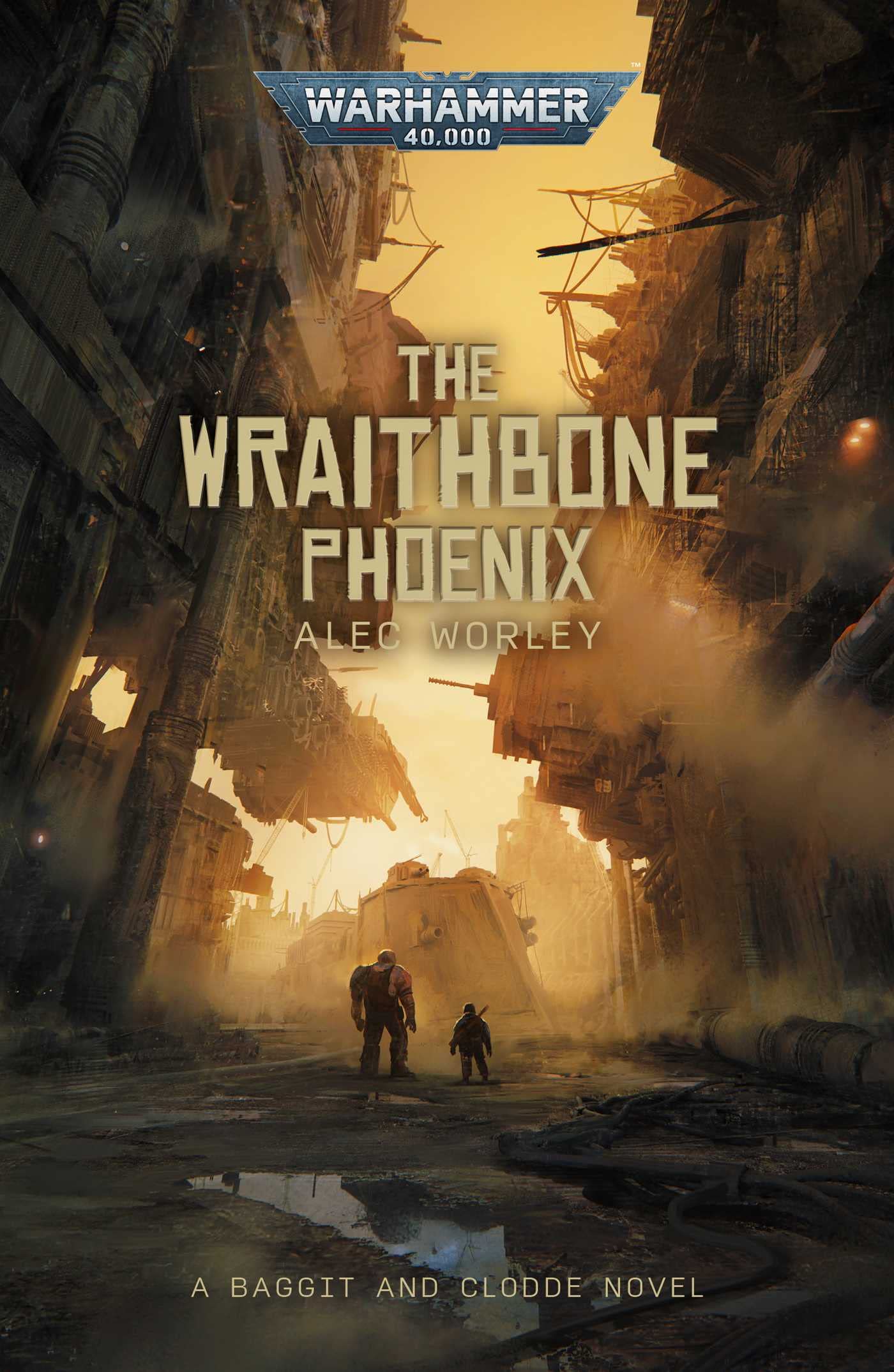
Warhammer 40,000: The Wraithbone Phoenix by Alec Worley

The Wraithbone Phoenix Cover

Publisher: Black Library (Audiobook – 30 August 2022)

Series: Warhammer Crime

Length: 11 hours and 6 minutes

My Rating: 4.75 out of 5 stars

Amazon     Book Depository

The entertaining team of Baggit and Clodde return for another Warhammer Crime adventure in the rip-roaring and deeply exciting science fiction thriller romp, The Wraithbone Phoenix by the impressive Alec Worley.

Last week I presented a review that talked about the intriguing Warhammer Crime series that combined crime fiction narratives with elements of the iconic Warhammer universe to create some amazing reads.  While some Warhammer novels already feature some intriguing crime fiction elements, such as in Necromunda novels like Kal Jericho: Sinner’s Bounty by Joshua Reynolds, the Warhammer Crime books are a much more complete melding, with cool thriller plots and complex mysteries.  I was rather intrigued by this concept, especially as I love it when authors combine wildly different genres together, and I mentioned how I planned to try out one of those books next.  Well, that book was The Wraithbone Phoenix by Alec Worley, an awesome and captivating read set in the Warhammer 40,000 universe.  A follow-up to Worley’s 2020 full-cast audiobook, Dredge Runners, The Wraithbone Phoenix is a full-length novel that brings back the protagonists of the original audiobook and puts them in another unique and deadly situation.

In the far future of the universe, there are few places more corrupt and chaotic than the crime-ridden city of Varangantua.  Life is cheap on the mean streets of Varangantua, and death waits around every corner, especially if you have a massive bounty on your head.  Unfortunately, the most wanted in the city currently are the abhuman deserters turned criminals, Baggit and Clodde.  Baggit, a tricky ratling always looking for the next score, and Clodde, his ogryn friend with a rare facility for thought, have made an enemy of one of the most dangerous men in the city, and now everyone is after their heads.  Hiding out within one of the city’s industrial salvatoriums, Baggit and Clodde have taken on new identities until the heat dies down.  However, the twos natural inclination for getting into trouble soon breaks their cover, and they are soon forced out into the open.

Desperate to find a way to pay off their debts, Baggit hears an interesting bit of news that could change all their fortunes.  One of the nearby salvatoriums is dismantling the decommissioned Imperial Navy ship, Sunstriker, the reputed home of a long-lost treasure, a xenos artifact known as the Wraithbone Phoenix.  Guided by the rumours he heard when previously served about the Sunstriker, Baggit believes that the Wraithbone Phoenix is still hidden aboard, and its value is more than enough to get rid of their bounty.

But no secrets every remain safe in Varangantua, and as Baggit and Clodde make their preparations to sneak into the Sunstriker, news of their location and their potential treasure leaks out.  Soon every criminal, bounty hunter, treasure hunter and mercenary is on their way towards the Sunstriker, desperate to claim either the bounty on Baggit and Clodde’s head, or the Wraithbone Phoenix.  Forced to face off against the very worst killers that Varangantua and its main criminal cesspool, the Dredge, has to offer, Baggit and Clodde attempt to do the impossible, recover the artefact from the ship and get out with their heads intact.  But can even the clever Baggit and the indomitable Clodde escape the deadly wave about to crash down upon them?

Wow, now this was one of the most entertaining and thrilling Warhammer 40,000 novels I have read all year.  Worley has produced an amazing novel in The Wraithbone Phoenix that did a wonderful job blending Warhammer elements with an impressive crime fiction narrative.  Filled with a ton of action, some amazing humour, and so many outrageous characters, The Wraithbone Phoenix is an outstanding read that proves to be extremely addictive.

I had such a brilliant time with The Wraithbone Phoenix, especially as Worley pulled together an extremely impressive and intense narrative that is very hard to put down.  Set in a particularly crime-ridden and corrupt city, the novel sees the chaotic duo of the ratling (halfling/hobbit) Baggit and the ogryn (ogre) Clodde, get into all manner of trouble.  Featuring a range of character perspectives, the first third of the book is pretty firmly focussed on the main duo, with some fun scenes from the contemptable villain Lemuel Scratchwick.  Forced into hiding due to past mistakes, Baggit comes up with an ambitious plan to recover the Wraithbone Phoenix, a legendary xenos treasure that is rumoured to be hidden in a nearby ship being scrapped (the theft and hiding having been cleverly set up in some early interludes).  However, after Lemuel overhears and spills the beans in a very public way, the entire city knowns what the two are planning, and a horde of killers and thieves head towards the ship.  The book starts spreading its focus to several other outrageous figures, all of whom are interested in either the Wraithbone Phoenix or killing Baggit and Clodde.  The author does a wonderful job introducing each of the characters, and you soon become invested in their hunt, as all of them are pretty amusing in their own way.  The action ends up in the decommissioned ship, were everyone starts their search for the missing treasure, and it doesn’t take long for everyone to start fighting each other in a series of bloody battles.  You honestly have no idea who is going to survive the various encounters, and it is very fun to see the distinctive characters dying in surprisingly and compelling ways.  At the same time, the characters also attempt to solve the mystery of the hidden Wraithbone Phoenix, and the various hints about its initial disappearance are cleverly woven into the modern tale, requiring the protagonists to solve it.  Eventually, only a few characters are left, and there is a great series of twists and turns that sees everyone get what they truly deserve.  While I did think that Worley perhaps went one twist too far (the final one was a bit too metaphysical for my taste), the reader comes away extremely satisfied, and highly entertained.

I had a wonderful time with this awesome book, and I think that Worley did a great job setting the entire narrative out.  The combination of crime fiction elements and the great and grim Warhammer 40,000 setting worked extremely well, and you ended up with a high-octane thriller that saw futuristic and half-crazed killers go against each other in a deadly contest for money and treasure.  The use of various perspectives allows you to get to know the various outrageous killers and participants in a very short amount of time, and you are soon invested in them and their various personal struggles as they duke it out.  I was getting a very cool and cinematic vibe from this story that put me in mind of films and books like Smoking Aces, Snatch or Bullet Train, with big casts all working against each other for the same goal.  While you are generally rooting for the main two characters, it is also very fun to see the other players in action, and the multiple unique interactions all these crazy figures have results in an impressive and frenetic read.  Worley backs this up with a ton of brilliantly written and highly detailed action sequences, and you really won’t believe the range of destruction and deliciously devious deaths that occurs.  There are so many impressive and cleverly set up moments throughout this narrative, and the deaths of several characters are usually the result of some well-placed bit of trickery that occurred chapters ago.  All this action, intrigue and character development is perfectly bound together by the book’s overarching humour, which helps to balance out the more intense elements of the novel, while also keeping everything darkly funny.  There are so many good jokes or hilariously over-the-top moments scattered throughout the novel, and I had a lot of great laughs as I powered through it.  Heck, even the title, The Wraithbone Phoenix, is a play on the classic noir book/film, The Maltese Falcon.  Everything comes together so perfectly throughout the book, especially as Worley also includes several outstanding interludes, some brilliant flashbacks, and even some hilarious in-universe text excerpts and announcements, all of which add perfectly the funny, but grim, tone of the book.  This was an incredibly well written and captivating read, and it proves quite impossible to put down at times.

While The Wraithbone Phoenix does have an outstanding crime fiction narrative, this book wouldn’t be anywhere near as good if it weren’t set in the grim future of Warhammer 40,000.  Worley did a remarkable job setting the book in this futuristic world, and it was great to see the various technologies and factions from the game being utilised in a crime story.  The author really works to explain many different elements from the Warhammer 40,000 lore here, and readers new to the franchise can easily dive into this book and start appreciating its clever story and settings.  I particularly loved the primary location of the corrupt city of Varangantua.  The author expands on this city a lot in this new book, giving more depth than it had in Dredge Runners, and you see more of the massive industries the planet supports, and the terrible conditions the people forced to work there endure.  Worley continues to hammer home just how much of a dark, dystopian society Varangantua, and the larger Imperium, really is for ordinary human citizens, and that their supposedly enlightened rulers are in many ways just as bad, if not worse, than the various monsters and the forces of Chaos they fight against (at least Chaos worshippers are honest about their intentions).  You can really sense the woe and control that Varangantua’s rulers have over the populace, and this is only enhanced by the various propaganda announcements that are played at various intervals throughout the book.  The propaganda posts are very obviously biased in their attempted manipulations and exhalations for service and order, that they are all extremely funny, even as they show just how bad things are by denying them.  However, Worley takes this even further by showing the darker, criminal side that surrounds the city, and it was really cool to see just how much worse things could get.

One of the most intriguing Warhammer 40,000 elements that Worley explores in The Wraithbone Phoenix is how the Imperial abhumans are treated.  Abhumans are genetically diverse humans who come in many shapes and sizes, like the small and sneaky ratlings and the gigantic, but dumb, ogryn.  Tolerated by the Imperium for their usefulness, these abhumans are treated as second-class citizens, looked down on by everyone just for the way they were born.  While this has been explored in other books, Worley really hammers it home in The Wraithbone Phoenix, especially as the two main characters are both abhumans.  You get a brilliant examination of how abhumans are regarded throughout the Imperium, both in the Astra Militarum and in general society, and the results are pretty damn grim.  Not only do all the humans treat them terribly and generally tell them they are worthless (there is an entire litany they need to learn about them being abhorred, unclean, but forgiven), but there are multiple examples of abhumans being killed or maimed, just for what they are.  Not only is this fascinating, while also enhancing the dark nature of the Imperium and the supposedly righteous humans, but it also becomes quite a key plot point throughout the book.  There are multiple scenes that focus on the protagonists struggling to deal with the prejudice they have suffered throughout their life, which defines them and drives them.  In addition, the plot around the hidden Wraithbone Phoenix is down to a mistreated ratling trying to get his revenge after being unfairly targeted and left filled with hate.  This proves to be quite a fascinating and well-written aspect of The Wraithbone Phoenix, and I loved being able to see everything from the abhumans perspective.

I also have a lot of love for the excellent characters that Worley set his story around.  There is such a great range of distinctive and captivating characters throughout The Wraithbone Phoenix, and you really get drawn into their individual tales and battles for survival and redemption.  Most of the focus ends up going around the main characters of the book, Baggit and Clodde, abhuman Astra Militarum deserters turned criminal entrepreneurs who were introduced in Dredge Runners.  Worley ensures that new readers can quickly pick up who Baggit and Clodde are, and it was so much fun to follow this ratling/ogryn combination, especially as they continued their chaotic lives of crime.  Both protagonists have their own brilliant characteristics, including Baggit’s (I assume the name is a fun homage to Bilbo/Frodo Baggins) enjoyment of plans and schemes that never work out, and the surprisingly smart and philosophical nature of Clodde (that’s what happens when you get shot in the head).  The two characters play off each other perfectly, with Baggit taking on the role of leader and carer for his big comrade, and Clodde letting him, while also not allowing him to get away with anything, thanks to the increased understanding he has.  We get a bit more history surround these two characters, including their time in the army, and while it is not fully explored yet, you get to see the fantastic bond they have.  Baggit ends up getting a bit more of a focus in this book than Clodde, mainly because the central plot point is so tightly tied to the fate of a mistreated ratling.  Baggit, who suffered his own abuse from humans while serving, becomes obsessed with the fate of this long dead ratling, and he is determined to find out what happened to him and whether he got his revenge.  Baggit really emphasises with him as the story continues, and his obsession for answers lead him to make some big mistakes, especially once he learns all the ancient ratling’s secrets.  Both Baggit and Clodde are extremely likeable, and you can’t help but fall in love with the scheming ratling and the sweet, if brilliantly weird, ogryn.

Aside from Baggit and Clodde, Worley also fills The Wraithbone Phoenix with an eclectic mix of characters, with some very diverse storylines and characteristics to them.  The most iconic and heavily featured are the various assassins, bounty hunters and other individuals who are flocking to the Sunstriker for various reasons, be it money, treasure, or a chance of redemption (sometimes all three at once).  This list of crazy characters includes a genetically enhanced killing machine, a cult of phoenix-worshiping wackjobs, a team of elite mercenaries, an ageing bounty hunter trying to regain his reputation, a sadistic archaeologist with a love of whips, another ratling with a past connection to Baggit and Clodde, a disgraced and drunk Imperial Navy officer with a dream of finally impressing his dead mother, and the mysterious hooded assassin known only as Death.  Worley did a really good job of introducing each of these unique figures, and you swiftly get drawn into their compelling personal stories and outrageous personalities, especially after witnessing several scenes from their perspective.  While I could go on for ages about all of these dangerous people, I’m mainly just going to give a shoutout to the character of Lemuel Scratchwick, a steward at the plant Baggit and Clodde were working at, who really grows to hate the pair.  Dragged down from his high perch by them, Lemuel spends the rest of the book trying to get even and comes across as the most arrogant and detestable villain.  It is so amusing to see Lemuel in action, especially as his pride often gets the better of him and nothing goes his way, much to my delight.  He forms quite an unhealthy rivalry with Baggit which draws them both into taking stupid risks.  All these over-the-top, but deeply likeable characters, really enhanced my enjoyment of this book and I can’t wait to see what impressively outrageous figures appear in Worley’s next novel.

Unsurprisingly, I chose to listen to The Wraithbone Phoenix on audiobook, which is really one of the best ways to enjoy a great Warhammer book.  This was a moderately long audiobook, coming in at just over 11 hours, and I found myself getting through it in a relatively short amount of time, including powering through the last several hours in a day trying to get to the conclusion.  This was a very fun and entertaining audiobook, and I had a great time listening to the awesome humour and intense violence unfold, especially as the narration by Harry Myers painted quite an impressive picture.  Myers, whose work I previously enjoyed in another recent Warhammer 40,000 novel, Day of Ascension by Adrian Tchaikovsky, does a pretty epic job in The Wraithbone Phoenix, and I loved his narrative take on the captivating story.  Every character in this audiobook is given their own distinctive and fitting voice, which I deeply enjoyed, especially as it helps the listener to connect more to them and the story.  Myers clearly had a lot of fun when it came to voicing all the outrageous figures and some of the voices he came up with were very amusing.  I really appreciated the squeakier voice he used for the rattling characters, as wells as the deeper boom of Clodde, and the rest of the voices he came up with were not only distinctive and fun, but they also helped to enhance the inherent traits of the character it was associated with.  For example, he really conveyed the deep arrogance and distain contained within the character of Lemuel Scrathwick, as well as he dramatic decline in sanity as the book unfolded, and I really appreciated the narrator’s attention to detail with that.  Myers really impressed me as a narrator in The Wraithbone Phoenix, and I liked how some of his scenes, namely those depicting the in-universe propaganda, were enhanced with some serious and inspiration music and sound effects, which made the absurd declarations even more hilarious.  This was such a good audiobook, and I cannot recommend it enough as a way to enjoy this epic Warhammer novel.

Overall, this was an outstanding first Warhammer Crime novel from me, and I had such an incredible time getting through this book.  The Wraithbone Phoenix is an impressive and highly addictive Warhammer 40,000 read, and I loved the elaborate story that Alec Worley came up with for it.  Containing some brilliant characters, a highly entertaining story, and a great combination of crime fiction and Warhammer elements, The Wraithbone Phoenix comes highly recommended, and you are guaranteed to have an exceptional time reading this witty and intense read.

Amazon     Book Depository

Star Wars: The Princess and the Scoundrel by Beth Revis

Star Wars - The Princess and the Scoundrel Cover

Publisher: Del Rey (Trade Paperback – 16 August 2022)

Series: Star Wars

Length: 348 pages

My Rating: 4 out of 5 stars

Amazon     Book Depository

Outstanding author Beth Revis presents an intriguing and enjoyable new entry in the extended Star Wars canon, with the fantastic tie-in novel, The Princess and the Scoundrel.

2022 has been a rather interesting year for Star Wars fiction.  While the focus has primarily been on the High Republic sub-series, several great authors have produced some awesome reads set around the various film trilogies (such as Star Wars: Brotherhood by Mike Chen).  However, one of the most exciting recent Star Wars tie-in novels is a character-driven read that focuses on the relationship between Han Solo and Princess Leia, The Princess and the Scoundrel, which was written by exciting author Beth Revis.  Revis, who already has some experience with the Star Wars canon, having written the 2017 novel, Rebel Rising, came up with an awesome story in The Princess and the Scoundrel that I had a wonderful time reading.  Not only does The Princess and the Scoundrel explore an interesting period of the complex and inspiring Star Wars canon, but it also contained a fantastic romantic heart that will appeal to a wider range of readers.

Goodreads Synopsis:

The Death Star is destroyed. Darth Vader is dead. The Empire is desolated. But on the forest moon of Endor, amongst the chaos of a changing galaxy, time stands still for a princess and her scoundrel.

After being frozen in carbonite, then risking everything for the Rebellion, Han is eager to stop living his life for other people. He and Leia have earned their future together, a thousand times over. And when he proposes to Leia, it’s the first time in a long time he’s had a good feeling about this. For Leia, a lifetime of fighting doesn’t truly seem over. There is work still to do, penance to pay for the dark secret she now knows runs through her veins. Her brother, Luke, is offering her that chance—one that comes with family and the promise of the Force. But when Han asks her to marry him, Leia finds her answer immediately on her lips . . . Yes.

But happily ever after doesn’t come easily. As soon as Han and Leia depart their idyllic ceremony on Endor for their honeymoon, they find themselves on the grandest and most glamorous stage of all: the Halcyon, a luxury vessel on a very public journey to the most wondrous worlds in the galaxy. Their marriage, and the peace and prosperity it represents, is a lightning rod for everyone in the galaxy—including Imperial remnants still clinging to power.

Facing their most desperate hour, the soldiers of the Empire have dispersed across the galaxy, retrenching on isolated worlds vulnerable to their influence. As the Halcyon travels from world to world, one thing becomes abundantly clear: The war is not over. But as danger draws closer, Han and Leia find that they fight their best battles not alone but as husband and wife.

I had a fantastic time getting through The Princess and the Scoundrel as Beth Revis wrote a pretty awesome and captivating Star Wars novel that covered a lot of bases.  Split between the alternating perspectives of Han and Leia, The Princess and the Scoundrel takes off right after Return of the Jedi.  While the victorious Rebellion plans their next moves, Han and Leia decide to make the most of their sudden freedom to get married after their traumatic year apart.  While both are still reeling from the events of the original trilogy, they come together in a fun wedding scene, before leaving on a glamorous trip that will be part honeymoon part propaganda show.  While initially trying to enjoy their honeymoon, both quickly fall into their old patterns, with Han chafing at the formality, while Leia continues to try and do her work as an ambassador and planner.  Arriving at an isolated ice planet, Han and Leia soon discover a destructive Imperial plot and must come together as a couple to thwart it.  This ended up being a really distinctive read, as Revis worked a more romantic plotline into the always entertaining Star Wars canon.  I loved seeing this fantastic tale of Han and Leia’s first adventure as husband and wife, and Revis ensured readers got an excellent blend of action, intrigue, and character development, as you witnessed these two amazing protagonists try to come together as a married couple.  There is a little something for everyone in this great read, and I found myself getting caught up in the action and the impressive focus on two of my favourite fictional characters.  An overall brilliant book that is really easy to enjoy and appreciate.

The Princess and the Scoundrel proved to be a very interesting addition to the current Star Wars canon.  While the romance between Han and Leia was strongly explored in the previous Legends canon, the current Disney canon has not featured it as much, and as such you see some fascinating events from their lives here for the first time.  Revis paints quite a fun picture of the sudden wedding these two have, which features entertaining interruptions from several key characters, some tricky manoeuvrings from Lando to get Han into a nice outfit, and, of course, a ton of Ewoks, while the honeymoon is as chaotic as you would expect from these two.  As such, this is a pretty key book for all fans of these two iconic characters, and I think that Revis hit an excellent tone when it came to some of these key events.  The author also fits in a lot of fantastic references and moments that a lot of Star Wars fans will appreciate, most of which are covered in a very fun way.  For example, the characters finally address that infamous kiss between Luke and Leia at the start of The Empire Strikes Back, with Han and Luke having a rather awkward conversation about it, before agreeing never to bring it up again.  Revis also makes quite good use of an interesting Han Solo villain from one of the previous canon books, and it was great to see some continuation from the previous intriguing storyline.  That, and several other amusing references, help to make this quite a key book for Star Wars fans, and I had a wonderful, nerdy time getting through it.

Aside from the direct references to the book, I was personally intrigued to see more about the period of Star Wars history that occurred in the immediate aftermath of the Death Star’s destruction in Return of the Jedi.  Despite the death of the Emperor, the war between the Empire and the Rebellion (now renamed as the New Republic), is still ongoing, and indeed some of the toughest fighting is still to come.  Several authors have covered this frenetic period in the current canon with some recent books, such as the Alphabet Squadron trilogy by Alexander Freed (made up of Alphabet Squadron, Shadow Fall and Victory’s Price).  However, I particularly enjoyed how The Princess and the Scoundrel covered this period, as it shows events literally hours after the end of the film.  Quite a bit is shown of the Rebellion’s initial strategies following the battle of Endor, as well as the Empire’s reactions to the death of the Emperor and the sudden shift in power.  While some of the wider campaigns aren’t shown, you get an interesting idea of what the military and political situation was at the time, which I deeply enjoyed.  Revis also spends time examining how members of the general public reacted to the news, and there is an interesting variation of responses.  Not only did some people straight out disbelieve that the events even occurred, with many assuming it was fake propaganda from the Rebellion, others who were associated with the Empire, or who had members of their family aboard the Death Star, acted quite hostile to the change in the established status quo.  These diverse reactions not only reflected some current real-world societal issues, but also provided a compelling insight into just how much influence the Empire had, even on the way to its downfall.  Throw in some hints and previews of the upcoming Operation Cinder, and this proved to be a very interesting addition the Star Wars canon that many established fans will really enjoy.

One of the strongest elements of The Princess and the Scoundrel is its impressive focus on the two main characters, Han Solo and Princess Leia.  While this book does contain a lot of action, intrigue and fantastic Star Wars elements, at its heart it is a romance novel between two well-established and complex characters, both of whom have experienced a lot of trauma and anguish in recent years.  Revis does a remarkable job of diving into both characters throughout the course of The Princess and the Scoundrel, and you really get a sense of their feelings, concerns and traumas following their victory.  However, there is also a great focus on their relationship, and you can really see the strong bond they have, even if they are still coming to terms with their feelings and their wildly different personalities.  I felt that Revis painted a realistic view of their relationship, which contains some difficulties early on, especially with their independent streaks.  However, the author also shows that the two characters are much stronger together, and they can work through any issues that come their way.  I think that this much better than just showing them having a fairy tale relationship, and I really appreciated the authors compelling take on one of the most iconic relationships in fiction.

Aside from their relationship, Revis also did a great job of diving into the complex emotional issues facing both central characters.  For example, Revis makes sure to explore the trauma surrounding Han after being trapped in carbonite for over a year.  Not only did he miss out on a lot of key events in his friends’ lives, but at this point of the book he has only been awake again for a few days, and some of his decisions are based on his concerns and fears about being trapped again.  Leia is also going through a lot after the discovery that Luke is her brother and, more importantly, that Darth Vader was her father.  As such, Leia spends much of the book attempting to reconcile the fact that her real father was a genocidal maniac who tortured her and is partially responsible for destroying her home planet.  This proves to be quite a deep and intriguing part of her character arc, especially since, unlike her newly discovered brother, she is unable to forgive Vader for everything he did.  There is also an interesting look at Leia’s early attempts to connect with the Force, after Luke reveals her Jedi potential.  Watching her attempts at using the Force is very fascinating, especially as she battles with her feelings about Vader while doing so and is reluctant to even try to use the abilities that he could do.  All these unique character examinations, and more, really help to showcase just how complex and traumatised Han and Leia were at this period, and how much their relationship helped them get past it.

Star Wars: The Princess and the Scoundrel by Beth Revis is an amazing read that provides Star Wars fans with something a little different to the typical tie-in novel.  Featuring a continuation of one of film’s most iconic romances, The Princess and the Scoundrels is at times touching and romantic, while also exploring the grim realities of the war-torn galaxy, all topped off with some classic Star Wars action and humour.  With an outstanding focus and understanding of its two main characters, The Princess and the Scoundrel was a fantastic novel that is well worth checking out.

Amazon     Book Depository

In the Shadow of Lightning by Brian McClellan

In the Shadow of Lightning Cover

Publisher: Macmillan Audio (Audiobook – 21 June 2022)

Series: The Glass Immortals – Book One

Length: 24 hours and 53 minutes

My Rating: 5 out of 5 stars

Amazon

One of the most inventive and compelling authors of fantasy fiction, Brian McClellan, kicks off an awesome new series with In the Shadow of Lightning, the first book in The Glass Immortals series.

Few authors over the last 10 years have had more of an explosive impact on the world of fantasy fiction then Brian McClellan.  Debuting in 2013, McClellan quickly set the world ablaze with The Powder Mage trilogy, which saw chaos and destruction unravel in a new fantasy world where gunpowder-powered mages face off against an enraged god.  I had a brilliant time with the first book in the series, Promise of Blood, and McClellan followed this initial trilogy off with the sequel, Gods of Blood and Powder trilogy, set in the same universe.  While I still need to finish the Powder Mage novels off, I was very excited to hear that McClellan was starting a new series with In the Shadow of Lightning, the first book in the author’s The Glass Immortals series.  This is an impressive and outstanding read that introduces readers to a distinctive new fantasy world, this time with a fascinating focus on glass magic.

Demir Grappo was once one of the most respected politicians, tacticians and glassdancers in the Ossan Empire.  A rising star in the assembly, a proven governor, and the only son of a prominent family, Demir’s promising career is suddenly shattered in the immediate aftermath of his greatest military victory when his army sacked and destroyed the entire city of Holikan, apparently on his orders.  Mentally broken by the massacre done in his name, Demir abandons his army and vanishes into the provinces, giving up his life of privilege for one of anonymity.

Now, nine years after the sacking of Holikan, Demir is a very different man, having spent the intervening time as a grifter with no true home.  However, everything changes when news reaches him that his mother was murdered, brutally beaten to death in public in an apparent political attack.  Determined to find her killers, Demir returns to the city of Ossa to reclaim his seat as the head of his family.  But not everyone is happy that he has returned, and Demir soon finds himself in the midst of several deadly conspiracies, while Ossa goes to war against its neighbour, all in the name of avenging his murdered mother.

To get to the centre of these conspiracies, Demir must find allies, including old friends and new acquaintances if he is to gain the power and influence he needs find answers, especially those hidden by the powerful guild families who rule Ossa.  However, as he searches, and soon finds a much more troubling secret: godglass, the source of magic within the world, is running out, and when it goes, chaos will reign.  The key to securing the future may lie in a device that could re-power inert pieces of godglass, and only one girl appears to have the skill to create such a device.  But as Demir fights to secure this new vital ally, he finds himself fighting against a mysterious new enemy, one that seems determined to destroy anyone who gets in their way.

McClellan impresses again with another incredible fantasy novel that had me instantly enthralled.  Presenting the reader with a multifaceted narrative that combines great characters with intriguing fantasy elements, In the Shadow of Lightning proved to be an outstanding start to McClellan’s new series and I had an exceptional time reading it.  Epic in scope, ambition and potential, In the Shadow of Lightning gets a full five-star rating from me and I am still reeling from just how good this was.

In the Shadow of Lightning is a particularly addictive novel, especially as McClellan presents the reader with an outstanding and complex narrative that pulls them in on so many levels.  Starting off with a compelling prelude that perfectly introduces central protagonist Demir Grappo and shows his dramatic and bloody fall from grace and sanity, the novel then undergoes a time skip which takes the reader into the current storyline, right as events are kicking off.  The initial focus is on Demir, who, after finding out his mother has been murdered, returns to Ossa to take over the family business and discover her murderers.  However, he soon finds that his mother was involved in complex dealings that might have led to her death, and that her assassination has been blamed on a neighbouring city Ossa is going to war with.  The story then splits as McClellan introduces three additional point-of-view characters, each other whom has their own distinctive story arc, closely related to Demir and the politics of Ossa.

These new characters include Thessa Foleer, a siliceer (godglass worker) from Ossa’s neighbour Grent, the breacher Idrian Sepulki and Kizzie Vorcien, an enforcer for a powerful guild-family who Demir hires to investigate his mother’s death.  Each of these new characters have their own individual storylines that tie into the plot points introduced in Demir’s initial chapters.  While these character arcs go in their own direction, their storylines are loosely connected together and form a great overarching narrative as they are dragged into war, imprisonment, political battles, conspiracies and criminal investigations.  I loved the cool blend of character-driven storylines, and everything comes together extremely well to show that something very rotten is going on within Ossa.  This is a very fast-paced story, and McClellan keeps multiple compelling plotlines running simultaneously to keep the reader’s attention, with some great reveals and amazing fight scenes scattered throughout the book.  Most of these reveals are set up and foreshadowed extremely well, with a couple of exceptions, and I didn’t see some of the twists coming, which was pretty fun.  Everything comes to a head towards the end of the novel, as all four characters find themselves in their own extremely dangerous and concerning situation.  Not only is there a massive battle for the future of Ossa but there are some shocking revelations about who is involved in the conspiracy and why.  The author leaves everything on an amazing note that not only leaves readers satisfied with the conclusion of some of the storylines but which also leaves a lot of questions unanswered and the reader wanting more.  An excellent and impressive story that dragged me in extremely quickly.

I was very impressed with how In the Shadow of Lightning’s story came together, as McClellan presented an epic and addictive offering that I snapped up extremely quickly.  I especially loved the use of four separate narrators to tell this story, and McClellan did an outstanding job of separating out their narratives.  Each narrator has their own unique story to tell, and what is really good is that they also explore a different aspect of the author’s new fantasy world, which often breaks across the associated genres.  For example, Thessa’s story focuses on the magical science behind godglass, and examines the political and social elements associated with this branch of magic.  Idrian’s tale comes across as a war tale as he is forced to participated in the deadly conflict between Ossa and Grent, where his particularly magical expertise makes him a living weapon.  Kizzie’s chapters come across as an investigation arc, as she attempts to uncover who killed Demir’s mother, and is forced to dive into the intrigues and shifting allegiances amongst the Ossan families, uncovering a deep conspiracy.  Demir serves as a bit of a joining figure; while he also has his own unique adventures, especially around Ossan politics, a lot of his arc involves interactions with the other three point of view characters.  Not only does this ensure that we get another viewpoint on the other character’s actions, as he gets involved in the godglass, espionage and the war elements that they are solely focussed on, but he helps to bring the other protagonist’s disparate storylines together into one solid and compelling narrative.

All four character-driven storylines are pretty exceptional in their own right, and this was one of those rare multi-perspective novels where you honestly can’t choose which character arc is the most intriguing or enjoyable.  I was particularly impressed with how McClellan brought these storylines together into one outstanding novel, and it makes for quite the epic read, especially as the author ensures you get the right blend of intrigue, action, magic and mystery throughout.  Despite its longer length, In the Shadow of Lightning has a pretty fast pace to it, and the readers are constantly treated to fantastic scenes that really keep your interest, either by being directly exciting, or featuring excellent examples of character development or world building.  I also really have to highlight the outstanding and amazing action sequences featured throughout this book.  McClellan has an impressive way of making these fight scenes really come to life in your mind, and it so easy to see all the epic events unfold.  These action scenes are particularly impactful when combined with the new magical features that the author has come up with, and I had so much fun seeing them unfold.  This really was an exceptional and highly entertaining read, and I loved how this entire amazing story was presented to the reader.

One of the things that most impressed me about In the Shadow of Lightning was the way in which McClellan envisioned and introduced the reader to an entirely new fantasy realm, equipped with its own distinctive magical system, all of which was substantially different from the elements featured in his previous Powder Mage novels.  While there are some similarities, namely that the Glass Immortals series also features magic, firearms, and a similar level of technology, there are quite a few differences which really make this new series stand out.  Most of the book is set in the Ossan Empire and its capital city of Ossa, which proves to be an excellent background location for the complex story.  Ossa, as well as some of the other nations mentioned reminded me of an Italian city-state, and I felt that it was an interesting change of pace to the French/English influences of Powder Mage universe.  The city is ruled by rival merchant guild families who are constantly battling for dominance, while the influence of the cities extends out to various provinces in the extended empire.  There is an intricate society set up around Ossa, and I loved the compelling interplay of industries, politics and intrigue that resulted.  McClellan examines various aspects of Ossan society, including sports, leisure, the military, and the various social levels, all of which were pretty intriguing to discover, and which painted Ossa and its people in a compelling light.  I particularly enjoyed their innate love for intrigue, contracts and business above everything else, and the fact that their national sport involves two magically enhanced people beating each other with cudgels tells you a lot about them.  Throw in some compelling snapshots of other relevant nations, as well as some sneaky hints at other mysterious beings, and the reader is given a really impressive and detailed introduction to this new world in this first book in the series, which McClellan did an outstanding job setting up.

However, the most distinctive part of this new universe is the cool magical system that forms the basis for much of the plot.  Just like with the Powder Mage novels, there are actually several different variations of magic and magic users in this series, which are connected to various forms of glass.  The first of these is the magical godglass, empowered glass items that give its users various abilities, such as strength, intelligence and enhanced senses, or which can be used to control a person.  Godglass is the most common form of magic in this series, which anyone can use, and indeed the entirety of human society in this world is based around the use of these items.  Pretty much every action a character does in this book is helped out in some way with godglass, resulting in some excellent sequences, especially during fights, and McClellan spends a lot of time exploring how it fits into his new world.  This includes multiple scenes set inside glassworks, where the godglass is forged, and you get an idea of how it is made and the significance it holds to the people of this world, including the fact that many of the characters have piercings that allow them to attach godglass to them.  Godglass actually becomes a key part of the book’s plot, once it is revealed that the supplies of magical cindersand that is used to create it is running low, resulting in an undercover war to control the remnants or finding a means of regenerating it.

The other magical elements of this new series involve the inbuilt talents of several characters, who have various degrees of sorcery in them.  The most prominent of these are the glassdancers, sorcerers who can control glass (except godglass) to an astonishing degree, and use it as a weapon.  There are multiple glassdancer characters featured throughout In the Shadow of Lightning (including the central protagonist), and you get to see multiple fights involving them, which are pretty badass.  You would never consider just how dangerous someone controlling glass could be until reading this book, and the brutal and quick ways in which they kill their opponents are pretty damn impressive.  The other major form of magical user are glazalier, who have more of a passive ability that allows them to resist the negative impacts of godglass (too much magic starts to eat away at someone) while still being able to use them.  These glazaliers are deployed as breachers, heavily armoured soldiers equipped with a ton of godglass that make them unstoppable tanks in battle, capable of killing units of men by themselves.  Acting as both a hammer and shield to their comrades, they are a lot more brutal than the subtly lethal glassdancers, and I loved the compelling contrast between the two major magical soldiers featured in this book.  McClellan does an outstanding job introducing, explaining and showcasing all these different magical elements in this first book, and I deeply enjoyed seeing the many cool ways these magical abilities and the godglass could be used, especially in the book’s many awesome action sequences.  I look forward to seeing how McClellan expands on them in the future, and I am still so impressed by how much magic the author could work into glass.

Another area where McClellan really excels as a writer is with the complex and multi-layered characters he is able to create.  This was really evident in his new novel, where several great point of view protagonists and fascinating supporting characters are perfectly introduced to the reader and become exciting focal points for the brilliant plot.

The most prominent of these is central protagonist, Demir Grappo, a brilliant strategist and politician, whose entire life is shattered in the opening prologue.  Forced back into public life after the death of his mother, Demir takes control of his family and attempts to rebuild his legacy while also finding answers.  Utilising the swindling, bluff and manipulation skills he built in the decade he was away, Demir proves to be a tough political adversary and quite an interesting figure to follow.  I loved his impressive and unique storyline, and watching him regain his political skills and self-confidence was really enjoyable, especially as he acts as a deadly glass sorcerer, businessman, politician, leader and even a general.  There are great sequences that highlight his skills, and I loved how he was able to manipulate everyone in many different ways, from being an agreeable political ally, to acting like a smarmy lord who is able to bluff his way around by sheer force of personality.  While he does come across as arrogant at times, which is partially due to the fear and respect everyone gives him due to his sorcerous abilities, McClellan ensures that the protagonist is aware of it, and works to fix his character flaws as he goes.  However, the biggest character aspect of Demir involves the trauma he carries after his actions apparently led to the massacre of an entire city.  Still haunted by the scenes from that night, Demir is forced to revisit them throughout the course of the book, especially when he meets a survivor while trying to find out who was actually responsible.  His roiling emotions around these events are his one weak spot, and the author slips in some powerful and understandable scenes where he loses control.  McClellan did a great job setting up Demir in this first book, and I have no doubt his story is going to get even more complex and painful.

McClellan ensures that all his intriguing characters have their own distinctive and compelling motivations, as well as a dark history that is explored throughout the course of In the Shadow of Lightning.  This includes Thessa Foleer, whose heartbreaking narrative and past worked perfectly in concert with Demir’s, which was appropriate as their storylines were the most closely linked.  Thessa’s story is one of constant loss, especially as everyone who seems to get close to her dies or suffers in some way, and the character goes through some major grief and trauma as a result.  The author does a good job balancing the focus on her past and her feelings of loss, with the scenes depicting her work as a siliceer, and I liked how you get some of the best insights about this book’s primary fantasy elements throughout her chapters.  McClellan sets up Thessa as quite a major character in this novel, and it will interesting to see how her story progresses in the future.

The other two point-of-view characters are Idrian Sepulki and Kizzie Vorcien, who add a lot more excitement and fun to the story.  Idrian’s scenes are some of the most action-packed, and it is very cool to see him in battle, especially as he tends to plough through entire units of men like a human tank.  However, Idrian is one of the most caring and likeable figures in the entire novel.  Primarily concerned for the lives of his comrades, Idrian goes into the battle to protect them, and the close friendships he builds with his men help define him.  However, Idrian is also battling some inner demons, and it is clear that McClellan has some tragedy planned for him in the future.  This is a little heartbreaking, as you really cannot help but enjoy Idrian’s straightforward nature and natural integrity, and anything bad that happens to him is going to strike the reader twice as hard as a result.  Kizzie, on the other hand, is a scrappy enforcer, forced to survive the intense politics of the city’s guild families.  The bastard daughter of the Vorcien family head, Kizzie desperately seeks legitimisation and acceptance from her father, if only to protect her from vicious brother.  Dragged into Demir’s hunt for his mother’s killers, Kizzie dives into the world of political intrigue and family espionage, only to find herself conflicted by the answers she seeks.  Forced to choose between friends and family, as well as between her desires and what his right, Kizzie has some great moments in this book, and her inner conflicts add a great amount of drama to the plot.

These central protagonists are well rounded out by an impressive and enjoyable series of supporting characters, each of whom add to the plot in their own unique way.  McClellan does a great job introducing all the key supporting characters featured in the plot, and there are some amazing and distinctive characters featured here, from long-time friends of the characters, to bitter enemies with their own agendas.  My favourite supporting character would probably be Baby Montego, Demir’s adopted brother who returns to help Demir with his exploits and find out who killed their mother.  A massive brute of a man and a former cudgeling world champion, Baby is considered to be the deadliest man on the planet, even though he doesn’t have any magical abilities and can’t use godglass.  He more than lives up to this reputation throughout the book, and he has some of the most exciting and action-packed sequences in the entire novel as he casually deals out violence.  At the same time, he is also a cunning thinker, and his dry humour and complete self-confidence really make him standout.  It was fantastic to see amazing characters like Baby interact with the point-of-view characters, and you get some impressive moments as a result.  Honestly, every character featured in this book was amazing in their own way, and I cannot emphasise enough how well McClellan wrote them.

As I tend to do with most massive fantasy novels, I chose to check out In the Shadow of Lightning in its audiobook format, which proved to be pretty damn awesome.  Coming in with a runtime of just under 25 hours, this is a lengthy audiobook to listen to (it comes in at number 15 on my latest longest audiobooks I have listened to list), and it took me a decent amount of time to get through it.  However, I felt that was time well spent, as I was relentlessly entertained every single second I spent listening to In the Shadow of Lightning, and there were times I wished it was even longer.  This epic novel really came to life in the audiobook format, and I loved how impressive and cool some of the big action sequences and confrontations felt when being listened to.  While I did initially struggle to keep track of the side characters in this format (having the ability to easily go back and figure out who people were would have been helpful), I was soon able to figure out who everyone was, while also absorbing a heck of a lot more detail about the new universe and its unique elements.

I was also deeply impressed with the outstanding narration In the Shadow of Lightning featured, thanks to the work of Damian Lynch.  Lynch is a veteran audiobook narrator with several epic fantasy series under his belt and he swiftly made me a big fan with his great voice work here.  He really dove into the various characters featured in the book, and you got a great sense of their personalities, emotions and actions as he narrated them.  I had fun with several of the voices he provided in this book, and I thought that protagonists like Demir, Idrian and Baby Montego, were really good, especially as you get notes of weariness in the old veteran Idrian, and the barely contained violence that resonates off Baby every time he talks.  I particularly liked the cool European accents that Lynch gave to the various characters, which helped to reinforce the Italian city-state nature of the main location, and people from other nations or cities had subtly different accents, which I thought was a very nice touch.  All this, and more, makes for an outstanding audiobook and this is easily the best way to enjoy In the Shadow of Lightning.  I had a wonderful time with this exceptional audiobook and I will definitely be grabbing the next book in this format when it comes out.

As you can no doubt see from this lengthy review, I deeply enjoyed In the Shadow of Lightning, which was such an epic book.  Brian McClellan did a remarkable job with this new novel, and he really proved his ability to set up another distinctive and exceptional fantasy series.  Loaded with so many amazing story elements, a cool new fantasy world with unique magical elements, and some impressive and complex characters, In the Shadow of Lightning was so very addictive, and I really could not stop listening to it.  A highly recommended read, especially in its audiobook format, In the Shadow of Lightning was one of the best books of 2022 and is a must read for all fantasy fans, especially those who have enjoyed McClellan’s work in the past, and I am exceedingly excited to see how The Glass Immortals series progresses from here.

Amazon

Recursion by Blake Crouch Review

Recursion Cover

Publisher: Random House Audio (Audiobook – 11 June 2019)

Series: Standalone

Length: 10 hours and 47 minutes

My Rating: 5 out of 5 stars

Amazon

Get ready for one of the most impressive and compelling science fiction books of the last few years with Blake Crouch’s outstanding 2019 release, Recursion.

Crouch is one of the more intriguing and highly regarded science fiction and thriller authors out there now, having produced a fantastic catalogue of intense and addictive novels over his career.  Best known for his Wayward Pines trilogy (adapted into a television series of the same name), Crouch’s books for the last few years have been a collection of fantastic standalone science fiction thrillers, such as the bestselling Dark Matter.  These novels often combine intense thriller storylines with high-concept science fiction elements to produce some epic and captivating reads.  So far, I have only read one of Crouch’s books, his 2019 release, Recursion, which was an exceptional and amazing read.  Unfortunately, I didn’t review it back then, even though it was one of my top books and audiobooks of 2019.  As I have just started reading Crouch’s latest book, Upgrade, I thought this would be a good opportunity to quickly give Recursion the love it deserves, as this honestly was one of the better books of 2019.

Synopsis:

Memory makes reality.

That’s what New York City cop Barry Sutton is learning as he investigates the devastating phenomenon the media has dubbed False Memory Syndrome—a mysterious affliction that drives its victims mad with memories of a life they never lived.

That’s what neuroscientist Helena Smith believes. It’s why she’s dedicated her life to creating a technology that will let us preserve our most precious memories. If she succeeds, anyone will be able to re-experience a first kiss, the birth of a child, the final moment with a dying parent.

As Barry searches for the truth, he comes face-to-face with an opponent more terrifying than any disease—a force that attacks not just our minds but the very fabric of the past. And as its effects begin to unmake the world as we know it, only he and Helena, working together, will stand a chance at defeating it.

But how can they make a stand when reality itself is shifting and crumbling all around them?


Recursion
was a powerful and deeply complex novel that perfectly brought together an impressive and thrilling narrative about choices, survival, and fixing mistakes, with some outstanding and clever science fiction concepts.  Based around the concept of memory, Recursion eventually devolves into a deeply compelling time travel narrative as its amazing two protagonists are dragged into a terrifying struggle to save the world.

The narrative of Recursion is split between grizzled cop Barry Sutton and brilliant scientist Helena Smith, both of whom have tragic pasts and memories that they would kill to get a do-over for.  Their storylines are initially kept separate, as Barry attempts to investigate a mysterious illness that is causing people to suddenly awaken with a second set of memories about a life that didn’t happen, driving them insane.  At the same time, Helena works with a mysterious corporate benefactor to develop a machine that will allow people to relive their most important memories, but her boss soon takes control of the project and morphs it into something very different with impossible knowledge.

It is soon revealed that Helena’s boss is using her memory machine to travel back to the time that the important memories were created in order to alter the timeline for his and his friend’s advantage.  The false memory syndrome is a side effect of this process, as people eventually start to remember all the changes that have been made due to the time travelling villains.  Both Barry and Helena are dragged into this conspiracy, as Barry is bribed to stop investigating by reliving and altering the memory of his daughter’s death, while Helena fights to stop it before it’s too late.  Eventually teaming up once the world starts going crazy with multiple memories, Barry and Helena are too late, with the various nations launching nukes against America to stop them ruling the world through time travel.  Helena is barely able to escape by diving back in time to a point in her personal years before the events of the book.

From there the novel turns into an intense time travel thriller as Helena works through her past and attempts to perfect her machine and stop time travel from ever existing.  Continuously recruiting a younger Barry, Helena is unable to find a solution before the world regains its lost memories and is forced to travel back again and again to avoid the inevitable arrests and nuclear strikes and ends up living multiple lifetimes.  This leads to a desperate series of attempts to save the world, which results in a fantastic and clever conclusion that fits the unique science fiction elements and characters of this book extremely well.

Recursion’s entire narrative comes together extremely well and serves as a powerful standalone read.  I loved how the story developed throughout the course of the book, and I found the second half of the novel, with the multiple examples of time travel to be some of the best parts of Recursion, especially as the stakes are raised higher than ever before.  This is a very well-written and fast-paced thriller, and Crouch brings in some fascinating concepts that work extremely well in the context of the clever narrative he pulled together.  The blend of intense action, compelling characters and complex science fiction elements is pretty damn perfect, and readers really get drawn into this narrative as a result.  I was personally addicted to Recursion very early in the game, and I had an outstanding time seeing how everything came together.

Crouch explores a lot of unique and compelling scientific elements which become an excellent part of the overall book.  The author presents a very complex and intriguing series of concepts around human memory, time travel, and everything in between, and makes some very interesting and well-researched points about them.  While most of these concepts are high-level science, Crouch takes the time to explain them carefully, and I found myself following along with the ideas fairly well.  While I did think the leap from memory experiments to time travel were a little over-the-top, it did become an incredible part of the narrative, and I really loved how well time travel was used in the story.  I love a good time travel story, and Recursion was one of the better ones that I have read, especially as it covers it in a unique way, while also highlighting the many dangers of unchecked changes to the time stream.  I loved how well the author was able to weave a compelling and powerful story around these concepts, and you will come away from this book really thinking about all the implications of this potential technology, as well as the importance of memory to the human psyche.

I also deeply enjoyed the outstanding pair of protagonists, Barry Sutton and Helena Smith, whom the story is set around.  Not only does Crouch do a wonderful job splitting the narrative between them, often in some very clever ways, but he also builds both characters up extremely well, showcasing their deep inner pain.  Both have experienced a lot of tragedy in their lives, and thanks to the technology being explored here, they are given the chance to relive it and change it.  Watching them go through these deep emotional moments, as well as witnessing the various mistakes they make as they try to fix the world, is pretty damn heartbreaking, and you really grow to appreciate their struggles, especially if you can relate to their tragic memories.  As such, you grow attached to them rather quickly, and I liked how Crouch made sure to build in a compelling, if unique, relationship between them.  While both grow close during their first meeting, their romantic relationship takes on a whole new edge once time travel is brought into it and it turns into powerful romantic bond that literally last lifetimes.  I really grew close to both Barry and Helena while reading Recursion, and they are an outstanding pair of protagonists to follow.

I must admit that I was a little wary about listening to the Recursion audiobook, as a colleague of mine who read the novel before me indicated that it might prove a little challenging to keep track of the various time periods without a physical copy to flip through.  However, I really did not have any trouble keeping track of what was going on in the story while listening to the audiobook, and indeed I found that the format helped me understand the concepts more.  I also enjoyed the combined narration of Jon Lindstrom and Abby Craden, with Lindstrom reading the chapters told from Barry’s perspective and Craden doing the same for Helena’s chapters.  This split in narration worked really well, and I liked how it changed each time the character perspective did.  With a run time of just under 11 hours, this was a fairly easy audiobook to get through, and I powered through it very quickly.  An overall excellent way to enjoy this fantastic book.

Recursion by Blake Crouch is an epic and exceptional read that really showcases the author’s impressive writing skill and ability to come up with some truly unique concepts.  This science fiction masterpiece is so damn awesome, and there is a very good reason that it was one of my favourite books of 2019.  A five-star read and highly recommended in every way possible, I loved Recursion, and I can’t wait to finish off and review Upgrade next.

Amazon

Quick Review – Dirt Town by Hayley Scrivenor

Dirt Town Cover

Publisher: Macmillian (Trade Paperback – 31 May 2022)

Series: Standalone

Length: 359 0ages

My Rating: 4.25 out of 5 stars

Amazon     Book Depository

Intriguing new author Hayley Scrivenor presents her powerful and excellent debut novel with the powerful and dramatic Australian mystery, Dirt Town.

Plot Synopsis:

My best friend wore her name, Esther, like a queen wearing her crown at a jaunty angle. We were twelve years old when she went missing.

On a sweltering Friday afternoon in Durton, best friends Ronnie and Esther leave school together. Esther never makes it home.

Ronnie’s going to find her, she has a plan. Lewis will help. Their friend can’t be gone, Ronnie won’t believe it.

Detective Sergeant Sarah Michaels can believe it, she has seen what people are capable of. She knows more than anyone how, in a moment of weakness, a person can be driven to do something they never thought possible.

Lewis can believe it too. But he can’t reveal what he saw that afternoon at the creek without exposing his own secret.

Five days later, Esther’s buried body is discovered.

What do we owe the girl who isn’t there?

Character-rich and propulsive, with a breathtakingly original use of voice and revolving points of view, Hayley Scrivenor delves under the surface, where no one can hide. With emotional depth and sensitivity, this stunning debut shows us how much each person matters in a community that is at once falling apart and coming together.

Esther will always be a Dirt Town child, as we are its children, still.


Dirt
Town was a fantastic and clever novel that contains a lot of interesting elements and moving parts to it that I had an amazing time reading.  Set in the small Australian country town of Durton in late 2001, the crux of Dirt Town’s plot revolves around the sudden disappearance of local schoolgirl Esther, who vanishes on her way home.  The subsequent search and police investigation into the disappearance soon involves several different inhabitants of Durton, including Esther’s friends, family and other connections, many of whom are dragged into the case over the course of the following days.  The investigation and the eventual reveal of what happened to Esther slowly but surely tears the town of Durton apart, as everyone’s secrets come spilling out.

The story focuses on several intriguing protagonists, including Esther’s best friend, Ronnie, who attempts to find her without really realising what is going on; their fellow schoolmate Lewis, who witnessed something relevant to the case but is unable to say anything out of fear of being outed; the various relatives to the children; the cops that come to investigate; and more.  This strong focus on these complex characters allows Scrivenor to weave together a compelling and exciting tapestry of personal stories that are altered for the worse when Esther goes missing.  All the characters react to the disappearance in different ways, and the reader gets a deep and captivating look into their lives, which often reveal long-buried secrets, fears and insecurities that the investigation brings to the light.  At the same time, the hunt for the missing child reveals other crimes going on around Durton, and everyone is moved in some way by the events of the narrative.  The eventual reveal about what happened to Esther and who was involved is very intense, and I really loved the clever, heartbreaking twist that Scrivenor utilised here.  The author layers the story with some clues, but it is still shocking to see what unfolded, and the series of events that led up to it and followed from there.  Dirt Town ends with a satisfying, if very bittersweet, conclusion, and I really appreciate the impressive debut narrative the Scrivenor produced here.

This was a pretty moving and distinctive novel, as Scrivenor blends several genres together into a single riveting tale.  While mostly framed as a mystery novel, Dirt Town also has a strong drama aspect to it, especially when it comes to examining the lives and secrets of the various townsfolk.  This ensures that you get quite a lot of unique character interactions throughout Dirt Town, and it was very moving and powerful to see how everyone was impacted by the events of the plot, often in quite substantial and painful ways.  It is also a particularly good piece of rural Australian fiction, as Scrivenor, who grew up in a small country town herself, does an amazing job portraying the tight-knit community, isolated landscape, and the feeling of decline that many of these towns experience during times of hardship.  Scrivenor added in a distinctive, disassociated chorus narrator, which is essentially the joint voice of the town, which produces some poetic and insight examinations of the impacts that the case has on the town and its people, as well as providing compelling insights into how the town is generally faring.  These separate elements blend well into a captivating and moving story, and you can find yourself getting quite drawn into Dirt Town as a result.

Overall, I felt that Dirt Town by Hayley Scrivenor was an outstanding and very distinctive debut novel, and one that sets Scrivenor up as an interesting rising talent in Australian fiction.  A recommended read, especially for those who love complex stories in Australia’s unmatched rural setting, Dirt Town was an outstanding book that is well worth checking out.

Amazon     Book Depository