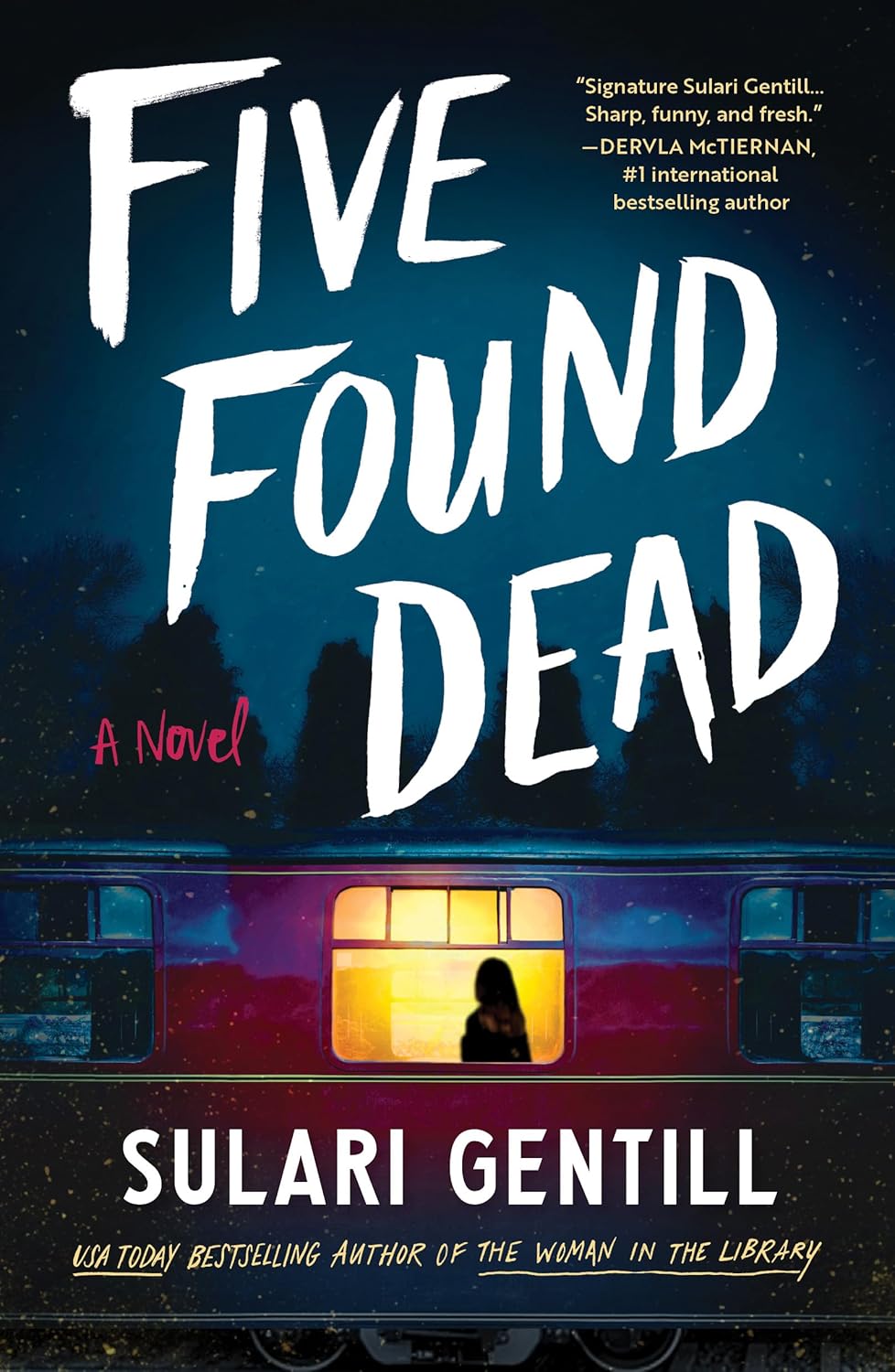
Five Found Dead by Sulari Gentill

Publisher: Poisoned Pen Press (ebook – 19 August 2025)

Series: Standalone

Length: 310 pages

My Rating: 4.5 out of 5 stars

Amazon

Those looking for a fun and very meta murder mystery that looks back at the classics should check out the very amusing new novel from Australian author Sulari Gentill, Five Found Dead.

There are few Australian crime fiction authors whose works have entertained me over the years as much as Sulari Gentill’s have.  An amazing author who knows how to combine unique premises with compelling mysteries, Gentill has written some great novels over the years.  I am a particular fan of her Rowland Sinclair series about an unlikely gentleman protagonist in the 1930s who solved crimes loaded with historical cameos, while some of her more recent standalone novels, such as Crossing the Lines, The Woman in the Library and The Mystery Writer, have also received critical acclaim.  As such, I was very happy to get my hands on her latest novel, Five Found Dead, which had a very fun plot behind it which resulted in quite an exciting and fast-paced read.

Plot Synopsis:

On a train, there are only so many places to hide…

Crime fiction author Joe Penvale has won the most brutal battle of his life. Now that he has finished his intense medical treatment, he and his twin sister, Meredith, are boarding the glorious Orient Express in Paris, hoping for some much-needed rest and rejuvenation. Meredith also hopes that the literary ghosts on the train will nudge Joe’s muse awake, and he’ll be inspired to write again. And he is; after their first evening spent getting to know some of their fellow travelers, Joe pulls out his laptop and opens a new document. Seems like this trip is just what the doctor ordered…

And then some. The next morning, Joe and Meredith are shocked to witness that the cabin next door has become a crime scene, bathed in blood but with no body in sight. The pair soon find themselves caught up in an Agatha Christie-esque murder investigation. Without any help from the authorities, and with the victim still not found, Joe and Meredith are asked to join a group of fellow passengers with law enforcement backgrounds to look into the mysterious disappearance of the man in Cabin16G. But when the steward guarding the crime scene is murdered, it marks the beginning of a killing spree which leaves five found dead—and one still missing. Now Joe and Meredith must fight once again to preserve their newfound future and to catch a cunning killer before they reach the end of the line.

Gentill brings the fun with this very compelling and exciting crime fiction novel that serves as a great love letter to a classic Agatha Christie novel.  Bringing together a colourful array of characters, including an overabundance of cliche detectives and setting them loose against an apparent serial killer, Five Found Dead was a very easy book to fall in love with, and I ended up powering through it in less than a day.

The plot for Five Found Dead had a lot of interesting elements to it, which resulted in a very fast-paced novel that hit a lot of entertaining notes.  Starting off with some quick introductions to the lawyer protagonist and her author brother, you soon find yourself aboard the iconic Orient Express.  A natural setting for any murder mystery, Gentill brought together an amusing array of characters inspired by classic crime fiction novels, many of whom are revealed to have law enforcement backgrounds, as well as a very similar grudge.  The story naturally soon devolves into a compelling murder mystery when a guest disappears from their blood-soaked room.  Thanks to a new strain of coronavirus infecting part of the train, the passengers find themselves stuck on the rails, and it falls to the protagonists and the various assembled detectives to solve the case.  However, a series of additional murders quickly unfold across the train, resulting in chaos and anarchy, especially when the normal passengers of the train attempt to escape the growing massacre.

I loved the excellent and fast pace of Five Found Dead as Gentill cleverly lays out the respective murders and keeps increasing the stakes of the plot.  While much of the story is intentionally silly, including the appearance of so many stereotypical detectives with connections to the initial victim, the author works it into a great investigation angle, and I had fun working out who was behind the killings.  There are some fantastic twists and turns throughout the book, and while I saw a few reveals coming thanks to the featured clues, the identity of the actual antagonist hit me by surprise.  Some of this was due to the clever red herrings and potential alternate suspects that Gentill included, although I must admit the brilliantly crazy disguise utilised by the killer helped a lot.  This led to a very exciting and over-the-top conclusion, where all the secrets come out and the various fun storylines come together.  I had an absolute blast getting to the end of Five Found Dead, and Gentill crafted an extremely exciting murder mystery here that served as an homage to the classic, while also bringing its own flair to the occasion.

While Five Found Dead is loaded with amazing and familiar characters, I feel that I need to highlight protagonist Meredith Penvale and her brother Joe as the two best written characters in the novel.  A pair of Australian twins, Meredith and Joe have journeyed to the Orient Express to celebrate Joe’s recent cancer remission and to rejuvenate his writing muse.  While much of the story revolves around Meredith’s inadvertent role as amateur detective aboard this train of suspicious souls, Gentill also spends time examining the emotional health of these two main characters, and as a result dives deep into the impacts of cancer and the effects it can have on both the sufferers and their loved ones.  In this case, Meredith is the loyal sister who sacrificed a successful career to care for her brother and, now that he’s recovered, is wondering where her life will go and whether to follow her true passions.  Joe, on the other hand, is a seemingly light-hearted figure who has an amusing meta initial arc about a murder mystery set onboard the Orient Express.  However, there is also a lot of hidden fear in Joe about his cancer returning, which sees him literally running from bad news, while also trying to keep this potential truth from his long-suffering sister.  You can tell that Gentill put a lot of herself into these two characters, and their personal focuses outside the mystery are extremely realistic and powerful.  Indeed, these personal concerns and the powerful writing that accompanies them gives Five Found Dead some much needed emotional heft that helped to evolve this novel into something truly special.  Throw in all the additional eccentric figures that accompany Meredith and Joe onto the Orient Express, and Five Found Dead has a truly amazing cast who enhance the entire story.

Overall, I found Five Found Dead to be an addictive and engaging novel that I honestly couldn’t stop reading.  Sulari Gentill’s latest standalone novel was a wonderful blend of mystery, charming humour and complex characters, that came together into something extremely awesome.  I really enjoyed Five Found Dead, and it is an excellent read for someone in the mood for a light-hearted murder mystery with some amazing heart to it.

Amazon

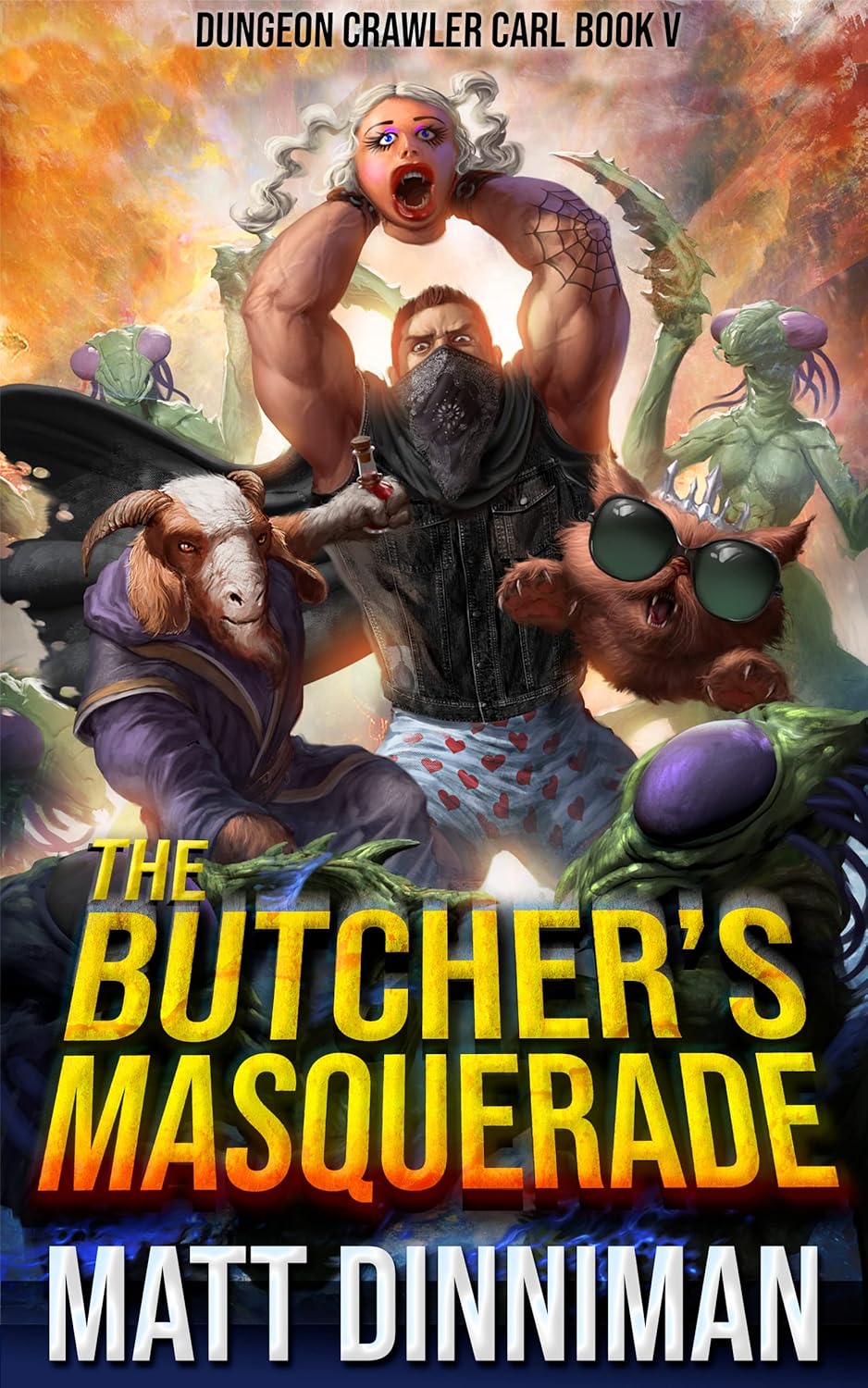
The Butcher’s Masquerade by Matt Dinniman

Publisher: Soundbooth Theater (Audiobook – 28 February 2022)

Series: Dungeon Crawler Carl – Book Five

Length: 23 hours and 33 minutes

My Rating: 5 out of 5 stars

Amazon

The epic adventures of Carl and Princess Donut continue in the incredible fifth book of the Dungeon Crawler Carl series, The Butcher’s Masquerade, which takes the reader on an intense thrill ride loaded with fantastic comedy, crazy action and some incredibly powerful moments.

After doing little else but talk about the series for the last few weeks, I think it’s obvious that I am now a massive fan of Matt Dinniman’s Dungeon Crawler Carl series, a major LitRPG sensation that I have recently become obsessed with.  Featuring amazing books like Dungeon Crawler Carl, Carl’s Doomsday Scenario, The Dungeon Anarchist’s Cookbook and The Gate of the Feral Gods, the Dungeon Crawler Carl series has been nothing but amazing since the very first page.  These books follow reluctant adventurer Carl, his now sentient cat Princess Donut and an eclectic mix of humans and NPCs (and some goats) fighting for survival in a dungeon built under the surface of Earth by entertainment-obsessed aliens.  I have been deeply impressed with the impressive narrative contained within these previous books, so much so that I have listened to all these books in a row without break, often spending hours at a time getting through key parts of the plot.  This fifth book in the series promised to be a major entry with some key plotlines, and Dinniman did not disappoint, presenting a deep and captivating book I couldn’t turn away from.

After surviving the horrors of the previous floor and striking a blow against the wealthy Faction Wars contenders waiting for the human crawlers below, Carl, Princess Donut and their allies have arrived at the infamous sixth floor of the dungeon, better known as the Hunting Grounds.  A lush, jungle level, filled with powerful mobs, intricate quests, and conquerable towns, there are many opportunities for the crawlers to level up on this floor, but also many dangers, including those who would make the remnants of humanity their prey. 

As part of the traditional chaos of the Hunting Grounds, off-world tourists are given their first chance to enter the dungeon to participate in the carnage.  Known on this floor as hunters, these aliens seek to make money by hunting crawlers and stealing their gear.  These hunters have long made the sixth floor the most lethal level for crawlers, whose best strategy is to run and hide from the deadly aliens.  However, this season is going to be very different, especially as Carl has no intention of being hunted.

Determined to punish everyone who has profited from his planet’s destruction, Carl takes the fight directly to the hunters, and his explosive actions soon inspire the rest of the human crawlers.  However, his very public rebellions have placed a massive target on his head, and soon the deadliest hunters in the game, including the legendary crawler killer Vrah, are on his trail.  At the same time, Carl and Donut must contend with far more dangerous human opponents, a horde of rampaging dinosaurs, the vicious whims of the AI running the dungeon, and an elite NPC whose tragic backstory they find themselves dragged into.  But the greatest threat to everyone in the Hunting Grounds lies at the end-of-floor celebration, a party where all the top crawlers will be forced to attend amongst their deadliest enemies.  Everything will be decided at The Butcher’s Masquerade, and no one will emerge unscathed.

Well goddamn, Dinniman, you really know how to throw a party.  Just when I thought this series couldn’t get even better, Dinniman presents The Butcher’s Masquerade, which throws the reader right into the carnage and barely gives you a chance to catch your breath.  Filled with epic moments, brilliant storytelling, insane humour and some of the most complex characters you are likely to find in LitRPG fiction, The Butcher’s Masquerade was an incredible and utterly addictive read that I could not turn away from.  I’m honestly still reeling from the ending of this novel, and there is no way I can give The Butcher’s Masquerade anything but a five-star rating.

I loved, loved, loved the narrative of The Butcher’s Masquerade, as Dinniman hits all the right notes to keep the reader engaged and diving even deeper into his series.  Starting off right after the chaotic events of The Gate of Feral Gods, Carl hits all manner of trouble early on, especially as his actions put a massive target on his head for every hunter.  Dinniman shows you just what kind of book The Butcher’s Masquerade is going to be early on, as Carl immediately teleports himself and Donut into the middle of the hunter base to start his own explosive campaign of resistance.  The story only gets more exciting and compelling from there, with an engaging Elite NPC storyline, various dinosaur themed quests and so much impressive action.  This action is well balanced by scenes showcasing the chaotic changes occurring out in the wider universe, as well as a particularly moving sequence where Carl and Donut are forced to deal with manipulative events with huge emotional implications.

While there are some amazing moments in this first part of the book, the events that really cemented The Butcher’s Masquerade as one of the best entries in the series occur around the middle, as Dinniman brings both fun action and deep tragedy in equal measure.  The first of these sees Carl whisked away to Crawler Con, an over-the-top convention filled with entertaining enemies, right at the moment that he and Donut find themselves under attack in the dungeon.  Knowing that he is going to be teleported back into a massive ambush, Carl spends his time at the convention trying to plan, including crowdsourcing tactics at a panel featuring an opponent’s mother.  The resulting carnage as Carl uses a fun combination of a gonorrhoea-causing arrow, necromancy, friendly fire and explosives (naturally) to defeat his enemies, all to the backdrop of ‘The Ballroom Blitz’, was so damn awesome and fun.  The fact that Dinniman immediately follows this up with one of the most heart-wrenching moments in the entire series goes to show just how talented an author Dinniman is, especially as it also works to set up an outstanding new supporting character as a complex recuring figure.

All this perfectly leads up to the big final third of the book, which starts with some major raised stakes and every ongoing storyline heading towards the titular Butcher’s Masquerade, an event where every major survivor of the floor is trapped in the same room, and the person who starts the inevitable fight is instantly killed.  The tension heading into this event is very impressive, as you wait to see who makes the first move and how the carnage will unfold, especially as the protagonist’s plan to survive has a lot of holes in it.  The contrast between Carl’s despair and the more light-hearted and frankly hilarious antics of Princess Donut (there may be a moonwalking dinosaur, just go with it) is very impressive, and you honestly don’t know what is going to happen next.  The eventual reveal of the big plan is pretty damn amazing, and the resulting over-the-top confrontation is pure Dinniman, who once again manages to exceed the craziness from the previous books with hunters, bosses, and gods.  There is some haunting tragedy thrown in amongst the carnage that really highlights just how dire the entire crawl is for the protagonists, while also concluding some powerful storylines.  However, even after this carnage and its terrible aftermath, Dinniman isn’t done with the readers, whiplashing them with some brilliant and well-telegraphed moments that change everything about the progression of the Dungeon Crawler Carl books.  So many major plot points for the series going forward have their origin in the final sequences of the book, and it will leave you wanting more as soon as possible.

Dinniman really brought all the carnage he could in The Butcher’s Masquerade, and I was really impressed with how this elaborate story unfolded for the readers.  Once again requiring knowledge of the previous novels to fully enjoy (seriously, start the Dungeon Crawler Carl books from the beginning), The Butcher’s Masquerade adds a lot of cool elements to the series, which Dinniman expertly introduces and then utilises in his massive, ongoing story.  Featuring all the cool action, adventure and over-the-top moments you’ve come to expect from the Dungeon Crawler Carl books, Dinniman really amps up the carnage in this fifth novel, while also increasing the drama and powerful character moments.  I honestly found myself sitting at the edge of my seat during some of The Butcher’s Masquerade’s big scenes, as I honestly didn’t know where the story was going to go at times.  The major show-stealing sequences were especially great, and I really appreciate how elaborate some of these scenes were, loaded with multiple moving parts and elements cleverly set up either earlier in the book or even in previous novels.  However, Dinniman ensures that all the scenes in this novel were really entertaining and there honestly are no slow or wasteful moments at all during this awesome novel.

As with the rest of the series, The Butcher’s Masquerade is loaded with a lot of elaborate RPG elements, which are worked into the story extremely well.  While the natural progression of the series and the need to include new things each book means that some original spells and abilities don’t get shown as much, while other RPG elements are somewhat overused, for the most part I feel that Dinniman ensures all the best elements are shown to the reader, and this is one of the easiest LitRPG series to enjoy.  A lot of this enjoyment is down to the outrageous humour loaded into every scene, which allows readers to absorb and even become obsessed with the progression of stats and quests, as well as the gaining of achievements and new abilities and equipment, especially as the series really doesn’t take itself as seriously as other LitRPG books.  While this humour might not be for everyone, I really loved how fun and over-the-top things got at times, and there are so many layers to the novel’s comedic charm.  This includes a combination of overreactions to crazy events, deadpan reactions to other humorous characters, and a ton of fun references, including some particularly subtle ones that are cleverly seeded throughout and may take multiple rereads to appreciate (for example, I only just got the hilarious U2 references loaded into the names of the rock cretin NPCs).  While this humour is very amazing on its own, its true strength lies in the way that Dinniman perfectly balances it with the more serious and darker elements of the narrative, providing some reprieves for the horror of the story, or even helping to emphasise the darkness surrounding the characters as they face death and despair again and again.  I really love the complex balance of themes that Dinniman manages to weave around his elaborate and often silly story, and it makes for quite an impressive read that will appeal to large audience of readers.

I’ve mentioned multiple times in previous Dungeon Crawler Carl reviews that Dinniman is extremely amazing when it comes to writing complex characters to set his stories around.  You really get drawn into the various moving character arcs in this series, many of which progress across multiple books, and it is awesome to see how these figures develop and evolve in response to the dark events of the dungeon.  The Butcher’s Masquerade is an impressive example of this, especially as Dinniman really amps up the drama surrounding several key characters, each of whom have their moment to shine in some outstanding ways.

Naturally, most of the book’s focus revolves around the series’ titular protagonist, Carl, the troubled and intense central protagonist, through whose eyes we see most of the narrative unfold.  Carl really shines in The Butcher’s Masquerade, with his anarchist persona on full display.  Determined to bring his own form of explosive justice to the various aliens profiting from the destruction of Earth and the murderous crawl, Carl eagerly faces off against the hunters who have come into the dungeon, antagonising them as only he can.  Dinniman pulls together some amazing sequences around Carl in this book, especially when it comes to facing off against the hunters in deadly situations, and I loved the methodical and often extreme ways he reacts to pressure, as well as he hilarious performance during Crawler Con.  While he is still mostly seen as the reasonable, if explosively inclined, straight man of the team, Dinniman starts to show a darker edge to Carl in this novel.  Thanks to the continued pressure of the dungeon, the various emotional revelations, his desire for revenge and his own troubled past, as well as a certain magic ring, Carl takes on a more sinister persona at times in this book, especially with the cold way he deals with his opponents.  He also finds himself struggling with all the trauma that comes his way in this new book, much of which is showcased through the appearance of “the river”, a part of his mind that is always moving and brings back his anger and memories of all the evils he has experienced.  The continued torrent of the river begins to warp Carl at times, and this is the book when he starts to become a little bit scary.  As such, there is a lot of emotional depth to Carl in this book, and Dinniman did a great job expanding on his darker personality, while still including all the elements that made him such a beloved protagonist of the previous novels.

While Carl is a brilliant main character, he is usually overshadowed in all the best ways by his sentient cat companion, Princess Donut.  A brilliantly sassy, over-emotional and deeply hilarious diva who still maintains many catlike personality traits, Donut is the perfect foil for Carl, especially when it comes to being in the spotlight, and her overly positive manner in most situations really endears her to the audience, even when she needlessly overreacts.  Dinniman has some real fun with Donut in The Butcher’s Masquerade, as the cat takes on a temporary bard class which requires her to sing to cast spells, much to everyone’s displeasure, and there are so many moments when you get to laugh at her antics.  However, much like Carl, Donut goes through some real emotional turmoil in this novel, not only getting the chance to confront her original owner Beatrice (although Carl was always her true human), but she also deals with some deep trauma as the book continues.  The author loads up some highly emotional scenes between Carl and Donut, especially in the aftermath of the climatic finale, and you grow to appreciate their complicated bond even more throughout this book, even when your heart breaks at some of the trials they must endure.  However, Donut continues to move through the dungeon in her usual over-enthusiastic manner, and it was very fun to see her finally get to perform on the big stage at the end of the titular Butcher’s Masquerade.  The pet talent show with Mongo was one of the funniest moments in the book, while her subsequent singing performance helped to highlight just how far she’d come, and the emotional impact she has on the rest of the cast.  I honestly love everything about Princess Donut, and this was probably one of her strongest appearances in the series.

While most of the story focusses on Carl and Donut, Dinniman at this point in the series has created a truly impressive collection of supporting characters, all of whom have some very compelling storylines around.  The most prominent of them is probably Katia, who has spent the last two books in the main party.  Katia steps away a little from the main character’s plot in The Butcher’s Masquerade, leading her own group of crawlers in a separate storyline to the protagonists.  While it was a shame to have her featured a little less, especially after her impressive appearances in The Dungeon Anarchist’s Cookbook and The Gate of Feral Gods, it fit her character development nicely and showed how much her confidence had grown.  It also allowed for a bigger focus on some of the other extended members of the Guild group that Carl and Donut have become part of, and I think the book benefited from a bigger cast.  Dinniman did go quite dark with Katia at times in The Butcher’s Masquerade, especially in the book’s epilogue, where so many secrets that the author had cleverly been hiding under the character’s surface, finally come to light, especially the final shocking revelation.

The rest of the returning cast was also very impressive.  Mordecai continues to excel as the cranky and practical mentor figure, even if he has been turned into a cute and cuddly little creature this book, much to the team’s amusement.  The trapped and insane god Samantha was hilarious as the book’s mother-threatening comic relief, and there are some truly amusing scenes with her in this book, especially when Carl starts using her as a mobile weapon platform.  The returning former slackers, Louis and Firas, continue to shine in this novel as the team’s pilots, and it was nice to see how much they evolved since their original appearance, while readers also got to spend more time with long-running characters Elle, Imani and Chris.  The Butcher’s Masquerade also features the return of the dangerous Elite NPC, Tsarina Signet, whose dramatized storyline drags the protagonists into all manner of trouble.  Dinniman made perfect use of Signet and her NPC cohorts in this novel, and I was really impressed by the full-circle and sad nature of her narrative.

In addition to these returning characters, The Butcher’s Masquerade featured significant appearances from several notorious crawlers who had only been shown existing outside the protagonist’s adventures.  This includes the lethal child crawler, Lucia Mar, who lives up to her crazy reputation, the Crocodilian crawler Florin with his strong Australian accent, the calm shepherd turned vampires Miriam Dom, and the now sentient goat Prepotente.  Of these Prepotente was probably the most impactful new character, especially as his story takes him from being a comedic figure, to a particularly dangerous and grieving ally.  His heartbreaking appearance halfway through the book was extremely well-written, while his big act of defiance at the end of The Butcher’s Masquerade changes everything.  However, out of all these characters, my favourite remains the AI controlling the game, who has really started to crack and is testing its limits in some very concerning ways.  The various over-the-top descriptions, announcements and rulings made by the AI add so much humour to the story, especially as they are getting more-and-more unhinged and random.  Throw in the AI’s dangerous independent decisions, which have dire effects for everyone in the dungeon, and you really come away eager to see how crazy things are going to get with this disembodied figure next.  I really cannot emphasise just how impressive this massive cast is, and Dinniman perfectly uses all his complex character to enhance his already outstanding narrative.

I doubt anyone is surprised at this point that I chose to listen to The Butcher’s Masquerade on audiobook, which is just the best way to enjoy this incredible novel.  Due to the increased action and adventure that Dinniman loads into each new novel in the series, The Butcher’s Masquerade is the longest audiobook in the series yet, coming in at a respectable 23 and a half hours.  While this is a long audiobook, I honestly flew through it, thanks to how addictive and cool the crazy events within were, as well as the once again exceptional narration of Jeff Hays.  Hays is frankly perfect for the complex and hilarious Dungeon Crawler Carl series, and his amazing range of voices and excellent takes on the many over-the-top characters, has ensured that every second of this series was a joy to listen to on audiobook.  The Butcher’s Masquerade is one of the best examples of this, as Hays brings every awesome element of it to life with apparent ease, as well as some excellent use of minor sound effects and cool vocal enhancements.

Each character within The Butcher’s Masquerade has a very fitting voice to it, which includes a return of all the fantastic tones from the previous audiobooks, as well as several additional cool voices for some of the newer characters.  You really get the perfect sense of these characters from Hays narration, and every aspect of their personalities comes through with his voice.  Some of the best voices include those for Carl, whose increased anger is becoming more apparent, Mordecai, whose most recent transformation requires a new hilarious voice, and the System AI, whose over-the-top exclamations are just hilarious when read out.  I also must highlight Hay’s voice work for Donut in this audiobook, especially as he gets all her outrageous mannerisms, over-reactions and the rest of her personality perfectly.  Hays also rises to the challenge of Donut taking on a bard class in this book and singing, badly, which made me laugh so damn hard.  Highlights include an exceptional talent show performance, as well as the cat’s unique take on ‘Wonderwall’ in the Soundbooth Theater promotional material at the end of the audiobook (renamed as ‘Wondercrawl’), both of which Hays gamely voices, and clearly has fun with.  I honestly could go on for ages about every outstanding voice Hays uses in The Butcher’s Masquerade but let’s save time and say they are all exceptional, and that this entire audiobook is just pure awesomeness.  I cannot recommend this format enough, and you will have a brilliant time enjoying The Butcher’s Masquerade in this format.

If the above extensive review didn’t give it away, I loved The Butcher’s Masquerade, and it is probably the best entry in the Dungeon Crawler Carl series at that point.  Matt Dinniman produced a truly incredible entry in his brilliant series with The Butcher’s Masquerade, and I still cannot get over just how compelling, exciting and emotionally charged this fifth entry in the series was.  I honestly cannot think of a better compliment than to point out that I was still absolutely addicted to this series when I finished The Butcher’s Masquerade, and I instantly jumped to the next book in the series, The Eye of the Bedlam Bride, and devoured it in a similar quick manner, before jumping even further into the series.  If you’re not enjoying the Dungeon Crawler Carl series, you are missing out, especially with this exceptional fifth novel.

Amazon

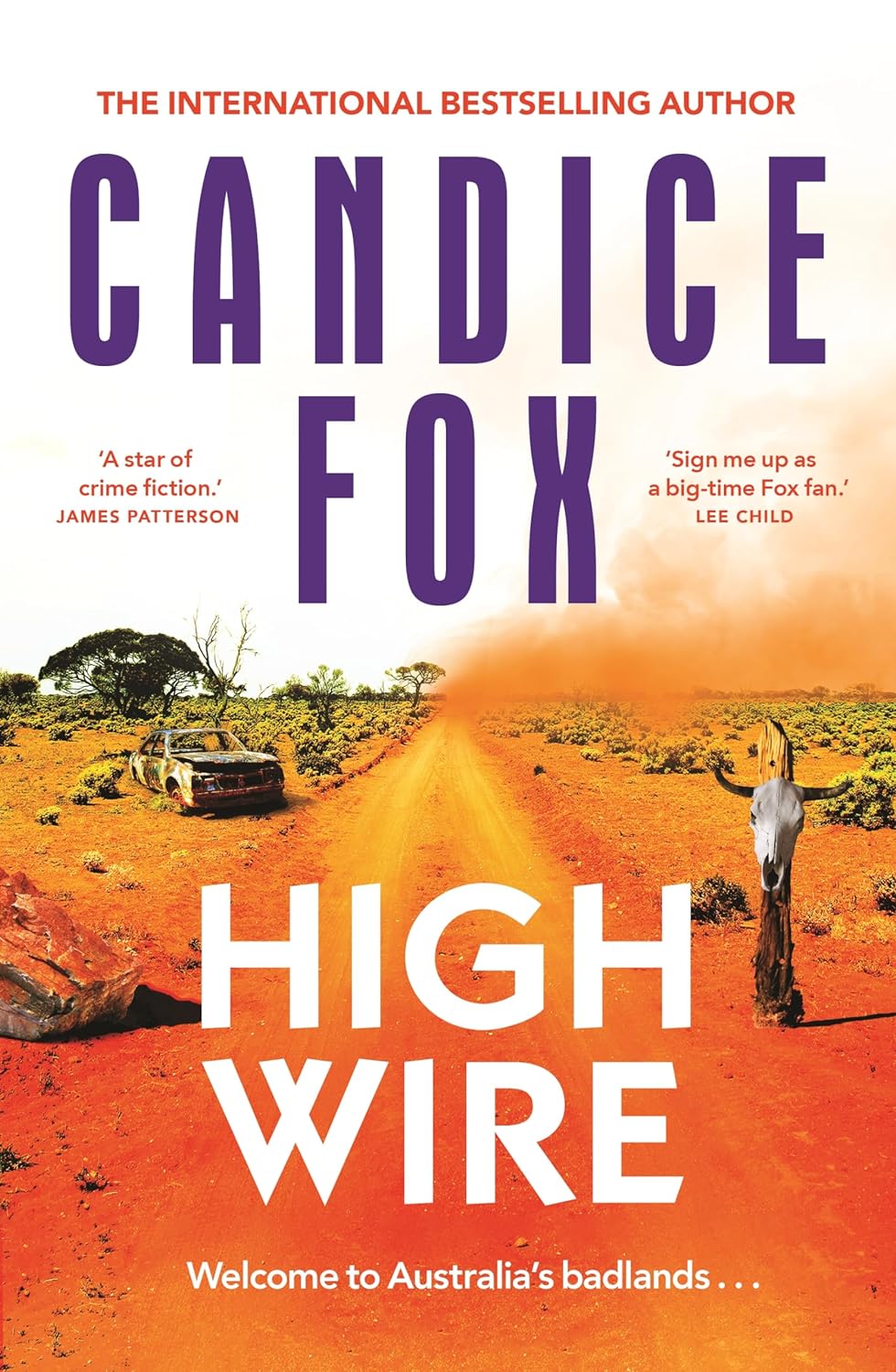
High Wire by Candice Fox

Publisher: Bantam (Trade Paperback – 24 September 2024)

Series: Standalone

Length: 480 pages

My Rating: 4.5 out of 5 stars

Amazon

One of Australia’s top authors of crime fiction finishes of 2024 with a massive bang as Candice Fox presents the powerful thriller, High Wire.

Few authors had the awesome year that Candice Fox did in 2024, as the author released three impressive crime fiction reads.  The first of these was the fast-paced crime fiction read, The Murder Inn, which Fox cowrote with the legendary James Patterson.  The sequel to their previous book, The Inn, The Murder Inn was a fantastic book that once again highlighted how well Fox and Patterson work together (see my review for their other book 2 Sisters Detective Agency).  Fox also released the intense character-driven thriller, Devil’s Kitchen, that saw two highly damaged characters attempt to uncover the secrets of a seemingly heroic group of firefighters with a true dark side to them.  Both The Murder Inn and Devil’s Kitchen were outstanding reads, and I was very happy I checked them out.  However, Fox decided to provide us with even more fun before the year was over with the standalone novel High Wire.  Taking the author back to her home country, High Wire was a compelling and deeply intense Australian thriller that takes you hostage and refuses to let go.

Out in the outback of Australia lies a notorious unmarked track known as the High Wire.  Cutting across the country from Broome to Sydney, the High Wire is a lawless road full of small towns, unregulated trails and mobile phone blackspots.  A favourite hangout of smugglers, hijackers and criminals, only the desperate, the dangerous and those looking for trouble use the High Wire.

Harvey Buck, former soldier and current recluse, knows all about the dangers of the High Wire, but desperation forces him to travel along it to reach his dying girlfriend.  Despite knowing better, he stops to pick up a hapless traveller, Clare Holland, whose car has broken down on the road.  However, Clare isn’t the person he should be worried about, as the two are soon ambushed by a masked assailants with their own sinister agenda.

Strapped into bomb vests, Harvey and Clare are forced into a twisted game by vengeful figures from Harvey’s past seeking to ruin his life and reputation.  Forced to commit a series of increasingly murderous missions across several small towns, the two prisoners try to work together to escape and stop the insanity going on around them.  Harvey and Clare’s only hope may be Senior Sergeant Edna Norris, one of the few police officers stationed on the Wire, and who soon begins to follow the trail of destruction being left in their wake.  But Edna has her own problems, especially when Clare’s husband arrives on the scene with his own dark plans.

High Wire was another awesome book from Candice Fox that provides readers will some of the best Australian thrills and action that there were likely to get in 2024.  Featuring a bold, compelling and powerful character-driven tale of revenge and escape, High Wire was an outstanding read from one of my favourite Australian authors and one that I cannot recommend enough.

Fox hits the ground running hard with High Wire’s excellent narrative, and I honestly was hooked early on thanks to the compelling and intense story.  Quickly introducing the protagonist, Harvey Buck, as well as the High Wire, the lawless road that serves as an intriguing background setting for the plot.  After a quick introduction to a secondary protagonist, the mysterious Clare Holland, the main plot of High Wire takes off as the two are ambushed by a group of armed attackers, who take them prisoner after a bloody shootout, and strap them into elaborate bomb vests.  Fox keeps the tension running high here, as it becomes clear that the kidnappers know Harvey and are seeking revenge for some past misdeed.  Around the same time, the readers are introduced to the other major point-of-view character, Senior Sergeant Edna Norris, who finds herself on the trail of Harvey, Clare and the kidnappers without knowing who is responsible and with an unlikely teenage sidekick helping and hindering her in equal measure.

The plot soon becomes even more intense on several levels, as Fox works several intriguing storylines and elements simultaneously to tell a complex and exciting narrative.  The main plot around Harvey and Clare proves to be quite intense, as the two are forced to commit a series of brutal crimes while also trying to escape or take out their captors.  Fox carefully doles out intriguing background on both Harvey and Clare to the readers, and you soon discover both have complicated pasts, as Clare is running from her suddenly murderous husband, while Harvey’s past connection to the kidnappers is revealed in a series of dark flashbacks.  These flashbacks help to paint the main storyline in some different shades of grey, as you begin to realise that Harvey isn’t the moral hero you initially believed he would be, and while the antagonists are worse, you begin to doubt that Harvey deserves to survive.

At the same time, the focus on Edna and her intriguing supporting cast goes in some interesting directions, as she follows the carnage left behind by the kidnappers and their unwilling pawns.  Not only is Edna forced to deal with her hard-headed charge Talon, but she finds herself in all manner of trouble when Clare’s husband, Gareth Holland the Northern Territory Police Commissioner, arrives on the scene looking for his wife.  Instantly suspicious of Gareth, Edna is forced off the case due to police politics but continues to try and investigate, determining that she needs to get to Clare first.  Edna’s storyline, which I personally enjoyed the most in High Wire, goes in some fantastic directions, and she soon finds herself forced to survive the murderous attentions of Gareth, while also trying to solve the clues being left behind by Harvey.  Fox does an excellent job running these somewhat separated storylines simultaneously, and they tie into each other just enough to create an amazing overarching narrative.  Fox wrapped these various storylines up in a very effective way, with a satisfying moment in the Edna storyline, while the main narrative goes out on a very dark note, which I felt was a powerful result to some of the character work that Fox had been building up.  This honestly ended up being an epic and compelling standalone thriller, and I really appreciated how Fox held back no punches to create this powerful read.

Fox did another amazing job bringing this intense and complex narrative together, and I felt that High Wire was one of her more hard-hitting and enjoyable novels.  I loved how the author imbued High Wire with a very dark edge, and between the intense action, despicable villains and deadly plot you really come away not wanting to visit central Australia.  The setting of the “High Wire”, a semi-secret road running the length of Australia proved to be an awesome background, and Fox’s strong descriptions of the red-earthed, isolated road combined with its inherent lawlessness and dangerous inhabitants, gave me some major Mad Max vibes as I was reading the book.  I felt that Fox utilised this setting perfectly throughout High Wire, and it helped to give this novel a very distinctive feel.  The author also made great use of splitting the story across several intriguing central characters.  The two main storylines, the one involving Harvey and Clare and the one following Edna and Talon, played off each other extremely well, and having Edna constantly behind the other protagonists and their captors allowed for a great chase narrative, as they tried to interpret all the events going on in front of them.  Information from Harvey and Clare also cleverly increased the tension in the other storyline, especially as you learn in advance just how deadly secondary antagonist Gareth Holland is, which allows you to fully appreciate his manipulations and darker agenda.  The balance between these two storylines was extremely effective, even with the additional flashback chapters, and this ensured that High Wire had a great pace to it that easily keeps the reader’s attention.

High Wire’s intense and compelling story was greatly enhanced by several fantastic and complex characters whose unique, and often dark narratives, provided some nuanced and complicated tales of personal growth and survival.  The main protagonist, Harvey Buck (a great uber-masculine name btw), is a former soldier who spends the book trying to survive the plans of his attackers and save as many people as possible.  While Harvey seems to be a good character, Fox makes excellent use of flashbacks to dive into his history with the antagonists, which provides some added complexity to the plot, as both sides have committed atrocities against the other.  The same can be said for secondary protagonist, Clare Holland, a seemingly helpless figure inadvertently dragged into events.  While Clare is portrayed as a victim for much of the plot, she eventually reveals an intriguing backstory to Harvey that ties into her complicated marriage, which implies she isn’t as innocent as she seems.  The character I most got drawn to was local cop, Senior Sergeant Edna Norris, who comes away as one of the few legitimately decent people in the book.  Thanks to her caring personality and clever insights, Edna is a protagonist you can get behind 100%, and even when elements of her past are brought up, it proves hard not to still see her as the best figure in the book.

Aside from these key characters, Fox features several intriguing supporting figures in High Wire, including some impressive antagonists.  The main supporting character that is featured in the book is Talon, a teenager who is taken under Edna’s wing after she arrests him.  An initially annoying and impulsive figure, Talon grows on you as the book continues, especially with his entertaining imagination and surprisingly accurate insights.  However, it is the villains of the High Wire who I think stole the show here.  The two kidnappers who take control of Harvey and Clare with bomb vests prove to be despicable, if highly damaged figures, and it was fascinating to see how much their current behaviour is due to previous rough treatment from Harvey.  Clare’s husband, Gareth Holland, proves to be an excellent secondary antagonist, especially as he has his own murderous agenda and uses his position as Northern Territory Police Commissioner to get away with his goals.  In some ways Gareth was a better villain than the kidnappers, especially as he is far more soulless figure who ends up being quite smug and controlling.  I really enjoyed the entertaining way that Fox wrapped up Gareth’s storyline in this book, and it was quite satisfying to see him get what he deserved.  These character deeply enhanced Hire Wire’s narrative, and it was awesome to see their various storylines unfold.

High Wire ended up being an incredible and thrilling piece of crime fiction from one of Australia’s best writers Candice Fox.  Dark, brutal and filled with some complex and damaged characters, High Wire quickly gets you hooked, and you are in for an outstanding time with this brilliant read.

Amazon

Lone Wolf by Gregg Hurwitz

Lone Wolf Cover 2

Publisher: Michael Joseph (Trade Paperback – 20 February 2024)

Series: Orphan X – Book 9

Length: 420 pages

My Rating: 4.5 out of 5 stars

Amazon

Leading thriller author Gregg Hurwitz continues his high-octane Orphan X series in a big way with the epic and compelling novel, Lone Wolf.

The Orphan X books by Gregg Hurwitz is an epic series that follows a former elite government assassin, Evan Smoak, known to the intelligence community as Orphan X.  Upon leaving the program, Smoak decided to make up for his prior misdeeds by becoming an elite vigilante, The Nowhere Man, who helps those with nowhere else to turn.  This series started back in 2016 with Orphan X, although I personally started reading it with the fourth book, Out of the DarkOut of the Dark had a great plot behind it that really drew me in, as Evan went to war with a corrupt US President.  This resulted in an amazing and highly entertaining read that made me a fan of Hurwitz’s writing and ensured I would grab the next book in the series, Into the FireInto the Fire was a particularly epic read, and the Orphan X books quickly entered my yearly must-read books list as a result.  I have since had an outstanding time reading the following releases, with Prodigal Son, Dark Horse and The Last Orphan being awesome in their own way.  As such, when 2024 came around, I had very little choice but to read the latest Orphan X book, Lone Wolf, which took the protagonist in another interesting direction with a deadly adventure.

Evan Smoak, better known as either as Orphan X or the Nowhere Man, is suffering a personal crisis.  Having reached out to his long-lost father, Evan is in a dangerous emotional spiral, and is no longer the calm and confident secret agent he once was.  Looking for an easy mission to get back into his stride, Evan finds himself with an unusual job, helping a young girl find her lost dog.  Initially reluctant, Evan agrees to help, but this unlikely job will lead the infamous vigilant into all manner of trouble.

An elite female hitwoman is in Los Angeles, taking out a range of seemingly unconnected people.  Known only as the Wolf, she excels in targeted strikes and apparent accidental deaths, leaving no trace behind.  However, her final kill leaves behind two witnesses when Evan arrives on the scene looking for the lost dog.  Forced to intervene to save the daughter of the Wolf’s last victim, Evan finds himself a target of an assassin just as deadly as himself.

With the girl he just saved still in danger from a vengeful Wolf, Evan decides to save her and stop this killer terrorising his city.  But first, he needs to work out who hired her and what secrets lie behind their deaths.  His investigation leads him to two rival tech billionaires, both of whom had a motive for hiring the assassin and organising the killings.  To save the day, Evan needs to find out which of them is responsible and destroy them and the psychotic killer they hired.  But is the emotionally compromised Nowhere Man up to the task?

Lone Wolf was another outstanding addition to the Orphan X series that really showcased Hurwitz’s distinctive writing style.  Blending an intense, action-packed story, with some outstanding character development, this was an amazing book that I deeply enjoyed reading.

Hurwitz comes up with a pretty excellent story for Lone Wolf that dragged me in very quickly.  Starting off with some intense and personal character work around Evan Smoak that follows through from the last few books, Hurwitz does a good job setting the scene for much of the story off the bat, especially when it comes to the protagonist’s distracted headspace and his reliance on his unconventional family.  The author also spends this time introducing one of the book’s main villains, the Wolf, who serves as an effective mirror for Orphan X.  This initial setup works very well, as you quickly get drawn into the plot by the Wolf callous nature, while also getting invested in the protagonist’s emotional well-being.  These story aspects quickly collide, as Evan, who finds himself helping his recently discovered niece, accidently intrudes upon one of the Wolf’s kills.  The resulting extended action sequence is glorious, as Evan is forced to contend with the assassin and an army of cops, while trying to keep the daughter of the Wolf’s last victim alive.  This entire action scene is a major highlight of the first half of the book, and Hurwitz wrote a brilliant continuous and frenetic chase sequence that pushes Evan to the limit.

Following this chase sequence, the pace of the book slows down a little, although Evan still finds himself in trouble as he enters a game of cat-and-mouse with the Wolf over the fate of the bystander he just saved.  Forced to determine who hired the Wolf, Evan begins a compelling investigation angle where he probes two rival billionaires with twisted and unique morals.  At the same time, Evan also finds himself in several intriguing personal situations, including trouble with his half-brother, mentoring his adopted daughter, and even a rather entertaining side-story about a battle for control of his building’s HOA.  These work to keep the unique feel of the Orphan X series intact, and I loved how emotionally rich the book got at times.

The final third of Lone Wolf is mostly awesome, starting off with a great sequence that sees Evan interrogate a gang of thugs who have details he needs about the Wolf.  The very entertaining and over-the-top way he goes about getting said information is so damn good, and it was another major highlight off the book.  Unfortunately, the rest of the novel seems a little rushed, and frankly Hurwitz could have benefited from including another 100 pages or so to really wrap everything up perfectly.  While it is still a fun and exciting read, the reveal about who is truly behind everything isn’t too surprising, despite some attempts at misdirection.  In addition, the final confrontation against the main antagonists is somewhat weak, and could have been a little more epic, especially as one character went down way too easily.  Still, the deep character development aspects of the story end up being extremely strong, and I liked the intriguing final twist that is going to cause additional drama in the next book.  As such, I felt this was a really good story and I got so wrapped up in it.

I really enjoyed how Lone Wolf came together, especially as Hurwitz brought his usual blend of intensity and compelling human moments to this latest book.  There is a great balance here between character development and thriller action, which I deeply appreciated.  Indeed, I felt this was one of the better-balanced novels that Hurwitz has written recently.  While the action sequences are always the highlight of this book, I have really appreciated how Hurwitz seeks to offset them with more typical moments, and the focus on character relationships and ordinary occurrences, such as a funny HOA election, adds a certain level of fun to the book.  I really do think this was a great entry in the Orphan X series, and like most of the books in this series, Lone Wolf can mostly be read as a standalone, as Hurwitz is good at revisiting the key plot points from the previous books.  However, those readers going in with a greater understanding of some of the characters, especially the protagonist and his complex relationships, will get a bit more out of this book, and it was fantastic to see the further development.

As I have alluded to a few times above, a lot of Lone Wolf’s strength lies in the excellent character work that Hurwitz layers into the story.  Much of this is done to attempt to humanise the usually deadly protagonists featured within, especially as many of them are trying to adjust to a more civilian focused life after years being government assassins.  The most prominent of these is Evan Smoak, the infamous Orphan X who his trying to redeem himself as the Nowhere Man.  While Evan is usually a calm figure, minus his OECD, in this book he finds himself completely outside of his headspace as a bad encounter with his biological father at the start throws him completely out of whack.  This was a very interesting situation, and it was really moving to see this implacable figure so out of sorts and relying on his family, both adopted and newly discovered, to find himself.  Watching Evan grapple with the many personal battles surrounding him is an amazing part of the book, and you really get drawn into his emotional concerns.  At the same time, Evan continues to struggle with the more mundane elements of a normal existence, and the various awkward encounters he has with certain family members and the residence of his building, show you just how lost and damaged he truly is.  All this results in a great portrait of a complex figure, and Evan Smoak is honestly one of the best and most unique thriller protagonists out there.

While Evan is the focus of the book, he would be nothing without the unique array of side characters that have been drawn to him over the years and who supporting him in various ways.  The most prominent of these is Joey Morales, Evan’s surrogate daughter and former trainee spy who serves as his tech support.  Flippant, immature and only slightly more normal than her mentor, Joey serves as the major humanising force in Evan’s life and is a key ally, despite being a teenager.  Joey is always a fun highlight, especially as she can push the protagonist’s buttons while bringing out his protective side.  However, I liked how Hurwitz showed in Lone Wolf that despite her advanced knowledge of the world of espionage, she is still a teenager girl, and the scenes where Evan talks her through a social crisis, is surprisingly heartwarming and really captures their close relationship.  The other major character is Tommy Stojack, Evan’s armourer and one of the few constant figures in his life.  While cantankerous and unusual, Tommy serves as Evan’s rock for much of the series, and it was great to see him in this role again.  While Tommy isn’t too controversial in Lone Wolf, there were some interesting developments with him that are going to be cool to follow in the next book.

Of course, no thriller would be complete without its villains, and Hurwitz did a great job of this with both the Wolf and the nefarious billionaire who may be behind her.  Both are threatening in their own way, although I think I preferred the Wolf, as her deadly skills, ruthlessness, and enjoyment of the kill, made her an interesting opponent for Evan.  The billionaire figure was also great, and his various monologues about the state of society and how his control of personal information allows him to control people in so many ways, was nearly as menacing as the killing.  Throw in some intriguing new family elements for the protagonist, as well as the eccentric residence of his apartment complex (minus his long-term love interest who has been seemingly cut from the books), and this was an excellent group of characters whose interactions deeply enhanced the narrative.

Gregg Hurwitz continues to impress with his latest addition to the very cool Orphan X series with Lone Wolf.  An emotionally charged thriller with powerful character work, Lone Wolf is an outstanding read that comes highly recommended.  I cannot wait to see how Hurwitz follows up Lone Wolf in the future and I remain a massive fan of this amazing series.

Lone Wolf Cover

Amazon

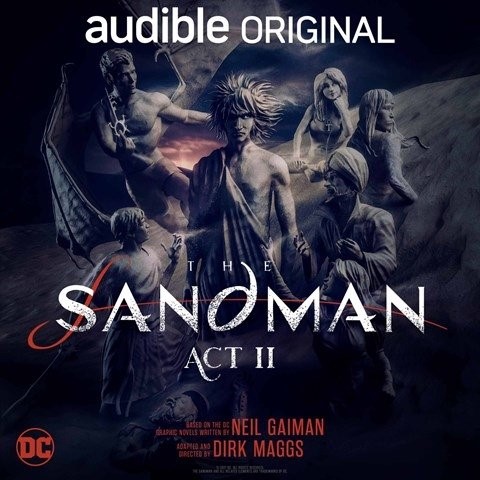
The Sandman – Act II (Audiobook) by Neil Gaiman and performed by a full cast

The Sandman - Act II Cover

Publisher: Audible Original (Audio Drama – 22 September 2021)

Series: The Sandman – Volume 2

Script: Neil Gaiman and Dirk Maggs (script adapter)

Director: Dirk Maggs

Length: 13 hours and 47 minutes

My Rating: 5 out of 5 stars

Amazon

The gloomy and complex fantasy adventures of Neil Gaiman’s The Sandman continues in this epic second audiobook volume that once again brings Gaiman’s unique imagination and characters to life with an outstanding cast of actors.

Back in 2022 I had an outstanding time listening to the first volume of the audiobook adaptation of The Sandman comic.  The original series, which started in 1989, is one of the most iconic comics of all time and features a unique adventure that only someone as twisted and imaginative as Neil Gaiman can come up with.  Following Dream, the anthropomorphic personification of dreams and human imagination, The Sandman is a truly interesting comic that blends horror, fantasy and superhero storylines together.  Some people might be more familiar with the recent Netflix series that adapted the first couple of comics and which has a second season on the way.

While I loved the show, I personally had a much better time with the audiobook version of the comics that was released a couple of years ago.  Featuring a truly exceptional cast of celebrity and established audiobook narrators, the first volume of this series was so damn good, and I loved how well it established the characters and universe of The Sandman while also adapting Gaiman’s unique vibes and dark themes.  This first volume was extremely addictive, and I made sure to listen to the second volume shortly after.  The second volume, or Act II as it will be called in this review, continues the comic storyline and features some amazing stories, fun characters and new cast members.

In a universe of strange and deadly creatures, many beings are considered immortal, but only seven siblings can truly claim to be endless.  The Endless, each a personification of a certain universal or human concept, are powerful and mesmerizing in their own way, but the most enchanting and mysterious is Dream.  Known by many names, including Morpheus, this being governs the Dreaming, a vast realm of creation’s collected dreams and stories, protecting the imagination that makes life worth living.  But circumstances outside of his control have set him on a dark path that not even he can escape from.

Still dealing with the consequences of his forced absence from his realm, Morpheus is working to recover everything he lost while avoiding the enemies he made along the way.  The most powerful of these is Lucifer, the fallen angel and lord of Hell, whom Morpheus insulted when he stormed Hell to take back his stolen helm.  Despite not wishing to cross Lucifer again, Morpheus is convinced to set right the biggest wrong of his life and free his former lover from Hell.  However, he is unprepared for the reception that awaits him as Lucifer chooses to damn him in a far more sinister way: by gifting him control of his dark domain.

Finding himself in possession of the key to Hell’s gates, Lucifer must determine who will become the new ruler of Hell.  Setting up a gala in the Dreaming, Morpheus receives visits from an array of gods, demons, angels, and other immortal beings, each of whom seek to control Hell for their own reason.  Soon, Morpheus finds himself in the middle of a host of scheming beings, many of whom will turn on their host to get what they want.  At the same time, weird things are happening in the Dreaming, as an ancient and unstable realm begins to drag in inhabitants from the real world and influence the waking world.  Can Morpheus ensure his realm stays whole whilst dealing with the most dangerous beings in creation?

This was another outstanding adaptation of The Sandman comics that was so damn epic to listen to.  Adapted by director Dirk Maggs and featuring all Gaiman’s impressive storytelling and dark characterisation, The Sandman – Act II was extremely impressive, and you really get drawn into the unique world of the original comics.  Adapting issues #21-40 and #50 of the original comics, The Sandman – Act II brings together the stories of Season of Mists and A Game of You, and several entries from Fables & Reflections.  All these adaptations are so damn good, and I love the elaborate and epic cast that helps to bring the tale to life.

Due to how the audiobook is set out, there are three distinctive parts to The Sandman – Act II, which provided their own unique stories and characters.  The first of these is titled Season of Mists, and features Morpheus finding himself wrapped up in the fate of Hell.  Starting with an entertaining and dysfunctional family dinner, where Morpheus reunites with all his siblings (bar one), the story then turns to Morpheus’s biggest regret, his relationship with the ancient African queen Nada (whose story was told in the last audiobook), which trapped her soul in Hell.  Travelling to Hell to free her, Morpheus finds that Lucifer has banished all the demons and damned souls from his realm and is abdicating as ruler, leaving the key to Hell’s gates with Morpheus.  Morpheus is soon tasked with deciding the fate of the dimension, which results in a flurry of immortal beings arriving at his home to request the key.  The resulting conference proves to be highly entertaining as Morpheus is forced to deal with all manner of bargains, schemes and betrayals as everyone seeks his favour.  I loved how the entire dramatic conference unfolds, and the interactions between the various over-the-top figures and the implacable Morpheus results in some great drama and hilarious sequences.  The conclusion of this storyline is amazing, as a new irony overtakes the denizens of Hell, Morpheus finds himself meeting various beings who will change him in the future, and the seeds are set for a new story around Lucifer (as seen in his own comic and television series).

Honestly, this is probably the best part of The Sandman – Act II, as not only is Season of Mists particularly gripping, but it makes full use of both the existing voice cast and several new figures to really enhance the content.  The battle of wits between several larger-than-life characters is extremely compelling and clever, and Gaiman does a remarkable job expanding the canon of The Sandman.  There are so many subtle and delightful character interactions scattered throughout this storyline, and listeners will love the impressively devious stakes that are being discussed.  This includes some fantastic and deep soul searching for the protagonist, who is forced to revisit one of his darkest deeds.  Thanks to his own experiences of being locked away, Morpheus understands his harsh past actions a lot better, especially when prompted by members of his family.  I always appreciated how Gaiman shows that Morpheus isn’t really a hero but a force of nature who arrogantly follows his own whims.  However, in this case he is a somewhat better person, even if he is still selfish in his actions, and it takes some real prompting for him to do the right thing.

Gaiman also makes sure to feature some additional amazing character arcs, the most intriguing being Lucifer’s when he decides to perform the ultimate rebellion against his father by abandoning Hell.  Lucifer’s portrayal by a returning Michael Sheen is exceptional, especially during his interactions with Morpheus, and his take on the events that led him to rule Hell are very powerful.  In addition to Sheen, Season of Mists also features the inclusion of several amazing new actors, each of whom are used to their full potential.  Jeffery Wright and Kristen Schaal are perfect additions to the Endless, voicing the taciturn Destiny and the bubbly Delirium respectfully.  However, it is the one-two punch of Bill Nighy as Odin and David Tennant as Loki that really sold this chapter to me.  Bill Nighy and David Tennant are two of my absolute favourite actors, and their takes on these two Norse gods are just amazing.  While Nighy brings gravitas and cruelty to Odin, Tennant’s wheedling, manipulative Loki was so damn fun, and both were the highlight of every scene there were in.  The rest of the cast in this chapter were epic as well, and this entire section was such a highlight of The Sandman – Act II, with its placement at the top of the book successfully drawing listeners in and ensuring they don’t go anywhere.

The other main storyline in The Sandman – Act II was titled A Game of You, and is an adaptation of one of the less popular comic arcs.  This story is an intriguing female-led additional to the series, which primarily follows Barbie, a minor figure from the previous The Doll’s House arc, who has uprooted her life and moved to New York to live with an eclectic mixture of residents in an apartment building.  When figures from Barbie’s long-lost dreams arrive in the waking world, Barbie is dragged back into a fantasy adventure, while her friends in New York deal with minions of the mysterious Cuckoo, a dream parasite preying on Barbie’s mind.  The resulting attempts to help Barbie result in chaos and tragedy as they trespass into the Dreaming and come face to face with Morpheus as a he fulfills an old bargain.

Now I must admit that A Game of You was a little weaker than I was hoping, especially when compared to the preceding Season of Mists.  The decision to focus on Barbie, who honestly didn’t stand out too much in her previous appearance, was an interesting choice by Gaiman, and this arc doesn’t have the most engrossing story.  However, I did still have a great time listening to this part of the audiobook, especially as it focuses on showcasing both the magic and danger of dreams, as well as the impacts that interactions with Morpheus can have on mortals.  The more distinctive fantasy focus of this story makes for a nice change of pace, and I liked how well Gaiman simultaneously showed events occurring inside and outside of the protagonist’s dreams.

One side effect of listening to A Game of You immediately after Season of Mists is that the less substantial cast is a lot more noticeable.  That’s not to say that A Game of You doesn’t have great characters.  There are some amazing figures featured here, including several unique protagonists who have compelling connections to previous story arcs from the series.  There are also some nicely progressive LGBT+ elements for a comic released in 1991-92, especially when it comes to the trans woman character, Wanda, who is handled with tact and who has a particularly impactful story arc.  There are also fewer celebrity voice appearances in this arc, although I did rather enjoy the inclusion of actress Emma Corrin of The Crown fame as the ancient witch Thessaly, as her intense and distinctive voice added a lot to this fantastic character.  While it is easy to nitpick A Game of You, especially after some of the previous arcs, this is s till a particularly impressive storyline, which is masterfully brought to life with this production, producing something that is very fun to listen to.

These two main storylines are impressively augmented by a series of short stories scattered throughout the course of the audiobook.  Most of these short stories fall between Season of Mists and A Game of You, with several more wrapping events up.  There is also a short story in the middle of Season of Mists that showcases the impacts the closure of Hell has, which leads to the Dead Boy Detectives series.  Gaiman comes up with some truly interesting and unique shorter stories to add to the main plot of the book.  Most of these stories involve various mortals or other supernatural creatures encountering either the Endless or some of Morpheus’s creations, and they usually serve as some form of cautionary tale.  I loved the intriguing underlying themes that Gaiman loaded into each story, including about the impermanence of power and examinations of the human condition, and the author also has fun in launching his distinctive characters into various historical periods.

While all the shorter stories contained in The Sandman – Act II are awesome in their own way, a couple do stand out due to their excellent stories and fantastic performances.  For example, the complex story Three Septembers and a January, retells the tale of Joshua Abraham Norton, self-declared Emperor of the United States, with Dream and his siblings shown to be responsible for his strange actions.  This story is both fascinating and dark, as you witness a man torn apart by the whims of the ethereal siblings.  Listeners grow particularly attached to this tale due to the performance of John Lithgow as Joshua Norton, who adds some excellent humour and no small amount of tragedy with his moving voice work.  Other great stories include Thermido, which sees the return of Lady Johanna Constantine from the first audiobook.  Voiced by the absolutely fabulous Joanna Lumley, this story follows Constantine as she steals into France during the height of the revolution to steal something from Robespierre.  This story was fast-paced, clever, and substantially dark, all of which helped it to stand out, especially with the compelling twists and ironic historical fates.  It was also amazing to get a whole story told by Joanna Lumley, who was somewhat underutilised in the first audiobook.  Finally, the tale August, which follows Augustus Caesar as he disguises himself as a beggar and tells his life story to a dwarf, proves to be quite impressive, especially with Brian Cox playing the titular character.  Each of these shorter stories are masterfully presented, and I loved how complex and powerful their stories were, even with the shorter length the author had to work with.

Overall, I really appreciated the entire story of this volume.  The blending of two fantastic main storylines, as well as the scattering of intriguing and unique short stories, makes for quite an epic continuous listen.  The short stories were well utilised as the director spread them out amongst the audiobook providing a good break between the two extended plotlines, as well as some fun listens in the epilogue.  Not only were all the entries in The Sandman – Act II fantastic and compelling, but each of them had such a distinctive feel that really highlights the author’s style and ability to blend various genres together into one powerful story.  The interesting array of over-the-top characters makes for quite a fantastic listen, especially as Gaiman attempts to capture the many burdens of having cosmic responsibility, while other stories look at how characters are affected by dreams and imagination.  The mixture of fantastic tales and dark moments is always cleverly undercut with moral lessons or complex observations about the human experience.  You honestly come away from The Sandman in deep thought while still being traumatised or wildly entertained by how events unfolded.  There is honestly nothing else quite like The Sandman in fiction, and I always have great admiration for the elaborate and multifaceted tales that Gaiman comes up with.

Just with the first volume of this epic audiobook collection, the production really captures the epic nature of the comic, which makes it a real joy to listen to.  Even with its runtime of nearly 14 hours, this is such an easy and addictive audiobook to listen to, and it proves hard to ever stop listening to the elaborate story that emerges.  A lot of this is down to the impressive nature of the production surrounding this audiobook, as the director goes out of his way to enhance the audio experience for the listener.  Everything about this audiobook, from the emotionally charged music, the elaborate sound effects, and the brilliant cast of actors and narrators, is designed to remind you what an imaginative and unique story you are listening to.  Heck, even the way that the various chapter titles are announced is epic, and I always get a kick out of the impressive way they are read out.  Honestly, the entire audiobook production is just perfect, and anyone who listens to it is in for an exceptional time they will not forget.

As part of my hyping up of the audiobook production, I have to highlight the sheer range of talent lending their voices to this audiobook production, without whom The Sandman – Act II would be nowhere near as exceptional as it was.  I have mentioned several of the newer voice actors in the review already, but The Sandman – Act II also featured the exceptional returning cast from the first audiobook, each of whom provided fantastic new performances that really stuck in the mind.  For example, Andy Serkis is so much fun as Matthew the Raven, while Justin Vivian Bond and Miriam Margolyes serve as fantastic and fitting versions of Desire and Despair respectively.  Kat Dennings proves to be an outstandingly effective incarnation of Death, especially as her positive portrayal captures the more compassionate and likeable version of Death that Gaiman envisioned for his comic.  Even Neil Gaiman has a key vocal role in the production, serving as the narrator who highlights events and details not captured by the dialogue.  Gaiman proves to be an impressive narrator for this story, and his distinctive and wise voice matches the feel of The Sandman perfectly.  However, most of these are overshadowed by James McAvoy, who plays the titular Sandman, Morpheus, in this production.  McAvoy is honestly perfect in this role, and the gravitas, sense of unknowing, and great sadness of this character is so perfectly portrayed by the actor’s voice.  McAvoy does such a good job portraying the imperialistic and arrogant tone and personality of Morpheus and the reader can really envision his actions and thoughts.  McAvoy honestly does the best presentation of this character it is possible to do (television series included), and you will fall in love with his take on this sinister and mysterious figure.

The Sandman – Act II is an outstanding and incredible audiobook production that does such a remarkable job of bringing more of Neil Gaiman’s iconic comic to life.  Perfectly adapting the distinctive and dark comics into a new format, listeners get the benefit of both an excellent narrative and some amazing audiobook production with a remarkable cast.  An absolute joy to listen to from start to finish, The Sandman – Act II was a brilliant follow-up to the first production, and I cannot recommend it enough.

Amazon

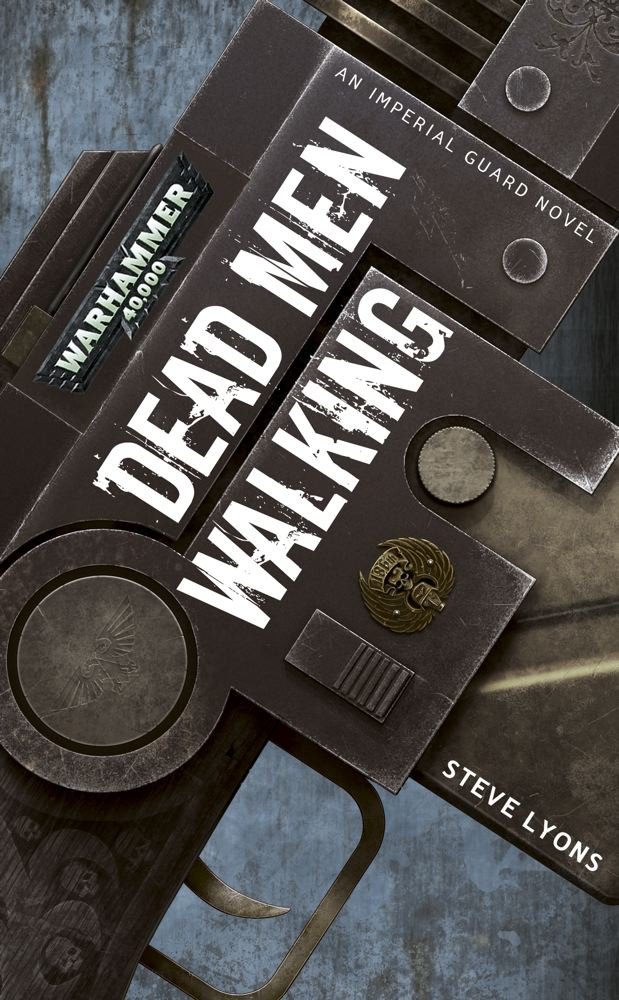
Warhammer 40,000: Dead Men Walking by Steve Lyons

Dead Men Walking Cover

Publisher: Black Library (Audiobook – 30 November 2010)

Series: Warhammer 40,000

Length: 10 hours and 42 minutes

Rating: 4.75 out of 5 stars

Amazon

Two relentless foes face off in the intense Warhammer 40,000 novel, Dead Men Walking by Steve Lyons.

Dead Men Walking was an epic novel released back in 2010, that featured a brutal and compelling story I really fell in love with.  This novel follows the trend of books that highlight the adventures of specific regiments or units of Imperial Guard, such as Catachan Devil by Justin Woolley, Kasrkin by Edoardo Albert, Steel Tread by Andy Clark, and the Gaunt’s Ghosts books by Dan Abnett, which has been very fun.  Dead Men Walking was the author’s first look at the legendary Death Korps of Krieg, one of the most distinctive and dark regiments of Imperial Guard soldiers, who he covered again back in 2022 with Krieg.  This new novel sets the Death Korps onto a whole new battlefield with deadly results.

Hieronymous Theta is a small and relatively young world in the Imperium of Man.  Populated by nearly nine billion people, it is slowly becoming an important industrial hub, as its cities and massive spires build up.  But as the inhabitants of the capital, Hieronymous City, expand their mining operations deeper they encounter something unexpected and terrifying, the Necrons.  Unfeeling and inhuman ancient xenos encased in living metal, the Necrons are an unrelenting force determined to exterminate the human pests they find inhabiting their world by any means necessary.

As the citizens of Hieronymous City begin to panic, unable to stand against the encroaching Necrons and their deadly technology, their apparent salvation lands on the planet in the most unlikely of forms, the Death Korps of Krieg.  One of the most feared and mysterious regiments of the Astra Millitarum, the Death Korps of Krieg come from a world destroyed by civil war which seeks to redeem itself by producing soldiers solely dedicated to the Emperor and his victory.

As the Death Korps land on Hieronymous, they take the war to the Necrons and begin a determined siege to retake Hieronymous City from the outside.  But as the Krieg regiments push forward, the people of the planet soon begin to realise that the Death Korps might not be the salvation they hoped for.  The soldiers of Krieg’s only goal is to defeat the Emperor’s foes, and they are willing to sacrifice anything to achieve victory, including the citizens of Hieronymous.  With battle joined, the fate of Hieronymous hangs in the balance.  But does anyone truly win when two implacable and unrelenting armies go to war?

This was an extremely interesting, intense and dark novel from Steve Lyons, who follows up his previous Krieg novel in a big way with this outstanding read.  Featuring a moving, action-packed and highly cynical story, Dead Men Walking was probably one of the better Warhammer 40,000 books from last year, and I had an exceptional time getting through it.

I really liked the fantastic story that Lyons came up with for Dead Men Walking, especially as it successfully showcased both opposing armies, the Death Korps and the Necrons, without actually featuring any perspective characters from either side.  Instead, the focus is reserved for the other humans caught in the middle of the conflict, including the Imperial Commissar attached to the Death Korps, the governor of the planet, and several citizens who find themselves caught in the crossfire of the war and are forced to adapt to survive.  I love how Lyons set the early narrative out, with the perspective characters slowly becoming aware of the dangers beneath them.  The slow build introduction of the Necrons, a force the humans don’t know but the reader is very aware of, was handled perfectly, and there is a lot of great anticipation that pays of well when they finally attack.  The scenes of carnage and utter terror that emerge for the characters stuck in the city really hit home with their realism and intensity.  Indeed, there is a bit of a horror vibe to the story at this point, and Hieronymous City turns into an excellent wasteland setting for the characters to subsequently attempt to navigate.

Once the city is in ruins, the book turns towards the landing Death Korps, who begin prosecuting a deadly war against the Necrons.  This moves the story into a fascinating new zone, as you get some fantastic battles while also witnessing several characters soon caught up in the city as everything changes around them.  I loved the various unique, personal stories that emerged, and the focus on characters watching both the Krieg and Necron forces battle it out proves very powerful.  As the story continues, each of the main characters suffer in various ways, especially as they begin to realise that the unrelenting, victory-focused Krieg are just as dangerous as the Necrons, and there are some deeply powerful moments as they lose their humanity in the carnage of war.  All of these mostly independent character narratives go in some dark directions, especially as the background war gets even darker, and not everyone survives the various conflicts to come.  These storylines either end or coalesce together as the book comes to a head, and you really appreciate the impressive narrative that Lyons weaves together.  I loved how grim and cynical the story got at the end, and Lyons provides a particularly memorable conclusion that really highlights just how unfair the Warhammer 40,000 universe can be.

Lyons really came up with a brilliant story for Dead Men Walking, as he balanced the need to highlight two interesting Warhammer 40,000 factions, while also telling his own unique narrative.  Telling the story of the Krieg and Necrons from the perspective of the third-party characters caught in the middle of their war was such as clever move, especially as it provided some fascinating contrast between the two factions.  The author provided such a dark vibe for Dead Men Walking, and the terrified civilians, the crumbling city and the relentless troops waging war without a care for those around them were all handled brilliantly.  I think the narrative split between the various characters caught up in the fray was done well, and you get to see all sides of the conflict, and the darkest actions of both opposing foes.  I also loved how well Lyons showcased the main city setting throughout the book, as the collapse of the once proud city mirrors the loss of humanity for the various protagonists.  Dead Men Walking can easily be read as a standalone novel, and new readers can just fall into its dark and unique story.  Indeed, this might be a pretty good entry point, as the views of the confused and horrified civilians provide some good opening observations about two key factions.  Naturally, established fans of the franchise will get a lot more out of Dead Men Walking, especially as Lyons really showcases both iconic groups in some fantastic ways.

I absolutely loved the portrayal of the Krieg soldiers in Dead Men Walking, and they really are some of the most entertaining figures in the Warhammer 40,000 canon.  Unlike his other novel, Krieg, where Lyons spent a great deal of time focusing on the origins of the Krieg soldiers with flashback sequences, Dead Men Walking showcases them purely through the eyes of other human inhabitants of the Warhammer 40,000 universe.  To the common soldier or citizen of the Imperium of Man, the Death Korp are unnaturally dedicated, unwavering and heartless, focussing on the battle to the exclusion of all others.  Thanks to their harsh training, indoctrination, and history, they have a very black-and-white view of the universe and will stop at nothing to win, even if that means sacrificing their comrades or allies for a strategy.  Lyons really highlights their near-inhuman mentalities throughout the course of Dead Men Walking, and thanks to the perspectives of the non-Krieg soldiers, you see them in a much more sinister light.  There is something very concerning about the simple mathematic they put behind their strategies, and I loved how well Lyons captured how similar they are to the Necrons.  Thanks in great deal to the actions of the Krieg soldiers, this ended up being a particularly bleak book, which really hammered home how there are no good guys in this universe.

In addition to the Krieg soldiers, Dead Men Walking also featured the Necrons as the antagonists, who served as worthy opponents to the Krieg.  As with the Krieg soldiers, you don’t get a Necron perspective in Dead Men Walking, which honestly enhanced the unique story Lyons was going for.  Unlike books like other more recent Necron focussed novels like Ruin, Reign or The Infinite and the Divine, you only see these characters through the eyes of normal humans, who have no idea who or what they are.  This makes for some particularly terrifying scenes as the humans encounter overwhelming attacks from unkillable metal monsters, and Lyons really captures how the unknown is just as bad as the devastation around them.  Even when the Krieg soldiers arrive, there is very little knowledge about the Necrons, due to the secrecy of their origins, and the only intelligence about them comes from rumours of prior encounters (which includes a cheeky reference to the Ciaphas Cain novel, Caves of Ice).  I really appreciated this shrouded look at the Necrons, and it proved to be interesting to see the how a normal person would view them.

I really liked the characters in Dead Men Walking, especially as Lyons focuses the story on several normal humans who suddenly get thrust into hell and find everything they thought they knew completely upturned.  Much of this upheaval is due to the interactions with the Krieg soldiers, whose unreasonable actions cause even the most stoic soldier or commander to falter in different ways.  Watching each of these characters slowly change for the worse makes for some gripping reading, and you end up feeling great sympathy for all the point of view characters.

These great characters include Gunthar Soreson, a mine supervisor who loses everything in a single night and tries to find redemption as a soldier fighting for the Krieg.  It was absolutely fascinating to see Gunthar, who starts the book as a relatively normal and nice character, slowly lose his humanity in a similar manner to the Krieg soldiers, and his story hits particularly hard at times.  I also must highlight the character of Commissar Costellin, one of the commissars attached to the Krieg regiments, and one of the few non-Krieg soldiers featured in the book.  Commissars are fantastic figures in the Warhammer 40,000 canon, mainly because they serve as implacable disciplinarians charged with maintaining order and morale through lethal means and ensuring that the soldiers due their duty.  However, due to the unnatural discipline of the Death Korp soldiers, Costellin finds himself acting more in the role of a liaison between the Krieg and the citizens of Hieronymous.  Lyons writes some intriguing storylines around Costellin, and it was fascinating to see a commissar character who fears the resolve of his own troops, as the Death Korp leaders go too far even for him.  Finally, I really enjoyed the inclusion of the governor of Hieronymous, Hanrik, who finds both his planet under attack and his authority taken away from him when the Death Korp takes over.  I felt the storyline around Hanrik was very clever, and you had to feel for him at times, especially when he finds his loyalties tested.  All these character arcs and more are really well written and hit hard emotionally, especially with their resulting dark ends.

It should come as no surprise whatsoever that I grabbed Dead Men Walking on audiobook, as frankly no other format does Warhammer 40,000 fiction justice.  The resulting audiobook was extremely awesome, as the intensity, action, and darker elements of Dead Men Walking’s story came through in this format.  Coming in with a run time just short of 11 hours, Dead Men Walking was an easy Warhammer 40,000 audiobook to power through quickly, especially once you get stuck into its awesome narrative.  It helped that they brought back talented narrator Timothy Watson for this audiobook adaptation.  Watson, who did a great job narrating Krieg and The Lion: Son of the Forest, was in rare form again in Dead Men Walking, especially as he has the perfect voice for this darker and exciting story.  His voice work really captures the chaos and desperation of the story, and I loved the unique tones he comes up with for the various characters.  The featured Krieg soldiers all have the typical German-esque accent, which matches the regiment’s World War I aesthetic, and I liked how Watson worked to enhance these figures relentless and unwavering nature through his voice work.  The other characters of the plot, who are allowed to have emotions, are also portrayed extremely well, and Watson provides them with excellent and fitting voices that captures their feelings on the situation, especially as their encounters with both the Krieg and the Necron, wear them down.  This audiobook version of Dead Men Walking was so damn good, and it is easily the best way to enjoy this epic novel.

Steve Lyons continues to showcase why the Death Korp of Krieg are some of the most memorable figures in the Warhammer 40,000 canon with the brilliant and dark read Dead Men Walking.  Presenting a grim scenario of war and sacrifice that only gets worse when the ‘good guys’ arrive, Dead Men Walking was a particularly harrowing piece of Warhammer fiction, that I still cannot stop thinking about.  Clever, intense and a little traumatising, Dead Men Walking comes highly recommended, and I cannot wait to see what great tale Lyons comes up with next.

Amazon

Warhammer: The Old World: Lords of the Lance by Graham McNeill

Lords of the Lance Cover

Publisher: Black Library (Audiobook – 20 January 2024)

Series: The Old World – Book One

Length: 12 hours and 5 minutes

My Rating: 4.5 out of 5 stars

Amazon

One of Warhammer’s very best authors brings fans back to the Old World in the gripping and action-packed fantasy adventure, Lords of the Lance by Graham McNeill.

As a long-time Warhammer fan, I love many of the different areas of the Warhammer fandom, including the grim dark science fiction Warhammer 40,000 universe.  However, my heart will always belong to Warhammer Fantasy, mainly because it was the game I played as a kid and where I first learned to love the franchise.  I deeply enjoyed all the fiction associated with the overarching fantasy setting, especially those set in the Old World, the main continent where most of the battles and wars took place.  Series like the Gotrek and Felix books (Trollslayer, Skavenslayer, Daemonslayer, Dragonslayer, Beastslayer, Vampireslayer and Giantslayer), as well as standalone books including Grudge Bearer, Van Horstmann, Runefang and Broken Honour, have all proven to be pretty damn awesome, and this is probably one of my absolute favourite fantasy settings.

Unfortunately, Games Worshop ceased the Warhammer Fantasy game several years ago, by having the in-game big bad win the final war against the forces of good and literally blow up the entirety of the setting.  This explosive conclusion ended all the ongoing novels, comics and characters from this universe, and Games Workshop subsequently ignored Warhammer Fantasy, prioritising Warhammer 40,000 and Age of Sigmar models and fiction.  However, Games Workshop are returning to their original fantasy world with The Old World.  Set hundreds of years before the end of the Warhammer Fantasy world, The Old World brings back the classic armies, figures, and history of this realm, while also introducing a whole new range of models.  As part of that, they are once again setting fiction in their fantasy realm and the first book back is Lords of the Lance by acclaimed Warhammer author Graham McNeill, who has really impressed me in the past with books like Storm of Iron.

Even centuries before the final war with the forces of Chaos, the Old World is still a dangerous place, where monsters, dark creatures and the forces of Chaos seek to destroy everything.  There are many dangerous places throughout the Old World, but few are more sinister than the Land of the Dead, an abandoned wasteland where the ancient and powerful nation of Khemri once stood.  Haunted by the evil actions of the dread necromancer Nagash, the former realm of Khemri is now ruled by the unliving Tomb Kings.  In this realm of sand, skeletons and death, only the greatest of warriors can hope to enter and survive, especially if they are on a noble quest.

Baron Lothar Aquilena is a great knight who has carved out territory in the lawless realm of the Border Princes.  However, despite his prowess, skilled warriors, and clever advisers, he is powerless when his son goes missing in the Land of the Dead, taken captive by the risen Amaranthine Queen, who seeks revenge against those who previously defeated her.  Desperate, Baron Lothar has no choice but to call in a debt of honour owed to him by his Bretonnian cousin, Duke Carrad of Quenelles, years after they suffered a falling out.  Despite the enmity between them, Duke Carrad leads his knights to Lothar’s realm, determined to repay the debt owed.

United in their mission, despite a mostly unwelcome reception by Baron Lothar, the knights of Bretonnia and the men of the Border Princes begin their quest to the Lands of the Dead.  However, crossing the deserts of Khemri is no easy task, and the loosely combined force soon experience the treacherous sand, blazing heat, unnatural creatures, and the forces of the dead.  Despite these obstacles, the host approach the giant tombs of Khemri, ready to save the Baron’s son.  However, nothing is as it seems, and soon the assembled knights and their retainers encounter a deadly enemy that none of them are prepared for.

Graham McNeill made me fall in love with the Old World once again as he provides a powerful and intense character-driven adventure across an iconic setting.  Lords of the Lance was a pretty damn awesome novel and I had such an epic time getting through it.

Due to this book being the first entry in The Old World canon, McNeill had a lot of pressure on his plate as he had to simultaneously bring back an established setting, tie-it into a recent model release, while also telling a powerful story that stood on its own.  I think that he succeeded on all fronts as Lords of the Lance proved to be quite an addictive read that contained some amazing features of the setting while also dragging the reader in with his elaborate storytelling.

The narrative of Lords of the Lance had a very classic fantasy quest feel to it, which honestly was a joy to see, and which fit this setting extremely well.  Starting off with an effective introduction, the story quickly proceeds with the two antagonistic lords leading their combined force towards the desert.  The narrative is effectively told from a few compelling and complex point-of-view characters, with several additional supporting characters standing in the wings.  The first half of the book is all about introducing and building up the protagonists, and there was a little less action than I was expecting, with McNeill content to firmly establish his story.  I think this build-up was very necessary as it ensured the second half was particularly epic, and there was still some good battles and compelling developments scattered throughout to keep readers interested.  This initial foray across the desert didn’t last as long as I thought it would, and McNeill brings the adventurers to their goal very quickly.  This allows him to enact an intriguing twist, which while telegraphed, was written brilliantly and changed the entire tone of the book.

This results in a frenetic, powerful, and impressive second half that sees the protagonists forced to abandon their quest and flee for their lives.  Constantly pursued, the knights and their retainers quickly traverse several of the most dangerous locations in the Old World while facing all manner of grave threats.  There are some brilliant and powerful scenes featured here as McNeill hits the protagonists hard, including with one particularly heartbreaking equine sacrifice.  I also loved the extended mini-siege sequence, as the Bretonnians face off against an awesome new foe in some of the best action scenes in the book.  McNeill also really enhances several character arcs during this half and the resulting development and emotional revelations empower the overall story, especially as the reader has become quite attached to the protagonists at this point.  Everything leads up to the final confrontation as the battered protagonists finally face their foes in one final charge.  The intensity and emotional power that leads up to this big confrontation cannot be understated, and I found myself very invested in seeing how everything came together.  The author keeps you on the edge of your feet right until the end and I really enjoyed how everything came together, although I was expecting some more tragedy.  Still, I came away from Lords of the Lance very satisfied, and McNeill leaves the story open for a sequel, while also providing one last tie to the latest release of models.

I liked how McNeill styled his narrative in Lords of the Lance, as you can tell he was trying to give it a more classic fantasy feel.  There is a lot of bold stating of titles, repetition of points, and depictions of knights, honour and magic, which gave the book an elaborate tone that I rather enjoyed, especially as it really fits the Arthurian-inspired Bretonnian faction who were the main focus of the story.  The resulting story is rich in both character work, action sequences, and intriguing Warhammer inclusions, with McNeill hitting an excellent balance of the features that had me quite hooked.  I really need to highlight some of the amazing action sequences, especially as McNeill provides such a fantastic variety of fight scenes to get the blood pumping.  The various knightly charges are a true highlight, and you can feel the thunder of the horse and power of the rushing knights, especially as McNeill endeavours to capture all the powerful details about them.  Other intense scenes also do an amazing job of enflaming the imagination, and I really loved how intricate and desperate some of the battles turned out to be.  I also really need to highlight the outstanding locations that much of this story was set in, especially as McNeill goes out of his way to make them come alive.  The deserts of Khemri are particularly vivid, and their use as a lethal and wearying backdrop is great, turning it into another foe the protagonists need to overcome.  The Marshes of Madness were also very awesome, offering another dangerous trudging location and I loved the alternate threats that they posed.  McNeill did such a great job of bringing this story together, and this great blend of story elements helped to produce an exquisite read.

I personally loved the intriguing version of the Bretonnians and the Tomb Kings that were featured within Lords of the Lance.  McNeill expertly captured the intensity, desire for honour, and compelling nature of the Bretonnian characters, as well as their prowess in combat (the scenes where they charge as cavalry are really well done).  The Tomb Kings are also shown to be an excellent antagonistic force, and while you don’t see anything from their perspective, the relentless pursuit they give and the anger contained within them is palpable at times.  A couple of other factions are also featured to a degree, mostly as additional threats for the Bretonnian characters, and I really enjoyed how well McNeill used some of them, especially during one horror-filled siege.  However, I understand that some readers had some issues with how McNeill portrayed these factions, mainly revolving around lore inconsistencies, which has led to a bit of review bombing.  While I’m no lore expert, I honestly barely noticed anything too problematic myself.  From what I could see, the most common complaints about the Bretonnian seem to be around the inclusion of female knights (gasp, oh my stars, clutch my pearls!), and one knight using a bow (seems like a pretty sensible weapon for someone riding a pegasus to me).  I will admit that some elements about the Tomb Kings, from their slightly more antagonist portrayal (they are usually a lot more neutral/good orientated), and the fact they raised some knights from the dead, was a little off lore, but I think that was mostly McNeill trying to make them even more threatening.  Honestly, most readers won’t even notice or care about these issues, and I personally didn’t let it get in my way of enjoying a great story.

For me, one of the best things about Lords of the Lance were the powerful, complex and memorable band of characters that the story was set around.  McNeill did an amazing job coming up with a cast of new and fantastic protagonists, each of whom had their own unique journey and background, which effortlessly flowed into the book’s main narrative.  You really become attached to many of these characters as Lords of the Lance progresses, and I loved how character-driven this book turned out to be.

One of the main characters of the book is Corentin Varo, equerry to Duke Carrard and known as The Knight of Quills due to his use as a clerk rather than a warrior.  Determined to prove himself, and to get over a tragic romance, Varo eagerly embarks on this quest, but chafes as his lord holds him back.  Varo proves to be an intriguing and compelling main protagonist, especially as you get invested in his tale of attempted heroism and valour.  McNeill does a good slow-burn story around Varo, as he slowly proves to others and himself that he is a worthy knight and leader, and he proves to be a good calm, central figure for most of the plot.  There are also some intriguing, if obvious, hints about his personal history, that while interesting, doesn’t have a major payoff in this book but could get explored in the future.  Varo is well matched by Karolina Lothar, who serves as the female lead of Lords of the Lance.  The daughter of Baron Lothar and a skilled knight, Karolina serves as the voice of reason for her father’s host and tries to bridge the gap between the two forces.  She forms a friendship with Varo as the book progresses and the two become a pretty impressive team.  I liked how naturally McNeill included Karolina as a strong female character and he paints an interesting picture of her family concerns, her grief as the book continues, and her martial prowess.  These two form a great centre for much of the plot and I liked the chemistry that grew between them, especially after their rough journey encourages them to let go of the past and look to the future.

Aside from Varo and Karolina, several other characters really stood out to me in Lords of the Lance, and I really enjoyed they fantastic storylines.  The most prominent of these is probably Sigurd of Yvaire, the deaf son of a nobleman who was left unknighted due to his affliction and who accompanies the Bretonnians on their quest leading the peasant host.  Sigurd ends up being the heart and soul of the book, and you get invested in his story as he finds both romance and self-worth on his journey.  I also had a lot of love for Bastien, the young and brash Knight Errant.  Bastien starts the book as an annoying cad who antagonises the other characters like Varo.  However, as the book continues, you eventually see that much of his brashness is an illusion, and he is a surprisingly thoughtful figure.  It is a testament to how good a writer McNeill is that you end up caring for Bastien after his annoying start.  Thanks to certain moments of bravery, and some notable setbacks, you really see just how noble Bastien is, and he ended up being one of my favourite characters.  Finally, I must highlight Sir Leodegar of the Golden Hart, a legendary Grail Knight who accompanies the army for duty, destiny, and to protect the Handmaidens of the Lady.  The epitome of the Bretonnian knightly code, Sir Leodegar is an imposing, memorable and incredibly noble figure who serves as a mentor to Varo, stealing every scene he’s in.  I loved how well McNeill captured the supernatural nature of the Grail Knights, and the depiction of this ethereal figure is quite fascinating, especially as the author also looks at the dark side of their duty.  These characters, and more, really enhanced Lords of the Lance’s great narrative, and I love the unique storylines that McNeill wove around them.

My love for Warhammer audiobooks is well known, so naturally I listened to Lords of the Lance.  Coming in at just over 12 hours, this is a decently long Warhammer audiobook that I was able to power through in short order.  I felt that the audiobook format did an outstanding job bringing this elaborate and intense story to life, and you really get a sense of the intense action, powerful characters, and the amazing scenery when you have it read out to you.  I particularly enjoyed the narration by Peter Kenny, who has a well-established pedigree when it comes to narrating fantasy audiobooks.  Kenny utilises a series of great voices that perfectly fit many of the characters featured within Lords of the Lance.  All the main cast come across extremely well here, and I loved the determination you get through some of the main characters like Karolina and Varo, the brashness of Bastien, and other intriguing figures.  I personally also thought he did a good job accurately voicing the deaf character, Sigurd, although I understand if some people found that a little controversial.  Still, this was an outstanding way to enjoy this remarkable book and I would strongly recommend the audiobook version to anyone interested in checking out Lords of the Lance, although it no longer seems to be available in this format.

Graham McNeill continues to show why he is one of the best authors of Warhammer fiction as he takes readers back to the Old World in Lords of the Lance.  Featuring a complex story, powerful characters, and a ton of adventure, Lords of the Lance was extremely fun to read, and I loved seeing a story set back in the iconic setting.  This book is best enjoyed by established fans of the franchise, especially those who remember the Warhammer Fantasy days, although new readers will have a great time here as McNeill provides an intense and fun standalone read.  Highly recommended, I hope we get more Old World books soon.

Amazon

Throwback Thursday – Cold Days by Jim Butcher

Cold Days Cover

Publisher: Penguin Audio (Audiobook – 27 November 2012)

Series: Dresden Files – Book 14

Length: 18 hours and 47 minutes

My Rating: 5 out of 5 stars

Amazon

Welcome back to my Throwback Thursday series, where I republish old reviews, review books I have read before or review older books I have only just had a chance to read.  For this week’s Throwback Thursday, I check out yet another exceptional entry in Jim Butcher’s outstanding Dresden Files urban fantasy series with Cold Days.

Readers of this blog will know that I have been having an incredible time getting through the epic Dresden Files series by Jim Butcher.  An iconic urban fantasy series, the Dresden Files follows maverick wizard Harry Dresden as he defends the city of Chicago from all manner of supernatural threats.  This series is so impressive, and I have been steadily making my way through out it since 2020.  My previous burst of reading saw me get through four of these amazing books in a row, including Small Favor, Turn Coat, Changes and Ghost Story, and while that momentarily sated my interest in this series, I am still very keen to continue, and I’m hoping to finish it off this year.  I’m already off to a good start as I just knocked off the 14th book in the series, Cold Days, which proved to be another gripping and clever read.

Despite his best efforts, professional wizard Harry Dresden is once again alive, and his troubles are only just beginning.  Forced into a Faustian deal to gain the power he needed to save his daughter, Dresden, now finds himself indebted to Mab, Queen of Air and Darkness and ruler of the Winter Court of the Faerie.  While he’d hoped his murder would get him out of this dark responsibility, Mab had other plans and now Dresden finds himself dragged back to life as the Winter Knight, Mab’s personal champion and hitman.

Determined not to fall under the alluring sway of his new position and power, Dresden finds himself once again thrust into the middle of a conflict outside of his abilities when Mab sets him on his first mission, killing her own immortal daughter.  Grappling with such an impossible task, Dresden returns to his beloved Chicago, only to find even more trouble awaiting him there.  Demonreach, the mystical island in the middle of Lake Michigan that Dresden bound himself to, is under magical siege, and it if falls, billions will die.

With only 24 hours to complete both his allotted assassination and save Demonreach, Dresden soon finds himself under attack from all manner of foes, including manipulative faeries, dangerous beings originating from outside of reality, and former friends with new agendas.  To survive, Dresden will need to reconnect with his old allies and work with them to prevent a dark cataclysm.  But faced with impossible choices and hidden enemies, Dresden soon finds himself unsure who to trust.  Worse, his new powers are working to change him into something primal and dark.  Can Harry defeat both his foes and his own inner darkness before it is too late?

I doubt anyone is going to be surprised to find out that I loved Cold Days.  Butcher did a wonderful job continuing his exceptional series, especially as he presents the reader with a complex and intriguing new adventure, loaded with mystery, sacrifice and surprises.  A gripping read from start to finish, Cold Days gets another easy five-star rating from me, and I had an amazing time getting through it.

At this point in the series, Butcher had been on a real roll, and the last two books, Changes and Ghost Story, had exceptional stories that dramatically shifted the status quo for the protagonist.  This trend continued in Cold Days as Butcher simultaneously reintroduced Dresden back to the world after his death, showed his first adventure as the Winter Knight, and provided some massive detail about the major antagonist that his been hinted about since the start of the series.  I honestly was hooked on Cold Days the second I started it, especially as it begins with a particularly entertaining training montage, before dumping the protagonist right into the midst of complex Winter Court politics.  From there, Dresden is given an impossible task, and his attempts to understand his new mission reveal additional obstacles, including the danger posed by Demonreach.  This swiftly morphs into a classic Dresden Files novel, with the protagonist attempting to solve several concurrent mysteries, while entertaining antagonists try to take him off the board.  A lot of the story involves the always fascinating and manipulative Faeries, and I liked how well Butcher expanded the lore surrounding them.  Naturally, this means that the protagonist must deal with politics, intrigue, and so many betrayals, as he finds himself in the middle of their deadly games.

Once Dresden fully understands the stakes of his new mission, he is forced to make some big decisions, especially as the true antagonists of this book are obscured and hidden.  Everything leads up to a massive and extended final confrontation, which was pretty damn awesome to see, especially as Dresden leads some interesting forces to war and finds himself going up against some big players.  There are some brilliant and well-setup twists at the end of Cold Days that really highlight just how manipulative a certain character is, as well as how good Butcher is at planning ahead with his writing, and the status-quo of the series changes once again.  This entire story was so damn entertaining, clever and moving, and I just flew through it.

As always, I love the excellent first-person style that Butcher utilises to tell his Dresden Files stories, and Cold Days came across in a fun and entertaining way.  Told exclusively from the perspective of protagonist Harry Dresden, you are given a front row seat to the chaotic events of the book as they occur, and I always love the fantastic blend of mystery, action, humour and character moments that result from this.  Cold Days was a particularly good example of this, and it featured an amazing pace, loaded with major set pieces and powerful interactions between the protagonist and other characters.  The action scenes were particularly fun, and I loved how well Butcher was able to enhance the battles with the continuously expanding lore surrounding his excellent series.  Everything about this book was a lot of fun, and this ended up being an impressive entry in the wilder Dresden Files series.

One of the things I particularly enjoyed about Cold Days was the intriguing and impressive ways that Butcher provides some massive expansions to his universe.  Cold Days features some major revelations which completely shift the entire perspective of the Dresden Files, especially as you get some reveals about who the true antagonists of previous books were.  The protagonist’s place in this universe is greatly enhanced, as not only does he get some major power boosts but the true responsibilities of certain posts he took on are revealed.  As such, the stakes of Cold Days and the future books in the series are now higher than ever, which I personally enjoyed.  These changes were an outstanding natural progression of story elements from the previous 13 novels, and it was great to get some payoffs to some of the clever hints Butcher has been lacing into the series since book one.  Because of this, I would strongly recommend that readers go back and read the series from the start rather than beginning with Cold Days, as you will get so much more out of it.  At the very least, I think you need to read the previous two novels, Changes and Ghost Story first, as some of the major story elements and character arcs from there are concluded or continued here.  However, if you decide to start reading the series here at Cold Days, you should still be able to follow along, especially as Butcher always ensures that key elements and characters are always succinctly and effectively reintroduced.

I must really highlight the excellent character work featured in Cold Days, as Butcher does an outstanding job featuring a huge cast of fascinating figures, each of whom plays an important role in the complex plot.  Naturally most of this focus revolves around the point of view protagonist, Harry Dresden, who has been going through a real emotional and personal roller coaster in the last few books.  Not only did he recently find out he had a daughter who was hidden from him, but he was forced to accept a deal with Mab to save her, which he then tried to get out of by dying.  Fully resurrected by the start of Cold Days, Dresden is forced to deal with the consequences of his choices.  It was interesting to see the usually moral and independent Dresden under the control of a historically malevolent figure like Mab, and his attempts to understand her motivations and his place in this new regime are a huge part of the plot.  At the same time, his new powers are slowly changing him, and he is constantly forced to fight back against various primal urges.  This results in some very interesting personal moments, especially as Dresden is finally properly reunited with his friends and family.  I loved how emotional and powerful parts of this book get, especially as Dresden comes to terms with some of the darker moments and thoughts that have plagued him over the last few adventures.  As such, this is an important entry in Dresden’s personal story, and I look forward to seeing what other develops occur in the future.  Of course, while this book does get emotional and moving at times, Dresden was still mostly the same funny and disrespectful figure he always was, and much of Cold Days’ humour was derived from him making fun of and picking fights with people way outside his weight class.  I have so much love for most of Dresden’s character traits, even when being turned slowly evil, and Cold Days is so much more entertaining with him as the narrator.

In addition to Dresden, Cold Days featured a great batch of returning figures, each of whose storylines are also expanded on once Dresden returns.  I loved some of the interactions that occurred in Cold Days, especially as we once again got to see the fun sibling relationship Dresden has with his brother, Thomas, and there was finally some movement on the long-simmering romance between Dresden and Karin Murphy.  It was great to also see more of recurring characters Butters, Bob the skull and Dresden’s dog, Mouse, who are all quite entertaining in their own way.  However, I think the most interesting character development occurred around Dresden’s apprentice, Molly Carpenter.  Like Dresden, Molly has gone through a ton of trauma in the last few books, and it was great to see her mostly on her feet in this novel.  Of course, as Butcher is a cruel author, we had to know it wouldn’t last, and some very significant changes occur to Molly in the big conclusion.  Butcher did a great job setting the scene for these changes, and it will be interesting to see how much her personality changes in the next few books.  I still don’t love the constant hints about a potential romance between Dresden and Molly that were featured here; if they ever get together in a future book, it will be gross.

Aside from these familiar figures, Butcher also loads Cold Days up with nearly every Faerie character and figure he had, including several sinister new antagonists.  The Dresden Files books featuring the Faerie Courts and characters can often be quite entertaining and I think Butcher did a really good job of showcasing the intricate figures who make up these courts in Cold Days. Mab was a fantastic, dark and sinister figure for much of the book as Dresden’s new master, and I enjoyed how she cast a big shadow over much of the plot.  While mostly shown to be villainous, Butcher did attempt to humanise her in places, and it was great to finally get some more depth around her.  The rest of Faeries all had their own unique purpose in the story, and you are never quite certain whose side they are on, especially when more revelations come through as part of this book.  All the characters in Cold Days were very impressive and well-written, and I really appreciated how their complex character arcs helped to enhance an already powerful story.

As usual, I ended up enjoying Cold Days on audiobook, which is honestly just the best way to enjoy a Dresden Files novel.  Coming in with a run time of just under 19 hours, Cold Days was one of the longest Dresden Files audiobooks, but I still managed to power through it in one fantastic week.  Butcher’s outstanding storytelling is always deeply enhanced by this format, and you really get the full experience of the action, unique fantasy elements and cool characters through it.  Of course, the epic voice work from long-running narrator James Marsters is a huge factor in this.  Marsters always moves the story along perfectly, and it is hard not to get caught up in the plot when he dives into the cool features and narrative.  I still really love all the unique and enthusiastic voices he brings to the table, and all the characters, be they new or established, came across perfectly here.  I always deeply appreciate how well Marsters can dive into protagonist and point of view character Harry Dresden, and his narration once again pulled out all this character’s pain, inner turmoil, and relentless cheek.  Marsters also has a lot of fun with the various monsters, faeries and other ethereal figures featured throughout Cold Days, and he always ensures these mysterious creatures come across as something inhuman or terrifying.  This great voicework really turns the Cold Days audiobook into something deeply addictive and fun, and I really cannot recommend this format enough.

Look, there was no way I wasn’t going to enjoy Cold Days, as frankly the entirety of the Dresden Files series has been pretty damn impressive.  However, I felt that Jim Butcher did a really good job with this 14th book, as Cold Days features a compelling and emotionally charged narrative that expertly continues some of the most impressive storylines from the last few entries.  Loaded with action, compelling lore expansion, and Butcher’s distinctive humour, Cold Days was an exceptional book that I cannot recommend enough.  I love this series so much and I cannot wait to finish it off this year.

Amazon

Warhammer 40,000: Creed: Ashes of Cadia by Jude Reid

Creed - Ashes of Cadia Cover 2

Publisher: Black Library (Audiobook – 9 September 2023)

Series: Warhammer 40,000

Length: 14 hours and 36 minutes

My Rating: 4.5 out of 5 stars

Amazon

Exciting new Warhammer 40,000 author Jude Reid presents an action-packed and captivating novel that takes the reader to one of the most desolate places in the franchise’s universe, the ruins of Cadia, with the exciting novel Creed: Ashes of Cadia.

Last year proved to be an outstanding year for new authors producing their first Warhammer 40,000 novel, with several highly talented authors, such as Rob Young (Longshot) and Jonathan D. Beer (The King of the Spoil), producing amazing and intense reads in this fantastic universe.  One of the most interesting of these 2023 Warhammer 40,000 debuts was the impressive and captivating Creed: Ashes of Cadia by new author Jude Reid.  Reid’s first full novel after writing multiple Warhammer 40,000 short stories, Ashes of Cadia takes the reader on an epic journey with a new major protagonist.

Years after the fall of Cadia to the dread forces of Chaos, the Imperium of Man is still reeling from the carnage wrought in its aftermath which saw a massive warp rift cleave their besieged intergalactic realm in two.  Led by the returned Primarch Roboute Guilliman, humanity fights back as best it can in a great crusade, but its victories are never enough.  When word reaches Guilliman of a potential weapon on the most unlikely of locations, desperation requires him to investigate, and there is only one person he can call on for this dangerous mission.

After continually proving herself on the field of battle, Ursula Creed has succeeded her father, Ursarkar E. Creed, in becoming the new lord castellan of Cadia.  Leading the remaining Cadian forces in the Imperium, Ursula hopes to erase the stain of her legendary father’s great defeat, however, she can never seem to leave behind his complicated legacy.  When summoned by Guilliman for a secret mission, Creed is shocked to discover that she is being sent back to one place she never thought to return to, the shattered remains of Cadia.

Accompanied by a select team of Cadians with an unusual mixture of skills and experience, Ursula is sent to the surface to recover her father’s final battle plans and the secret weapons they supposedly lead to.  However, the surface of Cadia is a blasted wasteland, filled with foul energies and unnatural magic that causes even the dead to attack the invaders.  Left without support and hopelessly outnumbered, Ursula must lead her unprepared followers onwards in the hope of securing the prize.  But terrible evils lay claim to the remnants of Cadia, and Ursula will be forced to confront both the forces of Chaos and her own inescapable legacy as the daughter of Creed if she wants to survive.  Can Ursula succeed where her father failed and redeem Cadia, or is she already lost?

Reid had a very ambitious story idea for Ashes of Cadia, in that she needed to provide a human solider focused, character-driven adventure narrative that simultaneously examined the complex legacy of the Cadians in a new way, while also providing the reader with an intense and action-packed read.  Reid more than succeeded, as Ashes of Cadia takes the reader back to Cadia, one of the most significant landscapes in the Warhammer 40,000 universe and puts several intriguing and damaged protagonists through absolute hell.

Starting off a little slow to establish the main cast, remind people about the Cadian legacy, and set up the mission, Ashes of Cadia doesn’t really speed up until the protagonists land on shattered Cadia, and naturally all hell breaks loose.  The protagonists essentially find themselves thrust into a zombie apocalypse scenario, as a sorcerer attacks with a horde of living dead and decimates the protagonist’s team, leaving them trapped on the planet.  The disparate band of damaged and disillusioned survivors are forced to journey across the ravished planet to find either an escape or the rumoured secret weapon, encountering all manner of horrors, tragedy and continuous losses of supporting characters, all the while being hunted.  At the same time, the cast become more and more disheartened and internal conflicts seek to fracture them in a range of emotionally charged scenes.  This harsh adventure takes them to several key places on the ruins of the planet, as they get closer to their various personal goals.  There are some interesting false starts and twists, as well as some heartbreaking scenes, and you are constantly on edge, especially as a new danger of betrayal might emerge just around the corner.  I liked the reveal of Creed’s treasure in the novel, especially as it has some interesting potential consequences for the future of the Cadians, and the use of Creed’s daughter as a protagonist was a smart choice.  While I did see the big twist of the book regarding a certain traitor coming, it was still really well written, and I loved how Reid tried to misdirect with multiple bloody red herrings.  Everything leads up to a big, brutal, and over-the-top final confrontation, the sees the survivors redeemed in various ways, and it ended up being a fantastic and powerful piece of Warhammer 40,000 fiction.

Reid wrote a very intense and personal novel here with Ashes of Cadia, and I really enjoyed her captivating writing style.  Expertly splitting the focus of the book between several complex and unconventional soldiers with their own individual baggage, Ashes of Cadia becomes a much more emotionally charged novel than I was expecting, but the result was an impressive read, especially as you quickly get invested in the various character arcs.  However, Reid is no slouch when it comes to the action, as the many combat sequences are sharp and brutal, keeping you on your toes as any of your favourite figures can quickly fall.  While the pace of Ashes of Cadia does slow a bit at the beginning and in the middle, for the most part Reid keeps her novel moving along, and I had a hard time putting it down as a result.  I especially loved how well Reid portrayed the fallen planet of Cadia throughout this novel, especially as she really laid out the horrors and dangers associated with this planet.  Fans of Warhammer 40,000 fiction who know this planet well will be shocked by how disturbing and different it turns out, and I loved that we finally got an adventure in the ruins.  A brilliant and exceptionally written novel, you will have a lot of fun with this book.

As I have mentioned a few times in this review, Ashes of Cadia is a significant piece of Warhammer 40,000 fiction, mainly because it provides a continuation to a lot of the major story elements that have been a big part of the franchises fiction since the lore changes surrounding the fall of Cadia.  Quite a bit of in-universe time has taken place since that event, and most of the recently released Warhammer fiction focuses on how the loss of the planet effected the Imperium and the many Cadian soldiers fighting throughout it.  If followed through, the events of Ashes of Cadia are going to give these Cadian characters and stories new purpose, and I loved that we also have new Creed character to follow in Ursula.  Reid does an excellent job of building up to these reveals, and there was another interesting look at how traumatised and demoralised the Cadians are, which really fit into the plot of this book.  There are also a lot of references to other novels and events from the lore that fans of the franchise will appreciate, and I personally liked how it had some connections to another Warhammer 40,000 novel from last year, The Fall of Cadia by Robert Rath (one of my favourite books and audiobooks of 2023).  As such, Ashes of Cadia is probably best enjoyed by those established fans of the Warhammer 40,000 universe, especially those who have enjoyed the recent influx in Cadian fiction.  However, there is still a lot for newer readers to the franchise to enjoy, especially as Reid does a wonderful job of explaining the key lore elements that lead up to this story.  General fans of adventure, science fiction and even horror, can have a lot of fun with Ashes of Cadia, and this turned into quite an intense and bloody war narrative.

Easily the most distinctive part of Ashes of Cadia is the complex and damaged cast of characters that make up the main cast.  Reid produced some unique figures for this impressive narrative, and their individual stories, as well as the general despair of the Cadian trooper following the loss of their planet, proves to be a major driving point in the plot, and I really enjoyed seeing the various character arcs unfold.

Ashes of Cadia’s story had three primary point of characters, and Reid did a pretty good job of jumping the story around them, showcasing each of their unique and well-written storylines.  The most prominent of these is the titular Ursula creed, the current lord castellan of the lost planet of Cadia.  The daughter of the beloved Cadian leader who lost the planet before disappearing, Ursula has big boots to fill, especially as she is resentful for her father’s legacy and the fact she barely knew him.  The resulting insecurities, responsibilities and bitterness play a huge part in her character arc, and watching her walk in the steps of her father and attempt to become the leader he was proved to be a great part of the plot.

The next major character, Shael Laskari, adds a more general viewpoint to the story as a recently graduated cadet who is chosen to accompany Creed to the surface for propaganda reasons.  Inexperienced and fearful, Laskari is the everywoman of Ashes of Cadia, and it proved interesting to see her deal with the unknown horrors of the planet while also trying to find her courage in her squad.  Reid also does an exceptional job with the unique character of Mac Ossian.  A former medic and member of a Cadian regiment, Ossian was assigned to a penal legion after killing his former commander, and now finds himself back on Cadia as part an expendable distraction.  Managing to meet up with Creed’s unit, Ossian spends much of the book trying to prove his loyalty and worth, while also wondering if Creed and Cadia still deserves his surface.

These central characters are accompanied by several fantastic supporting cast members, several of which have their own exceptional character arcs.  I personally really enjoyed Colonel Hadrian Aurelius Van Haast, who serves as a guide with local knowledge of the area.  Van Haast is a stupendously arrogant figure, who you can’t help but dislike, and he added a fantastic dynamic to the cast.  However, this arrogance is a cover for a much darker secret, which Reid slowly and expertly reveals as the book continues.  I also must highlight Ossian’s fellow penal legionnaire Liga Yager, another prisoner who tries to survive after being dropped on Cadia to die.  Due to her much more cynical perception of Creed and the Cadians, as well as her compelling backstory, Yager goes on a very different path than Ossian, and proved to be a devil on his shoulder that speaks some much-needed truth.  Finally, I loved the villain of the story, the Death Guard sorcerer, Livor Opilionis, who is mostly called The Huntsman throughout the book.  The Huntsman is a gloriously sinister and dangerous foe, who relentlessly hunts them throughout the ruins of Cadia, heralded by his hunting horn and packs of plague zombies, and the confrontations the protagonists have with him always leads to carnage.  This outstanding cast of characters, and more, really turned Ashes of Cadia into an amazing novel, and I loved the brilliant character arcs that Reid developed around them.

As with most Warhammer 40,000 books I check out, I made sure to grab Ashes of Cadia on audiobook.  The Warhammer 40,000 audiobooks are always pretty damn awesome, and I love how much the action, horror and unique setting came through in this format.  Coming in with a decent runtime of just over 14 and a half hours, Ashes of Cadia was a very easy book to listen to, and I managed to knock it off quickly.  It helped that Ashes of Cadia was narrated by the superbly talented Colleen Prendergast, who is swiftly becoming the go-to narrator of Warhammer 40,000 audiobooks with female Cadian protagonists.  Prendergast has a great and intense voice for Warhammer 40,000 fiction, and I love how well she was able to move the plot along.  She also provides a series of great and fitting voices for the cast of this book, especially the female characters.  I loved how dignified and complex she made some of these characters, as well as how monstrous and threatening the main antagonist sounded in his terrifying scenes.  As such, Ashes of Cadia was an absolute joy to listen to and I would strongly recommend this audiobook version to anyone interested in this fantastic piece of Warhammer 40,000 fiction.

Creed: Ashes of Cadia was a fantastic, dark and captivating novel from Jude Reid, who produce an impressive debut with some intriguing potential for the wider Warhammer 40,000 universe.  Loaded with action, intrigue and several complex characters, Creed: Ashes of Cadia was an excellent read that cleverly ties into the history and existing lore of this complex and highly fun franchise.  Intense, moving, and oh so brutal, Ashes of Cadia comes highly recommended, especially for fans of Warhammer 40,000 fiction.

Amazon

Resurrection Walk by Michael Connelly

Resurrection Walk Cover

Publisher: Allen & Unwin Australia (Trade Paperback – 31 October 2023)

Series: Mickey Haller/Lincoln Lawyer – Book Seven

Length: 407 pages

My Rating 5 out of 5 stars

Amazon

Acclaimed crime fiction author Michael Connelly returns with another outstanding and captivating read, Resurrection Walk, a clever and impressive legal thriller featuring two of Connelly’s best characters.

Gosh it has been a very good few years for fans of crime fiction author Michael Connelly.  Not only have we got two fantastic television adaptations currently going, but Connelly has been producing several great books across his multiple subseries.  Most of these books were part of his Ballard and Bosch series, with excellent novels like Dark Sacred Night, The Night Fire (one of my favourite books and audiobooks of 2019), The Dark Hours (one of my favourite books of 2021) and Desert Star (one of my favourite books of 2022), and he has also released a cool book from his fantastic Jack McEvoy series with Fair Warning (one of my favourite books of 2020).  Each of these novels has been excellent in its own way, but for the best Connelly fun nothing beats a Mickey Haller novel.

The Mickey Haller series, also known as the Lincoln Lawyer books, follow Mickey Haller, an infamous and effective defence attorney in L.A who got his nickname, “the Lincoln Lawyer” by working out of a Lincoln town car.  Known for intricate cases, elaborate court scenes and fantastic legal shenanigans, the Mickey Haller books are always a ton of fun and I love both the books and its current television adaption.  Connelly’s last Mickey Haller book came out in 2020 with The Law of Innocence, and I was very happy to find out that he was releasing a new one this year with Resurrection WalkResurrection Walk was one of my most anticipated books of 2023, especially as it featured a great plot and fantastic team-up between Haller and Connelly’s best-known protagonist, Harry Bosch.

Following a successful case that freed an innocent man from prison, defence attorney Mickey Haller has gotten a taste for hopeless cases and is now working on helping those unfairly convicted of crimes they didn’t commit.  Hiring his half-brother, retired detective Harry Bosch to vet the various requests for help being sent to him, Haller hopes that he can do a little good alongside his usual controversial legal practice.  However, the first case that Bosch picks might be the most dangerous.

Several years ago, Lucinda Sanz was accused of killing her sheriff’s deputy ex-husband in front of her house, a crime she always claimed she was innocent of.  Reading through her case, Bosch is convinced that there is far more to the murder than the files indicate, especially when he discovers evidence that the victim was part of a notorious police gang.  Convincing Haller to take on Lucinda’s case, the pair begin to investigate further and begin the process of having her conviction appealed.

However, proving Lucinda’s innocence is no easy task, especially with substantial evidence proclaiming her guilt, a police force closing ranks against them, and no new witnesses willing to come forward.  Worse, there are many people who don’t want Lucinda’s case re-opened, and soon Bosch and Haller find themselves being threatened on all fronts.  With determined legal opponents facing them in the court and dangerous foes waiting for them at home, can even the Haller-Bosch dream team uncover the truth and save their client?

Connelly does it again with an outstanding and deeply addictive read that had me hooked from the very beginning.  Expertly bringing together two of his best characters into an intense and clever legal thriller, Resurrection Walk is an amazing book, and it was probably one of my favourite Connelly reads from the last few years.

Resurrection Walk has a brilliant story around it that sees the characters of Haller and Bosch teaming up to try and get an innocent woman out of prison.  While billed as a Lincoln Lawyer novel, the plot of Resurrection Walk is split between Bosch and Haller, with both characters working on the case from their own unique perspectives.  Connelly dives into the fantastic story of Resurrection Walk quickly, effectively setting up the primary case, while also including some intriguing minor side cases and the compelling personal issues of the two protagonists.  While a couple of the side cases and adventures at the start of the book do seem a little unnecessary in the context of the main plot, I quite enjoyed them, and Connelly does tie a couple of them back into the story in some compelling ways.

The main plot itself is extremely fun as it cleverly builds on Haller and Bosch’s existing character arcs, while also presenting the reader with a unique case.  Haller and Bosch working to free a woman who pled no contest to a murder charge was always going to be a recipe for success, and Connelly turns it into gold with his writing.  The author breaks the story perfectly down the middle between Haller and Bosch, and the combination of an intriguing investigation arc and Haller’s entertaining legal manoeuvrings was a ton of fun.  There were also some intriguing thriller elements as the two protagonists are targeted by parties interested in stopping their investigation, which really ensures the reader gets more invested in the story.  The start of the book deals with the initial investigations into their client’s claims and coming up with a game plan for a potential appeal.  This proved to be a fascinating and vital part of the book as it expertly introduced a lot of the salient points to the reader while also quickly indicating that there are a ton of anomalies at play.

I really liked that Connelly took his time getting to the trial, and it helped to set up anticipation for the legal shenanigans to come.  The trial in question takes up most of the second half of the novel, and it proved to be the best part of the entire novel as it brings together a lot of the story threads that Connelly previously set up.  By the time you get to it, the reader is pretty invested in Lucinda Sanz’s story of innocence, and you want to see her triumph over the system that oppressed her.  It also helped that Connelly was presenting a unique legal case in this book as Haller goes federal and sues the State of California with a habeas petition to try and overturn his client’s decision to plead out a murder they were framed for.  This results in a very different game plan for Haller, and the resulting trial goes in some very interesting directions.  Connelly really keeps the reader on their feet during the trial, and there is a blazing back and forth between Haller and his opposition, especially when both start playing some dirty tricks.  Both sides have victories and defeats, and I liked how Connelly kept the reader in constant suspense, as you were never certain which way the case was going to go.  Haller of course puts in his typical over-the-top and unconventional legal strategies, which throws the case in some interesting directions and leaves the reader very entertained at times.  It was especially fun when some of them backfire on him, and the reminder that the protagonist isn’t legally invulnerable was a great part of the plot.

Everything leads up to a big conclusion which wraps up the plot in an interesting way.  While I liked elements of the finale, I did think that Connelly got there a little suddenly, and it kind of messed up the overall flow of the book.  I also wasn’t the biggest fan of the fact that the major event that sealed the deal occurred outside of the courtroom, and I honestly would have preferred some form of elaborate legal tactic to save the day.  Still, there are some great moments at the end, especially when Haller uses a few more tricks to make things go his way, minus some funny legal repercussions, but it was a generally satisfying ending that I deeply enjoyed.

Connelly did a wonderful job writing Resurrection Walk, and I loved how well he set out the story.  I deeply appreciated how there was some real authenticity in the various legal elements of this book, from the unique trial, the boundless prep-work, and the other vital work involved in the process.  Connelly also broaches some interesting concepts during the trial, including AI generated crime scene renderings, which was fascinating, even if it didn’t always go the way you hoped it would.  This book has a wonderful pace to it, especially during the intense and moving trial sequences, and I loved how invested I got in events, including those associated with the main case, and the personal lives of the two dynamic protagonists.  Connelly has a lot of experience of inserting his main protagonist, Harry Bosch, into other protagonists’ stories, and I think that he was a strong inclusion in Resurrection Walk as an equal protagonist to tell an outstanding story.  There is an equal balance of storylines and actions between the two, and I deeply appreciated the different tenses that the author uses depending on who the perspective character is, especially as the first-person perspective is perfect for Haller and his ego, while the third-person perspective fits Bosch’s quieter personality better.  This, and other elements, ensured Resurrection Walk’s narrative really popped, and Connelly amazing writing helped to turn this into an amazing read.

I mentioned how well the author switched between these two well-established protagonists, but Resurrection Walk also had some awesome character dynamics and arcs that added to the overall impact of the plot.  Both Haller and Bosch have been going through some intriguing ongoing storylines for several of their last appearances, and it was great to see some resolution or continuation of it here.  Haller, for example, has been trying to come to terms with what he wants to do as a lawyer as he has been having a certain amount of dissatisfaction with being a defence attorney for the city’s scum.  Bosch, on the other hand, has been slowly (ever so slowly) dying of cancer for the last few books, and his work with Haller in Resurrection Walk is due to Haller getting him on his insurance.  However, this raises even more issues for Bosch, as he, a former cop, is now working for a defence attorney, and he finds himself on the other end of the law process as a result.  This results in some intriguing and tense interactions between the two protagonists, especially as these brothers have different interpretations of the law, and it was really fascinating to see them come at the same case from very different angles.  Tension, inner drama, and other personal concerns added some excellent emotional weight to Resurrection Walk’s plot, and I really enjoyed seeing these protagonists in action, especially as there is a certain amount of respect gained between them as the case proceeds.  The author handles both characters extremely well in Resurrection Walk, and while I am a little dissatisfied that Connelly seems to be backing away from Bosch being on death’s door (an experimental treatment is making him better), both of Connelly’s amazing and iconic protagonist have an amazing time in this book and their collaboration was pure gold.

Michael Connelly once again produces one of the best crime fiction books of the year with the exciting legal thriller Resurrection Walk.  This is a captivating and powerful novel that combines a fascinating and intense legal case with two fan favourite characters to produce an exceptional and awesome read.   I powered through Resurrection Walk in no time at all, and it ended up getting an easy five-star rating from me.  One of my favourite books of the year, I cannot recommend the clever, moving, and highly addictive Resurrection Walk enough.

Amazon