Throwback Thursday: Blood Rites by Jim Butcher

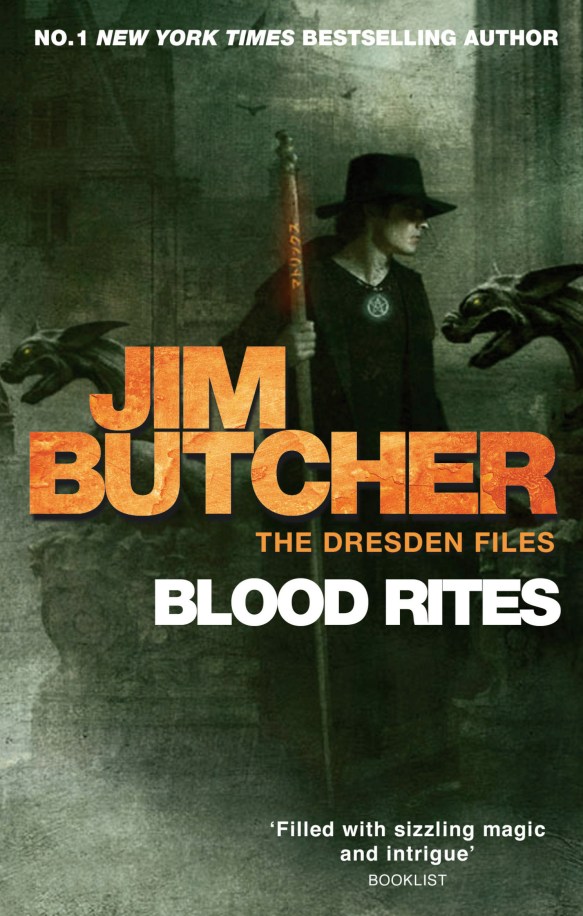
Blood Rite Cover

Publisher: Penguin Audio (Audiobook – 3 August 2004)

Series: Dresden Files – Book Six

Length: 13 hours and 5 minutes

My Rating: 5 out of 5 stars

Amazon

Welcome back to my Throwback Thursday series, where I republish old reviews, review books I have read before or review older books I have only just had a chance to read.  For my latest Throwback Thursday I keep diving into the epic Dresden Files urban fantasy series with the impressive sixth book, Blood Rites.

Last week, in my review for the outstanding fifth book in the Dresden Files series, Death Masks, I mentioned how I had also started listening to the next book in the series, Blood Rites.  I honestly had so much fun reading Death Masks last week (as I did with the rest of the Dresden Files series, such as Storm Front, Fool Moon, Grave Peril, Summer Knight, Battle Ground and The Law), that I had to immediately dive into the next book as soon as I could.  The sixth novel in the series, Blood Rites, was another epic novel which had an impressive and captivating plot to it.

Harry Dresden, Chicago’s resident wizard and protector from the paranormal, continues to eke out a deadly living through his chaotic career of odd mystical jobs while also defending the city against the worst monsters lurking in the shadows.  However, his latest job may place him in the most uncomfortable spot yet, on the set of an adult movie, which finds itself under attack from a deadly and relentless curse.

Taking the case as a favour to his vampire friend and suspicious ally Thomas Raith, Dresden goes undercover on set and attempts to discover who is responsible for cursing the movie’s cast and crew, and why.  However, Dresden’s heroics on set make him a target, and he soon finds the curse striking at him, attempting to end his investigation before he can find the magical murderer.  Worse, enemies old and new are bursting out of the shadows, as two separate courts of vampires attempt to strike Dresden down.

As Dresden continues to search for the murderer wielding the curse, he is forced to fend off attacks from the lethal Black Court.  Led by a powerful elder vampire with a serious grudge against Dresden, the Black Court will stop at nothing to destroy him and any of his friends that gets in their way.  However, the greatest threat may reside in the White Court, to which Thomas belongs.  The White Court vampires are manipulative and subtle killers, using their alluring presence to suck the life out of everyone they touch.  Caught between warring members of the White Court family, Dresden must use all his wits to escape their wrath and uncover hidden truths if he is to survive.  But what secret from the past connects Dresden to the White Court and their machinations, and is Dresden really ready for the dark knowledge waiting for him?

Whelp, it seems that it is pretty impossible for Butcher to write a dud novel.  Blood Rites is an exceptional addition to the wider Dresden Files series, and it was another one that I have no choice but to give a full five-star review to.  Featuring an intense and deeply captivating narrative, Blood Rites was an incredible read and I quickly got sucked into its unique story, compelling mysteries and dark, damaged characters.

I just loved the elaborate, dark and powerful narrative that Butcher featured in Blood Rites, as the author comes up with a complex tale that expertly brings together a dark urban fantasy with a thrilling murder mystery storyline.  Like the rest of the Dresden Files books, Blood Rites exclusively follows protagonist and point-of-view character Harry Dresden as he finds himself forced to face off against a series of dangers and threats at the same time.  The most prominent of these includes an investigation into a deadly curse aimed at the female employees of an adult entertainment studio, which sees Dresden go undercover on set to try and save the remaining cast and determine who the killer is.  This also leads him into a confrontation with the White Court of the vampires, especially when his vampire friend, Thomas Raith, requests his help.  At the same time, vampires from the Black Court are after Dresden for his actions in Grave Peril, which forces him to call in some major backup to take them on.  Unfortunately, this also leads him into conflict with his supposed allies, as well as his former mentor, when secrets from the past are revealed.  Dresden is also hit with a whole bundle of personal drama, especially when he discovers unfortunate truths about his long-dead mother, and there is an interesting growth in the relationship between him and several supporting characters.

As a result, there are many plot elements scattered around Blood Rites, which makes for quite an elaborate overall story.  Luckily, Butcher does an excellent job of introducing all these separate narrative threads to the reader, and you swiftly get drawn into all of them.  After a good and necessary bit of setup, the story roars off at a quick and captivating pace, and the reader has a great time jumping from storyline to storyline.  Everything starts to come together near the middle of the book, where you get some excellent action scenes, including a particularly funny death sequence involving a vampire and a frozen turkey, and the fallout of these scenes leads to some great dramatic moments with big personal revelations.  Following this, the story zooms along, and you soon find a partial and problematic solution to the murder case, while the protagonist is also forced to deal with an all-out assault on the Black Court, while also dealing with dark secrets from his allies.  The attack on the Black Court was one of the best sequences in the book, and the surrounding drama results in some major revelations that fans of the series will lap up.  The remaining storylines then come together perfectly for the finale, as Dresden solves the murder and faces off against its overall architect in a brilliant and extended dark sequence.  I loved how this entire narrative unfolded, and some of the concluding notes will leave you wanting to dive into the rest of the series to see what happens next.

To bring Blood Rites’ great story to life, Butcher utilises his typical style and techniques, which I always immensely enjoy.  The entire narrative is paced perfectly, and you quickly get drawn into the various plotlines, especially with their great combination of characters, intriguing plots, fantasy elements, and dramatic moments.  All of this is overlayed with Butcher’s distinctive humour, most of which is expelled through his cocky point-of-view protagonist, and it helps to enhance the overall powerful and entertainment of the book, especially when the protagonist tries to deflect from his many issues with comedy.  The narrative pretty much goes non-stop, and you get bounced through multiple excellent and powerful scenes, all of which are very fun to see.  I loved how the author balanced out action, character growth, universe building and more in each of the sequences, and there is something quite entertaining and fun for all manner of readers.  I wasn’t as keen on Butcher’s continued attempts to spice up the story with more adult themes, such as the adult film set or the lust-inducing White Court vampires, although it was pretty tame compared to some of the scenes in the last book (that bondage scene, yikes!), and Butcher wove some very compelling narratives around all of them that I deeply enjoyed.  I did enjoy how inclusive Butcher made this novel to new readers, and anyone could easily jump into Blood Rites and enjoy it, even if they haven’t read a Dresden Files book before.  However, there is also a lot to appeal to established fans of the series, especially as there are multiple major reveals and secrets featured here, many of which will lead to big story moments down the track.  As such, I deeply appreciated how this story came together, and pretty much everyone will have a great time getting through it.

I really enjoyed some of the cool fantasy elements featured throughout Blood Rites as Butcher seeks to expand on the lore and magic of his unique universe.  There are some great and intriguing fantasy inclusions here, with the obvious focus being on the various Vampire Courts.  The three main factions of Vampires have all been featured in previous books, although most of the focus has been on the Red Court, whom Dresden is at war with.  Blood Rites, however, has a far bigger spotlight on the two of the other courts who have major differences in powers and appearances.  Most of the focus is on the White Court, who are essentially this universe’s version of succubi, extremely beautiful and seductive creatures who feed off the life energy of those who desire them.  The White Court go on to become a major faction in the Dresden Files series, but this is one of the first books that fully explores them in substantial detail.  As such, you quickly get across their unique abilities, strengths, weaknesses and powers throughout this book, and they come across as quite a distinctive group as a result.  You really get to understand their entire society and worldview, as well as seeing some very different members of the factions, and Butcher writes some compelling storylines around them, while also putting in some very vivid depictions of their powers in action.  I loved how sinister and villainous members of the White Court appear at times, and there is something quite insidious about their abilities that creeps out the protagonists and reader.  A truly complex and excellent group that I had a lot of fun exploring.

Almost in direct comparison to the White Court is the Black Court.  The Black Court are a completely different group of living dead, portrayed more like the classic vampires from Bram Stoker’s novel (indeed, the Dracula novel was an elaborate propaganda attack by their enemies).  Shown as ugly, decaying, blood-hungry creatures that are more monsters than their original human forms, the Black Court are a much more obvious threat with much clearer motives.  There are some brutal and powerful scenes featuring the Black Court in this book, and it was really interesting to see Dresden and his allies go up against them with some classic vampire-hunting weapons, albeit with some fun modern twists to them.  I also deeply appreciated the fantastic parallels between the Black Court and the White Court vampires featured in the Blood Rites; whilst they are both extremely dangerous, their diverse methods and powers troubled Dresden in different ways.  These cool vampires, plus some other great new supernatural threats, added a lot to the complexity of the narrative and I loved the excellent detail and lore that Butcher imbued them with.

As usual, one of the highlights of this Dresden Files book is the compelling and impressive characters the story revolves around.  Butcher features an intriguing and fantastic group of characters in this book, with a compelling blend of established supporting characters and several new figures, many of whom will go on to have substantial roles in the rest of the series.  I had a brilliant time with all these characters, especially as Butcher endeavours to write some outstanding and distinctive storylines around them.

As usual, the most prominent character is Harry Dresden, the wizard protagonist and point-of-view character of the series.  Like most of the recent books, Blood Rites is an emotionally damaging book for Dresden.  Not only is he forced to deal with another harrowing case that racks his sanity, but he also finds out some long-buried secrets that prove quite damaging to behold.  In particular, there is a deep dive into his past and his missing family, both of which are hard subjects for him, and he finds himself with some unexpected connections that he has long been missing.  It was truly fascinating to see this long buried and painful part of Dresden’s past explored, and Butcher ensures that the reader gets struck in the feels with some of the powerful scenes that are explored.  Other interactions and reveals see Dresden re-evaluate some of his relationships in this novel, and there were some intriguing and harsh discussions between him and other characters as a result.  I did think that Butcher is over-playing the whole chivalrous-to-a-fault aspect of Dresden, as he continues to be a tad sexist and constantly underestimates woman, usually to his own detriment.  It’s honestly getting a little old, and I hope it gets phased out a bit in future books.  Still, I deeply enjoyed the fantastic development around Dresden in Blood Rites, and it greatly enhanced the narrative.

This book also featured a great appearance from previous supporting characters Karrin Murphy and Thomas Raith, who both play a major role in Blood Rites.  This proved to be quite a pivotal novel for both characters, and I really appreciated the way that Butcher built on their previous appearances and used them to write some impressive and powerful storylines around them.  This proves to be one of the more intriguing looks at Murphy so far in the series, especially as it dives into her complicated family life, and I liked the early hints here about the future relationship between her and Dresden.  Murphy gets dragged far further into Dresden’s magical activities than ever before here, and she is forced to balance her responsibilities as a cop with the necessity of killing monsters, something she has great difficulty with.  An overall badass character, Murphy has some brilliant and action-packed scenes in Blood Rites, and I love how well she serves as a foil to the more ridiculous Dresden.

Thomas, on the other hand, gets quite an intense and deeply personal storyline here as you get the most in-depth look at this elusive and compelling vampire character.  Not only do you get a great look at the rest of his family as the book explores the White Court, but you finally find the reasons why he is always helping Dresden, which leads to some emotional and compelling scenes.  A lot of time is also spent exploring the battle between Thomas’s humanity and the monster within, especially when it comes to feeding on those around him.  This comes to a head when his need to feed and survive hurts someone close to him and he has trouble coming to terms with what he’s done, especially when Dresden harshly confronts him.  Throw in his complicated family and intense daddy issues, and Thomas goes through the emotional wringer in this book, which proves to be very illuminating.  Butcher sets Thomas up as quite a substantial supporting character in this book, and I look forward to seeing more of him in the future.

Aside from these main characters, there is also a great collection of supporting characters who add a lot to the story, and there are some awesome appearances here.  I really enjoyed seeing more of mysterious mercenary Kincaid in this book, especially after his fun appearance in Death Masks.  Kincaid is a badass killer who is hired by Dresden to kill the Black Court, only to end up being a bigger threat to Dresden when the wizard lacks to money to pay him.  Kincaid has some excellent and action-packed scenes, and I was intrigued by his backstory, especially the hints at his dark, dark past.  I also loved the use of Dresden’s mentor, Ebenezar McCoy, an older wizard who raised him and taught him magic.  Butcher writes some amazing scenes around McCoy, especially once Dresden finds out just how many secrets the old man has been keeping from him.  Throw in a batch of great vampire characters (including the sinister Lord Raith and the compelling Lara Raith), some entertaining members of the adult film industry (including the fantastic diva Trixie Vixen), and the first appearance of Mouse, Dresden’s puppy, and you have an amazing cast of characters here that Butcher gleefully and impressively wraps the story around.  Each of these characters is very fun and intriguing in their own way, and I loved the elaborate and moving scenes that they star in.

Naturally I chose to check out Blood Rites on audiobook, which I maintain is the absolute best way to enjoy the Dresden Files books.  The captivating story and excellent characters really fit into this format extremely well, and I find myself absorbing the narrative and the author’s fantastic style a lot better this way.  With a runtime of just over 13 hours, Blood Rites is the noticeably longer than the previous books in the series (they get progressively longer and longer as the series goes, with some later books like Cold Days reaching nearly 19 hours in length).  Despite the increased run time, I still found myself knocking this audiobook off in no time at all, especially once I got stuck into the excellent and powerful story.  I must also highlight the incredible voice work of the always awesome James Marsters, who did another spectacular job narrating this fantastic novel.  At this point in the series, Marsters has really hit his stride when it comes to narrating, and he voices each audiobook with some impressive passion, effortlessly bringing the dark events and complex characters to life and ensuring that everything sticks in the listener’s mind.  All the characters are voiced extremely well, with the highlight again being protagonist Harry Dresden, who Marsters inhabits effortlessly.  He really understands the character’s anguish, pain, and dark humour, and this comes across in his narration perfectly.  Thanks to his epic performance in Blood Rites, and the other Dresden Files audiobooks, Marsters remains one of my favourite audiobook narrators, and I cannot recommend the Blood Rites audiobook enough as a result.

My dive into the early Dresden Files novels continues to be incredibly epic, as I once again fell in love with one of Jim Butcher’s unique reads, Blood Rites.  This fantastic novel has so much going for it, and I had a brilliant time exploring the powerful urban fantasy/crime fiction based narrative.  Featuring a deeply compelling mystery, a ton of intriguing parallel storylines, and some impressive and emotionally charged character development, Blood Rites is another exceptional book that is so much fun to get through.  Honestly, if I didn’t have such a backlog of awesome recent audiobook releases, I would probably be diving into the seventh Dresden Files novel right now, but hopefully I will get a chance later this year.  If you haven’t checked out the Dresden Files books after my previous glowing reviews, then you really need to get your butt into gear and start reading them now!
Amazon

Tribe by Jeremy Robinson

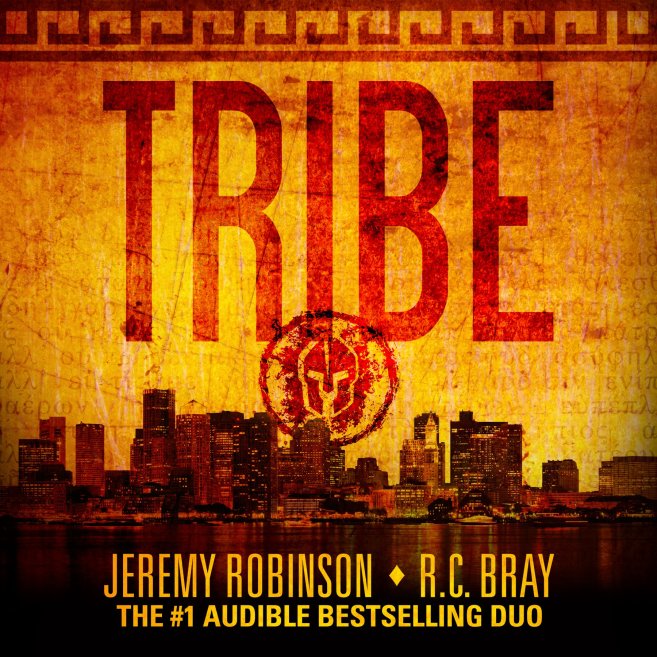
Tribe Cover 2

Publisher: Breakneck Media (Audiobook – 26 November 2019)

Series: Standalone/Infinite Timeline

Length: 10 hours and 36 minutes

My Rating: 4.5 out of 5 stars

Amazon     Book Depository

Gods, mortals and everything in between will clash in Tribe, the intriguing fantasy thriller from the always entertaining Jeremy Robinson.

Last year I decided to take a chance and check out an author whose work I was unfamiliar with, and boy did that work out for me.  Jeremy Robinson had a very impressive and extensive list of awesome books to his name, most of which straddled the border between thrillers and other genres like fantasy, science fiction and horror.  The first book of his I checked out was The Dark, which followed a very likeable protagonist who gets caught up in a terrifying and horrific invasion of his neighbourhood by a horde of demons.  The Dark was an outstanding read, and I really got drawn into its awesome story, intense pacing and fun characters.  After giving The Dark a full five-star rating, I had to make sure to grab the other 2021 release from Robinson, Mind Bullet, especially as it was in the same loosely connected series.  Mind Bullet was a fantastic and highly entertaining read that followed a psychic hitman being hunted by a series of unusual but deadly assassins.  Mind Bullet was another five-star read in my book, and I had such a great time reading it.  Indeed, I loved both The Dark and Mind Bullet so much that I included them both of my top books and audiobooks lists of 2021.

Naturally, this has made me quite eager to read some more of Robinson’s work, and while I had to miss one of his 2022 releases The Order (I need to read some of the lead-up books beforehand), I did recently decide to go back and try one of his older novels, the 2019 release, Tribe, from the same storyline as The Dark and Mind Bullet.  Not only does this allow me to better follow one of Robinson’s upcoming books in the Infinite series but it had a very fun-sounding story that I really wanted to check out.  It turns out Tribe was just as fun as I hoped it would be, and I had a wonderful time getting through it.

Sarah, a 20-year-old college dropout working at a donut shop in Boston, has long struggled with the bad turns her life has taken.  Constantly plagued by bad luck and misfortune, Sarah has no one in her life she can count on, until she runs into homeless teen street punk Henry.  Henry, a kid who literally knows no fear, has randomly blown into her life and the two find themselves with a strange attachment to each other that they can’t explain.  However, life is about to get much more complicated for both when they run into each other at the local bank.

Arriving at the same time, the two manage to work together to foil a robbery that seems focused on targeting a mysterious and wealthy woman named Helen.  Taking Sarah and Henry under her wing, Helen attempts to take them to her apartment, but before they can make it they find themselves under attack by members of an ancient cult who are determined to cause as much chaos and destruction as they can.

Separated from the incredibly capable and violent Helen, Sarah and Henry find themselves alone on the streets of Boston, pursued by the cult.  Forced to keep moving and face off against a stream of determined and dangerous foes, Sarah and Henry begin to realise that there is something special about them that allows them to fight back, and which is making them stronger.  However, if they want to survive, they will need to discover the truth about who they are and what dark legacy their blood contains.  But with a dangerous figure hunting them, can Sarah and Henry live out the day, or will they become links in a master plan spanning millennia?

Tribe was an extremely entertaining and action-packed novel from Robinson, who utilises his usual fun and thrilling style to create an excellent read.  Featuring a captivating and electrifying narrative based around a couple of interesting and damaged figures, Tribe was a truly unique and captivating read that I had a fantastic time with.

Robinson crafted together a very interesting and highly exciting narrative for Tribe, which is essentially a non-stop action adventure from the very first scene.  After a quick but memorable introduction to, Sarah and Henry, the story dives right into the action, when the protagonists chance upon a violent bank hold-up.  Thanks to the impulsive Henry, the two are forced to intervene, assisting the mysterious Helen, making them heroes.  While you would imagine that would allow them to have some quiet time, Robinson puts them into the next action set piece within a few pages, as they are forced to flee an army of angry and over-the-top cultists who are hunting them.  This results in a series of impressively violent and extremely compelling fight sequences and chase scenes, as the protagonists try to survive while their lives are changing in ways that they don’t fully understand.  These initial sequences fill up the first half of the novel well, and you quickly become pretty damn invested in the narrative, especially once Robinson finally reveals the reasons behind everything and how everyone connects into the wider plot.  This first half also does a great job setting up the novel’s style, and you soon get quite used to the fantastic combination of action, character development and slick humour as the outrageous characters experience an array of over-the-top situations.

There are some rather interesting dives into Greek mythology in the second half of Tribe, which alters the course of the story and impacts everything the protagonists thought they knew about the world and themselves.  After a couple of attempted separations, the characters find themselves in some pretty dark situations as they finally face off against the big bad of the story, who ended up being an extremely sinister baddie.  The action comes thick and fast in this second half of the book, as the protagonists keep going up against a series of unique and memorable foes.  These scenes really make you appreciate Robinson’s ability to write brilliant, fast-paced action sequences, and the fantastic detail and intriguing depictions of deadly fights are so much fun to see.  I also enjoyed the strong Greek mythological motifs and elements that are slipped into this half of the book.  I think that they melded with the thriller style of the plot extremely well, and a lot of the story felt like a cool fantasy/superhero combination.  Along with some powerful reveals, major trauma, and subsequent character evolution, the protagonists become ready for the final confrontation that lays everything on the line.  The entire narrative flowed into this intense and high-stakes conclusion extremely well, and readers are in for a fun and captivating time as the protagonists go all out.  I really liked how everything turned out, and while this wasn’t my favourite of Robinson’s narratives, it was pretty damn addictive and readers will come away extremely satisfied.

I had a lot of fun with Tribe, and I am very glad that I checked it out, especially with how it plays into Robinson’s wider universe.  As I mentioned above, Tribe is part of a loosely connected series of cool books that are part of the Infinite Timeline.  While most of them are standalone reads, the further you get into the series, the more the storylines start to blend a little more, and this will all lead to several massive crossover novels, such as one being released later this year.  This is one of the main reasons why I wanted to read Tribe, as the main characters from it have appeared in the two other Robinson books I have read and will also be part of the upcoming 2022 release, Khaos.  However, readers don’t need to do any pre-reading for Tribe to enjoy it; thanks to its relatively early position in the Infinite Timeline, it doesn’t noticeably feature characters or story elements from the other novels.  As such, it is a very accessible read, and anyone who likes a fun action story can have a great time reading it.  Still, those people who are interested in Robinson’s larger series will do well to read Tribe soon, especially as it sounds like the plot of Khaos is going to come back to key details from Tribe in a big way.

I also deeply appreciated how Robinson made use of some excellent and fun central characters, Sarah and Henry, two seemingly unconnected people.  The story is set up to continuously rotate between their perspectives, which really enhances the overall quality of the narrative, especially when you get two separate views of the same events, or the characters are dealing with separate outrageous events at the same time.  The author does a great job of building up both characters throughout the novel as they start to discover their destiny and their various shared connections.  A lot of the revelations around them result in some interesting abilities and moments for the characters and watching them react to it in very different ways was very entertaining.  They also go through a lot of trauma throughout the book, and again both of them deal with it differently, which I felt was an intriguing and realistic inclusion.  Both characters are quite interesting in their own way, and they serve to balance each other out in the narrative, with Sarah acting as the moral and sensible one (at least until she unleashes the inner beast), and Henry being the wildcard.  Henry is definitely the life and soul of the much of the book.  Due to a brain condition, he lacks any sense of fear whatsoever and has no filter when it comes to doing stupid stuff.  I have mixed feelings about this; while many of these random outbursts and actions are a lot of fun, they do start to get a little repetitive and annoying after a while.  I also felt that it ensured Henry started to overshadow Sarah in parts of the book.  Still, these were some great central protagonists you quickly get attached to, and with the fantastic supporting figures, you have a lot of fun characters in this book that really enhance the narrative.

One of the most appealing things about Robinson’s books is that they all make for an amazing audiobook.  Tribe was another excellent example of this, especially as listening to the story really allows you to get to grips with the incredible and powerful action sequences.  With a run time of just over 10 and a half hours, this is a relatively quick audiobook to get through, and it is very hard not to get attached to it, especially when it features brilliant narrator R. C. Bray.  Bray is a very skilled audiobook narrator who, in addition to providing his voice to most of Robinson’s books, has also narrated several other great books and series, such as Michael Mammay’s Planetside series (Planetside, Spaceside and Colonyside), all of which were excellent audiobooks.  Bray has an exceptional voice that works really well to tell high-stakes and powerful action orientated novels while also bringing a range of interesting characters to life.  He did another outstanding job in Tribe, and all the high-octane action fights are told perfectly, with Bray really highlighting the brutal fights with his telling.  He also provides powerful and insightful voices to all the characters, with all their quirks and interesting features perfectly brought to life as a result.  As such, I had a brilliant time listening to Tribe on audiobook and felt that Bray’s excellent narration really added to my overall enjoyment of this novel.  As such, I would very much recommend the audiobook version to anyone interested in trying out Tribe, as it was a lot of fun to listen to.

Overall, Tribe was a pretty fantastic and extremely entertaining book from Jeremy Robinson.  Loaded with all the intense action, clever references to Greek mythology and intriguing characters you need for an incredible narrative, Tribe was such an epic read and it comes very highly recommended, especially as an audiobook.  I had an outstanding time, with Tribe and it will be interesting to see how these characters, as well as the protagonists of The Dark and Mind Bullet, will feature in the upcoming Khaos.

Amazon     Book Depository

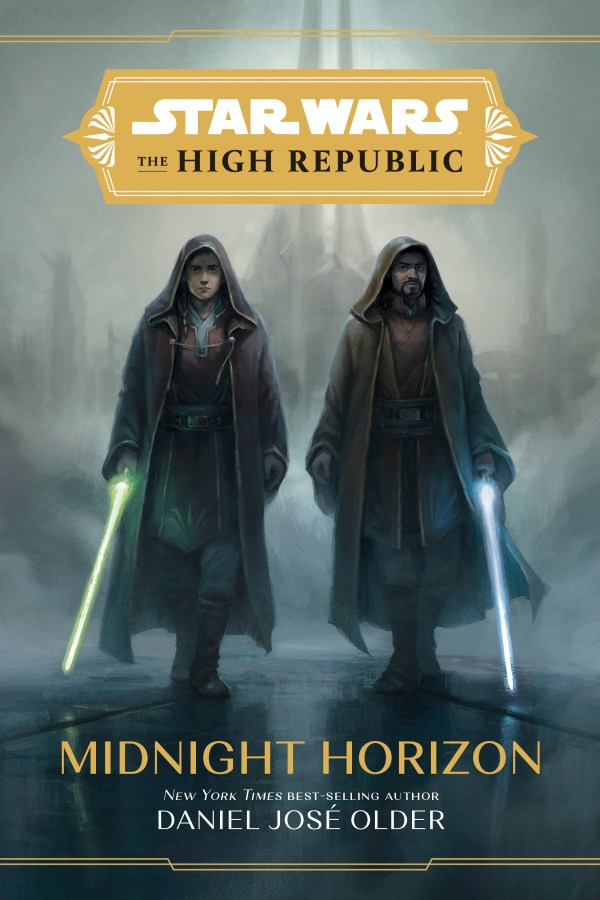
Star Wars: The High Republic: Midnight Horizon by Daniel José Older

Star Wars - Midnight Horizon Cover

Publisher: Disney Lucasfilm Press (Audiobook – 1 February 2022)

Series: Star Wars – The High Republic

Length: 10 hours and 5 minutes

My Rating: 4.75 out of 5 stars

Amazon     Book Depository

The first phase of The High Republic Star Wars novels continues to come to an intriguing end with the phase’s third young adult entry, Midnight Horizon, a deeply exciting and fun novel from the talented Daniel José Older.

Since the start of 2021, fans of Star Wars fiction have been granted a unique treat in the form of The High Republic books, a Star Wars sub-series set hundreds of years before the events of the films.  Set at the height of the Republic, the High Republic era is loaded with dangers for the Jedi, particularly that of the Nihil, dangerous raiders who seek to raid, pillage, and destabilise order, while their mysterious leader attempts a far more ambitious plan: the destruction of the Jedi.  Broken down into three phases, the first phase was pretty epic and set up the entire High Republic premise extremely well.  This phase has featured a great collection, including the three main adult novels, Light of the Jedi, The Rising Storm, The Fallen Star; some intriguing young adult books; the audio drama Tempest Runner; two awesome comic book series; as well as some other media releases.  However, this first phase has come to an end, and I just managed to finish off one of the novels that served as its conclusion with Midnight Horizon.

Midnight Horizon is the third young adult fiction novel set within the first High Republic phase, and it is probably the best.  This book was written by Daniel José Older, who has authored several great Star Wars novels over his career, including Last Shot, which was one of the books that started my recent obsession with Star Wars extended fiction, and who has been one of the key contributors to The High RepublicMidnight Horizon is set around the same time as the last adult book of the phase, The Fallen Star, and continues storylines from some of the previous books, including the other two young adult books Into the Dark and Out of the Shadows, as well as the Star Wars Adventures comic series and the junior novel Race to Crashpoint Tower.

Following the devastating Nihil attack on the Republic Fair, the Nihil raiders are finally on the run from the Jedi of Starlight Beacon.  However, not everything is as it seems, and several mysterious events and attacks are beginning to occur around the galaxy.  One of the more alarming rumours of Nihil activity has been sent from the planet of Corellia, home of the galaxy’s premier shipyards, where a now missing diplomatic bodyguard was attacked by mysterious killers wearing Nihil garb.

Determined to ensure that the chaos of the Nihil does not spread to the core planets of the Republic, the Jedi dispatch the small team of Jedi Masters Cohmac Vitus and Kantam Sy, as well as Padawans Reath Silas and Ram Jomaram, to investigate.  All four Jedi have substantial experience dealing with the Nihil, but each of them is going through their own personal internal battles as they struggle to deal with recent losses.  Nevertheless, the Jedi embark upon their investigation into Corellia and soon find unusual help from young security specialist Crash, the employer and friend of the missing bodyguard.

While Cohmac and Kantam attempt to investigate through official channels, Reath and Ram work with the chaotic Crash and her unusual security specialists to infiltrate Corellia’s high society.  Crash believes that one of her elite clients has knowledge about the Nihil infiltrators and embarks on an ambitious plan to draw them out, setting up Jedi associate Zeen as a famous singer.  However, nobody is prepared for the Nihil’s plans, both on Corellia and at Starlight Beacon, and chaos is about to be unleashed upon the Jedi and all of Corellia.  Can the Jedi stand against their foe when all hope seems lost, or will the Nihil continue to sweep across the entire galaxy?

Midnight Horizon was an exceptional entry in the High Republic series, and I was particularly impressed with the cool and epic story it contained.  Older came up with a brilliant and powerful narrative that combines a fast-paced story with great characters and some interesting High Republic developments.

This entry in the High Republic range had a very distinctive and compelling young adult story that sees all manner of chaos and action befall its protagonists.  Older wrote a very fast-paced, character driven narrative that takes the reader to the world of Corellia.  Drawing in an interesting team of entertaining and chaotic protagonists, all of whom are going through some major issues, Older sets them on a path to a major confrontation, while all of them try to come to terms with their roiling emotions.  The author sets most of the story up extremely well at the start of the book, and the reader soon gets quickly invested in seeing the Jedi investigate the Nihil on Corellia.  The story goes in some very interesting directions as everyone tries to identify the Nihil plot, with the best ones following the two Jedi Padawans as they team up with young bodyguard Crash.  Crash has some elaborate and over-the-top plans that she drags them into, including tricking a rare species eating diva named Crufeela, and this proves to be a lot of fun, while also setting up the final act of the story.  At the same time, Older also throws in some intriguing flashbacks to one of the character’s pasts, as well as showing a few scenes outside of Corellia, all of which adds some greater context to the story as well as adding to the amazing emotional depth of the novel.

Everything comes together brilliantly in the final third of Midnight Horizon, where the Nihil plot on Corellia is revealed, simultaneously occurring at the revelation of the fall of Starlight Beacon (which you knew was coming).  I must admit that until this final third, I kind of found Midnight Horizon to be a bit by the numbers, although undeniably fun, but the way everything came about near the end was pretty awesome, as the characters are thrust into an all-out war.  There are multiple pitched battles, tragic deaths and surprise reveals occurring during this part of the book, and you are constantly hit with big moment after big moment as it continues.  I honestly couldn’t stop at this point in the book, as I desperately wanted to see what happened next, and I was sure that I was seconds away from bursting into either tears or cheers.  My determination to continue really paid off, as Older saved the best revelation for right near the end as there is a really big moment that changes everything and is sure to get every Star Wars fan deeply excited.  Older leaves everything on an exciting and powerful note, and readers will come away feeling deeply moved.  It will definitely keep them highly interested in The High Republic as a whole.

The author really worked to give Midnight Horizon an extremely fast pace, and it is near impossible not to swiftly power through this book as it blurs around you.  Shown from the perspective of all the key protagonists, you get a great sense of all the impressive events occurring throughout the book, while also getting some powerful and intense examinations into their respective heads.  Older presents the reader with an excellent blend of universe building, character work, humour and action throughout Midnight Horizon, and there is a little something for everyone here, guaranteeing that it keeps your constant interest and attention.  I do think that the story as a whole could have benefited from greater development of the book’s villains.  They honestly came a bit out of nowhere towards the end and you really didn’t get an appreciation of who they were (some of it is explored in some of Older’s other works).  I really wish that Older would have shown a few more scenes from the villain’s point of view, highlighting the establishment of their plans a little better, and I felt that really would have increased the impact of the book, but I still had a lot of fun with it.

Midnight Horizon also proved to be a pretty good young adult novel, especially as it shows multiple compelling and well-written teenage characters in dangerous situations, and I loved the powerful exploration of their unique issues, especially the constant uncertainty and doubt about what they are doing.  There are also some major LGBT+ elements scattered throughout this novel, which I thought were done really well, as you get a range of different relationships, orientations, sexualities and fluid genders throughout the book, and I loved seeing this sort of inclusivity in Star Wars.  I also liked the easier flow that Older featured in the novel, which I felt was associated with the younger characters, and it worked quite well to quickly and efficiently tell this book’s fantastic narrative.  While this is a young adult book, there are some great darker themes that all readers will appreciate, and I loved how it developed into a brutal and powerful war at the end.

Midnight Horizon proved to be an interesting entry in the wider High Republic series, as it served as one of the last books in the first phase.  Since it is set alongside The Fallen Star, the readers get a whole other side of this key tragedy in Midnight Horizon, as the established characters all witness the fall of Starlight Beacon and the corresponding changes to the galaxy.  At the same time, it does some interesting exploring of the key planet of Corellia during this period, gives some hints about some events that will appear in the upcoming second High Republic phase, while also setting up some other key moments for the future.  However, the most significant thing that Midnight Horizon does for the High Republic is continue and conclude multiple key storylines and character plot lines that were started in other bits of work, such as the other High Republic young adult books.  It also provides an intriguing sequel to Older’s junior fiction novel, Race to Crashpoint Tower, and actually serves as the conclusion to The High Republic Adventures comic series, also written by Older.  The High Republic Adventures was one of the major comic lines for this phase of the sub-series, and fans of it really need to check this book out as it details the fates of several of its main characters.  I had a great time seeing how some of these storylines continue in Midnight Horizon, and Older did a great job of bringing everything together in this novel, while also making it quite accessible to newer readers who haven’t had a chance to read the comics.  That being said, good knowledge of the preceding High Republic works is probably a good thing to have for this novel, although Older does make sure to give as much background as possible as he goes.

As I have mentioned a few times throughout this review, Midnight Horizon was highly character focused, as the author brings in an interesting collection of main characters to base the story around.  All the major point-of-view characters have been featured in previous pieces of High Republic fiction before (mostly in Older’s work), and the author ensures that they all get detailed and compelling storylines in this novel that not only revisit their complex appearances in previous books, but also brings all their storylines to an intriguing close for this phase.  Older also spend a substantial time diving into the minds of these protagonists, which added some impressive emotional depth to the book, as all the characters experience deep traumas or regrets, especially after fighting the Nihil for so long.  This resulted in quite a moving read, and while I do think that Older might have used a few too-many supporting characters, this ended up being an exceptional character focused novel, and I really appreciated the clever way the author explored his protagonists and showed the events of this book through their eyes.

The best two characters in this book are the two Jedi Padawans, Reath Silas and Ram Jomaram, who serves as Midnight Horizon’s heart and soul.  I was particularly keen to see Reath Silas again, as he has been the constant protagonist of the High Republic young adult books and is a pretty major figure as a result.  Older is the third Star Wars author who has featured Reath as one of their main characters, and I do like how consistent the various authors have been while showcasing his growth and emotional damage.  Reath is going through quite a lot in Midnight Horizon, as he continues to try and balance his duty as a Jedi with the mass trauma he has experience in the last two books, his conflicted emotions, penchant for personal connections, and general uncertainty about what he is doing.  Despite this, he proves to be a steadfast and dependable character, and it is hard not to grow attached to his continued story, especially as he has developed so much from the first book from scholarly shut-in to badass warrior.  Reath’s narrative comes full circle in Midnight Horizon, and fans of this character will really appreciate how Older features him in this book.

I also had a lot of fun with Ram Jomaram, who was such a joy to follow.  Ram is an eccentric and unusual Padawan who first appeared in the concurrently released The Rising Storm and Race to Crashpoint Tower.  A mechanical genius with poor social skills and who is always accompanied by a group of Bonbraks (tiny sentient creatures), Ram brings most of the fun to the book with his antics and complete lack of situational awareness.  While I initially didn’t like Jam (mainly because I found out he was the Jedi who first came up with calling cool things “Wizard”), he really grows on you quickly with is exceedingly perky personality.  It was so much fun to see him in action throughout the book, and he gets into some unusual situations as a result.  Despite mostly being a friendly and cheerful figure, Ram is also going through some major emotions in Midnight Horizon, as he witnessed his home planet get ravaged by the Nihil in The Rising Storm, and he is now very uncertain about the emotions he feels while getting into battle.  This sees Ram form a great friendship with Reath throughout the book, and the two play off each other extremely well, bringing not only some fun humour but an interesting mentor-mentee connection.  Ram ends up showing everyone just how much of a badass he is towards the end of the book, and I honestly had an amazing time getting to know this character.

There is also an interesting focus on the two Jedi Masters, Cohmac Vitus and Kantam Sy.  Both go through some interesting and major moments in Midnight Horizon, and you really get some powerful insights from both.  Cohmac’s story is an intense and intriguing examination of trauma as you see this Master continue to struggle with his history and inability to process emotion.  These issues have been building within Cohmac since his introduction in Into the Dark, and it was fascinating to see them continue to impact him here, especially once he discovers what happened at Starlight Beacon to one of his closest friends.  Kantam Sy is a nonbinary character who has been primarily featured in The High Republic Adventures comic.  You get a much more in-depth look at Kantam in this book, especially as Older spends time developing several flashbacks around him that examine his complex past as one of Yoda’s students.  Kantam’s team-up with Cohmac proves to be an intriguing part of the book’s plot, and it was compelling to see the more balanced Kantam witness Cohmac’s building anger and frustration.

The final two major characters are Zeen and Crash, both of whom have some interesting storylines in this book.  Zeen, a Force-sensitive teen who assists the Jedi, is one of the main characters from The High Republic Adventures comic, and many of her storylines are finished off here a little abruptly although in some interesting ways.  Most of her storyline is focused around her growing romantic relationship with Padawan Lula Talisola, who she has been close with during the series, and the resultant internal conflict as she tries to decide whether to act on it.  There are also some more damaging emotional moments for Zeen as she comes to terms with the actions of her old friend Kamerat and the tragedy of Starlight Beacon.  The other character is Alys Ongwa, better known as Crash, a diplomatic protection officer who specialises in protecting Corellia’s fractious and deadly political elite.  Crash is an interesting character who was first introduced in a one-shot comic written by Older, Crash and the Crew Do What They Do, and it was interesting to see her brought back here.  A skilled bodyguard and leader, Crash is an intense and highly motivated figure who enacts multiple crazy schemes to get what she wants, while also trying to be a good friend and boss.  Crash hits some major crossroads in Midnight Horizon, especially when she is forced to balance her oath as a bodyguard against justice for her friend and the safety of her city, and she is constantly forced to keep her own intense emotions in check.  I found Crash to be one of the most entertaining and enjoyable figures in Midnight Horizon and watching her and her chaotic crew of bodyguards in action is a lot of fun, especially when she plays of all the other protagonists really well, bringing out the recklessness in all of them.  However, Crash is also quite emotionally vulnerable, and it was nice to see her try to become a better friend while also working on her romantic attachments to a beautiful alien singer and lifelong friend.  I had a wonderful time with all these major characters in Midnight Horizon, and Older did a remarkable job highlighting them and ensuring the reader was aware of their many issues.

As with most Star Wars novels I read, I chose to grab a copy of Midnight Horizon’s audiobook format, which was the usual exceptional experience.  Featuring a short run time of just over 10 hours, Midnight Horizon is a quick and fun audiobook to get through, and I loved the various ways this format enhanced the fantastic story.  As usual, Midnight Horizon features all the amazing Star Wars sound effects for lightsabers, blasters and ships, which are used to punctuate the story elements being described and perfectly bring listeners into the moment.  It also made good use of some of the classic Star Wars music, which, even though it was used a little more sparingly in Midnight Horizon, deeply added to the atmosphere of the book and perfectly enhanced the emotional impact of several key scenes.

While the sound effects and music where as cool as always, the thing that really impressed me about the Midnight Horizon audiobook was the great choice of narrator in Todd Haberkorn.  I didn’t realise that Haberkorn was going to narrate this book until I started listening to it, and I was pretty blown away the second I realised that I got to listen to an audiobook read by Natsu himself.  I am a massive fan of Haberkorn’s work as the English voice actor for dubs of awesome anime like Fairy Tail and Full Metal Alchemist Brotherhood, so it was really cool to have him narrate this audiobook.  Not only that, but Haberkorn did an outstanding job bringing the various characters to life in Midnight Horizon and moving the story along at a blistering and fantastic pace.  Haberkorn’s voice perfectly fit the frenetic energy of this story, and I loved the distinctive and very fitting voices he gifted to the novel’s eccentric characters.  He also had a lot of fun voicing some of the unique alien creatures featured in the book, such as the Bonbraks, and he got to do a particularly good Yoda voice as well.  I had an absolute blast listening to Haberkorn narrate this awesome audiobook, and when combined with the great music and impressive sound effects, this was an exceptional way to listen to Midnight Horizon.  I would highly recommend this format as a result, and it probably added a few points to my overall rating because of how impressive it was.

Overall, Midnight Horizon was an excellent High Republic young adult novel that was a real treat to read.  Daniel José Older came up with an outstanding and fun story that was both exciting and powerful as he dives into his various fantastic and damaged protagonists.  Loaded with some awesome moments and epic developments, this was a great addition to the Star Wars canon, and I loved every second I spent listening to it.

Amazon     Book Depository

The Crimson Thread by Kate Forsyth

The Crimson Thread Cover

Publisher: Vintage Books Australia (Trade Paperback – 5 July 2022)

Series: Standalone

Length: 360 pages

My Rating: 4.5 out of 5 stars

Amazon     Book Depository

One of Australia’s premier authors presents another compelling and powerful historical drama with The Crimson Thread by Kate Forsyth.

Kate Forsyth is a very talented Australian author whose work I have long been a fan of.  While Forsyth is best known these days for her intense historical dramas, I personally am a big fan of her The Witches of Eileanan series, which I read when I was younger.  The Witches of Eileanan books, which were Forsyth’s debut series, follows a group of powerful magical users in a troubled fantasy realm filled with dragons, mages and monsters, as they attempt to overthrow a dark anti-magic tyrant and save the world from multiple impending threats.  Filled with great characters, impressive magic, a complex setting and some brilliant and occasionally dark storylines, this was a particularly awesome and epic series, and it was among the earliest fantasy books that I ever checked out.  I deeply enjoyed The Witches of Eileanan books and the sequel Rhiannon’s Ride series, and I have been meaning to reread them all for a while.  In the meantime, I decided it would be good to check out one of her more recent works with The Crimson Thread.  This intriguing and captivating historical drama is a lot more consistent with Forsyth’s current writing focus and I was very interested in seeing something from this genre.

By May 1941, the Nazis have conquered Greece and the island of Crete lies before them as the next land to control.  As the island prepares for invasion, young Cretan woman, Alenka, attempts to find some semblance of normality amongst the chaos, but chance meetings with two Australian soldiers stationed on the island will change her life forever.  When the Germans finally invade Crete in a massive and long-running battle, Alenka finds herself stuck in the middle of the fighting and eventually chooses to hide the Australians when the Germans win.

These two soldiers are Jack and Teddy.  Lifelong best friends, the rambunctious Teddy and the shy, scholarly Jack, joined the army together to see the world, only to get caught up in the chaos of the war.  Separated during the retreat to Crete, Jack and Teddy manage to reunite on the island, with both falling for the alluring Alenka upon meeting her.  When the Germans invade and they are trapped behind enemy lines with no hope of escape, both go to ground, seeking out help from Alenka and her allies in Crete’s resistance movement.

As the Germans tighten their hold on the island, Alenka, Jack and Teddy find themselves in constant danger as they attempt to find some way for the Australians to escape.  However, their attempts to evade the Nazis are not their only trouble, as Jack and Teddy’s once close friendship starts to deteriorate through jealously and anger.  Worse, Alenka’s brother, Axel, is a dangerous Nazi collaborator, whose long simmering anger and resentment threatens everything Alenka holds dear.  As Axel searches for a way to destroy his sister and her friends, all will be forced to make some hard choices, both on the battlefield and in love.

This was a deeply moving and highly detailed historical drama from Forsyth that I had a wonderful time reading.  Balancing a captivating historical tale of invasion in a unique World War II setting with a powerful tale of romance, broken friendships and family betrayals, The Crimson Thread is an outstanding novel which really highlights Forsyth’s impressive skill as an author.

The Crimson Thread has an excellent and fast-paced narrative that quickly drags readers in with the wartime action and keeps them there with the subsequent drama and tragedy.  Told from various intriguing perspectives, The Crimson Thread does a great job of quickly introducing you to the key characters and settings before bringing the terror in the form of a sudden and devastating Nazi invasion.  What follows is captivating tale of survival, endurance and resistance, as the three central protagonists attempt to evade and outwit the occupiers while also dealing with their own simmering feelings of love, betrayal and jealousy.  Forsyth weaves together some hauntingly tense and moving scenes throughout this narrative, as you see the characters thrust into all manner of dangerous and tragic circumstances amid the horrors of war.  The entire narrative has an excellent blend of action, high-stakes espionage and deep personal drama that I found myself really drawn to, all of which fits together perfectly with the distinctive setting and period.  The entire narrative takes place over the course of several years, and I deeply appreciate the long-term storylines that Forsyth utilised as you got to see the various characters grow and change throughout the war, often for the worst.  I loved the focus on camaraderie, identity and historical pride that was worked into the story, and all the unique plot points come full circle by the end.  Forsyth ends the entire excellent story of survival and war on a tragic, but hopeful note, and while you may end up with some conflicting feelings about the fates of some of the focal characters, readers are going to come away from The Crimson Thread both moved and satisfied with the story conclusion.

One of the things that I have always appreciated about books set during World War II are the sheer number of unique stories that can be written, as there were so many different battlefields, conflicts and personal dramas that resulted from them.  While I am fairly knowledgeable about history and World War II, I honestly knew very little about the occupation of Crete during the war, nor did I realise that Australian and New Zealand soldiers were stationed there when the Germans invaded.  As such I was pretty in the dark when it came to the historical context of the novel, but Forsyth was well on hand here and spent substantial time exploring the entire Nazi conquest and occupation of Crete during the war.  Everything is covered here, including the initial 11-day battle to take control of the island, the subsequent disorganised evacuation of Allied forces, the harsh occupation of the Cretans, which included several massacres, the resistance movements, and everything else that occurred from first day to the end of the war.  I was particularly intrigued by the role that Australian troops played during this conflict, and Forsyth made sure to really highlight why they were there and the various hurdles they faced during this war, including being trapped behind enemy lines with few options to escape.  All of this is worked into the story in a clever and impressive way, and the various characters find themselves involved in many of the key events, either as witnesses or participants.  You really find yourself getting drawn into the midst of these compelling historical events, and I personally found it incredibly fascinating to see them, especially as Forsyth did some substantial research for this book.

I also really appreciated Forsyth’s dive into the culture, history and iconic landscape of the main setting of Crete.  Most of this book takes place on this beautiful island, and I felt that Forsyth really captured the heart and soul of Crete and its people throughout the story.  There are some compelling dives into the identity and culture of the Cretan people, including the importance of their dress, their customs, their speech, and their defiant nature.  Due to most of this explanation being done to show the undercover Australian citizens how to blend, it proves to be very informative, and readers without much pre-knowledge of Crete come away with a lot of detail and appreciation for its people.  There are also some fun dives into the history of the island, particularly its ancient association with legend of the Minotaur and palace of Knossos.  Due to my background in archaeology, I found this to be extremely interesting, especially as there are also some compelling depictions and discussions about the famous excavations that took place on Crete during this period.  Throw in some breathtaking and highly detailed descriptions of the various environments and settlements on Crete, including its treacherous and massive mountains, which serve as a great setting for some particularly intense scenes, and you get an outstanding appreciation for this island.  All of this is utilised in The Crimson Thread’s story really well, as the characters, like the reader, really get to know the island and how it impacts many of their decisions and actions.

Forsyth also came up with some excellent and distinctive characters for The Crimson Thread, and their unique and emotionally rich storylines are a powerful part of this great book’s story.  This includes Alenka, who finds herself caught between her culture, her troubled family past, and her attraction to the two Australian soldiers she grows close to.  Despite primarily being shown as a strong and clever woman, Alenka goes through some real tragedies and trauma in this book that slowly wear away at her psyche.  I found it fascinating to see her growth throughout the book, as well as her attempts to overcome the various obstacles and indignities that come her way.  Alenka was really well counterbalanced by her brother, Axel, a dark and dangerous youth who serves as the book’s central antagonist.  Initially shown as a youth who grows into a dangerous teenager throughout the narrative, Axel is a complex figure.  A half-Cretan boy who is the result of an extramarital affair with a German archaeologist, Axel has borne the shame of his heritage for most of his life and endured the ridicule and disdain of everyone on the island.  Focusing on his German heritage, Axel becomes obsessed with Hitler and the Nazis and quickly grows to be a valuable collaborator for the occupiers, helping them root out the resistance and hidden Allied soldiers.  While he is an extremely repulsive and evil figure, you fully understand while he idolises the Nazis and tries to join them because of how well Forsyth explored Axel’s motivations and past.  Forsyth writes a very dark storyline around Axel, and it was fascinating to see him corrupted by both his own unfair past and the invading Nazis.

The other two main characters are the Australian soldier protagonists, Jack and Teddy.  Despite being old friends, these two are very much the opposite of the other, with Teddy being a wild, confident and arrogant figure, while Jack is a kind and shy man with a stutter.  While you wouldn’t think that they would be friends, Forsyth does a good job establishing their bond, and you fully understand why they are close to each other.  Both characters are interesting in their own right, and I appreciated how Forsyth highlighted their differences and showed how their relationship eventually broke down over their mutual attraction to Alenka.  Teddy’s slow crawl from causal larrikin to arrogant jerk is subtle, but well formed, and the author shows some compelling, but damning, change in views in his mind throughout The Crimson Thread.  Jack, on the other hand, grows from unconfident scholar to strong-willed fighter, all thanks to his love of Alenka.  I loved how Forsyth showed all his artistic skills and passions, such as poetry, as a strength, and it was pretty fun to see him succeed in the specialised spy school both characters end up in.  This poetry actually had an interesting role in the wider book, and you can see a great example of it at the start of different chapters.  Forsyth really excelled at creating some amazing and captivating character arcs throughout The Crimson Thread, and I had an outstanding time getting close to these figures and experiencing their triumphs and dark pains.

Overall, The Crimson Thread was a wonderful and deeply moving read that ended up being one of the better historical dramas I have read this year.  Kate Forsyth continues to shine as an extremely talented Australian author, and I had fun exploring a book from her current genre of choice.  Featuring some damaged characters, a powerful story and some exquisite dives into Crete and its wartime history, The Crimson Thread is a captivating and clever novel that I had an outstanding time reading.

Amazon     Book Depository

Wake by Shelley Burr

Wake Cover

Publisher: Hachette Australia (Trade Paperback – 27 April 2022)

Series: Standalone

Length: 360 pages

My Rating: 4.5 out of 5 stars

Amazon     Book Depository

2022 is proving to be quite the year for Australian crime debuts, with several compelling and thrilling read already out.  However, one of the more impressive recent debuts is probably the amazing release by new Canberran author Shelley Burr, Wake, a gripping and powerful crime thriller that takes the reader on a wild and emotionally charged ride.

Nannine is a small rural town in the harsh heart of New South Wales, punished by drought and slowly declining as the local agriculture industry starts to deteriorate.  However, Nannine will always have one harrowing claim to fame: the unsolved disappearance of Evelyn McCreery.  In 1999, young Evelyn disappeared from her rural house in the dead of night, right from the bedroom that she shared with her twin sister, Mina.

Now, 19 years after Evelyn’s disappearance, Mina lives a reclusive life on the destocked family farm, desperately seeking some shreds of normality.  However, the shadow of the unsolved case and the subsequent massive media storm that bombarded her family still haunts her, especially as many question whether she had a role in the tragic events, while others constantly attempt to claim the massive reward the family posted.  However, despite the time and her attempts to not get involved in the craziness again, Mina finds old wounds reopened when Lane Holland arrives in town.

Lane is a private investigator and failed Federal Police cadet who has made a living out of cracking cold cases involving missing girls.  Interested in claiming the substantial reward, Lane begins his own in-depth investigation of Evelyn’s disappearance, and his determination and insights soon grab Mina’s attention and she finds herself drawn close to Lane.  However, Lane has his own personal reasons for solving the case, and his dark ghosts could end up dragging Mina down with him.

This was an excellent and captivating debut novel from Shelley Burr, which is already gaining some major recognition, including some major Australian awards.  While I knew I was likely to enjoy this amazing novel, I ended powering through Wake in a day as I got really hooked on its compelling and intense outback story.

I deeply enjoyed Wake’s awesome story, especially as Burr makes sure that it contains all the necessary elements to grab your attention.  This novel starts in the modern day, 19 years after the disappearance that rocked Nannine, and sees newcomer Lane Holland arrive to attempt to solve the case.  The introduction of this sleuth character helps to jumpstart the narrative, especially as his new investigation allows the reader to find out all the relevant details about the old case, while also revealing the lasting issues it had on the various protagonists, including the long-running infamy of being involved with such a major case.  Most of the first half of the book revolves around Lane trying to find his feet in the investigation and get close to Mina, while also finding himself involved in a separate case involving another missing girl.  At the same time you get to know Mina from her perspective, and find out just how messed up she is because of the disappearance and media scrutiny.  All the key characters, major story elements, hints and settings are perfectly set up in the first half of Wake, and the captivating mystery and damaged characters really drag you in and ensure that you become deeply invested in seeing how the case unfolds.

After some big reveals about halfway through the novel, the story intensifies even further, especially once you fully understand Lane’s drive and get to know the characters even better.  There are some compelling twists and turns in this second half of the book, with multiple theories and red herrings to cleverly distract the reader, while major personal moments hit all the key characters.  This all perfectly sets up the big finale, as all the plot points, tragic backstories and hidden hints come together extremely well for the major reveal.  I really liked how Wake’s story concluded, and I think both the solution to the mysteries and the resolution of all the character arcs was pretty ingenious, especially with how well it tied together the various character’s secrets, histories and regrets.  Overall, the reader will come away very satisfied with how everything is tied up, and this ended up being a very impressive and compelling narrative that was well-paced and loaded with some great surprises, major moments, and a very intriguing central mystery.

There were many cool elements to Wake that I deeply enjoyed and which I felt helped to enhance the mystery-laden story.  I liked the rural setting of Nannine, a fictional town that captures the heart of feel of many rural Australian communities, especially those that are suffering from many issues such as drought and the slow decline of the agricultural economy.  This decaying agricultural town serves as the perfect backdrop to this amazing story, and you really get to see how the small-town vibes and attitudes affect the investigation of the case.  I also appreciated the fantastic dive into the over-the-top press coverage that surrounds famous crime cases.  The disappearance attracted a massive media focus, and Burr spends a lot of time exploring how it initially covered the case, how it morphed over the years, and the lasting impact that growing up as a media sensation had on both Mina and the other supporting characters from Nannine.  I particularly enjoyed the examination of how the case became a favourite of true-crime fanatics, which is primarily shown through a series of posts on the murder forum that appears in front of multiple chapters.  These posts highlight the attitudes, theories, mindsets and more of the true-crime internet community and serves as an intriguing weather vane for the wider Australian community.  I loved these posts, not only because they were entertaining and realistic but because it proved to be a great way to provide the reader with some interesting context while also having some impacts on the main story.  Throw in the great way that Burr utilised several flashback sequences, some hidden clues in character names, some clever insights into missing person cases, and other outstanding elements, and you have a really impressive book that will easily keep your attention.

I also need to highlight Wake’s awesome damaged characters that the plot focuses on.  Burr has come up with some sensational and powerful story arcs for these great characters, and their various histories, connections and life events add some excellent emotional heft to the story that I really enjoyed.  This includes Mina McCreery, who serves as a major point-of-view character for most of the plot.  Mina is the twin of the disappeared Evelyn, and has spent the last 19 years living in her disappeared sister’s shadow.  Not only did she have to deal with the emotional backlash of her sister being either killed or abducted but she also had to experience the intense media scrutiny and other issues associated with the major case, especially as her mother ended up becoming a media sensation to keep the focus on Evelyn’s case.  Due to this, the strained relationship she had with her sorrowful mother, and certain suspicions from some that she had something to do with her sister’s disappearance, Mina now lives a solitary life, avoiding most people and not having many friends.  This makes her rather standoffish, angry and a little paranoid (for good reason) for most of the novel, and she has a hard time connecting to anyone, especially Lane.  The events of this book really shock her in some major ways, as the years of repressed trauma and emotional uncertainty come to the surface again, especially once secrets and long-hidden truths come to the surface.  I felt that the author did an amazing job highlighting all the major issues contained within Mina’s psyche, and the subsequent emotional moments were a fantastic and powerful part of the book.

Aside from Mina, the other major character in Wake that I need to discuss is private investigator Lane Holland, who arrives in Nannine to investigate the case.  Burr created something really impressive in Lane, a former police cadet turned private investigator, as he ends up having one of the more intense and memorable character arcs in the entire novel.  Initially seen as an unwelcome outsider by most of the other characters, apparently interested in only the reward money, Lane is able to prove himself to Mina and other characters and manages to gain their trust.  However, everything you think you know about Lane is blown out the water when you find out his surprising connection to the case, as well as his motivations for investigating it.  Burr sets up the connections extremely well in the early parts of the novel, putting in several clever hints and suggestions, while also doling out useful flashbacks to Lane’s past that explain everything.  These revelations, as well as some insights into Lane’s personal history and motivations, help to both intensifies the story, while also dragging you closer to Lane as a character, hoping that he will succeed for everyone’s goods.  Burr takes Lane’s character arc into some very dark, by captivating, directions, and his entire story comes together in a brilliant and powerful way, especially with some major decisions made towards the end of the book.  These two excellent, intense, and very damaged central characters, really acted as the heart-and-soul of Wake, and I was really drawn into the outstanding narrative Burr wove around them.

With her excellent debut novel, Wake, Shelley Burr has successfully entered the world of Australian crime fiction in a big way.  Featuring a captivating and distinctively dark murder mystery narrative that sees damaged characters bring a notorious cold case into the light, Wake was a gripping and deeply thrilling read that I had a fantastic time reading.  A moving and enthralling novel, Wake was an exceptional Australian crime debut and I am extremely excited to read more stories from Burr in the future.

Wake Cover 2

Amazon     Book Depository

Blood Sugar by Sascha Rothchild

Blood Sugar Cover

Publisher: Trapeze (Trade Paperback – 26 April 2022)

Series: Standalone

Length: 328 pages

My Rating: 4.75 out of 5 stars

Amazon     Book Depository

Outstanding screenwriter Sascha Rothchild presents her debut novel with the utterly addictive Blood Sugar, an awesome and clever thriller with a sweet twist.

Ruby Simon has been a killer since she was five years old.  On a sunny day, young Ruby took an opportunity to rid herself and her sister of the school bully by helping him drown at the local Miami beach.  After managing to get away with her crime, Ruby expected to feel guilty for the life she took, but instead all she felt was relief that the boy would never hurt her sister again.  This action led to Ruby having a realisation that sometimes killing a terrible person is not necessarily a bad thing.

Twenty-five years later, Ruby appears to have it all.  A successful and driven psychologist in Miami, Ruby has killed several times over the intervening years and has never felt guilt for her actions.  However, everything she has built is about to come crumbling down when she finds herself in an interrogation room under suspicion of murder.  In front of her lie four photographs of people who she once knew and who are all now dead.

As the interrogation continues, Ruby soon discovers a significant problem: of the four victims she is accused of murdering, she has only killed three of them, and it is the death she is not responsible for that the police are most determined to bring her down for.  Can Ruby prove she is innocent of this one murder?  And even if she can, does she even deserve to be set free?

This was an impressive and compelling debut from Sascha Rothchild that I was really quite happy to get a copy of.  Not only did it have an awesome-sounding plot but I was also very intrigued by the author, as Rothchild already had some major writing creds after her work on several television shows, including GLOW, which I was a big fan of.  I ended up really loving Blood Sugar and I swiftly got drawn into its witty, humorous and powerful story set around an unlikely and extremely likeable murderer.

Blood Sugar has a distinctive and fun narrative that really grabs your attention from the beginning, starting as it does with child-on-child murder.  Told exclusively from the perspective of central character Ruby Simon, the book is an impressive, deep and occasionally humorous character study of a very unique fictional killer.  The initial narrative is split between events in the character’s present, where she is being interrogated by the police, and an extended look back at her past, as you see all the major events in her life.  These flashback sequences take up the majority of the first two thirds of the book, and they present some powerful and intriguing examinations of the protagonist and all the moments that led to her present.  In particular, they look at her key relationships, her schooling, the events that made her into the successful person she is today, as well as the moments where she decided to take a life.  These two separate narrative threads play off each other extremely well, with the character history providing some intriguing context to the character’s background and mindset, while the present-day interrogation does a good job at hinting at events that are still to be revealed in the flashbacks.  Rothchild’s excellent writing style and ability to forge interesting and compelling characters are on full display during this part of the novel, and she is effortlessly able to construct a powerful and natural life story around the very relatable protagonist, with her occasional murders cleverly worked in.  The blend of character history and justified killings really works well to keep your attention, while also making you really start to care about the protagonist and her future.  Both separate linear threads bind together perfectly as the novel progresses and leads the reader towards Blood Sugar’s awesome third and final act.

The final third of Blood Sugar takes on a completely new format as the first-person examination of the protagonist’s past is wrapped up and the book turns into an intense legal thriller.  This fantastic and powerful change of pace is quite jarring and sees the protagonist encounter all manner of personal setbacks and attacks as the police close in on her.  Thanks to all the awesome work that the author did in the first part of the novel, the reader is now incredibly invested in Ruby’s life story, and you feel incredibly sympathetic for her.  As such, it hurts a little to see her so terribly attacked, even though many of the things that they are accusing her of are true and a key part of her life.  This final part of the novel is incredibly intense, and Rothchild brings out all manner of intriguing twists and turns to shake the reader, especially as you still a little uncertain about who is responsible for one of the key events.  The author comes up with an intriguing and entertaining conclusion for the novel that really makes one of the supporting characters shine.  I really liked how everything wrapped up here, and it really did the rest of the book justice.  An overall impressive and highly addictive narrative that I powered through in very short order.

I deeply enjoyed some of the unique elements that Rothchild sprinkled throughout her novel.  While there is a natural focus on the morality of murder and the mindset of her protagonist, the author also takes the time to examine other interesting elements in her own entertaining way.  Many of these elements revolve around relationships, with the protagonist finding herself connected to multiple interesting people in a variety of complex ways, from a very close platonic friendship that experiences major highs and severe lows, to a loving relationship that tries to overcome mistrust and traumatic pasts.  The author also presents one of the most honest and powerful examinations of the relationships people have with their pets, as the protagonist becomes extremely close with several animals that she adopts.  While one of these ends quite tragically (I was legitimately heartbroken when this happened), it transitions into a very moving and accurate examination of the strong grief that people often feel for their pets, and it is one that every animal lover will understand and appreciate.  The various relationships featured in Blood Sugar form a key part of the story, and it was fascinating to see them unfold around the protagonist, especially as they brought out some unique family dynamics, and I really appreciated the clever ways that the author worked them into the wider plot.

There is also an outstanding look at the media circus that surrounds big crimes, especially once the protagonist finds their previous crimes under investigation.  Watching Ruby’s entire carefully constructed life come unravelled in the public eye is one of the more intense parts of Blood Sugar, and Rothchild pulls no punches when it comes to the savagery of the media and the isolation that accused people find themselves in.  I also appreciated the intense dive into the world of the personal psychology, as the protagonist uses her training to explore her mind as well as issues surrounding several of her clients.  This was a very intriguing part of the book’s plot, and I liked how Rothchild praised therapy, showing that it can be very beneficial to people, even trained psychologists and serial killers.  However, the most impressive story element that Rothchild worked into the novel was the in-depth examination of diabetes and the impacts it can have.  Due to a key plot point, quite a lot of the book revolves around a character’s diabetes, with their low blood sugar (yep, that is what the book is named after), become a major factor in the case against Ruby.  Rothchild has clearly done her research when it comes to the intricacies of diabetes, and I really appreciated how she was able to imagine a potential murder based around this disease.  All these distinctive elements and more are expertly utilised in the wider plot and become a key part of the protagonist’s unique and complex life.

Finally, I really must touch on Blood Sugar’s awesome protagonist of Ruby Simon, who stands out as one of the most original and surprisingly likeable literary characters of 2022.  Ruby is a very distinctive figure; she first killed at a very young age and has gone on to murder again several times through her life.  Even though she feels no guilt for these killings, Ruby is not portrayed as a psychopath or a serial killer; she is simply someone able to justify the actions she took in a very logical way.  Due to the way that the novel is set out, you see most of Ruby’s life through her eyes and you swiftly come to appreciate her point of view, especially as she appears as a mostly normal person who finds herself in some unique situations.  Each of her killings is laid out to the reader in a very logical and natural way, and you honestly have a hard time understanding and even supporting her reasons or justifications for the killings.  Due to this, as well as the extremely relatable way that Rothchild portrays her, you become strongly connected to the character, and you quickly start rooting for her to avoid being capture or prosecuted for her crimes.  I honestly cannot remember becoming as attached to a killer character as did with Ruby in Blood Sugar, and Rothchild really went out of her way to ensure that you liked her protagonist.  An excellent and memorable bit of character work.

Overall, Blood Sugar was one of the more unique and entertaining releases of 2022 so far, and I was really impressed with Sascha Rothchild’s first novel.  Featuring an extremely clever, hilarious, thrilling and addictive story, Blood Sugar was a very fun novel to dive into, especially once you become attached to the amazing main character.  Powerful, intense and very distinctive, Blood Sugar is easily one of the best debut novels of 2022 and it comes very highly recommended by the Unseen Library.

Amazon     Book Depository

One Foot in the Fade by Luke Arnold

One Foot in the Fade Cover

Publisher: Orbit (Trade Paperback – 26 April 2022)

Series: Fetch Phillips – Book Three

Length: 439 pages

My Rating: 4.75 out of 5 stars

Amazon     Book Depository

One of Australia’s fastest rising fantasy authors, Luke Arnold, returns with the third novel in his Fetch Phillips series, the fantastic and impressive One Foot in the Fade.

Back in 2020, Australian actor turned author Luke Arnold made his fantasy debut with his first Fetch Phillips novel, The Last Smile in Sunder City.  This very clever and intense read, which ended up being one of my favourite debuts of 2020, was set in the unique landscape of Sunder City, a formerly majestic fantasy city facing hard times in a world that has just lost all its magic, causing all the fantasy creatures and beings who lived there to become deformed and dying beings.  The story focused on the character of Fetch Phillips, a human private investigator responsible for the disaster, who tries to redeem himself by helping the disenfranchised former magical beings.  Arnold followed it up later that year with a sequel, Dead Man in a Ditch, which was just as impressive and exciting as the first book.  Both these novels were extremely good, and they perfectly set up Arnold’s intriguing and magic-less universe.  I have been rather keen to see how the story continues so I was quite excited when I received a copy of the third book, One Foot in the Fade, a few weeks ago.

A new dawn has risen in the formerly magical Sunder City.  Under the leadership of human business mogul Thurston Niles, the city is entering a technological age, leaving behind its mystical roots and providing everyone, both human and former magical being, with cars, guns and electricity to service their needs.  Most are content with the new way of life, all except man-for-hire Fetch Phillips.  Still ridden with guilt for the role he played in destroying the world, Fetch spends his days taking on odd jobs for former magical beings while also desperately searching for any way to bring back the magic.

After his latest assignment, recovering stolen artefacts still containing traces of their power, ends badly, Fetch’s hopes for bringing back magic are at an all-time low, until a new clue literally and fatally lands at his feet.  An Angel has fallen from the sky at a great height, his formerly decayed wings once again feathered and whole, clearly the result of magic.  But who or what is responsible for reinvigorating the unfortunate Angel’s magic?

Desperate to uncover the roots of this new mystery, Fetch discovers a former Genie, Khay, whose body is slowly losing its hold on reality.  Still apparently capable of granting wishes, including returning a person’s magic to them, Khay may be the best chance for Fetch to redeem himself.  However, in order to make her powerful enough to bring magic back, Khay requires a legendary crown located at the deadly and isolated Wizard city of Incava.  Pulling together a small team, Fetch embarks for Incava to reclaim the crown.  But the further Fetch goes on his quest, the more he begins to realise that not everything is as it seems.  Blinded by his obsession with magic and redemption, Fetch walks a dangerous path that may end up damning him once again.

This was another extremely awesome read from Arnold who continues to showcase his impressive talent as a fantasy author.  One Foot in the Fade did a brilliant job continuing from the previous Fetch Philips novels, and I loved revisiting the deformed and depressed world of Sunder City.  Loaded with complex characters and powerful settings, this latest story was particularly captivating, and I think that One Foot in the Fade is probably Arnold’s best novel yet.

I really appreciated the powerful and intriguing narrative contained with One Foot in the Fade as Arnold has come up with some deeply fascinating and intense storylines that make this novel very hard to put down.  Taking place shortly after Dead Man in a Ditch, One Foot in the Fade’s story places Fetch Phillips right into the action as he attempts to recover some magical artefacts.  Thrown off by his villainous corporate antagonist, Fetch falls into despair, only to immediately find a dead angel whose magic has been returned to them.  This leads him into a hunt for the being responsible for the miracle, quickly finding Khay, who reunites his faith and hope in magic.  Bringing together a new team of comrades, Fetch travels outside of Sunder City on an epic quest to retrieve a legendary magical crown in order to empower Khay’s abilities.  This works as a particularly fun and exciting centre to the entire narrative, and Arnold really pumps up the action and danger in this part of the book, seeing the protagonists deal with all manner of dangers, deadly creatures, former allies with their own agendas, a mysterious secret society, a giant Minotaur, and even some surprising and very dark magic.

I had an absolute blast with the first two-thirds of the novel, especially with all its action, intriguing new characters and world building; however, it is the final third that really turns One Foot in the Fade into something truly special as Arnold adds in some intense and intriguing twists.  Despite Fetch’s best efforts, everything turns pear-shaped on him as some of the supporting characters are revealed to be far darker and more damaged than he ever believed.  Thanks to some big and dramatic tragedies, Fetch is forced to make some hard decisions that will deeply impact him and change the entire course of the story.  These later twists and revelations are pretty well set up throughout the first two-thirds and the novel, and I really appreciated the way in which Arnold brought the entire story together in such a clever and enjoyable way.  While there are a few excessive plot points that slightly distract the main story, One Foot in the Fade’s narrative was pretty tight and never really slows down.  I love the cool blend of dark fantasy, detective noir and urban fantasy elements contained within this impressive read, and Arnold has come up with a pretty bleak, character-driven narrative that really gets to the heart of the protagonist while also exploring the possibilities of redemption.  The reader will find themselves getting quite drawn into this epic story, and I myself powered through most of it in a single night.  Despite the author’s best efforts to recap the necessary background, One Foot in the Fade is a little hard to read by itself and I feel that most readers should read the first two books in this series first, although this is hardly a chore.  I really enjoyed the hopeful end note of this third novel, and I cannot wait to see where the rest of the series goes from here.

While the Fetch Phillips novels all have great narratives to them, their best qualities are the unique and striking settings.  Primarily set in the once majestic and glorious Sunder City on the fantasy continent of Archetellos, the stories generally explore how the city has changed since magic left the world.  The first two books in this series saw Sunder City as a decaying metropolis, filled with depressed and dying magical beings who were trying to adapt to the new world.  However, in the second book, an industrious human company is starting to provide technological alternatives to everything formerly powered by magic.  Since then, the entire feel and tone of the city has changed, with Sunder City transforming into an industrious and factory orientated city, with 1920’s-esque technology like cars, firearms (that everyone carries) and neon signs.  I really appreciated the brilliant and logical way that Arnold keeps changing the feel and look of his great setting every novel, especially as every change seems to match the series’s overarching noir feel.  I had a lot of fun seeing the comparisons between the setting’s current technology and the former magical glory, and watching the protagonist compete against the march of progress.  Arnold doubles down with the world building in One Foot in the Fade, with some interesting new additions that I found really fascinating.  Not only are we introduced to multiple new magical races, all of whom have been impacted by the death of magic in their own unique ways, but a large portion of the novel takes place outside of Sunder City, as the characters head to another former major settlement, the Wizard city of Incava.  The journey to and into Incava showcases multiple new interesting features about the larger continent of Archetellos, and I appreciated how much time Arnold put into expanding it.  Incava itself proves to be a particularly haunting and deadly setting for a good part of the book, and the various dangers within really amp up the action-packed story.  Overall, Arnold remains well on top of the cool settings in this novel, and readers will once again be entranced by the fantastic and distinctive setting of this series.

One Foot in the Fade also boasts a great array of complex and damaged characters whose personal journeys and intense pain really enhance the impressive narrative.  This is particularly apparent in series protagonist and first-person narrator Fetch Phillips, a man with a particularly intense backstory.  Due to bad choices in his past, Fetch is moderately responsible for the death of magic in the world and all the bad things that went with it.  This led him into an extremely dark spiral and he has spent the rest of the books trying to redeem himself.  However, this has not been easy, especially as he was forced to go up against his magical mentor and best friend in the second novel and his guilt is at an all-time high at the start of One Foot in the Fade.  As such he is particularly obsessed with bringing back magic in this novel and embarks on the quest to repower his new Genie friend and redeem himself no matter the cost.  This obsession blinds him (and by extension the reader) to the risks of what he is doing, and he ends up endangering his friends, while also ignoring some troubling signs from other characters that hinted at the books tragic ending.  This is easily the most obsessed we have seen Fetch throughout the entire series, and it really fits into his brilliantly written character arc which sits at the core of the moving narrative.  Watching him continue to try and fail is always very heartbreaking, and you really feel for Fetch throughout this novel, even with all the mistakes he’s made.  As such, he serves as an excellent centre for the story, and I have a great time following his personal tale, especially as Arnold has also imbued him with a good sense of humour.  The author also sets up a few intriguing character developments and changes throughout One Foot in the Fade that I think will lead to some very compelling storylines in the future, so I look forward to seeing where Fetch goes in the future.

Aside from Fetch, Arnold has filled this novel with a substantial collection of excellent supporting characters, each of whom adds their own distinctive flair to the narrative as well as a complex and often damaging relationship with the protagonist.  One Foot in the Fade features a combination of new and existing supporting characters, and it was interesting to see who returned after the events of the last book.  It was great to see more of former Witch and academic Eileen, one of Fetch’s main compatriots, who helps him throughout most of the book.  Eileen serves as Fetch’s sense of reason, and her more measured approach to the tasks at hand balance well with the protagonist’s more impulsive nature.  I also enjoyed seeing more of futurist company leader Thurston Niles, who is serving as something of an overarching series antagonist.  Thurston, who was introduced in the second book, is the human businessman whose company is responsible for the industrialisation of Sunder City and all its new technology.  While his appearances are a little brief in this novel, he serves as an excellent alternative human character to Fetch and I am really enjoying their rivalry.  Despite appearing as the villain due to his desire to replace magic completely with technology, Thurston has more layers and he actually appears to enjoy Fetch’s efforts to bring back magic.  Their various interactions in this novel are pretty entertaining, and I look forward to seeing their conflict continue in the rest of the series.

The author also introduces several great new characters in One Foot in the Fade, and their interesting and often self-contained storylines are pretty impressive.  My favourite was Theodor, a Werewolf adventurer who Fetch and his friends hire to help get to Incava.  Despite being disfigured and partially disabled (Werewolves and other shape-changers were also partially transformed into dark human-animal hybrids without their magic), Theodor is a badass hunter and tracker who quickly becomes one of the more likeable figures in the novel.  Theodor serves as a mentor to many of the characters, especially Fetch, and it was fun to watch him teach the city slickers how to survive out in the wilds.  Due to the way that Theodor’s storyline in One Foot in the Fade ends I am very curious to see if or how he returns in the future, and I am sure that Arnold will come up with some plot points elements for him.  The other impressive new character was Khay, the Genie who serves as the book’s sentient McGuffin.  Arnold paints a tragic picture around Khay as a Genie literally fading away due to the death of magic.  Only able to survive through certain magical objects and granting wishes to people, namely returning their magic, Kay is just as obsessed as Fetch to achieve their objective.  However, there is a powerful and captivating alternate side to Khay, and the consequences of her actions will have some lasting impacts in the entire series.  These outstanding characters, and more, are an impressive and very important part of One Foot in the Fade, and I really appreciate how much effort Arnold put into making them so relatable and memorable.

With One Foot in the Fade, Australian author Luke Arnold continues to showcase his amazing literary talent, bringing together an epic new story with his already distinctive characters and settings.  Thanks to the powerful and intense new narrative, this third Fetch Phillips novel is probably Arnold’s best novel so far and it is really worth checking out.  I cannot wait to see how Arnold impresses me with the next book.

Amazon     Book Depository

Throwback Thursday: Star Wars: Kenobi by John Jackson Miller

Star Wars - Kenobi Cover

Publisher: Random House Audio (Audiobook – 27 August 2013)

Series: Star Wars Legends

Length: 13 hours and 36 minutes

My Rating: 4.5 out of 5 stars

Amazon

Welcome back to my Throwback Thursday series, where I republish old reviews, review books I have read before or review older books I have only just had a chance to read.  For this week’s Throwback Thursday I take another look awesome book from the Star Wars Legends range, Kenobi by John Jackson Miller.

As I mentioned last week, I have been going out of my way to read some of the older Star Wars Legends tie-in novels, especially after all the fun I had recently reading and reviewing Darth Plagueis.  Despite no longer being considered canon since the Disney buyout, the Star Wars Legends range contains some cracking reads, including the awesome horror read Death Troopers, the brutal prison novel Maul: Lockdown, and the fun heist novel Scoundrels.  I have been meaning to check out some other great Legends novel for a while, but the one that I have been particularly excited to read is the 2013 novel, Kenobi.

Kenobi, which was one of the last novels released as part of the Legends line, is an intriguing read that follows Obi-Wan Kenobi in the aftermath of Revenge of the Sith and follows his early adventures on Tatooine.  Not only does this book have an intriguing plot, but the upcoming release of the new Obi-Wan Kenobi television series has got me more curious about this novel and I really wanted to see what differences occur between it and the show.  I was also drawn to fact that Kenobi was written by the supremely talented tie-in author John Jackson Miller.  Miller is a great author, who has written not only some intriguing Star Wars books but also some fantastic Star Trek novels, including Die Standing, which was particularly awesome.  As such, I was pretty sure I was in for an outstanding time reading Kenobi, and I definitely wasn’t disappointed.

Star Wars - Kenobi Cover 2

These are dark days for the galaxy.  The Republic and the Jedi have fallen, and the Empire, along with its Sith masters, has risen in its place.  All hope looks lost, except for an orphaned baby boy, now living on Tatooine, and watched over by a solitary protector, former Jedi Master Obi-Wan Kenobi.  After failing to save his fallen apprentice, Obi-Wan has retreated to the wilds of Tatooine, determined to hone his abilities, protect his charge, and wait for the day that hope is ready to return to the galaxy.  Sticking to the outskirts of the planet, Obi-Wan has taken on a new persona of Ben, a mysterious bearded and robed stranger, living alone in the desert and hiding from his past.  However, despite all his attempts to blend in, Ben is still a Jedi, and trouble follows him wherever he goes.

A deadly conflict is brewing in the deserts of Tatooine as enterprising moisture farmers clash with desperate Tusken Raiders.  The settlers are terrified of a new and ruthless Tusken war chief who has leading raids against their farmsteads, resulting in series of brutal retaliatory attacks.  When the fight seeks to engulf some of Ben’s new friends, he is again dragged into a war he never asked for.  Discovering a grave injustice as innocents are killed for a matter of greed, Ben will once again call upon the powers of the Force to ensure justice is done.  But can he achieve his goals without revealing to the entire planet that he is a Jedi, or will his greatest secret be uncovered along with the galaxy’s last hope?

Wow, this was a pretty impressive and captivating Star Wars novel from Miller that does a wonderful job showing a unique period in an iconic character’s life.  Featuring a brilliant and surprising story, set in the iconic backdrop of Tatooine, Kenobi is an excellent read that I had an amazing time getting through.

I must admit that I was a little surprised with how this story turned out.  With a name like Kenobi, you would assume that the narrative would be primarily told by Obi-Wan as he tried to settle in and survive on Tatooine.  However, Obi-Wan isn’t even a point-of-view character in this book, instead the story revolves more around some of the local people of Tatooine as they encounter Obi-Wan (or Ben, as he is known to them).  While on paper this might sound weird, it actually works really well and Miller tells a taught, powerful and compelling narrative that perfectly utilises its titular character as a mysterious and somewhat unknown figure.  Focusing on a growing battle between Tatooine settlers and the Tusken Raiders, the story shows the impact of the arriving Ben on these long-standing communities.  Miller does a great job of introducing several excellent and impressive new characters who become connected to this early version of Ben Kenobi.  Their story soon devolves into a fast-paced, character-driven adventure as Ben finds himself caught between the opposing sides.  The growing war between them takes some interesting turns, including monsters, gangsters and hidden Jedi, and introduces a fantastic villain with some clever motivations.  Miller does a great job of working the desolate setting of Tatooine and the excellent characters into this story, and you soon become attached to both as they enhance the overall the story.  Everything comes together into a captivating and moving conclusion that is exciting, emotional, and a little dark in places, bringing everything together in a satisfying way.  This intriguing story proves to be exceeding addictive and I really love the distinctive tale that Miller came up with.

This proved to be a particularly good entry in the Star Wars Legends canon, and Miller does an outstanding job of tying this story into the wider universe.  Set right after the final scene of Revenge of the Sith, you get some intriguing views of the new galaxy under the Empire, as well as Kenobi’s early attempts to settle into obscurity on Tatooine (including the answer to the question: why did he keep the last name Kenobi? The answer may surprise you).  Thanks to Miller’s excellent writing and the close relationship to the third prequel film, Kenobi is an easy novel to get into for anyone who has seen the films, and most readers will really appreciate the cool story it contains.  There are multiple references to all three prequel films and A New Hope in this book, and I know a lot of people will appreciate seeing how several of these events impacted the wider Tatooine community in surprisingly ways.  Miller also makes sure to provide a ton of compelling references to some more obscure Star Wars Legends elements, including multiple characters and events from certain comics, such as Outlander arc of Star Wars: Republic and the Star Wars Legacy series.  Some references are pretty ingrained in certain part of the Tusken Raider character’s backstories and motivations, although readers can probably get away without knowing too much about them as Miller does summarise the most relevant details.  As such, there is a lot here for the hard-core Star Wars and Legends fans to enjoy with this book, and most readers will enjoy seeing how it ties into the former canon.

Star Wars - Kenobi Cover 3

I have to say that I was quite impressed with how Miller utilises the barren and desolate planet of Tatooine as a setting in Kenobi.  This book serves as a particularly good guide to Tatooine in the Legends canon, and you are soon immersed in the various cultures and landscapes of this deadly planet.  Not only are there multiple breathtaking and powerful depictions of the unforgiving desert landscape that the characters are forced to survive on but there are some fantastic looks at some of the creatures, monsters and threats that exist in the desert, most of which are encountered by the protagonists at some point.  The readers are also treated to an intensive look at some of the main groups of people living on Tatooine, particularly the moisture farmers and the Tusken Raiders.  I loved the depictions of these two different groups, with Miller amping up the resemblance to old West settlers and Native Americans in their cultures, disbursement, and conflict (the phrase “dancing with Tuskens” was used at one point).  I learnt a surprising amount about moisture farming in this novel, which was pretty fun, and it was really interesting to see some of the outcasts and settlers who take up the hard lifestyle.  However, the best depictions involve the Tuskens, who are featured pretty heavily thanks to the use of supporting character A’Yark.  You get some fascinating looks at the tough and often unexplained Tuskens throughout Kenobi and end up coming away with some compelling looks at their culture and lifestyles, as well as some mentions about their most distinctive members in the Legends canon.  I really appreciated the way that Miller portrayed them as a desperate people, thanks to several distinctive events from the films and the comics, and this becomes a major part of their motivations for fighting the settlers and coming into contact with Obi-Wan.  You really get a deep look at this entire setting and its people throughout the course of the story and I am extremely glad Miller featured them so heavily

Unsurprisingly, considering the title of this novel, the reader gets quite an intriguing look at the character of Obi-Wan Kenobi.  This version of Obi-Wan is recently arrived on Tatooine, only just removed from delivering baby Luke to his aunt and uncle, and now trying to find his place in the new, darker universe.  I really enjoyed how Obi-Wan was portrayed in this novel, especially as Miller made the interesting choice not to use him as a point-of-view character.  Instead, you see him purely through the eyes of the rest of the cast as the mysterious and weird hermit, Ben.  This actually works really well on many levels, providing at times a distant view of the protagonist that is reminiscent of Ben’s initial introductions in A New Hope.  I really enjoyed the other character’s impressions of Ben, especially as the character is trying to hide his Jedi abilities, and the fun reactions to his apparently odd actions are quite entertaining at times.

Despite Kenobi not being a point-of-view character, you do get some quite detailed impressions of his current state of mind, and it soon becomes apparent that Obi-Wan is emotionally raw after the events of Revenge of the Sith.  The other characters are quick to notice his apparent sadness, especially through certain noticeable reactions to particular topics, such as his past or the state of the galaxy.  While these other characters may not understand their significance, the reader certainly does, and Miller does a good job of showcasing his deep pain.  This troubled emotional state is also highlighted by several interludes that feature Obi-Wan’s attempted conversations with Qui-Gon Jinn in the Force, which summarise some of the recent events from Ben’s perspective while also examining his state of mind.  As the novel continues, certain events and revelations start to push Kenobi’s buttons, especially the actions of the book’s antagonist.  This eventually leads up to a big emotional outburst from Ben as he talks to one of the other characters about his failings in his past.  Watching him beat himself up for Anakin turning to the Dark Side, as well as the fall of the Jedi and the death of all his friends, is pretty heartbreaking, and it makes for the best scene in the entire novel.  I found it fascinating to see all these emotions unfurl as the plot continue, and the use of other character’s as the primary witnesses and interpreters of this, did a surprisingly good job of exploring the character’s mental state and showcasing just how alone and damaged he truly was.

While Obi-Wan does get a substantial amount of focus throughout Kenobi, the story is primarily told through the eyes of three separate point-of-view characters who Obi-Wan interacts with in different ways.  All three characters are pretty fascinating in their own right, and Miller sets up some brilliant and clever storylines around them.  My favourite of these is probably rancher and businessman Orrin Gault, who has an impressive and captivating character arc in Kenobi.  Initially portrayed as a compassionate, generous and ambitious moisture farmer who has set up the settler militia to oppose the Tusken Raids, Orrin appears to be a decent and noble figure.  However, Orrin has a dark side brought on by hidden motivations and dealings, and it soon becomes clear that many of the issues impacting the other characters are the result of his machinations.  Miller slowly reveals the full extent of Orrin’s misdeeds throughout the course of Kenobi, and he eventually turns into quite a conniving and distinctive antagonist.  The author provides some outstanding and powerful moments for Orrin throughout the book, and there are some interesting similarities between his fall and that of Anakin Skywalker.  I deeply enjoyed the full extent of his powerful arc in Kenobi, especially as Miller comes up with a particularly dark end to his story, and his inclusion really added to overall impact and strength of this book’s narrative.

The other major human character is Kallie Calwell, a store owner who runs the local watering hole and supply shop with her children and who has a close relationship with Orrin Gault.  Kallie ends up becoming one of the leading figures of the book after she and her daughter are the first settlers in the area to encounter the mysterious Ben and are instantly enthralled by his mysterious persona.  Kallie serves as a good narrator for a large portion of the novel and ends up being the central point of view figure for most of the interactions with Ben due to her romantic interest in him.  While I must admit I wasn’t the biggest fan of Kallie’s character (she was a bit too one-note and her constant family issues got tiring), she did have some intriguing scenes, especially when she interacted with Ben.  She ended up getting the most out of him emotionally, and her connection got him to open up at times to discuss his issues.

The other major point of view character was the deeply fascinating figure of A’Yark, the leader of the Tusken Raiders who have been raiding the local settlements.  Given the title of Plug Eye by the locals due to only having one mysterious red eye, A’Yark stands as a hard and uncompromising figure, determined to save their dying tribe without losing their traditions and sense of honour.  Thanks to A’Yark’s powerfully written scenes, you get a real sense of what it is to be a Tusken Raider, and they serve as captivating figure in comparison to the other characters in the book.  A’Yark has great story arc in this novel, and the intriguing growth, as well as their ability to adapt to certain situations, made them particularly fun to watch.  They also have some interesting connections to Obi-Wan and the Jedi Order, thanks to their former brother-in-law, and this results in some compelling scenes as A’Yark knows what Kenobi is and what he can do.  All these characters, and more, add some fascinating elements to the Kenobi novel, and I really appreciated the powerful and complex story that Miller wove around them.

Star Wars - Kenobi Cover 4

I doubt anyone would be surprised that I checked out Kenobi’s audiobook format, as I have a great love of the Star Wars audiobook format.  Naturally this worked out very well for me as the Kenobi audiobook was pretty damn awesome.  With a run time of just over 13 and a half hours, this was a relatively easy audiobook to get through and I managed to power through it over the course of several days.  Like most of the Star Wars audiobooks, Kenobi featured a great selection of iconic Star Wars sound effects and music with which the producers use to produce an atmosphere and help listeners visuals all the cool things going on.  Both were really good throughout Kenobi, with the sound effects in particularly being put to great use.  I did think that the use of John William’s epic score was a little more subtle here than in other books, but it still ended up enhancing some key scenes throughout the novel and giving them some extra emotional power.

I was also very impressed by the narration of the Kenobi audiobook, especially as the producers made excellent use of one of my favourite audiobook narrators, Jonathan Davis.  Davis is a brilliant narrator who has lent his epic voice out to multiple Star Wars productions over the years, including Master & Apprentice, Lords of the Sith and the Dooku: Jedi Lost audio drama.  He does another exceptional job with Kenobi, perfectly portraying all the characters of this novel with real aplomb.  He does a pretty good job with Obi-Wan, making himself sound as much like Ewan McGregor as possible, and I loved how intense he became during some of his more dramatic scenes.  Davis also provides distinctive voices for all the new characters in the novel, which I felt did a great job portraying their relevant personalities.  I particularly loved the scratchy and coarse voices of the various Tusken Raider characters, such as A’Yark, and you got a real sense of their rage and despair they have at their current situation.  This epic voice work really added to the quality of the Kenobi audiobook, and when combined with the usual awesome Star Wars sound effects and music, ensured that this was an absolute treat to listen to.

Overall, Kenobi by John Jackson Miller is a brilliant and powerful Star Wars novel that did an outstanding job of examining this complex and pivotal figure.  Perfectly examining the early days of Obi-Wan Kenobi’s life on Tatooine, this impressive Star Wars Legends novel contains an intriguing, character driven novel that provides an interesting perspective on this hidden Jedi master which I deeply enjoyed.  Making full use of some great new characters and the desolate desert setting, this was a compelling and addictive narrative that is really hard to put down.  Highly recommended, especially in its audiobook format, Kenobi is a great entry in the Star Wars Legends range and I look forward to seeing if any elements from it are used in the upcoming Obi-Wan Kenobi television show.

Amazon

Outcast by Louise Carey

Outcast Cover

Publisher: Gollancz (Trade Paperback – 25 January 2022)

Series: Inscape – Book Two

Length: 394

My Rating: 4.75 out of 5

Amazon     Book Depository

Impressive rising science fiction author Louise Carey continues her awesome first series with Outcast, a brilliant and powerful cyberpunk thriller read that is incredibly fun and very clever.

Outcast is a sequel to Carey’s debut novel from last year, Inscape, which told a unique and intriguing story about espionage, betrayal and corporate politics in a cyberpunk world.  Set in the distant future after a major calamity, the fractured world is now ruled over by all-powerful and advanced corporations who battle for dominance while they attempt to create the latest in weaponry and bio-tech upgrades.  The protagonist of the series, Tantra, works as an intelligence operative for one of the largest companies, InTech, and investigates a mysterious theft that could have dire consequences for her company.  Filled with dystopian cyberpunk elements, such the built-in communication and information technology known as scapes, this ended up being an excellent and captivating science fiction thriller that was one of my favourite debuts of 2021.  Carey has continued her amazing series in a big way here with Outcast, which serves as an outstanding and impressive sequel to her first solo book.

Following the success of her first mission, Tantra’s life has been turned upside down.  Despite saving her company and uncovering a traitor, Tantra has been sidelined by a jealous supervisor and now works as a lowly security guard.  Worse, Tantra now knows the terrible truth: that the company who gave her everything has long controlled her mind with the invasive Harlow Programming, which she has since been freed from.  With her loyalties tested, Tantra is thrust back into the thick of the action when she discovers a bomb sent to InTech’s headquarters.

InTech soon finds itself thrust into a brutal corporate war with its main competitor, Throughfront.  The bombing of their headquarters is the latest in a series of attacks on InTech assets, and the board are desperate to get them under control.  Determining that she is their best operative to stop the culprits behind the attack, Tantra is assigned to the case.  Teaming up once again with her former partner, Cole, the brilliant scientist with severe gaps in his memory, Tantra attempts to find the culprit before they cripple InTech for good.

But, facing opposition from both deadly internal InTech politics and lethal external forces, their chance of succeeding seems slim, especially when they are banished to a remote InTech facility in the Unaffiliated Zone for the remainder of their investigation.  Barely escaping a deadly assassination attempt, this unconventional team find themselves caught in the middle of a dangerous conspiracy that is determined to bring InTech down for good.  However, when they discover that InTech is planning their own sinister machinations, will Tantra and Cole still be as eager to save their company?

Wow, Carey follows up her excellent solo debut in a big way here with Outcast.  This second book was even better than Inscape, taking the reader on a wild and action-packed adventure through the author’s unique cyberpunk world.  Bringing together some amazing characters with a powerful and thought-provoking narrative about control and the potential evils of technology, this was an exceptional read I powered through in a few short days.

Outcast has an excellent story that perfectly continues the fantastic narrative started in Inscape.  Taking place shortly after the events of the first book, Outcast sees a struggling Tantra and Cole once again placed in the middle of a big investigation with major implications, this time involving the destruction of company drones outside the city, which is impacting the company’s food supply.  At the same time, Tantra finds herself forced to deal with deadly company internal politics, while Cole finds himself involved with a mysterious rebel group who are attempting to stop InTech’s more troublesome activities, including their latest upgrade.  This forces them to venture outside of the city where they encounter unaffiliated mercenaries, enemy agents, dangerous rebels and deep secrets about InTech’s past.  The middle of this novel is filled with an excellent series of great emotional sequences, action scenes, world building, character development and shocking twists, as the protagonists get closer to finding out who is behind the attacks, as well as the true plans of their parent company.  This leads up to a brilliant final sequence where the protagonists are forced to make some very hard decisions in a great no-winners situation.  This leads up to the amazing and powerful conclusion where the protagonists, despite their best efforts, are left devastated by the events that unfolded, and which ensures that all the readers will be back for the third entry in this awesome series.

There are so many cool elements to Outcast which really help to turn it into a first-class read.  I deeply enjoyed the way the impressive story unfolded, and Carey makes great use of a couple of alternate character perspectives to tell a unique and multifaceted tale, such as the entertaining scenes told from the perspective of a smarmy and desperate secondary antagonist.  The author does a great job of combining a thriller storyline with the unique science fiction elements, and it results in a fast-paced and action-packed story that takes the time to explore certain technological implications.  There are some brilliant twists loaded throughout the book which are well paced out and ensure that the reader is constantly on their toes.  I liked how, despite the sheer amount of world building featured in the first book, Outcast still came across as an accessible novel, and new readers can probably jump into the series here.  That being said, I think you would be missing out if you didn’t try Inscape first as this sequel does an amazing job building on and expanding some excellent storylines from Carey’s debut.  However, nothing will compete with the awesome ending that this novel has, and the reader is chucked through the emotional wringer as the book’s characters are put into an impossible situation, which produces some very dark results for them.

The excellent cyberpunk science fiction elements of this series once again shine in Outcast as Carey continues to explore the advanced biotech that was such a great feature of the first novel.  Not only is a lot of this technology very cool, especially as it results in some brilliant moments in some of the action sequences, but this mind-connected technology continues to be a key part of the plot.  Multiple storylines examine the ethics behind this technology, especially as the protagonists are now fully aware of the full extent of their parent company’s attempts to program their employees’/residents’ minds using their scapes.  This leads to some intriguing and deep discussions, especially as you get to see corporate greed and a desire for control weighed up against the rights of a person and their desire for independent thought and identity.  This exciting look at the series’ unique technology becomes even more intense and important as Outcast continues, especially when certain new advancements are revealed which could have devastating impacts on all the characters.  I loved how deep and captivating some of the scenes involving this technology get, and it results in some of the best bits of the entire book.  I cannot wait to see what happens with these cool technological aspects later in the series and I imagine it is going to be very fun.

I was also very impressed with the incredible character work featured throughout this book as Carey did a wonderful job expanding on her complex and damaged protagonists.  Like Inscape, Outcast is primarily focused on the characters of Tantra, a young intelligence officer, and Cole a formerly unethical scientist whose memory was completely erased, giving him a very different personality while retaining his brilliant mind.  These two formed a unique and fun pairing in Inscape, where they both experienced a lot of development and trauma, and it was great to see them back together again here.

Both characters had some brilliant moments throughout the novel, especially Tantra, who realised in the first book that her mind and her actions have been subtly controlled by a program her entire life.  Now rid of the Harlow Programming, Tantra is in full control of her mind, but must keep this hidden from InTech, who would kill her or reprogram her if they found out.  Forced to act like the obedient drone they think she is, Tantra chafes against the restrictions and contradictions of her superiors and the company, as she can see many of the injustices or manipulations now that her mind is solely hers.  This also results in are also some excellent ethical and loyalty implications for her as she can finally see how nefarious InTech, the company who raised her, really are, and she must decide whether she is still loyal to them.  It was especially powerful to see how her relationship with Reet, her lifelong romantic partner, has been changed.  Reet is still infected by the Harlow Programming, and Tantra can only watch as she toes the company line and fails to understand Tantra’s many concerns, criticisms or newly awakened point of view.  This puts some real strain on their relationship, and it was heartbreaking to see Tantra suffer even though she is now free.  This was easily the best character work in the entire book, and if the tragedies and hard decisions that occurred towards the end of Outcast are any indication, Tantra is going to be in for a rough ride in the third book.

Cole also had some outstanding moments in Outcast as he continues to struggle with his sense of self and identity following his memory loss and the eventual revelation that his past self was responsible for many of InTech’s evils, including the Harlow Programming.  Now mistreated and mistrusted by InTech, Cole works with a mysterious group outside of InTech to try and bring them down, while also attempting to learn more about his past actions and what led him to do what he did.  He does get some of the answers he wants as the story progresses, especially when he is reunited with an old colleague, but it only leads to tragedy and despair.  Cole’s story gets pretty dark in places, especially when he realises how InTech have repurposed and enhanced his original work, and it was fascinating to learn more about his past mistakes.

Aside from these two, there are several awesome supporting characters who also add a lot to the novel, especially as several of them are utilised as point of view characters.  This includes Douglas Kenway, a senior director at InTech and Tantra’s boss, who is determined to keep his position and power no matter what.  Convinced that Tantra is gunning for his job, he spends most of the novel trying to undermine her, while also inching closer to discovering the truth about her lack of Harlow Programming.  Kenway serves as an excellent secondary antagonist, and his dive into company politics and sabotage of the protagonist adds a fantastic and entertaining edge to the novel that I really enjoyed.  Despite his self-centred nature, Kenway does provide an intriguing alternate perspective on the events of the book, and he gives some corporate context for much of what is going on.  I also really liked how his fears were mostly realised towards the end of the book, although not in the way he expected.  I should also mention new character, Fliss, the leader of a rogue gang out in the Unaffiliated Zone who gets dragged into the conspiracy attacking InTech.  Fliss provides another great alternate perspective, especially as she and her friends have no technological upgrades to their bodies and are naturally human.  I liked the story that surrounded Fliss, especially as she struggles to control her gang when forced to work for a corporation, and she ended up being an excellent addition to the plot.  These characters, and more, help to turn Outcast into a first-rate book, and I deeply enjoyed seeing all these amazing personal stories unfold.

Louise Carey continues to shine as one of the most impressive new authors of cyberpunk fiction out there with her second novel, Outcast.  This outstanding sequel does a brilliant job of continuing the powerful storylines from Inscape, while also introducing new dangers, betrayals, and some great characters.  Filled with action, intense character moments and captivating cyberpunk science fiction elements, Outcast is a fantastic novel that proves to be exceedingly addictive and fun.  I am really starting to get hooked on this outstanding series, and all cyberpunk and science fiction fans need to do themselves a favour and check out Carey’s impressive Inscape series.

Amazon     Book Depository

Usagi Yojimbo: Volume 36: Tengu War! by Stan Sakai

Usagi Yojimbo - Tengu War!

Publisher: IDW (Paperback – 22 March 2022)

Series: Usagi Yojimbo – Volume 36

Writer and Artist: Stan Sakai

Art Assist: Randy Clute (The Master of Hebishima)

Colourist: Hi-Fi Design

Length: 192 pages

My Rating: 5 out of 5 stars

Amazon

Usagi IDW #15

It is that amazing time of the year when I finally get my hands on the brand-new volume of the long-running Usagi Yojimbo comic series, written and drawn by the legendary Stan Sakai.  Fans of this blog will be well aware of my all-consuming love for this amazing series that follows a roaming rabbit ronin, Miyamoto Usagi, as he traverses an intriguing alternate version of feudal Japan inhabited by anthropomorphic animals.  Not only is this one of my favourite all-time comic book series but I have been steadily reviewing some of the older volumes as part of my Throwback Thursday series (see my recent reviews for Volume 12: Grasscutter, Volume 13: Grey Shadows and Volume 14: Demon Mask).  Unfortunately, Sakai only releases one volume of this epic series a year, so it is a very big deal when I finally get my hands on the latest volume (this latest volume has been one of my most anticipated releases for 2022 for a while now).

Usagi IDW #15b

This latest volume is Tengu War!, an intriguing and powerful comic that contains some awesome and clever new tales.  Tengu War! is the 36th overall volume in this series as well as the third volume printed by the publisher IDW (other IDW Usagi Yojimbo releases include Volume 34: Bunraku and Other Stories and Volume 35: Homecoming).  I have been rather enjoying these more recent Usagi Yojimbo volumes from IDW as not only do they contain Stan Sakai’s usual impressive storylines, characters and artistic work but they are also packaged into a fantastic new format of booklet, which is slim and more aesthetically pleasing.  In addition, the IDW volumes are also released in colour, which is an interesting change of pace from the previous volumes, which were initially released in black and white.

Usagi IDW #16

Tengu War! ended up being another great volume that makes use of Sakai’s skill and art to tell several complex and entertaining tales.  Set immediately after the final comic of the previous volume and continuing several overarching storylines and themes, Tengu War! contains four unique new stories which were set out in issues #15-21 of the IDW run on the Usagi Yojimbo series.  All four stories are fun and compelling new additions to the series that each present the reader with something different and distinctive.

Usagi IDW #16b

The first entry is the volume’s main multi-issue story that sees Usagi return to visit an old teacher only to find himself embroiled in a deadly supernatural war.  Made up of the first four issues of the volume, this entry actually consists of two stories, Sojobo and Tengu War!, which act together to tell one entire story, with Sojobo containing flashbacks to Usagi’s past, and Tengu War! featuring the current issue he and his friend are facing.  Due to how closely linked these two stories are, with Sojobo providing the background to the longer Tengu War! story, I decided to talk about them as a single entity in this article.

Usagi IDW #17

These stories are set right after the events of the last volume, and swiftly tell the story of Usagi and his mostly hidden second sword master, the tengu warrior Sojobo.  Years after his first meeting with Sojobo (see Volume 18: Travels with Jotaro) but before the events that would see him become a wandering ronin, a young Usagi returned to the tengu and convinced him to take him on as a pupil, enhancing his knowledge of the sword with Sojobo’s unique teachings.  Now, years later, Usagi returns to Sojobo’s clearing to pay his respects, only to discover his former master in grave danger.  A horde of guhin (lesser-tengu) are ravaging the mountainside, determined to claim the territory for themselves, and they have Sojobo and Usagi in their sights.  To survive, Sojobo is forced to return to from his self-exile and reclaim leadership of his clan.  But even with a tengu army at their back, can Sojobo and Usagi survive the onslaught of the guhin?

Usagi IDW #17b

These two stories were an excellent start to this volume, especially as they contain all the best elements of a great Usagi Yojimbo story, with great new characters, compelling Japanese supernatural elements, and another intriguing glance at Usagi’s complex past.  The first story, Sojobo, serves as a great introduction to the entire volume, perfectly continuing from the previous Sojobo story, and redefining the relationship between the two characters, showing their mentor-mentee bond.  This sets up the rest of the Tengu War! story extremely well, as you have a good basis for Sojobo’s and Usagi’s stakes in the narrative.  From there the story evolves into a classic Usagi Yojimbo tale, with Usagi getting involved in someone else’s fight, this time involving some unique and compelling supernatural foes.  This extended story continues some brilliant character moments as Sojobo becomes reacquainted with his wife and clan, while also showing off the intractability and intense honour of the tengu.  You also get to see the evolution of the bond between Sojobo and Usagi, and there are some great discussions as the wiser and battle-hardened Usagi discusses some recent changes in his life, such as the discovery of his son.  It was also quite fascinating to see the apparent impacts that Sojobo’s training had on Usagi’s skill as a warrior, and I found it fascinating that Usagi’s fighting style is described as a combination of mortal and tengu techniques.  The subsequent fights are pretty awesome and you get some fantastic and intense battle sequences that really highlight Sakai’s artistic skill.  This all leads up to the big conclusion which contains a great mixture of action, satisfaction, camaraderie and tragedy, as victory is achieved at great cost, and the reader is left extremely satisfied with how this story turned out.

Usagi IDW #18

I have said many times before that some of the best Usagi Yojimbo stories are those where Sakai makes brilliant use of monsters, creatures or spirits from Japanese culture or mythology, and Tengu War! is a great example of this.  This cool story provides one of the best looks at the tengu, a fantastic and unique Japanese yokai (supernatural entity), in the entire Usagi Yojimbo series, and I really enjoyed the cool dive into the mythology surrounding them.  This story contains multiple different types of tengu who act as either allies or enemies, depending on their caste.  This includes the main supporting characters, Sojobo and his wife, Nozomi, who are dai-tengu, with the classic long-nosed, red-faced, humanoid-appearance that most people would associate with tengu, and who act as master warriors and wise sages.  These tengu are supported by their followers, the ko-tengu, bird-like creatures who act as samurai retainers in this comic, and I loved the cool combination of corvid features and samurai garb and mannerisms.  The final group of tengu featured within this comic are the guhin, a lesser form of tengu who act as mysterious spirits of the hills and lesser peaks.  Sakai depicts the guhin in this story in the more recent style of giant dogs (they are traditionally unseen spirits, but many modern depictions give them a canine physical form), and they come across as werewolf-like creatures, determined to take their rightful place at the top of the mountain.  These different form of tengu are explored in compelling detail, and I loved seeing the awesome scenes featuring all of them, especially as it results in some excellent fight scenes between classic tengu goblins, sentient samurai crows, and giant werewolves.  I loved this brilliant exploration of this unique part of Japanese culture (especially with the author’s comprehensive summary at the end), and it helps to enhance the outstanding overall story.

Usagi IDW #18b

We next have the dark and captivating tale, The Master of Hebishima, which provides a chilling look at the evils of revenge, obsession and fear.  In The Master of Hebishima, the wandering Usagi chances across a couple of peasants who specialise in trapping and removing the local pests, the tokage lizards.  Upon meeting them, Usagi is intrigued to discover that the trappers sell most of their catch to a mysterious hermit on the island known as Hebishima (snake island), who lives amongst the local snakes.  When one of the trappers is injured, Usagi volunteers to transport the captured tokages to Hebishima for them.  However, what he finds there will shock and haunt him, as the hermit has a surprising history with Usagi, one that lies all the way back in the infamous battle of Adachi Plain.  Faced with this surprising threat from his past, Usagi is unprepared for just how dangerous his opponent is, or what they are truly capable of.

Usagi IDW #19

The Master of Hebishima is a tight and powerful one-issue comic that may be the best entry in the entirety of the Tengu War! volume.  Perfectly set up and executed, this tale is deeply interesting and powerful, especially with its unique and intense focus.  Sakai has come up with an excellent story for this entry that not only ties into one of the key moments of Usagi’s life but which also shows the full impact of someone’s obsession and desire for revenge.  The introduction of a mysterious stranger who has a connection to Usagi and the battle of Adachi Plain (which has been such a cool part of several volumes, including Volume 2: Samurai, Volume 11: Seasons and Volume 34: Bunraku and Other Stories), is handled perfectly, and I loved his unique backstory and the fact that you never actually find out his name.  This villain’s entire history is tied to Usagi’s, and I liked the interesting symmetry in their loyalty, sense of honour and desire to serve their respective lords.  The horror elements around this mysterious hermit are just great, especially with that snake reveal, and he proves to be an excellent opponent for Usagi, who could potentially come back in some future comics (I’d be keen for that).  I was slightly disappointed that this story had nothing to do with distinctive Usagi Yojimbo villain Lord Hebi, a giant snake who serves as the principal lackey to the series’ main antagonist, but Sakai more than made up for this with all the other inclusions.  This was an extremely well-paced story, and Sakai manages to do a lot with a single issue, producing one of his more memorable stories in recent years.

Usagi IDW #19b

One of the most notable things about The Master of Hebishima is its exquisite art, some of which bears a slight difference to Sakai’s usual work.  Parts of this issue are drawn sharper and in a slightly different style to the rest of the Tengu War! volume.  This is particularly clear in the earlier panels of this issue, with some noticeable and intriguing stylistic changes to the characters and landscapes, which I thought looked like a well-enhanced version of Sakai’s usual drawings.  I assume that this is because of the influence of artist Randy Clute, who is credited as giving “art assist” for this issue.  Whatever the reason, I quite liked how this comic looked very early on, and it was interesting to see it change back to Sakai’s more typical style as the comic continued.  The rest of the art in the comic also really needs to be highlighted though, as there are some extremely memorable and shocking moments drawn within.  Not only do you get a notably spooky island of snakes for the main story but The Master of Hebishima also features a detailed flashback sequence that looks awesome, especially some of the battle sequences.  I particularly liked how the antagonist’s face was constantly obscured by shadow during these flashbacks, as it helped to make them seem more sinister and mysterious while also ramping up anticipation for the final reveal, the best part of this story.  This extended panel reveal is pretty damn freaky as the artists present a gruesome visage, accompanied by a Medusa-esque twist.  This shot of the face is particularly well drawn in impressive detail and ends up being one of the most haunting panels I have ever seen in a Usagi Yojimbo comic.  All this beautiful, if somewhat creepy, art really works to enhance this brilliant story, and it ensures that The Master of Hebishima really sticks in the mind and is well worth checking out.

Usagi IDW #20

The final story in the volume is the two-issue long story, Yukichi, another excellent character-driven narrative that introduces a fantastic new supporting character for the series.  In this story Usagi encounters a fellow rabbit samurai, Yukichi Yamamoto, on the road.  It is quickly revealed that, years ago, Yukichi was a disrespectful student at a prestigious sword school who insulted Usagi when the ronin attempted to meet his master.  Now a more mature warrior, Yukichi is delivering the sword of his dead master to the school’s successor and, after he apologises to Usagi, the two decide to travel together.  However, a rival school is determined to stop them delivering the sword by any means necessary, and they will use Usagi’s recent misadventures to justify their actions.

Usagi IDW #20b

Yukichi is an amazing and fantastic story that serves as a great ending to the Tengu War! volume, especially as it combines an excellent Usagi Yojimbo story with some cool new character introductions.  This story is another one with an excellent pace to it, smartly bringing in Yukichi, revealing the history between him and Usagi, before revealing the story’s villains, the members of a dishonourable sword school.  From there the story intensifies as, after an initial confrontation, the students and instructors from the rival school attempt to kill Usagi and Yukichi, while also trying to claim a bounty on Usagi (a consequence of the main story in the previous volume, Homecoming).  This results in a brilliant climatic scene where the two protagonists take on a horde of underlings before Yukichi engages their leader in an intense duel.  This duel comes across as pretty awesome in the artwork, and you get the sense it is a real battle between master swordsmen.  The conclusion of the fight, which highlights Yukichi’s naivety compared to the more jaded Usagi, is very cool, and I liked the conclusion of the story, where Yukichi is forced to make a big decision and eventually decides to travel with Usagi.

Usagi IDW #20c

While the action, artwork, and story are great, the real highlight of this comic is the introduction of new character Yukichi, who Sakai is obviously setting up to be a big supporting figure in the overall series.  Yukichi gets an excellent and comprehensive introduction here, and you swiftly get a grasp on his personality, history and relationship with Usagi.  I mostly liked this character and his design, especially as he is a good foil to Usagi, given their divergent training history and life experiences, and his fighting style is awesome as well.  His strong sense of honour, especially when faced with the poor successor to his master, was a great inclusion, and it does bring in some similarities with Usagi.  I did think that the sudden realisation that they were cousins was a tad too coincidental, and wasn’t particularly necessary, but it does bring in a certain connection between the two which will bond them for the rest of the series.  I wasn’t the biggest fan of Yukichi’s facial design either, especially those overly large and expressive eyes.  It kind of made him look cartoonish and somewhat undercut the seriousness of some scenes.  Still, this was my only real complaint about this new character and I am very curious to see what happens with him in the future Usagi Yojimbo volumes.  I am predicting similarities to Usagi’s previous travels with Jotaro in volumes 18 and 19, and it will be interesting to see Yukichi interact with the other supporting cast members like Gen or Kitsune.  An overall excellent and impressive end to this amazing volume that wraps everything up nicely.

Usagi IDW #21

As always, I really need to highlight the fantastic and awesome artwork featured with this incredible volume as Sakai continues to enhance his excellent stories with some gripping and powerful scenes.  I have already discussed some of the best bits of art of each respective story, especially the amazing art of The Master of Hebishima, but every panel in this comic is drawn in exquisite detail.  Not only does Sakai present some great character designs, especially around the new supernatural creatures in the Tengu War! story, but you have his always impressive setting shots that perfectly highlight the beautiful Japanese natural landscape or the historical buildings.  You also must love the excellent battle sequences scattered throughout the stories.  Sakai has always excelled at conveying movement and combat with his minimalistic style, and this is brilliantly highlighted in the various comics of Tengu War!, including in elaborate group fights or one-on-one duels.  I am also really enjoying seeing these stories in colour from the get-go as part of the IDW release.  While I will always be extremely fond of Sakai’s usual black and white style, having these adventures appear in colour is also amazing, and I feel that the colour enhances some of the art, especially in The Master of Hebishima, which came up beautifully.  All this art brilliantly combines Japanese influences with western art styles and is such a joy to behold, especially as it always makes everything about the Usagi Yojimbo comics just a little bit better.

Usagi IDW #21b

Another year, another exceptional Usagi Yojimbo volume as Stan Sakai once again produces a masterful and impressive new comic.  Tengu War! is another awesome volume that presents the reader with three excellent stories that combine brilliant character work with unique narratives and outstanding artwork.  I had so much fun reading this excellent comic, and it gets another easy five-star rating from me and comes very highly recommended.

Amazon