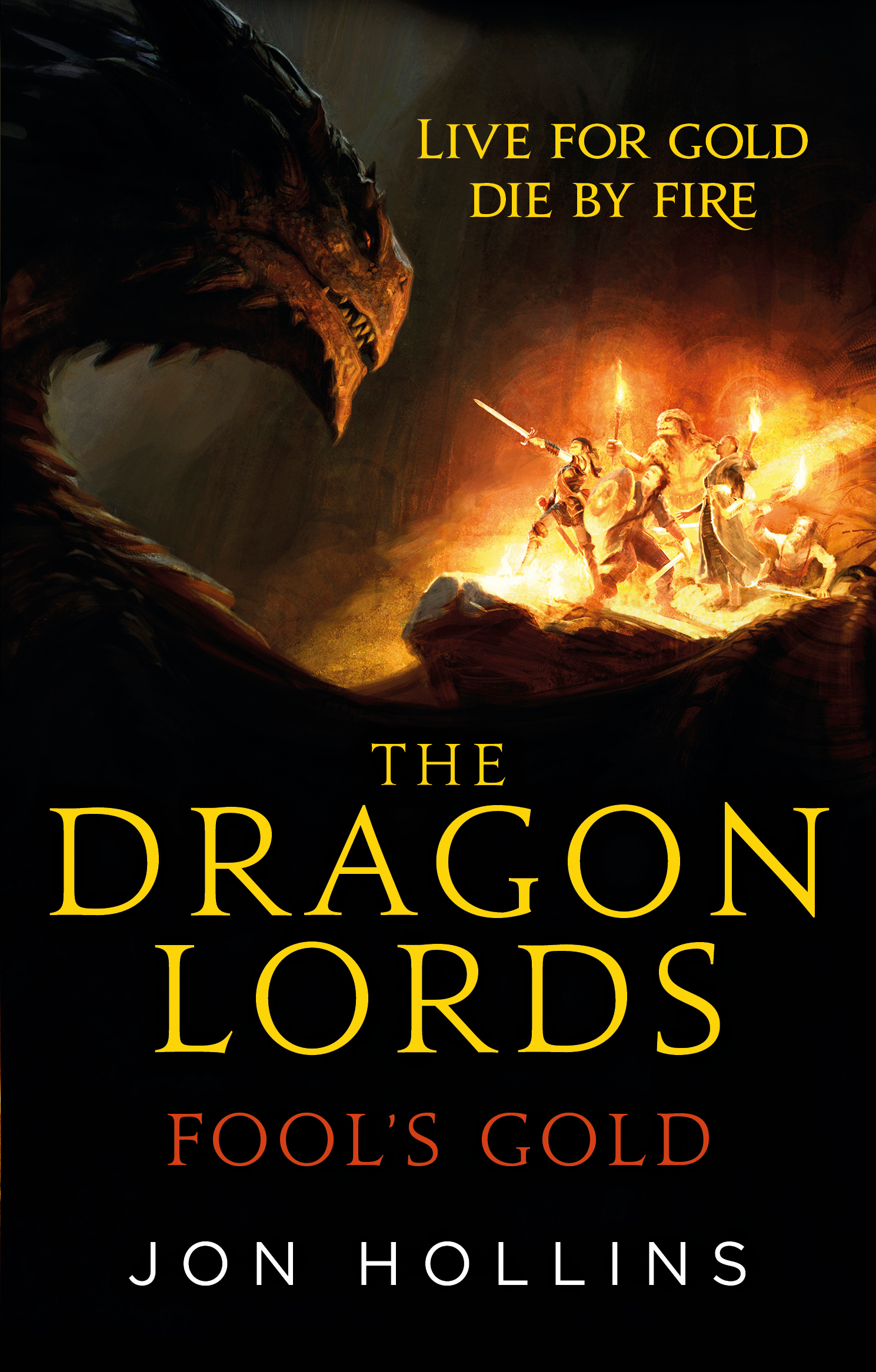
Fool’s Gold by Jon Hollins

9780356507651

Publisher: Orbit (Paperback – 26 July 2016)

Series: The Dragon Lords – Book One

Length: 517 pages

My Rating: 4 out of 5 stars

Amazon     Book Depository

Prepare for all manner of craziness and exceedingly entertaining fun as Jon Hollins presents an amazing book about heists and dragons with Fool’s Gold.

A few months ago, whilst perusing my local book fair, I happened upon a copy of Fool’s Gold by Jon Hollins (a pseudonym for fantasy author Jonathan Wood), which really grabbed my attention.  The first book in Hollins’ The Dragon Lords trilogy, Fool’s Gold had a fantastic plot synopsis which involved heists and dragons.  I was very intrigued by this cool book, which sounded so very fun, so naturally I made sure to grab it.  As a result, it was nice and handy when I was in the mood for a fun fantasy book, and boy was I entertained by this cool read.

In the fantasy land of Avarra, there are many different magical creatures and beings who infest the world and bring all manner of chaos with them.  However, no creature is as dangerous, arrogant, and domineering as the dragons, especially members of the destructive Consortium who have taken over the isolated nation of Kondorra and rule it as overlords.  Employing a private army, the dragons impose massive taxes on the lands surrounding their lairs, driving the people into poverty and forcing many to lose everything.

It is only a matter of time before something gives, and when Willett Fallows loses his farm to greedy dragon who controls his village, he snaps and becomes a fugitive.  On the run, Will finds himself in the most unusual of situations after a chance meeting with four unlikely wanderers in a nearby cave, including a skilled warrior woman, a murderous lizard man, a dragon obsessed academic with explosive magical powers, and his village’s local insane drunkard.  Together the five new companions come up with an ambitious plan to steal all the gold from the local dragon lord and make their escape.

However, when their heist unsurprisingly goes wrong the friends find themselves in a surprising position as the nation’s apparent saviours.  Suddenly worshipped by a massive following, the companions must find a way to escape both the deadly retribution coming their way and their own insane devotees.  But no matter how hard they try, all their plans seem to backfire until they find themselves in the middle of a deadly religious war against the dragons.  Can they pull off one more con to destroy the Consortium, or is everyone about to end up dead in a field of fire?

Fool’s Gold is an exceedingly fun and very entertaining read that I was able to finish off in a few days, especially once I got caught up in its exciting and fast-paced narrative.  Hollins sets everything up very quickly, with the new fantasy world introduced, the dragon’s control of Kondorra established, and all five of the main characters brought together.  While I wasn’t the biggest fan of the extremely coincidental meeting that saw all the protagonists meet up in the first few chapters, the story evolves at a much more appropriate pace from there, with the characters quickly planning their theft of the local dragon’s hoard.  I was a little surprised at how fast the first heist came about, as I figured it would be a long-term plan that would unfold much later in the book.  However, featuring this heist early on really works, as it sets up the rest of the story extremely well while also showcasing early just how crazy and over-the-top this book is going to be.  The chaotic results of the first heist see the protagonists incorrectly declared religious saviours destined to bring down the dragons.  Suddenly leading a ragtag army, the protagonists are forced to engage in several more attempted heists and plots against other dragons and their minions.  While these plans often backfire in very funny ways, the protagonists keep failing upwards and must keep the con going while dealing with a multitude of problems, including deranged followers, immense responsibility, and deep personal issues.  This all leads up to the final confrontation with the dragon Consortium, with the characters unleashing their most ambitious plan yet.  Watching this final plan come together is pretty damn awesome, and the insane battles and crazy results that follow were so damn epic.  I ended up really loving this compelling and very fun story, which Hollins leaves open for some intriguing sequels in the future.

Fool’s Gold is an incredibly fast-paced novel with a great writing style that makes it very easy to power through.  The author has a brilliant and wicked secret of humour that infects his writing, and I found myself chuckling the entire way through, not just because of the jokes but because of the insane scenarios that resulted.  I was also deeply impressed with how well Hollins brought together several genres to create a compelling and hilarious read.  The book initially appears to be a classic fantasy read, as the author quickly and effectively sets up an intriguing new fantasy world at the start of the book, which contains several classic fantasy creatures and elements that are likely going to get expanded on in the sequels.  However, it soon becomes apparent that this isn’t going to be a typical fantasy book, especially as the very modern sense of humour and language that Hollins employs gives it a whole new tint.  I often enjoy when authors feature contemporary language and attitudes in fantasy novels, and I felt that Hollins uses it to great effect in Fool’s Gold, giving the book a distinctive tone.  The author further brings in the brilliant heist elements to the book, which I deeply enjoyed thanks to all the fantastic plans and cons.  It proved to be extremely fun to see all these elaborate and weird heists get planned out and executed in a fantasy universe, and it combines extremely well with the humorous tone and fantasy elements of the book.  I deeply enjoyed how this captivating story came together, and I can’t wait to see how the next books in the series pan out.

I also really liked the cool characters featured in Fool’s Gold, especially as Hollins came up with a very eclectic and damaged group of central figures.  The book primarily revolves around five protagonists, each of whom have multiple chapters told from their perspective and who unite as a team very early in the book.  This includes Willett Fallows, the former farmer who turns to heist planning after the dragon’s greed takes everything from him.  There is also the fantastic pair of Lette and Balur, a female adventurer looking to settle down and her lizard man companion who loves all forms of violence and is determined to fight and kill the biggest opponents he can find, in this case dragons.  There is also Quirk, a former mage turned academic who arrives in Kondorra to study the dragons and finds herself dragged into the group’s plans so she can get a closer look at the dragons and their lairs.  Finally, there is Firkin, a local drunk whose failure years ago to defeat the dragons drove him mad and who finds new life during the new adventures. 

All five characters are pretty crazy in their own way, and I think they made for quite an intriguing and amusing focus for the narrative, especially all the interesting growth Hollins makes use of.  Will’s evolution from a farmer to a master strategist was very well written and I appreciated the compelling examination of how the power he started to wield was potentially corrupting him, especially when he holds the lives of so many in his hands.  The inevitable romance between Will and Lette was handled well throughout the book and it came across as a natural and well-developed relationship.  Balur, the battle-loving lizard man was easily one of the most entertaining characters in the novel, and I loved seeing his mad rages and various attempts to kill the dragons they encounter, especially as it results in an incredibly funny and hilariously brutal final fight at the end of the book.  I was also quite impressed that Hollins was able to keep up Balur’s unique style of speech for much of the story.  Firkin’s rise from unpredictable drunk to unpredictable drunken religious mouthpiece and rabblerouser was exceedingly funny in places, especially as you are never quite sure whether he is actually insane or just messing with everyone.  I did find his continued crazy speech a bit too much at times, although the occasional hints at his deeper intelligence and sanity made up for that.  However, the best character work was probably reserved for Quirk as Hollins really dives back into her history as a child soldier/mage who was gently rehabilitated and taken into the academic lifestyle.  Quirk finds herself reverting to her old destructive magical ways throughout the course of the adventure and she must figure out who she truly wants to be.  I had a great time with all the cool characters in this book, although I do wish that the greedy and arrogant dragons might have gotten a little more development.  Overall, I would say that the characters were some of the best parts of Fool’s Gold and look forward to seeing more of them in the future.

Unsurprisingly, I had a pretty wonderful time with Fool’s Gold and it ended up being as thrilling and compelling as I hoped it would be.  Jon Hollins wrote a wildly entertaining and very funny fantasy heist narrative for Fool’s Gold, which came equipped with some great fantasy elements and a bunch of excellent characters.  I really enjoyed Fool’s Gold and I will have to try to grab the next two books in the Dragon Lords trilogy, especially when I’m in the mood for some crazy, over-the-top adventure and excitement. 

Amazon     Book Depository

Top Ten Tuesday – My Favourite Discworld Novels by Terry Pratchett

Top Ten Tuesday is a weekly meme that currently resides at The Artsy Reader Girl and features bloggers sharing lists on various book topics.  The official topic for this week’s Top Ten Tuesday required participants to list the top upcoming books on their Fall (Spring down here in the Southern hemisphere) to be read list.  However, I addressed that a couple of weeks ago, so that leaves me with a bit of a free topic this week.  I decided to fill this extra list by looking at one of my absolute favourite series of all time, the Discworld books by Terry Pratchett.

I have long been a fan of Terry Pratchett’s Discworld series, which, in my opinion, is one of the absolute best series of all time.  Made up of 41 separate novels and running from 1983 to 2015, the Discworld novels are a fantasy institution from one of the most talented authors ever.  Set on a flat world shaped like a disc that travels through space on the back of four elephants, who themselves stand on the back of a giant turtle, this world is filled with all manner of crazy and over-the-top people, creatures, gods and monsters, and this results in an amazing number of stories.  All 41 books feature amazing and highly unique story that perfectly blends outrageous fantasy elements with clever and relentless humour and satire.  I have read every Discworld novel multiple times, and in my opinion, everyone is a masterpiece in their own way.  Heck, I am such a big fan of this series that I even named this blog after a location in the Discworld universe, that’s how much I love them.

While the Discworld novels are never that far from my mind, I have been thinking about them a lot more lately, mainly because I have been featuring some of them on my recent top ten lists.  My lists that highlighted my favourite Books with Magical Schools, Favourite Books Written More than Ten Years Ago and Hilarious Book Titles have all featured a few Discworld books, and it turns out I have a hard time not going on about Pratchett’s work on a weekly basis.  Naturally, this has gotten me thinking more and more about the Discworld books, and I will probably embark on a new re-read of them sooner or later.  However, before I get around to that, I thought I would have a go at listing my absolute favourite Discworld novels, as that will make an interesting list.

Now, why I deeply enjoy this entire series, not all Discworld novels are created equal.  Several shine above the rest in my opinion, whether because they have better jokes, a more compelling plot, or a more impressive and elaborate premise.  As such, I felt reasonably confident that I could choose the ten entries (with some honourable mentions) that I enjoy the most.  I have based this list on several factors, including humour, plot, world-building, characters and many other features.  This allowed me to determine my favourite Discworld books, although I had to make some hard choices to settle on a final top ten, as all of them are very good.  I was eventually able to whittle it down to my list, and I think the results match my overall preference rather well.  While most of them are from Pratchett’s golden years and are in the middle of the Discworld release back, I think there is a good variety here, and that the list below really showcases the outstanding and amazing depth that Pratchett always had.  So let us see what made the cut.

Honourable Mentions:

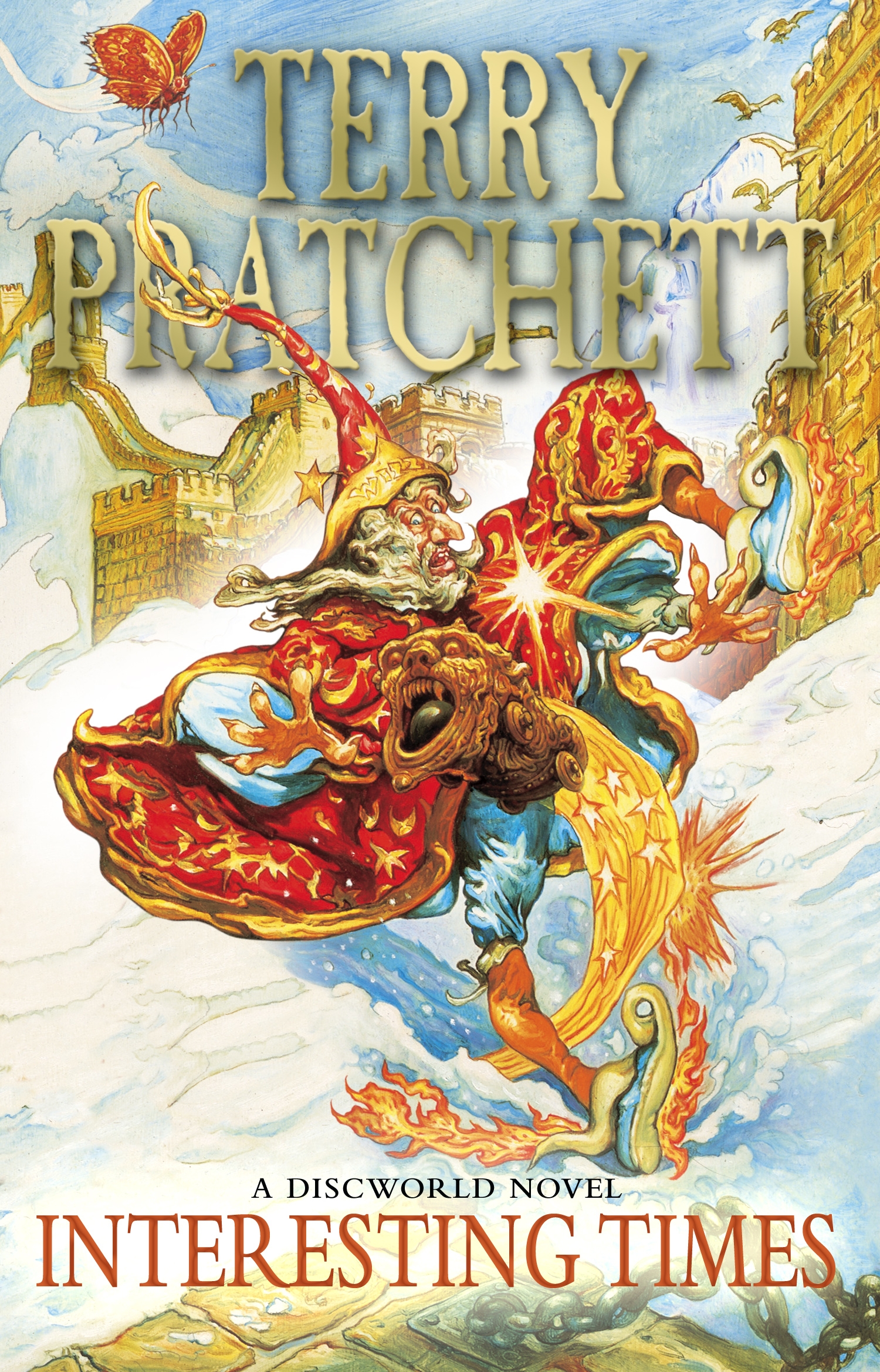
Interesting Times – 1994

Interesting Times Cover

A rambling good read that sees one of Pratchett’s most iconic protagonists visit this world’s version of Asia.  Loaded with some brilliant jokes (the multiple translations of a person’s scream), a ton of fun references to Asian culture, and some outrageous characters, Interesting Times is an excellent read that also offers a little closure for the first two Discworld books.

Amazon     Book Depository


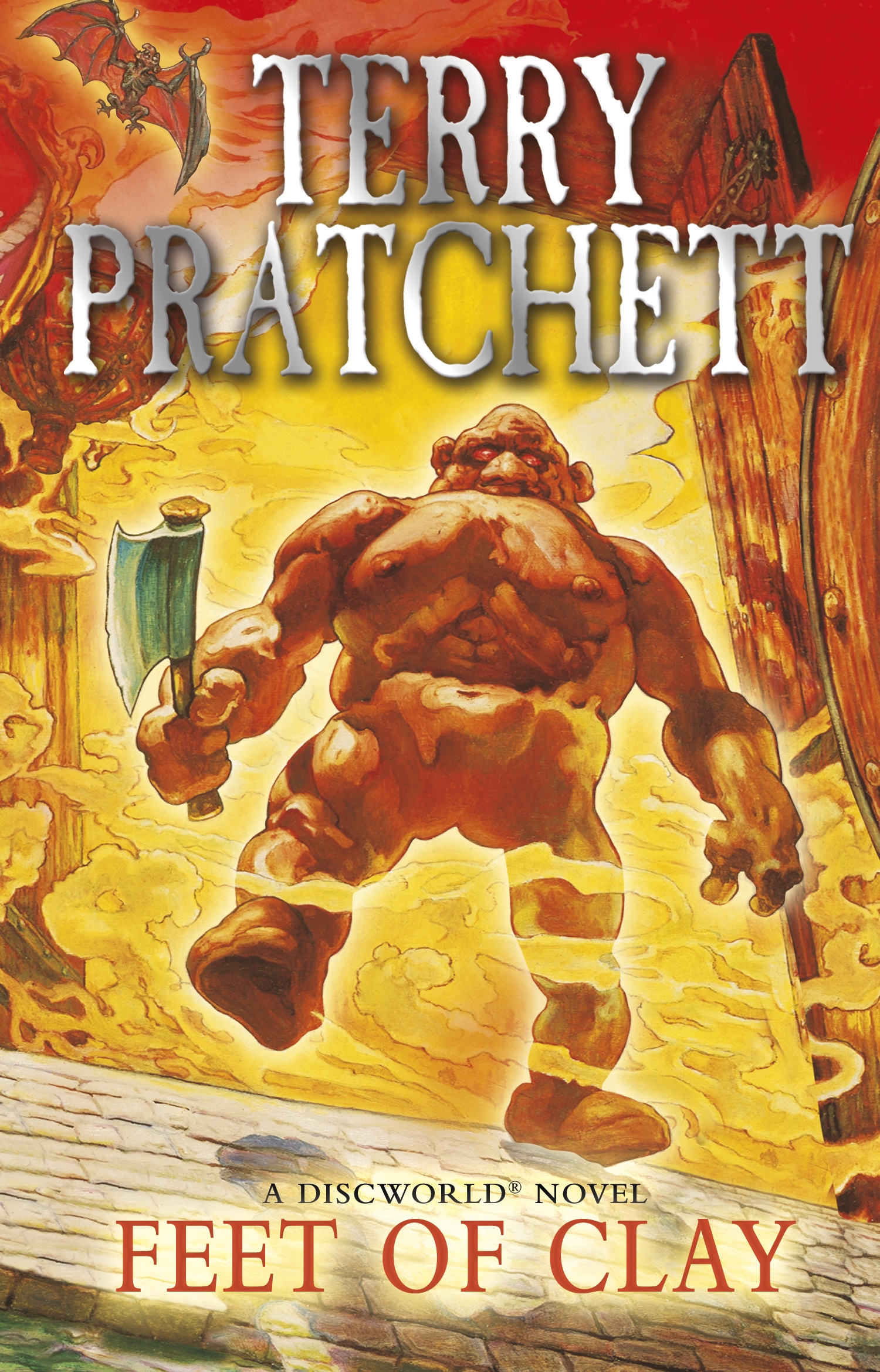
Feet of Clay – 1996

Feet of Clay Cover

The third City Watch novel, Feet of Clay is a brilliant murder mystery novel that makes full use of its fantasy and comedy to create an epic read.  Featuring several great mysteries, including a series of murders committed by a Golem and the poisoning of the city’s ruler, you really get dragged into the story while loving Pratchett’s excellent solutions and hilarious inclusions.

Amazon     Book Depository


The Truth – 2000

The Truth Cover

Pratchett introduces print journalism to the Discworld in this clever standalone entry.  Following an ambitious reporter who creates Ankh-Morpork’s first newspaper, only to get dragged into a big conspiracy, The Truth is an ambitious and very exciting entry that perfectly parodies everything about newspapers.  Loaded with jokes about everything from dodgy advertisers, stupid human interest pieces, and even featuring a trashy alternate paper, this is perfect for anyone familiar with the crazy newspapers of London.

Amazon     Book Depository


Night Watch – 2002

Night Watch Cover

Another exceptional City Watch book is the later entry, Night Watch, which sees Vimes, transported back into the past by magic with a dangerous serial killer.  Forced to relive his traumatic early days on the watch, Vimes must keep his younger self alive while also navigating a dangerous revolution he remembers all too well.  With a compelling narrative that mirrors Les Misérables and some great time-travel elements, Night Watch is one of the more distinctive reads in the series.  While it gets a lot darker than some of the other Discworld novels, it is still extremely addictive, and fits into the rest of the series perfectly

Amazon     Book Depository

Top Ten List:

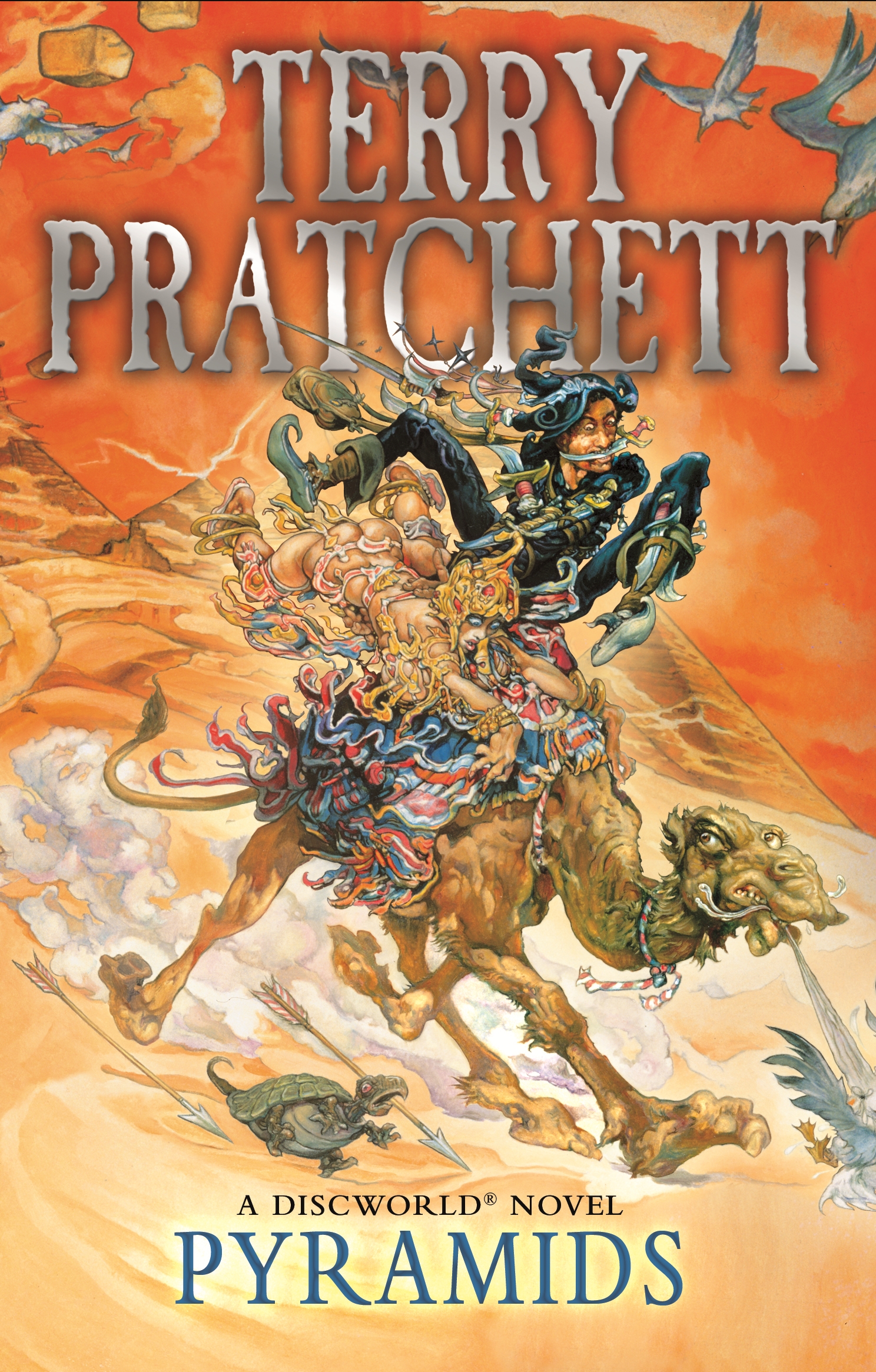
Pyramids – 1989

Pyramids Cover

The first entry on my top ten list is the classic Pratchett novel, Pyramids.  A standalone entry in the series, Pyramids tells the story of a young prince of a river valley kingdom, very similar to Egypt, who returns home after receiving training as an assassin in Ankh-Morpork (the biggest city on the Discworld and a major setting).  Upon claiming the throne, he tries to fight against the tradition of his kingdom, with limited effect, until the kingdom’s overuse of pyramids creates major temporal issues for the entire valley (its all down to bad geometry).  Loaded with so many jokes about ancient Egypt, this is a hilarious fish-out-of-water tale that is very hard to put down.  There are a ton of great moments in this novel, including the best look at the legendary Assassin’s Guild, an impromptu rugby game between the gods over the sun (with commentary from an overexcited priest), and an army of mummies pissed off at being buried without their organs.  I have probably read this Discworld novel the most out of any of them, and I get something new out of it every time I pick it up.  An exceptional, and extremely funny read.

Amazon     Book Depository


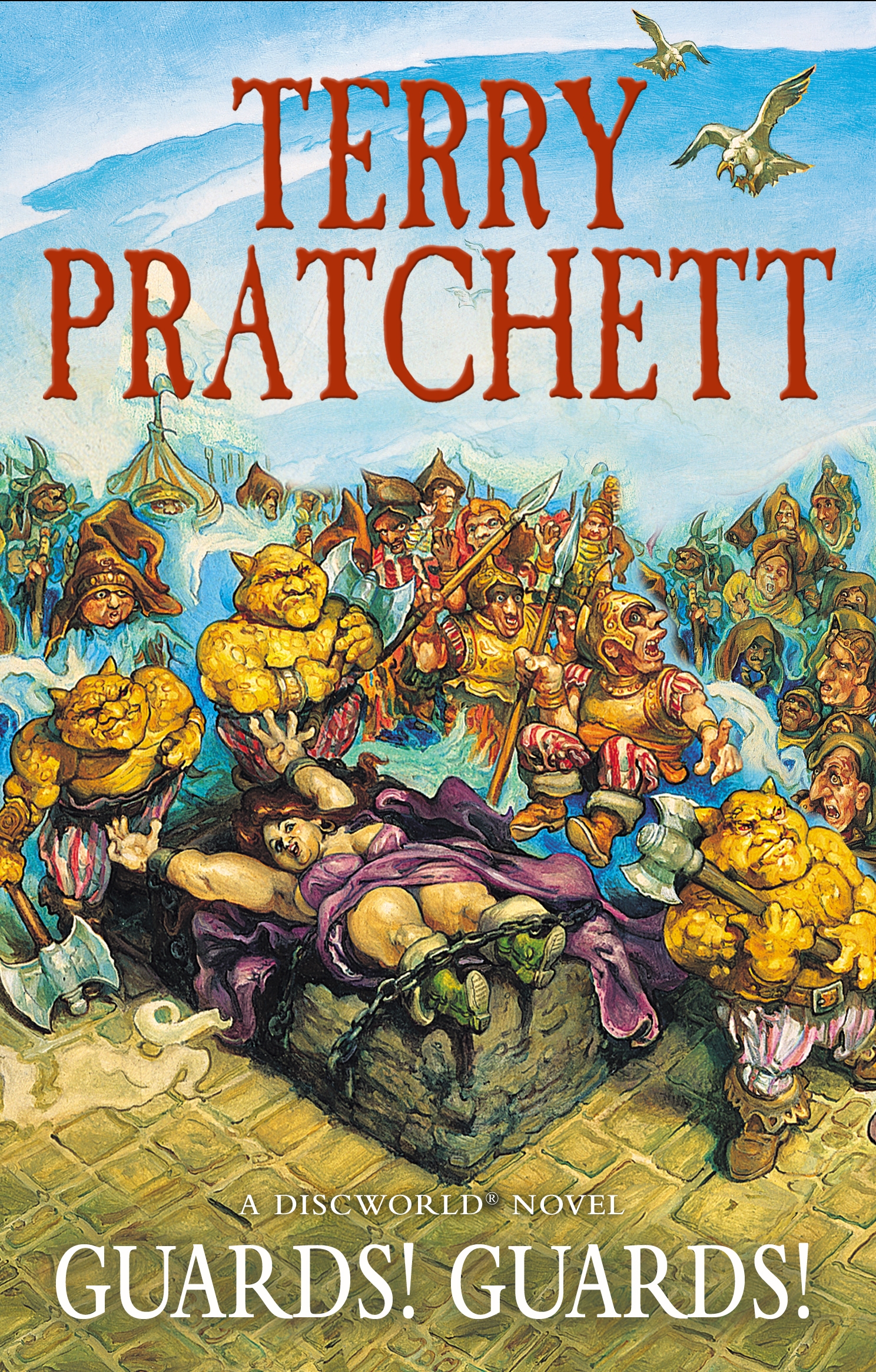
Guards! Guards! – 1989

Guards! Guards! Cover

One of the more interesting aspects of the Discworld series is the way that Pratchett featured several smaller sub-series which follow specific characters.  My favourite of these is easily the City Watch books, which follow the underpaid and constantly underestimated watchmen of the infamous, crime-ridden city of Ankh-Morpork.  Perfectly blending Pratchett’s typical humour and fantasy elements with hard-boiled detective narratives, the City Watch books are some of the best entries in this series, and I love the unique blend of characters and highly entertaining and enthralling narratives.  The first City Watch entry, Guards! Guards! is definitely one of Pratchett’s best novels, and I constantly rave about it when I do lists about funny books.  Not only does it do a great job introducing several iconic characters who Pratchett would reuse throughout the rest of the series, but it has an outstanding narrative to it.  Following the depleted and useless Night Watch, made up of a drunk captain, a hopeless sergeant and a criminally minded corporal as they attempt to solve a series of murders caused by a magically summoned dragon.  Joined by a new eager, if slightly oblivious new recruit, who definitely isn’t the city’s returning king, the Night Watch embark on an ambitious investigation against cultists, dragon hunters and city’s massive criminal class.  Guards! Guards! is fantastic on so many levels, and there is something for everyone in it.

Amazon     Book Depository


Moving Pictures – 1990

Moving Pictures Cover

One of the things that the Discworld novels excel at is parody and satire of certain social, historical or cultural elements, with everything from countries, ancient empires and entire trades lovingly mocked.  Perhaps one of the best examples of this is Moving Pictures, a mostly standalone read that sees the art of film appear on the Discworld, becoming an instant hit.  Soon an alternate version of Hollywood appears, and various characters jump at the chance to make over-the-top films, which are accompanied by a vast array of jokes and references about classic movies, film making tropes and actors.  Naturally for a Discworld book, nothing is what it seems, and the heroes are forced to face off against interdimensional monsters coming out of the screens.  In addition, the iconic Unseen University setting gets some stability as a new Arch-Chancellor arrives, shaking up the wizards.  I love this book on so many levels, especially as Pratchett has so much fun satirising the film industry here.  Everything is lampooned here, such as Gone with the Wind (accompanied with subliminal advertising), King Kong (except a giant woman kidnaps an ape), The Wizard of Oz (the dwarfs of the Discworld will never be the same again), and so much more.  I can’t even count the sheer number of movie references featured here, and I discover a new clever joke every time I read Moving Pictures.  Pratchett also manages to introduce or expand on several great secondary characters who will go on to have major roles in other books in the series, so it turns out to be a surprisingly key book.  Impressive and wonderful on so many levels, Moving Pictures was an easy inclusion for this list.

Amazon     Book Depository


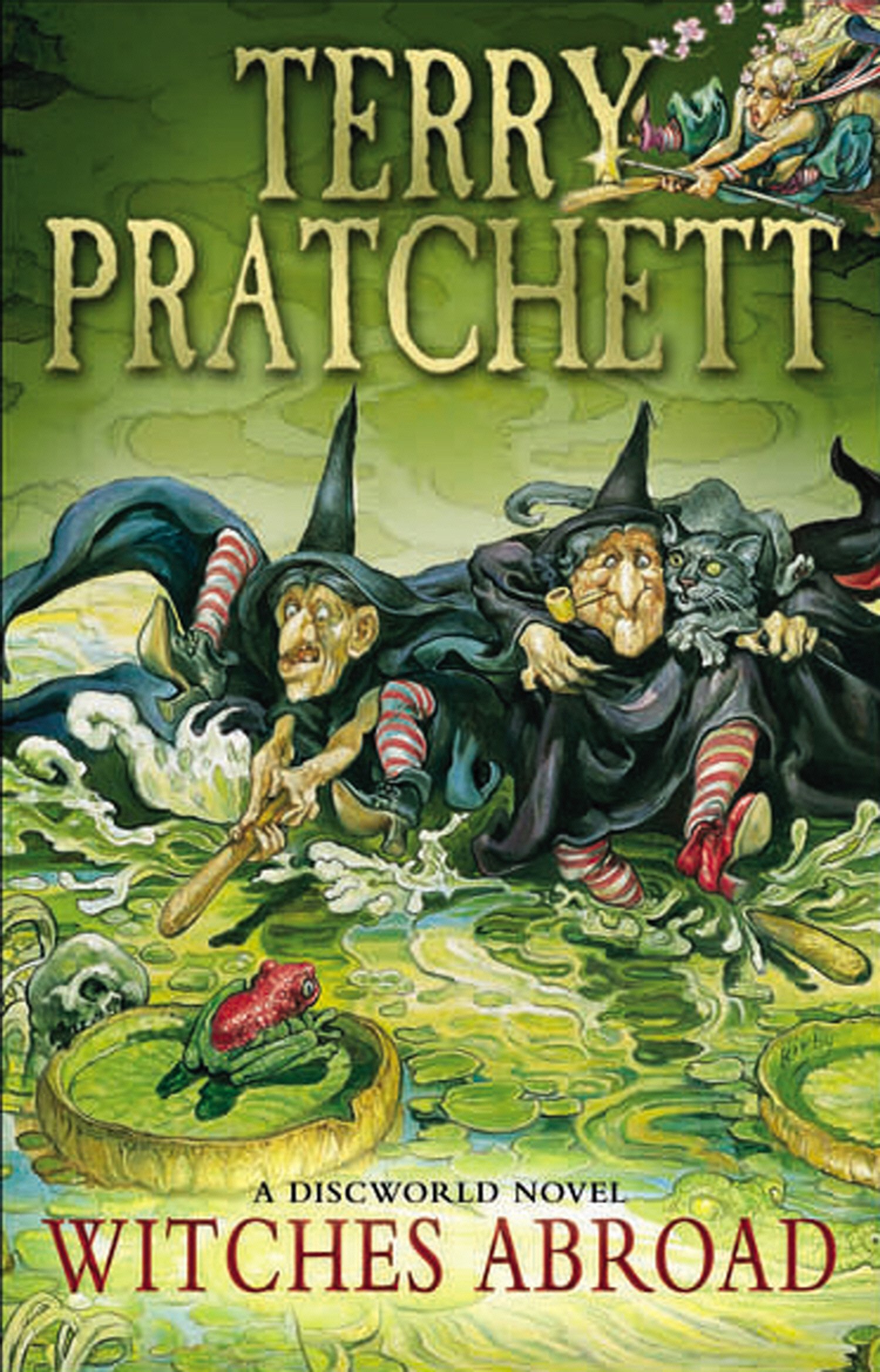
Witches Abroad – 1991

Witches Abroad Cover

Another one of the top Discworld sub-series is the Witches books, which unsurprisingly follows a group of witches (Granny Weatherwax, Nanny Ogg and Magrat Garlick), in several unique adventures.  Unlike the characters they are based on from Macbeth, the witches are a force for good and help the local villages primarily with headology (psychology and folk medicine parcelled up with mystical overtones) and the occasional magic.  The witches make for an excellent group of central characters, and Pratchett told some exceptional stories with them.  While Wyrd Sisters and Lords and Ladies are both pretty epic reads, my favourite Witches book is Witches Abroad.  As the name suggests, this book see the three protagonists embark on a holiday to a faraway kingdom (essentially New Orleans), to fulfil a fairy godmother’s last wish.  Along the way they are forced to confront a series of twisted fairy tale scenarios, their own internal bickering, and an evil fairy godmother from Granny Weatherwax’s past.  Armed only with a wand that is permanently set to pumpkin mode, the witches must deploy their usual trickery to save the day.  This entire novel is pretty epic, as it not only captures the protagonists in all their amazing glory, but it has a powerful story that expertly blends humour and drama.  A lot of the narrative focuses on the dark side of fairy tales, and Pratchett has fun satirising so many classic stories in very clever ways.  However, my favourite scene is the fantastic sequence where Granny Weatherwax uses headology to completely destroy a group of card sharks who had conned her friends.  Extremely inventive, memorable and oh so funny, I just had to feature Witches Abroad here.

Amazon     Book Depository


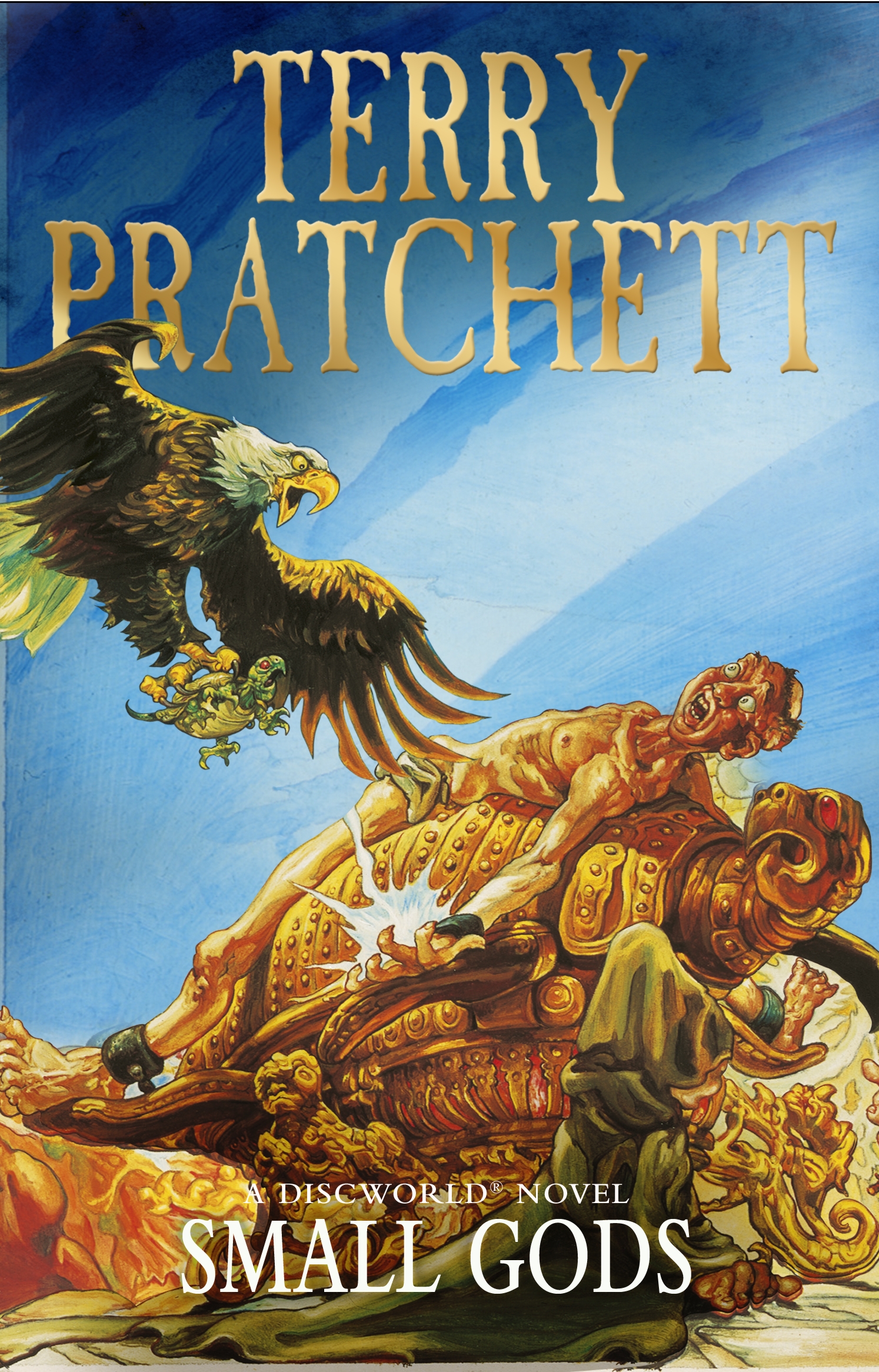
Small Gods – 1992

Small Gods Cover

The next entry on this list is in my opinion, some of Pratchett’s best work.  The 13th Discworld novel, Small Gods has a standalone narrative which sees Pratchett examine religion and belief.  The story follows Brutha, a somewhat simple lad who lives in a vast imperial theocracy that is centred around the worship of the Great God Om.  However, Brutha is shocked when he discovers a talking tortoise only he can understand who claims to be the actual Om.  Forced to take the tortoise along on a great adventure, Brutha discovers the corruption at the heart of his empire and must fight to save it, himself, and his god.  This is a particularly clever novel from Pratchett and a very worth addition to this list.  The author pulls together a very thoughtful and captivating read that examines the various pros and cons of religion, worship and gods in a very thoughtful, but still humorous way.  The mixture of theological debate, adventure, and the brilliant satire of religion, results in a very impressive read, and it is guaranteed to leave you both laughing and pensive at the same time.  The book’s main strength is the outstanding interactions of the two main characters, and the growing relationship between an arrogant put powerless god, and his simple but deeply wise believer, sets an impressive tone for the entire book.  I would say that Small Gods is one of the most intelligent and compelling books of the entire Discworld series and I cannot hype it up enough.

Amazon     Book Depository


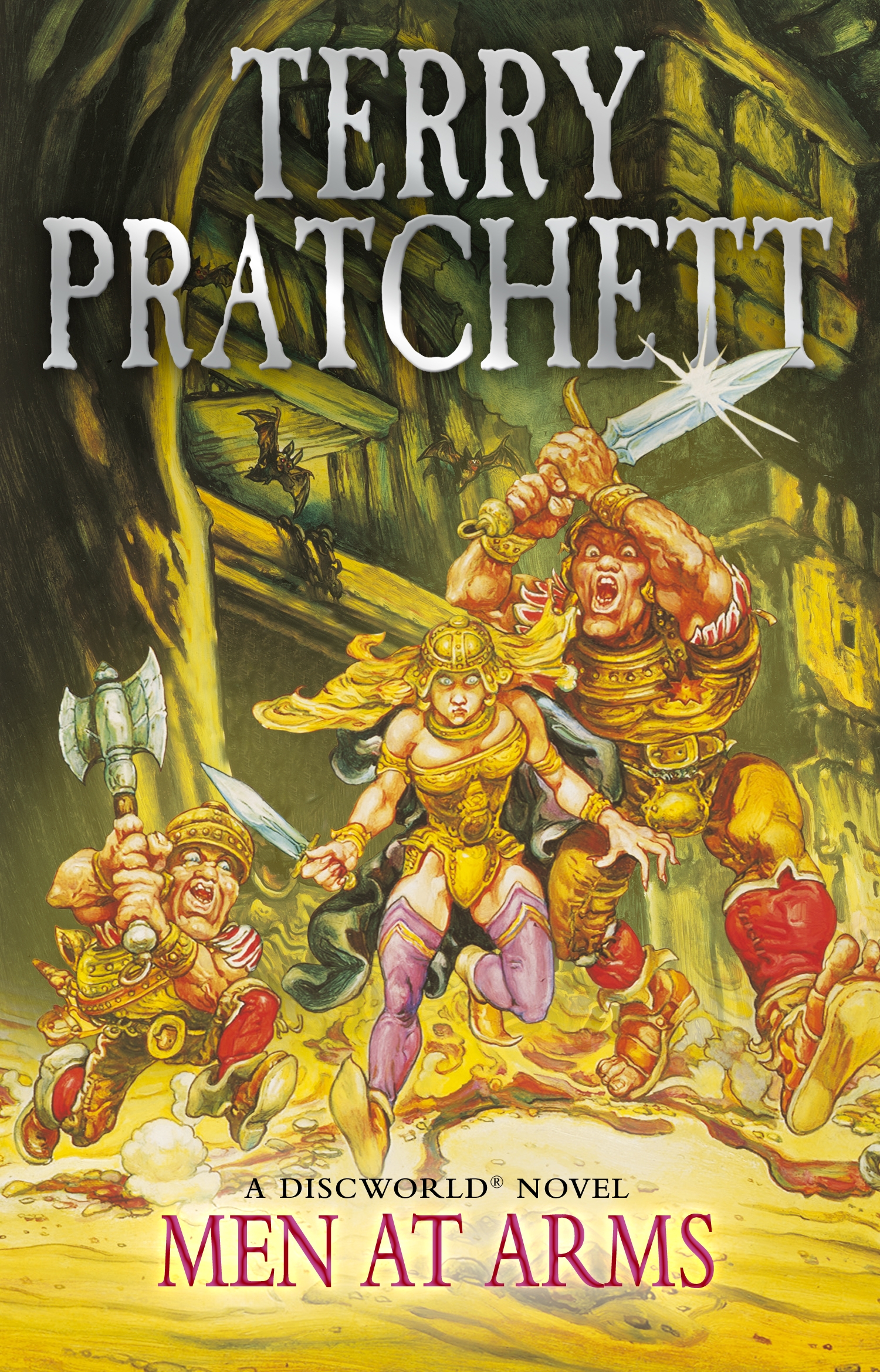
Men at Arms – 1993

Men At Arms Cover

After wowing everyone with Guards! Guards! Pratchett mercifully brought back the City Watch characters and storylines again with a fantastic sequel, Men at Arms.  This book sees a retiring Captain Vimes and his team try and stop a madman who is running around the city killing people with the Disc’s first gun.  Featuring another exceptional mystery that involves assassins, clowns and a literal species war between dwarfs and trolls, Pratchett switches the tone of this book from the hardboiled detective story of Guards! Guards! to a more typical police narrative like Dirty Harry.  Loaded with fantastic cop humour and introducing several great new characters, Men at Arms is just as good as the first City Watch book, while also expertly setting up some story elements for the rest of the series.  Guaranteed to appeal to both fantasy fans and crime fiction buffs, Men at Arms is one hell of a read.

Amazon     Book Depository


Hogfather – 1996

Hogfather Cover

All Pratchett fans will know that one of the most surprising loveable recurring characters in the entire Discworld series is Death, the literal grim reaper, who appears in pretty much every book.  Initially shown to as a resolute soul taker, Death evolves into quite a personable and likeable figure who is obsessed with the humans he’s tasked with reaping.  This obsession eventually compels him to adopt a daughter and take on an apprentice, which leads to the first Death book, Mort.  Pratchett wrote several Death novels over his career, many of which dealt with Death’s growing love of humanity, while also involving attacks on reality by outside forces.  While I have a lot of love for Reaper Man and Soul Music, my favourite Death novel is probably Hogfather.  After the Hogfather (this universe’s version of Santa) is murdered, Death steps into the role for unknown reasons.  This forces his granddaughter, Susan, to investigate the disappearance and try to bring back the Hogfather.  This results in an extremely entertaining and silly book that satirises all things Christmas and festive in one fantastic outing.  Most of the humour revolves around Death pretending to be Santa, which leads to all manner of confusion and fear, that is so much fun to see.  Throw in a very memorable villain and a great secondary storyline around the crazy wizards at the Unseen University accidently inventing gods, and this is one of the funniest books in the series.  A very entertaining and compelling Discworld novel, you will never look at Christmas the same again after reading it.

Amazon     Book Depository


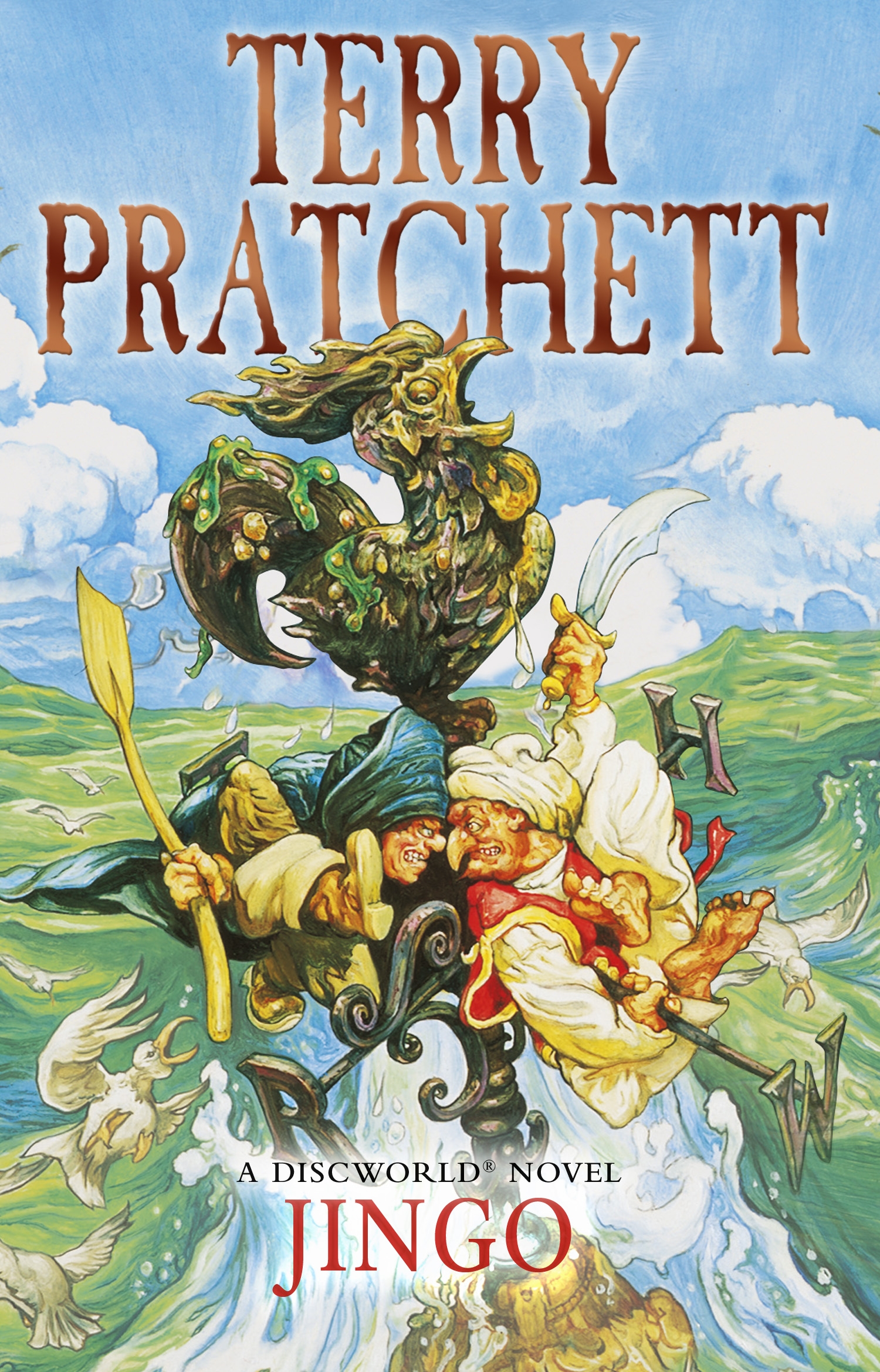
Jingo – 1997

Jingo Cover

For the next entry on this list, Jingo, I must admit that my choice to include it here might be for more personal reasons, rather than purely on the quality of the book.  That is because Jingo was the first Pratchett book I ever properly read, and it has led to my subsequent lifelong obsession with all things Discworld.  I still have my first copy of Jingo, and it is extra special for me because I managed to get Terry to sign it for me.  So yeah, I might be a little biased when it comes to Jingo, but I maintain it is a worthy addition to this list as it has a brilliant and hilarious story to it.  The fourth entry in the City Watch sub-series, Jingo sees Commander Vimes and his men caught up in a brewing war between Ankh-Morpork and the rival empire of Klatch when both claim a mysterious new island that rose in the ocean between them.  After an attempted assassination of a Klatchian prince occurs on Vimes’ watch, he leads the city watch in an impromptu invasion of Klatch to find the killer and stop the war.  I deeply enjoyed Jingo’s brilliant and very clever story and it was a very worthy addition to the City Watch series.  The humour in Jingo is a bit more subtle than some of Pratchett’s other novels, with most of the jokes satirising British imperialism, diplomacy, politics, and its view of foreigners, with a ton of references to historical wars and conflicts that Britain had against its neighbours.  While some of the jokes are a tad obscure, they are all extremely well set up, and they always get a chuckle out of me.  Throw in some brilliant references about a lone bowman assassin, an espionage mission with Sergeant Colon and a cross-dressing Corporal Nobbs that has mixed success, and the always charismatic Captain Carrot turning into Lawrence of Arabia and arresting two entire armies for breaches of the peace, and you have a really entertaining narrative.  Jingo is always a must read for me whenever I revisit the Discworld universe, as well as being an essential entry in the deeply impressive City Watch books that comes highly recommended.

Amazon     Book Depository


The Last Continent – 1998

The Last Continent Cover

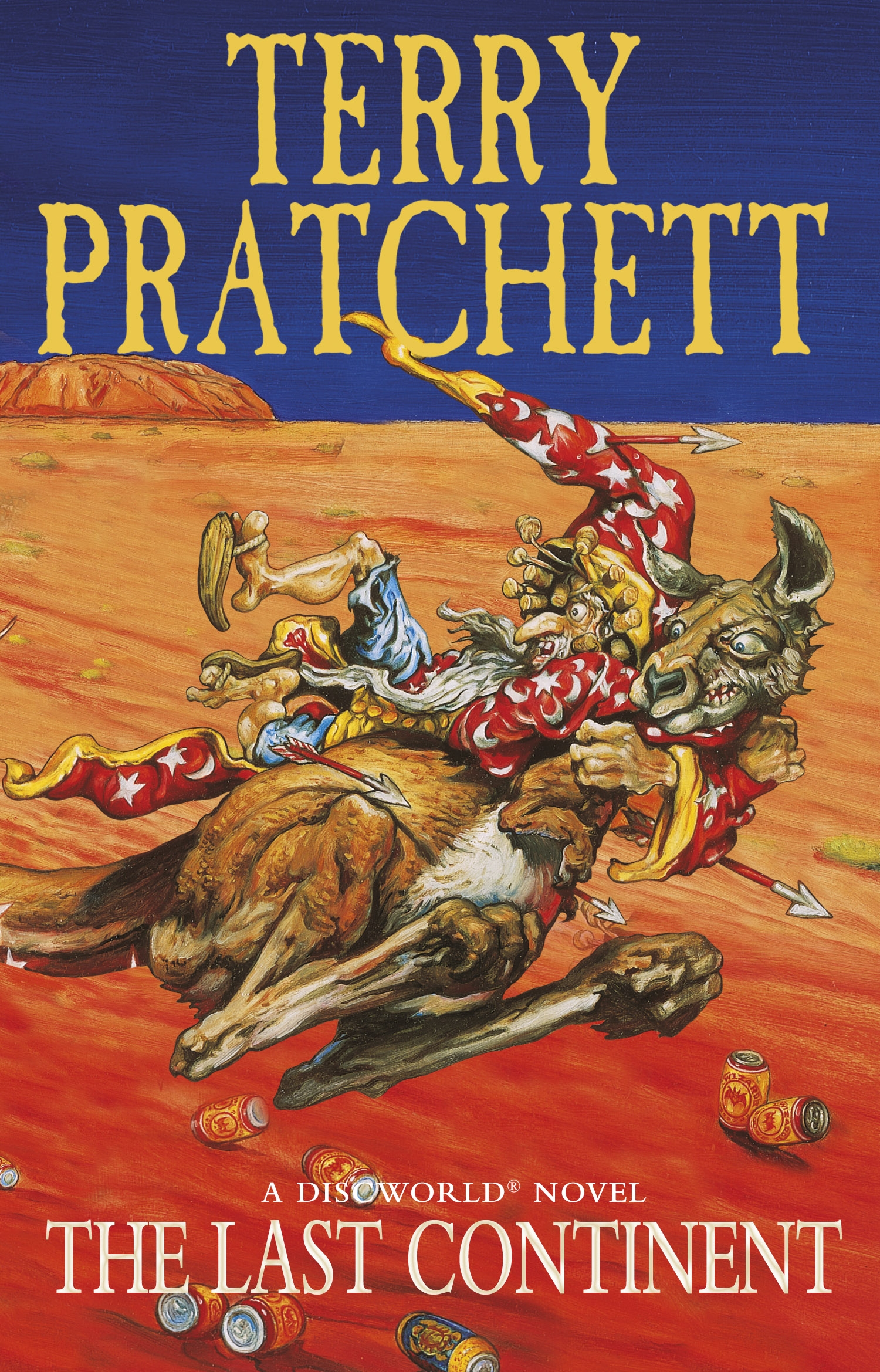
Another Pratchett book that I have a little bias for is The Last Continent, which is probably one of my absolute favourite Discworld novels.  The sixth book to feature the cowardly wizzard (not a typo) Rincewind as its protagonist, The Last Continent takes place on the lost continent of XXXX, which is essentially the Discworld’s version of Australia (despite certain assurances from the author that any similarities to Australia are coincidental at best).  This book follows Rincewind after he is tricked into another heroic quest that sees him traverse the continent, often mimicking various Australian folk heroes or cultural icons.  At the same time, the wizards of Unseen University, in an attempt to find Rincewind, get themselves trapped back in time and must escape from an enthusiastic god of evolution with their usual chaotic shenanigans.  Pratchett has a lot of fun with The Last Continent, and there isn’t a single piece of Australian culture or history that he doesn’t make fun of here.  As an Australian myself, I can’t help but laugh at all his fun and well-written Australian jokes and it was interesting to see his British take on my country.  I also have a lot of love for the evolution centred jokes that occur during the secondary storyline, many of which I didn’t fully appreciate until after I studied biology at university.  This is probably one of the better Rincewind novels as well, especially as the character now full appreciates his role in the universe, and his resentment at being dragged into a heroic quest is quite hilarious.  Him, plus the fantastically written Unseen University wizards, make for a sensational cast, and their two storylines come together perfectly.  There is no way that I can exclude Pratchett’s love-letter to Australia from this list, and it will always have a very special place in my heart.

Amazon     Book Depository


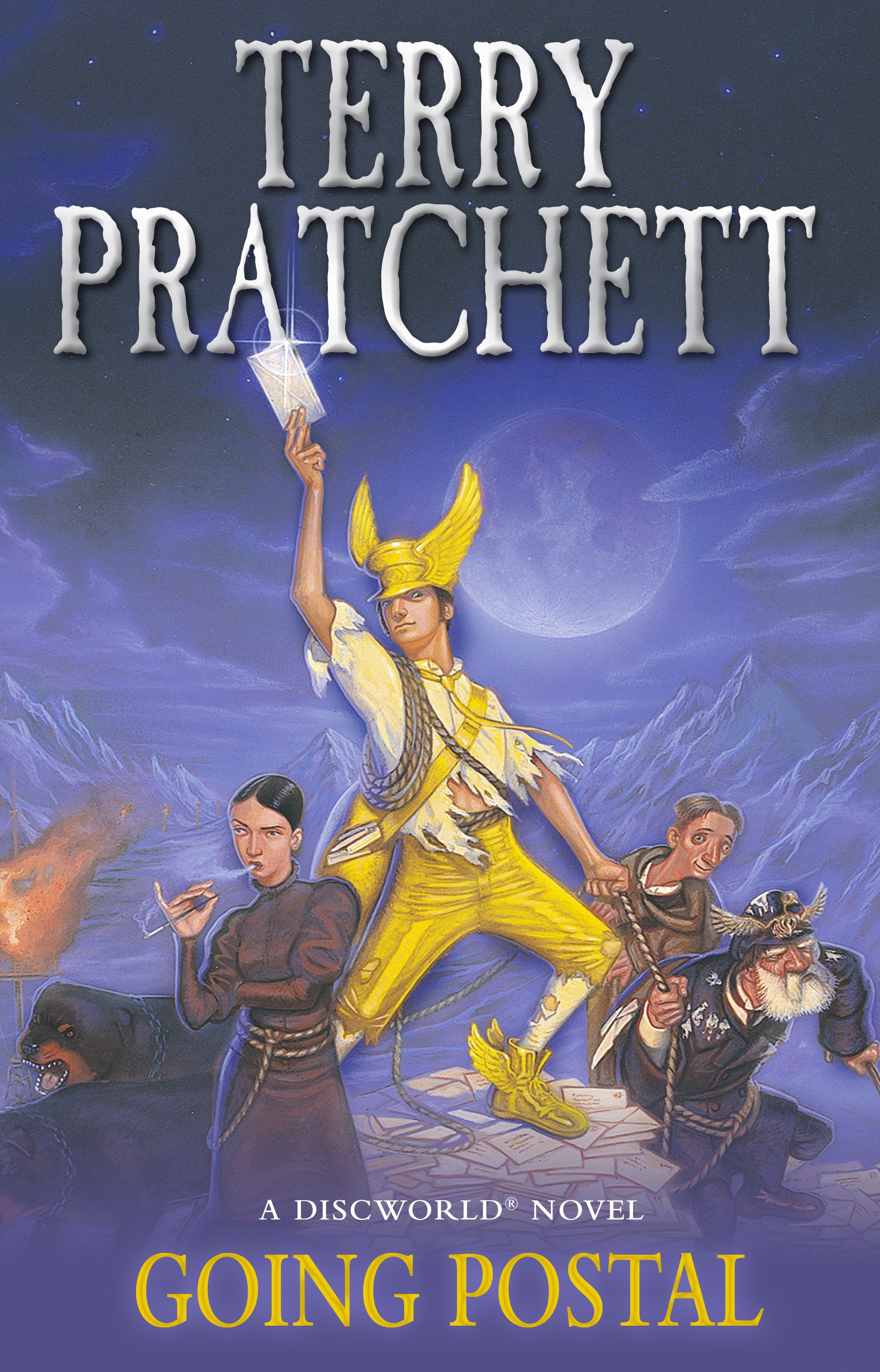
Going Postal – 2004

Going Postal Cover

The final entry on the list is Going Postal, which I feel is one of Pratchett’s best later books.  Featuring a very different tone from some of his previous books, Going Postal is a very distinctive read that is very hard not to enjoy.  Introducing a new protagonist in Moist von Lipwig, a notorious conman who is captured by Ankh-Morpork’s tyrannical leader, Lord Vetinari, and given two options: death or running the city’s post office.  Reluctantly choosing the later, Lipwig soon lives to regret his decision, as everyone and everything associated with the post office is absolutely crazy.  Forced to use all his talent, skill and instincts as a conman to save the post, Lipwig tries to rise to the occasion, only to contend with the ruthless chairman of a rival company who is determined to kill him.  It is a testament to Pratchett’s writing skill that he could make anything, even the post office, ruthlessly entertaining, as you swiftly fall in love with the hilarious over-the-top employees and associates of this crazy establishment.  Lipwig himself is the perfect protagonist for this book, and Pratchett wrote a brilliant redemptive storyline around him as he attempts to save his new friends with all his old tricks.  While this book is extremely funny, I also felt that Going Postal benefited from a somewhat darker tone than the preceding books, while  Pratchett also examines the benefits and costs of progress and new technology.  This darker tone would persist for the rest of Pratchett’s adult Discworld novels, and I have often thought that Pratchett included it in response to his growing health issues.  As such, I often look on Going Postal with a little sadness, especially as it was probably the best book he wrote towards the end of his career.  However, despite that, Going Postal is probably one of the Discworld books I have read the most and I would strongly recommend it to anyone and everyone interested in this outstanding series.

Amazon     Book Depository


So, as you can see from this exceptionally long list, I have a lot of love for the Discworld series and can write a ton about all the books.  While I deeply enjoy all the Discworld novels, the ten featured above are my absolute favourite now, and I cannot recommend them enough, especially if you want a laugh or an uplifting tale to brighten your day.  This is a list I might come back to in the future, especially if I do another reread and re-evaluate my positions.  I have been thinking about trying to read all of them again soon, especially as I recently found out that the Discworld audiobooks have all been re-released, this time with an amazing voice cast, including Colin Morgan, Peter Serafinowicz, Billy Nighy, Andy Serkis and Indira Varma.  As such, stay tuned for more reviews of the Discworld books soon, and I look forward to returning to my ultimate comfort book series.  In the meantime, let me know what your favourite Discworld book is in the comments below.

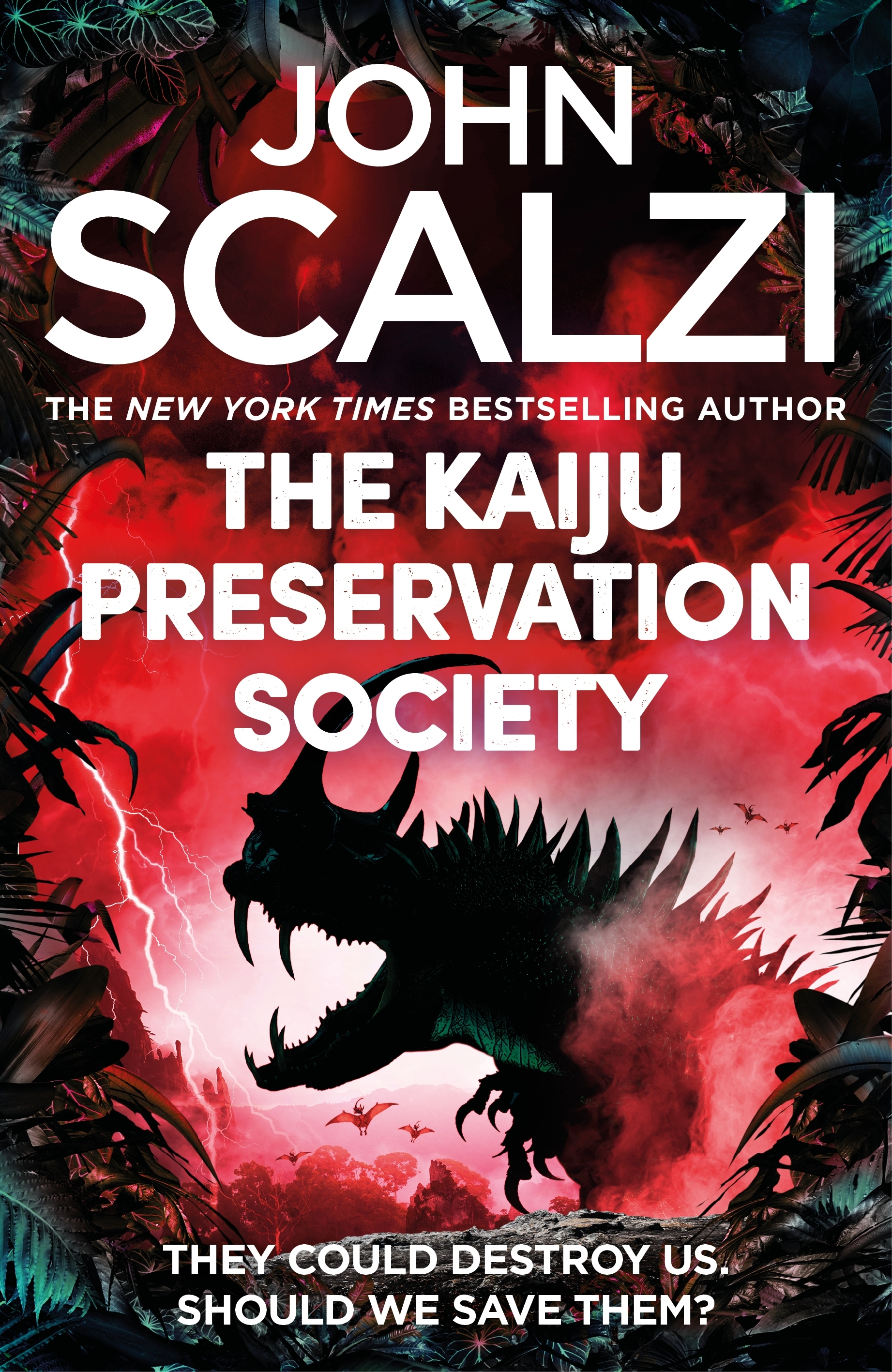
The Kaiju Preservation Society by John Scalzi

The Kaiju Preservation Society Cover 2

Publisher: Tor (Trade Paperback – 29 March 2022)

Series: Standalone

Length: 264 pages

My Rating: 4.5 out of 5 stars

Amazon     Book Depository

Prepare to save all the monsters as bestselling and madly inventive science fiction author John Scalzi presents his latest captivating and funny novel, The Kaiju Preservation Society.

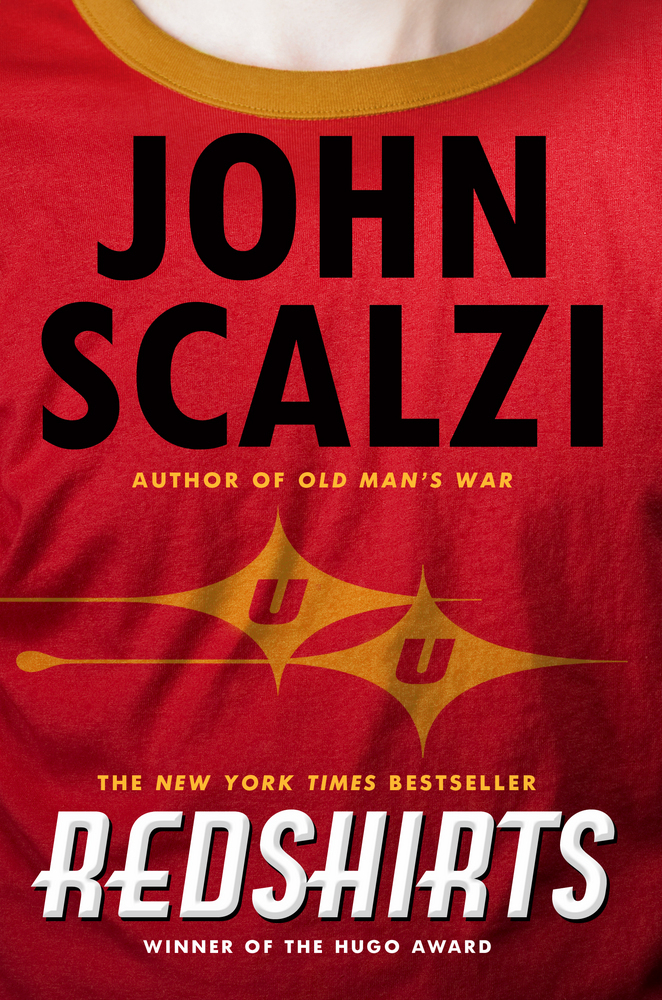
I have a lot of love for imaginative author John Scalzi, who is probably best known for his Old Man’s War and The Interdependency series, both of which make great use of high-concept science fiction elements.  I personally first experienced the author when I read his standalone novel, Redshirts a couple of years ago.  This cool and clever book served as the ultimate parody of Star Trek, focusing on an Enterprise-esque spaceship whose regular crew are extremely aware that something is very wrong as they keep dying in ridiculous situations.  I had an absolute blast with Redshirts and I have been keeping a very close eye out for anything else Scalzi was writing.  As such, I was extremely excited when I saw that his new book, The Kaiju Preservation Society was coming out this year, especially as it had such a unique and interesting plot to it.

As COVID-19 starts to run rampart through New York City, Jamie Gray’s entire life is thrown upside-down when his terrible boss steals his ideas and fires him.  Forced to work as a driver for the same food delivery app he developed, Jamie despairs at his now dead-end life, until one delivery leads to a chance encounter with an old acquaintance of his, Tom, who works for a mysterious animal rights organisation.  In desperate need of a new team member to help with their next expedition, Tom offers the job to Jamie, who jumps at the chance at a high-paying job.

However, Jamie is unprepared for just how unusual his life is about to become as the expedition first journeys to the heart of Greenland, and then through a portal into a parallel Earth filled with lush jungle, an untouched atmosphere, and giant mountain-sized creatures named kaiju.  It turns out that his new employers, known as the Kaiju Preservation Society, specialise in researching and preserving these vast creatures, while also working to keep them from leaving their own, human-less world, and traversing the barrier to ours.

Enraptured by the strange new world and exciting opportunities they present; Jamie soon takes to his role as a member of the Kaiju Preservation Society.  However, his complex and dangerous new employment is about to get even harder when strange events start occurring around camp.  It soon turns out that others have found a way to cross the boundaries between worlds and they have designs on the kaiju.  Jamie and his friends must find a way to stop these intruders before their carelessness destroys a kaiju and millions of people on our world.

Scalzi has done it again, producing a clever and wildly entertaining book that makes brilliant use of a distinctive and unique idea.  I had an incredible time reading The Kaiju Preservation Society, and I really loved the cool ideas, intelligent science fiction elements, and exciting story it contained.

The author has come up with an excellent story for The Kaiju Preservation Society that proves incredibly easy to get into and enjoy.  This is a very intriguing and captivating read that quickly drags in the audience and gets them exceedingly addicted to the plot.  Being a relatively short novel, it is an extremely fast paced, self-contained read that requires no prior experience of Scalzi’s books.  It doesn’t take long for the events of the novel to unfold, with the reader soon introduced to the key characters, new friends, and the necessary set-up for the eventual dive into kaiju land.  Once through the portal, the reader is given a crash course on the rules and attributes of the new world, the various issues the staff there are forced to contend with, and the crazy people who would choose to live amongst the monsters.  After several fantastic and action-packed sequences, often broken up by several elaborate and comedic discussions between the protagonist and his friends, the book heads towards its intriguing final third, which identifies the main threat of the book and forces the characters to act.  This final bit is extremely exciting and fun, and there are several intense moments as the characters face death, tragedy and one of the smarmiest villains I have had the pleasure of reading about.  This leads up to an amazing conclusion that wraps everything up nicely and ensures everyone leaves the book incredibly satisfied.

I mostly liked how Scalzi wrote this book, especially as he clearly had a lot of fun introducing this bold new world and its many awesome features.  The author does a lot in a short amount of time, and you are soon immersed in the excellent world of Kaijus.  Told perfectly from the perspective of the main protagonist, who, like the reader, is seeing everything in this world for the first time, you quickly get a sense of all the craziness that occurs in this land, and the various issues they experience.  I loved all the unique elements Scalzi came up with, from the impossible, nuclear-powered, mountain sized monsters with their complex biology and giant parasites, to the mass of strange creatures haunting the land, the unique landscape, and the various other awesome elements.  You get a great sense of everything in this world, and Scalzi ensures that the science is both realistic and easy to understand at the same time.  This proves to be such an impressive setting for this fantastic read, and you will wish that the author had made the book even longer just to see more of this strange new world.  While there is a good focus on monsters, exploration and science, Scalzi also makes sure to lace The Kaiju Preservation Society with a great amount of comedy that proves to be extremely entertaining and amusing.  This book is filled with so many fantastic and clever jokes, which range from comedic reactions to the outrageous events occurring around them, to fun, if random, pop culture references (for example, one of the villains is inspired by Trading Places), and multiple entertaining interactions between the eccentric central cast.  You end up really getting into this excellent story as a result and it is so very fun to read.

I did have some minor issues with some of the dialogue in The Kaiju Preservation Society, as certain exchanges came across as a little clunky.  I must note the somewhat overuse of dialogue tags (he said, she said, I said) after direct speech, which is something I noticed when I read Redshirts.  While it was not as obvious or problematic in The Kaiju Preservation Society, possibly because I read a physical version rather than the listening to the audiobook, the overuse of them still stood out a little and spoiled the flow of the book at times.  I also really wish that Scalzi could be a bit more descriptive with his writing in places, especially when it comes to the kaiju and some of the characters.  For being such a key part of the plot you often don’t fully grasp what these creatures look like, with only very general descriptions of their size and shape being featured, unless an attribute is essential to the plot.  There was also a complete lack of character description throughout the book, which I found to be a little distracting, especially as I often had no idea what a person looked like.  For example, I didn’t realise character was nonbinary until halfway through the novel when they started getting a little more focus and the them/they pronouns started being used with more regularity.  While some of this stuff is a little annoying, I felt that the strong and entertaining story more than overcomes it and you end up overlooking these minor stylistic problems.

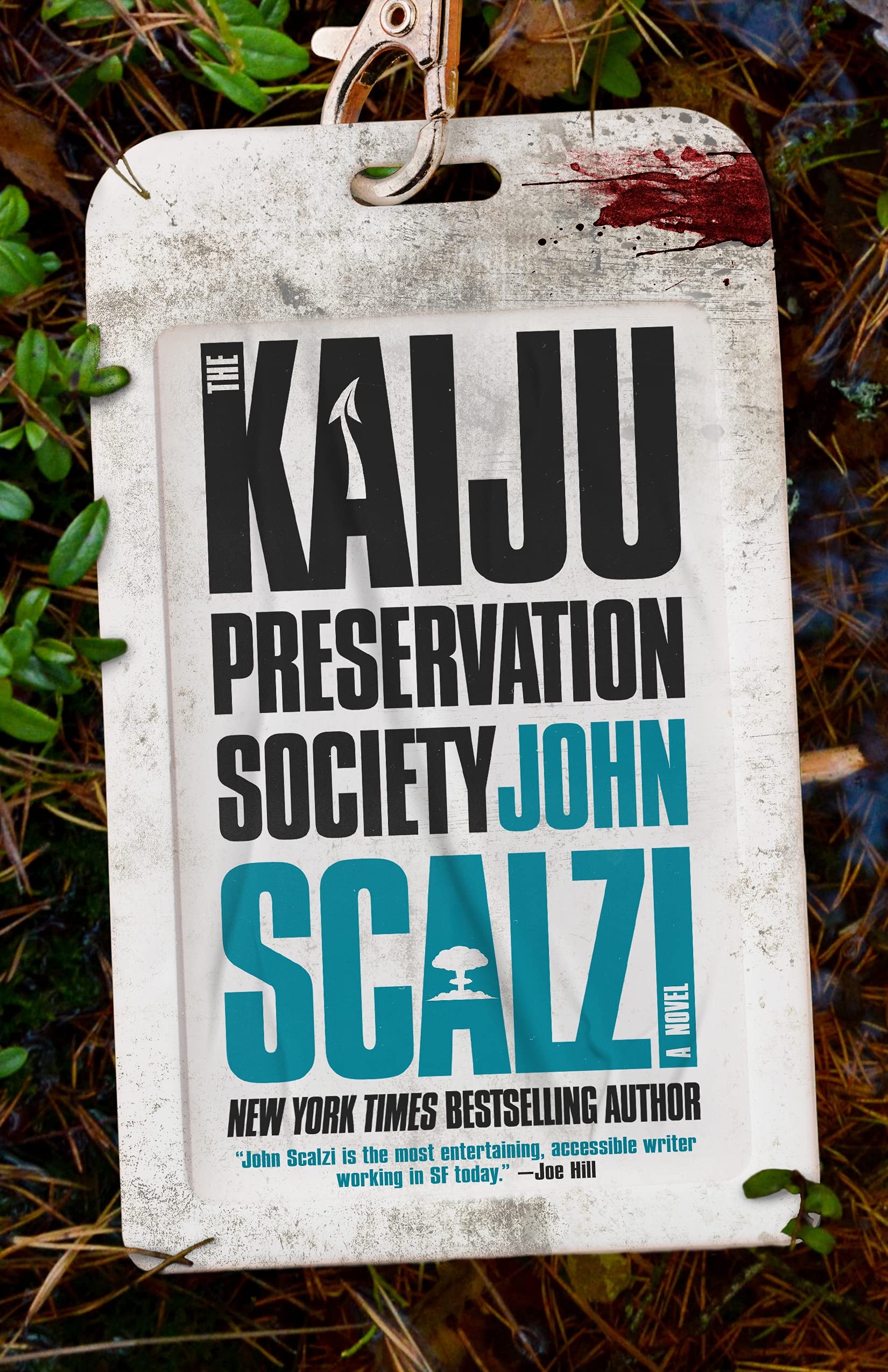
The insanely brilliant John Scalzi continues to shine with his latest kooky and compelling science fiction read, The Kaiju Preservation Society.  Filled with a wild and captivating exploration of a distinctive alternate Earth, you will quickly fall in love with this exciting and humorous story.  I had an absolute blast getting through the awesomeness that is The Kaiju Preservation Society and I would strongly recommend it to anyone looking for something light and fun to get through.

The Kaiju Preservation Society Cover

Amazon     Book Depository

A Practical Guide to Conquering the World by K. J. Parker

A Practical Guide to Conquering the World Cover

Publisher: Orbit (Trade Paperback – 11 January 2022)

Series: The Siege – Book Three

Length: 352 pages

My Rating: 5 out of 5 stars

Amazon

2022 is off to a very good start for me, especially as I have already read an amazing novel that quite frankly may end up being one of my favourite books of the year.  This awesome read was the third and final book in K. J. Parker’s clever and compelling The Siege series, A Practical Guide to Conquering the World.

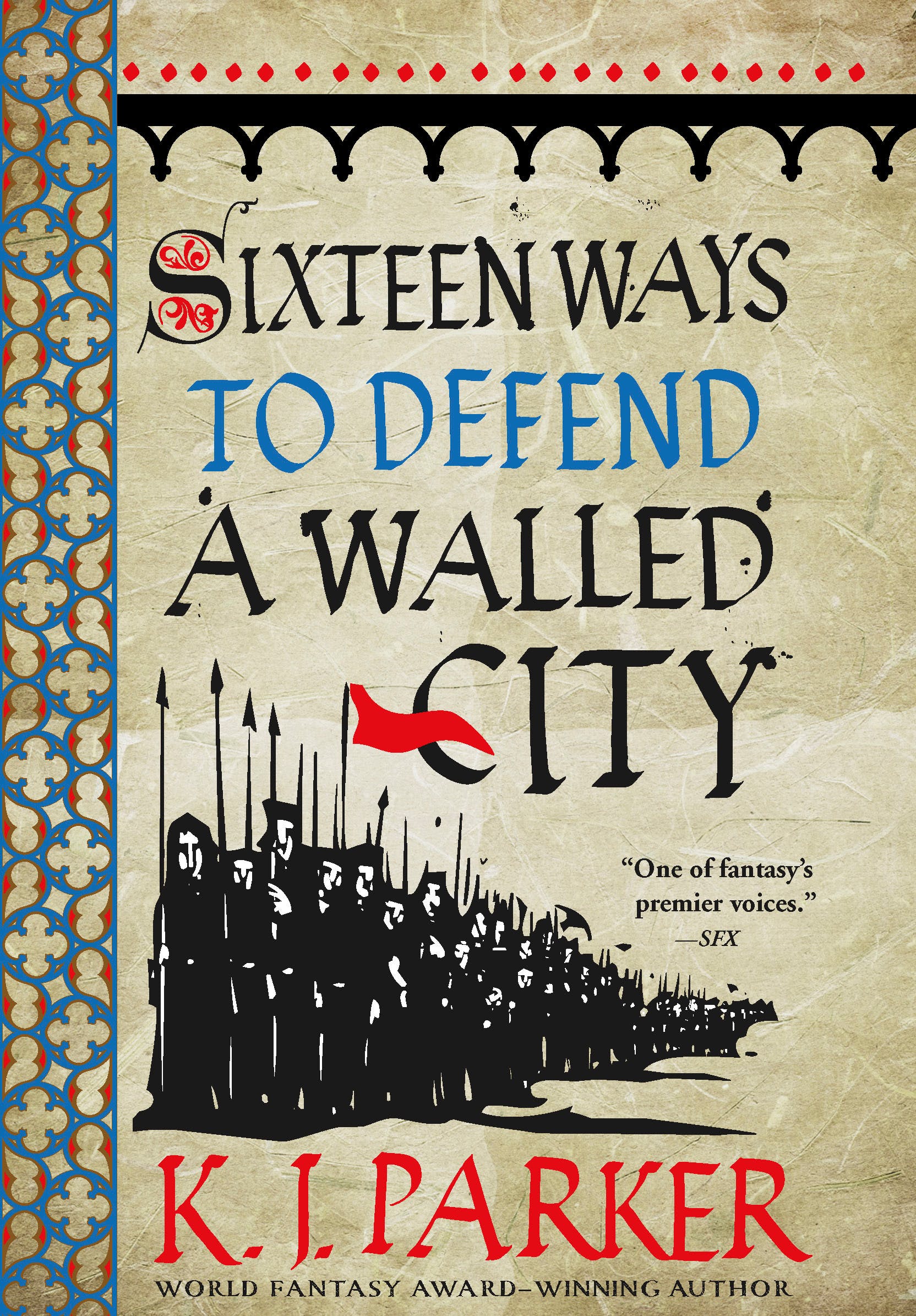
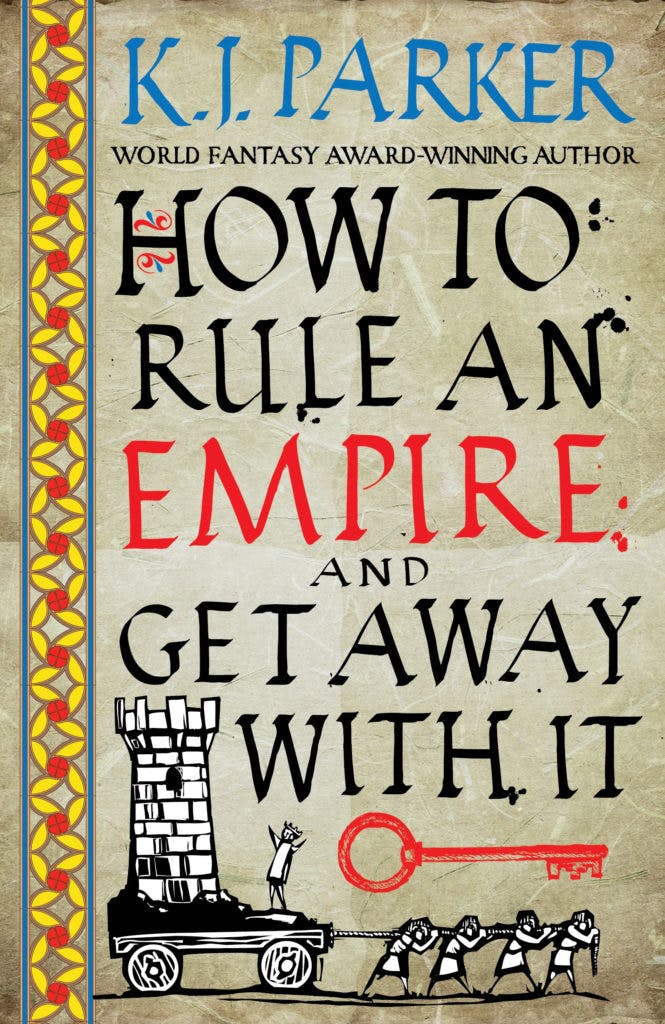
Over the last few years, I have been having an incredible time reading the incredible and deeply entertaining fantasy Siege series from K. J. Parker.  Parker, a pseudonym for bestselling author Tom Holt, has come up with something very special with The Siege series that combines an interesting new fantasy world with some brilliant humour and intriguing insights into human nature and reactions.  The first entries in The Siege series, Sixteen Ways to Defend a Walled City and How to Rule an Empire and Get Away with It, were both exceptional reads and they were among my absolute favourite books of 2019 and 2020 respectfully.  As such I have been eagerly waiting for a long time, and while I was initially disappointed that A Practical Guide to Conquering the World was delayed until the start of 2022, it ended up being such a great read and worth the wait.

The Siege series is set in an alternate fantasy world that bears some interesting similarities to ancient Europe.  The first book in the series, Sixteen Ways to Defend a Walled City, introduces the Robur Empire, a Roman-esque empire that is destroyed at the start of the novel by a coalition of enemies.  The one exception to this destruction was the Robur capital, simply known as The City, which was able to survive thanks to the actions of a military engineer and conman who was able to come up with some very inventive defences.  The second book, How to Rule an Empire and Get Away with It, was set a few years later and followed a new protagonist, an actor and playwright who is forced to impersonate the City’s figurehead after his death to keep the population’s morale and unity up to keep fighting the ongoing siege.  However, this second protagonist eventually takes control of the city and manages to evacuate it, leading the people to a new life.  The third and final book, A Practical Guide to Conquering the World, occurs during and beyond the events of both the first and second novel (if these books occurred the way they are portrayed) and features a new protagonist in a different land.

Aemilius Felix Boiannes the younger is a minor diplomat and translator assigned to the Robur embassy in the mighty Echmen Empire.  Content to live a relatively blameless life away from the people that wronged him, Felix’s life is forever changed when news of the fall of Robur reaches the Echmen.  Almost killed by the Echmen for no longer having a country, Felix’s life is only spared thanks to a debt owed by barbarian princess.  Determined to no longer live by the whims of others, Felix embarks on an ambitious plan that will reshape all of history.

When the Echmen attempt to enslave the princess’s people, Felix saves her and leads her out of Echmen territory.  Able to convince his new friend to unite the various barbarian tribes, Felix utilises his knowledge as a scholar to lead them to victory over the Echmen.  However, his ambition is not limited to conquering the greatest empire in existence, Felix is determined to take over the entire world and he already has all the tools to do so.  However, not even Felix is able to foresee all the consequences of his actions, and soon the entire world will be turned upside down.  For good or for bad, the story of Felix, the most influential and dangerous man in history, is about to begin.

Well damn, now this was one hell of a read.  Parker has come up with another exceptional read here with A Practical Guide to Conquering the World, combining a brilliant and clever story with incredible humour and an entertaining and compelling look into the human psyche.  Filled with constant laughs, intriguing developments and a truly addictive narrative, this book got an easy five-star rating from me and is near impossible to put down once you start it.

I have had a lot of fun with the great stories that Parker comes up with for this cool trilogy, especially as they are exceedingly entertaining and very unpredictable, even if, due to their complexity and cleverness, they are a bit hard to explain in my inevitable glowing reviews.  Like the rest of the series, A Practical Guide to Conquering the World is a standalone novel that can be read either by itself or as a continuation of the first two books in the series.  This novel is told in the chronicle style and tells the autobiography of the protagonist, Felix, a translator and scholar who finds himself in all manner of trouble when his nation is destroyed while he is in a foreign land.  Able to survive thanks to a recent good deed, Felix is soon dragged into the politics of the nation he is trapped in and attempts to stop the Chinese inspired Echmen empire from destroying and enslaving several neighbouring barbarian tribes.  Forced to put his scholarly knowledge to the test, Felix devises multiple brilliant and unpredictable plans to not only manipulate everyone around him, but to also defeat a massive empire and bend all its power to his ultimate goal of world domination and beyond.  This story goes in some extremely fun directions, and you honestly will not be able to put it down once you start as you become engrossed in seeing what elaborate idea Felix will come up with next.  There are some fantastic ploys and captivating twists scattered throughout this novel, and it is fascinating to see this nobody slowly gain more and more power thanks to his wit and ability to understand people.  I had an outstanding time getting through this story and it is extremely hilarious and very exciting.

A Practical Guide to Conquering the World is part of a larger series which switches protagonists with each entry, providing a new and unique tale of the aftermath of the siege of the City.  This third novel starts around the same time as the first book, Sixteen Ways to Defend a Walled City, and covers several years, going past the events of the second book, How to Rule an Empire and Get Away With It.  It is really interesting to see how this third book ties into everything, especially as the protagonist only has second-hand knowledge of the events of the prior two novels and, thanks to several clever inclusions in this book, as well as the unreliability of the narrators of the other entries, you’re not even certain those events actually occurred.  While new readers don’t need to have any knowledge of the other Siege novels to enjoy A Practical Guide to Conquering the World, I had a lot of fun seeing the mentions and discussions about the events of these prior books, especially as the protagonist is very disbelieving about what he hears.  The inclusion of a recurring character from the past book increases the connection to the rest of the series, although as she is also rather cagey, you have no idea how reliable her recollection of events is.  I loved how compelling this loosely connected series turned out to be, and it was a lot of fun to see how the entire funny saga come together into one entertaining collection.

Just like with the first two books in the series, A Practical Guide to Conquering the World is set around a single protagonist, with the story reflecting their personal account of what they experienced.  This new protagonist, Felix, is another entertaining and interesting central character, a former soldier who, after making some big mistakes and paying the cost for them, is banished to a diplomatic post in another country.  This, and his ability for languages, ironically ensures that he survives the destruction of his homeland and places him in a unique position for his goals.  I personally really enjoyed the cool story that Parker places around Felix and while there are some notable similarities between him and the other protagonists of the Siege books, mainly the fact that he is a conniving and selfish person with impressive insights into human nature and reaction, I think that there are enough differences to keep readers of the series happy.  I loved the focus on his experience with languages and scholarly research, which he uses to great effect throughout the book, manipulating translations for his advantage and then coming up with obscure or historical solutions to the various problems he faces.  Watching him turn this unique knowledge to his advantage, especially once he is inadvertently placed in the centre of world-shaping events, is really cool, and I loved seeing him succeed in his goals.  Parker adds in a great attempted redemptive arc around Felix, which serves as a surprising driving force for much of what he does.  However, readers do have to take Felix on face value, as, like the previous two protagonists of the Siege books, Felix is a bit of an unreliable narrator who may or may not be altering the story to make himself sound better to history.  The final stinger of the book, which hints at the falseness of Felix’s account, is a clever and amusing touch from Parker, and you will come away wondering just how much you believe this character.

Easily the highlight of this book is the amazing humour that Parker has laced his impressive story with.  Parker has an incredible and wicked ability with subtle comedy which permeates the entirety of A Practical Guide to Conquering the World thanks to the unique abilities that occur within.  Much of this humour is derived from the eccentric protagonists’ impressive insights into the human mind, which allows him to manipulate events and people to his favour.  Thanks to some great setup and some outrageous events, the readers get to see this protagonist subtly manipulate everyone, and his explanations for how he gets away with it and the subsequent reactions are extremely amusing.  At the same time, Parker also satirises large parts of the human experience and culture, including the inefficiencies of bureaucracy, the inevitability of betrayal in the name of survival, the herd mentality of groups of people, the unpredictability of starting your own religion, and the inherent suspicion that everyone has inside them.  All of this comes together quite brilliantly throughout the book, and you will honestly be chuckling straight from the beginning, especially as the first joke, about a massive bureaucracy nearly killing the wrong person due to a case of mistaken identity, is very cleverly put together.

Overall, K. J. Parker really did not disappoint with the third and final entry in his hilarious and impressive Siege trilogy.  A Practical Guide to Conquering the World was just as fun and clever as the first two books, and I had a brilliant time reading this captivating fantasy novel.  Containing a wildly inventive narrative set around a compelling protagonist, you will fall in love with this outstanding book, especially as Parker’s comedic inclusions will keep you laughing.  A Practical Guide to Conquering the World is easily going to be one of the best books of 2022 and if you have not checked out The Siege series yet, do yourself a favour and dive into these hilarious and addictive books.

Amazon

Throwback Thursday – The Last Continent by Terry Pratchett

The Last Continent Cover

Publisher: Doubleday and ISIS Audiobook (1 May 1998)

Series: Discworld – Book 22

Length: 9 hours and 57 minutes

My Rating: 5 out of 5 stars

Amazon

This is part of my Throwback Thursday series, where I republish old reviews, review books I have read before or review older books I have only just had a chance to read.  For this Throwback Thursday I take a look at one of my absolute favourite books of all time, the incredibly funny and always enjoyable The Last Continent, by legendary author Sir Terry Pratchett.

I have never made it a secret that I absolutely love the works of the late, great, Terry Pratchett, who I consider to be one of the best authors of all time.  I love and adore every single one of Pratchett’s hilarious and captivating novels, especially the entries in the wacky and wild Discworld series, a comedy fantasy series set in an absolutely insane world of magic, monsters and outrageous personalities that lies upon a disc shaped world, borne through space on the back of four elephants, who themselves are on the back of a giant turtle.  I have so much love for this outstanding and hilarious series, and I have read each and every entry in multiple times.  Heck, even the name of my blog, The Unseen Library, is taken from a fictional institution in the Discworld series!  However, despite how much I love the series, I have so far only reviewed one Discworld novel on this blog so far (Shame! Shame! Shame!), Moving Pictures, and this is something I have been meaning to rectify for some time.

I recently did a Top Ten Tuesday list where I looked at some of the funniest books I have ever read, which included several Discworld novels, and this inspired me to do a review for another Pratchett read.  I ended up going with one of my favourite Discworld novels of all time, the incredible and wildly entertaining The Last Continent, which places one of the author’s most iconic characters into the most dangerous places imaginable, Australia.  I am reviewing this book slightly out of the order I originally planned, but I figured reviewing this one now may encourage me to get to others in the future.  I should admit that I have not read The Last Continent recently, but this is one of the many Discworld novels that I have read multiple times, either in its paperback (I’ve actually got a signed copy of this book) or its audiobook format, and at this point I have it pretty much memorised.

So the first thing I should cover is:

“This is not a book about Australia.  No, it’s about somewhere entirely different which just happens to be, here and there, a bit…Australian.

Still…no worries, right?”

Welcome to EcksEcksEcksEcks (XXXX), the Discworld’s last continent.  Made by a rogue creator who snuck in after the rest of the Disc was created and kept hidden away from its other civilisations by a series of massive storms, XXXX is a deadly and dangerous place.  Filled with some of the most lethal and confusing creatures on the entire Disc and populated by a friendly, if occasionally murderous, group of people, XXXX is a hell of a place to live.  Unfortunately, everything in it is about to die as the water dries out and even the beer is getting hard to find.

Luckily for the people of XXXX, a hero has been found, one who is battling his way through the wastes and towns of the country, his legend growing all along.  But who is this road warrior, sheep shearer, horse wrangler, beer drinker and ballad-worthy bush ranger, and why is he apparently so determined to run away from his heroic destiny?

That man is Rincewind, the Discworld’s most cowardly and inept wizard, who has been bounced from one end of the Disc to the other and been chased by every sort of monster, maniac and seller of regional delicacies you can imagine.  All Rincewind wants to do is go home, and he is determined to avoid any new adventures as a chosen hero, no matter what the talking kangaroo stalking him tries to tell him.  Despite his best efforts, Rincewind once again finds himself caught up in the special craziness of the locals, and if he wants to survive, he needs to find a way to save everyone.  What’s the worst that could happen???

So, as you may be able to tell from the above synopsis, this is a bit of a crazy novel, but it is one that is always guaranteed to make me laugh, especially with its fantastic Australian-based humour.  The Last Continent is the 22nd overall entry in the Discworld series and the sixth book to focus on the character of Rincewind.  I personally have a lot of love for this particular Terry Pratchett novel, and it is probably one of my all-time favourite Discworld novels.

Pratchett came up with a pretty clever and fantastic story for The Last Continent, which sees several of his established characters get involved in wackiness all around a newly discovered continent.  The main story follows Rincewind as he tracks across the wastelands of XXXX after getting sent there at the end of his previous novel, Interesting Times (there was an accident with a butterfly), and he is now primarily concerned with trying to find a way home.  However, mysterious forces soon work to turn him into the hero who will save XXXX from a thousand-year crippling drought.  Rincewind, who is more concerned with reaching the nearest port, soon gets involved with all manner of road bandits, deadly creatures, drunken locals and an annoying talking kangaroo, all of which lead him to the secrets at the heart of this lost continent.  At the same time, the wizard faculty at Unseen University are faced with a serious problem when their trusty orangutan colleague, the Librarian, falls ill, and they require his real name to work a spell to save him.  However, the only person who knows the Librarian’s real name is Rincewind, and so the faculty blunder their way through a magical portal to find him.  However, in predictable fashion, they find themselves trapped on a weird island thousands of years in the past and forced to deal with an immature and slightly beetle-obsessed god of evolution.

I really enjoyed both story arcs contained within this book, and Pratchett did an amazing job bringing them together.  Both have some fantastic and weird elements to them and they make great use of the particular adventures and attitudes of their relevant characters.  While Rincewind is forced to run away from all manner of deadly situations you typically see here in Australia (let me tell you, the dropbears and road gangs are murder), the wizard faculty blunder their way through all manner of unique situations, mostly by ignoring what is happening to them.  Each storyline is unique and has some fantastic highlights, but the real strength is the way in which Pratchett combines them together into one cohesive narrative.  Not only are both distinctive arcs perfectly spread out and separated throughout the course of the book, but Pratchett does a fantastic job combining them together in a clever way.  This ended up serving as a great near-final adventure for Rincewind (he’s more of a supporting character in his following appearances), and I think it did a wonderful job wrapping up his main arc.  While readers should probably read some of the earlier Discworld novels featuring Rincewind (especially the preceding Interesting Times), The Last Continent can easily be read alone, and readers will have an outstanding time reading this fun and compelling comedic adventure.

In my opinion, The Last Continent is one of Pratchett’s funniest novels, although I might be somewhat biased by my own personal humour and background.  I always have an outstanding time reading this book and there are so many clever jokes and amusing references that I cannot help but laugh, no matter how many times I hear them.  This book has a lot of Pratchett’s classic humour elements to it, such as the unusual quirks of his various characters and the funny little footnotes, filled with great references and punchlines.  The author goes off on some very entertaining segues during this book, and I love some of the great jokes he came up with, especially those that make fun of Australia.

Now, despite what the author says at the front of this book, The Last Continent is clearly a parody of Australia, and Pratchett clearly enjoyed utilising every single Australian reference or cliché he could think of to craft his funny book.  The continent of XXXX is an over-the-top fantasy version of Australia, with many of the outrageous stereotypes that you would expect, as well as some more subtle choices, and it serves as a truly amusing setting for this book, especially as Rincewind perfectly plays the part of clueless tourist.  While you could potentially discount The Last Continent as merely satirising Australia, I have always seen it as something cleverer, as I think that Pratchett was more making fun of the stereotypes that outsiders came up with rather than Australia itself.  That being said, Pratchett, as a Brit, did take a few good shots, although that’s only to be expected.  As an Australian myself, I always enjoy when comedy writers try to encapsulate Australia in their works, as it is quite amusing to see what they reference.  I always thought that Pratchett did this the best with The Last Continent, as he really dived into so many aspects of Australia life, nature and culture, and there are some truly funny jokes contained within.  Australian historical or cultural icons like Mad Max, Priscilla, Queen of the Desert, Skippy, The Man From Snowy River, Crocodile Dundee, and Ned Kelly are utilised in this book to great effect throughout The Last Continent, and there are some truly outrageous and clever references and jokes here.

While The Last Continent is filled with many, many funny Australian jokes, a few really stick out to me.  I personally always laugh so hard when Death, wanting to learn more about the continent his elusive prey Rincewind has landed on, decides to ask his library for a list of all the deadly animals on XXXX.  However, this results in him being buried by a massive pile of reference books, including “Dangerous Mammals, Reptiles, Amphibians, Birds, Fish, Jellyfish, Insects, Spiders, Crustaceans, Grasses, Trees, Mosses and Lichens of Terror Incognita: (Volume 29c, Part Three).  This is followed up by a request for a list of harmless creatures on the continent, and a single card appears bearing the sentence “some of the sheep”.  I love that over-the-top joke about how dangerous Australia’s wildlife is (it is honestly not that bad, although my editor was bitten by a sheep the other day), and that was one of the best ways I have seen it bought up.  I also loved the references to Australian hero worship of notorious criminals such as Ned Kelly or the jolly swagman from Waltzing Matilda.  There are some amazing jokes here, from people attempting to make catchy ballads, to the prison guards providing advice and help on last words and escape possibilities, all of which capture the rebellious Australian spirit.  I particularly liked Pratchett’s version of Waltzing Matilda, which was perfect in its rhyme, its satirical analysis of the original poem, and how it fit into The Last Continent’s narrative:

“Once a moderately jolly wizard camped by a waterhole under the shade of a tree that he was completely unable to identify.  And he swore as he hacked and hacked at a can of beer, saying ‘what kind of idiots put beer in tins?’”

Other great Australian comedic sequences for me include the scene where the Unseen University wizards attempt to design a duck by committee, resulting in the mighty platypus, an impromptu Mad Max road chase with horse-drawn carts and the constant references to a certain line in our national anthem.  All of these jokes, and more, were pretty amazing and I really enjoyed seeing some of the outrageous and over-the-top elements that British culture picks up about Australia.

While I really enjoyed all the fun references to Australia, some of Pratchett’s best jokes in The Last Continent occurred during the secondary storyline that followed the faculty of Unseen University as they go back in time and encounter the god of evolution.  The author uses this part of the book to make comedic observations about time travel, evolution and advanced biology.  Not only does include a particularly hilarious sequence in which someone tries to explain the grandfather paradox to a group of wilfully ignorant wizards, but there are some truly funny jokes about evolution and biology which cleverly reference some advanced concepts and historical basis of the science.  While I read this book years ago, it wasn’t until I took some specific biology classes that I fully grasped just how intelligent some of the jokes in this part of the book are.  I personally love a book which you can come back to time and time again and find some new joke or layer to, and this is the case with The Last Continent, which no doubt still contains elements or references I’ve missed.  All of this results in a comically brilliant read, and The Last Continent remains one of my favourite Disworld reads as a result.

I have always enjoyed the great character choices contained within this book, as Pratchett brings together some old favourites, as well as a few entertaining new ones, to tell the story.  The main character of The Last Continent is Pratchett’s original Discworld protagonist, Rincewind, the cowardly and inept hero who cannot even spell “wizard” properly, but who has served as a world-saving hero on multiple occasions.  Rincewind is always a particularly fun character to follow, not only because he constantly finds himself caught in all manner of unique situations which he heroically tries to run away from (he has become quite the expert at running away), but he has a certain realistic approach to life that allows him to see through the ridiculousness around him and address it in a funny manner.  At this point in the series, Rincewind has been bounced around from adventure to adventure against his will so much that he has developed a bit of knack for knowing when it is going to happen again, including figuring out all the signs someone gives off when they are trying to con him into being a hero.  It proves to be quite entertaining to see Rincewind try to escape from people trying to drag him into the narrative, especially as all his attempts to get out of dangerous situations generally put him in even worse trouble.  It is also really worth seeing Rincewind’s reactions to the various elements of XXXX life, especially as he soon begins to realise that everyone there has some very unusual ideas about how to live and die, most of which he is very opposed to.  I really enjoyed this more mature and somewhat resigned version of Rincewind and I have to say that this is one of my more favourite adventures of his (either this or Interesting Times).  It was definitely great to see the character get a happy ending towards the end of the book for once, which he frankly deserved after his last few adventures.

While Rincewind is tearing it up in not-Australia, Pratchett also dedicates around half of The Last Continent to the characters who form the faculty of the Disc’s premier wizard school, Unseen University.  Many wizard characters have featured in the Discworld books, but this current iteration of the faculty (with the exception of the Librarian) was originally introduced in the 10th book, Moving Pictures, and has remained pretty constant ever since.  This group includes the hunting-obsessed Archchancellor, Mustrum Ridcully; the quite insane Bursar; the incredibly obese Dean; the amusing team of the Senior Wrangler, the Chair of Indefinite Studies and the Lecturer in Recent Runes; the orangutan Librarian (working in a library is dangerous work); and the long-suffering Ponder Stibbons, the youngest member of the faculty and the only one with any common sense.  Pratchett had previously done an amazing job building up all of these characters in prior books, highlighting their unique quirks and issues, including the overwhelmingly stubborn, childish and traditionalist personalities of the older wizards.  This excellent blend of personality types really makes the older wizard characters really amusing and their adventures, especially when encountering strange gods and creators who they generally ignore, are extremely funny.  While an entire book about these characters would potentially be a bit overwhelming, I think that Pratchett got the balance right in The Last Continent, and they ended up serving as a fun counterpoint to Rincewind.  Stibbons was also a particularly good straight-man to his fellow wizards, and the contrast between keen intellectualism and entrenched “wisdom” is a fantastic part of the book.  I rather enjoyed Stibbons arc in this book, especially as you get to appreciate the true depth of his frustration with his fellow wizards, although he does gain a deeper appreciation for them as the book progresses.  Other amusing storylines with the wizards includes the Senior Wrangler’s obsession with housekeeper, Mrs Whitlow, which eventually gets shared with some of the other wizards, and the uncontrollable shapeshifting infecting the Librarian, which makes for some entertaining gags.  I also really enjoyed the fact that much of the book’s plot revolves around the fact that no-one actually knows the Librarian’s name, a fun feature from the previous books, and it was interesting to see the reasons why this was the case.

Aside from this fun collection of wizard characters, Pratchett makes great use of a fine selection of supporting characters, each of whom add some fantastic fun to the overall story.  This includes a very inventive group of new characters, each of whom represent various parts of XXXX life, whether they be depressed operatic chefs, police officers more concerned with getting their charges ballads and famous last stands, bushland drovers, belligerent drinkers, desert-wandering crossdressers in a princess-themed cart and even a crazed road warrior named Mad.  Despite most of them being the result of a punchline or extended joke, Pratchett sets each of these characters up really well and ensures each of them has a fun and satisfying character arc in the book.  I also quite enjoyed the return of fan favourite character, Death, who goes on a bit of a tourist phase through the book.  I really liked Death’s random appearances throughout The Last Continent, especially as he drops some amusing anecdotes about dying in XXXX, and it was also great to see his current viewpoint on Rincewind.  Whereas before he was always determined to catch and kill Rincewind, as he was the one mortal who constantly got away from him, in this book, Death, who no longer has any idea of when Rincewind is actually going to die and is now quite fascinated by him, keeps himself appraised of his progress and is generally friendly to him, even if that freaks Rincewind out.  I also loved the appearance of another member of the extended Dibbler clan, even if the XXXX version was a parody of a certain unpleasant right-wing political figure here in Australia.  The appearance of another ruthlessly mercantile hot-food dispenser with inedible food is a great continuation of a running joke Pratchett has been using for several books, and it is one that really pays dividends in The Last Continent, when Rincewind recounts all the terrible foods he’s eaten over the years from the various Dibblers he has encountered, which then runs into a fantastic diatribe about the dangers of national delicacies, especially XXXX’s meat pie floater (a real meal here in Australia, although there is no way in hell I would ever eat one).  All of these characters add so much to the book’s story, and I love the inventiveness that Pratchett puts into them.

While I have enjoyed all the Discworld novels in their physical paperback format at one point or another, my preferred way to experience a Pratchett novel these days is in its audiobook form.  All of the Discworld novels have been turned into excellent audiobooks over the years, and The Last Continent is no exception.  Narrated by the outstanding Nigel Planer, who ended up narrating over 20 Discworld novels (The Last Continent was the penultimate Discworld book he leant his voice to), and with an easily enjoyable runtime of just under 10 hours, this is a pretty fantastic audiobook that I regularly rush through in not time at all.  I find that all the awesome jokes in this book come across in the audiobook format extremely well, even the jokes traditionally contained within the book’s footnotes, and Planer’s witty voice is always pitched at the best tone to bring out the joke’s potential.  I really appreciate the way in which Planer utilised the same voices for the various recurring characters he has used in all their previous appearances, and each of the voices fit the characters very well.  I also really enjoyed the voices he came up with all the new characters, and it was exceedingly amusing to see him come up with a range of Australian voices and accents and have them belt out a variety of outlandish slang terms.  All in all, this turns out to be an excellent audiobook version of The Last Continent and it is pretty much the only way I enjoy this novel at the moment.

As you can see from the huge review I pulled together above (I have written university essays that were shorter), I really love The Last Continent.  This fantastic Australian parody is easily one of my favourite Discworld novels, and I deeply enjoy the outstanding and entertaining story that Pratchett wove around this outrageous version of my country.  Anyone who is familiar with anything Australian is going to have an incredible time reading this book, and I honestly do not think I could give this anything less than five stars.  A highly recommended read from one of the funniest authors of all time.

Amazon

Top Ten Tuesday – Books That Made Me Laugh Out Loud

Top Ten Tuesday is a weekly meme that currently resides at The Artsy Reader Girl and features bloggers sharing lists on various book topics.  For this latest Top Ten Tuesday, participants have the fun task of listing their favourite books that made them laugh out loud.

While coming up with list was an enjoyable and entertaining task, this was a topic that I slightly struggled with as I don’t tend to read purely comedic novels.  Instead, I usually get my comedic fix through somewhat more serious books that have funny protagonists or are filled with jokes or excellent humour.  Nonetheless, I was able to pull together a good list in the end filled with some amazing reads that always leave me laughing.  I did end up having to feature multiple books from the same authors to fill this list up, but these guys are just so funny it was hard not to.  So, with that, let us get on to the funny stuff.


Honourable Mentions:

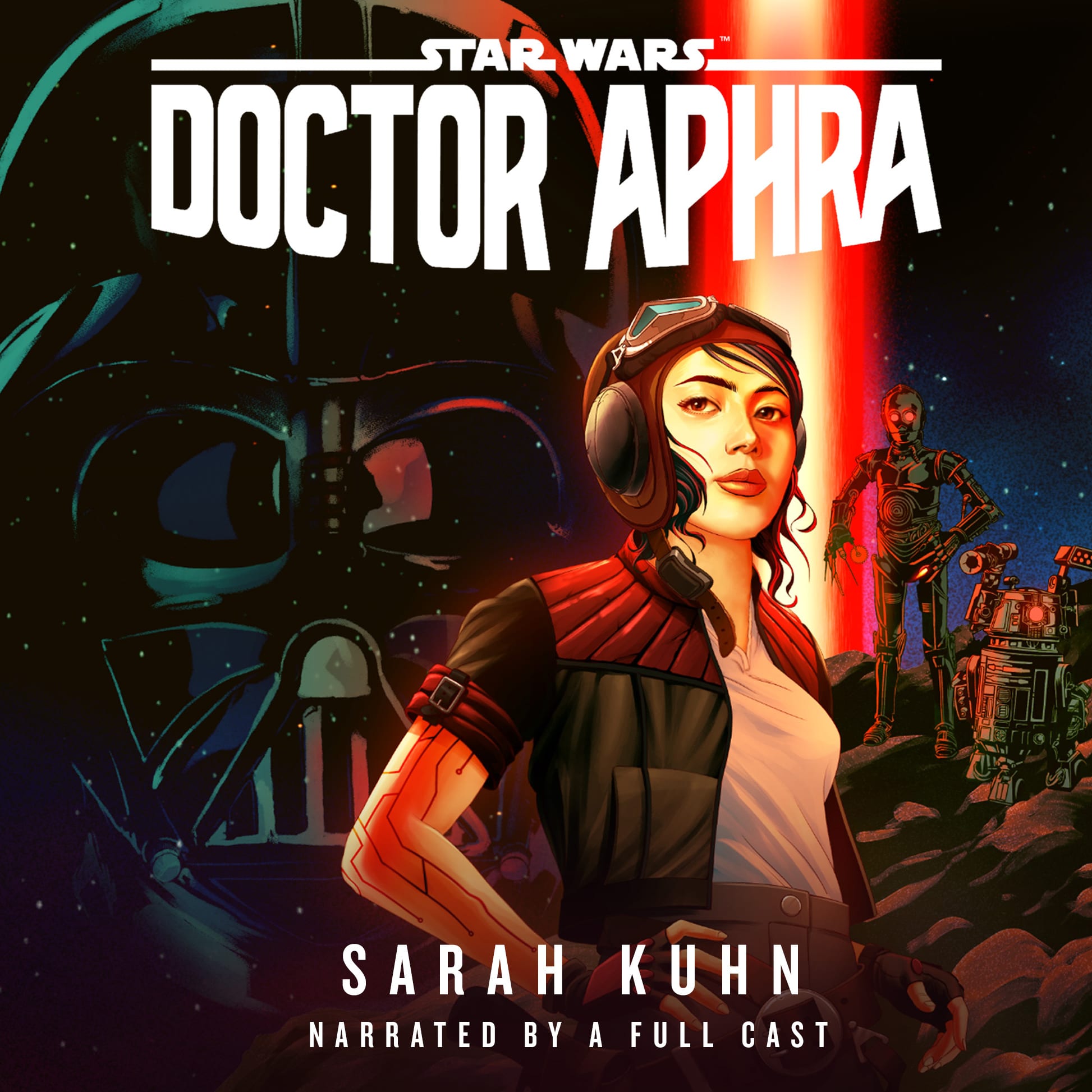
Star Wars: Doctor Aphra by Sarah Kuhn

Doctor Aphra Audio Cover


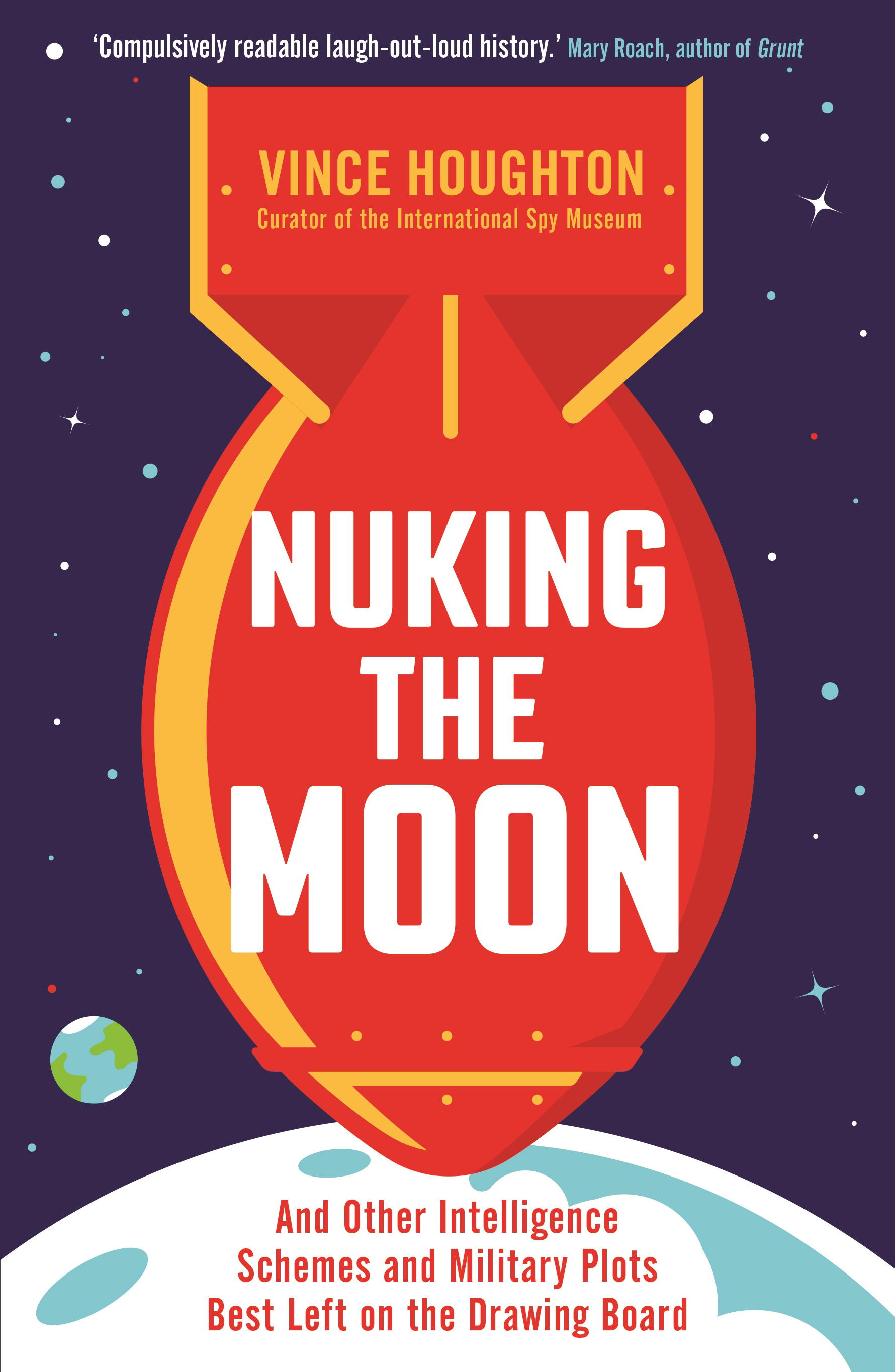
Nuking the Moon: And Other Intelligence Schemes and Military Plots Best Left on the Drawing Board by Vince Houghton

Nuking the Moon Cover

With luminous foxes and exploding bats, this fun non-fiction book is proof that reality is sometimes stranger, and more hilarious, than fiction.


Early Riser by Jasper Fforde

Early Riser Cover


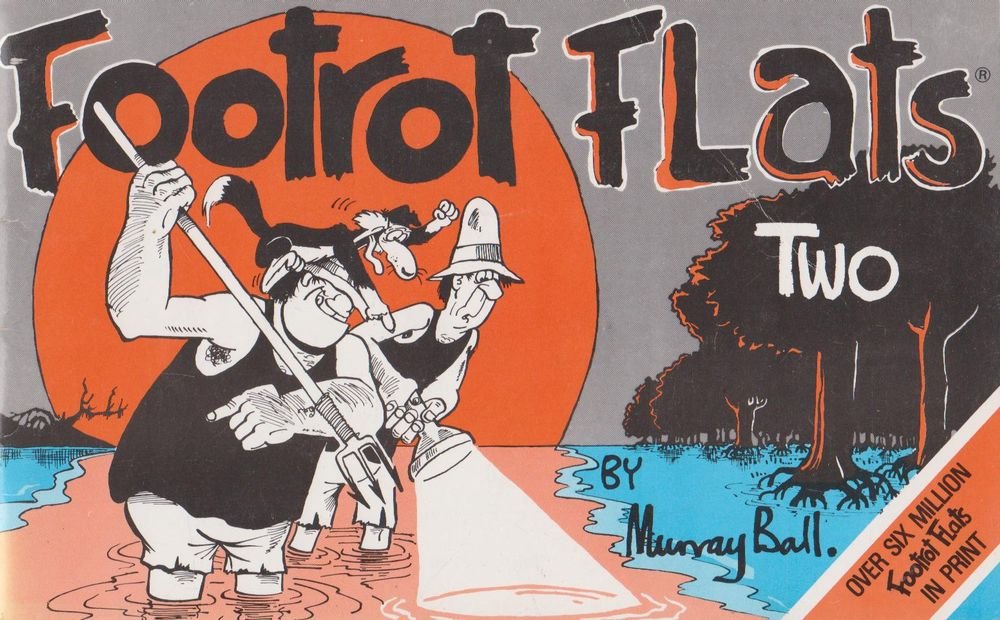
Footrot Flats by Murray Ball

Footrot Flats Cover

An amazing comic strip I loved in my childhood thanks to my fun grandfather.  This cool New Zealand comic still holds up even after all these years and makes me laugh like crazy every time I read it.


Top Ten List:

Jingo by Terry Pratchett

Jingo Cover

I do not think that anyone is going to be too surprised that I have featured several books from the utterly hilarious and indefinably clever Terry Pratchett.  Pratchett is easily my favourite author of all time, and I have so much love for his amazing Discworld series, the novels of which I have read and re-read time and time again, and each of them always makes me laugh.  I ended up including five Discworld books on this list, which I honestly think is me showing restraint, as I could have filled up three separate lists purely with Discworld novels.  The first of these books is one I am particularly fond of, Jingo, which sees the Ankh-Morpork City Watch attempt to stop a war.  Filled with all manner of jokes about war, political assassinations and jingoism, while also featuring an hilarious boat chase in unusual weather, Captain Carrot turning into Lawrence of Arabia and an entire battlefield arrested for causing an affray, this book never fails to amuse me, and I always laugh while reading it.


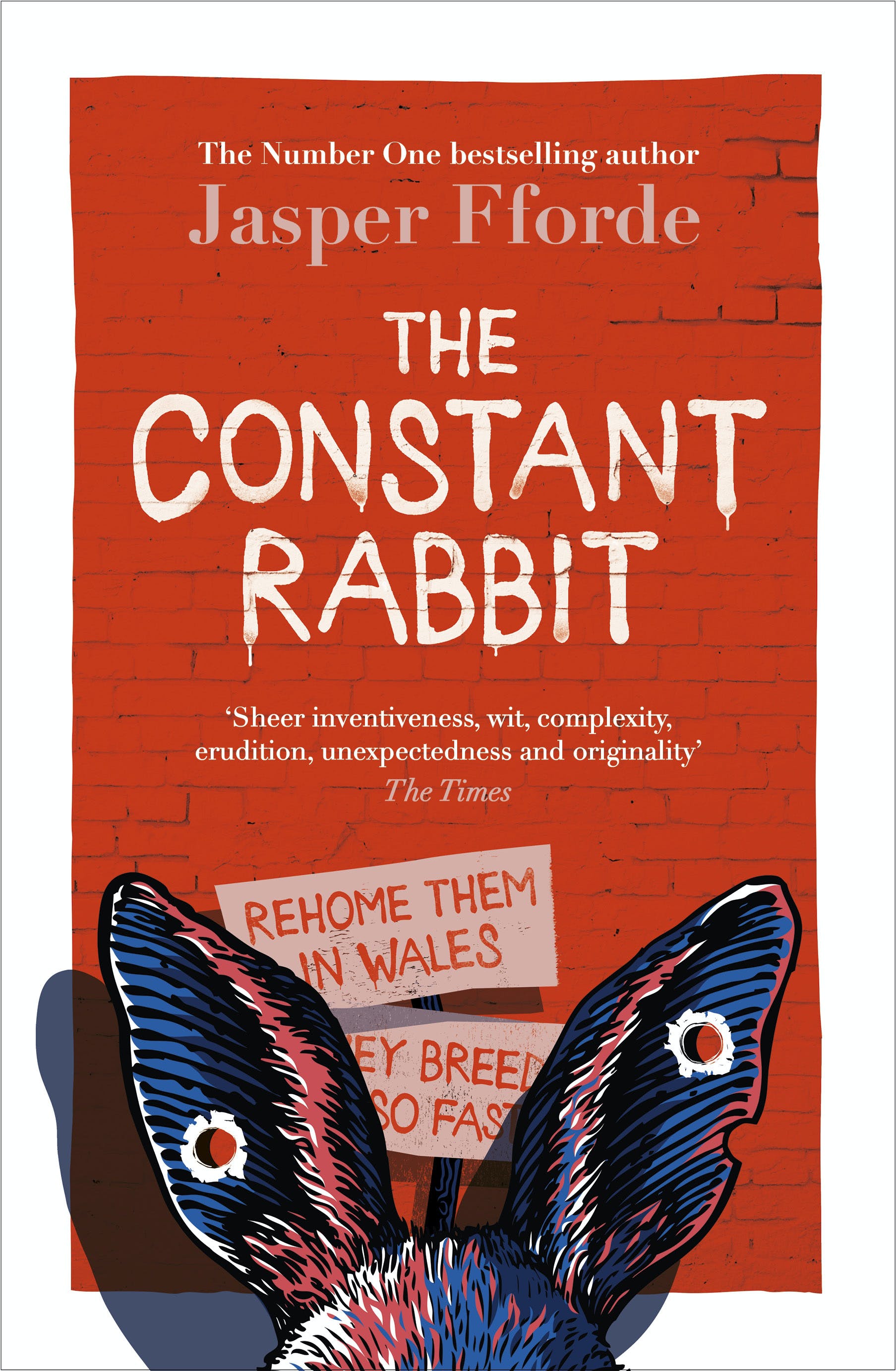
The Constant Rabbit by Jasper Fforde

The Constant Rabbit Cover

The second entry on this list was last years awesome and captivating release from Jasper Fforde, The Constant Rabbit.  Set in an alternate version of England filled with anthropomorphic rabbits, Fforde has come up with an outrageous narrative that is both fantastically funny while also serving as a clever send up of current British politics.  I laughed at so many scenes during this book, including a great court sequence, that The Constant Rabbit easily made this list and is really worth checking out.


The Last Continent by Terry Pratchett

The Last Continent Cover

The next Discworld novel to appear on this list is The Last Continent, a very amusing novel that pits Pratchett’s main protagonist, the cowardly wizard Rincewind, against the terrors and horrors of that most dangerous of places, Australia (although the author is very clear to state that this is not a book about Australia, it just seems, in some places, very Australian, so no worries, right?).  Naturally, Rincewind manages to run into every single dangerous Australian stereotype you can think of, including road gangs trying to steal a mad dwarf’s hay, talking kangaroos, drop bears, a chronic lack of rain and, worst of all, a local delicacy (a pea soup pie floater, shudder!).  The Australian jokes and references come thick and fast throughout this book, which become even more entertaining when viewed from the point-of-view of someone born and raised in Australia.  At the same time, the wizards of Unseen University engage in their own separate adventure, which sees them lost in the past (potentially killing their own grandparents) and forced to contend with a sex-obsessed god of evolution (once someone explains what sex is to him).  All of this makes for a hilarious and captivating read that is easily one of my favourite Discworld books, and one which I will always have a good laugh at.


Sixteen Ways to Defend a Walled City by K. J. Parker

Sixteen Ways to Defend a Walled City Cover

There was no way that I could not include the impressive and captivating Sixteen Ways to Defend a Walled City on this list.  Sixteen Ways to Defend a Walled City, which was one of my favourite books of 2019, tells the story of a desperate and comical siege of a major fantasy city.  Told from the perspective of a very unreliable narrator, this book sees the protagonist defend his city with the most effective weapon he has, bluffs and lies.  This is an outstanding book, and readers are guaranteed to giggle at every single manipulation, con and elaborate subterfuge that is deployed to save the city.


Moving Pictures by Terry Pratchett

Moving Pictures Cover

A Discworld book that is perfect for movie buffs, Moving Pictures examines what happens when a new form of entertainment comes to this crazy world, giving a whole new meaning to the term “movie magic”.  There are so many great jokes and references in this compelling and exceptional book, that multiple re-reads are a must to see just how clever Pratchett really was.  Highlights include the introduction of multiple amazing characters, a reverse King Kong moment and a very entertaining Gone With The Wind parody (to this day I cannot hear the words “Blown Away” without thinking about this book and sniggering).  An impressive comedic treat.


Redshirts by John Scalzi

Redshirts Cover

A Star Trek parody written by science fiction genius John Scalzi was always going to be an amazing read, and it proves to be utterly hilarious.  I loved all the fantastic jokes made about Star Trek in this book, and it was extremely funny to see the adventures of an Enterprise equivalent ship told from the perspective of the doomed redshirts.  I had some good laughs as I powered through this book and it is an incredible comedy read to check out.


Pyramids by Terry Pratchett

Pyramids Cover

Another long-time favourite Discworld novel of mine is the outstanding Pyramids, which serves as a comedic adventure in an ancient Egyptian facsimile.  Pratchett came up with some fantastic sequences for this book, and I always chuckle at the scene with the various sun gods fighting for their prize like a football while a priest does commentary: “It’s noon! It’s noon!”.  An utterly hilarious novel.


A Shot in the Dark by Lynne Truss

A Shot in the Dark Cover

This next excellent entry on this list is A Shot in the Dark, Lyne Truss’s novelisation of her genius Inspector Steine radio show.  This serves as an amazing take on this fantastic radio show and I loved the comical premise which sees a new police constable be reassigned to the seemingly crime free Brighton, only to discover something very sinister is lurking just around the corner, ready to offer him a cup of tea.  A very funny and entertaining read that got a lot of laughs out of me.


Guards! Guards! by Terry Pratchett

Guards! Guards! Cover

The fifth Discworld novel on this list is the exceptional Guards! Guards!, which serves as the introductory book in the City Watch subseries.  This is an outstanding read that presents a fantasy parody of classic crime fiction novels, by having a severely understaffed police force attempt to arrest a summoned dragon.  There are so many clever comedic scenes in this book, but I personally laughed the hardest as the descriptions of the heroic and naïve Captain Carrot arresting the head of the Thieves Guild.  One of Pratchett’s best and funniest books, this is a great one to check out if you want to laugh out loud.


How to Rule an Empire and Get Away with It by K. J. Parker

How to Rule an Empire and Get Away With It

My final entry is How to Rule an Empire and Get Away with It, the sequel to Sixteen Ways to Defend a Walled City that I featured above.  This excellent and amazing read (which was one of my favourite books of 2020) continues the story started in the first novel, although this time it follows an actor who manages to con his way to the top of the besieged city using stage techniques.  This was another hilarious and exceptional read that really made me chuckle multiple times.


That is the end of this list.  I think it came together really well and I liked the different novels I decided to feature, even if it was a tad Pratchett heavy (not that there is anything wrong with that).  All the above novels come highly recommended and are definitely worth reading if you are in the mood for a funny and laugh provoking read.

The Thursday Murder Club by Richard Osman

The Thursday Murder Club Cover

Publisher: Penguin Audio (Audiobook – 22 September 2020)

Series: Thursday Murder Club – Book One

Length: 12 hours and 25 minutes

My Rating: 5 out of 5 stars

Amazon

British comedian and television personality Richard Osman presents one of the best debut novels of 2020 with The Thursday Murder Club, a clever and hilarious murder mystery novel that was an absolute treat to read.

Welcome to Coopers Chase, a luxury retirement estate near the town of Fairhaven where the elderly can relax and enjoy their final years in peace, quiet and good company.  But for four enterprising septuagenarians, Elizabeth, Joyce, Ibrahim and Ron, retirement also offers them a bold opportunity for some excitement and adventure as the Thursday Murder Club.  Meeting up each Thursday in the Jigsaw Room, these four friends attempt to solve cold cases forgotten by the police.  While it may seem like a harmless hobby, these retirees are thrilled by their amateur investigations and welcome the chance to bring a little justice in the world.  However, when a local property developer with a dodgy past is brutally murdered with a mysterious photograph left next to his body, the Thursday Murder Club jump at the chance to investigate a real live case.

Thanks to a lifetime of connections, skills and intuition, the members of the Thursday Murder Club are able to quickly position themselves in the middle of the burgeoning case, much to the frustration of the local police.  Using every unorthodox and somewhat unethical trick at their disposal, the club members gain vital information about the murder.  However, when a second person is poisoned right in front of them, the club soon begin to realise how high the stakes are.  A killer is stalking Coopers Chase and they will do anything to protect their secret.  Can the Thursday Murder Club stop them before it is too late, or will their first real mystery be their last?

Well, that was exceedingly delightful.  Osman is a fantastic British comedian who has been in a number of great British television programs (we’re big fans of Pointless), and, like many celebrities, he decided to have a go at writing his own novel.  I have to admit that when I first heard that Osman was writing a crime fiction book, I was intrigued but I did not initially plan to read it.  However, after hearing some positive buzz from other reviewers and being in the mood for something a little different I decided to check it out, and boy was I glad that I did!  The Thursday Murder Club turned out to be an exceptional read which blew me away with this incredible and unique crime fiction story.  Osman has come up with something special with this book, and I had an outstanding time listening to it and exploring the fun story, unique characters, and clever depictions of the elderly of Britain.  This is easily one of my favourite debuts of 2020 and it gets a full five stars from me.

Osman has come up with an elaborate and entertaining story for The Thursday Murder Club that combines an excellent murder mystery with large amounts of brilliant humour and several amazing and tragic moments of drama.  The author makes great use of multiple character perspectives to tell his clever story, and the reader is soon wrapped up in a number of different personal tales that all tie into the murders that form the centre of this book.  While The Thursday Murder Club is a little slow at the start, it does not take long for the story to get going, and once the first body drops the reader is firmly entranced and cannot wait to see where the author is going next.  There are so many great elements associated with this book, and you are guaranteed to have an outstanding time getting through The Thursday Murder Club.

At the centre of The Thursday Murder Club’s narrative lies a compelling and intriguing murder mystery that follows an intense case around the Coopers Chase retirement village.  Osman has weaved together a pretty impressive murder mystery here, with two disreputable people killed in quick succession in apparently connected killings, which prompts the members of the Thursday Murder Club to get involved.  Watching these characters investigate proved to be extremely fascinating and entertaining, especially as they employ some much more unique and unusual methods to get the answers they are looking for.  Osman pairs this unorthodox search for the killer with the official investigation being conducted by the police, and the two different methodologies make for a good contrast, especially when they both get some extremely different results.  The two murder cases go in some extremely compelling and clever directions, and Osman has come up with a number of impressive twists and misleading suspects to deflect from the real culprits.  The conclusions of the cases were really good; I loved how the entirety of the mystery came together and how the various crimes were connected.  Osman adds in lot of foreshadowing for the various twists featured within The Thursday Murder Club, but some of the results were still pleasantly unexpected.  I was able to predict one of the major twists of the book in advance, which allowed me to work out who a killer was and why they were doing it, but I did not see certain other twists and reveals coming.  I really love it when a mystery can shock and surprise me and I think that The Thursday Murder Club was one of the best murder mystery novels I read all year.

An exceptional highlight of The Thursday Murder Club is the excellent characters from whose eyes we see the story unfold.  The Thursday Murder Club is made up of four unusual friends who make for very fun central protagonists.  All four members of the Thursday Murder Club are entertaining and complex characters in their own right and who each add a lot to the story.  Osman spends a great deal of time exploring each of these characters, and the reader soon becomes intimately familiar with their lives while also becoming enamoured with their intriguing personalities.  The main character of the book is probably Elizabeth, the founder of the Thursday Murder Club and its apparent leader.  Elizabeth is extremely determined, and it is strongly hinted throughout the book that she was formerly a rather successful spy.  Described by one of the other characters as being essentially Marlon Brando in The Godfather, Elizabeth is the driving force behind the club’s investigation into the murders around Coopers Chase, especially with her innumerable contacts and natural intuition.  Elizabeth has a very strong personality, and it is fantastic to see her go about her business, intimidating and outmanoeuvring everyone she encounters with practiced ease.  Despite this hard, clever exterior, Elizabeth has a number of emotional vulnerabilities, including an ailing husband and a comatose best friend, which Osman explores throughout the novel.  These vulnerabilities help to drive Elizabeth throughout the book, and she becomes quite a complex character as a result.

The other female member of the Thursday Murder Club is Joyce, a former nurse.  Joyce is a great character who becomes an invaluable part of the investigation.  Appearing to be mostly quiet and somewhat placid, Joyce is actually a deeply intelligent person who uses her mild and kind personality to get people to do what she wants.  As the newest member of the club, Joyce provides the reader with an outsider’s view of the other major characters, and you get an interesting glimpse of how the investigation is progressing as her point-of-view chapters are written in a fun journal format that is unique to her.  Aside from Elizabeth, Joyce probably gets the most character assessment and development in The Thursday Murder Club, especially as some of her personal relationships become key parts of the plot, and she proves to be a particularly intriguing character as a result.

The other members of the Thursday Murder Club are Ibrahim and Ron, two very different people who are actually the best of friends.  Ibrahim is a particularly pleasant man, a former psychologist, who is nice and sociable to everyone he meets and who serves as the heart and soul of the team.  Out of all the main characters in this book I think that Ibrahim got the least amount of development, which was a shame considering how entertaining he proved to be.  I hope he gets more of a storyline in the future entries of this series and I look forward to seeing how Osman expands this character out.  Ron, on the other hand, is the complete opposite of Ibrahim.  A famous former union activist, Ron enjoys the spotlight and revels in fighting for lost causes against authority figures.  Ron is the hot-headed member of the group and he has a personal stake in the investigation when his son becomes a prime suspect for the police.  Despite his rough and impulsive attitude, Ron fits in well with the rest of the club and is a keen investigator, mainly because of the way he refuses to believe anything anyone else tells him.  All four of these main characters are exceptionally well written, and I really enjoyed the way that they played off each other and used their unique talents to solve the case.

This novel also focuses on two police officers, Donna and Chris, who are leading the official investigation into the murders and who find themselves working with the members of the Thursday Murder Club.  Donna is a young rookie cop who has transferred over from the London Police and now finds herself bored to death as a member of a small town force.  Thanks to the manipulations of Elizabeth, she finds herself assigned to the case, which revitalises her and helps address some of her issues and concerns from her past.  Donna proves to be a fun character to follow, especially as she is the only younger person who sees through the members of the Thursday Murder Club and doesn’t fall for their antics.  She also has a fun partnership with Chris, the senior officer investigating the case, and the two swiftly form a connection throughout the story.  Chris, despite being a clever and experienced detective, is a bit of a sad-sack who finds himself stuck in a rut.  This fresh case also reinvigorates Chris, and he starts to fall out of his bad habits with Donna’s help.  However, unlike Donna, Chris is a lot more susceptible to the charms of the Thursday Murder Club, and it is extremely entertaining to see him get manipulated for a good part of the novel.  These two police characters get a fair bit of attention throughout the novel, and their official investigation nicely complements the unofficial one being run by the Thursday Murder Club, with the divergent information they receive coming together perfectly in the final results.  I also quite enjoyed the friendship that forms between Donna and Chris, as it allows both of them to grow and has a very nice development at the end which I thought was rather sweet.

Osman also creates a bevy of distinctive and entertaining side characters, many of whom have a connection to the crime or are a potential suspect.  This includes all the residents of the retirement village, which is filled with unique personalities with lifetimes of secrets.  Osman explores several of these great characters throughout the course of the book, providing some rich backstory and intriguing motivations for their potential involvement.  I personally enjoyed the character of Bogdan, a relatively young Polish immigrant who works as a labourer for the local property developers and who finds himself involved in the case after finding a body.  Bogdan forms a fantastic friendship with Elizabeth and her husband throughout the book, and I really enjoyed his guarded personality and shrewd intelligence, which proves to be an excellent match for the secretive Elizabeth.  I also have to highlight the two major murder victims.  Both of these victims get a few scenes early on in the novel before they are killed, and Osman sets them up as particularly outrageous and unlikeable people.  While this does ensure that the readers are not too cut up when they end up dead, it does mean that there are a whole of suspects when it comes to their murders, and I liked how that added to the case.  All of the characters featured in The Thursday Murder Club were a lot of fun and I had an amazing time seeing how each of their individual arcs unfolded and what each of them was capable of deep down.

I quite enjoyed how Osman turned The Thursday Murder Club into a fun and entertaining ode to the elderly that highlights the fact that retirees can achieve quite a bit and have a lot to offer to the world.  I really enjoyed the author’s story idea of four senior citizens investigating a murder and it produced a truly entertaining and enjoyable read.  Some of The Thursday Murder Club’s funniest moments revolved around the four protagonists manipulating or swindling the younger characters in the book to get what they want, whether it be information on the case or a confession about certain illegal actions.  The way in which they go about influencing the younger people they encounter is very entertaining, as they mostly utilise the classic trick of appearing helpless and innocent, while in reality they are controlling the entire situation.  Some of their methods will be very familiar to any reader with an elderly grandparent or parent, and I personally laughed my head off at one scene where one younger character is slowly worn down through a unique interrogation method involving crowded chairs, friendly company, an overflowing mug of tea and crumbly cake.  Watching the veteran police characters slowly work out how and why they are being manipulated was extremely funny, and by the end of the book they are noticeably more wary about dealing with the members of the Thursday Murder Club.  As this is a book about senior citizens, there are naturally a number of jokes about growing old, including entertaining discussions about their thoughts on today’s society and several depictions of them trying and failing to work modern technology.  While most of the discussion about the elderly is light-hearted and inspiring, it does get quite sad in places.  There are a number of scenes that focus on the debilitating impacts of aging, with each of the protagonists witnessing someone close to them starting to fade for one reason or another, resulting in several deep sequences when they consider their own mortality or frailty.  There are also a number of extremely tragic character moments involving age, and you can’t help but feel a little heartbroken in several places thanks to Osman’s excellent writing.  This adds some memorable and necessary drama to the overall narrative and it really helps to turn The Thursday Murder Club into a much more captivating read.  Overall, I think that Osman captured the issues surrounding aging extremely well, and I very much enjoyed his depictions of these badass septuagenarians outsmarting everyone they meet.

I also liked how Osman went out of his way to make his debut novel exceedingly British.  Everything about this book screams “British” to the reader, from the way the characters, act, talk and interact with each other, to the classic, subtle humour that is featured throughout.  Osman also includes a ton of references to various cultural, social and political elements of the country, with the characters discussing or reminiscing about everything from their favourite foods, television shows, bands, locations, historical experiences (Ron, for example, has some thoughts on Thatcher) and various other aspects of day-to-day life.  Due to the way that British culture funnels down into Australia, I had a decent understanding of most of the references that Osman made, although I imagine that some readers could get a little offput by the many references to aspects of the culture they are unfamiliar.  That being said I found the constant discussion about everything British to be exceedingly fun, and I really appreciated the way in which the author made a truly British book.

In order to enjoy this fantastic book I decided to grab a copy of the audiobook version of The Thursday Murder Club which was narrated by actress Lesley Manville.  The Thursday Murder Club audiobook has a run time of 12 hours and 25 minutes, and I got through it rather quickly, especially once I become wrapped up in the fun and captivating mystery.  I found myself really enjoying this excellent audiobook version of this novel and I think that having the events of the book narrated to me helped me follow the plot more closely and connect to the characters more.  I do have to admit that I was a tad disappointed that Osman did not narrate his own audiobook, but this disappointment quickly faded once I experienced Manville’s excellent narration.  Manville’s voice and narration style really fit into the unique tone of The Thursday Murder Club, and she was able to convey all of the novel’s humour, mystery and drama extremely well.  I also absolutely loved the great voices that Manville came up with for the characters featured within the novel, and I felt that she was able really accentuate the various personalities that made up the story, as well as come up with several different accents.  While Osman doesn’t narrate this audiobook, there is an interview between Osman and Marian Keyes featured at the end of it, in which Osman details how he came up with the idea for his book and why he wrote it, which I am sure many people will find fascinating.  I ended up having a wonderful time listening to this version of The Thursday Murder Club, and it ended up being one of my favourite audiobooks of 2020.

The Thursday Murder Club by Richard Osman is an exceptional and masterful crime fiction novel that is easily one of the best debuts of 2020.  Osman has crafted together an outstanding read that follows some entertaining and compelling protagonists as they investigate a complex murder mystery in a very fun way.  I had an amazing time listening to this fantastic novel and I would strongly recommend this book to anyone interested in a fun and intriguing read.  This was an absolute triumph from Osman, and I am extremely keen to see what he writes next.  I note that a sequel to The Thursday Murder Club is planned for next year and I cannot wait to get my hands on a copy.

Make sure to also check out my review for the sequel novel, The Man Who Died Twice.

Amazon

The Salvage Crew by Yudhanjaya Wijeratne

The Salvage Crew Cover

Publisher: Podium Audio (Audiobook – 27 October 2020)

Series: Standalone/Book One

Length: 8 hours and 21 minutes

My Rating: 4.5 out of 5 stars

Amazon

Come for the Fillion, stay for the story!  In this review, I check out the wildly entertaining audiobook version of The Salvage Crew, written by Yudhanjaya Wijeratne and narrated by actor and science fiction icon Nathan Fillion.

In the far future, a small salvage crew is about to embark on the mission of a lifetime.  It was supposed to be a simple job: travel to an alien planet and salvage an ancient UN starship.  However, from the very start everything goes wrong.  The three-man team, led by a young and still relatively human computer intelligence, is far from the most effect group, made up of outcasts with some serious personality issues.  However, their incompatibility is the least of their problems, especially once they make planetfall.

The crew quickly discover that their job is going to be far harder than expected.  The planet they have arrived on, Urmahon Beta, is full of all number of problems, such as harsh conditions, a lack of useful resources and unregistered megafauna that could crush them all with ease.  Forced to forge through this unexplored and hostile world to their goal, it soon becomes clear that they are not alone.  A rival crew of dangerous and heavily armed mercenaries made planetfall before them and has the potential to wipe out the crew with little effort.  However, something is very wrong with them, and not everything is what it seems.  The salvage team is about to discover that Urmahon Beta contains a massive secret that has the potential to change all of humanity, if it does not kill them all first.

The Salvage Crew is an interesting and captivating new science fiction novel from author Yudhanjaya Wijeratne, who debuted back in 2017 with the intriguing-sounding science fiction novel, Numbercaste.  I have to admit that I was not familiar with Wijeratne’s writing before The Salvage Crew, and the main reason that I decided to check out this book was because the audiobook was narrated by Nathan Fillion, who I am a major fan of.  However, I am extremely happy that I decided to check this novel out as it turned out to be an excellent read that featured a clever and compelling science story, with some fantastic characters and unique science fiction elements.  This, combined with Fillion’s exceptional narration, produced an impressive novel which I really enjoyed listening to.

Wijeratne has come up with an outstanding story that follows a small team as they try and overcome a series of unexpected dangers and challenges upon an isolated planet.  The author presents a cool and enjoyable narrative for The Salvage Crew, and I liked how it started out with the crew attempting to pull together a base on the planet and gather the resources needed to survive and then complete their task.  Naturally, things quickly go downhill for the characters, as they encounter all manner of challenges and surprises that hit hard and fast throughout the book.  There are a lot of cool and exciting moments throughout the plot, including a fun new version of the Charge of the Light Brigade, and the protagonists experience a lot of heavy and traumatising experiences throughout the book, some of which are quite horrific in nature.  Wijeratne lays all these events out in a compelling and logical manner and the story flows along at a great pace.  Some of this was apparently assisted with a random generator that helped Wijeratne to work out when certain events occurred in the book, which apparently worked out quite well, as I personally wouldn’t have changed the order of anything.  The end of the novel somewhat veers away from the science fiction exploration/adventure elements that defined the start of the book, and it gets quite a bit metaphysical, which could potentially lose some readers.  I myself had a good time following these intriguing plot changes, though, and I liked where the story ended up in the end.  Overall, I really enjoyed the compelling story that Wijeratne featured in this book, especially as at times it could either be wildly funny, extremely exciting or somewhat disturbing.  This blend of cool story elements resulted in an impressive read which is definitely worth checking out.

On top of this impressive science fiction narrative, I also have to point of the great characters that the story is set around, primarily the character of the Overseer.  The Overseer, also known as Amber Rose or OC by his crew, is a former human whose brain was uploaded into a computer and who now exists as an artificial intelligence.  Most of the story is told from OC’s perspective, and he is the primary first-person narrator of the book.  Despite now being a machine, OC is a very human character, with a fun and extremely likeable personality that ensures that The Salvage Crew is a very entertaining read.  Much of The Salvage Crew’s humour and comedy comes from OC’s narration, as he provides the reader will all manner of fun observations and witty jokes, including one particularly charming Jeeves and Wooster impersonation.  OC is also an amateur poet, regaling the reader and the other characters with a series of short poems that help to capture the events or the feelings that flow through OC.  These poems, which are ironically AI-generated (Wijeratne used a computer program to come up with them), add a quirky and artistic side to this character, and they end up having a surprising impact on the overall story.  As well as being a humorous narrator, OC serves as the emotional heart of the book.  Despite the fact that his transformation to an AI was supposed to make him more efficient and less concerned with the fates of his assets, OC is a very caring being, who is extremely protective of his human crew and is determined to bring them all back safe.  Watching him attempt to stay in control and save everyone is very heart-warming and it is extremely hard not to deeply appreciate him as a character as a result.  The events of The Salvage Crew also ensure that OC faces some deep and searching questions about whether he is a machine or a man, and these intriguing self-examinations ended up becoming a major part of the books plot.  I really enjoyed this complex and impressive character, and I had an amazing time seeing how his story arc unfolded.

The Salvage Crew also focuses on three other substantial characters, namely the human crew that OC drops down onto Urmahon Beta with.  These characters, Simon Joosten, Anna Agarwal and Milo Kalik are interesting people in their own right, each with their own unique and damaged personalities that makes them outsiders.  These characters are primarily shown through the eyes of OC, which adds a bit of a slant to their characterisations, although Wijeratne does also include a couple of interludes told from these characters perspectives which expands on their personalities.  These characters add a lot to the story, helping OC to achieve his goal, while also providing some compelling drama to the narrative as their issues and different personalities come to a head.  All three of these characters go through a substantial amount of trauma throughout the book, and they do not deal with it well, breaking down mentally and physically, while also clashing with OC and each other.  Watching these characters struggle to remain alive and sane becomes quite intense at times, and you really cannot help but feel sorry for each of them and hope that they survive the events of this book.  I felt that these side characters provided an interesting counterpoint to the AI character OC, especially as they helped to highlight how much humanity OC has actually lost, despite outward appearances.  The inclusion of these three compelling characters was a great touch by Wijeratne, and it helped to produce an emotionally rich overall narrative.

I also quite enjoyed the excellent science fiction elements that Wijeratne came up with for this cool book.  There are a lot of amazing science fiction inclusions throughout The Salvage Crew, and Wijeratne makes sure to utilise a lot of realistic and practical technologies.  You really get a sense of what a futuristic team of salvagers would experience and what tools they would bring to the table, and I had an amazing time seeing this depiction.  The alien world that Wijeratne utilises as the main setting for this book is also rather cool, and it serves as an excellent challenging location for the characters.  Apparently, Wijeratne used computer models/generators to come up with this planet and some elements of the book, such as what weather the characters experienced, was randomly chosen.  The author also comes up with a much wider universe in which the book is set, presenting the reader with a somewhat grim future, riven with war, over-expansion and planets negatively impacted by greedy, profit-orientated corporations.  This proves to be a bit of a grim view of the future, although it fit the overall tone of the novel extremely well.  Wijeratne shares these additional universe elements slowly throughout the course of the book and it proves to be an interesting counterpoint to the events occurring on Urmahon Beta.  The Salvage Crew also features some deep and fascinating examinations of Artificial Intelligence, as well as some other scientific elements/theories, which, without going into too many details, are quite essential for the plot of the book.  I really enjoyed these cool science fiction elements, and it is clear that Wijeratne put a lot of thought into creating his universe.

As I mentioned above several times, I ended up listening to the audiobook version of The Salvage Crew, which was narrated by the amazing and incredible Nathan Fillion.  Now, I never had any doubt that I was going to enjoy Fillion’s narration of this book and I was not disappointed in any way, shape or form.  Fillion drags listeners in from the very beginning with a very amusing introduction about how he has sanitised his voice for the listener’s protection, and the audience is pretty much in the palm of his hands from there on out.  Thanks to his excellent and compelling narration, the novel moves along on at a quick and exciting pace, allowing the listener to get through the entire story in quick succession and ensuring that there is not a significant lull in the production.  Fillion’s voice is perfect for this great story, and I really liked how he dived into the main character, the former human and current AI, Amber Rose/OC.  Thanks to his quirky personality and fun sense of humour, OC honestly felt like he was specifically written to be played by Fillion, who does an amazing job bringing him to life throughout the audiobook.  I really loved how Fillion portrayed this great central character, and the reader becomes a lot more attached to OC because of this excellent narration.  Fillion also does a good job portraying the other major characters in the novel, although he mostly uses the same voice for everyone, which occasionally made it hard to work out who was speaking.  Despite that, listeners can follow the story perfectly, and it proves to be extremely hard to get lost listening to the story.  The Salvage Crew has a run time of nearly eight and a half hours, and thanks to how awesome this format is, listeners can generally breeze through it in relatively short order.  This is an audiobook you could easily get through in one extended session, and it would be a perfect book to listen to on a long car ride.  I really loved this audiobook, and I would highly recommend this format to anyone interested in checking out The Salvage Crew.  I cannot talk up Nathan Fillion’s narration enough, and to be frankly honest, it ultimately knocked my overall rating of The Salvage Crew up a few points.

The Salvage Crew by Yudhanjaya Wijeratne is an impressive and captivating science fiction novel that takes the reader on a wild ride to the darkest frontier of human exploration.  Featuring an intense adventure on an alien planet that goes horribly wrong, The Salvage Crew makes excellent use of amazing characters, clever science fiction inclusions and a compelling plot to produce an awesome novel that is hard to put down, especially when narrated by the incredible Nathan Fillion.  As a result, The Salvage Crew comes highly recommended, especially in its audiobook format, and I am extremely keen to see what Wijeratne writes next.

Amazon

How to Rule an Empire and Get Away with It by K. J. Parker

How to Rule an Empire and Get Away With It

Publisher: Orbit (Trade Paperback – 18 August 2020)

Series: The Siege – Book Two

Length: 357 pages

My Rating: 5 out of 5 stars

Amazon

Prepare to laugh like crazy with How to Rule an Empire and Get Away with It by K. J. Parker, an intensely funny and clever fantasy read that was one of my most anticipated releases of 2020.

Several years after their home fell under a brutal and prolonged siege, the inhabitants of the City have settled into a new way of life.  There may be a vast army camped on the plains outside and the occasional catapult shot may demolish a house or two, but that does not mean that people cannot make some money and get on with their lives.  This includes Notker, an acclaimed actor, skilled lookalike and mediocre playwright, who scrapes a living by impersonating the rich and powerful of the City at parties while trying to get someone to pay him money for his latest play.  However, what Notker does not know is that fame, opportunity, and a rather large boulder are about to land in his lap.

When the City’s greatest hero and nominal leader, Lysimachus, secretly dies, his followers/handlers, desperate to stay in power, recruit Notker to play the role of a lifetime.  Impersonating Lysimachus, Notker continues to act as the city’s figurehead, allowing life to go on, and he even begins to think he has a handle on this simple job, until someone tries to murder him.  Now he finds himself in the midst of a brutal and ongoing power struggle as the various power players in the city attempt to manipulate him for their own ends resulting in him being crowned as Emperor of the entire Robur Empire (or what is left of it).

As Notker attempts to find some sanity within his home, he begins to understand what a fragile position the City is in.  With enemies surrounding them and the besiegers slowly overcoming the City’s defences, Notker needs to choose between making a run for it or trying to save the City.  But what difference can one very good actor make in a war?  If Notker has anything to do with it, everything!

How to Rule an Empire and Get Away with It is another spectacular and extremely entertaining fantasy novel from legendary fantasy writer, K. J. Parker.  Parker, a pseudonym of bestselling author Tom Holt, has written a vast catalogue of books over the years, including a substantial collection of humorous and satirical fantasy novels.  I first really got into Parker’s work last year when I was lucky enough to receive a copy of the awesome Sixteen Ways to Defend a Walled City, a very funny novel that focused on a conniving engineer as he thwarted a massive army through guile, tricky and a substantial amount of BS.  Sixteen Ways to Defend a Walled City was an amazing read and it was easily one of my favourite books of 2019.  As a result, I have been eagerly keeping an eye out for any additional releases from Parker and was very excited when I saw that How to Rule an Empire and Get Away with It was coming out.  I was especially intrigued when I learnt that this latest Parker novel was some form of sequel to Sixteen Ways to Defend a Walled City, and I was very, very happy when I got my copy of this latest book.

This new novel from Parker proved to be an extraordinary read and it was easily one of the funniest novels of 2020.  The author writes a clever, fast-paced and addictive story that utilises the author’s unique sense of humour to create a very entertaining piece of literature.  This is a very enjoyable read, and fans of Parker’s work will love that How to Rule an Empire and Get Away with It is a sequel to Sixteen Ways to Defend a Walled City, continuing some of the great storylines from the prior book.  I had an outstanding time reading this book and it gets an easy five-star review from me.

Parker presents another brilliant and witty story for How to Rule an Empire and Get Away with It that follows the adventures of another unlucky and jaded protagonist as he tries to survive the chaotic events unfolding around him.  Just like with Sixteen Ways to Defend a Walled City, this novel is written purely from the perspective of the protagonist as he chronicles his actions and personal history into a historical text.  This results in a very fast-paced and hilarious story, as the main character bounces from one bad situation to another, encountering plotters, ambitious politicians, angry crime bosses, dangerous invaders and one particular fierce actress who serves as Notker’s leading lady.  I absolutely loved the various outrageous and challenging situations that the protagonist finds himself in, and Parker does a fantastic job presenting them in a humorous way, showing how silly everything is and the various, clever and well-written solutions to these problems.  The entire story goes in some very fun and compelling directions and this ends up being an overall excellent narrative that is extremely well written.  I was able to predict the overall conclusion of the story somewhat in advance, but Parker did an amazing job setting it up and it resulted in a very entertaining and satisfying conclusion.  This was such an amazing story and I had an absolute blast getting through it, laughing my head off the entire time.

As part of this awesome and entertaining story, Parker sets up a whole new protagonist for this novel, Notker the liar.  Notker is another fun protagonist in a similar vein to the main character of Sixteen Ways to Defend a Walled City, in that he is a self-serving and opportunistic individual who is mostly looking out for his own wellbeing.  This changes once he takes on the assignment of impersonating the dim-witted but charismatic Lysimachus and soon finds himself responsible for the safety of the city.  While at first he is mostly trying to survive and find a way to escape from all the insanity and backstabbing that is his life, once he becomes more aware of the situation facing the City and the danger it is really in he begins to take on more responsibility, manipulating everyone so that they can start fighting a more effective war.  I really liked seeing this protagonist attempt to take control of the situation surrounding the City, especially as he appears to be one of the only sane people around.  Watching his various incredulous reactions to the problems presented to him and his various solutions, which are a combination of common-sense responses and brilliant but out-there tactics, is really entertaining.  I especially loved how Parker played up the actor/screenwriter aspect of the character as many of his greatest tricks are derived from theatre techniques, such as selling something to a crowd, misdirection or the value of good lighting.  There is also a great underlying aspect to the character as he pretends to be Lysimachus and he needs to strike a balance between responses that Lysimachus would have done and his own common sense and craftiness.  This compulsion to act like Lysimachus actually becomes a major problem for Notker as he enjoys being the heroic former gladiator and soon begins emulating him instead of acting in his usual manner of self-preservation.  All of this results in another complex and likeable central character who the reader cannot help but root for as he attempts to survive.  I really liked how Notker’s story progressed and it was a real joy to read about him from start to finish.

Another thing that I really enjoyed about this book was the way in which it acts as a fantastic and humorous follow-up to Sixteen Ways to Defend a Walled CityHow to Rule an Empire and Get Away with It is set in the same city as the author’s 2019 release, and the story begins a few years after the events of this proceeding novel.  This new novel mostly presents a new story, told from the perspective of a different protagonist, but it does have a lot of connections to the previous novel.  The individual Notker is impersonating, Lysimachus, was a side character in the first novel, serving as a bodyguard to the original protagonist.  In this book it is revealed that following Sixteen Ways to Defend a Walled City, Lysimachus, a champion gladiator and a revered public figure, was given all the credit for the original protagonist’s efforts following his death.  Parker does a fantastic job revealing this to the reader, and it is extremely fitting in the scope of the first novel as this original protagonist was always getting overshadowed and overestimated.  The author makes sure to really drive this point home by completely excluding the name of the previous protagonist throughout How to Rule an Empire and Get Away with It, just to emphasise how no one in the city truly remembers who he was or what he did, which is pretty darn hilarious.  The novel contains a number of fantastic references to the events that occurred with the previous book, including giving Notker a copy of the previous protagonist’s memoirs (which formed the basis of Sixteen Ways to Defend a Walled City).  Notker of course then provides his own witty two cents to this memoir, providing a writer’s critical analysis, including doubting some of the events that occurred, such as the coincidence around the protagonist being the childhood friend of the mastermind of the siege.  All of this definitely adds a lot to the book’s overall humour, and it is always entertaining to see an author make fun of his own work.

Despite these fun references and the continuation of some story elements from Parker’s previous book, How to Rule an Empire and Get Away with It is very much its own novel, taking the reader on a whole new fun adventure.  As a result, you really do not need to have read Sixteen Ways to Defend a Walled City first, although it is a lot of fun to see the previous book’s events lampooned in this novel.  Indeed, due to the fact that the protagonist and point-of-view character has no idea of the full events of the previous book, you get a good overview as everything is explained to him, which is fun.  Overall, this serves as a very entertaining sequel to this amazing previous book and I will be interested to see if Parker decides to continue the story in some way, which I have no doubt will be another incredible read.

How to Rule an Empire and Get Away with It is a truly awesome and enjoyable read, and author K. J. Parker lived up to all my expectations with this book.  Not only does it contain a captivating and addictive narrative anchored by a likeable and complex main character, but it is also intensely funny.  I loved every second that I spent reading How to Rule an Empire and Get Away with It, and this was without a doubt one of the best books that I have read this year.

Amazon

Throwback Thursday – Redshirts by John Scalzi

Redshirts Cover

Publisher: Audible Frontiers (Audiobook – 5 June 2012)

Series: Standalone

Length: 7 hours and 41 minutes

My Rating: 4.5 out of 5 stars

Amazon     Book Depository

Reviewed as part of my Throwback Thursday series, where I republish old reviews, review books I have read before or review older books I have only just had a chance to read.

Prepare to dive into one of the most meta and entertaining novels you will ever read with Redshirts by John Scalzi, a fun and clever Star Trek parody that explores what it must be like to be a background character in a science fiction series.

John Scalzi is a well-established and highly regarded science fiction author responsible for a number of impressive and expansive series.  Some of his best-known works include his Old Man’s War series, his Lock In novels and his The Interdependency series, the last of which I have been eying off for a couple of years now and have been meaning to check out.  Each of these series sounds really exciting and have received a lot of positive praise from readers and reviewers.  In addition, Scalzi has also written three standalone novels, each of which has a very fun concept behind it, including the focus of this review, Redshirts.  While I am extremely interested in some of Scalzi’s other works, the moment I found out that he had written a Star Trek parody novel told from the perspective of a redshirt, I grabbed myself a copy of its audiobook format and I have been looking for a chance to listen to it.  Last weekend I had a long car trip with my wife/editor Alex, and we decided that listening to Redshirts would be the perfect entertainment for the drive.

Redshirts takes place in humanity’s far future, aboard the flagship of the Universal Union, the starship Intrepid.  The Intrepid is the pinnacle of human ingenuity and exploration, containing only the most talented crew and scientists that humanity has to offer.  In all respects it seems like the perfect posting for newly commissioned Ensign Andrew Dahl, but it does not take long for Dahl to suspect that there is something seriously wrong aboard the Intrepid.  Not only does the lab that Dahl is assigned to have a magical box which solves every major problem that the ship runs into (with only seconds to spare, without fail), but the entire crew is terrified of the captain and his senior officers, actively trying to avoid them and the near constant away missions.  The crew has come to realise that the away missions are guaranteed to be lethal, with any crew member who joins likely to die while the senior officers constantly walk away without a scratch (with the exception of the unlucky Lieutenant Kerensky).  Now a great deal of energy is place into avoiding an away mission at all cost, with new transfers to the ship kept in the dark until it is too late.

As Dahl and his friends begin to realise the full extent of the terror that has engulfed the ship they attempt to find some sort of answers for what is going on.  However, the more deadly adventures that they go on the more obvious it becomes that some mysterious force is controlling their actions and causing their deaths.  With the lives of every crewmember aboard the Intrepid at stake, Dahl and his friends are left with only one crazy plan, to hunt down the beings controlling them and convince them to stop no matter the cost.  However, what happens when these expendable redshirts end up meeting their own creators?

I am going to say right of the bat that both Alex and I absolutely loved this book and we had an incredible time listening to it.  A good indication of how much we enjoyed it can be seen in the fact that we easily and eagerly powered through it during the two halves of our car trip without any breaks, laughing our asses off the entire time.  Redshirts is an extremely funny and clever novel that acts as both a parody of and a love letter to the Star Trek television show.  Scalzi has come up with a truly awesome and enjoyable novel that combines an amazing amount of humour and parody with a clever and heartfelt story.  This results in a memorable and addictive tale which you cannot help but enjoy, especially if you are a major fan of Star Trek.

For this great novel, Scalzi has come up with a very compelling and enjoyable story that acts in many ways like a unique combination of Galaxy Quest, The Cabin in the Woods and The French Mistake episode of Supernatural.  The story focuses on Ensign Dahl and his friends as they begin to work out the issues aboard the Intrepid.  This is a very fast-paced narrative and the reader is soon introduced to all the mysterious events occurring on the ship, from the terrified crew, the weird science, the exceedingly dangerous and improbable away missions and the strange characters who seem to have the answers.  All of this is shown to the reader in a very clever way, and while you are expecting many of these events occur, especially if you are familiar with Star Trek, seeing these characters react to the various odd occurrences with realistic shock and scepticism is a great source of entertainment.  Following the initial introduction, you get several chapters of the protagonists humorously traversing a chaotic ship full of self-aware redshirts desperately trying to avoid their fates.  The various attempts by the characters to understand what is going on and change their fates are amazing, if a little tragic in places, and this is a very comedic part of the book loaded with some of the best jokes at Star Trek’s expense.  The story then takes a very interesting change of direction as the protagonists undertake a desperate plan (inspired by a classic Star Trek film) to save the ship and prevent their upcoming deaths.  This third part of the book is exceedingly meta, and fans of both Star Trek and surreal, self-referential fiction will love where the story goes and various clever character interactions that occur.  These distinctive parts of the book come together extremely well and form an intricate and captivating overall narrative that fits a lot of story elements into a relatively short novel.  I had an amazing time listening to this complex story, as not only did it make me laugh, but it also made me care about the various characters who are introduced throughout the course of the book (something which the author is aware of and sadistically exploits at times, especially with that last joke at the end of the main story).

In addition to the main story, Scalzi also features three substantial codas at the end of the novel.  These codas are essentially short stories that follow side characters the protagonist meets during the course of the main narrative.  While I would normally be a little concerned about some concluding material taking up so much space from an already shortish novel, these codas are extremely well written and contribute a great deal to the book.  Titled Coda 1, 2 and 3, the codas are told in the first, second and third person narrative respectively, and contain some truly impressive and touching character-driven narratives.  These extremely clever codas really dive down into the psyches and emotions of their respective characters, showing their own complex histories and how their encounter with the protagonist had such a major impact on them.  Of the three, my favourite is probably Coda 1, which is easily the funniest, containing a very humorous series of blog posts, although Codas 2 and 3 are both emotionally rich and heart-warming.  While some readers may be tempted to skip these codas after the main story is finished, I would very strongly recommend checking each of these out as you are guaranteed to come away being extremely attached to each of these great side characters and also feeling a lot better after hearing each coda’s happy ending.

While Redshirts also has its own unique and captivating story at its heart it is an extremely funny parody of the iconic Star Trek television show.  Scalzi is clearly a fan of the series as he expertly works all manner of fun jokes and references to the show into the novel.  The Intrepid and its bridge crew are clear parodies of the Enterprise and the main characters of The Original Series, and Scalzi does an amazing job working his narrative around them, emphasising all their iconic character traits and showing just how ridiculous they and their actions are to the eyes of a normal person.  This includes the captain’s dramatic tone and way of over exaggerating events, and the poor junior officer with a Russian accent who gets the crap kicked out of him every single episode and yet is fully recovered by the next adventure without a hint of injury or PTSD.  Redshirts contains all manner of references or parodies to the over-the-top, badly written or ridiculous elements of the show, and Scalzi lovingly features and critiques them in an amazingly funny way; everything from the evolutionarily questionable alien monsters, the repetitive space battles (those poor people on decks six to twelve!) and the high death toll of the normal crew.  The highlight of the book has to be the terrified and disbelieving reactions that each member of the crew has to the events going on around them, and the fun and exaggerated attempts to survive them.  I also really loved the comedic metafiction elements of the book, which allowed Scalzi to take some humorous shots at the writers and creators of shows like Star Trek.  While this humour is obviously geared towards Star Trek fans, you really do not need to have a lot of in-depth knowledge of the series to appreciate the humour.  Anyone who has a passing knowledge of Star Trek and its tropes will find this book deeply amusing and hilarious and you are guaranteed to have a fun time getting through it.

While I absolutely loved Redshirts’ story, I did find that the dialogue was a little clunky in places.  While most of the conversation is quite fun and snappy, the overabundance of dialogue tags and the extreme overuse of the word “said” gets repetitive and distracting, especially in scenes where the conversations fly thick and fast.  In some heavy dialogue scenes, “character 1 said”, “character 2 said”, “character 3 said” repeats about 20 times in a minute, which is really distracting.  If Scalzi had used more variety in indicating which character said what, this book would have been pretty damn perfect.  But the story and the comedy were strong enough to overcome most of these issues, and I chose to focus on them instead.  However, I can easily see other readers getting a little frustrated with this, which would be a real shame as this is a very fun book.

The audiobook format of Redshirts ran for 7 hours and 41 minutes, although it is a closer to six hours if you decide to skip the codas at the end of the book.  This was an extremely easy audiobook to listen to quickly and we absolutely flew through it.  One of the main reasons that we were so interested in this book is because the audiobook is narrated by Wil Wheaton.  Now, there is obviously a lot of appeal to Wil Wheaton, or any cast member of a Star Trek television show, getting involved in a parody like this, but Wheaton did a pretty good job narrating this audiobook.  Wheaton had a great voice for this novel, and he was able to keep the audience’s attention through the entirety of the story.  While he did not really change his voice from character to character, the listener was generally able to tell when someone new was talking (ironically thanks to the author’s overuse of “said”).  Wheaton was, however, extremely adept at expressing the relevant emotions of the characters through his voice, and the fear, anger, frustration and sheer disbelief of the protagonist and the people he encounters really shines through.  I also really enjoyed his portrayal of the Intrepid’s senior crewmembers, each of whom is a parody of the main characters from Star Trek: The Original Series.  I particularly had a lot of love for the Captain’s “dramatic voice” that Wheaton did, which really captured the over-the-top tone Kirk had when he was excited or animated.  Overall, the audiobook format is a fantastic way to enjoy Redshirts and I would definitely recommend it to anyone interested in checking this novel out.

Redshirts by John Scalzi is a masterful and hilarious novel that presents the reader with a wonderful and clever parody to the classic Star Trek television series.  While there are some style issues associated with the dialogue, the story is loaded to the brim with all manner of great jokes, interesting characters, compelling plot elements and a whole lot of meta comedy.  An absolutely fantastic read that will appeal to all manner of Star Trek fans or people in need of a good laugh, Redshirts comes highly recommended and I can guarantee that Wil Wheaton’s audiobook format will serve as a great form of entertainment for a long road trip.

Amazon     Book Depository