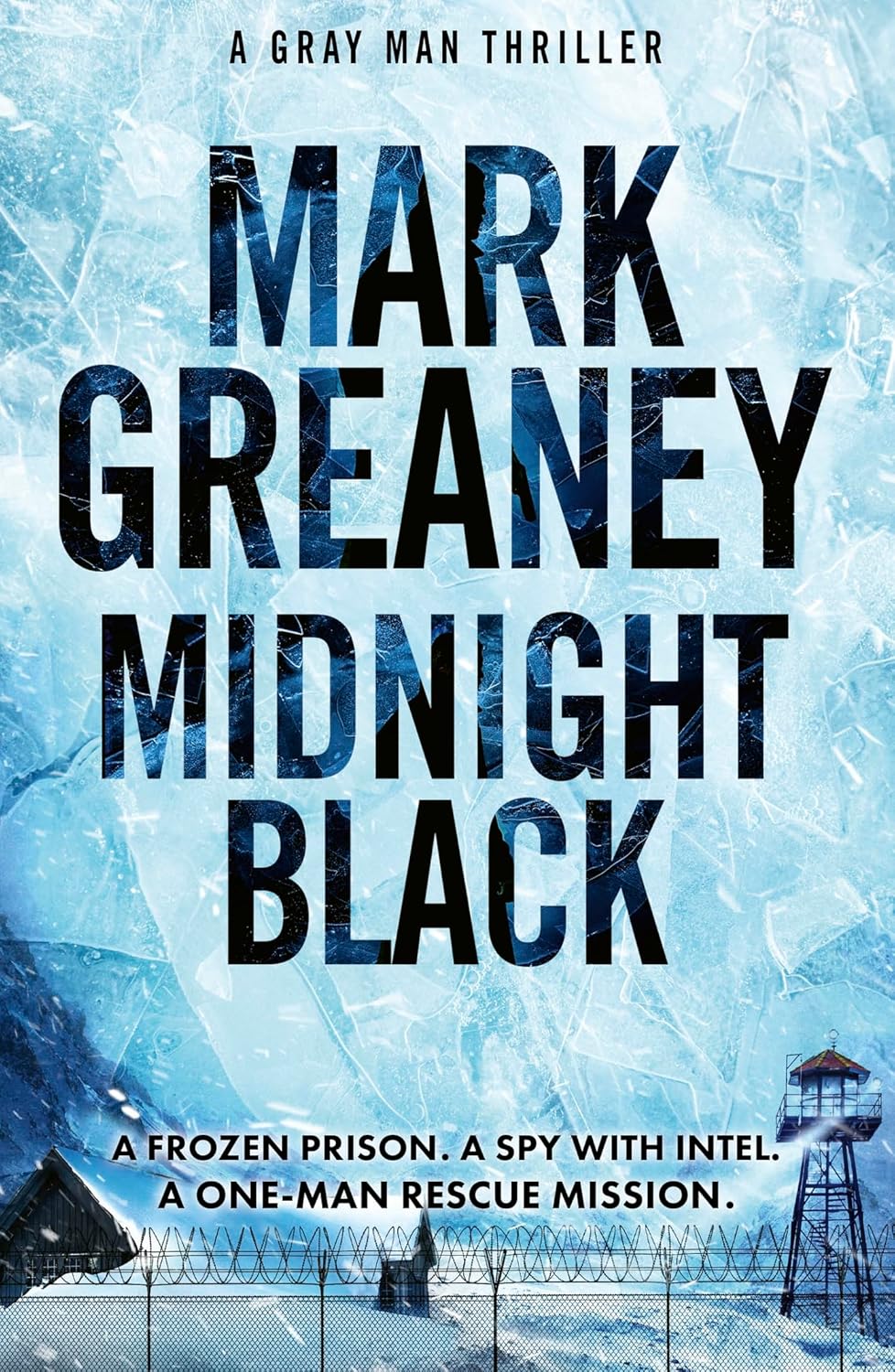
Midnight Black by Mark Greaney

Publisher: Sphere/Audible (Audiobook – 18 February 2025)

Series: Gray Man – Book 14

Length: 15 hours and 51 minutes

My Rating: 5 out of 5 stars

Amazon

The always outstanding Mark Greaney provides another addictive and heart-pounding addition to his iconic Gray Man series with the incredible 2025 spy thriller, Midnight Black.

Ever since I started getting fully into the thriller genre, one of the main authors I check out each year is Mark Greaney, a veteran master of thriller fiction who has produced some incredible reads.  Some of his more entertaining books include his Josh Duffy series (Armored and Sentinel), as well as the fun military thriller Red Metal (cowritten with Hunter Ripley Rawlings IV).  However, his best-known body of work is the long-running Gray Man series, which was adapted into a Netflix movie of the same name.

The Gray Man series is an outstanding collection of spy thriller novels that follows elite assassin and black ops operative Court Gentry, better known by the titular moniker of the Gray Man, as he faces off against an array of deadly enemies while occasionally working for the CIA.  I have become a pretty major fan of the Gray Man series thanks to the author’s complex stories, gritty action sequences and damaged characters, and I have had a blast with books like The Gray Man, Mission CriticalOne Minute Out (one of my favourite books and audiobooks of 2020), Relentless (one of my favourite books and audiobooks of 2021), Sierra Six (one of my favourite books and audiobooks of 2022), Burner (one of my favourite books and audiobooks of 2023) and The Chaos Agent (one of my favourite books of 2024).  Due to how epic all these previous Gray Man entries have been, I couldn’t wait to get my hands on the next entry in the series, Midnight Black.  Providing an intense follow-up to a fantastic cliffhanger from the last book, Midnight Black was one of my most anticipated releases of 2025, and it really did not disappoint.

In the icy wilds of Mordovia, lies the brutal woman’s penal colony IK-2 Yavas.  A harsh work camp for the many political enemies of the current Russian regime, IK-2 Yavas is hell on earth for any women who have defied the state.  However, despite the prison holding many prominent criminals and politicians, their most valuable prisoner is former spy Zoya Zakharova.

Once a prominent Russian foreign intelligence agent, Zoya was forced to flee her position and eventually found herself working covertly for the CIA as a deniable asset.  However, after being captured by the Chinese and traded to the Russians, Zoya’s future is bleak as she is slowly worked to death.  Worse, a ruthless FSB operative is using Zoya as bait for the person most important left in her life, her lover Court Gentry, the Gray Man.  But, unknown to Zoya, the Gray Man is far closer than she realises.

Having spent months prowling the Eastern European countries, Gentry seeks a way to steal across the Russian border and save the woman he loves, no matter the cost.  Embarking on a risky entry plan with only minimal help from his old CIA contacts, Gentry is determined to find Zoya and kill anybody who gets in his way.  But with the entire Russian state security apparatus turned against him, can Gentry once again do the impossible and save Zoya, or will this be the final mission for the legendary Gray Man?

Mark Greaney continues to impress with his epic Gray Man series, as the 14th brilliant entry in the series, Midnight Black, was absolute fire.  Providing an intense and deeply addictive spy thriller narrative, Midnight Black hooked me from the very beginning and refused to let go until the final explosive confrontation.  Slick, emotionally charged and very clever, Midnight Black gets an easy five-star rating from me, and I had such an amazing time listening to it.

This proved to be an outstanding book to get through, as Midnight Black featured a compelling and cinematic narrative that had me hooked the entire way through.  Expertly following on from the emotional cliffhanger from the end of the previous book in the series, The Chaos Agent, Midnight Black starts several months later and sees a desperate Court Gentry doing anything he can to try to enter Russia, only to encounter setbacks he has to take care of in his usual destructive manner.  This works as an excellent introduction to Midnight Black’s plot, especially as it helps you appreciate the emotional stakes of the book, and you quickly become invested in the protagonist’s quest.  Greaney quickly expands the plot through several additional character perspectives, including recuring characters Zack Hightower and Zoya Zakharova, who have their own missions/problems, an intriguing new Russian rebel protagonist, and the perspective of some sinister Russian operatives, including the FSB agent pulling all the strings around Zoya’s imprisonment.  This serves as a great base for the rest of the story, and the author soon starts to feature some of the more complex and action-packed sequences in Midnight Black.

Starting with a well-layered extended shootout sequence in Europe, the second half of Midnight Black hits hard and keeps the reader deeply engaged.  Greaney continues to set out quite an impressive story, as Gentry enters Russia and proceeds to cause all manner of havoc, while his allies in Europe and the US throw together an audacious plan that really amps up the narrative.  Greaney keeps the plot constantly moving, taking the protagonists from one dangerous situation to the next, with compelling character moments and well-featured exposition that keeps everything going forward.  The author also throws in a ton of high-octane and memorable sequences, including a fun extended chase in Moscow involving a stolen train, which was so entertaining to behold.  Everything leads up to the big finale in the last third of the story, where the protagonist makes his play to free Zoya in very cinematic fashion.  There is a lot of intense anticipation involved in the leadup to this final part of Midnight Black, and it proves to be particularly captivating and exciting.  The conflict, high stakes and constant worry you have for the characters ensures you won’t be able to put this part of the book down, and I was so keen to see how everything came together.  Greaney wraps things up perfectly, and I liked the hopeful conclusion to Midnight Black, especially after some of the dark preceding books, and you come away satisfied, as well as excited to see where the series goes next.

I am always greatly impressed with how Greaney sets out his outstanding novels, and Midnight Black is a particularly strong example of this.  A fast-paced book with several interesting layers to it, Midnight Black drags you in with its powerful narrative and keeps you there with the well-set-out action, complex characters, and gritty realism.  Thanks to the blend of character arcs and alternating storylines, there is a lot going on in Midnight Black, and you are given a great mixture of ultra-exciting sequences of action and spy craft, intense personal moments of despair and hope, as well as a cool dive into real-world issues, such as the current war in Ukraine, that enhance the overall plot.  I particularly enjoyed the gritty realism loaded in the story, especially when it comes to looking at the current politics of Russia, and there was a particular dire tone to much of the plot that was well mirrored by several protagonist’s circumstances.

One of the writing techniques I always enjoy with the Gray Man novels is the author’s excellent use of alternating character perspectives, as the reader gets to see the narrative through a variety of different viewpoints.  While primary characters like Gentry, Hightower and Zakharova naturally get most of the focus, you also see events through the eyes of more minor protagonists, such as Gentry’s former CIA handler in the US, or a Russian rebel fighter launching attacks in Moscow, as well as from several of the book’s antagonists.  This provides a much more expansive narrative for readers, especially as you soon understand the compelling motivations of all the significant characters, as well as their often conflict plans and schemes.  I particularly enjoyed how well some of Midnight Black’s many action sequences become even more impressive when you get to see events through the eyes of all the participants in the event.  Seeing all the alternate sides of conflicts really helps to make the fight sequences stand out, and it is captivating to see the various moves and countermoves of all the characters involved.  I felt this worked particularly well in some of the book’s big firefights, such as one sequence out in the woods where Gentry and Hightower’s camp gets raided by a squad of hitters, and you really get drawn into the books brutal action thanks to this.

While Midnight Black can probably be read as a standalone novel, especially as Greaney does a good job recapping key events, I feel that this latest Gray Man novel is probably best enjoyed by those who have read the previous books in the series, especially the preceding entry, The Chaos Agent.  This is mainly because Greaney is following up on a major cliffhanger from the previous book, and a lot of the emotional weight of the plot is based around the protagonist trying to right this wrong and save the woman he loves.  Being invested in the relationship between Gentry and Zakharova, as well as appreciating the protagonist’s other character relationships, really helps to amp up the stakes of Midnight Black, and I know I was personally hooked on seeing how events played out.  While having this background does enhance the experience, I do think that new readers can easily come into the series here and still have an amazing time, especially once they get caught up in the intense plot.

I also need to once again compliment the compelling characters found within Midnight Black, as Greaney really went out of his way to create some intense character moments in this latest Gray Man novel.  A lot of this revolves around the protagonist, Court Gentry, who finds himself in emotional turmoil following the Russians imprisoning the woman he loves.  Unsure about her fate and desperate to enter Russia to rescue her, Gentry is a ghost of his former self, recklessly engaging in deadly actions without his former skill and tradecraft.  This uncharacteristic lack of planning from the main protagonist and the way he lets his emotions overwhelm him adds a compelling edge to the story, especially as it results in more carnage and close calls.

The rest of the cast are also well featured in Midnight Black, especially as Greaney brings back several old favourites in dire circumstances.  For example, Court’s love interest, Zoya Zakharova, ends up having a particularly powerful arc in Midnight Black, as she is imprisoned in a Russian work camp.  Slowly losing hope due to her surroundings, her imminent execution, and her worry for Court, Zoya’s scenes are often hard to read and really help to hammer home the dark stakes of the book.  Greaney also brings back fun recurring character Zack Hightower, who serves as a lighter point of view protagonist compared to Court and Zoya.  A veteran operator with a lot of history with the other protagonists, Zack was a great foil for Court’s moodier persona in Midnight Black, and I loved seeing them work together in this way.  Other characters of note include Court’s former CIA handler, Matthew Hanley, who works to provide outside help despite his own downward career trajectory, and Major Colonel Eriks Baronov, an FSB operative trying to use Zoya as bait for the Gray Man.  I really enjoyed how Hanley and Baronov provided interesting alternating tactical insights into the events of Midnight Black, which gave the novel a great global conflict feel at times.  All these characters and more helped to turn Midnight Black into something special, and I really enjoyed how complex and exciting the various character-driven storylines turned out to be.

As has become my habit with the Gray Man series in recent years, I ended up listening to Midnight Black on audiobook rather than reading a physical copy.  I find that the audiobook version of the Gray Man books, narrated by the always reliable Jay Snyder, are an excellent way to absorb Greaney’s fantastic stories, especially as the various action sequences and compelling showcases of spycraft are highlighted particularly well in this format.  For Midnight Black, I listened to this audiobook while on a holiday with a lot of flying/driving time, which not only kept me from getting bored on the bus/plane but which ensured that I absolutely powered through its near 16-hour run time.  It helped that many of the best sequences in the book, such as the epic firefight at the halfway point and the big chase through Moscow, were particularly impactful in this format, and Snyder did an excellent job voicing all the characters.  I particularly appreciated all the eastern European and Russian accents that Snyder attributed to the various characters, and he also did a good job capturing key parts of the protagonist’s personalities, especially Gentry’s weariness and desperation that were a key part of this book.  Due to this brilliant voice work, as well as my general love for the format, I would strongly recommend Midnight Black on audiobook, and I can guarantee it makes for great entertainment on long road trips.

Overall, Midnight Black was another outstanding and captivating new entry in the always impressive Gray Man series.  Author Mark Greaney did an amazing job continuing one of the very best spy thriller series out there, and I deeply enjoyed Midnight Black’s particularly intense and personal story.  Featuring some fantastic action, complex character arcs and some compelling insights into major contemporary events, Midnight Black was extremely addictive, and I cannot wait to see how Greaney continues the series in the future.
Amazon

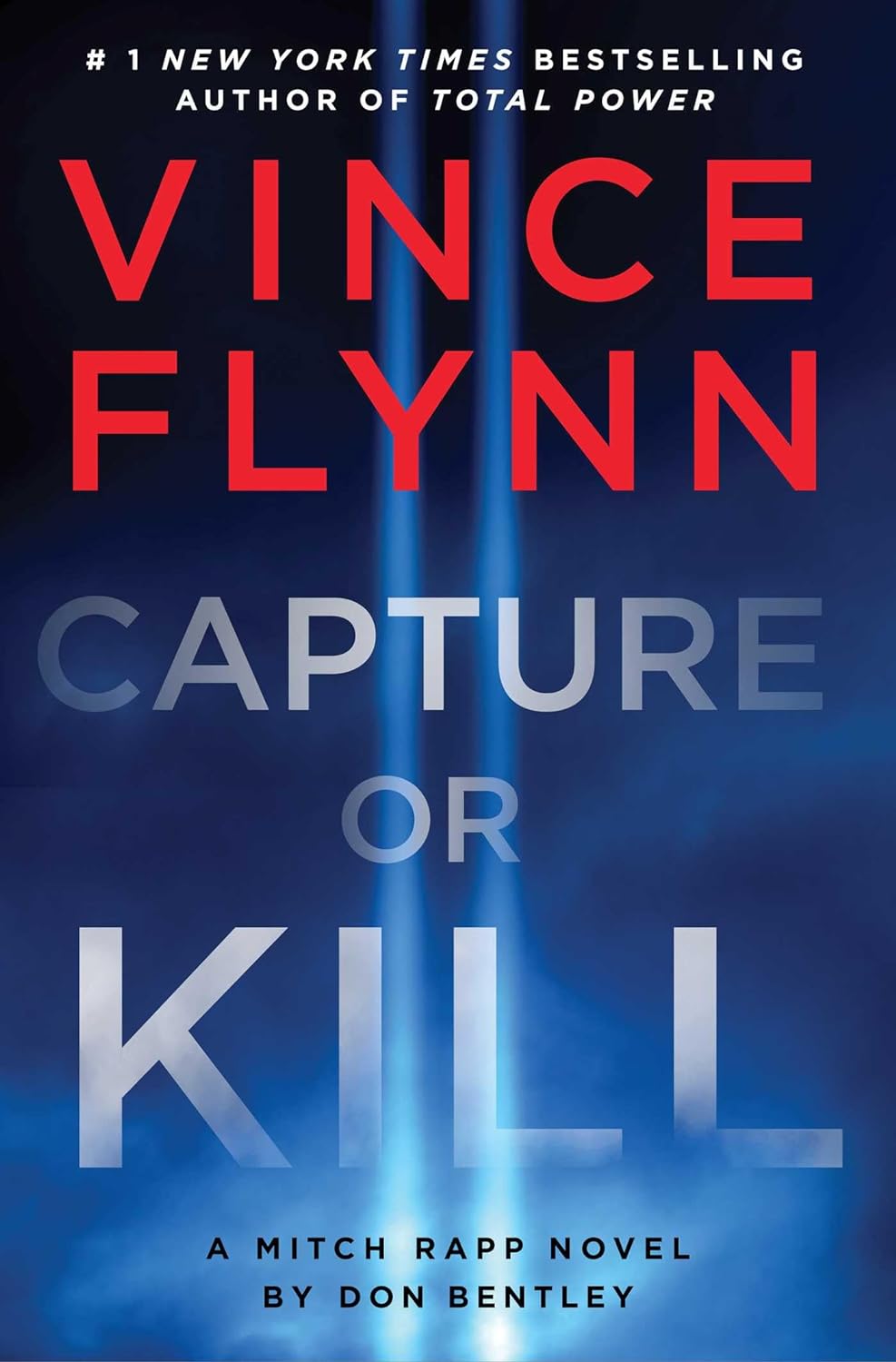
Quick Review – Capture or Kill by Don Bentley (based on the series by Vince Flynn)

Publisher: Simon & Schuster Australia (ebook – 4 September 2024)

Series: Mitch Rapp – Book 23

Length: 464 pages

My Rating: 4 out of 5 stars

Amazon

Those in the mood for an intense, action-packed spy thriller should check out the latest book in the long-running Mitch Rapp series, Capture or Kill, written by new author Don Bentley.

Over the last few years, I have become a massive fan of the classic Mitch Rapp thriller series.  Following a dark and deadly operative who specialises in killing America’s enemies, the Mitch Rapp books are an exciting and compelling series that always scratch my action itch each year.  Originally written by Vince Flynn, since his death, the series has been taken over by other talented authors continuing his story.  I personally have only read some of the books written by Kyle Mills, which includes Red WarLethal AgentTotal PowerEnemy at the GatesOath of Loyalty and Code Red, and I appreciated the cool scenarios that Mills pitted the protagonist against.  This year saw an interesting change to the series with the introduction of new author Don Bentley.  Bentley, an established thriller writer himself, is the third author to contribute to the Mitch Rapp series, and his new novel, Capture or Kill, was an excellent throwback to some of Flynn’s original storylines.

Plot Synopsis:

April 2011: On a remote mountaintop overlooking the remains of the Iranian nuclear weapons program, Azad Ashani witnesses a Quds Force demonstration of a capability meant to upend America’s war in the Middle East. Ashani, director of the Iranian Ministry of Intelligence and Security and Irene Kennedy’s former back channel to the Iranian government, recognizes the demonstration’s true significance, and the nation-ending conflict it will provoke. Alone, Ashani stands no chance of preventing this rush to madness.

But with the help of one man, he just might.

In Washington, DC, CIA director Irene Kennedy briefs the president that the operational window to kill or capture Osama bin Laden at his recently discovered compound in Abbottabad, Pakistan is rapidly closing. But before he’ll authorize a commando raid on Pakistani soil, the president demands irrefutable proof of bin Laden’s presence.

Proof he trusts just one man to provide.

Preventing a looming war in the Middle East while delivering justice for the nearly 3,000 Americans killed on 9/11 would be a big ask for anyone.

Mitch Rapp isn’t just anyone.


Capture or Kill
was an awesome and action-packed read that took the series protagonist back to basics by setting him against an array of Middle Eastern foes in a compelling thriller narrative.  Bentley weaves together an ambitious plot that seeks to continue storylines from the classic Vince Flynn novel, Protect and Defend, while the protagonist also gathers intel for the raid on bin Laden’s compound in Pakistan.  This results in a great array of intense scenes, as Rapp tries to counteract a dangerous collection of Iranian assets and plots, as well as help to recover a missing American soldier in Afghanistan.  There is some great back and forth as Rapp and the antagonists try to unravel their respective plans, and I loved the fantastic overarching plot of the book’s antagonists.  At the same time, Bentley cleverly works in real-life details of the events leading up to the bin Laden raid, which helped to give the story a much-needed sense of realism and higher stakes.  This proved to be a gripping Mitch Rapp narrative and readers will find themselves getting drawn into the compelling and fascinating plot.

I liked the writing in Capture or Kill, especially as Bentley did an amazing job of emulating the over-the-top style of the Mitch Rapp series.  The narrative is a lot more grounded than some of the Kyle Mills narratives I previously read, which I felt brought it back to Flynn’s original style a bit better (although I honestly loved some of Mills’s outrageous scenarios).  Moving the scenario back to the early 2010s was also a sensible move from Bentley, as it allowed him to fit his narrative amongst existing series story threads, while also putting the protagonist in a unique position to impact an historically important espionage event.  Bentley continues to set the tone perfectly by ensuring that the well-known excessive action and badassery of the protagonists is on full display, and those readers who love a ton of combat and exciting espionage escapades are in for a great time with Capture or Kill.  As such, there was a very classic feel to Capture or Kill that I think long-term fans of the series will appreciate, and I felt it captured the flow of some of the other Mitch Rapp books extremely well.

Aside from ensuring that Capture or Kill matched the typical tone of the series, Bentley also did a really good job of portraying many of the classic Mitch Rapp cast.  I felt that the author successfully captured the best parts of many of the protagonists in this new book, and I liked the fantastic storylines that he wove around them.  Series protagonist Mitch Rapp was his over-the-top self as always, and Bentley really ensured that the readers got the full blast of his intense aura and savagery.  It was a little jarring to see how intense Rapp got at times, mainly because I’m more familiar with the Mills version of the character, who is older and more family orientated, but I appreciated how Bentley was trying to get the rugged, active agent version of the protagonist down.  Other recurring characters came across in a similar manner, and I particularly enjoyed seeing more of CIA director Irene Kenedy, especially as much of this book deals with the aftermath of her kidnapping in Protect and Defend.  I also enjoyed seeing Mike Nash trying to fit into his new role as a CIA executive, especially when you consider where his character is going in the extended canon.  All this, and more, proved to be an awesome take on these established characters, and fans of the series will appreciate the care and attention Bentley took with them.

Don Bentley is off to a very strong start as the new author of the Mitch Rapp series.  Capture or Kill is an awesome addition to the series that presents readers with a dark and powerful action-packed narrative.  I look forward to seeing how the Bentley continues the Mitch Rapp books in the future, but it appears that this series is in safe hands going forward.

Amazon

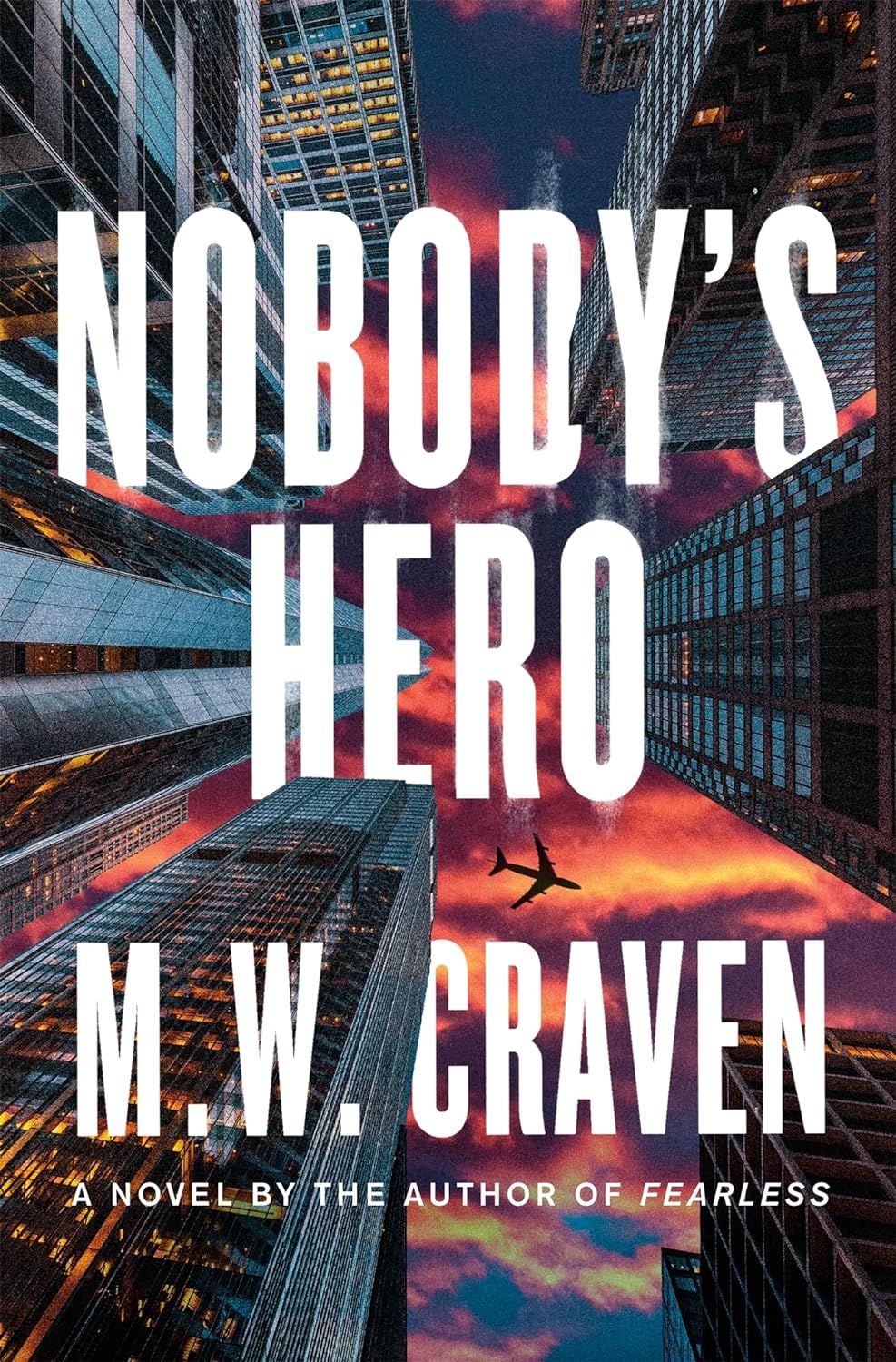
Nobody’s Hero by M. W. Craven

Publisher: Constable (Trade Paperback – 8 October 2024)

Series: Ben Koenig series – Book Two

Length: 443 pages

My Rating: 4.5 out of 5 stars

Amazon

The always-entertaining M. W. Craven returns with another outrageous and over-the-top action thriller with the outstanding novel Nobody’s Hero.

Over the last year I have found myself reading several books from veteran thriller author M. W. Craven.  A very talented writer with an interesting array of crime fiction to his name, Craven has impressed me with his outstanding range, as well as some of the elaborate scenarios he comes up with.  His other 2024 novel, The Mercy Chair, was one of the best crime fiction reads of the year, presenting readers with a dark and twisty tale that proved near impossible to turn away from.  As such, I was very eager to get my hands on his other book of the year, Nobody’s Hero, which has been on my radar for a while.

Nobody’s Hero is the second book in Craven’s exciting Ben Koenig series, which started last year with the awesome novel Fearless.  Following a reckless and intense US marshal on the run due to a mobster’s bounty, Fearless was a great read that set the literally fearless protagonist on a bloody revenge mission.  This was an outstanding first entry in the series from Craven, and I have been looking forward to the sequel for a while, especially as Craven came up for another intriguing plot for this second Ben Koenig book.

Ben Koenig is a ghost.  Formerly a decorated US marshal, Koenig is now a drifter, wandering around America trying to outrun the massive bounty placed on his head by a vengeful Russian mobster.  However, Koenig is still a valuable asset to the US government thanks to his specialised training and unique mind, especially as he has a rare condition that makes him utterly fearless.  But even Koenig isn’t immune to dangerous secrets from the past.

Ten years ago, Koenig was recruited to convincingly fake the death of a mysterious woman who needed to disappear to safeguard America’s safety.  However, when the woman reappears in London, gunning down two muggers in broad daylight and kidnapping their intended target, an elderly academic, it sends shockwaves throughout the CIA, and see’s Koenig antagonistic handler, Jen Draper, bring him in.

The only person who knows anything about the mysterious woman, Koenig is tasked with finding her and discovering what dark secret she is hiding.  Travelling to England with Draper, Koenig attempt to find a target who has successfully concealed themselves from the entire world for a decade.  If he fails, a dangerous attack will be unleashed upon America, one that no-one will see coming until it’s too late.  Can Koenig succeed and get the heart of this nation-killing plan, or has he met a threat even more ruthless than him?

Caven continues to highlight his ability to craft together ultra-exciting and slightly insane plots with Nobody’s Hero.  A fast-paced, highly entertaining read loaded with action, twists and lots of shock-value, Nobody’s Hero was one hell of an electrifying read, and one that I had such a great time getting through.

At the heart of Nobody’s Hero lies an intriguing story that is both very clever and nicely absurd.  Despite being a sequel to Fearless, Nobody’s Hero stands on its own and requires no prior knowledge of the series, which allows new readers to jump in without any issue.  Craven starts the story off very strong, especially when it comes to reintroducing his protagonist, Ben Koenig, and readers quickly remember why he is such a badass (you will never look at credit cards the same way again).  From there, the author crafts together an excellent overarching plot, which sees a multi-layered evil plan to destroy America unfold across several different perspectives.  When the start of this plan becomes apparent, a secret government protocol forces Koenig to investigate, especially once his connection to one of the players in question comes to light.  Following up the only lead they have; Koenig and his allies begin violently working their way through a variety of obstacles in both England and the United States.  This leads to several outstandingly over-the-top sequences, which continues to showcase the unusual, and highly violent, nature of the protagonist.

The plot continues as a great pace throughout the entirety of Nobody’s Hero, and you really get caught up in the intense action and intrigue.  The multiple alternate perspectives, especially those showing the various antagonists at work, blend well with the main storyline around Koenig, and you end up with a particularly elaborate spy thriller narrative.  Koenig throws in some brilliant twists along the way, especially one major one just before the final third that really throws you entire perspective of the prior events off and changes the entire tone of the book.  This all leads up to the final big set piece, which honestly is so damn excessive and insane but which fits the rest of the book perfectly and is frankly a great way to end this entire thrilling book.  Craven never slows down with the excessive violence and unlikely character moments, and the reader is constantly on the edge of their seats as they wait to see how the big confrontation will conclude.  I felt that Craven ended it all extremely well, and in a way that only he could pull off, and you come away from Nobody’s Hero exhilarated, satisfied, and just a little grossed out.  Throw in a few intriguing reveals at the end that hint at big things to come, as well as some loose ends tied up in a fitting way, and this was an outstanding narrative that really went out of its way to entertain.

Craven uses a fast-paced, action-laden and all-round exciting writing style in Nobody’s Hero, which really works for the ultra-intense and over-the-top narrative.  Definitely inspired by the Jack Reacher books (there are a few coy references to them) and standing in a bit of an interesting contrast to his style I saw in The Mercy Chair, Nobody’s Hero runs out the gate hard and fast and doesn’t slow down to the very end.  Thanks to the quickfire chapters and great changes to perspective, you really move through Nobody’s Hero fast, and I honestly couldn’t stop reading the book at times once I got into the zone.  The excellent changes in perspective to several other antagonist characters in the book, as well as a few clever time shifts, allowed for a multi-layered narrative, and I loved how Craven allowed for a larger narrative here with some distinctive characters.  Of course, the real highlight of this book is the excessive action and highly violent sequences that emerged, which were both exciting and morbidly entertaining.  Craven designs multiple massive combat set pieces that really pop, especially as they showcase just how deadly, and occasionally suicidal, his protagonist turns out to be.  The author also pumps out several scenes that are extremely entertaining, just because they are so excessive with their violence or the insane actions of the protagonist.  Highlights include a unique interrogation cleverly using a swollen finger, a brazen charge towards villains with stupid body armour and sub-machineguns, and the protagonist’s final plan to get to grips with the enemy.  All this is wrapped up with several outstanding plot twists, each of which is cleverly thought out and well hinted at, which help to turn this into something very special.  An exceptionally fun thriller story, if perhaps a tad too violent for some potential readers.

As with the previous book in the series, a lot of Nobody’s Hero’s appeal lies in its eccentric cast of spies, assassins, and shadowy government agents, all of whom bring a certain entertaining zest to the plot.  This is especially true in the case of the book’s protagonist, Ben Koenig, a former US marshal on the run who suffers from a rare condition that ensures he can feel no fear.  In some ways an even more violent and remorseless version of Jack Reacher, Koenig is a great character to follow, especially as the reader is treated to so many scenes of his unique thinking and unconventional plans.  A lot of the book’s humour is derived from Koenig’s inappropriate jokes and borderline insane ideas, which really amps up just how crazy Nobody’s Hero is at times.  Despite this lack of fear and seeming inability to take things seriously, Koenig proves to be a great central protagonist for this thriller novel, and his lateral thinking allows for some intriguing thoughts on the current situation.  There are also some interesting additional looks at Koenig’s inability to feel fear, which he worries may lead to more problematic and potentially immoral behaviour in the future.  While there isn’t an excessive amount of character development for the protagonist in this book, I still really enjoyed following Koenig in Nobody’s Hero, and I look forward to Craven’s next novel featuring him, especially as there seems to be some major drama coming Koenig’s way.

Aside from Koenig, Nobody’s Hero also features a range of great supporting characters and antagonists, each of whom proves to be more entertaining than the last.  This includes Koenig’s handler, Jen Draper, a former CIA agent turned private contractor who has been assigned to watch over Koenig and turn him into a potential government asset.  Despite their need to work together, there is some clear antagonism between Draper and Koenig, and the two spend most of the book sniping at each other.  While this will probably lead to romance in the future (or not; you never know with Craven), their constant bickering proves to be quite entertaining and there is a certain respect between the two, especially when the chips are down.  I really enjoyed the scenes when Koenig and Draper are of the same mind, mainly because it means the bad guys are going to suffer.  This book also featured a range of very entertaining and memorable antagonists, who fit very well into the story.  These include a murderous father-daughter team with some distinctive characteristics, a group of corrupt cops who get in way over their heads, and a deadly mercenary with something on his chest and a certain kinship with Koenig.  All these characters fit into the narrative perfectly, and I loved the entertaining interactions that they ended up having with the protagonist.

Overall, Nobody’s Hero proved to be an amazing and captivating new book from M. W. Craven, who is swiftly becoming one of my favourite new thriller authors.  Beautifully violent, crazy and all-round entertaining, I had such a brilliant time with Nobody’s Hero, and it was definitely one of the more exciting and addictive thrillers of 2024.  Highly recommended, especially if you are a fan of exceptionally excessive action thrillers.

Amazon

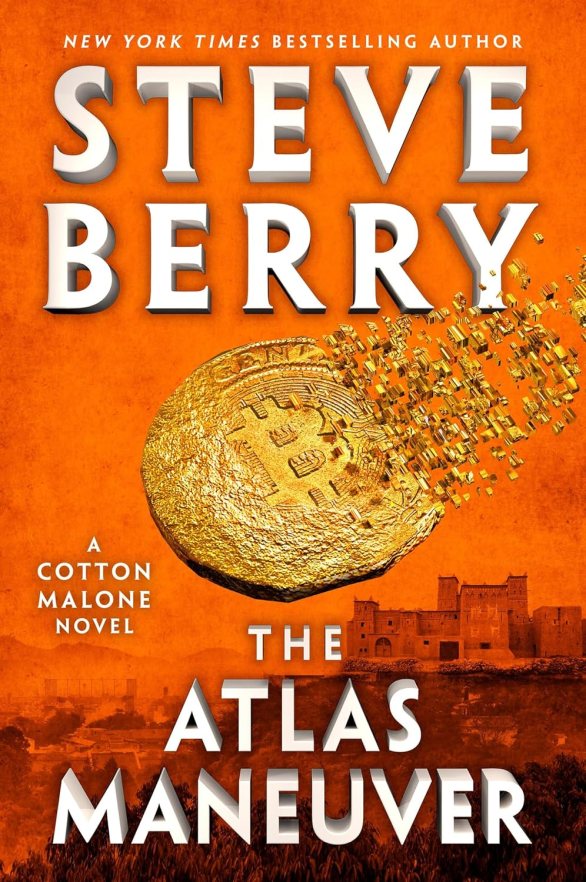
The Atlas Maneuver by Steve Berry

The Atlas Maneuver Cover

Publisher: Hachette Audio (Audiobook – 20 February 2024)

Series: Cotton Malone – Book 18

Length: 13 hours and 21 minutes

My Rating: 4.5 out of 5 stars

Amazon

The always exciting Steve Berry continues his long-running Cotton Malone series with the intriguing and addictive novel, The Atlas Maneuver, which once again blends modern plots with historical riddles.

Over the last few years, I have been having a wonderful time getting to know the works of acclaimed thriller author Steve Berry.  Known for his intricate and complex works that dive into the past, Berry is an amazing author whose style and story focus really appeals to me.  I have had a wonderful time getting through the last several books in his main series, the Cotton Malone books, as well as his standalone novel, The Omega FactorCotton Malone is a particularly fun series following the titular Cotton Malone as he attempts to stop sinister modern-day plots that have their roots in ancient conspiracies and secrets.  All the Cotton Malone books I have read have been extremely epic in their own way, including The Malta Exchange, The Warsaw Protocol, The Kaiser’s Web, and The Last Kingdom (one of my favourite books of 2023), and I cannot recommend them enough.

As World War II entered its final phase, the retreating Japanese hid vast quantities of looted gold and other stolen valuables throughout the Philippines.  Stored in hidden underground bunkers, the gold was supposed to be used to rebuild Japan after the war and expand its interests.  But with the location of the vaults lost, most of the gold remained hidden, except for a small fraction recovered by the United States government and the nascent CIA, who kept it for themselves in secret.

In the present day, retired Justice Department agent Cotton Malone, is in Switzerland, working for an old CIA friend to keep a potential asset safe.  However, when someone tries to take his target out, Cotton soon finds himself thrust into the middle of a dangerous battle between a shadowy branch of CIA and the Bank of St. George, one of the world’s oldest financial institutions, with whom the recovered gold was entrusted.

Forced to act, Cotton begins to unravel a dangerous conspiracy and discovers that the directors of the Bank of St. George are seeking to initiate a radical plot involving bitcoin, the elusive online currency, which could destabilise the entire financial world and leave them in control.  Working with a skilled Japanese agent, his lover, and a ghost from his past, Cotton seeks to stop the plot before it is too late.  But with a deadly team of CIA assassins also closing in, no-one is safe and everyone is a target.

This was a pretty interesting novel from Berry that I had an excellent time with.  Thanks to its unique thriller story combining historical secrets with contemporary mysteries and plots, The Atlas Maneuver proved to be an amazing and intricate novel that I found to be quite impressive.

I really enjoyed the compelling story that Berry came up with for his latest novel, especially as he once again successfully blends an elaborate historical conspiracy with an exciting modern thriller story.  This story came together extremely well and overall proved to be quite an exciting read as Berry comes up with several compelling story arcs that you become absorbed in.  Starting off with a glimpse at the origins of the hidden Japanese war loot, The Atlas Maneuver soon jumps to Cotton Malone as he finds himself drawn into a plot to disrupt the world economy by a powerful bank through bitcoin.  Working with an old flame whose financial brilliance is behind much of the bank’s plans, Cotton desperately tries to keep her safe, while also contending with a relentless Japanese agent.  At the same time, Cotton’s partner Cassiopeia Vitt and old CIA associate Derrick Koger attempt to discover the location of the lost wartime gold that was supposed to be in the bank’s possession.  Their inquiries lead them into conflict with the bank, as well as a shadowy arm of the CIA that attempts to take out everyone associated with the case.

The alternating thrusts of the hunt for lost gold and the attempts to stop the elaborate financial attack make for great reading, and Berry continuously raised the stakes while also dragging the story back to the past with the fun historical inclusions.  While the story did drag in places, especially around the middle, I honestly couldn’t turn away from this book at times, especially when the action got particularly intense and there were multiple fun figures to follow.  Berry perfectly sets up the big conclusion of The Atlas Maneuver, which has surprisingly more devastation than expected.  I loved the dark and ironic ending to some of the storylines that emerged, and I felt this strong finish enhanced the entire book as a result.  Berry also leaves the story on an excellent emotional cliffhanger, that I feel is really going to pay off later in the series, and I will ensure I come back for the next Cotton Malone book.

I really liked how Berry set out his methodical and intense story as he once again relied on his classic style that prioritised historical inclusions, while also ensuring that the new book is accessible to all readers.  Thanks to the author’s excellent use of multiple perspectives, you get a great wide-angle perspective story, which allows you to understand the motivations, desires and actions of most of the opposing parties.  I always love books that show the story from the antagonist’s perspective, and this was a great example of that as you got to see the leader of the evil bank manipulate one of the other main characters, while also trying to implement her wider plan.  Berry utilises these multiple perspectives to tell an excellent overarching story, and while the parts focusing on Cassiopeia Vitt and Derrick Koger felt a little too detached from Cotton Malone’s storyline, for the most part this was a very cohesive tale.  The writing is also very tight and fluid in The Atlas Maneuver as Berry does a great job moving the story along, while also including his trademark historical lectures and flashbacks.  The mixture of modern-day action, elaborate schemes and examinations of the past was pretty on-point for this latest Cotton Malone book, and you really get drawn into the story as a result.  There were also some fantastic character interactions, especially as the protagonist is forced to interact with a love interest from his past who looks set to change the status quo of the series.  I had such a good time reading this book, and it proved to be an excellent addition to Cotton Malone series.

I always love the elaborate and compelling dives into various parts of history that Berry takes the reader on in the Cotton Malone series.  Berry, who clearly does his research on all things history, once again set his new novel around a unique piece of history, which has intriguing implications for the modern day thriller storyline.  In this case, much of the story revolves around Yamashita’s gold, the infamous treasure hoard supposedly located in the Philippines.  The author does a deep dive into the subject highlighting all the history surrounding it, as well as mentioning many of the intriguing details that followed it as people attempted to find it.  Much of the plot of The Atlas Maneuver revolves around the fate of this gold, and Berry really does a great job of highlighting its importance and the cultural implications surrounding it.  While certain elements of Yamashita’s gold featured in The Atlas Maneuver were exaggerated or changed for narrative purposes, you really get a good grounding in history surrounding it.  I found this focus on the lost treasure to be highly fascinating, especially as it wasn’t something I was too familiar about before.  However, this only proved to be the tip of the historical iceberg, as other intriguing historical events were also cleverly featured throughout the book.  compelling examinations about the early days of the CIA, banking history, the financial affairs of Switzerland and Luxembourg, and post-war recovery of Japan are also covered in interesting detail, much of which helps to give context to the current story and which are cleverly inserted into the modern-day plot.  These historical elements are truly fascinating, and I love the unique conspiracies and hidden secrets that Berry creates utilising them.

In addition to this 20th century history, Berry also chooses to dive into something a little more modern with a detailed look at bitcoin, which also has a significant impact to the plot of The Atlas Maneuver.  Berry dives into the history surrounding bitcoin, how it came into being and how it eventually expanded out in a major currency.  While some of this history is altered for the book, there is still a lot of detail about its origins and how it become prevalent throughout the world, which I honestly didn’t know a lot about, and was quite fascinating.  Berry also tries to capture other aspects of bitcoin, such as its function, how it is mined, and how it is currently viewed throughout the world.  There is a focus on bitcoin’s potential, and how it can be used to change economies and grant financial freedoms to people.  I liked how Berry took a neutral, if hopeful, stance around bitcoin, as while certain characters are critical of the cryptocurrency, many see its potential and hope to make the world a better place through its usage.  I honestly found the entire inclusion of bitcoin to be highly interesting, and the focus on its manipulation, creation and exploitation drove the plot to some cool places.

Another aspect of all Berry’s books that I really enjoy is his highly detailed examinations of various intriguing places that his protagonists end up in.  These background settings are always a key part of the book, and I like how well Berry incorporates them into the story, especially as the history or unique locations are invariably explored or utilised in the plot.  While The Atlas Maneuver lacks some of the grandiose sites that I enjoyed in the previous books, there is still a range of cool locations featured here that are well done.  This includes deep looks at several cities and locations with Switzerland and Luxembourg, as well as a lengthy excursion to Morocco.  Berry loving describes all the historical cities, lakes and other key locations in high detail, and it is always very clear when he is working from memory, especially as some of his characters’ reactions clearly mirror his own.  These detailed depictions always allow the reader to effectively envision the locations quite clearly, and it is a lot of fun imagining the daring exploits taking place in these picturesque locales.  I always love Berry’s descriptions of these locations, not only because I find the history fascinating, but because there are so many places featured in these books that I want to visit.  As such, this is a great part of The Atlas Maneuver, and I cannot wait to see what cool locations Berry features in his next book.

As has been my custom with most of the Cotton Malone series, I ended up listening to The Atlas Maneuver on audiobook, which ended up being a pretty great way to enjoy this book.  Coming in a nearly 13 and a half hours, this is a moderately long audiobook, so it took me a little while to get through it.  However, I felt that the way it helped to portray the intense action and thrilling storyline was very impressive, especially as having the story read out to me engrained the elaborate historical details a little better.  The Atlas Maneuver once again featured the fantastic voice work of veteran audiobook narrator Scott Brick, who has lent his voice to all the previous Cotton Malone books.  Brick has a very serviceable voice that works well for the thriller books he usually narrates, especially as it helps to highlight the great action sequences and elaborate conspiracies.  Thanks to his good voice work, the plot of The Atlas Maneuver moves along at a brisk pace, and I really got swept up in the elaborate story.  As such, I feel that the audiobook version is a great way to enjoy The Atlas Maneuver, and I had an excellent time getting through it.

Overall, The Atlas Maneuver by Steve Berry was an amazing book that I had an outstanding time getting through.  Once again successfully combining intriguing and elaborate historical conspiracies with an exciting thriller storyline, The Atlas Maneuver was a blast from start to finish and will be deeply appreciated by both fans of the long-running Cotton Malone series and new readers experiencing Berry’s writing for the first time.  A compelling read that comes highly recommended.

Amazon

Argylle by Elly Conway

Argylle Cover

Publisher: Bantam (Trade Paperback – 3 January 2024)

Series: Argylle – Book One

Length: 368 pages

My Rating: 4.25 out of 5 stars

Amazon

One of the year’s most intriguing thrillers, Argylle by Elly Conway, proves to be a fantastic and highly entertaining book that I had a wonderful time exploring at the start of 2024.

Vasily Federov, a powerful Russian billionaire, is making a bid to become the new president of Russia.  If he succeeds, his ambition, drive, and absolute lack of humanity, could lead to chaos, especially as he seeks to bring together the dangerous right-wing factions of Europe to form a destructive new empire.  Determined to secure victory and the absolute loyalty of the Russian people, Federov promises the impossible: finding and restoring a beloved national treasure infamously looted and lost during World War II, the Amber Room.

Recognising what a dangerous threat Federov poses to the world, CIA Chief Operating Officer Frances Coffey is determined to stop him winning the election.  To that end, she pulls together an elite team of agents with the goal of locating the hidden Amber Room first and keeping it from Federov’s grasp.  However, Coffey believes that her team needs a unique edge, a new member with a different set of skills and outlook on life then her current operatives.  To that end, she recruits a complete unknown, Aubrey Argylle.

The son of two international drug dealers, Argylle has been lost since the death of his parents, hiding out in the jungles of Thailand.  Argylle attracts Coffey’s attention when he risks his own life to help a team of American agents in need.  Drafted to the CIA, Argylle works to prove himself to his new team as they work to stop Federov.  As Argylle starts to adapt to the life as a secret agent, his team makes headway in discovering the location of the Amber Room, which leads them on a desperate chase across Europe.  However, the closer they get to recovering their target, the more apparent it is that someone on their team is a traitor, and they now have Argylle in their sights.

Before I go into too much detail about what I thought about Argylle, I should probably address the interesting possibilities regarding the authorship of this book.  The identity of Argylle’s author has the potential to be one of the biggest literary reveals of the year, and the internet is already buzzing with the possibilities surrounding it.  That is because Elly Conway is a pseudonym of a new author, the identity of whom is being kept secret until the upcoming film of the same name is released.  While authors writing under pseudonyms is nothing new, certain facts about this particular case, including the large amount of money spent obtaining the film rights from a first-time writer, the insane secrecy surrounding the author’s identity, and the massive cast of famous actors in the adaptation indicate that someone special might be behind the pen.  There are several theories currently circulating, including it being written by AI, by the film’s creative team, or it being a massive marketing campaign to raise interest in the film.  However, the theory that seems to be getting the most attention is that it was authored by one of the world’s most influential singers, and there are a lot of apparent hints and easter eggs surrounding that theory.

The Argylle novel only came to my attention a few weeks ago; mainly because I had seen the cool film trailer, which features some of my favourite actors, and I figured it might be worth grabbing this related book.  It was only when I subsequently dug into the underlying material surrounding the book, including the theories about the author, that I became really curious.  I am not going to lie, that very much caught my attention, and it was a major reason why I got a copy of Argylle.  If it turns out to have been merely a marketing stunt, at least it was an effective one!  I would actually love it if someone surprising wrote this book, and I look forward to seeing how this comes into play with the upcoming film, which really looks quite hilarious.  However, I’m not going to let my curiosity about who might have written it impact my review for this book, and I have tried to make a balanced analysis of this intriguing debut thriller.

With that in mind, I am going to come right out that bat and say I quite liked Argylle, and it proved to be a fun and exciting read, with a fantastic plot and a compelling main character.  Featuring a fast-paced story, enjoyable writing, and a ton of entertaining action, Argylle was an awesome book that I managed to knock it off in only a few days.

From what I understand, the upcoming film will be set around the planned fourth book in this series and will feature the fictional adventures of Elly Conway when she releases it.  Argylle is the first book in this in-universe series, so it serves as an introductory novel, featuring the origins of the titular protagonist as well as some of his supporting cast members.  Conway initiates a strong start to Argylle, as you are given compelling visions of the disturbing main villain, as well as a great introduction to protagonist Aubrey Argylle, who risks everything to save several lives in an intense and sudden sequence, before he is recruited into a secretive team of CIA agents.  The initial training montages with the new team serve as a good introduction to the spy lifestyle for the protagonist, although it does reveal an early weakness of the book that never really went away, in that there are way too many characters.  With fourteen members in this main team, many of whom get cycled around each mission, the reader has a hard time remembering each of them, and with the exception of a couple who are pushed to the front early on, you never really connect to them.  The author’s initially rough writing style also takes a bit to get used to, with certain phrases, pieces of dialogue and more feeling a little unnatural.  Despite that, I was still really enjoying the story, and these initial introductory scenes slide nicely into the main part of the book.

This central plot of Argylle involves the protagonist’s team zipping around Europe, following hidden historical clues to uncover the location of the Amber Room before their Russian opponents.  The search for historical treasures is always an awesome thriller storyline, and I think that the author did a good job of diving into the history of the Amber Room, exploring why it is so significant, and then bringing together a fun and clever hunt for the prize that combines the official historical record with some intriguing conspiracies.  This results in a fun story, as the team are required to pull off a series of intricate heists, with the Russians close on their tail.  There are some glorious set pieces here, and I loved the fun locations and over-the-top scenarios the protagonists found themselves in.  Conway also works in a great spy thriller plot about a double agent in the team, as information about their missions keeps getting leaked to the Russians, with disastrous results.  The character arcs surrounding several of the characters develop quite nicely, and it was great to see Argylle get closer to some of the other cast, while also coming out of his shell.

Everything leads up to a pretty big and violent conclusion, as the protagonists battle it out against the Russians for the prize.  Most of this was very cool, although the issue I raised before about the large team did come to fruition at the end.  In particular, the deaths of some character really were not that impactful, because you had barely gotten to know them, while the potential identity of the traitor was a lot more obvious, as it had to be one of the characters who was prominently featured.  Still, the ending was epic and memorable, and I particularly enjoyed how the traitor storyline came full circle in an excellent and moving way.  Readers come away from Argylle very satisfied, and there are some fun hints about the planned sequels that I would be quite interested to explore.

While I have noted a few writing issues that I had with Argylle, for the most part I liked how this novel came together.  The author maintains a great pace throughout the book while also keeping the readers attached to the story.  The jump between several different characters, including the villain, gives the novel some excellent layers, and it is always great to see the antagonist’s schemes in action.  I also enjoyed the unique locations the author set the story in, including the jungles of Thailand, an isolated Greek island, and deep in the European wilderness.  All these settings, including a few intriguing historical sites, are described in exceptional detail, and you can really imagine the characters walking through these wildernesses and getting up to their shenanigans.  Throw in some excellent and high-octane action sequences, as well as some fun humour based around the unconventional protagonist, and I had a great time getting through Argylle.

Another excellent element that I enjoyed about Argylle was the fantastic central character, Aubrey Argylle.  I was actually a little surprised by how he was portrayed here as, in the movie trailer, he is played by Henry Cavill in a particularly suave James Bond-esque way.  However, the author flips the script around in this book, showing Argylle to be a much more rugged individual with a complex past.  The child of two murdered drug smugglers, Argylle had a unique childhood and spends much of the book trying to reconcile his past with his current actions with the CIA.  While the author potentially over-endowed him with natural spy abilities, it was not too noticeable, and indeed I quite enjoyed seeing the character’s early uncertainties as he grows into the agent he needs to be.

The book also features several great supporting characters.  While much of the protagonist’s support team is not effectively utilised, I quite enjoyed his main friends, Woody Wyatt and Keira Carter, who get a lot of attention throughout the book, and you quickly enjoy the fun trio that forms.  I especially liked the character of Wyatt, the cocky muscle of the team who initially serves as Argylle’s main rival.  The scene when the two characters meet and Argylle gets the drop on him is one of the funniest in the book, and I really enjoyed the entertaining dynamic that formed between them.  On top of them, Frances Coffey, serves as a complicated spymaster character for most of the plot, torn between the needs of the mission and her growing attachment to her agents.  The shadowy figure of Glenn Dabrowski has one of the most intriguing storylines in the entire book, and I loved seeing his alternate view of events.  Finally, the villain, Vasily Federov, adds a great deal of deadly menace to the plot, and I really enjoyed the fun way he was portrayed.  While I still had some issues regarding the extensive cast, I think for the most part his book had an excellent group of characters, which helped added to the emotional impact and enjoy ability of Argylle.

Overall, I really enjoyed Argylle and I thought that it was a great debut novel.  While the author has some room for improvement when it comes to their writing, I felt that this was a really good first outing, especially when it came to the fantastic story, intense action and entertaining characters.  No matter who actually wrote Argylle, I personally think it was a solid, fun and highly enjoyable thriller, and I would love to get a sequel at some point.  As such, I am even more excited for the upcoming Argylle film, and I look forward to seeing what twists it contains regarding the potential author.  If some of the suspicions regarding the author are correct, I might re-upload this review again under their real name, but until then, let us leave this one credited to Elly Conway, whose first book is pretty damn wonderful.

Amazon

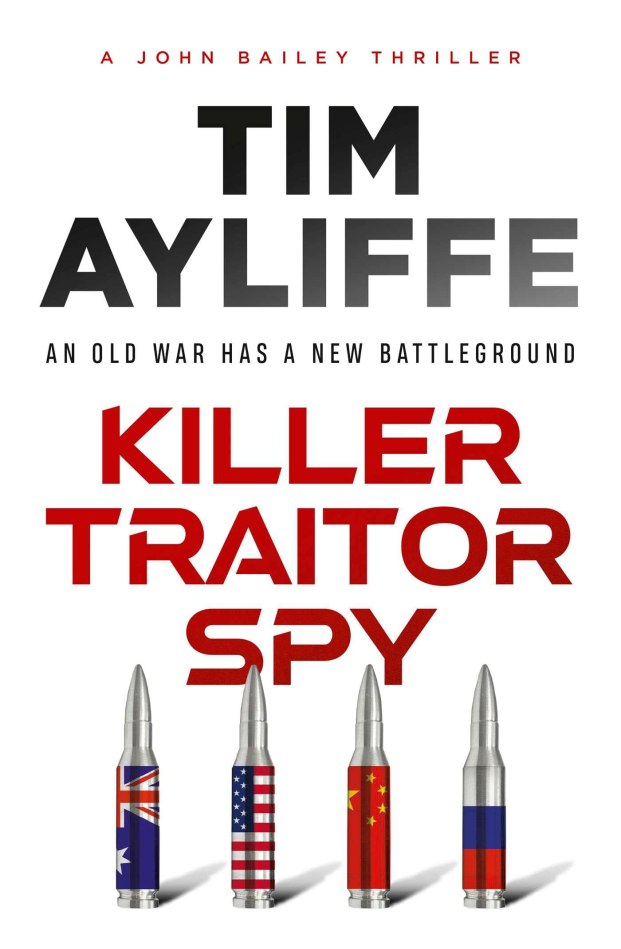
Killer Traitor Spy by Tim Ayliffe

Killer Traitor Spy Cover

Publisher: Simon & Schuster Australia (ebook – 5 July 2023)

Series: John Bailey – Book Four

Length: 310 pages

My Rating: 4.5 out of 5 stars

Amazon

One of Australia’s fastest rising thriller authors, Tim Ayliffe, returns with the fourth book in his outstanding John Bailey series, Killer Traitor Spy, which sees Cold War espionage re-emerge right in the heart of modern day Australia.

Over the last few years I have been having an amazing time reading a particularly cool Australian thriller series, the Jon Bailey books by journalist Tim Ayliffe.  Following a damaged investigative reporter who relentlessly follows his stories no matter how dangerous they are, the John Bailey books are an outstanding series that combined intriguing storylines with compelling and highly insightful depictions of modern-day Australia.  This series has so far featured three fantastic books, The Greater Good, which looked at Chinese interference in Australian politics; State of Fear, which examined Islamic radicalisation; and The Enemy Within, which presented a compelling look at Australian white supremacism.  I have deeply enjoyed all three of Ayliffe’s previous novels and I was very glad that I managed to get a copy of his fourth book, Killer Traitor Spy, a few weeks ago.

After a sex worker is accidently poisoned by a deadly neurotoxin, it quickly becomes clear that someone is trying to kill Russian millionaire Dmitry Lebedev.  As Dmitry disappears into the wind, reporter John Bailey finds himself drawn to the mysterious events, especially as his old friend, Scarlett Merriman, was the unintended victim.  As Bailey begins to dig into the circumstances around Scarlett’s poisoning, he soon discovers a hidden world of spies, espionage and secret deals, all tied to his long-time friend, CIA agent Ronnie Johnson.

It soon becomes apparent that Dmitry was an undercover spy secretly working with Ronnie and providing insights into Russian espionage efforts in Australia.  His latest bit of intelligence could expose a deadly traitor working at the highest echelons of the government, and many people wanted him dead to keep that a secret.  As Ronnie attempts to bring him in, he finds himself being targeted as well, as whoever tried to kill Dmitry has just framed Ronnie for murder.

Now on the run from the authorities and with no official backup to help him, Ronnie has no choice but to call on Bailey to help him investigate the attempted assassination and uncover the traitor.  But the more Bailey works with Ronnie, the more he discovers the dark side of the espionage business and the fact that nobody is what they seem.  Moving from the deadly urban sprawl of Sydney to the secretive suburbs of Canberra, can Bailey and Ronnie find the truth before it is too late, or will they be the latest victims of an insidious intelligence plot threatening to undermine the entire country?

This was another great book from Ayliffe, who continues to impress me with his intense and addictive reads.  Killer Traitor Spy served as a brilliant fourth book in the series, and I had such a wonderful time getting through this captivating and clever story that I ended up reading this book in a single day.

Killer Traitor Spy has a great story behind it that I instantly got hooked on.  Ayliffe sets up a fast and high-stakes narrative for his fourth book that brings in some compelling real-life spy elements to increase the realism and impact of the plot.  Starting off with a failed assassination, some fantastic spy elements, and a great reintroduction to Ayliffe’s relentless protagonist, the author gets Killer Traitor Spy going strong, and it barely slows down after that.  The author weaves together a complex net of mystery and espionage as the protagonists try to find the missing Dmitry, while also uncovering Russian agents working in Australia.  The fantastic web of murders, betrayals and lies proves to be very compelling.  There are several interesting reveals and clever turns as the plot progresses, and I loved how the story soon moved to Canberra with a ton of fun scenes.  Ayliffe really raises the stakes in the second half of Killer Traitor Spy, and the final reveal of who the various traitors and culprits are proves to be very satisfying.

I honestly had a hard time putting down this awesome book, and I wasn’t kidding when I said I read it all in a single day.  Ayliffe did a fantastic job of making his complex and compelling story as fast-paced and addictive as possible, and there wasn’t a single scene in this book that slowed me down.  There were a ton of great features to how Ayliffe wrote Killer Traitor Spy, and I personally loved how the plot featured a fun combination of journalism, espionage and mystery throughout.  While there is a bit of action throughout the book, the focus is always on uncovering the deeper secrets, and I loved seeing the different methodologies that the various protagonists used.  The author’s reliance on multiple character perspectives in Killer Traitor Spy was a particularly effective feature, especially as you got even more scenes from the always entertaining Ronnie Johnson.  This allowed Ayliffe to really separate out the various focuses of his novel, and the contrasts between Bailey’s scenes, where he investigates, and Ronnie’s scenes, where he uses more direct methods, are a lot of fun.

Unsurprisingly, the scenes focusing on journalism and investigative reporting are very impressive and insightful as Ayliffe makes full use of his background to dive into the intricacies and secrets of the trade.  However, the more espionage focused sequences are also really clever and helped ensure this book felt a lot like his original novel, The Greater Good.  The focus on the various espionage concerns in Australia were really quite compelling, and it was clear that the author did a lot of research around it.  I recognised quite a few espionage elements featured in the novel from Australian news stories, and the author covers a lot of compelling ground as a result.  I particularly liked the focus on Australia’s strategic importance, the intelligence relationship it has with other Western nations, the examination of potential espionage elements currently running around the country, and there was even a fun inclusion of the infamous “Havana Syndrome” and the potential weapons behind it.  I really enjoyed this deep dive into potential Russian espionage in Australia, and it was certainly eye opening in places, especially considering current world events.  This excellent novel really draws you in quickly and I had such an outstanding time getting through it.

One of the things that I have always deeply appreciated about the John Bailey books is the way in which Ayliffe masterfully depicts and utilises his Sydney settings throughout the stories.  So many of Sydney’s suburbs, iconic areas, and even several restaurants and bars serve as either key locations or have cameos throughout the series.  It is always very cool to see locations you are familiar with utilised in fiction, and Ayliffe always does such a wonderful job of showcasing these locales in his stories, which really help to draw Australian readers in.  This continues to be the case in Killer Traitor Spy, as several different areas of Sydney are featured strongly throughout the plot. Ayliffe, who clearly has a lot of love for Sydney, has fun bringing these locations to life throughout this book and it was really fascinating to see how he fits his narrative around these real spaces.  A good chunk of the second half of the book is set in my hometown of Canberra. As the national capital hosting government agencies and politicians, Canberra is an excellent setting for a spy thriller book such as Killer Traitor Spy, and it was great to see it utilised as such within this book.  I had a ton of fun seeing the characters reference areas that I see all the time, and it was awesome envisioning some of the action occurring within them, especially as most of our scandals aren’t so thrilling.  I also had a chuckle at all the inside jokes or references that Ayliffe layered into the story around these settings, such as his very accurate description of the drive between Sydney and Canberra (it really is that visually boring).  This excellent use of real locations as a backdrop really helped to drag me even further into Killer Traitor Spy and I really appreciate it when authors draw from their own experiences to help tell an awesome story.

Finally, I must highlight the character work featured in Killer Traitor Spy.  The intrepid and damaged protagonists have always been a big reason why the John Bailey books have been so successful as you grow very attached to these complex figures.  I have a lot of love for the impressive character growth that has surrounded the main character of John Bailey in the lead-up to Killer Traitor Spy and it was really moving to see him finally have his life together, despite all the traumas he has experienced.  This also allowed him to focus more on his journalistic work, and watching the dogged, veteran reporter chase down several stories in his usual gruff and unrelenting manner was a ton of fun.  Of course, Ayliffe did add in a few more issues for him in Killer Traitor Spy, both psychically and ethically, and I will be interested to see how they impact him in the future.  Ayliffe also features quite a lot of Ronnie Johnson in this latest novel as well, which was a major plus in my book.  Ronnie has always been a fantastic character (he caused a damned Harold Holt moment in the first book), and it was great to see him a much more of a central figure in Killer Traitor Spy.  His more espionage and violence focused chapters balance out Bailey’s chapters in some compelling ways, and I enjoyed the fantastic deeper dive into the relationship between these two protagonists that emerged as a result.  Ayliffe’s use of these two main characters was a real highlight of Killer Traitor Spy and I really appreciated the powerful story the author wove around them.

Overall, Killer Traitor Spy is a fantastic novel from Tim Ayliffe that did a wonderful job continuing his excellent John Bailey series.  A complex and entertaining Australian thriller, Killer Traitor Spy was a ton of fun to read and I really got hooked on it compelling and fast-paced story.  With great characters, a complex plot, and some intriguing Australian inclusions, Killer Traitor Spy is well worth the read, especially if you loved the previous books in the series.

Amazon

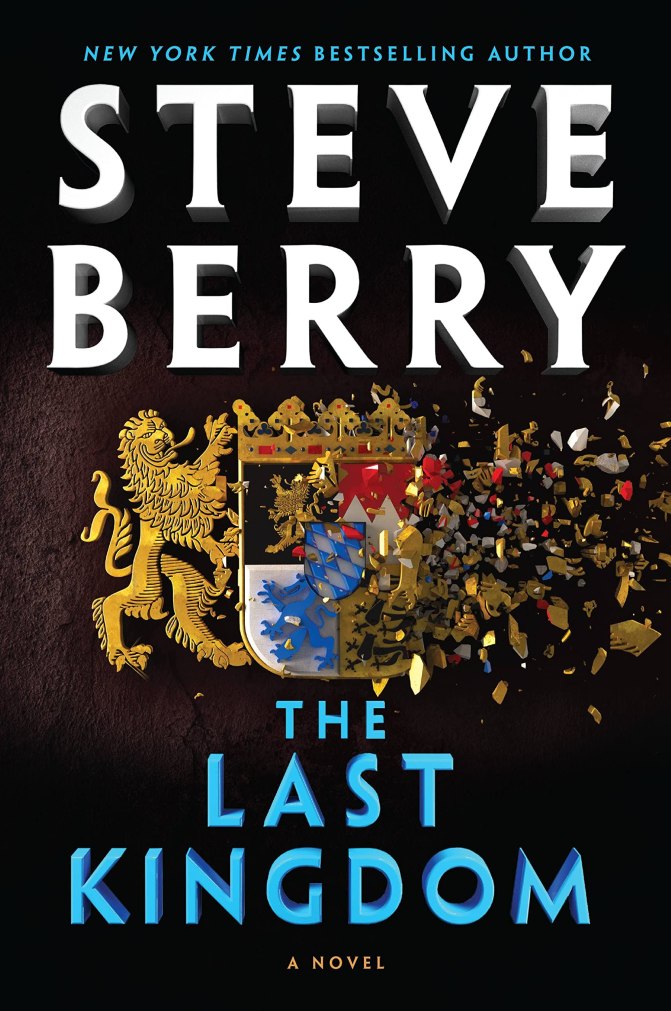
The Last Kingdom by Steve Berry

The Last Kingdom (Steve Berry) Cover

Publisher: Hachette Audio (Audiobook – 21 February 2023)

Series: Cotton Malone – Book 17

Length: 14 hours and 20 minutes

My Rating: 4.75 out of 5 stars

Amazon

Prepare for a remarkable and captivating mystery from out of history as acclaimed thriller writer Steve Berry presents another outstanding and riveting novel in The Last Kingdom.

Ever since I started reading thrillers a few years ago, one of my favourite authors in the genre, as well the most consistently entertaining, is the fantastic Steve Berry.  A veteran author who has been producing compelling reads since the early 2000s, Berry has over 25 books to his name that blend intense modern thriller narratives with intriguing history elements.  His most iconic body of work is his long-running Cotton Malone series, which follows a US Justice Department agent as he investigates unique historical conspiracies or secrets whose revelation will have major implications in the modern world.  I first fell in love with Berry’s writing back in 2019 when I read The Malta Exchange.  Since then I have gone on to read several more Cotton Malone novels including The Warsaw Protocol and The Kaiser’s Web, as well as the standalone novel The Omega Factor, each of which have contained some addictive stories that I’ve deeply enjoyed.  As such, I made sure to read his 2023 release, The Last Kingdom, as a soon as I could.  The 17th Cotton Malone novel, The Last Kingdom presented the reader with another brilliant conspiracy from history that was pretty awesome to behold.

There are many strange tales scattered throughout the history of Europe, but few are more unusual than that of King Ludwig II of Bavaria.  An unstable and fanciful figure who loved stories, solitude, and magnificent castles, King Ludwig dreamed of a magical kingdom, one far different from the lands he ruled.  Determined to find such a kingdom, he despatched agents throughout the world before his murder in 1886.  History suggests that he never found what he was looking for, but what if he did?

Now, in modern day Bavaria, freelance intelligence agent Cotton Malone has been hired by his old friend and protégé Luke Daniels to help him infiltrate a small group of radical separatists with dreams of securing Bavaria’s independence from Germany.  The focus of Luke’s investigation is the prince of Bavaria who seeks to usurp his older brother, the duke, and restore the ousted Wittelsbach monarchy with himself as king.  But to achieve his dreams, the prince needs the ultimate leverage, the Last Kingdom of King Ludwig II.

Following clues throughout several significant sites in Bavaria, Cotton and the Prince’s men are soon caught in a race to find a mysterious deed, one that Germany, China and the United States would kill for and which could greatly shift the balance of power in the world.  With the White House, Chinese intelligence, a mysterious Bavarian secret society and a rogue group of former CIA agents all vying for the prize, Cotton desperately attempts to solve the puzzle of the Last Kingdom and the terrible legacy it holds.  But can Cotton once again defeat the odds and keep the word safe from another historical mystery, or will the world be irrevocably altered by a secret form another century?

Well damn, now that was a pretty awesome read.  I have so much damn love for Steve Berry’s work, and The Last Kingdom is probably one of my favourites so far.  Perfectly combining an excellent thriller storyline with an elaborate and deeply captivating tale of history, The Last Kingdom was an exceptional read and one that I honestly could not stop listening to.

Berry has produced an amazing and addictive masterpiece of a thriller in The Last Kingdom with a particularly strong story behind it.  Like most of Berry’s books, The Last Kingdom is primarily a modern day thriller that introduces an original conspiracy that took place in history and has remained hidden until Cotton Malone wanders along (that man finds ancient mysteries wherever he goes).  As such, what starts as a simple infiltration at a famous Bavarian palace soon devolves into an elaborate treasure hunt for unique piece of history.  This latest historical mystery revolves around the eccentric and tragic final kings of Bavaria, and their desires to either retain power or find their own place in the world.  Berry expands on this historical detail throughout the entire course of the book, providing a good combination of real facts and some exaggerated fictional elements, which works into the main plot extremely well.  This modern day storyline gets some legs really early on as the protagonist and his companions are dragged into a major shadow war with several different factions attempting to take advantage of the situation and the hunt for the historical mystery.  Cotton soon finds himself working for several old colleagues, including a reckless CIA agent, while other groups, including the Bavarian prince and a rogue group of former CIA agents, start to use deadly force to solve the clues and find the hidden deed.

Berry keeps the pace of The Last Kingdom quick and compelling by raising the various stakes of the book while still showing off the entirety of Bavaria and its historic beauty.  There is a good reveal of why everyone is after the deed about halfway through which sets everyone on the road to a big confrontation.  While the full details of the conspiracy are a little over-the-top, Berry fits it into the story well, and the examination of modern and historical concerns surrounding is quite clever and intriguing.  The final half of the book is an intense thrill ride in several great ways, as Berry loads up the story with fun reveals, clever twists and so many betrayals.  I loved how the mystery of the King’s deed unfolded, and Berry really mixed the various original puzzle pieces of his conspiracy with the overlying historical detail to create a fantastic scavenger hunt.  The modern day thriller elements flitted around this extremely well, and watching the various participants in the hunt betray or outwit each other to try and get the prize was deeply exciting and led to some big moments.  The conclusion to the story is very good, and readers will come away extremely satisfied, both with how the story came together, and with all the extra knowledge Berry leaves you with.

I have a very deep appreciation for how Berry writes his outstanding novels and I think that The Last Kingdom was a particularly impressive example of this.  The blend of a high-intensity modern thriller storyline wrapped around a mystery loaded in historical detail is always entertaining, and I felt it turned out well again in The Last Kingdom.  The way that Berry splits the story out using alternate perspective chapters is particularly useful, as you get to see each of the characters interpreting the historical elements from different perspectives.  At the same time, several of the chapters are set in the 19th century and provide some deeper historical context to the story, which I felt was particularly useful and fun.  Berry really excels in simultaneously showing the different aspects of his story, and readers come away from The Last Kingdom having had fun with the thriller elements, while also learning so much more about some fascinating topics.  I really think that The Last Kingdom had one of the better thriller storylines associated with it thanks to inclusion of spies, disaffected royals, and several warring governments, and the way that story element unfolded had me pretty damn hooked the entire way through.  Like most of the Cotton Malone novels, The Last Kingdom can be read as a mostly standalone book, and readers don’t need to have any real knowledge of the previous entries in the series to enjoy this great novel.  While there are references to previous adventures and mysteries, the relevant details of these are well explained and new readers won’t be thrown by them.  However, long-term fans of the series will appreciate the continuation of several recent storylines, especially around Cotton’s feud with the US President, and I liked how that unfolded.

As I have mentioned a few times already, one of the best things about The Last Kingdom, and indeed all of the Cotton Malone novels, is the way that Berry dives into unique and intriguing parts of history to really give his stories a captivating kick.  In The Last Kingdom, this takes the form of a focus on the unique history of the kingdom of Bavaria, specifically the last 19th and early 20th century and the last three monarchs of the Wittelsbach line.  I have to admit, this was an area of history that I was not familiar with, but that changed after reading The Last Kingdom.  Berry conveys an immense amount of detail about this period and the relevant kings to the reader throughout the course of the book, so by the time you are done, you know so much about them.  However, Berry does it in such a way that ensures that the reader don’t get bored with it, as he showcases the more compelling elements of their reigns and the nation’s history around it, while also hinting at how it ties into the big conspiracy/mystery of the story.  I particularly enjoyed the detailed and fascinating examination of eccentric King Ludwig II.  Berry covers so many parts of his compelling life in this story, including his complex reign, his unusual outlook on the monarch, and his infamous end that saw him deposed and murdered.  The mysteries of Ludwig II and his search for a new kingdom proved to be a deeply compelling centre for the entire plot and I am really glad I got to learn more about them.  Another nation’s history, which I mention for spoiler reasons, is also concisely featured here, and I liked how Berry tied it together with Bavaria, resulting in a cool mixture that perfectly fed into the modern-day thriller.  The author clearly has so much fun researching and utilising all this historical detail in his books, especially if the extensive author’s notes section at the back is anything to go by.  Featuring all this historical detail works to create a great story, and I cannot emphasise how awesome it can be, especially in Berry’s capable hands.

In addition to all the historical elements of the book, I also really need to highlight how well Berry showcased Bavaria as a whole throughout the course of The Last Kingdom.  Many of the Cotton Malone novels act like a tourist brochure as the protagonists travel from one picturesque area of the country to the next, visiting all manner of historical sites.  This is very much the case for The Last Kingdom as the characters are forced to travel to several impressive locations throughout Bavaria, including iconic cityscapes, famous cathedrals, and beautiful landscapes.  Berry really spares no detail when it comes to describing these locations, and you can easily visualise them in all their stunning glory.  Some of the best descriptions are the iconic three castles that King Ludwig II built, which were strongly connected to his life story.  These castles form the basis for much of the plot’s historical scavenger hunt, and Berry really goes into the history and layout of them, even describing the furniture and the decorations.  You really grow to appreciate these locations around Bavaria, and I know that if I ever get the chance to visit, several of them are going to be on the top of my list of places to check out.  However, it is not just these iconic locations that are explored.  Berry also spends substantial time trying to show off the intangible nature of Bavaria, including its politics, its current attitudes, the state of its old monarchy, its place within larger Germany, and various other elements of its culture, including a real secret society dedicated to King Ludwig II.  All these elements are masterfully researched, examined, and showcased throughout The Last Kingdom, and all of them add to the authenticity of the story in immeasurable ways.

Aside from the excellent story and complex historical details, I also need to mention the great characters featured throughout The Last Kingdom.  Berry always writes fantastic figures, and it was awesome to see more of his central protagonist, Cotton Malone, as well as recurring supporting character Luke Daniels.  Both are well utilised throughout The Last Kingdom, and it was always great to see them working, especially as they have some major veteran presence at this point and work well against the various forces coming for them.  I did think that there was not a lot of development between the two, as both are essentially the same people they were in their last appearances, but they still make solid and likeable central focuses for the story.  However, there was some fantastic character development occurring outside of these main characters, especially as Berry introduces an amazing supporting cast of aging spies, angry deposed royalty, intriguing members of Bavarian society and deadly foreign agents.  Several of these characters have key roles in the book and Berry utilises them perfectly as great alternate perspectives for large swathes of the plot, producing a complex and powerful extended plot.  I loved the utilisation of Derrick Koger, a veteran CIA agent who has history with Cotton and has worked with him/against him in the past.  The funny and morally ambiguous Koger plays off the honourable Cotton perfectly as they work together in this book, and it was interesting to see them teaming up.  I liked how several of the antagonists, as well as Koger, shared a compelling character theme of people who believe they were overlooked or betrayed by their peers or people, and it serves as a great driving force for them to do bad things.  This group of characters and their conflicting priorities are an excellent part of The Last Kingdom and I had an outstanding time following them along this powerful quest.

I once again chose to check out this latest Steve Berry novel on audiobook, which is always a pretty epic experience.  Coming in at nearly 14 and a half hours, The Last Kingdom is medium length audiobook, although once you get caught up in the compelling story it flies by extremely quickly.  I personally love the Cotton Malone audiobooks as the narration really enhances all the elaborate detail of the story, especially the historical background, and ensures that they stick in the mind.  Hearing the key historical facts again and again really drives them home and I find that this helped me get even more fixated on the narrative as I was extremely eager to see how everything came together.  It helps that The Last Kingdom once again features narration from Scott Brick, one of the premiere thriller audiobook narrators out there who has lent his voice to all the previous Cotton Malone audiobooks.  Brick has a great voice for thrillers and I find his narration really fits Berry’s cool stories, especially as he gives some gravitas and complexity to both the modern day events and the historical elements.  Brick also has a great array of accents that he employs to full effect throughout The Last Kingdom, which I deeply appreciated.  His various American accents, which includes one from the wilds of Tennessee, are very well done, and I was once again extremely impressed by his dazzling array of German and European tones.  Even his Australian accent, something I am particularly sensitive about, was passable, if slightly stereotypical, and this fantastic choice of voices enhanced the audiobook experience.  Due to this outstanding voice work, as well as the great impact this format has on some of the key parts of the book, I would strongly recommend The Last Kingdom audiobook, and it is always one of my favourite ways to enjoy a good Steve Berry novel.

Steve Berry continues to impress with his latest outstanding Cotton Malone novel, The Last Kingdom.  Featuring his typical blend of exciting and intense thriller storylines and fascinating historical detail, The Last Kingdom is a brilliant read that powerfully showcases Bavaria in all its glory.  Examining key elements of the state’s past, as well as its current beauty, and perfectly working them into an excellent story, this was an exceptional outing from Berry and one that I had such an amazing time reading. Highly recommended!

Amazon

Going Zero by Anthony McCarten

Going Zero Cover 2

Publisher: Harper/Macmillan (Ebook – 11 April 2023)

Series: Standalone

Length: 298 pages

My Rating: 4.5 out of 5 stars

Amazon

Acclaimed screenwriter and author Anthony McCarten presents a compelling and intense techno-thriller that shows readers the terrifying future of surveillance technology in the intriguing read, Going Zero.

It is a time of great expansion in the world’s spy technology as every country works to increase their internal and external surveillance capability.  To keep up with their rivals, the CIA have been convinced to partner with billionaire Silicon Valley tycoon Cy Baxter to create the ultimate surveillance program.  Known as FUSION, the new system will allow the government, through Baxter’s company, to find anyone in the country, no matter how hard they hide.

But before FUSION can officially go online and Baxter’s company can be awarded its massive, multi-billion-dollar contract, Baxter needs to prove that the system can deliver everything he promises.  To that end, the ultimate test is proposed, pitting 10 random Americans against the new technology.  At an appointed hour, all 10 participants will need to “Go Zero”, going completely off the grid and leaving their lives, families, and homes behind to hide as best they can.  If they can elude the company’s technology and capture teams for 30 days, then they receive $3 million in prize money.

As the participants each choose their own unique ways of vanishing off the face of the Earth, one stands out amongst the security experts, tech geniuses and law enforcement professions that have been recruited.  Boston librarian Kaitlyn Day was chosen to be an easy target, an everyday woman who could test the most basic bounds of the program.  However, she swiftly shows that she is far more skilled and versed in counter surveillance tactics than anyone expects.  As the test continues, Kaitlyn manages to counteract every trick FUSION has up its sleeve, and soon Baxter grows desperate trying to find her.  But as the test nears its end, it becomes clear that there is far more to Kaitlyn than meets the eye, especially as she has a very personal reason for playing this elaborate game.

This was an awesome and impressive novel from McCarten, who presents the reader with a fun scenario guaranteed to grab their attention.  Going Zero is an awesome book that I really got drawn into thanks to its compelling narrative and fast-paced style.  I actually managed to read this entire book in a day, as I got quite hooked on the story and just kept going, trying to see how everything ended and I really was not disappointed with how it turned out.

Going Zero’s story itself is great, as it plays out like a giant, technological game of cat and mouse throughout the United States.  It reminded me a lot of the reality show, Hunted, on steroids, with the facilitators, the CIA and Cy Baxter’s team, having access to every single surveillance feed and scrap of digital information they need to catch the players.  The first half of the book is primarily focused on this hunt, with most of the attention on both Kaitlyn Day and Baxter’s team as they hunt for her.  The author makes great use of short, sharp chapters to move the story along at a very quick pace, which also limits the reader’s desire to stop reading, as the end of the next chapter is always in sight.  McCarten sets the entire scenario up extremely well, and you are soon dragged into the intriguing middle of this over-the-top fugitive situation.  It is incredibly fun seeing Kaitlyn’s initial exploits, as well as the overarching reach of Baxter, whose insane control room put me in mind of the game masters in The Hunger Games film.  These two intriguing primary perspectives are often interspersed with quick interludes that show the other nine participants slowly getting hunted down by Baxter’s capture teams.  Each of their methods of hiding is unique to them and seeing them getting effortlessly capture serves as a rather compelling counterpoint to Kaitlyn’s own endeavours to avoid detection.  I really got caught up in this hunt scenario, which dominates the first half of the novel, mainly because it was so damn fun, intriguing, and a little terrifying to see the FUSION system in action.  While I would have been happy enough to read a lot more of this, McCarten introduces a rather good twist about halfway through that throws everything on its head.

Now, while the inclusion of a twist wasn’t too surprising, especially as the plot had been hinting like crazy that something was suspicious about the protagonist, the full extent of it is pretty damn epic, especially as it makes you rethink everything that occurred in the first half of the book.  McCarten had done a really good job of inserting subtle hints and clues into the preceding story, and the way they were dragged together was really clever.  This major twist changes the entire story around and moves it from a mostly harmless story about advanced hide and seek to an intense and personal thriller with some major national security ramifications.  The second half of the book goes into overdrive, especially as, after the twist, you are particularly attached to the protagonist and her potential victory, while the antagonist becomes easier to root against.  There is conspiracy, espionage and deeply personal attacks against the various characters, as everyone is suddenly trying to survive the changes that the protagonist brought on.  I deeply enjoyed where the story went at this point, and the resulting exciting scenes, which also included some more twists, continue to drag you in and ensure that that stick along for the ride.  The author provides a great, if highly cynical, ending for this entire narrative, and you come away feel satisfied, especially as it leaves the reader wanting more.  An overall impressive and addictive story that I had such a great time getting through.

Perhaps one of the most distinctive features of Going Zero was McCarten’s frank and often terrifying look at the state of surveillance technology in the world today.  The hunt for the 10 participants requires FUSION team to employ a ton of intriguing methods to find their prey, with the hunters mapping out their targets’ habits, history, and personal connections to find where they will likely go and who they will try to interact with.  Some crazy technology and methods are featured throughout the book and McCarten combines some clear research with some more imaginative approaches to reveal how the hunters were able to find the contestants.  While some of the elements were obviously enhanced for narrative purposes, the story does feature quite a few more realistic methods that honestly had me thinking about how much information I have on the grid (they’d catch me in less than 10 minutes).  This intriguing focus on how humans have become used to sharing their information and leaving themselves upon to tracking and exploitation becomes a key part of the plot as certain characters start to misuse this information for their own good.  McCarten also introduces a great counterpoint to this through Kaitlyn’s perspective, as her insights into the surveillance world provide some interesting contrast, especially when she starts turning the tables on the hunters and their technology.  The loss of privacy and anonymity ended up being a pretty big theme for this novel, and I think readers will come out with their eyes opened about just how easy it may be for governments or companies to track where you are or what you are doing (or thinking) in the future.

I really liked the fun blend of characters that McCarten featured throughout Going Zero, especially as thanks to the focus on privacy loss and personal investigation, you soon learn a lot about them.  The fun, if brief, snapshots into the nine other participants in the beta test added some great colour to the story, especially as McCarten had to quickly and comprehensively showcase who they were and how they think in order to show how FUSION caught them.  Cy Baxter, the brains behind FUSION, was a great figure within the story as well, as he ticked all the boxes of an egotistical billionaire and tech genius.  While he was initially shown to be an ambitious and eccentric figure who was attempting to introduce the system for the right reasons, the moment he gets some opposition you begin to see the real Cy Baxter under the surface, and it is not pretty.  Thanks to his ego and his own belief in his intelligence, Baxter keeps going further and further down the dark path to achieve his goals, and by the end of the book he proves to quite an effective and highly unlikable antagonist (with some great similarities to a certain real-life tech billionaire twit).

However, most of the best character work is reserved for main protagonist Kaitlyn Day, who had quite a fascinating arc throughout the book.  I loved the way that McCarten initially built her up as a typical librarian and a potential amateur without any real chance of succeeding.  However, it soon becomes clear that there is far more to Kaitlyn, especially as some of her earliest moves prove to be so infuriating to Baxter and the FUSION team.  McCarten drops some excellent hints throughout her storyline about her past which provide some potential clues about what is about to happen with her character, especially when combined with the research the antagonists do on her.  I really cannot emphasise how well McCarten set up the twist around Kaitlyn, and the full details of her life and motivations only further increase how much you start rooting for her.  There is some noticeable but relatable character change that occurs after the twist is revealed, and it was interesting to see how serious she was and how she managed to manipulate the system.  These characters, and more, helped to turn Going Zero into quite the excellent read, and I loved some of the intriguing figures that emerged.

Going Zero was an exceptional and captivating read that had me hooked from the very start.  Anthony McCarten’s unique scenario led to an exciting and highly fun story that proved near impossible to put down.  I powered through Going Zero in no time at all and this was one of the more entertaining books of 2023 for me so far.  An excellent and highly enjoyable read that has potential as a film, Going Zero comes highly recommended and is definitely worth checking out.

Going Zero Cover

Amazon

Headcase by Jack Heath

Headcase Cover

Publisher: Allen & Unwin Australia (Trade Paperback – 29 November 2022)

Series: Timothy Blake – Book Four

Length: 416 pages

My Rating: 5 out of 5 stars

Amazon     Book Depository

One of Australia’s leading and most diabolical thriller writers, the exceedingly talented Jack Heath, returns with another twisted and immensely clever mystery, Headcase, which sees the return of his cannibalistic protagonist, Timothy Blake.

While Australia has quite a few outstanding crime fiction authors, Jack Heath is a particular favourite of mine.  Coming from my hometown of Canberra, Heath has been writing for years, producing a range of different series and standalone novels.  I have really enjoyed some of his recent books, including the 2021 standalone novel, Kill Your Brother, an ultra-intense and amazing five-star read that saw a young woman with a complex past forced to make a terrible decision: kill her imprisoned brother or die herself.  This was one of my favourite Australian novels of 2021, and it is a must-read for anyone keen for a powerful and thrilling story.  However, Heath is probably best known for his Timothy Blake books (also known as the Hangman series), which are particularly fun and gruesome.  Following the titular Timothy Blake, a brilliant investigator with cannibalistic tendencies, this epic series are set around a unique but highly entertaining series of mysteries that really draw the reader in.  I have had an amazing time with this series, including the third entry in the series, Hideout (one of my favourite Australian books of 2020), and I have been very excited to see how this series continues for a while.  Heath did not disappoint as the fourth and latest entry in the series, Headcase, proved to be an exceptional and gripping read.

Following his previous harrowing adventure, which cost him his arm and burned all the trust he had with his former FBI partner, freelance investigator and full-time cannibal Timothy ‘Hangman’ Blake’s future seemed in doubt, until he was given an offer he couldn’t refuse.  Recruited by a CIA agent nearly as insane as he is, Blake now works freelance for the agency, investigating odd occurrences throughout the country in exchange for occasionally being able to indulge in his cannibalistic habit.

His latest case sees him and his CIA partner, Zara, journey to Houston, where something unexplainable has occurred at the NASA training complex.  A fully suited Chinese astronaut has been discovered on the grounds of the facility and no one can explain how he got there.  Did he fall out of the sky, or was he murdered elsewhere and somehow dragged into the middle of a secure United States facility?  As a diplomatic catastrophe seems imminent, Blake is drafted by the CIA to unofficially investigate one of the facility’s employees, a former kidnapper who Blake helped put away seven years ago, who may hold the secret of the dead astronaut.

As Blake starts digging, he uncovers a series of surprising and unusual clues that seemed design to confuse any investigation.  The evidence seems to point to the victim falling out of a Chinese spacecraft surveilling the United States, however, all Blake’s investigative senses and knowledge of human flesh seem to tell him differently.  But with Chinese hit squads following them, the CIA attempting to forestall their investigation, several suspicious individuals working in the facility attempting to misdirect him, and Blake’s own ravenous hunger driving him crazy, this case seems near impossible to solve.  Can the Hangman crack the impossible one more time, or will he finally end up in the cage that he deserves?

Wow, I just cannot get over how good Jack Heath is an author as he produces another outstanding and captivating read with a diabolical story behind it.  This amazing thriller has everything you need to enjoy yourself, including a clever mystery and some truly insane characters, and I absolutely powered through it trying to see how everything came together.  This is an easy five-star read from me and I have already featured Headcase on my Top Australian Books of 2022 list a few weeks ago.

Headcase has a brilliant story to it that takes the reader on a very wild ride into some very gruesome murders.  Told from the perspective of main character Timothy Blake, you are soon shown the compelling murder through the eyes of a crazed cannibal who is attempting to simultaneously solve a murder and please the CIA while not revealing that they are looking into the death and sate his own hunger for dead human flesh.  Heath provides a great set-up to this entire story with the mysterious Chinese astronaut discovered in the centre of the NASA facility, which is a very good hook to drag the reader in.  As Blake tries to investigate this case, the reader is treated to several flashback chapters to when Blake was working for the FBI and helped to put away one of the NASA technicians for kidnapping, a crime Blake never believed he committed.  Heath also mixes things up by also including several chapters set a short while into the future in which Blake is incarcerated in a mental institution and is recounting the current story to his psychologist.  This three-way split storyline works extremely well for the first half the book as all three timelines support the others extremely well, and the blend of different periods and focuses helps to create a very interesting read.  The storyline focusing on the dead astronaut remains at the centre of the narrative, with the other two plotlines tying into it, and this is where the magic truly happens.  Heath sets up a particularly interesting mystery around the dead astronaut, with the protagonist forced to dive through a ton of clues, overly dodgy suspects, and government secrets to try and get to the truth.  At the same time, Blake and his partner find themselves under attack from several sources, such as Chinese hit squads, the police, a mysterious serial killer, and their own very dark inner demons.

The story advances at a quick clip the entire way through as the characters power through a range of deadly and dark scenarios.  Heath loads up the clues and the complicated supporting characters and it proves very interesting to see Blake attempt to work out who may be responsible and their very complex motivations.  Much of the story has a bit more of a spy thriller taste to it, thanks to Blake’s association with the CIA and this really helps to make Headcase standout a little from the previous Timothy Blake books.  The NASA and Chinese space surveillance proves to be a very fascinating inclusion that Heath cleverly works into the plot, and I loved that the author was able to write a whole story about mysterious Chinese surveillance craft before the current balloon crisis.  While these spy elements, which include brutal encounters with hit teams from various agencies, are a great new inclusion, some of the best parts of the book still revolve around the deeper character moments of the story, especially when it comes to the protagonist.  I deeply enjoyed how Heath utilises his protagonist’s disturbing cannibalistic insights as an investigative tool, while other insights into his mind, especially when he is in a mental institution, increase the tension and make you wonder just how reliable a narrator Heath truly is.

Everything comes together perfectly in the second half, especially when Blake is desperately trying to solve everything, not only to get to the truth but to save lives.  All the previous story elements are brought together in a big way, and it was outstanding how the clues that Heath had cleverly laid throughout the story came together.  The time split perspectives are resolved in a great way, and it is a lot of fun to see how Blake ended up in the mental hospital.  Everything leads up to several big reveals at the end of the book, not just surrounding the main murder, but other curious events that have been explored as Headcase continues, and reader will not be disappointed in what comes to light, nor how the protagonist deals with it.  The full details about the compelling and unique motivations for the main murder makes for a very interesting read, and the diabolical method of murder is something that I won’t be forgetting in a hurry.  While I did find that the use of a certain McGuffin was somewhat unrealistic, even for this crazy series, I was generally extremely happy with how the entire novel came together.  The complex mystery is resolved in a very captivating way, and the character arcs that sit at the centre of the story go in some very interesting direction which should result in some fantastic books in the future.  I personally came away from Headcase extremely elated and deeply impressed with just how clever an author Heath is.

On top of the outstanding and fantastically compelling story, I have a lot of love for Heath’s writing style, which deeply enhances each of his books.  The quick pace, the fantastic dives to both the past and future, and the intense blend of mystery and insane personal issues surrounding the main characters, makes for some outstanding reading, and there honestly isn’t a single part of Headcase that wasn’t extremely fascinating or fun.  Understandably, due to the story content, this is a pretty gruesome series, and Heath doesn’t hold back on the detailed depictions of dead bodies, nor the terrible things that his protagonist does to them.  However, he never goes way too over-the-top, and the gore and cannibalism always serves a vital purpose, either to provide clues to the mystery or to highlight the protagonist’s complex nature.  It also helps to make the series particularly distinctive, even amongst other impactful thrillers, and you must love just how obsessed and focused the main character/narrator is about dead bodies. Like most of the books in this series, Headcase can be very easily read as a standalone novel, and Heath is very careful to concisely fill in any relevant details that the reader might need.  However, as with most ongoing series, those people who have read the earlier books in the series will probably get a lot more out of Headcase emotionally, especially when it comes to seeing the progression of the protagonist.  I wouldn’t hesitate to recommend Headcase to a new reader, as they are guaranteed to have a fun and unique time with this outstanding read.

I must highlight Heath’s captivating and complex central protagonist, Timothy Blake, who is once again one of the best things about this entire book.  I really love the character of Blake in this series as he is such an intriguing and damaged character due to his deranged cannibalistic tendencies, which often drive him to do terrible things in the name of obtaining human flesh.  There are so many great scenes where Blake feels his desire and hunger for human meat start controlling his actions and the character is constantly fighting for some measure of self-control.  Despite this, he is a relatively good person and a skilled investigator whose keen observation skills, canny insights, intense survival instincts, and intimate knowledge of human bodies give him some intriguing edges during a case.  While he often likes to pretend that he is only helping the case to get fresh meat, he is also obsessed with finding the truth and getting justice, which, when combined with his romantic desires for his former FBI partner Reese Thistle make him occasionally seem like a good, if highly damaged, person.  These seemingly incompatible parts of his personality are so damn effective, and it is always quite fascinating to see what part of his personality actually wins: the feral hungry beast or the surprisingly heroic detective.

The version of Blake in Headcase is particularly interesting as Heath comes up with some new range of issues and problems for him to overcome on top of his all-consuming hunger.  After managing to survive his particularly desperate situation in Hideout, he has a somewhat different lease on life which goes with his new job.  However, he is still in love with Thistle, even after their confrontations in the last two books, and this is encouraging him to be a better person.  This desire to be a better person somewhat goes against the desires of his new masters in the CIA, especially his partner Zara, who try to use his fractured mind to their advantage and his desire to change for Thistle puts both her and Blake at risk.  He also undergoes therapy for the first time in his life, albeit somewhat against his will.  These scenes with the psychologist are particularly fascinating as they discuss his cannibalistic desires and his general sanity.  While the psychologist doesn’t believe he is a cannibal, her insights give Blake a lot to think about, especially when he comes to the revelation that he might be able to overcome these life-long issues if he sought treatment.  This really alters Blake’s perspective of his entire life, and it, as well as some insights he gets from viewing other patients at the mental hospital he is locked in, proved to be a very interesting tipping point for the character growth we have witnessed throughout the series.  It will be very interesting to see how Heath continues to explore and highlight Blake in the future and I have a feeling we are only on the start of a particularly dark and emotionally rich journey.

In addition to Blake, Heath has loaded Headcase with an intriguing array of unstable and entertaining supporting characters who add some awesome value to the entire novel.  The most prominent of these is Blake’s CIA partner in this case, Zara.  Zara was introduced in the previous novel, Hideout, when she managed to infiltrate a group of psychotic killers extremely successfully, before recruiting Blake with the promise of bodies to eat.  While Zara serves as an effective agent and partner to Blake, she is ultra-violent and has some major mental issues and might even be crazier than Blake (which is saying something).  Zara ends up forming a toxic relationship with Blake in this book, especially as she utilises his addiction and leads him into to some deadly and dark situations.  She proves to be a fantastic addition to the plot and I love how intense and threatening Heath made her at times.  There are some great reveals around her, as well as a certain incident that matches her with Blake, and I loved all the awesome stuff Heath set up around her.  Heath also makes sure to bring back Blake’s former FBI partner and love interest, Reese Thistle, who has another interesting run in Headcase.  Blake and Thistle have had a very compelling relationship throughout the series, which got even more complicated when Reese found Blake’s fridge full of corpses.  Still keeping his secret after he saved her life, Reese is very awkward with Blake, which adds to Headcase’s dramatic tension.  Despite this, the two do work together to try and solve the murder and it was nice to see them teaming up again.  Of course, this leads to more danger and despair for both of them, but Heath is taking their relationship in some interesting directions, and I look forward to seeing how that turns out.  Throw in a compelling group of potential suspects, foreign agents and mental patients that the protagonist has to work his way through to solve this complex case and you have an outstanding group of characters that I had a lot of fun with.

With his latest Timothy Blake novel, Headcase, Jack Heath continues to impress with his epic and captivating take on murder and complex characters.  This incredible novel takes the reader on an awesome journey through insanity, obsession, and desperation, all centred around an impossible and very clever mystery.  I had a brilliant time powering through Headcase, and I have so much appreciation for Heath’s scary wit and ability to dive into the head of a killer.  Headcase is an exceptional book that comes highly recommended, I cannot wait to see what outstanding mysteries and thrillers he produces in the future.

Amazon     Book Depository

Burner by Mark Greaney

Burner Cover

Publisher: Sphere/Audible (Audiobook – 21 February 2023)

Series: Gray Man – Book 12

Length: 16 hours and 37 minutes

My Rating: 5 out of 5 stars

Amazon

The epic and captivating Gray Man series by legendary thriller author Mark Greaney returns with another exciting spy thriller entry, Burner, which thrusts the protagonists into the middle of some major real-world events.

Nothing starts off the thriller field of 2023 quite like the latest Gray Man novel from leading author Mark Greaney.  Greaney is a very impressive author who has been killing it throughout the genre for years.  Not only has he produced some cool standalone books, such as last year’s exciting action romp Armored, or the cool military thriller he co-wrote with Hunter Rawlings IV, Red Metal (one of my favourite books and audiobooks of 2019), but he has also written the exceptional Gray Man spy thriller books.  Following legendary assassin Court Gentry, better known as the Gray Man, as he gets involved in several deadly situations, the Gray Man books are one of the leading spy thriller series and I have deeply enjoyed the epic and powerful adventures that Greaney has so far released.  I personally have had an exceptional time with several of the Gray Man books, including Greaney’s debut novel, The Gray Man (which got a film adaptation last year), as well as the later entries such as Mission Critical, One Minute Out (one of my favourite books and audiobooks of 2020), Relentless (one of my favourite books and audiobooks of 2021) and Sierra Six (one of my favourite books and audiobooks of 2022).  His latest release is the outstanding Burner, which was one of my most anticipated novels of 2023.  The 12th book in the Gray Man series, Burner was a particularly intense read with a fantastic story behind it.

Alex Velesky is a Ukrainian expat living in Switzerland, whose comfy life as a notorious mover of immoral money has been hollow ever since the death of his family back in Ukraine at the start of the invasion.  Going through the motions, Velesky is suddenly given an opportunity to strike back at Russia when a disenfranchised Russian intelligence agent provides him with a trove of secret financial data.  This data, when combined with information from his own bank, reveals all the Russian bribes paid out to the West, and could damage not only Russia’s foreign intelligence apparatus but also the delicate negotiations to re-open the Russian economy to the wider world.

Immediately targeted by Russians determined to kill him and reclaim the data before it can leak out, Velesky finds himself hunted throughout Switzerland.  His only chance of survival seems to lie in rogue intelligence officer Zoya Zakharova, a woman hunted by her former employers in both Russia and the CIA, who is determined to get him and his information to New York, where it can be deciphered and released.  But Velesky and Zoya soon find themselves being stalked by an elite unit of Russian military operators who have no qualms about killing anyone in their way.

However, the Russians aren’t the only people interested in the data, as the CIA wants to claim it for themselves.  Determined to keep their interest in it quiet, the CIA reach out to Court Gentry, the Gray Man, to capture Velesky before the Russians do.  However, Court is unaware of the full significance of the data he is reclaiming, and that he will have to compete against the love of his life, Zoya.  Soon caught between the competing interests of the CIA and Russian intelligence, Court and Zoya decide to work together to keep Velesky alive.  But with the dangerous data revealing dark dealings in the highest levels of government, can even these two legendary spies survive?

Wow, Greaney really can’t miss when it comes to the Gray Man books.  Burner was another exceptional novel that had me hooked from the very beginning all the way to the final, devastating encounter.  The blend of exceptionally written action scenes, spy thriller elements, complex characters and the utilisation of contemporary issues makes Burner really stand out, even alongside the other epic Gray Man books.  This was another easy five-star rating from me as Greaney once again shows why he is currently leading the spy thriller genre.

Burner’s story is a pretty impressive and intense thrill ride that takes the reader across multiple continents in a blaze of glory and excitement.  The book starts whilst the Russian invasion of Ukraine is ongoing and introduces the reader to interesting new character, Alex Velesky, who receives information about all of Russia’s illegal financial transactions from a disaffected Russian operative.  If he can take this information, as well as data stolen from his bank, to a certain forensic accountant in New York, he will be able to disrupt Russia’s international intelligence efforts while also weakening their position against Ukraine.  However, he soon finds a deadly Russian kill team on his tail, and is only saved by reluctant operative Zoya Zakharova, who eventually believes his story and attempts to get him to New York.  However, the Russians and the CIA both want the data, and this drags in Court Gentry.  On the run from the CIA and unsatisfied with his current job sinking Russian mega-yachts, Court is given a chance to get back into the agency’s good books by helping them recover the data.  This sees him engage in a massive fight in Caribbean, before flying to Europe to find and capture Velesky and begin searching for him and the Russians.  This results in a brilliant collection of scenes as the various sides engage in elaborate tradecraft to try and outsmart the others, resulting in a particularly epic extended sequence on a train.  The resulting carnage and revelations make for some exceedingly gripping content and sets the final third of the book up extremely well.  I protagonists are forced into a series of deadly battles on a tight timeline to achieve their goals.  There are surprises, shocking deaths, elaborate fights and the resolution of several character arcs, all of which wraps up with a particularly epic, split-scene sequence that ends everything on a high note.  I was engrossed in this exceptional narrative the entire way through, and it will be very interesting to see where Greaney takes this series next.

Greaney brings all his impressive writing skills to the table with Burner, and his ability to set a dramatic and powerful scene honestly turns the already outstanding narrative into something truly special.  While I did find a few pieces of dialogue to be a bit weak and robotic, and Greaney did decide to fit in the annoying trope that two women working together must be bitchy to each other, this was mostly a very strongly written spy thriller book.  Like all the previous Gray Man books, Burner has an outstanding pacing to it that quickly draws the readers in and ensures that they stick around for the entire ride.  The action scenes are brutal and have a great veneer of realism that ensures that you can easily imagine every punch, shot or stab.  The focus on tradecraft is a particularly fascinating element to the entire story, and you must love the multiple scenes that show the characters utilising their training to outmanoeuvre their opponents.  Greaney also brings in the perfect blend of intense action focused scenes and story building, real-world issues, and character moments throughout the course of Burner and there honestly wasn’t a single moment that I wasn’t hooked on everything that was going on.  Burner also proves to be a rather interesting and significant entry in the wider Gray Man series, which long-running fans are going to appreciate.  While Burner can easily be read as a standalone novel thanks to the author’s concise and effective description of prior events, this book does continue several interesting storylines from the previous books, including Court’s fugitive status, his relationship with Zoya, and the examination of both main characters’ places in the world.  Several recurring characters from the series also make their return here, including some entertaining antagonists, and I loved how Greaney worked them into the plot.  I had a lot of fun seeing some of these call-backs to previous stories and plotlines, and Greaney leaves this book in an interesting place for the future.

I really need to mention Greaney’s exceptional use of multiple character perspectives throughout Burner.  Greaney casts a very wide net when it comes to the perspectives being followed and while primary characters, such as Court Gentry and Zoya Zakharova, do get a lot more focus, you also see a lot of events occurring through the eyes of other characters, including several antagonists.  This gives the reader a much more expansive narrative that not only lets you understand the motivations of every significant character but also allows you to see how the antagonists are responding to the actions of the protagonists, which adds intensity to the plot.  However, the best advantage is the way that Greaney utilises these perspectives to make some of his biggest sequences really pop.  In these key sequences, the point of view constantly moves around the various characters as the story unfolds and this helps to produce a particularly intricate and powerful viewpoint of how events are going down.  This is particularly evident in the book’s best extended sequence where multiple point-of-view characters, including Court, Zoya, Alex, the antagonistic Russian hit team, a lone CIA agent and more find themselves converging on a train to Switzerland.  As the scene continues, Greaney keeps quickly moving the point-of-view around from one of the characters to the next, including a couple of minor characters who are mostly there as witnesses.  Watching every character’s reactions, moves and countermoves really enhances the power of the scene as Greaney first uses it to build up tension before the inevitable firefight begins, and then switches it up to ensure that the resulting battle is even more epic as you see every shot both sides make.  Greaney uses this excellent balance of perspectives through several of Burner’s key scenes, including the big finale, and each sequence comes off much better as a result.  I cannot emphasise how effectively Greaney utilised this throughout Burner, and it was a major highlight for me.

One of the most distinctive things about Burner was the excellent and memorable use of contemporary events to enhance the already enjoyable spy thriller narrative.  Greaney has never shied away from referring to current conflicts, politics and events, and in Burner he goes for the most infamous current conflict in a big way by strongly featuring the Russian invasion of Ukraine.  Greaney pulls no punches when describing the conflict and he artfully and powerfully paints the entire invasion as the act of barbarism and greed that it is.  While no political leaders are names, multiple Ukrainian and Russian characters are featured throughout the plot and through them Greaney examines multiple sides of the conflict, ensuring that readers are fully aware of what is happening, who is responsible, and just how bad things are.  The Russian government are shown to be extremely corrupt, starting the war and then poorly preparing their own troops, all in the name of obtaining more money for the Russian elites to exploit.  This focus on corrupt money is a major part of the plot as the characters spend the entire book trying to identify funds being syphoned out of Russia to the West, either to escape sanctions or to be used for bribes or operation money by Russian intelligence.  The discussion about bribes to influential westerners is pretty interesting, especially as it seems to be a dig at certain politicians and news reporters, and it ended up being a very fascinating plot focus.  While it might seem a little insensitive to use a current conflict in a thriller novel, I personally felt that this was a master touch by Greaney.  Having the book focused on something that is such a big part of current world events ensured that I was even more invested in the story while rooting for the protagonists to succeed.  I really must compliment Greaney for using his book to shine a light on this conflict, and I feel that his warnings about how the war could end are very important.

I also need to highlight the great characters contained within Burner as Greaney brings back several of his best recurring protagonists, while also introducing some cool new figures.  This includes series protagonist Court Gentry, who has another outstanding adventure in Burner.  Court is his usual fun and effective self in this latest book, and it was great to see him utilise his skills and over-the-top abilities to achieve the mission.  Despite this, there isn’t an awful lot of character development around Court in this one, except for updating his status with the CIA.  Instead, most of the character development in this book was reserved for major recurring character and Court’s love interest, Zoya Zakharova.  Zoya last appeared in the 10th book, Relentless, which saw Court abandon her to keep her alive after he became wanted by the CIA again.  This had a major impact on Zoya’s psyche due to her previous abandonment issues and this, combined with the guilt she feels for being a former Russian spy, sends her into a massive spiral, and at the start of Burner she is an alcoholic, cocaine addicted mess.  A lot of her storyline deals with her attempts to move forward from her guilt, and she takes the mission with Alex Velesky to redeem herself.  Greaney does an outstanding job of showcasing Zoya as a woman in crisis, and I felt that this was an interesting and realistic jump in her character arc, especially after everything she’s been through in the series.  Naturally her life gets even more complicated once she is reunited with Court, which forces her to deal with some major feelings.  Greaney smartly keeps these two characters apart for a substantial part of the book and they are unaware of each other’s presence even while working the same case.  This means that when they finally do meet, the emotional pay-off is even more rewarding, and there are some great sequences with them as the story continues.  This ended up being a very substantial story for both characters and it was great to finally get some closure on the open relationship threads.

Aside from Court and Zoya, most of the other major characters are new additions to the Gray Man series, and Greaney does an outstanding job of building these characters up quickly during their initial appearances in Burner.  The most prominent of these is Alex Velesky, a Ukrainian banker working in Switzerland who ends up with the incriminating Russian data and is motivated to expose it after the death of his family.  Greaney frames an exceptionally good redemption arc around Alex in Burner as the character, who is feeling guilty for the years he’s spent illegally moving Russian money, attempts to finally reveal all the crimes he’s been apart of.  Alex’s entire arc is masterfully written by Greaney, and he proves to be an outstanding part of this book.  The other major new character was Angela Lacey, a rookie CIA operative who is sent to work with Court.  Shown to be a bit naïve, yet highly capable, Angela proves to be an interesting inclusion to Court’s mission, and he ends up become a bit of a mentor to her.  Angela is forced to grow up a lot in this book, especially when manipulated by her superiors, and it looks like Greaney has some interesting plans for her in the future.  Other great characters include a deadly new Russian assassin Luka Rudenko, slippery recurring antagonist Sebastian Drexler, and even Court’s old CIA handler Suzanne Brewer, who is up to her old diabolical tricks.  All these impressive characters add a lot to the plot of Burner, especially as Greaney takes the time to explore all their motivations and deeper secrets, and their inclusion results in some amazing sequences and confrontations.

While I did receive a paperback copy of Burner, I ended up listening to this awesome book on audiobook, mainly because I have had some great experiences with the Gray Man audiobooks in the past.  The Burner audiobook ended up being another excellent production that I managed to knock off quickly, even with a run time of over 16 and a half hours.  In my opinion, this audiobook format greatly enhanced the already epic story contained within Burner in several notable ways.  Not only does the action sequences really pop as you have them read out to you, by the format also works well to enhance the tension of some of the extended sequences involving multiple characters.  Just listening to all the players making their moves at the same time really drags you into the intense and explosive scenes and I was riveted through the scene on the train, or the final massive battle.  It also helped that Burner once again featured the exceptional vocal talents of Jay Snyder, who has lent his voice to all the previous Gray Man audiobooks.  Snyder, who was already one of my favourite audiobook narrators, has an outstanding voice that really fits the spy thriller genre.  His performances always capture the intensity, chaos, and destruction of any scene he narrates, while at the same time he manages to move the book along at a quick pace that really keeps the audience drawn in.  Snyder also has an excellent and fitting range of voices that he deploys throughout the audiobook, and I loved hearing the voices he assigns to some of the returning favourites.  His tone for Court Gentry fits perfectly, and all the other major player get some great voices with well performed accents.  All this ensures that the audiobook is an incredible way to enjoy the latest Gray Man novel and I cannot recommend the Burner audiobook enough.

I could go on more about Burner (trust me, I really could), but I think it is fair to say that I deeply enjoyed this latest Gray Man novel from Mark Greaney.  Greaney has been on a roll with his last few Gray Man books, and I honestly think that Burner is one of the better novels he has released recently.  The impactful story, great characters, compelling content and impressive writing ensured that I was enthralled throughout the entirety of Burner, and I honestly couldn’t put it down at times, especially during some of the big action sequences.  This was such an epic book, and I can already guarantee Burner is going to end up as one of my top books and audiobooks of 2023.  Highly recommended!

Amazon