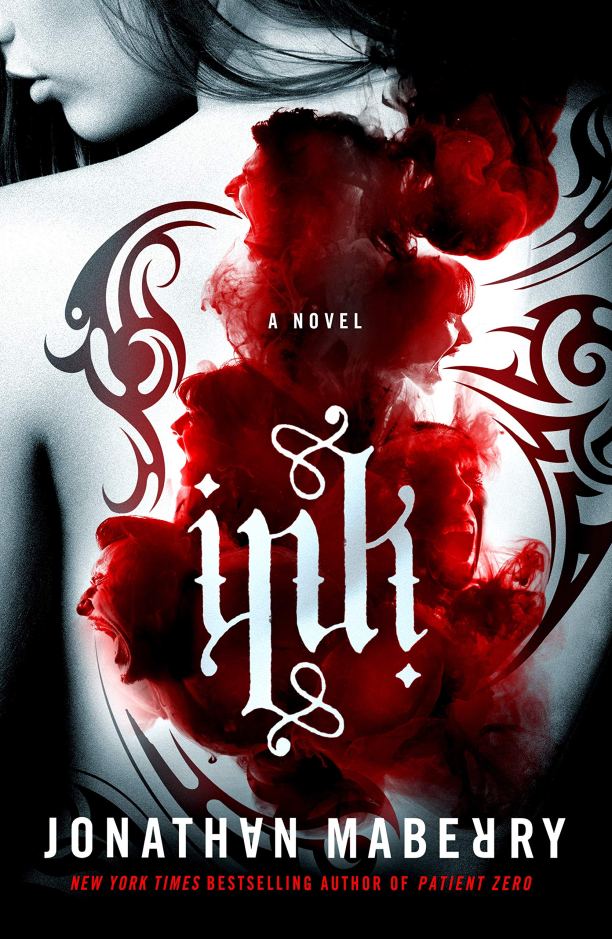
Ink by Jonathan Maberry

Ink Cover

Publisher: Macmillan Audio (Audiobook – 17 November 2020)

Series: Standalone/Pine Deep series

Length: 15 hours and 9 minutes

My Rating: 4.75 out of 5 stars

Amazon     Book Depository

Prepare to journey back to the weirdly dangerous town of Pine Deep as one of my favourite authors, Jonathan Maberry, presents his latest novel, Ink, an intriguing and clever horror thriller that dives down into the world of memories and tattoos.

Pine Deep, Pennsylvania is a town long-steeped in blood and death.  After barely surviving the terrible events of 15 years ago, now known by the locals as The Trouble, the town has slowly recovered, with fresh businesses and people bringing in new life.  However, no one is ever truly safe in Pine Deep, especially with a malicious predator haunting the streets, one with very particular appetites.

Monk Addison is man who has experienced many weird and horrifying things in his life, but what he is about to encounter in Pine Deep will shake him to his core.  A bounty hunter who has sought redemption in life by covering his body with tattoos depicting the faces of murder victims, Monk has recently moved to Pine Deep to be closer to his friend and tattoo-artist Patty Cakes, but what he arrives he finds Patty in a state of shock.  An important tattoo on Patty’s hand has started to disappear, and as it fades, so do the memories associated with it until Patty can no longer remember anything about, not even the precious person who inspired it.

As Monk desperately tries to understand what is happening to his friend, a pattern begins to emerge.  Several people within Pine Deep are experiencing losses of traumatic or significant memories, and in every case tattoos related to these events have also disappeared.  Worse, in some cases new tattoos are appearing on people, forcing them to do terrible deeds.  Working with Pine Deep’s chief of police, Malcolm Crow, and his adopted son, Mike Sweeney, Monk, Patty and other impacted residents of Pine Deep attempt to discover who or what is behind these stolen memories.  But can they find who is responsible before their memories fade, or will this predator continue to feast on the very thing that makes them human?  The Lord of the Flies is hungry, and his reign of terror has only just begun!

Over the last couple of years, I have become a major fan of Jonathan Maberry’s writings, and I only just recently finished reading all 10 Joe Ledger novels, as well as the first Rogue Team International book, Rage, so I was very excited to get my next fix of Maberry excitement with InkInk was one of my most anticipated novels for the second half of 2020, and it really did not disappoint in any way, as Maberry has produced an intense and captivating horror novel that proved to be both extremely exciting and deeply terrifying.

Ink is an outstanding and impressive book that contains one heck of a story that sees several remarkable characters attempt to deal with a weird and powerfully scary supernatural threat that is attempting to destroy what is most precious to them.  Maberry has crafted together a fantastic narrative for this book that is equal parts clever, compelling and scary, and which dives down deep into the psyche of several complex individuals.  The author utilises his trademark style to produce a wide-ranging, multi-character story that shows the full impact of the antagonist’s dark machinations, and the slow hunt of the protagonists to comprehend what is happening to them, and their subsequent attempts to combat the threat.  While I did think that the story was a little slow at the start, once it gets going the reader has a hard time putting it down, as they become obsessed with seeing the full extent of the horror, as well as becoming connected to the characters featured within.  While Ink contains a lot less action than a typical Maberry novel, this is an extremely exciting and fast-paced read, with the thrilling game of cat and mouse between the villain and his victims proving to be quite intense.  Readers should be warned that this is an extremely adult read, containing some fairly graphic sequences of violence, torture, mental manipulation and sexual content, which may not be for everyone.  Overall though, this is an exceptional read, and I really loved getting to the end of this enthralling and excellent narrative.

While Ink is ostensibly a standalone novel, in many ways it is a sequel to Maberry’s debut series, the Pine Deep trilogy, while also being set in the same universe as several of his other books, namely the Joe Ledger novels.  The entirety of Ink is set in the town of Pine Deep, which was the titular setting of the original trilogy.  As a result, several characters from these books appear throughout the course of the novel and there are a lot of mentions of the events of the Pine Deep trilogy, some of which play into the plot.  While you potentially could get a little more out of Ink by reading the Pine Deep novels first, I would say that you really do not need any prior knowledge of these books to enjoy Maberry’s latest novel.  Like always, Maberry’s writing is very inclusive, providing the reader with relevant information about the events that occurred in these previous novels.  As a result, the reader gets a decent summary of what occurred in the Pine Deep trilogy and how it relates to Ink.  This allows readers unfamiliar with the Pine Deep books to enjoy Ink without any issues, and this might even be a good Maberry starter novel for anyone who has been interested in reading some of his books.  On the other hand, those fans of Maberry who are familiar with this prior trilogy will no doubt really enjoy the return to this iconic setting and will have an amazing time seeing what has happened in the 15 years following the end of Bad Moon Rising (the third and final book in the Pine Deep trilogy).  The summaries of the Pine Deep novels contained within Ink are rather easy to get through and Maberry works them into the story extremely well, so those people familiar with these prior works should be able to read them without getting bored of a forced recap, and this is book that any horror or thriller fan can easily enjoy.

At the heart of Ink are the excellent main point-of-view characters that Maberry utilises to tell his complex tale.  There are several major characters featured throughout the book, including several original characters created specifically for Ink.  The most notable of these is Monk Addison, the relentless and scary former soldier who is desperately seeking redemption after a long and bloody life.  Monk turned out to be an amazing central character for this book and I loved the way that Maberry slowly revealed his past in order to show just how special he his.  Monk goes through a fair bit of development in this novel, and I found myself getting quite attached to him as the story progressed.  In addition to Monk, Ink also has a particular focus on Patty Cakes, Monk’s tattoo artist friend whose memories are impacted by the book’s antagonist.  Patty is a deeply tragic and magical character who has gone through a lot in her life and who now finds herself being attacked in a much more personal and devastating way.  Seeing Patty being overwhelmed by the loss of her memories is really disturbing and heartbreaking and you cannot help but feel her loss deep in your soul, which is a testament to Maberry’s excellent writing.  Patty is another character who you grow to care for as the story unfolds and the constant danger she is put into, both mentally and physically, keeps the reader on edge.  The other two original major characters I need to highlight are Dianna and Gayle.  Dianna is a medium who also has her memories stolen by Ink’s antagonist, while Gayle is someone who builds a connection to Dianna, who is then impacted by Gayle’s lost memories in a different way.  I liked the way that Dianna and Gayle were worked into the story, and they helped to provide a new angle to the narrative.  Watching them team up with Patty added some enjoyable female empowerment elements to the novel, and there is a touching LGBT romance between Dianne and Gayle that I thought Maberry handled well, even if it was a tad explicit.

In addition to these new characters, Maberry also makes use of the protagonists from the Pine Deep novels who return as major characters in Ink.  This includes major characters Malcolm Crow, Mike Sweeney, Val Guthrie and Jonatha Corbiel (now Jonatha Newton).  While Val and Jonatha have mostly smaller roles in this book, Malcolm and Mike are major point-of-view characters, performing their own investigation of the latest batch of weird events occurring around Pine Deep.  Both proved to be exceptional additions to the cast, as not only are they complex characters (especially after the events of the Pine Deep trilogy), but they also add some distinctive viewpoints into the investigate parts of the book.  Maberry does a fantastic job introducing these characters to new readers, while those who have read the Pine Deep books will deeply appreciate seeing what has happened to them since the events of this initial trilogy.  While I am sure that many of Maberry’s readers would have hoped for happy lives for Malcolm, Mike and Val after all they have been through, all three characters have experienced additional difficulties and tragedies in the last 15 years.  These additional life events, as well as their traumas from the Pine Deep books, are expertly incorporated into their characterisation for Ink, and it proved deeply compelling to see their arcs unfold.  I personally enjoyed seeing the new protagonists’ reactions when encountering Malcolm and Mike, and there are a lot of depictions about realising how dark, dangerous and damaged both of them are.  Some of these new characters are also in for a hair-raising surprise when it comes to Mike, and it was interesting to see how that certain aspect of Mike’s character has evolved since his last book.  All of the characters featured in Ink were deeply compelling, and I felt that Maberry did an exceptional job featuring them throughout this novel.

If there is one thing that Maberry is particularly good at it, it is creating iconic and despicable antagonists for his novels.  Ink is no exception to this, as Maberry has once again produced a dark and sinister figure in Owen Minor, the self-proclaimed Lord of the Flies.  Owen is an inherently creepy and deeply disturbing individual who has gained the ability to steal people’s tattoos and the associated memories with them, as well as several other abilities.  Thanks to a series of intriguing interludes, Maberry dives into the history of Owen, showing his origins as a character, what his motivations are and how he realised what his powers were.  This examination of Owen’s psyche and history is both fascinating and unsettling and getting this deeper look into the character’s soul makes the reader dislike him even more, especially as you begin to realise just how twisted he truly is.  The author also includes a number of chapters from the point of view of several different side characters who have been infected by Owen in some way or another.  These scenes not only help to explore the true extent of his abilities but they also show the lengths he is willing to go to get his favourite meal.  The way in which he attacks his victims and then revels in their mental agony ensures that the reader builds a deep hatred for him and you really cannot wait to see him get some form of comeuppance.  All in all, this was another great antagonist from Maberry, and I look forward to seeing what sort of maniac creature he comes up with next time.

As I mentioned above, Maberry returns to his iconic town of Pine Deep for this latest novel, with most of the story set within it.  This proves to be a fascinating and dark location for this great book, and I think that Maberry had fun revisiting this haunted town.  The author really loads a sense of menace and despair into nearly every scene set within the town, and this is enhanced by every character recognising just how weird and dangerous the place can be.  There is a lot of history associated with Pine Deep, as during the original Pine Deep trilogy the town was nearly destroyed by dark forces, with the survivors deeply traumatised as a result.  These events, now know by everyone as The Troubles, are a major part of the town’s identity, and Maberry does a great job teasing out what happened during The Troubles to new readers, with only hints and vague comments describing for the first part of the book.  It proved to be quite fascinating to see how the town has recovered in the roughly 15 years since the events of the Pine Deep trilogy, and Maberry fans will have an amazing time seeing this continuation of the setting.  I really enjoyed seeing the characters explore Pine Deep once again and I hope that Maberry has plans to revisit again in some of his future novels.

One of the more compelling elements of this book is the author’s examination of the importance of tattoos and the memories that people associate with them.  I have to admit that I am not particularly into tattoos; while I can appreciate the cool art that other people get, it is really not something I would consider doing for myself.  However, I deeply enjoyed the way in which Maberry explored the tattoo world in this novel, examining both tattoo artists and the people who desire the art on their body.  In particular, he explores the way in which people get tattoos to mark special or significant occasions, or how tattoos can be used to memorialise tragedy or dark moments from someone’s life and the emotional and memory connections that result from the tattoos.  This becomes quite a significant part of the novel, because the antagonist steals the tattoos to get to the memories associated with it.  As a result, Maberry than examines the impact of losing such a memory and what it could potentially do it to a person.  While some characters manage ok with losing these darker memories, a lot of them are deeply troubled by it, as going through these events and overcoming them, are key to their identity.  Without these memories, and the tattoos that personify them on their body, these characters become despondent, and in many cases it becomes too much for them to bear.  It helps to really emphasise just how evil and malignant the actions of the antagonist is, and I really appreciated the author’s dives into the human psyche and his compelling depiction of what happens when someone loses their memory and identity.  The removal of certain memories from the various point-of-view characters also adds a new level of difficulty to the protagonist’s investigation, as they have to try and find a way to hunt down someone who they can’t remember.  These inclusions really added a lot to the story, and readers may come away with a deeper understanding of how important tattoos can be to people.

As with all of Maberry’s novels that I have so far enjoyed, I really could not resist grabbing the audiobook version of Ink.  The Ink audiobook has a run time of just over 15 hours, which is a typical length for one of Maberry’s novels, and I found it extremely easy to power through this book in less than a week.  Part of this was because of the excellent narration of long-time Maberry narrator, Ray Porter, who once again lends his awesome vocal talent to this thrilling book.  Porter is probably one of my favourite audiobook narrators at the moment, and I cannot imagine listening to one of Maberry’s novels without his amazing voices.  Just like he does in the Joe Ledger novels, Porter really dives into the characters he is portraying, ensuring that the full range of their emotions become abundantly clear to anyone to who listening to the story.  He is also does an amazing job enhancing the horror elements of this book with some of his creepier tones, and the listener can get chills at the horrible and slimy voices he uses for the antagonist or for some of the darker scenes in Ink.  While it was a little disconcerting at time to hear some of the familiar voices from the Joe Ledger audiobooks in this new novel, Porter was once again fantastic narrating Ink, and I would strongly recommend this format as the ideal way to check this book out.

Jonathan Maberry once again shows why he is one of the preeminent authors of the weird thriller novel, with this outstanding horror book InkInk is an extremely clever and thrilling horror book that grabs the reader’s attention from the beginning and refuses to let go.  Thanks to the outstanding narrative, impressive characters and interesting themes, Ink proves to be a captivating and exciting read, especially when combined with the distinctive setting of Pine Deep from Maberry’s previous novels.  As a result, Ink comes highly recommended, especially in its audiobook format, and this novel is worth checking out.  I had an exceptional time reading this book and I cannot wait for Maberry’s next novel, Relentless, which comes out in several long months.
Amazon     Book Depository

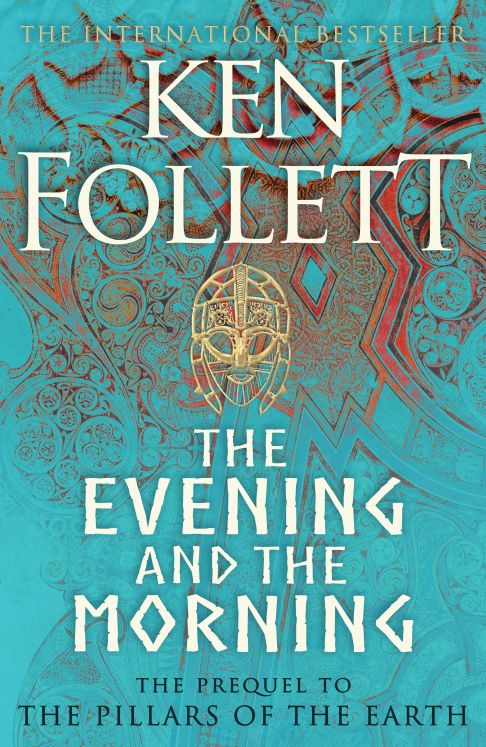
The Evening and the Morning by Ken Follett

The Evening and the Morning Cover

Publisher: Macmillan (Hardcover – 15 September 2020)

Series: Kingsbridge – Book 0

Length: 819 pages

My Rating: 5 out of 5 stars

Amazon     Book Depository

Following three long years of waiting, one of the best authors of historical fiction in the world today (and one of my all-time favourite authors), Ken Follett, returns with another historical epic, The Evening and the Morning.

Follett is a highly acclaimed author who has written a number of impressive bestsellers over his 45+ year writing career.  After starting off with thriller novels, Follett really hit his literary stride when he moved on to massive historical fiction novels.  After experiencing great success with the iconic The Pillars of the Earth, he has gone on to produce several other epic books, including two sequels to The Pillars of the Earth and the outstanding The Century trilogy.  I have been a major fan of Follett for years ever since I had the great pleasure of reading The Century trilogy.  This was followed up with the second sequel to The Pillars of the Earth, A Column of Fire, which was easily one of my favourite books of 2017.  Thanks to how overwhelmingly compelling each of these previous novels were, I have been eagerly waiting to read his latest novel, The Evening and the Morning, for a while now, and it has been one of my most anticipated novels for the second half of 2020.

The Evening and the Morning is a character driven historical fiction novel that is set near the end of the Dark Ages of England.  The novel actually serves as a prequel to Follett’s bestselling The Pillars of the Earth and is part of Follett’s Kingsbridge series.  The Kingsbridge novels are all set within the fictional town of Kingsbridge, which each novel exploring a different period of English history (for example The Pillars of the Earth is set between 1123 CE and 1174 CE, while its sequel, World Without End, starts in 1327 CE).  This prequel is once again set in the same area, with the novel running between 997 CE and 1007 CE.

At the end of the 10th century, England is far from settled and faces attack from external threats.  One particularly vicious Viking raid causes untold damage at the town of Combe, near the city of Shiring, and sets off a chain of events that will change the area forever.

Following the raid, one of the survivors, a young boat builder named Edgar is forced to abandon his home and follow his family to the small hamlet of Dreng’s Ferry.  Living amongst the unwelcoming locals and corrupt landlord, the brilliant Edgar chafes and tries to find a new way to provide for his family.  At the same time, a Norman noblewoman, Ragna, falls in love with the ealdorman of Shiring and travels to England to marry him.  However, she soon discovers herself engulfed in a brutal battle for power with her husband’s family, and any misstep could cost her everything.  These characters are joined by Aldred, a young and ambitious monk who wishes to turn the abbey at Stirling into an academic hub.  However, his strong sense of right and wrong gets him into trouble as he searches for justice in all the wrong places.

As all three of these characters try to survive the troubles of the location, they find themselves drawn into each other’s lives.  Together they have the power to solve each of their problems and prosper together.  However, each of them has run afoul of the area’s corrupt Bishop, who is determined to gain power and influence no matter the cost.

Unsurprisingly, I absolutely loved this new novel from Follett, who has once again composed an outstanding historical epic.  The Evening and the Morning is another exceptional book that takes the reader on a powerful and captivating ride through an exciting period of English history with an addictive story told through the eyes of several great characters.  I had an outstanding time reading this book, and despite its length (at 800+ pages, it is one of the longest novels I have ever read), I powered through this book in relatively short order as I found the compelling narrative that Follett produced to be deeply addictive and hard to put down.  This was a fantastic read, and it gets a full five-star rating from me.

The Evening and the Morning contains an impressive and addictive character driven narrative that sees three distinctive protagonists attempt to change their destiny and the destiny of the people they love over a period of 10 years.  Set during a turbulent period of England’s history, The Evening and the Morning follows these characters as they attempt to survive Vikings, hunger, bandits and the machinations of a dangerous bishop.  The scope of this book’s story is truly epic as Follett ensures that his protagonists are forced to contend with all manner of challenges and tragedies, from political intrigue, direct attacks, imprisonment and so much more.  The resulting story is deeply compelling, extremely intelligent and wildly entertaining, especially as Follett comes up with a ton of unique and intriguing scenarios for his characters to work around.  I had an incredible time reading The Evening and the Morning’s story and it proved extremely hard to put down.

As I mentioned above, The Evening and the Morning is part of the Kingsbridge series and serves as a prequel to the first book in the series, The Pillars of the Earth.  Despite this, I would say that readers really do not need to have any prior knowledge of the rest of the Kingsbridge books to enjoy The Evening and the Morning.  This latest novel from Follett is extremely accessible, and as it is set more than 100 years before the events of The Pillars of the Earth, readers really should consider this a standalone novel that any historical fiction fan can easily enjoy (that is true for every entry in this series).  That being said, long-term fans of Follett and the Kingsbridge series will no doubt really appreciate seeing this early version of this iconic fiction setting, especially as the author includes a number of clever connections to the future novels in the series.  I particularly liked seeing how the titular Kingsbridge of the series was created, and you also get more of a look at how important the clergy were to the early inhabitants of the town, which is fascinating if you consider how the relationship between the church and the townspeople changes over the course of the series.  As a result, I would say that The Evening and the Morning is a book that most readers will be able to enjoy, while also serving as an intriguing entry in the Kingsbridge series.

The Evening and the Morning’s story follows three major point-of-view characters, Edgar, Ragna and Aldred, and shows the reader 10 key years of their lives.  These three characters form the heart of this story, and it does not take long for you to get really drawn into their individual stories.  Each of these characters has their own intriguing and emotionally charged story arcs, such as the creative Edgar’s attempts to rebuild his life in a hostile new village after experiencing a series of terrible losses, Ragna’s marriage and the subsequent battle to gain power and influence, and Aldred’s bid for justice and knowledge.  I really enjoyed each of these character’s individual arcs, but their real strength lies in the way that their stories and lives tie into one and other.  All three major characters becoming incredibly entwined as the book continues, as they form a strong friendship between themselves and attempt to help each other come the various struggles they encounter.  These separate character storylines come together extremely well into one powerful and cohesive narrative which sees the reader become deeply engrossed in all their lives.  You really grow to care for all three of these characters as the story progresses, becoming deeply invested in their wellbeing and happiness.  While this is evidence of some outstanding writing on Follett’s behalf, it is a little unfortunate as a lot of bad things happen to each of these characters (especially Ragna), and it makes for some emotionally hard reading at times.  There is also a rather intriguing love triangle between these three characters with some interesting LGTB+ elements attached, which adds an additional level of drama to the story.  I ended up being quite satisfied with how these character arcs unfolded, and readers are going to have an incredible time seeing how they turn out.

In addition to the main three characters, there is also another major point-of-view character, Wynstan, the Bishop of Shiring.  Wynstan is the book’s main antagonist, a cunning and ruthless manipulator who is desperate to gain power and influence at the expense of others.  Wynstan is the half-brother of Ragna’s husband, who uses his familiar connections and his corrupted followers to control much of Shiring and the surrounding area.  Follett has created an extremely despicable and aggravating villain with Wynstan, who comes into conflict with all three major protagonists, as each of them cross him in some way or another.  Wynstan is an extremely vengeful and dangerous opponent, who manages to do some fairly evil deeds throughout the book, while avoiding too many repercussions.  I found myself really growing to hate Wynstan and his followers as the book progressed, becoming fairly aggravated whenever he managed to weasel his way out of trouble.  This emotional response to Wynstan is exactly what you want when you write an antagonistic character, and I think that he helped add a lot to the overall narrative.

Follett has also loaded up his story with a ton of side characters who the point-of-view characters interact with throughout their lives.  There are quite a substantial number of side characters in this book, but thanks to Follett’s excellent writing the reader is able to keep track of each of them; at no point during this book did I become lost working out who someone was.  Many of these supporting characters have their own minor story arcs throughout the book, and it is interesting to see how they evolve and change over the years.  While quite a few of them are fairly despicable (indeed, at times it seems like the three main characters are the only decent or sensible people in the story), you do grow attached to them and become wrapped up in what happens to them.  That being said, readers are advised not to get too attached to them, as they have a much higher mortality rate, although there are a few happy endings in there which are guaranteed to satisfy.  Overall, Follett does an exceptional job with all the characters in this novel, and watching their lives unfold was a real emotional rollercoaster.

I also quite enjoyed the author’s fascinating depiction of England (with a bit of Normandy thrown in for good measure) during the late 10th and early 11th century.  While the setting of this book, Shiring and its surrounding environs, are fictional, they come across as period-appropriate settlements and the reader gets a real sense of what life in the various villages and towns would have been like.  Due to the broad scope of the story and what the characters witness, the reader gets a look at a huge range of different people who would have existed during this period, including the nobility, the various members of the clergy, the common people and even slaves.  Follett does an amazing job of highlighting how these various characters would have lived, what their professions or stations were like and the problems they would have typically experienced.  The author really replicates the hard nature of the times, allowing the reader a fascinating glimpse into the harsh and dangerous lives of our ancestors.  Follett also works in some broader historical elements, such as the increased attacks from the Vikings and the political situation at the time.  A lot of these historical inclusions, such as having King Ethelred the Unready appear as a minor character, proved to be really intriguing, and I loved how the author dived back into history to enhance his tale.

With The Evening and the Morning, Ken Follett has once again shown why he is one of the top historical fiction authors in the world today.  This latest novel presents the reader with an exceptional and captivating tale of love, connection and triumph over adversity at the end of England’s dark ages.  Serving as a prequel to Follett’s bestselling The Pillars of the Earth, The Evening and the Morning contains an amazing story that follows some driven and likeable protagonists during this dark period.  The end result is an epic and incredibly addictive read that comes highly recommended and is easily one of the best books of 2020.  There is a reason why Follett is one of my favourite authors of all time, and I cannot wait to see what elaborate novel he comes up with next time.

Amazon     Book Depository

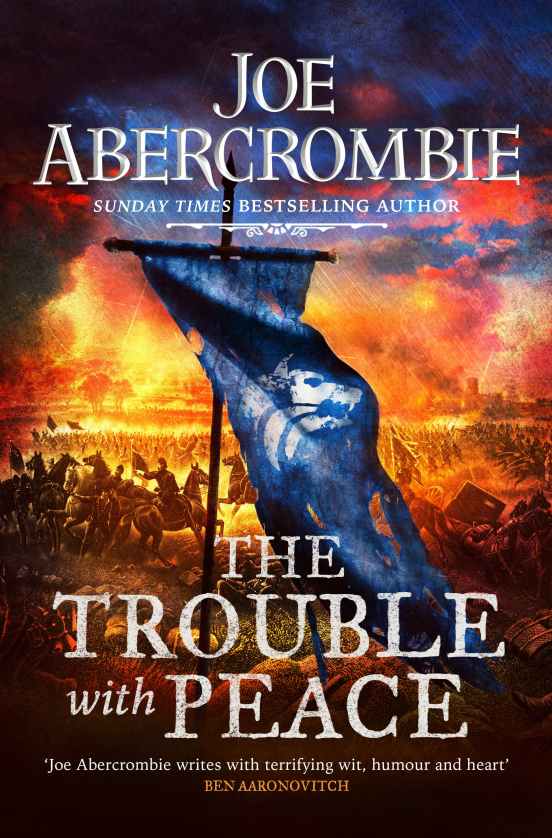
The Trouble with Peace by Joe Abercrombie

The Trouble with Peace Cover

Publisher: Orion Audio (Audiobook – 15 September 2020)

Series: The Age of Madness – Book Two

Length: 21 hours and 56 minutes

My Rating: 5 out of 5 stars

Amazon

The master of dark fantasy fiction, Joe Abercrombie, returns with another masterful and incredible novel, The Trouble with Peace, the second entry in The Age of Madness trilogy, which is easily one of the best novels of 2020.

Abercrombie is an extremely talented author who has written several impressive dark fantasy novels over the years.  His most distinctive works are the books in The First Law universe, which started back in 2006 with the author’s debut novel, The Blade ItselfThe First Law trilogy (which I really need to review) was an amazing and captivating series that followed a motley collection of broken characters and bastards as they found themselves caught up in the chaos of a dark and brutal fantasy universe.  The author has revisited this universe several times, first with three standalone novels set after the events of The First Law trilogy, and then with The Age of Madness trilogy, of which this latest book is a part.  The Age of Madness novels serve as a sequel series to The First Law trilogy, and follow several of the children of the original protagonists (as well as some other new characters), as they engage in a whole new level of chaos and destruction.  The first entry in this trilogy, last year’s A Little Hatred, was an exceptional novel that not only got a full five-star rating from me but which was one of my favourite books (and audiobooks) of 2019.  As a result, I was extremely excited when I got my copy of The Trouble with Peace, and it was one of my most anticipated releases of 2020.

The age of madness rolls on!  Following the death of his father, Crown Prince Orso has taken the throne of the Union and is now king, a role he never wanted.  What he inherits is a nation riven with discord and disharmony, with enemies within and without waiting to cut him down and take power for themselves.  Forced to deal with the machinations of the lords of the Open Council, the revolutionary Breakers, the anarchist Burners and the rival Kingdom of Styrians attempting to take his kingdom from him piece by piece, Orso soon begins to learn that even as king, he is just as powerless as always.

As chaos begins to descend on the Union and the North, the great and the powerful attempt to find their place in the new world order.  For Savine dan Glokta, formerly Adua’s most powerful investor, she finds herself in a vulnerable position with her judgement and reputation ruined.  However, her ambition remains unchecked and an unlikely alliance may help to secure the future she has always desired.  In the North, peace temporarily reigns and the governor of Angland, Leo dan Brock, chafes at the lack of action and finds himself drawn into the political turmoil surrounding the rulership of The Union.  As a famous war hero, he now wields great influence in the Open Council and many seek to use him for their own ends.  This chaos leads to him making deals he never expected, including with his former enemy, the new King of the Northmen, Stour Nightfall.  At the same time, the Dogman’s daughter, Rikke, attempts to control her dangerous gift of prophecy and heads along a new path of blood and violence.

As order and peace unravel across the Union, discord and rebellion raise their ugly heads.  With the old leaders of the world dead and the new generation taking their place, war seems inevitable.  Those who remain must decide who they are loyal to and who they can trust.  However, no alliances, no peace and no friendships last forever, and when the dust settles the Union will be changed forever!

Well damn, that was a good read!!  The Trouble with Peace is another exceptional and captivating novel that takes the reader on a dark thrill ride that proves impossible to escape.  The author once again comes up with an impressive and clever story of war and betrayal, which is anchored by a series of complex point-of-view characters, each of whom is damaged in some unique and compelling manner.  This results in a truly incredible book that was an absolute joy to read and which I flew through in a relatively short period of time.  I absolutely loved this latest book from Abercrombie, and The Trouble with Peace gets an easy five-star rating from me as a result.

At the centre of this awesome novel is an extraordinary and fast-paced narrative that sees various diverse characters and factions attempt to manipulate and outwit each other in order to gain ultimate power in the world.  The plot of The Trouble with Peace continues immediately after the shocking conclusion of A Little Hatred and sees each of the characters introduced in the previous book continue along their established storylines.  Of course, as this is a The First Law novel, it really does not take long for events to take a downward turn and soon the characters find themselves on opposite sides of a growing, major conflict.  There is a real focus on political intrigue, personal relationships and revolution in this novel, all of which proves to be deeply captivating and a lot of fun to read.  On top of that, Abercrombie throws in his usual blend of high-adrenaline action, extreme humour and wild personalities, resulting in an impressive and addictive story that readers will lap up and try to finish off as soon as possible.  Abercrombie does a great job of making this story accessible to new readers and those people unfamiliar with the universe could easily jump in here and have a great time.  However, this is definitely a novel for those readers familiar with the other entries in The First Law series, especially the preceding novel, A Little Hatred, and fans of the series will love the clever directions Abercrombie goes in The Trouble with Peace.  This is a first-class story, and I cannot recommend it enough.

Abercrombie backs up this amazing narrative with a powerful and distinct writing style that helps to turn The Trouble with Peace into a first-class read.  Like all the novels in The First Law series, The Trouble with Peace is told from some different and unique perspectives, as several captivating characters show the events of the novel occurring in front of them.  This results in an impressive and far-reaching story as the reader gets to see a bunch of different points of the same story.  This allows you to witness the various political, tactical and personal manoeuvrings on each side of the conflict, enhancing the overall narrative and driving certain key plot points home.  Abercrombie uses these multiple perspectives to great effect throughout the novel and some of the best sequences in the book are the result of some quick changes of perspective.  This includes an amazing succession of scenes in which two rival characters are disguised in a casino and have subsequent meetings with the same person in quick succession.  It proved remarkably entertaining to see the different approaches both characters took to the same situation, and served to highlight the similarities and differences between them.  Other scenes showed how the major point-of-view characters deal with each other when they meet, and it was fun to see the various mental gambits from both sides of the conflict, especially as Abercrombie ensures that all these characters are competing to be the most manipulative person in the room.  There are also two extended sequences where a single event is witnessed not only by a main character but also by a series of side characters and minor one-off characters to really showcase the chaotic nature of some scenes and the wide range of people they impact.  The use of various perspectives also really helps to set the brutal and dark tone for the entire novel, as the characters they follow are usually right in the centre of a series of different messes that they are either the cause of or they are trying to avoid.  I also really enjoyed the unique outlooks of each character as their fun reactions to the outrageous events occurring around them provide a great deal of the book’s impressive and entertaining humour.

As with all of Abercrombie’s books, the true highlight of The Trouble with Peace is easily the fantastic selection of damaged and deranged characters that make up the main cast of the series.  Like the first entry in The Age of Madness trilogy, The Trouble with Peace is primarily told throughout the eyes of seven separate point-of-view characters, each of whom has their own unique and captivating character through the novel.  These characters include:

  • King Orso – son of King Jezal, who has taken the throne after the sudden death of his father. Orso has inherited a fractured kingdom, essentially made up of people who all hate him.  Orso has a lot of growing up to do in this novel as he soon discovers all the troubles that relate to being king and the limited power he truly has.  I really liked Orso’s storyline in this book, mainly because he comes into his own and starts to demonstrate some backbone and leadership abilities.  His unique way of dealing with problems, many of which relate to his background as a wastrel and a coward, are surprisingly effective and often very entertaining.  Orso proves to be a very enjoyable protagonist throughout this book, and I personally found myself really getting behind him and hoping that he comes out on top.
  • Savine dan Glokta – the adoptive daughter of Arch Lector Glokta and the foremost businesswomen in the Union. Savine has gone through some substantial changes since the last book.  Rather than the confident and crafty women we were introduced to, this Savine is a mess, still reeling from the horrors she experienced in Valbeck and the revelation that her former lover, Orso, is her half-brother.  However, Savine soon manages to find a way back on top, thanks to a profitable marriage, and sets her sights on a particularly tempting target.  Savine is a rather despicable character in this book, and the readers are going to have a hard time feeling too sympathetic for her.  Still, Abercrombie does an amazing job exploring her trauma damaged psyche and she ends up being a very compelling character to follow.
  • Leo dan Brock – the new governor of Angland and the son of two of the protagonists of the standalone novel, The Heroes. After securing the North and bringing Stour Nightfall to heel, Leo has gained much influence and celebrity in the Union.  However, even after the events of the first book, Leo is still as hot-headed as ever and finds himself easily led into a number of conflicts.  Despite his apparent heroism and charisma, Leo is a very hard character to like, mainly due to how stupid he is.  Essentially anyone with half a brain can manipulate him in some way, and it becomes quite tiring to see him do something stupid and destructive merely because he has been told it is the noble thing to do.  Despite this, Leo forms a very fascinating counter point to his rival, Orso, as Leo has many of the things that Orso desires, such as heroism, martial prowess and the love of the people.  I also quite enjoyed the author’s exploration of Leo’s sexuality and love interests, and I look forward to seeing how that progresses in future books.
  • Rikke – a Northern girl and the daughter of The First Law trilogy point-of-view character the Dogman. Rikke is a troubled waif who is regretting her decision to force open her Long Eye in order to increase her prophetic abilities.  Rikke has to make some hard choices in this novel, but her eventual storyline sees her take up a leadership role in the North that sees her face off against the vicious new king of the Northmen, Stour Nightfall.  Rikke is another character that really comes into her own in this book, as she is forced to grow up quick and do hard things to survive.  There are some interesting story elements involved with this character, especially thanks to her magical Long Eye, which allows her to see into the future, and which also results in some very trippy chapters shown from her perspective.  I really enjoyed Rikke’s storyline and character arc through this book, and there are some excellent scenes that show just how devious she has become.
  • Vick dan Teufel – a Union inquisitor who works for Arch Lector Glokta and is loyal only to him. Vic spends a good part of the book working throughout the Union and attempting to identify the King’s enemies, as well as trying to find out who is behind the Breakers and the Burners.  Vick is a really interesting character and I like how much of her storyline seems to mimic Glokta’s from the original trilogy.  For example, in The Trouble with Peace, she is sent to a far-off Union city and must find a way to hold it against a rival kingdom.  However, she soon starts to discover the truth about who really runs the Union and the extent of their power.  Vick is a great character to follow, especially as her chapters tend to focus on the hidden political intrigue and manipulation that infests the Union.  Abercrombie also spends a bit of time continuing to explore the traumatic childhood of Vick, and it was interesting to see how her damaged and dangerous personality came to be.
  • Gunnar Broad – a former Union soldier with a perchance for extreme violence. After the events of Valbeck, Gunnar, a former breaker, now finds himself in the employ of Savine, and works as her brutal enforcer.  Gunnar is another fascinating character, who attempts to escape from the violence that he has known his entire life.  However, this is easier said than done, and his chapters feature some fantastic examination of self and philosophical thoughts on personality and the events of the past.
  • Jonas Clover – an old and experienced Northern warrior who works as an advisor for Stour Nightfall. Clover, who remains my absolute favourite character in this new trilogy, is an exceedingly entertaining person, thanks to his unique sense of humour and jaded personality.  Clover really stands out as a character, mainly because he is so different to the other Northern characters in the book.  While most of the people he surrounds himself with are eager for combat or glory, Clover is the only one extolling the virtues of patience and self-restraint, much to the other character’s annoyance.  However, he is usually right, and he has developed a habit of surviving as a result.  I really love this character, especially because he has some of the best lines and insults in the entire book.  It was really entertaining to see him work under the brash and arrogant Stour Nightfall, as Clover is constantly forced to try and reign in his new king, with little effect.  Despite not being used as much as I would have liked, Clover is still a standout character in this novel, and he has some very memorable moments as a result.

I really enjoyed all these excellent character arcs, and I thought that each of them was incredible and enjoyable in their own rights.  However, thanks to how the narrative progressed, many of these character arcs crossed over a lot more than in the previous novel, and you get to see the various storylines proceed side-by-side as a result.  Because of how they were connected, Orso, Savine and Leo tended to get the most focus throughout the book, and some of the other point-of-view characters (Vic, Broad and Clover in particular), did not get as many chapters told from their perspective.  While I would have loved more scenes from some of the other characters (more Clover would have been awesome), I felt that this was a good character balance and I liked how the various arcs progressed.  All the character arcs worked together exceedingly well, and I really liked how together they formed an exceptional and addictive plot.  The protagonists of The Trouble with Peace go through a lot in this book, and I enjoyed seeing how each of them progressed through their latest trials and dangers.  I look forward to seeing what happens to them in the final book of the trilogy and I imagine some dark things are in store for most of them.

In addition to all the outstanding and complex main characters, Abercrombie also has a great swathe of supporting characters throughout the novel and are extremely entertaining or memorable in their own right (I was a particular fan of the wild hillwomen, Isern-i-Phail).  Abercrombie does an excellent job building these characters up through the course of the book, and there are some amazing and entertaining personalities featured as a result.  However, readers should be extremely cautious about getting too attached to some of these characters, as their life expectancy is a little less certain than the main cast.  The Trouble with Peace also saw the return of several characters featured in the original The First Law books, including a couple of former point-of-view characters.  It was great to see how their stories continued years after the heydays of their adventures, and it adds an interesting aspect to the novel.  Fans of the original trilogy will no doubt enjoy seeing these characters return but should prepare to have their hearts broken.  I really liked the various storylines associated with these characters, and I was also impressed by several twists Abercrombie threw in around them, including one particularly good twist about who the ultimate antagonist of this latest trilogy really is.  Several of the scenes that utilise a ton of separate perspectives to show a single event are often briefly shown from the perspective of some of these side characters, as well as a few additional minor characters who only appear for that scene.  The author really makes the most of these scenes, introducing the character and setting up their personality and history in short order, and then showing how that event affects them (usually in a terribly negative way).

The awesome and exciting action sequences really helped to enhance The Trouble with Peace.  Abercrombie’s books have always featured some brutal and graphic fights and examples of combat, and this latest book is no exception.  There are some very impressive fight sequences in The Trouble with Peace, and the reader is always guaranteed of some action just around the corner.  I really do have to highlight one particularly massive and well-done war sequence that occurs in the latter half of the book.  This battle is the culmination of much of the novel’s plot and has a lot of build up as a result.  Luckily, it did not disappoint in any way, as the reader is treated to a series of powerful sequences that really drag them into the midst of the fight.  Thanks to Abercrombie’s excellent writing, the reader gets an incredible sense of the chaos, the fear and the claustrophobic horrors of a battle.  I really got sucked into this major fight, especially as the author makes good use of multiple perspectives to showcase just how bad it could be in the midst of the fighting, and how destruction, death and despair can infect anyone on the battlefield.  These action scenes are exceptionally written and extremely memorable, and all I can really say is thank goodness pikes are no longer used in war.

In addition to the outstanding story, characters and action sequences, I was also quite impressed with the new elements introduced into the series’ dark fantasy world.  While part of The Trouble with Peace is set in the brutal North, most of the plot takes place in the Union, which has gone through some dark times recently.  This version of the Union is extremely different to the setting that was featured in The First Law trilogy, with a recent industrial revolution bringing both progress and problems, as the land moves away from agriculture to factories.  I really appreciate how Abercrombie has altered his primary fantasy nation since the last trilogy, and his portrayal of an early industrial nation which is on the brink of various revolutions proves to be an awesome setting for this brutal and creative novel.  The author really explores the essence and heart of the Union in this book, and there is a particular deep dive into the politics and social economics of the nation as a result.  I had a lot of fun seeing how the Union falls into war, and a lot of the elements are set up extremely well during this book and the preceding novel.  The resulting conflict has a real English Civil War feel to it at times, with the parliament-like Open Council facing off against the forces of the Crown.  All of this works extremely well as a setting, and I had an amazing time once again visiting this chaotic and dangerous fantasy world.

While I did receive a physical copy of The Trouble with Peace, I ended up listening to the excellent audiobook version which was narrated by Steven Pacey.  Pacey is a talented audiobook narrator who has lent his voice to all the previous The First Law novels.  Pacey does an outstanding job narrating this audiobook and the amazing story clips along at a substantial pace thanks to him.  The narrator also has an impressive repertoire of cool voices for the various characters featured in this book and he even utilises some of the voices of the returning characters from the original novels.  Each of these voices is distinctive and fits its respective character perfectly, which in turn enhances the book’s writing and helps to showcase the character’s personality.  All of this results in an enjoyable and deeply addictive listen and I can already tell you that The Trouble with Peace is going to be one of my top audiobooks for 2020.  Listeners should be aware that this is a substantial audiobook, which has a run time of just under 22 hours (it just cracks my top 20 longest audiobooks list).  However, I would say that it is worth the time investment to check this amazing book out in this format and listeners are guaranteed a superb listen.

Joe Abercrombie continues to cement his position as one of the best modern fantasy authors in the world today with the awesome second novel in his Age of Madness trilogy, The Trouble with Peace.  Serving as the latest instalment in the overarching The First Law series, The Trouble with Peace is a captivating and impressive novel, containing an outstanding plot, memorable multi-layered characters and intense action, all set in one of the best dark fantasy worlds in modern fiction.  The Trouble with Peace is one of the best novels of 2020 and I am so glad that I got the opportunity to read it.  Abercrombie has really knocked it out of the park again and I cannot wait to check out the final book in the trilogy next year (currently titled The Wisdom of Crowds).  You will love this book!

The Trouble with Peace Cover 2

Amazon

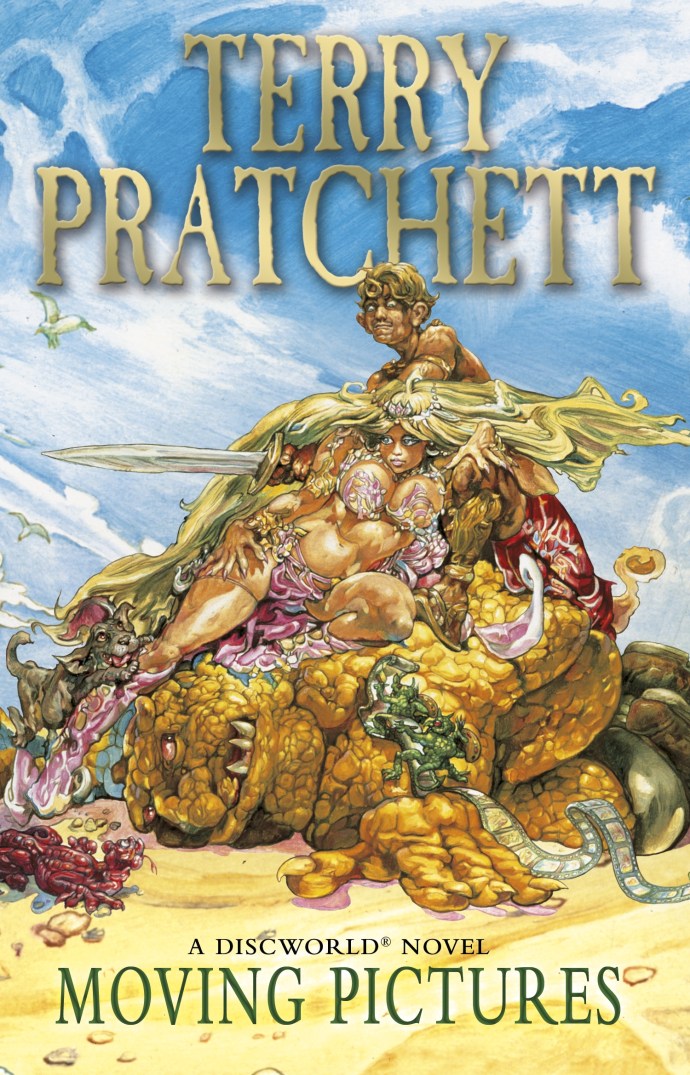
Throwback Thursday – Moving Pictures by Terry Pratchett

Moving Pictures Cover

Publishers: Corgi and ISIS Audiobooks (14 November 1991)

Series: Discworld – Book 10

Length: 332 pages or 10 hours and 8 minutes

My Rating: 5 out of 5 stars

Amazon

Reviewed as part of my Throwback Thursday series, where I republish old reviews, review books I have read before or review older books I have only just had a chance to read.

Because my blog shares the name of a building featured in Terry Pratchett’s Discworld series, some people might have assumed that I am a fan.  You would be right, so very, very right.  I have loved Discworld since I was a small child, and my appreciation and respect for the complex writings of the late, great genius, Sir Terry Pratchett, has grown with me.  The Discworld series represents one of my ultimate comfort series of books.  It’s the series that I go back to at any time when I want something fun and familiar to enjoy.  I have read all of the adult books set in Discworld multiple times (I have yet to read all of the young adult ones), and it is an unusual year when I do not listen or read some of these books in my spare time.  Pretty much every single book in this series deserves five out of five stars or higher (with one or two exceptions that I may mark down to a 4.75 with a heavy, heavy heart), and you are unlikely to find any real criticisms about this book below.  After nearly a year of running this blog, the continued exclusion of a review of any of Pratchett’s Discworld is a travesty, and one that I seek to rectify in this somewhat late Throwback Thursday with a review of the 10th book in the series, Moving Pictures.

Before I review Moving Pictures, here is some quick context of the Discworld series for those people unfamiliar with these books.  Discworld is the main series of Sir Terry Pratchett, set upon the Discworld, world and mirror of worlds.  The Discworld, or the Disc, is a flat world that rests on the backs of four massive elephants, who themselves stand on the back of a gigantic turtle swimming in space, Great A’Tuin.  The Discworld itself features a huge range of different nations and continents that bear striking similarities to real-world locations.  This series is, without a doubt, the best series that utilises a combination of fantasy and satire in the entire world.  The seamless blend of the two elements is just incredible, and both elements do an unbelievable job at enhancing each other.  Before his death, Pratchett wrote 41 books in the Discworld series, six of which are considered young adult books.  While the books can be read in any real order, the series were mostly written in chronological order (with the exception of Small Gods), and events from earlier books in the series are often referenced.  Although most of the Discworld stories are self-contained, a number of the books are linked together by a recurring main character and are subsequently grouped together into subseries.  These include the Rincewind, Witches, City Watch, Death, Tiffany Arching and Moist von Lipwig subseries, in addition to a few standalone books that fall outside of any of the subseries.  Characters often appear in other Discworld books outside of their subseries, and there are a string of side or secondary characters who appear in multiple subseries and standalone books.

The book I am reviewing, Moving Pictures, is a standalone book that does not really fall within any of the main subseries.  It is sometimes considered part of minor subseries, called the Industrial Revolution subseries, with The Truth and Monstrous Regiment, but I am not a big fan of that distinction.  As it is the first Discworld book I am reviewing, you might think that it is my favourite book in the entire series, which is not true; although it does get five out of five stars from me and I have enjoyed it an amazing number of times, it is not my absolute favourite Discworld book, although it is high on the list.  It is, however, an easier one for me to review as there is a lot I can say about it.

Goodreads Synopsis:

‘Holy wood is a different sort of place. People act differently here. Everywhere else the most important things are gods or money or cattle. Here, the most important thing is to be important.’

People might say that reality is a quality that things possess in the same way that they possess weight. Sadly alchemists never really held with such a quaint notion. They think that they can change reality, shape it to their own purpose. Imagine then the damage that could be wrought if they get their hands on the ultimate alchemy: the invention of motion pictures, the greatest making of illusions. It may be a triumph of universe-shaking proportions. It’s either that or they’re about to unlock the dark terrible secret of the Holy Wood hills – by mistake…

The blurb above is a bit vague on the details of what is actually happening in Moving Pictures.  Essentially, the alchemists of Ankh-Morpork, the largest city on the Discworld (and a central location for many of the books), suddenly develop filmmaking, which they call moving pictures, and set up a filming base at the ancient and abandoned Holy Wood.  The moving pictures issue a weird siren call to the inhabitants of the Discworld, dragging all manners of people and creatures from across the lands and infecting them with their magic (not a metaphor).

Among those drawn to Holy Wood are Victor Tugelbend, a former student wizard, and Theda “Ginger” Withel, a small-town girl with big dreams.  Thanks to the magical on-screen chemistry between them, Victor and Ginger quickly become the superstars of the fledgling moving pictures industry, especially when the Discworld’s most infamous salesman, Cut-Me-Own-Throat Dibbler, comes to town and takes over the studios.

However, reality on the Discworld is always a bit thin, and Lovecraftian monsters (a favourite recurring antagonist of Pratchett’s early Discworld novels) are revealed to be the ones who planted the idea of moving pictures and Holy Wood in the alchemists’ heads.  Using the new sort of magic created by Holy Wood, the creatures start to break through.  With the wizards of Unseen University, the people who are supposed to guard against these sorts of incursions, distracted by the arrival of an unconventional new Archchancellor, it is up to Victor, Ginger and a ragtag band of other Holy Wood characters to save the day.

This book has so many moving parts to it that it’s hard to know where to begin when reviewing it.  While the main story is concerned with the introduction of moving pictures into the Discworld, there are a number of other entertaining storylines going on throughout the book, each one complementing the main story and creating an amazing overall narrative.  The major appeal of this book is its sharp and intelligent satire of the movie business, which also examines the nature of a film industry in a world as crazy as the Discworld.  I also quite like all the amazing characters, either introduced or built up in this book, many of whom appear in later books in the series.

This book is absolutely hilarious and filled with a huge number of clever and outrageous jokes and observations about the film industry, all of which lie on top of Pratchett’s usual humour about day-to-day life in the Discworld and his random observations, many of which are perfectly introduced in the book’s footnotes.  The main storyline is an amazing portrayal of the hectic early days of the film industry, placed in a fantasy setting.  The cameras are powered by miniature demons (who paint the pictures really, really fast), the lighting is done by salamanders, actors of all species make up the cast, the audience eat ‘banged grains’ while watching the ‘clicks’ and the film’s monsters and villains are all trolls in crude costumes.  However, literal movie magic is making people do strange things (strange even for Discworld folk), talking animals are showing up looking for work, Dwarfs are singing “Hihohihohiho” as they work, characters routinely burst into song and dance in the rain, and one producer keeps threatening to turn people into stars, all while the book’s few straight-characters look on in bemusement.  All of this is amazing, and the sheer number of fantasy-assisted jokes throughout the book is pretty unbelievable.

At its heart, Moving Pictures is a satire and a critique about the film industry as a whole.  Quite a large amount of the story is dedicated to parodying the real-life the crazy effect that movies can have on audiences and the people who make them, as the book shows some ridiculous events.  The story also reflects the insubstantial nature of fame and the fragility of dreams surrounding the movie industry.  The fast-moving world of the film industry is also shown, although sped up even more for comedic and story value, as they film creators are constantly searching and finding new advancements in their field.  A great example of this is shown when Cut-My-Own-Throat Dibbler invents and then continually advances the art of advertisement, so that, within a few short weeks, the film industry goes from ineffective text advertisements to eye-catching posters and explorations of product placement and subliminal messages.  Pratchett handles these critiques very skilfully, and you cannot help but laugh aloud as he skewers the film industry quite cleverly throughout Moving Pictures.

Pratchett also filled Moving Pictures with a ton of references to iconic films and elements of the film industry.  Many of the characters involved with the films are caricatures of famous movie actors, with Victor playing all the typical romantic or manly male heroes of the day, and Ginger is essentially Marilyn Monroe.  Several films are parodied throughout the book, such as Gone With The Wind, which becomes Blown Away, an epic love story set around a famous Ankh-Morpork Civil War.  There is a rather good King Kong parody, in which a gigantic woman kidnaps a poor defenceless Ape (the Librarian) and drags him to the roof of the tallest tower in Ankh-Morpork, all while two wizards on a broomstick shoot at it with a crossbow, with one shouting “If it bleeds, we can kill it!”  That is only scratching the surface of the references featured within this book.  A golden figure with a name starting with O plays a big part in the story, the various studios are all parodies of real-life studios, and there a huge number of funny and subtle references to various famous films.  Examples of these include Wizard of Oz, Lassie, Lawrence of Arabia, Indiana Jones, Looney Tunes, Blues Brothers, Casablanca, Tarzan and Star Trek just to name a few.  Readers can go through this book multiple times and not pick up every detail, which is a testament to the cleverness of Pratchett and his ability to come up with some hilarious references.

I have always found the way that Pratchett utilises or re-uses his characters to be extremely fascinating; while some characters appear in multiple books, a number of his main characters, especially from his earlier books, are only used once. There are several examples of this, including Mort from Mort, Pteppic from Pyramids and Esk from Equal Rites (who did appear in a later young adult novel, but there was a significant time gap between the writing of these two books).  While Pratchett may have simply had only one story in mind for these characters, I have a feeling that he simply did not like how they turned out and decided not to use them again under any circumstances.  Mort is probably the best example of this.  Despite being the protagonist of the first Death subseries book Mort, he never appears in any of the Death subseries books again (aside from one brief flashback), and is instead replaced by his own daughter, Susan.  It is interesting to note that most of the main characters who were never or rarely used again are somewhat similar to each other, being young heroes without too many obvious flaws to them.  On the other hand, the unique main characters Pratchett creates with notable flaws, such as Rincewind, the wizard who has turned cowardice into an art form, or the overly cynical and dangerous alcoholic Sam Vimes, helm multiple books.

If I have to make one criticism about this book, it is the weak and somewhat inconsistent main characters, Victor and Ginger.  Ginger is a generic female character, and while she is a good parody of Marilyn Monroe and other early screen actresses, she is pretty one-dimensional and unlikeable.  Victor starts out with some very interesting character traits, as he is described as an extremely lazy person, whose unique brand of laziness forces him to become a brilliant student wizard in order for him to succeed in his quest to fail every test he ever takes by a certain point margin to ensure he remains a student.  However, these character traits are pretty much thrown out the window a few chapters in and he becomes a typical male hero for the rest of the book.  While this sort of straight-man character was needed for this wacky adventure, it is surprising that the character never again really shows the slightest hint of some of these earlier established character traits.  It is interesting to note that neither Victor or Ginger appear in any of the subsequent Discworld novels, so I think there is a strong possibility that Pratchett might also have disliked how these characters turned out.

While one or two of his earlier main characters were somewhat unimpressive, Pratchett always managed to make up for this by creating a range of memorable and enjoyable side characters.  It was always interesting to see which of these side characters would appear in various later books, as you knew Pratchett had to like them as well.  For example, Granny Weatherwax was a supporting character in Equal Rites, but Pratchett must have liked writing her, as she became a major character in the Discworld series, even getting her own subseries with several other witch characters.  Moving Pictures is perhaps the best example of Pratchett’s love of side characters; while Victor and Ginger never appear in the Discworld again, many of the side characters introduced or developed in this book have major roles later in the series.

For example, I was always impressed with how this book turned two minor characters from Guards! Guards!, Cut-Me-Own-Throat Dibbler and Detritus the troll, and gave them more expanded roles in Moving Pictures.  Dibbler was an opportunistic merchant who got a couple of good, if minor, scenes in Guards! Guards!, but in Moving Pictures, Pratchett transformed him into a ruthless and extremely savvy salesman who gets in the front door of every major new opportunity inflicted on the Discworld, but is often forced by circumstances back to becoming a sausage-in-a-bun merchant.  Dibbler was absolutely fantastic as the stereotypical sleazy film producer, and it is unsurprising why he suddenly became a major recurring character throughout the Discworld books, not only appearing in nearly every book set in Ankh-Morpork but also having clones of him appear in the other nations and cities, all of whom sell disgusting local delicacies.  Detritus is another great example, as he goes from the simple bouncer introduced in previous books to a troll seeking love and a new way of life.  Pratchett comes up with a great personality for Detritus in this book, and it carries through to the City Watch subseries when he joins the Watch in Men at Arms and becomes a major recurring character in this subseries and other books set around Ankh-Morpork.  Other recurring characters, Death and the Librarian, are as awesome as ever, but Dibbler and Detritus are the real standout stars of this book.

Several new characters introduced in this story also make a number of reappearances throughout the rest of the Discworld series.  A good example of this is the talking dog, Gaspode, who is a fantastic and sarcastic character through the book.  He has some great scenes, with the highlight being his friendship with Laddie, a Lassie parody and idiot who Gaspode takes under his wing.  The idea of a clever, underappreciated and sarcastic talking dog side character apparently worked so well that Pratchett found a way to return his magical intelligence and ability to speak a few books later in Men at Arms (the same book Detritus reappeared in) and he then featured in several additional books.

You also have to love the new wizard characters that Pratchett also created for this book.  Before Moving Pictures, the faculty of Unseen University, with the exception of the Librarian and Rincewind, were replaced each book with a new group of senior wizards, thanks to the competitive nature of succession in the university.  However, this 10th book introduces a brand new and more permanent faculty of Unseen University, led by Archchancellor Mustrum Ridcully.  Ridcully is a fantastic character as he is big, loud and sporty man who is generally the complete opposite to any other wizard previously shown in the Discworld series.  I really enjoyed his storyline and found it to be one of the most entertaining in the entire book.  Pratchett must have agreed, as Ridcully became the only recurring Archchancellor in the Discworld series.  This also allowed for the creation and stabilisation of unique characters to make up the senior faculty of Unseen University, including the Bursar, the Dean, the Chair of Indefinite Studies and the Lecturer in Recent Runes.  While the other wizards have a fun romp breaking out to go see the moving pictures, the Bursar has a great story, as you get to see the first signs of madness that would afflict him throughout every other book he appears in, as he first encounters the stress associated with working under Ridcully.  I also liked the introduction of a young Ponder Stibbons, whose bad day while trying to escape from the university is pretty humorous, but also the complete departure from his later role as the only serious member of the faculty.  Thanks to their entertaining storylines, the wizards would appear in multiple books in the rest of the Discworld series, and while they never had their own specific subseries, they would get major inclusions in several other subseries, including substantial stories in The Last Continent, Soul Music, Lords and Ladies and The Hogfather, as well as their own novel, Unseen Academics.

While I have physically read most of the books in the Discworld series, including Moving Pictures, these days I tend to only listen to the audiobook formats of these books.  The Discworld audiobooks are pretty awesome, and the two narrators for the series, Nigel Planer and Stephen Briggs, both do an incredible job.  I find that the humour in the Discworld novels is massively enhanced by the narration, and I love listening to the stories this way.  At 10 hours and 8 minutes, this is not a long audiobook, and I always tend to power through these books really, really quickly.  Planer is a comedy veteran and has an awesome audiobook voice, and it is quite impressive the sheer range of different and distinctive voices he can come up with.  I also like his incredible consistency when it comes the multiple books in the Discworld series; for example, voices he creates for Moving Pictures are generally the same used for that character in later books he narrated.  The audiobook format of Moving Pictures is my preferred way to enjoy this book, and it is really worth trying out.

As you can see from my extremely long rant above, I absolutely love Moving Pictures and the Discworld series.  Pratchett created an incredibly complex and extremely funny novel that laughs right at the heart of the film industry.  The sheer range of references in this book is amazing, and the creation and enhancing of the various side characters featured in this book has massive ramifications for many of the later Discworld novels.  If you have yet to experience the joy of Terry Pratchett’s Discworld series, get on it as soon as you can.  It is well worth it, and Moving Pictures is a great place to start your Pratchett adventure.  I fully intend to review more books in this series in the future.

Amazon