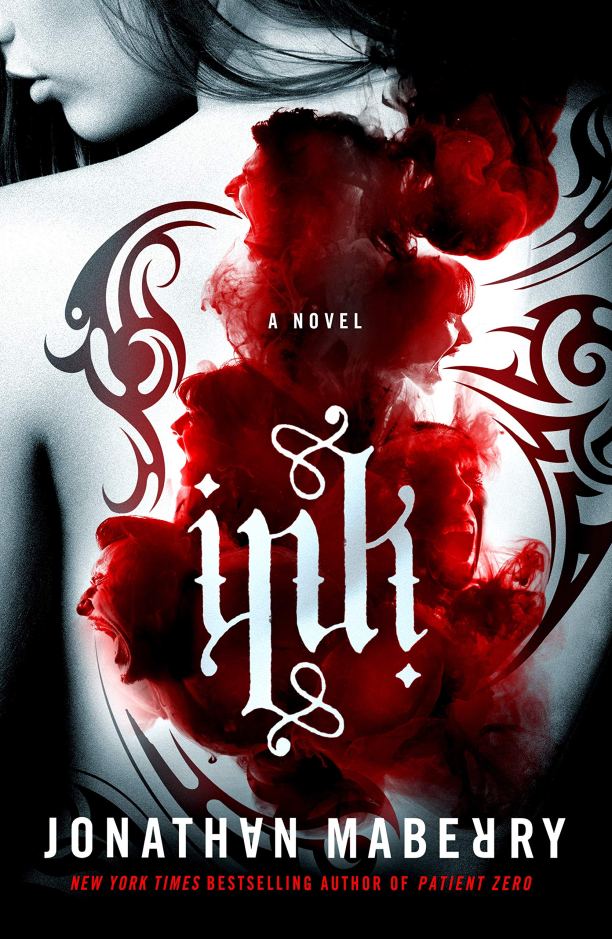
Ink by Jonathan Maberry

Ink Cover

Publisher: Macmillan Audio (Audiobook – 17 November 2020)

Series: Standalone/Pine Deep series

Length: 15 hours and 9 minutes

My Rating: 4.75 out of 5 stars

Amazon     Book Depository

Prepare to journey back to the weirdly dangerous town of Pine Deep as one of my favourite authors, Jonathan Maberry, presents his latest novel, Ink, an intriguing and clever horror thriller that dives down into the world of memories and tattoos.

Pine Deep, Pennsylvania is a town long-steeped in blood and death.  After barely surviving the terrible events of 15 years ago, now known by the locals as The Trouble, the town has slowly recovered, with fresh businesses and people bringing in new life.  However, no one is ever truly safe in Pine Deep, especially with a malicious predator haunting the streets, one with very particular appetites.

Monk Addison is man who has experienced many weird and horrifying things in his life, but what he is about to encounter in Pine Deep will shake him to his core.  A bounty hunter who has sought redemption in life by covering his body with tattoos depicting the faces of murder victims, Monk has recently moved to Pine Deep to be closer to his friend and tattoo-artist Patty Cakes, but what he arrives he finds Patty in a state of shock.  An important tattoo on Patty’s hand has started to disappear, and as it fades, so do the memories associated with it until Patty can no longer remember anything about, not even the precious person who inspired it.

As Monk desperately tries to understand what is happening to his friend, a pattern begins to emerge.  Several people within Pine Deep are experiencing losses of traumatic or significant memories, and in every case tattoos related to these events have also disappeared.  Worse, in some cases new tattoos are appearing on people, forcing them to do terrible deeds.  Working with Pine Deep’s chief of police, Malcolm Crow, and his adopted son, Mike Sweeney, Monk, Patty and other impacted residents of Pine Deep attempt to discover who or what is behind these stolen memories.  But can they find who is responsible before their memories fade, or will this predator continue to feast on the very thing that makes them human?  The Lord of the Flies is hungry, and his reign of terror has only just begun!

Over the last couple of years, I have become a major fan of Jonathan Maberry’s writings, and I only just recently finished reading all 10 Joe Ledger novels, as well as the first Rogue Team International book, Rage, so I was very excited to get my next fix of Maberry excitement with InkInk was one of my most anticipated novels for the second half of 2020, and it really did not disappoint in any way, as Maberry has produced an intense and captivating horror novel that proved to be both extremely exciting and deeply terrifying.

Ink is an outstanding and impressive book that contains one heck of a story that sees several remarkable characters attempt to deal with a weird and powerfully scary supernatural threat that is attempting to destroy what is most precious to them.  Maberry has crafted together a fantastic narrative for this book that is equal parts clever, compelling and scary, and which dives down deep into the psyche of several complex individuals.  The author utilises his trademark style to produce a wide-ranging, multi-character story that shows the full impact of the antagonist’s dark machinations, and the slow hunt of the protagonists to comprehend what is happening to them, and their subsequent attempts to combat the threat.  While I did think that the story was a little slow at the start, once it gets going the reader has a hard time putting it down, as they become obsessed with seeing the full extent of the horror, as well as becoming connected to the characters featured within.  While Ink contains a lot less action than a typical Maberry novel, this is an extremely exciting and fast-paced read, with the thrilling game of cat and mouse between the villain and his victims proving to be quite intense.  Readers should be warned that this is an extremely adult read, containing some fairly graphic sequences of violence, torture, mental manipulation and sexual content, which may not be for everyone.  Overall though, this is an exceptional read, and I really loved getting to the end of this enthralling and excellent narrative.

While Ink is ostensibly a standalone novel, in many ways it is a sequel to Maberry’s debut series, the Pine Deep trilogy, while also being set in the same universe as several of his other books, namely the Joe Ledger novels.  The entirety of Ink is set in the town of Pine Deep, which was the titular setting of the original trilogy.  As a result, several characters from these books appear throughout the course of the novel and there are a lot of mentions of the events of the Pine Deep trilogy, some of which play into the plot.  While you potentially could get a little more out of Ink by reading the Pine Deep novels first, I would say that you really do not need any prior knowledge of these books to enjoy Maberry’s latest novel.  Like always, Maberry’s writing is very inclusive, providing the reader with relevant information about the events that occurred in these previous novels.  As a result, the reader gets a decent summary of what occurred in the Pine Deep trilogy and how it relates to Ink.  This allows readers unfamiliar with the Pine Deep books to enjoy Ink without any issues, and this might even be a good Maberry starter novel for anyone who has been interested in reading some of his books.  On the other hand, those fans of Maberry who are familiar with this prior trilogy will no doubt really enjoy the return to this iconic setting and will have an amazing time seeing what has happened in the 15 years following the end of Bad Moon Rising (the third and final book in the Pine Deep trilogy).  The summaries of the Pine Deep novels contained within Ink are rather easy to get through and Maberry works them into the story extremely well, so those people familiar with these prior works should be able to read them without getting bored of a forced recap, and this is book that any horror or thriller fan can easily enjoy.

At the heart of Ink are the excellent main point-of-view characters that Maberry utilises to tell his complex tale.  There are several major characters featured throughout the book, including several original characters created specifically for Ink.  The most notable of these is Monk Addison, the relentless and scary former soldier who is desperately seeking redemption after a long and bloody life.  Monk turned out to be an amazing central character for this book and I loved the way that Maberry slowly revealed his past in order to show just how special he his.  Monk goes through a fair bit of development in this novel, and I found myself getting quite attached to him as the story progressed.  In addition to Monk, Ink also has a particular focus on Patty Cakes, Monk’s tattoo artist friend whose memories are impacted by the book’s antagonist.  Patty is a deeply tragic and magical character who has gone through a lot in her life and who now finds herself being attacked in a much more personal and devastating way.  Seeing Patty being overwhelmed by the loss of her memories is really disturbing and heartbreaking and you cannot help but feel her loss deep in your soul, which is a testament to Maberry’s excellent writing.  Patty is another character who you grow to care for as the story unfolds and the constant danger she is put into, both mentally and physically, keeps the reader on edge.  The other two original major characters I need to highlight are Dianna and Gayle.  Dianna is a medium who also has her memories stolen by Ink’s antagonist, while Gayle is someone who builds a connection to Dianna, who is then impacted by Gayle’s lost memories in a different way.  I liked the way that Dianna and Gayle were worked into the story, and they helped to provide a new angle to the narrative.  Watching them team up with Patty added some enjoyable female empowerment elements to the novel, and there is a touching LGBT romance between Dianne and Gayle that I thought Maberry handled well, even if it was a tad explicit.

In addition to these new characters, Maberry also makes use of the protagonists from the Pine Deep novels who return as major characters in Ink.  This includes major characters Malcolm Crow, Mike Sweeney, Val Guthrie and Jonatha Corbiel (now Jonatha Newton).  While Val and Jonatha have mostly smaller roles in this book, Malcolm and Mike are major point-of-view characters, performing their own investigation of the latest batch of weird events occurring around Pine Deep.  Both proved to be exceptional additions to the cast, as not only are they complex characters (especially after the events of the Pine Deep trilogy), but they also add some distinctive viewpoints into the investigate parts of the book.  Maberry does a fantastic job introducing these characters to new readers, while those who have read the Pine Deep books will deeply appreciate seeing what has happened to them since the events of this initial trilogy.  While I am sure that many of Maberry’s readers would have hoped for happy lives for Malcolm, Mike and Val after all they have been through, all three characters have experienced additional difficulties and tragedies in the last 15 years.  These additional life events, as well as their traumas from the Pine Deep books, are expertly incorporated into their characterisation for Ink, and it proved deeply compelling to see their arcs unfold.  I personally enjoyed seeing the new protagonists’ reactions when encountering Malcolm and Mike, and there are a lot of depictions about realising how dark, dangerous and damaged both of them are.  Some of these new characters are also in for a hair-raising surprise when it comes to Mike, and it was interesting to see how that certain aspect of Mike’s character has evolved since his last book.  All of the characters featured in Ink were deeply compelling, and I felt that Maberry did an exceptional job featuring them throughout this novel.

If there is one thing that Maberry is particularly good at it, it is creating iconic and despicable antagonists for his novels.  Ink is no exception to this, as Maberry has once again produced a dark and sinister figure in Owen Minor, the self-proclaimed Lord of the Flies.  Owen is an inherently creepy and deeply disturbing individual who has gained the ability to steal people’s tattoos and the associated memories with them, as well as several other abilities.  Thanks to a series of intriguing interludes, Maberry dives into the history of Owen, showing his origins as a character, what his motivations are and how he realised what his powers were.  This examination of Owen’s psyche and history is both fascinating and unsettling and getting this deeper look into the character’s soul makes the reader dislike him even more, especially as you begin to realise just how twisted he truly is.  The author also includes a number of chapters from the point of view of several different side characters who have been infected by Owen in some way or another.  These scenes not only help to explore the true extent of his abilities but they also show the lengths he is willing to go to get his favourite meal.  The way in which he attacks his victims and then revels in their mental agony ensures that the reader builds a deep hatred for him and you really cannot wait to see him get some form of comeuppance.  All in all, this was another great antagonist from Maberry, and I look forward to seeing what sort of maniac creature he comes up with next time.

As I mentioned above, Maberry returns to his iconic town of Pine Deep for this latest novel, with most of the story set within it.  This proves to be a fascinating and dark location for this great book, and I think that Maberry had fun revisiting this haunted town.  The author really loads a sense of menace and despair into nearly every scene set within the town, and this is enhanced by every character recognising just how weird and dangerous the place can be.  There is a lot of history associated with Pine Deep, as during the original Pine Deep trilogy the town was nearly destroyed by dark forces, with the survivors deeply traumatised as a result.  These events, now know by everyone as The Troubles, are a major part of the town’s identity, and Maberry does a great job teasing out what happened during The Troubles to new readers, with only hints and vague comments describing for the first part of the book.  It proved to be quite fascinating to see how the town has recovered in the roughly 15 years since the events of the Pine Deep trilogy, and Maberry fans will have an amazing time seeing this continuation of the setting.  I really enjoyed seeing the characters explore Pine Deep once again and I hope that Maberry has plans to revisit again in some of his future novels.

One of the more compelling elements of this book is the author’s examination of the importance of tattoos and the memories that people associate with them.  I have to admit that I am not particularly into tattoos; while I can appreciate the cool art that other people get, it is really not something I would consider doing for myself.  However, I deeply enjoyed the way in which Maberry explored the tattoo world in this novel, examining both tattoo artists and the people who desire the art on their body.  In particular, he explores the way in which people get tattoos to mark special or significant occasions, or how tattoos can be used to memorialise tragedy or dark moments from someone’s life and the emotional and memory connections that result from the tattoos.  This becomes quite a significant part of the novel, because the antagonist steals the tattoos to get to the memories associated with it.  As a result, Maberry than examines the impact of losing such a memory and what it could potentially do it to a person.  While some characters manage ok with losing these darker memories, a lot of them are deeply troubled by it, as going through these events and overcoming them, are key to their identity.  Without these memories, and the tattoos that personify them on their body, these characters become despondent, and in many cases it becomes too much for them to bear.  It helps to really emphasise just how evil and malignant the actions of the antagonist is, and I really appreciated the author’s dives into the human psyche and his compelling depiction of what happens when someone loses their memory and identity.  The removal of certain memories from the various point-of-view characters also adds a new level of difficulty to the protagonist’s investigation, as they have to try and find a way to hunt down someone who they can’t remember.  These inclusions really added a lot to the story, and readers may come away with a deeper understanding of how important tattoos can be to people.

As with all of Maberry’s novels that I have so far enjoyed, I really could not resist grabbing the audiobook version of Ink.  The Ink audiobook has a run time of just over 15 hours, which is a typical length for one of Maberry’s novels, and I found it extremely easy to power through this book in less than a week.  Part of this was because of the excellent narration of long-time Maberry narrator, Ray Porter, who once again lends his awesome vocal talent to this thrilling book.  Porter is probably one of my favourite audiobook narrators at the moment, and I cannot imagine listening to one of Maberry’s novels without his amazing voices.  Just like he does in the Joe Ledger novels, Porter really dives into the characters he is portraying, ensuring that the full range of their emotions become abundantly clear to anyone to who listening to the story.  He is also does an amazing job enhancing the horror elements of this book with some of his creepier tones, and the listener can get chills at the horrible and slimy voices he uses for the antagonist or for some of the darker scenes in Ink.  While it was a little disconcerting at time to hear some of the familiar voices from the Joe Ledger audiobooks in this new novel, Porter was once again fantastic narrating Ink, and I would strongly recommend this format as the ideal way to check this book out.

Jonathan Maberry once again shows why he is one of the preeminent authors of the weird thriller novel, with this outstanding horror book InkInk is an extremely clever and thrilling horror book that grabs the reader’s attention from the beginning and refuses to let go.  Thanks to the outstanding narrative, impressive characters and interesting themes, Ink proves to be a captivating and exciting read, especially when combined with the distinctive setting of Pine Deep from Maberry’s previous novels.  As a result, Ink comes highly recommended, especially in its audiobook format, and this novel is worth checking out.  I had an exceptional time reading this book and I cannot wait for Maberry’s next novel, Relentless, which comes out in several long months.
Amazon     Book Depository

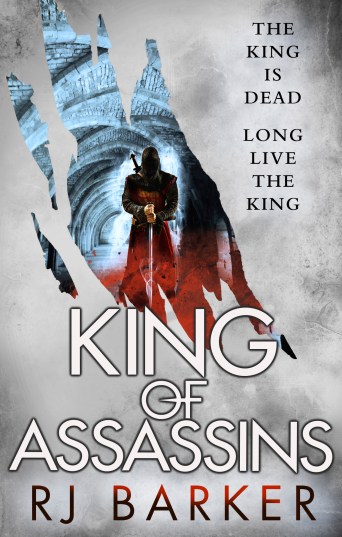
Quick Review – King of Assassins by R. J. Barker

king of assassins cover

Publisher: Hachette Audio (Audiobook – 7 August 2018)

Series: The Wounded Kingdom – Book Three

Length: 17 hours and 17 minutes

My Rating: 5 out of 5 stars

Amazon     Book Depository

I recently received a copy of R. J. Barker’s latest epic fantasy novel, Call of the Bone Ships, but before I dive into that I figured I would finally review for the third and final novel in Barker’s The Wounded Kingdom trilogy, King of Assassins.

Barker is a talented fantasy author who has been absolutely killing it over the last couple of years, creating several outstanding fantasy novels since his 2017 debut, Age of Assassins.  I was lucky enough to receive Age of Assassins, which is also the first book in The Wounded Kingdom series, when it first came out and had a fantastic time reading it.  I also really enjoyed the sequel, Blood of Assassins, which continued the excellent storylines from the first book in epic fashion.  I was quite keen to read the third book, King of Assassins, when it first came out, but I did not get a chance to read it back in 2018, which I had deep regrets about.  I did  manage to read it late last year, but I then completely failed to review it, even after I enjoyed Barker’s new novel, The Bone Ships.  So it is high time I got off my ass and pulled something together for it, especially as King of Assassins was a particularly amazing novel that gets a full five-star rating from me.

Synopsis:

The King is dead, long live the King….

Many years of peace have passed in Maniyadoc, years of relative calm for the assassin Girton Club-Foot. Even the Forgetting Plague, which ravaged the rest of the kingdoms, seemed to pass them by. But now Rufra ap Vthyr eyes the vacant High-King’s throne and will take his court to the capital, a rat’s nest of intrigue and murder, where every enemy he has ever made will gather and the endgame of 20 years of politics and murder will be played out in his bid to become the King of all Kings.

Friends become enemies, enemies become friends and the god of death, Xus the Unseen, stands closer than ever – casting his shadow over everything most dear to Girton.

One of the things that I really enjoy about Barker is the way in which he significantly improves as an author with every single book that he writes.  King of Assassins is a particularly great example of this, as the author does an impressive job expanding and enhancing his already amazing series in this novel, presenting the reader with an incredible story that makes excellent use of its dark setting and exceptional characters.  The result is an awesome and deeply captivating read that was easily my favourite book in the entire trilogy, which is saying a bit considering how good the first two entries were.

At the centre of this novel is an outstanding dark fantasy narrative which sees the assassin, Girton Club-Foot, accompany his lord, Rufra ap Vthyr, into the dangerous capital of the broken and war-ravished kingdom this series is set in.  This results in Girton and his companions stuck in the middle of a dark and crumbling citadel, surrounded by nearly every enemy and manipulator that they have encountered throughout the course of the series, as well as several new ones who pop up in this book.  As Rufra attempts to politic his way into becoming High-King, Girton navigates his way through the many dangers of the citadel, attempting to uncover the hidden motives and plans of his enemies.  Unsurprisingly, nearly every other player gathered in the citadel has plans to either kill Girton and Rufra or manipulate them for their own advantage.  As a result, King of Assassins quickly turns into an intense and exciting narrative, as the characters must unravel every plot and conspiracy in the fortress to find out everyone working against them and what their ultimate goals are.  These leads to several amazing storylines and impressive reveals throughout the course of the book, as Girton desperately attempts to save his friends while also protecting his darkest secret.  All of this comes together in an amazing conclusion which will not only satisfy fans of the series but which also delivers some clever and surprising twists that will leave the reader breathless.

There is a bit of a significant time skip between the events of this book and the preceding Blood of Assassins, which Barker works into the story very well, allowing for some subsequent changes in relationships and the simmering of old grudges.  The author also spends a substantial amount of time wrapping up some of the storylines and character arcs from the previous novels in the series, which really helped to give the novel a sense of completeness while also resulting in some big moments for the various characters.  I also really must highlight the dark, foreboding setting in which the characters find themselves in.  Not only has Barker created a great location for treachery, betrayal, and bloodshed, but he installed an extremely dark and oppressive atmosphere into it that the reader can taste as they read/listen to the book.  The sense of dread and despair that washes over the reader as they have the castle and its people described to them really enhances the story and ensures that they are eagerly waiting for the protagonists to prevail and rid the world of darkness.  All in all, this was an extremely well-written and utterly compelling narrative, and readers will quickly find themselves enthralled within it.

Among the main things I liked about King of Assassins were the impressive characters, most of whom have appeared in some of the previous novels in The Wounded Kingdom trilogy.  Barker has done an awesome job of developing each of these characters throughout the course of the series, and in this final book they all reach the conclusion of their individual or joint arcs.  While this does result in a bit of heartbreak and betrayal for some characters, one or two are quite nice, and I think those readers who have read the earlier entries in the series will be quite satisfied by where each character ends up.  The focus of the book is naturally on the point-of-view character Girton, who has gone through a lot throughout the course of the series.  Girton continues to battle his demons in this book, including his hidden and dangerous magical ability, and he must come to terms with several betrayals and old wounds from the previous books.  A major focus of the series has been the friendship between Girton and Rufra, as their lives have become inexorably bound together.  While their friendship had some ups in downs in the past, by the start of this book relationship has become a lot more strained due to differences in opinions about certain events.  Despite this the two constantly attempt to reconcile throughout the course of the novel, often unsuccessfully, but the power and complexity of their friendship is a key cornerstone of the book’s plot.  However, their joint character arc has a major twist into it near the end of the book, and the devastated feelings that result make for quite an epic and heartfelt conclusion to their narrative.  I also quite liked how the character of Aydor was featured in this book.  Aydor was one of the main antagonists of the first novel who eventually morphed into a reluctant ally in the second book.  However, in King of Assassins, after the time-skip he has become one of Girton’s closest friends and confidants.  I loved this gradual and excellent change in personality for Aydor, especially as he becomes one the nicest and warmest people in the entire novel and it was fantastic to see his relationship with Girton change throughout the series.  I ended up really loving all the amazing character arcs that concluded in King of Assassins and each of them added a strong, emotionally rich pillar to the overall narrative.

I ended up listening to King of Assassins on audiobook, and I would wholeheartedly recommend this format to anyone interested in checking out this excellent fantasy novel.  The King of Assassins audiobook is narrated by the talented Joe Jameson and has a run time of 17 hours and 17 minutes.  I had an amazing time listening to this audiobook, not only because the format helped me dive into the narrative but because of Jameson’s impressive narration.  Jameson did a fantastic job bringing the various characters to life in this book and his voice works extremely well for the first-person narration that Barker uses for his novels.  I personally found that Jameson’s narration helped to enhance the dark atmosphere that the author created with his writing and this made for an outstanding listen.  At just over 17 hours in length, this is a somewhat more substantial audiobook listen, but I found myself getting through it in an extremely short amount of time as it proved very hard to turn off.  This is an overall awesome audiobook and an excellent way to enjoy this great novel.

King of Assassins by R. J. Barker is an exceptional and captivating novel which takes the reader on an exciting and addictive ride.  This is an extremely well-written and impressive book that serves as an excellent conclusion to the fantastic The Wounded Kingdom trilogy.  This was honestly one of the better fantasy novels of 2018 and this review is a long-time coming.  King of Assassins is an outstanding book, and I am looking forward to checking out Barker’s latest novel, Call of the Bone Ships, in the next week or so.

Amazon     Book Depository

Star Trek: Discovery: Die Standing by John Jackson Miller

Die Standing Cover

Publisher: Simon & Schuster Audio (Audiobook – 14 July 2020)

Series: Star Trek: Discovery

Length: 12 hours and 15 minutes

My Rating: 4.5 out of 5 stars

Amazon     Book Depository

One of the leading authors of media tie-in fiction, John Jackson Miller, returns with his second Star Trek: Discovery novel, Die Standing, an awesome and captivating read that follows the adventures of an excellent protagonist, the evil version of Michelle Yeoh’s Philippa Georgiou.

After the dramatic conclusion of the first season of Star Trek: Discovery, Emperor Philippa Georgiou, former ruler of the Terran Empire, a power-hungry and xenophobic human interstellar empire from a twisted alternate universe, has been stranded in the main Federation’s universe.  Biding her time while trapped on the Klingon home planet of Qo’noS, Georgiou is finally given a the opportunity she has been waiting for when Starfleet’s covert spy organisation, Section 31, offers her a chance to work as one of their agents.  However, Georgiou is far more interested in gaining her freedom and plotting to use Section 31’s resources to flee beyond Starfleet’s control.

Georgiou’s plans change when she receives news about a mysterious attack on one of Starfleet’s military vessels by a malicious and dangerous cosmic entity, one that her counterpart in this universe may have seen years before.  Intrigued by the description of the attack, Georgiou decides to remain with Section 31, especially as it bears a striking similarity to a powerful superweapon that was kept from her when she was Emperor.

Determined to use this weapon to regain her stolen power and take control of this weaker universe, Georgiou accepts Section 31’s proposal to travel to an isolated section of space where the creature was first witnessed.  Travelling with two mismatched minders who are already well out of their depth, Georgiou attempts to contact an old flame of this universe’s Georgiou, one who has a lot of influence in this quadrant of space.  Forced to conduct a subtle investigation amongst the secretive alien races of the sector, Georgiou and her companions follow the clues that will lead them to the entities they seek.  But what will happen when the former Terran Emperor has ultimate power within her grasp?  Will she ensure the safety of the Federation she despises, or will another universe bow before her might?

This was a fun and impressive new novel from bestselling author John Jackson Miller.  Miller is an interesting author who has a lot of experience writing tie-in stories, having previously written several pieces of Star Wars fiction as well as some notable Star Trek novels.  I have not previously read anything from Miller before, although I think that will have to change due to how much I enjoyed Die Standing.  Miller has written a couple of books that have been on my radar for a bit, including a previous Star Trek: Discovery novel, The Enterprise War, and the Star Wars: A New Dawn novel, which ties into the Star Wars: Rebels animated show.  This latest novel from Miller is an exceptional read, as he has come up with a wildly entertaining and clever novel based around the excellent character of Philippa Georgiou.  Backed up with an extremely compelling story, some interesting side characters and some wonderful universe-building, this is one of the better if not the best Star Trek novels of 2020, and ended up being an awesome read.

At the heart of this fantastic novel is a captivating and intense narrative that sees the protagonist and her companions venture into an unknown area of space in search of a creature with deadly potential.  This was an extremely clever and well-written character-driven story that features an excellent Star Trek narrative, filled with all manner of espionage, betrayal and war.  I really liked the way that the author blended together familiar Star Trek elements with a thrilling espionage narrative, especially one that was centred on a morally ambiguous protagonist who plans to betray everyone she encounters.  This makes for a number of great scenes, and I really liked the fascinating and clever places that the story went.  There are a number of particularly good twists featured throughout the book, and while I was able to predict where some parts of the story were going to go, I found myself pleasantly surprised and intrigued at some of the other reveals.  I also enjoyed the way in which Miller worked in some compelling comparisons between the two mirror universe, one mostly good and the other mostly evil, and it served as a clever and distinctive part of the book, especially as Miller does a lot with only one scene set in the Terran universe.  All of this makes for an exciting and powerful story that readers are going to have a wonderful time reading.  I really enjoyed the dark, thrilling and twist laden narrative and it honestly did not take me long to become hopeless addicted to this incredible Star Trek novel.

Die Standing is one of those tie-in novels that require some prior knowledge of its associated content to fully enjoy.  In this case, readers really do need to have a good understanding of the Star Trek: Discovery television show, as much of the story is derived from key events in the first and second seasons.  In particular, knowing the full tale around the character of Philippa Georgiou (both versions) is quite essential to fully appreciate the book’s story elements and character work.  At the very least, having some general knowledge of the Star Trek universe and the events of some of the shows would be useful, especially as the book is fairly dependent on some established story elements, such as the evil alternate universe.  That being said, Miller does do a really good job making this novel accessible to those readers whose knowledge of the genre might be lacking, and many of the key elements are explained in sufficient detail to follow the story and enjoy it.  However, this is definitely a novel most suitable for established Star Trek fans, especially as the author loads it up with a ton of fun or clever references to Star Trek: Discovery and some of the other television shows.  For example, this novel features the great inclusion of a younger version of the Dax symbiont (see more below), and I personally really liked how a major part of the book’s plot revolved around a key moment from Captain Kirk’s backstory (from The Original Series episode Obsession), not only showing the event from a different perspective, but also adding in some explanation for its origins and the reaction from Starfleet.  Die Standing also serves as a rather good bridge between the first and second seasons of Star Trek: Discovery, and it does an excellent job setting up the main character for her reintroduction to the show.

While this book did have an exceptionally captivating story and some cool Star Trek elements, the absolute highlight of this book has to be its wonderful protagonist (and occasional antagonist), the evil Terran version of Philippa Georgiou.  Die Standing features Georgiou in all her evil glory and she quickly makes an impression of the reader, especially after one particularly brutal and entertaining prison break sequence at the start of the book.  Pretty much every scene that features Georgiou is highly entertaining, and the snarky, arrogant personality she displays to anyone she meets proves to be spot on to how she is portrayed in the television show.  While I really enjoyed this character in Star Trek: Discovery (she is easily one of the best parts of the show) I personally felt that Miller actually helped to make Georgiou an even more compelling character throughout the course of this book.  The author really dives down into her personality and motives, showing just how twisted and self-serving she can be while also reflecting on all the things she has lost and the changes she is forced to deal with.  Georgiou goes through some fascinating self-examinations in Die Standing, especially when she is confronted with the legacy of her dead counterpart in this universe, and this serves as a fantastic emotional centre of the book.  The author’s impressive use of this fantastic character works extremely well, and it certainly helps Die Standing stand out from some of the other Star Trek novels of 2020.

Die Standing also features an excellent cast of side characters who add a lot to the story.  There are two characters who particularly stand out, Emony Dax and Sean Finnigan, who both serve as alternate protagonists, with significant parts of the book told from their perspective.  While Dax and Finnigan are nowhere near as dynamic as Georgiou, they are both distinctive in their own ways, and Miller does a good job at making them both likeable and compelling parts of Die Standing.  Emony is a young Trill gymnast who is the third host of the Dax symbiont.  This makes her an earlier incarnation of the Dax character who appeared in the Star Trek: Deep Space Nine television in two different guises (Jadzia Dax and Ezri Dax).  Thanks to her youth, both as a symbiont and a host, this version of Dax is a little more unsure and scared then her later counterparts, but is determined thanks to the terrible things she witnesses at the start of the book.  While she is initially extremely cowed by Georgiou’s overwhelming personality, Dax grows throughout the book and is eventually able to influence Georgiou.  Deep Space Nine fans will no doubt enjoy seeing this earlier version of Dax, and I rather appreciated the excellent character growth she experienced.  The other main character, Sean Finnigan, is definitely one of the more entertaining characters in this book.  Finnigan is an unashamedly Irish character who serves as the book’s comic relief.  A wild and unruly former Star Fleet officer, Finnigan is drafted into the mission due to an interesting connection he has to Georgiou, as a murderous, brainwashed version of himself served as the Emperor’s assassin in the mirror universe.  While Finnigan is a mostly entertaining character, joking, drinking and socialising with all everyone he meets, there are some deeper elements to his character, especially as he spends a good part of the book trying to balance his real personality with the more insane version of himself that Georgiou tries to bring out.  Dax and Finnigan form a compelling team with Georgiou, and they ended up being an extremely good trio the anchor the story around.

I also quite enjoyed the intriguing Star Trek universe-building that Miller featured throughout Die Standing.  A key part of this book’s story is set within an isolated section of space that is home to three distinctive alien races who are attempting to stay separate from the Federation.  All of these species are quite intriguing and inventive, and include a race of giant living spindles, an intensely warlike species of living tanks and a group of gaseous psychics.  Miller does an exceptional job exploring each of the three new alien species throughout the course of the book and giving them each unique characteristics, histories, and personalities.  Not only are these aliens quite fascinating in their own right but each of their specific traits plays into the overall story extremely well, with some fantastic twists tied into them.  In addition, Miller also spends time exploring some of the differences between the main Star Trek universe and the mirror universe that contained the Terran Empire.  Not only is there an excellent opening sequence set in this mirror universe that showcases the brutal nature of this alternate reality, but there are a number of fantastic discussions that examine how different these universes could be.  Miller ensures that the protagonist Georgiou spends a good amount of time recounting some of the horrifying details of her universe to her companions (mostly to unnerve them), and it proves quite entertaining to hear all of her various stories, especially as most are apparently not exaggerated.  I also loved the fun way that Miller altered famous historical quotes to show how different the universes could be, with a number of classic lines twisted into something far more brutal and cynical, such as “Let them eat field rations” from General Antoinette.  The book itself is also broken up into five separate sections, based upon the Terran stages of grief (for coping with a loss of status): defiance, murder, plundering, destruction and vengeance, with each sections starting up with a quote from the Terran universe that describe its history.  Needless to say that Star Trek fans are going to love the cool additions that Miller works into the expanded universe in this novel, and I personally had a wonderful time seeing all the inventive and entertaining things that the author could come up with.

Like most of the Star Trek books I have had read in the past, I chose to check out Die Standing’s audiobook format.  This was, as always, an excellent way to enjoy this clever Star Trek novel, and I had a wonderful time listening to the story unfold.  Die Standing has a run time of 12 hours and 15 minutes, which is actually the longest Star Trek audiobook that I have so far listened to, but I was still able to breeze through it in relatively short order once I got hooked on the story.  In order to tell this amazing book, Die Standing makes use of the vocal talents of narrator January LaVoy.  This is the first audiobook I have heard narrated by LaVoy, although she did voice a minor character in Star Wars: Dooku: Jedi Lost.  She has also served as narrator for several books I have physically read, such as Star Wars: Galaxy’s Edge: Black Spire, Star Wars: Last Shot and The Night Swim, and she has also narrated a couple of books I am hoping to checking out in the future, including Star Wars: Phasma.  I have to admit that I was initially a little thrown to have LaVoy as narrator, as this was the first Star Trek audiobook I have listened to that was not narrated by Robert Petkoff.  However, it makes a lot more sense to feature LaVoy as narrator due to the female lead, and I really enjoyed listening to her narration of this book.  LaVoy did an incredible job bringing the characters to life throughout Die Standing and she ascribed some very apt and distinctive voices to each of them.  I was particularly impressed with the fantastic voice she utilised for Philippa Georgiou, and I felt it was very similar to how the character was portrayed in the television show.  LaVoy makes sure to channel all of Georgiou’s scorn and sarcasm to the reader, and it was an absolute treat to listen to her villainous rants throughout the book.  I also quite enjoyed the voice that LaVoy utilised for Sean Finnigan, Irish accent included, and it helped to enhance him as a fun and entertaining character.  All of this leads to quite an exceptional Star Trek audiobook and I would strongly recommend this format to anyone interested in checking out Die Standing.

Star Trek: Discovery: Die Standing is an amazing and impressive Star Trek novel from John Jackson Miller that was an absolute joy to read.  Miller has crafted together a captivating and clever narrative for this book that follows several excellent protagonists on a high-stakes adventure through all manner of intrigue and betrayal.  Featuring some compelling story elements, fantastic world-building and an awesome evil protagonist, Die Standing was an exceptional novel and it ended up being one of my favourite Star Trek novels I have so far had the pleasure to read.  A highly recommend piece of tie-in fiction, fans of the Star Trek: Discovery television show really need to check this fantastic book as soon as possible.

Amazon     Book Depository

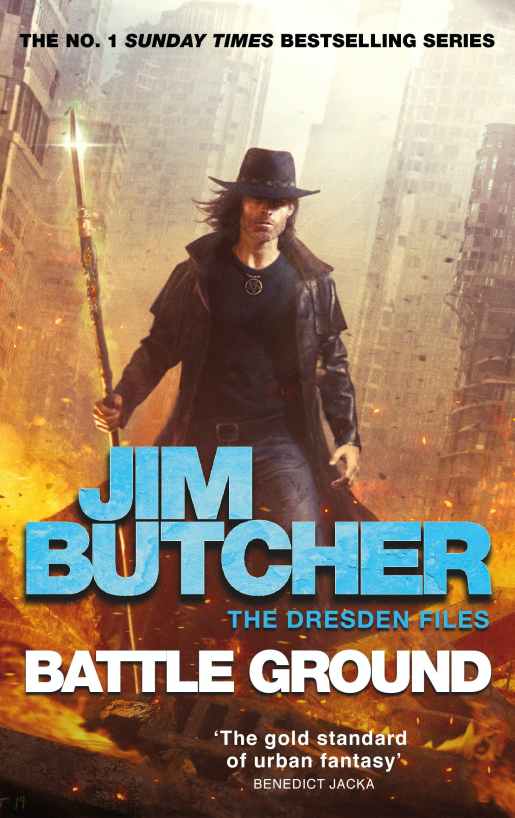
Battle Ground by Jim Butcher

Battle Ground Cover

Publisher: Orbit/Penguin Random House Audio (Audiobook – 29 September 2020)

Series: The Dresden Files – Book 17

Length: 15 hours and 43 minutes

My Rating: 5 out of 5 stars

Amazon

One of the leading authors of the urban fantasy novel, Jim Butcher, returns with the next entry in his world-acclaimed Harry Dresden series, Battle Ground, an awesome novel that was one of the most anticipated releases of 2020.

Jim Butcher is a highly acclaimed fantasy author who has been dominating the market since his debut novel in 2000.  Butcher has written a number of books throughout his career, including his Codex Alera series, the first book of his planned Cinder Spires series, The Aeronaut’s Windlass and even a Spider-Man tie-in novel, Spider-Man: The Darkest Hours.  However, the body of work that Butcher is best known for is his long-running urban fantasy series, the Dresden Files.  The Dresden Files started back in 2000 with Storm Front and follow the adventures of Harry Dresden, a wizard who works as a private investigator in Chicago, solving supernatural crimes and protecting humans from dangerous magical creatures.  This series proved to be incredibly popular and is widely considered to be the gold standard of urban fantasy novels.  The Dresden Files currently consists of 17 books, with the universe expanded out with short stories, novellas and even some graphic novels.

While I have always heard incredible things about the Dresden Files books, I have not previously had the pleasure of reading any of them yet.  This is an admittedly massive gap in my fantasy reading knowledge, and it is one that I have been meaning to fill for a while.  So when I recently received a copy of the latest novel in the series, Battle Ground, I figured that this would be a perfect opportunity to finally break into the series.

For years, Harry Dresden, rogue wizard and general smartass, has defended the city of Chicago from all manner of supernatural threats and each time he has managed to keep it safe, until now!  War is coming to Chicago as a being of unbelievable power, the Last Titan, Ethniu, marches towards it, determined to have her revenge.  To achieve her goal, she has assembled a vast supernatural army and is in possession of a magical superweapon of unbelievable destructive power.  With these forces at her command, Ethniu has sworn to wipe out the entirety of Chicago in one night and kill all eight million of its inhabitants.

In order to combat this terrible threat, Dresden must rally together every friend, former enemy and magical ally he can find in order to face down the opposing army and stop Ethniu.  However, this will be no easy task.  Not only must he deal with the conflicting politics of the rival magical factions but dangerous monsters are also loose in the city, determined to take advantage of the destructive circumstances.  Worse, thanks to Ethniu’s superweapon, every electronic piece of technology in Chicago has been knocked out and the entire population is now helpless and unable to flee from the oncoming chaos.

As Dresden and his allies attempt drive back the enemies coming towards them, they face an uphill battle.  Ethniu is one of the most powerful beings in existence, and not even the combined might of Chicago’s magical elite may be enough to stop her.  Throughout this night Dresden will face terrible losses and be forced to make some of the hardest decisions in his life.  But even Dresden’s most desperate tricks may not be enough to turn the tide and save the city.  One thing is clear: no matter who wins, Dresden and the entire city of Chicago will never be the same again!

Well damn, Jim Butcher really went all out with Battle Ground and has produced one heck of an impressive novel.  This was a spectacular read, filled with a lot of huge, epic moments, smart storytelling, extremely likeable characters and clever fantasy inclusions, all wrapped up with a fun sense of humour and excitement.  Battle Ground is the 17th Dresden Files book, quickly following up the 16th book, Peace Talks (where several storylines explored in the novel originated).  I had an absolute blast reading Battle Ground, and I do have to admit that I am currently feeling a lot of regret for not getting into this series a heck of a lot sooner, as this latest entry is easily one of my favourite books of 2020.

At the heart of this outstanding novel is an extremely powerful story that sees beloved series protagonist Harry Dresden attempt to save his city from all-out destruction as a magical army invades, intent on killing everyone.  This results in an intense and action-packed novel that is a bit of a change of pace from some of the previous novels in the series, which usually read more like fantasy detective fiction.  Battle Ground is a war story, with the protagonist engaged in the battle of his life throughout the entirety of the novel.  Butcher starts Battle Ground off quickly with the protagonist having to face off against a kraken, which easily draws the reader in off the bat (I know I was pretty darn impressed with that introduction).  From there he sets up the start of the war perfectly, with a number of characters introduced as their roles in the coming fight are established, as well as an exploration of the various magical political entities in the city and why they are supporting Dresden in his fight.  It does not take long for the actual war for Chicago to start, and once it does the story does not slow down again until the battle reaches its brutal climax.  There are some truly epic and captivating battle sequences throughout the course of this book as Dresden and his allies face all manner of dangers and turmoil, including a range of distinctive adversaries from the previous entries in the series.  There are so many memorable and exciting moments that featured in this part of the book and I found myself going through an emotional ringer as everything unfolded, from feeling saddened at some critical scenes, to being inspired as a beloved character led an impassioned charge against the foe.  I was on the edge of my seat as I listened to Battle Ground’s story, and it honestly did not take me long to get completely and utterly addicted to the narrative as I desperately waited to see how the story would conclude.  When it did, I found myself completely satisfied with the ending and it left me with a deep longing to see where Butcher takes the series next.  Overall, this was an incredibly well-written and wildly exciting narrative which will stick in the readers mind as they wait for the next Dresden Files book to be released.

Now, was it a mistake coming into this series on the 17th book that serves as an epic conclusion to a number of key storylines?  Potentially.  But do I have any regrets about reading this latest Dresden Files novel?  Absolutely freaking not!  I had an incredible time with Battle Ground, especially as Butcher made sure to make this novel accessible to new readers, even with the book’s huge range of characters and massive stakes.  Pretty much every major character or event that is relevant to the main narrative of Battle Ground is explained in sufficient detail so that new readers coming to the series for the first time can follow what is happening and get a decent sense of the significance of a location, event from a prior book or the personal history that Dresden has with a character.  I do have to admit there were a few things I was a tad uncertain about, mainly because they would have been covered in Peace Talks.  For example, I did find the motivations of the book’s main antagonist, Ethniu, a little vague and there was a lack of build-up around her various allies and minions.  There is also a major twist towards the end of the book which did not hit me as significantly as it would have for a long-term reader of the series, as it is tied into several overarching plot threads from the previous books.  Despite this, I was able to follow the plot extremely closely, and my lack of prior knowledge in no way stopped me enjoying all the incredible action and wonderful characters that were part of the books plot.  As with any later addition to a series, Battle Ground is definitely intended to be enjoyed by established fans; however, I will recommend this to readers unfamiliar with the series as I know they will have an amazing time reading it.

One of the key things that I enjoyed about Battle Ground was the extremely likeable and entertaining series protagonist, Harry Dresden, who serves as the narrator of the entire story.  Dresden is a very fun and unique protagonist, and for most of the series he has worked outside of the established system of magical rule as a private investigator.  However, in this book he is part of the government, serving both the White Council of Wizards and as a member of Queen Mab’s court.  Despite this, he still retains his extreme anti-authoritarian streak and is constantly infuriating those people who are higher up on the magical hierarchy with his glib attitude.  I have a strong attachment to sarcastic and infuriating protagonists and Dresden is one of the more enjoyable ones I have seen in fiction.  Butcher really goes out of his way to make Dresden as likeable and entertaining as possible and most of the book’s brilliant humour is derived from Dresden’s comedic observations and statements about the events occurring around him and the outlandish people that he meets.  I also had to have a chuckle about the various pop-culture references that Dresden brought up throughout the course of the book, even in life threatening situations, such as the way he imitated Gandalf while holding off opponents on an iconic Chicago bridge.  Despite this carefree and entertaining exterior, Dresden is actually a very deep protagonist, weighed down by the responsibilities he faces and the constant desire not to be corrupted by the forces he encounters or bargains with.  Dresden goes through a lot of emotional damage in Battle Ground as he must not only contend with the guilt of letting this destruction reign down on his beloved hometown, but also with a series of losses that he faces along the way.  Butcher expertly captures Dresden’s emotional turmoil through his use of the first-person narrative, and the reader cannot help but be entranced by some of the darker moments this usually cheerful character experiences.  This excellent combination of characteristics really helps to turn Dresden into a relatable individual and an impressive protagonist and I cannot wait to see what happens to him in the future books of the series.

In addition to Dresden, Battle Ground features a veritable smorgasbord of cool side and supporting characters who the protagonist encounters throughout the course of the novel.  Due to the high stakes of the plot, this book contains a massive cast with a huge number of characters from all the previous books and novellas appearing in cameos or significant roles.  Most of these characters are really amazing, and Butcher does a fantastic job introducing them and ensuring that the reader knows who they are, what their connection to the protagonists is, as well as key elements of their history.  Due to my lack of familiarity with the series, I really appreciated the author’s dedication to reintroducing these characters and I felt fairly confident following who the various people were and what their role in the story was.  That being said, I was probably a little less emotionally impacted with some of the resultant twists and turns involving some of these characters, and I imagine long-time readers of the story are going to get a lot more out of their actions then a newcomer to the series.  These long-term readers should be warned that Butcher takes the stakes of this book particularly seriously and several characters are going to meet some dramatic fates.

I personally enjoyed many of the characters that were featured in the plot and I felt that each of these inventive personalities either added some real emotional depth to the novel or served as an entertaining additional to the story.  Some of my favourite characters in Battle Ground included River Shoulders (full name: Strength of a River in His Shoulders), a Sasquatch magician who wears Victorian era garb and who is one of the most likeable creatures in the book.  River Shoulders has a lot of fun moments throughout the story, although I have to highlight the quick scene which saw him make a pitch to improve race relations with an improvised ventriloquist act, as it made me laugh pretty hard.  I also really enjoyed Major General Toot-Toot Minimus, a small fairy who leads an army of Little Folk in defence of Dresden, all in the name of pizza.  Toot-Toot is one of the main comic reliefs of their entire novel and it was quite entertaining to see in action, especially when he manages to overcome the bigguns in defence of Za Lord.  However, the character I enjoyed the most aside from Dresden was Waldo Butters, Knight of the Cross.  Now, despite the fact that I would constantly think about the character of Butters from South Park whenever he appeared (in fairness, they have a lot of similarities with each other), Waldo Butters is probably the character who gets the most development and use throughout the course of Battle Ground.  Butters, who only recently took on the mantle of a Knight after spending most of the series as a defenceless sidekick, really comes into his own in Battle Ground, acting in a major defence role throughout the fight for the city.  Not only does he have some very inspiration fight sequences, but he also has a series of particularly emotional scenes with Dresden and adds a lot of heart to the narrative as a result.  I also really loved some of his scenes where he squares off against Battle Ground’s big bad, and you get a real Neville Longbottom vs Voldemort feel from it.  You can clearly see that Butcher has some big plans for Butters in the future, and I am personally cannot wait to see what they are.  I am honestly only scratching the surface of the various side characters who appeared throughout Battle Ground, but needless to say that they were all pretty exceptional and it was a real treat to meet them.

Battle Ground also served as my introduction to the magical version of Chicago that serves as the setting for this fantastic series.  This proved to be an excellent setting for this great book, and I really enjoyed the way that Butcher has melded together regular Chicago with some more subtle magical elements, such as a ruling magical council, hidden enclaves of power and mysterious creatures hiding just beneath the surface.  There are a lot of cool elements to this setting, and I think that the author did an amazing job reintroducing it for the context of this latest novel.  I was particularly impressed by the way Butcher brought a number of key city landmarks to life in this book, with several iconic pieces of Chicago used to great effect throughout the book as settings for epic scenes.  Unlike any previous book in the series, the events of Battle Ground ensure that Chicago goes through some massive changes as a magical army invades.  The destruction levelled upon Chicago is substantial, and there are several emotional sequences that see the citizens attempting to deal with these forces coming to kill them.  Naturally, this is going to have some major impacts in the future entries in the series, and I look forward to seeing what the long-term impacts of this book are going to be.

I also need to mention that, aside from Battle Ground’s main story, this novel and its associated audiobook format also contains the short story, Christmas EveChristmas Eve is a relatively tiny part of the novel, only made up of 15 pages (or around 25 minutes of the audiobook), and shows Dresden encountering several people on Christmas Eve.  This short story is set after the events of Battle Ground (despite being initially written and released in 2018) and contains a rather nice and emotionally rich narrative that examines Dresden’s emotional state as a father and friend.  Christmas Eve is a much more relaxed and lower-stakes story that Battle Ground, and I personally really enjoyed reading it after all the bloodshed, sacrifice and death of the main story.

While I did receive a nice hardcover copy of Battle Ground, I ended up listening to its audiobook format instead.  The Battle Ground audiobook runs for a little under 16 hours, which I powered through in only a few short days; it did not take me long to get addicted to this novel.  I deeply enjoyed the Battle Ground audiobook and I felt that it was an awesome way to enjoy this great book.  Not only did I find myself absorbing more of the story elements and getting drawn more into the plot but I also loved the top-shelf narrator they utilised for this audiobook.  Battle Ground was narrated by James Marsters, best known as Spike from Buffy the Vampire Slayer and Angel, who has also narrated all the previous books in the series as well as the short stories and other associated novels.  I am a major fan of Marsters, having watched a ton of the television shows he has appeared in, so I was very excited to listen to one of the audiobooks he narrated.  Unsurprisingly, Marsters proved to be an outstanding narrator, empowering this already impressive novel with his amazing vocal talents and moving the story along at a brisk and exciting pace.  Marsters did an awesome job providing each of the characters with their own unique and distinctive voice which fit the personality and depiction of each character perfectly.  I was also particularly impressed with how he brought the book’s protagonist to life.  Marsters really dove into the character of Harry Dresden, providing a perfect voice for the maverick wizard that effectively captured his various quirks and personality traits.  This excellent narration also explored the various raw emotions that Dresden experienced throughout the course of the novel and you get a fantastic sense of what the character is going through and how much he is struggling.  I really have to highlight the enthusiastic emphasis that Marsters utilises when reciting Dresden’s various spells and I could totally imagine the protagonist shouting out his incarnations in that way.  I also liked the humorously altered voices that were utilised for some of the supernatural creatures, such as Toot-Toot, which was not only widely entertaining but which fit the outrageous character extremely well.  All of this makes for an incredible audiobook experience and I fully intend to listen to the other entries in the series rather than seeking out a physical copy.

Battle Ground by Jim Butcher is an extraordinary and epic urban fantasy novel that serves as the latest novel in Butcher’s acclaimed Dresden Files series.  Butcher has done an incredible job with Battle Ground, presenting the reader with an awesome and captivating narrative, filled with a huge array of enjoyable characters and clever fantasy elements.  The result is an outstanding and deeply impressive novel that I had an amazing time reading.  Battle Ground gets an easy five-star rating from me and it was one of my favourite books (and audiobooks) of 2020.  I cannot praise this novel enough and it certainly served as a wonderful introduction to the Dresden Files.  I am intending to go back and start reading the series from book one and I have no doubt I will love each and every entry in the series.  I am especially keen to check them out in their audiobook format because James Marsters has narrated each of them and I know I will deeply enjoy hearing these clever stories read out.  Needless to say, this book comes highly recommended from me and I cannot wait to see what other extraordinary stories exist within Butcher’s extensive Dresden Files.

Amazon

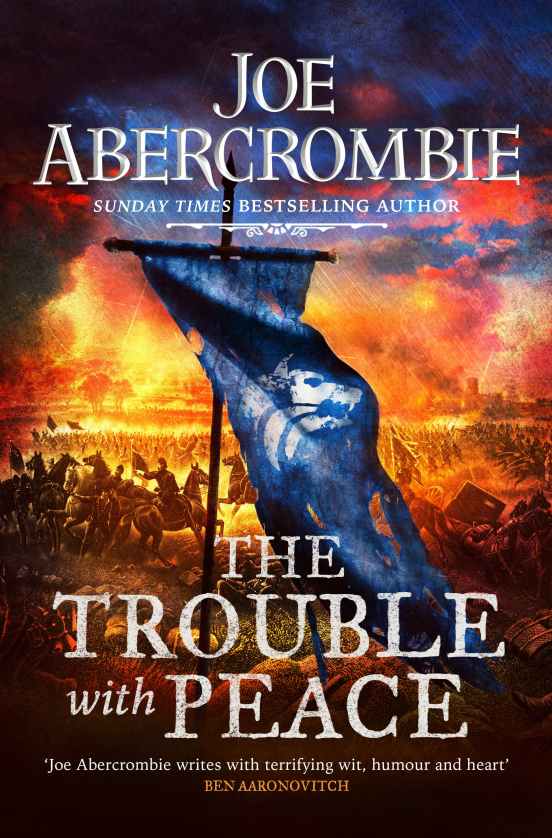
The Trouble with Peace by Joe Abercrombie

The Trouble with Peace Cover

Publisher: Orion Audio (Audiobook – 15 September 2020)

Series: The Age of Madness – Book Two

Length: 21 hours and 56 minutes

My Rating: 5 out of 5 stars

Amazon

The master of dark fantasy fiction, Joe Abercrombie, returns with another masterful and incredible novel, The Trouble with Peace, the second entry in The Age of Madness trilogy, which is easily one of the best novels of 2020.

Abercrombie is an extremely talented author who has written several impressive dark fantasy novels over the years.  His most distinctive works are the books in The First Law universe, which started back in 2006 with the author’s debut novel, The Blade ItselfThe First Law trilogy (which I really need to review) was an amazing and captivating series that followed a motley collection of broken characters and bastards as they found themselves caught up in the chaos of a dark and brutal fantasy universe.  The author has revisited this universe several times, first with three standalone novels set after the events of The First Law trilogy, and then with The Age of Madness trilogy, of which this latest book is a part.  The Age of Madness novels serve as a sequel series to The First Law trilogy, and follow several of the children of the original protagonists (as well as some other new characters), as they engage in a whole new level of chaos and destruction.  The first entry in this trilogy, last year’s A Little Hatred, was an exceptional novel that not only got a full five-star rating from me but which was one of my favourite books (and audiobooks) of 2019.  As a result, I was extremely excited when I got my copy of The Trouble with Peace, and it was one of my most anticipated releases of 2020.

The age of madness rolls on!  Following the death of his father, Crown Prince Orso has taken the throne of the Union and is now king, a role he never wanted.  What he inherits is a nation riven with discord and disharmony, with enemies within and without waiting to cut him down and take power for themselves.  Forced to deal with the machinations of the lords of the Open Council, the revolutionary Breakers, the anarchist Burners and the rival Kingdom of Styrians attempting to take his kingdom from him piece by piece, Orso soon begins to learn that even as king, he is just as powerless as always.

As chaos begins to descend on the Union and the North, the great and the powerful attempt to find their place in the new world order.  For Savine dan Glokta, formerly Adua’s most powerful investor, she finds herself in a vulnerable position with her judgement and reputation ruined.  However, her ambition remains unchecked and an unlikely alliance may help to secure the future she has always desired.  In the North, peace temporarily reigns and the governor of Angland, Leo dan Brock, chafes at the lack of action and finds himself drawn into the political turmoil surrounding the rulership of The Union.  As a famous war hero, he now wields great influence in the Open Council and many seek to use him for their own ends.  This chaos leads to him making deals he never expected, including with his former enemy, the new King of the Northmen, Stour Nightfall.  At the same time, the Dogman’s daughter, Rikke, attempts to control her dangerous gift of prophecy and heads along a new path of blood and violence.

As order and peace unravel across the Union, discord and rebellion raise their ugly heads.  With the old leaders of the world dead and the new generation taking their place, war seems inevitable.  Those who remain must decide who they are loyal to and who they can trust.  However, no alliances, no peace and no friendships last forever, and when the dust settles the Union will be changed forever!

Well damn, that was a good read!!  The Trouble with Peace is another exceptional and captivating novel that takes the reader on a dark thrill ride that proves impossible to escape.  The author once again comes up with an impressive and clever story of war and betrayal, which is anchored by a series of complex point-of-view characters, each of whom is damaged in some unique and compelling manner.  This results in a truly incredible book that was an absolute joy to read and which I flew through in a relatively short period of time.  I absolutely loved this latest book from Abercrombie, and The Trouble with Peace gets an easy five-star rating from me as a result.

At the centre of this awesome novel is an extraordinary and fast-paced narrative that sees various diverse characters and factions attempt to manipulate and outwit each other in order to gain ultimate power in the world.  The plot of The Trouble with Peace continues immediately after the shocking conclusion of A Little Hatred and sees each of the characters introduced in the previous book continue along their established storylines.  Of course, as this is a The First Law novel, it really does not take long for events to take a downward turn and soon the characters find themselves on opposite sides of a growing, major conflict.  There is a real focus on political intrigue, personal relationships and revolution in this novel, all of which proves to be deeply captivating and a lot of fun to read.  On top of that, Abercrombie throws in his usual blend of high-adrenaline action, extreme humour and wild personalities, resulting in an impressive and addictive story that readers will lap up and try to finish off as soon as possible.  Abercrombie does a great job of making this story accessible to new readers and those people unfamiliar with the universe could easily jump in here and have a great time.  However, this is definitely a novel for those readers familiar with the other entries in The First Law series, especially the preceding novel, A Little Hatred, and fans of the series will love the clever directions Abercrombie goes in The Trouble with Peace.  This is a first-class story, and I cannot recommend it enough.

Abercrombie backs up this amazing narrative with a powerful and distinct writing style that helps to turn The Trouble with Peace into a first-class read.  Like all the novels in The First Law series, The Trouble with Peace is told from some different and unique perspectives, as several captivating characters show the events of the novel occurring in front of them.  This results in an impressive and far-reaching story as the reader gets to see a bunch of different points of the same story.  This allows you to witness the various political, tactical and personal manoeuvrings on each side of the conflict, enhancing the overall narrative and driving certain key plot points home.  Abercrombie uses these multiple perspectives to great effect throughout the novel and some of the best sequences in the book are the result of some quick changes of perspective.  This includes an amazing succession of scenes in which two rival characters are disguised in a casino and have subsequent meetings with the same person in quick succession.  It proved remarkably entertaining to see the different approaches both characters took to the same situation, and served to highlight the similarities and differences between them.  Other scenes showed how the major point-of-view characters deal with each other when they meet, and it was fun to see the various mental gambits from both sides of the conflict, especially as Abercrombie ensures that all these characters are competing to be the most manipulative person in the room.  There are also two extended sequences where a single event is witnessed not only by a main character but also by a series of side characters and minor one-off characters to really showcase the chaotic nature of some scenes and the wide range of people they impact.  The use of various perspectives also really helps to set the brutal and dark tone for the entire novel, as the characters they follow are usually right in the centre of a series of different messes that they are either the cause of or they are trying to avoid.  I also really enjoyed the unique outlooks of each character as their fun reactions to the outrageous events occurring around them provide a great deal of the book’s impressive and entertaining humour.

As with all of Abercrombie’s books, the true highlight of The Trouble with Peace is easily the fantastic selection of damaged and deranged characters that make up the main cast of the series.  Like the first entry in The Age of Madness trilogy, The Trouble with Peace is primarily told throughout the eyes of seven separate point-of-view characters, each of whom has their own unique and captivating character through the novel.  These characters include:

  • King Orso – son of King Jezal, who has taken the throne after the sudden death of his father. Orso has inherited a fractured kingdom, essentially made up of people who all hate him.  Orso has a lot of growing up to do in this novel as he soon discovers all the troubles that relate to being king and the limited power he truly has.  I really liked Orso’s storyline in this book, mainly because he comes into his own and starts to demonstrate some backbone and leadership abilities.  His unique way of dealing with problems, many of which relate to his background as a wastrel and a coward, are surprisingly effective and often very entertaining.  Orso proves to be a very enjoyable protagonist throughout this book, and I personally found myself really getting behind him and hoping that he comes out on top.
  • Savine dan Glokta – the adoptive daughter of Arch Lector Glokta and the foremost businesswomen in the Union. Savine has gone through some substantial changes since the last book.  Rather than the confident and crafty women we were introduced to, this Savine is a mess, still reeling from the horrors she experienced in Valbeck and the revelation that her former lover, Orso, is her half-brother.  However, Savine soon manages to find a way back on top, thanks to a profitable marriage, and sets her sights on a particularly tempting target.  Savine is a rather despicable character in this book, and the readers are going to have a hard time feeling too sympathetic for her.  Still, Abercrombie does an amazing job exploring her trauma damaged psyche and she ends up being a very compelling character to follow.
  • Leo dan Brock – the new governor of Angland and the son of two of the protagonists of the standalone novel, The Heroes. After securing the North and bringing Stour Nightfall to heel, Leo has gained much influence and celebrity in the Union.  However, even after the events of the first book, Leo is still as hot-headed as ever and finds himself easily led into a number of conflicts.  Despite his apparent heroism and charisma, Leo is a very hard character to like, mainly due to how stupid he is.  Essentially anyone with half a brain can manipulate him in some way, and it becomes quite tiring to see him do something stupid and destructive merely because he has been told it is the noble thing to do.  Despite this, Leo forms a very fascinating counter point to his rival, Orso, as Leo has many of the things that Orso desires, such as heroism, martial prowess and the love of the people.  I also quite enjoyed the author’s exploration of Leo’s sexuality and love interests, and I look forward to seeing how that progresses in future books.
  • Rikke – a Northern girl and the daughter of The First Law trilogy point-of-view character the Dogman. Rikke is a troubled waif who is regretting her decision to force open her Long Eye in order to increase her prophetic abilities.  Rikke has to make some hard choices in this novel, but her eventual storyline sees her take up a leadership role in the North that sees her face off against the vicious new king of the Northmen, Stour Nightfall.  Rikke is another character that really comes into her own in this book, as she is forced to grow up quick and do hard things to survive.  There are some interesting story elements involved with this character, especially thanks to her magical Long Eye, which allows her to see into the future, and which also results in some very trippy chapters shown from her perspective.  I really enjoyed Rikke’s storyline and character arc through this book, and there are some excellent scenes that show just how devious she has become.
  • Vick dan Teufel – a Union inquisitor who works for Arch Lector Glokta and is loyal only to him. Vic spends a good part of the book working throughout the Union and attempting to identify the King’s enemies, as well as trying to find out who is behind the Breakers and the Burners.  Vick is a really interesting character and I like how much of her storyline seems to mimic Glokta’s from the original trilogy.  For example, in The Trouble with Peace, she is sent to a far-off Union city and must find a way to hold it against a rival kingdom.  However, she soon starts to discover the truth about who really runs the Union and the extent of their power.  Vick is a great character to follow, especially as her chapters tend to focus on the hidden political intrigue and manipulation that infests the Union.  Abercrombie also spends a bit of time continuing to explore the traumatic childhood of Vick, and it was interesting to see how her damaged and dangerous personality came to be.
  • Gunnar Broad – a former Union soldier with a perchance for extreme violence. After the events of Valbeck, Gunnar, a former breaker, now finds himself in the employ of Savine, and works as her brutal enforcer.  Gunnar is another fascinating character, who attempts to escape from the violence that he has known his entire life.  However, this is easier said than done, and his chapters feature some fantastic examination of self and philosophical thoughts on personality and the events of the past.
  • Jonas Clover – an old and experienced Northern warrior who works as an advisor for Stour Nightfall. Clover, who remains my absolute favourite character in this new trilogy, is an exceedingly entertaining person, thanks to his unique sense of humour and jaded personality.  Clover really stands out as a character, mainly because he is so different to the other Northern characters in the book.  While most of the people he surrounds himself with are eager for combat or glory, Clover is the only one extolling the virtues of patience and self-restraint, much to the other character’s annoyance.  However, he is usually right, and he has developed a habit of surviving as a result.  I really love this character, especially because he has some of the best lines and insults in the entire book.  It was really entertaining to see him work under the brash and arrogant Stour Nightfall, as Clover is constantly forced to try and reign in his new king, with little effect.  Despite not being used as much as I would have liked, Clover is still a standout character in this novel, and he has some very memorable moments as a result.

I really enjoyed all these excellent character arcs, and I thought that each of them was incredible and enjoyable in their own rights.  However, thanks to how the narrative progressed, many of these character arcs crossed over a lot more than in the previous novel, and you get to see the various storylines proceed side-by-side as a result.  Because of how they were connected, Orso, Savine and Leo tended to get the most focus throughout the book, and some of the other point-of-view characters (Vic, Broad and Clover in particular), did not get as many chapters told from their perspective.  While I would have loved more scenes from some of the other characters (more Clover would have been awesome), I felt that this was a good character balance and I liked how the various arcs progressed.  All the character arcs worked together exceedingly well, and I really liked how together they formed an exceptional and addictive plot.  The protagonists of The Trouble with Peace go through a lot in this book, and I enjoyed seeing how each of them progressed through their latest trials and dangers.  I look forward to seeing what happens to them in the final book of the trilogy and I imagine some dark things are in store for most of them.

In addition to all the outstanding and complex main characters, Abercrombie also has a great swathe of supporting characters throughout the novel and are extremely entertaining or memorable in their own right (I was a particular fan of the wild hillwomen, Isern-i-Phail).  Abercrombie does an excellent job building these characters up through the course of the book, and there are some amazing and entertaining personalities featured as a result.  However, readers should be extremely cautious about getting too attached to some of these characters, as their life expectancy is a little less certain than the main cast.  The Trouble with Peace also saw the return of several characters featured in the original The First Law books, including a couple of former point-of-view characters.  It was great to see how their stories continued years after the heydays of their adventures, and it adds an interesting aspect to the novel.  Fans of the original trilogy will no doubt enjoy seeing these characters return but should prepare to have their hearts broken.  I really liked the various storylines associated with these characters, and I was also impressed by several twists Abercrombie threw in around them, including one particularly good twist about who the ultimate antagonist of this latest trilogy really is.  Several of the scenes that utilise a ton of separate perspectives to show a single event are often briefly shown from the perspective of some of these side characters, as well as a few additional minor characters who only appear for that scene.  The author really makes the most of these scenes, introducing the character and setting up their personality and history in short order, and then showing how that event affects them (usually in a terribly negative way).

The awesome and exciting action sequences really helped to enhance The Trouble with Peace.  Abercrombie’s books have always featured some brutal and graphic fights and examples of combat, and this latest book is no exception.  There are some very impressive fight sequences in The Trouble with Peace, and the reader is always guaranteed of some action just around the corner.  I really do have to highlight one particularly massive and well-done war sequence that occurs in the latter half of the book.  This battle is the culmination of much of the novel’s plot and has a lot of build up as a result.  Luckily, it did not disappoint in any way, as the reader is treated to a series of powerful sequences that really drag them into the midst of the fight.  Thanks to Abercrombie’s excellent writing, the reader gets an incredible sense of the chaos, the fear and the claustrophobic horrors of a battle.  I really got sucked into this major fight, especially as the author makes good use of multiple perspectives to showcase just how bad it could be in the midst of the fighting, and how destruction, death and despair can infect anyone on the battlefield.  These action scenes are exceptionally written and extremely memorable, and all I can really say is thank goodness pikes are no longer used in war.

In addition to the outstanding story, characters and action sequences, I was also quite impressed with the new elements introduced into the series’ dark fantasy world.  While part of The Trouble with Peace is set in the brutal North, most of the plot takes place in the Union, which has gone through some dark times recently.  This version of the Union is extremely different to the setting that was featured in The First Law trilogy, with a recent industrial revolution bringing both progress and problems, as the land moves away from agriculture to factories.  I really appreciate how Abercrombie has altered his primary fantasy nation since the last trilogy, and his portrayal of an early industrial nation which is on the brink of various revolutions proves to be an awesome setting for this brutal and creative novel.  The author really explores the essence and heart of the Union in this book, and there is a particular deep dive into the politics and social economics of the nation as a result.  I had a lot of fun seeing how the Union falls into war, and a lot of the elements are set up extremely well during this book and the preceding novel.  The resulting conflict has a real English Civil War feel to it at times, with the parliament-like Open Council facing off against the forces of the Crown.  All of this works extremely well as a setting, and I had an amazing time once again visiting this chaotic and dangerous fantasy world.

While I did receive a physical copy of The Trouble with Peace, I ended up listening to the excellent audiobook version which was narrated by Steven Pacey.  Pacey is a talented audiobook narrator who has lent his voice to all the previous The First Law novels.  Pacey does an outstanding job narrating this audiobook and the amazing story clips along at a substantial pace thanks to him.  The narrator also has an impressive repertoire of cool voices for the various characters featured in this book and he even utilises some of the voices of the returning characters from the original novels.  Each of these voices is distinctive and fits its respective character perfectly, which in turn enhances the book’s writing and helps to showcase the character’s personality.  All of this results in an enjoyable and deeply addictive listen and I can already tell you that The Trouble with Peace is going to be one of my top audiobooks for 2020.  Listeners should be aware that this is a substantial audiobook, which has a run time of just under 22 hours (it just cracks my top 20 longest audiobooks list).  However, I would say that it is worth the time investment to check this amazing book out in this format and listeners are guaranteed a superb listen.

Joe Abercrombie continues to cement his position as one of the best modern fantasy authors in the world today with the awesome second novel in his Age of Madness trilogy, The Trouble with Peace.  Serving as the latest instalment in the overarching The First Law series, The Trouble with Peace is a captivating and impressive novel, containing an outstanding plot, memorable multi-layered characters and intense action, all set in one of the best dark fantasy worlds in modern fiction.  The Trouble with Peace is one of the best novels of 2020 and I am so glad that I got the opportunity to read it.  Abercrombie has really knocked it out of the park again and I cannot wait to check out the final book in the trilogy next year (currently titled The Wisdom of Crowds).  You will love this book!

The Trouble with Peace Cover 2

Amazon

River of Gold by Anthony Riches

River of Gold Cover

Publisher: Hodder & Stoughton (Hardback – 6 August 2020)

Series: Empire – Book 11

Length: 339 pages

My Rating: 4.25 out of 5 stars

Amazon

From one of the top authors of Roman historical fiction, Anthony Riches, comes River of Gold, the action-packed and epic 11th entry in his bestselling Empire series.

Aegyptus, 187 AD.  Under the command of Tribune Scaurus, decorated Centurion and former fugitive, Marcus Valerius Aquila, serves with several elite veteran officers, each of whom has displeased the Imperial hierarchy in some way.  These Roman soldiers now find themselves part of an informal troubleshooter unit, destined to die if they should ever fail one of their impossible tasks.  The Roman Empire is once again in danger as a mysterious army advances from the south of Africa, killing a major garrison and conquering a key port city at the southernmost border of the empire.  In order to solve this problem, the Emperor’s corrupt advisor sends Centurion Marcus and his comrades on another dangerous mission.

Arriving in Alexandria, Marcus and his comrades discover a rich province riddled with corruption and with a much reduced military presence.  Taking command of the local legion, Scaurus marches what soldiers he can down to the site of the massacre to find a new grim reality waiting for them.  After centuries of peace, the mysterious kingdom of Kush has once again declared war on Rome, determined to claim what is rightfully theirs from the weakened Romans.  In order to stop them, Scaurus leads his force deep into enemy territory to recapture an abandoned fortress and hold it against impossible odds.  Their mission is borderline suicidal and only has a slim chance of success, but if anyone can pull of this impossible task, it is Marcus and his friends.

This was another fun and exciting historical novel from Riches which proved to be a fantastic new entry in his Empire series.  Riches is a prolific and talented author who has been writing since 2009, when he debuted the first Empire novel, Wounds of Honour.  Since then he has gone to write an additional 10 novels in this series, as well as writing his separate series, The Centurions.  I have previously read a few of Riches’s books, including the first three entries in the Empire series when they were released.  While these first three books were extremely enjoyable Roman historical fiction novels, I missed the chance to read a couple of entries in the series and fell too far behind to catch up.  However, I recently got a copy of this latest book and, as I was in the mood for a visit back to ancient Rome, I tried out River of Gold to see how it would turn out.

This proved to be a good decision on my behalf as River of Gold ended up being a fantastic and compelling read.  Riches sets up an excellent character-driven story that sets a group of unique Roman officers against a dangerous new foe.  The author does a good job setting the story up, allowing those readers unfamiliar with the series or the historical era to easily jump in, and then sets the characters toward their goals.  This results in a captivating narrative that has a good blend of action, character development and cool historical features, as the protagonists embark on a madcap plan to win the war.  This leads to a number of awesome battle scenes, including an extended siege sequence which was a lot of fun to read, and the various characters find themselves in sufficient danger throughout.  The story ends a tad suddenly, although Riches does a good job of setting up the overall conclusion to the main storyline.  This story also felt a bit short, and I think it could have benefited from another 50 pages or so, perhaps extending out the siege sequence and adding in some more action and peril there.  However, this was still an overall excellent narrative which I was able to get through in only a few short days.

Riches spends a good part of River of Gold focusing on the various characters he has introduced and developed over the course of his long-running series, and this proves to be an entertaining group of protagonists.  In order to examine these characters Riches utilises a detailed, in-narrative character introduction near the start of the book, in which a newcomer reads off personnel files about each of the recurring characters.  While this was rather forced and inelegant way to introduce the characters and their history, it does the job and allows the readers to get an idea of who these protagonists are and their various quirks.  I found this particularly useful after having skipped several books in the series, and new readers will definitely appreciate the background.  Most of these characters get some intriguing arcs throughout the book.  For example, Marcus is once again the lead character of the novel as he tends to get the most important missions and ends up in the most danger, including a particularly close look at the Kush and their society.  Marcus is a fairly typical Roman historical fiction protagonist who has gone from raw recruit to hardened veteran throughout the course of the series, and it was interesting to see the various developments that have occurred since the last Empire novel I read.  Tribune Scaurus also gets a fair bit of attention as the leader of the Roman force and the mastermind behind their attack.  Scaurus is a good leader character, providing the rest of the characters with backbone and fortitude, and I liked his rather unique command style that relates to the dangerous political situation he finds himself in.  The other major character arc that I liked revolved around Cotta, the group’s veteran centurion and Marcus’s mentor, who reluctantly returns to Aegyptus for the first time after assassinating a Roman general who sought to rebel against the Emperor.  Cotta’s interesting subplot revolved around him reminiscing about his past mistakes while he attempts to hide his identity from the legion they have taken over, as they suffered as a result of his actions.  All of these recurring characters provided a great base for the story and some major moments that occurred will definitely rock readers, especially those long-term fans of the series.

While the recurring characters are good, I really have to highlight some of the new characters that Riches created for this novel, one of whom in particular outshines the rest.  This new character is Demetrius, a Christian who accompanies the army down south as part of his holy mission.  Demetrius is a complex and enjoyable character mainly due to his past as a vicious Christian-hunting Roman soldier.  After a series of brutalities, Demetrius sought redemption by joining the Christian cult, and now he fights against the invaders, believing that this fight is a holy war.  Riches focuses a good amount of the plot on Demetrius, and he proves to be a captivating and central figure, offering words of wisdom and defending his newfound Christian beliefs.  I found the author’s portrayal of this character to be really intriguing and I liked the close relationship he formed with some of the recurring characters, especially Marcus, despite that fact that none of them are Christians.  The other new character I liked was Ptolemy, an Imperial secretary and scribe assigned to the group, who provides them with relevant information and history to assist with their mission.  Ptolemy is essentially a walking piece of exposition, and a large amount of the book’s historical information is revealed thanks to him.  Despite this, he was a rather entertaining character, mainly due to the odd-couple friendship he formed with Dubnus.  The two characters are pretty much opposites in every way and end up bickering on a number of subjects, while also building up a mutual respect for each other.  This fun discourse between the two resulted in some great moments throughout the book and he was an interesting addition to the plot.

In addition to the fun story and great range of characters, Riches also invests a significant amount of time and effort in bringing the historical aspects of this novel to life.  The author has obviously done some serious research on the subject of Roman military history as he does a wonderful job showcasing various elements of the Roman legions and soldiers to life, including gear, unit makeup and tactics.  This also translates incredibly across into the various combat scenes throughout the novel, as you get a real feel for how a Roman solider would have felt in combat, especially at the Centurion level, although Riches mostly focuses on unique fight situations in this book.  The book also contains a number of detailed descriptions of the historical landscapes that the protagonists traverse through, such as Alexandria and the rest of historical Egypt.  This proved to be quite a fascinating inclusion in the story and I always enjoy seeing an author’s depiction of historical settings.  However, the most fascinating part of this novel has to be the inclusion of the ancient African Kingdom of Kush, with whom our protagonists face off against.  The Kushites were a powerful and advanced civilization, who, until recently, have been somewhat overlooked by historians and archaeologists.  Riches does an incredible job working them into his novel and setting them up as a rival kingdom to Rome.  Not only does he feature a number of detailed depictions of their culture and military make up during the events of the book, but he also spends time exploring the history of Kush, including their origins as a civilization, their prior history throughout Aegyptus and their conflicts with the Romans.  This was easily one of the most interesting and compelling elements of River of Gold, and I really appreciated Riches’s inclusion of such a unique historical adversary.  Indeed, all of the historical inclusions in this book are excellent, and I had an amazing time exploring them as the story progressed.

River of Gold by Anthony Riches is a captivating and enjoyable novel that takes the reader on a fascinating and action-packed journey through history.  Riches does an excellent job continuing his bestselling Empire series, and I had a great time getting through his exciting story, loaded with great characters and an impressive historical background.  All of this results in an amazing historical fiction novel that is well worth checking out, whether you are a fan of this long-running series or a general historical fiction fan looking for a fun adventure story.

Amazon

The Black Hawks by David Wragg

The Black Hawks Cover

Publisher: Harper Collins (Audiobook – 3 October 2019)

Series: Articles of Faith – Book One

Length: 12 hours and 9 minutes

My Rating: 4.5 out of 5 stars

Amazon

Prepare to join the roughest, toughest and most maladjusted mercenary band in the land with The Black Hawks by David Wragg, and excellent fantasy debut that was a lot of fun to read.

Vedren Chel is a minor noble struggling to adjust to his life as a knight and glorified servant to his lazy step-uncle.  Hoping to escape the meaningless existence that has been forced upon him, Chel suddenly finds himself thrust into a great adventure when a mysterious enemy force invades the city he is stuck in, causing panic and confusion all around.  Managing to flee from the chaos, Chel finds himself the inadvertent travelling companion to the useless and cowardly Prince Tarfel, the King’s son and second in line to the throne.

Accompanying Tarfel to safety, Chel hopes to be rewarded with his freedom and the chance to forge a new life.  Instead he finds himself swept up in the dangerous politics of the realm when he is chosen to become Tarfel’s protector and loyal servant.  Forced to accompany the prince back to the very city they just fled, Chel has very little hope for their survival.  His fears prove justified when a force of disguised men attempt to kill them the night they arrive.  Their lives are only saved when a mysterious band of warriors arrive, killing their attackers and then promptly kidnapping them.

Awakening, Chel and Tarfel find themselves under the dubious protection of the Black Hawk Company, a small group of elite mercenaries who have been hired to escort Tarfel to a mysterious destination.  Despite their unconventional tactics and makeup, the Black Hawks are a dangerous and clever collection of killers, which proves useful when several bands of assassins and fanatics associated with the kingdoms corrupt and all powerful church; converge upon the group, determined to kill Tarfel.  Deciding that their kidnappers are the only group with their best interests in minds, Chel and Tarfel accompany the Black Hawks off into the unknown.  Their journey will take them through dangers, both seen and unseen, and lead them into the very heart of the kingdom as they try to remove the corruption from within.  But dark secrets lie in store for all of them at the end of their journey and no one will be prepared for the dangers and betrayals in front of them.

The Black Hawks is an exciting and captivating dark fantasy novel that I had an absolute blast reading.  This debut novel from David Wragg was originally released about this time last year and it serves as the first entry in his planned Articles of Faith series.  I didn’t get a chance to read The Black Hawks last year, but I have been eyeing this novel off for several months now as I loved how fun its synopsis sounded.  I finally got the opportunity to read this book a couple of weeks ago and I am extremely glad that I did, as The Black Hawks proved to be an impressive and entertaining read that I ended up powering through in relatively short order.  Wragg has come up with an excellent novel that combines a compelling and slick story with some memorable characters and a dark fantasy landscape loaded with perils and betrayals.  These, combined with the book’s many intense action sequences, fun humour and several dark scenes, help to create an addictive and amazing read that I quickly fell in love with.

Wragg utilises a fun, fast-paced and compelling narrative to serve as the centre of this great book.  The entirety of The Black Hawks’ plot is told from the perspective of Chel, who is constantly falling into the midst of some world-changing events.  The plot starts off quickly, with Chel quickly finding himself in the company of Prince Tarfel and from there into the middle of a number of conspiracies and plot aimed at eliminating or manipulating the prince.  This ensures that the reader is quickly enveloped in a complex and entertaining plot which sees the protagonists surrounded on all sides by betrayals, conflicting agendas, mortal perils and all manner of conspiracies.  It was really fun and captivating to see how the various storylines turned out, and the author comes up with a number of intriguing surprises and twists to ensure that the story stays quite interesting and fresh.  There was one very major twist revealed at the end of the novel that I was particularly impressed with.  Wragg sets this twist up perfectly, with a number of hints towards it scattered throughout the book.  While I was able predict some of what was going to happen in advance, I was pleasantly surprised with some of the other revelations that came to light, and this beautifully cultivated twist was one of the high spots of the book.  I was also expecting a completely different ending to the novel, perhaps something a tad more light-hearted, but I liked the direction that Wragg took it instead, especially as it means that I will be grabbing the eventual sequel to this novel as soon as possible to see what happens next.  Overall, The Black Hawks contains a really enjoyable and smartly written narrative, and I had an outstanding time getting through it.

One of the best parts of The Black Hawks is the enjoyable and distinctive characters that Wragg has come up with.  The book’s main protagonist is Vedren Chel, who serves as the story’s point-of-view character.  Chel starts off as a fairly typical fantasy character: a young, bored minor noble who finds himself suddenly involved with events outside of his understanding.  However, as the story progresses, he shows himself to be a much more complex character, mainly thanks to his dedication to Prince Tarfel, who he becomes sworn to.  Tarfel is a spectacularly naive and incompetent royal, who is usually completely unaware of the danger that he finds himself in, or the full scope of the conspiracies playing out around him.  Despite recognising how useless Tarfel is, Chel takes his oath seriously and does all he can to protect him, even though that essentially means he gets the crap kicked out of him every second chapter or so.  This dogged loyalty and determination to do the right thing makes him quite an appealing protagonist, and he proves to be a rather resourceful individual who starts to fit in with the members of the Black Hawk company who kidnap him.  This camaraderie with the Black Hawks, something that he has been missing for most of his life, results in several great scenes, especially as he finds himself conflicted in his loyalty to them and to Tarfel.  Overall, his character arc goes in some interesting directions, and it was great to see him grow as a person through the course of the book.  Tarfel also grows a little during the course of the novel, becoming slightly less boorish and a little more capable.  Some of the reveals at the end of the novel have some rather large impacts of Tarfel’s personality, as he completely re-evaluates his entire life, and it will be rather interesting to see what happens to him in the future novels.

While Chel and Tarfel are both great characters to anchor the main plot around, the most entertaining and memorable characters are easily the members of the titular Black Hawk company.  The Black Hawks are a small group of dangerous mercenaries who have banded together after failing to fit in with all the other companies.  Wragg has gone out of his way to create a distinctive band of mismatched rogues to fill the ranks of the Black Hawk company, and there are a number of fun characters introduced as a result.  These members include a grim and taciturn leader with a notorious hidden past seeking redemption, a shadowy archer who has had her tongue cut out, a beautiful but lethal swordswoman, the group’s dangerous and self-serving assassin who is probably going to betray everyone, and a philosophical giant.  While there are a few stereotypical fantasy roles in there, such as with the Black Hawk leader, this turned out to be a particularly fun group of characters.  My personal favourite was Lemon, a short, red-haired human woman with a crude personality, amazing sense of humour and a fascination with her arsenal of axes (essentially a classic fantasy dwarf character).  Lemon is a great entry in the book, especially as she serves as the story’s main comic relief and is generally the most likeable and entertaining character in the novel, especially when she regales the protagonist with her blunt and tasteless jokes.  I really liked the excellent group dynamic that Wragg came up with for the members of the Black Hawks, and while they work together and are friends, there is a real sense of how mismatched the group is as all of its members are more individualistic than a team player.  All of these characters are great and Wragg does an excellent job introducing each of them and ensuring that all of them get their moment to shine throughout the course of the story.  However, he makes sure to keep most of their backgrounds hidden from the protagonist and the reader, ensuring there is a certain amount of mystery and mystique around them.  While certain hints about their past are revealed, for the most part the reader is left in the dark about who these people are and what brought them to the Black Hawks.  I imagine that Wragg plans to reveal each of these character’s full backstories throughout the course of the series and now that I am somewhat invested in them, I look forward to finding out more about their pasts.

In addition to the fantastic story and amazing characters, The Black Hawks features an excellent new dark fantasy world that serves as an awesome setting to this book.  Wragg’s novel features a somewhat desolate fantasy kingdom, ruined by years of constant warfare and ruled over by a corrupted and militant religious order that is desperately clinging to power.  This proved to be a really cool and enjoyable setting for the novel, and readers quickly become intrigued by the chaotic events occurring throughout the landscape.  While Wragg does drop the reader into this setting with any preamble and gets the story going rather quickly, the reader is never really lost about what is going on in this setting, and the author provides the relevant details about the fantasy world when necessary.  This proved to be an excellent overall setting, and I really liked seeing how all the politics and religious strife worked out.  This world also has a lot of potential for expansion, with a number of different nations and regions mentioned throughout the course of The Black Hawks’ story.  I imagine that the series will eventually visit many of these locations in the future, which should result in some interesting and enjoyable storylines, and I look forward to seeing how that turns out.

I ended up listening to The Black Hawks through its audiobook format, which runs for just over 12 hours and is narrated by Colin Mace.  This proved to be an excellent way to enjoy The Black Hawks, and I was able to power through it in only a few days as it was a really easy novel to listen to.  Thanks to Mace’s enjoyable narration, readers will be able to fly through this exciting and fast-paced story without losing focus for a second.  Mace also does a number of excellent voices for the various characters in the novels, capturing the diverse personalities and over-the-top characters really well.  As a result, I felt that this format was an awesome way to enjoy The Black Hawks and the audiobook comes highly recommended.

The Black Hawks by David Wragg was a cool and impressive dark fantasy adventure that I am really glad I checked out.  Thanks to his captivating and action-packed story, distinctive characters and dark fantasy setting, Wragg knocked his debut out of the park, creating an awesome overall read.  I had an amazing time listening to this fantastic book and I am looking forward to seeing how the story continues in the second Articles of Faith novel.

Amazon

Throwback Thursday: Dogs of War by Jonathan Maberry

Dogs of War Cover

Publisher: Macmillan Audio (Audiobook – 25 April 2017)

Series: Joe Ledger – Book Nine

Length: 17 hours and 45 minutes

My Rating: 5 out of 5 stars

Amazon     Book Depository

For this week’s Throwback Thursday, I check out Dogs of War by Jonathan Maberry, the 9th novel in the action-packed, over-the-top Joe Ledger series.

People familiar with my blog will be aware that over the last year or so I have been making my way through Maberry’s Joe Ledger science fiction thriller novels.  I have been a little obsessed with these books ever since I first checked out the 10th novel in the series, Deep Silence, and then went all the way back to book one, Patient Zero, to see how the series started.  Ever since then I have worked my way through the rest of the Joe Ledger novels, each of which has proven to be a pretty top notch read.  I absolutely love the clever writing style, unique stories and distinctive characters that Maberry features in these novels, and I usually power through them in extremely short order.  Dogs of War is no exception, as I was able to get through this in less than a week and it did not take long for me to get addicted to its intriguing and exciting plot.

Following the disastrous events of Kill Switch, the Department of Military Sciences (DMS), a secret American counterterrorist unit that focuses on dangerous and unusual technology and science, is damaged and discredited.  However, they are still determined to do good throughout the world, and their main field agent, the legendary Joe Ledger, is always keen for a new case.  So when his brother calls him out of the blue with an unusual mystery, Ledger does not hesitate to head back to Baltimore in order to investigate.

Arriving in his former hometown, Ledger discovers a curious set of circumstances.  A young street worker went on a rampage, killing several people before dying herself.  The cause of her madness appears to be a new strain of rabies, which was apparently triggered by nanobots in her brain.  Attempting to investigate more into the case, Ledger finds himself and his family targeted by ruthless killers with advanced technology, determined to ward him off the case.  It soon becomes apparent that the death of the young girl in Baltimore is just the tip of the iceberg, as other mysterious events and attacks occur across America, many of them targeting members of the DMS.  A new enemy has risen from the ashes of the DMS’s old foes, and she is determined to bring about a new world order.  Worse, the DMS’s most dangerous enemy has returned, ready to rain chaos and destruction down on the entire world.  Can Ledger and his team defeat this ruthless team of villains before it is too late, or will Ledger face the greatest tragedy of his life?

So, after reading all 10 Joe Ledger novels (as well as the spinoff novel, Rage), I have come to the conclusion that is actually impossible for Maberry to write a bad Joe Ledger novel.  I was once again blown away while reading this ninth book as Dogs of War contained an epic and addictive story that I could not stop listening to.  Maberry continues to utilise his distinctive writing style in this book, setting up a captivating and clever story that is loaded with intense action, likeable characters, memorable antagonists and a devious plot to end the world.  This results in a very captivating read and Dogs of War gets an easy five stars from me.  This is actually one of my favourite novels in the series and is probably the best one I have read this year (by a very small margin; Predator One and Kill Switch are both really good).  Also he briefly mentions my Alma mater, ANU, so yay for that!

Dogs of War contains an absolutely fantastic story that sees the fun and complicated protagonist, Joe Ledger, face off against another world ending threat.  Just like in the rest of the series, Dogs of War’s narrative is cleverly constructed with about half the novel is told from the point of view of Ledger, as he encounters the antagonist’s plot in real time.  However, the rest of the novel features a large array of alternate perspectives and preceding time periods that expands the range of the story and helps to create a complex and captivating narrative which really grabs the reader’s attention and interest.  Maberry backs up this great storytelling with a thrilling and action-packed narrative that is fast-paced and delightfully over-the-top.  I really love the unique science fiction thriller storylines that Maberry features within Dogs of War and I appreciated all the cool connections that it has to previous novels in the series.  This cool story will appeal to a wide range of different readers and it is extremely accessible to people who are unfamiliar with the Joe Ledger series as Maberry goes to great lengths to explain all the various story elements and characters featured within the book.  That being said, I really need to emphasise just how truly over-the-top this story could be, as there are a number of scenes that some readers may find uncomfortable or hard to read.  This includes some very graphic fight sequences and some rather disturbing sexual content, some of which, if I am being honest, is way too excessive (one flashback scene features the underage antagonist getting deflowered by a literal demon right after her mother’s funeral, which happened to coincide with 9/11).  Still I have a lot of love for the way in which Maberry constructs a Joe Ledger story, and Dogs of War is a truly fun and thrilling story as a result.

Just like with the previous novels in this series, Maberry has anchored his amazing story on a fantastic collection of characters who really help to enhance the narrative and turn this into a first-class read.  The main character is the series’ titular protagonist, Joe Ledger.  Ledger is an extremely complex character due to his fractured personalities and intense emotional range, and it is always incredible to see the story through his eyes, whether he is feeling each and every emotional blow that comes as way as a result of the case, or he is dishing out severe and brutal vengeance to those who have wronged him.  Ledger is also the cause of most of the book’s enjoyable humour, as he has an extremely flippant outer personality, including a hilarious and sarcastic inner monologue, which becomes especially funny when he encounters the various strange and over-the-top elements that this series is known for.

In addition to Ledger, Maberry also does an amazing job reintroducing and utilising the various recurring characters who have been featured in the previous entries in the series.  All of the side characters have their own distinctive and enjoyable personalities, and fans of the series will really appreciate seeing many of these characters return and continue their various individual storylines.  This includes the two surviving members of Ledger’s personal strike team, Top and Bunny, who serve as a great backup throughout the novel and get into some dangerous scrapes of their own.  I particularly appreciated the way in which the author examined and showcased the emotional damage that these two characters have been dealing with since the traumatic events of Kill Switch, and it added an amazing sense of realism to the story.  I also absolutely loved seeing more of Ledger’s attack dog, Ghost, the best and most lovable canine killing machine in all of fiction.  It is an absolute testament to Maberry’s writing ability that he is able to install such a fun and memorable personality into a fictional dog, and you can’t help but love it when Ghost is on the page doing his thing.  That being said, one of the best characters in the novel has to be the mysterious head of the DMS, Mr Church.  Church is a calm and measured figure throughout the novel, grounding the various main characters and providing stable leadership to them.  However, the main appeal of Church lies around his enigmatic nature and past.  Maberry has built up such an amazing amount of mystique around this character that anytime a little hint or mention of his past is presented the reader absolutely laps it up as they try to figure out who or what he is (is he an alien, an angel, some form of immortal hero from history? You just don’t know).  Dogs of War features several more tantalising hints and clues about this, and you get some very interesting glances into his past, although there is still so much mystery.  I really loved seeing all these great characters again, and it was fantastic to see how the story unwinds around them.

No Joe Ledger novel would be complete with a sensationally evil villain with a complicated past and an elaborate master plan, and Dogs of War features both in spades.  The main antagonist of this novel, Zephyr Bane, is a rather intriguing character with a unique view on the world and a range of connection to some of the villains previously featured in the series.  Maberry does an outstanding job building up this antagonist throughout the course of Dogs of War, including through a series of interludes that show key moments in Zephyr’s life, such as how she came up with her plans and how she was tutored in the art of villainy.  While Zephyr is a great antagonist, Maberry doubles down on the villainy in the novel by introducing another sinister opponent for the DMS to face.  This second antagonist is someone who has appeared in several of the past Joe Ledger novels, although his identity is hidden for a good part of the book (although fans of the series will work out who they are rather quickly).  This character is another particularly mysterious being, who spends most of the book manipulating events from the shadows, giving the reader hints at who they are and what they are capable of.  A major highlight of this novel is this villain’s long-awaited showdown with a major Joe Ledger character, and this fated interaction does not disappoint, even if it leaves the readers with more questions than answers.  Overall, these are some fantastic antagonists, and I absolutely love seeing the outrageously evil opponents that Maberry comes up with for these books.

I also have to highlight the extremely complex and intricate evil plot that these antagonists came up with for Dogs of War.  This was a great, high-stakes plan that contained a lot of different elements that are slowly revealed to the reader throughout the course of the book.  Not only does Maberry make great use of flashbacks and interludes to show how this plan came to pass and the various planning stages but he also spends time examining how the antagonists attempt to counter the inevitable interference from the DMS.  Both of the main antagonists have had interactions with the DMS before, and they know that any plan they implement will gain the attention of the DMS at some point.  As a result, they come up with a number of counters and tactics designed to directly target key elements of the DMS in order to take them off the board.  This was a really clever part of the story, as not only does it add an extra level of drama to the narrative, especially when Ledger is emotionally targeted, but it also represents a clever bit of continuity with the rest of the series.  A lot of the weaknesses that the antagonists attempt to exploit were previously introduced or discussed in some of the previous Joe Ledger novels.  The antagonists subsequently try to learn from the mistakes of their predecessors when they utilise these weaknesses, resulting in a lot of tension as some of the characters you are invested in are personally targeted.  I think this was one of the more inventive master plots that Maberry has come up with for the Joe Ledger series.

One of the most fascinating parts of Dogs of War was the author’s examination of certain real-world technologies.  Throughout the course of the book, the author examines all manner of technological marvels in great detail, including nanobots, advanced robots, drones, computer technology and artificial intelligence.  This results in a number of intriguing discussions as the various characters consider all the applications and impacts that such technology has on the world, these technologies are then cleverly worked into the plot of the book as the antagonists utilise them for their evil plans.  Not only is this immensely interesting and highlights the research that the author has obviously done, but all this technology adds a certain amount of real-world menace to the book.  As Maberry takes pains to explain at the very front of the book, all of the technologies that he features within Dogs of War is either in development, currently being tested or already exist in the real world.  As a result, the reader gets a little bit of dread at the thought that a lot of the terrible things that Maberry features within Dogs of War could happen in real life.  This of course helps to ratchet up the tension and suspense within the novel, and I really appreciated how the author used this to make the story even better.  Also, you get to see the protagonist go up against a bunch of robotic dogs, which is just awesome on so many levels.

In order to enjoy Dogs of War I checked out the audiobook format of the novel, which has a decent run time just short of 18 hours.  I absolutely love the Joe Ledger audiobooks and they are by far my preferred way to enjoy these fantastic novels.  The main reason for this is the awesome narrator, Ray Porter, who has lent his talent to every novel in the Joe Ledger series, including Dogs of War, and whose voice really enhances these books.  Porter, who is probably my favourite audiobook narrator at the moment, does an amazing job bringing the characters and the story to life, thanks to his memorable voices and the impressive way that he loads each word with so much emotion and personality.  You always get an incredible sense of the character’s emotions, as the anger, rage, fear or grief that they go through always comes through so clearly.  I particularly love the way that Porter brings the series’ main character, Joe Ledger, to life, as he perfectly captures Ledger’s diverse emotive range, including his boundless anger and his outrageous and sarcastic humour.  I also love the incredible voices he utilises for some other characters, such as the mysterious Mr Church, and his depiction of him contains all the necessary gravitas and power to match the character described in the text.  I also liked the way in which Porter loads one of the antagonist’s voices up with such pure menace and hatred, turning them into a very threatening figure in this format.  All of this made listening to Dogs of War an absolute treat, and I cannot recommend the Joe Ledger audiobooks enough.

Dogs of War was another excellent and addictive entry in Jonathan Maberry’s Joe Ledger series, and I had an amazing time listening to it.  Featuring an outstanding story, awesome characters and so many other fantastic elements, this was an incredible read and I am extremely glad that I checked it out.  I have to admit that I am actually a little sad to have finished off Dogs of War, as that was the last Joe Ledger novel that I had to read.  I have really enjoyed going back and checking out all of the wonderful novels in this superb series, and I will have to get my science fiction thriller fix somewhere else in the future.  Luckily, Maberry actually references several other great series in Dogs of War that could be worth checking out, including the Sigma Force, Seal Team 666 and Chess Team thriller novels, all of which apparently exist in a shared universe with the Joe Ledger books.  I will have to have a think about look at some of these in the future, especially as I wait for Maberry to write another entry in his spin-off Rogue Team International series.  In the meantime, Dogs of War is really worth reading and it comes very highly recommended from me.

Amazon     Book Depository

Throwback Thursday – Redshirts by John Scalzi

Redshirts Cover

Publisher: Audible Frontiers (Audiobook – 5 June 2012)

Series: Standalone

Length: 7 hours and 41 minutes

My Rating: 4.5 out of 5 stars

Amazon     Book Depository

Reviewed as part of my Throwback Thursday series, where I republish old reviews, review books I have read before or review older books I have only just had a chance to read.

Prepare to dive into one of the most meta and entertaining novels you will ever read with Redshirts by John Scalzi, a fun and clever Star Trek parody that explores what it must be like to be a background character in a science fiction series.

John Scalzi is a well-established and highly regarded science fiction author responsible for a number of impressive and expansive series.  Some of his best-known works include his Old Man’s War series, his Lock In novels and his The Interdependency series, the last of which I have been eying off for a couple of years now and have been meaning to check out.  Each of these series sounds really exciting and have received a lot of positive praise from readers and reviewers.  In addition, Scalzi has also written three standalone novels, each of which has a very fun concept behind it, including the focus of this review, Redshirts.  While I am extremely interested in some of Scalzi’s other works, the moment I found out that he had written a Star Trek parody novel told from the perspective of a redshirt, I grabbed myself a copy of its audiobook format and I have been looking for a chance to listen to it.  Last weekend I had a long car trip with my wife/editor Alex, and we decided that listening to Redshirts would be the perfect entertainment for the drive.

Redshirts takes place in humanity’s far future, aboard the flagship of the Universal Union, the starship Intrepid.  The Intrepid is the pinnacle of human ingenuity and exploration, containing only the most talented crew and scientists that humanity has to offer.  In all respects it seems like the perfect posting for newly commissioned Ensign Andrew Dahl, but it does not take long for Dahl to suspect that there is something seriously wrong aboard the Intrepid.  Not only does the lab that Dahl is assigned to have a magical box which solves every major problem that the ship runs into (with only seconds to spare, without fail), but the entire crew is terrified of the captain and his senior officers, actively trying to avoid them and the near constant away missions.  The crew has come to realise that the away missions are guaranteed to be lethal, with any crew member who joins likely to die while the senior officers constantly walk away without a scratch (with the exception of the unlucky Lieutenant Kerensky).  Now a great deal of energy is place into avoiding an away mission at all cost, with new transfers to the ship kept in the dark until it is too late.

As Dahl and his friends begin to realise the full extent of the terror that has engulfed the ship they attempt to find some sort of answers for what is going on.  However, the more deadly adventures that they go on the more obvious it becomes that some mysterious force is controlling their actions and causing their deaths.  With the lives of every crewmember aboard the Intrepid at stake, Dahl and his friends are left with only one crazy plan, to hunt down the beings controlling them and convince them to stop no matter the cost.  However, what happens when these expendable redshirts end up meeting their own creators?

I am going to say right of the bat that both Alex and I absolutely loved this book and we had an incredible time listening to it.  A good indication of how much we enjoyed it can be seen in the fact that we easily and eagerly powered through it during the two halves of our car trip without any breaks, laughing our asses off the entire time.  Redshirts is an extremely funny and clever novel that acts as both a parody of and a love letter to the Star Trek television show.  Scalzi has come up with a truly awesome and enjoyable novel that combines an amazing amount of humour and parody with a clever and heartfelt story.  This results in a memorable and addictive tale which you cannot help but enjoy, especially if you are a major fan of Star Trek.

For this great novel, Scalzi has come up with a very compelling and enjoyable story that acts in many ways like a unique combination of Galaxy Quest, The Cabin in the Woods and The French Mistake episode of Supernatural.  The story focuses on Ensign Dahl and his friends as they begin to work out the issues aboard the Intrepid.  This is a very fast-paced narrative and the reader is soon introduced to all the mysterious events occurring on the ship, from the terrified crew, the weird science, the exceedingly dangerous and improbable away missions and the strange characters who seem to have the answers.  All of this is shown to the reader in a very clever way, and while you are expecting many of these events occur, especially if you are familiar with Star Trek, seeing these characters react to the various odd occurrences with realistic shock and scepticism is a great source of entertainment.  Following the initial introduction, you get several chapters of the protagonists humorously traversing a chaotic ship full of self-aware redshirts desperately trying to avoid their fates.  The various attempts by the characters to understand what is going on and change their fates are amazing, if a little tragic in places, and this is a very comedic part of the book loaded with some of the best jokes at Star Trek’s expense.  The story then takes a very interesting change of direction as the protagonists undertake a desperate plan (inspired by a classic Star Trek film) to save the ship and prevent their upcoming deaths.  This third part of the book is exceedingly meta, and fans of both Star Trek and surreal, self-referential fiction will love where the story goes and various clever character interactions that occur.  These distinctive parts of the book come together extremely well and form an intricate and captivating overall narrative that fits a lot of story elements into a relatively short novel.  I had an amazing time listening to this complex story, as not only did it make me laugh, but it also made me care about the various characters who are introduced throughout the course of the book (something which the author is aware of and sadistically exploits at times, especially with that last joke at the end of the main story).

In addition to the main story, Scalzi also features three substantial codas at the end of the novel.  These codas are essentially short stories that follow side characters the protagonist meets during the course of the main narrative.  While I would normally be a little concerned about some concluding material taking up so much space from an already shortish novel, these codas are extremely well written and contribute a great deal to the book.  Titled Coda 1, 2 and 3, the codas are told in the first, second and third person narrative respectively, and contain some truly impressive and touching character-driven narratives.  These extremely clever codas really dive down into the psyches and emotions of their respective characters, showing their own complex histories and how their encounter with the protagonist had such a major impact on them.  Of the three, my favourite is probably Coda 1, which is easily the funniest, containing a very humorous series of blog posts, although Codas 2 and 3 are both emotionally rich and heart-warming.  While some readers may be tempted to skip these codas after the main story is finished, I would very strongly recommend checking each of these out as you are guaranteed to come away being extremely attached to each of these great side characters and also feeling a lot better after hearing each coda’s happy ending.

While Redshirts also has its own unique and captivating story at its heart it is an extremely funny parody of the iconic Star Trek television show.  Scalzi is clearly a fan of the series as he expertly works all manner of fun jokes and references to the show into the novel.  The Intrepid and its bridge crew are clear parodies of the Enterprise and the main characters of The Original Series, and Scalzi does an amazing job working his narrative around them, emphasising all their iconic character traits and showing just how ridiculous they and their actions are to the eyes of a normal person.  This includes the captain’s dramatic tone and way of over exaggerating events, and the poor junior officer with a Russian accent who gets the crap kicked out of him every single episode and yet is fully recovered by the next adventure without a hint of injury or PTSD.  Redshirts contains all manner of references or parodies to the over-the-top, badly written or ridiculous elements of the show, and Scalzi lovingly features and critiques them in an amazingly funny way; everything from the evolutionarily questionable alien monsters, the repetitive space battles (those poor people on decks six to twelve!) and the high death toll of the normal crew.  The highlight of the book has to be the terrified and disbelieving reactions that each member of the crew has to the events going on around them, and the fun and exaggerated attempts to survive them.  I also really loved the comedic metafiction elements of the book, which allowed Scalzi to take some humorous shots at the writers and creators of shows like Star Trek.  While this humour is obviously geared towards Star Trek fans, you really do not need to have a lot of in-depth knowledge of the series to appreciate the humour.  Anyone who has a passing knowledge of Star Trek and its tropes will find this book deeply amusing and hilarious and you are guaranteed to have a fun time getting through it.

While I absolutely loved Redshirts’ story, I did find that the dialogue was a little clunky in places.  While most of the conversation is quite fun and snappy, the overabundance of dialogue tags and the extreme overuse of the word “said” gets repetitive and distracting, especially in scenes where the conversations fly thick and fast.  In some heavy dialogue scenes, “character 1 said”, “character 2 said”, “character 3 said” repeats about 20 times in a minute, which is really distracting.  If Scalzi had used more variety in indicating which character said what, this book would have been pretty damn perfect.  But the story and the comedy were strong enough to overcome most of these issues, and I chose to focus on them instead.  However, I can easily see other readers getting a little frustrated with this, which would be a real shame as this is a very fun book.

The audiobook format of Redshirts ran for 7 hours and 41 minutes, although it is a closer to six hours if you decide to skip the codas at the end of the book.  This was an extremely easy audiobook to listen to quickly and we absolutely flew through it.  One of the main reasons that we were so interested in this book is because the audiobook is narrated by Wil Wheaton.  Now, there is obviously a lot of appeal to Wil Wheaton, or any cast member of a Star Trek television show, getting involved in a parody like this, but Wheaton did a pretty good job narrating this audiobook.  Wheaton had a great voice for this novel, and he was able to keep the audience’s attention through the entirety of the story.  While he did not really change his voice from character to character, the listener was generally able to tell when someone new was talking (ironically thanks to the author’s overuse of “said”).  Wheaton was, however, extremely adept at expressing the relevant emotions of the characters through his voice, and the fear, anger, frustration and sheer disbelief of the protagonist and the people he encounters really shines through.  I also really enjoyed his portrayal of the Intrepid’s senior crewmembers, each of whom is a parody of the main characters from Star Trek: The Original Series.  I particularly had a lot of love for the Captain’s “dramatic voice” that Wheaton did, which really captured the over-the-top tone Kirk had when he was excited or animated.  Overall, the audiobook format is a fantastic way to enjoy Redshirts and I would definitely recommend it to anyone interested in checking this novel out.

Redshirts by John Scalzi is a masterful and hilarious novel that presents the reader with a wonderful and clever parody to the classic Star Trek television series.  While there are some style issues associated with the dialogue, the story is loaded to the brim with all manner of great jokes, interesting characters, compelling plot elements and a whole lot of meta comedy.  An absolutely fantastic read that will appeal to all manner of Star Trek fans or people in need of a good laugh, Redshirts comes highly recommended and I can guarantee that Wil Wheaton’s audiobook format will serve as a great form of entertainment for a long road trip.

Amazon     Book Depository

Aurora Burning by Amie Kaufman by Jay Kristoff

Aurora Burning Cover

Publisher: Allen & Unwin (Trade Paperback – 5 May 2020)

Series: Aurora Cycle – Book Two

Length: 497 pages

My Rating: 4.5 out of 5 stars

Amazon

The powerhouse writing team of Amie Kaufman and Jay Kristoff, two of Australia’s best authors, return with the second book in their epic young adult science fiction series, the Aurora Cycle, with Aurora Burning.

Far in the future, and the universe has never been in more trouble.  A sinister new threat has emerged in the galaxy, the ancient menace known as the Ra’haam, plant-like parasites that wish to incorporate all life in the universe into their hivemind.  In order to facilitate their goals, the Ra’haam have taken over humanity’s premier intelligence organisation, the GIA, and are using them to manipulate everyone towards war.  Luckily, a squad of the intergalactic peacekeeping organisation, the Aurora Legion, is on the case, desperate to stop the Ra’haam at any cost.  Unfortunately for us, the scrappy and mismatched Squad 312 are a bunch of hormonal teenagers with some serious personal issues.

Following the tragic events that occurred on Octavia III, which saw one of their members fall, Squad 312 needs to regroup and rethink their strategy.  Already disowned by the Aurora Legion and hunted by GIA, their task becomes infinitely harder when they are framed for a terrible crime and become the most wanted beings in the galaxy.  Worse, the squad’s Syldrathi tank Kal’s long lost sister is also on their trail, determined to achieve a fatal family reunion, and she has a small army of genocidal Syldrathi warriors backing her up.

As the Squad flees from those hunting them, they attempt to work out a plan to save everyone.  Their only hope is to get their resident psychic girl out of time, Auri, to the Trigger, a powerful weapon left behind by an ancient enemy of the Ra’haam, which Auri can use to wipe the plant parasites out and save everyone else.  However, they have no idea where it is, and their only clue is the salvaged remains of the colony ship Auri was trapped on for hundreds of years.  Attempting to recover the ship’s black box, the Squad soon find themselves in a whole new world of trouble.  Can they overcome their various problems and opponents before it is too late, or is the whole universe doomed?

I actually read this book a little while ago, and while I did do a short review of it in the Canberra Weekly I have been meaning to do a longer review for a while as I did have a great time reading this book.  Aurora Burning is another fun and fast-paced novel from Kaufman and Kristoff that serves as an amazing follow up to the epic first entry in the Aurora Cycle, 2019’s Aurora Rising.  This was an absolutely fantastic book that features an amazing young adult science fiction story based around several excellent characters.  Readers are guaranteed an awesome read with Aurora Burning, and it was an absolute treat to read.

At the centre of this book is a fast-paced, action-packed, character-driven narrative that follows the adventures of a mismatched and entertaining group of protagonists as they attempt to save the universe.  The story is deeply enjoyable and very addictive, allowing readers to power through this exciting novel in a remarkably short amount of time.  The story starts off extremely strong, and readers are quickly catapulted into all the fun and excitement as the team encounter all manner of problems and obstacles that they need to overcome in their own special and chaotic way.  The plot is also extremely accessible to those people who have not had the chance to read Aurora Rising first, especially with the exceptionally detailed character synopsis and history contained at the start of the book and the succinct plot replays from the various characters.  I loved the excellent science fiction adventure story that Kaufman and Kristoff have come up with for Aurora Burning, especially as it contains a great blend of action, adventure, drama and romance, all wrapped up with the series’ unique of sense humour.  I also really liked where the story went throughout the course of the book.  The authors drop in some big twists and reveals throughout Aurora Burning which have significant impacts on the plot and ensure some rather dramatic moments in the story.  All of this proves to be extremely compelling, especially as the plot leads up to some high stakes and memorable cliff-hangers at the end of the book, with the fate of many of the characters left to chance.  This pretty much ensures that I am going to have to get the next entry in the series when it comes out next year, and if the authors keep up the amazing writing that they did in Aurora Burning, I really do not have a problem with that.

Just like in the first book, Aurora Burning’s story is told from multiple perspectives, as all of the surviving members of Squad 312 serve as point-of-view characters throughout the course of the novel.  There are currently six members of the squad, including Aurora (Auri), the physic girl who the squad rescued in the first book, Tyler the team’s Alpha (leader), Kalis (Kal) the Tank (fighter extraordinaire), Scarlett the Face (team diplomat), Finian the squad’s Gearhead (mechanic) and Zila the Science Officer.  These protagonists are an eclectic and damaged group of characters, and I liked how each of them represented different young adult fiction character archetypes.  For example, Auri is the powerful chosen one, Tyler is the charismatic leader trying to live up to his heroic father’s legacy, Kal is the broody outsider with secrets, Scarlett is the team’s voice of reason and overconfident heartbreaker, Finian is the insecure one who overcompensates with sarcasm, while Zila is the brilliant but socially awkward one.  Each of these protagonists narrates several chapters throughout the book, which allows the authors to dive into their history and feelings, showing their opinions and thoughts on the events that occur throughout the course of the book.

I personally really enjoyed each of these central characters as individuals as each of them have their own unique personalities and idiosyncrasies which the authors highlight in each character’s various point-of-view chapters.  It was interesting to see how each of them has developed since the first books, with the squad coming together as a team and working together and supporting each other, as well as how the revelations and tragedies that occurred at the end of Aurora Rising have impacted them.  Each of these protagonists have their own specific story arc in Aurora Burning, and the story sees several of the characters get separated from the rest of the group and embarking on their own adventures.  There are some really interesting developments that occur throughout the book, with some characters having more of their backstory revealed, while others have major revelations about themselves be made public.  While the focus of the book is generally split rather fairly between the members of Squad 312, Auri and Tyler did rather stand out in the first novel as the main characters.  This continues in Aurora Burning, although Kal also gets a substantial amount of focus, not only due to his romance with Auri, but because his sister is introduced as a determined antagonist, resulting in secrets from his past coming out.  This does mean that Scarlett, Finian and Zila do get a little less focus, although substantial time is spent on exploring them and their personalities, such as Zila’s previously hidden past, or certain hinted relationships or personal revelations.  These entertaining and neurotic point-of-view characters are one of the main reasons this book was such a fantastic read and I really liked where the authors took their various relationships and story arcs.  It will be really interesting to see where they end up in the third book, and I am looking forward to finding out their final fates.

As a result of where the story goes, the authors continue to explore and expand on the fun and compelling universe that Aurora Burning is set in.  There are a number of interesting new elements to this book as a result, including some great new side characters, such as Kal’s murderous family, more alien races, a dive into the history of this universe and an examination of the Ra’haam and their ancient, long-dead enemies the Eshvaren.  I rather enjoyed learning more about this universe, and I particularly liked how the authors use Aurora’s defective uniglass Magellan (think an advanced iPad with an annoying and snarky AI personality), to explore extra details.  Not only does Magellan act as a sort of seventh protagonist for the book, but he also provides in-universe information summaries at the start of several chapters, as well as providing the readers with the detailed character bios at the start of the novel.  These information summaries are rich in historical and social details about several elements of this universe, and they really help to expand on the information provided throughout the story.  Naturally, Magellan provides entries that are a little more personalised and different that a standard history or encyclopedia record would be, and it was often quite amusing to see the humorous and light-hearted changes that are added in.  Overall, the novel features some rather big and dramatic reveals about the universe and what has been happening in it, resulting in some major story moments with significant and captivating consequences.

Aurora Burning is marketed towards the young adult fiction crowd, and in many ways it is a great book for a younger audience, featuring a group of diverse teens rebelling against authority and doing things their own way.  However, due to the mild sexual content, which includes quite a bit of innuendo, this is probably best suited to older teenagers who will no doubt enjoy the exciting narrative and dynamic characters.  Like many young adult fiction novels, Aurora Burning is also quite a good book for older readers who are interested in the story.  Indeed, this is one of the easiest young adult fiction novels for adult readers to get into, as the story is quite well written and exceedingly entertaining.  As result, this second book in the Aurora Cycle is a great read to check and I think that it will appeal to a wide and diverse audience of readers.

I have to say that I had an incredible time reading Aurora Burning and it turned out to be quite an excellent read.  Kaufman and Kristoff do an outstanding job of continuing the fun and action packed narrative that started in Aurora Rising and I loved the blend of fast-paced storytelling, universe building, humour, all told through the eyes of six distinctive and fantastic point-of-view characters.  This book comes highly recommended and I cannot wait to see how these awesome Australian authors finish off this series next year.

Amazon