Film Review – Justice League Dark: Apokolips War

Justice League Dark - Apokolips War

Studio: Warner Bros. Animation and DC Entertainment

Series: DC Universe Animated Original Movies – Film 38, DC Animated Movie Universe – Film 15

Director: Matt Peters and Christina Sotta

Producer: James Tucker

Screenplay: Mairghread Scott

Writers: Christina Sotta and Ernie Altbacker

Length: 90 minutes

My Rating: 5 out of 5 stars

For this review I am going to go a little outside my wheelhouse by reviewing the latest animated comic book adaption from DC comics, Justice League Dark: Apokolips War. Fair warning: this is going to be a rather in-depth analysis, so those people who have not seen this film yet might be better served watching it first and then coming back. I will also have a spoiler alert for a key part of the movie towards the end of the review, so keep an eye out for that.

Over the last 13 years, DC Comics have been leading the way over Marvel Comics in the distinctive field of animated movie adaptations of their comic books. While Marvel have produced a couple of decent animated films, such as Planet Hulk and Hulk Vs., the DC adaptations have been leaps and bounds ahead of them. Most of these epic DC animated films have been part of the DC Universe Animated Original Movies project, which has produced 38 distinctive animated films since 2007. There have been some rather impressive and enjoyable releases as part of this project, and I have watched each one of them as soon as they have come out.

While a lot of the DC Universe Animated Original Movies stand alone, 15 films were set within a shared universe, with the same group of voice actors reprising their roles multiple times. This shared universe, known as the DC Animated Movie Universe, started in 2013 with Justice League: The Flashpoint Paradox, and examines an alternate universe inadvertently created by the Flash. This new universe is very heavily influenced by The New 52 continuity of comics (but don’t hold that against it), and features an interesting collection of films featuring a range of different DC characters, although there is a noticeable and understandable focus on Batman and the Justice League. Justice League Dark: Apokolips War is the 15th entry in the DC Animated Movie Universe and serves as the conclusion to most of the storylines that were featured within the preceding 14 movies. This film was directed by Matt Peters and Christina Sotta, and features a story written by Christina Sotta and Ernie Altbacker, with the screenplay written by Mairghread Scott.

Following two previous attempts to conquer Earth by intergalactic tyrant and New God Darkseid, the Justice League is determined to safeguard the planet no matter what. Led by a vengeful Superman, the League launches a pre-emptive attack against Darkseid’s fortress planet of Apokolips, when it becomes clear that he intends to invade Earth again. However, the League’s attack fails miserably as they fly into a trap set by Darkseid, who uses his new troops, the Paradooms, to swiftly defeating the entire Justice League, killing or capturing most of its members.

Now, two years later, Earth has been brutally conquered by Darkseid, who has devastated the planet, and intends to drain it of its magma in order to fuel his future designs of conquest. With nearly all of Earth’s heroes killed during Darkseid’s assault, only a scattered few remain to oppose his plans. At the fore is Clark Kent, the former Superman, who has been stripped of his powers by Darkseid, and who now leads a resistance movement with his wife, Lois Lane. Determined to save the Earth no matter the cost, Clark recruits the surviving members of the League and the Teen Titans: Raven, Damian Wayne and John Constantine for one final mission.

With the help of an odd and violent group of villains, including Lex Luthor, Etrigan the Demon and Harley Quinn’s Suicide Squad, Superman and small team attempt the impossible, a second assault on Apokolips. However, even if they succeed in reaching Apokolips, they will face terrible opposition. Former members of the Justice League, including Batman and Wonder Women, have been converted into loyal soldiers for Darkseid, and they will do everything in their power to defend him. Can Superman and his team defeat Darkseid once and for all, or are these Earth’s final days?

Well damn, now that was one hell of an animated film. As I mentioned above, I have watched a ton of animated comic book adaptations but Justice League Dark: Apokolips War might just be one of the finest and most impressive animated adaptations that DC comics has ever created. This outstanding, five-star film is just plain amazing, and I had an incredible time watching it (multiple times). Apokolips War contains an intense story, pulse-pounding action, an amazing voice cast and a superb connection to prior films and comics, which helps create an epic and powerful animated movie experience. The creative team behind this movie did an exceptional job on this film, turning it into an intense and addictive viewing treat that I absolutely loved. Viewers should be warned, this is not a film for kids, as it has a well-deserved R-rating (MA15+ in Australia), which it earns very quickly and very explicitly.

At the heart of the excellent movie is an exciting and clever story that pits the broken remainder of Earth’s heroes against the ultimate villain in the DC canon. Apokolips War has such a cool concept, starting off with the entire Justice League getting taken out in the first few minutes and then abruptly jumping two years into the future, showing a world devastated by an evil alien invasion. This perfectly sets the scene for a character-driven narrative that follows the last desperate attempt of a handful of mixed protagonists, as they attempt an all-or-nothing mission with extremely high stakes. This results in all manner of character development, tragedy, intense action, and a fantastic smattering of witty humour, which all comes together into a compelling and utterly memorable overall narrative. I was deeply impressed with where the writers took this fantastic story, and I really appreciated all the existing storylines and the substantial character arcs that they were able to explore, expand on and finalise within the movie’s hour and a half run time. This was such a great story, and it worked exceedingly well with the enjoyable characters, eye-catching animation and the awesome team of voice actors to create an amazing overall film.

One of the things that I think I should address first is about whether or not you need to see the other entries in the DC Animated Movie Universe before watching Apokolips War. Due to its cool action and well-written plot, this is a film that is rather easy for viewers unfamiliar with the franchise to follow and enjoy, although a lot of the story elements will make a lot more sense if you are familiar with the DC Comics universe and characters. While you can probably get away without watching any of the previous movies, this is the 15th and final entry in an interconnected universe, so there are obviously going to be some advantages to watching these other films first. For example, you get a much better understanding of the characters, their relationships and their personalities in this universe, and having this knowledge about the characters beforehand can really increase the dramatic punch that a bunch of their actions have. I also personally enjoyed the continued storylines of this film universe, and I liked seeing how this movie wraps up a lot of character arcs and answers some interesting questions. As a result, I would strongly recommend watching some of the other movies first: The Flashpoint Paradox, Justice League: War, Justice League vs. Teen Titans, Justice League Dark, Suicide Squad: Hell to Pay, The Death of Superman and Reign of the Supermen as a bare minimum (yes, I know that calling seven movies a minimum is a bit much, but that just goes to show how intricate this animated universe was).

The creators of this movie utilise an intriguing and unique cast of characters, continuing many of the character arcs established in the prior animated movies. Fair warning: quite a few major comic book characters, including some characters who have been key additions to this animated universe, die in the opening moments of the movie, while some others only get a few scenes, often without any dialogue, before they are also killed. While this movie has quite a huge death toll, I think most of the killings do serve a purpose by motivating the surviving characters, highlighting the brutal nature of the film and its antagonist, or providing a real emotional punch to the viewer. While a large number of characters from the DC universe only get small roles, Apokolips War does contain a rather intriguing and diverse group of central characters who are extremely interesting to follow.

The main character of Apokolips War is John Constantine, the rogue magician last seen in Justice League Dark. Ever since his live action television series a few years ago, Constantine has been popping up in all manner of DC Comic adaptions. Constantine is a fantastic central protagonist, constantly moving the plot along and providing entertaining commentary and witty remarks about the events occurring around him. He also has a rather tragic storyline, which sees him full of regret and shame after he let down his love interest, Zatanna. Not only does this result in a conflict with Superman, but it also serves as a driving force throughout the movie as he tries to redeem himself. Constantine also serves as the heart of the entire movie, acting as a confidant to several characters and providing inspiration during key moments, including one impressive speech at the very end. While he is an amazing character, he was a bit overused when it came to solving problems, as he seemed to have a magical solution for nearly every obstacle that the protagonists came up against. While it does show off his resourcefulness, and his jack-of-all-trades approach to magic, I thought that it was a bit of a crutch for the story at times. Still, I loved Constantine as a protagonist, and I cannot think of anyone better to be the main character for this film.

Another character that I really appreciated throughout this movie was Superman/Clark Kent. If the recent live-action DC movies have shown us one thing, it is that Superman is a very hard character to write or portray at times, due to his powerset, his iconic nature and his somewhat dated ideals. However, the DC Animated Movie Universe is one of the few projects which has covered the character perfectly and allowed the viewer to care about him. His use in The Death of Superman and its sequel Reign of the Supermen was particularly impressive, and the creative team have followed that up extremely well with Apokolips War. In the opening scenes, he is an angry and vengeful character, recklessly determined to take the fight to Darkseid and finish him off for good. However, following his defeat, he is cast back down to Earth without his powers and with a painful liquid Kryptonite tattoo to remind him of his failure and to demoralise those people he encounters. Despite this, Superman shows his usual spirit and determination, rallying the remaining heroes to Apokolips, and is a generally fun and inspirational character. The best thing about his character, however, is his relationship with Lois Lane throughout the film. Lois is a major badass in Apokolips War, reverting to the resistance leader persona that she had in The Flashpoint Paradox and leading the various heroes and villains (whom she brings to her side after a boxing match with Harley Quinn in a very fun scene). The relationship between Lois and Clark is one of the major emotional centres of Apokolips War, and it serves as a great continuation of their entire joint character arc from their previous movies. It also leads to the most powerful and emotionally charged scene of the entire movie, which was an extremely touching and memorable moment.

The other major protagonists are the two surviving Teen Titans, Robin and Raven, who both add a lot to the plot. The Robin in this movie is the Damian Wayne version of the character, who has been a focal protagonist of several films in the DC Animated Movie Universe. While Damian Wayne is not my favourite Robin (Tim Drake for the win), he has been a solid part of this shared universe, especially in the two Teen Titans movies. In Apokolips War, Damian is his usual arrogant self, although he has grown and matured since his introduction. However, the events at the start of the film turn him to a darker path, and he ends up leading the League of Shadows like his grandfather before him. While at first reluctant, he is convinced to help their mission by Raven, to whom he had grown close in Justice League vs. Teen Titans and Teen Titans: The Judas Contract. Damian’s major scene is the eventual encounter he has with a Darkseid controlled Batman, and their emotionally charged fight sequence is a great part of the movie. Raven is also a fantastic character as she spends most of the film fighting her literal inner demon, her father, Trigon, whom she has imprisoned in the gem in her forehead. The emotional turmoil of the film and the constant conflict against her father has drained Raven, and she is a shell of herself throughout Apokolips War. Raven has some rather dark moments in this film, and her continued inner conflict is an excellent part of the plot. I really liked that the writers chose to focus on Raven, and it turned out to be an exceedingly interesting continuation of her storyline from the excellent Justice League vs. Teen Titans film. I also really enjoyed seeing the extension of the relationship between Robin and Raven. There had been some hints of a connection between the two in their previous entries in the universe, but the writing team took the time to explore it in more detail in this film. There are some rather nice moments as a result, as well as some heartbreaking sequences (this is a pretty traumatic film after all), and overall, both of them proved to be a great addition to the movie.

While the above main characters are great, I really need to highlight the inclusion of the entertaining side characters, who add an incredible amount of fun and excitement to the movie. At the top of this list is Etrigan the Demon, last seen in Justice League Dark. Etrigan was easily the most amusing character in the entire film, mainly because he is comically depressed following the death of the human he was bonded to, Jason Blood, in his previous appearance. Because of this, he spends most of the film following Constantine, looking for something to break him out of his stupor, and being too apathetic to take anything seriously or even to rhyme (which is a big problem for a rhyming demon). His antics are very entertaining, and every appearance he has is designed to make you laugh, right up to the end. I also loved the fantastic use of the Suicide Squad characters in this film. Harley Quinn is her usual, exceedingly violent and over-the-top self in this film, and it was fun to see her lead the Suicide Squad: “Best boss ever”. Next up you have the always dependable Captain Boomerang, who is at his sleaziest right of the bat. Boomerang is another fun addition to the team, due to his funny jabs towards the other members of the Squad, and he has some great moments, including starting an Australian/British rivalry with Constantine. However, the best member of the Suicide Squad has to be King Shark, who stands out right from his start when Constantine hilariously identifies him as one of his exes (which is a great nod to Constantine’s bisexual orientation in the comics). Unlike the pacifist King Shark we see in the Harley Quinn animated show, this version of the character is a bloodthirsty killing machine who gleefully eats several people. He also appears to only be able to only able to say one phrase: “King Shark is a shark!” which I thought was a nice homage to Groot. Pretty much every scene with King Shark is just great, and you will surprised how much fun his constant declarations of “King Shark is a shark!” becomes, especially as it leads up to an amazing joke with Captain Boomerang. I loved all four of these characters, and their inclusion was a masterstroke from the creators, due to how much heart and humour they add to the film.

No superhero movie would be complete without a great antagonist, and Apokolips War features the biggest bad in the entire DC universe, Darkseid. Darkseid has been the major villain for the entire DC Animated Movie Universe, from his destructive introduction in the Justice League: War, to his manipulations in The Death of Superman and Reign of the Supermen. As a result, Darkseid is an amazing antagonist for this movie, as you get to wrap up his storyline and see how he has been building up to this battle for the entire length of the DC Animated Movie Universe. Darkseid is exceedingly ruthless and destructive in this movie, more than living up to his reputation by brutally taking out the Justice League and killing so many protagonists and heroes. I loved his portrayal as a cold uber-tyrant, and he has some awesome scenes, such as taking out the entire Green Lantern Corp by himself, or facing off against a raft of powerful opponents (including one massive brawl against another major DC antagonist). Of course, his most evil acts revolve around his treatment of the heroes that he captures in the opening acts of the film. I have already mentioned his depowering of Superman, but that is nothing compared to what he does to other members of the League, as he turns them into twisted cybernetic monstrosities, slaved to his will. I was particularly impressed with how he managed to twist Batman’s mind, turning him into his chief enforcer and strategist. Having the ultimate hero become as ruthless as the Batman in this film is a little jarring, and I felt that it was a rather intriguing character arc to explore. I also have to mention Darkseid’s new foot soldiers, the Paradooms. Paradooms are the traditional Apokolipian soldier’s, the Parademons, who have been enhanced with the DNA of Doomsday, making them more than a match for most of the heroes in the Justice League. While the name ‘Paradooms’ is a little uninspired, they do add an exciting new element to the story, especially after the thrashing that the Justice League gave the Parademons in Justice League: War. I did think that their power levels were a little inconsistent at times, as one minute they are killing the entire Justice League, the next they are getting taken out rather easily by the Suicide Squad, but overall they were a destructive addition to the universe. I really liked this collection of antagonists, and I think that having such impressive baddies, really amped up the stakes and my enjoyment of the film.

Apokolips War has a truly impressive voice cast, with most voice actors returning after prior appearances in the DC Animated Movie Universe. At the forefront is Matt Ryan, who once again voices Constantine to perfection in this film. Anyone who has seen any live action or animated feature where Ryan portrays Constantine will know how awesome his work is, and in Apokolips War he once again shines, bringing his brand of charm and roguish appeal to the character. I also must highlight Jerry O’Connell voicing Superman in this movie. O’Connell has been killing it as Superman throughout this shared universe, and Apokolips War is some of his best work. He brings a great deal of passion to the role, and I think that his voice expertly captures all of Superman’s attributes, from his inherent positivity, to his anger at Darkseid and everything that he has done. O’Connell’s Superman also has an amazing amount of chemistry with the film’s Lois Lane, although this is not surprising, considering that Lois is voiced by O’Connell’s real-life wife, Rebecca Romijn. Romijn also does a fantastic job with Lois, and I really like her take on the character, showing of Lois’s boundless confidence and deep love for Clark. Romijn also touches on Lois’s vulnerabilities and doubts in this film, and this helps her produce one of the best and most heartfelt sequences in the entire movie.

I am also a major fan of young voice actor Stuart Allan and his take on Damian Wayne. Allan has been voicing Damian since 2014, and he has always perfectly captured the character’s arrogance and reckless personality. I like how Allan has grown up in step with the character, and his portrayal of Damian in this film adds some more restraint, uncertainty and vulnerability to the character after the opening events. Another impressive young voice actor in this movie is Taissa Farmiga, who returns to voice Raven for the third time. Farmiga has a much younger and more vulnerable take on the character of Raven than Teen Titans fans would be used to, and I think it works extremely well, showing off how scared Raven is of herself and her inherent darkness.

There is also a fantastic group of voice actors voicing the many side characters and antagonists in this movie. Candyman himself, Tony Todd, voices Darkseid, and his deep and callous take on the character, really helps to make the antagonist seem even more menacing and evil. Jason O’Mara does another amazing job as Batman in this film, and I like his more calculating take on the character, especially when he is under Darkseid’s control. Rainn Wilson is also entertaining as Lex Luthor, and he brings a real cowardly, slimy air to his parts of the film. Rosario Dawson is once again cast perfectly as Wonder Woman, and I loved her strong and confident voice for this character. John DiMaggio, Hyden Walch and Liam McIntyre all return to voice members of the Suicide Squad they have portrayed before, and they are all rather entertaining. I have already mentioned how much I loved DiMaggio’s King Shark, and it was fun to see him provide a new voice to the character after portraying him in Assault of Arkham. Walch provides another excellent turn as Harley Quinn, bringing some great energy to the character, and I think I prefer her portrayal to that of her Teen Titans co-star Tara Strong. McIntyre also does an excellent Captain Boomerang, and I personally liked it when they cast an Australian in the role, even if the character is a bit of a silly Australian caricature. While there are a couple of actors who I haven’t discussed, I think I have done enough to show how this movie has an exceedingly strong voice cast, and there was not a single miscast in the entire film.

I also have to praise the amazing animation quality featured within this movie. The animators behind Apokolips War have helped produce an incredibly slick movie with some impressive backgrounds and some fantastic and eye-popping action sequences, some of which were quite brutal and over-the-top at times. Apokolips War also features some cool and unique character designs, as many of the character had new and distinctive looks as a result of the harsh plot of the movie. This includes the depowered Superman with the Kryptonite S on his chest, half-dead cybernetic Justice League members and a whole new evil costume motif for Batman. I also have a lot of love for how the musical elements of this movie fit in with the visuals, and some of the instrumental scores that were featured really helped some key events pop out and stick in the mind, especially when combined with some of the impressive animation. For example, there is a great scene about two-thirds in where the music helps really enhances a major moment around one of the key characters, there is also a bit right at the end of the movie where the score plays extremely well with a really visually impressive moment, creating a fantastic ending for the entire movie. This helps turn Apokolips War in a visual and audible treat, and I thought that the fantastic combination of these elements helped to create an excellent movie.


The next paragraph gets extremely plot heavy in its discussion, so I am issuing a SPOILER ALERT.

I need to discuss how the entire movie concludes, mainly because I am in two minds about it. The film essentially ends with the entire DC Animated Movie Universe being erased out of existence, when Constantine talks the Flash into creating another Flashpoint once it becomes clear that the Earth is doomed. While it was an amazing scene, especially with the monologue that Constantine gives to convince Flash to do it and the fade to white that heralded the end of the movie, I thought it was a controversial way to end the film. Not only was it a rather predictable move thanks to several discussions about the alternative Flashpoint universe made earlier in the film (and the fact that time travel was the only obvious way to fix everything), but it also seems to do the rest of the amazing film a disservice by instantly erasing it, and it reminded me of those television episodes where major events turned out to be dream sequences or simulations. That being said, I did think it was a great way to conclude the entire DC Animated Movie Universe, which was created as a result of a Flashpoint in the very first movie, and it keeps the entire plot of this shared universe rather contained. It will be interesting to see what happens next in the DC Universe Animated Original Movies range, and whether they create a new animated shared universe in the future. I also would love if they maybe set another movie in this universe post-Apokolips War, because seeing what happened in the crumbling ruins of Earth with a depleted Justice League has a lot of story potential

SPOILERS END


Justice League Dark: Apokolips War is an incredible and highly recommended animated comic book adaptation, which serves as an epic and memorable conclusion to the DC Animated Movie Universe. I had an exceptional time watching this movie, especially as it blended a dark and clever story with amazing characters, impressive animation and a top-notch team of voice actors. This was an overall great film, and it might be one of the best new movies of 2020 so far (which to be fair, might be due to most films getting pushed back this year). I had a great time reviewing this animated film, and I might spend a bit of time reviewing more animated comic book movies in the future. As most of them are adaptions of existing comic books, I think this is close enough to my current focus as a reviewer to fit on this blog, and I look forward to examining some of my favourite animated comic book movies in the future.
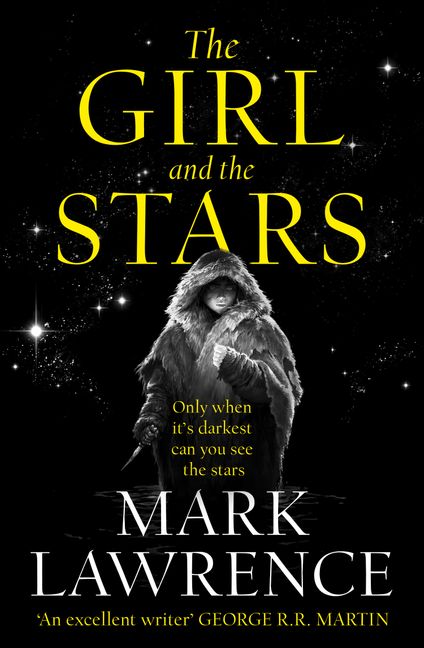
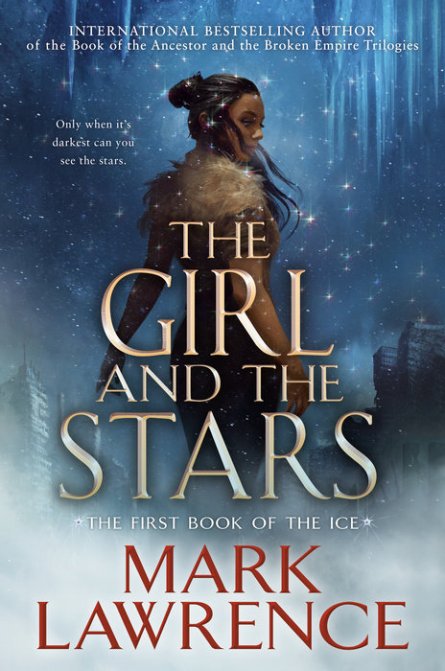
The Girl and the Stars by Mark Lawrence

The Girl and the Stars 2

Publisher: Harper Voyager (Trade Paperback – 20 April 2020)

Series: Book of the Ice – Book One

Length: 473 pages

My Rating: 5 out of 5 stars

Amazon     Book Depository

From the mind of fantasy and science fiction superstar Mark Lawrence comes The Girl and the Stars, a superb and endlessly fascinating novel which takes the reader on an epic adventure in a unique new setting.

Mark Lawrence is a science fiction and fantasy fiction author who burst onto the scene in 2011 with his debut novel, Prince of Thorns. Since then, he has gone from strength to strength, having written several additional books across four intriguing series, all of which have received a lot of attention and praise. Indeed, when some of his latest novels were released (Grey Sister and Holy Sister in particular), you couldn’t escape reviews of his books even if you tried, as every single review site I followed seem to have some commentary about how much they enjoyed them. Despite seeing all this online praise about his work, I have not actually read any of Lawrence’s previous novels. This is not because his books do not interest me; quite the opposite! I actually consider this inadvertent exclusion of his work to be a major hole in my fantasy/science fiction knowledge. However, I just never seem to be able to fit his books into my reading schedule, even after I featured The Broken Empire series on my Top Ten Series I Want to Get Into list. So when I was lucky enough to receive a copy of Lawrence’s new book, The Girl and the Stars, I thought that I would take the opportunity to finally read something from this author, and I ended up getting really sucked into this cool and clever novel.

This book is set on the planet Abeth, a dying world that is slowly being frozen over by vast sheets of ice. Despite the cruel and harsh conditions, several human tribes exist out on the ice, scraping a living and managing to survive. However, there is no tolerance of variation or differences out on the ice, and only those people who are whole and normal are considered capable of living their lives out in the cold. For the rest, there is the Pit of the Missing, a vast and gaping black chasm that burrows deep into the ice and the earth from which no one has ever returned.

Every several years, the various tribes living on the ice gather around the Pit, and their children are inspected by the regulators. If a child is normal, they are returned to their parents and allowed to live their lives, but if a child is shown to be different, either because they are weak or they are in the process of developing unique abilities that may cause them to burn out faster on the ice, they are thrown into the Pit in what is considered a mercy killing.

Yaz has always known that she is weaker and not as resilient as the fellow members of her tribe, but she is able to survive thanks to a source of power only she can access. Prepared to be pushed into the Pit, Yaz is instead chosen by the regulators to be taken to their fortress and trained. However, when the regulator pushes her little brother down into the pit, Yaz does not hesitate before diving in after him.

Against all the odds, Yaz survives and finds herself in a strange and wonderful new world under the ice, illuminated the powerful gems, or stars, that provide heat and light deep beneath the surface. As Yaz explores the vast underground labyrinth, she discovers that the other children thrown into the pit over the years have survived and formed their own society. But as Yas searches for her brother, she soon discovers that life underground is not as the utopia it seems. Many dark and terrible things lurk under the ice, determined to claim the bodies and souls of those people it encounters. But Yaz is different; her power seems to affect the star-like gems surrounding her and may prove to be the tool needed to free those people trapped in the darkness. But Yaz’s potential has been noticed, and soon everyone is fighting to get their hands on her power, which can flip the war being fought beneath the surface. Can Yaz save her brother and escape the darkness of the Pit, or is she doomed to be consumed by the conflict?

The Girl and the Stars is a clever and addictive novel from Lawrence that serves as the first entry in his brand new Book of the Ice series. This latest book is set in the same world as the author’s bestselling Book of the Ancestor series and focuses on a new group of protagonists in a unique and compelling setting. Featuring a unique blend of fantasy and science fiction elements, The Girl and the Stars contains an elaborate and epic narrative. Lawrence once again excels at drawing the reader into his novel with the compelling story of a young woman discovering her powers in a strange world. Told with a deeply detailed writing style which forces the reader to absorb and enjoy every word of this epic book, The Girl and the Stars was an incredible novel, and I had an outstanding time reading it.

At the heart of this intriguing book is a compelling and sophisticated adventure story that sees the protagonist encounter all the dangers that live underneath the ice, whilst finding her own inner strength and resolve. This story, which at times reads a bit like a young adult narrative, turns intense rather quickly, as within the first 25 pages the protagonist has already jumped into the unknown to save her brother. What follows is a non-stop thrill ride which sees Yaz encounter a huge raft of crazy characters and strange horrors underneath the ice. The story continues a brisk and exciting pace, as the protagonist jumps from one situation to the next with intriguing plot developments every couple of pages. There are some big set pieces, plenty of daunting opponents, cunning intrigues and manipulations, fun side characters and a fast-paced storyline, all of which come together to produce a really captivating and exciting read, topped off with a shocking cliffhanger of a conclusion. Lawrence sets up a number of intriguing plot points for the future entries in this series, and I am rather curious to see what happens in the next book, and what adventures the protagonist will find herself on next.

The major highlight of this book has to be the incredibly inventive and intricate settings that Lawrence produced. The Girl and the Stars actually has two really cool settings in which the characters find themselves. The first is the wild ice fields of Abeth, a harsh and unforgiving landscape populated by hardy and practical tribes of humans, who are controlled by a wise and manipulative priesthood. Lawrence does an incredible job of introducing the reader to this setting in the first chapter, making it sound like a fun and intriguing location for the book. However, the second chapter sees the protagonist go into the Pit of the Missing, which takes her to a different world under the ice. This new landscape underneath the pit is far more complex and imaginative than the great ice setting at the start of the novel, filled with a huge collection of different landscapes, from icy caverns, fields of fungi, labyrinthine structures, ancient alien cities and areas of darkness. Into these clever locations, Lawrence installs a number of different groups, factions and monsters, which the protagonist needs to understand or avoid if she is going to survive. The sheer number of features and settings proves to be extremely beneficial to the story, as the reader is left wondering what new obstacle or ally the protagonist is going to meet next. I also rather enjoyed how Lawrence blended together fantasy and science fiction elements throughout the course of the book, with the characters tapping into seemingly magical abilities to survive, and with their major opponents appearing to be demons. However, there is a more scientific explanation to these abilities and antagonists that ties into the origins of the planet and its previous inhabitants. There are also a variety of pure science fiction elements, including mechanical monstrosities, sentient cities and ancient technology. All of these elements, whether they appear more fantasy or science fiction based, prove to be really fascinating, and I quite enjoyed seeing how they played into the book. Overall, this was a really unique and memorable setting, and I loved how the author cleverly wove his compelling story throughout it, allowing it to enhance the narrative with its inventive and distinctive elements.

I have to admit that I was initially a little hesitant when it came to reading The Girl and the Stars, mainly because it was connected to Lawrence’s previous series, which I have not read. From what I have heard, the Book of the Ancestor series contains quite an elaborate narrative and setting, and I was worried that my lack of knowledge about the previous books would impact my understanding of the plot of The Girl and the Stars. However, once I dived into this book’s compelling story my fears proved to be rather unfounded, as I had no trouble following the plot or understanding the unique elements. No prior knowledge of any of Lawrence’s previous books is needed, especially as the story follows a brand new protagonist who has no idea of the events of the Book of the Ancestor’s novels, and who herself needs a crash course in the planet’s history, the varied physiology of the humans who inhibit it and other integral plot elements. As a result, this is an extremely accessible book for readers unfamiliar with Lawrence’s work, and, based on my experiences, I would say that it is a good introduction the author’s writing style and wild imagination

That said, I could tell that The Girl and the Stars is also going to be extremely appealing to fans of the Book of the Ancestor’s series, who will no doubt appreciate the similarities this novel has to Lawrence’s previous work, following a young female protagonist who is new to her power through this unique world. While I did not personally understand the significance of them, this book was obviously chock full of references and world-building knowledge that people who are familiar with the previous books are going to really appreciate and find intriguing. I do have to admit that I was bit uncertain about when The Girl and the Stars occurred in relation to the Book of the Ancestors series, and I really have no idea about whether this book is a prequel, sequel or is running concurrently to the previous books. While this did not impact my enjoyment of The Girl and the Stars in any way whatsoever, I did feel that this is something that Lawrence could have made a little clearer for new readers, especially if there are some connections between this series and the previous books is revealed later in the trilogy. Overall, I would definitely recommend this new entry from Lawrence to any science fiction and fantasy fans, whether they are established readers of the author or new readers looking for something interesting to check out.

I also have to spend a little bit of time highlighting the amazing and eye-catching cover my copy of The Girl and the Stars had (see above). While the alternative cover (see below) was also cool, I really loved the cover that my edition had, which was done by artist Jason Chan. Chan, who has done work for several Lawrence’s previous novels, did a fantastic job with this artwork, producing a cover that is striking and which perfectly reflects the unique setting that the book’s protagonist finds herself in. I absolutely loved it the first time I saw it, and this appreciation only grew once I started reading The Girl and the Stars and fully understood what Chan is portraying. This is an excellent bit of artwork, and it is one of my favourite pieces of cover art I have seen so far this year.

The Girl and the Stars is an exceedingly inventive and exceptionally exciting novel that expertly blends together fantasy and science fiction elements to create a widely entertaining and compelling read. I absolutely loved the unique and imaginative setting that Lawrence came up with for this book, and it proved to be a fantastic background to the novel’s enjoyable story. This was easily one of my favourite books from the first half of 2020, and it has become clear to me that I must read more of Lawrence’s books in the future. Highly recommended.
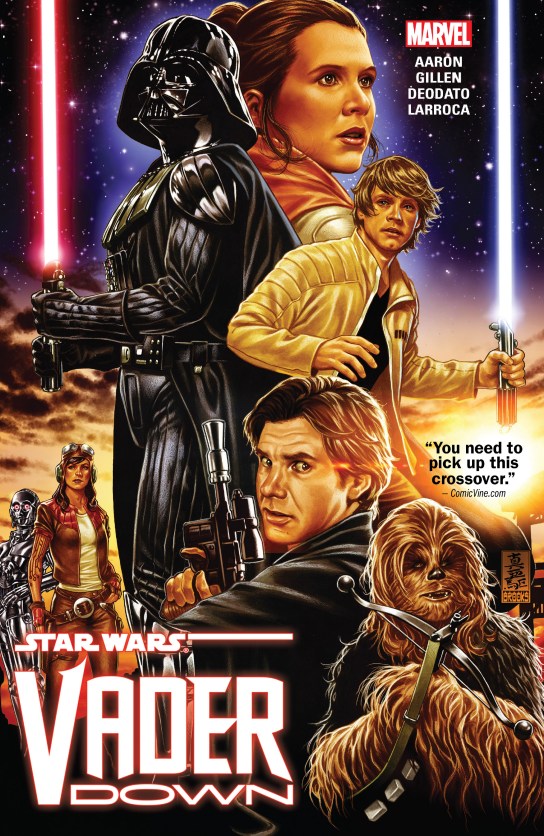
The Girl and the Stars Cover 2

Amazon     Book Depository

Race the Sands by Sarah Beth Durst

Race the Sands Cover

Publisher: HarperAudio (Audiobook – 21 April 2020)

Series: Standalone

Length: 15 hours and 45 minutes

My Rating: 5 out of 5 stars

Amazon

Bestselling author Sarah Beth Durst returns with a pulse pounding and compelling new novel, Race the Sands, an excellent fantasy novel that has a really great story to it.

In the kingdom of Becar, the most important thing to a person is the state of their soul. Guided by the augurs, priests who can read people’s aura, the inhabitants of Becar do all they can to better themselves, as who you are in this life determines your future lives. The purest souls come back as humans or a great animal, while those more corrupt individuals come back as something lower, such as insects or vermin, a state that can only be redeemed after several lifetimes. However, for those truly evil beings, their punishment is to come back as a monster, as a kehok. Kehoks are chimera-like beasts who spawn out in the wilds and who live existences of pure anguish and pain. These monsters have no hope of redemption or salvation and each time they die they will come back as a different type of kehok. The only way that a kehok can break this hellish cycle of resurrection is to become grand champion of the Races, the favoured pastime of the Becaran people. The Races pit several kehoks and their riders against each other to find out not only who has the fastest kehok but which rider has the greatest mental control over their charge.

Tamra used to be an elite kehok rider, but now she scrapes a living as a professional trainer. After several setbacks, including a tragic accident at the previous year’s Races, Tamra is in need of a win, not only to get back on top but to get the prize money that will allow her to pay for her daughter’s expensive augur training. As none of the professional riders will trust her, Tamra is forced to take on and train an unknown street girl, Raia. Raia recently ran away from home to escape her terrible family and a potentially deadly arranged marriage, and she is desperate to find a way to make a living.

Together, Tamra and Raia make an unlikely pair, but with Tamra’s experience and Raia’s natural talent, they might stand a chance, especially as Tamra has managed to obtain a swift and unusual kehok. As Tamra, Raia and their new kehok all attempt to change their destinies, events from around Becar start to impact them. Chaos is engulfing the kingdom, as the former emperor’s reincarnated vessel has yet to be found. Without the vessel no new emperor can be crowned, and the kingdom is on the brink of collapse and invasion. Can this team succeed in the chaos, or will their success have unexpected consequences?

This was an extremely compelling and deeply enjoyable book from a very talented author, Sarah Beth Durst. Durst is a veteran author who has produced a number of young adult and adult fantasy fiction novels since her 2007 debut, Into the Wild. Durst is probably best known at the moment for her Queens of Renthia series, which started in 2016 with her highly acclaimed novel, The Queen of Blood. Durst is actually a new author to me, and I have not had the pleasure of reading any of her previous novels. I have to admit that checking out Race the Sands was a bit of an impulse choice for me; while I was aware that this interesting sounding book was coming out, it was not one that I was initially planning on reading. However, I heard some rather good things about it from a bunch of other reviewers and their glowing praise convinced me that it would be worth reading. I am extremely glad that I did read it, as it turned out to be an excellent read that I deeply enjoyed.

Race the Sands is a standalone fantasy novel that tells a complex and intriguing story completely separate from Durst’s previous works of fiction. Durst does an outstanding job coming up with a deeply compelling and exciting novel that combines a clever fantasy story about racing monsters with an inventive setting and a cast of great characters to create an overall fantastic read. Despite being a book primarily for the adult fantasy fiction crowd, Race the Sands reads a lot like a young adult fiction novel at times, and it has immense appeal for a huge group of different readers, no matter where your interest in fantasy fiction lies.

At the centre of Race the Sands lies an amazing story of action, intrigue and character growth, all based around the really cool concept of people racing monsters out in the desert for glory, money and redemption. This story starts off extremely strong, introducing the high-stakes world of kehok racing and the intriguing main characters, and I would have happily read a whole book based around the races. However, while all the race sequences are extremely exciting, the book ultimately morphs into a much larger narrative, that revolves around the fate of the entire kingdom of Becar. I really liked how the entire story unfolded, especially as all the political intrigue and overarching threats resulted in an epic and impressive conclusion, that was well presented and which showed the book’s protagonists in the most awesome light possible. This was a truly compelling and memorable story, and Durst does a fantastic job packing so much plot and action into a single, standalone novel.

In addition to the excellent story, I was also really impressed with the clever setting and background that Durst came up with for Race the Sands. Becar is an intriguing nation with ancient Egyptian overtones to it, and its two most distinctive features are its obsession with racing monsters and its complex system of reincarnation. I have already mentioned the kehok races above, and they are a really great highlight of Race the Sands. Durst expertly introduces the races and the key concepts behind them early on in the novel, and every single aspect about them is an extremely cool part of the story. However, I really want to emphasise the story element of the Becaran reincarnation system and soul reading that dictates how the populace acts and behaves during their lifetime. This whole system of good and bad souls, which are read by the benevolent augurs, is an important part of the narrative, and is routinely examined by all of the major character throughout the course of the book. In essence the reincarnation system sounds simple: lead a pure life and you come back in a better form in your next reincarnation; be a bad person and come back as something worse. However, it soon becomes clear that there is something rotten at the heart of the whole system, and quite a lot of the story is dedicated to exploring what is wrong and who is behind it. It leads to some real metaphysical discussions about choices, ethics and corruption, which proves to be an excellent and clever part of the book. All of this makes for a great backdrop to this story, and it was a truly fascinating to see how the author explores and utilises these elements throughout the book.

Durst also spends a good amount of time setting up several great characters, who are the heart and soul of the novel, and who each add their own unique elements to the story. There are around five main characters, each of whom serves as a point-of-view character for much of the book, as well as several significant side characters, with one or two of these also serving as lesser point-of-view characters, and each of them add their own unique perspective to the story. At the top of this list is Tamra, the tough as nails, no-nonsense kehok trainer who is haunted by her mistakes and who is eager to redeem herself by training a new racer, which will also allow her to hold onto her daughter. Despite her rough and powerful exterior, Tamra is really a caring and motherly character, who is willing to compromise her own soul and beliefs if it ensures that the people she cares about are safe and happy. Tamra is a fantastic central character, and I loved her raw determination and notable cynicism about the world she lives in. I also have to mention the awesome part she plays in the outstanding conclusion, where she comes across as an amazing badass, completely changing everything in one of my favourite parts of the entire book.

In addition to Tamra, the next major character is the racer Raia, whom Tamra takes under her wing. Raia is introduced as a flighty and scared creature, a failed augur student who is fleeing from her terrible parents and her murderous future fiancé. Despite having no experience, Raia’s only option to survive and make a living is to get involved in kehok racing, and her natural connection to the lion kehok that Tamra buys, ensures that she is taken on as a student. Due to plot circumstances, Raia is given a crash course in kehok racing, and it is through her eyes that we see a lot of details about the Races and what it takes to become a successful rider, which is an exciting part of the book. Raia is also the character who goes through the most growth throughout the course of the book, as she attempts to leave the shadow cast over her by her terrible parents, and quickly gains confidence thanks to her success as a racer, her mentorship under Tamra, some new friendships and the connection she has with her kehok. I really liked seeing Raia’s growth, and she is one of the more inspiration characters within the book.

Another great character is augur Yorbel, the friend and confidant to the heir to the throne, who sets out to find the late king’s reincarnated host in the most unlikely of places. Yorbel, who starts off as a rather naive and sheltered character due to his upbringing in the temple as an augur, finds himself involved in secrecy and intrigue as he attempts to undertake his mission. However, throughout the course of the book, Yorbel finds himself learning more and more about the dark side of humanity, and the difficulties involved with keeping a pure soul. Despite being one of the nicest and most innocent characters, Yorbel has quite a few ethical dilemmas during this book, and the conclusion of his arc was somewhat shocking and intense. I also have to mention Lady Evara, the rich, noble sponsor of Tamra and Raia. I went into Race the Sands knowing to look out for Lady Evara, as several other reviewers identified her as their favourite character. I can definitely see why, as she was easily the most entertaining character in the entire book. Coming across as a snobbish, self-serving master manipulator, it was a lot of fun to see her interact with characters like the serious Tamra or the passive Yorbel. However, Evara also has a lot of depth to her character as well as some interesting backstory, and the parts of the book that featured her were a real treat. I really enjoyed all the main characters in this book, and this great cast of protagonists helped to turn Race the Sands into a first-class read.

I chose to listen to Race the Sands’ audiobook format, and I found it to be a fantastic way to enjoy this excellent book. The audiobook has a run time of 15 hours and 45 minutes and it is narrated by the talented Emily Ellet. I absolutely blew through this audiobook in only a few days, and it became harder and harder to turn it off the more I got engrossed in the story. I thought that the audiobook format really brought all the intense race scenes to life in all their glory, and I especially loved hearing some of the epic moments from the book’s conclusion. I really liked the various voices that Ellet came up with for the books various characters, and I felt that her portrayals of characters like Tamra, Raia and Yorbel were pretty perfect and really reflected how they were written. I also enjoyed the voice that the narrator provides to all of the book’s highborn women, including Lady Evara and the female augurs, put me a bit in mind of Inara from Firefly, i.e. very posh, confident and in complete control of every situation. That being said, all the highborn women do sound very similar to each other, although I didn’t find that to be too distracting. Overall, I had an outstanding time listening to Race the Sands, and it is an amazing format for any potential readers to utilise.

Race the Sands by Sarah Beth Durst is a deeply impressive and highly enjoyable fantasy read which comes highly recommended. This book contains an exciting and addictive narrative that makes great use of its complex characters and intriguing plot elements to tell a story full of action, adventure and brilliant character development. I had an awesome time reading this book, and it gets a full five stars from me. I am really glad that I decided to check this book out, and I will be definitely be checking out some of Durst’s other novels in the future.
Amazon

The Ballad of Songbirds and Snakes by Suzanne Collins

The Ballad of Songbirds and Snakes Cover

Publisher: Scholastic Audio (Audiobook – 19 May 2020)

Series: The Hunger Games – Book 0

Length: 16 hours and 16 minutes

My Rating: 4 out of 5 stars

Amazon

It is time to return to Panem as bestselling young adult fiction author Suzanne Collins presents the thrilling prequel to her acclaimed The Hunger Games series, The Ballad of Songbirds and Snakes.

It has been 10 years since the third and final book in The Hunger Games trilogy was published. Since then the series has gone from strength the strength, thanks to the four films that converted these books into an ultra-popular franchise. Like many, I jumped onto The Hunger Games bandwagon after the first film was released, and I ended up listening to all three of the novels in quick succession. This of course turned me into a pretty major fan of the franchise, and I eagerly watched the next three films as they were released. As a result, I was extremely intrigued when I heard that Collins was writing a prequel novel, and I have been looking forward to it for some time. I ended up listening to the audiobook version of The Ballad of Songbirds and Snakes right after its release, and it proved to be an extremely interesting book that I rather enjoyed.

It has only been a decade since the Capitol won the war that ravished Panem, defeating the Districts and forcing them back under Capitol control. As punishment for their crimes, every year two children from each of the 12 surviving Districts are forced to compete in the Hunger Games, a brutal fight to the death from which there is only one survivor. While many in both the Capitol and the Districts view the Games as distasteful, for one young man it represents an invaluable opportunity.

Coriolanus Snow is a young academy student whose family has fallen on hard times after the war. Coriolanus’s one chance to get into the Capitol university and have a chance at wealth and prestige is to successfully mentor one of the tributes in the annual Hunger Games and ensure that they win. The odds seem to be against him when he is given the female tribute from District 12, generally considered the lowest tribute with the worst odds of surviving. However, when his tribute, the wild and alluring Lucy Gray Baird, sings on stage at the reaping, Coriolanus’s hopes rise, as her antics capture the attention of everyone in the Capitol. Determined to succeed no matter the cost, Coriolanus soon finds his fate entwined with that of Lucy Gray. But as he gets closer and closer with his tribute, just how far is Coriolanus willing to go, and how will his decisions now affect the future of Panem forever?

The Ballad of Songbirds and Snakes is a captivating and entertaining read that serves as a fascinating prequel to the original Hunger Games novels. Collins comes up with a fantastic, character-driven story that focuses on the main antagonist of the first trilogy, President Snow, while also diving back into the past of her unique dystopian future, showing the early days of the Hunger Games. I have to admit that I had rather high expectations going into this novel, and I ended up being a little disappointed at times with how it turned out. This was a rather less exciting read than the previous Hunger Games books, as Collins spends a lot of time exploring society, human nature and the psyche of the villainous protagonist. It was also way too long, and I think it could have been shortened down a little. Despite probably being my least favourite Hunger Games novel so far, The Ballad of Songbirds and Snakes is still a really good book that I had an amazing time listening to it.

This book contains an intriguing plot that follows the protagonist as he becomes involved in the events of the 10th annual Hunger Games. The story is broken up into three distinctive parts, each of which takes up about a third of the book’s narrative. The first part deals with the lead-up to the Hunger Games, the second part follows the actual Hunger Games as Snow watches from the outside, while the last third of the book details the aftermath of the games, and features a new adventure for the protagonist. Each of these three parts proved to be enjoyable in their own right, and together they formed a rather compelling overall narrative. I was a little surprised that the actual Hunger Games ended about two-thirds of the way into the story. When the novel suddenly jumped to a post-Hunger Games storyline with third of the book still to go, I honestly thought that Collins had made a mistake, and would have been better off portraying an extended Hunger Games. However, this third part served as a rather good conclusion to the entire novel, and I actually really liked some of the major plot elements that occurred there, especially as they were the most transformative part of the novel for the main character. There are a lot of cool moments within this story, as well as a bevy of supporting characters, many of whom Collins is able to give a bit of depth to with a few short paragraphs. I actually really enjoyed where this story went, and while I did envision it going in a different direction, I think that Collins did a good job with it in the end.

One of the key things about The Ballad of Songbirds and Snakes is that it serves as an origin story for President Snow, the main antagonist of the original Hunger Games trilogy. It features an 18-year-old Snow as the main character and is told completely from his perspective. I understand that quite a few people were not exactly thrilled that President Snow was the focus of this novel, and many did not want to see a book that followed a young version of him. While I can understand their feelings about this, I personally enjoyed seeing something that focused on Snow and his early history. I have read and enjoyed many stories in the past that focus on a villain, or which features them as a major protagonist, and it can often be quite fun to see their perspectives and motivations. The Ballad of Songbirds and Snakes is a good example of this, and I found it fascinating to see a younger Snow and watch his involvement in his first Hunger Games.

Collins has an interesting take on the character of the young President Snow, and presents the reader with some key moments from his life, as well as some of the people who helped shape him into the villain we know in the later books. The author spends time exploring elements of his childhood, such as showing how he suffered during the war, not only losing both his parents, but also nearly dying from starvation as the Districts besieged the Capitol. There are also some intriguing examinations of his family, such as the grandmother who gifted him his love of roses, and the revelation that the character of Tigress, who appeared in the third book (fourth movie), is actually Snow’s cousin and closest living relative. However, despite these more humanising elements, Snow is shown to be a truly irredeemable person even before the transformative events of the novel. From the very start of the book, Collins portrays him as a manipulative and conceited individual, constantly sucking up to people in order to get what he wants, resentful of those around him who have more than he does and concerned most of all with status. While there are some intriguing nature versus nurture elements to his early behaviours, Snow is shown to be just an unpleasant person. This of course makes him a hard protagonist to get behind for this book, and for most of the story you really were not rooting for him to succeed. Despite this, I found his story to be rather compelling and I enjoyed seeing this mostly amoral teenager attempt to succeed, while presenting the reader with various, weak or selfish justifications for his actions in his mind.

While he is already a pretty despicable person, it is the events of The Ballad of Songbirds and Snakes that truly turn him into the cutthroat person that takes control of the Capitol in the future. Thanks to a combination of his experiences and some perceived betrayals (which are always worse from his point of view), as well as the mentorship of the Capitol’s sadistic head gamemaker, Doctor Gaul, Snow becomes much more ruthless and ambitious, and some of his actions towards the end of the book show just how evil he has become. It was also cool to see him embrace the philosophy around the Hunger Games, as well as developing a hatred of District 12 and certain other symbols and songs, all of which the character would carry with him to the main trilogy 60 years in the future. All of this analysis of Snow’s character formed a captivating heart to the story, and I liked the more villain-centric novel, even if this great antagonist did come across as a winy child at times. I will be intrigued to see more of the events that influenced Snow in the future, although I can appreciate that many others would prefer stories based around Collins’s protagonists.
The other major character that I have to discuss is Snow’s tribute from District 12, Lucy Gray Baird. Lucy Gray is an entertaining and likeable character who steps off the page right at the moment of her introduction and sticks in the mind. Lucy Gray is a very different tribute to that of Katniss from the main trilogy, being a singer and rebellious entertainer who effortlessly makes everyone fall in love with her, and who relies on cunning and underhanded tactics to survive rather than martial prowess. She also serenades both the reader and the other characters with a variety of different songs, and I quite enjoyed seeing several of the musical numbers she came up with, especially as you find out the origins of one of the musical pieces that appear in the original trilogy. Lucy Gray is the character who the reader is most drawn to, and you find yourself even hoping that Snow succeeds, as this will ensure Lucy Gray’s survival. Snow and Lucy Gray end up having a bit of an awkward romance, which on the surface seems nice, although you only see it from Snow’s point of view, and he becomes rather possessive of her in his own mind. I would have been interested to see Lucy Gray’s thoughts on Snow, as it could have really changed the whole dynamic of their relationship. Overall, though, Lucy Gray is a great new character, and the way her arc in this book ends really helps drive home how terrible Snow can be.

The thing that I think most people, especially established fans of The Hunger Games novels, will enjoy about this prequel novel is the substantial world building that Collins does. The author does an outstanding job showing off an early version of Panem, which is still recovering from the impacts of the war, and where control over the Districts is not yet complete. This is a rather different Capitol to what you see in the other The Hunger Games books, as there are no elaborate costumes, outrageous styles, strange cosmetic surgery or excessive luxuries. Instead it is a far more subdued Capitol, with less food, traumatised people and rubble still in the streets. This made for a curious contrast to what we see in the future books, and it was interesting to see the differences and similarities. There are also some exciting flashbacks to the war itself from the memory of Snow, and it was cool to learn a little more about that. Naturally, The Ballad of Songbirds and Snakes contains a lot of foreshadowing to the events of the original Hunger Games trilogy, and fans will enjoy seeing historical views of certain key events, locations and people.

One of the most fascinating aspects of this world building is the author’s exploration of the early Hunger Games and how they took place. These Games are very different to the elaborate affairs shown in the original trilogy. Up until this point the Hunger Games are rather basic, with the tributes simply thrown into an abandoned sports arena with a bunch of weapons. There are some great comparisons between these more basic games and the games that we are more familiar with, such as the way that the tributes are treated, as rather than the luxurious train with all the fancy food that Katniss and Peeta travelled in, the tributes for these Hunger Games arrive starved and injured in a livestock train. This is also the games where they start to experiment with some of the elements that are recognisable from the main games, such as having a mentor, brief interviews with a Flickerman (in this case, Lucky Flickerman, the local news weatherman and amateur magician), gambling and sponsors. It was really cool to see the origins of these ideas, and why they were implemented, and it makes for a truly fascinating addition to the book. Collins also really dives into the philosophy behind the Games, and why the leaders of the Capitol were so eager for them to succeed and why they believed that they helped control the Districts. The origin of the Games is also revealed, as well as some of the key players, and I think it served as an invaluable piece of this universe’s lore. I quite liked learning more about the early days of the Hunger Games, and I imagine that a lot of readers will love to find out how such a terrible event came to pass.

The actual Hunger Games that took place in The Ballad of Songbirds and Snakes was a shorter and more barebones affair than what we have seen before. The tributes are fighting in an actual sporting arena, rather than a terraformed zone, and most of them spend the time hiding in the tunnels. Due to the fact that we are seeing it from Snow’s point of view, and because the arena only has a couple of cameras that only cover a fraction of the area, there are a lot of periods of inactivity and blank time, where the reader has no idea what is going on. This made for a much more disrupted experience, and while it was interesting to see the games unfold from the outside (something we saw a little bit of in the movie, but not in the books), it was nowhere as exciting as it could have been. That being said, there are still some really cool moments of child murder, and I did like seeing the mentor’s role in winning the games. The way in which the games came to an end was also rather clever, and it played into the events occurring outside with Snow. While it could have been longer, more exciting and perhaps more intense, this was still a fun part of the novel, and I look forward to seeing more fights to the death in any future Hunger Games novels Collins writes.

As I mentioned above, I ended up listening to the audiobook version of The Ballad of Songbirds and Snakes rather than grab a physical copy, and I am rather glad that I did, as it proved to be a great way to enjoy this book. The Ballad of Songbirds and Snakes audiobook is narrated by Santino Fontana and has a run time of just over 16 hours. This was a rather extensive run time for a Hunger Games novel; it was around five hours longer than any of the previous audiobooks in the series. That being said, I was able to get through this audiobook in a rather short period of time, and I found myself really engaged by this format, as it helped explore all the elements of this earlier version of Panem. Santino Fontana proved to be a very good narrator for this novel and he does an excellent job bringing the book’s large host of characters to life. The various voices he does fit the characters rather well, and I thought that his narration helped to highlight how horrible Snow could be at times. I also liked how Fontana’s narration worked with the multiple songs that Collins featured throughout the novel, and his spoken version of them sounded rather cool. As a result, I would definitely recommend the audiobook version of The Ballad of Songbirds and Snakes to people interested in checking this book out, as it was a wonderful format to enjoy this great story with.

The Ballad of Songbirds and Snakes was a curious and unique new addition to The Hunger Games franchise, which I thought turned out to be a rather good read. Collins ended up writing an intriguing, character-based narrative that showed a new side to the main antagonist of her original trilogy. While this book is not without its flaws, I had a wonderful time reading it, and once I got into its plot I had a hard time putting it down. Ideal for those fans of the previous Hunger Games novel, this book should make for an interesting movie in the future, and I am planning to grab any future novels from Collins set in this universe.

Amazon

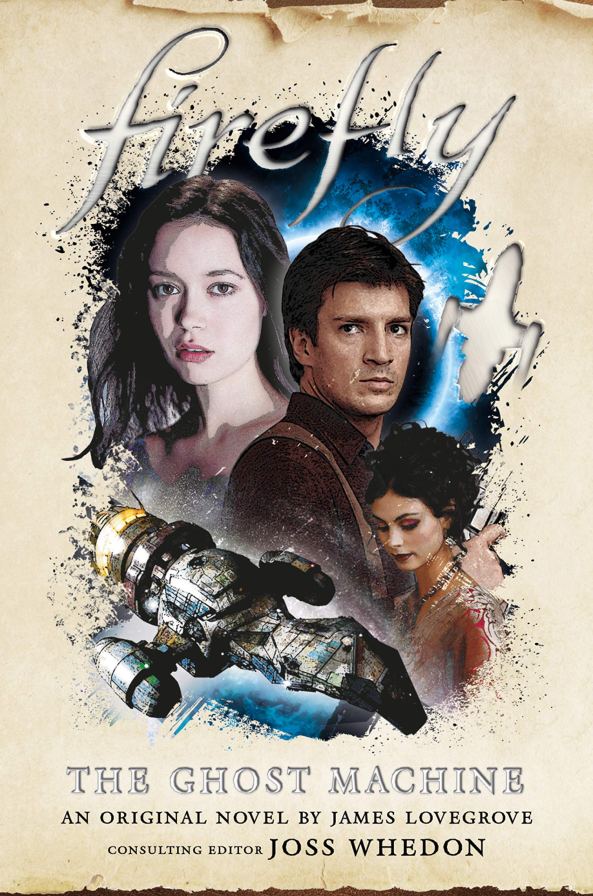
Firefly: The Ghost Machine by James Lovegrove

Firefly The Ghost Machine Cover

Publisher: Titan Books (Hardcover – 28 April 2020)

Series: Firefly – Book three

Length: 335 pages

My Rating: 4.5 out of 5 stars

Amazon     Book Depository

Get ready to dive into the minds of chaotic crew of Serenity as bestselling author James Lovegrove presents the third original tie-in novel to Joss Whedon’s epic science fiction television show, Firefly, The Ghost Machine.

Since the end of 2018, Titan Books have been publishing an exciting series of Firefly novels, which follow the exploits of the infamous crew both during and after the events of the original show. Since the planned third novel, Generations, was delayed towards the end of last year, all of the released Firefly novels have been written by author James Lovegrove, who is probably best known for his Pantheon series, as well as his various Sherlock Holmes novels (which feature some intriguing and unique stories around the iconic character). I have been really enjoying these recent Firefly novels, due to my love of the franchise and the excellent quality of the books involved, and I had an amazing time reading the first two entries in this series, Big Damn Hero and The Magnificent Nine. Due to how much I have enjoyed the prior books and the franchise as a whole, I was rather excited to read The Ghost Machine, and I was not disappointed. Lovegrove (with Whedon credited as a consulting editor), has produced a fantastic and compelling novel, with a really intriguing central plot premise.

Set between the events of the television show and the film, Serenity, this novel focuses on the crew of the Firefly class spaceship, Serenity, as they tour the verse looking for work, legal, illegal and all shades in between. This time, Captain Malcolm Reynolds has accepted a contract from crooked businessman Badger to pick up package on a remote planet and bring it back to him. However, Mal is less than thrilled when he discovers that the cargo is a flightcase stolen from the notorious Blue Sun Corporation, which likely contains advanced tech designed for the Alliance military.

Refusing to let such a potentially problematic cargo aboard his ship, Mal, Zoe and Jayne are forced to kill the sellers in order to leave. However, what Mal does not realise is that Jayne has snuck the package aboard Serenity without telling anyone. As Serenity leaves the planet, each member of the crew suddenly begins to live out their biggest fantasy. Mal finds himself living a peaceful family life with Inara, Jayne is back on his family’s ranch with his little brother’s damplung cured, Wash imagines that he is the owner of a vast shipping empire, and Zoe dreams that the Independence won the battle of Serenity Valley and defeated the Alliance in the Unification War.

What the crew does not realise is that the flightcase contained an experimental urban pacification device known as The Ghost Machine. This machine causes people to fall into a fugue state while imagining their greatest desires, but the tech is dangerously faulty. Soon the crew’s visions of riches, rewards and happy lives become distorted and turned into terrible nightmares that threaten to tear apart their psyches. Worse, with Wash out of commission and not steering the ship, Serenity is on a collision course with a nearby moon. The only person not affected by the machine is River Tamm, whose own mind is dangerously askew at the best of times. But with River sedated and unconscious, can she do anything to help her friends and save the ship, or will The Ghost Machine claim its next victims?

Well, that was shiny! The Ghost Machine is an excellent and enthralling Firefly tie-in novel which was a real pleasure to read. Lovegrove has pulled together one hell of a character-driven narrative which presents the reader with a perilous situation, while also diving deep into the hearts and minds of the iconic crew members. This a clever and compelling story which would have honestly made a spectacular episode of the television show, which I think is high praise in itself. The entire book is extremely slick and captivating, and once I got into it I could not stop reading it, managing to polish off the last 300 pages in a single night. Lovegrove has honestly outdone himself with this book, and I think that The Ghost Machine is my favourite of all the current Firefly books.

As I mentioned above, The Ghost Machine is the third Firefly tie-in novel that has been released, although it was initially intended to be the fourth. Each of these Firefly novels, including The Ghost Machine, are standalone novels, and you do not need to have read any of the prior tie-in books before reading this latest release, nor are there any issues involved with Generations being released out of sequence. I found that The Ghost Machine was very accessible to all readers, and even those people who are not as familiar with the events of the television show should be able to follow and enjoy what is going on within this book. That being said, this novel, like all tie-in books, is specifically designed to be enjoyed by major fans of the franchise, and Lovegrove has filled The Ghost Machine with a number of fun references and callbacks. In particular, quite a number of minor characters from the television show are referred to or appear throughout the book, either within the various dream sequences or back in the real world, and there were even a couple of mentions of characters who only appeared in Lovegrove’s prior novel. There is also a fantastic sequence that replays the opening events of the very first Firefly episode, except with a twist, and some of the plot elements of this book have some interesting connections to the Serenity film set after the events of The Ghost Machine. As a result, fans of the show are going to have a great time reading this novel, although more casual science fiction fans will probably enjoy it as well.

Just like the television show it ties into, The Ghost Machine’s story is very character driven, and focuses on the members of Serenity’s crew. In this story, Lovegrove focuses on all seven remaining characters (as this is set between Firefly and Serenity, Inara and Shepherd Book have both left the ship) equally, and each of them serves as a point-of-view character for several chapters in the book, with one or two chapters also told from the perspective of a non-crewmember like Badger. As the story revolves around each character living out their own unique fantasy, this proved to be the best way to tell the story. I was quite impressed by the way that Lovegrove was able to create distinctive and compelling storylines for each of these main characters in the few chapters each of them had, and all of their character arcs came together extremely well to make an excellent overall narrative. I also think that Lovegrove did a fantastic job portraying all the crew members, and each of them came to live in a similar manner to how they were in the show. This excellent character work added quite a lot to the narrative, and it was great to see some more of these beloved characters.

One of the most intriguing aspects of this book is the visions that each member of the crew experiences because of the titular Ghost Machine. All the characters, with the exception of River, find themselves living a dream version of their life, where their deepest desires have come to pass. It was deeply interesting to see what each member of the crew’s desires where, and it says a lot about each of their personalities and mindsets, while also showing what some of them think about their fellow crew members. For example, Mal’s vision of a happy life with Inara speaks volumes about his true feelings for her after she left Serenity, especially as in this dream he would be willing to live on an Alliance planet just to make her happy. Jayne’s vision of a peaceful life on the family ranch with his brother cured of his terminal illness seems quite at odds with his usual gruff exterior, and it was nice to see that there is more to his character than his desire for violence and money. Simon, who misses the family life and medical career he left behind, imagines a seemingly nice sequence in which he and River are back home safe, but which also includes a relationship with Kaylee. I personally really enjoyed seeing Zoe’s vision of the Independence winning the battle for Serenity Valley and the Unification War, which made for some fascinating alternate history scenes, and which shows that she still is not over how the war ended. I also had to laugh at Wash owning a company called Pteranodon Incorporated in his dreams, due to his love of dinosaurs.

While it was really intriguing to see what each of the characters deepest desires were, it was also cool to see these desires get turned into nightmarish scenarios. The second part of the novel becomes significantly darker as each of these scenarios dissolve into truly terrible situations that play into the characters fears. Lovegrove comes up with some compelling and at times horrifying alterations to each character’s desires, and it was interesting to see each of them unfold. For example, you have a Reaver ship coming down near Mal’s new family home, Wash getting his company taken away by an unlikely source, and Simon finding himself being literally hunted by his family for pursuing a relationship with a mechanic rather than a rich, socially acceptable woman. Each of these changes in scenarios made for some great reading, and I also liked how they also revealed some more details about each character’s inner psyches, such as Simon assuming that his formal family would approve of his budding romance with Kaylee, or the fact that Zoe was always cautious of the mysterious Shepherd Book, and had suspicions about what his past could of have been. Even River, who is the only person who realises that what she is seeing is a dream, is affected by what she and the others think, which limits her ability to save the ship, adding a whole new layer of suspense to the story. Actually, the whole River character arc is actually really exciting, as she ends up bouncing around each of the other character’s nightmares. It was intriguing to see the various ways that she communicated with these characters, especially as she is significantly more mentally intact in these interconnected dreams. The inclusion of all these compelling visions and nightmares really enhances the entirety of The Ghost Machine’s narrative, and it was a fantastic and clever story element.

Overall, The Ghost Machine is an outstanding and wildly entertaining Firefly tie-in novel that was an amazing treat to read. James Lovegrove has come up with an imaginative story, full of action and excitement that also gets right to the heart of several key characters from the television show. I really loved the multiple creative dream sequences that made up most of the book, and it made for an extremely fascinating story. This was an awesome and addictive novel, and it is a must-read book for all fans of the Firefly franchise.

Amazon     Book Depository

Song of the Risen God by R. A. Salvatore

Song of the Risen God Cover

Publisher: Audible Studios (Audiobook – 28 January 2020)

Series: Coven trilogy – Book Three

Length: 17 hours and 3 minutes

My Rating: 5 out of 5 stars

Amazon     Book Depository

Legendary fantasy author R. A. Salvatore brings his Coven trilogy to an explosive and enthralling end with the third and final novel, Song of the Risen God.

The Coven trilogy is an exciting series that Salvatore has been writing over the last three years, which is set in the world of Corona, the setting of his previous series, The DemonWars Saga. This new trilogy follows the adventures of an interesting group of characters in the lands surrounding Loch Beag, including the imposing mountain, Fireach Speuer. The first two novels in this series, Child of a Mad God and Reckoning of Fallen Gods, have both been extremely good, and I have been enjoying reading some of Salvatore’s non-Forgotten Realms fantasy work. I am a massive fan of Salvatore’s writing and I have been looking forward to finishing this series off for some time now. Salvatore certainly did not disappoint with the final entry in this trilogy, as this final novel is potentially my favourite book in the entire series.

War has once again come to the world of Corona, as a new evil leads its forces on a mission of conquest and destruction. The wild lands surrounding Loch Beag and Fireach Speuer have never been peaceful, but now a massive army of invaders is marching across them, determined to conquer and kill all before them. These mysterious invaders are the Xoconai, a lost race of humanoids from the other side of Fireach Speaur. Now, with their reborn god leading the charge on his mighty dragon, the Xoconai are commanded to expand their empire to the opposing coast.

With no hope of defeating the vast host that has suddenly appeared above them, the few surviving inhabitants of the villages surrounding Loch Beag flee through the wilds to find sanctuary. Led by the powerful witch Aoelyn, the frontiersman Talmadge and the ranger Aydrian Wyndon, the villagers move towards the apparent safety of Honce-the-Bear, the most powerful human kingdom in Corona. There they hope to warn the people of Honce-the-Bear of the approaching danger and gather a force that can push back the Xoconai.

However, the dark ambition of the Xoconai god, Scathmizzane, knows no limit, and his magical powers are as vast as they are terrifying in their origin. Using these powers, Scathmizzane is able to accelerate the Xoconai invasion at a tremendous pace, striking right at the heart of Honce-the-Bear, and managing to overpower both their armies and the magic of the Abellican monks. As the Xoconai horde advances, it falls to Aoelyn, Aydrian and their companions to stop them by any means necessary. But can even the most powerful magic user on the continent and a fallen king be able to throw back the invading armies, or will Scathmizzane’s dark power fall across all the lands?

Song of the Risen God is a really impressive and captivating read that provides the reader with an entertaining adventure in one of Salvatore’s detailed and expansive fantasy universe. This final book in the Coven trilogy is a cool addition to the trilogy that not only acts as a satisfactory conclusion to this new series but which also ties it even more firmly into the wider world of Corona.

This book contains an epic and wide-ranging narrative that showcases the dramatic aftermath of the second novel in the series, Reckoning of the Fallen Gods, which saw a massive army and a dragon-riding god descend on the isolated setting of the first two novels. In this third novel, the protagonists are chased all the way to one of this world’s key settings, the kingdom of Honce-the-Bear, where they must fight to save the world from the invading horde. This turned out to be a rather interesting departure from the previous novels in the Coven trilogy, which were much smaller in their scope, tending to focus on a handful of closely related villages in a single location. I actually liked this change of pace, as it made for a much more impressive conclusion, and I quite enjoyed seeing the characters interact with the wider world. This turned out to be an extremely exciting and fast-paced novel that contained a lot of entertaining action and large-scale battle sequences, although the author does not skimp on the intriguing dialogue, creative world building or compelling character development. Salvatore utilises a host of point-of-view characters to tell this story from a variety of different angles, which leads to a rich and comprehensive overall narrative. I am also glad that the author continues to feature in-world texts at the beginning of each part of the novel, which provides some fascinating insights into some characters, and contains some clues about a big twist towards the end of Song of the Risen God. Overall, this was an extremely captivating story with a great blend of elements, and I had a fantastic time reading it.

One of the more distinctive parts of Song of the Risen God is how it connects with some of the previous books set in the world of Corona. Corona is a unique fantasy world created by Salvatore, which has previously served as the setting for 13 novels, including the previous two Coven books. The first seven of these books are all part of the same series, known as The DemonWars Saga, which established many elements of this world, including the kingdom of Honce-the-Bear, the Abellican order of monks and the world’s gem based magical system. The Coven series has always been set in Corona, but the first novel in this trilogy, Child of a Mad God, had very little to do with these prior books. More of a connection was established in Reckoning of Fallen Gods, especially with the appearance of Aydrian, who was a major figure in the later DemonWars books. However, in Song of the Risen God, Salvatore fully combines this trilogy with his prior series, by bringing the protagonists and antagonists of the previous Coven books into the main location of The DemonWars Saga and having them interact with these established characters and settings.

Immersing this series more fully into the wider fantasy world was an interesting choice from Salvatore, and it one of the major things that distinguishes Song of the Risen God from the previous books in the trilogy. This was not a sudden or random decision from Salvatore, as there have been hints that this was going to happen in the previous two books, especially once Aydrian was introduced as a major character. I rather enjoyed the way that Salvatore so dramatically expanded the setting and started using elements from The DemonWars Saga in this novel, as it made for a much more expansive and fascinating story. I never actually read any of the books in The DemonWars Saga (a regrettable gap in my Salvatore knowledge), and before reading Song of the Risen God, I had no real idea what happened in this series, aside from what was discussed in the second Coven novel. However, I found that you really didn’t need any pre-existing knowledge of these earlier books, as Salvatore spends a good amount of time explaining some of the major story events that occurred during these novels and how they impact the current plot. As a result, at no point while reading Song of the Risen God was I in anyway confused by what was going on, and I always had a good idea how the plot was tied into the wider universe. I really appreciated being able to enjoy the entirety of the plot without having to read The DemonWar Saga first (which admittedly sounds pretty awesome, and I might have to check them out at some point), and I think that Salvatore did a fantastic job recapping the events of this prior series in text. Fans of The DemonWars Saga will no doubt like the fact that Salvatore is once again exploring this world, and many will be interested in seeing how much the universe has changed in the intervening years, as well as the major developments that occur as part of Song of the Risen God.

As I mentioned above, Song of the Risen God is the third and final book in the Coven trilogy, which does mean that this book might be a bit harder to follow for those readers who try to jump into the series at the very end (although that would be true for any trilogy). Salvatore does do a good job of recapping and exploring some of the key events of the first two novels, so most readers should be able to follow it well enough. I think that Song of the Risen God proved to be a great conclusion to the entire trilogy, as all of the major storylines were wrapped up rather well. The ending of the book also suggests that Salvatore is planning an additional Corona based series in the future, and if so, it is likely to focus on some of the major characters from the Coven trilogy. I personally would be extremely interested in a follow up series to these books, especially after all the major events that occurred in this novel, and I look forward to seeing what Salvatore cooks up next.

One of the major highlights of Song of the Risen God was the incredible raft of characters. This book had a massive and diverse group of characters featured within it, including the protagonists of the previous two books, characters from The DemonWars Saga and original characters who appeared for the first time within this book. Salvatore did a fantastic job diving down into several of these protagonists, and there was some rather intriguing character development that occurred throughout Song of the Risen God, most of which has some interesting roots in some of Salvatore’s previous novels.

A good portion of the book focuses on Aoelyn, who has served as the main protagonist for the first two Coven novels. Aoelyn is a witch who has spent the previous books trying to escape the clutches of her vicious tribe, the Usgar. In this novel, Aoelyn finally has her freedom, and finds herself in a brand new world, although she still seems to be dealing with some of the same prejudices and problems that occurred amongst the Usgar. Aoelyn spends a good portion of this book continuing to come to terms with her magical powers, which both define her and frighten her, as she has seen how magic can corrupt individuals, and she also attempts to take responsibility for the Xoconai invasion, which she inadvertently caused by killing a demon in the first Coven novel. I felt that Salvatore covered her character arc rather well, and there were quite a few intriguing moments, including Aoelyn making new friends and finding closure with some of the antagonists from the first two novels. I also liked some of the interesting developments that occurred towards the end of the novel with Aoelyn, which not only impact her outlook on life, but which may have some major impacts on any future Corona novels that feature her.

In addition to Aoelyn, quite a few other characters have some fantastic moments within Song of the Risen God. Bahdlahn, the former Usgar slave and Aoelyn’s childhood friend, probably had the most dramatic character development of all within this novel, as he grew and grew with every new encounter and experience within the plot. You cannot help but get attached to Bahdlahn, especially as he goes from wide-eyed former slave who had barely seen anything of the world, all the way up to an elite knight and resistance fighter in Honce-the-Bear. Bahdlahn is another character who has some interesting developments towards the end of this novel, and it looks like Salvatore has some big plans for him in the future. The former Usgar witch Connebragh also has a rather fascinating, if shorter, storyline within this book, as she befriends two former inhabitants of the lakeside villages, despite the long hostility between her tribe and theirs, and helps them survive the Xoconai invasion. The frontier explorers Talmadge and Khotai are also well utilised towards the front of the book, and there are some great moments with them, especially as Khotai regains her mobility in a rather unique way, although both disappear for the last third of the book. Salvatore also invests time in showing the viewpoint of a couple of key Xoconai characters, which I think really adds a lot to the story. Rather than having the Xoconai solely being mindless followers of Scathmizzane, these character perspectives help show them as being rather similar to humans, and two characters in particular have some very interesting viewpoints that lead them to question the word of their god as they attempt to fight his holy war.
All of these character arcs are great, but my personal favourite has to be the one surrounding Aydrian Wyndon. Aydrian is a major character within The DemonWars Saga, as the son of the original protagonists, who eventually became the main antagonist of the series after being possessed by a demon. Freed from his corruption at the end of the series and banished from Honce-the-Bear, which he ruled for a brief time, Aydrian has taken up the role of a ranger, which led to him meeting and helping the protagonists of the Coven series in the previous novel. In this book, he finds the threat of the Xoconai so great that he is forced to return to Honce-the-Bear, despite his banishment, to warn his former people. This leads to several outstanding scenes where he revisits the hurt and despair that he previously caused as a despotic and murderous king, and it serves as a fantastic defining characteristic as he searches for redemption. Aydrian has an absolutely incredible storyline throughout this novel, and his inclusion really added a whole lot to the overall narrative.

In addition to the fantastic story and amazing characters, I also have to once again highlight some of the enjoyable fantasy elements that Salvatore includes in this novel. At the fore of this is the cool gem-based magic that is one of the defining features of the stories set in Corona. This gem magic is an excellent concept, and it proved to be particularly fascinating in this novel as Aoelyn, a self-taught magical gem user, encounters members of the Abellican Church, who also use this form of magic, although in an apparently lesser way. Salvatore makes full use of all this cool magic throughout Song of the Risen God, and there are some rather impressive and destructive examples of the universe’s various magics, which were a lot of fun to see. I really enjoyed some of the cool and unique fantasy elements contained within this book, and it was a rather exciting addition to the story.

I ended up listening to the audiobook format of Song of the Risen God rather than grabbing a physical copy. This audiobook runs for just over 17 hours and is narrated by Tim Gerald Reynolds, who has provided narration for several of Salvatore’s previous books, including the other Coven books. I really enjoyed the audiobook version, and it proved to be a fantastic way to absorb and experience the cool story and the intriguing settings and characters. This is a bit of a longer audiobook and it took me over a week to fully listen to it, although my audiobook listening schedule has been a bit messed up lately. I felt that Reynolds did a really good job narrating this audiobook, and his fantastic voice really helped me get sucked into this fun story. Reynolds had a great handle on all the characters featured within Song of the Risen God, and I liked all the voices that he came up with for them. I ended up having an amazing time listening to this audiobook, and this is a truly excellent format to enjoy this novel in.

Song of the Risen God is a very impressive and deeply enjoyable fantasy novel that comes highly recommended. R. A. Salvatore once again shows why he is one of my favourite authors as he produces a slick and captivating read which is not only fantastic in its own right but which concludes an epic trilogy and ties it into a wider fantasy universe. This proved to be an absolutely amazing read, and I think I have to award it a full five-star rating based on how much fun I had listening to it. Salvatore has done it once again, and I look forward to checking out his next book in a few months.

Amazon     Book Depository

Throwback Thursday: Usagi Yojimbo: Volume 7: Gen’s Story by Stan Sakai

Usagi Yojimbo Gen's Story

Publisher: Fantagraphics Books (Paperback – 1996)

Series: Usagi Yojimbo – Book Seven

Length: 187 pages

My Rating: 5 out of 5 stars

Amazon     Book Depository

Reviewed as part of my Throwback Thursday series, where I republish old reviews, review books I have read before or review older books I have only just had a chance to read.

For this week’s Throwback Thursday, I once again dive into the wonderful world of Usagi Yojimbo and review the seventh volume of this incredible ongoing comic series, Gen’s Story. I have been really enjoying going back and reviewing the older volumes of this fantastic comic by legendary writer and artist Stan Sakai, and this seventh volume is another excellent addition to the series that I always have a terrific time reading.

Usagi 32

Gen’s Story is an amazing example of a Usagi Yojimbo volume, which contains several short stories, each of which shows a unique tale set within the series’ clever version of feudal Japan populated with anthropomorphised animals. Each of the individual stories in this volume is rather good, and together they form a fantastic volume that not only introduces a recurring side-character but which also explores the backstory of another key character and serves as a perfect end note for one of the series’ best character arcs. This volume is made up of issues #32-38 of the Fantagraphics Books run on Usagi Yojimbo, as well as a story from Critters #38, which makes Gen’s Story a tad longer than a typical volume. All of these issues make for an awesome read, and Gen’s Story is another excellent addition to the Usagi Yojimbo series.

The first story contained within this volume is the fun and enjoyable tale, Kitsune. In this story Usagi encounters a talented street performer, Kitsune, who entertains the crowd with the tricks she can perform with her koma (spinning tops). However, Kitsune is much more than a simple entertainer; she is also an extremely skilled thief and pickpocket who manages to take Usagi’s purse without him realising it. This forces Usagi to stay late at an inn, washing dishes to pay for his meal, which results in him witnessing and intervening in an altercation between a notorious gambler and some local gangsters. Deciding to help the gambler under the mistaken belief that he is an innocent merchant, Usagi attempts to escort him out of town, where the two encounter Kitsune again just before the gangsters attack, leading to a fight in the streets.

Usagi 33

Kitsune is an entertaining story that works well as a suitably light-hearted start to the entire volume (get a fun story in before the feels start). The whole of this story is really amusing from the very start, and it contains some great comedy elements, from Usagi getting taken advantage of by Kitsune and the way he doesn’t initially realise that the person he is helping out is the same gambler who previously led a mob against him in A Kite Story, which was part of the fifth volume, Lone Goat and Kid. This leads to a great scenario where the gambler is forced to rely on Usagi for protection, while silently hoping that he will not remember who he is or what he previously did. Of course, Usagi eventually figures out who he is, thanks to the gambler’s boasting, and this results in a great end to the whole farcical tale. This issue also serves as an excellent introduction to the character of Kitsune, who goes on to become a major recurring figure within the Usagi Yojimbo stories. Sakai does a fantastic job showing off Kitsune’s personality and skills as a thief throughout this story, and I also love all the cool drawings he does of Kitsune’s various tricks with the spinning tops. Kitsune’s entire arc throughout this story is great, and I love how Usagi was able to get even with her at the very end, which is a fun prequel to all their future encounters. The combination of an entertaining plot, a great character introduction and an enjoyable call-back to a previous story helps to make Kitsune an excellent first entry in this volume, and I had an amazing time reading it.

The second story in this volume is the short entry Gaki. Gaki is quick and amusing story that follows a young Usagi back when he was a student under the tutelage of his sword master Katsuichi. After one of Katsuichi’s typical lessons, which sees Usagi receive a smack to the head, Usagi attempts to retaliate, striking a blow that seemingly kills his master and causes his ghost to start haunting Usagi. Of course, it ends up being a whole big misdirection, but it results in a fun sequence in which young Usagi is chased by a vengeful spirit, which all leads to a humorous conclusion. The highlight of this quick tale has to be the amazing drawings of the vengeful spirit and the pure terror that appears on the face of the young Usagi, all of which are way out of proportion to Gaki’s rather innocent story. All of this makes for an entertaining second inclusion in Gen’s Story, and it, together with the first story, provides readers with a fun start to this volume.

Critters 38

The third story is where we start getting to the heavier narratives of this volume, as the reader is treated to the supernatural tale, Broken Ritual. This story sees Usagi walking late at night through a small village filled with an unnatural amount of fear, especially after a loud and terrifying wail breaks the silence. Talking to the townsfolk, Usagi learns that the village, which is located close to the site of the battle of Adachi Plain, is haunted by one of Usagi’s old comrades, General Tadaoka, who died following the battle in the midst of an incomplete seppuku ritual. Now, due to the shame of having a dishonourable death at the hands of an unworthy and unnamed enemy, Tadaoka’s spectre appears in the spot where he died each full moon, letting out a wail of anguish. Upon hearing this tale, Usagi decided to try and help end the suffering of his former comrade and manages to help the spirt pass peacefully by successfully performing the seppuku ritual on the ghost.

Broken Ritual is an impressive and gripping story of honour and duty which is easily one of the best inclusions in this volume. This is one of those stories that really sticks in the reader’s mind, and the whole concept of samurai honour, even from beyond the grave, is a really fascinating central plot aspect. I loved the exploration of the seppuku ritual, and the supernatural elements of this story play into this really well, as it highlights just how important an honourable death is to a samurai like Tadaoka, so much so that he came back from the grave to ensure it was done properly. Sakai’s art is in top form for this volume, and his outstanding depiction of a wartime seppuku ritual is absolutely incredible. The intense facial expressions of Tadaoka during the seppuku scenes are particularly enthralling, and Sakai does a fantastic job of showing the pain and concentration that would have been on such a person’s face. All of this leads to a deeply captivating story, and it is amazing the sort of gripping tale Sakai can spin together in single issue.

Usagi 34

The fourth story in this volume is the shorter story, The Tangled Skein, which is the story that was originally featured in Critters #38. This is a creepy, quick story that follows Usagi in the immediate aftermath of the battle of Adachi Plain. Fleeing from the victorious troops of Lord Hikiji, Usagi attempts to hide in a dark forest known as The Tangled Skein, which is rumoured to be filled with all manner of haunts. Naturally, Usagi runs into one of these haunts, a demon disguised as a helpful old lady, and he must try to escape her clutches with help from the most unlikely of sources. This was an awesome supernatural storyline that I quite enjoyed, especially as the story once again highlights some of the philosophies surrounding samurai honour and what duties a samurai has to his lord, and vice versa. Fast-paced, exciting and with a surprisingly poignant moral to its story, The Tangled Skein is great entry to the volume, and I am glad that Sakai included it.

The next story in this volume is simply call Gen, and it is the major storyline contained within Gen’s Story. Made up of three Usagi Yojimbo issues, this is an excellent story of revenge and obsession that also continues the theme of the last few stories by looking at samurai honour and obligation. This story also reveals the full backstory of the always amusing and enjoyable recurring side character Gen and shows how he came to be a bounty hunter. The story is broken into three separate parts by issue, with the first part called Lady Asano’s Story, the second part called Sins of the Father and the third and final part titled Lady Asano’s Revenge.

Usagi 35

Naturally, Gen revolves around the character Gen, who Usagi once again meets out in the wilds, and helps him claim his latest bounty. Recovering from this fight in a nearby town, Usagi shares a meal with a destitute noblewoman and her retainer. The noblewomen, Lady Asano, is on the hunt for her husband’s murderer, a former advisor who betrayed him for great reward, and her exhaustive 20-year long quest has left her poor and on her own. The story is interrupted by the arrival of Gen, who is revealed to be the son of the great General Murakami, the most revered retainer of the Asano clan, and whose family owes allegiance to Lady Asano. Gen, bitter at the years his hard and disciplined father spent dragging him and his mother around the countryside hunting the murderer, an event that led to the death of Gen’s mother and Gen becoming a bounty hunter, refuses to help Lady Asano. However, once Lady Asano and Usagi are captured by the murderous advisor, revealed to be the town’s magistrate, Gen attempts to help, leading to an emotional and violent confrontation.

This was another excellent story that had a number of fantastic elements to it. It was great to finally get Gen’s backstory revealed, as Gen promised to tell his story all the way back in the second volume, Samurai. This was actually a rather tragic backstory for Gen, and I really liked seeing it, especially as it fits in really well with Gen’s character, not only explaining why he is so eager to fight for money but also why he is so dismissive and distrustful of honourable samurai, who must remind him of his father. Sakai makes sure to wrap up Gen’s personal history rather well within this story, as Gen gets some closure with his father towards the end of the story in one of the few instances that we see a really serious and emotionally wrought Gen. I also liked how Sakai continued to explore the concept of samurai honour within this story, especially the obsession and hurt that it can cause. We got to see the negative impacts that having an extremely loyal and honourable samurai as a father had on Gen, and Sakai also focused on the obsession for revenge and redemption that existed within Lady Asano, which not only drove her into poverty but also gave her the strength to finally get her revenge. The sequence where the dying Lady Asano slowly advanced towards the target of her wrath was pretty intense, and she almost appeared demonic as she slowly moved to get her revenge. Other cool highlights of the story include the huge pitched battle that occurred between the protagonists and their opponents’ retainers in the magistrate’s compound, and the continued fun banter between Usagi and Gen, which adds some much needed humour into this heavier story. Overall, this is an impressive and addictive expanded story, that achieves a lot of fantastic character development and which serves as an excellent focus of this entire volume.

Usagi 36

The next story contained within this volume is another lighter story, The Return of Kitsune. In this story, Usagi, who is accompanied by Gen, once again encounters Kitsune, who is up to her usual tricks of street performances and pickpocketing. This time, however, she accidently steals a valuable letter meant for a corrupt local merchant, and she is subsequently hunted through the streets until she runs into Usagi and Gen. Usagi and Gen was work together to save Kitsune from the merchant, even if they cannot agree on what the best course of action is.

The Return of Kitsune is probably one of the funniest inclusions in this volume. The highlight of this entry has to be the first meeting between the two fun side characters, Kitsune and Gen. These two characters play off each other extremely well, and you cannot help but chuckle at the exasperated expression on Usagi’s face as the Gen and Kitsune begin to flirt with each other. I also enjoyed seeing the opposing philosophies of Usagi and Gen clash throughout this story, as Usagi wants to intervene to save lives, while Gen wants to stay out of the whole thing and claims that Usagi is too nosey. This whole argument proves to be a rather entertaining part of the story, and it results in some excellent scenes towards the end of the story, especially when Usagi takes Gen’s advice about minding his own business and fails to tell his friend that Kitsune stole his purse.

Usagi 37

The final entry in this volume is the outstanding narrative, The Last Ino Story, which serves as the last appearance of one of the best recurring characters to appear in the earlier volumes of this series. In The Last Ino Story, Usagi and Gen are taking one of Gen’s infamous shortcuts late at night and find themselves ambushed by bandits while traversing a narrow path along the side of a cliff. Managing to outsmart their attackers, Usagi and Gen seek shelter in a nearby abandoned hut, where they find themselves confronted by a young woman who is attempting to defend her wounded husband. Able to make their way inside, they find that the woman’s husband is none other than the Zato Ino, who has settled down and abandoned his violent ways after his last encounter with Usagi and Gen. Gravely wounded by the same bandits Usagi and Gen encountered, Ino appears close to death and the two samurai must work quickly if they are to save him and ensure he gets to live the life he rightly deserves.

The Last Ino Story is an outstanding and emotionally rich story which is an amazing way to finish this entire volume off. This last entry in this volume contains a great story in its own right, especially as it serves as a fantastic conclusion to one of the best character arcs in the series, that of Zato Ino. Ino was introduced all the way back in the first volume, The Ronin, as a blind outlaw who was trying to find a quiet place to settle down and rid himself of his life of violence, but whose efforts were constantly disrupted by his large bounty and the hunters chasing him. However, as the series progressed and Usagi kept meeting him, he grew as a character, from him gaining his first true friend in the third volume, The Wanderer’s Road, to him finally finding a home and family after the events of the fourth volume, The Dragon Bellow Conspiracy. This final appearance from him (and it is indeed the last time that you see him), serves as a perfect send off to him, as Usagi and Gen, the only two people who knew his past and gave him a chance, find out that he ended up having a the peaceful life he always wanted and has even more happiness on the way. As a result, this is a perfect story for those readers who got attached to the character of Ino through the first volumes of the series, and it was great to see his story come to a satisfying end.

Usagi 38

I also liked Gen’s character arc throughout this story, especially once he finds out that Ino was the injured man in the barn. Gen and Ino have a complicated past, as Gen was initially trying to hunt Ino down for his bounty during their first encounter, and Ino ended up saving his life. In order to repay him, Gen dragged the injured Ino out of the castle before it exploded and told everyone, including Usagi, that Ino had died, in order to ensure that the blind pig would no longer be hunted and could settle down. In this story, Gen, upon seeing the man he saved once again dying, loses his cool and begins to take his rage out on an owl that has been stalking him throughout the course of the book, which he sees as an omen of death. Watching Gen constantly run out into the rain to chase away an owl is amusing on the surface, but it also reveals his deeper feelings that he usually keeps hidden: “The one decent thing I did was give him his peace, and you won’t take it away!” His determination to keep Ino alive because of this is a real change from his usual behaviour, and it helps underline that deep down Gen is a good character, even if he reverts to his usual gruff self the moment he knows Ino is fine. I also liked how the whole saga with the owl ended up, and it was a fun little turn around on the bird being an omen of death. Other highlights of this story include the cool battle sequence towards the front when Usagi and Gen manage to climb up the cliff and face the bandits trying to kill them. The five panels which show this fight are really cool, from the way that the grim faced Usagi and Gen are framed in the moonlight, the close-up of the bandits faces as they charge, the shot of Usagi’s bloody sword, and the way the fight is only alluded to by the sound effects that have been written in, makes for a great sequence that I really liked. All in all, The Last Ino Story is a first-rate inclusion, and it leaves the reader with a memorable and emotionally substantial ending to this volume.

The seventh Usagi Yojimbo volume, Gen’s Story, is another incredible addition to this awesome and deeply enjoyable series. Each of the entries within this excellent volume are outstanding reads, containing complex characters, fantastic narrative arcs and Sakai’s impressive artwork. Gen’s Story gets another five-star review from me, and Stan Sakai has once again shown why he is one of my favourite creative minds.

Amazon     Book Depository

Hit-Girl, Vol 4: In Hollywood by Kevin Smith and Pernille Ørum

Hit-Girl in Hollywood Volume 4

Publisher: Image Comics (Paperback – 19 June 2019)

Series: Hit-Girl – Volume 4

Writer: Kevin Smith

Artist: Pernille Ørum

Colourist: Sunny Gho

Letterer: Clem Robins

Length: 112 pages

My Rating: 3.5 out of 5 stars

Amazon     Book Depository

Lights, camera, bloodshed and mayhem! The world’s most dangerous pre-teen assassin, Hit-Girl, travels to Hollywood in the fourth instalment of the brilliant and exciting Hit-Girl series.

Hit Girl S2 #1

This current Hit-Girl series has been a lot of fun, as it follows Hit-Girl on her world tour of destruction and vigilante justice, with a new creative team at the helm of each volume (which are each made up of four issues). I have been really getting into this series, and I loved the first three volumes, having previously reviewed the first and third volumes, Hit-Girl in Columbia and Hit-Girl in Rome. This fourth volume, Hit-Girl in Hollywood, is another interesting addition to the series, featuring the intriguing creative team of Hollywood screenwriter Kevin Smith and artist Pernille Ørum, and contains Season 2, Issues #1-4 of the Hit-Girl series.

I have to say that I was rather looking forward to this fourth volume. Not only does it have a cool-sounding premise but it also features the writing talents of Kevin Smith, who has written and directed some rather entertaining and distinctive comedy movies (my favourite is Dogma). Smith has also written several comics over the years, which have ranged from the good to the controversial. I am a massive fan of several of his comics, including the incredible Daredevil: Guardian Devil, and his run on Green Arrow back in the early 2000s, which brought back the titular character and set up one of my favourite comic book series of all time. Some of his other work has been a little less well received, such as Batman: The Widening Gyre (which featured the infamous “bladder” spasm incident), but Smith has always been able to create an entertaining story. As a result, I was rather intrigued to see his take on the character of Hit-Girl, and the result was a rather unique and memorable tale.

Hit Girl S2 #2

Mindy McCready, the pre-teen vigilante known as Hit-Girl, is living her best life, killing bad guys and distributing her lethal brand of justice across the world. However, during her most recent mission she becomes aware of something truly terrible: someone is making a big Hollywood movie of her life and it is going to feature a dramatic re-enactment of her father’s death. Determined to stop the movie from being made, Mindy travels to Hollywood to crack some heads and put the fear of Hit-Girl into the movie makers. Deciding to strike at the very top, Mindy breaks into the set to have a “talk” with the studio boss, however, she instead comes across a rather disturbing scene that she was not expecting.

It turns out that there is another vigilante running around Hollywood, and she has in her sights the most evil and vicious predators there are: Hollywood executives who prey on young women. Her latest vicious attack on the studio boss behind the Hit-Girl movie has garnered a large amount of attention, and Hit-Girl is now the main suspect. Hit-Girl needs to find this new vigilante and get out of town fast. But with both the FBI and the remnants of the Genovese mob family gunning for her, can Hit-Girl survive, and what happens when she meets up with a vigilante who has even more issues than she does?

Hit GIrl S2 #2b

Wow, now that was something! I have to admit that I did have a suspicion that Hit-Girl in Hollywood was going to be a rather weird entry in the series, but I was not expecting just how crazy Smith and the artistic team ended up making it. I honestly think the best way to describe this comic is with the phrase “over-the-top”, as this comic features some rather extreme examples of violence and vengeance that a lot of people are going to find rather uncomfortable. I personally found the comic to be quite entertaining, and I liked seeing the crazy character of Hit-Girl in a whole new setting, especially one that makes fun of the Hollywood elite and dramatic method actors who fall deep for their beloved craft. However, even I had to admit that this comic had some issues which made it just a little too insane to completely enjoy.

Hit GIrl S2 #3

The comic actually starts by displaying a graphic and somewhat unexplained school shooting, which is probably going to turn away a bunch of potential readers right off the bat. Hit-Girl brutally intervenes to stop the shooting (graphically killing the two teen killers), but becomes more concerned when she discovers she has an unauthorised biography which is being adapted into a movie, and she travels to Hollywood to put an end to it. Once there she discovers that another teen girl is running around town in a Hit-Girl inspired costume, castrating predatorial Hollywood executives as “Dick-Taker”, whose introduction made me crack up and stop taking this comic seriously. While I could maybe overlook the portrayal of a school shooting at the start of the comic, Dick-Taker officially made this story way too over-the-top for me, especially as Dick-Taker wears a very disturbing and artistic cape that appears to made up of the stitched together skins of the male extremities she has removed (I kid you not!).

Hit Girl S2 #3b

All of this is way too crazy, and it does not help that Hit-Girl in Hollywood’s story is a bit weak in places. The big shoot-out in the fourth issue is cool, but it all happens rather suddenly, and all the key players are in the same place at the same time, prompting Hit-Girl and Dick-Taker to team up, which happened just a little too easily for my taste. I wasn’t a big fan of seeing Hit-Girl fighting the FBI either, as she has a “no killing cops” mindset which was a big part of the end of Kick-Ass 2: Balls to the Wall. I also thought that it was a bit of a waste to use the remnants of the Genovese mob in this story, and the manner in which the final member of the family that has been the main antagonists of Hit-Girl and Kick-Ass was taken down is a tad odd.

Hit Girl S2 #4

Now, despite the flaws and over-the-top extreme nature of much of the comic, I did like parts of Hit-Girl in Hollywood, which made it a mostly fun read. This comic is chock full of gratuitous violence, expertly brought to life by the artistic team, which, let us be honest, is one of the main reasons that you would buy a Hit-Girl comic. I also really liked how the entire first issue was told completely without any dialogue, except for in the final scene. This first issue turns out to be rather cool, as watching Hit-Girl’s outrage grow as she finds out that not only did someone write a book about her but it’s being turned into a movie is pretty entertaining, and showing her sitting on the Hollywood sign saying “I see dead people” in the very last panel is a great way to foreshadow the death and destruction that is bound to follow. I also liked Smith’s take on the crazy, fake town of Hollywood, and it definitely made for an interesting setting, filled with several entertaining characters, quotes from popular movies and a relevant storyline about sexual predators in Hollywood getting what’s coming to them. The whole storyline around the origin story of Dick-Taker is also a rather intriguing version of extreme method actors, and I thought it was interesting to see how inspiring someone like Hit-Girl could potentially be to other disenfranchised young women. My favourite part of this comic had to be the emotional scenes where Hit-Girl visits the set of the Hit-Girl movie and sees them recreate the moment her father died. The combination of anger, fear, regret and sadness that is shown on Hit-Girl’s face and in her thoughts is pretty intense, and it makes for a rather great scene.

Hit Girl S2 #4b

Overall, I’d say that Hit-Girl in Hollywood is an interesting addition to the series that dials up the action and excitement but which is probably not going to be everyone’s cup of tea. I personally liked most of it, but I have to admit that parts of it were off-putting and the whole comic is a bit too crazy for its own good. Still, people looking for an extreme and explosive comic with some memorable moments to it could do a lot worse than Hit-Girl in Hollywood, and you are guaranteed to have a few laughs with this one. I am giving it 3.5 out of 5 stars, although I can imagine that a lot of other people will not be as generous with their ratings as I am. I am looking forward to seeing where the next volumes of this series go, and I cannot wait to get my next Hit-Girl fix.

Amazon     Book Depository

Throwback Thursday: Star Wars: Vader Down

Vader Down Cover

Publisher: Marvel Comics (Paperback – 19 April 2016)

Series: Crossover – Featuring Issues from Star Wars (2015) and Darth Vader (2015)

Writers: Jason Aaron (Star Wars: Vader Down #1, Star Wars #13-14) and Kieron Gillen (Darth Vader #13 – 15)

Artists: Mike Deodato (Star Wars: Vader Down #1, Star Wars #13-14) and Salvador Larroca (Darth Vader #13 – 15)

Colourists: Frank Martin Jr (Star Wars: Vader Down #1, Star Wars #13-14) and Edgar Delgado (Darth Vader #13 – 15)

Letterers: VC’s Joe Caramagna (Star Wars: Vader Down #1, Darth Vader #13 – 15) and Chris Eliopoulos (Star Wars #13-14)

Length: 152 pages

My Rating: 5 out of 5 stars

Amazon

Reviewed as part of my Throwback Thursday series, where I republish old reviews, review books I have read before or review older books I have only just had a chance to read.

Star_Wars_Vader_Down_1_Final_Cover
For this latest Throwback Thursday I go back and look at the epic and deeply enjoyable Star Wars comic book crossover extravaganza, Star Wars: Vader Down.

VaderDown1-ClayMannCover

Vader Down was a crossover, published in late 2015 and early 2016, of two of the best Star Wars comic series at the time, Star Wars (2015) and Darth Vader (2015). These two series ran side by side during this period and were set between the events of A New Hope and Empire Strikes Back and expanded the new Disney Star Wars canon. Both of these series were extremely good in their own right, with some very impressive comics during their early run (check out my reviews for some of these earlier volumes, Skywalker Strikes, Vader and Shadows and Secrets, all three of which got five-star reviews from me). These two comics ended up converging during the events of this crossover, with both series’ creative teams pooling their efforts to tell an exciting and action-packed tale. Vader Down is made up of a single introductory issue (Star Wars: Vader Down #1), two issues of Star Wars (2015) (issues #13-14) and three issues of Darth Vader (issues #13-15)

SWVaderDown1Larraz

Darth Vader is a man on a mission. Ever since he discovered that the Rebel Alliance pilot who destroyed the Death Star was Luke Skywalker, the son he never knew he had, Vader has been scouring the galaxy for him, determined to claim Luke and use him to take control of the Empire. It finally appears that his patience has been rewarded, as his sources have revealed that Luke is visiting an abandoned Jedi temple on the planet of Vrogas Vas. However, Vader is unaware that he is falling into a trap set by one of his rivals, the Mon Calamari cyborg Commander Karbin. Instead of finding Luke by himself, he discovers an entire Rebel fleet orbiting a planet housing a secret Rebel facility. Despite being outnumbered, Vader is able to fight off the Rebel pilots trying to kill him, until Luke, in a desperate move, smashes his fighter into Vader’s ship, sending them both crashing down to the planet’s surface.

Star_Wars_Darth_Vader_13_Cover

Now on foot, Vader sets out across the desolate planet to find his wayward son and turn him to the Dark Side of the force. However, the Rebels send a significant force to Vrogas Vas to capture or kill Vader. But even surrounded and outnumbered, Vader is more than a match for anything the Rebels can throw at him, and it seems only a matter of time before he finds his son. Luke’s only hope to survive lies in his friends, as Princess Leia, Han Solo, Chewbacca, C-3PO and R2-D2 all set out to save him. However, Luke is not the only one with friends on the way, as Vader’s reluctant agent, Doctor Aphra, also sets course to Vrogas Vas in order to save herself from being murdered by her employer for this debacle. By her side are three of the most dangerous beings in the galaxy, the murderous droids Triple-Zero and BT-1, and the vicious Wookie bounty hunter Black Krrsantan.

Vader_Down_2_variant

As the two sides engage in all-out war across the planet’s surface, neither is aware of the danger coming for both of them. Imperial forces under the command of Commander Karbin have come to Vrogas Vas in the aftermath of the conflict not only to capture Luke but to also kill Vader so that Karbin can take his place by the Emperor’s side. Can Vader and the Rebels survive the onslaught of Karbin and achieve their desires, or is this the end of all of them?

Star_Wars_13_cover

Wow, wow and wow!! This crossover is just plain incredible as the two talented creative teams of the Star Wars and Darth Vader comic book series come together to create an action-soaked masterpiece. I absolutely loved this fantastic and inventive story, which not only contains a substantial standalone adventure but which advances both series in some rather interesting ways, especially when it comes to separating the character of Dr Aphra and moving her briefly into the Star Wars comic series. The story contained within this volume is really amazing, as it sets a rampaging Darth Vader against a swath of enemies while the great characters from both series face off in a rather entertaining battle of their own. All of this is set to some incredible artwork from the two series’ respective artistic teams, which brings the phenomenal action to life in all its destructive glory. Unsurprisingly, this comic gets a full five-star rating from me, and it is easily one of the best crossover comics that I have ever read.

StarWars13-ClayMannCover

Vader Down features six separate comic book issues, including an introductory issue, three issues from the Darth Vader series and two issues from the Star Wars series. Each of these comics has been written and drawn by the creative team of their respective series, with the Star Wars issues written by Jason Aaron and featuring the art of Mike Deodato, Frank Martin Jr and Chris Eliopoulos, while the entries from the Darth Vader comics are written by Kieron Gillen and contain the art of Salvador Larroca, Edgar Delgado and Joe Caramagna. The introductory issue, Star Wars: Vader Down #1, was also written by Aaron and drawn by the Star Wars artistic team (although with Caramagna doing the lettering rather than Eliopoulos), and this allows both creative teams to contribute three separate issues to this crossover. The story is set out in an alternate fashion, with the narrative beginning in Star Wars: Vader Down #1 and then continuing in Darth Vader #13, than going to Star Wars #13 and so on and so forth all the way till the volume’s end at Darth Vader #15. This proved to be quite an interesting way to set out the volume, and I think that it really speaks to the coordination and discussions that must have occurred between the two separate creative teams.

Star_Wars_Darth_Vader_14_final_cover

Like most pieces of Star Wars tie-in fiction, Vader Down is naturally geared more towards those established fans of the franchise, especially those who have some history and knowledge of the extended universe. However, I would say that this is definitely a comic that can be enjoyed by casual fans of the Star Wars franchise, especially as the story is very easy to enjoy and appreciate. Readers do not need a massive amount of knowledge about the comic series that are crossing over in order to enjoy Vader Down. I myself had not read any of the Star Wars (2015) comics when I first enjoyed this volume, and I experienced no problems whatsoever following the plot. That being said, it might prove useful to read the first two volumes of the Darth Vader series first, as that serves to introduce several supporting characters in the volume, as well as the main antagonist.

DarthVader14-ClayMannVariant

I felt that one of the biggest strengths of this comic is the way that it utilised and portrayed several iconic Star Wars characters, and I particularly loved how Darth Vader is featured in this crossover. I am a massive fan of the character of Darth Vader, and I am really enjoying how all the current pieces of Star Wars extended fiction portray him as a destructive powerhouse, perhaps as a way to rehabilitate him after the prequel films. However, Vader Down really takes this into overdrive as Vader finds himself alone on a planet surrounded by a vast army of enemies who are hunting him. While on paper it would seem that Vader is at a disadvantage, this really does not prove to be the case, as Vader tears through everyone who stands between him and Luke, often in some particularly devastating manners. Vader comes across as a massive badass in this comic, and I loved every second of it. From the way that he nearly takes out an entire fleet of Rebel fighters right at the beginning (only being stopped by a Kamikaze attack from Luke), to the continuous and effortless destruction of every Rebel he comes across (note to self: never wear grenades anywhere near a Force user), nothing seems to stop Vader, and it is pretty darn impressive.

Star_Wars_14_final_cover

I also love how Vader has some of the best lines in this volume as well, from his response to a request from Aphra to run: “I am a lord of the Sith. They are the ones who should be running”, to his fun response to a Rebel leader who tells him that he is surrounded (shown in the midst of a great full double page spread, just to show how surrounded he is): “All I am surrounded by is fear. And dead men.” However, his best line occurs later in the volume when he engages Commander Karbin in a particularly cool looking lightsaber duel. Karbin, whose enhancements make him resemble General Grievous, is gloating about how much better he is than Vader as he can wield four lightsabers to Vader’s one. However Vader, after throwing a massive statue at him simply responds with: “When you wield the power of the Dark Side one lightsaber is all you need”, which I thought was a pretty badass line, which also reveals why you never see Vader bothering with something more fancy like his Inquisitors do. Needless to say, I thought this portrayal of Vader was very epic and awesome, and it definitely is one of my favourite appearances of this character.

StarWars14-ClayMannCover

In addition to the amazing use of Darth Vader in this comic, I thought that the creative teams did a great job including the supporting characters from the Darth Vader series, namely Dr Aphra, Triple-Zero, BT-1, and Black Krrsantan. These four characters are, in manner different ways, all rather fun and evil doppelgangers of some of the key characters from the original trilogy. Black Krrsantan is an ultra-violent Wookie bounty hunter, more concerned with killing and money than saving lives like Chewbacca. Triple-Zero is pretty much a snarkier version of C-3PO who delights in torture and mutilation and has the inbuilt tools to back it up. BT-1 is an astromech like R2-D2, except he is loaded up with all manner of firepower and he has a nasty habit of melting anyone he dislikes, and BT-1 dislikes pretty much everything and everyone. Finally, you have Dr Aphra, who is a notorious rogue and thief like Han Solo, except rather more successful. She is also a fully trained archaeologist who uses that ability to rob tombs for valuable artefacts, essentially making her a cross between Han Solo and Indiana Jones. Vader Down is the first time that the supporting characters from the Darth Vader series actually meet their more iconic counterparts, and the results are extremely entertaining.

DarthVader15-ClayMannCover

There are quite a few great moments throughout this volume where these two groups of characters come together, and they are all pretty fun. Some of my favourites include an extended brawl between the two Wookies, Chewbacca and Black Krrsantan, as they fight to achieve their opposing goals. This turned into quite a brutal matchup and it definitely does not end in the way that most people would expect. There is another cool scene where BT-1 faces off against R2-D2, who is trying to defend Luke from the evil droids. The two get into a vicious argument of beeps (apparently) and R2-D2 pulls out his built-in taser to fight off his opponents. However, BT-1 is rather better armed, and the sudden appearance of a mass of blasters, missiles, a flamethrower and other assorted weapons from BT-1’s chassis is enough to make R2 run off rather quickly, although he gets a measure of revenge later in the volume. Triple-Zero has a fun time imitating C-3PO at one point in the comic (all it takes is a coat of gold paint) and the subsequent meeting between the two protocol droids does not go well for Threepio (let us just say he gets disarmed).

Vader_Down_Clay_Mann

My favourite out of all these interactions between the classic Star Wars characters and the new ones established in the Darth Vader series has to be the fun meeting between Han Solo and Aphra. Aphra is probably one of my favourite new characters in the current Star Wars canon (make sure to check out my recent review for A Rogue’s End, the seventh volume of her spinoff series), and her fun sense of humour really shines through in this encounter. There is a pretty funny scene towards the front of the book, when Aphra, researching the members of the main Star Wars cast, sees Han Solo and responds with an uber sarcastic: “Han Solo. The Han Solo. Oh me, oh my. What are we going to do facing Han Solo?” When they subsequently meet, Aphra continues to be unimpressed by Solo, deflating his ego over his apparently insubstantial reputation and managing to scare him with her own name. They two share some rather good verbal barbs before the shooting starts, and I think that the writers came up with the best resolution to this fight, which can only be described as an unintentional and funny draw. Overall, I really loved seeing all these fantastic characters coming together in this volume, and it is an impressive and entertaining highlight.

SWVaderDown1Maleev

While most of the character arcs in this book lean more toward either humour or pure destruction, the writers also did a rather good emotional storyline around Princess Leia. Leia arrives on Vrogas Vas to lead the hunt for Vader, and eventually ends up coming face to face with him. As this is the first time Leia has seen Vader since he stood by and watched the destruction of Alderaan, this proves to be a rather hostile meeting, and Leia is overcome with a desire for revenge and is willing to sacrifice herself and her friends to see Vader taken out. There are some great moments throughout Leia’s scenes in the book as she presents her righteous indignation towards Vader, whose response is less than repentant: “This is not a war, Princess. Wars are for lesser men than the Emperor and myself. This is a series of executions. And yours is long overdue.” All of this gets pretty intense, and Leia actually tries to commit suicide at one point in an attempt to take Vader with her. She is eventually broken out of her mission for revenge thanks to an urgent plea for help from C-3PO, who is watching the rest of their group getting attacked and captured. All of this proved to be a rather powerful and emotional storyline within this volume, and I think its inclusion helped to enhance and elevate the entirely of the comic’s plot.

Vader_Down_Fried_Pie_variant

I also must highlight how impressive the two separate artistic teams were, as both groups of artists come up with some fantastic sequences in Vader Down. As I mentioned above, the issues alternate throughout the volume, and as a result the artistic style of the comic changes with each new issue. There is a rather distinctive difference in the designs and illustrations of the two separate teams, and it proved interesting to jump between these styles each issue. I liked both unique art designs and colourations (with perhaps a slight preference towards the Darth Vader comics style), and I think that they all did an excellent job of portraying the epic story. It actually proved to be rather intriguing to see the separate teams have a go at drawing some of the characters who usually appeared in their counterparts’ comics, and it was also cool to see sequences that lasted more than one issue (such as the lightsaber duel between Vader and Karbin) go through some stylistic changes with each changing issue. There are a huge number of amazingly drawn scenes throughout this comic, although I think the best highlights had to include the extremely impressive starfighter battle in the first issue, with all the blaster bolts and explosions occurring out in space. Other cool scenes included a sudden spaceship crash in the final issue and a series of explosions and lightsaber work in the front of the volume’s second issue. I also liked how both teams of artists utilised the desert landscape of Vrogas Vas in their drawings; the constantly swirly dust really helped to enhance some of the battle scenes in this book and bring a sense of movement and a planet disturbed by violence and death. As a result, I think that both teams of artists did an outstanding job throughout the comics that made up Vader Down, and it certainly helped to enhance the epic experience I had reading this crossover volume.

SWVaderDown1Mayhew

Vader Down is an immensely cool and exhilarating Star Wars comic that serves as an impressive crossover between two excellent comic book series. This combination of the Star Wars (2015) and the Darth Vader comics proved to be deeply entertaining and it is a clear example of how awesome the Star Wars extended universe can truly be. An absolute blast from start to finish, with non-stop action, eye-catching artwork and some clever character work, Star Wars: Vader Down is a must-read comic for all Star Wars fans and I cannot recommend it highly enough.

Amazon

Star Wars: Doctor Aphra: Volume 7: A Rogue’s End

822346._SX1280_QL80_TTD_

Publisher: Marvel Comics (Paperback – 11 February 2020)

Series: Doctor Aphra – Volume 7

Writer: Simon Spurrier

Artists: Caspar Wijngaard (Doctor Aphra #37-40, Star Wars: Empire Ascendant), Elsa Charretier (Doctor Aphra Annual #3)

Colour Artists: Lee Loughridge (Doctor Aphra #37-40, Star Wars: Empire Ascendant), Edgard Delgado and Jim Campbell (Doctor Aphra Annual #3)

Letters: VC’s Joe Caramagna (Doctor Aphra #37-40, Doctor Aphra Annual #3), Clayton Cowles (Star Wars: Empire Ascendant)

Length: 144 pages

My Rating: 5 out of 5 stars

Amazon

So I just got through with watching the latest episode of Star Wars: The Clone Wars and it’s put me in a Star Wars mood (well, more of a Star Wars mood than usual), so I thought I would get a review together for the seventh and final volume of the excellent 2016 Doctor Aphra series, A Rogue’s End.

The Doctor Aphra series is an outstanding comic book series that I have been really getting into over the last couple of years. Spinning off from the 2015 Darth Vader comics, this series features a witty and unique protagonist in its titular space archaeologist, Doctor Aphra, who blasts around the universe bringing chaos and disorder in her wake. This has probably been one of my favourite comic book series of the last couple of years, and it is easily my top Star Wars comic at the moment. Unfortunately, this current run of Doctor Aphra has just come to an end, although a new Doctor Aphra series is just starting up with a different creative team. Writer Simon Spurrier and his artistic team produced an incredible and satisfying conclusion to their Doctor Aphra run with A Rogue’s End, the sensation final volume that follows on from the events of the excellent sixth volume, Unspeakable Rebel Superweapon, and is set just before the events of The Empire Strikes Back.

DoctorAphra2016-38

After saving the Emperor’s life from an assassination plot, archaeologist, scam artist and all-around disaster zone Doctor Chelli Aphra thought that she would finally be safe. Instead she finds herself trapped in the one place she has been running from for years, in the clutches of the most dangerous person in the galaxy, Darth Vader. Vader desperately wants Aphra dead, as she knows his darkest secret, his obsession with Rebel pilot Luke Skywalker, and it is only a matter of time before he finds an excuse to kill her.

Trapped aboard Vader’s Star Destroyer with her young companion, Vulaada, Aphra’s only chance to survive is prove her usefulness and help Vader find the location of the new Rebel base. However, Aphra is nothing if not resourceful, constantly looking for a way to game the system and extend her life. An encounter with a mysterious figure in an ancient temple seems to offer her the best chance of survival, until she finds out that it is her Jedi-obsessed father, Korin Aphra, once again causing trouble.

With the fate of everyone she loves in the balance, Aphra begins to devise another elaborate plan. With the help and hindrance of her ex-girlfriend, Captain Magna Tolvan, and the murderous droids BT-1 and Triple Zero, Aphra sets out not only to fool the entire Empire but to finally bring her affiliation with Darth Vader to an end. Can Aphra pull off the greatest con of her career, or will all her lies and deceit finally bring her the grisly end she has been running from for years?

DoctorAphra2016-39

Well that was another damn impressive and deeply enjoyable Doctor Aphra comic. Spurrier, who has been working on this series since late 2017 (when he cowrote issue #14 with Kieron Gillen, one of the original creators of the character), brings this series to an epic and satisfying conclusion with another incredible group of stories. This seventh volume of the series contains issues #37-40 of the Doctor Aphra series, as well as the Doctor Aphra Annual #3 and material from Star Wars: Empire Ascendant #1. This whole volume was deeply captivating and I loved every second that I was reading through it, especially as it combines and excellent story with some fantastic artwork.

At the centre of this book is an exciting and clever story of survival, deceit and redemption. The four issues of the Doctor Aphra series (#37-40) contain an amazing storyline that follows the series protagonist as she attempts to get out of the most dangerous situation she has ever found herself in. Spurrier tackles these final four issues with the same style that he has employed for most his run, blending together a tale of deceit, double-crossing and survival in the Star Wars universe with humour, fantastic action and a deep analysis of the troubled and complex character that is Doctor Chelli Aphra. This results in an addictive overarching narrative that is not only incredibly entertaining, but which also gets quite moving and emotional at times, especially when Aphra encounters all the important people in her life, many of whom have been damaged in one way or another by her selfish actions. I have to say that I was particularly impressed with Aphra’s master plan in this comic, especially as it not only showed off her skills for deceit and manipulation but it was motivated by a genuine desire to help those she loved, which represents some significant series-wide character development for her. I also appreciated how the whole storyline has some major connections to the events of The Empire Strikes Back, and I liked how it was tied in more to the main plot of the movies.

DoctorAphra40-CoverArt

One of the other things that I really loved about this comic was the way that Spurrier wrapped up a ton of the storylines around some of the great supporting characters that have made this series such a treat. In particular, she manages to have some touching final meetings with her father, her ex-girlfriend, Tolvan, and her young sidekick, Vulaada, and this volume serves as a rather good conclusion to their various storylines (although I hope that they do appear in the future series). Her final meeting with Tolvan was pretty great, as the two have had a particularly chaotic and damaging love affair due to the actions of Aphra, and it was nice to see her finally prove Tolvan wrong and do the right thing for her. I also loved some of the scenes between Aphra and her father, and there is one incredible sequence where Aphra concisely recounts some of the adventures she has had throughout the series, and her father finally provides her with the advice and guidance that she has always sought from him. I really appreciated that Aphra finally gets some closure with these supporting characters, and in the three cases above she goes out of her way to protect them and bring them together to ensure that they have better lives. This is a major change in direction for Aphra, whose entire series has seen her repeatedly screw up and destroy the lives of everyone she meets, including those people close to her, something she is keenly self-aware of and deeply ashamed of. As a result, it was rather nice to see her finally step up and take responsibility for several people close to her, and to finally make what she sees as the right decision and leave them behind: “Love is letting go.” I also enjoyed the return of the two murder droids, BT-1 and Triple Zero, who have been highlights of both this series and the preceding Darth Vader series. I felt that both of them are rather well utilised in this story, and quite frankly you could not have wrapped this series up without them. It looks like both of them are going to be major features (in some form or another) of the next Doctor Aphra series, which should be fun.

Another character who Aphra gets a bit of closure within this volume is her oppressive employer, Darth Vader. Aphra and Vader have a complex and lengthy history together, dating back to the 2015 Darth Vader series where Vader forcibly recruited Aphra, and which ended with Vader believing that he had killed her, only for Aphra to trick him. Aphra has spent the subsequent run of her series constantly trying to stay off Vader’s radar, and continuously tricking him into believing that she is dead. However, after the events of Unspeakable Rebel Superweapon, she is firmly in his clutches and waiting to die. I really loved the whole interaction between Aphra and Vader in this volume, as for most of it Aphra is trying to trick or convince Vader to keep her alive, while Vader is looking for an excuse to kill her. This pretty much makes Aphra the most desperate we have ever seen her, as she is still rather traumatised from the events of Vader’s first attempt to kill her, and still gets an interesting array of nightmares about them. Despite this, Aphra is eventually able to turn the tables of Vader, thanks to her cunning, knowledge about the force, pieces she has gleaned from Vader’s past and technical ability. The way she is able to take him down is pretty impressive: “Don’t pick a fight with an archaeologist in a spooky old ruin. And don’t wage war against a tech criminal if you’re half a machine.” It makes for a great sequence, especially when she uses Vader’s own scary reputation against him. This scene also allows Aphra to have a memorable heart-to-heart with Vader, and she discusses the similarities the two of them share, mostly about how they are both living with a massive amount of regret. In the end, Aphra decides against killing Vader, saying, “I’m your biggest fan,” even though she knows that Vader will come after her in the future, even more determined to kill her. She actually has a rather poignant farewell with Vader, saying, “In a funny sort of way, you’re the best thing that ever happened to me,” which says a whole lot about Aphra’s messed up character, but is a fun and fitting reversal of how Vader ended their partnership in his series.

DoctorAphraAnnual-3

This volume features some tremendous illustrations from a truly talented team of artists. I really enjoyed the artwork that was featured within this story, and I think that it did a fantastic job of conveying and enhancing the complex and enjoyable storylines that the writer came up with. There are a number of well-drawn and well-portrayed sequences throughout this volume, although I particularly liked the one that made up the majority of issue #40, which featured Aphra facing off against Vader in a ruin filled with traps. There was also a rather good extended conflict between Aphra and Tolvan throughout a Rebel Alliance a spaceship that the drawings helped make particularly fun and chaotic, and which also did a good job of showing off the anger and complex emotions that filled their relationship. Overall, there was some fantastic artwork in this volume, and I think that the artists did an excellent job bringing the great characters and excellent story to life.

Most of what I mentioned above takes place in issues #37-40 of the Doctor Aphra series, but this volume also contains two extra stories, the Doctor Aphra Annual #3 and the parts taken from Star Wars: Empire Ascendant #1. Both of these inclusions were also written by Spurrier and are really tied into the narrative contained within the main plot of the volume, and I felt that these two inclusions did a lot to enhance my overall enjoyment of A Rogue’s End.

DoctorAphraAnnual-3-Doran

I did quite enjoy the fun story contained with the Doctor Aphra Annual #3, which focuses on some of the great supporting characters from the Doctor Aphra series. The self-contained story in this annual issue sees Aphra try to repay her debt to the monster hunters Winloss and Nokk, who previously saved her life, by providing them with information she is privy to while aboard Vader’s star destroyer. This information leads these two hunters to the Mos Eisley Cantina on Tatooine, where another former associate of Aphra, the Wookie bounty hunter Black Krrsantan, is in residence. This leads into a rather fun story which sees these characters and a rather slimy bartender go through all manner of trouble just for a measure of revenge. This was an excellent and compact story that contains a clever revenge plot, and it’s pretty damn hilarious. I liked how this annual followed the lead of the other stories in this volume by focusing on Aphra bringing together some of the side characters from the series, presenting the reader with a good conclusion to their association and storyline with Aphra. This story featured a different artistic team to the rest of the volume, resulting in a different and distinctive drawing style for the entire issue. I actually rather liked the style that this separate artistic team came up with, and I think that it fit the more humour-based storyline that that Spurrier came up with. Overall, this latest issue of the Doctor Aphra Annual made for an amazing entry in this volume, and I think that it worked extremely well with the other issues featured within it.

This volume also contained material from Star Wars: Empire Ascendant #1, which makes up a small story at the end of the book. This material focuses on the three people that Aphra saved throughout A Rogue’s End, Tolvan, her father and Vulaada. They are all on Hoth when the message that Aphra was composing in the final Doctor Aphra issue is received by the Rebel Alliance. This leads to a rather heartfelt and emotional scene in which the three of them discuss whether their lives where made better or worse by knowing Aphra, and whether she ever did anyone any good. Their musings are interrupted by one of the few other people in the Rebel Alliance who had any dealings with her, Luke Skywalker, who provides some information about a good deed she performed after the last time they saw her. I liked how Spurrier once again examine the chaotic and destructive personality of Aphra through the eyes of the people who knew her best, and it really matches the overall theme of the volume. I also liked the inclusion of Skywalker in this story, and it was a fun call back to the earlier volumes of the Star Wars (2015) series, which featured Aphra working with the main protagonists of the original trilogy. It was interesting to see Luke’s take on Aphra, and it is a bit of a crossover between the idealism of the main cast and the darker reality of the Star Wars universe that the cast of Doctor Aphra find themselves in. I had a good laugh at Tovan’s assessment of Luke as the farmboy who got bumped up to commander after one lucky shot, and I also loved their response to Luke’s glowing assessment of Aphra actually being a good person: “Should we tell him she also saved the Emperor’s life? Better not, nothing crueller than reality to a dreamer.” This short piece of material actually serves as a pretty good conclusion not only to the volume but to the Doctor Aphra series as a whole, and I think that its moving, character-driven storyline helped provide an emotional end to the entire series.

EmpireAscendant-1

The seventh volume of the amazing Doctor Aphra series, A Rogue’s End, is another extremely entertaining and complex Star Wars story which I deeply enjoyed. Writer Simon Spurrier and his talented artistic team once again take the reader on another exciting and powerful adventure that not only serves as a great story in its own right but which also provides fans of Doctor Aphra with a meaningful and rewarding conclusion to the entire series. This volume gets a full five stars from me, and I would strongly recommend this volume, and indeed the entire series it concludes, to anyone looking for an outstanding and fresh Star Wars adventure.

Amazon