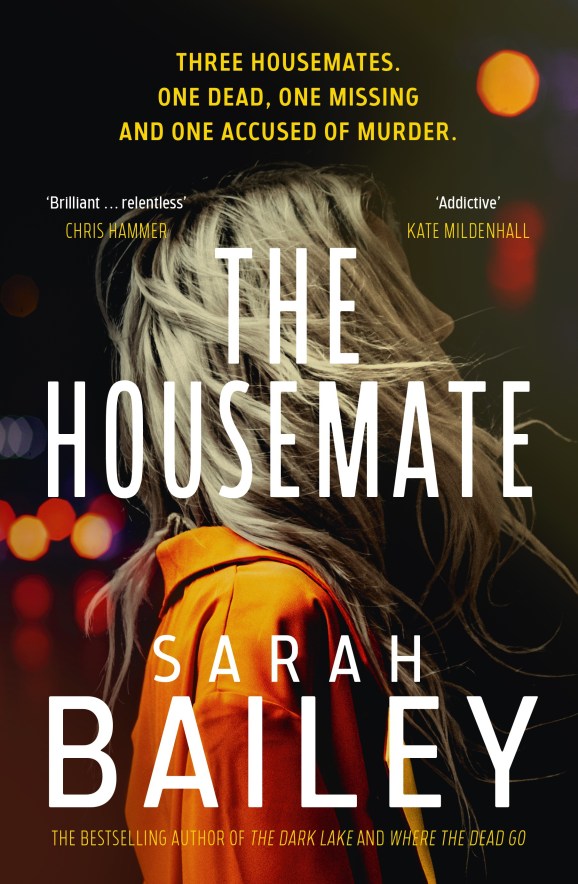
The Housemate by Sarah Bailey

The Housemate Cover

Publisher: Allen & Unwin (Trade Paperback – 31 August 2021)

Series: Standalone

Length: 454 pages

My Rating: 5 out of 5 stars

Amazon     Book Depository

Impressive Australian author Sarah Bailey returns with The Housemate, an outstanding and intense murder mystery that takes a complex protagonist through a dark journey as they attempt to solve an infamous murder.

It was the crime that shocked all of Australia: one night, after a fractious party in the suburbs of Melbourne, three female housemates would become infamous for all the wrong reasons.  In the morning, one of the housemates is found brutally murdered, another is found covered in her blood, while the third goes missing and her body is never found.  Dubbed the Housemate Homicide, the unexplained murder, the mysterious disappearance, and the subsequent controversial court case has baffled and enthralled the country for years.  This includes Olive Groves, a journalist who got her first big break covering the murder and who then became obsessed with cracking the case.

Nine years later, the body of the missing housemate is found in a remote property in the Victorian countryside.  Despite dealing with her own dark personal issues, Olive is assigned to cover the story, and soon finds herself once again dragged into her deepest obsession.  Teamed up with millennial podcaster Cooper Ng, Olive begins to immerse herself in the details of the murder, reigniting her fiery obsession.

As Olive and Cooper work to uncover new details about the case and the three women at the heart of it, they start to make some startling discoveries.  None of the housemates were what they seemed, and all had dark and terrible secrets that have remained hidden for years.  What really happened to these three friends, and what secret was so terrible that they would kill to protect it?  Olive is about to discover that there is a dark conspiracy at work throughout this case, one whose roots may lay far closer to home than she ever imagined, and whose discovery may end up breaking her.

This was an incredible and extremely clever dark murder mystery from Sarah Bailey, who has previously produced some impressive and compelling pieces of Australian fiction.  The Housemate was pretty exceptional read and I quickly found myself getting really caught up in this remarkable and well-written piece of crime fiction.  The author weaved together a dark and compelling tale of betrayal, murder and tainted love, featuring an extremely damaged protagonist and multiple epic twists.

The Housemate has a pretty amazing and memorable murder mystery narrative that follows a reporter as she attempts to uncover the truth behind an infamous cold case.  Bailey does a great job setting up the plot of this book in the early pages, showing the protagonist’s involvement in reporting the initial discovery of the murder, before initiating a time skip nine years in the future.  Once there, the author spends a little time exploring how the protagonist’s life has changed in the intervening years, before swiftly starting the next stage of the mystery, with the discovery of a body out in the Victorian countryside that has connections to the murders.  The rest of the book flows by at a quick pace after this, as the reader gets stuck into the re-opened investigation.  Bailey starts the various twists flying early, and the reader is soon struck with a series of theories, leads, potential suspects and connected side characters, all of which add to the overall tapestry of the mystery, while also serving to keep you guessing about who is responsible for the murder, and that isn’t even mentioning the compelling flashbacks from the surviving housemate.

As the investigation continues, The Housemate’s story continues to get even more complex, as the personal life of the protagonist, Olive, gets dragged into the plot, especially as Olive is in a complex relationship with the widower of the primary police investigator of the original case.  This results in some extremely intense moments as Olive begins to suspect everyone, which has a major impact on her grip on reality.  I deeply appreciated the psychological thriller aspects that were worked in, as the reader starts to really question Olive’s grip on her sanity, and it helped to make the story even darker and more unpredictable.  Everything really kicks off in the final third of the novel, especially after the case becomes even more potentially convoluted and connected to a wider conspiracy.  There were some great reveals in this final third of the novel, and a pretty major and surprising event that really changes everything.  I found myself absolutely glued to this book in the final stages, as I couldn’t wait to see what happened.  While I did think that the author was a little too heavy handed when it came to suggesting that one particular character was the murderer, I thought the eventual reveal of who was behind everything was extremely clever.  The solution to the historic murder was very impressive, especially as some of the elements were set up extremely early in the novel and you didn’t even realise it.  I really loved the impressive way the case was wrapped up, although the end of the final confrontation was a tad too coincidental for my taste.  Still, it was a really great way to finish the novel, and I was well and truly hooked by this awesome and dark tale of murder.

You can’t talk about The Housemate without mentioning the author’s great characters, especially protagonist, Olive Groves (a fun name).  Olive is a complex and damaged woman, who has been obsessed with the novel’s central case ever since she saw the suspected killer and the various family members emerging from the house during the initial media coverage.  Years later, Olive now has a complex life, as she is living with the controlling widower of the cop who was originally investigating the crimes, something she is immensely guilty and conflicted about.  Her already fragile mental state is put at risk when she starts working on the latest developments in the Housemate Homicides case, which reawakens her long-dormant obsession.  This obsession drives her to investigate the case by any means and takes her to some dark spaces as she tries to get into the head of the three housemates and figure out what happened to them.  Olive slowly goes downhill as the novel progresses thanks to a combination of stress, obsession, anger, and multiple personal reasons, such as the actions of her emotionally abusive partner and her own massive guilt for sleeping with him while his wife was still alive.  Olive has a big breakdown towards the end of the novel, especially after a major surprise event, and it was fascinating to see such a dramatic and powerful burst of emotion.  This compelling personal crisis is perfectly worked into the plot of the book, and it really helped to enhance the main murder mystery storyline, especially as you become really concerned for Olive’s mental and physical safety.  I appreciated the way in which Bailey wrapped up Olive’s character arc by the end of the novel, and I cannot emphasise what an impressive bit of character work Bailey did around her.

Aside from Olive, there is a great collection of complex side characters throughout the novel, each of whom play a vital role in the case.  The main one is Cooper Ng, the socially shy tech expert and social media whiz who is assigned to help Olive investigate, with the two required to develop a new podcast for their paper.  Cooper is a fun and energetic figure who stands as the complete opposite to Olive’s gruffer and irritable personality.  Cooper and Olive make for an interesting partnership throughout the book, and it was fun to see them combine their vastly different skills and experiences.  The author also spends a bit of time examining each of the three housemates who were at the centre of the book’s mystery.  It initially appears that all three were bright and optimistic students when the fateful night occurred.  However, as the book progresses you begin to see that they are a lot more complex than that, with all three involved in something dodgy.  Seeing how they were driven to the events that occurred the night of the killing is pretty fascinating, and I really appreciated the dark and intense storyline that Bailey weaved around them.  All these characters, and more, added a lot to the story, and I loved the fantastic and realistic interactions that occurred within.

The final thing that I wanted to highlight about The Housemate was its interesting examination of Australian journalism.  I have always rather liked journalist protagonists in fiction, due to their less formal way of investigating crimes, and this worked very well in the context of The Housemate, with Olive employing some interesting methods to get answers.  The focus on obtaining information for a story rather than attempting to bring someone to justice is very compelling and I loved seeing the protagonists setting up stories and podcasts.  I also quite enjoyed the interesting examination of the evolving form of journalism that was represented by the two main characters, Olive and Cooper.  Olive is the more old-school reporter, who just wants to do good journalism without resorting to popular gimmicks.  Cooper, on the other hand, is the flash new kid, focusing on social media and podcasting, which he sees as the future of journalism.  This fun comparison between reporting styles formed an interesting basis for their partnership, especially as they are brought together to do a podcast on the murders, and I felt that this was a great inclusion to an already exciting and entertaining narrative.

The Housemate by Sarah Bailey was an exceptional and captivating read that I had an outstanding time reading.  Featuring a dark and thrilling mystery storyline, this Australian murder mystery was incredibly addictive, especially once you get caught up in the unique investigation and complex personal life of the protagonist.  I really enjoyed seeing this fantastic story come together, and I was really impressed with how Bailey tied her brilliant mystery together.  Easily one of the best pieces of Australian fiction I have read all year, The Housemate gets a full five-star rating from me and is a very highly recommended read.

Amazon     Book Depository

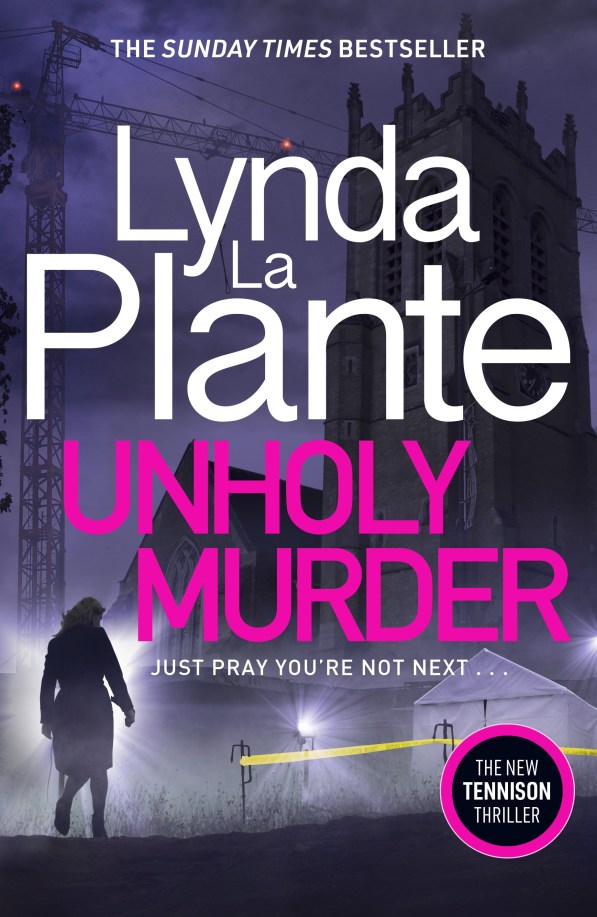
Unholy Murder by Lynda La Plante

Unholy Murder Cover

Publisher: Zaffre (Trade Paperback – 17 August 2021)

Series: Jane Tennison – Book Seven

Length: 389 pages

My rating: 4.25 out of 5 stars

Amazon     Book Depository

The reigning queen of British crime fiction, Lynda La Plante, returns with another clever and intriguing murder mystery, with her latest entry in the Jane Tennison series, Unholy Murder.

La Plante is a great author whose books I have featured several times over the last few years.  Best known for her work in British television, where she produced and wrote several shows and television movies, La Plante has really started to focus more on her novels recently, producing some awesome and compelling reads.  Out of all her recent works, the one I have been enjoying the most is the outstanding Jane Tennison series.  Serving as a prequel to the acclaimed Prime Suspect television series, the Jane Tennison novels follow a younger version of the show’s protagonist, the titular Jane Tennison, as she works her way up the ranks of the Metropolitan Police.  This series has so far contained several awesome and impressive novels, including Good Friday, Murder Mile, The Dirty Dozen and Blunt Force.  The latest entry in the series, Unholy Murder, contained another amazing mystery that sets the protagonist against the dangerous influence of the Catholic Church.

In 1982, Detective Sergeant Jane Tennison has recently been assigned to the Bromley CID, a quieter London beat where she can focus on her upcoming inspector’s exam.  However, her knack for attracting the most unusual and deadly murders once again surfaces when construction workers uncover a coffin at the back of a new housing development.  Based on the site of an old, deconsecrated convent, it is initially assumed that the coffin could be part of a forgotten graveyard, and the coffin is taken to the local morgue.  However, when opened, the coffin is revealed to contain the corpse of a brutally murdered nun.

With no idea who the deceased is or when they died, Tennison is initially unsure how to proceed.  With her superiors assuming that the coffin could be decades or even centuries old, there is little desire for the case to continue.  However, when Tennison is able to determine that the crime took place just before the convent shut down in the 1960s, she is given permission to investigate and attempts to find who the murdered nun is and how her death was left undiscovered for so long.

Digging into the past of the convent and its attached orphanage, Tennison and her team soon discover a sordid history or abuse, neglect and cover-ups.  Convinced that the murder may be related to these charges, the police attempt to find out more about the nuns who lived there.  However, the Catholic Church is uncooperative and all their files on the convent are missing or destroyed.  With the Pope’s historical visit to London only days away, Tennison is determined to get to the bottom of this terrible case, no matter what, Tennison follows every angle she can to get to the truth.  But with someone high up in the church’s hierarchy doing everything to cover up the crime, and with her own superior’s attempting to stop the investigation, can Tennison and her team unmask the killer, or will the secrets of the past came crashing back with unfortunate collateral damage?

This was another pretty awesome novel from La Plante, who has come up with a fantastic and captivating crime fiction story.  Unholy Murder has an impressive murder mystery to it, with the premise of a murdered, unknown nun secretly buried on the grounds of a former convent.  La Plante sets up this entire mystery perfectly, and the reader is soon invested in the plot.  There are some great aspects to the investigation, and I liked the usage of an older crime, with the protagonists forced to dive back nearly 20 years.  There are multiple potential suspects, twists and a range of interferences featured throughout the course of the investigation, and I had a wonderful time following through and trying to figure out who did it and who is trying to keep it quiet for their own reasons.  It all leads up to an intense and fast-paced conclusion, with a second killing seeming to occur, and several separate story threads coming together and adding in some intrigue and excitement.  I was really impressed with the final solutions to the story, and I appreciated the dark and cynical ending that it contained.  This was one of La Plante’s more captivating and clever mysteries and it was a lot of fun getting to the bottom of everything.

One of the more interesting aspects of the entire novel was the inclusion of the Catholic Church as a major force in the investigation.  While some of the lower-level clergy and staff are initially helpful, once the case is revealed to be a murder, potentially committed by someone working at the convent, senior church members work hard to halt the investigation and try to protect themselves and the reputation of the church.  This was a fascinating and intense part of the investigation, and it added in layers of complexities and difficulties that the protagonists are forced to overcome.  The case becomes even more complicated, with multiple allegations of abuse or brutality from the sisters at the convent coming to light.  I really appreciated the way La Plante worked this aspect into the novel, and it was fascinating to see this in a historical context as I am personally more used to hearing about these sorts of issues in the 21st century.  The impacts of the church and its members on the case are pretty fascinating, especially as it makes the solution a lot more clouded, and some resolutions a lot more controversial.  While some authors would use this to simply bash the church, La Plante paints a more complex and multifaceted story here, attempting to show that some of the clergy characters were really good people bound by rules, their oaths or the ambitions of others who abuse their roles and responsibilities for their own aims.  I felt that they author’s use and inclusion of the Catholic Church in this novel helped to make Unholy Murder a much better novel, and it ensured that the case was a lot more intense and complex.

Jane Tennison is always an interesting character to follow, especially as she is one of the few senior female investigators in the MET during this prequel series.  While this is a crime fiction series, a large amount of the plot revolves around Tennison’s personal life, and La Plante has spent a lot of time showing Tennison’s growth as a character, as well as the events that turned her into the hard-edged investigator featured in Prime Suspect.  It has been really fascinating to see Tennison claw her way up the ranks over the last few books, and it was great to see her once again take a leading role in a murder investigation.  Due to some of her prior experiences with fellow officers, Tennison has a bit of a chip on her shoulder in this book, although she manages to mostly prove that she has what it takes.  I do wish that Tennison weren’t portrayed as someone who lets her personal life interfere with the job, especially as she once again gets involved with a person connected to the murder to her own detriment.  Still, I enjoyed Tennison in this novel, and she was a great central protagonist to follow.

This novel featured an interesting group of supporting characters, including police officers, suspects, and members of the church.  The author’s great use of multiple character perspectives in this novel was perfect to highlight these various side characters, and I liked how it also helped to make some of the people connected to the case seem more suspicious or guilty.  While there were several characters I liked, I mostly want to focus on the various police characters featured within Unholy Murder, as they were a major part of the plot.  Not only do you have several recurring police characters from the prior Jane Tennison novels but there are also some great new characters who were very fun to follow.  I quite liked rookie investigator DC Boon, a young officer that Tennison has taken under her wing.  While he initially appears a bit clumsy and clueless, he really starts to grow as a character as the novel progressed, becoming a much more competent investigator.  He also becomes a lot more serious, especially once he gets personally involved in the case, and there are some deep and emotional moments that occur around him as the novel progresses.

I also deeply appreciated the inclusion of DCS Barnes, Tennison’s new boss who heads up the investigation.  Barnes has previously dealt with cases of child abuse by members of the church whose crimes were covered up by his superiors and the church, and this memory drives him throughout the novel and ensures that he takes the cases extremely seriously.  Once it becomes apparent that the murder was likely committed by a member of the clergy, and that the priest he previously attempted to bring down is now a senior figure leading the latest cover-up, he becomes a bit obsessive and refuses to accept any alternate possibilities and suspects.  It was really quite intriguing to see an anti-Church police officer in the 1980s, and I really liked the complex and compelling portrayal around him.  All these side characters add a lot to the overall story, and La Plante did an excellent job of fitting these intense personal stories into the wider murder mystery.

Unholy Murder is an excellent new novel that continues the excellent Jane Tennison series by the amazing Lynda La Plante.  Featuring a clever mystery, some great characters and a really intriguing plot hook, Unholy Murder easily grabs the reader’s attention and ensures that they become deeply attached to the outcome of the story.  I had an outstanding time reading this latest book and I look forward to the next instalment of this fun series in 2022.

Amazon     Book Depository

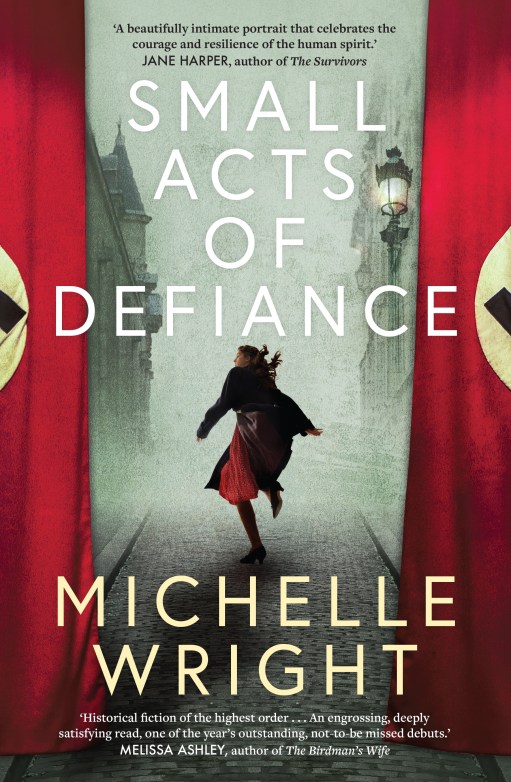
Small Acts of Defiance by Michelle Wright

Small Acts of Defiance Cover

Publisher: Allen & Unwin (Trade Paperback – 1 June 2021)

Series: Standalone

Length: 344 pages

My Rating: 4.5 out of 5 stars

Amazon     Book Depository

Impressive debuting Australian author Michelle Wright transports the reader back to the horrors and struggles of occupied Paris with the moving historical drama, Small Acts of Defiance.

May 1940.  Following the tragic death of her father, Australian teenager Lucie and her French mother Yvonne are left without any means of supporting themselves in Australia.  Reaching out to the only family they have left, Yvonne’s estranged brother Gerard, Lucie and her mother are convinced to journey back to Yvonne’s home city of Paris to live with Gerard in his apartment.

Despite having reservations about leaving for a Europe rocked by the early stages of war, Lucie is quickly enchanted by the beauty and culture of the city.  However, shortly after their arrival, disaster strikes and the French army suffers a catastrophic defeat, allowing the Nazis to invade France and occupy Paris.  Forced to adapt to the new regime, Lucie and her family attempt to survive as well as they can.

While wishing to remain safe and unnoticed by the Nazis, Lucie is drawn into the conflict when she befriends several people around Paris who resent the German occupation.  Encouraged by their strength and determination, Lucie experiments with using her artistic talents to engage in small acts of defiance against the Nazis and the puppet Vichy French government.  However, when she witnesses the Nazis’ increased attacks against Paris’s Jewish population and the attitudes of her authoritarian uncle, Lucie is drawn even deeper into the fight.  How far will Lucie go to save her new home, and what difference can even a few small acts of defiance truly have?

Small Acts of Defiance was a fantastic and moving novel from a promising new author that did an excellent job highlighting the horrors and troubles of occupied France.  Author Michelle Wright, an Australian who has spent considerable time in Paris, has written an outstanding novel with a story that is both beautiful and devastating, as she tells the intriguing and intense tale of Lucie and her experiences during the war.

Wright has produced a fast-paced and deeply moving narrative for Small Acts of Defiance.  The author swiftly sets the scene for the main characters of Lucie and her mother, who move to Paris right before the invasion while still dealing with the traumatic aftermath of Lucie’s father’s death.  It really does not take long for the historical horror to occur, as Paris is swiftly conquered by the Nazis, although Wright ensures that there is just enough time for Lucie, and the reader, to become enchanted with the city before its occupation.  Following the invasion, you are introduced to several great supporting characters who help Lucie to fully see how evil the Nazis and their French collaborators are, especially as some of her new friends are Jewish.  This centre part of the novel is great, and it was fantastic to see Lucie find her feet while also starting her initial acts of defiance.  However, while all appears mostly right, you know that tragedy is on the horizon, especially as the Jewish characters you become close to slowly have more and more restrictions placed upon them, which can only lead to disaster and despair.  Once the inevitable happens, the story really intensifies, as the protagonist witnesses true horrors and atrocities which slowly costs her some people she is really close to.  Readers will not be prepared for how dark and tragic the book becomes, although you cannot help but keep reading, especially as there is a little bit of hope for some characters.  The conclusion of Small Acts of Defiance is pretty intense and satisfying, especially as the protagonist achieves several great things while there is some good news for the other supporting characters.  This entire narrative very well written, and I loved the dramatic and powerful tale that Wright created here.  There is so much amazing and moving character development, especially around Lucie, which really grounds the novel and helps keeps the readers glued to the pages.  Wright has a real talent for writing hard and dark scenes, and I was utterly enthralled by this powerful story.

I was deeply impressed by the sheer amount of historical detail that Wright put into her debut novel, which is no doubt a side effect of all the time she spent in Paris.  The author covers the entirety of the Nazi occupation, from the French defeat, to the chaos of the invasion and the subsequent control of the city by the Germans.  There are so many interesting details and facets of history contained within the story, and I found myself getting really engrossed in the spectacular portrayal of this key historical location.  Wright spends time focusing on the various attitudes and reactions of the citizens of Paris, which ranged from outrage to acceptance or even outright support of the new regime.  The depictions of the puppet Vichy government and its actions was particularly intriguing, especially as the author examines the reason it had some support from the French.  This is particularly shown by Lucie’s uncle, an authoritarian former solider who respected the military general put in charge of the country, and who felt disenfranchised by the previous free French government.  There was also a lot of focus on the gradual crackdown and eventual deportation of the city’s Jewish population.  Due to the protagonist befriending several Jewish characters, you get to see the various restrictive laws come into effect, and the way that the Jewish population was dehumanised and destroyed one step at a time.  All of these proved to be deeply fascinating, and I loved how Wright was able to work it all into her intense and excellent story.

One aspect of this historical detail that I found extremely intriguing was the storyline surrounding the protagonist’s attempts at defying the Nazi and Vichy governments.  Unlike most historical fiction protagonists who fight back with guns, political speeches or brazen heists, the hero of Small Acts of Defiance at first uses art to subtly push back against authority.  This is achieved by drawing pamphlets or subtle symbols of French freedom in the postcards that she sells, small things that could still get her in trouble.  As the war progresses, the protagonist gets involved in other small ways, such as helping to pass information to the Allies or assisting the city’s remaining Jewish population.  I found these small acts of resistance to be a fascinating part of the book’s plot, and it was rather interesting to see the effect that even these minor actions could have on the character’s moral.  It also resulted in some compelling comparison to some of the more radical members of the French Resistance, especially some of Lucie’s friends, who take more drastic actions and face several physical and moral consequences as a result.  While Lucie does become more involved later in the book, I felt that it was really intriguing to see the various small, non-violent ways that French citizens could have helped in the war effort, and I think that it was a fantastic part of this captivating narrative.

Small Acts of Defiance was an incredible debut from Australian author Michelle Wright that does an amazing job capturing the tragedy, division and defiance that occurred during Nazi occupation of Paris.  Featuring a moving and captivating tale that surrounds one girl’s small attempt to help her friends and her new city, Small Acts of Defiance is an outstanding historical drama that comes highly recommended.  I am very intrigued to see what additional novels Wright creates in the future, and I am extremely glad I got the opportunity to read her fantastic first novel.

Amazon     Book Depository

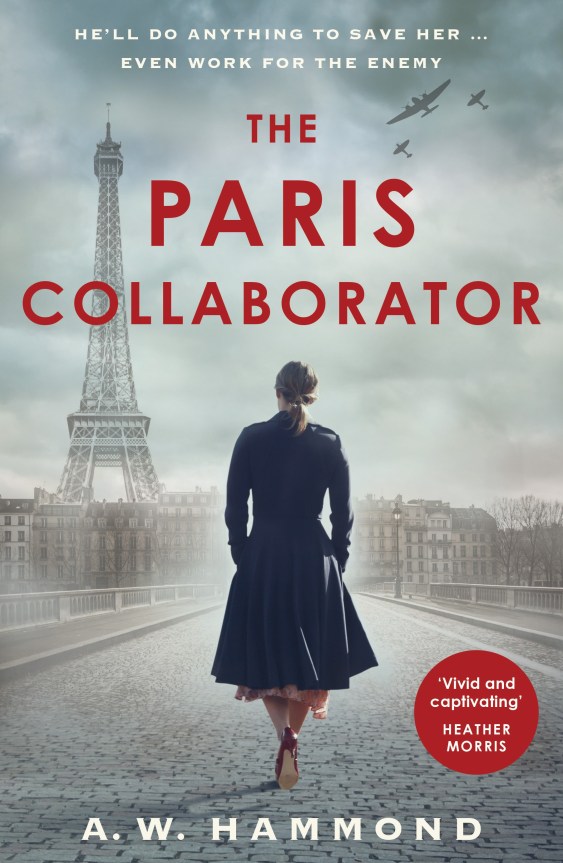
The Paris Collaborator by A. W. Hammond

The Paris Collaborator Cover

Publisher: Echo Publishing (Trade Paperback – 4 May 2021)

Series: Standalone

Length: 312 pages

My Rating: 4.5 out of 5

Amazon     Book Depository

Amazing Australian thriller author A. W. Hammond presents his first historical read with The Paris Collaborator, a clever and exciting novel set in occupied Paris.

August 1944.  With Allied forces advancing towards Paris, the Nazi occupation of the city seems to be nearly at an end.  But just because the Germans are poised to leave does not mean that the city is any less dangerous, especially for those whose loyalties are in question.  Since the Germans arrived, former teacher Auguste Duchene has taken on a whole new profession to survive: finding missing children.  With his impressive observational skills, Duchene has proven to be a keen investigator, but his talents are about to get noticed by all the wrong people.

Despite his desire to only help reunite lost families, Duchene is forced into working for a violent faction of the French Resistance after they threaten the safety of his collaborating daughter, Marienne.  Recruited to find a missing priest and the cache of stolen weapons he was hiding for them; Duchene reluctantly begins his search.  However, hours after he begins working for the Resistance, he is approached by a senior Nazi officer who blackmails him into finding a missing German soldier.

Caught between two dangerous masters, Duchene has no choice by to comply with both if he and Marienne are to survive.  With only 48 hours until both groups will deliver on their deadly threats, Duchene scours Paris for both the missing men.  However, the more he discovers, the more he begins to realise that the cases may be connected, and that he may be only able to satisfy one of his employers.  Worse, the Gestapo have taken an interest in Duchene’s investigation and are determined to interfere for their own ends.  Can Duchene find his targets before it is too late, or will everything he love be taken away from him?

This was an awesome and fantastic novel from an impressive author who I was not too familiar with before I picked up this outstanding read.  A. W. Hammond has previously written two Australian thrillers under the name Alex Hammond.  These books, 2013’s Blood Witness and 2015’s The Unbroken Line, were intriguing legal thrillers that focused on his Will Harris protagonist.  The Paris Collaborator is the author’s first foray into historical fiction, and he did an exceptional job producing a clever and addictive historical thriller.  I had an incredible time reading The Paris Collaborator and I ended up finishing it off in a few short days once I got drawn into its cool and memorable narrative.

Hammond has come up with an excellent thriller storyline for The Paris Collaborator that is exciting and clever, and which also makes great use of its historical backdrop.  This is a very fast-paced story, and it really does not take long for it to take off, as unconventional missing child investigator Duchene is drawn into the conflicting webs of radical French Resistance fighters and an influential Nazi officer.  Forced to work on both cases on a very lean timeline, the protagonist conducts a hurried investigation, trying to find hints of two different missing persons while also trying to survive in the middle of a chaotic and failing city.  With the interference of the Gestapo, Duchene is trapped in the middle of a three-way battle for his loyalties, as each of these very dangerous groups threatens to kill him and his daughter unless he complies.  This results in a very epic final third of the book, as the protagonist runs around Paris, which is in the middle of overthrowing its German occupiers, trying to find the last pieces of the puzzle with everybody trying to kill or capture him.

This was a very captivating and high-stakes story, and I loved all the thrilling intrigue, action and suspense as the protagonist jumps from one bad situation to the next.  The overall investigation had some rather intriguing twists to it, many of which took me pleasantly by surprise, although they were very well set up in hindsight.  I absolutely lost it when the final twist was revealed, as it was so outrageous and surprising that I ended up laughing for several minutes.  This reveal, while a little hilarious, did fit nicely into the dark tone of the novel, and I felt it was an outstanding way to wrap up this novel, especially as it is guaranteed to stick in the reader’s mind.  I deeply enjoyed The Paris Collaborator’s clever story, and this ended up being one of the more entertaining and unique thrillers I have read all year.

While readers will definitely remember the amazing thriller story, I also must highlight the exceptional historical setting that was featured in The Paris Collaborator.  Hammond chose to set his clever story amid the final days of the Nazi occupation of Paris, which I really enjoyed.  The author does an outstanding job of portraying this intriguing historical setting, and I loved the exploration of an occupied city on the edge, with minimal resources, a thriving black market, a near-rebelling populace, nervous soldiers starting to pull out and a dangerous resistance movement planning their next strike.  Hammond makes great use of this unique setting throughout the story, and I really appreciated the way he featured historical elements like the Resistance, the Gestapo and the German army throughout the story.  The final part of the book is set during the French uprising to free Paris from the Nazis, and I loved how the protagonist had to overcome all the obstacles this put in his way, from tanks attempting to put down dissent, to crowds determined to kill any Germans they could find.  This was an outstanding depiction of occupied Paris and I felt that Hammond perfectly utilised it throughout this amazing book.

One of the most intriguing aspects of the historical setting of The Paris Collaborator is the compelling focus on the French mentality of collaboration and resistance.  Throughout the novel, the protagonist encounters a wide range of different characters who have survived the Nazi occupation by working for, engaging with, or falling in love with German soldiers, much to the disgust of their fellow French citizens.  The protagonist himself is considered by some to be a collaborator, not only because he has helped wealthy French collaborators find their children but because he finds himself working for various Nazis throughout the course of the book.  This forces the protagonist to walk a thin line, as he must appear to be a patriotic Frenchman disgusted with the occupiers while also making sure that he does not enrage any of the Nazis who are employing him, something he does not do particularly well.  As a result, Duchene, and several supporting characters, encounters dangerous reactions from some French characters and Resistance members, and this really adds to the tension and danger that he encounters.  I think that Hammond did an excellent job examining and portraying this mentality of anti-collaboration throughout the novel, especially as it is cleverly layered into nearly every interaction the protagonist has.  Some of the actions of French characters who were actively resisting against the Germans were also pretty intriguing, including one particularly over-the-top one that is definitely going to stick in my mind.  It was also fascinating to see what some people would do to avoid being labelled as a collaborator, even if that means completely changing who they are.  I really enjoyed the author’s examination of how collaborator would have been viewed during this turbulent period of history and it ended up being an excellent and compelling addition to The Paris Collaborator’s narrative.

The Paris Collaborator by A. W. Hammond is an outrageous and impressive historical thriller that comes highly recommended.  Hammond has written a fantastic fast-paced story that is heavy on action, intrigue, and amazing twists, all set amid Paris in the final days of the Nazi occupation.  I had a lot of fun getting through this awesome novel, and thanks to some outstanding reveals and exciting moments, The Paris Collaborator is really going to stick in my mind.  Readers are guaranteed a thrilling and clever time with this book and will power through it in no time at all.

Amazon     Book Depository

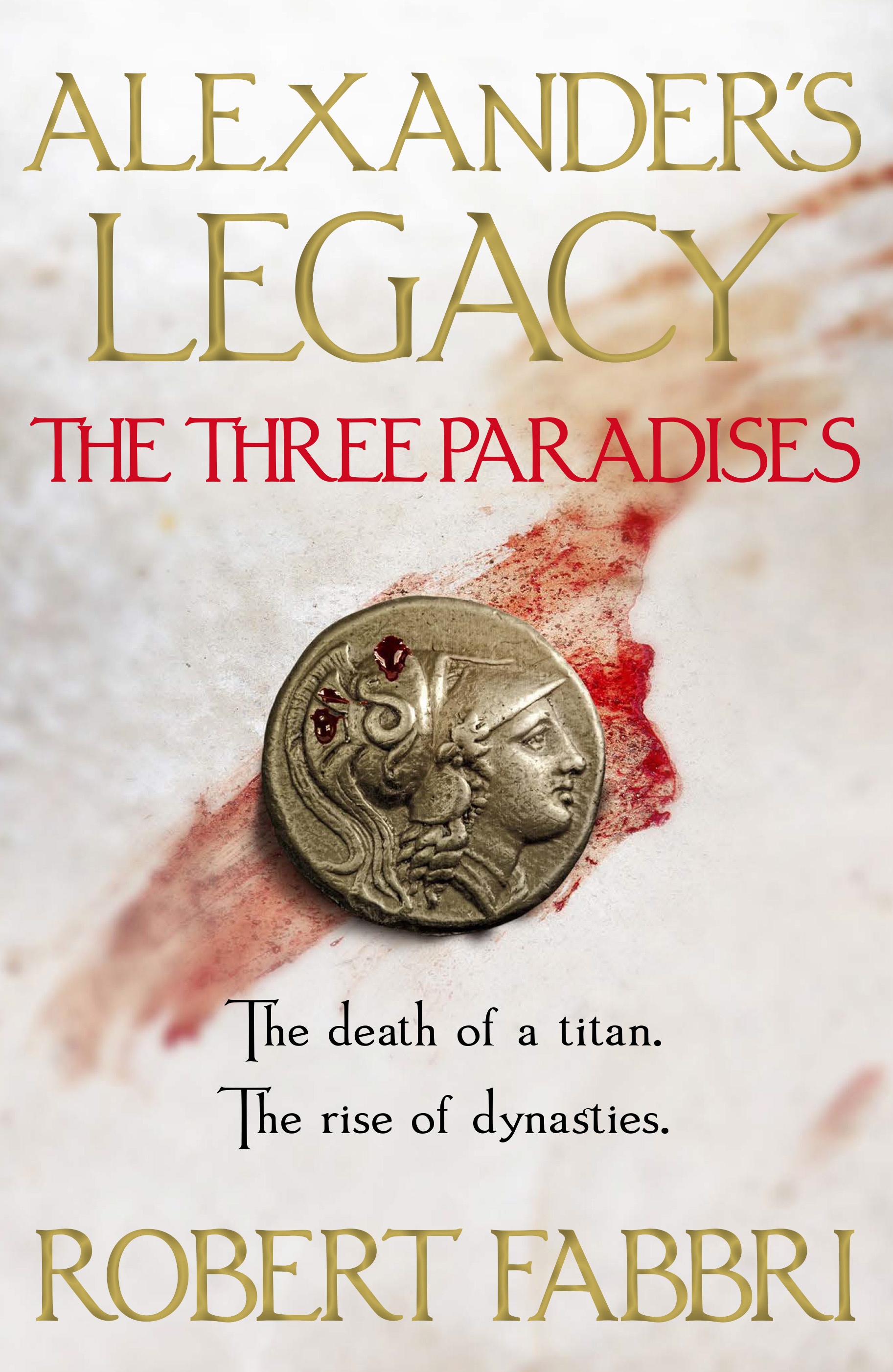
The Three Paradises by Robert Fabbri

The Three Paradises Cover

Publisher: Corvus (Trade Paperback – 21 February 2021)

Series: Alexander’s Legacy – Book Two

Length: 413 pages

My Rating: 4.5 out of 5

Amazon     Book Depository

One of my favourite authors of historical fiction, the always amazing Robert Fabbri, returns with the second entry in his epic Alexander’s Legacy series, The Three Paradises.

Alexander the Great is dead, and the battle for his empire has only just started!

Chaos reigns in the Macedonian controlled territories of Asia and the Mediterranean as the formerly loyal followers of Alexander fight amongst themselves for control of his mighty empire.  With the former front-runner for control, Perdikkas, murdered by his own men, the way forward is now even more uncertain.  In Macedonia, Alexander’s regent Antipatros seeks to hold the empire together, even if that means ignoring the ambitions of his volatile son.  In the east, the sly Greek Eumenes runs to avoid a death sentence placed on his head by the Macedonian army and must once again fall back on his intelligence and cunning to survive the forces lead by the one-eyed general Antigonos.  In the heart of the Macedonian army, two dangerous queens, Roxanna and Adea, each attempt to press their claims through their two unsuitable kings while also working out the best way to kill one another.  In Egypt, the bastard brother of Alexander, Ptolemy, secures his powerful position by seeding chaos across the rest of the Empire, while in the west, Alexander’s vicious mother, Olympias, bides her time, waiting for the perfect opportunity to strike. 

As these players make their moves to secure power, Antipatros attempts to mediate peace and keep all the Macedonian territories together by calling for a historical conference at The Three Paradises.  However, as the lies, treacheries and bloody battles continue, will there even be an empire left to save?  Some will rise, some will fall, and the world will never be the same again!

This was another incredible and deeply entertaining read from Fabbri, who has once again turned the insanities of history into another amazing novel.  I have been a major fan of Fabbri ever since I was lucky enough to receive one of the fantastic books in his compelling and memorable Vespasian series.  All of the books in this series (including Rome’s Sacred Flame, Emperor of Rome and the tie-in volume of short stories, Magnus and the Crossroads Brotherhood), were incredibly fun to read, and I really enjoyed each and every one of them.  Fabbri continued his impressive run last year when he started his brand new ancient history series, Alexander’s Legacy, set in the immediate aftermath of Alexander the Great’s death after he failed to select an heir to rule his empire.  The first book in this series, To the Strongest, was an amazing and clever read that not only set the scene perfectly but also provided the reader with a detailed and captivating tale of betrayal and destruction.  As a result, I have been keeping a very keen eye out for Fabbri’s second Alexander’s Legacy novel and I was very happy when I received a copy of The Three Paradises.

For this latest novel, Fabbri has come up with another awesome and captivating tale that dramatizes the crazy events that followed Alexander’s sudden death.  Told through multiple viewpoints, The Three Paradises continues to explore some of the key parts of the post-Alexander period, including a number of battles, conferences and manipulations recorded in history.  This results in an epic and captivating tale of betrayal, conspiracy and lies as everyone attempts to gain power.  I absolutely loved all the outrageous proceedings that occurred throughout this book, and Fabbri does an amazing job featuring as many real historical events as possible.  If you are unfamiliar with the history, than you are going to find that The Three Paradises’ story goes in some extremely unexpected directions as various key people rise or fall. 

I was surprised that many of the incredible events depicted in this novel are recorded in history, and it just goes to show that reality is sometimes a lot stranger than fiction.  I felt that Fabbri did a fantastic job depicting each of these events as they are chronicled in history, especially as he also attempts to fill in some of the gaps and come up with some of the possible discussions that would have happened in advance of them.  While some of the facts are no doubt dramatically exaggerated per Fabbri’s trademark style, this turned out to be a really detailed historical read and I loved the cool focus on this unique period.  I ended up enjoying The Three Paradises a bit more than the preceding novel in which the overarching storylines of the series were set up.  The Three Paradises jumps into the action a lot more quickly, and I think that the story flowed a lot better, especially as Fabbri ended up reintroducing the line break in this novel’s format.  All of this was incredibly epic, and readers will love Fabbri’s unique interpretation of these historical betrayals and battles.

One of the most intriguing parts of the Alexander’s Legacy series is the author’s use of multiple historical figures as his point of view characters.  This series focuses on a large selection of major players in this conflict, each of whom become the focal character of multiple chapters within the novel.  The Three Paradises in particular features 10 separate historical point-of-view characters, each of whom play a unique role in the events preceding the death of Alexander.  All 10 are former members of Alexander’s court that have gone into business for themselves and are now attempting to take power or shape the empire the way they want.  Fabbri brings each of these historical figures to life by examining their actions or descriptions from history and crafting a personality that matches their outrageous deeds or brilliant decisions.  Each character is given a title or nickname at the start of the story, usually centred on their personality or role in the empire (for example, The Sly, The Mother, The Wildcat or The Bastard) as well as a simple but clever representative icon.  Fabbri then builds on them from there, examining their various actions during the wars this book focuses on and highlighting nearly every decision or bold move that history records them doing.  Fabbri also throws in a little of his trademark exaggeration and creative licence, especially for characters like Olympias (although not by much), which really enhances the historical craziness this novel contains. 

As a result of his unique character creation, The Three Paradises ends up with a fantastic and diverse group of point-of-view characters whose exploits are a lot of fun to watch unfold, although readers should really not get too attached to them, as many do not survive the book.  These characters include the aged statesman, Antipatros, who uses his experience and canny nature to attempt to guide and control several of the other players, with various results.  You also have the scheming queens Roxanna and Adea, both of whom are linked to one of the people named king following Alexander’s death.  Roxanna was Alexander’s wife and the mother his child, while Adea is a close relative of Alexander who ended up marrying his mentally deficient half-brother.  Both of these queens are vicious and dangerous creatures who attempt to gain power over the stubborn Macedonian men, while also feuding amongst themselves over the status of their respective king.  Fabbri really amps up certain elements of these two queens’ characteristics, such as Roxanna’s murderous ambition (to be fair, she did reportedly kill several of Alexander’s other wives after his death), or Adea’s lesbianism.  Both prove to be really fun additions to this novel, and it was quite interesting to see how they influenced these hectic events.

There is also a lot of focus on Alexander’s mother, Olympias, a member of the cult of Dionysus and a figure of wrath and vengeance that every other major character is intensely afraid of.  Fabbri has a lot of fun portraying Olympias in this novel, and he really plays her up as a crazed snake priestess, showing several of the alleged rituals cultists of Dionysus would have performed.  I was quite surprised at how Olympias’s storyline unfolded in this novel, mainly as I was very unaware of how much influence she had after Alexander’s death, and she proved to be an extremely intense and memorable addition to the cast. 

My favourite character, however, is still Eumenes, who Fabbri appropriately nicknamed The Sly.  Eumenes is a Greek clerk who was able to gain some power after Alexander’s death by advising some of the other players and trying to keep the empire together.  The Three Paradises sees Eumenes take on a more military role, and he proves himself a skilled commander, able to out-think the supposedly superior Macedonian enemies.  However, Eumenes’s ambitions are constantly stymied by the stubbornness of his Macedonian followers or allies, all of whom believe in the superiority of the Macedonian people and are often reluctant to follow a Greek, even if he is the smartest person in the room.  It proves to be very frustrating to see one of the best and smartest characters constantly defeated by events outside his control, but you still stick with him in the hopes that he can once again get a victory.

In addition to the returning cast from the first book in the series, Fabbri also introduces two new characters to replace some of the casualties that occurred in To the Strongest (like I said, don’t get too attached to these characters).  These two new characters include Kassandros, nicknamed The Jealous (and represented by an icon of a boar, an animal that lies at the heart of his jealousies), and Polyperchon, nicknamed The Grey.  Both Kassandros and Polyperchon are introduced about halfway through The Three Paradises in response to a major character death, and they end up being great additions to the story.  Kassandros is the eldest son of one of the other point-of-view characters, and serves as an interesting antagonistic figure in the book.  Thanks to his sense of entitlement and the major chip on his shoulder, it really does not take Kassandros long to get on the reader’s nerves, and you find yourself pulling for his enemies, no matter how despicable they may be.  Polyperchon, on the other hand, is an older figure, portrayed as a bit of a loser.  Polyperchon is a person who thrives best as a second in command, rather than being the man in charge, and is uncertain how to proceed when he has to make the hard decisions.  Naturally, events conspire to give him a great deal of power, which results in disaster for Polyperchon and those allied with him, as he fumbles the job, allowing some of the other characters to take control.  Overall, I had an outstanding time following this unique collection of historical figures, and I look forward to seeing whom Fabbri focuses on in the next novel, especially after several more were killed off in The Three Paradises.

Aside from the 10 point-of-view characters, Fabbri also features a massive cast of side characters, most of whom are real historical figures.  The author does an impressive job of working each of these supporting characters into the plot, and you end up getting a pretty good idea of how each and every one of them played a role in the war, as well as some minor details about their personalities and intentions.  While it was interesting to learn more about all these historical characters, I did find it a little overwhelming to try and follow who was who at times, especially as there were great deal of characters, and several had similar names.  While I was generally able to keep up with what was happening thanks to an excellent character list contained at the end of the novel, readers will need to stay focused on who is being discussed at all times in order to avoid getting lost.

I also must highlight the incredible historical details of this book.  Fabbri has clearly done his research when it comes to ancient Macedonia and not only is The Three Paradises filled with an outstanding depiction of the recorded historical events but the author also tries to capture the various aspects of day-to-day life during this period.  This results in some great scenes chock full of fantastic historical detail, and the reader gets some amazing insights into the culture and attitudes of the conquering Macedonians.  This is particularly true in The Three Paradises’ various action sequences, as the armies of Macedonia face off against each other.  While a lot of the focus may be on the internal politics, personal betrayals and shifting alliances, Fabbri has also included several great fight sequences, and the reader is treated to fantastic battles on land and sea.  The book’s major battle scenes are really impressive, and I loved seeing the various tactics of the Macedonians, whether they are fighting foreign armies or rival groups of Macedonians.  It was particularly cool to see two separate pike phalanxes go up against each other, especially as their cramped and exhausting fight was essentially pointless (victory was decided by the fighting cavalry groups on the flanks).  It was also rather entertaining to see how several key battles were stopped or prevented simply because the Macedonian soldiers discovered that an important person, usually a relative of Alexander, was present with the opposing army, and they would suddenly abandon their generals to follow them.  This examination of the Macedonian mindset was really intriguing, and its limitations and predictabilities has become a fascinating recurring factor of this series.

Robert Fabbri once again shows why he is one of the most entertaining and captivating authors of historical fiction in the world today.  The Three Paradises is an impressive and clever second entry in the amazing Alexander’s Legacy series, which provides a detailed and captivating examination of a crazy period of history.  I absolutely loved this incredible read and I cannot wait to see what happens in the next exciting entry in this awesome series.

Amazon     Book Depository

Quick Review – The Imitator by Rebecca Starford

The Imitator Cover

Publisher: Allen & Unwin (Trade Paperback – 2 February 2021)

Series: Standalone

Length: 344 pages

My Rating: 4.25 out of 5

Amazon     Book Depository

Deception, divided loyalties and despair are all on offer in the debut novel of Australian writer Rebecca Starford, who presents a curious and captivating read with The Imitator.

Synopsis:

‘We trade in secrets here, Evelyn. There’s no shame in having a few of your own. Our only concern is for who might discover them.’

Out of place at boarding school, scholarship girl Evelyn Varley realises that the only way for her to fit in is to be like everyone else. She hides her true self and what she really thinks behind the manners and attitudes of those around her. By the time she graduates from Oxford University in 1939, ambitious and brilliant Evelyn has perfected her performance.

War is looming. Evelyn soon finds herself recruited to MI5, and the elite counterintelligence department of Bennett White, the enigmatic spy-runner. Recognising Evelyn’s mercurial potential, White schools her in observation and subterfuge and assigns her the dangerous task of infiltrating an underground group of Nazi sympathisers working to form an alliance with Germany.

But befriending people to betray them isn’t easy, no matter how dark their intent. Evelyn is drawn deeper into a duplicity of her own making, where truth and lies intertwine, and her increasing distrust of everyone, including herself, begins to test her better judgement. When a close friend becomes dangerously ensnared in her mission, Evelyn’s loyalty is pushed to breaking point, forcing her to make an impossible decision.

A powerfully insightful and luminous portrait of courage and loyalty, and the sacrifices made in their name.

This ended up being a fantastic and enjoyable read from Rebecca Starford, who has come up with a really intriguing and unique story.  Starford is an Australian writer who is probably best known for her work on the Kill Your Darlings magazine, as well as her non-fiction book Bad Behaviour, which chronicled the author’s life at an elite country boarding school.  The Imitator, which was also released under the title, An Unlikely Spy, is an impressive and captivating historical drama that follows a young woman who becomes involved with British espionage at the start of World War II. 

The Imitator has an interesting and surprising story to it which is guaranteed to grab the reader’s attention all the way up to its final shocking twist.  Told from the perspective of protagonist, Evelyn Varley, the story is split into two distinct periods, with some of plot set shortly after the end of World War II, while the rest follows the protagonist during the early days of the war.  Most of the narrative is set during the earlier time and examines the protagonist during this period, including her recruitment into MI5 and her eventual work investigating Nazi sympathisers.  This proves to be quite a fascinating narrative thread, and I really enjoyed the great blend of historical espionage and the compelling drama surrounding the character and her personal relationships.  I was particularly intrigued by the parts of the book that explored Evelyn’s attempts to infiltrate a major group of Nazi sympathisers, especially as she is forced to alter her personality to fit into the tight-knit group of fascists.  Starford also includes several chapters set after the war which show Evelyn dealing with the aftermath and her actions during the conflict.  These post-war sequences compliment the rest of the story extremely well, and hint at tragic consequences to what she did after she is contacted by people from her past.  However, readers are in for quite a shock, as these later sequences are shown to be a major bait and switch.  Instead of the conclusion that you would generally expect in one of these stories, Starford puts in a particularly major and dramatic twist which really changes the entire tone of the narrative.  This twist was a brilliant master stroke from the author, especially as it switches around the implications for the post-war chapters and shines a whole new light on everything.  I was really impressed with this amazing narrative, especially once you realise how the author set up the clever ending, and this was truly an awesome and memorable story.

One of the things that I really liked about The Imitator was the fantastic historical setting of London during the early period of World War II.  Starford did a great job of highlighting what life during this period would have been like, from the early actions of organisations such as MI5, to the feelings of the populace, most of whom were convinced that the war would be fought far away or would not happen at all.  I was also really impressed by the author’s examination and dramatization of several intriguing real-life historical events that occurred during this period.  The character of Evelyn Varley is based upon the real life of MI5 operative Joan Miller, who infiltrated a major Nazi sympathiser movement, known as the Right Club, in London back in 1939.  Many details about the Right Club are fitted into the book and used as the basis for the Nazi group the protagonist infiltrates.  While there are several name changes, the fictional group closely matches what actually happened with the Right Club and MI5’s mission to infiltrate it.  I felt that Staford did an amazing job exploring this group and the mission of Joan Miller, and it proved to be an exceptional and clever base to this awesome story.

I also must compliment the compelling and intriguing protagonist of this novel, Evelyn, who serves as the main point-of-view character for the story.  Evelyn is a complex individual with a number of features formed during her harsh early life at a prestigious private boarding school.  Thanks to her less affluent parents, Evelyn does not really fit in with the richer students and is soon forced to adopt a much different persona, which is helped by the relationship she forms with the family of her one friend at the school.  This ability to change her persona becomes particularly important later in life when she begins her career in espionage and must show a false side to herself to people she is trying to take down.  Starford has written a fantastically complex character here in Evelyn, and I really appreciated the way in which the author examines what events or personality traits a successful undercover spy might need to have.  I also liked the way in which we get to see the character at different parts of her life as the book progresses, such as her innocent pre-war life, her experiences as a seasoned infiltrator and her reflections as a damaged survivor.  These various periods of her life and the different personalities are very dramatic and intriguing, and I found it fascinating to see how the author envisioned her changing personality.  Starford also writes in an extremely good storyline around the protagonist’s twisted loyalties, which forces her to choose between the safety of her country and the people closest to her.  These conflicting loyalties and friendships take Eveyln in some dark places and I really must applaud the clever and powerful narrative that Starford constructed around this great character.

Overall, The Imitator by Rebecca Starford is an exceptional and captivating read that comes highly recommended.  I really enjoyed this fantastic book’s clever blend of historical fiction, espionage and dramatic storylines, and I had a wonderful time getting through all of The Imitator’s compelling twists and revelations.  An outstanding read that is guaranteed to stick in the mind long after you have finished reading it.

Amazon     Book Depository

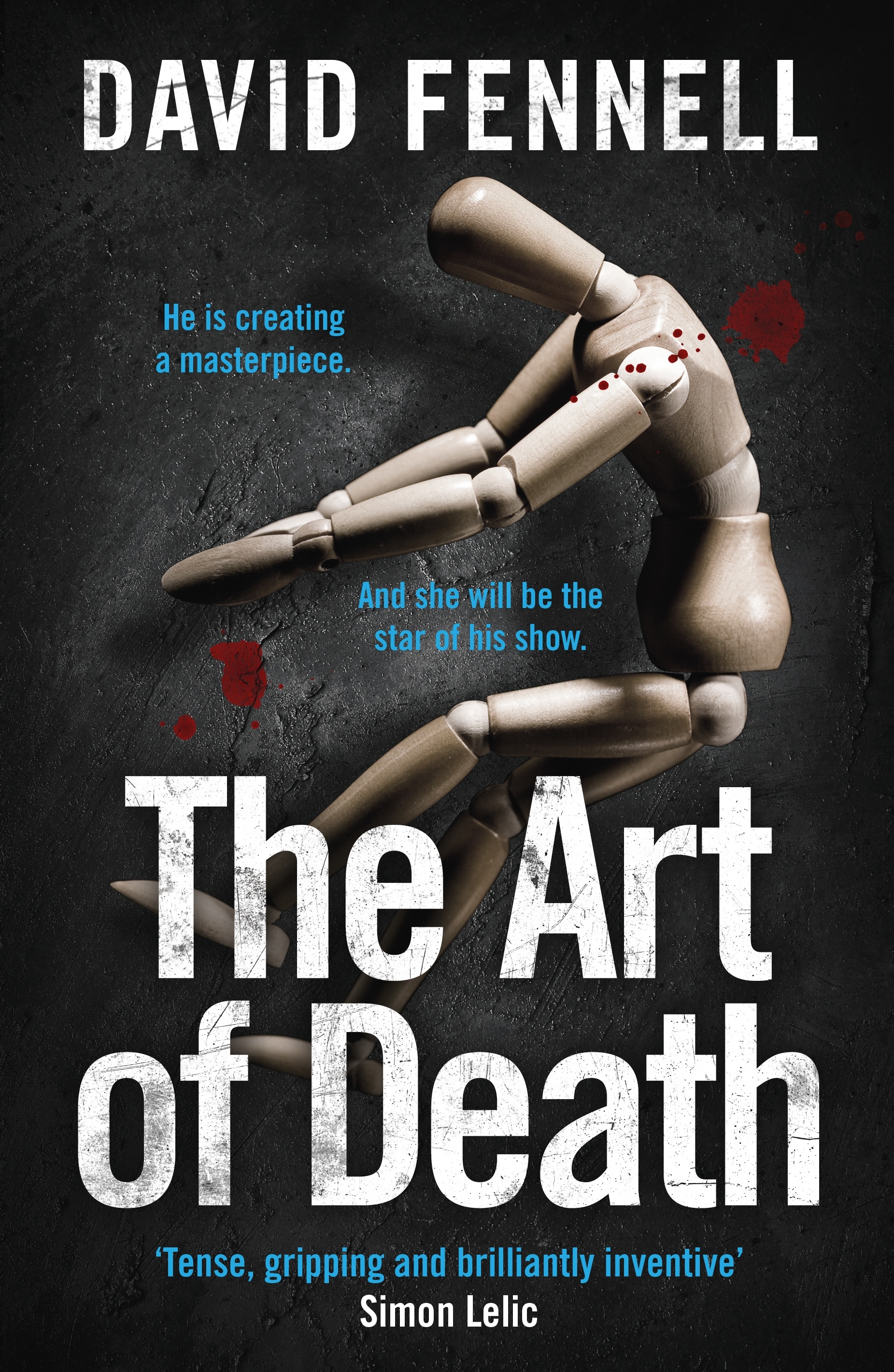
Quick Review – The Art of Death by David Fennell

The Art of Death Cover

Publisher: Zaffre (Trade Paperback – 4 February 2021)

Series: Standalone/Book One

Length: 422 pages

My Rating: 4 out of 5 stars

Amazon     Book Depository

2021 is definitely proving to be a great year for debut novels and one of the most intriguing examples of this is the fantastic murder mystery, The Art of Death by David Fennell.

Synopsis:

Death is an art, and he is the master . . .

Three glass cabinets appear in London’s Trafalgar Square containing a gruesome art installation: the floating corpses of three homeless men. Shock turns to horror when it becomes clear that the bodies are real.

The cabinets are traced to @nonymous – an underground artist shrouded in mystery who makes a chilling promise: MORE WILL FOLLOW.

Eighteen years ago, Detective Inspector Grace Archer escaped a notorious serial killer. Now, she and her caustic DS, Harry Quinn, must hunt down another.

As more bodies appear at London landmarks and murders are livestreamed on social media, their search for @nonymous becomes a desperate race against time. But what Archer doesn’t know is that the killer is watching their every move – and he has his sights firmly set on her . . .

He is creating a masterpiece. And she will be the star of his show.

This first book from Fennell ended up being quite an enjoyable and intriguing read as this new author has come up with a compelling and dark murder mystery with some great surprises to it.  I was lucky enough to receive a copy of this book a few weeks ago and became quite intrigued by the plot synopsis and the extremely cool cover art by Nick Stearn.  I had a fun time getting through it, thanks to the captivating group of characters and clever mystery it contained, and this ended up being a fantastic novel to check out.

At the centre of this fantastic debut novel is a rather good mystery that revolves around a callous and inventively deranged serial killer who kidnaps and kills people in order to feature them in his art show.  The Art of Death’s story follows this case from the discovery of the first three bodies, contained in a gruesome art display in Trafalgar Square, to its epic conclusion after the police engage in a lengthy investigation.  This proved to be a complex and exciting investigation, as the police characters are constantly one step behind the brilliant and sadistic killer as he works to finish off his masterpiece.  This results in a thrilling storyline as the police are forced to rush around and try to save the potential victims once the killer starts broadcasting their upcoming deaths online.  Fennell makes excellent use of multiple character perspectives to show off the various sides of this case, whether it be the police investigation or the killer’s sick plans as they kidnap several people from around London with the help of social media.  Fennell also adds an extra layer to the story when the killer starts to deliberately target and mess with the protagonist of the story in an attempt to draw them into his web.  All of this leads to a fantastic and intense conclusion, and I loved some of the twists that Fennell introduced into the story, including some misleading suspects and compelling circumstances.  I had an awesome time getting to the bottom of this dark and disturbing case and I thought that this was a great first mystery from this new author.

The best parts of this great novel were some of the distinctive and damaged characters featured throughout.  The most notable are probably the protagonist, Detective Inspector Grace Archer and the antagonist, the serial killer/artist known as @nonymous.  I thought that the character of Archer was an impressive cop protagonist, a no-nonsense, recently promoted female DI who takes the lead in the case over less capable colleagues.  Archer proves to be a great central character of this book, and I enjoyed seeing her attempt to balance this trying case with her own complex personal life and the distain of several of her colleagues who she has previously alienated with a police corruption case.  Fennell also works in a compelling angle which reveals that Archer was herself a survivor of a serial killer when she was younger, something which still haunts her to this day.  This proved to be an intriguing facet of Archer’s character and one that impacts her role in the main case, although I think that it could have been worked into the main story a little better.

I also very much enjoyed the main antagonist, @nonymous, and Fennell did a fantastic job coming up with a vile and irredeemable killer.  @nonymous is essentially an evil, murderous Banksy who stalks his prey through social media and live-streams his killings as a form of art.  I found myself really disliking this character due to his ego, his belief in his artistic “genius” and the way he ruthlessly preys on people with low esteem, especially as you see several terrible sequences from his point of view.  However, this worked well in the context of the book, as the reader cannot wait to see him fail, and it really amps up the anticipation in the story.  I also appreciated the way in which the killer becomes obsessed with the protagonist and it adds a great additional edge to their story.  I was able to predict who the killer was early in the novel, despite a couple of clever attempts from Fennell to throw the reader off the trail.  Still, the author sets the reveal up really well and final confrontation between @nonymous and the protagonists is thrilling and suspenseful.  Overall, this was an amazing use of characters, and I appreciate the complex protagonist and killer that the author created.

The Art of Death is an awesome debut murder mystery from new author David Fennell which I had a fantastic time reading.  Thanks to this book’s compelling mystery and clever characters readers will quickly become engrossed in the fantastic story and will have fun seeing how the case comes to an end.  I look forward to seeing what Fennell comes up with next, especially if he reuses the intriguing protagonist introduced in his amazing debut.

The Frenchman by Jack Beaumont

The Frenchman Cover

Publisher: Allen & Unwin (Trade Paperback – 19 January 2021)

Series: Standalone/Book One

Length: 392 pages

My Rating: 4.5 out of 5 stars

Amazon     Book Depository

Prepare to dive into the world of international espionage as debuting author Jack Beaumont delivers an impressive and deeply authentic spy thriller with The Frenchman.

In these turbulent times, France faces threats from innumerable international enemies and terrorist attacks, and it falls to the members of the DGSE, also known as The Company, France’s famed foreign intelligence service, to discover dangers in their infancy and eliminate them.  Alec de Payns is one of the top operatives of the top-secret Y Division of the DGSE, who take on the Company’s most dangerous international assignments.  With a speciality in manipulating targets into turning against their country or revealing their secrets, de Payns is the man on the ground in many of these missions, ensuring that terrorists operations and illegal weapons programs pose no threat to his country.

During his latest operation in Palermo, Sicily, de Payns attempts to infiltrate a dangerous terrorist group who have their sights set on attacking France.  However, before their planned contact and surveillance can begin in earnest, de Payns’s cover is blown and he is forced to flee from the scene, leaving behind two dead bodies.  Returning to Paris, de Payns begins to suspect that he was betrayed by a fellow agent, forcing himself to consider that his life and the lives of his young family may be in danger.

With the threat of a potential traitor hanging over him, de Payns is sent on another urgent mission to Pakistan to investigate a secretive biological weapons facility that is rumoured to be producing a weaponised bacteria for an attack on France.  In an attempt to gain information from within the facility, de Payns begins to establish a new identity to get closer to a person connected to the bacteria production.  However, when he is once again compromised, de Payns must find out who has betrayed him and what their sinister plans for Paris are.

The Frenchman is a clever and exciting spy thriller from an intriguing new author that takes a detailed and captivating look at French foreign intelligence.  This amazing new novel was written by Jack Beaumont, a pseudonym of a former French special operator who worked as part of the DGSE secret service.  Having relocated to Australia, Beaumont has utilised his experiences to create an enthralling spy thriller, packed full of impressive detail and with a central character strongly based around the author himself.  This results in an extremely thrilling and compelling novel that I found to be extremely addictive and which was a heck of a lot of fun to read.

This cool novel contains an epic and impressive story that sees the protagonist engage in a series of high-stakes espionage missions across the world.  Told primarily from the point of view of the main character, Alex de Payns, The Frenchman’s narrative starts of as one of standard international espionage, with the complex and damaged protagonist engaging in some standard missions.  However, the narrative quickly takes a turn into more dangerous territory when de Payns’s cover is blown and it is suspected that someone within his organisation set him up.  Now forced to not only investigate a dangerous weapons facility but also determine who betrayed him, The Frenchman quickly becomes an impressive tale of treachery, paranoia and deceit, with de Payns finding his attention drawn in several different directions.  Beaumont has crafted together an excellent and compelling narrative here, which unfolds in a methodical and deliberate pace.  Every story element is intricately connected, and the reader has an excellent time seeing the protagonist engage in his operations while also attending to his personal missions and his fears over the mysterious traitor in the organisation.  The author ensures that the story goes in some intriguing directions, with some captivating and suspenseful high-stakes scenes pulling the protagonist, his family and innumerable French citizens into lethal danger.  Beaumont sticks in some great twists, especially around the DGSE traitor subplot, and I particularly loved the clever, if somewhat dark, ending.  This amazing story blends in well with the author’s intriguing main protagonist and the insanely authentic detail to create an outstanding spy thriller that readers should be able to power through extremely quickly.

It is impossible to talk about The Frenchman without discussing the sheer level of detail that Beaumont shoves into the novel as he delves into the various aspects of spycraft and modern-day espionage operations.  Readers get a major crash course in every aspect of French intelligence work, from how the organisation works, what sort of operations they run and the sort of people who are employed as French spies.  There is also a huge focus on tradecraft, as the author meticulously details all the various tricks and procedures that operatives are required to perform during operations.  Beaumont features so many cool examples of tradecraft throughout this book, including the creation and maintenance of legends, coming up with cover stories while undercover in other nations, the manipulation and management of contacts for information and how to run a successful surveillance operation.  There is also a huge amount of focus on the various procedures operatives go through in everyday life, not just when they are on missions, including all the different countersurveillance and strategic movements that the protagonist utilises to ensure he is not being followed home.  I also liked how the story depicted espionage missions as relatively low-key and less exciting than people familiar with Hollywood blockbusters would expect.  Rather than the protagonist engaging in major action sequences or single-handedly taking out every single terrorist or spy he encounters, he instead performs complex surveillance operations or discrete undercover contacts, which allows his team to build up the intelligence they need to send in proper combat specialists.  All of this proves to be incredibly fascinating, if a little overwhelming, and I really loved the sheer amount of authenticity that Beaumont brings to The Frenchman by exploring this tradecraft.  While the story did occasionally get bogged down in jargon and acronyms, the author’s attention to detail and impressive insights made for a much more realistic story, which really stands out from some of the other spy thrillers out there.

In addition to this comprehensive examination of tradecraft and international espionage, I was also impressed with how Beaumont examined the psyche of an intelligence operative, highlighted the various struggles that people in this profession experience.  As the story is primarily told from de Payns’s point of view, the readers get a great view of how his job as a spy impacts him: increased stress, panic attacks and a major sense of guilt due to some of the deaths attributed to him.  The Frenchman also examines the strains that this job has on operative’s family life, and the author makes it clear that most marriages to spies do not last due to the constant secrecy and uncertainty.  Beaumont does a particularly good job exploring this through de Payns, as the protagonist is constantly forced to keep things from his wife, while also disappearing for days at end, reappearing mentally wearied and afraid.  These problems are further exacerbated by the overwhelming sense of paranoia that de Payns carries with him as he is constantly worried that his enemies will find out about his family and use them to manipulate or destroy him.  For example, he becomes increasingly suspicious of a new family friend who his wife and kids welcome into their lives, and he spends time investigating them and their family, trying to determine if they are threats.  Due to the story being told from de Payns’s perspective, this new character appears extremely suspicious, and the reader is uncertain whether they are an actual threat or a red herring brought on by the protagonist’s paranoia.  This portrayal of the mindset of the spy is deeply compelling, and I really liked that the author took the time to dive into this, especially as he probably utilised his own experiences to make it even more detailed and realistic.

Debuting author Jack Beaumont has produced an epic and exciting read with The Frenchman, a clever and deeply compelling spy thriller that ruthlessly grabs the reader’s attention and refuses to let go.  Filled with intense amounts of detail and dripping with authenticity, The Frenchman is an impressive and highly enjoyable novel that is strongly recommended.  I had an absolute blast with this debut and I really hope that Beaumont continues to write more intriguing spy novels in the future.

Amazon     Book Depository

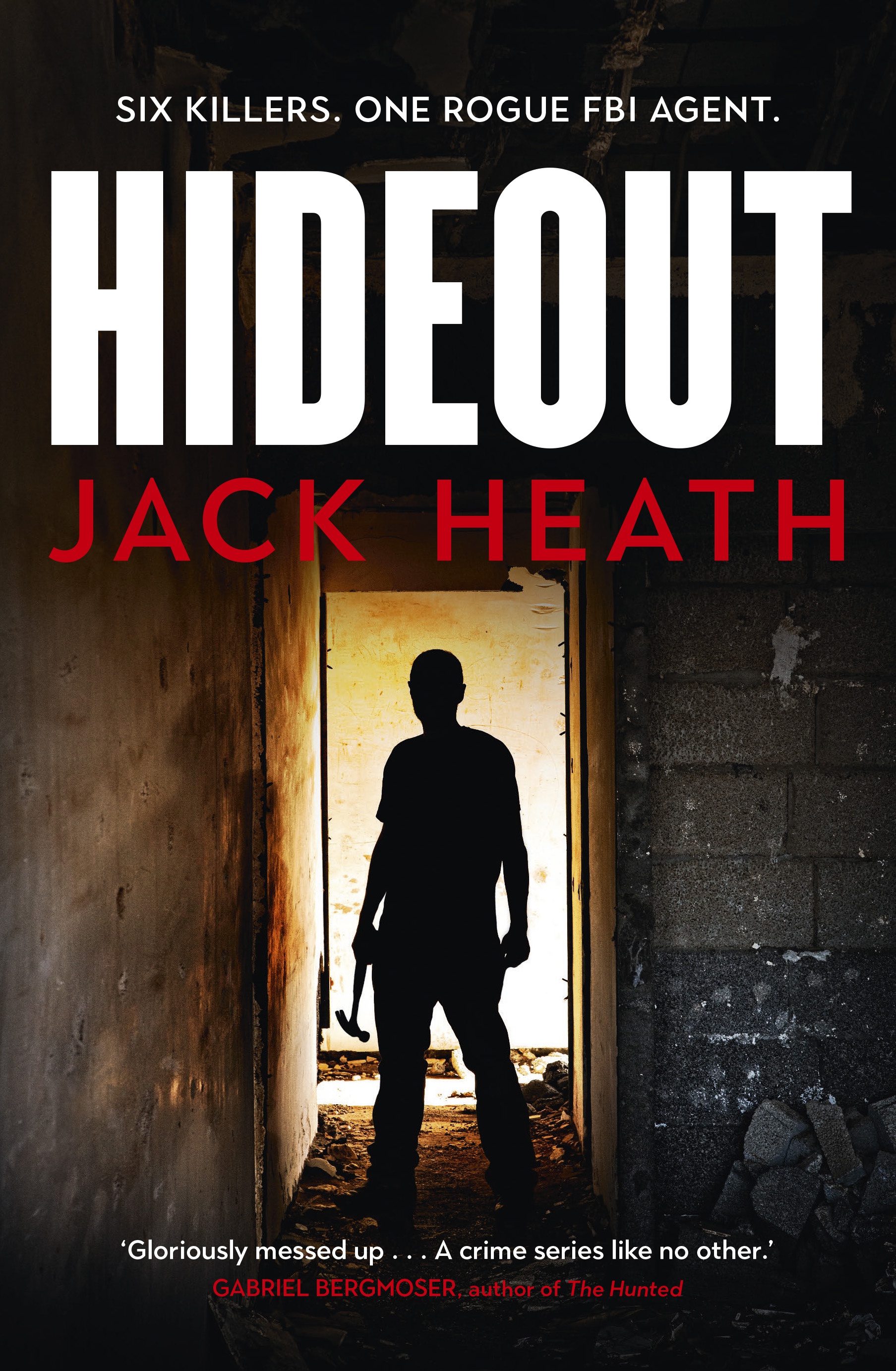
Hideout by Jack Heath

Hideout Cover

Publisher: Allen & Unwin (Trade Paperback – 1 December 2020)

Series: Timothy Blake – Book Three

Length: 406 pages

My Rating: 4.25 out of 5 stars

Amazon     Book Depository

Australian bestselling author Jack Heath brings back his cannibalistic protagonist, Timothy Blake, for another gruesome adventure in Hideout.

Timothy Blake, occasional FBI consultant and full-time murderous cannibal, is on the run, convinced that his former employers are close to capturing him for his unfortunate habit.  With nothing to lose, Blake decides to take out one final target and travels to a house in rural Texas where Fred, the ringleader of a group of dark web torture video producers, lives.  However, his plan to kill and consume Fred quickly goes out the window when he finds out that this target is not alone.

Fred has gathered five of his cohorts, known as the Guards, each of whom makes a living off torturing, extorting and killing people on the dark web.  Pretending to be an online associate of the Guards who is in trouble, Blake manages to con his way into the house, convincing them that he is a just as twisted as they are.  His subsequent plan to pick off his new companions one by one seems like a winner, until one of the Guard turns up dead by someone else’s hands.

It soon becomes apparent to Blake that another killer is stalking his new hideout, one who is determined to keep their secrets no matter what.  With his cover likely to be blown at any second and his ravenous hunger for human flesh threatening to overwhelm him, Blake needs to find a way to survive and overwhelm his companions.  However, the discovery of a group of desperate people chained up in the building behind the house complicates everything, especially when the Guards’ latest victim arrives.  Can Blake take out this group of psychopaths before he is picked off by another killer, or has this cannibal finally met his match?

Hideout is a fun and compelling novel from Canberran author Jack Heath, who has once again come up with an exciting adventure for his distinctive protagonist.  Heath is a well-established author who primarily made a name for himself with young adult and children’s thriller fiction, such as his Six of Hearts, The Liars, The Danger and The Scream series.  However, Heath has also branched off into adult thrillers with his Timothy Blake novels.  The Timothy Blake series started in 2018 with the first entry, Hangman, and it follows its dysfunctional cannibal protagonist as he investigates a series of different and thrilling mysteries.  Hideout is the third entry in this series and is set shortly after the events of the second novel, Hunter (which was also released under the title Just One Bite).  This is actually first Jack Heath novel that I have read, and while I was deeply intrigued by the previous Timothy Blake books, I did not get a chance to grab a copy.  However, I really enjoyed Hideout and I am definitely going to go out of my way to obtain any additional novels Heath writes in the future.

This third Timothy Blake book proved to be quite an impressive and compelling read, as the protagonist finds himself trapped with six other psychopaths, each of whom torture and kill people online for a living.  This proves to be quite an intriguing scenario, as this bold protagonist bluffs his way into the house and plots various ways to kill them.  However, the whole scenario inevitably gets out of hand, and Blake finds himself having to investigate the murder of one of the killers he is trapped with.  This results in an excellent story and I loved the blend of mystery, great interactions, and the character’s attempts to keep his cover, especially as Heath also throws in a little commentary about current society (some of which is exceedingly relevant, particularly this week).  I really liked where the author took his awesome story, and all the various twists, revelations and surprising actions made for quite a compelling and thrilling read.  I especially loved all the excellent foreshadowing that the author utilised, as nearly every stray thought or memory from the protagonist came into play somewhere later in the book.  The story is extremely fast paced, and readers should be able to power through it in short order, especially once they get wrapped up in the captivating narrative.  I also appreciated how easy it was for those people unfamiliar with the previous Timothy Blake novels to read Hideout, as Heath has made it quite accessible, with all the key elements from the previous books explained in sufficient detail.  Naturally, as this is a novel about a cannibal living undercover with dark web torturers, this is a particularly dark book and people who have issues with torture, gruesome killings and cannibalism might want to avoid it.  Overall, this was an amazing narrative, and I had a fantastic and exhilarating time getting through it.

I quite enjoyed the damaged and intriguing protagonist that was Timothy Blake, and it was rather fun following the adventures of a cannibal.  While there are some obvious parallels to Dexter in this character as a killer who target criminals, I felt that Blake was distinctive enough in his own right and he ended up being an interesting character to set a book around.  I really enjoyed seeing the entire narrative unfold from his perspective as the character adds some intriguing elements to the story.  There is something desperate and feral in this character that translates off the page, and he is haunted by some of the events from the previous novels, especially as he believes that his freedom or life is nearly over.  While the origins of his cannibalistic tendencies are not really covered in Hideout (I assume that they are detailed in prior books), you do get an idea of this character’s troubled past and how he helped as an FBI consultant.  Despite being a killer and unrepentant flesh eater, Blake is constantly trying to be a good person, and it was fascinating to see him try to save certain lives while plotting the deaths of the various members of the Guards.  Blake also proves to be a canny investigator and trickster even though his formal education is rather lacking, managing to fool the people he lives with while also solving the curious mysteries that Heath came up with.  I loved the cannibalistic side of the protagonist and it was quite amusing to see him considering the various people and corpses he encounters, wondering about how much meat he could get off them and how likely he could get away with eating.  This hunger proves to be an interesting driving force for Blake throughout the book, especially as, to maintain his cover, he has to consume a vegetarian diet, which messes with his mind a little.  I also enjoyed the way in which Heath is clearly not amazingly attached to his protagonist, as Blake goes through some stuff which changes him in some substantial ways.  I ended up really liking this complex and enjoyable character and I look forward to seeing what his future adventures entail, especially as Heath sets up an interesting potential story arc for the next book.

Heath has also filled up Hideout with some other compelling characters who stay on the property with Blake for most of the book.  The most prominent of these are the members of the Guards, the six psychopaths who video themselves torturing people to make money.  While on the surface all of these characters are despicable, Heath spends time examining each of their personalities and histories, fleshing them out and showing that their various motivations are a lot more complex than initially believed.  This helps to create a richer story, especially as each of the characters have their own unique secrets that come into play throughout the narrative and ensure a much more complex mystery for Blake to solve, as well as adding in some compelling connections to the protagonist.  There is also a further group of characters on the property who are a major part of the book’s plot.  Like the members of the Guards, there is more to these characters than initially appears, and their plight is a rather intriguing ethical inclusion to the story.  One of these characters is featured quite significantly throughout the book due to their prior connections to Blake, and it was fascinating to see the massively negative impacts of Blake’s interactions with them.  All of this results in quite a character-rich narrative, and I quite enjoyed seeing how some of the arcs played out and how the protagonist interacted with them.

Hideout by Australian author Jack Heath ended up being a fun and compelling novel, and I had an amazing time reading it.  Heath makes excellent use of his unique protagonist, inventive plot scenario and fast-paced story to create an awesome thriller that readers can easily enjoy and get through quickly.  While a bit gruesome in places, this is an undoubtedly entertaining thriller that readers are going to have fun getting through.  I look forward to seeing how the Timothy Blake series continues in the future, and the next book should be a fantastic and exhilarating ride.

Amazon     Book Depository

The Law of Innocence by Michael Connelly

The Law of Innocence Cover

Publisher: Allen & Unwin (Trade Paperback – 10 November 2020)

Series: Mickey Haller – Book six

Length: 421 pages

My Rating: 4.75 out of 5 stars

Amazon

The master of the modern-day crime fiction novel, Michael Connelly, presents his second release of 2020, The Law of Innocence, which sees the return of one of his most iconic protagonist, the Lincoln Lawyer, Mickey Haller, who is forced to defend his most important client yet: himself.

Defence lawyer Mickey Haller is flying high after a series of high-profile wins in court.  However, his life is about to come crashing down around him when he is pulled over by police and the body of a former client is found in the trunk of his Lincoln.  Haller is swiftly charged with murder and slapped with an unpayable $5 million bail that forces him to stay in the infamous Twin Towers Jail in downtown Los Angeles.

Determined to prove that he has been framed, Haller chooses to defend himself and starts to construct his case in prison.  With the help of his expert team, including his half-brother, Harry Bosch, Haller attempts to discover who is really behind the murder and why he is being targeted.  However, the answers and a viable alternate suspect seem elusive, and Haller soon finds himself the target of everyone in the criminal justice system that he has managed to alienate throughout his career.

With the trial quickly approaching and a vengeful prosecutor angling to get Haller the death sentence, the defence will need every trick at their disposal if they are to save Haller’s life.  However, this entire case sits at the centre of an elaborate conspiracy, one where anyone who knows anything is at risk.  Can Haller survive the case and his dangerous prison sentence, or will this be the last trial for the Lincoln Lawyer?

The Law of Innocence was an impressive and enjoyable book from Michael Connelly, who has once again written a top-notch crime fiction novel.  I have really been getting into Connelly’s work over the last couple of years and I have had an exceptional time reading his last three novels, Dark Sacred Night, The Night Fire and Fair Warning.  Due to this, and the fact that I really liked its plot synopsis, The Law of Innocence was one of my most anticipated reads for the year, and I have been looking forward to it for a while.  This is the sixth novel to feature Mickey Haller as its protagonist and point-of-view character, and the 35th overall novel to be set in Connelly’s overarching crime fiction universe.  I had an amazing time reading this book, another fantastic outing from Connelly.

Connelly has come up with an exceptional story for this excellent book, and it is one that I really enjoyed.  Indeed, I actually got so caught up in The Law of Innocence’s awesome narrative that I managed to read the entire book in just one day, not even realising that I had stayed up till 3am to finish it off (work the next day was not fun, but staying up was worth it).  The story that Connelly utilises in this novel is extremely compelling and intriguing, as it forces the protagonist to not only solve a murder but also prove to the court that he did not commit it.  This leads to an intense, emotional and clever story that combines a fantastic murder mystery plot with some excellent legal thriller elements, while also placing the protagonist in significant danger while being held in prison.  There were a number of amazing elements to this book, and the story flows at an extremely fast pace whilst following a crafty but likeable protagonist.  Connelly makes sure to continue to explore Haller’s personal issues at the same time, featuring the supporting characters and family members from the previous Mickey Haller novels, including an old flame with whom Haller finally gets some closure.  The Law of Innocence also featured Connelly’s most iconic protagonist, Harry Bosch, who attempts to help Haller clear his name.  While Bosch was a little underutilised, especially considering how much he was featured in some of the pre-publishing advertising, it was great to see him in another book and it was interesting to see more of the relationship between these estranged half-brothers.  The Law of Innocence also contains some interesting connections to previous Mickey Haller novels, and fans of this protagonist will be intrigued to see which characters make a return.  While I really enjoyed most of the story, I did feel that ending was a little weak.  The entire conclusion to the case occurs rather suddenly towards the end of the book and it feels a little forced and simplistic.  It also lacked the excitement of the rest of The Law of Innocence, and I would have much preferred something a little more shocking or some major courtroom shenanigans to really round out the book.  While this ending was a bit disappointing, I still think that The Law of Innocence’s story was still substantially strong, and I had an exceptional time getting through it.

One of the things that impress me about Connelly’s writing is his ability to create substantially different crime fiction novels based on the protagonist he is featuring.  For example, his Renee Ballard and Harry Bosch novels are excellent police procedurals, while his Jack McEvoy books feature clever investigations by a journalist.  The Law of Innocence, on the other hand, was written as a legal thriller, due to it being a Mickey Haller novel.  This proved to be an interesting change of pace from the previous Connelly novels I have read, but I really enjoyed it, mainly due to the sheer amount of legal detail that the author fits into the novel.  Connelly does an amazing job fitting an entire fascinating legal case into this book, going all the way from the arrest to the conclusion of trial.  Along the way, The Law of Innocence covers everything from case preparation, pre-trial hearings, bail, jury selections and the main trial, while also containing a lot of descriptions and discussions about the criminal justice system in Los Angeles.  Due to the fact the book is told solely from Haller’s point of view, there is a natural focus on the art of defending a client, with a number of the tricks of the trade being featured.  I found all of the legal aspects of The Law of Innocence to be extremely fascinating, and Connelly makes sure to explain all of these legal details in a comprehensive and easy to follow way.  I loved seeing Haller work his legal magic throughout the book, especially as the reader gets to see into Haller’s mind and find out what he was actually planning and how successful his various gambles actually are.  It was also particularly cool to see him forced to deal with the handicap of defending himself whilst being stuck in jail, especially as he was not able to investigate the crime himself or have access to his usual resources.  Overall, my first experience of one of Connelly’s legal thrillers turned out to be very enjoyable and I thought that the author wrote an awesome story around it.  I look forward to seeing what cool legal cases Connelly comes up with the next time he utilises Haller as a protagonist, and I am sure it will make for another fun read.

Another interesting part of this book that I quite enjoyed was the clever inclusion of COVID-19 into the plot.  The plot of The Law of Innocence is set over the course of a couple of months, from late 2019 to March 2020, with the coronavirus slowly becoming more prevalent as the book proceeds.  This starts with some throwaway mentions of the virus and Wuhan in the parts of the book set in November, which the reader would initially attribute to a cute mention that was not going to go anywhere.  However, as the book progresses, the references to the virus become more and more numerous, until it actually becomes a major part of the plot, with the protagonist suddenly facing the reality of it when his legal team walk into prison wearing face masks.  I found it deeply fascinating to see the author utilise the coronavirus in his book and it was rather compelling to see the impacts it had on the central plot, with elements of the court case, such as jury selection, fast-tracked to ensure that the case could be held before everything got shut down.  Connelly was actually quite subtle with how he featured the coronavirus in his story, and I felt that the growing levels of concern that the characters show in this book realistically matched what people felt in real life, with excellent depictions of the shift from mild indifference to panic buying.  This was honestly one of the first books I have read that mentioned the coronavirus (although I imagine quite a few books next year will have it as a central plot point), and I felt that Connelly handled it extremely well, being an accurate and impactful part of the book, without overly distracting the reader from the central case or overwhelming them with details or experiences everyone is currently extremely familiar with.  This excellent inclusion of real-life elements into a great fictional story is one of the reasons I always enjoy Connelly’s writing, and I look forward to seeing how he addresses the coronavirus in some of his future books (for example, how it might impact murder investigations in a Renee Ballard or Harry Bosch novel).

The Law of Innocence by Michael Connelly is another captivating and awesome crime fiction novel that comes highly recommended.  Featuring the antics of defence lawyer Mickey Haller, The Law of Innocence is an amazing legal thriller that readers can really sink their teeth into.  Fun, exciting and compelling, The Law of Innocence is an excellent novel, and both established fans of Connelly and newcomers to his work will be able to dive into this book extremely easily.  I had an amazing time reading The Law of Innocence and I look forward to Connelly’s next exceptional read.

Amazon