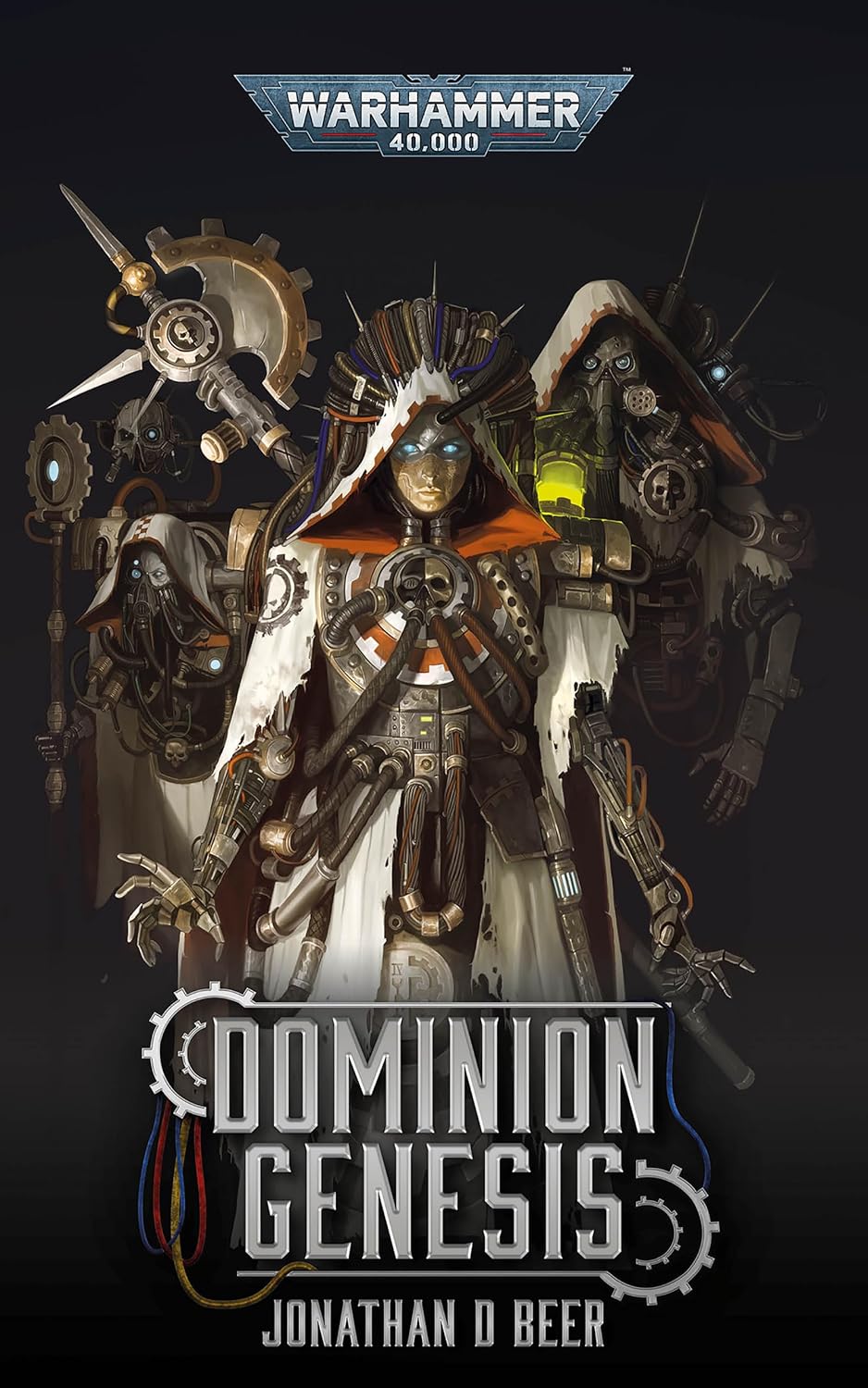
Warhammer 40,000: Dominion Genesis by Jonathan D. Beer

Publisher: Black Library (Audiobook – 21 September 2024)

Series: Warhammer 40,000

Length: 10 hours and 47 minutes

My Rating: 4.5 out of 5 stars

Amazon

Destitute tech-priests of the Adeptus Mechanicus embark on a massive quest for redemption in the excellent 2024 Warhammer 40,000 novel, Dominion Genesis by Jonathan D. Beer.

Beer is a talented rising author in the Warhammer 40,000 fiction space who has so far impressed with two interesting books covering unique spheres of the fandom’s canon.  I deeply enjoyed his first novel, The King of the Spoil, which was a particularly epic entry in the Warhammer Crime sub-series, and which ended up being one of my favourite debuts of 2023.  Beer followed up this debut last year with his second novel, Dominion Genesis, an intriguing read that takes place in a very different Warhammer 40,000 setting.  I had an excellent time with Dominion Genesis, although I spectacularly failed to write a review for it last year.  However, with Beer’s third Warhammer 40,000 novel just released, I felt that this was a good time to finally write something about Dominion Genesis, which honestly was an awesome read.

Plot Synopsis:

Gryphonne IV is dead – one of the mightiest forge worlds in the arsenal of the Adeptus Mechanicus, succumbed to the relentless hunger of Hive Fleet Leviathan. Devoured. Lost.

The few magi that survive drift in idleness, robbed of purpose and direction. But there is one who rejects that fate.

READ IT BECAUSE
It’s the gripping tale of an Explorator desperately seeking ancient technologies from humanity’s past as she races against time to restore one of the mightiest forge worlds in the Imperium.

THE STORY
Explorator Talin Sherax seeks ancient and miraculous technologies from humanity’s distant past. When she learns of a fabled relic that could restore all that has been lost, Sherax embarks on a journey, the outcome of which could change everything. Nothing will stand in her way… even if the quest brings her to the brink of heresy.

Dominion Genesis was a particularly intense and compelling entry in the Warhammer 40,000 canon that proves quite enthralling to read.  I like how Beer managed to achieve quite a few things with this book, as he produced an excellent quest narrative with a focus on obsession, trauma and survival, while also cleverly showcasing several different factions of the Warhammer 40,000 universe.

Beer came up with a very awesome story that hits a lot of highly emotional story notes early on.  The start of Dominion Genesis was one of the more striking sequences of Warhammer fiction I have read, as the protagonist, Explorator Talin Sherax, is forced to witness the destruction of their home world.  Moving quickly into a time skip, you see a very different version of Sherax several years in the future, as she still attempts to make sense of the destruction while searching for valuable lost technology.  After a great sequence aboard a derelict spacehulk, Sherax finds a clue about a potential artifact that could help to restore her planet.  Going against the orders of her superiors, Sherax leads a crew of human soldiers and Adeptus Mechanicus forces on a quest to several deadly and hidden locations in the galaxy.  Along the way, the protagonists examine their humanity in several different forms, while also being stalked by dangerous alien fighters determined to stop them achieving their goal.

There are some great sequences in the middle of this book, as the protagonist desperately follow the clues into a trap, which shakes all the characters to their core.  After a gruelling sequence of events that help to highlight and move along several, well-constructed character development arcs, the adventure moves to its destructive conclusion.  After another disaster, the protagonists are dropped in amongst a war between rival xenos forces and must journey into the fray to achieve their goal, resulting in a brutal series of battles and the intense conclusion to the narrative.  Beer wrote in some great tragic moments as the protagonists are outmatched at nearly every turn, although many of these sequences work well to provide closure to some of the book’s various character arcs.  The conclusion to Dominion Genesis was as bleak as you would hope for a novel in the grimdark Warhammer 40,000 universe, but it provides some great closure for the main character and will keep readers very satisfied.

I felt that Dominion Genesis was a particularly good addition to the Warhammer 40,000 canon, as Beer provides a thoughtful and complex novel loaded with unique action and damaged characters trying to survive the inherent darkness of the war-torn universe.  Beer ended up producing an intense character-driven story for Dominion Genesis, and I loved the great balance between action, exploration and interaction between certain unique Warhammer races, and the focus on character elements.  I personally really enjoyed the deep dive into the Adeptus Mechanicus, with various character perspectives diving into their culture and thought processes, even though certain sections of the plot need to be altered to emulate the machine nature of the tech-priests.  Beer tried to showcase a more emotional side to the Adeptus Mechanicus in this book, especially through his protagonist which, while different from other portrays of this faction, fits the trauma-rich narrative as all these characters struggle with the loss of their home.  The author also has fun fitting in several of the main alien races of the Warhammer 40,000 universe into the story, including orks, Tyranid, Aeldari and Necrons.  While not a lot of focus is given to understanding them, they serve as good foils to the obsessed protagonists, and it was interesting to see the Mechanicus takes on these different enemies.  In the end, Dominion Genesis proved to be a compelling, and impressive standalone novel that makes great use of its Warhammer 40,000 elements.  However, be warned that this novel is probably better read by more established fans of the franchise, rather than newer readers, as Beer covers a lot of complex lore in a short period of time.

One of the key things I liked about Dominion Genesis was the rich array of compelling characters featured throughout the plot.  Beer does an outstanding job introducing and following several very damaged figures, including the protagonist Explorator Talin Sherax, who finds herself in a depressed state following the opening sequence of book.  Cutting herself off from the technological hivemind used by the rest of Adeptus Mechanicus brethren, Sherax proves to be a brilliantly complex figure in Dominion Genesis, and Beer’s take of her as the depressed member of a group known for having no emotions was really fascinating.  The author also features an interesting array of other Adeptus Mechanicus members who provide great alternate viewpoints to that of Sherax.  I really enjoyed how Beer managed to include a lot of intriguing individualism in these machine-like Adeptus Mechanicus characters, and the range of different opinions and feelings around Sherax and her mission added some interesting drama to the story. 

Finally, I must highlight the human members of the Dominion Genesis cast, who provide intriguing alternate viewpoints to cybernetic protagonists. I particularly enjoyed the focus on a depressed former Imperial Knight pilot, who, after losing his ancient war machine, decides to join the crew of Sherax’s ship.  There are some fascinating focuses on his parallel grief to that of the Adeptus Mechanicus characters, as well as his own self-anger, especially while forced to pilot a seemingly lesser machine.  Beer writes some interesting side plots around this more human character, including his relationship with an Imperial Guard regiment also aboard the ship, and he must balance his need for human contact with his own grief and arrogance.  I felt this compelling collection of distinctive characters helped to make Dominion Genesis really stand out, and I enjoyed seeing their unique interactions.

As with most Warhammer 40,000 novels I review, I ended up listening to Dominion Genesis on audiobook, which is pretty much the best way to enjoy this series.  The Dominion Genesis audiobook ended up being a lot of fun to listen to, and I managed to get through it’s near 11-hour runtime quickly.  It helped that Dominion Genesis was narrated by the very talented Colleen Prendergast, who is becoming the go-to narrator for any Warhammer 40,000 audiobook that features a human female protagonist, such as Justin D. Hill’s Cadia series, or standalone books like Creed: Ashes of Cadia by Jude Reid or Longshot by Rob Young.  Prendergast did an outstanding job bringing the various complex cast members of Dominion Genesis to life, and I particularly appreciated the skill need to voice a variety of cybernetic humans with altered or robotic voices.  This great voice work turned Dominion Genesis into a fantastic listen, and it was very easy to enjoy Beer’s outstanding and lore-heavy story when it was being read out.

Overall, Dominion Genesis was an amazing second novel by Jonathan D. Beer, who did an outstanding job pivoting to a different area of Warhammer 40,000 fiction.  I loved the complex character-driven narrative contained within Dominion Genesis, and this was one of the more enjoyable Warhammer 40,000 novels that came out last year.  I cannot wait to see how Beer continues to develop as a writer in the future, and I currently have a copy of his latest book, Tomb World, in my audiobook queue to listen to.

Amazon

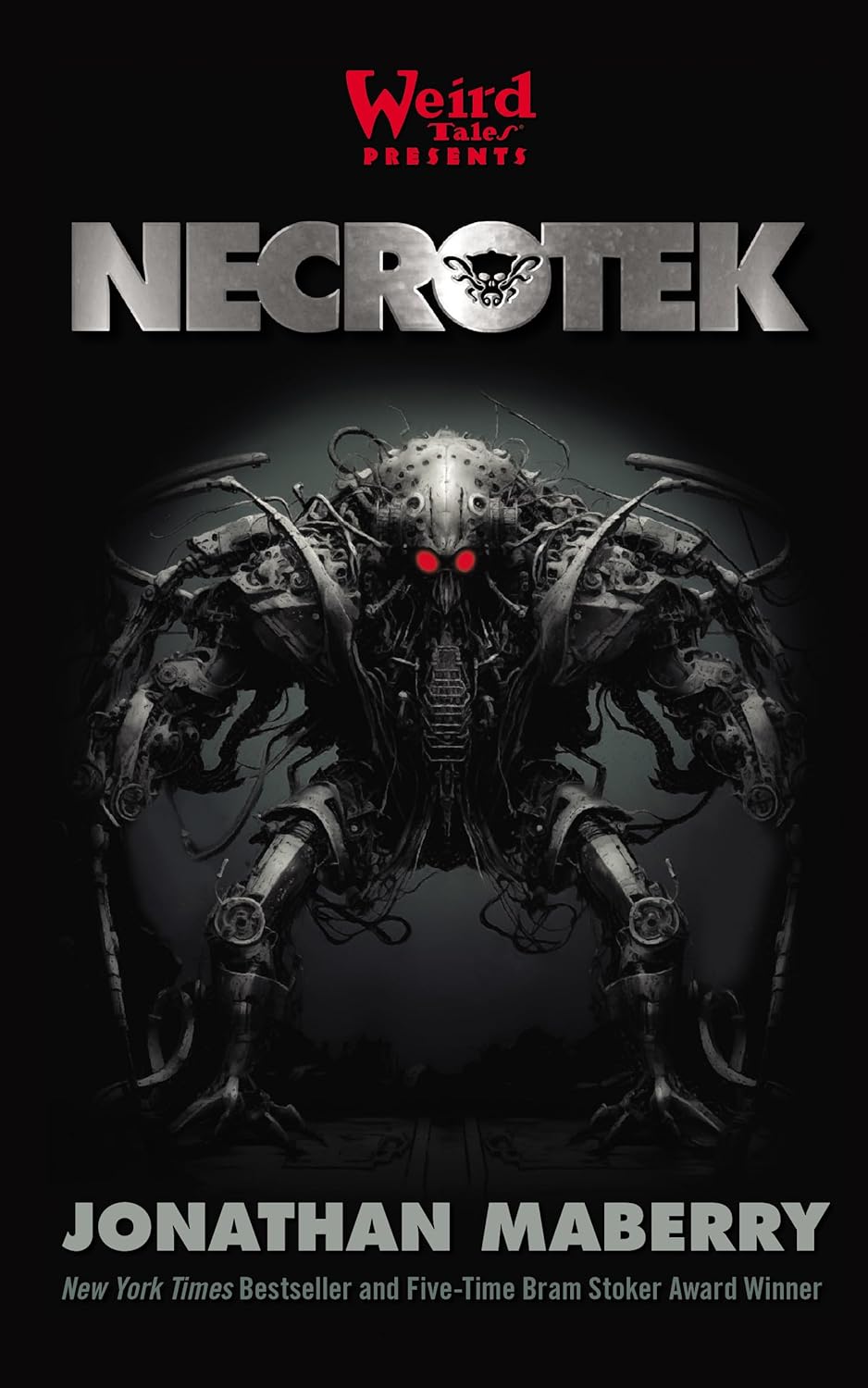
NecroTek by Jonathan Maberry

Publisher: Blackstone Audio (Audiobook – 28 May 2025)

Series: NecroTek – Book One

Length: 15 hours and 24 minutes

My Rating: 5 out of 5 stars

Amazon

One of the leading authors of action-packed fiction, Jonathan Maberry, dives headfirst into the science fiction genre with the unique read NecroTek, a remarkable Lovecraftian adventure in space that takes readers to some very dark places.

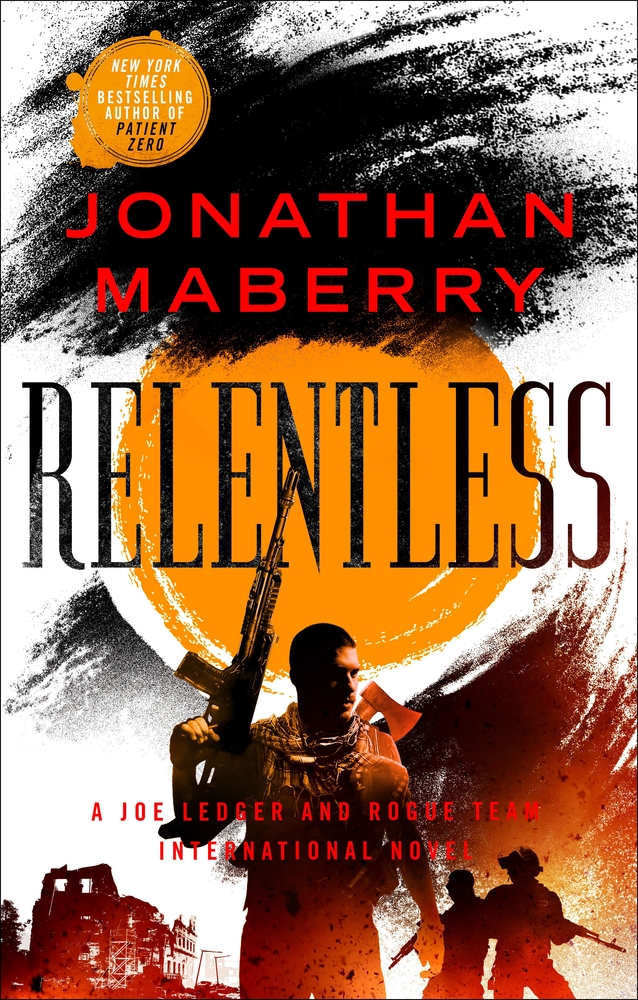
Readers of this blog will know that I have long been a fan of compelling author Jonathan Maberry, who has been impressing me with his elaborate, grim and varied book for years.  A long-time writer of horror-filled fiction across the genres, Maberry has multiple books and series under his belt, and I have had the great pleasure of reading a large portion of his existing works.  His main body of fiction is his Joe Ledger thriller series, which follows a tortured protagonist as he attempts to stop an array of dark technological threats assailing the modern world.  This series, which includes great books like Patient Zero, Assassin’s Code, Predator One and Dogs of War, as well as the Rogue Team International sequel series (Rage, Relentless and Cave 13), proved to be a great introduction to the author for me, and my appreciation for him grew after reading his Kagen the Damned dark fantasy series.  Made up of Kagen the Damned (one of my favourite books and audiobooks of 2022), Son of the Poison Rose (one of my favourite books and audiobooks of 2023), and The Dragon in Winter (which I am currently reading now), the Kagen the Damned books saw the author bring his distinctive style to the world of dark fantasy in a big way, and I loved the end result.

Due to how much I love Maberry’s captivating and enthralling novels, I always instantly grab anything new the author writes, and this includes his first release of 2024, NectroTek.  While his Joe Ledger books often feature strong science fiction elements in their thriller narratives, NecroTek was the first pure science fiction novel from the author, and I felt that he did an outstanding job applying his style and love for old-school horror into this new genre.  Released under the banner of the iconic Weird Tales horror magazine, NecroTek was one of my most anticipated releases of 2024, and it did not disappoint.


Plot Synopsis:

From New York Times bestselling author Jonathan Maberry, NecroTek is a gripping sci-fi thriller full of ghosts, gods, and a battle for the soul of humanity.

Neither cosmic philosopher Lars Soren, hotshot pilot Bianca Petrescu, nor the high priestess Jessica McHugh–Lady Death herself–can say quite where in the galaxy they are. But after an experiment gone horribly wrong, one thing is clear: Asphodel Station isn’t in orbit around Jupiter any longer. Worse, the monsters that live out here–ancient eldritch beings thought only to exist in stories and nightmares–have now been alerted to Earth’s existence.

Their army of Shoggoths is coming for us next.

Humanity’s only hope for survival lies on the surface of the alien world of Shadderal, where a ghost named Lost, the last of an ancient race, still haunts the vast plains of the Field of Dead Birds. But hope has a cost. Lost tells Soren about ancient derelict spacecraft awaiting on Shadderal, shapeshifting machines that blend ultra-advanced technology with the dark powers of necromancy. These ships might just be nimble enough to defend mankind against the coming invasion.

But there’s a catch: they can only be piloted by the dead.

As human starfighters fall in battle, their spirits can be called back from death to pilot these ghost ships of a fallen race. But will this new necromantic technology–NecroTek–allow humanity to stand against the vast armies of the Shoggoths? And even if it can, is the war to save the human race worth the cost of its pilots’ immortal souls?


What another brilliant read from Jonathan Maberry!  NecroTek was an outstanding and captivating novel that I unsurprisingly loved thanks to its elaborate and ambitious narrative, loaded with horror, carnage and a distinctive tale of survival against the odds.  Moving, powerful and highly emotional, NecroTek was such an epic and captivating novel, and I must give it a full five-star rating as a result.

Maberry produces another complex, detailed and powerfully dark narrative for NecroTek that is part science fiction, part horror, and all excitement.  Starting off just in advance of the events that will set the story in motion, Maberry does a great job of opening the book up and quickly setting the scene for the reader.  The start of a new series unconnected from his previous works (for now), this is one of the easier Maberry novels to break into, and you are soon invested in the tale of scientific exploration.  However, things change quickly once the teleportation experiment fails, and as this is Maberry, when things go wrong, they go wrong in a big and gruesome way.  The author really leans into his love of horror during these opening moments, and there are some shocking depictions of the side effects of the jump through space, as well as the terrifying things waiting for the survivors on the other side.  Maberry revels in featuring powerful depictions of terror and craziness here and it makes for a brilliant and often disturbing first part of the book.

After this horrifying start to the novel, NecroTek becomes more of a science fiction tale, although Maberry quickly infects it with his beloved Lovecraftian elements, as the protagonists soon discover that they have been discovered by Shoggoths above a mysterious planet.  This allows for some fantastic moments, as the humans attempt to defeat this new alien foe with their existing ships, while continuing to dive into the complex science and philosophy surrounding their circumstances.  This middle section of the book moves at a swift pace, and the readers are treated to some excellent battle sequences in space, as well as the character’s continued uncertainty as they try to understand the outrageous situation they have found themselves in.  Maberry does a great job setting down the required Lovecraftian lore and bringing key parts of the plot to light during this part of the book, and readers easily become absorbed in his compelling ideas, especially when they are coated in a combination of adventure, horror and intriguing characters.

Everything leads up perfectly to the final third of NecroTek, which sees the protagonists desperate to defend both the station, and the important planet they hover above.  Faced with attacks on multiple fronts and so many tragedies, the protagonists are forced to rely on a new ally and the titular NecroTek to face off against the Shoggoth fleet.  Maberry keeps the tension riding high for this final part of the book, and you are constantly on the edge of your seat as several simultaneous battles rage around the reader, often fought in some extremely epic ways.  There is some captivating tragedy, deeply moving moments of sacrifice, and elaborate dives into the human psyche as everything comes together, and you will be left dazed and moved by everything that unfolds.  An overall exceptional and unique story, NecroTek was so much fun, and I liked the potential for story continuation that exists at the end of the novel.

Maberry has a very distinctive writing style that he utilises in all his novels, no matter the genre, and which always results in an awesome and complex read.  Featuring a huge number of short and sharp perspective chapters that constantly jump between the key characters, as well as a few shots of the antagonists and other mysterious creatures, you get a layered story that shows so many complex actions at the same time.  This style works extremely well in this science fiction adventure, and I loved the elaborate ways he showcased the dark events occurring around the station, whether you get the experiences of the recurring characters, or one-off chapters that shows what happened to specific characters before they die.  These chapters deeply enhance the horror vibes in the book, which keep you on your toes and provides an overarching sense of threat and danger that really makes you concerned for the protagonists.  This cool horror vibe blends well with the extremely detailed science fiction setting and storyline, to create a particularly striking read that really stuck with me, especially as the author also dives into Lovecraftian elements which work nicely into Maberry’s distinctive tone.  As with most of Maberry’s work, NecroTek does get incredibly dark and disturbing at times, which may not appeal to every reader, especially when it comes to some of the more distressing occurrences.  However, Maberry channels this darkness extremely well into the plot and the various action sequences of the book, producing a rafter of ultra-exciting scenes that really stick in the mind.  I personally felt his various space-combat sequences were extremely good, and I loved how effectively he showcased the intricate nature of the battles, even when things get extreme with the inclusion of ghost-powered battle mechs. 

As with all Jonathan Maberry novels, the true power and heart of NecroTek lies in its many impressive and complex characters, who the author utilises to tell a particularly powerful and layered story.  Maberry has a real gift for producing compelling, damaged, and often highly over-the top characters for his various series, and NecroTek is no different as he introduces a range of figures whose unique perspectives shape and power the story.  While NecroTek lacks the full-on antagonist’s perspective that usually make his novels so effective (due to the enemies being unknowable aliens), you get a great spread of alternating perspectives and thoughts throughout NecroTek, as well as the powerful emotions behind them.  These emotions are greatly enhanced by the fact that all the human characters within NecroTek are disorientated or damaged by the earlier events of the plot, and watching them overcome their rage, fear or despair, really amps up the feeling of the unknown and the complex emotions that swirl around the plot.

While there are many characters featured within NecroTek, Maberry does focus the plot on a few key protagonists whose stories get a bit more attention.  This includes cosmic philosopher Lars Soren, who serves as one of the main explorers of the new world and the voice of calm reason amongst the protagonists.  I liked how effectively Maberry utilised a scholar protagonist for much of this novel, and it allowed for a much more thoughtful narrative at times.  Of course, as this is Maberry, there needs to be a militant main protagonist as well, and that role was filled ably by military pilot Bianca Petrescu.  A confident and skilled pilot, Bianca worked as a great partner to Soren throughout much of the adventure, and I liked the contrast in their styles and actions.  Bianca also works well as part of the fighter group, known as the Lost Souls, who work to defend the station from the Shoggoth fleet.  Acting like an extended family, the Lost Souls are a vital part of the book’s plot, especially as their eventual, many-layered sacrifice, results in some of the most emotionally charged scenes in the book, which is further enhanced by how much you have come to care for the whole group.  Throw in an actual necromancer and an ancient alien whose guilt-ridden ghost provides aid to the protagonists whilst also damning them, and the cast of NecroTek was extremely strong.  I really enjoyed the elaborate narrative threads that emerged around these figures, and it led to a very powerful and intense read.

As with most of the Jonathan Maberry novels, I chose to enjoy NecroTek on audiobook, which is easily the best way to enjoy one of the author’s elaborate and powerful novels.  Maberry’s distinctive writing style of constantly shifting characters, loaded action, and horrifying elements really comes across when read out and I honestly believe that this is the best way to enjoy one of author’s books.  A lot of this is due to the continued use of long-term Maberry collaborator Ray Porter, who has lent his voice to most of Maberry’s compelling audiobooks.  One of my favourite audiobook narrators, Ray Porter has an outstanding voice that expertly moves Maberry’s complex and addictive narrative around at a fast and effective pace.  Porter’s ability to instil emotion, intensity and often scary tones into his narration is extremely epic, and he can ensure that readers are always on the edge of their seats as they wait for more action or horror to emerge.  Porter also has a great range of different awesome voices that seem to always perfectly fit the character they are assigned to, and I love the fun and entertaining tones that convey so much of fear, feelings and deeper emotional state.  Coming in with an overall run time of 15 hours and 24 minutes, this is a long audiobook, although it proves easy to power through it quickly, especially in the action-heavy second half.  As such, the NecroTek audiobook version comes highly recommended, and you will not be disappointed when you listen to it.

Jonathan Maberry once again deeply impresses me with his elaborate and addictively dark science fiction read, NecroTek.  A very distinctive Maberry creation, NecroTek features a brilliant story that brings together cool new science fiction elements with the author’s love for all thing Lovecraftian into a brutal and captivating read.  Fast paced and loaded with complex characters, fantastic action, and some truly epic sequences, NecroTek was such a great read from Maberry and comes highly recommended.  I look forward to seeing how Maberry continues the series in the future, especially as a sequel, Cold War, is apparently set for release in 2025.

Amazon

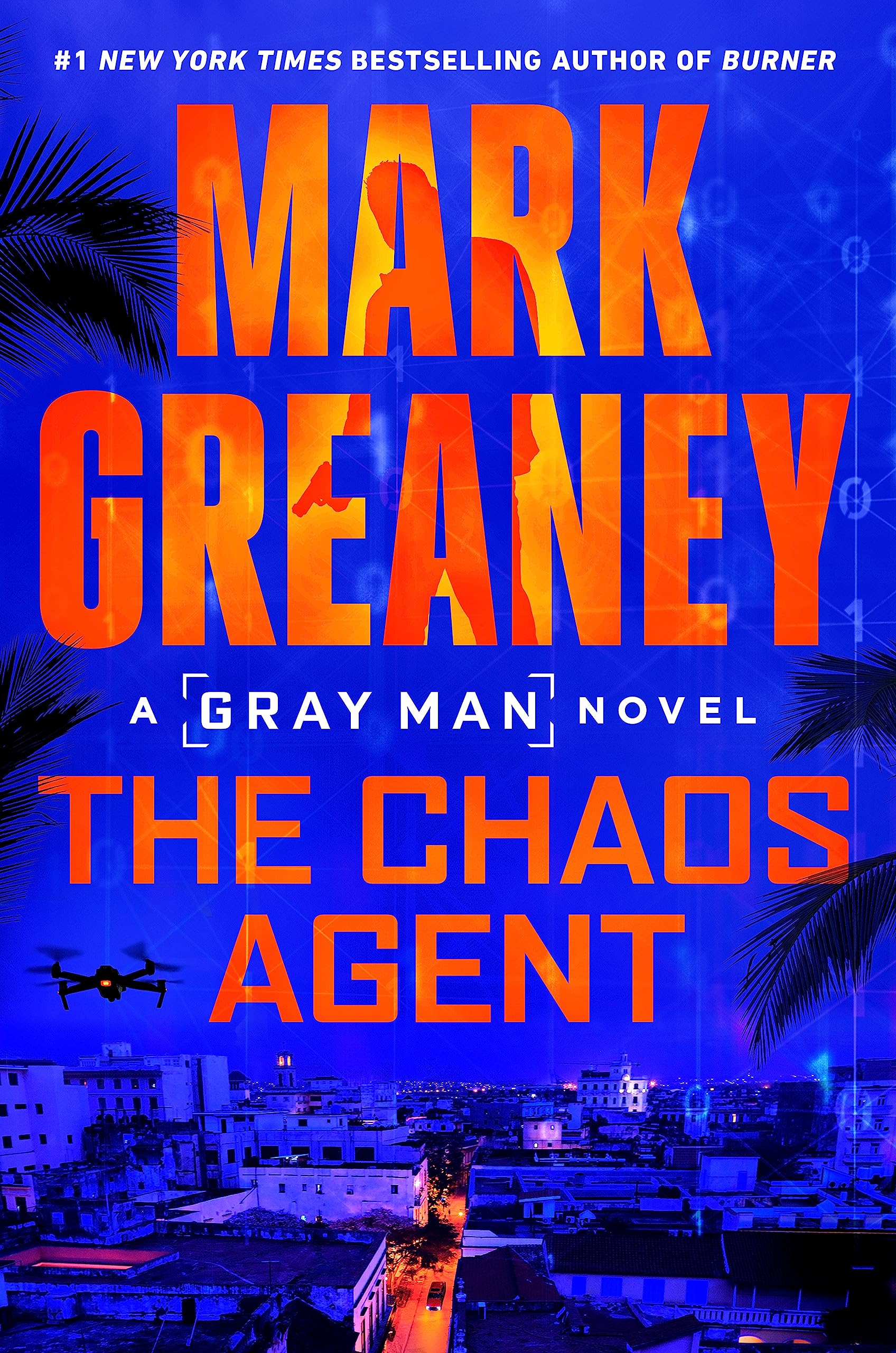
The Chaos Agent by Mark Greaney

The Chaos Agent Cover

Publisher: Sphere/Audible (Audiobook – 20 February 2024)

Series: Gray Man – Book 13

Length: 17 hours and 34 minutes

My Rating: 5 out of 5 stars

Amazon

One of the leading authors of the spy thriller genre, Mark Greaney, returns with another epic entry in his iconic Gray Man series, The Chaos Agent.

Readers of this blog will know that I am a massive fan of thriller author Mark Greaney, who has been wowing the world with his elaborate and exciting stories for years.  Ever since I started reading thrillers, Greaney has been a major figure in my yearly reading schedule, with books like Armored and Red Metal (cowritten with Hunter Ripley Rawlings IV), ensuring that he became a must-read author for me.  However, his most iconic body of work is his Gray Man series, which follows legendary former CIA agent and assassin Court Gentry, known as the Gray Man, as he engages in carnage across the world.  This series, which people may be familiar with thanks to the Netflix adaptation, is so damn good, and I really love the elaborate and intense stories that emerge.  This includes the impressive first novel The Gray Man, as well as later books like Mission CriticalOne Minute Out (one of my favourite books and audiobooks of 2020), Relentless (one of my favourite books and audiobooks of 2021) and Sierra Six (one of my favourite books and audiobooks of 2022) and Burner (one of my favourite books and audiobooks of 2023).  Naturally, I grabbed Greaney’s latest novel, The Chaos Agent, the first chance I could, and it proved to be another amazing read.

Across the world, elite scientists are being murdered in a series of elaborate and well-coordinated assassinations.  The killers are well equipped, well prepared, and seem capable of striking across multiple countries.  The only connection between the killings is the area of expertise the victims are known for, as someone is targeting the world’s leading experts in artificial intelligence and robotics.

As the killings continue, it appears that only two major assassins aren’t involved in the plot, the Gray Man, Court Gentry, and his lover Zoya Zakharova.  Hiding out in Central America after their last mission once again forced them to become fugitives, Court and Zoya are seeking the quiet life together after all their years apart.  But an assassin’s work is never done, and soon an old family friend of Zoya’s seeks them out, hoping that they can help identify the individuals behind the attack.  Initially reluctant to get involved, Court and Zoya soon find themselves targeted by association, and must flee an army of dangerous killers and mysterious advanced combat drones.

Forced to find out who is hunting them, Court and Zoya soon discover that the killings are linked to a deadly proposed artificial intelligence weapon that could change everything about modern warfare.  To discover what’s truly going on, the two former agents and their allies need to investigate the one survivor of the ongoing assassinations.  But with their target now protected by an old friend of theirs, Zack Hightower, in an isolated fortress, Court and Zoya will need to use all their connections and luck to find the truth before it’s too late?

The Chaos Agent was another excellent novel from Greaney, who continues to highlight why he is one of the world’s leading spy thriller writers.  This latest Gray Man novel ended up being a lot of fun, especially as Greaney goes a little overboard with the plot, and I deeply enjoyed the resulting adventure.

Greaney came out of the bag with something very exciting in The Chaos Agent, which is mainly down to how over-the-top and crazy the main narrative ended up being.  This story starts off relatively low-key, with a couple of random killings, and an update on the lives of the protagonist, Court Gentry, and his partner Zoya Zakharova.  Naturally, it doesn’t take long for Gentry and Zakharova to get dragged into the action, and this starts an intense fugitive arc for them, as they find themselves being hunted by various killers across central America.  At the same time, the other supporting characters of the book are investigating the worldwide plot around the assassination of various AI experts.  This results in a compelling investigation angle that continues for a large portion of The Chaos Agent, and it was fun to not completely know the identity of the book’s antagonist until towards the end.  This first half of The Chaos Agent definitely got my attention, and the compelling action, intense mystery, and intriguing characters help to draw the reader in.

The second half of The Chaos Agent is where things start to get particularly interesting, as Greaney amps up the story and throws it into overdrive.  In particular, the antagonists get even more crazy, which is well shown in an intense action sequence involving Gentry and Zakharova in contact’s house in Central America.  These additional opponents give The Chaos Agent a real science fiction edge to them, and it was a gloriously over-the-top inclusion that I really loved.  The various character storylines soon come together after that, as all the characters end up in Cuba investigating who is truly behind everything and why.  There are some cool sequences here, including complex and intricate multi-perspective operations as various players manoeuvre around each other to achieve their goals.  This all leads up nicely to the big extended finale, where all hell breaks loose as Greaney sets up a massive firefight with various sides thrown into the mix.  The action here is intense, with the carnage flying thick and fast, and with so many perils coming for the protagonists.  It all ends on a pretty big cliffhanger that will play nicely into the next book in the series, especially as two major supporting characters find their situation drastically changed due to their decisions.

I deeply enjoyed how this cool novel unfolded, and Greaney utilises his trademark writing style to great effect with this excellent story.  The high-intensity action, fast-paced plot, and intriguing overarching storyline came together wonderfully, and it proves very hard not to get drawn into The Chaos Agent as a result.  I particularly love how Greaney so effortlessly jumps between different character perspectives throughout the course of the book, which allows for a more complex and enhanced story.  These quickfire changes in perspective also work extremely well in some of the book’s more intense sequences, especially as seeing the various participants continuously react to other character’s actions, allows for some outstanding scenes.  Good examples of this include a sequence in the Cuban docks where Gentry and a rival assassin move around each other trying to simultaneously protect or kill their target.  These scenes, and more, are true highlights of this book, and I love how well they were able to incorporate the particularly eccentric inclusions that Greaney featured within The Chaos Agent.

As with most of the books in the Gray Man series, The Chaos Agent can easily be read as a standalone novel.  Greaney does a good job of recapping any the relevant key events from the prior novels where needed so new readers can enjoy this book without knowing anything about the rest of the series.  That being said, established Gray Man readers will probably get a little more out of The Chaos Agent, especially when it comes to seeing how the various character relationships unfold.  It also helps that this proved to be a particularly memorable entry in the series.  Not only does Greaney go all out with his very inventive and exciting story, but there is a great combination of story elements there that everyone can enjoy.  The intense action pairs well with a deep dive into modern technology elements, and Greaney pulls together an intriguing mystery about who is behind everything, rather than showing the antagonist from the get-go.  While some of the twists around the true antagonist are a little predictable, Greaney played them out well, and they worked into the massive status quo changes at the end of the book.  I will admit that I did find some of Greaney’s writing, including the dialogue, to be a little robotic at times in The Chaos Agent, which is kind of ironic when you consider the story focus.  The way some parts of the writing or dialogue came together just didn’t feel right to me at times, and that slightly decreased my enjoyment of the book.  Still, the awesome story more than made up for it, and I felt this was an awesome addition to the overall series, especially as the epic ending has got me extremely excited for the next book.

One of the things that I really enjoyed about The Chaos Agent was Greaney’s intriguing look at the future of AI and how it could be utilised in the military and intelligence fields.  Greaney clearly did some research on the subject, and several characters spend significant time lecturing about the potential advantages and dangers of AI weaponry.  I found this to be utterly fascinating, and this ends up being quite a key part of the book, especially once the protagonists find themselves beset by advanced drones and other distinctive weaponry.  As I mentioned above, Greaney uses this AI concept to make The Chaos Agent a little more science fiction than his previous novels.  While I won’t go into too much detail here, as frankly it is best experienced in the context of the story, some of these elements were very outrageous, and it made the story quite fun with some unique action.  While it was very over-the-top, Greaney did paint everything with a film of realism, and I came away from The Chaos Agent with a healthy respect and fear for the potential future of AI in the military, especially as Greaney is probably right and someone will use it to kill the rest of us.

Aside from the complex writing and cool AI elements, The Chaos Agent’s story is also enhanced by a great cast of characters who are cleverly showcased throughout the plot.  This includes protagonist Court Gentry and his partner Zoya Zakharova, who were reunited in the last book.  Gentry and Zakharova form an effective team as the main protagonists of The Chaos Agent, and it was fun to see them in action again.  However, Greaney also adds in an element of dissention, especially as neither really has the ability to trust other people, and they are both concerned about their potential future.  Their combined storyline goes in some interesting directions, and the final twist of the book ensures that their relationship will be a big part of the next entry in the series.  Greaney also brings back fun recurring character Zack Hightower, who worked with Gentry and Zakharova in the past.  Hightower is always great value for money, and he had an interesting run in The Chaos Agent as he’s hired as security for a tech billionaire being targeted.  Hightower ends up being an integral part of the book, and it was great to see him working with Gentry and Zakharova again, especially as his new job leads to some dark moments for him.  Throw in an excellent supporting cast, which includes some recurring faces and some new intriguing antagonists, and this ended up being an excellent book that makes fantastic use of its characters.

I have always found that the best way to enjoy one of the Gray Man novels is to listen to it in its audiobook format, which really enhances the story.  This is once again true for The Chaos Agent, which turned out to be such an epic listen.  The audiobook format, which has a substantial runtime of 17 and a half hours, proved to be a lot of fun, and I deeply appreciated how well it enhanced Greaney’s already fun story and writing style.  The constant movement between perspective characters, especially in the action sequences, comes across really well, and the intense fights feel so much more real and impactful when they are read out.  It helps that The Chaos Agent was once again narrated by Jay Snyder, who has voiced all the other Gray Man novels.  Snyder has a great vocal range that really lends itself to a spy thriller novel like The Chaos Agent, and all the over-the-top tough characters are captured extremely well in this audiobook, with Snyder expertly bringing back recurring voices from the previous Gray Man audiobooks.  The rest of the extended cast also get appropriate and fitting tones, and you can see Snyder is really trying to get the voices to match the characters.  This includes accents, as Snyder tries to capture many of the ethnicities captured within The Chaos Agent’s story, including a pretty good attempt at the New Zealand accent.  As such, I really found myself getting drawn into The Chaos Agent’s story while listening to it, and while Snyder can also be a tad robotic at times, this audiobook format was a pretty exceptional way to enjoy this amazing book.

Overall, The Chaos Agent was another excellent addition to one of the very best spy thriller series currently running.  Mark Greaney always goes all out with his amazing Gray Man novels, and The Chaos Agent is one of his most intense and gripping reads yet.  Clever, compelling, and featuring some particularly fun story features, The Chaos Agent is an excellent read that gets another five-star rating from me.

Amazon

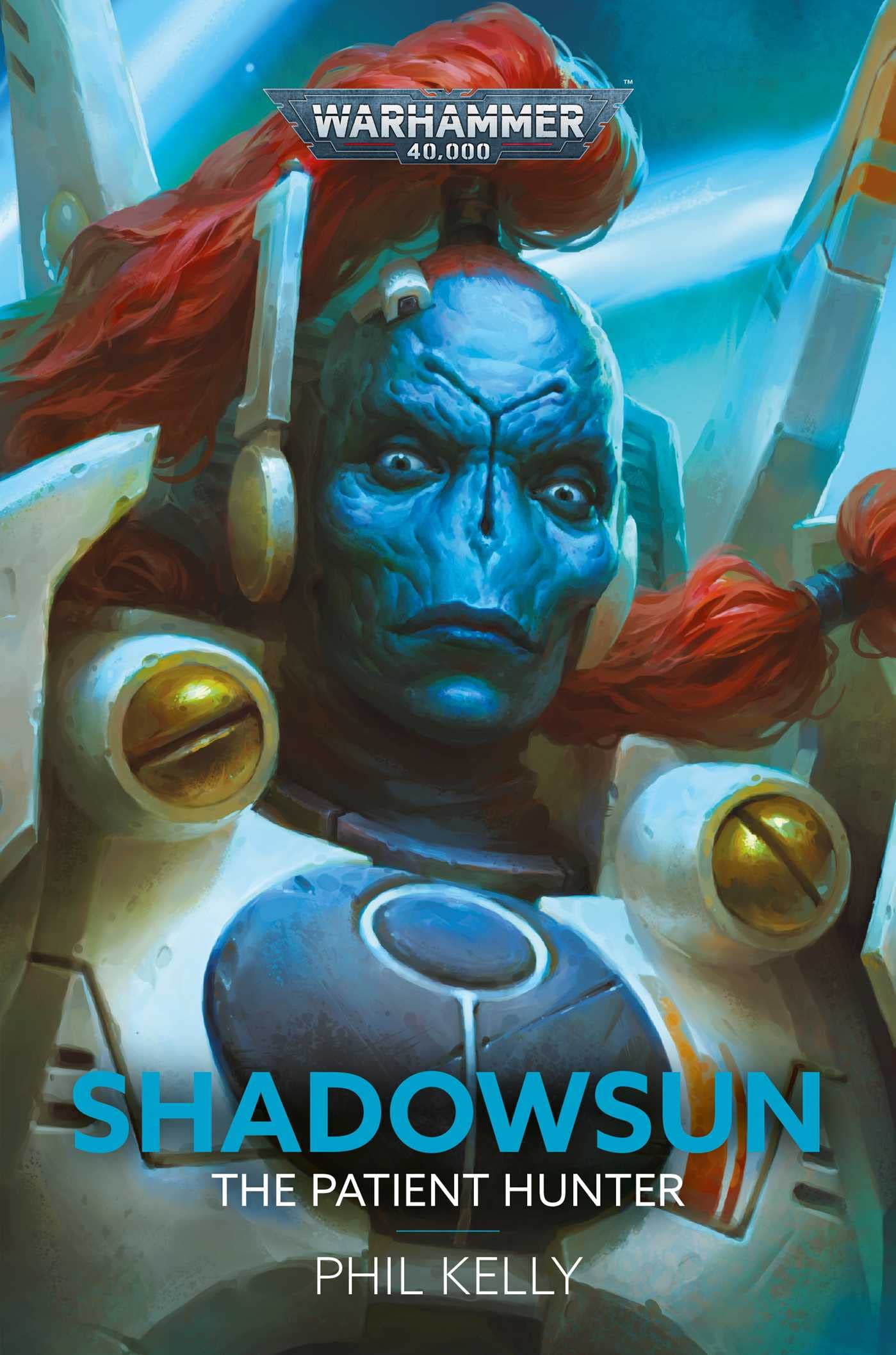
Warhammer 40,000: Shadowsun: The Patient Hunter by Phil Kelly

Warhammer 40,000 - Shadowsun Cover

Publisher: Black Library (Audiobook – 1 April 2023)

Series: Warhammer 40,000

Length: 8 hours and 13 minutes

My Rating: 4.25 out of 5 stars

Amazon

Veteran Warhammer 40,000 author Phil Kelly once again dives into his favourite topic, the T’au, with this new fast-paced and intense novel focused on the intriguing figure of Commander Shadowsun, Shadowsun: The Patient Hunter.

I have been having a lot of fun with Warhammer 40,000 novels this year, and I have already had the opportunity to read some major classics.  Many of these appeared in my recent Favourite Warhammer 40,000 novels list, and I have been keen to read more Warhammer fiction as a result.  As such, I decided to dive into one of the more recent Warhammer 40,000 novels, Shadowsun: The Patient Hunter, an excellent novel focusing on the intriguing T’au faction.  Shadowsun is the latest Warhammer 40,000 novel from Phil Kelly, who is probably best known for his work as a background writer on the various codexes and campaign books released as part of the Warhammer 40,000 tabletop game.  However, Kelly has also produced several Warhammer 40,000 novels over his career, with a particular focus on the T’au, having written several of the more prominent novels for the alien faction, including his Farsight novels and Blades of Damocles.  This latest book sees Kelly once again focus on Commander Shadowsun as she leads the latest T’au expansion, only to encounter more horrors than she ever expected.

Commander Shas’O Shaserra, better known to her foes as Shadowsun, has long led the forces of the T’au into war against all manner of foes.  A former contemporary of the legendary Commander Farsight, Shadowsun has since earned her own substantial reputation across various theatres.  Her latest action sees her leading the T’au Empire’s Fifth Sphere Expansion on the other side of the Startide Nexus, capturing many former Imperial worlds and bringing them under the sphere of the T’au’s influence.

A calculating tactician and a master of the philosophy of war that emulates the Patient Hunter, Shadowsun has known only success during this new phase of expansion.  But the surprise appearance of a massive fleet of decaying and indestructible warships soon throws all her plans into turmoil as she faces an enemy unlike anything T’au have dealt with before, the Chaos Space Marines of the Death Guard.

Ancient and deadly warriors sworn to the Chaos God of disease and decay, Nurgle, the Death Guard are a force unlike any other in the galaxy.  Employing deadly diseases, unstoppable daemons and other deranged horrors that defy all laws of physics and sanity, the Death Guard effortlessly brush through the T’au resistance.  Unable to counter their terrible tactics, Shadowsun desperately looks for a way to strike back against the Death Guard.  But with her own body consumed with disease and rivals within the T’au seeking their own sinister objectives, can even the great Commander Shadowsun succeed against these relentless opponents?

This was a pretty fun and intense Warhammer 40,000 novel from Phil Kelly, who had a great time really showing off two very different factions from the game.  Shadowsun: The Patient Hunter was a very interesting and action-packed read that will really appeal to fans of the Warhammer 40,000 franchise.

The plot of Shadowsun follows the character of Commander Shadowsun in her most lethal adventure yet.  This is a very brutal and quick-paced narrative that wastes no time diving into the action and intrigue to grab the readers full attention.  Starting with a good introduction to the character of Shadowsun and the complex politics of the T’au, the reader is soon introduced to the gruesome threat of the Death Guard, who soon make a major impact on the plot.  This takes the form of an extended and very over-the-top battle sequence on a T’au controlled human planet which Shadowsun was visiting, and she soon must contend with the full threat of the Death Guard.  Kelly really does not hold back at this part of the book, producing a brilliant and very lengthy connected sequence in which Shadowsun encounters the full, fly-infested horrors of Nurgle, as the Death Guard unleash their terrible might.  These scenes are pretty damn intense, at times bordering on pure horror, as the characters encounter diseases, decay, daemons and plague zombies, each of which test Shadowsun and her forces in very different ways.  This major sequence takes a substantial chunk of the book, and it really served to grab the reader’s attention early on with very high plot stakes.

The second half of the book deals with the fallout of this conflict, as an infected and weakened Shadowsun finds all her strategies and plans in ruin, and must find a new way to strike back, despite being hamstrung by internal T’au politics, a growing conflict between the T’au and their alien levies, and a sinister conspiracy from her superiors.  The resolution to this is a desperate boarding action against the Death Guard flagship, with Shadowsun leading a small force on a deadly suicide mission.  While not as extensive as the previous major confrontation, this final third of the book is extremely good, as Kelly envisions another complex battle that pits T’au tech against ancient, unclean horrors.  This sequence gets a little crazy in places, especially as Kelly brings in a couple of unique aliens as backup for the protagonist, and the Death Guard ship is loaded with horrors.  The big fights that emerge are extremely deadly and well written, and you will be enthralled at the carnage that emerges and the unique encounters that occur.  At the same time, the character of Shadowsun continues to grow as a warrior and a commander, fully trusting in her new squad of aliens, while also beginning to understand there is far more going on in the universe than her superiors have let her know.  Everything comes together extremely well, with a fun conclusion that is very satisfying for readers and leaves quite a few questions open that I am sure Kelly will try to answer in the future.  I liked the more metaphysical examination of the T’au towards the end of the book, and it gave the story a really unique conclusion that I will definitely remember.

I felt that Shadowsun was an overall pretty good Warhammer 40,000 novel as Kelly produced an excellent and highly exciting narrative that makes full use of the book’s action, heavy doses of lore intriguing characters.  The various fight sequences are very well written, and the author goes out of his way to try and capture the full horror and considerations of the battlefield, especially when regular soldiers face off against something strange and terrifying.  The two lengthy battles that much of the plot of Shadowsun focuses on are true highlights of the novel, and I love how intense, captivating and devastating the author made them.  Due to Kelly’s obvious passion for the game, this is a very, very detailed novel as the author goes out of his way to highlight the various factions, their motivations, and the state of the Warhammer 40,000 universe at this point in the canon timeline.  Every scene is loaded with some fascinating description of technology, lore, politics or factional history, which is fun in its way, especially for established fans of the games and the surrounding canon.  However, this does mean that Shadowsun might be a bit of a harder book for more casual readers to enjoy, as a certain level of understanding about the T’au is needed to fully appreciate the plot.  As such, I would probably recommend this book to fans of the T’au and dedicated Warhammer 40,000 readers, although newer readers will still be able to have some fun with Shadowsun.

Due to Kelly’s familiarity with the T’au, quite a lot of the book is dedicated to showing them in all their glory, from their advanced technology, their complex society, and their reliance on allied races to help their expansion.  While I am familiar with the T’au, I haven’t read a lot of books from their perspective, having instead only read books where they’re the enemy (Deathwatch: Shadowbreaker by Steve Parker and Kill Team by Gav Thorpe).  As such, I really appreciated this highly detailed and compelling focus on the T’au, and I had a lot of fun exploring their recent history, including their expansion throughout the galaxy.  There are so many great elements to their inclusion in Shadowsun, such as getting to see their awesome advanced weapons in combat, which are so very different from the human technology that most of the other Warhammer 40,000 books feature.  I also appreciated the compelling look at several of the client species that make up the T’au auxiliary forces, such as the Kroot.  Kelly features several intriguing different alien species throughout Shadowsun, making for some unique scenes as a result, and I appreciated the examination of their thoughts about the T’au allies, especially with how it plays into their faith and how they view the rest of the galaxy.

In addition, Kelly layers this book with so many complex bits of T’au day to day life, and you must admire his dedication and attention to detail.  Every conversation or discussion between T’au characters provides you some intriguing insights into their society, and I loved seeing their perfectionist mindsets or their fascinating interactions, such as those meaning-laden hand signals.  There are also some cool examinations of the various castes, their reliance on technology (such as Shadowsun’s two drone companions), and their desire to expand and bring word of the “Greater Good” to the rest of the galaxy.  While there is some definite love for the T’au throughout Shadowsun, Kelly also makes it a point to examine the darker side of their society, including the deadly secrets of the Fourth Sphere Expansion force and the typical manipulation of the Ethereal caste.  Commander Shadowsun, who starts the story off relatively naïve about some of the darker aspects of her race, begins to get an understanding of some of the secrets being kept from her, especially when she encounters some of the forces of Chaos and the secrets of the Warp.  The attempts to shut down any discussion about daemons or what happened to the allied species when they went through the Warp gave some of the T’au focused scenes a darker and more sinister edge, and it will be interesting to see whether Shadowsun continues to blindly follow the Ethereals in the future.  I also liked how Kelly really showcased the inherent arrogance of the T’au, especially when it comes to their opinion of other races in the universe, such as humans from the Imperium.  Their haughty belief that they understand the universe is quite amusing, especially when they come face to face with something completely insane.

To balance out the T’au, Kelly also strongly features the Chaos Space Marines of the Death Guard legion in Shadowsun, who are pretty epic antagonists.  Followers of the Chaos God Nurgle, the Death Guard are dedicated to all things disease, decay and corruption, which results in some pretty horrific mutations for their plague infested bodies.  The Death Guard are always pretty gruesome when featured in fiction, but I felt that Kelly did a particularly fantastic job of capturing them in their fully festering glory.  All the Death Guard encountered in this book are covered in putrefying mutations or growths to some degree, and Kelly really goes out of his way to describe just how unsettling they are.  This includes a compelling look at a Death Guard battle cruiser, whose interior is just covered in growths, mould, various liquids that fill up entire corridors, and loaded with so many other over-the-top elements, which really pop in Kelly’s talented hands.  I also loved how the author tries to capture the Death Guard’s highly positive and benevolent natures, which are reflections of their “kindly” god, Nurgle, and which honestly makes them even more sinister.  He further disturbs the reader by showing the Death Guard unleashing their full horrors on the T’au with, diseases, plague zombies, daemons, dark magic and more used against them, totally devastating them.

Watching the T’au get overwhelmed by these weird and terrifying elements is pretty intense, and the main T’au perspective character, Commander Shadowsun, keeps getting more disturbed by their unpredictable tactics and terrible weaponry.  I loved the compelling comparisons the author makes between the Death Guard and the T’au, and the two are honestly the antithesis of each other in aesthetics, combat styles, and mindset.  This ensures that their conflicts are pretty damn epic and watching the T’au forced to come up with some new tactic while freaking out made for some thrilling reading.  I did think that to make the Death Guard see even more threatening and dangerous, Kelly did slightly nerf the T’au in places, especially during their earlier battles, which fans of the faction probably won’t love, however, the protagonist makes up for that by taking out a Great Unclean One at one point.  Kelly’s decision to feature the Death Guard as the antagonists was an outstanding choice and one that made Shadowsun standout to me even more.

As with most Warhammer 40,000 novels that I have the pleasure of enjoying, I chose to check out Shadowsun on audiobook, which was a fun decision as always.  Coming in at just over eight hours, this was a quick audiobook to power through, especially when you get to some of the more epic battle scenes.  This format served to really enhance some of the best elements of the Shadowsun book, including the cool action and the sheer horror of some of the scenes where the protagonists go up against the forces of Nurgle.  Having someone reading out all the disgusting things this foul horde contains makes the book seem even more terrifying, which I deeply appreciated.  Narrator Helen McAlpine does a very good job bringing this compelling plot to life with her great voice work, and I really appreciated her take on several of the characters and big scenes within Shadowsun.  The voice that she gives to the main character of Commander Shadowsun is highly fitting, and I felt that McAlpine managed to capture her emotions, particularly that of distress of despair, very well throughout this audiobook.  Due to this, and more, I would once again strongly recommend this Warhammer 40,000 audiobook to anyone interested in checking out Shadowsun, as it is easily the best way to enjoy any book from this franchise.

Overall, Shadowsun: The Patient Hunter is an excellent Warhammer 40,000 novel and one that I really had a fun time with.  Phil Kelly did an outstanding job featuring the T’au again and it was great to get a deeper look at one of the more fascinating alien factions in the canon.  Loaded with action, horrifying moments, and some deep lore drops, Shadowsun is an awesome read that fans of Warhammer 40,000 fiction can have a lot of fun with.

Amazon

The Tyrant Skies by David Annandale

The Tyrant Skies Cover

Publisher: Aconyte Books (Ebook – 2 May 2023)

Series: Marvel Untold

Length: 254 pages

My Rating: 4 out of 5 stars

Amazon

Two of Marvel’s greatest villains square off in this highly entertaining tie-in novel from talented author David Annandale, The Tyrant Skies.

As most people familiar with this blog will know, I am a man who loves a good tie-in novel, be it related to Star Wars, Star Trek or Warhammer.  However, one genre of tie-in books that I haven’t had a great deal experience with is those based around comic books, having only read a few in recent years, such as Loki: Where Mischief Lies by Mackenzi Lee and Catwoman: Soulstealer by Sarah J. Mass.  However, that looks set to change as I was recently lucky enough to receive a couple of particularly fun Marvel tie-in novels through Netgalley.  The first of these is The Tyrant Skies by David Annandale, which focuses on the always awesome supervillain, Doctor Doom.  Introduced as part of the Marvel Untold novel sub-series, The Tyrant Skies is the third Doctor Doom novel by Annandale, who previously released The Harrowing of Doom and Reign of the Devourer.  This third novel also has a great story to it as it sees Doom face off against an old rival, the Red Skull.

After defeating the deadly monsters that haunted his realm, Victor Von Doom has established peace within Latveria.  However, this peace is short-lived as a new danger begins to rise in the world, one with an unhealthy obsession with both Latveria and Doom.  The newly formed island nation of Wolkenland has just revealed itself to the world and quickly establishes itself as a playground for the rich and powerful, while also appearing to offer new lives for the world’s dispossessed.  However, Wolkenland hides a dark secret at its heart: it’s true ruler is the insane fascist Red Skull.

Still enraged by his failed invasion of Latveria and his humiliating defeat at the hands of Doom, Red Skull is determined to gain revenge on his enemies by using the influence and power of Wolkenland.  Utilising advanced technology and cosmic power, Red Skull transports Wolkenland to float above Latveria and begins a deadly invasion to capture the country and its advanced technology.

Doom’s only choice is to travel to Wolkenland and confront Red Skull directly, but even the might of Doctor Doom is unable to face the full power his enemy has amassed.  With his country threatened, his body weakened, and the only woman he ever loved held hostage on Wolkenland, Doom will need to use every bit of cunning, intelligence and manipulation in his possession to face down the Red Skull.  But even if he succeeds, the Red Skull has an ace up his sleeve that could destroy Latveria and break the entire world.

This was a pretty solid and deeply enjoyable novel from Annandale that tells a great story while also referencing some interesting elements from classic Marvel comics.  The story in The Tyrant Skies follows on a degree from Annandale’s last two novels and this time sees Doctor Doom and his country facing an insidious invasion from the Red Skull and his new island fortress.  The story advances at a pretty awesome pace, and the early highlights include Doom invading Wolkenland and unleashing his trademark havoc upon his foes.  After the necessary setback for the protagonist, the story evolves into an intriguing phase with a de-powered Doom leading a slave rebellion against Red Skull, while down in Latveria several of the series’ supporting characters fight off the invasion using tools featured in the prior books.  The action and intrigue were pretty non-stop the entire way through, and Annandale keeps the reader hooked to the book with some amazing and elaborate sequences.  I personally loved some of the twists that developed, especially as Annandale brings in a couple of foes that haven’t been seen in comics for a very long time, and it was great to see how Doom faced off against them.  The story does get pretty big and explosive at times, and I liked some of the great underlying examinations of tolerance, fascism and the vices of the mega-rich, all of which were used to great effect to make Doom, the brutal and deadly tyrant, actually seem like the good guy.  The author ends everyone on a pretty compelling note, and I ended up coming away from The Tyrant Skies fairly happy with the cool action-filled and entertaining story that Annandale served up.

As I mentioned before, The Tyrant Skies serves as the third book in an intriguing trilogy from Annandale that dives into Doom’s connection to his country as well as his own dark ambitions and adversaries.  I felt that The Tyrant Skies continued this story thread extremely well, and it was interesting to see how several of the recurring characters and their storylines developed as a result.  However, Annandale also makes The Tyrant Skies quite accessible to new readers as well, and if this your first Marvel novel you can dive into it with very little prior knowledge about the series.  While substantial comic or Fantastic Four knowledge isn’t needed to enjoy this book, Annandale does fill the story with several compelling references to previous comics, some of which were published a very long time ago.  Not only does the origin of Doom and Red Skull’s feud emerge from the pages of these older comics, but there are references to Doom’s dark relationship with Valeria, especially her death in the main comics, as well as other previous adventures.  Annandale also pulls one particularly intriguing feature out of a very old, obscure comic by Jack Kirby, Larry Lieber and Stan Lee, which I had honestly never heard about.  The author’s fun description about this somewhat absurd comic will get a chuckle out of aficionados of classic comics who will appreciate the intriguing references.  Annandale’s love for all things comic related really shines through with his writing, and I loved how he was able to effectively describe and bring to life several scenes that would usually need a full comic spread to appreciate.  I personally thought this was an outstanding and very clever tie-in to the larger Marvel universe and The Tyrant Skies is a great book to check out no matter how connected you are to source material.

Of course, one of the major parts of The Tyrant Skies is Annandale’s excellent portrayal of Victor von Doom, who steals any scene he is in.  Doom is probably one of the best villains (or anti-heroes, depending at how you look at him) in the entire Marvel canon, so anything featuring him is bound to be good (excluding a few Fantastic Four movies).  Annandale’s use of Doom in The Tyrant Skies is pretty spot on, and he shows the protagonist at his full power and intelligence.  I love the sheer arrogance and pride that dominates much of Doom’s character, and every scene shown from Doom’s point of view works to highlight this.  Annandale also looks deep into the powers and abilities of Doom, puling out some interesting elements of his abilities over the years.  Not only do you get to appreciate the technological prowess of Doom, but Annandale also makes sure to fully feature his magical skills, something which the mainstream media usually avoids, and even his old-school abilities to hypnotise people.  However, the best part of Doom is his sheer intelligence as he manages to outsmart anyone he goes up against, even when disadvantaged in other ways.  There are some great scenes when a de-powered and vulnerable Doom manages to secretly organise and inspire a slave revolt and lead his new followers on a deadly rampage against a superior foe.  Watching him succeed in controlling everyone just with his sheer force of personality while tactically outthinking his opponents was pretty damn epic and it really captures just how impressive Doom can be as a character.

Aside from Doom, there are several other great characters featured throughout The Tyrant Skies that add a lot to the story.  This includes the infamous villain of the story, the Red Skull, who serves as a great foil to Doom in this book.  Few villains can make Doom look like a sane, noble and reasonable figure, but the Red Skull is one of them, especially in Annandale’s hands.  The author seeks to make Red Skull as evil and diabolical as possible, causing chaos and initiating world-ending plots for petty reasons and prior defeats.  I loved seeing the rivalry between Doom and Red Skull that formed the basis for much of the novel, and the author did a great job capturing the hatred they both have for the other.  It was interesting to see Red Skull’s methods against Doom in this book, and he proves to be a very dangerous opponent, able to outsmart Doom at several turns, which works to make the novel pretty compelling and fun.  As such, Red Skull is a very impressive villain for this book and it was really something to see these two iconic figures square off once again.

I felt that the rest of the cast, which includes a combination of some over-the-top second-tier villains and several recurring figures from Annandale’s existing novels, were worked into the plot well, and there are some great scenes, especially with the characters of Doctor Elsa Orloff and Captain Kariana Verlak, who have become heroic figures within Latveria during the last two books.  I also deeply appreciated the inclusion of Valeria, Doom’s long-lost love, who is a key part of his origin story.  The powerful reunion the two have in this novel is quite impressive, especially as it is clear that Doom still has feelings for Valeria, despite her reluctance to trust him and his nature.  This was a very interesting inclusion, especially considering how their story spun out in the comics, and I am glad that the author attempted to dive into this older character element of Doom.  Throw in some craven, evil and incompetent members of the uber-wealthy, many of whom are parodies of certain business owners, and The Tyrant Skies proved to be a very rich novel in terms of character, and I liked the wider story elements that emerged thanks to this cool alternate focus.

Overall, The Tyrant Skies is an outstanding and highly entertaining novel that perfectly ties into the larger Marvel universe.  I deeply enjoyed how David Annandale set two of the genre’s best villains against each other in this novel, and I had a ton of fun with the thrilling encounters that emerged.  Featuring a great blend of story development, references to classic comics, and amazing portrayals of Doctor Doom and the Red Skull, The Tyrant Skies has something for all comic book fans, and you are guaranteed to have a fantastic time getting through this amazing novel.

Amazon

Throwback Thursday – Warhammer 40,000: Kingsblade by Andy Clark

Kingsblade Cover

Publisher: Black Library (Paperback – 1 February 2017)

Series: Imperial Knights – Book One

Length: 365 pages

My Rating: 4.5 out of 5 stars

Amazon

Welcome back to my Throwback Thursday series, where I republish old reviews, review books I have read before or review older books I have only just had a chance to read.  In my latest Throwback Thursday post I look at an exciting novel about mecha fights in the Warhammer 40,000 universe with Kingsblade by Andy Clark.

I have been having so much fun with the Warhammer 40,000 books recently, especially in my Throwback Thursday columns, as I recently published reviews for Ghostmaker, Xenos, Malleus and Hereticus by Dan Abnett, and Deus Encarmine by James Swallow.  However, the fun is not over yet as I recently read the cool 2017 novel, Kingsblade by Andy Clark, who previously impressed me with his 2022 book, Steel TreadKingsblade, a lucky find I managed to pick up in a secondhand bookshop, was an outstanding read which frankly has one of the best Warhammer covers out there, as well as a great story to match it.

War is a certainty in the far future, and the Imperium of Man is constantly under threat, especially from the fell influence of Chaos.  When a planet falls, the Imperium have many forces that can be deployed to fight the invasion, but few armies are as feared or revered as the legendary Imperial Knights, giant, ancient suits of mechanised armour that support brave pilots of regal, knightly backgrounds.

When the Imperial world of Donatos falls to heresy thanks to the disruptive influence of the Word Bearers Chaos Space Marines, the Knights of the nearby planet of Adrastapol heed the call.  Leading five noble houses of Imperial Knights, as well as substantial forces from the Astra Militarum, High King Tolwyn Draconis hopes to swiftly end the insurrection and save Donatos’s soul.  However, when a great betrayal rips the very heart out of the king’s host and the flower of Adrastapol’s Knights falls, all hope looks lost.

As the battered remnants of the Imperial Knights attempt to recover, it soon becomes clear that the fate of both Donatos and Adrastapol will lie with two unblooded Knights Errant, Danial Tan Draconis and Luk Tan Chimaeros, both of whom are reeling from the actions of their parents.  On the run, outnumbered and unsure who to trust, Danial, Luk and their comrades need to find a way to strike back against the enemy especially as the World Bearers begin a massive unholy ritual, one that threatens everything.  But can these two young Knights defeat the enemy and redeem their world, or do the betrayals of their family and former comrades run too deep?

Kingsblade was an epic and incredible Warhammer 40,000 read by Clark that I had a ton of fun with.  Featuring a mecha-laden novel that contained awesome action sequence after awesome action sequence, this was a great addition to the wider Warhammer 40,000 canon and a must read for all fans of the franchise.

I had an amazing time getting through Kingsblade’s great story, especially as Clark clearly has a lot of fun fitting in as much action and mayhem as possible.  Starting with the classic Warhammer 40,000 war story, with the brave Imperial defenders arriving to save the world of Donatos, the narrative primarily focuses on several of the Imperial Knights who arrive, especially the young bloods Danial and Luk, who are thrust into the fires of war.  The first half of the book features the typical early battles and set-up you would expect, and Clark lays down some clever hints of what is to come.  Things of course take a turn for the worse after a massive betrayal, and the protagonists soon find themselves on the run, unsure of who to trust.  The major battle that follows this betrayal is pretty damn epic, especially as there is a real sense of desperation and confusion surrounding the characters, and the chaotic fallout of this pushes the protagonists in some intriguing new directions.  The second half of the novel sees the traumatised characters attempting to fight back whilst on the run, while also dealing with the many personal issues that have arisen.  Clark does a good job of blending the enjoyable action sequences with some intense character moments during this second half, and the powerful tale of camaraderie and honour that follows is one any Warhammer fan can get behind.  Everything leads up to the big, brutal and extended final battle sequence, as the characters find themselves wrapped up in a multi-sided fight to the death.  The action flies thick and fast during this last major confrontation, and the reader finds themselves on the edge of their seat the entire time, especially as there are some lethal fights and major risks to everyone involved.  The entire story comes together in a fantastic and enjoyable way, which also remains open for the sequel, and I absolutely powered through Kingsblade, especially in that epic second half.

I think that Clark presented this exciting and powerful story in a great way, and I honestly found myself pretty hooked the entire way through.  The faster pace of the story and the constant fun action sequences are very enticing, and I felt that Clark was able to balance this well with some universe building and clever character work to create an exceptional read.  The compelling range of different character perspectives is extremely effective, and I liked seeing the variety of insights and motivations that the various characters had, especially as that gives you some very deep and compelling insights into the mindset of the Imperial Knight characters.  I also liked the additional perspectives from some of the main antagonists, especially as it allowed Clark to highlight the various plots and subterfuges that the protagonists are about to walk into and attempt to disrupt.  However, the true highlight of Kingsblade is the battle sequences, especially when it comes to the Imperial Knights.  I already knew that Clark had some great ability when it came to showcasing vehicle on vehicle combat, but Kingsblade dials that up even further by showing the Imperial Knight mecha suits in action.  The action is always fast and ferocious, and you really appreciate just how crazy and brutal the fights involving the Knights are, especially as they face a range of deadly opponents.  The complex duels between rival Knight suits are particularly impressive, and you get the full sense of their intense fights thanks to Clark’s writing style, and every thrust, blast and explosion is recorded in epic detail.  I deeply appreciated how Clark wrote this epic story, and you are guaranteed to have an exciting and fun time as you get through this amazing book.

Kingsblade also proved to be a very fun addition to the wider Warhammer canon, as Clark dove into one of the more intriguing human sub-factions, the Imperial Knights.  I have always loved the Imperial Knights in Warhammer fiction, and I read a particularly good book about them last year (Assassinorum: Kingmaker by Robert Rath), that showed one of their feudal planets.  As such, I was very excited to see more of them in another book and Kingsblade delivered that in spades.  Not only does Clark perfectly showcase the over-the-top power of the Imperial Knights in combat (so much epic mecha combat), but there is an intriguing dive into the history and society surrounding this faction.  The blend of advanced technology and historical knightly values is particularly fun, and you really get a sense of what the knights believe and how they fight as the book continues.  This intriguing and compelling focus on Imperial Knight lore is expertly featured throughout the plot and I loved seeing the ritual, pomp and knightly codes helping to drive the protagonists forward.  I also thought Clark did a good job of introducing some of the general concepts and elements of the wider Warhammer 40,000 universe into this book, and you get a good sense of what is happening and the history surrounding the franchise.  Due to this, and the fact that the history of the Imperial Knights is explored strongly throughout the plot, I felt that Kingsblade would make a pretty good introductory novel to the Warhammer 40,000 universe, especially as it showcases just how fun and over-the-top the franchise can be.  I look forward to seeing how Clark expands upon this Imperial Knight lore in future books, especially if he balances it with some more awesome mecha-on-mecha combat.

The most moving and compelling parts of Kingsblade were the excellent characters that Clark introduced and featured throughout the narrative.  While there are a ton of brilliant figures utilised in the plot, most of the focus was on the younger characters of Danial Tan Draconis and Luk Tan Chimaeros, two rookie knights and best friends in their first war.  Clark does a wonderful job of setting both these characters up early in the plot, and the two friends have very different personalities, with Danial being a cautious and seemingly unready knight, while Luk is impatient and headstrong.  However, both characters are pushed to their absolute limit after the pivotal early events of Kingsblade’s narrative which result in Danial becoming king, while Luk is considered to be a heretical traitor.  This results in some outstanding character-driven plot, as Danial attempts to find his inner courage and sense of duty, while Luk is forced to redeem himself and his name after those he trusted the most turned on him.  Clark ensures both character arcs are pretty damn powerful, and they are woven into the large plot extremely well, ensuring that victory is only obtained after these figures finally get their acts together.  I really liked the wonderful and moving narrative that was wrapped around Danial and Luk, and it will be interesting to see how that alters further in the series.  The rest of the characters in Kingsblade are also really cool, and I particularly enjoyed seeing events through several of the Chaos character’s perspective, especially once separate factions emerge and go to war.  An overall epic group of characters that are seamlessly fitted into the wider tale.

Andy Clark continues to impress me with his outstanding Warhammer fiction work as his 2017 release, Kingsblade, proved to be another smash hit.  Perfectly blending intense action with cool universe elements and complex characters, Kingsblade was pure fun from start to finish and a real pleasure to read.  I had an epic time getting through this book and I cannot recommend it enough for all fans of the Warhammer 40,000 universe.  I will have to try and get a copy of the intriguing sequel, Knightsblade, and I cannot wait to see how Clark continues this compelling and powerful narrative.

Amazon

Outcast by Louise Carey

Outcast Cover

Publisher: Gollancz (Trade Paperback – 25 January 2022)

Series: Inscape – Book Two

Length: 394

My Rating: 4.75 out of 5

Amazon     Book Depository

Impressive rising science fiction author Louise Carey continues her awesome first series with Outcast, a brilliant and powerful cyberpunk thriller read that is incredibly fun and very clever.

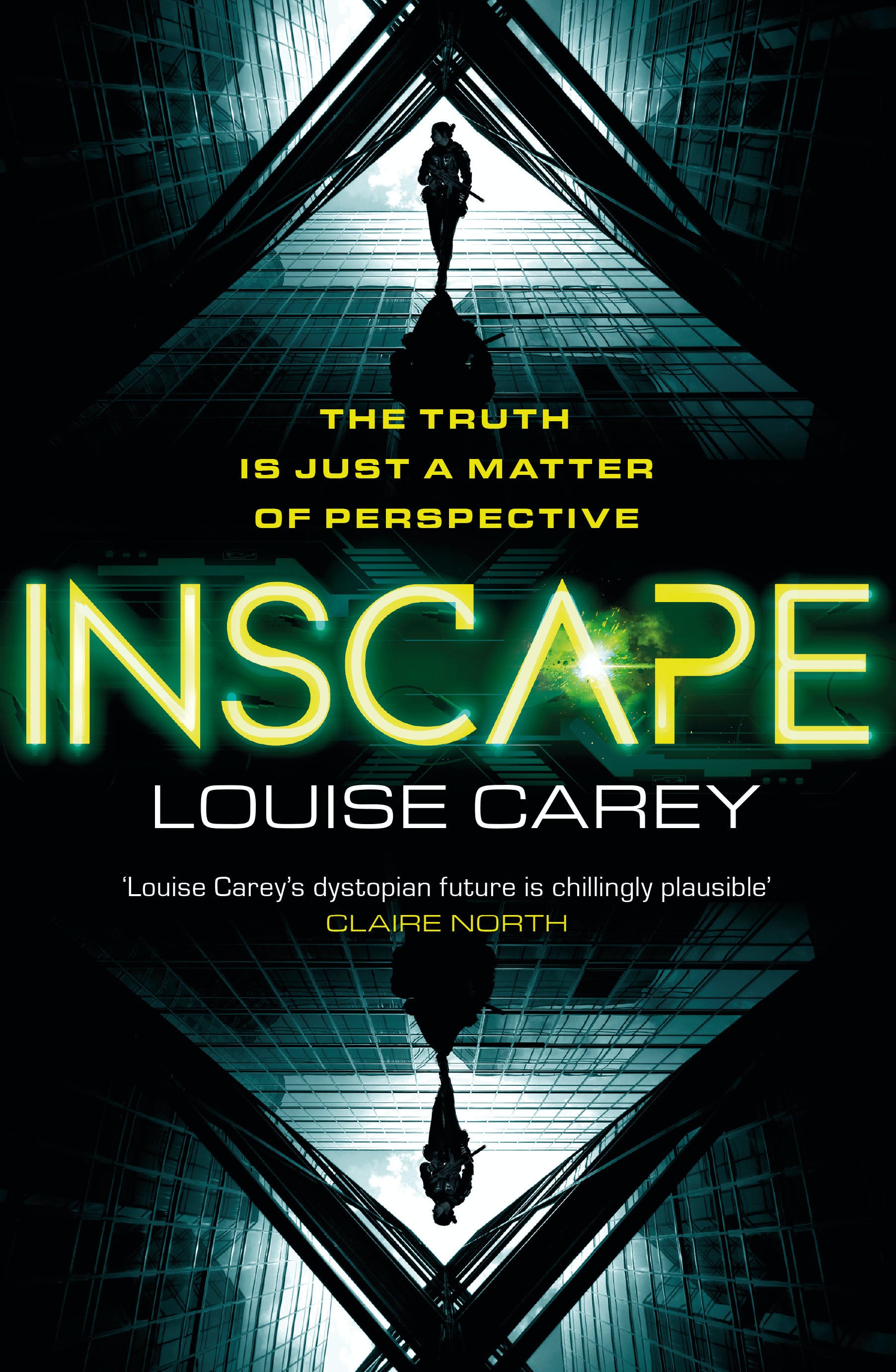
Outcast is a sequel to Carey’s debut novel from last year, Inscape, which told a unique and intriguing story about espionage, betrayal and corporate politics in a cyberpunk world.  Set in the distant future after a major calamity, the fractured world is now ruled over by all-powerful and advanced corporations who battle for dominance while they attempt to create the latest in weaponry and bio-tech upgrades.  The protagonist of the series, Tantra, works as an intelligence operative for one of the largest companies, InTech, and investigates a mysterious theft that could have dire consequences for her company.  Filled with dystopian cyberpunk elements, such the built-in communication and information technology known as scapes, this ended up being an excellent and captivating science fiction thriller that was one of my favourite debuts of 2021.  Carey has continued her amazing series in a big way here with Outcast, which serves as an outstanding and impressive sequel to her first solo book.

Following the success of her first mission, Tantra’s life has been turned upside down.  Despite saving her company and uncovering a traitor, Tantra has been sidelined by a jealous supervisor and now works as a lowly security guard.  Worse, Tantra now knows the terrible truth: that the company who gave her everything has long controlled her mind with the invasive Harlow Programming, which she has since been freed from.  With her loyalties tested, Tantra is thrust back into the thick of the action when she discovers a bomb sent to InTech’s headquarters.

InTech soon finds itself thrust into a brutal corporate war with its main competitor, Throughfront.  The bombing of their headquarters is the latest in a series of attacks on InTech assets, and the board are desperate to get them under control.  Determining that she is their best operative to stop the culprits behind the attack, Tantra is assigned to the case.  Teaming up once again with her former partner, Cole, the brilliant scientist with severe gaps in his memory, Tantra attempts to find the culprit before they cripple InTech for good.

But, facing opposition from both deadly internal InTech politics and lethal external forces, their chance of succeeding seems slim, especially when they are banished to a remote InTech facility in the Unaffiliated Zone for the remainder of their investigation.  Barely escaping a deadly assassination attempt, this unconventional team find themselves caught in the middle of a dangerous conspiracy that is determined to bring InTech down for good.  However, when they discover that InTech is planning their own sinister machinations, will Tantra and Cole still be as eager to save their company?

Wow, Carey follows up her excellent solo debut in a big way here with Outcast.  This second book was even better than Inscape, taking the reader on a wild and action-packed adventure through the author’s unique cyberpunk world.  Bringing together some amazing characters with a powerful and thought-provoking narrative about control and the potential evils of technology, this was an exceptional read I powered through in a few short days.

Outcast has an excellent story that perfectly continues the fantastic narrative started in Inscape.  Taking place shortly after the events of the first book, Outcast sees a struggling Tantra and Cole once again placed in the middle of a big investigation with major implications, this time involving the destruction of company drones outside the city, which is impacting the company’s food supply.  At the same time, Tantra finds herself forced to deal with deadly company internal politics, while Cole finds himself involved with a mysterious rebel group who are attempting to stop InTech’s more troublesome activities, including their latest upgrade.  This forces them to venture outside of the city where they encounter unaffiliated mercenaries, enemy agents, dangerous rebels and deep secrets about InTech’s past.  The middle of this novel is filled with an excellent series of great emotional sequences, action scenes, world building, character development and shocking twists, as the protagonists get closer to finding out who is behind the attacks, as well as the true plans of their parent company.  This leads up to a brilliant final sequence where the protagonists are forced to make some very hard decisions in a great no-winners situation.  This leads up to the amazing and powerful conclusion where the protagonists, despite their best efforts, are left devastated by the events that unfolded, and which ensures that all the readers will be back for the third entry in this awesome series.

There are so many cool elements to Outcast which really help to turn it into a first-class read.  I deeply enjoyed the way the impressive story unfolded, and Carey makes great use of a couple of alternate character perspectives to tell a unique and multifaceted tale, such as the entertaining scenes told from the perspective of a smarmy and desperate secondary antagonist.  The author does a great job of combining a thriller storyline with the unique science fiction elements, and it results in a fast-paced and action-packed story that takes the time to explore certain technological implications.  There are some brilliant twists loaded throughout the book which are well paced out and ensure that the reader is constantly on their toes.  I liked how, despite the sheer amount of world building featured in the first book, Outcast still came across as an accessible novel, and new readers can probably jump into the series here.  That being said, I think you would be missing out if you didn’t try Inscape first as this sequel does an amazing job building on and expanding some excellent storylines from Carey’s debut.  However, nothing will compete with the awesome ending that this novel has, and the reader is chucked through the emotional wringer as the book’s characters are put into an impossible situation, which produces some very dark results for them.

The excellent cyberpunk science fiction elements of this series once again shine in Outcast as Carey continues to explore the advanced biotech that was such a great feature of the first novel.  Not only is a lot of this technology very cool, especially as it results in some brilliant moments in some of the action sequences, but this mind-connected technology continues to be a key part of the plot.  Multiple storylines examine the ethics behind this technology, especially as the protagonists are now fully aware of the full extent of their parent company’s attempts to program their employees’/residents’ minds using their scapes.  This leads to some intriguing and deep discussions, especially as you get to see corporate greed and a desire for control weighed up against the rights of a person and their desire for independent thought and identity.  This exciting look at the series’ unique technology becomes even more intense and important as Outcast continues, especially when certain new advancements are revealed which could have devastating impacts on all the characters.  I loved how deep and captivating some of the scenes involving this technology get, and it results in some of the best bits of the entire book.  I cannot wait to see what happens with these cool technological aspects later in the series and I imagine it is going to be very fun.

I was also very impressed with the incredible character work featured throughout this book as Carey did a wonderful job expanding on her complex and damaged protagonists.  Like Inscape, Outcast is primarily focused on the characters of Tantra, a young intelligence officer, and Cole a formerly unethical scientist whose memory was completely erased, giving him a very different personality while retaining his brilliant mind.  These two formed a unique and fun pairing in Inscape, where they both experienced a lot of development and trauma, and it was great to see them back together again here.

Both characters had some brilliant moments throughout the novel, especially Tantra, who realised in the first book that her mind and her actions have been subtly controlled by a program her entire life.  Now rid of the Harlow Programming, Tantra is in full control of her mind, but must keep this hidden from InTech, who would kill her or reprogram her if they found out.  Forced to act like the obedient drone they think she is, Tantra chafes against the restrictions and contradictions of her superiors and the company, as she can see many of the injustices or manipulations now that her mind is solely hers.  This also results in are also some excellent ethical and loyalty implications for her as she can finally see how nefarious InTech, the company who raised her, really are, and she must decide whether she is still loyal to them.  It was especially powerful to see how her relationship with Reet, her lifelong romantic partner, has been changed.  Reet is still infected by the Harlow Programming, and Tantra can only watch as she toes the company line and fails to understand Tantra’s many concerns, criticisms or newly awakened point of view.  This puts some real strain on their relationship, and it was heartbreaking to see Tantra suffer even though she is now free.  This was easily the best character work in the entire book, and if the tragedies and hard decisions that occurred towards the end of Outcast are any indication, Tantra is going to be in for a rough ride in the third book.

Cole also had some outstanding moments in Outcast as he continues to struggle with his sense of self and identity following his memory loss and the eventual revelation that his past self was responsible for many of InTech’s evils, including the Harlow Programming.  Now mistreated and mistrusted by InTech, Cole works with a mysterious group outside of InTech to try and bring them down, while also attempting to learn more about his past actions and what led him to do what he did.  He does get some of the answers he wants as the story progresses, especially when he is reunited with an old colleague, but it only leads to tragedy and despair.  Cole’s story gets pretty dark in places, especially when he realises how InTech have repurposed and enhanced his original work, and it was fascinating to learn more about his past mistakes.

Aside from these two, there are several awesome supporting characters who also add a lot to the novel, especially as several of them are utilised as point of view characters.  This includes Douglas Kenway, a senior director at InTech and Tantra’s boss, who is determined to keep his position and power no matter what.  Convinced that Tantra is gunning for his job, he spends most of the novel trying to undermine her, while also inching closer to discovering the truth about her lack of Harlow Programming.  Kenway serves as an excellent secondary antagonist, and his dive into company politics and sabotage of the protagonist adds a fantastic and entertaining edge to the novel that I really enjoyed.  Despite his self-centred nature, Kenway does provide an intriguing alternate perspective on the events of the book, and he gives some corporate context for much of what is going on.  I also really liked how his fears were mostly realised towards the end of the book, although not in the way he expected.  I should also mention new character, Fliss, the leader of a rogue gang out in the Unaffiliated Zone who gets dragged into the conspiracy attacking InTech.  Fliss provides another great alternate perspective, especially as she and her friends have no technological upgrades to their bodies and are naturally human.  I liked the story that surrounded Fliss, especially as she struggles to control her gang when forced to work for a corporation, and she ended up being an excellent addition to the plot.  These characters, and more, help to turn Outcast into a first-rate book, and I deeply enjoyed seeing all these amazing personal stories unfold.

Louise Carey continues to shine as one of the most impressive new authors of cyberpunk fiction out there with her second novel, Outcast.  This outstanding sequel does a brilliant job of continuing the powerful storylines from Inscape, while also introducing new dangers, betrayals, and some great characters.  Filled with action, intense character moments and captivating cyberpunk science fiction elements, Outcast is a fantastic novel that proves to be exceedingly addictive and fun.  I am really starting to get hooked on this outstanding series, and all cyberpunk and science fiction fans need to do themselves a favour and check out Carey’s impressive Inscape series.

Amazon     Book Depository

Relentless by Jonathan Maberry

Relentless Cover

Publisher: Macmillan Audio (Audiobook – 13 July 2021)

Series: Rogue Team International – Book Two / Joe Ledger – Book 12

Length: 18 hours and 29 minutes

My rating: 5 out of 5 stars

Amazon     Book Depository

One of my absolute favourite series returns with an absolute bang as Jonathan Maberry produces another incredible, intense and thrilling Joe Ledger novel with Relentless, the second novel in the Rogue Team International series.

Readers of my blog will be well aware of how much I love Jonathan Maberry’s Joe Ledger series.  This science fiction thriller series, which follows the titular protagonist and his team of elite soldiers as they fight all manner of crazy scientific and supernatural threats, is so much fun and is one of my favourite series.  After reading one of these fantastic books a few years ago, I sat down and listened to the entire series, from Patient Zero, all the way to the final entry, Deep Silence.  It also led me to some of Maberry’s other novels, including last year’s excellent horror novel, Ink, which was one of my favourite books and audiobooks of 2020.  The author also started the Rogue Team International series in 2019 as a sequel series to the original Joe Ledger books, featuring the same characters and universe.  The first entry in this sequel series, Rage, got a five-star rating from me and was one of the best books and audiobooks of 2019.  Due to Rage’s epic conclusion, as well as how much I enjoy Maberry’s writing, I have been eagerly awaiting Relentless for some time now and I ended up being blown away by how awesome it was.

During Rogue Team International’s (RTI) first mission, Joe Ledger and his team faced off against the dangerous pairing of criminal mastermind Kuga and his fearsome enforcer Rafael Santoro, barely managing to stop their insidious, world-changing plot.  However, their victory came at a terrible price, as Santoro delivered fiery vengeance on his foe by killing every member of Ledger’s family in a revenge attack at Christmas.  Santoro and Kuga hoped that their destructive blow would mentally destroy their hated enemy forever; instead, it unleashed their worst nightmare.

After returning to the field, Ledger leads an RTI team to an advanced laboratory where terrible genetic, biological and cybernetic experiments are being performed.  While the mission begins as a textbook RTI operation, everything changes when Ledger comes across a room full of deformed lab subjects and their cruel tormentors.  With his already fragile psyche pushed to the limit by the death of his family, Ledger finally snaps and lets something dark and dangerous from deep within take control.  With blood and bodies trailing in his wake, Ledger abandons his team and goes truly rogue.

Accompanied only by his loyal combat dog, Ghost, Ledger rampages across Europe, killing and destroying anything related to Kuga’s operation and questioning anyone who knows where he and Santoro are.  Even more concerning for the villains, Ledger is also beginning to get close to their next major operation.  Utilising cutting edge technology, Kuga’s group have developed biologically enhanced super soldiers, equipped with some of the most destructive weapons available.  Their next plan will unleash a devastating attack within America that will change the political and social landscape for generations to come.  However, not even their most advanced troops may be enough to stop the dark thing that Ledger has become, and Kuga is soon forced to make a Faustian deal with someone, or something, whose evil eclipses Ledger’s insanity.  Can Ledger defeat his hated foes and save his own soul at the same time, or will he finally be overwhelmed by his own inner darkness?

Once again Maberry shows why he is one of the most exciting and impressive thriller writers out there as Relentless was another epic and wildly captivating novel.  This latest Rogue Team International novel contains a complex and thrilling narrative that sets its already complex main character into a horrific quest for vengeance and redemption.  Throw in an incredible amount of action, a very clever and well-written story, and some memorable characters, and you have an outstanding novel that gets a full five-star rating from me.

In Relentless, Maberry produces an extremely intense and fast-paced novel that is both character driven and loaded with some of the best action you will ever read.  Following up from the dramatic conclusion of Rage, Relentless is one of the darker and more inventive books in the Joe Ledger franchise, presenting the reader with a brutal revenge story as the protagonist puts the rogue in Rogue Team International to kill anyone associated with his foes.  Maberry once again makes great use of the unique writing style that has been such a hallmark of this series, with the novel made up of shorter chapters told from a vast number of different perspectives, including several interludes set in the past, to produce a more complex and multifaceted tale and showcase the elaborate plans of the antagonists.

However, the author also tries something new in this book, with a noticeable change of focus away from the protagonist for a good portion of the early novel to highlight some major character developments.  This results in a bit less humour during the first part of the book, but this is more than made up for with a darker and more powerful storyline.  The story focus does eventually revert to the series’ usual form about halfway through the novel, just in time for the protagonist to find himself with information about a complex and intriguing evil plot that only he can stop.  This leads to a pretty epic conclusion with some fun twists and several major moments of worry and surprise, especially as you get some massive concurrent scenes as Ledger and his allies battle the enemy in several destructive and dangerous battles.  The action throughout Relentless is typical Maberry, with some very detailed and graphic depictions of the techniques and damage done, and it is near impossible not to get sucked in the combat as the powerful scenes unfold.  Readers should be warned that parts of this novel can get a little dark and gruesome as Maberry pulls no punches, but it is very much worth sticking through the blood and guts to see the captivating narrative unfold.  I quickly became sucked into his awesome story, and I loved every second of it, managing to finish it off in extremely short order.  It looks like Maberry has some intriguing plans for the future of this series, and I for one am extremely excited for that.

Like most of the Joe Ledger/Rogue Team International novels, Maberry has made Relentless extremely accessible to new readers.  While I personally would suggest reading Rage first, due to the tragic ending that plays into the events of this novel, people unfamiliar with the preceding books can jump in here and still have an excellent time reading this book.  Maberry does an amazing job recapping all the key events of the prior novels, including character bios, descriptions of technology and summaries of various cases.  As a result, the reader is never left in the dark about what is happening and who is being talked about, although the certain significance of some characters or revelations might be slightly tempered until the protagonist describes them.  One thing I would note after having read all the Joe Ledger books in the last couple of years is that Maberry tends to reuse the same phrases and terms when it comes to describing certain characters or events.  While this was fine the first few times, by book 12 in the overall series, it is very noticeable and slightly detrimental to the flow of the story.  However, this was an overall incredible novel with more than enough unique features to make it really stand out from the rest of the books in the series.

One of the best parts of any of Maberry’s novels are the complex and likeable characters featured within them.  Over the years Maberry has produced some truly great and memorable characters for the Joe Ledger novels, and it was great to see so many of them return for Relentless, especially as most of them go through some major development.  The most prominent of these is titular protagonist Joe Ledger, who has one of his most significant roles here in Relentless.  Ledger has always been an extremely troubled and damaged protagonist, which has grown more and more apparent as the series progressed as he is forced to deal with additional traumas.  However, this is the book where he truly snaps, as he is dealing with the brutal death of every member of his family.  While Ledger starts the book mostly fine (by his already low standards), it doesn’t take him long to lose the plot.  Fans of this series will understand Ledger’s mind is already broken up into three distinct personalities, the Cop, the Modern Man, and the Killer, which together form his mostly balanced psyche.  However, the events of Rage have resulted in a fourth personality, the Darkness, which subverts Ledger’s mind and leads him to commit acts of terrible violence and destruction while massively freaking everyone out.  The Darkness completely takes over Ledger, ensuring that you don’t see into his head for a good portion of the novel, which is an interesting change considering that Ledger is the only character in the series with a first-person perspective.  While this really changes the tone of this novel, it perfectly highlights just how far-gone Ledger is.  Even when he regains control of his mind and becomes a prominent point-of-view character again, the Darkness is still there, and he has to fight hard to control it.  All this makes for quite a fantastic and deep read, and it was captivating to see the protagonist deal with the traumatic events of a previous novel in such a dramatic and destructive manner.  Maberry really amps up how dangerous Ledger can be in this novel, and there are some truly disturbing and concerning scenes when the Darkness takes over.  It will be really interesting to see how Ledger comes back from the events of this book in the future, and I am extremely curious to see what happens to the character next.

In addition to the outstanding central protagonist, Maberry fills up Relentless with great supporting characters, most of whom have been introduced in previous Joe Ledger novels.  Maberry really likes a wide spread of characters throughout his novels, resulting in an interesting group of perspectives as the various supporting characters and minor inclusions experience the events of the narrative.  It was great to see many long-running side characters return in Relentless, especially as they are severely impacted by Ledger’s walk on the dark side.  While a couple of usually major characters only have a couple of scenes in this book, the usual DMS/RTI mainstays are all there.  Ledger’s squad mates, Top and Bunny, have a particularly intriguing storyline in this novel, which sees them go undercover to infiltrate Kuga’s operation while being conflicted about Ledger’s actions.  It was also great to see more of mysterious RTI leader, Mr Church, the guy who totally isn’t some sort of avenging angel or benevolent god (those are my two top guesses at this point).  While Church doesn’t get as much focus as he has in previous books, he is still a major presence, and there some more hints at his past with one of the antagonists.  There are also a couple of fun new unique characters introduced who Ledger meets up with as he pursues his quest for vengeance.  Several of them are cool, and I look forward to seeing if they show up again.

Out of all the many supporting characters, there are two that I particularly want to focus on as they had some very strong arcs within this book.  The first is Alexander Chismer, better known as Toys, the former villain who is seeking redemption and is now a close friend of Ledger’s partner Junie.  Toys goes back into the field to find Ledger, even though they really dislike each other.  Toys is a pretty smooth operator, and it was fun to see him go back to his criminal roots, even though it was for a good cause.  When he eventually catches up to Ledger, their meeting doesn’t go amazingly well (someone gets shot), but they do end up having a rather fantastic and entertaining heart-to-heart.  The comparison between their respective paths to redemption is rather deep and fascinating, and it was very intriguing to finally see these two characters interact in an extended way.  The other character I absolutely must talk about is Ledger’s dog, Ghost, the bestest boy in all of fiction.  Ghost has a pretty rough time in this novel, as he is Ledger’s only companion during his master’s dark spells and ends up getting into some very violent confrontations.  Maberry is extremely good at writing canine characters, and most readers will find it next to impossible not to fall in love with this savage, sassy cuddle monster.  Due to the many bad circumstances that Ledger and Ghost finds themselves in, I found myself feeling a lot of worry for Ghost, especially as Ledger seemed crazy enough to hurt him at times.  The fact that I felt strongly anxious for a fictional dog should tell you all you need to know about Maberry’s ability to write likeable characters, and readers should be warned that they will be experiencing feels in this novel.

It wouldn’t be a Maberry book without some impressive and complex antagonists, and this novel is chock full of villains with an intriguing master plan.  The main antagonists of Relentless are the same as Rage, with the fun combination of Kuga and Rafael Santoro.  Both Kuga and Santoro are recurring Joe Ledger antagonists (Kuga was the main villain of Kill Switch under a different name, while Santoro was a significant antagonist in The King of Plagues).  As a result, they have an amazing amount of history with Ledger and the RTI, which makes them quite dangerous foes.  Both are a bit more unhinged in this novel, especially once it becomes clear that a deranged Ledger is on their tail, and it was great to see them slowly become a little more desperate.  Despite this, they have a pretty intense and detailed plot to make a large amount of money through the sale of their advanced weapons, technology and enhanced mercenaries.  Their master plan for destruction and manipulation is very clever and takes a while to fully become apparent to the protagonist and the reader.  Maberry lays the groundwork for this plan perfectly throughout his narrative and the eventual reveal of what they are hoping for is pretty cool and leads to several amazing scenes that play off current events really well.

In addition to the antagonists that appeared in Rage, Relentless also features one of Maberry’s most mysterious and sinister villains.  Going by the name of Mr Sunday in this book (which I assume is a fun little nod to Mr Church’s fake name), this antagonist is a very creepy and dangerous being who has had some impressive appearances before (Assassins Code, Predator One and Dogs of War for example).  The moment he appeared in this book, I knew that I was going to be in for a good time, as this character is essentially the devil incarnate (there is a strong chance he is the devil).  Maberry does an incredible job building him up once again in this novel, and he ends up terrifying his potential allies just as much as his enemies.  This character’s appearance has some major implications for Ledger and Mr Church, and it is highly implied that his appearance is causing some of Ledger’s instability.  While he is mostly just coasting off Kuga and Santoro’s plans in this book, he also has his own sinister plans which come into fruition perfectly.  As a result, he is a pretty fantastic addition to the plot, and I loved the entertaining interludes that featured his elaborate sales presentations.  It looks like Maberry has some big plans for this character in the future, and I am very excited to see what chaos he has in stall for the world next.

Aside from the main villains I mentioned above, Maberry also utilises some great supporting antagonists who act as assassins and henchmen.  This includes the deranged Eve, who was introduced in Rage and who lost her partner and lover, Adam, to Ledger.  This loss has driven her even more insane, and there are several crazy chapters shown from her perspective, and she represents the typical sexual degenerate antagonist that Maberry likes.  There is also a new henchman character in Michael Augustus Stafford, a hired gun considered one of the best assassins in the world and is often referred to as the anti-Ledger due to his similar appearance to the protagonist.  Stafford leads Kuga’s hunt for Ledger throughout Europe and America and is a dogged tail for much of the book.  There are some very intense cat-and-mouse scenes occurring between the two as they attempt to get the upper hand on each other.  I really appreciated the way in which the author took the time to building up these less prominent antagonists throughout the novel, and you get a great sense of their personalities and abilities.  I would say that they don’t live up to their full potential at the end of the novel, but it was still fantastic to see their entire storyline unfold.

Another hallmark of a great Maberry book is some of cool technology featured in the story, especially as it results in some excellent and over-the-top fight scenes.  The villains get some impressive and over-the-top toys in this novel, including biological enhancements, advanced body armour that has a lethal kick to it and massive armoured exoskeletons loaded with giant guns.  Maberry has some fun building up the capability of these devices through several of the interludes, and they do not disappoint, causing all manner of chaos and destruction around the world.  That ensures that when the protagonists encounter them they are in for a real fight, as it gives their enemies an edge against RTI agents who usually have the most advanced tech.  It was really cool to see this technology in action, and Maberry dreams up some outstanding scenes around them.  All the fight sequences featuring them in Relentless are ultra-impressive, and readers are in for some great scenes, especially as many of them involve the less destructive and sleeker RTI technology versus the purely destructive Kuga weapons.  I really enjoyed seeing these advanced weapons in use, and it helps to give some of the action scenes a major boost.

Just like I have with every other Jonathan Maberry book I have enjoyed, I ended up grabbing the audiobook version of Relentless.  I have a lot of love for the Maberry audiobooks, and in my opinion it is the best way to enjoy these cool novels.  The main reason for this is the amazing recurring narrator, Ray Porter, who has lent his voice to the audiobook versions of nearly every single one of Maberry’s novels.  Porter is one of my absolute favourite narrators, and if he is voicing something, I know I am going to love it.  This narrator always manages to deftly drag the listener in and keep their complete attention throughout the entire production.  He really dives into the various characters, ensuring every one of them has an appropriate voice, with cool accents and relevant speech patterns.  He is also extremely good at portraying emotion, and he always goes out of his way to highlight a character’s feelings in their speech patterns, whether it be excitement, grief, anger, or something darker.  This is particularly noticeable with protagonist Joe Ledger.  I have noted before at how effortlessly Porter inhabits the role of this complex character, ensuring that the reader gets his full range of feelings, including his boundless rage and outrageous sense of humour (he really gets Ledger’s sarcasm).  Porter does another amazing job in Relentless, and it was really cool to hear his take on the more unhinged Ledger, and he really helps to add an extra sense of menace and anger during the scenes where Ledger is out of control.  Each of the voices used in this book are extremely good (I would critique the voice of one Australian character, but it’s a fairly minor role), and it was an absolute joy to once again listen to his narration.  With a run time of just under 18 and a half hours, this is a rather long Joe Ledger novel, although I powered through it in less than a week due to how much fun I was having.  This version of Relentless comes highly recommended, and it is already one of the best audiobooks I have listened to all year.

Well, that was a damn impressive novel.  As you can see from my rather long and happy review above, I had an outstanding time reading Relentless by Jonathan Maberry, and I found it to be an incredible read.  The Rogue Team International series continues to be one of the most thrilling series out there, and I loved the complex damaged characters and intense storyline this latest novel contained.  Easily one of my favourite books of the year, Relentless gets a five-star rating from me and is highly recommended to anyone wanting guaranteed action, fun and comprehensive darkness.

Amazon     Book Depository

Inscape by Louise Carey

Inscape Cover

Publisher: Gollancz (Trade Paperback – 27 January 2021)

Series: Inscape – Book One

Length: 426 pages

My Rating: 4.5 out of 5 stars

Amazon     Book Depository

The future is a cyperpunk nightmare in Inscape, the fantastic and clever science fiction thriller debut from amazing author Louise Carey.

Years after an apocalyptic event, the world is now run by corporations who battle for control and influence.  One of the most powerful corporations is InTech, which sits on the cutting edge of a variety of technologies and advances and which does not take any prisoners in their war for dominance.  When a valuable piece of information is stolen, InTech sends a team of agents into the unaffiliated zone to retrieve them.  However, only one agent will return alive and unharmed.

Tanta has spent her entire life training to work and fight for InTech.  An orphan who was raised solely because of the company’s good will, Tanta is crushed when her first mission ends in near failure.  Attacked by a mysterious enemy agent with advanced weapons technology, Tanta is barely able to survive and is subsequently tasked with retrieving the information that the thief stole.  Teaming up with an unconventional technical genius, Cole, Tanta begins her investigation, only to discover that someone is attacking InTech’s interests around their city.

Believing the culprits to be working for a rival corporation, Tanta and Cole attempt a dangerous infiltration into their city.  However, their mission quickly runs into problems when their contact is captured and Tanta’s tech appears to be compromised.  Attempting to survive in enemy territory, the two InTech agents engage in a risky heist to find answers.  But with all evidence pointing to a traitor high up in InTech’s ranks, can Tanta and Cole survive their dangerous mission, or will secrets from both their pasts destroy them and everything they love?

I am really glad that I decided to check this cool debut out as it ended up being a pretty impressive science fiction read.  Inscape was the first solo novel from author Louise Carey, who has previously written several novels and comics with her father, comic author Mike Carey, and her mother, Linda Carey.  Carey has come up with an exciting and compelling read in her first novel, especially as it combines an excellent science fiction thriller storyline with some great characters and an inventive and unique cyberpunk setting.

At the centre of this fantastic debut is an outstanding narrative that combines an electrifying spy thriller novel with some compelling science fiction.  Carey starts Inscape off quickly, with Tanta and her comrades brutally attacked by a dangerous enemy agent out while trying to recover some stolen files.  After this great opening scene, which sets up most of the narrative perfectly, Tanta is chucked into the midst of a massive conspiracy which sees her beloved corporation under attack, and which requires her to find who stole the files and for what purpose.  The rest of the novel is captivating and clever, as readers become engrossed by Inscape’s fantastic thriller elements as the protagonists attempt to get to the bottom of the conspiracy, which includes an extended undercover sequence where they infiltrate a rival corporation’s city to discover what they know.  This entire awesome sequence, which takes nearly a third of the novel, is extremely exciting, as Tanta and Cole are forced to rely on the minimal of resources to not only survive but to also pull off a daring prison break.  I really fell in love with this novel during this part of the story, and Carey makes sure to end it with an amazing conclusion which sees some major secrets come out and significant developments moments occur for the main characters.  I felt that the author wrapped Inscape up perfectly and readers will deeply enjoy where the story leaves off, especially as there are some great hints as to where the series will go from here.

One of the key things that I really loved about Inscape was the amazingly inventive and distinctive cyberpunk themed world that Carey created as a background to her awesome story.  The world of Inscape is set several years after an apocalyptic technological event which left much of the world in ruins.  Most civilisation now revolves around massive corporations who manage cities and safe zones while monitoring their citizens and assigning resources to the most useful.  There were also some intriguing pieces of technology introduced in this novel, such as the communications and information devices built into everyone’s heads, known as scapes, which serve as a key part of Inscape’s story.  This was an impressive and well-designed science fiction setting, and I enjoyed the cool blend of advanced technology, changing social norms and predictions of future corporate control.  I felt that Carey did an amazing job of introducing information and key points about the setting and advanced technology as the novel progresses, and it proves to be an excellent backdrop to Inscape.  I also appreciated the way in which technology like the scapes are utilised throughout the story as the instantaneous communication and information they contain help to enhance some of the action orientated scenes as well as amp up the intrigue and connections between characters.  You also occasionally get the opposite effects where this technology is deactivated and the protagonists are forced to rely on their own senses, which can be rather jarring for them.  Carey works in some compelling discussions about over-reliance on technology, free will and corporate greed throughout Inscape, all of which adds a darker and fascinating edge to the entire story.  All of this makes Inscape a very intriguing read that fans of science fiction and cyberpunk will deeply enjoy.

Another wonderful aspect of Inscape was the fantastic characters featured within, particularly the three main point-of-view characters.  Carey makes excellent use of multiple character perspectives throughout the novel to provide compelling alternate viewpoints of key events and character actions, which I felt really added a lot to the overall narrative.  In addition, the author introduces several amazing characters, most of whom either have a compelling base to their unique personalities or who go through some substantial development throughout the course of the novel.

The most prominent of these is central protagonist Tantra, a young woman who was raised by InTech since she was orphaned and who has been training all her life to be an agent for them.  Tantra starts the novel as a particularly zealous and passionate character who is unquestionably loyal to her corporation and her handler, Jen.  A skilled survivor, fighter and intuitive investigator, Tantra serves as a great protagonist for the early part of the novel, as she swiftly and efficiently begins the hunt for the person who is attacking her beloved InTech.  However, as the novel progresses, Tantra goes through some substantial changes, especially after she discovers some harsh truths about InTech and herself.  While this turns her into a much more likeable and free-spirited person, it does raise certain questions about Tantra’s true self and her motivations, which is rather intriguing and captivating to see.  Tantra is a fairly badass character throughout the entirety of Inscape, and I deeply enjoyed her intensity, intelligence, capacity for violence and acting abilities, the last of which results in a couple of fun scenes.  I also enjoyed how Carey made her a lesbian character, and she has a nice and touching relationship with a fellow orphan, Reet, although certain aspects of the narrative make Tantra contemplate how and why their relationship occurred.  This was a fantastic central protagonist, and I am curious to see what happens to her in the future.

The next major character in the novel is Cole, an InTech scientist who finds himself partnered with Tantra on the case to find the missing information.  Cole is a great character, a brilliant man who has recently lost his memories due to a technological mishap.  As a result, he spends much of the novel attempting to work out who he is, which impacts much of his personality and motives.  Cole ended up being a rather fun and interesting addition to Inscape, and I loved the unusual team that he forms with Tantra.  In many ways, Tantra and Cole are complete opposites, as Cole has a bit of an anti-authoritarian streak and sees the other characters and corporations in a different light to his partner.  Cole is also far less trained as a corporate operative and finds himself extremely overwhelmed when out in the field.  In several great sequences he is shown to be very out of his depth and is forced to rely on Tantra’s skill and knowledge, which is particularly jarring for him as he is substantially older than her.  I very much enjoyed seeing Cole finding his feet throughout this book and getting a crash course in espionage and survival from his teenage partner, and I liked the fun and substantive friendship he formed with Tantra.  Several great secrets and reveals come out about Cole as the novel progresses, and it results in some great discussions about whether he is the same person that he was before he lost his memories.  These reveals are likely to have a major impact in some future novels and should result in some intriguing story arcs.

The final major point-of-view character in this novel is Jen, Tantra’s handler at InTech, who Tantra views as a mentor and mother figure.  Jen is an ambitious and driven woman who is determined to climb the InTech ranks, and who sees her control over Tantra as the way to do it.  I really liked the way that Carey portrays Jen through the various perspectives as you get a very different viewpoint of who and what Jen is.  For example, in Tantra’s eyes Jen can do no wrong, and is one of the few people that she loves and respects.  However, when Cole sees her actions, he realises just how manipulative Jen is and how little she actually cares for Tantra.  Jen’s true ruthlessness and uncaring nature is further explored in some of the scenes shown from her perspective, and it is fantastic to see the differing viewpoints about her motives and actions.  Jen serves a great role throughout the novel as Tantra’s motivation and as a dangerous controlling figure and I really enjoyed seeing the entirety of her storyline unfold.  Each of these three main characters were written pretty perfectly and I loved the fantastic development and exploration that Carey did with them in Inscape.

Inscape by Louise Carey was an incredible and addictive debut novel that ended up being a really fun and compelling read.  Carey did a wonderful job of blending an excellent thriller narrative with some great science fiction elements, amazing characters, and a clever examination about humanity’s over-reliance on technology.  I look forward to seeing how this series continues in the future, especially after this amazing first novel, and Inscape is really worth checking out.

Amazon     Book Depository

Doctor Who: Time Lord Victorious: The Knight, The Fool and The Dead by Steve Cole

Doctor Who - The Knight, The Fool and The Dead Cover

Publisher: BBC Books (Hardcover – 1 December 2020)

Series: Time Lord Victorious – Book One

Length: 178 pages

My Rating: 4.25 out of 5 stars

Amazon     Book Depository

Prepare to follow the Tenth Doctor into one of his darkest adventures as he faces death itself in the early days of the universe with the first novel in the Time Lord Victorious multimedia series, Doctor Who: The Knight, The Fool and The Dead, by bestselling author Steve Cole.

Shortly after the events of the 2009 television special The Waters of Mars, the Tenth Doctor attempts to outrun his guilt and his prophesised death by fleeing deep into the past to the Dark Times.  Near the birth of the universe, life flourishes and death is barely known.  Only a few rare people die, and most beings live for vast quantities of time.  That is until the Kotturuh arrive and turn the peaceful and bountiful planet that the Doctor is visiting into a dead world within seconds.

The Kotturuh are a vile and terrible race who are spreading throughout the cosmos dispensing death and destruction on an unbelievable scale.  Worshiping a mysterious equation, the Kotturuh view themselves as the arbiters of life and death, travelling to planets and dispensing mortality.  With each new species they encounter, they decree what that species’ lifespan will be, whether centuries or moments, and any who have lived beyond their set time are instantly killed.

Determined to stop the Kotturuh’s reign of terror, the Doctor and a small team of companions begin to work on a defensive strategy that will ensure life forms are immune to the Kotturuh’s power.  After travelling to the Kotturuh’s world and witnessing the equation that they follow, the Doctor begins to formulate a plan that will not only stop the Kotturuh for good but may even put an end to the Doctor’s greatest enemy, death.  Determined to change all of time and space so that life will win for all time, the Doctor will become more than just a Time Lord, he will be The Time Lord Victorious.

Now it will probably surprise no-one who is familiar with my blog that I am quite a fan of Doctor Who (just add it to the massive list of fandoms that I follow).  Despite my love of the televisions shows, I have not gotten into the Doctor Who novels, audio dramas or comics, although that may change in the future.  The Knight, The Fool and The Dead is an intriguing and compelling Doctor Who tie-in novel that takes the reader on a fantastic and exciting ride with the Tenth Doctor.  Written by Steve Cole, who has written a huge number of Doctor Who novels and audio dramas among other intriguing works, this book is a vital entry in the Time Lord Victorious project.  Time Lord Victorious is a connected series of Doctor Who tie-ins told across multiple forms of media, including novels, comics, audio dramas and various other formats, which sees various incarnations of the Doctor encounter similar foes and each-other in a massive adventure.  The Knight, The Fool and The Dead, is a major part of this expanded tie-in series, introducing one of the main antagonistic species and producing some of the major connected moments.

The Knight, The Fool and The Dead had an intriguing and enjoyable narrative which places the Tenth Doctor in an interesting and deadly conflict.  I had an awesome time reading this amazing story and, in many ways, it felt like an episode of Doctor Who, with the Doctor being confronted by danger, recruiting a unique team of individuals, including an immortal, a mad scientist and a time travelling Ood hitman (a hitood??), before finding an inventive solution to the conflict.  This proved to be a fun and enjoyable adventure, although it does get somewhat dark towards the end, mainly due to the Doctor’s vulnerable mental state and the reckless course of action that he undertakes.  While the book mostly follows the Tenth Doctor and his companions, there are also some flashback scenes to some of previous Doctors, each of which show the Doctor telling one of his companions the same story in different ways.  These flashback scenes are very interesting, especially to fans of the franchise, and they have some clever connections to the main story and to the overarching events of the Time Lord Victorious.  Due to how short the novel is (only 178 pages), The Knight, The Fool and The Dead, is extremely fast paced, although Cole does an amazing job setting everything up in a short period and then ensuring that the story that follows is cohesive with a good flow.  I found myself powering through this novel in extremely short order, especially once I got stuck into the excellent story, and I really enjoyed how the entire narrative turned out.  I particularly liked the intriguing and shocking cliff-hanger, which definitely makes me want to check out the next novel in the series.

This latest novel from Cole proved to be quite an enjoyable Doctor Who tie-in novel that really captures the tone and feel of the television show.  Like many pieces of tie-in fiction, The Knight, The Fool and The Dead, is best read by fans of the Doctor Who franchise, especially those who loved the Tenth incarnation of the Doctor.  Due to it being part of the Time Lord Victorious project, The Knight, The Fool and The Dead has some intriguing connections to the wider universe, with several other significant figures and characters making appearances, resulting in a lot of references for eagle-eyed fans.  While some knowledge of the wider Doctor Who canon would be ideal for readers of this novel, I felt that the story contained within The Knight, The Fool and The Dead was accessible to newcomers who should have fun getting through this interesting science fiction adventure.  While this novel is connected to a huge range of other Doctor Who media releases, I felt that readers did not need to have enjoyed any of the other entries in the Time Lord Victorious series before this book to follow the story.  While The Knight, The Fool and The Dead is a major entry in this connected franchise and is necessary reading for people trying to enjoy the Time Lord Victorious as a whole, this book can easily be enjoyed on its own.  I am rather curious about some of the comics and other novels being created as part of this, and I might have to check them out at some point in the future.

One of the things I enjoyed most about this book was the author’s portrayal of the Doctor.  The Knight, The Fool and The Dead features the Tenth Doctor, who was played by David Tennant on television, as the central protagonist of this book, and I felt that Cole did an outstanding job of bringing this iconic character to life.  Cole captures so much of this Doctor’s personality, including the way he speaks and thinks, so much so that while I was reading through this novel my brain automatically read all of the Doctor’s lines to me in Tennant’s voice.  This helped turn The Knight, The Fool and The Dead into such a fun story, especially as Tennant’s Doctor is probably my favourite version of the character.  However, the real highlight of Cole’s portrayal of the Tenth Doctor is how the author brings a much darker and conflicted tone to the character.  This version of the Tenth Doctor is only shortly removed from the climatic events of The Waters of Mars, where the Doctor’s hubris led to the suicide of a woman he was trying to save.  Because of this, and because his own upcoming death has been foretold, the Doctor has fled back in time to try to outrun his problems.  I really enjoyed the way in which the author portrays a much more unpredictable and emotionally ragged Doctor throughout this book, especially one who is still getting flashes about what happened during his last adventure.  This somewhat damaged Doctor ends up making some rather rash and dangerous decisions, especially when an opportunity to end all death comes before him.  The way in which the author works this more damaged version of this fantastic character into the narrative is extremely cool and I really appreciate the way in which he brings the story back to the events of the television series.

Overall, Doctor Who: The Knight, The Fool and The Dead by Steve Cole is an excellent and compelling Doctor Who tie-in novel.  Thanks to its quick narrative and fantastic depiction of the Tenth Doctor, I had an absolute blast getting through this new book, which serves as a key entry in a captivating multi-media series.  This is a great book to check out, especially if you are a major Doctor Who fan, and I will need to get the next novel in this series, All Flesh is Glass, to see how this storyline ends.

Amazon     Book Depository