Terra Incognita by Simon Turney

Publisher: Head of Zeus (Ebook – 12 September 2024)

Series: Standalone

Length: 407 pages

My Rating: 4.5 out of 5 stars

Amazon

Simon Turney continues to explore the Roman Empire with his latest novel Terra Incognita, a fantastic read that proves to be one of the top historical fiction adventure novels of 2024.

Simon Turney, who also writes as SJA Turney, is a fantastic author who has been penning various intriguing historical novels for several years now.  I have enjoyed a couple of his books in the past, including the deeply compelling read, Commodus, which was part of his Damned Emperors series.  2024 has proven to be another good year for Turney, as he managed to also to impress me with the first book in his Agricola series, InvaderInvader was a very fun military novel that followed the early career of a famous Roman general and his potential involvement with Boudica’s rebellion.  I deeply enjoyed Invader, and I am very keen for the sequel, Warrior, which is set for release in early 2025.  However, before Warrior comes out, I was very happy to receive a copy of Turney’s intriguing novel Terra Incognita.  Providing his own take on a truly fascinating adventure hinted at in Roman historical records, Terra Incognita was an awesome read I was excited to check out.

Rome, 61 AD.  Under the rule of Emperor Nero, the Roman Empire is a wealthy and powerful civilisation covering much of Europe and Africa.  However, Nero is eager to expand the range of his control even further and sets his eyes down the River Nile.  Desiring to conquer the mysterious and reportedly rich lands and kingdoms below Egypt, Nero devises an elaborate plan to learn more about the world beyond his borders.

Under the command of an ambitious tribune, Nero sends two centuries of his elite Praetorian Guard into the African wilds with orders to follow the Nile until they find the source of the river.  If they succeed, they are to offer tribute to the river’s spirits, and ensure favourable waters for any subsequent invasion of the lands that follow.  However, reaching these fabled waters alive will prove to be an arduous journey.

Travelling down the Nile, the soldiers of Rome experience great hardships as they make their way to their empire’s borders.  But even greater challenges wait beyond, as the Romans will have to overcome bandits, hostile kingdoms, disease, inhospitable desert, fierce beasts and the madness of their own commander.  Can the Romans make it to their goal alive, or will the insanity of their Emperor and the impossible mission he’s set for them destroy even these elite soldiers?

Terra Incognita was as an outstanding and epic historical read that I honestly could not stop reading.  Presenting a powerful and deeply compelling narrative of trials, tribulations, and the dark side of ambition and duty in the wilds of Africa, Turney expertly grabs the reader in with his elaborate historical adventure tale and refused to let go.

I really loved the fun and distinctive story that Turney sets up in Terra Incognita, which proved to be particularly captivating and gripping to me.  A fictional account of the two Praetorian centuries the historical record indicates Nero reportedly sent to find the source of the River Nile, Terra Incognita is an exciting, entertaining and occasionally grim book, that just keeps loading compelling misadventure after compelling misadventure.  Told from the perspective of the venture’s two centurions, Sempronius Densus and Claudius Faventinus, you witness the full extent of the expedition through their eyes, from its hopeful if apprehensive start, all the way to its grim conclusion, and you will love every single second of it.

The narrative itself starts off as a classic Roman historical adventure, as it follows its protagonists down into Egypt.  This early part of the book is very much focused on introducing the characters and setting the scene for the adventures to come, and the readers get some fun sights of Roman occupied Egypt, while also experiencing the initial hurdles of the expedition.  However, once they leave Egypt and journey into land owned by the Kushites, Rome’s southern neighbour in Africa at the period, things start to unravel for them, as they come under attack, encounter greater setbacks, and are beset by bad omens.

The second half of the book sees the Romans enter unexplored territory and encounter the world beyond their known borders.  The already tired and demoralised soldiers face a lengthy and grim trudge deeper into Africa, with things getting worse for them the further they get away from home.  Trapped in their mission by their stubborn and seemingly unkillable commander, the book takes on a real Heart of Darkness vibe as their commander’s obsession drives them forward no matter the consequences.  Things continue to get more and more desperate for the protagonists as they continue, and you are constantly on the edge of your seat waiting to see what disaster or intriguing new turn of events they are likely to stumble across next.  After an increasingly tense series of events, Turney brings the reader to a deeply interesting and compelling conclusion, which fit the overall themes of obsession, insanity and a desire to survive perfectly.  This ended up being an excellent and well-crafted standalone narrative, and I had such a brilliant time getting through this elaborate adventure.

Turney is probably one of the top current authors of Roman historical fiction, and he clearly had a lot of fun bringing this elaborate novel together through his great writing.  Written as one continuous and compelling historical adventure, readers are really drawn into the epic tale of exploration and insanity that evolves, and Turney does a wonderful job of blending historical inclusions with a deep and powerful narrative.  I think the author had the right elements of action, exploration, history and personal stories in Terra Incognita, and it’s hard not to get drawn into the constant adventure and the interaction with new obstacles and societies.

In addition to the well-written story, I really must highlight the excellent main characters of Terra Incognita, especially as you see the entire disastrous expedition through the eyes of the group’s two centurions, Sempronius Densus and Claudius Faventinus.  Cast as the group’s sensible, disciplined and stubborn hearts, the two centurions doggedly lead their soldiers on, forced to serve as a buffer between the disgruntled Praetorian Guard, and their increasingly unhinged commander.  While there sometimes isn’t a lot to distinguish between the two centurions, you grow attached to them, especially as they are forced into impossible situations time and time again and are compelled by duty to continue.

However, the best character in the book is easily the expedition’s leader, Tribune Lucius Curtius Lupus.  An ambitious and regal figure, the tribune serves as a great foil to the sensible protagonists in the first half of the book, especially as his bluster, unreasonable orders and lack of common sense ensure that the centurions are forced to work against him to continue.  However, once the Romans find themselves in the African wilds, the tribune really turns into a fantastic character.  Due to a mixture of illness, pettiness and fear, the tribune becomes continuously more detached from the reality of the situation they are in and keeps dragging his mutinous soldiers further down into Africa.  Absolutely driven by obsession, Lupus refuses to stop until Nero’s orders are fulfilled, no matter the cost to the troops, and every action forces his centurions to decide whether to support him or kill him.  I loved the constant battle of duty and practicality that emerged, as the two centurion protagonists attempt to find their line in the sand against the tribune, only to allow him to make more bad decisions.  It also proves quite amusing to see the continued tribulations that the tribune survives, so much so that his soldiers become to believe his mission is blessed by the gods.  It’s hard not to both love and hate Tribune Lupus as the book unfolds, and I felt that Turney’s use of him was perfect, especially as there are some interesting parallels between him and a key figure from Heart of Darkness/Apocalypse Now.

Finally, I need to highlight the excellent historical inclusions featured within Terra Incognita.  Turney does an outstanding job bringing the wild and uncharted territories of Africa to life through his excellent writing, and you are constantly envisioning the elaborate landscapes and intriguing people that the Romans may have encountered on this expedition.  I also really appreciated how Turney utilised and expanded on details from the Roman historical records as well more modern understandings of the period in his story.  The depiction of several different tribes, nations and kingdoms that likely existed along the Nile at that point in history was fascinating.  I also enjoyed seeing how Turney envisioned the Roman’s reactions to the various crazy creatures, obstacles and unusual people they would have encountered, including crocodiles, hippopotamuses, and some of Africa’s more impassable terrain.  These obstacles also led to some interesting solutions, and I particularly appreciated Turney’s idea for a potential malaria treatment/preventative.  Throw in some great depictions of the Roman soldiers themselves, something the author has a lot of experience showcasing, and this was a great historical book with some unique features.

Terra Incognita was an outstanding standalone book from Simon Turney that provides readers with an awesome historical adventure.  Fast-paced, addictive, and loaded with some fantastic intensity, especially around the great characters, Terra Incognita was an epic read that comes very highly recommended.

Amazon

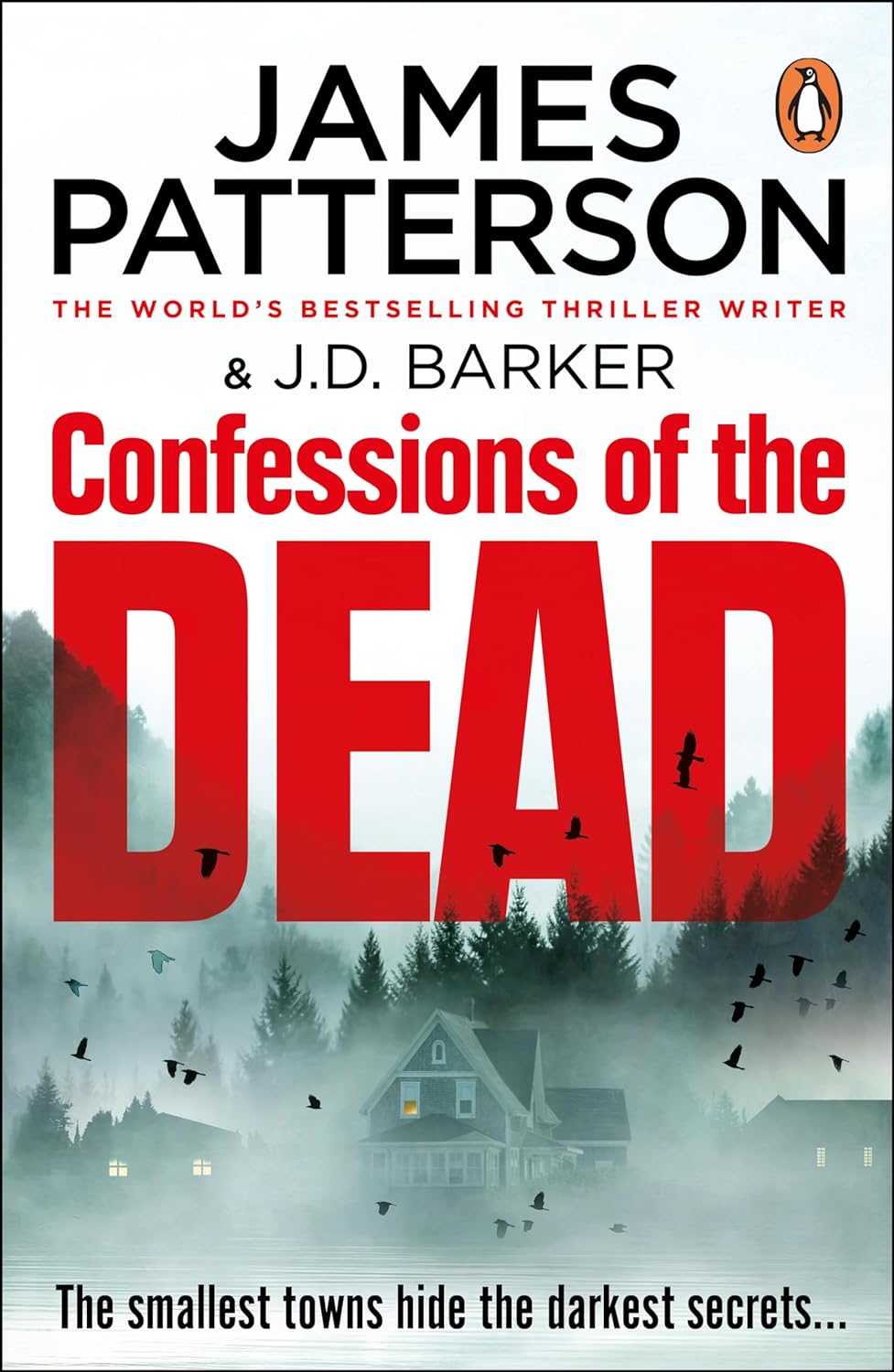
Quick Review – Confessions of the Dead by James Patterson and J. D. Barker

Publisher: Century (Trade Paperback – 2 July 2024)

Series: Standalone

Length: 454 pages

My Rating: 4.25 out of 5 stars

Amazon

One of the weirder and more compelling thrillers of 2024 so far has to be the unique Confessions of the Dead by the superstar team of James Patterson and J. D. Barker.

2024 has been an excellent year for both Patterson and Barker, as both authors have produced some excellent books.  Barker wrote the engrossing and highly adult thriller, Behind a Closed Door, while Patterson has continued to release a raft of compelling thrillers cowritten with talented authors, including The No. 1 Lawyer with Nancy Allen and The Murder Inn with Candice Fox.  As such it is unsurprising that the two would come together again this year with another collaboration, this time with the intriguing novel, Confessions of the Dead.  Their last collaboration, Death of the Black Widow, was one of my favourite books of 2022, so I was very excited to read Confessions of the Dead, especially as it featured a particularly interesting plot.

Plot Synopsis:

The smallest towns hide the darkest secrets . . . Drawing elements from the horror genre, this eerie standalone suspense thriller is perfect for fans of Stephen King.

The dead tell no tales . . .

Hollows Bend is a picture-perfect New England town. The crime rate – zero – is a point of pride for Sheriff Ellie Pritchett.

The day the stranger shows up is when the trouble starts.

The sheriff and her deputy investigate the mysterious teenage girl. None of the locals can place her. She can’t – or won’t – answer any questions. She won’t even tell them her name.

While the girl is in protective custody, the officers are called to multiple crime scenes leading them closer and closer to a lake outside of town that doesn’t appear on any map . . .


Confessions of the Dead
proved to be an intense and captivating horror/thriller hybrid as Patterson and Barker make the full use of their inventive narrative to unleash death, destruction and horror onto a seemingly innocent small town.  Starting off with a rain of suicidal birds hitting main street, and only getting darker and weirder from there, Confessions of the Dead follows several intriguing characters as they witness their fellow townspeople descend into madness and begin to enact dark and violent acts against each other, all while a mysterious teenage girl silently witnesses their hatred and crimes.  Things get even weirder, when it becomes clear that their town has become fully isolated from the outside world, with shadowy soldiers holding watch from the outskirts of town.  The various storylines soon reveal the dark secrets of Hollows Bend and the young girl seemingly causing the chaos, and you will not be prepared for the full truth that is revealed, and the terrifying implications.

This proved to be a rather interesting and horror-laden story that takes the readers in some surprising directions.  The narrative within Confessions of the Dead is spooky, deeply personal, and occasionally outrageous, as dark deeds slowly begin to sweep the town, turning the innocent townspeople against each other.  Patterson and Barker do a really good job of building up the mystery in the first half of the book.  There are so many intriguing secrets and mysteries lurking in this first part of the book, which are well matched by scenes of horror and human violence.  The fast-paced chapter changes that are such a distinctive part of Patterson’s writing style work wonders in conveying the unusual situation, and I loved how well the plot switched between multiple unique characters, all of whom have some dark secret they are hiding, even if they don’t know what it is.  The authors also add in some intriguing wrinkles to the plot through the use of multiple well-placed interludes that show a point in the future where one of the book’s protagonists is being interviewed by a member of the mysterious organisation keeping the town.  These inclusions really helped to build up tension as they hinted at events to come, while the elaborate setup surrounding the interviews, gave some idea of how serious the situation really was.

Everything leads up to a very intense second half of the book, as Confessions of the Dead’s story gets darker and darker.  Indeed, the authors build together a real horror/thriller vibe for Confessions of the Dead, which I honestly enjoyed, and it was great to see a more unusual and inventive thriller come out of the Patterson production machine.  There is an interesting combination of storylines in the second half of the book, from vigilante townspeople, monstrous killers, and even a Stranger Things/Goonies inspired sideline following a group of the town’s younger residents as they try to investigate the chaos engulfing the lives of their parents.  The authors set up a big and intriguing conclusion to the story, that provides a particularly unique ending that will stick in the reader’s mind.  I did think that Patterson and Barker did perhaps make the ending a little too complicated and meta for its own good, and that certain aspects of the crazy conclusions impacted my overall enjoyment of the book.  Still, this was for the most part a great story, and I had fun getting through it.

Confessions of the Dead was a particularly fascinating and memorable 2024 thriller that I was glad I checked out.  Written by the brilliant team of James Patterson and J. D. Barker, Confessions of the Dead had a wonderfully dark and brutal plot behind it, that allowed for quite the outrageous read.  Grim, intense, and featuring some interesting concepts, Confessions of the Dead proved very hard to put down and it will be interesting to see where these two authors go the future.

Amazon

Warhammer 40,000: Daemonbreaker by Jude Reid

Publisher: Black Library (Audiobook – 24 August 2024)

Series: Warhammer 40,000

Length: 7 hours and 27 minutes

My Rating: 4.25 out of 5 stars

Amazon

Gird yourself in faith, fury and fire, as fantastic author Jude Reid presents her latest Warhammer 40,000 novel, Daemonbreaker, which follows a complex figure as she blazes forth into the darkness of the Warhammer 40,000 universe.

After having a wonderful time with Warhammer 40,000 novels like Deathworlder by Victoria Hayward, Lord of Excess by Rich McCormick, Siege of Vraks by Steven Lyons and Oaths of Damnation by Robbie MacNiven, there was no way I was going to stop loving this franchise this year, so I eagerly dove into the cool new audiobook, Daemonbreaker by Jude Reid.  Reid, who really impressed me last year with Creed: Ashes of Cadia (one of my favourite debuts of 2023), presents an intriguing and dark novel that follows members of the Adepta Sororitas, the Warhammer 40,000’s resident nuns-with-guns.

On the battlefields of faith and fury, few warriors in the Imperium of Man can match the battle prowess of Celestian Sacresant Aveline of the Order of the Sacred Rose.  A deadly sister of the Adepta Sororitas, devoted to killing the mutants, witches, heretics and daemons that oppose the Emperor, Aveline is always eager for greater combat, and soon finds the ultimate opportunity she has been waiting for, defending the fortress world of Cadia from the ravening forces of Chaos as they embark on their 13th Black Crusade.

However, before Aveline can join her sisters in the massive battle for Cadia, she has been assigned final sacred duty.  Sent to Orrison VIII, a minor shrine world in the Cadia Gate system, Aveline is tasked with securing the desert world for the Emperor and scouring the forces of Chaos from its surface.

Desperate to find glory on Cadia, Aveline chafes at the slow speed of the mission on Orrison VIII, especially as their primary target, a deranged Chaos sorcerer, is content with playing a slow game of cat-and-mouse with her.  However, when Aveline finally gets her chance to face the enemy, she finds herself confronting a dark foe who knows her name and has a sinister scheme to destroy her and her sisters through her own arrogance.  If Aveline is unable to stop the dark Chaos forces before her, a deadly foe will be unleashed upon Holy Terra that could destroy the heart of humanity as it faces its darkest moment.

Daemonbreaker was a fantastic and compelling Warhammer 40,000 novel that expertly features an iconic faction and looks at the faith and emotions lying beneath their militant surface.  Jude Reid continues to impress with this cool novel and I had an excellent time getting through the intense and exciting story, which seeks to bring to life the figure of Celestian Sacresant Aveline who recently got her own model in the game.

I must admit, before diving too far into this review, that I sometimes found it a little hard to connect with Daemonbreaker at times, primarily because I’ve never been a massive fan of the Adepta Sororitas as a faction.  They’re honestly a little too one-note for me at times, and I never been especially drawn to their fiction as a result.  However, I felt that Reid was able to lift her narrative above some of the inherent limitations of this faction throughout the course of the book.  It helped that Daemonbreaker was a relatively shorter Warhammer 40,000 novel, so Reid sped up the plot, which in turn kept the reader from getting bogged down.  The resulting story is exciting and intriguing, as author quickly sets up the primary plot of the hunt for Chaos on Orrison VIII, while some initial compelling action set pieces help grab the reader’s attention.

The main narrative moves at a quick pace, with the protagonist leading her force into several encounters out in the desert while battling her own emotional turmoil and disappointment.  However, everything in the story changes around the halfway point of Daemonbreaker, when the author decides to throw the entire status-quo of the book on its head.  Thanks to a combination of the protagonist’s mistake and a major Warhammer 40,000 universe event, everything gets substantially more desperate for the protagonists, and Reid goes a little nuclear stacking the odds against them.  While there are a few gaps in the storytelling, the second half of Daemonbreaker is extremely fun and exciting, as the protagonists face impossible odds and encounter the very worst the universe has to offer.  There is a ton of tragedy and some horrifying moments as the reader races towards the end of the book, and it proves harder and harder to put it down as you near the conclusion.  Reid loads up some big final battles that showcase just how grim things can get in this universe, before the expected miracle brings things to a close.  Readers come away from Daemonbreaker feeling pretty satisfied with how things come to an end, although I did feel that part of the plot was a bit thin in places.

Reid has a great handle on writing Warhammer 40,000 fiction, and this is on display again in Daemonbreaker.  There is a notable cutdown in the exposition and Reid brings the reader right into the action and carnage which made it an easier book to get through, especially considering the faction focus.  The various action sequences come across as gritty and powerful, and you can feel the raw emotions of the protagonists as they encounter their dark opponents and the dreadful things they need to overcome.  Reid ensured that this was a concise and well-contained narrative through her use of two point-of-view characters, and I appreciated the excellent alternating perspectives.  Both protagonists were very well written, with the main story around Celestian Sacresant Aveline being the most prominent.  A deadly, if arrogant, sister of the Emperor, Aveline finds her devotion challenged by her own selfish desires and issues, which leads to dark things in the middle of the book.  While I didn’t always connect with Aveline as a character, I felt that Reid wrote a rather good redemption arc around her, and she becomes a lot more likeable and relatable in the second half of the book, especially as she comes to recognise her hubris and flaws.  Recognising these things allows her to fully appreciate her fellow sisters and leads her into the right place for the final arc of the plot to unfold.

Aveline is well balanced by the second perspective character, Novitate Gwineth, a young, keen and determined figure, whose eagerness to become a member of the Adepta Sororitas is drawn from her impending doom.  Reid writes an interesting and unique Warhammer storyline around Gwineth having haemophilia, which ensures that her days on the battlefield and in life are limited.  Wishing to die as a full sister, Gwineth’s keenness becomes a key part of the plot, and I loved seeing her grow into the role she wishes, especially as her innocence and determination are a driver for the rest of the cast.  The rest of the characters within Daemonbreaker are also very fun, if sparingly used.  I do perhaps wish that the author had added in additional perspective, preferably from a villain’s point of view, as I feel that would have enhanced the narrative to a degree, especially to provide some missing plot answers or explain the motivation and plans of the antagonists.  However, for the most part, this was a very well-written story with some intriguing protagonists, and one that I had an excellent time getting through.

The author has really gotten the hang of showcasing the grim and intriguing Warhammer 40,000 universe, and I loved some of the directions and figures that she featured within Daemonbreaker.  I especially felt that Reid does an excellent job examining Adepta Sororitas faction, the Sisters of Battle, within the book.  The various different units and figures of the faction are dropped into the plot fairly seamlessly, and even someone unfamiliar with the Adepta Sororitas unit types can easily appreciate their role in the plot.  I must also once again emphasise that Reid was able to overcome my disinterest in the classic Adepta Sororitas depictions with her clever narrative and compelling writing.  While this was a great Warhammer 40,000 novel, I feel that Daemonbreaker is perhaps a book best left to established Warhammer fans, as Reid does feature some heavy lore elements, and Adepta Sororitas players will probably get the most out of it.  Still, a new reader can easily come along and have a lot of fun with Daemonbreaker, as Reid’s story gets quite intense, personal and brutal.  You may have to ignore the fact that Daemonbreaker mainly written to promote a new model released in the tabletop game, but if you can get past that, this is a book well worth checking out.

Naturally, I ended up grabbing Daemonbreaker on audiobook, as this format is the absolute best way to enjoy a Warhammer book.  I really cannot emphasise how much more epic a Warhammer 40,000 tale comes across when it is read out to you, and I always have so much more fun listening to it.  This is particularly true when it comes to all the epic action, and I felt that the carnage in Daemonbreaker was very strongly enhanced by the audiobook format, with listeners also able to appreciate the compelling characters and intriguing lore while it’s being read out to you.  With a runtime of around seven and a half hours, this is a relatively short audiobook, and one that listeners can really power through, especially when they get caught up in the action and compelling character arcs.

One of the big highlights of this audiobook for me was the fact it was narrated by the appropriately named Faith Alabi, who really dives into the complex Adeptus Sororitas characters with her voice.  Each of the key protagonists is given their own unique voice, and I liked how well Alabi expressed their holy rage, and personal issues.  Alabi’s excellent voice work is cleverly supported by some fun additional audio enhancements, which I thought was a fun way to express some unique elements of the Warhammer 40,000 canon.  For example, the cybernetic figures, such as members of the Adeptus Mechanicus, have a noticeable robotic voice modulation that really tries to capture their machine nature, while communication occurring over vox-casters (radios), are filled with static and sound effects to emulate how the voices would sound in real life.  In addition, certain audio effects give dark and otherworldly voices to the antagonists, such as a particularly booming tone that makes the dialogue of a Chaos sorcerer antagonist that more impactful, or freaky vocal effects that make a major daemon seem even more powerful.  These audio effects work extremely well alongside Alabi’s narration, and I really appreciate the effort the producers made to drag listeners further into the story.  As such, those who decide to check out Daemonbreaker on audiobook are in for a very fun treat and this is such an awesome way to enjoy this fantastic addition to the Warhammer 40,000 canon.

Daemonbreaker was another amazing Warhammer 40,000 outing from Jude Reid, and one I was very glad I checked out.  The author effectively brings the main character to life in this book while also showcasing a compelling and intense Warhammer narrative of sacrifice, tragedy and holy war.  As such, Daemonbreaker is an excellent read for all fans of Warhammer 40,000 fiction, and I cannot wait to see what Reid takes on in the future.

Amazon

Quick Review – Outrider by Mark Wales

Publisher: Pan Macmillan Australia (Trade Paperback – 25 June 2024)

Series: Standalone/Book One

Length: 354 pages

My Rating: 4 out of 5 stars

Amazon

Former Australian soldier and current media personality Mark Wales presents a particularly exciting debut novel with the gripping thriller Outrider.  A gritty, intense, and absolutely action-packed dystopian thriller, Outrider is an awesome Australian novel readers will have a hard time getting away from.

Plot Synopsis:

Jack Dunne will do anything to save his son.

A violent civil war. An unstoppable enemy. One road to freedom.

In the wake of a global conflict, foreign forces occupy part of Australia, quashing all but a few pockets of local resistance. The tense stalemate ends in 2034, when Jack Dunne reignites the war.

Dunne is an Outrider, one of the last elite special operations soldiers in the Resistance. As the enemy prepare to eliminate the freedom fighters once and for all, he is tasked with his final mission.

If Dunne and his eleven-year-old son achieve the impossible, and survive, they’ll secure their future across the border in Free Australia.

But the road to victory will be bloody.

A cinematic action-thriller from bestselling author and veteran Mark Wales. Explosive and exhilarating, Outrider is a heartfelt father-and-son story of survival, resistance and hope.


Outrider
was an intriguing and complex novel that envisions a dark near future for Australian and sets loose a bold new action hero into the resulting carnage.  Set after a Chinese invasion of Australia, Outrider follows formidable resistance solider Jack Dunne and his son, Harry, as they attempt to save the lives of the last standing rebel fortress in Victoria from an upcoming war.  Given a mission to journey across occupied Australia to recover a military asset who can provide specialised assistance in the upcoming battle to come, Jack and his son will need to run a gauntlet of bandits, Chinese soldiers and members of the collaborating Victorian militia working for them.

This was an intense and exciting piece of Australian fiction, and Wales really dug deep to present an authentic tale of desperation and war.  Quickly and effectively introducing the 2034 dystopian setting, Wales takes the reader right into the action with a series of brutal early encounters that also set the rest of the narrative in motion.  From there, the story turns into an intense, Mad Max-style road trip as Jack and Harry embark on their journey to reach the required military asset and bring them back before it was too late.  This proves to be an excellent continued sequence, as the protagonists encounter obstacles and conflict, while also endearing themselves to the reader with a dive into their motivations and the history of events that drive Jack on.  The second half of Outrider proves to be even more epic and intense, as the protagonists desperately attempt to overcome the deadly forces coming for them.  This all leads up to the massive and impressive full on war sequence, with the fate of free Australia in the balance.  Wales does not disappoint when it comes to this final massive fight sequence, and readers will be blown away by how impressive the carnage gets.

Wales really dug deep here and produced an outstanding and fantastic debut novel that I just could not get enough of.  Making excellent use of his initial plot idea of a futuristic invaded Australia, Wales launches into a sharp and exciting narrative, that keeps grown in intensity as the book continues.  Unsurprisingly, considering the author’s background, the action sequences in Outrider are particularly well written, and Wales does an excellent job portraying the carnage of combat to the reader.  Each of these action sequences are well paced out and highly realistic (well, besides the highly advanced weapons), and the reader gets really drawn into them as a result as you can practically feel every shot or explosion.  While the main appeal of Outrider is the action and exciting story, I really appreciated that Wales took the time to set up several complex and compelling characters.  I felt that his protagonist, Jack Dunne, was an outstandingly damaged and angry main figure, whose loss of his wife is still raw for much of the book.  These intense emotions, as well as the bond he continues to form with his young son as they journey across Australia, adds a powerful edge to Wales’ narrative, and it helped Outrider be more than just an awesome action novel.

The final fantastic element I want to highlight about Outrider is the intriguing background setting of an invaded Australia.  Wales paints a haunting and disturbing picture of how this potential invasion would occur and in what form it would look like, and I liked the dark realism behind his ideas.  I particularly enjoyed how he portrayed the Chinese as only occupying key sections of Australia, rather than the whole continent, which honestly makes a lot of sense, and it allows the protagonist to slip between different parts of the country as a result.  The dive into collaborators and traitor militias continuing most of the fighting against the resistance, with China and the US playing proxy wars in the background, also had a tinge of realism behind it, even if we’d like to think differently.  Finally, the grim details surrounding the invasion add an urgent edge to the plot, and you find yourself pulling for the protagonists even more, especially after a powerful scene where they witness certain train carriages going by.  All of this proves to be an incredible background to a particularly exciting and engrossing read, and I loved seeing Wales’ intense look into the future.

Outrider by Mark Wales proved to be a particularly cool Australian thriller that I had an awesome time getting through.  An inventive and intense debut novel from Wales, Outrider comes highly recommended, especially for fans of Australian fiction with a ton of action, and it is really worth checking it.

Amazon

Quick Review – Eruption by Michael Crichton and James Patterson

Publisher: Century (Trade Paperback – 4 June 2024)

Series: Standalone

Length: 424 pages

My Rating: 3 out 5 stars

Amazon

If you’re in the mood for an easy-to-read, fast-paced thriller with cinematic scenes of destruction, then look no further than this year’s big blockbuster novel, EruptionEruption was a very interesting 2024 novel that caught my attention early in the year due to the eye-catching superstar writing team of Michael Crichton and James Patterson.  Apparently based on the notes of the late, great Crichton and then written by the world’s biggest thriller author, Eruption was a somewhat improbable creation that came to fruition this year in a big, explosive way that fans of crazy, over-the-top reads are bound to love.

Plot Synopsis:

Two of the bestselling storytellers of all time have created an unforgettable thriller.

A once-in-a-century volcanic eruption is about to destroy the Big Island of Hawaii.

But a decades-old military secret could turn the volcano into something even more terrifying…

Now it’s up to a handful of brave individuals to save the island – and the entire world.


Eruption
turned out to be a unique and memorable read, although not necessarily for all the right reasons.  The overall plot idea is exciting and easy to get into, with a massive volcanic eruption on the Big Island of Hawaii becoming a much more cataclysmic event when the predicted lava flow is expected to destroy a secret government vault containing decades of illegal radioactive waste material.  If the vault is breached, the resulting fallout from some of the vault’s more destructive contents would destroy all life on the planet.  To prevent this, a team of volcano experts from the observatory overlooking the volcano must work with the army and other skilled individuals to find a way to disrupt the lava flow and save the world.

On paper, this plot idea has a lot of potential, and the combination of Crichton’s vision and Patterson’s ability to create intense and exciting books should ensure that this is a pretty epic read.  Indeed, the reader does end up with a highly detailed volcano disaster novel that you could see Crichton imagining, brought to life with the quickfire storytelling and short-burst chapters that readers of Patterson would be familiar with.  However, despite all this, Eruption just doesn’t quite work, and a lot of people are going to come away from this book disappointed.

The main reason for this disappointment is that Eruption’sstory, while interesting in places, is very weak and just a little bit stupid.  While I don’t want to spend an entire review badmouthing every flaw with the story, there were several plot and writing issues that really bugged me which I must mention (SPOILER ALERT).  The first thing I couldn’t get past was the multiple weird and sudden jumps in the timeline that occurred throughout the book, which really throw me off from the story.  This was a minor structural issue in itself, but when combined with the other gaps and issues in the storytelling it’s very noticeable, and I hated it.  In addition, I felt that most of the characters acted like caricatures, and they routinely made stupid decisions again and again.  This includes a group of slightly ridiculous antagonists who, after nearly dying in a helicopter accident halfway through the book, decide to try the exact same thing several chapters later with results you can’t even call ironic, just dumb.  Another memorable issue involves the main protagonist’s major love interest dying in another country from an unrelated volcanic eruption (because why not?), only for the protagonist to mostly forget about them by the end of the book and instead start hitting on the other hot girl he works with.  To top this all off, they throw in a ridiculous ending which has the veneer of cleverness but literally makes all the protagonist’s actions in the book useless, and which kind reveals that none of the experts you’ve been following know that much about either volcanoes or geology.

Now, while I could completely trash Eruption for all its glaring storytelling issues, I’m a positive man, so I will also highlight bright points which will appeal to some readers.  For example, the authors have clearly done some research on volcanoes and volcanic eruptions, and they load up the book with the relevant science and history of volcanic occurrences in Hawaii.  Readers get a real crash course in volcanology, which proves highly fascinating at times, especially as the authors emphasise just how unpredictable and dangerous they can be, especially major volcanoes like those on Hawaii.  This deep understanding of volcanoes also translates into some amazing and thrilling sequences once the inevitable eruptions occur.  Massive and cinematic carnage unfolds before the readers eyes in the second half of the book, and the authors go out of their way to capture the intensity and deadly potential of a volcano, especially through a variety of gruesome deaths.  All these destructive scenes are really enhanced by the quickfire chapter changes featured throughout the book, and the authors do an excellent job of consistently building up tension as you count down to the potential destruction of the world.  All this ensures that, even with the issues I mentioned above, Eruption proves to be a hard book to put down, and you can really get lost in the insanity.

Overall, Eruption proves to be a mostly interesting and fun read, that will stick in the mind, especially as you witness the combined work of two legendary authors.  While there are a lot of obvious flaws, especially with the narrative, Eruption will still appeal to readers looking for a ton of action and over-the-top excitement.  I can honestly see Eruption being turned into a very cinematic action blockbuster at some point in the future, and if that appeals to you, you will have fun reading this cool book.  However, I do hope they fix up the storytelling holes in any eventual adaptation of Eruption.

Amazon

Warhammer 40,000: Oaths of Damnation by Robbie MacNiven

Publisher: Black Library (Audiobook – 24 August 2024)

Series: Warhammer 40,000

Length: 10 hours and 57 minutes

My Rating: 4.5 out of 5 stars

Amazon

Prepare to follow the most damned heroes in the Warhammer 40,000 canon in the impressive and intense new novel from Robbie MacNiven, Oaths of Damnation.

Recurring readers of this blog will know that I am constantly in the mood for fun and exciting Warhammer 40,000 action, which is why I listened to the awesome new book, Oaths of Damnation, the moment I could.  Written by new-to-me veteran Warhammer author Robbie MacNiven, a man with a lot of experience writing about complex Space Marines, Oaths of Damnation was one of the more intriguing Warhammer 40,000 books of 2024, and I really loved the opportunity to check out the infamous Exorcists Space Marines Chapter.

In the far, war-torn future, the Imperium of Man is under constant attack from the forces of the Chaos gods and their deadly daemon servants.  Few within the Imperium, even amongst the legendary Space Marines of the Adeptus Astartes, can fight against the daemons of Chaos on an equal footing, but there is one Space Marines Chapter, the Exorcists, that takes the battle to them in the most unorthodox and heretical of ways.

The Exorcists are an elite and secretive Chapter of Space Marines who make the ultimate sacrifice to fight the forces of Chaos.  Willingly accepting daemonic possession as part of their initiation, prospective Exorcists need to banish the daemon within themselves to join the Chapter.  Those who succeed become fierce warriors who are now resistant to the corruption of Chaos at the cost of their own fractured souls.  However, those that fail suffer a fate worse than death as they become Broken Ones, living prisons for the daemons summoned and expelled by the rest of the Chapter.  Few in the Imperium know the sacrifices that this Chapter makes to fight the enemy; if it were to become common knowledge, all the Exorcists would be put to the flame as heretics.

As such, when a dark conspiracy sees a Broken One containing a powerful daemon, the Red Marshal, escape from the Exorcists custody, the Chapter sends a unit of its elite Hexbreakers to hunt it down before their secrets are exposed.  Led by the dogged Almoner-Lieutenant Daggan Zaidu and powerful psyker Codicier Torrin Vey, the Exorcists strike force journeys to Fidem IV, a planet littered with ancient battlefields, to hunt down the Broken One and destroy the daemons within.

But as the Exorcists battle across the planet looking for their prey, it soon becomes clear that members of the Word Bearers traitor Space Marines Legion are on Fidern IV, seeking the Broken One for their own sinister purposes.  Worse, a dangerous connection exists between Zaidu and the Red Marshal, one that could endanger the entire mission.  Can the Hexbreakers succeed and hunt down the Broken One before it is too late, or will their Chapter’s darkest secret be unleashed upon the entire Imperium in a wave of blood?

Oaths of Damnation was a particularly intriguing and intense Warhammer 40,000 novel that really showcased MacNiven’s skill as an author.  Featuring a detailed look at a particularly cool faction in the Warhammer 40,000 canon, Oaths of Damnation was an excellent and exciting read that constantly grabbed my attention and refused to let go.

I really enjoyed the fantastic narrative contained within Oaths of Damnation, especially as MacNiven was able to produce a book that allowed him to tell his own distinctive story while also expertly highlighting the Exorcists Chapter.  Oaths of Damnation’s story starts off strong, with a look at the Broken One’s bloody escape from the Exorcists’ custody, which effectively sets up the Red Marshal as a deadly antagonist.  The following story moves at a quick pace as. With only a minimal amount of exposition and introduction, the protagonists set forth to Fidern IV to find the escaped Broken One, only to encounter opposition from the desperate daemon and the Word Bearers.

What follows is a series of intense and well-written battle sequences as the Exorcists pursue their target across the planet and fight against the various forces of Chaos.  MacNiven ensures a compelling story structure, as the protagonists face determined opposition, brutal fights and unexpected setbacks on the way to victory.  The author also spends time diving into the psyche of several key characters, which adds some intriguing intensity of the plot, especially as many find themselves distracted or conflicted by the mission.  MacNiven anchors the end of story on two massive action set-pieces that push the Exorcists to the limit and force them to face their internal and external daemons.  I liked some of the fun, if not unexpected, twists that MacNiven threw in in the lead up to the final battle, and the constant prophetic hints about dark events to come really enhanced the intensity of the plot towards the end.  The final confrontation is particularly impactful and moving, especially as there are some major sacrifices being made and all manner of carnage to behold.  I really appreciated the dark ending that MacNiven left the story on, and no-one should come into Oaths of Damnation looking for a happy ending.

MacNiven did an outstanding job capturing the dark and grim nature of the Warhammer 40,000 universe with his writing, and I felt that this was an extremely strong read overall.  While there are some complex lore events contained within, for the most part Oaths of Damnations was an accessible novel, even for those readers unfamiliar with the canon (although some basic Warhammer 40,000 knowledge would be helpful).  The author does an excellent job exploring the plot through the perspective of multiple complex characters, which resulted in a very compelling read, as many of the protagonists are forced to continually overcome their literal inner daemons.  I felt that this focus on damaged characters, as well as the intriguing examination of some unique Warhammer lore, helped Oaths of Damnation escape the ‘bolter porn’ label that many Space Marine novels are painted with.  That being said, Oaths of Damnation does have some particularly striking action sequences that fans of Warhammer 40,000 battles will really enjoy.  MacNiven clearly has a gift for showcasing Space Marines in all their martial glory with his writing, and you really get a sense of their power, intensity, and sheer destructive capability.  I also deeply enjoyed how he richly depicted their fighting capability and style, and the way in which he detailed the impacts of the bolt shells, the durability of the power armour, and the strength of their attacks, was honestly some of the best representations of Space Marines in combat I have ever seen.  I really cannot emphasise how impactful MacNiven’s writing style was, and Oaths of Damnation is a great book for all Warhammer fans, especially those buzzing for some Adeptus Astartes action after playing Space Marine 2.

A major highlight of this book for Warhammer 40,000 fans is the inclusion of the very cool Space Marines Chapter, the Exorcists.  A band of secretive and hidden Space Marines who willingly allow themselves to be possessed so they can learn to fight daemons better is an awesome concept, and MacNiven did an outstanding job showcasing this to the readers of Oaths of Damnation.  With only minimal lore dumps at the start of the novel, MacNiven ensures that the reader gets a sufficient and intriguing idea of who the Exorcists are and how they become lethal daemon fighters, and it proves fascinating to dive deeper and deeper into their Chapter as the book continues.  Not only is there is a great focus on how and why they damn themselves, but I also really appreciated the comprehensive way in which MacNiven tried to explore the other side effects of becoming an Exorcists, as well as the unique culture that they share.  The concept of the lingering bond that each Exorcist holds with their Never-brother, the daemon that possessed them, so much so that they still hear fragments of their voices and gain personality traits or combat abilities reminiscent of their former possessor, was particularly cool, and the author does an excellent job of showcasing it.  MacNiven also expertly covers the concept of the Orison Cults, social and ceremonial cults of the Exorcists dedicated to specific rituals and combat styles, and which serve a vital part in the larger Exorcists culture.  It was fascinating to see the ways that the now practically soulless Exorcists try to retain their humanity throughout their day to day lives, and how they replace the holes in their being with ritual and false comradery.  This combination of Exorcists’ lore, and MacNiven’s compelling dive into the deeper motivations and minds of its members, made for outstanding reading and it fun to see this complex and damaged Chapter in action.

I also have a lot of love for the compelling main characters featured within Oaths of Damnation.  While Space Marine characters in Warhammer fiction can sometimes be a little dull, the main two protagonists of this book, Almoner-Lieutenant Daggan Zaidu and Codicier Torrin Vey, each has a complex background and connection to the target that ensures that the reader is drawn into their story.  Zaidu’s is particularly fun, as Zaidu feels substantial guilt and anger at the damage caused by the Red Marshal, as it was the daemon that formerly possessed him.  Determined to end the connection between them once and for all, Zaidu lets his recklessness control him in many parts of the book, and it was deeply compelling to see how obsessed he became.  Vey on the other hand is a veteran Space Marines librarian, who stands as the beacon of knowledge to the group.  The man responsible for Zaidu’s possession by the Red Marshal, Vey bears a lot of guilt within himself, and he works hard to keep Zaidu safe from his own anger, impatience and desperation to kill his Never-brother.  Vey and Zaidu play off each other perfectly throughout Oaths of Damnation with their troubled mentor/mentee relationship, and MacNiven makes sure to hit all the right emotional notes to get the reader involved in their tales of personal woe.

In addition to Zaidu and Vey, MacNiven provides some fantastic alternative perspectives from several other members of the Exorcists who journey to Fidem IV.  As with the main two characters, each of these Exorcists are deeply troubled and damaged because of their former daemonic possession, and each then battles with the side-effects of the process, as well as the lingering taint of their Never-brothers.  This ensures that Oaths of Damnation has a rather dour tone to it at times, but seeing these damaged, yet highly determined and loyal Space Marines in battle is powerful and really drags the reader in.  The Exorcist characters are well balanced by a raft of compelling and distinctive villains, including a darkly charismatic Dark Apostle with great ambitions and a weary veteran Word Bearer who has started to question his role in the universe.  However, the most important villain is the fallen daemon known as the Red Marshal, who hungers for freedom and a return to power.  You get several intriguing trips into the Red Marshal’s mind, and I enjoyed seeing his boiling rage and determination to regain his god’s dark favour.  These great characters really helped elevate Oaths of Damnation’s plot, and I enjoyed seeing all their respective narratives unfold.

As usual, I ended up grabbing this cool Warhammer 40,000 novel on audiobook, which is my preferred way to enjoy books from this franchise.  While all Warhammer audiobooks are great, I felt that Oaths of Damnation came across particularly well in this format, and you really got dragged into the action and excitement as it was read out to you.  I personally found myself absorbing the complex lore surrounding the Exorcists a little better while listening to it, which helped with the overall impact of the story.  Oaths of Damnation also strongly benefited from the excellent narration of Charles Armstrong.  Armstrong, who previously impressed me with his narration of the Warhammer Crime audiobook, Bloodlines by Chris Wraight, did another excellent job in Oaths of Damnation as he expertly showcased the elaborate story with his voice.  I particularly enjoyed his compelling take on the various characters featured within the novel, especially the main protagonists, and he really captured their dark inner feeling and dedication in multiple scenes.  This proved to be an epic audiobook, and, with a runtime of just under 11 hours, it is one that dedicated listeners can get through fairly quickly.  I personally would recommend this format as the best way to enjoy Oaths of Damnation, or indeed any Warhammer 40,000 novel.

Oaths of Damnation was a particularly strong and exciting piece of Warhammer 40,000 fiction that I had an incredible time getting through.  Robbie MacNiven has produced another gripping and intriguing read that cleverly dives into the complex lives of a unique Space Marines chapter, and I loved every second of it.  An intense, dark and action-packed read, Oaths of Damnation really expresses the grimdark nature of the Warhammer 40,000 universe and you’ll have a very hard time escaping once you get sucked in.

Amazon

King’s Enemy by Ian Ross

Publisher: Hodder & Stoughton (Trade Paperback – 10 September 2024)

Series: De Norton Trilogy – Book Three

Length: 419 pages

My Rating: 5 out of 5 stars

Amazon

Ian Ross brings his exceptional De Norton historical fiction trilogy to an extremely strong end with the excellent and powerful third and final entry, King’s Enemy.

For the last year or so, I have been utterly enthralled with acclaimed historical fiction author Ian Ross’s latest series, the De Norton books.  Following young squire and eventual knight, Adam de Norton, as he finds himself drawn into the 13th century rebellion of Simon de Montford against the crown, the De Norton books are extremely compelling, and I love the blend of action, cool characters, and compelling historical setting.  The first book in the series, Battle Song, was an outstanding read that expertly introduced the protagonist, as well as his unpredictable mentor, and showed how he became involved in the war on de Montford’s side.  Battle Song ended up being one of my favourite books of 2023, and I eagerly dived into the sequel, War Cry, earlier this year.  Set shortly after the events of Battle Song, War Cry worked to show the aftermath of de Montford’s major victory, and the subsequent royalist counter-rebellion, by following the newly knighted de Norton as he finds himself once again called to battle.  War Cry was a very worthy sequel, and I loved how dark and grim it got in places, especially at the end.  War Cry left the reader on a major cliffhanger, and as such I have been eagerly waiting to get my hands on the third and final book, King’s Enemy.  One of my most anticipated books from the second half of 2024, King’s Enemy had an outstanding plot behind it that really got me excited.

England, 1265.  It is two months after the infamous battle of Evesham, where knight Adam de Norton lost everything.  The rebellious Simon de Montford lies dead on the field alongside de Norton’s mentor, Robert de Dunstanville. and the rest of their army, massacred by Prince Edward and his victorious army.  Spared by the prince alongside a few other noble survivors, de Norton remains a prisoner of the crown in the grim castle of Beeston, with all his lands, wealth and honour stripped from him.

However, despite the crushing victory at Evesham, England is far from peaceful, as new rebellions begin against the king.  Determined to take his fate into his own hands, de Norton makes good an escape from Beeston and becomes a fugitive from the crown.  Branded a king’s enemy, a man who can be slain with impunity by those pursuing him, de Norton flees across England, alongside the recently widowed noblewoman Joane de Bohun, contending with royal troops and dangerous outlaws, desperate to find a cause to fight for.  But when the promised new rebel army is swiftly beaten, de Norton and Joane are once again left without options.

Adam and Joane soon find their fates tied to that of the mightiest fortress in England, Kenilworth Castle, when they seek sanctuary there.  The last castle holding out against the crown, Kenilworth is garrisoned by a motley band of rebels and knights, each with their own reasons for being there.  Joining the defenders, Adam finds old friends and enemies within and without the castle walls, as he prepares to endure a lengthy siege.  But as the months pass and the battle becomes more desperate, Adam must decide what is more important, the lives of those he loves or his knightly honour.

King’s Enemy was another outstanding novel from Ross, who brings his de Norton trilogy to brilliant end with this third book.  Once again expertly focusing on a particularly intriguing part of English medieval history, Ross crafts together a powerful and intense narrative that will have you hooked the entire way through.  King’s Enemy is an epic read that gets a full five-star rating from me.

Ross has come up with a fantastic story that I honestly could not turn away from.  Starting shortly after the memorable cliffhanger of the second book in the trilogy, War Cry, King’s Enemy starts off with Adam de Norton in captivity, having lost everything.  Ross does a great job capturing the initial despair of his protagonist before setting him off on a new adventure as he makes his escape from captivity.  This results in a pretty good fugitive arc as Adam and his ill-fated main love interest, the recently widowed Joane de Bohun, attempt to find a new cause so that they may both recover their positions.  This first half of the book is very fun and makes sure to set the scene for the rest of King’s Enemy.  There is plenty of adventure, excitement, and even a surprising nod to classic Robin Hoods mythology, as the two protagonists head towards promised safety and a new army to fight with.  However, as readers of the De Norton books will be aware, things rarely go well from the main character, and Ross adds in a major road-bump for him halfway through the plot that forces him towards his inevitable destiny at Kenilworth Castle.

The rest of King’s Enemy is essentially one big siege sequence, as Adam, Joane, and several surviving supporting characters, take refuge int the castle and attempt to hold off a massive besieging force belonging to the crown.  This proved to be an exciting second half which really pushes the protagonists to the limit.  I’m a huge fan of sieges in fiction, and I thought that this depiction of this infamous British siege was extremely good.  Ross captures so many cool aspects of this siege with his writing, including the desperate defenders, the intense fighting, and the grinding impacts of time as the besiegers attempt to starve out the inhabitants of the castle.  Things get really tense as the book continues, as Adam finds himself caught amid various big personalities, including an unstable fellow knight and other defenders seeking to gain advantage from their plight.  There are some dark and deadly moments here, and Ross keeps the reader on the edge of their seat as Adam tries to determine the best course forward.  Everything ends on an interesting note, as all the existing storylines are wrapped up, many figures, both fictional and historical, meet their fates, and the final chapter in the protagonist’s adventure and complex romantic life is revealed.  I personally felt that Ross ended everything on a very strong note, and those readers who have become quite attached to the series will come away very satisfied.

I felt that Ross once again did a really good job of enhancing his captivating narrative with his great writing, and readers really get stuck into King’s Enemy as a result.  The quick-paced flow of the story and the intense action really help to drag you in and go hand in hand with the great characters and intriguing historical setting.  Ross does an outstanding job of showcasing the hard-hitting combat associated with historical knights, and all the intense action sequences are a joy to read.  I also must once again highlight the cool siege that made up the second half of the book, and fans of fictional fighting will love some of the chaotic sequences that emerge there.  There is also a strong emotional edge to the plot, as many of the main characters are desperate figures struggling in the aftermath of a devastating defeat and trying to find a path forward that balances their survival with their sense of honour.  While King’s Enemy can be read as a standalone novel due to the excellent way Ross summarises some key prior events, readers really should check out the first two entries in the series first.  The continuing character arcs, recurring themes, and excellent conclusion to long-running story elements, help to make King’s Enemy a lot more enjoyable for returning readers rather than interested newbies, and I was very invested in seeing how this story ended due to how much I had connected to the protagonist.  I felt that Ross wrapped up this trilogy extremely well, and if you loved Battle Song and War Cry you will not be disappointed here.

As with the previous De Norton novels, one of the things that most impressed me about King’s Enemy was the intriguing historical events that Ross chose to set his story around.  The 13th century rebellion of Simon de Montford is one of England’s lesser-known civil wars, and I have been deeply enjoying seeing the events of this war unfold through the eyes of the protagonist.  The first book did a wonderful job exploring the events leading up to the rebellion, as well as de Montford’s major victory that turned the whole country on its head, while the second book captured the chaotic instability that followed and the eventual end of the main rebellion.  King’s Enemy continues in this vein by examining what occurred after de Montford’s death and defeat, with the country still unstable despite the crown’s victory.  Ross does an excellent job of ensuring his protagonist is present for many of the key moments of this post-rebellion period, and you really get some good insights into these tumultuous events from the protagonist’s perspective.  There is a great focus on the politics and society at the time, especially as major parts of the plot revolve around how the defeated knights and lords were treated.  Ross also excelled at capturing the many key parts of the siege of Kenilworth Castle in the second part of King’s Enemy.  The longest siege in English history, the battle for Kenilworth is a fascinating inclusion to the story, and I loved how Ross showcased it as the last stand for the desperate rebels.  You really get a sense of the events leading up to, and surrounding the siege, and I loved how well Ross examined the motivations of the various defenders and why they kept fighting.  All this proves to be an excellent background setting to Ross’s main story, and it was fascinating to find out how this entire civil war came to its end.

I also need to once again highlight the great characters that Ross has featured in this series, with some intriguing and moving character-based storylines sitting at the core of the plot.  King’s Enemy is another great example of this as, while many key characters died at the end of the previous novel, it still features a strong cast of complex protagonists and supporting characters, including a mixture of original characters and historical figures.  The most prominent of these is series protagonist and primary point of view character Adam de Norton, a former lowly squire who gained lands and a knighthood for his role in Simon de Montford’s rebellion.  After gaining so much in the previous books, Adam starts King’s Enemy at his lowest, with most of his friends dead and everything he fought for lost.  This places the protagonist in desperate circumstances, and he spends this entire book fighting with his back against the wall, literally and figuratively.  Ross writes some moving storylines around Adam’s conflicted mind, as he is forced to balance his honour and loyalty with getting what he wants.  I loved seeing the continued epic of Adam de Norton in King’s Enemy, as it proved impossible not to become attached to the scrappy and exceedingly honourable figure in the previous books.  This proved to be a great final entry in Adam’s story, and Ross ensures that there is still plenty of suffering and conflict for his protagonist.

Other major characters I need to highlight include Adam’s main love interest, Joane de Bohun.  Joane, a strong-willed survivor determined to survive and regain her lands, proves to be an interesting companion to Adam.  The two share an intense and often contentious relationship, as Joane attempts to balance romantic feelings with her ambitions.  Due to the desperate events of the book, Adam and Joane are finally able to express themselves to each other at times, although their differing goals often lead them into conflict.  There is a real tragic romance angle going on between Adam and Joane in King’s Enemy that worked extremely well, especially with the other story elements, and it added a compelling extra layer to already impressive story.

The final character I really want to highlight was bold younger knight, Henry de Hastings, with whom Adam has many interesting encounters in King’s Enemy.  A captured rebel like Adam, de Hastings seems to follow the protagonist around to all the major encounters of the book, and they become both comrades and rivals as a result.  I really enjoyed how Ross portrayed de Hastings in this book, and you have to love the combination of arrogance, contempt and friendship that he gives towards the protagonist, which ensures that the reader finds him both insufferable and entertaining.  De Hastings’s appearance in the book’s main siege also produces some memorable character changes as the knight becomes obsessed with winning and holding out against the enemy, so much so that he becomes a dangerous threat to the protagonist.  There is a wonderfully written slide into darkness for this side character that I deeply enjoyed, and he ended up being a standout figure in King’s Enemy as a result.  All these characters, and more, helped to turn King’s Enemy into something special, and it was amazing to see where many of these recuring figures ended up.

Overall, I found King’s Enemy to be an exceptional book that served as a brilliant and impressive conclusion to Ian Ross’s De Norton trilogy.  Loaded with intense characters, fascinating history, and outstanding action, King’s Enemy had me hooked the entire way through and provides readers with a powerful end to a great historical series.  A highly recommended read, you won’t be disappointed with this latest offering from Ross.

Amazon

Witness 8 by Steve Cavanagh

Publisher: Headline (Trade Paperback – 13 August 2024)

Series: Eddie Flynn – Book Eight

Length: 392 pages

My Rating: 4.5 out of 5 Stars

Amazon

For those in the mood for a highly entertaining and exciting legal thriller, look no further than the latest book from the always impressive Steve Cavanagh, Witness 8.

Over the last couple of years, I have become a major fan of entertaining thriller author Steve Cavanagh.  A compelling writer with a flair for over-the-top narratives, Cavanagh has deeply impressed me with books like his twisty standalone novel, Kill For Me Kill For You, as well as his outstanding Eddie Flynn legal thriller series.  Following a former conman turned defence attorney, the Eddie Flynn books are always deeply enjoyable as Cavanagh brings some outrageous legal thriller scenarios and fills them with some fantastic characters.  The last two books in the series, The Devil’s Advocate and The Accomplice, have been a ton of fun, and the latest entry, Witness 8, has been one of my most anticipated reads of 2024.

Ruby Johnson is a seemingly ordinary nanny and maid who works for many of the wealthy families in Manhattan’s exclusive West 74 Street.  Memorising their needs, routines and secrets, Ruby has made herself indispensable to various families on this elite street, even though most of them look down on her due to her family’s past connection to the rich community.  However, Ruby is about to shake up the entire street when she witnesses the murder of one of their most controversial inhabitants.

The only person who truly knows who committed the terrible murder, Ruby sneaks away key evidence and places an anonymous call to the police, naming the killer.  However, Ruby lies about who the true killer is, and instead frames an innocent man for the murder and turns the entire street against him.  As chaos descends upon West 74 Street and an innocent family suffers the stigma associated with murder, it becomes clear that something is very wrong with Ruby, and that she will destroy anyone to get what she wants.

It soon falls to Eddie Flynn, former conman turned trial attorney to defend the innocent man accused of the crime.  Facing off against an ambitious District Attorney, the all-consuming secrecy of the West 74 Street’s inhabitants, and threats much closer to home, Eddie Flynn will need to bring every legal trick and con in his vast repertoire to keep his client out of jail.  However, can even Flynn and his expert team uncover what Ruby has done in time to save an innocent man, or will her dark secrets strike again and bring even greater tragedy?

Steve Cavanagh continues to impress as his latest book, Witness 8, was an amazing and compelling thrill ride that had me hooked the entire way through.  The eighth book in the Eddie Flynn series, Witness 8 was extremely fun, and I had an outstanding time getting through it.

Witness 8 has a fantastic story behind it that really drags the reader in with its outrageous plot, ambitious legal sequences, and eccentric characters, all of which is a trademark of the Eddie Flynn series.  Initially focusing on the character of Ruby Johnson, you witness the starting events of the plot that see the housekeeper become a central figure in a murder investigation, which serves as a great start to the book while also expertly introducing one of the novel’s most complex figures.  From there, the plot begins to focus on series protagonist Eddie Flynn, and his eccentric colleagues, as they are tasked with defending the man Ruby framed and uncovering the reasons behind his arrest.  Clashing with an ambitious district attorney, Flynn starts utilising his trademark unpredictable tactics to infuriate and confuse his opponents, which results in some fun early scenes.  However, Flynn faces lethal problems of his own when the leader of a gang of corrupt cops puts out at hit on him, believing him to be a threat to his organisation.

The story goes in some very interesting and unexpected directions as the protagonist finds himself forced to simultaneously defend his client and deal with the killers coming for him.  Cavanagh does a great job of breaking the story up across various distinctive characters, with the machinations of Ruby blending well with the legal manoeuvrings of Flynn and the investigations of his team.  The author also adds in several other great alternate perspectives, including that of the wonderfully sinister gentleman assassin, Mr. Christmas, who starts to take his own interest in several characters associated with the case.  These intriguing alternate perspectives allow for a more elaborate, yet still fast-paced novel, and I loved where some of the various character arcs went.

The second half of Witness 8 is loaded up with surprises, tragic blows, over-the-top moments and funny ploys from the protagonist, and you are constantly on the edge of your seat as you wait to see how everything unfolds.  I really appreciated the excellent way that Cavanagh builds up towards the big conclusion of the plot, and the resulting payoff comes together extremely well.  The closer you get to the end, the more you appreciate how the author had previously layered in clues and hints in the first half of the book, and I particularly enjoyed the breadcrumbs about Ruby’s motivations and what she hoped to achieve.  The author tops this off with some fantastic and entertaining cons and schemes from the protagonist, which results in some ironic comeuppances for several of he more morally dubious characters.  This proved to be a very fun ending, and it will be interesting to see where some of the storylines go from here, especially around some newly introduced characters.

Much like the previous entries in the series, Witness 8 can be read as a standalone novel, and new readers can have a wonderful and easy time exploring the accessible and interesting series and characters for the first time.  Witness 8 was the usual fun mixture of action, clever legal scenes and overall insanity that fans of the Eddie Flynn series are well use to.  I always like the unique legal scenarios that Cavanagh comes up with for his books, and the one in Witness 8 was pretty damn good, as the protagonist deals with the crazed witness who has her own schemes in this murder.  The story veers into psychological thriller territory at times when it comes to this main antagonist, and her twisted tale of revenge and recompense blended well with the thrilling adventures of Flynn and his cohort.  Cavanagh did a great job of keeping the story running at a fast pace, and the inclusion of several deadly assassins hunting after Flynn, ensured that the reader was constantly engaged with the book, especially with the inclusion of some well-placed tragedy.  While much of Witness 8 is light and is primarily dedicated to providing entertainment, Cavanagh throws in some particularly dark moments throughout the book, which provides some memorable and powerful moments for the reader.  This blend of tones, which includes some extremely troubling scenes, helped to ensure that Witness 8 was more than just a one-trick pony story, and readers will really love the book’s depth and dark humour.

However, for me the best parts of Witness 8, and indeed any Eddie Flynn book, were the excellent scenes that depicted Flynn engaged in his trademark legal cons and shenanigans.  Cavanagh’s well thought out courtroom sequences are always enhanced by the outrageous actions of his protagonist, as he uses unconventional tactics garnered from his conman past to trick and manipulate events to his advantage.  These ploys often play off the more conventional tactics of his opponents and the rest of Flynn’s legal team very well, and you are never quite sure what direction his trial strategy is going to go.  While I usually prefer a more straightforward courtroom sequence in a legal thriller, I deeply enjoy seeing Cavanagh’s more entertaining takes on the story element, and it is so much fun to see what outrageous ploy the author comes up with next.  These eccentric court scenes play off the rest of the book extremely well, and I felt that they were once again a great highlight of this Eddie Flynn book.  Indeed, I kind of wish that the author had ensured that more of the book was spent inside the courtroom rather than having the protagonist battle assassins, but I still really appreciate how the story came together.

A key part of why Witness 8 was so entertaining was the fantastic and memorable characters featured within it.  Cavanagh utilises an intriguing cast for Witness 8, that includes a collection of recurring characters from previous books, as well as several new figures who are cleverly inserted into this story.  I have already mentioned how much fun series protagonist Eddie Flynn was in Witness 8, and his entertaining ploys and determination to stick up to even the most dangerous people in the city, ensure that he is a hard character not to like.  While much of Flynn’s story revolves around him outsmarting the bad guys in humorous ways, Cavanagh also ensures that there are some darker moments for Flynn in Witness 8, especially as he finds his team under threat and someone close to him hurt as collateral damage.  The rest of Flynn’s team, including his legal partner Kate Brooks, the firm’s lethal private investigator Bloch and former serial killer hunter Gabriel Lake, are well represented throughout the course of Witness 8, with Lake’s unique past coming into play in some compelling ways.

While these protagonists are great, Cavanagh also spent a lot of time building up some outstanding and memorable antagonists who really fit the series’ unique vibe and proved to be major highlights of Witness 8.  The most prominent of these is Ruby Johnson, the seemingly innocent maid, who manipulates events around the murder for her own advantage.  Cavanagh does an excellent job selling Ruby as a conflicted and damaged being, haunted by her past and the terrible things she needs to do.  I really appreciated how effectively Cavanagh sets up Ruby as a particularly dangerous figure, and you really buy into her issues and dark persona, especially as Cavanagh throws in some interesting curveballs around what drives her.  In addition to Ruby, the other major antagonist I want to highlight is the assassin Mr. Christmas.  A deadly killer with curiosity, class, a dash of morality and a love for Marlon Brando films, Mr. Christmas steals nearly every scene he is in as he manoeuvres around the other players in the book.  A professional who likes to keep things sporting, Mr. Christmas enjoys interacting with his targets before he kills them, and his encounters with many of the characters, including Flynn and Ruby, are some of the most captivating parts of Witness 8.  Cavanagh did an outstanding job building up Mr. Christmas here, and I loved his genial threats and unique professionalism, as well as his connection to Gabriel Lake, which provides some much-needed seriousness around this figure.  Indeed, it seems like Mr. Christmas is a figure that is likely to return in future entries in the series, which is something I am rather keen for.  Throw in a raft of other desperate, greedy or easily manipulated figures, and Witness 8 had a truly amazing cast of characters that ensured this book was everything you could hope it to be.

Witness 8 was another amazing novel from Steve Cavanagh, who continues to produce some of the most entertaining and fun legal thrillers you are likely to read.  Filled with big characters, outrageous situations, and complex scenarios, Witness 8 had me hooked the entire way through, and I honestly could not stop reading this fantastic read.  I really cannot emphasise how much fun I have with the Eddie Flynn series, and I cannot wait to see what cool story Cavanagh comes up with next.

Amazon

Warhammer 40,000: Siege of Vraks by Steve Lyons

Publisher: Black Library (Audiobook – 22 June 2024)

Series: Warhammer 40,000

Length: 9 hours and 48 minutes

My Rating: 4.5 out of 5 stars

Amazon

The always impressive Steve Lyons once again dives into the wars of the legendary Death Korps of Krieg with this epic new novel that shows just how massive a Warhammer 40,000 campaign can be with the ultra-exciting and intense Siege of Vraks.

I have been having a ton of fun with Warhammer 40,000 fiction this year, as complex books like Da Big Dakka by Mike Brooks, Deathworlder by Victoria Hayward and Lord of Excess by Rich McCormick have greatly impressed me.  However, few have had the scale or pure brutality of the amazing new release, Siege of Vraks by Steve Lyons.  The third standalone book by Lyons that focuses on the Death Korps of Krieg (see my reviews for Dead Men Walking and Krieg), Siege of Vraks brings to life a massive event from the Warhammer 40,000 canon (as featured in several game books), with the long-running siege of the planet of Vraks.

In the far future, humanity has been forced to fight on many brutal battlefields, but none are as infamous as the slaughter that occurred on the planet Vraks.  Once a vital armoury world used to supply regiments throughout the Imperium of Man, Vraks has become tainted by humanity’s greatest enemy.  Thanks to a corrupted cardinal, the entirety of Vraks’s population has fallen under the sway of the Chaos Gods and have risen in rebellion against the rest of the Imperium, believing themselves to be fighting in the god Emperor’s name.

Desperate to reclaim the vital world, the Imperium has no choice but to send in a massive besieging invasion force to purge the traitors.  Only a completely relentless force has a chance of success on the bloody fields of Vraks, and to that end the stoic soldiers of the Death Korps of Krieg have been chosen to lead the attack.  Experts at sieges, fanatically stubborn, and desperate to wipe away the stain of their planet’s historical betrayal, the soldiers of Krieg are prepared to destroy their enemy no matter the cost.

However, even with the implacable Krieg soldiers leading the assault, Vraks is no simple planet to conquer.  Its massive central fortress is impregnable, and the entire population of planet has been mobilised to fight against the Krieg, equipped with the massive arsenal of weapons previously held in Vraks’s armoury.  To defeat their enemy, the Krieg will need to spend years and millions of soldiers to slowly approach and wear down Vraks’s fortresses.  But with the constant battle drawing the attention of other malign Chaos forces to Vraks, can even the massed forces of the Krieg win this impossible siege, or will these fearless soldiers finally face an army even their devotion and dedication to duty is unable to overcome?

Siege of Vraks was another particularly strong Warhammer 40,000 novel from Lyons, who excels at diving into the grimdark core of Warhammer fiction.  Filled with an insane amount of action, Siege of Vraks proves to be an intense and addictive siege novel that cleverly explores a well-established lore event and presents it in an outstanding and moving way to the reader.

The story of Siege of Vraks is one of action, sacrifice and self-discovery, as it recounts the events of the titular siege in its own compelling way.  Starting off with a quick prelude that covers the events that led up to the conflict, the main story starts a few years into the war and then goes all the way to the very conclusion of the siege which occurs after years of brutal fighting.  Rather than having one concise narrative thread, Siege of Vraks is instead made up of a series of connected storylines set around key events of the war.  Each of the initial chapters features a new central character caught up in a different battle and scenario of the war, and often focuses on them fighting in dangerous or impossible situations.  While these initial chapters are often linked by the inclusion of recurring character Confessor Ignea Tenaxus or by showing different sides to the same battle, for the most part they are unconnected and some of their messages and themes remain self-contained within the chapter.  However, as the book continues, a few point-of-view characters return for another chapter, often years removed from their last appearance.  These characters, especially Colonel Tyborc, will then continue their storylines from the previous appearances, which often play into the larger events of the overall siege in some interesting ways.  While I imagine the slightly disjointed way that Lyons tried to capture the siege might not be for everyone, especially those who would prefer seeing every event from one character’s eyes, I thought that it was extremely clever and fit into the unique mindset of the Krieg regiment.

The rest of the book takes places over a series of years as Lyons attempts to capture the entire epic and lengthy sieges.  The author includes multiple time skips here to showcase the dragging length of the battle, often interspersed with useful context inclusions that provide an overview of the carnage.  These time skips move the story along at a sensible pace and the reader is never lost, especially when it comes to the key recurring characters. While Lyons is primarily showing the carnage of war from the perspective of the fighter on the ground, you get a good understanding of just how big the scope of the fighting is, and really get drawn into the over-the-top action.  The loosely connected character arcs continue in the second half of Siege of Vraks, and there are some complex stories being featured here.  I particularly enjoyed the fascinating standalone chapter that followed the interrogation of a local inhabitant of Vraks after he defected and pretended to be a member of a Krieg regiment.  While other chapters featuring recurring character Colonel Tyborc provides some unique insights into the mindset of a Krieg soldier and what being a hero means to them.  All these chapters are loaded with some intense action, intriguing discussions, or shocking occurrences, as the horrors of war, and even darker things, take their toll on the Krieg soldiers.  Everything leads up to the conclusion of the siege, with final battles, deadly confrontations, and despair in the aftermath, leaving plenty for the reader to get drawn into.  This ended up being a particularly epic narrative which I personally really enjoyed.

As I mentioned above, Lyons features a more fractured narrative structure in Siege of Vraks that shows detailed snapshots of key parts of the larger war and the lives of certain protagonists.  Considering that the overall siege lasts many, many years and features a lot of smaller, pointless battles, this is honestly the best way of doing it, and I think that Lyons’s choice provided the best view of this conflict, while also taking the time to explore multiple characters and storylines.  The resulting book has an interesting flow to it, as you are introduced to new dark scenarios and figures in peril, and forced to watch them participate in a pointless, unrelenting conflict.  While some may not connect with the way in which Lyons dived the book between characters and time periods, I really appreciated the way it was told, and other readers’ dislike will be well bridged by the book’s awesome action.  There are so many impressive battle sequences featured throughout Siege of Vraks, and you see the Krieg soldiers and their allies face off against all manner of opposing forces, from corrupted civilians to daemons and traitor Space Marines.  All these scenes are particularly epic, as Lyons succeeds in showcasing the elaborate big battles of the franchise, and you really get drawn into the resulting carnage.  There is a palpable desperation in many of these sequences, as the Krieg soldiers face off against terrible odds, and Lyons also adds in a bit of horror in places, as Warhammer 40,000 zombies, disgusting daemons, and even more terrors enter the fray.

Due to all this cool action, Siege of Vraks is a highly accessible read to those readers unfamiliar to Warhammer fiction, and any general fans of science fiction and military fiction can have fun with the over-the-top battles featured in the book.  Indeed, I personally felt that Siege of Vraks was one of the few of the franchise novels that really captured the epic scope of a Warhammer 40,000 war, as this book captures a literal world-spanning conflict with millions upon millions of casualties.  Lyons really takes the time to explore just how devastating a full-on war in the franchise can be, and I appreciated seeing the extent of this slaughter here, compared to other Warhammer books that focus primarily on one regiment or relatively small-scale conflicts.  As such, long-term Warhammer fans will also get a lot out of Siege of Vraks, especially as Lyons really does a good job of capturing this event, which has been discussed in some of the games books for ages and showing it to the reader from the soldier’s perspective.  However, the thing that will appeal most to established Warhammer 40,000 readers, is Lyons’ portrayal of the awesome Krieg soldiers.

Due to their dour background, German World War I aesthetic, and the utter devotion to death and duty, the Krieg are a particularly popular faction in the Warhammer 40,000 games and extended fiction, and Lyons is the undisputed author of them.  His previous books have all explored different aspects of the faction, with Krieg looking at their history and the events that made them, while Dead Men Walking showed them as near-soulless automaton, especially through the eyes of the desperate civilians they were there to save.  In Siege of Vraks, Lyons goes a slightly different way and presents a more nuanced and complex portrayal  that fans of his previous works will really appreciate.  For the first time, Lyons features several Krieg perspective characters, and you are given some intriguing insights into their mind, which proves to be highly fascinating.  While on the surface they are dedicated and fanatical fighters, you do see some threads of humanity in several of the characters, such as ambition, fear and uncertainty.  I liked how Lyon tries to humanise the Krieg soldiers in places, especially around main character Colonel Tyborc who struggles with the notion of being a hero when all he wants is to fight the war and redeem his planet.  Tyborc’s arc proves to be particularly compelling in places, especially as his experiences cause him to doubt the war they are fighting in, and lead to an infamous showing of fear.  Despite this attempt at showcasing humanity, Lyons is clear that the Krieg have their own unique drive and take on human nature, such as when one Krieg character sends his older Commissar on a suicide mission because he believes its more merciful than letting him retire.  As such, there are some complex depictions of the Krieg here in Siege of Vrak, which serve as an interesting comparison to some of the author’s previous novels, and I felt that Lyons’ dive between different Krieg characters produced a very complex read.

Unsurprisingly to anyone who has read one of my Warhammer 40,000 reviews, I chose to enjoy Siege of Vraks in its audiobook format.  I have waxed poetic many times about how awesome I find Warhammer audiobooks to be, and this proved to be the case again with Siege of Vraks.  The many intense and over-the-top battles really come across in an epic way when read to you, and I personally find that I can envision the action much more effectively this way.  I also find that the complex character interactions and personal developments that Lyons loads up into the story are expertly captured by this format, and I believe that I got a lot more out of the audiobook than reading a physical copy.  It helped that excellent narrator Timothy Watson returned for Siege of Vraks.  Watson has previously really impressed me with Lyons’ previous audiobooks, as well as in The Lion: Son of the Forest by Mike Brooks, and it was great to see him continue to add his own spin these Krieg-focused books.  Watson is very effective at conveying the excessive violence and intensity of the Warhammer universe with his narration, and you really get drawn into the action as a result.  I also really love the Germanic accents that Watson attributes to the various Krieg characters, especially as it fits into their faction aesthetic.  While the various Krieg characters all sound a little similar (which does fit into their potential clone background), the narrator does a good job differentiating between these characters, and you are never in doubt about who is talking.  This excellent narration really helped to drag me into the Siege of Vraks audiobook, and I honestly flew through its near 10 hour long run.  There is honestly no better way to enjoy Siege of Vraks then on audiobook, and you are going to have a great time doing so.

Overall, Steve Lyons’s Siege of Vraks was a particularly epic and intense piece of Warhammer 40,000 fiction, that is going to appeal to a lot of different readers.  Loaded with massive and over-the-top action sequences, Siege of Vraks had me hooked from the very beginning, especially as the author once again expertly showcases the iconic Death Korps of Krieg.  This was such a great read, and all fans of Warhammer fiction and excessively massive science fiction battles, are in for an amazing treat with Siege of Vraks.

Amazon

Five Broken Blades by Mai Corland

Publisher: Recorded Books (Audiobook – 7 May 2024)

Series: The Broken Blades – Book One

Length: 15 hours and 1 minute

My Rating: 4.5 out of 5 stars

Amazon

I was in the mood for some awesome fantasy fiction, so I decided to check out something a little different for me, Five Broken Blades by new author Mai Corland.  The debut adult book from Corland, who previously wrote children’s and young adult fiction under the name Meredith Ireland, Five Broken Blades was an addictive and exciting fantasy novel with some tragic romance at its core.

In the kingdom of Yusan, the God King Joon is a tyrannical and despised figure whose rule has seen the lives of the poor and innocent disadvantaged even further.  There are many people who want Joon dead, but to even think about it is high treason, punished by the most painful of deaths.  Worse, killing the king is next to impossible, as he is immortal, granted extended life and invulnerability by his magical crown.  Despite this, a small group of desperate killers are about to try to take him down.

Mysteriously summoned from across the nation, five of the most dangerous killers and rogues in Yusan have been tasked with working together and doing the impossible, stealing Joon’s crown and killing him in public.  Each of the five has their own reason for taking part in this apparent suicide mission, including a hired hitman seeking the money he needs for his redemption, a trapped poison-maiden hoping to gain freedom for herself and her sister, the royal spymaster looking for revenge, a banished prince who wants his life back, and a slippery thief seeking to reconnect with her family.

As the group begin to put their plan into motion, these independent killers will need to learn to work together with the rest of the group if they have any hope of surviving.  However, each of them has their own deeper motivations regarding their planned mission, and none of them truly trusts the other rogues they have been tasked with working with.  As they get closer to their goal, the five experience setbacks, twisted romance and unexpected opportunities.  But can they succeed and kill a God King, especially when they have a traitor in their midst?

Five Broken Blades was an excellent and highly enjoyable novel from Corland, who produced an amazing debut adult fantasy novel.  A clever fantasy novel with some entertaining romance elements, Five Broken Blades has an outstanding story of deceit, betrayal and bloodshed set in a Korean-influenced fantasy realm, which really drew me in with its impressive and fun story.

I had an outstanding time with the elaborate story that Corland came up with for Five Broken Blades, and the author produces an intense and moving, character-driven story.  Despite the name and the discussion about the five killers in the synopsis, there are actually six protagonists in this book, which produces a well-balanced narrative with a variety of intriguing character perspectives, arcs and motivations.  Corland starts the book by initially focusing on three of the protagonists and working the reader into their own unique circumstances and backstory.  The author does a good job of quickly and effectively introducing these figures in the initial chapters of the book, and then pairing them off with an additional protagonist who seeks to bring them into the main assassination plot of the book.  These new characters generally serve as great foils for the initial protagonists, and Corland then works to expand their roles in the book, providing their own backgrounds and motivations for being there.  Once established together, these three pairs of characters, then set off to meet up with the other protagonists as they plan their attempted regicide.

The first half of the book primarily focuses on the three separate pairs as they set up their own storylines both individually and as a couple, which I felt worked to really hammer home the complex character arcs Corland was setting up.  There are some fantastic moments in these early pages, including fights against monstrous birds, pirate warfare, and some intense personal scenes.  While the romantic entanglements that emerge within all three of these initial pairs are very predictable and forced, you generally grow attached to all six protagonists, and it proves interesting to see the various hidden motivations and background, especially as Corland expertly trickles out their respective secrets to the reader.  While I quite enjoyed getting to know the characters separately, I felt that Five Broken Blades’s story really took off once all six characters joined together in one group.  The six protagonists all play off each other nicely, and it was intriguing to see the different opinions they had of the rest of the group.  The mismatched styles and motivations make for some compelling interactions, and Corland also works in a particularly intense fight sequence, that helps to cement the protagonists as a team.

While there is some excellent camaraderie, and more romantic tension, the second half of the narrative is strongly defined by mistrust and secrets.  Corland does an excellent job of showcasing the conflicting motivations and hidden desires of the protagonists to the reader, and it was entertaining seeing the various ways the characters all lied to each other as they progressed.  Everything leads up to an intense final act, where the assassination attempt is made, and everyone’s secrets are brought out into the light.  There are some excellent reveals here, and I loved the big twist that comes out as a result.  While I did feel that the identity of the traitor in the group was slightly predictable, the full extent of their motivations and the reasons why they are there was compelling, and it ties in well with all the other clever reveals.  The last few chapters of Five Broken Blades were so damn good, especially as nearly every big question from the book is answered, and I loved the excellent cliff-hanger that Corland left it on, as it really raises the bar for the sequel’s potential plot.

I really enjoyed how Corland set out Five Broken Blades, and the exciting narrative came across in an excellent way.  The key highlight of this is probably the use of six separate perspective characters to tell the complex story.  While too many narrators can sometimes ruin a story, I felt that Corland had the right balance, as Five Broken Blades’ story never felt too crowded or diluted.  While the author probably could have left out Tiyung’s perspective, for the most part the split and switch between narrators worked extremely well, and I loved how it enhanced the overall story and allowed the author to explore multiple compelling character arcs.  The way in which the specific character-focused chapters started off long at the start of the book, allowing for introductions and initial character development at the front, and then got shorter once all six protagonists were together, was very clever as well, and I appreciated how the sudden shift in perspectives with the shorter chapters helped with some of the books more intense or action-packed scenes.

Corland ensures that there is a great mixture of different story elements featured throughout Five Broken Blades, and I personally appreciated how the focus on the characters was balanced with action and so much intrigue.  All this is well surrounded by an intriguing new fantasy realm, Yusan, with some distinctive Korean influences.  While I did feel that parts of this world were a little basic, for the most part this was an excellent background setting, and I appreciate how well Corland worked her fantasy ideas into the larger narrative.

Another key aspect of Five Broken Blades was the inclusion of multiple romance arcs, due to this book being marketed as a romantasy.  I must admit that I’m not the biggest fan of romantasy fiction, and while a good romance arc can greatly enhance a fantasy story, I don’t go out of my way for books that feature excessive romance added in purely to make it a mixed genre novel.  Still, I gave Five Broken Blades a chance, and I honestly thought that Corland did a great job with the romance elements.  While two of the main three romances are very forced (although Euyn and Mikail’s arc of betrayal and forgiveness was pretty strong), for the most part they were fun or interesting to see unfold.  It helped that they didn’t overwhelm the rest of the story and instead were well balanced against the constant machinations of the characters.  Indeed, the romances added an extra layer of heartbreak to some of the betrayals, which ensured a more intense plot.  As such, Five Broken Blades was a romantasy most fantasy fans can probably enjoy, although people will have issues with the predictable way that all three of the initial pairs of protagonists couple up.

While the excellent and twisty story is a great part of Five Broken Blades, the best part of this book is the well-crafted main characters who the narrative is set around.  Corland came up with six excellent protagonists for this book, all of whom have complex and tragic backstories that come into play throughout the course of the book.  Indeed, the narrative is strongly driven by each of their personal tales and experiences, and you really get drawn into the backgrounds and thoughts of the protagonists, especially as understanding their motivations and interactions with the other protagonists is key to working out the upcoming twists.

Of these characters, I felt that Royo and Sora were probably the best written, and I loved their complex stories filled with tragedy, regret and a loss of freedom.  Royo, the tough street thug with a severe need for redemption proves to be the heart of the story, especially as he has a particularly tragic backstory.  He is well matched by the beautiful Sora, a young woman who was forced into a life of death as a poison-maiden, whose poisonous body brings death to those who try to get close to her.  Required to perform assassinations to keep her sister safe, Sora longs for freedom, and will take any opportunity to get revenge and ensure her sister’s safety.  Royo and Sora and well matched by the entertaining pairing of Euyn and Mikail, whose respective arcs were nearly as complex as theirs.  Euyn, the former crown prince of Yusan, had been forced from his life of luxury due to his murderous predilections, and now seeks to become king after years on the run and a better understanding of the common people.  However, Euyn is constantly bedevilled by his former lover Mikail, the royal spymaster, who blows into his life once again to recruit Euyn for the plot against his brother.  Mikail is probably the most entertaining figure in the book, and I loved his constant manipulation of the others.  Corland did a good job of building up a complex backstory behind Mikail, and you grow to like him even more once you understand the reasons behind his inner rage and the lengths he wishes to go to resolve it.

While these four protagonists are pretty awesome, I did feel that the story was slightly let down by the other two protagonists Aeri and Tiyung.  Tiyung is underused (he’s not one of the titular five broken blades), and his unrequited love with Sora and rebellion against his father had some benefit for the story.  However, I had a hard time liking the character of Aeri.  While she did grow on you a little as Five Broken Blades continued, I honestly felt that Aeri’s bubbly personality really didn’t match the other figures in the book, and it was hard to take her seriously as a protagonist.  Corland makes her way too manic (and horny if we’re being honest), and her chapters are a bit too discordant to the rest of the book.  Still, she had some interesting background elements, and there were some compelling reveals around her that explain her unusual behaviours.  Throw in several great additional characters, including some villainous nobles, and this proved to be an outstanding cast, who really help to turn Five Broken Blades into a distinctive and powerful read.

I ended up grabbing the audiobook version of Five Broken Blades, which I always find to be a great medium to enjoy a fun fantasy book.  This proved particularly true for Five Broken Blades, and I loved how well the audiobook format enhanced its compelling and exciting story in some fun ways.  I particularly enjoyed the inclusion of six separate narrators, Greg Chun, Zion Jang, Roger Yeh, Donald Chang, Jaine Ye and Sophie Oda, each of whom voiced the chapters of a particular point of view character.  I really love audiobooks with multiple narrators, and when done right it can help to produce an epic listen.  I felt that the Five Broken Blades audiobook was a great example of this, as all six narrators did an amazing job voicing their protagonist throughout the novel, and you really saw them dive into the role of their specific character, capturing their essence and personality.  While this mixture of narrators does result in an interesting array of different takes on the main characters when they appear in other protagonist’s chapters (a natural side effect of having multiple narrators), I honestly felt the flow of this audiobook was extremely strong, and narrators came together extremely well to produce an excellent overall performance.

Audiobook highlights include Royo’s narration, which really captured the tortured and tough nature of the figure, as well as his exasperation of Aeri’s antics.  Sora was also perfectly showcased as a reluctant assassin in all her manipulative glory, and you really felt for her tragic story because of the voice work.  I was also a big fan of the audiobook’s main portrayal of Euyn, and I also loved his narrator’s take on Mikail, which I felt was a little better than that character’s own voice actor.  While I wasn’t the biggest fan of Aeri’s chapters, especially towards the beginning, for the most part this was an overall epic production, and I really loved how this elaborate audiobook came together.  With a runtime of 15 hours, this is a lengthy audiobook, but that really gave the six narrators the room they needed for their performance, and I managed to get through this audiobook relatively quickly.  This was an overall fantastic and elaborate audiobook, and I would strongly recommend this format to anyone interested in checking out Five Broken Blades.

I ended up having an outstanding time with Five Broken Blades, especially as Mai Corland came up with an excellent and captivating story of betrayal, intrigue and complex motivations.  An entertaining and addictive read from the very beginning, Five Broken Blades was a great fantasy read that makes excellent use of all its story elements, characters, and romantic inclusion.  An impressive debut adult novel from Corland, Five Broken Blades is really worth the read, and I am really keen for the sequel coming out early next year.

Amazon