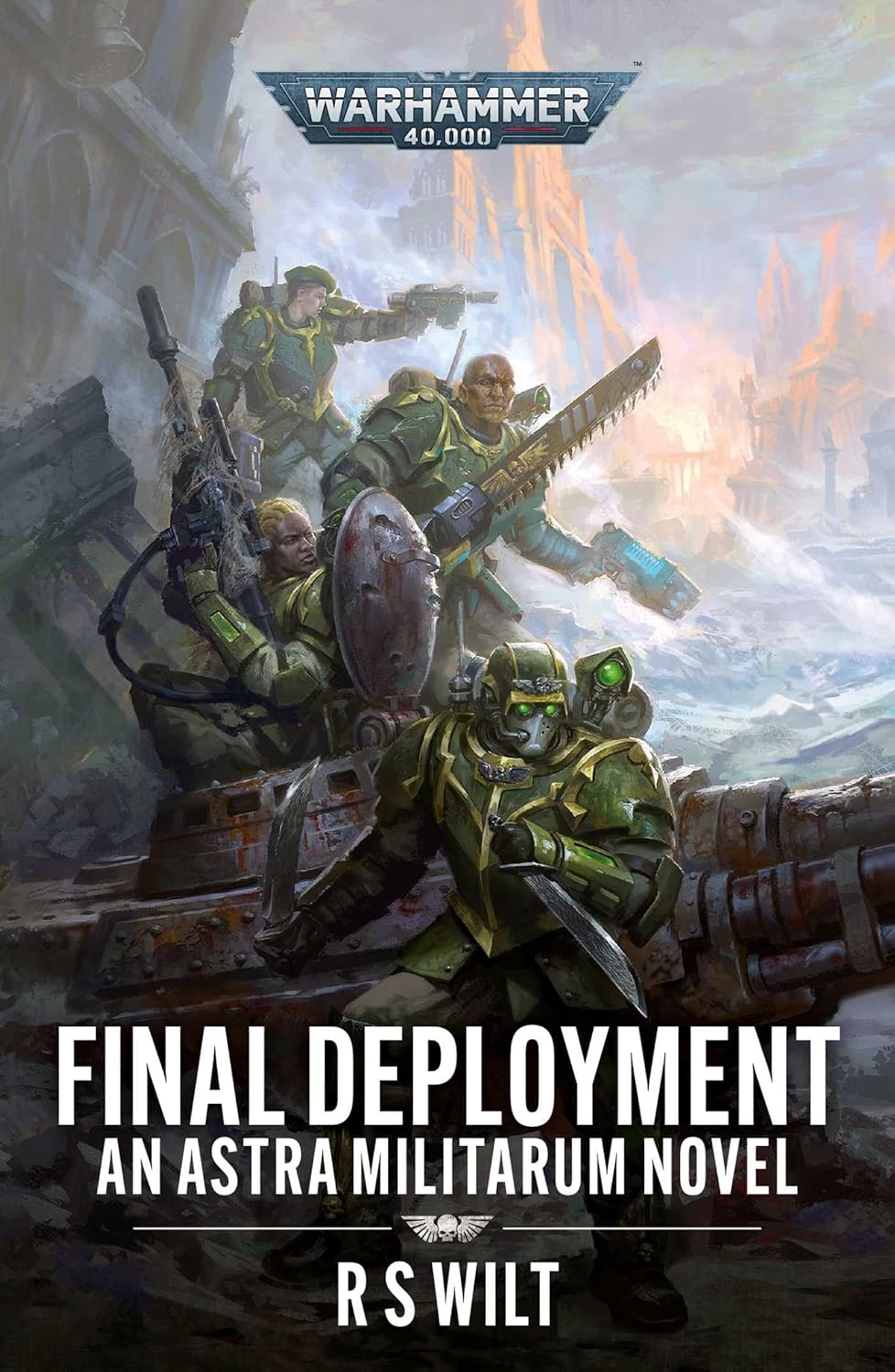
Warhammer 40,000: Final Deployment by R. S. Wilt

Publisher: Black Library (Audiobook – 30 August 2025)

Series: Warhammer 40,000

Length: 11 hours and 23 minutes

My Rating: 4.5 out of 5 stars

Amazon

Prepare for battle as R. S. Wilt presents his debut novel, Final Deployment, a captivating read that perfectly highlights bloody war in the grimdark future of the Warhammer 40,000 universe.

There are few franchises that bring me as much joy as the Warhammer 40,000 series, which follows the numerous factions of the infamously grimdark 41st millennium.  The sheer amount of imaginative stories and tales that are featured in this universe, as well as the talented authors who contribute to it, is quite impressive, and includes some major established writers.  I particularly like how the Warhammer 40,000 publishers also give some interesting opportunities to new authors looking to break into the fantasy or science fiction space.  Many aspiring authors have had their very first novel published in the Warhammer canon recently, and I deeply enjoy reading debuts from these new writers.  Examples of this include Fire Made Flesh by Denny Flowers, The King of the Spoil by Jonathan D. Beer, Ashes of Cadia by Jude Reid, Longshot by Rob Young, Deathworlder by Victoria Hayward and Lord of Excess by Rich McCormick, to name a few.  Many of these debuts are first class reads, and I’ve featured a few on my favourite Warhammer 40,000 novels lists over the years.

Due to my previous awesome experiences with debuts in this franchise, I am always very excited to check out first Warhammer 40,000 novels from new authors, especially those with epic plots.  The latest example of this is Final Deployment by R. S. Wilt, which was the author’s very first novel.  Spinning off from his previously published short story Eradicant, Final Deployment had a very exciting plot behind it that follows the most lethal human soldiers in the grimdark future, the Tempestus Scions.

In the far future, the Imperium of Man battles for survival on thousands of planet-spanning battlefields, with untold numbers of human soldiers fighting and dying every day against monsters, xenos and heretics.  Of these soldiers, none are more deadly or skilled than the Tempestus Scions.  Moulded into unquestionable killing machines from a young age with relentless training and mental manipulation, the Tempestus Scions serve as an elite force with the soldiers of mankind, taking on the missions that no other soldier could complete.

Amongst these Tempestus Scions are the fighters of First Eradicant squad of the Xian Tigers.  Led by Tempestor Traxel and “inspired” by Commissar Fennech, First Eradicant are an unusual regiment made up of several misfit Scions damaged by the battles they have seen.  Deployed to the planet of Rilis, a formerly loyal world now fighting a brutal civil war, First Eradicant is tasked with destroying the rebelling regiments and bringing order to the planet.  Utilising their superior training and equipment, First Eradicant quickly turn the tide against the enemy and being to lead the loyalist forces on Rilis to victory.  However, their success leads them discover the full strength of the traitors, as well as their dark allegiances.

After a disastrous battle that sees their loyalist allies massacred, First Eradicant find themselves facing monstrous opponents even more lethal than they are; three Chaos Space Marines from the Iron Warriors legion.  Determined to slay the ancient, genetically enhanced traitors, First Eradicant take the fight to the Iron Warriors across the planet.  However, with their leader traumatised by past battles and Commissar Fennech playing his own sinister games, can even the best human soldiers in the galaxy defeat the evolved might of the Chaos Space Marines?

R. S. Wilt starts his professional writing career off in explosive fashion with this amazing and compelling debut. Final Deployment was a deeply exciting character-driven Warhammer 40,000 story that followed several highly damaged characters as they attempted to survive the horrors of war. Intense, action-packed and deeply addictive, Final Deployment was an outstanding read that I had an incredible time getting through.

I really enjoyed the epic and deeply exciting narrative that Wilt pulled together for Final Deployment, which perfectly showcases futuristic special forces soldiers going after a deadlier opponent.  Set after the events of the author’s previous short story Eradicant, Final Deployment has a quick and effective start to it, as Wilt first sets the scene for the war on Rilis, before introducing the members of First Eradicant as they literally drop onto the scene.  Each of the protagonists, especially lethal and reckless recon trooper Norroll, gets their moment to shine in these opening scenes, which also work well to highlight Wilt’s intense writing style.  You are soon dragged into the story, and while the initial parts of the book are a tad slow, that changes with the pivotal battle around a third of the way through that sees the Chaos Space Marines arrive in bloody fashion.

Wilt did an outstanding job of changing the tone of Final Deployment after this big moment, as the protagonists find themselves heavily on the backfoot, and there are some notable PTSD elements hitting Tempestor Traxel.  The rest of the novel revolves around the protagonists attempting to hunt down and stop the Chaos Space Marines, no matter how the rest of the war is going.  The story from that point is essentially broken down into three distinctive parts, each of which showcase the very different, but equally brutal, fights against the separate deadly antagonists.  Wilt does an excellent job setting up the scenarios around these battles, which include infiltrating a deadly facility, a brutal ambush by a daemonic possessed foe, and an air drop into enemy territory, and you soon get enthralled in the protagonist’s desperate mission.  These events work extremely well as a sequential and cohesive narrative, and you get really absorbed in the mission of the slowly dwindling group of Tempestus Scions.  Everything leads up to the desperate final confrontation between the protagonists and their deadliest foe, which hits hard and keeps you guessing about who is going to survive.  I felt this entire story came together perfectly, and the ending does an excellent job wrapping up Final Deployment as a standalone Warhammer 40,000 story, with the potential left open for a sequel.  An overall excellent narrative that was quite impossible to put down at times.

While the story is very cool, I also felt that Final Deployment was extremely well written, as Wilt produces a powerful, character-driven narrative that focused on the horrors of war in the grimdark future.  Expertly utilising the iconic Warhammer 40,000 universe in this clever and brutal war story, I loved how the intense personal narratives blended with the more outrageous elements of franchise.  Wilt puts his evident skill at writing brilliant and bloody action sequences to good use in Final Deployment, and the resulting firefights and close combat sequences were some of the more intense and striking you are likely to see in Warhammer fiction.  The author maintains an excellent, fast pace throughout the entire novel, and there wasn’t a single slow moment or inclusion that didn’t play into the story in some interesting or compelling way.  I also appreciated the great use of alternate perspectives, as the story cleverly jumps between several key characters.  This is primarily utilised to showcase multiple angles to the book’s awesome action sequences, which was a ton of fun.  However, I also enjoyed how Wilt took the opportunity to examine the plot from the perspective of several interesting supporting character, including a couple of antagonists.  This helps Wilt to present an even more layered narrative, and it is always really entertaining to see the villain’s reactions to the protagonist’s actions.

Final Deployment is also an excellent and entertaining addition to the Warhammer 40,000 franchise, which works well as an exciting standalone novel.  Despite diving straight into the universe, Final Deployment is accessible to readers no matter their experience with Warhammer fiction, as the author provides a lot of intriguing universe details.  This includes the Tempestus Scions, who serve as the human faction’s ultimate special forces unit outside of the genetically enhanced Space Marines.  The author does an incredible job showcasing the skill and tactics of the Scions throughout Final Deployment, and you really appreciate that they are a highly trained and better equipped regiment.  While Wilt somewhat exaggerates the effectiveness of the Scions and their equipment for narrative purposes (especially carapace armour), you get a realistic sense of these figures in combat, and I appreciated how the characters were slowly debilitated by injuries and losses.  There is also a fascinating look at the harsh training and religious brainwashing these figures undergo, which fits the grimdark Warhammer 40,000 universe perfectly.  Other elements of Warhammer fiction are cleverly utilised here, and I loved the author’s depiction of just how dangerous Space Marines and their chaotic counterparts are compared to normal humans, even the Tempestus Scions.  The damage three Iron Warriors were able to do to the loyalist army, and the lengths the protagonists went to beat them, was so beautifully excessive, and I felt it was an appropriate amount of power scaling.  Thanks to these cool features from the Warhammer 40,000 universe, this book will primarily appeal to established fans of the franchise, although thanks to Wilt’s great writing, new readers will also have a lot of fun with it, even if they didn’t read the author’s previous short story.

While much of the appeal of Final Deployment was its epic story, great writing, and impressive action, I also felt the complex characters helped to make it even more special.  Primarily set around a group of Tempestus Scions, Final Deployment featured an intriguing look at these figures, their damaged pasts, and the struggles they experience on and off the battlefield.  Wilt does an excellent job of splitting the focus of Final Deployment over much of the extended cast, and indeed its nominal main characters, Tempestor Traxel and Commissar Fennech, don’t have that much of the book shown from their perspective.  Instead, most of the story is told through the eyes of other key members of the squad, including Norroll and the squad’s medic, Daviland.  This allows these secondary figures in the squad much more room to shine, and I felt the book was stronger as a result.  Norroll in particularly was quite a fun character.  An overly reckless Scion, Norroll finds himself caught between loyalty to Traxel and his squad, and his own death wish, and it was often really intriguing to see him in the middle of the bloodiest scenes in the book.  Daviland served as an excellent counter to Norroll’s more outrageous perspectives, especially as she is one of the saner members of the squad.  A transplant from another regiment, Daviland provides an interesting outsider’s perspective to the book, especially as she has a lot less mental damage the rest of First Eradicant.  Despite her loyalty primarily being to Fennech, Wilt writes an excellent storyline around Daviland becoming closer to her squad, and I felt that her perspective scenes were some of the more thoughtful and provided some great insights in the minds of the rest of the characters. 

Of the rest of the cast, Tempestor Traxel and Commissar Fennech, had the most presence.  Despite not serving as perspective characters, both were major parts of the book’s plot, and Wilt did an excellent job showcasing their personalities and issues through the eyes of the other protagonists.  This includes Traxel’s mental trauma at once again facing Chaos Space Marines after a previous deadly mission, and his impacted leadership adds an extra layer of difficulty to the protagonists’ mission.  Fennech, on the other hand, was a great portrayal of a classic, cold-blooded Imperial commissar, shooting allies first and never asking questions.  Fennech served an interesting role as both an ally/gun-bearing motivator, and a potential secondary antagonist to First Eradicant, especially as he questions their effectiveness and resolve.  While Fennech’s storyline doesn’t go as far as it could have, and I would have liked seeing some of the book through his steely eyes, I felt that he was an outstanding inclusion to Final Deployment’s cast that added some excellent alternative menace.

In addition to these characters, I enjoyed how the rest of First Eradicant also got their time to shine in this novel.  Featuring a mixture of existing members and later transfers from another squad, each of these characters had their own unique charm, and their compelling interactions added a lot to the novel’s enjoyment.  While there isn’t an excessive amount of development with some of these characters, which is mainly down to the mental indoctrination they’ve gone through, they were still fun to follow.  Just make sure not to get too attached to them, as the death toll in this novel is quite high.  Wilt matches these excellent perspective characters with several additional outsider characters, including several gloriously over-the-top antagonists, and the clash of styles and mentalities increased the overall fun and excitement I had with Final Deployment.

Unsurprisingly, I ended up listening to Final Deployment on audiobook, rather than seeking out a physical copy of the book.  I always find that the audiobook format brings out the very best of the grimdark Warhammer 40,000 universe and the unique characters that inhabit it, and the Final Deployment audiobook was a great example of this.  Perfectly narrated by Andrew Wincott, who previously impressed me with his voice work in Deathwatch: Shadowbreaker by Steve Parker and Huron Blackheart: Master of the Maelstrom by Mike Brooks, the intense action and harsh nature of war featured in Final Deployment really comes through in this audiobook, and I loved hearing all the intense firefight sequences come to life.  Wincott did an excellent job moving this intense story along at a quick clip, while also providing all the characters with distinctive voices that really fit their unique and gritty personalities.  The fun mixture of voices between the battle-weary human soldiers and the more unnatural forces of Chaos was extremely enjoyable, and you really get drawn into the compelling narrative as a result.  I honestly flew through the over 11-hour long audiobook in no time at all, and I loved every second I spent listening to it, especially some of the more brutal and deadly fight sequences.

Loaded with awesome action, damaged characters and an epic narrative, Final Deployment by R. S. Wilt was an incredible read and an amazing piece of Warhammer 40,000 fiction.  A fast-paced novel that follows some intense protagonists through hell and back, Final Deployment was an outstanding debut from Wilt, and comes very highly recommended, especially on audiobook.  I look forward to seeing how Wilt’s writing career continues in the future, and I am sure I will enjoy any additional contributions to the Warhammer franchise.

Amazon

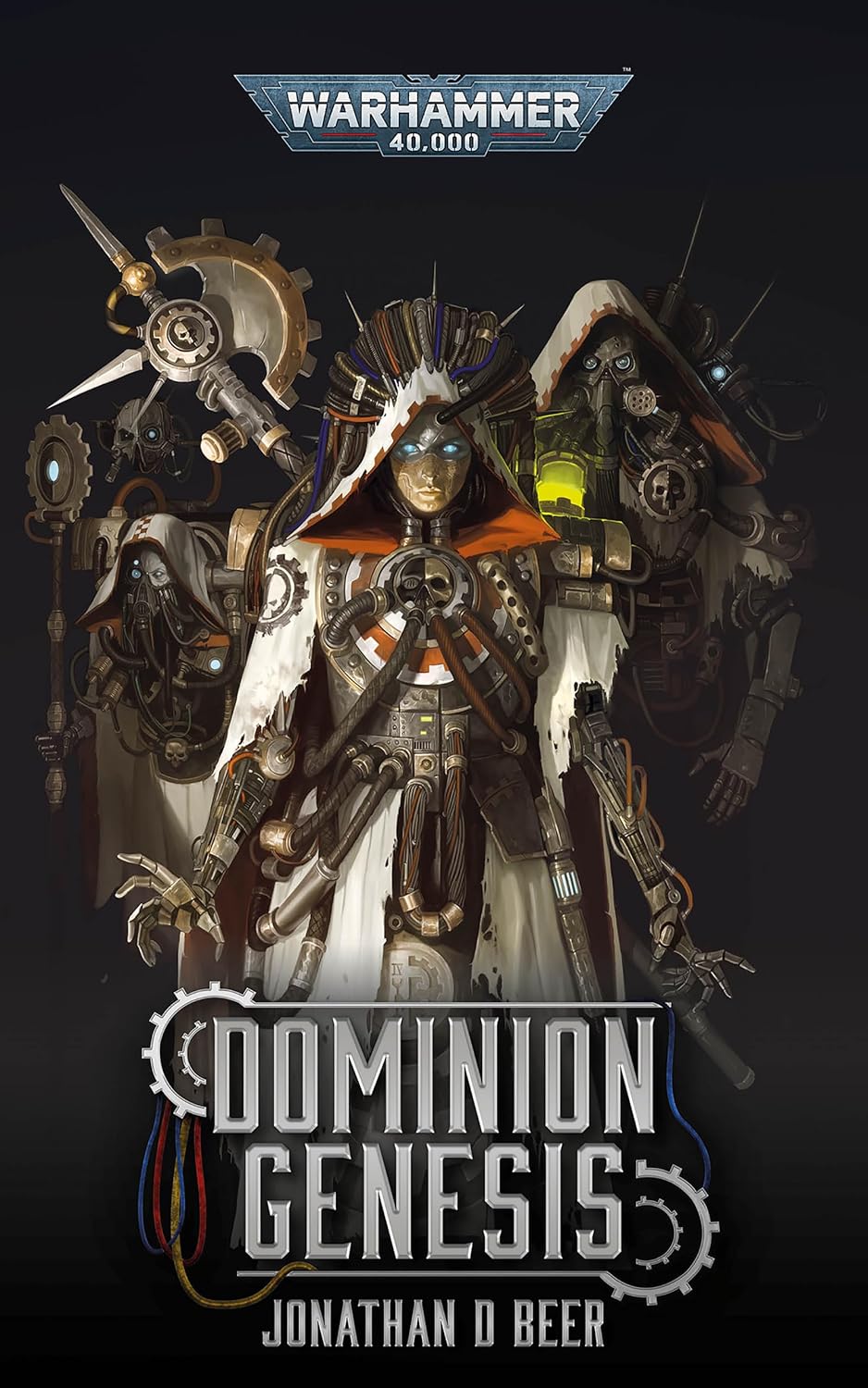
Warhammer 40,000: Dominion Genesis by Jonathan D. Beer

Publisher: Black Library (Audiobook – 21 September 2024)

Series: Warhammer 40,000

Length: 10 hours and 47 minutes

My Rating: 4.5 out of 5 stars

Amazon

Destitute tech-priests of the Adeptus Mechanicus embark on a massive quest for redemption in the excellent 2024 Warhammer 40,000 novel, Dominion Genesis by Jonathan D. Beer.

Beer is a talented rising author in the Warhammer 40,000 fiction space who has so far impressed with two interesting books covering unique spheres of the fandom’s canon.  I deeply enjoyed his first novel, The King of the Spoil, which was a particularly epic entry in the Warhammer Crime sub-series, and which ended up being one of my favourite debuts of 2023.  Beer followed up this debut last year with his second novel, Dominion Genesis, an intriguing read that takes place in a very different Warhammer 40,000 setting.  I had an excellent time with Dominion Genesis, although I spectacularly failed to write a review for it last year.  However, with Beer’s third Warhammer 40,000 novel just released, I felt that this was a good time to finally write something about Dominion Genesis, which honestly was an awesome read.

Plot Synopsis:

Gryphonne IV is dead – one of the mightiest forge worlds in the arsenal of the Adeptus Mechanicus, succumbed to the relentless hunger of Hive Fleet Leviathan. Devoured. Lost.

The few magi that survive drift in idleness, robbed of purpose and direction. But there is one who rejects that fate.

READ IT BECAUSE
It’s the gripping tale of an Explorator desperately seeking ancient technologies from humanity’s past as she races against time to restore one of the mightiest forge worlds in the Imperium.

THE STORY
Explorator Talin Sherax seeks ancient and miraculous technologies from humanity’s distant past. When she learns of a fabled relic that could restore all that has been lost, Sherax embarks on a journey, the outcome of which could change everything. Nothing will stand in her way… even if the quest brings her to the brink of heresy.

Dominion Genesis was a particularly intense and compelling entry in the Warhammer 40,000 canon that proves quite enthralling to read.  I like how Beer managed to achieve quite a few things with this book, as he produced an excellent quest narrative with a focus on obsession, trauma and survival, while also cleverly showcasing several different factions of the Warhammer 40,000 universe.

Beer came up with a very awesome story that hits a lot of highly emotional story notes early on.  The start of Dominion Genesis was one of the more striking sequences of Warhammer fiction I have read, as the protagonist, Explorator Talin Sherax, is forced to witness the destruction of their home world.  Moving quickly into a time skip, you see a very different version of Sherax several years in the future, as she still attempts to make sense of the destruction while searching for valuable lost technology.  After a great sequence aboard a derelict spacehulk, Sherax finds a clue about a potential artifact that could help to restore her planet.  Going against the orders of her superiors, Sherax leads a crew of human soldiers and Adeptus Mechanicus forces on a quest to several deadly and hidden locations in the galaxy.  Along the way, the protagonists examine their humanity in several different forms, while also being stalked by dangerous alien fighters determined to stop them achieving their goal.

There are some great sequences in the middle of this book, as the protagonist desperately follow the clues into a trap, which shakes all the characters to their core.  After a gruelling sequence of events that help to highlight and move along several, well-constructed character development arcs, the adventure moves to its destructive conclusion.  After another disaster, the protagonists are dropped in amongst a war between rival xenos forces and must journey into the fray to achieve their goal, resulting in a brutal series of battles and the intense conclusion to the narrative.  Beer wrote in some great tragic moments as the protagonists are outmatched at nearly every turn, although many of these sequences work well to provide closure to some of the book’s various character arcs.  The conclusion to Dominion Genesis was as bleak as you would hope for a novel in the grimdark Warhammer 40,000 universe, but it provides some great closure for the main character and will keep readers very satisfied.

I felt that Dominion Genesis was a particularly good addition to the Warhammer 40,000 canon, as Beer provides a thoughtful and complex novel loaded with unique action and damaged characters trying to survive the inherent darkness of the war-torn universe.  Beer ended up producing an intense character-driven story for Dominion Genesis, and I loved the great balance between action, exploration and interaction between certain unique Warhammer races, and the focus on character elements.  I personally really enjoyed the deep dive into the Adeptus Mechanicus, with various character perspectives diving into their culture and thought processes, even though certain sections of the plot need to be altered to emulate the machine nature of the tech-priests.  Beer tried to showcase a more emotional side to the Adeptus Mechanicus in this book, especially through his protagonist which, while different from other portrays of this faction, fits the trauma-rich narrative as all these characters struggle with the loss of their home.  The author also has fun fitting in several of the main alien races of the Warhammer 40,000 universe into the story, including orks, Tyranid, Aeldari and Necrons.  While not a lot of focus is given to understanding them, they serve as good foils to the obsessed protagonists, and it was interesting to see the Mechanicus takes on these different enemies.  In the end, Dominion Genesis proved to be a compelling, and impressive standalone novel that makes great use of its Warhammer 40,000 elements.  However, be warned that this novel is probably better read by more established fans of the franchise, rather than newer readers, as Beer covers a lot of complex lore in a short period of time.

One of the key things I liked about Dominion Genesis was the rich array of compelling characters featured throughout the plot.  Beer does an outstanding job introducing and following several very damaged figures, including the protagonist Explorator Talin Sherax, who finds herself in a depressed state following the opening sequence of book.  Cutting herself off from the technological hivemind used by the rest of Adeptus Mechanicus brethren, Sherax proves to be a brilliantly complex figure in Dominion Genesis, and Beer’s take of her as the depressed member of a group known for having no emotions was really fascinating.  The author also features an interesting array of other Adeptus Mechanicus members who provide great alternate viewpoints to that of Sherax.  I really enjoyed how Beer managed to include a lot of intriguing individualism in these machine-like Adeptus Mechanicus characters, and the range of different opinions and feelings around Sherax and her mission added some interesting drama to the story. 

Finally, I must highlight the human members of the Dominion Genesis cast, who provide intriguing alternate viewpoints to cybernetic protagonists. I particularly enjoyed the focus on a depressed former Imperial Knight pilot, who, after losing his ancient war machine, decides to join the crew of Sherax’s ship.  There are some fascinating focuses on his parallel grief to that of the Adeptus Mechanicus characters, as well as his own self-anger, especially while forced to pilot a seemingly lesser machine.  Beer writes some interesting side plots around this more human character, including his relationship with an Imperial Guard regiment also aboard the ship, and he must balance his need for human contact with his own grief and arrogance.  I felt this compelling collection of distinctive characters helped to make Dominion Genesis really stand out, and I enjoyed seeing their unique interactions.

As with most Warhammer 40,000 novels I review, I ended up listening to Dominion Genesis on audiobook, which is pretty much the best way to enjoy this series.  The Dominion Genesis audiobook ended up being a lot of fun to listen to, and I managed to get through it’s near 11-hour runtime quickly.  It helped that Dominion Genesis was narrated by the very talented Colleen Prendergast, who is becoming the go-to narrator for any Warhammer 40,000 audiobook that features a human female protagonist, such as Justin D. Hill’s Cadia series, or standalone books like Creed: Ashes of Cadia by Jude Reid or Longshot by Rob Young.  Prendergast did an outstanding job bringing the various complex cast members of Dominion Genesis to life, and I particularly appreciated the skill need to voice a variety of cybernetic humans with altered or robotic voices.  This great voice work turned Dominion Genesis into a fantastic listen, and it was very easy to enjoy Beer’s outstanding and lore-heavy story when it was being read out.

Overall, Dominion Genesis was an amazing second novel by Jonathan D. Beer, who did an outstanding job pivoting to a different area of Warhammer 40,000 fiction.  I loved the complex character-driven narrative contained within Dominion Genesis, and this was one of the more enjoyable Warhammer 40,000 novels that came out last year.  I cannot wait to see how Beer continues to develop as a writer in the future, and I currently have a copy of his latest book, Tomb World, in my audiobook queue to listen to.

Amazon

Born of an Iron Storm by Anthony Ryan

Publisher: Orbit/Little Brown Audio (Audiobook – 26 August 2025)

Series: Age of Wrath – Book Two

Length: 19 hours and 33 minutes

My Rating: 5 out of 5 stars

Amazon

Acclaimed fantasy author Anthony Ryan continues to explore an epic fantasy world of warriors, scholars and monsters with his outstanding new novel, Born of an Iron Storm, the impressive second entry in his Age of Wrath series.

In recent years, one of my favourite fantasy authors has been veteran writer Anthony Ryan.  Known for several intriguing and varied series, I become a fan of Ryan a few years ago when I started reading The Covenant of Steel series.  Following a young bandit turned scribe, who finds himself taking on many roles in his chronicled adventures, including that of knight, spy, rebel and heretical traitor, this amazing series was a really impressive example of fantasy fiction, and I had an incredible time with The Pariah (one of my favourite books and audiobooks of 2021), The Martyr (one of my favourite books and audiobooks of 2022), and The Traitor (one of my favourite books and audiobooks of 2023), all of which were five-star reads.

Due to how much I loved these amazing novels, I was very excited last year when Ryan released the first book in the Age of Wrath series, which served as a sequel to the Covenant of Steel books.  The first Age of Wrath novel, A Tide of Black Steel, is set a couple of decades after the events of The Traitor and builds on some of the events of the first series, while also featuring its own unique story.  I really enjoyed A Tide of Black Steel, which veered away from the chronicle style of the previous trilogy, and instead set out a Norse saga inspired tale of adventure and war.  Just like the Covenant of Steel novels, A Tide of Black Steel got a full five-star rating from me, and it was one of my favourite books and audiobooks of 2024.  As such, I have been very eager to get my hands on this sequel, which was one of my most anticipated books of 2025, and Ryan once again did not disappoint.

War and treachery have come to the sprawling island nation of Ascarlia, as the long-lost nation of Nihlvar begins an invasion centuries in the making.  The once powerful Sister Queens of Ascarlai lie dead at the hands of one of their own, the deranged Sister Lore, and their capital of Skar Magnol has been captured by Nihlvarian forces.  With their massive fleet in Skar Magnol’s harbour, and the forces of Ascarlia scattered, the Nihlvarian victory looks assured, and soon their eye turns to the wealthy port city of Olversahl and the lands of Albermaine beyond.

However, there are some who chose to resist the Nihlvarian threat.  In Skar Magnol, the young scholar Elvine finds herself trapped as an unwilling accomplice to Sister Lore.  To survive, she must play along with her queen’s twisted designs, while setting her own rebellious schemes into motion.  At the same time, loyal Ascarlian war leader Thera has survived the first skirmish against the Nihlvarian in the Outer Islands and finds herself leading a mismatched fleet against the invaders.  However, facing overwhelming odds, Thera must seek allies wherever she can, while the burdens of leadership lay heavy upon her, as if she fails, all Ascarlia falls.

As war rages in Ascarlia, other fights for survival occur across the sea.  Following his discovery of the Vaults of the Altvar, Thera’s brother Felnir has been promised a kingdom, and voyages to a hidden land filled with blood and suffering.  If he wishes to rule, Felnir will have to fight for the loyalty of his new people, while discovering the ancient secrets of those who came before him.  At the same time, in Nihlvar, the captured Ascarlian Ruhlin and his friends have escaped from captivity and are now fugitives from the Nihlvarian ruler, the Vortigurn.  If he wishes to keep himself and his comrades alive, Ruhlin needs to learn to control his inner monster and escape the bonds of prophecy, but dark secrets and beings have their eyes on him.

As war continues to spread like fire, Elvine, Thera, Felnir and Ruhlin must all fight their own desperate battles to survive and find their place in this new world.  But with treachery and hard choices all around, can these four unlikely heroes survive the wrath of the Vortigurn, or will their ambitions, fears and doubts tear them apart?

Anthony Ryan continues to showcase why he is one of the leading modern authors of fantasy fiction with this incredible and impressive novel.  Serving as an outstanding second entry in the Age of Wrath series, Born of an Iron Storm brilliantly continued Ryan’s complex, multilayered narrative, while taking the series in some exciting new adventures.  A classic fantasy tale filled with great characters, complex worldbuilding and intense, nautical action, Born of an Iron Storm was an epic read which gets a full five-star rating from me.

I felt that Born of an Iron Storm had an awesome overall narrative to it, as Ryan continued his elaborate series in strong fashion.  Once again split between the returning point-of-view characters from A Tide of Black Steel, you are essentially treated to four separate storylines, each with their own unique focus, setting and style.  This includes the intrigue laden storyline around Elvine as she attempts to survive the chaos surrounding the coup at Skar Magnol, which results in a compelling, espionage focused narrative.  Elvine’s story goes hand-in-hand with Thera’s storyline, which sees this protagonist attempt to raise an army to defend Ascarlia and retake the capital.  Thera’s chapters were some of the more action-heavy in the book, with a ton of great naval combat sequences, and it was fascinating to see this character grow into a leadership position.  Aside from Elvine and Thera, there was also the fantastic narrative around Felnir, who sets out to claim a new land as king by taking down a group of religious fanatics whose origins mirror that of the Nihlvarians.  Finally, escaped slave and occasional monster Ruhlin finds himself and his new comrades being hunted through Nihlvar and must seek an alliance with the land’s original inhabitants to survive.

Unlike the first book in the series, which saw several of the storylines cross over regularly, all four distinctive character plotlines remained mostly separate in Born of an Iron Storm, with only a few points of interaction in the Elvine and Thera narratives occurring.  This essentially meant that each of the narratives developed in a vacuum and were allowed to play out at their own pace.  Not only do these separate narratives stand out on their own merits but they come together nicely to form an intricate and addictive overarching narrative, as the alternating character-driven tales came to parallel each other extremely well.  All four of these distinctive narratives started off a lot quicker in Born of an Iron Storm than they did in the previous book, which allowed the reader to effectively get drawn into each character’s journeys as their storylines proceed.  Each storyline went in some intriguing directions, and the disparate adventures resulted in quite an exciting novel.  Ryan ensured that there were some exciting moments and compelling character interactions in each character’s respective chapters, and there was a great focus on action and war in this second Age of Wrath book.  Indeed, there were a few chapters that saw all four protagonists essentially fighting their own separate battles at the same time, with near simultaneous naval conflicts, sieges, pitched battles and forest ambushes.  Ryan ends each action and adventure laden narrative of Born of an Iron Storm on a very compelling note, with a few interesting twists and reveals hitting the two plotlines set outside of Ascarlia.  It also leaves the overall narrative of the series in a great place for the third, and presumably final, book, and I am extremely keen to see what happens to each protagonist in the next thrilling instalment.

I deeply enjoyed how Born of an Iron Storm came together, and it works well as the second entry in this epic series.  Ryan utilises many of the same style elements of A Tide of Black Steel, with the Viking-inspired setting and focus on multiple character adventures working particularly well to present an overall layered narrative with a lot of moving parts to it.  The author’s switch from the first-person chronicle style in the previous Covenant of Steel books to a third-person perspective told from four distinctive protagonists in this series allowed for a wider focus to the book, and Ryan makes sure to provide some intriguing expansions to his fantasy world.  Each chapter switches the narrative to another of the four perspective characters, and it was interesting to see how each switch would change the tone of the narrative depending on whichever protagonist was in focus.  I felt that Ryan did a great job of balancing the four distinctive storylines throughout the novel, and each plotline developed in some compelling ways.  I honestly found myself enjoying each of these separate storylines equally, with no noticeable weak links.  However, my favourite was the Elvine plotline, thanks to its inherent intrigue and focus on one of the book’s more fascinating protagonists, and Thera’s chapters, which had the most action and multiple cool scenes of long-ship on long-ship warfare.

Due to being the second book in a complex fantasy series, which is itself a sequel to a previous trilogy, Born of an Iron Storm is probably best enjoyed by those who have read the preceding novels from Ryan.  While there is a very intensive summary of the events of A Tide of Black Steel at the front of this novel, Born of an Iron Storm dives into the narrative very quickly, and reading the previous book really does help to increase enjoyment and understanding of the plot.  Ryan does a good job of recapping key plot points as he writes, and when combined with the comprehensive summary, new readers can probably drop into Born of an Iron Storm without too much effort.  However, this novel is going to appeal to those existing Ryan fans the most, especially those who previously enjoyed the Covenant of Steel novels.  While not too excessively vital to the plot, there are a lot of references to the events of the Covenant of Steel series, including the appearance of a couple of minor characters from these books, which was fun to see.  The events of these original books also play a big role in a couple of characters storylines and development, especially in the Elvine sections of the book (which features the two children of the Covenant of Steel’s protagonist), which lead to some compelling and intense moments.  I personally loved seeing Ryan continue to build on his already existing setting, and it was great to see what followed the chaotic events of the Covenant of Steel novels.

Ryan once again spent a lot of time developing his four central characters in Born of an Iron Storm, and their unique personalities, histories and continued changing perspectives, added some intriguing elements to the narrative.  Each of these characters have some fascinating moments and interactions in this novel, which cleverly builds on their storylines from the previous novel.  This includes Elvine, the young scholar revealed to be the long-lost daughter of Alwyn Scribe, who is forced to find her inner courage in this novel after being trapped in the captured Skar Magnol.  Caught up in the madness of Sister Lore, who develops a dark obsession with her, Elvine finds her inner rebel, while also trying to comprehend the sentient magical spear she recovered in the previous book.  Elvine’s storyline was really well written in Born of an Iron Storm, and Ryan had fun turning the previously mousy scholar into a dangerous warrior and leader, who gets into just as much trouble as her father.  Ryan’s other badass female protagonist in this novel was Thera, who finds herself the reluctant leader of the Ascarlian loyalist forces.  A skilled fighter, Thera spends much of Born of an Iron Storm learning to take on the mantel of leadership, while also dealing with her traumatic past, and her current emotional complexities.  Thera proved to be a very intriguing character to follow, especially with her chapter’s naval content, and it was fascinating to see her influence grow thanks to her actions.

On the other side we have the male protagonists, Felnir and Ruhlin, both of whom go through their own development and hell in this book.  Ruhlin’s character arc was a good continuation from A Tide of Black Steel, as he works to control his newly discovered inner monster and turn it into a force for good.  Like Thera, Ruhlin finds himself reluctantly leading a group of people who have placed their lives in his hands, and it was interesting to see him rise to the challenge, especially when even more figures put their hope in him.  Felnir, on the other hand, works to change fate by actively seeking leadership in a fun contrast to his sister and rival, Thera.  Finding himself in an unfamiliar land, Felnir works to inspire people unfamiliar with his past and soon finds the acclaim and respect he’s always wanted.  However, Ryan also writes a great storyline around his unchecked ambition and the consequences it has on those around him, and there is a great darkness to this character that is going to make him the wildcard of the series.

While the above four characters naturally get most of the focus in this series, Born of an Iron Storm also features a massive supporting cast, some of whom prove to be just as compelling and memorable as the main protagonists.  A lot of these figures are returning from A Tide of Black Steel, and I must admit that I was glad that Ryan put up his comprehensive summary at the front of this book, or I would have probably lost track of who they were.  Most of the best characters in this book were primarily in Elvine’s chapters, with the returning Colvyn (son of a certain scribe and a dark saint), being very fun, even if he got a little less focus here.  The ancient Ascarlian warrior and spymaster, Margnus Gruinskard, the Tieldwald was a great inclusion, first as a prisoner, then a reluctant ally to Elvine, and Ryan wrote a distinctive wearied element to him in this novel.  The author also did an amazing job of building off the big twist at the end of A Tide of Black Steel by featuring more of the traitor Sister Queen, Sister Lore.  Ryan made Lore into a particular twisted and dangerous antagonist, and her obsessive interactions with Elvine were some of the most compelling parts of the book.  Aside from these figures from the Elvine chapters, my favourite supporting figures were Lynnea, the innocent yet dangerous companion to Thera, and the mysterious Wohtin, who serves as Felnir’s guide to his new land.  Both were outstanding supporting characters in this novel, and I loved the intense, and very different, interactions they had with their respective protagonist.  I’m honestly barely scratching the surface of all the great supporting figures in Born of an Iron Storm, and I really appreciated the strong and varied cast that emerged in this novel.  All of them were very well written, and I really appreciate how Ryan utilised them to enhance his excellent narrative.

As I have tended to do with Ryan’s previous novels, I ended up enjoying Born of an Iron Storm on audiobook, which was an amazing experience.  I often find that compelling fantasy novels really come across well when read out by a talented narrator, and Born of an Iron Storm was an excellent example of this.  Thanks to the excellent narration of Steven Brand, who previously narrated the Covenant of Steel series, Born of an Iron Storm was a great treat to listen to, and I ended up powering through its near 20-hour long runtime.  Brand did an amazing job diving into the multilayered narrative and bringing out all the detail, action and compelling story elements through his narration, and I ended up absorbing a lot more detail thanks to having the story read out.  The narrator also brought back all his fantastic character voices from the previous audiobook, as well as a few new ones, to give the cast of Born of an Iron Storm life.  These characters came across amazingly, and I ended up having a blast listening to Born of an Iron Storm, especially the cool action sequences, which were so epic to listen to.  As such, I really recommend checking out this novel on audiobook, as you will be in for an amazing time.

Overall, Born of an Iron Storm was another exceptional novel from Anthony Ryan, who continues to expand on his cool fantasy world with another amazing, adventure-filled read.  Loaded with action, a fun story, and some excellent characters, Born of an Iron Storm was an impressive second outing in the author Age of Wrath series, and I loved how the story continued to evolve.  As such, this book comes highly recommended, and I cannot wait to see how Ryan continues his outstanding series next year.

Amazon

The Bone Raiders by Jackson Ford

Publisher: Orbit (Trade Paperback – 12 August 2025)

Series: The Rakada – Book One

Length: 470 pages

My Rating: 4.5 out of 5 stars

Amazon

Prepare for one of the most entertaining, thrilling and over-the-top fantasy novels of 2025 with the intensely fun novel, The Bone Raiders by Jackson Ford.

Jackson Ford is a compelling author who has written an interesting array of outrageous novels over the years.  Probably best known for The Frost Files series, which followed a telekinetic protagonist as she got in all manner of trouble, Ford has also released several fantastic science fiction novels under the name Rob Boffard.  I have been hoping to read some of Ford’s books for a while now, and I decided to finally take the plunge with his latest release, The Bone Raiders.  The first book in the author’s new The Rakada series, The Bone Raiders sounded extremely cool thanks to its entertaining plot and fun cover, and I couldn’t wait to dive into it.

In the grasslands of the Tapestry, raider bands used to run free as the supreme force of the wilds, pillaging towns and caravans at their leisure.  However, the glory days of the raiders are over, thanks to the rise of a new Great Khan with a vision to have all the people of his realm living under his thumb.  From his capital in Karkorum, the Great Khan has organised the slow destruction of anyone living in the Tapestry, with his mighty armies killing all who defy him.

Of the remaining raiders, none are as feared as the Rakada.  Better known as the Bone Raiders, the members of the Rakada are deadly fighters capable of fighting off most threats in the Tapestry.  However, their greatest weapon is their carefully cultivated reputation, gained by adorning their armour with the bones of the few people stupid enough to fight them.  But after the constant battles to escape the Khan’s armies, the Rakada only have a few raiders left.  With little food or viable targets to raid, the future of the Rakada looks grim, until a chance encounter with an araatan, a giant, fire-breathing lizard, gives young Rakada scout Sayana a bright idea.

After falling on the back of an araatan and accidently guiding its wild rampage to save the lives of her comrades, Sayana believes that these creatures are the future for her band.  Determined to find and train an araatan to be the ultimate combat mount, Sayana forcefully enlists the help of a legendary animal trainer from the capital.  However, coming up with the plan is one thing, but actually learning to ride the giant beasts without being burned alive is a very different proposition.  Worse, thanks to Sayana’s actions, the Rakada soon find themselves being hunted by the Great Khan’s ruthless right-hand, who wants her kidnapped sister returned to her.  To survive the vengeful onslaught coming their way and have any chance at a future, Sayana and her band will need to do the impossible and learn to ride the araatan or die trying.

Ford really did not disappoint with The Bone Raiders, as this awesome novel was everything I had hoped for.  Loaded with slick action, entertaining characters, and a particularly epic fantasy premise, The Bone Raiders was a fiery blast of fun from start to finish.  Working extremely well as the first book in the author’s new The Rakada series, The Bone Raiders was a great fantasy read with a lot of unique heart to it.

I have a lot of love for Ford’s ambitious and particularly awesome plot idea for The Bone Raiders, which saw a small band of badass, bone-covered female raiders attempt to change the status quo of their land by taming walking dragons, which frankly sounds a little out there, but which the author really makes work.  Starting off with a raid which goes bad very fast, Ford provides an excellent opening for The Bone Raiders, which features great character introductions amongst an unfortunate ambush and the sudden appearance of a giant fire breathing lizard, whom one of the protagonists, Sayana, inadvertently rides to save the day.  I really enjoyed how Ford quickly and effectively provided all the key details about this new fantasy universe, and some of the unique characters who inhabit it in this scene, and you get a great sense of the author’s style and humour here.  This opening sequence soon leads to Sayana coming up with the ambitious plan to train the araatan and ride them into battle against the Khan’s forces.  Forced to commit some light kidnapping of an additional supporting character, the protagonist is soon on her way to commit her plan, despite the worries of the Rakada’s leader.

While the protagonists attempt to gain the trust of a wounded araatan, Ford ups the stakes of The Bone Raiders’ plot through the sinister perspective of the book’s main antagonist Yesuntei.  Yesuntei proves to be an excellent complex villain for this first novel, and her deadly hunt for the Rakada leads to all manner of trouble.  Following some excellent sequences in the middle of the book, including a flooded raid and a brutal battle interrupted by sudden araatan attack, The Bone Raiders goes full throttle into its impressive final third, as Ford really amps up the action.  Thanks to a well-executed betrayal, the protagonists enter a particularly dark spiral which can only be resolved by a truly desperate plan.  As you can imagine in a book about first-time dragon tamers, things get crazy in this final section, including an all-out battle sequence with some true carnage.  I loved how all the key story elements of this book come together in this final scene, and it truly was the chaotic ending The Bone Raiders’ deserves.  Finishing off with a final foreshadowed reveal that sets up for some interesting continuation to the series, The Bone Raiders was so much fun to read, and I love its highly entertaining story.

I really enjoyed how this novel came together, and Ford clearly had a lot of fun writing The Bone Raiders, as the book featured a light-hearted style that expertly matched its over-the-top story.  Bringing together a great blend of high-octane action, chaotic characters and amusing humour, there is a lot to love and laugh about The Bone Raiders, as Ford tries to reach those readers who love a more comedic tilt to their epic fantasy.  However, there is far more to The Bone Raiders than that, as the author cleverly inserts inventive world building, subtle messaging, and some devastating emotional stakes around a particularly powerful cast.  All this captivating complexity is well showcased through three separate perspective characters, each of which provides a different take on the events of the book, including the main antagonist’s hunt for the protagonists.  Combine this with Ford’s excellent ability to pull together an over-the-top sequence of events, including several with araatan-riding shenanigans, and this was a very entertaining read that makes great use of the author’s complex and emotional writing.

One of the things that makes The Bone Raiders work so well is the varied and unique characters featured within the plot.  Ford does an amazing job of breaking the story up between three fantastic main figures, and there is some compelling character development which adds to the complex emotional intensity of this crazy novel.  Of these, the main protagonist is Sayana, a young scout of the Rakada, who ran away from a life of privilege to be free.  The idealistic and determined Sayana proves to be a great catalyst for many of the book’s main plot elements, and Ford provides some interesting character interactions amongst her plans, especially as she finds romance, rejection and the resentment of her chief in the same place.  The author writes an excellent arc around Sayana as she attempts to find herself, while also providing some hints at her past and who she truly is.  While I saw the big reveal about Sayana coming, it was still fun and should lead to some additional glorious carnage in the future.

While much of the focus of the plot is around Sayana, you also get some excellent chapters from the perspective of her fellow raider, Hogelun.  The Rakada’s muscle and brawler, Hogelun was an interesting choice for a secondary perspective figure, but it was one that worked well.  A straightforward figure, Hogelun provides some interesting alternate viewpoints to the plot, while also trying to deal with a complex romantic relationship.  Ford works in an excellent storyline about Hogelun finding her confidence and not letting others think for her, and I really enjoyed seeing her opinion on the chaotic events of the plot.  While Hogelun is fun, my favourite point-of-view character was the antagonist, Yesuntei.  A deadly figure who serves as the Great Khan’s right-hand, bringing about his vision, Yesuntei is resolutely determined to achieve her master’s goal.  However, when her sister is kidnapped by the Rakada, she risks everything to recover her, including returning to her war-crime roots.  Yesuntei ends up being a very worthy villain for this book, especially as Ford slowly strips away her veneer of control to showcase the deranged figure within.  Ford also increases the audiences dislike of this character by showing the layers to her manipulations, especially towards her sister, that are cleverly revealed as the book continues.  This helps turn Yesuntei into an excellent antagonist for this novel, and I was impressed with how Ford wrote her alternate perspective.

Of the remaining cast I need to highlight, one of the more significant is the eagle hunter, Tuya.  Yesuntei’s sister, Tuya’s affinity for training and controlling animals sees her kidnapped by Sayana and Hogelun to help in their wild plan.  Tuya proves to be one of the few truly selfless figures in the entire novel, and she proves to be a clever foil to both Sayana and Yesuntei, calling them out on their faults.  Ford writes a great storyline around Tuya getting her freedom, and her reactions and motivations are some of the more realistic in the entire book.  I also must highlight the other members of the Rakada, each of whom play a great role.  The Rakada chief, Chimeg, was a great pillar of wisdom for the book, even if her advice is ignored by the others, and Ford writes a great story around her weariness of the fight, especially after so many defeats and setbacks.  The archer Erhi was another great inclusion as the brains of the Rakada, as well as Hogelun love interest, and her complex narrative has some definite ups and downs.  Finally, there is the particularly awesome final member of the Rakada, Khun, a seemingly crazy raider who joined the Rakada and has been having fun ever since.  Khun is the book’s chaotic centre, and there were some hilarious scenes involving her.  However, as with the rest of the cast, Khun has a dark past that is cleverly revealed by Ford as the book progresses, and which helps to make the already entertaining Khun a favourite character.  All these great figures and their complicated development help to enhance the book’s amazing and epic plot, and I really appreciate how Ford uses them to make The Bone Raiders into something special.

With some brilliant chaotic energy, amazing action and a great sense of fun, Jackson Ford blazes into an awesome new series with The Bone Raiders.  An outstanding novel, The Bone Raiders was a highly addictive read that effortlessly keeps the reader’s attention.  I had an incredible time reading The Bone Raiders, and I cannot wait to see how The Rakada series progresses going forward.  The recently announced sequel, Sisters of the Lizard, is already a highly anticipated 2026 fantasy release for me, and if it’s as entertaining as The Bone Raiders, I already know I’m in for a good time.

Amazon

Artifact by Jeremy Robinson

Publisher: Podium Audio (Audiobook – 26 August 2025)

Series: Standalone

Length: 9 hours and 56 minutes

My Rating: 5 out of 5 stars

Amazon

One of my very favourite authors of outrageous fiction, Jeremy Robinson, returns with another intense and horrifying science fiction thriller, Artifact, a captivating and powerful novel I couldn’t get enough of.

Jeremy Robinson is an outstanding author who has a fantastic career writing clever, fun, and occasionally terrifying thrillers, often featuring intriguing science fiction elements.  Best known for his Antarktos Saga, Chess Team and Nemesis Saga series, Robinson has written a staggering amount of fiction over the years, including additional cool series and standalone reads.  I personally got into Robinson’s work a few years ago when I read a few books from his massive, interconnected Infinite Timeline series, including Tribe, The Dark and Mind Bullet (the latter two of which were amongst my favourite books and audiobooks of 2021), all of which were incredibly fun and addictive.  I have also started getting into Robinson’s standalone novels, such as last year’s fantastic novel Point Nemo (one of my favourite audiobooks of 2024), which contain some amazing stories.  As such, I was very excited when I got a copy of Robinson’s awesome new novel, Artifact, on audiobook, which sounded extremely amazing.  I honestly started listening to Artifact the same day I found out about it, and boy was I glad that I did.

Plot Synopsis:

In an isolated Alaskan town, the local sheriff uncovers a secret lab where generative A.I. and bioprinting have unleashed grotesque, living anomalies—and now, something monstrous is loose.

Sheriff Colton Graves prefers the quiet life in Raven’s Rest, Alaska, a remote town accessible only by tunnel and home to a hardy mix of locals and secrets buried in the ice. But when a camel wanders down Main Street—its head grotesquely sprouting a dozen eyes—Colton knows his quiet days are over. The bizarre incident leads him to NovaGen, a nearby research facility constructed inside a Cold War bunker, buried in the mountains above town. There, a trail of blood and eerie silence hints at something far more sinister than an escaped animal experiment.

With his deputies—the sharp-witted Tali and rookie Ethan—Colton recruits a few trusted locals, including the unshakable Marit, Tali’s sister, the intimidating ‘Grizz’ Norval, and Edgar ‘Old Red’ Rydell, an aging man plagued by demons from when he worked at the bunker during its covert cold war days.

Together, they investigate the abandoned lab. What begins as a search for missing scientists soon reveals chilling evidence: pools of blood without bodies, cryptic warnings left behind, a bloody six-fingered handprint, and the revelation of a new technology: a generative A.I. capable of printing living organisms. As they descend deeper into the lab, it becomes clear that the answers they seek may come at a terrifying cost—and that what was made in the dark may not be content to stay there.

Jeremy Robinson once again greatly impresses with his new thriller Artifact.  A complex and deeply clever read loaded with weird science, fantastic humour and incredible action, Artifact was an exceptional read that had me hooked very early on and kept my attention all the way to the end.  A particularly intense novel with so many amazing elements to it, Artifact gets a full five-star rating from me, especially on audiobook, and I ended up powering through it so damn quickly.

I deeply enjoyed the compelling and fast-paced narrative that Robinson featured in Artifact, which amps up the intrigue and excitement quickly and keeps it going all the way to the very end.  Starting with an enticing inciting event of a multi-eyed camel arriving in the middle of a snowed-over Alaskan town, the initial narrative of Artifact is quick and effective, with the protagonists quickly realising that something dark has occurred at the nearby and mysterious NovaGen facility.  Pulling together a band of scrappy locals, the group begin their decent into the facility, only to encounter mysterious creatures and tragic death.

Robinson soon takes the novel into twisted science fiction territory as you are shown the variety of experiments taking place in the facility.  In particular, the staff of NovaGen are bio-printing monsters and other creatures, which has inevitably gone wrong.  Forced to put an end to the experiments and save the town from potential destruction, Colton and his team continue to descend the various levels of the facility, all while being hunted by the worst monsters humans can imagine.  The author does an excellent job of building and maintaining tension throughout Artifact’s story, and you are expertly drawn into the personal struggles of the characters as they try to understand and withstand the horrors of the facility.  There are some outstanding twists and sudden deaths as the story draws towards its conclusion, and I enjoyed the mixture of shocking moments and well-crafted reveals many chapters in the making, which results in an outstanding novel where you never quite know what is happening next.  Robinson ends the book on a mostly hopeful note, along with an amusing cliffhanger, and this proved to be an impressive standalone narrative that is guaranteed to entertain.

I felt that the author pulled Artifact together in a very entertaining manner that allowed for the maximum thrills, tension and character development.  Perfectly utilising the first-person perspective that Robinson is so fond of, Artifact is a great standalone read that requires no prior knowledge of the author’s other works to enjoy (although there are a few fun references established fans will chuckle at).  The author does an excellent job of effectively setting out the key elements of Artifact throughout its run, including with the advanced science elements of the book.  These science elements are both compelling and quite interesting, and you can tell that Robinson did a bit of research into the subject.  This research allowed the author to envision some dark and horrifying creations of potentially realistic science, and I loved how the creatures the protagonist encounter was a combination of weaponised efficiency and dark human imagination.

These fantastic science fiction creations, and the dark conspiracy that birthed them, work well with the author’s Michael Crichton inspired scenario, to create a lot of excellent tension and uncertainty that keeps readers constantly on the edge of their seat.  I loved the constant uncertainty of what traumatising event was about to come out of nowhere next, and there are some great twists and reveals scattered throughout this captivating novel.  Throw in a series of particularly thrilling action sequences as the protagonists face off against printed monstrosities and the other disturbing denizens of NovaGen, and there is a lot to love about how Artifact was written, especially as it perfectly enhances Robinson’s fantastic and captivating narrative.

My favourite elements of Artifact were the complex and compelling characters whom Robinson set his narrative around.  Robinson has always excelled at creating entertaining characters, and I think he did a wonderful job pulling together a layered cast of Alaskan outcasts and rogues to fill the pages of Artifact.

The most prominent of these characters is main protagonist Sheriff Colton Graves, from whose perspective we see the events of this book unfold.  Colton is a widowed lawman who enjoys the simple life at Raven’s Rest, but who quickly rises to the challenge when strangeness invades his town.  Effectively established as a compelling and solid centre to the book’s plot, Colton is an easy character to like thanks to his fun humour, clever insights and leadership skills.  However, Robinson makes Colton even more interesting as the book continues by revealing some fascinating character details that are expertly weaved into the story.  This includes a new romance for Colton that helps him to move forward from his dead wife and serves as his inspiration to continue pushing through the horrors of the NovaGen lab.  In addition to this, the story reveals that Colton has autism and hypersensitivity, and these conditions have strong impacts on the plot and the way the perspective protagonist interacts with the world.  Robinson does an exceptional job really diving into these fascinating aspects of his protagonist, and it was clear that the author was trying to showcase the conditions as accurately as possible based on his own personal experiences.  I think that Robinson really succeeded in showcasing these character elements, and while certain aspects are no doubt enhanced to fit in with the science fiction aspects of the book, it was mostly realistic.  I really enjoyed how Robinson made Colton a particularly likeable and relatable protagonist, and he helps to make Artifact a very distinctive read.

In addition to Colton, Robinson loads up Artifact with a great collection of memorable supporting characters who are perfectly utilised in the narrative and add some entertaining spice on top of the protagonist.  Highlights for me include the troubled and mysterious Old Red, a survivalist with dark connections to facility, who serves as the groups guide and secret badass.  I also had a lot of fun with Grizz, a tough, bear-killing lady with the scars to prove it.  Colton’s deputy, Tali, was the perfect backup for the protagonist, while her sister, Marit, proved to be an excellent love interest to Colton, which resulted in some complicated and emotional sequences.  The rest of the cast, including some unique figures found in the bunker, are also quite entertaining, be they friend, bio-engineered organism, or evil antagonist, and I loved some of the amazing interactions that emerged.  I will warn readers not to get too attached to any characters, as most figures don’t last as long as you’d want, but Robinson makes full use of every character he features, even if they only have a brief life in the book.

As with all the previous Robinson novels I’ve enjoyed, I chose to check out Artifact on audiobook, which was a ton of fun.  I have always found that Robinson’s novels come across particularly well on audiobook, and Artifact was no exception as I powered through its near 10-hour long runtime very quickly.  Part of the reason why I had such a great time with this audiobook is the return of one of my favourite audiobook narrators R. C. Bray.  Bray, who has lent his voice to most of Robinson’s audiobooks, is a truly exceptional narrator, and I just love any story read out in his gravelly and distinctive voice.  This was particularly true for Artifact, where the intense action and the horrifying descriptions of the laboratory’s contents were so much more impactful thanks to Bray’s calm and powerful take on events.  Bray also expertly showcases each of the key characters of the novel, and I felt he developed fitting and personal voices for each of the members of the cast.  While I love Bray’s voice for Old Red and the slacker Jimmy, his best work was saved for main protagonist and point-of-view character Colton.  Bray has long perfected voicing Robinson’s various first-perspective protagonists, and he always manages to cover their complex personalities, dialogue and interactions extremely well.  His take on Colton was very moving in Artifact, and I felt that Bray really enhanced Robinson’s depictions of this character’s quirks and unique viewpoints on life.  Due to this impressive narration, and Robinson’s general cinematic writing style, the Artifact audiobook is exceptional, and it’s easily the best way to enjoy this novel.

With all the chaotic action, crazy science fiction elements, and great character I’ve come to expect from Jeremy Robinson, Artifact was an outstanding novel I had a blast getting through.  Featuring a thrilling plot, laden with shocks and monsters, Artifact grabs the reader’s attention early and refuses to let go.  This book comes very highly recommended from me, especially on audiobook, and anyone keen for a horror-filled and deeply intense thriller is going to have an outstanding time with Artifact.

Amazon

The Witcher: Crossroads of Ravens by Andrzej Sapkowski

Publisher: Gollancz (Trade Paperback – 30 September 2025)

English Translator: David French

Series: The Witcher – 0.1

Length: 310 pages

My Rating: 4.5 out of 5 stars

Amazon

Legendary fantasy author Andrzej Sapkowski returns to the epic world of The Witcher with the outstanding and awesome prequel novel, Crossroads of Ravens.

I doubt anyone familiar with fantasy fiction is unaware of the cultural juggernaut that is The Witcher franchise.  An exciting and intense fantasy series revolving around Geralt of Rivia, a wandering, monster hunting witcher who finds himself drawn into chaotic events that threaten the entire world.  The initial series birthed seven original novels that were released in Poland the 1990s (later released in English), as well as a series of short stories.  However, The Witcher novels would gain prominence around the world after they were used as the inspiration for an incredible video game series, as well as a later Netflix television show.  I personally have enjoyed several excellent pieces of The Witcher fiction over the years, including the previous novel Season of Storms.  As such, I was very happy when I received an early copy of the new prequel novel from the series, Crossroads of Ravens, which proved to be a gripping read.

Long before the events that would make him a legend, grant him the sobriquets of the White Wolf or the Butcher of Blaviken, or even before he claimed to be from Rivia, Geralt was a young, recently graduated witcher.  Descending from the witcher stronghold of Kaer Morhen for the first time, Geralt soon discovers that the world is a harsh place where ideals of heroism only get you into trouble, and that the entire continent holds nothing but disdain for his kind.

Swiftly finding himself on the wrong side of the law and a noose, Geralt is only saved by the intervention of grizzled veteran witcher Preston Holt.  An enigmatic and damaged figure with his own agenda, Holt takes the young Geralt under his wing, teaching him the true reality of being a witcher and honing the important skills that the future White Wolf needs to survive. 

Emboldened by this training, Geralt soon begins to gain fame as a witcher, serving the people previously protected by the ailing Holt.  However, as Geralt wanders the land, he finds many eyes on him, including those who hold a grudge against his order.  As new adversaries and dangerous secrets from the past are uncovered, Geralt will have to decide whether to become the noble hero he always envisioned himself to be, or the monster the world believes all witchers are.

Andrzej Sapkowski continues to expertly expand the lore of The Witcher universe with this exciting and action-packed prequel.  Crossroads of Ravens was an amazing novel that takes the readers on a series of intense adventures, loaded with intrigue, conspiracy and death that all fans of the franchise are going to have an outstanding time with.  I ended up powering through this novel in less than a day, and it proved to be a very impressive read.

Crossroads of Ravens was an outstanding and very exciting novel that piled on the action, intrigue and adventure in its fantastic story.  Starting off with an effective bang that sees a young Geralt in trouble during his first foray out as a witcher, Sapkowski does an excellent job of quickly setting up the scenario and introducing Geralt, and the reader, to a new mentor figure with the entertaining Preston Holt.  What follows is a series of compelling adventures, as Geralt initially learns from Preston, before journeying off into the wilds, facing off against various monsters and the even more troublesome human population of the land.  Sapkowski has fun placing Geralt into a new, mostly self-contained adventure each chapter of Crossroads of Ravens, the events and characters of which may reappear later in the book.  This allowed for a quick-paced and very interesting overall narrative, and it was entertaining to see the young Geralt in action.

While there is a good focus on Geralt’s independent adventures, Crossroads of Ravens has a larger, overarching narrative, that sees Geralt seeking knowledge of a historical attack on Kaer Morhen many years earlier.  Thanks to hints revealed in some of the earlier adventures, a run-in with a complex secondary antagonist, and in-universe notes from intelligence officers keeping watch on Geralt and Preston, readers get the general shape of this matter in the first half of the book, and it lies like a dark shadow over Geralt’s main adventures.  Everything comes to a head perfectly towards the last quarter of the book, as Geralt fully understands the threat towards him and those he cares about, and decides to act.  This leads to a tragic series of events, especially as Geralt faces the consequences of his action and his order’s history, while also trying to determine whether he should stay as a selfless witcher or become something far more vengeful.  Sapkowski makes sure that several open story threads from the protagonist’s previous adventures are also tied together by the end of the book, and it was interesting to see how certain plot elements from these earlier chapters came into play in the conclusion.  The result was an excellent and highly enjoyable story that serves well as both a standalone adventure and a prequel to the rest of The Witcher series.

I rather enjoyed how this great prequel Witcher novel came together, as Sapkowski imbues Crossroads of Ravens with his usual flair and wry humour.  Loaded with action, quick-paced stories and an array of unique monsters, Crossroads of Ravens was very reminiscent of early Witcher novels, especially as containing certain adventures to a specific chapter is very similar to the series’ original short-story format.  Naturally, this novel will be best enjoyed by those established fans of The Witcher franchise, especially readers of Sapkowski original novel series.  Crossroads of Ravens features various references to future events or characters in its pages, which long-running readers of the series will enjoy, and there is some great early characterization of the protagonist as well.  There are also interesting alternate versions of events readers might have seen in other media, including the historical attack on Kaer Morhen, which was featured in the Nightmare of the Wolf anime film.  While older fans will get the most of this book, anyone with any knowledge of the franchise will be able to enjoy Crossroads of Ravens to a great degree, especially as it is the earliest book in the current canon of The Witcher series.  As such, this novel will have a lot of appeal to wide array of readers, who will be in for a great time with the action and adventure.

As with all The Witcher books, Crossroads of Ravens features an excellent array of characters, including a great supporting cast around protagonist Geralt.  I very much enjoyed Geralt in this novel as Sapkowski features a young and inexperienced version of his iconic protagonist.  It was fascinating to see Geralt’s initial forays into both the world of ignorant humans, and monster hunting, especially as his reactions to both are different at a young age.  A great example of this can be seen in one adventure where Geralt attempts to save a girl turned into a striga, which parallels The Witcher short story, which is the first entry in Sapkowski’s original novel/short story collection, The Last Wish.  This adventure in Crossroads of Ravens goes very differently from the author’s original story, and it was fascinating to see how a younger, less confident Geralt dealt with the same situation.  I also quite enjoyed seeing Geralt, upon experiencing loss, go on a mission of vengeance, which threatens his previous attempts to be a respected hero rather than a monster.  I felt that Sapkowski cleverly balanced Geralt’s conflicting emotions in these sequences, and the end scene where he makes a choice about what sort of witcher he is, was a great finish to his story.  Throw in an array of excellent additional characters, including a wise, vengeful mentor, a dedicated investigator, a kind healer and many other fun figures, and Crossroads of Ravens proves to be an awesome book for fans of Sapkowski’s entertaining characters.

With another fun and captivating adventure, Andrzej Sapkowski’s The Witcher series continues in all its monster-hunting glory with Crossroads of Ravens.  An outstanding prequel novel that features an array of fantastic storylines and characters, Crossroads of Ravens serves as a highly entertaining entry in this acclaimed series that will appeal to a wide audience of fantasy fans.  I had a great time reading Crossroads of Ravens, and it’s worth checking out for anyone in the mood for fun action and an interesting narrative from an excellent established series.

Amazon

Of Flame and Fury by Mikayla Bridge

Publisher: Macmillan (Trade Paperback – 15 July 2025)

Series: Standalone / Book One

Length: 383 pages

My Rating: 4.5 out of 5 stars

Amazon

Australian author Mikayla Bridge produces one of the more compelling young adult fantasy debuts of 2025 with the inventive and clever read, Of Flame and Fury.

Plot Synopsis:

On an island built from ash and shrouded in fire, phoenix racing is a sport just as profitable as it is deadly.

Seventeen-year-old Kel Varra and her team of underdogs, the Crimson Howlers, are desperate to win the annual races and the fortune that comes with it. But the Howlers need a new rider, which leads Kel to join forces with Warren “Coup” Coupers – an arrogant rival she can’t get out of her head.

As tensions rise on and off the track, Kel’s home is mistakenly burned down, and she’s forced to take a job from a mysterious tech mogul with an unsettling interest in her phoenix, Savita. This sets in motion a conspiracy that threatens everyone Kel cares for, especially Coup, for whom her embers of resentment are quickly igniting into something dangerously new.

Heart-pounding pages full of steamy romance, fiery confessions, political scheming, and volatile magic culminate in a final twist readers will never see coming.

Of Flame and Fury was a very interesting 2025 young adult fantasy release that I was quite excited to get my hands on.  The first book from Australian author Mikayla Bridge, Of Flame and Fury had a very exciting plot behind it which Bridge effectively built on with an excellent story and some fantastic writing.

I ended up really enjoying Of Flame and Fury’s intriguing narrative, which grabs the reader’s attention early thanks to an initial intense and tragic phoenix racing sequence.  This early race quickly and effectively sets up most of the book’s key characters, including protagonist Kel Varra and her rival and inevitable romantic interest, Coup, with an additional, fiery moment bonding these key figures together.  The story quickly moves onward with Kel forced to recruit Coup to her phoenix racing team, which has been recruited by a powerful tech mogul with his own hidden agenda.  This initial part of the book was quite interesting and set up a lot of key story elements, while also providing readers with a lot of the new lore in Bridge’s phoenix filled society.

While fun and loaded with interesting character introductions, this early part of the book lacked a little action, especially as there was a nearly 150-page gap between the first and second phoenix races.  I feel that some readers may lose momentum in this part of the book, especially as the promised races are such a big part of the book’s appeal.  Still, I enjoyed the story development here, and Of Flame and Fury’s big races, when they finally start, have all the chaotic fun you’d hope for, made even more exciting and compelling by the character relationships and distinctive fantasy elements Bridge introduced and built up during this period.

The second half of the book flies by quickly, as you soon get drawn into the various races, intrigues, and complex relationships that are such a vital part of the narrative, even if the main enemies-to-lovers storyline was a little tropey.  I ended up really enjoying the compelling focus on the intrigues of the corporation sponsoring Kel and her team, which leads up to the big climax of the book.  While it does have an obvious villain, the motivations of this antagonist are very important and well set out.  The revelations around this main storyline make Of Flame and Fury’s plot really stand out, especially as it leads to an impressive twist I honestly didn’t see coming.  This big twist worked extremely well, as it cleverly utilized lore elements that Bridge had been inserting into the narrative the entire time, while also completely reshaping your entire perspective of the preceding story.  I deeply appreciated how this came together, and its excellent execution honestly amplified my entire estimation of this novel.  Following on from this, Bridge leads Of Flame and Fury to its fantastic conclusion, which featured all the drama and intensity you would expect from a great young adult fantasy novel, and which leaves the reader very satisfied.

I felt that Of Flame and Fury came together extremely well as a novel, and Bridge really showcased her writing chops in her debut.  Primarily shown from the perspective of the main character, Kel, Of Flame and Fury was a very fast-paced read that did a good job of blending fantasy elements with compelling characters.  I love how seamlessly Bridge was able to work the unique elements of her fantasy universe into the narrative, and readers were quickly able to get across the cool phoenix lore.  The resulting high-octane phoenix races were a real highlight of this novel, while other bits of compelling lore were well utilised, especially in that cool twist I gushed about above.

Bridge kept an excellent young adult tone for Of Flame and Fury, resulting in a novel that would primarily appeal to teenager readers, while also being quite enjoyable for older fantasy fans, especially those who like unique ideas or compelling characters.  There is also a certain amount of appeal for the romantasy crowd, thanks to the fiery relationship between Kel and Coup.  As someone who doesn’t massively enjoy romance fiction, I personally found the enemies-to-lovers sub-plot to be one of the weaker parts of the book, while the book’s secondary romance (between team winger Dira and corporate engineer Rahn) was a little more interesting.  Still, I’m sure more typical romance/romantasy fans will enjoy the combative relationship between Kel and Coup, and it helps that both are well-written characters who stand on their own outside of the romance.

Due to its great characters, clever story and fun, fire-filled phoenix races, Of Flame and Fury was an awesome young adult fantasy novel, and it’s one I had a lot of fun reading.  New author Mikayla Bridge proved to be extremely talented with this debut book, and I will be curious to see what she writes next.  An overall wonderful novel that will appeal to a wide audience.

Amazon

The Eye of the Bedlam Bride by Matt Dinniman

Publisher: Soundbooth Theater (Audiobook – 2 July 2023)

Series: Dungeon Crawler Carl – Book Six

Length: 26 hours and 46 minutes

My Rating: 5 out of 5 stars

Amazon

The chaotic fun of Matt Dinniman’s Dungeon Crawler Carl series continues in epic fashion with the ultra-impactful and deeply addictive sixth entry in the series, The Eye of the Bedlam Bride, an exceptional novel designed to strike hard at the reader’s emotional heartstrings.

As you might have guessed from my recent flurry of reviews for this series, I am seriously in love with the Dungeon Crawler Carl books.  An impressive and surprisingly deep LitRPG series, the Dungeon Crawler Carl novels follow a collection of compelling characters as traverse a deadly fantasy dungeon created from the ruins of all of Earth’s buildings by aliens for intergalactic viewing content.  Set around a damaged protagonist and his excitable and now sentient cat, these books are deeply addictive, and once you start the series you really can’t stop.  Indeed, I literally just chain-read the entire series, with awesome books like Dungeon Crawler Carl, Carl’s Doomsday Scenario, The Dungeon Anarchist’s Cookbook, The Gate of the Feral Gods and The Butcher’s Masquerade all proving to be outstanding reads.  I loved these previous books so much, that I instantly started listening to the sixth book in the series, The Eye of the Bedlam Bride, the first chance I got, and boy was I in for an incredible time with it.

After barely surviving the Butcher’s Masquerade and then witnessing the surprising end to the seventh floor, Carl and Princess Donut are exhausted and traumatised by recent losses.  However, they have no time for rest as they find themselves thrust into the dangerous eighth floor of the dungeon.  One of the most ambitious levels so far, the eighth floor is based on a map of Earth’s final days, filled with intangible ghosts of the humans who wandered the world mere weeks before the planet’s death.

However, this is not a perfect replica of Earth; instead these locations have been seeded with monsters and mythological figures based on twisted accounts of Earth legends, with each creature tied to the geographic area their folklore originated.  To complete this level, the crawlers are tasked with finding and capturing six of these monsters and turning them into cards, which can then be summoned to fight alongside their new owners.  Each team will need to find and convert as many powerful creatures as possible to create the best decks, especially as they will be forced to face off against mobs and other crawlers with their own cards.

Unexpectedly starting in Cuba, Carl and Donut navigate an unfamiliar location as they try to learn the new mechanics of the game.  Determined to get to the next floor, Carl and Donut endeavour to find the best monsters they can.  However, the stronger the monster, the less controllable the card, and Carl and Donut will soon have their hands full managing a strange array of summonable creatures, including the legendary demon Shi Maria, who has far more independence than they would like.  Can Carl and Donut survive this new floor of the dungeon, or will they finally be crushed by their dark secrets, troubled pasts and Carl’s slowly eroding sanity, especially once he looks into the eye of Shi Maria, the Bedlam Bride?

Just when you thought this series couldn’t get even better, Matt Dinniman amps up the intensity and complexity of his plot and characters a whole additional notch, with one of the more moving and powerful entries in the entire series.  The Eye of the Bedlam Bride was an absolute masterpiece that featured the author’s trademark LitRPG chaos, while really showcasing his impressive writing ability.  One of the best books in an already incredible series, The Eye of the Bedlam Bride was so damn good, and it gets a very easy five-star rating from me.

Dinniman pulled together another brilliant narrative for his sixth Dungeon Crawler Carl novel, as They Eye of the Bedlam Bride perfectly continued the long-running series storylines while also presenting its own unique adventure.  Thrusting the protagonists into a complex new level, Dinniman quickly showcases all the floor’s new elements, including a fun card-based combat mechanism that fits into the existing dungeon battle system surprisingly well.  While the pacing is initially a tad slower to ensure the readers fully appreciate all the necessary lore and gameplay details of this book’s plot, Dinniman quickly works to show that The Eye of the Bedlam Bride isn’t a filler novel between the pivotal fifth and seventh books.  This becomes especially clear during a major sequence that requires Carl and Donut to make a deadly choice while surrounded by several vengeful gods.  Dinniman also makes sure that a major secret from the previous book is brought into the light early, complicating protagonist relationships and presenting them with dark choices.  Dinniman swiftly follows this up with some very awesome sequences, such as Carl and Donut coming face-to-face with their most problematic card, demonic carnage in a night club, and problems from the wider universe caused by Carl’s ambitious and rebellious plots.

While all these early elements are great, The Eye of the Bedlam Bride hits its storytelling height about halfway through, as Dinniman amps up the emotional stakes of the narrative.  Forced to compete in a gruelling series of battles that test the unique fight mechanics of the floor, the protagonists find nothing but heartbreak as they near the end of the second phase of the level, including a truly horrifying and deeply personal big boss.  All this follows a series of impactful personal revelations for Carl, that hit his already fragile mental state hard and finally provides full context for character background elements that have been hinted at throughout the series.  This central part of the story was so damn heartbreaking, and you really must appreciate how Dinniman can make you laugh before loading up substantial sorrow and regret and producing some beautifully crushing sequences.  While these scenes are emotionally charged, I appreciated how Dinniman often tempered them with more heartwarming moments that show the connections the protagonists have built up during the series, and the author does some amazing character work in the second half of this book.

Everything perfectly leads up to the incredible final third of The Eye of the Bedlam Bride, as Dinniman raises the stakes as only he can.  With the protagonists forced to compete in a brutal third and final phase of the floor, events soon break down into pure chaos with undead hordes, demonic possessions, crazed gods and various rival crawlers all coming into play.  Dinniman keeps the story moving so fast in this last part of the book, as the protagonists dive into key battle after key battle.  I actually ended up listening to the last several hours in one day as I just had to see what happened next.  Following one of the most tragic scenes in the series, which nearly broke me, Carl and Donut race to save as many people as they can from the AI’s inventive endgame, leading to an all-out battle royal in the middle of Cuba.  I loved how so many story elements from the entire book came into play for the conclusion after some clever set up earlier in the plot, resulting in some very epic moments.  The ending was a brilliant mixture of humour, intense action, extra lore, and some particularly dark moments for the protagonists, which came together beautifully and ended the novel on a real high.  Throw in some last-minute reveals that really amp up the excitement for the next book, and this was pretty much a perfect narrative that is guaranteed to keep you hooked all the way the bloody end.

I honestly feel that The Eye of the Bedlam Bride was one of the best-written entries in the entire Dungeon Crawler Carl series, and frankly I am still not over every single amazing moment of this book.  Dinniman achieves so much in this impressive novel by simultaneously changing the rules of his own game while also providing the deepest examination of his complex protagonists yet.  At the same time, he makes a novel that most authors would have turned into a filler entry into one of the series’ most impactful books.  I was really impressed by how the author chose to further amp up his various storylines and character arcs in this book, and Dinniman perfectly carries on the craziness of The Butcher’s Masquerade while building up the oncoming calamity of the seventh book and the long-awaited Faction Wars.  Naturally, this means that The Eye of the Bedlam Bride is best enjoyed by those who have read all the previous Dungeon Crawler Carl books first.  Still, for those who are determined to dive in here, Dinniman provides enough context and flashbacks to ensure you can easily follow what’s happening, and there is even a fun summary at the beginning.

This sixth novel in the series brings back all the impressive humour, intense action, and great LitRPG elements that made the previous Dungeon Crawler Carl books so damn good, while also bringing in some impressive new features, primarily a fun new battle element.  I must admit that I wasn’t too sure that the card system of this level, which on paper sounded like a crazy combination of Pokémon and Yu-Gi-Oh!, was going to work.  However, I should never have doubted Dinniman as it fitted in amongst the usual chaos and over-the-top scenes perfectly.  Dinniman does an excellent job introducing and then exploring this system throughout The Eye of the Bedlam Bride it proved fun to see the characters adapt to the new rules.  There is some great progression in how these cards impact battles, and each fight with them gets increasingly hectic.  I really enjoyed how big and crazy battles with these cards could get, especially towards the end, and you won’t see protagonists facing off in card duels with gods and demons anywhere else.

There are some additional excellent elements to The Eye of the Bedlam Bride that also enhanced the epic story in some interesting ways.  This includes a haunting new setting of the book, the ghost-filled replica of the pre-dungeon Earth, which really amplifies the feeling of despair and loss that many of the characters feel.  Dinniman continues to also feature a compelling array of LitRPG elements in this novel, and you really find yourself getting drawn into the minutiae of stat updates, item benefits, spell effects, and so much more, as the author cleverly works it into the narrative.  A lot of why these RPG features are so fun is due the chaotic humour that infests every single page of this hilarious book.  The book’s comedic elements are so effortlessly funny and feature a great mixture of sudden outrageous moments with realistic reactions, the insertion of the book’s reality television elements into life-and-death struggles, often inappropriate jokes from the massive and fun supporting cast, and an array of reference focused commentary on all matters of the dungeon.  While some of the comedic moments get a little out of hand: “I need a baby seal”, they all work beautifully in the context of the book’s clever plot, and I laughed myself silly so many times during this book, including at how the day was saved thanks to, let’s say, “crab meat”.  I’m also as appalled as a certain velociraptor that some of the funniest, if weirdest, moments of the book occurred in Chapter 69.  However, what makes The Eye of the Bedlam Bride particularly good is the way in which these comedic elements are well matched by darker, tragic moments, which allows for quite on overall powerful read, especially when it comes to the characters.

Dinniman went above and beyond when it came to the character development in this book, with a particular focus on series protagonist Carl.  After several books laden with hints about his past, we finally get Carl’s full backstory, which really goes to show just how damaged he is.  Dinniman does an outstanding job showcasing this background in several powerful scenes in The Eye of the Bedlam Bride, and I really appreciate how it built on the subtle foreshadowing from the previous novels.  This existing trauma was further enhanced in this book, as Carl also finds out multiple new revelations about his family, including several that had been kept from him (which simultaneously shows just how bad a girlfriend Bea really was).  Throw in his anger and guilt from being one of the few survivors of Earth, and the trauma from all carnage he has witnessed in the dungeon, and Carl really isn’t in the best headspace for this book, and that’s even before the titular Bedlam Bride gets hold of his mind.  As such, there is a lot of dark moments for Carl to unpackage throughout this novel, and Dinniman perfectly captures his protagonist’s continued struggle to remain in control.  This deeper dive into Carl’s psyche produced some of the best scenes Dinniman has so far written in the series, and I really appreciated how these darker moments were well matched by the revelation that Carl now has a true family with Donut and his new friends.  These relationships kept him relatively sane in this book, and allowed him to remain the resilient, if explosively inclined, straight man of the book.  Dinniman also works to showcase how despite his issues and reputation, Carl has become a bit of a legendary figure for his fellow crawlers, and the big sequence at the end where he is able to convince them to follow one of his craziest plans, was just amazing.

While most of this book’s focus is on Carl and his history, the rest of the characters in The Eye of the Bedlam Bride also get their moments to shine, and you continue to appreciate just how awesome the ended cast of this series is.  This includes the other main protagonist, Princess Donut, Carl’s now sentient cat who provides much of the humour in the story thanks to her over-dramatic reactions, silliness, and feline superiority complex.  While Donut is the comedic relief of the main duo, she still has a lot of serious moments in The Eye of the Bedlam Bride, especially while serving as the emotional anchor the spiralling Carl.  Donut is also dealing with her own grief and sadness, especially after the tragedies of the previous novel, and there are some heartbreaking moments where you see her trying to push that down.  Despite her issues and immaturity, Donut role in the plot, especially as she controls the cards during most of the battles, and you get to see her tactical genius in full display.  There are some super sweet moments with Donut in this novel, and I really love how well Dinniman continues to feature the bond between her and Carl as the true heart of this series.

In addition to Carl and Donut, The Eye of the Bedlam Bride also features multiple other key members of the Dungeon Crawler Carl cast, and it is very impressive how much you care for so many of these figures.  This includes Katia, who, despite leaving the team in the previous novel, still has a major impact on the plot.  Dinniman perfectly revisits some key revelations from the end of the previous novel, that adds additional complexities to her relationship with Carl and Donut.  The protagonist’s mentor, Mordecai, also has a key role in this book, especially as you finally get the full context for his tragic past.  This background adds some additional drama to the main story, especially when Carl and Katia find themselves caught in the same feud between forces outside the dungeon that he did.  There is also a certain sweetness to Mordecai’s story in this novel, especially when you find out he’s caring for several NPC children, in ways very contrary to his usual gruff disposition.  Dinniman also perfectly brings back the various members of Carl’s guild, who form a surrogate family with each other, and whose appearance in one scene was one of the most heartwarming moments in the plot.

Other characters of note in The Eye of the Bedlam Bride include the possessed sex doll head, Samantha, whose insane declarations, unhinged actions, unsettling abilities and crazy general demeanour make her one of the funniest characters in the series.  There is also an array of over-the-top monsters and creatures that the protagonists encounter and turn into cards.  These include Uzi Jesus, a kung-fu seal, hilarious caricatures of Carl and Donut, and a crab who must overcome his ‘performance issues’ to save the day, just to name a hilarious few.  These comedic monsters were well contrasted by Shi Maria, the titular Bedlam Bride, whose dark actions amp up the intensity of this book in some powerful ways.  I also must mention a couple of recurring crawlers from previous novels who reappear in dramatic fashion in the final third of the novel, allowing for some of the book’s best moments.  One of these character ends up having one of the series’ saddest moments, and I frankly am still not over how brutally raw and tragic that whole sequence was.

While all these above characters are amazing in their own ways, my favourite character in this series remains the dungeon’s System AI.  Despite never physically appearing, the AI has a major impact on the plot, and you are constantly bombarded by its unique humour in the various descriptions and summaries it provides to Carl and the reader, often full of weird and hilarious references.  So many serious or threatening moments are turned into comedic gold by the AI’s inappropriate commentary, and anytime it provides input to the plot, you are guaranteed to laugh.  While the AI has been fun the entire series, it gets even more unhinged in this novel as it gains full sentience and takes full control of the.  Determined to continue the crawl on its own dramatic terms, the AI starts making things even weirder for the characters, throwing in its own twists and changes.  Dinniman does a wonderful job showcasing just how insane the AI is at times, including with some very worrying inclusions in its usually informative descriptions.  There are also some hilarious scenes where the AI interacts directly with the characters, including one brilliant moment when he responds to Carl’s feedback on its descriptions in a particularly petty way.  All this, and more, allows the AI to really standout in this book, and it is a testament to how good Dinniman is as an author, that a disembodied voice is one of the best characters in a series loaded with exceptional and extremely complex figures.

As with all the previous Dungeon Crawler Carl novels, I ended up listening to The Eye of the Bedlam Bride on audiobook, which is honestly the only way to enjoy the author’s fantastic and chaotic narrative.  Coming in at nearly 27 hours in length, The Eye of the Bedlam Bride was one of the longest audiobooks in the series, but you frankly don’t mind as every second you spend listening to a Dungeon Crawler Carl audiobook is so much fun.  I honestly powered through The Eye of the Bedlam Bride in no time at all, especially the concluding several hours, and I still love how audiobook format brings out all the book’s humour, tragedy and excitement.  A lot of this is down to the series’ awesome narration, which in the case of The Eye of the Bedlam Bride, includes an extended voice cast.  While there are a few voice actors for this particular audiobook, Jeff Hays remained the principal narrator, voicing nearly all the characters and the plot descriptions.  Hays is an incredible narrator, and I loved the sheer range of epic voices he brings to bear throughout the audiobook, all of which fit their associated character perfectly, with associated accents and clever tonal changes.  This includes an excellent reuse of voices for previously featured characters, while the various crazy new cast members featured in this book were also extremely cool.  My favourites for The Eye of the Bedlam Bride remain Princess Donut, who gets autotune in this audiobook to help with her singing (the sound effects for this were brilliant), and the AI running the dungeon, as Hays matches the unhinged energy of the cracked computer and conveys this insanity to the listener with amazing enthusiasm.

In addition to Jeff Hays, The Eye of the Bedlam Bride also features three other actors who voice small roles in the larger audiobook to great effect.  The most notable of these is actor Patrick Warburton, who was an awesome addition to the experience.  Initially voicing the flashback voice of Carl’s father in several heavy scenes, Warburton did an outstanding job of breathing life into a harsh figure we’d only had glimpses of in the previous books, and his appearances here had some real menace to them.  Warburton also gets to have some fun when he plays a secondary character later in the audiobook with some brilliant levels of enthusiasm.  Narrator Travis Baldree was also hilarious with his appearance in The Eye of the Bedlam Bride, voicing a giant crab who becomes one of the protagonist’s cards.  Featuring a comedic accent and some very over-the-top lines, Baldree was just amazing, and I loved the interactions he had with Hays and Warburton’s characters.  Finally, Soundbooth Theater regular Annie Ellicott returns to voice an entertaining character in a concluding skit, which was very amusing on a variety of levels.  I really loved how well these outstanding extra voice actors were fitted alongside Hays’s impressive main narration, and it allowed for a great overall listen.  Throw in the excellent sound effects of the series, some of which alter Hays’s voice in clever ways, or places a voice role into the background of a scene for some interesting ambience, and this was an exceptional audiobook that I loved so damn much.  There is honestly nothing better than a Dungeon Crawler Carl audiobook, and I must once again recommend this format with all my heart.

With a particularly impressive and powerful plot, The Eye of the Bedlam Bride was one of the best books in the already incredible Dungeon Crawler Carl series, and author Matt Dinniman outdid himself when it came to diving into his damaged protagonists.  A highly inventive and captivating novel that I just couldn’t stop listening to, The Eye of the Bedlam Bride was Dinniman at his very best and you are guaranteed to have an exceptional time with this novel, and you will, like me, instantly dive into the next novel of the series, This Inevitable Ruin, just to see what happens next.

Amazon

The Butcher’s Masquerade by Matt Dinniman

Publisher: Soundbooth Theater (Audiobook – 28 February 2022)

Series: Dungeon Crawler Carl – Book Five

Length: 23 hours and 33 minutes

My Rating: 5 out of 5 stars

Amazon

The epic adventures of Carl and Princess Donut continue in the incredible fifth book of the Dungeon Crawler Carl series, The Butcher’s Masquerade, which takes the reader on an intense thrill ride loaded with fantastic comedy, crazy action and some incredibly powerful moments.

After doing little else but talk about the series for the last few weeks, I think it’s obvious that I am now a massive fan of Matt Dinniman’s Dungeon Crawler Carl series, a major LitRPG sensation that I have recently become obsessed with.  Featuring amazing books like Dungeon Crawler Carl, Carl’s Doomsday Scenario, The Dungeon Anarchist’s Cookbook and The Gate of the Feral Gods, the Dungeon Crawler Carl series has been nothing but amazing since the very first page.  These books follow reluctant adventurer Carl, his now sentient cat Princess Donut and an eclectic mix of humans and NPCs (and some goats) fighting for survival in a dungeon built under the surface of Earth by entertainment-obsessed aliens.  I have been deeply impressed with the impressive narrative contained within these previous books, so much so that I have listened to all these books in a row without break, often spending hours at a time getting through key parts of the plot.  This fifth book in the series promised to be a major entry with some key plotlines, and Dinniman did not disappoint, presenting a deep and captivating book I couldn’t turn away from.

After surviving the horrors of the previous floor and striking a blow against the wealthy Faction Wars contenders waiting for the human crawlers below, Carl, Princess Donut and their allies have arrived at the infamous sixth floor of the dungeon, better known as the Hunting Grounds.  A lush, jungle level, filled with powerful mobs, intricate quests, and conquerable towns, there are many opportunities for the crawlers to level up on this floor, but also many dangers, including those who would make the remnants of humanity their prey. 

As part of the traditional chaos of the Hunting Grounds, off-world tourists are given their first chance to enter the dungeon to participate in the carnage.  Known on this floor as hunters, these aliens seek to make money by hunting crawlers and stealing their gear.  These hunters have long made the sixth floor the most lethal level for crawlers, whose best strategy is to run and hide from the deadly aliens.  However, this season is going to be very different, especially as Carl has no intention of being hunted.

Determined to punish everyone who has profited from his planet’s destruction, Carl takes the fight directly to the hunters, and his explosive actions soon inspire the rest of the human crawlers.  However, his very public rebellions have placed a massive target on his head, and soon the deadliest hunters in the game, including the legendary crawler killer Vrah, are on his trail.  At the same time, Carl and Donut must contend with far more dangerous human opponents, a horde of rampaging dinosaurs, the vicious whims of the AI running the dungeon, and an elite NPC whose tragic backstory they find themselves dragged into.  But the greatest threat to everyone in the Hunting Grounds lies at the end-of-floor celebration, a party where all the top crawlers will be forced to attend amongst their deadliest enemies.  Everything will be decided at The Butcher’s Masquerade, and no one will emerge unscathed.

Well goddamn, Dinniman, you really know how to throw a party.  Just when I thought this series couldn’t get even better, Dinniman presents The Butcher’s Masquerade, which throws the reader right into the carnage and barely gives you a chance to catch your breath.  Filled with epic moments, brilliant storytelling, insane humour and some of the most complex characters you are likely to find in LitRPG fiction, The Butcher’s Masquerade was an incredible and utterly addictive read that I could not turn away from.  I’m honestly still reeling from the ending of this novel, and there is no way I can give The Butcher’s Masquerade anything but a five-star rating.

I loved, loved, loved the narrative of The Butcher’s Masquerade, as Dinniman hits all the right notes to keep the reader engaged and diving even deeper into his series.  Starting off right after the chaotic events of The Gate of Feral Gods, Carl hits all manner of trouble early on, especially as his actions put a massive target on his head for every hunter.  Dinniman shows you just what kind of book The Butcher’s Masquerade is going to be early on, as Carl immediately teleports himself and Donut into the middle of the hunter base to start his own explosive campaign of resistance.  The story only gets more exciting and compelling from there, with an engaging Elite NPC storyline, various dinosaur themed quests and so much impressive action.  This action is well balanced by scenes showcasing the chaotic changes occurring out in the wider universe, as well as a particularly moving sequence where Carl and Donut are forced to deal with manipulative events with huge emotional implications.

While there are some amazing moments in this first part of the book, the events that really cemented The Butcher’s Masquerade as one of the best entries in the series occur around the middle, as Dinniman brings both fun action and deep tragedy in equal measure.  The first of these sees Carl whisked away to Crawler Con, an over-the-top convention filled with entertaining enemies, right at the moment that he and Donut find themselves under attack in the dungeon.  Knowing that he is going to be teleported back into a massive ambush, Carl spends his time at the convention trying to plan, including crowdsourcing tactics at a panel featuring an opponent’s mother.  The resulting carnage as Carl uses a fun combination of a gonorrhoea-causing arrow, necromancy, friendly fire and explosives (naturally) to defeat his enemies, all to the backdrop of ‘The Ballroom Blitz’, was so damn awesome and fun.  The fact that Dinniman immediately follows this up with one of the most heart-wrenching moments in the entire series goes to show just how talented an author Dinniman is, especially as it also works to set up an outstanding new supporting character as a complex recuring figure.

All this perfectly leads up to the big final third of the book, which starts with some major raised stakes and every ongoing storyline heading towards the titular Butcher’s Masquerade, an event where every major survivor of the floor is trapped in the same room, and the person who starts the inevitable fight is instantly killed.  The tension heading into this event is very impressive, as you wait to see who makes the first move and how the carnage will unfold, especially as the protagonist’s plan to survive has a lot of holes in it.  The contrast between Carl’s despair and the more light-hearted and frankly hilarious antics of Princess Donut (there may be a moonwalking dinosaur, just go with it) is very impressive, and you honestly don’t know what is going to happen next.  The eventual reveal of the big plan is pretty damn amazing, and the resulting over-the-top confrontation is pure Dinniman, who once again manages to exceed the craziness from the previous books with hunters, bosses, and gods.  There is some haunting tragedy thrown in amongst the carnage that really highlights just how dire the entire crawl is for the protagonists, while also concluding some powerful storylines.  However, even after this carnage and its terrible aftermath, Dinniman isn’t done with the readers, whiplashing them with some brilliant and well-telegraphed moments that change everything about the progression of the Dungeon Crawler Carl books.  So many major plot points for the series going forward have their origin in the final sequences of the book, and it will leave you wanting more as soon as possible.

Dinniman really brought all the carnage he could in The Butcher’s Masquerade, and I was really impressed with how this elaborate story unfolded for the readers.  Once again requiring knowledge of the previous novels to fully enjoy (seriously, start the Dungeon Crawler Carl books from the beginning), The Butcher’s Masquerade adds a lot of cool elements to the series, which Dinniman expertly introduces and then utilises in his massive, ongoing story.  Featuring all the cool action, adventure and over-the-top moments you’ve come to expect from the Dungeon Crawler Carl books, Dinniman really amps up the carnage in this fifth novel, while also increasing the drama and powerful character moments.  I honestly found myself sitting at the edge of my seat during some of The Butcher’s Masquerade’s big scenes, as I honestly didn’t know where the story was going to go at times.  The major show-stealing sequences were especially great, and I really appreciate how elaborate some of these scenes were, loaded with multiple moving parts and elements cleverly set up either earlier in the book or even in previous novels.  However, Dinniman ensures that all the scenes in this novel were really entertaining and there honestly are no slow or wasteful moments at all during this awesome novel.

As with the rest of the series, The Butcher’s Masquerade is loaded with a lot of elaborate RPG elements, which are worked into the story extremely well.  While the natural progression of the series and the need to include new things each book means that some original spells and abilities don’t get shown as much, while other RPG elements are somewhat overused, for the most part I feel that Dinniman ensures all the best elements are shown to the reader, and this is one of the easiest LitRPG series to enjoy.  A lot of this enjoyment is down to the outrageous humour loaded into every scene, which allows readers to absorb and even become obsessed with the progression of stats and quests, as well as the gaining of achievements and new abilities and equipment, especially as the series really doesn’t take itself as seriously as other LitRPG books.  While this humour might not be for everyone, I really loved how fun and over-the-top things got at times, and there are so many layers to the novel’s comedic charm.  This includes a combination of overreactions to crazy events, deadpan reactions to other humorous characters, and a ton of fun references, including some particularly subtle ones that are cleverly seeded throughout and may take multiple rereads to appreciate (for example, I only just got the hilarious U2 references loaded into the names of the rock cretin NPCs).  While this humour is very amazing on its own, its true strength lies in the way that Dinniman perfectly balances it with the more serious and darker elements of the narrative, providing some reprieves for the horror of the story, or even helping to emphasise the darkness surrounding the characters as they face death and despair again and again.  I really love the complex balance of themes that Dinniman manages to weave around his elaborate and often silly story, and it makes for quite an impressive read that will appeal to large audience of readers.

I’ve mentioned multiple times in previous Dungeon Crawler Carl reviews that Dinniman is extremely amazing when it comes to writing complex characters to set his stories around.  You really get drawn into the various moving character arcs in this series, many of which progress across multiple books, and it is awesome to see how these figures develop and evolve in response to the dark events of the dungeon.  The Butcher’s Masquerade is an impressive example of this, especially as Dinniman really amps up the drama surrounding several key characters, each of whom have their moment to shine in some outstanding ways.

Naturally, most of the book’s focus revolves around the series’ titular protagonist, Carl, the troubled and intense central protagonist, through whose eyes we see most of the narrative unfold.  Carl really shines in The Butcher’s Masquerade, with his anarchist persona on full display.  Determined to bring his own form of explosive justice to the various aliens profiting from the destruction of Earth and the murderous crawl, Carl eagerly faces off against the hunters who have come into the dungeon, antagonising them as only he can.  Dinniman pulls together some amazing sequences around Carl in this book, especially when it comes to facing off against the hunters in deadly situations, and I loved the methodical and often extreme ways he reacts to pressure, as well as he hilarious performance during Crawler Con.  While he is still mostly seen as the reasonable, if explosively inclined, straight man of the team, Dinniman starts to show a darker edge to Carl in this novel.  Thanks to the continued pressure of the dungeon, the various emotional revelations, his desire for revenge and his own troubled past, as well as a certain magic ring, Carl takes on a more sinister persona at times in this book, especially with the cold way he deals with his opponents.  He also finds himself struggling with all the trauma that comes his way in this new book, much of which is showcased through the appearance of “the river”, a part of his mind that is always moving and brings back his anger and memories of all the evils he has experienced.  The continued torrent of the river begins to warp Carl at times, and this is the book when he starts to become a little bit scary.  As such, there is a lot of emotional depth to Carl in this book, and Dinniman did a great job expanding on his darker personality, while still including all the elements that made him such a beloved protagonist of the previous novels.

While Carl is a brilliant main character, he is usually overshadowed in all the best ways by his sentient cat companion, Princess Donut.  A brilliantly sassy, over-emotional and deeply hilarious diva who still maintains many catlike personality traits, Donut is the perfect foil for Carl, especially when it comes to being in the spotlight, and her overly positive manner in most situations really endears her to the audience, even when she needlessly overreacts.  Dinniman has some real fun with Donut in The Butcher’s Masquerade, as the cat takes on a temporary bard class which requires her to sing to cast spells, much to everyone’s displeasure, and there are so many moments when you get to laugh at her antics.  However, much like Carl, Donut goes through some real emotional turmoil in this novel, not only getting the chance to confront her original owner Beatrice (although Carl was always her true human), but she also deals with some deep trauma as the book continues.  The author loads up some highly emotional scenes between Carl and Donut, especially in the aftermath of the climatic finale, and you grow to appreciate their complicated bond even more throughout this book, even when your heart breaks at some of the trials they must endure.  However, Donut continues to move through the dungeon in her usual over-enthusiastic manner, and it was very fun to see her finally get to perform on the big stage at the end of the titular Butcher’s Masquerade.  The pet talent show with Mongo was one of the funniest moments in the book, while her subsequent singing performance helped to highlight just how far she’d come, and the emotional impact she has on the rest of the cast.  I honestly love everything about Princess Donut, and this was probably one of her strongest appearances in the series.

While most of the story focusses on Carl and Donut, Dinniman at this point in the series has created a truly impressive collection of supporting characters, all of whom have some very compelling storylines around.  The most prominent of them is probably Katia, who has spent the last two books in the main party.  Katia steps away a little from the main character’s plot in The Butcher’s Masquerade, leading her own group of crawlers in a separate storyline to the protagonists.  While it was a shame to have her featured a little less, especially after her impressive appearances in The Dungeon Anarchist’s Cookbook and The Gate of Feral Gods, it fit her character development nicely and showed how much her confidence had grown.  It also allowed for a bigger focus on some of the other extended members of the Guild group that Carl and Donut have become part of, and I think the book benefited from a bigger cast.  Dinniman did go quite dark with Katia at times in The Butcher’s Masquerade, especially in the book’s epilogue, where so many secrets that the author had cleverly been hiding under the character’s surface, finally come to light, especially the final shocking revelation.

The rest of the returning cast was also very impressive.  Mordecai continues to excel as the cranky and practical mentor figure, even if he has been turned into a cute and cuddly little creature this book, much to the team’s amusement.  The trapped and insane god Samantha was hilarious as the book’s mother-threatening comic relief, and there are some truly amusing scenes with her in this book, especially when Carl starts using her as a mobile weapon platform.  The returning former slackers, Louis and Firas, continue to shine in this novel as the team’s pilots, and it was nice to see how much they evolved since their original appearance, while readers also got to spend more time with long-running characters Elle, Imani and Chris.  The Butcher’s Masquerade also features the return of the dangerous Elite NPC, Tsarina Signet, whose dramatized storyline drags the protagonists into all manner of trouble.  Dinniman made perfect use of Signet and her NPC cohorts in this novel, and I was really impressed by the full-circle and sad nature of her narrative.

In addition to these returning characters, The Butcher’s Masquerade featured significant appearances from several notorious crawlers who had only been shown existing outside the protagonist’s adventures.  This includes the lethal child crawler, Lucia Mar, who lives up to her crazy reputation, the Crocodilian crawler Florin with his strong Australian accent, the calm shepherd turned vampires Miriam Dom, and the now sentient goat Prepotente.  Of these Prepotente was probably the most impactful new character, especially as his story takes him from being a comedic figure, to a particularly dangerous and grieving ally.  His heartbreaking appearance halfway through the book was extremely well-written, while his big act of defiance at the end of The Butcher’s Masquerade changes everything.  However, out of all these characters, my favourite remains the AI controlling the game, who has really started to crack and is testing its limits in some very concerning ways.  The various over-the-top descriptions, announcements and rulings made by the AI add so much humour to the story, especially as they are getting more-and-more unhinged and random.  Throw in the AI’s dangerous independent decisions, which have dire effects for everyone in the dungeon, and you really come away eager to see how crazy things are going to get with this disembodied figure next.  I really cannot emphasise just how impressive this massive cast is, and Dinniman perfectly uses all his complex character to enhance his already outstanding narrative.

I doubt anyone is surprised at this point that I chose to listen to The Butcher’s Masquerade on audiobook, which is just the best way to enjoy this incredible novel.  Due to the increased action and adventure that Dinniman loads into each new novel in the series, The Butcher’s Masquerade is the longest audiobook in the series yet, coming in at a respectable 23 and a half hours.  While this is a long audiobook, I honestly flew through it, thanks to how addictive and cool the crazy events within were, as well as the once again exceptional narration of Jeff Hays.  Hays is frankly perfect for the complex and hilarious Dungeon Crawler Carl series, and his amazing range of voices and excellent takes on the many over-the-top characters, has ensured that every second of this series was a joy to listen to on audiobook.  The Butcher’s Masquerade is one of the best examples of this, as Hays brings every awesome element of it to life with apparent ease, as well as some excellent use of minor sound effects and cool vocal enhancements.

Each character within The Butcher’s Masquerade has a very fitting voice to it, which includes a return of all the fantastic tones from the previous audiobooks, as well as several additional cool voices for some of the newer characters.  You really get the perfect sense of these characters from Hays narration, and every aspect of their personalities comes through with his voice.  Some of the best voices include those for Carl, whose increased anger is becoming more apparent, Mordecai, whose most recent transformation requires a new hilarious voice, and the System AI, whose over-the-top exclamations are just hilarious when read out.  I also must highlight Hay’s voice work for Donut in this audiobook, especially as he gets all her outrageous mannerisms, over-reactions and the rest of her personality perfectly.  Hays also rises to the challenge of Donut taking on a bard class in this book and singing, badly, which made me laugh so damn hard.  Highlights include an exceptional talent show performance, as well as the cat’s unique take on ‘Wonderwall’ in the Soundbooth Theater promotional material at the end of the audiobook (renamed as ‘Wondercrawl’), both of which Hays gamely voices, and clearly has fun with.  I honestly could go on for ages about every outstanding voice Hays uses in The Butcher’s Masquerade but let’s save time and say they are all exceptional, and that this entire audiobook is just pure awesomeness.  I cannot recommend this format enough, and you will have a brilliant time enjoying The Butcher’s Masquerade in this format.

If the above extensive review didn’t give it away, I loved The Butcher’s Masquerade, and it is probably the best entry in the Dungeon Crawler Carl series at that point.  Matt Dinniman produced a truly incredible entry in his brilliant series with The Butcher’s Masquerade, and I still cannot get over just how compelling, exciting and emotionally charged this fifth entry in the series was.  I honestly cannot think of a better compliment than to point out that I was still absolutely addicted to this series when I finished The Butcher’s Masquerade, and I instantly jumped to the next book in the series, The Eye of the Bedlam Bride, and devoured it in a similar quick manner, before jumping even further into the series.  If you’re not enjoying the Dungeon Crawler Carl series, you are missing out, especially with this exceptional fifth novel.

Amazon

The Gate of the Feral Gods by Matt Dinniman

Publisher: Soundbooth Theater (Audiobook – 1 July 2021)

Series: Dungeon Crawler Carl – Book Four

Length: 18 hours and 3 minutes

My Rating: 5 out of 5 stars

Amazon

The chaotic fun of Matt Dinniman’s Dungeon Crawler Carl series reaches another impressive level in the awesome fourth book, The Gate of the Feral Gods, an exceptional read that I could not put down until its gripping and epic end.

I can officially say that I am incredibly obsessed with the Dungeon Crawler Carl books.  Taking place after all buildings on Earth are instantly destroyed and turned into an elaborate fantasy dungeon, all in the name of an alien reality show, the Dungeon Crawler Carl books are an incredible series that perfectly utilises its unique concept and LitRPG basis to create a particularly addictive story loaded with crazy action, over-the-top humour and an array of incredible characters.  I only started it a few weeks ago and I have so far powered through several books in the series, including Dungeon Crawler Carl, Carl’s Doomsday Scenario and The Dungeon Anarchist’s Cookbook, all of which were five-star reads.  Indeed, I have had such a great time with this series, that the moment I finished off The Dungeon Anarchist’s Cookbook I instantly started listening to the fourth book in the series, The Gate of the Feral Gods, which continued the series in some outstanding ways.

After surviving the carnage of the Iron Tangle, Carl, Princess Donut and Katia have emerged on the fifth floor of Dungeon Crawler World Earth and must now contend with a new dastardly set-up.  Placed into a multitude of small, bubble-contained worlds, each remaining human party needs to assault castles contained within each of the bubble’s four zones.  If they succeed in capturing each zone’s castle, the dungeon stairwell will open and they’ll be able to advance to the sixth floor.

While the setup for the fifth floor seems simple, in reality it is a logistical nightmare, as the popular team of Carl, Princess Donut and Katia must navigate and master four very different environments within a rushed timeline, including a desert landscape infested with flying gnomes, a gigantic haunted crypt filled with traps, a besieged sand castle that is home to a powerful mage with relationship issues, and a derelict underwater submarine surrounded by gigantic sharks, all while trying to untangle a unique puzzle hidden in an elaborate quest storyline.  Worse, thanks to their high levels, the team are forced to rely on ineffective, low-level fellow crawlers to clear out the bubble’s zones, including those people who have barely survived the previous floors.

However, the elaborate new floor is only the tip of the problems facing Carl.  Old enemies from outside the dungeon are desperate to strike him down for the chaos he has caused, while the AI controlling the dungeon continues it erratic obsession with him.  As events heat up, Carl is given the unique chance to obtain a legendary artefact loaded with unimaginable power and terrible risk, The Gate of the Feral Gods.  If Carl can master the gate, he has the chance to keep his friends and loved ones safe on this floor.  But what happens when Carl decides to use the gate to strike back against those who have destroyed his planet?  You will not break him, but he will break everything in the galaxy to get his revenge!

Dinniman does it yet again as The Gate of the Feral Gods was another exceptional and epic novel that I could not stop reading.  Perfectly continuing the impressive story from the previous Dungeon Crawler Carl novels, The Gate of the Feral Gods was an ultra-exciting and complex novel, that brings laughter, excitement and powerful emotional moments in equal measure.  Another book in this series that gets a very easy five-star rating from me, The Gate of the Feral Gods was so damn good, and I had so much fun getting through this insane, but clever, adventure.

I really enjoyed the impressive story that Dinniman came up with for The Gate of the Feral Gods, especially as the author uses the opportunity to feature a more traditional fantasy narrative, while also building on the unique character relationships that have been an impressive part of the previous novels.  In a new dungeon floor with some unique quirks, you are once again drawn into the battle for Carl, Donut and Katia’s survival, as they attempt to understand their new scenario as the population of the entire galaxy watches their progress.  There are also some great new characters introduced in this early part of the book, who add some excellent human elements to the wider story.  Determined to clear their part of the floor, Carl’s team embark on some explosive initial actions, and I liked how Dinniman treated this early part of the story in a more traditional LitRPG manner, as the protagonists follow the quest elements laid out as part of the story.  However, it doesn’t take long for Dinniman to throw things completely off the rails, as there are some great scenes halfway through, including the return of an old friend with real inner anger, and a unique boss battle in a flying house that will have you cackling with surprise.  However, one of the more impressive events set around the middle of the novel sees Carl start to embrace his anarchist persona, striking back against his oppressors in his usual destructive manner.

The big events of the first half of the book have an impressive impact on the second half of The Gate of the Feral Gods, as the protagonists find themselves in a time crunch.  This forces them to go on some risky missions, including invading a giant sandcastle with some unique elements, as well as journeying beneath the waves, much to the horror of everyone’s favourite sentient cat.  The various intense challenges faced by the protagonists are usually overcome in some impressively inventive ways, I loved how well Dinniman hints at the protagonist’s eventual plans.  While this is unfolding, you get some interesting looks at the wider crawl thanks to flashes of other character’s battles, and Dinniman also provides some intriguing looks at the issues surrounding the outer galaxy.

While all the above elements are impressive and result in some epic moments, it pales in comparison to the final third of the book.  Thanks to the titular Gate of the Feral Gods, all hell breaks out (literally and figuratively), as the protagonists find themselves involved in the biggest escort mission ever.  Thanks to that, they get into some brutal confrontations, which help to define how desperate things are getting for the characters.  The final sequences of The Gate of the Feral Gods helps to cement this novel as a truly impressive part of the series, as Carl and Donut finally face down one of their oldest enemies, while also fooling everyone with a particularly chaotic scheme.  The set-up for the protagonist’s bold strike against their foes is very clever, and while there are a lot of hints about what is to come, Dinniman cleverly obscures the entirety of the plan, allowing for some awesome surprises that really show off how audacious the protagonists are coming.  This was honestly an incredible end to such a chaotic and compelling read, and it sets up the next book in the series perfectly, allowing for some impressive moments going forward.

I really enjoyed how The Gate of the Feral Gods turned out, especially as Dinniman turned what could have been a filler novel between two major parts of the Dungeon Crawler Carl series, into a particularly powerful and intense novel with long-running implications for the rest of the series.  Due to its position as the fourth book in the series, The Gate of the Feral Gods is best read by those who have enjoyed the previous entries in the series, even with the protagonist’s useful internal recaps, especially as this book continues to feature and build on a lot of complex ongoing storylines and character arcs.  Once again written in the first-person style, Dinniman perfectly showcases his unique scenario, and gifts the reader with so much awesome action, fun humour, compelling characters, and surprisingly enjoyable LitRPG elements.  With a bit more of a slower pacing at the start of the novel, Dinniman gives this book time to breath after the crazy conclusion of The Dungeon Anarchist’s Cookbook, and allows the characters, and the readers, time to get familiar with the new floor of the dungeon.  This complex new setting within the dungeon was extremely well crafted, and its unique features ensured that The Gate of the Feral Gods had a very distinctive feel amongst the rest of the series.  The focus on quests and the internal storylines of the level helped to amp up the fantasy vibe of the story, while Dinniman also set up a multitude of additional long-running storylines that have a big impact later in the series.  At the same time, Dinniman cleverly continued to showcase the wider universe outside of the dungeon and the way that these exterior events impact the protagonist’s battles, and vice versa, allowing for a particularly compelling narrative.

While I felt that The Gate of the Feral Gods had a slightly slower start, that doesn’t last long, as Dinniman adds in some amazingly exciting and over-the-top sequences that really stick in the mind.  The author proves extremely capable of completely going even further beyond the craziness of his previous novels, and I loved how fantastically outrageous things get at times, with giant boss battles, unbelievably dangerous traps, multiple crazy gods, and some deeply human fights, all making this story particularly epic at times.  The many, many action scenes within the book are so well written, and I loved how impactful, insane, and usually hilarious these sequences are, and Dinniman makes excellent use of the LitRPG part of the series, with so many cool elements from RPG games coming into play in entertaining ways.  Dinniman also does an excellent job expanding on a ton of complex elements of the dungeon in this novel by including various extracts from Carl’s Dungeon Anarchist’s Cookbook, a secret compendium of knowledge from previous crawlers.  These extracts are each cleverly written in their own style, and I love how they highlight technical elements of the dungeon, as well as the emotional damage each of these previous crawlers experienced.  These LitRPG elements are further made better by the author’s unique sense of humour, which inhabits every aspect of the book and ensures that the reader is constantly laughing at all the insane moments, clever jokes, and over-the-top characters.  While this humour might not be for everyone, I felt it was perfect, especially as it blended with all Dinniman’s complex storytelling and the deeper emotional pain of the book, allowing for a very impressive overarching novel.

The thing that made The Gate of the Feral Gods really stand out was the author’s focus on character introductions, growth and powerful human moments, as the protagonists, their allies, and the various beings involved in the running on the dungeon, continue their chaotic journey together.  As with all the books in the series, the plot of The Gate of the Feral Gods revolves around protagonist and perspective character Carl, through whose eyes we see the plot unfold.  The perpetually exasperated and intense heroic figure who is desperately trying to save everyone he comes across, Carl continues to struggle in his role of leader and must keep coming up with dangerous plans to save his friends and beat the latest challenges of the dungeon.  While mostly serious, there is some fantastic humour and deeply sympathetic moments behind Carl, and it proves fascinating to see him struggle to maintain his anger and place as the reasonable one in the group, especially when it comes to his habit of blowing everything up.  The author also really dials up the rebellious anarchist aspects of Carl in this novel, as he starts fighting back against everyone he holds responsible for Earth’s destruction in some very cathartic ways.  Throw in the continued hints at the character’s traumatic past and his growing connection to all his friends, and Carl proves to be an excellent central character for this incredible book.

While Carl is a great main protagonist, this series would be nothing with his sentient cat companion, Princess Donut, who continues to be the highlight of most of the scenes she is in.  An overly dramatic, imperious and fun figure who maintains many stereotypical cat elements, Donut is the heart and soul of the book, and you have to laugh at all her funny jokes, entertaining reactions and the unlikely friendships and interactions she has.  Dinniman has fun building up the cat aspect of the character in The Gate of the Feral Gods, especially in the sequence where Donut finds herself underwater, and it was so damn entertaining to see her freak the hell out at times.  Much of the book’s humour also revolves around her unlikely partnership with Carl, and the way the two play off each other is just amazing.  While most of her personality and appearance is humorous in nature, it hides a deeper heart to it, as Donut’s child-like nature ensures that she is very reliant on Carl, and it was deeply moving to see them bond even further in this novel, and you can clearly see how close they are, even during the moments when Donut is deliberately annoying her human.  Probably one of the best cat characters in modern fiction, Princess Donut is so much fun, and I deeply enjoy every scene she is in.

While most of the book’s focus is on the central pair of Carl and Princess Donut, Dinniman continues to expand the incredible supporting cast of the series in The Gate of the Feral Gods, and I loved the brilliant storylines and development that occurs around these secondary figures.  This includes the third member of the protagonist’s party, Katia, who serves as the more reasonable and responsible member of the team.  It was fascinating to see how much Katia comes into her own in this novel, especially during a period where Carl and Donut are out of the game for an extended time, and she really steps up as a compelling alternative leader to the supporting cast.  Donut’s manager, Mordecai, a former crawler with issues, was a wonderful mentor figure for much of the story, and I quite enjoyed the interactions he has with the rest of the characters, especially Carl, while his attempts to keep his charges from doing anything too crazy are often ignored.  I also continue to be deeply entertained by the AI running the dungeon, whose over-the-top commentary, descriptions and jokes, add so much awesome and often concerning humour to the story.  There were some hilarious moments in The Gate of the Feral Gods where the AI continued to act a little crazy as its personality evolves to match the dungeon’s participants, including his continued messing with Carl, his weird foot fetish, and its own rebellion against the showrunners and people outside the game who are trying to restrict its fun.  Dinniman clearly had a ton of fun when it came to writing the AI’s actions, and it is so entertaining to see how crazy things get around it.

While all these returning major characters are great, one of the best things about The Gate of the Feral Gods was the way in which Dinniman brought in outstanding new characters, as well as reintroducing figures we haven’t see for a few books.  Some of the best new characters include Louis and Firas, two out-of-their-depth crawlers whom the protagonists must rely on.  Thanks to the encouragement of Carl and the others, they start to become much more effective as the book continues, and I loved their compelling growth in The Gate of the Feral Gods, as well as their impacts in their later books of the series.  I also must mention fun new character Samantha, renamed that by Donut from Psamathe.  A minor deity of unrequited love (or crazy ex-girlfriends), Samantha is a banished god trapped in the decapitated head of a magical sex doll.  Loud, rude, crude and constantly threatening every character’s mother, Samantha is probably the most over-the-top character in the series (which is saying something), but boy is she entertaining.  Perfectly introduced amongst the chaos of this book’s story, Samantha perfectly fits in amongst the main characters and becomes a major comic relief for much of the series.  Other great characters include some other fractious crawlers, the return of Chris from the first novel, who has gone through some major personality changes, a variety of insane gods including some unfortunately named demons, and various NPCs, whose existential plight becomes a major ongoing arc in the series.  All these characters, and more, allow for quite an entertaining and at times moving novel, and I really appreciate how well Dinniman utilises them in The Gate of the Feral Gods.

As with the previous Dungeon Crawler Carl novels, I ended up listening to The Gate of the Feral Gods on audiobook, which is such an incredible experience.  These Dungeon Crawler Carl audiobook are so damn good, and it’s one of the key reasons I have been able to so effortlessly binge this entire series.  The narration, done by the very talented Jeff Hays, perfectly captures the insane and over-the-top nature of the series, and so many elements of The Gate of the Feral Gods, including its humour, the intense action, and the impressive LitRPG inclusions, are deeply enhanced by having the story read out.  Hays complements this narration with unique and very fitting voices for all the characters, and I love all the elaborate and often hilarious tones that come out as a result.  It’s impressive how many new voices Hays comes up with each audiobook, and I loved the excellent consistency between audiobooks for the recurring characters.  The long-running voices for Carl and Donut are just perfect, especially as Hays perfectly captures the various emotions hidden within both figures.  I really love how much extra humour you get from hearing Carl’s exasperated voice at times, while the entirety of Donut’s excessive personality, including her hilarious overreactions and continuous outrage, are just amazing.  The rest of the cast are also voiced extremely well, and Dinniman pulls out some fun voices and accents in this book, including an acceptable Australian accent from a crocodile-themed crawler.  However, one of my favourite voices is still the one he uses for the Dungeon AI, and it is so much fun to hear Hays’s voice the various excited, mocking and occasionally deranged announcements and descriptions from this figure.  Throw in some subtle sound effects and vocal enhancements, that add even more umph to the narration, and The Gate of the Feral Gods is an exceptional listen.  I absolutely powered through the 18-hour runtime, and I cannot recommend this format enough, as you guaranteed to have an absolute blast listening to it.

With even more incredible carnage, character development and the author’s incredible humour, The Gate of the Feral Gods was another outstanding novel from Matt Dinniman.  Perfectly continuing the extended Dungeon Crawler Carl narrative and adding in some excellent, long-term characters and elements, The Gate of the Feral Gods is an amazing entry in this epic series, and I honestly couldn’t stop enjoy this novel.  I loved The Gate of the Feral Gods so much that I instantly dove into the next book in the series, The Butcher’s Masquerade, the very second I finished it, and I am so very glad I did. 

Amazon