The Anomaly by Michael Rutger

The Anomaly Cover

Publishers: Zaffre

                       Hachette Audio

Publication Date – 12 June 2018

Amazon

Prepare to have your fear of the dark reignited in this suspenseful and creative new novel from one of the best horror/thriller writers in the business, which takes the reader on one hell of an adventure.

The world is full of many secrets, cover-ups and mysteries, all of which have been hidden from the public by the academic elite.  At least, that’s what Nolan Moore would have you believe.  Nolan is an amateur archaeologist and former screenwriter whose web series, The Anomaly Files, attempts to uncover weird things from history.  Derided by the experts, The Anomaly Files has a devoted following of conspiracy theorists which Nolan hopes to turn into a television deal, and his latest episode might just be the break that he needs.

Following clues left by an explorer in 1909, Nolan and his production team travel to the Grand Canyon, hoping to find a hidden cave that may contain evidence of an ancient civilisation unrecorded in history.  For once, Nolan appears to be right, as the team manage to find the opening to a cave high up in a remote part of the canyon.  Exploring, they find a cave system filled with mysterious items and artefacts unlike anything ever discovered in this area before.  Their elation at this unique archaeological breakthrough is quickly quashed when they find themselves trapped within the cave, cut off from the outside world.

As their lights start to fade and their supplies begin to dwindle, Nolan and the team hold out hope for a rescue.  However, it soon becomes clear that something is very wrong.  Something alive is entombed with them and there is far more to this cave than they could have ever imagined.  As the team try to survive an increasingly desperate situation, Nolan must uncover the secrets of the structure they find themselves trapped in before they all die in darkness.

Michael Rutger is actually a pseudonym for bestselling author Michael Marshall, who has also written as Michael Marshall Smith.  Rutger has been writing since 1994 and is known for his intriguing science fiction novels, which often have a strong horror/thriller element to them.  The author is probably best known for his creepy 2002 release The Straw Men, which spawned two sequels, but his bibliography is littered with a number of other powerful and terrifying novels.  Fans of Rutger’s previous work will no doubt enjoy the quick reference to The Straw Men contained within The Anomaly, and it will be interesting to see if Rutger goes back to that series in the future.  I chose to listen to The Anomaly on audiobook.  The audiobook is narrated by Brandon Williams, and, at just under 10 hours in length, it doesn’t take too long to get to the heart of this great story.

One of the most enjoyable things about The Anomaly is the tense atmosphere that Rutger instils with his skilled writing and terrifying creative elements.  The reader really gets a sense of the desperation and despair slowly creeping up on the characters as the story progresses, even if they attempt to keep a brave face with each other.  With a limited and dwindling number of lights being held by the characters, Rutger is able to create quite a few opportunities for his protagonists to be forced to crawl around in the dark in this hostile environment.  The oppressive darkness takes a real shape during the book and at times has a near physical sense to it as the characters deal with it in different ways.  I felt that the story contained a well-balanced combination of action, exploration, archaeological and scientific exposition, despair-filled periods of rest, several gruesome and traumatic scenes and a surprising amount of humour from the characters.  However, even as the characters crack jokes at each other, you can feel the darkness surrounding them and you are constantly wondering what is going to happen next.

Special mention needs to go to Rutger’s creation of The Anomaly Files webcast show that was a major feature of the book’s early plot and the main plot reason that this group of characters are in this situation.  The author spends significant time describing the creation and filming process behind this show, and it’s intriguing how similar it sounds to some real-life conspiracy theory shows or broadcasts.  This accurate portrayal of a web show adds a lot of realism to the story, especially as it becomes clear that the characters are in over their heads and are different from the usual group of leading experts or military types you’d usually find in this type of novel.

I am not going to go into too much detail about the mystery of the cave as I don’t want to spoil this book for anyone who hasn’t read it yet.  Trying to figure out what exactly is behind the events affecting the protagonists is a big part of the experience, and too many details could potentially ruin the book’s impact.  Suffice to say, this central mystery is a very unique and creative idea from Rutger that is made up of a variety of different elements.  It was very intriguing to see the full extent of this central idea be revealed to the protagonists as the story progresses and readers will be astounded by what Rutger has come up with.  This mystery is made up of an interesting mixture of aspects from a number of different genres, and the author combines them together into one very intriguing conclusion with some massive implications.  I really enjoyed this exploration into the weird, and some of the things that harassed the protagonists as a result of the central mystery element worked very well with the tense nature of the story.

One of the defining features of The Anomaly is the strong focus on the characters entering the cave.  The readers grow to really care for these characters, and quite a lot of time is spent exploring their past and showing them as people who don’t deserve to be trapped in this terrible situation.  Most of the book’s focus is on the protagonist and narrator Nolan Moore, who is the cynical host of The Anomaly Files.  Nolan is a great central protagonist to have tell this story, as he is an observant character who has witty and at times piercing insights into his fellow characters while also providing the reader with his detailed examinations of the locations around him.  Despite coming off as a bit arrogant at the start of the book, the character’s brutal honesty about himself, as well as the exploration of certain parts of his past, does a lot to humanise him to the reader and make him into a character you can really care about.  This humanisation is furthered by his attempts to save his team and the extreme guilt that he feels for having brought his team into this place.

While Nolan is a great central character, Rutger also spends a significant amount of time focusing on the side characters, who in some ways are just as important as Nolan to the book’s overall story.  My absolute favourite of these characters had to be The Anomaly Files British producer, Ken, who spends the entire time quipping, swearing and generally making the most sarcastic comments he can, no matter how dire the situation gets.  Most of the book’s humour comes from Ken’s dialogue, as he makes it clear he’ll be joking and insulting the world right up till his death.  While this sort of character seems an odd choice for a thriller/horror novel, I felt his sarcastic attitude and comments fit the tense tone perfectly as he encapsulates a lot of feelings a normal person would have in that situation.  Ken is also one of those characters you can’t help but love and who you really, really hope will survive all the terrible stuff happening around them.

Molly the assistant producer and Pierre the cameraman also get a significant amount of focus in the book and are really good side characters.  Molly goes from being the most calm and collected character at the start of the book to the person most affected by the darkness and atmosphere of the cave.  Watching her try and work through her issues is quite inspiring, and there is even a descent exploration of the root of these deeper issues.  Not much of Pierre’s backstory is shown; however, the reader gets a good sense of his character throughout the book, and Nolan’s changing opinion and growing admiration for him mirrors the reader’s thoughts on him.  Other main characters include the ambitious reporter, Gemma, and Feather, the new age hippy who acts as a representative of the show’s sponsor.  Both of these characters get some decent exploration in the book, as well as some great scenes that make them stand out in their own ways.

I really enjoyed the audiobook version of The Anomaly.  I would definitely recommend it for anyone interested in finding out more about this compelling story.  I felt that having this book read out to me helped expand on the story’s tension and dark atmosphere, and it was a fantastic way to enjoy this amazing story.  Brandon Williams’s narration of the audiobook is excellent, and his voices for the characters are a highlight of this format.  Williams does a great job capturing the book’s point-of-view character, Nolan, very well, and the audience gets a real sense of the character’s cynical nature and inner thoughts through the terrific narration.  I absolutely loved the voice that Williams created for Ken, as he gives the character a very distinctive English accent that fits Ken’s sarcastic personality perfectly.  The accent is just wonderful and actually reminded me a lot of Matt Ryan’s voice for John Constantine in some of the modern television shows, especially when he swears (‘bollocks’, for example, is used multiple times).  The rest of the voices that Williams creates work well for the other characters and allow the readers to distinguish between them, although the less said about the ‘South African’ accent for minor character Dylan, the better.

With a powerfully intense atmosphere, The Anomaly is an exceptional horror/thriller from bestselling author Michael Rutger.  This is an amazing book, and readers will have a lot of fun trying to unravel the book’s central mystery, while desperately hoping their favourite characters survive this chilling adventure.  Addictive and terrifying in equal measures, this is an outstanding book that comes highly recommended for anyone looking for a weird, thrilling or horror based read.

My Rating:

Four and a half stars

Amazon

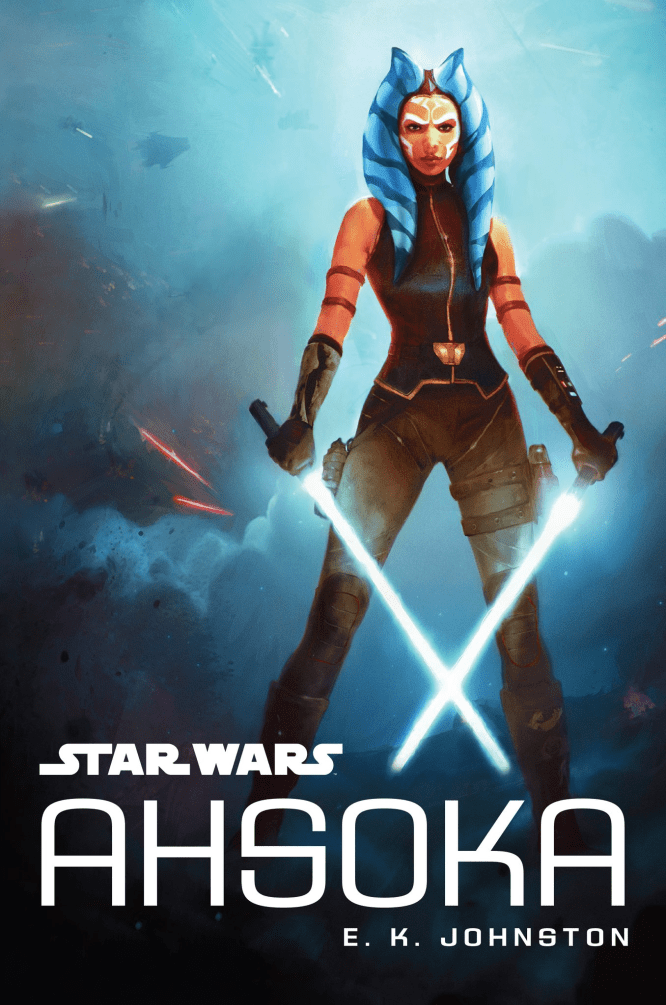
Throwback Thursday: Star Wars: Ahsoka by E. K. Johnston

Ahsoka_novel_cover

Publishers: Disney Lucasfilm Press

                        Penguin Random House Audio

Release Date – 11 October 2016

Amazon

Reviewed as part of my Throwback Thursday series, where I republish old reviews, review books I have read before or review older books I have only just had a chance to read.

The apprentice lives.  One of the best Star Wars characters that originated outside of the live-action movies returns in this action-packed, character-driven novel, which follows Ahsoka Tano’s adventures after the destruction of the Jedi Order.

Those people familiar with my previous reviews may have noticed that I am a bit of a Star Wars fan, having reviewed several pieces from the current Disney Star Wars extended universe in the last few months.  Therefore, it should not come as a surprise to anyone that I have watched and enjoyed the Star Wars: The Clone Wars and Star Wars Rebels animated television shows.  Both of these shows are very well done, can be appreciated by a varied audience and contain a large amount of the classic Star Wars heart and respect for the franchise’s lore and history that was missing in some of the more recent movies.  While many memorable characters were introduced in these shows, perhaps the most significant to the lore is the titular character of this book, Ahsoka Tano, Anakin Skywalker’s apprentice.

For those of you failing to remember Anakin having an apprentice in the live-action movies, you are not going crazy; Ahsoka has yet to appear in any live action movie.  She was instead introduced in The Clone Wars animated movie and served as one of the main characters of The Clone Wars television series, all of which take place in the years between Attack of the Clones and Revenge of the Sith.  Despite being one of the most popular characters on the show, Ahsoka would leave the Jedi Order at the end of the fifth season of The Clone Wars and only appear in the sixth season as part of a short vision sequence.  As a result, fans of the both the show and the character were frustrated and confused about what Ahsoka’s fate was and whether she had survived the events of the third prequel movie.  Fans didn’t get their answer until a couple of years later, at the end of the first season of Star Wars Rebels, where it was revealed that Ahsoka had survived the Jedi purge, becoming a member of the early Rebel Alliance.  Ahsoka, now wielding a pair of white lightsabers, became a key character in the second season of Star Wars Rebels, in which she was still an incredibly cool and powerful warrior.  She was utilised to perfection in this new show and had what is easily the best scene in the entire run of Star Wars Rebels: her long-awaited confrontation with Darth Vader.  The sheer emotion and intensity as Ahsoka finally came face-to-face with her old master and discovered that he was responsible for the fall of the Jedi was just amazing and is one of my favourite moments from all of television.

Following her appearance in Star Wars Rebels, Disney commissioned a young adult Ahsoka book, which was announced on 31 March 2016, one day after the Star Wars Rebels season 2 finale.  This book was released in late 2016 and was written by young adult author and Star Wars fan E. K. Johnston.  Ahsoka was Johnston’s first foray into Star Wars fiction, although she is currently working on Queen’s Shadow, a young adult novel focused on a post The Phantom Menace Padme Amidala, set to be released next year.  I have no doubt that a review for Queen’s Shadow will appear on this website in due time.  Now, with the recent announcement of a seventh season of The Clone Wars and the reveal that Ahsoka will be appearing in this new season, I decided to check out this book to see if it did the character any justice.  I chose to enjoy this as an audiobook, rather than read a physical copy.

During the Clone War, Ahsoka Tano was a fierce warrior and a commander of the Republic’s clone troopers.  However, after the devastation of Emperor Palpatine’s Order 66, which saw the clones turn on the Jedi, everything changed.  Fighting on Mandalore, far away from her master, Anakin Skywalker, Ahsoka is unaware of his fall to the dark side of the Force, and only just manages to escape the purge of the Jedi Order.

Now, one year after the fall of the Republic and the rise of the new Galactic Empire, the former Padawan is in hiding on the outskirts of the galaxy, trying to avoid any Imperial attention.  Living under an assumed name and with her trusty dual lightsabres gone, Ahsoka scrapes a living as a mechanic, intentionally distancing herself from the Force in order to hide her Jedi abilities.

Ahsoka journeys to a remote farming settlement on the Outer Rim moon of Raada.  Settling into her new life and making connections with its inhabitants, Ahsoka believes that she has finally found her sanctuary.  But her hopes of a peaceful life in her new home are quickly dashed when the Empire arrives, imposing their totalitarian rule on the people of Raada.  The agricultural potential of the moon is vital to the future of the Empire, and the workers are being forced to farm a new and mysterious plant.  Determined to help her new friends and wanting to make a difference, Ahsoka uses her wartime experience to help form a resistance in order to undermine Imperial control.

But when she is forced to reveal her full powers in order to save her friends, she once again finds herself on the run.  However, this time her actions have not gone unnoticed.  Her old ally, Senator Bail Organa wants her to join his fledgling rebellion, while the sinister Inquisitor, the Sixth Brother, arrives on Raada with plans to capture her, using Ahsoka’s friends as bait.

Because I am a fan of the titular character, I did go into Ahsoka with some rather high expectations.  Luckily I quite enjoyed Ahsoka, powering through this book quickly while appreciating how Ahsoka’s new adventure fit into the existing Star Wars chronology.  This story is very good, with an excellent blend of character development, Star Wars lore and some scintillating action and adventure.  The book contains a well-paced narrative that not only features Ahsoka’s personal story, but also examines the viewpoint of several side characters, in order to move the plot along, while also showing the impacts of Ahsoka’s actions from a different viewpoint.

This book is mainly focused on the adventures of Ahsoka, and fans of the animated show will appreciate seeing how she not only managed to survived the purge of the Jedi, but how she became the hardened rebel agent we encountered in Star Wars Rebels.  I feel that anyone who reads this book will appreciate the considerable amount of character development and insight that occurs with the titular character.  At the start of the book, Ahsoka is afraid, hiding who and what she is from the world while also denying herself access to the Force.  She is filled with regrets, concerns for her missing Jedi family and guilt not just about surviving but also about leaving the Jedi Order before its fall.  Throughout the book, her adventures, the new friendships she develops, the people she helps and the role she plays on Raada all help her to find a new purpose, as well as re-establishing her connection with the Force.

There are a number of great scenes featuring or concerning Ahsoka in this book.  These include her battle with the Sixth Brother, the forging of her new white lightsabres and the epic scene where she unleashes her Force abilities for the first time in a year.  It was also intriguing to see her advising the farmers in guerrilla tactics and helping them sabotage the Imperial occupation.  Fans of Ahsoka will appreciate the similarities this has to one of the character’s most significant arcs from The Clone Wars that featured her training a guerrilla army to combat a Separatist invasion, including a young Saw Gerrera (Forest Whitaker’s character in Rogue One).  I also enjoyed Johnston’s focus on the connection between Ahsoka and the female character Kaedan Larte.  It was great seeing this character help get Ahsoka out of her shell, and the subtle romantic feelings between the two of them was an interesting character direction for Ahsoka.  Overall, I thought Ahsoka contained an incredible take on its titular character, as Johnston not only provides the reader with a much clearer picture of Ahsoka’s fate following The Clone Wars, but also provides a powerful look at her thoughts and feelings following the destruction of the Jedi.

In addition to exploring the fates of one of their favourite characters, fans of the franchise are also treated to another intriguing look at events in the Star Wars universe not covered in the movies or television shows.  Ahsoka is set one year after the events of Revenge of the Sith, and shows the early days of Imperial control in the galaxy.  There is a palpable and well-utilised feeling of dread throughout the book as the various point-of-view characters encounter the steady increases in Imperial control as their military expands its influence.  It is fascinating to see the early Imperial military machine in action, especially when it comes to controlling and pacifying smaller planets and moons.  One of the most interesting aspects of this is the type of troops being utilised.  By this point in the Star Wars’ chronology, the Empire has started to phase out their clone troopers, replacing them with the human stormtroopers that appear in the original trilogy.  During her encounters with them, Ahsoka notes that these stormtroopers are still quite green and are nowhere near the clones’ level of competency when it comes to battle, controlling territory or dealing with Jedi.  This changeover in troop type for the Empire has not really been covered in too much detail before and is quite fascinating to see.

The exploration of the Empire’s methods of hunting down the remaining Jedi is also intriguing, as one of Vader’s Inquisitors serves as the book’s main antagonist.  The Sixth Brother is shown not only hunting fully trained Jedi like Ahsoka but also tracking down Force-sensitive children for his masters.  The extent of the Inquisitor’s power and influence is explored in some detail here, and I enjoyed seeing Ahsoka’s impression of these Inquisitors’ skills and actions, especially as the Inquisitors were also trained by Darth Vader.  Readers will also note the obligatory hints at the creation of the Death Star throughout the plot of the book, which is an important part of the overall Star Wars chronology.

These early days of the Imperial military is not the only thing covered in the book, as Johnston also explores the opening actions that would lead to the formation of the Rebel Alliance.  Johnston uses minor Star Wars character Bail Organa to great effect here, showing the work he beings immediately after his heroics in Revenge of the Sith to oppose the Emperor.  Ahsoka also features several cameos from other characters in the Star Wars cannon, and readers can look forward to seeing fan favourite characters Darth Maul, Obi-Wan Kenobi, R2D2, a young Princess Leia and the Grand Inquisitor.  This is a compelling and insightful addition to the Star Wars extended universe, and readers will be amazed by this new viewpoint into one of the franchise’s most volatile periods.

As I mentioned above, I chose to listen to the audiobook version of Ahsoka rather than track down a physical copy to read.  This was mainly because the creators of the Ahsoka audiobook managed to score Ashley Eckstein as the narrator.  Eckstein is the actor who voices Ahsoka in both The Clone Wars and Star Wars Rebels, and I loved the idea of having the definitive voice of the character narrate this crucial Ahsoka story to me.  As Ahsoka is the most prominent point-of-view character, this works out incredibly well, and the reader can enjoy hearing Ahsoka tell the story of what is around her.  Eckstein also provides excellent voice work for all the other speaking characters that feature in the book, as each of these characters were given a distinctive voice that does not feel out of place.

While I really enjoyed hearing Eckstein narrate the story, another benefit of listening to Ahsoka on audiobook is the use of the iconic Star Wars music, as well as the book’s cool use of sound effects.  The creators of the Ahsoka audiobook have inserted John Williams’s iconic score from the movies into a variety of the book’s scenes.  While this is slightly distracting in one or two places where the music did not quite fit properly, it works incredibly well for most of the book.  Several of the story’s big scenes, such as the pivotal battle sequence where Ahsoka reveals her Jedi powers for the first time since she went into hiding, are underscored by this music.  With this grand and powerful music playing in the background, these scenes are given a real epic quality that you just do not get from reading a psychical copy of the book.  It also serves to make Ahsoka feel a lot more connected to the movies, as the listeners are provided with a score that is instantly recognisable as belonging to this franchise.  In addition to the spectacular musical inclusions, the audiobook also features a range of relevant sound effects that really add to the book’s atmosphere and authenticity.  These sound effects range from droid noises and the sounds of ships starting up, to background music when the characters hang out in the cantina.  None of these sound effects distracts from the story and for some of the battle scenes, the lightsabers and blasters sounds really add to the reader’s excitement and involvement in the action.  Another thing I found fun while listening to Ahsoka on audiobook was the producer’s use of some sort of voice modulator for when Eckstein narrates the voices of stormtroopers or other characters wearing helmets.  This is a nice touch and really speaks to the producer’s attention to detail.  I am unsure how effective this would have been if Darth Vader had appeared in the book, but I’m sure I would found the end result amusing one way or another.

Clocking in at just over seven hours long, this is an easy book to get through and the inclusion of the classic Star Wars music, fun sounds effects and the definitive voice of the titular character make it an excellent way to experience this fantastic story.

Ahsoka has been written with a young adult audience in mind, and is definitely an enjoyable book for younger readers who are curious about the Star Wars universe, are fans of the animated shows, or are just looking for an exciting adventure in space.  That being said, the book does not pull any punches, and features an extended torture scene and quite a few deaths, including one particularly gruesome kill by the Sixth Brother.  While some of this can be a tad heavy, I personally feel that anyone mature enough to be familiar with the Star Wars franchise is probably going to be mature enough to not be affected by this violence.  Despite being intended for a young adult audience, Ahsoka, like many of the Star Wars young adult range, is definitely a series that can be appreciated by an older audience, especially those familiar with the franchise and the titular character.

Overall, I was very happy that I checked out Ahsoka, as it not only provided greater insight into the history of one of my favourite Star War’s characters but also painted a detailed and intriguing picture about the early days of the Empire.  Featuring a surprisingly deep and emotional story, this is a fantastic addition to the Star Wars extended universe that will appeal to fans of the amazing animated show, while also offering character based adventure to the more casual reader.  Definitely best to check out in the audiobook format, readers will love how this morphs this impressive Star Wars story into a memorable experience that becomes very difficult to turn off.

My Rating:

Four stars

Amazon

If you enjoy Star Wars fiction, check out some of my previous reviews:

https://unseenlibrary.com/2018/08/12/star-wars-thrawn-alliances-by-timothy-zahn/

https://unseenlibrary.com/2018/05/30/star-wars-last-shot-by-daniel-jose-older/

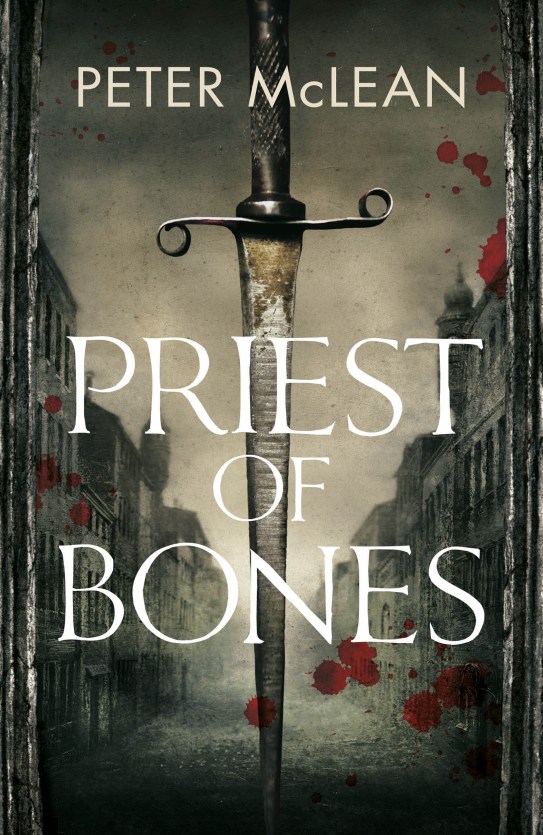
Priest of Bones by Peter McLean

Priest of Bones Cover.jpg

Publisher: Jo Fletcher Books

Publication Date – 2 October 2018

Amazon

For those looking for some down and dirty fantasy crime, look no further than Priest of Bones, the new release from fantasy author Peter McLean, which provides the reader with a dark, violent and downright entertaining story.

After achieving victory in a devastating war, thousands of soldiers begin the long and weary journey back home through a countryside ravished by war, plague and famine.  Among those soldiers returning to the industrial city of Ellinburg is Thomas Piety, priest of Our Lady of Eternal Sorrows and leader of a small and loyal band of killers.  Thomas has taken his duty as a soldier and a priest seriously, but now it is time for him to return to what he knows best: crime.

A successful crime lord before his conscription, Thomas believed he had left his territory in capable hands.  However, upon his return he discovers that his entire criminal empire has been taken over by a new gang that appears to have origins outside of Ellinburg.  With no choice but to reclaim what is his, Thomas and his soldiers, including his loyal sergeant, Bloody Anne, and his damaged brother, Jochan, do what they do best and go to war.

As Thomas and his gang, the Pious Men, reclaim territory and re-establish themselves in Ellinburg, they begin to realise that they are facing an opponent far more dangerous than the usual gangs and criminals of the city.  Their opponents are organised, have the best weapons money can buy and even have a couple of magic users.  To make matters worse, Thomas finds himself entrapped by one the deadly Queen’s Men, the feared order of spies and assassins loyal to queen, who have some special plans for the Pious Men.  Now, Thomas and his soldiers must embark on a dangerous and bloody crusade against the other gangs of Ellinburg.  Victory will mean control of the city’s crime, while defeat will spell doom for them all.

Priest of Bones is an excellent example of fantasy crime fiction done right as McLean has produced a story that is action-packed, incredibly intriguing and very enjoyable.  McLean has been writing fantasy for a few years and is probably best known for The Burned Man series, an urban fantasy crime series that focused on a magical hitman.  He also has a few short stories to his name, including some set in the Warhammer 40,000 universe.  Priest of Bones is the first book in his new War for the Rose Throne series, which will continue next year with the highly anticipated Priest of Lies.

The story contained within this first book is an amazing fantasy crime narrative which sees the protagonist work to reclaim his criminal holdings from a powerful new gang that has moved into the city while he was gone.  This starts out exactly as you would expect from this sort of story as the protagonists attempt to regain territory, one business at a time, while their opponents launch counterattacks and raids of their own.  The protagonists come up with some effective plans for taking territory and show what happens when a bunch of soldiers engage in some brutal urban combat.  There is a large amount of action throughout this book, which McLean records in bloody and enthralling detail.  This action mostly takes the form of small skirmishes and battles, although there are some magical battles which do result in some more gory and spectacular deaths.  All of this is incredibly fun, and it works very well with the intriguing side stories and character exploration to create a compelling overall narrative.  As the book progresses, an element of political intrigue takes hold as new players enter the game.  This represents an interesting but subtle change to the pace of the book and doesn’t result in any loss of action or excitement.  In many ways, it appears to be a setup for the next book in the series, which sounds like it’s going to have a much more political focus to it.  McLean wraps this all up with a memorable conclusion that I won’t elaborate on, but is the perfect ending for this outstanding and extremely enjoyable piece of fantasy crime.

The central gang that McLean looked at in the plot, the Pious Men, are a strong bunch of characters who serve as a fantastic focal point for this series.  All of the Pious Men are former soldiers who have recently survived the war and are still haunted by the horrors they experienced, especially at the devastating siege of Abingon.  Quite a few of the characters from this small band of soldiers are explored throughout the book, and while some of these characters only get minor mentions, a number do get expanded roles throughout the book and are shown to have some form of development or are slotted into a role that they make their own.  One of the most interesting features of this book is the way that McLean has focused on just how badly the war has messed up these characters, as pretty much all of them are suffering from PTSD in some way or another, referred to by the characters in the book as battle shock.  This is handled very well and allows for some fantastic scenes, as characters who initially come across as quite amiable for most of the book go berserk when attacked, while other characters who appear quite strong find themselves crippled by these memories.

The leader of this group of former soldiers turned criminals is Thomas Piety, who serves as the book’s main protagonist and only point-of-view character.  Thomas is a good central character to anchor this story, who for the most part comes across as a cold and calculating person who knows how to get what he wants.  As Priest of Bones continues, it is slowly revealed that there is a lot more to Thomas’s character than what is originally believed, as he is trying to hide not only the emotional damage from Abingon but the dark memories from his childhood that are still driving him to this day.  It is interesting to see Thomas try and reconcile his new role as a priest of Our Lady of Eternal Sorrows with his role as a soldier and crime lord.  It is also intriguing to see that one of his deeper motivations is based on his belief that his criminal enterprises not only will make his city a better place but may also save it from a similar fate to Abingon, something he is desperate to never see again.  As the story is completely shown through Thomas’s viewpoint, the reader gets the benefit of his cynical attitude as well as his humorous and accurate insights throughout the book.  This is a great focal character for this book, and I had fun exploring his full depths.

Quite a lot of time is also spent exploring the other members of the Pious Men that follow Thomas back from the war.  The best of these characters is easily Bloody Anne, the hard-as-nails sergeant who is Thomas’s most loyal soldier and friend.  There is detailed examination of Anne’s past which reveals a lot about her current character, including her distrust of magic users.  This turns into quite a nice side story, as Anne finally starts to overcome her past enough to start exploring a relationship with the prostitute Rosie.  Thomas’s brother, Jochan, is also an intriguing character who fits in well with this darker story.  Jochan is your standard unhinged killer, who has some of the funniest lines and can be found in the middle of all the big fight scenes.  His presence results in a lot of the book’s tension, as he and Thomas clash about everything.  McLean has also created a very traumatic backstory for Jochan that not only helps to humanise the character as the reader gets further into the book but also explains a lot about Thomas’s deeper motivation and the guilt he feels whenever he thinks of his brother.  Other great characters that the reader should keep an eye out for are the fake knight Sir Eland, the mysterious barmaid Ailsa and Billy the Boy, the Pious Men’s good luck charm who is clearly going to be a very important character throughout the rest of the series.

In Priest of Bones, Peter McLean has delivered a fast-paced and captivating piece of fantasy crime that is filled with a ton of graphic violence, a number of exhilarating fight scenes and some excellent character driven story work.  This new book is a wonderful introduction to the new War for the Rose Throne series, and I’m already looking forward to the follow-up book in 2019.  Clever, bloody and all sorts of fun, readers will have a blast checking this book out.

My Rating:

Four and a half stars

Amazon

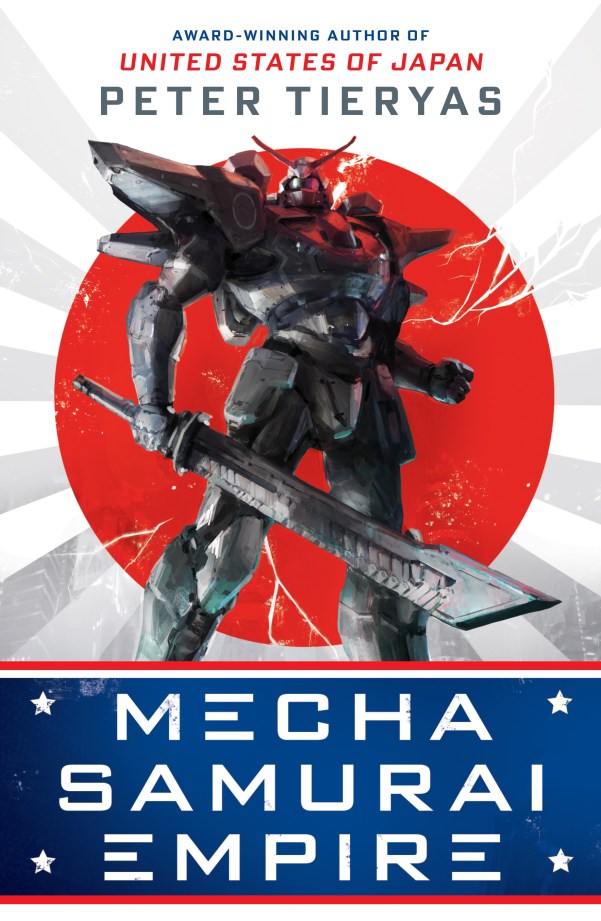
Mecha Samurai Empire by Peter Tieryas

Mecha Samurai Empire Cover

Publisher: Ace

Publication Date – 18 September 2018

Amazon     Book Depository

Prepare to experience one hell of an adventure in this follow-up to Peter Tieryas’s successful United States of Japan, in this incredibly exciting read that can best be described as The Man in the High Castle meets Pacific Rim.

Mecha Samurai Empire is set in an alternate version of our history, in which Japan and the Nazis won World War II.  This change to the outcome of the war was a result of the creation of the mecha, gigantic piloted military machines which gave the Japanese an unparallel advantage against the American forces.  In the aftermath of the war, America was split between Japan and Germany, who created distinct territories.  The western states, including California, became part of the United States of Japan, with its inhabitants swearing fealty to the Emperor.

In the 50 years that followed the end of the war, the United States of Japan entered an age of prosperity and technological advancement, and the development of more advanced mecha made them the most feared and effective military power in the world.  In addition to their military control, Japanese culture and custom has also been incorporated into American society, history has been rewritten and Japan’s wartime atrocities have been whitewashed.

In California, young student Makoto Fujimoto has only one dream: to become a mecha pilot and defend his country against the terrorists who killed his parents.  Unfortunately, Mac lacks the grades or political connections to achieve a placement in the mecha pilot training course at the elite Berkeley Military Academy, and his attempts to pass the special military exam end disastrously.  However, a chance encounter with rebel American forces allows him the opportunity to join up with a civilian mecha security company.  While his new role might not provide him much action, it might ensure his future placement at Berkeley.  But when Mac’s first mission goes horribly wrong, it might take all of his luck and skill just to survive.

Mecha Samurai Empire is an intriguing and exciting new novel from Tieryas and is the second book set in the United States of Japan universe.  Mecha Samurai Empire is not a direct sequel to the first book, United States of Japan, but it does contain a number of the story ideas that Tieryas did explore in his first book, and includes appearances from some of its characters.

As soon as I saw this book in the store and found out it featured mecha battles in an alternate timeline, I knew I was going to have to read it.  Because of the very enticing story concept, I did find myself going into this book with some very high expectations.  After reading it I am very pleased to say that I was not disappointed in the slightest, as I found Mecha Samurai Empire to be an incredibly entertaining book that makes full use of its unique elements and likeable characters to create an addictive story.  If you enjoyed the original United States of Japan, then you will definitely love this latest addition to the universe, that not only continues to highlight Tieryas’s marvellous alternate world, but which ramps the incredible mecha action.

The mecha are definitely the stars of this book, and the author spends a significant amount of time focusing on them and highlighting their importance in this new world.  Most readers of this book are going to be looking for some electrifying mecha combat, and Tieryas delivers this in abundance.  There is a huge amount of different types of mecha action, including training simulations, friendly competitions, small-scale battles between smaller mecha, larger battles between gigantic mechas and Nazi bimorphs (organic mechas), and there is even a large elimination tournament between various mecha pilots.  I’m a sucker for a good tournament, but this had to be one of my favourite extended sequences in the entire book.  Not only is there some incredible action during these tournament battles but the inclusion of multiple pilots allows the author to show off the various mecha battle techniques and fight styles as the competitors go at each other with a variety of close-combat weapons.  I also really enjoyed an earlier sequence when the protagonist finds himself piloting a small crab mecha by himself and must overcome several cannibalised mecha piloted by fanatical American rebels.  During these scenes Mac has to use all his training and skills, as well as the limited resources available to him in order to beat a larger force of opponents, and it is a very gripping scene to read.  Aside from the awesome action scenes, Tieryas has also chosen to present the reader with a much more in-depth view of the mecha in his universe.  The book contains the history of the mecha; the required training, simulations and the teamwork; discussion about famous mecha pilots; examinations of tactics and battle plans; mecha research; and even a look at the cultural impact of the mecha and the reverence shown to the pilots.  All of this additional information is deeply fascinating and really adds a lot to the book as the readers are shown they are more than just weapons.  If you’ve ever enjoyed the idea of mecha combat before, this is definitely the book for you.

While the mecha battles are one of this book’s best features, readers are also treated to an intriguing and memorable alternate history setting where the Axis powers won World War II and ended up taking control of the United States of America.  Tieryas has done an absolutely amazing job of creating a version of America that has been under Japanese control for 50 years, and it is fascinating to see how the author imagines this world would look.  In order to show the reader how the world came to be this way, Tieryas comes up with a clever alternate history of World War II and the years that followed it.  For example, Tieryas explores how a different strategy during the war could lead to a different outcome.  In this case, Japan joined the war by attacking Russia with the Nazis rather than America in the Pacific.  There is also some clever mirroring of real-life history, as the two main victorious world powers, Japan and Germany, end up in a cold war after splitting their conquered territory between them.

In addition to the changes in histories, Tieryas has also been quite inventive when it comes to the impact that a Japanese conquest would have on the culture of America.  While the Japanese influence on these territories in the book is quite noticeable, the author has come up with some captivating combinations between the two distinctive cultures.  I personally though that the way Tieryas continued to provide the reader with a ton of detailed descriptions of the food his characters were having was a very nice touch, as this showcased just how prominent Japanese food is in occupied America, while also featuring some curious examples of fusion cuisine.  It’s also interesting to see how much more advanced certain technology appears to be in this universe, a fact which can be attributed to the research into mecha technology and the fact that Japanese and Nazi scientists were able to operate with the world’s resources, including human test subjects, and a completely unchecked lack of morals.  There is also a dystopian element around this whole country, as there are a range of elements that show how controlling and despotic the United States of Japan government really is.  This is a continuation of the storyline from United States of Japan, and Tieryas continues to explore the nation’s hidden World War II war crimes, the rewriting of history, the use of propaganda, nationwide indoctrination, installed national pride and the fact that the characters are living in thinly disguised police state.  All of this serves to be an amazing background to this book that is both intriguing to explore and adds to the dramatic actions of the characters.

The story of Mecha Samurai Empire is strongly driven by the character development of the narrator and the other protagonists as they attempt to find their place in the world.  The main character and narrator, Mac, is an interesting focal character as the story is primarily set around his attempts to navigate this world and achieve his dream of becoming a mecha pilot.  Due to his past and the tragedy he experiences, Mac has a lot of self-doubt and other emotional baggage.  It is moving to see him getting through these barriers in order to become the hero his friends and country need.  I also got really attached to several of the supporting characters, especially Nori, Chieko, Kujira and Kazu, who we get to see develop in a similar manner to Mac.  Each of these characters has some distinctive character traits and motivations, and it’s cool to see how their personalities affect their mecha combat style.  It’s also intriguing to see the various levels of indoctrination and love for their country that these characters have, especially when they start to experience the darker side of the country and at times infuriating military commanders.  Another superb subplot is the relationship between Mac and Griselda, an exchange student from Nazi Germany.  Despite being old friends, their relationship is constantly criticised or forbidden by the other Japanese or German characters, and the constant us or them attitude is an accurate mirror of similar relationships throughout history.  It was a real treat to watch these characters develop throughout the course of the book, and the final fates of some these characters may leave readers reeling.

Award-winning author Peter Tieryas once again delivers another addictive and captivating story set in an alternate history version of the United States of America.  Making full use of this clever and creative setting, Tieryas packs his story full of pulse-pounding action as his characters pilot giant mecha in a variety of well-written and exciting battles.  With some real heart and emotional depth, Mecha Samurai Empire is so much more than its fun and memorable concept and comes highly recommended for all readers.

My Rating:

Four and a half stars

Amazon     Book Depository

Foundryside by Robert Jackson Bennett

Foundryside Cover.jpg

Publisher: Jo Fletcher Books

Publication Date – 28 August 2018

Amazon

Hot on the heels of his sensational first trilogy, Robert Jackson Bennett has produced another outstanding fantasy read with Foundryside, a bold and exiting novel that brings together an excellent mixture of action, intrigue and humour and powers it with a great location and some inventive and enjoyable new fantasy elements.

In the city of Tevanne, everything runs on scrivings, magical inscriptions that make inanimate objects sentient and allow them do incredible things.  Scrivings give the city of Tevanne incredible power and influence, and the creation of scrivings has been refined into an industrial process controlled by four powerful merchant houses.  These merchant houses have complete control of the city, and those living outside their compounds are a poor, desperate bunch, attempting to eek a living from a city that doesn’t care for them.

For escaped slave Sancia Grado, the only way to survive is to steal.  Gifted with unique abilities, Sancia is one of the city’s most successful thieves, who dreams of escaping from both the city and the discomfort her abilities provide her.  When Sancia is offered a significant sum of money to steal a valuable artefact from the heavily guarded city docks, she jumps at the chance.  But not everything is as it seems, and after stealing the item, Sancia is betrayed and is now being hunted by shadowy figures with incredibly advanced scrived devices.

At the same time, the guard captain Gregor Dandolo is also hunting for Sancia, determined to bring her to justice for her destructive theft.  Caught in the middle of a conspiracy that spans the entire city, Sancia and Gregor are thrust together and must search for new allies if they are to survive.  As the mysterious assassins descend upon them, their lives may depend on the abilities of one powerful artefact.  But while they find a way to fight back, an ancient evil is about to be unleashed which could bring the entire city down around them.

Bennet is a well-established fantasy writer who is probably best known for The Divine Cities series, which concluded in 2017.  Readers may also be familiar with some of his standalone works, including The Troupe, Mr. Shivers and the science fiction book The Company ManFoundryside is the latest book from Bennet and represents the start of the captivating new The Founders trilogy.  Foundryside contains a powerful and captivating story set within a fascinating city and containing some very unique magical elements that are a truly enjoyable part of the book.  The main story contains a significant amount of adventure as the book’s protagonists attempt to uncover a conspiracy around the origin of the book’s central magical element.  Readers will be left guessing about the secrets behind the conspiracy, while several of the book’s dramatic twists will leave them reeling from the emotional gut punches.  The final conclusion of the book sets up some exciting options for the rest of the series, which I will definitely be checking out when they are released.

One of the main highlights of this book is the fantastically unique magical fantasy element known as scrivings.  Scrivings are a form of magical writings that enhance items they are engraved on, giving them certain properties, abilities or autonomy.  For example, carts can be scrived to make them travel from point A to point B, items can be scrived to move at a greater speed by making them believe they are dropping from a great height, and materials such as wood can be made to believe they have the hardness or consistency of stone.  There are a huge range of elaborate rules around scrivings, and the author has presented some fascinating background lore which provides some interesting explanations around the creation and utilisation of these items.  An unexpected side effect of the scriving process is that the scrived items are given a form of magical sentience.  Throughout the book, Sancia is at times gifted with the ability to listen to the listen to the thoughts of the scrived items, and the items are shown to be shouting out their defined roles and the rules they have to follow, often in the form of riddles.  There are quite a few funny scenes when some of the characters attempt to manipulate scrived items by exploiting loopholes in their programming, and watching people and magical items have a debate is very amusing.  The use of scriving throughout Foundryside allows the author to create some fantastic and, at times, over-the-top action sequences as the characters wield weapons that have been imbued with the ability to hit harder or faster than conventional, or items that give other risky benefits in combat.  The hidden history of the scrivings is also quite intriguing, and watching the characters uncover it is an essential and enjoyable part of the plot.  Overall, Bennett’s magical scrivings are a fantastic part of this book that readers will really love to discover.

In addition to the creative magical elements, Bennett has also set his story in an amazing new fantasy cityscape.  The city of Tevanne is full of scrived items, and Bennett has done a great job inserting these magical items into every part of the city’s day-to-day life.  An interesting feature of this city is the way that significant portions of the city has been broken up into ‘campos’, merchant enclaves where scrived items are created at an industrial level.  Each of these four campos is ruled over by a powerful merchant house, and a large amount of the book’s excellent intrigue elements are fuelled by the competition between these houses.  The campos also serve as interesting social boundaries, with the people living inside having everything that they need, while those living outside, in the area known as the Commons or Foundryside, are barely getting by.  Having areas of the city completely controlled by rich merchants is an element with a lot of potential, especially when these merchants have their own private guards and are essentially laws unto themselves.  Bennett makes full use of this, creating thrilling sequences that feature his characters sneaking into and around these heavily guarded compounds.  The control and distribution of power, here represented by the creation of scrivings, is also a compelling part of the book, and Bennett has created some great characters and scenarios around this development.

I really have to mention the strong and funny characters that are featured throughout Foundryside and are an incredible part of this exciting story.  The main protagonist is Sancia Grado, an escaped slave and thief who finds herself thrust into the centre of a deep conspiracy.  There is a lot going on with Sancia, with her tragic backstory, her unique scriving based powers that are both a blessing and a curse, and her fun and fierce attitude developed from a life on the streets.  All these elements combine together into one awesome character, and Bennett uses her to full effect as his central protagonist.  The book’s other main characters are also quite entertaining and enjoyable.  There is Gregor Dandolo, the tough and law-abiding soldier whose sense of duty draws him into the middle of the conspiracy.  Gregor is a very action based character, but his backstory is also quite traumatic and he shares some great moments with Sancia, a character he initially has very little in common with.  There are also some amazing scenes where Gregor must come to terms with the actions of his family’s merchant house, as well as some strong and emotive twists involving his history.  Other characters include the master scriver, Orso Ignacio, who acts as the book’s resident mad scientist and comes with some very fun ideas, from an audacious break in plan to a funny solution to his legal problems at the end of the book.  I also really enjoyed Orso’s assistant, Berenice, who Bennett uses to great effect as the book’s straight woman for the more outrageous characters, especially Orso, while also serving as Sancia’s love interest.  While all these characters are really enjoyable focuses for the book, the hands-down best character has to be Clef, the sentient key.  Before this book I would have had a hard time believing that a talking key could be a great central character, but I’m very happy that Bennett has proven me wrong.  Not only is Clef a fun and enjoyable character that the reader becomes strongly attached to, but a huge amount of Foundryside’s best humour comes from Clef’s banter and observations.  Bennett has really outdone himself when it comes to these characters and I had a great time watching their adventures.

With an amazing story, fantastic humour, enjoyable and memorable characters and some unique and fascinating fantasy elements, Bennett has once again shown the world what a talented fantasy writer he is.  Foundryside is another outstanding release from Bennett, and I had a lot of fun with this book.  Readers of this book are in for a real treat and they will be very eager to see where The Founders trilogy goes next.

My Rating:

Four and a half stars

Amazon

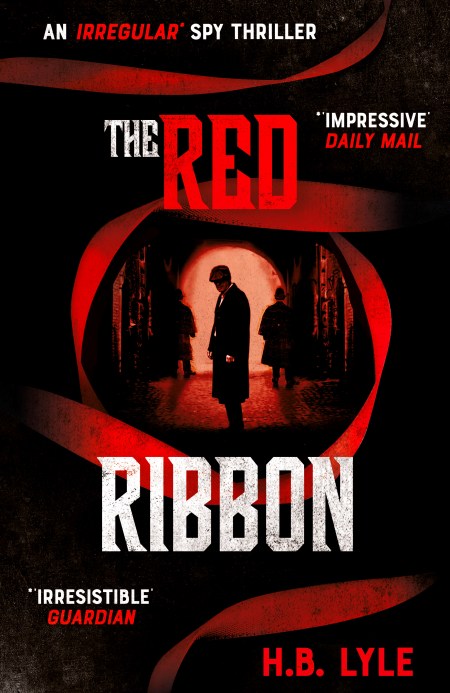
The Red Ribbon by H. B. Lyle

The Red Ribbon Cover.jpg

Publisher: Hodder & Stoughton

Publication Date – 23 August 2018

Amazon     Book Depository

Return to pre-World War I London for another compelling spy adventure in H. B. Lyle’s second book, The Red Ribbon, which is set in the same universe as Sherlock Holmes and features three exciting characters with an intriguing look at early 20th century British history and espionage.

In London, in 1910, Captain Vernon Kell is still attempting create a secret intelligence service capable of protecting England from foreign spies and infiltrators.  Despite the early success of the Secret Service Bureau, Kell’s organisation is constantly under pressure from the country’s politicians and is in danger of being absorbed into Special Branch of London’s police.

Unfortunately, Kell’s only agent, Wiggins, is distracted with his own cases and unwilling to play the political games needed to help the service survive.  Wiggins is the former leader of Sherlock Holmes’s street urchin surveillance organisation, the Baker Street Irregulars, and has picked up a few of his old master’s deductive tricks while retaining his lower-class charm and street smarts.  Wiggins is obsessed with finding the infamous anarchist, Peter the Painter, the man responsible for the death of one of Wiggins’s oldest friends, and is scouring the streets for him.

Looking for a missing girl on behalf of one of his contacts, Wiggins begins to investigate a mysterious embassy located in the affluent neighbourhood of Belgravia.  The embassy is actually a high-class brothel frequented by the rich and powerful of London.  When another girl associated with the embassy is found murdered, Wiggins attempts to find justice; however, the embassy is under the protection of someone Wiggins knows well: Tommy, a fellow former member of the Irregulars.

However, Wiggins’s personal investigations intersect with his work for Kell, as the two of them hunt for the source of a series of leaks at the highest level of government.  With the help of Kell’s wife, the suffragist Constance, Wiggins and Kell must find the connection between the events occurring around London in order to keep the country safe from sinister foreign influences.

The Red Ribbon is the follow-up to Lyle’s debut novel, The Irregular: A Different Class of Spy, and is the second book in the Irregular Spy Thriller series.  This is a great series that will appeal to a huge range of readers, as Lyle combines compelling historical fiction elements with a thrilling espionage story that has fictional links with one of the most iconic book series of all time, Sherlock Holmes.

The story within The Red Ribbon is split between the book’s three main protagonists and takes a look at each character’s different and exciting adventures.  Wiggins and Kell continue their missions from the first book, and while their investigations are ostensibly separate from each other, they eventually intersect in several clever ways.  The relationship between Wiggins and Kell is an important part of these two storylines, as Kell despairs of Wiggins’s personal investigations and wants Wiggins to solely work missions for the service.  The third focal character is Kell’s wife, Constance, who was a supporting character in the first book.  Constance becomes a much more significant character in The Red Ribbon, as the book focuses on her involvement with the suffragist and suffragette movements.  Both Wiggins and Kell become involved with Constance’s storyline in different capacities, while Constance provides significant assistance with her husband’s espionage work.  With three semi-connected stories, it does at times feel like there is too much going on for one cohesive narrative.  However, each of the stories comes together quite well in the end and provides the reader with an extremely captivating overarching narrative.

Having three separate storylines allows Lyle to highlight the differences in social classes during this historical period and highlights how different groups of people were treated.  Kell, as the influential gentleman, is forced to constantly deal with the upper-class politics and attitudes during his attempts to keep the service going.  Wiggins, who was raised on the street, deals more with the average Londoner and experiences the poverty and desperation many of them encounter.  He must also deal with the distain of the upper classes in the course of his espionage work.  While he is clearly the most competent agent in the entire British service, he is constantly looked down upon and ignored by his government superiors.  There are also several instances where Wiggins is assigned to infiltrate labour movements, something he is very reluctant to do due to his world views and background.  This divide often serves to create some significant tension with Kell, who, despite fully understanding Wiggins’s value, skills and point of view, is often exasperated by him.  The beefed-up storyline around Constance allows the reader a significant look at the suffragist movement and the early battles these women fought for equality.  In The Red Ribbon, Constance joins the much more militant suffragettes, and is constantly infuriated by the reactions of the male politicians and their oppressive policies.  The oppression of women also becomes a major point of conflict between Kell and Constance which results in a decline in their relationship, although the final payoff of this storyline is quite sweet.  I really enjoyed the way that Constance and Wiggins developed a fun comradery in this book, as their poor treatment by the upper-class men allow them to bond, with Wiggins even teaching Constance some anti-surveillance techniques.

Lyle cleverly incorporates several important historical events into this book, such as the funeral of Edward VII, the Black Friday suffragettes and suffragists protest outside Parliament and the Siege of Sidney Street.  These events are quite significant in their own right, and Lyle spends substantial time filling in their background and ensuring the reader is aware of why they are happening and why they are important.  However, they also serve as very compelling background events for the plot of The Red Ribbon and work well to enhance this already fascinating story.  In addition to these intriguing and important historical events, Lyle has also packed a number of historical figures into this story.  Quite a few prominent politicians and British civil servants have significant roles in the plot, including a young Winston Churchill, which makes the story feel a lot more authentic.  The author’s continued use of the enigmatic Peter the Painter as one of the book’s principal antagonists is another brilliant stroke, and the reader is provided with some intriguing theories about who he actually was and what his eventual fate was.  Lyle does slightly go overboard by adding in some other famous historical figures in small cameo roles, and the shoehorning in of people such as Charlie Chaplin and members of the 1910 British Antarctic Expedition seems a bit unnecessary.  That being said, it was amusing to watch Chaplin use his drunken tramp routine to help Wiggins escape a conflict in a theatre.

One of my favourite components of this book was the author’s detailed and unique look at British espionage and counter espionage in the early 20th century.  One of the book’s protagonists, Captain Kell, is an actual historical figure who is credited for creating Britain’s domestic spy service, which morphed into the modern MI5.  This fictionalised account of the early days of this organisation are quite fascinating, especially when the author looks at some of its early challenges, the political battles Kell might have had to face, and the sort of work this organisation was originally looking at.  In addition to the domestic espionage work, the protagonists of The Red Ribbon find themselves drawn into one of the most infamous espionage incidents of the era: the capture of British agents Captain Trench and Lieutenant Brandon in Germany in 1910.  This is a highly fictionalised account of the incident, as Lyle has inserted Kell and Mansfield Cummings, one of the founders of MI6, as being there.  It plays marvellously in Kell’s overall storyline, while also featuring some great scenes as the three protagonists’ attempt to evade arrest by the Germans.  Trench and Brandon are not portrayed in the best light, as Lyle has used them to further the class prejudices in Britain, portraying the two soldiers as quite incompetent spies who are captured as a result of wilfully ignoring Wiggins’s advice due to him not being a gentleman.

Another fun part of The Red Ribbon is the connection the book shares with the Sherlock Holmes novels.  The Irregular Spy Thriller series is set in the same universe as the Sherlock Holmes books.  Wiggins was mentioned several times in Arthur Conan Doyle’s original works as the leader of the Baker Street Irregulars.  As a result, Wiggins comes across as a rougher Sherlock Holmes, who uses the classic deductive method while also fighting, drinking and speaking in a lower-class manner.  As in the first book of this series, the great detective himself makes a brief appearance, providing Wiggins with a case-breaking suggestion, while casually enjoying his retirement.  The use of the Sherlock Holmes elements is definitely a defining element of the book, and while it is mostly used to draw interested readers into this historical spy thriller, Lyle successfully uses it to create a unique and enjoyable main protagonist.

B. Lyle has followed up his superb 2017 debut with another fun and exhilarating read. Continuing to use his Sherlock Holmes inspired character to great effect, Lyle weaves a full and captivating narrative that presents several unique stories chock full of adventure, mystery and interesting historical content. The Red Ribbon is an amazing second outing from Lyle which also sets up an exciting concept for a third book in the series.

My Rating:

Four and a half stars

Amazon     Book Depository

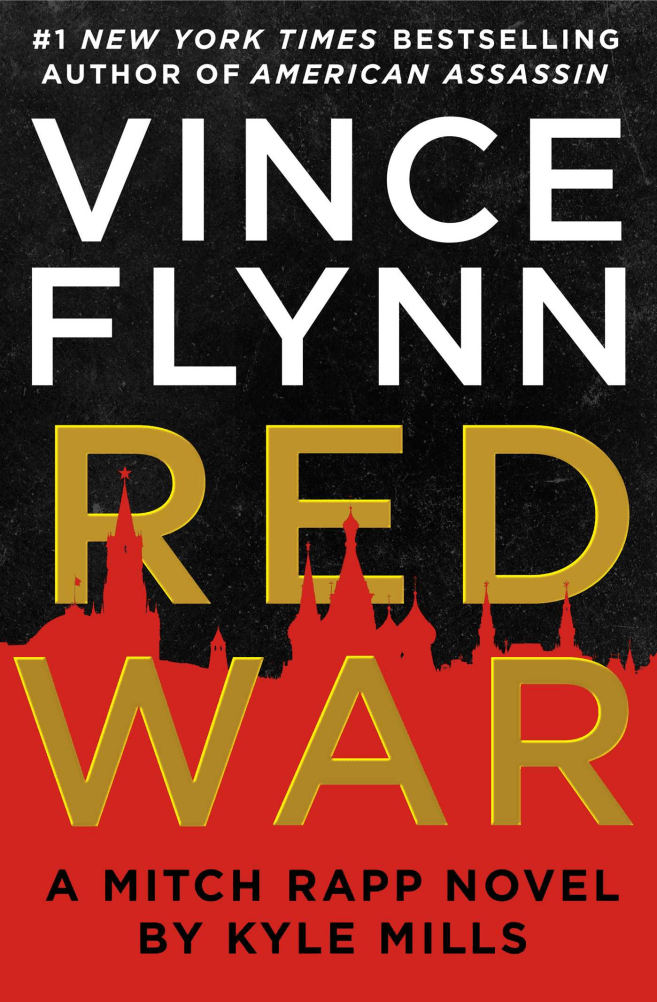
Red War by Kyle Mills (based on the series by Vince Flynn)

Red War Cover

Publisher: Simon & Schuster

Publication Date – 25 September 2018

Amazon     Book Depository

From the minds of two outstanding thriller writers comes Red War, the latest book in the iconic Mitch Rapp spy series.  This newest addition is an exhilarating and action-packed espionage novel that incorporates a captivating look at modern global politics into its exciting and enjoyable narrative.

For years, Russian president Maxim Krupin has ruled his country with an iron fist, and even recent setbacks to his ambitious plans in the Middle East have not lessened his power or influence.  However, Krupin is about to encounter an opponent even he may not be able to overcome: cancer.  With an inoperable brain tumour impacting his actions, the once calculating and selectively destructive strongman begins openly targeting all his enemies and opponents in order to retain his power and to distract attention away from his illness.

The Americans, especially the CIA, are alarmed and surprised by the Russian president’s sudden and unpredictable moves.  Uncertain of the motivations behind them, the CIA assign legendary covert operative Mitch Rapp to investigate and counter Krupin’s more aggressive moves, including the attempted assassination of Krupin’s former problem solver, Grisha Azarov.  When Rapp and the CIA uncover proof about Krupin’s medical condition, they begin to realise just how desperate and dangerous their opponent is.  With Russian troops massing on the border of Europe, it appears Krupin may even be willing to start a war with the West in order to maintain his position.  With World War III just around the corner, Rapp is given an impossible task: infiltrate Russia and assassinate the man many consider to be the most powerful person in the world.  Will Rapp and his allies succeed in this dangerous mission, or will their actions lead the world to the very brink of a nuclear war?

This is the 17th book in the Mitch Rapp series, which began in 1999 with the first book, Transfer of Power, which was written by Vince Flynn as a follow-up to his 1997 debut, Term Limit, which is set in the same universe as the Mitch Rapp books.  Following Flynn’s death in 2013, the series was continued by fellow thriller writer Kyle Mills, who has written 17 books since 1997, including the last three Mitch Rapp novels.  The Mitch Rapp books are a fast-paced and action-packed series that focuses on American espionage, and often features the titular character’s brutal war on Islamic terrorists.  Some who are unfamiliar with the books may have seen the film adaption of Flynn’s 2010 prequel novel, American Assassin, which was released in 2017, featuring Dylan O’Brien of Teen Wolf and The Maze Runner fame, as well as Batman himself, Michael Keaton.

In this latest book, Mills continues the series trend of providing the reader with eventful and compelling adventures.  Red War is chock full of action and combat as the protagonists attempt to counter the Russian president, the president’s personal assassin and the whole Russian army.  Readers will find plenty to keep them entertained, from small tactical skirmishes around the world between American and Russian covert forces, to large-scale battles and wars, with some devastating results.  While the main protagonist, Mitch Rapp, is starting to get a little old, he is still the same killing machine he has always been, and he powers through the vast majority of his opponents.  However, some of the other characters he encounters are the cream of the Russian army and have been enhanced by a combination of extreme training and performance-enhancing drugs.  This results in some very hectic shoot-outs and fight sequences, although there is very little doubt that Rapp will succeed.  A lot of these fights are tactical in nature as Rapp seeks to outsmart larger or more formidable forces he finds himself up against, resulting in some scenes with slower pacing that are used to create a more intense, but equally exciting, action sequence.  In addition, there are some fairly outrageous sequences throughout the book that readers will really enjoy.  For example, in a later part of the book Rapp suddenly finds himself leading an unusual army against his opponents, and a scene earlier in the book he decides to utilise a rocket-propelled grenade launcher in a fight after he starts “getting sick of these drugged-up, thirtysomething terminators whom Krupin was churning out”.

Mills has also made sure to include detailed examinations of the various intelligence-gathering and espionage techniques that his characters employ, as well as several scenes exploring the opposing nations planning and tactical sessions.  It is always fun to read about fictional tactical and intelligence meetings, especially in novels like Red War, when you see both these discussions from both sides of the conflict in order to focus on the various moves and countermoves each opposing side utilises.  In Red War, the motivation behind the Russian president’s actions is revealed to the reader within the first few pages of the book; however, all the American characters, and even some of the Russian characters, have no idea why he has escalated his campaign against his opponents.  It is very captivating to watch the various actions Krupin takes to not only stay in power, but also hide his illness from his own people.  As the book progresses and this becomes harder for him to manage, it is interesting to see the Americans begin to put the pieces together and see how well their theory fits into place.  Both the American and Russian characters do a lot of espionage and counterespionage moves throughout the novel as the Americans attempt to uncover the Russian leader’s unpredictable next move, while Krupin and his agents attempts to take out his various rivals while also frustrating the Americans.  The descriptions of these espionage moves and techniques feel very realistic, and there is enough going on to keep any lover of spy fiction very happy.

One of the most compelling and notable things about Red War is the way that it brushes on current politics and uses many recent real-world events in its story, by either referencing them or attributing them to the book’s fictional characters.  One of the main antagonists, the Russian president Krupin, is an athletic and powerful strongman that is clearly supposed to be a fictional version of Vladimir Putin, with several similar character attributes, including a propensity to use staged hunting propaganda shots out in the snow to promote his rugged, masculine image.  Many of Krupin’s actions and decisions throughout the book match those of Putin, down to the character revealing he utilises social media to influence international politics.  As a result, while the book focuses on a fictional antagonist, the reader is left thinking about what would happen if something similar were to happen to Putin or another world leader, and how other nations would respond.  The American and Russian characters discuss geopolitics throughout the book as they make their plots and plans, and many of the events they discuss have happened in the real world.  This allows the readers, especially those familiar with current world affairs, to enjoy a much more realistic read, especially when the characters look at real world events to justify their actions or responses.  These real-world inclusions help to turn Red War into a much more intriguing read for the readers that does an amazing job capturing its audience’s attention and interest.

Despite being the 17th book in the Mitch Rapp series, Red War is a very approachable book that is very easy for readers unfamiliar with the series to enjoy.  A perfect read for those who are intrigued by a fun and exciting plot concept, Red War delivers all the action and espionage you could possibly want, with some incredibly fascinating insights and references to modern global politics.  Mills has once again forged an incredible story from Vince Flynn’s original thriller universe, and fans of this series will not be disappointed by this latest offering.

My Rating:

Four and a half stars

Amazon     Book Depository

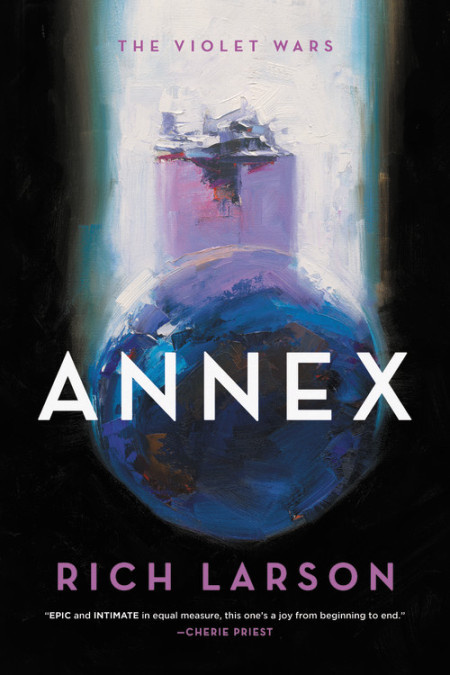
Annex by Rich Larson

Annex Cover.jpg

Publication Date: Orbit

Australian Publication Date – 25 September 2018

World Publication Date – 24 July 2018

Amazon     Book Depository

From exciting new author Rich Larson comes an absorbing young adult science fiction debut that makes use of creepy alien elements, excellent characters and fantastic LGBT inclusions to create a powerful and creative read.

When a gigantic alien ship arrives above Earth and isolates an entire city, all the children that are trapped with the aliens are kidnapped and infested with parasitic life forms, while the adults are clamped and inserted with mechanical devices that turn them into mindless drones.

For the small group of children that escape captivity, the disappearance of all the adults offers them a life of fun and adventure.  Falling under the leadership of the charismatic Wyatt, this group of survivors, the Lost Boys, are living the high life, with their newly attached parasites giving them the ability to vanish objects for brief periods of time.  While life is fun, they must continue to avoid the mechanical whirlybirds, the pod-like spaceships and the terrifying Othermothers hunting them in the streets.

For Violet, this new world allows her the opportunity to live the life she’s always wanted and to be the person she’s always wanted to be.  But Violet’s new life on of the city streets changes dramatically when she finds a new escapee, Bo, and takes him under her wing.  Bo has the most powerful parasite the group has ever seen and is capable of permanently vanishing larger objects.  It also appears the alien invaders want him back and are deploying hordes of their creatures to capture him.

Sensing an opportunity, the Lost Boys use Bo to fight back against the aliens while trying to uncover what plans they have for the rest of the planet.  Breaking into the massive hovering mother ship, Violet and Bo team up with the mysterious Mr Gloom to end this alien threat once and for all.  But these two young people will quickly find that the biggest threat to them may be far closer to home than they realise.

Annex is the first novel from Rich Larson and is the first book in The Violet Wars series, with the second book of this intriguing series, Cypher, already on its way.  This is a wonderful debut from Larson, which contains a surprisingly intense and at times dark story that will prove to be enjoyable to a wide range of readers.

There are a number of great features of Annex that readers will enjoy; however, one of the most noticeable features is the creepy and well-written descriptions of the aliens and events that the book’s main characters encounter.  There are a lot of inventive and twisted creatures, technology and even body modifications that can be found throughout this book, and Larson’s skilled writing helps brings them to life in the reader’s imagination.  I was particularly impressed, and a little freaked out, by Larson’s unique creation the Othermothers.  The Othermothers are unsettling clones of the escaped children’s mothers, perched upon long skeletal metal legs, who chirp out random phrases in the mothers’ voices in an attempt to lure the escaped children to them and then capture them.  Because of Larson’s descriptive writing, these creatures are horrifying and really stood out for me among the other alien antagonists the heroes encountered.  Special mention should also be made of the shadowy Mr Gloom, a strange adult they encounter whose appearance is not quite human and who has a range of powerful abilities.  I am not going to reveal too much about Mr Gloom because he appears about two-thirds into the book and I do not want to spoil too much about him.  I did find him to be quite a fun character.  Larson’s descriptions of Mr Gloom are fantastic, especially when it comes to exploring his shadow based abilities, which are a treat to read about.

In addition to the alien creatures and characters that are encountered through the book, readers should also keep an eye on the leader of the Lost Boys, Wyatt.  Wyatt is at first presented as a talented leader who has managed to bring the Lost Boys together and keep them alive.  However, there is much more to this character than he initially presents, and his real personality begins to be revealed to the heroes and the readers as the book progresses.  This is some incredible character work from Larson, and the revelation of Wyatt’s true motivations and persona is done perfectly, resulting in some excellent dramatic scenes and some really dark twists.  The author’s use of two separate point-of-view characters, Violet and Bo, works really well when it comes to viewing Wyatt, as the reader is able to observe his different manipulations, his moods and the cracks that appear in his outer façade.  This is a very intriguing character that dramatically changes the narrative of Annex in a number of ways, and the scenes exploring Wyatt are some of the best written in the entire book.

One of the key aspects of Annex that will prove to be an interesting addition for the reader is one of the main protagonists, Violet.  Violet is a tough–as-nails kicker of alien ass who is also a young transgender girl who has used the lack of adults following the invasion to finally live her life the way she always wanted to.  This is an amazing portrayal of a transgender character, as the author creates a stimulating backstory for Violet that examines her past and explores how she became her current self while also exploring the fears and people that stopped her from fully expressing her identity.  The book also explores how intrinsic this identity can be and how devastating attacks about identity can be, even during an alien apocalypse.  Violet is a well-rounded character, and Larson skilfully displays her other fears, her independence, her new friendship with Bo and her relationships with the other Lost Boys.  Violet helps to elevate this book to the next level and make it into a terrific piece of young adult fiction.

This book is an interesting addition to the young adult genre that definitely highlights the empowerment of young people.  The human characters of this book are all quite youthful and yet manage to thrive in a hostile alien landscape that has incapacitated all of the adults.  Watching these young people come together as a tight-knit group is an intriguing part of this book, and it is interesting to see the subtle techniques Wyatt uses to turn them into his own little army, such as with initiation rites, slogans and other forms of manipulation.  Overall, watching this group overcome without adult help the obstacles of being among the aliens oppressing them is a great part of the book.  This makes it an interesting read for the young adult audience, especially for those who love to see transgender characters in fiction.

Annex by Rich Larson is an excellent debut and is recommended for those younger readers looking for a science fiction adventure that they can relate to.  With some creepy aliens, intriguing characters and a deep look at transgender issues among today’s youth, this is an exhilarating read from a promising new author.

My Rating:

Four stars

Amazon     Book Depository

Star Wars: Darth Vader: Dark Lord of the Sith, Volume 3 – The Burning Seas

Darth Vader - The Burning Seas Cover

Publisher: Marvel Comics

Writer: Charles Soule

Artists: Giuseppe Camuncoli

              Daniele Orlandini

              David Curiel

              Java Tartaglia

Publication Date – 11 September 2018

Amazon

I have previously reviewed the second volume of this series here:

Star Wars: Darth Vader: Dark Lord of the Sith, Volume 2 – Legacy’s End

Darth_Vader_Dark_Lord_of_the_Sith_13.jpg

The creative team behind the amazing Darth Vader: Dark Lord of the Sith series return with their third volume, The Burning Seas, which continues to follow the early adventures of one of fiction’s greatest villains, Darth Vader.  This third volume contains issues #13-18 of what has to be one of my favourite current ongoing series.

This new volume is set one year after the formation of the Empire, and the Emperor is determined to show off the full military power he now commands.  To that end, he dispatches Vader to the aquatic planet of Mon Cala, which has been resisting attempts to be completely incorporated into the growing Empire, and whose King appears to be receiving advice from a Jedi.  However, this will not be Vader’s first journey to Mon Cala.  Years ago, during the Clone Wars, Anakin Skywalker and the Jedi saved the planet from a Separatist invasion and supported the young Mon Calamari king’s ascent to the throne.

DarthVader-DLotS-14-no.jpg

Leading a force of his Inquisitors to Mon Cala, Vader attempts to investigate the potential Jedi influencer, but the situation quickly devolves into all-out war.  With Governor Wilhuff Tarkin leading the Imperial invasion, Vader and his forces attempt to locate the Jedi behind the unfolding events.  How will Vader’s return impact the planet of Mon Cala, and what events will the mysterious Jedi’s actions have for the future of the galaxy?

In additional adventures, Governor Tarkin finds himself in the unenviable position of owing Darth Vader a favour.  Vader’s request is a hunt with a twist: the hunter will be Tarkin, while the hunted will be Vader himself.  Bored by a lack of challenges, Vader has tasked Tarkin to provide him with some worthy competition.  Will Tarkin earn Vader’s respect, or will he and his team of mercenaries be the next victims of Vader’s rage?  In addition, Vader has been tasked to investigate sabotage around the construction of the Death Star on Geonosis.  As Vader encounters the creators of the Death Star, Commander Krenik and Galen Erso, he uncovers not only the saboteurs but also the full potential of the Death Star and the impact it could have on Vader’s position.

DarthVader-DLotS-15.jpg

Darth Vader: Dark Lord of the Sith returns with another fantastic and captivating volume that not only furthers the adventures of Darth Vader but also ties the series into the wider Star Wars universe while fleshing out backstories and lore not explored in the movies.  In this volume alone several minor characters’ pasts are shown, the history between Vader and Tarkin is explored and there is a particular focus on the events leading up to the Rogue One movie.  Dedicated Star Wars fans will love that the main story of this volume is set on the planet of Mon Cala and introduces several key Mon Calamari characters.  The readers are gifted with new origin stories for Admiral Raddus, who leads the Rebel fleet in Rogue One, and a young Commander Ackbar, famous for the line ‘It’s a trap’, which highlight their early abilities and show why they were so determined to fight the Empire.  Fans of the Clone Wars television show also get an intriguing conclusion to the three-part Water War arc of the show’s fourth season.  During this television arc, Anakin Skywalker and his allies helped save the planet from an invasion and helped the young Mon Calamari King Lee-Char ascend to the throne.  Now, in a reversal of this arc, Vader returns as an invader and his main target is the Mon Calamari king he once protected with his life.  It is a compelling switch that creates some terrific drama and emotion during this comic book arc.  Surprisingly enough, there is also a focus on the Mon Calamari cruisers, the large imposing ships that become a fixture of Rebel Alliance and the subsequent Resistance.  Several of the plans underway involve the future of these ships, and the twisted priorities of a Jedi regarding them are quite chilling to behold.  In addition to the main story of this volume, one of the issues is heavily involved in the construction of the Death Star.  As a result, Vader interacts with several characters who feature in the Rogue One movie, and the creative team are able to suggest he had a lot more to do with the events of Rogue One than shown in the movie.  This issue also sees Vader return to Geonosis, the main setting for the latter half of the Attack of the Clones movie, and it is very cool to see him return to this important location in his previous life.

On top of the above insertions into the Star Wars universe, the creative team also spend a significant amount of time in this volume exploring the relationship between Darth Vader and Grand Moff Tarkin.  When both characters are introduced in A New Hope, Tarkin always appeared to be in command of Vader and appeared to be someone that Vader respected.  It was an unusual relationship, considering Vader’s personality and his role as the Emperor’s apprentice.  This volume creates a fascinating new narrative that shows when Tarkin was put in charge and why Vader allowed it to happen.  This is first shown during the main story of this volume, when Governor Tarkin, who is leading the invasion of Mon Cala, requests Vader’s assistance to end the war quickly.  Vader is shown in these issues to independent from Tarkin, who still shows the ability to get what he wants from Vader, even if it may cost him down the line.  The creative team spend a good amount of time during the four issues that focus on the invasion of Mon Cala highlighting Tarkin’s tactical ability and ruthlessness, reminding the reader what a great villain Tarkin is in his own right.

DVDLOTS-16

The rivalry between Vader and Tarkin comes to a head in the sixth issue of this volume, when the two of them hunt each other on a wild planet.  This is one of my favourite stories in the whole Darth Vader: Dark Lord of the Sith series so far, as the two Imperial heavyweights go head to head in a true battle of the villains.  This issue does an amazing job of highlighting the attributes of both characters.  Tarkin’s cunning, intelligence and determination to win are in full display, while Vader is shown to be not only a destructive force but also a creative opponent who is able to surprise even Tarkin.  The conclusion of this story is very clever and helps define the relationship these two characters have in the movie.  The final issue of this volume finds Vader officially under Tarkin’s command, but shows that Vader is not as subservient as Tarkin would wish.  The main focus of their rivalry in this volume is the Death Star, especially as Tarkin is convinced that his creation will make Vader obsolete.  Soule laces some suggestions during this final issue that many readers will find extremely intriguing and puts a whole new light on Vader and Tarkin’s relationship, especially in the final exchange between the two, where Vader presents a prediction to Tarkin: ‘If you invest too much of yourself in this battle station – – it may end up your tomb.’  The exploration of the relationship between these two dynamic and iconic Star Wars villains is an exceptional part of this new addition to the fantastic series and a really cool feature for Star Wars fans.

For the first time in this series, the creative team tackle a large-scale Star Wars battle as the forces of the Empire attempt to invade or subdue the entire planet of Mon Cala.  The battle sequences that are produced are breathtaking in their scope and execution, as the reader is treated to land battles, space fights, orbital bombardments, battles above, below and on the planet’s ocean surface and even a weaponised tidal wave which sweeps away masses of Imperial forces.  The artwork of these battle scenes is really exceptional; especially the sequences set underwater, which offers an unique scenery backdrop not typically seen in other Star Wars comics.  The creative team do a fantastic job showcasing the massive military capacities of the Empire and the pure devastation their newly created military machine can do.  I also loved the clever and very entertaining way that the rogue Jedi Ferren Barr manages to use certain Imperial forces against Vader’s Inquisitors, in what has to be one of best examples of karma in the entire history of Star Wars.

DarthVader2017-17.jpg

As they have in the previous volumes, the creative team behind the Darth Vader: Dark Lord of the Sith series go out of their way to showcase how much of a badass their titular character can be.  In addition to the issue in which he powers through all that Tarkin can throw at him, Vader spends the rest of this volume cutting through opponents like they are nothing, including hordes of Mon Calamari and Geonosians.  In addition to these fairly standard actions (standard, that is, for an all-powerful Sith Lord), Vader does some other extraordinary actions, whether it’s surviving explosive rock falls, attempting and nearly succeeding to push back a tidal wave, surviving at the bottom of the ocean and then subsequently taming and eventually killing a massive sea monster he encounters there using only the force, Vader appears like an absolute boss.  He also has a fun reaction when his Inquisitors abandon their mission and attempt to save him from the bottom of an ocean, instead of being grateful, he calls them fools and makes it very clear that ‘I never need…RESCUE’.  It is again captivating to watch how far Vader continues to move further and further away from the Jedi way, as even at the start of this series he had the potential to come back from the dark side.  However, his actions in this book, such as the utter destruction of something significant and good that he previously created, re-imagining his previous battle with Obi-Wan Kenobi with devastating new details, and his slaughter of a whole brood of Geonosians that he compares to animals just like he previously did with the Tusken Raiders in Attack of the Clones, once again show how far he has fallen.  I must also highlight the great artwork in this series when it comes to Vader.  Not only are his exploits shown in full and exquisite detail but the artwork presents him in such a sinister light in every single scene he is in.  This is another masterful portrayal of an exceptional fiction villain.

The third volume of the Darth Vader: Dark Lord of the Sith, The Burning Seas, is another outstanding addition to one of this year’s most consistent and entertaining comic book series.  This specific volume features massive and intense battles, an intense fight for supremacy between Vader and the ruthless Tarkin, and the continued outrageous and destructive adventures of one of the greatest villains of all time.  This entire run of Darth Vader: Dark Lord of the Sith is definitely worth getting into, and The Burning Seas is easily the best volume of this entire series so far.  A must read that comes highly recommended.

Darth_Vader_Dark_Lord_of_the_Sith_18.jpg

My Rating:

Five Stars.PNG

Amazon

If you enjoy Star Wars fiction, check out some of my previous reviews:

https://unseenlibrary.com/2018/08/12/star-wars-thrawn-alliances-by-timothy-zahn/

https://unseenlibrary.com/2018/05/30/star-wars-last-shot-by-daniel-jose-older/